Archive
Holiday Gift Guide 2018 – Your Shopping Stops Here

Source: Unsplash.com
Yes, it is that time of the year again. The word “Holidays” is the one you hear the most. Holidays are great – it is the time to celebrate family, friends, life. But – of course, there is a “but” for everything – often, the holidays are not just festive, they can also be stressful and frustrating. No, I’m not necessarily talking about all the extra pounds and the desire to break the scales into the thousand little pieces. I’m mostly talking about the gifts.
We always want to see our family, friends, and colleagues happy – but in the holidays season, we especially want to express our gratitude and appreciation with the gifts. And this is when frustration settles in. We want the gifts to be meaningful and want to see the smile of delight on the faces of the recipients – but finding the right gift might be a mission impossible.
I can’t help you solve this, once and for all. However, if you are reading this post (are you?), there is a chance that you and the people you want to please might be interested in wine. In this case, I might be able to help. Of course, I don’t know your friends. But – all I want to do is to give you some ideas. Once you are armed with the idea, I’m sure you can do the rest – and I will be happy that you will be happy. Well, ohh, let move on.
Here are some suggestions which I hope will reduce the holiday stress for you. In the interest of the full disclosure, I have to tell you that I’m not compensated in any way to give you these recommendations. These recommendations are based on my personal experience, and if you got a wine and food lover in your life, you will find something here to please them. Heck, I would be absolutely delighted with any of those gifts myself – but this, of course, is not about me. Here we go:
Jordan Vineyard and Winery Holiday Gift Guide: While Jordan Winery makes only two wines in Sonoma Valley – Chardonnay and Cabernet Sauvignon, they make them very well. Jordan Gift Guide goes beyond the wine – it also offers gourmet foods, such as American sturgeon caviar and Estate Extra Virgin Olive Oil. Wrapped with the beautiful packaging, Jordan Winery gifts are guaranteed to evoke a huge smile from your gift recipients.
Knudsen Vineyards Gift Sets: Here is another winery which makes only two wines, now in Oregon – Chardonnay and Pinot Noir – but their wines are definitely gift-worthy. I discovered their wines last year, and if you got a Chardonnay or Pinot Noir aficionado you want to please, Knudsen Vineyards wines are up for the task.
Gloria Ferrer Gift Collections: Bubbles and holidays – need I say more? Gloria Ferrer is one of my most favorite sparkling wine producers in California. Classically structured in Champagne style, but with the addition of California’s generous fruitiness, Gloria Ferrer sparkling wines will highlight any celebration. In addition to the beautifully packaged wines, you can find other gift options there – saber, wine glasses and more.

Source: Pexels.com
JUSTIN Winery Gifts: JUSTIN Winery is one of the very best producers in Paso Robles. Their range of Cabernet Sauvignon wines is superb and will make any oenophile happy. However, the gift options go way beyond just wine – coasters, candles, wine openers – there is something there for everyone.
Wente Vineyards Gifts: There is a good chance you never heard of Wente Vineyards before – or the Livermore Valley which it proudly represents. Meanwhile, it is one of the oldest wineries in California (established in 1883), but it is not just the history which is important here. Go ask your favorite California Chardonnay producer what type of Chardonnay grape clone they use – and don’t be surprised to hear “Wente clone”. You will find many delicious gift options available from Wente (don’t worry – their reds are excellent too) – go ahead, surprise the wine lovers on your list – they will thank you later.
Pat LaFrieda Gifts: Now, we can’t leave on the wine alone, can we? Sometimes, we crave meat. Discovery of Pat LaFrieda meats was one of the highlights of the year for me, proving that expensive meat can be still worth the money. You will find a range of gift options at Pat LaFrieda website, from gift cards to the amazing meat combinations. This is the meat which worth the money – take the word of the convert for this.
Kevin Zraly Wine Classes: Who thinks that the gift of wine education is the best gift of all, raise your hand! I honestly do. As someone who had a pleasure of going through the Windows on the World Wine School and listening to Kevin Zraly, I have to say – that experience was incredible. Anyone who wants to learn more about wines of the specific region or style will learn a great deal from the master – and taste an incredible array of wines which one can’t easily get an access to. I guarantee you – your gift recipients will tell that this was the best gift ever.
Here, I hope I made your life easier. No thanks is necessary, but feel free to add my name to your gifting registry at any time. Cheers!
Blending Art and Wine – Galer Estate in Eastern Pennsylvania
 Do you like surprises? It depends, you say? Okay, let me rephrase: do you like pleasant surprises? Of course, you do – and so do I.
What’s up with this “surprises” prelude? Simple – was prompted by the recent experience in Eastern Pennsylvania – at Galer Estate Vineyards and Winery.
With the fear to sound obnoxious (feel free to stamp “snob” and stop reading), I have to say that East Coast wineries are a hit and miss experience. I’m sure this is not just an East Coast phenomenon, but here I experienced it enough to state it. When visiting the winery, I’m looking for the “full experience”. I want the winery to have an ambiance, to have a soul. To me, the wine is a thing of comfort, and this is what I want to experience when I come to taste the wine. I don’t care for glitz and glamor, I don’t care for all the little “look how many cool and utterly useless things you can buy here”. The winery to me is all about a comfort and pleasure, and, most importantly, the real, good, tasty wine.
Oh, and one more thing to add – a conversation, conversation with the person who pours the wine into your glass. I don’t want to be pontificated upon (recent experience at Akash winery in Temecula was beyond terrible), I don’t want to be ignored (“I don’t know anything, I’m just here for a weekend job, here is your wine”). I want a person who pours the wine to share their passion and pride – it makes wine tasting a lot more enjoyable.
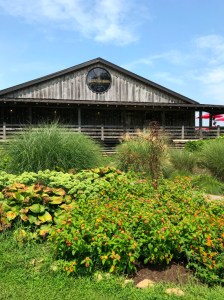
I’m happy to say that we had this exact “full experience” on the recent visit to Galer Estate. While the winery, located just a stone throw away from the Longwood Gardens (actually, while driving to the winery, I thought I made a mistake and will simply get inside the gardens instead of the winery), started only about 10 years ago, it looks like it had been there for centuries. It is rustic, it perfectly blends into the surroundings, and it is beautifully decorated – I’m sure the fact that Lele Galer, the co-owner of the winery, is an artist, comes to play here.


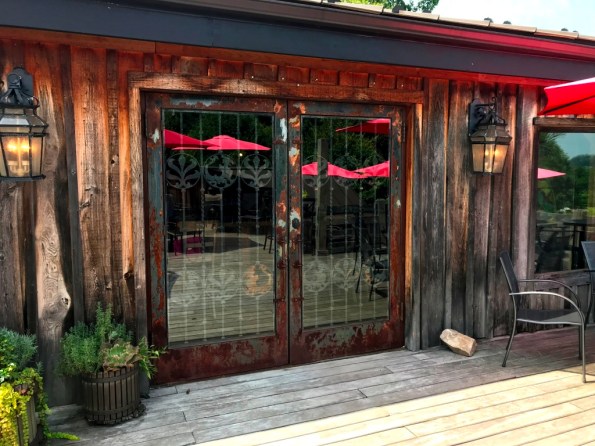
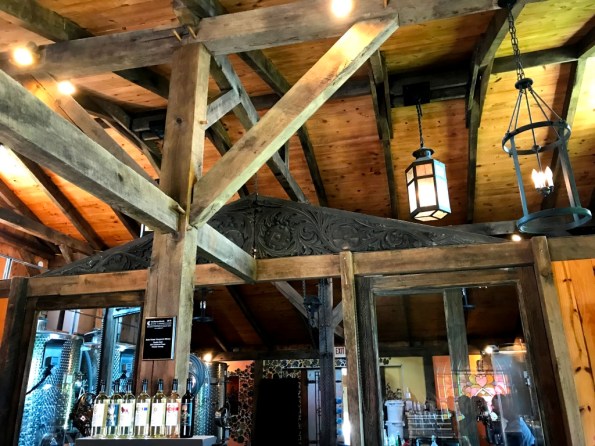


The doors of the tasting room had been brought from France, some of the panels are from Italy, stained glass windows are from the midwest USA. The view of the Chardonnay vineyard from the tasting room is beautiful, and all those little details together create the right ambiance for the tasting.
The Galer Estate owns two vineyards, and when necessary, they bring grapes from other vineyards, but all the grapes are still local, coming from the vineyards within 30 miles radius, all located in the Chester County. The selection of grapes is quite eclectic – it was my first time trying Grüner Veltliner and Albariño from the East Coast. Here is what we tasted:


2017 Galer Estate Grüner Veltliner Chester County Pennsylvania ($25) – fresh nose, beautiful grassy palate, great acidity. 8-, excellent effort.
2017 Galer Estate The Huntress Vidal Blanc Chester County Pennsylvania ($25) – Excellent, restrained, nice balance of white fruit, good acidity, elegant. 8, one of the best renditions of Vidal Blanc I ever had.
2016 Galer Estate Red Lion Chardonnay Chester County Pennsylvania ($18) – gunflint on the nose, crisp, green apples, lemon, clean. 8, excellent wine. I’ll take a gunflint on my Chardonnay at any time, and was literally ecstatic to find it here.
2017 Galer Estate Albariño Chester County Pennsylvania ($35) – excellent, varietally correct, touch of perfume on the nose, mineral lemon notes on the palate. 7+, Unique and different – East Coast Albariño, not the wine you can expect to find here.
2015 Galer Estate Chardonnay Reserve Chester County Pennsylvania ($32) – not my favorite – I’ll leave it at that. May be a “sleeper” bottle?
2017 Galer Estate Pinot Noir Rosé Chester County Pennsylvania ($30) – practically no color in the glass. I would prefer a Rosé with more extraction. Not my favorite
2016 Galer Estate The Huntress Red Blend Chester County Pennsylvania ($30, blend of Cabernet Franc, Carmine, Petit Verdot) – excellent, clean, cassis on the nose, cassis and raspberries on the palate. Soft, good balance. 8-, an added bonus – a new grape, Carmine – the grape (a blend of Cabernet Sauvignon and Carignan) was specifically designed to withstand the cold of the East Coast.
We had a great time while tasting, as our host was knowledgeable and engaging. It was also great to have lunch right in the cellar room – it was too hot to sit outside, so after the view of the vineyards, the view, and mostly the smell, of the tanks might be the most exciting for the wine lovers.
And of course we had an opportunity to snap some pictures of the vines and grapes:


Here you are, my friends. If you are visiting Longwood Gardens in Kennett Square, which is one of my most favorite places, put aside some time to visit the Galer Estate. Considering the full experience, this was one of the very best East Coast wineries I ever visited. And even if you have take a special trip over, you will not regret it. Cheers!
Can You Enjoy The Wine In The Can? Yes You Can!
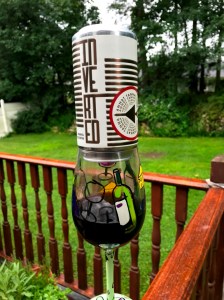 I couldn’t resist a little fun with the title, but really – what do you think of the wines in the can?
Let me ponder at the subject a bit while you give it a thought.
I’m sure that I qualify as one of the pioneers of the wine in the can. Here is an article in LA Times, talking about wines in the can showing up around the USA, and explaining why those make sense. This article appeared in September of 2015. Here is the link to my own post, titled “My First Can of Wine“, written back in November of 2014. So yes, I can claim some familiarity with the subject.
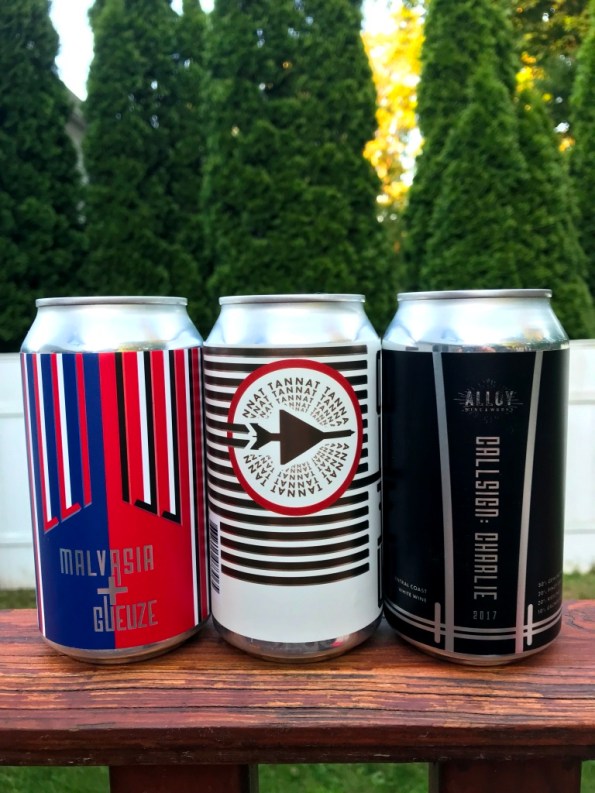
My first can of wine was produced by Field Recordings, a very unorthodox winemaking company to begin with, offering strange wines, with strange labels, unusual blends, aged in unusual barrels (Acacia wood, anyone?) – but ultimately, unquestionably delicious. I wrote numerous posts about Field Recordings wines, starting from 2011 – you can scroll through a few pages here. Field Recordings went on to create a club dedicated to the wines in the can (suggestively called Can Can Club), and then they even created a whole new company, called Alloy Wine Works. One of the fun parts of that Can Can club membership was to observe the progression of packaging and delivery of club shipments of canned wines – from packing bubble-wrapped cans in the same wine shipping box as the regular bottles (didn’t work too well), to the Fedex Tube:


to the practically a masterpiece of packing:


Okay, I probably got a bit off on the tangent here – this post is not about Field Recordings, but rather about wine in the can as a category, so let’s continue our discussion.
First, I think we need to establish a very simple truth – wines in the can are NOT a reduced, lower quality, cheap leftover junk wines – they are full-blown, legit, properly made wine of the same quality as all other wines made at a given winery, simply presented in the different format – a high quality lined aluminum can. These are the same wines, people, and if you want any takeaway from this post, this is my main point. One more time – these are the same wines, which are simply packaged in cans instead of being packaged in the glass bottles.
Now, why do we need wines in the can? I don’t want to get into the whole “cool factor” and “millennials” discussions – yes, those are important, I know, as they further democratize wine and bring new people to try the wine for the first time. But all of these can be categorized as a marketing gimmick, and I want to look for the actual benefits of the canned wines. Let’s see:
- On the go: Canned wines are perfect on the go. It is much easier to stuff a can of wine exactly as you would a can of soda into your backpack, and off you go. When you decide you want to drink the wine, it is very easy to open, and you don’t need to look for the glass. And even two cans of wine will be lighter than one bottle of wine, for the most of the cases. As we said – just get it, and go.
- Safety: Wines in the cans are a lot safer around small children, and generally anywhere where glass is simply a bad idea – like a beach or a pool.
- Convenience: Standard size for a can of wine is 375 ml, which is half of the bottle. If you want to drink white, and your friend is in a mood for a hearty red, having two different cans is easier than opening two bottles of wine.
- Experimenting and variety: with the smaller format and different packaging, there is an opportunity to create new types of wines or even go beyond wine. With Alloy Wine Works, I had wines going way beyond white, red and Rosé – wines finished with beer hops, wines mixed with coffee, plums, stout and lots lots more.
I’m sure there are other benefits of wines in the can, but – do cans of wine have only a good side without a bad one? As you know, this is never the case in life, so let’s talk about challenges:
- This is wine, not a beer!: It is important to remember that a can of wine holds half a bottle of wine – not beer. What’s my point, you ask? A typical can of beer contains less than 4% of alcohol. Typical wine – 13% as the least, so that one can of wine is equivalent to at least three cans of beer in terms of alcohol volume – you better remember that. Half a bottle of wine is not something you can easily dismiss.
- Once it’s open, it’s open: if you just want to have a glass of wine, it is easy with the bottle – open, pour a glass, close the bottle back. It is not going to work like that with the can – once it’s open, it’s open, and there is no going back. This problem has an easy solution – provide a plastic cap which can be used to reclose the can – but so far I didn’t see too many of those sold with the cans.
- Aging: I don’t think this is a real problem, as I don’t expect much of the aging-worthy wines to show up in the can, but in any case, keep in mind that the wine cans are better not be lost in the cellar.
Here you go – my take on the wines in the can. I didn’t plan to include much of tasting notes in this post, but I can tell you that this year I had wines in the can from California, Oregon, Australia and Long Island, and all of them were well made tasty wines.
At this point you had plenty of time to come up with your opinion about the wines in the can – would you please share it with everyone? Here is an easy poll for you – let us know what you think about canned wines! Cheers!
The Art of Tempranillo
Source: Vintae.com
I love Tempranillo wines. I wouldn’t call myself an expert, but I had a wide range of Tempranillo – with the exception of Australia, I believe I tried most of the major renditions – Rioja, Ribera Del Duero, Toro, most everywhere else in Spain, Texas, California, Oregon, Washington (am I missing something? do tell!). With all the love and respect to all the regions, if I have to put an order of priorities in that “list”, I would put Rioja first, Ribera del Duero very close second, but the competition for the 3rd place would be severe – in my world, of course.
I like wines of Toro, the closest sibling to the Rioja and Ribera del Duero, but it would be hard for me to place them higher than some of the beautiful Tempranillo renditions from Irwin Family Vineyards, Duchman, or Fields – considering the Toro wines I had in the past. Compared to Rioja and Ribera del Duero, Toro is … well, maybe I need to explain why I keep mentioning Rioja, Ribera del Duero, and Toro together all the time. These are the only three regions in the world where the absolute majority of the red wines is made out of the Tempranillo grapes. Yes, there are Garnacha and Graciano in Rioja, Cabernet Sauvignon and Merlot in Ribera del Duero, but still – most of the red wines in these three regions are made out of the Tempranillo, hence the constant comparison.
Out of the three regions, Toro is south-most one, with an expressly continental climate, low annual rainfall amounts, and significant range of day-night temperatures – which typically translates well into the flavor. Tempranillo is the grape of Toro, but similarly to Tuscany/Brunello, where you have Sangiovese and Sangiovese Grosso, Tempranillo in Toro is known as Tinta de Toro, a.k.a Tempranillo de Castilla, a.k.a. Ink of Toro. The grape is a bit smaller, with thicker skin, which coupled with growing conditions typically results, in massive, concentrated wines requiring extensive aging to become drinkable – I still have a memory of trying Alabaster made by Sierra Cantabria, one of the well-known producers in Toro, which was one of the most massive wines I ever experienced. Nevertheless, as I said at the beginning, Tempranillo is one of the favorites, so when the opportunity called to try 3 wines from Toro, I was definitely curious – and a bit cautious at the same time.
To ease things up, together with the 3 Toro wines from Bodega Matsu came a bottle of Rioja Reserva from Bodega Classica. While coming from unrelated producers, there is a common link between them – this link is called Vintae – a young company with a serious passion for the Spanish wine for the modern world. Vintae, started in 1999 by the Arambarri family, set on changing world’s perception of the Spanish wine as “boring”. To the date, Vintae unifies a collection of 11 different “projects”, all focused on showcasing the regions and the grapes.
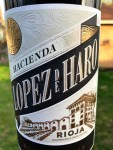
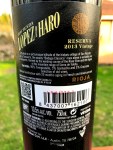
Going back to the wines at hand, let’s talk about Rioja first. The wine comes from Bodega Classica, located in the heart of Rioja Alta. Rioja Alta offers a unique high-altitude setting to produce arguably the best Tempranillo of the whole of Rioja region. Couple that with more than 100 years old vineyards, and you are looking at some tasty opportunities in the bottle, as this Bodega Classica Hacienda López de Haro Rioja Reserva was. Here are my notes:
2013 Bodega Classica Hacienda López de Haro Rioja Reserva DOCa (13.5% ABV, $16.99, 90% Tempranillo, 5% Garnacha, 5% Graciano, 20 months in French and American oak)
Dark garnet color
Pepper, vanilla, raspberries, mushrooms, nice minerality
Medium body, good acidity, noticeable alcohol burn initially, went away in about 15 minutes, good fruit showed up, characteristic cedar notes, good acidity, round, soft.
8-, nice, just give it a bit of time to soften up at the beginning. The second day continued without changes. Good life expectancy, as expected of Rioja Reserva. And an excellent QPR.
Now, let’s go back to Toro. As I already said, in my prior experience, Toro wines were massive and concentrated, requiring long aging to soften and really show a beautiful expression of Tempranillo. And then there were wines called Matsu.
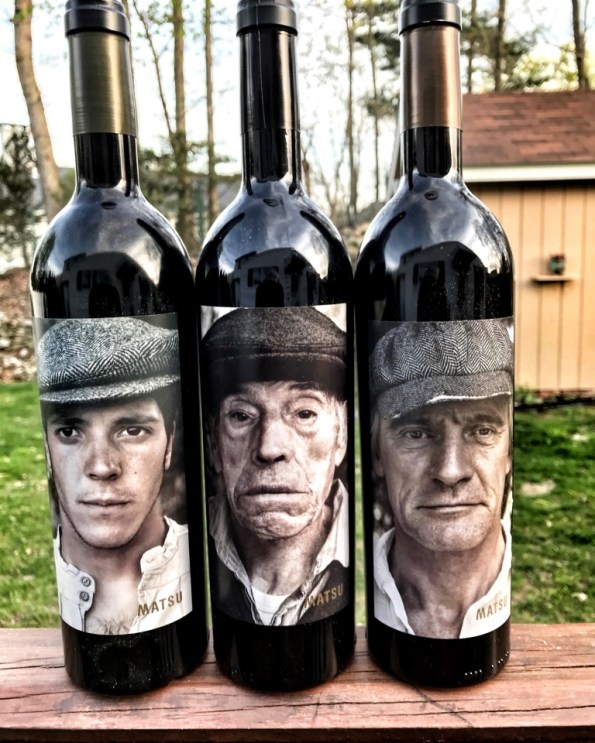
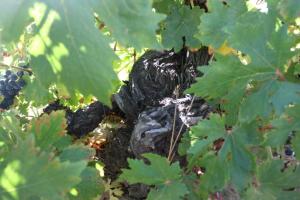
Matsu in means “wait” in Japanese. As we all know, waiting is one of the favorite games of oenophiles. When it comes to the three Matsu wines I had an opportunity to taste, there are many different levels of “waiting”. The wines had been progressively aged for the longer times before the release – 3 months for El Picaro, 14 months for El Recio, 16 months for El Viejo. The grapes were harvested from the vines of different age (again, progressively) – 50-70 years old for El Picaro, 90-100 years old for El Recio, more than 100 years old for El Viejo. See, waiting here is clearly a part of the equation.
And then there are those ultra-creative labels. Not only labels commemorate people who actually worked to create the wines, they clearly identify what you should expect from the wines – in age, in style, and even in price. I conducted a little experiment, first with my kids, and then with the people on Instagram, asking them to identify the most expensive wine – nobody made a mistake, the labels speak very clearly to us.


How were the wines? Surprising. Probably the best Toro wines I ever had – without any regard to the pricing category. Here are my notes, so you can see for yourself:
2016 Bodega Matsu El Picaro Toro DO (14.5% ABV, $13.99, 100% Tinta de Toro, 50 – 70 years old vines, 3 months minimum aging on the lees, concrete tanks)
Bright ruby color, noticeable legs, minimal rim variation
Young fresh berries, medium+ intensity, a touch of vanilla
Surprisingly light on the palate, pleasant tannins, fresh berries, very quaffable.
8-, might be the lightest rendition of Toro I ever had. The smell is a bit more complex on the second day. Palate nicely evolved, good balance, raspberries, no more impression of the young wine, lots of minerality.
2015 Bodega Matsu El Recio Toro DO (14.5% ABV, $21.99, 100% Tinta de Toro, 90 – 100 years old vines, 14 months aging in second use oak barrels)
Garnet color, noticeable legs, minimal rim variation too
Sage, fresh raspberries, quite fruity, roasted notes, minerality, distant hint of cinnamon
Underripe plums, blueberries, thyme, nice herbal component, surprisingly light, still noticeable alcohol, needs more time
8-, needs time. Second day: 8/8+, velvety texture, well integrated, excellent balance, a touch of tobacco and espresso on the palate and ripe plums. Outstanding.
2015 Bodega Matsu El Viejo Toro DO (15% ABV, $46.99, 100% Tinta de Toro, 100+ years old vines, 16 months in new French oak barrels)
Garnet Color, noticeable legs, rim variation is not extensive, but present
Sweet blueberries and raspberries on the nose, sage, sweet oak
8- first day, waiting for more.
Second day: 8, much evolved, more integrated, velvety texture, dark fruit, round, smooth. Will evolve further.
Here you are, my friends – the Art of Wine, from the label to the glass. Very impressive and thought-provoking wines, definitely worth seeking. Have you had any of these wines? Have you had Toro wines before? Do you have any Tempranillo favorites? Cheers!
Sequel in Reverse – More About Wines of Southwest France
What’s up with the “sequel in reverse”, you ask? Easy. All we need to do is flip the timeline. This post is a continuation of the previous post about wines of Southwest France – however, the tasting I want to share with you took place almost 6 months ago, at the end of the last year 2017, hence the “reverse” notion.
Outside of the sequence of the events, the two tastings are perfectly aligned – they are both squarely dedicated to the wines of one of the oldest wine-producing regions in the world – Southwest France.
I can’t explain why, but I feel that I need to make a confession. If you look through the pages of this blog – and there are a few here – I’m sure you will come to a conclusion that I primarily drink wines from California, Spain, and Italy, with an occasional sprinkle of everything else. And you will not be wrong. However, truth be told, my true love to wine started from French wines. I read the most about French wine and French wine regions. I was obsessed with trying to find an amazing Bordeaux for less than $10. Côtes du Rhône wines were a staple at the house. I spent countless hours in the France aisles of the wine stores (luckily, I was working in a close proximity of the Bottle King in New Jersey), looking for the next great experience with the wines from the Loire, Rhône, Bordeaux, Chablis, and others. French wines were “it” – unquestionably, a sacred territory. As the time was going by, and Bordeaux and Burgundy prices were going up faster than the weeds growing after the rain, the French wines moved mostly into a category of a rare encounter.
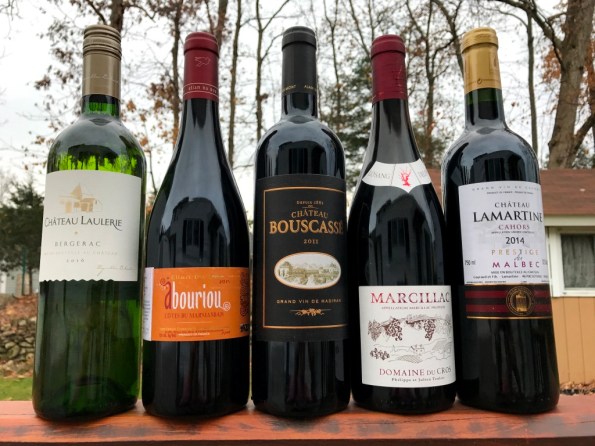
Last December was not the first time I participated in the virtual tasting about the French wines – but somehow, when I opened the box with these wines, something warm and fuzzy came over, and my first reaction was “ahh, I really, really want to drink these wines!”. There is nothing special about this particular set – no big names (I don’t believe Southwest France has much of “big names” anyway), no flashy, ultra-modern labels – and nevertheless, there was a promise of a great time in their simplicity and authenticity. These wines also perfectly played to my other “wine obsession” – the love to obscure and lesser-known wines, so altogether, I took a great pleasure in anticipation of the tasting.
As this was a virtual tasting, I had both the wines and time at my disposal, so unlike the previous post, here are my detailed notes in the usual format:


2016 Chateau Laulerie Bergerac AOC (12% ABV, $12, 85% Sayvignon Blanc, 15% Semillon)
C: Light gold
N: beautiful, fresh, medium+ intesnsity, honeysuckle, white flowers, peach
P: fresh, crisp, excelllent lemony acidity, white stone fruit, restrained
V: 8-, delicious, will be great with food and without, great QPR
2015 Domaine Elian Da Ros Abouriou Côtes du Marmandais AOC (12% ABV, $23.99, 90% Abouriou, 10% Merlot)
C: dark ruby
N: freshly chrushed berries, leafy notes, cherries, anis
P: ripe plums, sweet tobacco, eucalyptus, medium long sweet tobacco finish
V: 8-, would love to try it with an actual cigar. Needs a bit of time. And a new grape – Abouriou


2015 Domaine du Cros Marcillac AOP (12.5% ABV, $15.99, 100% Fer Servadou)
C: Ruby
N: earthy notes, mint, some medicinal notes (iodine?)
P: beautiful fresh pepper on the palate, tobacco, cherries – that pepper is delicious, love the wines like that
V: 8/8+, delicious, excellent QPR
2014 Château Lamartine Prestige du Malbec Cahors AOC (12.5% ABV, $17.99, 100% Cot (Malbec))
C: dark garnet
N: vegetative, tobacco, a touch of cherries
P: bright acidity, dark fruit, tart cherries and cherry pit, noticeable tannins.
V: 8-, pleasant, will work great with the steak, but needs time
2011 Château Bouscassé Grand Vin de Madiran (14.5% ABV, $17.95, 60% Tannat, 25% Cabernet Franc, 15% Cabernet Sauvignon)
C: dark garnet
N: eucalyptus, forest floor, a touch of eucalyptus,
P: initial tannins attach, pepper, dark round fruit, excellent extraction, layers of flavor, firm structure
V: 8+, outstanding, powerful, balanced, needs time!
The Southwest France wines are a treasure trove for the wine lovers – they capitalize on tremendous history, experience, unique terroir and unique grapes, offering oenophiles lots of pleasure in every sip. Look for the wines of Southwest France – and you can thank me later.
From Lodi And Provence, With Love
 We drink wine because it gives us pleasure. Yes, it is that simple (and I didn’t come up with this – I learned it from Kevin Zraly, maybe the best wine educator in the world). We are looking for pure and simple sensual pleasure in every sip of that white, pink or red colored liquid in the glass, and, of course, it makes us happy when we find it.
When it comes to giving pleasure, I have to state that Rosé has an unfair advantage. We start drinking with our eyes, and while white and red have to compete for our attention with creative labels or sometimes even bottle shapes, Rosé takes a lot more simplistic approach – it just stands in front of us – naked. Clear bottle, nothing to hide – here I am, and I know I’m beautiful, so yes, do look at me and feel free to admire.
I don’t know if colors have universal meaning around the world – for instance, red is typically associated with danger or daring in the Western world – and red is the color of luck in China. So the pink color is usually associated with love and happiness in the Western world, and this is why the bottle of Rosé is so good at driving our emotions, no matter what shade of pink it actually boasts.
Acceptance, appreciation, and demand for Rosé stand at all times high today – and it continues climbing to the new “high” every year. Rosé still has a stigma of “summer wine”, but this is slowly changing as people start recognizing how much pleasure every sip of good Rosé packs, and how versatile it is with food – I would dare to say that in its food pairing versatility, it can well compete with Champagne, which is very hard to beat in its pairing range of cuisines from traditional Chinese to fiery Indian, sublime French, or big and bold Texas BBQ.
Today, Rosé is made everywhere – literally everywhere in the world. It is hard to find a winery which didn’t add Rosé to its repertoire. But before Rosé became so fashionable, there was Provence. More than 90% of the wines made in Provence are Rosé, and then they’ve been practicing for about thousand years, so Rosé is really a way of life in Provence, which is easy to see once you take a sip from the glass. I might surprise you with a choice of a close contender to the dominance of Provence – and they are not at all if you will think about the production volume – but when it comes to the taste, Rosé from Lodi in California will easily give Provence a run for the money.
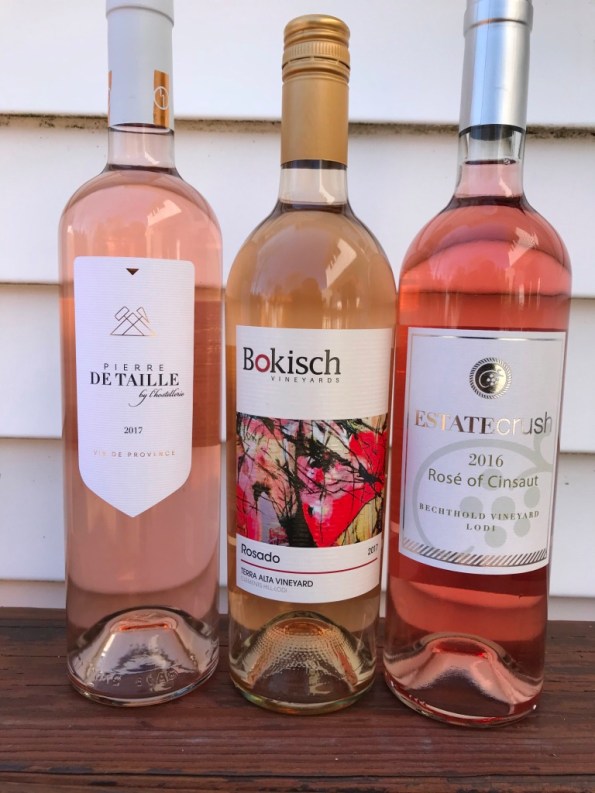
Just look at these colors! Don’t they scream “pleasure”? The Provence Rosé in this picture is only for the color reference purpose, was not part of the tasting
Ever since visiting Lodi in 2016 for the Wine Bloggers Conference, I use every opportunity to confess my love to the region. Lodi might be one of the best-kept secrets in California wine. While a lot of wineries and regions are contemplating their approach to sustainability, Lodi grape growers already developed so-called Lodi Rules (now being analyzed and copied in many regions) for sustainable viticulture, and they have the certification program in place to ascertain that rules don’t just stay theoretical. What starts in the vineyards, continues in the wineries, and the result is simply better wines.
Most of the times Lodi is associated with Zinfandel. Of course, Zinfandel is one of the best known and important grapes in Lodi, but on a big scale, Lodi is a home of the Mediterranean grape varieties – Albarino, Grenache Blanc, Carignan, Grenache, Syrah, Tempranillo and many others, made into delicious, perfectly restrained wines. Lodi goes beyond just the grapes – we need to talk ancient grapes here. lodi is home to some of the oldest in the world plantings of Carignan and Cinsaut (Cinsault), original Mediterranean varieties, also planted on its own rootstock (phylloxera doesn’t survive in Lodi’s sandy soils). Definitely another level – and should be a subject of a separate post.


I had a pleasure of tasting 5 different Rosé for this post – two from Lodi and 3 from Provence. One of the Lodi Rosé is coming from Markus Bokisch, truly a master of Spanish (yes, Mediterranean) grape varieties. Second Lodi wine is produced by Estate Crush from ancient vines Cinsaut, from 130 years old vineyard. Provence wines are coming from two estates owned by Provence Rosé Group – two wines from the Château de Berne, the estate tracing its origins back to the 12th century. The last Provence Rosé is from the Ultimate Provence, the experimental estate which combines traditional Provence with urban design. Before we talk about the wines, just look at those Provence bottles – each one is practically the work of art, uniquely appealing beyond just the color.
Here are my notes:
2017 Bokisch Bokisch Vineyards Terra Alta Vineyard Rosado Clements Hill – Lodi (13.6% ABV, $18, 80& Garnacha, 20% Tempranillo)
Beautiful salmon pink color, very delicate
Fresh tart strawberries on the nose, medium intensity, touch of Meyer lemon
Strawberries all the way on the palate, the wine is definitely more present on the palate than any from Provence, a touch of sweetness, medium body, good acidity, very good balance. Refreshing and quaffable. Sweetness significantly subsided on the second day. Outstanding.
Drinkability: 8-, will be perfect with any spicy food.
2016 Estate Crush Rosé of Cinsaut Bechthold Vineyard Lodi (12.5% ABV, $21, 100% Cinsaut, 130 years old vineyard)
Bright strawberry pink
Strawberries and caramel on the nose, even the toffee flavor, sweet condensed milk. Caramel and toffee are mostly gone after first swirl and sip 😦
Nicely restrained palate, a touch of strawberry with very high lemon acidity and Long, acidity-driven finish – I keep salivating for about 30 seconds already. This will compete neck in neck with any Provence wine
Drinkability: 8, excellent. This wine also perfectly passes room temperature test.


2017 Château de Berne Emotion Côtes de Provence AOP (13% ABV, $16, 50% Grenache Noir, 25% Cinsault, 25% Syrah)
Light salmon pink/onion peel
Strawberries on the nose, ripe strawberries on the palate, excellent balance, clean, fresh, easy to drink.
Drinkability: 8, excellent, delicious from the get go (as one would expect from Rosé). Was also excellent with food!
2017 Château de Berne Inspiration Côtes de Provence AOP (13% ABV, $19.99, 70% Grenache Noir, 20% Cinsault, 10% Syrah)
Salmon pink
Delicate nose, lemon notes, minerality, a touch of funk
Pretty rough edges on the palate initially, interesting vegetative undertones.
Drinkability: 7+, might be a food wine.
3 days later, the palate is better integrated, clean and balanced. Totally unexpected. Drinkability: 8-/8
2017 Ultimate Provence Urban Provence Côtes de Provence AOP (12.5% ABV, $22.99, 45% Grenache Noir, 35% Cinsault, 15% Syrah, 5% Rolle)
Delicate light baby pink
Complex nose, strawberries, raspberries, rhubarb, a touch of flowers, a cheese note (light, disappeared after some breathing time)
Clean, bright, fresh palate, strawberries and strawberry compote, crisp acidity, very refreshing – but all the fruit quicky fading, and the wine doesn’t appear balanced.
Drinkability: 7+, unique and unusual nose. Palate might be too dry after all.
3 days later – 8-/8, round, strawberries and raspberries with white stone fruit undertones, clean, totally different level of pleasure. Another surprise.
Here you are, my friends – 5 very interesting Rosé to brighten up any day, summer, winter, holiday, and not.
Tomorrow is Mother’s Day, so you still have time to surprise Mom with your good taste in wine. And if you are a mom reading this – Happy Mother’s Day to you and thank you for everything you do!
Stories of Passion and Pinot: Tony Rynders of Tendril Cellars
Wine and passion are indelible. Yes, wine is a business for the most parts, but making a bottle of wine which someone else is desiring to drink is a labor of love, and every such bottle has a bit of the winemaker’s soul invested in it (feel free to call me melodramatic). Thus I’m always happy to talk to the winemakers, trying to understand what moves them, what drives them to do what they do. A lot of my conversations are virtual, and you can find most of them on this blog.
Many of interviews are truly random in terms of profiling the wineries and winemakers. However, about 2 years ago, with a prompt and help of Carl Giavanti, I started a series of posts called Stories of Passion and Pinot, which are dedicated (so far, at least) to the winemakers in Oregon, producing Pinot Noir wines. Winemakers are always passionate about what they do and the grapes they use – but it seems to me that Pinot Noir, being a difficult grape it is, really asking for a special dedication to allow itself to be tamed – hence the name for the series.
My latest addition to the series is a conversation with Tony Rynders, the proprietor and winemaker at the Tendril Wine Cellars, a young winery in Willamette Valley in Oregon (the winery officially started 10 years ago, in 2008). While the winery is young, Tony is an accomplished winemaker, who started making wine back in 1989, honed his craft at the wineries around the world, including 10 years as a head winemaker at Domaine Serene, one of the best-known wineries in Oregon.
When Tendril Cellars started, it owned no vineyards, which essentially gave Tony a flexibility to bring the best fruit from the Oregon vineyards he was already familiar with. To my surprise, Tendril Cellars only offers one single-vineyard bottling in their line of 5 different Pinot Noir wines – but you will find an explanation below. In 2013, Tendril Cellars planted a 19 acres Maverick vineyard in Yamhill-Carlton district with Pinot Noir and Chardonnay – the vineyard already producing the fruit which is going into the Tendril Cellar’s second line of wines, Child’s Play (a creative name for the wine, don’t you think?).
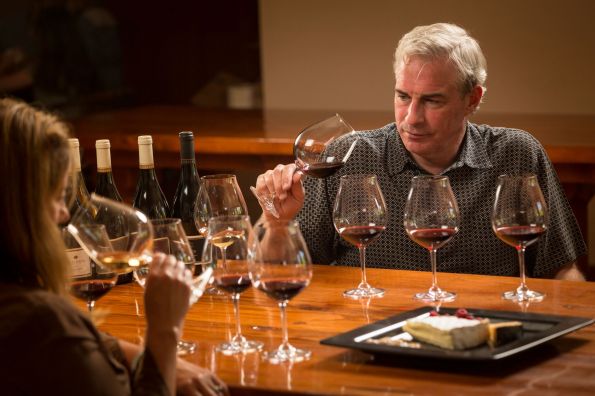
Tony Rynders leading five course tasting
Tony calls his approach to winemaking “low and slow” – letting the nature to do its work. He is also aging all of his Pinot Noir wines for 16-17 months, which I find particularly appealing. And then, how many winemakers do you know who run organized tastings for their customers? That is what Tony does, presenting his wines as a “5-course meal” and explaining the concept of terroir to the wine consumers (after tasting Tendril wines, Tony’s approach to the tasting makes perfect sense to me – but we will discuss it in the next post).
After learning a bit about Tony and Tendril Cellars, I decided that the time came to sit down (yes, virtually) with Tony and ask him a few questions. Here is what transpired.
[TaV]: You started making wine for others in 1989. Was there something which prompted you to start making your own wines in 2010, a pivotal moment, or you simply decided that it is time to make wines “my way”?
[TR]: I have had several opportunities making wine since I began in 1989. Each one has contributed in some way to influence my approach to making wine. I can tell you that I am a much different winemaker today than I was when I started. I think it is critical that we continue to evolve and adapt as the climate, consumers, and wine preferences change.
In fact, I started my own brand, Tendril, in 2008. I was just coming off a 10-year stint as head winemaker at Domaine Serene. It was a highly formative period in my career as there was a massive shift toward new, estate vineyards during my tenure. The creative “heavy lifting” took place largely during my watch. I accomplished everything I set out to and more. It was time for my next big challenge…creating a portfolio of wines for my own brands from scratch. And tell a story about Pinot Noir in a way that it had not yet been told.
[TaV]: You worked at the wineries around the world. Are there any winemakers you would consider your mentors, either directly or indirectly?
[TR]: There is one fact in winemaking that I completely embrace: There is no way to learn it all…I will never stop learning, growing and evolving. Every winemaker I have worked with has mentored me, including but not limited to, Rollin Soles, Ken Wright, Co Dinn, Jean-Francois Pellet and David Forsyth.
[TaV]: Can you explain your “low and slow” approach to the winemaking?
[TR]: Just like the “slow food” movement, I use top quality ingredients (grapes) from attentive, engaged farmers (vineyards) with whom I have a very close relationship. I have hand chosen each of our vineyards myself and each brings a distinctive flavor profile (like spices) in order to make our signature “five-course meal” of Pinot Noir.
For all the Tendril wines, I over-vintage the wines in barrel (at least 16 months) and then bottle age 12 months or more prior to release. The wines are then at the front end of their drinkability curve, with the potential for a decade enjoyment ahead of them.
[TaV]: I find it interesting that in your range of Pinot Noir you have only one vineyard-designated bottling – I always think that designated vineyards and even specific plots are better identify with quality of the grapes and the resulting wines – obviously you don’t see it like that?
[TR]: While I love to make single vineyard wines, I find that not every site is able to produce balanced, compelling and complete wines every year. And that, simply put, is my goal as a winemaker. So this is how the unique story and line-up of wines for Tendril was born. When I started Tendril, I knew that I wanted to do something different with my portfolio of wines. And it took 6 years to complete the lineup (Extrovert 2008, TightRope 2009, Single Vineyard (Guadalupe) 2011, C-Note 2011, Pretender 2013).
The common model that exists for Pinot Noir is the single vineyard model. Wineries make 5-15 (or more) single vineyard wines in a given vintage. The problem is that not all of the sites deliver on their promise of distinctiveness every year. The true test is a horizontal tasting in which all of the wines are evaluated blind. In a given year, some wines are great, some under deliver and some taste quite similar in a given line-up. This is not consistent with my goal.
So, I created my own, unique model for Pinot Noir. Each of my wines is distinctive and complete. Collectively, they show a progression of flavors that mirrors the progression of dishes in a five-course meal. My wines gain in intensity, darker fruit character and structure as the “courses” progress. And each of the wines must re-qualify for their place in the lineup each and every year.
I believe single vineyard wines should be special. Since all wineries charge more money for them, I think they should be worth it. So we typically do just one offering per year that is, simply put, the “wine of the cellar” from just one site. As I had anticipated, it has proven to be rotational (4 vineyards in 7 vintages). It is like a Christmas present in that you don’t know what it is until you open it.
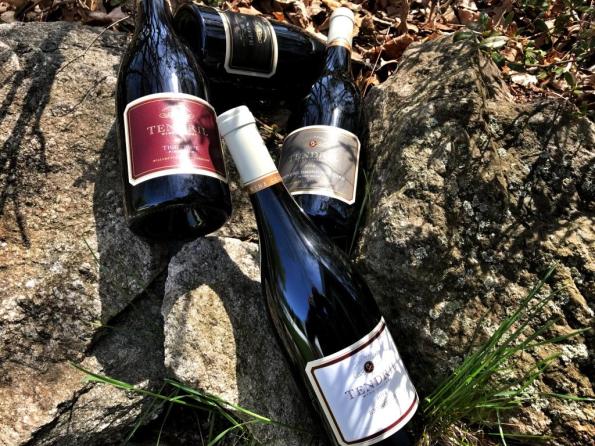
[TaV]: Your C-Note Pinot Noir is designated as “whole cluster fermented” – is that a substantial differentiator to make it the “top of the line” wine, or is there something else behind it?
[TR]: Of the Pinot Noir line-up, the C-Note is the most stylized wine yet at the same time requires the greatest amount of restraint. Whole cluster fermentation of Pinot Noir is a technique that I have only attempted since 2011. The was the first year I made a wine using 100% whole cluster…and it was so successful that it became our first C-Note bottling.
For C-Note, we use 100% Pinot Noir, 100% Whole Cluster fermentation, and age in 100% new French Oak barrels (air dried 3 + years). The restraint comes into play in order to reign in the “whole clustery-ness” and tame the oak impact to mimic a wine with half the new oak exposure. We are extremely gentle with our cap management to control the whole cluster notes and we select the most subtle, elegant barrels coupled with long aging to integrate the oak flavors. C-Note is all about complexity, texture and mind-blowing length. I love making wines that surprise and beguile.
[TaV]: You are one of the very few winemakers who conduct organized tastings. Can you explain what you are trying to showcase with your 5-course Pinot Noir approach?
[TR]: Yes, I believe the best way to showcase these wines and share this unique experience is to do seated tastings. Like a five-course meal, our tasting take time (typically an hour and a half or more). But people leave here feeling that that have experienced something truly special…and that is pretty rare. They are shocked that they enjoyed each and every wine they tasted.
I began working in restaurants at a young age. I cooked for several years and really enjoyed it. A few years after I started making wines, I realized that I was using the exact same skill set to make wine that I used to cook. I am truly a “wine cook” and make wine with that sensibility.
I wanted to showcase a diverse range of flavor profiles that can be accomplished on an annual basis with Pinot Noir in the Willamette Valley. Each offering is distinctive, unique and impeccably balanced. Collectively, they showcase perhaps the greatest range of flavors and textures of Pinot Noir under one brand.
[TaV]: To follow on the previous question, how receptive are your customers (typically) to what you are presenting in the tasting? Do they get your point? Do you offer people to taste the wines blind and to try to identify what they are tasting?
[TR]: The beautiful thing about the “five-course meal” context of our tasting is that EVERYBODY can relate to that experience. People completely get it and they really get into it. The wines show a progression of flavors just like a multi-course meal. They also increase in intensity much like turning up the volume on a radio.
At this stage, the tastings are not blind and are tasted one at a time. And I don’t have the ability to pair food at this time. But we have done the “five-course meal” here at the winery a few times. It was a huge success.


[TaV]: Maybe an odd-ball question here – wine is an adult beverage, and nevertheless, you called your line of wines “Child’s Play” (I personally like it very much, especially the labels). Do you think wine consumers might find this controversial? Did anyone ever comment on this wine name?
[TR]: I am a huge fan of the “double entendre”. Here it is actually triple. 1) My kids playing…my two daughters paintings are the original artwork for all the labels 2) We winemakers are big kids and we get to “play” with offering unique wines (the Pinot Chardonnay is the only still version of Chardonnay and white Pinot Noir in the country…to my knowledge), Zinfandel from WA (a unicorn wine), and a stylistically different Rose of Pinot Noir. The Pinot Noir is just damn good. 3) Child’s Play implies it’s easy…so easy a kid could do it. We are taking the pretension out of wine with the packaging and the wines inside. Great value for money…as it should be.
My customers love it. The only objection came from the Feds…and a simple paragraph explaining point 3) above got us our label approval.
[TaV]: This one is more of the pet peeve question for me. Your Tendril wines are enclosed with the corks (makes me very happy to see it). The Child’s Play line uses screwtops, so obviously the screwtop idea is not foreign to you. I know that some winemakers in Oregon swear by alternative closures (like Don Hagge at Vidon with the glass stopper), but I personally think that the wine needs a cork to age properly. What is your take on this subject?
[TR]: While I like the idea of cork, the execution of the closure has haunted me for my entire career. Corks are highly variable in both their flavor impact on the wines as well as the oxygen permeability. Each one is unique and has an unintended impact on my wine. I believe natural corks are a huge problem and as such, I no longer use them. But I do gladly use a cork product in my Tendril wines (looks like a duck and quacks like a duck) that provides consistency of density and very low aromatic impact. I would be happy to talk to you about this topic some time. I have researched it for years.
Screw caps are new to me, but I love them in the Child’s Play line to further differentiate the brand from Tendril. I think the MSRP $30 price point avoids any potential push back on the choice of closure.
[TaV]: Sparkling wines are so popular nowadays, almost everyone is making them, and often with very good results. Considering your experience at Argyle, should we expect to see Tendril sparkling wine at some point in the future?
[TR]: Maybe…but I will wait until we have a great sparkling wine vintage (cool and slow ripening) to make that decision. If you asked my wife (who is a sparkling junkie), the answer would be yes.
I would only do it if it could have the potential to be a truly special offering.
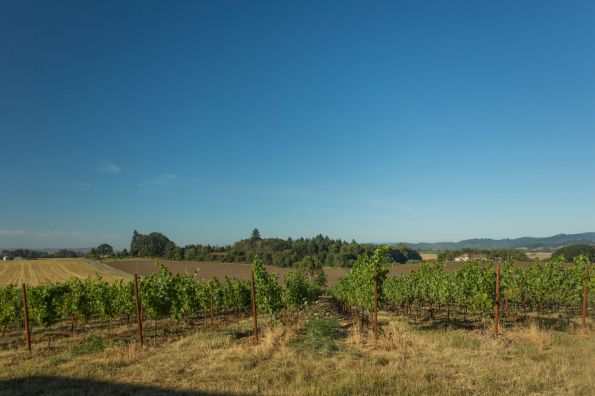
Maverick Vineyard
[TaV]: What is in the store for your new Maverick vineyard? How are you planning to farm it – sustainable, organic, biodynamic? Out of 19 acres, you have 10.5 allocated for Chardonnay and Pinot Noir – what about the rest? Any plans to expand beyond Pinot Noir and Chardonnay – let’s say, Pinot Gris, Riesling, etc?
[TR]: At this time, Maverick is LIVE. We plan to move towards organic over the next few years. It is an incredibly well behaved site that is already producing strong personality wines. I view this as a highly desirable trait for a young vineyard. The Chardonnay for the Pinot Chardonnay (70% of the blend) is all Maverick. This is the first bottled wine coming from Maverick.
No plans for other varietals at this time. But the clonal mix for the Pinot Noir (943, Swan, Calera and Mt. Eden) is pretty unusual.
[TaV]: Oregon is clearly a leader in Pinot Noir, considered by many as simply the best in the world, and it is also getting to the same level of recognition with the Chardonnays. What is ahead for the Oregon wine industry? Is the future bright and sunny, or do you see any clouds on the horizon?
[TR]: To me, the only constant is change. By that I mean that to continue to succeed as an industry, we need to be engaged (both locally and on a world stage), we need to be adaptive (as our climate continues to change, we are in for more and different challenges), and we need to be more concerned about the sustainability of our environment (both locally and throughout the world).
I believe we will have sun and clouds…and perhaps some rain. Just the weather we always have in Oregon 😉
[TaV]: When you are not drinking Tendril wines, what are your favorites from the other producers and/or regions?
[TR]: Lately I have been enjoying Graham-Beck sparkling wine from South Africa.
Or give me a good single malt Scotch…
Here we are, my friends. I’m sure you are thirsty at this point, but we will talk about Tendril Cellars wines in the next post.
To be continued…
An Evening With Friends – In Singapore
For years I had been following the Oz’s Travels blog, commenting from time to time on the great wine (and food) experiences described there. Over these years, we built a virtual friendship with Oz (Anthony), the author of that blog, with one recurrent theme “one day you will make it to Singapore, and then…”. As amazing as the life is, that “one day” actually happened about two months ago when my business travel finally brought me to Singapore.
Maybe you saw my very excited post about Gardens of Singapore – but the evening before I experienced all the gardens, I was able to meet, shake hands, and share a few (okay, more than a few) bottles with Oz and his friends.
Oz picked me up from the hotel with his friend Rob and we proceeded to the restaurant, where another Oz’s friend (also Rob), was already waiting for us. Then, there was food, wine, and scotch – but let’s take it all in steps.
First, the restaurant – newly open Garang Grill (a sequel to the already successful Garang Grill at another location). The restaurant allows guests to bring their own alcohol, which we took an advantage of – while restaurant provided glasses and decanters. During the course of our dinner, I had an opportunity to experience a variety of creative dishes. Skewers of sauteed foie gras were melt-in-your-mouth delicious. Luncheon meat fries (yes! talk about creative!) were superb with delicious dipping sauce. I since made the same dish at home and everyone loved it. Crab rillette, steak – everything was delicious and tasty. Here is an account of our dinner – in pictures.


And then there was wine. What I love about Oz’s parties is the abundance of wine, and not just any wine, but nicely aged wine – and you know how much I admire the wine with a little (or not so little) age on it. Here is what went down:


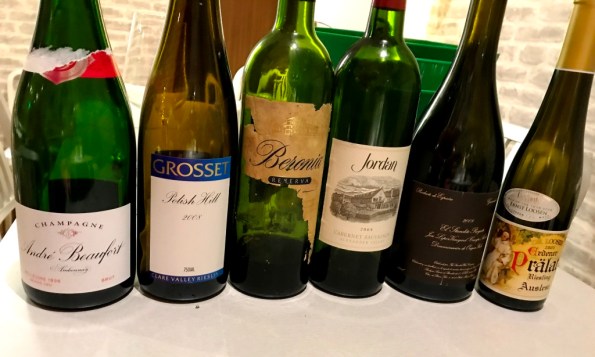
1996 André Beaufort Champagne Grand Cru Ambonnay. Never had it and never heard of André Beaufort Champagne before. Meanwhile, this happens to be one of the oldest all-organic grape growers in Champagne. This 1996 was disgorged in 2014. The wine had great acidity, green apples, still perfect fizz, candied apples with a hint of cinnamon showing on the nose. Yeast showed up later. Excellent. That was a real treat.
2008 Grosset Polish Hill Riesling Clare Valley. Australian Riesling is not a simple wine. I remember trying young Australian Rieslings many years ago, and putting them into the category of “I never want to drink this again”. It takes a bit of time to understand the beauty of the wine devoid of any sweetness and instead offering in-your-face acidity and minerality. But once you turn the corner, this becomes the style you crave. This particular wine at hand was, in many ways, an encounter with the legend. You see, Clare Valley is one of the best regions for Australian Riesling. Polish Hill is one of the very best vineyards. And Jeffrey Grosset is a legendary producer, one of the best winemakers in the world. Now you add a bit of age, say, 10 years – and you almost get heaven on Earth – petrol on the nose, restrained palate, minerality through the roof, great acidity, just a pure delight in every sip.


1994 Bodegas Beronia Rioja Reserva. Behind damaged label was an excellent wine – still fresh, good fruit, good acidity, excellent. Still has time to evolve. Based on the color also still young – just starts showing age.
2005 Jordan Cabernet Sauvignon Alexander Valley. This was my contribution to our lineup. Jordan needs no introduction to the Cabernet Sauvignon wine lovers. This wine was very good, typical California Cab. The wine had an interesting amount of sweetness, more than I expected – as it showed no age, I would assume it still needs more time to evolve. I have one more bottle from the same vintage – will have to wait with that one for a bit.
2008 Standish Wine Company El Standito Proyecto Garnacha Tintorera Yecla DO. This is a Spanish wine, of course – produced by Standish Wines from Australia. Yecla is the best known for their Monastrell wines – this wine, however, was made from the grape called Garnacha Tintorera, which is also known as Alicante Bouschet, which can produce massive, dense wines. This wine was no exception – excellent, restrained, good balance, good fruit, good acidity – and still in need 0f at least another 20 years to evolve.


2005 Dr. Loosen Erdner Prälat Riesling Auslese Mosel-Saar-Ruwer. You can’t finish such an evening without a dessert wine, can’t you? 13 years old Auslese by Dr. Losen – need I say more? The wine was amazing, great balance, a touch of candied plum, great acidity, fresh, simply superb.
This was the end of our dinner, but not the end of our evening. A short taxi ride took us to the unassuming building (well, it was dark, so maybe it is not as unassuming during the day) which happened to be a Rendezvous Hotel, one of the oldest in Singapore. After taking a flight of stairs up, we entered the room where my jaw literally hit the floor. The “room” was called The Auld Alliance – the scotch and whiskey bar (primarily) with more than 1,600 (!) different whiskeys available to taste and purchase. I never saw anything like that in my life, and the selection there was simply beyond words:
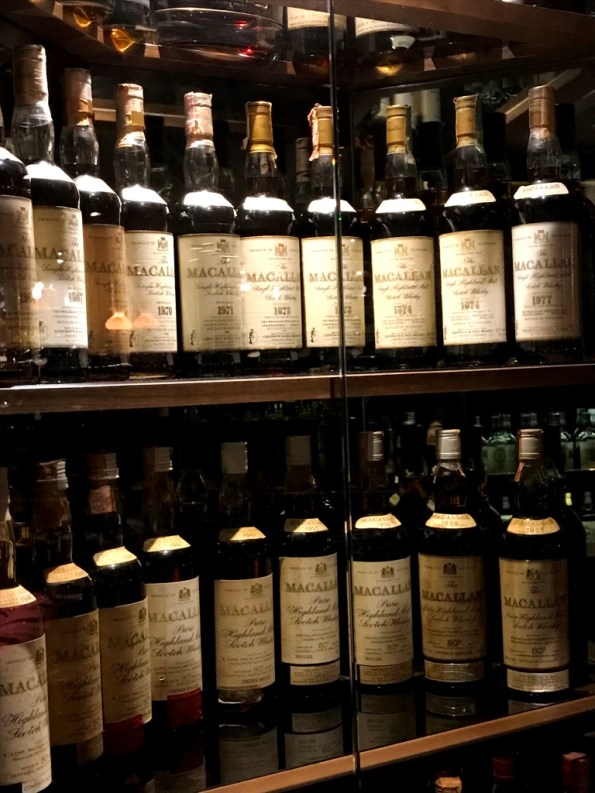


In addition to many whiskeys available by the glass, The Auld Association also offers a number of tasting flights – I had the one called “Smoke around the world” and it was definitely fun (I hope you don’t expect my tasting notes after 18 hours of non-stop travel and prior dinner with all the wines).


So this is my account of an amazing evening in Singapore. It was definitely a pleasure meeting Oz and his friends, and the whole evening was simply beyond expectations. Cheers!
Wine News and Updates From Around The World
I’m happy to live during the times when wine is getting more and more popular – at least if you look at the wineries popping up all over the place, everywhere in the world, new wines coming out from the places where grapes were never planted before, and winemakers everywhere experimenting with new grapes, new tools (when did ceramic egg became “the thing”, huh?), and new styles (bourbon barrel-aged wine, anyone)? There is a tremendous amount of information available to the wine lovers everywhere, so I wanted to bring to your attention some of the latest news and developments in the world of wine which I found the most interesting.
There seems to be quite a bit of research pointing to the health benefits of the moderate wine consumption. More often than not, the health benefit is attributed to the red wine, not so much to the white, Rosé or Champagne. And then we also heard a famous story about Marilyn Monroe taking a Champagne bath (it supposedly took 350 bottles to fill the bathtub). What’s the connection, you ask? Based on the research conducted at Dartmouth University, it appears that Marilyn Monroe was onto something – the Champagne, with its high acidity and tiny persistent bubbles, has a great refreshing effect on the skin, so the 30 minutes bath is highly beneficial and rival most of the known skin rejuvenation treatments in its efficiency. Moving from theory to the practice, Veuve Cliquot, the leading Champagne producer, teamed up with Elizabeth Arden, leading American cosmetics and skin care company, to start offering Champagne treatments at select Red Door spa locations. The price is set for $10,000 for the 30 minutes, and the first 6 months of the appointments were booked within first 30 minutes of the initial offering. First trials at the spa showed excellent results and produced many happy clients. The only challenge? Someone has to constantly watch over the clients and remind them to drink Champagne only from the glass in the hand instead of taking the “deep dives” with their mouth open. Otherwise, the offering had been extremely successful and Veuve Cliquot is even considering to start offering treatments using La Grand Dame, but the pricing had not been unveiled yet.
There are no limits to the winemaking innovations today – aging wines in ceramic eggs and old bourbon barrels, mixing wine and coffee, filtering wines with the beer hops – bare mention of any of these would make winemakers and wine lovers cringe merely 10 years ago – but it is the norm today. Taking winemaking innovation to the next level, BrewDog out of the UK, the legendary producer of the world’s strongest beer (Tactical Nuclear Penguin clocks whooping 32% ABV), teamed up with the Australian winemaking legend, Penfolds, to produce the world’s strongest wine. The wine, called Penge Royal, uses the production methods of the Tactical Nuclear Penguin and Penfold’s flagship wine, Penfolds Grange. After aging the wine for 3 years in the old Scotch barrels, it then spends 60 days at the -32°C, and at the end of that period, reaches 70% ABV, beating most of the Absinthe on the market. It seems that the wine nicely preserves the flavor profile of Grange, but packs a substantial punch – as you would expect. The wine initially will only be available at the select markets in Australia and the UK, with the prices set at $5,000 per bottle. There were only 10 cases of 375 ml bottles produced, and they were all sold out immediately upon the offering. Would love to taste the Penge Royal one day, but getting one would not be easy.
I’m sure you heard about the so-called AI – Artificial Intelligence, and the robots, which will replace humans in pretty much everything we, humans, do. Going beyond the robot bartenders turns out that winemaking is also not immune to the automation and robot’s onslaught. The research team at Oxford University was working for the past two years on creating a robot which will be able to inspect the vineyards and decide on the day of the harvest, make all the decisions at the winery (how long fermentation should take, what strain of yeast to use, how and for how long to age wine, and also how to blend the final product). The project ran into an unexpected issue of many (if not most) of the winemakers not willing to share their knowledge, or even deliberately providing wrong information (no, you can’t wait until -10°C to harvest the Cabernet Sauvignon). Also, first results of blending by the winemaking robot were rather disastrous, with the resulting wine been completely not drinkable, not deserving even to be called a “plonk”. Hopefully the situation will change for the better, and the scientist will be able to make some progress, but for now, we will have to continue trusting humans to have a drinkable wine on the table.
If you are a serious wine enthusiast, I’m sure you run into this dilemma an uncounted number of time – I’m going to the dinner, should I wear a perfume? The perfume would interfere with the smell of wine and get in the way of truly appreciating it, both for oneself and for the people around us, right? The designers at Chanel, a leading French fashion house, set out to help all of us, oenophiles, to solve this dilemma and let us feel good about ourselves while going to a party while not disrupting the sensual pleasures of wine. Chanel’s designers created a new line of perfume specifically for the wine lovers, called W by Coco. The 3 years of experiments and hard work which went into the creation of W by Coco resulted in the perfume which offers a refreshing scent of the perfectly balanced wine, helping you to greatly accentuate aromas of the wine you are about to taste. All the Bordeaux First Growth producers supported the research, and as the result, the W by Coco line includes five different fragrances, one for each of the first growth Chateaux – Château Latour, Château Lafite Rothschild, Château Margaux, Château Haut-Brion and Château Mouton Rothschild. The fragrances available exclusively at Chanel boutiques in Paris, New York, Singapore and Tokyo and will cost wine lovers $450 for 30 ml. Reportedly, Château d’Yquem, Petrus, and Screaming Eagle all lined up to be included into the second release of the W by Coco line, but the date for the second release had not been confirmed yet.
Capitalizing on the popularity of the wine, literally every self-respecting brand is involved in the wine business, whether it is private label wines, special releases or simply store-branded lines of products – I’m sure you all had Kirkland wines, Trader Joe’s wines, Wine Farmer line at Whole Foods and more – never mind wine retailers such as Total Wines who offers thousands of private label wines in their “Winery Direct” program. Yes, we all know that and are usually not surprised by those private label wines. However, Walmart, the largest in the world retailer of discounted goods, managed to surprise everyone (and I meant it), by unveiling their partnership with none less than Old Rip Van Winkle, the producer of the most thought-after bourbon in the world. It appears that two of the iconic American companies joined forces to offer whiskey aficionados two new bourbons – Old Rip Wal Winkle 10 years old and Wal Winkle Special Reserve. The pricing and availability will be announced later, but it is expected that both whiskeys will appear in Walmart stores in the USA only at the beginning of 2019. Walmart shoppers and whiskey lovers, rejoice!
That’s all I have for you, my friends. Cheers!
Daily Glass: The Beauty of Aged Wine
Many wine critics and professionals alike insist that majority of the wines should be drunk while young, and only a few, less than 5% of all the wines produced, can be successfully aged. Well, I can’t speak about the percentages here – I’m a wine consumer, not a wine statistician – but I do like the majority of my wines aged.
Why do people age the wines? There are many reasons. Collectors age wines because they might (and many definitely will, if you pick right) increase in price. Well, that is not the type of wine aging which is worth our attention here, so let’s leave it aside. Many people age wine because they have a special memory attached to those bottles – birth year, memory of the trip, given by a special friend, signed by the winemaker – the OTBN was invented specifically for those people (I’m one of “those people” too, never sure if the moment is already right, or if it can become “righter”). And then there are those who believe that the wine might will improve with age, and therefore, willing to put some bottles aside and wait for the right moment, which we often refer to as “wine at its peak”.
When we finally open that aged bottle of wine, we enjoy it more often than not. There are many reasons and many ways in which we enjoy that aged wine – some of those are purely related to the taste, which we expect to change for the better; some of those reasons are purely emotional. Drinking 50 your old wine at your 50th birthday is definitely a moving experience – the wine might not be perfect, but hey, it is as old you are, give it some respect! Drinking the wine brought from the trip to Italy 20 years ago is guaranteed to send you down the memory lane, letting you re-live those special moments and recreate its pleasure. The wine might not even taste that great (yeah, I knew I should’ve spent another $50), but who cares – those were the times! But the best of all is when, after the aging, we actually get to drink the wine which evolved and got to its peak.
Very often we praise the aged wine for how youthful it tastes (it is especially true of the wines under the screwtop, which pretty much don’t age at all while closed). Assuming the wine was tasty from the very beginning, this is great and deserves full respect, but this is not really what we want when we are tasting the aged wine. We are looking for the next level of taste, for the wine at its peak, for the wine which evolved. We want the wine to deliver a truly special tasting experience, we are looking for the whole bouquet instead of just individual aromas, we are looking for the interplay of complexity which young wine can rarely offer. We are looking for the wine which can possibly become a life-changing experience. We are looking for the wine which can be pondered at, which can stop the conversation and just let the wine lovers be.
A few days ago, a friend was coming over, and it was right before her birthday. Of course, when someone is coming to the house for a dinner, my worry is always to have the right wine for the occasion. So I asked my wife what year our friend was born, and when I heard “1986”, my immediate thought was – “hmmm, I think I have a bottle”. Memory served me right, and the desired bottle was retrieved.


So the bottle at hand was 1986 Chateau Cordeillan-Bages Pauillac AOC (12.5% ABV, $54.97). After inspecting the cork, I decided to try the regular corkscrew first, before getting out the two-prong opener. It actually worked fine, as you can see. Next was the sigh of relief after a quick sniff – no sign of any faults, and off the wine went into the decanter, both to avoid the sediment and to add to the aesthetics (the wine simply looks grander in the decanter, isn’t it?).
Once in the glass, the first sniff simply extorted the “OMG”. The complexity of the aromas was mind-boggling. Rutherford dust, smoke, roasted meat, cassis, minerality, baking spices, graphite, an incredible bouquet. The palate showed soft dark fruit, clean acidity, fresh, vibrant, graphite, well-integrated tannins, pencil shavings, all with the super-sexy, velvety texture. The 32 years old wine – incredible, and it was a conversation stopper. (Drinkability: 9+).
Trying to understand how and where I got this bottle, I figured that I have to thank PJWine, one of my favorite wine stores in New York, for that. The wine is produced at the Chateau Cordeillan-Bages, a tiny property of only 5 acres in Pauillac, planted with 80% of Cabernet Sauvignon and 20% of Merlot. The property is owned by the Cazes family of the Chateau Lynch-Bages fame (5th growth in the 1855 classification), and it also hosts a 2 Michelin star restaurant and a Relais & Chateaux hotel. The Chateau Coreillan-Bages wine is typically only offered at the restaurant, but the Cazes family decided to make a library release to the public, and PJWine buyers were at the right time in the right place – the rest was a history.
Here you are, my friends – a beautiful wine and a special experience. Do you have the aged wine stories of your own? Share them below. Cheers!
Last Bottle Sign Up ($10 credit)




 Talk-A-Vino