Domaine Bousquet – Reaching New Heights
 I might be ostracized for saying this, but I will risk saying this anyway – the wine world is simple. It might even be called predictable.
Here is how it works. Plant the vineyard. Make sure it produces good grapes. Make good wines. Learn about your vineyard. Divide it into plots. Learn how those plots are different. Identify better plots. Grow better grapes. Make better wines. Repeat. Next, make great wines.
See? I told you it is simple, right? So above is a simple recipe for success. Agreed?
Okay, let’s get back down to earth. The simplicity described above is only an appearance, a view from the outside. The simplicity is achieved through the countless amounts of hard work, passion, dedication, vision. Other than that, it is very simple.
Domaine Bousquet is less than 30 years old, and yet it is one of the most impressive wine businesses in the world. How? Anecdotal evidence is in the fact that I tasted lots and lots of wines from Domaine Bousquet, and I’m yet to find the wine I didn’t like. To take it into the real perspective, please allow me to quote myself:
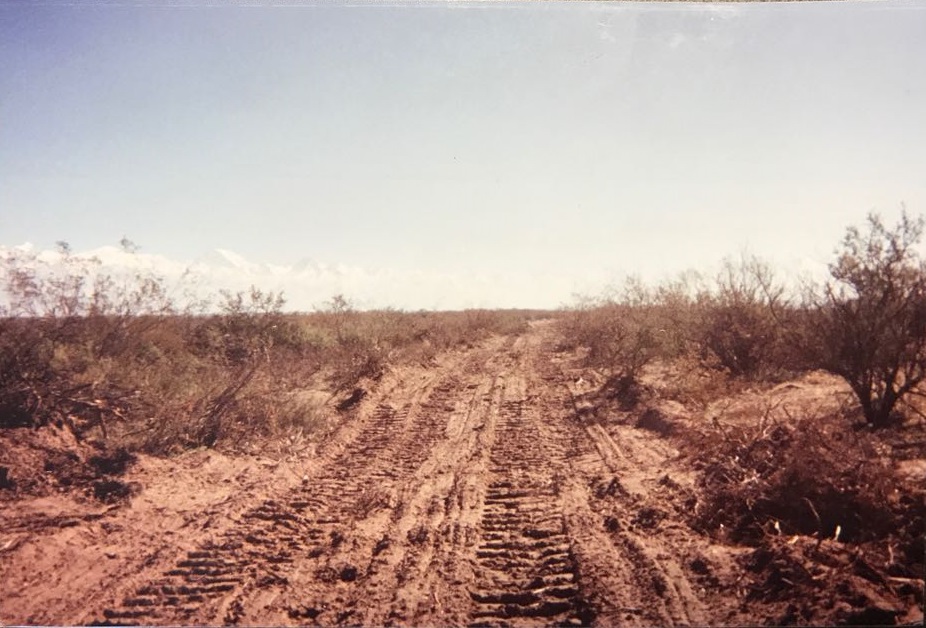
I wrote about the history of Domaine Bousquet very extensively on these pages, so I’m not going to regurgitate everything that I already said – instead, I would like to suggest that you read this post, and also this one. However, I will illustrate my statement about the most impressive wine business with a few pictures. Here is what high altitude (1,200 m/4,000 ft) desert looked like in 1990 when Frenchman Jean Bousquet first fell in love with the area while on vacation in Argentina:
Source: Domaine Bousquet
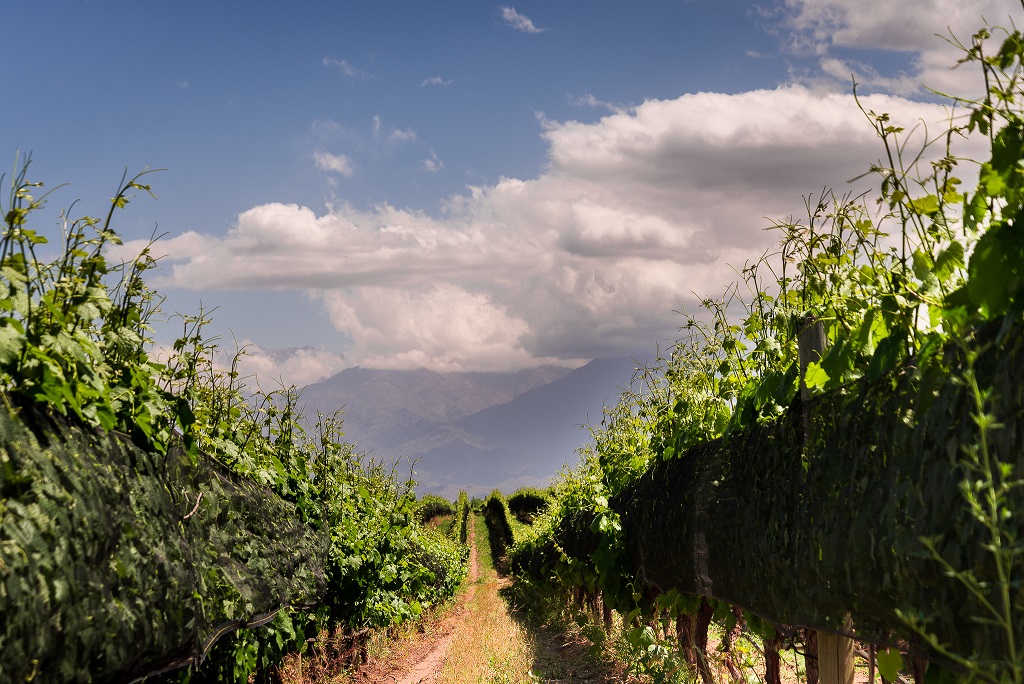
Here is what it looks like today:
Source: Domaine Bousquet
Here is what domain Bousquet has accomplished in less than 30 years, after being formed in 1997:
Certified B corporation, certified regenerative organic, biodynamic, USDA organic… you can continue decoding the icons on your own. 5 million bottles are produced annually, and I never had a wine from Domaine Bousquet that I didn’t like. I rest my case.

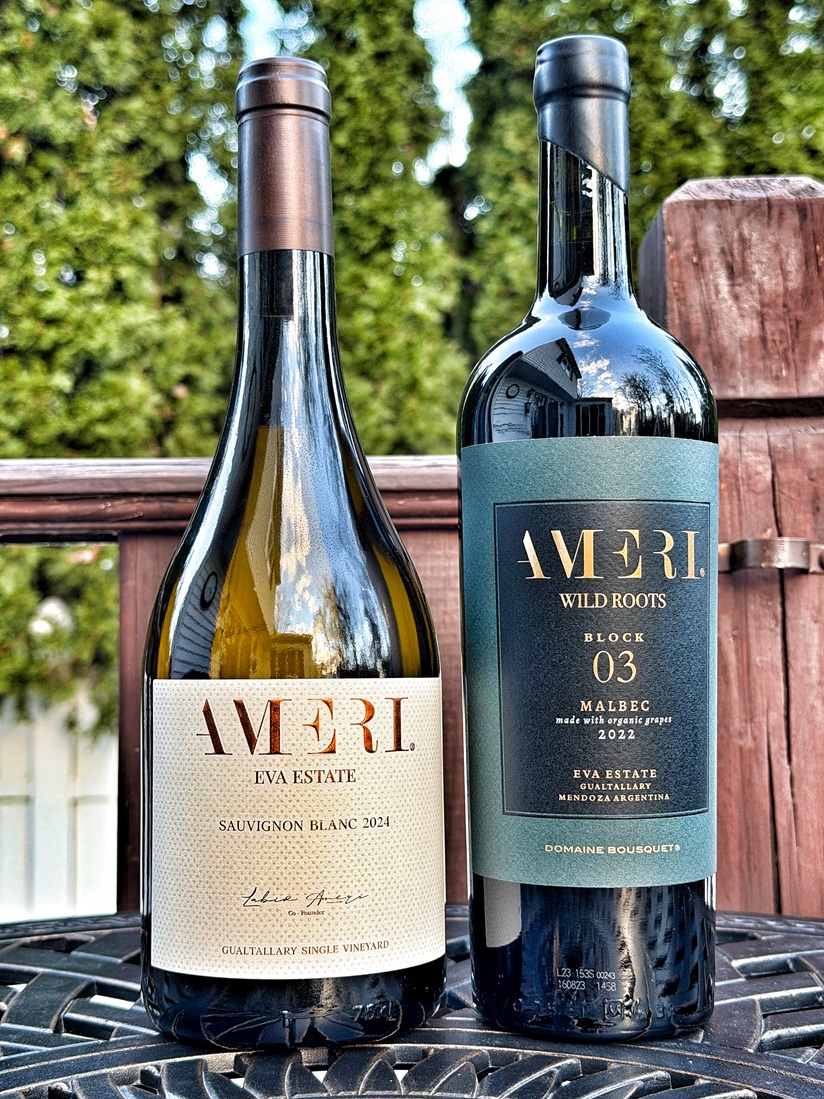
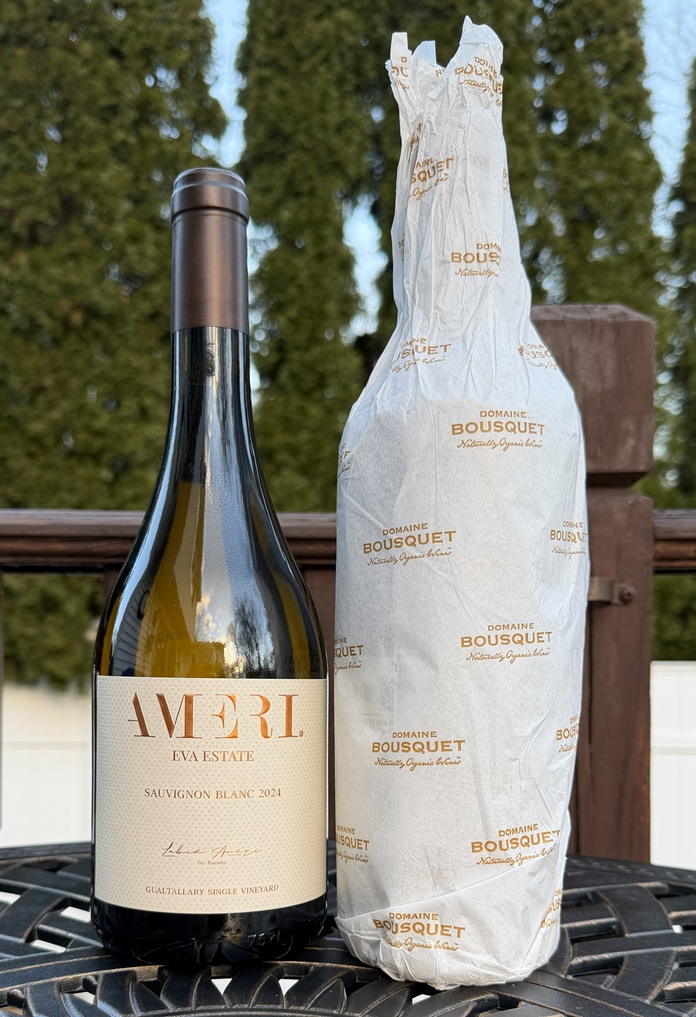
Recently, I was offered to taste two of the latest wines from the Domaine Bousquet, and this is why I had to talk about a simple recipe for making good great wines.
These wines are vineyard-specific, and even block-specific – as we mentioned, this often happens when the great wines are made. Quoting information on the Domaine Bousquet website, these wines are “Crafted from organic grapes grown in our Eva Estate vineyard in Gualtallary, Tupungato at 1,257 meters above sea level, in the heart of the Uco Valley. This wine originates from a detailed study of 123 soil pits conducted with geologist Guillermo Corona, which identified distinct soil profiles and geomorphic units across the vineyard.”
Both wines were nothing short of stunning.
2024 Domaine Bousquet Ameri Eva Estate Organic Sauvignon Blanc (12.5% ABV, $35, grapes sourced from Plot No 9, fermented in French oak barrels (50% new, 50% second use), aged for 8 months in barrel and 6 months in bottle) had a very unique profile for the Sauvignon Blanc. It didn’t have the grapefruit, nor it have a cat pee. Instead, it was reminiscent of a nice, balanced Chardonnay, with a hint of buttery notes and a touch of honey. Delicious, balanced whitestone fruit, lemon, smooth but vibrant. If we need a style comparison, Pouilly-Fumé is the only Sauvignon Blanc that comes to mind, and otherwise, Ornellaia’s Poggio Alle Gazze would be my next best comparison. A delicious wine (8+), probably the best Sauvignon Blanc I tasted in a while. Oh yes, and this wine will age. It went from restrained fruity on the first day to tart and acidic on the second to the beautiful fruit medley on the third. Definitely worth the price in my opinion.
2022 Domaine Bousquet Ameri Wild Roots Block 3 Organic Malbec (14.5% ABV, $85, fermented with native yeasts in 400-liter oak barrels, followed by a 30-day maceration, aged for 12 months in French oak, one year in bottle) was even more impressive than the previous wine. Layers of luscious fruit, cedar, a hint of vanilla (a hallmark of Malbec in my book), minerality, a touch of black currant, perfectly integrated tannins, impeccable balance. This wine would easily compete with the best California Cabernet Sauvignons, for sure in a blind tasting. (9-), will also age nicely, considering the evolution over the 3-4 days the wine was opened.
Here you are, my friends. Two new wines from Domaine Bousquet, two next-level wines. still competitively priced considering the amount of pleasure they are offering. I’m not sure what’s next for Domaine Bousquet, but one thing is for sure – I expect more great wines to come our way.
Until the next time – cheers!
A Few Days in Paris – 2025 Edition
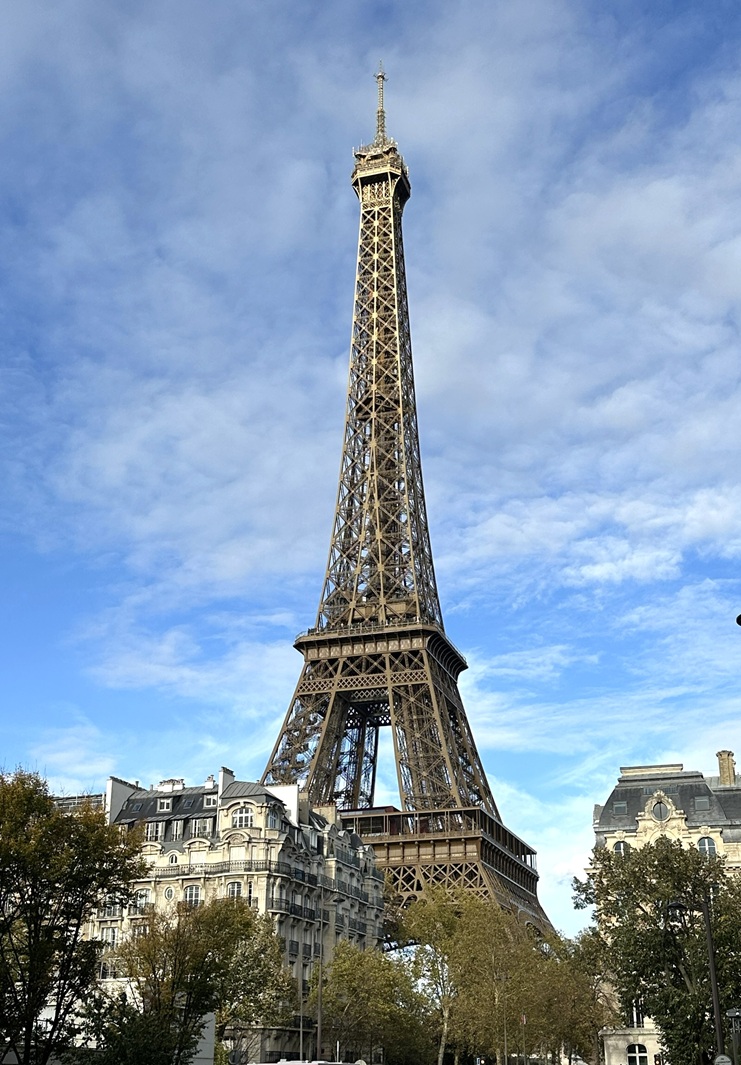 We generally have an opportunity to plan our lives.
By this, I mean deciding that we want to visit a place or a country. And sometimes, our travel is planned for us when we need to travel for work. And then, occasionally, we get a lucky break – for example, when your work travel takes you to Paris.
I’m typing this on the plane, coming back after spending a week in Paris – yes, for work. And I will not lie to you – I enjoyed the experience. As you know, when I travel, I take lots of pictures. And then I love sharing those pictures – and this is exactly my plan for this post.
We were in Paris last May, when the city was getting ready to host the Summer Olympics 2024. Coming back a year later, at the end of October, and outside of the busy tourist season worked rather well.
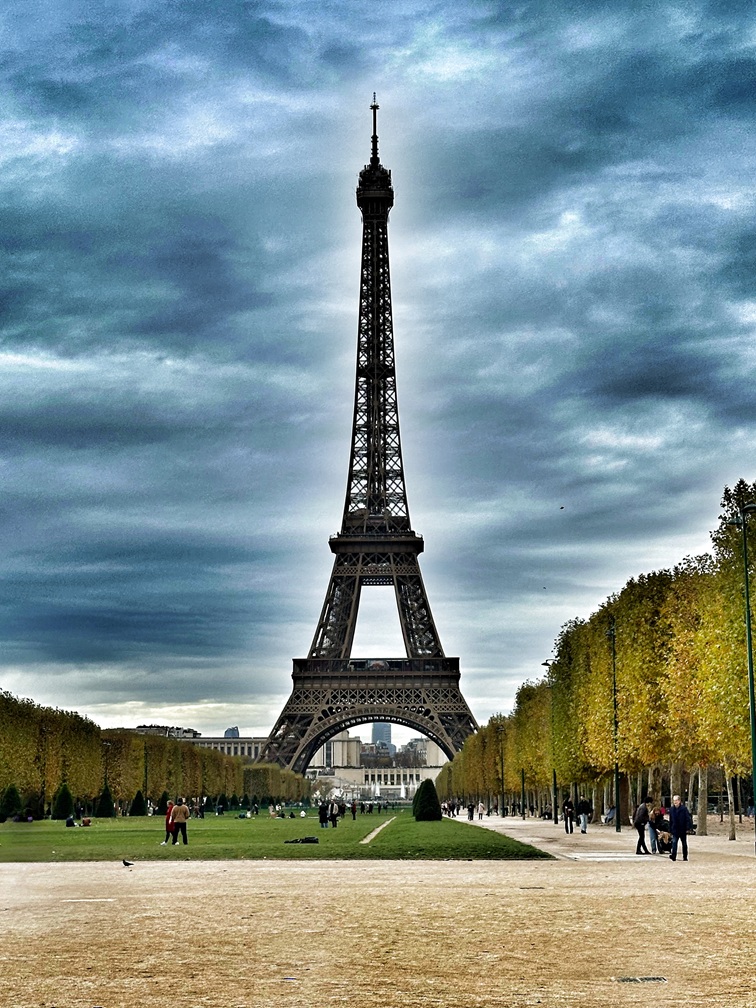
I stayed at the hotel located within a 5-minute walk from the Eiffel Tower, thus I had an opportunity to take pictures during the day, during the night, from 100 meters away, and even from underneath the tower. And now, I can share them with you.


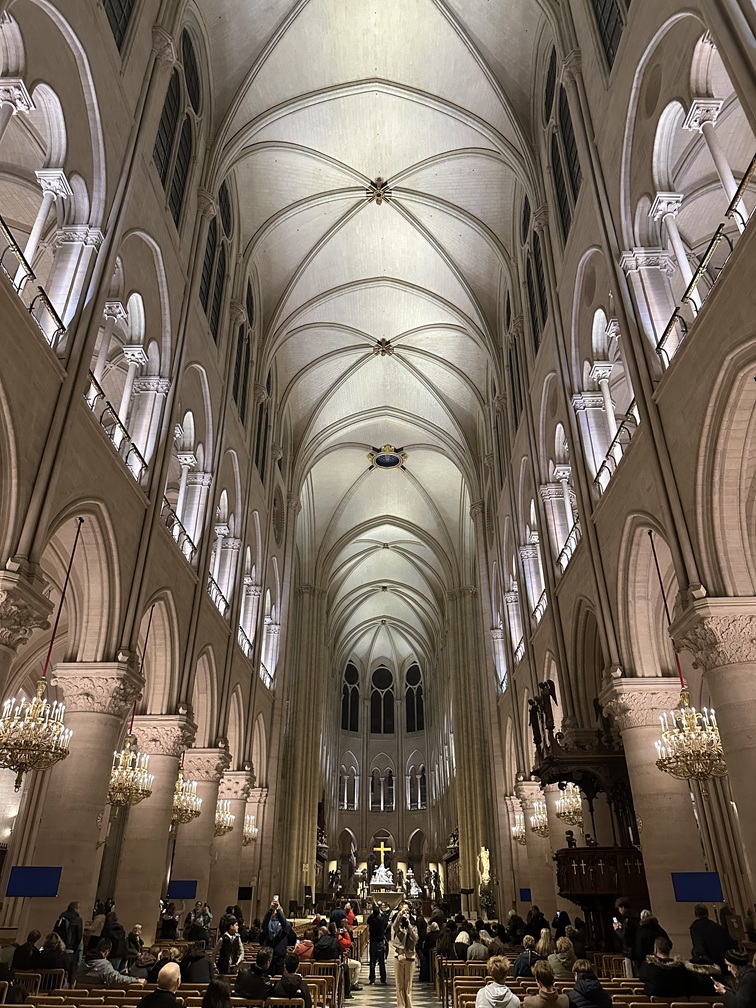
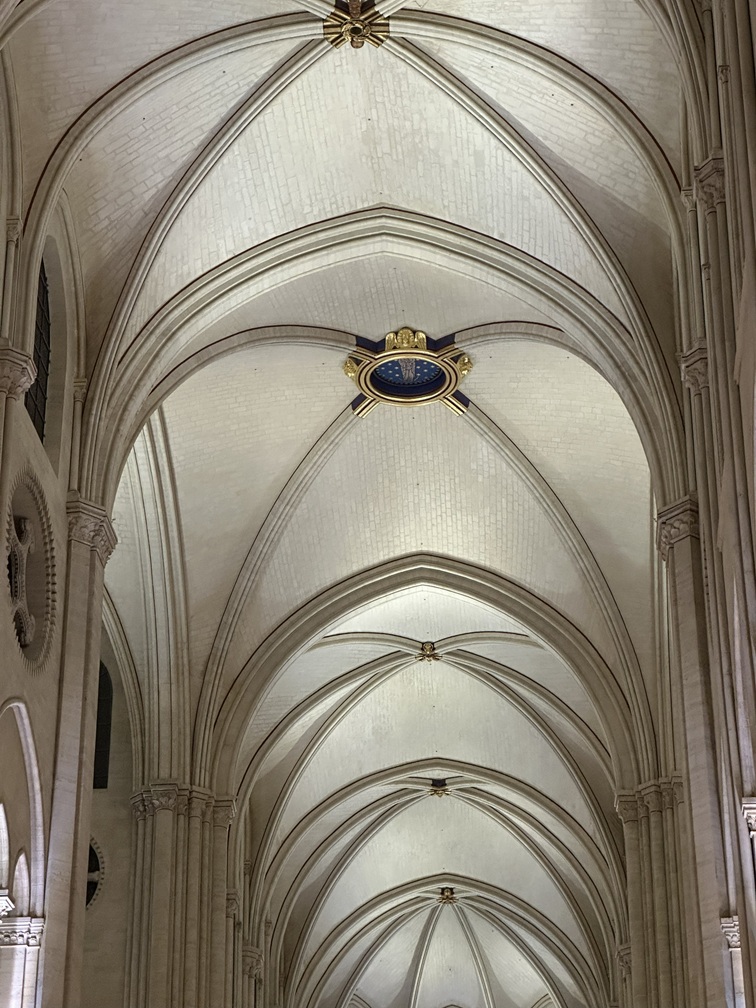
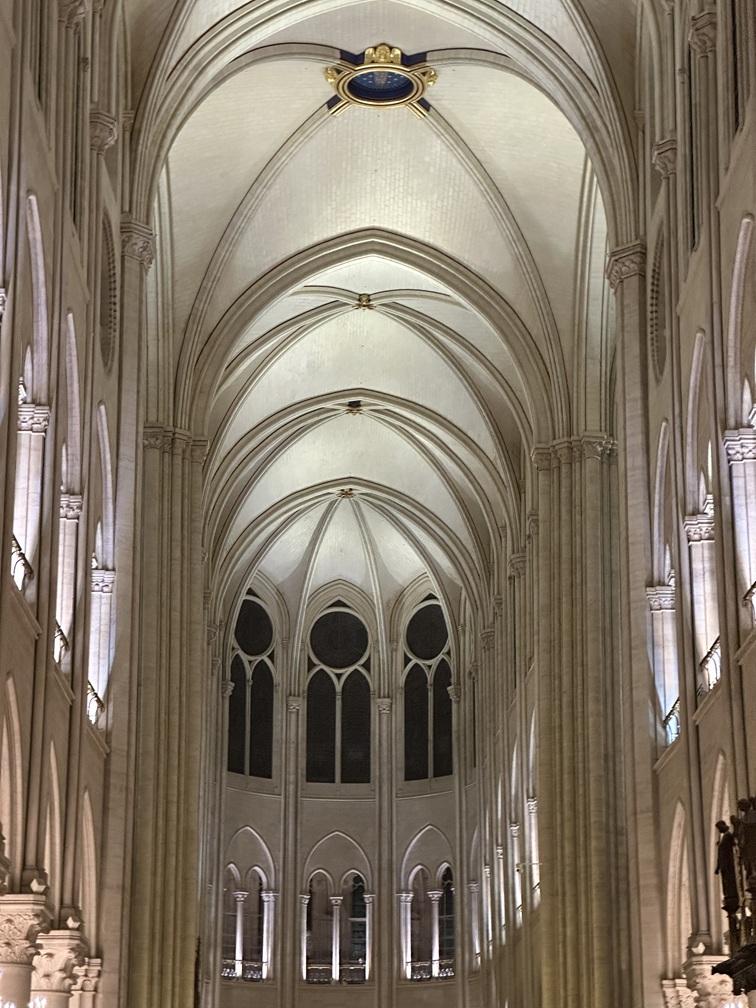
One of the experiences we missed last May was visiting Notre Dame. It was just reopening after the restoration, and we didn’t have a chance to see it. I was very lucky as we managed to see her in all of her renewed beauty.
Let me explain the “lucky” notion here. We initially planned to visit Notre Dame on Wednesday night. It was raining on Wednesday, so we decided to wait until the next day. Then, we got a recommendation to reserve our visit time online – the admission is free, but if you have timed tickets, your wait should be minimal as opposed to the live queue. When I tried to reserve tickets for the time in the evening (our work was ending at 6 pm), all the tickets were sold out for Thursday and Friday, the only two days when we could visit. So we decided to visit on Thursday night, which also appeared to be the only day of the week when Notre Dame is open until 10 pm!
When we arrived, close to 8 pm, there was literally no line, so we were able to go in and fully experience the beauty of Notre Dame.


We also wandered by the Musée d’Orsay after dinner. It was too late to enter the museum, but at least we snapped a few pictures of the hippo:


At last, a few words about food and wine.
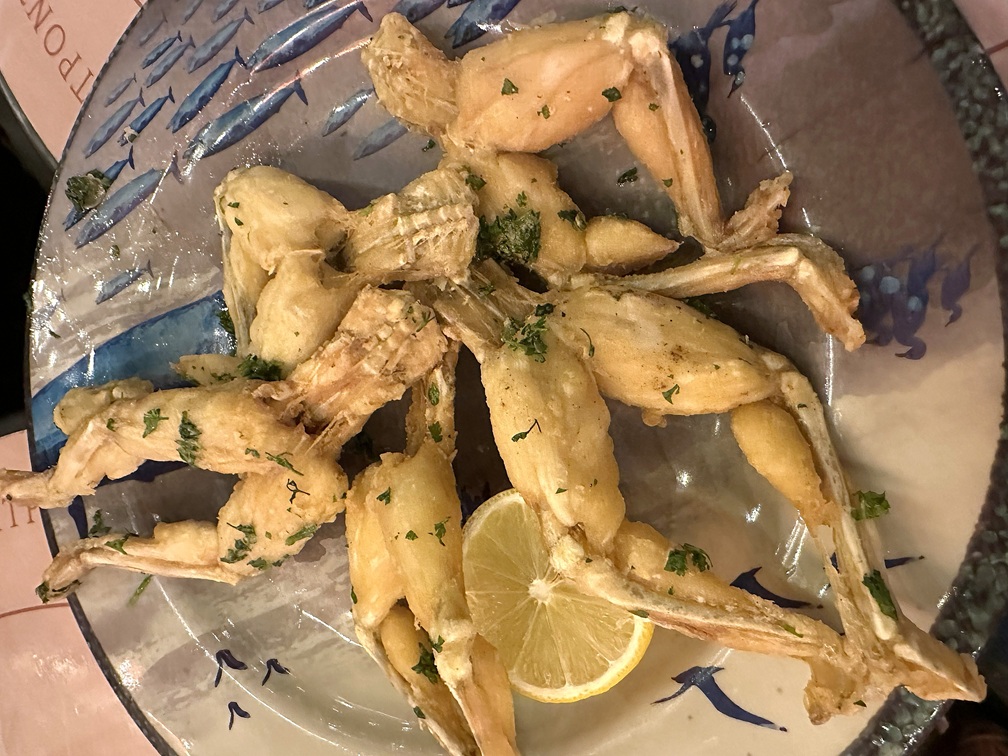
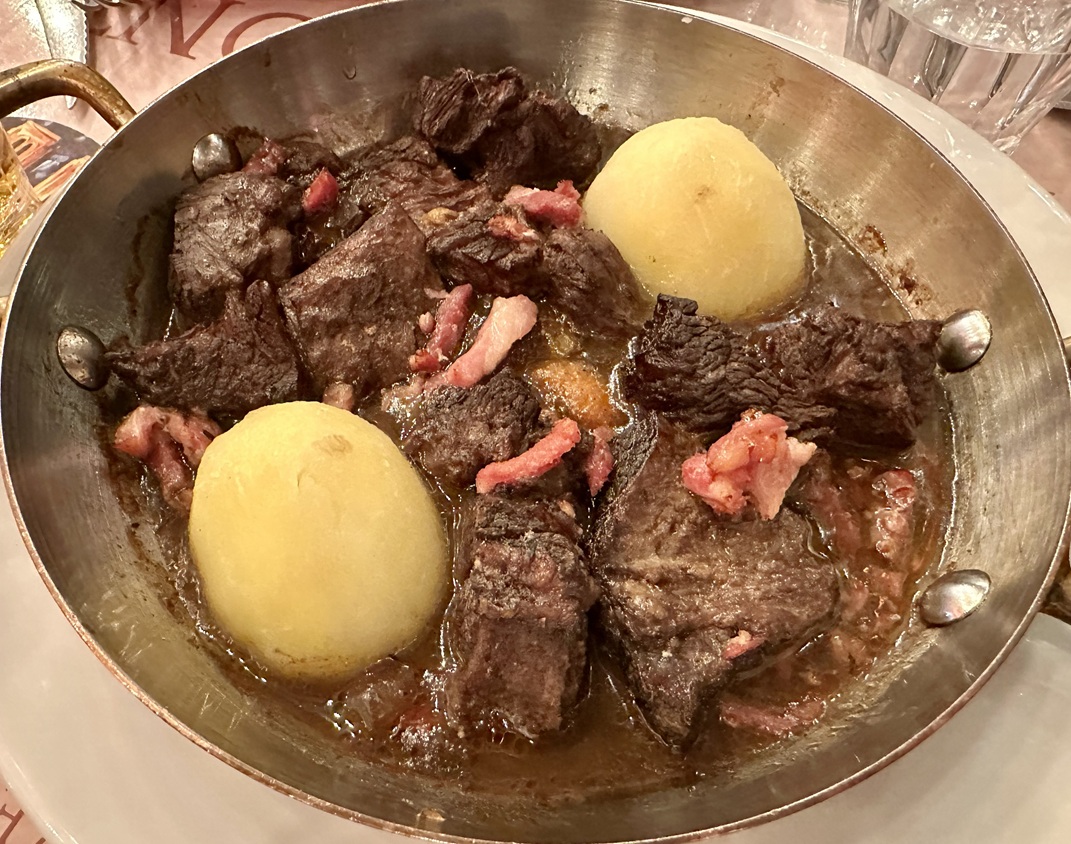
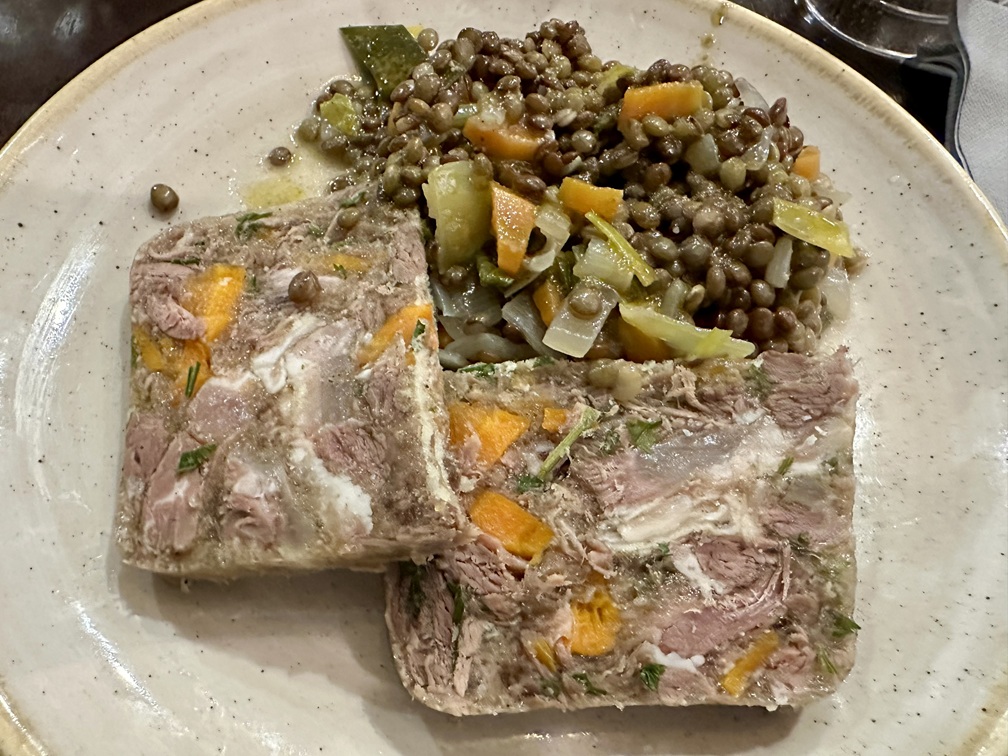
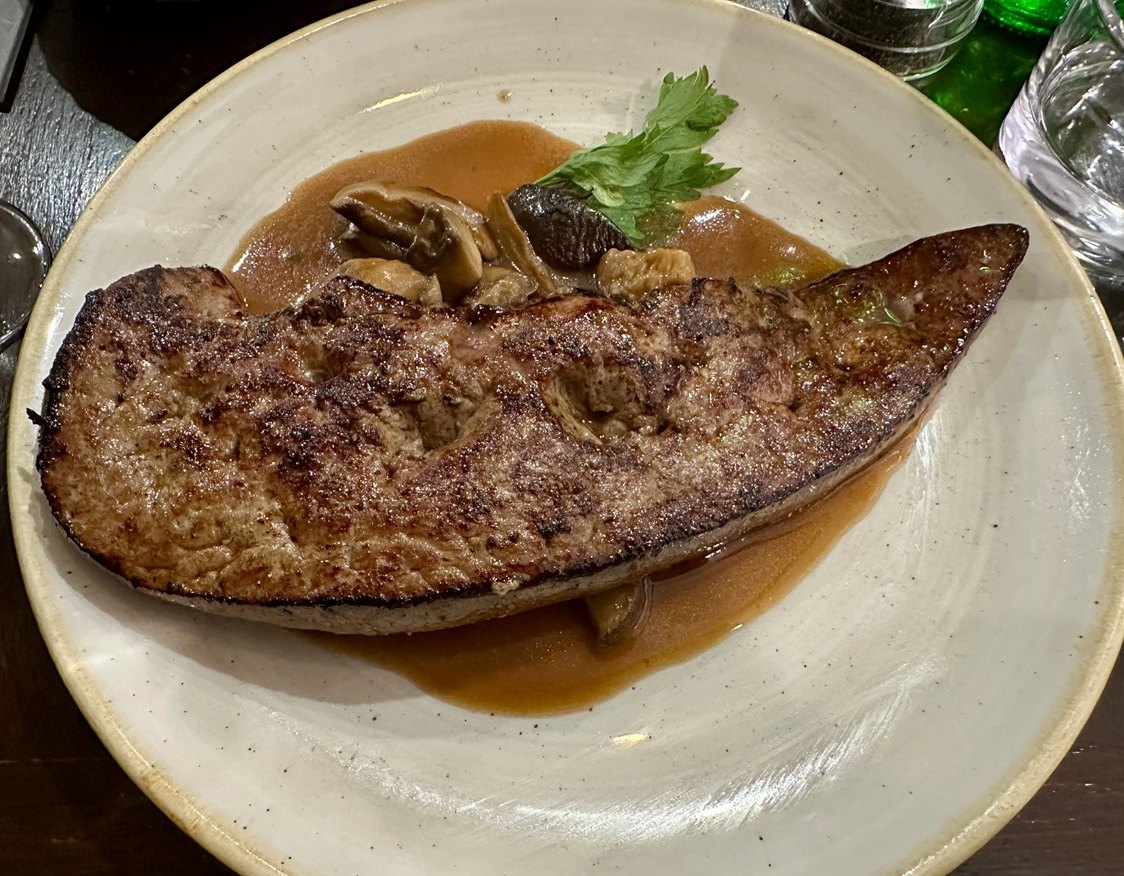
Talking about food experiences, it was my first time trying frog legs! I must say that I liked them. I usually hear a reference to “tastes like chicken,” but to me, they most resembled fish, such as trout, and not chicken. Also in the highlights were Beef Bourgogne (great flavor), oxtail terrine (very tasty), and veal liver with wild mushrooms (perfectly done, not something you can easily find in a restaurant in the U.S.). From the food let-downs, I want to mention steak tartar premixed with … wait for it… ketchup (sigh). You couldn’t taste anything except ketchup in that dish…
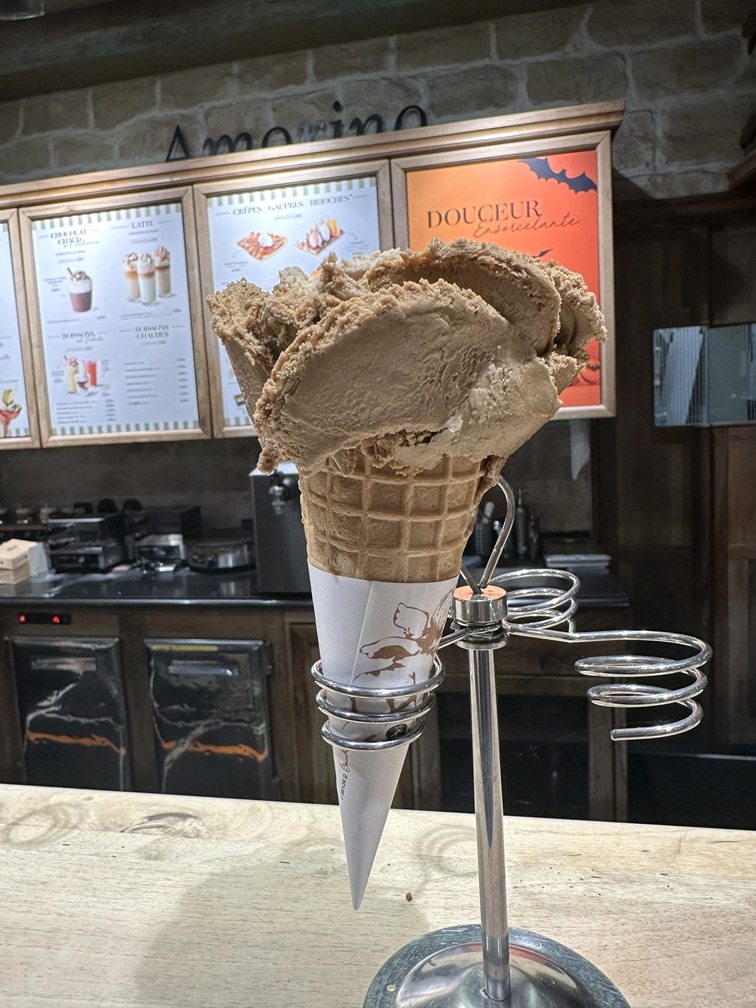
And then I found a perfect delicious gelato…


Now, the wines.
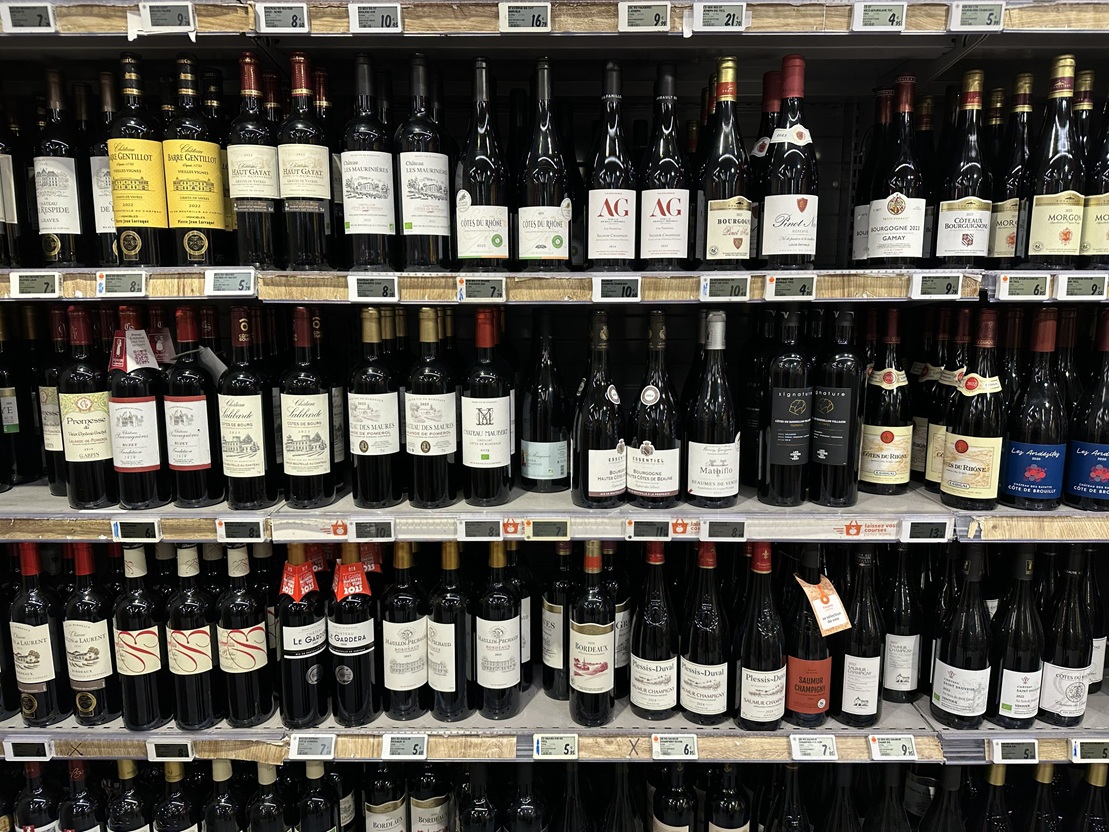
As always, I started by visiting the store. I picked a bottle of 2022 Club des Sommeliers Saumur-Champigny AOC (13.5% ABV), a perfect opportunity to taste the beloved Cabernet Franc. I understand that this is a supermarket brand, and on the first day, the wine had no resemblance to the classic Loire Cab Franc (no cassis, no bell pepper whatsoever). On the second day, the wine improved, offering at least some hints of the classic flavors.
Ah, and here is the obligatory picture of the supermarket wine shelves – you can zoom in and study if you wish.


The 2024 Le Sudiste Chardonnay Pays d’Oc (12.5% ABV) was outstanding. Classic Chardonnay, vanilla and apples profile, just a hint of butter, round, silky, and refreshing.
While visiting Basque restaurant (probably best meal of the trip), I found some delicious wine by the glass from the appellation I’m not familiar with at all – 2020 Domaine Abotia Rouge Irouleguy AOC (65% Tannat, 25% Cabernet Sauvignon, 10% Cabernet Franc) – the wine was a standout, dense, full-bodied, an interplay of wild berries, well integrated tannins and perfect balance.
Passing through the duty-free at the Charles de Gaulle airport on the way back, I had an opportunity to platonically enjoy some of the lovely and very expensive views, such as a line-up of Krug Champagne, Hennessy Cognac for measly €39,393, and a nice display of Louis XIII Cognacs (only €7,450! How many would you like?).


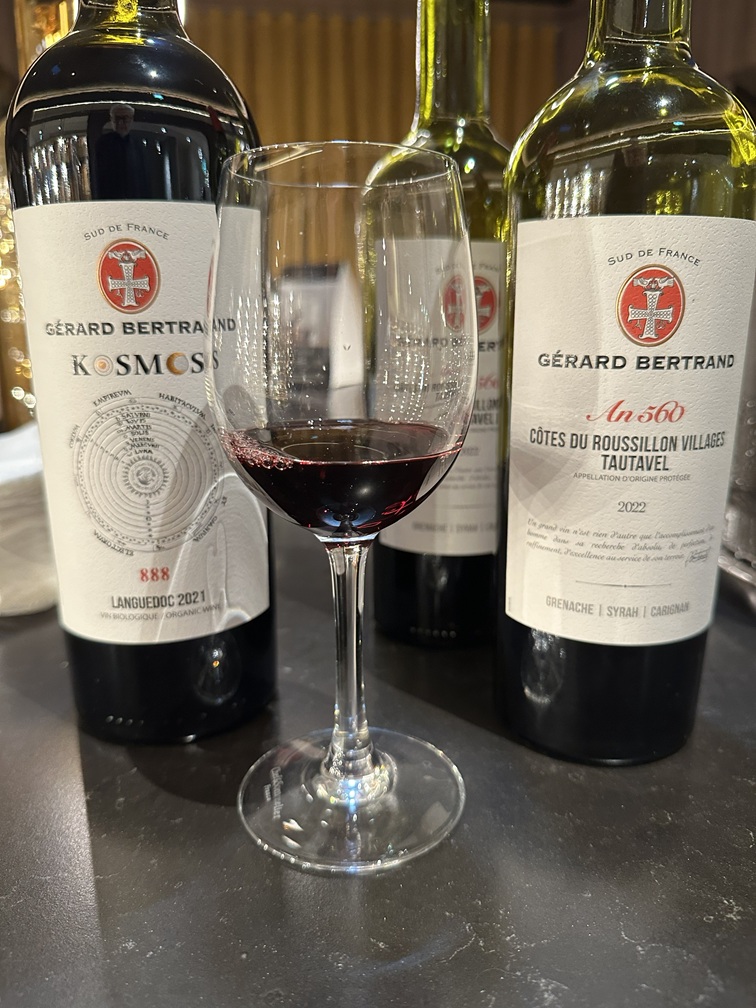
And then there were some unplatonic pleasures, despite early morning hours (who said you can’t enjoy wine at 8 AM?). I had some time to stop by the Star Alliance lounge, and I found a few of the Gérard Bertrand red wines being offered.
I was sure that I wrote about Gérard Bertrand wines on multiple occasions, but apparently it was only one blog post from 2 years ago, also talking about … yeah, visiting Paris.
Gérard Bertrand makes very reliable wines, usually at quite reasonable prices. First wine I tried was 2021 Gérard Bertrand Kosmos 888 Languedoc AOP (14.5% ABV, Grenache/Syrah/Mourvèdre blend), which was outstanding – generous, supple fruit, full body, perfectly accentuated tannins, luscious and delicious. I actually want to cite the description of the wine from the back label here, as it explains the name of the wine: “Kosmos is a tribute to the two most emblematic cosmic stars in organic viticulture, the Sun and the Moon. These two stars come together to represent the symbol of the infinity of the Kosmos, 888”.
It is interesting how the second wine couldn’t be any more different. 2022 Gérard Bertrand Héritage An 560 Côtes du Roussillon Villages Tautavel AOP (15% ABV, a blend of Grenache, Syrah, and Carignan) was much leaner despite higher ABV, tight, restrained, with firm structure, firm body, and more pronounced tannins – also perfectly elegant, but requiring you to slow down a bit to savor the beauty. Here again, I feel compelled to cite the description on the back label: “Gérard Bertrand reveals the history of South of France greatest terroirs. At the origin of humanity, 560 000 years ago, our ancestors already lived on the lands of Tautavel. The magnificent and secular landscapes are home to a vineyard in a limestone and schist clay amphitheater”.
On this happy note, it is time to conclude the travel story.
Hope you enjoyed some pictures!
Beaujolais Nouveau Est Arrivé! 2025 Edition
 Beaujolais Nouveau Est Arrivé!
Yes, it is the third Thursday in November, and you know what it means! It is time to celebrate the new harvest. The 200-year-old tradition, taking its roots in the 1800s, became the “official” celebration of the new harvest 40 years ago, claiming the third Thursday in November as an official celebratory date. This is the day when the first wine of the new harvest appears in the wine stores around the world, to the great enjoyment of the wine aficionados and geeks.
For the 15 years this blog has existed, I have made an effort not to miss a single Beaujolais Nouveau celebration, and I have been successful so far. Considering that for the past 3 years I was traveling over this special week, the effort was real – you can read about my Beaujolais Nouveau struggles in France in 2022 and Florida in 2024. This year 2025 has not been an exception since I’m currently in Dallas, Texas.
Since the beginning of the week I checked a few times that there are wine stores within walking distance of the hotel where I’m staying, so my plan was to walk to the store on Thursday and get a bottle of Beaujolais Nouveau. Remembering past year’s experience, I decided to call ahead, which proven to be a challenge. One store had some google voice setup telling me to leave a message. Again no answer in the second store. Someone answered my call in the third store, but the person clearly never heard of Beaujolais Nouveau, so after a few minutes of back and forth I understood that this would not work to my favor.
The next best hope was Total Wine – but the store was 1.8 miles away, I had no car and I was in the meetings. Then it dawned on me that Total Wine has the same day delivery service, and life all of a sudden improved. I found out that Total Wine had two Beaujolais Nouveau available, so the order with delivery was quickly placed (delivery was only $4.99 for two bottles).
I was hoping that the wine could be just left with the hotel staff, but the delivery lady called me to tell me that I have to come and pick up the wine in person, as I need to sign for it, and the lady needs to make sure that I’m not drunk already. Well, I guess it is Texas after all (say it in the voice of “This is Sparta!!”).
Luckily, I set up the delivery window during my lunchtime, so it was not a problem to meet the driver and get the wine.
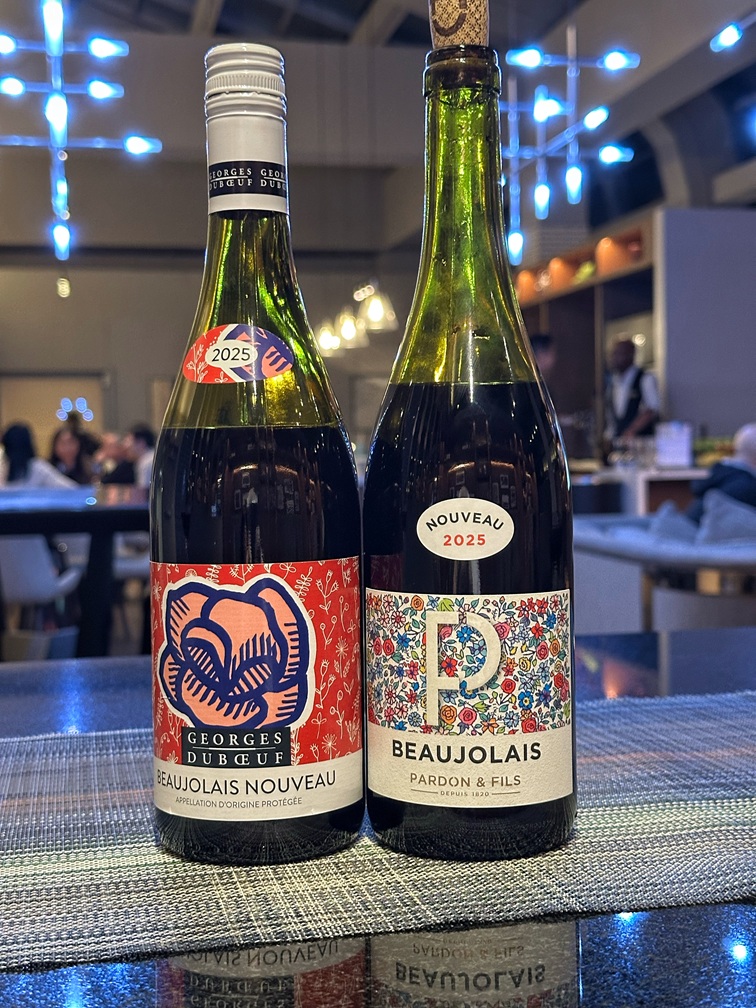
After my meetings ended, there was the time to taste the wine. Attention: spoiler alert! Every year, I say that the quality of Beaujolais Nouveau gets better. 2025 was no exception. 2025 Beaujolais Nouveau was not just better, but it was much better!
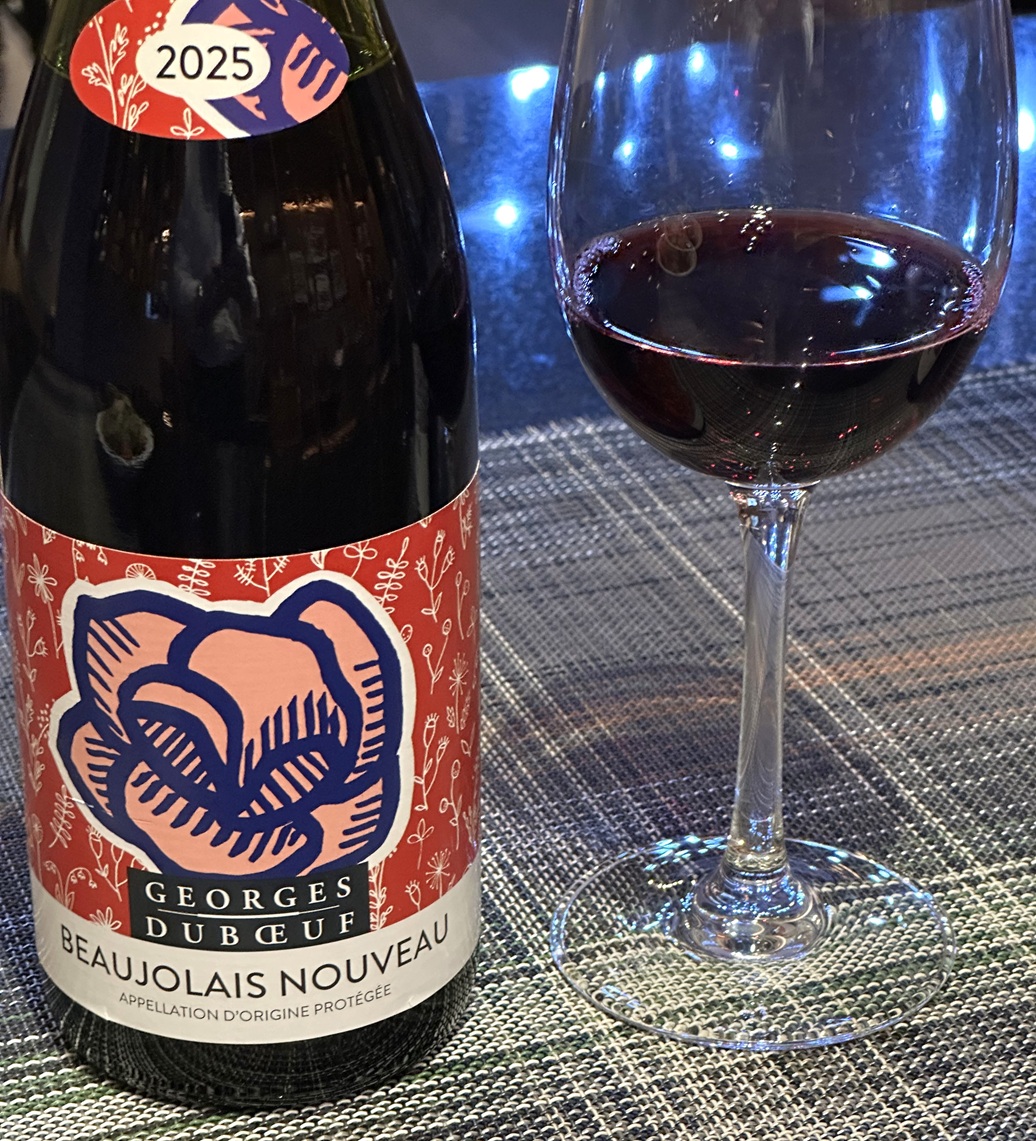
Every year, the bottles of Beaujolais Nouveau are adorned with specially designed labels, sometimes even multiple labels from the same producer for the same wine – I have no idea how that works. As I have been writing about Beaujolais Nouveau every year since this blog started, I can offer you a collection of labels starting with the 2010 vintage. As Georges Dubouef is the only producer I was able to taste every year, below is my little “show and tell” display limited to the labels of Georges Dubouef wines I tasted throughout the years. In case you feel like it, you can even choose your favorite label and share it in the comments (sorry, this is not a competition, so no prizes will be awarded).
Here we go:


Beaujolais Nouveau 2025 has arrived, and if you haven’t tasted one yet – what are you waiting for? Taste it now and let me know what you think! Cheers!
Ah, Tempranillo!
And just like that, I almost miss another grape holiday. This time, it is Tempranillo Day!
Of course, you know this well by now – I like all the grapes. And I always say that there is one that I like the most – and every time I say it, it is a different grape.
Guilty as charged.
And yet, Tempranillo is really special.
You don’t have to read them, but just look at the names of some of my posts:
Magnificent Tempranillo
Tempranillo, Transposed
The Art of Tempranillo
Magnificent Rioja: CVNE Deep Dive
I think this qualifies as a pure expression of love, don’t you think?
I discovered the beauty of Tempranillo a long time ago, when I tasted a vertical of Rioja wines going all the way to 50+ years old. Rioja is one of my favorite expressions of Tempranillo, covered in this blog a countless number of times. Of course, Tempranillo is one of the major Spanish grapes, and it does very well in the US (Washington, California, Oregon, even the Hudson Valley), but if I can, I would always gravitate towards Rioja.
What I like about Rioja is that, in most cases, Rioja is predictable. Of course, it is great if you know the producer. La Rioja Alta, CVNE, Lopez de Heredia, Bodegas Lan, Bodegas Beronia, El Coto, Oscar Tobia – I will be happy to open a bottle with any of these names at any moment. But even when you don’t know the name, I would prefer to take my chances with an unknown Rioja rather than an unknown Chianti, an unknown Bordeaux, or an unknown Pinot Noir (oh, that might be the scariest of all).
Case in point. I’m currently in Stockholm, and at the restaurant, the wine list was short and without any names I could recognize. After an internal debate, I decided to take my chances with an unknown Rioja – and I didn’t regret my choice for a second, and neither did my dining companions.
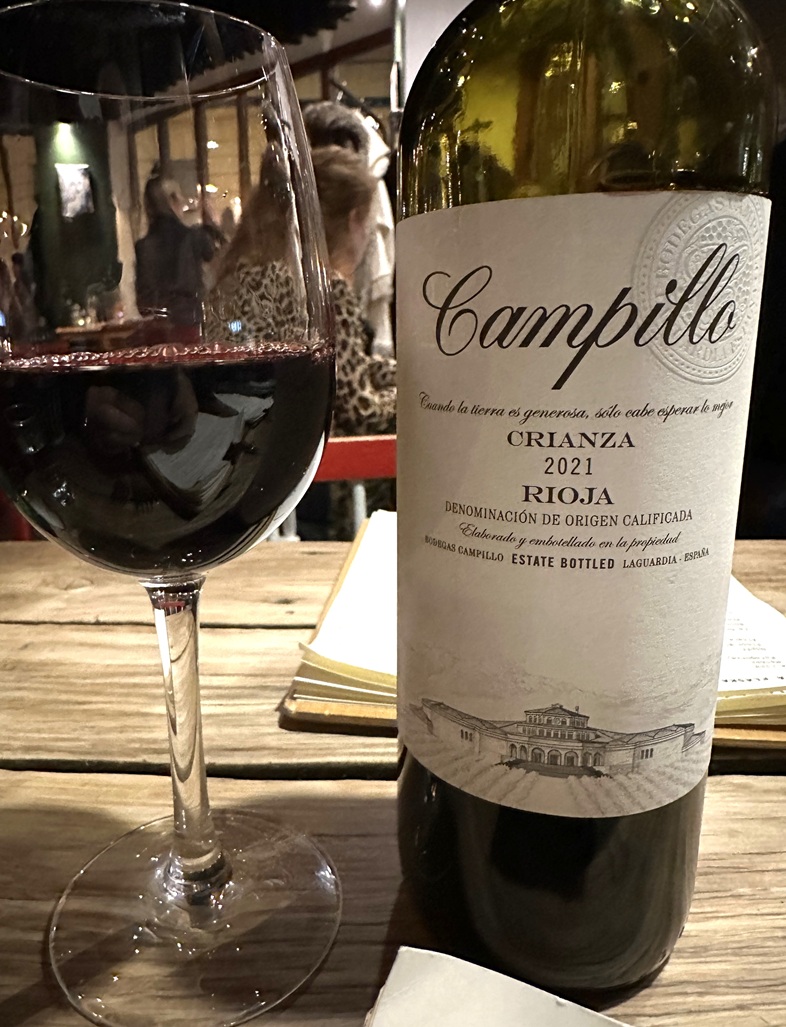
2021 Bodegas Campillo Rioja Crianza DOC (14.5% ABV, 12 months in oak) was simply delicious. Fresh dark fruit on the nose, loads of dark fruit on the palate, cedar box, cherries, silky-smooth, roll-of-your-tongue goodness, medium to full body – a pure joy. Every sip was literally accompanied by the collective “ah”. You can call it pure luck, but I trusted my tempranillo, and the tempranillo didn’t disappoint.
Here you go, my friends. A grape holiday tribute to one of my favorite grapes – and the discovery of a new Rioja name.
How are you celebrating Tempranillo?
For the Love of Madeira
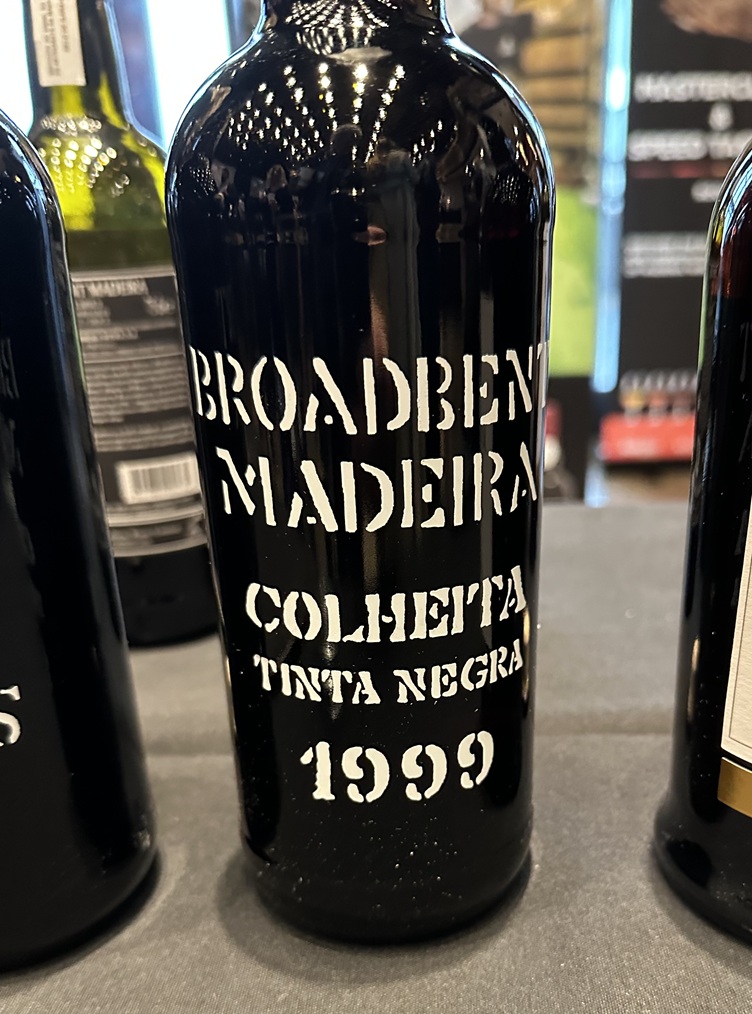 If I were to offer you a glass of Madeira, what would you say?
Okay, let’s take it up a notch: I assure you it will be a good Madeira.
Would you gladly accept it, or would you energetically decline?
I’m betting about 80% on the latter. And if you like wine, that would be simply your loss. But if you are in that 20%, accepting that glass of good Madeira would be a very wise decision.
Madeira has a long history of ups and downs, similar to many other wines. I wrote about Madeira a few times in the past (not enough!), so let me be obnoxious and quote one of my older posts about the history of Madeira.
Madeira wine takes its name from Madeira Island in Portugal. The history of Madeira, which started around the 15th century, is full of accidental discoveries, glory, overcoming of the hardship, rise and fall, and even love – if you are interested in the full story, you should take a look at the Madeira Wine website. In the 15th / 16th centuries, Madeira wine was created when wine was transported in barrels through the ocean to far away places such as India and China. It was found ( by accident, of course) that a long ocean voyage improves the taste of wine compared to the original one that went into the barrel. After many trial-and-error experiments, it became apparent that prolonged exposure to the warm weather was the culprit, and then the method of heating the wine up to 60°C (140°F) was invented. The process of heating up the wine is called Estufagem, and it is done after the wine is fermented in the oak barrels, same as any other wine – again, you can find more details online – you can find less colorful but more technical details on Wikipedia (click here). Just to give you a few more details from Madeira’s history, trade embargoes led to further improving Madeira by adding brandy spirits in order to preserve the wine. Barrels of Madeira left for a prolonged time under the rain led to the development of the new style of Madeira wine, called Rainwater.
In the 18th century, Madeira was one of the most popular wines in the world, especially in England and the United States. Madeira was used to toast the United States Declaration of Independence, and was highly regarded as a drink of distinction. Unfortunately, first mildew and then phylloxera epidemic delivered a way too powerful one-two punch, which the Madeira wine industry was unable to overcome. Madeira subsided to nearly a cooking wine level, and stayed like that for a long time. Luckily, overall uptake on the wine industry throughout the world helps to revive the Madeira industry, and now it is becoming possible to find a great drinking Madeira even in the US – and you will see why. And I have to note that one of the great qualities of Madeira is in the fact that, unlike practically any other wine, once you open a bottle of Madeira, it will stay the same more or less indefinitely, due to both the Estufagem method and fortification with the spirit.
Now that you have a bit of historical perspective, let’s take a deeper dive into Madeira wine.
Madeira is a beautiful island with a subtropical climate and luscious greenery. Madeira’s name means wood, oak – this is what the first settlers saw. Madeira’s climate sports tropical winds, hot summers, mild winters, and high humidity. It also offers lots of microclimates, from south to north. Mountains and forests cover 47% of the island, mostly with altitudes of up to 200 meters, reaching 700 meters in some areas.
There are about 475 hectares of vineyards growing on the island (about 1,200 acres), cultivated by 2,000 growers. Vineyards utilize a pergola system to ensure proper aeration.
Six main grapes are used in wine production on Madeira: Sercial, Verdelho, Boal, Malvasia, Tinta Negra, and Terrantez. It is interesting to note that Verdelho and Verdejo are different grapes! Another interesting fact is that Tinta Negra can be vinified as white, rosé, or red.
After the harvest, the grapes are pressed and fermented as with any other wines. Fermentation is subsequently stopped, depending on the desired sweetness, by adding neutral spirit. Next, the heating process takes place. Less expensive wines are usually subjected to continuous heating in the steel tanks surrounded by coils for at least 90 days. Higher-end Madeiras, especially the single-harvest ones, are usually heated using the system called Canteiro, where the wine in the oak barrels is secured in place using wooden beams (canteiro) and heated by mother nature for a prolonged period of time, inside the winery.
The majority of Madeira wines are blends, with the labels indicating the age and type of grapes (it is also possible to make Madeira without indicating age and the grapes). The age designations can be 5, 10, 15, 20, 30, 40, and 50 years. There are also single-harvest Madeiras, called Colheita, which should be aged for at least 5 years in oak, and Frasqueira which requires at least 20 years in oak. Another beauty of Madeira is in the fact that the wine can stay in the barrel indefinitely, and bottled only when needed – some of the known Frasqueiras exceed 200 years of age.
Three years ago, in 2022, I was lucky to attend the Madeira tasting in New York City, where I had an opportunity to taste some absolutely spectacular wines. The event included a Madeira Master Class as well as a walk-around tasting.
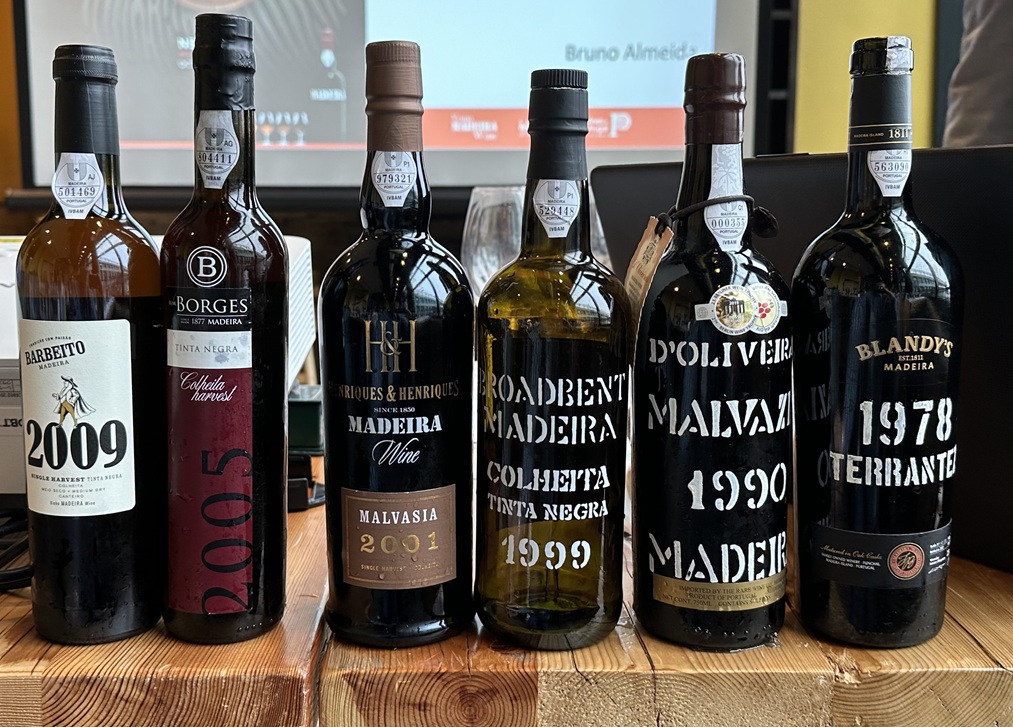
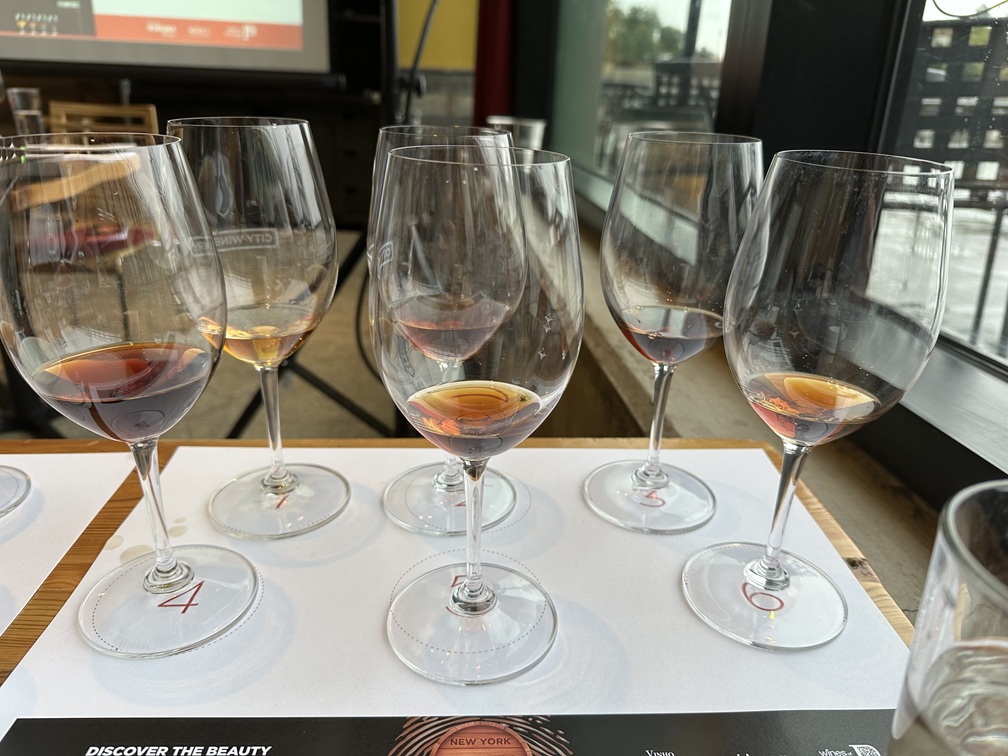


Here are the wines we tasted during the master class:
2009 Barbeito Single Harvest Tinta Negra
clean, open, light, easy to drink
2005 H.M. Borges Tinta Negra Colheita
Hazelnuts, dry fruit, figs, lemon, perfect acidity, beautiful dry fog finish. Lots of pleasure. Foie Gras would be perfect with it.
2001 Henriques and Henriques Malvasia Madeira
Complex herbaceous nose, nicely restrained
Salinity, acidity, supercomplex, dried fruit perfectly balanced
1999 Broadbent Tinta Negra Madeira Colheita
Chocolate, dried fruit compote, very restrained
Dried fruit, great acidity, toffee, tasty notes, outstanding.
1990 Pereira D’Oliveiras Malvasia Fresqueira Madeira
Bottled in 2018
Great herbaceous complexity, fall leaves, medicinal notes, eucalyptus
Amazing palate, dense, complex, loads of dried fruit and hazelnut. Superb.
1978 Blandy’s Fresqueira Terrantez Madeira
beautiful, herbal and vegetative notes, excellent balance, hazelnuts, salinity. Fresh and inviting.


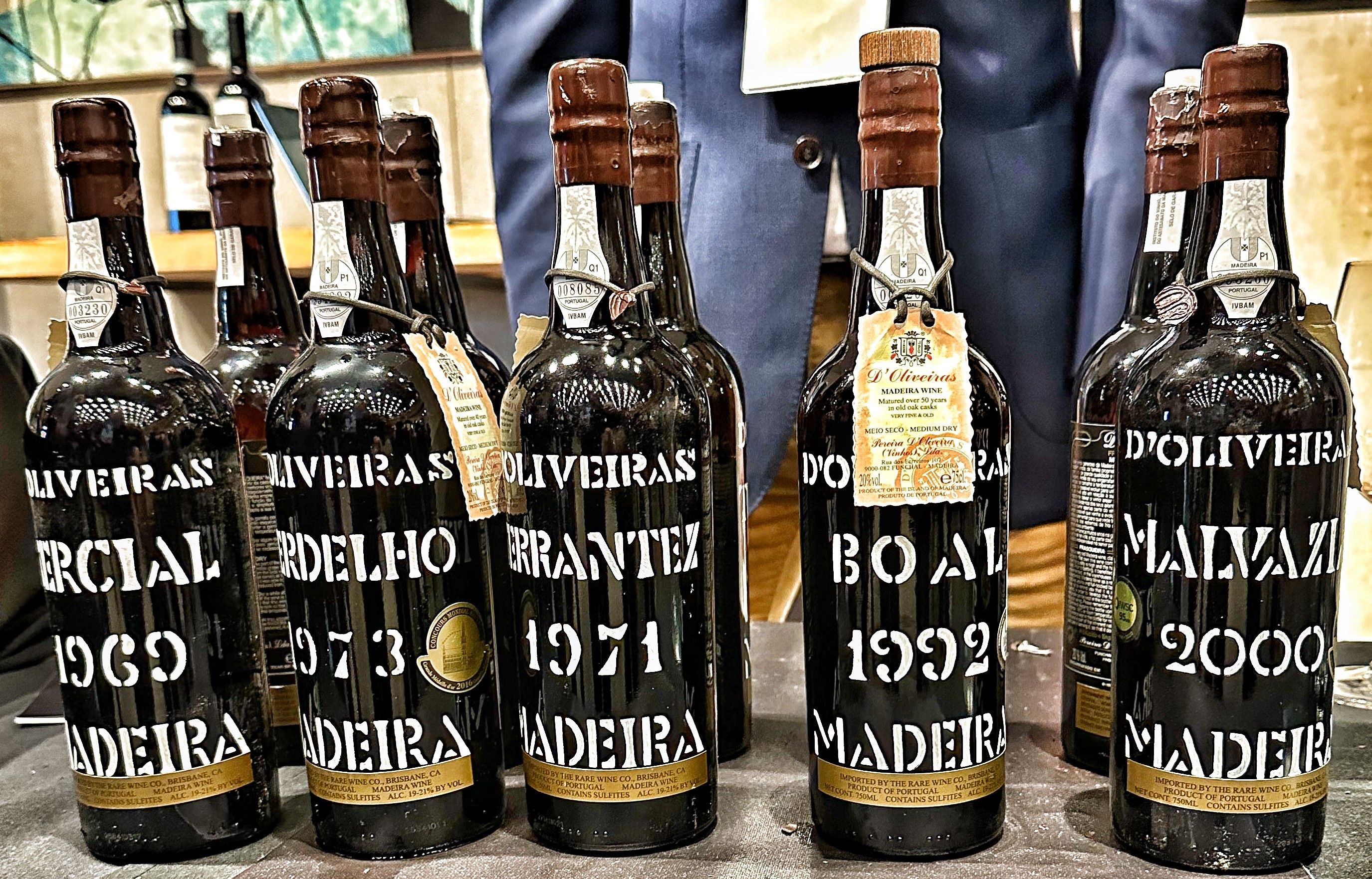
There were lots of gems in the walk-around tasting, such as Justino’s 1996, 1997, and 50 years old Madeiras; D’Olivera Colheita and Fresqueira Madeiras from 2000, 1992, 1973, 1971, and 1969 (1969 was bottled only in 2022); Broadbent 10 years old Sercial, Verdelho, Boal, as well as 1999 Tinta Negra Colheita, and others.
As I said before, Madeira really needs to be experienced, and you have a perfect opportunity to do so.
Coming November 18th, you can experience the beauty of Madeira for yourself. Here are all the details:
Experience the Magic of Madeira – Sip, Taste & Vote!
Tuesday, November 18, 2025 | 5:30pm – 8:30pm
Ideal Glass Studio | 9 W 8th Street, New York, NY 10011
Six producers, six bartenders, one delicious adventure.
You can get 2 tickets for the price of one ($55) using this link.
✨ Your ticket includes:
- Walk-Around Tasting featuring six top Madeira producers — taste rare bottles, some worth over $100.
- Cocktail Competition – six NY bartenders crafting unique Madeira cocktails. Taste and vote for your favorite!
- Food Pairings by Chef Nuno of Leitão.
- Mini “Speed Tastings” with Wines of Portugal Ambassador Eugénio Jardim, exploring Madeira styles in fun, 15-minute bursts.
- Cocktail Seminar: Madeira Cocktails Made Easy with bartender Francesco Dionese — learn how to shake, stir, and sip Madeira at home. (seating is limited).
Don’t miss your opportunity – and you can thank me later. Cheers!
Moscato d’Asti – The Joy of Sharing
 Wine should give you pleasure.
This pleasure can come in many forms.
The simplest one is a pure hedonistic pleasure of that sip itself, the burst of flavor overwhelming your taste buds, and the opportunity to mindfully reflect on that very burst.
Or, with one sip of familiar wine, you can be instantly transposed in time and space – the wine can bring back memories. You can instantly imagine yourself being in Italy 5 years ago, experiencing this wine for the first time, vividly seeing the faces of the people you were there with, and reliving that beautiful moment again.
And then there is possibly the biggest pleasure of all – an opportunity to share wine with people. It is great to enjoy good wine by yourself – but that pleasure amplifies disproportionally when you pour the wine for your guests and you hear the collective “oh, it is so good!”.
I’m happy to share all of my wines with my guests, but then there are some wines that I even prefer to share. Let me explain.
I’m happy to open a bottle of Cabernet Sauvignon, Chardonnay, Syrah, any still red, white, or Rosé. Even if nobody would share it with me, I can drink it by myself over the next 2-3 days, no problem. But I would be very reluctant to open a bottle of sparkling wine for myself – I definitely prefer to share it with friends. Especially if this is a dessert sparkling wine, such as Moscato d’Asti.
I love doing that at the end of the dinner, when nobody expects that more wine might be coming. Seeing another bottle being brought up to the table, guests’ usual and immediate reaction is “what, more wine???”. This question requires no answer; I just wait for the people to taste the wine first.
Moscato d’Asti might be one of the hidden gems of the wine world, lightly fizzed, low alcohol, and deliciously, “just enough” sweet. This wine, made from the Moscato Bianco (white Muscat) grape, comes from the area in Piedmont where Moscato wines have been made for hundreds of years. Moscato d’Asti wine in its present, lightly fizzed form was born in the 1870s, when a number of winemakers started producing it in commercial quantities. Yet despite its 150+ years of history, I would still call it a hidden gem, as many winelovers are not aware of this wine or have the wrong ideas because of its sweetness.
The beauty of Moscato d’Asti is in its lightness and effervescence, and sweetness well balanced with acidity. If you want a glass of wine with your dessert, you will have to search far and wide to find the wine that would pair better with literally any type of dessert. And at a typical 5.5% alcohol level, it is guaranteed not to overwhelm your dining experience with a heavy punch of alcohol.
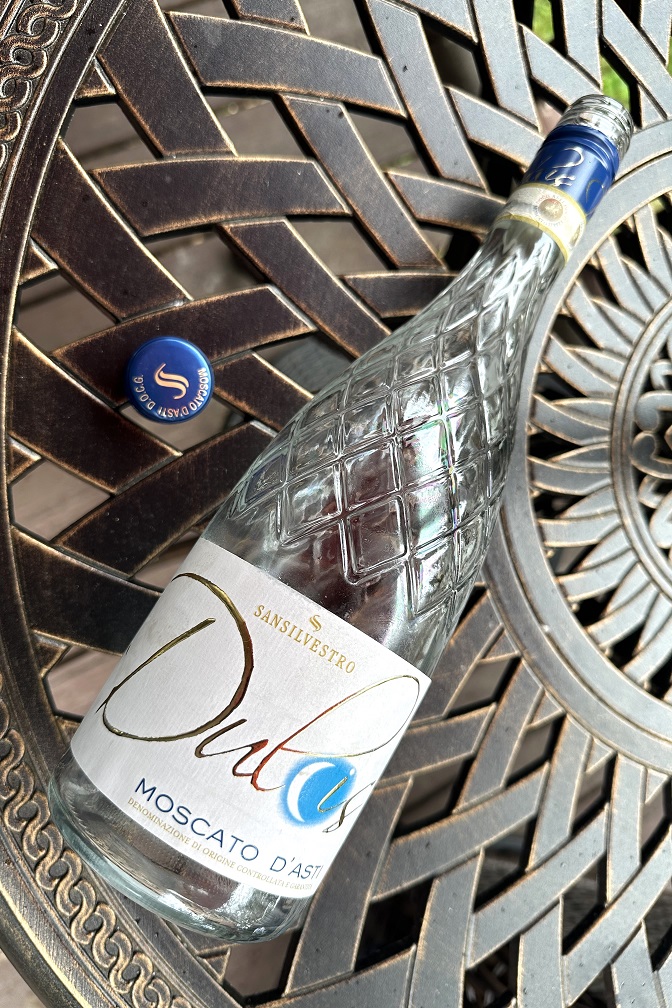
I recently had an opportunity to experience this “pleasure moment” when I opened the bottle of 2024 Sansilvestro Dulcis Moscato d’Asti DOCG (5.5% ABV) to serve with dessert. Overcoming the “what, more wine” resistance, I poured the wine for my guests and encouraged them just to take a sip. The next thing I heard was “oh my god, this is so good! Can I have more, please?” – there it is, that exact oenophile’s pleasure moment, equally as pleasant as taking a sip of the wine.
Moscato d’Asti is generally well priced, with a great selection of the wines at around $15 or less, so it definitely offers a great QPR and lots of pleasure without the need for an expense account. You should always have a bottle on hand, just in case you are craving a simple pleasure – double though considering the upcoming holiday season and all the get-togethers with friends.
By the way, on the subject of Moscato – back on May 9th, we celebrated Moscato Day (it is always celebrated on May 9th). I attended wonderful festivities in New York and never wrote about them, so if you care to see some of the images from that celebration, feel free to click “more” below.
For the Love of Riesling
 I love Riesling.
What do winelovers do when they love the wine?
That’s easy.
We want to share that love.
The biggest reward for a winelover is to offer someone a glass of wine and hear them say “oh, it is good!”.
Sharing the wine is the most enjoyable part of drinking the wine. We want the other people to experience the same joy as we do, we want them to experience the pleasure only the wine can deliver.
As I said before, I love Riesling.
Riesling might be the most underappreciated white grape. It is one of the main 3 white grapes (Chardonnay, Sauvignon Blanc, and Riesling). Riesling wines are made everywhere in the world – Germany, Alsace, Australia, New Zealand, New York (Finger Lakes, Hudson Valley), Canada, Oregon, California, and so on – and yet many of the wine drinkers wouldn’t even openly admit that they like Riesling and that they are happy to drink it.
It is hard to tell why that is. Many people associate the word Riesling with the word “Sweet”. It is a big mistake, as it means, for example, that they never experienced bone-dry, tongue-twisting Rieslings from the Claire Valley in Australia. I would even dare to say that the majority of the well-made Rieslings are not sweet, unless they are purposefully made to be sweet, such as BA or TBA German Rieslings. The main trait of Riesling, similarly to all other wines, is balance. As long as the Riesling is balanced, it is one of the most enjoyable white wines you can imagine. And it pairs well with the wide range of food. I’m telling you – Riesling is one of the best white wines in the world.
The love for wine needs to be shared. And so earlier in the year, I decided to do a Riesling wine tasting. My audience (family, future in-laws) wanted to learn more about the wines, and I have decided that tasting a bunch of Rieslings will offer an excellent educational opportunity (was I right? I have no idea, but I know we had fun).
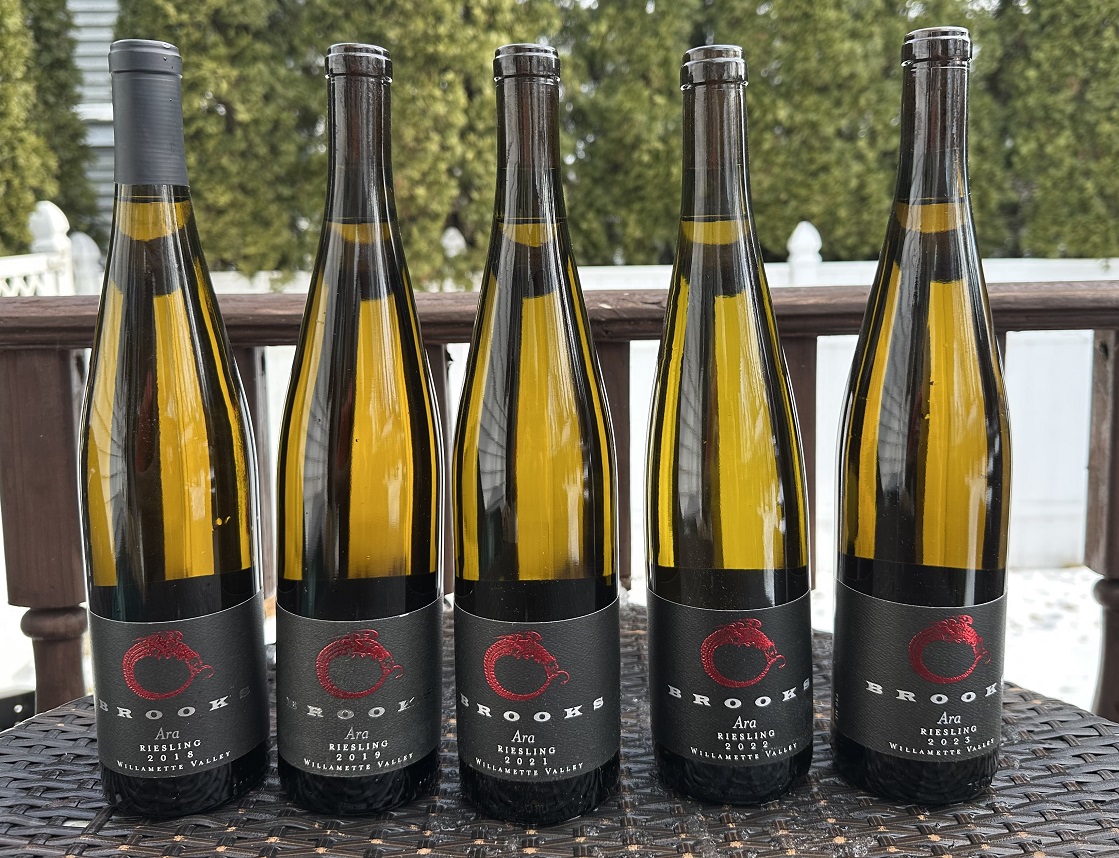
Ask me to name three of my favorite Cabernet Sauvignon producers, and I will quickly become frustrated – can I give you at least 10? 20 or 30 would be even better. The same would be for a Chardonnay, Syrah, and Tempranillo. When it comes to Riesling, however, that would be an easy task. Grosset from Australia. Smith-Madrone from California. Brooks from Oregon. This is my “top 3 Riesling producers” list. I would absolutely love to do a comparative testing of these 3 Rieslings, but I managed to get only 2. I got Smith-Madrone Rieslings first, and then when I got the idea for the tasting, I wrote to Brooks, and they were kind enough to send me a nice vertical of Brooks Rieslings. I also asked Ravines Wine Cellars from Finger Lakes for a similar set, but got no reply, so my tasting consisted of a vertical of Smith-Madrone Rieslings from 2018, 2019, 2021, and 2023, and Brooks Ara Riesling from 2018, 2019, 2021, 2022, and 2023 (both wineries didn’t produce wines in 2020).
It is important to note that Riesling can age very well, and aged Riesling is just a special experience. I did an online search and found out that it is rather hard to find aged Riesling anywhere, at least for the price I was willing to pay (age your Riesling, people, take my advice). I managed to find a bottle from 1997, which was seemingly in reasonable condition. At the same online store, I also managed to find a sparkling wine made out of Riesling, known in Germany as Sekt. I scored a bottle of Sekt at the same online store, and it became our first wine in the tasting.
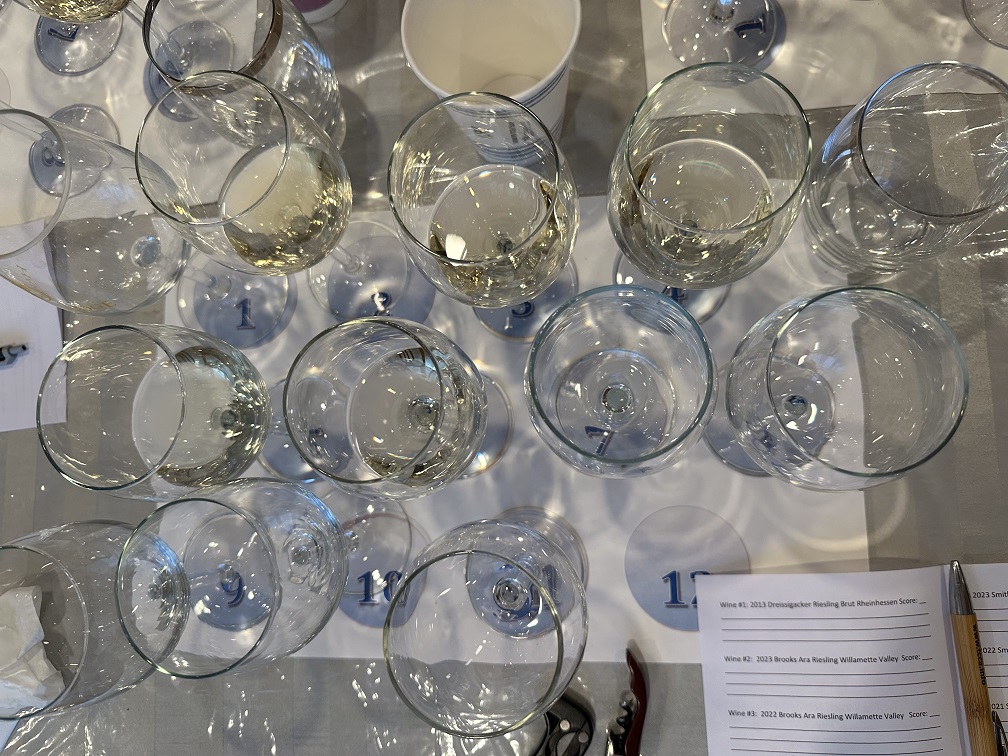
The tasting was non-blind as it had more of an educational purpose than anything else. Here is what transpired during the tasting (outside of the fact that I numbered Brooks Rieslings in the wrong order, so we tasted them from the older vintages to the newer, where I really wanted to go in the opposite direction):
Wine #1: 2013 Dreissigacker Riesling Brut Rheinhessen (12.5% ABV)
bubbles were still present, lemon, a touch of sugar, well balanced, very nice overall. Believe it or not, but this was the first Sekt that I liked.
8-
Wine #2: 2018 Brooks Ara Riesling Willamette Valley (14% ABV, 325 cases produced)
Beautiful color. Honey, petrol, explivit nose of tropical fruit
Great complexity, perfect balance, showing off an interplay of pear, apples, peach, even vanilla and quince. Delicious. 8
Wine #3: 2019 Brooks Ara Riesling Willamette Valley (13% ABV, 225 cases produced) – a very interesting wine, as my tasting notes for day 1 and upon re-tasting the next day differ dramatically.
Day 1: Very unusual, some honeydew, hint of pear. 8-
Day 2: Superb. Lean. Acidity is through the roof, fresh, crisp. Needs 20 years to become amazing. 8++
Wine #4: 2021 Brooks Ara Riesling Willamette Valley (12.5% ABV, 225 cases produced)
Day 1: Beautiful petrol and flowers on the nose
Fresh, petrol, complex, white fruit, excellent balance. 8+
Day 2: Petrol + earth. Beautiful, honey notes on the palate, much richer than ‘19. Still lean and mean. 8
Wine #5: 2022 Brooks Ara Riesling Willamette Valley (12.5% ABV, 150 cases produced)
Day 1: Flowers, touch of brown sugar
Most complex so far – wow, beautiful. 8+
Day 2: Petrol, hint of tropical fruit. Lemon with a touch of honey, lean, crisp, built for aging, let’s say another 20-something years. 8++
Wine #6: 2023 Brooks Ara Riesling Willamette Valley (12.5% ABV, 100 cases produced)
Day 1: Very muted nose. Palate is young, nice, concentrated. 8-
Day 2: Nose almost non-existent. Very lean palate with a hint of honey mixed with lemon. Need to develop for a long, very long time.
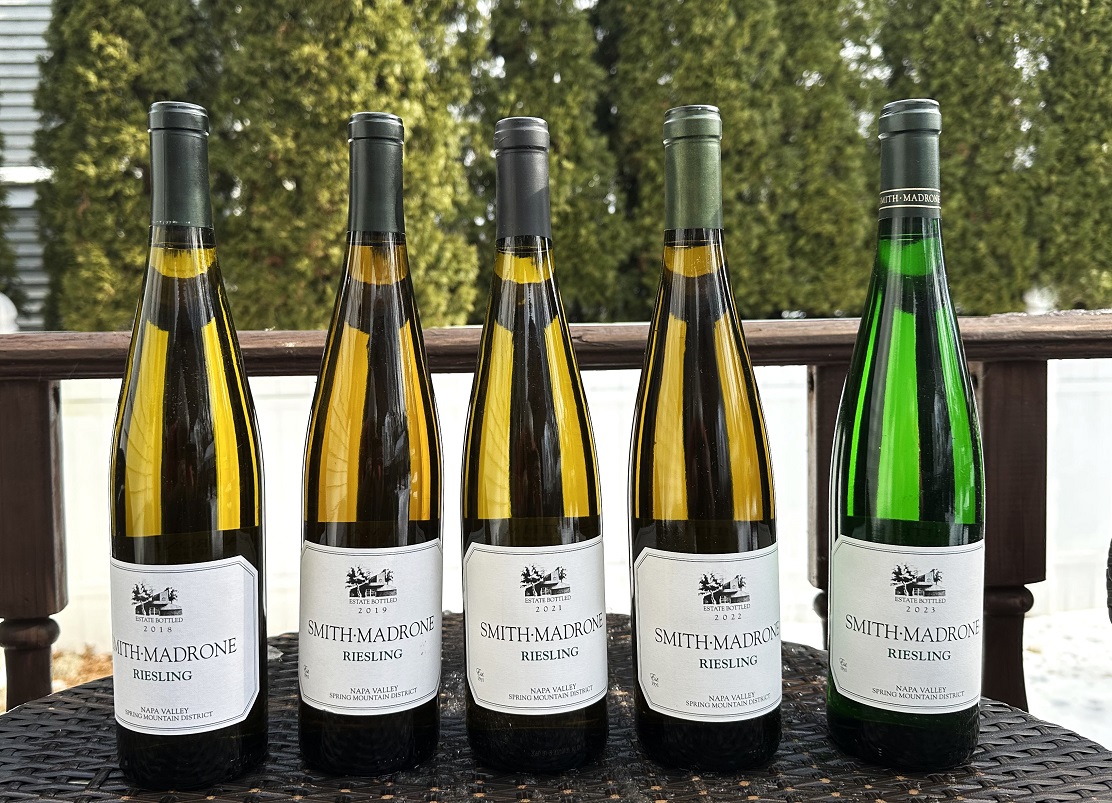
Wine #7: 2023 Smith-Madrone Riesling Spring Mountain (13.2% ABV)
Light color
Candy on the nose
White flowers, fruit medley, bitter orange, crisp, spectacular. 8+
Wine #8: 2022 Smith-Madrone Riesling Spring Mountain (13.2% ABV)
A touch of petrol
White fruit, white apples, delicious. 8+
Wine #9: 2021 Smith-Madrone Riesling Spring Mountain (13.2% ABV)
Petrol, beautiful
Lots of complexity, apples, excellent. 8
Wine #10: 2019 Smith-Madrone Riesling Spring Mountain (13.3% ABV)
Complex aromatics, flowers
Flowers on the palate, a touch of honey, beautiful, complex. 8+
Wine #11: 2018 Smith-Madrone Riesling Spring Mountain (13.3% ABV)
Beautiful, hint of petrol, white fruit.
Wow, playful, amazing. 8++
Wine #12: 1997 Dr. Fischer Ockfener Bockstein Riesling Kabinett Mosel (8% ABV)
Apple juice all the way, past prime. Still an interesting experience.


As always in such tastings, it is fun to figure out the group’s favorite wine. There were 8 of us tasting the wines, and everybody were asked to decide on 3 of their most favorite wines (mine were #11, #8, and #5), and then we took a vote. To my surprise, we had a clear winner after the first round – wine #8, 2022 Smith-Madrone Riesling, was everyone’s favorite, with wine #11, 2018 Smith-Madrone Riesling getting 5 votes. It was interesting that even wine #12, 1997 Riesling, got 3 votes (for me, it was an interesting experience, but not the wine I want to drink again).
As you can see from the notes above, I had a chance to re-taste the wines, this time at a bit of a slower pace. It is very clear that Brooks Rieslings needed more time to open, as you see that on the second day they showed a lot more of what they got, but even then, I believe they would benefit from another 20 years in the cellar, or maybe more.
As I’m writing this, I’m already dreaming of setting up the tasting of 20+ years old Rieslings. Give me Grosset, Brooks, Smith-Madrone, Zind-Humbrecht, and maybe Markus Molitor, from the early 2000s – and this would make it an absolutely amazing tasting. By the way, talking about dreams – what would your dream Riesling tasting include?
I can’t speak for my guests, but I really enjoyed the opportunity to taste such beautiful wines side by side. While both Brooks and Smith-Madrone perfectly exhibited my beloved petrol, Brooks Rieslings on average were a bit leaner than Smith-Madrone, while Smith-Madrone exhibited a richer bouquet on the palate. I’m saying this not in the comparative sense – each one of these wines would make me super-happy any time.
There you are, my friends – my Riesling experience. Do you like Riesling? What are your favorite “go-to” Rieslings?
and A Few Good Wines
Ohh, time flies (who knew? What a pathetic opening – I know, don’t say it.)
About a month More than 2 months ago, we hosted a party (about 40 people). When it comes to a party of this size, I never try to put out “the best stuff” at the beginning. Of course, I’m not talking about offering “plonk” to my guests – the wines will always be quality wines, those which I would be happy to drink every day – but they would be exactly that, “everyday”. So we started with some bubbles, whites, and Rosé. And then…
 Well, wait.
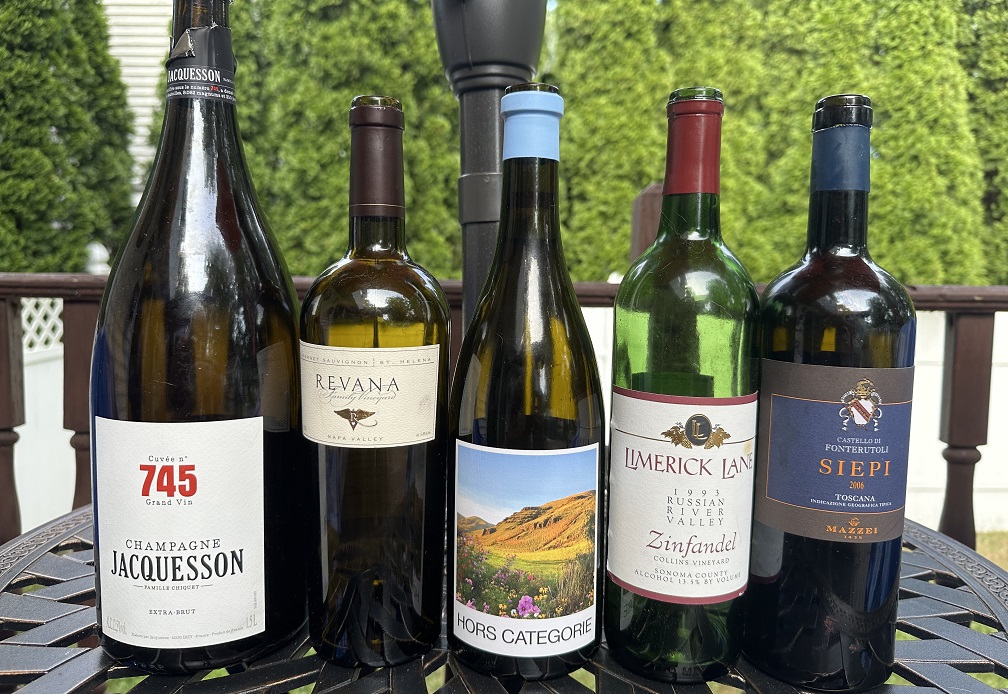
The first wine I want to mention was not in my “everyday” category – it was a magnum of the champagne that one of my friends brought to the party.
I never heard of Champagne Jacquesson before, so this was my first encounter with it – and I have to say it was a pleasant one.
NV Champagne Jacquesson Cuvée 745 Grand Vin Extra Brut (12.5% ABV, harvest 2017, disgorged in 2022)
Perfectly classic champagne with toasted notes packaged in the generous fine mousse, deliciously present on the palate. Cut through acidity leads to a clean finish with some lingering plumpness. This magnum didn’t last for too long.
Let’s get back to where I started. As the party gets going, and people have a bite to eat, there is always a moment to say to your wino-friends “hold on, let me bring something”. Whatever happens next is totally unpredictable, as in most cases, I don’t have a plan, or if I do, it would be a really vague one.
Here is what we ended up tasting:
2007 Revana Cabernet Sauvignon St Helena Napa Valley (14.8% ABV) – I got the bottle as a present for a friend way back. Was always waiting for the right moment… The wine was stunning. A beautiful Cabernet Sauvignon, fresh, layered, cassis all the way, on the nose and on the palate, silky smooth and balanced. The bottle was gone in no time, but it was thoroughly enjoyed.
2014 Hors Categorie Syrah Hors Categorie Vineyard Walla Walla Valley (14.1% ABV). I truly don’t know what the right moment Christophe Barone wines is. Hors Categorie Syrah is one of his very top wines (expensive too). The wine was classic “liquid rock” from Washington, with enough gunflint and smoke to almost feel you visited the range. What was interesting is how quickly the wine was changing in the glass – from more rock to more fruit and back. I’m not sure this was the right moment. I should have a few more bottles, and all can say that I’m not touching them for as long as possible…
1993 Limerick Lane Zinfandel Collins Vineyard Russian River Valley (13.5% ABV) – the wine from my Benchmark Wine loot. 30 years young, and beautiful. No, it was not fresh like it was made yesterday, it went all into the tertiary aromas and flavors, but the body was there, the fruit was there, the acidity was there, and therefore, there was lots and lots of pleasure.
2006 Mazzei Castello di Fonterutoli Siepi Toscana IGT (14% ABV, 50% Sangiovese, 50% Merlot) – another wine brought by a friend. I never had this wine before. This is perfectly on point, beautiful as only Italian wines can be, lots of sweet cherries, a touch of mint, silky-smooth, round, delicious.
Huh, a few wines wine experiences down, and so many more to go. I’m trying to catch up on sharing my wine experiences of this year (well, that’s hardly sufficient), so stay tuned.
A Few Days on Cape Cod, 2025 Edition
I enjoy writing about our trips to Cape Cod as it is always an opportunity to share some picture and talk about wines.
This trip was no exception. We were blessed with beautiful weather, warm and dry. And we drank a lot of delicious wines I’m happy to talk about.
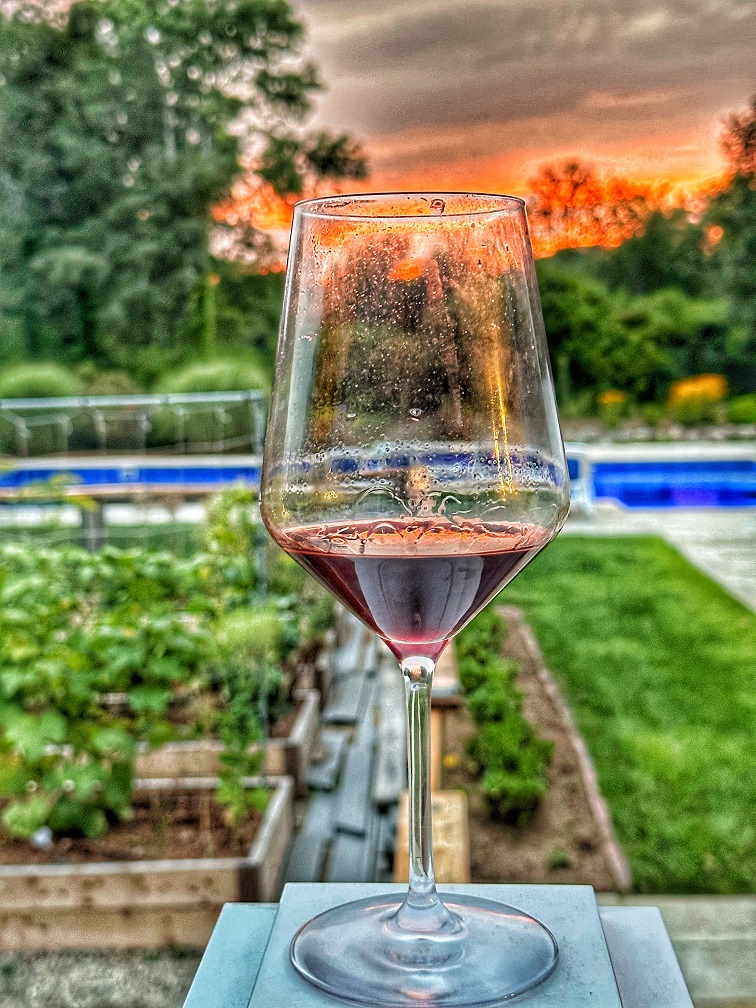
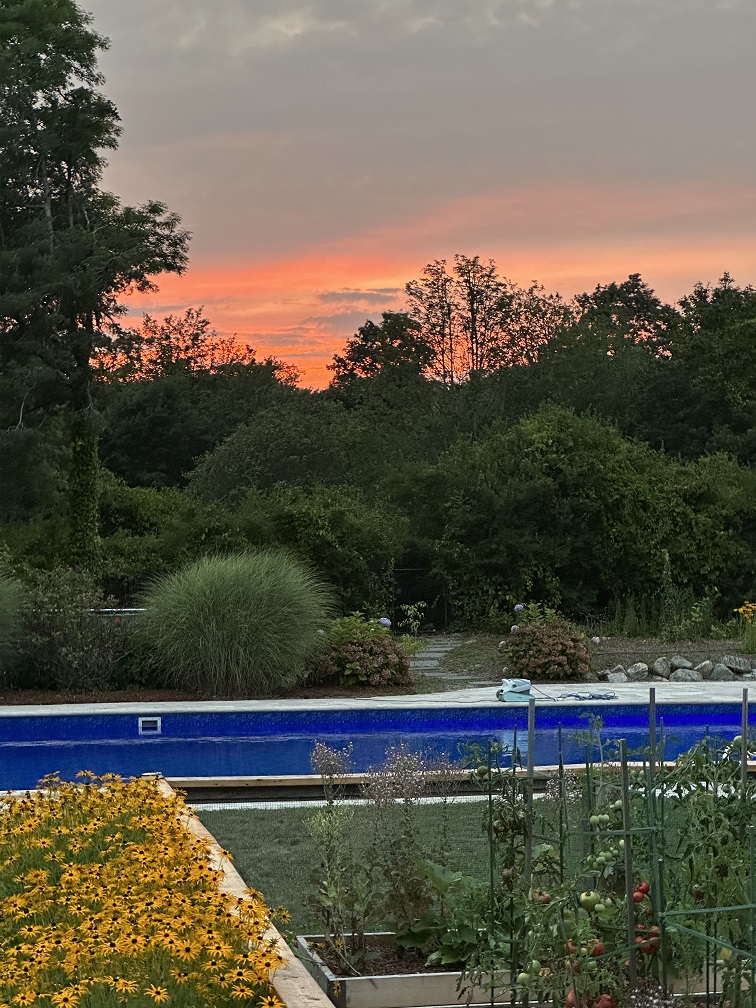
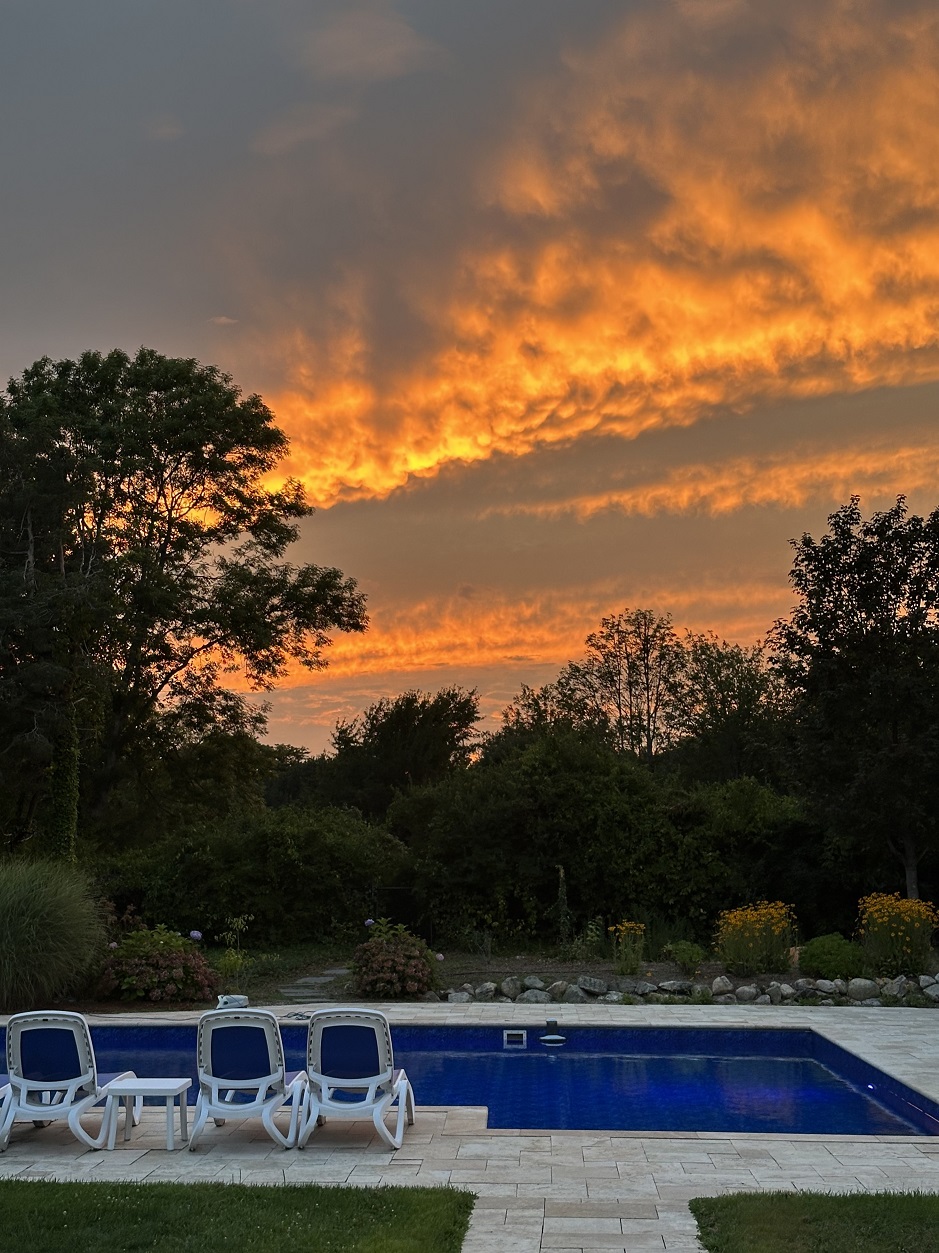
Before we talk about wine, a few of the pictures I love to bring back from Cape Cod:
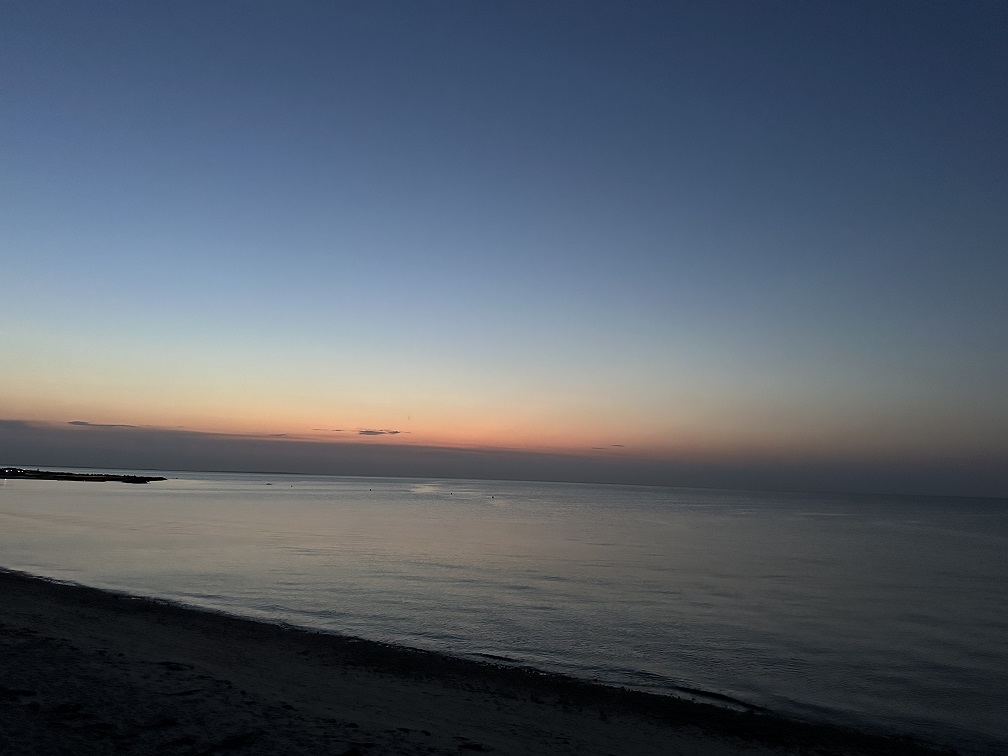
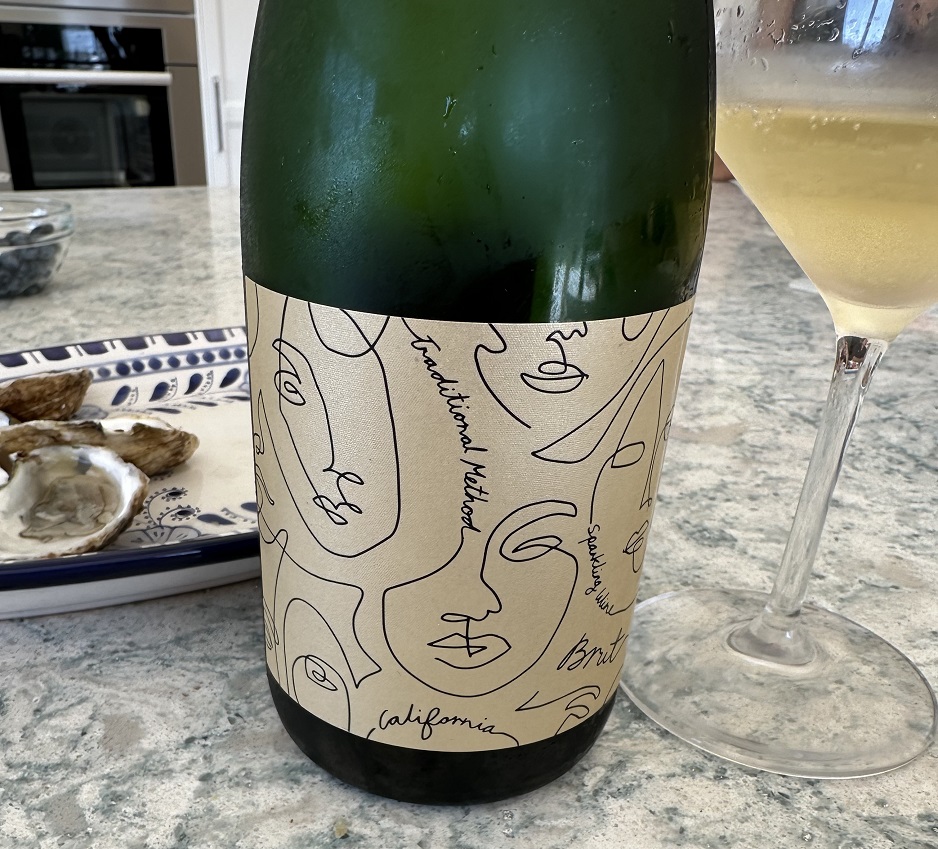
First, a sparkling wine – NV Incandesa Brut Traditional Method California Sparkling Wine (11.5% ABV, 70% Chardonnay, 30% Pinot Noir). The wine was delicious, with a classic nose of baked bread and apples, fine mousse, and a round, generous palate. I had to do a bit of research to learn more about this wine, as the bottle itself offers very little information, and it is not easy to find anything on the web. It appears that it shouldn’t be surprising that this sparkling wine tastes so good – it is made by one of the most famous Spanish Cava producers, Raventos Codorniu, as its first foray into the North American market. Side benefit – this was a perfect pairing for the oysters…


Appropriately for the weather, we enjoyed 3 Rosé wines.
2023 Poggio Stenti Sangiovese Rosato Maremma Toscana DOC (13.5% ABV) was delightful, a Rosé with a presence. A full assemblage of strawberries on display – from aromatics on the nose to the flavors on the palate, coupled with a good mid-palate weight, a well-present body. Too bad this was my last bottle brought back last year after our family European trip.
2024 Turley Zinfandel Rosé California (12% ABV) – I’m so glad Turley started producing this wine some years back – it is absolutely delightful, can perfectly compare to any Provançal Rosé in its lightness, effervescence, and beautiful aromatics.
2024 Field Recordings Domo Arigato (Mr. Ramato) Skin Contact Pinot Grigio SLO Coast (12.5% ABV) – one of my perennial favorites from Field Recordings. This is a skin contact wine, so it is more than just a light Rosé; the wine offered herbaceous undertones on the palate, and had good body weight, with red fruit mixed with herbs. Delicious.
We had only a few of the white wines, so here are notes on one of them.
2024 Field Recordings Super Gnario El Palomar District (13.1% ABV, 100% Malvasia Bianca) – amazing aromatics, with flowers, whitestone fruit, guava, overall very intense. On the palate, the wine might be even a bit too much with “in your face” white plums and green pears, medium to full body, good acidity and lingering fruit on the long finish.
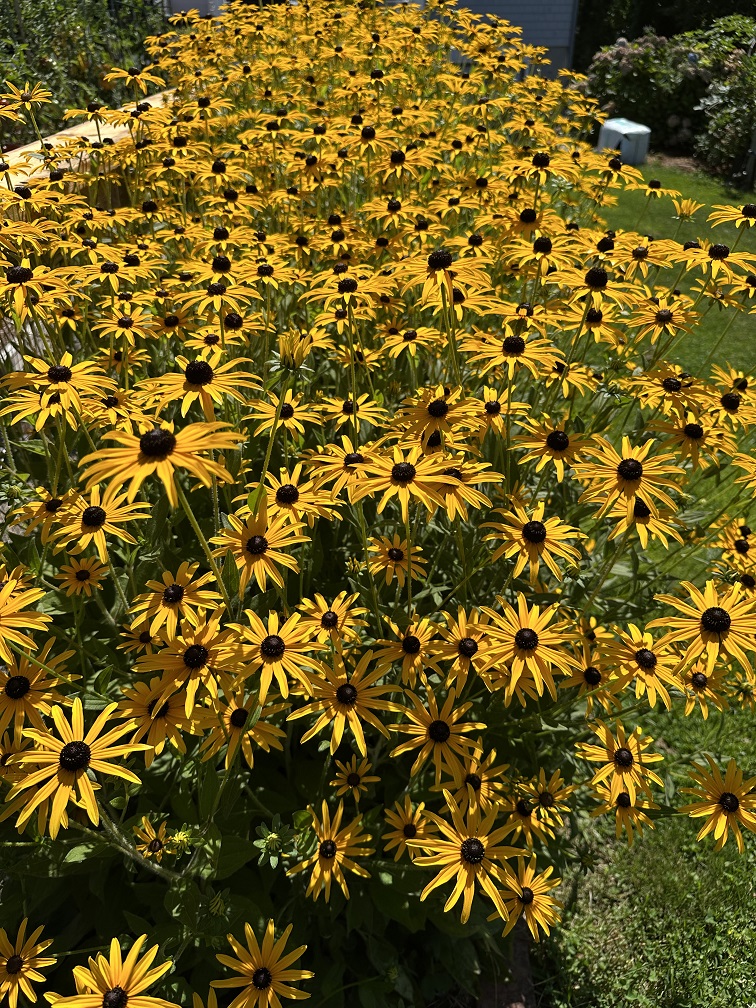
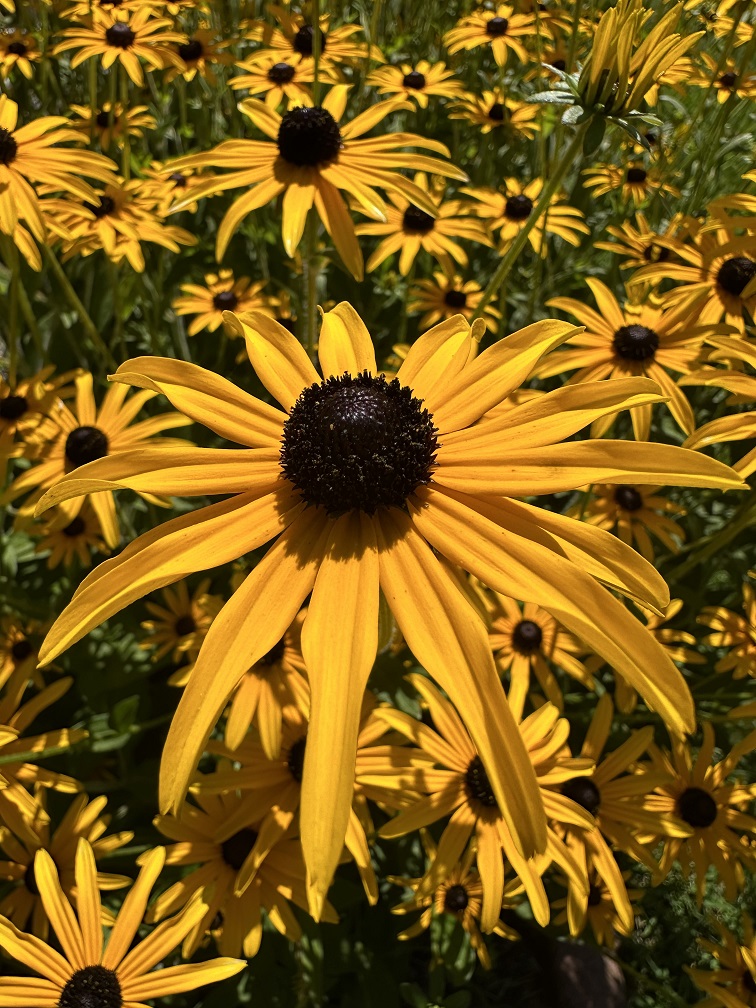
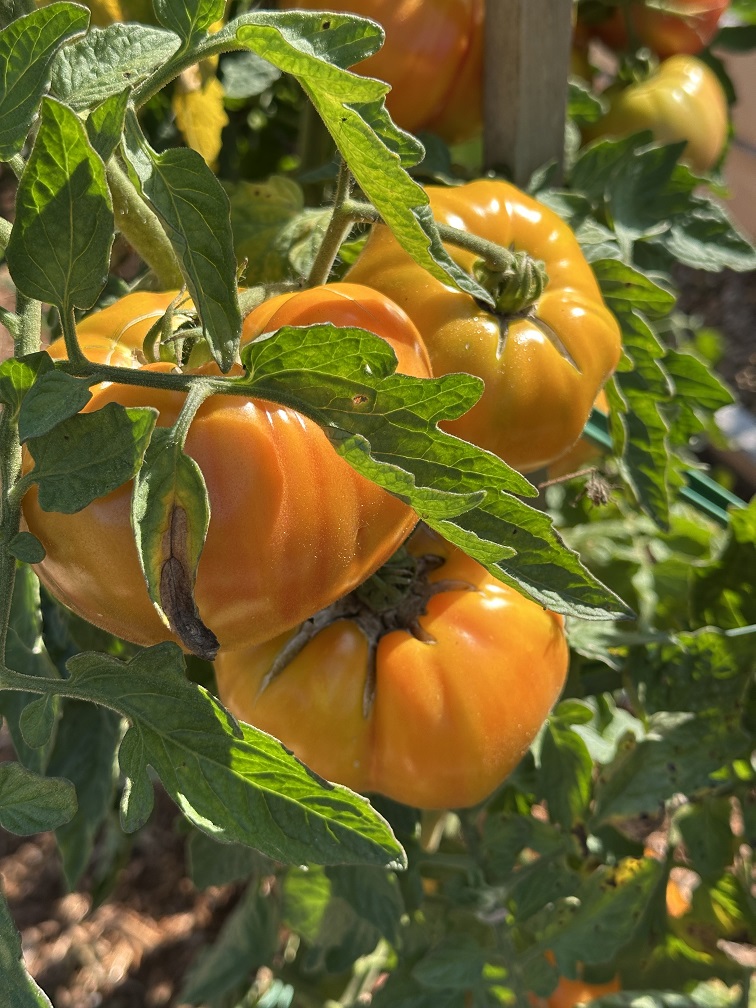
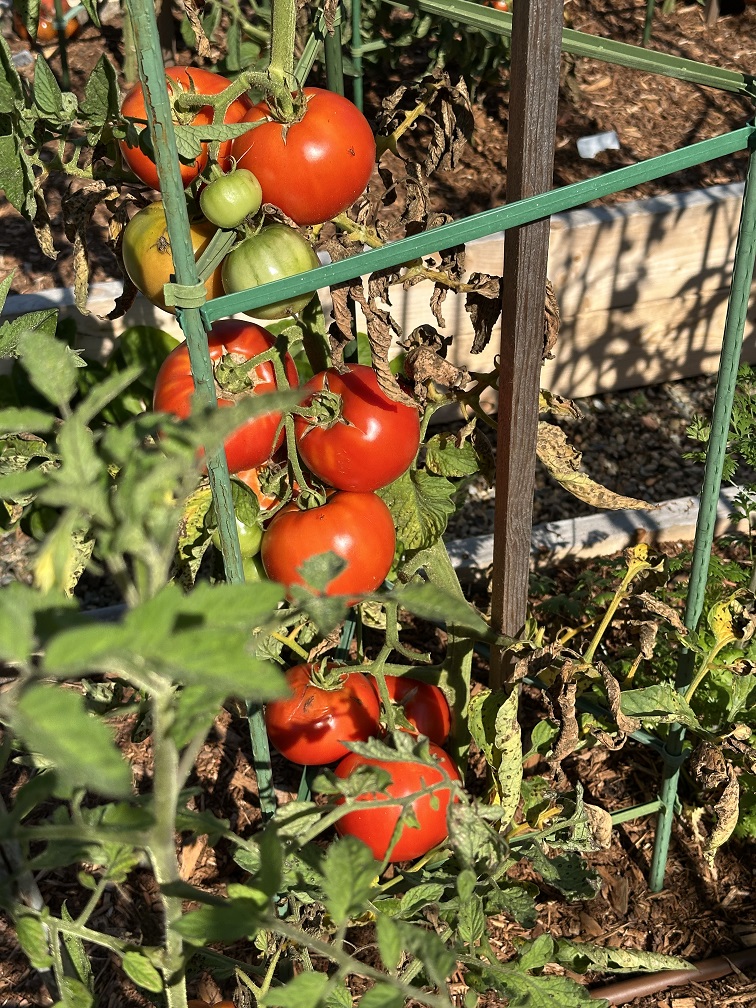
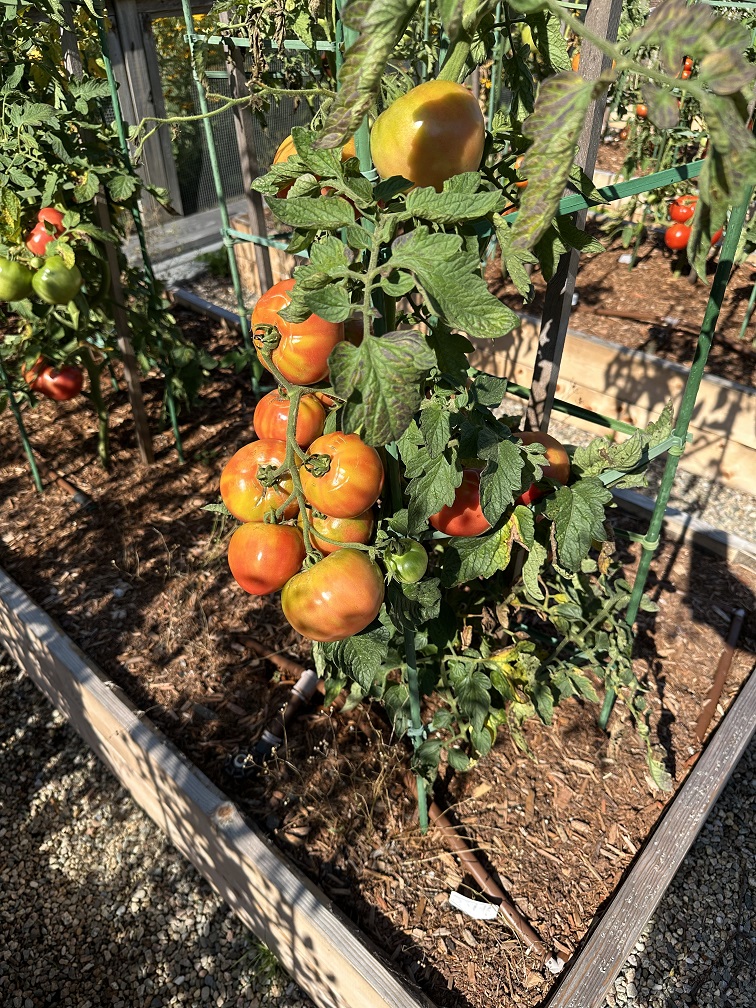
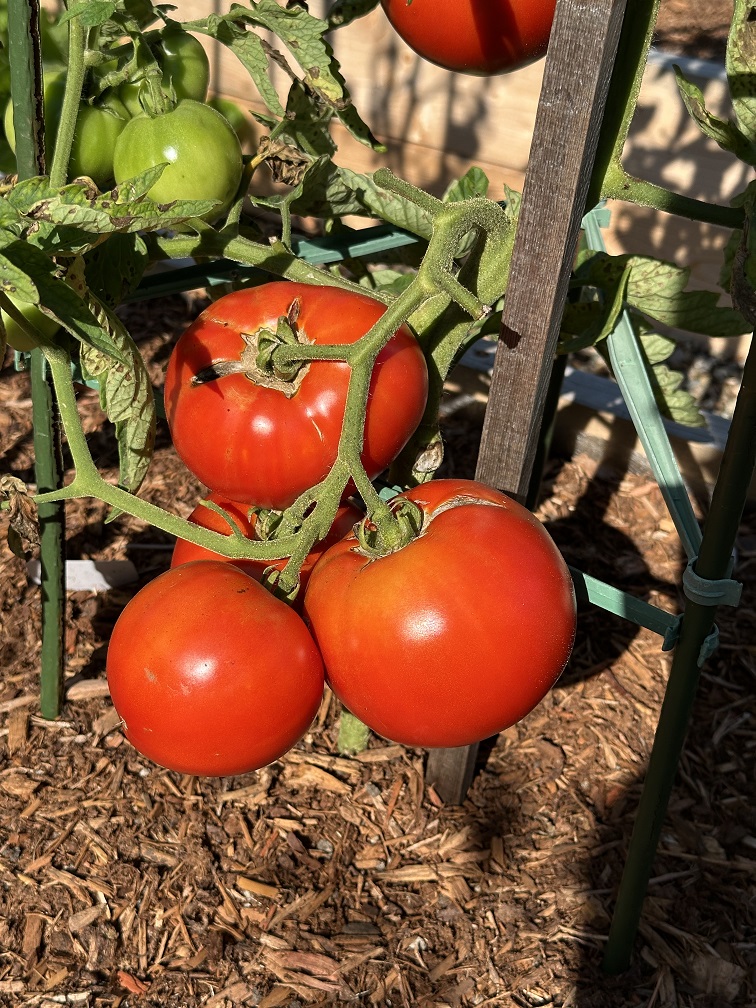
Let’s take a little break from wines – here are some garden pictures for you, and a little bit of food:
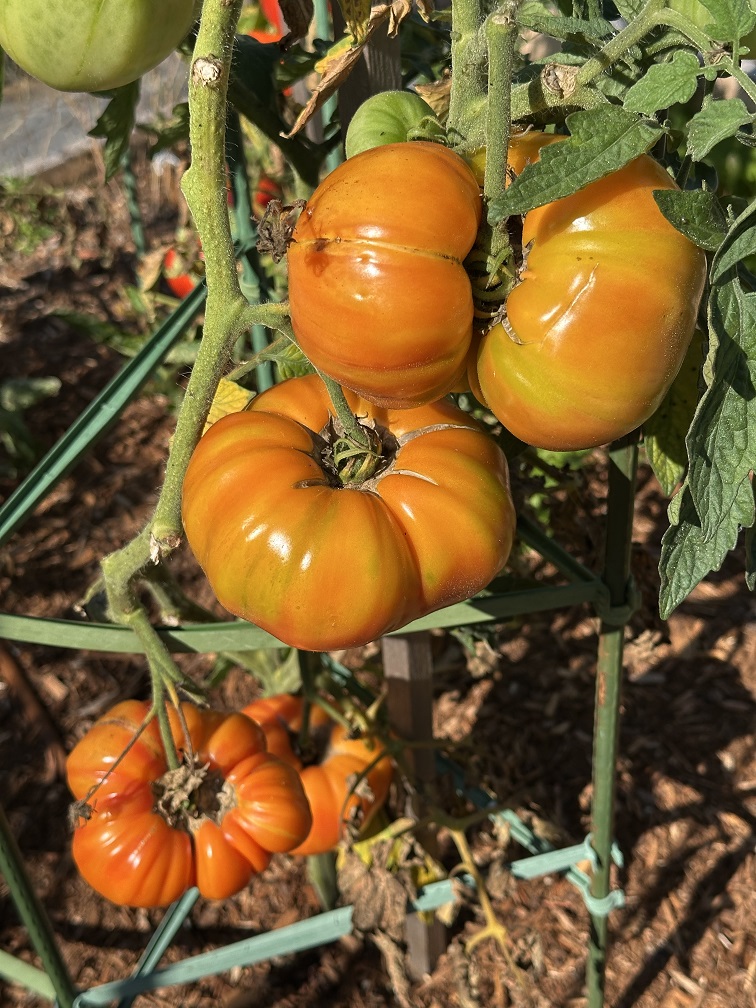
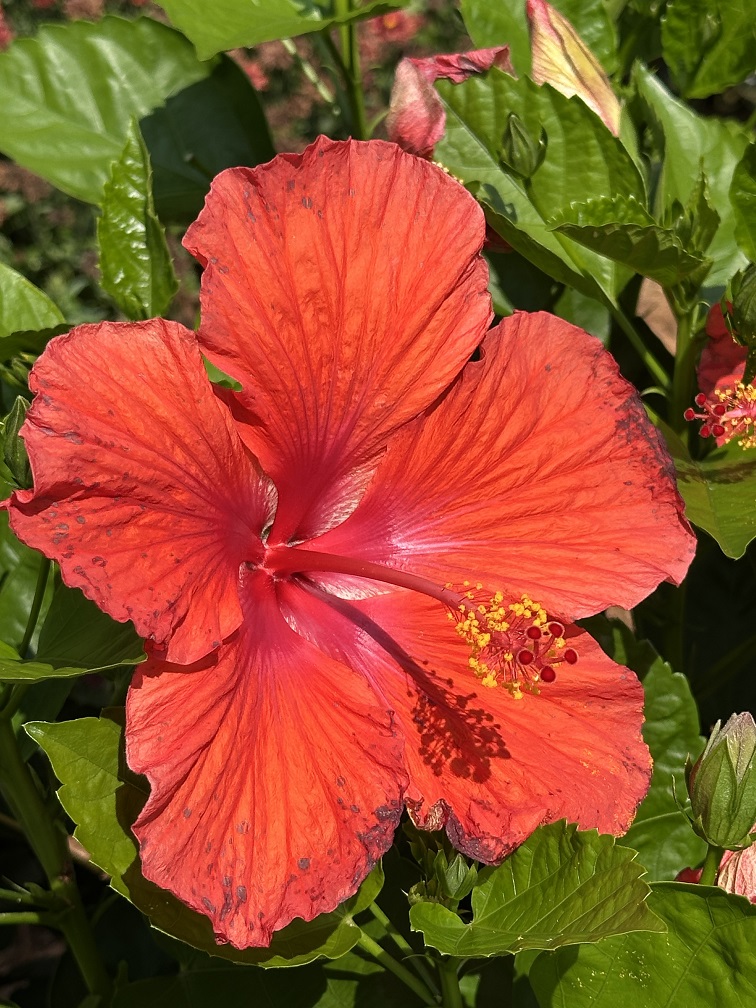
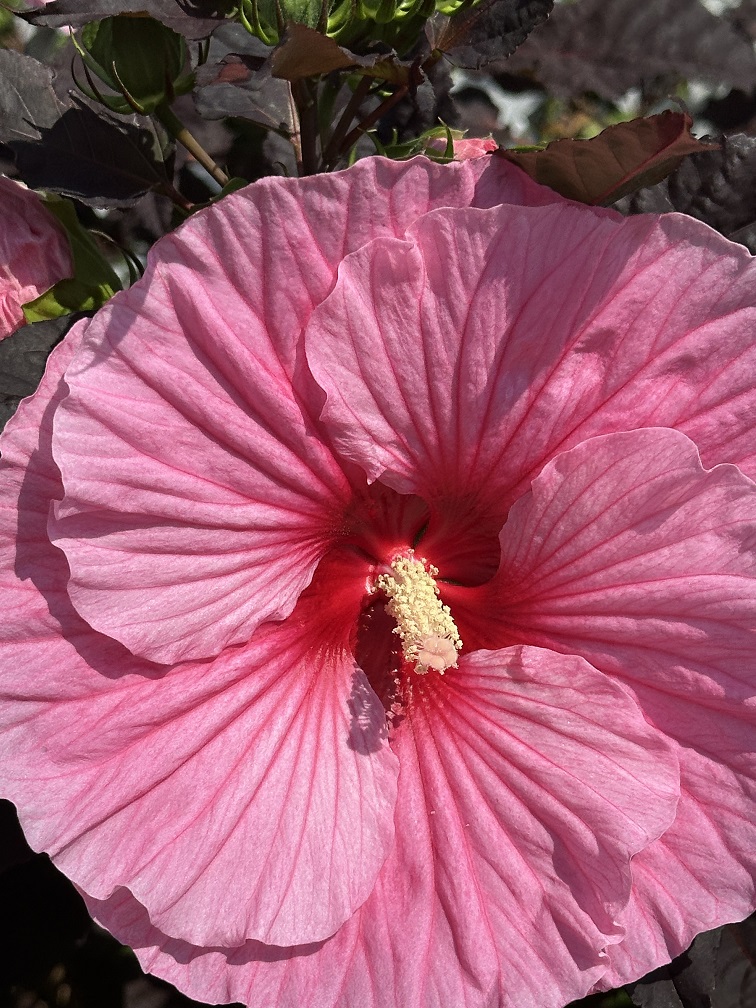


Now, to the reds.
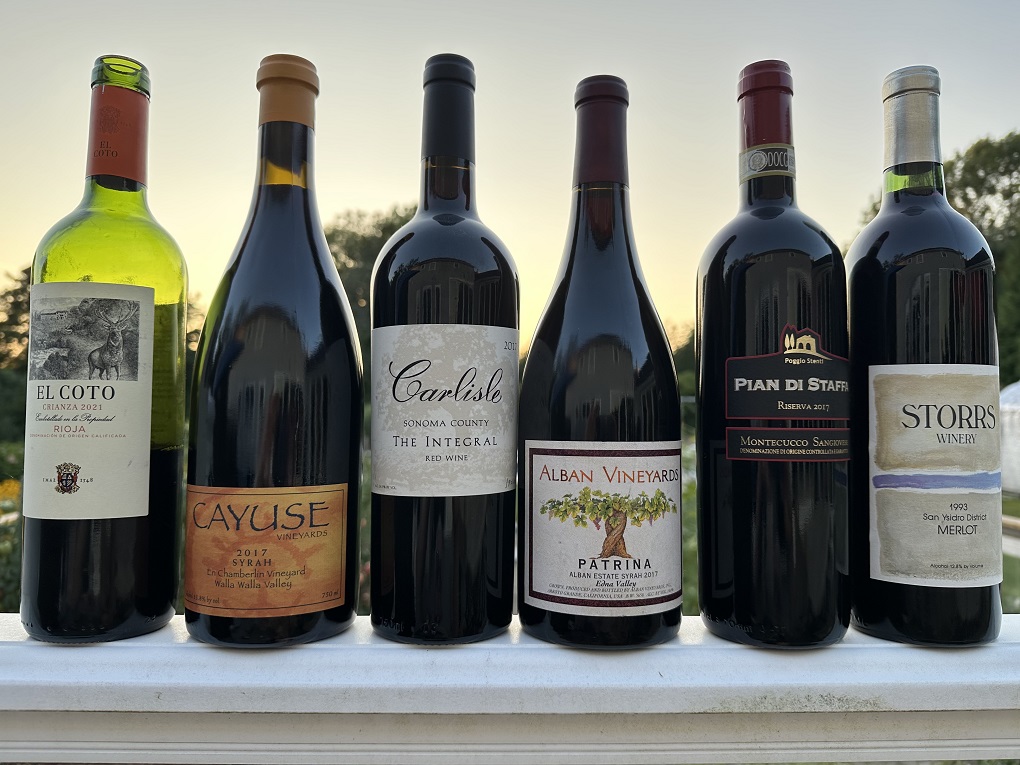
2018 Pedra Cancela Winemaker’s Selection Dão DOC (13% ABV, 40% Touriga Nacional, 30% Alfrocheiro, 30% Tinta Roriz) – Portuguese wines are delivering great QPR, and this wine was no exception. Open and inviting on the nose with red and black fruit continued with black fruit interplay on the palate, with a touch of spices and good earthy undertones. Simple and tasty.
2017 Carlisle The Integral Red Wine Sonoma County (14.5% ABV, 62% Syrah, 38% Mourvèdre) – you rarely can go wrong with Carlisle, and this wine didn’t disappoint. Dark cherries on the nose, dark cherries on the palate, perfectly integrated tannins with elevated but smooth mouthfeel, excellent balance, medium to long finish. An excellent wine.
2017 Alban Vineyards Patrina Estate Syrah Edna Valley (14.8% ABV) – Alban is one of my favorite producers. This Syrah had a beautiful nose of dark fruit with a hint of barnyard. On the palate, the wine was surprisingly sweeter than I expected, with blackberries dominating the palate. My guess is that I opened this wine at the wrong moment in time – it probably needed another 5 years to turn around.


1993 Store’s Winery Merlot San Ysidro District (12.8% ABV) – I keep opening these old wines that I got from the Benchmark Wine, and so far, not a single one has disappointed. To begin with, just take a look at this cork – it looks like the wine was just made, not 30 years ago. Yes, of course, tertiary aromas dominated, with dry fruit well present, but the wine was still perfectly alive, with medium to full body, good acidity, and perfect balance. This wine was a treat.
There you are, my friends – a few delightful days on Cape Cod. How was your summer?
Reminiscing About Cabernet Sauvignon
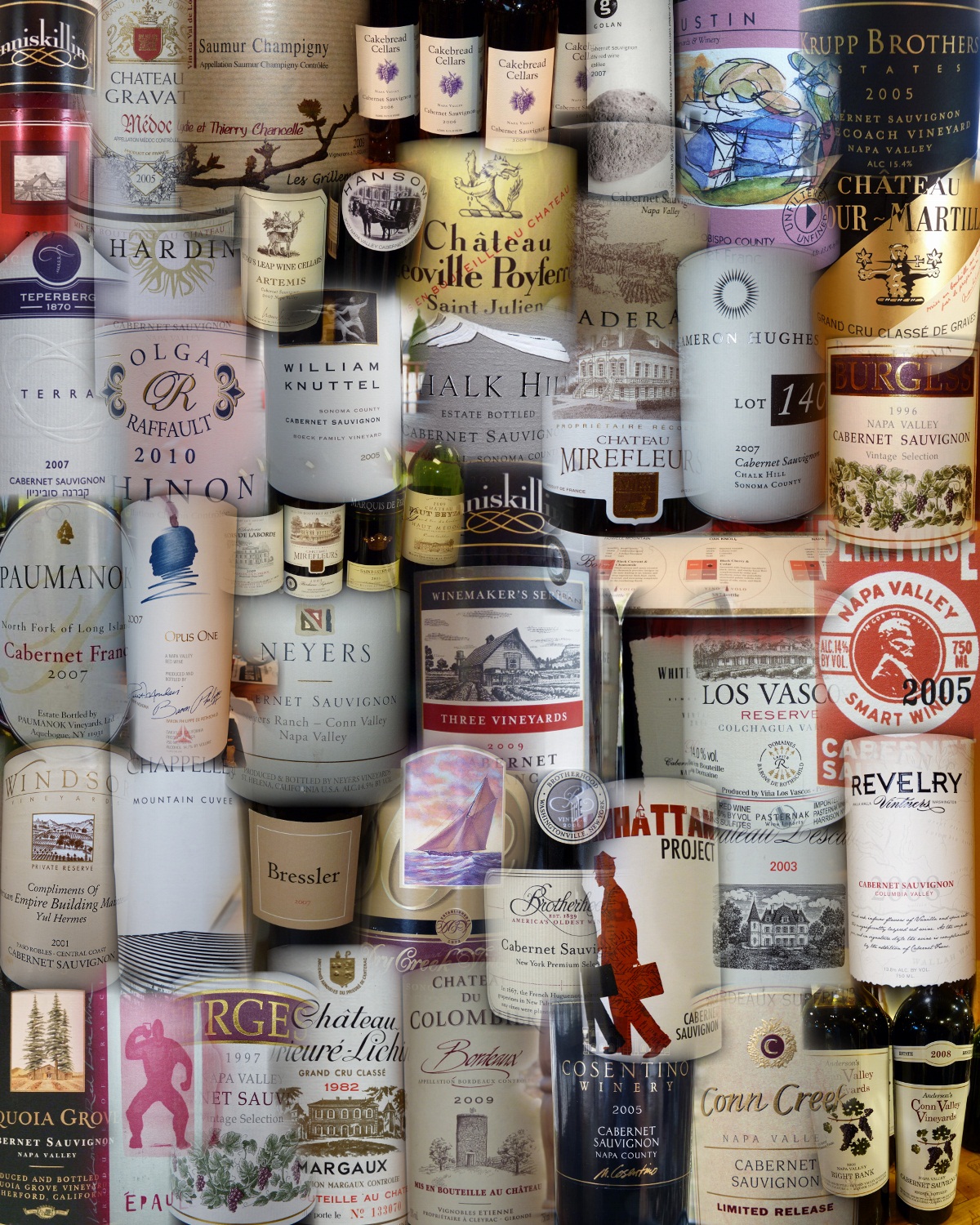 Yesterday we celebrated Cabernet Sauvignon Day. Well, I guess some people did, as I was drinking Tempranillo. But – grape holidays are an excellent opportunity to think about the grape we are honoring, and I’m happy to seize this opportunity.
As you probably know, it is hard for me to pick the favorites. If I were asked directly to name my favorite wine, I would never name any particular wine or grape as a favorite; my answer to this question always is “I love them all”. But deep inside, when nobody is asking, I know I would gravitate toward a good Cabernet Sauvignon when I can.
I’m very particular when it comes to Cabernet Sauvignon. This is one of the very few wines where I perfectly know what flavors I’m looking for. I need cassis, I need eucalyptus, I need a little bit of a bell pepper, and a touch of the cedar box would be nice too. If these flavors are not part of the core profile, I might still enjoy the wine, but I would never remember it as a Cabernet Sauvignon.
I decided to mentally challenge myself – recall my favorite Cabernet Sauvignon wines and associated experiences. Cabernet Sauvignon is one of the most popular wines in the world, produced by everybody and everywhere, so it is easy to name lots of producers. But this is not what I tried to do – I only thought about my most memorable encounters with the Cabernet Sauvignon, no point in regurgitating a bunch of Cabernet Sauvignon producer names.
Let’s see what came to my mind.
As only yesterday I wrote about the wines of Smith-Madrone, let’s start with that. Smith-Madrone has two Cabernet Sauvignon wines in its portfolio – Estate Cabernet Sauvignon and Cook’s Flat Reserve, each one delicious in its own right. Both are textbook Cabernet Sauvignon wines – my textbook that is, as both perfectly demonstrate the exact flavors – cassis, eucalyptus, bell pepper, cedar box. Just thinking about those wines makes me smile.
Next, how about Jordan? Jordan Vineyard and Winery in Alexander Valley in Sonoma produces only three things – “Chardonnay, Cabernet, and Hospitality”, according to John Jordan, winery owner. I had Jordan Cabernet Sauvignon on multiple occasions, and it never disappointed. It also has this classic profile, only with a bit more fat comared to Smith-Madrone, but thoroughly enjoyable on all occasions.
Then there is Kamen Estate. Unlike Smith-Madrone, I had Kamen Estate Cabernet Sauvignon only once during a group dinner we had in Danville in California. The wine was recommended by the wine director at Vine at Bridges, a wine bar/store at the Bridges restaurant. I don’t remember the exact taste profile, but I remember that I was blown away by the purity and beauty of that wine. I still have a bottle of 2006 Kamen Cabernet Sauvignon in the cellar, but finding the right moment to open that bottle will be mission impossible.
An interesting tidbit – thanks to the same wine guy at the Vine at Bridges who recommended Kamen to me, I discovered Field Recordings wines early on, way before they became a crowd favorite. The first Field Recordings wine I ever tried was Fiction, a wild blend of red grapes and not Cabernet Sauvignon at all – but, last year I opened Field Recordings The Armory, a 100% Cabernet Sauvignon wine for my guests. At first, I was not even planning to try it, but seeing how everyone likes it, I decided to give it a try. Whoa! Classic Cabernet profile was tremendously elevated, adding succulent wild blueberries to cassis, together with high intensity, high acidity mouthfeel. This was one of the most “energetic” Cabernet Sauvignon renditions I ever tasted.
The next wine is somewhat of a sad story. I discovered Louis M Martini Cabernet Sauvignon during Windows on the World wine school classes back in 2004, when Kevin Zraly said that Louis Martini delivers a lot in the glass for a very reasonable price. For many years, this was my go-to “around $20” Cabernet Sauvignon, until it was not – now winery makes over-priced, over-done Cabernet Sauvignon wines, but it is still the name I will remember fondly.
Okay, two more.
Beaulieu Vineyards, commonly abbreviated as BV, is another Cabernet Sauvignon staple I must mention. BV wines have this beautiful classic Cabernet Sauvignon profile enhanced with Rutherford dust. Well, basic BV wines might not give you the amount of pleasure you are looking for, but if you can get your hands on a bottle of Georges de Latour Private Reserve Cabernet Sauvignon, believe me, you will think that you have already made it to the winelovers’ heaven.
And lastly, bow to the dark side. Randy Dunn is well known for the wines of dark, brooding power. Dunn wines are not made to be consumed young. But if you are able to find a mature Dunn Howell Mountain Cabernet Sauvignon wine, that will be an amazing treat, weaving dark and brooding power on top of the classic Cab profile. I had an opportunity to drink Dunn Cabernet Sauvignon only a few times in my life, but boy, those were memorable moments!
Here you are, my friends – a little trip down the Cabernet Sauvignon memory lane.
What were your most memorable Cabernet Sauvignon wines?
Last Bottle Sign Up ($10 credit)




 Talk-A-Vino