Archive
Latest Wine News and Updates
Of course, it would be too much to say that wine is in the center of everyone’s attention – but it is a beloved beverage for hundreds of millions, and some tens of millions are involved in wine industry one way or the other, so the wine news definitely gathers some attention.
From time to time, I share in this blog some of the interesting tidbits of what’s going on in the wine world, so here is the latest round of newsworthy happenings around the globe.
When you hear Chateau d’Yquem, what do you think of first? Of course, the quintessential Sauternes, the magical elixir not even produced in all the years. But – do you know that Chateau d’Yquem also produces dry white wine? It is called “Y”, and it is a tasty blend of Sauvignon Blanc and Semillon. Last month, Chateau d’Yquem announced that they will be expanding their portfolio and adding … wait for it … a red wine which will be called Y Not. It appears that 5 years ago, Chateau d’Yquem replaced some of their Sauvignon Blanc plantings with the Cabernet Franc, Merlot, and Petit Verdot, and now it is ready to produce the first vintage. The 2019 Y Not will be released in 2022. The price had not been disclosed at the moment, but considering the total production of 300 cases, you can imagine that it will not be inexpensive.
We are not done with Chateau d’Yquem yet. It leaked to the press that venerable Harlan Estate from Napa Valley, one of the topmost cult wine producers in the USA, enlisted the help of Chateau d’Yquem to start production of the dessert wine! The wine will be produced from the late harvest Cabernet Sauvignon. It is expected that the wine will be aged for at least 2 years in the mix of old and new French oak barriques, and probably 1 year in the bottle. The wine will be called Sweet Baby Harlan, and the 2020 vintage will be offered to the mailing list members at one 375 ml bottle per customer with the starting price of $1,100. Considering the tiny production, this wine will be impossible to get for a while.
Our next news is really bazaar. It’s been reported in The Eagle-Tribune in North Andover, Massachusetts that a number of Market Basket supermarkets experienced a little mayhem in the bottled juice section of the stores – the juice bottles (narrowed down to the grape juice bottles only after the few incidents) started to blow up at random, covering customers in sweet and sticky liquid. The culprit was traced to the popular brand of grape juice – Welch’s. Welch’s recalled all of the grape juice bottles sold in Massachusetts supermarket and opened the investigation into the incident. Based on the initial analysis, it appears that the yeast was added to the bottles at the final steps of the production, and as you know, the combination of yeast and sugar is how the wine is made, so blown up bottles come at no surprise. Apparently, some of the customers who managed to get the unexploded bottle to the homes were pleasantly surprised with the bubbly version of the popular grape juice, and some are even planning to start a petition to Welch’s to make this new type of grape juice a new product, possibly using some reinforced bottles.
It is not a secret that Australian winemakers are always eager and willing to step away from traditions and try the pioneering technologies, no matter how unorthodox they are. A simple example is a so-called screw cap, also known as Stelvin, which was developed in the late 1960s, and Yalumba winery in Australia become one of the early adopters introducing new bottle closure in 1973. Now another Australian wine producer, Penfolds, maker of the legendary Grange, decided to step in with a brand new solution for reducing the carbon footprint of the wine, which the wine industry is constantly grilled for. With the help of scientists at The University of Adelaide, Penfolds developed a brand new plastic bottle that is completely safe for storing the wine. Not only it is lightweight, but it is also made from the recycled materials and – get this – biodegradable. The bottle is guaranteed to fully disintegrate in 5 years’ time. The only culprit? The bottle will disintegrate in 5 years no matter what, so it will not be any time soon that we will see Penfolds Grange offered in this form of packaging. But for all the regular wines, which should be consumed as they are acquired, this will be a perfect vessel. Just don’t “leave and forget” such a bottle in your cellar – or you will remember it for a long time…
While the wine industry is squarely rooted in traditions, it is never shy to enlist the latest technology to help to advance its cause – helping people to enjoy their life a little bit more. Knowing when to open the bottle of wine to ensure the best possible experience is one of the most difficult problems of any oenophile, whether he or she is a Master Sommelier or an occasional drinker consuming two bottles of wine a year. Some of the most technologically advanced companies in the wine industry, world-famous specialty glass producer, Riedel, and Coravin Wine Systems, maker of the popular wine dispensing solution, teamed up to create a product which they called Smart Bottle. Seemingly indistinguishable from the regular glass bottle, the Smart Bottle is equipped with the array of sensors which constantly monitor the state of the wine inside the bottle, and will inform the owner when the bottle reached the ideal consumption phase via embedded Wi-Fi transmitter directly to the owner’s phone. While working on the design of the Smart Bottle, both companies filed about 25 patents. Apparently all leading wine producers in the world – DRC, Petrus, Chateau Latour, Screaming Eagle, Sine Qua Non and many, many others already lined up to get the Smart Bottle as soon as it will be released. An important and attractive feature of the Smart Bottle is the ability for producers to set up the proper aging profile specific to their particular wine, as it is clear that ideal indications, let’s say for DRC and Sine Qua Non will be quite different. Riedel and Coravin reported that they are finishing field trials and the production is slated to start in 2021.
That’s all the latest news I have for you, my friends. Until the next time – cheers!
Limited-edition bottle released by Zorzettig to sustain local hospital amid Covid-19 emergency in Italy
I rarely (never) post someone else’s press releases on my blog. However, considering the dire situation in Italy, I hope this will be a tiniest, but still help to this beautiful struggling country.
The well-know winery from Friuli has taken practical steps to support the Hospital of Udine in fighting back Covid-19.
A limited-edition bottle has been released with special Everything will be alright label in eight different languages
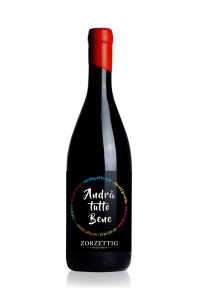 Zorzettig is not new to challenges, having survived World War II before becoming an ambassador of regional viticulture, in Italy and abroad. Now, the winery has taken another important step in sustaining the local community and its well-being. The Zorzettig family has organized a fund-raising project aimed at economically supporting the intensive care unit of Ospedale Universitario Santa Maria della Misericordia in Udine which is fighting at the forefront of Covid-19 emergency.
Starting Monday, March 16th, the winery will be selling on Tannico.it a limited edition of Refosco dal Peduncolo Rosso made from the eponymous native red variety. Grown only locally, Refosco dal Peduncolo Rosso is well-known for being a resilient grape which has endured many a challenge in the past. Proceeds will be used to buy the necessary and much needed equipment. The limited edition will display on the label the sentence Andrà tutto bene, everything will be alright, in eight different languages. Eight is a lucky number in China, where emergency has started and which is now experiencing the first positive signals. The disposition of the sentences aims at representing a hug, a familiar gesture we cannot share right now. The bottles will be on sale from today by writing at info@zorzettigvini.it and on Tannico in the next days.
“Andrà tutto bene is a good wish for the future that needs to be translated in a practical action right now” explains Annalisa Zorzettig, who runs the family business. “We love our land and our community and we asked ourselves how we could help. This is how we came up with the idea of a limited edition with a good wish aimed at going beyond space and time. We love the idea that families will buy this bottle to share it with beloved ones seated around the same table. In the future, this will be a reminder of a challenging time we were able to overcome and of a moment which has taught us, once more, how precious are little joys and beloved ones”.
Source: Studio Cru Press Office
Big Game and Numbers
As someone who was not born in the USA, it took me a while to warm to the idea of the Super Bowl. One of the “warming” factors was the need to be aware of the super bowl ads, as critical business communication element (of course it is easy now – you can educate yourself quickly and easily online, often even before the event itself) – the Super Bowl ads were easy conversation starter for good 2–3 weeks after the event. Another factor was … come on, you can easily guess it … yes, food. I realized that Super Bowl is simply another opportunity to express your love to your family and friends via cooking, and therefore, it is definitely my type of fun day.
Contrary to what you might expect, I don’t see alcohol as an essential Super Bowl experience element. So much is happening on the screen, between the game itself, the ads, the half-time show that serving a serious, thought-provoking wine would rather become a detractor. I guess this is why beer or a mixed drink makes a better accompaniment for the big game – take a bit of food, often spicy, wash it down with whatever in your glass, preferably something neutral-tasting (don’t think serious craft beers would rate too highly either).
So what are the most popular drinks during Super Bowl? It really depends on where do you live. The folks at Postmates, the largest on-demand delivery network for food, drinks, and groceries, processed some interesting stats which you can find below:

Source: Postmates.com
In this post, you can find a lot more numbers. For example, you can learn that an estimated $14 billion are spent on the Super Bowl celebration every year (no, this is not just food). Or you can find out that Shake Shack was the most popular chain in New York, with 400 orders placed for ShackBurger during Super Bowl night in 2019, and cheese fries were the most popular item in Chicago, with over 2,660 orders placed. Anyway, I will leave to ponder at the numbers on your own. Enjoy!
Top Wines of 2019 – Second Dozen
Ahh, the end of the year. Quiet time (I wish). Time to reflect on the year which is about to become history. Particularly, it is the time for the Top Wines of the year 2019 to be re-lived, re-enjoyed, and shared.
This is the 10th annual Talk-a-Vino Top Wines list, and I have to say that the selection process is not getting any easier – if anything, it is getting more and more difficult to decide on the top wine (hence I had two #1 wines last year).
I never attempt to count how many wines I taste throughout the year. My rough estimate is between 500 and 700 wines, considering all the wines I drink at home, all the samples, and all the tastings I manage to attend during the year. The top list represents the wines which are easily come to mind with the help of notes, label journals or just stuck in the memory as an unforgettable experience. Yes, I’m sure amazing wines will be left outside of this list, but I really have no way of helping it.
For most of the Top lists, I’m not even trying to stick with just a dozen wines – that would be mission impossible. This is the reason behind the second dozen and top dozen posts. Also, while I always say that the order of the top wines is not important, it is not exactly true, for sure in the top wines selection. I’m always happy to include a variety of wines in the Top list, in terms of countries, wine types, prices, styles and so on, but all of these come secondary to the main criteria – the wine must be memorable. And maybe even bring a smile to my face as I get to re-live the happy moment.
Okay, I’m done with all the explanations. Without further ado, let’s get to it. The second dozen of Top Wines 2019:
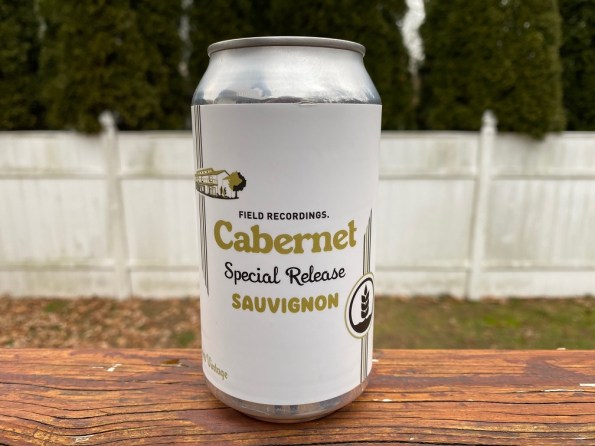
24. 2018 Field Recordings Cabernet Sauvignon Special Release Santa Ynez ($12, 375 ml can) – yes, you are correct – it is the wine in the can. Feel free to stop reading and pledge not to open any of my posts in the future. No, this wine is not included here to be fashionable and appeal to the can-boasting Millenials. This is simply a good wine. What makes it memorable? This wine is made using beer stout starter yeast, and as Field Recordings’ winemaker Andrew Jones explains, the wine shows “crazy good chocolate character wrapped around dark cherries and blackberries” – and I have to agree. Delicious.


23. 2011 Michel Chapoutier Tournon Mathilda Shiraz Victoria, Australia ($14.99) – the pepper is back! I fell in love with this wine after tasting beautifully clean black pepper and spices, back in 2014 (it was wine #4 on my 2014 Top Dozen list). Then pepper mysteriously disappeared, and the wine became blah. It was a joyous moment finding that pepper returned on my last bottle. I share my frustration in the post which is available via the link, but in any case – this was a perfect sip.
22. 2015 Leone de Castris 50° Vendemmia Salice Salentino Riserva DOC ($12) – Generocity of this $12 wine is beyond categories – layers and layers of silky, velvety fruit, weaved on the structure of power. While Californian wine would have a different flavor profile, the wine of the same richness and power will set you back probably ten-fold if not more. Incredible value.
21. 2015 Alfredo Dried Grape Shiraz Nugan Estate South Australia (€20) – Bring on the dried grapes! First I saw the description of this Amarone-like Shiraz, and as I love Amarone as well as any other appassimento-style wines, I had to try it – and the wine didn’t disappoint. Elegant, concentrated Syrah flavor with an additional hint of dried fruit – what’s not to like?


20. Salem Oak Vineyards Brandon Jae New Jersey ($20, Cabernet Franc) – This wine was a star of a delicious, albeit spontaneous tasting at the Salem Oak winery in New Jersey. I was looking for a simple checkmark that I visited a winery in yet another one of 50 winemaking states int he USA. What I found was humble and delicious, world-class, personable wines – at Salem Oak, every wine label tells a story. This Cabernet Franc was a pure, varietally-correct, stand out – the wine to remember.
19. 2015 Mosmieri Saperavi Kakheti Georgia ($16) – Georgian Saperavi is one of my pet peeves and all-time favorites. However, Mosmieri pushed the bar a notch above – with Rhone-like, spicy, earthy and dense rendition. Are you seeking Georgian wines yet?


18. 2017 Le Cadeau Diversité Estate Pinot Noir Willamette Valley ($50) – Pinot Noir supreme. Oregon Pinot Noir is in the class of its own, and Le Cadeau is clearly in front of this class. A beautiful rendition of the grape which Oregon made its star.
17. 2017 Oceano Chardonnay Spanish Springs Vineyard San Luis Obispo County ($38) – in a word, perfect. I smile just at a thought of this Chardonnay. Even the bottle itself is a pleasure to hold. An elegant and powerful rendition of the Chardonnay which doesn’t want to be shy – yes, I’m Chardonnay, I’m beautiful, and I know it. Vanilla, butter, acidity – a full, delicious package.
16. 1990 Dom Ruinart Ruinart Blanc de Blancs Champagne (~$300) – age is just a number. Don’t take my word for it – well, I can’t suggest that you should find a bottle of this Champagne, that would be rather cruel – so unless you have one in your cellar, my word would be it. But, in a word, this was superb vintage Champagne – still fresh, elegant, beautifully balanced, fine fizz. Age is just a number, when the wine is made well.
15. 1995 Estancia Meritage Alexander Valley ($35) – another perfect example of age just being a number – a supremely delicious Bordeaux blend, showing literally no age. Sadly, this wine no longer produced (Estancia still makes Meritage, but from Paso Robles and not from Sonoma) so you need to check the sites such as Benchmark Wine Company if you would like to experience the beauty of this California made Bordeaux-style blend.


14. 2011/2015 Smith-Madrone Riesling Spring Mountain District Napa Valley ($32) – unlike wine number 16, these wines are freely available (at least the current vintage, 2016), so if you want to try the best Riesling made in the USA, go get it. Does this sound like a bold claim? Maybe it does, but if your hallmark of Riesling excellence is Grosset Polish Hill Clare Valley in Australia, then you will easily understand me. If you like Riesling, this is the wine you need to ask for by name. Yes, now.
13. 2011 L’Ecole no 41 Estate Ferguson Vineyard Walla Walla Valley ($65, 57% Cabernet Sauvignon, 32% Merlot, 11% Cabernet Franc) – Ferguson is the newest region in the Walla Walla, producing powerful and concentrated wines, and I was unable to understand the appeal of this region until I tried this 2011 Bordeaux blend – it was layered, it was structured, and it was ready to drink. A stunning example of the power of terroir.
This now concludes the presentation of the second dozen of the Talk-a-Vino Top Wines of 2019. The first dozen post will follow shortly. Cheers!
Magic of the Season
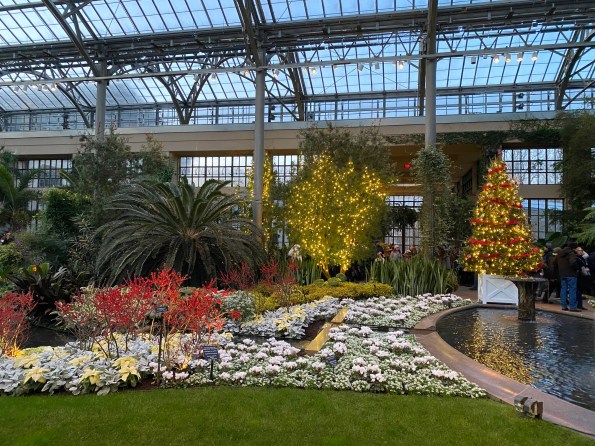
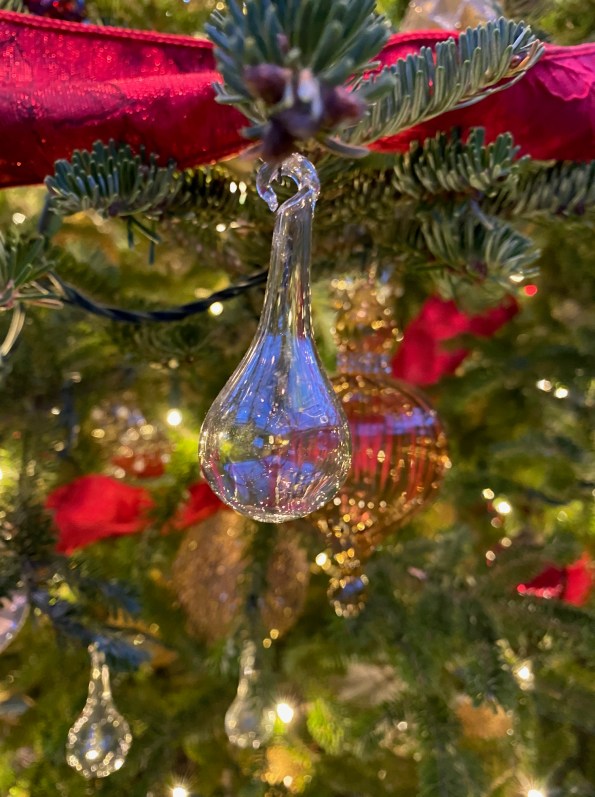
While I don’t celebrate Christmas, its magic is not lost on me. When I saw an email advertising Christmas lights display at Longwood Gardens, the decision was quick – we should go and see it.
Longwood Gardens, also known as Dupont Gardens, are located in the town of Kennett Square in Delaware, a few miles away from Pennsylvania border. We had been regular visitors for a long time, as Gardens are absolutely beautiful. Some of our perennial favorites are the Fireworks and Fountains events, which are typically run during the summer – you can come with your own blanket and chairs, find a spot, and enjoy a beautiful display of colorfully lit fountains, working in full sync with the fireworks and classical music. However, we never attended A Longwood Christmas event as it is officially called.
Boy, was that the right decision. We got tickets for 4:30 pm (the event has timed tickets which are better be acquired in advance – the event was sold out for the day we were visiting), and this was a great choice of time as we still got a glimpse of the sunset and then enjoyed the Gardens. The lights, the music, and overall organization were nothing short of stunning – and what you see below is a gimps of our enjoyment.
If you are anywhere within the driving distance, the event worth a hassle – find the time before January 5th to visit and enjoy – or put it already in the calendar for the next year. I’m sure you will greatly enjoy it.
Here you go:




















Let’s Talk Wine Labels
How are you with the wine labels?
Speaking for myself, I love wine labels a lot more that I would even admit. Everybody knows that we eat with our eyes first – this is why good restaurants go out of their way to present their food in the best possible way.
The same is true for the wines – and I’m not talking about the wine in the glass. Let’s leave aside the situation when we are looking for a specific wine. You walk into the wine store and first and foremost you notice the wine labels. I don’t know how this works for you, but speaking strictly for myself, I can’t figure out what makes wine label attractive for me. It is more of magic. Some labels have an elaborate design, and my eye simply skips them. And then there are simple, very simple labels which solicit instant reaction “oh, this is so cool”. Magic.
It appears that the effect of the wine label goes much further than an instant determination of cool/not cool and the desire to quickly grab the bottle. The wine label design also creates expectations about taste, price, quality, and lots more. Don’t take this from me. Folks at Iron Design create product labels for living. They conducted market research, which you can read about here – and summarized all the results in the form of an infographic, one of my favorite ways of presenting the information. Bunch of numbers, facts, and pictures in compact and concise form – isn’t it fun?
For what it worth, the Iron Design team was very kind letting me share the infographic in this blog, which I’m happily presenting below. And for all of you, my friends, what do you think of the impact of the wine labels on your choices and expectations?

Spain’s Great Match 2019 – A Mixed Bag?
I love Spanish wines.
Anyone who reads this blog for a while is aware of this. Spanish wines have a special place in my heart, as even today they are some of the best-kept secrets in the wine world, allowing those in the know to enjoy amazing wines still at reasonable prices (some of the best QPRs around).
For many years I had been attending Spanish Wine Tasting in New York, called Spain’s Great Match. I usually attend the early morning seminar, and then go for the walk-around tasting – here you can find my reports from 2014 and 2017 events.
The seminars at Spain’s Great Match are meant to showcase some of the best and interesting Spanish wines. 2014 event was an absolute stand out in this regard, as this was a special event celebrating 30 years of Spanish wines in the USA. The wines served in that seminar were way beyond amazing.
The 2017 seminar was also quite good – maybe not as good as 2014, but still, very, very good. Now, before I will report on the 2019 event, let me talk a bit about the setting.
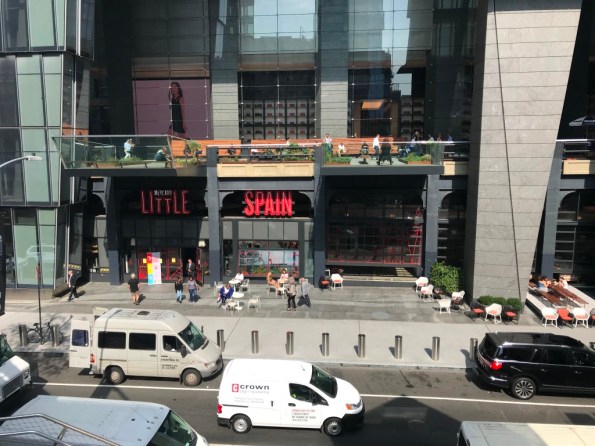


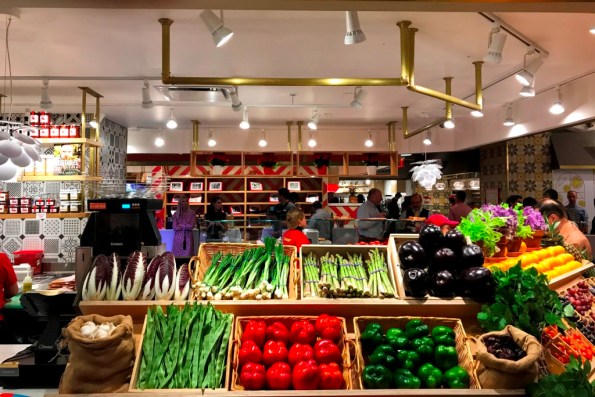
The event took place in one of the trendiest New York neighborhoods, Hudson Yards, at the recently opened Mercado Little Spain. Mercado Little Spain is conceptually similar to the Eataly, with the space filled with all possible produce, food and drink options which you would otherwise find…yes, in Spain. So the setting itself was outstanding, creating the right atmosphere to enjoy Spanish wines as they should be.
Now, let’s talk about the seminar, which was called “Vinos de Vanguardia: Wines on the Cutting Edge”.
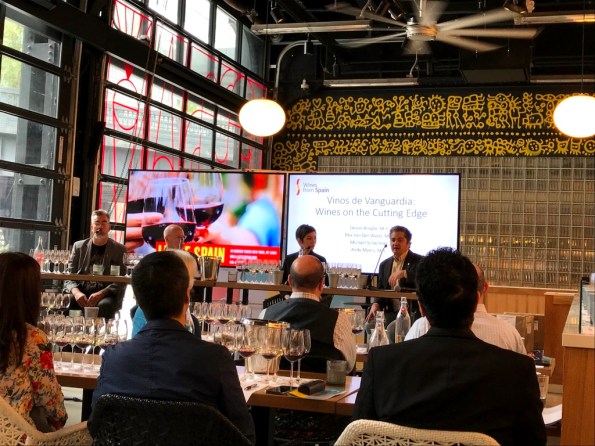

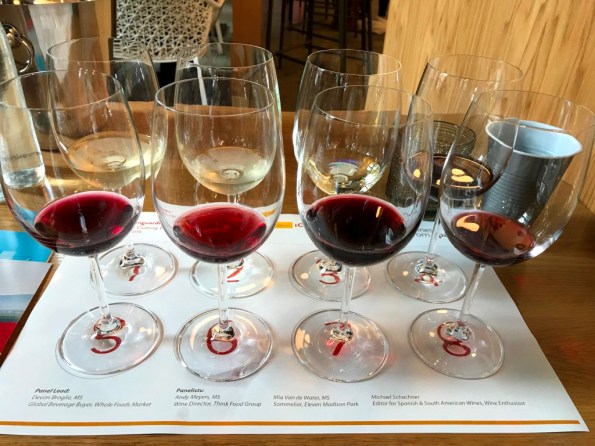
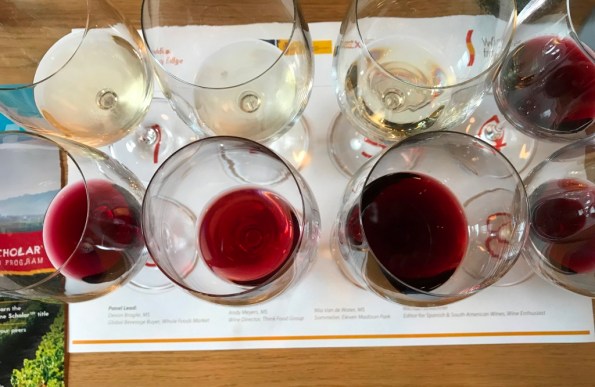
As you can tell from the name, the idea was to present a unique and different side of Spanish wines. Yes, I get it – Spanish wines might be relegated by “ordinary”, “predictable”, and “same all, same all”, and the seminar was designed to break that myth and to show the forward-thinking of the Spanish winemakers.
I don’t discriminate against any type of wines – natural, low intervention, “orange”, unoaked, unfiltered, canned, boxed, all is good. I’m willing to try absolutely anything – at least one time. When I taste the wine, I trust my palate, and that sip will be simply binary – I will either like the wine, or not. Yes, temperature, air, of course – I’m willing to give literally an unlimited amount of time to the wine to show itself properly – but at some point, the wine has to deliver what it is supposed to deliver – a pleasure. That’s all I’m looking for in wine – pleasure.
I’m sure the wines in the seminar were hand-selected to represent the avant-garde thinking of the Spanish winemakers. However, for me, only 3 wines out of 8 delivered that pleasure, and two out of those leftover 5 were not only boring, but they were also off-putting. I rarely call wines “bad”, I typically say that the wines are “not for me”. So these 2 wines were truly not for me – here are the notes:


2018 Can Sumoi Xarel-lo DO Penedès (100% Xarel-lo)
Golden
Great acidity, sour apples, an unusual ting of a fermenting fruit
Mostly acidity, a bit violent to my taste. Fresh lemon acidity, devoid of any sweetness. The bitter-sour finish lingered. It might be a food wine, but I would definitely prefer a Muscadet if I really look for food-friendly acidity.
Natural wine, the panel was talking about a sense of place and so on, but one can relate to that only if one is visiting, and without that “place” connection the wine was … well, you got my point
2018 Tajinaste Blanco DO Islas Canarias (90% Listán Blanco, 10% Albillo)
Golden color
Fresh grass, underripe white plums, distant hint of a grapefruit
Fresh acidity, Meyer lemon. Unfortunately, boring.
2018 A Coroa Godello DO Valdeorras (100% Godello)
Golden color
Whitestone fruit, a touch of lemon
Good acidity, distant hint of buttery notes, but this was mostly it – the acidity. This wine might well be improved with time, judging by the acidity, but at the moment, boring.
2016 Enrique Mendoza La Tremenda DO Alicante (100% Monastrell)
Garnet
Beautiful intense nose of fresh berries, a touch of iodine
Tannins-forward, tannins mostly take over the wine, some fruit present. Not great.
2018 Bodegas Ponce Clos Lojén DO Manchuria (100% Bobal)
Dark garnet
Touch of roasted meat, violet, very inviting floral aromatics
Beautiful pepper note, fresh berries, medium body, open, inviting, short finish. First good wine in the tasting.
2016 Marañones 30.000 Maravedies DO Vinos de Madrid (90% Garnacha, 10% Morate/Syrah)
Ruby
Hay and cherries, light
Tart, tannins forward, mouth-puckering, cherry pits on the back end. Maybe a food wine, and maybe it will improve with time. Ok wine for now.
2015 Alberto Orte Atlántida VT de Cádiz (100% Tintilla)
Dark ruby/garnet
Beautiful open inviting nose – sage, ripe plumes, thyme, lavender – one of the most herbs-driven aromas I ever experienced
Beautiful palate, herbs with a complex interplay, fresh berries, delicious. Second excellent wine in the tasting.
2015 Guímaro Finca Meixeman DO Ribeira Sacra (100% Mencía)
Garnet
Mostly closed, a touch of cherries, hint of currant leaves
The beautiful playful palate, crunchy wild blueberries, lots of herbs, medium body, medium+ finish. Also one of the best in the tasting.
As you can tell, Bobal, Tintilla, and Mencía were excellent wines which I really enjoyed – and all these wines are uniquely Spanish. When it comes to Spanish wines, you don’t need to try too hard – Spain offers lots of unique and delicious wines – but oh well, this was fine anyway.
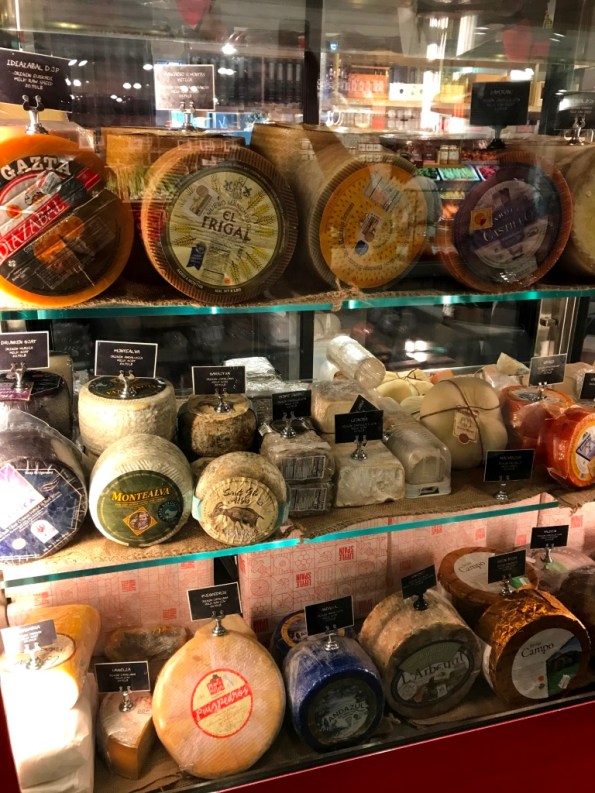
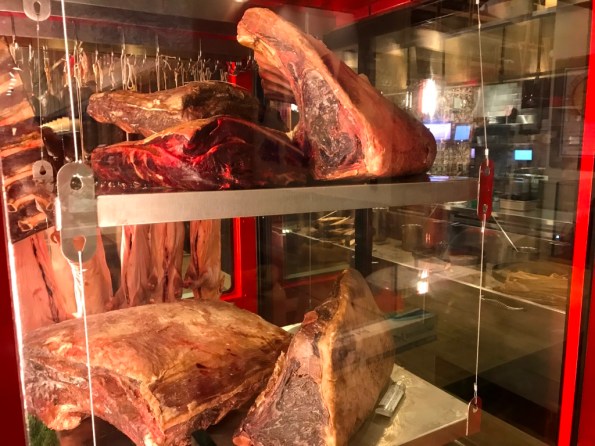
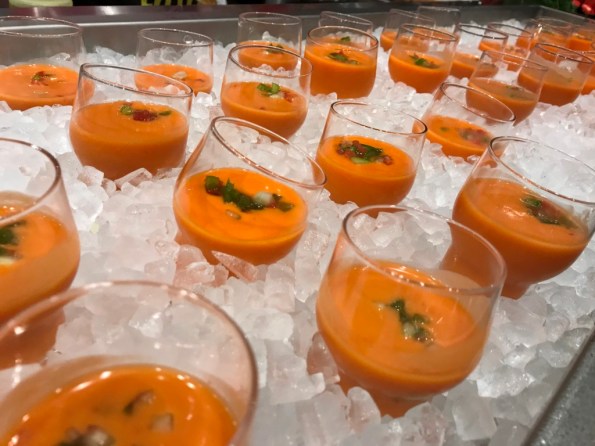
Right after the seminar, we went back to the main floor, which was all converted into the walk-around wine tasting space. Spanish food was carried around, from famous Jamón to Manchego cheese to Spanish omelet to Potatas Bravas and more. I have to say that Gazpacho was my favorite bite without a doubt, but overall, there was no shortage of food.




I have to honestly say that in my 5 years of attending these “Spain’s Great Match” events, the “big guns” never showed up in the tasting – I don’t mean Pingus, Clos Mogador or Vega Sicilia, but even more accessible staples such as La Rioja Alta, Lopez de Heredia, Emilio Moro, Alto Moncayo and many others never made an appearance outside of occasional representation in the seminars. This year’s event was not an exception, with really minor representations of the better-known wines. Don’t get me wrong, there were plenty of excellent wines available, but been a bit spoiled (sorry), I just made a quick round, mostly looking to taste the new vintages of the wines I already knew, so I’m not going to inundate you with a long list of my wine recommendations.
In no particular order, here are the wines I tasted and liked:


Sparkling and white:
2017 Martinsancho Bodegas y Viñedos Martinsancho Rueda DO ($15) – this is one of the best Rueda wines, and it is a lot of wine for the money
2016 CUNE Monopole Classico Rioja DOCa ($27) – deliciously complex, oak-aged white Rioja
NV Anna de Codorníu Brut Rosé Cava DO ($15) – an excellent glass of bubbly for any occasion
NV Segura Viudas Reserva Heredad Penedes DO ($30) – this wine never disappoints, and a beautiful bottle makes it a perfect gift


Red:
2016 Viña Real Crianza Rioja DOCa ($16)
2014 CUNE Reserva Rioja DOCa ($29)
2012 CUNE Gran Reserva Rioja DOCa ($39)
2012 CUNE Imperial Gran Reserva Rioja DOCa ($80)
2016 Teofilo Reyes Crianza Ribera Del Duero DO ($37)
2018 Bodegas Divina Proporcion 24 Mozas Toro DO ($16) – a nice rendition of powerful Toro Tempranillo, good value
2010 Bodegas Martinez Lacuesta Reserva Rioja DOCa ($38)
2014 Bodegas Sonsiera Pagos de la Sonsiera Rioja DOCa ($38)
2016 Bodegas Valderiz Ribera Del Duero DO ($25)
2014 Boada Campo de Bueyes Crianza Ribera Del Duero DO ($15) – might be my favorite wine from the whole tasting. Approachable, round, delicious. Great value.
In terms of price versus quality, or the QPR as we like to call it, Spain still remains unbeatable, and it still remains more of a secret for a casual wine lover. Well, I guess it is all better for us – those who discovered the secret already.
What was your favorite Spanish wine discovery as of late?
How It Is To Be A Wine Lover in Finland
How it is to be a wine lover in Finland? I have to honestly tell you – I have no idea.
Okay, I have a very limited idea, based on my first trip to Finland and about a week spent in Helsinki and Kuopio.
So yes, keep that in mind – as I don’t live here, my whole claim for expertise is simply a fresh eye of a passionate wine lover, who treats wines stores as toy (candy) stores – one of my indulgences when traveling solo – I can spend an unlimited amount of time in the wine store, slowly walking from the shelf to a shelf.
As I spent half a day in Helsinki, staying in the downtown area, the small-ish wine store was my first find. At first sight, I thought that the prices in Helsinki were higher than in Kuopio, but I’m not sure this is correct as alcohol sales in Finland are government-controlled. I saw beer and a few types of wine in the supermarkets, but if you want to buy wine or liquor, you have to head over to Alko, state-owned stores.
In the downtown Helsinki store, French Champagne seemed to be quite expensive – at least 1.5 times or some even double of what you would typically pay in the USA. However, Spanish, Italian, Californian, and even Australian wines were priced rather reasonably, especially taking into account the current exchange rate for euro. That ’06 Lopez de Heredia Viña Tondonia Reserva at €37 looked like a steal to me:
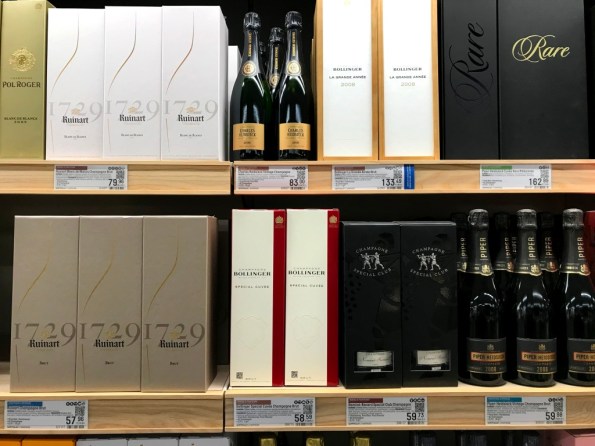
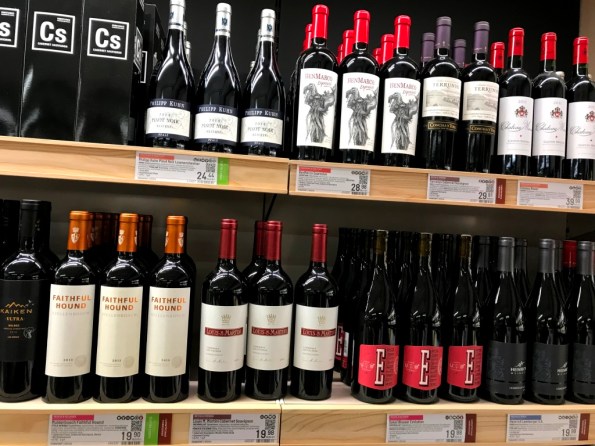
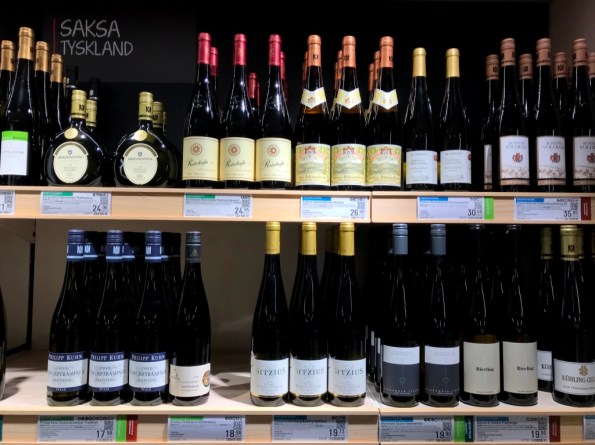
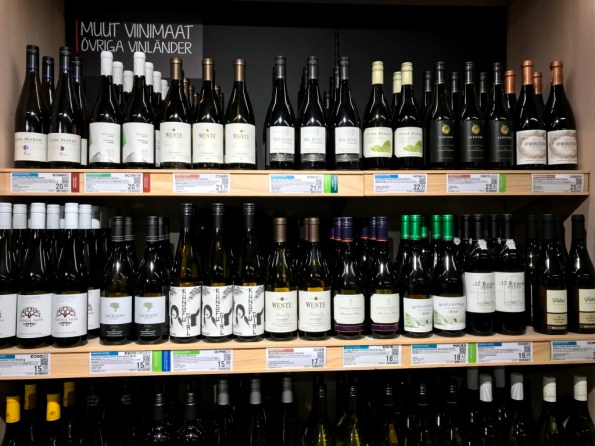
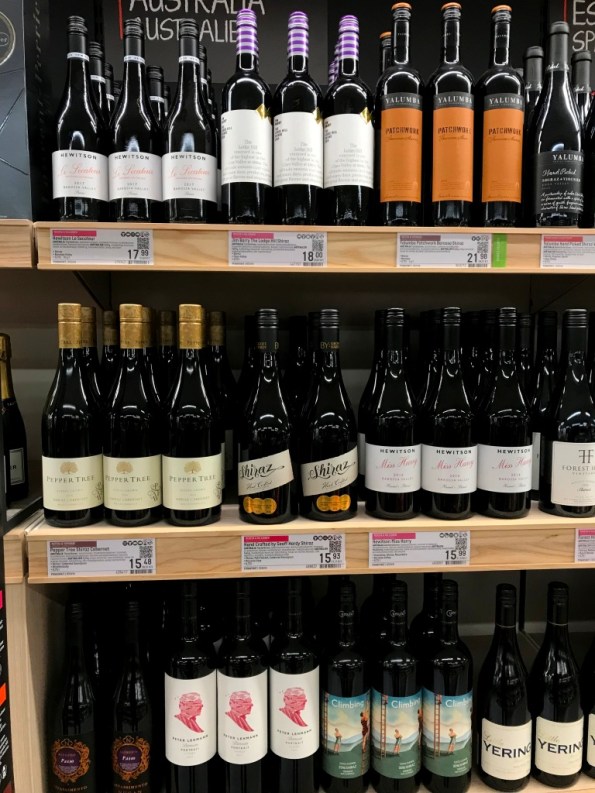
Somehow, the Australian wines attracted my attention first (maybe it is my subconscious trying to compensate for the years of neglect, or maybe it is related to happily drinking Shiraz just a few weeks ago). It was not easy to make a choice – but I settled for the 2015 Jim Barry The Lodge Hill Shiraz Clare Valley. One of the reason was that Jim Barry McRae Wood is one of my most favorite Shiraz wines of all times. I like the wines from the Clare Valley, they are usually lean and focused – and 2015 was giving at least some age for it.

The wine didn’t disappoint at all. Dark fruit, blackberries and a touch of blueberry, subtle pepper note, perfectly firm texture – delicious wine all in all. And let’s not forget the view…
The next morning I flew to Kuopio, a small town up north from Helsinki. Before we talk about wine, we need to talk about a beer. We had a bit of free time on Sunday after arrival to Kuopio, and we took a nice hike to the observation tower. There, in addition to the beautiful nature views, I also found a delicious local beer. I generally prefer dark beers, such as stouts and porters, so I just pointed to the darkest bottle I saw on the display. That was a lucky strike, as Iso-Kalan Mestari Stout from Kuopio (we could see from the top the brewery buildings where it was produced) was just superb – yes, don’t forget that it is a wine drinker talking about beer – but this beer had a perfect balance of malt, dark chocolate, and coffee – had to slow myself down not to gulp it all in an instance.
As a small town (118,000 people live there), Kuopio probably serves as the best proof that Finns love the wines. The wine store which I found in the mall at the market square, was a complete standout. Just gobs and gobs of a great finds, with Champagne section, almost pushing me to ask if this house is for rent 🙂 I was happy to see Rosé, Bordeaux selection looked simply excellent, and some of the unique finds, such as Chinese Changyu looked ultra attractive too – if I would’ve stayed there for longer, that bottle wouldn’t escape my attention.
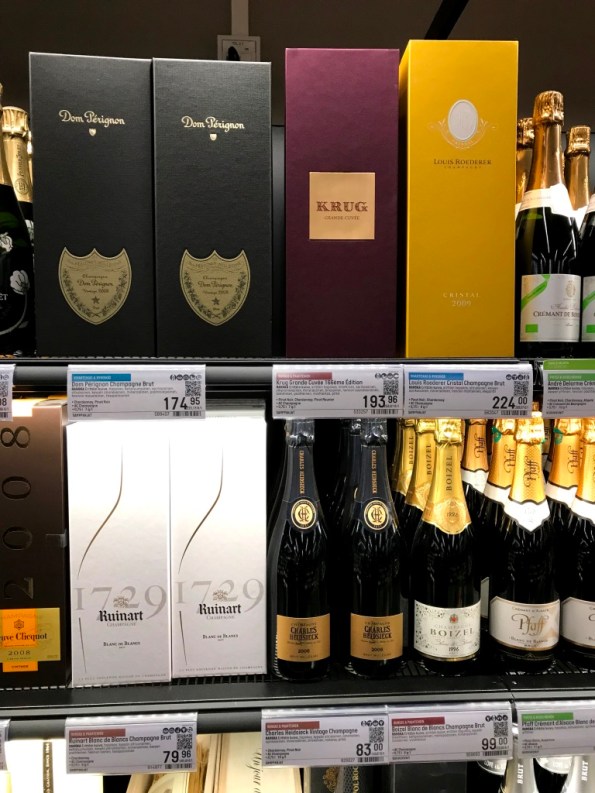


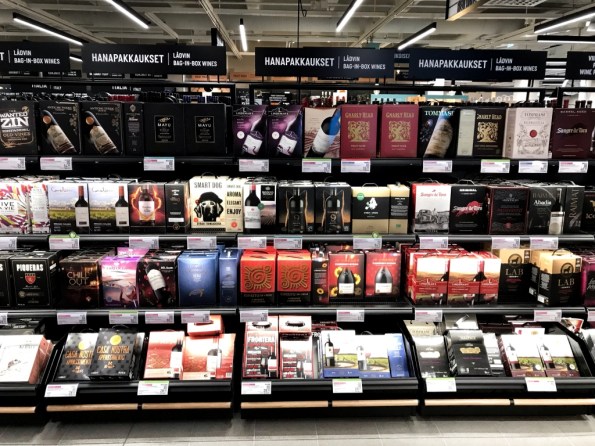


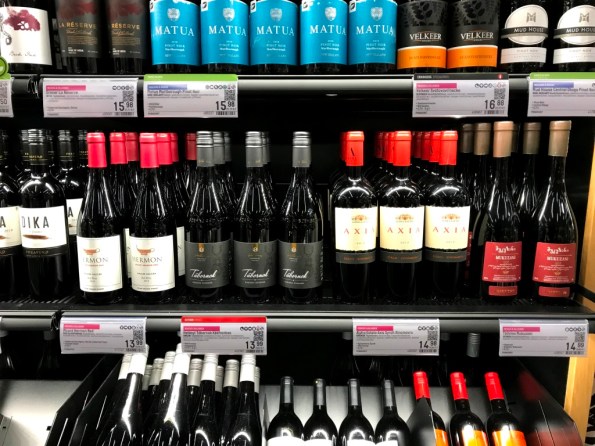


Once again, the Australian section looked mysteriously attractive. First, I saw the words “second pass” on the label of Australian Shiraz. Reading the back label confirmed that yes, it is by design similar to Valpolicella Ripasso, and that there is also a Shiraz made in Amarone style. Looking up one shelf, I was happy to see the words “Dried Grape Shiraz” – here we go, the Amarone-style Shiraz itself. Of course, I had to buy it.


The 2015 Alfredo Dried Grape Shiraz Nugan Estate South Australia was delicious from the get-go. The wine is made in Amarone style, with the grapes drying out for a few months before they are pressed into the wine. The wine opened up with a touch of the dried fruit on the nose, dense and powerful on the palate, with the dark fruit medley and again a touch of dried fruit, full-bodied and smooth, with a long playful finish. In a blind tasting, Amarone would be definitely one of my strong guessing options. While it was good on the first day, it became literally amazing on the 3rd day with the last sip of blueberries, blueberry compote, sweet oak, and long finish.


Right next to the Australian wine section in the store there were Austrian wines. The label with octopus instantly attracted my attention. The wine name was also intriguing – Beck Ink. Back label was suggesting that this is a “natural” wine – of course, this was the next wine I had to try.
2017 Beck Ink Austria (12% ABV, 80% Zweigelt, 20% St. Laurent) opened up with the punch of acidity. The first sip literally had the level of acidity which can make you cringe. There was a hint of underripe raspberries coming with it as well. As the wine was opening up, a little gaminess showed up, the acidity softened, letting more of dark berries to come into a play. The wine had a medium body and smooth, playful texture – if anything, it was really reminiscent of a very good Beaujolais Cru. While craving food, I kept adding from the bottle into the glass until I realized that it was already late – and I almost finished the bottle.
There you go, my friends. Based on what I saw, the wine is well regarded in Finland, and the wine lovers there have a very reasonable choice at very reasonable prices. Have fun peering through those pictures 🙂 Cheers!
Daily Glass: Enjoy Your Wine and Play With Your Food – Beyond Meat Food, It Is
I appreciate winding down Sunday with a good glass of wine and a family dinner. When it is warm outside, such a Sunday dinner typically means grill – and this past Sunday was not an exception (or maybe it even was a bit of an exception as it was dry and pleasantly warm, and not hot at all, compared to mostly hot and humid weather of the last year).
Kids love steak in this house. While shopping for a steak at our local Fairway Market, something caught my eye. Beyond Meat? Really? Both Beyond Meat The Beyond Burger and Beyond Meat Beyond Sausage Original Brat? Wow and double wow!
Let me explain the excitement.
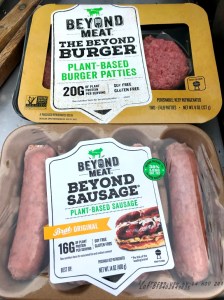 I have plenty of friends and relatives who are vegans and vegetarians, so with the summertime, the question of a good meat alternative is always becoming hot – when someone visits our house, I really want people to feel included and taken care of, no matter what their dietary restrictions are, so the search for a good vegan burger, etc. was always on. A few years ago, I came across the product called Beyond Burger, made by the company with a catchy name Beyond Meat. The description of Beyond Burger, which offered full resemblance of the regular burger, including the blood, sounded a bit suspicious, so I carefully researched all the ingredients and to my dismay, found that all of the ingredients are natural and there was no red paint added to this product. When I decided to try it, further research proved it to be mission impossible – Beyond Burger was available only at the Whole Foods (which I don’t frequent), and the Internet was full of complaints of the people who desperately tried, but failed to find it in their local stores, as the product was always out of stock. I also learned that in addition to Beyond Burger, the same company is offering a new product called Beyond Sausage, which sounded to me too good to be true. Again, this all was taking place 3-4 years ago.
This year, Beyond Meat went public (and mind you, very successfully – while the initial offering was at $25/share in early May, today it is trading at around $168/share, and it is just about a month later). And it appears that they managed to increase their production and distribution – now I saw the actual product instead of just reading about it. Thus, as you can imagine, I simply had to try it, even though it is quite expensive for what it is – $5.73 for two burger patties and $9.99 for four “bratwurst” sausages – you can buy the pack of 14 real bratwurst sausages at Costo for $8.99. Nevermind all the price talk – the question is simple – is it tasty? Would I be happy to serve it to the guests?
What is the best way to compare wines? The blind tasting, of course. What is the best way to compare foods? Well, the concept of “blind tasting” in wine can’t really apply to the food, unless you would actually blindfold someone, or taste your food in one of those dark rooms were waitstaff wears special goggles. So I didn’t attempt to do any sort of the fair comparison, especially as the dinner plan included steak and not the burgers. However, I had some of the Costco bratwursts in the fridge, so battle sausage was definitely on.


Before we talk about the battle food, let me share with you two delicious wines we got to enjoy on Sunday. First, a Chardonnay from … Italy. Yes, Italy makes excellent white wines, and excellent Italian Chardonnay can be found more often than not – but I still get surprised every time at how good it can be. 2015 Maculan Chardonnay Veneto IGT (12.5% ABV) was delicious from the getgo. Beautiful golden color in the glass, a touch of honey and vanilla on the nose. The palate was plump and generous, with white apples, white plums, a touch of honey and vanilla, good acidity and nice weight. The wine might be close to its prime and offers an ultimate indulgence at the moment as it is perfectly balanced. My wife, who generally don’t drink white wines, said “wow” and asked for another glass.
Sunday calls for some special wine, so I decided to go with 1999 Hendry Block 28 Zinfandel Napa Valley (15.8% ABV). In case you are curious what makes this wine special, it is its age. I don’t drink routinely 20 years old wines (I wish I could), so every time I open a bottle of such an age, it constitutes a “special bottle”. Besides, Zinfandel is one of the pet peeves. The wine just jumped from the glass with the ripe blackberries and blueberries, supported by mocha and sweet oak. The palate offered layers and layers of goodness – ripe berries, a touch of blackberry jam, velvety smooth but well present mouthfeel, lots and lots of pleasure. I can also tell you that I noticed alcohol level only on the label, but not in the glass. A very well made, delicious wine.
Now let’s get back to food, as we have the battle to discuss.
Here is how both products looked before the cooking – note the real bratwurst at the bottom of the picture with sausages. Burgers look scarily realistic, and while Beyond Meat sausages look slightly different than the real sausage, they still look perfectly real overall (there are plenty of different sausages of exactly the same color):


Both burgers and bratwurst should be cooked for 3 minutes per side according to the package instructions, which is exactly what I did. Here is the result, again including the real bratwurst for comparison:


As you can see, Beyond Meat products have somewhat of a yellow hue (okay, this are the iPhone pictures, so you might have to take my word for it). Otherwise, both burgers and saysages perfectly held up to the cooking process and were very easy to handle – maybe even easier than the real meat products, considering the there was no fat coming out to cause the flare ups.
Just so you know we didn’t really convert into the vegans, here are few more dishes from our dinner (yes, this are real meat and real scallops):


And now, to the taste.
I made a small mistake of not creating the full experience out of the burger, meaning having it with a bun, tomato, ketchup and so on. On its own, it was quite decent, with some tiny hints of not been made out of the real meat (but then remember that it was not a blind tasting, so I was clearly influenced by the appearance). The sausage, however, was mind-boggling. It literally was identical to the real bratwurst in the taste profile and texture – I would never be able to distinguish it if I would close my eyes. Simply a wow.
If you read my typical wine posts you would know that at any possible occasion, I like to taste the wines over the course of a few days to see how they will change. When it comes to the food, it is not that I like to taste the food on the second or a third day (by the way, some of the soups and stews actually benefit from an extra day in the fridge), but I can’t stand wasting the food, so I usually make an effort to work on the leftovers for as long as possible or needed. What it has to do with this story? Simple. We had leftovers of both Beyond Meat burgers and bratwursts. Over the next two days, both perfectly held up to the reheating in the microwave, and both were perfectly on point in taste and texture, resembling its real meat brethren even more than on the first day while freshly made.
There you have it, my friends. The verdict on Beyond Meat burgers and bratwursts? Beyond reproach. I will be happy, very happy to serve them to my guests at any gathering. And yes, I hope you enjoyed your Sunday night wines too. Cheers!
Last Bottle Sign Up ($10 credit)





