Archive
WMC21: Day 2 Highlights
We started the 2nd day of WMC21 with the breakout sessions, no keynotes. There were two sessions run in parallel, so you had to choose the topic which would be more of interest to you.
My first session, The Art of Storytelling for the Wine Industry, was presented by Jill Barth, a seasonal wine writer who writes for Forbes, Wine Enthusiast, Decanter, and other wine publications. Jill also won multiple awards (best wine blog 2016, Millessima wine and food pairing award, etc). Jill had a lot of good advice on how to build your story, what would make it a good story, how to pitch your story to the editors, and more.
Next, I listened to Scott Fish from 32 Digital, who was talking about taking your Instagram account to the next level. There were a lot of good information presented in the session – what are the best and worst times to post (it appears that Sunday is one of the worst days for the posts), how many tags to use, the optimal number of pictures in the gallery and so on. There were also some interesting tools recommendations, such as Answer To Public – a service that allows finding the most popular searches at the moment for a given keyword(s), all presented in an interesting format. You can see an example below of the search results for the keywords “red wine”.


You can definitely play with the tool, however, note that with the free search, you get a limited number of searches per IP address per day (I think 3 or 4), so play wisely.
Another interesting tool I learned about was Geolmgr which allows you to geotag your photos to a specific geographic location.
The next session, Digital Marketing for Wine Media, was presented by Mike Wangbickler, wine blogger, long-time WMC attendee, and owner of Balzac Communications agency. Mike started with some hard questions to the audience, such as “why do you have a wine blog” – it appears that literally no one had a wine blog to make money. Then Mike went on to talk about a plethora of tools available today to the bloggers in terms of SEO, content management, optimizing your delivery to your customer audience, and lots more.
After lunch, we had an excellent panel on Oregon sparkling wine. Before the session started we had an opportunity to taste three of the Oregon sparkling wines from the wineries participating in the panel. One of the wines was delicious sparkling Tannat from Troon Vineyards which we tasted on the first day. My other favorite was the 2017 Willamette Valley Vineyards Brut Sparkling Wine, which had all the classic Champagne traits – a touch of toasted bread on the nose, crisp, tight, and elegant on the palate.


The panel discussion was joined by Craig Camp, Troon Vineyard, Christine Clair, Willamette Valley Vineyards, Jessica Thomas, Sweet Cheeks Winery, and moderated by L.M. Archer.
It was a good discussion, starting with the history of sparkling wine in Oregon, and going through all the aspects of sparkling wine production. What was particularly interesting for me is a different approach to selecting the grapes for the sparkling wine. Willamette Valley Vineyards found out that one of the Chardonnay clones in the specific vineyard doesn’t perform well enough to be vinified into the still Chardonnay, but it happened to be well suited for the sparkling wine which requires much lesser ripeness. At the same time, the Sweet Cheek Winery harvests grapes for their sparkling wines from the same vineyard used for the still wine, but in the earlier pass, leaving the grapes for the still wines to ripen further.
Our next session was a wine discovery session where we had a choice of learning about Italian wines of Marche or Abruzzo – my choice was Marche, and we will talk about it in a separate post.
And then there were Lightning Talks. Lightning talks is an interesting concept. These are the sessions presented by fellow bloggers and wine writers. Each presenter submits a presentation with any number of slides, however, the slides change automatically and should be presented in exactly 5 minutes. This is the amount of time given to everyone – either you are done or not, but your time slot will stop exactly at 300 seconds. All the presenters did an excellent job – Gwendolyn Alley talked about being a cellar rat, Jeff Burrows spoke about starting your own blogging group, Brianne Cohen spoke about the virtual tasting business she started in 2020. My favorite talk though was the one presented by Steve Noel, who spoke about creative wine descriptors – I couldn’t stop laughing the whole 5 minutes while Steve was talking. While it will not be the same as Steve’s live presentation, he graciously allowed me to include his presentation in my post – you can find it here.
Our last session of the day, and essentially, the conference, was Wine Live Social for the red wines, which I already covered in this post.
Customary, the conference ends with the announcement of the next year’s location. Unfortunately, Zephyr folks, organizers of the conference, didn’t have a chance to work on securing the next location, as they had to operate with minimal staff, so the location will be announced later.
This was the end of the official conference, but you can probably imagine that we couldn’t let it go so easily, so after dinner, many of the attendees reconvened in the lobby to … yes, you guessed it – drink more wine and talk. There were lots of wines, but one particularly interesting for me was the 2009 Ranchita Canyon Vineyard Old Vine Cabernet Pfeffer – Cabernet Pfeffer is the grape I never tried before, and I recently saw it mentioned by someone, so it was definitely interesting to try. Not sure when this bottle was opened, so the wine was not super-enjoyable, but hey, I get to increase my grape count.
When I went to my room at around 2 am, there was still plenty of wine left, as you can see below. When I came out for breakfast the next morning, the foyer had no traces of wine bloggers partying all night.


There you are, my friends – if you missed the conference, I hope this gives you some idea as to what was going on there, and I hope next year it will be at the place and time good enough for all of us to get together.
I’m done with my report from the conference, but not with Oregon wines. I spent the next 4 days visiting wineries with Carl Giavanti, so as they say, watch this space…
Seeking Cabernet
 Now, this is frustrating.
At the recent dinner with friends at Knife Pleat restaurant (amazing food!), I assumed my role of designated Wine Guy and was going through 20+ pages of the wine list. 1970 Solar di Samaniego Rioja Gran Reserva caught my eye – at $200, it represented an amazing value for a 51-year-old wine. After confirming with the Somm that the wine is still well drinkable, only more delicate than powerful, I had to wriggle an approval for spending $200 on a bottle (I was not paying).
After the wine made it into the glasses, it appeared that everyone was really enjoying the nose, which was complex and spectacular. The first sip of the wine, served at the cellar temperature, was met with more than subdued enthusiasm – let’s be honest here, it was rather a sigh of disappointment. There was nothing wrong with the wine, but it was well closed and at least needed the time to open up.
After a few attempts to enjoy the wine, my friend asked “can you recommend any big, round, smooth, and velvety wines”? It turns out a few years back when she just arrived in Irvine, she got a bottle of wine at the local store. The wine was on sale for about $20 a bottle, and all she remembers was Cabernet Sauvignon and that she really enjoyed the wine – but she has no idea about the producer, the vintage, or any other essential elements.
Have you been in a situation where a simple question can lead to literally complete paralysis while trying to answer it? This might be a situation where your knowledge becomes your big handicap, as you try to hastily dissect the complexity of such a simple question.
Basically, the question asks “can I recommend an amazingly good California Cabernet Sauvignon at a reasonable price to someone who is not a wine aficionado, but just want to occasionally enjoy a good glass of wine?” – how easy this should be to answer for the Wine Guy? For yours truly Wine Guy, not so easy.
Good California Cabernet Sauvignon might be one of the best pleasures on Earth. I’m talking about the wine which unequivocally extorts “oh my god” from the red wine lover after the first sip. Of course, this is a simple idea – but not so simple to provide a recommendation. We need to take into account price, availability, and readiness to drink. BV Georges de Latour Private Reserve might be amazing with proper age, but with the price of $100+ per bottle and pretty much undrinkable upon release, this is not the wine I can recommend. The same story would be with Kamen, one of the most amazing Cabernet Sauvignon wines I ever tasted. Textbook, Turley, or Waterstone would offer more reasonably priced options (under $50), but still, I don’t know how amazing these wines are upon release. Suggesting non-winos to decant will not work. Asking them to keep the wine in the cellar until it reaches perfection will not be received very well. That leaves us with only one option – we need to find a Cabernet Sauvignon which is delicious upon release.
In an attempt to rehabilitate me after (almost) an epic failure at the restaurant, I decided to look for the simplest solution – the wines from Trader Joe’s. Trader Joe’s wines rarely disappoint; they are light on the wallet and don’t require cellaring or decanting to be enjoyed.
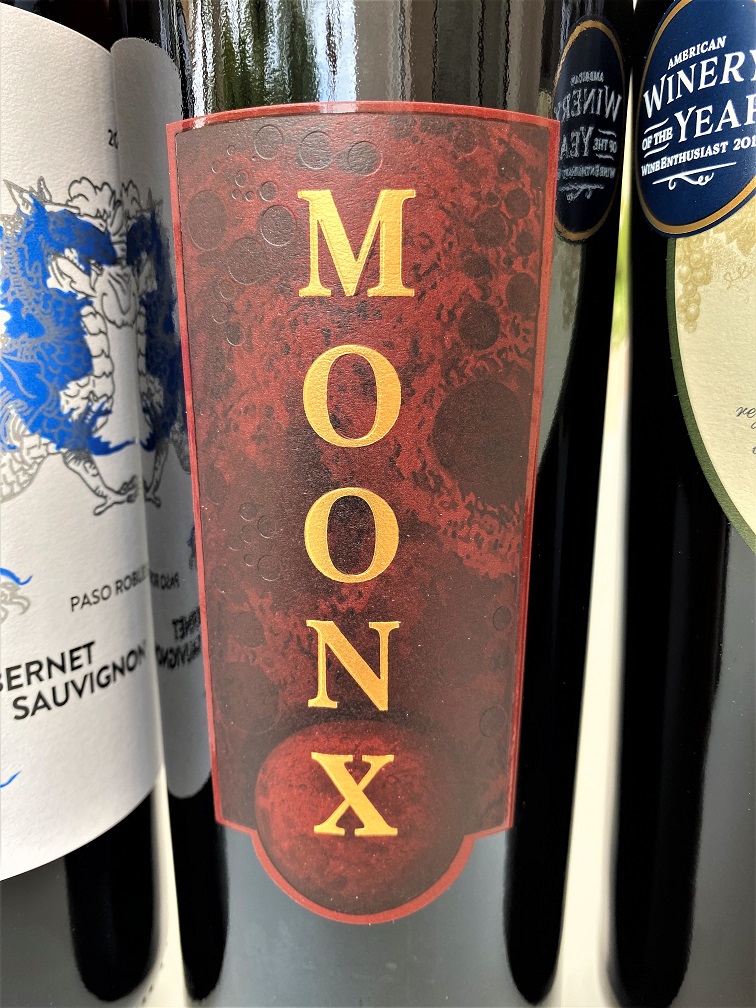
Trader Joe’s offers a good selection of Cabernet Sauvignon wines. Choosing the wines was a combination of prior experience and just good-looking labels – Justin makes outstanding wines in Paso Robles; you can’t go wrong with or beat the prices of the Bogle wines); I had MOONX wines before, and have good memories of them.
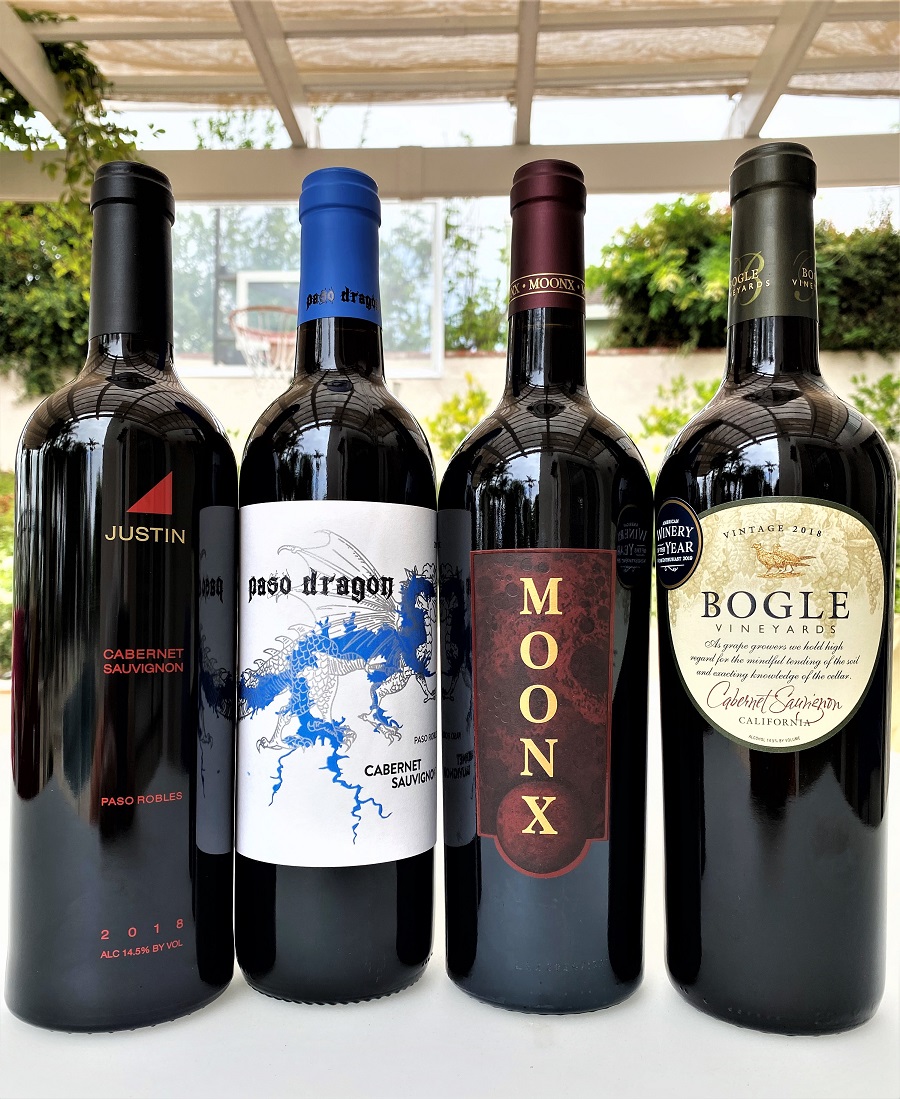
Here are the Cabernet Sauvignon wines from Trader Joe’s I offered to my friend to taste (notes are mine, of course):
2018 Paso Dragon Cabernet Sauvignon Paso Robles (13.5% ABV, $6.99)
Garnet
sage, blackberries, red and black fruit
Blackberries, herbs, medium body, clean acidity, nice finish with a touch of pepper
7+, a bit too weak for the Cab, but easy to drink wine. Can’t really identify as Cabernet Sauvignon.
2018 Justin Cabernet Sauvignon Paso Robles (14.5% ABV, $24.95)
Ruby
A touch of eucalyptus and mint, blackberries; second day – earthy and complex, a hint of gunflint.
A distant hint of cassis and tobacco
Second day: Classic cab is coming through, cassis and mint, clean acidity, crisp tannins.
8/8+, this wine needs at least 5, better yet 10+ years in the cellar to shine.
2018 Boggle Cabernet Sauvignon California (14.5% ABV, $7.99)
Light garnet
Bell peppers, a hint of cassis
Blackberry preserve with tobacco and a touch of coffee. More herbaceous than anything else.
7+, it is a drinkable wine, but might be the least Cabernet of the group.
2019 Moonx Cabernet Sauvignon California (13% ABV, $6.99)
Garnet
A touch of cassis, berries compote, a hint of bell pepper
Lodi fruit presentation, a hint of cinnamon, warm spices, sweet tobacco, berries preserve, a touch of fresh tannins, medium finish.
8-, easy to drink, good balance, pleasant, great QPR.
My friend’s favorite on the first day was Paso Dragon. MOONX was a favorite on the second day. She declared Justin “not bad” on the second day. And she was unmoved by Bogle on either day.
From my point of view, only Justin was worthy of Cabernet Sauvignon designation – give it time, and it will be a spectacular one. MOONX was very good too, but it didn’t necessarily scream Cabernet Sauvignon. We need to remember though that my friend’s love and desire for Cabernet is simply based on the good prior experience with the wine named Cabernet Sauvignon, but was that a classic Cab nobody would ever know.
There you go, my friends. Let’s go on the quest to find the best, varietally correct Cabernet Sauvignon, perfectly drinkable upon release, at a price that leaves 401k intact. Ready to offer recommendations? Be my guest…
Beautiful Simplicity
Is there a such thing as simple wine?
I really despise controversy. In a world where every word is twisted, turned, analyzed, over-analyzed, then twisted and turned, again and again, I don’t want to be the one to start a new controversy around wine (clean or natural, anyone?).
But really, is “simple” an applicable descriptor for the wine? If I say “simple wine”, can you relate to this as easily as to “tannic”, “acidic”, or “sweet”?
Everything in the wine world is personable. No two palates are the same, no two glasses of wine are the same. And so will be the concept of simple wine – it is highly personal.
There are thought-provoking wines – you take a sip, which triggers an instant process in your brain – analyzing flavors, looking for patterns, digging into memory looking for comparisons. Not every thought-provoking wine equates with pleasure – if we call the wine thought-provoking, it doesn’t always mean that we are craving a second glass. Need an example? How about Frank Cornelissen wines? Nevertheless, we all can relate to the wine we designate as thought-provoking.
Then there are complex wines. The wine presents itself in layers. You don’t need to over-analyze anything, and yet every sip keeps changing, offers you new depth and new impressions every passing moment. Complex is beautiful, wine aficionados love drinking complex wines.
So what is then a simple wine? A lot of people would equate the definition of “simple” with the price. We are trained not to refer to the $10 bottle as “amazing” – even if we enjoy it immensely, we would rather say “it’s just a simple wine”. Leaving the price aside, a simple wine has a very simple effect – take a sip, and your only reaction is “ahh, that’s good”. Simplicity doesn’t affect the enjoyment of the wine – the wine should still give you pleasure, and you should still want a second glass.
Every time you think you know a lot a good bit about your favorite subject, wine, life quickly humbles you, just so you know your place. Ever heard of Mack and Schuhle? I also never have. Meanwhile, they had been in the winemaking and wine distribution business since 1939, and currently have a portfolio of 25 wine brands from around the world – from New Zealand to Italy, Spain, and France to the USA.


When I was offered to review 2 of their wines, Montepulciano and Malbec, I agreed to do that because I was intrigued by the names – Art of Earth and El Tractor. Would you instantly agree to drink something called Art of Earth? For a wine geek like myself, such a name makes the wine simply irresistible. And tasting these wines, which are also very inexpensive, resulted in the diatribe about simple wines. For what it worth, here are my tasting notes:
2019 Art of Earth Montepulciano D’Abruzzo DOC (13.5% ABV, $12, made with organic grapes)
Dark garnet with beautiful ruby hues
Touch of cherries, a hint of funk,
Bright, pure, beautiful, succulent, tart cherries – fresh of the tree.
8+, delicious. This wine doesn’t have the complexity of Masciarelli, and I don’t believe it will age very well – but it is absolutely enjoyable right now.
2017 El Tractor Malbec Reserve Mendoza Argentina (13% ABV, $14, 12 months in French oak)
Dark garnet
Blackberries, cherries, sweet tobacco
Dark fruit, tobacco, cherries, a hint of smoke, nicely restrained, good acidity, good balance.
8, excellent. This wine is not going to rival Catena, but it is perfectly an old-world style, quaffable, and enjoyable Malbec.
Here you are – two simple wines, good for every and any day – or at least I would be happy to drink them any day. What is your definition of simple wine?
Double Lucky Number 8
Luck.
An interesting term.
Luck is extremely subjective, personable, and relative. There are many definitions of luck, starting with the cliche one “when preparation meets opportunity” – not sure how that would apply for example, in the case when the brick is accidentally falling off the roof of the building and missing your head by the quarter of an inch. Or when you win the lottery. When you miss your train and meet the love of your life – what kind of luck is that? Okay, let’s not get hung up on the research of the true meaning of “luck” as this is not the goal of this post.
Last year, 2020, can hardly be called a “lucky” year. Quite on contrary, for 99.9% of people living today, this was probably the unluckiest year of their lives to date (who knows what the future hold). Or was it? Yes, we lost the ability to travel, eat out, enjoy the concerts, and socialize with friends. And yet many of us who kept our jobs managed to pay off debt (Americans paid off the record of $83B in credit card debt), invest into their homes (the price of lumber doubled in certain markets in the USA, due to very high demand), and even get well on the path to early retirement. And those of us obsessed with wine even got access to the wines we couldn’t dream of before (thanks to the restaurants not buying those wines anymore), and meet lots and lots of winemakers who happily visited our houses – via zoom. Everything has its silver lining.
A few months ago I got an email from Cayuse, saying that I will be getting a bottle of wine called Double Lucky #8 – a free sample, plus there will be a special zoom with the winemakers to introduce the new wine. Cayuse, and all of the “sister” wines – No Girls, Horsepower, Hors Categorie – are super-allocated (never mind expensive), so the free bottle sounded very lucky.
The wine arrived a few days ago. A beautiful bottle that solicited an array of thoughts. Cayuse wines are better with age – 2017 is clearly too young to be enjoyed now. Also, I love sharing the wine – so what should I do – to open or not to open? I decided that as this will be a unique opportunity to taste this wine together with the winemakers, I should just open the bottle and go with the flow. But also do it in a smart way – open a few hours in advance and decant it – which I did.
I remember reading an article by W. Blake Gray, the wine writer and a critic I respect very much, who mentioned that Cayuse wines might be the best wines made in the USA. Ever since then, tasting Cayuse wines became a dream, which required more than 10 years of waiting to get on the mailing list. Obviously, meeting Christophe Baron was a similar dream, which materialized thanks to pandemic and zoom.

Our zoom session was moderated by Owen Bargreen, the wine critic from Washington, with Christophe Baron and Elizabeth Bourcier, the winemaker, talking about all of the wines produced by Cayuse – well, that is not exactly correct. As introduced by Christophe Baron, it is all the wines produced by Bionic Wines, the new overarching brand, which includes Cayuse, No Girls, Horsepower, Hors Categorie, and Champagne Christophe Baron.
It is all about the rocks (Cayuse is derived from Cailloux which means stones or rocks in French). If I would give you a cliff note on what Christophe Baron does, it would sound something like “he finds the great location, establishes new vineyard, and makes new wine” – really, this is the story behind various Cayuse wines, No Girls, Horsepower…
Everything at Cayuse is done in full respect and harmony with nature – all the vineyards are farmed biodynamically since 2002 – the only biodynamic winery in Washington. As Christophe put it eloquently during the webinar, Mother Nature is the Master, and we are all her servants – it is Mother Nature who produces the grapes, and the winemaker needs to covert those into the wine, hence the utmost respect and attention to producing the wines in full harmony with nature.
We talked about all the wines under the Bionic wines umbrella, how they came to being (remember, new vineyard – new wine), and what is the philosophy behind them all. Almost at the end of the session (the time flew unnoticed, all thanks to the incredible energy and enthusiasm of Christophe), we finally talked about 2017 Double Lucky #8, a blend of Grenache, Syrah, and Tempranillo, the same three varieties which comprise No Girls offering. Double Lucky is Elizabeth Bourcier’s project, from start to the finish – her idea, her execution. She wanted to create the wine similar to Cotes du Rhône – simple and approachable from the get-go, a sort of Cotes du Walla Walla if you will. Was she successful? Let’s talk about it.

When I poured the wine at first, it literally jumped out of the glass. I call Cayuse wines “liquid rocks” – Double Lucky was no exception, with granite, iodine, and smoke being prevalent both on the nose and on the palate. The wine was definitely drinkable, though not for the faint at heart – if you like massive wines, you would be pleased. 2 hours in a decanter made the wine more mellow, shifting the balance towards some cherries and herbs. For my palate, the wine continued up and down until it was gone.
Elizabeth shared her winemaking philosophy, which includes whole cluster fermentation and use of the stems, as stems “give the wines freshness” in her own words. I’m rather cautious about both – I guess my palate is overly sensitive to the tannins extracted from the stems – I perceive them as “green” tannins, which are unpleasantly bitter, and thus I’m generally not a fan. So I don’t have a strong opinion on Double Lucky #8, and while the wine is influenced by Cote du Rhône, it will last for the next 10–20 years, unlike Cote du Rhône wines, which typically have only a few years to be enjoyed, so I would definitely mark it as “needs time” right now. One more parallel with Cote du Rhône – those wines are usually inexpensive – and Double Lucky will be the cheapest wine in Bionic Wines portfolio, at $44 when it will be officially released next winter as part of the No Girls wines release. While the wine is a blend of Grenache, Syrah, and Tempranillo, there are no exact proportions, as the blend will change every year. I can only guess Grenache makes the majority of the blend, given Elizabeth’s propensity for use of Grenache as she does in her own sought-after wine, La Rata.
I have to tell you that while the zoom is exceptional, it is hard to keep attention all the time. As the result, I don’t know if it was just me, but I didn’t really get the real story behind the intriguing name (Double Lucky) and the meaning of #8. Was that the blend #8 which became the winning one? Was the idea behind this wine associated with some lucky moment? I would love to know, but I have no idea. Hopefully, someone will be luckier than me and we will learn the story behind the name.
Was that a lucky break drinking Double Lucky and listening to Christophe Baron? Oh yes, it was. I wish all of us lots and lots of luck, whether we are prepared for it or not.
Beaujolais Nouveau 2020 Edition
Yes, I know – we are ending the first week in December, and it’s been more than 2 weeks since Beaujolais Nouveau was released, so if anything, this is not a timely post. And I acknowledge your critique, as you can see in the title – my typical Beaujolais Nouveau post announces “Beaujolais Nouveau Est Arrivé!”, but hey, life takes precedence…
I know that many wine lovers dismiss Beaujolais Nouveau as a gimmick. The beauty of wine is that everyone is perfectly entitled to their opinion, but for me tasting the very first wines of the vintage is always fun. Ever since this blog started more than 10 years ago, I didn’t miss a single Beaujolais Nouveau release – you can check all the previous years here – and I have two main observations. First, the labels are always beautiful and creative. Second, the wines are getting better and better. Well, for sure on the labels – and keep talking about improved wines almost every year, so I guess they had been good for a while.
For 2020, I something interesting for you in the store – errr, on the blog. It appears that it will be the first time I will include a non-Beaujolais “nouveau” wine in this post. I know I had other new vintage wines before, released at about the same time as traditional Beaujolais Nouveau – I can only guess I was never happy enough about those to include them into this special coverage. But this year, the non-Beaujolais nouveau wine was excellent, and hence I’m including it in the group.
I’m not trying to drum up the drama – here you can see the full set of Nouveau 2020 wines I was able to find at my local wine store:  All the wines were in the range of $10 – $13, thus I didn’t write down prices for each wine. Here are the tasting notes:
2020 Domaine Dupeuble Pere et Fils Beaujolais Nouveau AOC (12.5% ABV)
Dark ruby
Fresh berry, cherry cola
Fresh raspberries, a touch of lemon, crisp, crunchy, acidic.
7+
2020 Georges Duboeuf Beaujolais Nouveau AOP (13% ABV)
Garnet
Raspberries and blueberries on the nose, a touch of mint
Fresh raspberries, round, clean, less acidic than the previous wine, very pleasant.
8-/8, can be consumed without regards to the Nouveau designation. Long finish full of pure raspberry joy.
2020 Joseph Drouhin Beaujolais Nouveau AOC (13% ABV)
Ruby
Complex nose with herbs and cherries
Slightly tart raspberries, crisp acidity, acidic finish.
7+/8-, not bad, but the previous wine gives more pleasure.
2020 Union Wine Co Underwood Pinot Noir Nouveau Oregon (13% ABV)
Bright ruby color.
The nose of freshly crushed berries
succulent raspberries on the palate, nice minerality, lots of pleasure
8, excellent
As you can see, Duboeuf Beaujolais Nouveau and Underwood Pinot Noir Nouveau wines were my favorites, and both clearly win the best label contest (can’t decide which one do I like more):


It seems that Georges Doboeuf is pretty consistent with very good Nouveau wines for many years already. Drouhin is pretty consistent too – the wines are not bad, but not super-exciting at the same time. I had Domaine Dupeuble 5 years ago, and I liked it more back then. If I have one gripe it is with the Underwood – nowhere on the bottle the vintage can be found, which is bad – next year, nobody would know how Nouveau is that Nouveau, unless Union Wines will change the label.
As you can tell, this was a good group of wines. Was this tasting fun? For sure. Is the quality really improving? Probably not – but it still stays up, so we have nothing to complain about.
Did you taste any Beaujolais Nouveau this year? Any favorites?
Beyond Kosher: Thinking of Israeli Wines
 I love pairing wine and holidays. It is always a fun exercise, as you need to find a way to explain your choices – how given wine enhances or at least relates to a given holiday (good luck with your Thanksgiving wine selections). Jewish holidays, which we are still in the middle of (Jewish New Year just arrived less than 2 weeks ago), are very helpful in that regard, as wine is simply a requirement here – most of the Jewish holidays require a glass of wine to be present and consumed.
When it comes to Jewish holidays, my approach is simple – I prefer to have on the table the wines made in Israel. But when I reach out to get an Israeli wine off the shelf, I can’t help it but think about all of the complexities of the Israeli wine landscape – what we are talking here is above and beyond of intricacies of making any fine wine. Making of the delicious wine is anything but complex – how to protect vines from the disease, when to harvest, what yeast to use, for how long to macerate, what to blend – lots and lots of decisions, each one affecting the end result, often dramatically. Production of Israeli wines deals with all of the same complexities but then adds a cherry on top – concepts of kosher and mevushal.
I remember visiting Israel about 15-17 years ago with a group of co-workers from the USA, at the resort on Mount Carmel. One of my colleagues pointed to a bottle of wine saying “this is amazing”. The wine he was pointing to was an Israeli wine, Yatir Forest, which was at a time a total surprise for me – I knew that this guy was really into wine and he was drinking very serious stuff, more of California cults and Bordeaux first growth, so this was unexpectedly high praise. I was absolutely unfamiliar with Yatir wines at that time (it would make me say “ahh, pretty please” now).
When we asked to open that bottle for us, we were surprised to hear that it will not be possible. Explanation? The food at the resort was kosher, and food includes wines. The resort just got a new person in charge of observing all the kosher laws and requirements in food preparation and service, and Yatir Forest was not kosher enough. That, my friends, is a problem which is unique to the Israeli wine scene – I’m not aware of any other winemaking region in the world where making tasty wine is not enough for that wine to reach the consumer, even the local one – this also complicates the imports quite a bit.
I’m not going to pretend to be an authority on the laws of kosher wines – I’m very far from it. I’m just here for the tasty wine. What I do know is that the kosher laws are quite intense and involved, whether it has to do with the food or the wine. While I understand that there is some rationale when it comes to the food, I don’t believe kosher requirements can materially affect the taste of wine. We also need to keep in mind that there are different levels of kosher types and certifications, and to top it all off, there is the Mevushal. In case you are not familiar, mevushal is somewhat of a process of pasteurization of the wine to allow for it to be served by a non-Jewish people at a restaurant or anywhere else. It appears that according to the kosher wine rules if the kosher wine is served by a non-Jew, it becomes non-kosher. Mevushal treatment solves that problem, allowing for the kosher wine to be served by a non-observing person without losing its kosher qualities.
To be labeled as Mevushal, the wine has to be heated up to 185 degrees Fahrenheit, essentially becoming pasteurized. As you understand, the exposure of the wine to such a high temperature result in the “cooked” wine – and very appropriately, in the old days Meviushal wines were simply undrinkable, at least by anyone who drinks the wine to enjoy it (as a matter of fact, the word “mevushal” means “cooked”). Lately, however, the wineries found new ways of making wine Mevushal without destroying it. One is a flash-pasteurization, where the wine is very quickly heated up to the same 185°F only for a few seconds. According to the Wine Spectator article, another method is even more interesting – it is called flash-détente, where instead of the wine, grapes are heated up to 190°F and then quickly cooled to the 80°F in the special machine. It would be an interesting experiment, but many wineries produce the same wine from the same vintage both as mevushal and non-mevushal – comparing such wines should be a fun project, don’t you think?
Now that we have Mevushal figured out, let’s take another look into the world of Kosher wines. Think about your favorite wine store – note, I’m speaking about the USA, your experience in France will be vastly different. As you walk in, you see the tags which help you find what you are looking for. Most likely, these tags are one of two types – either specifying a grape variety (Cabernet Sauvignon, Chardonnay, Pinot Noir) or the country and maybe a region – France, Italy, Burgundy, Spain, California, etc.. Somewhere in the corner, you will probably find the Kosher section, possibly right next to the Organic display. In that Kosher section, you will find predominantly Israeli wines with some additional bottles from California, France, maybe Australia, and Spain.
I can safely assume that you will be visiting that Kosher section only a few times a year, just around the Jewish holidays – okay, maybe you will make a special trip if you are invited to the Shabbat dinner by the observant family. Should you expect to find Israeli wines anywhere else in the store? Unlike California, France, Australia, and Spain, all of which you will find all around the store in the different varietal sections, Israeli wines will be confined to that specific Kosher section, 99 out of a 100. As Israel truly makes world-class wines, it is definitely a problem, as Israeli wines have a lot to offer. But what if Israeli wine is not Kosher, such as the wines produced by Vortman Winery – what can they do to make themselves found? Who will take a chance on the Israeli wine which can’t be placed in the Kosher section?
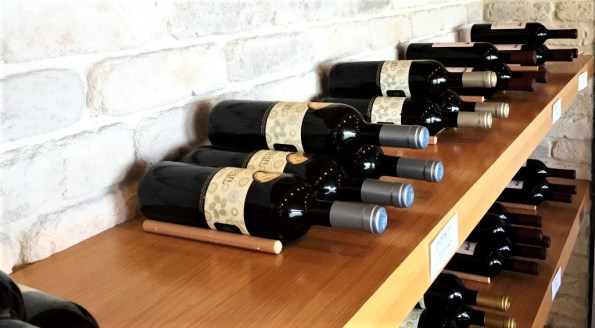
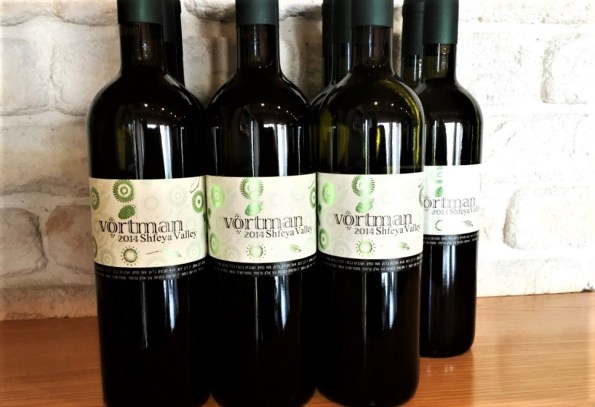


About 5 years ago, I had the pleasure of sitting across from Hai Vortman, the owner and winemaker at Vortman Winery. We were sitting in the Vortman winery tasting room, which was adjacent to his home in Haifa, enjoying magnificent views and superb wines. I was listening to Hai talking about the history of winemaking in Israel, particularly around the Carmel Mountain, which is considered one of the very best and oldest winemaking regions in Israel. Depending on the source, winemaking in Israel is from 3,000 to 5,000 years old, but this was not the point of our conversation. I learned that Baron Edmond de Rothschild recognized the viticultural potential of the Carmel Mountain region and founded Carmel Winery there in 1882, investing millions in the development of the vineyards and production of the wine. In 1900, Carmel Winery wine from Richon Le Zion area won the gold medal at the Paris World Fair, competing against classic French Bordeaux.
The first half of the 20th century was a tumultuous period for the Israeli winemaking – it was not until the last quarter of the century that Israeli winemaking started to rebound. Vortman Winery was founded in 2003 in Haifa in the basement of the family house, with the vision of producing organic wines from the grapes growing in the Shfeya Valley region of the Carmel Mountain. The first commercial vintage was in 2007. In 2009, Vortman started planting new vineyards in Shfeya Valley and converting old vineyards to organic viticulture, all based on dry farming, biodiversity, and full respect for the environment. Today, Vortman winery produces around 30,000 bottles a year – of the non-kosher wines.
Vortman wines we tried were delicious. 2014 Vortman Shfeya Valley White, a blend of Sauvignon Blanc and Semillon from 45 years old vineyard, was delicious, showing minerality, white fruit, crisp, clean, creamy, and refreshing, with a long finish. 2014 Vortman Prime Location Red, a blend of Merlot, Carignan, and Cabernet Franc (mostly stainless steel) was nicely restrained, earthy and fruity on the nose with a firm structure and an excellent balance. 2012 Vortman Shambur, a blend of Cabernet Sauvignon, Carignan, and Merlot (9 months in oak barrels) had a classic Bordeaux nose, great restraint on the palate with a nice core of tannins and great acidity. Nothing extra, nothing unnecessary, just a supremely precise wine. 2013 Vortman Carignan from 50 years old vines (7 months in new French oak) offered a burst of dark cherries on the palate and the nose and a perfect balance. Simply beautiful wines, one after another.
Now, the problem is that unless you plan to travel to Israel, you are out of luck with Vortman wines (hey, if any importers read this – do you want to bring some delicious Israeli non-kosher wines into the US?). Don’t despair, as Israel exports lots of tasty wines.


About 2 years ago, I had a sample of Yarden wines I never wrote about (yeah, I know). Yarden might be one of the best known Israeli wineries in the US, largely thanks to the efforts of the head winemaker Victor Schoenfeld, who is relentlessly promoting Yarden wines. Yarden is one of the brands of Golan Heights Winery, along with Gamla, Hermon, and Golan. Golan Heights winery was founded in 1984, and it is considered as one of the quality wine pioneers in Israel. Here are the notes for the wines I had an opportunity to taste:
2014 Galil Mountain ELA Upper Galilee (14% ABV, 61% Barbera, 30% Syrah, 5% Petit Verdot, 4% Grenache, kosher, non-mevushal)
Dark garnet, almost black
A bit of the stewed fruit on the nose, ripe plums
Clean, fresh on the palate, pepper, plums, baking spices, a touch of savory notes, good acidity, medium-plus body
7+/8-, initially the wine showed a touch of cork taint on the palate, some presence of a wet basement, which disappeared on the second day.
2016 Golan Heights Gilgal Rosé (13.5% ABV, 100% Syrah, kosher, non-mevushal)
Dark intense pink color
Touch of gunflint, oregano on the nose
Ripe spicy raspberries on the palate, more gunflint and granite notes, fresh finish of ripe fruit without been overly sweet, excellent concentration and presence, fuller body than most of Rosé. Delicious.
8, very pleasant
2017 Yarden Sauvignon Blanc Galilee (13.5% ABV, 2 months on French oak barrels, kosher, non-mevushal)
Straw pale color
Whitestone fruit and a touch of candied fruit on the nose, not typical for SB
The palate is restrained, with a hint of freshly cut grass, green apples, and some tropical fruit undertones. Good acidity, a hint of fresh-cut grass on the finish
8-, very good and pleasant rendition of SB
2016 Mount Hermon Indigo Galilee (14% ABV, cabernet sauvignon/Syrah blend, kosher, non-mevushal)
Dark garnet, almost black
Bright, inviting, freshly crushed red fruit, eucalyptus, raspberries, and blueberries on the second day, plus some dry fruit notes – figs
Wow. The first day was a little incoherent, but the second day is simply incredible. Beautiful supple blueberries and raspberries, excellent extraction, tobacco, dark chocolate, clean acidity, soft and round on the palate.
8+, excellent. Just let it breathe.
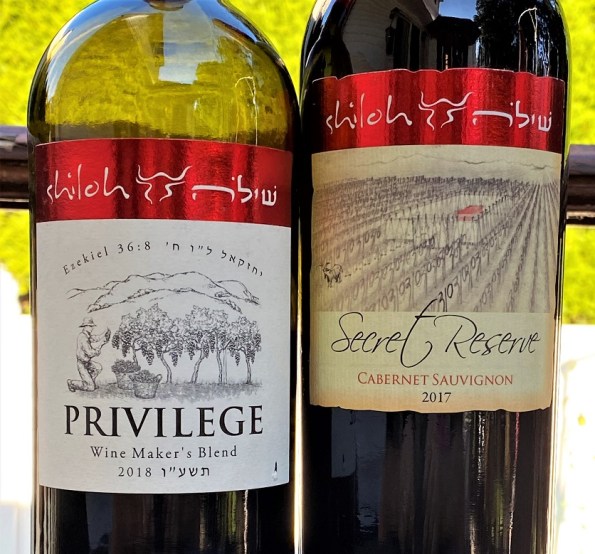
Before we are done here, I still need to talk about one more Israeli winery – Shiloh. I had been introduced to the Shiloh wines about 3 years ago, at a dinner in New York City. The wine we had, Shiloh Mosaic, was absolutely mind-blowing, it was #14 on my Top Wines list for 2017. Shiloh is the youngest winery out of the 3 we talked about today, founded in 2005. Shiloh vineyards are located in the area of the Shiloh river and Samarian hills. Based on the limited information available on the website, it seems that Shiloh produces wines from Chardonnay, Sauvignon Blanc, Cabernet Sauvignon, Cabernet Franc, Merlot, Malbec, Barbera, Grenache, Syrah, Petitte Sirah, and Petite Verdot grapes – of course, there might be others.
To celebrate Jewish New Year 5781, we opened two bottles of Shiloh wines. 2018 Shiloh PRIVILEGE Winemakes’s Blend (14% ABV, 74% Cabernet Sauvignon, 165 Syrah, 7% Cabernet Franc, 3% Grenache, kosher, mevushal) showed beautifully, offering soft red and black fruit, good minerality, soft tannins, and excellent balance. 2017 Shiloh Secret Reserve Cabernet Sauvignon (15% ABV, 100% Cabernet Sauvignon, 18 months in French oak, kosher, mevushal) was even better – a classic old world, rivaling any classic Medoc wine, full of cassis, eucalyptus, a touch of green bell pepper, silky smooth on the palate and extremely satisfying, a pleasure in the glass – this is the wine you need to experience, better yet, compare it against the best of Bordeaux in a blind tasting. It appears that many of the Shiloh wines are produced in both mevushal and non-mevushal styles – something which really calls for a blind tasting side by side.
Israeli wines are world-class, but they still need to be found by the wine consumer. Will you look for them?
Winemaking: A Step by Step Guide
Today I would like to offer you a guest post by William Reed, who is a passionate winemaker that continues his family’s the age-old tradition of producing quality homemade wine. With respect to
heritage and classic concepts as well as a zesty touch of the modern, William continues to explore the vast world of winemaking all while sharing his thoughts, ideas, and processes on his own personal website at myhomewine.com.
Winemaking or vinification is the process of making wine, from start to finish, which ends up having a lot of detailed steps you should know, so are you ready to begin this long but incredibly rewarding journey?
Some people say it’s easy to make wine but making good and fruity ones is only for the experts – well that’s not entirely true as we’ll see below. Summed up, the major steps on how to make wine are the selection of grapes, their fermentation to alcohol, and, lastly, the bottling. You can make all types of wine but the most common ones are red wine, white wine, or rosé, and even though they are pretty different between, their process is very similar.
Wine has been produced for thousands of years, being almost considered as an art, having an important role in religion and there is even a science that studies wine and winemaking, called oenology. Generally speaking, wine is an alcoholic drink made from fermented grapes with 5.5 – 15.5% alcohol and is a cultural symbol of the European life, changing from a nutritional supplement to a food complimentary beverage, compatible with a good lifestyle. Drinking isn’t safe for everyone and doing it more than moderate amounts can lead to health problems, however, a study from 2018 proved that wine can have great benefits because it contains antioxidants and it promotes anti-inflammatory and lipid-improving effects.

The classification of this beverage can be done according to its origin, methods, vintage, or variety used. Practices can be different in each country and have varied over time to achieve progress. Wine-growing regions all over the world have been improving their conditions with technological innovations to have better hygiene and control over the production process, contributing to the creation of wines suited to the taste of consumers. In fact, global wine consumption has risen with the purpose to enjoy in moderation, as part of a modern, sustainable, and healthy lifestyle. You can also take a look at the following guide in case you want to learn how to make wine at home.


With that said, I will now present you with the process of winemaking, in a thorough but also easy to understand step by step manner:
1 – Choosing the Perfect Grapes
The first step of all is harvesting! It’s one of the crucial stages in this operation, and it’s really easy to understand why – the better grapes you have, the better the product will be!
The moment the grapes are picked from the vineyard will determine their sweetness, flavour, and acidic and tannin levels – now we know why it’s called science. Some of the tracked conditions are the weather, the time of harvest and even the way you pick them – hand picking or mechanical harvesting. Even though there is a lot to consider and to control when it comes to reaching a nice final product, don’t get too scared, as you’ll only reach perfection through trial and error.

2 – Crush!
Once you have the grapes picked up from the vineyard, it’s time to de-stem them and gently squeeze them to liberate their content. This process, in the past or in traditional smaller scale farms, is done by foot. Nowadays, and in bigger wineries, mechanical presses are used to turn grapes into must (pulp) in a much faster and efficient way. Some say this can affect grapes negatively but it’s a more sanitary crushing step and also helps the quality of the final result. Personally, I’d prefer the machines rather than drinking wine crushed by some random farmer’s feet!
What is tapped from the must depends on the type of wine you are making. If white wine is what you want, then the seeds, solids and skins are removed from the grape juice. On the other hand, if red wine is what you prefer, the seeds, solids and skins should stay along with grape juice to offer it more flavour and that beautiful red colour.


3 – Sugar into Alcohol: Fermentation
It’s true, the third step is fermentation and is quickly defined as a transformation from sugar into alcohol – it seems like magic, am I right? It only seems like it, because here is where this process is the longest and most complicated, as it determines the quality of the final result.
As you already know, the product obtained from crushing will ferment because of the present yeasts that transform the sugar, as an energy source, producing ethanol and carbon dioxide. This explains the primary fermentation, which is called alcoholic fermentation, and will last from 5 to 14 days, requiring a lot of careful control (if the goal is a high premium luxurious wine). The second one is called malolactic fermentation, lasts another 5 to 10 days and it characterizes the pH 3,8 of red wines and 3,55 of white wines. Pure science! Temperature, speed and level of oxygen are also extremely important considerations and must be optimized. This whole process can take weeks or even months.
4 – Clarification and Stabilization
After fermentation, it’s time for clarification! This is where pulp, proteins, dead yeast, and other unwanted residues, created during the chemical reactions, are removed from the juice that you can almost call wine at this point. Particles that are insoluble and float, can be filtered and the ones that are soluble but still undesirable, can be centrifuged. Both of these methods need to be optimized to obtain a clear, healthy and appropriate wine. Some natural winemakers don’t clarify because they believe that it diminishes the aroma, texture, and color, so they leave the particles and compounds in red wines for aging – I follow this school of thought.
At this point, you already know that wine can be claimed as a complex mixture built upon microorganisms, and that it can be unstable and reactive depending on the environment and the condition submitted. One of the techniques to stabilize it is cold stabilization and it consists of exposing the wine to low temperatures, close to freezing, for two weeks. The complexity of this whole step is amazing because it enables winemakers to deliver their individual appeal to each wine.


5 – Aging and Bottling
This is the final step but one that is very important in winemaking, because it’s the relocation of the wine into oak barrels (my preferred vessel), stainless steel tanks or bottles.
Wine aging can be defined as a group of reactions that changes the properties of wine and allows it to develop unique flavors over time. Premium wines need to pass through this maturation step to acquire some amazing characteristics like aroma, color, flavour, texture and mouthfeel. Other light and fruity wines don’t need aging and reach their quality peak in a shorter time.
The major considerations in bottling are what kind of bottle to use, type of closure (sealing), (maybe cork), and if you want to add gas or not (not recommended at all for beginners). There are also a lot of kits available for you if you want to experiment making wine at home in a small but very educational manner.

Enjoy it – with Moderation!
Here is every important and crucial step in the winemaking process and you can apply them at your own industry or even at home! Yes, you can make this fruity, incredible juice without leaving your house. If you’re not interested in making your own, you can think about this whole procedure when you’re enjoying it, remembering the magic behind and realizing the work put on it.
Winemaking can be difficult because there are a lot of conditions you need to optimize, starting from picking the grape, to the act of bottling the wine, to the temperature you apply and the cleanliness. Now we can agree that this is almost an art and you have to learn a little bit of science too! Don’t forget that drinking wine in moderation has positive benefits linked to some cardiovascular disease due to the amount of antioxidants, isn’t that great? Thank you for reading and let’s have a glass of wine!
Wine Opinions, Forming and Changing
Well, this might be a dirty laundry type of post which I might regret later – but sometimes, it is good to look into the mirror, so let’s talk.
How do you form an opinion about the wine? Is it on the first sip? Is it after a glass? Is it based on tasting the wine, let’s say, for an hour or two and slowly deciding if you like the wine or not, sip by sip? Equally important – what other factors contribute to that said opinion? Critic’s 95 rating – would that affect your opinion? Respected friend’s recommendation – how important is that? I’m not even talking about ambiance, mood, food, or any other factors.
Okay, now I have another question.
Your opinion about the wine is formed. What would it take to change it? Is it enough to taste the wine once to change your opinion completely? Or would you need multiple encounters to have your opinion changed completely, doesn’t matter in which direction? Well, actually I think here we need to differentiate here between positive and negative opinions. If your opinion was positive, it will probably take a few unsuccessful encounters with the same wine to decide that you made a mistake the first time. But in case of a negative opinion… it gets more complicated. Would you even be willing to give the wine a second chance in such a case? What would make you pick again the bottle of wine you didn’t appreciate before?
Let’s make it more practical.
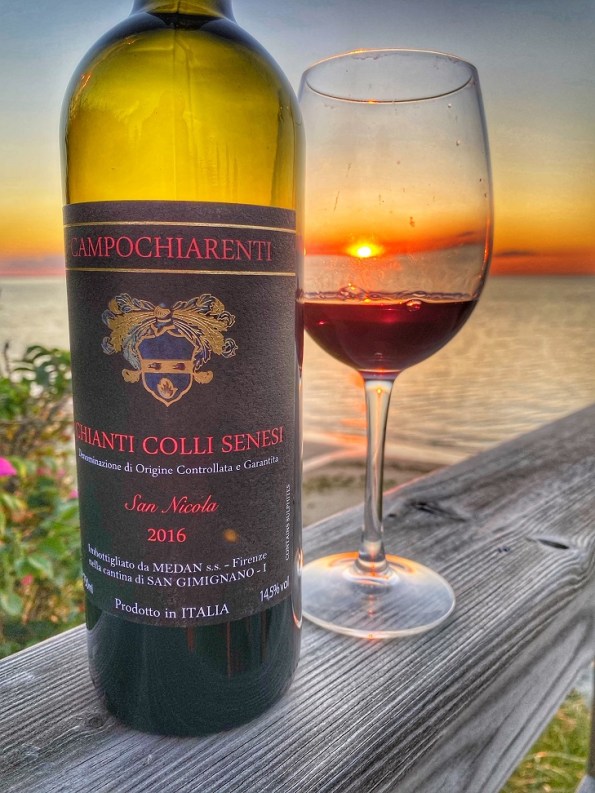
For a long time, I saw John Fodera, who is an expert in Italian wines, give the highest praise to the wines of Campochiarenti from Tuscany. I had an opportunity to finally taste one of the Campochiarenti wines – 2016 San Nicola Chianti Colli Senesi, one of the most basic wines in the Campochiarenti portfolio. Granted, I tasted this wine during the grand festivities of the open house John hosted during the OTBN Saturday – after tasting a variety of Gran Selezione, Super Tuscans, and a magical 1999 Soldera. And in the middle of all that extravaganza, the Campochiarenti Chianti’s appeal was lost on me. I mentioned in the post that the wine was “classic and simple”, but the major point was the price – it was an okay wine for the expected $12 when the wine will finally make it into the USA. Not that I didn’t like the wine, but I didn’t care much for it either – my palate perceived it as too dry and unidimensional.
Erich Russell, who I wrote recently about, has a business relationship with Daniele Rosti, the winemaker at Campochiarenti (Rabbit Ridge soon will be releasing the wine which will be a blend of Italian and California wines), and Erich happened to import a good number of Campochirenti wines to be able to showcase his future joint releases, which he now has available via his website. A few weeks ago, while I was ordering the birthday present for my sister-in-law in the form of the Rabbit Ridge wines, I recalled that she and her husband love Italian wines, so I decide to include a few bottles of the Campochiarenti wines in my order.
This past weekend we visited my sister-in-law who lives on Cape Cod. While deciding on the wine to take with us to see the sunset, I realized that this was a great opportunity to see what am I missing about this 2016 Campochiarenti San Nicola Chianti Colli Senesi – considering the universal love the wine has, I needed to try it again. It only took me one sniff and sip to have my opinion changed completely. The wine was absolutely mindblowing, in both bouquet and the taste, bursting with succulent cherries and offering velvety mouthfeel and impeccable balance. The picture above perfectly summarizes the way I felt about the wine – a double score, an amazing sunset paired with a superb wine.
After coming back and ordering my own case, I can now offer you another case buy recommendation. Visit Rabbit Ridge wine shopping page here, and look for the wine called Danielle – at $15, this wine is an absolute steal. You can also try Campochiarenti Vernaccia di San Gimignano, which supposed to be on par with the Chianti (when ordering, you can specify how many bottles of white and red you want) – I’m waiting for mine to arrive soon.
That is my story of a changed wine opinion. It was very easy for me, one sip and done. How about you? Have you changed your wine opinions and how? Do tell! Cheers!
Wednesday Meritage: Where To Get Wine [Values]
Meritage Time!
This is a bit of an unusual Meritage post, as it is focused on one single subject – how to maximize your hard-earned dollars while continuing to enjoy your beloved beverage. Plus, I want to share with you my case buy recommendation at the end of this post.
The inspiration for this post were the notes I receive via subscription to the blog by Robert Dwyer called Wellesley Wine Press which I had been following for a long time. Robert has a special talent for finding wine deals and discounts, and he shares all that information in his blog, so we can all benefit from that.
In addition to Robert’s finds, I also want to suggest another source of discounts which might or might not work for you – the American Express credit card. If you don’t own the American Express card, you should skip all this Amex talk and advance to the case discount section. For those of you who has the card you can’t leave home without, please continue reading.
When you log into your account at the American Express website, you can find a section of “Amex Offers & Benefits” at the bottom of the page. There are 100 different offers that are available to you on any given day. I believe those offers are targeted, and I’m not sure if everyone will see the exact same set of offers. Today, out of those 100 offers, 12 are wine-related. These are real savings, I used those offers many times in the past and those are real deals, saving you $20, $30, $50. These offers are easy to use – find what you are interested in using, apply the offer to your card, then make a purchase in required amount before the offer expiration date on the American Express card you applied the offer to, and your credit will be posted automatically within a few business days.
Here is the list of the offers which are currently available for my American Express card – I’m also adding the additional discount information which can be found in Robert’s blog:
Spend $100+, get one time $30 credit. Expires 6/30/2020.
You can add to this a $50 off $150 purchase with the code CN50 – see Robert’s post for explanations and additional discount codes. So technically, you can spend $150 on the wine, and with the combination of these two offers, your cost will be only $70. I took this opportunity to get a few bottles of Grosset Riesling from Clare valley – definitely a great deal.
Spend $250+, receive $50 credit. Expires 9/30/2020. Limit of 3 statement credits (total of $150). Wine Access offers many interesting wines – you can read about my experience here.
Spend $100+, get one time $20 back. Expires 9/1/2020
Spend $250+, get a one-time $50 credit. Expires 8/22/2020. Benchmark Wine Group is one of my favorite online stores to shop for wine – lots of unique and different finds.
The restaurant at Beringer Vineyards or online at beringer.com
Spend $200, get a one-time $60 credit. Expires 8/28/2020. Beringer Vineyards needs no introduction – and this sounds like a good deal.
Spend $250+, get 5,000 additional Membership Rewards points (one time). Expires 7/31/2020. Considering that American Express points can be valued at about one penny per point, 5,000 membership points would equate $50 – a good deal.
Spend $250+, get a one-time $50 credit. Expires 8/23/2020
Spend $200, get a one-time $40 credit. Expires 7/20/2020.
Bcellars.com, the restaurant at B Cellars Vineyards and Winery
Spend $300+, get a one-time $90 credit. Expires 8/18/2020.
Spend $200+, get a one-time $60 credit. Expires 7/27/2020. Another coveted winery on the list.
Spend $50+, get a one-time $15 credit. Expires 7/3/2020.
Spend $20+, get $20 credit. Expires 10/31/2020. Limit of 3 statement credits (total of $60)
These are all the American Express offers which I found available today for my credit card.
And now, for the case recommendations.
You see, when I find a good value wine, I’m always a bit hesitant to share that information with the world – what if there will be not enough left for me? Well, yeah, it is really not about me, right? It is all about delicious wine which you can afford to drink any day. What is also unique about these wines is that they don’t come from Spain, Italy, or France, where you can still find great bargains – these wines are made in California – at Rabbit Ridge Winery in Paso Robles.
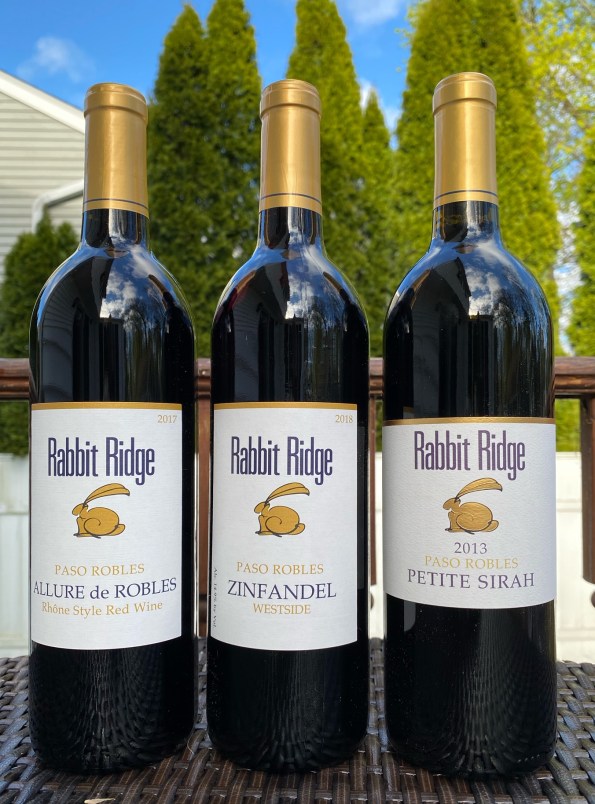
I recently met winemaker and the owner Erich Russell and his wife Joanne at the virtual event organized by John Fodera. We were going to discuss Rabbit Ridge wines, and I ordered a few bottles for that discussion – 2017 Rabbit Ridge Allure de Robles Paso Robles (15.4% ABV, $10(!), Rhone blend), 2018 Rabbit Ridge Zinfandel Westside Paso Robles (114.9% ABV, $15), and 2013 Rabbit Ridge Petite Sirah Paso Robles (14.8% ABV, $20).
Opening a $10 bottle of California wine is hardly possible without trepidation – finding great wines at that price is really challenging. And nevertheless, Allure de Robles was delicious – soft, supple, well-present, and perfectly balanced. Would it compete head to head with the wines from Saxum or Alban – no, of course not. Yet this is an excellent, delicious everyday wine in its own right.
$15 Zinfandel is also not an easy find. Rabbit Ridge West Side Zinfandel was superb – the core of raspberries with a touch of smoke. Yep, delicious is the right word.
$20 Petite Sirah, drinkable upon the opening of the bottle – this doesn’t happen often, if ever. Petite Sirah is tricky and finding drinkable one at that price is also quite difficult – again, Rabbit Ridge perfectly delivered dark and firmly structured core, with the fruit leisurely weaved around it.
If these wines are not the case buy recommendations then I don’t know what is.
Here you go, my friends. I hope you will be able to take advantage of at least some of the offers and don’t miss on those Rabbit Ridge wines – nothing lasts forever… Cheers!
Zoom Rhymes With Wine
Zoom rhymes with wine. Nonsense, you said? Of course, silly, they don’t. Not in a traditional poetic sense for sure. Maybe only in a haiku?
Sun setting down
Zoom glimmers seductively
Pour the wine
Well, if this was the worst thing you ever read, feel free to disavow me. But for those who want to talk, let’s have a conversation about wine and technology? Or maybe just today’s life?
While wine is my passion, it is my hobby. Obsessive? Maybe. But still a hobby. My daytime job is in the computers and technology field, and if you will allow me to be even more precise, it is IP communications technologies, which cover almost everything from the internet to videoconferencing and to your toaster conspiring against you with your microwave (don’t worry, it is early and they still can be stopped). In this technology space, I was lucky to meet Jeff Pulver, who was a pioneer and a visionary, and not only in the space of technology but also in social media.
Before Twitter was even a concept, Jeff came up with a concept of a social breakfast. You see, many of the technologists are socially very conservative, and when those people get together, the hardest thing is to start a conversation. Every attendee of Jeff’s breakfast was given a few stickers to either tag oneself or a person they were talking to with random “identifiers” you would come up with during conversation, such as “wine”, “music”, “VC”, “video” – as you move around the room, those tags were easy conversation starters. If someone has a tag “garden”, you don’t need to think about what to ask that person, you can simply ask about that tag.
The attendees also had to come up with the tagline which would describe them in a short sentence. Mine was “I like wine and technology that works” – again, you don’t need to think hard about your first question when presented with an opener like this.
Believe it or not, but the technology part in my tagline above is more relevant to today’s world than the wine. How so? The company I was working for was in the videoconferencing space. And in those days (the early 2000s), the technology was subpar at the best – typical video conferencing call inflicted a lot of pain and suffering on all the participants, and every 10-15 minutes you could talk without significant quality degradation or a call simply dropping, was almost a reason to celebrate. And all that technology was really expensive and available only to businesses with deep pockets.
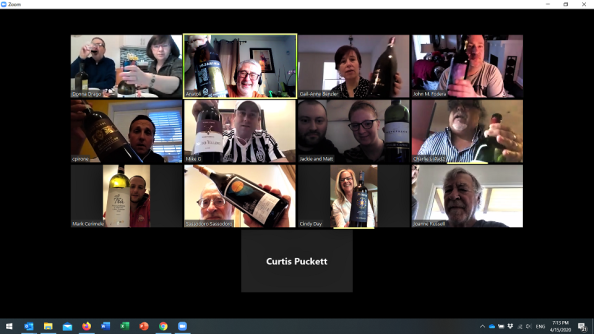
The situation is dramatically different today. There is a gazillion of platforms offering video communication capabilities, either streaming (Facebook live, Instagram live, Youtube live, …) or interactive video for two or more people (skype, Facebook messenger, WhatsApp, Google hangouts and then serious commercial ones such as Zoom and Microsoft teams) – and nevertheless, the video was not really a tool in the wine world.
Even in the early days, the wine industry realized the value of social media and the “word of mouth” opportunity it offered to educate wine consumers and promote wine producers, wine brands, and individual wines. As the internet was becoming more accessible and easier to use, at first there were the wine blogs. Twitter quickly became a social media darling of the wine world, offering not only the ability to reach anyone with the twitter handle, no matter how famous those people were, but also becoming an enabler of the group conversations, better known as the twitter chats.
Over the years, I participated in lots of different twitter chats, run under #winechat, #winestudio, #WiningHourChat, and the others. Twitter chats were always fun exercises that were difficult to follow – try to have 10 conversations at once, all with your hands, also trying to taste wine at the same time – not that easy. There were also a few of the video wine presentations, where winemakers would get together and present their wines (Montefalco Sagrantino presentation was one of the most memorable for me), with the audience running the discussion via chat – Snooth also conducted quite a few of those. But through all the years, I attended only one or maybe two tastings at the most which were done in the interactive video format, where all the participants were able to discuss the wines among themselves and talk to the winemakers and presenters – winemaker lunches and dinners were unquestionably much better venues. Until the virus happened.
The appearance of the COVID-19 has put everyone’s world upside down. With all the people stuck in homes, video communication became a lifesaver. Literally. It allowed people to reduce the pain of isolation. It gave us the ability to share our experiences, even if we were drinking different wines – but we were still able to do it together. Many winemakers embraced the opportunity which new world order had offered to meet their customers face to face – the tasting rooms became virtual, but luckily, the wines were not. Remember my tagline – “technology that works”? Zoom is a perfect example of that – it simply works. The level of communication experience which Zoom provides was not yet possible even 5-6 years ago. And today, we can have as many live video conversations as we want – for as long as we want them. I’ve been myself on the few calls which were not expected to last even for an hour, and instead, they lasted for 3 – all of it without a glitch. Yes, color me impressed. very impressed. And do you see now my point that zoom rhymes with wine?
The most interesting question for me if this newly found love between wine and video communications is here to stay. Once the world goes back to normal (yes, it will), will we have the time for 3 hours zoom call on a moment’s notice? I would argue that yes, the video-enabled virtual tasting room will become a newfound convenience – but it will not replace the actual clinking of the glasses around the table.
What do you say? Does zoom rhymes with wine for you? Cheers!
Last Bottle Sign Up ($10 credit)





