Merlot 360: Versatile, Delightful, Blindly Unpredictable
 One grape. An infinite number of possibilities.
Yes, I love to exaggerate. Let’s try again.
One grape. Many possibilities.
When I recently shared my Merlot cravings, I already mentioned that you can make a full range of wine styles using only one grape variety. Sparkling, white, Rosé, Red, and dessert. And with some effort, you can find them all.
Which we did. And we enjoyed them during our Merlot blind tasting a few weeks back.
The focus of the blind tasting, of course, was on the standard Merlot red wines, with a particular effort to include only 100% Merlot wines in the tasting. Sparkling, Rosé, white, and dessert renditions of Merlot were not included in the blind tasting, that would be pointless, but we enjoyed them alongside the tasting, just to experience the versatility of this unjustly punished grape.


Ahh, before we get to talk about our Merlot extravaganza, our pre-gaming included a couple of extras. First, 2006 Ca’Del Bosco Franciacorta Reserva Cuvée Annamaria Clementi (12.5% ABV), one of the best of the best Franciacorta has to offer. Ca’Del Bosco is one of the icons of Franciacorta, the winery I had the pleasure of visiting during my Franciacorta press trip. The wine was perfectly on point with toasted bread and yeasty notes on the nose, and an elegant yet powerful presence on the palate. Franciacorta never ceases to impress. And of course, this was my only bottle but hey, wine is meant for sharing.
Another “extra wine” (if there is ever such a thing :)) we had was 2023 Amityville Cellars Margot Cuvée North Fork of Long Island (13% ABV), a round and delicious Bordeaux blend from Long Island. In addition to being delicious, this wine also has a unique story – it is made at “a négociant-style winery”, which simply means that Amityville Cellars doesn’t own any vineyards. Instead, they purchase grapes from the grape growers – in this particular case, the grapes come from the Onbay Vineyards on Long Island. And the wine was a perfect “Bordeaux blend”, with cassis and eucalyptus singing front and center. I don’t know if this wine is easy to find, but it is worth seeking.
Back to the subject.
Merlot is one of the most important red grapes worldwide, but it might be the king of New York’s Long Island (I need to make sure none of Long Island’s Cabernet Franc producers will know I said that), and it showed that clearly in our “pre-gaming” lineup.
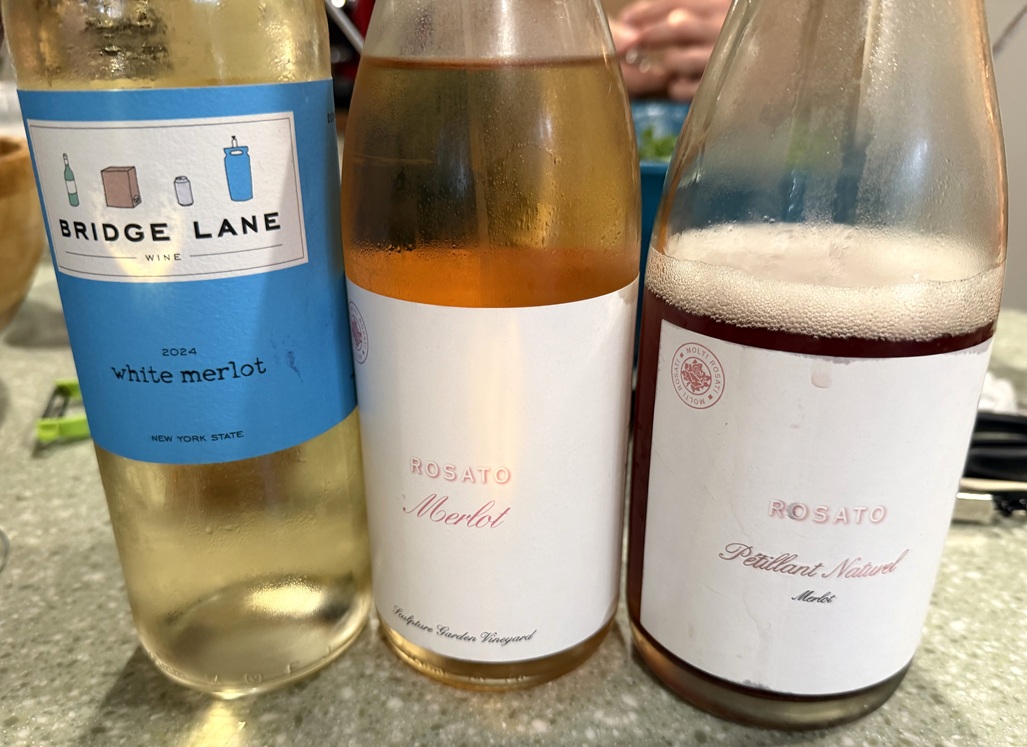
We started our evening with 2025 Channing Daughters Pétillant Naturel Rosato Merlot The Hamptons Long Island (10.5% ABV), which was fresh, vibrant, and delicious. 2023 Channing Daughters Rosato Merlot Sculpture Garden Vineyard The Hamptons Long Island (12.5% ABV), our Merlot Rosé, was “as expected” – fresh, crisp, light, and full of strawberries. We also had 2024 Bridge Lane White Merlot New York State (12% ABV), which tasted more like a nice Italian white wine, maybe a Verdicchio or Pecorino, without giving any hints that it might be the wine made from red Merlot grapes. All in all, this was a beautiful prelude to our Merlot deep dive.
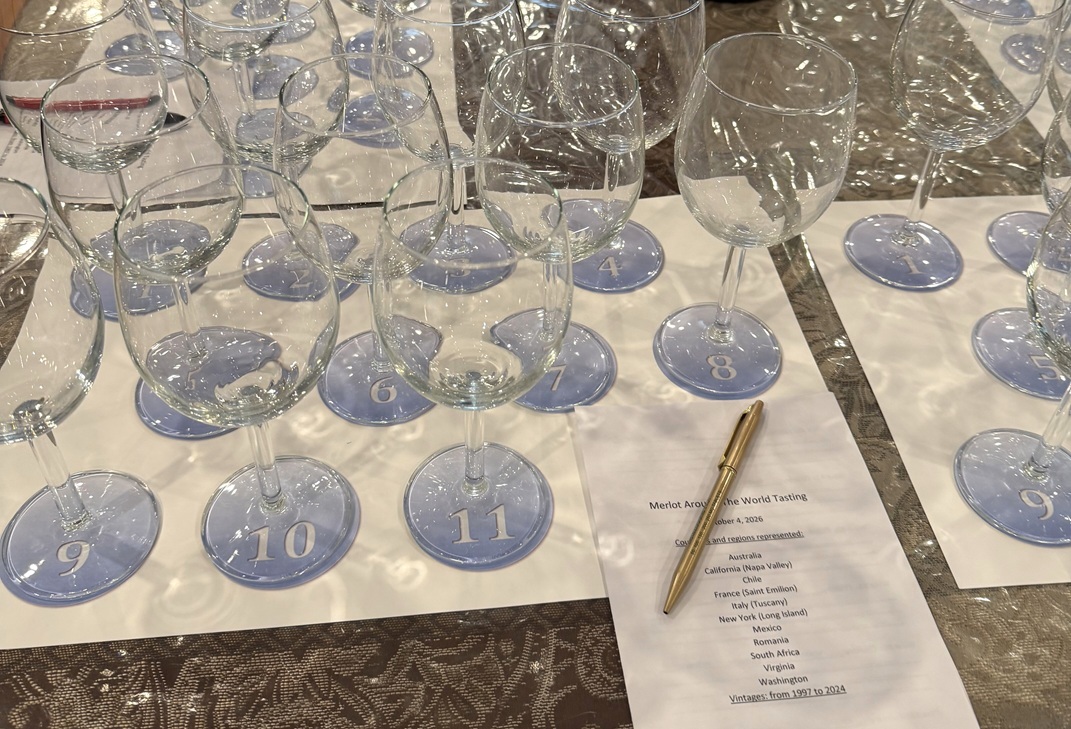
11 regions. 11 Merlot wines. As always, most unpredictable results – or maybe I just need to give up already and start making bets that the least expected wine would be crowned as the “group’s favorite”. Anyway, we set up the table, poured 11 wines, and off we went to taste.
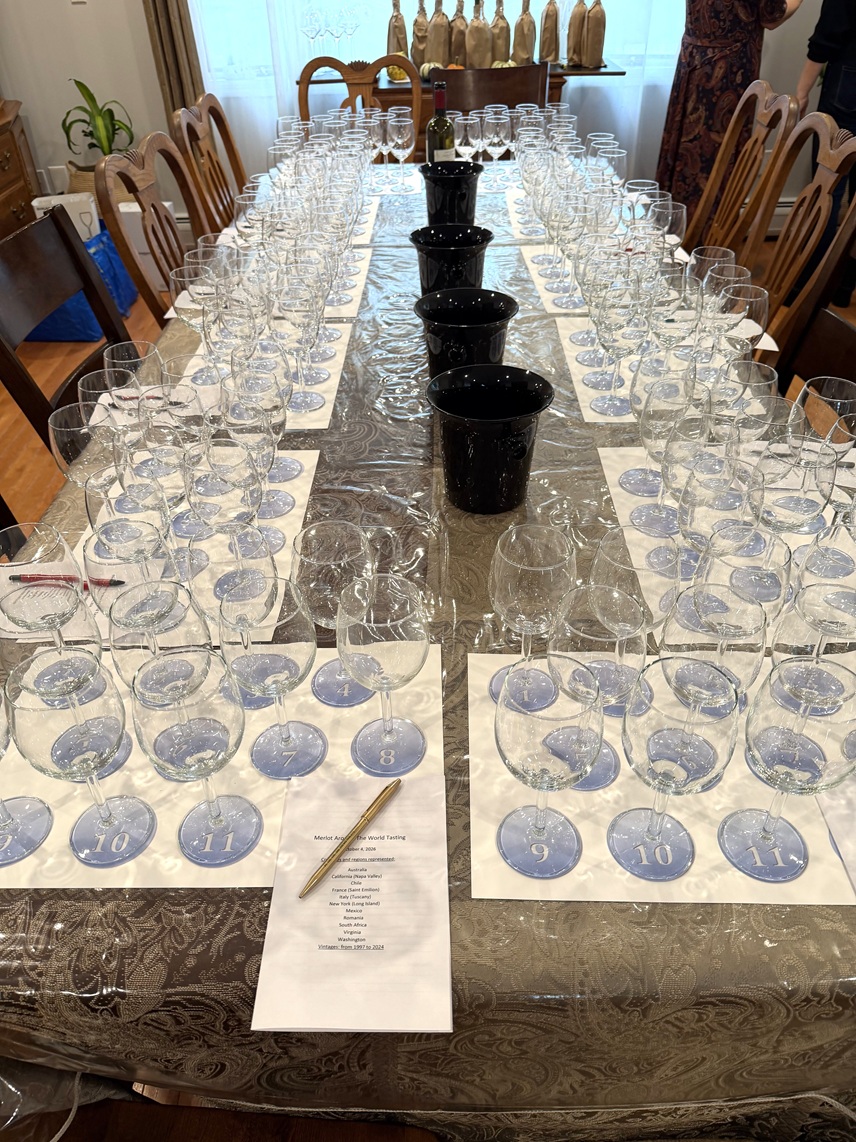
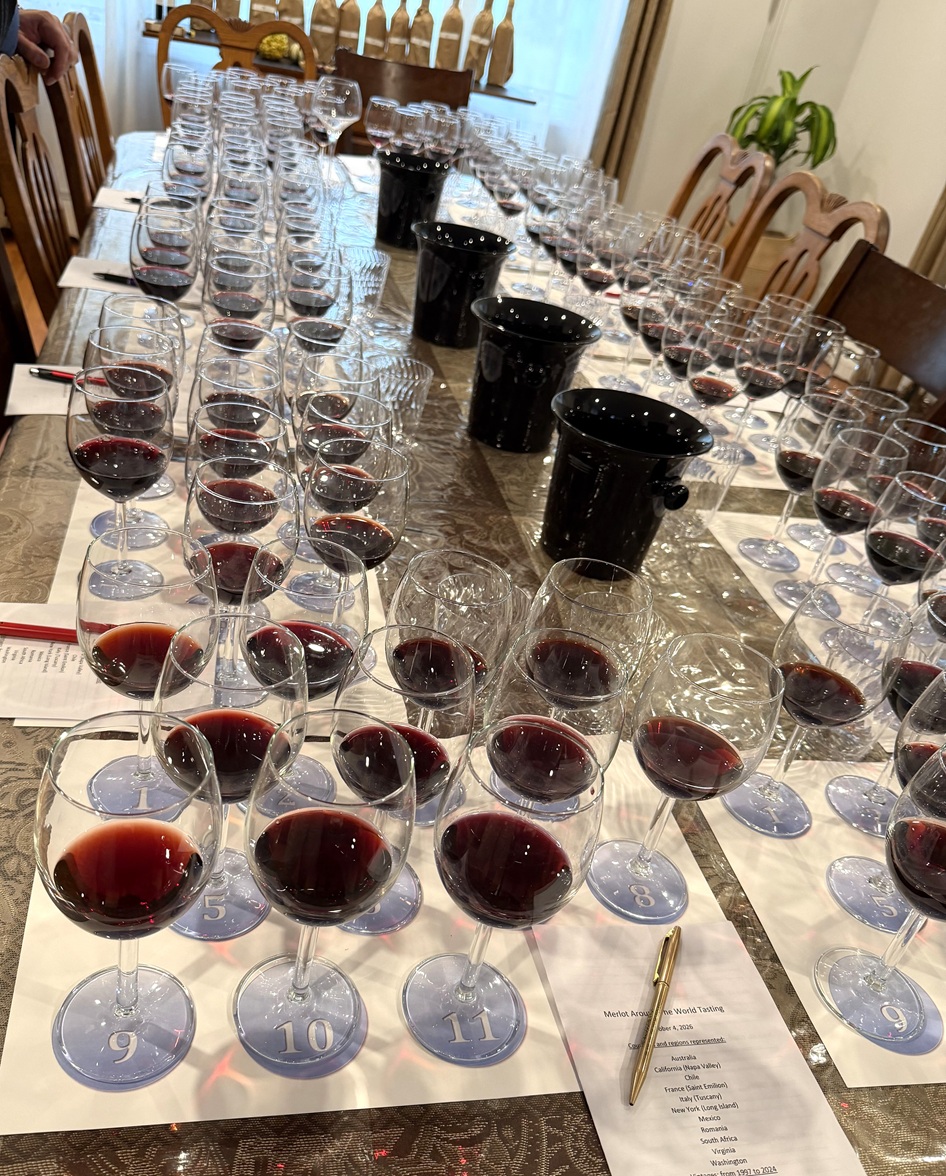
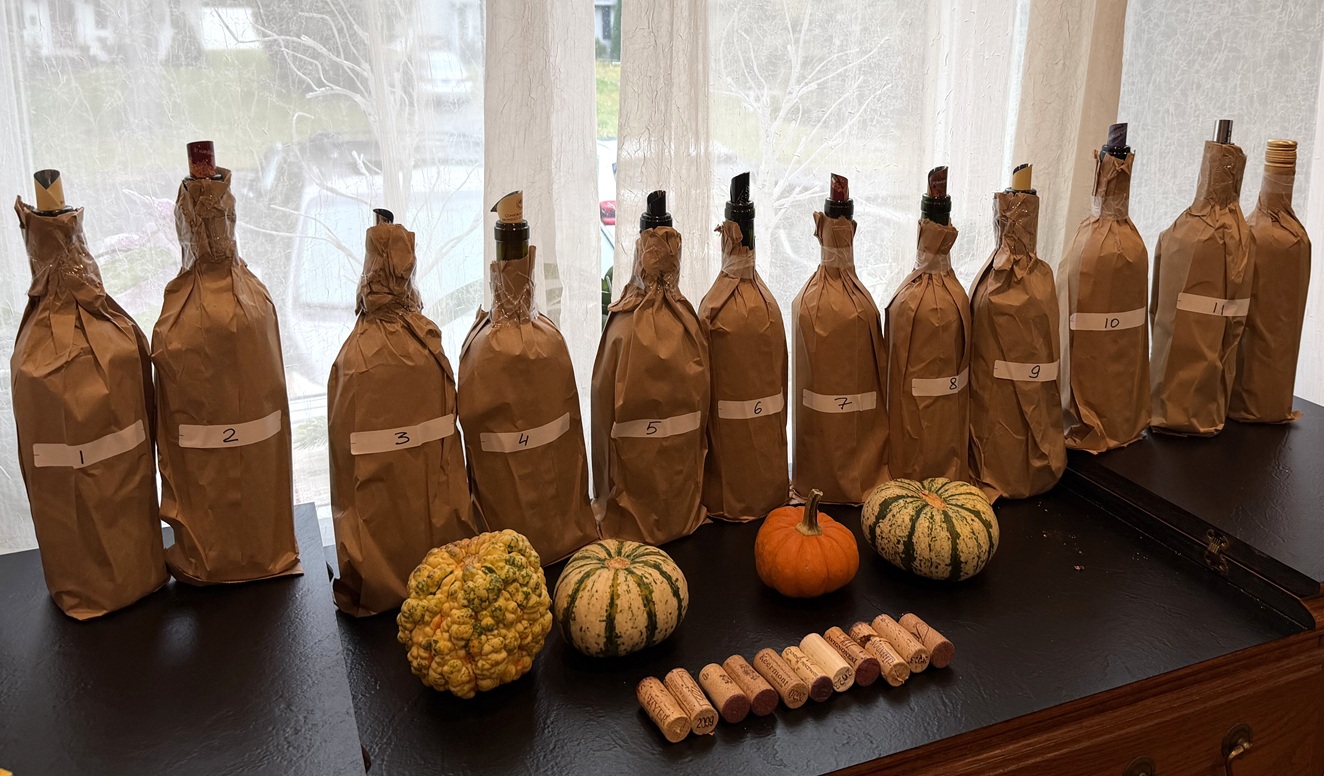
While the tasting was blind, we knew that all wines were 100% Merlot, and we had a list of regions included in the tasting, as well as the range of vintages (from 1997 to 2023):
Australia
California (Napa Valley)
Chile
France (Saint Emilion)
Italy (Tuscany)
New York (Long Island)
Mexico
Romania
South Africa
Virginia
Washington
Everyone had an opportunity to guess the region for each wine we tasted. I also had a bit of an unfair advantage because I knew some of the vintages, but I don’t think it helped much.
Here are my notes on the 11 wines we tasted, including my guesses for region and vintage
Wine #1: California or Australia, 1997, nice, complex, good balance. My 3rd most favorite wine.
Wine #2: 2023, young, aggressive, needs time
Wine #3: Ultra tight and biting, lots of fresh tannins, but opens up for finish – not bad
Wine #4: California or Australia, tertiary aromas, dried fruit, a bit over the top
Wine #5: gunflint, tight, interesting. Almost there, but finish stops short
Wine #6: Romania or Mexico, barnyard, grippy, ight overall
Wine #7: Virginia, nice, open round, fresh fruit, perfect balance. My 2nd most favorite wine.
Wine #8: New world, nice, young, fresh, tannins, gripping
Wine #9: Beautiful nose, cherries, perfect balance, delicious, elegant
Wine #10: wow! Outstanding. Perfect balance, superb. Wow. My 1st favorite wine
Wine #11: Young fruit on the nose. A bit too sweet
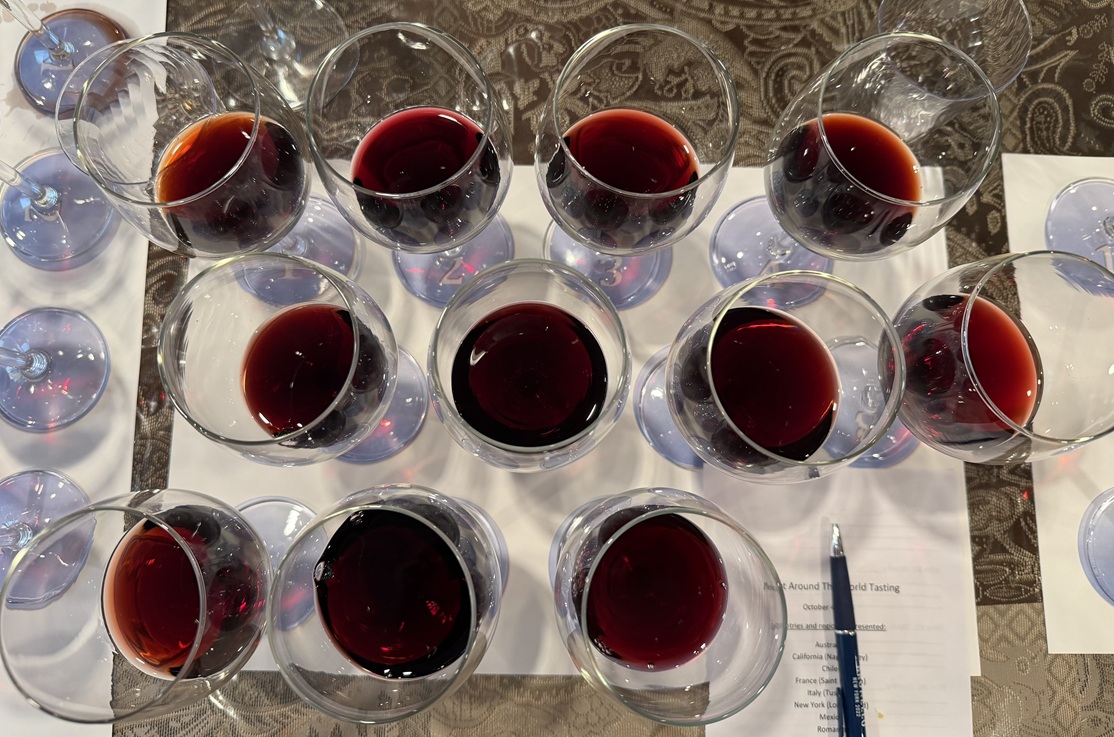
After tasting, we took our usual vote, where each person votes for three of their favorite wines. Here are the voting results:
Wine #1 – 8
Wine #2 – 2
Wine #3 – 1
Wine #4 – 1
Wine #5 – 4
Wine #6 – 5
Wine #7 – 3
Wine #8 – 2
Wine #9 – 1
Wine #10- 7
Wine #11- 4
As you can see, Wine #1 won the popular contest, with Wine #10 being a close 2nd (1 vote difference).
The reveal is unquestionably the best part of the blind tasting. Not only did I not manage to identify anything right, but I was also disappointed by a number of wines not showing at the level I expected.
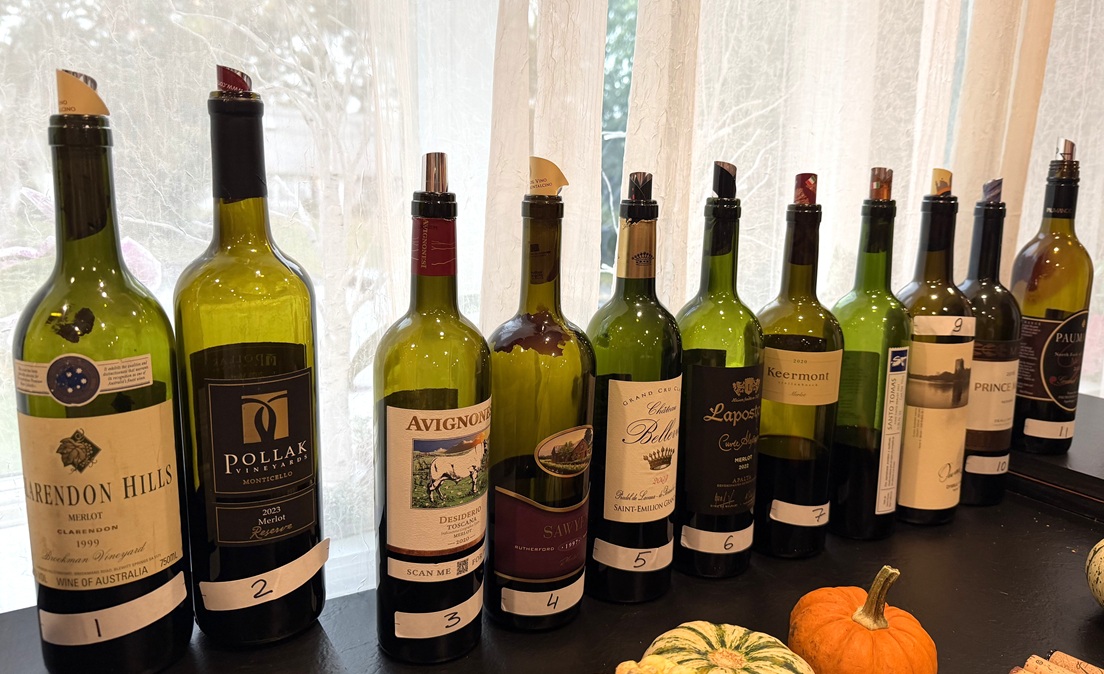
But seriously, we should’ve expected the unexpected. The Merlot from Romania (? Huh? Whaaat?) beat Bordeaux, Washington, California, Long Island – well, 9 other wines. With the exception of Merlot from Mexico, I would expect that 9 of those wines would show better than the wine from Romania… And then the winning wine? 1999 Merlot from Australia? Of course, an outstanding producer, for sure, but I didn’t expect that 8 out of 12 people in the tasting would prefer 27-year-old wine over much “fresher” options… The beauty of the blind wine tasting – need to leave all your assumptions at the door…
And just in the interest of full disclosure, Wine #10 (Romania) was my favorite wine, followed by wine #7 (South Africa), and then the wine #1 (Australia). All in all, I matched 2 out of 3 most popular wines, so our communal palate happened to be well aligned.
Here is the exact list of wines we have tasted (the 3 wines with the most votes are in blue):
#1 – 1999 Clarendon Hills Merlot Brookman Vineyard (13% ABV)
#2 – 2023 Pollak Vineyards Merlot Reserve Monticello (14.5% ABV)
#3 – 2020 Avignonesi Desiderio Merlot Toscana IGT (14.5% ABV)
#4 – 1997 Sawyer Merlot Rutherford Napa Valley (14.1% ABV)
#5 – 2009 Château Bellevue Saint Emilion Grand Cru (15% ABV)
#6 – 2022 Casa Lapostolle Merlot Cuvée Alexandre Apalta DO (14.5% ABV)
#7 – 2020 Keermont Merlot Stellenbosch (15% ABV)
#8 – 2023 Bodegas Santo Tomas Merlot Baja California (13.3% ABV)
#9 – 2021 Owen Roe Merlot DuBrul Vineyard Yakima Valley (13.5% ABV)
#10- 2016 Prince Matei Reserva Dealu Mare DOC Romania (14.5% ABV)
#11- 2021 Paumanok Merlot Grand Vintage North Fork of Long Island (13.5% ABV)
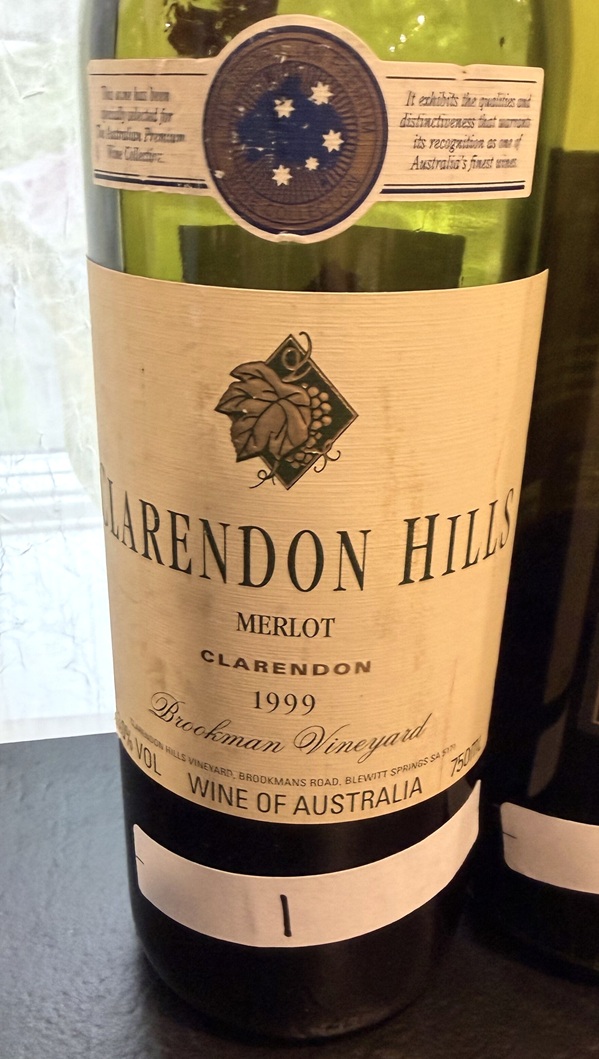
Most favorite wine: 1999 Clarendon Hills Merlot Brookman Vineyard
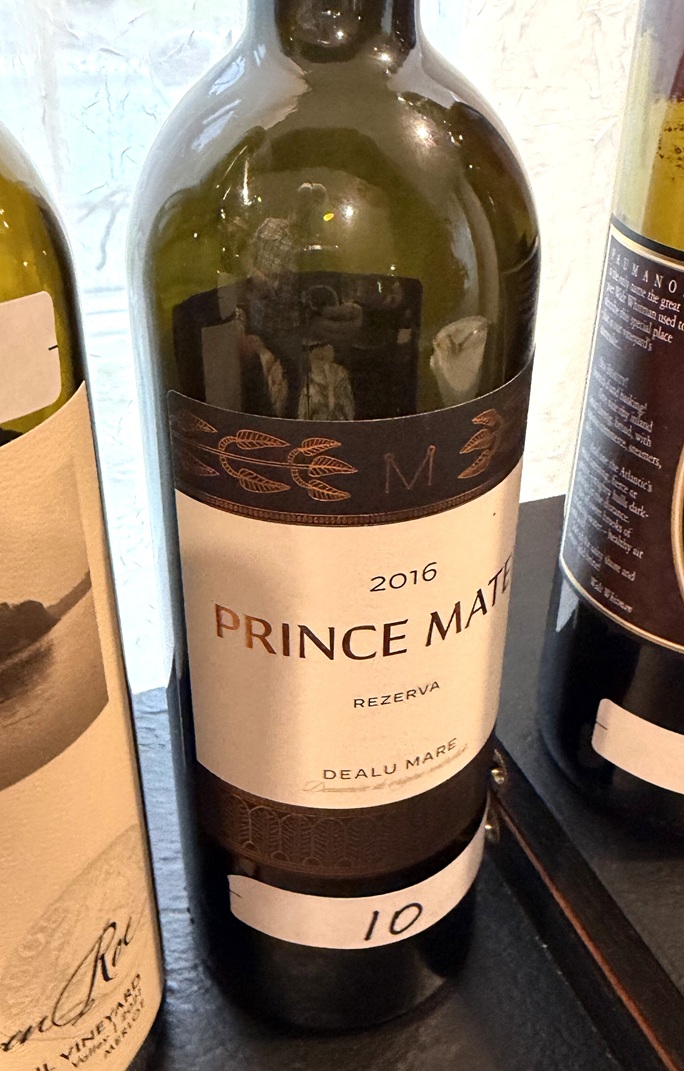
Second favorite: 2016 Prince Matei Reserva Dealu Mare DOC Romania
I was really disappointed in the Sawyer Merlot from California, as I had this wine before a few times and it was always delicious. 2009 Bordeaux also significantly underdelivered in my opinion, as well as Merlot from Virginia, which I tasted earlier this year. To further my frustration, some of the wines completely changed later on in the week. We did this tasting on Sunday. I pumped the air out of most of the bottles with leftovers, and some I just enclosed with the cork. When I opened 2009 Bordeaux (wine #5) and 2023 Virginia (Wine #2) on Thursday (4 days later), they had totally changed! Both became stunning, layered, luscious, generous, oh-my-god-this-is-so-tasty wines. If they were showing like that in the tasting, I have no doubt those would be the two winning wines. Oh well, the beauty of wine, and frustrations of the oenophile.
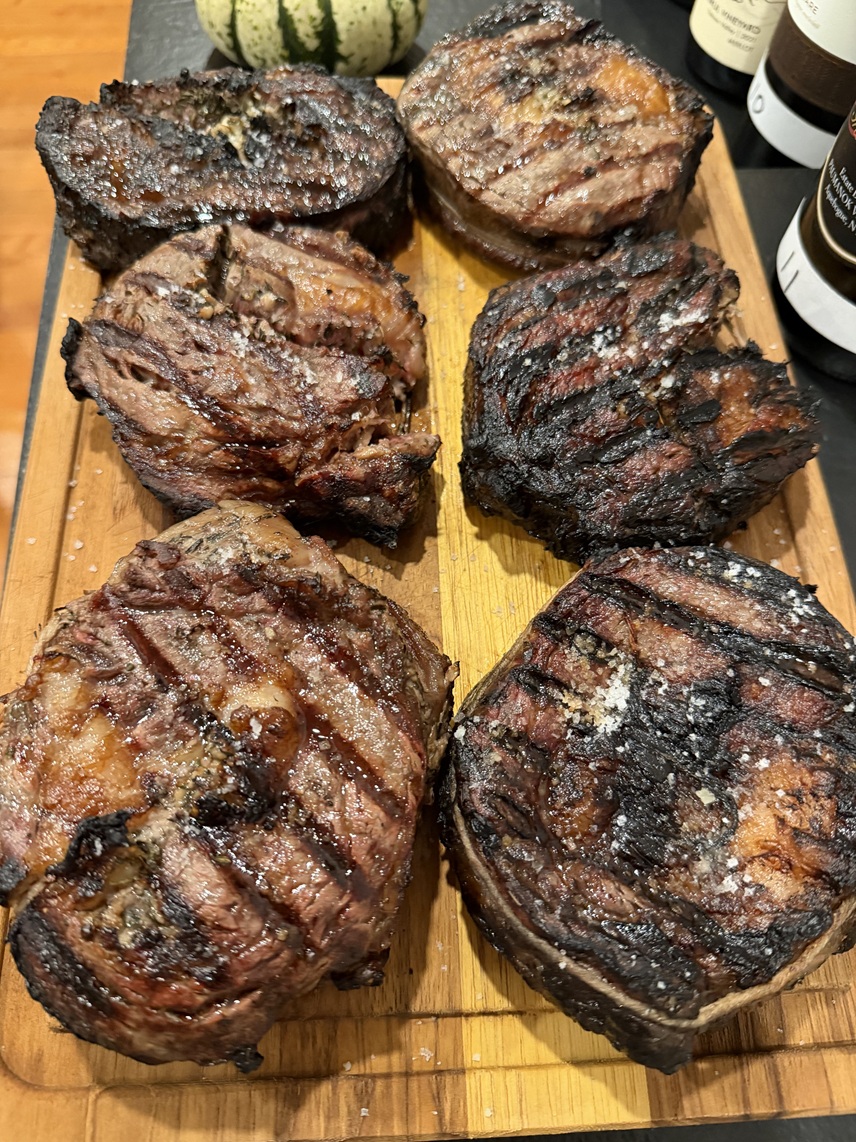
After tasting, we continued with the dinner, and I must mention our main dish, as I long contemplated making it. As it appears, a standard ribeye steak is actually a combination of two different cuts – the “eye” itself, the bigger round part, and the “ribeye cap”, also known as spinalis dorsi, a thin layer of meat above the “eye” at the edge of the steak. This ribeye cap should be treated very differently from the “eye” itself. I had the whole ribeye processed by a professional chef, where the top cap was separated and rolled into a separate steak, which was sliced and cooked quickly in those rounds, resulting in an amazing experience, possibly the best steak I ever tasted.
But wait, we are not done with the wines yet.


Now, let’s talk about an interesting Merlot surprise. Zak brought an unexpected bottle of Merlot, also wrapped in a paper bag, and he (wisely!!!) suggested that we shouldn’t include it in the tasting. Once the tasting was done, we poured the wine, and then literally everyone said “Wow, I love this wine”. The wine, 2022 Sweet Bitch Merlot Aconcagua Valley Chile (12.5% ABV), creatively called “sweet bitch” (take a look at the label :)), and while it was described as “dry”, it had a bit of residual sugar, which made it easy to drink, simple, and attractive. Yes, it didn’t have any complexity you would expect from Merlot, but I’m willing to bet anything this wine would be an absolute hit at any casual gathering.


The Sweet Bitch Merlot was also a perfect segue into our last Merlot experience – a dessert Merlot rendition. NV Trentadue Chocolate Amore California (18% ABV) is described on the back label as “Drawing from a classic food and wine pairing, we present our Merlot based, port styled, chocolate flavored dessert wine”. What can I say about this wine? Let me be brief – tastyyyyyy!
Here you are, my friends. A full account of yet another delightful evening, full of surprises.
Believe it or not, but we are already planning our next blind tasting adventure. But hey, it will be a blind tasting, so I’m not going to tell you what it is going to be.
Let the suspense build…
Last Bottle Sign Up ($10 credit)