Let’s Talk Wine Labels
How are you with the wine labels?
Speaking for myself, I love wine labels a lot more that I would even admit. Everybody knows that we eat with our eyes first – this is why good restaurants go out of their way to present their food in the best possible way.
The same is true for the wines – and I’m not talking about the wine in the glass. Let’s leave aside the situation when we are looking for a specific wine. You walk into the wine store and first and foremost you notice the wine labels. I don’t know how this works for you, but speaking strictly for myself, I can’t figure out what makes wine label attractive for me. It is more of magic. Some labels have an elaborate design, and my eye simply skips them. And then there are simple, very simple labels which solicit instant reaction “oh, this is so cool”. Magic.
It appears that the effect of the wine label goes much further than an instant determination of cool/not cool and the desire to quickly grab the bottle. The wine label design also creates expectations about taste, price, quality, and lots more. Don’t take this from me. Folks at Iron Design create product labels for living. They conducted market research, which you can read about here – and summarized all the results in the form of an infographic, one of my favorite ways of presenting the information. Bunch of numbers, facts, and pictures in compact and concise form – isn’t it fun?
For what it worth, the Iron Design team was very kind letting me share the infographic in this blog, which I’m happily presenting below. And for all of you, my friends, what do you think of the impact of the wine labels on your choices and expectations?

American Pleasures
Yes, you read it right – we will be talking about American pleasures.
But don’t worry – this is still a wine blog. Yes, we will be talking about wine. And as the title suggests, we will be talking about wines made in the USA. As for the pleasures – this is what the wine is for. The wine should give you pleasure. If it does not, I don’t know what is the point of drinking it. For sure I don’t see it for myself – if I’m not enjoying the glass of wine, I’m not drinking it. It is the pleasure we, wine lovers, are after.
Lately, I had a number of samples of American wines sent to me. Mostly California wines, to be precise. And to my big surprise, I enjoyed all of them. I’m not implying that the wines I tasted were better than I expected, hence the surprise. While I pride myself with the willingness to try any and every wine, it doesn’t mean that I equally like any and every wine – I’m rather a picky (read: snobby?) wine taster. At a typical trade tasting, my “likeness” factor is about 1 out of 10 or so. And here, wine after wine, I kept telling myself “this is good!”, and then “wow, this is good too!”. Is my palate getting cursed or just old and tired? Maybe. But, as I still trust it and as I derived pleasure from every sip of these wines, I would like to share my excitement with you, hence this post, or rather, a series of posts. Let’s go.
First, let’s talk about the old. “Old” is a very respectful word here, as we will be talking about the winery which had been around for more than 40 years in Napa Valley. Back in 1976, Ron and Diane Miller purchased 105 acres vines on in Yountville, which is now known as Miller Ranch. Two years later, they acquired 226 acres in Stags Leap District, which was the vineyard called Silverado. Initially, the grapes were sold to the other wineries, until in 1981 the winery was built and the first harvest was crushed – the was the beginning of Silverado Vineyards as we know it. Today, Silverado Vineyards comprise 6 vineyards throughout Napa Valley, all Napa Green certified, which is an established standard for sustainable farming. Silverado Vineyards wines are exported to 25 countries and have won numerous accolades at a variety of competitions – and Silverado Vineyards garnered quite a few “winery of the year” titles along the years.
Two wines I tasted from Silverado Vineyards were Sauvignon Blanc and Rosé. I like California Sauvignon Blanc with a little restraint, not overly fruity, and with a good amount of grass and acidity – Honig Sauvignon Blanc and Mara White Grass would be two of my favorite examples. California Rosé is somewhat of a new category, still scarcely available in the stores on the East Coast – this is mostly wine club or winery tasting room category at the moment. Again, for the Rosé, restraint is a key – nobody needs to replicate Provençal Rosé in California, but the wine still should be light and balanced.


Silverado Vineyards perfectly delivered on both – here are my notes:
2018 Silverado Miller Ranch Sauvignon Blanc Yountville Napa Valley (13.9% ABV, $25)
Straw pale
Beautiful, classic CA Sauvignon Blanc – freshly cut grass, a touch of lemon, all nicely restrained. Nice minerality.
An interesting note of salinity, lemon, lemon zest, a touch of pink grapefruit, just an undertone with some bitterness. This is a multidimensional wine, with a good amount of complexity.
8-/8, a thought-provoking wine. Great with manchego cheese and Hungarian salami.
2018 Silverado Vineyards Sangiovese Rosato Napa Valley (14.5% ABV, $25, 100% Sangiovese)
Light Pink
A touch of strawberries, light and elegant
Strawberries and lemon on the palate, elegant, balanced, good textural presence, very refreshing.
8, and excellent Rosé overall, with its own character. And I have to tell you – I’m duly impressed with Californian Sangiovese, for sure when it is made into a Rosé – seems to be a complete winner here.
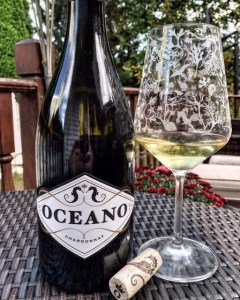
 Another wine I want to talk about here, is definitely from the “new” camp – only 5 years ago, Oceano winery was not even an idea. The winery has a great story, which you better read on the winery website. The story has everything – the love at first sight, the encounter with the seahorse, a wine label drawn on the napkin.
Oceano wines are made from the fruit coming from Spanish Springs Vineyard in San Luis Obispo – the vineyard which is closest to the Pacific Ocean not only in the Central Coast appellation but in entire California. Cool climate helps Chardonnay and Pinot Noir grapes to mature slowly and to accumulate great flavor. Not only Spanish Springs Vineyard provides ideal conditions for the grapes, but it is also SIP (Sustainable in Practice) Certified vineyard, which is considered a higher status than Organic due to the stringent requirements throughout the whole process of winemaking up to the point of bottling of the wine.
I had an opportunity to taste the second release of Oceano Chardonnay, and was simply blown away:
2017 Oceano Chardonnay Spanish Springs Vineyard San Luis Obispo County (13.6% ABV, $38)
Light golden
Vanilla, a hint of honey
Vanilla, a touch of butter, hint of almonds, nice golden apple and brioche, let’s not forget the delicious, freshly baked brioche – with tons of acidity on the long finish, tons and tons of acidity.
9-, outstanding rendition of the Chardonnay, worked perfectly well with a variety of foods – beef roast from Trader Joe’s, Brie, Spanish Cheeses (Manchego and San Simone) – this was totally an unexpected surprise. If you are looking for a delicious and versatile Chardonnay, this might be the wine you are looking for. It might easily be a star of your Thanksgiving wine program.
Here you are, my friends. These wines delivered lots and lots of pleasure, and these are the wines worth seeking. We are done for today, but we are very far from done seeking more wine pleasures. To be continued…
Spanish Wines: Beyond The Reds
Let me ask you something: if you hear the words “Spanish wine”, what is the first type of wine which comes to mind – red, white or Rosé? I’m a self-admitted Spanish wine aficionado, and I can honestly tell you that my first association will be “red”, then probably Rosé, and only then white (when it comes to Spain, your wine type choices are quite wide, as you got also Cava, Jerez, Málaga – but let’s not make it too complicated).
There is a good chance that your associations were the same – Spanish wine equals Red. I certainly started my Spanish wine love embrace from the Rioja, best known for its reds with Lopez de Heredia Viña Gravonia, one of the best white wines made in Spain, being rather a curiosity than a norm. It took me several years until I heard the name Albariño and tasted what is today probably best known Spanish white wine. And then, of course, let’s not forget about the Rosé revolution which took place around the world over the last 5 years or so – Spain gladly joined the movement with wonderful Rosé, or rather, Rosado renditions of Grenache and Tempranillo rapidly showing up over the Spanish wine map.
Let’s explore a bit a Spanish non-red wine scenery – as I like to say, have wine – will travel. First stop – Rueda, the wine region located almost in the middle of the country.
Rueda is a part of the Castilla y León region in Central Spain. History of winemaking in Castilla y León goes back to the 10th/11th centuries and closely associated with the arrival of Catholic monks, who started vine cultivation and winemaking. We can say that the modern part of winemaking history in Castilla y León started in 1980 with Rueda becoming the first local winemaking region to receive the status of D.O. which stands for Designation of Origin, the quality designation in Spanish wine.
The majority of Rueda vineyards are located at an altitude of 800m (2400 FT) and higher. Rueda is known for its extreme climate conditions, where diurnal temperature shift can reach 50 degrees during the day – which is actually good for the grapes, as it helps to concentrate flavors, sugars and acidity. White grape called Verdejo is typically associated with Rueda wines, even though Sauvignon Blanc wines can also be found coming out of Rueda.
I thought it would be appropriate to give you some fun facts about Rueda, taken from Ribera and Rueda wine website: ”
- There are 32,500 acres of vineyards in Rueda, of which 28,800 acres are Verdejo.
- The area has 69 wineries and is cultivated by over 1,500 growers.
- To be “Rueda Verdejo”, wines must contain at least 85 percent Verdejo.
- Verdejo is harvested at night to allow the grapes to cool from the scorching summer heat.
- Verdejo was almost wiped out by Phylloxera in the late 19th century, but it was revived in the 1970s.”
A few weeks ago I had an opportunity to taste a few of the Rueda wines offered as part of virtual tasting at Snooth (here is the link to the video recording of this session if you are interested in learning more). The tasting covered wines of Rueda and Ribera del Duero (I only tasted wines from Rueda), and Snooth had a great wine deal offering related to the tasting, which is, unfortunately, already sold out.
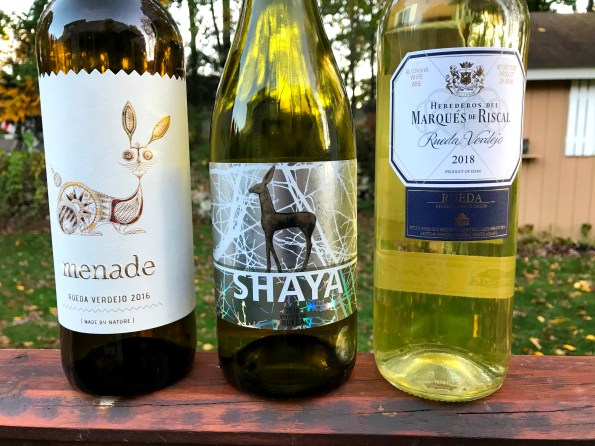
We had three of the Rueda Verdejo wines in the tasting, all three were 100% Verdejo, 100% delicious, and 100% great value.
Just to give you a brief summary: Marqués de Riscal is better known as one of the oldest wineries in Rioja. However, they were also one of the first commercial wineries in Rueda, opening the winery in 1972 and being a driving force behind 1980 DO Rueda designation. While Bodegas Menade might be a new kid on the block, with winery established in 2005, the family had been in grape growing business in Rueda for 6 generations, going back to 1820. The grapes used for the Menade Verdejo come from the organically farmed vines which are 80 to 100 years old. The last Verdejo comes from one of the personal favorites – Bodegas Shaya. Shaya Habis, an oaked rendition of the Verdejo, had been my favorite Verdejo wine for a long time. While working on this post it was fascinating (or shameful, depending on your take – I had been writing about Shaya wines for many years, only now finally doing some research) to learn that Bodegas Shaya was a project of Gil family, whose El Nido (predominantly Cabernet Sauvignon with the addition of Monastrell) is one of the “cult”, sought-after Spanish wines. Bodegas Shaya project was started by Gil family in 2008, with the wines produced from old, low-yielding Verdejo vines.


Here are my notes for the wines we tasted:
2018 Marqués de Riscal Rueda Verdejo Rueda DO (13.5% ABV, $13)
Light golden
Touch of fresh grass, lemon, lemon zest, sage, rocks
Crisp, vibrant, lemon, a touch of gunflint, excellent minerality, medium-plus finish
8/8+, Delicious white wine – by itself or with food.
2016 Bodegas Menade Rueda Verdejo Rueda DO (13% ABV, $18)
Golden color
Great complexity, Whitestone fruit, a touch of honey, honeysuckle, interesting undertones of sapidity
Savory and sweet, minerally-forward, Whitestone fruit, crisp acidity, vibrant, fresh, medium+ finish
8-/8, should be good with food
2016 Bodegas Shaya Rueda DO (13.5% ABV, $13, 20%-30% of grapes fermented in barrels with 500 – 600 liters capacity)
Straw pale
Very unusual, dusty nose, a hint of grass and white flowers
High viscosity, roll of your tongue wine, restrained white fruit, Granny Smith apples, buttery impressions of a good balanced Chardonnay.
8+, my favorite of the 3, especially after being open for a few days.
How do you like the trip so far? Now it is time to move east to the region called Cariñena.


Winemaking in Cariñena goes back to Roman times. History of Cariñena wines includes Royal proclamations of “Cariñena wines above all”, and even the quality control instituted at the end of the 17th century, monitoring yield levels and production areas. Cariñena also managed to escape the Phylloxera epidemic of the 19th century. In 1932, Cariñena became the second D.O. in Spain (after Rioja). Here is the link for you if you want to learn more about the region.
Cariñena is best known and typically associated with Garnacha (Grenache for all outside of Spain), and it is also often considered to be the birthplace of that grape. Some of the Garnacha plantings in Cariñena exceed 100 years of age. The second important red grape in Cariñena actually shares its name with the region – it is called Cariñena, and also known locally as Mazuelo, and outside of Spain as Carignan. Other red grapes can also be found in the region – Cabernet Sauvignon, Merlot, Monastrell, Syrah, Tempranillo, Vidadillo. White wine production in Cariñena is much less than red; you can find Chardonnay, Garnacha Blanca, Macabeo (Viura), Moscatel, and Parellada growing there.
At the beginning of the post, we mentioned the “Rosé revolution”. So very appropriately, I had an opportunity to taste two Cariñena Rosado wines, made out of Garnacha, and the Chardonnay coming from one of the favorite producers, Bodegas San Valero. Here are my notes:


2018 Bodegas Paniza Fábula de Paniza Garnacha Rosé Cariñena DOP (13.5% ABV)
Beautiful salmon pink
Delicate nose of tart strawberries with a touch of lemon
Crisp, clean, refreshing, tart strawberries, good minerality, a hint of cranberries
8, excellent Rosé, a perfect wine for a summer day, but will work well with food at any time.
2018 El Circo Payaso Garnacha Rosé Cariñena DOP (13% ABV, $10)
Intense pink
Wild ripe strawberries
Ripe Strawberries all the way, good acidity, lemon, medium body
7+/8-, craves food
2017 Bodegas San Valero Particular Chardonnay Cariñena DOP (12.5% ABV)
Light golden
Touch of vanilla and apple, a hint of white flowers
Crisp, clean, fresh lemon, a touch of white pepper, vanilla, a round finish.
7+/8-, definitely a delightful wine
Here you are, my friends – Spain makes delicious wines, and not all of those wines are red. And let’s not forget that those wines represent an amazing value. Do you have any favorite Spanish white wines? Cheers!
What Do I Need To Know To Enjoy A Glass Of Wine
 So you are wondering what do you need to know to enjoy a glass of wine.
This is actually a very simple question. Let me give you a very simple answer.
Nothing.
Nothing at all. You need to know nothing about the wine.
You don’t need to know who made it, where was it made, how was it made, what grapes were used, how much it costs. None of this matters.
The wine in your glass is binary. You either like it or not. If you are not sure if you like it, then ask yourself another simple question: “do I want a second glass, or not?” If you want a second glass, then it goes into the “I like it category”. If you don’t – well, you got my point.
I’ve not been fictitious or sarcastic here. I’m very serious. Wine is food. No, it is not a necessity, it is rather a luxury, it is a food you can live without. But still, wine is food, with about 100 calories in a standard size glass of dry red wine. When you take a bite of steak, your impression is binary – you either like it or not. The same is with wine – when you take a sip, you either like it or not. End of story.
Now, let’s get things straight. I’m not trying to invalidate here the whole wine ecosystem, where millions of people are studying and make their living around the oldest continuously produced beverage in the world. I’m not saying that wine is a simple subject. Depending on one’s life outlook, nothing is simple in this world, and the wine has unlimited levels of complexity (simple fact – at the moment of this writing, there are only 269 (!) Master Sommeliers (highest distinction of wine knowledge) in the world). Nevertheless, for a casual encounter with a glass of red, white, or pink liquid in the tulip-shaped glass, there are only two possible outcomes – “I like it” and “I don’t like it”.
Yesterday during the wine dinner I asked my neighbor at the table if she enjoys the wine we were drinking. “Well, I don’t know enough about wine”, she started, instead of simply answering the simple question – “yes, I do”, or “no, I don’t”. I heard this answer many times, and I find it instantly annoying. There is nothing you need to know to enjoy the wine in your glass. You don’t have to be a chef or a food critic to say if the omelet in front of you is tasty or not. The same is with wine – it either tastes good to you or not.
There is definitely a lot of intimidation around the wine. There are wine magazines that tell you what you should be drinking today. There are wine ratings – “here is an excellent wine for you – it got 95 points from Robert Parker”. You have no idea who Robert Parker is, but you would never admit it, “ahh, of course”. There are knowledgeable friends who tell you “try this – you are going to love this”. There are sommeliers and wine stewards at the restaurants who tell you that this is the best wine for your dinner tonight (nevermind that this is one of the most expensive wines on the list). All these things are part of the intimidation around the wine, and yes, it is very hard to say “hmmm, I don’t like it” if Robert Parker said that he did. But – you really have to learn to trust yourself. Everyone’s palate is different. There are only 4 basic tastes (sweet, sour, salty, bitter – we can skip the umami for this conversation) – but everyone perceives those tastes differently, has different sensitivity to each one of those (if you ever had to reduce salt consumption, you know that after a month or so of such a low-sodium diet, any restaurant dish comes as oversalted). And so what you taste is completely unique to you, and it is only you who is entitled to state “I like it” or “I don’t like it”, without any regard to any professional opinion in the world.
Again, I want to repeat my statement – you don’t need to know anything about wine to know if you enjoy it or not. But – and it is a major, major, supersized but – you might want to know about the wine as this might simply increase your level of enjoyment of that same wine. But even in this case, you don’t need to become an expert to better enjoy thye wine. You can start simple. When you find the wine you like and enjoy, take notice of the producer and the name of the wine (there are many apps today which can help you simplify this process). This can help you next time at the restaurant, trying to select wine from the list – once you see the wine you already tried and liked, this instantly reduces intimidation. Of course, it will also help you in the wine store, so you will get the wine you know you liked.
Maybe once you recognize some producers, you might start taking notice of the regions the wine is coming from. You might find, for example, that you are usually enjoying white wines from Germany and red wines from Piedmont. This knowledge can help you further in your quest for the enjoyable wine, as even when you have your favorite producer and wine, you might not be able to always find that specific wine at a restaurant or in the store. In this case, you can use that knowledge to select the wine from the different producers but still from the same region, as this still increases your chances of liking the wine.
You don’t have to stop at the producer and region, and you can continue your wine knowledge acquisition literally forever, as the subject of the wine is endless. Vintages, vineyards, single vineyards, blocks and plots, grapes, blends, terroir, climate conditions, winemakers, oak regimen, age of the vines, visits to the wine regions, and on, and on, and on – all of this knowledge might help you enjoy the wine more. I can even take it further and tell you that all this knowledge might change the perceived taste of wine, as, for example, trying the wine made at the winery you visited can trigger happy memories, and definitely make the wine to taste even better – to you. Very important – this knowledge will only change the way the wine tastes to you. If the friend you are sharing dinner with never visited the winery, he or she can’t necessarily share your excitement and wholeheartedly say that they enjoy the wine if they don’t. And that’s okay. Everyone’s palate is different, and tasting and liking of the wine are strictly individual.
Remember this next time you are at a restaurant. If you know about the wines, don’t intimidate your friends. they don’t have to like what you like. At the same time, if you know nothing about the wine, don’t get intimidated by anyone or anything. “The truth is in the eye of the beholder” – if you don’t enjoy the wine, it is your truth, and it is nothing to be ashamed of or to worry about. Everyone’s palate is different. End of the story.
I hope you learned today everything you need to know to enjoy a glass of wine. Which is, literally, nothing. And nothing should be standing in your way of enjoying the wine in your glass. Cheers!
Spain’s Great Match 2019 – A Mixed Bag?
I love Spanish wines.
Anyone who reads this blog for a while is aware of this. Spanish wines have a special place in my heart, as even today they are some of the best-kept secrets in the wine world, allowing those in the know to enjoy amazing wines still at reasonable prices (some of the best QPRs around).
For many years I had been attending Spanish Wine Tasting in New York, called Spain’s Great Match. I usually attend the early morning seminar, and then go for the walk-around tasting – here you can find my reports from 2014 and 2017 events.
The seminars at Spain’s Great Match are meant to showcase some of the best and interesting Spanish wines. 2014 event was an absolute stand out in this regard, as this was a special event celebrating 30 years of Spanish wines in the USA. The wines served in that seminar were way beyond amazing.
The 2017 seminar was also quite good – maybe not as good as 2014, but still, very, very good. Now, before I will report on the 2019 event, let me talk a bit about the setting.
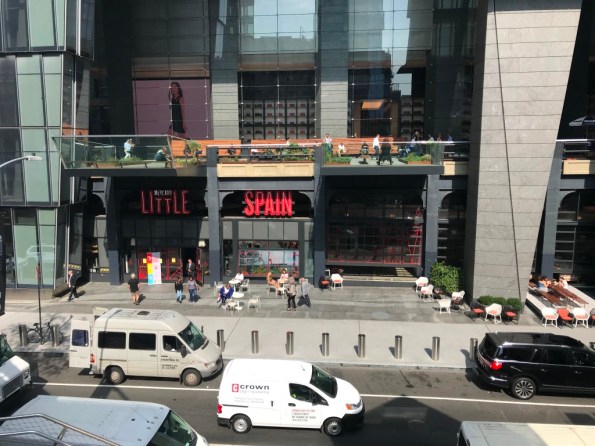


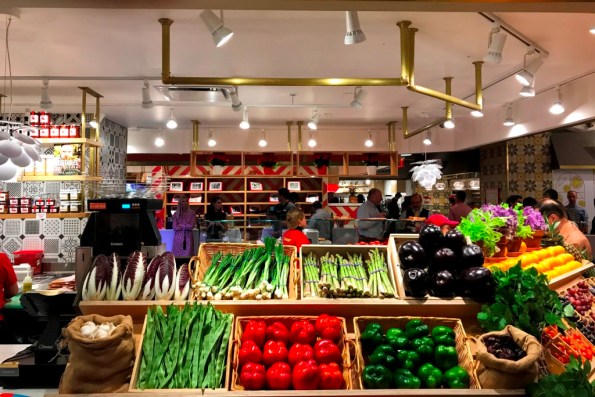
The event took place in one of the trendiest New York neighborhoods, Hudson Yards, at the recently opened Mercado Little Spain. Mercado Little Spain is conceptually similar to the Eataly, with the space filled with all possible produce, food and drink options which you would otherwise find…yes, in Spain. So the setting itself was outstanding, creating the right atmosphere to enjoy Spanish wines as they should be.
Now, let’s talk about the seminar, which was called “Vinos de Vanguardia: Wines on the Cutting Edge”.
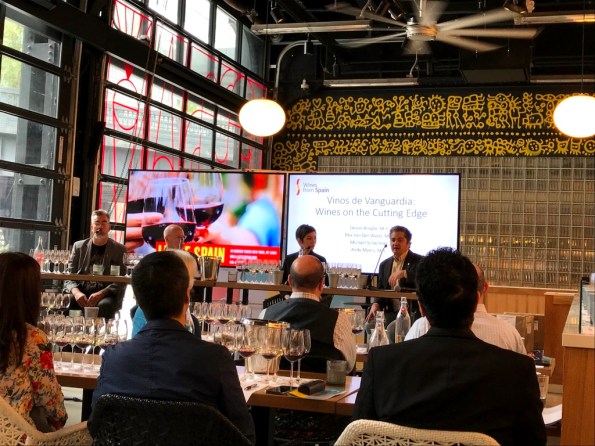

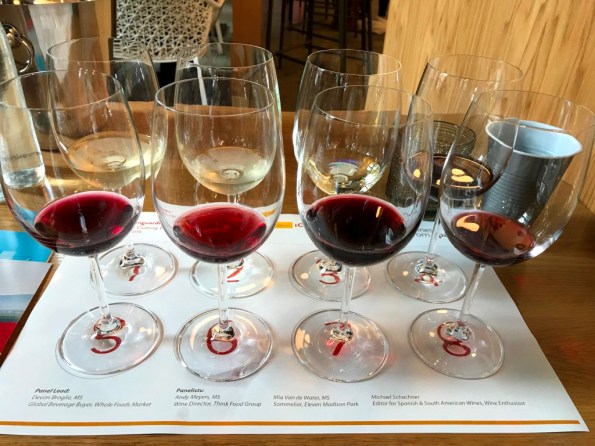
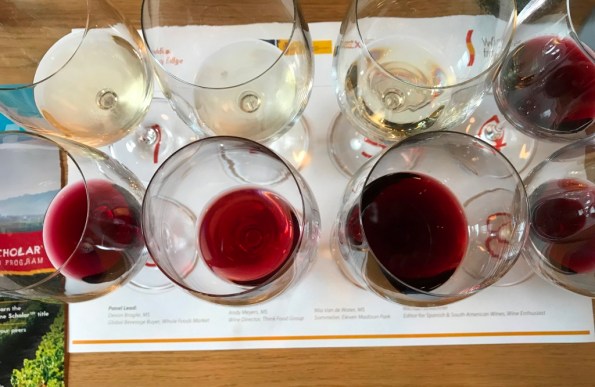
As you can tell from the name, the idea was to present a unique and different side of Spanish wines. Yes, I get it – Spanish wines might be relegated by “ordinary”, “predictable”, and “same all, same all”, and the seminar was designed to break that myth and to show the forward-thinking of the Spanish winemakers.
I don’t discriminate against any type of wines – natural, low intervention, “orange”, unoaked, unfiltered, canned, boxed, all is good. I’m willing to try absolutely anything – at least one time. When I taste the wine, I trust my palate, and that sip will be simply binary – I will either like the wine, or not. Yes, temperature, air, of course – I’m willing to give literally an unlimited amount of time to the wine to show itself properly – but at some point, the wine has to deliver what it is supposed to deliver – a pleasure. That’s all I’m looking for in wine – pleasure.
I’m sure the wines in the seminar were hand-selected to represent the avant-garde thinking of the Spanish winemakers. However, for me, only 3 wines out of 8 delivered that pleasure, and two out of those leftover 5 were not only boring, but they were also off-putting. I rarely call wines “bad”, I typically say that the wines are “not for me”. So these 2 wines were truly not for me – here are the notes:


2018 Can Sumoi Xarel-lo DO Penedès (100% Xarel-lo)
Golden
Great acidity, sour apples, an unusual ting of a fermenting fruit
Mostly acidity, a bit violent to my taste. Fresh lemon acidity, devoid of any sweetness. The bitter-sour finish lingered. It might be a food wine, but I would definitely prefer a Muscadet if I really look for food-friendly acidity.
Natural wine, the panel was talking about a sense of place and so on, but one can relate to that only if one is visiting, and without that “place” connection the wine was … well, you got my point
2018 Tajinaste Blanco DO Islas Canarias (90% Listán Blanco, 10% Albillo)
Golden color
Fresh grass, underripe white plums, distant hint of a grapefruit
Fresh acidity, Meyer lemon. Unfortunately, boring.
2018 A Coroa Godello DO Valdeorras (100% Godello)
Golden color
Whitestone fruit, a touch of lemon
Good acidity, distant hint of buttery notes, but this was mostly it – the acidity. This wine might well be improved with time, judging by the acidity, but at the moment, boring.
2016 Enrique Mendoza La Tremenda DO Alicante (100% Monastrell)
Garnet
Beautiful intense nose of fresh berries, a touch of iodine
Tannins-forward, tannins mostly take over the wine, some fruit present. Not great.
2018 Bodegas Ponce Clos Lojén DO Manchuria (100% Bobal)
Dark garnet
Touch of roasted meat, violet, very inviting floral aromatics
Beautiful pepper note, fresh berries, medium body, open, inviting, short finish. First good wine in the tasting.
2016 Marañones 30.000 Maravedies DO Vinos de Madrid (90% Garnacha, 10% Morate/Syrah)
Ruby
Hay and cherries, light
Tart, tannins forward, mouth-puckering, cherry pits on the back end. Maybe a food wine, and maybe it will improve with time. Ok wine for now.
2015 Alberto Orte Atlántida VT de Cádiz (100% Tintilla)
Dark ruby/garnet
Beautiful open inviting nose – sage, ripe plumes, thyme, lavender – one of the most herbs-driven aromas I ever experienced
Beautiful palate, herbs with a complex interplay, fresh berries, delicious. Second excellent wine in the tasting.
2015 Guímaro Finca Meixeman DO Ribeira Sacra (100% Mencía)
Garnet
Mostly closed, a touch of cherries, hint of currant leaves
The beautiful playful palate, crunchy wild blueberries, lots of herbs, medium body, medium+ finish. Also one of the best in the tasting.
As you can tell, Bobal, Tintilla, and Mencía were excellent wines which I really enjoyed – and all these wines are uniquely Spanish. When it comes to Spanish wines, you don’t need to try too hard – Spain offers lots of unique and delicious wines – but oh well, this was fine anyway.
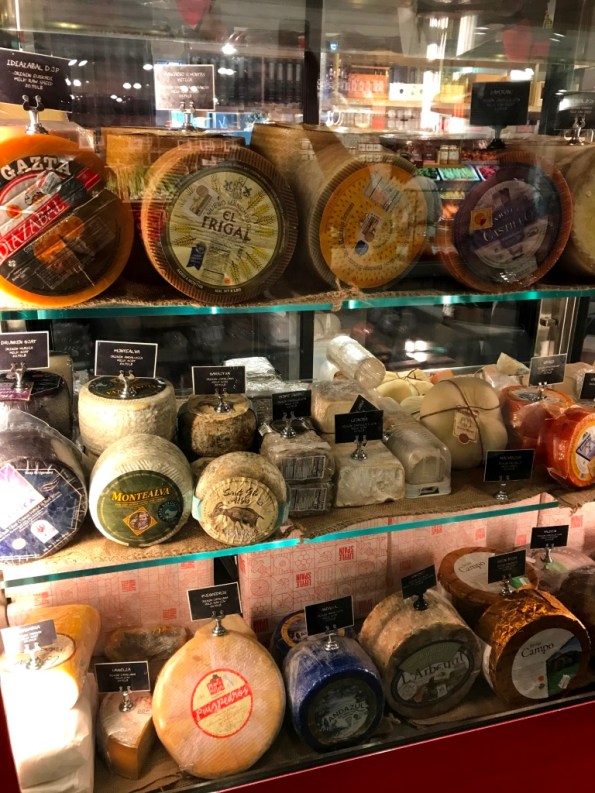
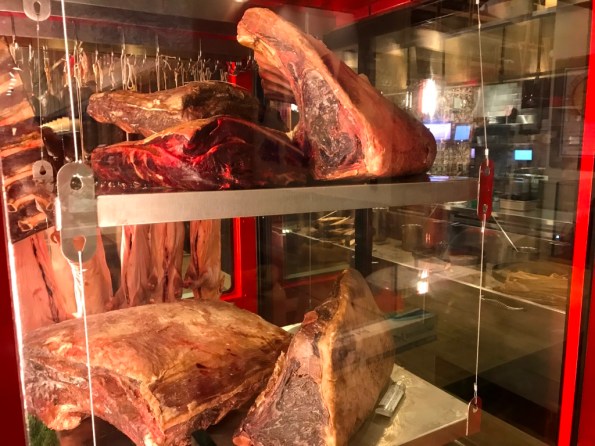
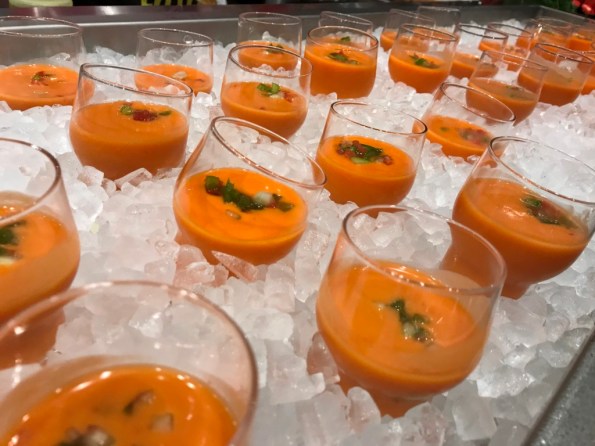
Right after the seminar, we went back to the main floor, which was all converted into the walk-around wine tasting space. Spanish food was carried around, from famous Jamón to Manchego cheese to Spanish omelet to Potatas Bravas and more. I have to say that Gazpacho was my favorite bite without a doubt, but overall, there was no shortage of food.




I have to honestly say that in my 5 years of attending these “Spain’s Great Match” events, the “big guns” never showed up in the tasting – I don’t mean Pingus, Clos Mogador or Vega Sicilia, but even more accessible staples such as La Rioja Alta, Lopez de Heredia, Emilio Moro, Alto Moncayo and many others never made an appearance outside of occasional representation in the seminars. This year’s event was not an exception, with really minor representations of the better-known wines. Don’t get me wrong, there were plenty of excellent wines available, but been a bit spoiled (sorry), I just made a quick round, mostly looking to taste the new vintages of the wines I already knew, so I’m not going to inundate you with a long list of my wine recommendations.
In no particular order, here are the wines I tasted and liked:


Sparkling and white:
2017 Martinsancho Bodegas y Viñedos Martinsancho Rueda DO ($15) – this is one of the best Rueda wines, and it is a lot of wine for the money
2016 CUNE Monopole Classico Rioja DOCa ($27) – deliciously complex, oak-aged white Rioja
NV Anna de Codorníu Brut Rosé Cava DO ($15) – an excellent glass of bubbly for any occasion
NV Segura Viudas Reserva Heredad Penedes DO ($30) – this wine never disappoints, and a beautiful bottle makes it a perfect gift


Red:
2016 Viña Real Crianza Rioja DOCa ($16)
2014 CUNE Reserva Rioja DOCa ($29)
2012 CUNE Gran Reserva Rioja DOCa ($39)
2012 CUNE Imperial Gran Reserva Rioja DOCa ($80)
2016 Teofilo Reyes Crianza Ribera Del Duero DO ($37)
2018 Bodegas Divina Proporcion 24 Mozas Toro DO ($16) – a nice rendition of powerful Toro Tempranillo, good value
2010 Bodegas Martinez Lacuesta Reserva Rioja DOCa ($38)
2014 Bodegas Sonsiera Pagos de la Sonsiera Rioja DOCa ($38)
2016 Bodegas Valderiz Ribera Del Duero DO ($25)
2014 Boada Campo de Bueyes Crianza Ribera Del Duero DO ($15) – might be my favorite wine from the whole tasting. Approachable, round, delicious. Great value.
In terms of price versus quality, or the QPR as we like to call it, Spain still remains unbeatable, and it still remains more of a secret for a casual wine lover. Well, I guess it is all better for us – those who discovered the secret already.
What was your favorite Spanish wine discovery as of late?
For The Love Of Chowder – 2019 Edition
Last Sunday, purveyors of the humble soup, also known as Chowder, assembled at the Sherwood Island State Park in Westport, Connecticut, for the 12th annual festival, the Chowdafest. 29 restaurants, mostly from New England, with a notable exception of Pike’s Place restaurant out of Seattle, Washington, competed in 4 categories (New England Clam Chowder, Creative Chowder, Soup/Bisque, and Vegetarian) – and a few thousand (“a few” here might be 2, 3, 5 – the last number I heard was 12) of people came to have a good time, and to help to identify the best chowders.

My empty ballot held in place by muffin pans – an essential tool of chowder lover at Chowdafest
Before I will inundate you with pictures, as usual, let me give you my brief personal take on the event.
For the good part, there were plenty of tasty soups to go around, and an absolute majority of the soups I tasted were quite good. There were also lots of tasty giveaways, with Natalie’s All Natural Juices as my personal favorite.
For the not so good part, the event felt really, really crowded. This was my 5th Chowdafest, and all previous years I was able to visit the absolute majority of the stands within about 2 hours. This time around, I simply gave up at some point, as the lines were just unsurmountable. I believe there were two reasons for that – first, the weather was so-so, and people didn’t have much else to do on that Sunday. Second, and more important – there was lesser number of participants in the competition, thus even the same amount of people as usual had to line up to the fewer number of stands – this year, there were 29 restaurants competing versus 37 last year, and 40 in the two years prior. My last gripe would be with scarcely decorated stands – in the prior years, there were a lot more seasonal decorations seen everywhere – this year, the decorations were quite limited.

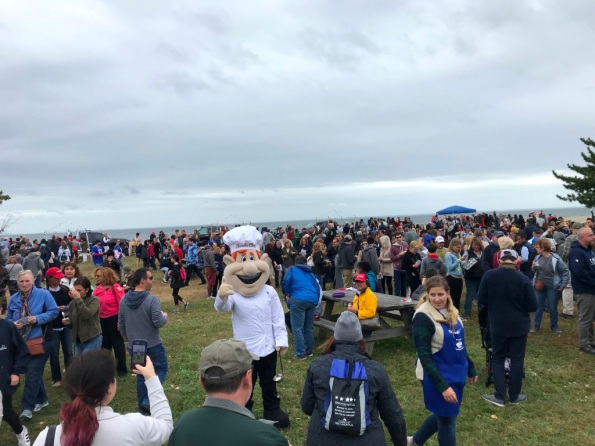
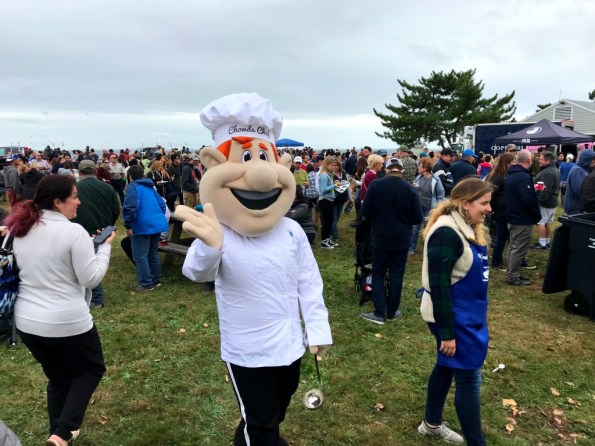


There was a good number of vegetarian soups presented, such as Gazpacho from Rory’s in Darien. Cast Iron Soup from the Cast Iron House in New Haven rightfully won this category as it was one of the very best soups in the competition.


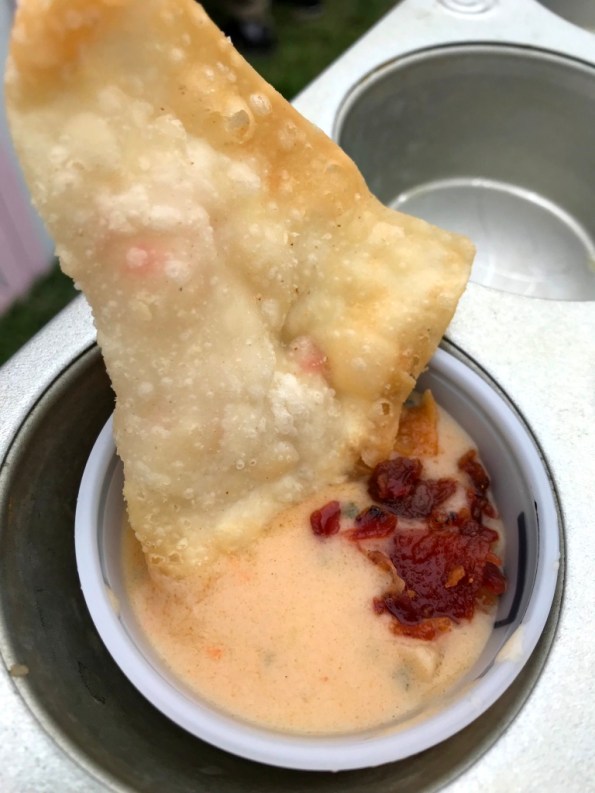
Shrimp and Corn Chowder from the Ribbon Cafe was one of the most creative at the Chowdafest 2019, served with a cheese wonton:


As always, the Chowdafest went way beyond just the soup – Michelle’s Pies were an excellent addition, and as I mentioned, Natalie’s Natural Juices (Beet Orange was my personal favorite) were an excellent thirst quencher.


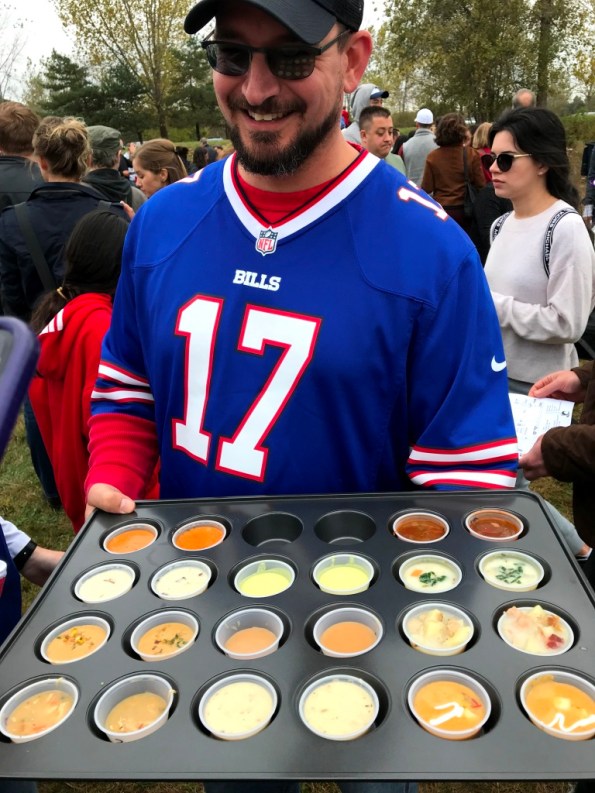
There were also some very creative tasting approaches at the Chowdafest, such as this one:
 Here you can see a glimpse of the prizes, all made by the local artist, Wendy Marciano:
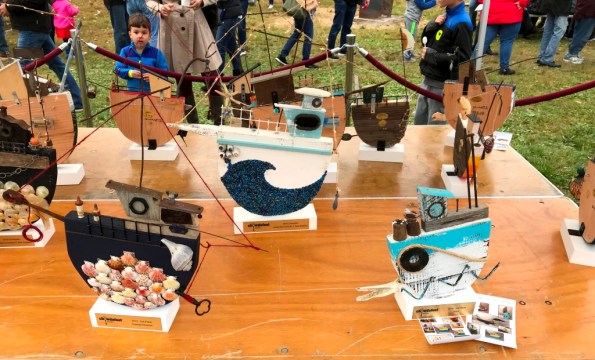
 Let’s talk about the winners. For the 5th year in the row, Pike’s Place out of Seattle took the 1st place in the New England Clam Chowder category. Also for the 5th year in the row, Our House Bistro from Winooski, VT took the Creative Chowder category with its Drunkin Pumpkin Seafood Chowder. Gates from New Cannan, CT won Soup/Bisque category with its Crab & Roasted Corn Bisque, and Old Post Tavern/Cast Iron Chop House from New Haven, CT won Vegetarian category with its Cast Iron Soup. You can find all the results here.
I have to say that I’m convinced that Pike’s Place wins the competition not just because they make the best soup (in my opinion, they are not), but because they also provide the best service. While this was one of the most coveted participants, Pike’s Place stand was practically the only one without a line – they were very efficient in pouring out and simply carrying around their chowder on the large trays, so it was easy for everyone to try it without the need to stand in the long line.

I guess that’s all I wanted to share with you. Before we part, I will show you my ballot which is shamefully incomplete, but this is the best I could do:
 I’m already looking forward to the Chowdafest 2020 – I hope it will be the best and the tastiest and maybe not as crowded as the one this year.
How It Is To Be A Wine Lover in Finland
How it is to be a wine lover in Finland? I have to honestly tell you – I have no idea.
Okay, I have a very limited idea, based on my first trip to Finland and about a week spent in Helsinki and Kuopio.
So yes, keep that in mind – as I don’t live here, my whole claim for expertise is simply a fresh eye of a passionate wine lover, who treats wines stores as toy (candy) stores – one of my indulgences when traveling solo – I can spend an unlimited amount of time in the wine store, slowly walking from the shelf to a shelf.
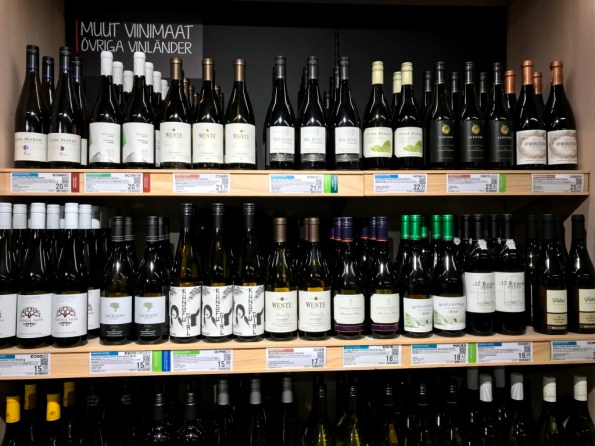
As I spent half a day in Helsinki, staying in the downtown area, the small-ish wine store was my first find. At first sight, I thought that the prices in Helsinki were higher than in Kuopio, but I’m not sure this is correct as alcohol sales in Finland are government-controlled. I saw beer and a few types of wine in the supermarkets, but if you want to buy wine or liquor, you have to head over to Alko, state-owned stores.
In the downtown Helsinki store, French Champagne seemed to be quite expensive – at least 1.5 times or some even double of what you would typically pay in the USA. However, Spanish, Italian, Californian, and even Australian wines were priced rather reasonably, especially taking into account the current exchange rate for euro. That ’06 Lopez de Heredia Viña Tondonia Reserva at €37 looked like a steal to me:
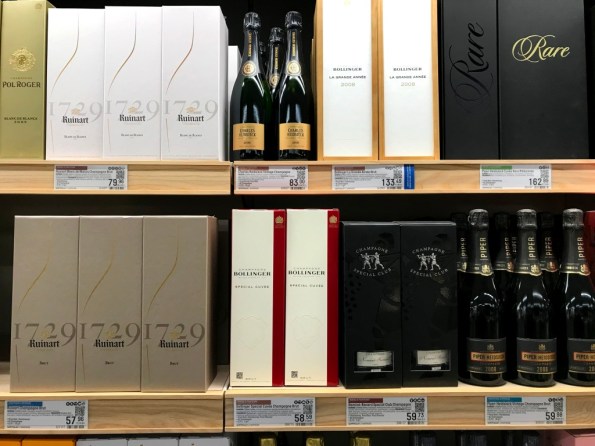
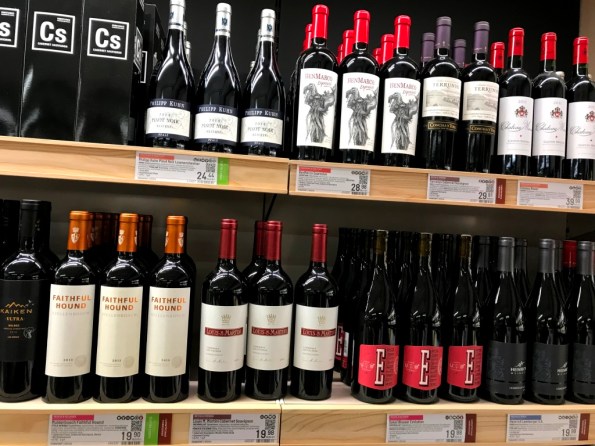
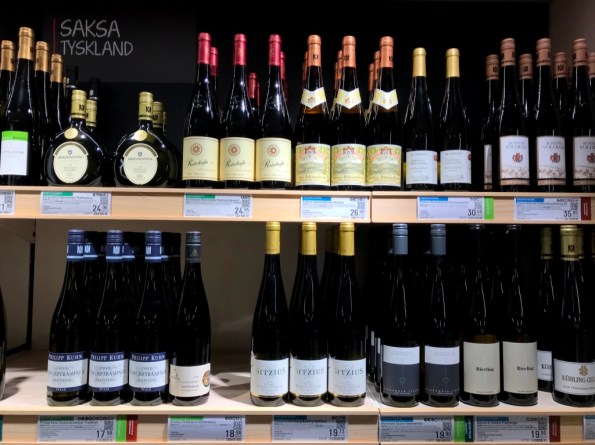
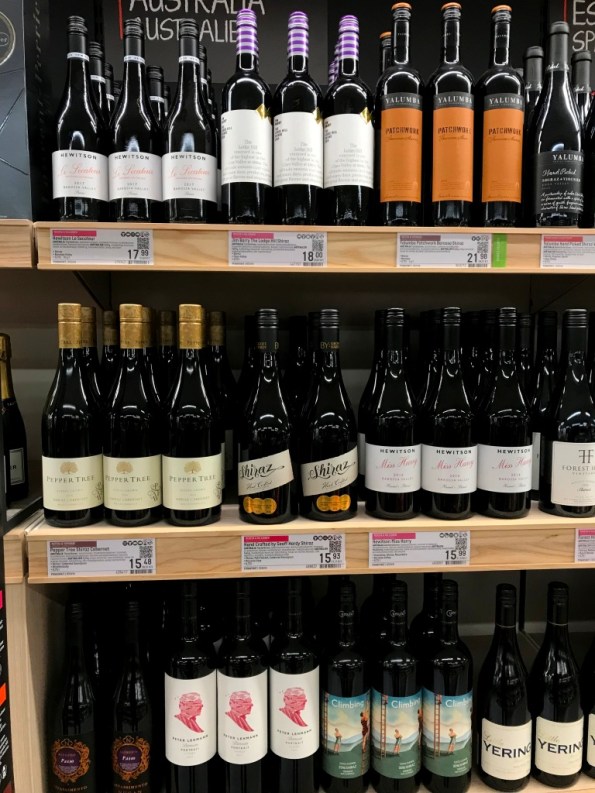
Somehow, the Australian wines attracted my attention first (maybe it is my subconscious trying to compensate for the years of neglect, or maybe it is related to happily drinking Shiraz just a few weeks ago). It was not easy to make a choice – but I settled for the 2015 Jim Barry The Lodge Hill Shiraz Clare Valley. One of the reason was that Jim Barry McRae Wood is one of my most favorite Shiraz wines of all times. I like the wines from the Clare Valley, they are usually lean and focused – and 2015 was giving at least some age for it.

The wine didn’t disappoint at all. Dark fruit, blackberries and a touch of blueberry, subtle pepper note, perfectly firm texture – delicious wine all in all. And let’s not forget the view…
The next morning I flew to Kuopio, a small town up north from Helsinki. Before we talk about wine, we need to talk about a beer. We had a bit of free time on Sunday after arrival to Kuopio, and we took a nice hike to the observation tower. There, in addition to the beautiful nature views, I also found a delicious local beer. I generally prefer dark beers, such as stouts and porters, so I just pointed to the darkest bottle I saw on the display. That was a lucky strike, as Iso-Kalan Mestari Stout from Kuopio (we could see from the top the brewery buildings where it was produced) was just superb – yes, don’t forget that it is a wine drinker talking about beer – but this beer had a perfect balance of malt, dark chocolate, and coffee – had to slow myself down not to gulp it all in an instance.
As a small town (118,000 people live there), Kuopio probably serves as the best proof that Finns love the wines. The wine store which I found in the mall at the market square, was a complete standout. Just gobs and gobs of a great finds, with Champagne section, almost pushing me to ask if this house is for rent 🙂 I was happy to see Rosé, Bordeaux selection looked simply excellent, and some of the unique finds, such as Chinese Changyu looked ultra attractive too – if I would’ve stayed there for longer, that bottle wouldn’t escape my attention.
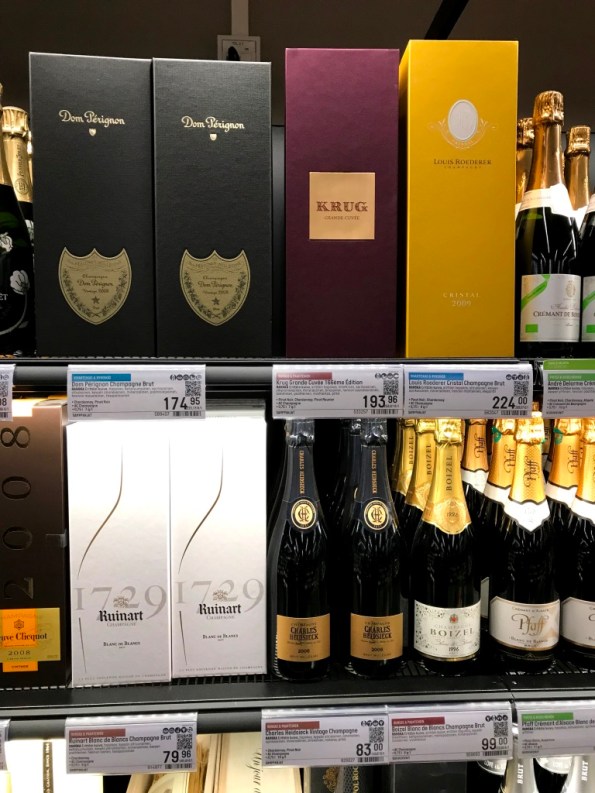


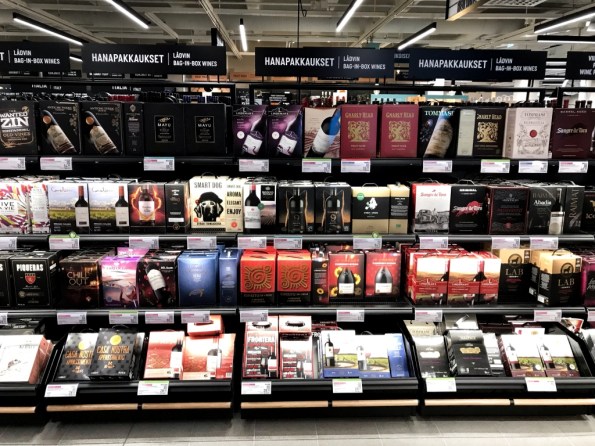


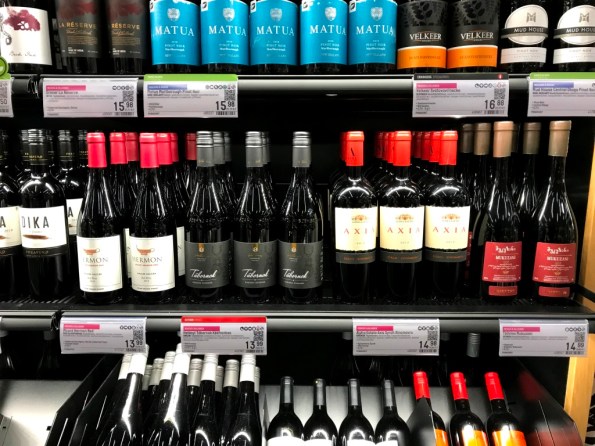


Once again, the Australian section looked mysteriously attractive. First, I saw the words “second pass” on the label of Australian Shiraz. Reading the back label confirmed that yes, it is by design similar to Valpolicella Ripasso, and that there is also a Shiraz made in Amarone style. Looking up one shelf, I was happy to see the words “Dried Grape Shiraz” – here we go, the Amarone-style Shiraz itself. Of course, I had to buy it.


The 2015 Alfredo Dried Grape Shiraz Nugan Estate South Australia was delicious from the get-go. The wine is made in Amarone style, with the grapes drying out for a few months before they are pressed into the wine. The wine opened up with a touch of the dried fruit on the nose, dense and powerful on the palate, with the dark fruit medley and again a touch of dried fruit, full-bodied and smooth, with a long playful finish. In a blind tasting, Amarone would be definitely one of my strong guessing options. While it was good on the first day, it became literally amazing on the 3rd day with the last sip of blueberries, blueberry compote, sweet oak, and long finish.


Right next to the Australian wine section in the store there were Austrian wines. The label with octopus instantly attracted my attention. The wine name was also intriguing – Beck Ink. Back label was suggesting that this is a “natural” wine – of course, this was the next wine I had to try.
2017 Beck Ink Austria (12% ABV, 80% Zweigelt, 20% St. Laurent) opened up with the punch of acidity. The first sip literally had the level of acidity which can make you cringe. There was a hint of underripe raspberries coming with it as well. As the wine was opening up, a little gaminess showed up, the acidity softened, letting more of dark berries to come into a play. The wine had a medium body and smooth, playful texture – if anything, it was really reminiscent of a very good Beaujolais Cru. While craving food, I kept adding from the bottle into the glass until I realized that it was already late – and I almost finished the bottle.
There you go, my friends. Based on what I saw, the wine is well regarded in Finland, and the wine lovers there have a very reasonable choice at very reasonable prices. Have fun peering through those pictures 🙂 Cheers!
Shiraz, Shiraz, Cabernet
Shiraz, Shiraz, Cabernet.
If it is Shiraz, it is from …
Most likely, Australia. South Africa often uses the same name, and sometimes you can find it in the USA and Israel, but my first reaction would still be Australia.
Cabernet Sauvignon can be from …
Anywhere. Really. The most planted grape in the world. From China to Australia to Lebanon and Israel, France, Italy, South Africa, USA, and everywhere in between.
But today we will be talking about Australian wines, so our Cabernet Sauvignon has to come from Australia.
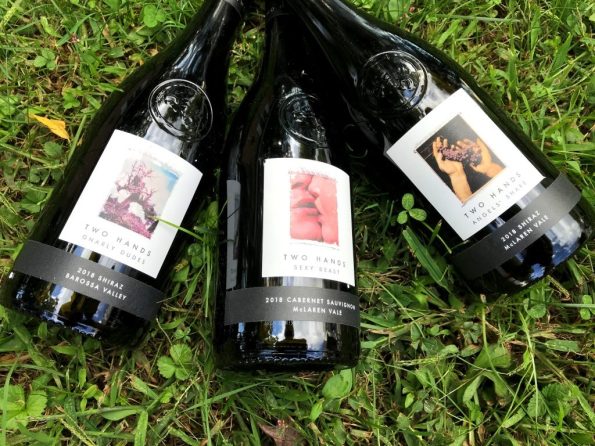
I have to say that I don’t drink a lot of Australian wines – can’t tell you why. Maybe because they are typically located on the back shelves at most of the wine stores. Maybe because they are rarely featured on the flash sale sites, such as WTSO and Last Bottle Wines. Or maybe because I’m still burned from the years of over-extracted, overdone, heavy wines (I called my impression of those wines “burnt fruit”) supported by overinflated Robert Parker ratings – this stuff gets stuck in your head, even though these are 15-20 years old impressions – preconceived notions, here we go. No matter. This is just a fact.
But then I’m always open to taste the new wines – how else can you learn – especially if those are offered as a sample.
And so we will be talking today about the wines produced by the Two Hands Wines, the Australian winery celebrating its 20th anniversary this year.
This is not the first time Two Hands Wines make an appearance on these blog pages – here you will find tasting notes for the same three wines as we will discuss today, only from the 2014/2015 vintage, and here you will find a few more posts covering one of the Shiraz wines). But I can tell you that my impressions are consistently improving, which is either a good sign or a sign of degradation of my palate – I would rather go with the first option.
Two Hands Wines was born in 1999, a product of imagination and conviction of two friends – you can find the full story here. The goal of Two Hands Wines was to showcase different regions in Australia, and of course, make good wines. They succeeded with the flying colors, becoming the only Australian winery (or maybe even the only winery in the world) featured for 10 years in the row in the Wine Spectator Top 100 Wines list. From the beginning, the winery set out to showcase Australian Shiraz. Out of 21 wines produced today under Two Hands label, 14 are Shiraz wines. While the first wines represented the different regions – Barossa, McLaren Vale, Padthaway, Clare Valley, Heathcote, Two Hands also added single-vineyard wines to its repertoire, highlighting best capabilities of each region.


The three wines I had an opportunity to taste belong to so-called Picture Series, as each bottle label features a picture related to the name of the wine. As promised, these are two Shiraz wines and one Cabernet Sauvignon, representing some of the best-known regions in Australia – Barossa and McLaren Vale. Above you can see the labels, and below you can find my notes:
2018 Two Hands Angel’s Share Shiraz McLaren Vale (14.2% ABV, $33, 14 months in 12% new American oak hogsheads)
Dark purple
Dark fruit, tar, eucalyptus, blackberries
Blackberries, good mid-palate weight, well present, velvety texture, good acidity, good balance.
8, lots of pleasure, better on a second day.
2018 Two Hands Gnarly Dudes Shiraz McLaren Vale (13.8% ABV, $33, 12 months in French oak, 13% new)
Dark garnet
Eucalyptus, sweet tobacco, anise, blackberry jam
Silky smooth, blackberries, raspberries, rhubarb, bright acidity, medium-long finish
8/8+, excellent. Smooth and delicious. Definitely 8+ on a second day, delicious, complex wine with a perfect balance
2018 Two Hands Sexy Beast Cabernet Sauvignon McLaren Vale (14.2% ABV, $33)
Dark garnet, practically black
Black currant, a touch of coffee
More black currant on the palate on the second day, a touch of cherries, a touch of pepper, clean acidity, fresh and vibrant. Dark fruit-driven finish, with a touch of coffee.
8-, even a bit better on the second day – black currant more pronounced.
As you can tell, I liked the wines quite a bit, with Gnarly Dudes been a favorite. But I have to add a bit to these notes. It is so happened, that I tasted the wines over two days, with some slight evolution on the second day. Then I simply had to put these wines aside – and these are the screwtop wines, so I didn’t even pump the air out – then we left the house for the 4 days. After coming back, I decided to try the wines before simply pouring them out – and the wines were perfectly drinkable! I wouldn’t say that they evolved, but still, they were perfectly good to continue drinking them instead of becoming an undrinkable plonk. Screwtop wines remaining drinkable for a week. Not one, but three different wines. I don’t know what to think of it, as I’m merely reporting on my experience. If this is something you ever experienced, please comment.
So, my friends, how often do you drink Australian wines? I guess the time has come to do it more often? Cheers!
Stories of Passion and Pinot: Le Cadeau Vineyard

Tom and Deb Mortimer. Source: Le Cadeau Vineyard
Hello, wine lovers.
I’m going to ask you for something very valuable – your time. About 20 minutes of it, as this is how long it should take you to read this post, one of the longest posts I ever published. But I’m not asking for your time for free – in return, I’m offering you one of the very best interviews ever published in the Stories of Passion and Pinot series, as well as the overarching One on One With Winemaker conversations.
Winemaking usually starts with passion, courage, and conviction – a belief that “you can”. Really. It is not always a degree in oenology (don’t get me wrong – of course that helps!), but the resolve to get going, as you have a burning desire to make world-class wine no matter what – this might be your main ingredient of success.
Tom and Deb Mortimer had such a resolve to make great Oregon Pinot Noir. After searching for a year, they found an uncultivated parcel of land on the south slope of Parrett Mountain in the Chehalem Mountains AVA, and the hard work began. Planting grapes, understanding your land, learning the soils and microclimates. All with the resolve to produce the best possible Pinot Noir. This is how the story of Le Cadeau Vineyard started (wonder if “Le Cadeau” means something? Keep on reading).
After tasting the wines of Le Cadeau, I was convinced that I want to learn more – which turned into a very enjoyable [virtual] conversation with Tom Mortimer, who generously offered his time to answer all of my questions. And this is what I want to share with you with a full conviction that it is well worth your time.
Here we go:
[TaV]: The story of Le Cadeau Vineyard started in 1996, when you purchased the 28 acres parcel in Chehalem Mountains AVA. When did you come up with the name Le Cadeau? What is the meaning behind this name?
[TM]: Le Cadeau (is French for “the gift”): We like to say that “the wine is not ‘the gift’; rather, “the wine is the excuse”—the true gift is the land and friendships.” When we first saw the Le Cadeau / BHV site, there was no view; it was obscured by scrub-oaks, blackberry bushes, and a lot of brush. Clearing the land was a bit like unwrapping a present, and ultimately a gorgeous view emerged. More significantly, rocky soils are coveted for top-tier vineyard sites. As we cleared the site, the broken volcanic basalt cobbles were revealed; rock in Oregon is rare, so we were very fortunate to find a rocky site. Lastly, wine is inherently relational. Enthusiasts get-into wine for the product, but ultimately, they stay in wine for the people; when the glass is empty, the relationships remain. So “the gift” has multiple manifestations.
[TaV]: When you found the parcel which became the future home for Le Cadeau, you said “For some reason, the property “felt right”. I don’t really know why”. So this was the love at first sight, right? Now, 23 years later, can you maybe better explain that feeling?
[TM]: Part of it was the location—the vineyard is only 35-minutes from downtown Portland, yet it was very serene countryside. We came from suburban Minneapolis to start this project; 22-years ago the Willamette Valley was much less developed, so this location was perfect for us. My wife (and I) didn’t want an isolated, rustic, farm experience. But other than the location, it was a beautiful site—south slope, about the right grade, I was fairly certain the view existed. It just had a different / better feeling than many of the other places we looked at.
At another level, I think I Iiked the fact that it was never-before-cultivated land. There was something about “starting a vineyard from scratch” that was appealing… of course, at the time, I had no idea what I was getting us into… which is actually a good thing. There are plenty of reasons to not take on a project like this. Sometimes it is better to not know what lies ahead.
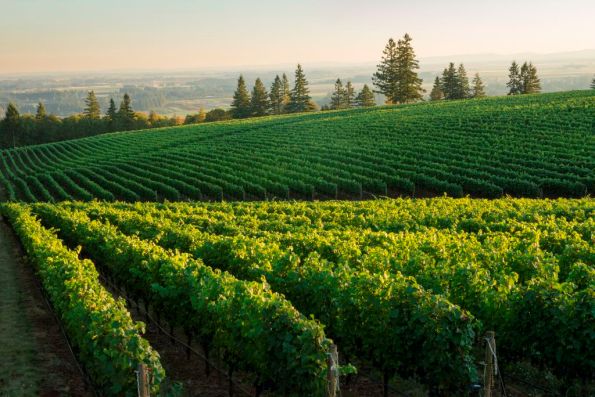
Source: Le Cadeau Vineyard
[TaV]: I really like the name “Black Hole Vineyard”, even though it has not necessarily a positive connotation about it. Have you ever bottled any wine which says “Black Hole Vineyard” on the label? What happened to that name? Is the Black Hole Vineyard simply became Le Cadeau Vineyard, or is it still exists under its own name?
[TM]: There was one “Black Hole” wine made by a fruit client. It was small production, and was only released to his wine club.
Our business is corporately divided into two companies: A farming company (the vineyard), and the wine biz. Most of the fruit from the vineyard is sold to the wine biz, but some is sold to notable clients. The farming company is named Black Hole Vineyard, LLC (or BHV, LLC), while the wine company is Le Cadeau. So in that regard, the name lives on. We also continue to personally refer to it as Black Hole among ourselves, and generally the winemakers like to call it Black Hole, vs. Le Cadeau. But at some point you need to make a brand decision, and focus your time and energy on that brand. We chose Le Cadeau vs. Black Hole. Obviously, it is a much more positive message, though perhaps not as amusing.
[TaV]: What made you believe that you can conquer the rocky soil? What was the drive behind your passion, developing your vineyard against the difficult terrain and the cash flow?
[TM]: As noted above, a good part of my confidence was rooted in ignorance. But as a wine collector I knew that many of the great wines of the world were grown in rocky soils. I figured, “if they can do it, so can I”.
Over the years I have come to discover that there is one tool that is central and more important than any other in developing and farming a rocky site. You might think that the tool is a chisel plow, or a big tractor, or whatever. But the reality is that the single-most-important tool is a checkbook. Unfortunately, unlike many of the folks that get into this business, my checkbook was about the size of a hand-held garden tool. With a vineyard that is raw ground and solid rock, it is better to start with a checkbook that is the size of a bulldozer… and a D8 at that. Fortunately, I kept my day-job.
[TaV]: How many Pinot Noir clones have you planted so far? Why so many?
[TM]: We’re up to about 16-Pinot Noir clones and 6-Chardonnay clones (the first Chardonnay, 2017, to be released in a couple months). Why so many?—there are a handful of reasons:
- a) I cannot recall ever having a single clone wine that I felt was as complete and interesting as a multi-clone wine. We don’t put them all in a single wine; our cuvees result from different combinations of clones, soils, and aspect (climate). Most of the cuvees have 3 to 5 clones, Diversité has the most with 7 that make up the majority of the wine, and another 2 or 3 that are there in small quantities.
- b) Curiosity and experimentation. Quite simply, clones are exciting. You wait for 3-years wondering what the fruit will look like and taste like. Often it takes several more years before you learn about the flavors, texture, physical characteristics of the fruit and how it affects the wine. So there is always a sense of anticipation. I liken clones to colors on an artist’s palette; they add “color” to wine—not in a literal sense, but in terms of variance, nuance, and complexity.
- c) Differentiation. I don’t want to make wine that is like everyone else’s.
- d) Optimization. Folks (i.e., typically winemakers) have varying views of how important clones are in the overall mix of variables. Most agree that the dirt / site are the most important elements, and I’d agree with that. But for many, “clones” would be further down the list. For me, the plant material is very central to extraordinary wine. Great wines only happen when there is great dirt, perfect climate, excellent farming / viticulture, the very best and site-matched plant material, and of course great winemaking. Like many things in life, something can only be as good as its weakest link.


[TaV]: Is there an Oregon (or maybe Burgundian) winery(ies) which were instrumental in the development of your own winemaking style?
[TM]: We have always wanted to make wines that are true to the estate site. In this regard, Le Cadeau is more of a European model, in that the “rock star” is the vineyard, not the winemaker. The wide range of cuvees exist to showcase the range of “faces” of the vineyard. But more recently we’ve been searching for more freshness and aromatic excitement. This is why I engaged our French consultant, Pierre Millemann several years ago. Not surprisingly, this has led us to produce higher acid / lower alcohol wines.
It would be difficult to pick a particular winery to reference against; again, our dirt / site is very unique. There are many wineries, both in Oregon, Europe, (and California) that we respect, but I think it would wrong to say that we try to emulate any of them.
[TaV]: Do you still have any bottles from the 2002 vintage? If you do, how do they hold?
[TM]: I have a few bottles of 2002. The last one I had was about 2-years ago. It was doing well, but I think it was past its prime. Keep in mind that the vines from that vintage were only 4-years old. I recently had an ’05 Diversité from magnum; it is going strong and will continue to last for a long time.
[TaV]: According to what I see on your website, you produce [at least] 7 Pinot Noir wines. Is there an idea behind such a range of Pinot wines? What are you trying to showcase?
[TM]: As noted above, the majority of the cuvees showcase various attributes of the vineyard: Rocky soils (Rocheux); the cooler East-side (Cote Est); clonal diversity (Diversité); heritage clones (Merci Reserve). More recently, we’ve added two cuvees that are more inclusive of winemaking technique—Trajet Reserve is 100% whole cluster; and “Pierre” has considerable input from our consultant, Pierre. It is about “freshness” and higher acidity.
[TaV]: Going back to the Pinot Noir clones – considering the sheer number of them, you must be blending your wines. What is your approach to blending? Do you have any Estate Pinot Noir wines where you trying to maintain consistency throughout the different vintages?
[TM]: Generally we favor co-fermentation of multiple clones in a single tank. Most of the cuvees are made of two separate tank fermentations that go to barrel separately, and are then combined to make the final cuvee. But for the most part, all of the wine from each ferment ultimately goes into the cuvee.
I like to say that the Le Cadeau wines are “made in the vineyard”… I don’t mean that literally, but rather that the specific “Cote Est” fruit is picked separately, and it is made into the Cote Est cuvee. Same for Rocheux, Diversité, and Merci. In this regard, there is clonal consistency from year to year, because the wine for each cuvee is consistently made from the same section of the vineyard. For example, Rocheux is always roughly 45% Dijon 777; 45% Pommard; and 10 % Wadenswil… that is what is planted in the sections where the Rocheux fruit is grown. … and fortunately, the vines don’t move around at night when we’re not looking… that would be a mess.
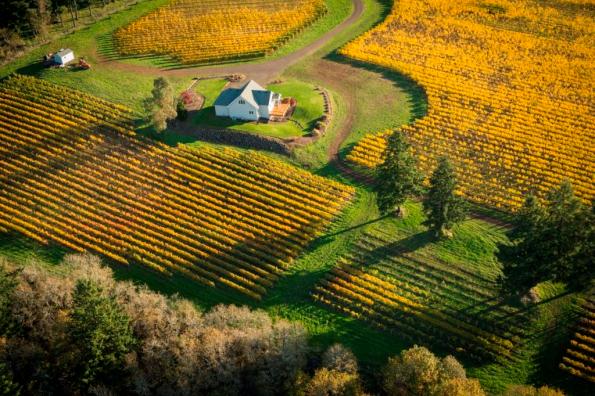
Aerial view over Le Cadeau Vineyard, Chehalem Mountain AVA, Willamette Valley, Oregon. Source: Le Cadeau Vineyard
[TaV]: How did you come to the idea of the Sparkling wines? You offer 2011 vintage sparkling wine, so clearly you started making sparkling wines before they became “the thing” in Oregon, so how did you get there?
[TM]: 2011 was a very cool, late, year, and the clusters were uneven. Some of them were quite large (a fairly rare event, given our rocky soils). On October 15th, the bigger clusters had only gotten to about 19-Brix—not good for still PN. I know we wouldn’t/couldn’t pull them all out on the sorting table, so we did a sort in the vineyard. I told the crew to harvest the three biggest clusters off of each plant in certain sections of the vineyard. Since these were at a perfect stage for sparkling, and we had them hanging on the vine for a full season at that point, it seems silly to drop that fruit on the ground. So we took a shot at sparkling—it worked out very well, so now we make it generally every other year.
[TaV]: I’m sure you knew this question is coming J – it seems that you only work with Pinot Noir grapes. Do you grow any other varieties? Do you have any plans for the white wines? If yes, what grapes would you plant?
[TM]: As noted above, we have 6-clones of Chardonnay that are now in production. The first Chardonnay will be 2017, released in a few months. We’ll only do Chardonnay at Le Cadeau (other than Pinot Noir). But under our other brand, Aubichon, we’ve made some wonderful “Alsatian Style” Pinot Gris, as well as a Pinot Gris-based Rosé, and a wine we call “Sur Peaux”, which is an “orange wine” from Pinot Gris. All the Pinot Gris is sourced from old vine vineyards, about 25-years old. So it’s nice fruit, and the wines are quite special.
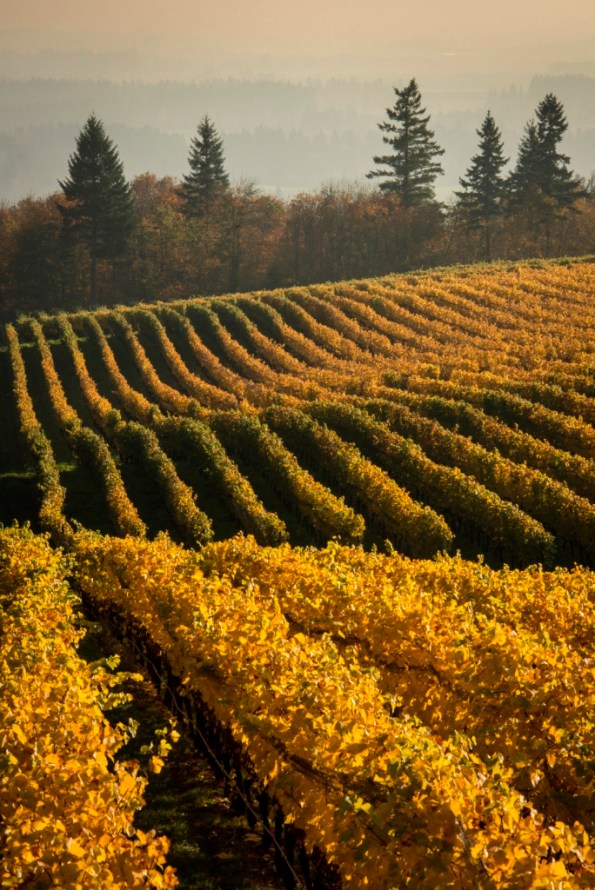
Le Cadeau, Chehalem Mountains AVA, Willamette Valley, Oregon. Source: Le Cadeau Vineyard
[TaV]: And one more common question I like to ask – when you are not drinking your own wines, what are your favorite wines and/or wineries, in Oregon or anywhere in the world?
[TM]: I have a diverse range of preferences:
I’m a huge fan of Weinbach in Alsace; Chave Hermitage is often special, Guigal Condrieu (the good version, not so much the standard one), Huet and Chidane Chenin Blanc; Fevre Chablis; Robert Weil German Reisling (and many others—Keller dry from their rocky vineyard is nice); any good Bonne Mares; love white Bordeaux—Chevalier, Smith H-L, and of course the “big guys”, but they’re too expensive. Barberescos from Italy—Gaja (also like Gaja Chardonnay), and I think Produtorri does an amazing job for the price, along with Albino Rocca. I’ve had a Foradori wine that I thought was special, certain Brunellos, but many have become Parker-ized, that’s unfortunate. I like Ciacci wines though. … the list goes on…
In Oregon, there are many that I respect, and a small group that I like, but I’d prefer to leave those thoughts anonymous.
[TaV]: What is ahead? Where do you see Le Cadeau in 10-15 years?
[TM]: I think we’re just beginning to make our best wines, and really beginning to understand the vineyard’s nuances. Some of our more exciting clones are still quite young, so it will be interesting to see what sort of wines we make from the more exciting clones when the vines are older. The 2018 wines that we have in the barrel are possibly our finest to date. Very excited about getting them into the bottle and out on the market.
I’m hopeful that our Chardonnay program will be noteworthy. Pierre’s guidance on Chardonnay has been very helpful. 2018 in barrel looks to be very promising, and I’m excited about the first 2019 fruit from a rocky grafted section of the vineyard. We have a couple interesting Larry Hyde clones of Chardonnay planted in that area as well. The fruit looks to be quite different. I’ll have a better sense of the Chardonnay potential in another year, but I’m hopeful that we can produce “the real deal”.
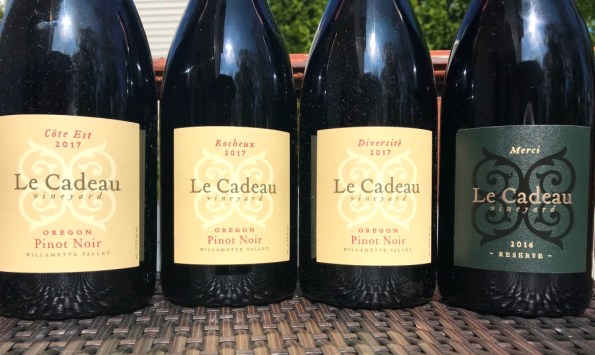
Thirsty? Here are my tasting notes for the wines:
2017 Le Cadeau Côte Est Pinot Noir Willamette Valley (13.9% ABV, $50, 145 cases made)
Dark Ruby
Smoke, plum, iodine, medium-plus intensity
Wow. Touch of smoke, Sage, medicinal notes (cough syrup), good acidity, excellent balance
8
2017 Le Cadeau Rocheux Pinot Noir Willamette Valley (13.2% ABV, $50, 174 cases made)
Dark Ruby
Plums, cherries, violets, intense, inviting
Bright, clean, succulent ripe cherries, licorice, great minerality, excellent balance, superb
8+
2017 Le Cadeau Diversité Estate Pinot Noir Willamette Valley (13.9% ABV, $50, 245 cases made)
Ruby
Delicate, lavender, a touch of smoke, perfect
Beautiful, plums, ripe strawberries, great acidity, baking spices, delicious overall
8+/9-
2016 Le Cadeau Merci Pinot Noir Reserve Chehalem Mountains Willamette Valley (14.1% ABV, $80, 143 cases made)
Garnet
Intense, ripe cherries and plums, candied fruit
Wow, great intensity, cherries, cherry compote, ripe plums, minerally notes, good acidity, good balance
8+
As you can tell, I really liked the wines – they were literally one better than another.
Here you go, my friends – yet another story of Passion and Pinot. I hope you enjoyed reading it as much as I enjoyed writing it, and I thank you for your time and attention.
Will there be more Passion and Pinot stories? Well, do you think the passion ran out of the Pinot winemakers and aficionados? I will bet my virtual DRC bottle that it did not. So we will continue our conversations as soon as the next opportunity will present itself.
Obey your passion!
P.S. Here are the links to the posts profiling wineries in this Passion and Pinot series, in alphabetical order:
Alloro Vineyard, Bells Up Winery, Ghost Hill Cellars, Iris Vineyards, Ken Wright Cellars, Knudsen Vineyards, Lenné Estate, Tendril Cellars, Youngberg Hill Vineyards, Vidon Vineyard
Why You Don’t Want To Miss Chowdafest 2019
Really, why would you want to miss the Chowdafest 2019? If you like chowder or any form of nice, hearty soup – and note, it can be vegetarian soup as well – you can’t have an excuse good enough to miss the 12th annual Chowdafest festivities on October 6, 2019, taking place at the usual place – Sherwood Island State Park in Westport, Connecticut, from 11 AM until 3 PM.
I attended Chowdafest for the past 5 years, and when I’m suggesting that attending the event is well worth the effort of rearranging your Sunday around it, I’m simply speaking from experience (take a look my reports from past Chowdafests here). Chowdafest is a lot of fun – it is not only soups and chowders but lots of samples of cheese, bread, sauces, juices, tea, coffee, ice cream, and more. It is literally fun for all ages (yes, you want to teach your kids what tasty food is from an early age).

One of my very favorite creative chowders – and a winning one!
At the Chowdafest 2019, 30 restaurants will be competing for the titles in the 4 categories – New England Clam Chowder, Creative Chowder, Soup/Bisque, and Vegetarian. Half of the 30 competing restaurants will be participating for the first time, and I’m definitely looking forward to trying new soups such as Mexican style Shrimp Posole Soup, or Buffalo Chicken Noodle Soup. But probably the main question is – will Pike’s Place out of Seattle, Washington, win the classic New England Clam Chowder category for the 5th year in the row? Well, you will need to be there to see it and be a part of it.
I hope I solved for you the problem “What to do on Sunday, October 6th”. See you at the Chowdafest!
Last Bottle Sign Up ($10 credit)




 Talk-A-Vino