Archive
Beaujolais Nouveau Est Arrivé! 2016 Edition
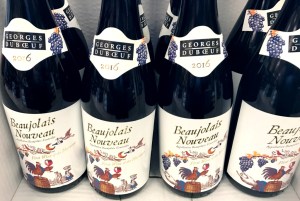 There is no shortage of the grape holidays nowadays – we celebrate Cabernet Sauvignon, Merlot, Tempranillo, Chardonnay and many other grapes, sometimes even two per day. However, the oldest grape celebration in existence is Beaujolais Nouveau Day, celebrated on the third Thursday in November, which happened to be November 17th this year.
Of course, Beaujolais Nouveau Day is not so much of a grape celebration (which would be a Gamay day) but really the celebration of the new harvest, which was a very old tradition in the Beaujolais region, neighboring Burgundy, in France. Georges Duboeuf, a famous French wine merchant, is credited with making Beaujolais Nouveau Day an international event more than 30 years ago. What was just a local harvest festival became an international event, widely anticipated and celebrated around the world, from Tokyo to Moscow to New York.
While Beaujolais Nouveau Day is [still] often dismissed as a marketing gimmick, I’m always looking forward trying the new Beaujolais Nouveau wines, to be able to see their evolution. Ever since this blog started in 2010, Beaujolais Nouveau was always part of it – here you can find the old posts from 2010, 2011, 2012, 2013, 2014 and 2015. In case you want to learn a bit more about the history of the celebration, please take a look at the post from 2012 – it contains more information than the other posts.
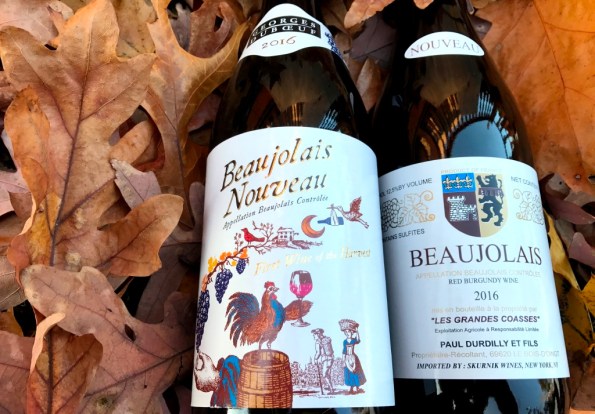
Here are the notes on the 2 wines I was able to taste this year:
2016 Georges Dubœuf Beaujolais Nouveau (12% ABV, $9.99)
C: Dark ruby
N: fresh fruit, intense, ripe raspberries, herbal undertones, not over the top
P: elegant, fresh, red fruit notes, crunchy berries, excellent acidity
V: 8-, very enjoyable and elegant
2016 Paul Durdilly et Fils “Les Grandes Coasses” Beaujolais Nouveau (12.5% ABV, $9.99)
C: dark ruby
N: spicy cherries, mint, inviting
P: very limited amount of fruit, big contrast with the nose. For the Beaujolais Nouveau, might be even too restrained.
V: 7, leaving desiring more on the palate.


Talking about the two wines I tasted, I have to admit that I forgot to lightly chill them, which is recommended. This definitely had no effect on Georges Duboeuf wine, but it might be a culprit behind the limited expression of the second wine.
Before we part, I want to bring to your attention the label of the Georges Duboeuf Beaujolais Nouveau. Besides the fact that I personally like it, the important part if that for the first time ever, the label for this wine was chosen by the wine consumers voting for one of the 12 different designs submitted for the competition. I think the consumers chosen well, right?
For the past 3-4 years, I find Beaujolais Nouveau a very enjoyable wine, well worthy of oenophile’s attention. What do you think of Beaujolais Nouveau? Any favorites? Cheers!
One on One with Winemaker: Max Weinlaub of Viña Maipo, Chile
When I was invited to meet with the winemaker Max Weinlaub of Chilean winery Viña Maipo, one thing immediately caught my attention – Max was described as an advocate of the “new Chilean Syrah movement“. Syrah might be my all times favorite grape (secretly, of course – I would never admit it in public), so anything which has to do with the Syrah sounds interesting to me.
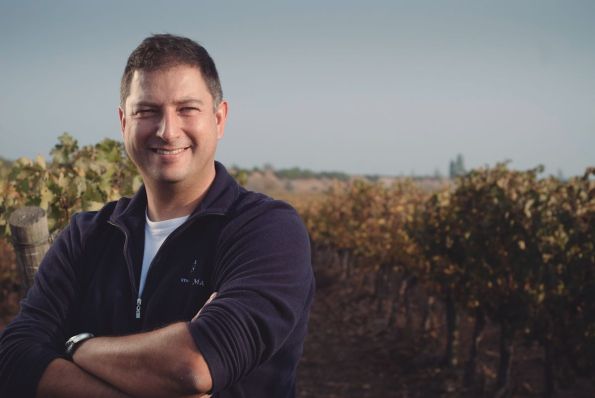
Winemaker Max Weinlaub. Source: Viña Maipo
I couldn’t travel to New York on the given date, but Patricia Clough from Gregory White PR was very accommodating and managed to include me in the live conversation and tasting with Max with the modern wonders of technology (thank you Patricia!). I was able to listen to Max presenting his wines and even ask questions and make comments – and all of it not with my fingers (in most of the “virtual” tastings we use Twitter or similar mechanisms to “talk” to the presenters – this conversation was refreshingly different).
This was the tasting, of course, so I did taste the line of Viña Maipo wines, and in a word, the wines were stunning. But I will tell you all about the wines in the next post, as I reached out to Max with a bunch of questions, which he graciously answered despite being on the plane for the most of the time in the months, going around the world and introducing his wines. Max’s answers are great and well worth every minute of your time if you want to learn more about Chile and its wines.
Without further ado, here is our [now virtual] conversation with Max Weinlaub:
[TaV]: It appears that Viña Maipo was one of the Syrah pioneers in Chile, planting it in 1990. Are there any wines from those early vintages still around? Did you have a chance of tasting them? What do you think of them if you did?
MW: Even though the vines were planted around 1998, the grapes were blended with other red grapes. In 2005 the grapes were used to make Limited Edition for the first time. We still have bottles of that vintage. I have had the opportunity to taste it, but the style has evolved year after year. To me, the first vintages were bold and too ripe. In recent years, I have been turning to a fresher style with a better balance and great ageing potential.
(Side note for Anatoli: If you are truly interested I could find one of those rare bottles, and we can taste it together next time I’m in NY.)
[TaV]: Since starting at Viña Maipo almost 10 years ago, did you make any changes in the way Syrah grapes are grown or the way the wines are made?
MW: Since I started as chief winemaker in 2007 it has been an endless learning process in direct connection with understanding how the vineyard behaves under different climatic conditions and canopy management, and noting the changes as the vines age each year. Today, I have a better knowledge about our Syrah grapes to express the varietal’s maximum potential with a clear sense of origin: Syrah from Chile. If I compare the last 10 years, I definitely see a change in the style of Viña Maipo’s wines —building towards better elegance, power, balance, fruit expression and oak impact.
[TaV]: Why Syrah in Chile? Do you think that Syrah is the next big grape for Chile?
MW: Until the first half of the 90’s, Chile was known for producing Cabernet Sauvignon, Merlot, Chardonnay and Sauvignon Blanc. Carmenere was re-discovered just in 1994. So the general perception of Chile was as a reliable producer of inexpensive wines but without many options to show (in terms of grape varieties). At the same time, Australia was living golden years with its Shiraz, so many winemakers thought that maybe Syrah could be introduced in Chile. Some clonal material (stocks) were imported and multiplied by a couple of nurseries in Chile and then, we neared the end of the decade, the first Syrah grapes were harvested with pretty good results. Thanks to a joint venture with one of those nurseries, Viña Maipo was one of the first wineries that planted Syrah in the country.
In my opinion, Chile has been and will be widely recognized as a great place of origin for Cabernet Sauvignon. But at the same time other grapes, especially those from the Rhône Valley, have adapted extraordinarily well to the Chilean terroirs — and Syrah is by far the best example of that. If you consider that nowadays the oldest Syrah vines are around 20 years old and already are producing high quality wines, then you can clearly see a bright future with this grape variety.
[TaV]: When making Viña Maipo Syrah, is there a region (Cote-Rotie, Hermitage, Cornas, Barossa, and Santa Barbara) or a wine maker (Guigal, Chapoutier, …) which you see as a hallmark and try to achieve some similarities with?
MW: The regions you mention (with their singularities) plus the talent and skills of those renowned family names have made some of the most iconic and unique expressions of Syrah grapes in the world. From those wines I learned that Syrah is able to make outstanding wines with a great potential for ageing even comparable with some Cabernet Sauvignon. My humble dream is someday to be part of that “Hall of Fame of Syrah” world, to be recognized as a previously-unknown Chilean winemaker named Max Weinlaub who made a jewel with Syrah in Chile, standing along with those big names.
[TaV]: You are blending Syrah with Cabernet Sauvignon and vice versa, which is quite unusual. Why do you think these two grapes work together? Are there any other regions in the world where Syrah is successfully blended with Cabernet Sauvignon, or do you think this is purely a Chilean phenomenon?
MW: I do believe in the synergy between their different but complementary components when you blend the right way. This is the best evidence that winemaking is closer to an artistic expression than to math because 1+1 is more than 2. Syrah is a fantastic grape to make single varietal wines, but also for blending. Sometimes the Cabs are too classical, too serious for me. I used to define the Syrah variety as “fireworks in a carnival”…it has lots of color, intensity and rich flavors. So Syrah plays an important role shaking up or adding verve to a (sometimes) circumspect Cabernet Sauvignon. My aim here is to make a more distinctly South American or Chilean style of Cabernet Sauvignon.
In another style, I add a smaller percentage of Cab to Syrah to increase the structure or backbone of the wine. As part of its nature, Syrah’s tannins are soft but non-structural – so hence the need for the strength and structure of Cabernet Sauvignon. You can find this blend of Cab-Syrah or Syrah-Cab elsewhere and it works well for me, and I intend to keep perfecting it.
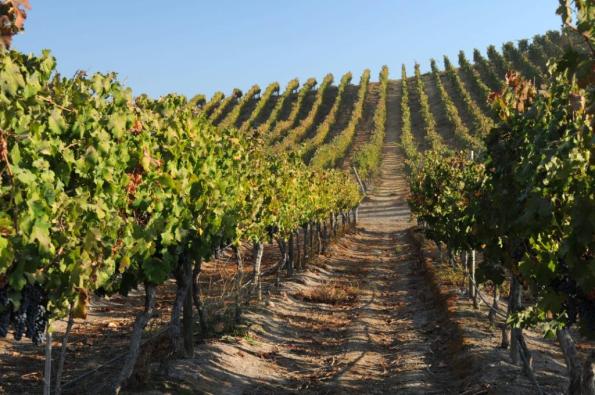
Source: Viña Maipo
[TaV]: Pinot Noir seems to be fast growing in popularity in Chile. You don’t make any Pinot Noir wines – do you have any plans for it? What do you think overall about Chilean Pinot Noir?
MW: I think that finally there’s a bunch of very good Pinot Noir produced in Chile thanks to the better knowledge of the grape variety in terms of terroir, viticultural management, clonal selection and winemaking. Pinot Noir is a challenging variety that sooner or later many winemakers—who tend to thrive in challenges–try to produce his/her own version. I’m having a lot of fun and joy producing Syrah (among other grapes of course) so Pinot Noir will be in my “101 things-to-do-before-to-die” list for a while.
[TaV]: Many wineries around the world add sparkling and Rosé to their repertoire – do you have any plans for Viña Maipo to start producing sparkling or Rosé wines too?
MW: We produce sparkling and rosé too!!! As we have a limited capacity (in terms of volume), the production of sparkling is allocated to certain markets – so it is not currently part of our global portfolio. Our rosé is sold largely in Nordic countries at the moment. We could taste both wines next time I see you.
[TaV]: How old are the oldest vines at Viña Maipo?
MW: The Cabernet Sauvignon vines are the oldest planted in our vineyards. Today, some of them are reaching 40 years old….just like me.
[TaV]: Don Melchor is an uncontested flagship wine for Concha e Toro, with very high critic ratings (98 from Suckling, 96 from Wine Spectator). Do you think Alto Tajamar will beat Don Melchor’s ratings one day?
MW: By far Don Melchor is the Dean of all the renowned Chilean wines. It’s the Chilean wine with the longest and most complete vertical tasting starting in 1986. I truly admire its history and legacy. If someday Alto Tajamar receives as high ratings as Don Melchor has won, for me that would be an honor and privilege. One of my principles is “work hard in silence, do your best and the rest will come along.”
[TaV]: When it comes to the white grapes of Chile, Chardonnay and Sauvignon Blanc are, of course, well established and well known. Is there a next big white grape for Chile?
MW: Chile is a paradise for grape growing due to its diverse terroirs, stable weather and healthy environment. Even though Chardonnay and Sauvignon Blanc are widely planted I’m sure there are new areas where some other white grapes could produce great quality wines, such as Verdejo or Godello, both grapes especially recommended for warm climates. There are some very interesting Rieslings and Gewürztraminer. But the problem with those grape varieties is the almost relatively little commercial success we’ve seen when are produced outside of their home countries. I have the feeling that the only white grape that could succeed (technically and commercially) is Pinot Grigio.
[TaV]: What are the biggest export markets for Viña Maipo?
MW: By far the UK and Nordic countries at the moment, but there are some interesting opportunities to grow in other areas especially in Asia. Asia is a great market with its own codes and tempo (rhythm). We’ve also been focusing on the U.S. to a greater extent and I am very much looking forward to spending more time in the market.
[TaV]: Continuing the previous question, how big is China, and it is growing, flat or declining?
MW: China is just awakening!!! And everybody is trying to get a space in China since the Dragon feels thirsty. They are starting drinking wine, more often for Gambei (heavy duty toasts) rather than for joy, learning or food matching, so there are some things to do in terms of wine culture and education.
[TaV]: Do you have a favorite vintage of Viña Maipo Syrah?
MW: Always the last one!!!… Because it’s better than the previous one. Maybe it’s because the vines are becoming older and I’m turning older too (and hopefully wiser)!!!
[TaV]: When you are not drinking your own wines, what are some of your favorite wines and winemakers around the world?
MW: More than follow a label, brand or winemaker, recently I have been discovering regions. I’m currently really intrigued by German Rieslings (especially old vintages from Mosel River) and some Spanish red grapes such as Garnacha (aka Grenache), Mataro (aka Cariñena or Carignan), Graciano, Mencia and Bobal.
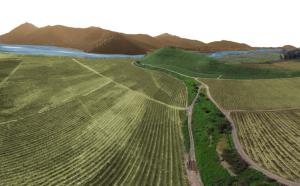
Source: Viña Maipo
We are done here, my friends. I really enjoyed our conversation with Max, and I hope that the next time we will sit across the table and taste his delicious wines together. You might be thirsty at this point, so I hope you have something to drink – and the next time I will tell you all about delicious Viña Maipo wines I had a pleasure tasting. I can only say that I would gladly drink those wines at any time… Until we talk again – cheers!
Celebrate Tempranillo! 2016 Edition
Tempranillo is one of the most popular red grapes in the world, requiring no introduction to the wine lovers, now even less than before. The star grape of Spain, a foundation of the timeless beauty of Rioja, finess of Ribera del Duero and dark raw power of Toro. Today (if I manage to publish this post before midnight) is International Tempranillo Day, the day when we acknowledge this early ripening grape, capable of bringing lots and lots of pleasure to the wine lovers everywhere.
I discovered Tempranillo in 2010, at the wine seminar at the PJ Wine store in Manhattan – and fell in love with it. And how you can not, after tasting 1964 Rioja Gran Reserva, which was still young and exuberant. I was seeking Tempranillo ever since, trying it at every occasion – some encounters happier than the others.
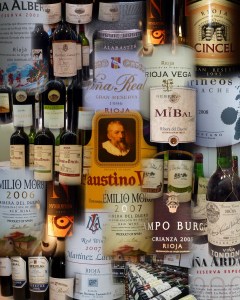
What interesting in this journey is that when I discovered Tempranillo for myself, my world was squarely limited to Spain, and even inside Spain, it was all about Rioja, Ribera del Duero and a little bit of Toro. I was always happy to celebrate the Tempranillo Day, so here is the collage which I produced based on the wines I knew, back in 2011:
 To my total delight, it appears that my Tempranillo worldview was inexcusably narrow. Texas, Oregon, Napa Valley and my newfound oenophile’s heaven, Lodi, are all producing world-class, delicious, complex, exciting Tempranillo wines. I heard about Tempranillo in Australia; never tried them, but now I’m a believer – great Tempranillo wines don’t have to be only from Spain. Thus I created a new collage, to better represent my latest discoveries:
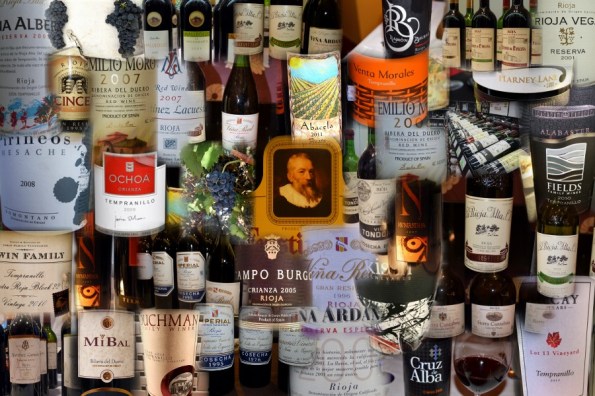 Abacela from Oregon, Duchman from Texas, Irwine Family from Napa, Bokisch, McCay, Fields, Harney Lane from Lodi – lots and lots of tasty discoveries over the past few years – I hope you had your share of Tempranillo fun too.
Do you have your favorite Tempranillo wines? Where are they from? Who is the producer? Tell the world about them. Cheers!
Desperately Seeking Saperavi
Saperavi is one of my absolute favorite grapes. It is capable of a wide range of expressions, as well as extended aging, and Saperavi wines often present an unbeatable value compare to any wines in the same or even higher price category. Saperavi is typically associated with the Republic of Georgia, where it is an undisputable star, but it is slowly gaining its enthusiastic following in the other regions. This grape also became a connection point between myself and Rich Rocca, whose passion for the Saperavi is unquestionable, and I’m always looking forward learning from Rich as to what is going on in the world of Saperavi, especially considering his focus on the New World regions. I thought it would be perfectly appropriate to offer pages of this blog for the guest post from Rich, who shares his quest for Saperavi below.
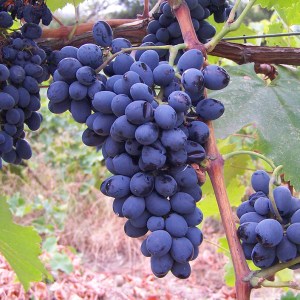
Saperavi Grapes. Source: Marani website
My name is Rich Rocca and I write the wine blog wpawinepirate. I have covered a wide variety of subjects in my posts but the primary objective has always been to provide my readers information about the wineries and vineyards in my home region of Western Pennsylvania. The Finger Lakes Wine Region of New York (FLX) has also been of great interest to me. I have made numerous trips to the FLX and it was during these visits I discovered Saperavi. Anatoli and I became friends after we began exchanging our thoughts concerning the state of Saperavi in America and even Saperavi wine itself. Those years of accessing the progress of this grape eventually lead to Anatoli’s gracious invitation to write a guest post on his blog which I eagerly accepted. Saperavi has always been a “Secret Handshake” type of wine that you either knew about or you didn’t. Here’s your chance to get into the club but unlike in the past don’t keep it to yourself and spread the word about this rising star.
The vintners of the Northeastern United States have long searched for a red wine grape that could be their signature grape. Over the years several have been on the cusp of becoming the iconic red wine grape that would be identified with the region for producing world-class red wine. Vintages of Lemberger and Cabernet Franc have produced stellar wines that can hold their own with other regions but just couldn’t elbow their way through a crowded field of reds for the attention of the wine drinkers of the Eastern U.S. and beyond. The fact that you are reading this post proves that you have a curiosity about something new in a world full of wine that can be overwhelming at times. The following is a summary of information I have gathered over the years about this intriguing grape from the winemakers and vineyard managers who know it best.
Saperavi is an ancient grape that can trace its origin to the Kakheti Region of Georgia and the surrounding regions as far back as 6000 B.C. Saperavi is a teinturier-type grape, which means it has a dark skin and a pink-tinted flesh. A teinturier variety of grape will produce an intensely colored juice when crushed because both the skin and flesh contain the water-soluble pigment anthocyanin which is responsible for giving fruits and vegetables their red, blue and purple color. Saperavi is a very adaptable loose bunch, late-ripening, cool climate grape variety that can produce large yields without sacrificing much in the quality of the fruit. These vines are able to thrive in cool climate regions even at high altitudes because they have above average resistance to cold temperatures. A more cold/frost tolerant hybrid called Saperavi Severny has been developed by incorporating genes from the hardy Severny grape. Traditionally Saperavi wine has been blended with lesser wines but recently it has been gaining popularity as a varietal bottling. A common translation of Saperavi is “dye” because it makes an extremely dark colored wine. Saperavi wine is known for having good acidity and firm but not overwhelming tannins. It is these attributes that make it a wine that takes well to aging with some examples being found to have aged nicely for fifty years. Georgia recently has had political problems with its neighbors over the export of wine, notably Saperavi, but that is a blessing in disguise because it is diverting more wine to the world market.
When talking about Saperavi I can’t contain my excitement and expectations for the wine being grown and made in the United States. I have coined the term “New World Saperavi” for the wine being grown and made by three wineries in the Finger Lakes Wine Region of New York and one in Central Pennsylvania. In the FLX Saperavi is being grown and made at Dr. Konstantin Frank Vinifera Wine Cellar by Fredrick (Fred) Frank, the son of Willy Frank and grandson of Dr. Konstantin Frank, two legendary winemakers. Saperavi winemaking is well established at Standing Stone Vineyards thanks to Martha (Marti) Macinski (owner/winemaker). She is one of the pioneers of Saperavi in the FLX and is making her wine using grapes from her ever expanding Saperavi vineyard, arguably the largest in North America. Anyone familiar with FLX Saperavi knows John McGregor at McGregor Vineyards the maker of McGregor Black Russian Red. This wine is often referred to as “THE” cult wine of the FLX. McGregor Black Russian Red is a unique blend of Saperavi and Sereksiya Charni and is only produced at John’s Keuka Lake winery. The only other producer of Saperavi outside of the FLX is Fero Vineyards and Winery in Lewisburg, Pennsylvania. Chuck Zaleski is the owner/winemaker at Fero and as his award-winning Saperavi vines mature he has been experimenting with different wine making techniques and styles to capitalize on the distinct characteristics this grape exhibits.


Fero isn’t the only winery exploring the possibilities of Saperavi, all three of its counterparts in New York continue to hone in on their particular vision of what Saperavi can be and what styles it can be made into. Their success isn’t going unnoticed as more vineyard managers are planting Saperavi but the addition of newly planted acreage is slow. There are several factors that have hindered the spread of Saperavi not the least of which is the scarcity of the vines themselves. Two eastern wineries that have young Saperavi vineyards are Knapp Winery in the FLX and White Barrel Winery (formerly Attimo) in Christianburg, Virginia. Anyone considering adding Saperavi to their property can start their search at Grafted Grapevine Nursery Clifton Springs, New York, a longtime supplier of Saperavi and other varieties to the wine industry.
“New World Saperavi” can be difficult to find because of the small number of producers and the limited yields from vineyards that are expanding but cannot meet the increasing demand. If you are interested in learning more about the Saperavi producers in the United States I have written an in-depth post about them. The post can be viewed at wpawinepirate.wordpress.com/2015/09/22/new-world-saperavi-report/
The next stop on our search for “New World Saperavi” is Australia. South Australia to be more exact, home to Dan Traucki, wine industry consultant, Director of Wine Assist Pty Ltd, freelance writer and my newest friend in the search for Saperavi wherever it may take me. Through his articles and our correspondences, Dan has given me an insider’s perspective of the current state of Saperavi and other lesser known wines being made in Australia. Australian wine production from its approximately 4000 wineries is dominated by Shiraz and Chardonnay making competition for market share acutely competitive. Fourteen ground-breaking vineyard managers have taken the speculative position of planting Saperavi in their vineyards. The majority of these plantings are in the warm climate of the Barossa Valley and McLaren Vale Regions. Saperavi can also be found in the cool climate of the Alpine Valley Region of Victoria. The cool climate Saperavi produces a slender wine with an angular taste profile while the warm climate renders a wine of muscular body and vivid taste.


I am interested in how Saperavi’s innate ability to express its terroir plays out when it is being planted in such a diverse assortment of locations around the globe. Even though these vineyards are planted in vastly different regions of the world there is a high probability that over the course of time the DNA of other wine grapes has found its way into the DNA of Saperavi as it has with all other “pure” strains of wine grapes. The vines for Australian Saperavi were sourced from the Archival Saperavi of Roseworthy Agricultural College. This noteworthy collection of vines has been amassed from vineyards worldwide over the past 100 years. With this thought in mind, I am sure that Saperavi produced anywhere will display the unmistakable qualities that we associate with it but will also manifest certain location-specific characteristics that will be inevitable because of its genetic tendency to adapt the growing environment.
The history of the “Old World Saperavi” has been well chronicled over the centuries dating back to ancient times. Much of the craftsmanship used to make this wine has change little over time from the way it is fermented and stored in large egg-shaped earthenware vessels called Qvevri to the traditions of the Georgian communities that are as intertwined with this grape as are the Saperavi vines themselves. The story of “New World Saperavi” is still in its early chapters but luckily for us it is being written by skilled winemakers that are fearless visionaries when it comes to the future they see for their wineries. The possibilities surrounding this wine are fascinating and evolving with each new harvest. I am a curious person by nature and have always enjoyed learning about something new and exciting. I invite you to join me on this journey in the pursuit of an ageless red wine grape reinvented in vineyards a world away from its ancestral home by dreamers and risk-takers as full of life as Saperavi itself. I urge you to indulge your inquisitive side and try Saperavi from anywhere in the world. I think you will be surprised and glad you got to taste something a little different.
Thank you to Anatoli for the invitation to be a guest on his blog and the opportunity it provides me to reach so many new readers/friends. I am always interested in news of Saperavi growers and producers anywhere. If you know of any please contact me at email: wpainepirate@gmail.com or follow me on my blog: wpawinepirate.wordpress.com
Twitter: @wpawinepirate
Instagram: rich_wpawinepirate_
Website: wpawinepirate.wixsite.com/wpawinepirateevents/
Trader Joe’s Merlot Run
As some of you might know, I can never pass on visiting the local Trader Joe’s when traveling – as long as it offers wine (which seems to be the case so far in the most places I visit). Last week I was in Santa Clara in California, so the trip to the nearby Trader Joe’s was unavoidable.
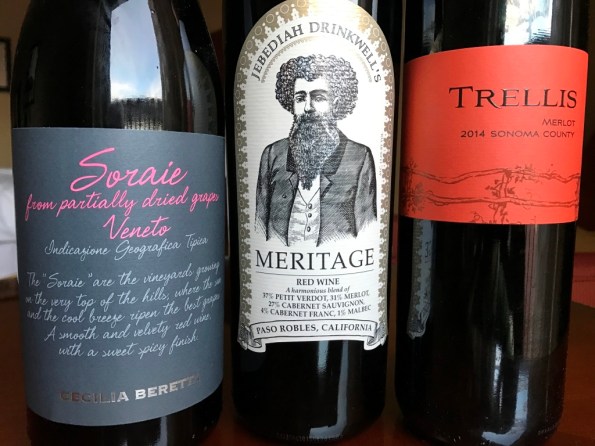 Deciding on what wine to buy at Trader Joe’s is difficult. I always take price into account, but then there are lots of wines in the same, super-reasonable prices range of $5 -$8. The next option is the label – yes, I’m a sucker for creative labels, and then, of course, the region comes to play.
As I slowly walked along the wine shelves, the label of Jebediah Drinkwell’s caught my eye – it was strangely attractive – plus I like Meritage wines, so it was an easy decision. I picked up Trellis Merlot because it was a Merlot (and October is a Merlot month) – and I was really curious to see what $4.99 can buy you from Sonoma. Cecilia Beretta was the third bottle I got – wanted to go outside of California, and “Partially dried grapes” always sounds like a music to me.
Looking at the wines later on, the idea of #MerlotMe dedication came along – would all these wines be Merlot based? To my delight, in addition to the 100% Merlot from Sonoma, two other wines also had substantial Merlot content, so here you go my friends, a Merlot run at Trader Joe’s.


Here are my notes:
NV Jebediah Drinkwell’s Meritage Red Wine Paso Robles ($5.99, 37% Petite Verdot, 31% Merlot, 27% Cabernet Sauvignon, 4% Cabernet Franc, 1% Malbec)
C: dark Ruby
N: touch of smoke, roasted meat,
P: soft fruit, blackberries, tobacco, good acidity, medium-long finish
V: 7+/8-, quite enjoyable
2014 Trellis Merlot Sonoma County (14.5% ABV, $4.99)
C: garnet
N: restrained, distant hint of cassis, herbs
P: soft, round, cassis, good acidity
V: 7+, excellent QPR
2014 Cecilia Beretta Soraie Veneto IGT (14% ABV, $7.99, 40% Merlot, 30% Corvina, 20% Cabernet, 10% Croatina, grapes dried for a few weeks before pressing)
C: dark garnet
N: touch of blueberry pie, quite restrained
P: touch of blueberries, tobacco, hint of dried fruit, good power but round, soft tannins, medium finish
V: 7+, will work well with food – pasta with some hearty tomato sauce would be perfect
As you can tell, it is pretty amazing what $18 can buy you at Trader Joe’s. Also, it is my second experience with non-vintage wine at Trader Joe’s, and I’m definitely impressed with the quality of that wine.
Do you buy wines at Trader Joe’s? Any interesting finds you care to share? Cheers!
Life’s Happy Moments – Virtual Lodi Wine Tasting on Snooth
When I got an offer to participate in the Lodi wine virtual tasting on Snooth, my first reaction was “that’s okay. I just was in Lodi just recently for the Wine Bloggers Conference (WBC16), and still perfectly remember it”. Then the second thought came in – “but it is Lodi, remember? Great wines, great people, why not”?
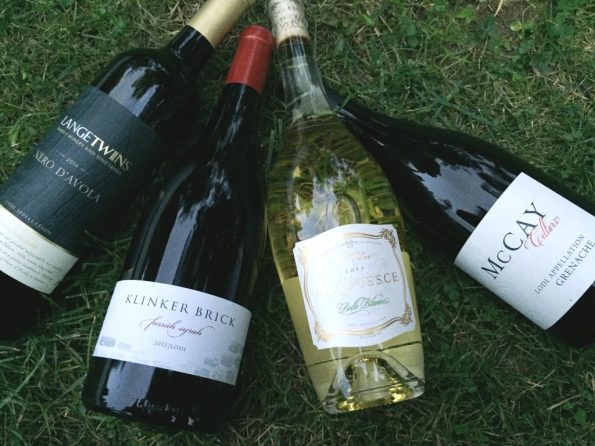
When I opened the box with samples, huge smile embellished my face (this post would be perfect for the Monthly Wine Writing Challenge #28 (#MWWC28), as the theme was “Smile” – if only it would be written on time, sigh). Do you smile when you run into a good old friend who you are genuinely happy to see? Yep, that was me at that moment.
Looking at the bottles one by one, you can imagine me talking and thinking.
Acquiesce. I heard people raving about their wines, but never tried it – great, now I will! LangeTwins – the flow of happy memories – we visited the winery with the group of bloggers and had an incredible time there; so glad to be drinking their wine again. McCay – an immediate image of Mike McCay, pouring his Zinfandel out of the double-magnum during the dinner at the WBC16 – another huge happy smile. So looking forward trying this Grenache. Klinker Brick – had their Zinfandel during speed tasting, but heard a lot about the Syrah – now I can taste it, great!
Then the day of the tasting arrived, and for an hour, I was among friends, feeling more like a WBC16 reunion – the fact that we didn’t see each other was not a problem – it was easy to imagine happy and smiley faces, tasting delicious wines, and excitedly talking across each other. Exactly as we did in August back in Lodi.
I have to be entirely honest – we had great hosts for this session – Tim Gaiser, Master Sommelier, Stuart Spencer, who represented both Lodi Winegrape Commission and his own winery, St. Amant, and Mike McCay of McCay Cellars – but I was entirely focused on the chat window, so I don’t have much of their conversation to share with you. But – I’m happy share the tasting notes for these delicious Lodi wines.


2015 Acquiesce Belle Blanc Mokelumne River Lodi (13.5% ABV, $26, 45% Grenache Blanc, 45% Roussanne, 10% Viognier, 288 cases)
C: light golden
N: intense lemon, lemon peel, candied lemon (hint of), white stone fruit
P: creamy, plump, touch of candied lemon, long acidity-dominated finish
V: 8, easy to drink from the start. The wine kept evolving for the next 5 days – definitely an age worthy wine which will bring you lots of pleasure.
2014 LangeTwins Vineyards Nero d’Avola Red Tail Vineyard Lodi (13% ABV, $20)
C: bright garnet
N: ripe sweet plums and earthiness, medium intensity
P: clean herbal profile first, sweet basil, then layer of fresh, ripe blueberries – clean, well-structured, perfectly balanced.
V: 8-, excellent pop and pour wine, should be easily a crowd pleaser
2013 McCay Cellars Grenache Abba Vineyard Lodi (14.2% ABV, $32, 309 cases)
C: smokey Ruby
N: intense gunflint, granit, underripe plums
P: smoke, mix of tart and sweet cherries, clean acidity, firm structure and medium body, crisp
V: 8+, outstanding. Once you start drinking, you can’t stop
2013 Klinker Brick Farrah Syrah Mokelumne River Lodi (14.9% ABV, $20)
C: dark garnet, almost black
N: intense aromatics, espresso, mocca, mint, raspberries, red fruit, very inviting and promising
P: wow, intense, mint, eucalyptus, blueberries, tar, spicy core, good acidity, velvety present texture, long finish
V: 8/8+, very good from get go, should improve with time
I would like to thank the kind folks at Snooth for arranging this delicious tasting. And for you, my friends – yes, those wines are made in a very small quantities, but if you will make an effort to find them (many might be available directly from the wineries), you will be well rewarded. These are the wines worth seeking. Cheers!
Daily Glass: An [Opportunistic] Bordeaux Discovery and a Case Buy Recommendation
If you read this blog regularly, you might have noticed my claim of “rediscovering Bordeaux” after the Cru Bourgeois virtual tasting. Now, my happy feeling about Bordeaux was reinforced further, after a spontaneous Bordeaux tasting.
After somewhat of an extended break, we got together with the friends for dinner. Before we would eat, we were presented with a difficult task – we needed to taste 5 different Bordeaux wines – I hope you see my attempt at humor here.
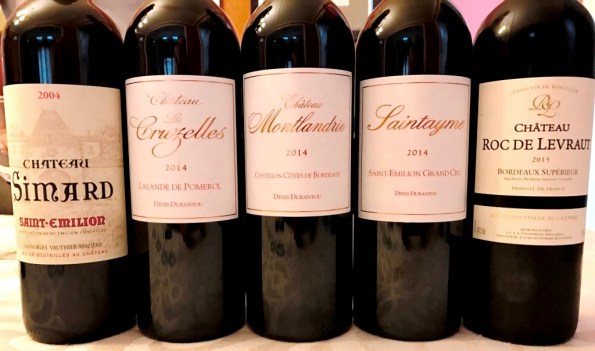
The reason for this “obligatory tasting” was simple. My friend (and our dinner host) frequents a large and well known wine store on Long Island, called Pop’s Wine and Spirit, which routinely offers some legendary deals – I can’t call them any other way as the savings for the wine buyers are quite substantial. So my friend got a recommendation from his trusted sales rep to try few of the Bordeaux wines offering great value, and come back for more if he would like them.
There were 4 Bordeaux wines we needed to try as such – plus one which is my perennial favorite. Three of those Bordeaux wines were coming from the same producer, whose name I never heard before – Denis Durantou, who supposedly is a well known, and the wines we had in front of us were more of the side project for him.
After tasting the wines, which were magnificent and a great value (notes below), I had to do some research and found out that Denis Durnatou is indeed more of a pioneer and the legend, making wines at Chateau l’Eglise-Clinet in Pomerol. Chateau l’Eglise-Clinet is a part of so called “Pomerol Triangle”, which is an area with the best soils in Pomerol, where most of the “Pomerol greats” are located – I hope the names like Le Pin, Vieux Chateau Certan, l’Evangile, Pétrus spell magic for you (yes, all amazing producers). Denis Durantou was the first to start green harvesting in Pomerol (green grapes are removed at the early stages, to allow remaining grapes to concentrate flavor). He was also a big proponent of thermo regulation in the cellar, which is critical when you ferment the grapes. Actually, I can’t do justice to the Denis Durantou’s work in a few sentences – instead, let me refer you to an excellent article which you can find here.
2014 Chateau l’Eglise-Clinet will set you back at around $180, the futures for the 2015 seems to be closer to the $225. At the same time, all 3 of the “other” Denis Durantou wines we had a pleasure of tasting, were in the range of $17 to $24 (all prices come from Pop’s Wine and Spirit).
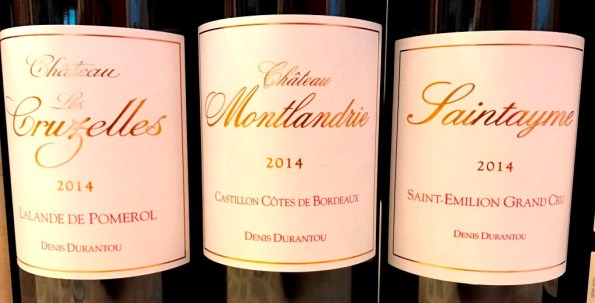
Here are my notes:
2014 Château Montlandrie Castillon Côtes de Bordeaux Denis Durantou (14.5% ABV, $22, 75% Merlot, 20% Cabernet Franc, 5% Cabernet Sauvignon) black currant on the nose, classic, clean, mint, wow; perfect Classic Bordeaux on the palate, beautiful fruit, cassis, firm structure, perfect balance, ready now, will evolve. Drinkability: 8+
2014 Château Les Cruzelles Lalande de Pomerol Denis Durantou (14% ABV, $24, 90% Merlot, 10% Cabernet Franc) green bell peppers on the nose, touch of Cassie , eucalyptus; dusty palate, firm tannins, meaty texture, very round, cherries. Will evolve. Drinkability: 8-
2014 Saintayme Saint-Emilion Grand Cru Denis Durantou (14.5% ABV, $17, 100% Merlot) dusty nose, plums, touch of roasted meat; fresh fruit on the palate, delicious, silky smooth, fresh tannins, well balanced. Drinkability: 8
Let’s talk about two more wines.
What I love about Chateau Simard is that they take great care of us, oenophiles. Chateau Simard wines are aged at the Chateau for 10 years, and only then they are released to the public – all at incredibly reasonable prices, at least so far. As you can tell, this wine was perfectly fitting my comment price-wise, and it was delicious:
2004 Château Simard Saint-Émilion (12.5% ABV, $22, 70% Merlot, 30% Cabernet Franc) – very funky nose, and lotsr of barnyard, mint, truffles ; sweet fruits on, fresh tannins, nice depth, touch of licorice, cured meat, great balance, delicious wine. Drinkability: 8+
Now, for our last wine, you don’t even have to read this post anymore – just run to the store and get a case of this wine – at least one. You can thank me later. And by the way, I’m not the only one who thinks this wine is great – 2014 vintage got 89 points from Wine Enthusiast magazine.

2015 Château Roc de Levraut Bordeaux Superieur ($8, Cabernet Sauvignon, Merlot, Cabernet Franc) – beautiful smoke on the nose, roasted meat, dark fruit; plums and smoke on the palate, good acidity, nice minerality, savory notes, excellent overall. Drinkability: 8, incredible QPR.
Here we are, my friends – few of my “Bordeaux finds” for you. By the way, I need also to mention that my friend, who kept tasting the leftover wines over a few days, said that they all kept on opening up, especially our QPR star, so I’m serious about that case buy recommendation. I also just realized that 4 of these wines are predominantly Merlot wines, so this post is also perfectly fitting for the October being the month of #MerlotMe!
Have you made any exciting Bordeaux discoveries as of late? How is your Merlot? Cheers!
Stories of Passion and Pinot: David Nemarnik of Alloro Vineyard
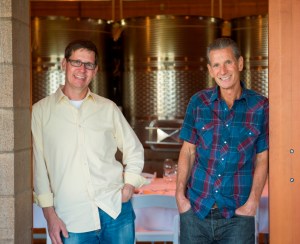
David Nemarnik and Tom Fitzpatrick. Source: Alloro Vineyard
Let’s say you are looking for the site to plant the vineyard of your dreams. After many years of research, you finally find what you were looking for – it should be perfect. And so the site you find is located on Laurel Ridge, and it has Laurelwood soils. Now assume you have an Italian heritage: how would you call your vineyard? What do you think of “Alloro Vineyard”? Alloro is an Italian for “laurel”, so it makes perfect sense, doesn’t it?
For sure it did for David Nemarnik, who was born into a Croatian – Italian family, and he was the one who started looking for the good vineyard site in Oregon in the late 1980s and finally purchased one in 1999 – and yes, named it Alloro Vineyard. First Pinot Noir vines were planted in 1999, and the first vintage was 2002. In addition to the Pinot Noir, the varietal line-up today also includes Chardonnay and Riesling.
Alloro Vineyard is a lot more than just a vineyard. Actually, the vineyard occupies only 33 acres out of the 80 acres estate, and the whole estate is a full-blown farm, with cattle, sheep, chicken, and gardens. Altogether, it became a holistic habitat, were growing grapes and making wines is simply part of the lifestyle, perfectly attuned to David’s family traditions. The vineyard is sustainably farmed, L.I.V.E. certified sustainable and certified Salmon-Safe. To top that off, David installed solar panels on the property, and now generates 100% of the electricity he needs for all the operations.
I had an opportunity to [yes, virtually] sit down with David and ask him a few questions, and here is what transpired from our conversation:
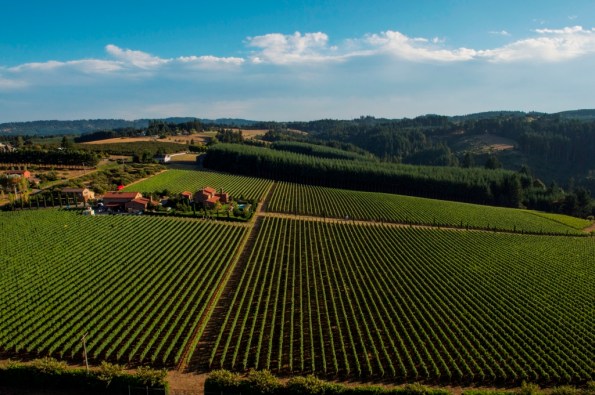
Alloro Winery, Chehalem Mountain AVA, Willamette Valley, Oregon. Source: Alloro Vineyard
TaV: Having Italian roots and memories of winemaking in Italy, have you ever thought of planting some of the Italian varietals? Moreover, Croatia also offers some interesting and unique grapes – how about those?
DN: I grew up with an Italian-American mother and grandmother who were all about family meals, which also always included wine. Not the high-end stuff, we are talking Familia Cribari Red Table Wine. My father was Croatian and born just outside of Trieste Italy. Family visits to my father’s village impressed upon me a lifestyle of artisan food and wine production. There was the home-made prosciutto and sausage, farm raised grain for bread, corn for polenta, and of course wine and grappa.
I love Nebbiolo and the wonderful Barolo and Barbaresco wines of Piedmonte. If I were to plant an Italian varietal it would be Nebbiolo. I was recently in Piedmonte and observed the grapes were at about the same stage of development as our own Pinot Noir vineyard here in Oregon. It would be fun to put in an acre or two. Learning and trying new things is part of what keeps this winegrowing business fun!
TaV: Why Riesling? This is not a very common grape for Oregon – how did you decide to plant Riesling? In a blind tasting with German, Alsatian, Finger Lakes, and Australian Riesling, where do you think people would most likely place your Riesling?
DN: Years ago in the mid-nineties, I was making wine in my garage for family and friends. This was mostly Cabernet and Zinfandel. A friend of mine who was making wine in his apartment bedroom closet finally was given an ultimatum from his wife that led him to join me in my garage. He turned me on to Riesling. I really like Riesling’s versatility, dry, off-dry, and sweet. So it was natural to plant my own Riesling and make an estate wine.
TaV: Any expansion plans for the vineyards? Maybe some new grapes outside of Pinot Noir and Chardonnay?
DN: Well we recently planted a new 5 acre block that is mostly Chardonnay with the balance Pinot noir. I planted this on the east side of the road for a different exposure and aspect. We also have our Riesling and a small block of Muscat. So we currently have 33 acres planted out of 130 acres total. I’m sure at some point I’ll plant more grapes, perhaps that small block of Nebbiolo.
TaV: You produced your first vintage in 2002, so starting from that year, what was your most difficult vintage for Pinot Noir and why?
DN: The most difficult vintage for me was 2011. 2011 was the coolest year with the least amount of heat units since I started farming grapes in 1999. Bud break and bloom were 3-4 weeks later than our average year. We had a very cool summer and by early October we still had not fully completed veraison and were worried the fruit would not have time to ripen sufficiently. We did everything we could, thinned to one cluster, pulled leaves on both sides, and prayed. Thankfully we had an incredible October with dry and sunny weather. In the end, we made some really nice wine.
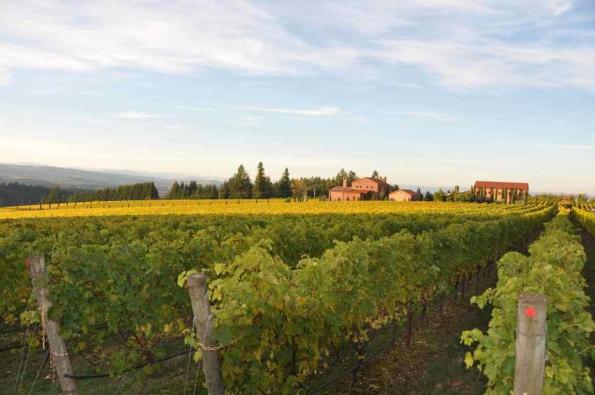
Source: Alloro Vineyard
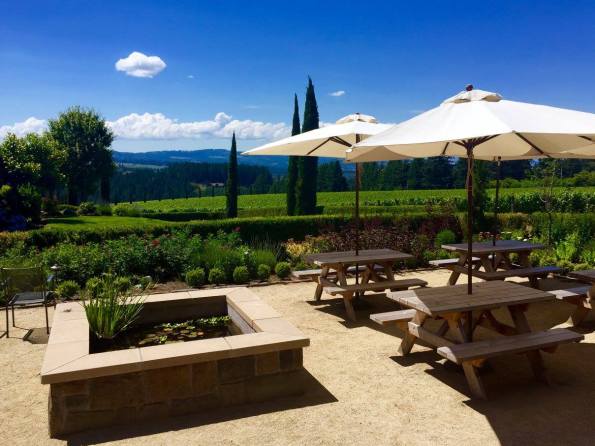
Terrazza view. Source: Alloro Vineyard
TaV: Continuing the previous question, what was your most favorite vintage and why
DN: My favorite vintage in the cellar is our 2010. What started off as a cool growing year transitioned to a mostly dry summer with mild temperatures leading to great conditions during that critical month of ripening prior to harvest. The wines are elegant and complex with a wonderful balance of red and dark fruit.
TaV: You operate not just a vineyard, but also a farm, a whole habitat with lots of things happening. I’m sure you had plenty of funny stories over the years – do you care to share some of them?
DN: Yes, Alloro is really a sustainable whole farm that includes raising hay for our cattle and sheep, as well as an extensive garden, hazelnuts, and numerous fruit trees. We compost manure from our cattle barn that is then spread on our fields as a natural fertilizer. We have a strong food culture that I would say is aligned with the Slow Food and Locavore folks.
One funny story has us picking strawberries in the garden. My chocolate lab named Abby disappears for a while and then returns with my neighbor’s Chinese runner duck in her mouth. The duck with its long neck sticking out of Abby’s mouth seems perfectly calm as she proudly brings me the duck. I carefully take the duck back to her owner’s pen…it never happened…
TaV: I’m assuming you produce your top of the line “Justina” Pinot Noir only in the best years – how many times have you produced it so far?
DN: Our Justina is a very special barrel selection. Although a blend of multiple barrels, it is a barrel equivalent (or 25 cases). Before any other barrel selections are made, we comb through every barrel looking for the very best of the vintage. Within the context of the vintage, our Justina has the most weight; the broadest, densest, finest, and most persistent texture; the most complex aromas; and typically a higher percentage of new oak. We have produced this wine every year since 2010.
TaV: You get all your power from solar energy. Was the winery designed like that from the very beginning, or did you install solar panels at some point later on?
DN: The winery was completed in time for our 2003 vintage. The solar panels were installed in 2008 as part of the Oregon Business Energy Tax System program. Our goal was to invest in a green sustainable energy source.
TaV: Which are more difficult to tend for – the vines or your farm animals?
DN: Oh, by FAR the vines!!
TaV: You produce White, Rosé, Red and Dessert wines. The only one which is missing is Sparkling wines. Any plans to produce your own sparkling wines?
DN: Possibly, if we were to add one new wine to our lineup, this would be it. We love bubbles!
TaV: When you are not drinking your own wines, what are your favorites from Oregon or around the world, both for whites and the reds?
DN: To be honest, I wish I spent more time visiting and tasting the many well-made wines produced here in our state. When I go to industry tastings I am always amazed at the overall quality. I am really excited about Oregon Chardonnay and what seems to be an explosion of well made sparkling wines. Outside of Oregon, I am a Barolo and Barbaresco fan.
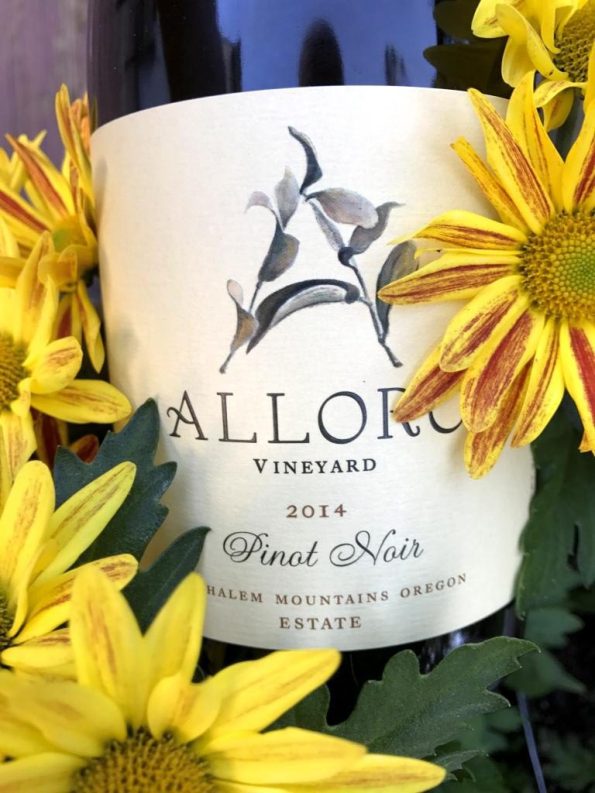
Of course, our conversation would be incomplete without tasting David’s wine. I had an opportunity to try his estate Pinot Noir and here are the notes:
2014 Alloro Vineyard Pinot Noir Estate Chehalem Mountains Oregon (14.1% ABV, $35)
C: Dark Ruby
N: earthy smoky plums with licorice, open, medium intensity
P: sweet red fruit, licorice, a touch of sage, espresso and mocha, excellent acidity, nice “meaty” undertones, medium long finish
V: 8, the wine has a lot of finesse, nice Burgundian style. Will evolve.

Source: Alloro Vineyard
Believe it or not, but our Passion and Pinot journey is almost over. 6 winemakers, 6 stories of Passion – and Pinot, of course. I’m not saying goodbye yet – Oregon is one of the hottest winemaking areas today in the USA, and with lots happening, I want to take another look at what we learned here and what might lay ahead. So I’m finishing the post with the rhetorical “stay tuned”… Is it Pinot time yet? Cheers!
To be continued…
P.S. This post is a part of the “Stories of Passion and Pinot” series <- click the link for more stories.
One on One with Winemaker: Steve Lutz of Lenné Estate
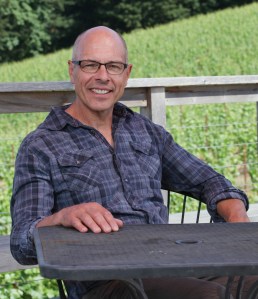
Steve Lutz. Source: Lenné Estate
For many years, I was trying to start my garden. Every year I would order my tomato plants, some peppers, and some herbs, plant them and then meticulously make sure to water them on a regular basis and hope for the best. Every year my reward would be a nice rosemary and sage (basil would always die) and maybe 10 mediocre tomatoes from 8 or so plants.
This was the story until this year, when I built raised beds, got a perfect top soil, premixed with all the proper organic fertilizers, planted tomatoes and lots more, and still collect (it is October now) a nice daily harvest of tomatoes, eggplants, and cucumbers. The soil is the king, you know – that rich, soft, almost greasy dark goodness of the good dirt.
Don’t worry, this post is not about me and not about my amateur gardening escapades. Talking about wine, do you think the soil is important? Would you want the best possible soil for your vines, the richest and the most nutritious? Or would you believe that someone would purposefully choose the plot with the poorest possible soil, and plant there the vineyard of their dreams? Enters Steve Lutz, who did exactly that.
In the year 2000, after searching for the perfect vineyard site for 8 months, Steve Lutz climbed a steep hill on the outskirts of the town of Yamhill in Northern Oregon, and after an hour of negotiations became an owner of the plot where Lenné vineyard was planted. The chosen site had peavine soil, which is not all that rich in the nutrients. Couple that with the steep slope and no irrigation, and you got the ideal farming conditions, right?
In 2001, 11 acres of Pinot Noir vines were planted, consisting of 3 blocks (one Pinot Noir clone per block). In the first year, Steve lost 35% of his plantings. In 2003, the additional 2.5 acres were planted, only to lose practically all of it to the record heat in the same year. It was only in 2007 that Steve was able to harvest enough fruit to vinify individual Pinot Noir clones. Also in 2007, Steve opened the tasting room, and the rest of it is a history which you can read for yourself on Lenné Estate web site.
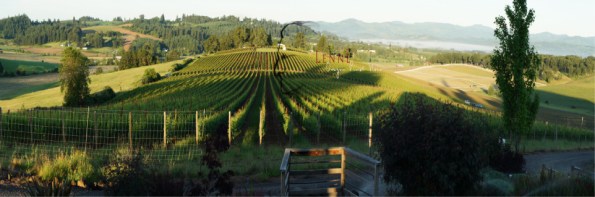
Source: Lenné Estate
I had an opportunity to [virtually, of course] sit down with Steve and ask him a few questions – here is what came out of our conversation:
TaV: Before you purchased that parcel of land that became Lenné, what made you believe that that soil can produce great Pinot Noir wines?
SL: All great soils for growing grapes have low nutrient value that limits the vines vigor. The soil type I am on is classified as the poorest Ag soil in Yamhill County. I knew the shallow, low nutrient, sedimentary soil would produce smaller clusters and berries with more concentration.
TaV: It took you about 6 years (from 2001 to 2007) to get to any level of commercial success. How many times (if ever) you were ready to declare the project to be a failure?
SL: Well there was too much sweat equity and personal money involved to turn back, but after we planted a 2.5 acre block in 2003 (one of the hottest springs ever) and lost all of it, we came close.
TaV: The soil at Lenné sounds it can produce some other interesting wines – have you thought about planting grapes other than Pinot Noir, let’s say Syrah?
SL: Well, we have grafted some Pinot to Chardonnay and have thought about grafting a little over to Gewurztraminer. The issue is that you can’t do much because it isn’t economically viable. We do have a neighbor that grows syrah which I find interesting but it’s a little like swimming upstream; cool weather Syrah is fascinating with bottle age but a hard sell young.
TaV: Outside of your own wines, what is your most favorite wine what you ever tasted?
SL: Well, years ago I had all the DRC wines about a half a dozen times and those would have to be my favorites.
TaV: Looking at the names of your wines, I’m assuming Jill’s 115 and Eleanor’s 114 are named after your daughters?
SL: No, Jill is my mother in law who lives in England and Eleanor is named after my late mother. We also have a wine called Karen’s Pommard named after my wife.
TaV: Along the same lines, I’m sure there should be a story behind the name of “Kill Hill”?
SL: Yes, that is the most shallow, stressed soil in the vineyard and we had many dead vines when we planted there in spite of burning out a clutch on a tractor trying to keep them watered the first year. I always referred to it as “kill hill” because of all the mortality. When we finally got it established I decided to blend the two clones there (114 and 667) and call it “Kill Hill.”
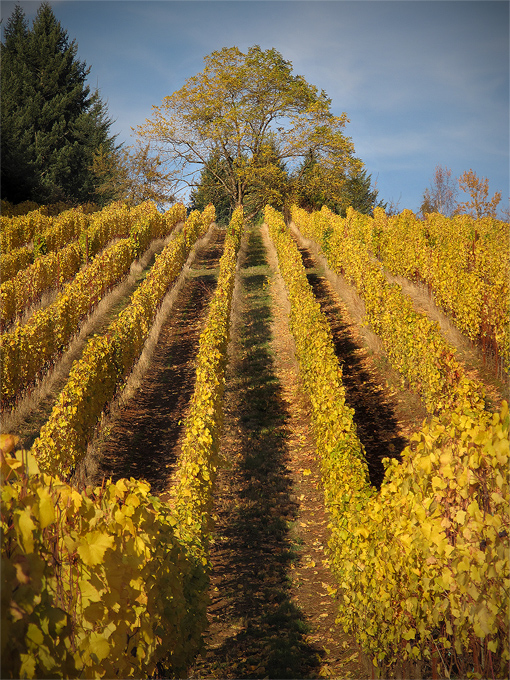
Source: Lenné Estate
TaV: You are teaching a class for the wine consumers on Dundee Hills and Yamhill-Carlton District soils, Red and Black, which includes blind tasting. How often do your students identify the wines correctly to the type of soil?
SL: Probably about 70% of the time.
TaV: Do you plan to expand the vineyard in the future?
SL: No, we have planted most of which is plantable.
TaV: If you are to expand the vineyard, would you ever consider planting white grapes, such as Pinot Gris or Chardonnay?
SL: Refer to above.
TaV: I understand that you are using low intervention, dry farming. Do you have any plans to obtain any certifications, such as LIVE, or maybe even going all the way into biodynamics?
SL: We are looking at the LIVE program right and I have thought about experimenting with biodynamics though I think some of the practices are more about marketing than having anything to do with good farming practices.
TaV: I’m really curious about the particular significance of “11 months in oak” which seems all of your wines are going through. Why exactly 11 months? Do you ever change the duration of time the wine spends in oak based on the qualities of the particular vintage?
SL: No, not really. The practice is based partially on practicality in that we like to get the wines out of the barrel before harvest. But having said that my philosophy is to get the wines in the bottle as intact as possible. Letting them sit in oak for extended periods of time leads to oxidation. Pinot is very sensitive to oxidation and I would rather put it in the bottle with as much of a reflection of the vineyard as possible and let what happens in the bottle happen. Some vintages could benefit in terms of mouthfeel with extended barrel aging, but they will get that in the bottle and have less oxidation than if you gave them extended barrel age.
TaV: If you would have an opportunity to “do over”, would you choose any other location for your winery, or maybe more generally, what would you do differently?
SL: I would do a lot of things differently in terms of the way we started, attention to detail in terms of farming the first year. We were in such a hurry to put the plants in the ground that we didn’t have our farming practices completely dialed in with the right equipment. As far as the site I can honestly say there is not another 21 acre site in Oregon that I would even think about trading my site for. The one thing we got completely right was finding the site.
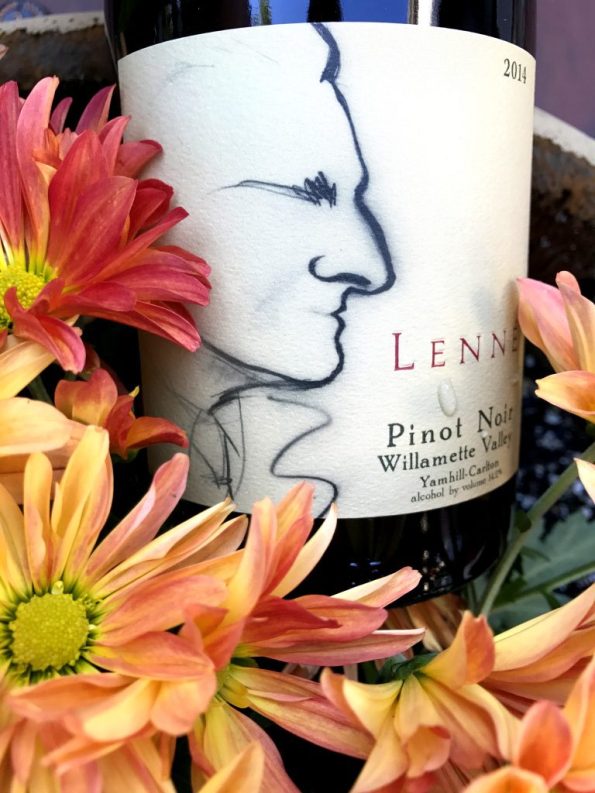 Time to taste some wine, isn’t it? I had an opportunity to taste Steve’s basic Pinot Noir, and I can tell you that left on the kitchen table, the bottle was gone in no time. Here are my notes:
2014 Lenné Pinot Noir Willamette Valley (14.2% ABV, $38)
C: Garnet
N: Smoke, lavender, ripe blackberries, medium intensity
P: tart cherries, fresh, vibrant acidity, firm tannins and firm structure, earthiness, excellent balance
V: 8-, very good wine, food friendly, will evolve with time
Here you are, my friends – another story of Passion and Pinot – now it is all about the soil and believing in yourself. We are not done yet, so until the next time – cheers!
To be continued…
P.S. This post is a part of the “Stories of Passion and Pinot” series <- click the link for more stories.
One on One with Winemaker: Wayne Bailey of Youngberg Hill Vineyards
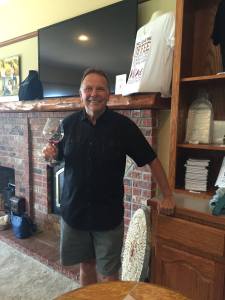
Wayne Bailey. Source: Youngberg Hill Vineyards
What do you think of biodynamic winemaking? As an oenophile, do you embrace it or shrug it off?
Well, it is easy for us, oenophiles, to have an opinion, informed or uninformed – but then there are people who actually live by it, meaning – practice every day.
Biodynamics was born almost 100 years ago, in 1924, when German scientist, Rudolf Steiner, presented a course of 8 lectures on agriculture. At the core of the biodynamics is a holistic approach to the agricultural work, embracing the whole sustainable, natural ecosystem – akin modern day organic agriculture. However, biodynamics goes further and adds what many perceive as voodoo element – bladders, intestines, skulls and many other “strange” items play role in the full biodynamics approach, and that puts a lot of people on the offensive.
I’m sure at this point you are probably looking back at the title of this post and trying to figure out what biodynamics has to do with promised winemaker’s interview? In 2003, Wayne Bailey purchased the vineyard in the Willamette Valley in Oregon, called Youngberg Hill. The Youngberg Hill vineyard was planted in 1989 by Willamette Valley pioneer, Ken Wright, and it produced its first vintage in 1996. When Wayne Bailey was looking for the property to buy, Youngberg Hill was recommended to him as the place which has “good vibrations” – and rest is now history. These “good vibrations” also set Wayne on the path for the holistic farming, starting with all organic in 2003 and upgrading to biodynamic farming in 2011 – and this is why you had to get the refresher course on what the biodynamics is.
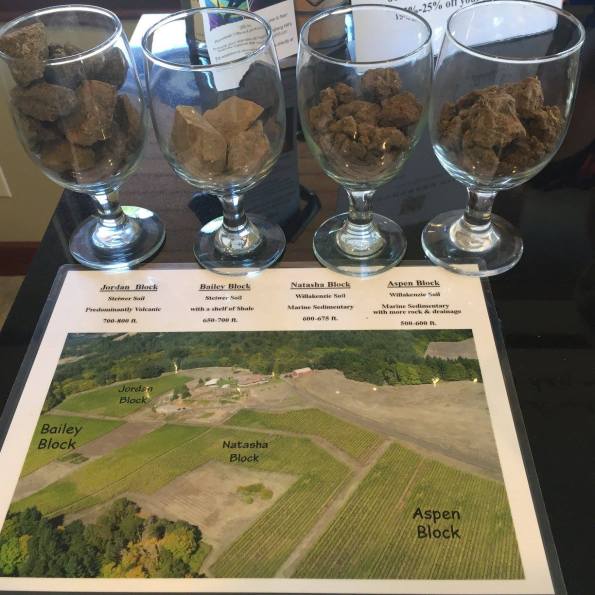
Vineyard Map. Source: Youngberg Hill Vineyards
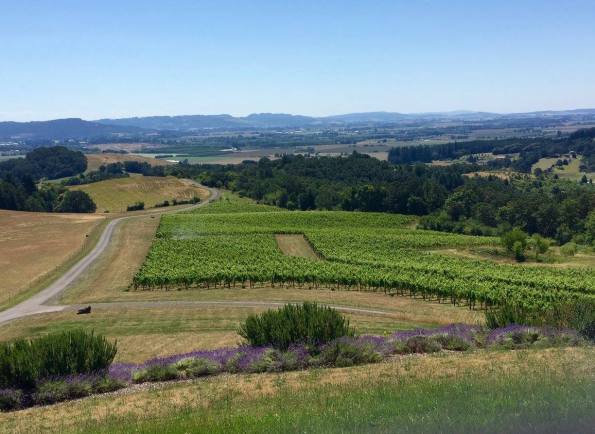
Source: Youngberg Hill Vineyards
Lots of things are happening at Youngberg Hill Vineyards today, but I will let you read about it on your own, as now I would like to share with you my [virtual] conversation with Wayne Bailey:
TaV: First vineyards were planted on Youngberg Hill in 1989. How much did you have to change between then and now?
YHC: Those 11 acres continue to produce and are healthier now than 14 years ago as a result of switching to organic and biodynamic farming practices. We have planted four additional acres of Pinot Noir in 2008 and five acres of Pinot Gris in 2006. In 2014 we grafted over half of the Pinot Gris to Chardonnay.
TaV: 1996 was the first vintage at Youngberg Hill. Have you had an opportunity to taste those wines?
YHC: Yes. The only vintage I have not had was 1997. I had a few bottles of ’96, ‘98’, ’99 that were part of our purchase.
TaV: What do you think of them?
YHC: They were very good and reflected both the quality of the fruit coming off the hill and the ageability of the wines.
TaV: Are there any of those wines still around?
YHC: I have 1 bottle of ’98 and a few 2000, etc.
TaV: Your first vintage was in 2003. How are those wines aging?
YHC: Only have a few bottles left, but had one only a couple of months ago that was beautiful. Aging very well and was still not showing signs of deterioration.
TaV: You produce Pinot Noir and Pinot Gris from Youngberg Hill vineyards, and Chardonnay is on the way. Do you have plans for any other grapes (Tempranillo, Syrah,…)?
YHC: No, I am not convinced that we will see global warming impact us to the extent that we can consistently ripen big red varietals in my lifetime. That will be up to my daughters.
TaV: Do you have any plans to expand plantings beyond the 20 acres you have right now?
YHC: No
TaV: You went from traditional (whatever it was) farming to organic and now to biodynamic. How those transitions manifest themselves in wines? Can you taste them?
YHC: Yes. The fruit is much healthier coming out of the vineyard and into the winery, meaning that the fruit is much more balanced and more balanced ripening of the fruit across all parameters of ripeness. That shows up in the wine as higher quality (depth and complexity and balance) and more vibrancy as the wine ages in the bottle.

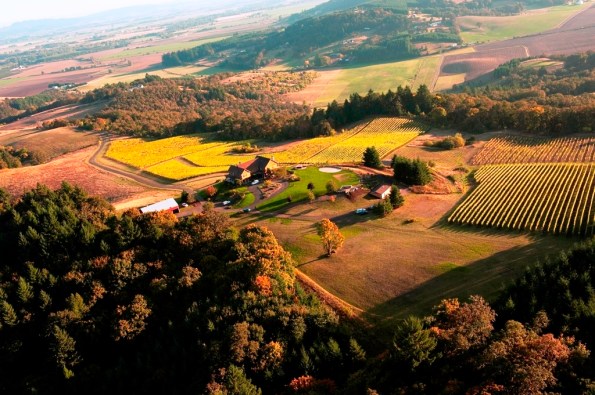
Youngberg Hill vineyards aerial photo Source: Youngberg Hill Vineyards
Jordan Vineyard. Source: Youngberg Hill Vineyards
TaV: Is the day in the life of biodynamic farmer much different from the “traditional” one?
YHC: Yes, in that you spend more time walking the vineyards and knowing each plant more intimately.
TaV: Is going all the way to biodynamic worth the effort for the grapes and wines, or is it just better for the farmer’s soul and the environment?
YHC: All of the above. You grow healthier grapes which are of higher quality, resulting in better wines. At the same time the soil and plants are healthier and will sustain better in the long run and there is no negative effects to the environment.
TaV: Youngberg Hill might be the only winery (to my knowledge) producing Pinot Noir Port. How traditional is your Port in making and style? Would you compare it to any of the Porto wines? Do Pinot Noir grapes accumulate enough sugar to be made into the Port? Lastly, do you produce Port every year?
YHC: Our Pinot Port is slightly lighter in overall structure and a little drier, not because there was not enough sugar accumulation, but because I let primary fermentation go a little longer. The production process is the same and the style is similar except for the varietal characteristics. We do not produce every year. It depends on many factors related to the vintage.
TaV: What were your most favorite and most difficult vintages at Youngberg Hill and why?
YHC: Of past vintages, 2005 and 2010 are two of my favorites for their balance, elegance, and complexity. However, 2005 was significantly reduced in quantity due to mildew; and 2010 was greatly reduced in yield due to the birds. 2015 may become my best vintage to date (currently in barrel).
TaV: When the Youngberg Hill is called a “good hill”, is this more of a gut feeling, or is it more of specific terroir parameters – soil, climate, wind, temperature range, etc.
YHC: Both. It is good from the standpoint that the terroir is excellent for growing Pinot Noir; higher altitude, marine sedimentary and basalt soils, southeast facing slope, altitude change from 500 to 800 feet, coastal breezes coming off the coast, cooler temperatures both day and night, etc. but also the peace, serenity, isolation, aquafer, underground water, and much more “natural” setting also attribute to the “good hill”.
TaV: As a biodynamic farmer I presume you are well attuned with Mother Nature. From 2003 to now, do you see the material effects of climate change? Do you take this into account with the grape growing and wine production?
YHC: Having been in agriculture throughout my life, I have experienced the 20 year cycle of hot and colder temperatures, so I believe in another couple of years we will see temperatures going down again. However, over the long term (hundreds and thousands of years) the earth is getting warmer and the highs and lows are tending to be more extreme along with weather incidents. Does it impact my grape growing practices? No.


Hope you are still with me, and it is the time for some wine, right?
We have an open conversation among friends here, so I will dare to confess an interesting experience. I opened the bottle of Youngberg Hill Pinot (screwtop), poured a glass. Swirl, sniff, sip – nothing to write home about. Swirl more intensely, another sip – just a touch of acidity and not much else. I closed the bottle, put the wine aside and decided to give it a day. Before I tasted it the second day, my thought was – please, please, please – if the wine the same as the previous day, this post is going to be published without the tasting notes. Luckily, the wine evolved dramatically, so I’m happy to share my tasting notes with you:
2013 Youngberg Hill Pinot Noir Cuvée Willamette Valley (13% ABV, $35)
C: Dark Ruby
N: lavender, cherries, earth, fresh, open, medium intensity
P: the first day was very tight; sweet red fruit showed up on the second day, bright acidity, vibrant, firm structure, good concentration, dark powdery medium-long finish. Still delicious on the third day, so definitely this wine can age.
V: 8/8+, well-made wine, needs time to open, can age for another 10+ years
Here you are, my friends – another story of Passion and Pinot – with rocks, soils and a bit of biodynamics. We are not done yet, so until the next time – cheers!
To be continued…
P.S. This post is a part of the “Stories of Passion and Pinot” series <- click the link for more stories.
Last Bottle Sign Up ($10 credit)





