Archive
Time to Celebrate Grenache – 2017 Edition
This year, I managed to miss lots of the “grape day” celebrations. Well, life takes precedence. But – we have enough grapes to celebrate, and I’m glad to partake in festivities in honor of one of my most favorite grapes – Grenache, a.k.a. Garnacha, and sometimes a.k.a. Garnatxa (hmmm, should I also mention Cannonau?).
Grenache is one of the most versatile grapes I know, and the word “versatile” here truly has multiple meanings. Grenache does perfectly in the “old world”, producing delicious wines in France (think Southern Rhone and Languedoc), all over Spain, and Sardinia in Italy. It reaches incredible heights in the “new world”, producing cult level wines in Australia and the USA (Sine Qua Non, anyone?). Grenache wines are delicious in its purity, made out of 100% of the grape; Grenache also performs splendidly in a band, often known as GSM (Grenache-Syrah-Mourvedre) blend, where it can play multiple roles, from leading to minor and supportive. Yes, it is one versatile grape.
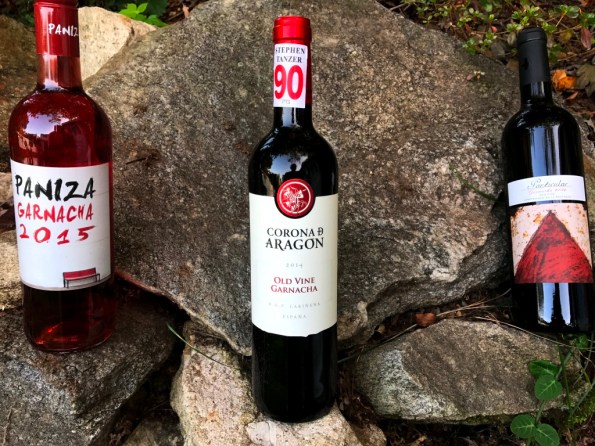
When it comes to Grenache, especially on its special day, the province of Aragon in Northern Spain deserves special mention. It is widely considered that the Kingdom of Aragon was a birthplace of Grenache, and from there the grape took on to Italy and France, before conquering the rest of the world. In Aragon, 4 wine regions – DOs of Cariñena, Somontano, Calatayud, and Campo de Borja – produce what we can call a “classic Grenache” (I guess “classic Garnacha” would sound more appropriate), boasting some of the oldest Grenache vines in the world.
We can’t celebrate with an empty glass, can’t we? For this special day, I would like to share with you the notes for 3 of the “classic Garnacha” wines, coming exactly from the DO Cariñena in Aragon:


2015 Paniza Garnacha Rosé Cariñena DO (13% ABV)
C: deep pink
N: fresh strawberries, berries and leaves
P: fresh strawberries all the way, succulent, generous and round. Perfect presence in your mouth.
V: 8-/8, delicious wine
2014 Bodegas San Valero Particular Garnacha Cariñena DO (14%ABV)
C: garnet
N: fresh plums, mocha, eucalyptus, inviting
P: tart cherries, clean acidity, fresh present tannins, touch of blackcurrant, a bit of white pepper
V: 8-, perfectly playful, very good wine.
2014 Corona D Aragon Old Vine Garnacha Cariñena DO (13.5% ABV)
C: very dark garnet, practically black
N: sandalwood, spices, dark chocolate, touch of roasted meat
P: medium body, good acidity, touch of cherries, fresh, hint of dark chocolate
V: 7+/8-, nice rendition
What is in your glass? How do you celebrate the noble grape? Happy Grenache Day! Cheers!
When in Canada … Drink Local, and Visit LCBO
 Truth be told, I love visiting foreign countries. Ability to do that without flying is a huge bonus. So if you live in the Northeast USA, the only foreign country one can visit without flying is Canada – and if you live in the South of the USA, you better really love driving. However, I start getting off the tangent here, so let’s get closer to what I really wanted to talk about.
I don’t know how many times I visited Canada in the past 20 years – really a lot, as it is so close. I had a lot of business meetings there, which would be typically 2-3 days in and out – those would usually involve flying. I’ve done a lot of vacations and long weekend giveaways. Here comes the strange part – with the exception of one trip, I never bought wine in Canada before (outside of restaurants and duty-free shops, where I would typically buy Scotch and not wine). And that one exception was our vacation a few years ago, when we stumbled across beautiful wine region of Niagara-on-the-Lake (more details here and here), and bought a good number of wines at the wineries – I even broke the Canadian law (unknowingly), which apparently prohibits one from moving the wines across province’s borders.
A recent meeting took me to Toronto, and of course, being a wine geek I am, and remembering great experience of a few years back, I definitely wanted to taste some local wines. If I wouldn’t be a blogger who also like to read other blogs, I’m sure I would be quite oblivious to the ways one can obtain a retail alcohol in Canada – but thanks to my wine blogging friends from Canada, like Bill @ Duff’s Wines, I knew the magic word – LCBO! Whatever the acronym stands for, I understood that this is the key word for one looking to buy a bottle of wine. While walking from the train station to the hotel, I saw the magic word written on the store – and this was the “aha moment” – I’m going to have some fun!
If you are into wine, I’m sure you will understand the “Disneyland for adults” analogy for the wine lover at a wine store – especially when it is as large, brightly lit and spacious as the LCBO store I visited. Aisles and aisles of treasures, some under the glass, but still ohh so visible and attractive – good wine store is the place wine lover has a problem leaving on their own. You really need to have a serious reason to walk out of the wine store – it is so much more appealing to look and look and look.
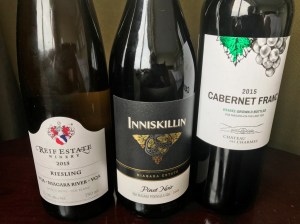
It was definitely interesting to look at the wine selection and the prices – but my end goal was to get a few of the local wines, which means Niagara Peninsula in this particular case, however without spending much money. I ended up with three wines – the Riesling, as I simply love Riesling, and this is the grape which folks in Canada know very well how to handle right; Pinot Noir from Inniskillin, simply because I love Inniskillin, and I had some good Canadian Pinot Noir wines before; and Cabernet Franc, simply because I love the grape, and I had very good experience with Château des Charmes in the past.


When I started writing this post, I found out that all three wines come from the different sub-appellations in Niagara. Here are my notes:
2015 Reif Estate Riesling Niagara River VQA (12% ABV, CAD 13.95)
C: Straw pale color
N: Touch of petrol on the nose, honey notes
P: Touch of honey on the palate with cut through clean acidity. Excellent balance, very nice overall
V: 7+, very good wine
2015 Inniskillin Niagara Estate Pinot Noir Niagara Penninsula VQA (13% ABV, CAD 15.95)
There is an interesting story with this wine. I was very much looking forward to trying it. When I twisted the cup off, I didn’t hear the traditional crackling noise of breaking of the cup off the ring, and it also opened very easily. My first thought was that the someone opened the wine before, but this was very strange. I poured a little taste, tried it – didn’t like it at all. Decided that somehow wine got opened prior, and obviously it was not drinkable anymore. In two days, just before throwing out the bottle, I decided to taste it one more time – and to my amazement (and delight), the wine came around to a fresh and crisp Pinot Noir – a favorite of this tasting:
C: Garnet
N: touch of tobacco and underripe cherries
P: fresh herbs, tart cherries, touch of smoke, good structure, crisp, medium finish
V: 8-, very enjoyable
2015 Château des Charmes Cabernet Franc Niagara-on-the-Lake VQA (13% ABV, CAD 15.95)
C: Dark garnet, almost black
N: Fresh berries, freshly crushed blueberries, open, inviting
P: balanced fresh blueberries on the palate – not overripe, but nicely tart, with good acidity. Tobacco showed up on the second day, still perfectly drinkable, nice wine.
V: 7+
And now, for your viewing enjoyment, here are some of the wines observed at LCBO. It was fun to see lots of high-end wines. Bordeaux selection was definitely better than the Burgundy, and France definitely trumpeted California. But anyway, here you can see it with your own eyes:
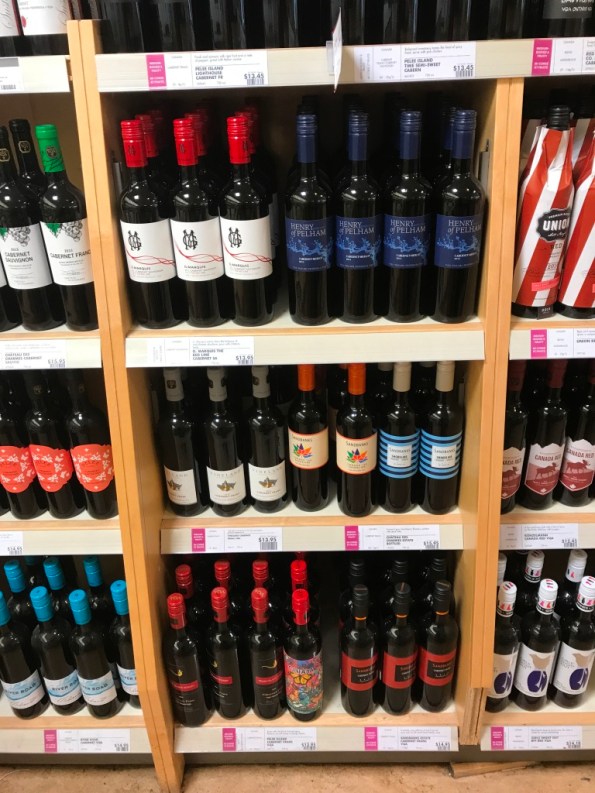
Niagara VQA wines
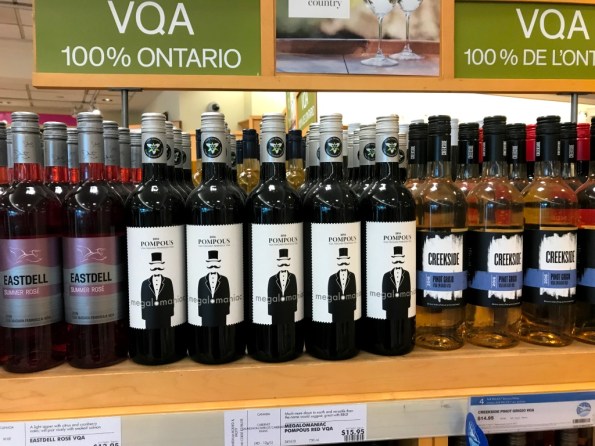
Canadian wines – cool labels
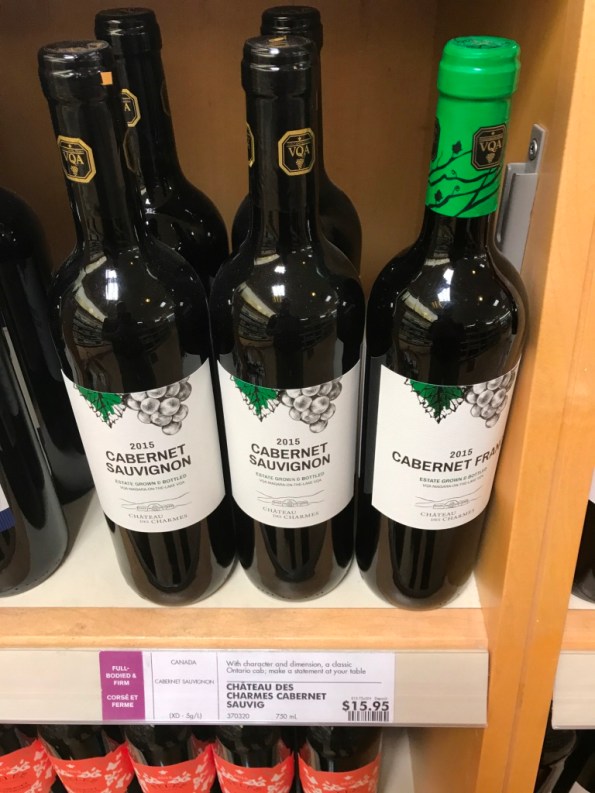
Chateau des Charmes Cabernet
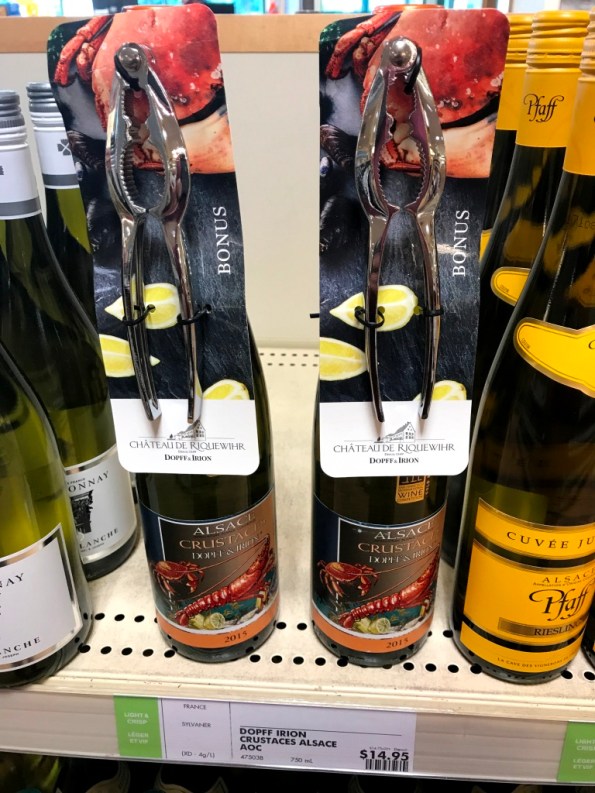
Alsace wines – ready for that crab
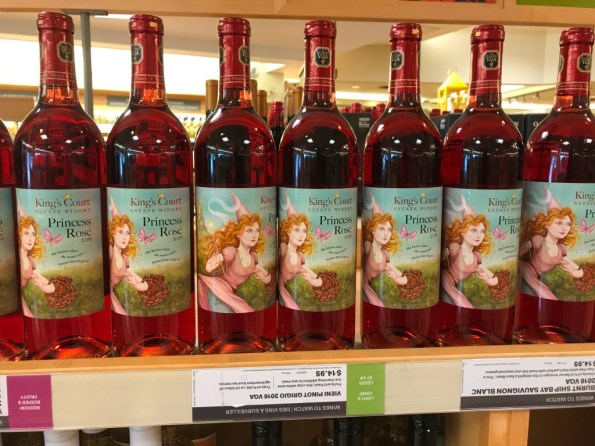
Canadian Rosé
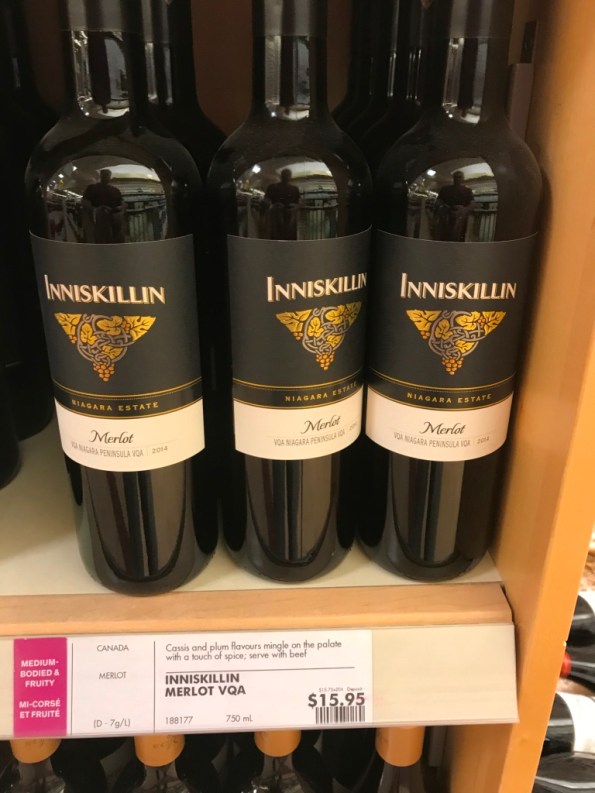
Inniskillin Merlot
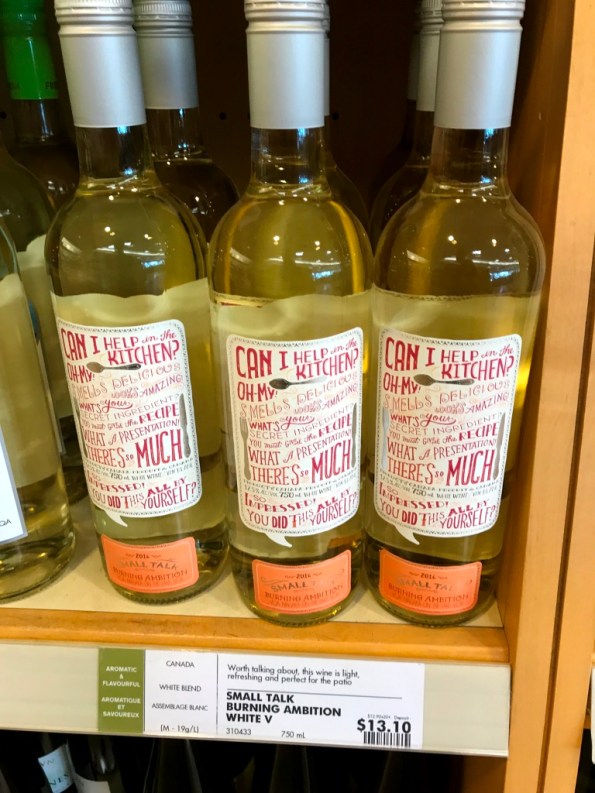
Canadian wines – more cool labels
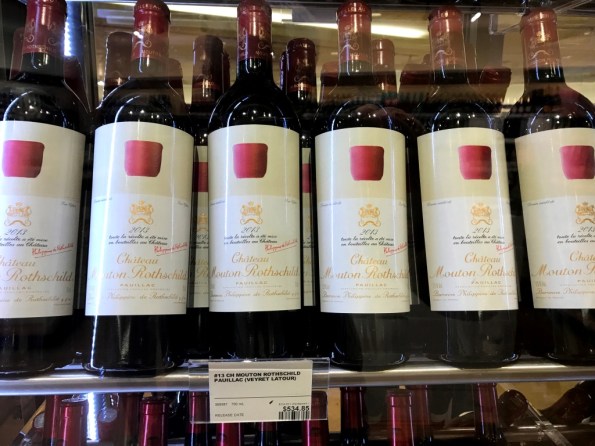
Château Mouton-Rothschild
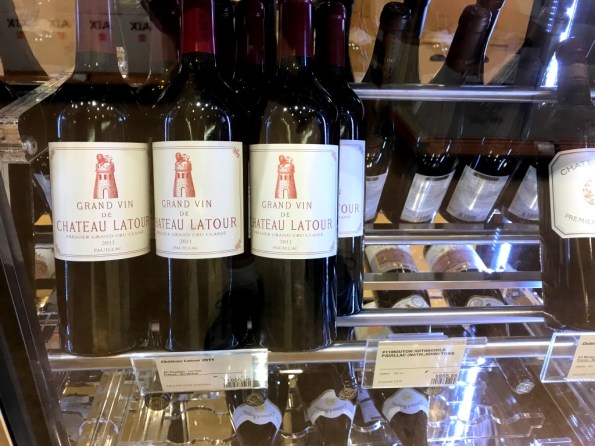
Château Latour
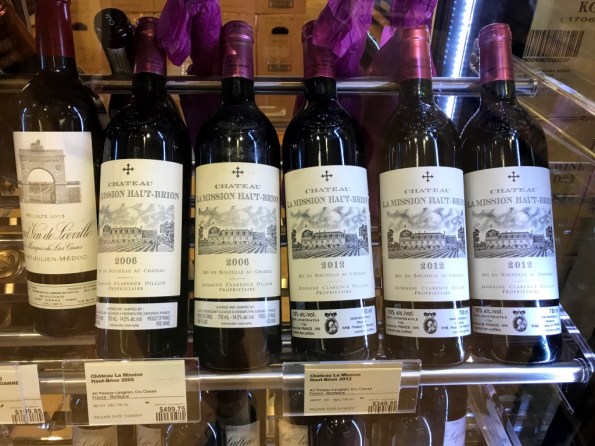
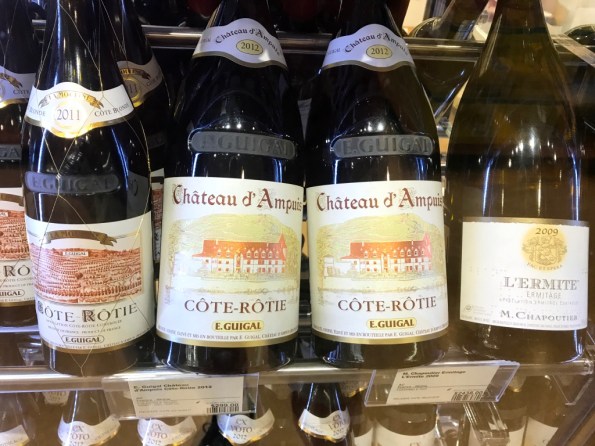
Château d’Ampuis Côte-Rôtie
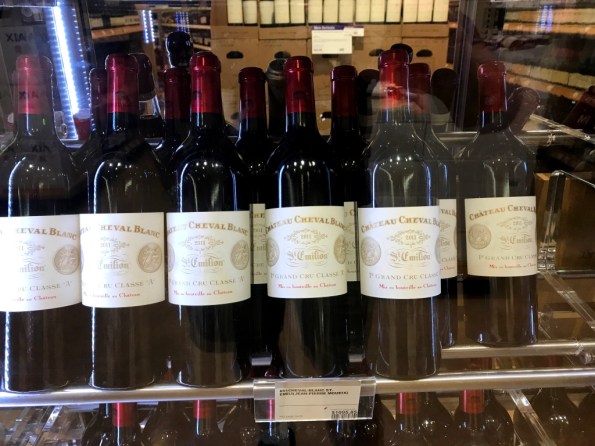
Château Chaval Blanc
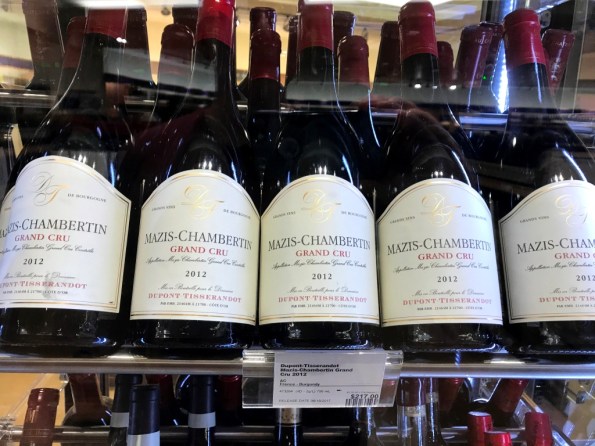
Mazis-Chambertin Burgundy
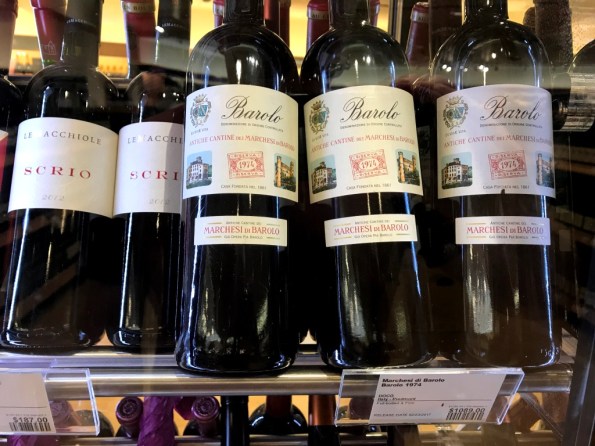
Marchesi di Barolo
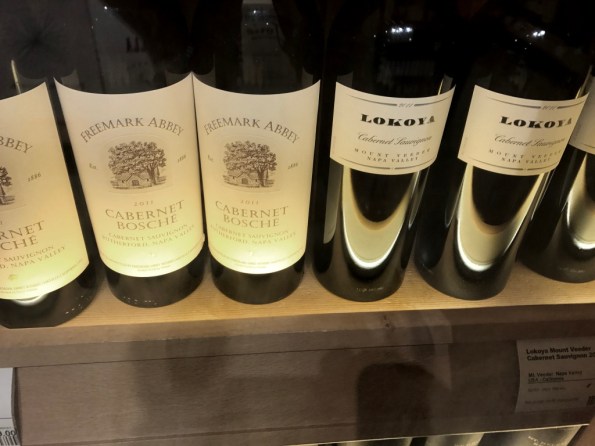
Lokoya Cabernet Sauvignon
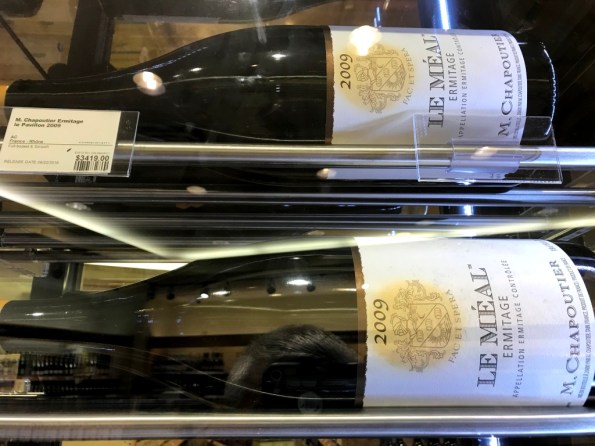
Le Méal Hermitage
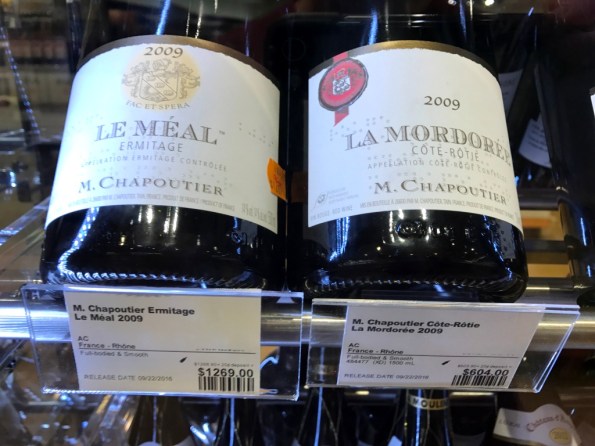
Le Méal and La Mordorée
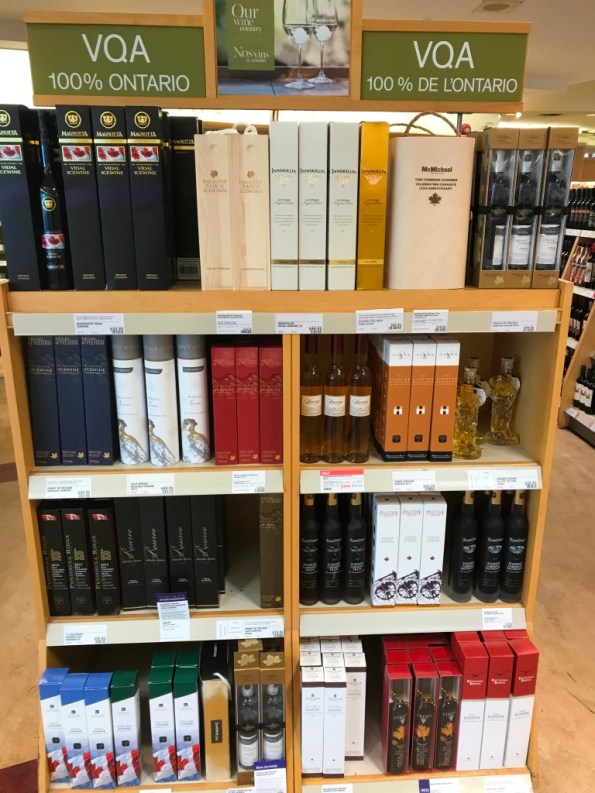
Jewels of Canada – Ice Wines
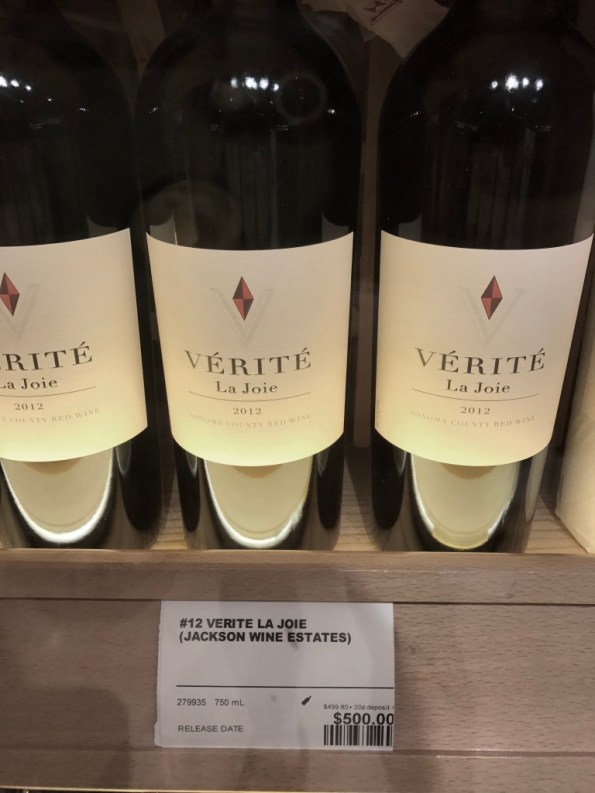
Vérité La Joie
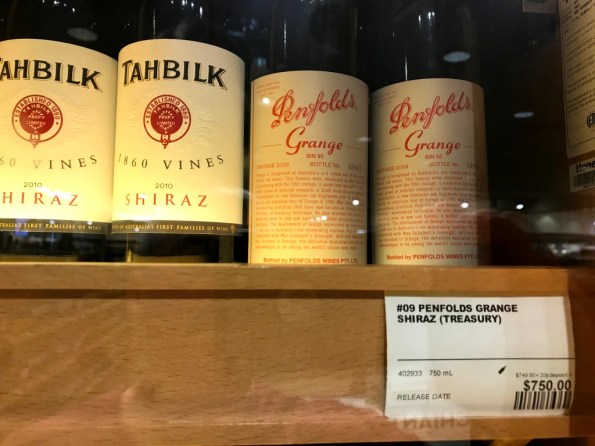
Tahbilk and Penfolds Grange
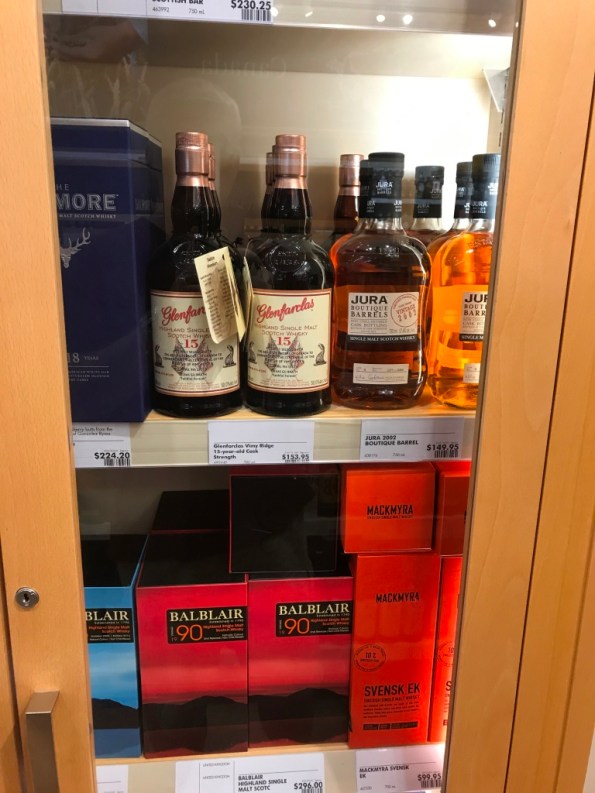
Scotch Selection at LCBO
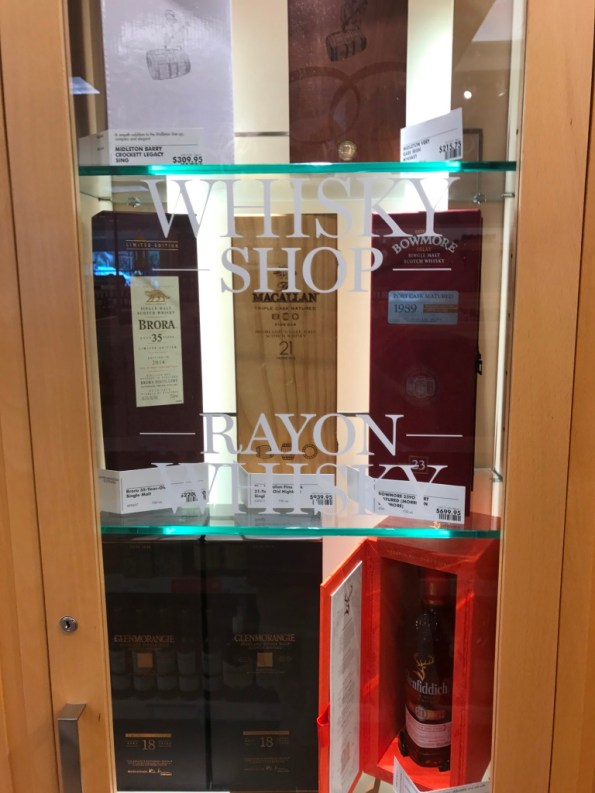
High End Scotch Selection at LCBO
There you have it, my friends. When traveling, drink local. And yes, when in Canada, go and visit the LCBO – just make sure you have enough time for it. Cheers!
One on One With Winemaker: Phil Rose of Wairau River, New Zealand
It just happened to be that once again, we will be talking about New Zealand wines. Once again, we are going to visit Marlborough. And once again, we are going to meet with a pioneer.
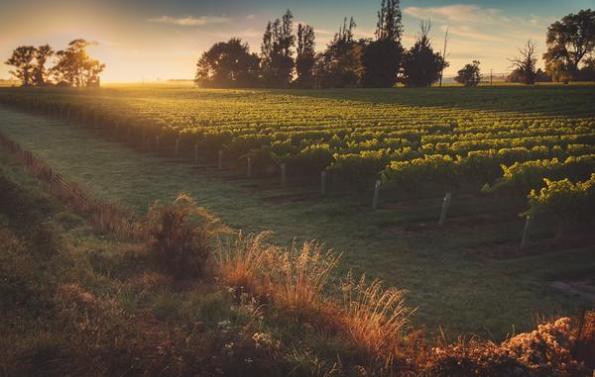
Source: Wairau River
Wairau River Wines‘ story started in 1978 when Phil and Chris Rose became grape growers (Phil was a farmer since the childhood, so the transition was not that dramatic). In 1991, they also became winemakers, producing their first wine. Today, Wairau River vineyards span 550 acres, making it one of the biggest family owned wineries in New Zealand. And it is all truly in the family, as Phil and Chris’ two sons and three daughters are all working at the winery.
Wairau River Wines produces two lines of wines. The Estate collection includes all of the usual suspects, such as Sauvignon Blanc, Pinot Gris, Pinot Noir, Riesling, and Chardonnay, but you can also find some oddballs there, such as Albariño. The Reserve line also includes Syrah and Viognier, as well as late harvest botrytized Riesling.
I had an opportunity to sit down with Phil Rose (albeit, virtually), and inundate him with questions – here is what transpired.
[TaV]: You started growing grapes in 1978. Was there a pivotal moment which got you into the grape growing? Were grapes a long-time passion before you started, or was there an event which brought you into the world of the wine?
[WR]: The oil shock in the 1970’s meant we looked for an alternative away from the farming of beef and sheep plus the growing of Lucerne and other crops. However due to a rural council district scheme rule, grape growing was prohibited on land north of old Renwick road.
We were required to apply for permission to establish a vineyard, which we did but the application received 56 objections and not one single vote of support. There were a number of reasons for the objections. Forestry owners were concerned they would no longer be able to use sprays like 2.4.5.t because of its impact if grapes were nearby. Local farmers were also concerned their normal farming methods would be threatened. There was also the moral opposition such that no one should be able to grow a product that could be turned in to alcohol.
Unfortunately the council denied our application, so we appealed. But things moved even slower back then than they do now – and it took 18 months for the independent tribunal to take place. 18 months where we worked hard to try and convince the powers that be and our own neighbors that grape growing in the Rapaura area of Marlborough had huge merits.
Finally in 1978 we got a unanimous decision from the tribunal which gave us the permission we needed to become contract grape growers. As a result, the council had to change the district plan and open the Rapaura area up to grape growing.
[TaV]: Can Marlborough Sauvignon Blanc age? What was the oldest Marlborough Sauvignon Blanc you ever tried? What is the oldest Sauvignon Blanc you have in your cellars?
[WR]: Of course the wine will age well although the wine takes on different characters with age as do all wines. Most sauvignon blanc now though is consumed in its youth as its fresh, crisp and lively style that have become hallmarks of our success. 1991 was our first vintage and we still have a few bottles of that in the cellar.
[TaV]: Did you ever experiment with cork versus Stelvin closures? Obviously, all your wines use the screw tops, but I wonder if you ever tried to create a control batch with the conventional corks and see how the wines would compare.
[WR]: We bottled our first wine in screwcaps in 2002. Prior to that we were 100% cork but never really happy with the closure. We felt that cork was tainting, oxidising and affecting the delicate aromas of sauvignon blanc in particular.
Wairau River was part of the New Zealand screwcap initiative that was formed in 2001 and we did many trials in the early days – all of them showing that wine under screwcap was far better in terms of consistency and quality than corks.
Today we are 100% screwcap for all of our wines.
[TaV]: It seems that Wairau River is truly a family operation top to bottom. Do you ever have any work conflicts? If yes, how do you resolve them?
[WR]: Yes we now have the whole family and some their partners involved in running the business across vineyards, winery, cellar door and restaurant. It is not often there are any issues but having a voice and opinion is important and so we all listen and work through this and will always achieve a result that works for everyone. We also have a board of directors which meets regularly which helps with accountability and offers independent advice.
[TaV]: The question I always like to ask: what was the worst vintage you remember at Wairau River and why?
[WR]: I think 1995 will long be remembered as the toughest vintage we have had. It rained and rained
[TaV]: And the second question I always like to ask: what were your most favorite vintage years and why?
[WR]: Actually there are many years we look back and think that was one of the best vintages however we never like to look backwards for too long. We are always striving to improve our wines each year so lately it seems every year we are getting better results across all varieties.
[TaV]: How would you differentiate Sauvignon Blanc from Wairau Valley and Awatere Valley? Are the pronounced differences there? Do you think Marlborough needs further subdivision?
[WR]: There are quite big differences between the 2 valleys in terms of flavor profiles however strategically the Rose family have chosen to focus in the Wairau Valley and then within that a tight area surrounding our home vineyard and winery.
Further sub regions like Rapaura or Dillons Point will develop with time however Marlborough as an overall region will still be the key to our success and the protection of that is paramount.
[TaV]: It seems that your wine portfolio is very diverse and includes a wide variety of grapes as well as styles (white, rosé, red, dessert) – the only notable absence nowadays is Sparkling wine – do you plan to fix it?
[WR]: haha – always a good topic of conversation…..we are happy with what we are doing at the moment, however we have a rule of never saying no to anything so who knows what the future will bring – perhaps the next generations may want to make sparkling wine.
[TaV]: Sauvignon Blanc and then Pinot Noir squarely put New Zealand on the world wine map. Is there a next big white and/or red grape for the New Zealand?
[WR]: We consider Pinot Gris to be the next big thing especially from Marlborough. It has a certain style that resonates well with wide variety of cuisines and will help those drinkers that are looking for NZ wine and want to try an alternative to our Sauvignon Blanc.
In the reds perhaps the wines from Hawkes Bay may make a statement but this will also be limited by smaller production.
[TaV]: Outside of New Zealand and your own wines, do you have any other favorite producers or regions for Sauvignon Blanc?
[WR]: We are lucky enough to travel the world selling wines and meeting customers so we are exposed to a number of different wine areas and styles.
In all honesty I think we produce a world class Sauvignon Blanc that is hard to beat however I do quite enjoy wines from Sancerre in particular Domaine Vacheron.
[TaV]: Same question as before, but only for the Pinot Noir – any favorites outside of New Zealand?
[WR]: Of course, we enjoy Jim Clendenen wines at Au Bon Climat.
[TaV]: What are your next big plans at Wairau River? Any exciting projects you have started or about to start?
[WR]: We are comfortable with where we are at in terms of our vineyard ownership and winery capabilities – our challenge is to grow sales and return better margins in all markets as we have wines that are in high demand but with limited availability.
Gaining recognition for our other varieties such as Pinot Gris and Pinot Noir will be a key focus. Ros sales have become very hot lately so this will also be a focus going forward.
[TaV]: Last question: as you run winery as a family, I’m sure you had some funny moments in your daily wine business. Anything you care to share?
[WR]: We work extremely hard throughout the year and don’t often come together as a whole family outside of the work environment. Although I can’t pick one particular moment we have a lot of fun with the family when we gather to celebrate Christmas in the Marlborough sounds with our 5 children, their partners and 12 grandchildren there is always something happening that creates some funny occasions and a great laugh.


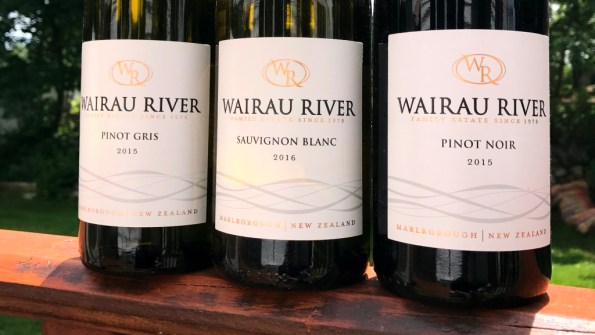
I’m sure you are thirsty by now, so let’s taste some wine, shall we? Here are the notes for a few Wairau River wines I had an opportunity to taste:
2016 Wairau River Sauvignon Blanc Marlborough New Zealand (13% ABV)
C: white pearl, pale
N: intense, currant, touch of grass, bright, fresh
P: herbaceous, nicely restrained, fresh, bright, touch of grapefruit on the finish.
V: 7+/8-, an excellent example of Marlborough Sauvignon Blanc
2015 Wairau River Pinot Gris Marlborough New Zealand (13.5% ABV)
C: light golden
N: medium intensity, minerality, limerock
P: white stone fruit, nice minerality, salinity, crisp, refreshing
V: 7+
2015 Wairau River Pinot Noir Marlborough New Zealand (13% ABV)
C: bright ruby
N: freshly crushed berries, cherry, plums
P: cherries, fresh fruit, plums, touch of smoke, medium body
V: 7+, nice, traditional Marlborough Pinot Noir
Passion and perseverance rule in the wine world – we all know that, but it is always fun to listen to the stories. Pour yourself another glass – you deserve it. Cheers!
Exploring Wines Of New Zealand – With Villa Maria on Snooth
Wines of New Zealand need no introduction – for sure to the oenophiles. Winemaking started in New Zealand in the 1850s, but it really flourished in the second half of the 20th century, when jet travel allowed much easier access to the future winemakers to get educated and experienced in Europe. Since the 1990s, New Zealand greatly embraced sustainability and … screw tops. I’m definitely very happy about the first – sustainable farming always leads to the better wines and happier environment. The screw tops – they are fine, I’m not convinced though that they are the best for aging the wines properly. However, I don’t want to convert this post neither into a rant, nor into a debate, so let’s just move on.
 The story of Villa Maria winery is easily an exemplary story of realizing the “American Dream” – only in this case, it is, of course, have to be called a “New Zealand dream” (I hope such a concept exists).
George Fistonich started in 1961, at the age of 21, with one acre of vines in Auckland. In 1962, he harvested the grapes and produced the wines under the name of Villa Maria. That was the beginning of the journey of one man, who had the passion, vision, perseverance and enough obsession to make it. Villa Maria was a one man operation through the 60s, hiring its first staff in the early 70s, and now employing 250 people and exporting their wines to the 50 countries. As a perfect proof of making it, George Fistonich became Sir George Fistonich, receiving the first knighthood in the country for the services to New Zealand’s wine industry.
Villa Maria today has vineyards located in Auckland, Gisborne, Hawkes Bay and Marlborough regions. The grapes range from the New Zealand’s staples such as Sauvignon Blanc and Pinot Noir to such an obscure varietals as Arneis and Verdelho. Villa Maria became a cork-free zone in 2001. And I can tell you, they really treat sustainability seriously – the Villa Maria bottles were some of the lightest wine bottles I ever came across, which I’m sure greatly affects the carbon footprint.
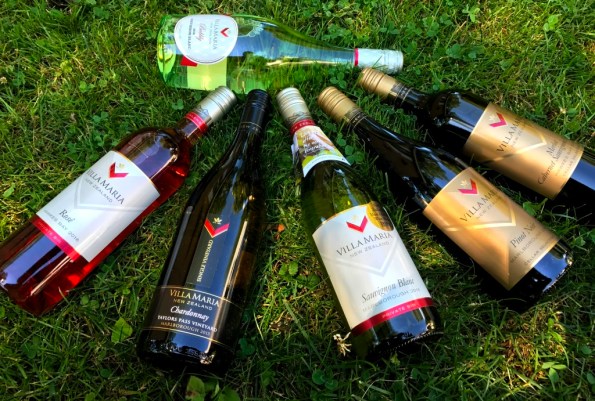
A week or so ago, I was a part of the big group of winelovers tasting Villa Maria wines together in the virtual tasting organized by Snooth (no worries, the wines were real). Here are my notes from tasting and also, re-tasting of the wines.


First, two of the Sauvignon Blanc wines. First one was called “bubbly” as it was lightly carbonated – and it was definitely a fun wine, perfect for a summer picnic, fresh and delightful. And the Marlborough Sauvignon Blanc was simply a classic New Zealand Sauvignon Blanc, done with a perfect restraint:
2016 Villa Maria Bubbly Sauvignon Blanc Marlborough (12.5% ABV, $15)
C: literally non-existent
N: touch of grass and currant, a classic SB, restrained.
P: nice, touch of bubbles, touch of sweetness, black currant, nice and round, refreshing.
V: 8-/8, definitely nice
2016 Villa Maria Private Bin Sauvignon Blanc Marlborough (12.5% ABV, $13)
C: straw pale
N: pure cassis, beautiful, freshly cut grass, classic
P: excellent balance, acidity, currant and a touch of grass. Nice and pleasant.
V: 8, I can drink this at any time, excellent wine


Now, the Rosé and then Chardonnay. The Villa Maria Rosé is predominantly Merlot. It is light and simple, but it has enough finesse to pass one of my personal tests – I particularly like the white and Rosé wines which are well drinkable when they are a bit warm – it is annoying to maintain the wines at the ice cold level (at home, for sure). The Rosé was delicious and drinkable even at the room temperature, so it definitely passed that test. And as for the Chardonnay – I know that I will be in the tiny minority from our tasting group, but I found it to be just okay. It had all the classic Chardonnay traits, but, somehow, didn’t hit the home run for me…
2016 Villa Maria Private Bin Rosé Hawkes Bay (12.5% ABV, $14)
C: Pink
N: strawberries and strawberry leaves, round and pleasant
P: strawberries, touch of sweetness, could use a touch more acidity, but still, nice and delicate
V: 8-, definitely improved the next day, more delicate, better balance
2015 Villa Maria Single Vineyard Taylors Pass Chardonnay Marlborough (13.5% ABV, $45)
C: straw pale
N: creamy, vanilla, freshly baked brioche buns with a touch of butter on them
P: Granny Smith apples smothered in butter, good acidity, excellent midpalate weight, nicely plump, but clean. Nice cleansing acidity on the finish.
V: 7+, needs food.


Now, the reds. Pinot Noir was unusual compared to what I typically expect from the Marlboro Pinot Noir. It was heavier than I expected, and on the day 3, it became a lot closer to the powerful Oregonian Pinot (which is a good deal at $26, right? ). The Merlot blend was an enigma. It opened up beautifully as I just opened the bottle, but then it went back into its shell and never came out of it, even on the day 3 …
2014 Villa Maria Cellar Selection Pinot Noir Marlborough (13.5% ABV, $26)
C: bright ruby
N: touch of sweet cherries, violet
P: tart cherries, tart acidity, touch of tobacco
V: 7, 7+ on the day 3 – showed a lot more fruit on the palate, Oregonian notes of dark power, espresso, mocha, with sweet core of cherries and plums.
2013 Villa Maria Cellar Selection Merlot/Cabernet Sauvignon Hawkes Bay (13.5% ABV, $20, 70% Merlot, 23% Cabernet Sauvignon, 7% Malbec)
C: dark garnet, almost black
N: medium intensity, baking powder, vanilla, sweet mocha
P: black currant, ripe and sweet, touch of espresso, tar, dark fruit, dry, tannic finish
V: 7, unusual experience …
Have you had any of these wines? What are your thoughts? Cheers!
Daily Glass – Pinot Grigio To Ask For By Name
 Blind tasting is probably the most difficult part of any of the Guild of Sommeliers examinations. It is one thing to memorize the names of the hundreds of the German villages producing Riesling. It is an entirely different thing to be able to distinguish, let’s say, Cabernet Sauvignon and Merlot, and identify a possible region, vintage and even a producer.
As with anything humans do, blind tasting also has its own set of “tricks” associated with it. Some of them perfectly legitimate – for instance, Nebbiolo wines (Barolo, Barbaresco, etc) typically have red brick hue in the glass, even when young, so this is a great “giveaway” for the blind tasting. Or the fact that the tannins from the American oak are perceived more in the back of the mouth, versus the French oak, which comes in front.
But then some of the “tricks” have nothing to do with the characteristics of the wine. Here is one, a statement by the Master Somms running the exam: “we will never pour Pinot Grigio for your blind tasting”. Pretty good hint, right?
To a degree, Pinot Grigio became a victim of its own success. Santa Margherita Pinot Grigio became an overnight sensation in 1979, driving demand for the Pinot Grigio wines in the USA. That, in turn, led to the appearance of the great number of “imitations”, Italian Pinot Grigio which had no bouquet or a flavor but was very easy to drink and affordable. Fast forward on, and Italian Pinot Grigio became the “wine to ignore” for any self-respecting oenophile, next in line to White Zinfandel.
But let’s not forget that Pinot Grigio is simply an Italian name for the grape known throughout the world as Pinot Gris. As soon as one hears Pinot Gris, I’m sure Alsace comes to mind first, and then, of course, the Oregon. Alsatian Pinot Gris is extremely well respected among wine lovers, beautiful when young and amazing with some age on it. Oregon Pinot Gris is beautifully crisp, clear and flavorful, and as such, a popular choice for the wine consumers as well. So why can’t Italian Pinot Gris, err, Pinot Grigio be a well respected and delicious wine?
Well, it can. There are many producers who make Italian Pinot Grigio a wine worth seeking and drinking – for instance, how about Elena Walch or Livio Felluga – if you never had their Pinot Grigio, this is a mistake which you need to correct ASAP. And here is one more Pinot Grigio which you need to ask for by name – the one made by Terlato.
Terlato is a very well respected wine importer – and by the way, Tony Terlato was responsible for the overnight success of Santa Margherita, creating that Pinot Grigio phenomenon in the USA. Terlato Family also goes beyond just importing, producing the wines under their own label around the world. The wine I suggest you will look for is Terlato Vineyards Pinot Grigio from Friuli. It is very different from the mainstream – in Terlato’s own words, “First we pioneered Pinot Grigio. Now we’ve revolutionized it”.
Friuli region is nestled in the foothills of the Alps, in a close proximity to the Adriatic sea, which creates great winegrowing conditions. Add to that poor soils and hillside vineyards with 20-30 years old vines, harvested by hand in the small plots, and you’ve got an excellent foundation for making a delicious wine.
Here are my notes from the tasting of this wine:
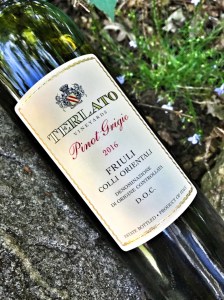
2016 Terlato Vineyards Pinot Grigio Friuli Colli Orientali DOC (13% ABV, $22.99)
C: light golden
N: intense, minerally, touch of honeysuckle, white stone fruit and fresh brioche, very promising.
P: crisp acidity, touch of gunflint, pronounced lemon, touch of freshly cut grass, medium body softly coating the mouth. Great complexity.
V: 8/8+, wow, very impressive.
Here you are, my friends. Next time you are looking for a bottle of wine, you might want to include Pinot Grigio into your shopping list. Trust the producer, and you might uncover something new to enjoy. Cheers!
One on One With Winemaker: Brett Jackson of Viña Valdivieso, Chile
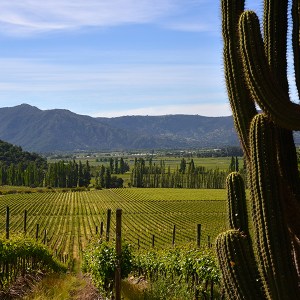
Source: Viña Valdivieso
Today, sparkling wines are produced everywhere, and we are getting quite used to it. Sometimes, it comes almost to a surprise when we hear that particular producer doesn’t offer any sparkling, at least as part of the “winery special”. But this was not the case even 10 years ago, when the sources of the sparkling wine were much more limited.
When you are thinking about Chilean wines, well respected worldwide, what kind of wines come to mind first? I would bet you are thinking about Cabernet Sauvignon, Merlot, Carmenere, Sauvignon Blanc and may be some Chardonnay. I would also safely bet that you don’t think of Chile as a producer of the sparkling wines, right? So without asking google or reading ahead, can you pause for a second and think when could Sparkling wines be commercially made in Chile?
While spending time in France, Don Alberto Valdivieso fell in love with Champagne. As a matter of fact, he loved it so much that upon his return to Chile in 1879, he founded Champagne Valdivieso and became the first producer of the sparkling wines in Chile and the whole of South America.
Fast forward to today and Viña Valdivieso produces the full range of sparkling wines, including both Viña Valdivieso produces the full range of sparkling wines, including both méthode champenoise and Charmat, and the extensive line of still wines which includes a unique solera-method dry red called Caballo Loco. I had an opportunity to sit down (albeit, virtually) with the Viña Valdivieso Winemaker, Brett Jackson, and ask him a few bunch of questions – here is what transpired from our conversation:
[TaV]: I would guess that Viña Valdivieso first sparkling wines were made with the Traditional Method. When did the Viña Valdivieso start producing sparkling wines using Charmat method?
[VV]: Valdivieso started making sparkling wines from 1879, all the bottles in traditional method. Only from the eighties began the elaboration by Method Charmat
[TaV]: What is the oldest sparkling wine which can be found in your cellars? What was the oldest Viña Valdivieso sparkling wine you ever tried?
[VV]: For the earthquakes of 1985 and 2010, that affected our underground cava, we lost bottles from the early fifties to the present. We only recovered some bottles from 1996 onwards that are still preserved in our cellar.
[TaV]: Do you make any single vineyard sparkling wines? What about vintage sparklers?
[VV]: For Traditional method, we have single vineyard Valdivieso Blanc du Blanc made of 100 % Chardonnay and Valdivieso Blanc du Noir with 100% Pinot Noir
Since 2013, we started using the label vintage in Valdivieso Blanc du Blanc. Actually, the new portfolio sparkling for Champenoise Caballo Loco Grand Cru 2014 uses an exceptional vintage.
[TaV]: When you produce Traditional Method sparkling wines, do you follow the path of the French Champagne and try to achieve consistent “Chateau” taste profile? How many Vin Clairs your typical blend include? Do you use also reserve wines, and what would be the oldest you would use?
[VV]: We use different vintages to give consistency to our portfolio. Charmat Limited include 2 years at least in different percentage of varieties, blending, Traditional method we use Both of 1 vintage as well as several in blending. Currently, the use of expedition liquor for some 2014 bottles of traditional method is from 2011 vintage.
[TaV]: Do you use sustainable farming methods? What about organic – you do it now or have any plans?
[VV]: Our farming methods are sustainable, being certified with the Wines of Chile Sustainable code. We are working with a 15Ha organic vineyard in the south of Chile with some very exciting red varieties. Grenache, Tempranillo, Mourvedre, Carmenere, Tannat, Carignan, Syrah, and Petit Syrah. The first wines from this vineyard should be appearing late 2018.
[TaV]: What was your most challenging vintage for the sparkling wines and why?
[VV]: 2012 and 2013 the most difficult, extremely challenging because of the huge amount quantity per hectare. We don´t have Traditional method these years, except Blanc du Blanc 2013, 100% chardonnay. The Chardonnay variety was the only one that excelled to maintain consistency in quality and longevity for its storage in bottles.
[TaV]: What was your most difficult vintage for the still wines and why?
[VV}: 2016, the most difficult, lots of rain during April. Chile lost around 30% of the harvest due to these rains. Extremely challenging conditions.
[TaV]: What were you favorite vintages for the still and sparkling wines?
[VV]: For still wines 2000 through to 2010 were exceptional with a string of outstanding vintages, 2001, 2005, 2007, 2009, 2010. I would give the edge to the 2005 vintage, great balance in the wines, maturity, acidity, and exceptional flavor.
For sparkling wines 2010, 2014, 2015, 2016. because of the balance of fresh maturity, big natural acidity, fresh fruity character . 2014 was the best, with the fruit from consolidated new areas for traditional method such as Biobio, Limarí, Itata, and new improves for charmat with vines so close to Andes mountains and Coastal range. 2014 is the first vintage for a new sparkling label called Caballo Loco Grand Cru Biobio Valley , Brut Nature and Blanc du Noir, currently available.
[TaV]: Today you produce still white wines from Chardonnay and Sauvignon Blanc. Have you ever experimented with any other white varietals? Any plans to introduce any new Viña Valdivieso white wines?
[VV]: We do a small amount of Viognier. In the near future we will be launching Rousanne and Marsanne. Both look very promising with great potential.
[TaV]: What is the “Next Big White Grape” for Chile? Is there one?
[VV]: The “next big” is white wine. It is not easy to see as on an international scale, Sauvignon Blanc and Chardonnay dominate to such an incredible extent.
[TaV]: Same question for the reds – is there “Next Big Red Grape” for the Chilean wines?
[VV]: For individuality and exceptional quality, the old vine Carignan from the Maule Valley is making a substantial mark. Also, Syrah has the potential to produce exceptional wines from many different areas of Chile.
[TaV]: For how long do you produce your Syrah wines? What is your inspiration for the Syrah? Is there an international style you would compare Viña Valdivieso Syrah to?
[VV]: We have been producing Syrah for around 10 years. When looking at what we try and achieve, I really look to the northern Rhone, trying to capture spice, black and white pepper. Our style has evolved over the years, initially being more of a new world dark rich style, whereas now I would compare more to soft spicy Rhone style. However Syrah is so unique in that as a red wine every area it is grown in, it produces a wine which is unique to that area.
[TaV]: What is the story behind Caballo Loco? Why all of a sudden to produce Solera-style red wine? Do you produce this wine every year? How do you say it is changing year over year?
[VV]: Caballo Loco, has a long history in Chile, the first edition being released in the early nineties. It was created through a series of events between the winemaking team, sales team, and owners. It is a reflection of the innovative nature of Valdivieso, and not being afraid to try new While it is based on our solera Sistema, each bottling is unique and such receives an individual edition number. The current edition on the market is the N°16, which contains 20 different vintages. The new edition N°17 will contain 50% of the previous edition (in this case N°16), and 50% of the new vintage wine. This method allows us to evolve the nuances of the wine over time. Over the years new vineyards, areas, varieties, and techniques have been incorporated into the wine. Each new edition is released when it is ready, which is not necessarily on an annual basis. Roughly every 18 months a new edition is released. The subtle changes over the years for me is principally increasing complexity and depth as we have come to better understand the vineyards of Chile and the opening of new areas.
[TaV]: It seems that Valdivieso ÉCLAT was produced only once in 2011, with an unusual for Chile blend of grapes. As there a story behind this wine? Any plans to produce a new vintage?
[VV]: Eclat VIGNO, is a blend of Old vine Carignan and Mourvedre. We are part of the VIGNO, a group of 13 wineries which has created this label VIGNO. It is an aggrupation which has been lead by winemakers with the objective to highlight the exceptional quality of these old vine vineyards in the Maule Valley. To place VIGNO on the label the wine must contain 100% of old vine from the Maule Valley. Of this, a minimum of 65% must be old vine Carignan. This is also intended to improve the situation of the small growers in the area, an area with many small growers which had in the past been obliged to sell there Carignan grapes for generic red blends, in which they were diluted away. Now with this initiative, the fruit is sought by many wineries for its quality potential resulting in substantially better prices for the growers. There will definitely be another vintage when the wine is ready.
[TaV]: What’s ahead for the Viña Valdivieso – new markets, new wines – what makes you excited?
[VV]: New wines to come, we have some really fun projects coming on. From the Maule Valley, we will shortly have some wines from an organic vineyard, being from an exciting range of varieties. Grenache, Syrah, Petit Syrah, Tempranillo, Tannat, Carignan, Carmenere, and Mouvedre. We still do not have a name for the range, but the quality of wine from these low yielding vineyards is exceptional.
Late this year we will be launching in the Eclat range 3 new wines under the Curiosity label. Cinsault from the Itata Valley, on the coast, old vines being cultivated in the traditional methods they have been using since vines were first introduced into Chile. There are records of wine being produced in this area since the 17th century. Also, a Rousanne, and a Marsane. These two whites look great, and for me show the potential for these Mediterranean varieties in Chiles conditions.
In the markets around the world it is a very exciting time for Chile, after years as been considered the supplier of good easy drinking wines, Chile has now become a very respected wine producer where people are respecting and expecting wines of the highest world class level. As a foreigner who has accepted into the industry I feel very privileged and lucky to have been able to play a small part in what has been this transformation of the wines from Chile.


I hope you are still here and reading this – I really love these conversations – while virtual, they still share the passion and even the obsession those little grapes bestow on us.
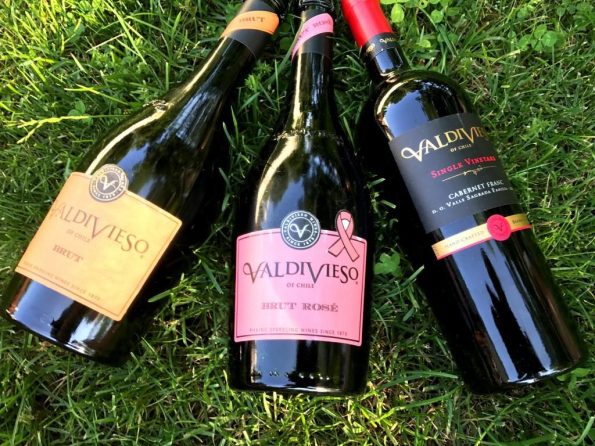
I’m sure you are thirsty by now, so pour yourself a glass, and let me share my impressions from tasting of the few of the Viña Valdivieso wines:
NV Viña Valdivieso Brut Chile (12% ABV, Chardonnay 60%, Semillon 40%, Charmat method)
white stone fruit, distant note, light mousse, good acidity on the palate, touch of grapefruit notes. Drinkability: 7+
NV Viña Valdivieso Rosé Chile (12% ABV, Pinot Noir 70%, Chardonnay 30%, Charmat method)
beautiful color, inviting nose of fresh berries with touch of herbs, light, round, touch of fresh fruit, excellent balance, refreshing. Drinkability: 7+/8-


2015 Viña Valdivieso Sauvignon Blanc Gran Reserva DO Valley de Leyda Chile (12% ABV)
straw color, very intense nose of blackcurrant and black currant leaves, same on the palate but with restraint, nice acidity, black currant, excellent. Drinkability: 8
2013 Viña Valdivieso Cabernet Franc Single Vineyard DO Valle Sagrada Familia Chile (14% ABV, Punta de Rosa Vineyard)
dark ruby color, touch of bell pepper, berries and leaves of the cassis, mint, touch of roasted meat. Palate follows the nose – medium body, good acidity, fresh red berries, touch of cassis, nice savory notes. Enjoyable by itself, but will work well with food. Drinkability: 8
Here we are, my friends. Sparkling from Chile? Yes, please! Cheers!
Villa Torrigiani: Traditional Roots, Modern Wines
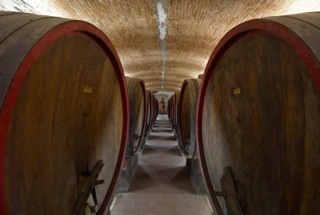
Source: Villa Torrigiani
When it comes to traditions, Italians definitely know how to preserve them. Tour the country, and you will see that finding a 500 years old villa or palace in Italy is very easy; there are plenty of places where the connection can be made through even a 1000 years of history. Italians definitely know how to preserve their traditions.
Talking about traditions, Villa Torrigiani, located in the heart of Tuscany, is exactly one of those well-preserved places, tracking its history back for 1000 years if not longer. Here is the information you can find on Wikipedia:
“In the hills of San Martino alla Palma, vineyards and olive groves have been cultivated for more than a 1,000 years. The estate is located not far from the Via Francigena, the route used by crusaders returning from the Holy Land, and as such a point of passage, the location took its name from Saint Martin, patron saint of vintners and grape harvesters, and Palma (Olive tree), the symbol brought home by crusaders as proof of their travels.
In the mid-1400s, in the very midst of the Renaissance, the marquises Torrigiani, bankers and wine sellers, bought the land that extends from Castellina all the way to the top of the hill of San Martino alla Palma, thus founding Fattoria Torrigiani (The Torrigiani farm). The marquises Torrigiani called on the renowned Florentine architect Michelozzo who designed the stately Villa Torrigiani, which was constructed from 1470 to 1495. The villa, with its numerous halls frescoed by master Florentine painters, is situated at the center of the farm and looks out over the valley of Florence and the cupola of the Duomo.


At the beginning of the 16th century, the farm was divided into 22 “poderi”, or farmsteads, each run by a family group, many of whom have descendants who live in San Martino to this day. The farm was so well organized that it was self-sufficient and no longer dependent on Florence, and consequently, its inhabitants were able to avoid the bubonic plague outbreak of the 1600s.
Fattoria Torrigiani remained the property of the same family for around 500 years until 1967 when it was purchased by the Zingone family who carried out an extensive restoration of the villa and an expansion of agricultural production, of wine and olive oil in particular.”
Fattoria San Martino alla Palma covers almost 900 acres, out of which the vineyards take about 115 acres, and about 300 acres dedicated to the olive trees – in addition to wines and grappa, Villa Torrigiani also produces olive oil.
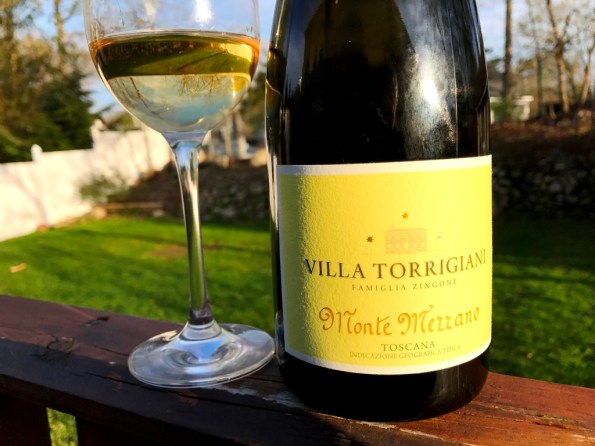
Now, the wines produced by Villa Torrigiani are unquestionably modern. Unoaked Chianti, Chardonnay from Tuscany, super-toscan – while the wines are rooted in tradition, it is hard to argue that they also represent modern Italian winemaking.
I had a pleasure to taste a number of Villa Torrigiani wines, and my tasting notes are below:
2015 Villa Torrigiani Monte Mezzano Bianco Toscana IGT (13% ABV, 100% Chardonnay, 6 mo in French oak barriques)
C: light golden
N: medium intensity, green apples, touch of vanilla
P: needed about 15 minutes in the glass, opened up nice and plump, vanilla, golden delicious apples, crisp acidity, disputants hint of butter
V: 8-, very nicely made, pleasant
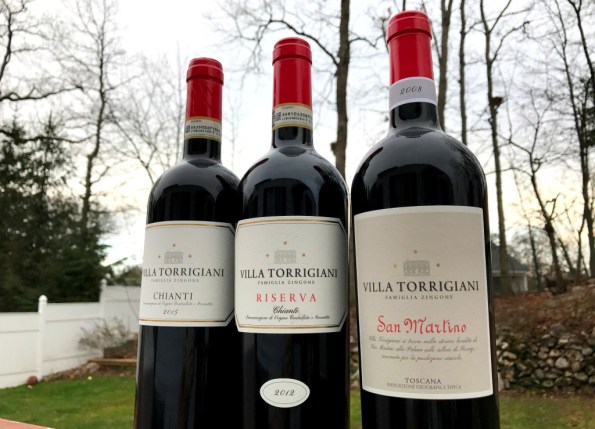
2015 Villa Torrigiani Chianti DOCG (12.5% ABV, 90% Sangiovese, 10% Canaiolo, Stainless steel)
C: garnet
N: fresh, open, medium intensity, caraway seed, touch of sweet cherries
P: fresh, clean, medium body, ripe cherries, touch of cherry peats
V: 7+, needed about 20 minutes to open up and come together, after that delicious all the way through
2012 Villa Torrigiani Chianti Reserva DOCG (13.5% ABV, 90% Sangiovese, 10% Canaiolo, 12-14 month in barrique, additional 6-8 month large oak botti)
C: dark garnet
N: espresso, sweet oak, ripe plums, tobacco, sweet plums
P: dry, perfect balance, dark fruit, supple cherries, good acidity, medium body, medium finish, fresh and open
V: 8-
2008 Villa Torrigiani San Martino Rosso Toscana IGT (13.5% ABV, 85% Cabernet Sauvignon, 15% Sangiovese, 12 month barrique, additional 12-14 month in large oak botti)
C: garnet
N: open, inviting, cassis, eucalyptus
P: fresh, playful, polished, layers of dark fruit, cassis, clean acidity, excellent balance. A true delight.
V: 9-, outstanding. I would love to drink this wine every day.
Here you are, my friends. A beautiful estate with a very long history, producing excellent wines. The only challenge we have at the moment is finding these wines in the USA – but hopefully this will change soon. Cheers!
New and Noteworthy: Red Wines Edition
Recently, we were talking about the Spanish wine samples I had a pleasure of trying. Now, let’s visit some other countries. Would France and Argentina be okay with you?
Let’s start with something very simple – how about some Cotes du Rhone? Cotes du Rhone reds are known to be easy drinking and soft. They typically can be classified as GSM – Grenache, Syrah, Mourvedre – however, the exact proportions of those three grapes can vary from 0 to 100%. It is recommended that Cotes du Rhone reds should be consumed within 3-4 years after release, but some of the better specimens can last for close to 10 – still, they are not meant to be aged extensively.


Les Dauphins became a family wine venture in the 1920s, when France was experiencing a “bistro revolution”. Easy drinking Cotes du Rhone wines were a perfect pairing for a vibrant bistro fare, and Les Dauphins became one of the popular suppliers for such wines. Fast forward to today, Les Dauphins offers a full range of Cotes du Rhone wines – white, rosé and a number of reds, still well suitable for a bistro experience. The wine I had was 2015 Les Dauphins Reserve Cotes du Rhone:
2015 Les Dauphins Réserve Côtes du Rhône (14% ABV, $18, 70% Grenache, 25% Syrah, 5% Mourvedre)
C: dark Ruby
N: medium intensity, touch of sweet tobacco, fall leaves, plums
P: hint of pepper, good acidity, touch of alcohol heat, graphite, black plums
V: 7, maybe needs a bit of breathing time to round up. Definitely evolved and smoothed out over the next couple of days. 7+ on the next day
Last year, I had a pleasure of learning about Cru Bourgeouis wines, and the wines were so good that I proudly declared that my faith in affordable and tasty Bordeaux wines was restored. This year, I was happy to find out that my conclusion was not an accident, and it is definitely possible to find deliciously tasting [and reasonably priced] Bordeaux wines.
Château Haut-Logat vineyards overlook the village of Cissac-Médoc, located between Saint-Estèphe and Pauillac, and it is a part of the Cheval Quancard properties. The wine was perfect from the get go:
2012 Château Haut-Logat Cru Bourgeois Haut-Médoc AOC (12.5 ABV, $25, 45% Merlot, 45% Cabernet Sauvignon, 10% Cabernet Franc)
C: garnet
N: intense, mint, touch of bell pepper, touch of freshly crushed cassis
P: beautiful, medium body, cassis, eucalyptus, tobacco, touch of sweet oak, medium finish
V: 8, excellent Pop’n’Pour wine


The next two wines come from Argentina, and yes, both are Malbec.
Ruca Malen means “the house of the young girl” in the local language of the ancient tribes inhabiting the area, and it has a nice legend attached to that name (which you can read on the back label above). Bodega Ruca Malen was born in 1998 with the vision of creating terroir-driven wines. The grapes for the Ruca Malen Malbec came from the two high-altitude vineyards – one in the Uco Valley, at 3600 feet, and the second one in Agrelo, Luján de Cuyo, at 3115 feet above sea level, from the 22+ years old vines. The wine was varietally correct and easy to drink:
2014 Ruca Malen Malbec Reserva Mendoza Argentina (13.5% ABV, $18.99, 12 months in 80% French Oak/20% American oak)
C: dark garnet, almost black
N: touch of pepper, sage, freshly crushed blackberries, intense
P: medium body, plums, mint, soft, good acidity and overall good balance, medium finish
V: 8-, easy to drink


Nieto Senetiner history predates Ruca Malen’s by more than 100 years – it starts from the first vineyard in Vistalba, Luján de Cuyo in Mendoza, planted by the Italian immigrants in 1888. Today, Nieto Senetiner farms more the 1000 acres of vines, located in the 3 estates in Mendoza.
Don Nicanor Single Vineyard is a flagship wine produced at the estate and it is named after the mentor of Bodegas Nieto Senetiner who was instrumental in setting the direction and the vision for the winery.
2010 Nieto Senetiner Don Nicanor Malbec Villa Blanca Lujan de Cuyo Mendoza Argentina (15% ABV, $44.99, 18-24 months in French oak barrels)
C: dark garnet, practically black
N: intense, red and black berries, baking spices, vanilla, fresh blackberries
P: intense, fresh, noticeable tannins (French oak), clean acidity, a bit of the alcohol burn, slightly underripe, crunchy berries, more of a raspberry profile, tar. A couple of days later, the intensity still there.
V: 8. Needs time to open up, can’t judge from the get go. Even a few days later, packs a lot of power. Craves food – nice charred steak feels the most appropriate. Will develop over next 10–15 years at the minimum.
Here you are, my friends – a few red wines well worthy of your attention. Cheers!
Rosé Showdown – California Versus Spain
A glass of wine as an “adult beverage of choice” continues its growth in popularity. If we will take a closer look at that world of wine, we will discover that there are two types of wine which are leading that growth pattern – those two types would be Sparkling and Rosé. I’m not talking about the growth in the dollar amounts or number of bottles produced, but rather a growth in attention and demand. Today, you will be pressed hard to find a winery around the world which doesn’t produce at least one type of Rosé and one type of sparkling wine – for sure this is the case with Rosé. The production might be tiny (few hundreds of cases or even less) and far less than the demand is – but it is the wine which commands lots of attention.
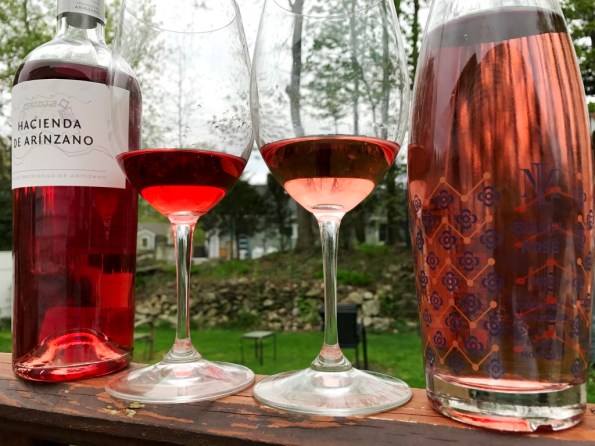
Another “phenomenon” makes me happy about the Rosé – it is slowly losing its “Rosé is only for a summer” connotation and becomes more and more acceptable and requested as a year-round drink. Rosé is a serious wine, with its own unique taste profile and capability to showcase terroir and grape variety, same as any other red or white, with two additional benefits. For one, I would dare to say that in general terms, Rosé’s versatility around food surpasses the white and the red wines – oh well, this might be only me. And the second one is pure aesthetics – the pink palette of Rosé, with possibly more shades than the proverbial 50, looks gorgeous, sexy and inviting – just take a look above and see if you are agreeing with me.
When I was offered to try two Rosé samples, of course, I couldn’t say no. The first wine was familiar to me, as I had a pleasure of trying 2015 vintage of Hacienda de Arinzano Rosé last year. The second one was the wine which I never saw before – Isabel Rosé from California. Thus it became an interesting experiment to see how the two wines would fare side by side.
If anything, putting Rosé from Spain and California on the “same page” makes sense as Rosé is clearly a “new phenomenon” for both regions, growing to prominence over the last 3-4 years at the most. Of course, Rosé was produced in Spain and California in much earlier days – but it was rather an exception and not the norm – unless we want to count white Zinfandel as a Rosé which I personally refuse to do. Until a few years ago, the only Spanish Rosé I knew about was the one from Lopez de Heredia ( which was outstanding). For the American Rosé, even if they were produced, they were really not that good (take a look at the blog post on Vinography called “Why Does American Rosé Suck” – no further comments needed?). Fast forward to today, and you can find lots of beautiful Rosé wines coming from Spain; American Rosé became a standout, as proven in the virtual tasting last year at the #winestudio.
Our first contender today comes from the first Pago estate in Northern Spain – Pago denomination signifies the highest quality of wines, this coveted level is not easy to achieve. Hacienda de Arinzano Rosé is made out of the 100% Tempranillo, in the “proper” way – by macerating the juice with the skins for 6-8 hours. Don’t you love the color of this wine?
The California’s Isabel Rosé is definitely a formidable opponent, as you can see starting from the bottle itself. Glass enclosure, beautiful shape and painted bottle – really curious how many people dare to discard the bottle once they finish the wine instead of keeping it (all I can tell you that I kept mine). A different but equally beautiful color on the mostly Cabernet Sauvignon wine, again produced in the classic style from one of the very best vintages in California (2016 had almost ideal growing conditions, watch out for those Cab prices) – and at one of the well-respected wineries, Michael Mondavi family estates.


As you can tell, it is definitely a game of equals, and for what it worth, my tasting notes are below:
2016 Hacienda de Arínzano Rosé Tempranillo (14% ABV, $20, 100% Tempranillo)
C: bright concentrated pink
N: onion peel, fresh crunchy berries
P: intense, red fruit, plums, crisp, good acidity, medium body, will stand to wide variety of dishes
V: 8-, excellent
2016 Isabel Rosé by Michael Mondavi Family Estate California (13.5% ABV, $15, 75% Cabernet Sauvignon, 23.5% Barbera, 1.5% Muscat)
C: light pink
N: intense fresh strawberries, herbal undertones
P: strawberries, good acidity, very dry – not bone dry, but quite dry, refreshing
V: 8-/8, light but affirmative, don’t overchill – needs to warm up a bit to become richer
Well, here we are, my friends. There was only one winner in this competition – me. Yes, I got to enjoy two outstanding wines, which will perfectly fit any table at any occasion, and at the price, an absolute majority of the budgets. Both will be great on a summer day, a winter day, with food or without it. Grab one or both, chill and enjoy! And if you had any one of these wines, I would be really interested in your opinion. Cheers!
New and Noteworthy: Few Spanish Wine Samples
If you read this blog for any period of time, you know that Spanish wines have my unquestionable love. From Rioja to Rias Biaxas to Priorat to La Mancha – Spain offers lots of tasty wines, often at an unbeatable value.
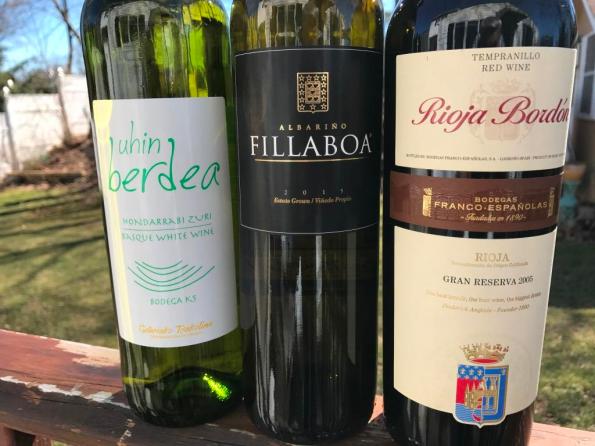
I would rarely refuse a sample of Spanish wines, as this is the best opportunity to try new vintages and share my thoughts. What you can see below are few of the samples I got during February and March – all new vintages and all should be available right now at your favorite wine store.
Bodegas Beronia well known for its Rioja wines, but this time it is a white wine from Rueda we are talking about, made from 100% Verdejo. I love Verdejo wines when they have enough of the crisp acidity but don’t go too far into the grassy notes to become Sancerre twin. This wine was excellent, and a great value:
2015 Bodegas Beronia Rueda DO (13% ABV, $12, 100% Verdejo)
C: Light Golden
N: bright, inviting, invigorating, white stone fruit, ripe peach, touch of tropical fruit with a distant herbal underpinning
P: fresh, perfect acidity, touch of fresh cut grass (tiny), sweet lemon notes, refreshing
V: 8-/8, excellent wine, lots of pleasure, and a great QPR
Bodegas Torres might not be a household name in the USA, however, Torres Family is the biggest wine producer in Spain – which, luckily, doesn’t affect the quality of the wines. I had many different Torres wines from many different Spanish regions, and those wines rarely disappoint:
2013 Torres Celeste Crianza Ribera Del Duero (14% ABV, $20, 100% Tempranillo)
C: dark garnet
N: muted nose of baking spices, lavender, touch of roasted meat
P: dark fruit, good acidity, refreshing, open, plums
V: 7+, fresh, simple, easy to drink
Rioja Gran Reserva for $25? Yes, please, but let me taste it first? Gran Reserva is expensive to make – think about all the cellaring time the wine requires (5 years total) to be officially marked as Gran Reserva. So $25 is a great price for the Gran Reserva if it tastes good – and this wine was outstanding:
2005 Rioja Bordon Gran Reserva Rioja DOC (14% ABV, $25, 80% Tempranillo, 10% Garnacha, 5% Mazuelo, 5% Graciano)
C: garnet
N: delicious, touch of barnyard, ripe black fruit, intense
P: black fruit, cedar box, sweet tobacco, succulent, fresh clean acidity, delicious.
V: 8/8+, outstanding, great example of Rioja potential, no sign of age, great QPR


Txakolina still can be considered a rare wine in the US – those wines are trickling in, but can’t compete for attention in any way compared to Albariño, Verdejo or even Godello (yes, I’m mixing grapes and places – Txakolina is a region in the Basque area, where the white wines are typically made form the grape called Hondarrabi Zuri – the rest of them are grapes). Txakolina wines are usually “unique and different”, as was this particular wine:
2014 K5 Arginano Uhin Berdea Hondarrabi Zuri Getariako Txakolina DO (11% ABV, $22, 100% Hondarrabi Zuri)
C: golden
N: touch of vanilla, ripe white fruit
P: very interesting, cut through acidity of Muscadet, but plump body and mouthfeel of Marsanne. Outstanding pairing with herb-crusted goat cheese – might be the best cheese pairing I ever experienced.
V: 7+, worth trying, especially with the food
Let’s finish today’s line with practically a classic – Albariño from Rias Baixas area in Galicia. Albariño typically is a seafood friendly wine – and the one below was a perfect example:
2015 Fillaboa Albariño Rias Baixas DO (12.5% ABV, $20, 100% Albariño)
C: light golden
N: fresh white fruit, tropical, guava, inviting
P: clean, medium body, good acidity, lemon, refreshing, very quaffable, medium lemon zest finish
V: 8-, very good rendition of Albariño
That’s all I have for you today, my friends. What were your new and noteworthy discoveries? Cheers!
Last Bottle Sign Up ($10 credit)




 Talk-A-Vino