Archive
New and Noteworthy: Red Wines Edition
Recently, we were talking about the Spanish wine samples I had a pleasure of trying. Now, let’s visit some other countries. Would France and Argentina be okay with you?
Let’s start with something very simple – how about some Cotes du Rhone? Cotes du Rhone reds are known to be easy drinking and soft. They typically can be classified as GSM – Grenache, Syrah, Mourvedre – however, the exact proportions of those three grapes can vary from 0 to 100%. It is recommended that Cotes du Rhone reds should be consumed within 3-4 years after release, but some of the better specimens can last for close to 10 – still, they are not meant to be aged extensively.


Les Dauphins became a family wine venture in the 1920s, when France was experiencing a “bistro revolution”. Easy drinking Cotes du Rhone wines were a perfect pairing for a vibrant bistro fare, and Les Dauphins became one of the popular suppliers for such wines. Fast forward to today, Les Dauphins offers a full range of Cotes du Rhone wines – white, rosé and a number of reds, still well suitable for a bistro experience. The wine I had was 2015 Les Dauphins Reserve Cotes du Rhone:
2015 Les Dauphins Réserve Côtes du Rhône (14% ABV, $18, 70% Grenache, 25% Syrah, 5% Mourvedre)
C: dark Ruby
N: medium intensity, touch of sweet tobacco, fall leaves, plums
P: hint of pepper, good acidity, touch of alcohol heat, graphite, black plums
V: 7, maybe needs a bit of breathing time to round up. Definitely evolved and smoothed out over the next couple of days. 7+ on the next day
Last year, I had a pleasure of learning about Cru Bourgeouis wines, and the wines were so good that I proudly declared that my faith in affordable and tasty Bordeaux wines was restored. This year, I was happy to find out that my conclusion was not an accident, and it is definitely possible to find deliciously tasting [and reasonably priced] Bordeaux wines.
Château Haut-Logat vineyards overlook the village of Cissac-Médoc, located between Saint-Estèphe and Pauillac, and it is a part of the Cheval Quancard properties. The wine was perfect from the get go:
2012 Château Haut-Logat Cru Bourgeois Haut-Médoc AOC (12.5 ABV, $25, 45% Merlot, 45% Cabernet Sauvignon, 10% Cabernet Franc)
C: garnet
N: intense, mint, touch of bell pepper, touch of freshly crushed cassis
P: beautiful, medium body, cassis, eucalyptus, tobacco, touch of sweet oak, medium finish
V: 8, excellent Pop’n’Pour wine


The next two wines come from Argentina, and yes, both are Malbec.
Ruca Malen means “the house of the young girl” in the local language of the ancient tribes inhabiting the area, and it has a nice legend attached to that name (which you can read on the back label above). Bodega Ruca Malen was born in 1998 with the vision of creating terroir-driven wines. The grapes for the Ruca Malen Malbec came from the two high-altitude vineyards – one in the Uco Valley, at 3600 feet, and the second one in Agrelo, Luján de Cuyo, at 3115 feet above sea level, from the 22+ years old vines. The wine was varietally correct and easy to drink:
2014 Ruca Malen Malbec Reserva Mendoza Argentina (13.5% ABV, $18.99, 12 months in 80% French Oak/20% American oak)
C: dark garnet, almost black
N: touch of pepper, sage, freshly crushed blackberries, intense
P: medium body, plums, mint, soft, good acidity and overall good balance, medium finish
V: 8-, easy to drink


Nieto Senetiner history predates Ruca Malen’s by more than 100 years – it starts from the first vineyard in Vistalba, Luján de Cuyo in Mendoza, planted by the Italian immigrants in 1888. Today, Nieto Senetiner farms more the 1000 acres of vines, located in the 3 estates in Mendoza.
Don Nicanor Single Vineyard is a flagship wine produced at the estate and it is named after the mentor of Bodegas Nieto Senetiner who was instrumental in setting the direction and the vision for the winery.
2010 Nieto Senetiner Don Nicanor Malbec Villa Blanca Lujan de Cuyo Mendoza Argentina (15% ABV, $44.99, 18-24 months in French oak barrels)
C: dark garnet, practically black
N: intense, red and black berries, baking spices, vanilla, fresh blackberries
P: intense, fresh, noticeable tannins (French oak), clean acidity, a bit of the alcohol burn, slightly underripe, crunchy berries, more of a raspberry profile, tar. A couple of days later, the intensity still there.
V: 8. Needs time to open up, can’t judge from the get go. Even a few days later, packs a lot of power. Craves food – nice charred steak feels the most appropriate. Will develop over next 10–15 years at the minimum.
Here you are, my friends – a few red wines well worthy of your attention. Cheers!
Rosé Showdown – California Versus Spain
A glass of wine as an “adult beverage of choice” continues its growth in popularity. If we will take a closer look at that world of wine, we will discover that there are two types of wine which are leading that growth pattern – those two types would be Sparkling and Rosé. I’m not talking about the growth in the dollar amounts or number of bottles produced, but rather a growth in attention and demand. Today, you will be pressed hard to find a winery around the world which doesn’t produce at least one type of Rosé and one type of sparkling wine – for sure this is the case with Rosé. The production might be tiny (few hundreds of cases or even less) and far less than the demand is – but it is the wine which commands lots of attention.
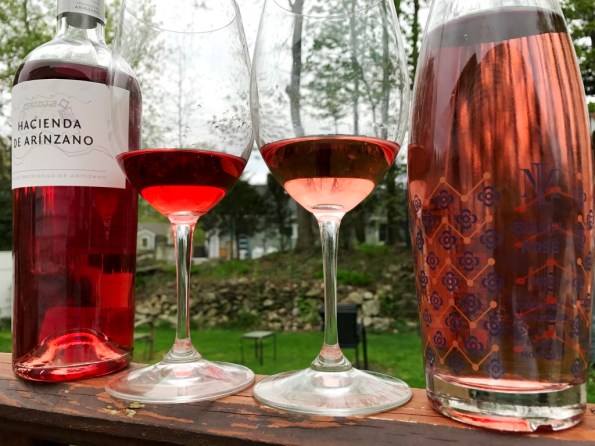
Another “phenomenon” makes me happy about the Rosé – it is slowly losing its “Rosé is only for a summer” connotation and becomes more and more acceptable and requested as a year-round drink. Rosé is a serious wine, with its own unique taste profile and capability to showcase terroir and grape variety, same as any other red or white, with two additional benefits. For one, I would dare to say that in general terms, Rosé’s versatility around food surpasses the white and the red wines – oh well, this might be only me. And the second one is pure aesthetics – the pink palette of Rosé, with possibly more shades than the proverbial 50, looks gorgeous, sexy and inviting – just take a look above and see if you are agreeing with me.
When I was offered to try two Rosé samples, of course, I couldn’t say no. The first wine was familiar to me, as I had a pleasure of trying 2015 vintage of Hacienda de Arinzano Rosé last year. The second one was the wine which I never saw before – Isabel Rosé from California. Thus it became an interesting experiment to see how the two wines would fare side by side.
If anything, putting Rosé from Spain and California on the “same page” makes sense as Rosé is clearly a “new phenomenon” for both regions, growing to prominence over the last 3-4 years at the most. Of course, Rosé was produced in Spain and California in much earlier days – but it was rather an exception and not the norm – unless we want to count white Zinfandel as a Rosé which I personally refuse to do. Until a few years ago, the only Spanish Rosé I knew about was the one from Lopez de Heredia ( which was outstanding). For the American Rosé, even if they were produced, they were really not that good (take a look at the blog post on Vinography called “Why Does American Rosé Suck” – no further comments needed?). Fast forward to today, and you can find lots of beautiful Rosé wines coming from Spain; American Rosé became a standout, as proven in the virtual tasting last year at the #winestudio.
Our first contender today comes from the first Pago estate in Northern Spain – Pago denomination signifies the highest quality of wines, this coveted level is not easy to achieve. Hacienda de Arinzano Rosé is made out of the 100% Tempranillo, in the “proper” way – by macerating the juice with the skins for 6-8 hours. Don’t you love the color of this wine?
The California’s Isabel Rosé is definitely a formidable opponent, as you can see starting from the bottle itself. Glass enclosure, beautiful shape and painted bottle – really curious how many people dare to discard the bottle once they finish the wine instead of keeping it (all I can tell you that I kept mine). A different but equally beautiful color on the mostly Cabernet Sauvignon wine, again produced in the classic style from one of the very best vintages in California (2016 had almost ideal growing conditions, watch out for those Cab prices) – and at one of the well-respected wineries, Michael Mondavi family estates.


As you can tell, it is definitely a game of equals, and for what it worth, my tasting notes are below:
2016 Hacienda de Arínzano Rosé Tempranillo (14% ABV, $20, 100% Tempranillo)
C: bright concentrated pink
N: onion peel, fresh crunchy berries
P: intense, red fruit, plums, crisp, good acidity, medium body, will stand to wide variety of dishes
V: 8-, excellent
2016 Isabel Rosé by Michael Mondavi Family Estate California (13.5% ABV, $15, 75% Cabernet Sauvignon, 23.5% Barbera, 1.5% Muscat)
C: light pink
N: intense fresh strawberries, herbal undertones
P: strawberries, good acidity, very dry – not bone dry, but quite dry, refreshing
V: 8-/8, light but affirmative, don’t overchill – needs to warm up a bit to become richer
Well, here we are, my friends. There was only one winner in this competition – me. Yes, I got to enjoy two outstanding wines, which will perfectly fit any table at any occasion, and at the price, an absolute majority of the budgets. Both will be great on a summer day, a winter day, with food or without it. Grab one or both, chill and enjoy! And if you had any one of these wines, I would be really interested in your opinion. Cheers!
New and Noteworthy: Few Spanish Wine Samples
If you read this blog for any period of time, you know that Spanish wines have my unquestionable love. From Rioja to Rias Biaxas to Priorat to La Mancha – Spain offers lots of tasty wines, often at an unbeatable value.
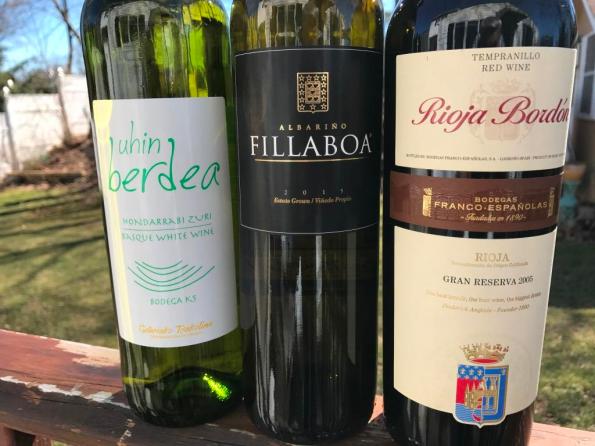
I would rarely refuse a sample of Spanish wines, as this is the best opportunity to try new vintages and share my thoughts. What you can see below are few of the samples I got during February and March – all new vintages and all should be available right now at your favorite wine store.
Bodegas Beronia well known for its Rioja wines, but this time it is a white wine from Rueda we are talking about, made from 100% Verdejo. I love Verdejo wines when they have enough of the crisp acidity but don’t go too far into the grassy notes to become Sancerre twin. This wine was excellent, and a great value:
2015 Bodegas Beronia Rueda DO (13% ABV, $12, 100% Verdejo)
C: Light Golden
N: bright, inviting, invigorating, white stone fruit, ripe peach, touch of tropical fruit with a distant herbal underpinning
P: fresh, perfect acidity, touch of fresh cut grass (tiny), sweet lemon notes, refreshing
V: 8-/8, excellent wine, lots of pleasure, and a great QPR
Bodegas Torres might not be a household name in the USA, however, Torres Family is the biggest wine producer in Spain – which, luckily, doesn’t affect the quality of the wines. I had many different Torres wines from many different Spanish regions, and those wines rarely disappoint:
2013 Torres Celeste Crianza Ribera Del Duero (14% ABV, $20, 100% Tempranillo)
C: dark garnet
N: muted nose of baking spices, lavender, touch of roasted meat
P: dark fruit, good acidity, refreshing, open, plums
V: 7+, fresh, simple, easy to drink
Rioja Gran Reserva for $25? Yes, please, but let me taste it first? Gran Reserva is expensive to make – think about all the cellaring time the wine requires (5 years total) to be officially marked as Gran Reserva. So $25 is a great price for the Gran Reserva if it tastes good – and this wine was outstanding:
2005 Rioja Bordon Gran Reserva Rioja DOC (14% ABV, $25, 80% Tempranillo, 10% Garnacha, 5% Mazuelo, 5% Graciano)
C: garnet
N: delicious, touch of barnyard, ripe black fruit, intense
P: black fruit, cedar box, sweet tobacco, succulent, fresh clean acidity, delicious.
V: 8/8+, outstanding, great example of Rioja potential, no sign of age, great QPR


Txakolina still can be considered a rare wine in the US – those wines are trickling in, but can’t compete for attention in any way compared to Albariño, Verdejo or even Godello (yes, I’m mixing grapes and places – Txakolina is a region in the Basque area, where the white wines are typically made form the grape called Hondarrabi Zuri – the rest of them are grapes). Txakolina wines are usually “unique and different”, as was this particular wine:
2014 K5 Arginano Uhin Berdea Hondarrabi Zuri Getariako Txakolina DO (11% ABV, $22, 100% Hondarrabi Zuri)
C: golden
N: touch of vanilla, ripe white fruit
P: very interesting, cut through acidity of Muscadet, but plump body and mouthfeel of Marsanne. Outstanding pairing with herb-crusted goat cheese – might be the best cheese pairing I ever experienced.
V: 7+, worth trying, especially with the food
Let’s finish today’s line with practically a classic – Albariño from Rias Baixas area in Galicia. Albariño typically is a seafood friendly wine – and the one below was a perfect example:
2015 Fillaboa Albariño Rias Baixas DO (12.5% ABV, $20, 100% Albariño)
C: light golden
N: fresh white fruit, tropical, guava, inviting
P: clean, medium body, good acidity, lemon, refreshing, very quaffable, medium lemon zest finish
V: 8-, very good rendition of Albariño
That’s all I have for you today, my friends. What were your new and noteworthy discoveries? Cheers!
Thinking About Albariño, or Notes from Albariño Deep Immersion with Snooth
For the first time I tried Albariño wine around 12 years ago, during my brief stint as a sommelier at a small restaurant. I remember the producer – Burgans. I remember liking the wine quite a bit, and since that time, Albariño surely became a part of my regular “wines to drink” list. My longest (and still current) Albariño love is Bodegas La Caña Albariño, which typically has a small amount of wine aged in oak, offering great level of complexity – but this is not what we will be talking about today.
The history of Albariño traces back to the 12th century in the Rias Baixas region in Spain (legend has it that Rias Baixas was a resting place for a brief moment for the God’s hand after the creation – you don’t have to believe it, of course). In 1980, Rias Baixes became a DO named after it’s main grape, Albariño, changing its name to Rias Baixas DO in 1986 (EU laws don’t allow for the Denomination of Origin to be named after a single grape). Over the years, Albariño started finding its way to the consumers around the world, often touted as an alternative to the Chardonnay. Considering the location (Atlantic coast) and cuisine (heavily dominated by shellfish/fish) of Rias Baixes, it is not surprising that Albariño, which typically shows crisp acidity, is perfectly marrying variety of seafood dishes.
If you think about winemaking around the world, there are some common trends no matter where the wines are made. One particular trend I want to mention is better understanding of the local terroir. Every new vintage adds the details to the knowledge of successes and failures – which vineyard produced better fruit, how the fruit was different, how even better fruit can be produced. With this knowledge, winemakers can identify the differences between seemingly close vineyards, understand that those differences are not accidental, and that those differences are worthy to be noted, used and even stressed – now the one, seemingly monolithic “terroir” region can be split into a smaller pieces.
This is what leads to the creation of the new regions and sub-regions, and you can see it around the world. For instance, only a few years ago, practically all Sauvignon Blanc wines from Marlboro in New Zealand were only identified on the labels as Marlboro. Today, Marlboro Sauvignon Blanc wines proudly identify themselves as Wairau Valley or Awatere Valley, and you can find detailed notes stressing their unique characteristics.
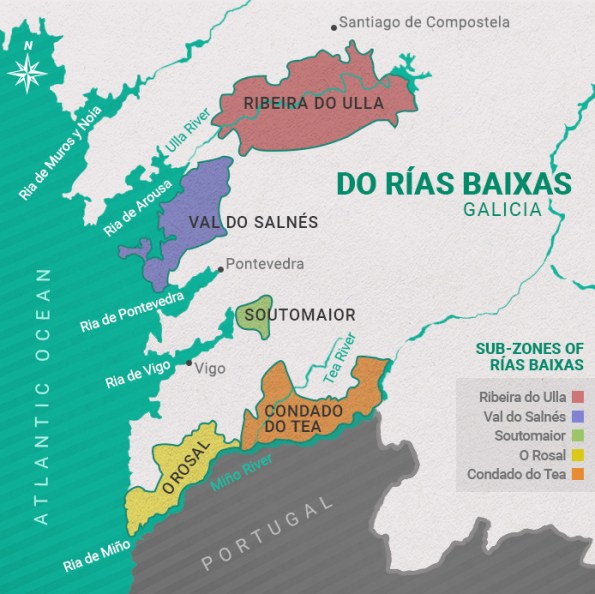
Rias Baixas Map wine regions map. Source: Rias Baixas Wine
Same processes of creating smaller, more focused viticultural areas is taking place all over the world – and Rias Baixas is not an exception. Today, Rias Baixas DO has 5 defined sub-regions – Val do Salnés, the oldest and best known source of Albariño wines; Soutomaior, Contado do Tea, O Rosal and Ribeira do Ulla. Each sub-region has its own soil and climate conditions, the terroir, which translates into the differences in the wines.


Last week I was lucky to participate in the special virtual tasting organized by Snooth, one of the best online sources of the wine knowledge. In the tasting, we had an opportunity to experience 10 different Albariño wines, representing 3 different sub-regions, and of course to discuss the wines in the rapid-fire chat.
I have to honestly admit – I didn’t wait until the official tasting to taste the wines – as the wines arrived a few weeks before the tasting, I took my time to try them slowly, as 10 wines within one our and engaging conversation using one’s fingers is quite difficult to do. I also didn’t know the order of tasting, so my tasting was done at random, where during our online chat the tasting was going from one sub-region to another – the tasting notes below appear in the tasting order at the event.
Here are my notes:


Sub-region: Val do Salnés:
2015 Martin Codax Albariño Rias Baixas DO (12.5% ABV, $16.99)
C: light yellow
N: medium intensity, fresh lemon notes
P: lemon and lemon zest, cut through acidity, medium palate, clean
V: 7+, surprisingly nice pairing with a spicy pepper spread
2015 Condes de Albarei Albariño Rias Baixas DO (12.5% ABV, $15)
C: light golden
N: medium intensity, lemon, green apple
P: touch of sweetness, Meyer lemon, good acidity, medium body, clean
V: 7/7+, nice, simple
2015 Vionta Albariño Limited Release Rias Baixas DO (12.5% ABV, $15)
C: light golden
N: medium intensity, grassy, more of a Sancerre style, touch of lemon and hay
P: crispy, fresh, clean acidity, lemon, medium body, good balance overall, round
V: 7+/8-, very well executed.
2016 Pazo Señorans Albariño Rias Baixas DO (13.5% ABV, $25)
C: straw
N: medium intensity, grass, fresh lemons
P: crisp acidity, touch of salinity, lemon, touch of volcanic minerality, interesting complexity
V: 8-, drinkable by itself, but craves food


Sub-region: Contado do Tea:
2015 Pazo de San Mauro Albariño Rias Baixas DO (12.5% ABV, $17)
C: light straw
N: honey, flowers, honeydew, delicious and inviting
P: great complexity, touch of honey without sweetness – you know you have honey in the glass, but no sugar, clean acidic finish, medium body, unusual and interesting
V: 8/8+, most interesting of the group, very unusual
2016 Señorío de Rubiós Robaliño Albariño Rias Baixas DO (12.5% ABV, $18)
C: straw pale, a welcome relief from all the 2015 so far
N: intense, lemon, candied lemon
P: off-dry, bright, crisp, white plums, hint of pineapple
V: 8-, nice and pleasant, easy to drink


Sub-region: O Rosal
2015 Altos de Torona Albariño Sobre Lías Rias Baixas DO (13% ABV, $14)
C: light golden
N: minerality, white stone fruit, medium intensity
P: fresh, crisp, nice lemon notes, craving oysters, cut through acidity
V: 8-/8, nice on its own on a hot summer day, and will be great with seafood, especially shellfish.
2015 Santiago Ruiz O Rosal White Wine Rias Baixas DO (13% ABV, $20, blend of Albariño and Loureiro with small addition of Treixadura)
C: straw
N: medium intensity, nice white fruit (peach) and floral notes, touch of tropical fruit like guava
P: medium body, soft, round, white stone fruit, good acidity, fresh, excellent balance
V: 8-/8, definitely one of my favorites
2015 Valmiñor Albariño Edición Especial 10 Años Rias Baixas DO (12.5% ABV, $18.99)
C: golden
N: intense, white stone fruit, fresh, white plums
P: lip smacking acidity, fresh, open, lemon, herbs, very dry, medium body, medium finish
V: 7+, very pleasant, will be perfect for any summer day, or any day with seafood. Makes you crave oysters.
2015 Bodegas Terras Gauda Abadía de San Compo Albariño Rias Baixas DO (12.5% ABV, $20)
C: golden
N: medium intensity, touch of lemon, white stone fruit
P: clean acidity, slightly off dry, under-ripe yellow plums, medium body
V: 7+, nice and quaffable.
Did I clearly tasted the differences in the wines from the different regions? No, I wouldn’t say so – however, as you can tell from the notes and ratings, I liked the most two Albariño wines from the Contado do Tea region. Will the Albariño get more distinguishable – you bet. Should you go and open a bottle of Albariño right this moment – absolutely, go and do it now.
That’s all I have for you, my friends. Don’t forget that upcoming Sunday is Mother’s Day in the USA – I’m sure Mom would greatly appreciate nice and refreshing glass of Albariño – and note that some of the very cool labels in the wines we tried (wink, wink). Cheers!
Pleasures of Drinking Local
I love travel -seeing the world, different cultures, different people, different traditions, and, of course, different food and drinks. Food is given, as we all have to eat, so one way or the other we get to experience local cuisine. But then what I drink is also very important to me, with the same spirit of exploration.
I love drinking local. And, of course, when I say “drinking”, I primarily mean wine. When travel, I always make an effort to find and try local wines. Unknown and obscure? Perfect – the less I know about the wine, the more pleasure it brings. Drinking local wines doesn’t mean I have to visit the wineries. More often than not, my trips don’t include any spare time and any facilities to reach the wineries. But – in many places, and I would even say, in increasingly more places, you can still find local wine at local shops, as long as you willing to look for it.
It is, of course, the best when you are visiting places where the wine is part of the culture, like most countries in Europe (sorry, never been to Latin America or Australia, but somehow I think I would do fine there as well). If the wine is a part of the culture and tradition, it almost guarantees you authentic wine experiences – and what is very important – without breaking the bank. In the USA, for instance, the wine is still a part of the fashion and not part of the tradition, thus in USA, finding reasonably priced wines is extremely difficult, and finding locally produced and reasonably priced wines is simply a mission impossible. Wait, I didn’t mean for this post to be a rant, so let me get back on track.
This time around, my travel took me to Prague, the capital of the Czech Republic. I’m sure for many (most?) of people, as soon as they will hear “Czech Republic”, the very next image of the local drink is – of course – a beer. This makes perfect sense, as Czechs are internationally known for their beer, same as Germany or Belgium, and rightfully so. But – what most of the people don’t know is that Czechs also had been making wines almost forever – okay, starting from approximately the 2nd century – long enough? Czech wine never made it to the levels of fame of French or Italian wines – but that doesn’t decrease the pleasure of drinking Czech wines in any way.
I discovered Czech wines for myself last year, when I had delicious Pinot Noir and Pinot Gris ( you can read about it here). Thus I had no doubts that Czech wine is something I’m going to look for upon arrival.
The hotel I’m staying at is adjacent to the shopping mall, which includes a supermarket, a wine store and some other food stores, all of them selling wines. And mind you – at the prices which make you smile from ear to ear. So far I got the wines from the supermarket, and you will see the prices I paid in the descriptions of the wines, as usual.
I had an easy criterion for selecting the wines. Price – of course, but there was another important requirement – new grapes. As you can see the grape count in the right column of my blog page, I continue my grape journey, so I’m always on the lookout for the additions to the list. Of course, it is usually not that easy – the name of the grape in the local language might sound new and unique – but once you do the research, you can easily find out that there is nothing new about that grape. For instance, take a look at Rulandské modré – sounds unique, right? Meanwhile, it is only a local name for Pinot Noir. Or Rulandské šedé – must be something indigenous, right? Nope, it is simply the Pinot Gris.
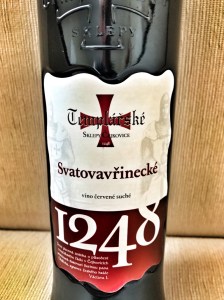
Obviously, that didn’t stop me. I found two new white grapes, and for the red, the name looked so cool (Svatovavřinecké) that I had to get it, despite the fact that this was the local name for the St. Laurent grape – well, how often do you drink St. Laurent wines anyway?
I started with the red wine, as whites needed some chilling – and 2015 Templářské Sklepy Svatovavřinecké Morava Czech Republic (11.5% ABV, 119 Kč ~ $5, 100% St. Laurent) didn’t disappoint – light garnet color. Pleasant nose with touch of spices, sage, lavender, tobacco, hint of blueberries. Fresh fruit on the palate, tobacco, pepper, medium body, mouth-watering acidity, light, pleasant. Drinkability: 8-/8, a proof that delicious wine doesn’t have to be a fruit or tannin bomb.
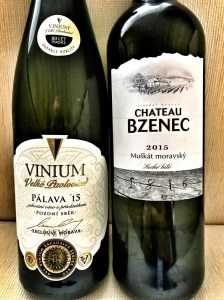
The whites where new, unique and different. One was made out of the grape called Muškat moravsky, which is a cross between Muscat Ottonel and Prachtraube. The other grape was called Pálava, and it was a cross between Müller Thurgau and Gewürztraminer, first selected in 1953. I’m always a bit concerned with the new white wines (many things can go wrong), but this two were simply a stand out. I guess I was simply lucky. Or may be my palate is cursed. Of well. Here are the notes for the white wines:
2015 Chateau Bzenec Muškat moravsky Morava Czech Republic (11.5% ABV, 119 Kč ~ $5)
Straw pale color. Perfumy nose, reminiscent of Gewurtztraminer but of a lesser intensity, white peaches, lemon undertones, touch of minerality. Delicious on the palate – succulent fresh whitestone fruit with practically no sweetness, ripe green apple and touch of lemon. Clean, balanced, fresh, excellent acidity. Medium-short finish, pleasure to drink. Very impressive. Drinkability: 8/8+
2015 Vinium Velké Pavlovice Pálava Pozdní Sber Morava Czech Republic (12% ABV, 239 Kč ~ $10)
Light golden color. Very pleasant nose, perfumy, touch of honey, tropical fruit (guava, pineapple), medium intensity. Delicious lip smacking palate – crisp acidity, medium to full body, wine is nicely present, mouth coating, acidity keeps lingering with tart apples underpinning, then some ripe apples showing with addition of white plums. Another excellent wine. Unique and different, perfectly enjoyable on its own, but will play very nicely with the food. Drinkability: 8/8+, outstanding.
That’s all I have for you, my friends. When travel, take risk, drink local – your reward will be new experience and lots and lots of pleasure. And if you will not like it – the experience will still be with you. Cheers!
Argentina Beyond Malbec with Achaval-Ferrer and #WineStudio
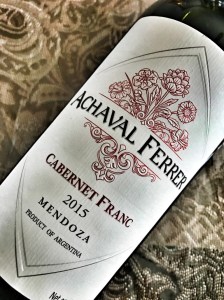 Of course, Argentina wine industry can’t be subsided only to Malbec – Torrontes and Chardonnay for the whites and Malbec and Cabernet Sauvignon (and Bordeaux-style blends, of course) for the reds comprise an absolute majority of Argentinian wines available at any given moment. You can find some Argentinian Bonarda, Pinot Noir and Sauvignon Blanc, but they don’t carry the full recognition of the 4 main grapes.
Winemaking has a long history in Argentina, starting in the 16th century and entering an international trade in the second half of 19th century. If we will take into account that most of the grape plantings in Argentina are at high altitude, with climatic conditions and terroir overall ideal for the grape growing and providing protection against many grape diseases, such as phylloxera, we will quickly realize that Argentina is home to some of the best and oldest vineyards in the world. However, it is only during the last 20-25 years Argentinian wines start receiving a full international recognition they deserve, with Malbec been the brightest shining star.
Achaval-Ferrer winery was founded in 1998, and over its relatively short history, became a leading winery in Argentina, garnering numerous awards and high critic scores for its wines. To the great pleasure of wine geeks, wines of Achaval-Ferrer were also a focus of April #WineStudio educational program, allowing us to experience some of the very best wines Argentina is capable of producing – Malbec, Cabernet Sauvignon and Bordeaux blend called Quimera. But for the last April session, Achaval-Ferrer and #WineStudio took us on the trip in entirely new direction with the inaugural vintage of the Cabernet Franc wine.
I guess it is time to reveal one of my (no, not darkest) deepest wine secrets – I have “a thing”, an obsessive passion for the Cabernet Franc wines. I can’t explain to you why or how. I don’t know how it happened that out of most grapes, the words “Cabernet Franc” make me literally jump. No matter how tired I am at the end of the large tasting, say to me “let’s go try Cab Franc” and I’m ready to run. Thus you can imagine how excited I was at this opportunity to try a new first release of Cabernet Franc.
There was a lot of excitement around this wine, seems everybody really enjoyed it. As for all the wines of Achaval-Ferrer, the grapes for this Cabernet Franc came from the high altitude vineyards (3,280 ft above sea level) in the Uco Valley, mostly sustainably farmed. Here are my tasting notes:
2015 Achaval-Ferrer Cabernet Franc Mendoza Argentina (14.5% ABV, $24.99, 100% Cabernet Sauvignon, 10 months in 3-year old French oak barrels)
C: Dark garnet
N: intense, baking spices, dark fruit, mint, dark chocolate
P: medium-full body, fresh cut-through acidity, mint, hint of cassis, touch of white pepper on the finish, smooth, long finish with tannins kicking in at the end and lingering. Needs time…
V: 8, nice, can be drunk on its own, will be great with the food, and will evolve with time – at least 10 years. The wine opened up more on the second day, and I’m sure will further improve on the 3rd.
Definitely an excellent wine which will be hard to find – 1,400 cases total production, and a lot of this wine went to Morton’s steakhouse (so if you plan to visit Morton’s keep that in mind) – but it is well worth seeking. If you will score some of these bottles, lay them down in the cellar and let them evolve. At least this is what I would do.
This wine concluded a delicious #WineStudio experience with the Achaval-Ferrer wines, and to sum it up, I want to leave you with the twitter quote from Tina Morey, the host of #WineStudio:
I can fully sign under every word here – beautiful, expressive wines, well representing what Argentina is capable of. Salud!
Geekiest Way to Celebrate #MalbecWorldDay – #WineStudio Blind Tasting with Achaval-Ferrer
 Starting in 2011, April 17th is the day when we celebrate Malbec – one of the noble French grapes, which almost disappeared in France, but found its new life in Argentina, where it became a star. I don’t want to bore you with the Malbec history – you can read it on your own in many places, including few posts in this very blog (here is a bit about the history of the Malbec grape, and here you can take a Malbec quiz).
Typical “grape holiday” celebration usually includes an opening of an upscale (high end, memorable, etc) varietally correct bottle. Our today’s celebration was a bit different, as it was based on the concept of pure, unadulterated, geeky wine lovers’ fun – a blind tasting, and, of course, guessing.
This blind tasting was a part of the educational program run by the WineStudio during the month of April. In case you are not aware of the Wine Studio, it is a brainchild of Tina Morey, and it is wine education and marketing program which helps to expand people’s wine horizon and help them discover new regions, new grapes and new wines. April program, quite appropriately (April is designated as a Malbec wine month), was focused on the wines of Achaval-Ferrer, one of the very best wine producers from Argentina.
To facilitate the blind tasting, all the participants received a set of two bottles, some wrapped in colorful foil, and some in the black plastic – mine were the second type:


About an hour before the session I opened the bottles to let the wines breathe a little, as it was suggested by the organizers. And then the session started.
Of course, this was not the usual blind tasting. There are many ways to run the blind tasting, some of them quite extreme – for instance, tasting the wine without any known information from the black glass – an extreme sensual challenge. Going less extreme, in a typical blind tasting you will have at least some kind of limits installed – Pinot Noir grape, for instance, or wines of Pauillac. Our #winestudio blind tasting was on one side a lot less challenging, as we knew that the wines were made by Achaval-Ferrer, so we didn’t expect to find Petite Sirah in any of those bottles, and we even knew the vintage years, 2013 and 2012. At the same time, for sure for me, it was almost more challenging, as I was trying to guess the wines based on what I knew about Achaval-Ferrer and thinking about what they might want to showcase in the tasting, instead of focusing on the actual wines.
 We were asked to evaluate wines using WSET Level 3 tasting grid (you can find it here if you are curious). Here is a summary of my tasting notes – I’m distinguishing the wines by their vintage:
Wine 2013
APPEARANCE
Clarity: clear
Intensity: deep
Colour: garnet
NOSE
Condition: clean
Intensity: medium
Aroma characteristics: touch of funk, mint, underbrush, blackberries
Development: youthful
PALATE
Sweetness: off-dry
Acidity: medium+
Tannin: medium
Alcohol: medium
Body: medium+
Flavour intensity: medium+
Flavour Characteristics: cassis, eucalyptus, mint, blackberries
Finish: medium-
CONCLUSIONS
Quality level: outstanding
Level of readiness for drinking/potential for ageing: can drink now, but has potential for ageing
Wine 2012
APPEARANCE
Clarity: clear
Intensity: deep
Colour: garnet
NOSE
Condition: clean
Intensity: medium+
Aroma characteristics: tar, tobacco
Development: developing
PALATE
Sweetness: off-dry
Acidity: medium+
Tannin: medium
Alcohol: medium
Body: medium+
Flavour intensity: medium+
Flavour Characteristics: red and black fruit, salinity, raspberries, anis
Finish: medium
CONCLUSIONS
Quality level: outstanding
Level of readiness for drinking/potential for ageing: can drink now, but has potential for ageing
As it is usually the case with the blind tastings, I didn’t do well. I really wanted the wines to be pure Malbec and Cab Franc, and this is what I included into my final guess:
then, of course, I second guessed myself and changed the answer:
When the bottles were finally unwrapped, we found this beautiful Bordeaux blend called Quimera been our Quimera for the night – it is no wonder every back label of Quimera explains the name: “Quimera. The Perfection we dream of and strive for. The search for an ideal wine”.


The wines were 2013 and 2012 Quimera, both classic Bordeaux blends, but with a high amount of Argentinian star variety – Malbec. Both vintages had the same composition: 50% Malbec, 24% Cab Franc, 16% Merlot, 8% Cab Sauv and 2% Petit Verdot. Just as a point of reference, I still have a few bottles of 2008 Quimera, and that wine has 40% of Malbec. Both wines were beautiful, but very different in its own right – and they will for sure age quite nicely. This was definitely a treat and yet another testament to the great wines Argentina is capable of producing.
Here you go, my friends. Another great night at #winestudio, celebrating the grape well worth a celebration. Next Tuesday, April 25, we will be tasting Achaval-Ferrer Cabernet Franc, their new single-varietal bottling – been Cab Franc aficionado, I can’t tell you how excited I am. Join the fun – see you at 9 pm! Cheers!
Finding Peace with Chappellet and 2007 Napa Vintage
 Vintage. An essential word in the wine lovers’ lexicon. “How was the vintage” often is a defining question, something we certainly have to find out and then store in the brain compartment for important wine facts. Depending on the stated greatness, some vintages might keep their recognition almost forever, like 1949 or 1982 Bordeaux, and 1964 or 2001 Rioja. The vintage by itself is no guarantee of quality of the particular wine from a particular producer, but it is generally considered that in the better vintages, there are more good wines available across the board.
2007 was lauded as a truly outstanding vintage in Napa Valley in California. According to the Wine Spectator vintage charts, 2007 [still] is the best vintage since 1999, with the vintage rating of 97. When the first 2007 Napa wines appeared, I was very eager to taste them – only to be disappointed for the most cases. In my experience, the wines were lacking finesse and balance, they were often devoid of fruit and had demonstrably attacking and astringent tannic structure. My main thought tasting 2007 Napa wines was “it needs time, and a lot of it”.
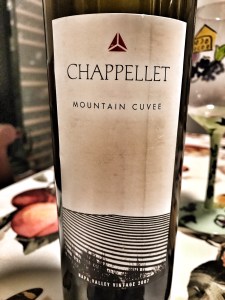
Chappellet is one of the famous producers in Napa, making wines for more than 40 years, now in the second generation of the family; their wines are highly regarded by consumers and critics alike. Some time back in 2010 I scored a few bottles of 2007 Chappellet Mountain Cuvee Napa Valley (14.9% ABV, Cabernet Sauvignon 51%, Merlot 46%, Malbec 1%, Cabernet Franc 1%, Petit Verdot 1%). My first taste was also one of the early posts in this very blog, and nothing short of disappointment (read it here). Continuing tasting throughout the years, I was still missing that “aha moment”, an opportunity to say “ahh, I like it”. It particularly applies to the 2007 vintage of Chappellet, as in 2014 I had an opportunity to taste the 2012 vintage of the same wine (Mountain Cuvee), and the wine was quite pleasant.
A couple of days ago I was looking for the wine to open for dinner and the last bottle of 2007 Chappellet caught my attention. Well, why not? 10 years is a good age for the California wine – let’s see how this wine is now ( even though I have not much of a hope based on the prior experience). Cork is out, wine is in the glass. The color, of course, shows no sign of age, still almost black. But the nose was beautiful – fresh, intense, inviting, with a touch of cassis and mint. The first sip confirmed that the wine completely transformed – open, rich, succulent fruit, cassis and blackberries, supported by the firm structure of the tannins without any overbearing, eucalyptus and touch of sweet oak, clean acidity. Perfectly powerful, but also perfectly balanced with all the components been in check. Now this was the “ahh, this is so good” wine which I would be glad to drink at any time. (Drinkability: 8+/9-).
This delicious experience prompted this post. I’m glad to find it with my own palate, that “needs time” is not a moniker for the “crappy wine”, but a true statement. I’m sure this is not universally true – some wines are simply beyond the help of time – but this definitely worked for this particular wine and for the 2007 Napa vintage. I don’t have any more of this 2007 Chappellet, but I have other 2007 Napa wines, and I just upped my expectations significantly.
Have you had similar experiences? How would you fare 2007 Napa vintage? Cheers!
Happiness-Inducing Wines of Lieb Cellars
 “Rising tide lifts all boats”.
As the wine growing in popularity all over the United States (still does, I hope), we witness the “wine countries” appearing everywhere – not just singular wineries, but the actual aggregations of the wineries, often presented as “wine trails”. While Napa and Sonoma definitely paved and continue leading the way to what the “wine country” is, you can find wineries all over the country offering not only wine tastings, but live music, concerts, dinners, special events and lots more.
Long Island wine country is the one closest to the New York City, making the wines for about 40 years by now. There is a very good chance, however, that even if you live in the USA, you never tasted Long Island wines – same as it is practically impossible to find the wines from Texas, Virginia, North Carolina, Arizona or Michigan anywhere outside of those states. So if I will tell you that Long Island makes world class Riesling, Chardonnay, Chenin Blanc and Merlot, you will probably have to take my word for it.
Over the past 10 years or so, visiting Long Island wineries on more or less a regular basis, I witnessed those wineries perfectly learning from Napa – both the good and the bad. On the good side, more and more knowledge is accumulated as to which vineyards and grapes do best, which individual plots do best, and the winemaking becoming more precise and resourceful. The bad side is in the fact that as the wines are getting better and better, it is less and less possible to enjoy the wines in the wine country itself, as it becomes more and more touristy – and visitors often get this “tourist special” treatment… Oops – no, we are not going into the rant, nope. Let me get to what I actually wanted to talk about.
When I was offered to taste some of the wines produced by Lieb Cellars, I had to do a bit of a research first. It turned out that despite visiting Long Island wineries every year, I never made it to Lieb Cellars and was pretty much unfamiliar with their wines. Therefore, I was looking at the best case – the wine country was coming to me, without any additional tourist distractions, yay!
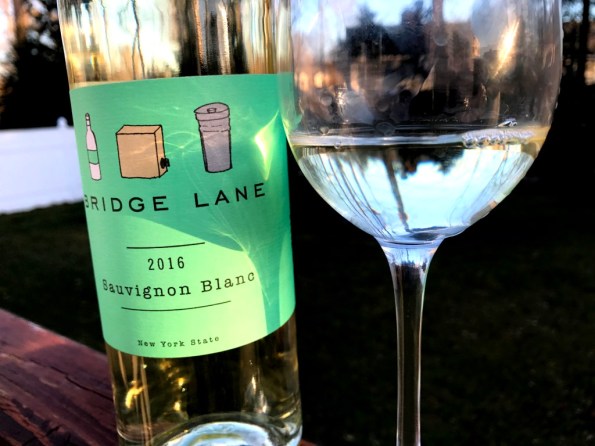
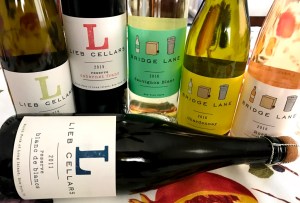
Now, I would like to finally explain the title of this post (after almost falling for a rant, yeah). When the wines arrived and I started taking them out of the box, the first thought was “wow, I love these labels!”. There is really nothing special about those labels, except that they are very clean and simple, and all of them use bright, cheerful colors. We eat with our eyes first – everybody know that – and it works for me the same with the the wine labels. Of course, what’s inside the bottle is far more important than the label itself, but good label makes you anticipate good wine – works for me every time.
In case of Lieb Cellars wines, the happiness-inducing labels were also perfectly supported by what was in the bottles, as you can tell from my tasting notes below. Few comments before I will leave you with them.
Lieb Cellars produces two different lines of wines. The first line, Lieb Cellars, is being produced since 1992. You can see those wines identified on the labels as Lieb Cellars, and today those are the Reserve wines made only from the estate-produced fruit. In 2004, Lieb Cellars started new line of wines called Bridge Lane – named after the farm road adjacent to one of the Lieb vineyards. While Bridge Lane are called a “second label” wines, there is nothing “second” about them – sustainably farmed, small crop, hand harvested wines, available in 3 different formats – standard bottle, 3L box and 20L kegs – whatever size your heart desires. You can even see those three available sizes pictured on the Bridge Lane labels.
Time to talk about the wines – here are my notes:


2016 Bridge Lane Chardonnay New York State (12.5% ABV, $15, 100% Chardonnay)
C: straw pale
N: lemon with distant hint of rosemary
P: lemon, tropical fruit, mango, Granny Smith apples
V: 7+/8-


2016 Bridge Lane Rosé New York State (11.9% ABV, $15, 49% cabernet Franc, 29% Merlot, 16% Malbec, 4% Pinot Noir, 2% Petit Verdot)
C: light onion peel
N: strawberries all the way, ripe strawberries, clean, inviting, fresh, touch of yeast Inessa which makes you smell it for a long time
P: strawberries on the palate, clean lemony acidity, firm and present. It would happily compete with any Provence Rosé
V: 8, wow, what a treat!


2016 Bridge Lane Sauvignon Blanc New York State (12.0% ABV, $15, 100% Sauvignon Blanc)
C: literally non-existent, straw pale extra light
N: fresh cut grass, medium intensity
P: lemon, tart fruit, cut through acidity. More of a Sancerre style – less fruit than California, less intensity than NZ. Clean acidity on the finish.
V: 8-, very enjoyable.


2011 Lieb Cellars Reserve Blanc de Blancs North Fork of Long Island, New York (12.5% ABV, $30, 48 months on the lees, 100% Pinot Blanc)
Appearance: Light golden color, fine mousse
N: touch of Apple, touch of yeast, delicious, open
P: touch of acidity, apples, lemon, restrained
V: 8/8+, the bottle can be gulped in one sitting


2015 Lieb Cellars Pinot Blanc Reserve North Fork of Long Island, New York (11.9% ABV, $20, 98% Pinot Blanc, 2% Riesling)
C: straw pale
N: white stone fruit, nice sweetness
P: beautiful, plump fruit, generous, delicious
V: 8, outstanding.


2015 Lieb Cellars Reserve Cabernet Franc North Fork of Long Island, New York (12.8% ABV, $30, 10 month in Hungarian oak, 85% Cabernet Franc, 9% Cabernet Sauvignon, 4% Merlot, 2% Petit Verdot)
C: dark ruby
N: mint, hint of mushrooms, touch of tobacco
P: fresh, open, blackberries, silky layers,
V: 7+/8-
The wines give us pleasure. It is not simple to convey that in words, but I hope I managed to share at least a glimpse of a pleasure brought by these Lieb Cellars wines. If anything, let me give you only one advice – find ’em and drink ’em. Cheers!
Precision of Flavors – Tasting the Wines of Achaval-Ferrer
 Drinking wine is a pleasure – for sure it should be, and if you don’t feel like it, maybe you shouldn’t drink it at all. At the same time, there are multiple ways to look at one and the same thing.
A pleasure of drinking of the glass of wine may be just as it sounds, very simple – take a sip of the liquid in the glass, say “ahh, it tastes good”, and continue to the next sip or with the conversation, whatever entices you the most at the moment.
Then there are many of us, wine lovers, who, professionally or unprofessionally, can’t stop just at that. Yes, we take pleasure in every sip, but then we need to dig in. We feel compelled to put on the Sherlock Holmes hat and play the wine sleuth, figuring out exactly what we are tasting in that very sip. What was that flavor? Was that a raspberry? Hmmm, maybe not. And that whiff of something? It is so familiar! Why can’t I put a name on it? Grrrr.
Everyone who engaged in that wine tasting exercise I’m sure can relate to what I’m saying. But every once in a while, we do get a break, when the flavor simply jumps at you, pristine and obvious. And the best twist here is when the flavor is matching to what is expected to find in the wine, like fresh cut grass in Sauvignon Blanc, black currant in Cabernet Sauvignon, or pepper in Syrah – don’t we love those pure and precise flavors?
Achaval-Ferrer winery is only about 20 years old, built on the passion and vision of a group of friends in Mendoza, Argentina. In those 20 years, Achaval-Ferrer accomplishments are nothing short of enviable. Achaval-Ferrer wines earned multiple Decanter magazine 5-star ratings (the highest). There are 29 wines from Argentina rated as “Classic” by Wine Spectator (95-100 ratings) – 13 out of those 29 wines are Achaval-Ferrer wines; the flagship Malbec Finca Altamira consistently getting 96 points rating year after year.
In addition to passion, vision, hard work and perseverance, the success foundation of Achaval-Ferrer is its high altitude vineyards, located from 700 to 1100 meters above sea level (2,300 – 3,600 ft). Three out of four main vineyards of Achaval-Ferrer are also about 100 years old, and boast pre-phylloxera vines, as Phylloxera simply can’t survive in those high mountains conditions. Now all left to do is to take the beautiful fruit those vineyards produce and make it into equally beautiful wines – the Achaval-Ferrer does it quite successfully.
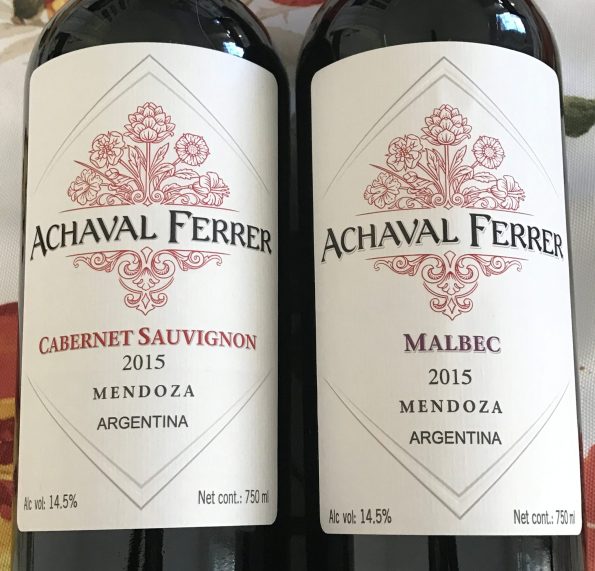
Here is what triggered my “precision of flavors” opening. I had an opportunity to taste a sample of Achaval-Ferrer wines recently, Cabernet Sauvignon and Malbec. While Malbec was a very good wine, but clearly needed time to mature, Cabernet Sauvignon was stunning, with flavors and aromas just jumping at your right away from the glass, with easy to relate to, textbook-correct cassis – also intensifying its purity with the time. This was a perfect example of why Argentinian wines are so popular and deserving of all your attention. And at a price of $24.99, the Cabernet Sauvignon offer an outstanding QPR, easily beating many classic Napa Cabs which would also cost you at least three times as much.
Here are my detailed notes:
2015 Achaval-Ferrer Cabernet Sauvignon Mendoza Argentina (14.5% ABV, $24.99, 100% Cabernet Sauvignon)
C: dark garnet, almost black
N: very intense, dark roasted fruit, cassis. The roasted fruit intensity diminishes as the wine breathes.
P: beautiful cassis, clean acidity, soft tannins, lots of layers. As the wine breathes, the tannins show better and more pronounced. Pure clean black currant after a day.
V: 8+, outstanding, wow. Will evolve.
2015 Achaval-Ferrer Malbec Mendoza Argentina (14.5% ABV, $24.99, 100% Malbec)
C: practically black
N: roasted meat, smoke, tar, intense, baking spices
P: dark fruit, bright acidity, mint, alcohol burn in the back?, succulent, lavender, spicy. Blueberries showed up on the second day.
V: 8, needs time, but perfectly delicious on the second day.
Here you are, my friends. Achaval-Ferrer definitely makes wines worthy of oenophile’s attention – and the QPR makes these wines worth seeking. Cheers!
Last Bottle Sign Up ($10 credit)





