Archive
New York Cabernet Franc Grand Tasting 2026
In my oenophile journey, Cabernet Franc was one of the early discoveries. It all started in Bordeaux, and I don’t mean visiting, just reading about it, not even so much tasting. Continuing that journey, at some point I arrived in the Loire, and there, of course, Cabernet Franc is the king. I wouldn’t remember what the very first Cabernet Franc I tasted was, but I’m sure it was a Cabernet Franc from Loire – Chinon, Saumur, I’m not sure.
As I live on the East Coast of the US, it is only logical that my Cabernet Franc journey continued while discovering East Coast wineries – Finger Lakes, Niagara on the Lake, Hudson Valley, Long Island. In the wine world of the East Coast, Cabernet Franc is the undisputed king of red wines – practically every winery I know of makes Cabernet Franc wine, and they make it quite successfully.
It is interesting how we hear things in our lives, and only many years later, those things of a sudden start making sense (call me slow, I’m sure I deserve it). When Lori Budd of Dracaena Wines started Cabernet Franc Day celebrations more than 10 years ago, it was all done under the slogan “Not just a blending grape”. Yes, I understood the slogan, but never thought of the full notion behind it. Getting into the wine world on the East Coast, Cabernet Franc was never a blending grape for me – the absolute majority of the Cabernet Franc experiences were with 100% Cabernet Franc wines. However, as the California wine world grew up following Bordeaux, Cabernet Franc was generally not taken seriously on their own, but only in the supporting roles to the major grapes – e.g., Cabernet Sauvignon, the kind of California. As I’m typing this sitting on the train on my way to New York City to attend the Cabernet Franc Grand Tasting, I finally realize what Lori meant by her slogan, bringing her love of the Cabernet Franc from the East Coast to reality on the West Coast, in California. Yes, of course, it is not just a blending grape, and I’m just about to deep dive into the world of 100+ Cabernet Franc bottling from 40 producers.
Okay. So everything written above was written on the train on my way to the Cabernet Franc Grand Tasting 2026. Now, I want to share my impressions about the event, about the Cabernet Franc wines, and the experience overall.
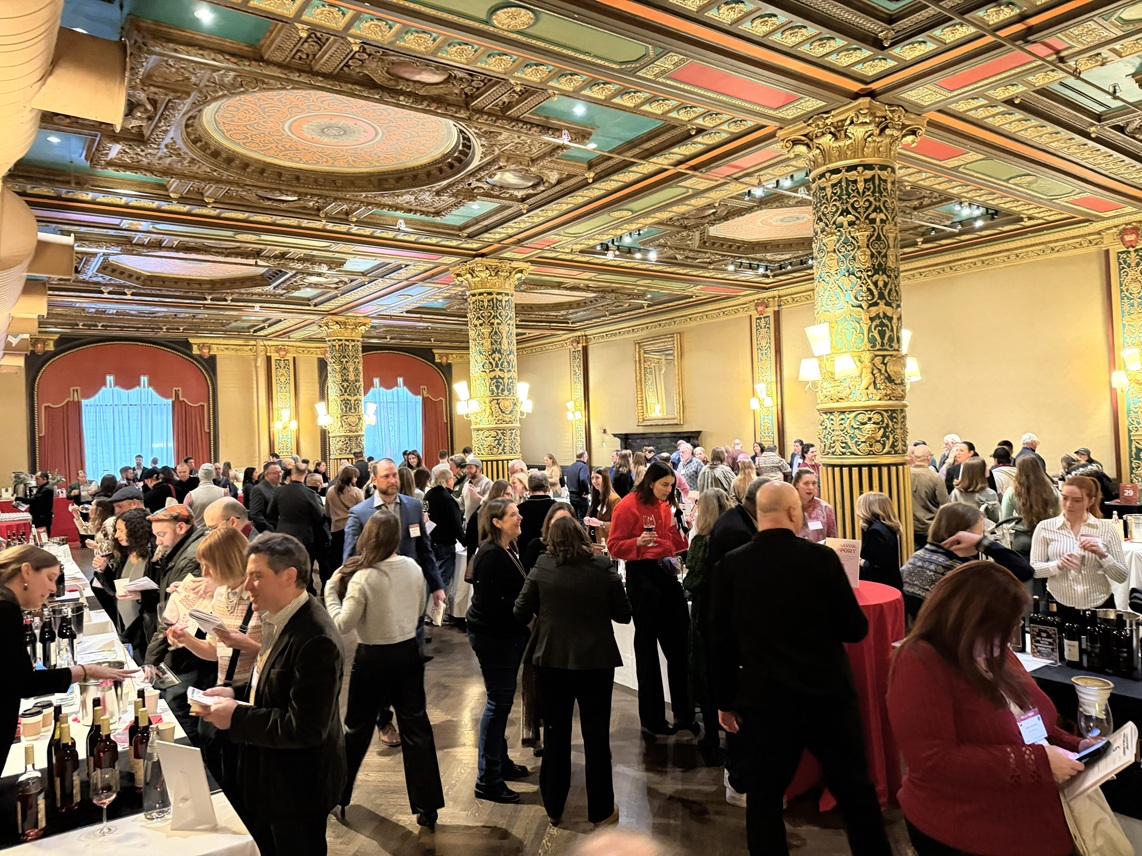
Let me start with the event itself. In a word, top-notch. Pay attention – these are the impressions of the wine blogger/writer/geek. From that point of view, the event was possibly the best-organized I have ever attended. Of course, I will explain, no need to nudge.
Before the event, I got the list of wineries and wines planned for the event. The list was sorted alphabetically, with all the wine details (vintage, ABV, grape composition, MSRP). In the event, the wineries were located in the same exact order! If I didn’t want to go one by one, I would just easily locate the winery I wanted! Okay, I get it, there were only about 40 wineries in the event, but I don’t see how this wouldn’t scale. Also, talking about organization – we had individual spit cups provided, and every (!) table had a large spittoon – an absolute convenience in the wine tasting. Every year, I attend probably 10, maybe 15 large wine tasting events, so from that experience, this was literally the best, if not the best ever.
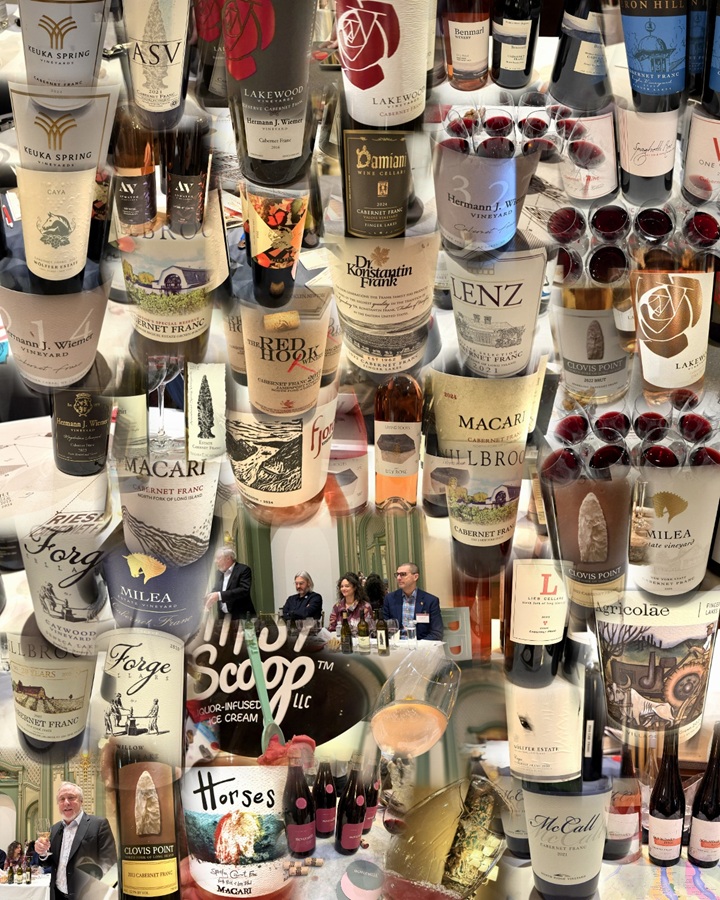
An impression of New York Cabernet Franc Grand Tasting in One Picture
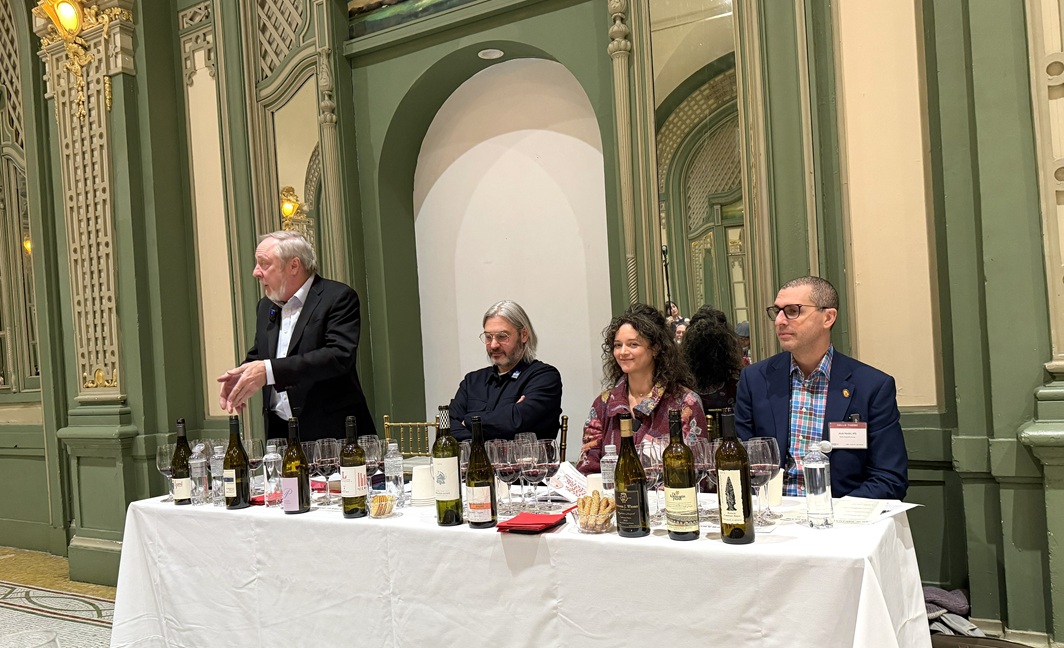
Next part of the experience – Cabernet Franc seminar. My first attraction point to this seminar was the fact that it was led by Kevin Zraly, whom I really consider my wine teacher, after taking his Windows on the World wine school classes a few decades back. So I was very happy to be in his presence again. For the rest of it, the seminar experience was more of an “all over the place” type. It was too long (was supposed to be 1 hour, but it was 1:20 or so running time, plus a bit of a delay at the start). The panelists were all knowledgeable, but none of them were the winemakers, so I really didn’t learn much from them, and they all loved to talk. And the worst part, unfortunately, was the wines in the seminar, and here I’m a bit perplexed. I loved the classic method sparkling Cabernet Franc from Macari Vineyards on Long Island, which we were greeted with as we walked into the seminar room. I also loved the last wine #9, 2012 Cabernet Franc from the Arrowhead Spring Vineyards Niagara Escarpment- it was superb. The other 8 wines were all over the place, from greatness to a simple “no, I’m not drinking that” – but, if I overheard the panel correctly, the wines for tasting were poured 3 hours prior. If this is the case, this didn’t help those wines at all. Again, it is entirely possible that I completely misheard that. But for further details, please see my notes on the seminar wines below.

Kevin Zraly
Now, let’s talk about my Cabernet Franc impressions after tasting and the seminar.
I have to say that it’s been a while since I had a deep immersion opportunity into the New York Cabernet Franc at any scale, never mind such a large and focused event – this was my first time attending it. But that is not even an important point. It’s been a significant lapse since I had New York Cabernet Franc, so all comparisons I was making were the present state of the New York Cabernet Franc versus New York Cabernet Franc as I remember it.
The State of New York has 7 defined AVAs – Champlain Valley, Finger Lakes, Hudson River Region, Upper Hudson, Lake Erie, Long Island, and the Niagara Escarpment. Out of this list, I’m mostly familiar with Finger Lakes, Hudson Valley (lumping together both Hudson regions), and Long Island. These were mostly the regions represented in the tasting, plus the Niagara Escarpment.
The State of New York’s Cabernet Franc definitely evolved compared to what I knew. This evolution now includes not only widely available Cabernet Franc Rosé, but also sparkling Cabernet Franc. I’m curious when (I think “when” is more appropriate than “if”, but of course I can be wrong) we will see Cabernet Franc Blanc (similar to what we see in the Oregon Pinot Noir scene). I also would think that at some point, we should see Cabernet Franc “port” just to complete the full range of Cabernet Franc expressions.
Now, to summarize my impressions, I have to use the word I don’t like using – interesting. Interesting is definitely not a very kind descriptor, but that’s the best I can do at the moment – let me explain.
I loved the absolute majority of Rosé wines across the board. They were elegant, mostly lean, and many of them capable of perfectly competing with Provence. The same goes for sparkling wines – fresh, generous, with a wide range of expressions, but I would be happy to drink the majority of them (if we exclude the price). But the main body of the tasting, Cabernet Franc reds, represented a mixed bag.
During the seminar, one of the panelists used the descriptor “finesse” to describe Cabernet Franc. I love this descriptor, but for me, finesse first and foremost means perfection of the balance. All your taste buds have to sing in unison for the wine to be declared as having “finesse”. For example, Cayuse wines might be the most expressive wines made in the United States, solely based on their ability to express the specific terroir, but the main descriptor for Cayuse wines is “power”, not “finesse”. Burgundian Pinot Noir possesses finesse, but the main expression of Oregon Pinot Noir is power, not finesse. Going back to our Cabernet Franc wines, I found “finesse” maybe in 2-3 wines out of 60 – 70 I tasted.
Tannins often were my main issue. And please note – tannins, not the use of oak. A number of wines were proudly unoaked. When the front of my mouth was literally locked up by the borderline painful tannins, and the winery rep was explaining that the wines were aged in stainless steel, I had to ask, “how is the wine so tannic?”. “Ah, we macerated with the skins for 71 days”, was the reply. Oh… I don’t know if it will help the wine to age better, but for those of us who want to drink the wine now… Please, don’t do this.
Along the lines of “finesse,” my second gripe would be another claim made during the seminar – “terroir”. It was said that now we can find similarities among the wines coming from the same “place”. That means that we should be able to find similarities between Cabernet Franc made in the Hudson Valley and successfully differentiate them from Cabernet Franc made in the Finger Lakes. Feel free to call me an amateur shmuck, but I would not be able to find similarities or differentiate most of the Cabernet Franc wines (excellent wines, mind you!) I tasted, even if my life depended on it.
On a positive side, practically all Cabernet Franc aged expressions were delicious. We had 2005, 2010, 2012, 2015, 2016, and other vintages with some age, and they were excellent across the board. The 2005 Millbrook was probably at its peak, and I don’t know how long that peak will last. But my general observation is that New York Cabernet Franc can age.
Please don’t get me wrong – there were lots of excellent Cabernet Franc reds in the tasting. If you want to surprise someone with a delicious red from the East Coast of the United States, a bottle of Cabernet Franc would probably be your top contender. Better yet – if you find – and afford – a library Cabernet Franc, your friends would thank you profusely.
Now, for what it’s worth, I would like to share my notes from the seminar and the tasting. One generic note – if grape composition is not listed, the wine is made from 100% Cabernet Franc.
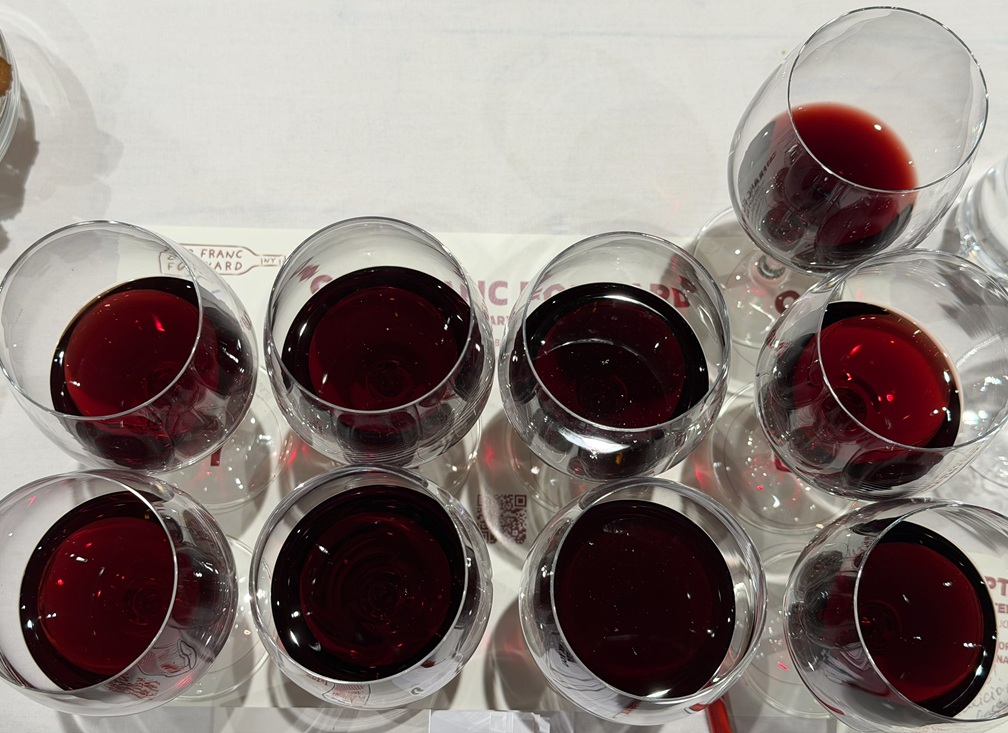
Seminar wines:
2024 Macari Vineyards “Horses” Cabernet Franc Pet Nat (11.4% ABV, $32) – wow! Fresh, delicious, crisp bubbles, just perfect.
1. 2024 Fjord Vineyards Estate Cabernet Franc Hudson River Region (12.6% ABV, $30)
A Wow nose, classic with cassis and tobacco.
The palate is disappointing. Green, aggressive
2. 2022 Benmarl Winery Estate Cabernet Franc Hudson River Region (13.7% ABV, $40)
Complex nose with graphite and herbs
Green, tight, tannic palate. Not enjoyable.
3. 2024 Paumanok Vineyards “Minimalist” Cabernet Franc North Fork of Long Island (12.5% ABV, $55)
Carrot Juice? Pomegranate?
Just no…
4. 2023 Lieb Cellars Estate Cabernet Franc North Fork of Long Island (12.9% ABV, 88% Cabernet Franc, 8% Cabernet Sauvignon, 3% Malbec, $38)
Classic nose
Classic palate
+++, nice, enjoyable
5. 2021 Wölffer Estate Vineyard “Caya” Cabernet Franc Long Island (13.5% ABV, 87% Cabernet Franc, 13% Merlot, $37)
Volcanic nose, pleasant, nice
The palate is powerful and balanced, earthy notes, tobacco, pronounced but balanced tannins.
+++-|, excellent
6. 2024 Boundary Breaks Vineyard Cabernet Franc Finger Lakes (13.5% ABV, 95% Cabernet Franc, 5% Merlot, $25)
Classic Nose on a lighter side.
Nice and classic palate, but tannins kick in quickly. Still, overall – not bad.
+++
7. 2023 Herman J.Wiemer Magdalena Vineyard Cabernet Franc (12.8% ABV, $45)
Rutherford dust on the nose, medicinal notes, bell pepper.
No bad, but fruit fades away quickly, leaving you with tannins.
8. 2020 Dr. Konstantin Frank Winery Cabernet Franc Finger Lakes (13% ABV, $28)
Beautiful, classic nose.
On the palate, the wine is balanced, with succulent fruit, tannins are present but well-balanced and appropriate.
+++-|
9. 2012 Arrowhead Spring Vineyards Library Selection Cabernet Franc, Niagara Escarpment
Nose is definitely medicinal, with iodine, cassis, and herbs.
Wow palate – wonderful, fresh, tight, great acidity, excellent.
++++, a special treat.
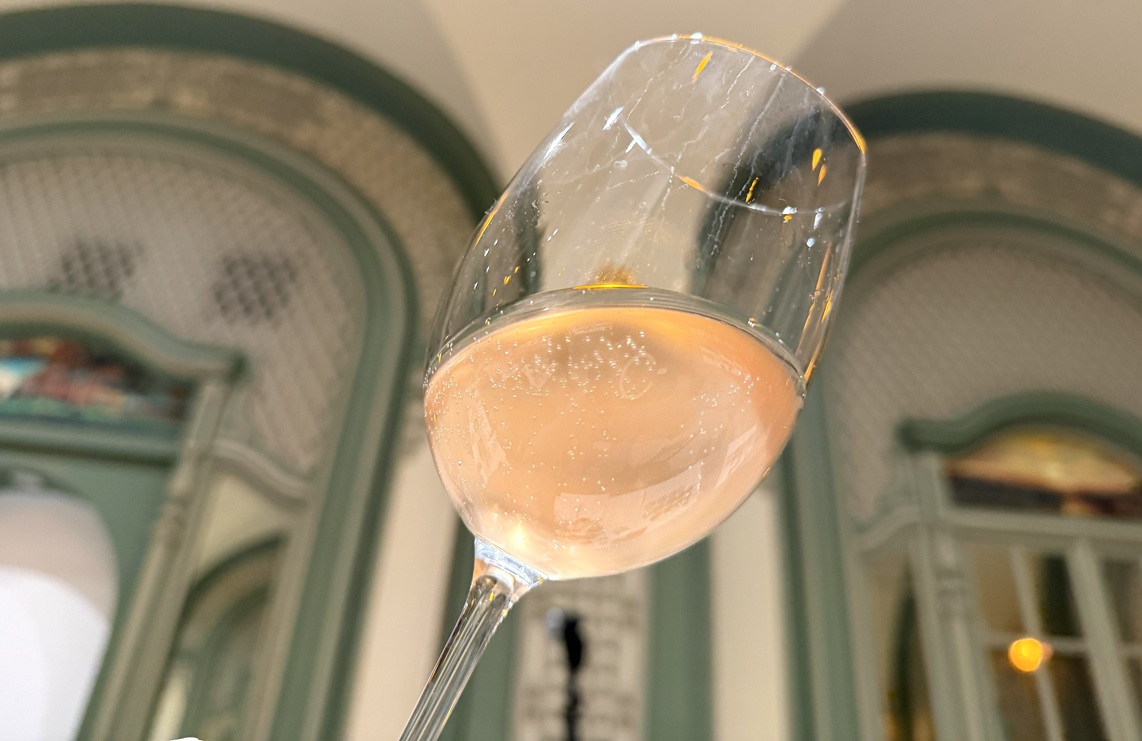
Here are my notes for the general tasting. I had time for about half of the tables (probably 23-24 out of 40), and the notes are very limited, as I mostly use my trade tasting rating system of “+” signs, with “+++” being a very solid rating. I’m also using “-|” as .5 improvement, so “++-|” basically means 2.5.
Okay, without further ado, here are the notes from the general tasting:
Apollo’s Praise 2024 Cabernet Franc – Picardie Finger Lakes (13% ABV, $28.00) – horrible. Green and biting
Arrowhead Spring Vineyards 2023 Cabernet Franc Stainless Steel Niagara Escarpment (12.5% ABV, $19.95) – gripping tannins (71 days maceration???)
Arrowhead Spring Vineyards 2023 Cabernet Franc Barrel Aged Niagara Escarpment (13.3% ABV, $24.95) – approacheable, nice
Atwater Vineyards 2024 Dry Rosé of Cabernet Franc/Blaufränkisch Finger Lakes (11.6% ABV, $27.00, 85% Cabernet Franc, 15% Blaufränkisch) – +++
Atwater Vineyards 2023 Cabernet Franc Finger Lakes (11.7% ABV, $32.00) – good
Atwater Vineyards 2024 Cabernet Franc Finger Lakes (14.1% ABV, $32.00) – ++, good
Benmarl Winery 2024 Pétillant Hudson River Region (12.3% ABV, $25.00) – +++, joy!
Benmarl Winery 2024 Dry Rosé Hudson River Region (12.2% ABV, $20.00) – ++-|, very good
Benmarl Winery 2022 Estate Cabernet Franc Hudson River Region (12.1% ABV, $40.00) – okay, strange. Petrol?
Boundary Breaks Vineyard 2024 Cabernet Franc Finger Lakes (13.5% ABV, $21.95, 95% Cabernet Franc, 5% Merlot) – ++
Boundary Breaks Vineyard 2024 Cabernet Franc Reserve Finger Lakes (13.5% ABV, $25.95) – ++, supposedly unoaked, gripping tannins
Boundary Breaks Vineyard 2024 Dry Rosé Finger Lakes (12.5% ABV, $15.95, 60% Cabernet Franc, 40% Cabernet Sauvignon) – on a sweeter side
Clovis Point Vineyard and Winery 2022 Cabernet Franc North Fork of Long Island (13.2% ABV, $45.00, 95% Cabernet Franc, 5% Malbec) – ++-|
Clovis Point Vineyard and Winery 2022 Sparkling Cabernet Franc (12% ABV, $49.00) – delicious! light sweetness
Damiani Wine Cellars 2024 Cabernet Franc Finger Lakes (13.5% ABV, $28.00) – +++
Damiani Wine Cellars 2024 Cabernet Franc Reserve Finger Lakes (13.7% ABV, $60.00) – +++
Damiani Wine Cellars 2024 Cabernet Franc Valois Vineyard Finger Lakes (14.1% ABV, $42.00) – +++
Damiani Wine Cellars 2022 Cabernet Franc Barrel Select Finger Lakes – superb
Dr. Konstantin Frank 2022 Cabernet Franc Finger Lakes (13% ABV, $27.99) – +++, classic, clean
EV&EM Vineyards 2023 Classic Cabernet Franc North Fork of Long Island (12.7% ABV, $58.00) – too lean. 2023 was a very difficult vintage
EV&EM Vineyards 2024 Classic Cabernet Franc North Fork of Long Island (12.7% ABV, $58.00) – much bigger than 2023. 2024 was an excellent year on Long Island
Fjord Vineyards 2024 Estate Cabernet Franc Hudson River Region (13.8% ABV, $30.00) – +++
Fjord Vineyards 2024 Estate Dry Rosé of Cabernet Franc Hudson River Region (12.6% ABV, $22.00) – +++, excellent, my favorite so far
Fjord Vineyards 2022 Estate Cabernet Franc Hudson River Region (13.1% ABV, $30.00) – ++-|, interesting, volcanic notes
Forge Cellars 2020 Willow Vineyard Cabernet Franc Seneca Lake Finger Lakes (13% ABV, $26.00) – good
Forge Cellars 2023 Caywood Vineyard Cabernet Franc Seneca Lake Finger Lakes (13% ABV, $28.00) – good


Hermann J. Wiemer Vineyard 2023 Cabernet Franc Finger Lakes (12.5% ABV, $27.00) – +++, excellent
Hermann J. Wiemer Vineyard 2023 Cabernet Franc Magdalena Vineyard Finger Lakes (12.8% ABV, $45.00) – +++, excellent. Surprise – I didn’t like it in the seminar… Go figure…
Hermann J. Wiemer Vineyard 2021 Library Vintage Cabernet Franc in Magnum Finger Lakes (12.5% ABV, $90.00) – +++-|, excellent, round, powerful
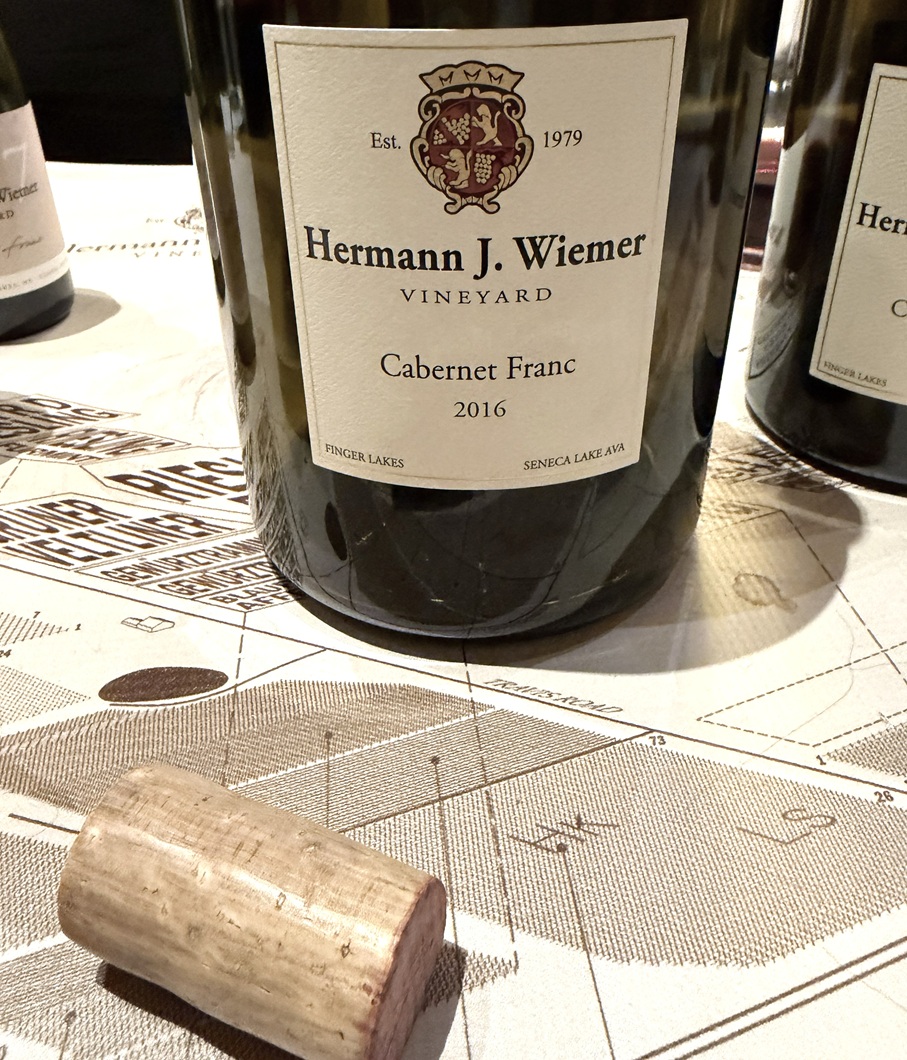
Hermann J. Wiemer Vineyard 2016 Library Vintage Cabernet Franc 3 Litre Finger Lakes (12.5% ABV, $360.00) – +++, excellent
Hermann J. Wiemer Vineyard 2019 Single Clone 214 Cabernet Franc Finger Lakes – an original Loire clone, very good
Hermann J. Wiemer Vineyard 2019 Single Clone 327 Cabernet Franc Finger Lakes – a Bordeaux clone, certified in 1975, very good
Heron Hill Winery 2020 Heron Hill Classic Cabernet Franc Finger Lakes (13.3% ABV, $22.00) – +++, nice, round, clean
Heron Hill Winery 2022 Ingle Vineyard Cabernet Franc Finger Lakes (13.8% ABV, $40.00) – +++, nice, round, clean
Keuka Spring Vineyards 2024 Cabernet Franc Finger Lakes (13.1% ABV, $28.99) – +++, excellent, clean, delicate, light color with a lip-smacking palate
Keuka Spring Vineyards 2025 Dry Rosé Finger Lakes (11.8% ABV, $19.99, 60% Cabernet Franc, 40% Blaufrankisch) – +++-|, a new favorite
Keuka Spring Vineyards 2024 Epic Finger Lakes (12.1% ABV, $29.99, 65% Cabernet Franc, 35% Blaufrankisch) – +++-|, excellent
Lakewood Vineyards 2024 Cabernet Franc Finger Lakes (13.8% ABV, $20.00) – good, light, nice color
Lakewood Vineyards 2020 Reserve Cabernet Franc Finger Lakes (15.9% ABV, $50.00) – good
Lakewood Vineyards 2024 Cabernet Franc Dry Rosé Finger Lakes (13.1% ABV, $18.00) – good
Lamoreaux Landing Wine Cellars – Rosé was too sweet, and I didn’t like any of the reds
Lenz Winery 2021 Estate Selection Cabernet Franc North Fork of Long Island, Peconic (13.5% ABV, $55.00) – excellent. This is a new project at Lenz. Until 2017, Cabernet Franc was used only for blending
Living Roots Wine & Co. 2025 Finger Lakes Pet-Nat Rosé Finger Lakes (12.8% ABV, $26.00, 50% Cabernet Franc, 50% Blaufrankisch) – too sweet
Living Roots Wine & Co. 2025 Finger Lakes Dry Rosé Finger Lakes (12% ABV, $22.00, 41% Cabernet Franc, 33% Pinot Noir, 26% Blaufrankisch) – excellent
Living Roots Wine & Co. 2023 Finger Lakes Cabernet Franc Finger Lakes (12.6% ABV, $30.00) – excellent
Macari Vineyards & Winery 2024 “Lifeforce” Cabernet Franc North Fork of Long Island (12.9% ABV, $30.00) – +++, excellent
Macari Vineyards & Winery 2022 Cabernet Franc North Fork of Long Island (12.9% ABV, $38.00) – excellent
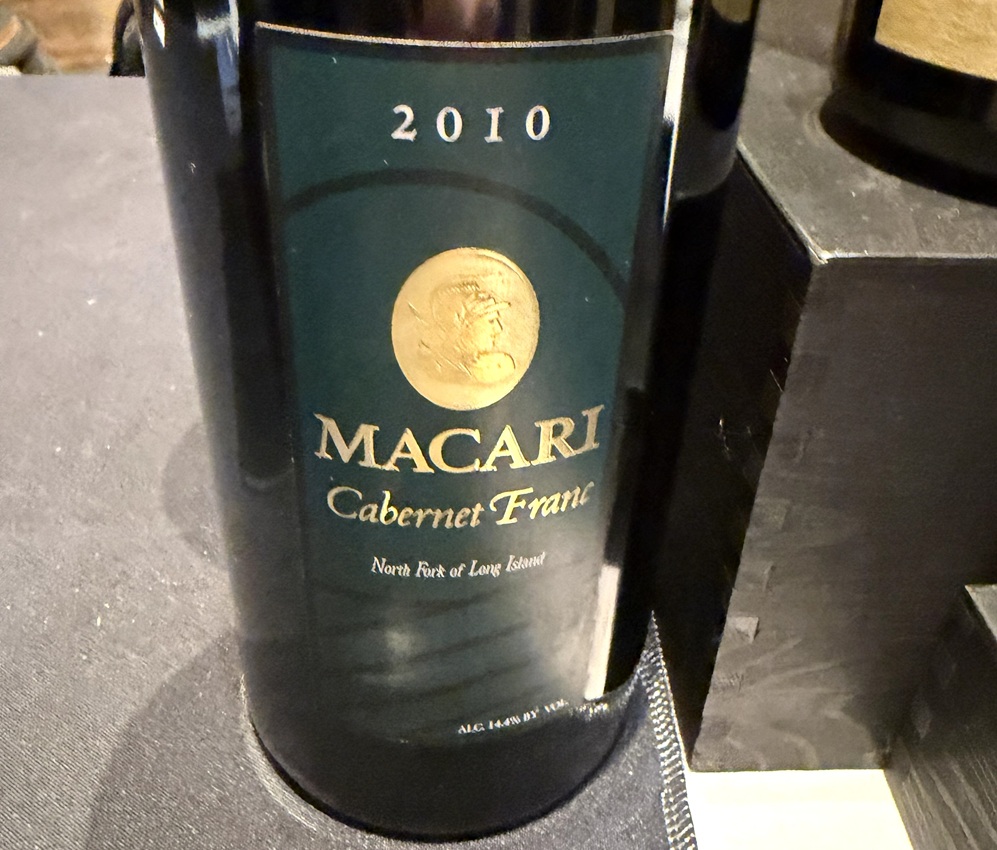
Macari Vineyards & Winery 2010 Cabernet Franc North Fork of Long Island – ++++, wow, powerful, delicious
McCall Wines 2021 Cabernet Franc North Fork, Long Island (12.8% ABV, $28.00) – +++, excellent
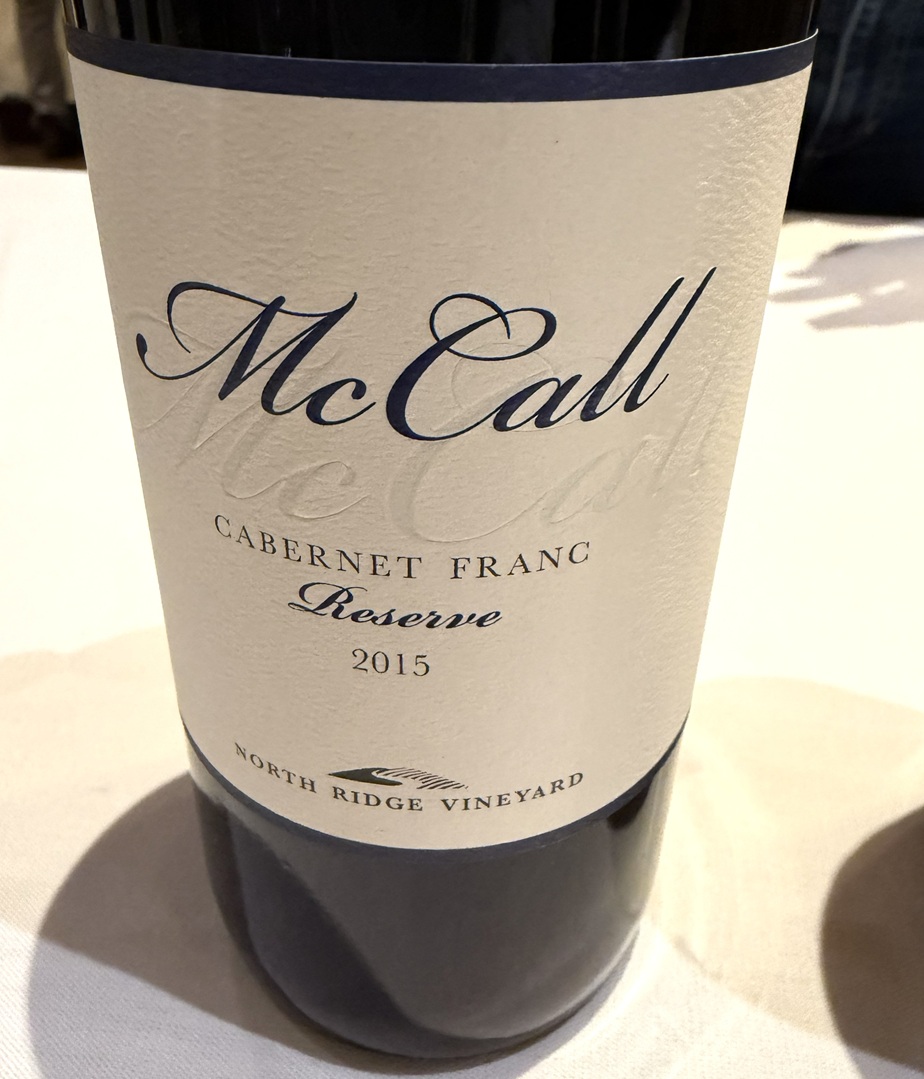
McCall Wines 2015 Cabernet Franc Reserve North Fork of Long Island (13% ABV, $49.00) – ++++, outstanding, elegant
Milea Estate Vineyard 2023 Milea Estate Vineyard Farmhouse Cabernet Franc Hudson River Region (12.5% ABV, $40.00) – ++-|, good
Milea Estate Vineyard 2023 Milea Estate Vineyard Reserve Cabernet Franc Hudson River Region (12.5% ABV, $50.00) – +++, excellent
Millbrook Vineyards & Winery 2025 Cabernet Franc Estate Rosé Hudson River Region (13.9% ABV, $30.00) – ++-|, good
Millbrook Vineyards & Winery 2023 Cabernet Franc Hudson River Region (13% ABV, $28.00) – ++-|, good
Millbrook Vineyards & Winery 2021 Cabernet Franc Proprietor’s Special Reserve Hudson River Region (13% ABV, $45.00) – +++, excellent
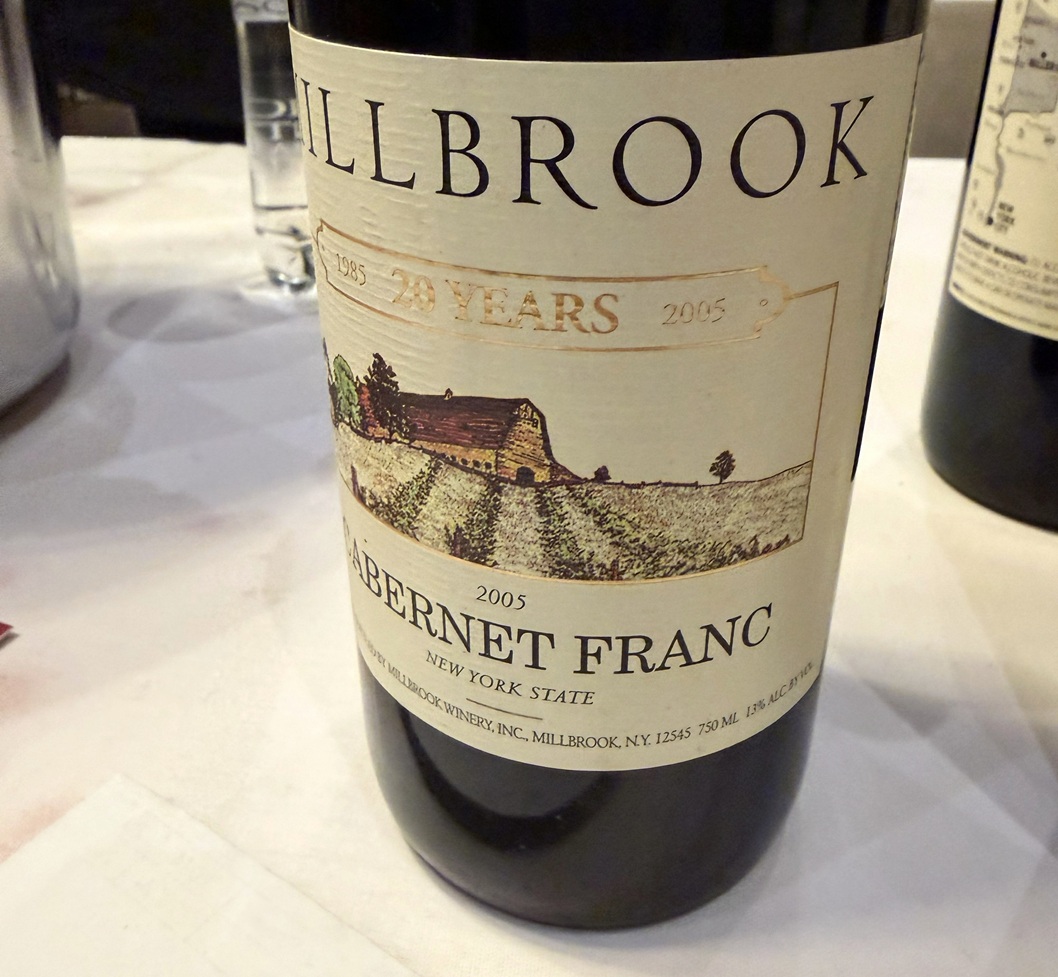
Millbrook Vineyards & Winery 2005 Cabernet Franc Hudson River Region (13% ABV, Library, 75% Cabernet Franc, 18% Merlot, 7% Cabernet Sauvignon) – ++++, wow, delicious. Oldest in the tasting. Might be at its peak
Neverstill Wines 2023 Cabernet Franc Finger Lakes / Hudson Valley (13%, $49.00) – good
One Woman Winery 2020 One Woman Cabernet Franc North Fork of Long Island (12.8% ABV, $42.00) – good
One Woman Winery 2022 One Woman Cabernet Franc North Fork of Long Island (12.8% ABV, $42.00) – good
Suhru & Lieb Vineyards 2023 Lieb Estate Cabernet Franc North Fork of Long Island (12.9% ABV, $38.00, 88% Cabernet Franc, 9% Cabernet Sauvignon, 3% Malbec) – good
Suhru & Lieb Vineyards 2024 Suhru Wines Rosé North Fork of Long Island (11.6% ABV, $21.00, 54% Cabernet Franc, 18% Merlot, 16% La Crescent, 12% Lagrein) – good, and a new grape!
The Red Hook Winery 2019 Jamesport Vineyard Cabernet Franc Long Island (14.1% ABV, $40.00) – good
Wölffer Estate Vineyard 2023 Estate Cabernet Franc Long Island (13.5% ABV, $25.00, 82% Cabernet Franc, 11% Merlot, 6% Cabernet Sauvignon, 1% Petit Verdot) – good
Wölffer Estate Vineyard 2021 Caya Cabernet Franc Long Island (13.5% ABV, $37.00, 87% Cabernet Franc, 13% Merlot) – good
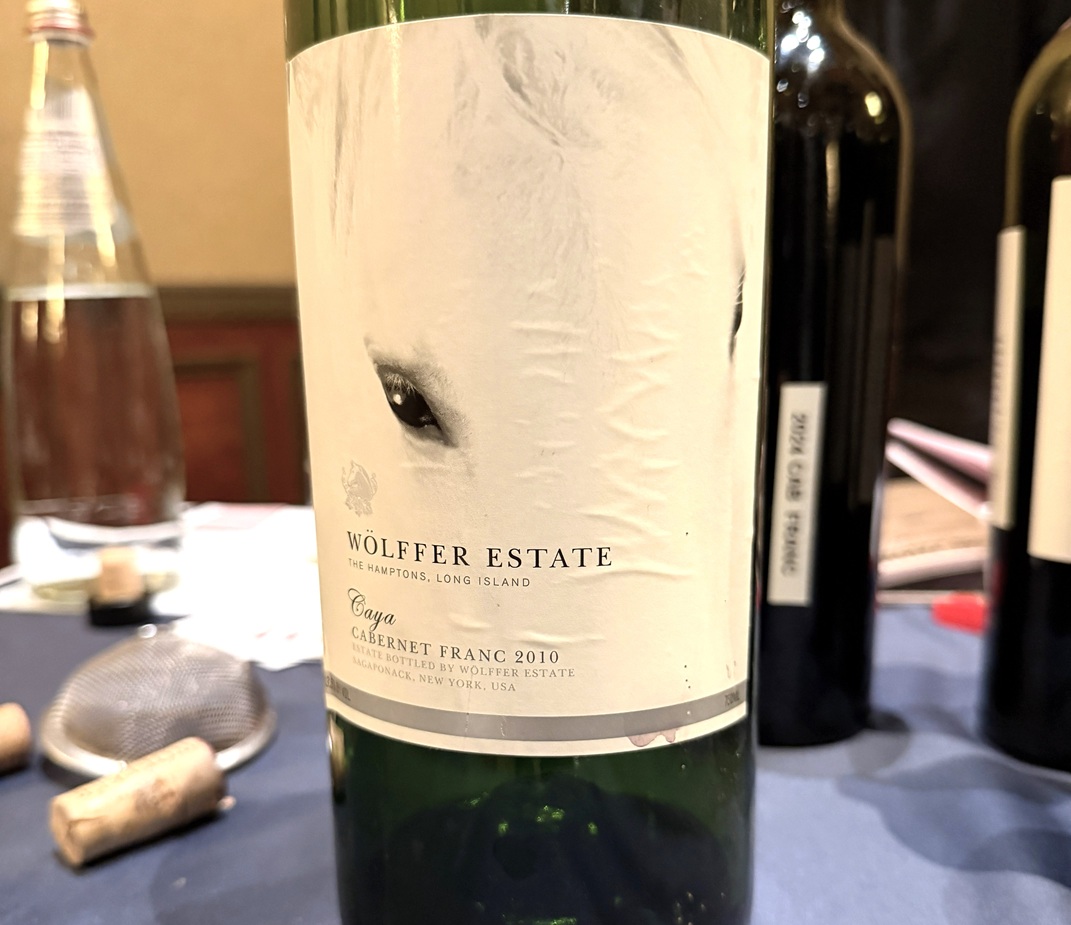
Wölffer Estate Vineyard 2010 Caya Library Selection Cabernet Franc Long Island (13.3% ABV, Library, 85% Cabernet Franc, 14.5% Merlot, 0.5% Cabernet Sauvignon) – outstanding
Uff, this was a long post. Hope you reached here, but if you didn’t, you are not reading this anyway 🙂
Until the next time – cheers!
Open That Local Wine Night
There is a good chance you heard of Open That Bottle Night, or OTBN for short – more than 2 decades old special celebration to encourage people to open their sacred bottle of wine and preferably share it with friends. OTBN is celebrated on the last Saturday in February, and I have to tell you that my last one was magnificent (see for yourself here). Today, while we are still celebrating wine and all the passionate people who put their heart and the soul into those bottles, we want to shift the focus to the bottles with possibly a different pedigree than the OTBN ones – today we focus on the local wines and wineries.
With the wines produced in all 50 states in the USA, the concept of a local winery is not an oxymoron. Local wineries offer a perfect weekend getaway, with wine, food, great discoveries, stories of passion and obsession, live music and simply an opportunity to relax, in the group and small or large. And oenophiles are willing to travel to their local wineries (it takes me about 3 hours of travel by car to the Long Island wineries – and this is perfectly local in my book) – but not today. With the pandemic madness we are living nowadays, we can’t really visit wineries, whether they are 15 minutes from our house or 5 hours – and this is the time when local wineries need our support the most. And actually, you and all of us can support them.
Whatever your “local” winery is, there is a good chance you have a bottle of your favorite local wine in the cellar. Frank Morgan, a veteran wine writer from Virginia, originally suggested making Saturday, March 28th (last Saturday in March) a night to open a bottle of Virginia wine. Lenn Thompson of The Cork Report fame suggested to extend this idea to all of the local wineries, no matter where those wineries are located, and designate that same Saturday as Open That Local Wine night. The event works in a very simple way – decide what bottle to open, open and enjoy it, with food or without, and share your support in social media using hashtag #openlocalwine.
It is obvious that the wineries need our support beyond opening that bottle today, and the best form of support, of course, is simply buying the wines. Literally all the wineries have special incentives for their customers. Many wineries offer free or heavily discounted shipping for their customers, such as a $5 flat rate, for example. If you have your favorite winery, you should check their web site and see what they offer. There are also a few of the winery lists with discounts which I can offer to your attention – here is one focused on the East Coast wineries, and here is another one covering pretty much the whole country.
You also should keep in mind that while you will be engaging in the great deed of supporting the local wineries, you will be in for a lot of pleasure. Amazing wines are produced today literally everywhere, not just in California, Washington, or Oregon. I’m a self-appointed wine snob, and nevertheless, I’m literally blown away every time I’m trying local wines. I had amazing wines last year in New Jersey and Maryland. Then I also discovered an array of amazing “orange” wines at Channing Daughters winery on Long Island (if you want to expand your wine horizon, take a look at this selection), of course in addition to all the whites, Rosé and reds they produce. Really, you have a lot to discover.

Let’s talk about my most recent discovery – Macari Vineyards from North Fork of Long Island. Macari Vineyards were founded in 1995 when the first vines were planted on previously a potato farm. Macari Vineyards uses biodynamic methods and produces some of the best fruit on the East Coast. They produce a range of wines, from more of Long Island traditional Chardonnay, Cabernet Franc, and Merlot to the oddballs such as 100% Pinot Meunier. I had an opportunity to try the samples of two wines Macari Vineyards wines, and I really enjoyed both – here are the notes:
2019 Macari Rosé North Fork of Long Island (12% ABV, $24, Merlot and Malbec blend)
Salmon pink
Herbs, strawberries
Underripe strawberries, crisp, fresh, good acidity.
8-, light and delicious.
2015 Macari Cabernet Franc Reserve North Fork of Long Island (14% ABV, $38, 20 months in 100% neutral French oak)
Dark Garnet
Bell peppers, eucalyptus, sage, cassis leaves
Soft, round, cassis, bell peppers, anise, crispy undertones, mouthwatering acidity, medium body, classic lean New York style.
8+, outstanding, the Cab Franc I love.
So what do you think, can you do it? Open that bottle of the local wine, maybe even get together with the friends – virtually, of course – Facetime, WhatsApp, Facebook, Skype, … and enjoy that bottle. And then go and explore what the local wineries have to offer – the world is your oyster, so any winery can be your local winery. You are up for a lot of tasty discoveries, I guarantee you that. #openlocalwine, my friends!
Welcome Spring With Wines of Lieb Cellars
 Considering the weather in the New England, “spring” is just a word. Still freezing temperatures during the night, and simply cold during the day, despite the sun been in a full swing. I’ve seen plenty of rain and sunshine, but snow and sunshine? For sure this was new for me. So seeing the way Mother Nature is, we simply have to proclaim that Spring has arrived, and behave appropriately – Mother Nature will have to eventually comply with that unyielding demand.
Spring is the renewal time for everything in nature – including wines. No, I didn’t mean the vines, the bud breaking and all other beautiful “new life” occurrences. I actually meant the wines, as to liquid in the bottle. Yes, Spring is the time for … new arrivals, for sure in the Northern hemisphere. New vintages, new wines, new excitement – this is the beauty of the wine. Every vintage is different, every bottle is different – pulling that cork (okay, it is more often twisting the screwtop nowadays) is always an exciting moment – you never know what you will find inside.
Last year I discovered the wines of Lieb Cellars from Long Island, and it was a very tasty discovery – in fact, I called Lieb Cellars wines “happiness-inducing”, so you understand how much I liked them. Obviously, I was very happy to receive the new vintage of the wines from Lieb Cellars and their daughter winery, Bridge Lane Wines.
This year, the wines from the Bridge Lane Wines showed up in the new packaging – cans. As an extra bonus, all the cans had winter-defying, bright and cheerful colors – a good way to feel spring even if you still need a thick jacket to spend any time outside. Bridge Lane Wines are now available in 4 different formats – 375 ml (1/2 bottle) cans, standard bottles (750 ml), 3L boxes and 20 liters plastic kegs – whatever format will better suit your needs. The lineup from Bridge Lane Cellars includes Chardonnay, Sauvignon Blanc, White Merlot, Rosé, and Red Blend – and below are my tasting notes (note that all prices are SRP for 375 ml cans):


2017 Bridge Lane Chardonnay New York State (12.5% ABV, $7.99, 100% Chardonnay)
C: straw pale
N: fresh apples, minerality, lemon, medium + intensity
P: crisp, tart, Granny Smith apples, pretty astringent, needs food – shellfish, preferably
V: 7, definitely needs food
2017 Bridge Lane Sauvignon Blanc New York State (12% ABV, $7.99, 100% Sauvignon Blanc)
C: light golden
N: touch of grass, touch of grapefruit,
P: lemony notes, grapefruit, good acidity, fresh
V: 7+, nice and simple
2017 Bridge Lane Rosé New York State (11.9% ABV, $7.99, 45% Cabernet Franc, 27% Merlot, 16% Malbec, 8% Pinot Noir, 4% Pinot Blanc)
C: beautiful salmon pink
N: fresh strawberries, clean, crisp
P: zinging acidity, lemon, crisp, vibrant, hint of underripe strawberries.
V: 8, outstanding. Will be a perfect shellfish wine
2017 Bridge Lane White Merlot New York State (12% ABV, $7.99, 86% Merlot, 8% Pinot Blanc, 3% Riesling, 3% Viognier)
C: straw pale
N: crisp, white stone fruit, green apples
P: crisp, lemon, lemon zest, clean, fresh
V: 7+, reminiscent of unoaked Chardonnay more than anything else
2016 Bridge Lane Red Blend New York State (12.9% ABV, $7.99, 44% Merlot, 22% Cabernet Franc, 13% Petit Verdot, 12% Malbec, 9% Cabernet Sauvignon, 6 months in Hungarian oak)
C: dark ruby
N: currant, eucalyptus, forest underbrush, medium+ intensity
P: crisp, fresh, good acidity, medium body, blackberries, cherries, nice extraction, smooth, good textural presence
V: 8-, very nice
As you can tell, the Rosé and Red Blend were my favorites, but White Merlot was definitely fun, tasty, and creative as well. Now, let’s get to the big guns – the Lieb Cellar main line of wines. I had 4 different wines to try – here we go:

2015 Lieb Cellars Reserve Sparkling Rosé North Fork of Long Island (13.2% ABV, $29.99, 80% Pinot Noir, 20% Chardonnay, 16 months in the bottle)
C: light onion peel pink, fine mousse
N: Provence-like, restrained, touch of fresh strawberries and yeast
P: same fresh strawberries, fresh, perfect acidity, tiny hint of sweetness, perfectly round, delicate and delicious.
V: 8, excellent wine, would happily drink it again at any time
2013 Lieb Cellars Reserve Sparkling Pinot Blanc North Fork of Long Island (13.2% ABV, $29.99, 100% Pinot Blanc, 42 months in the bottle)
C: straw pale, perfect mousse appearance
N: toasted bread (restrained) with a hint of nutmeg, intriguing
P: crisp, fresh, touch of brioche, golden delicious apple, more nutmeg, impeccable balance, delicious.
V: 8/8+, superb
2016 Lieb Cellars Estate Cabernet Franc North Fork of Long Island (12.8% ABV, $29.99, 80% Cabernet Franc, 14% cabernet sauvignon, 4% Petit Verdot, 2% Merlot)
C: dark garnet
N: mint, eucalyptus, underripe black currant, a touch of cherries
P: open, bright, welcoming, medium body, fresh blueberries and sweet cherries, pronounced acidity, good balance.
V: 8-, the wine feels extremely young and hints at a good aging potential.
2016 Lieb Cellars Estate Petit Verdot North Fork of Long Island (13.2% ABV, $35 tasting room only, 90% Petit Verdot, 8% Merlot, 2% Cabernet Sauvignon)
C: dark ruby
N: licorice, mint, grape leaves, a touch of sour cherries, restrained, medium intensity.
P: medium+ body, succulent, lip-smacking acidity, bright blackberries and cherries, impeccable balance
V: 9-, it’s a riot. A perfection of young, fresh, balanced Bordeaux. Dangerous wine – once you start, you can’t stop
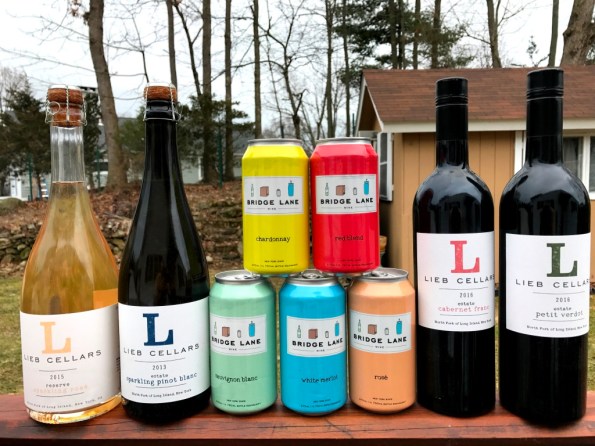
These were excellent wines, I can’t complain much about either one of the four – Sparkling Rosé was outstanding, Sparkling Pinot Blanc was superb and far exceeded my expectations. The Cab Franc was solid, and the Petit Verdot was, as I said, a riot. I did my usual “longevity test” with the Petit Verdot – pour a glass, close the wine, pour another glass next day and so on. For every day the wine stays tasty, I account 5-7 years of the aging time the wine can endure in the cellar. So Petit Verdot was fine for 2 days, but on the day number 3 it went down, so I would probably age it for another 5-7 years, but not much longer. But then with the screwtop, you never know…
Here you are, my friends. Spring, summer, fall or winter – Lieb Cellars have some fun and tasty wines waiting for you. Cheers!
Happiness-Inducing Wines of Lieb Cellars
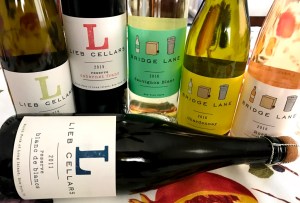 “Rising tide lifts all boats”.
As the wine growing in popularity all over the United States (still does, I hope), we witness the “wine countries” appearing everywhere – not just singular wineries, but the actual aggregations of the wineries, often presented as “wine trails”. While Napa and Sonoma definitely paved and continue leading the way to what the “wine country” is, you can find wineries all over the country offering not only wine tastings, but live music, concerts, dinners, special events and lots more.
Long Island wine country is the one closest to the New York City, making the wines for about 40 years by now. There is a very good chance, however, that even if you live in the USA, you never tasted Long Island wines – same as it is practically impossible to find the wines from Texas, Virginia, North Carolina, Arizona or Michigan anywhere outside of those states. So if I will tell you that Long Island makes world class Riesling, Chardonnay, Chenin Blanc and Merlot, you will probably have to take my word for it.
Over the past 10 years or so, visiting Long Island wineries on more or less a regular basis, I witnessed those wineries perfectly learning from Napa – both the good and the bad. On the good side, more and more knowledge is accumulated as to which vineyards and grapes do best, which individual plots do best, and the winemaking becoming more precise and resourceful. The bad side is in the fact that as the wines are getting better and better, it is less and less possible to enjoy the wines in the wine country itself, as it becomes more and more touristy – and visitors often get this “tourist special” treatment… Oops – no, we are not going into the rant, nope. Let me get to what I actually wanted to talk about.
When I was offered to taste some of the wines produced by Lieb Cellars, I had to do a bit of a research first. It turned out that despite visiting Long Island wineries every year, I never made it to Lieb Cellars and was pretty much unfamiliar with their wines. Therefore, I was looking at the best case – the wine country was coming to me, without any additional tourist distractions, yay!
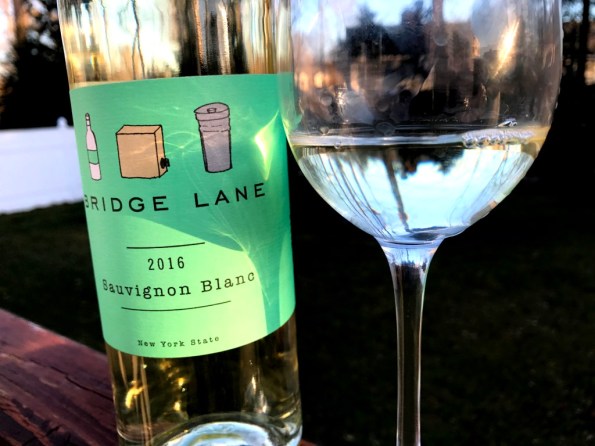
Now, I would like to finally explain the title of this post (after almost falling for a rant, yeah). When the wines arrived and I started taking them out of the box, the first thought was “wow, I love these labels!”. There is really nothing special about those labels, except that they are very clean and simple, and all of them use bright, cheerful colors. We eat with our eyes first – everybody know that – and it works for me the same with the the wine labels. Of course, what’s inside the bottle is far more important than the label itself, but good label makes you anticipate good wine – works for me every time.
In case of Lieb Cellars wines, the happiness-inducing labels were also perfectly supported by what was in the bottles, as you can tell from my tasting notes below. Few comments before I will leave you with them.
Lieb Cellars produces two different lines of wines. The first line, Lieb Cellars, is being produced since 1992. You can see those wines identified on the labels as Lieb Cellars, and today those are the Reserve wines made only from the estate-produced fruit. In 2004, Lieb Cellars started new line of wines called Bridge Lane – named after the farm road adjacent to one of the Lieb vineyards. While Bridge Lane are called a “second label” wines, there is nothing “second” about them – sustainably farmed, small crop, hand harvested wines, available in 3 different formats – standard bottle, 3L box and 20L kegs – whatever size your heart desires. You can even see those three available sizes pictured on the Bridge Lane labels.
Time to talk about the wines – here are my notes:


2016 Bridge Lane Chardonnay New York State (12.5% ABV, $15, 100% Chardonnay)
C: straw pale
N: lemon with distant hint of rosemary
P: lemon, tropical fruit, mango, Granny Smith apples
V: 7+/8-


2016 Bridge Lane Rosé New York State (11.9% ABV, $15, 49% cabernet Franc, 29% Merlot, 16% Malbec, 4% Pinot Noir, 2% Petit Verdot)
C: light onion peel
N: strawberries all the way, ripe strawberries, clean, inviting, fresh, touch of yeast Inessa which makes you smell it for a long time
P: strawberries on the palate, clean lemony acidity, firm and present. It would happily compete with any Provence Rosé
V: 8, wow, what a treat!


2016 Bridge Lane Sauvignon Blanc New York State (12.0% ABV, $15, 100% Sauvignon Blanc)
C: literally non-existent, straw pale extra light
N: fresh cut grass, medium intensity
P: lemon, tart fruit, cut through acidity. More of a Sancerre style – less fruit than California, less intensity than NZ. Clean acidity on the finish.
V: 8-, very enjoyable.


2011 Lieb Cellars Reserve Blanc de Blancs North Fork of Long Island, New York (12.5% ABV, $30, 48 months on the lees, 100% Pinot Blanc)
Appearance: Light golden color, fine mousse
N: touch of Apple, touch of yeast, delicious, open
P: touch of acidity, apples, lemon, restrained
V: 8/8+, the bottle can be gulped in one sitting


2015 Lieb Cellars Pinot Blanc Reserve North Fork of Long Island, New York (11.9% ABV, $20, 98% Pinot Blanc, 2% Riesling)
C: straw pale
N: white stone fruit, nice sweetness
P: beautiful, plump fruit, generous, delicious
V: 8, outstanding.


2015 Lieb Cellars Reserve Cabernet Franc North Fork of Long Island, New York (12.8% ABV, $30, 10 month in Hungarian oak, 85% Cabernet Franc, 9% Cabernet Sauvignon, 4% Merlot, 2% Petit Verdot)
C: dark ruby
N: mint, hint of mushrooms, touch of tobacco
P: fresh, open, blackberries, silky layers,
V: 7+/8-
The wines give us pleasure. It is not simple to convey that in words, but I hope I managed to share at least a glimpse of a pleasure brought by these Lieb Cellars wines. If anything, let me give you only one advice – find ’em and drink ’em. Cheers!
Good and Bad in the Booming Wine Country
 It was definitively bright and sunny. And somewhat windy. And not warm at all. But it didn’t stop us from adhering to a delightful tradition couple of weeks ago – day trip with friends to the Long Island wine country. We’ve done it for the past 7 years if not longer, with very little interruptions (had to miss last year, unfortunately) – visit a few wineries, taste wines, spend few hours in leisurely lunch in a great company.
It was very interesting to observe how the things were changing over those years – some for better, some for worse. As the love of wine is on the upswing in the US over the same 7, may be 10 years, this clearly was visible in sheer number of people you would see at Long Island wineries – more people every year. Of course it is a good thing – outside of the fact that you have to stand longer in line to the tasting counter. I don’t count this as good or bad – this is just a fact. What definitely improving for the better is a quality of the wine. Every year, the number of “wow” wines in seemingly the same tasting lineup was increasing. And not only the “wow” wines, but also “very solid wines”. So this is definitely good and I love the trend.
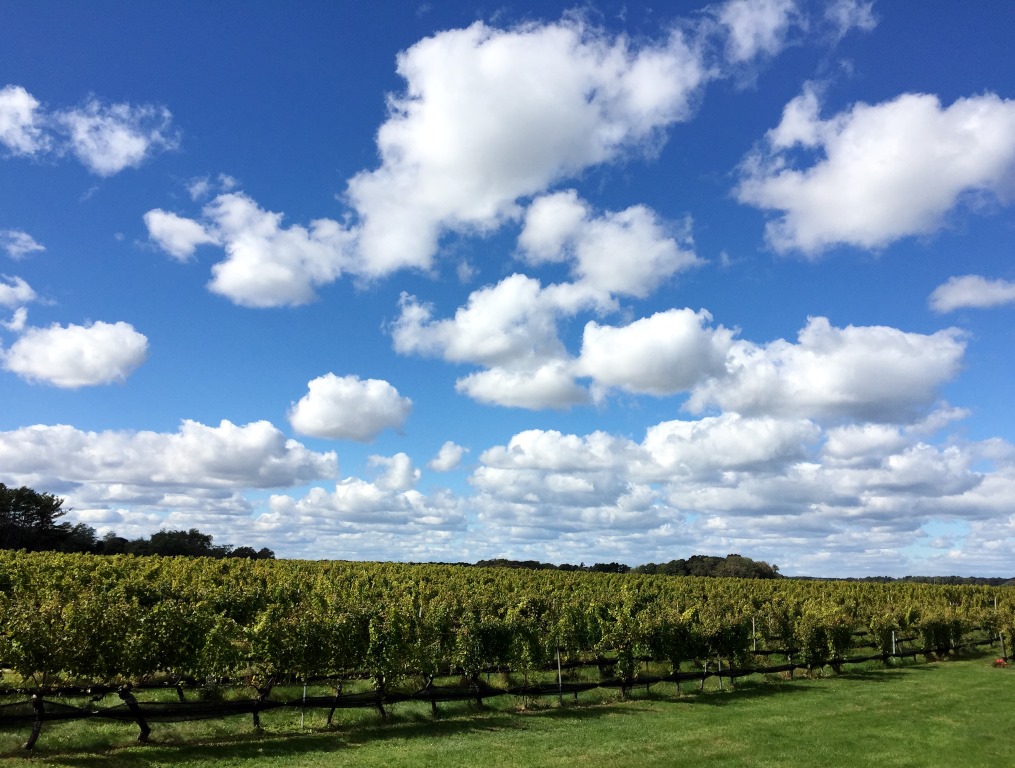 What is not good? Well, let me start from the most questionable gripe around the wine – prices. Yes, I understand that winery is a business, and they charge what they can, and have a cost justification. But $48 for a bottle of Long Island Riesling? It is a good Riesling, but it is not the wine which worth $48. Or $110 for a Long Island Merlot? I understand that the grapes were harvested by hand, and that it is only made in the special years, but again, strictly judging from the taste, this is not a wine which worth $110, for sure if you don’t have an expense account.
I also have to mention the usual sad state of knowledge of their own wines by the people minding the tasting room. One month ago I was told that new and very talented winemaker started at the Jamesport Vineyards. When I asked gentleman at the tasting counter at Jamesport about their new winemaker and if he made any of the wines we are currently tasting, I got back a shy smile and an answer “of course, he made all of them” – that would include even wines from 2007… Oh well…

True, pricing and affordability are extremely subjective – I’m sure there are plenty of people in this world who will gladly pay the $110 for that bottle of wine and also get a case – I’m just not one of them (but this is nobody else’ problem but mine). What I have much bigger issue with is food. As I told you, one of our most favorite activities during the wine country visit is 2 (or longer) hours lunch. For years, our preferred lunch destination was Paumanok winery – they have very nice patio with lots of tables outside, beautiful views and very good wines. We would bring our food – everything you need to make tasty sandwiches, as well as cheese, nuts, fruits – anything you would use to support a slow conversation over a glass(es) of wine. We would find the table, buy a few bottles of wine right at the winery and enjoy ourselves. About 4 years back situation changed, and we had to pay to reserve the table and to use the glasses, but I think we were getting back some of the money towards tasting fees and/or wines. No problems, still works for me. This year, the rules are new again – no outside food allowed. Okay, so it is probably replaced by some sort of deli counter or may be a food truck outside, you would think? Nope. You get the whole menu, but mostly with the items such as pâté or some cheeses, and a little bit of cold cuts. The cold cuts tray for $20 has 6 slices of salami, 6–8 tiny pieces of cheese and about the same quantity of olives and cornichons. All the pâté look like they came directly from Trader Joe’s, and they were served right in the plastic wrap with the short baguette on a side. This is simply wrong, in my opinion. If you are not allowing people to bring their own food anymore, then you should provide an appropriate alternative – or don’t do it at all. Don’t get me wrong – we still had a great time, but the food, unfortunately, was detrimental part of the experience.
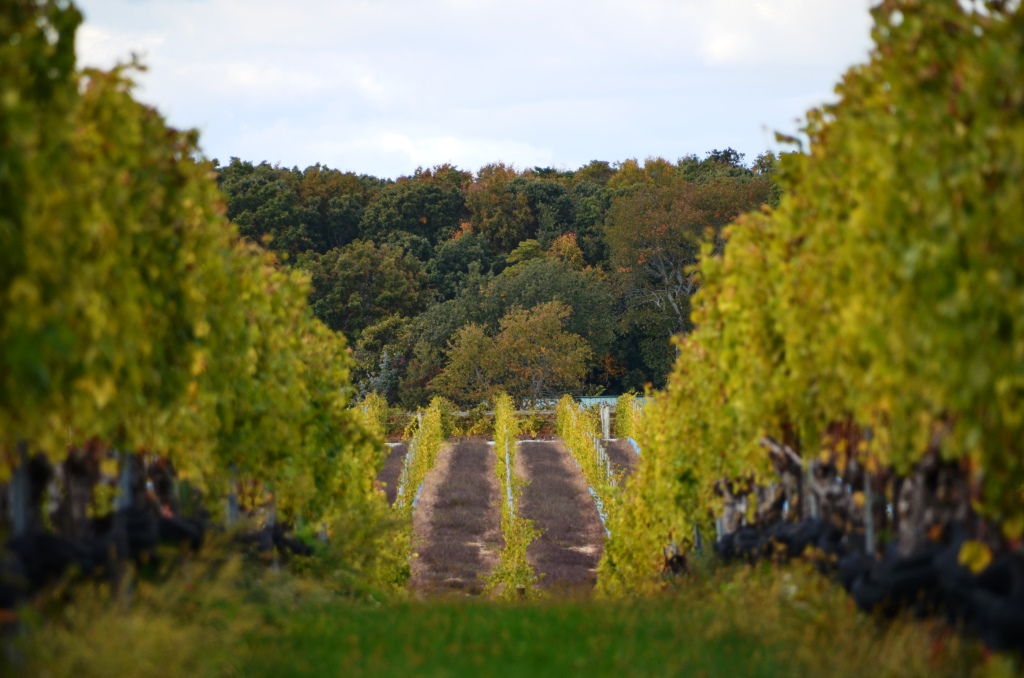

Done with the “bad” – now let’s go back to the good (best) part – the wines themselves. We started our tasting at Jamesport Vineyards winery, which always was one of my favorite wineries on Long Island.
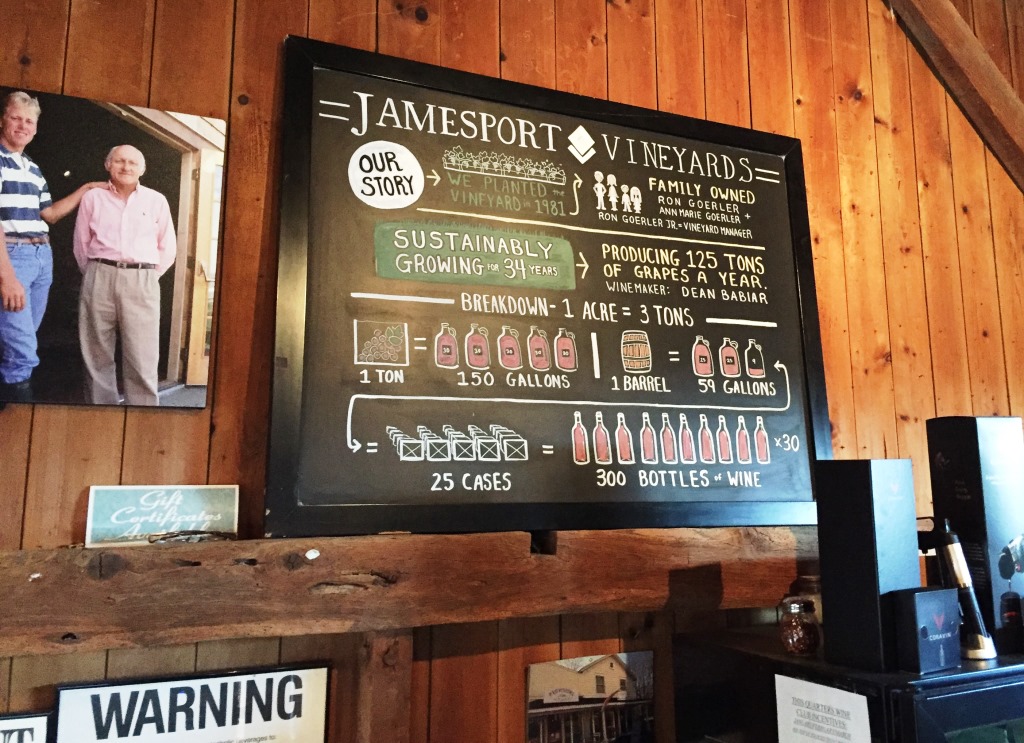
Here are the favorite wines of the tasting:
2014 Jamesport Vineyards East End CINQ Blanc ($16.95, blend of Chardonnay, Sauvignon Blanc, Riesling, Gewurztraminer, Pinot Blanc) – playful, open nose with white fruit, simple, clean, delicious overall
2013 Jamesport Vineyards Riesling ($25.95) – perfect, classic nose with a touch of Petrol and restrained fruit, nice and clean on the palate – excellent overall.
2013 Jamesport Vineyards East End CINQ Red ($16.95, blend of Cabernet Sauvignon, Cabernet Franc, Merlot, Pinot Noir and Syrah) – outstanding. Warm profile, nicely perfumed, good fresh red fruit, delicious


2013 Jamesport Vineyards East End Cabernet Franc ($17.95) – Classic, touch of green notes on the nose, crisp palate, touch of salinity, excellent
2010 Jamesport Vineyards MTK Merlot ($34.95) – Tobacco and field flowers on the nose, great palate, clean, concentrated, delicious
2010 Jamesport Vineyards Mélange de Trois ($34.95, Cabernet Sauvignon, Cabernet Franc, Merlot) – Great power, concentrated, excellent
2007 Jamesport Vineyards Jubilant Reserve ($34.95, predominantly Cabernet Franc, with Merlot, Cabernet Sauvignon, and tiny amounts of Syrah and Petite Verdot) – Nice concentration, good depth
2010 Jamesport Vineyards MTK Syrah ($24.95) – nice peppery notes, classic, open, clean – an excellent cold climate Syrah overall.


Then, of course, Paumanok. Quite honestly, I don’t even remember such a variety of wines offered at Paumanok – Reserve, Single vineyards, wow – lots of excellent wines. I have to admit that at the time of the tasting at Paumanok I was hungry and lazy at the same time, so I simply tasted the wine without taking any notes – here is the limited set of impressions from the Paumanok wines I tried.
Believe it or not, but my favorite wine from Paumanok tasting was 2010 Paumanok Blanc de Blancs ($45) – yep, classic sparkling wine, with perfect nose of yeast and freshly toasted bread, and apple and fresh bread on the palate. Delicious! 2014 Paumanok Chenin Blanc ($28) was fresh and vibrant, and 2013 Paumanok Cabernet Franc ($30) was clean and varietally correct. From the Grand Vintage collection, 2014 Grand Vintage Chardonnay ($45) was excellent, dry and crisp, 2013 Assemblage ($50) and 2013 Grand Vintage Cabernet Franc ($35) were excellent as well, but my favorite was 2013 Grand Vintage Merlot ($40), with deliciously powerful and balanced palate. Lastly, from the Single Vineyard collection, I really liked both 2010 Merlot Tuthills Lane Vineyard ($75) and 2010 Petite Verdot Apollo Drive Vineyard ($75) – they were different, but equally outstanding.


Lastly, for the first time over all these years I made it to the South Fork of Long Island (Hamptons), where we visited Duck Walk and Wölffer Estate wineries. There was nothing at Duck Walk to write home about. At Wölffer Estate, we didn’t do a real tasting as we visited place called The Wine Stand, where you can buy wine by the glass or bottle – main winery was closed for the wedding. Here is what we tried:
2014 Wölffer Estate Summer in a Bottle ($24, 41% Chardonnay, 29% Gewürztraminer, 20% Riesling, 10% Pinot Gris) was fresh and very nicely balanced, which is always appreciated in the white blends. 2012 Wölffer Estate Christian’s Cuvee Merlot ($110, 96.5% Merlot, 3% Cabernet Sauvignon, 0.5% Petit Verdot) was the wine I mentioned before. It was simply not ready – tight, with limited fruit expression. May be 5+ years in the cellar would do wonders…


There you have it – a trip to Long Island wine country with all the good and bad. Unquestionably, we had a great time with friends, and this is what matters. Yes, it would be even better without the gripes, but we can’t have it all, can we? Well, I wish that all your problems would be only small annoyances in this life. And yes, head over to the Long Island wine country, as the wines are delicious. And may be try to sneak in a sandwich? Cheers!
Last Bottle Sign Up ($10 credit)





