Archive
New York Cabernet Franc Grand Tasting 2026
In my oenophile journey, Cabernet Franc was one of the early discoveries. It all started in Bordeaux, and I don’t mean visiting, just reading about it, not even so much tasting. Continuing that journey, at some point I arrived in the Loire, and there, of course, Cabernet Franc is the king. I wouldn’t remember what the very first Cabernet Franc I tasted was, but I’m sure it was a Cabernet Franc from Loire – Chinon, Saumur, I’m not sure.
As I live on the East Coast of the US, it is only logical that my Cabernet Franc journey continued while discovering East Coast wineries – Finger Lakes, Niagara on the Lake, Hudson Valley, Long Island. In the wine world of the East Coast, Cabernet Franc is the undisputed king of red wines – practically every winery I know of makes Cabernet Franc wine, and they make it quite successfully.
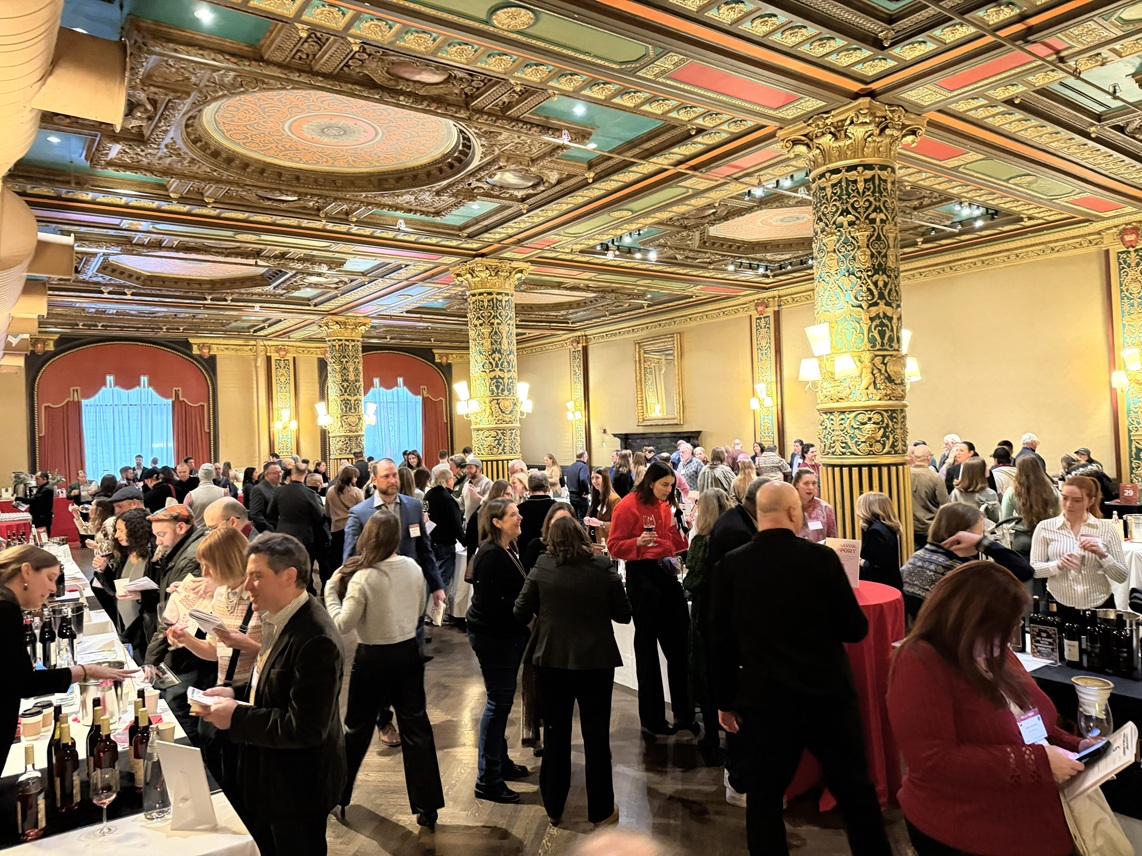
It is interesting how we hear things in our lives, and only many years later, those things of a sudden start making sense (call me slow, I’m sure I deserve it). When Lori Budd of Dracaena Wines started Cabernet Franc Day celebrations more than 10 years ago, it was all done under the slogan “Not just a blending grape”. Yes, I understood the slogan, but never thought of the full notion behind it. Getting into the wine world on the East Coast, Cabernet Franc was never a blending grape for me – the absolute majority of the Cabernet Franc experiences were with 100% Cabernet Franc wines. However, as the California wine world grew up following Bordeaux, Cabernet Franc was generally not taken seriously on their own, but only in the supporting roles to the major grapes – e.g., Cabernet Sauvignon, the kind of California. As I’m typing this sitting on the train on my way to New York City to attend the Cabernet Franc Grand Tasting, I finally realize what Lori meant by her slogan, bringing her love of the Cabernet Franc from the East Coast to reality on the West Coast, in California. Yes, of course, it is not just a blending grape, and I’m just about to deep dive into the world of 100+ Cabernet Franc bottling from 40 producers.
Okay. So everything written above was written on the train on my way to the Cabernet Franc Grand Tasting 2026. Now, I want to share my impressions about the event, about the Cabernet Franc wines, and the experience overall.
Let me start with the event itself. In a word, top-notch. Pay attention – these are the impressions of the wine blogger/writer/geek. From that point of view, the event was possibly the best-organized I have ever attended. Of course, I will explain, no need to nudge.
Before the event, I got the list of wineries and wines planned for the event. The list was sorted alphabetically, with all the wine details (vintage, ABV, grape composition, MSRP). In the event, the wineries were located in the same exact order! If I didn’t want to go one by one, I would just easily locate the winery I wanted! Okay, I get it, there were only about 40 wineries in the event, but I don’t see how this wouldn’t scale. Also, talking about organization – we had individual spit cups provided, and every (!) table had a large spittoon – an absolute convenience in the wine tasting. Every year, I attend probably 10, maybe 15 large wine tasting events, so from that experience, this was literally the best, if not the best ever.
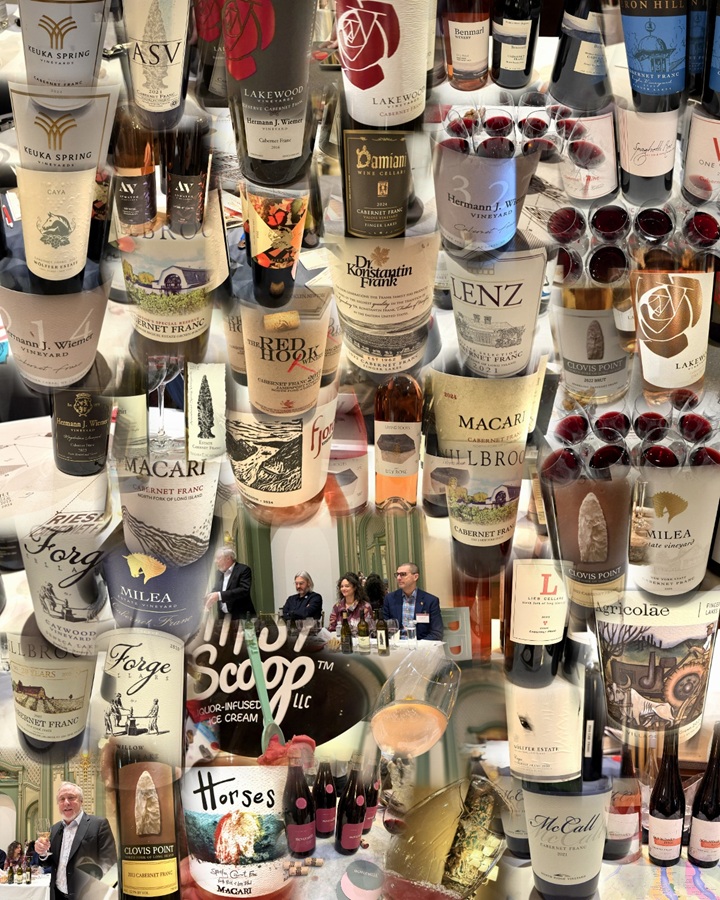
An impression of New York Cabernet Franc Grand Tasting in One Picture
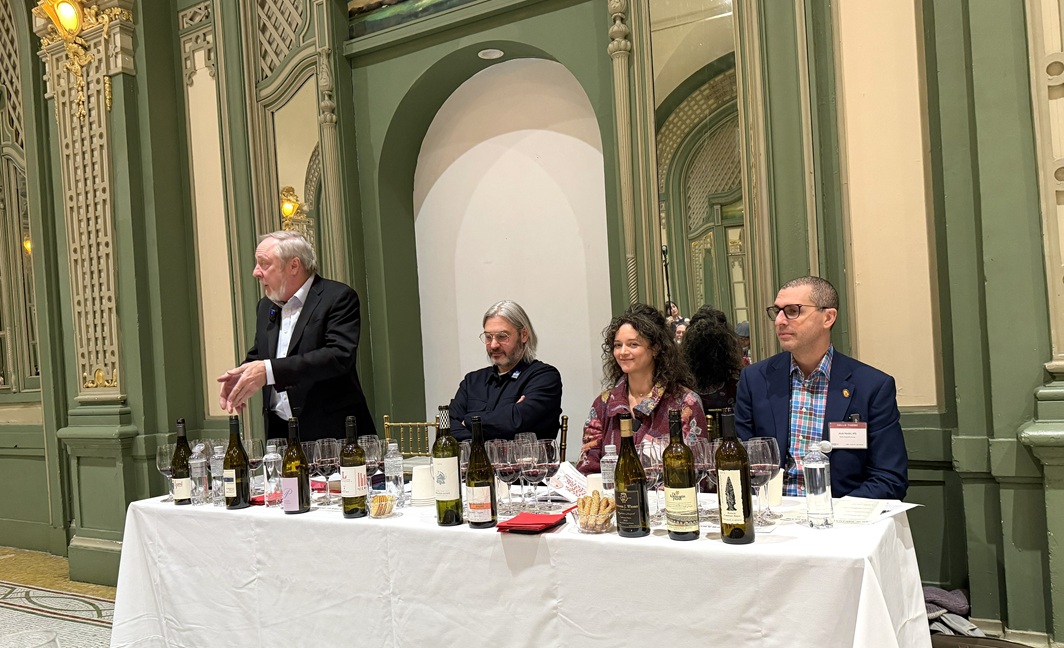
Next part of the experience – Cabernet Franc seminar. My first attraction point to this seminar was the fact that it was led by Kevin Zraly, whom I really consider my wine teacher, after taking his Windows on the World wine school classes a few decades back. So I was very happy to be in his presence again. For the rest of it, the seminar experience was more of an “all over the place” type. It was too long (was supposed to be 1 hour, but it was 1:20 or so running time, plus a bit of a delay at the start). The panelists were all knowledgeable, but none of them were the winemakers, so I really didn’t learn much from them, and they all loved to talk. And the worst part, unfortunately, was the wines in the seminar, and here I’m a bit perplexed. I loved the classic method sparkling Cabernet Franc from Macari Vineyards on Long Island, which we were greeted with as we walked into the seminar room. I also loved the last wine #9, 2012 Cabernet Franc from the Arrowhead Spring Vineyards Niagara Escarpment- it was superb. The other 8 wines were all over the place, from greatness to a simple “no, I’m not drinking that” – but, if I overheard the panel correctly, the wines for tasting were poured 3 hours prior. If this is the case, this didn’t help those wines at all. Again, it is entirely possible that I completely misheard that. But for further details, please see my notes on the seminar wines below.
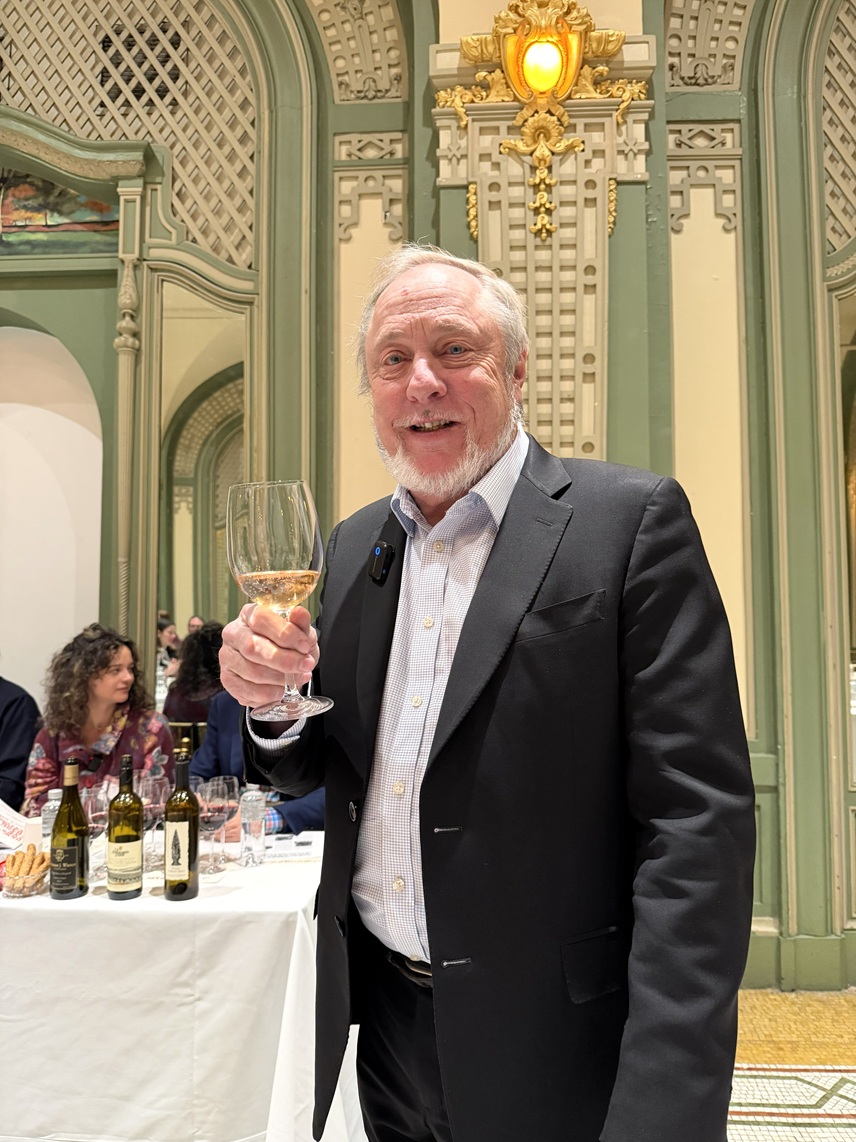
Kevin Zraly
Now, let’s talk about my Cabernet Franc impressions after tasting and the seminar.
I have to say that it’s been a while since I had a deep immersion opportunity into the New York Cabernet Franc at any scale, never mind such a large and focused event – this was my first time attending it. But that is not even an important point. It’s been a significant lapse since I had New York Cabernet Franc, so all comparisons I was making were the present state of the New York Cabernet Franc versus New York Cabernet Franc as I remember it.
The State of New York has 7 defined AVAs – Champlain Valley, Finger Lakes, Hudson River Region, Upper Hudson, Lake Erie, Long Island, and the Niagara Escarpment. Out of this list, I’m mostly familiar with Finger Lakes, Hudson Valley (lumping together both Hudson regions), and Long Island. These were mostly the regions represented in the tasting, plus the Niagara Escarpment.
The State of New York’s Cabernet Franc definitely evolved compared to what I knew. This evolution now includes not only widely available Cabernet Franc Rosé, but also sparkling Cabernet Franc. I’m curious when (I think “when” is more appropriate than “if”, but of course I can be wrong) we will see Cabernet Franc Blanc (similar to what we see in the Oregon Pinot Noir scene). I also would think that at some point, we should see Cabernet Franc “port” just to complete the full range of Cabernet Franc expressions.
Now, to summarize my impressions, I have to use the word I don’t like using – interesting. Interesting is definitely not a very kind descriptor, but that’s the best I can do at the moment – let me explain.
I loved the absolute majority of Rosé wines across the board. They were elegant, mostly lean, and many of them capable of perfectly competing with Provence. The same goes for sparkling wines – fresh, generous, with a wide range of expressions, but I would be happy to drink the majority of them (if we exclude the price). But the main body of the tasting, Cabernet Franc reds, represented a mixed bag.
During the seminar, one of the panelists used the descriptor “finesse” to describe Cabernet Franc. I love this descriptor, but for me, finesse first and foremost means perfection of the balance. All your taste buds have to sing in unison for the wine to be declared as having “finesse”. For example, Cayuse wines might be the most expressive wines made in the United States, solely based on their ability to express the specific terroir, but the main descriptor for Cayuse wines is “power”, not “finesse”. Burgundian Pinot Noir possesses finesse, but the main expression of Oregon Pinot Noir is power, not finesse. Going back to our Cabernet Franc wines, I found “finesse” maybe in 2-3 wines out of 60 – 70 I tasted.
Tannins often were my main issue. And please note – tannins, not the use of oak. A number of wines were proudly unoaked. When the front of my mouth was literally locked up by the borderline painful tannins, and the winery rep was explaining that the wines were aged in stainless steel, I had to ask, “how is the wine so tannic?”. “Ah, we macerated with the skins for 71 days”, was the reply. Oh… I don’t know if it will help the wine to age better, but for those of us who want to drink the wine now… Please, don’t do this.
Along the lines of “finesse,” my second gripe would be another claim made during the seminar – “terroir”. It was said that now we can find similarities among the wines coming from the same “place”. That means that we should be able to find similarities between Cabernet Franc made in the Hudson Valley and successfully differentiate them from Cabernet Franc made in the Finger Lakes. Feel free to call me an amateur shmuck, but I would not be able to find similarities or differentiate most of the Cabernet Franc wines (excellent wines, mind you!) I tasted, even if my life depended on it.
On a positive side, practically all Cabernet Franc aged expressions were delicious. We had 2005, 2010, 2012, 2015, 2016, and other vintages with some age, and they were excellent across the board. The 2005 Millbrook was probably at its peak, and I don’t know how long that peak will last. But my general observation is that New York Cabernet Franc can age.
Please don’t get me wrong – there were lots of excellent Cabernet Franc reds in the tasting. If you want to surprise someone with a delicious red from the East Coast of the United States, a bottle of Cabernet Franc would probably be your top contender. Better yet – if you find – and afford – a library Cabernet Franc, your friends would thank you profusely.
Now, for what it’s worth, I would like to share my notes from the seminar and the tasting. One generic note – if grape composition is not listed, the wine is made from 100% Cabernet Franc.
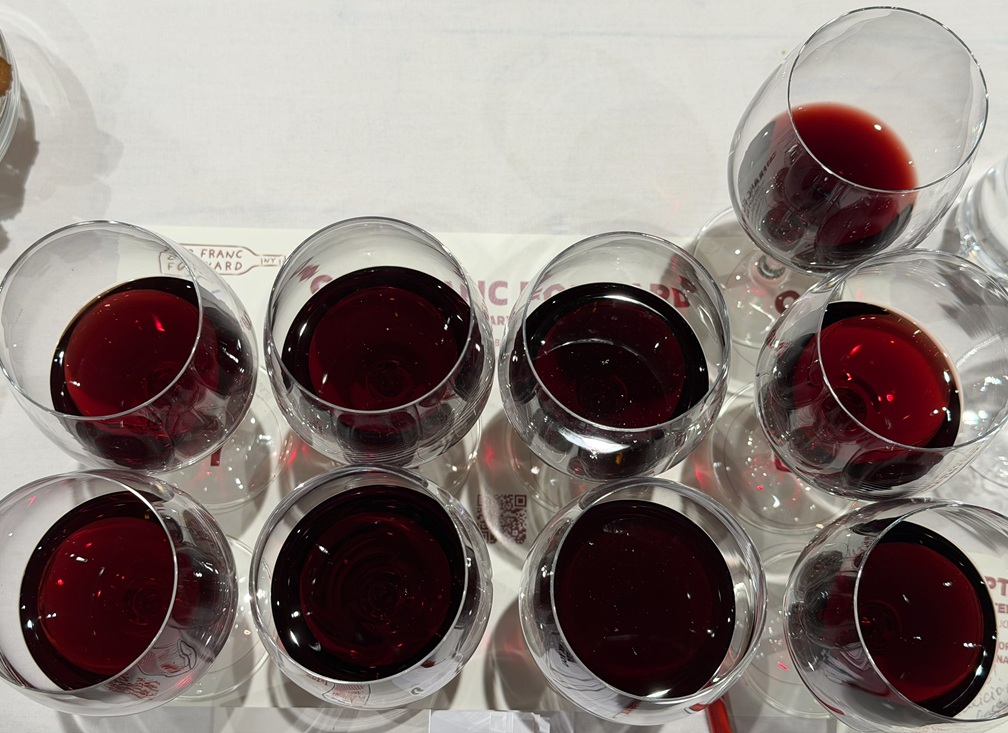
Seminar wines:
2024 Macari Vineyards “Horses” Cabernet Franc Pet Nat (11.4% ABV, $32) – wow! Fresh, delicious, crisp bubbles, just perfect.
1. 2024 Fjord Vineyards Estate Cabernet Franc Hudson River Region (12.6% ABV, $30)
A Wow nose, classic with cassis and tobacco.
The palate is disappointing. Green, aggressive
2. 2022 Benmarl Winery Estate Cabernet Franc Hudson River Region (13.7% ABV, $40)
Complex nose with graphite and herbs
Green, tight, tannic palate. Not enjoyable.
3. 2024 Paumanok Vineyards “Minimalist” Cabernet Franc North Fork of Long Island (12.5% ABV, $55)
Carrot Juice? Pomegranate?
Just no…
4. 2023 Lieb Cellars Estate Cabernet Franc North Fork of Long Island (12.9% ABV, 88% Cabernet Franc, 8% Cabernet Sauvignon, 3% Malbec, $38)
Classic nose
Classic palate
+++, nice, enjoyable
5. 2021 Wölffer Estate Vineyard “Caya” Cabernet Franc Long Island (13.5% ABV, 87% Cabernet Franc, 13% Merlot, $37)
Volcanic nose, pleasant, nice
The palate is powerful and balanced, earthy notes, tobacco, pronounced but balanced tannins.
+++-|, excellent
6. 2024 Boundary Breaks Vineyard Cabernet Franc Finger Lakes (13.5% ABV, 95% Cabernet Franc, 5% Merlot, $25)
Classic Nose on a lighter side.
Nice and classic palate, but tannins kick in quickly. Still, overall – not bad.
+++
7. 2023 Herman J.Wiemer Magdalena Vineyard Cabernet Franc (12.8% ABV, $45)
Rutherford dust on the nose, medicinal notes, bell pepper.
No bad, but fruit fades away quickly, leaving you with tannins.
8. 2020 Dr. Konstantin Frank Winery Cabernet Franc Finger Lakes (13% ABV, $28)
Beautiful, classic nose.
On the palate, the wine is balanced, with succulent fruit, tannins are present but well-balanced and appropriate.
+++-|
9. 2012 Arrowhead Spring Vineyards Library Selection Cabernet Franc, Niagara Escarpment
Nose is definitely medicinal, with iodine, cassis, and herbs.
Wow palate – wonderful, fresh, tight, great acidity, excellent.
++++, a special treat.
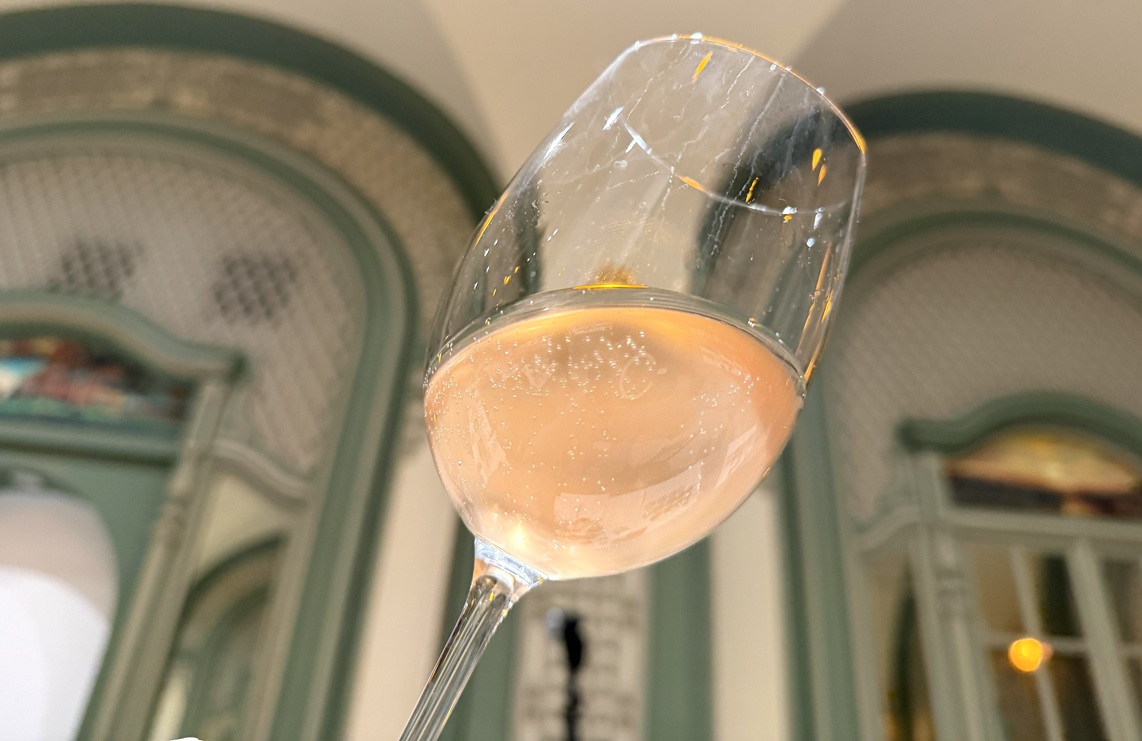
Here are my notes for the general tasting. I had time for about half of the tables (probably 23-24 out of 40), and the notes are very limited, as I mostly use my trade tasting rating system of “+” signs, with “+++” being a very solid rating. I’m also using “-|” as .5 improvement, so “++-|” basically means 2.5.
Okay, without further ado, here are the notes from the general tasting:
Apollo’s Praise 2024 Cabernet Franc – Picardie Finger Lakes (13% ABV, $28.00) – horrible. Green and biting
Arrowhead Spring Vineyards 2023 Cabernet Franc Stainless Steel Niagara Escarpment (12.5% ABV, $19.95) – gripping tannins (71 days maceration???)
Arrowhead Spring Vineyards 2023 Cabernet Franc Barrel Aged Niagara Escarpment (13.3% ABV, $24.95) – approacheable, nice
Atwater Vineyards 2024 Dry Rosé of Cabernet Franc/Blaufränkisch Finger Lakes (11.6% ABV, $27.00, 85% Cabernet Franc, 15% Blaufränkisch) – +++
Atwater Vineyards 2023 Cabernet Franc Finger Lakes (11.7% ABV, $32.00) – good
Atwater Vineyards 2024 Cabernet Franc Finger Lakes (14.1% ABV, $32.00) – ++, good
Benmarl Winery 2024 Pétillant Hudson River Region (12.3% ABV, $25.00) – +++, joy!
Benmarl Winery 2024 Dry Rosé Hudson River Region (12.2% ABV, $20.00) – ++-|, very good
Benmarl Winery 2022 Estate Cabernet Franc Hudson River Region (12.1% ABV, $40.00) – okay, strange. Petrol?
Boundary Breaks Vineyard 2024 Cabernet Franc Finger Lakes (13.5% ABV, $21.95, 95% Cabernet Franc, 5% Merlot) – ++
Boundary Breaks Vineyard 2024 Cabernet Franc Reserve Finger Lakes (13.5% ABV, $25.95) – ++, supposedly unoaked, gripping tannins
Boundary Breaks Vineyard 2024 Dry Rosé Finger Lakes (12.5% ABV, $15.95, 60% Cabernet Franc, 40% Cabernet Sauvignon) – on a sweeter side
Clovis Point Vineyard and Winery 2022 Cabernet Franc North Fork of Long Island (13.2% ABV, $45.00, 95% Cabernet Franc, 5% Malbec) – ++-|
Clovis Point Vineyard and Winery 2022 Sparkling Cabernet Franc (12% ABV, $49.00) – delicious! light sweetness
Damiani Wine Cellars 2024 Cabernet Franc Finger Lakes (13.5% ABV, $28.00) – +++
Damiani Wine Cellars 2024 Cabernet Franc Reserve Finger Lakes (13.7% ABV, $60.00) – +++
Damiani Wine Cellars 2024 Cabernet Franc Valois Vineyard Finger Lakes (14.1% ABV, $42.00) – +++
Damiani Wine Cellars 2022 Cabernet Franc Barrel Select Finger Lakes – superb
Dr. Konstantin Frank 2022 Cabernet Franc Finger Lakes (13% ABV, $27.99) – +++, classic, clean
EV&EM Vineyards 2023 Classic Cabernet Franc North Fork of Long Island (12.7% ABV, $58.00) – too lean. 2023 was a very difficult vintage
EV&EM Vineyards 2024 Classic Cabernet Franc North Fork of Long Island (12.7% ABV, $58.00) – much bigger than 2023. 2024 was an excellent year on Long Island
Fjord Vineyards 2024 Estate Cabernet Franc Hudson River Region (13.8% ABV, $30.00) – +++
Fjord Vineyards 2024 Estate Dry Rosé of Cabernet Franc Hudson River Region (12.6% ABV, $22.00) – +++, excellent, my favorite so far
Fjord Vineyards 2022 Estate Cabernet Franc Hudson River Region (13.1% ABV, $30.00) – ++-|, interesting, volcanic notes
Forge Cellars 2020 Willow Vineyard Cabernet Franc Seneca Lake Finger Lakes (13% ABV, $26.00) – good
Forge Cellars 2023 Caywood Vineyard Cabernet Franc Seneca Lake Finger Lakes (13% ABV, $28.00) – good
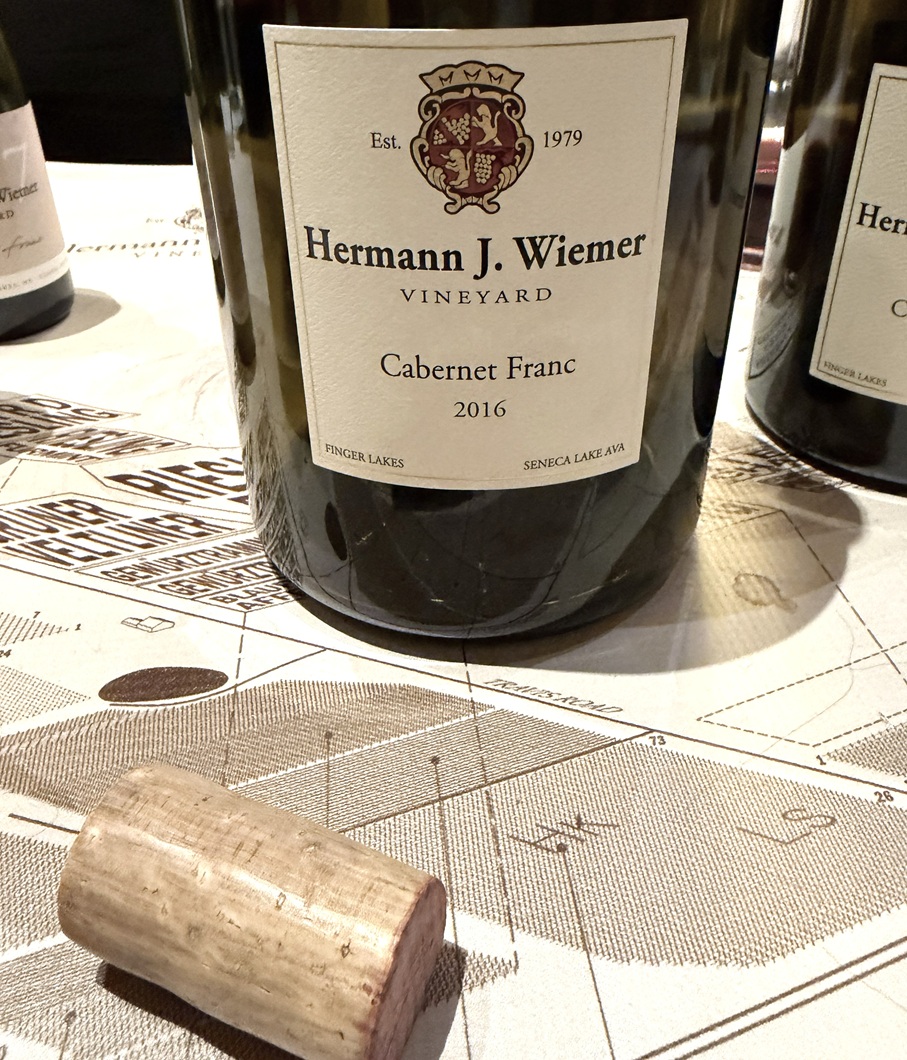


Hermann J. Wiemer Vineyard 2023 Cabernet Franc Finger Lakes (12.5% ABV, $27.00) – +++, excellent
Hermann J. Wiemer Vineyard 2023 Cabernet Franc Magdalena Vineyard Finger Lakes (12.8% ABV, $45.00) – +++, excellent. Surprise – I didn’t like it in the seminar… Go figure…
Hermann J. Wiemer Vineyard 2021 Library Vintage Cabernet Franc in Magnum Finger Lakes (12.5% ABV, $90.00) – +++-|, excellent, round, powerful
Hermann J. Wiemer Vineyard 2016 Library Vintage Cabernet Franc 3 Litre Finger Lakes (12.5% ABV, $360.00) – +++, excellent
Hermann J. Wiemer Vineyard 2019 Single Clone 214 Cabernet Franc Finger Lakes – an original Loire clone, very good
Hermann J. Wiemer Vineyard 2019 Single Clone 327 Cabernet Franc Finger Lakes – a Bordeaux clone, certified in 1975, very good
Heron Hill Winery 2020 Heron Hill Classic Cabernet Franc Finger Lakes (13.3% ABV, $22.00) – +++, nice, round, clean
Heron Hill Winery 2022 Ingle Vineyard Cabernet Franc Finger Lakes (13.8% ABV, $40.00) – +++, nice, round, clean
Keuka Spring Vineyards 2024 Cabernet Franc Finger Lakes (13.1% ABV, $28.99) – +++, excellent, clean, delicate, light color with a lip-smacking palate
Keuka Spring Vineyards 2025 Dry Rosé Finger Lakes (11.8% ABV, $19.99, 60% Cabernet Franc, 40% Blaufrankisch) – +++-|, a new favorite
Keuka Spring Vineyards 2024 Epic Finger Lakes (12.1% ABV, $29.99, 65% Cabernet Franc, 35% Blaufrankisch) – +++-|, excellent
Lakewood Vineyards 2024 Cabernet Franc Finger Lakes (13.8% ABV, $20.00) – good, light, nice color
Lakewood Vineyards 2020 Reserve Cabernet Franc Finger Lakes (15.9% ABV, $50.00) – good
Lakewood Vineyards 2024 Cabernet Franc Dry Rosé Finger Lakes (13.1% ABV, $18.00) – good
Lamoreaux Landing Wine Cellars – Rosé was too sweet, and I didn’t like any of the reds
Lenz Winery 2021 Estate Selection Cabernet Franc North Fork of Long Island, Peconic (13.5% ABV, $55.00) – excellent. This is a new project at Lenz. Until 2017, Cabernet Franc was used only for blending
Living Roots Wine & Co. 2025 Finger Lakes Pet-Nat Rosé Finger Lakes (12.8% ABV, $26.00, 50% Cabernet Franc, 50% Blaufrankisch) – too sweet
Living Roots Wine & Co. 2025 Finger Lakes Dry Rosé Finger Lakes (12% ABV, $22.00, 41% Cabernet Franc, 33% Pinot Noir, 26% Blaufrankisch) – excellent
Living Roots Wine & Co. 2023 Finger Lakes Cabernet Franc Finger Lakes (12.6% ABV, $30.00) – excellent
Macari Vineyards & Winery 2024 “Lifeforce” Cabernet Franc North Fork of Long Island (12.9% ABV, $30.00) – +++, excellent
Macari Vineyards & Winery 2022 Cabernet Franc North Fork of Long Island (12.9% ABV, $38.00) – excellent
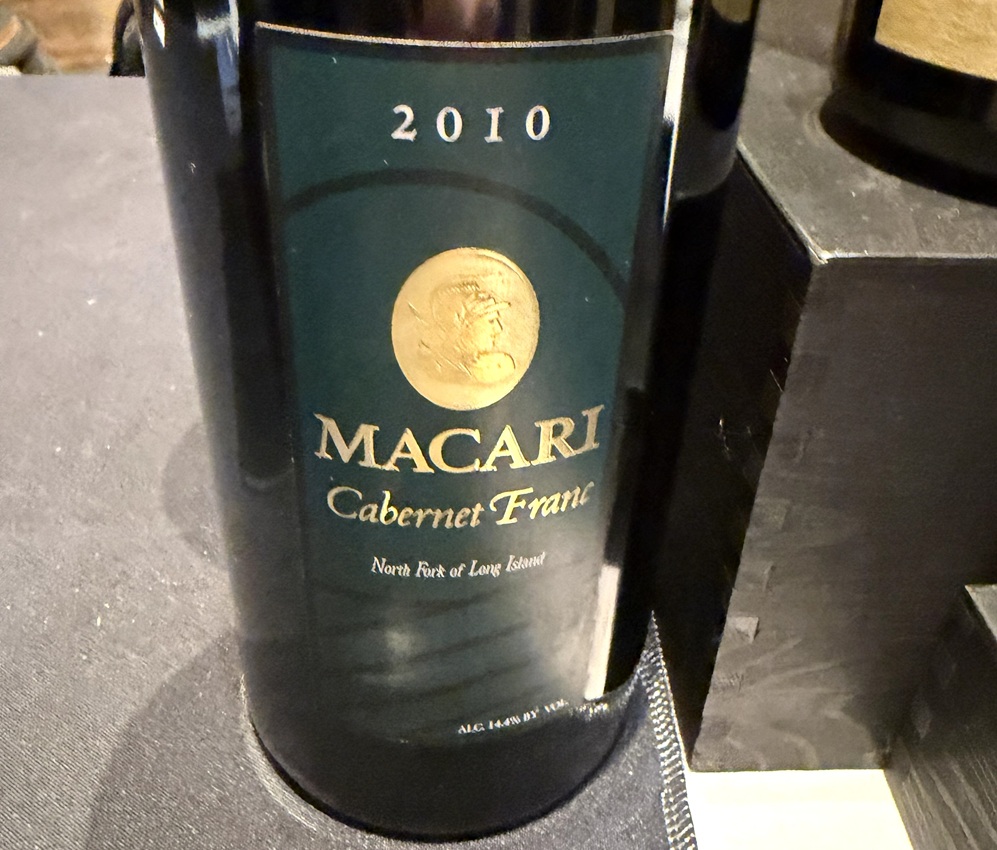
Macari Vineyards & Winery 2010 Cabernet Franc North Fork of Long Island – ++++, wow, powerful, delicious
McCall Wines 2021 Cabernet Franc North Fork, Long Island (12.8% ABV, $28.00) – +++, excellent
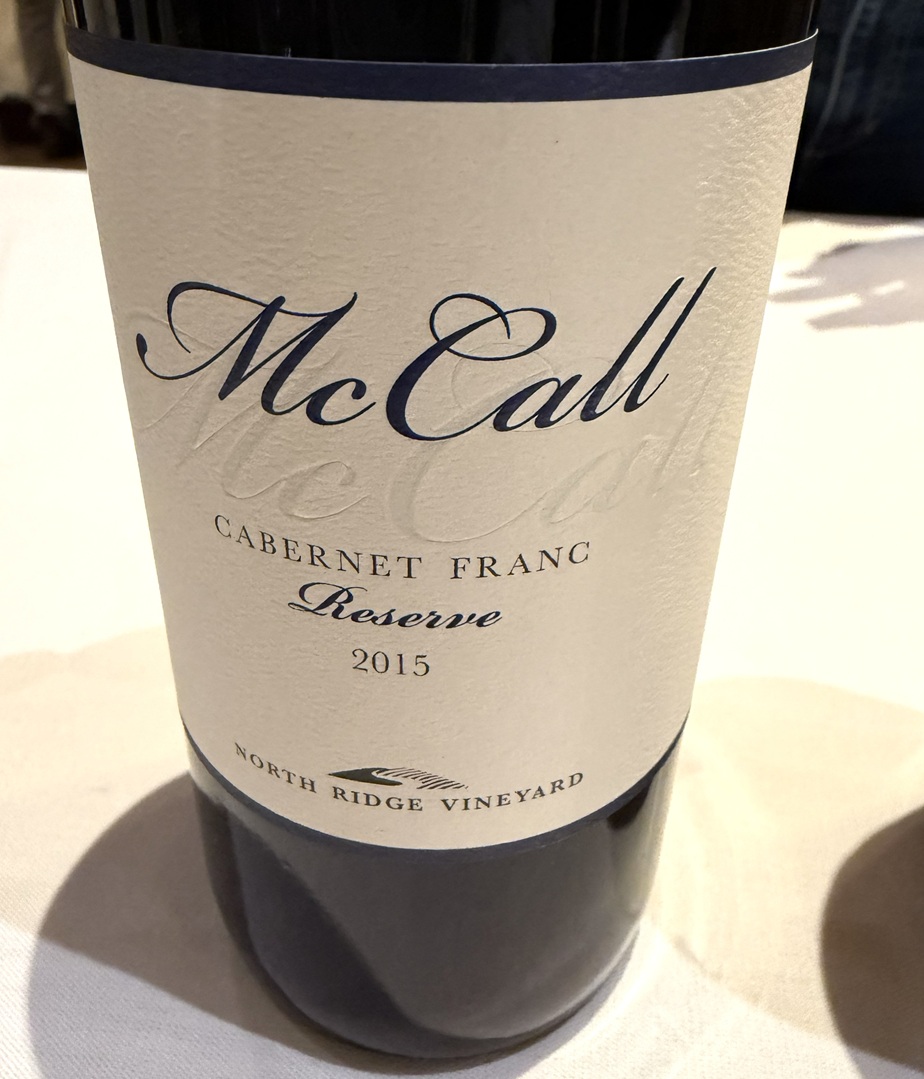
McCall Wines 2015 Cabernet Franc Reserve North Fork of Long Island (13% ABV, $49.00) – ++++, outstanding, elegant
Milea Estate Vineyard 2023 Milea Estate Vineyard Farmhouse Cabernet Franc Hudson River Region (12.5% ABV, $40.00) – ++-|, good
Milea Estate Vineyard 2023 Milea Estate Vineyard Reserve Cabernet Franc Hudson River Region (12.5% ABV, $50.00) – +++, excellent
Millbrook Vineyards & Winery 2025 Cabernet Franc Estate Rosé Hudson River Region (13.9% ABV, $30.00) – ++-|, good
Millbrook Vineyards & Winery 2023 Cabernet Franc Hudson River Region (13% ABV, $28.00) – ++-|, good
Millbrook Vineyards & Winery 2021 Cabernet Franc Proprietor’s Special Reserve Hudson River Region (13% ABV, $45.00) – +++, excellent
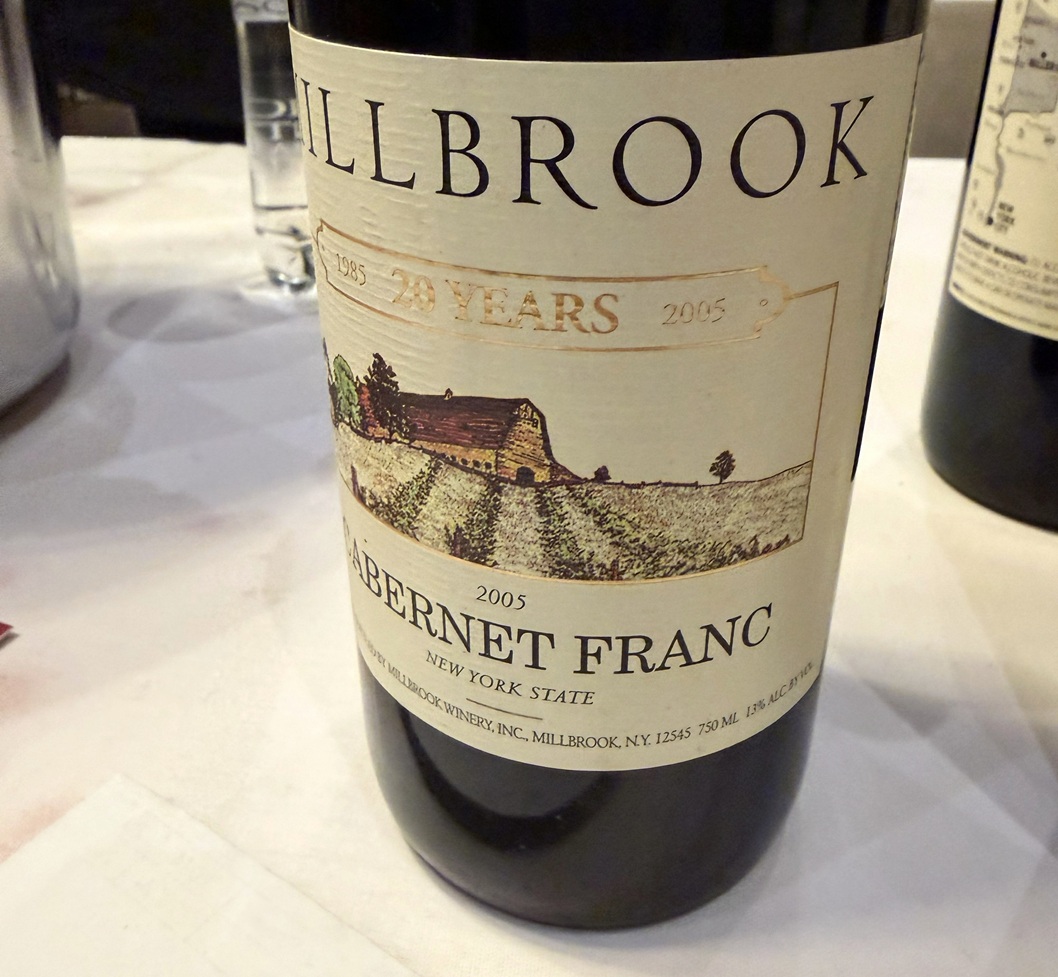
Millbrook Vineyards & Winery 2005 Cabernet Franc Hudson River Region (13% ABV, Library, 75% Cabernet Franc, 18% Merlot, 7% Cabernet Sauvignon) – ++++, wow, delicious. Oldest in the tasting. Might be at its peak
Neverstill Wines 2023 Cabernet Franc Finger Lakes / Hudson Valley (13%, $49.00) – good
One Woman Winery 2020 One Woman Cabernet Franc North Fork of Long Island (12.8% ABV, $42.00) – good
One Woman Winery 2022 One Woman Cabernet Franc North Fork of Long Island (12.8% ABV, $42.00) – good
Suhru & Lieb Vineyards 2023 Lieb Estate Cabernet Franc North Fork of Long Island (12.9% ABV, $38.00, 88% Cabernet Franc, 9% Cabernet Sauvignon, 3% Malbec) – good
Suhru & Lieb Vineyards 2024 Suhru Wines Rosé North Fork of Long Island (11.6% ABV, $21.00, 54% Cabernet Franc, 18% Merlot, 16% La Crescent, 12% Lagrein) – good, and a new grape!
The Red Hook Winery 2019 Jamesport Vineyard Cabernet Franc Long Island (14.1% ABV, $40.00) – good
Wölffer Estate Vineyard 2023 Estate Cabernet Franc Long Island (13.5% ABV, $25.00, 82% Cabernet Franc, 11% Merlot, 6% Cabernet Sauvignon, 1% Petit Verdot) – good
Wölffer Estate Vineyard 2021 Caya Cabernet Franc Long Island (13.5% ABV, $37.00, 87% Cabernet Franc, 13% Merlot) – good
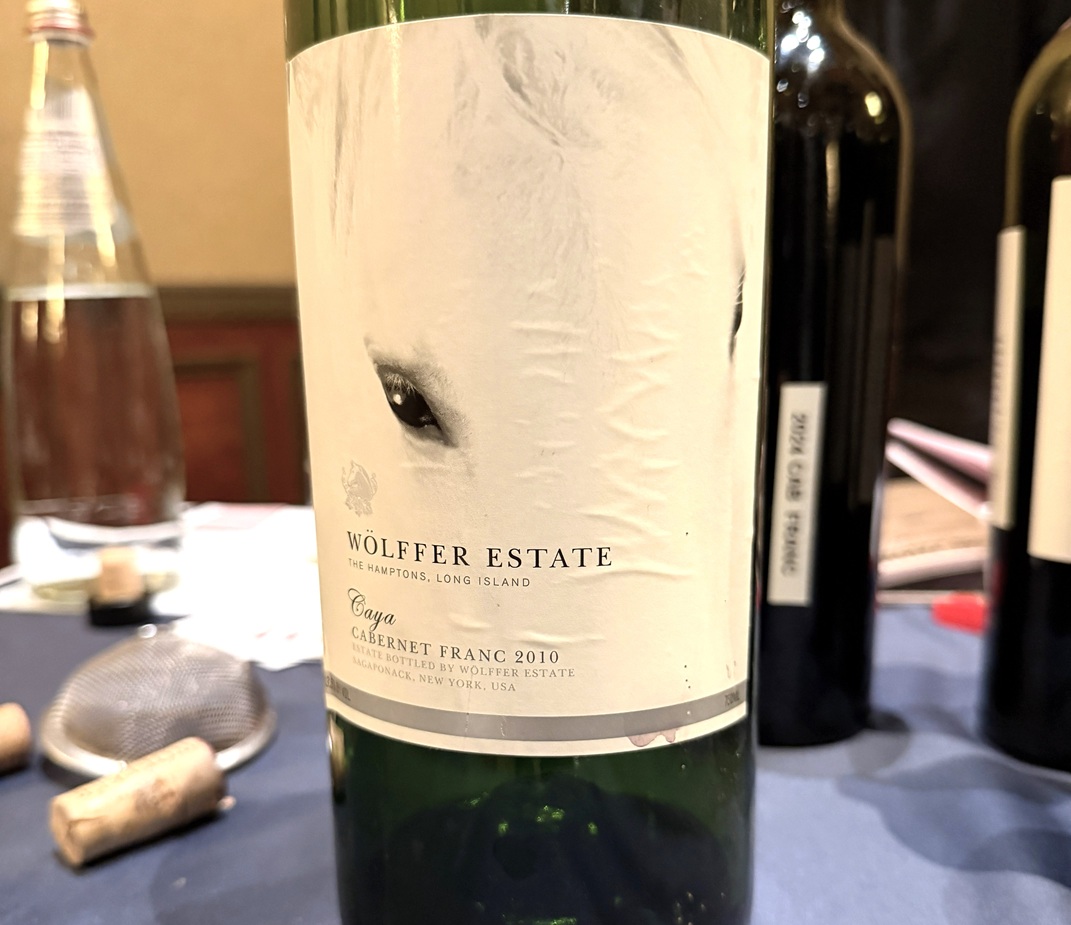
Wölffer Estate Vineyard 2010 Caya Library Selection Cabernet Franc Long Island (13.3% ABV, Library, 85% Cabernet Franc, 14.5% Merlot, 0.5% Cabernet Sauvignon) – outstanding
Uff, this was a long post. Hope you reached here, but if you didn’t, you are not reading this anyway 🙂
Until the next time – cheers!
Judging Wine
 Let’s do some math. There are about 8,700 wineries in the USA. Some wineries make only 2–3 wines, but this is quite rare. Some wineries make 10, 15 or more, especially if you will take into account all the “winery-only” specials. Let’s average, say, at 10 (I’m sure I’m reasonably conservative here). In this case, we are talking about roughly 87,000 different wines. Produced every year. In the USA alone.
How do we choose the wines? Presented with an average selection of at least a few hundred bottles even at a small wine store, we need all the help we can get to select that one bottle we want to drink tonight. One of such “helpers” is so-called ratings. Ratings are professional wine critics’ opinions, generally expressed in the form of the numbers (points), from 50 to a 100 – 89 points, 95 points, 100 points. Those ratings are produced by several wine publications (magazines and newsletters), such as Wine Spectator, Wine Advocate, Wine Enthusiast, and a few others. Let’s say there are about 4 main publications in the USA (there are lots more, of course, if you will attempt a full count, but let’s just stay with the major ones). Now, to produce the ratings for all 87,000 wines among 4 publications, working 365 days a year (no breaks!), it will be necessary to evaluate about 60 wines per day, every day – and these are just wines from the USA, based on our rough assumption of 10 wines per winery. Mission impossible – and mission unnecessary.
What else is there besides ratings, to help our poor, indecisive selves? Well, how about some awards? If you ever visited some lesser-known wineries – maybe on Long Island, or in Finger Lakes, upstate New York, Pennsylvania, etc – have you noticed a display of the bottles wearing straps with various medals around the neck? Those are the exact awards we are talking about. How the wineries get those? By participation (and winning) at the various wine competitions, in the USA or even in the world.
There are about 70 of major (or better known) wine competitions in the USA, plus probably hundreds of lesser-known, more regional wine competitions. Wineries submit their wines for the competitions. The wines are grouped into the categories (white, blend, Chardonnay, Merlot, Dessert, etc), and get rated in a blind tasting within those categories by the wine judges. The best wines in the categories can subsequently compete for the “best in show”, “best red”, “best dessert” and so on. And then wineries get to brag about their awards and to display the medals, sometimes at the winery, and sometimes even on the labels – I’m sure you’ve seen those.
Wondering how the wine judging is done? Let me give you a first-hand account, as I just attended my second wine competition as a judge – at the Hudson Valley Wine Festival – obviously focused on the wines of Hudson Valley.
As we mentioned, the wines are judged blind, with only a variety (or blend composition) and vintage known for every wine. The wines are split into the categories such as white and Rosé, red, dessert, fruit, and can be split into varieties within the categories, each category presented as a separate flight – for example, Merlot and Cabernet Franc for reds, or Chardonnay and Riesling for the whites. The wines are assessed at the Hudson Valley Wine Festival according to the American Wine Society wine evaluation chart, which you can find in its entirety here. According to that chart, the wine can get the maximum of 20 points comprising of the following categories
- Wine color – up to 3 points. This is an easy one – as long as your 1-year-old dry Riesling is not a deep golden, or not hazy/cloudy, it is 3 points.
- Aroma and bouquet – up to 6 points. The 6 points are awarded if the wine is absolutely on point for the varietal expression.
- Taste and texture – again, up to 6 points. To get 6 points the wine should be varietally perfect.
- Finish – up to 3 points. Here the long and enjoyable is what is required to qualify for 3.
- Overall impression – up to 2 points. Here is an opportunity for a judge to express his or her personal opinion about the wine – nah, okay, or wow.
The assessment of the wines done in the flights, where each wine is individually labeled with a code. The judges are working in the groups of 3, with each group having a captain who manages the group’s work and fills up all of the final decision forms. While the wines in the flight had been assessed, all judges keep it quiet and filling up the form. Once the flight’s assessment is finished, the wines are been discussed one by one, to arrive at a final score for the wine. Based on the score and opinion, the recommendations can be made for double gold, gold, silver, and bronze, as well as for the inclusion into the best of show tasting.
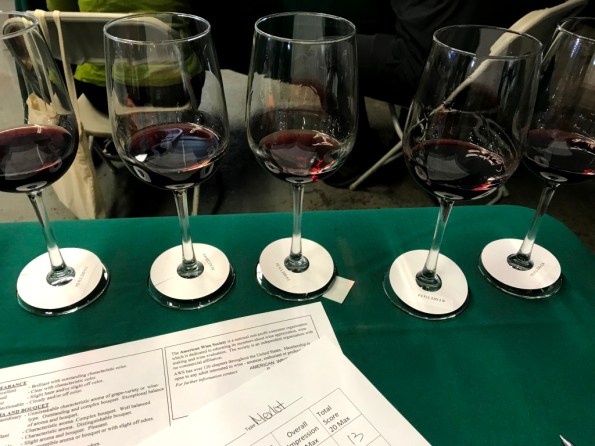


Once all the flights are done by all the judges at all tables, the results are processed, which takes about 30 minutes. During this 30 minutes break, it is a perfect opportunity for judges to walk around and see a bit of the show floor before it gets ultra-crowded. Here are some of the pictures of what you can find on the show floor of the Hudson Valley Wine and Food Festival. These are the things which attracted my attention, and I can tell you that the bacon salsa you see below was superb. Both single malt and rye whiskey which you can see below were good, but not $100 good as it was the show’s asking price. And how about those cans and wine labels!


After the break, the final part of the judging is set up – now the wines are judged for the best in category (best red, best white, etc), and then all of the best in categories are included into the “best in show” tasting. Best in category and best in the show are judged by all the judges at all the tables by the show of hands, and each judge can vote only once.

Best in Show tasting flight
An interesting by-product of all the voting is the title of the “winery of the year” for the region – I don’t know the exact formulae, but it is determined by the number of wines awarded the medals, taking into account how many wines were submitted versus how many wines got awards, and the type of those awards – for example, it is better to submit 2 wines, one of which will take double gold, versus 4 wines, out of which 2 will take silver.
That’s all there is to it – now you know all about the wine judging.


Here you can see our list of flights, and some of my notes. I have to honestly tell you that somehow I liked the wines from last year a bit more than the wines from this year – but then last year our red wines flight was Cabernet Franc, and this year it was Merlot – and Hudson Valley produces better Cabernet Franc than Merlot (personal opinion, of course). Also, last year we tasted no DPMs at our table – in case you never heard the term which I learned last year, DPM stands for Don’t Put in your Mouth – and DPM can happen anywhere, it has nothing to do with any particular region. So last year we got lucky, and this year, we were blessed with two – one wine was completely spoiled (can’t describe it, just terrible, like a spoiled fruit), and the second one tasted like it had cheese blended in the wine – as one of the judges said, “I like cheese with my wine, but not in my wine”. Anyway, bad wines happen anywhere in the world – nothing else there is to it.
Overall, however, I have nothing to complain about, it was fun and successful tasting, and we completed our work with no issues.
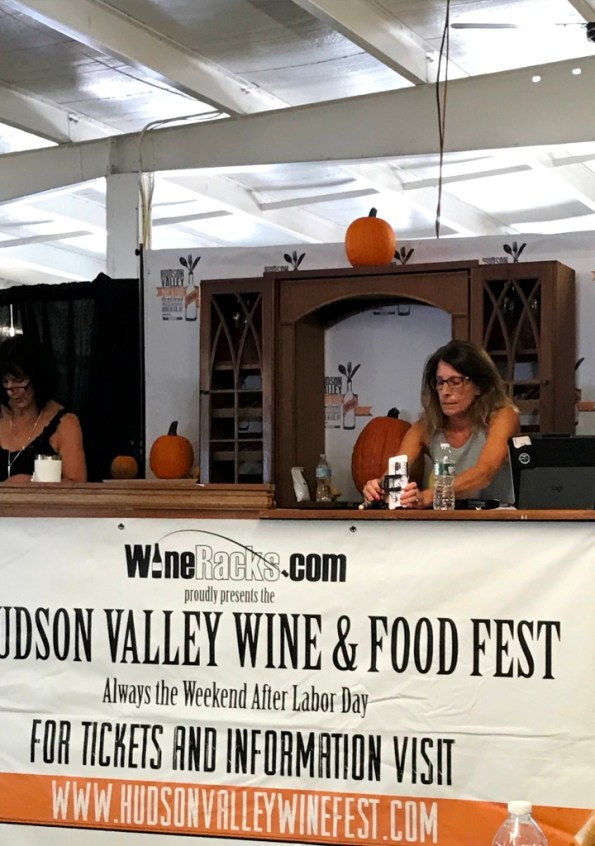
Debbie Gioquindo, Chair of the competition, deep at work
I will not be repeating here all the results – you find them all here, on the website of Debbie Gioquindo, Hudson Valley Wine and Spirits Competition Chairwoman for the past 12 years. For my personal favorites, 2017 Millbrook Castle Hill Vinyard Chardonnay Hudson Valley was absolutely spectacular – it is hard to believe the Chardonnay of such a world quality can be produced in Hudson Valley (I mean no disrespect, but you have to taste this wine to believe it) – perfectly Burgundian with a distant hint of vanilla and butter. 2015 Glorie Farm Winery Cabernet Franc was simply perfect – an excellent rendition of the Cabernet Franc, the grape which Hudson Valley mastered to perfection for a while – and it was the Best in Show wine. And the Baldwin Vineyards Spiced Apple, entered in the fruit wine category, simply blew my mind with its perfect expression of a drool-inducing apple pie – the one you eat with the spoon directly from the tray, and you know you are not supposed to do it, but you can’t stop yourself…


In case you want to see it, here is the aftermath of the competition:

That’s all, my friends. This was definitely a fun experience, and I’m already looking forward to the next year’s event. Cheers!
Hudson Valley Escapades
 Last week I was talking about Fero Vineyards, which was a part of our traditional August getaway in 2015. As I don’t want to wait until 2017 to tell you about our adult’s getaway 2016, let’s talk about it now.
This year we happened to go back to the upstate New York, similar to the trip we took in 2013 when we had an amazing time at the Hudson Distillery. This year, we started our weekend with the lunch at Clermont Vineyards and Winery in Clermont (Germantown), New York.
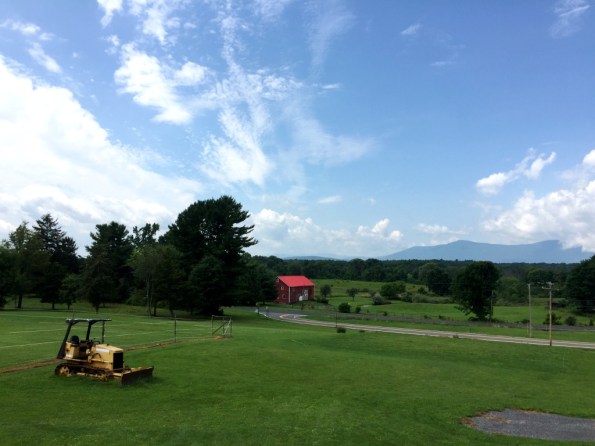
Clermont Vineyards and Winery was started in 2014 by Tony Trigo, with the vineyards planted about 6 years prior. Before we talk about the wines, we need to talk about breathtaking views you get from the tasting room and surrounding decks. Better yet, let not talk – take a look at these pictures:

 The winery primarily focuses on a traditional New York varietals (Chardonnay, Cabernet Franc, Seyval Blanc), but as Tony explained to us, last two winters were brutal, with temperatures dropping very low, so he lost about 3/4 of the Chardonnay vines. As the result, he is adding now hybrid varietals such as Aurore and Arandell, which were created specifically to withstand upstate New York winters – particularly Arandell, selected locally at Cornell University, can successfully survive temperatures of -19ºF, which definitely comes in handy. Having Portuguese roots, Claremont Vineyards also imports few of the Portuguese wines we had an opportunity to taste.


Unfortunately, a number of wines at Claremont Vineyards were sold out, so here are the notes for what we were able to try (just for your information, tasting of 5 wines costs $5 per person):
2015 Grambeira White Douro DOC Portugal (blend of Códega do Larinho; Rabigato and Viosinho) – nice, simple, clean, good body and good acidity
2015 Clermont Vineyards Chardonnay Columbia County New York – excellent, good fruit, bright, hint of sweetness
2014 Clermont Vineyards Aurore Columbia County New York – nice, clean, touch of sweetness – a new grape for me!
2014 Clermont Vineyards Arandell Columbia County New York – Nice touch of sweetness, unusual, strong herbal component. This wine can be polarising, like Norton. The grape itself is selected to sustain cold winters and is also disease resistant – and this is another new grape for the collection
2011 Grambeira Red Douro DOC Portugal (blend of Touriga Nacional, Touriga Franca, Tinta Roriz, 11 months in oak, 8 months in the bottle) – outstanding, Great density, dark, brooding core of spices.
 All in all, very nice place with priceless views, so it would worth even a special trip if you’d like. We also had a long and relaxing 2 hours lunch at a big communal table which Tony graciously set up for us (we brought food with us) – if you plan a group outing, Clermont Winery is a great place for it, but make sure to call ahead.


Our next stop was Tousey Winery, about two miles down the road from Clermont Vineyards. We visited the winery back in 2013 and liked many of their wines, so we were definitely excited at the opportunity to taste their new releases. This is where things took a bittersweet turn. We showed up as a large group (16 people), and 8 of us wanted to taste the wines. We were nicely accommodated on the outside porch and were told that the tasting would cost us $5 per person, and we are allowed to taste any 5 wines from the list. The owner was doing the tasting for us, and yes, we asked quite a few questions (which I truly hope should be expected – the conversation with the customers is an integral part of the wine tasting, don’t you think?); I had a feeling that our questions were perceived as annoying (as the owner was not a winemaker – her husband makes wines – some of the questions were probably a bit challenging). One person from our group wanted to taste a few more wines, for which she grudgingly agreed. When the time came to pay, all of a sudden we were told that the tasting was $15 and not $5 anymore, with the reason that we were a group and she had to pour us more than 5 wines (to one person, 3 extra tastings!!). This is not the issue with $15 versus $5, the problem is simply that you can’t treat people like that. When we tried to argue about it, the response was very irritated – as we were all in the vacation mood, nobody wanted to fight over an extra $10, it was easier to pay and just leave.
What the winery owner doesn’t understand that the winery’s tasting room is a hospitality business, and you have to respect your customers – or face the consequences. It is a pity – Tousey makes delicious Chardonnay, very clean, mineral and crisp, Chablis-style; their Pinot Noir is outstanding as well – restrained, smokey, well balanced – but no wines worth the abuse you have to subject yourself to for the pleasure of trying those wines. We will not be back…
Last stop before we went to our Inn was at Hudson Valley Distillers – and what a pleasure it is to talk to the nice and friendly people (see, we humans need so little to be happy). I like how this distillery is describing itself – “formed by two families sharing a dream“. I like whiskey, thus first thing I wanted to try was their Chancellor’s Imperial Whiskey. I was a bit disappointed to learn that it was produced not from the crushed and fermented barley, but rather by distilling the beer. But the proof is in the pudding, right? Err, the glass, of course.


I like the clever presentation of that malt whiskey, where you get an opportunity to taste the product before and after. To do that, you get a taste of both beer – which is locally produced nearby – and the final malt whiskey, which was excellent – nice touch of sweetness, herbs, soft and round. The Hudson Valley Distillers also produces gin (very tasty), vodka from apples, and plans to start producing their whiskey directly from the malted barley. We also tasted a few of the cocktails which were super delicious and refreshing on a hot summer day. Add here live music (which was, of course, playing right there), and you have a recipe for a perfect summer weekend.


Our next stop was the Inn, and then the dinner – another post is to follow. Cheers!
Last Bottle Sign Up ($10 credit)





