Archive
Exploring Wines Of New Zealand – With Villa Maria on Snooth
Wines of New Zealand need no introduction – for sure to the oenophiles. Winemaking started in New Zealand in the 1850s, but it really flourished in the second half of the 20th century, when jet travel allowed much easier access to the future winemakers to get educated and experienced in Europe. Since the 1990s, New Zealand greatly embraced sustainability and … screw tops. I’m definitely very happy about the first – sustainable farming always leads to the better wines and happier environment. The screw tops – they are fine, I’m not convinced though that they are the best for aging the wines properly. However, I don’t want to convert this post neither into a rant, nor into a debate, so let’s just move on.
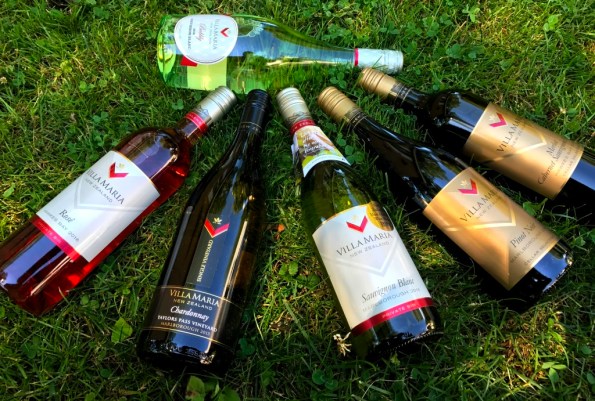 The story of Villa Maria winery is easily an exemplary story of realizing the “American Dream” – only in this case, it is, of course, have to be called a “New Zealand dream” (I hope such a concept exists).
George Fistonich started in 1961, at the age of 21, with one acre of vines in Auckland. In 1962, he harvested the grapes and produced the wines under the name of Villa Maria. That was the beginning of the journey of one man, who had the passion, vision, perseverance and enough obsession to make it. Villa Maria was a one man operation through the 60s, hiring its first staff in the early 70s, and now employing 250 people and exporting their wines to the 50 countries. As a perfect proof of making it, George Fistonich became Sir George Fistonich, receiving the first knighthood in the country for the services to New Zealand’s wine industry.
Villa Maria today has vineyards located in Auckland, Gisborne, Hawkes Bay and Marlborough regions. The grapes range from the New Zealand’s staples such as Sauvignon Blanc and Pinot Noir to such an obscure varietals as Arneis and Verdelho. Villa Maria became a cork-free zone in 2001. And I can tell you, they really treat sustainability seriously – the Villa Maria bottles were some of the lightest wine bottles I ever came across, which I’m sure greatly affects the carbon footprint.
A week or so ago, I was a part of the big group of winelovers tasting Villa Maria wines together in the virtual tasting organized by Snooth (no worries, the wines were real). Here are my notes from tasting and also, re-tasting of the wines.


First, two of the Sauvignon Blanc wines. First one was called “bubbly” as it was lightly carbonated – and it was definitely a fun wine, perfect for a summer picnic, fresh and delightful. And the Marlborough Sauvignon Blanc was simply a classic New Zealand Sauvignon Blanc, done with a perfect restraint:
2016 Villa Maria Bubbly Sauvignon Blanc Marlborough (12.5% ABV, $15)
C: literally non-existent
N: touch of grass and currant, a classic SB, restrained.
P: nice, touch of bubbles, touch of sweetness, black currant, nice and round, refreshing.
V: 8-/8, definitely nice
2016 Villa Maria Private Bin Sauvignon Blanc Marlborough (12.5% ABV, $13)
C: straw pale
N: pure cassis, beautiful, freshly cut grass, classic
P: excellent balance, acidity, currant and a touch of grass. Nice and pleasant.
V: 8, I can drink this at any time, excellent wine


Now, the Rosé and then Chardonnay. The Villa Maria Rosé is predominantly Merlot. It is light and simple, but it has enough finesse to pass one of my personal tests – I particularly like the white and Rosé wines which are well drinkable when they are a bit warm – it is annoying to maintain the wines at the ice cold level (at home, for sure). The Rosé was delicious and drinkable even at the room temperature, so it definitely passed that test. And as for the Chardonnay – I know that I will be in the tiny minority from our tasting group, but I found it to be just okay. It had all the classic Chardonnay traits, but, somehow, didn’t hit the home run for me…
2016 Villa Maria Private Bin Rosé Hawkes Bay (12.5% ABV, $14)
C: Pink
N: strawberries and strawberry leaves, round and pleasant
P: strawberries, touch of sweetness, could use a touch more acidity, but still, nice and delicate
V: 8-, definitely improved the next day, more delicate, better balance
2015 Villa Maria Single Vineyard Taylors Pass Chardonnay Marlborough (13.5% ABV, $45)
C: straw pale
N: creamy, vanilla, freshly baked brioche buns with a touch of butter on them
P: Granny Smith apples smothered in butter, good acidity, excellent midpalate weight, nicely plump, but clean. Nice cleansing acidity on the finish.
V: 7+, needs food.


Now, the reds. Pinot Noir was unusual compared to what I typically expect from the Marlboro Pinot Noir. It was heavier than I expected, and on the day 3, it became a lot closer to the powerful Oregonian Pinot (which is a good deal at $26, right? ). The Merlot blend was an enigma. It opened up beautifully as I just opened the bottle, but then it went back into its shell and never came out of it, even on the day 3 …
2014 Villa Maria Cellar Selection Pinot Noir Marlborough (13.5% ABV, $26)
C: bright ruby
N: touch of sweet cherries, violet
P: tart cherries, tart acidity, touch of tobacco
V: 7, 7+ on the day 3 – showed a lot more fruit on the palate, Oregonian notes of dark power, espresso, mocha, with sweet core of cherries and plums.
2013 Villa Maria Cellar Selection Merlot/Cabernet Sauvignon Hawkes Bay (13.5% ABV, $20, 70% Merlot, 23% Cabernet Sauvignon, 7% Malbec)
C: dark garnet, almost black
N: medium intensity, baking powder, vanilla, sweet mocha
P: black currant, ripe and sweet, touch of espresso, tar, dark fruit, dry, tannic finish
V: 7, unusual experience …
Have you had any of these wines? What are your thoughts? Cheers!
Villa Torrigiani: Traditional Roots, Modern Wines
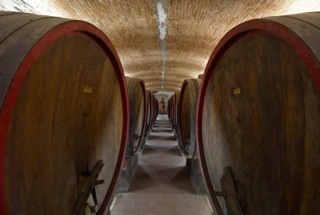
Source: Villa Torrigiani
When it comes to traditions, Italians definitely know how to preserve them. Tour the country, and you will see that finding a 500 years old villa or palace in Italy is very easy; there are plenty of places where the connection can be made through even a 1000 years of history. Italians definitely know how to preserve their traditions.
Talking about traditions, Villa Torrigiani, located in the heart of Tuscany, is exactly one of those well-preserved places, tracking its history back for 1000 years if not longer. Here is the information you can find on Wikipedia:
“In the hills of San Martino alla Palma, vineyards and olive groves have been cultivated for more than a 1,000 years. The estate is located not far from the Via Francigena, the route used by crusaders returning from the Holy Land, and as such a point of passage, the location took its name from Saint Martin, patron saint of vintners and grape harvesters, and Palma (Olive tree), the symbol brought home by crusaders as proof of their travels.
In the mid-1400s, in the very midst of the Renaissance, the marquises Torrigiani, bankers and wine sellers, bought the land that extends from Castellina all the way to the top of the hill of San Martino alla Palma, thus founding Fattoria Torrigiani (The Torrigiani farm). The marquises Torrigiani called on the renowned Florentine architect Michelozzo who designed the stately Villa Torrigiani, which was constructed from 1470 to 1495. The villa, with its numerous halls frescoed by master Florentine painters, is situated at the center of the farm and looks out over the valley of Florence and the cupola of the Duomo.


At the beginning of the 16th century, the farm was divided into 22 “poderi”, or farmsteads, each run by a family group, many of whom have descendants who live in San Martino to this day. The farm was so well organized that it was self-sufficient and no longer dependent on Florence, and consequently, its inhabitants were able to avoid the bubonic plague outbreak of the 1600s.
Fattoria Torrigiani remained the property of the same family for around 500 years until 1967 when it was purchased by the Zingone family who carried out an extensive restoration of the villa and an expansion of agricultural production, of wine and olive oil in particular.”
Fattoria San Martino alla Palma covers almost 900 acres, out of which the vineyards take about 115 acres, and about 300 acres dedicated to the olive trees – in addition to wines and grappa, Villa Torrigiani also produces olive oil.
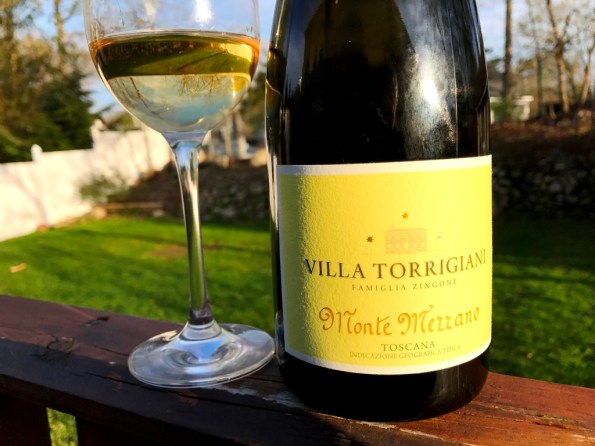
Now, the wines produced by Villa Torrigiani are unquestionably modern. Unoaked Chianti, Chardonnay from Tuscany, super-toscan – while the wines are rooted in tradition, it is hard to argue that they also represent modern Italian winemaking.
I had a pleasure to taste a number of Villa Torrigiani wines, and my tasting notes are below:
2015 Villa Torrigiani Monte Mezzano Bianco Toscana IGT (13% ABV, 100% Chardonnay, 6 mo in French oak barriques)
C: light golden
N: medium intensity, green apples, touch of vanilla
P: needed about 15 minutes in the glass, opened up nice and plump, vanilla, golden delicious apples, crisp acidity, disputants hint of butter
V: 8-, very nicely made, pleasant
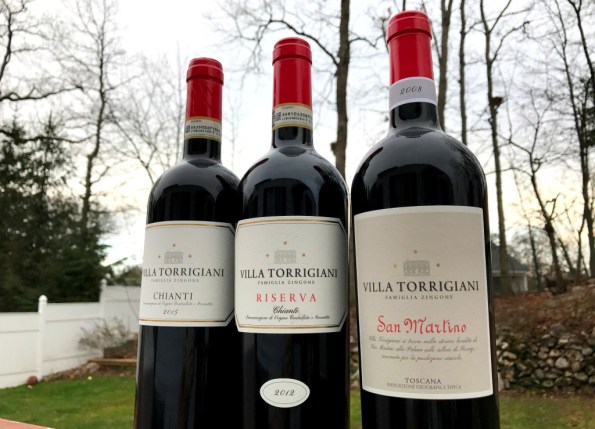
2015 Villa Torrigiani Chianti DOCG (12.5% ABV, 90% Sangiovese, 10% Canaiolo, Stainless steel)
C: garnet
N: fresh, open, medium intensity, caraway seed, touch of sweet cherries
P: fresh, clean, medium body, ripe cherries, touch of cherry peats
V: 7+, needed about 20 minutes to open up and come together, after that delicious all the way through
2012 Villa Torrigiani Chianti Reserva DOCG (13.5% ABV, 90% Sangiovese, 10% Canaiolo, 12-14 month in barrique, additional 6-8 month large oak botti)
C: dark garnet
N: espresso, sweet oak, ripe plums, tobacco, sweet plums
P: dry, perfect balance, dark fruit, supple cherries, good acidity, medium body, medium finish, fresh and open
V: 8-
2008 Villa Torrigiani San Martino Rosso Toscana IGT (13.5% ABV, 85% Cabernet Sauvignon, 15% Sangiovese, 12 month barrique, additional 12-14 month in large oak botti)
C: garnet
N: open, inviting, cassis, eucalyptus
P: fresh, playful, polished, layers of dark fruit, cassis, clean acidity, excellent balance. A true delight.
V: 9-, outstanding. I would love to drink this wine every day.
Here you are, my friends. A beautiful estate with a very long history, producing excellent wines. The only challenge we have at the moment is finding these wines in the USA – but hopefully this will change soon. Cheers!
Happiness-Inducing Wines of Lieb Cellars
 “Rising tide lifts all boats”.
As the wine growing in popularity all over the United States (still does, I hope), we witness the “wine countries” appearing everywhere – not just singular wineries, but the actual aggregations of the wineries, often presented as “wine trails”. While Napa and Sonoma definitely paved and continue leading the way to what the “wine country” is, you can find wineries all over the country offering not only wine tastings, but live music, concerts, dinners, special events and lots more.
Long Island wine country is the one closest to the New York City, making the wines for about 40 years by now. There is a very good chance, however, that even if you live in the USA, you never tasted Long Island wines – same as it is practically impossible to find the wines from Texas, Virginia, North Carolina, Arizona or Michigan anywhere outside of those states. So if I will tell you that Long Island makes world class Riesling, Chardonnay, Chenin Blanc and Merlot, you will probably have to take my word for it.
Over the past 10 years or so, visiting Long Island wineries on more or less a regular basis, I witnessed those wineries perfectly learning from Napa – both the good and the bad. On the good side, more and more knowledge is accumulated as to which vineyards and grapes do best, which individual plots do best, and the winemaking becoming more precise and resourceful. The bad side is in the fact that as the wines are getting better and better, it is less and less possible to enjoy the wines in the wine country itself, as it becomes more and more touristy – and visitors often get this “tourist special” treatment… Oops – no, we are not going into the rant, nope. Let me get to what I actually wanted to talk about.
When I was offered to taste some of the wines produced by Lieb Cellars, I had to do a bit of a research first. It turned out that despite visiting Long Island wineries every year, I never made it to Lieb Cellars and was pretty much unfamiliar with their wines. Therefore, I was looking at the best case – the wine country was coming to me, without any additional tourist distractions, yay!
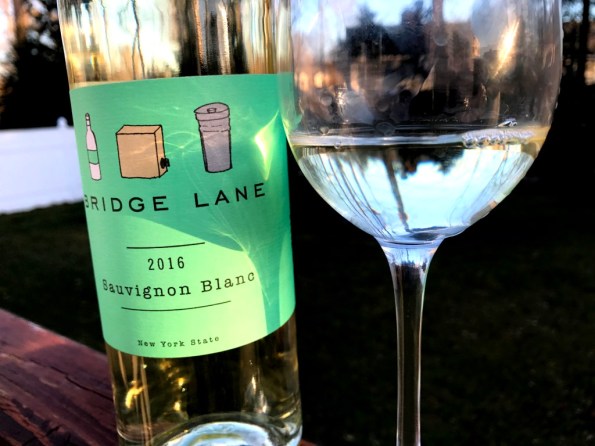
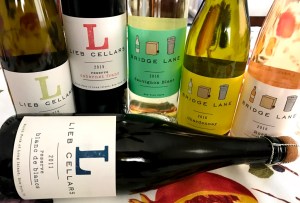
Now, I would like to finally explain the title of this post (after almost falling for a rant, yeah). When the wines arrived and I started taking them out of the box, the first thought was “wow, I love these labels!”. There is really nothing special about those labels, except that they are very clean and simple, and all of them use bright, cheerful colors. We eat with our eyes first – everybody know that – and it works for me the same with the the wine labels. Of course, what’s inside the bottle is far more important than the label itself, but good label makes you anticipate good wine – works for me every time.
In case of Lieb Cellars wines, the happiness-inducing labels were also perfectly supported by what was in the bottles, as you can tell from my tasting notes below. Few comments before I will leave you with them.
Lieb Cellars produces two different lines of wines. The first line, Lieb Cellars, is being produced since 1992. You can see those wines identified on the labels as Lieb Cellars, and today those are the Reserve wines made only from the estate-produced fruit. In 2004, Lieb Cellars started new line of wines called Bridge Lane – named after the farm road adjacent to one of the Lieb vineyards. While Bridge Lane are called a “second label” wines, there is nothing “second” about them – sustainably farmed, small crop, hand harvested wines, available in 3 different formats – standard bottle, 3L box and 20L kegs – whatever size your heart desires. You can even see those three available sizes pictured on the Bridge Lane labels.
Time to talk about the wines – here are my notes:


2016 Bridge Lane Chardonnay New York State (12.5% ABV, $15, 100% Chardonnay)
C: straw pale
N: lemon with distant hint of rosemary
P: lemon, tropical fruit, mango, Granny Smith apples
V: 7+/8-


2016 Bridge Lane Rosé New York State (11.9% ABV, $15, 49% cabernet Franc, 29% Merlot, 16% Malbec, 4% Pinot Noir, 2% Petit Verdot)
C: light onion peel
N: strawberries all the way, ripe strawberries, clean, inviting, fresh, touch of yeast Inessa which makes you smell it for a long time
P: strawberries on the palate, clean lemony acidity, firm and present. It would happily compete with any Provence Rosé
V: 8, wow, what a treat!


2016 Bridge Lane Sauvignon Blanc New York State (12.0% ABV, $15, 100% Sauvignon Blanc)
C: literally non-existent, straw pale extra light
N: fresh cut grass, medium intensity
P: lemon, tart fruit, cut through acidity. More of a Sancerre style – less fruit than California, less intensity than NZ. Clean acidity on the finish.
V: 8-, very enjoyable.


2011 Lieb Cellars Reserve Blanc de Blancs North Fork of Long Island, New York (12.5% ABV, $30, 48 months on the lees, 100% Pinot Blanc)
Appearance: Light golden color, fine mousse
N: touch of Apple, touch of yeast, delicious, open
P: touch of acidity, apples, lemon, restrained
V: 8/8+, the bottle can be gulped in one sitting


2015 Lieb Cellars Pinot Blanc Reserve North Fork of Long Island, New York (11.9% ABV, $20, 98% Pinot Blanc, 2% Riesling)
C: straw pale
N: white stone fruit, nice sweetness
P: beautiful, plump fruit, generous, delicious
V: 8, outstanding.


2015 Lieb Cellars Reserve Cabernet Franc North Fork of Long Island, New York (12.8% ABV, $30, 10 month in Hungarian oak, 85% Cabernet Franc, 9% Cabernet Sauvignon, 4% Merlot, 2% Petit Verdot)
C: dark ruby
N: mint, hint of mushrooms, touch of tobacco
P: fresh, open, blackberries, silky layers,
V: 7+/8-
The wines give us pleasure. It is not simple to convey that in words, but I hope I managed to share at least a glimpse of a pleasure brought by these Lieb Cellars wines. If anything, let me give you only one advice – find ’em and drink ’em. Cheers!
Celebrate with Ferrari!
Would anyone argue that holidays are better with Ferrari? Both of eponymous Italian hallmarks of quality would greatly enhance one’s holiday, but one of them – the car – is a bit less accessible to the general populace, so let’s talk about the one which is – sparkling wine from a beautiful region in the Italian Alps – Trento.
More than 100 years ago, Guido Ferrari recognized the potential of the green slopes to grow world-class Chardonnay. While Chardonnay is an undisputed star of the still white wine, its swan song might be delivered best with the bubbles. Champagne comes only from Champagne, but Méthode Champenoise is successfully used around the world to produce sparkling wines easily rivaling Champagne in quality.
This is what Guido Ferrari set out to do in 1902 – produce world-class sparkling wines – the task which he completed successfully. As Guido Ferrari had no direct heirs, in 1952 he sold the winery and vineyards to the Bruno Lunelli, a friend and wine merchant. Now in the third generation, Lunelli family proudly continues Ferrari traditions into the 21st century.
Earlier in the year, I had a virtual conversation with Marcello Lunelli, a winemaker at the Ferrari winery – you can find that post here. Then during summer I had an opportunity to meet, talk to and taste the wines together with Camilla Lunelli, Managing Partner at Ferrari, who visited New York on the occasion of attending The World’s 50 Best Restaurants Awards ceremony, where Ferrari was sponsoring The Art of Hospitality Award (it went to Madison Eleven restaurant in New York city). As we combined conversation with the tasting of the wines, I want to share here my brief notes about both the winery and the wines we tasted.
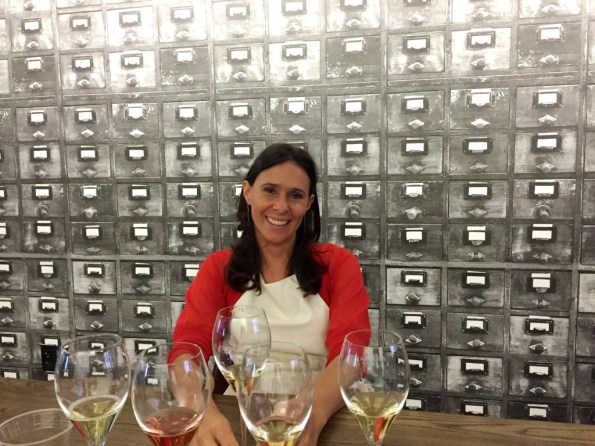
Today Ferrari is producing about 2 million bottles per year. They are working in close cooperation with the network of 500 growers and employ 8 agronomists who work literally around the clock to ensure the quality of the grapes. All Ferrari vineyards are certified organic, which is something not to be taken lightly – think about the work required to convince 500 growers to change their ways, to adapt Best Practices developed by Ferrari and get certified (it took most of the growers between 3 and 5 years to change). Talking about the vineyards, an interesting side note: Trento is a mountainous region, and all Ferrari vineyards are located on the slopes which provide for large temperature shifts between day and night, which is significant for the development of the Chardonnay grapes.
Italy is the biggest market for Ferrari sparkling wines. However, when I asked which market is the next big one after Italy, I got a surprising answer – it is Japan! (Yeah, I knew it is not the US, as Ferrari wines are hard to find in the US stores).
I also asked what would be an interesting food pairing for the Ferrari sparklers, and Camilla recommended Rosé sparkling wine with Pizza (yes, I can see it) and then bubbles with the BBQ, which is something I will need to try.
Okay, let’s get to the wines now, shall we?


NV Ferrari Brut Metodo Classico Trento DOC (SRP $25, 100% Chardonnay) – Delicious. Perfect acidity, lightly yeasty, refreshing, clear acidic finish.
2007 Ferrari Perlé Metodo Classico Trento DOC (SRP $38, 100% Chardonnay) – complex nose, minerality, complex palate with musk undertones, full bodied and refreshing
2009 Ferrari Perlé Metodo Classico Trento DOC (SRP $38, 100% Chardonnay) – we didn’t taste this wine with Camilla – I recently got a sample of 2009, so it was a good opportunity to include it here. On the nose, fine fizz, mostly closed nose with just a touch of an apple. The palate showed toasted bread notes, restrained, good acidity, tart, very clean and austere. Perfectly reminiscent of a good Champagne, however, too astringent for my personal enjoyment. I would definitely prefer 2007.


2008 Ferrari Perlé Rosé Metodo Classico Trento DOC (SRP $59, 80% Pinot Noir, 20% Chardonnay) – Delicious nose, hint of strawberries, yeast, great concentration, complex, toasted bread, refreshing.
2008 Ferrari Perlé Nero Metodo Classico Trento DOC (SRP $79.99, 100% Pinot Nero) – great nose, plump, open, full-bodied, lots of fruit on the nose, fresh baguette, not just yeast or toasted bread, toasted caramel, butterscotch


2006 Ferrari Riserva Lunelli Metodo Classico Trento DOC (SRP $56, 100% Chardonnay) – the grapes for this wine come from the single area around Villa Margon. This wine is aged in neutral Austrian oak casks. Excellent, seriously complex nose, with a touch of tropical fruit; tremendous palate – roasted meat, super-complex, delicious.
2004 Ferrari Riserva del Fondatori Giulio Metodo Classico Trento DOC (SRP $120, 100% Chardonnay) – the grapes for this wine come from a single high altitude vineyard called Maso Panizza. The wine has the classic nose, great acidity, it just screams “classic vintage Champagne” all the way.
Here you are, my friends – a full range of beautiful sparkling wines, worthy of any celebration you will have. I wish they would be a bit easier to find in the US, but these are the wines worth seeking. Cheers!
One on One with Winemaker: Don Hagge of Vidon Vineyard
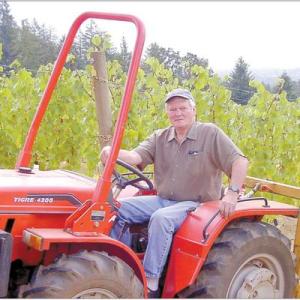
Don Hagge. Source: Vidon Vineyard
What do most people do at the age of 69? Retire, or at least, semi-retire, right? Humans live longer than ever before, and many still have enough energy and desire to continue doing what they are doing. But let me rephrase the question a bit – how many people do you know who would start a totally new business at the age of 69? Might be a difficult question, I understand. Sure it would be for me, but now I can proudly say that I know at least one person like that. Let me introduce to you Don Hagge.
So what does rocket scientist (with degrees from UC Berkeley in physics and business from Stanford), whose resumé includes Lawrence Berkeley Laboratory, Centre d’Etude Physiques Nucleare in Paris, Apollo Mission at NASA and Silicon Valley high-tech industry, upon retirement? Of course, starts his own winery! Well, it sounds radical, but considering that Don grew up on a farm in North Dakota, and had an opportunity to live in France and experience wines of Burgundy, maybe it is only logical?
Vicky and Don Hagge started Vidon Vineyard in 1999 in Willamette Valley, in the Chehalem Mountains AVA of Oregon (you can probably figure that name of the winery, Vidon, is made up after Vicky and Don). Fast forward to today, Vidon Vineyard produces primarily Pinot Noir, plus small amounts of Chardonnay, Pinot Gris, Pinot Blanc, Viognier, Syrah, and Tempranillo. Vidon Vineyard is sustainable, LIVE and Salmon-safe certified, and practices minimal intervention winemaking. Don Hagge not only makes wines, he also plays the role of a handyman when it comes to various winemaking tools and equipment. Plus, he is very opinionated about the use of glass enclosures instead of corks…
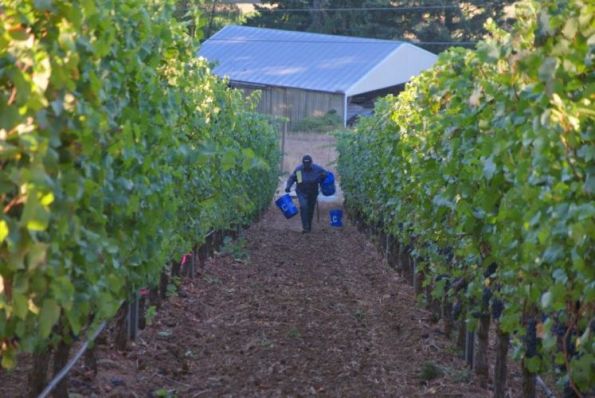
Source: Vidon Vineyard
I had an opportunity to [virtually] sit down with Don Hagge and ask him a few questions, so here you can find our conversation:
TaV: For many years, you had been living and working in California. Why have you decided to build a brand new winery in Oregon and not in California?
DH: I was recruited to Oregon by a venture capitalist as the CEO of a startup semiconductor company. During this time, I biked in the Willamette Valley regularly and loved the vineyards. Since I lived in France some time ago, Pinot Noir has been a favorite wine. I grew on a farm and decided to make a career change and what could be better than buying land, planting a vineyard and learning how to make wine? Oregon was gaining a reputation for Pinot Noir so here I am.
TaV: Your very first wines were made in 2002. Do you still have any of those bottles left? If you do, how do they drink today?
DH: Unfortunately, the 2002 vintage is gone. I made only 40 cases and didn’t label it, only for friends and personal use. We just had a 2006 vintage this evening which is fantastic.
TaV: During all the years of Vidon Vineyard existence, what was the most difficult vintage for you and why?
DH: Probably the 2007 vintage. This was the first year I used my own winery so many things were new. I saw the forecast for heavy weather, got a crew and pulled in 16 tons on September 25th. Before we finished cleaning the equipment it started raining and didn’t stop for a month. Most people suffered through the rains and the vintage got a bad rap in the press. We were lucky – it’s still a beautiful wine!
TaV: For how long do you typically age your Pinot Noir wines in French oak Barrels?
DH: Most of my wine carries the 3-Clones label and gets 11 months in French oak barrels which are on average 30% new. I’m not a fan of big oak in any wine.
TaV: You are an enthusiastic proponent of glass enclosures instead of traditional cork. When did you start using glass enclosures? Also, did you ever try to bottle the same vintage both with glass enclosures and traditional corks and then compare the results of the aging?
DH: Until the 2008 vintage I used corks and usually quite expensive ones. However, I determined that no matter what they cost, they still taint wine because of TCA and pre-oxidize occasionally. Therefore, in 2008 I began using Stelvin screw caps. In 2009 I started using Vinoseals for the Single Clone labels. No, I’ve never done a comparison of cork vs Vinoseal glass closures. It’s not necessary, I know what corks do and Vinoseals and screw caps don’t do. I don’t understand why anyone uses a closure that ruins a percentage of their wines when there are alternatives that don’t.
TaV: Today, you are producing a number of different white and red wines. Do you have any plans (if not plans, may be at least some thoughts) about starting to produce Rosé and/or Sparkling wines?
DH: I made Rosé for two vintages and one was great, I was told. I’d like to do a Sparkling but my winery is too small given what I’m now doing. That’s not to say I’m not dreaming of a winery expansion and interested in trying more and different wines.
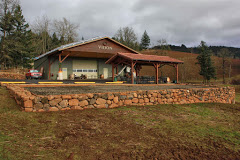
Vidon Winery. Source: Vidon Vineyard
TaV: Outside of your own wines, which are your favorite Pinot Noir producers in the world?
DH: Good Bourgogne wines are what I like to emulate. The 2004 vintage was the nearest to a great Bourgogne that I’ve made.
TaV: If you would have an opportunity to start your winery again, would you do something different?
DH: Given the resources I had, not much. Perhaps I’d build a better winery instead of an expensive house, but I have a wife. 🙂
TaV: You describe your approach in the vineyard as “minimal intervention”, and your winery is LIVE Certified. Do you have any plans to become certified organic or biodynamic winery?
DH: I’m a scientist and Biodynamic winemaking isn’t scientific. Many of their practices are good, how they treat the land, etc. But I don’t believe in VooDoo. I don’t’ believe that Organic Certification results in better wine or land management than what we do in the LIVE program.
TaV: I understand that you have built your own bottling line wine dispenser for the tasting room. What are the other technological tools which you built at your winery?
DH: I don’t think I’ve built anything for winemaking that any good farm boy couldn’t have. I’m always trying to find ways to simplify tasks and become more efficient in using time and material. I have an idea about saving wine and labor in barrel topping but haven’t implemented it yet. My use of Flextanks to replace some barrels is already saving wine and labor by eliminating barrel topping while producing wine that’s equivalent to that from barrels.
TaV: You already work with quite a few grapes (Chardonnay, Pinot Gris, Pinot Noir, Tempranillo, Cab Franc, Syrah). Do you plan to add any other grapes in the vineyard?
DH: No more varieties. No more land to plant. However, I do hope to plant a small plot of Coury clone Pinot Noir next year. Planting of the clone date back 50 years to the original plantings.
TaV: What drives your passion? You started Vidon vineyards at the age when most of the people are happily retiring, so there must be some deep reason for you to engage in such a – of course, a labor of love – but hard labor?
DH: I like to live. I’m not ready to “stop” and watch TV. I think having a ToDo list every morning and a little anxiety and stress about getting things done will result in a longer life. To have no challenges is pretty dull and boring. When one is doing things that one enjoys, it’s not labor.
What do you say, my friends? This interview continues our Stories of Passion and Pinot series, and I think it is a perfect sequel to the conversation with Ken Wright – Don Hagge exudes the same righteousness, passion, and confidence in everything he does.
And you know what supports Don’s ways and means? His wines! I had an opportunity to try his Chardonnay and Pinot Noir, and in a word, I can tell you – what a treat! Two stunning, perfectly balanced and perfectly Burgundian in style – made with passion and care in Oregon.
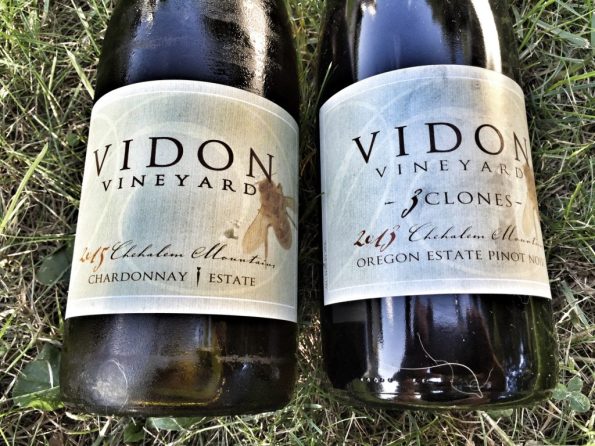
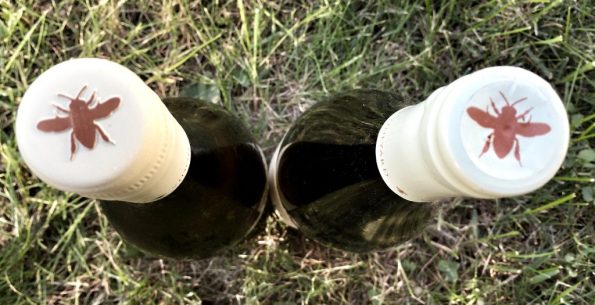
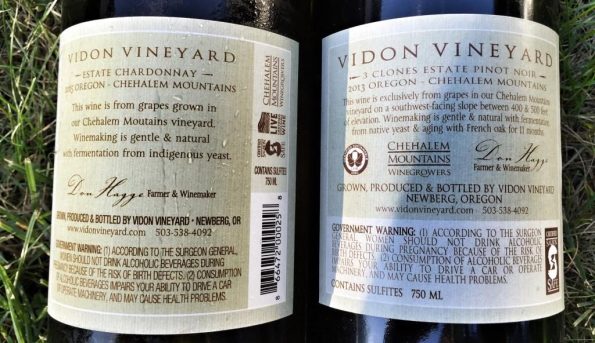 For what it worth, here are my notes:
2015 Vidon Vineyard Chardonnay Estate Chehalem Mountains, Oregon (12.9% ABV, $35)
C: golden color
N: initially, very restrained, mostly minerality. After 2 days in the fridge, honey and vanilla, quite spectacular
P: initially tight, minerally and acidic. Two days later – exuberant, golden delicious apples, perfect acidity, vanilla, medium finish. Every sip leaves you craving for more
V: 9, simply outstanding, delicious.
2013 Vidon Vineyard 3 Clones Pinot Noir Estate Chehalem Mountains, Oregon (14.3% ABV, $40)
C: bright Ruby, cranberry undertones
N: inviting, intense, a touch of smoke, lavender, red fruit
P: nicely restrained, minerality, crushed red fruit, mouthwatering acidity, fresh, elegant, lots of finesse
V: 9-, outstanding wine, Burgundian style
Here you are, my friends – another story of Passion and Pinot. And I have more for you, so until the next time – cheers!
To be continued…
P.S. This post is a part of the “Stories of Passion and Pinot” series <- click the link for more stories.
WBC16: Overwhelmed Even Before The Day One
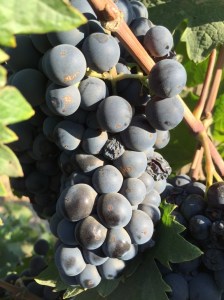 Yet another ambitious plan goes nowhere. While attending the Wine Bloggers Conference 2016 in Lodi, I had a great idea of posting a recap of the prior day in the morning. No need to start checking for the missing posts from me – none of it happened. Every day was so packed from dawn to dusk that what seemed to be a great idea didn’t survive the test of the reality. Yes, I probably could muscle a few lines in, but it would come at the expense of the great time talking to the fellow bloggers, which was the trade off I didn’t want to make.
So here we are, the conference is over, so now I will do my best to share my perspective of the events as they took place. Here we go.
I took a flight early morning on Thursday to arrive to San Francisco. After getting the rental car, my first stop was in Napa, at Oxbow Public Market, where I met for lunch Danielle Irwin and her husband Derek. Oxbow Public Market is a very interesting place, conceptually somewhat close to the Chelsea Markets in New York, only built in modern, contemporary style, with lots of small artisan shops and restaurants, offering food and wine, fresh produce, coffee and whatever else your heart desires. Great place to stop by if you are looking for a break during your winery visits.
It was a great pleasure to meet Danielle and Derek face to face. I had been virtually talking to Danielle for a while – she is writing her blog Danielle Dishes The Vineyard Dirt at Naggiar Vineyards in Sierra Foothills, where her husband Derek is the winemaker. Derek is a vigneron who is involved in a lot of vineyard and winery projects, and he also produces his own wines under Irwin Family Wines label. I had a pleasure of tasting his Tempranillo, which was the first California Tempranillo I ever tasted. Conversation with Derek was an excellent introduction into the Lodi wines, as he gave me some ideas for what to expect there.
A hour an a half later, after a ride along route 12 which I wouldn’t call pleasant (lots of stop and go traffic, not a fun ride) I arrived to the Hampton Inn in Lodi, which became home outside of home for the next 3 days.
The first event of the night was the conference opening reception at the Mohr Fry Ranch, sponsored by Lodi Wine. With that reception came my first real encounter with Lodi wines.
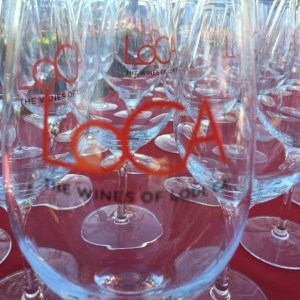
Until coming to Lodi, I only knew it as a source of many Zinfandel wines. And then there was a perception of hot, high alcohol wines, based on the tasting of occasional Cabernet Sauvignon with Lodi regional designation. Yep, that’s all I had on Lodi in my head.
The very first taste of the Lodi wine broke that perception. By the end of the tasting, it was shattered completely and didn’t exist anymore.


I stopped at the table of the Fields Family Wines, and the very first white wine I tasted was 2015 Fields Family Wines Clay Station Vineyard Grenache Blanc Lodi. I never tasted Grenache Blanc from California, let alone the fact that it is coming from one of the hottest regions (yep, sense my fear?) – yet the wine had clean acidity, touch of minerality, restrained fruit – a great start.
You know what – now I’m afraid to bore you away with all this “acidity and restrained fruit”, but this was the trait of literally every Lodi wine I had an opportunity to taste – there were no fruit bombs, there were no hot wines, there were delicious, well made world-class wines, made with love and care. I just have to tell you this, as it was really an overarching impression over the three days of tasting, so now I will [try to] avoid repeating myself all the time.
Have to be honest – the next red wine I approached with trepidation (huh, like the previous one I did not, right). Tempranillo from Lodi? I already told you that I had good experience with Irwin Family Tempranillo from Napa, but it was one particular wine, which doesn’t guarantee anything in a long run. And if you are reading this blog for a while, you know my passion for the Spanish Tempranillo wines – and now in my mind I was facing a clear opportunity to be disappointed. First sip of this 2010 Fields Family Wines Tempranillo Lodi put all my doubts to rest – the wine had a nose of black fruit and spices, and it was dark and brooding on the palate, with those espresso notes so characteristic in the wines of Toro in Spain. An outstanding rendition by all means, and I would love to see it in a blind tasting against the actual Toro wines.
2010 Fields Family Wines Estate Grown Syrah Lodi was an excellent example of the cold climate Syrah – touch of roasted meat, dark fruit, spicy with clean acidity – great rendition of another one of my favorite grapes. 2011 Fields Family Wines Estate Grown Syrah Lodi added more complexity and more roasted meat, all with perfect balance. 2010 Fields Family Wines Petitte Sirah Lodi was simply outstanding, offering silky smooth, velvety texture, supple ripe black and blue fruit with enough acidity in the core to make the wine perfectly balanced. As you can tell, Fields Family Wines provided a splendid introduction into the wines of Lodi.


My [now exciting] Lodi wine deep dive continued at the next table. Successful first experience should’ve really put me at ease – and still, an Albariño on the label triggered a subconscious alarm – Lodi doesn’t leave the impression of the Rias Baixas (not that I visited Spain, unfortunately, but just a mental image of coastal region), so “just in case, prepare for the worst”, the concerned brain said. This happened to be really a needless worry. 2015 Harney Lane Albariño Lodi had a a nose of white fruit and excellent acidity on the palate, which is the typical characteristic of the Spanish Albariño. 2013 Harney Lane Tempranillo Lodi was a bit lighter than the Fields Tempranillo version (it was also 3 years younger), but still preserving the core of dark fruit and good acidity. 2013 Harney Lane Lizzy James Vineyard Old Vines Sinfandel Lodi was as classic as Lodi Zinfandel can be – blueberries, blackberries, spices – very tasty.
I could continue tasting Lodi wines as there were many more winemakers present. However, there is something you need to know about Wine Bloggers Conference. In addition to all of the program events, there are always lots and lots of activities taking place somewhere around the WBC space. Call them private tastings or what, but this is something to pay attention to. Thus we left the reception, and after a short drive arrived at a house where Troon Vineyards tasting was taking place.


Troon Vineyards started in Southern Oregon in 1976 (vines were planted in 1972). I’m sure that when you hear “Oregon wine”, your first thought is Pinot Noir – nevertheless, Troon Vineyard doesn’t produce any Pinot Noir wines, and instead focuses on Mediterranean grape varietals (and Zinfandel). Another interesting fact is that many of the Troon wines (especially the whites) are co-fermented, meaning that different varietals are fermented together at the same time, as opposed to fermenting separately and blending afterwards.
I tried a number of Troon wines, with the two favorites been 2015 Troon Blue Label Longue Carabine, Applegate Valley, Southern Oregon (blend of Vermentino, Viognier, Marsanne and Roussanne) – touch of perfume on the nose, medium to full body with expressive minerality and good acidity. 2013 Troon Black Label M*T Reserve, Applegate Valley, Souther Oregon (blend of Malbec and Tannat) had nose of black fruit with dark core and good structure, medium to full body and good balance.
The last stop of the long day (remember, I left the house at 5 am in the Eastern time zone) was at the Rodney Strong Vineyards party, which was luckily taking place right at the hotel.


Rodney Strong winery had been producing wines in Sonoma for more than 50 years and would well deserve its own post to talk about their long history (the oldest vineyard at Rodney Strong was planted in 1904) and their achievements. But for the sake of this post, let me just talk about few of their wines I had an opportunity to enjoy.
2015 Estate Sauvignon Blanc, Charlotte’s Home, Northern Sonoma was excellent – grassy nose, fresh, crisp and restrained palate, with just a touch of grass and lemon – delicious and very refreshing. 2009 Ramey Platt Vineyard Chardonnay Sonoma Coast was a stand out (no wonder Ramey Chardonnay was one of Decanter magazine’s 10 best Chardonnay wines in the world outside of Burgundy) – classic intense vanilla nose, vanilla apple and pear on the palate, excellent balance and excellent overall. As an extra bonus, the wine was poured from double-magnum (3L) bottle. In case you are wondering about connection here, David Ramey is a consulting winemaker at Rodney Strong.


The reds of Rodney Strong provided an amazing finish to the very long but very exciting day. 2013 Davis Bynum 2013 Jane’s Vineyard Pinot Noir Dijon Clone 115 Russian River Valley was a classic California Pinot Noir – with plums and smoke, soft and round. 2010 Rodney Strong Symmetry Meritage Alexander Valley is one of the very best Bordeaux blends from California – again, classic, classic, classic – cassis, green bell pepper, mint, perfect structure, absolutely delicious wine. The last three reds were flagship single vineyard Cabernet Sauvignon wines – 2009 Rodney Strong Alexander’s Crown Single Vineyard Cabernet Sauvignon Alexander Valley, 2013 Rodney Strong Rockaway Single Vineyard Cabernet Sauvignon Alexander Valley and 2013 Rodney Strong Brothers Single Vineyard Cabernet Sauvignon Alexander Valley. Considering the end of a very long day, I’m not going to give you any details on the notes other than that all three were classic Cabernet wines, pure, varietally correct and delicious – I would love to drink those at any day.
If you are still with me, aren’t you tired reading this post? I’m tired even writing it – but we are done here. My first WBC16 report is over – and more to follow. Cheers!
To be continued…
And This Is Why I Love Spanish Wines
Yes. Confessed uncountable number of times, in this blog and everywhere (want proof? Click here, here, here, here or here).
I love Spanish wines. Never tried to hide it, so no, there is nothing to look for in the closet.
Spain is one of the so called “Old World” wine countries, with biggest grape area plantings in the world and one of the highest volumes of the wine production. But of course this is not the reason for my high sentiment towards Spanish wines. What is important, however, that if we will take 10 random wines produced in any country, in about the same price range, I will find the most of the wines to my liking out of those hypothetical 10 among Spanish wines – compare to any other region. Another equally important point for me is the value – Spanish wines offer one of the best values in the world; not only that – they are possibly the best QPR wines in the world. For example, if you will compare 1964 Rioja, which is still perfectly drinkable today and still can be found for less than $150, to majority of the wines of the similar age but from the other regions, most of them will not come anywhere close in the amount of pleasure they deliver, never mind the cost.
And then we have to talk about innovation and drive forward. Spanish wines are not standing still. Styles are changing, wine quality is improving, new and unexpected grapes are made into delicious wines. To make this conversation more practical, let me share with you some of my recent Spanish wine encounters.
Today, Albariño needs no introduction. The star white grape of the Rias Baixas region in Northern Spain is known to produce wines with explosive acidity and profile of salinity, which makes them an ideal companion to oysters and anything seafood for that matter. While Albariño wines are generally very good, there is one word I would rarely associate with them – finesse. Or at least I was not, until I had an opportunity to try these two Albariño.


2014 Bodegas LA VAL Albariño Rias Baixas D.O. (12% ABV, SRP $17, 2 month sur lie) had greenish/straw pale color; intense and open nose of minerals, wet stone and lemon. On the palate, the wine was plump with invigorating acidity, intense lemon finish, crisp, fresh – excellent overall (Drinkability: 8).
2014 Viña Moraima Albariño Rias Baixas D.O. (12.5% ABV, SRP $19, 7 month sur lie) had light golden color. Nose was very unusual, with candied lemon, intense, tropical, guava notes. On the palate, the wine showed remote hint of sweetness, full body, round and layered with hint of salinity, good acidity. This was definitely the next level of Albariño, thought provoking and different. (Drinkability: 8)
As you can see, Albariño is really starting to deliver on the next level, and I can’t wait to see how far it can go. What is interesting, however, is that all of the best Spanish white wines – to my knowledge, of course – are made from the indigenous varieties – Albariño, Godello, Verdejo and Viura would be the “major four”. The situation is slightly different for the reds, where the local stars, Tempranillo and Garnacha, are joined by the international best, such as Cabernet Sauvignon and Merlot. Going back to the whites, outside of some experimental plantings, Riesling, Sauvignon Blanc and Chardonnay are nowhere to be found in Spain, yes? Well, that would be my statement as of the month ago, but not anymore.


Enters Hacienda de Arínzano. Having tasted recently Hacienda de Arínzano Rosé, which was outstanding, I know that Pago de Arínzano, first Pago (highest denomination of quality in Spain) in Northern Spain, can produce excellent wines. Still, this 2014 Hacienda de Arínzano Chardonnay Pago de Arínzano DOP (13.5% ABV, SRP $19.99, 100% Chardonnay. 12 month French oak barrels – 30% new) far exceeded my expectations. From the first smell the wine in the glass was screaming “Chardonnay” – touch of vanilla, hint of golden delicious apples, just classic Chardonnay. The palate reaffirmed the “classic Chardonnay” impression – fresh, open, creamy, with perfectly balanced white fruit, vanilla, distant hint of butter, perfect amount of acidity – a delicious world-class Chardonnay which I would be glad to drink at any time – and almost a steal at this price. Drinkability: 8+.
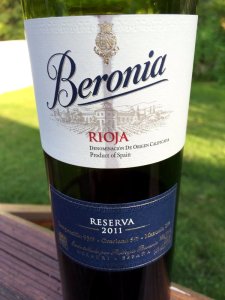 We talked about new wines and new styles. Let’s talk about quality now – well, not the quality per se, but let’s talk about changing mindset. If you would ask me “should I open 5 years old Rioja Reserva”, my immediate answer would be “absolutely not – give it at least another 5 years to enjoy it fully”. By law, Rioja Reserva has to spend at least 1 year aging in the barrel, and most of the producers age it for much longer, so the resulting wines typically should be given ample time in the bottle to evolve. But once again I was proven wrong. I opened the bottle of 2011 Bodegas Beronia Rioja Reserva (14% ABV, SRP $21, 94% Tempranillo, 4% Graciano, 2% Mazuelo, 18 month in barrel, 20 month in the bottle) and was absolutely blown away. Concentrated nose of dark fruit, cigar box and eucalyptus was supported by bright, dense, perfectly structured palate, with dark fruit and touch of sweet oak. This was definitely one of the best PnP (Pop ‘n Pour) wines I ever experienced, and a nice surprise. Drinkability: 8+
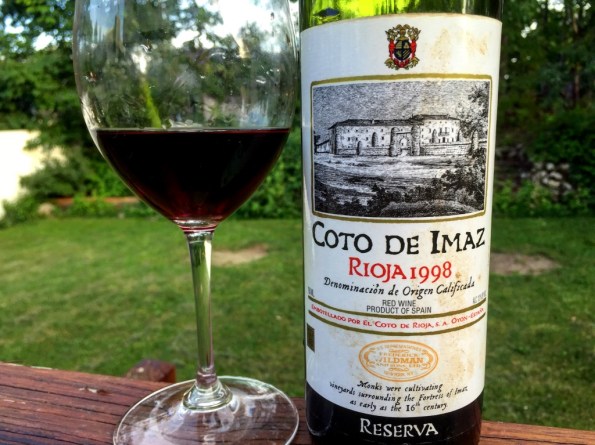
I want to mention one more beautiful Rioja wine – this one with a bit more age on it. I like it when I have a reason to open a nice bottle of wine, which otherwise would be still laying down and waiting for the “perfect moment”. The special reason was my son’s high school graduation, and as he was born in 1998, this was the first 1998 bottle I pulled out of the wine fridge (well, I’m not telling all the truth – this was the one I knew the exact location of).
To begin with, I was impressed with the state of the cork on this 18 years old wine – it was perfect, showing literally no age on it whatsoever. 1998 Coto de Imaz Rioja Reserva (13% ABV, 100% Tempranillo) still had enough freshness on the nose, with the notes of ripe plum, and the palate had ripe fruit with the distant hint of sweetness without any tertiary aromas, good acidity, medium to full body and excellent balance. I’m sure this wine would go on happily for many years. Drinkability: 8+
Okay, we are done here. Do you think I explained my passion for Spanish wines well enough? Great wines, great values, great QPRs, and lots and lots of pleasure – what is not to love? If you had any of the wines I mentioned here, I would love to know your opinion. Until the next time – cheers!
New and Noteworthy: Two Classic Regions, Three Classic Pairs
I tend to abuse certain words in the conversation, especially when talking on the subject of wine. As you might easily guess, one of such words is “Classic”. I use this word in hope that it is the quickest way to convey my impressions about the wine. For instance, the words “Classic Red Bordeaux” or “Classic White Burgundy” would most likely paint a quick and vivd picture for the most of oenophiles to imagine how the wine actually tastes. While the wine is produced all around the world, such a broad stroke reference can be only applied to the well known and well referred to regions – saying “Classic Red Bio-Bio” (wienmaking region in Chile) or “Classic White Valais” (winemakiing region in Switzerland) would be an empty sound for majority of the wine lovers.
Looking past the regions, we can also apply the word “classic” to the grapes themselves. There are probably 15-20 grapes which can be easily referred to in this way – “classic Cabernet Sauvignon” or “Classic Sauvignon Blanc”, for example, would give you quick pointers to how the wine might taste like. Yes, “Classic Bobal” or “Classic Resi” will leave most of us with no information at all.
As this is not an epistolary exercise on the applications of the word “Classic” in the wine world, let’s get closer to the subject at hand, and talk about few wines in the practical terms. Today I want to talk about 2 classic regions and 3 classic grapes – for sure for those regions. So the classic regions are: California and Oregon. Would you agree that it is easy to refer to these two world renowned winemaking regions as “Classic”? I hope you are nodding. And for the grapes, I also hope you would share my “classic” sentiment – Pinot Noir and Chardonnay from California Napa Valley – aha, I see you smacking your lips. And Pinot Noir and Pinot Gris from Oregon – need I say more?
Talking about the wines from Oregon, the Pinot Noir is of course an uncontested king of the Pacific Northwest of the USA. Commercial Pinot Noir production in Oregon started in the 1960s, and then from the beginning of the 1990s, Pinot Noir from Oregon needed no introduction anymore. With Oregon Pinot Gris, you might argue with my “classic” designation, however, today, you will practically not find a single Oregon winery which will not produce Pinot Gris. Oregon Pinot Gris has its own, easily recognizable style and character, so in my mind, Pinot Gris wines are the “classic” element of the Oregon winemaking.
Thus let me present to you the first two of the “classic” pairs – Pinot Gris and Pinot Noir from two wineries in Oregon: Willamette Valley Vineyards and Pike Road Wines.


Willamette Valley Vineyards was established in 1983, planting Pinot Noir, Pinot Gris and Chardonnay vines where blackberries and plums were growing before. The original Estate vineyard spans 53 acres at the 500 to 750 feet in elevation. Today, Willamette Valley vineyards farms more than 250 acres of vines, including one of the oldest in Oregon, Tualatin Estate, which are all LIVE (Low Input Viticulture and Enology) certified. I had a pleasure of trying Willamette Valley Pinot Gris and Pinot Noir wines earlier in the year, so here are my notes:


2014 Willamette Valley Vineyards Pinot Gris, Willamette Valley, Oregon (12.4% ABV, SRP: $16)
C: straw pale
N: white stone fruit, touch of grass
P: hint of candied lemon, white stone fruit, nicely round, refreshing, good acidity, medium to full body
V: 7+/8-, very pleasant
2013 Willamette Valley Vineyards Pinot Noir Estate Willamette Valley, Oregon (13.7% ABV, SRP: $30, retail: ~$20)
C: beautiful Ruby
N: fragrant, fresh, cranberries with touch of cherries, sweet raspberries
P: wow, lots of fresh fruit – cranberries, raspberries, fresh, super-clean, touch herbal, great restrained finish
8+, one of the most delicious Pinot ever, perfect.
Our second Oregon winery takes its name from the Pike Road, which winds through the hills of Yamhill-Carlton AVA. This is the second winery for the Campbell family, who founded Elk Cove Vineyards in 1974. Pike Road takes advantage of 5 generations of the farming experience, including 40 years of tending the wines.
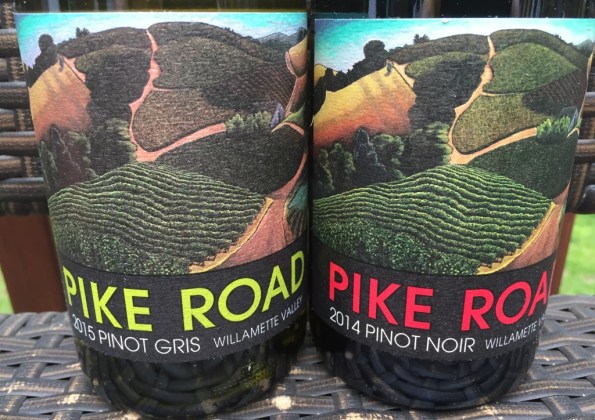


Here are my notes:
2015 Pike Road Pinot Gris Willamette Valley, Oregon (13.5% ABV, SRP: $15)
C: pale greenish color
N: tropical fruit, candied lemon, fresh, intense, inviting
P: crisp, clean, perfect fresh acidity and white stone fruit, creamy. Outstanding.
V: 8-/8, delicious white wine, perfect year around and superb during summer
2014 Pike Road Pinot Noir Willamette Valley, Oregon (13.5% ABV, SRP: $19, 10 month in French oak barrels)
C: dark Ruby
N: delicious. Touch of sweet fruit, open, inviting, raspberries, herbs, super-promising, wow
P: soft, layered, silky, spices on top of traditional smokey profile, triple-wow
V: 8+/9-, wow, totally unexpected and amazing. I know Oregon Pinot delivers, but this far exceeded my expectations. Might be the best QPR for Oregon Pinot Noir in existence. Love rustic labels too.
Our last classic pair comes from the classic of the classics, none less than Napa Valley, and it is Chardonnay and Pinot Noir from Artesa winery. Artesa winery is located in Carneros region of Napa Valley. While Artesa recently celebrated is 25th vintage, their winemaking traditions go way, way, way back – say by another [almost] 500 years. How come? Artesa winery was founded by Codorniu Raventós family from Spain, which takes its winemaking heritage 17 generations back to the 1551. Artesa sustainably farms 150 acres of vines, all Napa Green Land certified, and produces a range of wines, starting with a few sparklers and finishing with another Napa classic – Cabernet Sauvignon. Two wines which I had an opportunity to taste are the new Estate Reserve release from the winery:
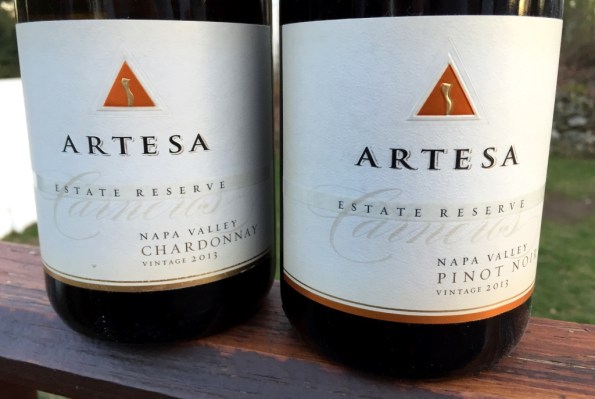
2013 Artesa Estate Reserve Chardonnay Napa Valley (13.9% ABV, SRP: $40)
C: light golden
N: touch of vanilla, hint of butter, white fruit, intense
P: touch of butter, green apples, good acidity, medium to full body, vibrant and balanced
V: 8-, a classic Chardonnay
2013 Artesa Estate Reserve Pinot Noir Napa Valley (14.4% ABV, SRP: $40)
C: dark garnet
N: warm, inviting, sweet plums
P: round, polished, present silky texture, touch of smoke, more plums, minerality, restrained
V: 8-, nice, smooth and restrained
There you have it, my friends – some new and interesting wines worth seeking. And whether they will hit the “classic” note for you – it is entirely your decision. Cheers!
Few World Class Wines, Kosher Too
 What is world class wine, you ask? Well, this question has multiple answers – there is a good chance that every responder will give you a different answer. Heck, I will give you different answer every time you will ask this question. So for today, how about this one: in a blind tasting, world-class wine can be easily mistaken for a wine coming from the well established and world famous wine region. For instance, a sparkling wine which tastes like Champagne. Or Chardonnay which resembles classic white Burgundy. Or a Rosé which tastes like… you know, how about just “delicious”?
How often do you drink Israeli wines? Hmmm, that would actually make it for an interesting “unknown wine regions” survey – note to self. Okay, back to the question, what do you say? I would bet that 9 out of 10 people never had an Israeli wine, and 9.5 out of 10 didn’t even know that Israel produces wine. Which is a shame, as even modern winemaking history (never mind the biblical times) in Israel goes back to 1880s. But of course with ups and downs, Israeli “wines of notice” started to appear in the late 1980s.
Today Israel has more than 250 wineries (depends on who counts, I guess), which includes both large commercial wineries and garage-level productions; israel even sports some “cult wines” – the wines which lots of people want, but can’t get (do the search for the wines produced by Lewinsohn, for instance). About 25% of the Israeli wines are exported, out of which amount about 60% go to the United States, and the rest to Europe and Asia. Most (but not all) wines produced in Israel are kosher – which, by the way, doesn’t take away from the quality of the wines even the tiniest bit – scratch that Manischewitz image and taste from your head, once and for all. While in general Israel might have a very long wine history, the vineyards were never continuously preserved – as the result, absolute majority of the grapes grown in Israel are of international varieties (Cabernet Sauvignon, Chardonnay, Merlot, Syrah, Grenache, etc.), with Emerald Riesling being one of the rare exceptions. Otherwise, Israel produces full range of wines, from Sparkling, Rosé and whites to the Bordeaux and GSM blends and single varietal masterpieces.
Golan Heights Winery was founded in 1983, and the first wine was released in 1984 (well, they vineyards were planted in 1976, so it all makes sense); it might be considered a foundation of renaissance of Israeli wine industry. Today the Golan Heights Winery farms 600 hectares (1500 acres) of vines, which subsequently consist of 28 vineyards and 400 unique parcels within those vineyards. Vineyards are spanning for about 65 km (40 miles), and elevations are ranging from 400 meters (about 1300 feet) to 1200 meters (about 3900 feet). The fruit from each parcel is tended to individually, as you can imagine that growing conditions would be different in such a stretch of the land and with such a difference in altitude. Of course you can imagine that winery makes quite a range of wines.


I had an opportunity to taste a three wines from the Golan Heights Winery and its sister winery called Galil Mountain, which impressed me enough to come up with this “world-class” title for the post. Don’t get me wrong – I had absolutely mind-blowing Israeli wines before, but somehow this Blanc de Blancs put the experience for me to the next level. Here are the notes:
2008 Yarden Blanc de Blancs Brut Sparkling White Wine Golan Heights Israel (12% ABV, SRP $32, 100% Chardonnay, 5 years on the lees, kosher, non-mevushal)
C: pale straw
N: Classic sparkling wine – touch of yeast, hint of Apple, touch of fresh baked bread
P: creamy mouthfeel, fresh acidity, hint of yeast, fresh lemon, fine mousse, perfect balance
V: 8/8+, outstanding, world class sparkler
2014 Yarden Galilee Chardonnay Odem Vineyard Golan Heights Israel (13.9% ABV, SRP $22, 100% Chardonnay, 7 month barrel aging, kosher, non-mevushal)
C: light golden
N: white stone fruit, hay, touch of lemon, candied fruit as wine was warming up
P: plump, full body, vanilla, creamy round mouthfeel, touch of butter, good acidity, fresh.
V: 8-/8, full bodied without heavy butter or oak, more reminiscent of Marsanne/Roussane. What I loved about the wine that it stayed perfectly delicious at the room temperature, which is not an easy fit for many white wines.
2014 Galil Mountain Rosé Upper Galilee, Israel (12.5% ABV, SRP $12, 74% Sangiovese, 23% Pinot Noir, 3% Grnache, kosher, non-mevushal)
C: beautiful, concentrated pink
N: strawberries, minerality, very promising, touch of lemon
P: fresh strawberries, herbs, clean balancing acidity, soft, medium body, very round.
V: 8-, an excellent summer day (or all year around) treat, very easy to drink
Have you had Israeli wines? What do you think of them? Cheers!
How Do You Spell “Delicious” in Italian? Marchesi de’ Frescobaldi Might be a Good Answer
Virtual tastings are always fun. For sure for the conversation and learning part. And of course the best part is while your conversation is virtual, tasting of the real wines. As always with wines, you like some, and some you don’t (OMG, I let the cat out of the bag!!!). And sometimes you are simply blown away.
The tasting of wines of Marchesi de’ Frescobaldi was the latter. As a young oenophile, I heard about the wines of Machesi de’ Frescobaldi, a 700 years old winemaking family, for the first time in the early 2000, when I read an article in Wine Spectator, profiling Italy’s “big three” – Antinori, Banfi and Frescobaldi. However, until a few days ago, I wouldn’t claim that I had any real encounter with Frescobaldi wines.
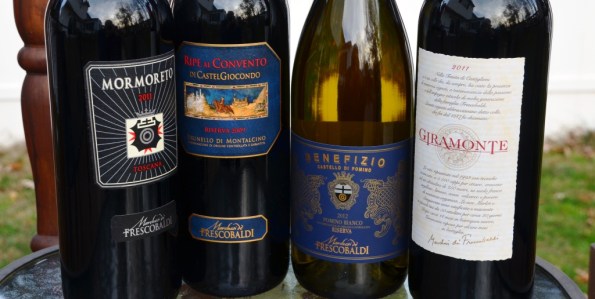
I guess there was a certain element of luck that my acquaintance with Frescobaldi wines started from their single vineyard, or so called “CRU” wines. Nevertheless, to be literally blown away by 4 wines out of 4 in the tasting is not something which happens often. I had plenty of single vineyard and high-end wines which left me simply indifferent. These 4 wines of Marchesi de’ Frescobaldi had me say “wow” every single time I had a sip.
I will not inundate you with the history of the winery or any other facts – you can read that at your leisure at the winery’s web site. However, each wine we tasted is unique in its own ways – and this is something I want to share with you here. Below are my tasting notes, including the interesting facts I pondered across. Here we go:


2012 Marchesi de’ Frescobaldi Pomino Bianco Benefizio Riserva DOC (13% ABV, $45, 100% Chardonnay)
C: light golden
N: classic – light touch of butter, vanilla, apples, delicious and inviting
P: delicious. Golden Delicious apple, touch of vanilla, touch of lemon, crisp acidity on the finish, perfectly lingering.
V: 8+/9-, a treat. Would compete with any white Burgundies in elegance, and has great aging potential
Interesting wine notes: Chardonnay was planted by Frescobaldi in 1855. In 1878, Pomino was awarded Gold medal at Paris Exposition. Benefizio was produced in 1973 from the vineyard with elevation 700 meters (2,200 feet), and it was the first barrel-fermented wine in Italy.
2011 Marchesi de’ Frescobaldi Mormoreto Toscana IGT (14.5% ABV, $79, 64% Cabernet Sauvignon, 26 % Cabernet Franc, 5% Petit Verdot, 5% Merlot)
C: dark garnet
N: dark fruit, plums, eucalyptus, hint of dark chocolate, intense, warm and inviting
P: spectacular. Firm, structured, black currant, chewy tannins, soft and powerful at the same time. Medium-long finish.
V: 8+, a “wow” wine. Would easily go up against any Bordeaux
Interesting wine notes: The vineyard of Mormoreto started in 1976 (while Cabernet Sauvignon, Cabernet Franc, Petite Verdot and Merlot had been growing there for 150 years), with the first harvest in 1983. The name “Mormoreto” means “murmur” in Italian – the constant breeze from the valley makes vine leaves to move all the time, creating soft and gentle “murmur” sound. The wine is only produced in most favorable years.


2011 Marchesi de’ Frescobaldi Giramonte Toscana IGT (14.5% ABV, $150, Merlot and Sangiovese)
C: dark garnet, almost black
N: beautiful, refined, restrained black berries, distant hint of dark chocolate
P: wow! Powerful, restrained, beautifully refined, dark fruit, fresh tannins, perfect balance, elegant, elegant, elegant. Long finish
V: 8+/9-. A wine in its own class. A clear nod to Italian heritage, weaved into a very modern, I-am-the-best, work of art.
2009 Marchesi de’ Frescobaldi Ripe al Convento di CastelGiocondo Brunello di Montalcino Riserva DOCG (15% ABV, $138, 100% Sangiovese)
C: dark ruby
N: plums, lavender, sweet oak, open, intense
P: complex, sweet plums, violets, nice herbal profile, delicious overall – perfectly ready to drink
V: 8+, delicious. One of the very best Brunello wines I ever had, period.
Four wines, one delicious tasting. Yes, these are not inexpensive wines, and for many people these can’t be everyday wines. However, any of these 4 wines are truly worth experiencing, so if you pride yourself with being an oenophile, put these wines on your “must try” list. Okay, you can thank me later. Cheers!
Many thanks to the kind folks at Colangelo PR for including me in the tasting and providing samples.
Last Bottle Sign Up ($10 credit)




 Talk-A-Vino