Archive
Looking for Great Wine Values? Trader Joe’s Got Them
Another trip. Another stop at Trader Joe’s. Another “how do they do it?!” sentiment.
My typical strategy in Trader Joe’s is to see how many wines $20 can buy. This time around, I decided to change that. Somehow, being in San Diego in California, there was sudden desire to focus on California wines. That, and maybe a bit of France – 2018 had been my personal France tasting renaissance so far.
Of course, while I wanted to drink California wine, I was still on the lookout for reasonably priced bottles, not to exceed $20 – by the way, I know that good California wine under $20 is considered “mission impossible” by many, so this was another interesting challenge.
After touching and turning tens and tens of bottles, I settled for maybe not famous, but very well known producers – Benziger Family Winery and St. Clement Vineyards from California. I almost added French GSM to the basket, but instead, went with the Rhone-style white blend – a classic combination of grapes (Viognier/Roussanne/Marsanne), and a great value at $6.99. 
How did the wines fare? Let me tell you all about it.
2016 Pontificis Viognier-Roussanne-Marsanne Pay’s d’Oc IGP (13% ABV, $6.99, $50% Viognier, 35% Roussanne, 15% Marsanne). While Viognier/Roussanne/Marsanne combination is a classic blend of Northern Rhone, this wine came from Languedoc, the winemaking region where everything is possible. Was it different than the actual Northern Rhone would be? You bet. Was it still delicious in its own right? By all means.
Light golden color in the glass. After some time, the nose showed classic Viognier perfume of tropical fruit – nothing overboard, but well noticeable. As it is often the case with Marsanne/Roussanne combination, I almost preferred this white wine at the room temperature versus fridge-cold. A touch of lemon and lemon zest on the palate, characteristic plumpness, full body, with some hint of guava. Roll of your tongue goodness, with a perfect amount of acidity on the finish – just bring me some food. Drinkability: 8-/8. And good luck matching this value.
2014 St. Clement Vineyards Pinot Noir Napa Valley (14.5% ABV, $9.99). St. Clement Vineyards had been making wines in Napa Valley since the 1970s. One of their wines, a red blend called Oroppas, is one of my favorites, so this was an easy choice.
Bright ruby color in the glass. Dark chocolate, tobacco, and plums on the nose. The palate is perfectly balanced with supple raspberries and blackberries, good firm structure, excellent mouthfeel and presence, and an acidity cleanse on the finish. It might be pure luck – but luck or not, this was one tasty California wine. For $9.99. Drinkability: 8
2015 Benziger Family Winery Cabernet Sauvignon Sonoma County (13.5% ABV, $13.99, 16 months in oak). Benziger winery was founded in 1980, and in the year 2000 became a Demeter certified biodynamic farm. Benziger wines generally offer good value for the money, and who can refuse a California Cabernet from a good producer? Yep, not me.
Dark garnet, almost black in the glass. Beautiful nose of black currant and bell pepper. Unmistakable, textbook Cabernet Sauvignon on the palate – clean fruit, soft, open, black currant, eucalyptus, soft tannins, medium+ body. Lots of pleasure in every sip. Another great California value – well under $20. Drinkability: 8-/8.


Here you go, my friends. Trader Joe’s is unstoppable in its mission of bringing tasty power to the people. What was your favorite Trader Joe’s discovery as of late? I’m off to have another glass of Cab while you are thinking about it.
Trader Joe’s Wines – Values and More Values
The wine aisles of Trader Joe’s is one of my favorite places to visit when I travel. Where I live, in Connecticut, Trader Joe’s stores are only allowed to sell beer. Trader Joe’s stores are known for their great selection and great prices, and that is true for everything Trader Joe’s sells – including the wine. Thus any Trader Joe’s store which sells wine is an opportunity to visit a toy store for adults, which I definitely can’t miss.
This time around I ventured into the Trader Joe’s in Costa Mesa in California. Usually, the “wine” selection in Trader Joe’s in California goes way beyond just wine – scotch, bourbon, tequila, cognac, and more. At the store in Costa Mesa I was particularly impressed with Mezcal selection – would love to bring some home, but you know how business travel is nowadays – does the bottle worth a trouble of checking in the luggage?
So yes, wine it is. When buying wine at Trader Joe’s during my business trips, I always approach it in a simple way – I’m looking for value. Here is $20, let’s get as many bottles as possible with the $20, and let’s see how they will fare. Truth be told, I rarely manage to stay under $20, but still, I make an effort to be as close as possible to that $20 budget (before taxes, of course).


How does $23.45 sound next to the $20 budget? In absolute terms – I’m over the budget by 17%. In relative terms, 5 bottles of wine for $23.45? If the wine even half drinkable, it is not a bad deal, would you agree? I think so. Oh yes, and I also cheated a bit. Don’t worry, I didn’t cheat anyone in particular, it is this story which has a few flaws, so please allow me to explain.
First, I saw an attractive bottle, unusual shape, attractive label, $9.99, the wine called “Susumaniello” from Puglia – something I never saw before. I was planning to visit my close friends later that day, so I thought that this bottle looked good enough to bring with me (wanna call me a cheap bustard? please, be my guest). But -Trader Joe’s was having a little tasting (they always do for food – I guess they also do it for wine where the wine is sold – for sure in California) – and this exact bottle of wine was offered for tasting. So I did have a sip of 2016 Ruggero di Bardo Susumaniello Puglia IGP ($9.99) – it had a medium body, restrained profile with mostly cherry notes on the palate. To my delight, it appeared that behind the cool label was also a new rare, indigenous grape I never had before – Susumaniello, a nice addition to the collection (I really need to iupdate my “grape counter” on the page).


The wine was good, but I already tasted it, so I needed a different idea for the wine to bring to dinner, so I settled for 2012 Château Roudier Montague-Saint-Emilion (13% ABV, $12.99), which happened to be a classic Bordeaux – well, maybe not so classic but more of modern variation – warm fruit and spices on the nose, black currant on the palate, soft tannins, round, velvety – an excellent Bordeaux for the price. It also paired very well with Korean short ribs (Bulgogi) we had for dinner. Drinkability: 7+/8-, very good overall.
From here on, here are my tasting notes for the five wines I was able to play with over the next few days – these are the wines I paid $23.45 for.


2016 Joseph Händler Riesling Pfalz (9.5% ABV, $4.99) – straw pale color. Nose at first muted, literally nonexistent, then opening up into white flowers, touch of honey and candied peach. Clean acidity, lemon, candied lemon, crisp, good minerality, not over the top. Drinkability: 8-, and incredible value at $4.99. Just wow. I know Rieslings can be inexpensive, but this is a whole lot of German Riesling for the price.
Simpler Wines Too Uncanny Red Wine Blend Australia (13.8% ABV, $2.99/375 ml can) – this wine had no vintage indication, so I guess we should consider it to be a non-vintage. Dark ruby color. Fresh fruity nose, young berries, then herbaceous undertones show up. Very good acidity on the palate, blackberries, cherries, mint, surprisingly balanced and very easy to drink. A bit of an alcohol burn, but still wow. 7+/8-, yet another excellent value. Nicely drinkable on the second day from the open can.
2016 Union Wine Co Underwood Pinot Noir Oregon (13% ABV, $4.99) – as you can see in the picture, the only place where I found a year specified was on the bottom of the can. Is that really vintage indication? I have no idea, but I will consider it to be so.
Ruby color. Mushrooms and smoke on the nose, touch of cherries. Sweet cherries on the palate, nice minerality, good acidity, medium body, good balance, touch of tart raspberries, hint of black pepper. Very nice overall. Drinkability: 8-, impressive.


2016 Nero Marone Edizione Privata Italy (14% ABV, $6.99) dark ruby color. Restrained nose, herbal, not much fruit. A hint of raspberries, tart cherries on the palate, minerality, medium body, good acidity. Interesting, not bad but a bit underwhelming in the amount of fruit. Drinkability: 7+, might be more of a food wine.
2017 Viñas Chileans Rosario Estate Cabernet Sauvignon Reserva Valle Central Chile (13% ABV, $3.49) – a classic Chilean cab, a touch of green bell pepper, soft blueberries and blackberries, medium body, easy to drink from the get-go. Nicely paired with grilled snapper. Drinkability: 7+, truly lots of wine for the money.
Here you are, my friends – another successful encounter with the Trader Joe’s wines. The Riesling was my favorite, but really, all the wines were good and an amazing value. What are your latest value wines discoveries? Can you beat the Pfalz Riesling at $4.99? Cheers!
Trader Joe’s Merlot Run
As some of you might know, I can never pass on visiting the local Trader Joe’s when traveling – as long as it offers wine (which seems to be the case so far in the most places I visit). Last week I was in Santa Clara in California, so the trip to the nearby Trader Joe’s was unavoidable.
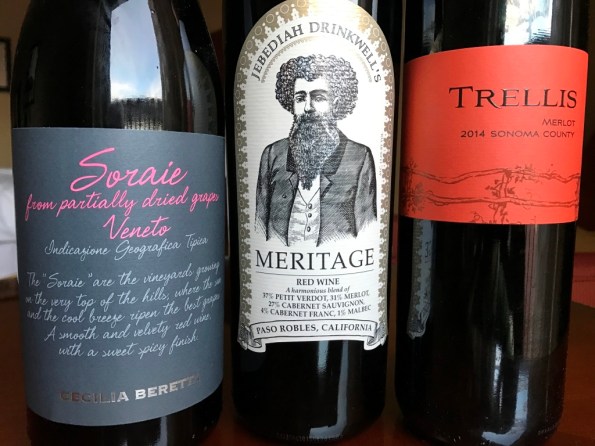 Deciding on what wine to buy at Trader Joe’s is difficult. I always take price into account, but then there are lots of wines in the same, super-reasonable prices range of $5 -$8. The next option is the label – yes, I’m a sucker for creative labels, and then, of course, the region comes to play.
As I slowly walked along the wine shelves, the label of Jebediah Drinkwell’s caught my eye – it was strangely attractive – plus I like Meritage wines, so it was an easy decision. I picked up Trellis Merlot because it was a Merlot (and October is a Merlot month) – and I was really curious to see what $4.99 can buy you from Sonoma. Cecilia Beretta was the third bottle I got – wanted to go outside of California, and “Partially dried grapes” always sounds like a music to me.
Looking at the wines later on, the idea of #MerlotMe dedication came along – would all these wines be Merlot based? To my delight, in addition to the 100% Merlot from Sonoma, two other wines also had substantial Merlot content, so here you go my friends, a Merlot run at Trader Joe’s.


Here are my notes:
NV Jebediah Drinkwell’s Meritage Red Wine Paso Robles ($5.99, 37% Petite Verdot, 31% Merlot, 27% Cabernet Sauvignon, 4% Cabernet Franc, 1% Malbec)
C: dark Ruby
N: touch of smoke, roasted meat,
P: soft fruit, blackberries, tobacco, good acidity, medium-long finish
V: 7+/8-, quite enjoyable
2014 Trellis Merlot Sonoma County (14.5% ABV, $4.99)
C: garnet
N: restrained, distant hint of cassis, herbs
P: soft, round, cassis, good acidity
V: 7+, excellent QPR
2014 Cecilia Beretta Soraie Veneto IGT (14% ABV, $7.99, 40% Merlot, 30% Corvina, 20% Cabernet, 10% Croatina, grapes dried for a few weeks before pressing)
C: dark garnet
N: touch of blueberry pie, quite restrained
P: touch of blueberries, tobacco, hint of dried fruit, good power but round, soft tannins, medium finish
V: 7+, will work well with food – pasta with some hearty tomato sauce would be perfect
As you can tell, it is pretty amazing what $18 can buy you at Trader Joe’s. Also, it is my second experience with non-vintage wine at Trader Joe’s, and I’m definitely impressed with the quality of that wine.
Do you buy wines at Trader Joe’s? Any interesting finds you care to share? Cheers!
More Trader Joe’s Wine Values – in Orlando, Florida
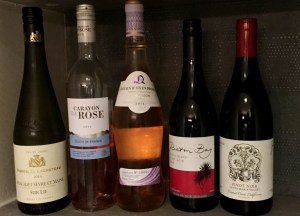 As mentioned many times in this blog, I have a lot of respect for the wine folks at Trader Joe’s, as I rarely come across wines I wouldn’t want to drink second time, no matter where I try them. Trader Joe’s wine inventory differs from state to state (prices also can be a bit different, but this typically caused by the state’s rules, not Trader Joe’s desire), so visiting local Trader Joe’s stores is one of my favorite fun activities during business travel.
This time around I was in Orlando, Florida, and of course, Trader Joe’s was right around the corner. Sometimes, I make it a fun challenge for myself – to get as many wines as possible for, let’s say, $20. During this visit, I was just looking for some reasonably priced wines without any particular spending goal, so I ended up with the selection of 6 bottles priced from $5.99 to $9.99. And if you want another piece of stats, these 6 bottles represented France, Spain, New Zealand and USA. You might ask why you see only 5 bottles in this picture, so keep reading and I will tell you.


Here are the notes for the wines I tasted:
NV La Granja 360 Cava Brut (11.5% ABV, $6.99, 70% Xarel-lo, 30% Parellada) – well, here is my shameful fiasco story. After coming back to the room while it was not too late, my thought was – let me give this wine a good chill, may be I will open it tonight. So the wine went into the freezer instead of the fridge. And yes, the brain failed with the reminder message. Until the next evening. To be greeted with the pile of slush occupying good half of the freezer. For my silver lining, the bottle didn’t blow up – the cork was neatly pushed out instead, so cleanup was reasonably straight forward. No wine for me, and no tasting notes for you. Oh yes, and a memory pointer for me for the next time.
2014 Vignobles Lacheteau Muscadet Sèvre et Maine Sur Lie, Loire Valley (12% ABV, $6.99)
C: straw pale
N: mostly reminiscent of wet ocean air, touch of warm granite minerality
P: slightly bigger body than a typical Muscadet, mineral-driven, restrained acidity, lemon
V: 8-, an excellent wine
2014 J.L. Quinson Côteaux D’Aix en Provence (12.5% ABV, $7.99)
C: onion peel
N: very minerality, gunflint, touch of fruit
P: also very restrained, same as the nose, hint of cranberries
V: 7+, not bad, but you can get more from Provence ( may be no tat this price level though).
2014 Carayon La Rose Languedoc DOP (13% ABV, $5.99)
C: light pink
N: touch of strawberries, lemon, sage
P: a bit more round than a previous wine, good amount of strawberries, light
V: 7+/8-, a steal for the price. Buy it by the case if you see it – your summer will be better with this wine.
2015 Picton Bay Pinot Noir South Island, New Zealand (13% ABV, $7.99)
C: dark ruby
N: smoke, fresh cherries,
P: smokey cherries on the palate with addition of the touch of cranberries, good acidity, perfect balance
V: 8/8+, outstanding wine. I was drinking it bit by bit over the course of 4 days, and it was still very tasty even on the day 4 – note that I didn’t pump the air out, it is a screw top bottle. This quality level for $7.99 – one of the definite QPR champions. Another case buy.
2013 Caretaker Wines Pinot Noir Santa Maria Valley, Central Coast (14% ABV, $9.99)
C: bright Ruby
N: Classic Pinot, sage, cherries, hint of forest floor
P: clean, round, fresh acidity, bright crisp cherries, medium body, succulent
V: 7+/8-, interestingly enough, the wine was bright and fresh on the first day, then closed up on the second. I didn’t have an opportunity to see how it would evolve later on, so get it and drink it right away – as “pop’n’pour”, it is an excellent and enjoyable wine.
There you have it, my friends – another successful Trader Joe’s wine encounter. Have you had any of these wines? Cheers!
Trader Joe’s Wine Finds – December 2015
Trader Joe’s wines are not a new subject in this blog – you can read some of the earlier posts here. Every time I’m in a close proximity to a Trader Joe’s store which sells wine (not all of them do – I know, you would’ve never thought that it can be the case, especially if you live in California), I always make an effort to buy a few wines, usually trying to spend as little as possible, but to try as many wines as possible. Here is the report on the last visit to the Trader Joe’s store in Brookline, Massachusetts.


2014 Lazy Bones Cabernet Franc Paso Robles (13.9% ABV, $6.99)
C: Ruby
N: touch of the cotton candy, mint, hint of black currant
P: light to medium body, fresh blackberries, good acidity, easy to drink
V: 7, it is drinkable, but bigger body and some structure is desired.
NV ONX MOON Red Wine California (13.5% ABV, $8.99)
C: dark garnet
N: dark fruit, dark chocolate, very inviting
P: good power, round, more dark chocolate, good structure
V: 7+, very good wine
2014 Laurent Dublanc Tradition et Terroir Côtes-du-Rhône AOP (13% ABV, $6.99)
C: Garnet
N: plums, sweet chocolate, touch of eucalyptus
P: open, clean, fresh cherries, medium body, round, touch of herbal notes.
V: 7+, nice, soft and simple, very round.


2014 Sauvignon de Seguin Vin de Bordeaux AOC (12% ABV), $6.99)
C: straw pale
N: intense, inviting, candied lemon, fresh citrus, very promising
P: perfect. Fresh, grassy, crisp, laid back, touch of fresh lemon, just excellent.
V: 7+/8-. Very impressive for the money, but even ignoring the cost – this is simply delicious, well drinkable wine.
2013 Purple Moon Shiraz California (12% ABV or less, $3.99)
C: dark ruby
N: fresh crushed berries, intense fruity
P: ripe blackberries, tobacco, touch of pepper, good acidity
V: 7-/7, simple, easy to drink, a simple BBQ wine, will go great with ribs. Excellent QPR at this price
2013 Archeo Nero d’Avola Terre Siciliane IGP (13% ABV, $4.99)
C: garnet
N: vegetative, restrained, hint of blackberries, distant touch of gunflint
P: presence of volcanic soil, good acidity, leather, nice astringency, good overall balance
V: 7+, pleasant with an excellent QPR
2013 Columbia River Landing Riesling Columbia Valley Washington (10.5% ABV, $4.99)
C: light golden
N: inviting, hint of honey, candied fruit
P: round, ripe apples, candied lemon, good acidity, perflctly smooth balance
V: 8-, may be best of tasting. Great classic Riesling expression with all the taste components being in perfect balance – not an easy fit for white wines in general, and Riesling particularly. I guess I have to call QPR on this wine “phenomenal”.
There you have it, my friends. What were your latest value wine discoveries? Cheers!
Kosher Wines: Trader Joe’s Overdelivers, And More
 I don’t know if there is a single “group” of wines out there, which can brag about such an incredible improvement over the past 10-15 years, as kosher wines. This, of course, is a US-centered opinion, but from my personal experience, 15 years ago, I had to cringe at the thought of Manishewitz cloying concoction as a mandatory element of celebration. About 5-7 years ago, the availability of the dry table kosher wines greatly increased, but for the real wine experience, you had to either pay a lot for the Israeli wines (or have good friends who would take care of you), or resort to the insipid, cooked, unbalanced international wines, proudly advertizing that they are appropriately kosher.
To be kosher, the wine should be made only by the fully observant Jewish people – similarly to any other kosher foods, there are many rules to be followed to make sure the wines will qualify as kosher wines. This is not necessarily a difficult part. The challenging part is related to the special word which appears on some of the wine labels next to the word “kosher” – this special word is “mevushal”. I will not give you the whole history behind the need for the wine to be mevushal (here is the link where you can learn in detail if curious), but here is a quick explanation. Even if the wine is made kosher, it will become “non-kosher” is handled by non-observing people at any moment – pouring etc. However, if the wine is heated to 180F for some time, it becomes “mevushal” – and no matter who will handle mevushal wine, it will still qualify as “kosher”.
Yes – making the wine “mevushal”, which means “cooked” in Hebrew, is an issue, and that explains the problem with the taste – “cooked” wine is one of the well known wine faults (with the exception of Madeira), and no oenophile would be happy faced with the cooked wine. But – the flash pasteurization (rapid heat up for 2-3 seconds), which is known to least alter the real taste of the product, became the tool of choice in making the wine “mevushal” as of late, and the resulting wines improved dramatically.
Now you know everything you need to know about kosher and mevushal wines – let’s move from the theory to practice. Once again, today’s wines are (primarily – I have also a bonus for you) the Trader Joe’s wines, and yes, they are value priced. To be entirely honest, this was not my idea to look for the kosher wines at Trader Joe’s. This post could’ve been easily titled “from your letters” – over the past few month, I got a few of the e-mails from different people, asking for my opinion about few of the Trader Joe’s kosher wines (yes, I was flattered, no questions). My general problem with Trader Joe’s wines is simple – in Connecticut, where I live, Trader Joe’s doesn’t sell the wine. So I had to wait for the opportunity to visit my friends in Boston, where Trader Joe’s sells the wines, and voila – got four different kosher wines (for the whooping $22 for all four). That’s all – now you have the full story, and we can (finally!) talk about the wines.
I had 3 wines made by the same producer, Terrenal – Cabernet Sauvignon, Chardonnay and Malbec. The first two are from Spain (not a typical location for the Cabernet and Chardonnay wines, huh?), and the last one is from Argentina (of course). All three wines are designated as kosher, but only the last one (Malbec) is also a mevushal wine. And the last wine I tried from Trader Joe’s was SaraBee Moscato.
2012 Terrenal Cabernet Sauvignon Yecla, Spain (13.5% ABV, $4.99, kosher, not mevushal) – this was the most unusual experience. On the nose, the wine showed tobacco, coffee, cherries and herbs. On the palate, the wine kept changing, showing green tannins, touch of cherries and cherry pit. After two days (you know me 🙂 ), the green tannins were replaced by the powdery tannins, and wine became more open and balanced. I still have an issue with this wine, as it didn’t show a tiniest trait of Cabernet Sauvignon – but it would be perfectly fitting as Grenache. So either this wine has a good portion of Grenache as part of the blend, or the soil/terroir trumpets the grape tremendously. Drinkability: 7-
2012 Terrenal Chardonnay, Spain (12.5% ABV, $4.99, kosher, not mevushal) – totally different experience compared to the previous wine. As a side note, I don’t remember ever having a Chardonnay from Spain – now I have. On the nose – nice, clean fruit, white apple, hint of tropical fruit, vanilla. Similarly clean package on the palate – nice acidity, apple, vanilla, white stone fruit. Good balance. This was not mind-blowing, but perfectly drinkable and pleasant wine. If you are looking for the white kosher wine, this is definitely recommended. Drinkability: 7/7+
2013 Terrenal Malbec I.P. Mendoza, Argentina (13% ABV, $4.99, kosher, mevushal) – in a word, excellent. On the nose, ripe blackberries, tobacco, baking spice. On the palate, delicious fresh berries without much of sweetness, round, balanced, good acidity, touch of ripe plum, gentle tannins. Again, I would highly recommend it if you are looking for the red kosher mevushal (!) wine. Drinkability: 7+
NV SaraBee Moscato Puglia IGT, Italy (5.5%ABV, $6.99, kosher, mevushal) – sweet, very sweet. Sweetness on the nose, and the same on the palate. Well, this wine is designated on the label as “sweet white wine”, and that is exactly what it is. Very light effervescence, almost unnoticeable. I wouldn’t drink this wine by itself, but – it would be a perfect accompaniment for any dessert dish – an apple strudel, sponge cake, cookies – it will universally fit any non-chocolate dessert. The interesting fact is that while this wine was lacking acidity, it was not perceived a cloying, still had a lightness in it. It also represents a great value as a kosher mevushal wine at $6.99. Drinkability: by itself – 6, with dessert – 7/7+.
There is one more wine I want to mention – 2010 Shiloh Secret Reserve Shiraz Judean Hills, Israel (14.8% ABV, $38, kosher, mevushal). This might not be even fair to mention this wine matter-of-factly at the end of the post, but just in case you are looking for an upscale wine which still should be kosher, this might be your perfect choice (it is available in US). On the nose, dark concentrated fruit and a touch of savory herbs, sage and lavender. On the palate, great concentration of dark berries, blackberries, pepper undertones, brooding, powerful, firm structure and perfectly dense mouthfeel, supple tannins, and balancing acidity. A pleasure in every sip. Drinkability: 8
So here are some of the kosher wines you might enjoy in time of the Jewish high holidays, or just at any time. I do think that Terrenal wines from Trader Joe’s simply over-deliver at the price point of $4.99, so Trader Joe’s has done it again – whomever is responsible for Trader Joe’s wine portfolio can definitely give themselves a pat on the back.
And we are done here. If you ever had any of the wines I mentioned, I would love to know what you think about them. If you have any comments about kosher wines in general, please don’t be shy. Cheers!
Another “How Do They Do It?” Set of Trader Joe’s Wines
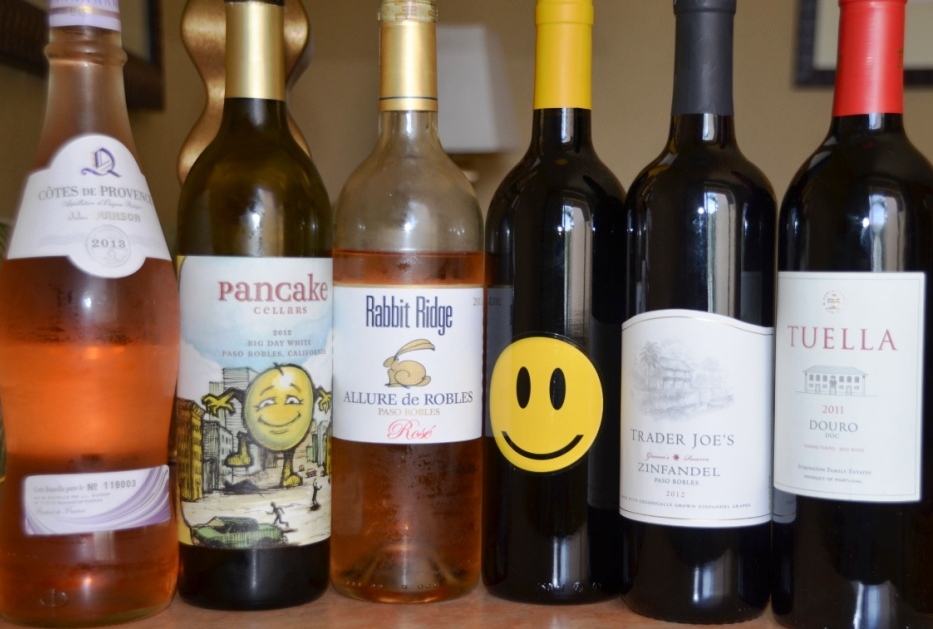 On the multiple occasions, I wrote about Trader Joe’s wines in this blog. I generally only can taste them when I travel, as Trader Joe’s stores in Connecticut can’t sell wine. Thus if I’m in the close proximity of the Trader Joe’s store, and schedule allows, I always make an effort to taste something new.
While Trader Joe’s wine selection generally includes wines at the different price levels, my focus is always on the most inexpensive wines. The rationale is simple – at $9.99 and above, there is a great selection of wines in my neighborhood wine store. At the same time, there is practically nothing in the $4.99 – $6.99 price range, thus it is very interesting how good (or how bad) such wines can be.
In general, I can’t complain about Trader Joe’s wines. My typical “success rate” is somewhat of the 3 out of 4 ratio – if I would taste 4 wines, at least 3 of them would be at “I want to drink it again” level. But this time, while in San Diego, California, I was simply blown away – 6 out of 6, 3 wines at $4.99 and 3 at $5.99, where perfectly drinkable wines which I would gladly drink again on any day! This was definitely a “how do they do it???” moment, as I would never expect, for instance, Rosé or Zinfandel from California to have such a QPR, to taste as good as they did considering the amount of money I had to pay for them.
Without further ado, let me present to you my 6 out of 6 set of “how do they do it?” wines from Trader Joe’s.
2012 Pancake Cellars Big Day White Paso Robles, California (13.5% ABV, $4.99, 37% Chardonnay, 23% Sauvignon Blanc, 15% Viognier, 15% Pinot Blanc, 10% Muscat Canelli) – I can only guess this is modeled after the Conundrum, only this wine I actually enjoyed (and it costs 1/4 of the Conundrum)! Very nice and refreshing nose of white fruit with herbal undertones. On the palate, nice, round, good acidity, white fruit, white apples, very good balance. While not the most complex, definitely very enjoyable! Drinkability: 7+/8-
2013 Rabbit Ridge Allure de Robles Rosé Paso Robles, California (13.5% ABV, $4.99, Mourvedre 49%, Grenache 26%, Syrah 25%) – you can safely assume that I had zero expectations opening a bottle of Rhone-style Rosé from California which cost $4.99. Boy, was I wrong. The wine was simply outstanding – bright, cheerful, full of strawberries and cranberries, perfect acidity – get it by the case to make your summer days super enjoyable. Drinkability: 8-
2013 J.L. Quinson Cotes de Provence AOP (12.5% ABV, $5.99) – same as the one above, zero expectations for Provence Rosé for $5.99 – sorry, the internal snob is speaking. First sniff and sip – wow, I’m convinced. Perfectly restrained, mineral, light, refreshing acidity – as classic as Provençal Rosé gets, only at half price or even less, depending on the bottle. Another case buy for the summer, in case you need my recommendation. Drinkability: 7+
2012 Oreana Wines Project Happiness Syrah California (13.5% ABV, $5.99) – see the happy face on the label? This is what this wine is – happy. No, this is not the most thought provoking Syrah you can drink, but it is simple, easy to drink, round and balanced, good fruit on the palate, a tiny bit of pepper. Throw in a little barbequed meat – and your face might look exactly as the one on the label. Drinkability: 7
2011 Symington Family Estate Tuella Douro DOC, Portugal (13.5% ABV, $5.99) – Douro wines are slowly but surely gaining their international reputation, so this is definitely a good deal of a very solid wine which you can also age. It was showing a little tight, with reserved fruit expression, but good overall balance and acidity. At this price, if you got some space in the cellar, forget a few bottles there – you might thank me in a 3-4 years. Drinkability: 7
2012 Trader Joe’s Grower’s Reserve Zinfandel Paso Robles (13.5% ABV, %4.99) – the first smell exhorts the “wow”. Good Zinfandel at $4.99 didn’t sound to me even as a remote possibility. And then this Grower’s reserve comes in – perfectly open, with clean smokey raspberries and blackberries, very round fruit expression on the palate, with the same smokey berries being very present and well matching the nose – the QPR on this wine simply goes through the roof. No, this wine doesn’t have the richness of Turley or Carlisle, but then you don’t need to cellar it for 10 years before you can really enjoy it. If you like Zinfandel – this is definitely the wine you have to experience. Drinkability: 7+/8-
I tip my hat to whomever is responsible for sourcing the wines for Trader Joe’s stores – to say “well done” is almost to say nothing – great job, and please keep doing it over and over again, to the delight of all the wine lovers out there. Cheers!
Trader Joe’s Wines Update
 Few weeks ago, I wrote a post about noteworthy wine discoveries I made at Trader Joe’s store in California. As we visited our close friends in Boston for the Thanksgiving, I couldn’t miss the opportunity to explore the wine shelves at the nearby Trader Joe’s store, looking for great values. Once again, the mission was very successful – I can definitely recommend 3 wines out of 4 that I tried, which is an excellent outcome.
As we are now in the “holiday mood”, I’m trying to focus a bit more on the Sparkling wines of all sorts, so two out of four wines I want to present to you today are sparkling wines.
2012 Cecilia Beretta Brut Millesimato Prosecco Superiore Coneglian Valdobbiadene DOCG, Italy (11% ABV, $9.99) – I mentioned this wine already in my November “Month in Wines” update, so here are the same notes again – tiny refreshing bubbles, notes of fresh apple on the nose, round and roll-of-your-tongue on the palate with more of the fresh apple and yeast notes. Excelllent sparkling wine, and probably one of my very best in that price range. Drinkability: 8-
NV Trader Joe’s Reserve Brut Sparkling Wine, North Coast, California (12.5% ABV, $9.99, 62% Chardonnay, 26% Pinot Noir, 12% Semillon) – hint of fresh apples on the nose. Simple and clean on the palate, notes of white apples, good acidity. I would prefer a bit more substance in my glass (a bit heavier in the body and higher intensity of the bubbles), but this is definitely a very good wine for the money. Drinkability: 7+
2010 VINTJS Cabernet Sauvignon North Coast, California (13.5% ABV, $7.99) – I bought this wine based pretty much on the label alone – it looks very grand. Well, the content behind the label was not as grand as I would want it to be. Dark garnet color in the glass, dark fruit notes on the nose, hint of raspberries on the palate, medium to full body, good acidity – but no harmony, all the components where on their own. There are better choices at TJ’s at the same or lesser amount of money. Drinkability: 7-
2012 Marchigüe Carménère Reserva D.O. Colchagua Valley, Chile (13.5% ABV, $8.99) – quite honestly, I was craving Carménère for a past few month (I have none in my fridge), so when I saw this wine at the Trader Joe’s, it was an instant “yesss” decision. This is a very young wine for what it is, so if you want to enjoy it right away, I recommend decanting it – it needs to open up for at least 30 minutes to an hour. Dark ruby color in the glass. Perfect herbaceous hue on the nose – a hint of mint, so characteristic for the good Carménère. Sweet mint on the palate, cassis, a touch a eucalyptus, ripe raspberries, silky smooth texture, full body, excellent acidity and overall very balanced. This wine is definitely highly recommended. Drinkability: 8-
Here are all the wines I presented to you, now in pictures:
Note: the same wines might have different prices in the different states. The prices mentioned above are all from the Trader Joe’s store in Massachusetts.
If you tasted or will taste any of these wines, let me know if you like them! Cheers!
Trader Joe’s Wines – Again Exceeding Expectations
Every time I get in a close proximity of the Trader Joe’s stores which sell wine, I always have to go and check out what is happening there – and, of course, try some wines. This time it was in November in California.
I don’t get to visit the Trader Joe’s wine section all that often – yes, we have Trader Joe’s here in Connecticut, but the only type of alcohol the stores can sell here is beer. My last experience with the wine section in Trader Joe’s was about a year ago. This time, I thought that the selection of wines and hard liquors expanded quite a bit, even though it was rather substantial even before. This time I saw a number of large format bottles, including 3L Italian wine for about $20! More spirits, including Calvados for $19.99 (I challenge you to find a Calvados for such a price at any wine store you frequent). I don’t know how Trader Joe’s can do this, but this is pretty remarkable.
Usually, when you see a cheap bottle of wine, the thought is – is that any good? So clearly in the spirit of research, I willingly subjected myself to the scientific drinking experiment – what $20 can buy for you? Okay, I have to be honest with you – I spent more money. A whole $3 more. So the experiment should be officially called “What wine $23 can buy for you at Trader Joe’s”. You can see my tasting line up in the picture below, and the notes follow right after.

What $23 can buy you at Trader Joe’s
And here are the notes:
2012 Cosmia Pinot Noir Sonoma County (13.5% ABV, $7.99) – ruby red in the glass, sweet cherries with a touch of smokiness on the nose, dark sweet cherries on the palate with some mushroom notes, round, simple, medium to long finish. Probably [one of] the best Pinot Noir wines the money can buy for $8. Drinkability: 7+
2013 Trader Joe’s Vinas Chilenas Chardonnay Reserva, Valle Central, Chile (13% ABV, $2.99) – light straw color in the glass, white apples, vanilla and touch of tropical fruit on the nose, crispy apple on the palate, vanilla, nice acidity, very round and balanced. Note that most of the notes are taken on the day number 4 after the bottle was opened – stored with the regular cork in the fridge. Pretty spectacular considering the price. Drinkability: 7+
2010 Cala de Poeti Maremma Toscana IGT, Italy (13% ABV, $5.99) – A super-Tuscan for $5.99, huh? Should be pretty laughable, you think? Not at all! Dark garnet color in the glass, nose of dark plums and herbs, dark cherries, eucalyptus, tart raspberries and dark chocolate on the palate, firm structure, still present tannins (on the day 4!), excellent balance. I’m duly impressed. Drinkability: 8-
2012 Black Mountain Vineyard Zinfandel, California (12.5% ABV, $5.99) – dark garnet color in the glass, gunpowder (!) and cherries on the nose (yep, I know, sorry), raspberries and blueberries on the palate, but not overly sweet, with balancing acidity, more of tobacco and gunpowder note on the palate (is that “too much sulfites”? No idea, the wine didn’t give me any adverse reaction). Quite an unusual rendition of Zinfandel, but very, very enjoyable. Drinkability: 7+
That’s all I have for you for today. Have you tasted these Trader Joe’s wines? What do you think of them? What do you think about Trader Joe’s wines in general? Comment away! Cheers!
More Great Values from Trader Joe’s
Again this is one of those posts which was supposed to be quick, short and easy, a sequel to the first post about great value wines which can be found at Trader Joe’s stores. This post was started on April 30th! And it was hanging in the drafts section until now. Why? Beats me…
 Anyway, keeping all the non-relevant rants aside, let me talk about few more wine discoveries at Trader Joe’s.
Last week, while visiting state of Washington, it was an “aha” moment – why not explore the local Trader Joe’s with the two-prong goal – fine some local Washington wines and spend not more than $20.
I was able to accomplish both – spent $19.97 (okay, before taxes) on three bottles, and two of them were from Washington! Here are the notes:
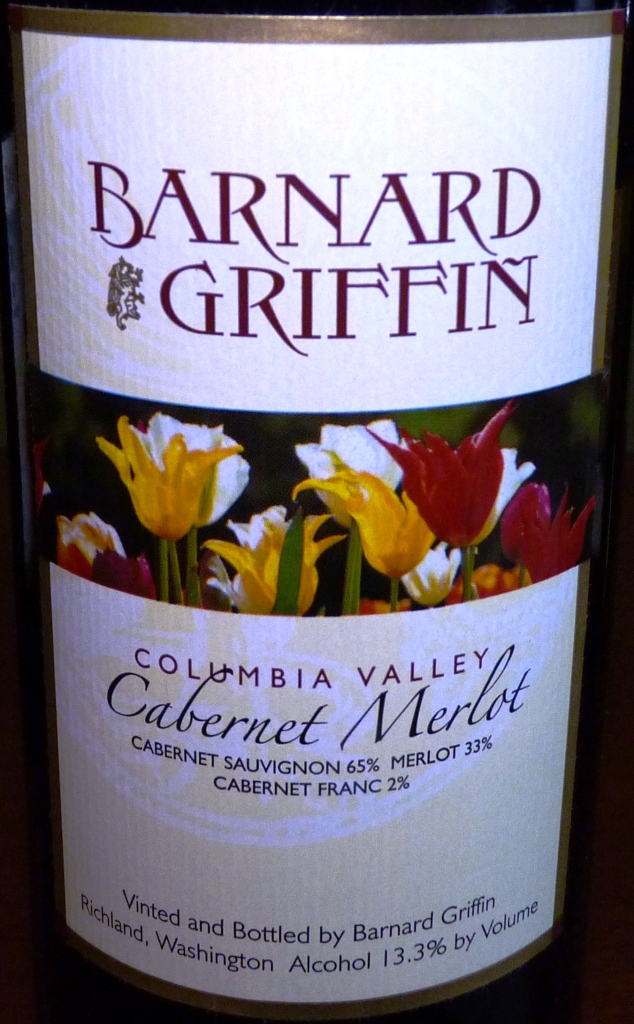 Barnard Griffin Cabernet Merlot Columbia Valley (13.3% ABV, $8.99) – blend of 65% cabernet Sauvignon, 33% Merlot, 2% Cabernet Franc. Only after I took the first sip and got over the initial “hmmm, this is nice!” I realized that this is a non-vintage wine. In general, I have a tendency to avoid non-vintage wines outside of sparkling category, which might be a mistake – I had a great experience with Mitch Cosentino’s Ol’ Red, which was also a non-vintage wine. The Barnard Griffin Cab Merlot had dark garnet, very inviting color. It needed about 15-20 minutes of breathing time to open up. It had a nose of dark fruit with the hint of cocoa. On the palate, it had supple blackberries, dark chocolate, tobacco and may be touch of cinnamon (just a nice touch) – soft, balanced, easy to drink. This was definitely the wine to drink again. I don’t know if you can find it outside of Washington state, but I would suggest you will look for it – worth a try. Drinkability: 8-
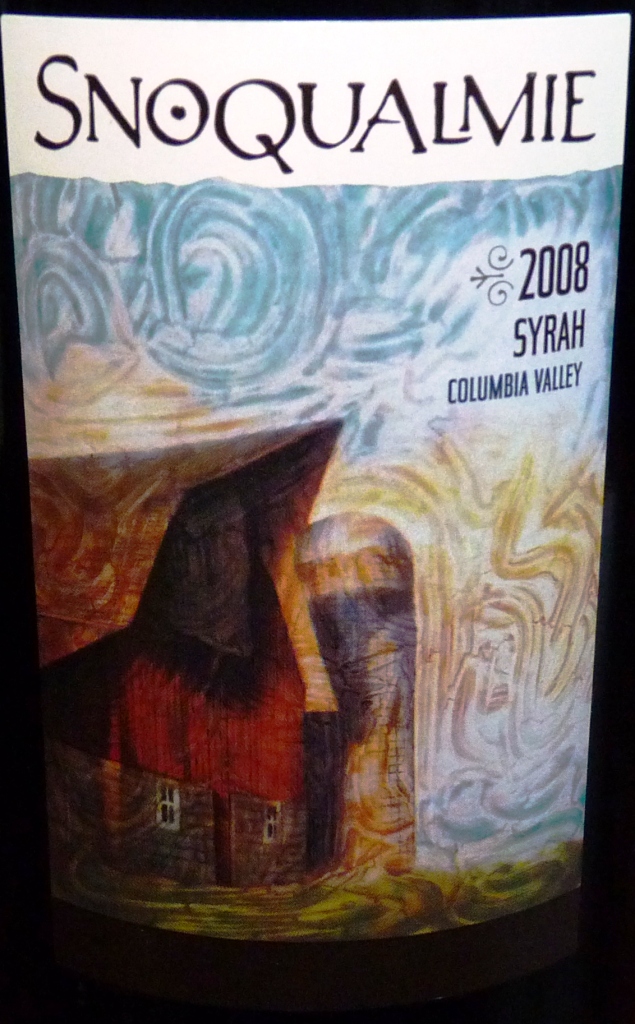 2008 Snoqualmie Syrah Columbia Valley (13.5% ABV, $6.99) – took me a little while to realize, why the name Snoqualmie sounds so familiar – I used to drink Snoqualmie Naked Riesling before, and I remember liking it quite a bit. So instead of giving you a description of this wine, how about I will just tell you – go get it by the case – is that a sufficient description for you? Dark, dense, a bit chewy, ripe plums and blueberries on the palate, good tannins, touch of pepper, good balance. The wine only started to open up on the second day, actually showing some mouth-coating tannins, so I’m sure it got at least 5-7 years of life on it (or more). Definitely the wine I would be happy to drink every day – yeah, only Trader Joe’s in Connecticut don’t sell wine… Again, this wine is worth seeking. Drinkability: 7+
2009 Santa Barbara Landing Chardonnay, Santa Barbara County (13% ABV, $3.99) – this wine was a pure experiment – how can $3.99 California Chardonnay taste. Admittedly, I was not blown away at all (was that really expected at that price level?). This was the wine without sense of place. In a blind tasting, it would puzzle many, I think, as it lacks any of the characteristic traits – butter, vanilla, toasted oak. It has some overall sweet notes, may be somewhat of a white peach pedigree, but that is about the only characteristic I would give. Lacks acidity and balance. Was it terrible? No. Would I drink it again – no. At that price range (little as it is), Vinho Verde from Portugal would give you a lot more pleasure. Drinkability: 6-
 And here are couple of finds from my trip to California back in April – hope some of them are still available!
2010 La Ferme Julien Luberon AOC Rhone Valley Vineyards (13% ABV, $4.99) – blend of Bourboulenc, Grenache Blanc, Ugni Blanc and Rousanne (aspiring Wine Century Club enrollees, take notice – 4 good varieties). Green pear and lemon zest on the nose, grapefruit with some gooseberries on the palate, very nice acidity, overall very good balance. Drinkability: 8-
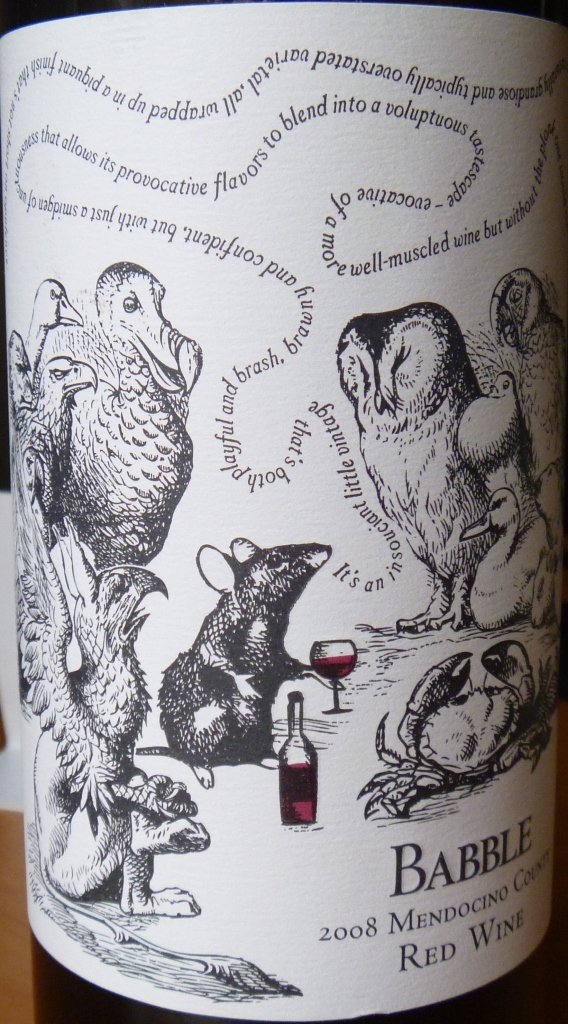 2008 Babble Mendocino County Red Wine (13.7% ABV, $6.99) – blend of 36% Petite Syrah, 26% Syrah, 17% Merlot, 10% Carignane, 10% Grenache and 1% Malbec. Deep purple color, hint of blackberries on the nose, touch of oak, some cherries and a bit of spice box on the palate, very gentle tannins, good acidity. Paired very well with TJ’s Pulled Beef Brisket in smoky BBQ sauce. The text on the label is priceless and somewhat nicely mocking all the “over-sophisticated” wine reviews. Drinkability: 7+.
I need to mention one more great value discovery from Trader Joe’s stores – Poggio Basso Grappa.
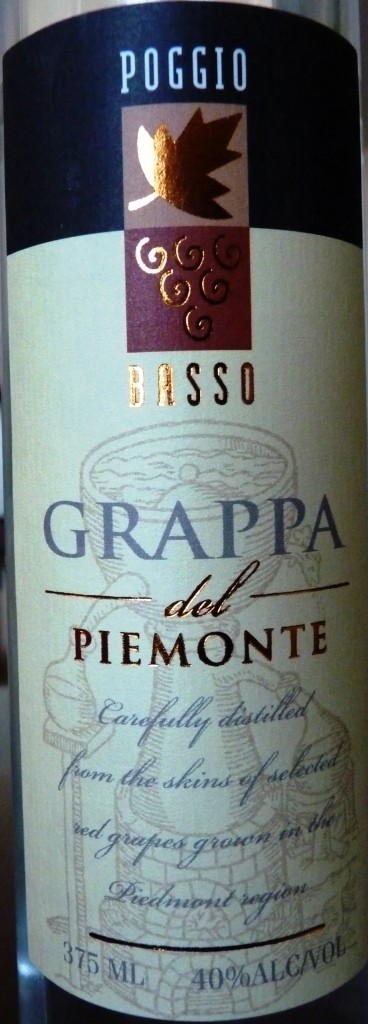 Just curious, how many of you, my readers out there, just had shivers after reading that word “Grappa”? If you did, it is okay, because you simply were deprived of great grappas. Grappa is distilled spirit, made out of grapes, also known for high alcohol content (around 55% is typical). Even 10 years ago, a lot of grappas reaching the US were made out of grape leftovers (skins, seeds, etc.) after the wine production, and was showing in the sharp, attacking taste (not really drinkable, if you ask me). Now situation is different, with a lot of grappas made out of single grape (which is usually listed on the label in such a case), and not leftovers, but actual grapes. These grappas are delicate, flavorful and effervescent, and really give you a lot of pleasure – but you have to pay for it, as most of those excellent grappas will be priced north of $50.
Here comes Trader Joe’s with its Poggio Basso Grappa del Piemonte (40% ABV, 500 ml) – while this is not a single-grape grappa, it is perfectly balanced, with nice fruit profile, very delicate – it is a powerful spirit, but perfectly drinkable and enjoyable all for (you knew that the puncheons was coming) $9.99. No matter what you think of grappas, if you have an access to the Trader Joe’s which carries it, you owe it to yourself to try it – you might discover your new favorite drink.
That’s all for today, folks. Cheers!
Last Bottle Sign Up ($10 credit)




 Talk-A-Vino