Archive
Stories of Passion and Pinot: Knudsen Vineyards
It takes courage to be a pioneer. It takes vision, belief, perseverance and lots and lots of hard work to convert the dream into reality – but this is how many great wine stories start.
Nobody questions “World Class” status of Oregon wines today. But back in 1971, this was really not the story. One had to see the potential and believe that Oregon is meant to produce the world-class wines. Cal and Julia Lee Knudsen did when they purchased the remnants of the walnut orchard in 1971 and established Knudsen Vineyards. The whole family – Cal, Julia Lee and four of their children worked hard to clean up the land and plant the vines. In 1972, they established a 30 acres vineyard, which was the largest in the Willamette Valley. By 1976, they had 60 acres planted, which made them the biggest in Oregon (as a matter of fact, Knudsen Vineyards still have some of the 1974 vines which produce fruit). Today, Knudsen Vineyards plantings span 130 acres, which is certainly one of the largest in the state where the typical vineyard size is 35 acres. And in 1975, in partnership with Oregon winemaking legend, Dick Erath, Knudsen Erath Winery became first commercial winery in the Dundee Hills appellation.
In 1987, the Australian Brian Croser met Cal, and the new chapter started for Knudsen Vineyards. Cal always had a dream of making sparkling wines, and the Knudsen Vineyards entered into the new partnership, now with the Oregon sparkling wine pioneer, Argyle Winery. Today, many of the Oregon wineries are starting to add Chardonnay to their repertoire – Knudsen Vineyards was growing Chardonnay for the very long time, and Chardonnay is essential for a good sparkling wine. As a matter of fact, Julia Lee’s Block, which you can see designated on one of the top Argyle’s sparkling wines, contains the oldest in the new world plantings of French Chardonnay Dijon clones 76 and 96. Also, while you will not see it widely advertised, Knudsen Vineyards grows 3 acres of Pinot Meunier, used only for the production of Argyle sparklers.
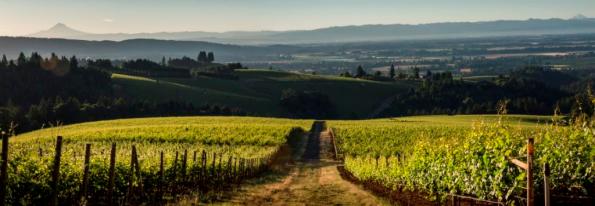
Knudsen Vineyards, Dundee Hills, Willamette Valley, Oregon
Ever since Knudsen Vineyards started working with Argyle, all of their fruit was going into Argyle sparkling wines. Five years ago, the four siblings who run the vineyard now, decided to start producing the wine under their own label, which resulted in the 2012 release of Knudsen Vineyards Pinot Noir. The first release of Chardonnay was added a year after, in 2013. This year, Knudsen Vineyards added the new premium bottling – 2015 Pinot Noir Reserve. All of the wines are produced with the help of the winemaking team at Argyle, which vinifies the juice from the different blocks of the Knudsen Vineyards – but the family gets together to decide on the final blend of the wines they later release.
If you followed any of the Passion and Pinot stories, you probably expect that I will have an interview for you – and you are right. Only this time around, it is slightly different – in addition to the virtual part, I also had an opportunity to sit down face to face with Page Knudsen Cowles, managing partner at Knudsen Vineyards, and extend our virtual conversation with the personal one. I learned lots of interesting things which are really impossible to get to in the format of the virtual interview.
For instance, have you ever heard of the “Suitcase clones“? I certainly never had. It appears that it is a common name for the vine cuttings which are smuggled into the country in the suitcases. For the Knudsen family, the “suitcase” was not exactly a choice tool for vine transportation – the ski bag was the one, as every family skiing vacation in Europe saw new cuttings finding its way home.
At some point, Cal started experimenting with the effects of the birds’ chirping on the vines. The birds’ sounds were played between the rows of the vines. The unfortunate part is that the results of this experiment are not known. But when birds became a problem in the vineyards in 2010/2011, the sound of distressed robin came to the rescue – it was played throughout the night and helped to shoo the birds away – however, made the stay at the small cottage the family has right in the vineyard very problematic.
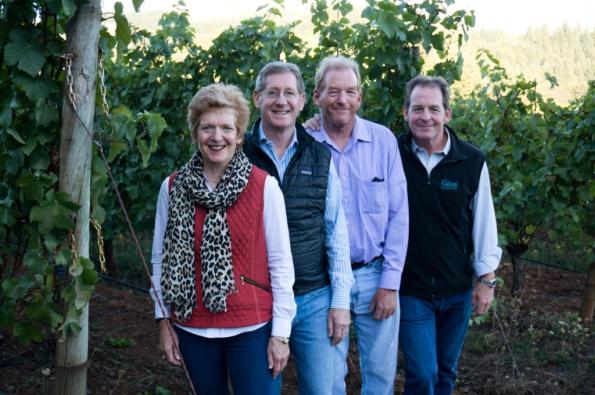
Knudsen Second Generation: Page, Colin, Cal Jr, David
Okay, let’s move on. Let me share with you our [now virtual] conversation with Page Knudsen Cowles. Get a glass of wine in hand, and here you go:
[TaV]: The first vines were planted at Knudsen Vineyards in 1971. Are there any of the original vines still around, and if yes, are they still producing fruit?
[PKC]: The oldest currently-producing vines were planted in 1974. They are Pinot Noir vines that produce fruit for sparkling wine.
[TaV]: I understand that back in 1971, Cal and Julia Lee purchased a 200-acre former walnut tree orchard – are there any of those trees still around and producing [commercially}? Was/is Knudsen family ever in walnut business?
[PKC]: No, the Knudsen family was never in the walnut business. The walnut tree orchard was destroyed in the 1962 Columbus Day storm that wrecked havoc through the Willamette Valley at that time.
[TaV]: The first Knudsen wines under Knudsen Erath label were produced in 1975. Are any of those wines still around? Have you ever tasted wines from that inaugural vintage?
[PKC]: I have not had the pleasure of tasting that very first vintage. I have found in the secondary market a stash of Knudsen Erath Winery 1983 Vintage Select Pinot Noir and some bottles of the Knudsen Erath Winery 1985 Vintage Select Pinot noir. Both wines have held up remarkably well and are fun to drink and share with wine aficionados who appreciate the provenance and age of the wine.
[TaV]: Continuing the previous question, what are the oldest vintages which can be found at the Knudsen Vineyards library? What are the oldest Knudsen wines you ever tasted?
[PKC]: The oldest vintages we have in the Knudsen Vineyards library are:
- 1979 Knudsen Erath Winery Merlot
- 1983, 1985, 1986, 1987 Knudsen Erath Winery Pinot Noir
The oldest wines I have ever tasted are the 1983 and 1985 Knudsen Erath Winery Vintage Select Pinot Noirs.
[TaV]: Today Knudsen Vineyards has about 130 acres under the vines. What grape varietals do you grow today?
[PKC]: We grow 73% Pinot Noir including a variety of French Dijon Clones 667, 777, 115, and 4407, plus the heritage clone Pommard; 24% Chardonnay including the French Dijon clones 76, 95 and 96; and 3% Pinot Meunier.
[TaV]: Knudsen Vineyards just started producing the wines under its own label, and it is not surprising that the first two wines are Pinot Noir and Chardonnay. Moving forward, do you have any plans to start producing any other wines, such as Pinot Gris or Riesling?
[PKC]: No, we do not have plans to produce either of these varietals.
[TaV]: Within the 130 acres of vineyards, you probably identified some of the plots which perform better or, at least, different than the others. Do you plan to produce “single-plot” wines?
[PKC]: Our current planning does not include production of “single plot” wines. We have favorite estate grown blocks that we like to blend when we produce our wines.
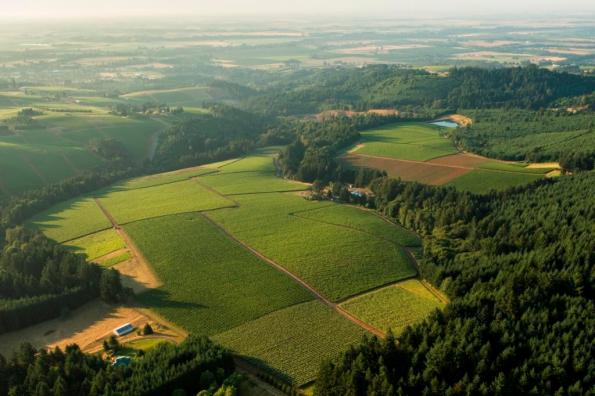
Aerial View over Knudsen Vineyard, Dundee Hills, Willamette Valley, Oregon
[TaV]: Knudsen Vineyards have a strong connection to the production of the sparkling wines through the partnership with Argyle Winery. Nevertheless, do you have any plans to produce sparkling wines under the Knudsen Vineyards label?
[PKC]: Our father, Cal Knudsen, had a love affair with sparkling wines from around the world, though he was most attached to those from the region of Champagne and Oregon sparkling wine. He allied Knudsen Vineyards with Argyle in order to make sparkling wine. Knudsen Vineyards would love to produce a small amount of sparkling wine in the future in honor of our father’s love for that expression of the fruit from our vineyard.
[TaV]: When making wines, do you rely on natural yeast, or do you work with some specific strains of yeast?
[PKC]: I reached out to our winemaker, Nate Klostermann, of Argyle Winery, for the answer to this one. We grow several selected yeast cultures and then inoculate with the one that seems best suited to the vintage.
[TaV]: What kind of oak regimen do you use in the production of your Chardonnay and Pinot Noir?
[PKC]: All of our oak comes from French barrels. Our inaugural 2013 Chardonnay has 35% new oak and was aged over 13 months in barrel; our 2014 Chardonnay had 25% new oak and was aged over 10 months in neutral and new oak barrel; and our 2015 Chardonnay has 27% oak over 10 months in barrel.
For the Pinot Noir, our oak usage is as follows:
Knudsen Vineyards 2014 Pinot Noir 25% new oak barrels; remainder aged in 2 – 4 year old previously used oak barrels; aged for 15 months in barrel, nine months in bottle Knudsen Vineyards 2015 Pinot Noir 20% new oak barrels; remainder aged in 2 – 4 year old previously used oak barrels; aged for 16 months in barrel, nine months in bottle Knudsen Vineyards 2015 Estate Reserve Pinot Noir 35% new oak barrels; remainder aged in 2 – 4 year old previously used oak barrels; aged for 16 months in barrel, nine months in bottle
[TaV]: What is the total production of your Pinot Noir and Chardonnay (how many bottles)? Do you plan to increase the production in the near future or you are happy with the current production?
[PKC]: Currently, we produce between 1,000 and 1,200 cases of our Pinot Noir and Chardonnay combined (between 12,000 and 14,400 bottles). The mix is approximately 60% Pinot Noir and 40% Chardonnay. We are content at this level of production for a couple of years. In the future, we hope to expand.
[TaV]: Is there a “next big grape” for Knudsen Vineyards?
[PKC]: Pinot Noir and Chardonnay are what we intend to grow into the foreseeable future.
[TaV]: What about Willamette valley in general – is it going to stay a Pinot Noir land for the foreseeable future, or would there be a “next big grape”, white or red, for the Willamette Valley?
[PKC]: I believe the North Willamette Valley will stay devoted to Pinot Noir and will increase its production of Chardonnay.
[TaV]: Do you have a dream wine – the wine you always wanted to try, but never have?
[PKC]: I would like to try a bottle of Domaine de la Romanée-Conti from Burgundy and a bottle of any of the Bordeaux First Growth red wines: Château Latour, Château Lafite Rothschild, Château Margaux and Château Haut-Brion. I also would love to try a bottle of Opus One from California.
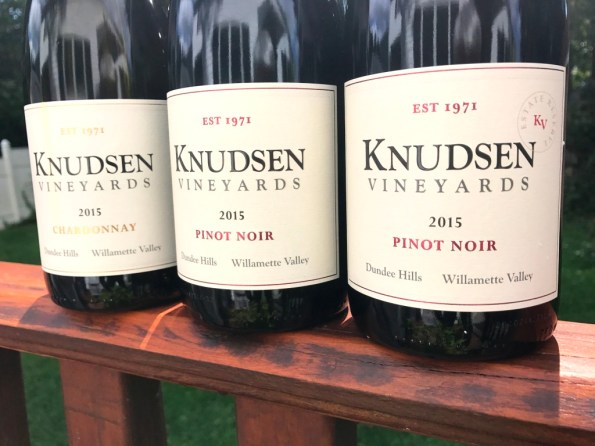
Now for sure it is time to drink the wine. I had an opportunity to try Knudsen Vineyards wines, here are the notes:
2015 Knudsen Vineyards Chardonnay Dundee Hills Willamette Valley (14% ABV, $45)
C: light golden
N: vanilla, touch of toasted oak, medium intensity
P: fresh, crisp, slightly underripe Granny Smith apples, touch of minerality, distant hint of butter and vanilla, quite an acidic finish
V: 8/8+, not bad, but needs time to evolve. Opens in the glass quite elegantly. Second day was outstanding – nice buttery note while fridge cold, and more vanilla-driven as the wine warmed up
2015 Knudsen Vineyards Pinot Noir Dundee Hills Willamette Valley (141% ABV, $55)
C: light bright ruby
N: tart cherries, lavender, hint of smoke
P: cherries, round, good acidity, touch of mushrooms, fresh, Burgundian style
V: 8-, very nice
2015 Knudsen Vineyards Pinot Noir Reserve Dundee Hills Willamette Valley (14.1% ABV, $70)
C: dark ruby
N: smoke, mushrooms and forest floor aromatics
P: cherries, good acidity, layers, smooth, lavender-driven on the second day
V: 8/8+, very polished, elegant, will evolve with time.
Thus we conclude another story of Passion and Pinot (and a little bit of Chardonnay). Wine is a family affair, and Knudsen Vineyards shows it very well. Now the third generation of Knudsens is entering the business, and I’m sure there are lots we should expect to see from the Knudsen Vineyards in the future. Cheers!
Drink Local, Colorado Edition (and Don’t Lose Hope)
I’m an eternal optimist. Even when I’m worrying about something, deep inside, I still believe that everything will be okay – one way or the other (sometimes we really have to look for this “okay”, but this is a subject for the whole other post).
This “life’s attitude”, of course, reflects on my approach to wines. Particularly, a belief that in today’s world, good wines can be made everywhere and anywhere – not only in a few places we know can produce the good wines. And anywhere I travel, I’m always looking to prove myself right – which I call “drink local”.
This time, my travel took me to Denver, Colorado. Colorado sounds as good as any other state in the US to be able to produce wines, so once I situated at my hotel in downtown of Denver, off I went to the closest liquor store in Denver.
While walking to the store, literally few steps before it, I saw a sign for the “Wild Women Winery” – I couldn’t even believe my luck, to find a city winery short walking distance from the hotel, also with a very cool sounding name. So I walked in and situated at a bar table, looking at the bottles with super-creative, super-colorful labels.
Talking to the bartender, I learned that while the winery is located in the Colorado (downtown Denver, to be precise), they make wines from the grape juice which they get from California Central Valley, as the winemaker believes that local Colorado grapes are too young to produce a good wine. Fine – the proof is always in the glass, right?
I decided to try 3 wines for $5 (happened to be an extremely wise decision, as opposed to trying 7 for $10, you will understand why in a minute).


The first wine was Viognier – a touch of overripe Apple with sage on the nose. Good fruity palate nice acidity, golden delicious apples. Not my favorite, but not bad. Not amazing, but drinkable.
My next choice was Cab/Merlot blend and that wine really threw me off – too sweet all around, no balance, no acidity, just a sweet fruit. Don’t remember when was the last time I disliked the wine so intently.
At that point I realized that all of the wines the winery offers are non-vintage wines, so I tried to discuss it with the bartender, but unfortunately, she didn’t know what “vintage” means, and I had to face the issue that certain basic concepts we, oenophiles, take for granted, are not so easy to explain in the simple terms. Nevermind.
The last wine, Petite Sirah, had a sweet chocolate nose, bitter-sweet type. Sweet fruit compote on the palate, definitely too sweet, but more acidity than the previous wine. Mostly plum notes with the equivalent acidity of just ripe, but not overripe plum. A marginal improvement.
This visit really left me at the feeling of deep disconcert – I see a lot of passion on the labels, but the soulless concoctions inside the bottles were really conflicting with the bright images.
I gladly left the winery and headed over to the liquor store. Here I had another surprise – a sticker shock. I understand that the wine store is located in the downtown of Denver. But Colorado wines aren’t that well-known, aren’t they? There was a good selection of the local Colorado wines present, none of them cheaper than $20 (okay, $19.99 if it makes you feel any better). Really? On my recent trip to Canada, I had a phenomenal selection of tasty wines under $15. Now, especially after the first tasting fiasco, I had to spend $20+ for a bottle which I might just have to pour down the drain?


After going back and forth and trying (unsuccessfully) to obtain an advice of the store clerk (”I tasted only this one wine”, “yeah, yeah”, “huh, you don’t like sweet wines? Really?”), I settled on the bottle which looked the most Colorado-authentic while still staying in the low $20s- Two Rivers Syrah – at least the information on the back label suggested that the grapes were harvested in Colorado.


The wine was definitely an upgrade over the previous experience, but still no cigars. As this was nevertheless a better wine, here are my typical-style notes:
2015 Two Rivers Château Deux Fleuves Vineyards Syrah Mesa County, Colorado (14.1% ABV, $22.95)
C: dark garnet, nice visible legs
N: blackberries, tar, tobacco, sage, medium to high intensity
P: sweet berries, tobacco, good acidity
V: 7-, it is drinkable, but sweetness too prevalent.
7 on my the second day – sweetness subsided a bit, and roasted meat notes showed up. Still, the finish is mostly sweet fruit with a touch of tobacco.
On the last day before leaving Denver, I still had a bit of the free time and decided to give Colorado wines one more try. I found another wine store, still within short walking distance from the hotel, with good reviews on Google, and took 20 minutes walk. This store had a much smaller selection of Colorado wines, but a little bit better prices (by a few dollars, nothing major), and incomparably better, knowledgeable service. I left with the bottle of The Infinite Monkey Theorem Cabernet Franc – The Infinite Monkey Theorem is another city winery – but unlike Wile Women Winery, this one I would be happy to visit if I had more time.


Remember I told you about eternal optimism? It finally worked, as this Cabernet Franc was well worth of writing home about:
2015 The Infinite Monkey Theorem Cabernet Franc, Colorado (12.9% ABV, $21)
C: dark ruby
N: tobacco, sweet bell peppers, freshly crushed blackberries
P: bright, fresh, freshly crushed berries, intense sweet tobacco, a touch of pepper, clean acidity, vibrant.
V: 8, outstanding. Would gladly drink that every day.
There you have it, my friends – my first real encounter with Colorado wines. I was happy to prove myself right and find a good wine made in Colorado. As a collector of experiences, I was also happy to add another checkmark to the list of states I tried the wines from – if you are like me, feel free to compare your records 🙂 Have you had the wines from Colorado? Express yourself in the comments section below. Cheers!
One on One With Winemaker: Phil Rose of Wairau River, New Zealand
It just happened to be that once again, we will be talking about New Zealand wines. Once again, we are going to visit Marlborough. And once again, we are going to meet with a pioneer.
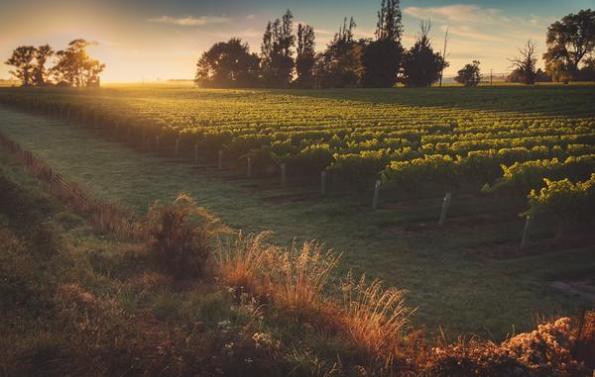
Source: Wairau River
Wairau River Wines‘ story started in 1978 when Phil and Chris Rose became grape growers (Phil was a farmer since the childhood, so the transition was not that dramatic). In 1991, they also became winemakers, producing their first wine. Today, Wairau River vineyards span 550 acres, making it one of the biggest family owned wineries in New Zealand. And it is all truly in the family, as Phil and Chris’ two sons and three daughters are all working at the winery.
Wairau River Wines produces two lines of wines. The Estate collection includes all of the usual suspects, such as Sauvignon Blanc, Pinot Gris, Pinot Noir, Riesling, and Chardonnay, but you can also find some oddballs there, such as Albariño. The Reserve line also includes Syrah and Viognier, as well as late harvest botrytized Riesling.
I had an opportunity to sit down with Phil Rose (albeit, virtually), and inundate him with questions – here is what transpired.
[TaV]: You started growing grapes in 1978. Was there a pivotal moment which got you into the grape growing? Were grapes a long-time passion before you started, or was there an event which brought you into the world of the wine?
[WR]: The oil shock in the 1970’s meant we looked for an alternative away from the farming of beef and sheep plus the growing of Lucerne and other crops. However due to a rural council district scheme rule, grape growing was prohibited on land north of old Renwick road.
We were required to apply for permission to establish a vineyard, which we did but the application received 56 objections and not one single vote of support. There were a number of reasons for the objections. Forestry owners were concerned they would no longer be able to use sprays like 2.4.5.t because of its impact if grapes were nearby. Local farmers were also concerned their normal farming methods would be threatened. There was also the moral opposition such that no one should be able to grow a product that could be turned in to alcohol.
Unfortunately the council denied our application, so we appealed. But things moved even slower back then than they do now – and it took 18 months for the independent tribunal to take place. 18 months where we worked hard to try and convince the powers that be and our own neighbors that grape growing in the Rapaura area of Marlborough had huge merits.
Finally in 1978 we got a unanimous decision from the tribunal which gave us the permission we needed to become contract grape growers. As a result, the council had to change the district plan and open the Rapaura area up to grape growing.
[TaV]: Can Marlborough Sauvignon Blanc age? What was the oldest Marlborough Sauvignon Blanc you ever tried? What is the oldest Sauvignon Blanc you have in your cellars?
[WR]: Of course the wine will age well although the wine takes on different characters with age as do all wines. Most sauvignon blanc now though is consumed in its youth as its fresh, crisp and lively style that have become hallmarks of our success. 1991 was our first vintage and we still have a few bottles of that in the cellar.
[TaV]: Did you ever experiment with cork versus Stelvin closures? Obviously, all your wines use the screw tops, but I wonder if you ever tried to create a control batch with the conventional corks and see how the wines would compare.
[WR]: We bottled our first wine in screwcaps in 2002. Prior to that we were 100% cork but never really happy with the closure. We felt that cork was tainting, oxidising and affecting the delicate aromas of sauvignon blanc in particular.
Wairau River was part of the New Zealand screwcap initiative that was formed in 2001 and we did many trials in the early days – all of them showing that wine under screwcap was far better in terms of consistency and quality than corks.
Today we are 100% screwcap for all of our wines.
[TaV]: It seems that Wairau River is truly a family operation top to bottom. Do you ever have any work conflicts? If yes, how do you resolve them?
[WR]: Yes we now have the whole family and some their partners involved in running the business across vineyards, winery, cellar door and restaurant. It is not often there are any issues but having a voice and opinion is important and so we all listen and work through this and will always achieve a result that works for everyone. We also have a board of directors which meets regularly which helps with accountability and offers independent advice.
[TaV]: The question I always like to ask: what was the worst vintage you remember at Wairau River and why?
[WR]: I think 1995 will long be remembered as the toughest vintage we have had. It rained and rained
[TaV]: And the second question I always like to ask: what were your most favorite vintage years and why?
[WR]: Actually there are many years we look back and think that was one of the best vintages however we never like to look backwards for too long. We are always striving to improve our wines each year so lately it seems every year we are getting better results across all varieties.
[TaV]: How would you differentiate Sauvignon Blanc from Wairau Valley and Awatere Valley? Are the pronounced differences there? Do you think Marlborough needs further subdivision?
[WR]: There are quite big differences between the 2 valleys in terms of flavor profiles however strategically the Rose family have chosen to focus in the Wairau Valley and then within that a tight area surrounding our home vineyard and winery.
Further sub regions like Rapaura or Dillons Point will develop with time however Marlborough as an overall region will still be the key to our success and the protection of that is paramount.
[TaV]: It seems that your wine portfolio is very diverse and includes a wide variety of grapes as well as styles (white, rosé, red, dessert) – the only notable absence nowadays is Sparkling wine – do you plan to fix it?
[WR]: haha – always a good topic of conversation…..we are happy with what we are doing at the moment, however we have a rule of never saying no to anything so who knows what the future will bring – perhaps the next generations may want to make sparkling wine.
[TaV]: Sauvignon Blanc and then Pinot Noir squarely put New Zealand on the world wine map. Is there a next big white and/or red grape for the New Zealand?
[WR]: We consider Pinot Gris to be the next big thing especially from Marlborough. It has a certain style that resonates well with wide variety of cuisines and will help those drinkers that are looking for NZ wine and want to try an alternative to our Sauvignon Blanc.
In the reds perhaps the wines from Hawkes Bay may make a statement but this will also be limited by smaller production.
[TaV]: Outside of New Zealand and your own wines, do you have any other favorite producers or regions for Sauvignon Blanc?
[WR]: We are lucky enough to travel the world selling wines and meeting customers so we are exposed to a number of different wine areas and styles.
In all honesty I think we produce a world class Sauvignon Blanc that is hard to beat however I do quite enjoy wines from Sancerre in particular Domaine Vacheron.
[TaV]: Same question as before, but only for the Pinot Noir – any favorites outside of New Zealand?
[WR]: Of course, we enjoy Jim Clendenen wines at Au Bon Climat.
[TaV]: What are your next big plans at Wairau River? Any exciting projects you have started or about to start?
[WR]: We are comfortable with where we are at in terms of our vineyard ownership and winery capabilities – our challenge is to grow sales and return better margins in all markets as we have wines that are in high demand but with limited availability.
Gaining recognition for our other varieties such as Pinot Gris and Pinot Noir will be a key focus. Ros sales have become very hot lately so this will also be a focus going forward.
[TaV]: Last question: as you run winery as a family, I’m sure you had some funny moments in your daily wine business. Anything you care to share?
[WR]: We work extremely hard throughout the year and don’t often come together as a whole family outside of the work environment. Although I can’t pick one particular moment we have a lot of fun with the family when we gather to celebrate Christmas in the Marlborough sounds with our 5 children, their partners and 12 grandchildren there is always something happening that creates some funny occasions and a great laugh.


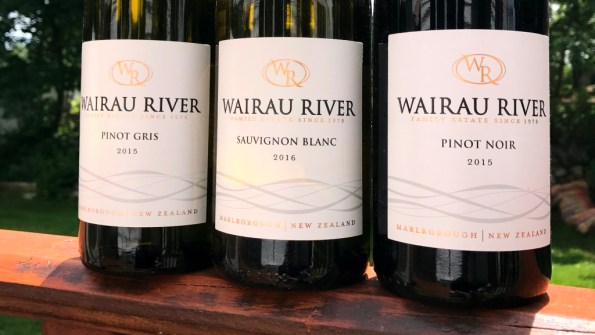
I’m sure you are thirsty by now, so let’s taste some wine, shall we? Here are the notes for a few Wairau River wines I had an opportunity to taste:
2016 Wairau River Sauvignon Blanc Marlborough New Zealand (13% ABV)
C: white pearl, pale
N: intense, currant, touch of grass, bright, fresh
P: herbaceous, nicely restrained, fresh, bright, touch of grapefruit on the finish.
V: 7+/8-, an excellent example of Marlborough Sauvignon Blanc
2015 Wairau River Pinot Gris Marlborough New Zealand (13.5% ABV)
C: light golden
N: medium intensity, minerality, limerock
P: white stone fruit, nice minerality, salinity, crisp, refreshing
V: 7+
2015 Wairau River Pinot Noir Marlborough New Zealand (13% ABV)
C: bright ruby
N: freshly crushed berries, cherry, plums
P: cherries, fresh fruit, plums, touch of smoke, medium body
V: 7+, nice, traditional Marlborough Pinot Noir
Passion and perseverance rule in the wine world – we all know that, but it is always fun to listen to the stories. Pour yourself another glass – you deserve it. Cheers!
Discovering Portuguese Wines, One Winery at a Time – Esporão
Portuguese wines used to be an oenophile’s best secret. Portugal is rather a small country with very good climate for grape growing, lots of slopes and poor soils to force the roots to go deep in search for nutrition. People in Portugal heavily relying on their own agriculture – very little of the food products are imported, and the wines were for the long time produced mostly for the consumption inside the country. Add here a long and successful winemaking history (thousand years give or take a few) and lots of indigenous grapes (actually, the most of them are), and you have a recipe for excellent wines which are hardly known anywhere.
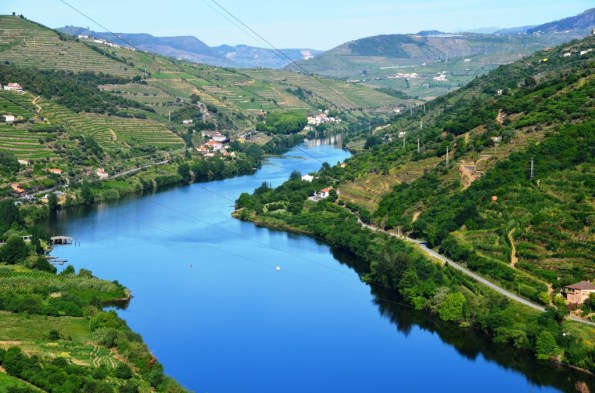
In today’s global economy, where love to the liquid grapes has no boundaries, it is hard to keep something like this as a secret. All of us, lucky travelers, who manage to visit Portugal and haul the wines back by suitcases and boxes, are obviously only helping for this secret to be … well, much less of a secret. And thus today let me contribute to the secrets-free wine world and talk about Portuguese wines produced by the company called Esporão. (take a look at their website to see beautiful viewcams of the vineyards and olive tree orchards).
Herdade do Esporão boundaries were established in 1267, which definitely gets it in the group of some of the oldest estates in Europe, in the region of Alentejo, about 100 miles southeast of Lisbon. The estate remained virtually unchanged until it was purchased by José Roquette in 1973. It is now run by his son João Roquette, who upholds his father’s winemaking traditions. In 2008, Esporão expanded into the Douro Valley with the purchase of the Quinta dos Murças estate which traces its history back to 1714. Quinta dos Murças vineyards are located on the slopes with the elevations of 262 – 1312 feet above sea level, in the Cima Corgo sub-region which is one of the most coveted in the Douro.
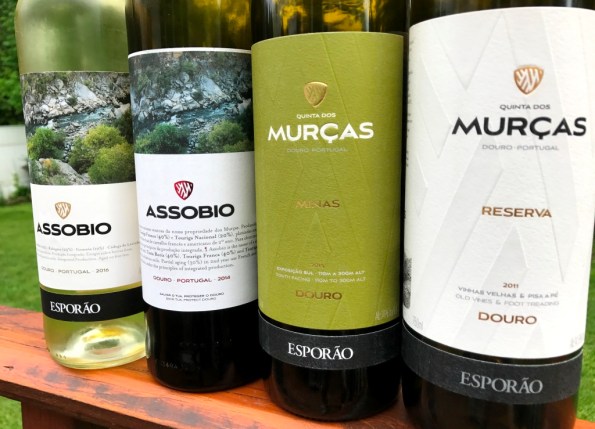
While I would love to talk about many different wines produced by Esporão, today our focus is on the Esporão wines from Quinta dos Murças. Here is what I had an opportunity to taste:
2016 Quinta dos Murças Assobio White Douro Valley, Portugal (12.5% ABV, $13, 30% Viosinho, 25% Verdelho, 25% Rabigato, 10% Gouveio, 10% Códega do Larinho)
Straw pale. Touch of lemon and white stone fruit on the nose, touch of grapefruit zest, medium+ intensity. Good crispy acidity on the palate with round, almost plump body, touch of green apple. Drinkability: 8-
2015 Quinta dos Murças Assobio Red Douro Valley, Portugal (13.5% ABV, $13, 40% Touriga Nacional, 30% Tinta Roriz, 30% Touriga Franca)
Dark garnet, restrained nose, crunchy raspberries, sweet oak undertones, very serious tannins on the palate, French oak, excellent balance, round, very tasty. Drinkability: 8+, best QPR in the tasting
2015 Quinta dos Murças Minas Douro Valley, Portugal (14% ABV, $25, Touriga Nacional, Touriga Franca, Tinta Francisca, Tinta Roriz, Tinta Cão)
Dark garnet color, fresh jammy cherries, baking spices, medium intensity, touch of barnyard, restrained palate, tart cherries, good acidity, excellent balance, Drinkability: 8. Added Bonus – new grape, Tinta Francisca
2011 Quinta dos Murças Reserva Douro Valley, Portugal (14% ABV, $45, Touriga Nacional, Touriga Franca, Tinta Roriz, Tinta Amarela, Tinta Barroca, Sousão)
Almost black. Medium intensity, black fruit medley on the nose, eucalyptus, sage, wow – delicious.
Round layered palate, spices, dark fresh fruit, good acidity, outstanding. Drinkability: 9-
Have you tasted Esporão wines? What is your opinion of Portuguese wines? Do you have any favorites? Cheers!
Come For The Name, Stay For The Wines: Murrieta’s Well in Livermore Valley
 “Your Day Just Got Better” – how fun is it to read something like this? Even if it is written on the cardboard box [ahem, full of wine]? Ahh, sorry. Especially(!) if it is written on the box full of wine!
When I was invited to participate in the Snooth virtual tasting of the wines of Murrieta’s Well, something bothered me in that name. Something very familiar, but I really I couldn’t get a grip as to what it was – until I started working on this post and figured out that Murrieta was referring to Joaquin Murrieta, a Mexican miner turned hero/bandit to avenge his wife in the first half of 19th century. Growing up I remember been moved by a beautiful music and singing in one of the very first rock-opera produced in the former USSR, called “The Star and Death of Joaquin Murrieta” (Звезда и смерть Хоакина Мурьеты). That is what my brain was trying to associate with – but again, this only became obvious after I started working on the post.
Similarly to the Joaquin Murrieta himself, the Murrieta’s Well vineyards go back to the early 1800s. In 1884, Louis Mel purchased the estate, built the winery and planted new vineyards using cuttings brought directly from France, from none less than Chateau d’Yquem and Chateau Margaux. In 1933, he sold the estate to his friend Ernest Wente, and ever since the estate was a part of the Wente properties. Actually, the winery received name “Murrieta’s Well” only in 1990 when it was revived, and from there on the modern history of Murrieta’s Well started. Rest assured that you can still find very old and still producing vines as part of the Murrieta’s Well vineyards.
Before we talk about the wines, let me ask you a sidebar question. Let’s say you are visiting Northern California on business and staying somewhere between San Francisco and San Jose. Let’s assume you have a bit of a free time and want to visit a winery. Outside of the city wineries, which can be found today in many places, what do you think would be the closest “wine country” for you to visit? If you said Napa, it is a wrong answer! Yes, you can go to the Santa Cruz mountains and visit Ridge (good choice), but – your best bet will be Livermore Valley! You will find a good number of excellent producers in Livermore Valley, all within 45 minutes ride (not talking about California traffic here, sorry). If you will go, make sure to include Murrieta’s Well and Wente on your short list.
Now, let’s talk about making the day better – I think kind folks at Murrieta’s Well know how this can be done. When you open the box and first thing you see is a written note “Your Day Just Got Better“, whatever the day you had before, it immediately gets better :). Then you see the bottles, packed with meticulous care, and feel even better. Meticulous care obviously goes not only into the packing, but first and foremost, into the wines themselves. Winemaker Robbie Meyer believes in the art of blending, and I can tell you, one of the flagship blends, The Spur, was my favorite wine of the tasting. Robbie Meyer’s philosophy is to harvest and vinify all the grapes separately, and then combine them into the final blend.


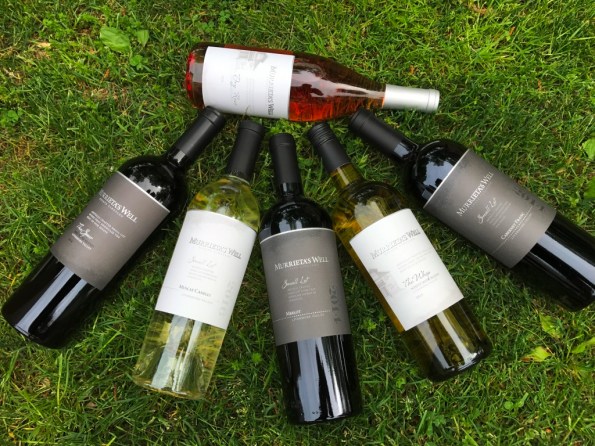 For what it worth, here are my tasting notes for the wines:


2016 Murrieta’s Well Dry Rosé Livermore Valley (14.1% ABV, $30, 55% Grenache, 45% Counoise)
C: pale pink
N: intense, fresh, strawberries and strawberries leaves,
P: perceived sweetness but perfectly dry, underripe strawberries, nice and round
V: 7+/8-
2015 Murrieta’s Well The Whip Livermore Valley (13.5% ABV, $24, 30% Sauvignon Blanc, 30% Semillon, 30% Chardonnay, 7% Viognier, 3% Muscat Canelli)
C: straw pale
N: touch of perfume, tropical white fruit, guava, medium intensity,
P: touch of sweetness, nicely restrained, good acidity in the back, more tropical fruit, good balance
V: 7+
2016 Murrieta’s Well Muscat Canelli Livermore Valley (14.2% ABV, $35, 100% Muscat Canelli, 100 cases produced)
C: light straw
N: perfumy, intense, sweet, intense white fruit
P: grapefruit, grapefruit zest, good acidity, round
V: 7+, excellent summer wine


2014 Murrieta’s Well Small Lot Merlot Livermore Valley (14.1% ABV, $48, 90% Merlot, 7% Cabernet Sauvignon, 3% Petit Verdot)
C: Garnet
N: medium plus intensity, touch of sweet cherries and earthiness, mint, touch of cassis, overall very inviting.
P: good earthy fruit, cassis, medium to full body, touch of sweet oak, outstanding overall
V: 8+, excellent, delicious wine
2014 Murrietta’s Well Small Lot Cabernet Franc Livermore Valley (14.1% ABV, $58, 88% Cabernet Franc, 6% Cabernet Sauvignon, 6% Petit Verdot)
C: dark garnet)
N: touch of vanilla and mint, black and red fruit, medium intensity
P: touch of black currant, vanilla, chewy structure, baking spices, medium to full body.
V: 7+, I like my Cabernet Franc to be a bit leaner, but a very good wine overall.
2014 Murrieta’s Well The Spur Livermore Valley (13.5% ABV, $30, 45% Cabernet Sauvignon, 22% Petite Sirah, 14% Petit Verdot, 10% Merlot, 9% Cabernet Franc)
C: dark garnet
N: crunchy raspberries, intense, tobacco, sage
P: round, layered, black currant, silky smooth, touch of sweet tobacco, eucalyptus, fresh acidity, impeccable balance
V: 8+, this wine would make me happy any day
Whether Joaquin Murrieta was an avenger, hero or bandit – it is hard to tell. We don’t even know if he was just a legend. But – the wines named in his honor are real, and you should definitely look for them. Cheers!
One on One With Winemaker: Brett Jackson of Viña Valdivieso, Chile
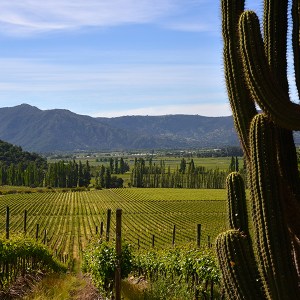
Source: Viña Valdivieso
Today, sparkling wines are produced everywhere, and we are getting quite used to it. Sometimes, it comes almost to a surprise when we hear that particular producer doesn’t offer any sparkling, at least as part of the “winery special”. But this was not the case even 10 years ago, when the sources of the sparkling wine were much more limited.
When you are thinking about Chilean wines, well respected worldwide, what kind of wines come to mind first? I would bet you are thinking about Cabernet Sauvignon, Merlot, Carmenere, Sauvignon Blanc and may be some Chardonnay. I would also safely bet that you don’t think of Chile as a producer of the sparkling wines, right? So without asking google or reading ahead, can you pause for a second and think when could Sparkling wines be commercially made in Chile?
While spending time in France, Don Alberto Valdivieso fell in love with Champagne. As a matter of fact, he loved it so much that upon his return to Chile in 1879, he founded Champagne Valdivieso and became the first producer of the sparkling wines in Chile and the whole of South America.
Fast forward to today and Viña Valdivieso produces the full range of sparkling wines, including both Viña Valdivieso produces the full range of sparkling wines, including both méthode champenoise and Charmat, and the extensive line of still wines which includes a unique solera-method dry red called Caballo Loco. I had an opportunity to sit down (albeit, virtually) with the Viña Valdivieso Winemaker, Brett Jackson, and ask him a few bunch of questions – here is what transpired from our conversation:
[TaV]: I would guess that Viña Valdivieso first sparkling wines were made with the Traditional Method. When did the Viña Valdivieso start producing sparkling wines using Charmat method?
[VV]: Valdivieso started making sparkling wines from 1879, all the bottles in traditional method. Only from the eighties began the elaboration by Method Charmat
[TaV]: What is the oldest sparkling wine which can be found in your cellars? What was the oldest Viña Valdivieso sparkling wine you ever tried?
[VV]: For the earthquakes of 1985 and 2010, that affected our underground cava, we lost bottles from the early fifties to the present. We only recovered some bottles from 1996 onwards that are still preserved in our cellar.
[TaV]: Do you make any single vineyard sparkling wines? What about vintage sparklers?
[VV]: For Traditional method, we have single vineyard Valdivieso Blanc du Blanc made of 100 % Chardonnay and Valdivieso Blanc du Noir with 100% Pinot Noir
Since 2013, we started using the label vintage in Valdivieso Blanc du Blanc. Actually, the new portfolio sparkling for Champenoise Caballo Loco Grand Cru 2014 uses an exceptional vintage.
[TaV]: When you produce Traditional Method sparkling wines, do you follow the path of the French Champagne and try to achieve consistent “Chateau” taste profile? How many Vin Clairs your typical blend include? Do you use also reserve wines, and what would be the oldest you would use?
[VV]: We use different vintages to give consistency to our portfolio. Charmat Limited include 2 years at least in different percentage of varieties, blending, Traditional method we use Both of 1 vintage as well as several in blending. Currently, the use of expedition liquor for some 2014 bottles of traditional method is from 2011 vintage.
[TaV]: Do you use sustainable farming methods? What about organic – you do it now or have any plans?
[VV]: Our farming methods are sustainable, being certified with the Wines of Chile Sustainable code. We are working with a 15Ha organic vineyard in the south of Chile with some very exciting red varieties. Grenache, Tempranillo, Mourvedre, Carmenere, Tannat, Carignan, Syrah, and Petit Syrah. The first wines from this vineyard should be appearing late 2018.
[TaV]: What was your most challenging vintage for the sparkling wines and why?
[VV]: 2012 and 2013 the most difficult, extremely challenging because of the huge amount quantity per hectare. We don´t have Traditional method these years, except Blanc du Blanc 2013, 100% chardonnay. The Chardonnay variety was the only one that excelled to maintain consistency in quality and longevity for its storage in bottles.
[TaV]: What was your most difficult vintage for the still wines and why?
[VV}: 2016, the most difficult, lots of rain during April. Chile lost around 30% of the harvest due to these rains. Extremely challenging conditions.
[TaV]: What were you favorite vintages for the still and sparkling wines?
[VV]: For still wines 2000 through to 2010 were exceptional with a string of outstanding vintages, 2001, 2005, 2007, 2009, 2010. I would give the edge to the 2005 vintage, great balance in the wines, maturity, acidity, and exceptional flavor.
For sparkling wines 2010, 2014, 2015, 2016. because of the balance of fresh maturity, big natural acidity, fresh fruity character . 2014 was the best, with the fruit from consolidated new areas for traditional method such as Biobio, Limarí, Itata, and new improves for charmat with vines so close to Andes mountains and Coastal range. 2014 is the first vintage for a new sparkling label called Caballo Loco Grand Cru Biobio Valley , Brut Nature and Blanc du Noir, currently available.
[TaV]: Today you produce still white wines from Chardonnay and Sauvignon Blanc. Have you ever experimented with any other white varietals? Any plans to introduce any new Viña Valdivieso white wines?
[VV]: We do a small amount of Viognier. In the near future we will be launching Rousanne and Marsanne. Both look very promising with great potential.
[TaV]: What is the “Next Big White Grape” for Chile? Is there one?
[VV]: The “next big” is white wine. It is not easy to see as on an international scale, Sauvignon Blanc and Chardonnay dominate to such an incredible extent.
[TaV]: Same question for the reds – is there “Next Big Red Grape” for the Chilean wines?
[VV]: For individuality and exceptional quality, the old vine Carignan from the Maule Valley is making a substantial mark. Also, Syrah has the potential to produce exceptional wines from many different areas of Chile.
[TaV]: For how long do you produce your Syrah wines? What is your inspiration for the Syrah? Is there an international style you would compare Viña Valdivieso Syrah to?
[VV]: We have been producing Syrah for around 10 years. When looking at what we try and achieve, I really look to the northern Rhone, trying to capture spice, black and white pepper. Our style has evolved over the years, initially being more of a new world dark rich style, whereas now I would compare more to soft spicy Rhone style. However Syrah is so unique in that as a red wine every area it is grown in, it produces a wine which is unique to that area.
[TaV]: What is the story behind Caballo Loco? Why all of a sudden to produce Solera-style red wine? Do you produce this wine every year? How do you say it is changing year over year?
[VV]: Caballo Loco, has a long history in Chile, the first edition being released in the early nineties. It was created through a series of events between the winemaking team, sales team, and owners. It is a reflection of the innovative nature of Valdivieso, and not being afraid to try new While it is based on our solera Sistema, each bottling is unique and such receives an individual edition number. The current edition on the market is the N°16, which contains 20 different vintages. The new edition N°17 will contain 50% of the previous edition (in this case N°16), and 50% of the new vintage wine. This method allows us to evolve the nuances of the wine over time. Over the years new vineyards, areas, varieties, and techniques have been incorporated into the wine. Each new edition is released when it is ready, which is not necessarily on an annual basis. Roughly every 18 months a new edition is released. The subtle changes over the years for me is principally increasing complexity and depth as we have come to better understand the vineyards of Chile and the opening of new areas.
[TaV]: It seems that Valdivieso ÉCLAT was produced only once in 2011, with an unusual for Chile blend of grapes. As there a story behind this wine? Any plans to produce a new vintage?
[VV]: Eclat VIGNO, is a blend of Old vine Carignan and Mourvedre. We are part of the VIGNO, a group of 13 wineries which has created this label VIGNO. It is an aggrupation which has been lead by winemakers with the objective to highlight the exceptional quality of these old vine vineyards in the Maule Valley. To place VIGNO on the label the wine must contain 100% of old vine from the Maule Valley. Of this, a minimum of 65% must be old vine Carignan. This is also intended to improve the situation of the small growers in the area, an area with many small growers which had in the past been obliged to sell there Carignan grapes for generic red blends, in which they were diluted away. Now with this initiative, the fruit is sought by many wineries for its quality potential resulting in substantially better prices for the growers. There will definitely be another vintage when the wine is ready.
[TaV]: What’s ahead for the Viña Valdivieso – new markets, new wines – what makes you excited?
[VV]: New wines to come, we have some really fun projects coming on. From the Maule Valley, we will shortly have some wines from an organic vineyard, being from an exciting range of varieties. Grenache, Syrah, Petit Syrah, Tempranillo, Tannat, Carignan, Carmenere, and Mouvedre. We still do not have a name for the range, but the quality of wine from these low yielding vineyards is exceptional.
Late this year we will be launching in the Eclat range 3 new wines under the Curiosity label. Cinsault from the Itata Valley, on the coast, old vines being cultivated in the traditional methods they have been using since vines were first introduced into Chile. There are records of wine being produced in this area since the 17th century. Also, a Rousanne, and a Marsane. These two whites look great, and for me show the potential for these Mediterranean varieties in Chiles conditions.
In the markets around the world it is a very exciting time for Chile, after years as been considered the supplier of good easy drinking wines, Chile has now become a very respected wine producer where people are respecting and expecting wines of the highest world class level. As a foreigner who has accepted into the industry I feel very privileged and lucky to have been able to play a small part in what has been this transformation of the wines from Chile.


I hope you are still here and reading this – I really love these conversations – while virtual, they still share the passion and even the obsession those little grapes bestow on us.
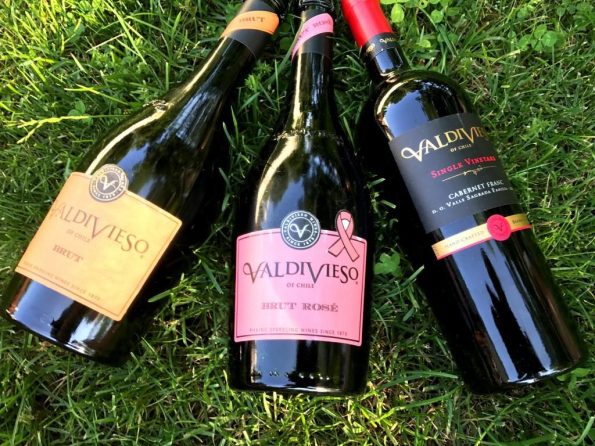
I’m sure you are thirsty by now, so pour yourself a glass, and let me share my impressions from tasting of the few of the Viña Valdivieso wines:
NV Viña Valdivieso Brut Chile (12% ABV, Chardonnay 60%, Semillon 40%, Charmat method)
white stone fruit, distant note, light mousse, good acidity on the palate, touch of grapefruit notes. Drinkability: 7+
NV Viña Valdivieso Rosé Chile (12% ABV, Pinot Noir 70%, Chardonnay 30%, Charmat method)
beautiful color, inviting nose of fresh berries with touch of herbs, light, round, touch of fresh fruit, excellent balance, refreshing. Drinkability: 7+/8-


2015 Viña Valdivieso Sauvignon Blanc Gran Reserva DO Valley de Leyda Chile (12% ABV)
straw color, very intense nose of blackcurrant and black currant leaves, same on the palate but with restraint, nice acidity, black currant, excellent. Drinkability: 8
2013 Viña Valdivieso Cabernet Franc Single Vineyard DO Valle Sagrada Familia Chile (14% ABV, Punta de Rosa Vineyard)
dark ruby color, touch of bell pepper, berries and leaves of the cassis, mint, touch of roasted meat. Palate follows the nose – medium body, good acidity, fresh red berries, touch of cassis, nice savory notes. Enjoyable by itself, but will work well with food. Drinkability: 8
Here we are, my friends. Sparkling from Chile? Yes, please! Cheers!
Argentina Beyond Malbec with Achaval-Ferrer and #WineStudio
 Of course, Argentina wine industry can’t be subsided only to Malbec – Torrontes and Chardonnay for the whites and Malbec and Cabernet Sauvignon (and Bordeaux-style blends, of course) for the reds comprise an absolute majority of Argentinian wines available at any given moment. You can find some Argentinian Bonarda, Pinot Noir and Sauvignon Blanc, but they don’t carry the full recognition of the 4 main grapes.
Winemaking has a long history in Argentina, starting in the 16th century and entering an international trade in the second half of 19th century. If we will take into account that most of the grape plantings in Argentina are at high altitude, with climatic conditions and terroir overall ideal for the grape growing and providing protection against many grape diseases, such as phylloxera, we will quickly realize that Argentina is home to some of the best and oldest vineyards in the world. However, it is only during the last 20-25 years Argentinian wines start receiving a full international recognition they deserve, with Malbec been the brightest shining star.
Achaval-Ferrer winery was founded in 1998, and over its relatively short history, became a leading winery in Argentina, garnering numerous awards and high critic scores for its wines. To the great pleasure of wine geeks, wines of Achaval-Ferrer were also a focus of April #WineStudio educational program, allowing us to experience some of the very best wines Argentina is capable of producing – Malbec, Cabernet Sauvignon and Bordeaux blend called Quimera. But for the last April session, Achaval-Ferrer and #WineStudio took us on the trip in entirely new direction with the inaugural vintage of the Cabernet Franc wine.
I guess it is time to reveal one of my (no, not darkest) deepest wine secrets – I have “a thing”, an obsessive passion for the Cabernet Franc wines. I can’t explain to you why or how. I don’t know how it happened that out of most grapes, the words “Cabernet Franc” make me literally jump. No matter how tired I am at the end of the large tasting, say to me “let’s go try Cab Franc” and I’m ready to run. Thus you can imagine how excited I was at this opportunity to try a new first release of Cabernet Franc.
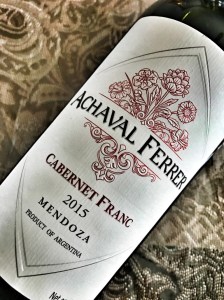
There was a lot of excitement around this wine, seems everybody really enjoyed it. As for all the wines of Achaval-Ferrer, the grapes for this Cabernet Franc came from the high altitude vineyards (3,280 ft above sea level) in the Uco Valley, mostly sustainably farmed. Here are my tasting notes:
2015 Achaval-Ferrer Cabernet Franc Mendoza Argentina (14.5% ABV, $24.99, 100% Cabernet Sauvignon, 10 months in 3-year old French oak barrels)
C: Dark garnet
N: intense, baking spices, dark fruit, mint, dark chocolate
P: medium-full body, fresh cut-through acidity, mint, hint of cassis, touch of white pepper on the finish, smooth, long finish with tannins kicking in at the end and lingering. Needs time…
V: 8, nice, can be drunk on its own, will be great with the food, and will evolve with time – at least 10 years. The wine opened up more on the second day, and I’m sure will further improve on the 3rd.
Definitely an excellent wine which will be hard to find – 1,400 cases total production, and a lot of this wine went to Morton’s steakhouse (so if you plan to visit Morton’s keep that in mind) – but it is well worth seeking. If you will score some of these bottles, lay them down in the cellar and let them evolve. At least this is what I would do.
This wine concluded a delicious #WineStudio experience with the Achaval-Ferrer wines, and to sum it up, I want to leave you with the twitter quote from Tina Morey, the host of #WineStudio:
I can fully sign under every word here – beautiful, expressive wines, well representing what Argentina is capable of. Salud!
Stories of Passion and Pinot: Looking Back and Looking Forward
Back during the fall of the last year, I ran a series of posts talking about passion and Pinot Noir. Pinot Noir is a finicky grape which, I can only guess, has some enchanting properties – for the winemakers and wine lovers alike. Pinot Noir has an ability to grab you and never let you go – once discovered, it becomes an object of obsessive desire: winemakers go out of their way to make the best Pinot Noir wine, and oenophiles go out of their way to find it.
To give you the best examples of Pinot Noir’s passion and obsession, I decided to [virtually] sat down with a pioneer, a rocket scientist, a soil fanatic, biodynamic believer and some true farmers – all of them from Oregon. Through our conversations, I wanted to convey the unwavering belief in the magic of that little black grape, Pinot Noir.
We talked with Ken Wright of Ken Wright Cellars, David Nemarnik of Alloro Vineyard, Mike Bayliss of Ghost Hill Cellars, Wayne Bailey of Youngberg Hill Vineyards, Steve Lutz of Lenné Estate and Don Hagge of Vidon Vineyard – the passion was easy to see, through their words and through their wines.
The essential Pinot Noir map includes four major players – Burgundy, California, New Zealand and Oregon. Out of these four, Oregon usually beats Burgundy in consistency, and often California and New Zealand in finesse. That consistency and finesse don’t go unnoticed – and not only by wine consumers but by the big domestic and international wine businesses and investors as well. Big businesses are great, but – they are, first and foremost, big businesses – and passion is often replaced just by pragmatic business needs and shareholders value.
The wine quality and creativity is on the upswing around the world, and while consumers are driving this trend with an ever increasing thirst for the wine, nothing can be taken for granted – the wines have to find the consumers, and convince them that they are worth paying for.
The big business interest and more and better wines – what does it mean for the Oregon wine industry, the passion and the Pinot Noir? To answer this question, I asked once again for the help of Carl Giavanti of Carl Giavanti Consulting, wine marketing and PR firm, who reached out to the Willamette Valley Wineries Association. As you can imagine, I had more than one question, so here I would like to share with you what I have learned.
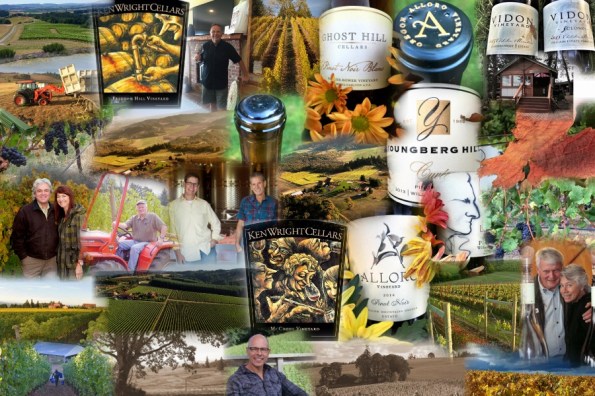
First three questions were answered by Anthony King, 2017 President of WVWA Board of Directors and General Manager of the Carlton Winemaker’s Studio:
[TaV]: Willamette Valley squarely joined the ranks of world-class wine regions. Does it mean that everything is great, or you still have big issues to solve on your agenda?
[AK]: Willamette Valley is certainly on the rise and we are all thankful for the attention. Our biggest issue is to continue to share the spotlight with the other classic regions of the world without losing our roots, our authenticity, and collaborative spirit.
[TaV]: It seems that lately big corporations are paying lots of attention for the WV wineries – or rather money, as for example, Jackson Family which acquired 3 WV wineries over a short period of time. Are you concerned with this development? Do you think it might change the soul and spirit of WV wines?
[AK]: Most of us are flattered by the attention that our wines, vineyards, and wineries have been getting from producers all over the world. JFW, in specific, has invested heavily, but have done so with a soft touch and an eye towards the community and their neighbours. In the end, the region will have diversity that consumers will ultimately benefit by. Our hope, however, is that this interest doesn’t drive vineyard and fruit prices into a range that makes the hands-on artisan winemaking that has made Oregon so special too expensive for entry.
[TaV]: There are many white grapes which can be called “next frontier” for the WV wineries – Pinot Gris (yes, okay, this is an old news), Chardonnay, even Riesling. However, if we look at the red grapes, WV wineries are a “one trick pony”, only working with Pinot Noir. Do you see any problems with that? is there a next big red grape for the WV, or is it not necessary?
[AK]: Great question. I don’t think that any of us, as winemakers, regret that we are working with Pinot noir in such an ideal locale. It presents a lifetime of challenges and, hopefully, rewards. Although much more rare, Gamay can be thrilling and has been successful planted alongside Pinot noir. Syrah, too, has a lot of potential, making compelling, Northern Rhone style reds in warmer years. Cooler-climate Italian reds could have potential as well. We’ve already seen an increase in planting of these “other reds,” but the more dramatic shift is (as you mentioned) towards focusing on whites and sparkling wine, which are very well suited to this climate. Ultimately, I foresee increased experimentation with a range of red varieties in the warmer sites in the Willamette Valley in the short-term; time and the weather will tell what succeeds.
The rest of the questions were answered by Emily Nelson, Associate Director for Willamette Valley Wineries Association.
[TaV]: What percentage of WV wineries are LIVE certified? Do you see this number dropping, increasing, staying the same?
[EN]: In 2016, there are 13,170 Oregon vineyard acres certified sustainable, which is 48% of total planted acres in the state. 8,218 acres are LIVE Certified, which is 30% of total planted acres. We do see the number of certified sustainable vineyard acres increasing year after year. As the home of the nation’s most protective land use policies, the first bottle recycling law, and the highest minimum wages for farm workers, it’s fitting that the Oregon wine industry is committed to sustainable farming and winemaking practices.
For LIVE Certified acres in particular, the number has increased annually from 2,368 acres in 2007 to 8,218 acres today.
[TaV]: How important is Biodynamic viticulture for the WV wine industry? Do you see more wineries embracing it?
[EN]: Biodynamic viticulture in Oregon has also steadily increased over the years, from 289 certified acres in 2007 to 1,585 certified acres today. It is an important component of our sustainable character in the region, reinforcing our belief that agriculture in general and viticulture in particular can flourish in harmony with our natural environment. In general, Demeter Biodynamic certification is in accord with many practices that characterize the certification of organic farms. However, certain practices are unique to Biodynamic agriculture, including managing the whole farm as a living organism; maintenance of a healthy, diverse ecosystem that includes not only the earth, but as well the cosmic influences and rhythms of which the earth is a part; and use of the Biodynamic preparations to build soil health through enlivened compost.
[TaV]: Are there any new wineries showing up in the WV? If yes, is there a trend there (more than the last 5/10 years, less than the last 5/10 years, the same?
[EN]: Yes! Our number of wineries in the region has climbed over the last five to ten years. We had about 110 wineries in the Willamette Valley in the year 2000. By 2010 that had more than doubled to 300 wineries. And now in 2016 our most recent census shows 531 wineries in the region. People are drawn to grape growing and winemaking here for many of the same reasons that brought our pioneers in the 1960s—unique climate and soils ideally suited to Pinot noir and a wine industry culture that celebrates collaboration, inventiveness, and land stewardship.
[TaV]: Do you see a lot of foreign capital coming into the WV winemaking industry (buying, partnering, starting new wineries)? Again, is there a trend?
[EN]: There is a trend of outside investment in the Willamette Valley wine industry, and it speaks to the quality of the wines being produced here. We see Burgundian investors who’ve found the New World home of Pinot noir, as well as those from Washington and California who are expanding their premium Pinot noir brands with Willamette Valley wines.
[TaV]: Last question – are there any new and coming, or may be old but coming around wineries wine lovers should watch for? Anything which makes you particularly excited?
[EN]: We’re particularly excited about a few things here: first, many of our pioneering wineries are handing the reigns down to second generation winegrowers and owners. The children who grew up in the vineyards and cellars of the wineries who put our region on the map are now at the helm. They continue to innovate and improve, so watching their brands and their wines flourish and evolve is a thrill. Second, we’re excited about the Burgundian presence in the Valley. French winemakers who come here to experience the Oregonian version of their time-honored grape offer unique expressions of the wines and outside confirmation that there’s something really special happening here. Lastly, we’re excited about new winemakers just entering the industry, who contribute a vibrant sense of experimentation and energy to the Valley.
All the good things come to an end, so this was the last of the conversations in the Passion and Pinot series – for now, at least. As I said before, Pinot Noir has some very special properties, making people fall in love with it and not letting them go. And whether you agree or disagree – you know what to do. Until the next time – cheers!
P.S. Once again, here are the links to the web sites for the wineries profiled in this series:
Alloro Vineyard: www.allorovineyard.com
Ghost Hill Cellars: www.ghosthillcellars.com
Ken Wright Cellars: www.kenwrightcellars.com
Lenné Estate: www.lenneestate.com
Youngberg Hill Vineyards: www.youngberghill.com
Vidon Vineyard: www.vidonvineyard.com
One on One with Winemaker: José Moro of Bodegas Cepa 21
When it comes to Spanish wines, Ribera Del Duero is probably most iconic and best-known region worldwide – I know some will say it should be Priorat or Rioja, but let’s leave this argument for another time. Hold on, here is a bit of stats to support my statement. If you will look at the Wine Spectator Classic ratings (95-100, best of the best), you will find 38 wines from Ribera Del Duero, 24 from Rioja and only 11 from Priorat rated in that category. And while in Ribera Del Duero, do you know which wine has the top Wine Spectator rating of all times? 2004 Bodegas Emilio Moro Ribera del Duero Malleolus de Sanchomartin.
No, this is not the wine we will be talking about here, but – it is perfectly connected to our story. First commercial wine under Bodegas Emilio Moro name was released in 1989 – however, Moro family’s viticultural traditions and experience go all the way back to the beginning of the 20th century, starting with Don Emilio Moro, a first generation vigneron. Today, in its third generation, Bodegas Emilio Moro continues to build upon a century of traditions and tried and true techniques. And now we are getting to the actual subject of this post – the latest venture of the Moro family – Bodegas Cepa 21.
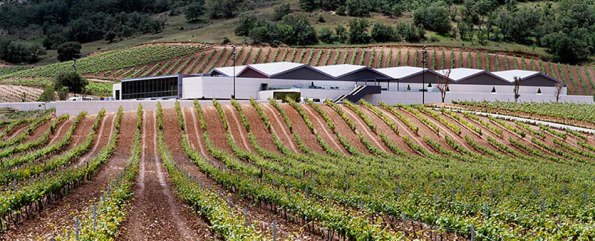
Photo Source: Bodegas CEPA 21
Bodegas Cepa 21 was created by brothers José and Javier Moro, the third generation vignerons. It is located in the heart of Ribero del Duero region, in the area known as “The Golden Mile”. It is worth noting the Ribera Del Duero comprise highest altitude vineyards in Spain, located at 2,400 – 3,300 feet above sea level. Bodegas Cepa 21 farms 125 acres of estate vineyards, and has another 125 acres under direct control through the agreements with wine growers. All 4 wines produced at Bodegas Cepa 21 are made out of one and the same grape – Tempranillo, albeit it is their own “Moro clone”, cultivated for more than a century.
Instead of inundating you with more information which you can easily find at Bodegas Cepa 21 website, I had an opportunity to [virtually] sit down with José Moro, an owner and winemaker at Bodegas Cepa 21, and inundate him with the barrage of questions – and now I can share that conversation with you:
[TaV]: Cepa 21 name implies that this is the winery for the 21st century. By the time when Cepa 21 was created, Emilio Moro was well known and very successful business. What was the motivation for the creation of the Cepa 21 winery and the brand overall? What sets Cepa 21 apart from the Emilio Moro?
[JM]: Cepa 21 is the project of the third generation of the Moro Family. We were eager to experiment with a different terroir and a diverse expression of the Tempranillo variety. Our goal was to find the maximum expression of the Tempranillo variety, respecting the finesse and elegance of the grape.
In that sense, Emilio Moro and Cepa 21 have several differences. For starters, Cepa 21 vineyards are orientated to the north whereas Emilio Moro vineyards have a southern orientation. The climate is another differentiating factor (colder in Cepa 21) and the way we classify our wines also differs. In Emilio Moro we classify attending to the age of the vineyard and its vines, whereas in Cepa 21 we classify according to the altitude of the vineyards.
The result: Cepa 21 wines are subtle but structured, fresh and yet complex, elegant and full of personality and they have an interesting aromatic palate.
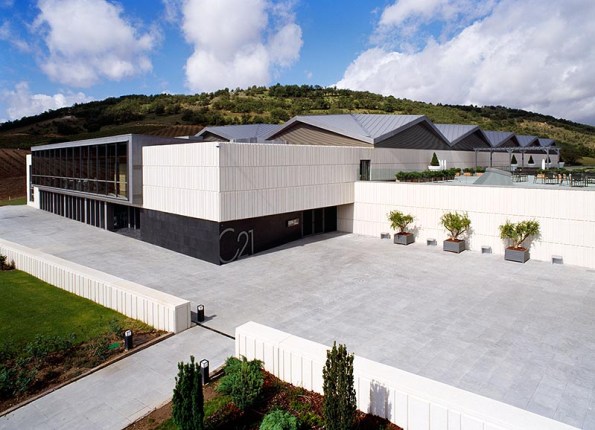
Cepa 21 Winery. Source: Bodegas CEPA 21
[TaV]: What is 21st century winery and how Cepa 21 fits into that image? Are you also trying to appeal to millennials with this wine?
[JM]: From the moment people see the building in Cepa 21, a black and white minimalist structure with an air of “chateaux française” raising among vineyards, they realize they are about to discover something made for this century. Innovation has also been one of the key values throughout the winemaking process. It’s this union of modernity and our unique Tinto Fino clone that turn Cepa 21 wines into a traditional and yet modern wines made for today’s consumers. I believe it is them who define modern winemaking, and not the other way around… And in Cepa 21 we make a continuous effort so our wines exceed the expectations of these new consumers.
[TaV]: It seems that previous vintage for Cepa 21 was 2011, and now the current vintage is 2014. Does it mean that Cepa 21 wines are only produced in the best years?
[JM]: We have maximum quality standards for our wines, so if a vintage doesn’t have enough quality, we simply don’t bottle it. This is a way of guaranteeing consumers that if they buy a bottle of our wine, it will meet their expectations, whatever the vintage they choose to purchase.
[TaV]: Ever since the inception of Cepa 21, what were your most favorite and most difficult vintages and why?
[JM]: 2011 was an excellent vintage, one of the best in the Ribera del Duero. The climatology was perfect for our variety, with sequential rainfall that resulted in a powerful vintage of great quality wines. 2015 was also an outstanding vintage; hot temperatures and hard work resulted in very promising wines.
2009 was a really difficult vintage. It was extremely rainy and cold, with frequent hails that stopped the vegetative cycle of the plant. It was a vintage to forget.
[TaV]: What are your biggest/most important markets for Cepa 21?
[JM]: Cepa 21 is a young winery, but its growing at a fast pace. We export our wine all over the world, from Asia to the United States, and we continue to grow internationally. The US is one of our key markets this year, but we also focus in European countries and in our own, Spain.
[TaV]: Along the same lines, do you sell in China, Cepa 21 or Emilio Moro wines? Even broader, are Ribera del Duero wines known/popular in China?
[JM]: Yes, we do sell in China and we are proud to say our wines are very well regarded in this market, although we recognize there is still a lot of work to be done. I often visit China and talk about the potential of our DO, which is popular in China but still has a lot of potential.
[TaV]: Do you grow any other grapes than Tinto Fino at any of the Emilio Moro/Cepa 21 properties? If you don’t, do you have any plans to start growing any other grapes?
[JM]: We recently announced in Spain that we are starting a project in El Bierzo. We are looking into producing a white wine that’s 100% Godello, a grape that stands out for its elegance and finesse. We are only in the initial phase, but we are sure of the potential of this relatively unknown grape.
[TaV]: It seems that Tinto Fino is one and only grape used at Cepa 21 (and also at the Emilio Moro too). Do you ever find it limiting (the fact that you only have one grape to work with)?
[JM]: Tempranillo is king in Spain, it is the national grape, and our Tinto Fino clone we use to graft each and every one of our vines is what moves us, our reason of being. No, we don’t find it limiting at all.


[TaV]: On your website, I saw a reference to “Moro clone” – is Tinto Fino from your vineyards actually different from the mainstream Tempranillo?
[JM]: Definitely. We grafted our vines with a unique Tinto Fino clone to achieve the maximum expression of the variety. It allows us to produce wines that age beautifully, that embrace the flavors given by the barrel during ageing and of great quality.
The cluster is smaller and looser, the vines produce less grapes – For us, quality is more important than quantity – but offer fruit that ages beautifully in the bottle.
[TaV]: Are the general challenges facing Ribero del Duero region, or is everything great in its winemaking world?
[JM]: We had to reinvent ourselves due to the economic crisis that Spain has been experiencing for the last years. The Moro family embarked on a new project with Cepa 21. It was a winery that was only going to produce the wine that bears its name, but during the worst part of the crisis we launched “Hito”. It means “milestone” – And it definitely was one. We have never stopped evolving since then.
[TaV]: To the best of my understanding, Cepa 21 practices what is called a “sustainable viticulture” – dry farming, etc. Do you have any plans to advance to organic methods, or maybe even biodynamic?
[JM]: Not at the moment. But we respect the climate 100%… We only work with what our environment gives us, and we use no artificial irrigation.
[TaV]: When it comes to the wines of Ribera del Duero, outside of your own wines, do you have any other favorite wineries?
[JM]: The Ribera del Duero is an area known for its viticulture tradition. There are many great wineries in this area – Apart from Emilio Moro and Cepa 21, I wouldn’t be able to pick a favorite.
[TaV]: The same question, now going beyond Ribera del Duero – any favorites in Rioja and Toro?
[JM]: I enjoy drinking wines from Bodegas Muga, Bodegas Eguren, and Bodegas Sierra Cantabria. They all produce amazing wines.
[TaV]: Are the Cepa 21 wines made for the immediate consumption or will they benefit from some age?
[JM]: Hito Rosado and Hito are our rosé and our young wines and, as such, they are better when drunk shortly after they are released. Cepa 21 and Malabrigo, even though they can be enjoyed when they are released, will greatly benefit from ageing in the bottle: They will evolve beautifully.
[TaV]: What is next for you? Are there any new projects in the making, maybe even outside of Ribera del Duero?
[JM]: Like I said before, we do have a project in El Bierzo with 100% Godello grape. Until we release that wine, whenever that may be, we will continue promoting our wines abroad to show the true potential of the Spanish Tinto Fino and our unique clone.
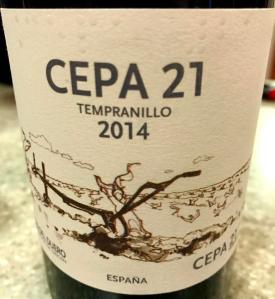 Now, after reading all this, it is time for some wine! 2011 Cepa Tempranillo made it to the Wine Spectator 2016 Top 100 list, so obviously it instantly disappeared from all of the stores. I was very happy to try the 2014 rendition, which now should be getting into the stores near you:
2014 Bodegas Cepa 21 Tempranillo Ribera Del Duero (14% ABV, $25, 100% Tempranillo, 12 months in French oak)
C: dark garnet, inky
N: lavender, fresh blackberries, cigar box, typical Tempranillo nose
P: ripe plums, well integrated, dusty tannins, eucalyptus, smooth, clean acidity, excellent balance.
V: 8/8+, excellent now and will evolve.
That’s all I have for you, my friends. Great history, great present, great future – all through the hard work and passion. And luckily, we all get the wine we can enjoy. Cheers!
Chilean Wines at Its Best – World-Class Wines of Viña Maipo
Two weeks ago, I shared with you a conversation with Max Weinlaub, the winemaker for the Viña Maipo winery in Chile. While our Q&A session was mostly virtual, the Viña Maipo wines were not – I had an opportunity to taste 6 wines presented by Max during the session in New York. And I can sum up my impressions about Viña Maipo wines in one simple word – delicious.


I have to honestly admit that even opening of the box was pleasant – I love it when the bottles are wrapped, it gives an oenophile an additional moment of play, an additional source of enjoyment.
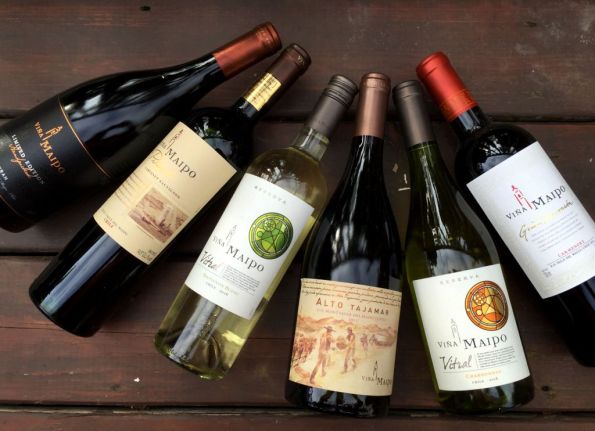 Of course, the nice wrapping is better be supported by the substance in the bottle – and it was, loud and clear, as you will see from my tasting notes.
By the way, if you would read my interview with Max Weinlaub, you will find that one of the questions I asked was about Viña Maipo’s selling wines in China. If I would look at the wines more carefully, I wouldn’t need to ask that question – take a look at the back labels below:


Here are my notes:
2016 Viña Maipo Vitral Sauvignon Blanc Reserva (12.5% ABV, SRP $11) – 2016 was one of the best vintages for white wines.
C: straw pale
N: grassy, lemon, touch of tobacco, white fruit
P: restrained, lemongrass, fresh lemon, perfect acidity, vibrant
V: 8-, nice and refreshing, will be perfect with seafood. Excellent QPR
2016 Viña Maipo Vitral Chardonnay Reserva (13.5% ABV, SRP $11)
C: light golden
N: vanilla, golden delicious apple, touch of honey, herbaceous undertones
P: Crisp, fresh, nice acidity, lemon, very restrained, green apples, good palate weight
V: 8-, very drinkable now, and should evolve. Great QPR
2013 Viña Maipo Gran Devocion Carmenere DO Valle Del Maule (14.5% ABV, SRP $25, American oak is used only for Carmenere, better showcases the wine, Carmenere 85%, Syrah 15%)
C: Rich garnet, wine looks very inviting in the glass
N: Characteristic mint and herbs ( hint of), dark red fruit, pepper
P: peppery, spicy, dark fruit, earthy, delicious, powerful, full bodied
V: 8, excellent, powerful wine


2012 Viña Maipo Syrah Limited Edition DO Buin Valle del Maipo (14.5% ABV, SRP $35, 86% Syrah, 14% Cabernet Sauvignon, 30 months in French oak)
C: bright garnet
N: bright, open, blueberries, herbal notes, touch of barnyard
P: pepper, black fruit, blackberries, spicy, firm structure, mouth-coating, velvety
V: 8+/9-, stand out, beautiful wine
2013 Viña Maipo Protegido Cabernet Sauvignon Valle del Maipo (14.5% ABV, SRP $50, 30-35 yo vines, very low yield, Cabernet Sauvignon 97%, Cabernet Franc 1%, Syrah 1%, Petite Verdot 1%, 20 months in French oak )
C: dark garnet
N: green bell pepper, mint, classic cabernet nose, eucalyptus
P: beautiful, round, open, cassis, mint, firm structure, delicious
V: 8+, outstanding, beautiful Cabernet
2012 Viña Maipo Alto Tajamar DO Buin Valle del Maipo Chile (14.5% ABV, SRP $110, Syrah 92%, Cabernet Sauvignon 8%, 30 months in French oak)
C: Bright garnet
N: espresso, tar, pepper, hint of barnyard, black fruit
P: Blackberries, tart cherries, espresso, spices, dark power, brooding, full bodied
V: 8+/9-, outstanding, a treat which needs time


I had an opportunity to taste all of these wines over the course of a few days, and I have to say that literally all of them kept getting better and better. Viña Maipo Syrah wines are unquestionably a world class, but so are the Cab and Carmenere, and I would gladly drink both Sauvignon Blanc and Chardonnay every day – overall, one of the most successful tasting lineups I ever had.
Have you ever had Viña Maipo wines? Have you ever had Viña Maipo Syrah or any Chilean Syrah for that matter? If you did, what do you think of them? Cheers!
Last Bottle Sign Up ($10 credit)




 Talk-A-Vino