Archive
The Next World Class Wine Frontier: Desert Wine
Can you think of a desert? Even if you never visited one, and only saw them in the movies or read about them in the books, I’m sure the image readily jumps to the head. Sand. Heat. Hot air. Wind. More sand. More heat. More wind. Maybe a half-dried cactus. I’m sure that the luscious greens of a healthy vineyard are not part of that image.
Meanwhile, every desert has an oasis. If there is water, nothing stops beautiful greens from prospering in the desert. Desert doesn’t mean only heat. It is hot during the day, but cold during the night – and the diurnal shift – the difference between the hottest and coldest temperatures during the day – is beneficial for all the plants. If you are into the wine, I’m sure you heard of the importance of the diurnal shift to help build flavor in the grapes. And if we are talking about grapes, let me mention yet another benefit of the dry, arid air – it helps to avoid many diseases in the vineyard, such as mildew.
Let me ask you another question. Have you tried desert wines? The wines produced in the vineyards surrounded by desert? Before you will be quick to say “no”, I will ask you to think again. If you had wines from Argentina or Chile, there is a very good chance those wines came from the desert vineyards – Leyda Valley and the Atacama in Chile are nothing but desert; Uco Valley, Salta and overall large portions of Mendoza in Argentina are nothing but the desert. So yes, I believe you have. And today I want to bring to your attention yet another example of desert wines, these ones coming from the US – Aridus Wine Company in Arizona.
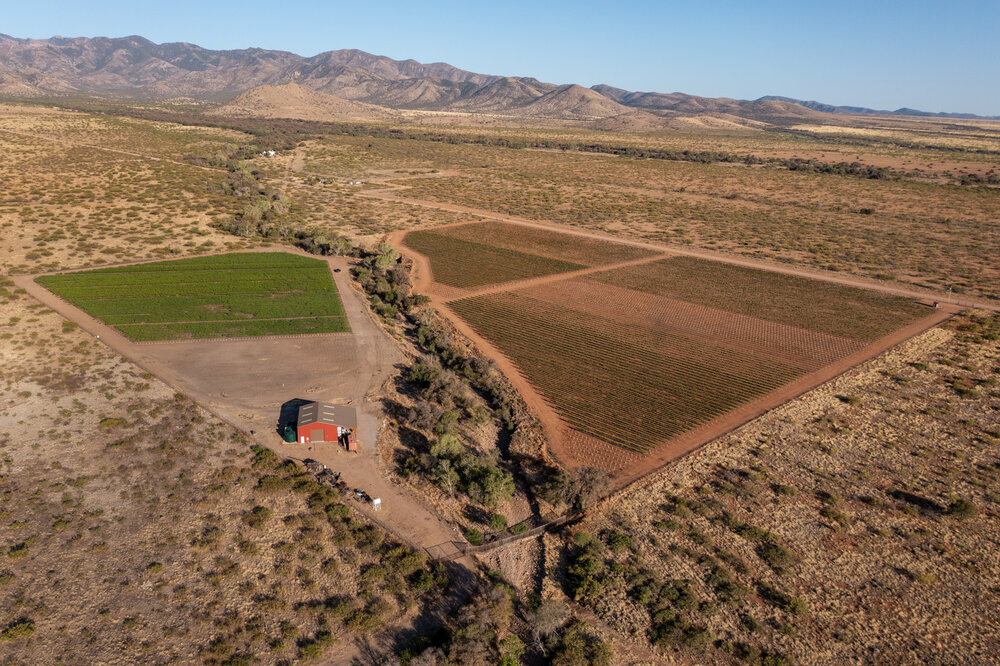
Source: Aridus Wine Company
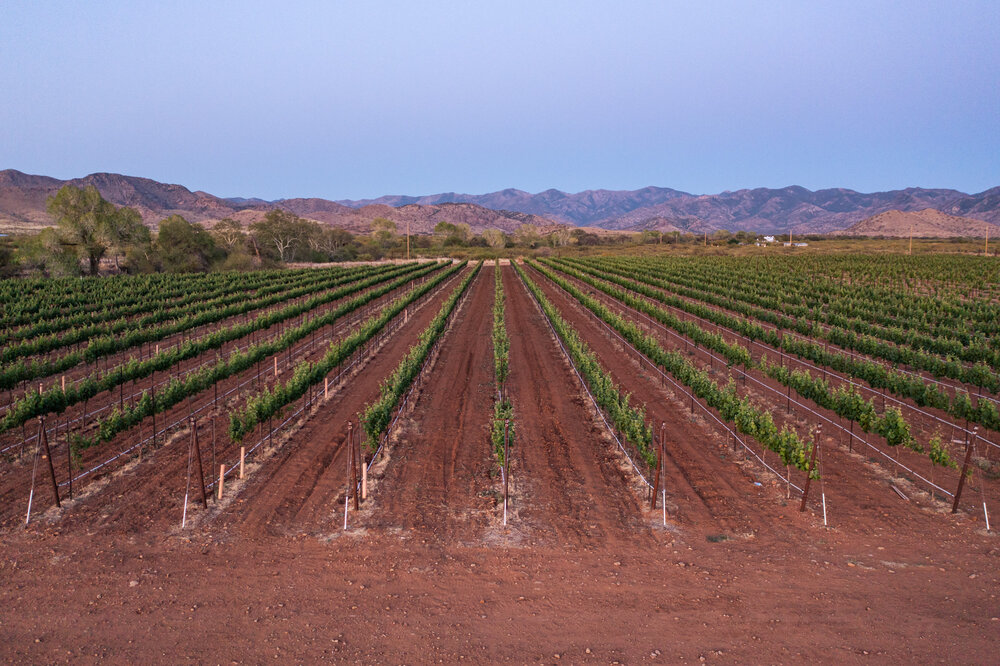
Source: Aridus Wine Company
Aridus (Latin for dry or arid) started from purchasing 40 acres of land on Turkey Creek in the southeast corner of the Arizona state in the foothills of Chiricahua Mountain, at an elevation of 5,200 feet.
In 2012, Aridus opened its cellar doors, after refurbishing an old 28,000 sq. ft. apple warehouse (it was done so well that in 2014 Aridus was honored with the Design Excellence award for sustainability). The Aridus wines were made with the grapes brought from the vineyards in Arizona, New Mexico, and California; the cellar also served as a custom crush facility. Interestingly enough, this is not my first encounter with Aridus – back in 2014, while attending my first wine bloggers conference in Santa Barbara, I had 2013 Aridus Viognier presented during the speed tasting session, which was my first time tasting a wine from Arizona – and it was a very impressive wine.
Aridus started planting white grapes at its estate vineyard in 2015, with the first estate harvest taking place in 2017. The red grapes were planted from 2017 through 2020, and Aridus is planning to gradually increase the proportion of the wines made exclusively from the estate fruit every year. The plantings currently include Malvasia Bianca, Sauvignon Blanc, Viognier, Tempranillo, Petite Verdot, Merlot, Syrah, Cabernet Franc, Cabernet Sauvignon, Graciano, Petite Sirah, and Malbec, so nobody needs to worry about the range of Aridus estate wines.
Lisa Strid, who just celebrated her 5th year as the Aridus winemaker, definitely appreciates the unique challenges of working at the desert winery. Finding rattlesnakes, owls, roadrunners, hawks, and javelinas on the crash pad might be the least of her problems. Monsoons, strong rains and winds which run seasonally from mid-June through mid-September, represent a much bigger issue, as they have the potential to inflict a lot of damage on the grapes, especially when rain also comes with the hail.
But – it might be all well worth it as long as you can produce good wines. Based on the two wines I tasted, these desert vineyards deserve the full attention of wine lovers.


First, I was blown away by the Sauvignon Blanc – here are my notes:
2020 Aridus Sauvignon Blanc Arizona (12.6% ABV, $28)
Straw pale
White peach, guava, intense, round, inviting
Beautiful bright tropical fruit on the palate, fresh, crisp, good acidity, generous
8, this is summer in the bottle. New World Sauvignon Blanc “in your face”. “I’m bright, I’m beautiful, and you know that”.
Then the Aridus Malbec was perfectly on point:
2019 Aridus Malbec American (13.6% ABV, $36, 95% Malbec, 5% Petit Verdot, 15 months in French oak barrels, New Mexico fruit)
Dark garnet, almost black
Cassis, a hint of bell pepper, iodine, a touch of minerality
More cassis on the palate, both berries and leaves, soft, velvety, crisp acidity, long finish
8, excellent
Thinking about analogies, both wines are perfectly New World in style, without going overboard and losing their balance. The Sauvignon Blanc was somewhere between Californian and Chilean renditions with all of its bright fruit – yes, if you are craving the restraint of Cloudy Bay, this is not your wine – but if you want to simply brighten up your day, that would be a perfect pick.
And the Aridus Malbec was reminiscent of the best mountain desert Malbecs from Argentina – Amalaya, Casarena, and many others, again, fresh and well balanced.
Will the desert wines be the next rave? I’m bad at predictions, so I really can’t tell you that. But you are welcome to try answering this question on your own simply by finding the bottle of Aridus wine and giving it a try. Once you do, let’s compare notes. Cheers!
A Weekend With Friends
Here I am, going over the options in my head. I can just start this post like everything is cool. Or I can start it with a little whining about the past. Like the life as we knew it before 2020. The year which didn’t exist. Which continues “not existing” well into this very 2021. Anyone has a time machine to go and fix it all? We don’t need to go far…
Yes, I strive normal. The life as it was. And this past weekend, this is exactly what I had.
For the past 10 years, we have had a tradition with friends – adults’ getaway. It was born out of the need to get away from the kids, to feel ourselves the adults without the need to constantly taking care of someone. Visit a winery, have a great dinner, play some games until everyone is really tired, have more fun the next day, come home recharged. Simple.
Last year was the first time in 10 years when we felt that adults’ getaway was not in the cards. But this year, the spontaneous decision was made not to lose another year to the stupid crap, and the getaway was planned.
We always go to the small towns around the east coast, trying to stay within 3 hours of driving distance from Stamford, CT. As I started writing this post, I decided to check what places we visited over this years. It turns out that this was our 10th trip, skipping 2011 (if 2011 was not skipped, I have zero records of that), and 2020. In 2010, this all started in Milford, Pennsylvania. In 2012, we continued to Grafton, Vermont. In 2013, we stayed in Palenville, New York, with the visit to Hudson Distillery being an absolute highlight. In 2014, it was Norfolk, Connecticut, and then we continued on to Cooperstown, New York in 2015, Greenville, New York in 2016, Lenox, Massachusetts in 2017, then Kenneth Square, Pennsylvania in 2018, and West Yarmouth on Cape Cod in Massachusetts in 2019 (as you can tell by the absence of the links, I failed to properly document some of our adventures).
That brings us to the year 2021, where our spontaneously decided destination was once again the Berkshire mountains region of Massachusetts, and our home base for the weekend been at Harbour House Inn and B&B in Cheshire, Massachusetts. But our first stop on the way was at the Balderdash Cellars winery in Richmond, Massachusetts. It was a random pick – the winery was conveniently located along the way, about 30 minutes away from our final destination, but then it was definitely a lucky strike.
The note on Balderdash Cellars website said that reservations are unnecessary and not taken – this sounded really good especially with the latest trend where you can’t just walk into the winery for a tasting (I get the business side of it, but I’m not a fan). Another interesting thing about the winery is that Balderdash Cellars brings the grapes from California (grapes, not juice), and then they make their wines right on premises, including all of the aging (some of the reds age for 2 years).
We arrived pretty much by the time the winery just opened its tasting room (at noon), and we were the first there. You can get a tasting flight of 5 wines, a glass of wine, or a bottle, all from the current selection. The tasting flight is prepared for you in the neat tiny vessels, and then you can seat anywhere you like and taste at your own speed.
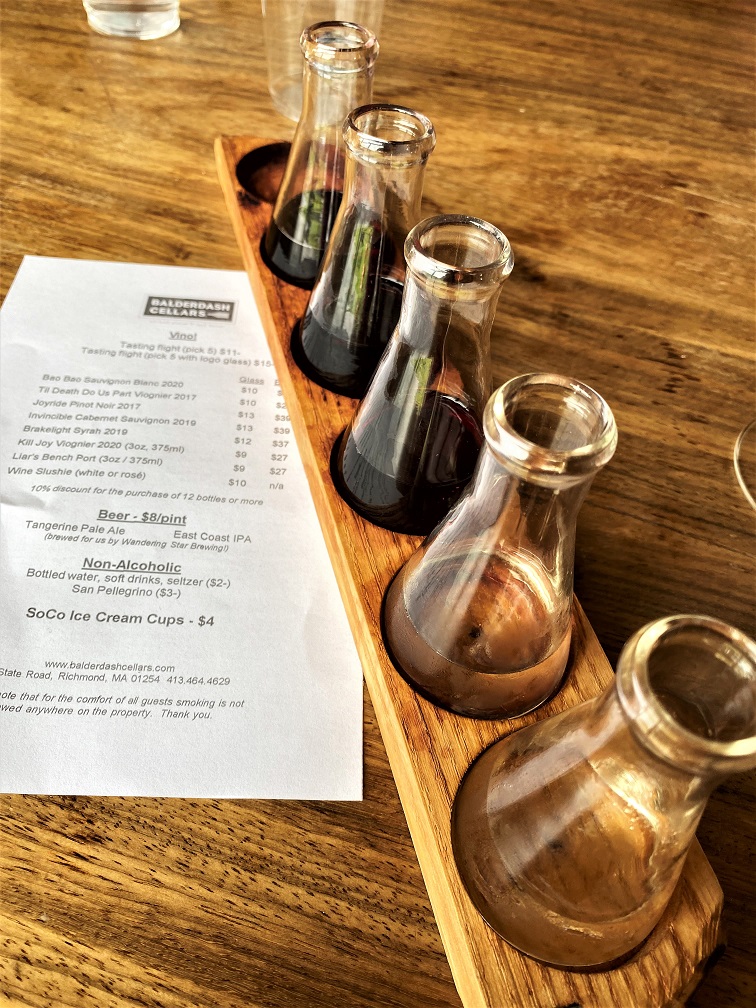


All the wines we tasted greatly exceeded my expectations. 2020 Balderdash Cellars Bao Bao Sauvignon Blanc (13.6% ABV, $29, 100% Stainless steel for 5 months, Napa Valley fruit) was perfectly on point – a touch of freshly cut grass, bright acidity, lemon notes, perfectly refreshing and delicious. 2017 Balderdash Cellars Til Death Do Us Part Viognier (14.3% ABV, $29, 75% French Oak, 25% stainless steel for 8 months, Paso Robles fruit) was possibly even more surprising. Viognier is a very tricky grape, you really need to do it right, especially when it comes from the warm climates. This wine was outstanding – beautiful perfume on the nose, tropical fruit, nicely plump and balanced palate.


2017 Balderdash Cellars Joyride Pinot Noir (14.4% ABV, $39, 100% French Oak aging for 18 months, Edna Valley fruit) was good, maybe a bit too sweet for my palate. However, 2019 Balderdash Cellars Invincible Cabernet Sauvignon (13.7% ABV, $37, 100% French Oak aging for 2 years, Napa Valley fruit) was simply outstanding – cassis and bell peppers on the nose, classic, unmistakable Cab with a lot of restraint, continuing with the same finesse on the palate – more cassis and bell peppers, all well balanced and harmonious. I would be happy to drink this wine at any time. Last but not least in the flight was 2019 Balderdash Cellars Brakelight Syrah (13.7% ABV, $37, 100% French Oak aging for 18 months, Sonoma fruit), which was also perfectly classic – beautiful black pepper all around, on the nose and on the palate, the nice core of the black and red fruit, delicious.
We also had a bonus taste of the 2020 Balderdash Cellars Kill Joy Late Harvest Viognier (12% ABV, $27, 100% neutral French oak, Edna Valley fruit) which was just outstanding – fresh ripe tropical fruit supported by clean lemon acidity, the element which makes or breaks any dessert wine, and this one was definitely made right.
I really wanted to try Truth Serum Petite Sirah as just the name sounds soooo intriguing, but the wine was sold out, unfortunately.


After tasting we moved from inside of the tasting room to find a nice sitting outside. The winery has stacks and stacks of red Adirondack chairs, my favorite type of chair, and we had no problems assembling a very comfortable sitting. We got a bottle of Sauvignon Blanc and Cabernet Sauvignon to continue, while we were waiting for the food truck to arrive at 1 pm (the winery offers different food options on the weekends). I also want to mention how professional the staff was at the winery – water was added to the ice in the bucket to chill our Sauvignon Blanc better. The foil was cut completely from the bottle before pulling out the cork – these are the little things that make your wine experience simply more enjoyable.
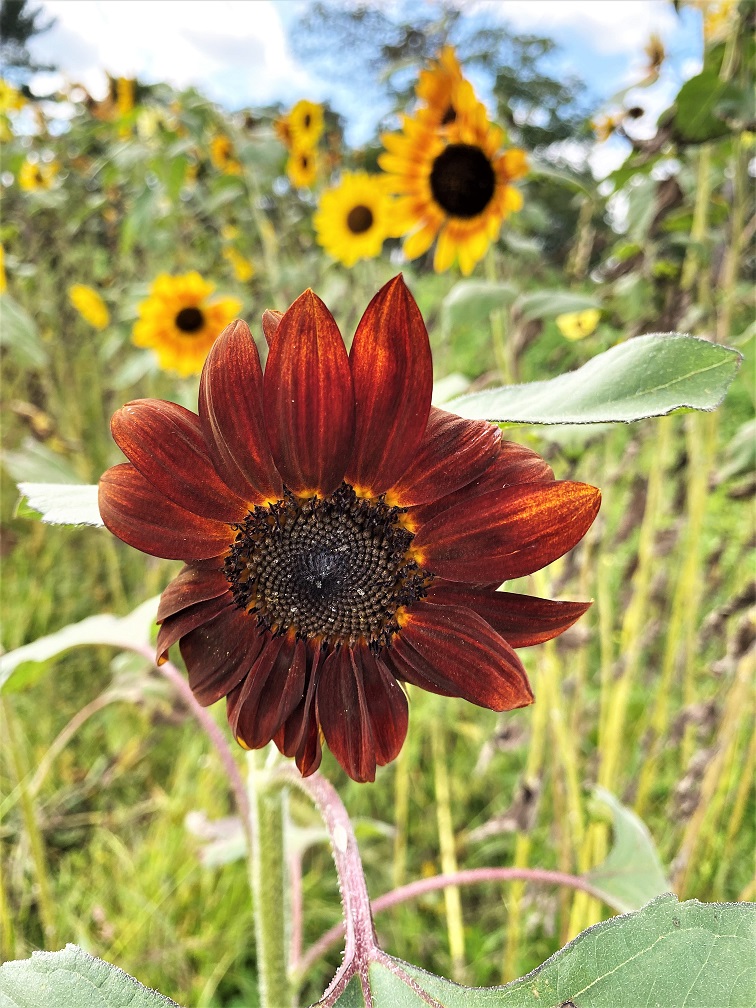
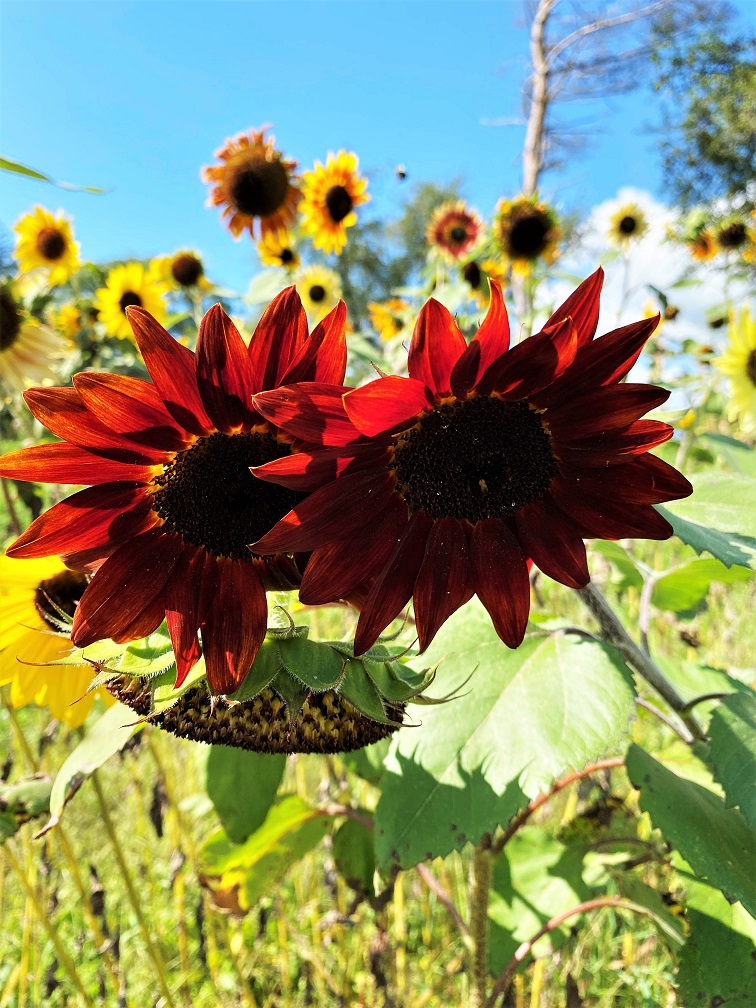
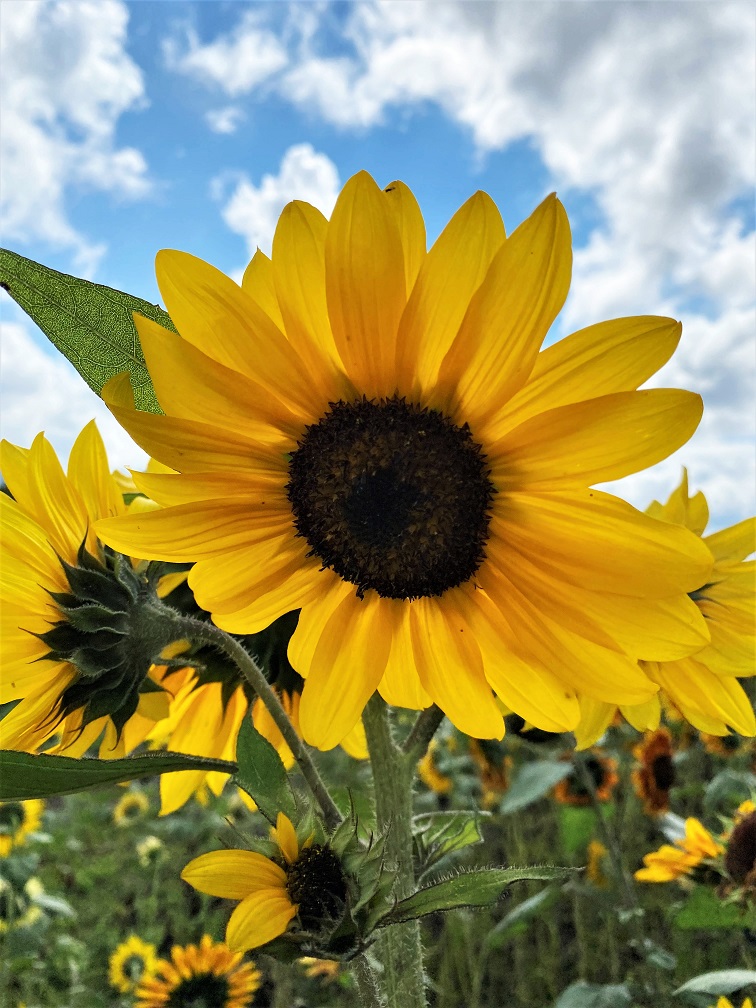
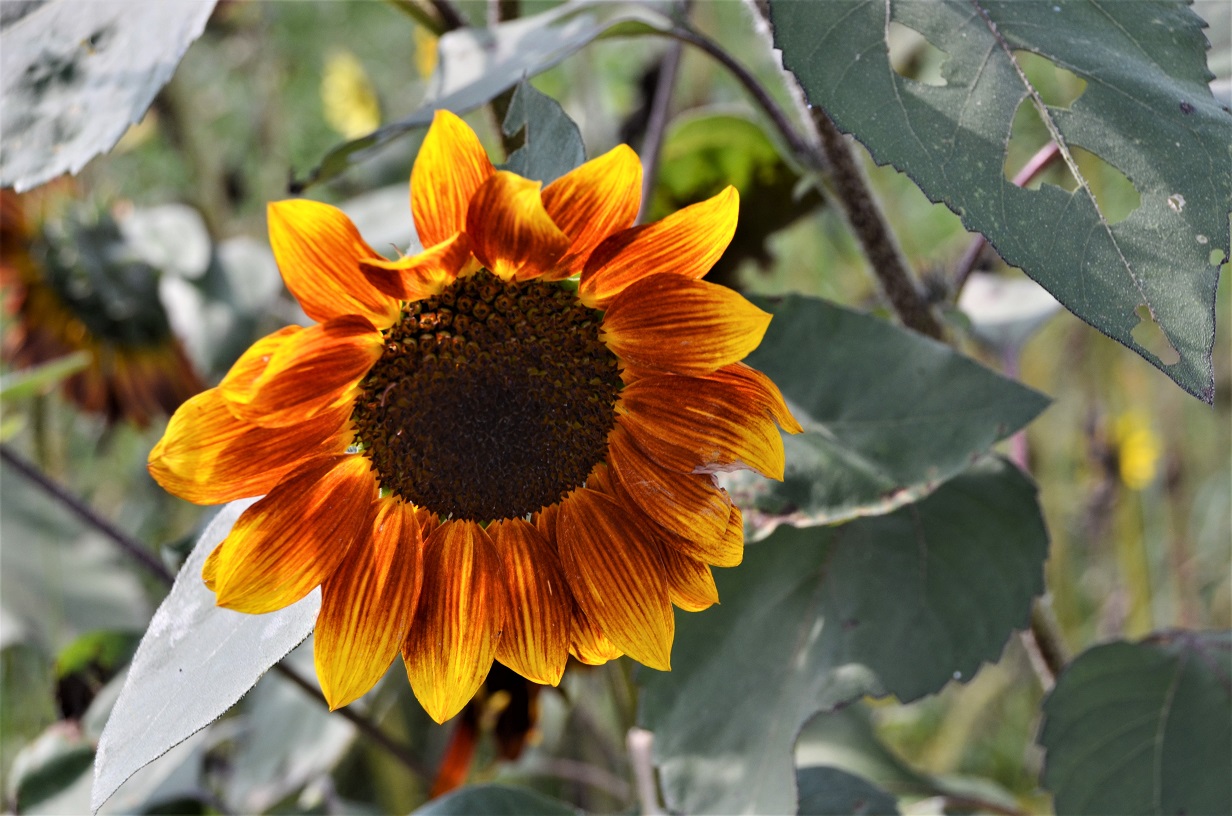
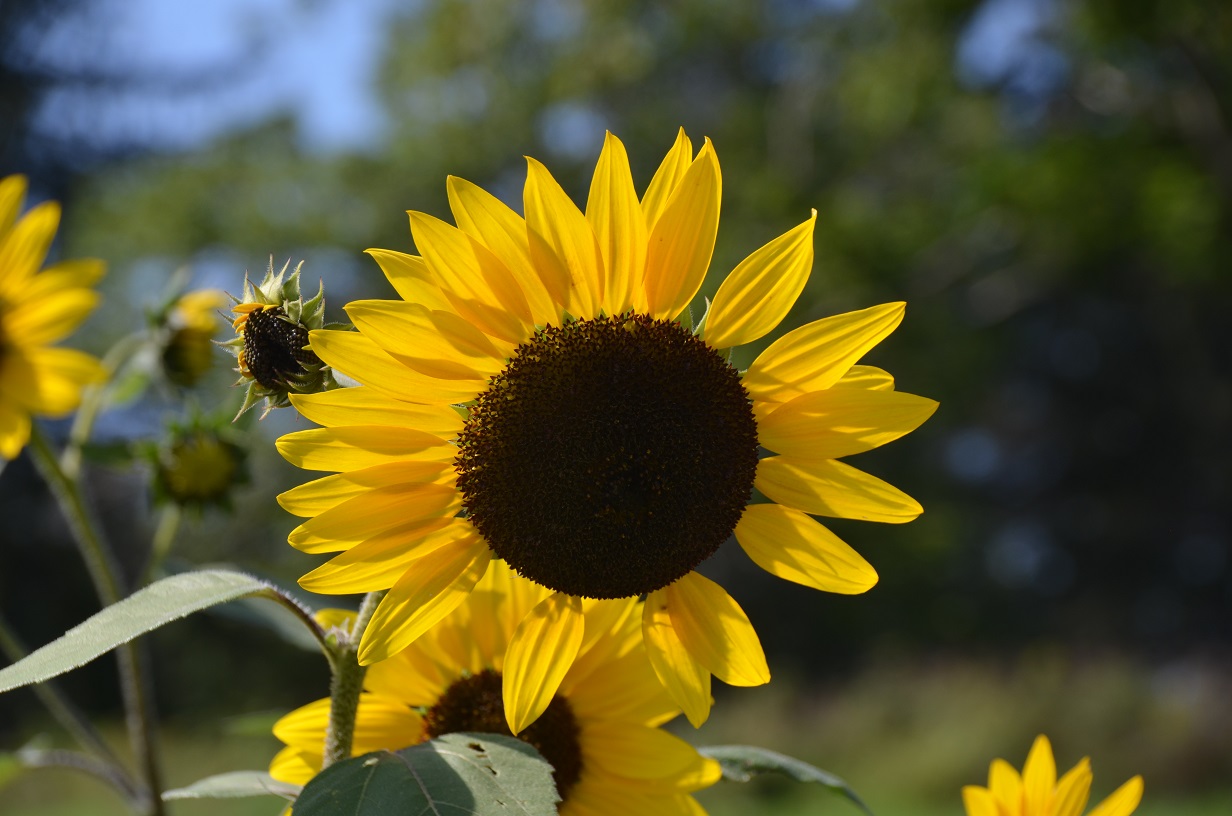
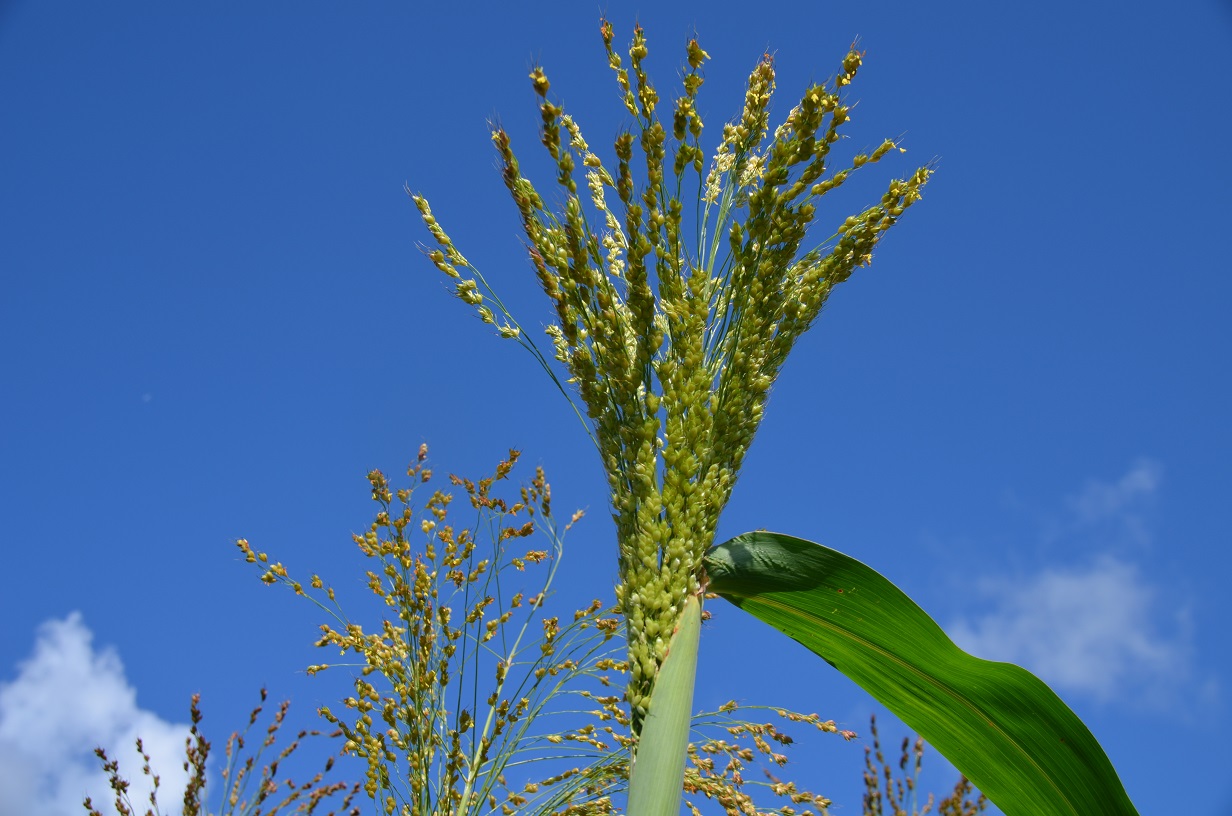
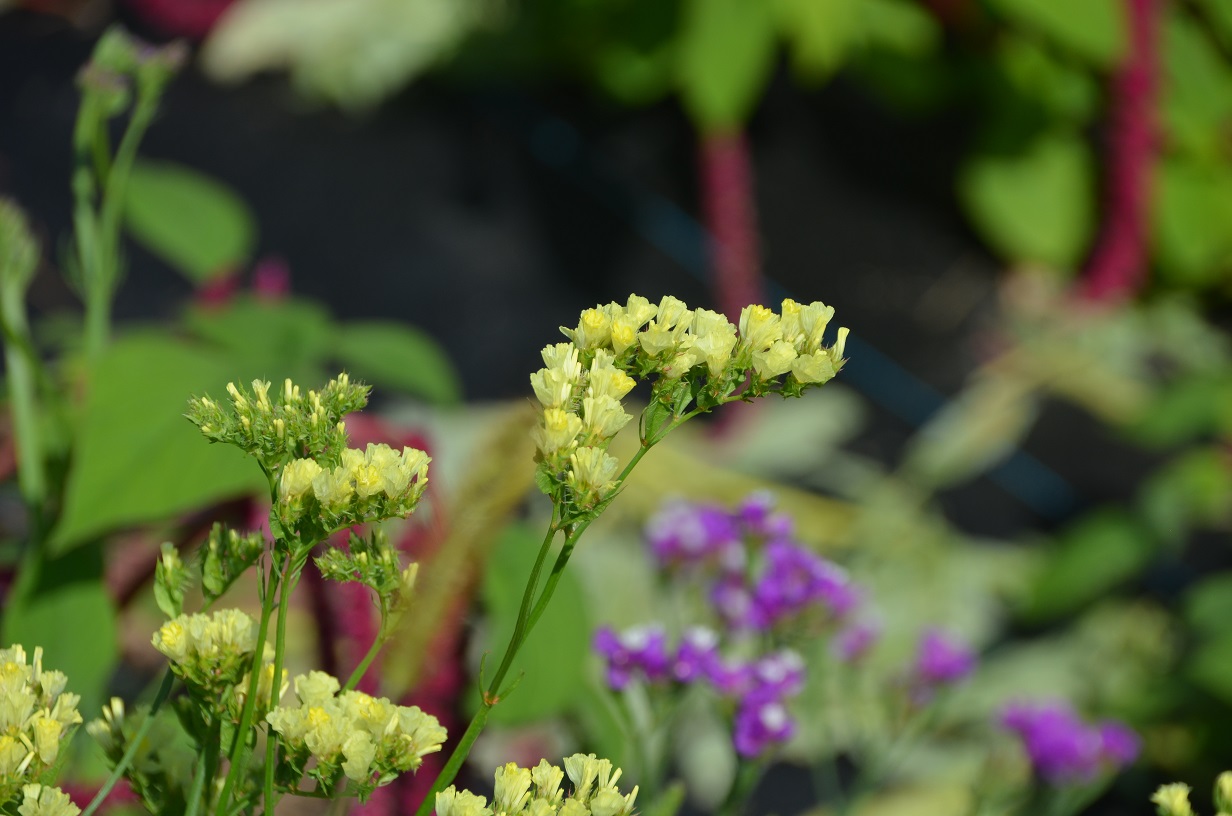
While the winery doesn’t offer vineyard views, they have rows of flowers instead. I love seeing all of the pictures of sunflowers from all the people around, but never really had an opportunity to take sunflower pictures before – until now. This flower field was boasting the sunflowers of more colors ever thought are possible in the sunflowers. Hence let me inundate you a bit here with these beauties:



Three hours later, we left now a very crowded winery to get to our destination – Harbour House Inn B&B. If I would have to describe Harbour House Inn in a few words, that would be “clean, large, spacious, and hospitable”. Hospitable is truly a keyword here – let me explain.
Saturday night dinner is the major attraction for our adults’ getaways, pièce de résistance if you will. We always put a lot of care into finding a restaurant that would be willing to accommodate our group and create a special tasting menu which we would pair with our own wines. On most of the trips we were able to create the arrangements like this, and a few times we were unable to bring our own wines and had the tasting dinner fully arranged by the restaurant. This time around, we couldn’t find a restaurant that would be willing to work with us in creating a tasting menu, and not everybody was even willing to accommodate our whole group for dinner. This is where our hosts, Brandi, Darrell, and Billie came to the rescue, allowing us to get the take-out from the restaurant, set up the dinner table with all the plates and glasses, and thus still have an experience of our traditional wine dinner.
When we arrived, the table was already set with the wines glasses and plates, and there was a fridge where we could stuff all of our white wines.

And here is the same table all set to start the dinner:
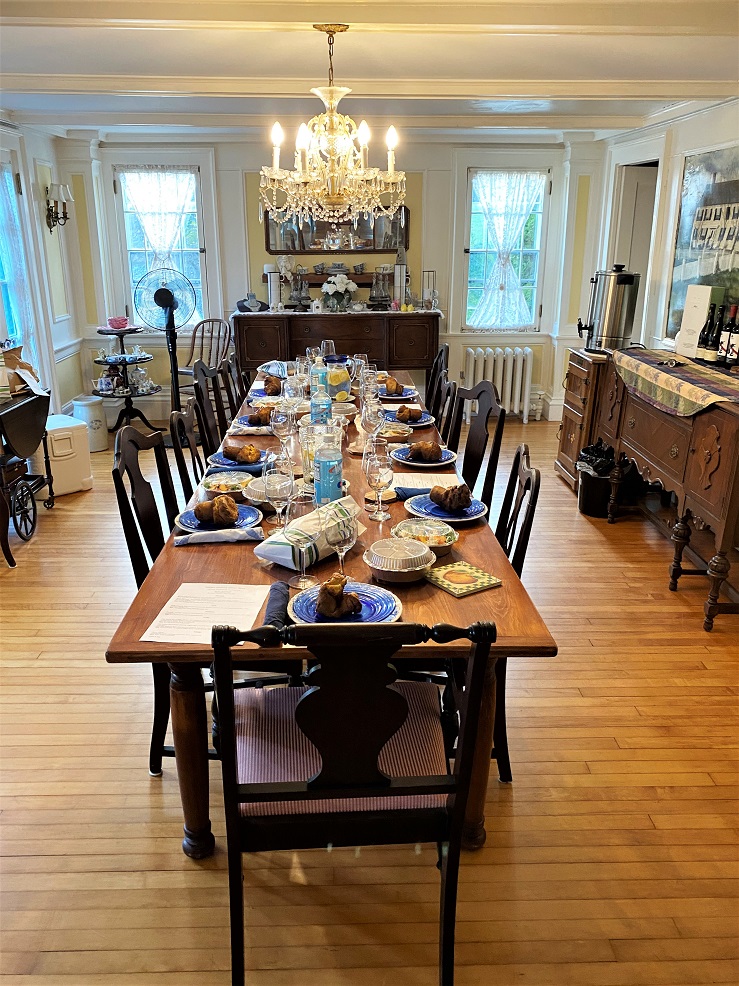
Those popocers… Yummmm!
We brought our dinner from the Mario’s Restaurant in New Lebanon, New York (about 30 minutes drive) which also exceeded our expectations. We arrived at 5 PM to pick up all the food. Everything was ready to go, no waiting at all, and all the food was piping hot, just made. The restaurant even included lots of delicious bread and top it all off, popovers, which were simply spectacular – I’m not a big fan of the popovers in general, but this was just something else – I would eat 5 of those by myself and have no regrets.


Now, let’s talk about wine and food. Our first dish was Prince Edward Isle Mussels (Pancetta, leek, roasted garlic, white wine, EVOO, crostini) which we paired with 2020 Bisol Jeio Millesimato Prosecco Rosé DOC. Prosecco Rosé is a hot category right now. As I’m mostly ambivalent to the Prosecco, this new category is also lost on me. However, when I was looking for the wines to pair with the dinner, and I wanted to start our dinner with bubbles, that bottle of Jeio Rosé looked very good – an opportunity to try a new (hot!) type of wine made by the reputable producer (I’m not ambivalent to Bisol wines – these are Prosecco wines in its own category). The Rosé didn’t disappoint – crisp, clean, tart, fresh – anything else you want from the sparkling wine? Yep, I thought so. It paired very well with the mussels which were a riot – lots and lots of flavor, delicious broth – I lost count to the amount of bread I consumed with the mussels.
Next, we had Rustic Beef and Veal Grande Meatballs (San Marzano sauce, pesto, crostini) and Mushroom Beignet (Caps stuffed with garlic butter, dipped in a beignet batter, baked and topped with hollandaise sauce) which we paired with 2020 Notorious Pink Grenache Rosé Vin de France (100% Grenache). The meatballs were absolutely delicious, as well as the mushroom beignet. As far as the wine is concerned, we already had this Rosé at one of the previous dinners, and looking into my past notes I was equally unimpressed.
Next, we had Baby Arugula Salad (Farm fresh peaches, garden tomatoes, burrata, toasted pistachios, white balsamic vinaigrette) paired with 2019 Ninety Plus Cellars Aligoté Bourgogne AOC. Aligoté is yet another rave of the moment, gaining in popularity as an affordable white Burgundy. The wine was round and creamy and worked quite well with the salad.


For our “intermezzo” we decided to try something new and different – a “pasta” of zucchini – Zucchini “Noodles” (Roasted wild mushrooms and tomatoes, sweet corn, burrata, cheese, white wine, and garlic) paired with 2019 Thevenet & fils Les Clos Bourgogne AOC. The zucchini “noodles” were an absolute standout – amazing flavor and texture, delicious. The red Burgundy was very tart and light – while it was kind of okay with the dish, the pairing was not anything to write home about.
Then there were the entrées. First, we paired Pan Seared Sea Scallops (Risotto alla Milanese, sweet corn, chive beurre blanc) and Grilled Faroe Island Salmon (Maple and mustard glaze, hash of roasted potatoes, English peas, carrots, and scallions, fresh horseradish) with 2013 Montecillo Rioja Reserva DOC. Scallops and salmon were delicious in their own right, each dish being succulent and flavorful. The Rioja was simply superb – dark fruit, cedar box, herbs, perfectly balanced, round and velvety in the mouth – this was another most favorite wine of the dinner (the first one was Prosecco Rosé).
Last we had Pan Seared Duck Breast and Leg Confit (Chive mashed, cherry & port wine reduction, grilled asparagus) – melt in your mouth delicious, and succulent, generous, flavorful Red Wine Braised Short Rib (Roasted summer vegetables, chive mashed, red wine jus). These two dishes were paired with 2015 d’Arenberg The Laughing Magpie Shiraz Viognier McLaren Vale, which didn’t meet my expectations. Maybe the wine needed some time, but it really didn’t do anything for me.
The dessert was good, but after all of the food, nobody really cared about the dessert…
My next day started from the quiet early walk in the fog. Fog has a special ability to underscore the silence. And there is no better time of the day than a cool and quiet morning with a cup of hot coffee in your hand and the knowledge that the whole day is fully ahead of you.
Our breakfast (it is a B&B, remember?) consisted of freshly baked blueberry muffin, fresh fruit, and eggs Benedict casserole – an unusually creative dish, resembling the eggs Benedict without the need to properly poach the eggs for the large group of hungry guests.
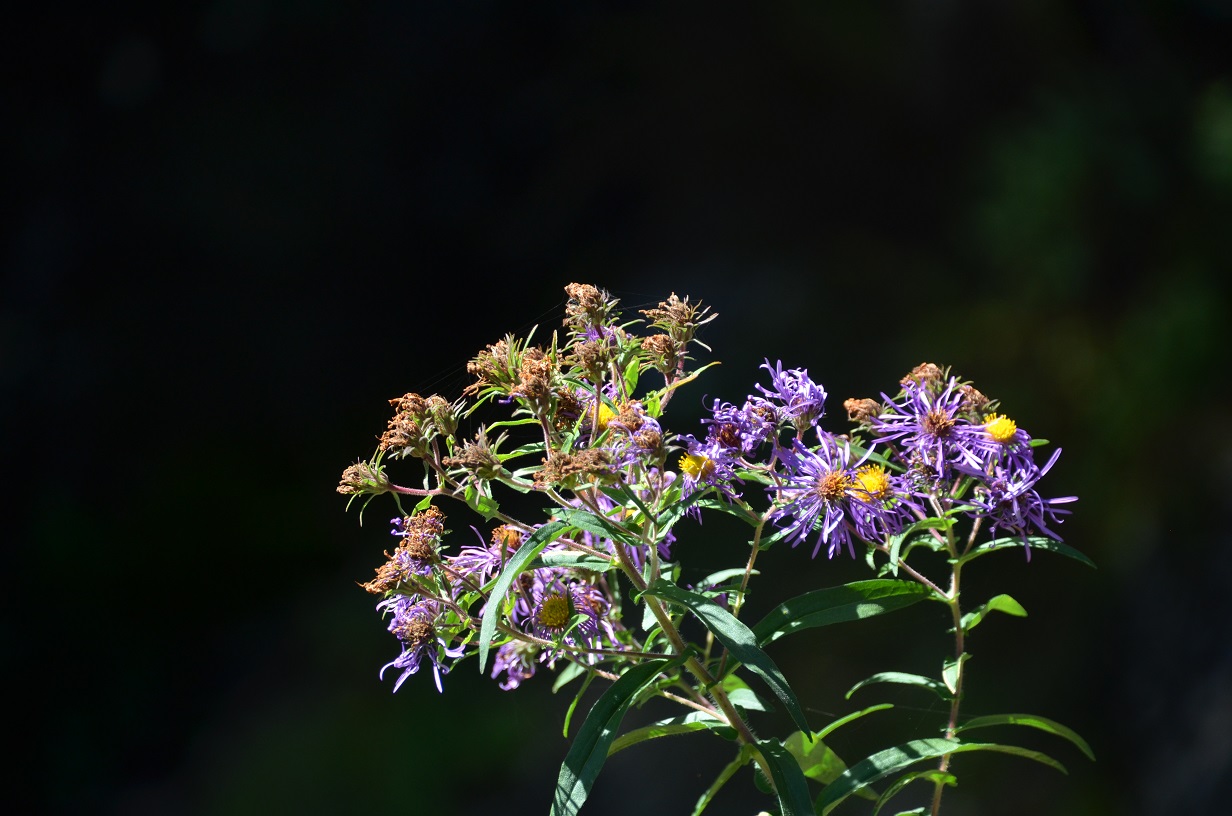
We always like to include at least a bit of the hiking into our trips, so our first stop after we left the Inn was at the old marble quarry repurposed into the nature park. Lots of steps and some beautiful views:




We then went to the cheese shop along Berkshire cheese trail where we were hoping to taste some cheese – unfortunately, this was a cheese shop at the functional dairy farm, but no cheese to taste, only to buy.
We ended our day with a late lunch at Pera Mediterranean Bistro in Williamstown before starting the drive home.
Here we are – another adults’ getaway became history, but I’m already craving the next one.
Local, and World Class
Today I want to talk about world-class, local wines. Let’s first agree on definitions – feel free to disagree, but at least I will explain my logic.
Local is an easy one. Yes, we are talking about wineries. Living in southern Connecticut, I look at the wineries in Connecticut, New York, and New Jersey as local. Any winery I can drive to in one sitting I would consider being a local winery. This might be pushing it a bit – both New York and New Jersey are big states, but then while I live in Connecticut, it would take me only 15 minutes without a highway to reach New York state, so yeah, New York is local.
World-class might be a bit harder to define in an agreeable fashion. What constitutes a world-class wine? Tasty, delicious, high-quality – all very important, but I would dare to offer slightly a different characteristic to be the most important for the world-class wine – the wine should be identifiable. What I mean is that if the label says “Riesling”, I want the content of the bottle to show at least some resemblance of Riesling – honeysuckle, honeycomb, honey, petrol – something should help you say “yes, this is Riesling”. If the label says “Chardonnay”, I really need to find that vanilla, apple, butter, gunflint to say that this is the world-class wine. I don’t need all of the “characteristic traits” to be present – not all Chardonnays exhibit those buttery undertones – but still, some of the expected aromatics and flavors should be there. Of course, if I don’t have a frame of reference for a particular grape – let’s say, Trepat, Bobal, Schiava – my declaration of “would-class” would be based solely on the taste profile – but this is a whole other subject we can ponder at some other time.
So why are we talking about local and world-class? I have a winery I want to offer to you as a perfect example of both – it is local, and it makes world-class wines.
Ravines Wine Cellars was established in 2001 in the Finger Lakes area of New York state, close to Keuka lake. The name of the winery comes from the fact that the first 16 acres vineyard was located between two ravines, which are widespread around all the lakes in the Finger Lakes area. Today, Ravines Wine Cellars sustainably farms 130 acres of the vineyards in prime proximity to Seneca and Keuka lakes (prime proximity is important – close proximity to the lake protects the vineyard from the harsh weather) and has close relationships with a number of growers in the region. Morten Hallgren, who owns the winery together with his wife (and Chef) Lisa is a French classically trained winemaker, and this is something you can clearly see reflected in his wines. I had an opportunity to try 3 samples of the Ravines Wine Cellars wines, and all three greatly exceeded my expectations.

Here are the notes:
2017 Ravines Dry Riesling Finger Lakes, NY (12.5% ABV, $17.95) – I had my share of bad East Coast Rieslings, so I always have a bit of trepidation trying our “local” Riesling. In the case of Ravines Riesling, my worries dissipated with the very first sniff and sip – a classic, German-style, lean, crisp, perfectly acidic with a touch of a fresh honey note. It was perfectly German-like in its presentation, and textbook delicious. (8/8+)
2017 Ravines Chardonnay Finger Lakes, NY (12.5% ABV, $19.95) – yet another surprise. I had some decent New York Chardonnays (Tousey comes to mind), but New York is not known for its Chardonnay, so everything is possible. Again, I needed not to worry about this wine. Beautiful nose of apples and vanilla, minerally driven and restrained – more of apple and vanilla on the palate, a distant hint of butter, crisp and delicious overall. (8)
2017 Ravines Maximilien Finger Lakes, NY (13% ABV, $24.95, 46% Cabernet Sauvignon, 54% Merlot) – yes, you got it – a surprise number 3. In the blind tasting, I would place the wine in Bordeaux and would be very proud of how well I did. A touch of cassis, a warm dark fruit profile, the same on the palate – round, smooth, cassis, eucalyptus, warm spices, good acidity, perfect balance, medium-long finish – another textbook wine. (8)
Here you are – three excellent, textbook quality, world-class wines from the local (5 hours drive) winery, with excellent QPR – you do get a lot of wine for your money, even at retail prices. How are your local wines? Do you agree with my definition of world-class?
American Pleasures #4 – Gratus Vineyards
 Wine can be many things to many people. Wine can connect people. Wine can bring back memories. Wine can bring back a unique experience, change one’s mood, and help solve a problem.
The wine is also often an expression of gratitude.
Those of us who love wine also love to offer it to others as an expression of our gratitude. We take great care in carefully selecting the wine to express what we feel – it makes us ecstatic when the gift recipient acknowledges our choice.
And then there are those who make wine to express their gratitude – sometimes, they even call their winery to show that, as would be the case for GRATUS Vineyards.
Gratus is Latin for gratitude, and this is exactly what Thomas Wargovich was trying to express by naming his Napa Valley winery GRATUS Vineyards – gratitude to the family, gratitude to his grandparents who came to the USA as millions of others in search of the better life.

Source: GRATUS Vineyards
GRATUS Vineyards is a 27 acres parcel in Pope Valley, the small strip of land adjacent to the famed Howell Mountain. GRATUS Vineyards is not just a winery. While 10 acres are planted with vines, the rest of the parcel constitutes a complex nature habitat, an arboretum with more than 300 rare and endangered species of conifers, trees which bear cones, among other plants. It makes GRATUS Vineyards a unique place with its own soul and personality.
The first vintage at GRATUS Vineyards, 2012, consisted of 75 cases. Current production is about 600 cases, with the wines ranging from the Rhone varietals to the classic California Cabernet Sauvignon and blends. Red wines at GRATUS Vineyards are typically aged for about 22 months in oak.
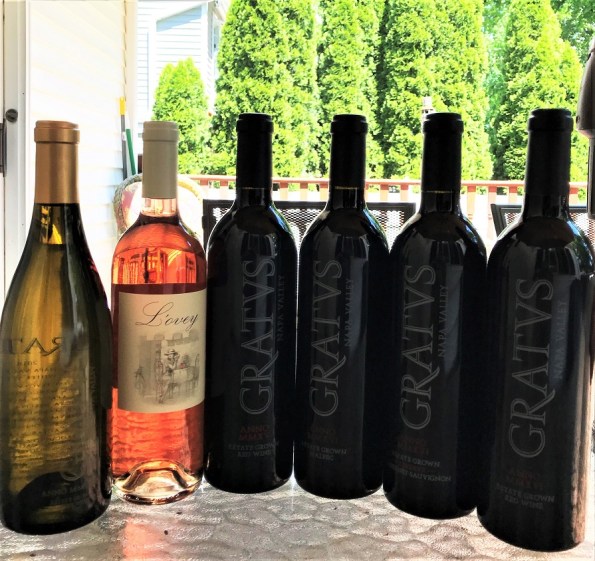
I had an opportunity to taste GRATUS Vineyards wines and was very much impressed with the consistency of the full range I was able to experience. Here are my notes:
2018 Gratus Vineyards White Blend Napa Valley (14.2% ABV, $39, blend of Grenache Blanc, Roussanne, Marsanne, Viognier, and Picpoul Blanc)
Light golden
Whitestone fruit, plums, a touch of lemon, refreshing and inviting
Round, medium-plus weight, noticeable texture, green apple, lemon, good acidity
8-/8, thought-provoking
2018 Gratus Vineyards L’ovey Rosé Napa Valley (14.2% ABV, $23)
Beautiful salmon pink
Light and refreshing strawberries, very inviting
Tart strawberries and cranberries on the palate, crisp, fresh, definitely a bigger body than Provence, and perfectly balanced.
8+, delicious.
2016 Gratus Vineyards Malbec Napa Valley (14.8% ABV, $70)
Dark garnet, practically black
Dark berries, mint, sweet basil, overripe plum
Dark berries, ripe blueberries, and blackberries, iodine, dark chocolate, medium-plus body, smooth, good acidity, good balance, medium finish
8, tasty now, will evolve.
8+ on the third day. The wine lost sweetness and developed dark magic
2015 Gratus Vineyards Red Blend Napa Valley (14.8% ABV, $90, blend of Cabernet Sauvignon, Malbec, and Petite Sirah)
Dark garnet, practically black
Dark chocolate, mocha, cherries, anise
Lip-smacking, cherries, coffee, eucalyptus, full-body, supple, generous.
8, excellent on the 2nd day. It definitely needs time, but has good potential.
2016 Gratus Vineyards Red Blend Napa Valley (14.8% ABV, $80, 80% Cabernet Sauvignon)
Dark garnet, practically black
Black currant, sweet tobacco, a touch of mint
Black currant, cherries, good minerality, fresh, firm structure, good acidity, excellent balance, medium finish.
8/8+, delicious.
2016 Gratus Vineyards Cabernet Sauvignon Reserve Napa Valley (14.8% ABV, $120, 100% Cabernet Sauvignon (clone 15))
Dark garnet, practically black
Day 1: not a lot to report. The wine is massive and closed.
Day 2 notes:
Vanilla, dark chocolate
Dark chocolate, big, brooding, pencil shavings, iodine
8-, an interesting contrast with day 1 – need to wait for the day 3
As you can see, most of the reds are in the “needs time” category, but this is pretty much a signature of the Napa Valley Cabernet Sauvignon and Cabernet Sauvignon-based wines. Hopefully, you got the patience, and the space int he cellar. Cheers!
Stories of Passion and Pinot: Utopia Vineyard
Pinot Noir excites passion. All grapes do, of course, and good winemakers are always passionate, often to the point of obsession. But some of the most desired wines in the world are made out of Pinot Noir, and Pinot Noir is notoriously finicky, mutation-prone grape, difficult to work with. Hence passion is winemaker’s best helper to work with Pinot Noir and produce the best possible wines.
Yes, I’m sure you figured me by now – I’m introducing a new post in the Passion and Pinot series – you can find all the past posts here. And I’m sure today’s subject resonates perfectly with the world we live in right now (for those who might read this post a few years later, look up “covid-19 pandemic”, and you will understand my point). I’m sure we would all much rather live in utopia compare to the self-quarantine and fear of sneezing – and it is the utopia we will be talking about here (don’t worry, there will be plenty of wine).
According to the dictionary, utopia is defined as “an imagined place or state of things in which everything is perfect”. I guess Daniel Warnshuis saw this complete perfection in the 17 acres parcel of land he found on the Ribbon Ridge in the heart of Ribbon Ridge Appellation in Yamhill County in Oregon in early 2000, hence the name Utopia Vineyard.
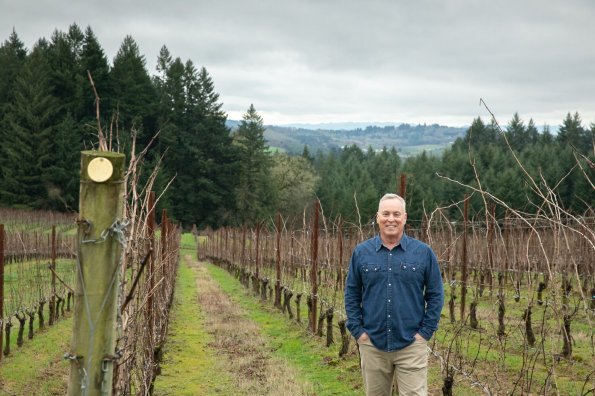
Daniel Warnshuis. Source: Utopia Vineyard
UTOPIA Vineyard had its first commercial vintage in 2006, 413 cases of Pinot Noir. Since then, Pinot Blanc, Chardonnay and a number of other wines had been produced at the winery, and numerous accolades were won at multiple competitions. Utopia, which uses dry farming methods, was L.I.V.E. certified in 2008.
I had an opportunity to [virtually] sit down with Daniel Warnshuis and ask him some questions – here is what transpired in our conversation:
[TaV]: First and foremost – why Utopia? Utopia means an unreachable dream, so what is the reason for this name?
[DW] The classic definition of UTOPIA is the perfect and no place. I am trying to make the perfect Pinot-noir but realize that as a human being I will not achieve perfection. It is, therefore, the goal that I constantly strive for without compromise to make the wine better each and every vintage.
[TaV]: You bought the vineyard in 2000, your first vintage was in 2006. How were those years in between? Did you have any major challenges, or did you just have to wait for the vines to mature?
[DW]: You are correct that I consider 2006 my first commercial vintage (413 cases of Estate Pinot-noir) but I did produce 97 cases of Estate Pinot-noir in 2005. Just to be clear, it was more of an experiment than a vintage. There were a number of challenges in getting the vineyard bootstrapped. First, I had to decide which clones I wanted to plant. I looked around the valley at the time and found that most of the vineyards contained only 2-3 clones and they were mostly the same 2-3 clones, e.g.. Pommard and Dijon 115 or Wadenswil. Or one of the other Dijon clones, mostly 667 and 777. I also detected a certain homogeneity in the wines being produced at that time and I wanted to do something very different. This is what convinced me to plant a total of 12 Pinot-noir clones including several heirloom clones from various existing vineyard sources in CA and OR. Once I settled on the makeup of the vineyard it was mostly a waiting game until the vines began to produce.
[TaV]: You were born and raised on California wines, why build the vineyard in Oregon and not in a Napa or Sonoma?
[DW]: I got exposed to Willamette Valley Pinot-noir early in my wine journey working for Tektronix where my first boss was an avid wine collector and amateur chef who exposed me to Oregon wines. The raw beauty of Oregon and especially Willamette Valley wine country was also a major draw for me along with its nascent state as a wine producing region. It presented a relatively affordable opportunity to get in on the ground floor of the next NAPA. I was a big proponent of Willamette Valley Pinot-noir while still living and running my NAPA wine business at a time when even most savvy wine drinkers were still unaware of what was happening in Oregon.
[TaV]: You’ve been a farmer for 20 years now. What are your main takeaways from this experience?
[DW]: Owning the land is the ultimate advantage for a winemaker because the best wines almost always come from the best fruit. 100% control from vine to wine is the maximum level of control and as a small producer here in Willamette Valley I am as close to a small producer (vigneron) in Burgundy that I can be without being in Burgundy. At Utopia I always want to make the best wine possible for any given vintage, again just like in Burgundy the wine should always be a reflection of the growing season and therefore unique each and every year.

Source: Utopia Vineyard
[TaV]: Do you have a pivotal wine, the one which clearly made you see the wine world differently?
[DW]: Burgundy wines from any small producer in Volnay, Pommard, Mersault (and Mersault, Chassagne and Puligny Montrachet for whites) were pivotal wines for me. The only thing I have found that compares with them are Willamette Valley Pinot-noir’s and now Chardonnay’s from small producers who are owning the land and making the wines in the same tradition.
[TaV]: Is there one Pinot Noir producer or winery you would consider a hallmark, something you would compare your wines to?
[DW]: Dominique Lafon is someone who I have followed for several decades and admire his approach (biodynamic farming and terroir driven) especially for his White Burgundy which I think is sublime. DRC is always mentioned as the ultimate but I would say that I have always and still do admire the smaller producers who are risking everything to make the best wine. This means organic/biodynamic farming even in a challenging vintage, minimalist approach to winemaking and focus on terroir.
[TaV]: What is the difference between the various Pinot Noir wines you are producing? Is it grape selection, individual plots, different oak regimens?
[DW]: Yes, it is all those things, in addition, location in the vineyard, clonal selection for the blends, oak regimen (ex: riper fruit deserves more new French oak such as in my Reserve “Eden” bottling).
[TaV]: Any plans for Utopia sparkling wines? You already growing all necessary components, so do you plan to take the next step?
[DW]: Yes, I would like very much to make sparkling wine. It is challenging as it requires a different setup and 3-4 years to produce the first vintage, but, I have not given up on the concept. I produced my first Port Style wine in 2018 and will bottle it this Fall.
[TaV]: You are now offering Grenache, Mourvedre and GSM wines. For how long you had been producing those? I understand that you source Grenache from Rogue Valley, what about Mourvedre and Syrah? Do you also plan to offer single varietal Syrah?
[DW]: I started producing those varietals in 2009 and actually started with a Syrah and Viognier but switched to Grenache in 2013 and added a GSM in 2014 and a Mourvedre in 2016. As long as I can get quality fruit I will continue to make different varietals. I would like to produce a Cab Franc and maybe even a Bordeaux blend in the future as well. I plan to plant some of these different varieties here on my new property to prepare for the inevitable change in our climate over the next 10 – 20 years.
[TaV]: What are your favorite wines or wine producers in Oregon? In the USA? In the world?
[DW]: In Oregon, Brick House, Beaux Freres, In California, Joseph Phelps, Spottswoode, In the World, anything Burgundy especially any small producers farming organic/biodynamic and terroir driven as well as Mouton Rothschild in Bordeaux.
[TaV]: Did your utopia materialize in your vineyard? Did you find everything you were looking for?
[DW]: Yes, I live on my vineyard and work with my family to produce a unique product that we share with the world. We preserve the land for future generations (organic farming), we give back to our communities, we promote culture of all types and we make our living doing what we love the most. I cannot be any happier than I am at UTOPIA.
[TaV]: Where do you see Utopia Vineyard in the next 10-15 years?
[DW]: More plantings of different varieties especially Rhone and Bordeaux. Possibly produce sparkling wine, continue well managed growth and keep experimenting to make it better each and every time. Create a long lasting legacy and keep it in the family for future generations.


If you are still reading this, I’m sure you are ready for a glass of wine, preferably, an Oregon Pinot Noir. I had an opportunity to taste two of the Utopia Pinot Noir wines, here are the notes:
2014 UTOPIA Pinot Noir Clone 777 Estate Reserve Ribbon Ridge AVA (13.8% ABV, $75)
Dark ruby
Smoke, plums, violets, earthy undertones
Bristling acidity, tart cherries, medium body, minerality, refreshing, inviting, good balance.
8, fresh, clean, easy to drink.
2011 UTOPIA Paradise Pinot Noir Estate Reserve Ribbon Ridge AVA (13% ABV, $85)
Dark garnet
Upon opening, the very extensive barnyard smell was apparent. It disappeared on the second day. Tobacco, earth, tar, and smoke are prevalent on the second day.
The palate is beautifully balanced with tart cherries, plums, violets, a touch of vanilla, baking spices and roasted meat.
8+/9-, delicious, hard-to-stop-drinking wine. Superb.
And we are done here, my friends – one more story of passion, and yes, it involves Pinot Noir.
Obey your passion!
P.S. Here are the links to the posts profiling wineries in this Passion and Pinot series, in alphabetical order:
Alloro Vineyard, Bells Up Winery, Ghost Hill Cellars, Iris Vineyards, Ken Wright Cellars, Knudsen Vineyards, Le Cadeau Vineyard, Lenné Estate, Tendril Cellars, Youngberg Hill Vineyards, Vidon Vineyard
American Pleasures, Part 3 – Murrieta’s Well
How often do you drink wines from Livermore Valley? Not trying to offend, but do you even know where the Livermore valley is?
If you guessed that Livermore Valley is an area in California, or if you simply knew it, yes, of course – Livermore Valley is located a bit north and west of San Francisco and can be considered one of the little wine world secrets for the people in the know. While Napa and Sonoma are the regions everyone is looking up to, Livermore Valley is located a stone throw from both, and in most cases offers a lot more fun in the tasting room for much less money.
Murrieta’s Well Estate Vineyard is located in this exact Livermore Valley and yes, we can consider it as one of the hidden gems. The estate has a rich history, going back to 1884. This is not the first time Murrieta’s Well wines are making an appearance in this blog, so instead of repeating all the historical references, I would like to direct you to my previous post on the subject. Same as the last time, the wines were provided as a courtesy of Snooth, for the virtual tasting – you can find the video recording of that tasting here.
This series is not called American Pleasures for nothing. This is the third post in the series, following the posts about Silverado and Oceano wines and Peju. As I explained in the introduction to the series, I simply had a great number of wines which were surprisingly consistent – wine after wine, they delivered a great deal of pleasure. You can expect to equally enjoy two wines from a good producer; 4 wines in the row is not typical; 6 wines is seriously unexpected. The 4 wines I tasted from the Murrieta’s Well were perfectly consistent and unquestionably enjoyable, offering loads of pleasure. Yes, all four. And what is even more interesting, if you will compare my ratings from 2017 tasting versus 2019, you will see that I rated all the wines higher. It appears that the process is going in the right direction, to the joy of all of us, oenophiles.


Let me share my notes:
2018 Murrieta’s Well Small Lot Dry Orange Muscat Livermore Valley (14.6% ABV, $38, 100% Orange Muscat)
Light golden color
Plums, guava, tropical fruit
Bright acidity, an undertone of sweet tobacco, bright acidity on the finish
8, fresh, excellent
2018 Murrieta’s Well Dry Rosé Livermore Valley (13.5% ABV, $32, 42% Counoise, 33% Grenache, 25% Mourvèdre)
Medium intensity pink color
Underripe strawberries
Tart fresh strawberries, good acidity, clean, vibrant, perfect balance, long finish
8, an excellent wine.
2016 Murrieta’s Well Small Lot Merlot Livermore Valley (14.1% ABV, $48, 95% Merlot, 5% Cabernet Sauvignon)
Dark garnet
Touch of cassis, eucalyptus
Cassis, blackberries, nicely tart, a touch of coffee, good acidity, good structure
8+, excellent.
2017 Murietta’s Well The Spur Livermore Valley (14.5% ABV, $35, 64% Cabernet Sauvignon, 14% Petite Sirah, 13% Merlot, 9% Petit Verdot)
Dark Garnet
Smoke, tar, roasted meat, blackberries
Succulent blackberries, tobacco undertones, good acidity, medium to full body, good balance
8-, excellent
Here you go – 4 excellent wines, 4 sources of the great American [wine] pleasure. Have you had any of these wines? Have you had wines from the Livermore Valley? Cheers!
Stories of Passion and Pinot: Le Cadeau Vineyard

Tom and Deb Mortimer. Source: Le Cadeau Vineyard
Hello, wine lovers.
I’m going to ask you for something very valuable – your time. About 20 minutes of it, as this is how long it should take you to read this post, one of the longest posts I ever published. But I’m not asking for your time for free – in return, I’m offering you one of the very best interviews ever published in the Stories of Passion and Pinot series, as well as the overarching One on One With Winemaker conversations.
Winemaking usually starts with passion, courage, and conviction – a belief that “you can”. Really. It is not always a degree in oenology (don’t get me wrong – of course that helps!), but the resolve to get going, as you have a burning desire to make world-class wine no matter what – this might be your main ingredient of success.
Tom and Deb Mortimer had such a resolve to make great Oregon Pinot Noir. After searching for a year, they found an uncultivated parcel of land on the south slope of Parrett Mountain in the Chehalem Mountains AVA, and the hard work began. Planting grapes, understanding your land, learning the soils and microclimates. All with the resolve to produce the best possible Pinot Noir. This is how the story of Le Cadeau Vineyard started (wonder if “Le Cadeau” means something? Keep on reading).
After tasting the wines of Le Cadeau, I was convinced that I want to learn more – which turned into a very enjoyable [virtual] conversation with Tom Mortimer, who generously offered his time to answer all of my questions. And this is what I want to share with you with a full conviction that it is well worth your time.
Here we go:
[TaV]: The story of Le Cadeau Vineyard started in 1996, when you purchased the 28 acres parcel in Chehalem Mountains AVA. When did you come up with the name Le Cadeau? What is the meaning behind this name?
[TM]: Le Cadeau (is French for “the gift”): We like to say that “the wine is not ‘the gift’; rather, “the wine is the excuse”—the true gift is the land and friendships.” When we first saw the Le Cadeau / BHV site, there was no view; it was obscured by scrub-oaks, blackberry bushes, and a lot of brush. Clearing the land was a bit like unwrapping a present, and ultimately a gorgeous view emerged. More significantly, rocky soils are coveted for top-tier vineyard sites. As we cleared the site, the broken volcanic basalt cobbles were revealed; rock in Oregon is rare, so we were very fortunate to find a rocky site. Lastly, wine is inherently relational. Enthusiasts get-into wine for the product, but ultimately, they stay in wine for the people; when the glass is empty, the relationships remain. So “the gift” has multiple manifestations.
[TaV]: When you found the parcel which became the future home for Le Cadeau, you said “For some reason, the property “felt right”. I don’t really know why”. So this was the love at first sight, right? Now, 23 years later, can you maybe better explain that feeling?
[TM]: Part of it was the location—the vineyard is only 35-minutes from downtown Portland, yet it was very serene countryside. We came from suburban Minneapolis to start this project; 22-years ago the Willamette Valley was much less developed, so this location was perfect for us. My wife (and I) didn’t want an isolated, rustic, farm experience. But other than the location, it was a beautiful site—south slope, about the right grade, I was fairly certain the view existed. It just had a different / better feeling than many of the other places we looked at.
At another level, I think I Iiked the fact that it was never-before-cultivated land. There was something about “starting a vineyard from scratch” that was appealing… of course, at the time, I had no idea what I was getting us into… which is actually a good thing. There are plenty of reasons to not take on a project like this. Sometimes it is better to not know what lies ahead.
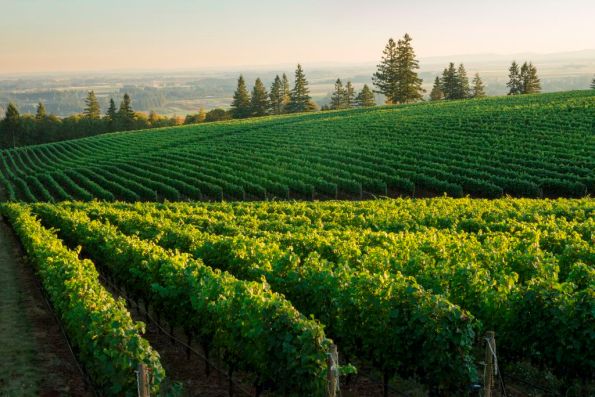
Source: Le Cadeau Vineyard
[TaV]: I really like the name “Black Hole Vineyard”, even though it has not necessarily a positive connotation about it. Have you ever bottled any wine which says “Black Hole Vineyard” on the label? What happened to that name? Is the Black Hole Vineyard simply became Le Cadeau Vineyard, or is it still exists under its own name?
[TM]: There was one “Black Hole” wine made by a fruit client. It was small production, and was only released to his wine club.
Our business is corporately divided into two companies: A farming company (the vineyard), and the wine biz. Most of the fruit from the vineyard is sold to the wine biz, but some is sold to notable clients. The farming company is named Black Hole Vineyard, LLC (or BHV, LLC), while the wine company is Le Cadeau. So in that regard, the name lives on. We also continue to personally refer to it as Black Hole among ourselves, and generally the winemakers like to call it Black Hole, vs. Le Cadeau. But at some point you need to make a brand decision, and focus your time and energy on that brand. We chose Le Cadeau vs. Black Hole. Obviously, it is a much more positive message, though perhaps not as amusing.
[TaV]: What made you believe that you can conquer the rocky soil? What was the drive behind your passion, developing your vineyard against the difficult terrain and the cash flow?
[TM]: As noted above, a good part of my confidence was rooted in ignorance. But as a wine collector I knew that many of the great wines of the world were grown in rocky soils. I figured, “if they can do it, so can I”.
Over the years I have come to discover that there is one tool that is central and more important than any other in developing and farming a rocky site. You might think that the tool is a chisel plow, or a big tractor, or whatever. But the reality is that the single-most-important tool is a checkbook. Unfortunately, unlike many of the folks that get into this business, my checkbook was about the size of a hand-held garden tool. With a vineyard that is raw ground and solid rock, it is better to start with a checkbook that is the size of a bulldozer… and a D8 at that. Fortunately, I kept my day-job.
[TaV]: How many Pinot Noir clones have you planted so far? Why so many?
[TM]: We’re up to about 16-Pinot Noir clones and 6-Chardonnay clones (the first Chardonnay, 2017, to be released in a couple months). Why so many?—there are a handful of reasons:
- a) I cannot recall ever having a single clone wine that I felt was as complete and interesting as a multi-clone wine. We don’t put them all in a single wine; our cuvees result from different combinations of clones, soils, and aspect (climate). Most of the cuvees have 3 to 5 clones, Diversité has the most with 7 that make up the majority of the wine, and another 2 or 3 that are there in small quantities.
- b) Curiosity and experimentation. Quite simply, clones are exciting. You wait for 3-years wondering what the fruit will look like and taste like. Often it takes several more years before you learn about the flavors, texture, physical characteristics of the fruit and how it affects the wine. So there is always a sense of anticipation. I liken clones to colors on an artist’s palette; they add “color” to wine—not in a literal sense, but in terms of variance, nuance, and complexity.
- c) Differentiation. I don’t want to make wine that is like everyone else’s.
- d) Optimization. Folks (i.e., typically winemakers) have varying views of how important clones are in the overall mix of variables. Most agree that the dirt / site are the most important elements, and I’d agree with that. But for many, “clones” would be further down the list. For me, the plant material is very central to extraordinary wine. Great wines only happen when there is great dirt, perfect climate, excellent farming / viticulture, the very best and site-matched plant material, and of course great winemaking. Like many things in life, something can only be as good as its weakest link.


[TaV]: Is there an Oregon (or maybe Burgundian) winery(ies) which were instrumental in the development of your own winemaking style?
[TM]: We have always wanted to make wines that are true to the estate site. In this regard, Le Cadeau is more of a European model, in that the “rock star” is the vineyard, not the winemaker. The wide range of cuvees exist to showcase the range of “faces” of the vineyard. But more recently we’ve been searching for more freshness and aromatic excitement. This is why I engaged our French consultant, Pierre Millemann several years ago. Not surprisingly, this has led us to produce higher acid / lower alcohol wines.
It would be difficult to pick a particular winery to reference against; again, our dirt / site is very unique. There are many wineries, both in Oregon, Europe, (and California) that we respect, but I think it would wrong to say that we try to emulate any of them.
[TaV]: Do you still have any bottles from the 2002 vintage? If you do, how do they hold?
[TM]: I have a few bottles of 2002. The last one I had was about 2-years ago. It was doing well, but I think it was past its prime. Keep in mind that the vines from that vintage were only 4-years old. I recently had an ’05 Diversité from magnum; it is going strong and will continue to last for a long time.
[TaV]: According to what I see on your website, you produce [at least] 7 Pinot Noir wines. Is there an idea behind such a range of Pinot wines? What are you trying to showcase?
[TM]: As noted above, the majority of the cuvees showcase various attributes of the vineyard: Rocky soils (Rocheux); the cooler East-side (Cote Est); clonal diversity (Diversité); heritage clones (Merci Reserve). More recently, we’ve added two cuvees that are more inclusive of winemaking technique—Trajet Reserve is 100% whole cluster; and “Pierre” has considerable input from our consultant, Pierre. It is about “freshness” and higher acidity.
[TaV]: Going back to the Pinot Noir clones – considering the sheer number of them, you must be blending your wines. What is your approach to blending? Do you have any Estate Pinot Noir wines where you trying to maintain consistency throughout the different vintages?
[TM]: Generally we favor co-fermentation of multiple clones in a single tank. Most of the cuvees are made of two separate tank fermentations that go to barrel separately, and are then combined to make the final cuvee. But for the most part, all of the wine from each ferment ultimately goes into the cuvee.
I like to say that the Le Cadeau wines are “made in the vineyard”… I don’t mean that literally, but rather that the specific “Cote Est” fruit is picked separately, and it is made into the Cote Est cuvee. Same for Rocheux, Diversité, and Merci. In this regard, there is clonal consistency from year to year, because the wine for each cuvee is consistently made from the same section of the vineyard. For example, Rocheux is always roughly 45% Dijon 777; 45% Pommard; and 10 % Wadenswil… that is what is planted in the sections where the Rocheux fruit is grown. … and fortunately, the vines don’t move around at night when we’re not looking… that would be a mess.
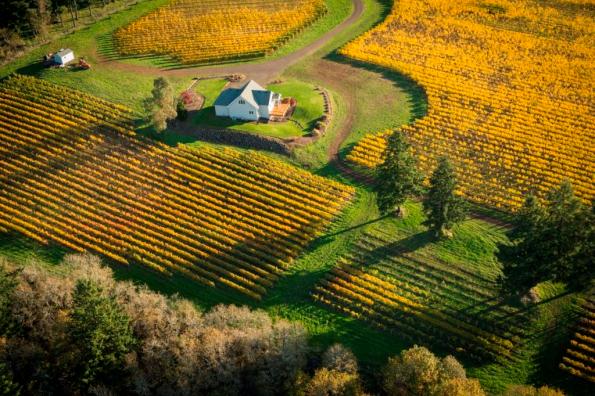
Aerial view over Le Cadeau Vineyard, Chehalem Mountain AVA, Willamette Valley, Oregon. Source: Le Cadeau Vineyard
[TaV]: How did you come to the idea of the Sparkling wines? You offer 2011 vintage sparkling wine, so clearly you started making sparkling wines before they became “the thing” in Oregon, so how did you get there?
[TM]: 2011 was a very cool, late, year, and the clusters were uneven. Some of them were quite large (a fairly rare event, given our rocky soils). On October 15th, the bigger clusters had only gotten to about 19-Brix—not good for still PN. I know we wouldn’t/couldn’t pull them all out on the sorting table, so we did a sort in the vineyard. I told the crew to harvest the three biggest clusters off of each plant in certain sections of the vineyard. Since these were at a perfect stage for sparkling, and we had them hanging on the vine for a full season at that point, it seems silly to drop that fruit on the ground. So we took a shot at sparkling—it worked out very well, so now we make it generally every other year.
[TaV]: I’m sure you knew this question is coming J – it seems that you only work with Pinot Noir grapes. Do you grow any other varieties? Do you have any plans for the white wines? If yes, what grapes would you plant?
[TM]: As noted above, we have 6-clones of Chardonnay that are now in production. The first Chardonnay will be 2017, released in a few months. We’ll only do Chardonnay at Le Cadeau (other than Pinot Noir). But under our other brand, Aubichon, we’ve made some wonderful “Alsatian Style” Pinot Gris, as well as a Pinot Gris-based Rosé, and a wine we call “Sur Peaux”, which is an “orange wine” from Pinot Gris. All the Pinot Gris is sourced from old vine vineyards, about 25-years old. So it’s nice fruit, and the wines are quite special.
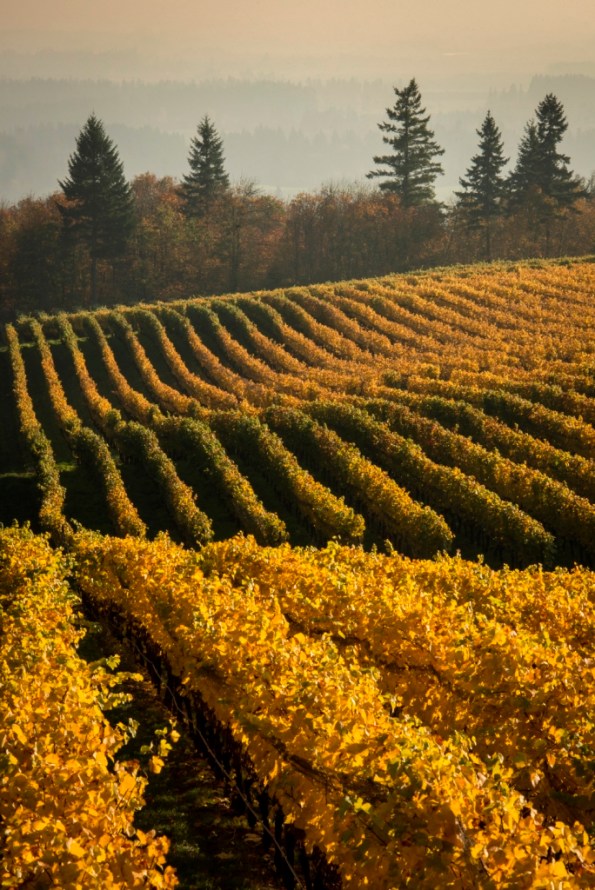
Le Cadeau, Chehalem Mountains AVA, Willamette Valley, Oregon. Source: Le Cadeau Vineyard
[TaV]: And one more common question I like to ask – when you are not drinking your own wines, what are your favorite wines and/or wineries, in Oregon or anywhere in the world?
[TM]: I have a diverse range of preferences:
I’m a huge fan of Weinbach in Alsace; Chave Hermitage is often special, Guigal Condrieu (the good version, not so much the standard one), Huet and Chidane Chenin Blanc; Fevre Chablis; Robert Weil German Reisling (and many others—Keller dry from their rocky vineyard is nice); any good Bonne Mares; love white Bordeaux—Chevalier, Smith H-L, and of course the “big guys”, but they’re too expensive. Barberescos from Italy—Gaja (also like Gaja Chardonnay), and I think Produtorri does an amazing job for the price, along with Albino Rocca. I’ve had a Foradori wine that I thought was special, certain Brunellos, but many have become Parker-ized, that’s unfortunate. I like Ciacci wines though. … the list goes on…
In Oregon, there are many that I respect, and a small group that I like, but I’d prefer to leave those thoughts anonymous.
[TaV]: What is ahead? Where do you see Le Cadeau in 10-15 years?
[TM]: I think we’re just beginning to make our best wines, and really beginning to understand the vineyard’s nuances. Some of our more exciting clones are still quite young, so it will be interesting to see what sort of wines we make from the more exciting clones when the vines are older. The 2018 wines that we have in the barrel are possibly our finest to date. Very excited about getting them into the bottle and out on the market.
I’m hopeful that our Chardonnay program will be noteworthy. Pierre’s guidance on Chardonnay has been very helpful. 2018 in barrel looks to be very promising, and I’m excited about the first 2019 fruit from a rocky grafted section of the vineyard. We have a couple interesting Larry Hyde clones of Chardonnay planted in that area as well. The fruit looks to be quite different. I’ll have a better sense of the Chardonnay potential in another year, but I’m hopeful that we can produce “the real deal”.
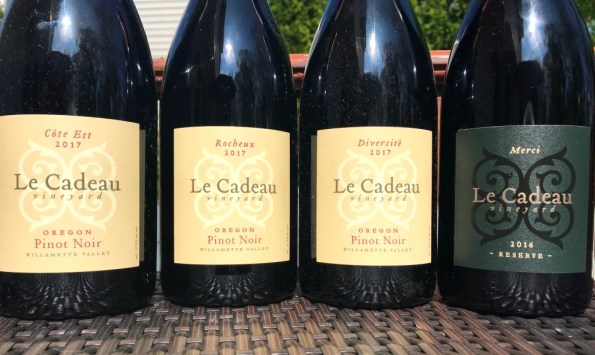
Thirsty? Here are my tasting notes for the wines:
2017 Le Cadeau Côte Est Pinot Noir Willamette Valley (13.9% ABV, $50, 145 cases made)
Dark Ruby
Smoke, plum, iodine, medium-plus intensity
Wow. Touch of smoke, Sage, medicinal notes (cough syrup), good acidity, excellent balance
8
2017 Le Cadeau Rocheux Pinot Noir Willamette Valley (13.2% ABV, $50, 174 cases made)
Dark Ruby
Plums, cherries, violets, intense, inviting
Bright, clean, succulent ripe cherries, licorice, great minerality, excellent balance, superb
8+
2017 Le Cadeau Diversité Estate Pinot Noir Willamette Valley (13.9% ABV, $50, 245 cases made)
Ruby
Delicate, lavender, a touch of smoke, perfect
Beautiful, plums, ripe strawberries, great acidity, baking spices, delicious overall
8+/9-
2016 Le Cadeau Merci Pinot Noir Reserve Chehalem Mountains Willamette Valley (14.1% ABV, $80, 143 cases made)
Garnet
Intense, ripe cherries and plums, candied fruit
Wow, great intensity, cherries, cherry compote, ripe plums, minerally notes, good acidity, good balance
8+
As you can tell, I really liked the wines – they were literally one better than another.
Here you go, my friends – yet another story of Passion and Pinot. I hope you enjoyed reading it as much as I enjoyed writing it, and I thank you for your time and attention.
Will there be more Passion and Pinot stories? Well, do you think the passion ran out of the Pinot winemakers and aficionados? I will bet my virtual DRC bottle that it did not. So we will continue our conversations as soon as the next opportunity will present itself.
Obey your passion!
P.S. Here are the links to the posts profiling wineries in this Passion and Pinot series, in alphabetical order:
Alloro Vineyard, Bells Up Winery, Ghost Hill Cellars, Iris Vineyards, Ken Wright Cellars, Knudsen Vineyards, Lenné Estate, Tendril Cellars, Youngberg Hill Vineyards, Vidon Vineyard
Stories of Passion and Pinot: Iris Vineyards
 Let me ask you something. If you would look at the mountainous parcel of land, completely destroyed by the brutal commercial logging – would you be able to envision there a beautiful Pinot Noir vineyard? (if you answered “no”, same as I did, don’t worry about it – this is why you and I are not in the winemaking business). When Richard Boyles and his wife Pamela saw such a logging-destroyed site at the south end of the Willamette Valley, they were able to see past the nature in distress. They were able to see the future vineyards and even future forest restored where it was before. They purchased about 1,000 acres site in 1992, and it became the home to the Iris Vineyards, with the name inspired by the beautiful wild Douglas iris covering the surrounding hills in spring.
Richard’s fate was sealed at the age of 7, when he assumed assistant winemaker duty to his grandmother, helping her to make the sweet, dessert wine. As they say it in the stories, the rest was history. Richard met Pamela while studying at the University of Oregon. Countless visits to Europe and living there for a while as Richard had a carrier in international business management and hospitality, helped Richard and Pamela to discover their wine passion – Burgundy, and its signature grape – Pinot Noir. That passion for Pinot helped Richard and Pamela to see through the broken trees and realize their dream of making the world-class Pinot Noir.
Well, there is also an additional element to that passion – a principle of Areté. Richard and Pamela learned about Areté in the university, while studying ancient Greek philosophy. This principle simply means that it is one’s moral obligation to achieve the highest potential the person can achieve. Give it a thought – Areté is really a great principal to live by; we will get back to it later on in this post.
Today Iris Vineyards farms about 43 acres of vineyards, located at 800 to 1,100 feet elevation (quite high for the Willamette Valley). The vineyards are surrounded by more than 500 acres of restored forest, mostly Douglas fir and Ponderosa Pine, as well as Oregon white oak. The main vineyard of the estate, Chalice Vineyard, was planted in 1996 and produced its first vintage in 2001. Pinot Noir takes two third of the plantings, following by the Pinot Gris and a small acreage of Chardonnay. Iris Vineyards also produces a number of other, less traditional wines (Viognier, Syrah, and more) from other appellations in Oregon, such as Applegate Valley.
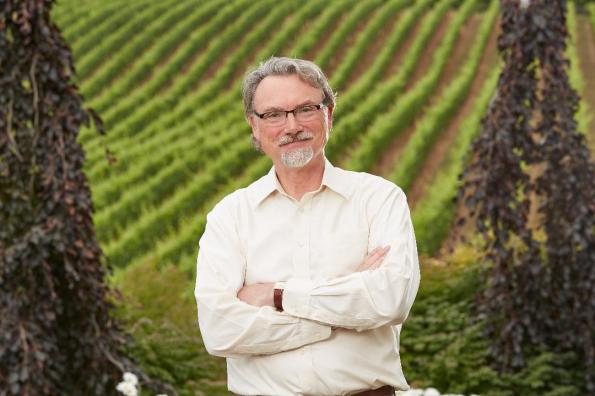
Richard Boyles
I was definitely intrigued by what I learned about the Iris Vineyards, so I took an opportunity to sit down with Richard Boyles (yes, once again it was a virtual conversation) and ask him a few questions. Here is what transpired:
[TaV]: You grew up tasting sweet wines. How did you end up with Pinot Noir becoming a passion?
[RB]: Although my first experience was sweet wines made and sampled with my grandmother, the wines I “grew-up” with were the wines served at family celebrations organized by my dad. These were usually red Bordeaux and reds and whites of Burgundy as well as German Rieslings. As you can see, with the exception of the Rieslings, these were dry wines that were intended to pair with food. I became more focused on Pinot Noir as it became clear that Oregon could grow world-class Pinot Noir with Oregon attitude. After graduation from the U of O, while living in Seattle, Pamela and I continued to explore the world of wine, visiting vineyards, tasting rooms and sampling primarily in Oregon and Washington and occasionally in Napa and Sonoma. Our interest in Pinot Noir solidified as a passion as Pamela and I explored different viticultural areas of Europe when we lived in Germany and Switzerland. We found ourselves gravitating to Burgundy for Pinot and Alsace for Pinot Gris.
[TaV]: What made you think that the parcel of land destroyed by logging would be an ideal place to grow Pinot Noir?
[RB]: In the Pacific Northwest logging is a part of the rural economy and landscape. In the case of our property, the fact that it had been logged and that we took on the legal obligation to replant the forest meant that we were able to acquire large acreage at a modest price. The property had a long history as a mixed forest operation, with cattle and timber harvests providing income to the owners. When we acquired the property, we replanted hundreds of acres of forest before we turned our attention to planting the vineyard on former pasture. The areas for vineyard plantation were selected for the Jory and Bellpine soils, south-facing slopes, elevation and for modestly steep slopes which allow the property to be farmed with standard farm equipment. While our purchase of the property was prompted by the vineyard potential, it has been equally satisfying to plant tens of thousands of Douglas fir trees that have now matured into a forest, an ecosystem really, supporting many species of flora and fauna.
[TaV]: I know that the concept of Areté and its relevance to everything you do is explained on the website, but can you explain one more time for our readers what Areté means for you and how does it apply to the Iris Vineyards and your wines?
[RB]: In addition to what is on the website and press kit, this is what I would say about Areté: Areté is a philosophy or way of being that says, “Hey buddy, you want to excel and standout? Then be deliberate about it. Figure out what skills and knowledge you need, practice them, perfect them if you can. Figure out what else will up your game. Go get that skill or knowledge. Repeat. Because that is what this life is all about. A constant aspiration to live up to the potential that is you. Why would you settle for less?” With respect to Areté at Iris, Areté is a cultural signpost. It tells team members and prospective team members what we value at Iris, how we want to be and be seen as an organization. It tells team members how they can contribute. We can only be an organization that exemplifies Areté if our team members embrace it, make decisions and plans by it. By making it clear what we are about, we attract like-minded team members. And, of course, Areté is a proclamation to the world about aspirations. So, we take it very seriously when we put the Areté name on the label of the wines that are the best examples of our craft.
[TaV]: I would guess that first was Pinot Noir, then Pinot Gris, then Chardonnay (curious – am I right?), but Iris Vineyards today offers way more than just 3 flagship Oregon grapes – how did you get to include Syrah, Tempranillo, Viognier into your repertoire?
[RB]: From the time we committed to establishing a vineyard, Pamela and I planned to grow Pinot Noir, Pinot Gris, and Chardonnay. The expansion into other varietals is the result of two factors: 1) the desire to create variety for our club members; and, 2) our winemaker, Aaron Lieberman’s curiosity, interest and skill at working with grape varieties beyond Pinot Noir, Pinot Gris and Chardonnay.
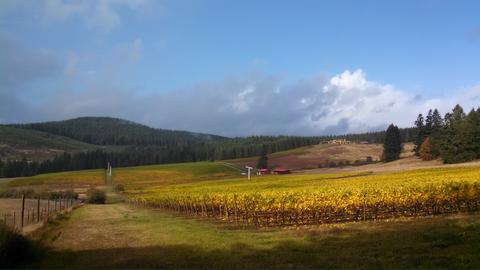
Source: Iris Vineyards
[TaV]: While it is not yet available on your website, I understand that you are about to introduce Iris Sparkling wines. Can you tell me more about this project, starting even with “why sparkling wines”?
[RB]: Much as the reintroduction of the Rosé program was in response to Pamela’s strong interest in Rosé and renewed consumer interest in the category, the sparkling wine program came about as a result of Aaron’s interest in, and interest in the challenge of making sparkling wine. Sparkling wine is the ultimate celebratory beverage. Our club members and tasting room visitors love our Methode Champenois Blanc de Noir and Blanc de Blanc. We reserve a small amount for weddings and other celebrations at the tasting room, though the sparklers routinely sell out prior to the subsequent release. Aaron can expand on what brought him to pursue sparkling.
[TaV]: Will sparkling wines be generally available or they will be offered as winery exclusive/club options?
[RB]: I anticipate that the sparkling wines will be available to club members, available at the tasting room, available to weddings and celebrations held on the property and perhaps to select accounts. I don’t anticipate that it will be available to broad distribution. These are intensely hand made wines requiring lots of time and attention. The sparklers will have an important but limited role in our line-up.
[TaV]: Considering the wide range of grapes you already use, do you have any plans to expand it any further?
[RB]: Our offerings will continue to evolve. Our core business is in Pinot Noir, Pinot Gris, Chardonnay, and Rosé. As we expand our vineyard, we will plant small amounts of Pinot Meunier and Pinot Blanc as well as a broader variety of clones of Pinot Noir and Pinot Gris. Pinot Meunier will have a place in our sparkling program. We will evaluate it as a potential stand-alone variety. Pinot Blanc will be a standalone bottling. I expect we will pare some wines from our current offerings as we respond to the tastes of our club members and tasting room visitors. 8. I’m assuming you started producing wines at the end of the 1990s. Do you still have any of your first releases available in the cellar? How do they hold up? What is the oldest of your own wines you ever tasted?
We first bottled wine under our own label in 2001. Prior to that, we sold the small volume of fruit coming from our vineyards to other producers. We recently sampled a bottle of 2008 Reserve Pinot Noir. We have a single bottle left. I wish we had more in our cellar. While this wine wasn’t deliberately built to last ten years, it is drinking very well. The 2012 Reserve Pinot is drinking nicely. Pamela and I have a few overlooked bottles of 2001 and 2002 Pinot Gris in our personal cellar. These were award winners 15 and sixteen years ago, including double platinum for 2002. As compelling as these wines were at two, three, four and even five-year-olds, they weren’t intended to age and are now past their prime. It’s a good reminder to drink while the drinking is good.
[TaV]: You are practicing sustainable farming. Can you explain what it means for you, how does it relate to the land, vineyards, grapes and so on? Have you ever looked at going Biodynamic?
[RB]: The goal of our farming practices is to produce fruit that meets our particular purposes. We use different farm practices and viticultural techniques for Pinot Noir that’s intended for Rose’ differently than the fruit that is intended for our estate bottling for instance. Our farm practices are conventional as we want to have all the tools available to produce the best fruit for the purpose while supporting the long-term productive capacity of the vineyard and operating a financially sustainable business. Farming isn’t static. We annually review best practices and new literature to improve what we do in the vineyard. While we have considered a Biodynamic approach, we believe we can produce better fruit for our purposes with a conventional approach to farming.
[TaV]: When you are not drinking your own wines, what are your favorite wines from Oregon, and from around the world?
[RB]: One of the notable things about the world of wine today is that so much great (and not so great) wine is accessible from all over the world. We see wine as an exploration, so we regularly try what we haven’t tried before. That is as likely to be a Pinot from a new Oregon producer, a Sauvignon Blanc from a new growing region or an obscure varietal we haven’t tasted in a while. Through exploration, we learn more than returning to the same things repeatedly. That said, we have a broad stable of wines of our own production. We do frequently return to those.
[TaV]: Where do you see Iris Vineyards in 15-20 years from now?
[RB]: I expect that Iris will garner increasing consumer attention as we offer compelling wines at a good value. I expect that we will continue to offer wines across a variety of complex profiles and price points. I don’t say across a variety of quality, because all of our wines are of high quality, they just differ in terms of complexity. Personally, in 15 or twenty years I hope to have more tractor time and hands-on time in the vineyard and in the winery, particularly at crush. Overseeing this and other businesses currently require that I focus on the big picture. It was a “need” to farm and a maker mentality that brought us into the business. I still craft beer, pickle and can. I look forward to re-creating my job description to allow more time in the vineyard and winery and less in the business of running a business.


Yes, I agree with you – it is time to drink. I had an opportunity to taste two of the Iris Vineyards Pinot Noir wines – here are my notes:
2017 Iris Vineyards D Block Pinot Noir Chalice Vineyard Willamette Valley (12.7% ABV, $39.99, 300 cases produced)
Bright Ruby
Light, elegant, plums, cherries, a touch of ripe strawberries
Sweet cherries, plums, great acidity, excellent balance
8-/8, nice and approachable
2016 Iris Vineyards Areté Willamette Valley (14.1% ABV, $59.99, 100 cases produced)
Dark Ruby
Touch of smoke, plums, a hint of cranberries
Iodine, Cherries, a touch of smoke, good balance
8/8+, very good wine, will be interesting to try it again in 10 years…
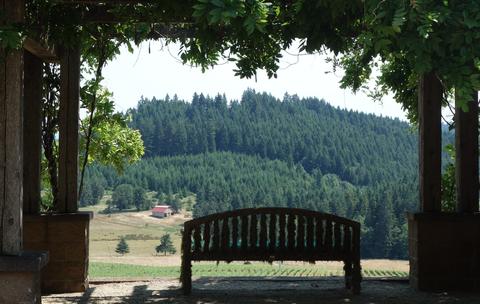
Source: Iris Vineyards
Here you are, my friends – another story of Passion and Pinot. Go pour yourself a glass of Pinot – more stories are ahead…
To be continued…
P.S. Here are the links to the posts profiling wineries in this Passion and Pinot series, in alphabetical order:
Alloro Vineyard, Bells Up Winery, Ghost Hill Cellars, Ken Wright Cellars, Knudsen Vineyards, Lenné Estate, Tendril Cellars, Youngberg Hill Vineyards, Vidon Vineyard
WBC18: Like A Kid In The Candy Store – Again, or 4 Days in Walla Walla
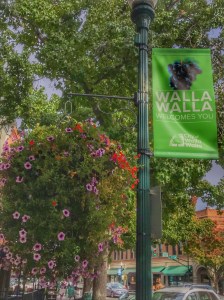 Back in 2014, I was visiting the state of Washington on business, and my obsession with local wines led me to the small town of Woodinville, about an hour northeast of Seattle. As I parked next to the industrial building and started going door to door, visiting one artisanal winery after another, I really felt like a kid in the candy store – the wines were delicious, and conversations with winemakers and not were even better than the wines – what else the wine lover needs? I was so impressed with that visit that my enthusiasm showed in the blog post, which won one of the Monthly Wine Writing Challenges (we called them MWWC) with the theme “local”.
The timing for the Wine Bloggers Conference 2018 (WBC18) was a little strange – for the most of the time, the conferences took place in August, and October is definitely not the ideal month to take time off (I know that many of the regulars couldn’t attend due to the timing). However, my high opinion of the Washington wines and the memories of visiting the Woodinville became the deciding factor, so I was able to find the time for this trip to Walla Walla in Washington.
Boy, was I not disappointed. After a beautiful ride from the Portland airport along the Columbia River (I wish I would record a little video – the amazing scenery must be shared), I arrived at the Walla Walla. Walla Walla is a home to about 30,000 residents, but it is hard to tell from the tiny downtown. However, when it comes to wine, don’t let the small size to full you – Walla Walla downtown hosts 30 something tasting rooms, plus a number of full working wineries located within the city limits (there are 120 wineries in the Walla Walla Valley overall) – it is definitely a destination for any wine lover out there.


As it always happened so far (this was my fourth WBC), the 4 days of the Wine Bloggers Conference became a non-stop adventure of sipping, spitting and learning, and most importantly, spending time with the fellow bloggers. I can’t tell you how many wines were tasted during these four days – whatever happens at WBC, stays at WBC. But – I will be happy to share with you main takeaways from these 4 days. Here we go:
- Washington State produces some magnificent wines (duh) – at least on par with Napa, and often far exceeding the Napa offerings in terms of QPR – and they are predominantly red. All six Bordeaux varieties are doing quite well in Washington, both in the form of the Bordeaux blend and on its own. Merlot might be a king of Washington, but Cabernet Sauvignon can often fight for that royal crown, and quite successfully. The Syrah is definitely a queen, well deserving your attention, following by the other Mediterranean breeds, such as Grenache and even Tempranillo.
- Washington whites are much rarer find – but they can be equally delightful as the reds. Rhone varieties do particularly well (Marsanne, Roussanne), but Chardonnay, Sauvignon Blanc, Riesling, and even Albarino can deliver a happy surprise. An important reminder – please, please drink Rhone whites at the cool room temperature – they really taste better like that. Make them too cold, and they become indistinguishable and boring.
- Unlike California, where you can find 100+ years old [continuously farmed] vineyards, such as Bechtold in Lodi (farmed since 1886), and 150 years old continuously producing wineries, Washington wine industry didn’t survive the prohibition. What was striving in the 1860s, was completely destroyed in 1920s, and had to be rebuilt in 1960s. This information actually doesn’t have any deep meaning outside of being an interesting (and unfortunate) fact.
- I don’t believe you need to pay attention to the vintages for Washington wines, unless something ultra-bad happens, like out of blue frost in May. The temperatures are consistent, and so are the general climate conditions – too hot of a summer can be compensated by harvesting earlier. Well, the summers are typically hot, so the “canopy management” is a hot subject in winemaking circles. If the vineyard is managed properly, and winemaker does the job right, there is a good chance for consistency. In other words, don’t ask “how was that vintage”, just get the wine you want to drink. But – the way a lot of wines in Washington are made, especially coming from the small wineries – with utmost respect to the product at all stages – guarantees that the wines will age well. Give them some time, and prepare to be amazed.
I can probably think of more conclusions, but instead, I really want to tell you how my four days unfolded – just in case you wonder what one does at the Wine Bloggers Conference. Look at it more like the set of highlights as opposed to the detailed report. And then my plan is to convert many of this mentions below into the separate posts, to make my report more detailed – oh well, will see how that will work.


Day 1: After the beautiful ride along the Columbia River from Portland, I checked into the hotel, and then my next immediate stop was a tasting at the Seven Hills Winery, located right next to the conference hotel. After tasting at Seven Hills, next stop was the tasting at the Gård Vintners – with lots of delicious surprises. That tasting was followed with a very short walk back to the hotel to attend the Masters of Merlot session (now part of the official WBC program), presented by two of the Merlot Greats – Duckhorn and L’Ecole No 41 (very appropriate for the October, the #MerlotMe month).
Next was the mingling with the fellow bloggers around so-called Expo, where WBC sponsors poured their wines and offered their products. My last activity for the day was a superb, mind-blowing tasting at the Eternal Wines (more later) in lieu of group dinner. I also skipped all after-hours activities – that was enough for the first day.
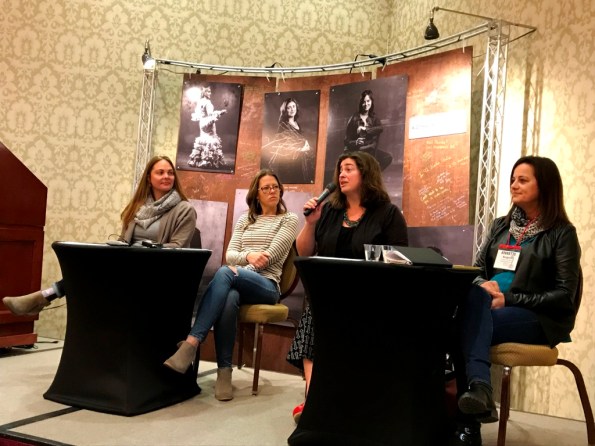
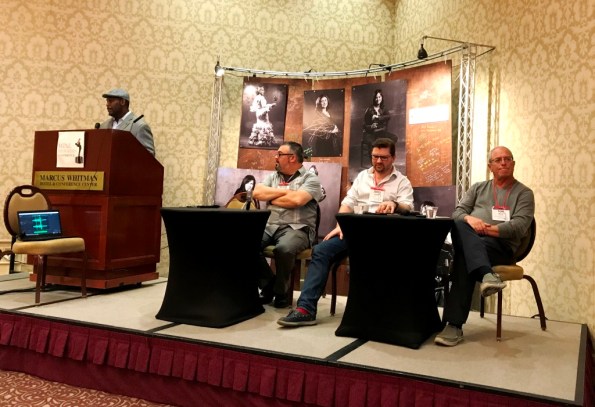
Day 2: The actual conference program started. One of the main morning highlights was the panel discussion by the 4 of the Walla Walla winemakers, talking about terroir, canopy management, and stories, their personal, real life stories. I also liked the panel of wine influencers, talking about the wine industry, wine writing, and Dos and Don’ts of wine blogging. During lunch, we had an opportunity to taste wines from the Cascade Valley Wine Country, where one particular wine, WineGirl Wines Red blend left a mark with me – a standout, flawless, round, and beautiful.
After lunch, I went with a group of friends to taste delicious Oregon non-Pinot wines from Troon Vineyards Applegate Valley, as presented by WBC veteran, Craig Camp (I believe Craig didn’t miss a single WBC event). We got back to listen to the keynote by Lewis Perdue, the founder of Wine Industry Insight publication, who was focusing on a seemingly simple concept – Trust – and the tenets of good writing.
Next session was one of my traditional favorites – Live Wine Blogging for red wines, and once that was over, we all left for the dinners at mystery wineries (nobody knew where they are going), with our mystery winery being Canoe Ridge. Do you think this was enough for a day? Wrong. It is never enough – the last part of the program was so-called “after party”, where we tasted lots more wines (attendees are invited to bring wines to share with the others for this late night session). My highlights from this late-night tasting were Chardonnay and Cabernet Sauvignon from Smith-Madrone and iOTA Cellars Oregon Pinot Noir vertical (2013, 2014, 2015). Whew, time to sleep.
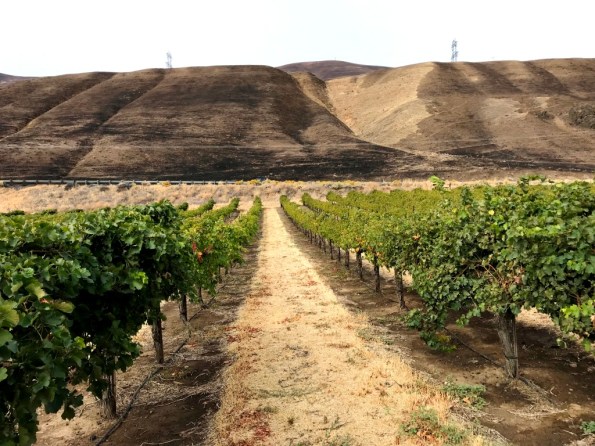
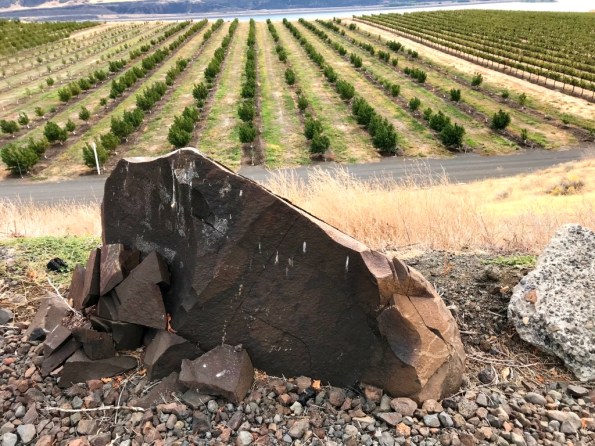
Day 3: The day started from learning about the location of the Wine Bloggers Conference 2019 – Hunter Valley in Australia, October 10-12, 2019. This sounds ultra-attractive – and equally impossible (in my own world). After a few of the breakout session, we went out for lunch at the Walla Walla tasting rooms which we had an opportunity to select the day before – my choice was Otis Kenyon Winery. Next was the session called Bubbles and Bites, a sparkling wine and food pairing lesson presented by Gloria Ferrer. Right after that, we had an in-depth lesson about European Cheeses. Up next was the “Lightning talks” session – 5 minutes presentations by the fellow bloggers with the slides rotating every 15 seconds. Wine Live Blogging session for whites and Rosé closed the main conference activities – which left us with the wine dinner with the vintners from Walla Walla. At the dinner, I fell in love with the wines from Revelry Vintners, which were simply stunning, and also enjoyed a few wines from Bergevin Lane. And then … yes, of course, another late night session (someone had to drink all that wine, right?)
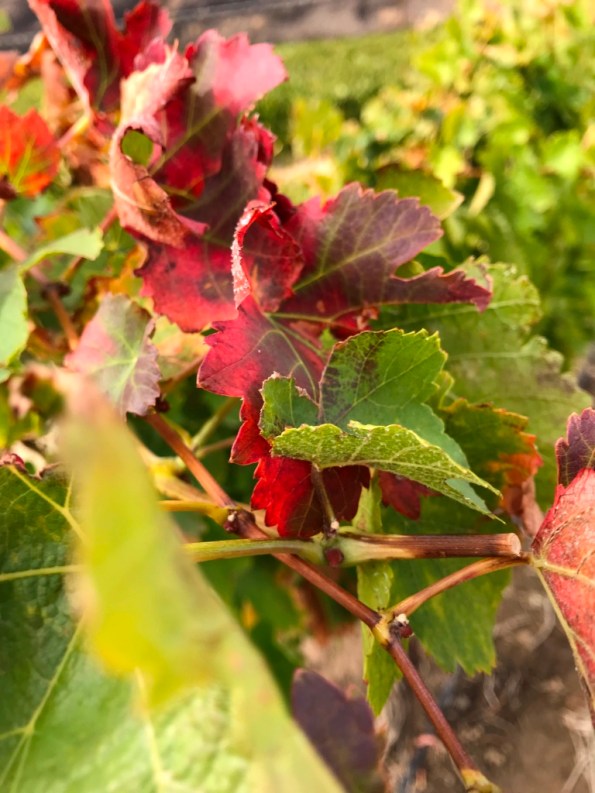
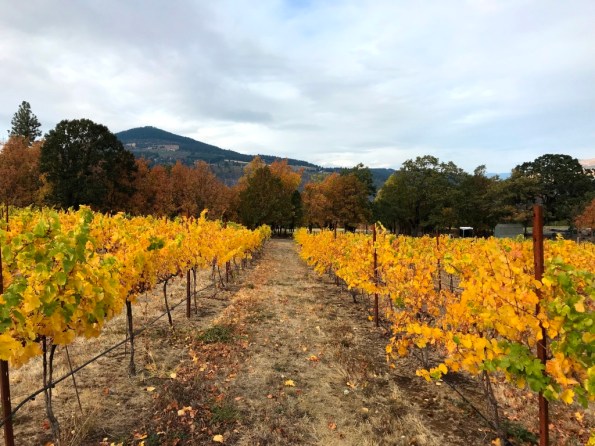
Day 4: The conference was officially closed, but – there were post-conference excursions. I visited Maryhill Winery in Walla Walla, and Cathedral Ridge Winery in Oregon, both offering spectacular views and delicious wines.
The End.
Here it is – my abbreviated report of the WBC18 activities. Speaking strictly for myself, I greatly enjoyed the conference – the place, the wines, people and conversations – everything work together very well to create a memorable experience. If you never attended the conference – do you want to attend one now, after reading my report? If you are a “regular”, what are your thoughts about WBC18 and will we see each other in Australia? Cheers!
A Pinot Noir Lesson for Self with Tendril Cellars
 Back in May, we virtually met with Tony Rynders of Tendril Cellars and talked about … many things wine, of course – you can find this conversation here.
Tony is one of the few winemakers I know who teaches people about his wines by conducting organized tastings. As I didn’t have an opportunity to attend any of those events, I decided to run a lesson for myself on the same subject. How you ask? Easy – by tasting the wines blind.
I can literally see the surprised looks and raised eyebrows. How is it a blind tasting if I know already everything about those wines? You see, the lineup I had included 6 wines. Out of those six, four were different Pinot Noirs – different vineyards, different winemaking process, different price points. Obviously I was not planning to try to identify the exact wine, but still – will I be able to taste the difference, and maybe identify the most expensive wine? Comparing Chardonnay and white Pinot Noir should also be a fun exercise, as those are two siblings ruling the world of Champagne. Yep – lots of opportunities for having fun.
Okay, blind tasting it is. The bottles are wrapped, the numbers are randomly assigned. May the taste buds serve me right!
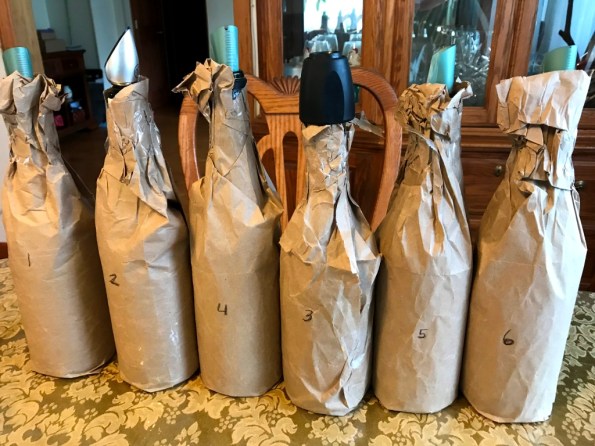
Here are my notes for the wines while tasting them blind:
1 Light golden color
Vanilla, golden delicious,
Bright acidity, vanilla, apples, a touch of honey
2 toasted notes, yeast
Perfect acidity, Granny Smith apples, a touch of honey, toasted notes on the palate, outstanding
white pinot?
3 Dark ruby
Earthy, Rutherford dust on the nose, a touch of roasted meat,
Beautiful palate, soft plums, round, espresso, excellent acidity, wow. ThightRope?
4 Ruby
Concentrated nose, mint, eucalyptus
Concentrated palate, acidity, eucalyptus, sage, violets on the palate. Very unusual. Single Vineyard?
5 Dark ruby
Wow. Blueberries, raspberries, restrained
Very smooth, silky, bright fresh fruit, acidity, firm structure, excellent balance, never-ending finish. Wow. C-Note?
6 Dark ruby
Nose old world style, forest floor, mushrooms, great restraint
Round palate, blackberries, baking spices, soft, delicious. Outstanding. Extrovert?
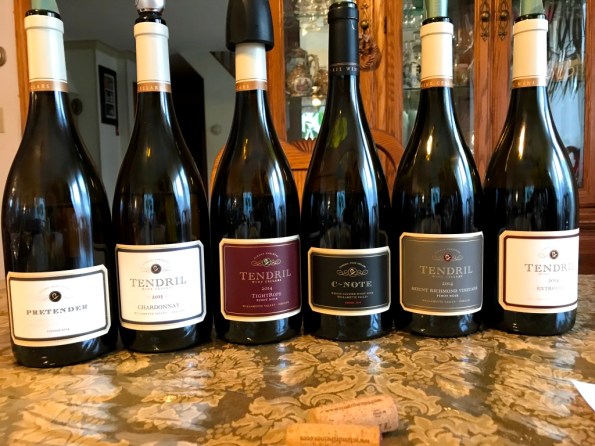
Everyone knows that the best part of the blind tasting is … unwrap! The moment of truth, pure and simple. Here are my notes for the tasting of the wines non-blind, 3 hours after the blind tasting (in the same order):
1 – 2015 Tendril Cellars Pretender Willamette Valley (14.1% ABV, $60, white Pinot Noir)
A bit darker color (golden)
Vanilla, butter
Plump, round, crisp acidity, acidity on the finish (very extensive), plump body.
8, excellent. Reminiscent of a nice Marsanne.
2 – 2015 Tendril Cellars Chardonnay Willamette Valley (13.5% ABV, $40)
Honey, gunflint, vanilla
Brioche, Granny Smith Apple, a touch of butter, clean acidity, excellent
8, outstanding.
3 – 2014 Tendril Cellars Extrovert Pinot Noir Willamette Valley (14.1% ABV, $48)
Beautiful, classic, open Pinot, with cherries, sage, and plums.
Soft cherries and plums on the palate, clean acidity, sage, violets, delicious, wow
8, delicious.
8+/9-, a pure standout. Polished, velvety, seductive, like a light touch on the hand which makes your whole body to vibrate. More reminiscent of CA Pinot than dark and loaded
4 – 2014 Tendril Cellars TightRope Pinot Noir Willamette Valley (14.2% ABV, $64)
Very tight, espresso, licorice, blackberries
Beautiful, sweet fruit, noticeable tannins, very round, medium body, cherries and cherry pit.
8, excellent.
Complex nose of herbs and spices, exotic and unusual.
Wow, great power and complexity, not a typical Pinot, might be more of a Zinfandel or even Syrah profile. Needs time, lots more time.
5 – 2014 Tendril Cellars Pinot Noir Mount Richmond Single Vineyard Willamette Valley (14.1% ABV, $60)
Very unusual. Beets and caramel on the nose, with a touch of dark chocolate.
Blueberries and caramel on the palate, nice salinity, raspberries. Medium+ body. Excellent
8
Very ripe after 2 days been open (air pumped out). Beautiful palate, minerality-driven, cigar box, eucalyptus, tense, powerful. Can be mistaken for a Rioja of a nice caliber.
6 – 2014 Tendril Cellars C-Note Pinot Noir Willamette Valley (14.1% ABV, $100, 100% Whole Cluster, 100% new oak)
Sublime. Can be described only via allegories, such a finesse. Dark chocolate and cherries. Excellent
Equally delicate on the palate, crisp acidity, bright, sweet plums, and tobacco. Outstanding.
8, excellent
Nose is incredible. First, you want to smell.this.wine.for.a.long.time.
Superb, elevated wine, complex, great finesse, and needs time. 8+
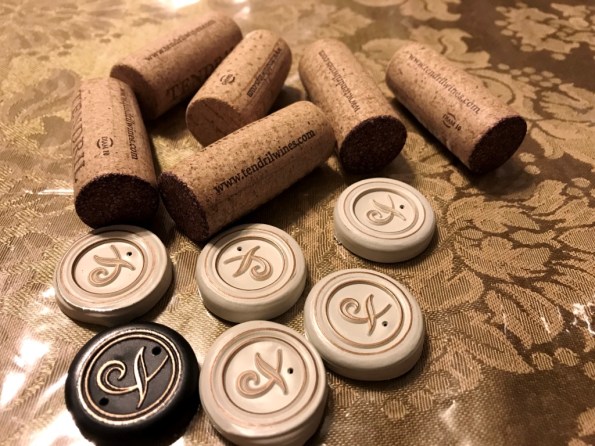
As you can tell, I failed miserably. I didn’t identify any of the wines – however, this was perfectly in line with my expectations. What was definitely interesting is that despite the four Pinot Noir wines been all from Oregon and at about the same age, they were absolutely, unquestionably, distinctly different – and strikingly delicious.
Of course, I extended the pleasure of tasting some of those wines over the few days, which is reflected in the tasting notes above.
Here you are, my friends. Blind tasting or not, the Tendril Cellars wines are worth seeking – the virtual tasting will simply not do it – these are the wines to experience. And if you need to choose only one, I can let you in on a secret (don’t tell anyone!) – the Extrovert was my favorite. Cheers!
Last Bottle Sign Up ($10 credit)