Archive
Daily Glass: Unexpectedly Stunning
Expect the unexpected.
When people hear that beaten up “expect the unexpected”, I’m sure in at least 80% of the cases, the expectations are negative. “Expect the unexpected” generally implies that one should always be prepared to deal with seemingly unexpected and often hostile circumstances.
In the wine world, we might want to adjust the “expect the unexpected” ever so slightly. By its nature, wine is always unexpected. Bottle variations, spoiled wine (think corked, for example), serving temperature, ambiance, food, company – everything affects the taste of wine – and I’m not even talking about root and flower days. Every bottle is a mystery – even if you had that same wine from the same producer and the same vintage 100 times before, when you are looking for pleasure you should open the bottle with trepidation. Every bottle is a mystery, and you never know what you will find inside.
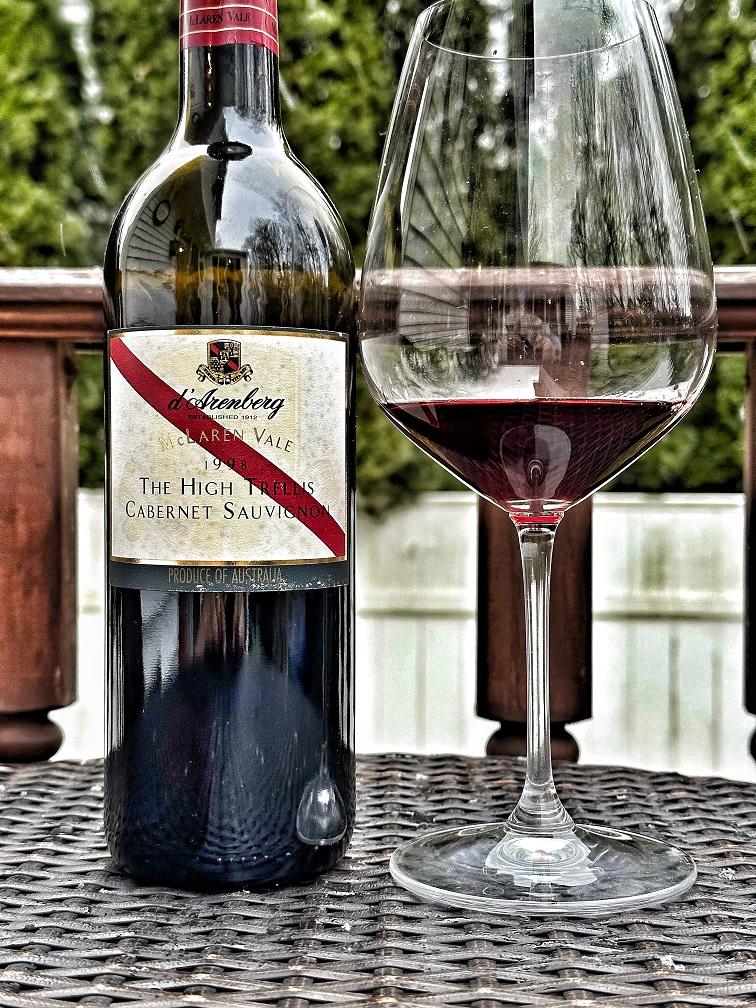
I already had this exact wine before. 1998 d’Arenberg Cabernet Sauvignon High Trellis McLaren Vale was number 16 on my top 20 wines of 2020 list. 1998 is one of the special years in my book, so I’m always on the lookout for affordable 1998 wines. I came across this specific wine at the Benchmark Wine Group wine store, and at $19 per bottle, it was well worth the risk. Of course, d’Arenberg is an excellent producer and I trust their wines – but aging the wine changes a lot of things and nobody can truly predict what would happen with wine as the result of the aging.
When it comes to aged wines, when everything works well, the expectations are resembling the bell curve. In the optimal case, we expect the wine to gradually improve, then stay at its peak, and then gradually decline. But every bottle has its own bell curve associated with it – how long will it take for the wine to reach the top of the peak, for how long the wine will stay at the peak, when the wine will start declining – every bottle has its own story, and nobody can predict how a particular bottle of wine would behave. This makes drinking aged wines great fun – you never know what you will find behind the cork. This also makes drinking the aged wines a source of frustration – until you successfully pull the cork out, take a sip, and smile happily, the frustration lingers.
You are unquestionably doubling this frustration when you are opening the aged wine you already enjoyed before. In general, before you open the wine, you base your expectations on the reputation of the producer, the region, the winery, and maybe on the vintage. Once you tasted the wine, you acquire the frame of reference, so when you will be opening the bottle of the same wine as you already had, your expectations are based on your prior experience – “ahh, I liked it before, I hope the wine will be as good as it was the last time”.
The last Sunday, we had a good reason to open a bottle from the 1998 vintage, so this was the bottle I decided on – for no particular reason, the decision formed in the head by itself. I used the ah-so to gently extract the cork, only to find out that I had no reason to worry, and the regular corkscrew would do just fine – the cork was in very good shape.
Once in the glass, the color increased the hopes for the enjoyable experience – dark ruby, not a hint of brickish color which old reds might acquire. And the first whiff from the glass put absolutely all the worries away. Ripe cassis, eucalyptus, a touch of sweet oak – the aroma was beautifully enticing, seducing you only as the Cabernet Sauvignon can. And the palate… The palate completed this mesmerizing experience, offering ripe dark fruit, cassis, still fresh and firm structure, a beautiful herbal bouquet, and a perfect balance. Not to try to take anything from the Australian wines, this was a Napa Cab-like experience. (Drinkability: 8+/9-).
I pumped the air out and couldn’t get to the wine for the next two days. On the third day, I poured a glass, this time expecting that the wine is gone. To my total surprise, the wine closed up, now more resembling the young Brunello, perfectly firm, dense, and cherry-forward. The fact that the wine was perfectly fine 3 days after being opened gives me hope that the wine will be good at least for another 15 years – and this time around yes, I have another bottle.
Here is my story of the sudden pleasure. Do you like aged wines? Are you intimidated by aged wines? Do you also expect the unexpected? Let me know what you think.
Until the next time – cheers!
I Still Don’t Understand…
This is not really a rant. I guess this can classify as rambling. Or “asking for a friend” might be the best way to classify this post.
Nevertheless, let me share my frustration.
The question is as simple as it is proverbial. When you take a sip of wine (you can make it a glass, doesn’t matter), do you judge the wine at that moment?
Hold on, while you ponder this, let me add a few layers.
You read the description of the wine. The wine sounds great. The wine sounds like something you want to buy and you want to drink, so you buy it.
Some time later (let’s say, 10 months later), you open a bottle. You remember it came with the recommendation, so you are full of anticipation – or not, maybe you even forgot the raving review. But this bottle is in your cellar, as you had a reason to buy it. So it is rightfully expected to be a good bottle of wine.
You pour a glass. You take a sip. The wine is perfectly fine, no faults, all is good, but the wine gives you nothing. Forget pleasure – the wine is flat and pedestrian, it doesn’t deliver anything, doesn’t cause any emotion. Just flat and boring. You let it breathe for an hour or even two, and still, there is nothing. Does this story sound familiar? Can you picture yourself in this situation?
So here is the first part of the question. How do they do it? The people who reviewed the wine and called it “Killer Bourgogne Rouge” – how come you can’t see an eye to eye with them? I get it when the wine solicits emotion and it is not your wine – this I understand. I remember Robert Parker raving about Ball Buster Shiraz, and the wine was incredibly overdone to my taste, I couldn’t enjoy it at all, but at least that wine didn’t leave me indifferent. But this is not my point. Let’s continue.
While I was not happy – I rarely get to drink Burgundy, so I really want every Burgundy experience to be special – I still did what I always do. Pumped the air out and left the bottle on the counter.
The next evening, I poured another glass to decide on the fate of the half bottle which was left. I took a sip, and couldn’t believe that I’m drinking the same wine that was flat and boring the day before. The wine opened up, it had depth, the fruit, minerality, forest underfloor, hint of smoke, acidity – all were at a beautiful interplay. The wine instantly went into the “delicious” category, and that half a bottle didn’t last for too long.
This brings us to the second part of the question. How do they do it? The wine critics and professional reviewers – are their palates so much more sophisticated than mine? There is no way they wait for the wine for a day or two to open up. Where I see “flat”, they can really see the full beauty? Or is there something I miss?

Domaine Rebourgeon-Mure is one of the oldest in Burgundy, tracing its roots back to 1552. The property spreads over 3 appellations – Pommard, Volnay, and Beaune, allowing wines to be produced in each one of those applications. The domain practices sustainable viticulture; the grapes are harvested by hand, and the wines are aged in 17th-century cellars in partially new oak for 14-18 months.
The wine I’m talking about here was 2019 Domaine Rebourgeon-Mure Cuvée de Maison Dieu Bourgogne (13.5% ABV, $26.98 at Wine Exchange), and after giving this wine time to open, I have to fully agree with “Killer Bourgogne Rouge” definition. Yet I know that I couldn’t enjoy this wine from the get-go.
So what can you tell me? Is this simply my personal handicap, or is there something fundamental I’m missing?
Whatever you want to say, I’m all ears…
Daily Glass: Monday Night Wine
Monday night. The first working day of the week is over. Or it might not be over, who knows. But it is Monday, and the week is just starting. Is there a wine more suitable for Monday than any other day of the week?
Friday night is easy. Friday always means fun and celebration. Friday is already playful, so unless you have serious dinner plans aligned, Friday night wine might be even a cocktail for all I can tell.
I guess Saturday is asking for a serious wine, no matter what. It’s the middle of the weekend which is always special. Thursday… well, I don’t know about Thursday, let’s get back to Monday.
So how do we select the wine for Monday night? Most likely, you are at home. Most likely, it is only you and your spouse drinking. Most likely, you are not in a hurry. Most likely, you can take your time and enjoy that glass for as long as you want. Considering all of these “most likely” circumstances, let’s settle on the thought-provoking wine. The wine which shows its beauty slowly, sniff by sniff, sip by sip.
Can you think of a wine that would match this description?
While you think about it, I will lead by example and offer to talk about my Monday wine.
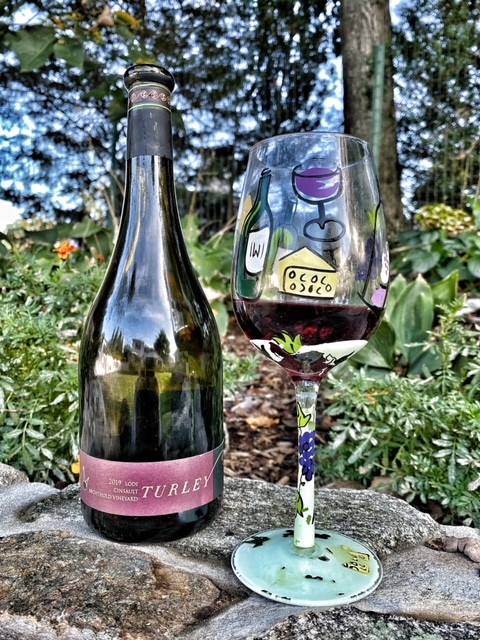
2019 Turley Bechtold Vineyard Cinsault Lodi (12.4% ABV). Wine from one of my favorite producers – Turley. Wine from one of my favorite wine regions in California (and not only in California) – Lodi.
Lodi flies under the radar for a lot of wine lovers. Everybody knows Napa and Sonoma. Californian Pinot Noir aficionados probably know Santa Barbara County. Meanwhile, Lodi is where Robert Mondavi went to high school and where his father run the grape-packing business. Lodi is the single largest AVA in North America, and Lodi is where Napa winemakers go to get their grapes. Maybe most importantly, Lodi is home to a number of old, continuously producing vineyards. Of course, everyone likes to lay a claim to the “oldest vineyard” here and there – however, Bechtold vineyard in Lodi was planted in 1886, and oldest or not, 136 years of continuously producing fruit deserves the utmost respect.
Lodi might be best known for its old vines Zinfandels, but our Monday wine tonight is made out of Cinsault, a grape typically used in Rhône and Provence. Cinsault wines typically offer a fruity and floral profile with some pungent undertones.
2019 Turley Cinsault was made using whole cluster fermentation with natural yeast and aged for about 7 months in used French oak barrels. The result was the wine that delivered that thought-provoking Monday night experience we were talking about.
On the nose, the wine offered fresh berries and a hint of the forest floor. On the palate, there was a delicate interplay of raspberries, sour cherries, tartness, and acidity, all packaged together delicately but firmly, and finishing off with sour cherries and cherry pits, long-lasting and offering an opportunity to enjoy a quiet moment. (Drinkability: 8/8+)
That’s how my Monday night wine was (delicious!). How was yours?
Daily Glass: Yin and Yang
 Obey your inspiration.
Yin and Yang are too big of a concept to casually use while discussing everyday wines. Black and white. Darkness and light. Night and day. Passive and active. There is a lot of meaning behind the revolving black and white semi-spheres, and we would need a few (4, 5, …) bottles of wine to discuss it. So what gives?
I was drinking a bottle of wine for 5 days. Open, pour a little into a glass, drink, hope to be amazed, close, pump the air out, put aside. Repeat. And then I opened a bottle for a Friday night dinner of homemade tacos, and the wine was delicious and approachable from the moment it hit the glass. Yin and Yang, the brain said. This is a perfect title for the post. Who am I to argue?
Yin is a black portion of the circle of life. 2014 Bodegas Riojanas Rioja Gran Reserva (13.5% ABV, $19.99 at WTSO, $49.99 on the web) was the Yin at the moment.
Bodegas Riojanas was founded in 1890 by the Artacho family which had a long winemaking history prior to that. Unlike many other Rioja’s Greats, who set up their wineries close to the train station in Haro, Bodegas Riojanas winery was built in Cenicero, where the grapes grew. Bodegas Riojanas was among the 13 founding wineries behind the Rioja DOC denomination. Today, Bodegas Riojanas farms 250 acres of vineyards and produces a large number of white, red, Rosé, and sparkling wines.
Bodegas Riojanas Gran Reserva is one of the flagship wines. 100% Tempranillo, aged for 24-30 months in the casks, produced in traditional Rioja style. 2014 vintage was rated “good” in the official Rioja vintage classification – the best years are identified as “Excellent”, then “very good”, and then “good” – so we can say that this was an okay year. Traditional style Gran Reserva wines are typically tight and need time – and so was this wine. For 5 days, as I was tasting it little by little, the wine was opening up ever so slightly. Don’t get me wrong – it was drinkable for someone who likes the power and likes to drink super-structured, super-tight wines. On day 5, there was a glimpse of cherries and a cigar box, which was slowly replaced by the tannins on the finish. This is the wine with promise, but we need to wait until the Yin will turn.
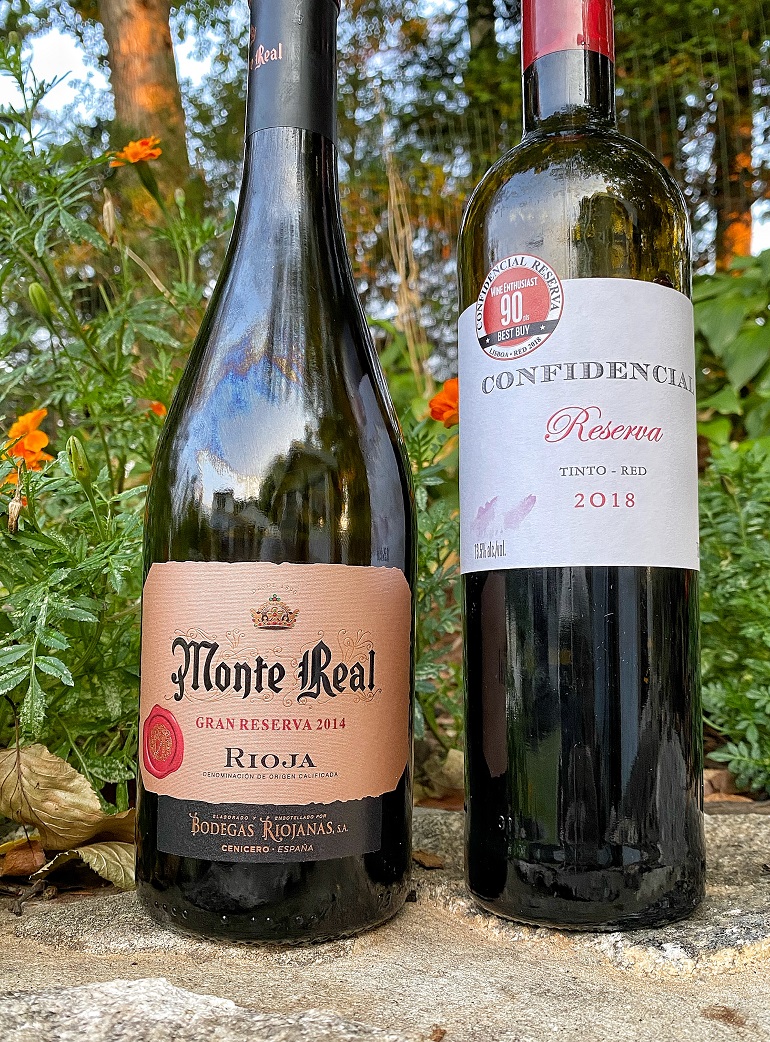
Now, the Yang – 2018 Casa Santos Lima Confidencial Reserva Vinho Regional Lisboa (13.5% ABV, $9.99, 10+ grape varieties, 6 months in the French oak cask).
Casa Santos Lima also has a history that lasts more than 100 years. The company had great success as a producer and exporter at the end of the 19th century. In 1990, the company was restarted, and today 90% of the produced wines are exported to more than 50 countries on 5 continents. Casa Santos Lima produces a wide range of wines in all the regions in Portugal, with a significant focus on providing value.
It is not for nothing this wine is called Confidencial. You might know that I excel and take pride in being a very capable grape sleuth. And nevertheless, as the name says, I was only able to find out that the wine is produced out of more than 10 confidential varieties – nowhere there are any hints on what those grapes might be.
This is not necessarily surprising. Yes, it can be a clever marketing play (humans love mystery), but at the same time, lots of grapes in Portugal are growing as field blends, where the grape grower doesn’t exactly know what grapes are growing in a given vineyard or a given plot – this might be a great idea to simply declare such blend as “confidential”.
Based on my experience with Portuguese grapes varieties, I would think that Touriga Nacional is a part of the blend, with the wild strawberries being a telltale sign. In any case, the wine was delicious with soft and supple wild strawberries and raspberries forming the core, and sage and other garden herbs playing a supporting role. Layered, velvety, and round – perfectly approachable and enjoyable right at this moment. (Drinkability: 8-/8).
Yin and Yang are all about harmony, and things that are changing in life – what was white can become black, and the other was around. The light can bring warmth or it can kill. The darkness can be scary, or it can be comforting.
With time, these two wines can completely change places. The Rioja might become absolutely stunning in 25-30 years., The Portuguese red might be past prime even in 10. The Yin and Yang can swap places. But we don’t know what will happen in the future, and that makes it all fun. Let’s drink to the harmony in life. Cheers!
Pure Pleasure, And How To Express It
Does this glass give you pleasure?
You take a sip of wine. The wine is sublime. It is beautiful. It is complex. The wine solicits emotion – it makes you happy. It makes you moan quietly inside your head, you might extort an “OMG” or a “Wow”, and after a pause, you take another sip. You are not in a hurry. You want to extend this pleasure for as long as possible.
Wine is art. Wine doesn’t leave you indifferent. Wine solicits emotion.
Painting is art. Painting doesn’t leave you indifferent. Painting solicits emotion.
Music is art. Music doesn’t leave you indifferent. Music solicits emotion.
We can consider wine to be a form of art, the same as painting, music, poetry, architecture, and many other human creations which invite an emotional reaction. Do you know what makes wine a unique form of art? Your utter desire to share it.
You can quietly stare at a beautiful painting for a long time, slowly uncovering little details and being in the moment. Even if you stand next to someone else looking at the same painting, 99 out of 100 you are simply focused on your own personal moment.
When listening to the music, even if you are in the concert hall surrounded by thousands, the music is being played only for you and this is how you want to keep it. You can buy a recording and listen to it 100 times. Just by yourself, and you are happy about it.
Have you seen an oenophile get excited about wine? The excited oenophile grabs the total stranger by the sleeve, shoves the glass into their face and says “here, here, you must try this!!!” It is very important for an oenophile to be able to share the joy of the experience with others. There is an ultimate pleasure in sharing your excitement with others, as wine is an art that needs to be shared.
Sharing pleasure is easy in person. Have you tasted magnificent, life-altering wines in the group? If you had, you probably noticed the collective “ohh”, rolling the eyes, unprompted nodding, maybe a muttered “oh my god”, and then silence. The silence of the greatness of the moment, slowly settling in.
This in-person sharing of the pleasure is simple, and kind of just happens on its own. The real challenge comes when you decide to share that ultimate pleasure with the rest of the world.
So how can one express pure pleasure?
A typical way to describe the wine is via so-called tasting notes. Such tasting notes are often called “technical notes” as they usually describe the wine in terms of appearance, aroma, bouquet, and finish – using analogies such as “brickish color”, “smell of mushrooms”, or “taste of dark cherries”. The wine is described in the terms which the wine drinker is supposed to relate to – and it is a great review if you can relate to all of the terms used without trying to figure out what is Cascarilla and how it actually smells, or how Jabuticaba tastes like. What is usually not found in the tasting notes is the emotion – how this wine might make you feel; will you scream with joy when you will take a sip? Yes, I get it. Even the aromas and flavors are subjective. The emotion which you will experience while drinking the wine is yours and yours only – the person next to you might not experience the same enlightenment – and nevertheless, even the hope for greatness is worth sharing.
Can wine pleasure be expressed in the words by professional wine critics? You be the judge of it. Here is the collection of tatsing notes for the 1966 Domaine de la Romanée-Conti La Tâche Grand Cru. At this link, you will find the reviews from Robert Parker, Jancis Robinson, John Gilman, and others. Here is the best excerpt in my opinion. John Gilman: “La Tâche ‘66 is deep, full and opulent on the palate, with a grandiose delivery of thick, perfumed fruit, excellent balance, plenty of power, great focus and finesse, and an incredibly long, softly-tannic and astoundingly complex finish.” This might be the best description out of the six present, but does it convey the emotion?
Does this wine give you pleasure?
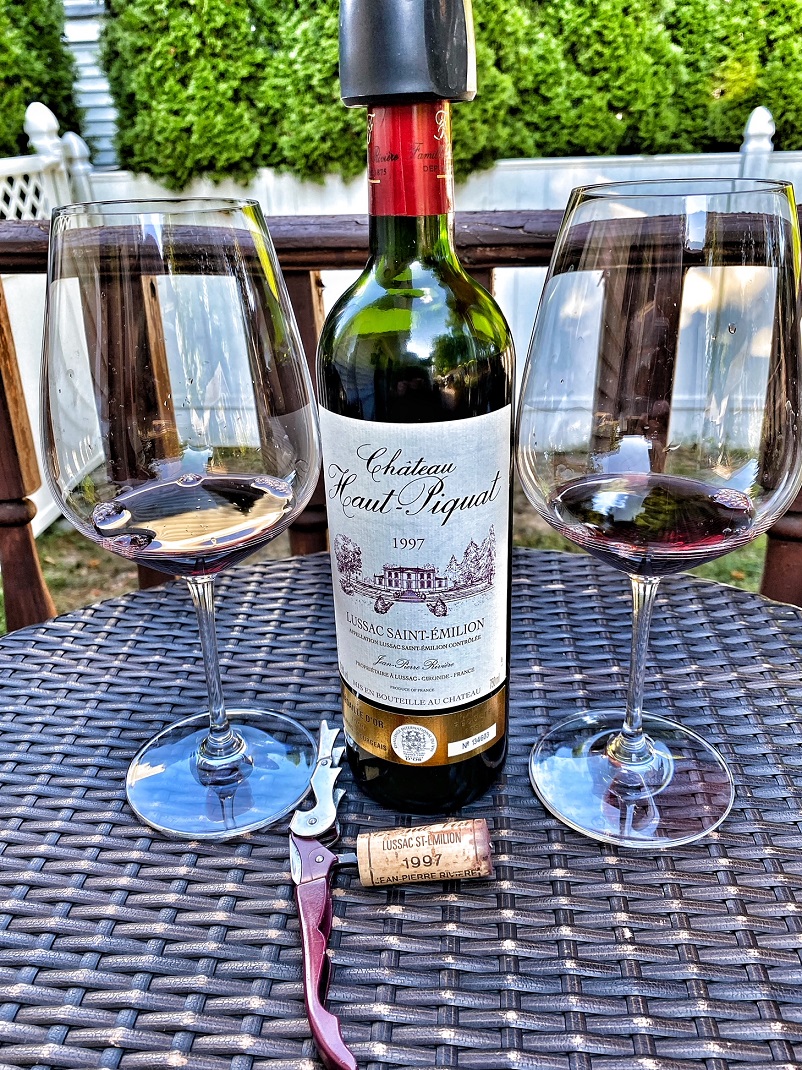
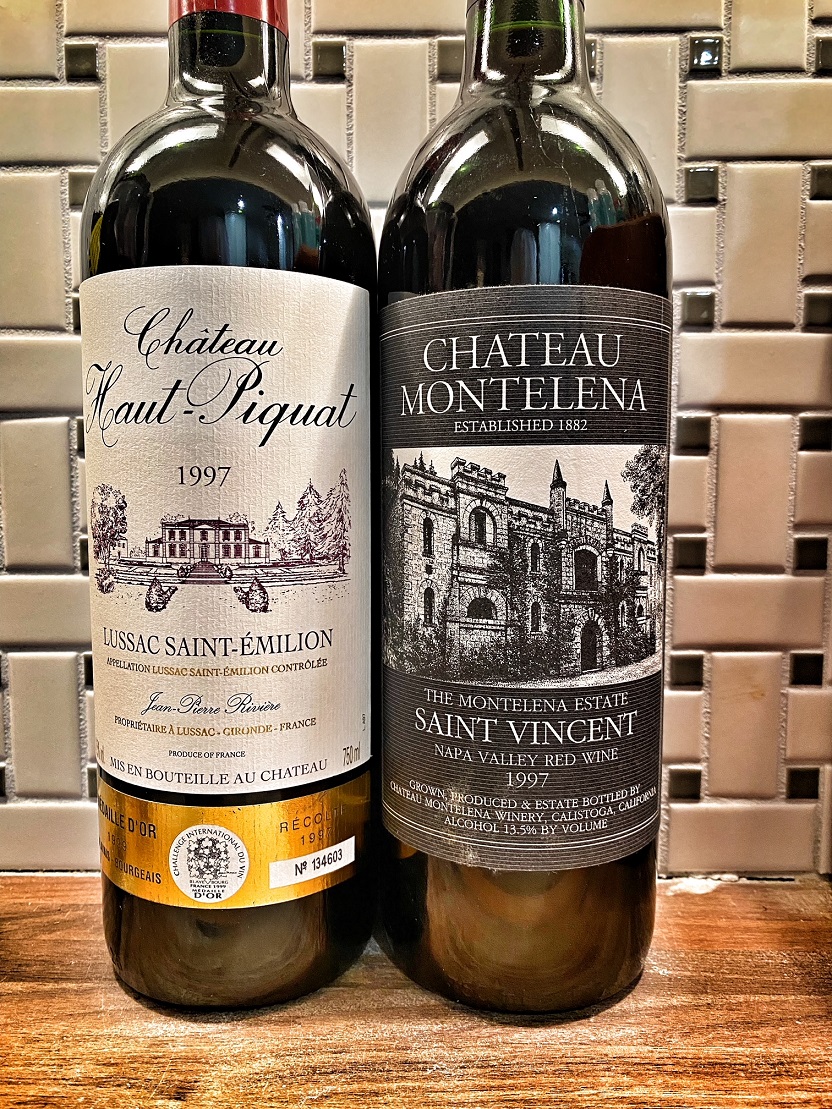
A few days ago, I had the pleasure of drinking two wines from the 1997 vintage (1997 is a special year for our family). These two wines really prompted this post. First, I opened the 1997 Château Haut-Piquat Lussac Saint-Émilion (12.5% ABV, 80% Merlot, 15% Cabernet Sauvignon, 5% Cabernet Franc). The wine was somewhat of a recent find at the Wine Exchange – after getting an email offer to buy 1997 Bordeaux for $19.99, I had no option but to get a few bottles. I was happy to see the cork coming out in its entirety with no issues. I was ready with the decanter, but the wine in the glass was quite approachable. After the initial grippy tannins dissipated in 20-30 minutes, what was left in the glass was an absolutely sublime beauty. You see, this is where the challenge lies. Here is the technical description from the Wine Exchange: “a wine that still possesses a youthful charm as there is something to be said for ex-chateau. A beautiful plum/garnet color with very little lightening for its age. This 1997 is full to medium-bodied, showing lots of forest floor, roasted herbs, cedar, tobacco, black cherry, blackcurrant, and new saddle leather. It is opulent and is just entering its plateau of full maturity. The tannins are soft and subtle with an elegant seamless finish. ”
The description is perfectly fine, but it doesn’t help me to express my emotion. The mind singing with every sip. Pure joy in each and every sip. Enough pleasure in every sip to have the nerve enough to tell my wife, who was enjoying the wine with me “this is almost as good as sex”. A personal perspective for sure, but yes, this was the wine.
I didn’t have many expectations for 1997 Chateau Montelena Saint Vincent Red Wine Napa Valley (13.5% ABV, blend of Zinfandel, Primitivo, Sangiovese). Chateau Montelena is absolutely legendary with its role in the Judgement of Paris, especially if you had an opportunity to see the movie Bottle Shock. But Saint Vincent is an eclectic blend, produced only for 5 years from 1995 till 1999, and it is not given that this type of wine can age for 25 years. While very different from the previous Bordeaux in its profile of cherries, eucalyptus, and herbs, it had such a lip-smacking, savory and satisfying bouquet, that every sip was demanding to be followed by another sip.
Do you want a second glass?
I have no idea how to convey the pure pleasure the wine can bring. Maybe emotion is the key. There are lots of good wines out there. The wines you are happy to drink any day every day. Maybe it is the excitement that needs to be measured. Or maybe this is simply in the unyielding desire to share this pleasure with the world. The act of telling the world how amazing the wine was, and hoping that everybody will see it that way too.
Let’s share our little joys with one another. And if you know how to convey this pure wine pleasure, please let me in on that secret.
Daily Glass: Winning and Learning
Sometimes you win, and sometimes you learn.
You never lose – learning is the opposite of winning – I think this is a better approach to life, would you agree?
I love aging my wines. The popular wine press tells people that 95% of the wines in this world are meant to be consumed shortly after purchasing. “Absolute majority of the wine is not meant to be aged,” the message says. I don’t want to obnoxiously invalidate all the expert opinions, but the subject of wine aging is a lot more complicated than the simple statement portrays.
Lots of factors play a role. The wine itself is probably the most critical factor. White wines generally don’t age too well. To be more precise, percentage-wise, a lesser number of white wines can age well compared to red wines. But this doesn’t mean that all red wines age well. For example, red Cotes du Rhone typically don’t age for longer than 4-5 years.
I wish there was an easy method to tell us, wine lovers, that “this wine will age for 30 years”, but “this one got only 10 more left”. There is no such method, however, so we need to rely primarily on our experiences. I’m not trying to disqualify all of the wonderful advice we receive from the wine critic and publications – but it would be rare to receive an aging recommendation there unless the wine is deemed of a “collector” level – which pretty much means that it will not be really affordable.
At this point, you might wonder why is all this commotion with the aging of the wines. Simple. Wine is a living thing. The evolution of the wine continues in the bottle. It is a general hope that wine can improve with time, evolve, become more complex and multidimensional.But the wine can’t evolve forever – at some point it starts “turning”, losing its delicious, attractive qualities.
It is important that the wine drinker can appreciate the beauty of the aged wine – it is not for everyone. I don’t mean it in any disrespectful way – this is simply a matter of taste. One of my most favorite examples is the blind tasting of a few Champagnes which took place during Windows on the World wine classes. After blind tasting 4 Champagnes, the group was asked to vote for their favorite Champagne. Champagne #4 got almost no votes, it was clearly the least favorite of the group of 100+ people. While revealing the wines, Kevin Zraly, our wine teacher, said “and this is why, people, you should not drink vintage Champagne”. Bottle #4 was Dom Perignon – if people would see the label before voting, you know how that would work (”drink up, honey, it is French”). And Vintage Champagne is nothing more than just an aged wine. It is just a matter of taste. The same story goes for food. For example – I love fresh oysters, and I have friends who wouldn’t put an oyster into their mouth even if this will be required to save their own life. Just a matter of taste.
But for those of us who like aged wines, that elusive quest becomes an obsession. I love the Italian term “vino da meditazione”, which applies to the wines which make conversation stop upon the first sip, and puts the whole group of oenophiles into a quiet, self-reflective state. The silence at the table becomes not deafening, but instead a very comfortable one. The silence nobody wants to break.
Okay, such amazing encounters are possible but truly rare. But the pleasure of drinking the well-aged wine is real, and this is what we are seeking. And as we don’t have the scientific method of predicting the peak of enjoyment for a given wine, we have to rely on our own experience. Which takes us back to winning and learning. When we experienced well-aged wine, we clearly won. And when the wine with age doesn’t deliver the pleasure, this is where we learn.
It is not so binary, of course. The point is that no matter what happened, we learn something. When you taste a random but amazing $10 bottle of California red blend (Toasted Head) with 15 years of age on, you learn that inexpensive wines can age too. When you taste 2002 Barolo (Fontanafredda) 10 years after release, and you see that the vintage chart declares this vintage as literally horrible, but the wine tastes good, you learn that the producer matters more than the vintage. When you taste two bottles from the same producer and the same vintage, but you love one of them and can’t stand another, you learn that bottle variation is real and that you have to always manage your expectations.
This whole rambling about winning, learning and aging was prompted by a few wines I opened last week.
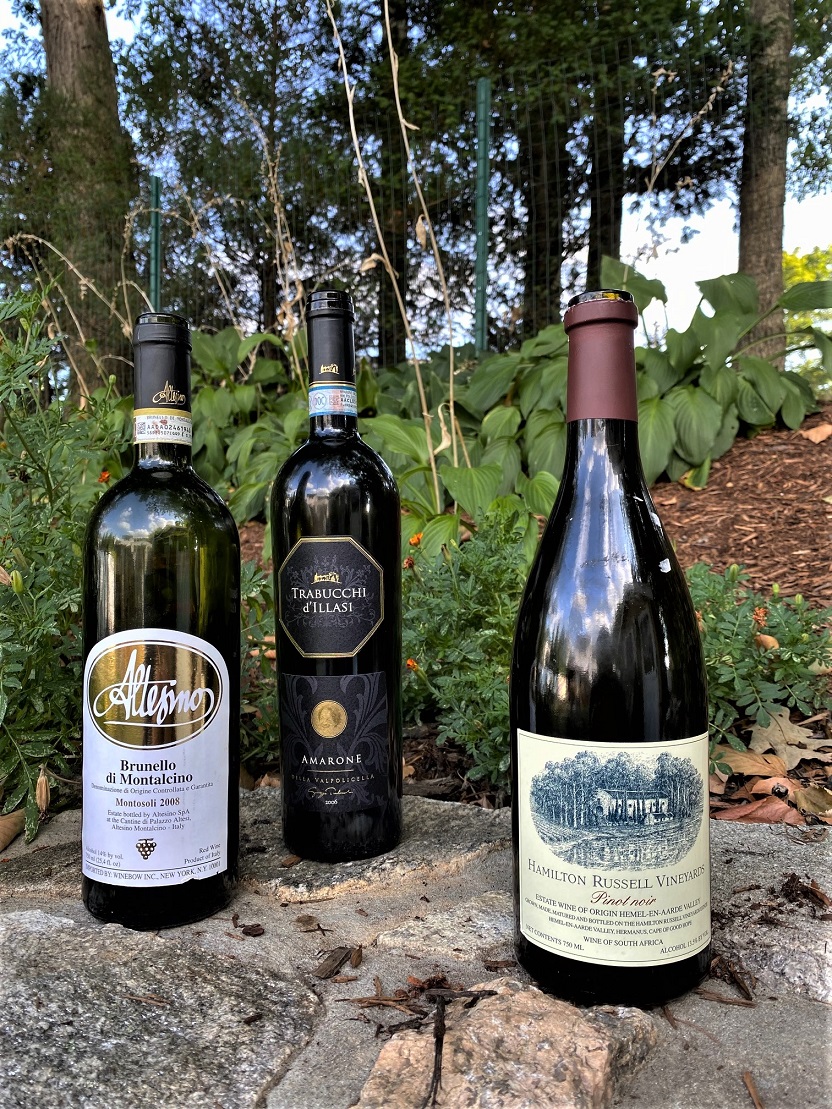
First, the learning part. 12 years ago we did the Pinot Noir blind tasting with friends, with a very unexpected outcome – 2008 Hamilton Russell Pinot Noir from South Africa was the best wine in that blind tasting. I loved the wine so much that I went and got a bottle to keep. Over the years, I made many attempts on the life of this bottle, until the last weekend I decided to share it with a friend. Upon opening the wine was reminiscent of the good Burgundy, with the nose offering some plums, iodine, and smoke. But the wine quickly succumbed to the tertiary aromas of dry herbs and maybe a hint of dried fruit, and while my friend really loved it, this was a complete loss learning in my book.
Then another friend was stopping shortly after his birthday. He always liked the wines, but recently started getting really “more into it”. He was stopping by for the dinner, and when we were talking about wines a few days prior, he mentioned that he started liking the Brunello and Amarone wines. There is no happier moment for the oenophile than to learn what the guest desires to drink – the cellar is instantly paraded in the search for the best and the most appropriate bottle.
I don’t know how I came into possession of the 2008 Altesino Brunello di Montalcino Montosoli, I can only guess I got it as a present. This single vineyard Brunello di Montalcino was absolutely spectacular – beautiful cherries on the palate – not the fresh and crunchy ones, but more subdued, more elegant, eloped in the sage and other herbal aromatics. The wine was spectacular when we opened it, and when I finished the last drop 2 days later (wine was kept in the bottle with the air pumped out), I had a clear feeling of regret as the wine was not gone, but instead was still fresh and even more complex, with a promise of becoming the Vini da meditations in 10 years, same the 1999 Soldera had become for us – alas, I don’t have another bottle…
And then my pet peeve – you know how much I love Amarone. I got a few bottles of the 2006 Trabucchi d’Illasi Amarone della Valpolicella from WTSO 7 years ago. This was my last bottle, and boy it didn’t disappoint. It was absolutely beautiful in its finesse and impeccable balance all the way through. Dried fruit on the nose, powerful, well-structured wine on the palate, with more of the dried fruit, cherries, plums and herbs, and with good acidity, perfect balance and delicious bitter finish. It is not for nothing Amarone means Great Bitter – and there was this pleasant bitterness on the finish, something hard to find in most of the Amarone wines.
Here you are, my friends, my story of winning and learning. Three aged wines, two of them delicious, two that could age for far longer (learning!). One learning experience – but who knows, maybe it was only that particular bottle. Moving on.
What did you win and learn lately?
All You Ever Wanted To Know About Wine Education
Wine is an agricultural product.
Wine is clearly a unique agricultural product.
When you buy an apple, pear, cucumber, or eggplant, you really need to know nothing to make your selection – as long as it looks good and fresh, that’s all you need to know.
When you sell an apple, pear, cucumber, or eggplant, you don’t need to impress anyone with information – as long as whatever you sell looks good and fresh, that’s all which is needed.
When you are consuming an apple, pear, cucumber, or eggplant, you still need to know nothing to really enjoy it, as long as it tastes good and fresh.
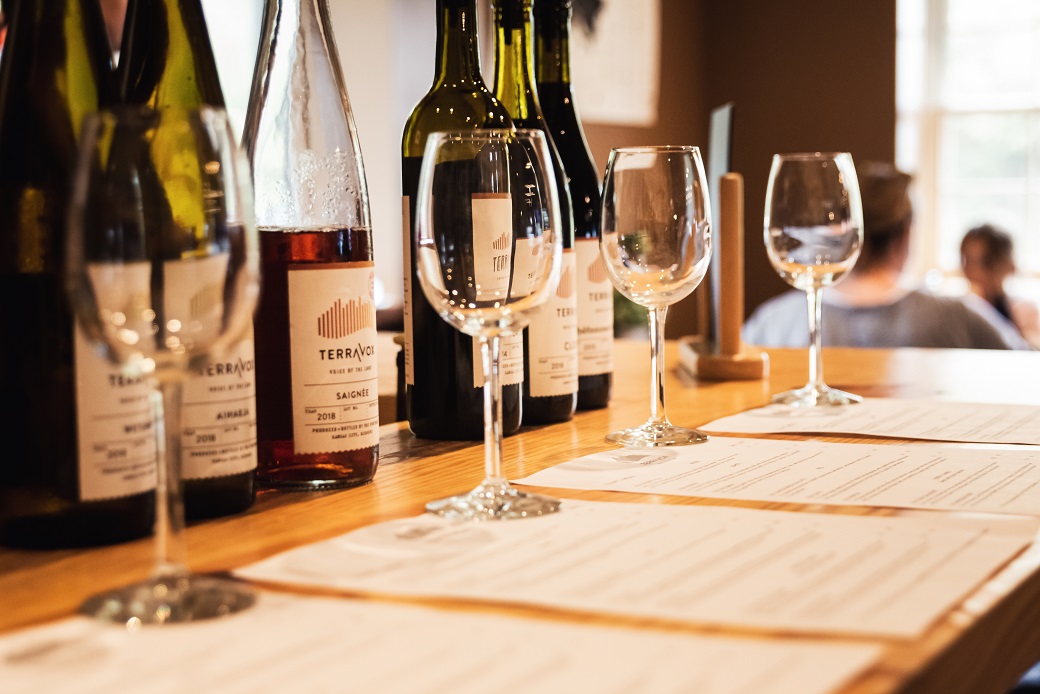
But when it comes to wine, knowledge is power, whether you are buying, selling, or consuming – where this wine is from, how was it made, for how long it can age, what is the best food to pair it with, what is the best way to serve it, and so on. On one side, you really don’t need to know anything about the wine to be able to enjoy it, but the uniqueness of wine is in the fact that the more you know about the wine, the more you might be able to enjoy it.
When it comes to wine education, there are lots and lots of resources – books, podcasts, websites, blogs. And then there is formal wine education.
What prompted this post was an excellent article on the Rack and Return website which provides an in-depth overview of all available formal wine education options. Here is what it covers:
- WSET – Wine and Spirit Education Trust
- WSG – Wine Scholar Guild
- CMS – Court of Master Sommeliers
- IMW – The Institute of Masters of Wine
- SWE – Society of Wine Educators
- ISG – International Sommelier Guild
- Regional Wine Study Centers
- Universities and Colleges
Without further ado, here is the link for you to the original article:
https://rackandreturn.com/the-definitive-guide-to-wine-education/
Enjoy!
Rethinking Grenache with Wines of Cariñena
I love how the wine world affords us endless learning opportunities – as long as we are willing to learn, of course. Wine is an indelible part of the culture, thus learning about wine extends our understanding and appreciation of the world.
More often than not we simply focus on what’s in the glass – is it tasty, what is that peculiar flavor, do I want another sip or another glass. That is exactly how it should be – after all, wine is just grape juice. But if we are willing to take a step back, think about the wine in the glass, maybe read an article somewhere online or attend a webinar (which usually doesn’t cost anything), in addition to getting hedonistic pleasure from what is in the glass we might also get fascinated by the history and its strong connection to the wine.
The webinar I’m talking about here today took place almost a year ago (yes, I already confessed that I have a lot of catching up to do), but it is still worth talking about.
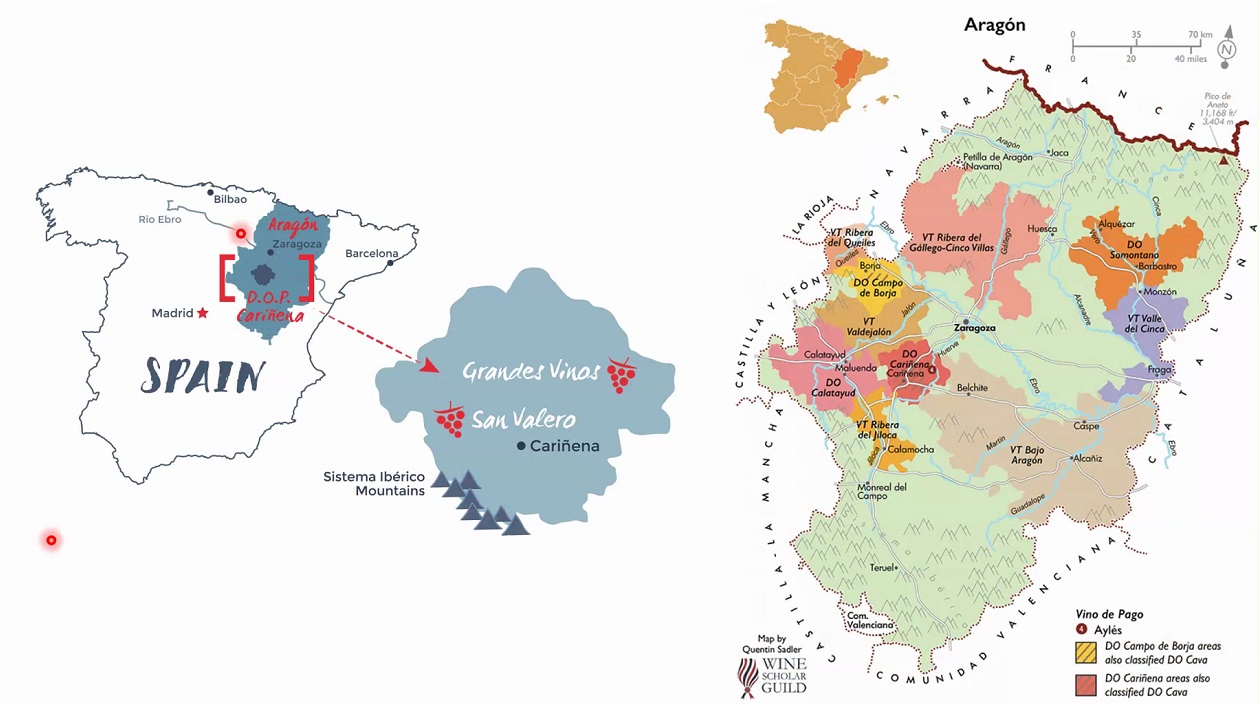
Cariñena is not the oldest winemaking region in the world, but with the first vineyards planted by the Romans around 50 BC, it is definitely old enough. As you can see on the map, Cariñena is located in the Aragon region in Spain. Before Spain became Spain in the last quarter of the 15th century, the Kingdom of Aragon held tremendous power in the 14th-15th centuries over a large portion of present-day eastern Spain, parts of what is now southern France, the Balearic Islands, Sicily, Corsica, Sardinia, Malta, Southern Italy and parts of Greece (source: Wikipedia). While this all should interest the historians, this is also relevant to our wine story. In 1415, King Ferdinand I of Aragon declared a preference for Cariñena wines “above all others.” The red wines of Cariñena were made out of Grenache, better known in Spain as Garnacha, and also known under one of its early synonyms as Tinto Aragonés (red of Aragon).
An interesting sidebar here for you: Sardinia claims that Grenache, locally known as Cannonau, originated in the island. It is entirely possible that it is actually true, and maybe Grenache made it from Sardinia to Cariñena where it became so famous – we have to leave it to the grape historians and detectives to unravel.


Going back to the Aragon Kingdom, what I never realized is that political influence is not limited to laws, money, and goods – the vines are also a subject of political influence. The Kingdom of Aragon presided over its territories and pushed down not only the laws but also grapevines, helping to spread Grenache into all kingdom-controlled territories. Grenache plantings appeared all over Spain, in Souther Rhone and Languedoc, and other areas. Way later, in the 18th century, Grenache also made it to Australia and South and North America, to become one the most planted red grapes in the world.
What is interesting about Grenache is that it doesn’t have its own varietal character. Cabernet Sauvignon and Merlot have bell pepper and cassis. Syrah has its signature black pepper. Grenache doesn’t have its signature profile. It perfectly adapts to a place, becoming a conduit for the terroir. For example, if you ever had Grenache from Washington (No Girls Grenache would be an excellent specimen), and some of the most classic Spanish Grenache such as Alto Moncayo, you would know the tremendous difference in taste profile – Grenache from Washington perfectly conveys the “liquid rock” of mostly volcanic soils, where Alto Moncayo would offer layers of dark chocolate and succulent berries – literally two wines from the different planets.
Source: Cariñena Wines
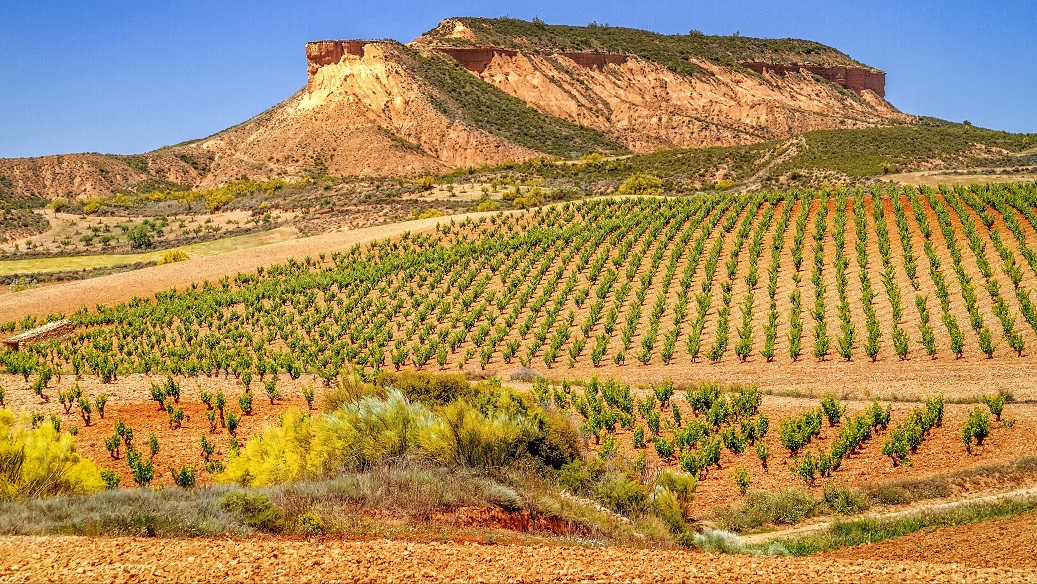
Cariñena is a perfect region for the grape growing – protected by the mountains, it offers long dry summers, cold winters, and very little rain, making the grapes work hard. Cariñena is also a mountainous region, with the majority of the vineyards located at the 1,300 to 2,800 feet elevation – that creates a significant diurnal variation which helps grapes to concentrate flavor. This rather harsh climate also plays a role of a great defender against vine diseases – while most of Europe was devastated by phylloxera in the late 19th century, Cariñena was largely unaffected.
A few more interesting facts about Cariñena. In 1909, King Alfonso XIII of Spain awarded Cariñena a city charter for their growers’ role in helping European vineyards recover from the phylloxera blight. The quality of Cariñena wines was also recognized in modern times when in 1932 it became the second wine region in Spain to receive the status of DO (Denomination of Origin) – the first one was Rioja. And Cariñena is the only region in Spain that has an eponymous grape – Cariñena, better known in the rest of Spain as Mazuelo and Carignan in the rest of the world. Cariñena is another native red grape grown in that region.
In 2016, Wine Enthusiast named Cariñena The Region To Watch, which since then became a slogan for the region, focusing on promoting its wines around the world.
As part of the webinar, I had an opportunity to taste two wines that are well representative of the capabilities of the region.
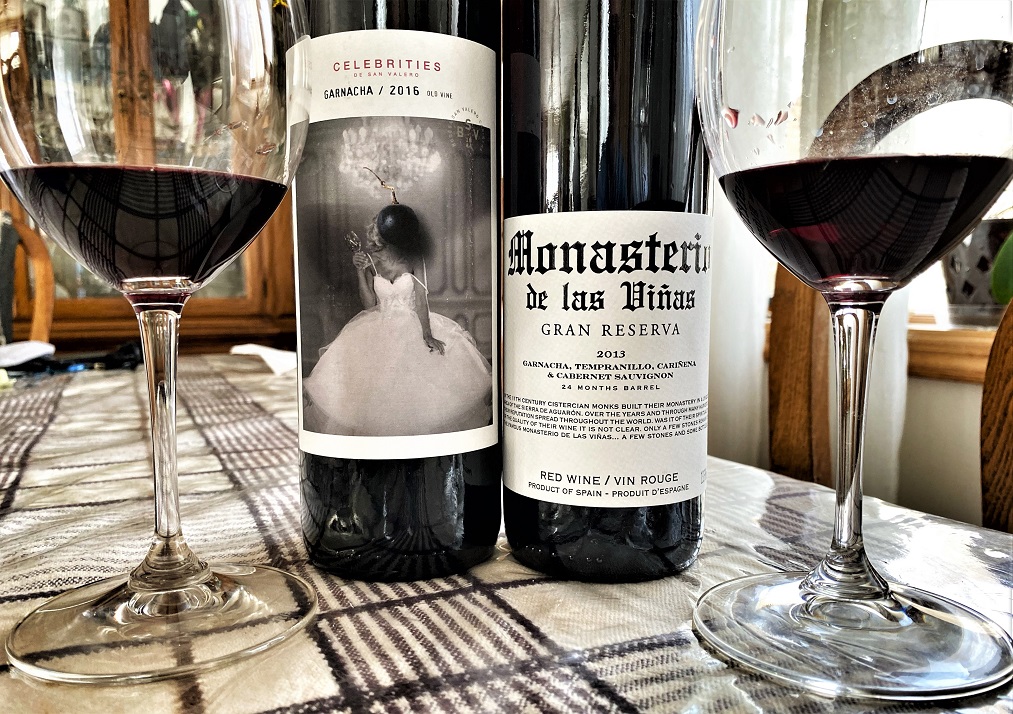
First wine was produced by Bodega San Valero. Bodega San Valero just celebrated 75 years, formed in 1944 by 66 partners. Today, Bodega San Valero works with 500 growers who farm 9,000 acres of vineyards, which represents 30% of the Cariñena DO. They also use 20,000 French and American oak barrels to produce the wines, and 100% of production is done on the property. I wrote about a number of Bodega San Valero wines in this blog, their Particular Grenache being one of my favorite Grenache renditions. This time, I had an opportunity to taste the 2016 Bodega San Valero Celebrity Grenache Old Vines Cariñena DO (14% ABV, $12.99). The wine had blackberries and chalk on the nose, with a hint of dried herbs. After about an hour in the open bottle, the wine became round, with dark fruit, strawberries, and blackberries, pronounced minerality and a touch of chocolate, crisp acidity, and mouthwatering finish. This was rather a food wine, but still nice and easy to drink.
While Grandes Vinos is taking its roots from a number of Cariñena cooperatives beginning from the 1950s, it was officially born in 1997. The cooperative comprises 700 winegrowers, farming more than 11,000 acres of vineyards spawning over 14 Cariñena districts and growing 10 grape varieties. Grandes Vinos produces wine under 9 different wine ranges. One of those wine types is called Igulp and it is a lightly sparkling grape beverage distributed in beer bottles – I would love to try that.
The wine I tried this time was from the Monasterio de las Viñas range. Monasterio de las Viñas pays homage to the actual monastery built by Cistercian monks in the 11th century, in a privileged place of the Sierra de Aguarón, well known for both their spirituality and high quality of their wines.
2013 Monasterio de las Viñas Gran Reserva Cariñena DO (13.5% ABV, $21.99, blend of Garnacha, Tempranillo, Cariñena, and Cabernet Sauvignon, 24 months in the barrels) had an uplifting, vinous nose, inviting and complex – it was creating great expectations about the wine. On the palate, the wine offered red and black fruit, round, good minerality, perfectly balanced, and perfectly integrated. Easy to drink and dangerous.
This was a great learning experience, making me take another look at the wines and try to see just past of what is in the glass. Let’s drink to the learning experiences of our lives, and may you never stop learning. Cheers!
2021 Top Dozen
 Here we go – a culmination point of the year in wine. Whatever 2021 was, it had no shortage of amazing, memorable wines.
Yes, my wine experiences were a little skewed, as you will see from the list, but hey, it just happened to be so.
You can click on any and all the wine names below if you want more information about the wines – I’m only offering brief impressions in this post.
Let’s dive into it, shall we?
12. 2018 Lenné Estate Cinq Élus Pinot Noir Yamhill-Carlton AVA ($85) – Superb Pinot Noir from Oregon. Lots of power, but amazingly balanced now, and has great aging potential. A world-class wine.
11. Osborne Palo Cortado Capuchin VORS ($90?) – This was my favorite sherry from the recent Sherry seminar in New York. Dry fruit, salinity, sapidity, ultra-complex with every little element perfectly in check.
10. 2020 Field Recordings Domo Arigato (Mr. Ramato) Skin Contact Pinot Grigio Central Coast (12% ABV, $25) – I’m a big fan of skin-contact wines (call them orange if you want), and this wine was somehow magical – two of us finished a bottle while talking, and when the bottle was empty, we both shared most sincere amazement – how is that empty? Was someone invisible quietly helping us? Just wow.


9. 2013 Lynmar Estate Chardonnay Russian River Valley (14.5% ABV, $30?) – a perfectly Californian, with a good amount of vanilla and butter, in your face and unapologetic. Beautifully capable to match the mood and deliver what you crave.
8. 2004 Zýmē Kairos Veneto IGT ($NA) – sigh. My last bottle. The closest I got so far to Quintarelli. I opened this bottle to celebrate OTBN (Open That Bottle Night) 2021 – a stunningly beautiful concoction. I’m sure it had at least another 10 years of life left, but hey, no regrets.
7. 2018 Terra Pacem Tempranillo Rogue Valley (14.2% ABV, $34) – This wine spurred a discussion with a fellow wine writer, Jeff Burrows – how should unadulterated Tempranillo taste? Typical Spanish Tempranillo is rarely made without oak. This wine seemed to be pristine and clean, and we agreed that this might perfectly be a textbook Tempranillo example.
6. 2019 Troon Vineyard Estate Syrah Applegate Valley ($35) – Speaking of unadulterated grape expressions – this Syrah was exactly as I always imagine it to be – complex, earthy, and perfectly peppery. Organic, biodynamic, and precise. A pleasure.
5. 2015 Youngberg Hill Vineyards Nicolette’s Select Pinot Noir McMinnville AVA (14.1% ABV, $85) – Pinot Noir overload in the Top Dozen? Impossible. There is never enough of the wines of such pristine beauty. This wine has everything you expect from Pinot Noir – plums, cherries, violets, a firm frame, and finesse, lots of finesse.
4. 2018 Le Cadeau Vineyard Chardonnay Willamette Valley (14.1% ABV, $45) – Le Cadeau was probably the best Oregon Chardonnay I tasted this year, even though deciding on this wine for the Top Dozen list was not simple. It really represents a world-class level of Oregon Chardonnays which now offer outstanding consistency – you can count on vanilla, apples, a hint of honey, and an impeccable balance. A pure joy.


3. 2007 Chappellet Pritchard Hill Napa Valley Cabernet Sauvignon ($NA, $289 for the 2017 vintage) – in a word, amazing. This was California Cabernet Sauvignon which everyone wants to drink. Classic cassis intertwined with hedonistic pleasure.
2. 2011 Gran Enemigo Cabernet Franc Single Vineyard Gualtallary Argentina ($93) – if I would call this wine “bloody brilliant”, would that make me a vampire? Upon opening, this wine was really unmoving. On the second day, this wine was a God’s nectar, bold, concentrated, layered. Incredible.
1. 2019 Battle Creek Cellars Amphora Series Carbonic Red Blend Oregon ($75) – pure, clean, unadulterated pleasure. Oh yes, I already used these words before. You can call me a bad writer, I will be okay with that. But I experienced the joy this wine delivers – and there is a good chance that you did not. Find it, try it – then we will see it an eye to eye.
Here you have it – Talk-a-Vino Top Dozen Wines of 2021.
What were your top wines of 2021?
And Happy New Year 2022!!!
Passion and Pinot Updates: Youngberg Hill Vineyard
I virtually met with Wayne Bailey of Youngberg Hill Vineyards in September of 2016. Now, 5 years later, I was able to actually shake his hand, listen to the stories face to face and taste the latest wines.
We arrived at the winery in the morning and went on to meet Wayne at the winery building, which also serves as Bed and Breakfast. The views from the terrace of that building were simply incredible – I walked around trying to snap as many pictures as I could.
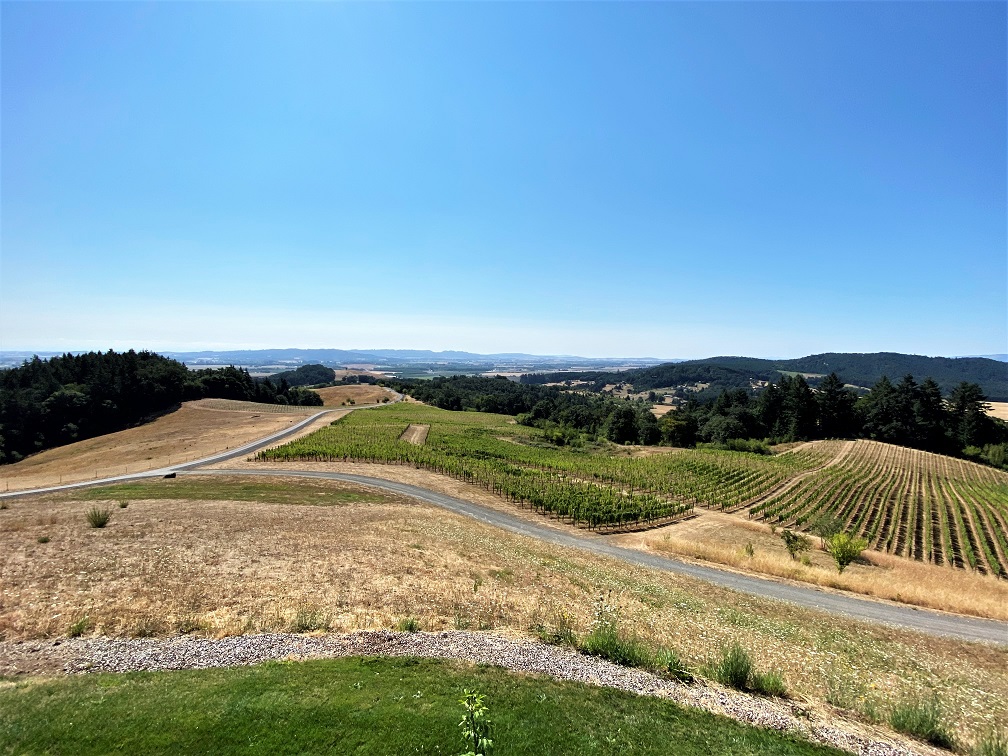
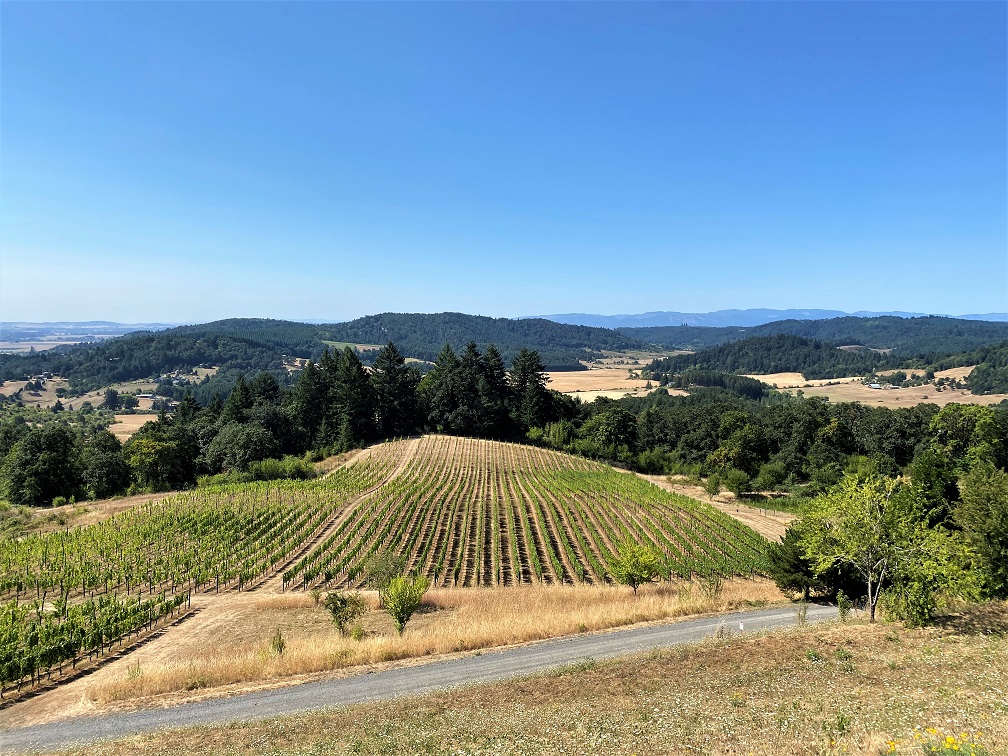
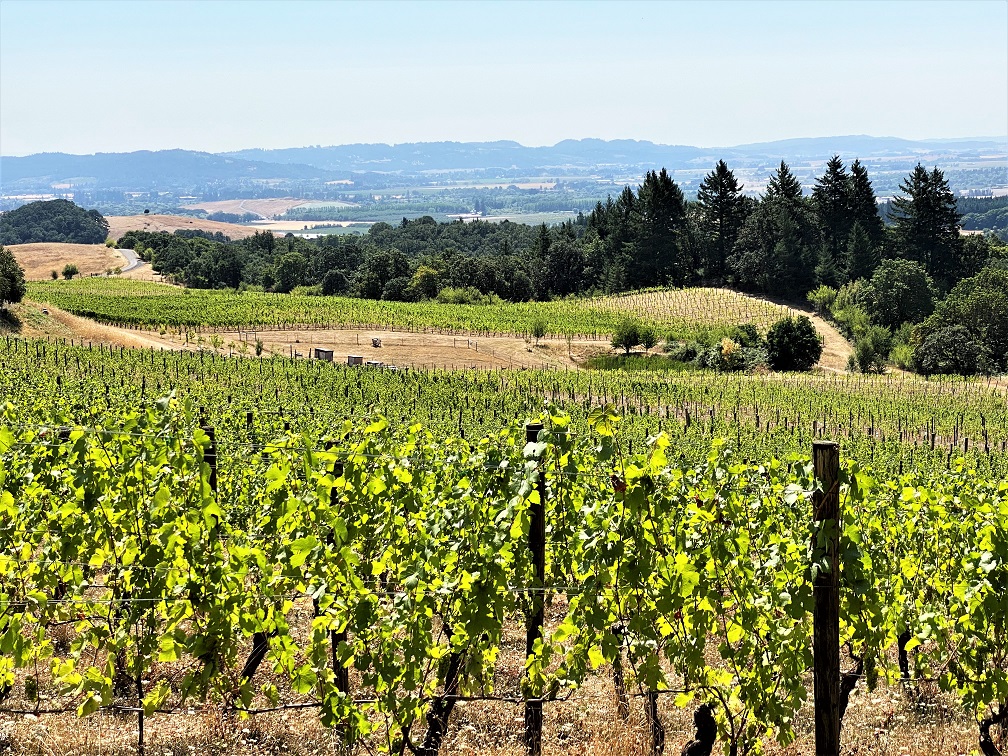
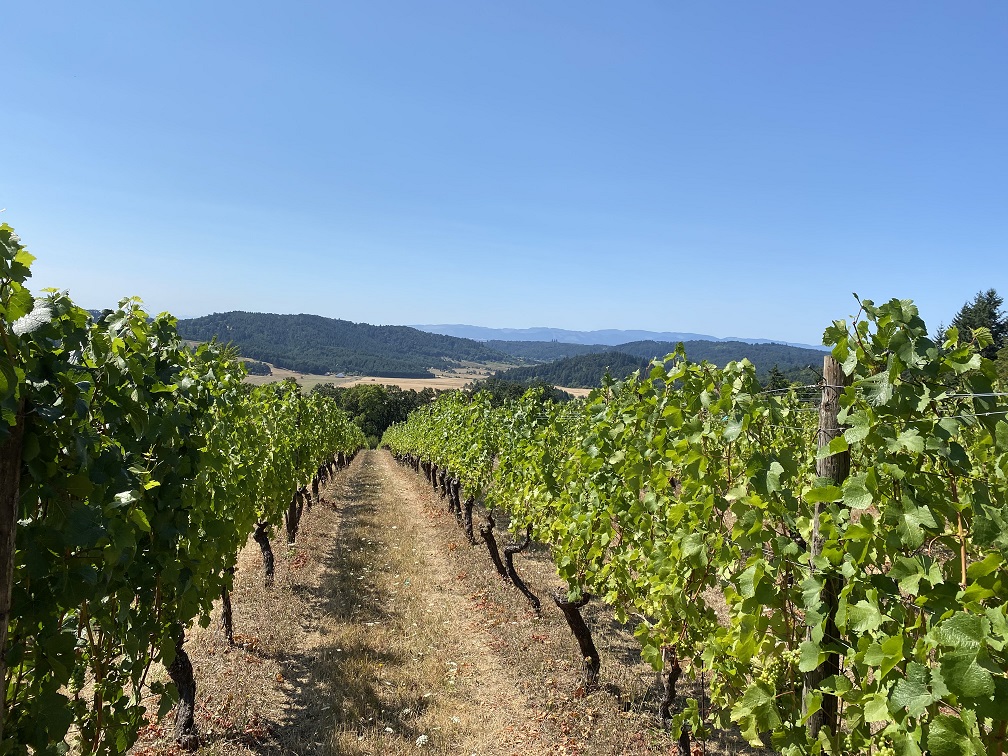
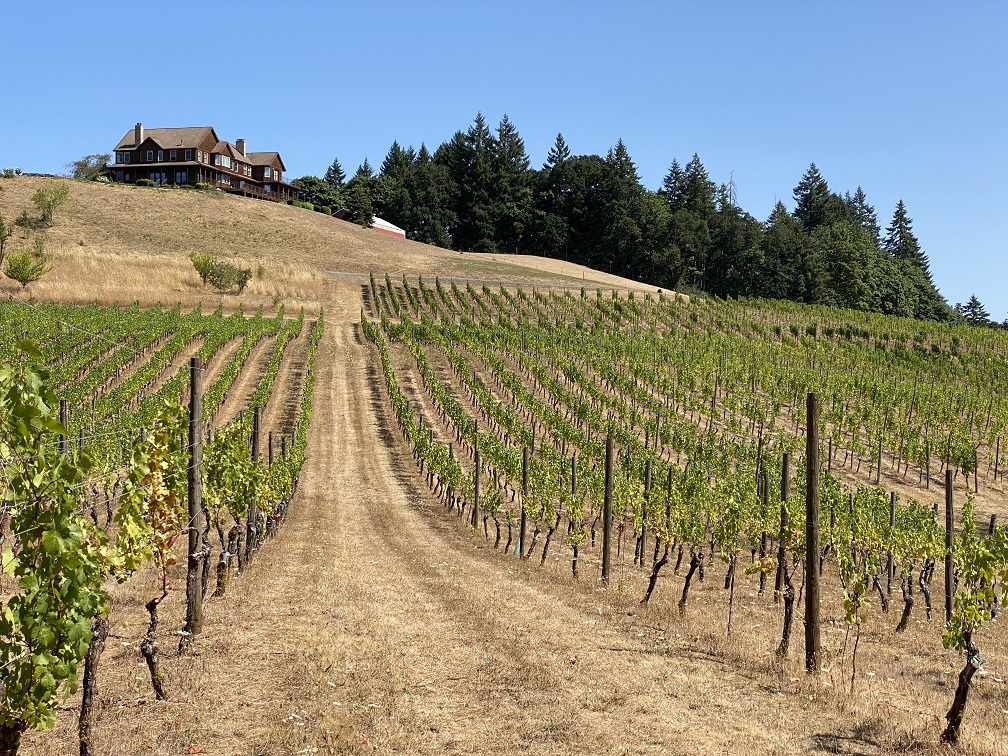


After meeting Wayne, we went on a tour of the estate. Actually, we drove around the vineyards in the baggie which Wayne was driving. Again, more of the beautiful views all around. We also got to meet a few of the cute animals which call Youngberg Hill home.


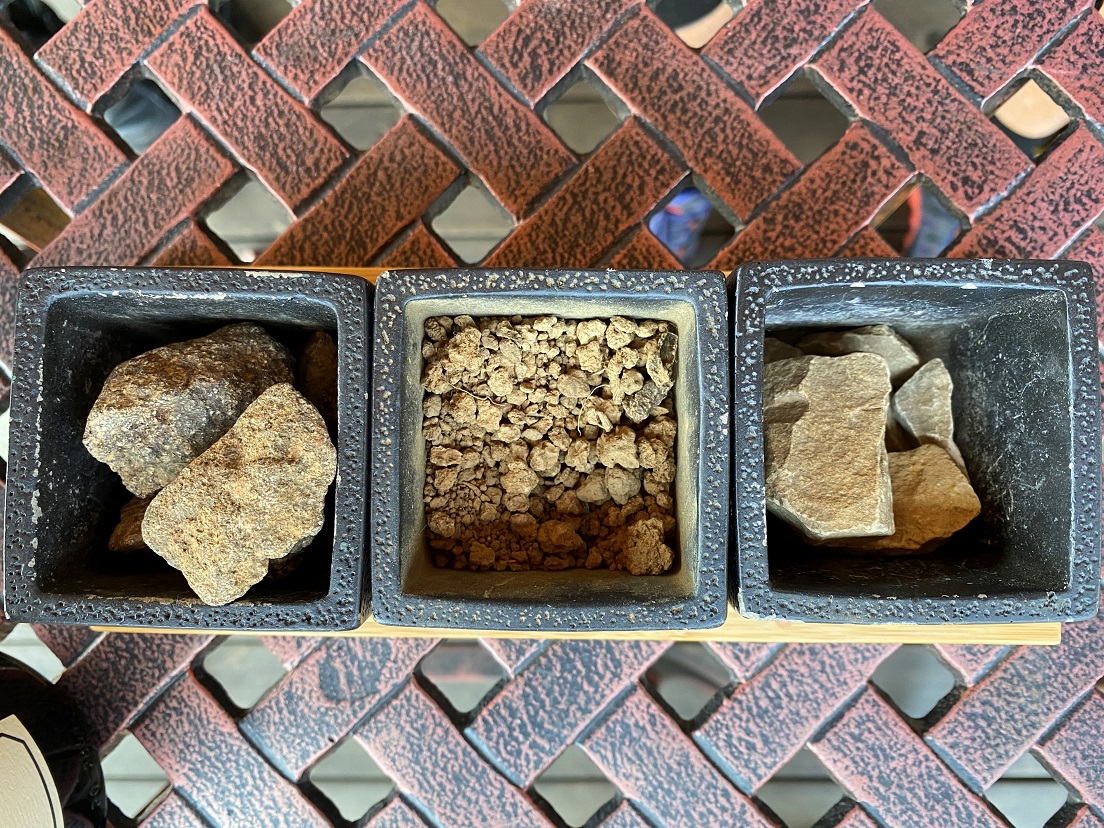
At the Youngberg Hill estate, it is all about the Bailey family – Wayne, his wife Nicolette, and daughters Natasha, Jordan, and Aspen. The Youngberg Hill vineyards were first planted in 1989 when the estate was founded, 12 acres of Pinot Noir vines. These 12 acres are divided into two blocks – 7 acres of Natasha block at the altitude of 600 feet on marine sediment soils, and 5 acres of Jordan block on volcanic soils at the altitude of 800 feet. There is 2 degrees difference in average temperatures between these two blocks, and as the Jordan block is a little bit cooler, the grapes usually ripen later than the ones on Natasha Block, with about 10 days difference in pick time.


Aspen block was first planted in 2006 with 5 acres of Pinot Gris. In 2014, half of the block (2.5 acres) was grafted over to Chardonnay. In 2008, Bailey’s block was planted with 3 acres of Pinot Noir, at 700 feet altitude and predominantly volcanic soils.
When we spoke back in 2016, 20 acres of vineyards were planted on the 50 acres estate. I asked Wayne if he has any plans to add additional plantings, and got a simple “no” answer. Well, I guess the old adage of “never say never” is perfectly at play here, as in 2018, 3 acres of Wayne’s World block was planted with two more clones of Pinot Noir, bringing a total to 5 clones, if I’m not mistaken. This block was planted mostly on marine sediment soils at an altitude between 500 and 600 feet.
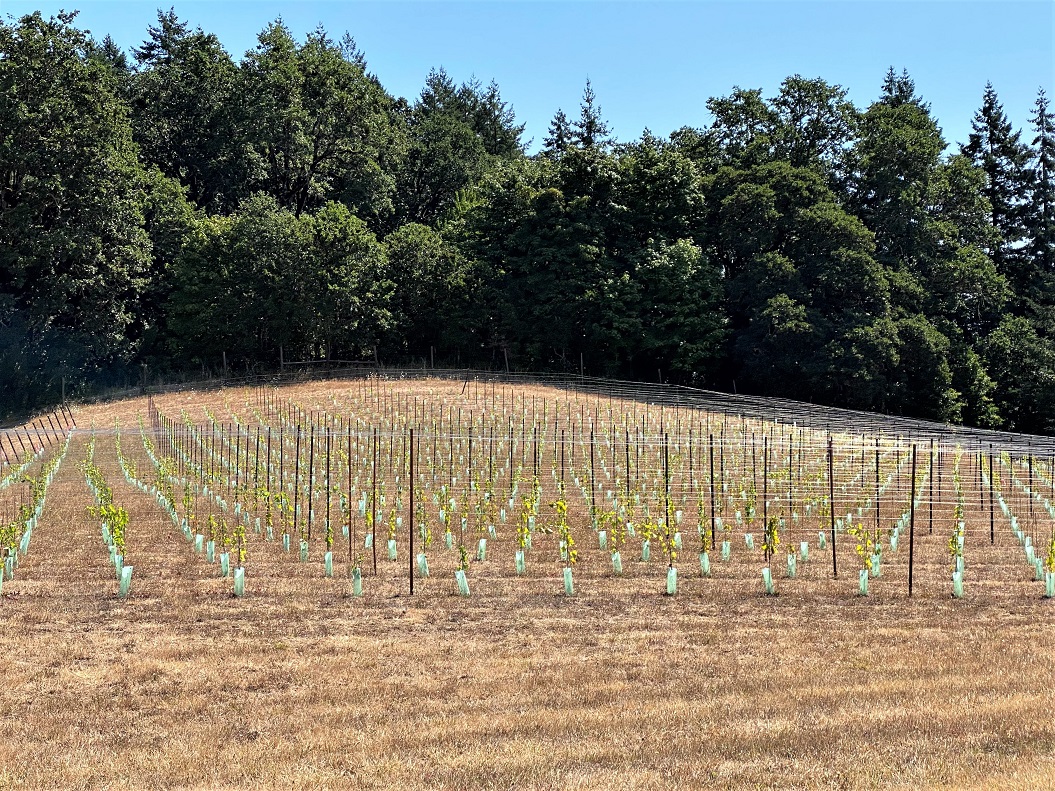 Here you can see a sample of the soils at Youngberg Hill Vineyards.
After we finished the tour, it was time to taste the wines.


I was happy that we started our tasting with the sparkling wine – this is almost something you now expect from Oregon wineries. Similar to the sparkling wine we had at Le Cadeau, this wine was also made with first-pass grapes. The wine spent 2.5 years on the lees, so it is called the Extended Tirage sparkling.
2018 Youngberg Hill Vineyards Extended Tirage Sparkling Eola-Amity AVA (12.5% ABV, $55)
A touch of apple and vanilla
Crisp apple notes, fresh, good acidity, good body, delicious. Lingering acidity on the finish
8, excellent


Next, again to my delight, we had a couple of Chardonnays:
2019 Youngberg Hill Vineyards Aspen Chardonnay McMinnville AVA (12% ABV, $45)
Beautiful nose of apples, vanilla, and a touch of honey
Crisp, clean, great acidity, wow.
8, it would be amazing with age
Another change at the Youngberg Hill Vineyards since we last spoke was the new wine label introduced in 2019 – Bailey Family Wines. Bailey Family wines comprise a selection of the best plots and barrels. In addition to sparkling, Chardonnay, and Pinot Noir, the Bailey Family wines range also includes Grenache sourced from the Rogue Valley. We tasted the latest vintage of Bailey Family Chardonnay which was superb:
2018 Bailey Family Chardonnay McMinnville AVA Willamette Valley (13.4% ABV, $85)
Herbal notes, a touch of butter, honey, minerality
Great complexity, mouthwatering acidity, lean, green apples, a touch of sage. Perfect balance
8/8+


Next, we had the pleasure of going through the selection of the Pinot Noir wines, both current vintages from Natasha and Jordan blocks, as well as reserve wine, Nicolette’s Select:
2018 Youngberg Hill Vineyards Natasha Block Pinot Noir McMinnville AVA (14% ABV, $60)
Ripe cherries and cranberries
Restrained, tart cherries, firm structure, dusty palate, excellent balance.
8+
2018 Youngberg Hill Vineyards Jordan’s Block Pinot Noir McMinnville AVA (13.8% ABV, $60)
Cherries and violets
Bright popping ripe cherries, good acidity, perfect balance.
Both [Natasha Block and Jordan Block] are built for the long haul.
8+
2015 Youngberg Hill Vineyards Nicolette’s Select Pinot Noir McMinnville AVA (14.1% ABV, $85)
Great bouquet on the nose, cherries, pencil shavings, underbrush
Wow, an interplay of cherries, cranberries, mushrooms, dusty palate, layered, balanced
9-, superb.
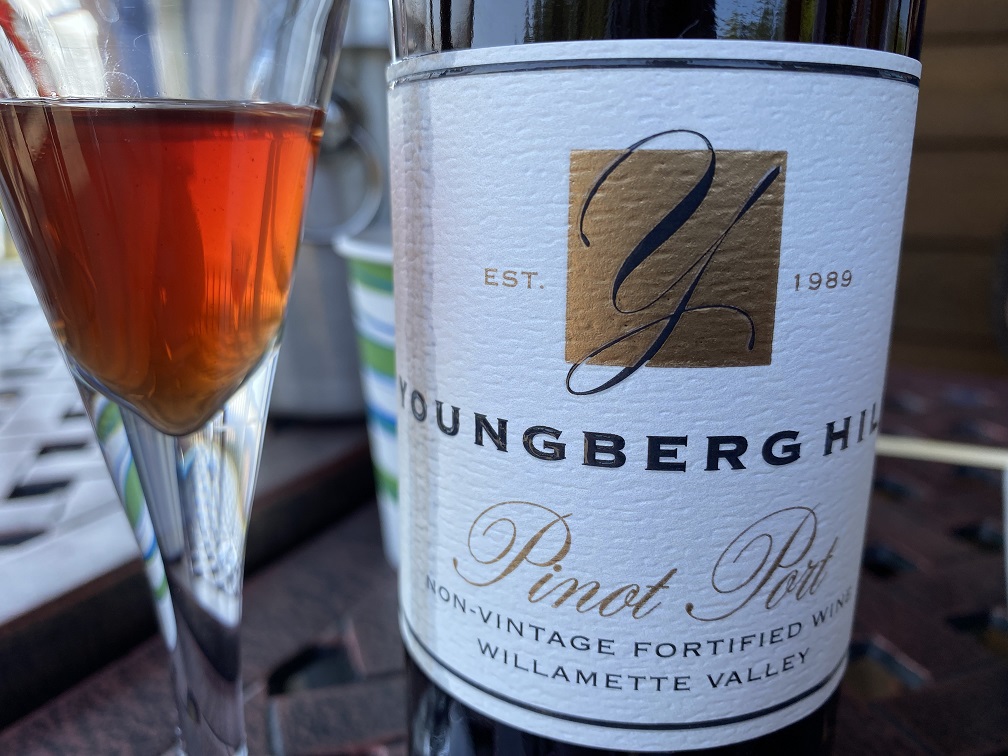
I keep going back to our 2016 conversation with Wayne. While preparing the interview questions I learned that Youngberg Hill produces a really unique wine – Pinot Port, as it was called – a Port-style wine made out of Pinot Noir grapes, something which I never heard of before. So now, being at the winery, I couldn’t miss the opportunity to taste the Pinot Port. Wayne was somewhat hesitant about it, as I don’t believe he is making this wine anymore, but I had my wish granted and had a sip of this delicious beverage:
NV Youngberg Hill Vineyards Pinot Port (19% ABV, $NA, 25 cases produced)
Nicely aged wine, dried fruit, good balance, very pleasant
There you are, my friends. Another story of Passion and Pinot, with the Pinot Noir (and Chardonnay, and bubbles) of truly a world-class, and in its own, Oregon style. These wines are worth seeking, and if you want to spend a few days in the wine country, surrounded by incredible views and delicious wines, that Inn at the Youngberg Hill sounds really, really attractive.
I got more of the Passion and Pinot updates to share with you, so until the next time…
This post is a part of the Stories of Passion and Pinot series – click the link for more stories…
Last Bottle Sign Up ($10 credit)





