Archive
Pleasures of Obscure and Difficulties to Express it in Words
German Pinot Noirs are hard to find in the US.
This story is not about Geman Pinot Noir, but the quest for one played a major role here.
I follow a group of wine-os on Twitter X who are swearing by Pinot Noir from Germany, particularly from Ahr, being the best Pinot Noir in the world, easily rivaling Burgundies in quality. Naturally, my interest was piqued and I started looking for the Pinot Noir from Ahr in the US. The problem is that Ahr is a tiny appellation to begin with, and given the popularity of Ahr Pinot Noir in Europe, this was not an easy task. I found Ahr Pinot Noir on Wine.com and confirmed with the group that it was a good producer. The wine itself was $56 or so, adding shipping and tax was making it even more expensive. Now, American Express credit card often has special offers for variety of merchants, Wine.com often being one of such merchants. I think the deal I registered for was $20 off a $100 purchase – considering that Wine.com shipping for 1 bottle is the same as for 3 (I think it is $20), it was a no-brainer – I just had to find a few bottles to reach $100 and get the discount.
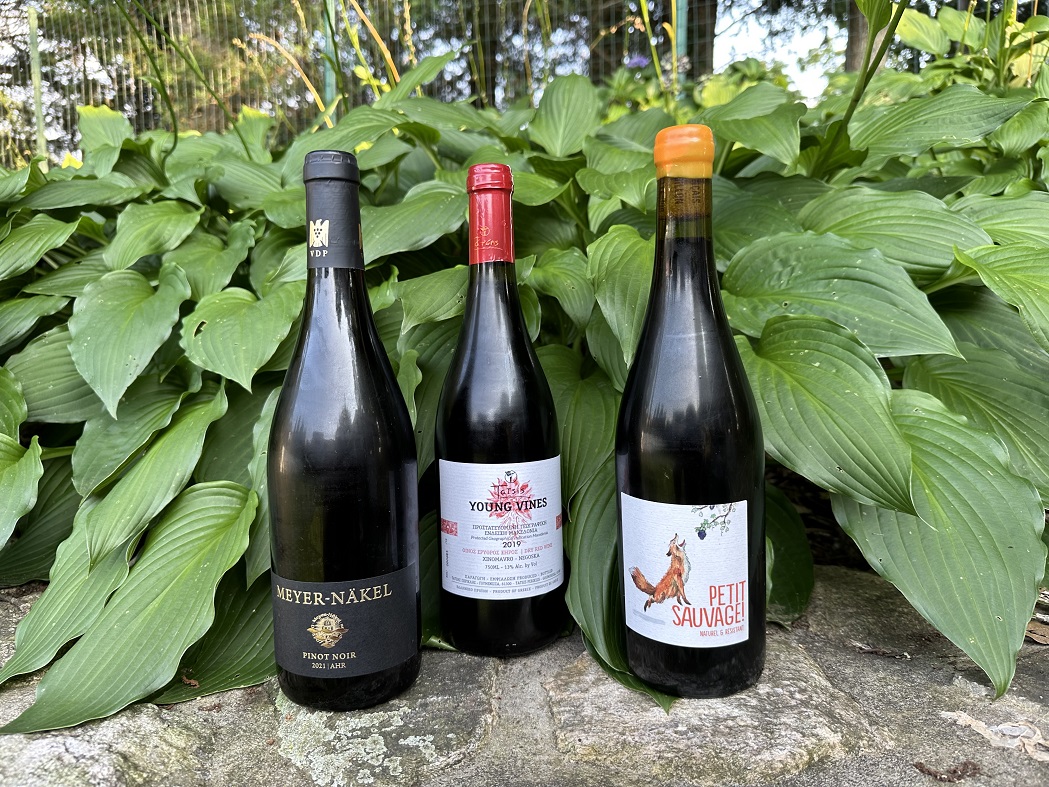
At first, I was looking at some of the familiar wines to add to that Ahr Pinot, but then it dawned on me that I might look for wines to add to my rare grapes collection, which is exactly what I did. In the picture below, you see an end result – a Pinot Noir from Ahr and two wines made from the grapes I have not tried yet.
As you might know, I have been a grape geek for a long time, ever since I was bitten by The Wine Century Club bug (probably close to 20 years by now). I’m always happy to taste the wines made from unknown grapes, whether I will be delighted or terrified – it is all a good experience. Also trying a wine made from an unknown grape is extra fun as you can always approach such a wine with an open mind having no references (read: constraints) of any kind.
The 2022 Petit Sauvage Rouge Vin de France (13% ABV) was made from the grape called Cabernet Cortis which I have never had before. Cabernet Cortis is a hybrid grape, created in 1982 in Germany by crossing Cabernet Sauvignon and Solaris, another hybrid grape (last year I tasted the wine made from Solaris in Sweden). The grape was developed to be better adapted to climate change as well as to be disease-resistant.
The wine was uniquely delicious. Some of the uniqueness I need to attribute to the fact that I was unable to describe the perceived qualities of this wine in English. Yes, you heard that right. My mother tongue is Russian, and while Russian is really not the language of wine, one of the Russian words was the best for describing this wine – терпкий (terpkii). The word describes both taste and textural sensation. To give you an idea of the best textural association, I have a strange question for you – have you ever licked velvet with your tongue? I’m serious. Have you ever seen a TV episode where Gary Vaynerchuk explains wine descriptors to Conan O’Brian and forces him to chew on a wet sock? Something like that, only without socks. So if you would ever try to lick a piece of velvet (make sure it is clean if you do), this would be the closest you would get to that descriptor.
I tried translating it using Google Translate, and the best I can get is “tart” – here are a few more options from the Russian-English dictionary: терпкий — tart, harsh, acerbic, acerb, acidy. None of these would do. As a wine descriptor, tart generally means acidic, and devoid of fruit. And this doesn’t describe the textural and taste sensation I experienced when tasting that wine. Tannins probably would work best, especially those called “velvety tannins”, but I’m still not convinced that this is the best way to describe the taste of this Cabernet Cortis wine. All in all, the wine was delicious, a little bit racy and gamey, but this was perfectly integrated into an overall taste profile. And I would gladly drink this wine again if I had a chance.
Well, the only way we can solve this is for you to find this wine, taste it, and explain to me how little I know about wine – I promise to listen, and will be happy to expand my wine vocabulary.
By the way, speaking about tart – the second wine, 2019 Domain Tatsis Xynomavro – Negoska Young Vines Macedonia Greece, made out of Negoska grape, was actually tart, it was tart beyond belief, and basically, not drinkable. It didn’t improve even after a few days. You do have to kiss a lot of frogs in life… But it’s okay, a part of the process.
Here you are, my friends. There are lots more of the rare grapes I need to report on, so stay tuned…
Top 23 of 2023
 2023 is
 almost over, which means that the time has come for the hotly anticipated perennial Talk-a-Vino feature – the list of top wine experiences of the year.
2023 was an interesting year for a variety of reasons, some of which are obvious, and some of which are not, but this is not the time and not the place to discuss it. We are here to dreadfully decide on the list of 24 23 best wines of the year – and share that list with you, my readers.
To explain how this top list is created, instead of re-writing the same explanation every year using barely different words, let me just quote what I explained before:
If you are a regular here on these pages, you know the story. Every year ever since this blog started in 2010, I come up with a list of the most memorable, most interesting/unique/unusual/stunning wines I tasted throughout the year. When I started these Top Wine lists, the goal was to identify a dozen (12) top wines. I was rarely successful with such limitation, and most of the Top wine lists consist of two dozen, a few times there were even two dozen plus a few.
As the year already ended, I will not try to separate the first and second dozens of the top wines – without further ado, here is the full list of the 23 most memorable wines of 2023 – and yes, the pun is intended:


23. 2021 Stolpman Vineyard Combe Trousseau Ballard Canyon ($24) – I had no idea Trousseau, a classic red grape from Jura in France is even grown in California, never mind by the Syrah specialist such as Stolpman Vineyard. I ordered this wine at a restaurant in New York as it seemed to be one of a very few somewhat affordable options. The wine was surprisingly brilliant, fresh, light, and uplifting – it was definitely a great find.
22. 2007 Leviathan California Red ($40) – this was my last bottle of the 2007 vintage of this legendary wine, an unofficial second label of Screaming Eagle. Beautiful California Cab that probably has another 20-25 years to go on. No, I wouldn’t want to wait that long.
21. 2019 Le Morette Riserva Lugana DOC ($NA) – this wine was probably my favorite from the Lugana wine tasting events, beautiful white wine with a substance. Going beyond just a specific bottle, consider this entry more a node to the Lugana wines of Northern Italy that represent an outstanding QPR and just a bunch of delicious wines.
20. 2018 Vino Vasai Pinot Noir Estate Reserve Chehalem Mountains ($58) – superbly balanced Oregon Pinot Noir – powerful and delicious, with a label to adore.
19. 2019 Plantaže Crnogorski Krstač Montenegro ($10) – love pleasant surprises. This wine was acquired strictly for being made from the unique grape I have not had before – it also happened to be simple and delicious – I’ll take this bonus any time.
18. 2016 Alban Patrina Estate Syrah Edna Valley ($58) – I don’t believe I ever I had a wine from Alban that I didn’t like – this Syrah was unctuous and delicious.
17. 2015 Carlisle Grenache Rossi Ranch Sonoma Valley ($39) – another favorite producer, Carlisle, with an absolutely delicious wine – beautiful nose and dark fruit intermingling with dark chocolate on the palate.


16. 2022 La Torre Girgentina Maltese Islands IGT ($15) – Similar to wine #19, this wine was acquired strictly to add to the rare grapes collection and to add another winemaking region to the Wines of the World page. The more interesting part was the bright, refreshing, round white wine, simply world-class delicious.
15. 2017 Etude Fiddlestix Vineyard Pinot Noir Santa Rita Hills ($NA) – Never paid much attention to Etude Pinot Noir – this wine was presented as a gift. The wine was definitely bigger than a typical Californian Pinot Noir – it was also better than the typical, with layers of dark fruit and cocoa. A tasty encounter.
14. 2018 Amichai by Shiloh Micah Judean Hills Israel ($57) – Shiloh is one of my favorite Israeli producers, but this is not the reason why this wine is listed among the top wines of the year. It is a perfect rendition of Cabernet Sauvignon, round and delicious.
13. 2018 El Coto Coto De Imaz Blanco Reserva Rioja DOC ($24.99) – this wine belongs to the “surprise” group, as I never had a Chardonnay from Rioja. Never mind the surprise part, this was simply delicious Chardonnay, bright and perfectly varietally correct. Pleasure in the glass.
12. NV Capetta Dolce Asti DOCG ($NA) – Asti wines are sooo underappreciated… They are often dismissed as light and sweet, but the whole point is in the balance. Yes, this wine was sweet, and nevertheless, cleansing acidity was making it impossible to put the glass down until the bottle was empty. Similar to the Lugana wines mentioned above, this wine is a nod to Asti wines as a category that is well worth everyone’s attention.
11. 2021 Domaine Bousquet Virgen Natural Malbec Tupungato Uco Valley Mendoza Argentina ($13) – Domain Bousquet makes excellent wines, for sure. But this unoaked organic malbec, made without any additional SO2 was unexpectedly delicious. Try it for yourself.
10. 2020/2021 Campochiarenti Sant’ Ambrogio Chianti Colli Senesi DOCG (€10) – I had both 2020 and 2021 wines, and couldn’t make up my mind which one do I like more. With or without taking into account an excellent price, this wine offers tremendous value for the money, as I often wish that the wines that cost 10 times more would taste as good as this wine. Another case of pure pleasure in the glass.


9. 1998 Chateau Saint-Nicolas Fronsac AOC ($19.99) – a perfect example of “wine is a living thing”. The wine which tasted like nothing on the first day, evolved into a beauty on the second day. It doesn’t happen always, but hey, give your wine a chance.
8. 2021 La Loggia Toscaia Sangiovese in Bianco Toscana IGT ($14) – I had before white Merlot and white Pinot Noir, but never a white Sangiovese – and this wine didn’t disappoint. It was masquerading a nice Chardonnay – and yet it was delicious in its own unique right.
7. 2019 Sine Qua Non Distenta 1 California White Wine ($150) – big, voluptuous, expressive, delicious. A perfect first experience with the wines of Sine Qua Non.
6. 1999 Beaulieu Vineyards Cabernet Sauvignon Rutherford Napa Valley ($30) – delicious wine from a legendary producer. A perfect rendition of the nicely aged Californian Cabernet Sauvignon which will continue to delight for many years, if someone would have enough patience, of course.
5. 2013 Stolpman Vineyards Sangiovese Ballad Canion ($30) – besides the total surprise factor that Stolpman even ever made Sangiovese, this wine tasted perfectly on par with outstanding Chianti that was opened at the same time, just adding a Californian touch to the cherry/leather/tobacco profile. Superb.
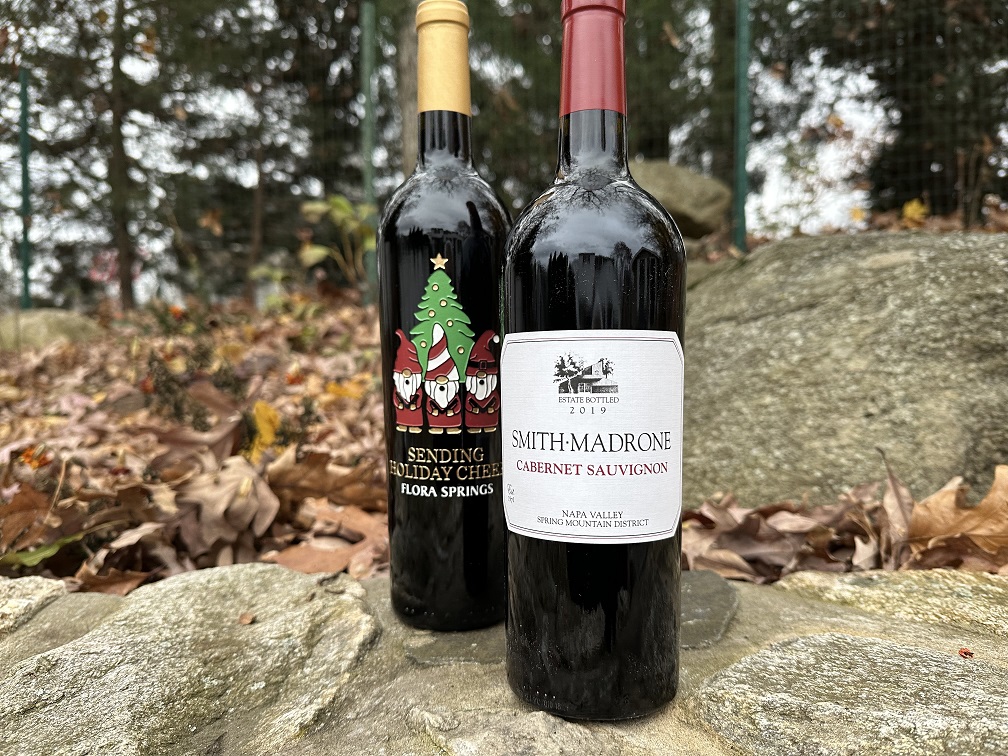
4. 2019 Flora Springs Red Wine Blend Napa Valley ($95) – a quintessential Napa Cabernet Sauvignon. Bold, voluptuous, unashamed, but impeccably balanced with all components in perfect harmony. A definition of hedonistic pleasure.
3. 2019 Smith-Madrone Cabernet Sauvignon Spring Mountain District Napa Valley ($65) – wines of Smith-Madrone are often featured in this blog. Smith-Madrone Cook’s Flat was the wine of the year in 2019. This 2019 Smith-Madrone Cabernet Sauvignon has such impeccable precision of a beautiful Cabernet Sauvignon, varietally correct and incredibly enticing, even coercing you into the nirvana state – yes, this is how good this wine is.


2. 2003 Neyen Espíritu de Apalta Apalta DO Chile ($N/A) – when poured at a table, this is the wine that has the power to stop everyone in their tracks, force them to forget that reality exists, and for a few minutes make everyone to communicate only using nods and smiles. The words are not needed in the presence of such greatness. Tasting this wine was one of the absolutely best experiences of 2023.
1. 2021 Balverne Chardonnay Russian River Valley AVA ($35) – when I tasted this wine for the first time, not only I was blown away, but my first thought was “this will be the wine of the year”. Don’t get me wrong – each and every wine in the top ten of this list would easily qualify for the Talk-a-Vino Wine of the Year position, but still, this wine will stay in my memory for a long time. This wine had a brilliant precision of Chardonnay which doesn’t even let you put your glass down. Truly, you need to experience this wine to share the feeling.
Here you are, my friends. 23 most memorable wines of 2023. Cheers to the new wine discoveries of 2024!
Ode to Cab
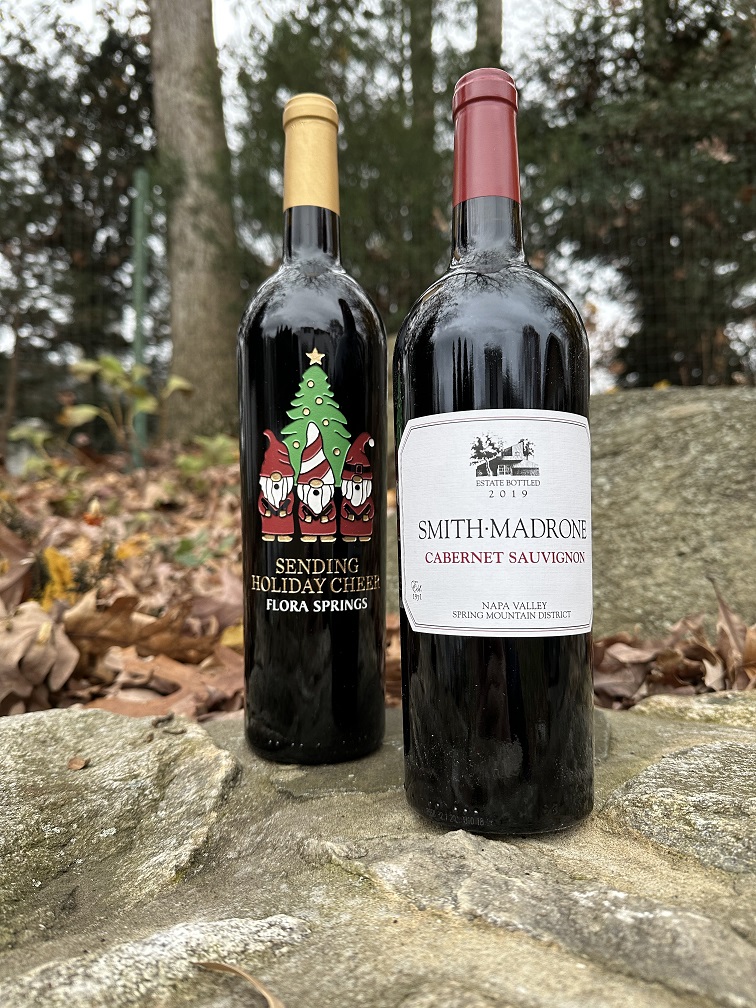 Ode to Cab.
Or we can just call it a Love Letter to Cabernet Sauvignon.
As an oenophile, I always try to maintain my “grape neutrality”. I can never name my favorite type of wine, never mind favorite wine. If you will hard press me against the wall with this question, I might say that it is Rioja, but the reality is a lot more complex than that.
If you search through articles in this blog, you will find a full range of wine styles and grapes. There are many blogs out there that cover specific region(s) or specific types of wine – but when I started writing close to 15 years ago, I knew that I would not be able to do that. This blog is about wine appreciation – any wine. “Wine should give you pleasure” – and so this is what my writing is primarily after – sharing the joy, the pleasure of wine, no matter what is the pedigree. Wines made from little-known grapes – Bobal, Trepat, Kekfrankos, Romorantin by tiny producers can give you as much pleasure as first growth Bordeaux, cult California, or best super-Tuscans. The liquid in the glass matters, and the only opinion that matters is yours and only yours – you can not enjoy the critic’s 100 points in your mouth.
This is my approach – try any wine with an open mind, and always be ready to be pleasantly surprised – or even blown away for that matter. And yet there is something about Cabernet Sauvignon that makes my heart race, especially coming from the producer I know or have heard of. Listen, I’m doing my best to tell you the truth, even though the “thought spoken is a lie”. But the brain gets all excited when I’m opening a bottle of the familiar Cabernet Sauvignon because I already know how good it can be. Very different from the excitement of the possible taste of DRC, Petrus, or Quintarelly (I’m yet to taste either) – because with those I wouldn’t know what to expect. But I do know what to expect from the well-made Cabernet Sauvignon that is ready to drink.
Even with the wines I happily call the favorites, I can’t tell you what I’m expecting to taste. I can’t describe my expectations when tasting La Rioja Alta, Ken Wright Pinot Noir, or Loacker Corte Pavone Brunello di Montalcino. I expect that I will like those wines as I know the producers and had their wines many times before – but I can’t tell you my exact expectations of the aroma or the taste of the wine. With Cabernet Sauvignon, I have very precise expectations of the aroma and the taste for me to like the wine. If I do not find the cassis (black currant) on both nose and palate when the bottle says “Cabernet Sauvignon” on it, there is no way I will like the wine, no matter how good the wine is for anyone else. Eucalyptus, mint, and a good structure are also expected, but with this some variations are possible. But when the expectations are met… the Cabernet Sauvignon is nothing but a pure, hedonistic pleasure.
So yes, deep down, Cabernet Sauvignon might be the most favorite wine of all – I just hope I will remember it next time I’m asked about my favorite wine.
Now, truth be told, I had a good reason for all this rambling about the beauty of Cabernet Sauvignon. A few weeks ago, I had an opportunity to conduct an accidental side-by-side tasting of the California Cabernet Sauvignon and the results were simply amazing.
With this tasting, we are taking a little trip. We will start in Northern California, where Barra of Mendocino is located. I wrote about their wines before, and now I have a few of the latest releases and I thought that Cabernet Sauvignon would be quite appropriate for the tasting.
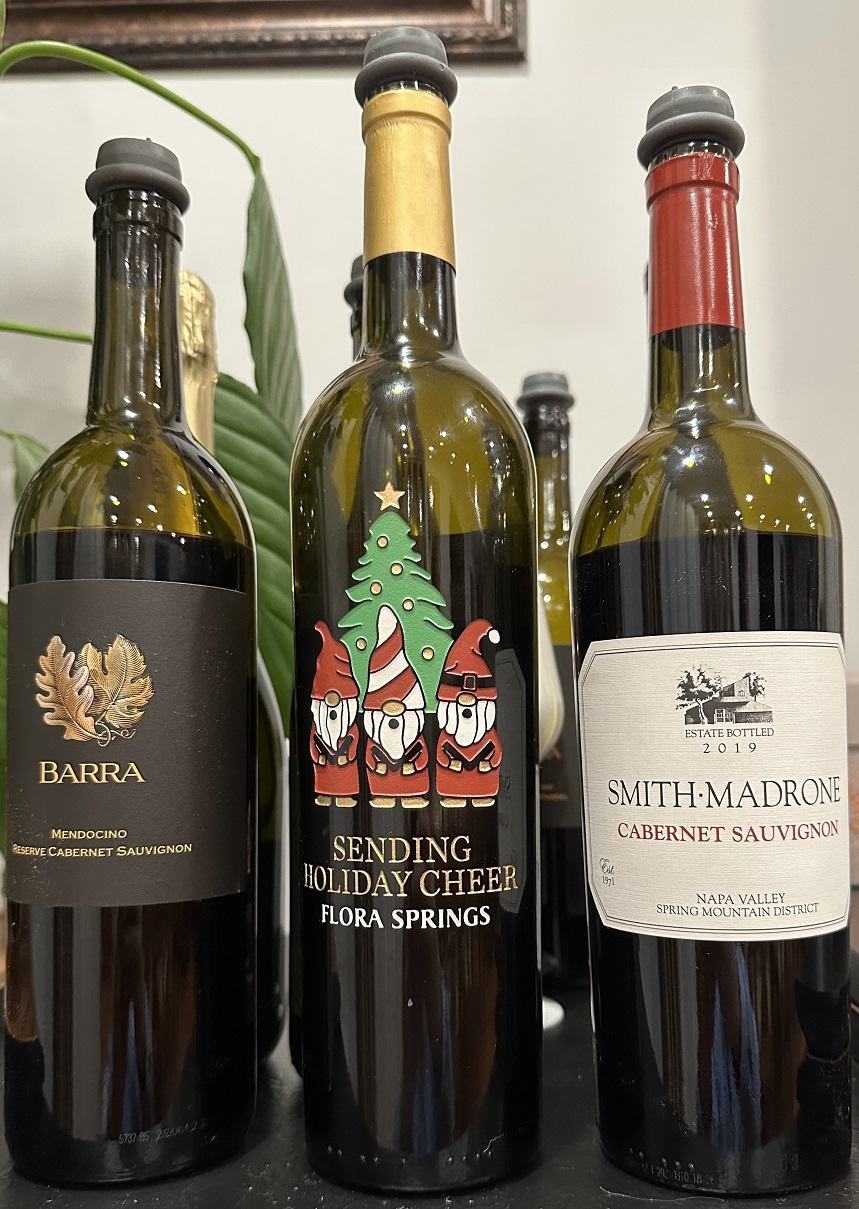
Barra Cabernet Sauvignon was the leanest of 3, but still had a perfectly recognizable Cabernet Sauvignon profile:
2021 Barra Reserve Cabernet Sauvignon Mendocino (14.5% ABV, $28, 18 months 30% new French oak, balance in neutral barrels)
Garnet
Eucalyptus, cherries, a hint of cassis
Eucalyptus, dark berries, cherries, cassis, well integrated tannins, perfect balance, medium-long finish.
8
Moving 80 miles southeast, we now arrive at the Flora Springs winery, located in the heart of the Napa Valley. Again, one of my favorite wineries in California, I wrote about their wines on multiple occasions.
The wine I had an opportunity to taste was a special holiday release. Flora Springs is big on the holiday celebration, so this bottle features etched gnomes, perfectly appropriate for the holidays. But it is what’s inside that counts, and this wine was nothing short of spectacular.
2019 Flora Springs Red Wine Blend Napa Valley (14.5% ABV, $95, predominantly Cabernet Sauvignon, 18 months in 70% French and 30% American oak barrels)
Dark garnet
Cassis, mint, black tea, cassis is playing in and out – you can smell this wine forever. Cassis is prevalent, wow.
Burst of cassis at first, then tannins come in, offering some bitter notes around the otherwise perfect Cabernet core. A very powerful, delicious wine that needs time to soften up. Either decant for a few hours, or lose it in the cellar for 10 years. The winery says you can enjoy it through 2036 – I’m sure you can easily add another 20 years on top of that.
8/8+
Going back about 8 miles northwest, we now arrive at the Smith-Madrone, the winery located in the Spring Mountain district of Napa Valley. Smith-Madrone is yet another one of my favorite wineries, and the one I feel a bit guilty about as a writer. I wrote about Smith-Madrone wines on many occasions in this blog – 5 years ago, Smith-Madrone were my wines of choice to celebrate Thanksgiving; in 2019, Smith-Madrone Cabernet Sauvignon was my wine of the year. And I’m still yearning to write a post fully designated to the winery…
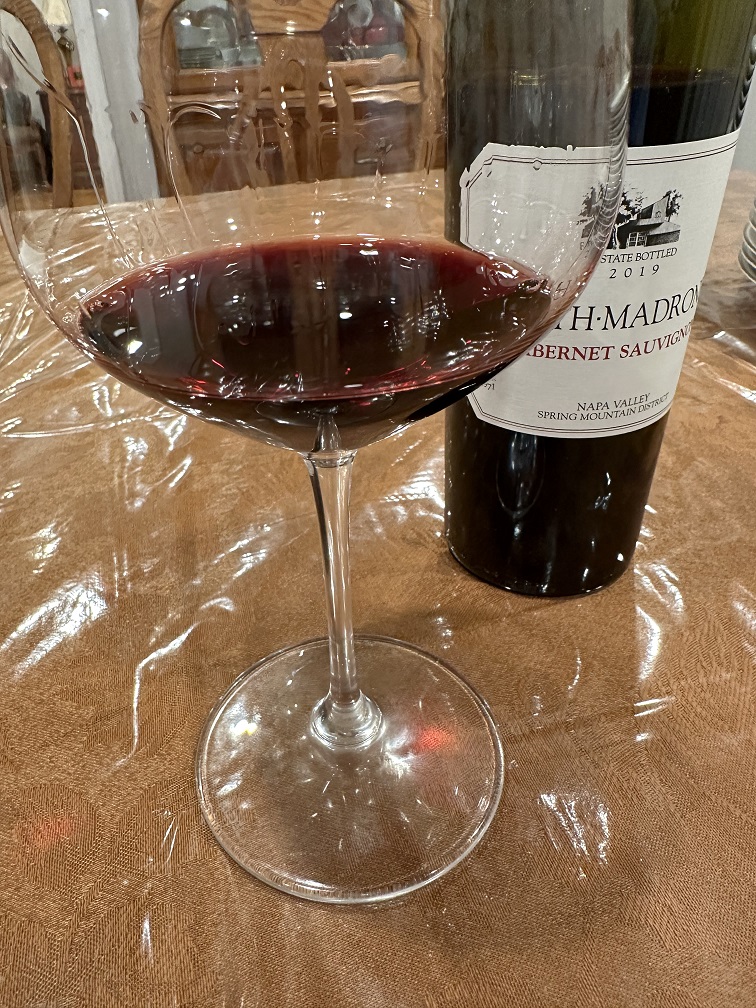
Nevertheless, Smith-Madrone Cabernet Sauvignon to me is one of the most textbook-proper, pure Cabernet Sauvignon wines there is. Not everyone would share my opinion – my sister-in-law with whom I was tasting these 3 Cabs, was preferring Flora Springs Cab, just for the sheer, unashamed beauty. But to me, a more subtle but very confident representation of the Cabernet Sauvignon by Smith-Madrone was just a perfection:
2019 Smith-Madrone Cabernet Sauvignon Spring Mountain District Napa Valley (14.3% ABV, $65, 83% Cabernet Sauvignon, 5% Merlot, 12% Cabernet Franc, 18 months in 55% new French oak)
Brilliant dark ruby
A perfection. A textbook Cabernet Sauvignon cassis, pure, perfectly precise cassis. You can think of a bell pepper – I’m not sure it is there, but it comes to mind.
The palate is amazing – cassis, eucalyptus, perfect minerality, a touch of the pencil shavings, salivating acidity. This is an impeccably balanced wine built for aging. In 10 years, it will be insanely good. In 20 – … well, I don’t want to even think about waiting that long…
9-, pure and superb.
If you like Cabernet Sauvignon, either one of these 3 wines will make you happy – each one perfectly representing their terroir and the vision of the winemaker, and yet unquestionably perfectly representing maybe the most noble grape of all.
So now you know what my secret passion, secret true wine love is. What’s yours?
A Weekend In Unique Wines
A unique wine.
A unique concept.
We can take it to the extreme if we want. Wine in the bottle is a living thing. Wine is changing – for the better or worse, but wine is changing – enzymes are breaking, tannins are fading down. We can claim that every bottle of wine is unique, and similarly to “you can not enter the same river twice”, you can not taste the same wine twice.
Okay, let’s move away from such highly esoteric spaces, and let’s talk about personally unique wine happenings – and I will do my best to explain why I designate each encounter as “unique”.

Unique wine case #1 – “I never had it before”
“light golden color, guava, herbs, med-intensity, inviting; vanilla, apples, lemon, crisp, fresh, round, clean med-long finish” – in all modesty, I’m quoting the description of the wine from my own tweet a few days ago. Looking at this description, what wine do you think was in my glass?
Give it a thought for a few minutes. Meanwhile, I continue.
I will not be playing this #inmyglass game here, of course – especially since I actually borrowed this game from Le Bon Vin #inmyglass. The game was played on Twitter, asking people to identify the place and the grape(s) this wine was made from.
Chardonnay. Chennin Blanc. Sauvignon Blanc. Bordeaux Blend. Garganega from Soave. Lugana. Vermentino. Roero Arneis. These were some of the guesses, I’m sure I’m also missing a whole bunch.
Once we established the place – Italy – and after a few strong hints that the wine is a “curveball” and “thinking out of the box required”, we arrived at the correct answer.
Sangiovese in Bianco. A white wine made from red grapes.
It will not be the first – two out of the 3 main grapes in Champagne are red; Pinot Noir Blanco is quite popular in Oregon; I also had white Merlot and even white Cabernet Franc – and it will not be the last, I’m sure, but this was my personal first experience with white Sangiovese wine.
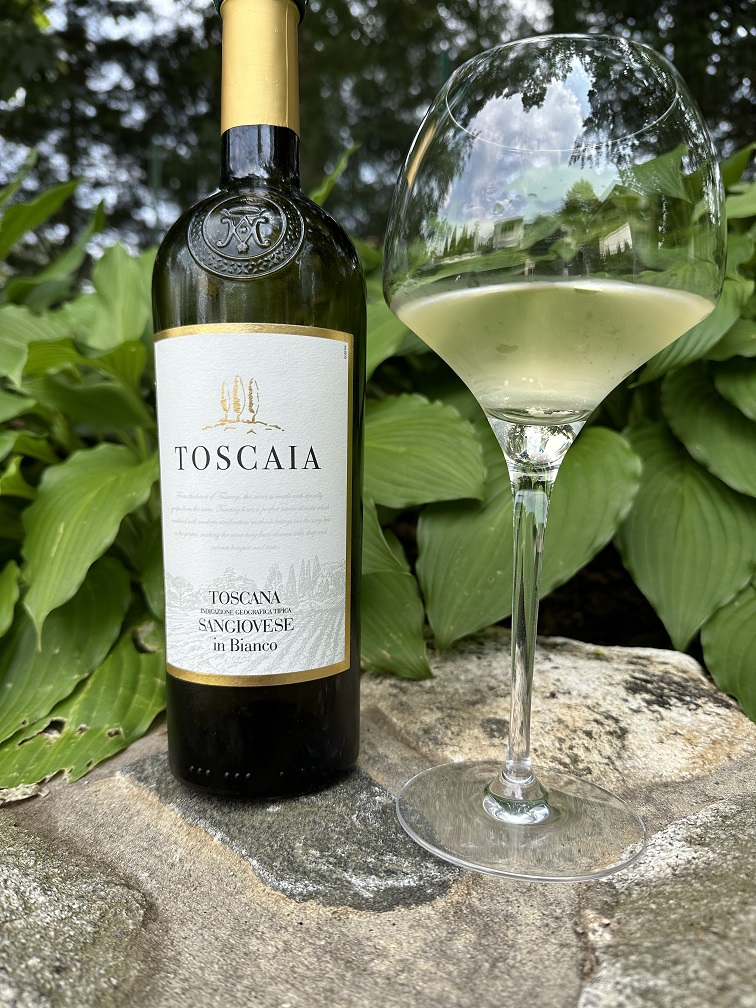
From the very first whiff 2021 La Loggia Toscaia Sangiovese in Bianco Toscana IGT (12.5% ABV) was special. Beautiful aromatics of guava and herbs, followed by a brilliantly balanced presentation on the palate, with lemon, apple and vanilla, crispy, fresh, delicious. If I would try this wine in the blind tasting, I would confidently make my bet on the old world Chardonnay – and yet this wine was made from Sangiovese.
I got this wine from the Last Bottle wines, which means that I might never see the same one again (I have a few more bottles to see how it will age) – but to my delight, I learned that an increasing number of producers offer Sangiovese in Blanco – I just hope the others will be as good as this one.


Unique wine case #2 – I might (will?) never try this again
Every Champagne lover knows Bollinger. A legendary producer whose Champagne was often 007’s wine of choice (yes, it is James Bond I’m talking about). Bollinger even produces one of the Champagnes under the “007” name. But I’m not talking about Champagne here.
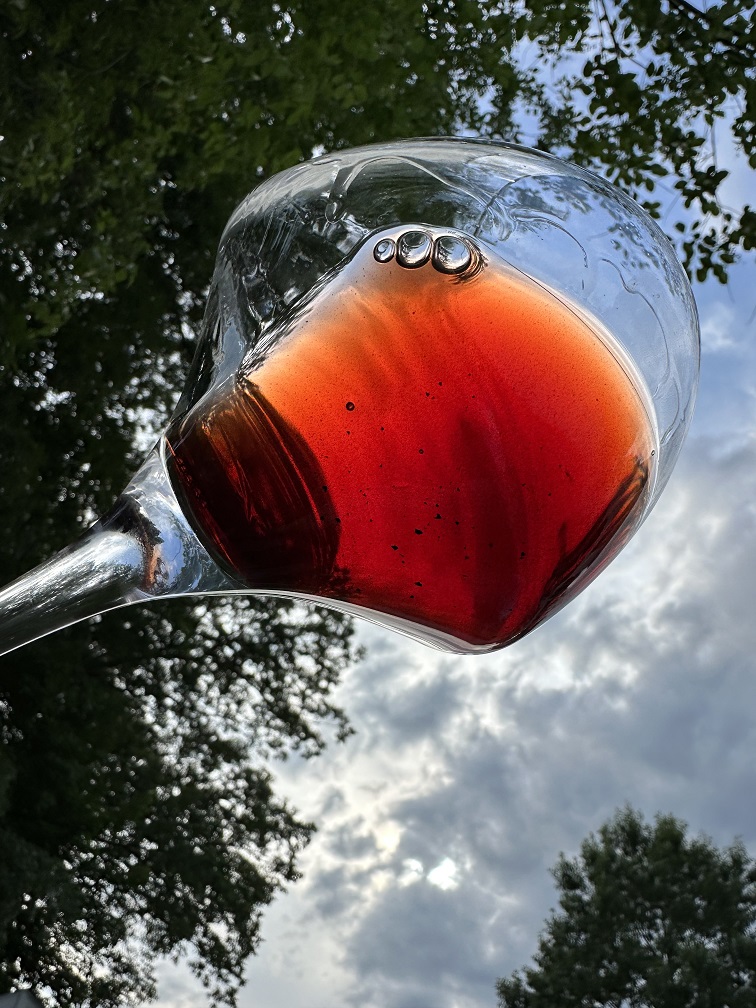
Champagne appellation laws allow production of the still wines. The 2002 Bollinger Ay Rouge La Cote Aux Enfant Coteaux Champenois (12.5% ABV) is red Pinot Noir wine, produced from 2 acres of vineyard called La Cote Aux Enfant located in the heart of Grand Cru Aÿ region and aged in oak casks. This wine is only produced by Bollinger in exceptional years. I had this wine once 9 years ago, and at that time the wine was quite powerful, requiring some time to breathe. This time, the wine was ready to drink from the get-go, offering mostly the tertiary aromas – plums, dried fruit, still having enough acidity and some structure. My daughter offered probably the best descriptor for this wine – she said that the aromatics remind her of an old book – in a good sense. It is the book you lovingly and carefully take into your hands, expecting the magic to happen as you turn the pages. Do I wish I opened this wine 4-5 years ago? You bet. Did I regret my choice of keeping this wine for as long as I did? Not for a split second. A perfect rendition of the mature wine…


Unique wine case #3 – back from the dead and then red with cheese? Surprise!
1998 is one of the special vintages in my book, and I am always on the lookout for 1998 wines for a reasonable price. When I saw 1998 Chateau Saint-Nicolas Fronsac AOC (12.5% ABV) for $19.99 at Wine Exchange, I couldn’t help but grab a few bottles. I opened this bottle right after the 2002 Bollinger. The aromatics were very restrained, and on the palate, the wine just had some glimpses of fruit, but overall the wine gave an impression of the Bordeaux I don’t want to drink. A few hours later, things turned even to the worst – the wine was offering nothing on the nose or on the palate. Of course, it tasted like wine, but it had nothing going I would be able to apply any descriptor to. It was late in the day, so I pumped the air out and decided that I will deal with the wine the next day.
The next day I reopened the wine having literally zero hope for anything even half good happening to this bottle. The smell from the glass offered a glimpse of hope – dark fruit and a hint of eucalyptus showed up. To my delight, the palate completely transformed, offering silky cassis, anis, and lots of herbs. The wine didn’t even give out its age, it was still perfectly fresh with a good amount of acidity.
I had a small cheese board on the table, and without much thought, I took a sip of wine after a cracker with cheese. Combining wine and cheese is a lot more difficult than people like to think, so once again, I didn’t expect much. All of a sudden the taste buds jumped of joy, because the cheese, Bucheron soft-ripened goat cheese from Trader Joe’s, was perfectly complemented by this 21-year-old Bordeaux, creating a new level of hedonistic pleasure. A unique wine transformation and a unique pleasure of elevated food and wine experience – the experience worth remembering.
Here you are – my report on the weekend in unique wines. When was the last time you had a wine which you considered “unique”?
Wine Weekend of Ups and Downs
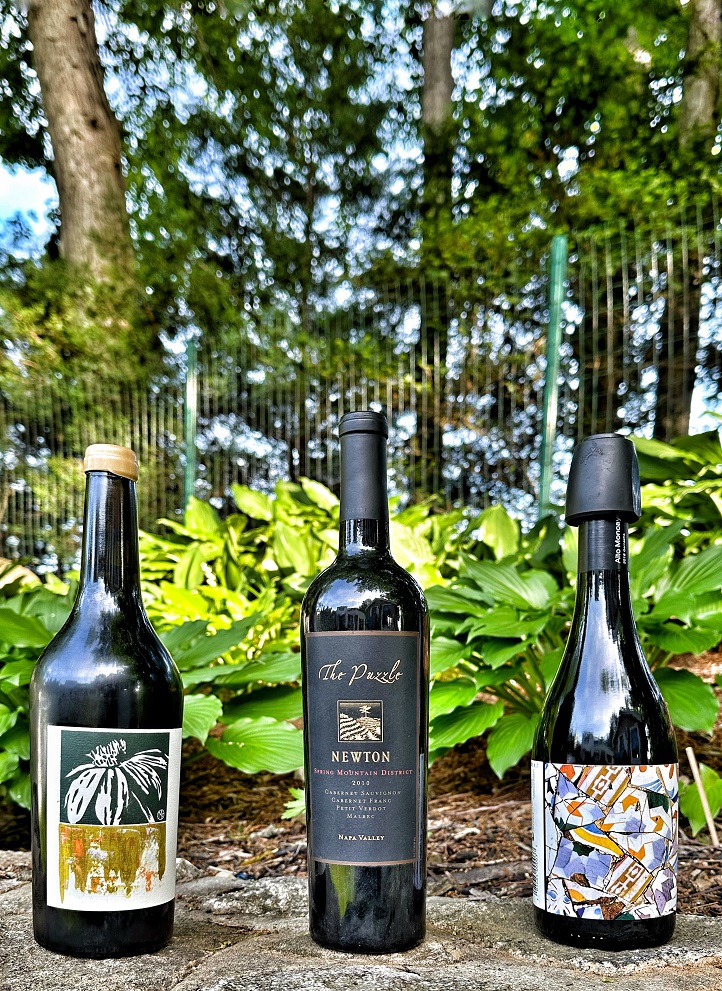 The life of an oenophile is never dull – of course, if an oenophile chooses such.
UP
Let’s talk about “ups” first.
Sine Qua Non. The legendary Sine Qua Non. The Sine Qua Non winery is unique in many ways. First and foremost, Sine Qua Non wines are unique. Of course, every winemaker is sure that his or her wines are unique. But for Sine Qua Non, these are not just bragging words. Every vintage, a different set of wines is produced, and wines do not or rarely repeat year after year. Each wine has a label designed by Manfred Krankl, who owns the winery together with his wife Elaine. And the wines are impossible to get – I had to wait for 10+ years to move from the waiting list to the mailing list.
My sister-in-law and her husband were visiting over the weekend. They both enjoy wine very much – which is a perfect reason to get out a special bottle. Sine Qua Non is better known for its Rhone-style reds, but they produce white wines as well. One of the first wines in my allocation was Sine Qua Non white wine. Communal notes on the internet seem to indicate that SQN white wines shouldn’t be aged for too long, so I decided that 4 years is a good age for this wine, to avoid any possible regrets (who am I kidding – there are always regrets when it comes to wine).


2019 Sine Qua Non Distenta 1 California White Wine (15.3% ABV) is a blend of 41% Roussanne, 26% Chardonnay, 14% Petit Manseng, 12% Viognier and 7% Muskat (Gelber Muskateller), fermented in barrel and matured on its lees, 23 months in 64% new French oak. The sublime nose of whitestone fruit, herbs, and flowers, with a distant hint of tropical fruit. And the palate, the bouquet… As a child, I loved to sing, and I spent some time in the chorus. I was perfectly fine singing in unison, but for the life of me, I could never do the canon, the subtype of polyphonic singing, where each singer has their own melody, and those melodies harmoniously combine together. This wine delivered such a canon singing – beautiful notes of sage, eucalyptus, tobacco, and whitestone fruit were changing into tropical fruit with a touch of bright honey notes. Somehow, it was possible to taste both profiles at the same time. I know I’m not describing it well, but this was the wine I really didn’t want to end… (Drinkability: 9)
By the way, an added bonus – it appears that I never had the Gelber Muskateller grape – and now I can unexpectedly increase my grape count.


DOWN
Over the years, I got two bottles of red wine from Newton Vineyards, a well-respected California winery, as presents, both from the same 2010 vintage, and both identical. I know the producer’s name, but it seems that I only tasted Newton Chardonnay before, and I have no memories of tasting their red wines.
Both bottles were gifted by the sister-in-law and her husband I just mentioned, so I thought their visit was a perfect opportunity to enjoy this wine together.
And so I opened the bottle of 2010 Newton The Puzzle Spring Mountain District Napa Valley (14.5% ABV, 60% Cabernet Sauvignon, 18% Cabernet Franc, 18% Petit Verdot, 4% Malbec).
And the bottle was corked.
I just recently mentioned in one of the social media discussions that I rarely encounter corked California wines. I guess I jinxed it… The cork faint was ever so slightly noticeable on the nose, and the palate kind of seemed okay, so I even decanted it and we even tried drinking it. The decanting made the corked nature of the wine even more apparent, and I pulled the second bottle.
The second bottle was not corked, and it was drinkable. However, it was a bit underwhelming. The fruit was there, it was possible to taste the cassis, but considering that this was a Californian wine, it showed leaner than expected. I would generally consider that Californian wine of such level need at least 20 years to develop, and under normal circumstances I would leave the second bottle alone for another 5-7 years, but oh well. We did enjoy it, of course, I was just hoping we would enjoy it more. (Drinkability: 8- )
STILL DOWN
I’m not going in chronological order here. The Newton red was planned to be the main wine to serve with dinner. As a “pre-gaming”, I gleefully pulled out the 2018 Alto Moncayo Veraton Campo de Borja (15.5% ABV). I opened a bottle of this 100% Garnacha last year, and it was absolutely spectacular from the get-go – succulent cherries and layers of pleasure. I loved the wine so much that it was included in the top two dozen list of 2022 wines as number 13.
Feeling great about myself, I opened the bottle and poured wine into the glasses. At the first tiniest sip, instead of excitement, my instant thought was “ohhh nooo, why is it so sweet???”. I also instantly knew that I’m in trouble with my sister-in-law, as she stopped drinking California Pinot Noirs for being too sweet… And her reaction was exactly what I was afraid of. After the first sip, she raised her head from the glass, looked at me inquisitively, and said with a wry smile “but why is it so sweet?”. This is when we put this bottle aside and proceeded with The Puzzle – and you just read how swimmingly well it went.
Truly, whatever goes up will go down.
AND UP AGAIN
Whatever went down still has a chance to go up.
The very next day, Veraton somewhat solidified at its core, the sweetness subsided, and the structure started to appear. On the third day, the wine was as delicious as I was expecting it to be – succulent ripe cherries, juicy and generous, with crunchy acidity and perfect balance. (Drinkability: 8+).
Here you go, my friends. Another weekend in wine – sometimes you win, sometimes you learn. With the exception of the corked bottle, which is never okay – but as my sales team always said, “it comes with the territory” – it was a great wine weekend, even with all the ups and downs. How was yours?
Weekend in Turley, With a Dash Of Carlisle and Hardy
Many moons ago, my friend Henry and I discovered Turley wines. We were at a restaurant in Manhattan with our wives, either before or after the Broadway show, and on the wine list, Turley Zinfandel (either Juvenile or Old Vines) was one of the reasonably priced wines, so that was the wine we ordered. I don’t remember if I heard about Turley before (maybe), but tasting that wine was a pivotal moment – we fell in love with Turley wines.
Turley Wine Cellars was founded in Napa Valley by emergency room physician, Larry Turley in 1993, and went on to become one of the most prominent Zinfandel producers in the US. Turley produces about 50 different wines from about 50 different vineyards, most of them organically farmed, from all around California. Many of those vineyards date back to the late 1800s. While Turley might be best known for its Zinfandel and Petitte Sirah, they also produce a number of white wines, a number of other reds, and even Cabernet Sauvignon, first produced in 2010, and eloquently called The Label (Larry Turley’s famous saying was that Cabernet drinkers drink “the label”, hence the name – I had my own share of troubles with this wine).
Turley wines are hard to get in the store, and if you really would like to enjoy them at will, you need to be on the Turley mailing list. Turley was one of the very first mailing lists I managed to get on more than 10 years ago, and I had been a happy customer ever since. My friend Henry finally got his first allocation about two years back.
A place on the mailing list still doesn’t guarantee you access to each and every wine Turley makes, and their list operates on a “first come, first serve” basis – I missed quite a few wines that were included in my offering, but disappeared much sooner than I could make up my mind.
Last Saturday, Henry was coming over for dinner, so I had to make it a Turley evening.
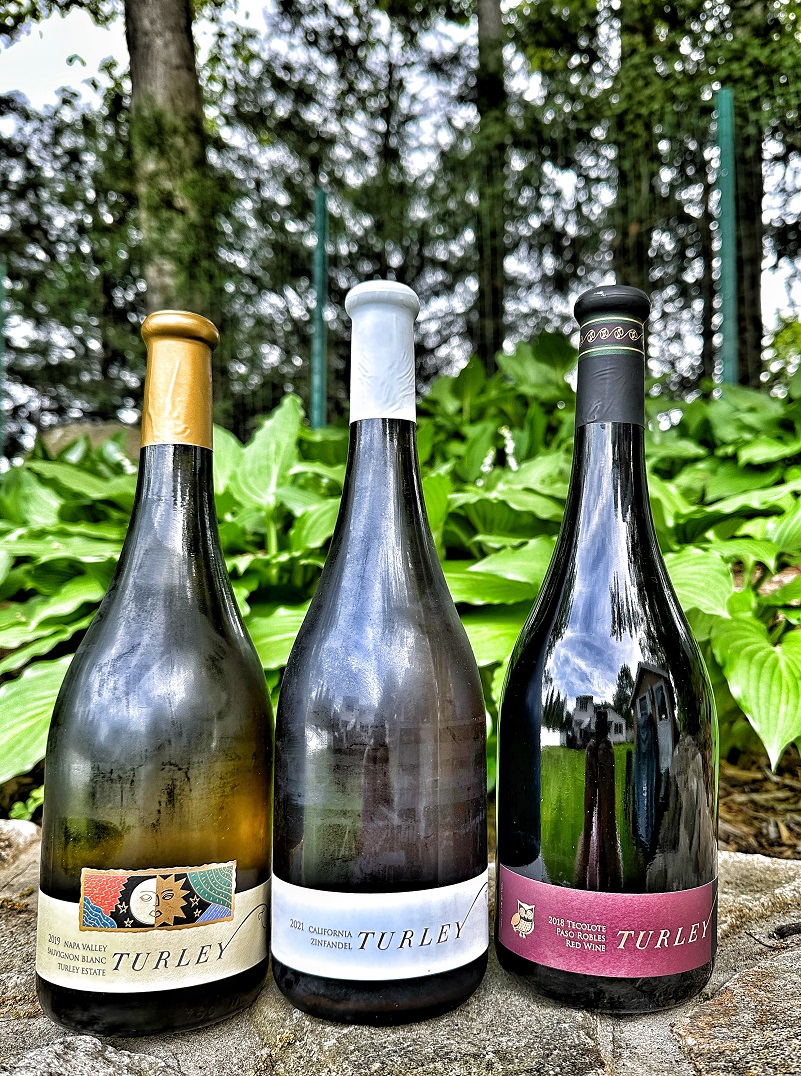
Turley makes only two white wines – Sauvignon Blanc and a blend called White Coat. The wine we opened was the 2019 Turley Estate Sauvignon Blanc Turley Estate Napa Valley (13.4% ABV). It is interesting that Sauvignon Blanc was one of the original wines produced back in 1993. Sauvignon Blanc plantings at Turles Estate were replaced with Zinfandel, but then Sauvignon Blanc was planted again on a small section of the dry-farmed, certified organic vineyard. The wine was fermented using natural yeast and it was bottled after 6 months in 100% French, used oak barrels. The wine was an absolute delight, showing beautiful whitestone fruit, perfectly present, perfectly elegant, with fruit and acidity singing in complete balance.
I had a little bit left in the bottle after that evening, and on Sunday I was able to please the most discerning palate in our household – my mother-in-law. She came over for Mother’s Day on Sunday and wanted to drink the white wine. When it comes to wine, she is completely unpredictable, and I always try to pour her wine without showing the bottle – she has lots of preconceived notions about wines and the regions, so I’m always trying to make sure she will just try the wine first, and then I can tell her where it is from. To my delight, she liked the wine, and even when I told her the wine was from California, she still liked it – a serious achievement in this household.
Our next wine was 2021 Turley Zinfandel Rosé California (12% ABV). This wine sometimes is called White Zinfandel, but only to poke fun at the uninitiated (and the bottle is adorned with the white label). This wine is impossible to score – you literally have to press “buy” as soon as your summer offering arrives. The wine is fermented in stainless steel and aged in used French barriques. It is lip-smacking, it speaks cranberries and strawberries, it is very Provençal in its presentation, but Californian in its soul.
And then there was Tecolote – 2018 Turley Tecolote Paso Robles Red Wine (15.7% ABV). This wine is rarer than rare, as you need to know it exists, to begin with. I got it once through some special holiday offer, but it is never included into the standard seasonal offerings. This wine is typically only available in the tasting room, but being a mailing list member has some advantages – I asked if I can get a few bottles, and they arrived just in time for us to enjoy. This wine is a Spanish-inspired blend of 60% of Grenache and 40% Carignane, coming from the specific block in Pesenti Vineyard, planted in the 1920s. Tecolote means “owl” in Spanish, and this is how the vineyard block is also called. The wine offered layers of lip-smacking black cherries, kitchen spices and sweet tobacco. A perfect balance of textual presence, fruit and acidity made this wine disappear in no time…
Next, let me step away from the wine for a bit – but not from the grapes. I rarely talk about cognac on these pages, but then I have an experience to share.


On an average day, I’m a scotch drinker. But of course, I would never refuse a sip of a good cognac. The keyword is “good” – nowadays, it is difficult to find a good-tasting cognac at a reasonable price in the US. However, my recent cognac tasting with my school friend led me to the discovery of Cognac Expert. Subsequently, I got a recommendation from Cognac Expert for the cognac I now enjoy immensely – without any need to break the bank – Hardy Legend 1863 Cognac. This cognac was produced by the Cognac House of Hardy, to commemorate the founding of the Hardy house back in – yes, you guessed it – 1863. This cognac is a blend of spirits made from the grapes coming from Borderies and Petite Champagne growing areas, aged from 2 to 12 years and finished in classic Limousine oak. From the first enticing smell to the long-lasting, coffee-loaded finish, this cognac offers the ultimate pleasure of balance of fruit, spices, and acidity. And at $40, this might be the best QPR cognac out there today.
Last but not least – 2015 Carlisle Mourvedre Bedrock Vineyard Sonoma Valley (14.9% ABV), which I opened on Sunday. Carlisle is another one of my favorite producers, specializing in Zinfandel, Syrah, and Petite Sirah – and some other grapes. The fruit for this wine came from the 130+ years old vineyard, planted in 1888. The wine was aged in French oak, 20% new. It is interesting that stylistically, this wine was similar to Turley Tecolote – succulent tart cherries on the nose and the palate, a touch of eucalyptus, refreshing acidity, perfect balance. This was an excellent wine to finish the weekend right.
Here you are, my friends – my weekend wine story. If you can find any of the wines mentioned in this post you should definitely look for them. And if you like cognac, this Hardy 1863 Legend is hard to beat. And you know where to find it.
Nevermind. I should have never told you that.
Until the next time – cheers!
Latest Wine News and Updates
While wine production is one of the oldest industries in the world, the amount of new, innovative products and scientific breakthroughs in the wine world is nothing short of breathtaking. Let’s take a look at some of the latest news from the field.
Everyone agrees that fake wine is a big problem for the wine industry. There are many tools employed by winemakers to protect the identity of their wines, but the quest for the perfect solution is still ongoing. After 15 years of intensive research, the French INAO (The National Institute of origin and quality), together with the College of Veterinary Medicine at Auburn University in the US announced the successful results of the initial trials of dogs being able to sniff fake wines. As part of the Canine Performance Sciences program, dogs had been trained to identify wines that don’t match the original wine. The training is a very involved process requiring the dog to spend about 2 years at the winery memorizing the original flavor profile of the wines. Once trained, the dogs can easily distinguish the original bottles from the fakes, the same as working dogs who identify illegal substances at customs in airports. The training process is intense and costs about $50K per dog, so this solution is not for every winery. Nevertheless, according to INAO, it will take about 7 years to satisfy all the requests for the dogs received to date.
There are plenty of wine lovers who crave massive, tannin-loaded wines. Such wines are often quite expensive as they require a long aging time in the oak barrels which are costly. What if the oak flavor can be concentrated in the grape itself while it is growing? Impossible, you say? Scientists from UC Davis in California think otherwise. Instead of using the traditional rootstock, UC Davis scientists managed to graft Cabernet Sauvignon vines onto the french Limousin oak rootstock, and after about 7 years of experimentation it seems that resulting wines demonstrate much higher tannin concentration than the wines obtained from the same clone of Cabernet Sauvignon but not grafted on the oak rootstock. Obtaining the same level of tannins would require about 6 months of age for the wines in the control group. Once the research is complete, it will result in significant savings for the wine producers which [hopefully] will be passed on to wine lovers. We should expect to find the first wines based on the results of this research by approximately 2028.
Many wine lovers live with a simple motto – coffee in the morning, wine in the evening. The next news I would like to share with you will, in a way, be related to both beverages. How so? Everyone knows Nespresso, a French company that mastered the simplicity of the perfect cup of espresso at any time with the help of a tiny coffee capsule. Working on a special (very sizeable) grant from French LVMH conglomerate, Nespresso just announced a brand-new machine called – maybe you guessed it – Winepresso. Nespresso scientists found a way to convert the content of the wine bottle to the dry form which is encapsulated in the tiny wine capsule, literally identical to the coffee one. Now, with a push of a button, a perfect glass of your favorite beverage is in your hand at any moment. Based on the opinion of the expert panel, the Winepresso-produced wine is practically identical to the original wine, which is a pretty amazing achievement in itself. The initial set of capsules available upon commercial availability of Winepresso will include two Bordeaux reds, one red from Burgundy, and 3 whites from Loire. It is also known that Nespresso is actively involved in conversations with a few of the famous wineries in Napa Valley. The capsules will be sold in the 5-packs (to be identical to the standard 5 glasses in the bottle of wine). Winepresso machines are expected to appear at select retailers such as Williams-Sonoma and Bloomingdales in time for Christmas shopping. The prices for the capsules and the machines had not been disclosed yet. If successful, you can only imagine how successful this product will be from point of view of sustainability and reduction of the carbon footprint.
Open any news source today, and you are guaranteed to read about ChatGPT, artificial intelligence (AI) software. ChatGPT writes poems, articles, and marketing materials, conducts market research and lots more. It appears that the wine world is starting also to embrace ChatGPT in a variety of ways, many of them quite unexpected. Champagne Piper Heidsieck just announced that they will start a new line of non-vintage Champagne, called Piper Heidsiek AI, where ChatGPT will play the role of the Chef de Cave, responsible for blending the final wines. After the initial offering, both Blanc de Blancs and Blanc de Noirs will be produced. While it is an interesting announcement in itself, I’m concerned with the impact of the ChatGPT on all areas of human lives, now including even wine production. Well, we will see how this story will unfold.
That’s all the latest news I have for you, my friends. Until the next time – cheers!
Stories of Passion and Pinot: Looking Back and Looking Forward 2023
 What started from the little idea “yea, I don’t know, I don’t believe in it, but maybe I will try anyway” now became one of my favorite ongoing series in this blog – Stories of Passion and Pinot. Stories of Passion and Pinot are exactly what the title says – these are the stories of the winemakers passionate about one of the most finicky grapes there is – Pinot Noir.
It is a fun exercise to take a retrospective in the ongoing series and see how far I have gone from time to time. So here is the latest update – for me, and for you if you care to read it.
First, last year I created a new landing page for the whole series. This page is kept current, all new interviews are now added to this page and you always know when the page was updated last.
Four new stories were added since the last update: David Adelsheim of Adelsheim Vineyard, Shane Moore of Gran Moraine, Erik Kramer of Willakenzie Estate, and Bill Sanchez of Potter’s Vineyard. All of these are excellent, in-depth interviews – if you have not had a chance to read them yet, you really should do it now.
Interviews in the series have questions tailored to the individual wineries and winemakers with a little overlap between them. However, sometimes it is fun to ask people the same question and enjoy the diversity of the replies. I asked the same two questions to some of the winemakers who had been already profiled in this series – and now I want to share our short Q&A with you.
Sara Specter of Bells Up Winery, Bill Sanchez of Potter’s Vineyard, and Wayne Bailey of Youngberg Hill have graciously agreed to answer my questions, so below you can see my questions – and their answers:
[TaV]: How was the year 2022 for you? New grapes, new plantings, new wines, vineyard discoveries (a new plot/block, for example), new winemaking styles, new wine club, new tasting room, new markets, growing season and the vintage – please share anything and everything you are willing to with our readers.
[Bells Up Winery]: Harvest 2022 was our 10th under the Bells Up label, having moved to Newberg, Oregon in 2012 and making our first vintage in 2013. Harvest 2022 was also what we’ve been calling “the end of the beginning.” It was the first year we were “100% Pinot Independent,” meaning we didn’t source Pinot Noir from any other grower for the first time. It was a wonderful experience working with other micro-site growers who were very much like us. But our goal has always been to be as close to 100% estate as possible, and now we are… at least for the Pinot Noir. We were also delighted to see that the Pinot Blanc we planted in Fall 2021 and the Schioppettino we planted in Fall 2020 continued to do well, despite some initial concern from the late frost we had in April.
[Potter’s Vineyard]: 2022 was good but tough. It was tough due to the spring frost that wiped out 80% of the primary buds in our vineyard. The cool, wet spring led to a late start to bloom and fruit set. We literally did not know if we would have only a tiny harvest or something close to normal until late in the season, which led to a lot of turmoil. We decided to stay the course and farm it normally assuming that we would have something and of course take care of the vines for the following year. Amazingly, the vines rebounded and we ended up with about 70% of our normal yield. And because we farmed and sprayed diligently we did not suffer from the very high amount of powdery mildew that descended upon the Northern Willamette Valley that year. It was also a year where we added some new effective organic compounds to our organic farming spray program that probably helped fend off powdery mildew. The Pinot noir fruit was beautiful but we had much less of it. 2022 was also a pivotal year for us in our business. We bottled our 10th vintage and pondered all year what we would do for the next 10 years. We’ve made good wine but we decided to try to make better wine as our goal. We hired a Burgundy trained winery consultant with 35+ years experience. Combined with our 15+ years we now had over 50 years of combined experience to gain from. We fine tuned every protocol we had in place and added a lot of additional analyses to our tool box. We also added a new barrel-side wine analysis device to help us get more analyses done more efficiently and timely. This helped us get through a tough set of late fermentations of our other varietals that ripened later than normal due to cool spring throughout the NW. So for us it was a long, tough, and educational year but successful due to our added help and resources.
[Youngberg Hill]: Great growing season. Great balance and complexity in the fruit. A more typical season for the Willamette Valley, later wet spring, cool September and October harvest.
[TaV]: What are your plans for 2023? What do you think the future holds?
[Bells Up Winery]: In 2023 we hope to get enough fruit from the Schioppettino to make a proof-of-concept batch. We will also be releasing our very first bottling of bubbles. The 2022 crop of Seyval Blanc from our estate (first planting in the Willamette Valley of this French hybrid and only the second in the state of Oregon) will be released in a brut style under a new label, “Joy.” In keeping with our practice of naming wines after pieces of music that have terrific French Horn parts, this one is named for Ludwig van Beethoven’s Symphony No. 9 in D Minor, “Ode to Joy.”
[Potter’s Vineyard]: We plan to continue with this new approach to taste the ‘fruits of our labor’ and continue improving as much as we can. We know the future will be tough with another global recession looming, however, we will continue to work hard to provide wine lovers a small vineyard & clay art gallery experience and premium wine.
[Youngberg Hill]: We will get our first fruit from the new Wayne’s World block this year, clones 667 and 115. Regarding what the future holds – who knows?
It is so interesting to see different takes on the vintage, the conditions, etc – and of course the future plans. It will also make it fun to ask the exact same questions next year.
There is a number of new interview ideas in the works, so as they like to say it – watch this space…
Uruguay Wines – Coming Of Age
Do you know the problem many wine lovers share? We are creatures of habit.
Once we develop our inner “favorite wine” profile, we don’t let any changes happen to it. We like what we like. Never heard of this region? Thank you, I’ll pass. God forbid we fall in love with the particular producer – this is even worse than the region – nothing is ever good enough outside of the circle of our favorites.
And this is generally okay. Except we are putting ourselves in danger of losing on new, enlightening, delicious experiences.
When I was invited to the Uruguay wine webinar, my first reaction was “nah”. I mean, Uruguay, really? Between Chile and Argentina, my South American world-class wine circle is already full – do I need to bother with the wines from a totally unknown region?
On second thought – this is a webinar. Wine is coming to me, not like I need to travel somewhere to taste the wines I can potentially be disappointed by. Why not?
I’m glad I accepted the invitation. Both the information and the wines were lots of fun. We learned that while Uruguay has a population of 3.5M people, 2nd smallest size-wise country in Latin America, the country has a 98.7% level of literacy, the highest in Latin America. People in Uruguay are mainly descendants of Italians and Spaniards so they literally have wine embedded in their DNA.
Winemaking in Uruguay started in the 13th century. Today, there are 164 active wineries, producing 70M bottles of wine annually. Uruguay is currently in the process of implementing its own sustainability program. And by the way, the oldest winery in Uruguay dates back to 1854 and is called Los Cerros de San Juan (still open today!).
Uruguay has primarily a maritime climate with strong Atlantic influence, with the majority of low-lying coastal vineyards. Uruguay’s climate is closer to Bordeaux than the rest of South America, and it is significantly wetter if compared with Chile, where it rains only during the winter. Soils are clay based with lots of river deposits. Uruguay has six main winemaking areas, boasting 5 different terroirs. Warm and cold ocean currents collide right around Uruguay, creating significant influence. Interestingly enough, Uruguay is the only winemaking country in South America whose terroir is affected by the Atlantic Ocean.
When it comes to grapes, there are 14,804 acres under vine (a little smaller than Alexander Valley in California). Tannat is unquestionably a star, accounting for 27% of vineyard plantings., but it is not the only grape, obviously – Merlot, Cabernet Sauvignon, Cabernet Franc, Sauvignon Blanc are all quite popular as well.
And before we talk about wines, few more interesting tidbits: cows outnumber humans in Uruguay 4 to 1 and Uruguayans consume more meat per capita than any other country in the world!
Okay, now you know all that I learned in the webinar, and we can talk about the wines.
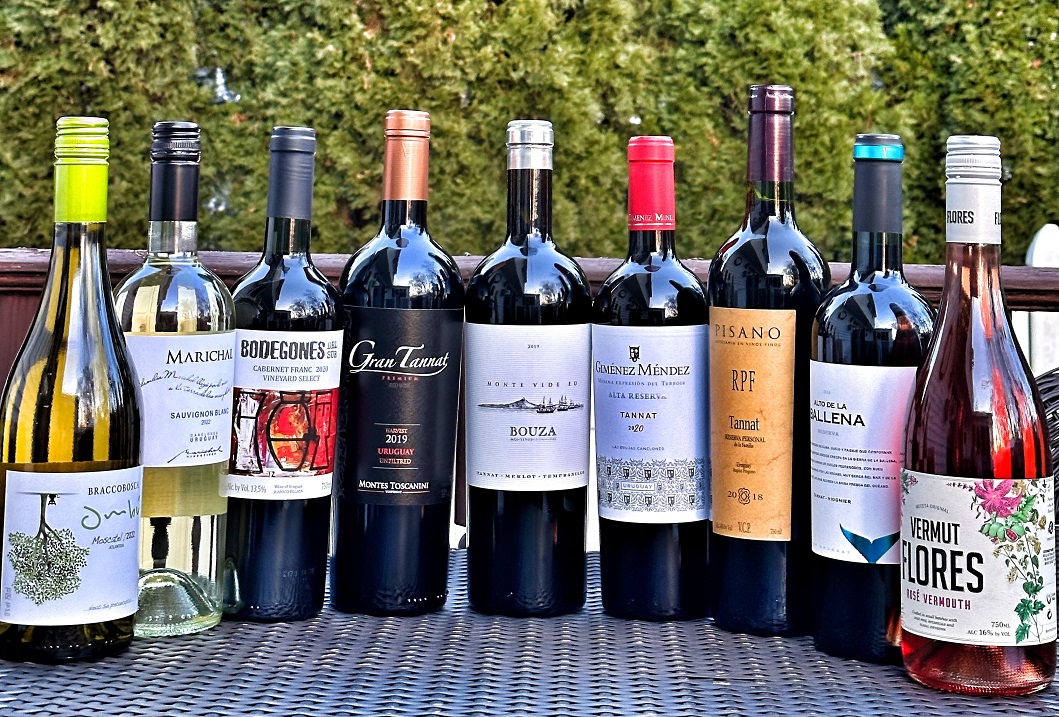
We had 2 whites, 6 reds, and one Vermouth wine in the tasting. Spoiler alert: I literally liked them all. In the blind tasting, these wines would be surely regarded as world-class, placing them in California, France, maybe Chile – Uruguayan origin of these wines would be a total surprise for many – for sure for me. And yet, here they are – world-class wines from Uruguay.
2022 Marichal Sauvignon Blanc Canelones Uruguay (12.5% ABV, $14)
C: light golden
N: plump, round, Whitestone fruit, a hint of gunflint
P: crisp acidity, fresh, bright. More resembling Muscadelle than anything else. Good balance.
V: 8, very refreshing.
2022 Bracco Bosca Ombú Moscatel Atlantida East Costal Region of Uruguay (13% ABV, $16)
C: light golden
N: very interesting. Muscat’s spicy, nutmeg profile comes as a distant hint. A touch of perfume
P: restrained tropical fruit with an acidic finish.
V: 7, not balanced enough for me; On the second and third days the wine showed much better, more coherent and more elegant – Drinkability: 8-.
2020 Familia Deicas Bodegones del Sur Vineyards Select Cabernet Franc Juanico Region Uruguay (13.5% ABV, $20, 30% aged in American and French oak)
C: Beautiful bright ruby
N: round vanilla, new world style
P: interestingly restrained on the palate, with noticeable tannins. The palate shows the absolutely old world (Saumur, Chinon). Interesting cranberry notes after an hour and a half in the open bottle.
V: 7+/8-, a bit unexpected, but not bad
Improved on the second day, became more round. Final: 8-
2020 Giménez Méndez Alta Reserva Tannat Las Brujas Canelonés Uruguay (14% ABV, $18, aged for 9 months)
C: Dark Garnet
N: Open, inviting, dark fruit, blackberries
P: Dark fruit, firm structure, smokey undertones, herbs, very good balance.
V: 8, well drinkable now
2019 Montes Toscanini Gran Tannat Premium Uruguay (14% ABV, $59, 18 months aged in oak, BAB with a huge punt)
C: dark garnet, practically black
N: wow. Cassis, sweet oak, eucalyptus, open, inviting, invigorating. In a blind tasting, I would bet my life on Napa Cabernet Sauvignon.
P: the palate is leaner than the nose suggests. Red and black fruit weave around a firm structure, tannins showed up a while after opening.
V: 8-/8, very impressive
2018 Pisano RPF Reserva de la Familia Tannat Region Progreso Uruguay (% ABV, $24, 10–12 months in French oak)
C: dark garnet
N: dark fruit, coffee, smoke
P: a hint of smoke, sapidity, dark, concentrated but not overpowering. Good balance, medium-long finish
V: 8-/8, very nice. Will be great with the steak.
2018 Alto de la Ballena Tannat – Viognier Uruguay (14% ABV, $24, 85% Tannat, 15% Viognier)
C: Dark garnet, almost black
N: herbs-forward nose, sage, a hint of cherries
P: fresh fruit, salivating acidity, sage, firm structure, and perfectly lingering cherries and cherries pit finish.
V: 8, great by itself, and will be great with beef roast
2019 Bouza Monte Vide Eu Montevideo Uruguay (13.5% ABV, $67, 20% Tempranillo, 30% Merlot, 50% Tannat, vinified separately, 16 months in French and American oak barrels)
C: dark garnet with a beautiful ruby hue
N: very complex, cherries, rosemary
P: roasted notes, dark fruit, elegant package, firm structure with a perfectly balanced mouthfeel.
V: 8, excellent, a world-class wine.
Basta Spirit Vermut Flores Rosé Uruguay (16% ABV, $16, Tannat, 27 botanicals)
C: beautiful salmon pink
N: Herbaceous, but a bit strange, stewed strawberries
P: a bit too sweet for my palate.
V: I’m very particular about the vermouth, so this is probably not the one for me.
Here you are, my friends. Next time you see an Uruguayan wine on the shelf, obey your thirst and grab it – and you don’t even have to thank me later.
OTBN Conundrum
OTBN, short for Open That Bottle Night, is my favorite wine holiday. Nowadays, there are lots and lots of wine holidays, usually associated with a particular grape – International Chardonnay Day, International Cabernet Day, Beaujolais Nouveau celebration, and so on. The majority of such wine holidays encourage you to open a bottle of wine made from a particular grape, whether there is a story behind the bottle or not. You can take these grape holidays with all seriousness and meticulously prepare and select the right bottle, or you can just grab any random bottle you will see in the store – or skip the grape holiday altogether if you don’t feel like drinking Cabernet Sauvignon or Chardonnay on that particular day.
OTBN is different. OTBN was invented for people who take their wine seriously. Or maybe rather those who take their wine too seriously. Over the years, we accumulate wine bottles that are deemed special; brought home from the winery you visited in France; got this bottle after an amazing tasting event; a bottle from an amazing family vacation many years ago; a bottle given to you by a dear friend. We can continue on and on, but you got the point.
Many of those special bottles in your collection would have some similar traits: they exist in the quantity of 1 and they are too special to be opened at random. Those special single bottles stay put in your cellar, waiting for the special company, special circumstances, special moment, special friend’s visit to be opened and enjoyed. More often than not, they keep waiting, and waiting, and waiting, because that special moment keeps not happening. And then, when it finally arrives, you might open that special bottle you preserved with the best care in the world, only to find that the content can solicit the memory but can’t bring you joy anymore because the wine in the bottle simply turned past prime. And it also kind of ruins the moment. This is why OTBN was invented, and this is what makes it such a great holiday for all the winos out there.
My personal conundrum draws exactly along the lines I just described. I have a lot of single bottles (actually, an absolute majority of my wines in single bottles – I practically never buy any wine by the case), and as such making a decision about a “special” bottle of wine for an event or a holiday, never mind the hallmark of them all, OTBN, a long and tedious process. “Is this bottle good enough? Okay, but I only have one. What if I will open it now and would never know how great it could’ve been? What do I do? What do I do?”
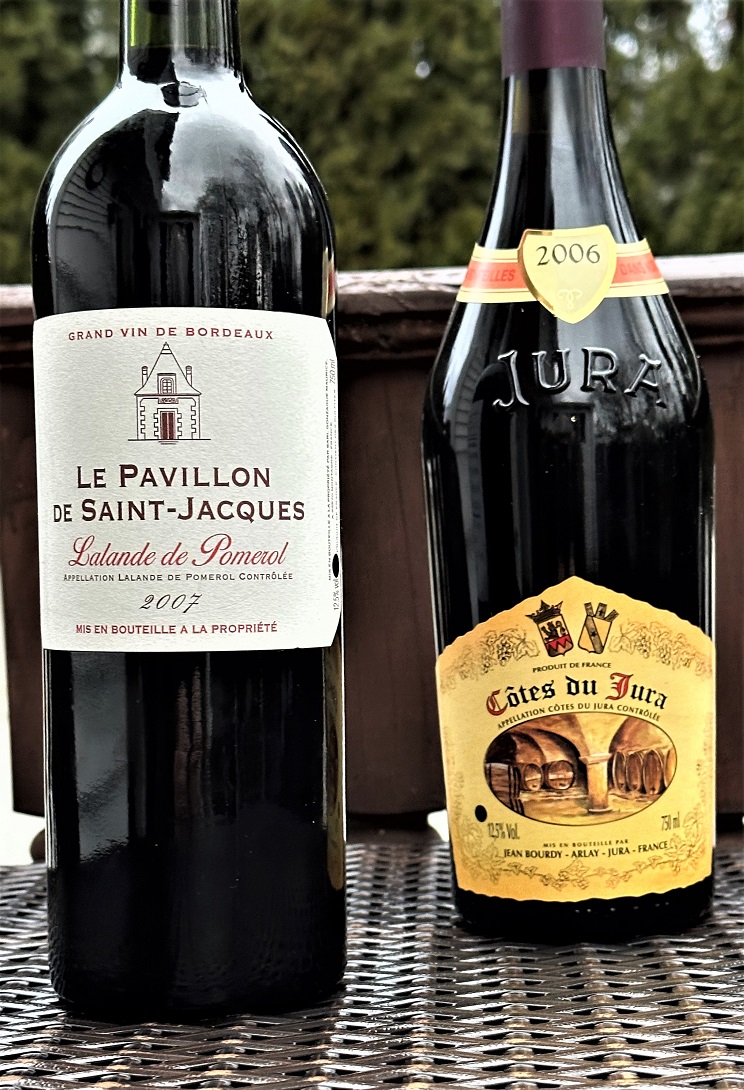
Same as the last year, I had to celebrate OTBN early this year due to the business trip spanning over the intended OTBN last Saturday of the month, February 25th. My wife doesn’t drink much wine nowadays, so I had to count primarily on myself. I had no good ideas coming to my head, there were no special bottles of wine I was ready to sacrifice. Looking at one of the wine fridges, I noticed the bottle of Jean Bourdy from Jura.
I don’t take Jura wines lightly, they are very hard to procure in the US. And then Jean Bourdy is a legend in itself – I better have a damn good reason to open such a special bottle. Then I thought that I already had some Jean Boardy in the past – maybe I would find some notes in the blog? I entered Jean Bourdy in the search box, and sure enough, this post came up. I tasted this wine in 2011 when I attended a Natural Wines seminar at PJ Wine store in New York – my first, a truly memorable encounter with natural (low intervention) wines as a category. I tasted this exact wine, 2006 Jean Bourdy Cotes Du Jura Rouge (fun fact: 2006 was the first vintage of Biodynamic wine production at Caves Jean Bourdy). I really liked the wine then, and my note said “It appears that wines of Jean Bourdy are known to age very well (note to self)”. As soon I saw this “note to self”, I instantly put that single bottle of Jean Bourdy back, as 17 years is most likely not an age for it.
In the same post, I noticed another wine that happened to be next to Jean Bourdy bottle on the same shelf – 2007 Le Pavillon de Saint Jacques Lalande de Pomerol. I pulled this bottle many times from the fridge before, always remembering that this was a natural wine, but again, no moment felt special enough. Then I read my note from 2011, which was clearly less than favorable. Here it is in its entirety:
“Very interesting. Smells like dirt, pure dirt after the rain. Very vegetative, no fruit on the palate, just pure dirt again. Almost no acidity. This wine was fermented in concrete tanks, aged for 18 months. It is “certified organic” and made with 90% Merlot and 10% Cabernet Franc – classic Pomerol wine. I would love to taste it in 10-15 years – I think it will greatly evolve, but it is not easy to say ” I like it” now”.
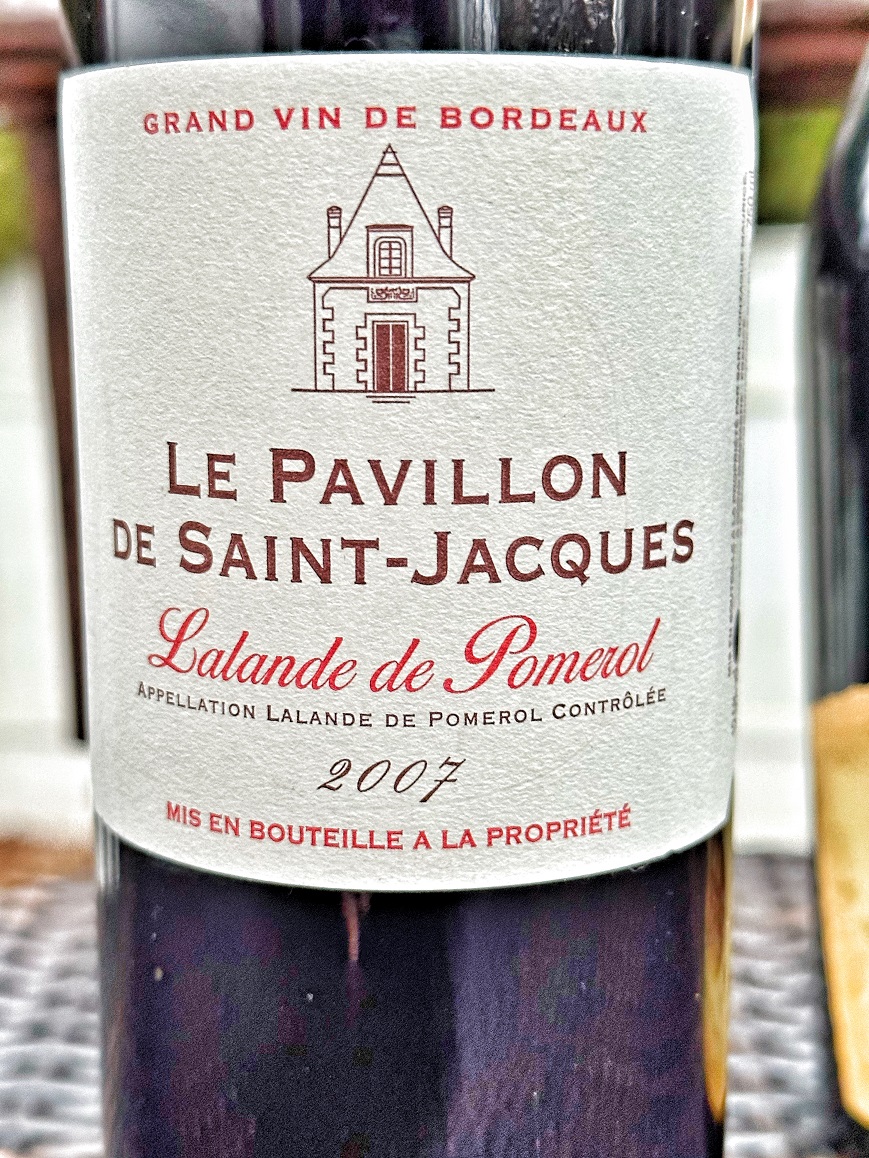
This “note to self” clearly stated that the wine was not good in 2011, but I should give it another try in 10-15 years. I was pretty much in the middle of that suggested term – 12 years after the original tasting, so opening that bottle all of a sudden became a perfect thing to do.
Cork came out easily, showing a good amount of crystals on the bottom, but otherwise perfectly fresh. The first sip instantly put my inner wine geek into a nirvana state. Barnyard. Pure, beautiful barnyard. If you belong to the group which screams “brett” at the first whiff of the barnyard smell on the wine, I’m sorry but we can’t be friends. Yes, there are limits to everything, but the reasonable amount (don’t ask me to quantify, everyone has to define their own “reasonable amount”) enhances the wine pleasure for me. I typically find barnyard associated with Syrah wines – possibly, this was my first Bordeaux with the barnyard aroma – but the barnyard aromas were followed by the classic, concentrated cassis. Layered, concentrated, softly rolling harmonious wine with perfect, firm structure and clean acidity. Beautiful, classic Bordeaux. This was truly an OTBN-worthy pure pleasure experience (by the way, my wife also loved the wine very much).
Here you go – my typical wine selection conundrum, happily resolved to make another memorable night. And as a bonus, the expectation of improvement of the wine with age fully came through (patting myself on the back).
The official OTBN night is almost here. You still have time to select the bottle or 5, maybe get some friends together and make some wonderful wine memories. If you want to celebrate only one wine holiday a year, make it OTBN – don’t risk the wine not being there for you, or you not being there for the wine.
And please share your OTBN stories – I would love to hear them.
Last Bottle Sign Up ($10 credit)





