Archive
Sanford Winery: Evolution Of Growing Up
In the 1960s, two friends, Michael Benedict and Richard Sanford were looking for a good cool-climate site in California where they would be able to make wine rivaling in quality the best European wines.
In 1971, after successfully completing very extensive research, they decided on the location in the Sta. Rita Hills area, a part of the Santa Ynez Valley about 15 miles east of the Pacific Ocean. They first planted the vineyard to Chardonnay and Riesling, but in 1972 they were the first in the region to plant Pinot Noir (and now these are the oldest Pinot Noir plantings in the country).
In 1997, an adjacent hillside vineyard was planted next to Sanford and Benedict, named La Rinconada, which also became a home to the winery building and the tasting room. In 2001, Sta. Rita Hills area was officially certified as an AVA (American Viticultural Area). In 2002, the Terlato family became involved with the Sanford winery (the winery was only carrying the Sanford name as Michael Benedict part his ways with Richard Sanford in 1980), and in 2005 Terlato family became majority owners and partners at the winery. In 2006, John Terlato got closely involved with the winery operations, and that really opened a new chapter for Sanford winery.
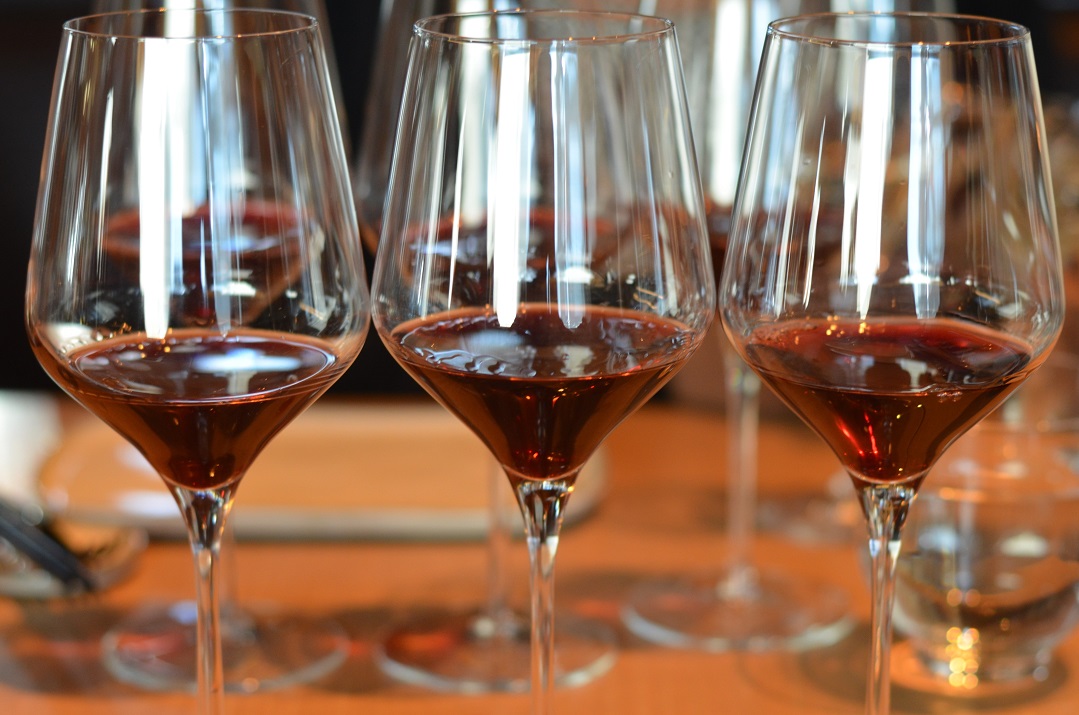
In June of 2019, I got invited to the Sanford winery tasting dinner with John Terlato and Michael Benedict at the Wild Ink restaurant in New York, in one of the hottest neighborhoods – Hudson Yards. I was, obviously, very excited. Which helped me to fail as a wine writer – read on, I will explain.
As we situated at the table, the wines started to appear in rapid succession – 2011 Sanford and Benedict Pinot Noir, 2012 Sanford and Benedict Pinot Noir, then 2013, 2014, 2015, 2016… I didn’t check the press packet in advance of the dinner, and was unprepared for the sheer number of wines presented – also the wines were just brought up one after another, without much of the pause, much of presentation, and too cold – I remember complaining about the wines being too cold and thus really not allowing for a proper evaluation. Don’t get me wrong – I loved the wines, but I had no opportunity to actually compare the vintages and understand the differences. We also tasted 2016 La Rinconada Chardonnay, 2015 Founders’ Vines Chardonnay, 2015 La Rinconada Pinot Noir and 2014 Founders’ Vines Pinot Noir – for which again I didn’t capture a single tasting note, carried away with a conversation, food, delicious wines, and amazing views of the sunset over Hudson.
Or maybe the tasting notes were not that important? In 2006, when John Terlato got involved in Sanford winery operations, he started learning about the best Pinot Noirs in the world. He went to Burgundy, met with winemakers, and tasted lots and lots of wines to understand what can be done differently at Sanford, what is next. He started the vineyard block program at Sanford, identifying unique vineyard blocks at both Sanford and Benedict and La Rinconada, with unique soil, microclimate and terroir, to let literally every bunch of grapes be the best they can be. John brought his notebooks to the dinner, and he was showing us pages and pages of copious notes, both about the wines he tasted in Burgundy and all the experiments and work done at the Sanford vineyards.


Both John and Michael were obviously proud of what they achieved, but what is important, they were both optimistic about their work at the winery and the best yet to come as the learning process doesn’t stop. “I want you to come to the winery and taste 2017, 2018, 2019, 2020, 2021… I want you to see how they [wines] change. I want you to see how much better they will become” said Michael Benedict in his quiet voice sitting next to me.
If I would’ve done my homework before coming to the dinner, I would’ve come armed with some incredible facts summarizing 13 years of hard work at the Sanford vineyards. Here are some numbers for you. 30% of the Sanford and Benedict vineyard are still planted on its original vines, which is very rare in California considering the spread of Phylloxera. The vineyard is home to the oldest Pinot Noir vines in Santa Barbara County, planted in 1971. Sanford and Benedict Vineyard has a total of 144 acres under vines – 109 acres of Pinot Noir, 33 of Chardonnay, and 2 of Viognier. There are more than 20 vineyard blocks identified, and there are more than 11 clones growing there.
La Rinconada, which was planted in 1997, is 117 acres in size, 63 acres of Pinot Noir, and 54 acres of Chardonnay. It also has 20 vineyard blocks and 12 clones. Between 2 vineyards, there are 261 total vine acres, 50+ Vineyard Blocks, 20+ clones, 6+ soil blends.
Taking all of this into perspective, it is amazing how Pinot Noir is becoming an obsession of the winemakers – I see this through all of the Stories of Passion and Pinot, through the deep research of soil done by Alit in Oregon. Identifying vineyard blocks, vinifying blocks separately, using multiple clones, blending, trying, and trying again. Passion and Pinot, truly.
Not writing about that memorable dinner was one of my biggest disappointments – to my disdain, I have a good memory for disappointments, so it was really hunting me down. But sometimes, life offers us second chances.
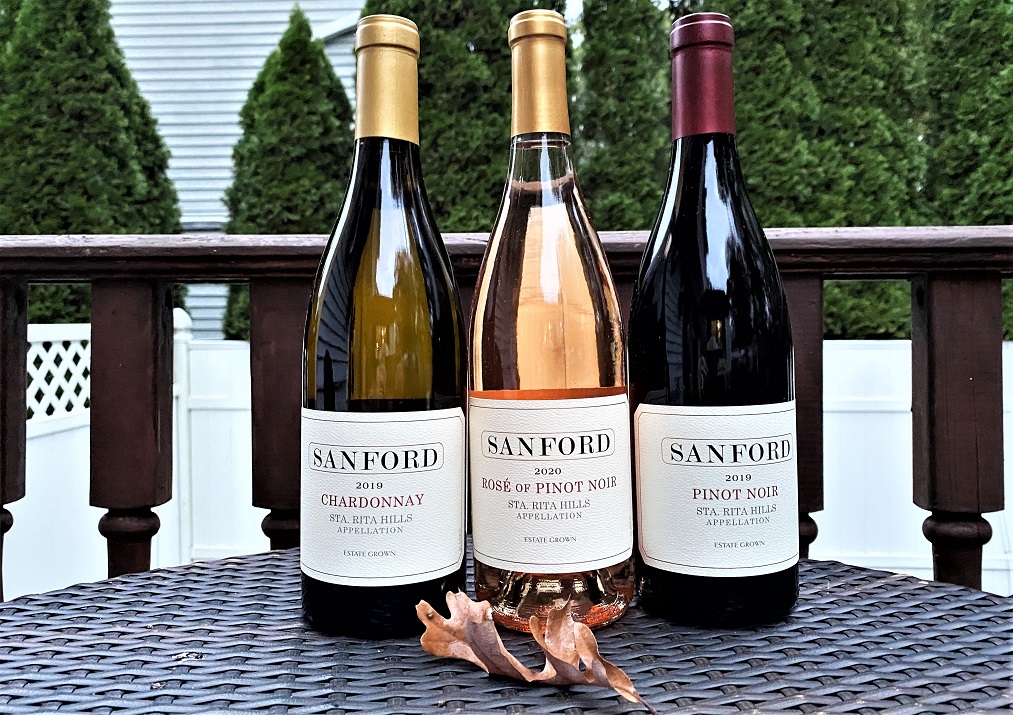
Trey Fletcher got schooled in world-class Pinot Noir and Chardonnay during his tenure at Littorai Winery, also learning biodynamic, organic, and sustainable viticulture at the same time. In 2011, Trey moved to Santa Barbara to become Winemaker and GM at Bien Nacido Vineyards. A few years back, Trey joined the Sanford team as Senior Winemaker, and 2019 became the first vintage where he was responsible for all the winemaking and blending decisions. I had an opportunity to taste Trey’s wines and here are my impressions:
2019 Sanford Chardonnay Sta. Rita Hills (13.5% ABV, $40, aged 11 months in French oak, 25% new)
Light golden
A hint of minerality, vanilla, apple, elegant, inviting
Similar profile on the palate – vanilla, apple, a distant touch of honey, perfect acidity, clean, fresh, delicious
8, an outstanding example of California Chardonnay
2020 Sanford Rosé of Pinot Noir Sta. Rita Hills (13% ABV, $20, aged 6 months in stainless steel and neutral barrels)
Salmon pink
Strawberries, nice mineral component
Tart strawberries, lemon, crisp, fresh, bigger body than a typical Provence, but still light and perfectly balanced. Nice medium-long finish.
8/8+
2019 Sanford Pinot Noir Sta. Rita Hills (13.5% ABV, $45, aged 11 months in French oak, 25% new)
Dark ruby
Plums, cherries, smoke. Classic Pinot nose
Sweet plums, tart cherries, probably a whole cluster fermentation based on a tiny hint of a green bite. Restrained, elegant, the sweetness is just hinted, and overall wine is well structured.
8, Should age well. A California Pinot with a lot of restraint
Pinot and Passion. There is truly something magical about the grape which becomes an obsession and an object of desire. The best proof, however, is always in the glass.
May you never stop growing.
Top Wines of 2021: Second Dozen
 And the time has come (drum roll, please) to announce Talk-a-Vino Top Wines of the year 2021.
One of the most exciting and most dreadful posts of the entire year.
It is exciting, as during the preparation I get to re-live the wines of 2021, look through the notes, reflect, and reflect more.
It is dreadful because I don’t like making decisions. Can you decide on your favorite child? Of course not. These are wines, not kids, but still – there are many ways to decide on what makes the wine exciting and what does not, and then trying to sort through the excitements? Dreadful, just dreadful.
But someone has to do it, right?
If you are a regular here on these pages, you know the story. Every year ever since this blog started in 2010, I come up with the list of most memorable, most interesting/unique/unusual/stunning wines I tasted throughout the year. When I started these Top Wine lists, the goal was to identify a dozen (12) of top wines. I was rarely successful with such limitation, and most of the Top wine lists consist of two dozens, a few times there were even two dozens plus a few.
So without further ado, let me present the second dozen (and some) of Top Wines of 2021.
26. Castello di Amorosa Sparkling Grape Juice Red Blend ($14.99) – until I tasted these grape juices from Castello Amorosa, I had no idea that it is possible to create grape juice that would perfectly resemble the wine, only without alcohol. I tasted 3 different juices from Castello Amorosa, all 3 were a pure delight – I liked this sparkling juice red blend just a hair more than the two others.
25. 2013 Fero Vineyards Saperavi Pennsylvania ($25?) – This was the only bottle of “Georgian” grape I could open to accompany an impromptu Georgian dish we had for dinner. Exceeding any of my anticipations, this wine evolved to be perfectly delicious, and it elevated our dining experience akin to the glove perfectly fitting the hand.
24. 2020 Tenuta Gorghi Tondi Midor Catarratto Sicilia DOC ($12) – Ancient grapes make delicious wines – Catarrato or Lucido, you can’t go wrong with this invigorating white from Sicily.
23. 2014 Oscar Tobia Rioja Reserva ($20) – if you are as conservative as I am when it comes to what Rioja do you drink, remember this name. Perfect delight in the classic style – if you have a Rioja craving, this wine will deliver. This was our go-to wine during a week in Cancun, and it didn’t fail us.
22. 2018 Knotty Vines Cabernet Sauvignon California ($10) – simple is beautiful. This is the first entry in the Top list from the Oregon trip in August (but so ohh not the last). Delightful California Cabernet Sauvignon at $10 or so is not something which should be even possible – and nevertheless, here is this wine. If you will have an opportunity – give it try. Definitely a case buy.
21. 2020 Troon Vineyard Kubli Bench Pet tanNat Applegate Valley ($35) – this wine has an energy of the tight rope, or maybe a guitar string should be a better analogy. As clean and vibrant sparkling as they get – ignore the petNat part, this wine is a serious game.
20. 2015 Imperial Reserva Rioja DOCa ($50) – a beauty such as Imperial Reserva Rioja can easily be anywhere on the list. Anywhere. But on the Top list, as this is top wine in its core.


19. 2019 Troon Vineyard Siskiyou Estate Syrah Applegate Valley ($50) – I’m a big fan of Syrah, and this Syrah is as pure as they get. Clean pepper and underbrush, clean and unadulterated. If you like cold-climate Syrah, this is just pure pleasure.
18. 2013 Montecillo Rioja Reserva DOC ($40 for 1.5L) – Rioja overload? This is not even remotely possible. If you love Rioja, this is yet another beautiful rendition.
17. 2015 Becker Vineyards Claret Les Trois Dames Texas ($14.99) – you never know what you can find in the local store. This wine was at its peak and absolutely mind-boggling in its Claret beauty.
16. NV Keush Origins Brut Methode Traditionelle Armenia ($25.99) – Armenia winemaking might be one of the oldest in the world, but this is modern, clean, and very well-made, world-class, sparkling wine.


15. 2018 Bodegas Muga Flor de Muga Blanco D.O.Ca. Rioja ($50) – Another Rioja!!!! Okay, this time it is at least white. Rioja is not only red, and some of the Rioja whites can be quite memorable – like this one from the classic producer.
14. 2019 Field Recordings Festa Beato Farms Vineyard El Pomar District ($25, 100% Touriga Nacional) – aromas that can transport and transform. Amazing wild strawberries and meadows aromatics. A perfect rendition of one of my most favorite grapes.
13. 1998 Reverie Special Reserve Diamond Mountain ($NA, blend of Cabernet Sauvignon, Cabernet Franc, and Petite Verdot, aged in 100% new small French oak barrels) – they don’t make them like that anymore. This is sad, but a true statement – this winery doesn’t exist anymore – but this 23-year-old wine was a pure delight, as good as aged California Claret can be.
And now we reached the end of the presentation of the second dozen to Talk-a-Vino Top WInes of 2021. Top Dozen presentation coming soon and it will be …. well, you will have to wait. Cheers!
Portuguese Wines: Pleasures Worth Seeking, And Waiting For
Once again, I want to start with the question.
What is the most frustrating question you can ask a wine lover?
I get it – we are all different, and so are our sources of frustration. Of course, I get it. And nevertheless, give it a thought, please. If you consider yourself a wine lover (not a collector, not a snob, just someone who really appreciates the glass of that special grape juice) – what is the question you don’t like to hear the most?
Okay, fine, I will go first.
“What is your favorite wine?”
This is the most innocent question one might expect, isn’t it? Once you show your love of wine one way or another, people love to ask that question – ahh, so what is your favorite wine? I literally cringe every time when I hear that question, because it is very hard to explain how such a simple and innocent question can’t get a good, simple answer – and yet I can’t answer that question.
Every time I answer this question, I lie. When I say “I have no preference, I love them all” I lie because I have preferences. Lots and lots of preferences, and yes, I love them all, but then… Yeah. And when I say “I love Spanish Rioja” it is a lie, because I love Rioja from very particular producers, and not just any Rioja. Moreover, depending on the day, food, and company, there will be other wines that I love as much as I love Rioja. See, there is no escape from the lies.
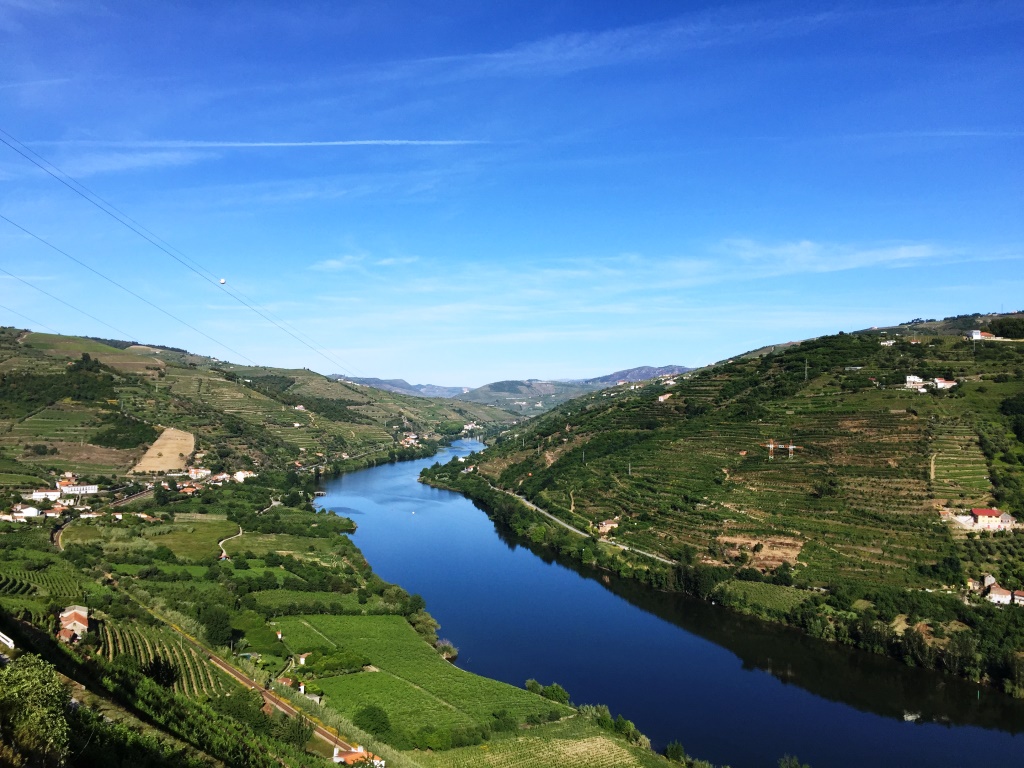
So when I say “I love Portuguese wines” it is one of those statements. Yes, I love Portuguese wines, but not all of them – I have preferences.
Portuguese wines became somewhat of an obsession to me about 15 years ago, but I don’t believe you would easily guess the reason why. It was not just because they were really, really inexpensive at the local Bottle King wine store in New Jersey ($5 per bottle was a pretty normal price, with occasional $4 showing up), but because they were made out of obscure grapes, and I was hunting down the obscure grapes to advance to the next levels of The Wine Century Club. Enjoying the wines was secondary, but spending countless hours with the search engine, trying to figure grape composition, grape synonyms – ohh, what a fun journey it was.
Based on what I just described, I wasn’t ready to claim my love for the Portuguese wines overall. In 2013, I was lucky enough to visit Porto, Portugal for work, and this is where it became literally love from first sight. At the restaurant, I just pointed to the bottle on the list. I had no idea what I’m ordering, but at €14 it didn’t seem like a big risk. The first sip made my eyes pop, and Portugal’s status was instantly elevated to the “oh my god” level. That wine was from Quinta do Cardo, a blend of Touriga Nacional, Touriga Franca, and a few other varieties – here is the original post.
A few more days into that same trip I had another wine which completely solidified my love for the Portuguese wines – Casa Burmester Reserva Douro – again, pure indulgence. There were lots more wines during that and two other trips to the Douro which made me form the opinion that Touriga Nacional is very similar to Cabernet Sauvignon in its ability to be grandstanding, to create the wine with a perfect flavor profile, perfect ripeness, perfect level of extraction and impeccable, sexiest mouthfeel. If you ever had Kamen Cabernet Sauvignon or Vérité La Joia, you would know what I’m talking about. Yes, I love Portuguese wines.
And one more thing about Portuguese wines. Similar to well-made California Cabernet Sauvignon, well-made Portuguese wines need time. Way too many times I had Portuguese wines which were not ready. I don’t know if analogies with Port are appropriate here (same grapes?), but Vintage Ports can easily age for 50+ years. I never had 50-years old wines from Portugal, but I have first-hand experience with, for example, 24 years old wine which was not ready to drink, not for a minute (you can read about it here).
When I was offered to try two Portuguese wines from the Douro, made by Prats and Symington, I quickly agreed – I told you already that I love Portuguese wines, remember?
I always like to talk first about the producer before discussing the wines. Only a few days ago I wrote at length about a number of Port wines produced by the Symington Family Estates, so this is the part of the story I don’t need to repeat – you can read it here. But understanding the “Prats” was a bit more challenging. The website section for Prats and Symington, or P+S how it is abbreviated provides rather limited information. I was only able to learn that “In 1999 our family formed a partnership to make top Douro wines with the Prats family of Bordeaux”, and that “the first Prats & Symington wine was Chryseia 2000 which received widespread national and international acclaim”. I felt as in my early days of combing Portuguese wine labels and information tidbits for the grape names, so I had to do a bit of research.
I was able to figure that Prats in P+S is actually Bruno Prats, former owner of Château Cos d’Estournel and experienced winemaker, who applied Bordeaux winemaking philosophy, especially around blending, to the production of the P+S wines, which resulted in the wines with the highest critic ratings in the history of Portuguese unfortified wines. This article in the Dinks Business online magazine explains Bruno’s winemaking philosophy very well.


The two wines we are talking about here are 2018 P+S Prazo de Roriz Douro (14.5% ABV, $17, 35% Touriga Franca, 20% Touriga Nacional, 20% Mixed varieties, 15% Tinta Roriz, 10% Tinta Barroca, 6 months in 400L neutral French oak Barrels) and 2019 P+S Post Scriptum de Chryseia Douro Red (14.2%, $27, 56% Touriga Franca, 33% Touriga Nacional, 7% Tinta Roriz, 4% Tinta Barroca).
There are two main vineyards used in the production of these two wines – Quinto de Roriz, one of the oldest and best vineyards in Portugal, already famous for its single-vineyard wines in the 18th century, and Quinta de Pedriz, a newly acquired vineyard in Rio Torta and specifically planted with Touriga Nacional and Touriga Franca grapes.
As these were two sample wines, I also got technical notes for both, which I typically like to glance over. Two items attracted my attention in the notes. First, there was a line there saying “Decanting: Not required”. Second, the “Storage and Serving” section stated ” Ready for immediate consumption”. Leaving decanting aside, “ready for immediate consumption” somehow bothered me.
Prazo de Roriz was actually as promised – from the moment the wine made it into the glass, the wild strawberries on the nose and palate, which I tend to believe are signature flavors of Touriga Nacional, were prominent, and the wine was perfectly extracted, round, concentrated, and overall delicious (Drinkability: 8). It was also “dangerous wine” as I like to call them – once opened, they tend to disappear without second notice.
The first sip of Post Scriptum, made me say “hmmm” and reach for the decanter. Decanter didn’t really help – two hours later, the wine was still ultra-dense and literally devoid of fruit. I don’t give up on the wines easily, so back into the bottle the wine went. Next 4 days, I would pull out a stopper, pour a sip, and put the stopper immediately back. On day number 5, the magic transformation completed – the wine all of a sudden opened with the same wild berries profile, perfect extraction, round and layered, and ready to be admired. (Drinkability: 8+).
Here you are, my friends. Portuguese wines are easy to love – you just need to find the right wines and have a bit of patience. But seriously, the rewards are handsome – these are some of the best wines in the world which you can still afford without an expense account. Happy [wine] hunting!
Cabernet Franc – Well Worthy of a Celebration
Cabernet Franc.
Let’s talk about it.
Cabernet Franc is a parent. Like most parents, Cabernet Franc is often overshadowed by the achievements of its kids – especially when its kids are none less than Cabernet Sauvignon and Merlot, some of the most famous in the wine world. It is interesting that Cabernet Franc is often described as “blending grape” – while it is true that Cabernet Franc is a popular choice in Bordeaux blends around the world (it typically ripens at a week earlier than Cabernet Sauvignon, so it offers winemakers an “insurance policy” of sorts), it also excels just by itself. As a blending grape, Cabernet Franc is typically used with Cabernet Sauvignon or Merlot, adding something important to the resulting wine. Meanwhile, the majority of single-grape Cabernet Franc wines have nothing else in the blend – just pure, unadulterated Cabernet Franc.
Today, we are talking about this pure Cabernet Franc. It grows successfully in the absolute majority of the winemaking regions – Bordeaux and Loire Valley in France, Italy, Argentina, Australia, Chile, Eastern Europe, Canada, New York, Virginia, New Jersey, California, Washington, Oregon, …. Pure Cabernet Franc wines typically happen to convey the terroir much better than Cabernet Sauvignon or Merlot. With Cabernet Sauvignon, no matter where it is coming from, everyone is trying to achieve the “golden standard” of Bordeaux or Napa Valley expression, even if the wine is made in Italy, Argentina, or Long Island, New York. Cabernet Franc typically conveys a sense of place first and foremost – lean, clean, and minerally driven from Chinon, tart and herbaceous from New York, round and luscious from California. Same grape, unlimited number of expressions.


Celebrating the range of expressions of Cabernet Franc I can simply offer you a few of my experiences from this year. Back in April, I had 2017 Hawk and Horse Vineyards Cabernet Franc Red Hills Lake County California, a biodynamically produced rendition that offered pristine beauty of cassis elegantly framed with the core of the well-integrated tannins. And then there was 2019 Domaine Bousquet Gaia Cabernet Franc Gualtallary Vineyards, minerally driven Cabernet Franc from the Argentinian dessert. Then there was the 2018 Terra Pacem Cabernet Franc Columbia Valley experience in Eugene, Oregon, offering pure Chinon-inspired, bell pepper and cassis rendition. And I can’t forget the 2011 Gran Enemigo Cabernet Franc Single Vineyard Gualtallary Argentina, again a high elevation desert beauty, which after the unimpressive start, opened up into an intricate interplay of iodine, cherries, cassis, and herbs (this one will definitely be on my 2021 top dozen list).
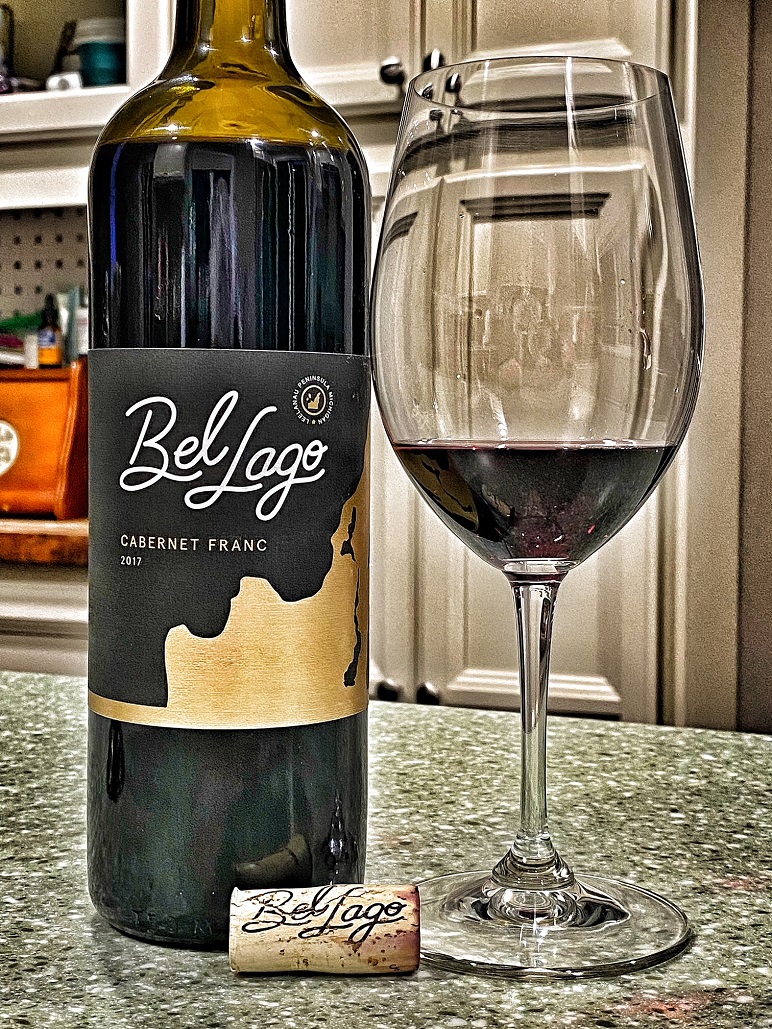 My most interesting Cabernet Franc wine discovery of this year came in the form of the bottle of Cabernet Franc from Bel Lago winery in … Michigan! My excitement comes from the fact that not only I got to taste the wine I never had before, but it also came from the region I had no prior experience with (so I got to update my Wines of 50 United States table the second time this year). And I also got to learn about winemaking in the new state.
2021 is an important year for the Michigan wine industry, as its oldest winery, St. Julian Winery, celebrates 100 years. Today, Michigan has 5 viticultural areas – Fennville, Lake Michigan Shore, Leelanau Peninsula, Old Mission Peninsula, and Tip of the Mitt. About 200 wineries operate in Michigan today, most of them located within 25 miles radius of Lake Michigan.
The Vitis Vinifera grapes were introduced in Michigan about 45 years ago, and today traditional cool-climate varieties, such as Gruner Veltliner, Pinot Blanc, Riesling, Cabernet Franc are doing very well there, and even Cabernet Sauvignon, Pinot, Merlot, Syrah, and Chardonnay had been successfully introduced. Michigan is particularly proud of its Cabernet Franc and even held its first Cabernet Franc Challenge in 2009, where 18 Michigan wineries and one of the French wineries from Chinon competed for the top prize (no, Chinon didn’t win it).
Bel Lago Winery (Bel Lago means Beautiful Lake in Italian) was founded in 1992 and opened its tasting room in 1999. The winery cultivates 100 grape varieties on 37 acres of land and produces between 17,000 and 20,000 cases per year. Bel Lago also produces fruit wines (Cherry wine is very popular) and a number of ciders.
2017 Bel Lago Cabernet Franc Leelanau Peninsula Michigan (13.5% ABV, $48, 87.5% Cabernet Franc, 12.5% Merlot, 34 months in French and American oak barrels) was a beautiful wine – currant leaves and anis on the nose, with a touch of tobacco. Restrained with good cassis expression and herbal notes on the palate with cut-through acidity. Definitely an enjoyable Cabernet Franc rendition, again with its own character, easy to drink, and delicious.
Here it is – new winemaking region and new Cabernet Franc experience. How was your #CabFrancDay experience? Did you learn something new or find a new Cabernet Franc wine that you like?
Seeking Cabernet
 Now, this is frustrating.
At the recent dinner with friends at Knife Pleat restaurant (amazing food!), I assumed my role of designated Wine Guy and was going through 20+ pages of the wine list. 1970 Solar di Samaniego Rioja Gran Reserva caught my eye – at $200, it represented an amazing value for a 51-year-old wine. After confirming with the Somm that the wine is still well drinkable, only more delicate than powerful, I had to wriggle an approval for spending $200 on a bottle (I was not paying).
After the wine made it into the glasses, it appeared that everyone was really enjoying the nose, which was complex and spectacular. The first sip of the wine, served at the cellar temperature, was met with more than subdued enthusiasm – let’s be honest here, it was rather a sigh of disappointment. There was nothing wrong with the wine, but it was well closed and at least needed the time to open up.
After a few attempts to enjoy the wine, my friend asked “can you recommend any big, round, smooth, and velvety wines”? It turns out a few years back when she just arrived in Irvine, she got a bottle of wine at the local store. The wine was on sale for about $20 a bottle, and all she remembers was Cabernet Sauvignon and that she really enjoyed the wine – but she has no idea about the producer, the vintage, or any other essential elements.
Have you been in a situation where a simple question can lead to literally complete paralysis while trying to answer it? This might be a situation where your knowledge becomes your big handicap, as you try to hastily dissect the complexity of such a simple question.
Basically, the question asks “can I recommend an amazingly good California Cabernet Sauvignon at a reasonable price to someone who is not a wine aficionado, but just want to occasionally enjoy a good glass of wine?” – how easy this should be to answer for the Wine Guy? For yours truly Wine Guy, not so easy.
Good California Cabernet Sauvignon might be one of the best pleasures on Earth. I’m talking about the wine which unequivocally extorts “oh my god” from the red wine lover after the first sip. Of course, this is a simple idea – but not so simple to provide a recommendation. We need to take into account price, availability, and readiness to drink. BV Georges de Latour Private Reserve might be amazing with proper age, but with the price of $100+ per bottle and pretty much undrinkable upon release, this is not the wine I can recommend. The same story would be with Kamen, one of the most amazing Cabernet Sauvignon wines I ever tasted. Textbook, Turley, or Waterstone would offer more reasonably priced options (under $50), but still, I don’t know how amazing these wines are upon release. Suggesting non-winos to decant will not work. Asking them to keep the wine in the cellar until it reaches perfection will not be received very well. That leaves us with only one option – we need to find a Cabernet Sauvignon which is delicious upon release.
In an attempt to rehabilitate me after (almost) an epic failure at the restaurant, I decided to look for the simplest solution – the wines from Trader Joe’s. Trader Joe’s wines rarely disappoint; they are light on the wallet and don’t require cellaring or decanting to be enjoyed.
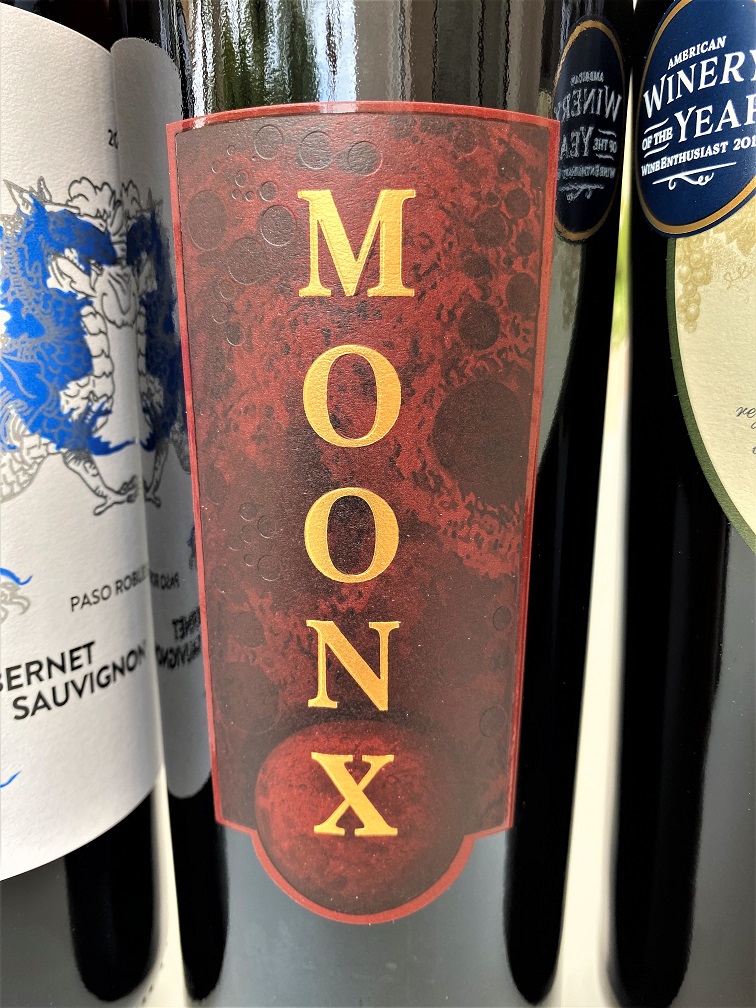
Trader Joe’s offers a good selection of Cabernet Sauvignon wines. Choosing the wines was a combination of prior experience and just good-looking labels – Justin makes outstanding wines in Paso Robles; you can’t go wrong with or beat the prices of the Bogle wines); I had MOONX wines before, and have good memories of them.
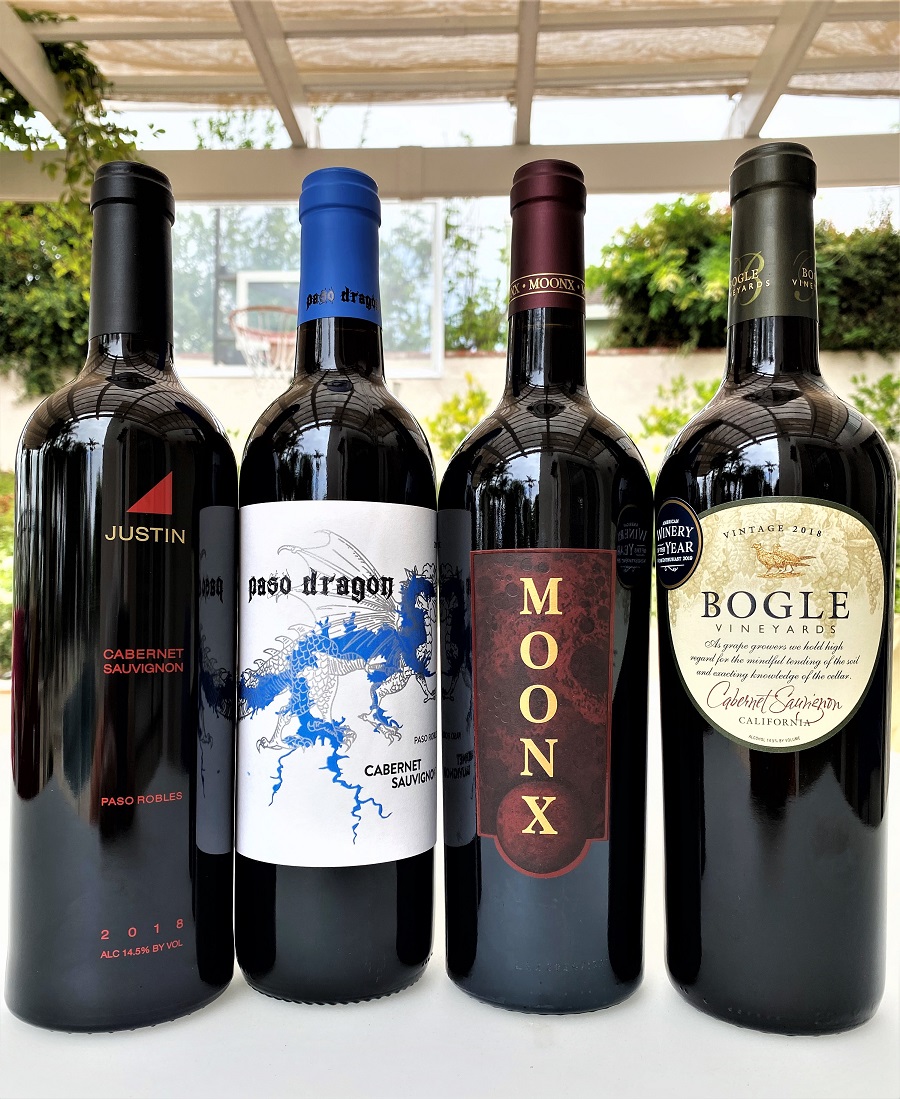
Here are the Cabernet Sauvignon wines from Trader Joe’s I offered to my friend to taste (notes are mine, of course):
2018 Paso Dragon Cabernet Sauvignon Paso Robles (13.5% ABV, $6.99)
Garnet
sage, blackberries, red and black fruit
Blackberries, herbs, medium body, clean acidity, nice finish with a touch of pepper
7+, a bit too weak for the Cab, but easy to drink wine. Can’t really identify as Cabernet Sauvignon.
2018 Justin Cabernet Sauvignon Paso Robles (14.5% ABV, $24.95)
Ruby
A touch of eucalyptus and mint, blackberries; second day – earthy and complex, a hint of gunflint.
A distant hint of cassis and tobacco
Second day: Classic cab is coming through, cassis and mint, clean acidity, crisp tannins.
8/8+, this wine needs at least 5, better yet 10+ years in the cellar to shine.
2018 Boggle Cabernet Sauvignon California (14.5% ABV, $7.99)
Light garnet
Bell peppers, a hint of cassis
Blackberry preserve with tobacco and a touch of coffee. More herbaceous than anything else.
7+, it is a drinkable wine, but might be the least Cabernet of the group.
2019 Moonx Cabernet Sauvignon California (13% ABV, $6.99)
Garnet
A touch of cassis, berries compote, a hint of bell pepper
Lodi fruit presentation, a hint of cinnamon, warm spices, sweet tobacco, berries preserve, a touch of fresh tannins, medium finish.
8-, easy to drink, good balance, pleasant, great QPR.
My friend’s favorite on the first day was Paso Dragon. MOONX was a favorite on the second day. She declared Justin “not bad” on the second day. And she was unmoved by Bogle on either day.
From my point of view, only Justin was worthy of Cabernet Sauvignon designation – give it time, and it will be a spectacular one. MOONX was very good too, but it didn’t necessarily scream Cabernet Sauvignon. We need to remember though that my friend’s love and desire for Cabernet is simply based on the good prior experience with the wine named Cabernet Sauvignon, but was that a classic Cab nobody would ever know.
There you go, my friends. Let’s go on the quest to find the best, varietally correct Cabernet Sauvignon, perfectly drinkable upon release, at a price that leaves 401k intact. Ready to offer recommendations? Be my guest…
Guest Post: Treat Yourself – How to Spend the Best Solo Wine Night
Today, I would like to offer to you a guest post by Raichelle Carpio, retail assistant manager at Txanton Philippines. She obtained her Sommelier license with WSET2 by late 2018 and has been working in the hospitality industry over the past 10 years. Her exceptional skills have driven her to the top and the truth is she has a real passion for premium gastronomy, beverage, and service.
In the past, drinking alone was frowned upon. Somehow, it’s seen as the gateway to substance abuse. After all, everyone agrees that wine, or any other alcoholic beverages, for that matter, is better shared. Drinking wine, for most people, is ideally a social activity.
But that has changed due to the pandemic. To curb the spread of the COVID-19 virus, people had to self-quarantine. No social activities were allowed. As a result, wine-drinking shifted from communal to personal. And no one could be judgy about it. After all, we were all in it together. We were all self-isolating with our precious bottle, constantly reminding ourselves of the health benefits of wine, so we don’t feel guilty about drinking solo.
Still, it’s important to stay level-headed as you push through with your solo wine adventures. Pair it with the activities below, so you do not come off as a potential candidate for alcoholics anonymous.

Experiment with recipes that go well with wine
Even if you’re just a casual wine drinker, surely you know by now that white wine goes with fish or chicken, while red pairs best with red meat. Now, why not take your wine and food pairing knowledge to connoisseur levels?
On your solo wine night, don your apron and experiment in the kitchen. Cook something to pair with whatever bottle you have at hand. If you have a bottle of Barbera, it will go down well with a pasta dish like shrimp puttanesca. Ideally, you have gone grocery shopping before your wine date with your lonesome. Otherwise, you might not successfully pull off the dish simply by relying on makeshift ingredients available in your pantry.
Have around-the-world themed dinners
Take your wine and food pairing to the next level with around-the-world themed dinners. Planning to spend the next six Friday nights at home alone? Come up with a scheduled dinner where you take your palate to different countries with exciting culinary cultures. By the end of your quarantine, you will have traveled across six gustatory destinations.
For example, set the first Friday for Indian food. Curried chicken or vegetables will go well with a Riesling and Pinot Grigio. You may include Mexico, Japan, China, Italy, and Greece in your itinerary too.
Join virtual winery tours
Did you know that wineries host virtual tours? And you might find them enjoyable given your passion for wine. These tours will acquaint you with everything there is to learn about winemaking. From how grapes are harvested to how they are processed and stored, you’ll get up close and personal with your favorite beverage.
Look into brands like Martell, Louis M. Martini, Chateau Montelena, Kendall-Jackson, and Matanzas Creek. They are famous for not just their products but also for hosting virtual tours of their vineyards, production facilities, and cellars.

Photo by Matilda Wormwood from Pexels
Learn winemaking
If you got inspired enough by the virtual winery tours you’ve joined, it’s time to take your passion for wine up a notch. Learn winemaking is what we’re saying. No, you do not need a vineyard to pull this off. You can do this straight from home.
You’ll need some equipment, however. Do not worry because it won’t be expensive. Think fermentation containers and straining bags. You can even improvise.
As for ingredients, that’s where you can splurge. You will need lots of wine grapes, filtered water, granulated sugar, and wine yeast. A quick Google search will clue you in about the relatively graspable process of winemaking.
Wine movies marathon
Maybe you’d rather sit back and relax in front of your laptop instead of stressing yourself out cooking a dish in the kitchen or trying out winemaking. That’s OK too. Consider marathoning movies with lots of wine drinking. That way you won’t feel alone. You’ll see people enjoying the same stuff you’re taking pleasure in at the very moment.
Here you cannot go wrong with the film Sideways by award-winning director Alexander Payne, starring Paul Giamatti and Sandra Oh. Basically, the film’s about self-discovery set along California’s vineyards.
Other movies worth checking out include A Good Year, The Secret of Santa Vittoria, and A Walk in the Clouds.
Look into wine investments
Perhaps while nursing a glass of wine, it dawned on you that it’s time to diversify your financial portfolio. That’s an excellent realization to make while drinking solo. Commit to this realization by looking into potential wine investments.
You need to be a connoisseur to invest in wine successfully. If you have yet to fit the bill, do not fret. You have all the time to learn about all things wine. Once you’re confident with the knowledge you’ve acquired, it’s time to put your money in a, well, bottle. If you play it right, that bottle will earn you a massive profit in a decade or two.
You likely already know that drinking wine has health benefits, whether you’re nursing a glass of Spanish wine, Italian wine, or Costco wine. Wine is rich in antioxidants. It regulates your blood sugar and lowers bad cholesterol. It keeps your memory sharp and your heart healthy. These alone should keep guilt at bay whenever you drink wine solo.
Still, it’s worth noting that you must drink responsibly. Anything in excess is never good for anyone. You do not want to give those naysayers the chance to say, “told you so.”
To keep your wine drinking on the safe side, do it alongside other activities. The ones cited above are notable options you have, but they are by no means exhaustive. Get creative.
Open That Bottle Night 2021 – What A Night!
Traditions, traditions, traditions.
Traditions need wine. Wine needs traditions. Makes sense? If not, express your disdain with a flaming comment. But if you are an oenophile (wine aficionado, wine snob, wine geek, …), you understand and can easily relate.
Open That Bottle Night, or OTBN for short, is one of the shortest living traditions of the wine world, where thousand years might be a good measure for some – OTBN was first celebrated in 1999 when it was created by the wine couple – Dorothy Gaiter and John Brecher, wine writers behind the “Tastings” column in Wall Street Journal. The OTBN was created to help wine lovers part with the special wine bottles which might otherwise become a waste.
There are two parts to any wine tradition – the first is a special wine itself, always carefully selected to match the tradition, and the second is sharing – sharing of that bottle with the world. Not with the whole world at once, but with the friends.
Let’s talk about finding and sharing.
Finding a proper bottle is never easy – and it might be even worse for the holiday such as OTBN, which was created specifically to help us part with the special bottle, the bottle which has a special meaning for us – no matter why and how, but special in whatever way. Sharing is typically not a problem – unless it is 2021 and the world is still mostly in lockdown – and that includes all of one’s wine friends.
I was lucky for the past many years to have wonderful celebrations of the OTBN with the friends, sharing the most amazing wine experiences (here is the first-hand account for 2017, 2019, and 2020). The only possible way to share OTBN 2021 was the one using for the majority of the gatherings during 2020 and 2021 – the virtual one. I’m not complaining – I’m grateful that at least we have the technology with allows us to spend time with each other face to face, no matter how physically distant we are. So sharing portion was rather easy, and now let’s talk about finding.
Finding is not even the right word. Finding is easy – but selecting is not. OTBN asks for that special bottle. Deciding on what makes one bottle more special than the other, when your cellar is full of unique bottles all present in the quantity of 1 (one), is the hard part. After some amount of deliberations, which included pulling numerous wine fridge shelves back and forth, back and forth, I settled on these four bottles:
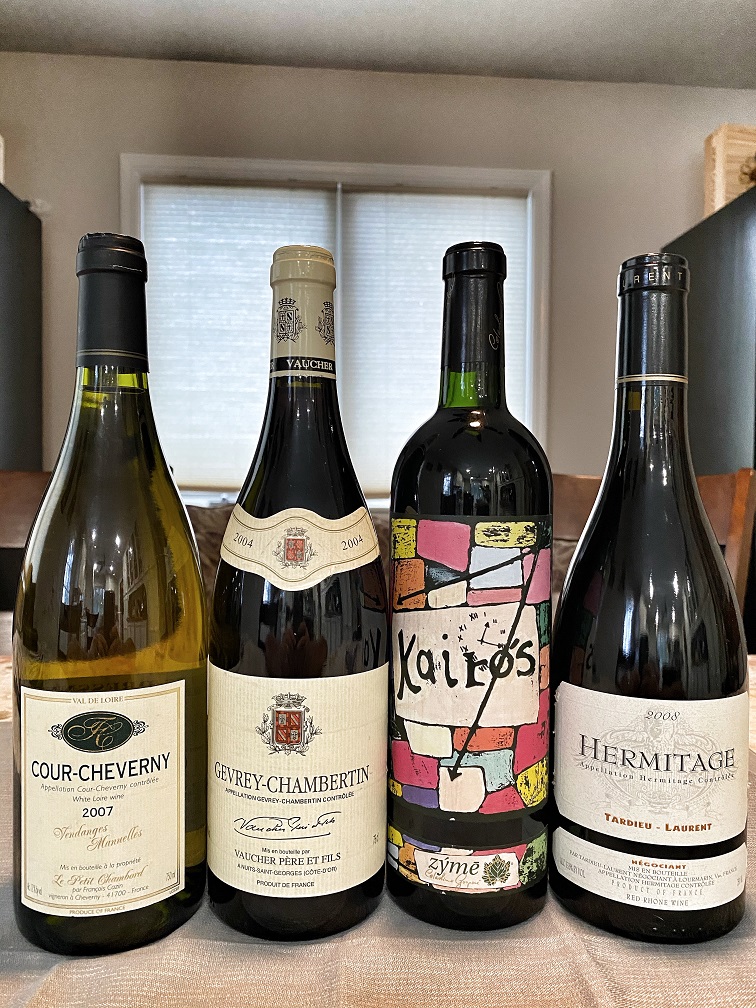
Let me explain my selection logic so you will see why it is such a daunting process for me.
First, the white wine, as I’m a big proponent of the balanced diet. 2007 François Cazin Le Petit Chambord Cour-Cheverny AOC might be called my unicorn wine, at least when it comes to whites. The first time I tried a different vintage of this exact wine when it was 10 years old and this wine became one of the brightest memories for me – the beauty and interplay of bright fruit, honey, and acidity were simply unforgettable. When young, this wine from the Loire, made out of the rare grape called Romorantin, is a single note acidic. With age, it develops into an absolute beauty. When I opened the bottle of this wine back in 2015, the wine was superb. When I brought it to Jim’s house for the OTBN 2019, 4 years later, it was “interesting” but absolutely not exciting. I was hoping for redemption, so this was an easy choice.
My next selection was 2008 Tardieu-Laurent Hermitage AOC. When I see Hermitage written on the label, you can literally hear me sigh. Hermitage to me is synonymous with the Syrah, and I love classic Syrah. And so does my wife – Syrah is her favorite grape. I have very few Hermitage wines in my cellar – and this one was calling my name for a long time (meaning: it was pulled off the shelf and placed back many times). Considering that 2008 had a rainy growing season and the vintage has low ratings (WS86, for example) and “Drink now” recommendation, this was an easy decision – no point in waiting any longer.
How many unicorns can one have? Well, having a unicorn would be nice, but I guess I’m talking about chasing them. So how many unicorns can one chase? Clearly, it seems that I’m chasing many. Good Amarone is the wine I’m always chasing. Giuseppe Quintarelly Amarone is more of an ephemeral dream for me, considering the price and availability – and it is definitely one of those unicorns I’m talking about. With 2004 Zýmē Kairos Veneto IGT, I’m getting as close to that unicorn as I can. This wine is produced by Celestino Gaspari, the winemaker for Giuseppe Quintarelli. As the label says “Produced from 15 varietals of grapes of Verona, it is a reflection and interpretation of our soil and the culture of its terroir”. In case you are curious, the 15 grapes are Garganega, Trebbiano Toscano, SauvignonBlanc, Chardonnay, Corvina, Corvinone, Rondinella, CabernetSauvignon, CabernetFranc, Merlot, Syraz, Teroldego, Croatina, Oseleta, Sangiovese, and Marzemino. This was my last bottle, and I scanned the pages of this very blog for a good 20 minutes last night as I couldn’t believe that I could’ve never written about this wine before – apparently, I have not. Anyway, I was afraid that it might be the time for this wine, thus it was added to the OTBN group. By the way, another interesting tidbit about this wine is that the name “Kairos” means “timely”, “appropriate”, and “the perfect moment”.


Every good plan A needs plan B, right? The backup. Have you ever went to a friend’s house with a bottle of wine, while another bottle stayed in your car just in case the first one would be corked? Yep, that’s the plan B we are talking about. 2004 Vaucher Pere et Fils Gevrey-Chambertin was my plan B. I don’t have a lot of Burgundies, so opening one is always a special moment. 2004 vintage was so so, with WS88 rating and “drink” recommendation, so this bottle was rightfully on the OTBN list, should the need and opportunity come.
Now you know all about selecting, and I want to say a few more words about sharing. Sharing wine is one of the best pleasures of drinking wine. The approving, understanding nod from the fellow wine lover after he or she is taking the sip from the bottle you brought really fills you up with joy. It might be even more satisfying than your own enjoyment of the same wine. Yet in today’s world, sharing the wine face to face is literally impossible, OTBN or not. To at least share the moment, I reached out to the technology which seemed to save the world from going mad – a virtual get-together over video. Zoom is my tool of choice, so after sending the invites to the group of bloggers, we got together at 7 pm on the OTBN Saturday.
We were not a big group – even in the virtual world, people are busy and have their own plans. But I’m really grateful to everyone who was able to spend that special Saturday time together – some for the whole 2 hours, some for 20-30 minutes, talking about wines, sharing life stories and experiences, and most importantly, having fun. You can scroll through the pictures below, I’m sure you will see some familiar faces.
So how was my OTBN? In other words, let me tell you more about the wines.


The miracle didn’t happen, and the white wine didn’t become suddenly magical. If I need to describe this 2007 François Cazin Le Petit Chambord Cour-Cheverny AOC in one word, the word would be “strange”. At some moments, it was oxidative and plump. In other moments, it was acidic. It never showed that amazing lemon and honey notes I was expecting. I still have one more bottle, but now I really need to forget it for as long as possible and see if the miracle will happen.
The Hermitage was … superb. First of all, opening it was a breeze – cork was perfectly intact, regular waiter’s corkscrew worked just fine. Drinking this 2008 Tardieu-Laurent Hermitage AOC was a great pleasure – a touch of pepper, a distant hint of a barnyard, round and delicious fruit. The wine was just right – perfectly balanced, round, and smooth. I don’t have a lot of experience with Hermitage, but this wine was clearly one of the best renditions of Syrah I had in a long time. “Elegant” would be the single word descriptor I would use.
The Kairos was the bottle I was concerned about the most. It could’ve been gone by now, especially considering such an eclectic blend of grapes. When I started opening this 2004 Zýmē Kairos Veneto IGT, first I decided to use the regular corkscrew, which worked perfectly fine for the Hermitage. Looking at the way the screw was going in, the cork seemed to be too soft, so I decided that it was the job for Ah-So – I’m glad this decision was not an afterthought I usually have after the cork is already broken in half – Ah-So worked perfectly well and the cork came out with no issues.
And the wine… The wine was magical. Dark fruit with a hint of dried fruit on the palate, perfectly firm and structured, powerful and elegant, with clean acidity and an impeccable balance. The wine was delicious on Saturday, and I also enjoyed that over the next two days. So now I regret not having any more bottles left – but I’m glad I had this special experience. Magical would be the word.
As two bottles of red had no issues whatsoever, the Burgundy was left aside and now will be waiting for its special moment to be opened and enjoyed.
And that, my friends, concludes my OTBN 2021 report. While the sharing was virtual, the experience and pleasure of the wine and the company were real, and it will stay in my memory as yet another great OTBN night. Hope you had fun too. Cheers!
A Perfect Perfection
 Yes, I know. “Perfect Perfection”. The English language offers more than 170,000 words, and this “writer” can’t even come up with a decent title for the post. Shame on me.
And nevertheless, I insist on my choice of words. Let me tell my tale to see if this will make sense to you too.
Valentine’s Day is a very personable holiday, loved by some, and hated by others. Many years ago, we decided that it will be simply a family holiday for us (no restaurant Prix Fix menus and back to back sitting), which translates into an opportunity to cook and – it is a special holiday, after all – open a special bottle of wine.
A special bottle of wine means a special selection process. “Special selection process” usually means trouble – going from a wine fridge to a wine fridge, opening the door, pulling the shelf, looking at the bottles, pulling another shelf out, still not finding anything appropriate, and repeating until full exhaustion. For this dinner, however, a choice of the main dish greatly simplified the process.
In this house, special dinners are often associated with the steak. Such was this Valentine’s Day – New York strip was acquired and ready to be cooked. Many wines can play well with the steak, but in simple terms, steak needs Cabernet Sauvignon or a Cabernet Sauvignon blend. With that in mind, choosing the wine was almost easy and straightforward – California Bordeaux-style blend with a nice age almost popped into my hand on its own.
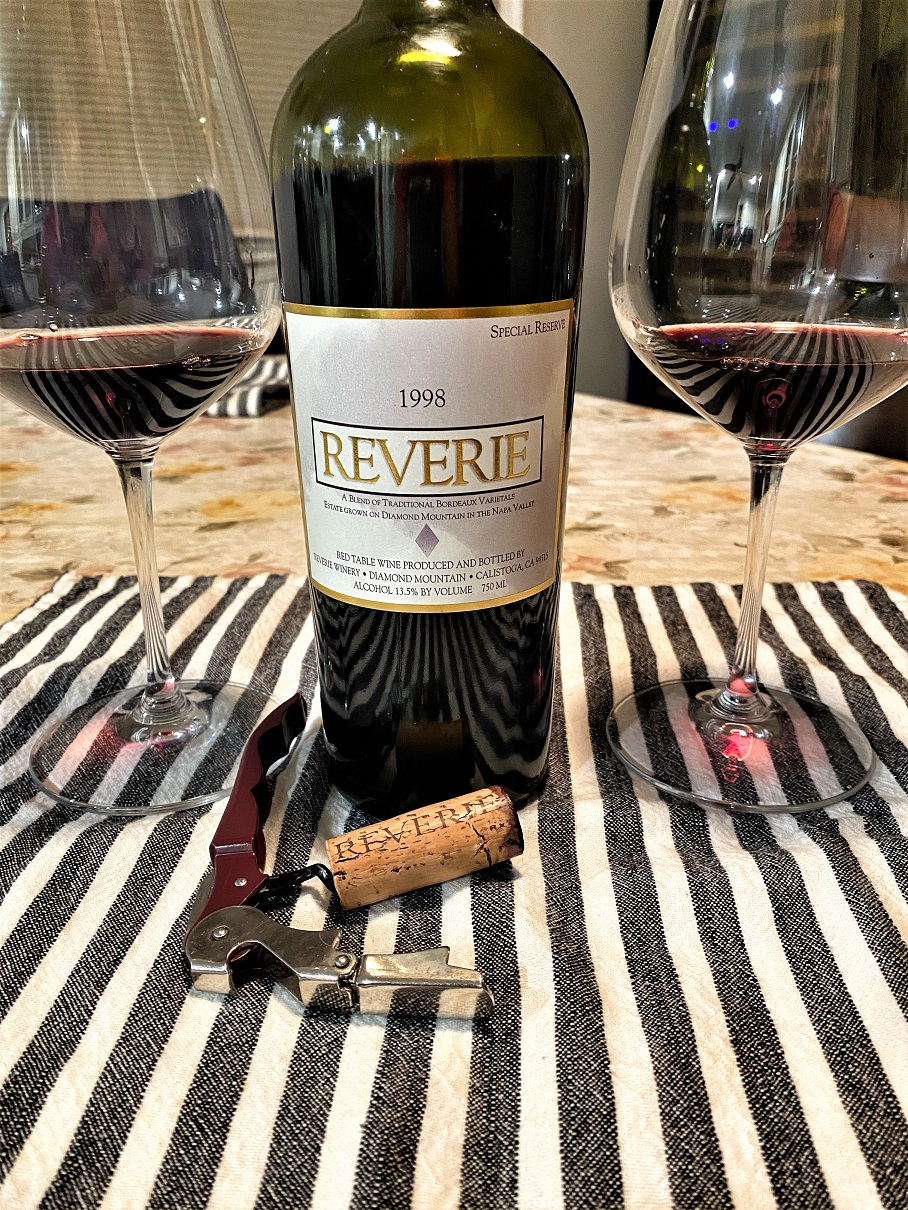 I never had this wine before. While looking for the 1998 wines to buy (birth year of my son) at the Benchmark Wine, I came across this 1998 Reverie Special Reserve Meritage as it was described. At $30, 22 years old unknown wine from California sounds like a risk I was willing to take (so far, I didn’t miss – “knock on wood” – even a single time buying aged wines from Benchmark Wine, everything was tasty and perfectly drinkable). In the wine fridge, this wine was laying on one of the first shelves I pulled out, and the inner voice quickly said “this is it” – I decided not to argue.
I had the wine warm up a bit before opening it. About an hour and a half before our decided dinner time, I carefully pulled out the cork – I had quite a few corks crumbled almost to the dust on me lately, so was extra careful pulling this one out. To my delight, the cork came out in a perfect shape, practically intact.
The first whiff of this 1998 Reverie Special Reserve Diamond Mountain (13.5% ABV, blend of Cabernet Sauvignon, Cabernet Franc, and Petite Verdot, aged in 100% new small French oak barrels) simply suggested taking a sip immediately. The wine had aromas of cassis and mint, a pure, classic, beautiful Cabernet Sauvignon profile. The palate followed almost in the impossibly perfect way. Cassis, mint, and eucalyptus, all in pristine, perfect, form. There was nothing extra in that sip – it was perfectly round, perfectly smooth, with just enough acidity, with just enough of the tannins, with just enough of the fruit. A perfect, perfect, perfect balance, an absolute harmony which is not easy to find – the one which puts a stupid smile on your face. Yep, that’s how good the wine was.
Our impressions seemed to match perfectly with what the back label said: “we only designate the blend made from the best lots of the traditional Bordeaux varietals as Special Reserve when we believe the wine is extraordinary. We believe this wine is worthy of that designation. We are incredibly proud of this very limited release wine and know you will also enjoy it immensely. A wine this fine should be saved for a special occasion and enjoyed with the finest cuisine and good friends”. It is rare to find a back label to be spot on describing the wine – but in the case of this special Reserve, this was a complete success.


I don’t think my pan-seared steak belonged to the finest cuisine category – but at least it was not burnt and raw at the same time – and it paired very well with the wine. We also made special potatoes in the air fryer and oven-roasted asparagus came out super-tasty (from now on, this might be the only way I will cook asparagus).
This is my story of the perfect wine experience – truly at the level which will be hard to replicate. What are your “perfect wine” stories?
Of Beautiful Things
Beauty is an interesting concept. It seems to be simple and universal. And nevertheless, the declaration of beauty might dramatically differ, even for the people going through the same experience. Take flowers, for example – if someone doesn’t like daisies, looking at the field of daisies will solicit no emotional response, but the same person might spend an hour admiring an orchid.
Whatever we see as “beautiful” solicit emotion, it gives us a tiny burst of positive energy, it makes us happy. But the proverbial “truth in the eye of the beholder” is fully in control – everyone decides on their own concept of beauty.
Photography is one of the best and simplest tools to capture the beauty of the moment and convert it into a tangible memory, something you can get back to. For sure I’m the one who heavily relies on photography for doing so. If you look at the pictures on my phone, you will have no problems figuring out that I consider wine, flowers, and sunsets as the most beautiful things in this life – well, this is not an absolute truth, but we can go with it for this post. Of course, sunsets and flowers are exactly what they are, but the wine bottles in the pictures simply represent the memory knots, the real beauty is inside the bottle, no matter how pretty the labels are.
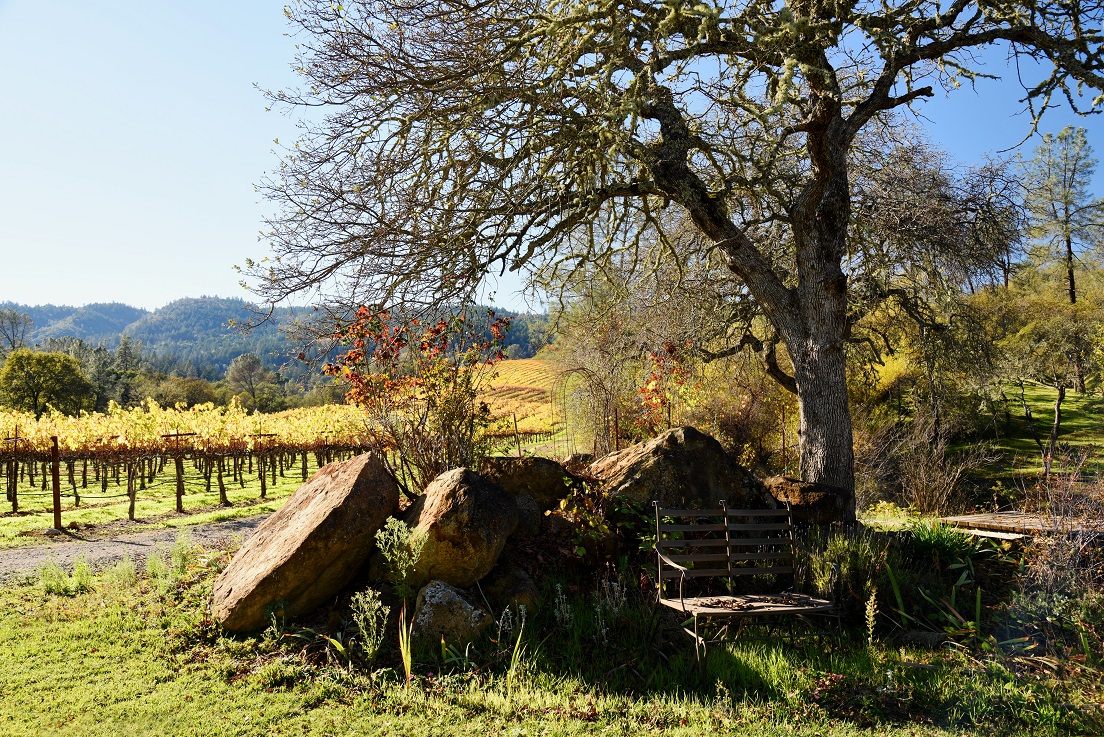
Garden at Calla Lily. Source: Calla Lily Winery
Calla Lily Estate & Winery is a project of renowned California winemaker, Cary Gott, and a group of business partners out of Hong Kong, who together started Calla Lily in 2013. Calla Lily is 95 acres of the estate in the Pope Valley section of Napa Valley, with the first vines planted in 1995. The estate’s vineyards comprise 12 acres of Cabernet Sauvignon, 5 acres of Petite Sirah, and 1 acre each of Merlot, Cabernet Franc, Malbec, and Petit Verdot.
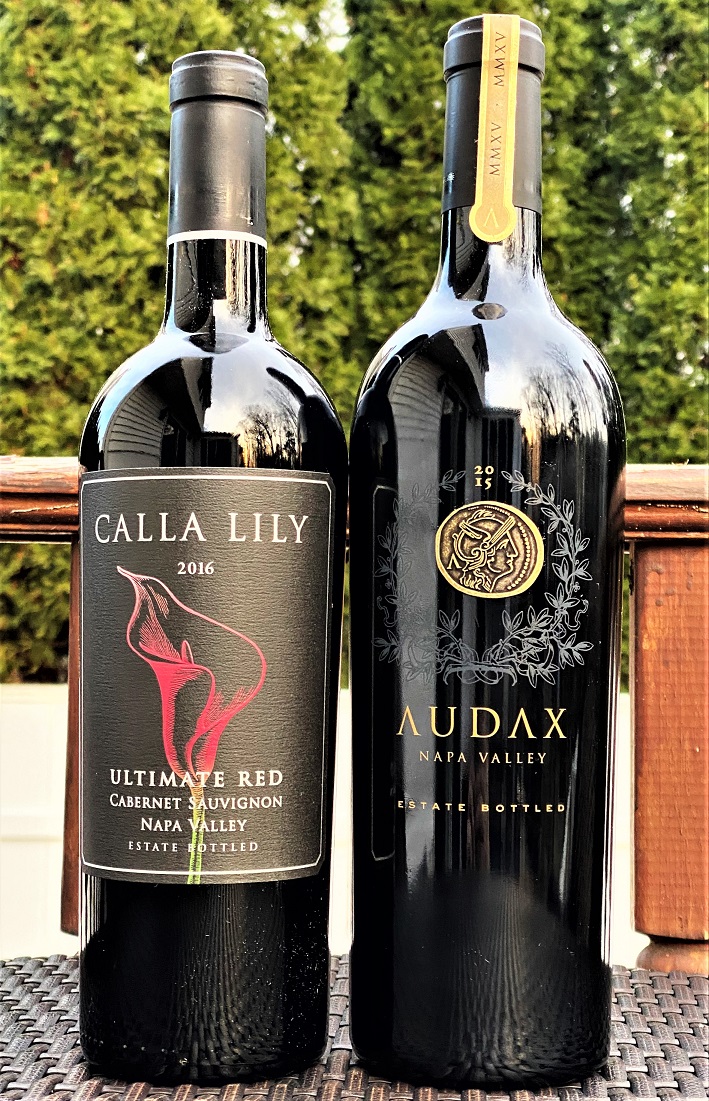
Calla Lily is not a random name. You can see the beautiful flower appear on the label of Cabernet Sauvignon, and it is both the name and the symbol. Calla is a type of lily flower, which takes its name from the ancient Greek word “Kallos” which means “beauty”. Calla Lily had been around a few thousand years and has a lot of symbolism associated with the flower in Greek, Roman, and Egyptian cultures, as well as in Christianity overall. You can read about Calla Lily symbolism further here, but I also can’t resist quoting the same source in regards to the meaning of the color of the Calla Lily flowers: ”
- White Calla Lilies: Purity and innocence.
- Yellow Calla Lilies: Joy and growth.
- Pink Calla Lilies: Appreciation and admiration.
- Red Calla Lilies: Intense passion.
- Blue Calla Lilies: Femininity and refined beauty.”
As you can see, red Calla Lily is depicted on the label of the Calla Lily wine, and after tasting the wine, I have to agree to the “intense passion” suggestion.
After talking about beautiful flowers, let’s talk about beautiful wines, as I had an opportunity to sample two of the Calla Lily wines.
2016 Calla Lily Ultimate Red Cabernet Sauvignon Napa Valley (14.5% ABV, $65, 84% Cabernet Sauvignon, 6% Cabernet Franc, 6% Merlot, 4% Petit Verdot, 26 months in 40% new French oak) was an interesting experience. While the nose was intense with red and black fruit, the wine on the palate was way too powerful for me to really enjoy it as “pop and pour”. The wine kept gradually improving over the next 4 days, finally offering soft rounds of cassis and mint, over the velvety texture. You need to wait for some beautiful things in life – for example, for a flower to fully open up from a tiny bud – this wine is beautiful, but you might need to wait for it – or decant it well in advance (Drinkability: 8- )
2015 Calla Lily Audax Cabernet Sauvignon Napa Valley (14.1% ABV, $120, 92% Cabernet Sauvignon, 4% Merlot, 3% Cabernet Franc, 1% Malbec, 27 months in 50% new French oak) is yet another interesting wine. “Audax” in Latin means “bold”, and this barrel-reserve wine is a tribute to the audacity of the pioneer winemakers, many of whom settled in the Pope Valley. Somewhat unexpectedly, the wine was more approachable from the get-go than the previous one – beautiful nose of cassis, and more cassis on the palate, accompanied by mint, pencil shavings, espresso, and cherry pit. Lots of beautifully balanced power with a firm, dense structure. (Drinkability: 8)
Here is the story of the two beautiful things in life – flowers and wine. Beautiful things are well worth seeking. What brings beauty into your world?
Retrospective: 11 Years of Top Wines
While I was working on the Top Wines list of 2020, it almost hit me – 2020 was the 11th year the list of the top wine experiences of the year was produced.
In every Top Wines post, I make an effort to explain my approach to the creation of the top wines list – it is all based on emotions solicited by the wine. The easier it is to recall the wine and relive the moment, the better it is.
I often state that the order of the wines is not so important (this is how I want it to be, but it is usually not the case – the order has meaning) – with the exception of wine #1. Wine #1, the Top Wine of the Year, is always the most memorable. For a few years, I even had difficulties deciding on just one top wine, so I had multiples of wine #1. Strange, I know – but I always have a simple excuse – this is my blog…
All of the Top Wines lists can be found via the Top Wine Ratings menu on the top of this page. However, what do you think of taking a look at the top wines from these past 11 years, just for fun? I would like to enjoy those memories again – and see if I still have them as vivid as I like to think. Let’s see:
2010:
2007 Mara Laughlin Road Ranch Pinot Noir Russian River Valley ($45) – I can attest that this was one of the best California Pinot Noirs I ever tasted. I still have a bottle each of Mara Pinot Noir 2007 and 2008 (2008 was a complete opposite to 2007, very lean and green) – should make it for an interesting evening one day.
2011:
2010 Fiction Red Wine Paso Robles by Field Recordings ($20) – this was my first discovery of the Field Recordings wines, and that Fiction was unbeatable, it offered an incredible experience. I also loved the label and the story on the back label of that wine, which, unfortunately, disappeared in the later vintages.
2012:
2010 Antica Terra Phantasi Oregon White Wine ($100, Magnum price in the restaurant) – Definitely a memorable wine, a blend of Rhone varieties – I can close my eyes and imagine the taste of this wine in my mouth. While this is one of the most memorable Top wines, the wine in the second place was not any less memorable – 1947 Rioja Imperial. Also, it appears that I didn’t even include another wine from the same dinner when we experienced the Phantasi, 1998 Dunn Howell Mountain Cabernet Sauvignon in the Top Dozen list, which is a huge oversight…
2013:
1970 Quevedo White Port – tasting 43 years old elixir together with the winemaker, in the old cellar, directly from the barrel? It rarely gets any more memorable than that.
2014:
1966 Louis M. Martini California Mountain Pinot Noir ($NA) – I found this bottle at the store in Chicago. As this is my birth year, I couldn’t resist getting this bottle for a whopping $25. To my absolute surprise, the wine was perfectly drinkable and delicious. And the label is just purely nostalgic…
2015:
2011 Emiliana Coyam Colchagua Valley Chile ($35) – ordered this wine at the restaurant without any knowledge, mostly going by the price – OMG. This is one delicious wine.
2016:
2002 Pol Roger Sir Winston Churchill Champagne ($230) – one of the most memorable top wines. While I loved the taste, I could smell this wine indefinitely. Really, I have no need in drinking it, but I can’t let go of the aroma…
2017:
1982 Olga Raffault “Les Picasses” Chinon Loire ($85?) – this was unquestionably great – one of my most favorite grape varieties (Cab Franc), legendary vintage (at least in Bordeaux), great producer. The sad part? This is one of the few “Wine of the Year” wines I can’t recall the sensation of taste, smell, or the setting …
2018:
2008 Zenato “Sergio Zenato” Amarone della Valpolicella Classico DOCG ($100) – Amarone is one of my most favorite wines in general – but I have exactly the same issue here as with the Olga Raffault – no detailed memories. I’m sure it was a good wine as it made it to the alternative #1 winner.
2013 Three Wine Company Suscol Creek Cabernet Sauvignon Block 5 Napa Valley ($60) – One of the very best Cabernet Sauvignon I ever tasted. We had this wine during tasting dinner at the restaurant during one of our traditional “adult getaways”. This was round and supremely delicious.
2019:
2013 Smith-Madrone Cook’s Flat Reserve Spring Mountain ($225) – Smith-Madrone makes beautiful wines. This wine can be described in one word – Pure. Pure indulgence, and pure, unadulterated pleasure.
2016 Tara Red Wine 2 Syrah Atacama Chile ($40) – I have a sad habit of not being able to write a post after a great winemaker dinner, as was the case with Tara wines. Magnificent Syrah, coming from the vineyards which in reality shouldn’t have existed because of the incredible salinity of the soil. As I say in such cases, this is the wine to be experienced.
2017 Peju Province Winery The Experiment Napa Valley ($100) – a prolific Napa Valley jewel. Power and balance, or balance and power – whatever description suits you more.
2020:
1999 Soldera Case Basse Brunello di Montalcino DOCG ($NA) – Meditazione vino. The whole group meditated over this wine, as it was simply a gift from gods. Incredible. If wine is not “just another beverage” to you, you would understand. And I wish for you to experience meditazione vino at least once in your life…
Here we are – 11 years of top wines. This was definitely an interesting exercise – while I enjoyed recalling each and every one of these wines, this was also a great opportunity to think about my Top Wines process. I’m reasonably pleased with top wine selections during these years, but ideally, I would like to do better – every wine on such a list should solicit a memory and an emotion. Oh well, we should call this “the room for improvement”, right? Cheers, my friends!
Last Bottle Sign Up ($10 credit)





