One on One wine Winemaker: Kyle Mizuno of Rolling Hills Estate Winery, Champlain Valley
Winemakers are special people.
They are the people who can easily make you happy, sad, puzzled, or excited. All without meeting you in person. All via the liquid in your glass – our beloved wine.
Knowing how the winemaker thinks offers an interesting perspective regarding that liquid in your glass.
And sometimes, you really want to know how they think, especially when the winemaker exchanges Napa Valley for Champlain Valley (not a very famous – yet! – winemaking region in New York), and substitutes Chardonnay with Frontenac Gris and Cabernet Sauvignon with Marquette.
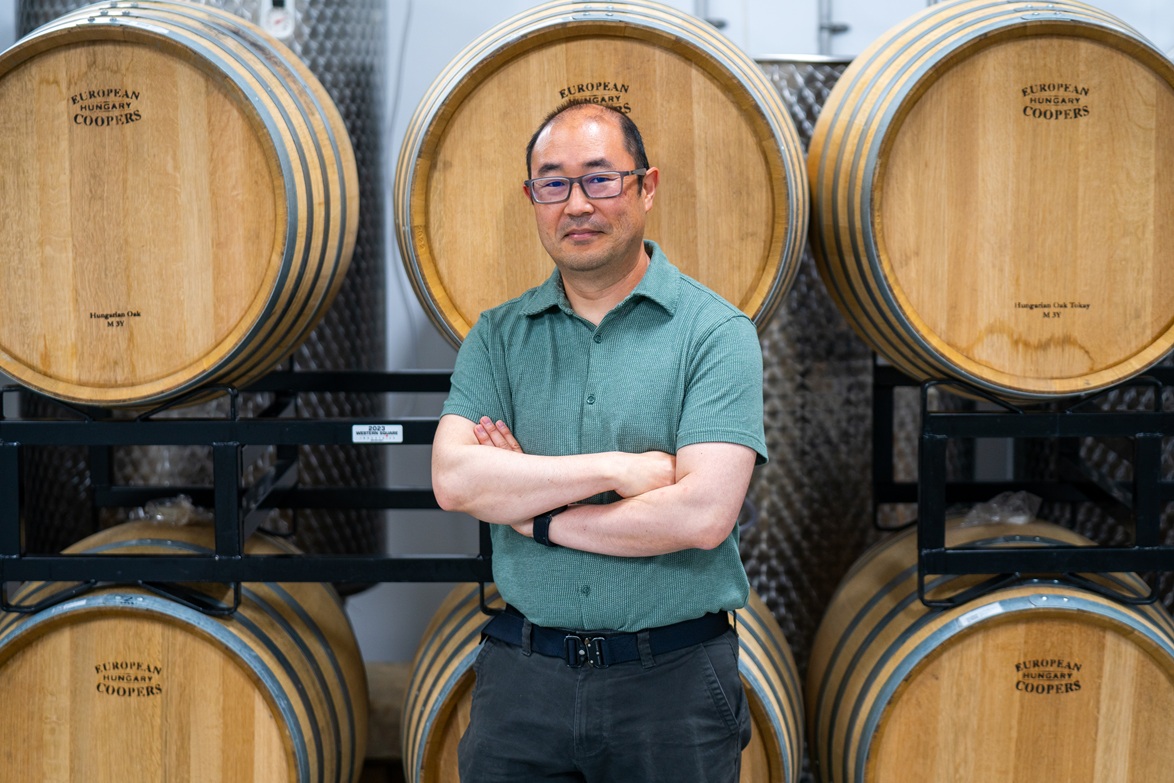
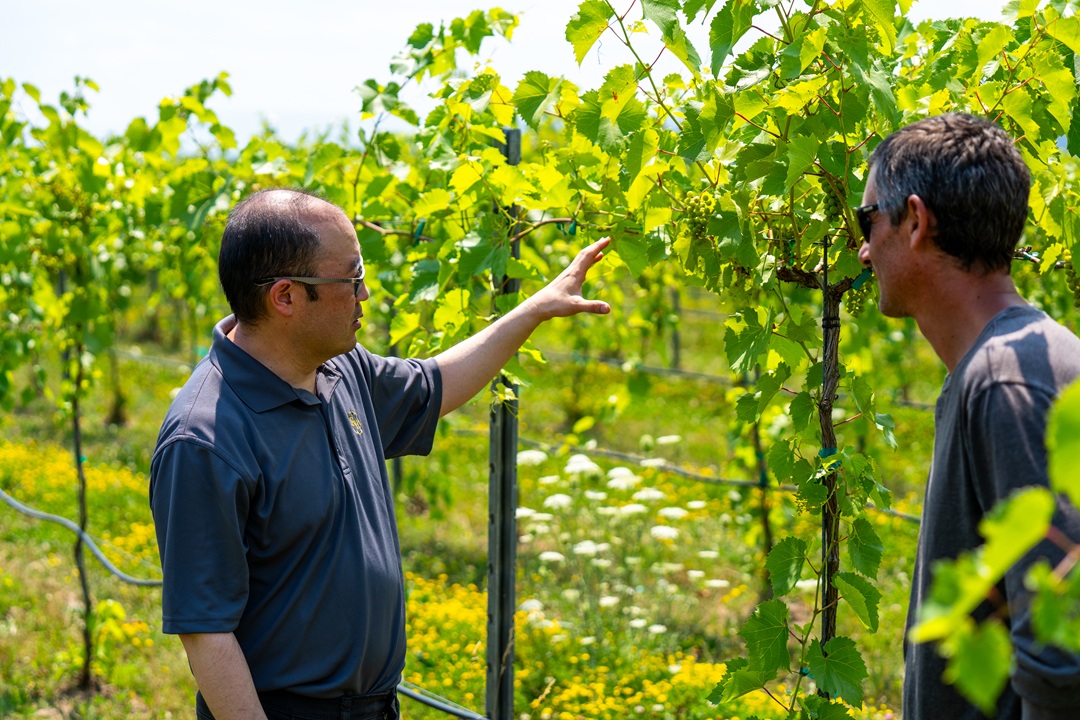
Kyle Mizuno. Source: Rolling Hills Estate Winery
The winemaker I’m talking about is Kyle Mizuno, now of the Rolling Hills Estate Winery fame in the Champlain Valley region of New York.
After I tasted Kyle’s Marquette and estate Rosé, my curiosity piqued, and I had to ask Kyle to answer my questions. Kyle graciously agreed, and here is what transpired in our [virtual] conversation.
[TaV]: How did you get into the wine? When and how have you decided that you want to start making wines?
[KM]: I studied biochemistry at UC Davis, and a chance conversation at a job fair changed everything. Franciscan Estates needed someone in the laboratory. I took the opportunity and discovered that science was only the beginning. Wine brought together everything I loved about precision, agriculture and the endless possibility of a growing season. I never looked back.
[TaV]: Was there ever a pivotal wine moment in your life? If yes, what was it?
[KM]: Early on, I assumed my career would stay in the laboratory. Aaron Pott, who became a close friend and mentor, saw something I hadn’t yet seen in myself. He told me I was going to be a winemaker. His confidence and guidance pushed me to take that leap, and it changed my life.
[TaV]: You worked side by side with many “wine greats” in Napa Valley. What was the most memorable wine you made in Napa, why and who did you make it with?
[KM]: My years at Blackbird Vineyards stand out, especially the decade of harvests I shared with Aaron Pott. It’s impossible to single out one bottle. We made wines together that I remain proud of, and each vintage taught me something different about fruit, patience and the decisions that shaped wonderfully finished wines.
[TaV]: Now, from Napa Valley to Champlain Valley in upstate New York – why?
[KM]: Because the wine comes first. After 25 years in Napa, I was drawn to the chance to work with grapes whose full potential is still being discovered, in a region whose reputation is still taking shape. The Champlain Valley of New York offers the opportunity to make international-caliber wines that are decidedly different. It’s rare to find a place where you can apply everything you’ve learned and still be learning something new with every harvest.
Source: Rolling Hills Estate Winery
Source: Rolling Hills Estate Winery
[TaV]: What makes Champlain Valley appellation unique? is there any other appellation around the world you would compare it to?
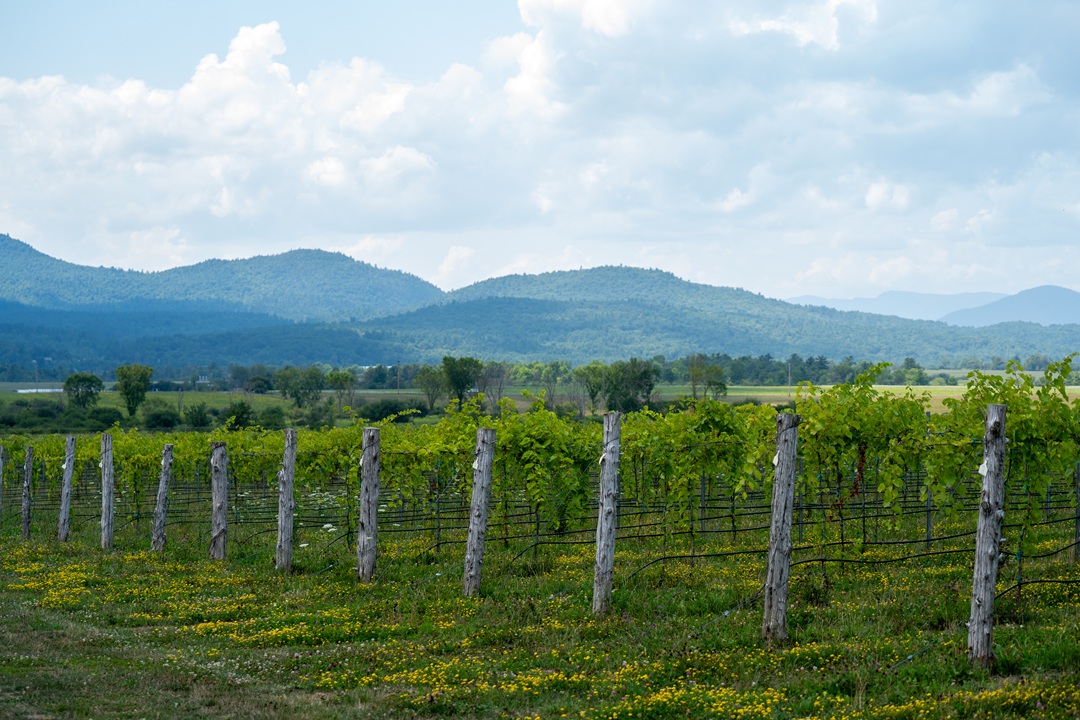
[KM]: The Champlain Valley of New York has clay-rich soils, a dynamic growing season and the influence of nearby Lake Champlain. Those conditions help shape wines with vivid fruit, natural freshness and structure. I wouldn’t claim it’s a copy of another appellation. The more interesting question is what Marquette, Petite Pearl, La Crescent and Frontenac Gris can express here that they cannot express anywhere else. And with each vintage, we’re seeing just how remarkable that expression can be.
[TaV]: Do you only use grapes from your own vineyards or do you also get grapes from the local grape growers?
[KM]: Our estate vineyards are the heart of Rolling Hills and the foundation of our winemaking program. As we continue to develop our vineyards, we’re also committed to supporting the growth of the Champlain Valley of New York as a serious wine-producing region. For us, it always comes back to the quality of the fruit and its potential to produce remarkable wines. We’re learning more with every harvest, and what we’re seeing only reinforces our confidence in what this region can achieve.
[TaV]: Organic/sustainable/biodynamic – do you see any of these directions at the Rolling Hills winery in the future? What is your personal take on these approaches to viticulture?
[KM]: We use sustainable practices and incorporate certain organic approaches where they make sense for our vineyard and climate. I believe sound viticulture practices start with focusing on the vines and responding to what the season demands, rather than following a label. Our northern growing season exemplified by a narrow harvest window can make the strict biodynamic timing difficult. The priority is healthy vines and wines that exemplify the best expressions of our varietals.
Source: Rolling Hills Estate Winery
[TaV]: Do you have any expansion plans for your vineyards, both in terms of acreage and new grape varieties? Is there any Riesling in the future?
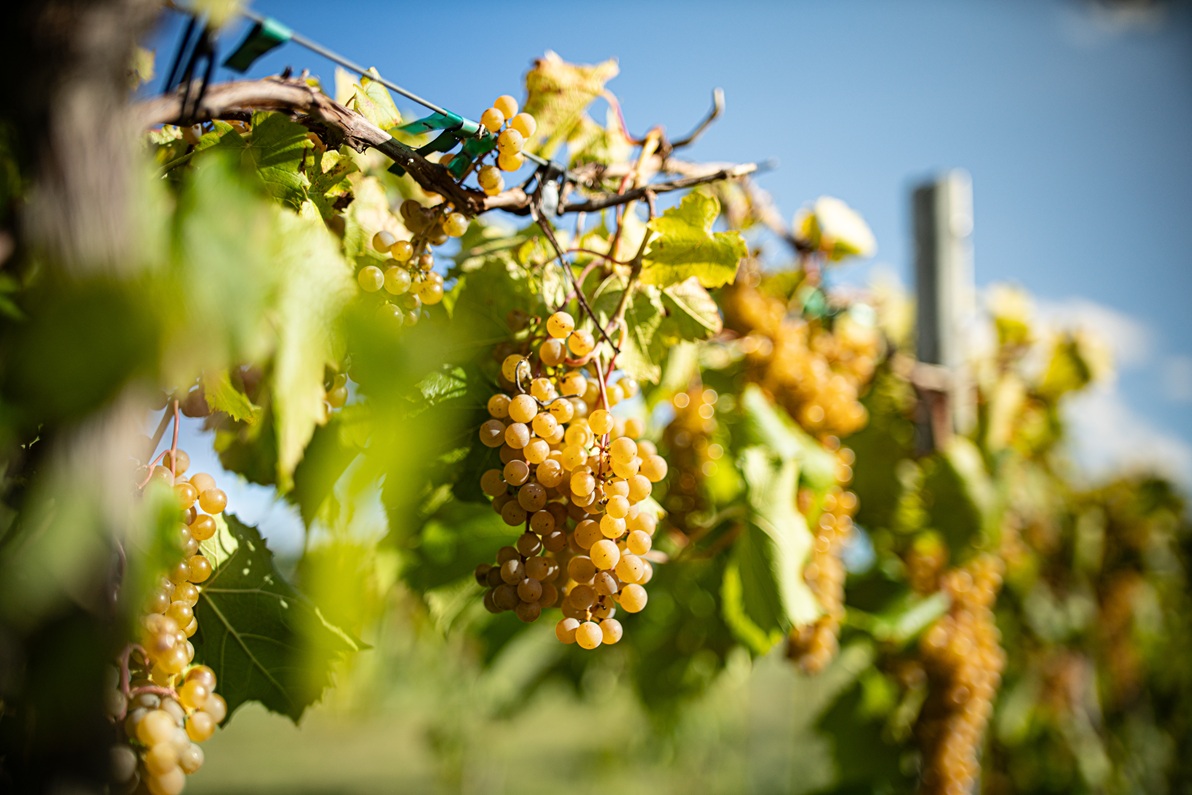
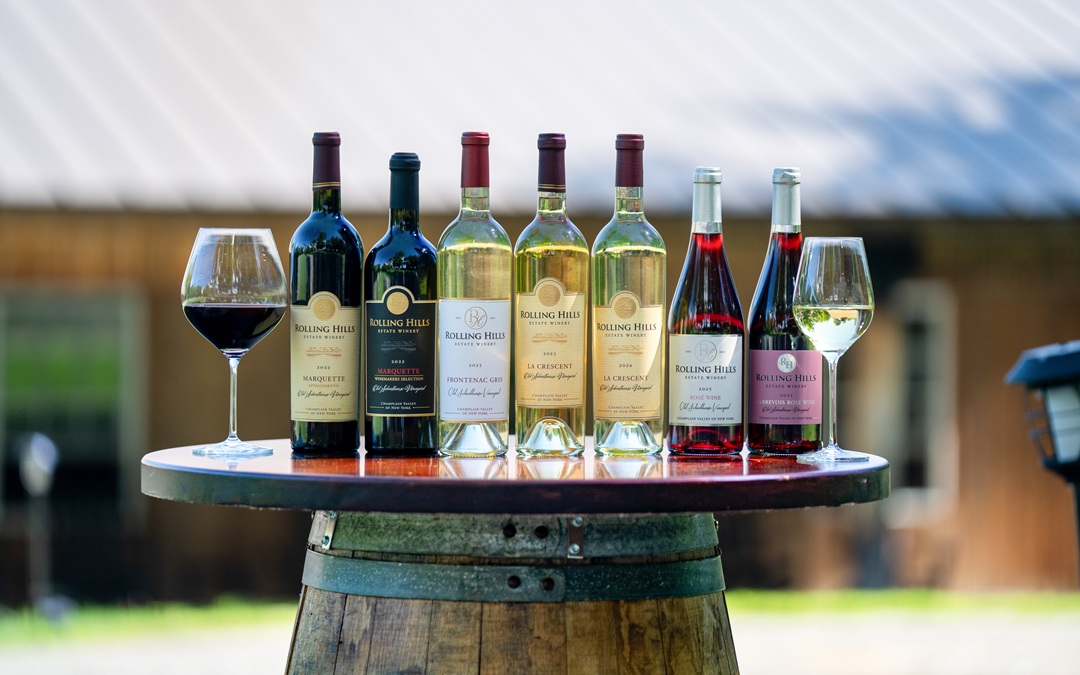
[KM]: Yes. We will be expanding our estate plantings through carefully thought-out phases, while continuing to discover the full expression of our terroir and the wines it can produce. Marquette is our flagship wine, with the depth, structure and character to make wine lovers reconsider what they expect from this region. We see equally exciting potential in Petite Pearl, La Crescent and Frontenac Gris. In fact, Riesling lovers may find a lot to appreciate in our La Crescent and Frontenac Gris, with their expressive fruit, bright acidity and beautiful balance. As we grow, we will continue exploring what thrives in our soils and climate, always with the goal of producing wines of remarkable quality and distinction.
[TaV]: Can you please explain your concept of Rosé? The two Rosés I tasted at the Hudson Valley wine festival were as un-Provence as only possible. What are you trying to achieve with your Rosé expressions?
[KM]: I make rosé for people who love red wine. In Napa, Cabernet Sauvignon drinkers would tell me they didn’t like rosé, so I began making a version with the fruit character, texture and tannin they were missing. Our rosé isn’t trying to imitate Provence. It has color, depth and a little grip, yet it still carries the freshness that makes rosé so appealing. It is a red wine lover’s rosé, and each vintage captures that season in its own way.
[TaV]: Coming from Napa, I would assume you have a specific philosophy when it comes to oak. Considering that you need to work with an entirely different set of grapes, how do you see the oak usage at the Rolling Hills Estate? Also, speaking about your flagship, Marquette – what is its affinity to oak?
[KM]: In my experience, oak should serve the wine, never lead it. I have a long-standing appreciation for French oak, but these varieties deserve to be understood on their own terms before we settle on a formula. We’re working with Hungarian oak and comparing it with French oak to see how each influences texture, fruit and finish. Marquette has the concentration and structure to handle medium toast, much as Cabernet Sauvignon can. The goal is balance, not an oak signature.
[TaV]: The 2024 Marquette I tasted at the Hudson Valley wine festival was powerful, firmly structured and precise. Maybe it is an image just in my head, but I would compare it with Montefalco Sagrantino or maybe a young Petite Sirah from California. If you would do a blind tasting to showcase your Marquette (wink, wink – how about that blind tasting?), what other wines would you include in the line up?
[KM]: I‘d put our Marquette alongside young Petite Sirah and bright, structured Cabernet Sauvignon from Napa. The comparison isn’t about claiming the wines are identical. It’s about giving tasters a familiar reference for Marquette’s dark fruit, energy and firm structure. The fun of a blind tasting would be seeing whether anyone could identify the variety, let alone place it in New York. That’s exactly the kind of surprise I hope the wine can deliver.
[TaV]: Maybe you’re already doing it, but I will ask anyway – have you thought of aging your Marquette in Amphorae or a cement tank?
[KM]: I’ve worked extensively with amphorae and concrete, and Marquette could be fascinating in either. But first I want to understand how the grape grows here and how its character changes from one vintage to the next. Once we have that foundation, we can make thoughtful choices about vessels and techniques. There is plenty ahead to explore, always with the same objective: make the best wine the fruit allows. And we have some exciting things on the horizon for wine lovers.
Source: Rolling Hills Estate Winery
[TaV]: What is ahead for Rolling Hills Estate Winery? What do you think will happen over the next 10 years?
[KM]: Our ambition is to produce international-caliber wines that stand on their own, wines defined by depth, structure, expressive fruit and remarkable character. We want someone to experience a Rolling Hills Marquette or Petite Pearl and discover something decidedly different, something that challenges their expectations of what American wine can be. As we expand our vineyards and continue to explore the full potential of these varieties, our focus will remain on quality above all else. Ultimately, we want Rolling Hills wines to be sought after not simply because they come from an emerging wine region, but because of what they deliver in the glass. And if, along the way, we help establish the Champlain Valley of New York among America’s most exciting new wine regions, that would be something truly special.
And that concludes our conversation. I hope you learned something interesting about Kyle and Rolling Hills Estate Winery.
Until the next time – cheers!
Last Bottle Sign Up ($10 credit)