Of Wine and Image
Let me warn you upfront – I’m not sure what this post will be about. Will probably end up with a loose collection of thoughts, most likely a bunch of random incoherent nonsense. A lame attempt at conscious analysis of the subconscious. So if you got something better to do (I’m sure you have), you can just stop reading it already. If you decide to stay, don’t tell me I didn’t warn you.
Wine is subjective. Hell, wine might be the most subjective product out there. And probably the most discretionary one too. If needed, you can easily live without wine. If you will not have water to drink, you will eventually die. If you will not have food, you will eventually die. If you will not have wine, nothing will happen to you – as long as you have water and food, you will be totally fine without wine. You might be emotionally damaged :), but hey, you will be physically fine.
Love of wine is acquired. We are not born with the love of wine. Sugar – yeah, I guess sweet is one of the very first tastes we recognize and acquire, coming with mother’s milk. Growing up, at some point, wine might become a subject of interest, but there is no rule of life that clearly states “you must love wine”. And I would argue that the love of wine is something we build as an image of in our heads first. As kids, we might read about wine in the books, we might see our parents enjoy it, we might see our parent’s friends enjoy it, and that image of “wine is a good thing” is getting slowly ingrained in our minds, possibly even making into the subconscious level.
We start with wine in a very general way – wine at large is something interesting. Here it is wine as a whole, a concept of a liquid in the bottle, without any regard to the regions, grapes, or producers. Our image here is very simple – a bottle, or a liquid poured from a bottle into a glass. From here on, it is entirely up to us how many details we want to add to this image and how obsessed we are willing to become.
Assuming we are interested in the subject, we begin our knowledge quest. First we learn about countries – “ahh, I had an amazing Italian wine yesterday”, “aha, this wine is from New Zealand? Cool”. Next, we start learning about grapes “Waiter, do you have any Chardonnay here?”, and deepen our knowledge of places, advancing from the countries to the regions “Bordeaux, I only drink wines from Bordeaux”. Continuing our learning, we are diving into producers, vineyards, critics’ scores, and social status values. Now the wine’s image is very rich, and it is easy to lose our way, as the image of wine might easily trumpet the wine itself.
“Wine should give you pleasure”. These are defining words of my wine teacher, Kevin Zraly, that he constantly repeated in the Windows on the World wine school classes. I also love to repeat these words whenever appropriate when talking about wine. By the way, you can laugh if you want, but now, while working on this post, I suddenly realized that “pleasure” here can have double meaning. It can be an actual hedonistic pleasure of drinking the wine in your glass, or it can be a pleasure of ownership, acquiring a rare bottle with the purpose of “collecting”, most probably reselling later for a profit. Nothing wrong with that, but this is not the direction I want to explore right now. So the wine you drink should give you pleasure – please hold that thought, we are going to come back to it in a moment.
We have established that the image of wine is rather complex. Interestingly enough, it doesn’t mean that the wine itself, the liquid in your glass, is complex. When I ask people if they like the wine they are drinking, and they tell me that they don’t know enough about wine to answer that question, I always tell them the same thing – you DO NOT need to know anything about wine to enjoy it. Wine is binary – you either like it or you don’t. And this statement, “wine is binary”, holds true whether you only drink wine twice a year or if you are a master sommelier. The only way to truly assess the wine is to taste blind, ideally when you know nothing about it. Why? Because that image in our head is not innocent. It affects the way we perceive the wine.
Once we learn that the wine in our glass costs $100 per bottle, produced by a famous producer, was impossible to acquire, or that only 1,000 bottles were produced, the image in our head becomes a key factor. Our mind is instantly makes an effort to find the way to enjoy the wine. Not “objectively”, but because the wine with such an image must be good by definition. When Larry Turley was saying that California Cabernet Sauvignon lovers “drink the label”, this is basically what it has subsided to. At this point, we might forget what we have established – “wine is binary”, and “wine should give you pleasure”.
As warned at the beginning of this post, the subject is complicated. Image is very important in the wine world. In order to form an image, we need to learn about the wine – read about it, talk to someone. We learn through the stories. The image is formed through the stories. And what is even more important, wine is sold through the stories. The wine stories are written in the articles, on producer websites, on the bottles’ back labels. I’ve heard many times that millennials and Gen Z are buying the wines with the stories. Stories are important, they build an image, they build an image of the producer, an image of the wine. Many people participate in creation of the stories and an image – winemakers themselves, wine writers, wine critics, sommeliers, and many others. We are good at creating a great image (or a bad image – a glass of Merlot, anyone?). Only now we might be overlooking a problem – the image might be better than the wine.
Wine is binary.
Wine should give you pleasure.
Would you want a second glass?
Time to tell the truth, right?
While I often think about this exact subject, what provoked this post was a wine tasting I attended last week, all well-known producers. While waiting for the tasting to start, I was talking to fellow wine lovers, and these were the things we talked about – the stories and wines, and how they can mismatch.
There were 9 well-known, well-established, well-regarded producers in the tasting, presenting a total of 32 wines. Out of these 9 producers, I truly enjoyed the wines from two. Then there were literally two more wines from two producers, and there were maybe 7 that were “meh, I can drink it”. The rest of them, simply put, didn’t give me any pleasure. Two of the Allegrini Amarone wines were all about oak, with the winemaker boasting about keeping the wine for 45 months in new French oak (I couldn’t hold myself; I asked, “Why???”). Ratti Barolos were made in the traditional way, in large Slavonian oak casks, and they were simply locking my palate with fresh tannins, to the point of losing any senses. Yes, if I decanted those wines for 3, 4, maybe 5 hours, they would probably show better. But this is something you should be willing and prepared to do (meaning – you can’t just open the bottle at the time when your dinner guests have already arrived). Louis M Martini from California: the wines that used to be beautiful and affordable when Louis Martini himself was around have proven again that they have become nothing but soulless, commercial wines, presenting 3 expensive wines none of which were enjoyable.
Look, by no means am I saying these were bad wines. I would use such a term, “bad wine”, only if the wine is spoiled. If the wine is corked, oxidized, has bacterial spoilage – yes, that would be a bad wine, the wine nobody is supposed to drink. The wines such as the ones I mentioned above, I categorize differently: these are not my wines. These wines are not for me. These wines don’t give me pleasure. That’s it. This is as basic as it gets. Remember, wine is binary.
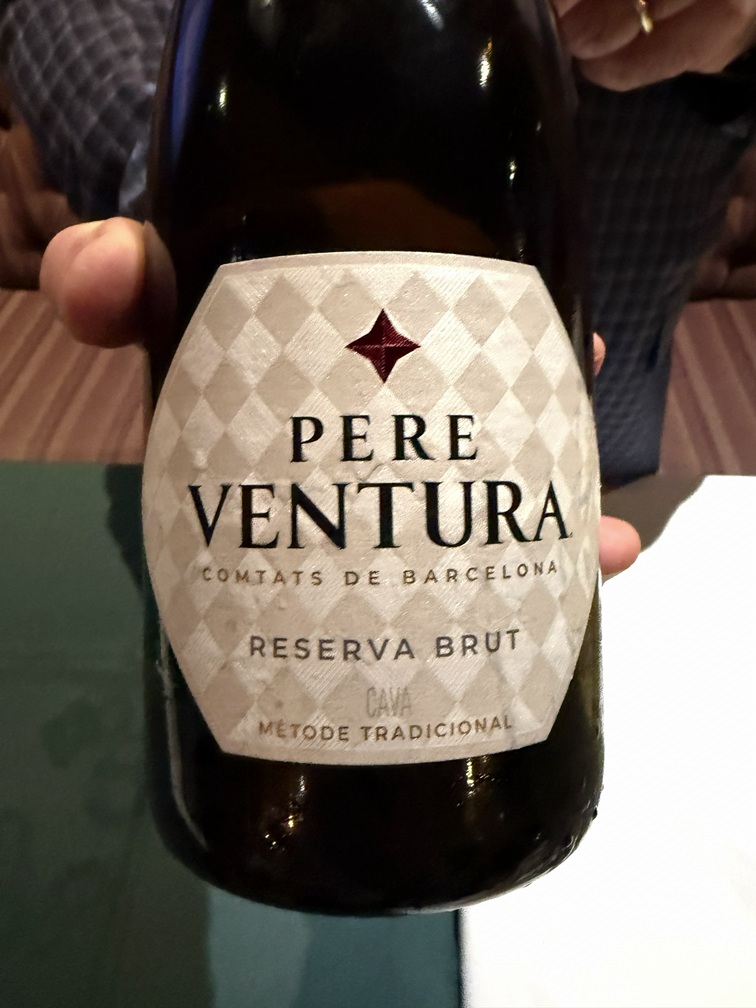
Nothing here is black and white. For example, Allegrini presented 3 wines. Two of the Amarone had way too much oak for my taste, including the 2016 Fieramonte single vineyard, commanding about $250 in retail. But their simple, introductory-level 2023 Allegrini “Palazzo della Torre” Veneto IGT was delicious, fruity, open, layered, and perfectly balanced. 2013 Ratti Marcenasco Barolo DOCG was also almost enjoyable, needing maybe only a few more hours to decant. And I have to mention Non-vintage Pere Ventura Reserva Cava DO, which was a superb sparkling wine, toasty, yeasty, bone dry, and delicious, even disregarding the fact that it would give any Champagne a great run for the money.
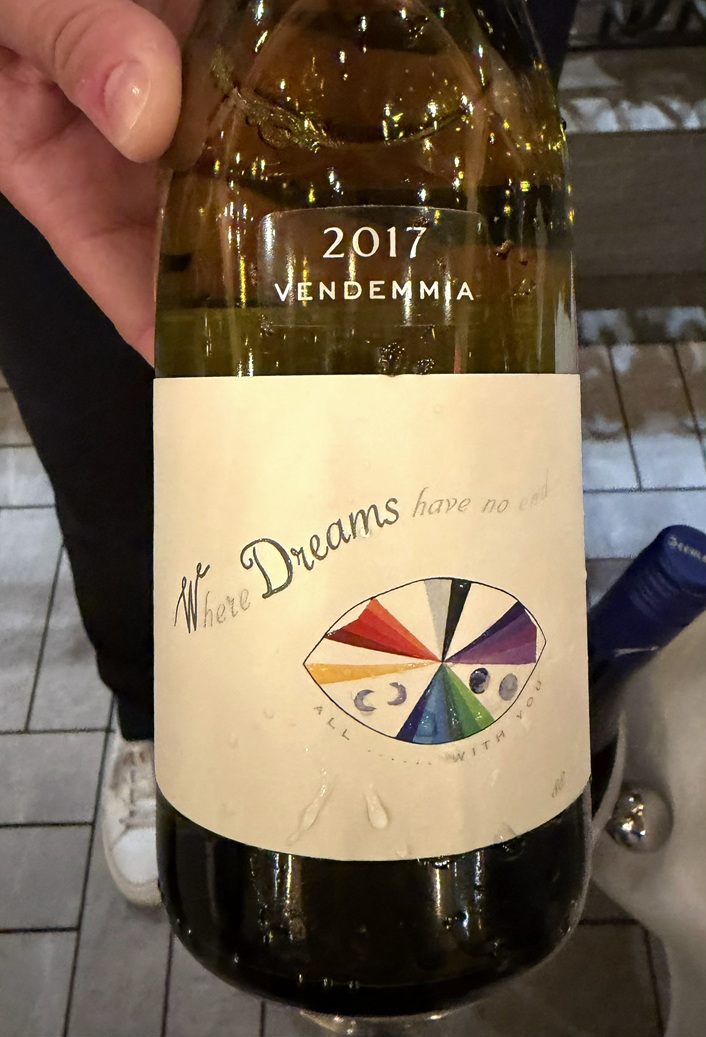
I enjoyed everything that was poured by Jermann, an excellent producer from Northern Italy. 2023 Jermann Vintage Tunina Venezia Giulia IGT, 2023 Jermann “W… Dreams” Venezia Giulia IGT, 2025 Jermann Pinot Grigio Friuli DOC, and 2017 Jermann “W… Dreams” Venezia Giulia IGT were all superb, beautifully balanced, and delicious.


The second producer I really enjoyed the wines from was Pahlmeyer from Napa Valley in California. 2023 Pahlmeyer Jayson Chardonnay was round and elegant, harmonious and on point. 2022 Pahlmeyer Jayson Red Blend and 2022 Pahlmeyer Proprietary Red were both round, balanced, and delicious. The 2022 Pahlmeyer Jayson Cabernet Sauvignon was my favorite, with a textbook Cabernet Sauvignon profile of cassis and eucalyptus, elegant and perfectly balanced.
So what is this post all about? It is not a rant per se, this is simply a brain dump of the oenophile who wants to share his love of wine with everybody. Sometimes the image and the wine match, and this is the best you can ask for. And sometimes, they are not. But this is all in your head. You are the one who needs to find out.
There is still more, but if you are still reading this, you deserve some rest and a glass of wine that gives you pleasure. What we didn’t talk about is how The Image affects not only wine lovers – the image also affects the winemakers. Once image, story, reputation are built, the wine has to match. If the winery is associated with an image of exclusive, expensive wine, producing tasty inexpensive wine might be a challenge. In the name of the image, the winemaker has to produce the wine that will match – in price, exclusivity, methods of production, or a critic’s scoring. As I said, you’ve read enough, it is time to wrap up.
To finish this piece, I would like to paraphrase the famous saying “life is too short to drink bad wine”, because as a statement it is simply wrong, in most cases equating “bad” with “inexpensive”. The right way to put it is “life is too short to drink wines you don’t enjoy”.
Life is too short to drink wines that don’t give you pleasure. Don’t listen to anyone who tells you otherwise. Trust your palate. Remember, the stories are what you listen to, but the wine is what you drink. And it is binary.
Wine should give you pleasure.
Go have fun.
Last Bottle Sign Up ($10 credit)