Lodi Thanksgiving – Wine Notes (There Was A Turducken Too)
Yeah, I know – it’s been more than two weeks since Thanksgiving… Well, okay – let’s still talk about it.
I gave you some ideas about the Thanksgiving wines and food with my earlier post, so let me just start with the “prep” picture again:
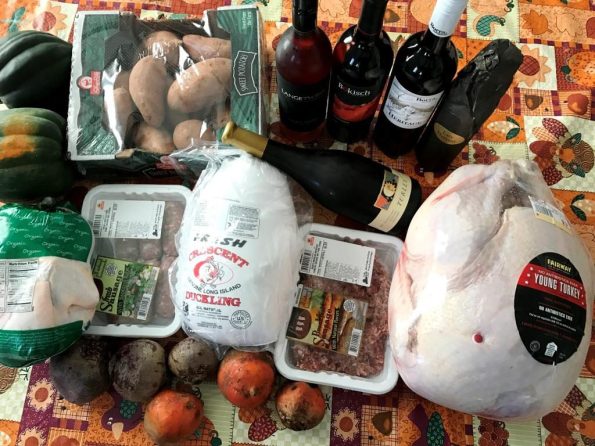 All the birds you see in this picture were converted into a Turducken – chicken inside the duck inside the turkey, all fully deboned except the legs and wings of the turkey. The dish was conceived in the 1980s in the South, popularized around the country in the mid-1990s, and now freely available for order most everywhere (or at least this is my impression).
Deboning takes a bit of a skill, but nothing impossible. There are different schools of thoughts as to how to assemble the birds and what to put between the layers – I used two different types of sausages – you can see them in the picture above. Overall, I tried to follow the recipe on Serious Eats, which is one of the very best “turducken how to” instructions you can find – “tried” is the best way to put it, as I made a few essential mistakes (not cooking the chicken fully first), which led to slightly overcooked dish – nevertheless, it was very tasty, and I would gladly do it again, despite the need to put in the work. Here are my “step-by-step” pictures, from the deboned chicken to the final dish:
-
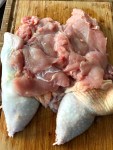
- 1. Debone the chicken
-
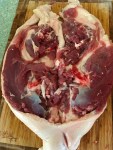
- 2. Debone the duck
-

- 3. Chicken roll is inside the duck
-
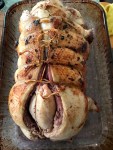
- 4. Sear the duck roll
-
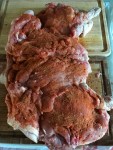
- 5. Debone turkey
-
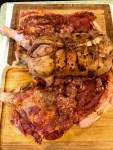
- 6. Duck roll inside
-
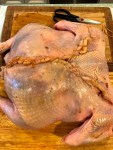
- 7. Sew it all together
-

- 8. Roast in the bag – easiest way to have a moist bird
-
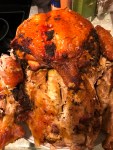
- 9. Done – Turducken is ready
There was plenty of other dishes at the table, but turducken was a star.
Now, let’s talk wine. As you can imagine, Thanksgiving gathering is a not the right place to take detailed notes on the wines. Therefore, I’m sharing here my general impressions.
The day before Thanksgiving the Fall shipment arrived from Field Recordings, and the first bottle which caught my attention was a California Pét Nat:


Pét Nat is a short for Pétillant-naturel, a sparkling wine made with méthode ancestrale, when the wine is bottled before the first fermentatoin is finished – very different from traditional méthode champenoise, where the sparkling wine is made with secondary fermentation in the bottle, done with addition of yeast and sugar. Pét Nat are typically fresh, unfiltered and unpredictable, which makes them even more fun than traditional Champagne. This 2016 Field Recordings Pét Nat Arroyo Grande Valley (100% Chardonnay) was delicious – fresh, creamy, with aromas of toasty bread and fresh apples – an outstanding rendition of Chardonnay.
This wine was the only deviation from Lodi. Our next wine was 2015 LangeTwins Estate Grown Sangiovese Rosé Lodi (12% ABV). While cold, it was crisp and loaded with cranberries, perfectly delicate, without any excess of sugar. As it warmed up, the strawberries took over, mellowing the wine out and making it slightly bigger in the body – and delicious in a whole new way. In a word, a treat.
I can’t describe 2013 Borra Vineyards Heritage Field Blend Lodi (14.5% ABV, 70% Barbera, 10% Carignane, 10% Petite Sirah, 10% Alicante Bouschet) with any other word but riot – tar, tobacco, roasted meat, herbs, dark, muscular, yet round – unique, different and irresistible – the bottle was gone in no time.


2013 Bokisch Vineyards Graciano Lodi (14.5% ABV) was yet another treat – bright, clean, with a good amount of red fruit, herbal underpinning and firm structure. I’m very particular to Spanish grape varietals, and this Graciano rendition was definitely a world class, reminiscent of the best classic versions of the same from Rioja.
NV Lucas Late Harvest Zinfandel Lodi (15.8% ABV) happened to be an enigma. When I tasted the wine at the winery, the wine was mind boggling – rich, concentrated, and perfectly balanced. This wine is quite unique as it is made using the appasimento process, with the grapes partially dried under the sun for a few weeks to concentrate the flavor, before pressing. The bottle which I brought home, was a poor relative of the one I had at the winery – it was not bad, but was completely lacking the opulence and depth of the one I had at the winery. Oh well – this is still one of the pleasures of the wine drinking – you never know what you will find in the bottle.
That essentially concludes the report from our main Thanksgiving celebration. Next day, however, we left to see our close friends in Boston, and at their house, we had two unique wine encounters. One was 1993 (!) Nissley Fantasy Sweet Rosé Wine Lancaster County Pennsylvania (made out of Concord grape). The expectation was that the wine already turned into a vinegar, but instead, we found a port-like wine, with lots of sweetness and also some acidity, so well drinkable overall.
The last surprise was 2006 Yellow Tail Reserve Shiraz Australia (14% ABV), which was still well drinkable, with good concentrated dark fruit, touch of spices, good balance and full body. Well-drinkable 10-years old red wine shouldn’t be a surprise to anyone – but this was actively ridiculed by all the aficionados “creature label” wine, which is not expected to last that long. The bottom line – this wine still delivered lots of pleasure.


Now we are fully done here – this is the story of my Thanksgiving celebration. Did you have any memorable wines this last Thanksgiving? Any unique and interesting dishes? I would love to know. Cheers!
Restaurant Files: MIRO Kitchen in Fairfield, CT – Obey Your Crave
 There are lots and lots of restaurants in Fairfield County in Connecticut (in 2014, Fairfield county had the second highest number of restaurants per capita in the country, don’t think it is any different in 2016). That means that every dining out night has a great number of choices – in case you are craving Italian, Japanese or creative American, may be French, Thai or Indian. But what if you still want something else, something different? I might have just a place for you – MIRO Kitchen in Fairfield, Connecticut.
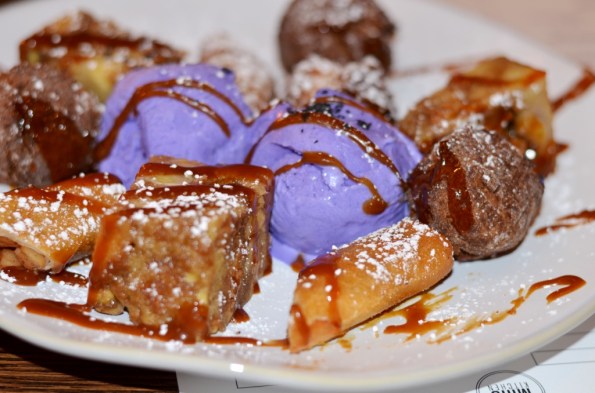
The restaurant describes itself as serving “Pacific Rim” cuisine. On the plate, it means a unique blend of flavors, with elements of Southeast Asian cuisines, Hawaiian, Filipino, Cambodian and other influences, bringing the seesaw popular term “Fusion” to the new height – at least in my personal dining experience. MIRO Kitchen serves truly unique and different food, and to deliver that “unique and different” experience, no effort is spared. To give you one example: our dessert course included Filipino ice cream, called Ube, made primarily out of yam (Ube is a Filipino word for yam), which was absolutely spectacular in flavor and texture. There is only one source of this ice cream on the East Coast, in Jersey City (about 70 miles from Fairfield), which means that every week someone have to take a trip there to get that “unique and different” treat – if you have ever driven around New York city, you would agree that it means “going an extra mile” (pun intended).


Just wanted to give you an example – but it’s way too early to talk about dessert, let talk about our whole dining experience from the beginning. Once again, I visited the restaurant with the group of bloggers, so we really had an opportunity to try lots of different dishes MIRO Kitchen offers and experience the full range of Pacific Rim cuisine.
We started with the cocktails, and you know what – I continued with the cocktails throughout the dinner – don’t think I ever had that many delicious, unique cocktails. The cocktail list at MIRO Kitchen is not that large, so I tried almost all of them: Saketini (Vodka, nigori, cucumber) was excellent, not too sweet; Thaigarita (tequila, Thai chili, calamansi) – love the presentation; Old Fashioned Green Tea (Bourbon, citrus, green tea) – outstanding with noticeable bourbon notes, delicious; Cambodian Mule (coconut vodka, sake, kaffir lime, fresh Ginger) – soft and tasty, Weng Weng (white and dark rum, tequila, gin, vodka, st. germaine, tropical fruit juices) – a nod to the famous Long Island Ice tea, not too sweet with tasty pineapple profile; Hala Kahiki (pineapple vodka, amaretto, sake bubbles) – beautiful presentation, tasty and refreshing.


Now, let’s talk food! We started with the selection of Hors D’Oeuvres. Our first dish was Ahi Bruschetta (Tomato, balsamic glaze, avocado) – great flavors, very nice crunch, following up by
Hanger Sushi (Miso glaze, wasabi crema) – this was a standout, both in the presentation (sushi style) and the flavors, with the sauce served on a side.


Our first official course was a soup sampler. What was almost mind boggling is that in Saimin Noodle Soup (pork belly, mushroom, scallion, soft egg), which is a Hawaiian version of Ramen, the pork belly was still crisp. The Curry Noodle Soup (curry, coconut milk, vegetables) was literally heartwarming – I would gladly eat it any day, but it is an ultimate cold winter night treat.


The soup followed by the selection of Tacos – Tako Taco (braised octopus, roasted corn relish) and Duck Taco (Hoisin, cabbage, peanut sauce), both very tasty.


Our Pacific Rim cuisine exploration continued with Togarashi Lobster Mac and Cheese (Japanese seven spice, panko crust, bacon) with a unique, delicious, spicy flavor and then General Tso’s Cauliflower (sweet chili sauce, crispy potatoes), which could be easily my most favorite dish of the day. I love Cauliflower in any form, and in this dish, it was perfectly cooked and the flavor was simply outstanding – couldn’t stop eating it.


Next up were Lo Mein (Chinese wonton noodles, vegetables), very tasty, then Crispy Shrimp & Grits (coconut shrimp, white cheese grits, hot oil) – another wow dish with unique “fusion” blend of spices on the shrimp. We finished our dinner with Macadamia Kalamansi Cod (wasabi sticky rice) which was simply outstanding.


And finally, the dessert! We had a pleasure of sampling three desserts – Malasadas (miso caramel), Banana Bread Pudding and Mansana Turon (apple spring roll), served with the Ube ice cream – all “wow” flavors, a stunning finish to an absolutely delicious meal.
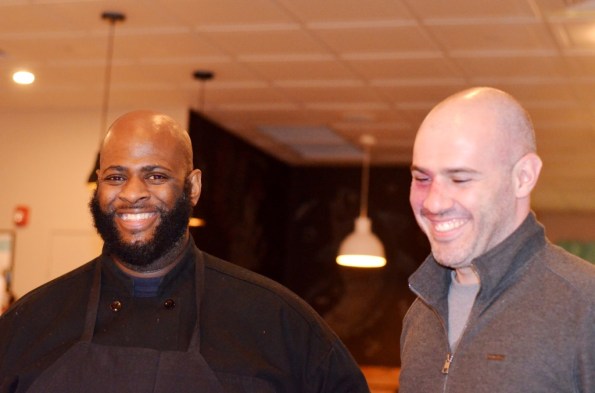
 We had an opportunity to thank Eugene Kabilnitsky and Chef Howard McCall for the exquisite meal and ask them a few questions:
 There you have it, my friends – unique and different experience. In the sea of restaurants, MIRO Kitchen is clearly a standout – from crafted cocktails to unique dessert, offering vegan, dairy free and gluten free dishes – something you owe it to yourself to check out. You can thank me later. Cheers!
MIRO Kitchen
1876 Black Rock Turnpike
Fairfield, CT 06825
Ph: (203) 332-0001
http://www.mirokitchen.com/
Of Cabs and Tomatoes, or Having Fun with a Blind Tasting
 “By the way”, my friend texted me, “your text says “tomato wine” – was that an autocorrect”? My response was “Nope. You’ll see”.
Drinking wine is fun (if you disagree, you shouldn’t read this blog). There are many things which we, oenophiles, self-proclaimed wine aficionados, can do to maximize that fun. We age wines, we decant wines, we use fancy openers and pourers, we play with temperature and glasses of different forms and sizes.
One of ultimate fun exercises oenophiles can engage in is a blind tasting. Blind tasting is a “truth serum” for the wine lovers, it levels the playing field for all. Blind tasting eliminates all “external” factors – price (ha, I paid $300 for this bottle, beat that), prestige, winemaker’s pedigree, weight of the terroir (ahh, Bordeaux, it must be amazing), cute and elaborate labels, critics and friends opinion – and leaves your palate one on one with the content of the glass. Don’t say “I hate Chardonnay and I never drink it”, as you don’t know what is in your glass. Don’t say “I don’t like Australian wines”, as you don’t know what is in your glass. Anyone who ever played the game of the blind tasting can surely attest to what I’m saying here. If you never experienced fun and joy of the blind tasting, you are missing and you are missing a lot – but it is easy to fix.
Our tradition of wine dinners goes back more than 5 years, and most of the wine dinners include blind tasting part (here are the posts for some of the past events – Pinot Noir, Champagne, Chardonnay). A few weeks ago, we managed to align everyone’s schedule for a wine dinner and a blind tasting with a simple and non-pretentious subject – Cabernet Sauvignon :).
 Remember the dialog at the beginning of this post? I have friends who know my obsession with the wine, and always try to surprise me with various oddities. One of such oddities was a bottle of tomato wine which they brought from Canada. I didn’t want to drink that wine by myself, so the wine dinner was an excellent opportunity to share it with friends. As guests were arriving, I decided to play a role of the mean host (okay, not too mean). Outside of the friend who knew about the tomato wine, the rest were presented with the pour of the white wine and the request to guess what grape that might be. Literally nobody wanted to believe that this was a tomato wine – I had to show the bottle as a proof.


Have I tasted this wine blind, I’m sure I would be in the same boat as all of my friends – this 2013 Domaine de la Vallée du Bras OMERTO Vin Apéritif de Tomate Moelleux Québec (16% ABV) was fresh, with good acidity, touch of raisins on the nose, medium to full body and notes of the white stone fruit on the palate – for me, Vouvray (Chenin Blanc from Loire) is the one which comes to mind to give you the best analogy. This wine is produced from the locally grown heirloom tomatoes – and it is also a vintage – I’m seriously impressed (find it and taste it).
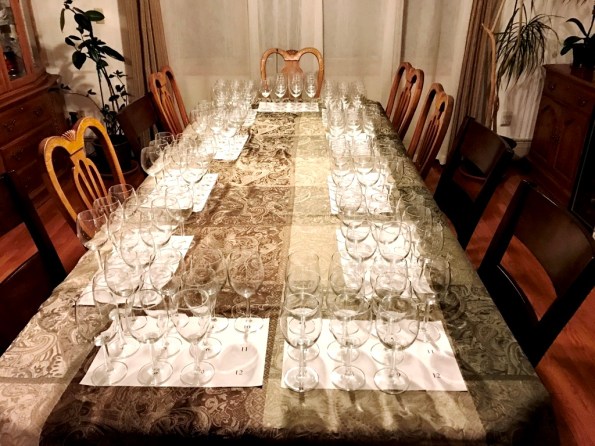
And to the blind tasting off we went. 10 wines were wrapped in the paper bags, opened and randomly numbered (my daughter usually does the honors), then poured into the glasses. The only thing we knew that all the wines will be predominantly Cabernet Sauvignon – no price or region limits.


Below are my notes, in our tasting order, both with my initial impressions and some updates over the next few days as I tasted leftover wines. And by the way, don’t think of this tasting of some stuck-up, snotty process – we openly exchange our thoughts, but each person’s individual palate is an ultimate purveyor of truth here:
#1:
C: almost black
N: restrained
P: bright fruit, pronounced tannins, delicious.
P: 2nd day – outstanding, firm structure, eucalyptus, dusty profile, tannins are still fresh.
V: 2013/2014, new world , considerably improved by the end of the tasting!
#2:
N: blueberry pie notes
P: beautiful, bright, cassis, blueberry pie with tobacco undertones on the second day, excellent
V: Lange
#3:
N: savory,
P: crispy, fresh, great fruit
P: 2nd day – firm structure, perfect balance, dark cocoa, cassis. Truly an enjoyable wine
V: nice finish,
#4
N: strange, rotten cabbage, musty cellar
N: 2nd day: an improvement, tobacco with touch of barnyard on top of cassis
P: nice, bright,
P: 2nd day: great improvement, very enjoyable, shouting a bit of mature fruit with bright acidity and touch of fresh plums.
V: India?
#5:
N: coffee, mocca, dust, excellent
N: 2nd day: coffee and roasted meat
P: nice fruit, bright, spicy
P: 2nd day: palate shifted towards savory too much meat. Probably perfect with the steak, but craving more balance on its own.
V: nice, young
#6:
N: blueberry pie, nice
N: 2nd day: pure candy on the nose, more of a lollipop quality, or may be stewed strawberries.
P: sour cherry, wow
P: sour cherries continuing, albeit more muted than yesterday
V: nothing from Cab, but nice. An okay wine.
#7:
N: nice balance, good fruit
P: great, dusty palate, firm structure, excellent, precision
V: outstanding
#8:
N: nice dusty nose,
P: crispy, tart, limited fruit
V: not bad, but not great.
V: day 2 – past prime 😦
#9:
N: nice, classic
N: 2nd day: added perfume and explicit anise notes
P: beautiful, excellent, mint, classic
P: 2nd day: dark, powerful, compressed, espresso, a lot more dense than the day before.
V: excellent
V: 2nd day: less enjoyable than the day before, closed up, lost the finesse.
#10:
N: young berries, same on the day 2 but a bit more composed.
P: young crushed berries
P: 2nd day: a bit more restrained. Young berry notes without supporting structure. Not my wine, but might have its audience.
P: 5th day: the sweetness is gone, and the classic Cab showed up, touch of cassis and mint, excellent
V: 1st day – it’s ok, 5th day – very impressive
During the tasting, we decide on two of our favorite wines. After tasting is done, we take a vote, with each person allowed to vote for two of their favorite wines. These are just two favorites, without prioritizing between the two. Below are the results of the vote for our group of 11 people:
#1 – 1
#2 – 1
#3 – 7
#4 – 1
#5 – 0
#6 – 2
#7 – 4
#8 – 1
#9 – 4
#10 – 1
As you can tell, the most favorite wine was wine #3 (7 votes out of 11), and the second favorite was a tie between wines #7 and #9, each of them getting 4 votes out of 11. Now, drumroll please – and the most favorite wine of the blind Cabernet Sauvignon tasting was … 2006 Staglin family Cabernet Sauvignon! Staglin Family Cab is definitely not a slouch in the world of cult California wines, and the group clearly fell for it. Here is the full lineup, in the order of tasting:
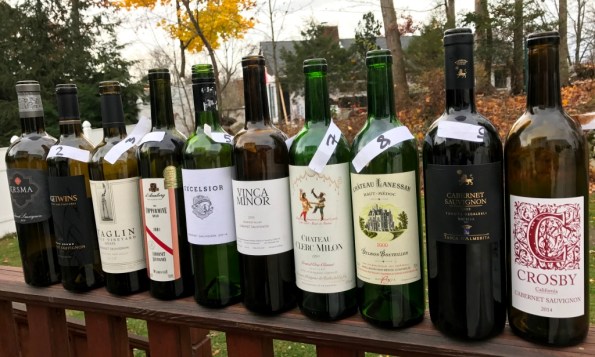 Here are the details for all the wines:
#1: 2012 KRSMA Estates Cabernet Sauvignon Hampi Hills Vineyard, India (13.5% ABV)
#2: 2013 LangeTwins Vineyard Cabernet Sauvignon Lodi, California (14.4% ABV)
#3: 2006 Staglin Family Vineyard Estate Cabernet Sauvignon Rutherford, Napa Valley (14.9% ABV)
#4: 2002 d’Arenberg The Coppermine Road Cabernet Sauvignon McLaren Vale, Australia (14.5% ABV)
#5: 2014 Excelsior Cabernet Sauvignon WO Robertson, South Africa (14% ABV)
#6: 2015 Vinca Minor Cabernet Sauvignon Redwood Valley California (12% ABV, 1 barrel produced)
#7: 1995 Château Clerc Milon Grand Cru Classé Pauillac AOC (12.5% ABV)
#8: 2000 Château Lanessan Delbos-Bouteiller Haut-Médoc AOC (13% ABV)
#9: 2009 Tasca D’Almerita Tenuta Regaleali Cabernet Sauvignon Sicilia IGT (14.5% ABV)
#10: 2014 Crosby Cabernet Sauvignon California (13.5% ABV)
10 wines, 6 countries, 10 different regions, $7.95 – $150 price range, 1995 – 2015 vintage range – I think we did pretty well in terms of diversity. Staglin Family being the favorite wine is not that surprising (but still interesting, considering that it is the most expensive wine in the lineup at $149). My biggest surprises, though, were super-solid KRSMA Cabernet Sauvignon from India (India? really?), an excellent Cabernet Sauvignon from Sicily (who would’ve thought!), and the cheapest wine in the group, Crosby Cabernet Sauvignon ($7.95), which opened up magnificently 5 days after the bottle was opened – of course, nobody has a desire to wait that long for the wine, but forgetting a few bottles in the cellar might be a right move.
The dinner quickly followed the tasting (after 110 glasses were safely removed from the table). I don’t have much in terms of pictures, but we had Russian Meat Soup (recipe here) and beef roast as the main dish. The deserts were pretty spectacular and paired very well with Cabernet wines:


And that concludes my report about our great fun with Cabernet Sauvignon wines and the blind tasting. Now is your time to share your blind tasting and odd wines stories – and if you had any of the wines I mentioned here, I want to know your opinion about them.
Lastly, if you never experienced the pleasures of the blind tasting, you must fix it as soon as possible. Cheers!
Chilean Wines at Its Best – World-Class Wines of Viña Maipo
Two weeks ago, I shared with you a conversation with Max Weinlaub, the winemaker for the Viña Maipo winery in Chile. While our Q&A session was mostly virtual, the Viña Maipo wines were not – I had an opportunity to taste 6 wines presented by Max during the session in New York. And I can sum up my impressions about Viña Maipo wines in one simple word – delicious.


I have to honestly admit that even opening of the box was pleasant – I love it when the bottles are wrapped, it gives an oenophile an additional moment of play, an additional source of enjoyment.
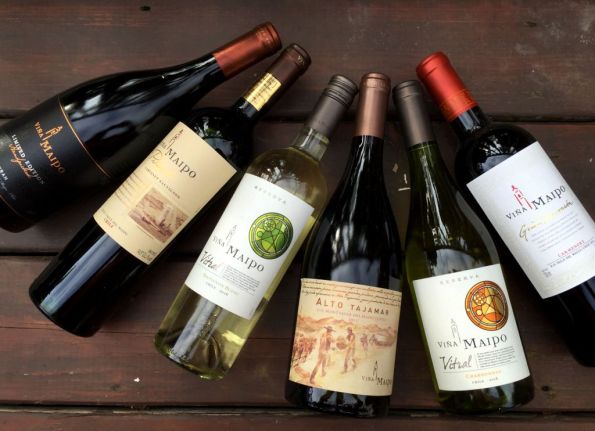 Of course, the nice wrapping is better be supported by the substance in the bottle – and it was, loud and clear, as you will see from my tasting notes.
By the way, if you would read my interview with Max Weinlaub, you will find that one of the questions I asked was about Viña Maipo’s selling wines in China. If I would look at the wines more carefully, I wouldn’t need to ask that question – take a look at the back labels below:


Here are my notes:
2016 Viña Maipo Vitral Sauvignon Blanc Reserva (12.5% ABV, SRP $11) – 2016 was one of the best vintages for white wines.
C: straw pale
N: grassy, lemon, touch of tobacco, white fruit
P: restrained, lemongrass, fresh lemon, perfect acidity, vibrant
V: 8-, nice and refreshing, will be perfect with seafood. Excellent QPR
2016 Viña Maipo Vitral Chardonnay Reserva (13.5% ABV, SRP $11)
C: light golden
N: vanilla, golden delicious apple, touch of honey, herbaceous undertones
P: Crisp, fresh, nice acidity, lemon, very restrained, green apples, good palate weight
V: 8-, very drinkable now, and should evolve. Great QPR
2013 Viña Maipo Gran Devocion Carmenere DO Valle Del Maule (14.5% ABV, SRP $25, American oak is used only for Carmenere, better showcases the wine, Carmenere 85%, Syrah 15%)
C: Rich garnet, wine looks very inviting in the glass
N: Characteristic mint and herbs ( hint of), dark red fruit, pepper
P: peppery, spicy, dark fruit, earthy, delicious, powerful, full bodied
V: 8, excellent, powerful wine


2012 Viña Maipo Syrah Limited Edition DO Buin Valle del Maipo (14.5% ABV, SRP $35, 86% Syrah, 14% Cabernet Sauvignon, 30 months in French oak)
C: bright garnet
N: bright, open, blueberries, herbal notes, touch of barnyard
P: pepper, black fruit, blackberries, spicy, firm structure, mouth-coating, velvety
V: 8+/9-, stand out, beautiful wine
2013 Viña Maipo Protegido Cabernet Sauvignon Valle del Maipo (14.5% ABV, SRP $50, 30-35 yo vines, very low yield, Cabernet Sauvignon 97%, Cabernet Franc 1%, Syrah 1%, Petite Verdot 1%, 20 months in French oak )
C: dark garnet
N: green bell pepper, mint, classic cabernet nose, eucalyptus
P: beautiful, round, open, cassis, mint, firm structure, delicious
V: 8+, outstanding, beautiful Cabernet
2012 Viña Maipo Alto Tajamar DO Buin Valle del Maipo Chile (14.5% ABV, SRP $110, Syrah 92%, Cabernet Sauvignon 8%, 30 months in French oak)
C: Bright garnet
N: espresso, tar, pepper, hint of barnyard, black fruit
P: Blackberries, tart cherries, espresso, spices, dark power, brooding, full bodied
V: 8+/9-, outstanding, a treat which needs time


I had an opportunity to taste all of these wines over the course of a few days, and I have to say that literally all of them kept getting better and better. Viña Maipo Syrah wines are unquestionably a world class, but so are the Cab and Carmenere, and I would gladly drink both Sauvignon Blanc and Chardonnay every day – overall, one of the most successful tasting lineups I ever had.
Have you ever had Viña Maipo wines? Have you ever had Viña Maipo Syrah or any Chilean Syrah for that matter? If you did, what do you think of them? Cheers!
Lodi Thanksgiving
Thanksgiving is definitely one of my most favorite holidays – maybe because it is so centered on the food. Of course it is about families and friends getting together, and giving thanks for many many things which comprise our lives – we all have a lot to be thankful for. Nevertheless, the food on Thanksgiving is essential, it is a canvas of gathering, and even more importantly so if you are hosting the gathering.
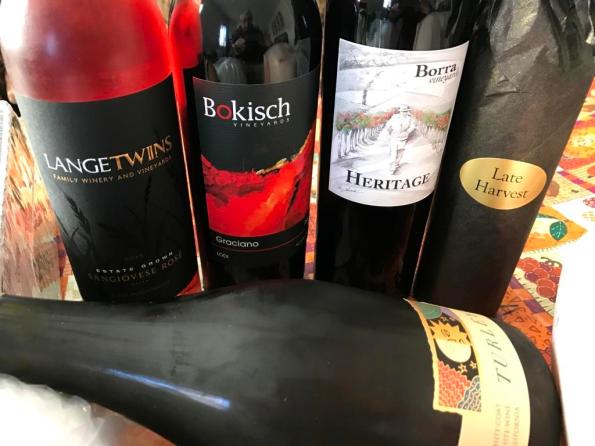
For many years we visited our close friends to celebrate Thanksgiving together with them. This year we are hosting Thanksgiving dinner at our house, which gave me a pleasure of doing a boatload of cooking, and – I’m sure you expected that – to select the wines for the dinner.
Thanksgiving is a quintessential American holiday, so choosing to serve the American wines comes easy and logical. But then America is all about freedom, so of course, you can drink whatever you feel like, I’m just talking about my personal choices. About a month ago I visited Lodi region in California (my second trip there, after Wine Bloggers Conference back in August), and while I was tasting through the line of delicious wines at Bokisch Vineyards, it dawned on me – this year, we should celebrate Thanksgiving with wines from Lodi. Now, as it is almost time to get to the table, this is exactly what we are doing.
Lodi is somewhat under the radar (and believe me – I would love to keep it like that, for it to stay the best kept secret for a few oenophiles only), but totally unique and totally unexpected region, which produces unique and delicious wines. Lodi is a California appellation, yet it produces the world class wines absolute majority would never associate with California. Look at the wines I’m planning to open. Sangiovese Rosé from LangeTwins – yes, an Italian star, Sangiovese, right out of the Central California. Graciano from Bokisch Vineyards – yes, Graciano, the unique grape from Rioja in Spain – this was the wine which prompted this whole “Lodi Thanksgiving” idea. Or how about Borra Vineyards Heritage, a field blend (!) of Barbera, Carignane, Petite Sirah and Alicante Bouschet – here is another core Italian varietal, Barbera. I don’t have a Lodi white wine, this is where Turley White Coat should do, as it contains Grenache Blanc and Verdelho from Lodi. Unique grapes, unique and, most importantly, delicious wines – this is what makes Lodi wines such an easy choice for me.
The Thanksgiving dinner will include the infamous “3 in 1″ bird, the Turducken, and lots of the side dishes – you can see some of the key components in the picture below.
I have an ambitious plan to report on the dinner right after its completion – that might never happen, but I will try. By the way, do you care to guess what wine is hiding behind the wrap? Maybe name the grape, and maybe even the producer? How are you going to celebrate? With what wines? Is there a dish you are looking forward to making or, at least, eating? Happy Thanksgiving! Cheers!
Restaurant Files: Tavern 489 in Stamford, CT – Come for Food, Stay for Music and Wine
If I will describe a restaurant as “classy rustic”, would that make sense to you? Can you walk into the restaurant and feel that time and place all of a sudden changed on you? The modern, fast, noisy city disappeared, and instead, you find yourself in the cozy shack up in the woods?
That’s what Tavern 489 does to you. You walk in and instantly taken by the ambiance – no detail of decor is left to a chance – every element is used to create that tavern feel, the rustic ambiance – and it puts you in the right mood.


We visited restaurant back in May, when it was only opened. Eric Monte, a well-known restaurateur in Stamford, CT and an avid wine collector, put together a special dinner menu for us, with all the dishes paired with the different wines.
And not only the wines. Tavern 489 is the only restaurant in Connecticut which serves Moosehead Lager, the beer made at the oldest Canadian brewery (founded in 1867) – and Moosehead Lager was our first pairing of the night.
Before we get to food – yes, of course, there was a cocktail to start the evening. Tavern 489 is located on the street called Glenbrook Road, one of the oldest streets in Stamford – how you can pass on an opportunity to taste the Glenbrook Mule cocktail (which was very tasty)?


Our first dish was Venison Balls (red wine green peppercorn sauce), served with the Moosehead Lager. The balls were nicely spicy, and the beer was working perfectly with the dish. And what I loved the most was the presentation – perfectly fitting for the tavern food.


Next up was Cold Spring tomato Soup, and we also switched to wine to continue our dinner. Our first wine was 2013 Les Costiéres de Pomerols Picpoul de Pinet AOP – touch of honeysuckle on the nose, clean, simple palate, tart. The wine didn’t work with the soup (how many wines do?), despite the fact that the soup was very tasty. But it perfectly complemented Taunton Bay fried oysters (lemon, tamarind, curry, tomato sauce), which were delicious and again, beautifully presented dish – we eat with our eyes first, and the oysters were a pure delight on the plate.


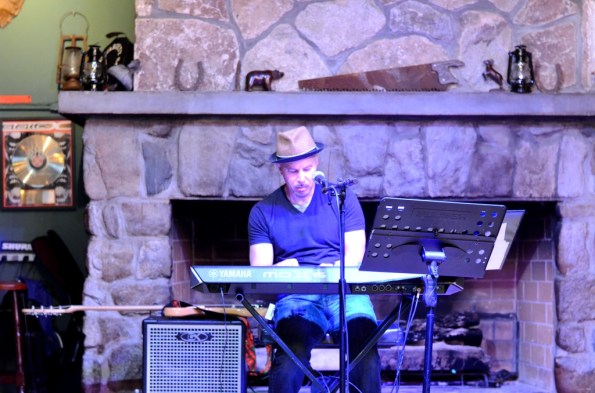
Remember I mentioned music? So the music has a special place at the Tavern 489 – right in front of the house, and it is live. Tavern 489 brings in many musicians, so all you really need is a glass of wine (or a Moosehead Lager), sit down (or stand for that matter), and get carried away:
 The food continued with the selection of the burgers – Bison Burger, Blackened Angus Burger w/Blue Cheese and Tavern Burger w/Pesto Truffle – my favorite was the Blackened Burger – great flavor, and of course it is hard to resist a blue cheese topping. With the meat, the new wine showed up – this time red, 2010 Grand Palais Bordeaux Supérieur – typical Bordeaux nose, green bell peppers, supple palate, good balance. This wine perfectly paired with my favorite dish of the evening – Charred octopus (Kidney bean, tomato, shallots, garlic, parsley, pomegranate chimichurri dressing) – this dish had both perfect finess of flavor, and just a rustic, homey, comfort food feel – simply a wow.


Our main course was a true carnivore dream and a masterpiece in the presentation – Dirty Tomahawk steak – bone-in thick ribeye steak (served with Chef Suggestions – potatoes, broccoli rabe, bacon-wrapped asparagus). Definitely a treat, and if you are into the meat, that is your dish. Another wine was served with this dish – 2012 Shooting Star Blue Franc Blaufrankisch Washington State – generous, rich, brooding – delicious wine overall. The wine was unique and different – how often you get to drink wine made in the USA from the Austrian/German grape such as Blaufränkisch? Definitely a treat – and an interesting story on the back label.


And finally – the dessert – very tasty Chocolate Mousse, light and delicious.
 We had an opportunity to thank Eric Monte and his wife Donna and Chef Regis Saget, and of course to ask them questions, which we did:


 This was the end of our evening of delicious food, music, and wine – and I highly recommend that you will head over to the Tavern 489 and check it out for yourselves. You can thank me later. Cheers!
Tavern 489
489 Glenbrook Road
Stamford, CT 06906
Ph: 203-355-0360
http://www.tavern489.com/
Beaujolais Nouveau Est Arrivé! 2016 Edition
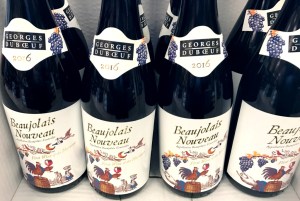 There is no shortage of the grape holidays nowadays – we celebrate Cabernet Sauvignon, Merlot, Tempranillo, Chardonnay and many other grapes, sometimes even two per day. However, the oldest grape celebration in existence is Beaujolais Nouveau Day, celebrated on the third Thursday in November, which happened to be November 17th this year.
Of course, Beaujolais Nouveau Day is not so much of a grape celebration (which would be a Gamay day) but really the celebration of the new harvest, which was a very old tradition in the Beaujolais region, neighboring Burgundy, in France. Georges Duboeuf, a famous French wine merchant, is credited with making Beaujolais Nouveau Day an international event more than 30 years ago. What was just a local harvest festival became an international event, widely anticipated and celebrated around the world, from Tokyo to Moscow to New York.
While Beaujolais Nouveau Day is [still] often dismissed as a marketing gimmick, I’m always looking forward trying the new Beaujolais Nouveau wines, to be able to see their evolution. Ever since this blog started in 2010, Beaujolais Nouveau was always part of it – here you can find the old posts from 2010, 2011, 2012, 2013, 2014 and 2015. In case you want to learn a bit more about the history of the celebration, please take a look at the post from 2012 – it contains more information than the other posts.
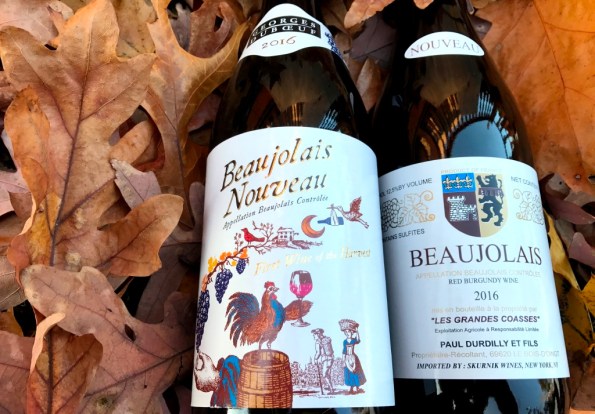
Here are the notes on the 2 wines I was able to taste this year:
2016 Georges Dubœuf Beaujolais Nouveau (12% ABV, $9.99)
C: Dark ruby
N: fresh fruit, intense, ripe raspberries, herbal undertones, not over the top
P: elegant, fresh, red fruit notes, crunchy berries, excellent acidity
V: 8-, very enjoyable and elegant
2016 Paul Durdilly et Fils “Les Grandes Coasses” Beaujolais Nouveau (12.5% ABV, $9.99)
C: dark ruby
N: spicy cherries, mint, inviting
P: very limited amount of fruit, big contrast with the nose. For the Beaujolais Nouveau, might be even too restrained.
V: 7, leaving desiring more on the palate.


Talking about the two wines I tasted, I have to admit that I forgot to lightly chill them, which is recommended. This definitely had no effect on Georges Duboeuf wine, but it might be a culprit behind the limited expression of the second wine.
Before we part, I want to bring to your attention the label of the Georges Duboeuf Beaujolais Nouveau. Besides the fact that I personally like it, the important part if that for the first time ever, the label for this wine was chosen by the wine consumers voting for one of the 12 different designs submitted for the competition. I think the consumers chosen well, right?
For the past 3-4 years, I find Beaujolais Nouveau a very enjoyable wine, well worthy of oenophile’s attention. What do you think of Beaujolais Nouveau? Any favorites? Cheers!
One on One with Winemaker: Max Weinlaub of Viña Maipo, Chile
When I was invited to meet with the winemaker Max Weinlaub of Chilean winery Viña Maipo, one thing immediately caught my attention – Max was described as an advocate of the “new Chilean Syrah movement“. Syrah might be my all times favorite grape (secretly, of course – I would never admit it in public), so anything which has to do with the Syrah sounds interesting to me.
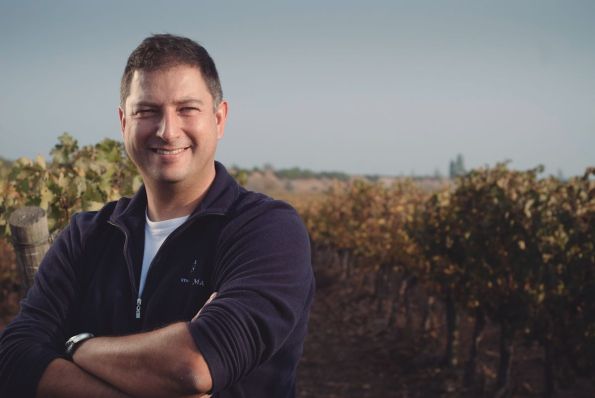
Winemaker Max Weinlaub. Source: Viña Maipo
I couldn’t travel to New York on the given date, but Patricia Clough from Gregory White PR was very accommodating and managed to include me in the live conversation and tasting with Max with the modern wonders of technology (thank you Patricia!). I was able to listen to Max presenting his wines and even ask questions and make comments – and all of it not with my fingers (in most of the “virtual” tastings we use Twitter or similar mechanisms to “talk” to the presenters – this conversation was refreshingly different).
This was the tasting, of course, so I did taste the line of Viña Maipo wines, and in a word, the wines were stunning. But I will tell you all about the wines in the next post, as I reached out to Max with a bunch of questions, which he graciously answered despite being on the plane for the most of the time in the months, going around the world and introducing his wines. Max’s answers are great and well worth every minute of your time if you want to learn more about Chile and its wines.
Without further ado, here is our [now virtual] conversation with Max Weinlaub:
[TaV]: It appears that Viña Maipo was one of the Syrah pioneers in Chile, planting it in 1990. Are there any wines from those early vintages still around? Did you have a chance of tasting them? What do you think of them if you did?
MW: Even though the vines were planted around 1998, the grapes were blended with other red grapes. In 2005 the grapes were used to make Limited Edition for the first time. We still have bottles of that vintage. I have had the opportunity to taste it, but the style has evolved year after year. To me, the first vintages were bold and too ripe. In recent years, I have been turning to a fresher style with a better balance and great ageing potential.
(Side note for Anatoli: If you are truly interested I could find one of those rare bottles, and we can taste it together next time I’m in NY.)
[TaV]: Since starting at Viña Maipo almost 10 years ago, did you make any changes in the way Syrah grapes are grown or the way the wines are made?
MW: Since I started as chief winemaker in 2007 it has been an endless learning process in direct connection with understanding how the vineyard behaves under different climatic conditions and canopy management, and noting the changes as the vines age each year. Today, I have a better knowledge about our Syrah grapes to express the varietal’s maximum potential with a clear sense of origin: Syrah from Chile. If I compare the last 10 years, I definitely see a change in the style of Viña Maipo’s wines —building towards better elegance, power, balance, fruit expression and oak impact.
[TaV]: Why Syrah in Chile? Do you think that Syrah is the next big grape for Chile?
MW: Until the first half of the 90’s, Chile was known for producing Cabernet Sauvignon, Merlot, Chardonnay and Sauvignon Blanc. Carmenere was re-discovered just in 1994. So the general perception of Chile was as a reliable producer of inexpensive wines but without many options to show (in terms of grape varieties). At the same time, Australia was living golden years with its Shiraz, so many winemakers thought that maybe Syrah could be introduced in Chile. Some clonal material (stocks) were imported and multiplied by a couple of nurseries in Chile and then, we neared the end of the decade, the first Syrah grapes were harvested with pretty good results. Thanks to a joint venture with one of those nurseries, Viña Maipo was one of the first wineries that planted Syrah in the country.
In my opinion, Chile has been and will be widely recognized as a great place of origin for Cabernet Sauvignon. But at the same time other grapes, especially those from the Rhône Valley, have adapted extraordinarily well to the Chilean terroirs — and Syrah is by far the best example of that. If you consider that nowadays the oldest Syrah vines are around 20 years old and already are producing high quality wines, then you can clearly see a bright future with this grape variety.
[TaV]: When making Viña Maipo Syrah, is there a region (Cote-Rotie, Hermitage, Cornas, Barossa, and Santa Barbara) or a wine maker (Guigal, Chapoutier, …) which you see as a hallmark and try to achieve some similarities with?
MW: The regions you mention (with their singularities) plus the talent and skills of those renowned family names have made some of the most iconic and unique expressions of Syrah grapes in the world. From those wines I learned that Syrah is able to make outstanding wines with a great potential for ageing even comparable with some Cabernet Sauvignon. My humble dream is someday to be part of that “Hall of Fame of Syrah” world, to be recognized as a previously-unknown Chilean winemaker named Max Weinlaub who made a jewel with Syrah in Chile, standing along with those big names.
[TaV]: You are blending Syrah with Cabernet Sauvignon and vice versa, which is quite unusual. Why do you think these two grapes work together? Are there any other regions in the world where Syrah is successfully blended with Cabernet Sauvignon, or do you think this is purely a Chilean phenomenon?
MW: I do believe in the synergy between their different but complementary components when you blend the right way. This is the best evidence that winemaking is closer to an artistic expression than to math because 1+1 is more than 2. Syrah is a fantastic grape to make single varietal wines, but also for blending. Sometimes the Cabs are too classical, too serious for me. I used to define the Syrah variety as “fireworks in a carnival”…it has lots of color, intensity and rich flavors. So Syrah plays an important role shaking up or adding verve to a (sometimes) circumspect Cabernet Sauvignon. My aim here is to make a more distinctly South American or Chilean style of Cabernet Sauvignon.
In another style, I add a smaller percentage of Cab to Syrah to increase the structure or backbone of the wine. As part of its nature, Syrah’s tannins are soft but non-structural – so hence the need for the strength and structure of Cabernet Sauvignon. You can find this blend of Cab-Syrah or Syrah-Cab elsewhere and it works well for me, and I intend to keep perfecting it.
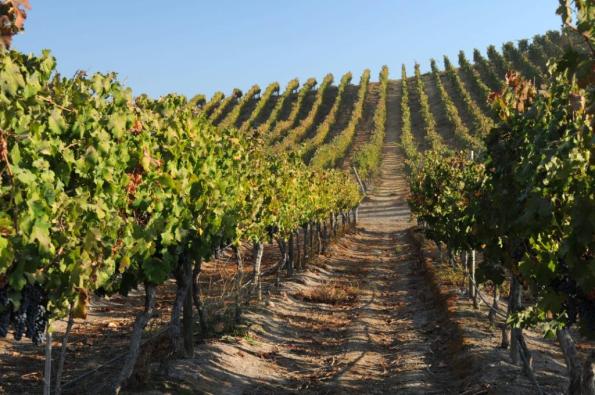
Source: Viña Maipo
[TaV]: Pinot Noir seems to be fast growing in popularity in Chile. You don’t make any Pinot Noir wines – do you have any plans for it? What do you think overall about Chilean Pinot Noir?
MW: I think that finally there’s a bunch of very good Pinot Noir produced in Chile thanks to the better knowledge of the grape variety in terms of terroir, viticultural management, clonal selection and winemaking. Pinot Noir is a challenging variety that sooner or later many winemakers—who tend to thrive in challenges–try to produce his/her own version. I’m having a lot of fun and joy producing Syrah (among other grapes of course) so Pinot Noir will be in my “101 things-to-do-before-to-die” list for a while.
[TaV]: Many wineries around the world add sparkling and Rosé to their repertoire – do you have any plans for Viña Maipo to start producing sparkling or Rosé wines too?
MW: We produce sparkling and rosé too!!! As we have a limited capacity (in terms of volume), the production of sparkling is allocated to certain markets – so it is not currently part of our global portfolio. Our rosé is sold largely in Nordic countries at the moment. We could taste both wines next time I see you.
[TaV]: How old are the oldest vines at Viña Maipo?
MW: The Cabernet Sauvignon vines are the oldest planted in our vineyards. Today, some of them are reaching 40 years old….just like me.
[TaV]: Don Melchor is an uncontested flagship wine for Concha e Toro, with very high critic ratings (98 from Suckling, 96 from Wine Spectator). Do you think Alto Tajamar will beat Don Melchor’s ratings one day?
MW: By far Don Melchor is the Dean of all the renowned Chilean wines. It’s the Chilean wine with the longest and most complete vertical tasting starting in 1986. I truly admire its history and legacy. If someday Alto Tajamar receives as high ratings as Don Melchor has won, for me that would be an honor and privilege. One of my principles is “work hard in silence, do your best and the rest will come along.”
[TaV]: When it comes to the white grapes of Chile, Chardonnay and Sauvignon Blanc are, of course, well established and well known. Is there a next big white grape for Chile?
MW: Chile is a paradise for grape growing due to its diverse terroirs, stable weather and healthy environment. Even though Chardonnay and Sauvignon Blanc are widely planted I’m sure there are new areas where some other white grapes could produce great quality wines, such as Verdejo or Godello, both grapes especially recommended for warm climates. There are some very interesting Rieslings and Gewürztraminer. But the problem with those grape varieties is the almost relatively little commercial success we’ve seen when are produced outside of their home countries. I have the feeling that the only white grape that could succeed (technically and commercially) is Pinot Grigio.
[TaV]: What are the biggest export markets for Viña Maipo?
MW: By far the UK and Nordic countries at the moment, but there are some interesting opportunities to grow in other areas especially in Asia. Asia is a great market with its own codes and tempo (rhythm). We’ve also been focusing on the U.S. to a greater extent and I am very much looking forward to spending more time in the market.
[TaV]: Continuing the previous question, how big is China, and it is growing, flat or declining?
MW: China is just awakening!!! And everybody is trying to get a space in China since the Dragon feels thirsty. They are starting drinking wine, more often for Gambei (heavy duty toasts) rather than for joy, learning or food matching, so there are some things to do in terms of wine culture and education.
[TaV]: Do you have a favorite vintage of Viña Maipo Syrah?
MW: Always the last one!!!… Because it’s better than the previous one. Maybe it’s because the vines are becoming older and I’m turning older too (and hopefully wiser)!!!
[TaV]: When you are not drinking your own wines, what are some of your favorite wines and winemakers around the world?
MW: More than follow a label, brand or winemaker, recently I have been discovering regions. I’m currently really intrigued by German Rieslings (especially old vintages from Mosel River) and some Spanish red grapes such as Garnacha (aka Grenache), Mataro (aka Cariñena or Carignan), Graciano, Mencia and Bobal.
Source: Viña Maipo
We are done here, my friends. I really enjoyed our conversation with Max, and I hope that the next time we will sit across the table and taste his delicious wines together. You might be thirsty at this point, so I hope you have something to drink – and the next time I will tell you all about delicious Viña Maipo wines I had a pleasure tasting. I can only say that I would gladly drink those wines at any time… Until we talk again – cheers!
Restaurant Files: Tablao in Norwalk, CT – Wine or Cocktail, You Decide
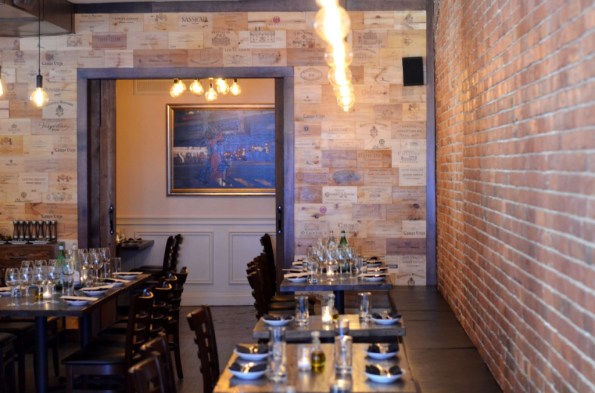
Translated from Spanish, the word “Tabla” has a few different meanings, but the one of interest for us here is a “board” or a “plank”. If you stop by the recently opened Tablao restaurant in SoNo district or Norwalk, Connecticut, the wooden planks on the walls will definitely attract your attention – and if you are a oenophile, you can’t help but to keep looking for all the familiar and coveted names (uncontrollable drooling will be excused, but please behave):


For sure I was very happy to observe all those wooden boards when I visited the restaurant for the bloggers dinner a few month ago. This time around, I arrived even a bit early, so I had an opportunity to snap a few pictures of decor and ambiance:
 While I love wine, I would never skip the bar – after all, nice cocktail is a nice cocktail, a great way to start the evening. The bar at Tablao didn’t disappoint. To be entirely honest, it even exceeded my expectations, as soon as I saw a bottle of Del Maguey Mezcal. Del Maguey makes absolutely spectacular Mezcal, which is rare and almost impossible to find. If the restaurant carries it, it gives me a good pointer for what to expect.


Tablao offers a nice selection of cocktails and wines by the glass:
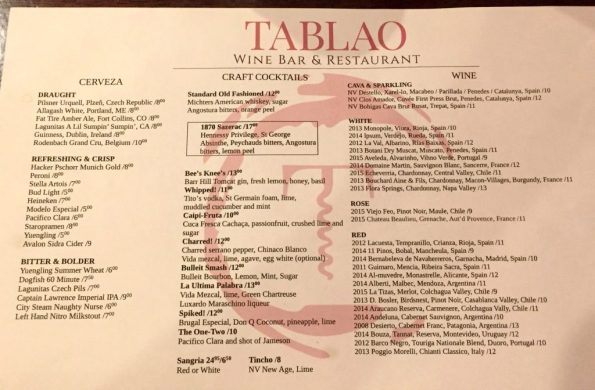 We had a few of the cocktails, and the wines were prepared for our dinner in advance. I really liked the cocktail called Charred! (charred Serrano pepper, Chinaco Blanco – another sign of high-class – rare and beautiful tequila, Vida Mezcal, lime, agave, optional egg white) – nice balance, good spicy bite. From the wines, my favorites were 2011 Guimaro Mencia Ribera Sacra which was earthy and showing nice ripe fruit, and 2014 Desierto25 Cabernet Franc Patagonia, Argentina, which was unexpected (Cab Franc from Argentina? wow) and stunning – smooth, balanced, with an excellent fruit profile:


While we were mingling, the food started to appear:


Cheese Croquettes were very tasty, with nice amount of spice. Potato Croquettes were my favorite, again, well cooked and very tasty, with good amount of seasoning, and then Grilled Chorizo – who can argue with Chorizo?
The first dish to arrive at the table Charcuteria, which is offered with a very nice selection of meats and cheeses at Tablao:


Our first course consisted of three different Tapas: Brussels Sprouts Salad (Fontina risotto cake, black truffle shavings, truffle olive oil, lemon, parmesan cheese) – memorable presentation, the salad itself was tasty, but the risotto cake was a touch too dense to my taste. Next up was Salmon Tartare (Jalapeños, red onion, ginger, lemon juice served with house-made potato crisps) – nicely made, good flavor and then Calamari a la Plancha (Vinaigrette of vegetables and salad) with a good char on the octopus.
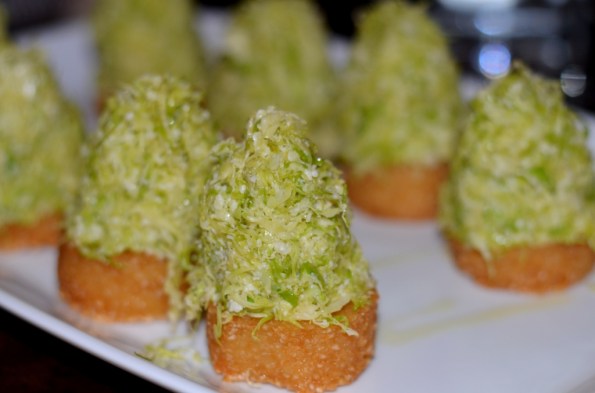
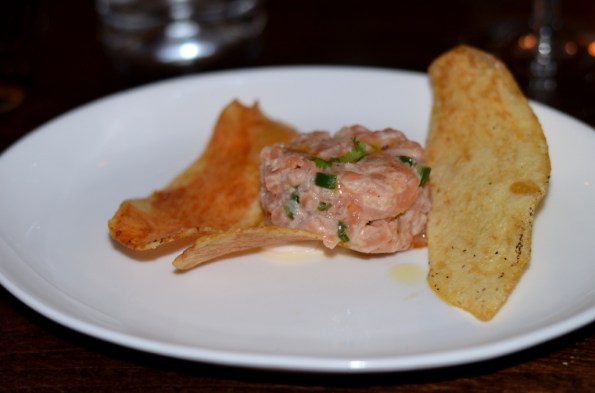
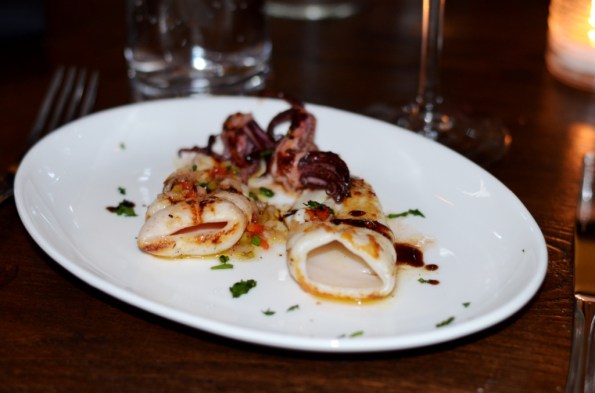
The second course brought in Hanger Steak (Green chimichurri), Asparagus (Parmesan, red pepper vinaigrette, balsamic reduction) and Chorizo Español (figs, beans), all nicely prepared:


And then, of course, showing all the Spanish cooking heritage, the Classic Paella (Chorizo, Chicken, Port, Clams, Mussels, Shrimp). Let me explain how good this paella is: you know how every once in a while you are setting next to the dish, you are full – I mean, completely full – and you still are going “let me just get another bite, just one more, please, I promise” – yes, that was the Paella experience at Tablao.


To finish our night in style, we got the trio of the deserts – Tres-Leches (Dense 3 milk cake), Strawberry Panna Cotta (Served with coconut ice cream) and Housemade Chocolate Tart (Chocolate & Goat Cheese) – all very tasty.
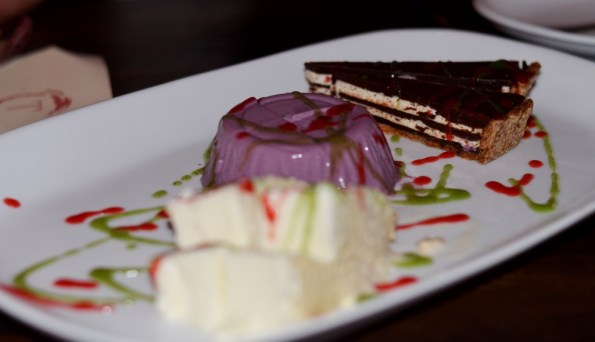 That’s all I have for you, my friends. If you are looking for a tasty (and different!) drink, a glass of good wine and a tasty bite of food, Tablao in SoNo can provide them all – with a bonus of a perfect ambiance. Cheers!
Tablao Wine Bar and Restaurant
86 Washington St
Norwalk, CT 06854
Ph: (203) 939-9602
tablaosono.com
Celebrate Tempranillo! 2016 Edition
Tempranillo is one of the most popular red grapes in the world, requiring no introduction to the wine lovers, now even less than before. The star grape of Spain, a foundation of the timeless beauty of Rioja, finess of Ribera del Duero and dark raw power of Toro. Today (if I manage to publish this post before midnight) is International Tempranillo Day, the day when we acknowledge this early ripening grape, capable of bringing lots and lots of pleasure to the wine lovers everywhere.
I discovered Tempranillo in 2010, at the wine seminar at the PJ Wine store in Manhattan – and fell in love with it. And how you can not, after tasting 1964 Rioja Gran Reserva, which was still young and exuberant. I was seeking Tempranillo ever since, trying it at every occasion – some encounters happier than the others.
What interesting in this journey is that when I discovered Tempranillo for myself, my world was squarely limited to Spain, and even inside Spain, it was all about Rioja, Ribera del Duero and a little bit of Toro. I was always happy to celebrate the Tempranillo Day, so here is the collage which I produced based on the wines I knew, back in 2011:
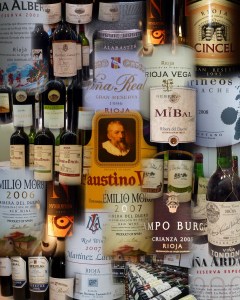 To my total delight, it appears that my Tempranillo worldview was inexcusably narrow. Texas, Oregon, Napa Valley and my newfound oenophile’s heaven, Lodi, are all producing world-class, delicious, complex, exciting Tempranillo wines. I heard about Tempranillo in Australia; never tried them, but now I’m a believer – great Tempranillo wines don’t have to be only from Spain. Thus I created a new collage, to better represent my latest discoveries:
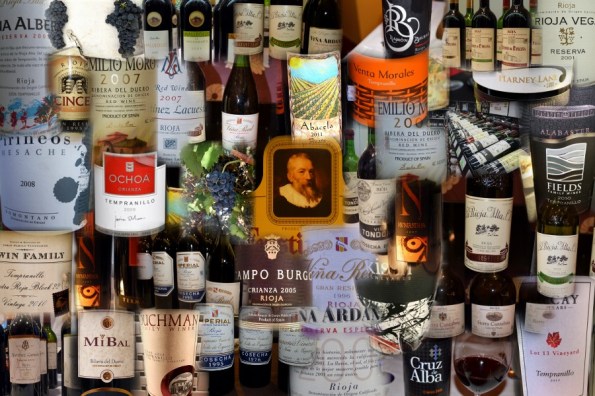 Abacela from Oregon, Duchman from Texas, Irwine Family from Napa, Bokisch, McCay, Fields, Harney Lane from Lodi – lots and lots of tasty discoveries over the past few years – I hope you had your share of Tempranillo fun too.
Do you have your favorite Tempranillo wines? Where are they from? Who is the producer? Tell the world about them. Cheers!
Last Bottle Sign Up ($10 credit)




 Talk-A-Vino