Magnificent Tempranillo
Let’s start with some definitions:
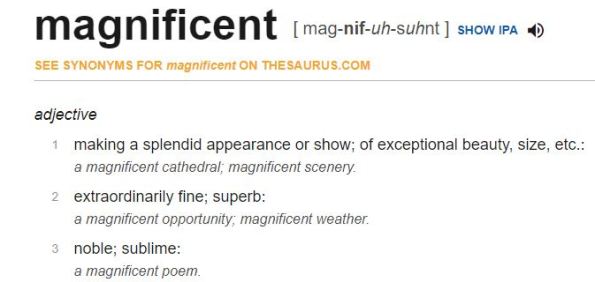
Of course, you know what “magnificent” means. Still, I feel compelled to start with the definition to explain my rather overzealous title. After looking at the Merriam-Webster and Google definitions for “magnificent”, I decided to go with the one from Dictionary.com, as it perfectly underscores the emotions which I tried to express with this title.
Wine is personal. Wine solicit the emotion, but it is personal – the appeal of the liquid in the glass is first and foremost for the person who is taking a sip. Two people can have a sip of exactly the same wine and have completely opposite reactions – one might love it and the other might hate it. Thus calling the wine magnificent is personal – and it is simply the expression of the emotion one had after taking a sip of that wine.
Today Tempranillo is grown around the world. You can find delicious renditions coming from Australia, Napa Valley, Oregon, Lodi. My first Tempranillo love, however, is Rioja, and this is where it still stays. A sip of La Rioja Alta, Lopez de Heredia, CVNE, or El Coto makes everything right with the world. Same as with any other wine, Rioja can’t be taken for granted – you need to know the producer. But in the hands of the right producer, Rioja becomes … magnificent. It is the wine of exceptional beauty, it is extraordinarily fine and superb, and it is noble and sublime – exactly as the definition above says.
Of course, it is not just Rioja which makes Tempranillo a star. Ribera del Duero, located a bit more down south and central, is another source of magnificent Tempranillo wines – if you had a pleasure to try the wines from Emilio Moro, Pesquera, Vega Sicilia you know what I’m talking about. Again, in the hands of the good producers, Ribera del Duero Tempranillo is every drop magnificent.
To make this conversation about magnificent Tempranillo more practical I want to offer you my notes on a few samples of Tempranillo wines I had an opportunity to enjoy recently.


CVNE (Compañía Vinícola del Norte del España) needs no introduction for the Tempranillo fans. Founded in 1879 (yes, this year is the 140th anniversary of CVNE) by two brothers, the CVNE is still run by the family, and today consists of 4 wineries – CVNE, Imperial, Vina Real, and Contino. However, those are the Rioja wineries and today CVNE is taking its 140 years of winemaking experience to the other regions. Here is an example for you – Bela from Ribera del Duero.
The grapes for Bela wine came from 185 acres Tempranillo vineyard, located at the altitude of 2,400 feet in the village of Villalba de Duero and planted in 2002. Here is the story behind the name of the wine and the picture on the label: “Bela’s label is a facsimile of an old CVNE label from the 1910’s. The stars represent each of the children of CVNE’s cofounder, Eusebio Real de Asúa. His brother Raimundo, the other co‐founder, had no descendants. Each star represents one of the children: Sofia, Áurea, and Ramón. Sofia was known as Bela. We descend from her.”
2017 Bela Ribera Del Duero (14% ABV, $18, 100% Tempranillo, 6 months in 1-year-old American and French oak barrels)
Dark garnet, almost black
Roasted meat, coffee, cedar box
Beautifully complex palate, black cherries, blackberries, eucalyptus, fresh, balanced.
8-, excellent wine, built for the long haul, will evolve.
Contino was the first single-vineyard Rioja created by CVNE and the owners of the Contino estate (which takes its history from the 16th century). 150 acres Lacerna vineyard in Rioja Alavesa is the source of grapes for the Contino line of wines. Here is the story behind the name: “The “contino” was the officer in charge of a guard corps of a hundred soldiers who protected the royal family “de contino” (continuously) from the times of the Catholic Monarchs onwards. According to the tradition, Saint Gregory, the patron saint of vineyards, passed through the lands of this same Rioja property, giving rise to the use of his figure in the logo of this winery, and to the use of his name for some of the plots now planted with vines.”
2012 Contino Rioja Reserva Rioja DOC (13.5% ABV, $45, 85% Tempranillo,10% Graciano, 5% Mazuelo and Garnacha, 2 years in used American and French oak plus 2 years in the bottle)
Dark garnet, almost black
Cherries, cigar box
Bright, uplifting dark fruit medley, clean acidity, a touch of minerality, velvety texture with well-integrated tannins, perfect balance
8+, delicious, lots of pleasure in every sip


Bodegas Beronia was founded in 1973 by a group of friends who fell in love with La Rioja while visiting on a holiday. The name Beronia is not random – here is the explanation: “name linked to the history of the land where the winery is found. In the 3rd Century BC the area known as Rioja today was inhabited by a celtic tribe called the ‘Berones’. They inhabited the towns of Tricio, Varea and Leiva, marking the limits of the Berones region, today La Rioja.”
Originally, the wines were produced literally by friends for the friends, without much thought of commercial sales. In 1982, Bodegas Beronia became a part of González Byass family, and at that point wines of Bodegas Beronia started to appear on the international markets.
Bodegas Beronia Rioja wines represent an intersection of tradition and modernity. While “traditional” and “modern” styles of Rioja can be a subject of great debate with a lot of wine consumed to prove the point, I would offer a very simplistic viewpoint. Tempranillo has a great affinity to the oak; the resulting Rioja wine is well influenced by the oak regimen. Traditionally, Rioja is matured in American oak casks. Modern style Rioja often uses French oak. Here is your style distinction – American oak versus French. Bodegas Beronia goes a step further than many. They create their own barrels, using both American and French oak elements in one barrel. Thus the wine is not defined by blending of the separately aged components, but instead, it is aging in the mixed environment.
Here are the notes for the two wines I was able to taste:
2015 Bodegas Beronia Crianza Rioja DOC (13.5% ABV, $14.99, 91% Tempranillo, 8% Graciano, 1% Mazuelo, 12 months in American and French oak barrels)
Dark garnet
Vanilla, plums, cedar box
Fresh dark berries, ripe cherries, tobacco, a touch of sapidity, medium-plus body, clean acidity, a touch of eucalyptus, medium-long finish
8-, the second day was better than the first. 8+ day 2 and 3
2013 Bodegas Beronia Rioja Reserva DOC (13.5% ABV, $19.99, 95% Tempranillo, 4% Graciano, 1% Mazuelo, 3 years in American and French oak barrels and in the bottle)
Dark garnet
Plums, cherries, tobacco
Dark fruit, tar, tobacco, cherries, a touch of cherry pit, bright acidity, firm texture, noticeable minerality, medium finish
8, excellent. Day 3 is more open.


No, we are not done yet. I have one more Rioja to discuss with you – from Bodegas LAN.
Bodegas LAN was founded in 1972. Here is another winery name which is not random: “A name – LAN – composed of the initials of the three provinces that make up the D.O.Ca. Rioja: Logroño (now La Rioja), Álava and Navarra.” Bodegas LAN owns about 170 acres vineyard called Viña Lanciano, which is subdivided into the 22 parcels, each with a unique microclimate. These 22 parcels are growing Tempranillo, Garnacha, Mazuelo, and Graciano, most of them on the 40 -60 years old vines.
Grapes for LAN Xtrème Ecológico wine come from 12.5 acres parcel of 100% organically certified Tempranillo, located at the altitude of 1,200 feet.
2015 Bodegas LAN Xtrème Ecológico Crianza Rioja DOC (14.5% ABV, $15, 100% organically-certified Tempranillo, 14 months in new French oak, 9 months in the bottle)
Dark garnet, practically black
Cherries, cedar box, eucalyptus, tobacco, open and inviting
Gorgeous, layers of dark fruit, soft but present tannins, baking spices, firm and perfectly structured, tart cherries on the finish, tannins taking over.
8+, a long haul wine, will be perfect in 10 years or longer. A total steal at a price.
Culmen is one of the top wines made by Bodegas LAN, produced only in exceptional vintages. The grapes for this wine come from 13 acres El Rincón parcel, located at the 1,500 feet altitude.
2011 Bodegas LAN Culmen Rioja Reserva DOC (13.5% ABV, $55, 88% Tempranillo, 12% Graciano, 26 months in new French oak, 20 months in the bottle)
Dark garnet with a purple hue
Red and black fruit, roasted meat, warm granite, sweet cherries, medium-plus intensity
Fresh tart succulent cherries are popping in your mouth, changing into sour cherry compote with tar, tobacco and cedar box. Delicious long finish. Lots of pleasure in every sip.
8+/9-, outstanding.
Here you go, my friends. Six delicious, or shall we say, magnificent, Tempranillo renditions. I will be happy to drink any of them again, at a moment’s notice. What do you think of Tempranillo wines? Got any favorites to share? Cheers!
Magic of the Season
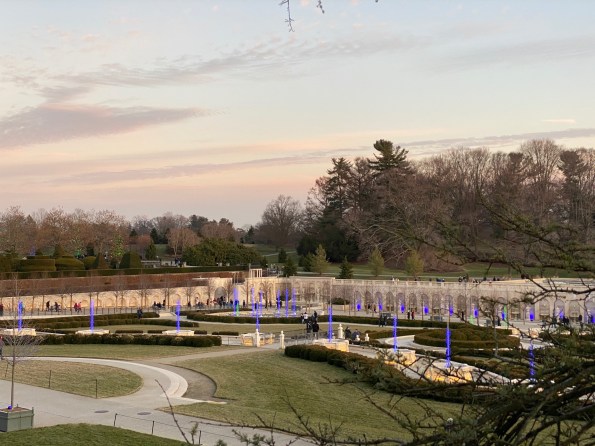
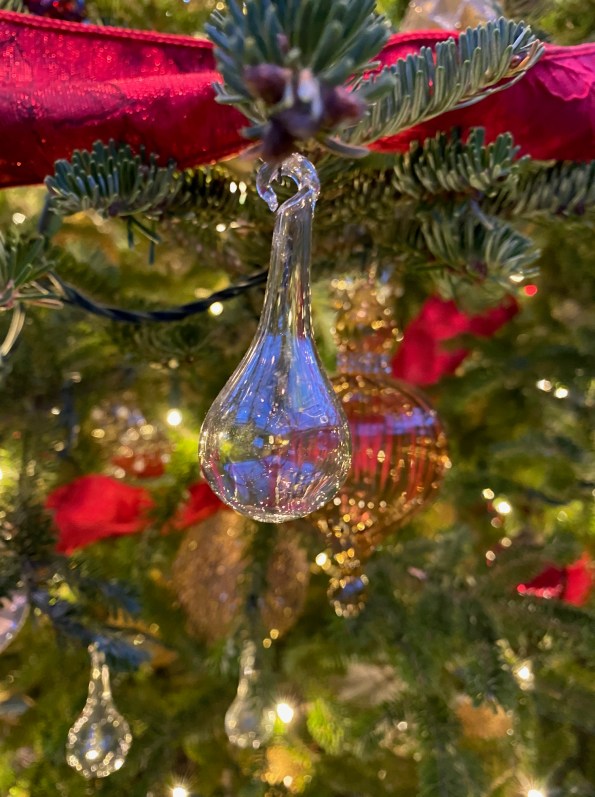
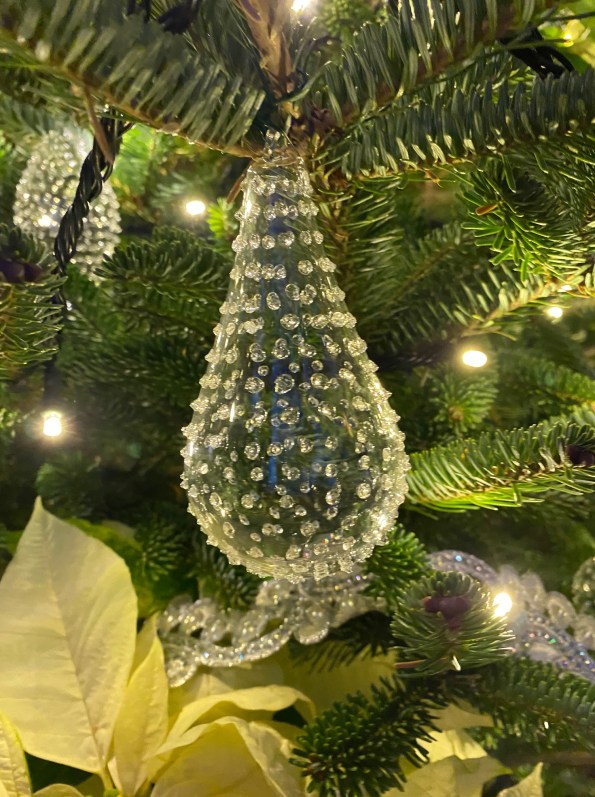
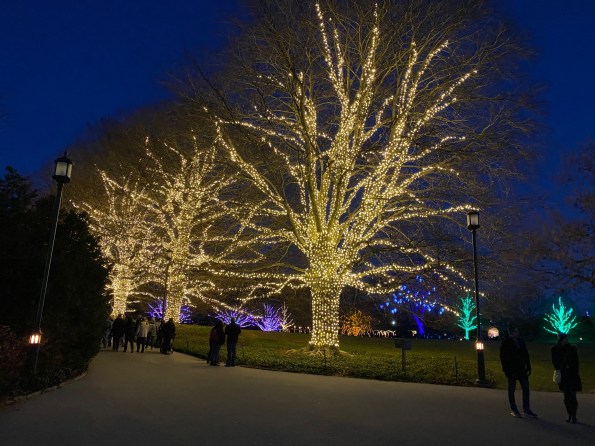
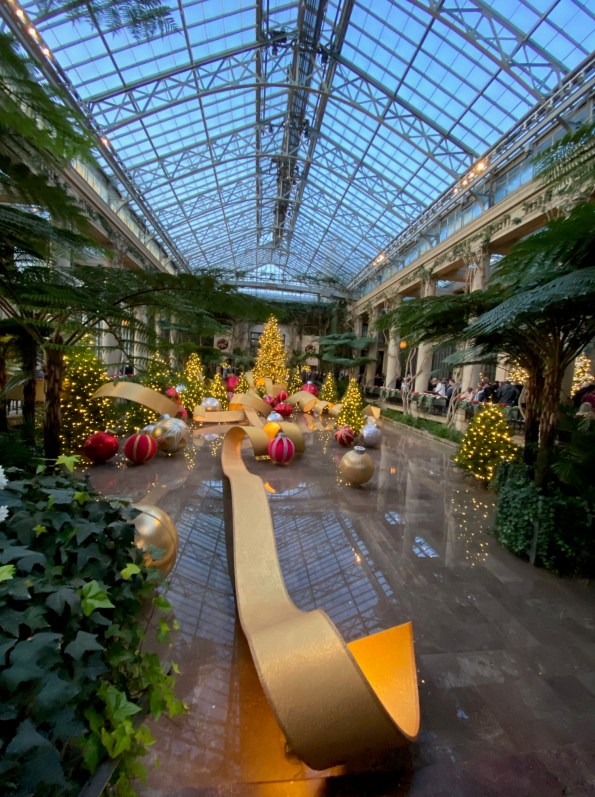
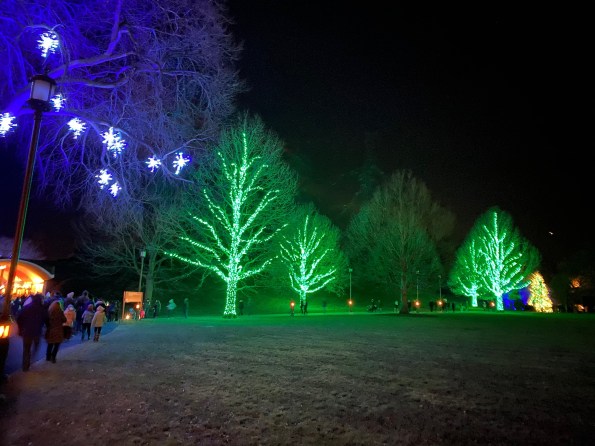
While I don’t celebrate Christmas, its magic is not lost on me. When I saw an email advertising Christmas lights display at Longwood Gardens, the decision was quick – we should go and see it.
Longwood Gardens, also known as Dupont Gardens, are located in the town of Kennett Square in Delaware, a few miles away from Pennsylvania border. We had been regular visitors for a long time, as Gardens are absolutely beautiful. Some of our perennial favorites are the Fireworks and Fountains events, which are typically run during the summer – you can come with your own blanket and chairs, find a spot, and enjoy a beautiful display of colorfully lit fountains, working in full sync with the fireworks and classical music. However, we never attended A Longwood Christmas event as it is officially called.
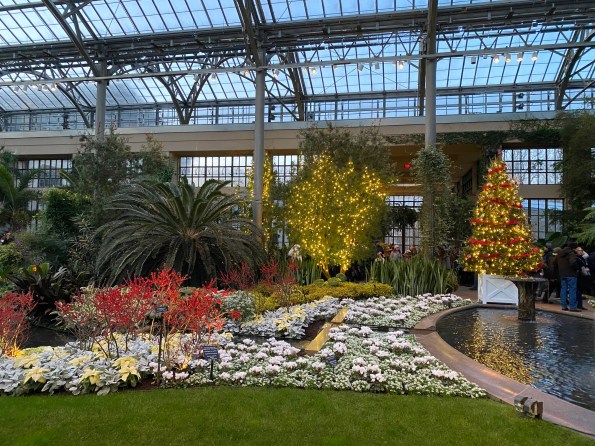
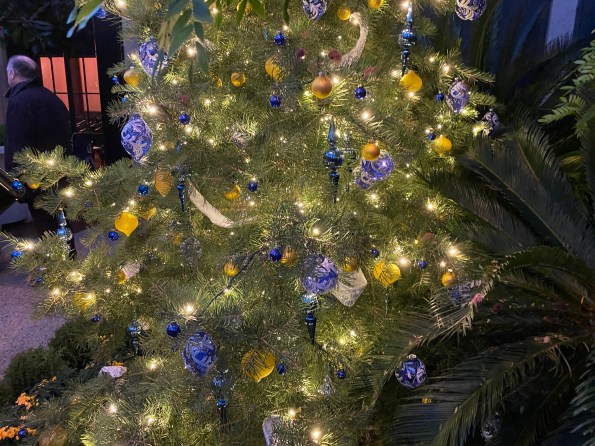
Boy, was that the right decision. We got tickets for 4:30 pm (the event has timed tickets which are better be acquired in advance – the event was sold out for the day we were visiting), and this was a great choice of time as we still got a glimpse of the sunset and then enjoyed the Gardens. The lights, the music, and overall organization were nothing short of stunning – and what you see below is a gimps of our enjoyment.
If you are anywhere within the driving distance, the event worth a hassle – find the time before January 5th to visit and enjoy – or put it already in the calendar for the next year. I’m sure you will greatly enjoy it.
Here you go:














American Pleasures – Part 2, Peju Napa Valley
 A few weeks ago I shared with you my view on [strictly wine] American pleasures – some of the wine samples which I had a pleasure to taste recently. Yes, it is the pure hedonistic pleasure we are talking about here – the wines which have a magical power of making you want another glass even before the first one is empty. Today I want to continue that conversation and talk about Peju Province Winery in Napa Valley.
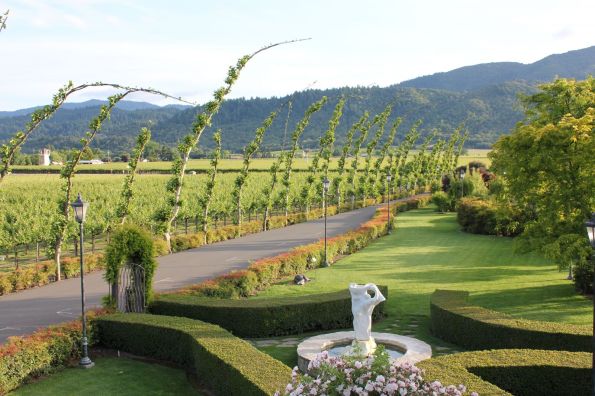
The story of Peju Province Winery is simple and similar to many others – it started from a dream. Tony Peju had a drawing of the winery with the tower two years prior to the first Peju grape been harvested. Tony found early success in Los Angeles as a horticulturist, using his landscaping skills in the real estate, improving and reselling the houses. But his dream was to own the farm.
After his search for the farm land led him up north to the Napa Valley, he was able to find the location of his dreams – a 30 acres Stephanie vineyard in Rutherford, located next to Robert Mondavi, Inglenook and Beaulieu vineyards, growing Cabernet Sauvignon and Colombard vines, some 60 years old or maybe even older. Tony and his wife, Herta, purchased Stephanie vineyard in 1983. At first, Tony and Herta were only selling the grapes, however taking advantage of Tony’s green thumb, improving the vineyard and learning what it is capable of. They identified the section of the vineyard, about 5 acres in size, which produced the best Cabernet Sauvignon fruit. The vineyard, which was renamed into HB in honor of Tony’s wife, Herta Behensky, was replanted using cuttings from that best section grafted on the phylloxera-resistant rootstock. The time has come to start making Peju’s own wine.
Peju Province Winery Grounds. Source: Peju Province Winery
Tony went on to get a degree in enology from UC Davis, and the rest was history. Well, there is one interesting hurdle worth mentioning. If you remember, Tony had a full drawing of the winery done in 1981, two years before HB vineyard was even found and purchased. Once they had the land and were ready to convert dreams into reality, in order to fund the project, Tony and Herta started selling wine out of their garage converted into the wine tasting room. This, however, was against Napa County’s rules, which required all the wine sales to be made from the legitimate winery building. However, California law allowed winegrowers to sell the wines in the place where the grapes were grown, so the issue ended up in the court. The judge sided with Peju, agreeing that if Tony is growing the grapes, he should be allowed to sell the wine. This became a pivotal case that significantly changed the landscape of the Napa Valley.
Peju went on to build the impressive 50-foot tall tower in the French Provencal style, using Brazilian cherry wood, beams from old Midwestern farm buildings and 1906 antique stained glass window. Way before that new winery building was complete, Peju acquired 350 acres of land at the 2000 feet elevation in the nearby Pope Valley section of Napa, which they named Persephone Vineyard, after the goddess of Greek mythology. In 1997, 120 acres of that land was planted to Cabernet Sauvignon (using HB Vineyard clone), as well as Cabernet Franc, Merlot, Syrah, Petit Verdot, Sauvignon Blanc, Chardonnay, and Zinfandel. In 2007, Rutherford HB vineyard became certified organic, and today all three of Peju vineyards are using sustainable viticultural methods. In 2009, Peju Province Winery was certified as a Napa County Green Winery and Bay Area Green Business. Also in 2006, Peju started installing solar panels on 10,000 square feet of winery roof and generating 35% of all electricity consumed at a winery.
Okay, so now you learned a lot about the winery, so let’s talk about the wines, as a proof is always in the glass. I had an opportunity to try 6 wines from Peju, and I was literally blown away by what I tasted. To be entirely honest, these wines were one of the most inspirational coming up with the title for this series – American Pleasures. 6 out of 6 delicious wines, one better than another – I taste enough wines during the year to tell you that this is not given. Below are my notes:


2018 Peju Province Winery Sauvignon Blanc Napa Valley (13.8% ABV, $25)
Straw pale, practically clear
A touch of freshly cut grass, white flowers, maybe a distant hint of cat pee – only because I want to find it there?
Layers of flavors. Crisp lemony acidity first, then a hint of plums and slightly underripe melon, unusual plumpness for the Sauvignon Blanc, the wine rolls off your tongue like a nice Marsanne.
8, excellent, a unique and different Sauvignon Blanc.
2015 Peju Province WineryCabernet Sauvignon Napa Valley (14.8% ABV, $60, 85% Cabernet Sauvignon, 8% Petit Verdot, 7% Merlot, 18 months in French and American oak, 45% new)
Dark garnet
Black currant, cherries, eucalyptus, sweet oak
A beautiful mix of black currant and cherries on the palate, a touch of herbal notes, good minerality, firm texture, vibrant acidity, medium+ finish
8/8+, the first sip says “I’m a Napa Cab”. Delicious.
The next wine is one of the few in “Nostalgia Series”, where every label depicts a moment in Peju’s history.
2015 Peju Province Winery Nostalgia Series The Farm Napa Valley (15.2% ABV, $80, 80% Cabernet Sauvignon, 20% Sangiovese, 18 months in oak)
Dark garnet, practically black
Dark fruit, eucalyptus, restrained, mineral undertones
Perfectly balanced fresh fruit, soft, luscious, black currant, tar pencil shavings, perfect balance, delicious.
8, delicious wine


2016 Peju Province Winery Merlot Napa Valley (14.8% ABV, $48, 95% Merlot, 4% Cabernet Sauvignon, 1% Petit Verdot, 18 months in oak)
Garnet
Sweet licorice, eucalyptus, underbrush
Coffee, tart cherries, cherry pit, minerality
8-, probably need more time. The finish is a bit astringent, however, it plays well with savory food (cheese and crackers)
Cabernet Franc is one of my favorite grapes – this wine was truly a Cabernet Franc experience.
2013 Peju Province Winery Petit Trois Cabernet Franc Napa Valley (14.8% ABV, $75, 100% Cabernet Franc, 18 months in oak, 333 cases produced)
Deep Garnet
Cassis, licorice, mocha, a hint of sweet tobacco
Cassis, mint, gently present tannins (after a few hours), firm structure, sweet oak, unmistakably California
9-, wow, tons of pleasure in every sip. Needs decanting. Outstanding on the second day.
This wine has its own story. It is the result of the barrel experiments run by Peju winemaker, Sara Fowler. For the 2017 vintage, she worked with 37 different barrel tasting styles and 22 coopers, then discussed the effects of the oak regimen with the group of the fellow Napa Valley winemakers. To have all new-oak, effectively a young wine, to be ready to drink from the get-go is something really incredible in my opinion.
2017 Peju Province Winery The Experiment Napa Valley (14.5% ABV, $100, 100% Cabernet Sauvignon, 18 months in French, American, and Hungarian oak, 100% new, 1075 cases produced)
Dark garnet
An “Oh my god!” nose – Black currant, eucalyptus, pure, intense
Wow, supple black currant, mint, eucalyptus, silky smooth tannins, good minerality, all delivered in layers. Clean acidity, impeccable balance, and immense pleasure.
9/9+, wow. An exemplary Napa Cab
There you have it, my friends – some incredible wines. Of course, these are not inexpensive wines, but in my opinion, the $100 bottle which gives you lots of pleasure is worth splurging for the right moment. Cheers!
The Curse and Mystery Of The Top 100 Wine Lists
 Lists and numbers – who doesn’t like that? We, humans, are all about lists, we like to sort things out – to-do lists, shopping lists, “best” lists, “best of the best ” lists, Top 10 lists, Top 100 lists. No area of people’s interest is immune to the lists – and of course, the world of wine is no exception – come to the end of the year, and you are guaranteed to see lists and lists of the lists, ranking wines, wineries, regions, winemakers, what have you.
I don’t know how much attention you are paying to the top wine lists. Talking about myself, I like to ponder at the Top 100 lists, especially the one produced by Wine Spectator – not because it is any better or different than the others, but simply because I had been a subscriber for a long time, and it formed more into a habit. My main interest is to see what wines can I recognize, and then to play with the data a bit – countries, prices, grapes. I’m a number junkie. It is always fun to organize numbers in a few different ways, no matter if it means anything or not, and so the Top 100 lists present a good opportunity to conduct such a “research”.
Before we delve into the numbers, let’s talk about the Mystery. What is mysterious about the top 100 wine lists? I would say most everything? How the wines are chosen? How wine #1 is decided? According to the information on the James Suckling web site, they select the top 100 wines out of the 25,000 wines tasted throughout the year. How do decide on 100 out of 25,000? Do you run a separate list of potential candidates throughout the year, or do you sit down at the end of the year and try honestly recall the most memorable wines of the year? What role the ratings play?
Here is what Wine Spectator says on the subject: “Each year, Wine Spectator editors survey the wines reviewed over the previous 12 months and select our Top 100, based on quality, value, availability and excitement”. I like the “excitement” part, this is how I decide on my top dozen wine of the year. The other two publications I studied with Top 100 lists don’t talk about their methodology, they just talk about the content of their lists.
So here are some stats we can gain from looking into the details of the Top 100 lists.
Wine Spectator:
Wine Spectator offers two lists – the regular Top 100 Wine and Top 100 Value Wines, which includes wines priced under $25 (you can find all the lists here). I didn’t spend time with the top value list, so all the numbers below are related to the Top 100 list:
- Distribution by country: France – 23, California – 22, Italy – 21, Spain – 7, Australia and Oregon – 5 each, Chile and Portugal – 3 each, Austria, Germany, New Zealand, and Washington – 2each, Argentina, Israel, and South Africa – 1 each
- Distribution by the wine type – 74 reds, 21 whites, 1 Rosé, and 4 Sparkling.
- Prices – most expensive – $197, least expensive – $13. 14 wines are priced above $100, 13 wines are in the $75 – $99 range, 11 wines are in the $50 to $74 range, 27 wines are priced in the $25 – $49 range, and 35 wines are in the $13 – $25 range.
- Ratings: the top score is 98, the lowest is 90. There is only one wine on the list with a rating of 98, 6 wines have a rating of 97. The ratings of 96, 95 and 94 are assigned to 14 wines each. 11 wines have a rating of 93, 10 wines each have ratings of 92 and 91, and 20 wines have a rating of 90.
- Wine Spectator’s top wine of the year 2019 was 2016 Château Léoville Barton St.-Julien with a rating of 97 and priced at $98.
Wine Enthusiast:
Wine Enthusiast produces not one, but 3 Top Wine lists – Top 100 Wines, Top 100 Best Buys, and Top 100 Cellar Selections – these links will allow you to retrieve PDFs for each list. General notes on Wine Enthusiast site say that more than 24,000 wines are tasted during the year and afterwards condensed into the 3 Top Wine lists. Note that Wine Enthusiast Best Buys list covers only wines under $15. Focusing on the Top 100, I did a limited analysis, using the data already provided in the PDF file:
- Distribution by country: California – 18, Italy – 17, France – 16, Australia, Oregon and Spain – 5 each, Argentina, Chile, Portugal and Washington – 4 each, Austria and Germany – 3 each, NY State and South Africa – 2 each, Georgia, Greece, Israel, Uruguay and Virginia – 1 each
- Prices – most expensive – $114, least expensive – $16. Only one wine is priced above $100, the majority of the wines are less than $50 with an average price of $33.
- Ratings: the top score is 99, the lowest is 90. There is only one wine on the list with a rating of 99, 3 wines are rated at 98, 5 wines have a rating of 97, 8 wines are rated at 96. Most of the rated wines fall in the 91-93 range (55 wines)
- Wine Enthusiast top wine of the year 2019 was NV Nino Franco Rustico Brut Valdobbiadene Prosecco Superiore with a rating of 94 and priced at $20.
James Suckling:
This one is the most exclusive Top 100 club in a number of ways. First, you need to be a subscriber to see any wine details. Second, all the wines on the Top 100 list are rated 98-100 points. This is the only stats available from the James Suckling Top 100 Wines website: “We have 41 100-point wines in the list and another 35 with 99 points. The rest of the wines scored 98 points. All the wines were produced in quantities of 300 cases or more.”
Let’s leave James Suckling Top 100 list aside and talk about Wine Spectator and Wine Enthusiast lists. The makeup of both lists is quite similar when it comes to the countries – California, France, and Italy represent at least half of the Top 100 wines (2/3 in case of Wine Spectator list). Where the list differ quite a bit is in the pricing – 14 $100+ wines on the Wine Spectator list versus only 1 on the Wine Enthusiast. But the biggest difference to me is the Wine #1 – Grand Cru Classé versus Prosecco. Okay, call me a snob or whatever you want, but I’m really missing the point of the Wine Enthusiast choice. To my defense, I can only say one thing – I tasted this wine. Nino Franco Rustico is a nice Prosecco, and but it is really, really far away from the memorable, exciting wine. Here you go – another case of the wine list mystery.
I also wanted to talk about the “curse” of the Top 100 wine list, for sure when it comes to the one from the Wine Spectator. As soon as the wine makes it on that list, it instantly becomes unavailable. Adding to the mystery side, it is a mystery to me why an average wine consumer puts such a value on the Top 100 list nomination. But talking about availability, are we looking at the scalping phenomenon in the works? Buy bulk and resell for a quick buck? This is annoying, and it is a real problem for the wine retailers who can’t find enough of those top wines to offer them to consumers. It also gets worse every year – a friend of mine, who has a wine store in Stamford, was able to assemble about 40 Top 100 wines to offer to his customers last year – this year he will barely make it to 20.
There you have it my friends – a deeper look into the mystery (and curse) of the Top 100 wine lists. Do you pay attention to those? What do you think of this year’s top wines? Do you see any trends? Cheers!
Daily Glass: Pizza and Wine
 What do you think of pizza and wine – a perfect combo, right? Let’s talk about it.
On Friday, kids requested pizza. I’m generally not craving pizza (unless it is Frank Pepe White Clam), but I don’t object to it too much. Especially when I have two wine samples which should work well with pizza – Prosecco and Barbera.
The world loves sparkling wines, with consumption growing consistently year over year – you can find some interesting stats here. For the last few years, Prosecco bypassed Champagne as the world’s best selling sparkling wine in terms of volume – a bottle of Champagne is at least 3-4 times as expensive as Prosecco, so in terms of revenues, Champagne is still ahead. But let’s not get hung up on numbers.
Prosecco is made from the grape called Glera (the grape itself used to be called Prosecco, but it was renamed to make Prosecco a protected name, similar to Champagne). Prosecco is made using the method called Charmat (patented in 1907), where the second fermentation is taking place in the pressure-sealed tank as opposed to the bottle in Méthode Traditionnelle. Fermenting in the tank allows to significantly reduce the cost of the sparkling wine, as the whole process is a lot less labor-intense.
In 1919, Antonio Franco founded the Cantine Franco winery in Valdobbiadene in Northern Italy. In 1966, his son Giovanni (Nino) renamed the winery into Nino Franco di Franco Giovanni and went on producing white and red wines. In 1971, Nino’s son Primo, who studied enology, began working at the winery, focusing on sparkling wines – this was a pivotal moment, converting Nino Franco into the Prosecco powerhouse it is today.
Prosecco’s success is not given – it is a result of belief, hard work, obsession, and dedication. This year marks the 30 years since Prosecco first appeared on London markets, and it had not been even that long since its introduction in the USA (1992/1993) – all largely thanks to the efforts of people such as Primo Franco and Gianluca Bisol. Think about the success of this simple sparkling wine in just 30 years – it is definitely something to be proud of.
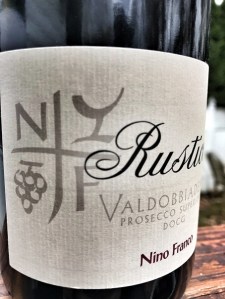
Before I share my tasting notes for Nino Franco Prosecco Rustico Valdobbiadene Superiore DOCG (11% ABV, SRP $19.00, 100% Glera), I want to mention that there are two occasions to celebrate as it relates to this wine. One is more general – it is the 100th anniversary of the Nino Franco wine company, a great achievement in itself. The second one is directly related to the wine, and it is even more impressive – Nino Franco Prosecco Rustico became the wine #1 on the Wine Enthusiast Top 100 wines of the year 2019. Wine Enthusiast folks review tens of thousands of wines every year – to snatch the top position of the 100 most impressive wines of the year is not an easy fit and serious accomplishment.
How was the wine? Upon opening and pouring into the glass, the wine first filled the glass (I was using standard Riedel wine glass, not the flute) with a foam – not just a little “hat”, but almost a full glass of foam. The nose had very expressive aromatics of apple, peach, and guava. The palate was fresh and crisp, with more of the apple notes, tiny bubbles, and good acidity. All-around a good Prosecco, definitely more voluptuous and assertive than many. (Drinkability: 7+/8-).
Okay, now it is the Barbera time. Barbera is one of the well known Italian grapes primarily growing in Piedmont. Barbera d’Asti or Barbera del Monferrato would be a perfect accompaniment for a pizza, but the Barbera we are talking about today hails from … Lodi in California.
I never get tired of expressing my love and admiration of the Lodi wine region in California. Lodi is uniquely un-Napa in most everything – from the winemaker attitudes and low-key wineries to the focus on the Mediterranean grape varieties. Lodi is often considered to be a land of Zinfandel, but truth be told, Tempranillo, Syrah, Sangiovese, Cinsault, Carignan, Albarino, Grenache Blanc are really running the show there. And Barbera, let’s not forget Barbera.
Barbera wines are clearly outshined in Piedmont by the famous siblings, Barolo and Barbaresco, both produced out of Nebbiolo grape. I was unable to find the fresher set of data, but at the beginning of the 21st century, Barbera was the third most planted grape in Italy after Sangiovese and Montepulciano. Barbera grapes are naturally high in acidity, and it is acidity which often needs to be tamed when it comes to Barbera wines. Compared with the finicky Nebbiolo, Barbera does quite well in the new areas, so over the past 30 years, it spread through Australia, Argentina, California, Israel, Texas and other places where this grape was never known before.


Starting from 1860, the land where Oak Farm Vineyards is located was simply a farm in the Lodi region of California where the cattle were raised. In 2012, Dan Panella, third-generation California farmer, replanted 60 acres of the old vineyard on the property, and this was the beginning of the modern history of the Oak Farm Vineyards. There is a wide range of wines produced at the winery starting from California staples Chardonnay, Sauvignon Blanc, Cabernet Sauvignon, and Zinfandel to the hardcore Italian range of Fiano, Barbera, Primitivo, and Sangiovese.
It is 2017 Oak Farm Vineyards Barbera Lodi California (15% ABV, $25, mostly Barbera with a small percentage of Petite Sirah for color and structure, 20 months in French, American, and Caucus (24% new) oak barrels) that we are talking about today. In a word, the wine was superb – dark garnet color, intense nose of cherries and tobacco, and mind-boggling concentration and interplay of flavor in every sip – cherries, tar, tobacco, roasted meat, perfect balancing acidity and 100% delicious wine. (Drinkability: 8). I would greatly drink this wine again at any time – with or without the food.
Oh, I guess I promised you some pizza. Yes, there was cheese and bacon/mushroom/onion pizzas. I have to say that prosecco was rather ambivalent to either, but Barbera worked quite well with the combination pizza.
There you have it, my friends. Italy meets California and vice versa, in many ways. But the important part is two delicious wines which you should find and experience for yourself. Cheers!
Beaujolais Nouveau Est Arrivé! 2019 Edition
Traditions, Traditions, Traditions.
I’m not sure how much I care about Beaujolais Nouveau at this point, but – I need to keep the traditions. I’m not talking about the tradition of the Beaujolais Nouveau, an annual celebration of a new vintage in Beaujolais – this tradition has a life of its own and surely doesn’t care if I will uphold it or not. I’m now talking about the tradition of this very blog, where I didn’t skip writing about a single Beaujolais Nouveau release since this blog started (proof is here), hence this post is unavoidable. I’m all about traditions, and 2019 will not be an exception.
Every third Thursday in November is celebrated as a Beaujolais Nouveau Day. What was the local French phenomenon for a very long time, celebrating the end of the harvest with a young and simple wine, became an international movement, largely due to the efforts of Georges Duboeuf, French negociant. In France alone there are more than 120 celebrations related to the Beaujolais Nouveau. The most famous festival, called Les Sarmentelles, is held in the town of Beaujeu, the capital of the Beaujolais region. The festival starts one day before the third Thursday and lasts for 5 days.
Beaujolais Nouveau wine has its share of controversy. Many professionals and consumers alike dismiss the Beaujolais Nouveau wine as a gimmick, simply a marketing plot to sell something which is not supposed to be sold. I wouldn’t say that I’m buying the Beaujolais Nouveau wines by the case, but they are as mysterious as any other unopened bottle, and having a tradition in place helps undecisive wine geek at least to know what he will be drinking around third Thursday every November.

How were the 2019 Beaujolais Nouveau wines? Let me offer you my tasting notes:
2019 Henry Fessy Beaujolais-Villages Nouveau Vieilles Vignes (13.5% ABV, $12.99)
Dark ruby color
A hint of fresh raspberries, sage, lavender, more reminiscent of a regular Beaujolais
You can clearly perceive a young wine on the palate, but it doesn’t have characteristic Nouveau grapiness – zesty raspberries, crushed rock, nice herbal component, clean acidity, medium-plus finish
8-, an excellent effort – at this point, this is simply a young wine, not “just another Nouveau”. I bet this wine will age well past recommended 5 months. It would be interesting to taste it again in 3-4 years. And if this is any indication of the quality of the 2019 vintage, this is the one to look forward to.
2019 Georges Buboeuf Beaujolais Nouveau (13% ABV, $9.99)
Garnet color
Upon opening, the nose had the characteristic Nouveau freshly crushed berry medley, but after an hour or so, it morphed into a raspberry jam, a well-made raspberry jam
Ripe raspberries, good minerality, sage, a hint of eucalyptus, good acidity, good finish
8- after an hour of breathing in the open bottle, another perfectly drinkable wine which has little in common with Beaujolais Nouveau as it used to be
Color me impressed. I say every year that I’m impressed with the quality, and that the quality of Beaujolais Nouveau keeps improving. Yet I have to say again that this was the best Beaujolais Nouveau I ever tasted. Is that the 2019 vintage? Is that just global warming? Is that winemaker’s capability to arrive at better and better grapes before the crush? I don’t know – and if you do, please share your opinion. But first and foremost – try the Beaujolais Nouveau 2019 and say if you are impressed as I am. Cheers!
Wine Discovery Pack
My relatives, a young couple, are getting into the wine. In search of what they like, which they still have to determine, they are starting the process of discovery – taking notes, making records of what they like and don’t like – something which will definitely lead them to the right path.
I wanted to help them, so I decided to create a special wine set, which I called the Discovery Pack – 6 wines which can help the beginners to identify their preferences – yes, it takes a lot more than 6 wines to figure the wine world out, but still, it is a guided start as opposed to the pure trial and error.
While working on putting together a good learning set of wines, I came up with the following criteria to decide on what wines to include:
- The wine should be reasonably priced, so I set the limit at $20 per bottle. Yes, you can find well drinkable wines under $10 – but finding such wines is quite difficult. Yes, I could go higher, but a lot of expensive young wines are simply not drinkable, they need to age, and besides, expensive wines might not be what the young family might be excited about.
- The wines should be mainstream wines – there should be no problems finding these wines anywhere in the US. It doesn’t make sense to offer someone an amazing bottle of wine which will be impossible to find, as the idea is to help with finding the favorites, and then being able to buy the wines again with ease.
- The wines should be representative of their region or styles. It is easily possible to find unique and amazing wines in any price range – however Bobal, Trepat, Teroldego, or Schiava, no matter how tasty, are hard to find and always a hit or miss exercise. Once you are a bona fide wine lover, you do as you pleased, but when you are just learning, missteps might have long term consequences – once someone decides “oh, I don’t like this type of wine”, it might take a very long (if ever) time to reverse that sentiment.
Okay, so the playing field is set. Let’s see how I managed to address my own requirements.
First, I decided that it will be all red wines set. A typical wine lover’s evolution is sweet – red – white – dessert, so red is a good starting point. There is some sort of uniformity between major red grapes, at least texturally – any whites will be all over the place (think of a range of expressions of Sauvignon Blanc: Sancerre – Italy – New Zealand – California – Chile). Red wines are easier to deal with. Secondly, I wanted to offer a trip around the world – not necessarily easy with only 6 bottles, but I tried.


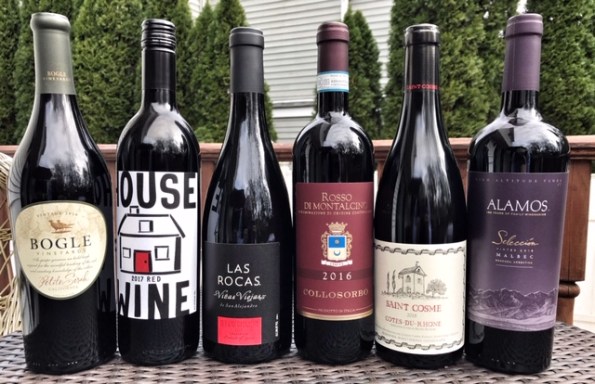
My first selection was the easiest for me – Bogle Vineyards Petite Sirah California ($10-$12). This wine is a solid, you-can’t-go-wrong choice in the $9.99 – $11.99 price range. The recommendation here is not the style or the region so much as the particular wine. It typically has good amount of fruit, nicely restrained and perfectly drinkable upon pulling out the cork. Always a safe choice when in doubt; will work perfectly with a casual Friday dinner or a Saturday BBQ. On a wider scale, California Petitte Sirah is a good grape to be familiar with – yes, you can always find renditions that require long aging, such as Retro or Runquist, but on the other hand, you might get lucky with Turley or Quivira.
Wine #2 is another favorite which first and foremost represents itself – Original House Wine Red Blend ($9.99). The wine is a blend of Cabernet Sauvignon, Merlot, Syrah, Petit Verdot, and other red grapes. In the older days, the wine was designated as Columbia Valley, Washington – now it seems to be saying just “American wine” on the website, however, the back label indicates Walla Walla, Washington. In any case, at around $9.99, this is an excellent wine – supple, fruity, bold – but not overboard. You can build upon this wine as it can be an introduction into the well-made blends, and it can be also a nice introduction into the Washington wines.
Wine #3 – Las Rocas Garnacha Catalayud Spain ($15). If you are familiar with this blog, you could easily predict that Spanish wine will be on the list – but you probably were expecting to see Rioja or Ribera del Duero wine. I went with Garnacha, known outside of Spain as Grenache because, in the under $20 price range, both Rioja and Ribera del Duero are hit and miss. Yes, I can find drinkable examples of Rioja under $20, but there are so many insipid Rioja wines in that price range that it will not do anyone any good. Garnacha is a much safer choice – there is a good level of consistency in this price range. Las Rocas Garnacha is a good example, with a core of red fruit over the medium body. Easy to drink and at around $15, nobody needs to break the bank to enjoy another Monday night. This wine is selected to be more of a representative of style, grape, and the region, so you can continue trying a variety of Garnacha wines, maybe eventually graduating with Alto Moncayo Aquilon or even Clos Erasmus.


Wine #4 – Saint Cosme Cotes du Rhone France ($15). There is absolutely no way France can be left outside of such a discovery portfolio. When it comes to France, the most obvious options are Bordeaux or Burgundy, however, Burgundy just doesn’t exist in under $20 price category, and Bordeaux will be extremely inconsistent. Besides, I wouldn’t recommend Bordeaux and Burgundy to the beginner wine drinkers. However, Cote du Rhone is an entirely different story. Cote du Rhone wines, which are typically a blend of Grenache, Syrah, and Mourvedre (so-called GSM blend) in various proportions, are easy to drink. They are soft, simple, loaded with tasty cherries and plums smothered over medium body. Saint Cosme, which is a very good producer, simply represents the region here. Delas, M. Chapoutier, Guigal, Perrin, and many others offer reliable choices in the same price range. GSM blends can be found everywhere throughout the Rhone, so after you establish your palate with Cote du Rhone wines, you can graduate to Gigondas, Chateauneuf-du-Pape, and then slowly embrace the Northern Rhone.
Wine #5 – Ciacci Collosorbo Rosso di Montalcino Italy ($19.99). The Discovery pack must include Italian wine, isn’t it? Choosing one Italian wine based on the 3 criteria set here is very far from easy. To stay under $20, Chianti, Salice Salentino, Montepulciano represent far better options than most other Italian regions. However, Chianti and Montepulciano can be hit and miss, and with Salice Salentino you will be limited to 1-2 choices your wine store will offer – if you are lucky. The original plan was still to go with Cecchi Chianti Classico, highly recommended by John Fodera – however, the wine didn’t make it into the stock, so I decided to go with the so-called baby Brunello. Rosso di Montalcino as a category is well approachable, offering wines which are unmistakably Italian with all of the cherry, leather, and tobacco notes – and easy to drink while young, without the need to cellar them. I might be bending the rules on this wine just a bit because while I got it at $19.99 here in Stamford, it might be a bit more expensive in many places. Well, it should be possible to find Rosso di Montalcino wines under $20, so we are okay here. And then the Rosso offers a graduation pass to the Brunello di Montalcino, and then maybe a jump to the Super Tuscans.
Wine #6 – Alamos Malbec Selección Mendoza Argentina ($16.99). There were multiple contenders for the last spot in our discovery set – Argentina, Australia, Chile, New Zealand, South Africa. Australia, Chile, and South Africa don’t offer consistency in this price range, and while New Zealand reds can be available under $20, it really doesn’t offer much of the selection. I decided to go with Malbec, as it is usually something most of the beginners can appreciate, with its soft dark fruit and vanilla notes. There is also a level of consistency associated with Argentinian Malbec, and $15 – $20 range allows for the higher quality wines such as this Alamos Malbec Selección or Trapiche Broquel.
Here you go – my 6 wines discovery set. Now, I have a question for you, wine buffs, snobs, and aficionados – what would you offer for the beginner wine drinkers as a learning introduction into the world of wines, also based on the three principals I outlined? Don’t be shy – comment away! Cheers!
Trader Joe’s Wines: Combining Great and Value
 I travel for business (let’s get it straight – I actually like it). One of my small personal pleasures in such travel is exploring the local wine scene if time allows. I always check for the wineries close to my location (if I have a car, sometimes, those wineries don’t even have to be close). If I can’t find wineries, I’m happy to visit local stores, especially when they come with recommendations, as during my recent visit to Texas and discovering the Spec’s wine store.
When it comes to the wine stores, I have one which stands aside. It is not really a wine store, it is a grocery store that also sells wine. I’m not trying to be mysterious here, you already saw it in the title – yes, I’m talking about Trader Joe’s stores. Trader Joe’s stores can be found pretty much everywhere in the USA, and the store which is less than a mile from my house is considered best on the East Coast (you should see the line of cars trying to enter the parking lot Saturday morning, ohh). But – Trader Joe’s in Connecticut only sell beer, so I have to look for Trader Joe’s wines elsewhere, and this is where the travel comes handy.
What so special about Trader Joe’s wines? Glad you asked, as the answer is very simple – QPR, which stands for Quality Price Ratio. While Trader Joe’s sells some wines from the producers you would easily recognize, the absolute majority of the Trader Joe’s wines are so-called “private labels”. Trader Joe’s is working with producers all around the world to find very inexpensive wines, which also happen to be really tasty. I don’t know how it is possible to have consistently good tasting wines in the $4.99 – $9.99 range, but they actually manage to do it. Those wines might not blow your socks off (some might), but the wines are solid, well made, and yes, tasty. Here you can find an account of some of my past Trader Joe’s visits to check it for yourself. – the question “how do they do it” is always paramount in these explorations.
My visit to Trader Joe’s in Reno, Nevada gave me another round of excitement and envy. Magnums of French Blanc de Blancs sparkling wine and Prosecco for … wait for it … $12.99? How do they do it? No, I didn’t taste these two but based on my prior experience with Trader Joe’s wines, I can imagine that these will be decent wines. I can continue this “how do they do it” theme for a long time, as the prices for most of the wines are just mind-boggling. Here is a glimpse of the shelves, see it for yourself:


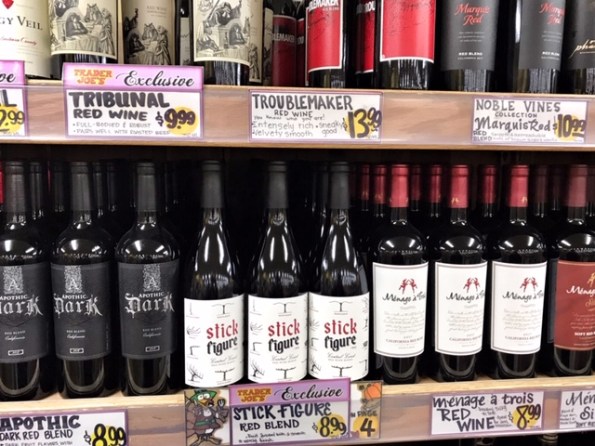

Obvously there is a limit to how many wines I can taste during a short trip, so here is what I do. I set myself a limit, which is practically always at $20, to get as many wines as will attract my attention. I don’t believe I was ever been able to stay within this exact range, but I usually cut it pretty close. First of all, I select the wines by the label, but then I think if I want to try a Portuguese wine or a California wine more. There is no science to my decision process, it is more of a spur of the moment – but having a price limit set helps to make it more organized.
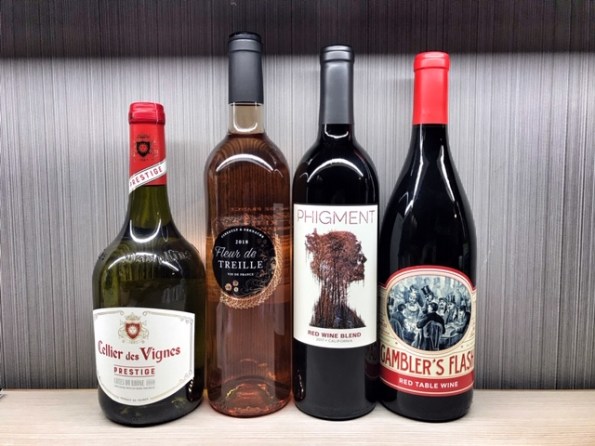
My selection this time consisted of 2 wines from France and 2 wines from Califonia – without having any intent for it to happen this way. I saw two very attractive labels for the California wines, and then Cote du Rhone white wine for $5.99 and French Rosé for $4.99 – there is absolutely no chance those would be good, right? Yes, I blew my budget by $4 to the grand total of $24 for 4 wines – do you expect any of those wines to be any good?
Here is a graphical account of my loot:
And here are the tasting notes:
2017 Phigment Red Wine Blend California (13.5% ABV, $5.99)
Concentrated Ruby
Dark fruit, mint, coffee, a touch of cassis
Fresh crunchy berries, sweet tobacco, baking spices, soft texture, good acidity. Characteristic Lodi touch of cinnamon. Long, pleasant finish.
7+, excellent QPR.
2018 Cellier des Vignes Prestige Côtes DI Rhône AOC (13% ABV, $5.99)
Light golden
Whitestone fruit, a touch of smoke, a hint of pineapple
Clean, fresh, good acidity, a touch of golden delicious apples and white plums, medium finish
8-, excellent, good by itself, should be even better with food
2018 Fleur de Treille Rosé Vin de France (12% ABV, $4.99, 55% Cinsault, 45% Grenache)
Onion peel pink
Strawberries on the nose, nice, clean
Strawberries on the palate, good concentration, good acidity, a nice presence of fruit, nice lemon notes on the finish
8-/8, outstanding QPR, an excellent wine. Really impressive.
NV Gambler’s Flash Red Table Wine Paso Robles ( 13.9% ABV, $6.99, a blend of grapes from 2 vintages)
Dark Garnet, practically black
Serious gunflint, a touch of funk, tart cherries, sage, pleasant
Wow, dark fruit, smoke, touch of coffee, medium-plus body, sweet cherries undertones, perfect balance
8-/8, this is a lot of wine for the money! Great QPR, easy to drink, lots of pleasure, just wow
Definitely an 8 on the second day.


I don’t know how it is possible. 4 out 4 are nicely drinking wines. I would buy either one of them again in the instant – it would be perfect with or without a meal, with a friend and without a friend, these are just good wines at good prices.
Three out of four are a bit of a mystery in terms of grape composition. I would only take a guess on Gambler’s Flash to say that in my opinion, Grenache or Malbec should be a part of the blend – just a guess, don’t think I will ever know if this was correct.
But what I know for sure is that Trader Joe’s did it again – 4 wines, 4 outstanding values, and one happy wine lover.
Have you recently discovered any Trader Joe’s gems on your own? Cheers!
It Might Be Gone Already
Oenophiles are strange creatures. We love wine and derive out of it a tremendous amount of happiness, joy, and pleasure. We are also somewhat of a masochistic type. We like to torture ourselves around our beloved beverage. We can spend a lot of time trying to select a bottle of wine for a Monday night – multiply that by 10 if we are talking even about a casual Friday night. We need to take into account everything – the mood, the weather, who are we sharing the wine with, and on, and on.
One of the biggest problems we are always trying to solve is called “is it the time”. Yes, we know that it is a gamble. There is no science to know when the wine is ready to drink. And as we always like to enjoy the wine at its peak, we can take forever to decide on that right moment. And this is where the danger lurks – instead of getting the wine at its peak, we might be facing the wine which is … gone.
There are two types of special bottles we, oenophiles, get nervous around. There are those which we are trying to age to precisely hit the bullseye, the “oh my god” moment when tasting wine at its peak. The second type are those wines which we call “special”. “Special” is personal – a single bottle which reminds us of a wonderful trip or a moment in life, a special present from a dear friend, a super-rare or a super-expensive bottle we want to hold on to for as long as possible. Sometimes, this can be one and the same bottle which hits both characteristics. For the second type of “special” bottles there is the OTBN – ”Open That Bottle Night”, an event celebrated on the last Saturday in February, invented to help people to part with those special bottles. For the bottles we are waiting to become perfect… well, it might be the same OTBN, or maybe we just need to convince ourselves that “the time is now”.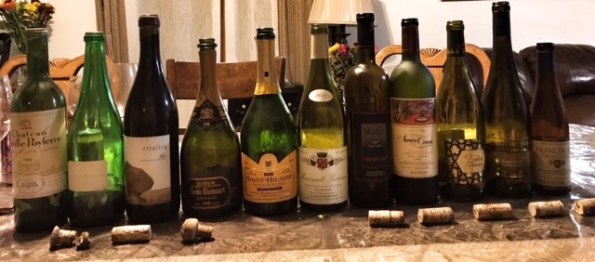
This is what we decided to do, setting the theme for our wine dinner as “It might be gone already”. Usually, we set the rules for our tastings – what wines, what regions, what price ranges, etc. But for this dinner there were no rules – whatever anyone wants to have open, whatever the reason is to believe that the wine might be past prime (or not) – everything goes.
We managed to assemble a lot more wines than we were able to drink, so many of the wonderful bottles will have to wait until the next occasion. However, we still did great, finding lots of great surprises and enjoying the program very much. Here is my account of our tasting.


We started from a very simple wine – 2007 Saint-Hilaire Brut Blanquette de Limoux, a sparkling wine from the Languedoc, from the winery which claims that they were the first to make the Methodé Traditionelle wines, before Champagne ever saw a first bubble in the bottle. This is one of my most favorite sparkling wines – it is inexpensive ($12.99 or so), and tasty. But – 12 years old? That sounds like a little much for a wine like that. Nevertheless, it was perfect – still fresh, still a good amount of bubbles, a touch of yeast – a perfect start for our evening.
We continued our bubbly explorations with something of a truly next level – 1990 Dom Ruinart Ruinart Blanc de Blancs Champagne. Another perfect encounter – crisp, focused, a good amount of yeast and toasted bread – an outstanding vintage Champagne without a sign of age.


Italy is better known in the world as the source of great red wines. However, Italian whites shouldn’t be ignored. Jermann makes some of the very best Italian white wines, and these wines are unquestionably a world class. Vintage Tunina is a flagship wine, made out of a field blend of Sauvignon, Chardonnay, Ribolla Gialla, Malvasia, and a small percentage of a local sweet grape. According to the notes on the Jermann website, Vintage Tunina can age for 7–8 years, 10 in the exceptional vintages. This 2006 Jermann Vintage Tunina Venezia Giulia IGT was 13 years old, and in a word, it was superb. Bright, vibrant, whitestone fruit and a touch of honey, medium+ body – an outstanding wine.
Our next white was 2007 Château St Jean Chardonnay Reserve Sonoma County – it was not as impressive as Vintage Tunina, but still was not over the hill, with a good amount of white apple, a touch of butter, and good acidity. I never had this wine before, and understand from the people who did that the wine was starting its journey down the hill, but it was still quite enjoyable.


I was trying to convince my friends that our next wine was not ready to be opened – 2011 Antica Terra Erratica Rosé from Oregon. I had 2010 last year, and the wine was mind-blowing (ended up being wine #2 on my Top Wines list of 2018). After being ostracized – “what are you talking about, it is 8 years old Rosé ?!?!” – I angrily pulled out the cork. 2011 was equally mind-blowing to the last year’s 2010. Pungent, lip-smacking, full of smoky cranberries and herbs, medium body – delicious. I don’t know for how long this wine can age, but I would definitely love to see it with at least another 5 years of age. Oh well…
Now, we are reaching practically a culmination point of the evening – 1966 Château Leoville Poyferré St. Julien. Well, it was conditionally the culmination point – when I received this bottle 2 years ago, the capsule showed a significant amount of wine stain, which is an indication of the wine potentially slowly sipping through the cork. But – it was 1966, so that alone deserves the utmost respect.
As we expected, the wine was past its prime. It had dark brown color in the glass – a color you expect to see on a well-aged tawny port, but not on Bordeaux at any age. The wine had the tasting profile of a nice hearty stew, but again, not the Bordeaux. To be entirely honest, I enjoyed a few sips of it (my friends refused it almost instantly), but this was definitely not the wine anyone should drink.


I’m not going in the right order, but let’s talk about maybe the biggest disappointment of the evening – 2010 Yves Boyer-Martinot Meursault-Perrier. 9 years old white Burgundy should be way too young to drink. But then the Meursault wines have a known issue – Premature Oxidation, or PremOx as it is often abbreviated. Fear of PremOx was a driving factor behind the decision to open this wine. Unfortunately, the fear was justified – kind of. The wine was not oxidized – but it was literally undrinkable. It showed a little sign of life at first, and we decided to decant it – however, it didn’t help. The wine showed very tired, some stewed plums, no vibrancy of any kind. Definitely not a good surprise.
Let’s get back to the red wines. Our next wine was 1978 Barbera. The label lost practically all of its color, so I don’t know who was the producer. But the bottle had been very important memorabilia – at the age of 9, our friend Stefano was helping to bottle that exact wine, so it clearly had a special meaning. The wine was still drinkable, had good acidity and some dark fruit. Not amazing, but well drinkable.


The next two red wines aptly compensated for all the misgivings of our tasting. 1997 Shafer Firebreak Napa Valley, a blend of Sangiovese and Cabernet Sauvignon, was excellent. The core of the dark fruit and espresso, firm structure, excellent balance, the wine was alive and delicious. It is a pity that this wine is not produced anymore, as Shafer replaced all the plantings of Sangiovese with the other grapes – this was definitely a delicious wine.
And maybe for the biggest surprise of the evening, let me present to you 1995 Navarro Correas Coleccion Privada Cabernet Sauvignon Mendoza. What, you never heard of this wine? Me too! Until our tasting that is. When originally acquired, the wine price was something under $10. So who would expect that 24 years old simple Argentinian Cab would age so beautifully? The wine was fresh, no sign of age, tart cherries on the nose, the same tart cherries, herbs and a touch of sweet oak on the palate – the wine was going and going. A tasty, totally unexpected, surprise.
We had to finish this tasting with a dessert wine, didn’t we? 1988 Franciscan Estate Johannisberg Riesling Napa Valley, as rare and precious as you can find, as this wine is simply not produced anymore. This wine was definitely at its peak – beautiful figs, honey, and a perfect dose of acidity – an excellent finish to our great tasting.
Let’s try to summarize our tasting. Out of 11 wines, 6 can be safely designated as an “amazing experience”. Three wines were “good”. Two wines were a flap. I would take it as a very respectful, and very successful outcome – I’m sure you can think of a lot more tastings with a much lesser degree of success and enjoyment.
Here you are, my friends. Feel free to copy the idea – if you have anything reminiscent of a cellar, I’m sure you got the bottles that might benefit from being open. Open now, before it is too late. Cheers!
Want To Learn More About German Wines? Join Snooth Virtual Tasting Tonight

Ripe Riesling Grapes, as captured in Wikipedia
Do you like German wines? I’m sure you do, even if secretly or unbeknownst to oneself, as Germany is one of the oldest producers of some of the most delicious wines in the world.
Tonight, November 13, 2019, at 8:30 PM US Eastern time, you have an opportunity to learn about or expand your wine knowledge by joining virtual tasting on Snooth, called German Wines To Be Thankful For:
http://www.snooth.com/virtual-tasting/video/german-wines-to-be-thankful-for/
You can also follow German Wines USA on Twitter and Instagram:
Last Bottle Sign Up ($10 credit)




 Talk-A-Vino