A Bit of Everything for Sunday – Wine Review, a Fun Video and Wine Infographics
It is Sunday, and I have rather a hodge-podge mix for you here. I have a few things a wanted to share, and while they are all not connected (or may be they are), I think it all make sense in the format of Sunday time. Here we go.
The first one belongs to the Daily Glass category, which is intended for the simple daily wines I drink, well, daily – and I’m always looking for value. This time, the search for value lead me to Kirkland Signature Médoc.
 I love value wines. Of course we can remove the word “value” from the previous sentence – yes, I’m an oenophile, also often known as a wine snob. At the same time, I think the word “value” is important. “Value wine” means you get disproportional amount of pleasure compare to the amount of money you invest into that bottle of wine. A €1.29 Portuguese red and white are ultimate examples of the value wines. Trader Joe’s carries a lot of outstanding value wines at $5.99 or less. I remember amazing Montepulciano wines at $5 per bottle I was buying by the caseload. Well, La Rioja Alta Vina Ardanza at $30 will also perfectly fit the bill, but this is the whole other story. Okay, I’m sure you got my point.
So here comes Costco. Value is a whole premise of huge warehousing operation of Costco’s chain, and of course it extends into the wines. To deliver ultimate value (supposedly, at least), Costco even has its own brand, called Kirkland.
When I visit Costco which has a wine section (not all the warehouses have it – the one I usually go to does not), I always have to explore it. And yes, I’m looking for value. This time around, I decided to extend my quest for value to the ultimate heights, and got a bottle of Kirkland Signature Médoc, which I found for $8.99 at Costco in Massachussets.
Médoc wine for $8.99? How good can that be? Finding palatable wines from Bordeaux (not even talking about good wines) at that price is mostly a mission impossible. And this wine is not even designated as a whole Bordeaux, it is Médoc AOC, which theoretically means the grapes should be better- but again, at under $10? Well, let’s see if Costco can actually do it.
2011 Kirkland Signature Médoc AOC (13.5 ABV, $8.99, 70% Cabernet Sauvignon, 30% Merlot) had dark garnet red color in the glass. The nose didn’t exhibit much of the fruit. On the palate, there was a hint of raspberries, and may be a whiff of tobacco, otherwise the wine was rather flat, lacking the mid palate weight and substance. Drinkability: 6. This was the wine without sense of place – you know you are drinking wine, but otherwise it completely fails to solicit an emotional response. Was that the worst wine I ever had? No. Was that the wine I would recommend to someone? No. Was that the wine I would ever buy again? No. Can you buy this wine if you must have Bordeaux on the table? Yes. Would that wine benefit from aging or aggressive decanting? Maybe, but we will need to establish it first. Is it possible that you actually might like this wine? Of course! And I would love to hear from you if you do.
Next up – the Holiday Dinner Party video. No, this is not the wine video, but instead, it is a great video dedicated to all of you cooks out there. This was sent to me by a friend, an avid cook herself (if the recipe doesn’t require at least a stick of butter, she is not making it). With the holidays, and all the festivities, friends and families getting together, I’m sure all of you can relate to what you are about to hear. But enough words – here is the video:
And last, but not least for today – the wine infographics. I’m an information junkie, and I love processing of the lists of all sorts. Continuing the theme of value wines, below is a very interesting infographics presenting 10 great wines for $10. Well, yes, “great” is a very personal characteristic, but it is always fun to align the opinions and see what the other person thinks – definitely a fun for me. To be honest, I don’t remember tasting any of the wines below. So please take a look, and of course, comment away – I’m very curious about your opinion.

That’s all I have for you for today! Enjoy the rest of your weekend and cheers!
Weekly Wine Quiz #84: Grape Trivia – Barbera
 The Wine Quiz series is not meant to intimidate. The whole idea here is to have fun and learn something new. When answering the questions, it is fully encouraged to use all available sources of information, including Google or any other search engine. There are no embarrassing answers – the most embarrassing thing is not giving it a try…
Welcome to the weekend and your new wine quiz!
We are continuing our grape trivia series, with the focus again on the red grapes, and today’s subject is Barbera.
It is interesting to see the level of difference in the available information for different grapes, especially when it comes to the historical data (not that it is unexpected). When it comes to the grape such as Cabernet Sauvignon, absolute majority of the different sources converge on the 17th century as the time when Cabernet Sauvignon become known as the particular grape. When it comes to Barbera, the range of opinion is rather stunning – some sources say that Barbera was mentioned for the first time only in 18th century, some say it was 13th, and some of them put it even back to the 7th. Therefore, I can’t tell you when Barbera first became known as a grape, but as a fun fact, do you know that Barbera is 3rd most planted grape in Italy, after Sangiovese and Montepulciano? Today, there are about 70,000 acres of Barbera planted throughout the Italy
Barbera is one of the main grapes in Piedmont, where it is often planted right next to its noble neighbour, Nebbiolo. Typically Nebbiolo takes over the best spots on the hills, and Barbera is planted right under. Some of the best Barbera wines are produced in Asti, Alba and Monferrato areas in Piedmont, with Barbera d’Asti and Barbera del Monferrato having the DOCG status (highest quality standing in Italian wine classification). Of course Barbera is planted in many other regions in Italy, such as Lombardy, Emilia-Romagna and others. Barbera spread out all over the world with Italian immigrants, nowadays planted in Australia, United States (California, Texas and others), Argentina, Brazil, Israel and other countries.
Barbera grapes have dark thin skin. Barbera has a well known tendency for overproduction, so the plantings have to be controlled to achieve higher quality of the wines. Barbera typically has high level of acidity and low tannins, which makes winemaking somewhat challenging to produce wines which will be able to age well – of course ageing in the oak barrels helps with that. One of the well known characteristics of Barbera wines is intense berries aroma, and the wines typically have a medium body, at least in the classical Italian versions ( some of the New World Barberas can be quite bombastic). Barbera wines are generally food friendly with their inherent acidity, and they complement quite well a wide range of traditional Italian dishes.
And now, to the quiz!
Q1: Based on the latest DNA analysis, which well known Spanish grape appears to be a close relative of Barbera?
Q2: What well-known grape became popular blending partner of Barbera as of late?
Q3: The new technique was introduced in making the wines out of Barbera in the second half of the 20th century, which helped to improved the quality of the wines. Which one do you think it was:
a. Malolactic fermentation
b. Fermentation and aging in the small oak casks
c. Carbonic maceration
d. Reverse osmosis
Q4: Wine Spectator calls wines rated in 95-100 range Classic (the highest and the most prestigious category). True or False: there are no Barbera-based wines rated in the Classic category
Q5: Fill in the blanks: Barbera typically ripens two weeks later than _____, but at the same time it is two weeks earlier than ____.
Good luck, enjoy the quiz and your weekend! Cheers!
Style and Substance – Rouge Brasserie & Oyster Bar in Greenwich, CT
Before you get to this post, just a little word of caution – if you are hungry, can I ask you to go eat first? Please?
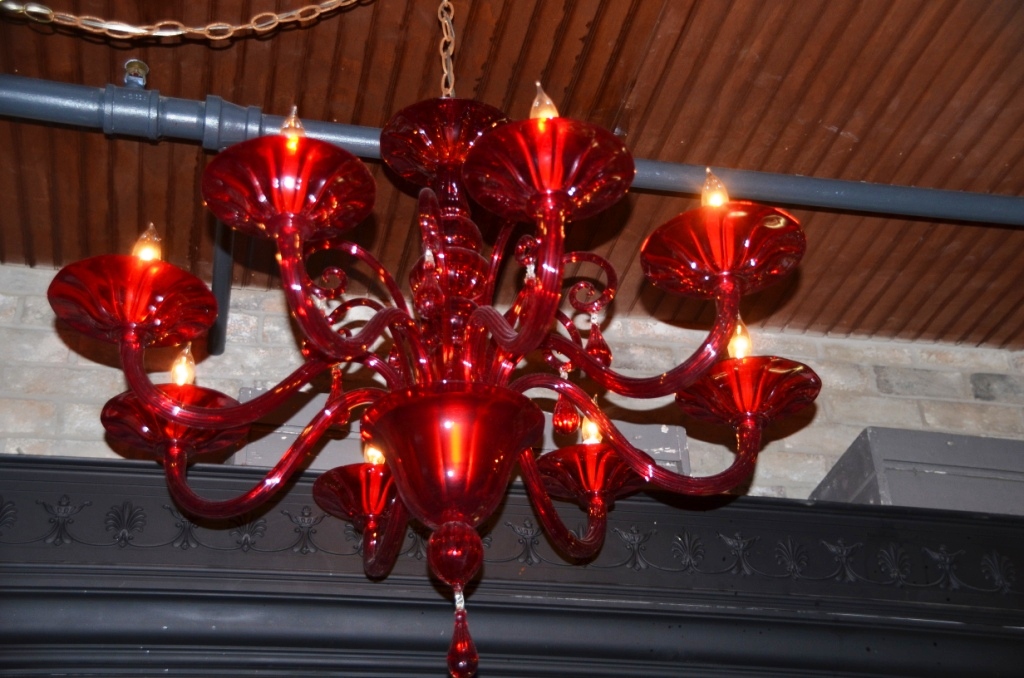
Let me ask you a question: when it comes to the restaurants, how often can you recall the exact decor of the restaurant? Well, let me be careful with this – of course this question is intended for the foodies and not for the interior design majors. We typically remember great food and wine experiences (yes, extremely bad experiences get stuck in the head too – I still remember the worst spaghetti in my life in the little restaurant by the Lake George). Sometimes the exceptional service is also staying with you. But I would bet that decor for the most cases would be the last thing you would remember, especially if you visit the restaurant only once. But then there are exceptions. I still remember old Tavern on the Green, with all its imperial embellishments, or the wonderful Belgium restaurant we visited on Aruba, called Le Dome, which had 4 different dining rooms, each decorated in its own unique style. Why am I asking all the questions about remembering the decor? Please read on, you will see in a second.
Okay, so the goal of this post is not to take you on the memory lane, but to share our recent dining experience at the new restaurant in Greenwich, Connecticut called Rouge Brasserie & Oyster Bar. We happened to come in a bit before our dining companions, so I had a little bit of time to walk around. The unique decor and variety of styles within somewhat of a limited space were strikingly different from most of the places I’d been to. The way the different sections were appointed were going from country French to cozy corner to the Royal French – all tastefully decorated and oh so different. Yes, as usual, I plan to inundate you with pictures, so take a look:


As it almost became customary, we started our evening at the bar. While the list of cocktails at Rouge is not too long, everything we had was very well made and very refreshing. Brigitte Bardot (cognac, fresh Lemon, sugar, raspberries and champagne) and Broken Heart Margarita (tequila, elderflower liquor, fresh sour, cointreau, raspberry grape & pink peppercorn) were both done just right, not too sweet (I’m really not a big fun of the sweet cocktails), withgood amount of alcohol, but very balanced at the same time. And it was just fun sitting by the shiny, well lit bar and watch Kelly compose the tasty concoctions.
Before we talk about food, I need to say a few words about the wine. I didn’t get a chance to see the wine list, so obviously I can’t comment on it – but during the evening, we were drinking two wines which were both, shall I say it, surprisingly outstanding. Our white wine was 2012 Domaine Saint-Lannes Côtes de Gascogne IGP (80% French Colombard, 20% Gros Manseng) – perfect nose of the bright white fruit, very inviting, light and round on the palate, with white apples, touch of lemon, dry and refreshingly crisp, excellent balance (Drinkability: 8). May be the fact that the white wine was good was not all that surprising, but for the red… Our red wine was 2010 Chateau Gobert Bordeaux AOC. Can you point to the “surprising” part just based on the name? I remember when I was just starting with wine, which was a bit more than 10 years ago, the year 2000 was declared the “Vintage of the Century” in Bordeaux, and I decided to try those best wines, buying Bordeaux AOC wines for $7 in the discount supermarket in New Jersey. When I tried to drink those wines, which were green, branch-chewy and plain harsh, for the life of me I couldn’t understand how that can be a great wine (of course I would never admit it in public). As I was learning about the wines, and especially listening to the Kevin Zraly’s explanations about circles of quality, I realized that basic Bordeaux, sourced from the grapes from the whole region, in general is something to avoid. Now, at the dinner, the red wine was poured (I didn’t see the label), and my first impression was “wow, this is very nice” – soft dark fruit on the nose, quite fruit forward on the palate, but without much exuberance or going over the top – some plums, ripe raspberries, touch of green bell pepper in the back, soft tannins, nice acidity, overall very balanced (Drinkability: 8-). When I saw the label, my first reaction was “Really?” – for a few seconds, I couldn’t believe this was actually a basic Bordeaux red wine. I will have to start paying attention to the Bordeaux AOC wines again, as this was one eye opening experience. And I want to complement whomever selected these wines for the restaurant – great choice!


Okay, time to talk about the food! In a word, we were treated royally at the Rouge – it was literally no holds barred type of dinner – everything you can think of was on the table – the caviar, the oysters, the lobster, and lots more.
First, our bread arrived in the form of tiny, but ohh so tasty baguettes, accompanies by the butter, fresh young radishes and cornichons:


From our appetizer course, the very first dish was Fish Eggs and Chips (house made potato chips, Crème fraîche) – as you can see from the name, it was a play on “Fish and Chips”, only instead of the actual fish we had something which could’ve become a fish – both black and red caviar was sprinkled over the house made potato chips:


I understand the word play here, and the dish overall was interesting – but I would probably use something more neutral as a medium instead of potato chips – some kind of white bread crackers or even crispy water crackers would play better with the saltiness of the caviar. But again, I can’t complain about the caviar as a starter – not at all.
When you start with the caviar, what is the next thing you should expect? The best selection of the fresh seafood, of course. And the best it was! Plateux De Fruits De Mer had fresh oysters, fresh clams, lobster tails and claws, and prawns, accompanies by the trio of sauces (shrimp cocktails, mayo with herbs and onion/vinegar for the oysters). Fresh and immaculate, one of the best seafood platters I ever had. I’m generally not a big fun of fresh clams – and these were delicious.


Seafood platters can be served in different types of restaurants, but nobody would argue that with Escargots Bourguignon (shallot parsley butter) we are getting into the real French traditional cooking. The escargot were excellent, succulent and satisfying. My only complaint was that I would serve the escargot separately from the toast, as the toast was completely soaked in butter in and out, but then I heard a number of people praising that exact butter-soaked toast. Anyway, this was definitely a delicious appetizer.


From French Classic to the French Classic – our next dish was Classic Steak Tartare (hand cut prime filet with charred country toast) – I tried steak tartare in Paris for the first time, and while I was scared with the plate put in front of me (raw ground beef was glaring at me, asking “will you dare put me in your mouth”), once that raw ground beef was mixed with all the condiments, it became one of my favorite dishes of the French cuisine. In our case, the steak was already premixed, so all we had to do was to put it on the toast and enjoy – which is exactly what we did! It was very tasty.


Our last appetizer was Warm Onion Tart (tomato confit & nicoise olives) – if you look at the size of that thing, it was literally the whole pizza! It turns out that the restaurant inherited a real pizza oven from one of the restaurants located before in the same space, so they definitely took a full advantage of that. That tart was delicious, withcrispy crust, and mild bitterness of arugula perfectly complementing sweetness of the onion. Great dish!


This was the end of our appetizer round, and while we were quite well fed already, the best was yet to come.
Our entrees included:
Skate Meuniere (parsley new potatoes, lemon brown butter) – outstanding, perfectly cooked fish, very meaty, nice lemony bite, without any fish aftertaste (you know, like the one you get sometimes from tilapia or catfish). This dish made many of us wonder why we don’t eat skate more often.
Moules Frites (white wine, garlic & fine herbs) – may be the best mussels ever. The sauce was soooo tasty, we had to request [lots of] additional bread. Simply delicious. Mussles were also served with very tasty french fries.
Short Rib Bourguignon (red wine sauce with pearl onions & truffled potatoes) – is there any other food in this world which spells “comfort” better than the slow cooked meat? Probably not. We were really full at this point, but nobody could resist that voluptuous (interesting word to describe the cooked meat, huh?), succulent meat. Sauce was exceptional, just perfectly savory without any unnecessary sweetness. Great finish to our wonderful meal.
Well, of course there was a dessert – luckily a small one, but super tasty! Chocolate French Custard was just perfect, not too sweet, with the very light and fluffy texture. And by the way, while we were at dessert, I learned something new! It appears that when you eat dessert (at least the one like this custard), you are supposed to turn the spoon upside down in your mouth, so the tongue with all its tastebuds will get in contact with the food, and not with the back of the spoon. I had no idea!


Last, but not least at all, we had a chance to talk to and express our heartfelt Thanks to the Executive Chef Josh Moulton, the mastermind behind this exceptional experience, Diego, our Maître D’, and Fabiana, the designer who created all that exceptional style I described at the beginning of this post.


If you will have an opportunity, I definitely recommend that you will ignore all my writing and go experience Rouge on your own. For those who are too far away, sorry, but you will have to take my word for it – this was definitely an outstanding meal, with great style and substance. Cheers!
Disclaimer: I attended the restaurant as a guest of management. All opinions are my own.
Rouge Brasserie & Oyster Bar
230 Mill Street
Greenwich, CT 06830
Phone: (203) 813-3555

Month in Wines (and Whiskeys and …) – November 2013
 It is time to summarize yet another month in wines. This month, I decided to extend this summary to whiskeys and beyond, as I managed to make a number of very interesting discoveries.
Talking about wines, there were two clear standouts – Pinot Noir from South Africa and white Burgundy, but generally, there were quite a few good wines. Here we go:
2010 Clos du Val Cabernet Sauvignon Napa Valley (13.5% ABV) – nice round fruit, good acidity, hint of cassis on the nose and palate, soft tannins, light and balanced. 8-
2009 Chamonix Pinot Noir Reserve Franschhoek South Africa (13.5% ABV) – phenomenal. Muscular, powerful, intimidating – it attacks you with the dark smoky fruit right from the first sniff. An extremely pronounced gunflint, which has an effect of the light on the moth – you just can’t stop smelling this wine. Dark power on the palate, intense, dense, structured, full bodied and shameless. 9-
2008 Basel Cellars Merriment Estate Red Wine Pheasant Run Vineyard Walla Walla Washington (14.57% ABV) – Nice Bordeaux-style blend. Lots of depth, dark fruit, firm structure, good acidity and balance overall. 8-
2007 Mount Palomar Charbono Temecula Valley, California (13.2% ABV) – Mount Palomar is one of my all times favorite producer from the Temecula Valley. This wine was probably at it’s peak. Perfect nose of ripe raspberries. Raspberries and blueberries on the palate, dark chocolate, medium to full body, overall welcoming and heart-warming. Perfect. 8+
2011 Siduri Pinot Noir Sonoma County (13% ABV) – nice and clean. Beautiful nose of light cherries with a touch of herbal notes, a sage profile. Light, perfectly integrated fruit on the palate – fresh cranberries and tart cherries, nice underpinning of a touch of mint and sage. Easy to drink and delightful. 8
2010 Cala de Poet Maremma Toscana IGT, Italy – total surprise from Trader Joe’s considering the price of $5.99. Dark plums and herbs on the nose, tart raspberries, eucalyptus and dark chocolate on the palate, firm structure and nice tannins, very balanced. 8-
2012 Cecilia Beretta Brut Millesimato Prosecco Superiore Coneglian Valdobbiadene DOCG, Italy (11% ABV) – another surprise from Trader Joe’s – tiny refreshing bubbles, notes of fresh apple on the nose, round and roll-of-your-tongue on the palate with more of the fresh apple and yeast notes. Excelllent sparkling wine (and a great value at $9.99). 8-
2013 Georges Duboeuf Beaujolais Nouveau (12% ABV) – Georges Duboeuf Beaujolais Nouveau literally gets better and better every year. Young, fresh and inviting on the nose, with lots of juicy cherries. Very concentrated on the palate, with good, tightly knit, firm body, fruit and acidity fully in check, excellent balance. 8-
2004 Jade Mountain Syrah Napa Valley (14.6% ABV) – this was a total surprise. It was my last bottle from the case, and couple of the previous bottles were hinting that they are getting past prime. When I saw this bottle (unexpectedly) on the wine cabinet’s shelf, the first thought was “oops”. The first sniff and the first sip immediately proved me wrong. Fresh, dark fruit on the nose, same on the palate – nice, round, supple blackberries, dark chocolate, touch of espresso, full body, integrated tannins, overall excellent balance. Now I wish I had more left. 8
2003 Neyers Cabernet Sauvignon Neyres Ranch – Conn Valley Napa Valley (14.5% ABV) – one of my favorite cabernet Sauvignon wines. A classic, cassis nose with a touch of bell peppers. Dark fruit on the palate, more cassis with some blackberries, round, warm and supple. Full body, acidity and tannins are in check. Excellent balance. 8
2006 Clos Pepe Estate Pinot Noir Sta. Rita Hills, California (14.5% ABV) – Dark garnet color, nice touch of smoke on the nose, cherries. Classic California Pinot Noir. Fresh cherries on the palate, medium to full body, round tannins and acidity. Drinkability: 8
2005 Domaine Laleure-Piot Pernand-Vergelesses AOC, Burgundy (13% ABV) – I have no idea how this bottle ended up in my cellar. I also had no expectations, as previously I had bad luck with older white Burgundies. Boy, what a treat this wine was! Pale yellow in the glass, hint of an apple and gunflint on the nose. Touch of vanilla and more fresh apples on the palate, round, inviting, effervescent but perfectly present. Delicious! 8+
Whew, done with wines!
Regarding the whiskeys – I already had a separate post about them, but I want to specifically include them here:
Catskill Distilling Company Wicked White Whiskey – this is six-grain (corn, wheat, buckwheat, rye, smoked corn, malt), un-aged whiskey. Absolutely spectacular nose and flavor – complete impression of delicate single-grape grappa with round sweet fruit and all around delicious. You have to taste it to believe it.
Catskill Distilling Company Most Righteous Bourbon (70% corn, 20% rye, and 10% malt) – round, clean, caramel, butterscotch, all perfectly balanced together. One of the best bourbons I ever tasted.
Catskill Distilling Company One and only Buckwheat (80% buckwheat, 20% small grains) – unique and different. Nose is absolutely unusual, reminiscent of sun flower oil. Viscous, roll-of-your-tongue delicious concoction. Great complexity, another drink you have to taste to believe it.

Last but not least – Gin! Yes, I know – if you ask an audience of 10 “who likes Gin”, you might be lucky if you will get one enthusiastic “yes”. However, this Gin was truly something else.
Caledonia Spirits Barr Hill Gin, locally produced in Vermont, made out of Juniper berries and honey – absolutely spectacular on the nose and the palate, with the refreshing scent of juniper berries and a touch of honey sweetness. Perfect balance. Ability to convert people – two of the gin haters became gin lovers after they tasted this nectar. If you will have an opportunity – find it and taste it for yourself, and let me know if you will become a convert too.
And we are done here. If you tasted any of the wines and spirits I mentioned – don’t be shy, and comment away. And just as a feature preview, the next up in the “best wines” posts is my personal Top Dozen wines of 2013. Don’t miss it… Cheers!
Overwhelmed…
Tua Rita Redigaffi 2009
I don’t know how this works for you, but sometimes (lots more often than I want to) I find it very difficult for blogging to keep up with the life. Once you are bitten by the blogging bug, even the routine experiences always raise the question in your mind – “does it worth a blog post”. And the answer is often “yes” (it is your personal blog after all, your life’s journal). But from the “yes” answer to the blog post your happy with, there is a thorny road, filled with sudden and unexpected traps, gaps, and changes of directions – the thing called “life”. Life gets in the way, and the unwritten posts become the heavy load, as pleasant as a toothache, drilling your brain with similar persistence “and remember, you still didn’t write that blog post… Yeah… What is wrong with you, huh? Come on already”.
As you might be able to deduce from this lengthy prelude, this blog post will be one of those, supposed to be written a while ago, but coming to life only now. Well, I still think it still has a merit, but you tell me.
At the beginning of September, I was lucky enough to attend 4 trade wine tastings in the row. The trade tastings are conducted by the wholesalers and distributors for the wine trade – retailers and restaurateurs – to introduce new wines coming to the market. These trade tastings are very large in size – they might consist of 100 tables, each table featuring 6-10 different wines, so total number of wines can be easily in 600-800 range. Nobody can taste each and every of the 600 wines within 4 hours which is the typical duration of the tasting – you have to chose what do you want to taste.
Now that I described the trade tasting to you, let me ask you a question – let’s just conduct a mini poll with only one question – do you think the trade tasting is a hard work, or it is all fun, and all the attendees are there just to drink free wine and have a good time?
Now, let’s rephrase the question:
Let me tell you – it is a hard work. You only have a few seconds to evaluate wine. You don’t have the time for the full assessment – most importantly, even if you try to do the full assessment, you don’t have the time to write down your notes after you sip, swish, suck the air, swish again, spit, move to the next. After 5 Barolos in the row, your mouth becomes completely numb, and you need somehow to restore your taste buds. You grab a piece of Parmesan cheese (either that or a sip of a cold sparkling wine), and your taste buds gradually recover, only to be hit again and again. By the end of the 4 hours, you are really overwhelmed, but generally happy.
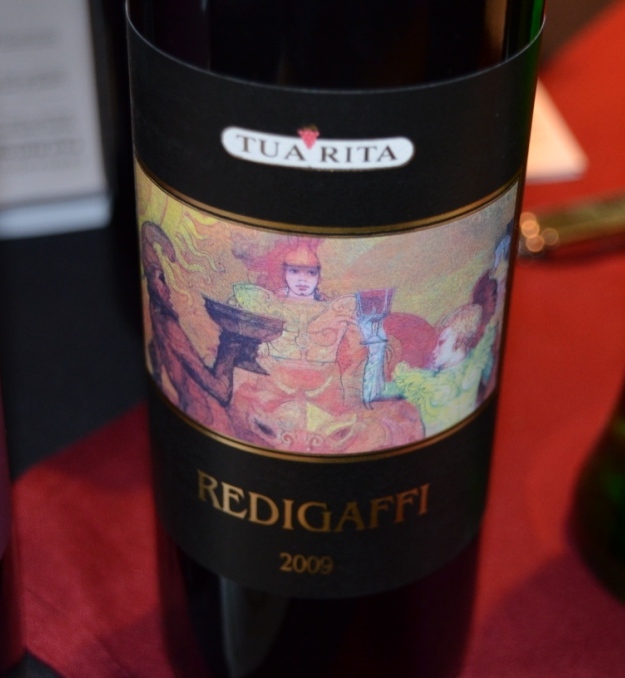
So the four trade tastings I attended were definitely overwhelming, but exciting at the same time, as I had an opportunity to taste wines I would never be able to taste otherwise, like, for instance, Tua Rita Redigaffi. Of course when you focus on quantity, the quality might suffer – as the desire is to taste as many wines as possible, looking for unique profiles and new discoveries, it is obvious that something has to give. So in my case, I didn’t even try to write down full wine descriptions or rate the wines on my standard 10 points scale. To move fast from wine to wine, I used the “+” signs where + technically means “well, ok”, ++ means “very good”, and +++ means “excellent”. I guess “+++” should be equivalent to my standard 8 rating, but the problem is that thinking about actual numerical ratings for me requires time, and using this system of pluses was allowing me to move from wine to wine a lot quicker. Oh yes, and to stay with my traditional system of half points, I also used half of the plus sign (-|) to mark the wines which I thought were better than, let’s say, ++, but not as good as +++.
So below you will find a huge (I’m not kidding) list of wines I liked during the 4 tastings I attended. Absolute majority of those wines are +++ wines, but yes, you will see wines with other ratings too. I also sometimes used a single word or very short sentences to convey my impressions better, so you will see it reflected in the list below. Additionally, when available, I listed the grapes and some additional information about the wine.
Before I will let you ponder at the list and look for the familiar wines, I want to present some of my general conclusions based on those 4 tastings. Here we go:
- One must be humble around wine and never make any assumptions as to taste and value of the wine without actually tasting it. My experience with Cloudy Bay Sauvignon Blanc is an example of that (before tasting it, I couldn’t understand why would anyone pay for it double+ price of any other New Zealand Sauvignon Blanc – now I do).
- Once you cross $60 (approximately), California Cabernet Sauvignon become “one better than the other”.
- Looks like 2010 was a great year in California, for sure for Cabernet Sauvignon – I didn’t taste a single bad wine from that vintage.
- I have a problem with California Chardonnay. It seems that all the complainers about too much oak, vanilla and butter finally had their way. Now, it is practically impossible to find those big and buttery wines, and most of the California Chardonnays produced today are dull, have no character and overall universally boring. Somebody, please change (fix) that!!!
Ready to look at the list? Hold on, here are some pictures of the wines in the tastings:
I feel inclined to still add a few more comments, this time just explaining the logic of what you will find in the list. I was choosing the wines to taste based on the few factors:
1. Price – yes, I wanted to taste many expensive wines – go ahead, blame me for it.
2. Uniqueness – I don’t know when and if ever again I will have an opportunity to taste Tua Rita Redigaffi or Catena Zapata Adrianna single vineyard Malbec (both wines are part of my Must Try List) – so of course I made an effort to taste those wines.
3. Wines with rare grapes – as I continue my Wine Century journey, I still always look for the grapes I didn’t taste before. This time I added 4 – Moscatel Morisco, Sauvignon Gris, Kountouro Blanc and Tribidrag
4. Otherwise I was just following the lead of my friend Zak who was tasting wines for his store.
And (ready for it?), here is the list of the wines I tasted, sorted by the country – but I’m warning you – continue at your own risk – you might get overwhelmed too…
Reminder – unless otherwise noted, all the wines below are +++ wines, thus these are all the wines really liked, and it is only a fraction of what we had to work through…
Now – enjoy and cheers!
Weekly Wine Quiz: Grape Trivia Anthology!
Welcome to the weekend!
Yep, it is just “welcome to the weekend”, and not your new wine quiz. We are in the middle of the long weekend, and I didn’t have time to work on the new grape trivia quiz – therefore, as I have done in the past, I just want to offer you a little retrospective into the grape trivia series of the wine quizzes.
What do you think is harder – to solve the quiz or to create the quiz? I can attest that it is the latter. When you are creating a quiz, you really want to have a balance of difficulty among all the questions – and the quiz should be entertaining enough for the people to attempt to solve it. Similarly to the cooking, where you might spend 2-3 hours preparing the dish, afterwards consumed in 20 minutes (glad it doesn’t take years as with making of the wine) – sometimes, it might take more than 2 hours to create the quiz, and there is a good chance that you will only spend 10 minutes solving it. But again, same as with cooking, which we do because we like the magic of putting pieces together and creating something new, something of the interest to the others, creation of the quiz is definitely a fun process and great learning opportunity.
Below you will find the list of the grape trivia quizzes included into the series so far. There are links for both quiz and the answer, feel free to play with them any way you want. And as always, any thoughts, comments and suggestions will be most appreciated!
The quizzes will resume next Saturday. Enjoy your weekend and cheers!
Red grapes:
WWQ #53 – Cabernet Sauvignon – Answer
WWQ #55 – Pinot Noir – Answer
WWQ #60 – Sangiovese – Answer
WWQ #61 – Tempranillo – Answer
WWQ #78 – Petit Verdot – Answer
WWQ #79 – Cabernet Franc – Answer
WWQ #81 – Petite Sirah – Answer
White grapes:
WWQ #65 – Sauvignon Blanc – Answer
WWQ #66 – Chardonnay – Answer
WWQ #67 – Pinot Gris – Answer
WWQ #68 – Chenin Blanc – Answer
WWQ #70 – Gewurztraminer – Answer
WWQ #74 – Trebbiano (Ugni Blanc) – Answer
Happy Thanksgiving and Happy Hanukkah!
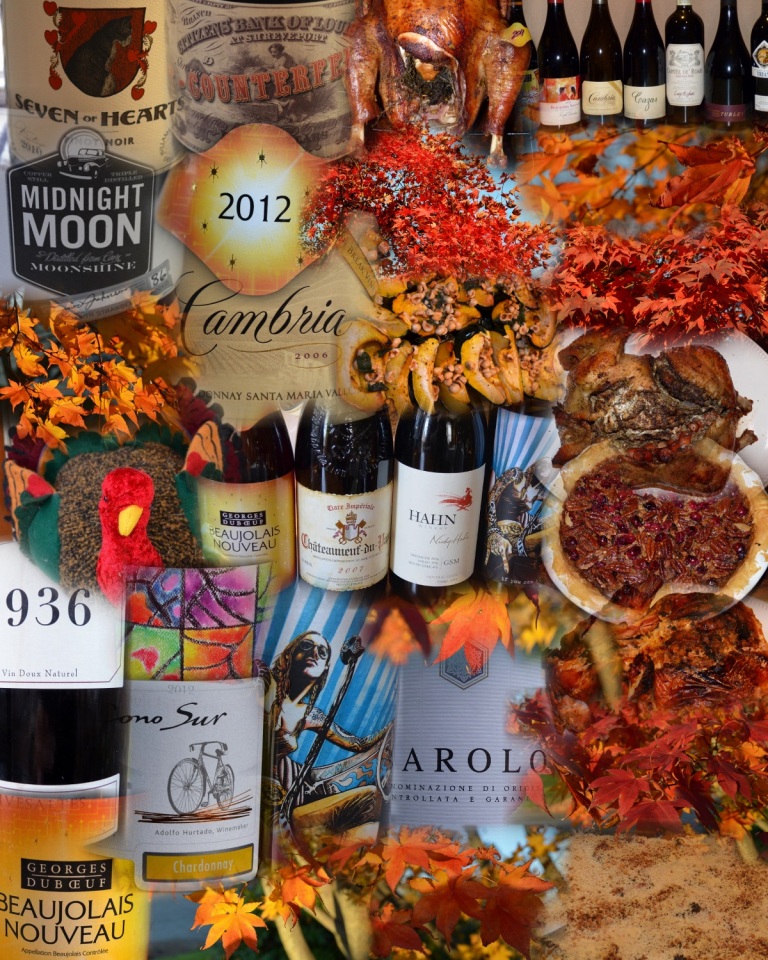
It never happened before, and it might never happen again – but today, on Thursday, November 28 2013, we are celebrating Thanksgiving and Hannukah at the same time.
Thanksgiving si all about family, friends and food – and about being thankful for what we have. Hanukkah, often called the Festival of Lights, in the end of the day is also all about the family and opportunity to be together. If you celebrate one or both, Happy Holidays to you and your families. Even if you don’t celebrate these holidays, you can still get together with your friends and families and enjoy each other’s company.
I just want to leave you with a few pictures – and the report about our festivities will be forthcoming.
Happy Holidays and cheers!

Thanksgiving Collage
Wednesday’s Meritage – Wine Quiz Answer, #MWWC5 Vote, Peter Mondavi Turns 99, The Oldest Wine Cellar?, and more
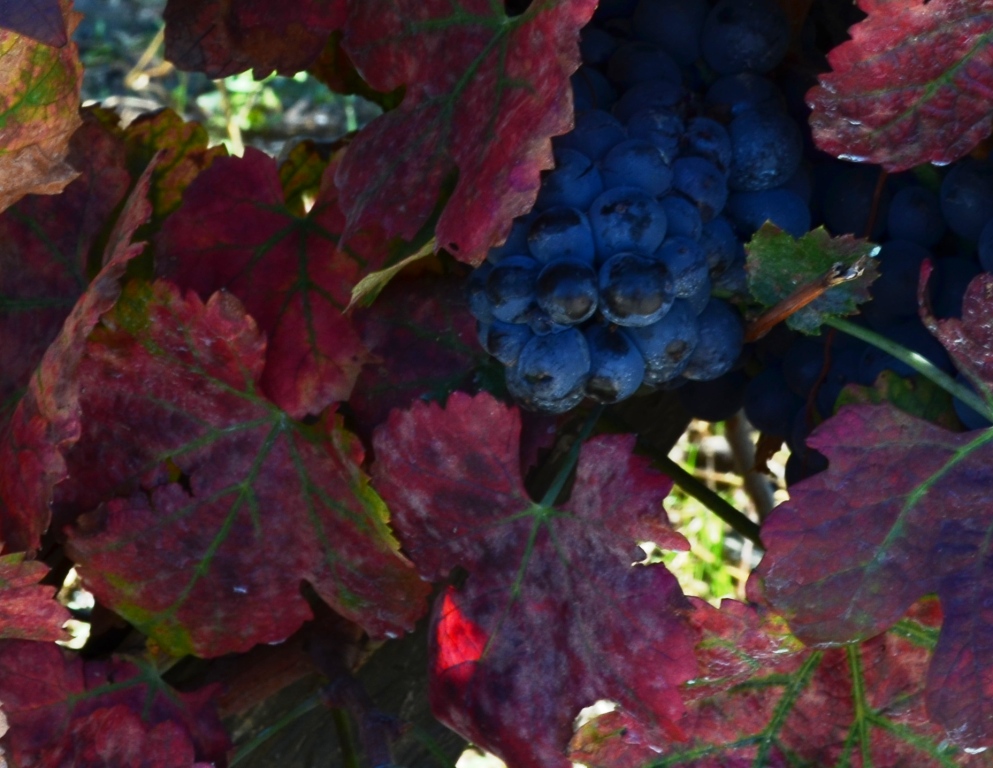
While not Carménère, this gives you an idea of color
Meritage time!
First, let’s start with the answer for the wine quiz #83, grape trivia – Carménère.
In the quiz, you were supposed to answer 5 questions about red grape called Carménère. Here are the questions, now with the answers:
Q1: Explain the name of the grape Carménère
A1: The name Carménère originates from the French word for crimson, carmin – that relates to the fact that the leaves of Carménère turn beautiful crimson color in the fall.
Q2:Similar to Merlot/Carménère confusion in Chile, the discovery was recently made in one of the well known old world wine producing countries – the grape they thought was ___, actually happened to be a Carménère. Name the grape, the country, and the region within this country where confusion took place.
A2: For the long time, winemakers in Friuli-Venezia Giulia in Italy thought that they were making the wines from Cabernet Franc – only to find out that it was actually a Carménère!
Q3: As the sequel to the previous question – the confusion also spread into the New Wolrd winemaking country. Name the grape been mistaken and the country.
A3: New Zealand imported Cabernet Franc vines out of all places, from Italy – oops? Yes, It was actually a Carménère!
Q4: Wine Spectator calls wines rated in 95-100 range Classic (the highest and the most prestigious category). True or False: there are no Carménère-based wines rated in the Classic category
A4: False . A number of Chilean wines from Casa Lapostolle got the 96 rating, and they are a Carménère-based blends
Q5: Name three grapes, often blended together with Carménère.
A5: Cabernet Sauvignon, Merlot and Cabernet Franc are often blended together with Carménère.
“We had rather a low participation in the quiz, but – we do have a winner” – was my opening line here. Now, with the last second entry, we have two winners! Patty from P’s 2013 photo project and Namie from Eat with Namie both correctly answered all 5 questions, and they both get the prize of unlimited bragging rights. Well done!
Now, to the interesting stuff around the vine and the web!
I have a few interesting things for you. First, you can vote now for the winner of the Monthly Wine Writing Challenge #5, with the theme called “Feast”. Here is the link to the blog post where you will find all the contenders’ blog posts and can vote!
The next article I want to bring to your attention is from the Wine Spectator, and it is dedicated to the Peter Mondavi – the older brother of Robert Mondavi. As amazing as it sounds, Peter Mondavi turns 99, and he still actively runs his winery, Charles Krug in Napa Valley. You can find the article here – definitely an interesting read, very relevant to the past and present of California wine.
How old do you think the oldest known wine cellar is and where do you think it is located? An archaelogical excavation in the norther Israel unearthed a cellar, which is estimated to be 3,700 years old. I think this is a very respectful age. No, the wine didn’t survive for that long, but nevertheless, I think this is a fascinating find. Here is the link for the Wall Street Journal article with more details.
Thanksgiving, an American holiday we will celebrate on Thursday, prompts lots of conversations about wine, and American wine in particular. I want to bring to your attention a very interesting article written by Mike Veseth at The Wine Economist blog, where he is talking about American wines. When we say “American Wines”, we actually don’t mean the wines made only in California – the wines are produced in all 50 states, and 12 of those states have more than a 100 wineries each! I find this information very interesting. Also from Mike’s article you can jump to the web site called Wines and Vines, which seems to offer a wealth of data regarding the wine industry – check it out.
Last but no least – don’t forget WTSO Gift Marathon on December 2nd (full details can be found here). WTSO just announced some of the wines which will be a part of the marathon – Beringer, Insignia, Philippe Prie, Caymus – I think it will be a very interesting event, so point your browser to the WTSO on Monday, December 2nd and happy hunting!
Ahh, and before we part – Happy Thanksgiving and Happy Hanukkah!
That’s all I have for you for today, folks. The glass is empty – but refill is on its way. Until the next time – cheers!
Beaujolais Nouveau 2013 – Well Worth Your Attention
It that time of the year again – the festive labels are lining up in front of the wine stores to remind us that we are entering into literally a six week of non-stop celebrations – Thanksgiving, Christmas, New Year, friends, families, holiday parties. With its festive label, coming out every third Thursday in November, Beaujolais Nouveau signifies both arrival of the wines of the new harvest, and the arrival of the holidays.
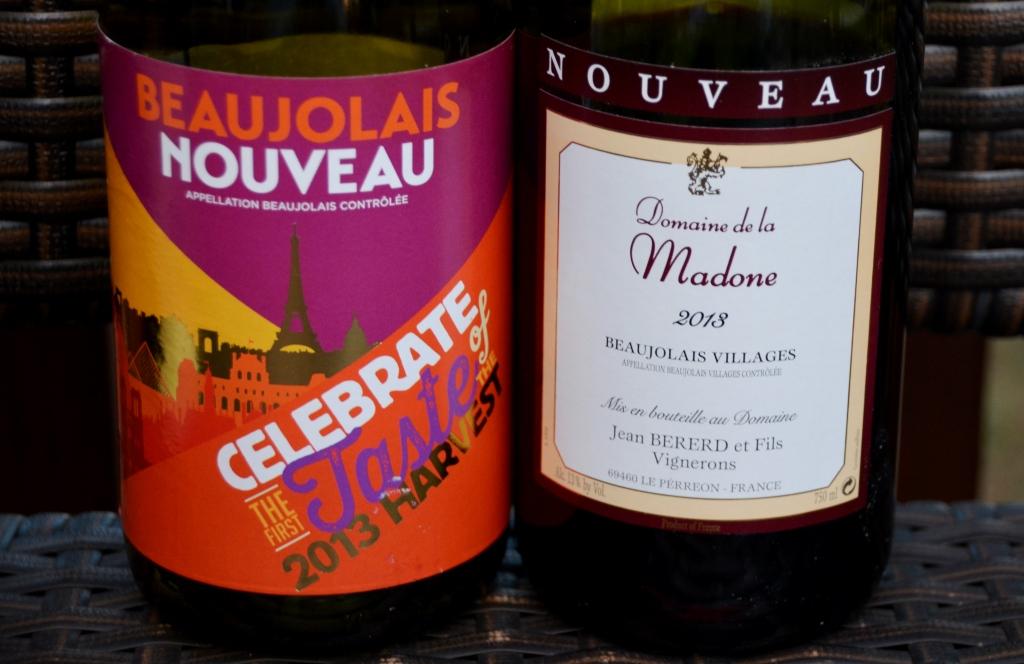
Beaujolais Nouveau Arrived!
The tradition of celebration of the new harvest with the wines of Beaujolais is well more than hundred years old. It became linked to the third Thursday of November in 1985, and then little by little, became a huge marketing success. That huge success became the worst enemy of the wine, with the producers starting to make soulless, insipid wines, void of any substance – and Beaujolais Nouveau phenomenon almost died at the very end of 20th century, with people simply ignoring the wines as only a marketing ploy.
Luckily, over the last few years, the situation started to change to the better, or I would even dare to say, to the “much better”. The wine behind festive labels started to show substance and character. I think Beaujolais Nouveau offers a very unique opportunity for the wine lovers, as you can taste every new vintage of the same wine, and compare – something which is rather difficult to do with many other wines – and you can see how the wine is changes year over year.
This year I had an opportunity to taste two different Beaujolais Nouveau wines – one from Georges Duboeuf, and another one from Jean Bererd & Fils, Domaine de la Madone – technically a Beaujolais Villages Nouveau, which is a different AOC designation, but for all intents and purposes it is produced in the same way as a regular Beaujolais Nouveau.
Can the wine be made better and better every year? Of course the question is way too generic to have an answer, but I can tell you that in case of Georges Duboeuf Beaujolais Nouveau, the answer is “yes”. I was quite happy with the 2012 wine, but I think this year it is even better. The 2013 Georges Duboeuf Beaujolais Nouveau (12% ABV, $10.99) showed beautiful dark purple inky color in the glass. The nose was full of bright fresh fruit – ripe cherries, succulent raspberries, some violets. The palate came in quite restraint and structured, even firm – good fruit presence of the same dark cherries and ripe raspberries, but not over the top, showing of respectfully mature, concentrated wine with good acidity and medium finish. Depending on the serving temperature, the acidity was more of less noticeable, and overall the wine showed well balanced. Definitely recommended for your Thanksgiving table, perfectly attune to the Harvest celebration. Drinkability: 8-
The 2013 Jean Bererd & Fils Domaine de la Madone Beaujolais Villages Nouveau (13% ABV, $10.99) had very similar inky purple color in the glass. On the nose, it exhibited very similar notes of dark cherries and raspberries. And yes, the palate profile was very similar, but somehow, while the wine was perfectly drinkable and enjoyable, also showing firm structure, I was unable to find the right temperature when acidity was fully in check and harmony with the rest of the wine. Still, not a bad wine by all means. Drinkability: 7
When it comes to Thanksgiving, which we are about to celebrate, my choice of wine tends to be all-American – Chardonnay, Pinot Noir, Zinfandel – but nevertheless, I love opening the celebration with the glass of Beaujolais Nouveau – that clearly sets the mood to the Holidays, which have arrived.
Did you happen to taste Georges Duboeuf or any other Beaujolais Nouveau wines? What do you think? Happy Holidays and Cheers!
Last Bottle Sign Up ($10 credit)




 Talk-A-Vino