Archive
Latest Wine News and Updates
While wine production is one of the oldest industries in the world, the amount of new, innovative products and scientific breakthroughs in the wine world is nothing short of breathtaking. Let’s take a look at some of the latest news from the field.
Everyone agrees that fake wine is a big problem for the wine industry. There are many tools employed by winemakers to protect the identity of their wines, but the quest for the perfect solution is still ongoing. After 15 years of intensive research, the French INAO (The National Institute of origin and quality), together with the College of Veterinary Medicine at Auburn University in the US announced the successful results of the initial trials of dogs being able to sniff fake wines. As part of the Canine Performance Sciences program, dogs had been trained to identify wines that don’t match the original wine. The training is a very involved process requiring the dog to spend about 2 years at the winery memorizing the original flavor profile of the wines. Once trained, the dogs can easily distinguish the original bottles from the fakes, the same as working dogs who identify illegal substances at customs in airports. The training process is intense and costs about $50K per dog, so this solution is not for every winery. Nevertheless, according to INAO, it will take about 7 years to satisfy all the requests for the dogs received to date.
There are plenty of wine lovers who crave massive, tannin-loaded wines. Such wines are often quite expensive as they require a long aging time in the oak barrels which are costly. What if the oak flavor can be concentrated in the grape itself while it is growing? Impossible, you say? Scientists from UC Davis in California think otherwise. Instead of using the traditional rootstock, UC Davis scientists managed to graft Cabernet Sauvignon vines onto the french Limousin oak rootstock, and after about 7 years of experimentation it seems that resulting wines demonstrate much higher tannin concentration than the wines obtained from the same clone of Cabernet Sauvignon but not grafted on the oak rootstock. Obtaining the same level of tannins would require about 6 months of age for the wines in the control group. Once the research is complete, it will result in significant savings for the wine producers which [hopefully] will be passed on to wine lovers. We should expect to find the first wines based on the results of this research by approximately 2028.
Many wine lovers live with a simple motto – coffee in the morning, wine in the evening. The next news I would like to share with you will, in a way, be related to both beverages. How so? Everyone knows Nespresso, a French company that mastered the simplicity of the perfect cup of espresso at any time with the help of a tiny coffee capsule. Working on a special (very sizeable) grant from French LVMH conglomerate, Nespresso just announced a brand-new machine called – maybe you guessed it – Winepresso. Nespresso scientists found a way to convert the content of the wine bottle to the dry form which is encapsulated in the tiny wine capsule, literally identical to the coffee one. Now, with a push of a button, a perfect glass of your favorite beverage is in your hand at any moment. Based on the opinion of the expert panel, the Winepresso-produced wine is practically identical to the original wine, which is a pretty amazing achievement in itself. The initial set of capsules available upon commercial availability of Winepresso will include two Bordeaux reds, one red from Burgundy, and 3 whites from Loire. It is also known that Nespresso is actively involved in conversations with a few of the famous wineries in Napa Valley. The capsules will be sold in the 5-packs (to be identical to the standard 5 glasses in the bottle of wine). Winepresso machines are expected to appear at select retailers such as Williams-Sonoma and Bloomingdales in time for Christmas shopping. The prices for the capsules and the machines had not been disclosed yet. If successful, you can only imagine how successful this product will be from point of view of sustainability and reduction of the carbon footprint.
Open any news source today, and you are guaranteed to read about ChatGPT, artificial intelligence (AI) software. ChatGPT writes poems, articles, and marketing materials, conducts market research and lots more. It appears that the wine world is starting also to embrace ChatGPT in a variety of ways, many of them quite unexpected. Champagne Piper Heidsieck just announced that they will start a new line of non-vintage Champagne, called Piper Heidsiek AI, where ChatGPT will play the role of the Chef de Cave, responsible for blending the final wines. After the initial offering, both Blanc de Blancs and Blanc de Noirs will be produced. While it is an interesting announcement in itself, I’m concerned with the impact of the ChatGPT on all areas of human lives, now including even wine production. Well, we will see how this story will unfold.
That’s all the latest news I have for you, my friends. Until the next time – cheers!
Stories of Passion and Pinot: Looking Back and Looking Forward 2023
 What started from the little idea “yea, I don’t know, I don’t believe in it, but maybe I will try anyway” now became one of my favorite ongoing series in this blog – Stories of Passion and Pinot. Stories of Passion and Pinot are exactly what the title says – these are the stories of the winemakers passionate about one of the most finicky grapes there is – Pinot Noir.
It is a fun exercise to take a retrospective in the ongoing series and see how far I have gone from time to time. So here is the latest update – for me, and for you if you care to read it.
First, last year I created a new landing page for the whole series. This page is kept current, all new interviews are now added to this page and you always know when the page was updated last.
Four new stories were added since the last update: David Adelsheim of Adelsheim Vineyard, Shane Moore of Gran Moraine, Erik Kramer of Willakenzie Estate, and Bill Sanchez of Potter’s Vineyard. All of these are excellent, in-depth interviews – if you have not had a chance to read them yet, you really should do it now.
Interviews in the series have questions tailored to the individual wineries and winemakers with a little overlap between them. However, sometimes it is fun to ask people the same question and enjoy the diversity of the replies. I asked the same two questions to some of the winemakers who had been already profiled in this series – and now I want to share our short Q&A with you.
Sara Specter of Bells Up Winery, Bill Sanchez of Potter’s Vineyard, and Wayne Bailey of Youngberg Hill have graciously agreed to answer my questions, so below you can see my questions – and their answers:
[TaV]: How was the year 2022 for you? New grapes, new plantings, new wines, vineyard discoveries (a new plot/block, for example), new winemaking styles, new wine club, new tasting room, new markets, growing season and the vintage – please share anything and everything you are willing to with our readers.
[Bells Up Winery]: Harvest 2022 was our 10th under the Bells Up label, having moved to Newberg, Oregon in 2012 and making our first vintage in 2013. Harvest 2022 was also what we’ve been calling “the end of the beginning.” It was the first year we were “100% Pinot Independent,” meaning we didn’t source Pinot Noir from any other grower for the first time. It was a wonderful experience working with other micro-site growers who were very much like us. But our goal has always been to be as close to 100% estate as possible, and now we are… at least for the Pinot Noir. We were also delighted to see that the Pinot Blanc we planted in Fall 2021 and the Schioppettino we planted in Fall 2020 continued to do well, despite some initial concern from the late frost we had in April.
[Potter’s Vineyard]: 2022 was good but tough. It was tough due to the spring frost that wiped out 80% of the primary buds in our vineyard. The cool, wet spring led to a late start to bloom and fruit set. We literally did not know if we would have only a tiny harvest or something close to normal until late in the season, which led to a lot of turmoil. We decided to stay the course and farm it normally assuming that we would have something and of course take care of the vines for the following year. Amazingly, the vines rebounded and we ended up with about 70% of our normal yield. And because we farmed and sprayed diligently we did not suffer from the very high amount of powdery mildew that descended upon the Northern Willamette Valley that year. It was also a year where we added some new effective organic compounds to our organic farming spray program that probably helped fend off powdery mildew. The Pinot noir fruit was beautiful but we had much less of it. 2022 was also a pivotal year for us in our business. We bottled our 10th vintage and pondered all year what we would do for the next 10 years. We’ve made good wine but we decided to try to make better wine as our goal. We hired a Burgundy trained winery consultant with 35+ years experience. Combined with our 15+ years we now had over 50 years of combined experience to gain from. We fine tuned every protocol we had in place and added a lot of additional analyses to our tool box. We also added a new barrel-side wine analysis device to help us get more analyses done more efficiently and timely. This helped us get through a tough set of late fermentations of our other varietals that ripened later than normal due to cool spring throughout the NW. So for us it was a long, tough, and educational year but successful due to our added help and resources.
[Youngberg Hill]: Great growing season. Great balance and complexity in the fruit. A more typical season for the Willamette Valley, later wet spring, cool September and October harvest.
[TaV]: What are your plans for 2023? What do you think the future holds?
[Bells Up Winery]: In 2023 we hope to get enough fruit from the Schioppettino to make a proof-of-concept batch. We will also be releasing our very first bottling of bubbles. The 2022 crop of Seyval Blanc from our estate (first planting in the Willamette Valley of this French hybrid and only the second in the state of Oregon) will be released in a brut style under a new label, “Joy.” In keeping with our practice of naming wines after pieces of music that have terrific French Horn parts, this one is named for Ludwig van Beethoven’s Symphony No. 9 in D Minor, “Ode to Joy.”
[Potter’s Vineyard]: We plan to continue with this new approach to taste the ‘fruits of our labor’ and continue improving as much as we can. We know the future will be tough with another global recession looming, however, we will continue to work hard to provide wine lovers a small vineyard & clay art gallery experience and premium wine.
[Youngberg Hill]: We will get our first fruit from the new Wayne’s World block this year, clones 667 and 115. Regarding what the future holds – who knows?
It is so interesting to see different takes on the vintage, the conditions, etc – and of course the future plans. It will also make it fun to ask the exact same questions next year.
There is a number of new interview ideas in the works, so as they like to say it – watch this space…
Uruguay Wines – Coming Of Age
Do you know the problem many wine lovers share? We are creatures of habit.
Once we develop our inner “favorite wine” profile, we don’t let any changes happen to it. We like what we like. Never heard of this region? Thank you, I’ll pass. God forbid we fall in love with the particular producer – this is even worse than the region – nothing is ever good enough outside of the circle of our favorites.
And this is generally okay. Except we are putting ourselves in danger of losing on new, enlightening, delicious experiences.
When I was invited to the Uruguay wine webinar, my first reaction was “nah”. I mean, Uruguay, really? Between Chile and Argentina, my South American world-class wine circle is already full – do I need to bother with the wines from a totally unknown region?
On second thought – this is a webinar. Wine is coming to me, not like I need to travel somewhere to taste the wines I can potentially be disappointed by. Why not?
I’m glad I accepted the invitation. Both the information and the wines were lots of fun. We learned that while Uruguay has a population of 3.5M people, 2nd smallest size-wise country in Latin America, the country has a 98.7% level of literacy, the highest in Latin America. People in Uruguay are mainly descendants of Italians and Spaniards so they literally have wine embedded in their DNA.
Winemaking in Uruguay started in the 13th century. Today, there are 164 active wineries, producing 70M bottles of wine annually. Uruguay is currently in the process of implementing its own sustainability program. And by the way, the oldest winery in Uruguay dates back to 1854 and is called Los Cerros de San Juan (still open today!).
Uruguay has primarily a maritime climate with strong Atlantic influence, with the majority of low-lying coastal vineyards. Uruguay’s climate is closer to Bordeaux than the rest of South America, and it is significantly wetter if compared with Chile, where it rains only during the winter. Soils are clay based with lots of river deposits. Uruguay has six main winemaking areas, boasting 5 different terroirs. Warm and cold ocean currents collide right around Uruguay, creating significant influence. Interestingly enough, Uruguay is the only winemaking country in South America whose terroir is affected by the Atlantic Ocean.
When it comes to grapes, there are 14,804 acres under vine (a little smaller than Alexander Valley in California). Tannat is unquestionably a star, accounting for 27% of vineyard plantings., but it is not the only grape, obviously – Merlot, Cabernet Sauvignon, Cabernet Franc, Sauvignon Blanc are all quite popular as well.
And before we talk about wines, few more interesting tidbits: cows outnumber humans in Uruguay 4 to 1 and Uruguayans consume more meat per capita than any other country in the world!
Okay, now you know all that I learned in the webinar, and we can talk about the wines.
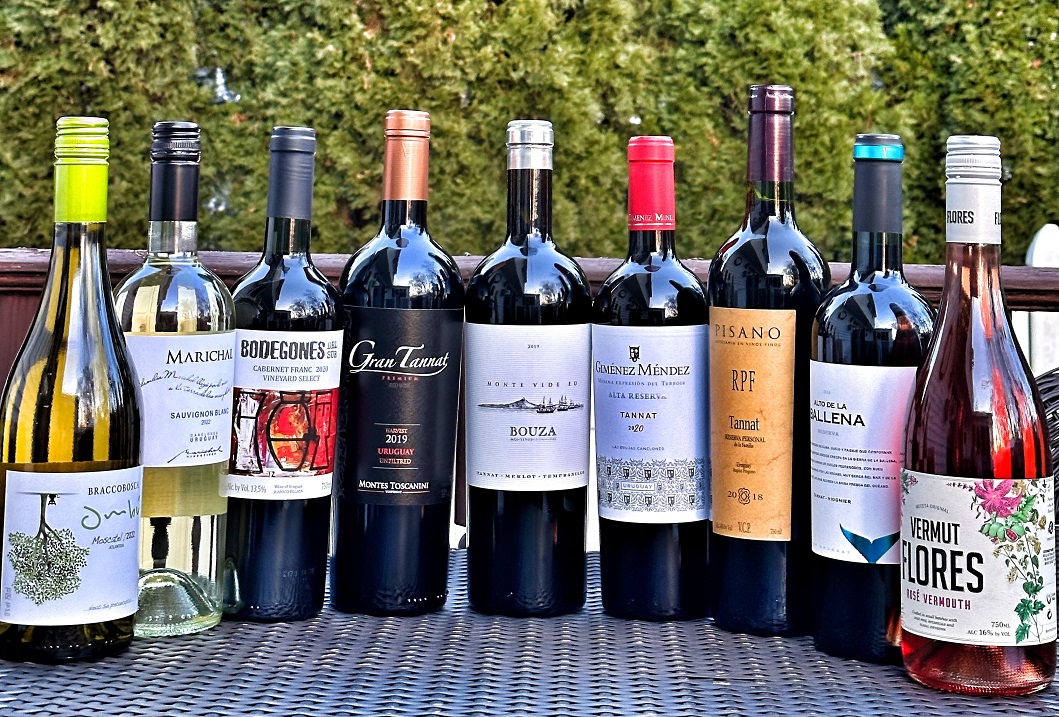
We had 2 whites, 6 reds, and one Vermouth wine in the tasting. Spoiler alert: I literally liked them all. In the blind tasting, these wines would be surely regarded as world-class, placing them in California, France, maybe Chile – Uruguayan origin of these wines would be a total surprise for many – for sure for me. And yet, here they are – world-class wines from Uruguay.
2022 Marichal Sauvignon Blanc Canelones Uruguay (12.5% ABV, $14)
C: light golden
N: plump, round, Whitestone fruit, a hint of gunflint
P: crisp acidity, fresh, bright. More resembling Muscadelle than anything else. Good balance.
V: 8, very refreshing.
2022 Bracco Bosca Ombú Moscatel Atlantida East Costal Region of Uruguay (13% ABV, $16)
C: light golden
N: very interesting. Muscat’s spicy, nutmeg profile comes as a distant hint. A touch of perfume
P: restrained tropical fruit with an acidic finish.
V: 7, not balanced enough for me; On the second and third days the wine showed much better, more coherent and more elegant – Drinkability: 8-.
2020 Familia Deicas Bodegones del Sur Vineyards Select Cabernet Franc Juanico Region Uruguay (13.5% ABV, $20, 30% aged in American and French oak)
C: Beautiful bright ruby
N: round vanilla, new world style
P: interestingly restrained on the palate, with noticeable tannins. The palate shows the absolutely old world (Saumur, Chinon). Interesting cranberry notes after an hour and a half in the open bottle.
V: 7+/8-, a bit unexpected, but not bad
Improved on the second day, became more round. Final: 8-
2020 Giménez Méndez Alta Reserva Tannat Las Brujas Canelonés Uruguay (14% ABV, $18, aged for 9 months)
C: Dark Garnet
N: Open, inviting, dark fruit, blackberries
P: Dark fruit, firm structure, smokey undertones, herbs, very good balance.
V: 8, well drinkable now
2019 Montes Toscanini Gran Tannat Premium Uruguay (14% ABV, $59, 18 months aged in oak, BAB with a huge punt)
C: dark garnet, practically black
N: wow. Cassis, sweet oak, eucalyptus, open, inviting, invigorating. In a blind tasting, I would bet my life on Napa Cabernet Sauvignon.
P: the palate is leaner than the nose suggests. Red and black fruit weave around a firm structure, tannins showed up a while after opening.
V: 8-/8, very impressive
2018 Pisano RPF Reserva de la Familia Tannat Region Progreso Uruguay (% ABV, $24, 10–12 months in French oak)
C: dark garnet
N: dark fruit, coffee, smoke
P: a hint of smoke, sapidity, dark, concentrated but not overpowering. Good balance, medium-long finish
V: 8-/8, very nice. Will be great with the steak.
2018 Alto de la Ballena Tannat – Viognier Uruguay (14% ABV, $24, 85% Tannat, 15% Viognier)
C: Dark garnet, almost black
N: herbs-forward nose, sage, a hint of cherries
P: fresh fruit, salivating acidity, sage, firm structure, and perfectly lingering cherries and cherries pit finish.
V: 8, great by itself, and will be great with beef roast
2019 Bouza Monte Vide Eu Montevideo Uruguay (13.5% ABV, $67, 20% Tempranillo, 30% Merlot, 50% Tannat, vinified separately, 16 months in French and American oak barrels)
C: dark garnet with a beautiful ruby hue
N: very complex, cherries, rosemary
P: roasted notes, dark fruit, elegant package, firm structure with a perfectly balanced mouthfeel.
V: 8, excellent, a world-class wine.
Basta Spirit Vermut Flores Rosé Uruguay (16% ABV, $16, Tannat, 27 botanicals)
C: beautiful salmon pink
N: Herbaceous, but a bit strange, stewed strawberries
P: a bit too sweet for my palate.
V: I’m very particular about the vermouth, so this is probably not the one for me.
Here you are, my friends. Next time you see an Uruguayan wine on the shelf, obey your thirst and grab it – and you don’t even have to thank me later.
OTBN Conundrum
OTBN, short for Open That Bottle Night, is my favorite wine holiday. Nowadays, there are lots and lots of wine holidays, usually associated with a particular grape – International Chardonnay Day, International Cabernet Day, Beaujolais Nouveau celebration, and so on. The majority of such wine holidays encourage you to open a bottle of wine made from a particular grape, whether there is a story behind the bottle or not. You can take these grape holidays with all seriousness and meticulously prepare and select the right bottle, or you can just grab any random bottle you will see in the store – or skip the grape holiday altogether if you don’t feel like drinking Cabernet Sauvignon or Chardonnay on that particular day.
OTBN is different. OTBN was invented for people who take their wine seriously. Or maybe rather those who take their wine too seriously. Over the years, we accumulate wine bottles that are deemed special; brought home from the winery you visited in France; got this bottle after an amazing tasting event; a bottle from an amazing family vacation many years ago; a bottle given to you by a dear friend. We can continue on and on, but you got the point.
Many of those special bottles in your collection would have some similar traits: they exist in the quantity of 1 and they are too special to be opened at random. Those special single bottles stay put in your cellar, waiting for the special company, special circumstances, special moment, special friend’s visit to be opened and enjoyed. More often than not, they keep waiting, and waiting, and waiting, because that special moment keeps not happening. And then, when it finally arrives, you might open that special bottle you preserved with the best care in the world, only to find that the content can solicit the memory but can’t bring you joy anymore because the wine in the bottle simply turned past prime. And it also kind of ruins the moment. This is why OTBN was invented, and this is what makes it such a great holiday for all the winos out there.
My personal conundrum draws exactly along the lines I just described. I have a lot of single bottles (actually, an absolute majority of my wines in single bottles – I practically never buy any wine by the case), and as such making a decision about a “special” bottle of wine for an event or a holiday, never mind the hallmark of them all, OTBN, a long and tedious process. “Is this bottle good enough? Okay, but I only have one. What if I will open it now and would never know how great it could’ve been? What do I do? What do I do?”
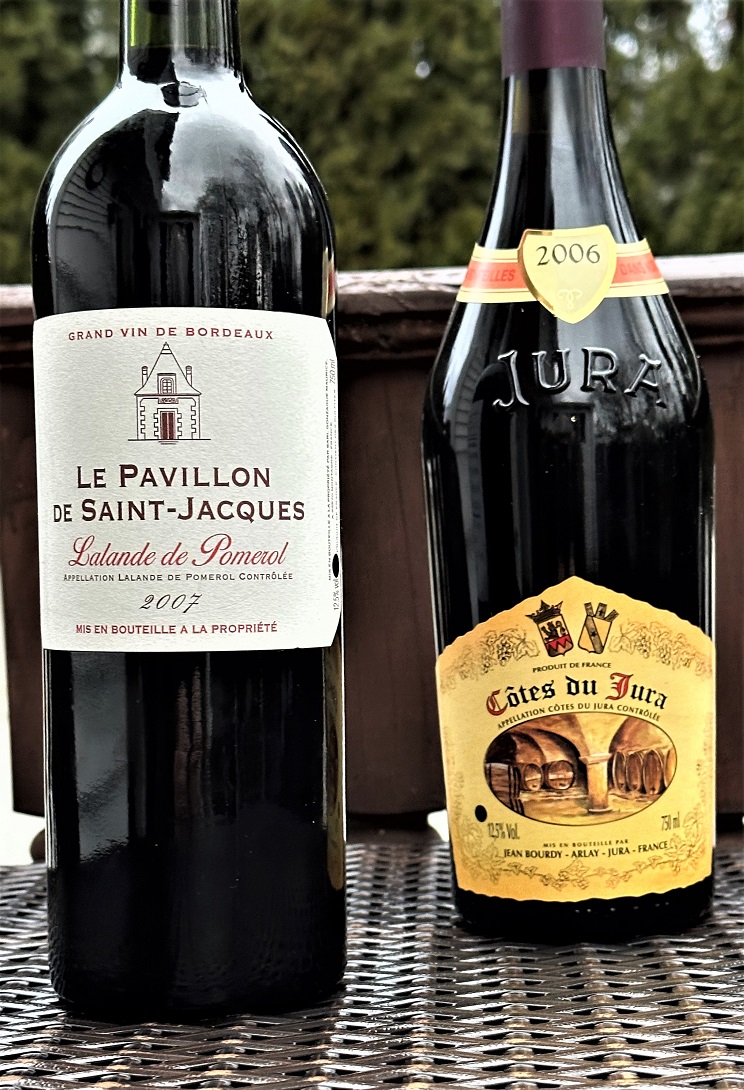
Same as the last year, I had to celebrate OTBN early this year due to the business trip spanning over the intended OTBN last Saturday of the month, February 25th. My wife doesn’t drink much wine nowadays, so I had to count primarily on myself. I had no good ideas coming to my head, there were no special bottles of wine I was ready to sacrifice. Looking at one of the wine fridges, I noticed the bottle of Jean Bourdy from Jura.
I don’t take Jura wines lightly, they are very hard to procure in the US. And then Jean Bourdy is a legend in itself – I better have a damn good reason to open such a special bottle. Then I thought that I already had some Jean Boardy in the past – maybe I would find some notes in the blog? I entered Jean Bourdy in the search box, and sure enough, this post came up. I tasted this wine in 2011 when I attended a Natural Wines seminar at PJ Wine store in New York – my first, a truly memorable encounter with natural (low intervention) wines as a category. I tasted this exact wine, 2006 Jean Bourdy Cotes Du Jura Rouge (fun fact: 2006 was the first vintage of Biodynamic wine production at Caves Jean Bourdy). I really liked the wine then, and my note said “It appears that wines of Jean Bourdy are known to age very well (note to self)”. As soon I saw this “note to self”, I instantly put that single bottle of Jean Bourdy back, as 17 years is most likely not an age for it.
In the same post, I noticed another wine that happened to be next to Jean Bourdy bottle on the same shelf – 2007 Le Pavillon de Saint Jacques Lalande de Pomerol. I pulled this bottle many times from the fridge before, always remembering that this was a natural wine, but again, no moment felt special enough. Then I read my note from 2011, which was clearly less than favorable. Here it is in its entirety:
“Very interesting. Smells like dirt, pure dirt after the rain. Very vegetative, no fruit on the palate, just pure dirt again. Almost no acidity. This wine was fermented in concrete tanks, aged for 18 months. It is “certified organic” and made with 90% Merlot and 10% Cabernet Franc – classic Pomerol wine. I would love to taste it in 10-15 years – I think it will greatly evolve, but it is not easy to say ” I like it” now”.
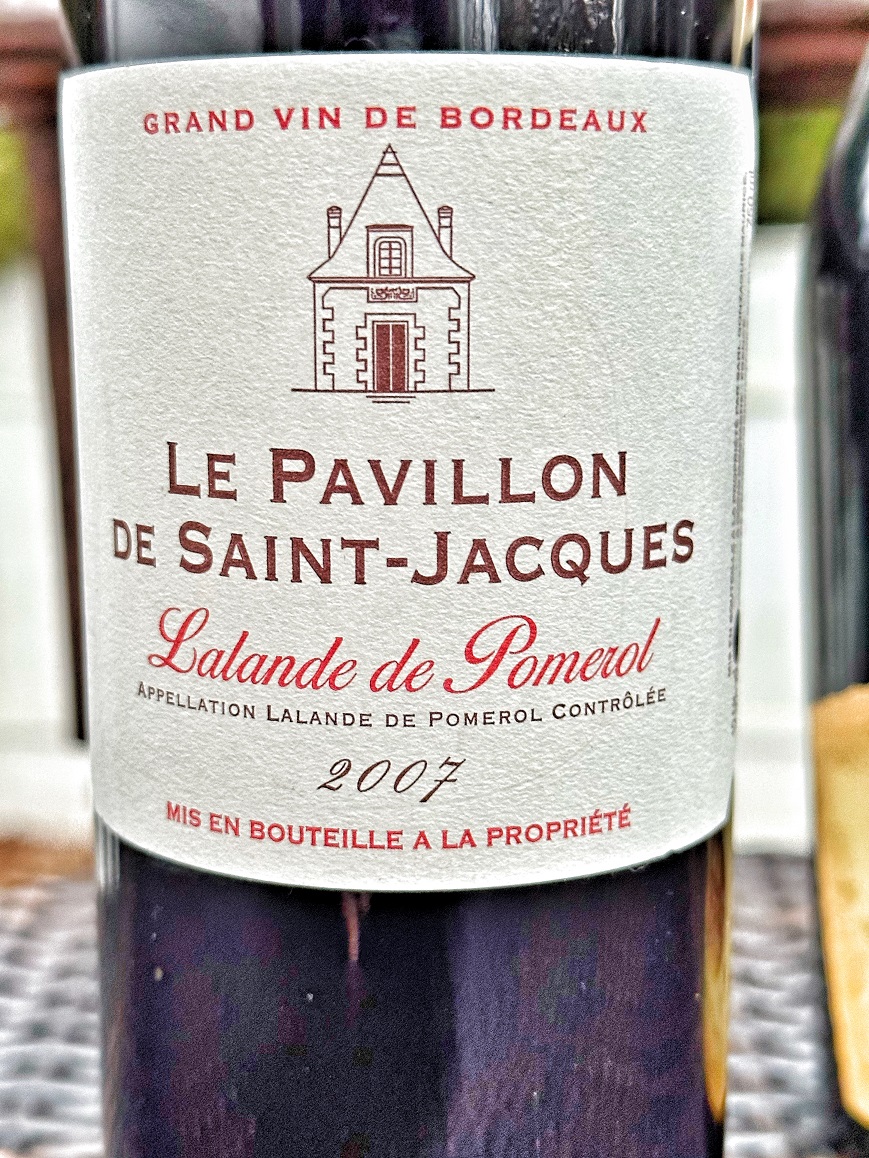
This “note to self” clearly stated that the wine was not good in 2011, but I should give it another try in 10-15 years. I was pretty much in the middle of that suggested term – 12 years after the original tasting, so opening that bottle all of a sudden became a perfect thing to do.
Cork came out easily, showing a good amount of crystals on the bottom, but otherwise perfectly fresh. The first sip instantly put my inner wine geek into a nirvana state. Barnyard. Pure, beautiful barnyard. If you belong to the group which screams “brett” at the first whiff of the barnyard smell on the wine, I’m sorry but we can’t be friends. Yes, there are limits to everything, but the reasonable amount (don’t ask me to quantify, everyone has to define their own “reasonable amount”) enhances the wine pleasure for me. I typically find barnyard associated with Syrah wines – possibly, this was my first Bordeaux with the barnyard aroma – but the barnyard aromas were followed by the classic, concentrated cassis. Layered, concentrated, softly rolling harmonious wine with perfect, firm structure and clean acidity. Beautiful, classic Bordeaux. This was truly an OTBN-worthy pure pleasure experience (by the way, my wife also loved the wine very much).
Here you go – my typical wine selection conundrum, happily resolved to make another memorable night. And as a bonus, the expectation of improvement of the wine with age fully came through (patting myself on the back).
The official OTBN night is almost here. You still have time to select the bottle or 5, maybe get some friends together and make some wonderful wine memories. If you want to celebrate only one wine holiday a year, make it OTBN – don’t risk the wine not being there for you, or you not being there for the wine.
And please share your OTBN stories – I would love to hear them.
Daily Glass: Unexpectedly Stunning
Expect the unexpected.
When people hear that beaten up “expect the unexpected”, I’m sure in at least 80% of the cases, the expectations are negative. “Expect the unexpected” generally implies that one should always be prepared to deal with seemingly unexpected and often hostile circumstances.
In the wine world, we might want to adjust the “expect the unexpected” ever so slightly. By its nature, wine is always unexpected. Bottle variations, spoiled wine (think corked, for example), serving temperature, ambiance, food, company – everything affects the taste of wine – and I’m not even talking about root and flower days. Every bottle is a mystery – even if you had that same wine from the same producer and the same vintage 100 times before, when you are looking for pleasure you should open the bottle with trepidation. Every bottle is a mystery, and you never know what you will find inside.
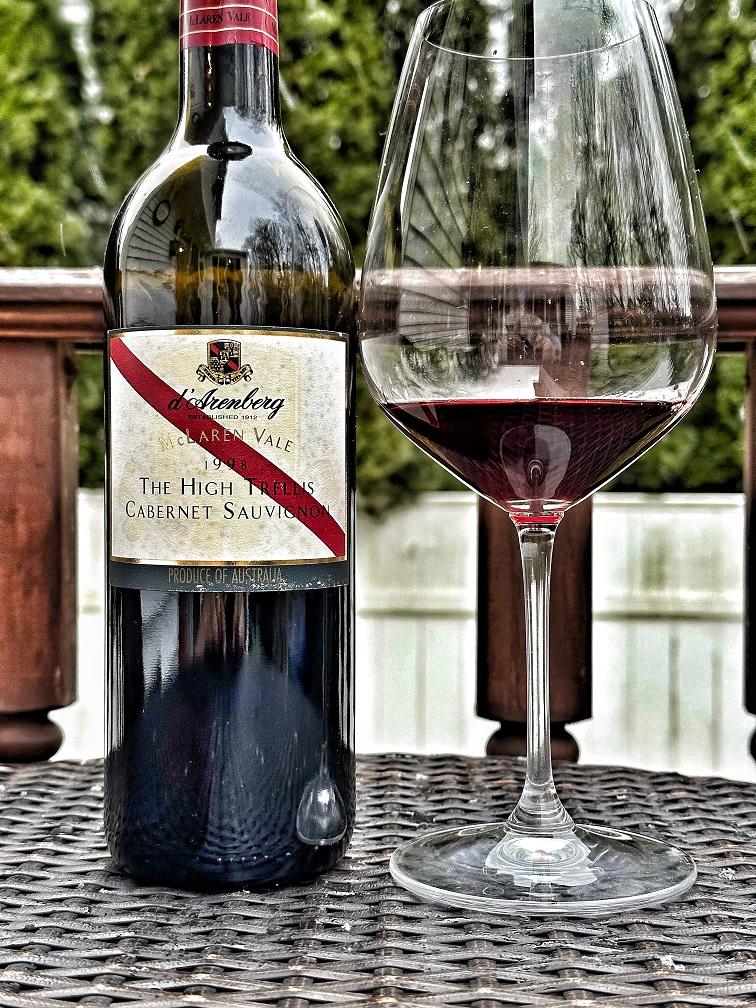
I already had this exact wine before. 1998 d’Arenberg Cabernet Sauvignon High Trellis McLaren Vale was number 16 on my top 20 wines of 2020 list. 1998 is one of the special years in my book, so I’m always on the lookout for affordable 1998 wines. I came across this specific wine at the Benchmark Wine Group wine store, and at $19 per bottle, it was well worth the risk. Of course, d’Arenberg is an excellent producer and I trust their wines – but aging the wine changes a lot of things and nobody can truly predict what would happen with wine as the result of the aging.
When it comes to aged wines, when everything works well, the expectations are resembling the bell curve. In the optimal case, we expect the wine to gradually improve, then stay at its peak, and then gradually decline. But every bottle has its own bell curve associated with it – how long will it take for the wine to reach the top of the peak, for how long the wine will stay at the peak, when the wine will start declining – every bottle has its own story, and nobody can predict how a particular bottle of wine would behave. This makes drinking aged wines great fun – you never know what you will find behind the cork. This also makes drinking the aged wines a source of frustration – until you successfully pull the cork out, take a sip, and smile happily, the frustration lingers.
You are unquestionably doubling this frustration when you are opening the aged wine you already enjoyed before. In general, before you open the wine, you base your expectations on the reputation of the producer, the region, the winery, and maybe on the vintage. Once you tasted the wine, you acquire the frame of reference, so when you will be opening the bottle of the same wine as you already had, your expectations are based on your prior experience – “ahh, I liked it before, I hope the wine will be as good as it was the last time”.
The last Sunday, we had a good reason to open a bottle from the 1998 vintage, so this was the bottle I decided on – for no particular reason, the decision formed in the head by itself. I used the ah-so to gently extract the cork, only to find out that I had no reason to worry, and the regular corkscrew would do just fine – the cork was in very good shape.
Once in the glass, the color increased the hopes for the enjoyable experience – dark ruby, not a hint of brickish color which old reds might acquire. And the first whiff from the glass put absolutely all the worries away. Ripe cassis, eucalyptus, a touch of sweet oak – the aroma was beautifully enticing, seducing you only as the Cabernet Sauvignon can. And the palate… The palate completed this mesmerizing experience, offering ripe dark fruit, cassis, still fresh and firm structure, a beautiful herbal bouquet, and a perfect balance. Not to try to take anything from the Australian wines, this was a Napa Cab-like experience. (Drinkability: 8+/9-).
I pumped the air out and couldn’t get to the wine for the next two days. On the third day, I poured a glass, this time expecting that the wine is gone. To my total surprise, the wine closed up, now more resembling the young Brunello, perfectly firm, dense, and cherry-forward. The fact that the wine was perfectly fine 3 days after being opened gives me hope that the wine will be good at least for another 15 years – and this time around yes, I have another bottle.
Here is my story of the sudden pleasure. Do you like aged wines? Are you intimidated by aged wines? Do you also expect the unexpected? Let me know what you think.
Until the next time – cheers!
I Still Don’t Understand…
This is not really a rant. I guess this can classify as rambling. Or “asking for a friend” might be the best way to classify this post.
Nevertheless, let me share my frustration.
The question is as simple as it is proverbial. When you take a sip of wine (you can make it a glass, doesn’t matter), do you judge the wine at that moment?
Hold on, while you ponder this, let me add a few layers.
You read the description of the wine. The wine sounds great. The wine sounds like something you want to buy and you want to drink, so you buy it.
Some time later (let’s say, 10 months later), you open a bottle. You remember it came with the recommendation, so you are full of anticipation – or not, maybe you even forgot the raving review. But this bottle is in your cellar, as you had a reason to buy it. So it is rightfully expected to be a good bottle of wine.
You pour a glass. You take a sip. The wine is perfectly fine, no faults, all is good, but the wine gives you nothing. Forget pleasure – the wine is flat and pedestrian, it doesn’t deliver anything, doesn’t cause any emotion. Just flat and boring. You let it breathe for an hour or even two, and still, there is nothing. Does this story sound familiar? Can you picture yourself in this situation?
So here is the first part of the question. How do they do it? The people who reviewed the wine and called it “Killer Bourgogne Rouge” – how come you can’t see an eye to eye with them? I get it when the wine solicits emotion and it is not your wine – this I understand. I remember Robert Parker raving about Ball Buster Shiraz, and the wine was incredibly overdone to my taste, I couldn’t enjoy it at all, but at least that wine didn’t leave me indifferent. But this is not my point. Let’s continue.
While I was not happy – I rarely get to drink Burgundy, so I really want every Burgundy experience to be special – I still did what I always do. Pumped the air out and left the bottle on the counter.
The next evening, I poured another glass to decide on the fate of the half bottle which was left. I took a sip, and couldn’t believe that I’m drinking the same wine that was flat and boring the day before. The wine opened up, it had depth, the fruit, minerality, forest underfloor, hint of smoke, acidity – all were at a beautiful interplay. The wine instantly went into the “delicious” category, and that half a bottle didn’t last for too long.
This brings us to the second part of the question. How do they do it? The wine critics and professional reviewers – are their palates so much more sophisticated than mine? There is no way they wait for the wine for a day or two to open up. Where I see “flat”, they can really see the full beauty? Or is there something I miss?

Domaine Rebourgeon-Mure is one of the oldest in Burgundy, tracing its roots back to 1552. The property spreads over 3 appellations – Pommard, Volnay, and Beaune, allowing wines to be produced in each one of those applications. The domain practices sustainable viticulture; the grapes are harvested by hand, and the wines are aged in 17th-century cellars in partially new oak for 14-18 months.
The wine I’m talking about here was 2019 Domaine Rebourgeon-Mure Cuvée de Maison Dieu Bourgogne (13.5% ABV, $26.98 at Wine Exchange), and after giving this wine time to open, I have to fully agree with “Killer Bourgogne Rouge” definition. Yet I know that I couldn’t enjoy this wine from the get-go.
So what can you tell me? Is this simply my personal handicap, or is there something fundamental I’m missing?
Whatever you want to say, I’m all ears…
Daily Glass: Monday Night Wine
Monday night. The first working day of the week is over. Or it might not be over, who knows. But it is Monday, and the week is just starting. Is there a wine more suitable for Monday than any other day of the week?
Friday night is easy. Friday always means fun and celebration. Friday is already playful, so unless you have serious dinner plans aligned, Friday night wine might be even a cocktail for all I can tell.
I guess Saturday is asking for a serious wine, no matter what. It’s the middle of the weekend which is always special. Thursday… well, I don’t know about Thursday, let’s get back to Monday.
So how do we select the wine for Monday night? Most likely, you are at home. Most likely, it is only you and your spouse drinking. Most likely, you are not in a hurry. Most likely, you can take your time and enjoy that glass for as long as you want. Considering all of these “most likely” circumstances, let’s settle on the thought-provoking wine. The wine which shows its beauty slowly, sniff by sniff, sip by sip.
Can you think of a wine that would match this description?
While you think about it, I will lead by example and offer to talk about my Monday wine.
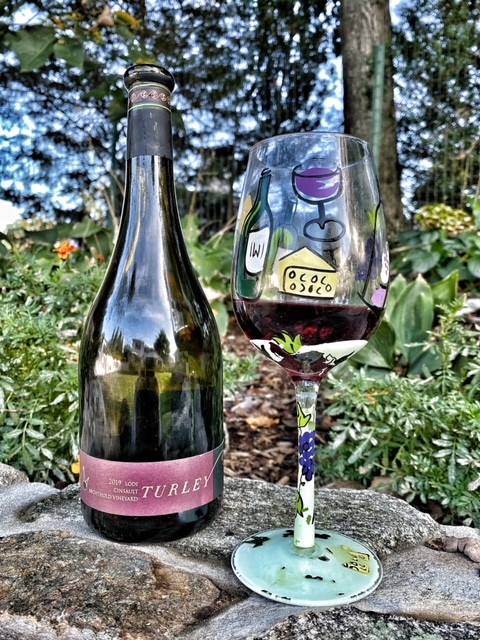
2019 Turley Bechtold Vineyard Cinsault Lodi (12.4% ABV). Wine from one of my favorite producers – Turley. Wine from one of my favorite wine regions in California (and not only in California) – Lodi.
Lodi flies under the radar for a lot of wine lovers. Everybody knows Napa and Sonoma. Californian Pinot Noir aficionados probably know Santa Barbara County. Meanwhile, Lodi is where Robert Mondavi went to high school and where his father run the grape-packing business. Lodi is the single largest AVA in North America, and Lodi is where Napa winemakers go to get their grapes. Maybe most importantly, Lodi is home to a number of old, continuously producing vineyards. Of course, everyone likes to lay a claim to the “oldest vineyard” here and there – however, Bechtold vineyard in Lodi was planted in 1886, and oldest or not, 136 years of continuously producing fruit deserves the utmost respect.
Lodi might be best known for its old vines Zinfandels, but our Monday wine tonight is made out of Cinsault, a grape typically used in Rhône and Provence. Cinsault wines typically offer a fruity and floral profile with some pungent undertones.
2019 Turley Cinsault was made using whole cluster fermentation with natural yeast and aged for about 7 months in used French oak barrels. The result was the wine that delivered that thought-provoking Monday night experience we were talking about.
On the nose, the wine offered fresh berries and a hint of the forest floor. On the palate, there was a delicate interplay of raspberries, sour cherries, tartness, and acidity, all packaged together delicately but firmly, and finishing off with sour cherries and cherry pits, long-lasting and offering an opportunity to enjoy a quiet moment. (Drinkability: 8/8+)
That’s how my Monday night wine was (delicious!). How was yours?
Daily Glass: Yin and Yang
 Obey your inspiration.
Yin and Yang are too big of a concept to casually use while discussing everyday wines. Black and white. Darkness and light. Night and day. Passive and active. There is a lot of meaning behind the revolving black and white semi-spheres, and we would need a few (4, 5, …) bottles of wine to discuss it. So what gives?
I was drinking a bottle of wine for 5 days. Open, pour a little into a glass, drink, hope to be amazed, close, pump the air out, put aside. Repeat. And then I opened a bottle for a Friday night dinner of homemade tacos, and the wine was delicious and approachable from the moment it hit the glass. Yin and Yang, the brain said. This is a perfect title for the post. Who am I to argue?
Yin is a black portion of the circle of life. 2014 Bodegas Riojanas Rioja Gran Reserva (13.5% ABV, $19.99 at WTSO, $49.99 on the web) was the Yin at the moment.
Bodegas Riojanas was founded in 1890 by the Artacho family which had a long winemaking history prior to that. Unlike many other Rioja’s Greats, who set up their wineries close to the train station in Haro, Bodegas Riojanas winery was built in Cenicero, where the grapes grew. Bodegas Riojanas was among the 13 founding wineries behind the Rioja DOC denomination. Today, Bodegas Riojanas farms 250 acres of vineyards and produces a large number of white, red, Rosé, and sparkling wines.
Bodegas Riojanas Gran Reserva is one of the flagship wines. 100% Tempranillo, aged for 24-30 months in the casks, produced in traditional Rioja style. 2014 vintage was rated “good” in the official Rioja vintage classification – the best years are identified as “Excellent”, then “very good”, and then “good” – so we can say that this was an okay year. Traditional style Gran Reserva wines are typically tight and need time – and so was this wine. For 5 days, as I was tasting it little by little, the wine was opening up ever so slightly. Don’t get me wrong – it was drinkable for someone who likes the power and likes to drink super-structured, super-tight wines. On day 5, there was a glimpse of cherries and a cigar box, which was slowly replaced by the tannins on the finish. This is the wine with promise, but we need to wait until the Yin will turn.
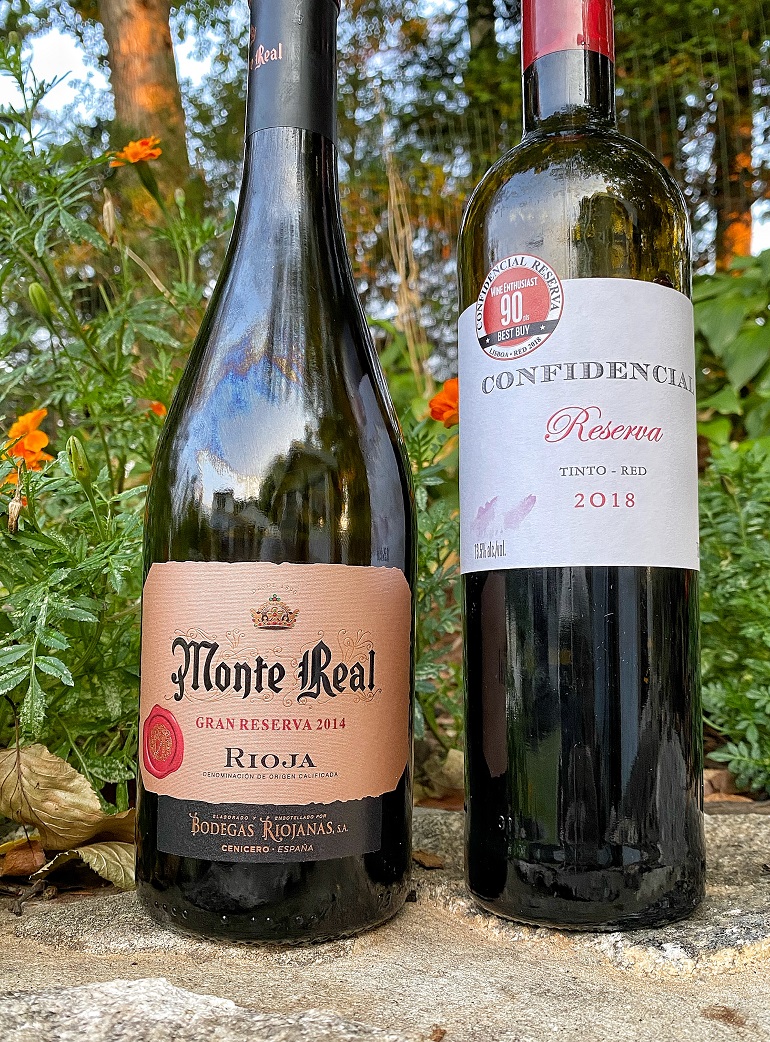
Now, the Yang – 2018 Casa Santos Lima Confidencial Reserva Vinho Regional Lisboa (13.5% ABV, $9.99, 10+ grape varieties, 6 months in the French oak cask).
Casa Santos Lima also has a history that lasts more than 100 years. The company had great success as a producer and exporter at the end of the 19th century. In 1990, the company was restarted, and today 90% of the produced wines are exported to more than 50 countries on 5 continents. Casa Santos Lima produces a wide range of wines in all the regions in Portugal, with a significant focus on providing value.
It is not for nothing this wine is called Confidencial. You might know that I excel and take pride in being a very capable grape sleuth. And nevertheless, as the name says, I was only able to find out that the wine is produced out of more than 10 confidential varieties – nowhere there are any hints on what those grapes might be.
This is not necessarily surprising. Yes, it can be a clever marketing play (humans love mystery), but at the same time, lots of grapes in Portugal are growing as field blends, where the grape grower doesn’t exactly know what grapes are growing in a given vineyard or a given plot – this might be a great idea to simply declare such blend as “confidential”.
Based on my experience with Portuguese grapes varieties, I would think that Touriga Nacional is a part of the blend, with the wild strawberries being a telltale sign. In any case, the wine was delicious with soft and supple wild strawberries and raspberries forming the core, and sage and other garden herbs playing a supporting role. Layered, velvety, and round – perfectly approachable and enjoyable right at this moment. (Drinkability: 8-/8).
Yin and Yang are all about harmony, and things that are changing in life – what was white can become black, and the other was around. The light can bring warmth or it can kill. The darkness can be scary, or it can be comforting.
With time, these two wines can completely change places. The Rioja might become absolutely stunning in 25-30 years., The Portuguese red might be past prime even in 10. The Yin and Yang can swap places. But we don’t know what will happen in the future, and that makes it all fun. Let’s drink to the harmony in life. Cheers!
Pure Pleasure, And How To Express It
Does this glass give you pleasure?
You take a sip of wine. The wine is sublime. It is beautiful. It is complex. The wine solicits emotion – it makes you happy. It makes you moan quietly inside your head, you might extort an “OMG” or a “Wow”, and after a pause, you take another sip. You are not in a hurry. You want to extend this pleasure for as long as possible.
Wine is art. Wine doesn’t leave you indifferent. Wine solicits emotion.
Painting is art. Painting doesn’t leave you indifferent. Painting solicits emotion.
Music is art. Music doesn’t leave you indifferent. Music solicits emotion.
We can consider wine to be a form of art, the same as painting, music, poetry, architecture, and many other human creations which invite an emotional reaction. Do you know what makes wine a unique form of art? Your utter desire to share it.
You can quietly stare at a beautiful painting for a long time, slowly uncovering little details and being in the moment. Even if you stand next to someone else looking at the same painting, 99 out of 100 you are simply focused on your own personal moment.
When listening to the music, even if you are in the concert hall surrounded by thousands, the music is being played only for you and this is how you want to keep it. You can buy a recording and listen to it 100 times. Just by yourself, and you are happy about it.
Have you seen an oenophile get excited about wine? The excited oenophile grabs the total stranger by the sleeve, shoves the glass into their face and says “here, here, you must try this!!!” It is very important for an oenophile to be able to share the joy of the experience with others. There is an ultimate pleasure in sharing your excitement with others, as wine is an art that needs to be shared.
Sharing pleasure is easy in person. Have you tasted magnificent, life-altering wines in the group? If you had, you probably noticed the collective “ohh”, rolling the eyes, unprompted nodding, maybe a muttered “oh my god”, and then silence. The silence of the greatness of the moment, slowly settling in.
This in-person sharing of the pleasure is simple, and kind of just happens on its own. The real challenge comes when you decide to share that ultimate pleasure with the rest of the world.
So how can one express pure pleasure?
A typical way to describe the wine is via so-called tasting notes. Such tasting notes are often called “technical notes” as they usually describe the wine in terms of appearance, aroma, bouquet, and finish – using analogies such as “brickish color”, “smell of mushrooms”, or “taste of dark cherries”. The wine is described in the terms which the wine drinker is supposed to relate to – and it is a great review if you can relate to all of the terms used without trying to figure out what is Cascarilla and how it actually smells, or how Jabuticaba tastes like. What is usually not found in the tasting notes is the emotion – how this wine might make you feel; will you scream with joy when you will take a sip? Yes, I get it. Even the aromas and flavors are subjective. The emotion which you will experience while drinking the wine is yours and yours only – the person next to you might not experience the same enlightenment – and nevertheless, even the hope for greatness is worth sharing.
Can wine pleasure be expressed in the words by professional wine critics? You be the judge of it. Here is the collection of tatsing notes for the 1966 Domaine de la Romanée-Conti La Tâche Grand Cru. At this link, you will find the reviews from Robert Parker, Jancis Robinson, John Gilman, and others. Here is the best excerpt in my opinion. John Gilman: “La Tâche ‘66 is deep, full and opulent on the palate, with a grandiose delivery of thick, perfumed fruit, excellent balance, plenty of power, great focus and finesse, and an incredibly long, softly-tannic and astoundingly complex finish.” This might be the best description out of the six present, but does it convey the emotion?
Does this wine give you pleasure?
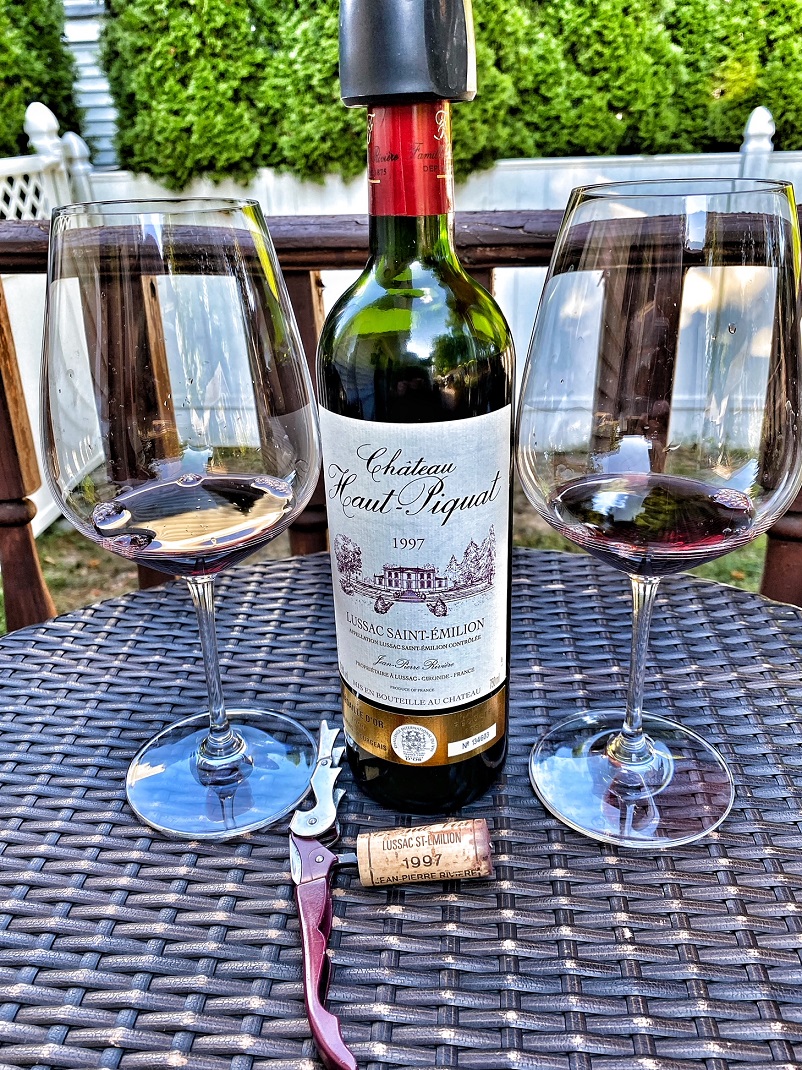
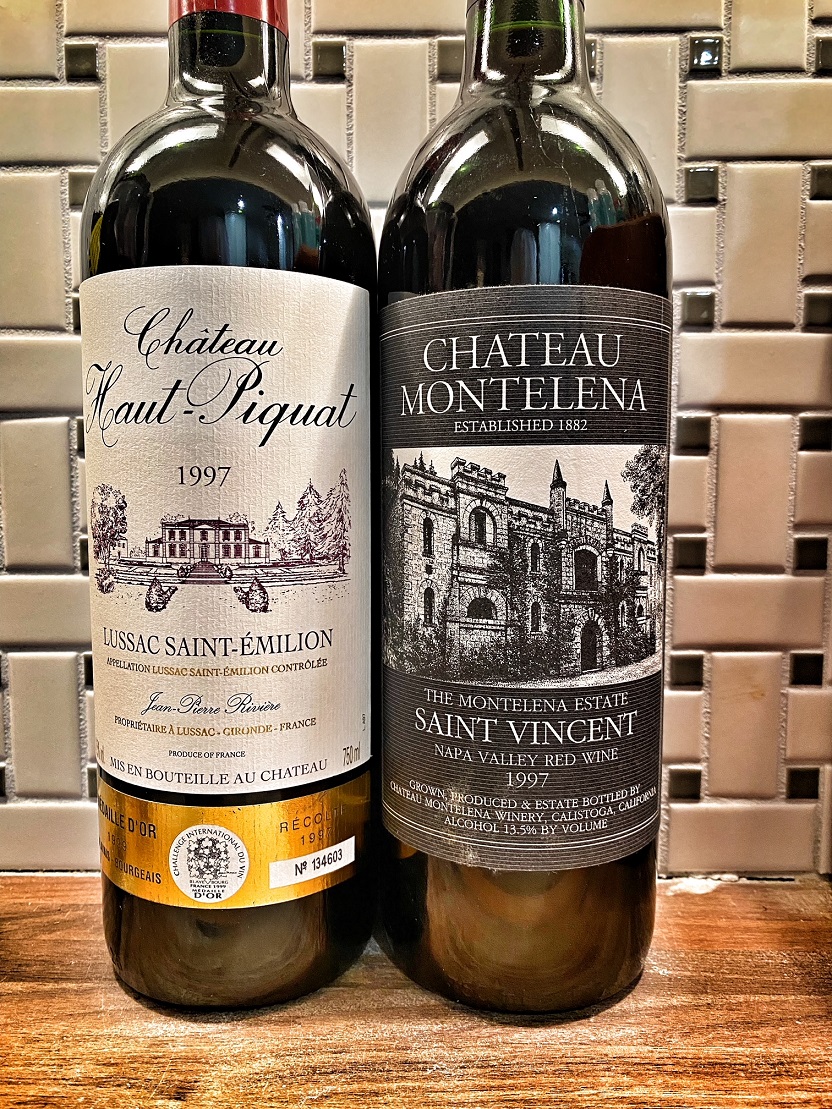
A few days ago, I had the pleasure of drinking two wines from the 1997 vintage (1997 is a special year for our family). These two wines really prompted this post. First, I opened the 1997 Château Haut-Piquat Lussac Saint-Émilion (12.5% ABV, 80% Merlot, 15% Cabernet Sauvignon, 5% Cabernet Franc). The wine was somewhat of a recent find at the Wine Exchange – after getting an email offer to buy 1997 Bordeaux for $19.99, I had no option but to get a few bottles. I was happy to see the cork coming out in its entirety with no issues. I was ready with the decanter, but the wine in the glass was quite approachable. After the initial grippy tannins dissipated in 20-30 minutes, what was left in the glass was an absolutely sublime beauty. You see, this is where the challenge lies. Here is the technical description from the Wine Exchange: “a wine that still possesses a youthful charm as there is something to be said for ex-chateau. A beautiful plum/garnet color with very little lightening for its age. This 1997 is full to medium-bodied, showing lots of forest floor, roasted herbs, cedar, tobacco, black cherry, blackcurrant, and new saddle leather. It is opulent and is just entering its plateau of full maturity. The tannins are soft and subtle with an elegant seamless finish. ”
The description is perfectly fine, but it doesn’t help me to express my emotion. The mind singing with every sip. Pure joy in each and every sip. Enough pleasure in every sip to have the nerve enough to tell my wife, who was enjoying the wine with me “this is almost as good as sex”. A personal perspective for sure, but yes, this was the wine.
I didn’t have many expectations for 1997 Chateau Montelena Saint Vincent Red Wine Napa Valley (13.5% ABV, blend of Zinfandel, Primitivo, Sangiovese). Chateau Montelena is absolutely legendary with its role in the Judgement of Paris, especially if you had an opportunity to see the movie Bottle Shock. But Saint Vincent is an eclectic blend, produced only for 5 years from 1995 till 1999, and it is not given that this type of wine can age for 25 years. While very different from the previous Bordeaux in its profile of cherries, eucalyptus, and herbs, it had such a lip-smacking, savory and satisfying bouquet, that every sip was demanding to be followed by another sip.
Do you want a second glass?
I have no idea how to convey the pure pleasure the wine can bring. Maybe emotion is the key. There are lots of good wines out there. The wines you are happy to drink any day every day. Maybe it is the excitement that needs to be measured. Or maybe this is simply in the unyielding desire to share this pleasure with the world. The act of telling the world how amazing the wine was, and hoping that everybody will see it that way too.
Let’s share our little joys with one another. And if you know how to convey this pure wine pleasure, please let me in on that secret.
Daily Glass: Winning and Learning
Sometimes you win, and sometimes you learn.
You never lose – learning is the opposite of winning – I think this is a better approach to life, would you agree?
I love aging my wines. The popular wine press tells people that 95% of the wines in this world are meant to be consumed shortly after purchasing. “Absolute majority of the wine is not meant to be aged,” the message says. I don’t want to obnoxiously invalidate all the expert opinions, but the subject of wine aging is a lot more complicated than the simple statement portrays.
Lots of factors play a role. The wine itself is probably the most critical factor. White wines generally don’t age too well. To be more precise, percentage-wise, a lesser number of white wines can age well compared to red wines. But this doesn’t mean that all red wines age well. For example, red Cotes du Rhone typically don’t age for longer than 4-5 years.
I wish there was an easy method to tell us, wine lovers, that “this wine will age for 30 years”, but “this one got only 10 more left”. There is no such method, however, so we need to rely primarily on our experiences. I’m not trying to disqualify all of the wonderful advice we receive from the wine critic and publications – but it would be rare to receive an aging recommendation there unless the wine is deemed of a “collector” level – which pretty much means that it will not be really affordable.
At this point, you might wonder why is all this commotion with the aging of the wines. Simple. Wine is a living thing. The evolution of the wine continues in the bottle. It is a general hope that wine can improve with time, evolve, become more complex and multidimensional.But the wine can’t evolve forever – at some point it starts “turning”, losing its delicious, attractive qualities.
It is important that the wine drinker can appreciate the beauty of the aged wine – it is not for everyone. I don’t mean it in any disrespectful way – this is simply a matter of taste. One of my most favorite examples is the blind tasting of a few Champagnes which took place during Windows on the World wine classes. After blind tasting 4 Champagnes, the group was asked to vote for their favorite Champagne. Champagne #4 got almost no votes, it was clearly the least favorite of the group of 100+ people. While revealing the wines, Kevin Zraly, our wine teacher, said “and this is why, people, you should not drink vintage Champagne”. Bottle #4 was Dom Perignon – if people would see the label before voting, you know how that would work (”drink up, honey, it is French”). And Vintage Champagne is nothing more than just an aged wine. It is just a matter of taste. The same story goes for food. For example – I love fresh oysters, and I have friends who wouldn’t put an oyster into their mouth even if this will be required to save their own life. Just a matter of taste.
But for those of us who like aged wines, that elusive quest becomes an obsession. I love the Italian term “vino da meditazione”, which applies to the wines which make conversation stop upon the first sip, and puts the whole group of oenophiles into a quiet, self-reflective state. The silence at the table becomes not deafening, but instead a very comfortable one. The silence nobody wants to break.
Okay, such amazing encounters are possible but truly rare. But the pleasure of drinking the well-aged wine is real, and this is what we are seeking. And as we don’t have the scientific method of predicting the peak of enjoyment for a given wine, we have to rely on our own experience. Which takes us back to winning and learning. When we experienced well-aged wine, we clearly won. And when the wine with age doesn’t deliver the pleasure, this is where we learn.
It is not so binary, of course. The point is that no matter what happened, we learn something. When you taste a random but amazing $10 bottle of California red blend (Toasted Head) with 15 years of age on, you learn that inexpensive wines can age too. When you taste 2002 Barolo (Fontanafredda) 10 years after release, and you see that the vintage chart declares this vintage as literally horrible, but the wine tastes good, you learn that the producer matters more than the vintage. When you taste two bottles from the same producer and the same vintage, but you love one of them and can’t stand another, you learn that bottle variation is real and that you have to always manage your expectations.
This whole rambling about winning, learning and aging was prompted by a few wines I opened last week.
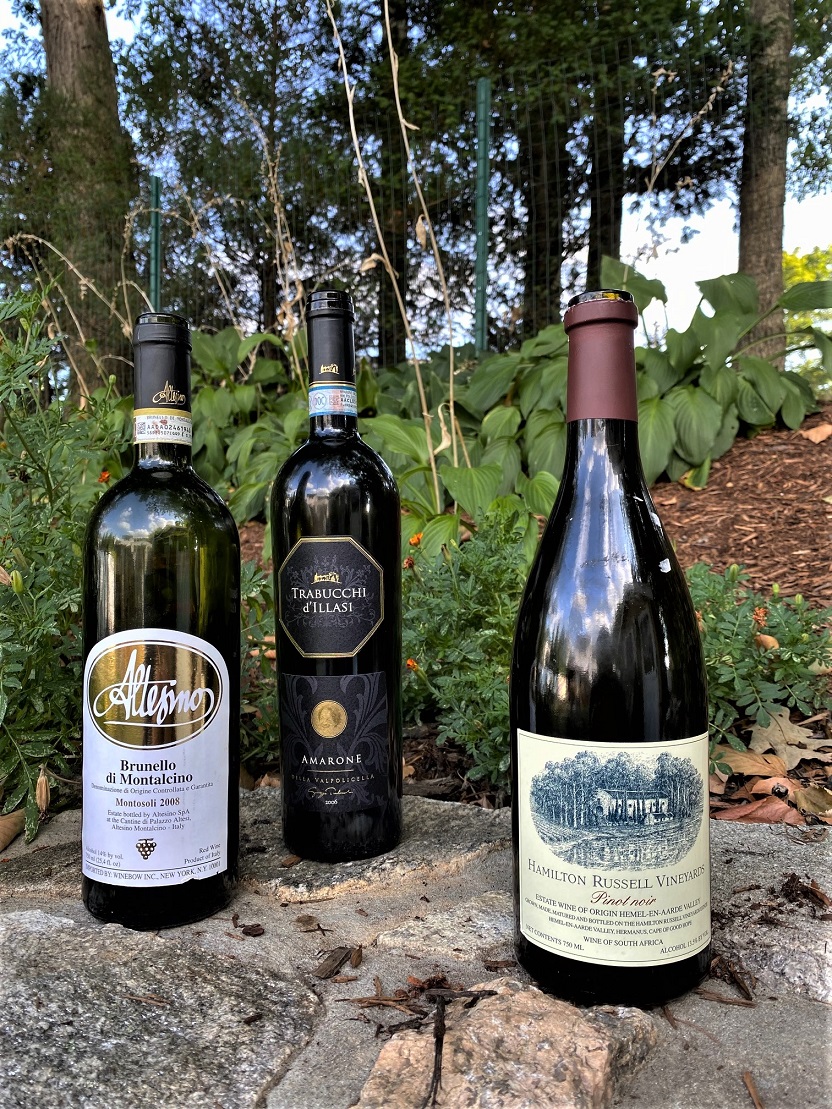
First, the learning part. 12 years ago we did the Pinot Noir blind tasting with friends, with a very unexpected outcome – 2008 Hamilton Russell Pinot Noir from South Africa was the best wine in that blind tasting. I loved the wine so much that I went and got a bottle to keep. Over the years, I made many attempts on the life of this bottle, until the last weekend I decided to share it with a friend. Upon opening the wine was reminiscent of the good Burgundy, with the nose offering some plums, iodine, and smoke. But the wine quickly succumbed to the tertiary aromas of dry herbs and maybe a hint of dried fruit, and while my friend really loved it, this was a complete loss learning in my book.
Then another friend was stopping shortly after his birthday. He always liked the wines, but recently started getting really “more into it”. He was stopping by for the dinner, and when we were talking about wines a few days prior, he mentioned that he started liking the Brunello and Amarone wines. There is no happier moment for the oenophile than to learn what the guest desires to drink – the cellar is instantly paraded in the search for the best and the most appropriate bottle.
I don’t know how I came into possession of the 2008 Altesino Brunello di Montalcino Montosoli, I can only guess I got it as a present. This single vineyard Brunello di Montalcino was absolutely spectacular – beautiful cherries on the palate – not the fresh and crunchy ones, but more subdued, more elegant, eloped in the sage and other herbal aromatics. The wine was spectacular when we opened it, and when I finished the last drop 2 days later (wine was kept in the bottle with the air pumped out), I had a clear feeling of regret as the wine was not gone, but instead was still fresh and even more complex, with a promise of becoming the Vini da meditations in 10 years, same the 1999 Soldera had become for us – alas, I don’t have another bottle…
And then my pet peeve – you know how much I love Amarone. I got a few bottles of the 2006 Trabucchi d’Illasi Amarone della Valpolicella from WTSO 7 years ago. This was my last bottle, and boy it didn’t disappoint. It was absolutely beautiful in its finesse and impeccable balance all the way through. Dried fruit on the nose, powerful, well-structured wine on the palate, with more of the dried fruit, cherries, plums and herbs, and with good acidity, perfect balance and delicious bitter finish. It is not for nothing Amarone means Great Bitter – and there was this pleasant bitterness on the finish, something hard to find in most of the Amarone wines.
Here you are, my friends, my story of winning and learning. Three aged wines, two of them delicious, two that could age for far longer (learning!). One learning experience – but who knows, maybe it was only that particular bottle. Moving on.
What did you win and learn lately?
Last Bottle Sign Up ($10 credit)




 Talk-A-Vino