Archive
Alit Wines – Follow The Flow. Lava Flow
 Here is a question which can never be answered: where the wine is made, in the vineyard or in the cellar?
There are many arguments towards the vineyard being The Place where the wine is made. Mother Nature offerings are everchanging – they change every year, never repeating themselves. But it is not only the climate that never repeats itself – the land which seems to present itself as chunks of sameness is very far from it. Only identifying different pieces is the work of art – the mastery of the winemaker.
Alit Wines is a very young winery, by all means – it was founded only about 5 years ago, in 2016. You would not think that once you taste their wines, which come through elegant and mature – but we need to keep in mind that Alit is only one piece to a bigger story.
Oregon is often compared with Burgundy – Pinot Noir and Chardonnay are stars in both regions, and both regions produce well ageable wines of finesse. Burgundy is built on the concepts of terroir and soils – I’m sure you’ve heard the stories of Burgundian vignerons going any distance to protect their soils from erosion and any sort of loss. The whole concept of Crus is based on terroir differentiation, and it took Burgundy centuries to find their best of the best parcels which earned the right to be called Grand Crus.
If you ever listened to the Oregon winemakers, they often talk about soils, first in monolithic terms, in terms of big blocks. But with every subsequent harvest, they start seeing differences between different plots in the vineyards, and those become specific plot-designated wines. This is Oregon’s path towards finding their Grand Crus.
We probably shouldn’t speak for the whole of Oregon, as Alit’s approach to this Grand Cru quest is different. Let’s get back to our “bigger story” around Alit. We usually think that wines are all about grapes, but they are actually all about people – people who stand behind those wines. In the case of Alit, the first person we need to mention is Mark Tarlov. After leaving his first successful wine project, Evening Land (a unique enterprise, if you ask me, making wines under the Evening Land label both in Burgundy and Oregon), Mark continued his wine endeavors with Chapter 24 Vineyards, which he started in 2012. Chapter 24 wines are extremely terroir focused – if you will look at the Chapter 24 Vineyards website, you will see that it produces only two wines – one called The Fire which comes from the volcanic soils, and The Flood, with the grapes coming from vineyards planted in riverbed soils.
In 2015, Chapter 24 Vineyards opened the “last chapter” as it is called – Rose and Arrow winery, as well as the subsequent (2016) “sister” operation – Alit. In case you are curious, the “About” page explains the Rose and Arrow name: “The “rose” and “arrow”, innately connected yet conflicting, each defined by the existence (or absence) of the other. Our favorite wines make us appreciate the harmony of opposites: acid/sweet, simple/complex, solid rock/sprouting vine. The latter is where our narrative begins, as every great wine is ignited by unique tensions in the rock of its origin.“. Also in 2015, Mark Tarlov was joined by Chilean winemaker Felipe Ramirez, who became the winemaker for Chapter 24, Rose and Arrow, and Alit wines, working together with consulting winemaker Louis Michel Liger-Belair.
Remember, we need to follow lava flow, as these wines are all about soils, basalt soils, rich in unique nutrients. Enters Dr. Pedro Parra, who wine writer LM Archer called Terroir Whisperer. Dr. Parra is one of the leading soil specialists in the world. Explaining Dr. Parra’s methodology would require a long, very long, and dedicated post, so instead, you should read Lyn’s article where she does a great job explaining what Dr. Parra does – but in essence, he is capable of identifying microsites, some can be 0.5 acres or less, capable of producing wine with very specific characteristics – all of it based on soil and climate analysis before (!) the vineyards are planted. To make it all practical, one of the first projects at Rose and Arrow was the vinification of about 100 wines harvested from such microsites – this is what makes Rose and Arrow wines unique.
When you think of “vineyard plots”, what image comes to mind? My imagination stops at squares or rectangles – but in our case, a correct answer is a polygon. Chapter 24/Rose and Arrow/Alit all operate with polygons, where the shape of microsites can be very complex. Here is the snapshot from our zoom call with folks from Alit where Felipe Ramirez shows the map of one of the sites (sorry that you can’t see Felipe):
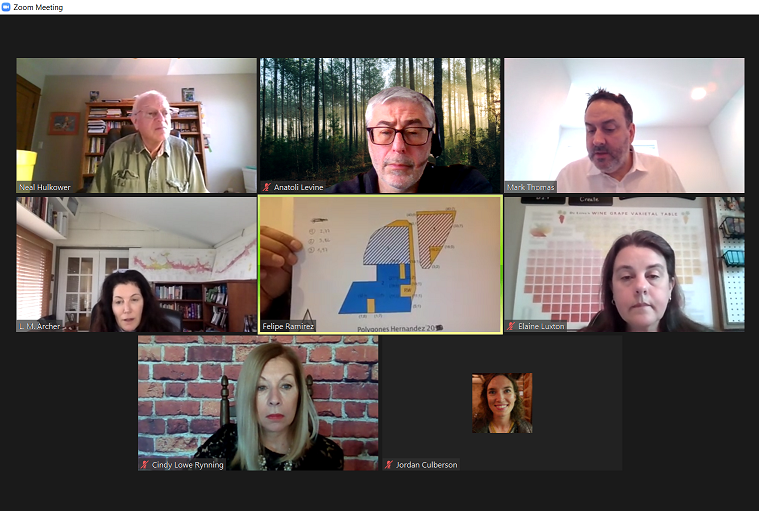
How these microsites are identified? Using a method called electrical conductivity. Measuring the electrical conductivity of soil allows to create maps – this is exactly what the folks from Alit and Rose and Arrow are doing. Once you have a map, the rest is easy 🙂 now it is all about mastery of the winemaker – harvest each microsite (polygon) separately, vinify separately – and create the magic.
Now that we understand how the road to the Oregon Grand Crus looks like, let’s discuss the role Alit is playing in this quest.
Talking about Alit wines, we need first mention the Collective. Alit Collective is similar to the wine club, but it is very different from the typical winery club. To become a member of the Collective, you need to pay a $100 annual membership. After that, you can buy Alit wines at a cost – however, it is you who decide what to buy and when. To give an idea of the cost, Alit Pinot Noir (2015) costs $15.10 for Collective members and $27.45 for non-members – this means that once you buy 8 bottles, you will recoup your $100 investment, and every bottle afterward gives you great savings. How does selling at cost makes sense, you probably wonder? It wouldn’t if Alit would be on its own, but in conjunction with Rose and Arrow, it does make sense, as it helps to finance the overall operation.
What else can I tell you? Ahh, the wines, let’s not forget about the wines!
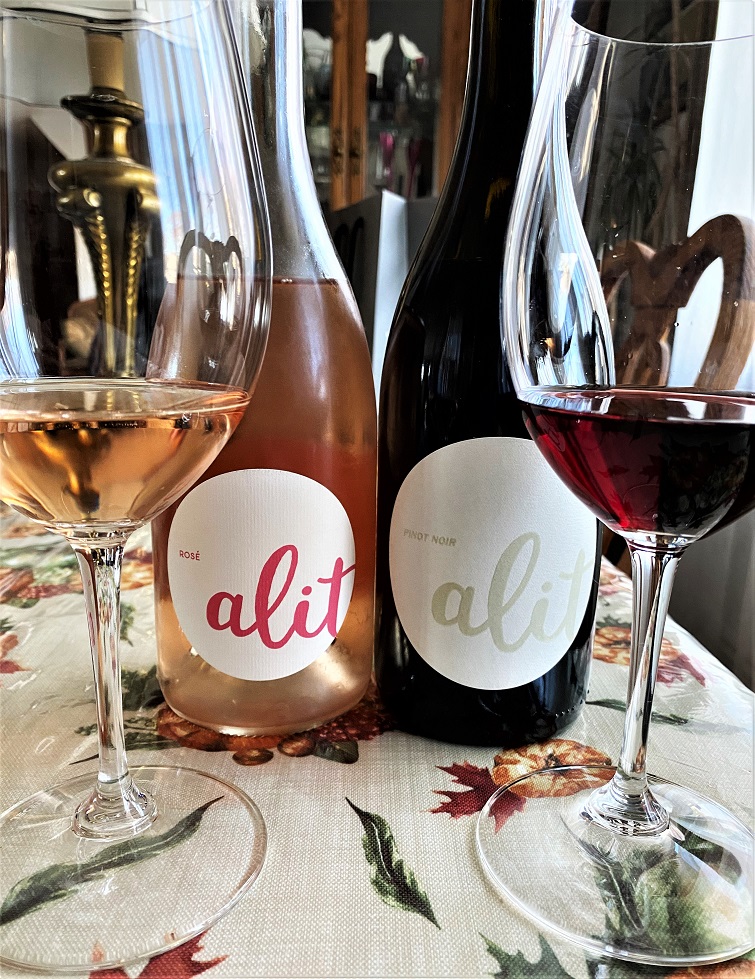
We tasted two of the Alit wines, Rosé (of Pinot Noir, of course), and Pinot Noir.
2019 Alit Rosé Willamette Valley (13% ABV) had a salmon pink color. Gunflint (volcanic soils!), strawberries, and onion peel on the nose. Nice touch of fresh strawberries and lemon, crisp, refreshing, nicely restrained, and well balanced with lemon notes on the finish (Drinkability: 8) – unquestionably delicious any time you want a glass of light, refreshing wine.
2017 Alit Pinot Noir Willamette Valley (13.6% ABV, native yeast fermentation, 10-12 months in oak) – beautiful bright ruby color – it is seldom for me to see a red wine of such a beautiful color. Beautiful nose, herbal, open, inviting, with mint, cherries, and a touch of the barnyard. Now, I have to say that the palate made me work for it. During the tasting, with the freshly opened bottle, the wine showed light, with red and blue fruit, good acidity, fresh, food-friendly, and restrained – we can even say “under-extracted” (Drinkability: 7+/8-). Over the next two days, the wine opened up, it obtained body, became round and supple, and became an object of pleasure (Drinkability: 8+). Definitely needs time, either in the cellar or in the decanter if you are in a hurry.
Alit Wines and Rose and Arrow enterprises are definitely something to watch. Mark Tarlov believes that sometime around 2030, it will be possible to understand if his quest for the Oregonian Grand Cru was successful. As for me, I practically always enjoy the journey more than the destination, so I will be happy to tag along, and yes, actually enjoy the journey with Alit wines – hop on, we can follow the lava flow together.
Celebrate Cabernet Franc!
What do you think of Cabernet Franc? Is that a grape worthy of its own, special celebration?
If I can take the liberty of answering my own question, it is an enthusiastic “yes” from me.
I don’t know if wine lovers realize the grand standing of Cabernet Franc. The grape is essential as part of the blend, in French Bordeaux and Bordeaux-style blends from anywhere in the world. At the same time, Cabernet Franc is perfect on its own, making delicious single-varietal wines literally everywhere – Argentina, Australia, California, Canada, Chile, France, Israel, Italy, New Jersey, New York, Oregon, South Africa, Washington, and everywhere in between.
While classic Cabernet Franc taste profile evolves around Black Currant ( a.k.a. Cassis), the overall expression varies from lean and dry in the wines coming from Loire Valley in France (Chinon, Saumur) to opulent, bigger-than-life renditions from Argentina and California. Another essential taste element of Cabernet Franc is bell peppers, which are typically most noticeable in the Loire wines but can be completely absent in the Californian wines, where bell peppers flavors often considered highly undesirable.
I talked about the history of Cabernet Franc in some of the older posts, so I’m not going to repeat it here. Instead, we can just get to the subject of today’s celebration and taste some wines.
#CabFrancDay holiday was invented about 5 years ago by Lori Budd of Dracaena Wines, a passionate Cabernet Franc producer out of Paso Robles in California and a tireless champion of her beloved grape. To celebrate the Cabernet Franc, I tasted two samples of the Cabernet Franc wines which I never had before, so let’s talk about them. We can even make a competition out of this tasting, a California versus Washington match.
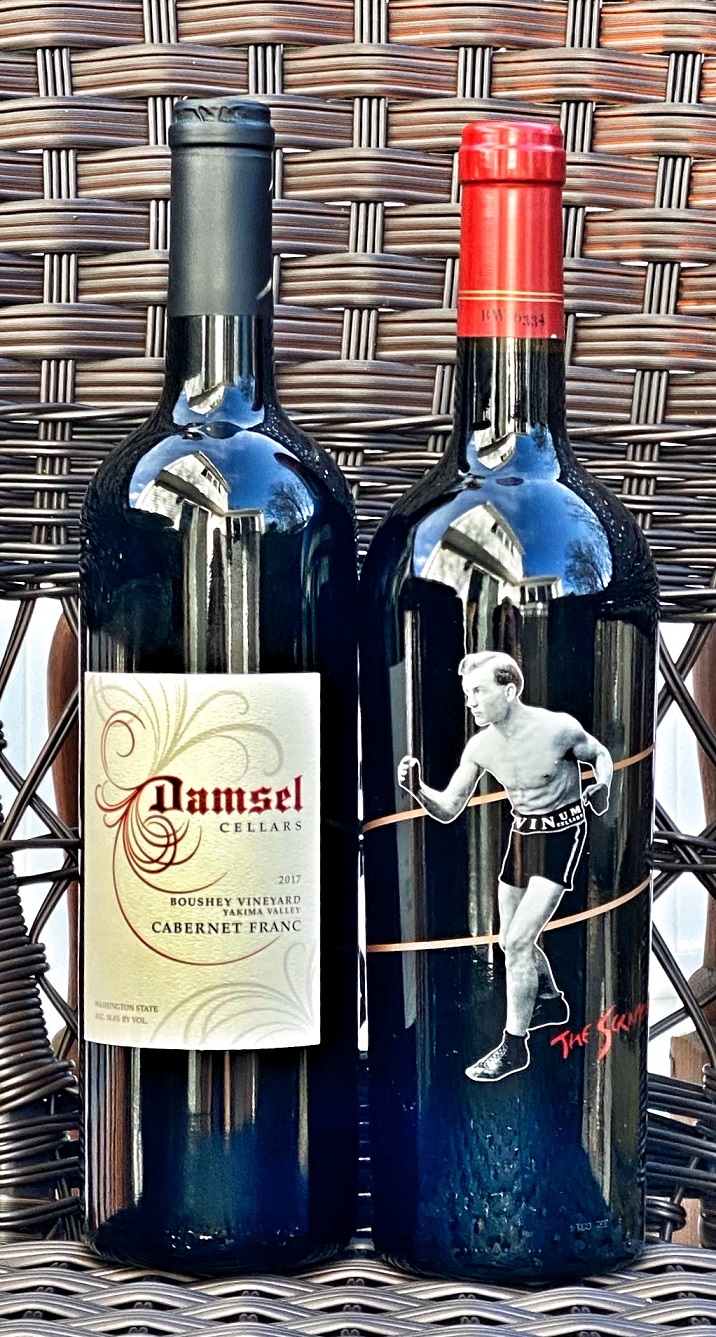
Let’s start in California, at Vinum Cellars in Napa Valley. As soon as I saw a bottle of 2016 Vinum Cellars The Scrapper Cabernet Franc El Dorado (15.18% ABV, $35, 26 months in 2-year-old French Oak) I realized that I have a lot of questions. Who and why is depicted on the bottle? What the mysterious number on the top of the bottle? Is there any reason to use grapes from El Dorado for the Napa-based winery? To answer these questions, I reached out to Maria Bruno, whose cousin, Richard Bruno, is the co-founder and co-winemaker at Vinum, where Maria helps with the winery’s social media and digital marketing efforts. Here are the answers to my questions which give you an excellent introduction to the winery and the wine:
1. Why the wine is called The Scrapper?
A scrapper is essentially a fighter and we call our wine that because Cabernet Franc is a varietal that has quickly been forgotten in the shadows of the more popular Cabernet Sauvignon. Our wine is made for the open-minded, the adventurous, and those who root for the underdog.
2. What is behind the image on the wine’s label?
The image on the front of the bottle is Gene Tunney. He was the 1926 Heavyweight Champion of the World, however, most modern day people have never even heard of him. But have you heard of Jack Dempsey? I’m sure you have. A little history lesson here: Gene Tunney defeated Jack Dempsey for the 1926 crown, and it was the second time he defeated the more popular fighter (no one else ever did that). So to complete the metaphor, if Gene Tunney is Cab Franc, and Jack Dempsey is Cab Sauv we then ask you, which is the better varietal? Because we know who the better boxer was…
3. On top of the foil capsule it says BW 6334. What is the meaning of that?
That’s our California Bonded Winery number. In 1997 we financed our own winery on credit cards and utilized the custom crush space at Napa Wine Company (they are Bonded Winery number 9! Literally, the 9th bonded winery in the state and currently the only single-digit bonded winery still in existence). We sold our first vintage, all 960 cases, out of the trunks of our cars, and here we are over 20 years later… still going strong!
4. Why El Dorado? What makes Cab Franc from El Dorado a special wine?
We source our Cab Franc from a hillside, red dirt soil single vineyard at an elevation of 1,600 feet within the Sierra Mountains in El Dorado County. The grower, Ron Mansfield, has a degree in renewable agriculture and has organically farmed this vineyard (though not certified) using sustainable practices for over 35 years. Ron also grows tree fruit such as peaches, nectarines, apples, and pears We have produced Cabernet Franc grown by Ron for over 20 years, and the 2016 vintage was our 19th. The entire vineyard only produces about 500 cases a year but it’s worth it (because it’s so good). The vineyard is 25 years old and is head-trained allowing more sunlight into the canopy and therefore a reduction in Pyrazines which are responsible for green and vegetal aromas and flavors.
How was the wine? Please allow me to introduce Damsel Cellars first, and then we will discuss the wines side by side.
Damsel Cellars is located in Woodinville, Washington. Just seeing Woodinville on the wine label puts a huge smile on my face, as it instantly brings back the happiest memories of discovering Woodinville some years back. Walking from one winery door to another, and tasting one delicious wine after another, I was hoping to replicate the experience a few months back as I was supposed to have a business meeting in Seattle, but you know how 2020 travel looks like…
Mari Womack, owner and winemaker of Damsel Cellars, got into the wine only 10 years ago, but tasting her wines you would never think so. After working at a number of Woodinville wineries, she started Damsel Cellars, with the sixth vintage on the way now.
The Grapes for 2017 Damsel Cellars Boushey Vineyard Cabernet Franc Yakima Valley (14.6% ABV, $36) come from the Boushey Vineyard in Yakima Valley, located on the southern slopes of the Rattlesnake Mountains. The first vines were planted there in 1980, and the last plantings took place in 2003. The vineyard is located on slopes from 700 to 1200 feet elevation, so the grapes can enjoy a cooler and drier climate.
Now, how did the wines compared? Both wines are 100% Cabernet Franc, which I find quite typical for any wines bearing the Cabernet Franc name. Both wines were similar in the pure black currant expression, and both wines didn’t offer any of the bell pepper undertones. Both wines required at least an hour to come to their senses. Vinum Cab Franc stayed perfectly powerful and polished over the course of 4 days, black currant all the way, a touch of dark chocolate, full-body, a roll of your tongue smooth, and perfectly balanced. Damsel Cab Franc’s power on the first day manifested in black currant notes weaved around expressive minerality, which I usually call “liquid rock” (this is one of the common traits I find among many Washington wines), perfectly balanced and delicious. On the second day, however, the ultra-distant touch of the bell pepper appeared, the fruit gently subsided, and the wine magically transposed into the old world – a perfectly balanced old world wine. In a blind tasting, I would put this wine squarely into the Loire Valley and would be very proud of my decision.
The verdict? I don’t have one. Yep, seriously, These are unquestionably Cab Franc wines, unquestionably delicious, and unquestionably different. Oh well. If I would be really hard pressed to chose one, I would go with Damsel Cab Franc – if anything, for the old world nostalgic emotions – I really drink very little of the old world wines, so I’m always excited to experience them again.
That’s all I have for you, my friends. How is your Cabernet Franc celebration going? Let me know what Cab Franc made you excited. Cheers!
Procrastination and Carménère
 Let me quickly put you at ease – procrastination has nothing to do with Carménère. Unfortunately, it has to do with yours truly, and this blog been behind on the content for years.
It happens a lot more often than I would even want to admit to myself – I attend a great tasting or an exciting dinner with the winemakers. I would typically leave the event excited and with lots of ideas for the post. I would start writing and envisioning that post in my head for the next day, two, five, ten… One out of five will probably make it onto these pages, and the rest will continue playing in the head until it will convert into permanent guilt. I would look at my blog to-do list and feel that pain of unaccomplished over and over again. Sometimes, I would break through and write that long overdue post – and sometimes, you just accept that guilt, you know…
How far back it would be appropriate to go for some untimely post? If you know, please tell me. This is the wine we are talking about – who knows what vintages people hold? As long as I have the notes, it is all good, right. Feel free to disagree, but I’m going three years back today, to experience again some tasty Carménère…


As I wrote a post about my recent experience with the world-class TerraNoble Carménère line, I recalled the Carménère tasting which was organized three years ago by Snooth (I wrote about many Snooth tastings in the past, but somehow managed to miss this one). In the tasting, we heard from 7 producers and tried their Carménère wines. For what it worth now, three years later, here are my notes:
2015 Viña Casa Silva Cuvee Colchagua Carmenere Colchagua Valley (14% ABV, $15, blend of grapes from Casa Silva’s Los Lingues vineyard in the Andes and the Lolol vineyard in the Costa zone, 8 months in French oak)
Dark garnet color, restrained nose, herbal nose, mineral notes, granite. On the palate, tobacco, nicely restrained, earthy, herbal, good acidity, dark fruit. Overall, nice. Needs time. Pioneer of Carmenere in Colchagua, started in 1892. Carmenere overall started in Colchagua
2015 Siegel Single Vineyard Los Lingues Carmenere Colchagua Valley (14% ABV, $28.99, 8 months in French oak)
dark garnet, inky, color. Herbal in your face on the nose, pure currant, rutherford dust. Very concentrated on the palate, lots of oak, restrained. Needs time.
2014 Viña Carmen Gran Reserva Carmenere Colchagua Valley (14% ABV, $15, 90% Carmenere, 7% Carignan and 3% Petite Verdot, aged 10 months in French oak barrels, 2 months in the bottle)
The oldest winery in Chile, founded in 1850. Practically black in color. Chocolate, coffee on the nose, sage, dark fruit. Open on the palate, sweet cherries, tobacco, perfectly balanced. Round, delicious. Best of tasting so far.
2015 Viña Requingua Toro De Piedra Carmenere Gran Reserva Maule Valley (14% ABV, $15, 12 months in French and American oak barrels)
Dark garnet color, herbal, funky nose, forest underfloor. Round on the palate, fresh herbal notes, sage, sweet cherries, blackberries. Good balance, very approachable.
2012 Valdivieso Single Vineyard Carmenere Valle de Peumo ($23, 12 months in French oak barrels, 35% new)
Almost black in color. Dark concentrated nose, currant leaves, very herbaceous, a touch of pepper. Sweet fruit on the palate. I can’t decide if this wine is corked on not. The nose says corked, palate says not. Need to give it a bit of time.
2014 Viña Ventisquero Grey Single Block Carmenere Trinidad Vineyard Maipo Valley (14% ABV, $22, aged for 18 months in French oak barrels, 34% new and 66% second and third use, 8 months in the bottle)
Practically black in color. Interesting nose, a touch of cabbage stew on the nose (in a good sense), funky nose, meaty. The palate follows on, beautiful pepper, black currant, delicious. Another favorite of the tasting.
2013 Valdivieso Caballo Loco Grand Cru Apalta Colchagua Valley ($35, 55% Carmenere, 45% Cabernet Sauvignon, aged 18 months in 100% French oak casks)
BAB, dark garnet color. Touch of funk on the nose, mocha, dark chocolate, touch of herbal notes. Delicious palate – pepper, tobacco, black currant, herb garden, clean acidity. Best of tasting overall.
I definitely find this interesting how 4 of the TerraNoble Carménère wines were all at the top of the game, and as you can tell from my notes here, many of these Carménère wines still have ways to go. But – unquestionably, Chile takes its star grape seriously, and there is a lot for us, winelovers, to enjoy, now and in the future.
With this post I also get to reduce my feeling of guilt, if at least by a hair – but I’m still happy. I hope I deserve another glass. No matter, I’m going to pour it anyway. Cheers!
Carménère – Lost, Found, Evolved, Delightful
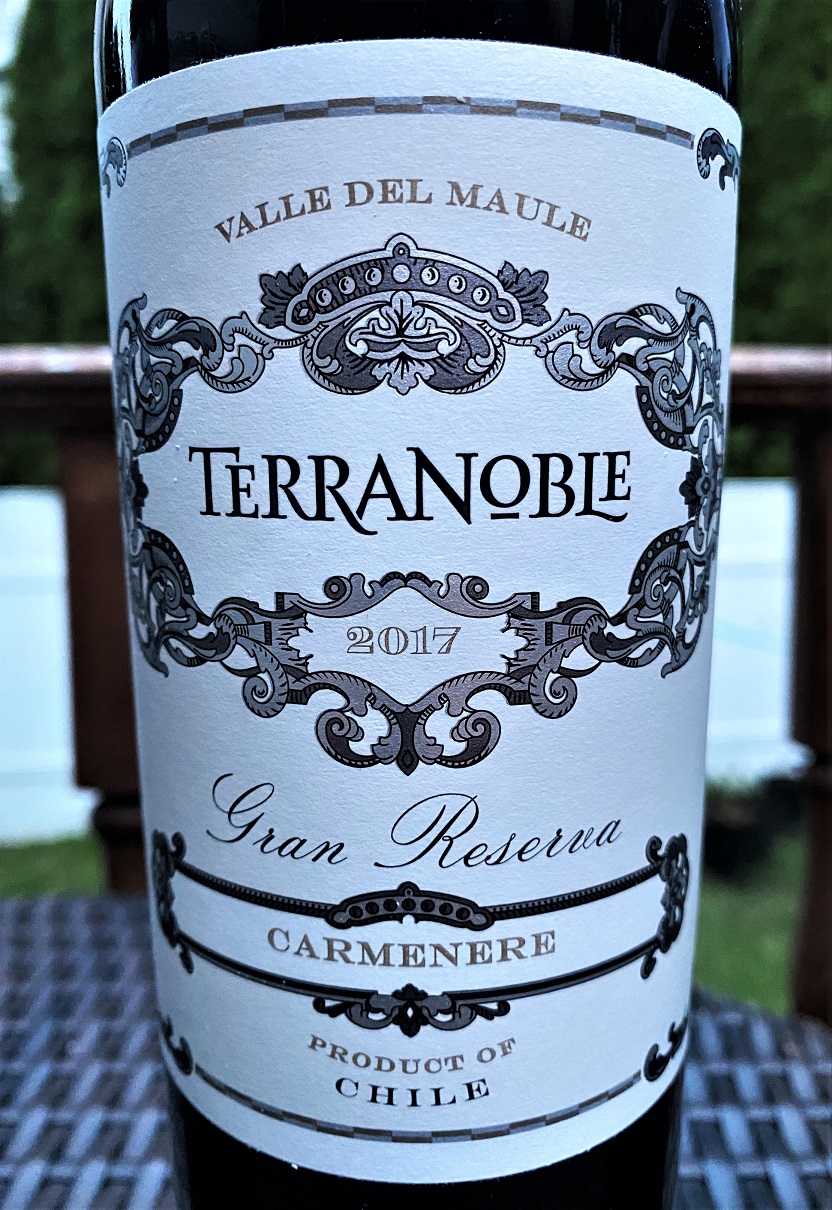 According to the 2012 edition of the famous Wine Grapes book (written by Jancis Robinson, Julia Harding, and Dr. José Vouillamoz), there are 1368 grapes used in winemaking. It would be a safe bet to say that each one of those grapes has its own story. Of course, not all of those stories would be dramatic and exciting, but I’m sure some would read as a good detective story, probably without much of the shootouts.
Carménère is a perfect candidate for such a story. When Bordeaux ruled the wine world – which would be in the middle of 1800th – Carménère (which translates from French as crimson, identifying a beautiful color of the grapes) was one of the “big six” Bordeaux varieties, comprising all of the Bordeaux wines – Cabernet Sauvignon, Cabernet Franc, Merlot, Malbec, Petite Verdot, and Carménère. Carménère is related to Cabernet grapes, but historically it is not very clear if Carménère was some type of clone of Cabernet, or if it was the other way around.
The phylloxera epidemic of 1867 put a damper on all the wine production in France and forced vignerons to replant all of the vines on the Phylloxera-resistant rootstock. Carménère is not an easy grape to grow in the Bordeaux climate, and it was pretty much abandoned and considered extinct at the beginning of the 20th century.
Meanwhile, in 1850th, immigrants brought many of the French grapes with them to Chile, where the grapes started to strive in the warm and dry climate offered by the Andes mountains. In 1980th, Merlot became a star of Chilean winemaking, abundantly producing inexpensive wines that became well known in the world. It was noticed that the taste of the Chilean Merlot differs from the traditional Merlot and that Merlot was considered to be a Chilean-specific clone. Or at least it was until 1994 when visiting French scientist, Jean Boursiquot noticed that Chilean Merlot has different leaves and grape clusters from the traditional Merlot, and was able to show that this was not the Merlot, but long-extinct Carménère, which successfully made it to Chile in the 1850s with all the Bordeaux grape cuttings.
From that time, Carménère went on to become Chile’s own star grape, and answer to another French variety, Malbec, which Argentina made its own. As Phylloxera never made it to Chile, Chilean Carménère was even brought back to France, but it is not an easy grape to deal with, so it never regained its past glory in Bordeaux.
TerraNoble winery (Terra Noble means “Noble Land”), was founded in 1993 by a group of friends. From the beginning, TerraNoble focus was on producing high-end wines in Maule Valley, and the winery quickly established itself as a boutique producer of Chilean Merlot. After Chilean Merlot was identified as Carménère, TerraNoble continued focusing on the variety.
TerraNoble sustainably (certified sustainable since 2019) farms today about 750 acres, which comprises 4 vineyards in Maule Valley, Colchagua Valley, and Casablanca Valley. The winery produces a full range of wines you would expect a Chilean winery to produce – Chardonnay, Sauvignon Blanc, Cabernet Sauvignon, Merlot, Syrah – but Carménère is unquestionably the darling of TerraNoble, as presented by Marcelo Garcia, TerraNoble’s winemaker, during the virtual tasting a few weeks back.
While browsing Sotheby’s New Wine Encyclopedia by Tom Stevenson, I came across a small insert about Chilean Carménère, where it was mentioned that Carménère is site-specific to the extreme – you need to work hard to find the right location for Carménère to vines to deliver the best result. TerraNoble approach to Carménère is based exactly on this notion – site-specific Carménère wines. As we mentioned before, Carménère is a close relative of the core Bordeaux varieties – Cabernet and Merlot and has a similar taste profile as well. It is similar, but not the same, obviously. A typical Carménère has a much higher concentration of the aroma compound called pyrazines, which is often associated with the pronounced taste of the green bell pepper – here is a good article that explains pyrazines in depth. Green pepper is good for cooking and the salad, but probably not so much in wine. Also, when left unsupervised, Carménère has a tendency to develop a high concentration of the tannins. While someone might enjoy a big powerful wine with pronounced green bell pepper aromatics and powerful tannin structure, the appeal is not universal and this is what Chilean winemakers had to deal with.
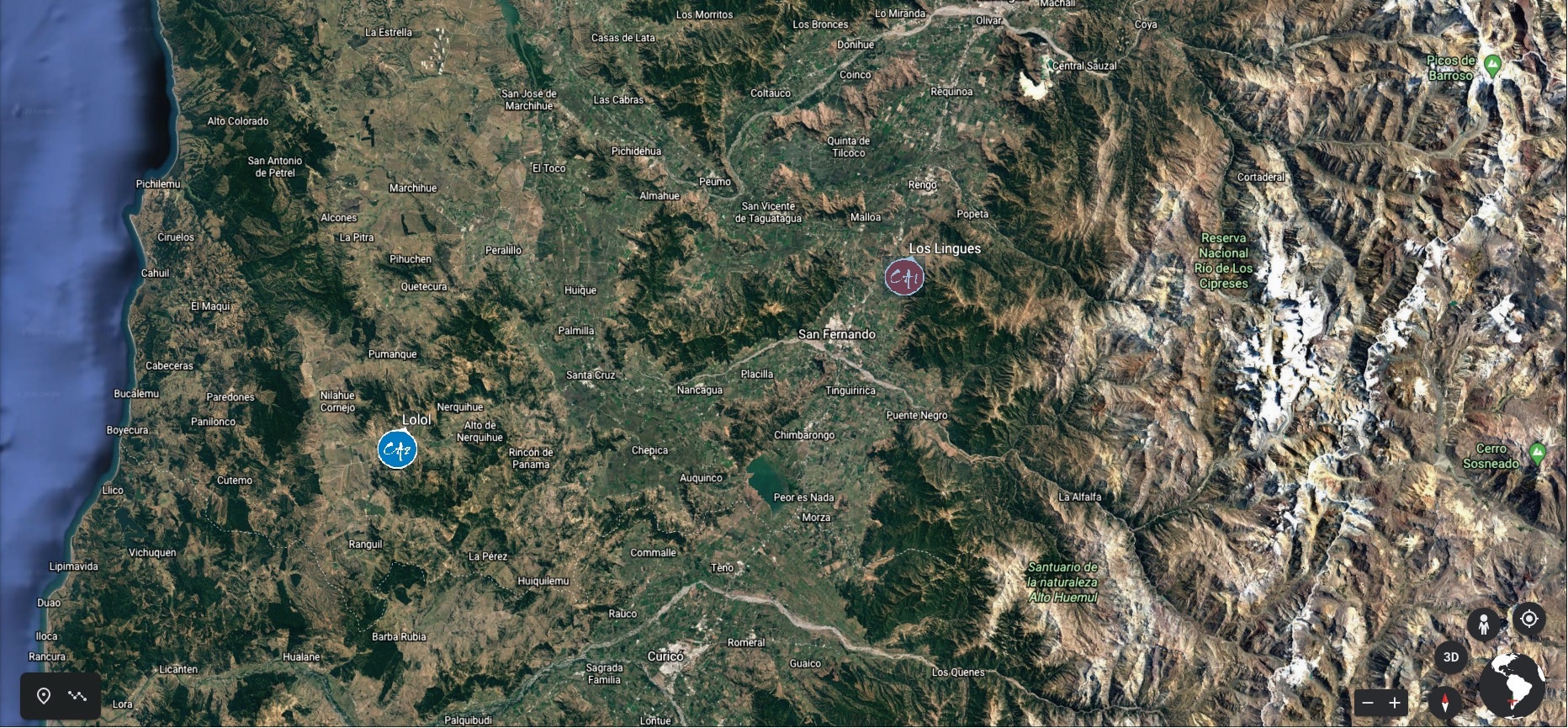
TerraNoble CA project vineyards. Source: TerraNoble
In 1998, TerraNoble released Gran Reserva Carménère to the international markets. The grapes for this wine were coming from the La Higuera Vineyard in Maule Valley, near San Clemente. This wine still remains the winery’s flagship. I had been a fan of TerraNoble wines for a long time, after discovering them back in 2004. To the best of my memory, 2003 TerraNoble Carménère Gran Reserva was quite enjoyable, but I don’t have any detailed notes in that regard.
Following its Carménère calling, TerraNoble planted two new Carménère vineyards in Colchagua Valley – in 2004, Los Cactus Vineyard, about 25 miles from the coast, and in 2005, Los Lingues Vineyard, about 35 miles further inland, on the outskirts of Andes mountains. These two vineyards became a home to the special project called CA – producing two 100% Carménère wines using absolutely identical vinification at the winery, different only in the source of the grapes – CA1 from the Andes, and CA2 from the coast. The first wines in the CA project were released in 2009.
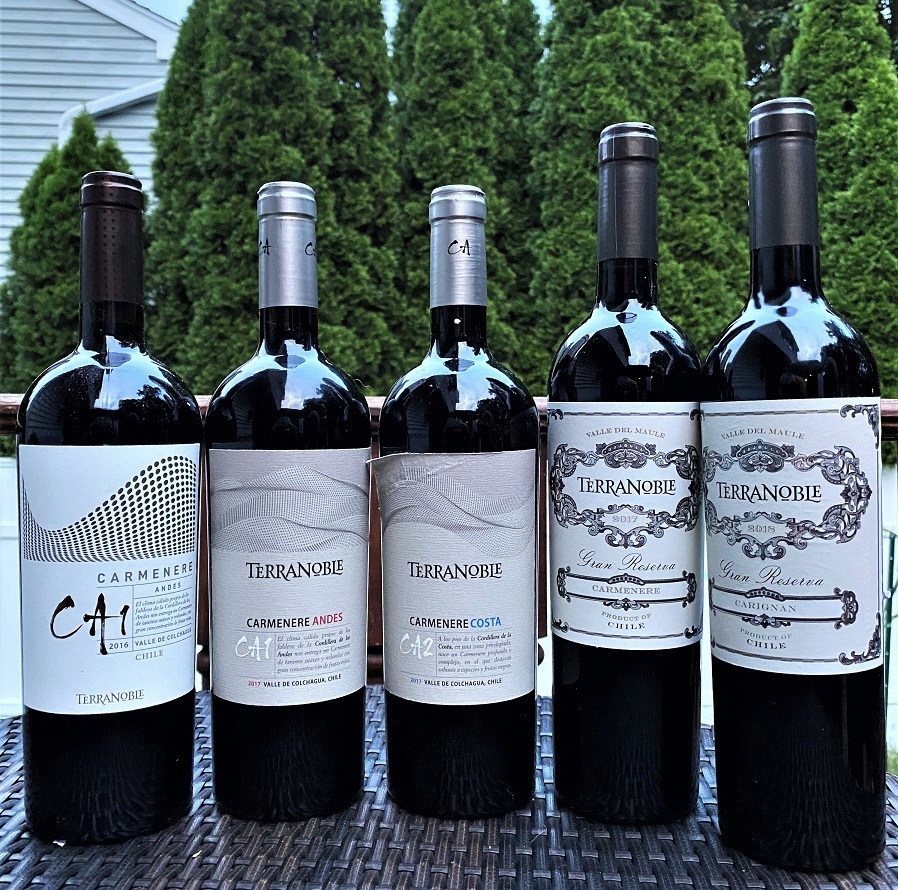
The goal of the project was to showcase the capabilities of Carménère grapes. With winemaking techniques identical for both wines, different taste profiles were only influenced by the different growing conditions, the terroir – soil and climate most of anything. How different are the wines? We had an opportunity to taste a few of the CA project wines, and they were demonstrably different. Here are my notes from the tasting.
We started with the tasting of the flagship Carménère
2017 TerraNoble Carmenere Gran Reserva Maule Valley, Chile (14% ABV, $18.99, aged 75% in previously used French oak barrels, 25% in untoasted casks, 6 months in the bottle)
Dark garnet
Currant leaves, blackberries
Bright red fruit, good acidity, soft, easy to drink, medium body, medium finish.
8-, nicely approachable from the get-go. 8 after a few hours.


Then we had an opportunity to compare two of the vintages of CA1 wines (from the Andes), and then CA1 and CA2 from the same vintage – again, you can see how different the wines are:
2016 TerraNoble CA1 Carmenere Andes Valle de Colchagua, Chile (14% ABV, $24.99, aged 85% in new and twice used French oak barrels, 15% in untoasted oak casks for 14 months, 12 months in the bottle)
dark garnet
touch of barnyard, dark fruit
black currant, a touch of bell peppers, noticeable french oak tannins, peppery, chewy tannins, big body
7+/8- initially, 8 after a few hours. Excellent, powerful wine.
2017 TerraNoble CA1 Carmenere Andes Valle de Colchagua, Chile (14% ABV, $24.99, aged 85% in new and twice used French oak barrels, 15% in untoasted oak casks for 14 months, 12 months in the bottle)
dark garnet
tobacco, currant leaves, pepper, dense and concentrated
good acidity, peppery notes, blackberries, concentrated
7+/8- initially, 8 in a few hours. Delicious.
2017 TerraNoble CA2 Carmenere Costa Valle de Colchagua, Chile (14% ABV, $24.99 aged 85% in new and twice used French oak barrels, 15% in untoasted oak casks for 14 months, 12 months in the bottle)
dark garnet
currant more noticeable
softer than the previous wine, but showing more of the green notes. black currant
7+/8- initially, 8 in a few hours.
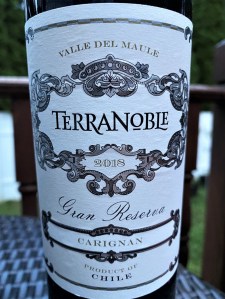 We finished our tasting with a somewhat unexpected wine – Carignan. Carignan is another ancient French grape, this one coming from Rhône valley. Chile has very old Carignan vineyards (some are 120+ years old), however, for the longest time, Carignan was used by the farmers to make very strong, but not really drinkable alcohol. Carignan’s popularity started increasing around 2000. Another interesting fact about Carignan is that it is mostly growing in the small (and old) vineyards, where the vineyards became a part of a natural biodiverse habitat, which includes other plants and animals.
TerraNoble Carignan grapes were sourced from the vineyard planted in 1958 in Maule Valley close to the ocean, using dry farming. The wine was partially aged in the concrete eggs.
2018 TerraNoble Carignan Gran Reserva Melozal, Maule Valley, Chile (13.5% ABV, $18.99, aged 50% in concrete egg, 50% in untoasted oak casks, 6 months in the bottle)
Dark Ruby
touch of licorice, distant hint of candied fruit
tart fresh cherries, good acidity, medium body, simple, easy, and pleasant. Might be a summer quaffer
7+
Here you are, my friends – TerraNoble tells the story of modern-day Chilean Carménère. The evolution of the Carménère wines is still ongoing, with TerraNoble winemakers starting to experiment with concrete eggs and amphorae, and who knows what else is coming to push the grape which Chile made its own even further. One thing for sure – winelovers are in for lots of pleasure.
Beyond Kosher: Thinking of Israeli Wines
 I love pairing wine and holidays. It is always a fun exercise, as you need to find a way to explain your choices – how given wine enhances or at least relates to a given holiday (good luck with your Thanksgiving wine selections). Jewish holidays, which we are still in the middle of (Jewish New Year just arrived less than 2 weeks ago), are very helpful in that regard, as wine is simply a requirement here – most of the Jewish holidays require a glass of wine to be present and consumed.
When it comes to Jewish holidays, my approach is simple – I prefer to have on the table the wines made in Israel. But when I reach out to get an Israeli wine off the shelf, I can’t help it but think about all of the complexities of the Israeli wine landscape – what we are talking here is above and beyond of intricacies of making any fine wine. Making of the delicious wine is anything but complex – how to protect vines from the disease, when to harvest, what yeast to use, for how long to macerate, what to blend – lots and lots of decisions, each one affecting the end result, often dramatically. Production of Israeli wines deals with all of the same complexities but then adds a cherry on top – concepts of kosher and mevushal.
I remember visiting Israel about 15-17 years ago with a group of co-workers from the USA, at the resort on Mount Carmel. One of my colleagues pointed to a bottle of wine saying “this is amazing”. The wine he was pointing to was an Israeli wine, Yatir Forest, which was at a time a total surprise for me – I knew that this guy was really into wine and he was drinking very serious stuff, more of California cults and Bordeaux first growth, so this was unexpectedly high praise. I was absolutely unfamiliar with Yatir wines at that time (it would make me say “ahh, pretty please” now).
When we asked to open that bottle for us, we were surprised to hear that it will not be possible. Explanation? The food at the resort was kosher, and food includes wines. The resort just got a new person in charge of observing all the kosher laws and requirements in food preparation and service, and Yatir Forest was not kosher enough. That, my friends, is a problem which is unique to the Israeli wine scene – I’m not aware of any other winemaking region in the world where making tasty wine is not enough for that wine to reach the consumer, even the local one – this also complicates the imports quite a bit.
I’m not going to pretend to be an authority on the laws of kosher wines – I’m very far from it. I’m just here for the tasty wine. What I do know is that the kosher laws are quite intense and involved, whether it has to do with the food or the wine. While I understand that there is some rationale when it comes to the food, I don’t believe kosher requirements can materially affect the taste of wine. We also need to keep in mind that there are different levels of kosher types and certifications, and to top it all off, there is the Mevushal. In case you are not familiar, mevushal is somewhat of a process of pasteurization of the wine to allow for it to be served by a non-Jewish people at a restaurant or anywhere else. It appears that according to the kosher wine rules if the kosher wine is served by a non-Jew, it becomes non-kosher. Mevushal treatment solves that problem, allowing for the kosher wine to be served by a non-observing person without losing its kosher qualities.
To be labeled as Mevushal, the wine has to be heated up to 185 degrees Fahrenheit, essentially becoming pasteurized. As you understand, the exposure of the wine to such a high temperature result in the “cooked” wine – and very appropriately, in the old days Meviushal wines were simply undrinkable, at least by anyone who drinks the wine to enjoy it (as a matter of fact, the word “mevushal” means “cooked”). Lately, however, the wineries found new ways of making wine Mevushal without destroying it. One is a flash-pasteurization, where the wine is very quickly heated up to the same 185°F only for a few seconds. According to the Wine Spectator article, another method is even more interesting – it is called flash-détente, where instead of the wine, grapes are heated up to 190°F and then quickly cooled to the 80°F in the special machine. It would be an interesting experiment, but many wineries produce the same wine from the same vintage both as mevushal and non-mevushal – comparing such wines should be a fun project, don’t you think?
Now that we have Mevushal figured out, let’s take another look into the world of Kosher wines. Think about your favorite wine store – note, I’m speaking about the USA, your experience in France will be vastly different. As you walk in, you see the tags which help you find what you are looking for. Most likely, these tags are one of two types – either specifying a grape variety (Cabernet Sauvignon, Chardonnay, Pinot Noir) or the country and maybe a region – France, Italy, Burgundy, Spain, California, etc.. Somewhere in the corner, you will probably find the Kosher section, possibly right next to the Organic display. In that Kosher section, you will find predominantly Israeli wines with some additional bottles from California, France, maybe Australia, and Spain.
I can safely assume that you will be visiting that Kosher section only a few times a year, just around the Jewish holidays – okay, maybe you will make a special trip if you are invited to the Shabbat dinner by the observant family. Should you expect to find Israeli wines anywhere else in the store? Unlike California, France, Australia, and Spain, all of which you will find all around the store in the different varietal sections, Israeli wines will be confined to that specific Kosher section, 99 out of a 100. As Israel truly makes world-class wines, it is definitely a problem, as Israeli wines have a lot to offer. But what if Israeli wine is not Kosher, such as the wines produced by Vortman Winery – what can they do to make themselves found? Who will take a chance on the Israeli wine which can’t be placed in the Kosher section?
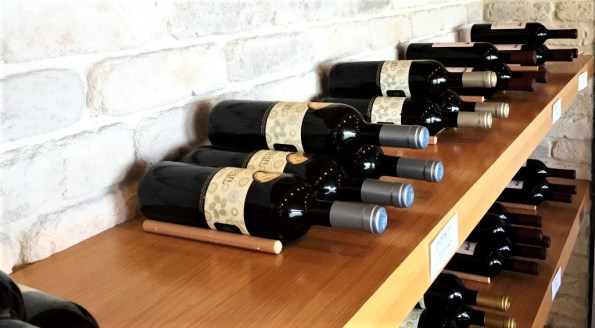
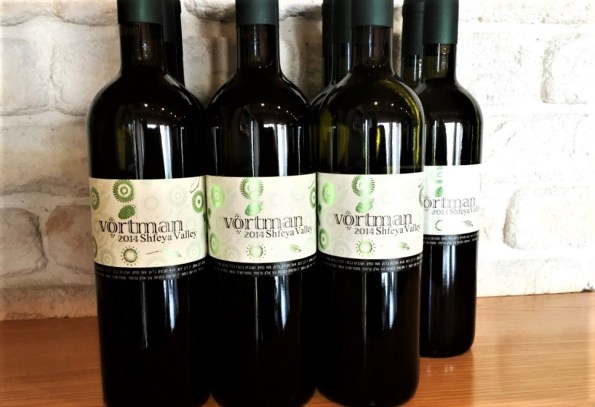


About 5 years ago, I had the pleasure of sitting across from Hai Vortman, the owner and winemaker at Vortman Winery. We were sitting in the Vortman winery tasting room, which was adjacent to his home in Haifa, enjoying magnificent views and superb wines. I was listening to Hai talking about the history of winemaking in Israel, particularly around the Carmel Mountain, which is considered one of the very best and oldest winemaking regions in Israel. Depending on the source, winemaking in Israel is from 3,000 to 5,000 years old, but this was not the point of our conversation. I learned that Baron Edmond de Rothschild recognized the viticultural potential of the Carmel Mountain region and founded Carmel Winery there in 1882, investing millions in the development of the vineyards and production of the wine. In 1900, Carmel Winery wine from Richon Le Zion area won the gold medal at the Paris World Fair, competing against classic French Bordeaux.
The first half of the 20th century was a tumultuous period for the Israeli winemaking – it was not until the last quarter of the century that Israeli winemaking started to rebound. Vortman Winery was founded in 2003 in Haifa in the basement of the family house, with the vision of producing organic wines from the grapes growing in the Shfeya Valley region of the Carmel Mountain. The first commercial vintage was in 2007. In 2009, Vortman started planting new vineyards in Shfeya Valley and converting old vineyards to organic viticulture, all based on dry farming, biodiversity, and full respect for the environment. Today, Vortman winery produces around 30,000 bottles a year – of the non-kosher wines.
Vortman wines we tried were delicious. 2014 Vortman Shfeya Valley White, a blend of Sauvignon Blanc and Semillon from 45 years old vineyard, was delicious, showing minerality, white fruit, crisp, clean, creamy, and refreshing, with a long finish. 2014 Vortman Prime Location Red, a blend of Merlot, Carignan, and Cabernet Franc (mostly stainless steel) was nicely restrained, earthy and fruity on the nose with a firm structure and an excellent balance. 2012 Vortman Shambur, a blend of Cabernet Sauvignon, Carignan, and Merlot (9 months in oak barrels) had a classic Bordeaux nose, great restraint on the palate with a nice core of tannins and great acidity. Nothing extra, nothing unnecessary, just a supremely precise wine. 2013 Vortman Carignan from 50 years old vines (7 months in new French oak) offered a burst of dark cherries on the palate and the nose and a perfect balance. Simply beautiful wines, one after another.
Now, the problem is that unless you plan to travel to Israel, you are out of luck with Vortman wines (hey, if any importers read this – do you want to bring some delicious Israeli non-kosher wines into the US?). Don’t despair, as Israel exports lots of tasty wines.


About 2 years ago, I had a sample of Yarden wines I never wrote about (yeah, I know). Yarden might be one of the best known Israeli wineries in the US, largely thanks to the efforts of the head winemaker Victor Schoenfeld, who is relentlessly promoting Yarden wines. Yarden is one of the brands of Golan Heights Winery, along with Gamla, Hermon, and Golan. Golan Heights winery was founded in 1984, and it is considered as one of the quality wine pioneers in Israel. Here are the notes for the wines I had an opportunity to taste:
2014 Galil Mountain ELA Upper Galilee (14% ABV, 61% Barbera, 30% Syrah, 5% Petit Verdot, 4% Grenache, kosher, non-mevushal)
Dark garnet, almost black
A bit of the stewed fruit on the nose, ripe plums
Clean, fresh on the palate, pepper, plums, baking spices, a touch of savory notes, good acidity, medium-plus body
7+/8-, initially the wine showed a touch of cork taint on the palate, some presence of a wet basement, which disappeared on the second day.
2016 Golan Heights Gilgal Rosé (13.5% ABV, 100% Syrah, kosher, non-mevushal)
Dark intense pink color
Touch of gunflint, oregano on the nose
Ripe spicy raspberries on the palate, more gunflint and granite notes, fresh finish of ripe fruit without been overly sweet, excellent concentration and presence, fuller body than most of Rosé. Delicious.
8, very pleasant
2017 Yarden Sauvignon Blanc Galilee (13.5% ABV, 2 months on French oak barrels, kosher, non-mevushal)
Straw pale color
Whitestone fruit and a touch of candied fruit on the nose, not typical for SB
The palate is restrained, with a hint of freshly cut grass, green apples, and some tropical fruit undertones. Good acidity, a hint of fresh-cut grass on the finish
8-, very good and pleasant rendition of SB
2016 Mount Hermon Indigo Galilee (14% ABV, cabernet sauvignon/Syrah blend, kosher, non-mevushal)
Dark garnet, almost black
Bright, inviting, freshly crushed red fruit, eucalyptus, raspberries, and blueberries on the second day, plus some dry fruit notes – figs
Wow. The first day was a little incoherent, but the second day is simply incredible. Beautiful supple blueberries and raspberries, excellent extraction, tobacco, dark chocolate, clean acidity, soft and round on the palate.
8+, excellent. Just let it breathe.
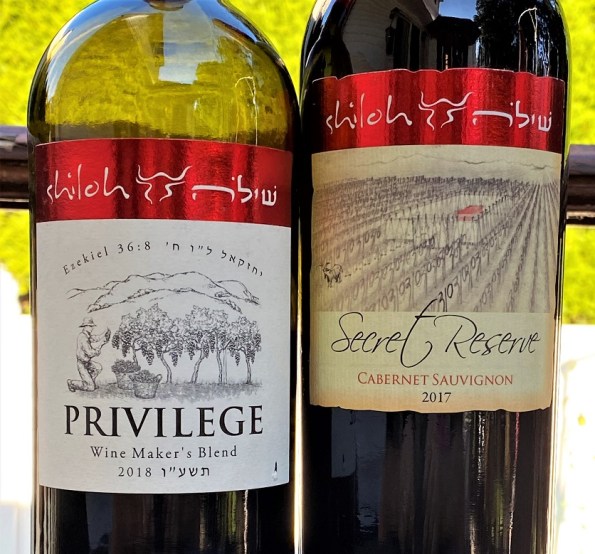
Before we are done here, I still need to talk about one more Israeli winery – Shiloh. I had been introduced to the Shiloh wines about 3 years ago, at a dinner in New York City. The wine we had, Shiloh Mosaic, was absolutely mind-blowing, it was #14 on my Top Wines list for 2017. Shiloh is the youngest winery out of the 3 we talked about today, founded in 2005. Shiloh vineyards are located in the area of the Shiloh river and Samarian hills. Based on the limited information available on the website, it seems that Shiloh produces wines from Chardonnay, Sauvignon Blanc, Cabernet Sauvignon, Cabernet Franc, Merlot, Malbec, Barbera, Grenache, Syrah, Petitte Sirah, and Petite Verdot grapes – of course, there might be others.
To celebrate Jewish New Year 5781, we opened two bottles of Shiloh wines. 2018 Shiloh PRIVILEGE Winemakes’s Blend (14% ABV, 74% Cabernet Sauvignon, 165 Syrah, 7% Cabernet Franc, 3% Grenache, kosher, mevushal) showed beautifully, offering soft red and black fruit, good minerality, soft tannins, and excellent balance. 2017 Shiloh Secret Reserve Cabernet Sauvignon (15% ABV, 100% Cabernet Sauvignon, 18 months in French oak, kosher, mevushal) was even better – a classic old world, rivaling any classic Medoc wine, full of cassis, eucalyptus, a touch of green bell pepper, silky smooth on the palate and extremely satisfying, a pleasure in the glass – this is the wine you need to experience, better yet, compare it against the best of Bordeaux in a blind tasting. It appears that many of the Shiloh wines are produced in both mevushal and non-mevushal styles – something which really calls for a blind tasting side by side.
Israeli wines are world-class, but they still need to be found by the wine consumer. Will you look for them?
A Quick Trip To Germany
 Germany is one of the oldest wine-producing countries in Europe, tracing its roots to 100 BC. Believe it or not, but at some point, Germany and France were considered as the two best wine-producing countries in the world, with German Rieslings being traded and collected at the same level as Bordeaux and Burgundy. Germany made some strategic mistakes in the middle of the 20th century, producing large quantities of insipid sweet wines, and it is still trying to recover from those losses.
Thinking of German wines, what is the first wine which comes to mind? If you said Riesling, you are absolutely right. Riesling is a megastar, the grape which embodies German wines and maybe even Germany itself to many of the wine lovers. However, even in Germany, there is life after Riesling – for example, in the Pinot family – and these will be the wines which will be our tour guides today.
Let’s start with the white Pinot wine – Pinot Blanc. Pinot Blanc, also known as Weißer Burgunder, Weißburgunder, or Weissburgunder – all of which are different spellings for “White Burgundy”, where the grape presumably originated, is experiencing growing popularity in Germany. Its plantings nearly doubled in the past 10 years, and now Germany has the highest amount of Pinot Blanc plantings in the world.
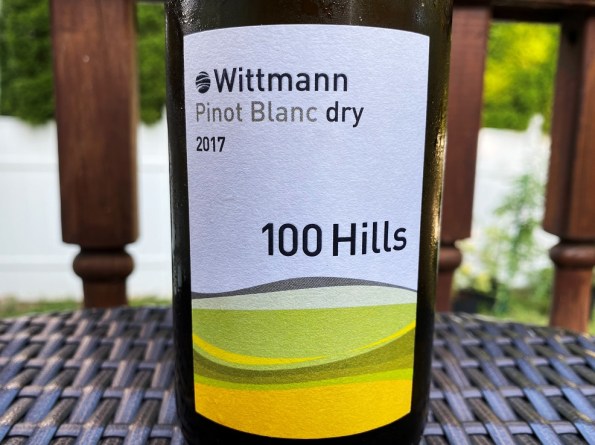
I recently saw a reference to German Pinot Blanc to be an understudy of the Chardonnay. Based on my experience with 2017 Wittmann 100 Hills Pinot Blanc dry Rheinhessen (12% ABV, $17), I would have to agree with this statement. The wine showed all the traits of the good Chardonnay except a touch of butter – however, vanilla, fresh apples, minerality, and clean acidity were tastefully weaved around the plump, texturally present core. (Drinkability: 8-). To give you a quick reference, the Wittmann family had been growing grapes in Westhofen for more than 350 years and 15 generations. The estate has been certified organic since 1990, and biodynamic since 2004.
Our travel in Germany is half done – and the second part of the journey might really surprise you. Germany is really not known among wine lovers as the land of red wines – and nevertheless, Germany has third in the world amount of plantings of one of the absolute darlings of the wine world. Care to guess what grape it is? Well, as it should be red, and you already know that we are talking about the Pinot family, this should be an easy guess – of course, it is Pinot Noir, better known as Spätburgunder in Germany.
Most of the Pinot Noir plantings in Germany are in the areas of Baden and Ahr, which is interesting as Baden is southernmost, and Ahr is one of the northernmost regions.
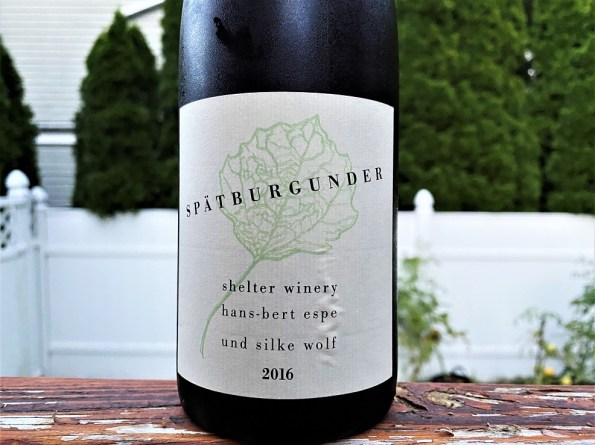
The wine we have chosen for our trip is coming from Baden, from the winery called Shelter, produced by husband and wife team, with harvest by hand and no use of herbicides or pesticides.
2016 Shelter Winery Spätburgunder Baden (13% ABV, $28) is unquestionably an old world wine, built with perfect precision. Gunflint, earth, smoke, cranberries, all in the lip-smacking, densely textured, tight package – this wine packs a lot of pleasure. (Drinkability: 8). I have to honestly say that this was my very first German Pinot Noir I was able to enjoy and I would happily recommend it to anyone who needs proof that Germany actually can create a tasty red wine.
There you have it, my friends – our little journey is over, but worry not – we will be traveling again very soon. Cheers!
A Weekend Of Wine Experiences
What makes the wine experience for you?
If you drink wine pretty much every day, is that every glass an experience? Is that even possible?
The experience should be something memorable, something you can bring up in your thoughts on the moment’s notice. The experience is not always positive – I well remember some bottles I had to pour down the drain – luckily, it doesn’t happen all that often. The experience triggers the emotion – pain or pleasure – and this is what makes us remember.
During our recent Cape Cod visit with the family, in addition to the ocean, flowers, and sunsets, we also had lots of wine. While some wines were good and simple – and not necessarily memorable – some were just at the level of creating a lasting memory. Let me present my case.
I try not to associate the color of the wine with the weather, but fresh and crisp white wine always brightens up a hot summer day better than a big red. Both wines we had were somewhat of an experience. 2018 Hanna Sauvignon Blanc Russian River Valley (13.2% ABV) was a reminder for how much I love this wine, which I consider one of the best California Sauvignon Blancs in general – fresh, citrusy, with plenty of the freshly cut grass and vibrant acidity. A sip of such wine makes you say “ahhh”, and immediately go for another.
The second wine was rather an unexpected disappointment – it had nothing really to do with the wine itself, I guess it was a self-inflicted disappointment, but this is how it will be remembered. 2016 Duckhorn Sauvignon Blanc Napa Valley (13.5% ABV) didn’t offer much anything in the glass. It was a white wine without a sense of place or much in terms of the expected taste profile. It had no obvious faults, just the taste of “some white wine”. Maybe it was supposed to be consumed two years ago (my wife got it as a present from a coworker and then it was forgotten on the bottom shelf of the cellar). Maybe it was in a “sleeper mode” at the moment. No idea, but this was definitely not something I expected from the Duckhorn.


I continue to surprise myself with an inability to find a bad tasting Rosé nowadays. Either something is wrong with my palate, or I don’t drink enough, or everybody simply mastered the art of Rosé to its fullest, but I like every Rosé I have an opportunity to taste. 2018 Etude Rosé Santa Barbara County (13.2% ABV) was excellent, strawberries all the way, both on the nose and the palate, very elegant and round. Etude is a Pinot Noir specialist, so this was a Pinot Noir Rosé. Santa Barbara designation also brought back lots of happy memories of my first Wine Bloggers conference in 2014. The second Rosé, 2017 Baron de Fumes Rosé Garnacha Cariñena DO (13.5% ABV) was a bit lighter but sharing mostly the same strawberry profile with a bit more acidity – still every drop delicious. This was also a great value at $8.99 at my local wine store – I now have a few bottles in the fridge ready to be open on any hot day.
Time to move to reds – and to elevate the experience.
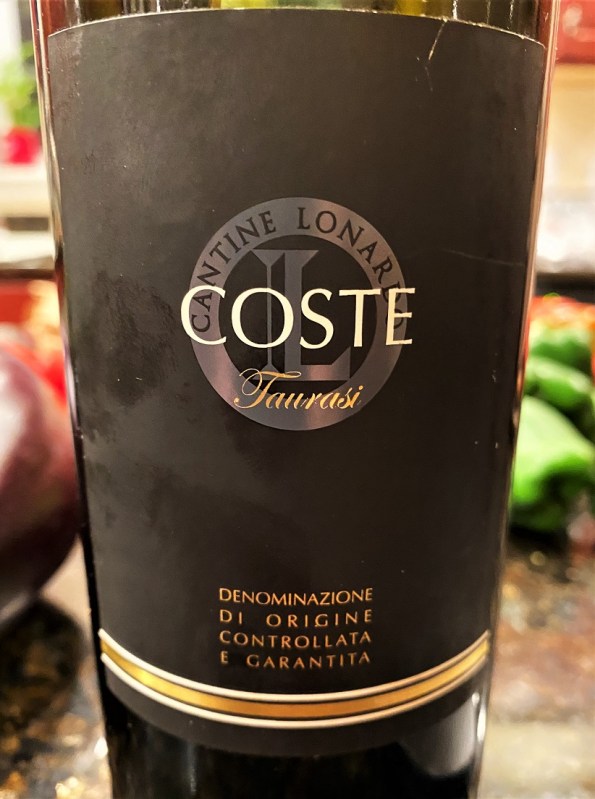
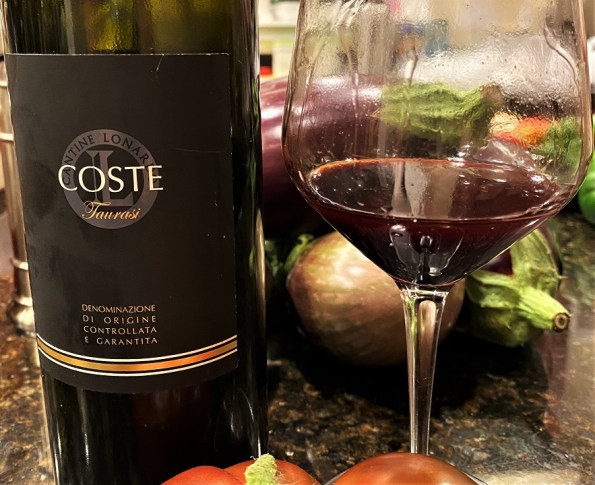
Everyone’s cellar has bottles that appeared out of nowhere. You know how this works – you host a party, someone walks through the door with a bottle. You say thank you, hastily put a bottle aside as you are rushing to meet another guest. The bottle is never opened as you had enough wine prepared, and after the party, it is just put away and you have no memory you ever saw it. This was my story with the bottle of 2008 Cantine Lonardo Coste Taurasi DOCG (14.5% ABV, 100% Aglianico). I have no memory of how the bottle made it into the wine fridge. I saw this bottle many times looking for the wine to open – as I’m not familiar with this wine and never bothered to research, I would always skip opening it just on the basis of the vintage – too young, next time, too young, next time. This time around, as our family on The Cape loves the Italian wines, I decided that the time has come to open it.
As we arrived Thursday evening, this was the first bottle we opened. Oh my… As soon as the wine made it to the glasses, the aromatics stopped everyone in their tracks. I can’t even describe it. Mature Italian wine at its peak literally gives me shivers. You can’t put down the glass, you don’t want a sip – you just want another smell, and then another one. Succulent cherries, eucalyptus, tobacco, iodine, ocean breeze – the bouquet delivered such an interplay of flavors that you simply forget the time. When you finally decide to take a sip, you are blown away anew – juicy cherries with herbs, sweet oak, silky smooth tannins, and impeccable balance – just a divine experience (am I going to far? Can’t tell you. Wish you were there…). Hands down, this wine is an excellent contender for the top wine of 2020, rivaling Soldera experience (Drinkability: 9/9+).
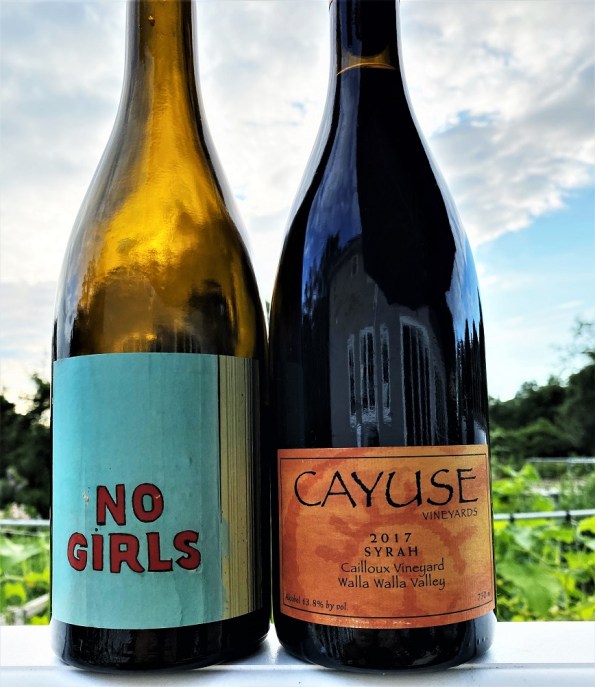


As I had no idea about Coste, I decided to bring a couple of big guns – two of the Christophe Baron wines – No Girls and Cayuse. I knew that I’m committing a crime by opening 3 years old Cayuse – but this was my very first taste of Cayuse wine, after finally making it on the mailing list, so I decided to take my chances. 2010 No Girls Syrah La Paciencia Vineyard Walla Walla Valley (14.8% ABV) was as good as I expected it to be – a little bit of funk, black fruit, black pepper, full body, good structure and concentration, excellent balance – definitely a very enjoyable wine. 2017 Cayuse Syrah Cailloux Vineyard Walla Walla Valley (13.8% ABV), however, was a disappointment. I knew I’m opening the wine prematurely (the one can only hope. I wonder how Sassicaia does it, making their wines perfectly drinkable upon release), but I still expected the wine to come to its senses at least on the second day, and especially with the help of decanter.
The decanter didn’t help, even on the second day. The wine had some amount of fresh crunchy cherries in it, but that was the maximum excitement. The wine never demonstrated the body I would expect from the Washington Syrah, nor the depth of flavor and the textural experience on the palate. Again, this was not a bad wine, just not enjoyable for me. As this was my very first experience with Cayuse, I don’t want to jump to any conclusions – maybe the wine will completely change in a few years, or maybe the wine is just meant to be like this – I anticipate that the wine will need at least another 7-10 years before it will become fully enjoyable, but we will see. And if it just supposed to taste like that, this will be a serious disappointment, especially considering the price of this wine (around $100).
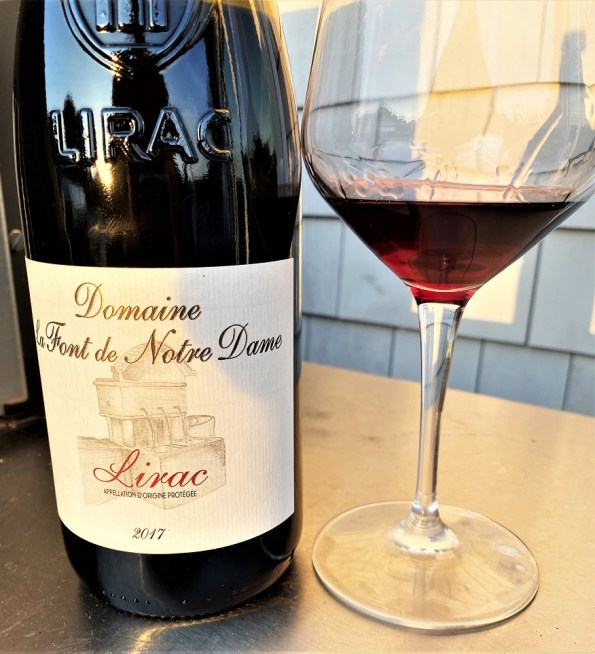
One more wine I want to mention here – 2017 Domaine La Font de Notre Dame Lirac AOC (14.5% ABV, 70% Grenache, 25% Syrah, 5% Mourvèdre). This wine was opened to compensate for the Cayuse not being very drinkable – and this GSM blend didn’t disappoint – perfectly drinkable and enjoyable from the moment the cork was pulled out. Bright fruit, medium to full body, good minerality, and perfect balance. The wine has limited availability, unfortunately, but if you can find it, it should set you back for less than $20 and this can be your perfect every day red for any time of the year.
There you go, my friends. This is how experiences form into the memories. The pleasure of drinking Coste will stay long in the memory – this was one of the most exciting wines this year. The absence of pleasure in my first sip of Cayuse will also become a long-lasting phenomenon. What are your strongest memories associated with wine?
A Quick Trip To Spain
 Hey friends!
Who else is feeling travel-deprived? Who else is dreaming of the airline food and 2-hours long passport control line after 12 hours flight?
I know it is not only me. I know we all do. But we still have to wait until any of that is a reality. For now, travel is just virtual.
Virtual travel has many ways. You can go back to the pictures you took while vacationing. You can go on Instagram or Pinterest, type in “Italy”, “Amalfi Coast”, “Maldives”, “Everest”, or “Machu Pichu”, and get lost for hours, exploring every little angle of the paradise through the eyes of others. You can find plenty to read, from blogs to books to everything in between, making it easy to imagine yourself in a French cafe, on the beach in Goa, or looking at the world while standing on the Great Wall.
Then, of course, there is food. There are many cuisines available within anyone’s reach today, no matter where you live. You can have paella at the Spanish restaurant, Mexican street corn at the Mexican place, black truffle risotto at Italian, or cassoulet at the French restaurant. Will that be an authentic experience that will bring back happy memories? That depends. The food might be amazing, but if you will not get the exact match to your expectations, to what you experienced during the travel, that might end up being a great meal, but not memory-inducing at all. For sure my own experience with paella or cassoulet is always hit and miss.
And then there is wine – of, course, you knew that it will all end up at “have wine, will travel”, right? Remember that proverbial “sense of place”? The sense of place is an indelible part of the wine. Even more importantly, wine can trigger an outpour of memories even before it will be opened and poured. One quick glance at the label is often enough to start the emotions going, to recall, to remember, to re-live. Of course, you can find authentic dishes in restaurants and market places. There are tons of original and authentic foods imported and readily available. It still doesn’t mean that on the moment’s notice you can retrieve that aged Swiss Gruyère, French Raclette, or a Spanish Jamón and have a smile from ear to ear. However, take out that bottle of Brunello, Australian Shiraz, Provençal Rosé, or Spanish Rioja – and watch out for that smile.
Ahh, I just said “Rioja” – remember I promised you a quick trip to Spain? Instead of musing on the subject, how about we will actually take this trip – and we don’t even need to pack a suitcase or wait for a taxi – get a bottle of Rioja, and you can instantly imagine yourself strolling the streets of Barcelona, or maybe admiring the old train station in Haro. Have wine, will travel – who is with me?
The Rioja I would like to bring to your attention today is as classic as it gets – coming from CVNE (Compañía Vinícola del Norte del España), one of the oldest producers in Rioja, who celebrated it’s 140th anniversary last year. CVNE produces a number of distinct lines of Rioja wines, under Cune, Imperial, Viña Real, and Contino labels, but the company is also expanding into areas such as Ribera Del Duero, Valdeorras, and others.


I recently had two delicious samples of the latest offerings from CVNE – you really can’t go wrong with either one of them, and the QPR is absolutely unbeatable:
2019 Cune Rosado Rioja DO (14.5% ABV, $13, 100% Tempranillo)
Cranberry juice color
Fresh cranberries, herbal notes, sage and violets
Fresh, crunchy cranberries, with characteristic acidity and tiny bitter undertones. Bone dry and very present. Balanced and elegant. Un-Provence and proud.
8/8+. If you are looking for Rosé with an umpf, this is your wine.
2016 Viña Real Crianza Rioja DOC (14.5% ABV, $17, 90% Tempranillo, 10% Garnacha, Graciano and Mazuelo)
Intense garnet
Eucalyptus, sage, crunchy berries, tobacco
Fresh red fruit, elegant, medium body, good acidity, a touch of sapidity, excellent balance
8, fresh and delightful. Daughter said it was good with an ice cream cake (surprise!)
Where would you like to go next? Cheers!
Mystique of Mythic Malbec
A long, long time ago, in a place far, far away, lived a dragon. That dragon was known for the love of all things green. The vast land he called his home was all covered in luscious flowers, bushes, and trees, always perfect and beautiful. He would use his huge wings to keep the plants cool during the hot days, and he would plan his gardens in the most meticulous ways, to make sure all the plants were happy together.
There was one plant that he loved above all, and it was the grapevine. His vineyards always looked amazing, and his hard work was handsomely rewarded by the most perfect grapes you can imagine anywhere. He loved Malbec above all other grapes, as those gapes made him happy. Sometimes, he would make wine out of them, and sometimes, he would just eat them fresh and delicious.
One day, the dragon was just gone. The plants didn’t feel the air moving with the flaps of his giant, powerful wings. But his presence still was felt in a magical way, as all the plants continued to happily grow, and the grapes were always delicious.
The legend has it that this far, far away magical place was in Mendoza, Argentina, and when people discovered it, they could still feel something magical, something mythical while standing between magnificent grapevine rows. So when they decided to create the winery and call it MYTHIC, that felt the most appropriate.
The MYTHIC winery is rather young, formed in 2014, but ambitious. The winery was founded by the same team which is behind the Casarena wines with the idea to showcase the best wines Argentina can produce – but also by going beyond the tradition. You know how you can taste a well made Bordeaux blend from Napa or Washington and be completely sure you are drinking the old world wine? This is what the MYTHIC winemaking team was trying to achieve – make the world-class wines, whether they appear to be Argentinian or not – and judging by my tasting experience, the mission was accomplished with flying colors.
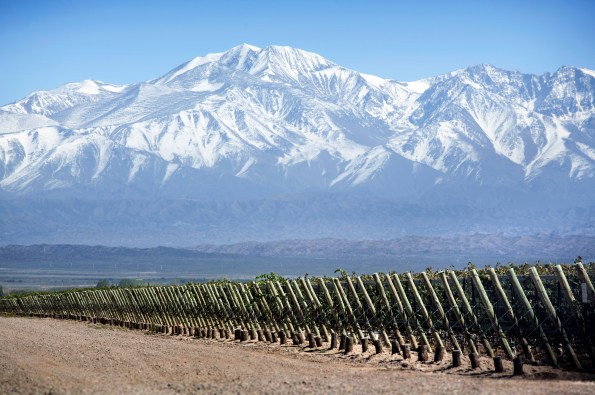
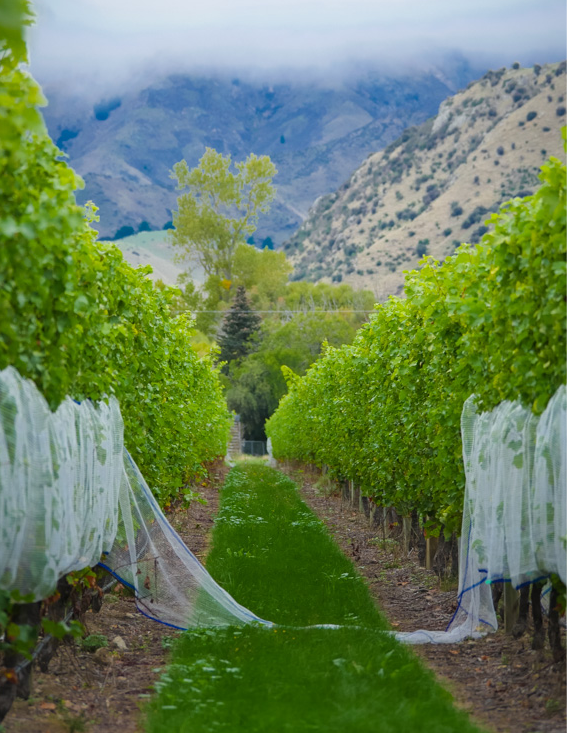
Continuing what the dragon started, MYTHIC farms about 400 acres of the vineyards in Luján De Cuyo area in Mendoza, which is often regarded as the Napa Valley of Argentina. Some of the vineyards are 90 years old, and most of them are located at about 3000 feet elevation. These high altitude vineyards are protected by the Andes, its snow-covered tops being the best source of water for the sustainably growing vines.
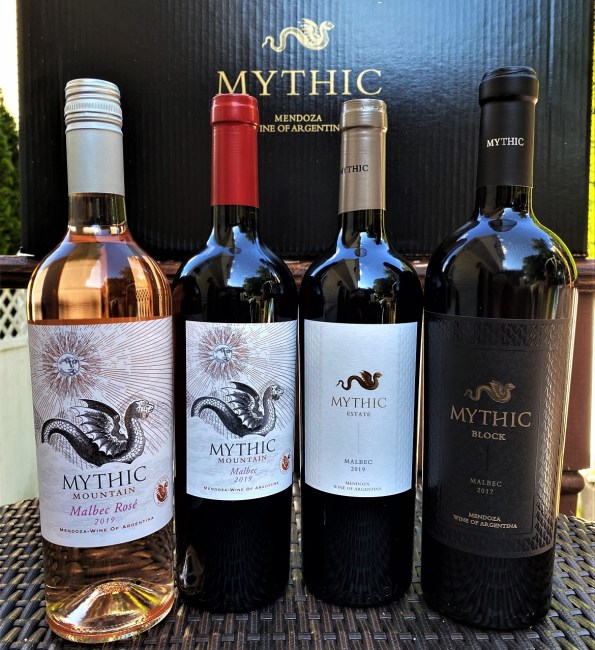
Malbec is the star at MYTHIC, used in the majority of wines – there are also multiple levels of wines, from the general to the vineyard, block, and even barrel-specific. The mystique of MYTHIC lies in the ability to show so many different expressions of Malbec, using seemingly negligible variations in the levels of fruit and oak regiment – but the diversity and the range are mind-boggling – or, rather, mythical. Take a look at my notes and see for yourself:
2019 Mythic Mountain Malbec Rosé Mendoza Argentina (12.5% ABV, $11.99)
Light pink
Fresh strawberries, good minerality, a touch of gunflint
Crisp, fresh, underripe strawberries, vibrant acidity, fresh lemon.
8+, perfect heat quencher – and a great value. This wine would successfully compete with any Provencal Rosé in the blind tasting.
2019 Mythic Mountain Malbec Mendoza Argentina (13.9% ABV, $11.99, 70% stainless steel, 30% 3nd/3rd use French oak)
Dark garnet
Freshly crushed berries, pencil shavings, tobacco, sweet sage
A touch of vanilla, tart cherries, soft, round, good acidity.
8-/8, easy to drink, perfectly representative of the “soft” Argentinian Malbec qualities.
2019 Mythic Estate Malbec Mendoza Argentina (13.9% ABV, $15.99, 4 months in French oak)
Dark garnet
Fresh berries, raspberries, blackberries, beets undertone (yeah, I know it sounds strange)
Fresh, open, ripe raspberries, hint of espresso, firm structure, well balanced.
8/8+, delicious on its own, but will be outstanding with the food. The wine clearly presents itself as an old-world wine – I would bet it is Cahors from France in the blind tasting.
2017 Mythic Block Malbec Mendoza Argentina (14.5% ABV, $34.99, 10 months in French oak)
Dark garnet
Cherries, herbs, clean, soft. More complex on the second day, a touch of roasted meat, funk, and chocolate
Succulent fruit, clean acidity, crunchy blackberries, earthy notes, perfect balance, silky smooth.
8+, outstanding, delicious wine. This wine is very international – a delicious wine which can be from anywhere.
Four wines made out of Malbec. Four totally different expressions of the grapes, some of them I didn’t know where even possible, such as Provence-style supremely elegant Malbec Rosé, also priced as a borderline steal – an outstanding QPR. Also, having the full old-world impression with the Estate Malbec? Not an easy feat, not for the New World wines.
Was our dragon real? I don’t know. I’m the one who is happy to believe in dragons and sorcerers. But the dragon made it on the labels, and the wines are as real as they can be, also great values in their own categories. The only thing left is for you to find these wines and judge them for yourself. The “thank you” notes can be left in the comments section with no limitations whatsoever.
CASARENA, The Next Level Of Argentinian Wines
The next level of Argentinian wines – I can literally see a “yeah, come on, really???” reaction from many of you. What does that even mean – the next level?
Okay, no need to get all feisty here – let’s talk about it. Argentinean wines require no introduction to any of the wine lovers today. Argentinian Malbec is practically a mandatory element of any bar or restaurant wine list, on equal footing with Cabernet Sauvignon from California. Cabernet Sauvignon and Bordeaux blends from Argentina also command topmost respect of wine lovers around the world. If the top-level is already achieved, what is the next level above it?
The “next level” here is my attempt to convey the emotion, the excitement of pleasure of tasting the delicious wines. While Argentinian wines are unquestionably the world-class, many of them are hardly distinguishable. The taste of Argentinian Malbec sometimes gets too predictable, and the wines lose their personality. Thus when you discover the wine which doesn’t conform to the “universal profile”, you feel like you are advancing to the next level of the game. I hope my tasting notes will convey my feeling about these wines, but let’s talk about the region first.
I perfectly remember listening to Kevin Zraly explaining the concept of quality of the wines. Imagine the set of enclosed circles. The biggest circle is equated to the big region – let’s say, California. Wines labeled with California as the region can be made from grapes grown anywhere in the state of California. The next circle is a sub-region – let’s say, Napa Valley. Wines labeled as Napa Valley can be produced only from the grapes grown in Napa Valley. That gives us a higher level of confidence in the quality of the wines, as Napa Valley is well known for the quality of the grapes. We can still narrow our circles, and now we are looking at the sub-region of the Napa Valley itself – Howell Mountain, Rutherford, Spring Mountain – there are many. Now your choice of grapes is restricted only to such a sub-region, which often offers a common taste profile coming from the vineyards in that subregion, such as famous Rutherford dust in the Cabernet Sauvignon wines sourced from the Rutherford appellation. And even now we might not be done with our circles, as we can restrict our source of grapes even further to the individual vineyard, such as Beckstoffer To-Kalon, and then even to the individual blocks and plots within the same vineyard. The smaller the circle is, the higher is the quality of the grapes, and that should translate into the quality of the wines.
Let’s now apply our circles to Argentina. We will start in Mendoza, probably the best-known winemaking area in Argentina – think about all the Argentinian Malbecs you are consuming. Continuing narrowing down, let’s now go to the Luján de Cuyo, the region located just south of Mendoza city. Luján de Cuyo is the first officially recognized appellation in Argentina (established in 1993), and home to some of the best known Argentinian wineries such as Catena Zapata and Cheval des Andes. Continuing narrowing down we now need to go to the town of Agrelo, where CASARENA Bodega & Viñedos is located.
I don’t like to use cliché in my writing. Nevertheless, if I would try to describe what makes Luján de Cuyo (and Agrelo for that matter) a great winemaking region, I feel that I’m doing exactly that – shamelessly using all available wine cliché all the way. See for yourself: Most of the vineyards in the region are located on a high altitude, which increases the sun exposure during the day and also creates a significant temperature drop in the evening – we are talking about significant diurnal temperature variation which slows down the ripening and helps grapes to retain acidity. Close proximity to the Andes creates a desert-like environment as it significantly reduced the rainfall – now we are talking about dry farming. Many vineyards in the region are also located on the rocky soils, forcing the vines to work hard to reach the nutrients. There is rarely greatness without adversity, and the combination of all the factors mentioned above presents exactly the adversity needed to produce excellent grapes – and yes, this unavoidable wine cliché.
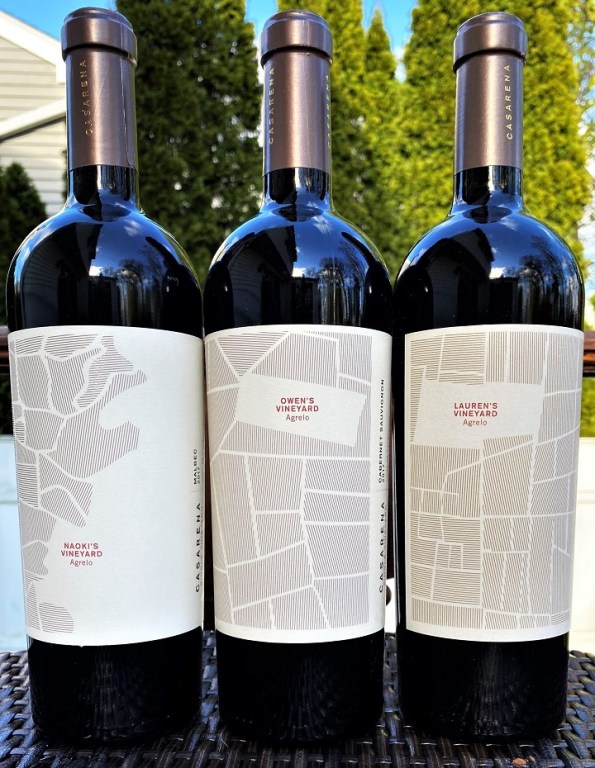
CASARENA Bodega & Viñedos was founded in 2007, with the first officially released vintage being 2009, starting, quite expectedly, with Malbec. After tasting its first commercial success with a slew of good critic ratings, CASARENA continued to narrow down the circles and created 7 single-vineyard wines coming from 4 different vineyards. I had the pleasure of tasting samples of 3 of these single-vineyard wines and was literally blown away by the quality.
Here are my notes:
2017 Casarena Malbec Naoki’s Vineyard Agrelo Luján de Cuyo Mendoza (14.5% ABV)
Dark garnet, very inviting
Dark fruit, cassis, tobacco, pencil shavings, a touch of mint
Medium to full body, succulent red fruit, vanilla, perfect acidity, silky smooth, well-integrated tannins, good minerality
8+, balanced, and delicious. Well refined compared to a typical Argentinian Malbec
2017 Casarena Cabernet Sauvignon Owen’s Vineyard Agrlo Luján de Cuyo Mendoza (14% ABV, 80 years old vines)
Dark garnet, practically black
Day 1:
Nose – dark, funky, concentrated, earth, tobacco
The palate is very contrasting to the nose, classic Cab with Cassis and bell pepper, not very expressive
Day 2:
Nose and palate are similar, more of a Malbec style – vanilla, blue fruit, coffee, dark chocolate.
Day 3:
Nose – Autumn forest, cherries, coffee
Palate – classic Bordeaux, a touch of currant, bell peppers, soft, supple, luscious, the well present core of minerality.
8/8+, excellent. My best analogy for this wine would be Dunn Howell Mountain wines, with the dark power imparted on the wines.
2017 Casarena Cabernet Franc Lauren’s Vineyard Agrelo Luján de Cuyo Mendoza (14.2% ABV, 18 months in new French oak)
Dark garnet, almost black
Coffee, a hint of cherries, minerally-driven
Cassis, cherries, soft, round, goos texture
8+, might be my favorite of the tasting.
These are three wines which would bring any dinner or friends gathering to the next level – I don’t know if you can see my point just by reading, the best way would be to pour a glass of CASARENA wine and take a quick trip to Argentina. Cheers!
Last Bottle Sign Up ($10 credit)





