Archive
So Long, Catarratto. Welcome, Lucido
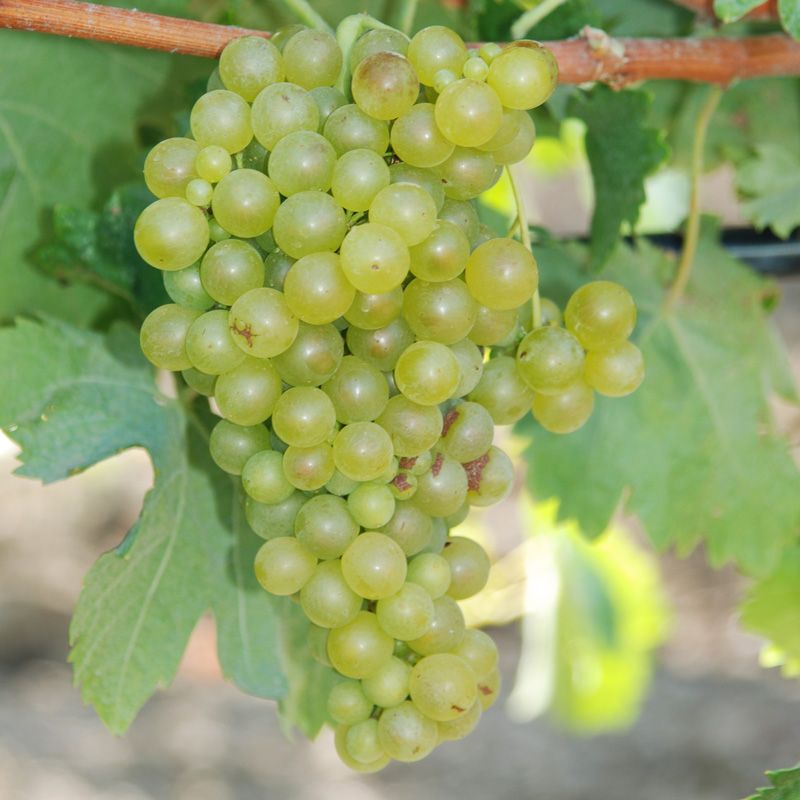
Catarratto grapes. Source: Sicily DOC website
It is a mouthful of the title, isn’t it?
“So long, Catarratto, welcome Lucido” – a bunch of strange words lumped together seemingly without any purpose, right?
Okay, I get it – some explaining is due.
Catarratto is the most planted white grape in Sicily and the second most planted white grape in Italy. Sicily has about 75 acres of Catarratto vines between two of its clones, Catarratto Bianco Comune and Catarratto Bianco Lucido, which represents 30% of the whole vineyard area in Sicily. Catarratto production increased from 17,300 bottles in 2012 to 730,000 bottles in 2020. And it is one of the historical varieties, growing forever on the island, producing fresh, round, and well-balanced wines. Sounds great, right? I would assume that you sense that the “but” is coming. So what is the problem with this picture? The name, Catarratto, is the problem.
Catarratto – pronounced “kah-tahr-rat-to”. Say it a few times, just for fun. Think if you will be comfortable ordering it in the restaurant, while just calling it by name instead of pointing with your finger on the line in the wine list saying “this”, “I want this”.
As Catarratto was growing in popularity, its name became a barrier. People don’t want to be embarrassed. And saying the word you don’t know how to pronounce requires a lot of courage. When Sicilian wines were presented at the seminar in China 10 years ago, there was enough of the anecdotal evidence collected in the form of videos with attendees struggling greatly while trying to pronounce the word Catarratto. And so it was well understood by the Sicilian winemakers that if they want to be successful with the wine which actually well deserves such success, something needs to be done.
Lucido is the name of one of the clones of Catarratto, and it is the name that often was used in ancient times. While Catarratto Bianco Lucido has a slightly different appearance compared with Catarratto Bianco Comune with Lucido grapes being shiny (hence the name), genetic research showed that both grapes are completely identical (speaking of genetics – another Italian grape, Garganega, is considered to be one of the parents of Catarratto, but then nobody knows where Garganega came from… ).
Sicilian DOC Consortium took this grape renaming task to the heart and after 2 years of lobbying, on November 21, 2018, the national Ministry issued a decree allowing the name Lucido to be used for any of the Catarratto wines produced in Sicily.
There are about 530 native grape varieties in existence in Italy, so it is obvious that setting up the precedent with renaming the grape variety was not taken lightly. But in the case of Catarratto/Lucido, it became very clear that considering the volume of production and possibilities of increased international demand, the hard-pronounced name of the grape variety became a gating issue of the wine’s success, and the right decision was made.
While Sicilian winemakers definitely appreciated the opportunity to change the name, it doesn’t mean that in mere 3 years you will see the name Lucido appear on all the wine labels. While we might think that the picture should look like this:


the 3 samples which I received looked like this:
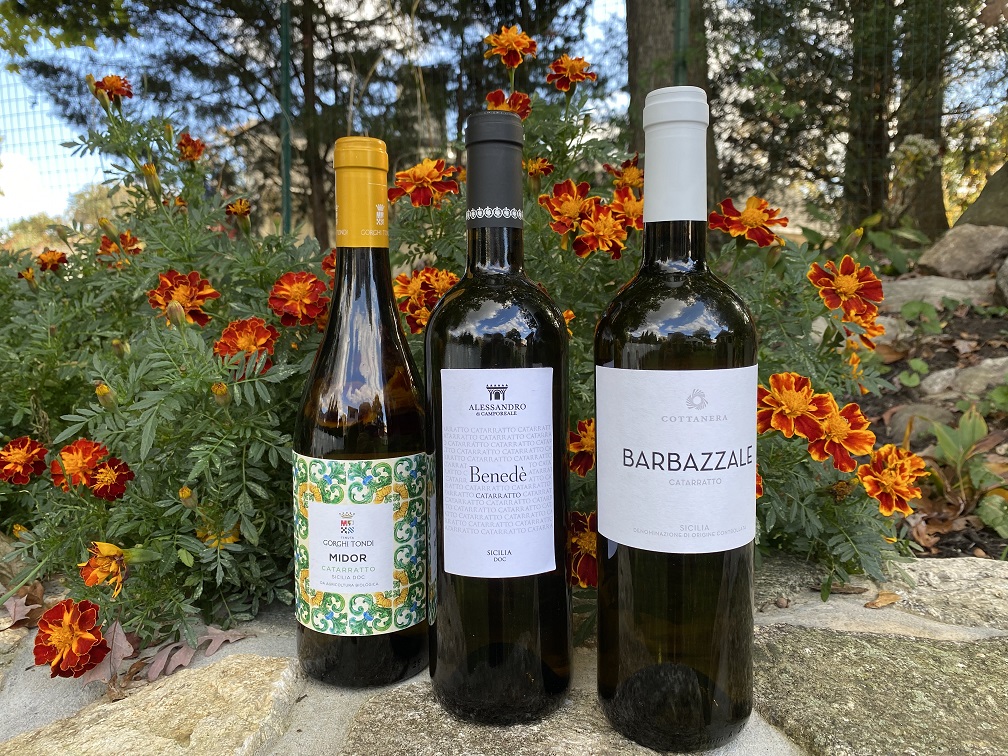
Well, whether Catarratto is difficult to pronounce or not had no bearing on the wines, as I loved all three of them:
2020 Cottanera Barbazzale Catarratto Sicilia DOC (12.5% ABV)
Straw pale
A hint of tropical fruit, lemon, herbs
Round, beautiful, Golden delicious apples, lemon, good acidity, clean and fresh.
8/8+, outstanding.
2020 Tenuta Gorghi Tondi Midor Catarratto Sicilia DOC (12.5% ABV, organic grapes)
Straw pale
Generous nose with a hint of vanilla, honey, and gunflint
Crisp, clear, precise, elegant, beautiful acidity, lemon, more gunflint, and Granny Smith apples.
8+, can be easily confused for a Chardonnay. Wine with finesse.
2019 Alessandro di Camporeale Benedè Catarratto Sicilia DOC (13% ABV)
Straw pale
Lemon, steely minerality
Crisp, tart, lemon, expressive minerality, clean acidity. Very refreshing
8, excellent food-friendly wine
I wouldn’t lie to you – Midor Catarratto was my most favorite wine, and I really admire its tile-styled label.
Catarratto’s name served the eponymous grape well, but the change is coming. It is a slow change, but as long as it is just the change of the name, and we will still get to enjoy the wine inside the bottle, it is the change that will help this wine to deliver pleasure to more wine lovers around the world.
And for you, my wine friends, Catarratto or Lucido – go find this wine and expand your wine vocabulary.
Welcome, Lucido.
P.S. For the grape geeks out there: as I was working on this post, I came across this article, which identifies Mantonico Bianco as the second parent (along with Garganega) of Catarratto. The article is from 2017, so it should be old news, but at least the Wikipedia article on Catarratto has no mention of it…
Daily Glass: Two Wines and The Sunset
Oenophiles are mysterious and easily influenced.
There.
Prove me wrong.
Here is the story of my weekend.
First, the “easily influenced” part, taking place on Saturday. My twitter wine friend Le Bov Vin #inmyglass likes to play a game – post a picture of a glass of wine with the description, asking everybody to guess the wine in the glass. Saturday’s post described the wine as “Redcherry.Blackfruit n strawberry,vanilla,licorice,hints of wood,smokedmeat Veryfresh,wellbalanced, polishedtannins,lingering finish“. My first guess was Pinotage, the second guess was leading to Washington Syrah/Grenache, but something here was also suggesting Spain, so I put all of these guesses into a tweet. After getting a confirmation that Spain is the right place, my first inclination was Ribera del Duero or Toro, as Rioja rarely would offer smoked meat notes – could’ve been something from Priorat, of course, but I decided to go with the first idea – and somehow I managed to hit it – the actual wine in the glass was Bodega Tinto Pesquera, one of the most classic producers from Ribera del Duero.
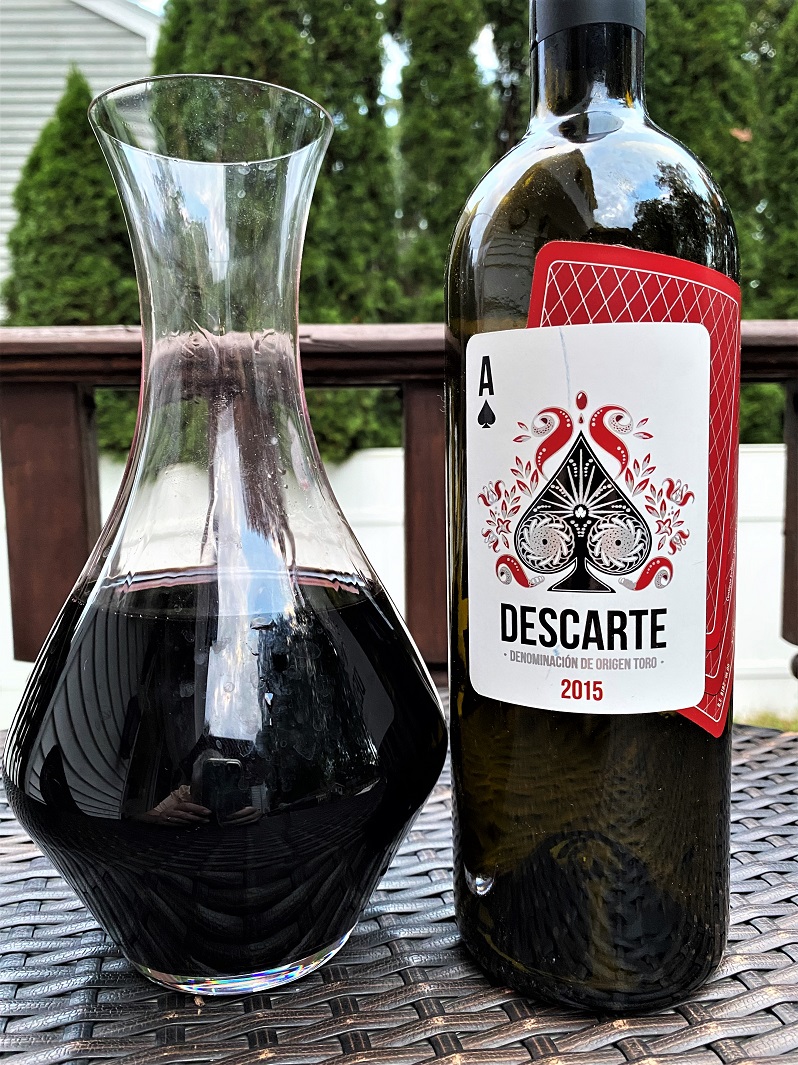
That made me crave Ribera del Duero wine, but somehow, while I always have a good amount of Rioja on hand, Ribera del Duero is a rare bird in my cellar. At this particular moment, it was as rare as none – but I recalled that I have a few bottles from Toro, the area down south from Ribera del Duero, producing densely concentrated and powerful renditions of Tempranillo, so I decided to obey my crave with 2015 Elias Mora Descarte Toro DO.
I wrote about this wine at the beginning of the year, when I called it Vinous Vino. Unlike the last time, I decided not to wait for the wine to come around slowly, and the wine went directly into the decanter upon opening. This definitely worked, as after about an hour in the decanter the wine showed massive and powerful, but also approachable enough to be enjoyed already, with dark cherries, espresso, and herbs-loaded profile.
Then there was Sunday, and the weather was noticeably cooler, one of the first cold days this fall so far. I wanted to sit down outside with a glass of wine, which obviously begged the question “what to open”. While going through the options inside my head, my inner voice insistingly proclaimed “Chardonnay”. I tried to argue – why Chardonnay, we can do Albarino, Chenin, Viognier, Riesling – but most importantly – why should it even be the white wine? It is cold enough to crave red! But the inner voice was unyielding – it has to be Chardonnay, there is nothing to discuss.
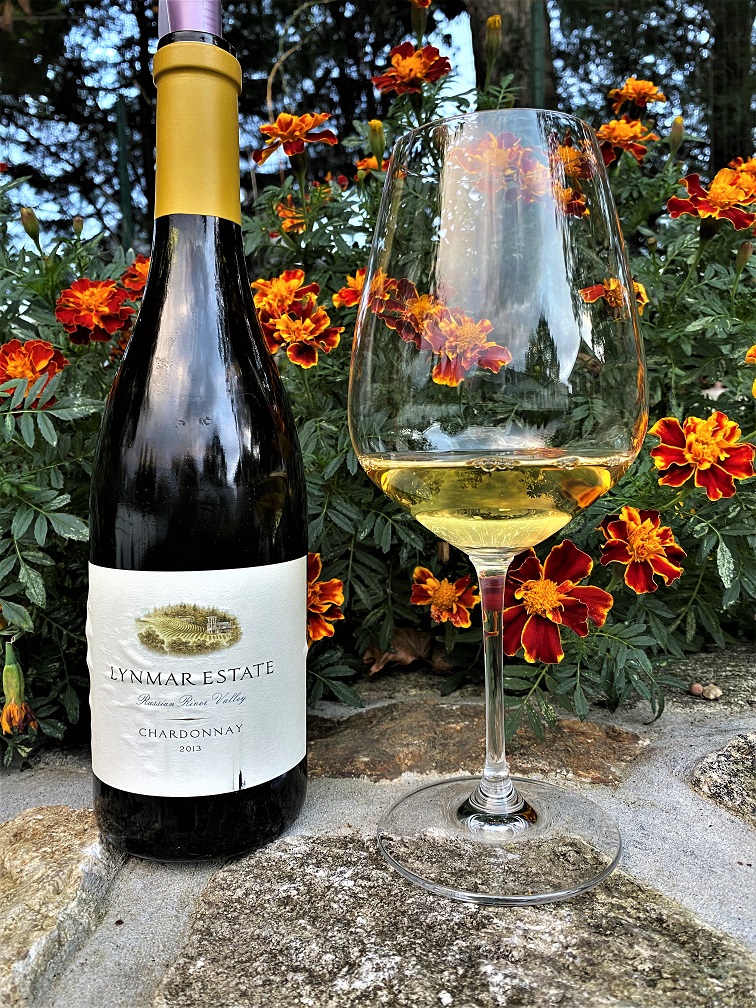
I don’t have a huge selection of Chardonnay, so the 2013 Lynmar Estate Chardonnay Russian River Valley (14.5% ABV) was almost the easiest choice. Boy, what a good choice it was… After a few minutes in the glass, the wine was singing with a core of vanilla with supporting voices of butter and green apples, all in perfect harmony. I don’t know if the wine was at its peak, or if it had another 10 years of life left – but it was perfect at the moment, no matter what mystery possessed me to open the bottle of Chardonnay.
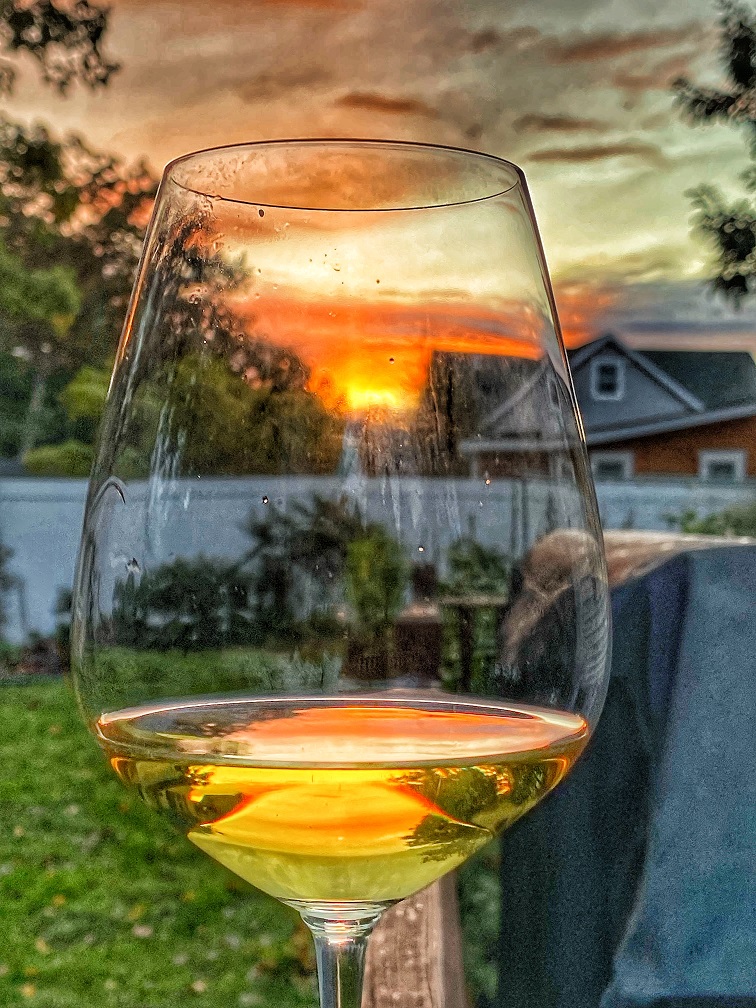
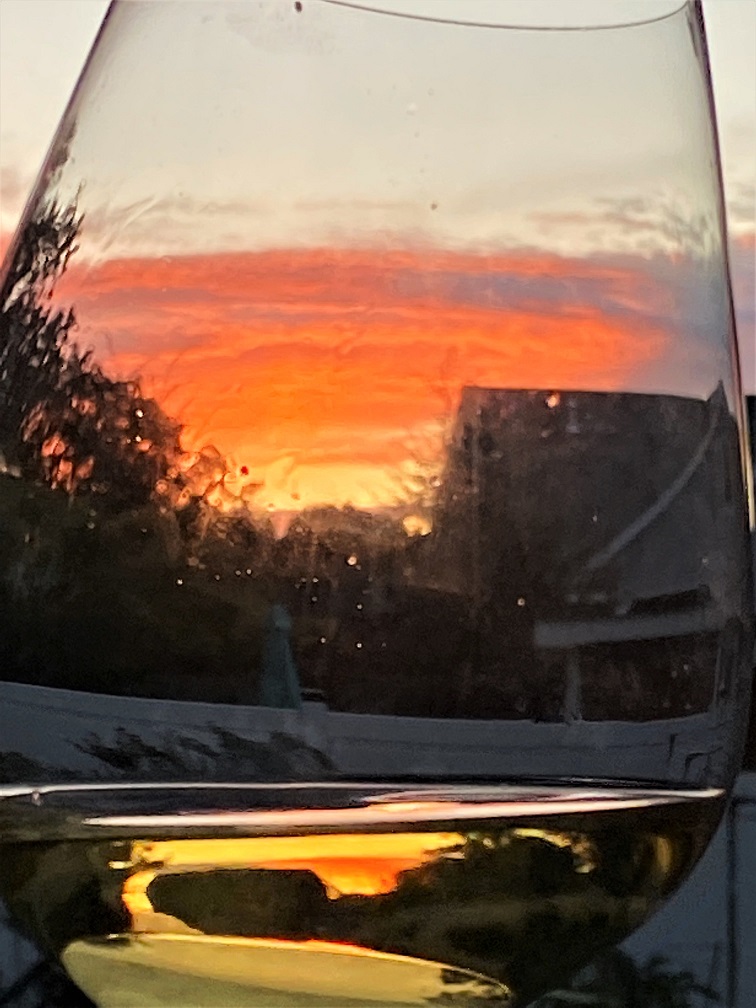
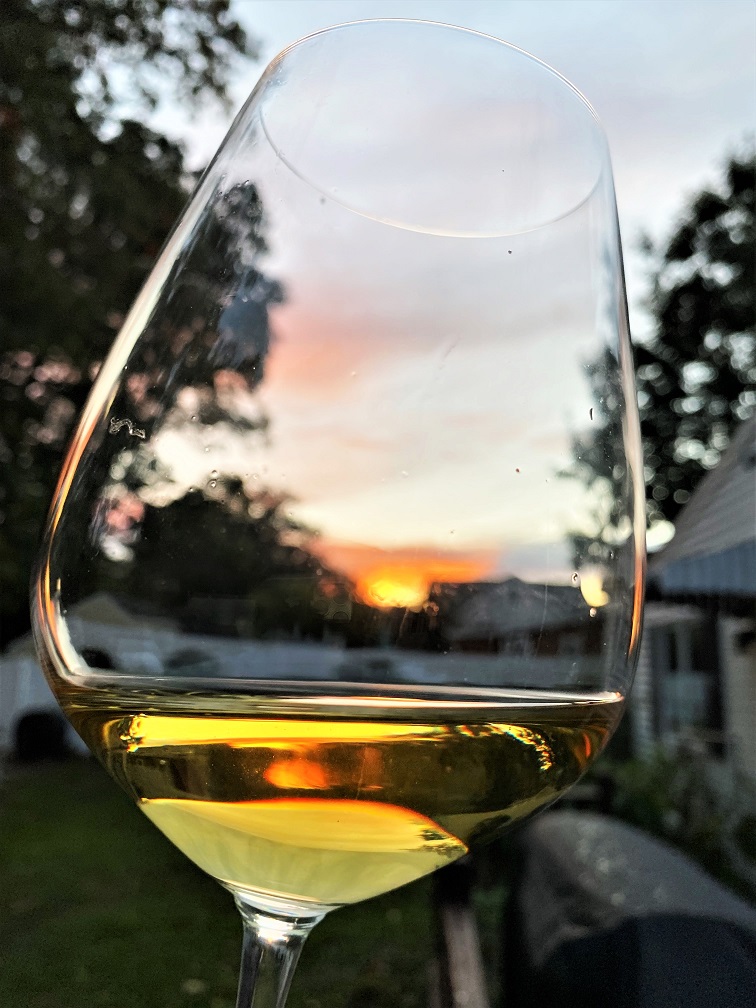
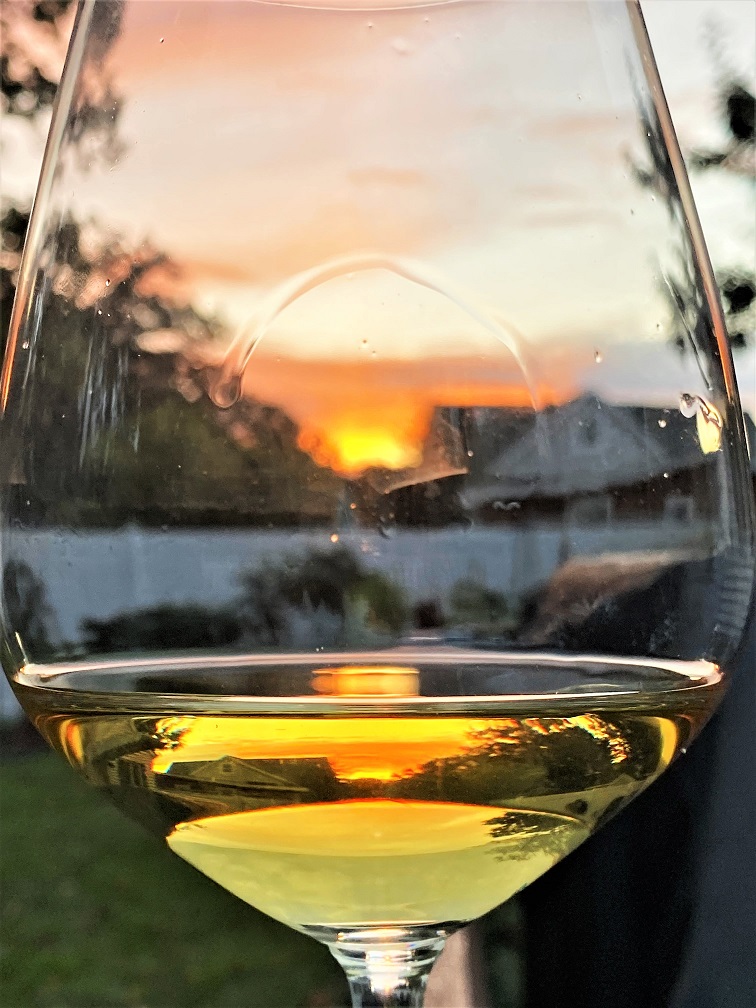
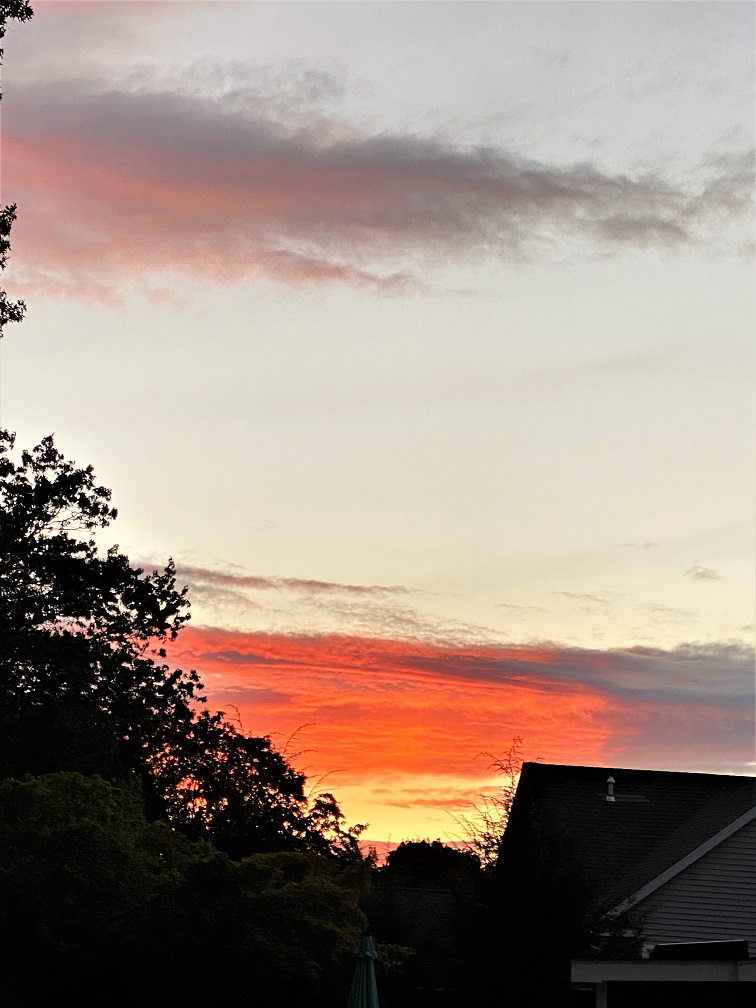
And then there was the sunset. I love taking pictures of the sunset, one of my most favorite types of photography. I often can take a decent picture of sunset right from my backyard – not all of those worth sharing though. But this Sunday sunset happened to be really special. A little rain started all of a sudden in the evening, forcing me to seek cover under the umbrella on the deck. The rain was very short, maybe 5 minutes or less. Once the rain didn’t look bothersome anymore, I stepped out from under the umbrella to go sit in the chair in the backyard – and then I saw THIS:

It appears that rain before the sunset creates some truly magical conditions for the sunset – some of the most memorable sunset experiences all took place after the rain. Once I saw this sunset, I spent the next 15 minutes taking pictures, with the glass and without, every moment being special and really worth capturing. Below are some of those pictures, I hope you will enjoy them as much as I did while talking them:


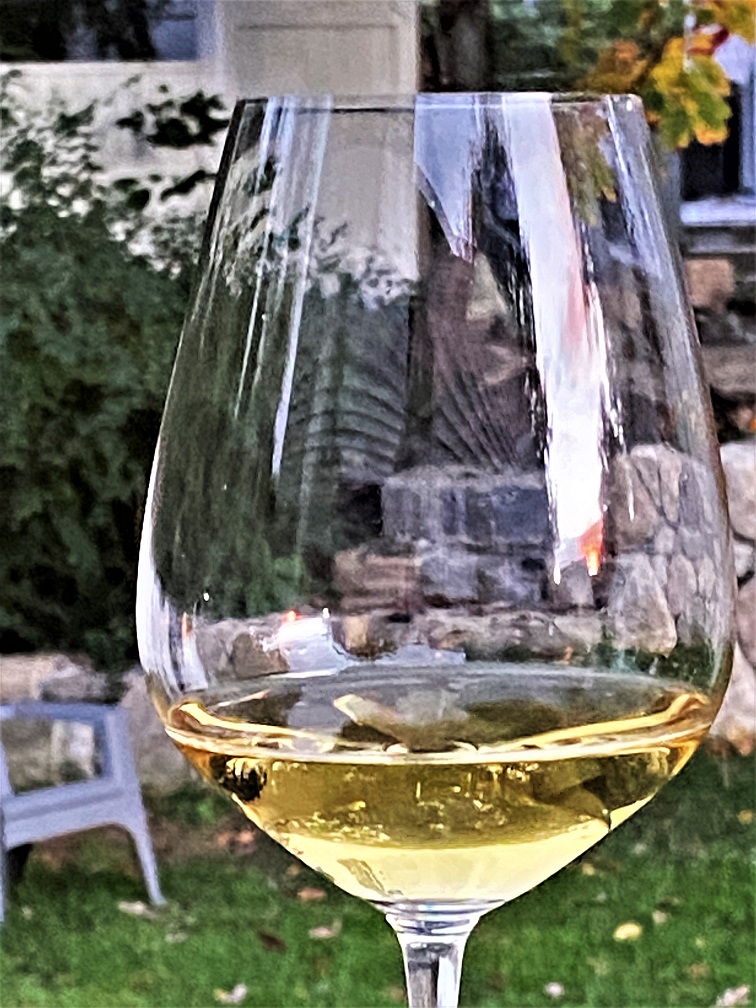
My failed attempt to catch the reflection of the sunset on the glass
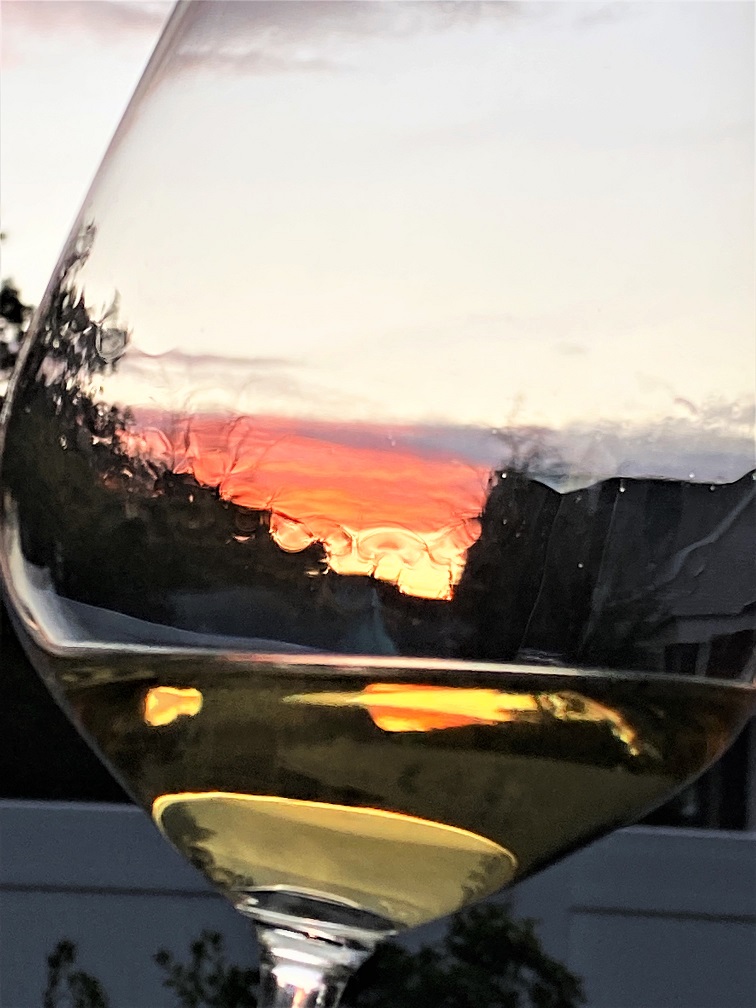
That’s all I have to share for now. How was your weekend?
Daily Glass: Uncomfortable Wine
 “Uncomfortable wine”??? What utter nonsense, right? Did the author had one too many glasses while writing this post?
The wine can be spoiled. The wine can taste bad. We can call it plonk, we can pour it out. But uncomfortable?
Shoes can be uncomfortable. The dress can be uncomfortable. The shirt’s collar might be too tight. Not knowing how to start a conversation with an attractive stranger might be uncomfortable. Not knowing how to answer a live interview question for the position you dreamed of your entire life is uncomfortable. Many, many things can be uncomfortable. But wine?
When I refer to wine as an art, the typical association in my mind is painting. As an art form, I imply that there are similarities between the bottle of wine and the painting on the wall. But maybe a book would be a better art form to compare?
Reaction to painting is instantaneous – you can, of course, spend hours looking at elaborate details and discovering new elements even if you saw the painting a thousand times before – but your first impression is unlikely to change, it might only deepen as time goes on. But with the book, first we see the cover, then we start reading, and if we found the book which speaks to us, by the time we reach the second page, nobody cares about that cover anymore.
When it comes to the wine, the bottle and the label matter – until we take the first sip. If we found “our wine”, the same as 300 pages book can be obsessively consumed within a few hours, a good bottle of wine will be gone in no time. And while you will be enjoying it, most likely you wouldn’t even remember how the label looked like.
What’s with this interlude and our comfort/uncomfort discussion you ask? Don’t worry, this is all connected.
So what can be uncomfortable about wine? Actually, many things. Remember – in the wine world, it is all about perception – except the taste, the pleasure, and your desire to have a second glass – of course, if you chose to be honest with yourself. Otherwise, perception is everything. Enjoying a glass of 2 buck chuck is uncomfortable. Bringing a $5 bottle of wine to your friends’ house is uncomfortable – knowing that it is an amazing bottle of wine without any regard for a price doesn’t make it less uncomfortable. Enjoying the glass of wine while your best friend hates it is uncomfortable. And then there are labels.
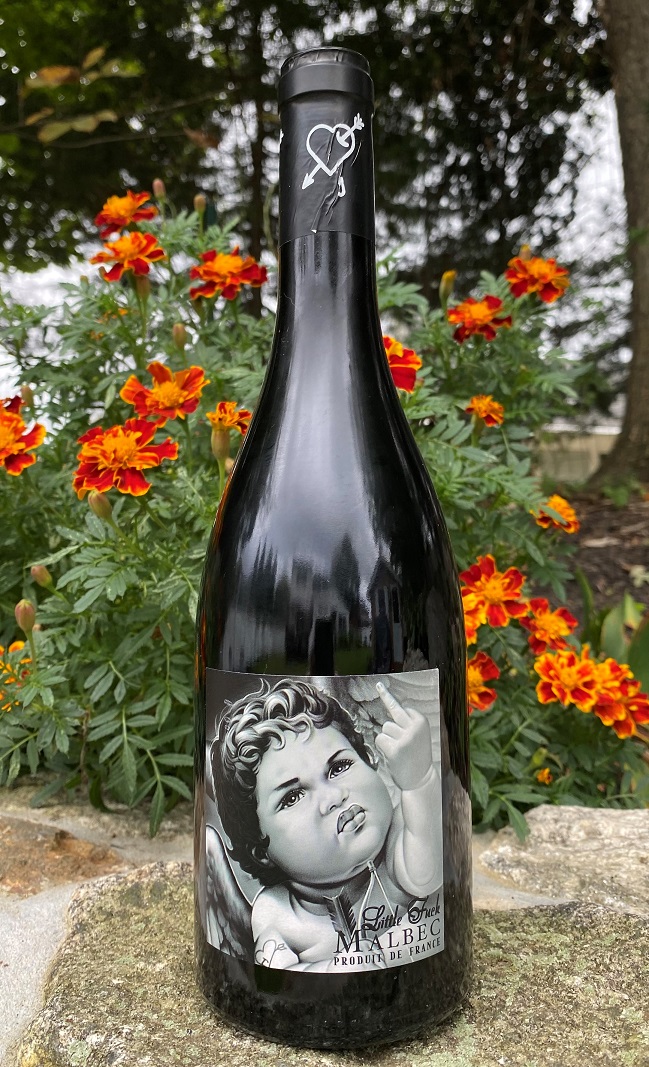
Okay, call me “captain obvious”, but this is where I was leading you all the way – the label can make you uncomfortable. There are enough wines in this world that have, for example, sexually suggestive or simply offensive words or images on the label. Ever saw the bottle of If You See Kay? This is a perfect example of suggestive language on the label – the book cover – for a perfectly delicious wine produced by Jayson Woodbridge. And there are wines that don’t even use suggestive language anymore – like the Little Fuck Malbec from Cahors.


When a friend sent me a picture of this label a few days ago, my first reaction was literally WTF – how can such a label be even approved (Jayson Woodbridge had lots of trouble getting his If You See Kay label approved 9 years ago)? But as the wine was available, I decided that I would not judge the book by its cover, and actually try reading it – and so I got the bottle.
I have to say that as soon as I got a hold of the bottle my negative impressions instantly started to diminish. This is hard to explain, as I don’t know if all the oenophiles feel the same way, but there are bottles that express “comfort” with its shape, weight, and overall feel in your hands. Once you take such a bottle in your hands, you can’t help yourself but say “oh, this is nice”. This was precisely the bottle. Outside of the wine name and the image on the label, the bottle was very comfortable and really created the anticipation – “oh yeah, I do want to open that bottle”. Even the label looked well designed in its shape and size and added the overall “comfort” feeling.
The wine didn’t disappoint – 2020 Vellas Père Et Fils Little Fuck Malbec Cahors AOP (14% ABV) was unapologetically a New World Malbec – big and brooding – and in a blind tasting I would confidently place it into Argentina, but never into the old world. The wine was full of raspberries, smoke, and sweet tobacco – on the nose and on the palate. Big, full-bodied, and powerful, but also well balanced and delicious – a very unapologetic Malbec I might be ashamed to bring to the acquaintance’s house but would be happy to drink at home or with close friends.
I’m really curious about the backstory of this wine. I don’t believe the name and images are random. Nicolas Vellas is a vigneron in the 4th generation at Vignobles Vellas, farming 300 acres of vines and producing a wide range of wines in the South of France. If this would be the only wine produced at the winery, yes, we could dismiss it as a gimmick. But this is simply one of many and the only one with such a unique label, so I truly believe there is a story for this wine, which is not easy to figure out – I even sent a message to the winery asking them to share the story if they can, but I’m not very hopeful. Well, actually lots of Vignoble Vellas wines have very creative labels – you can see them here, but I don’t know if there are any more of the “uncomfortable” ones.
Here you go, my friends. Uncomfortable wine which also happened to be delicious. Yeah, I’m okay with that. I’ll take delicious any day. And comfort? It comes after delicious.
Of Hydrangeas, Ocean, Sunsets, and Wine
I’m sure this cryptic title leaves you wondering what are we going to talk about in this post, right?
Yeah, a lame attempt at self-humor.
And as you can see I want to talk about some of my most favorite things – flowers, waves and sand, sunsets, and, of course, wine. Mostly in pictures – except the wine part.
We just came home after a weekend in Cape Cod, and if you ever visited The Cape as it is typically called, I’m sure you noticed the abundance of hydrangeas. There is rarely a house that doesn’t sport a beautiful hydrangeas display.
Hydrangeas come in many colors, which can be also influenced by what you feed the flowers. They typically bloom the whole summer and deliver non-stop pleasure – at least in my world. Let me share some of my favorites with you:


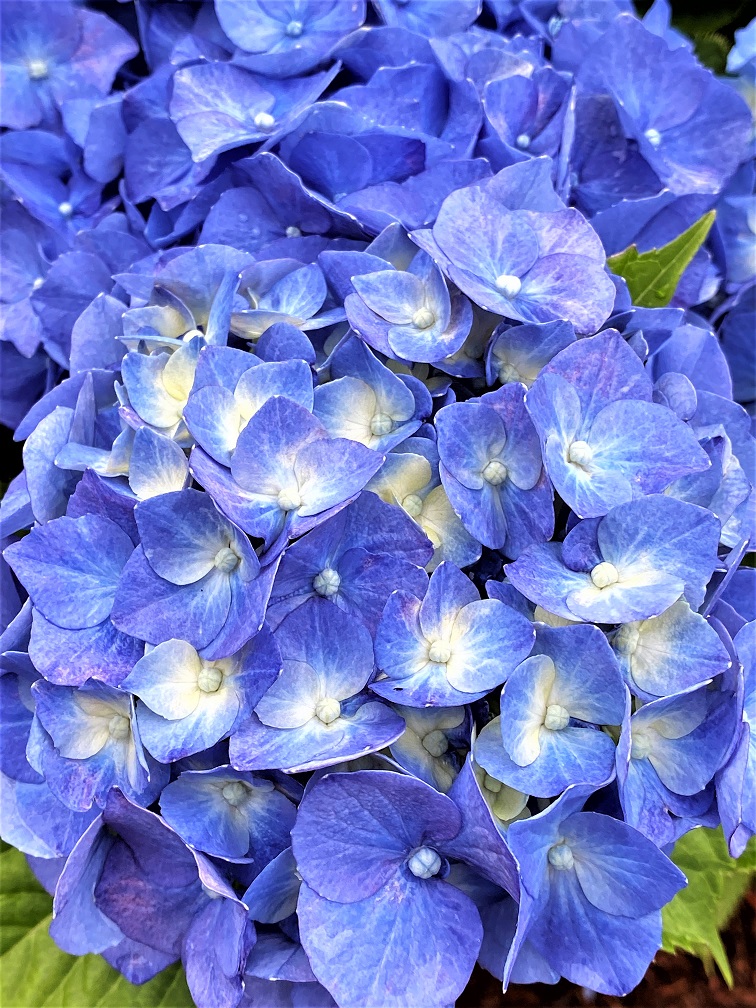
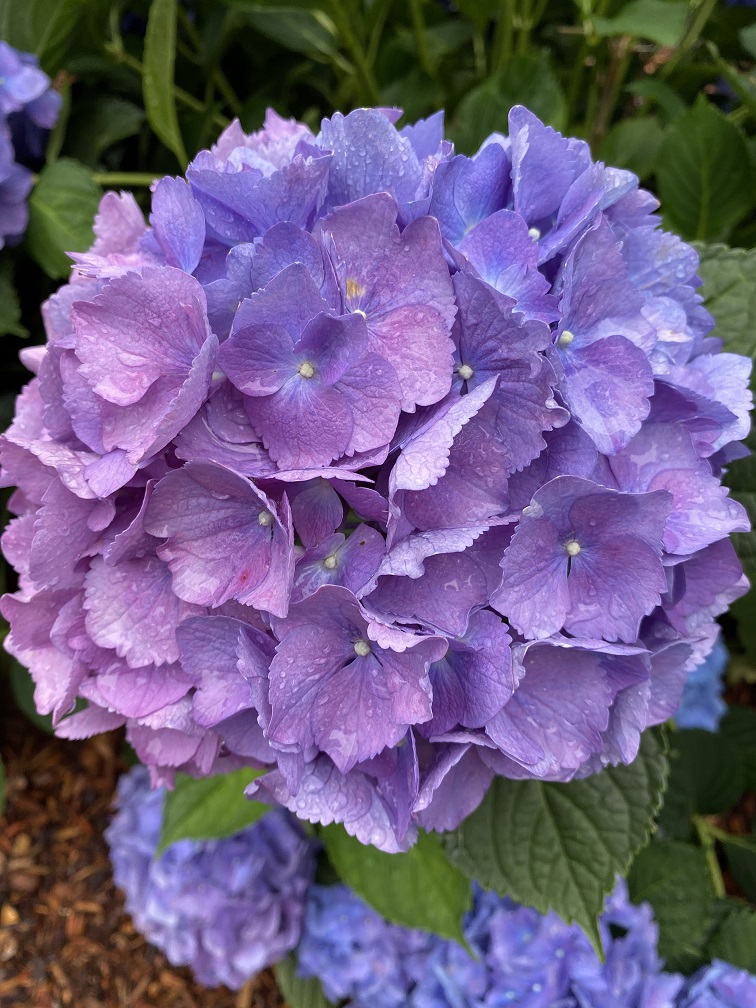
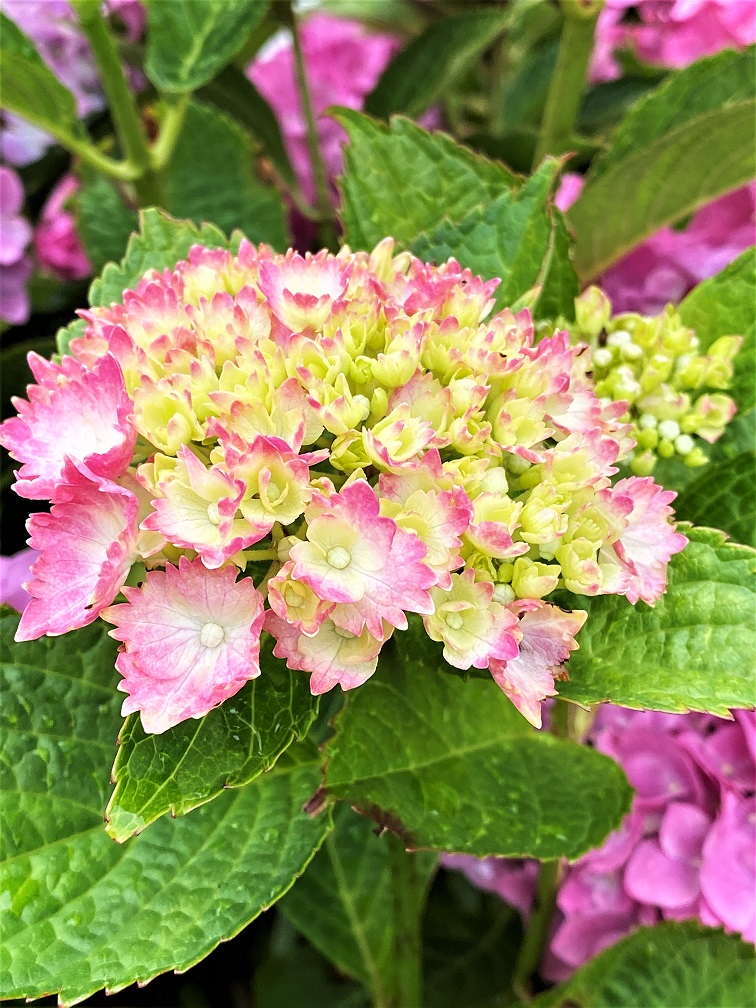

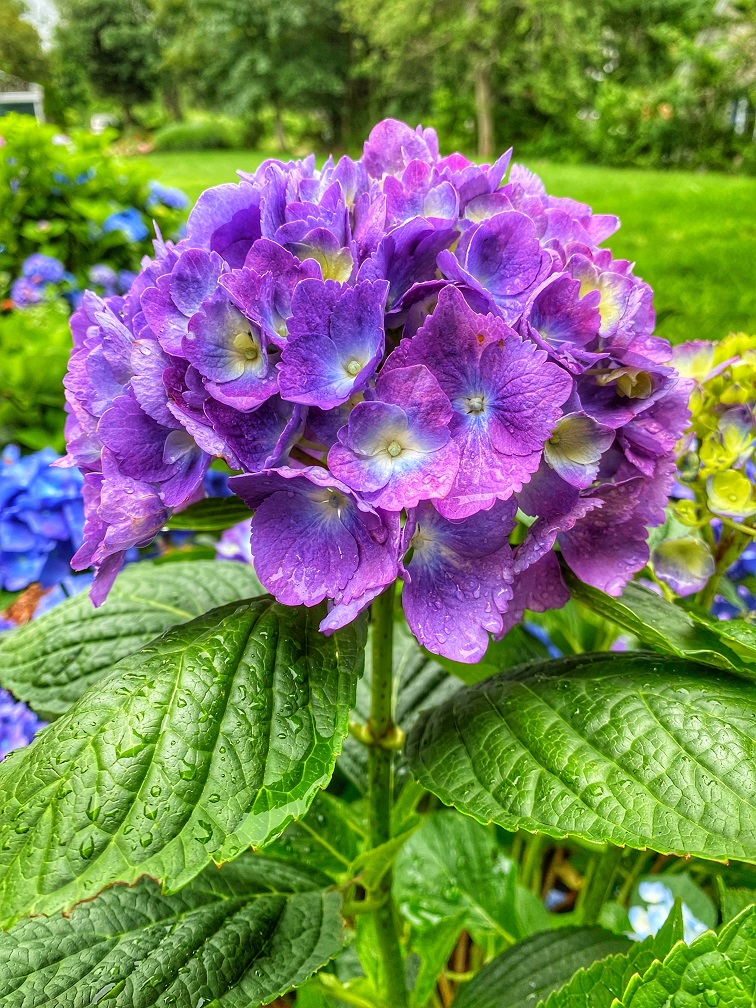
Our next subject is the ocean. Cape Cod is a special place, where you can find huge swathes of water only a few inches deep, or simply a wet send that goes for miles and miles during low tide. The water and the sky magically connect, creating an ultimate rhapsody in blue – see for yourself:
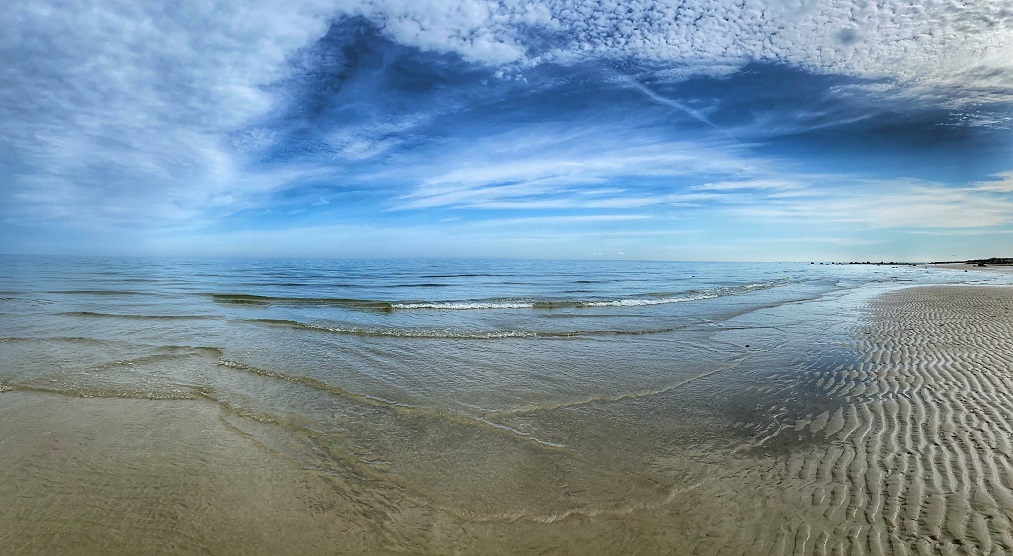
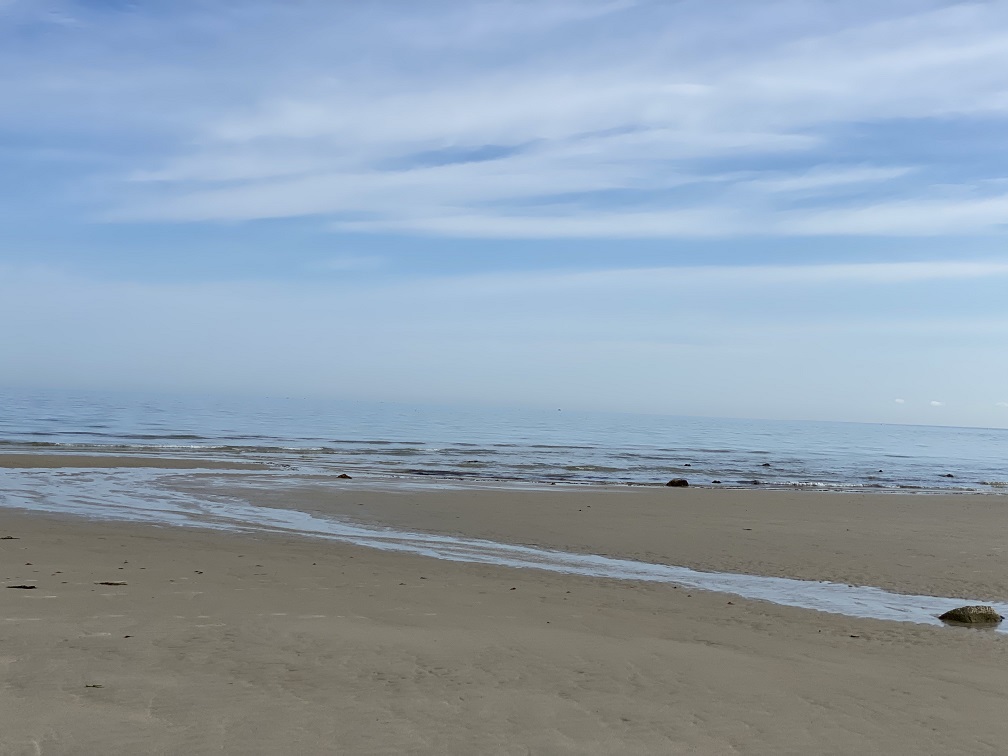



 The sunsets were challenging this time around. Two days out of three that we spent on The Cape, the weather was not good at all – rain, wind, and more of the rain and wind. Nevertheless, the weather was taking a break in the evening to present a beautiful sun setting imagery, which we enjoyed from the comfort of the deck – with a glass of wine in hand:
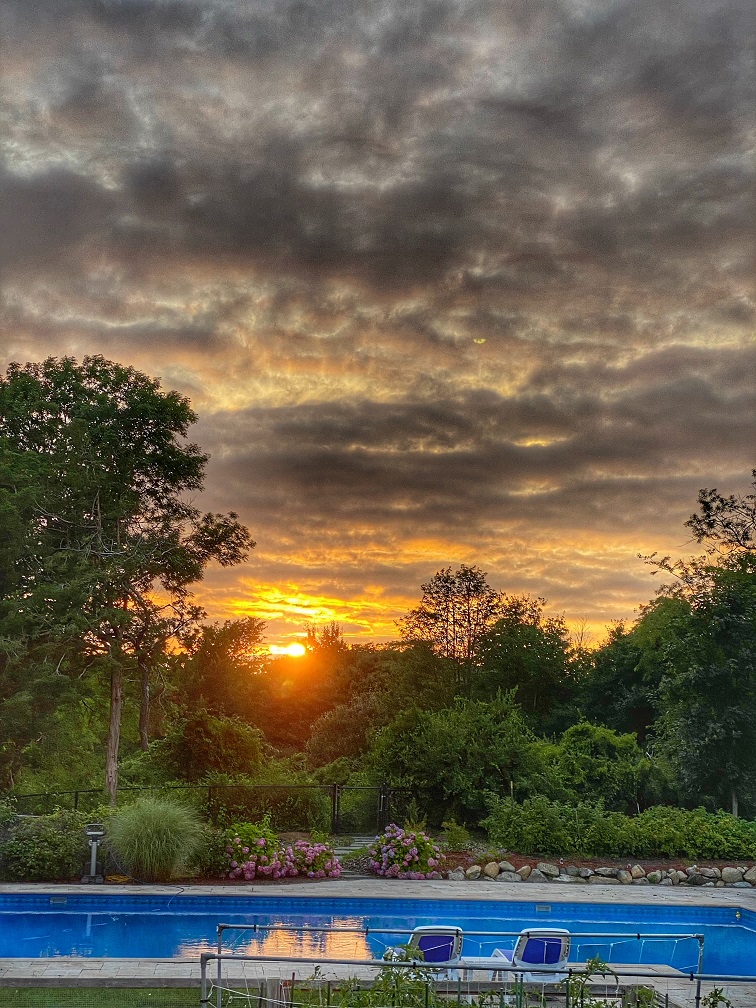
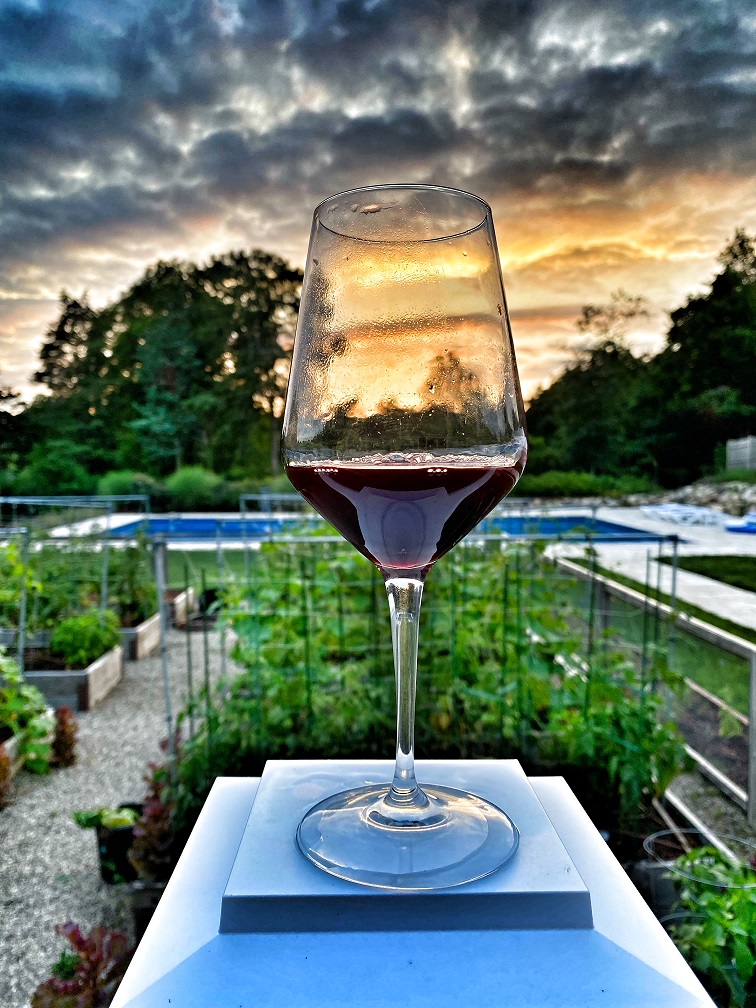
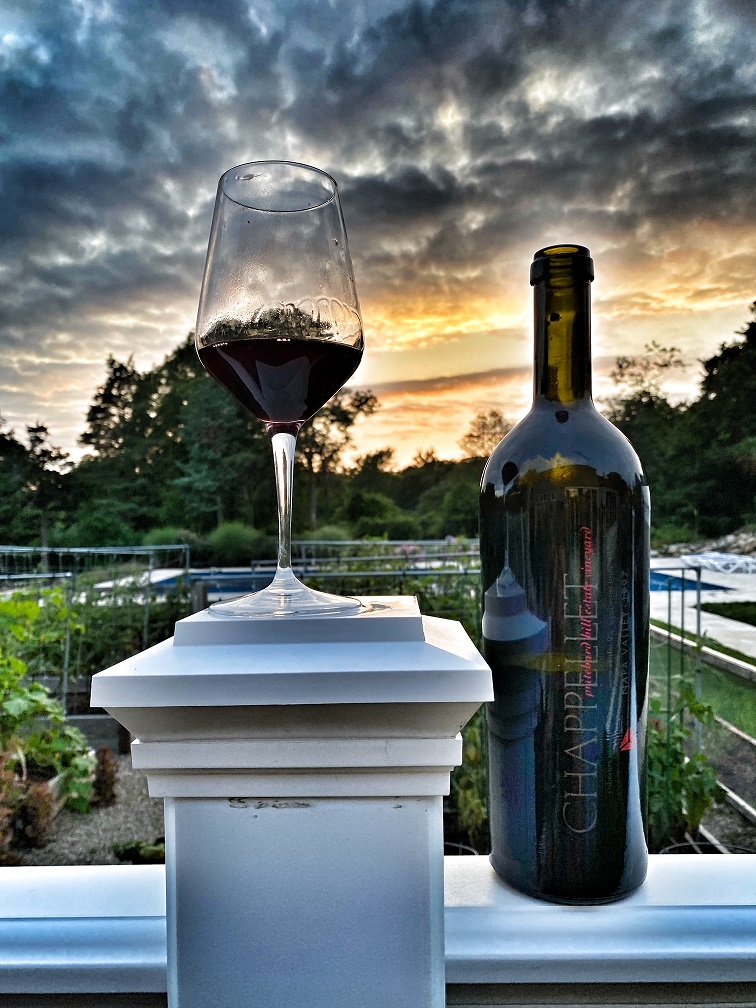 And this brings us to the last subject of today’s post – the wine. This was a vacation, and I was absolutely not interested in taking any sort of formal notes. But somehow, the majority of the wines we had were so good (with the exception of some sort of homemade wine from Moldova, which we had to pour out) that I can’t help it not to share the pleasure. Here are my brief notes.
We started with 2020 Hugues de Beauvignac Picpoul de Pinet AOP (14.1% ABV) – fresh, clean, well balanced. The wine offered a touch of the whitestone fruit and was a perfect welcome drink after 4 hours of driving. It is also very well priced at about $12 at Total Wines in Boston, which is almost a steal at that level of quality.
2019 Golan Heights Winery Yarden Sauvignon Blanc Galilee (13.5% ABV) offered a beautiful Sauvignon Blanc rendition with a hint of freshly cut grass and beautiful creaminess. This wine was more reminiscent of Sancerre than anything else – an excellent effort out of Israel.
2016 Sonoma Mountain Steiner Vineyard Grüner Veltliner (14.1% ABV) – one of the perennial favorites (I’m very disappointed when my Carlisle allocation doesn’t include Gruner Veltliner). Beautiful fresh Meyer lemon, grass, clean acidity – in a word, delicious.


The last white wine we had was 2016 Château de Tracy Pouilly-Fumé AOP (13% ABV). Another Sauvignon Blanc – plump, creamy, delicious. Nicely restrained and round. It is definitely a fun wine as long as the price is not taken into the consideration – otherwise, at about $40, both Yarden (under $20) and Picpoul wines would give it a great run for the money.
Our Rosé was fun 2020 Samuel Robert Winery Pinot Noir Rosé Vineyard Reserve Willamette Valley (13% ABV) – the Oregon Rosé is just not very common. This wine had nice strawberries all around – on the nose and on the palate. I would probably want it to be a tiny bit less sweet, but the wine was still quite enjoyable.
2017 Campochiarenti San Nicola Chianti Colli Senesi (14.5% ABV) is one of my favorite wines to surprise friends and even myself with. It starts as a solid Chianti would – cherries, tobacco, leather, iodine. But in a few minutes of breathing, it magically evolves to add sandalwood, nutmeg, and exotic spices. An incredibly heart-welcoming sip.
And to top of everything else, the 1997 Chappellet Pritchard Hill Estate Cabernet Sauvignon Napa Valey (87% Cabernet Sauvignon, 9% Petite Sirah, 4% Cabernet Franc) was thrown into the mix by my brother-in-law. This wine was a testament to California Cabernet Sauvignon; a simple proof that well made California Cab might be the best wine on Earth. This wine had no – none – signs of aging. Fresh, young, concentrated, cassis and cherries with a touch of mint and coffee, beautifully layered and well structured. This wine was not yet at its peak – I wonder how many more years it would require to reach the top…
And now, an absolute surprise – 2000 EOS Tears of Dew Late Harvest Moscato Paso Robles (10.5% ABV) – a late harvest wine from Paso. Beautiful orange color, and nose and palate loaded with ripe apricots – a hedonistic pleasure on multiple levels.
Now that is the whole story I wanted to share. What is your favorite flower? Have you tasted any amazing wines lately? Cheers!
Made With Organic Grapes: Find Your Ritual
The world of wine is full of eternal questions. Here is one of the most prolific ones: where is the wine made – in the vineyard or at the winery?
Many would argue that, of course, the wine is made in the vineyard. To make good wine you have to start with good grapes. You need good, healthy, properly ripened grapes to make good wine. “Good grapes” might seem obvious as a concept, but it actually entails a lot of hard work, love, and care, from the moment the first bud will appear on the vine (and even before that) until the moment when harvested grapes are reaching the winery. “Good grapes” are not defined by the taste alone – it is important how the grapes were growing, were any pesticides used, were all the methods organic, or better yet, sustainable? “Good grapes” for sure means a lot of work.
Then some might argue that no matter how good the grapes are if the winemaker will not take good care of the grapes from the moment grapes arrived at the winery, the good grapes will not result in good wine. How the grapes were manipulated from the very beginning – sorting, cleaning, de-stemming, pressing, fermenting, aging, storing – each of these steps has to be performed properly, as even the very best grapes will not convert themselves into the good wine.
Source: Ritual Winery

Source: Ritual Winery
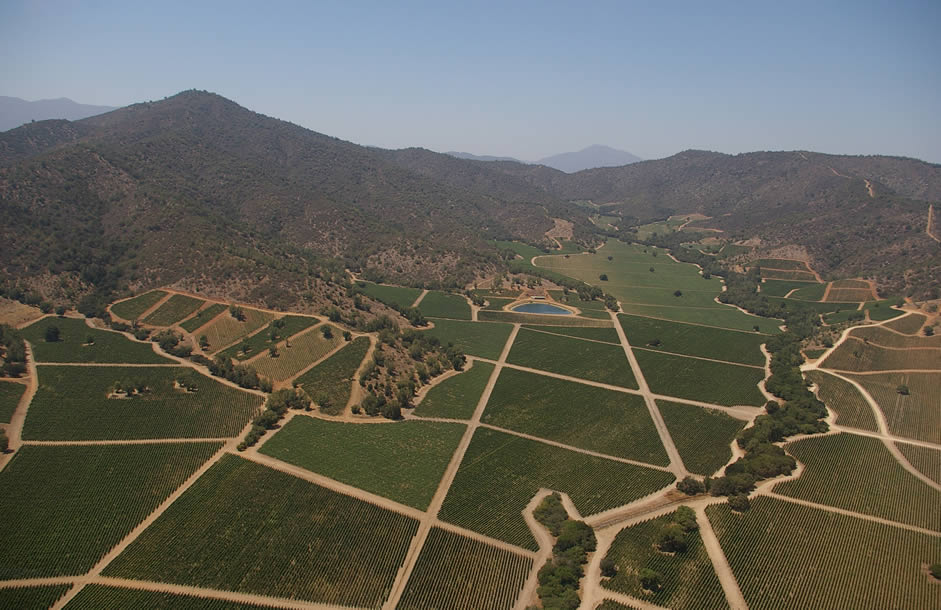
The folks at Ritual winery in Chile clearly don’t want to answer this eternal question. Or rather their answer is “both”. Estate vineyards in the eastern part of the Casablanca Valley in close proximity to the Pacific Ocean are surrounded by 6,000 acres of the native forest, creating a unique biome. All the vineyards are certified organic. Estate uses its own compost, made out of the pomace and manure of the local animals. Sheep help mow the grass and fertilize the vines.
The grapes are hand-harvested early in the cool morning at the first sunlight. After sorting, the grapes are fermented in the open-top tanks, using basket press and native yeast. To achieve desired characteristics, 4 different vessels are used for the aging of the wines: Oak Barrels to enhance the structure, Concrete eggs for the texture, Stainless steel Drums elevate freshness, and Stainless steel Tanks help with aromatics.


Below are my tasting notes, where you can also see all the different vessels used to produce particular wines:
2018 Ritual Sauvignon Blanc Casablanca Valley (14% ABV, $19.99, organic grapes, 8 months in stainless steel, concrete eggs and neutral barrels)
Light golden
Very complex, white stone fruit, good minerality, fresh herbs
Round and velvety, creamy texture, a hint of vanilla, even butter, nice lemon core, clean and crisp finish
8+/9-, outstanding. A different and delicious Sauvignon Blanc. Borderline a Chardonnay experience.
2019 Ritual Sauvignon Blanc Casablanca Valley (13.5% ABV, $19.99, organic grapes, fermented and aged for 8 months in concrete eggs, neutral oak, and stainless steel)
Light golden color
The nose is not very expressive, minerality, a hint of whitestone fruit
On the palate, a full spectrum, changing as the wine warms up – starting from steely Muscadet-like acidity, adding a bit of the creaminess after a few minutes in the glass, and then showing Chardonnay-like fuller-bodied notes and expressive minerality.
8/8+, Delicious
2018 Ritual Chardonnay Casablanca Valley (13.5% ABV, $20.99, aged in concrete eggs and French oak barrels)
Light Golden
Characteristic touch of vanilla and apple on the palate, a whiff of honey
Vanilla, apple, a hint of butter in the palate, perfect balance, crisp acidity, wow, a superb rendition of Chardonnay. Give it 5–10 years, and it will rival the white burgundy.
8, Outstanding
2017 Ritual Pinot Noir Casablanca Valley (13.5% ABV, $21.99, aged 11 months in French oak barrels)
Dark Ruby
The dusty nose of fresh plums with a touch of vanilla
Plums, violets, a touch of mocha, good acidity, fresh, excellent balance
8+, delicious from the get-go
Tasting Ritual wines will not help us to find an answer to our eternal question – these wines are clearly made both in the vineyard and at the winery. Have you tried any of these wines? If you did, I guess you already found your Ritual, if not – well, here is your chance.
Seeking Cabernet
 Now, this is frustrating.
At the recent dinner with friends at Knife Pleat restaurant (amazing food!), I assumed my role of designated Wine Guy and was going through 20+ pages of the wine list. 1970 Solar di Samaniego Rioja Gran Reserva caught my eye – at $200, it represented an amazing value for a 51-year-old wine. After confirming with the Somm that the wine is still well drinkable, only more delicate than powerful, I had to wriggle an approval for spending $200 on a bottle (I was not paying).
After the wine made it into the glasses, it appeared that everyone was really enjoying the nose, which was complex and spectacular. The first sip of the wine, served at the cellar temperature, was met with more than subdued enthusiasm – let’s be honest here, it was rather a sigh of disappointment. There was nothing wrong with the wine, but it was well closed and at least needed the time to open up.
After a few attempts to enjoy the wine, my friend asked “can you recommend any big, round, smooth, and velvety wines”? It turns out a few years back when she just arrived in Irvine, she got a bottle of wine at the local store. The wine was on sale for about $20 a bottle, and all she remembers was Cabernet Sauvignon and that she really enjoyed the wine – but she has no idea about the producer, the vintage, or any other essential elements.
Have you been in a situation where a simple question can lead to literally complete paralysis while trying to answer it? This might be a situation where your knowledge becomes your big handicap, as you try to hastily dissect the complexity of such a simple question.
Basically, the question asks “can I recommend an amazingly good California Cabernet Sauvignon at a reasonable price to someone who is not a wine aficionado, but just want to occasionally enjoy a good glass of wine?” – how easy this should be to answer for the Wine Guy? For yours truly Wine Guy, not so easy.
Good California Cabernet Sauvignon might be one of the best pleasures on Earth. I’m talking about the wine which unequivocally extorts “oh my god” from the red wine lover after the first sip. Of course, this is a simple idea – but not so simple to provide a recommendation. We need to take into account price, availability, and readiness to drink. BV Georges de Latour Private Reserve might be amazing with proper age, but with the price of $100+ per bottle and pretty much undrinkable upon release, this is not the wine I can recommend. The same story would be with Kamen, one of the most amazing Cabernet Sauvignon wines I ever tasted. Textbook, Turley, or Waterstone would offer more reasonably priced options (under $50), but still, I don’t know how amazing these wines are upon release. Suggesting non-winos to decant will not work. Asking them to keep the wine in the cellar until it reaches perfection will not be received very well. That leaves us with only one option – we need to find a Cabernet Sauvignon which is delicious upon release.
In an attempt to rehabilitate me after (almost) an epic failure at the restaurant, I decided to look for the simplest solution – the wines from Trader Joe’s. Trader Joe’s wines rarely disappoint; they are light on the wallet and don’t require cellaring or decanting to be enjoyed.
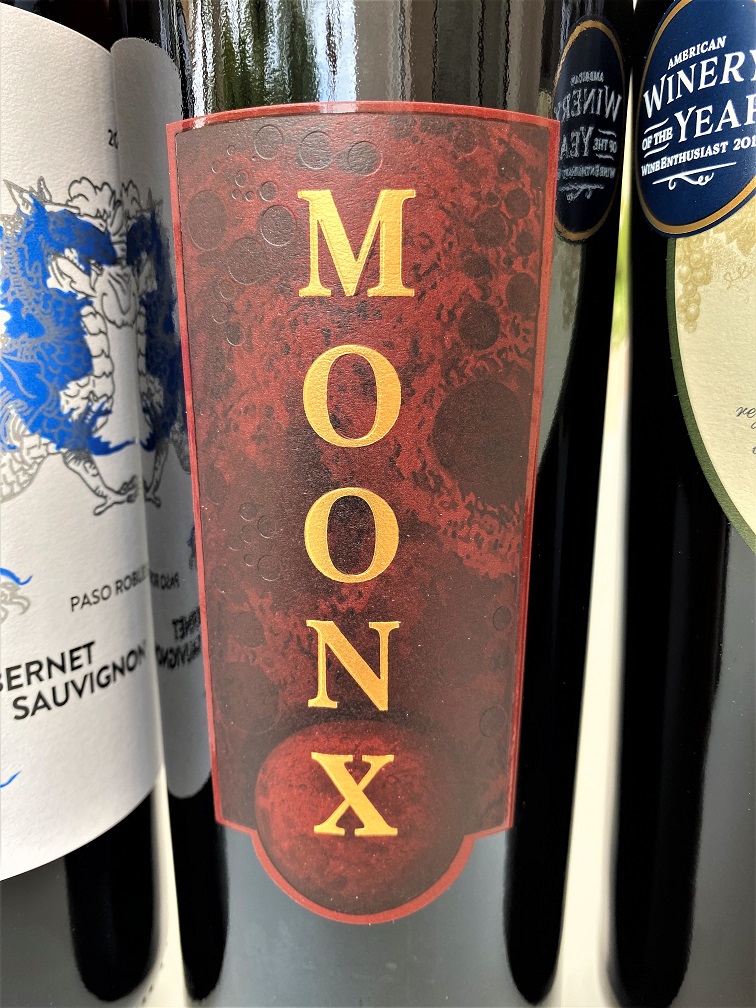
Trader Joe’s offers a good selection of Cabernet Sauvignon wines. Choosing the wines was a combination of prior experience and just good-looking labels – Justin makes outstanding wines in Paso Robles; you can’t go wrong with or beat the prices of the Bogle wines); I had MOONX wines before, and have good memories of them.
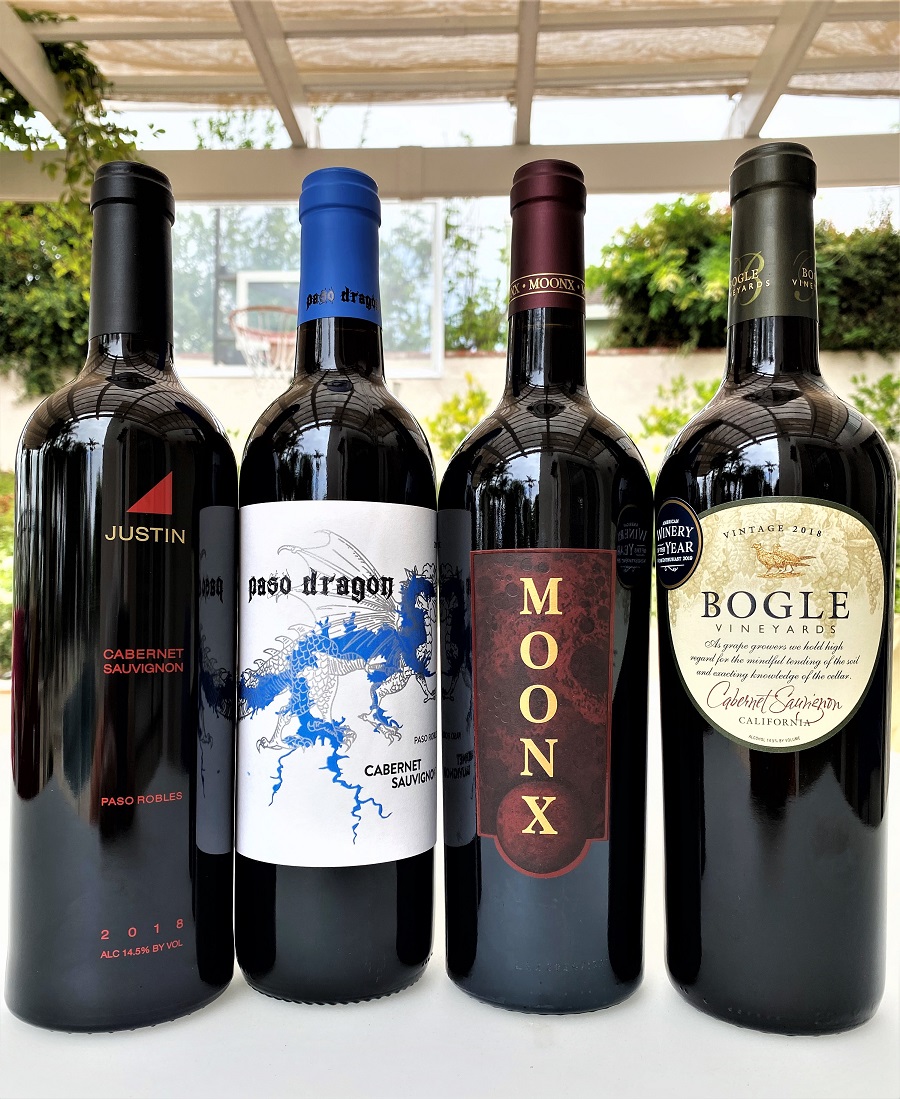
Here are the Cabernet Sauvignon wines from Trader Joe’s I offered to my friend to taste (notes are mine, of course):
2018 Paso Dragon Cabernet Sauvignon Paso Robles (13.5% ABV, $6.99)
Garnet
sage, blackberries, red and black fruit
Blackberries, herbs, medium body, clean acidity, nice finish with a touch of pepper
7+, a bit too weak for the Cab, but easy to drink wine. Can’t really identify as Cabernet Sauvignon.
2018 Justin Cabernet Sauvignon Paso Robles (14.5% ABV, $24.95)
Ruby
A touch of eucalyptus and mint, blackberries; second day – earthy and complex, a hint of gunflint.
A distant hint of cassis and tobacco
Second day: Classic cab is coming through, cassis and mint, clean acidity, crisp tannins.
8/8+, this wine needs at least 5, better yet 10+ years in the cellar to shine.
2018 Boggle Cabernet Sauvignon California (14.5% ABV, $7.99)
Light garnet
Bell peppers, a hint of cassis
Blackberry preserve with tobacco and a touch of coffee. More herbaceous than anything else.
7+, it is a drinkable wine, but might be the least Cabernet of the group.
2019 Moonx Cabernet Sauvignon California (13% ABV, $6.99)
Garnet
A touch of cassis, berries compote, a hint of bell pepper
Lodi fruit presentation, a hint of cinnamon, warm spices, sweet tobacco, berries preserve, a touch of fresh tannins, medium finish.
8-, easy to drink, good balance, pleasant, great QPR.
My friend’s favorite on the first day was Paso Dragon. MOONX was a favorite on the second day. She declared Justin “not bad” on the second day. And she was unmoved by Bogle on either day.
From my point of view, only Justin was worthy of Cabernet Sauvignon designation – give it time, and it will be a spectacular one. MOONX was very good too, but it didn’t necessarily scream Cabernet Sauvignon. We need to remember though that my friend’s love and desire for Cabernet is simply based on the good prior experience with the wine named Cabernet Sauvignon, but was that a classic Cab nobody would ever know.
There you go, my friends. Let’s go on the quest to find the best, varietally correct Cabernet Sauvignon, perfectly drinkable upon release, at a price that leaves 401k intact. Ready to offer recommendations? Be my guest…
Discovering Armenian Wine
I love wine.
I’m a collector.
Based on these two statements, how easy it is to assume that I’m a wine collector? No brainer, right?
And nevertheless, I don’t see myself as a wine collector. The only reason I have a wine cellar (a bunch of wine fridges, rather) is that I like to drink aged wines – not for any bragging or financial reasons.
So what am I collecting then?
Experiences. I love to collect experiences. Tasting the wines I didn’t taste before (an easy one – every year, I should have what, 500,000 options?) Tasting the wines made from the grapes I never tasted before. Tasting the wines from the new places.
Growing up in the 80s in the USSR, I knew about Georgian wines – those were the most famous (Georgia was one of the 15 republics in the former Soviet Union). I also knew about Georgian cognac (yeah, should be called brandy, but do you think anyone cared there about the trademarks?) – but those were not the best. The best cognacs (okay, okay, brandies) were coming from Armenia (another republic then) though. Not being really into wines and grape growing, I never thought of a possible connection between the wine and cognac (both are made from grapes), thus I never thought that it is entirely possible that Armenia might be also making wines if they already got the grapes.
Turns out that it would be an excellent guess to connect the dots err, grapes, as it appears that wine had been made in Armenia for the past 6,000 years or so. I’m not here to debate the crowning of the “cradle of winemaking” title – whether it is Armenia, Georgia, or Turkey is all fine by me, please accept my sincere gratitude for bringing wine into this world.

Armenian Wine Regions. Source: Storica Wines
As we said, Armenia is one of the oldest wine-producing countries in the world, which had been shown through the archaeological excavations, discovering the wine production facility located in Areni cave complex and dating back to around 4000 BC. Considering such a long history, it is safe to say that wine is an indelible part of the Armenian lifestyle.
In more recent days, during the Soviet rule, Armenia was producing wine and brandy, but the majority of the wine was produced in the Sherry style (it is interesting to note that similar to the wines of the Sherry region in Spain, Armenian “Sherry” wines can also develop a thin protective layer (flor) on the surface. Needless to say that production of fine wines was never encouraged during the soviet era.
Armenia’s terroir is conducive for the production of fine wine – predominantly volcanic soils, rich in nutrients, and high vineyard elevation (2,000 – 5,000+ feet above sea level) help to produce good quality grapes. About 30 indigenous grape varieties also help to produce wines of unique flavor profile and character.
I had an opportunity to sample two of the Armenian wines, courtesy of Storica wines, an importer and online retailer of Armenian wines in the USA.
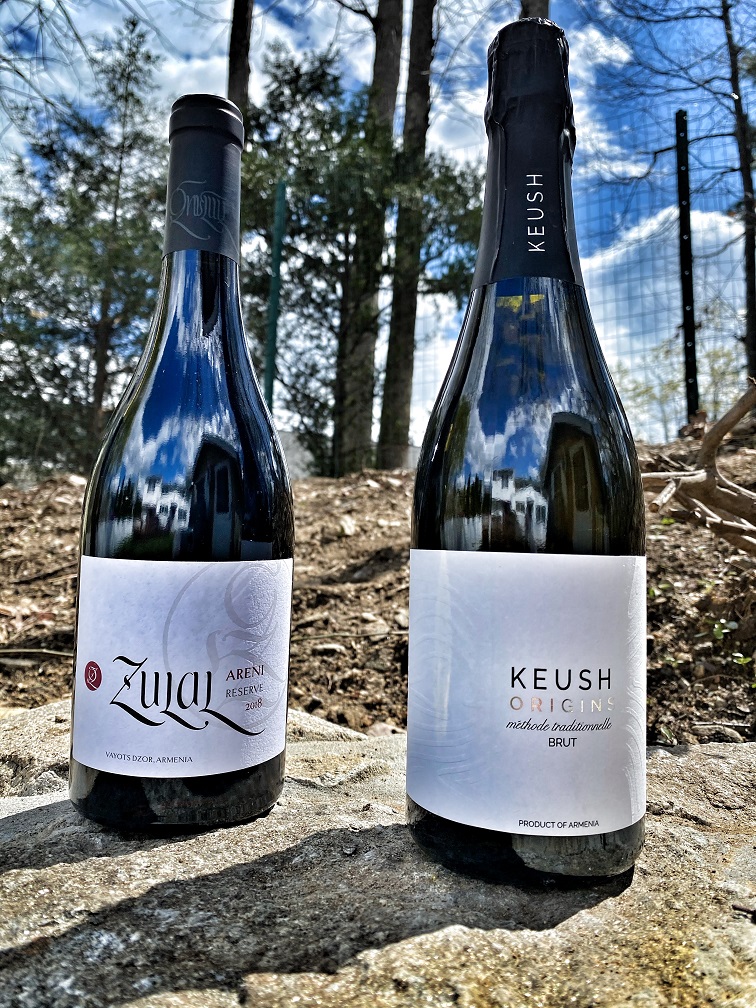
The first wine I tried was traditional method sparkling wine produced by Keush. Keush winery was established in 2013, however, they use 100–120 years old vines, growing at the 5,200 feet elevation above sea level, some of the highest vineyards in Armenia. This classic method sparkling wine was produced from the indigenous grape varieties, and I have to honestly admit that the wine greatly exceeded my expectations.
The second wine I tasted was produced by one of the youngest wineries in Armenia, Zulal (the word means “pure” in Armenian). The winery produces about 10,000 cases per year, focusing on Areni and Voskehat grapes sourced from about 40 villages from Aghavnadzor, Rind, Arpa Valley, and Vayots Dzor regions.
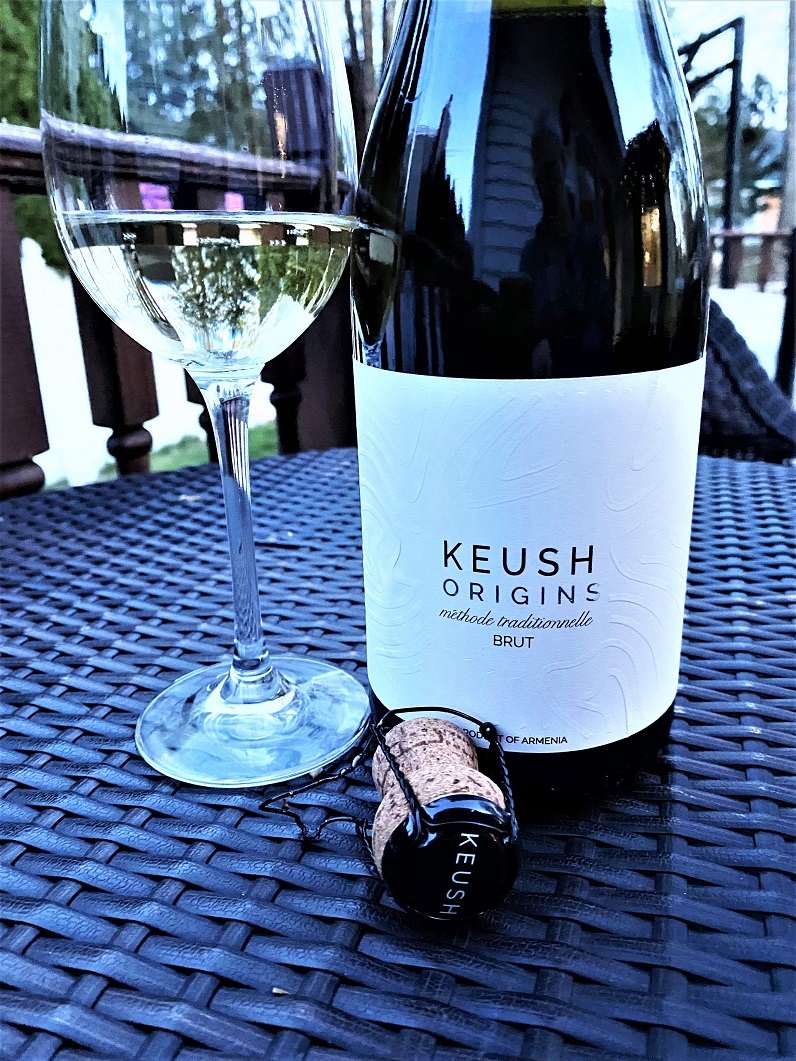
NV Keush Origins Brut Methode Traditionelle Armenia (12% ABV, $25.99, 60% Voskehat, 40% Khatouni, at least 22 months on the lees, Lot 08.15)
Light golden color
Beautiful nose of toasted bread, a touch of yeast, clean, inviting, classic
Beautiful minerality, fresh, toasted notes, vibrant, clean acidity, fine creamy bubbles coating your mouth.
Outstanding, 8+
2018 Zulal Areni Reserve Vayots Dzor, Armenia (13% ABV, $32.99, 100% Areni, 12 months in Caucasian and French oak barrels)
Dark garnet
Not an expressive nose, underbrush, herbal undertones, a touch of fresh berries
Black pepper, wild berries, dried herbs, soft, clean, easy to drink
8, simple, quaffable, easy to drink, perfect for the conversation
As a wine drinker, I’m very happy with my discovery. Keush sparkling was outstanding, both delicious and a great QPR. Zulal Areni was also quite delightful. As a collector, I’m also very happy, as I get to add 3 new grapes, plus a checkmark to the list of the winemaking countries I had an opportunity to taste the wines from. Most importantly, I had an experience of drinking the wines made in the country which is an indelible part of the world’s winemaking history. All in all, a good day.
Have you ever had Armenian wines? If you had, what do you think of them? If you didn’t, are you ready to rectify things? Cheers!
Beautiful Simplicity
Is there a such thing as simple wine?
I really despise controversy. In a world where every word is twisted, turned, analyzed, over-analyzed, then twisted and turned, again and again, I don’t want to be the one to start a new controversy around wine (clean or natural, anyone?).
But really, is “simple” an applicable descriptor for the wine? If I say “simple wine”, can you relate to this as easily as to “tannic”, “acidic”, or “sweet”?
Everything in the wine world is personable. No two palates are the same, no two glasses of wine are the same. And so will be the concept of simple wine – it is highly personal.
There are thought-provoking wines – you take a sip, which triggers an instant process in your brain – analyzing flavors, looking for patterns, digging into memory looking for comparisons. Not every thought-provoking wine equates with pleasure – if we call the wine thought-provoking, it doesn’t always mean that we are craving a second glass. Need an example? How about Frank Cornelissen wines? Nevertheless, we all can relate to the wine we designate as thought-provoking.
Then there are complex wines. The wine presents itself in layers. You don’t need to over-analyze anything, and yet every sip keeps changing, offers you new depth and new impressions every passing moment. Complex is beautiful, wine aficionados love drinking complex wines.
So what is then a simple wine? A lot of people would equate the definition of “simple” with the price. We are trained not to refer to the $10 bottle as “amazing” – even if we enjoy it immensely, we would rather say “it’s just a simple wine”. Leaving the price aside, a simple wine has a very simple effect – take a sip, and your only reaction is “ahh, that’s good”. Simplicity doesn’t affect the enjoyment of the wine – the wine should still give you pleasure, and you should still want a second glass.
Every time you think you know a lot a good bit about your favorite subject, wine, life quickly humbles you, just so you know your place. Ever heard of Mack and Schuhle? I also never have. Meanwhile, they had been in the winemaking and wine distribution business since 1939, and currently have a portfolio of 25 wine brands from around the world – from New Zealand to Italy, Spain, and France to the USA.


When I was offered to review 2 of their wines, Montepulciano and Malbec, I agreed to do that because I was intrigued by the names – Art of Earth and El Tractor. Would you instantly agree to drink something called Art of Earth? For a wine geek like myself, such a name makes the wine simply irresistible. And tasting these wines, which are also very inexpensive, resulted in the diatribe about simple wines. For what it worth, here are my tasting notes:
2019 Art of Earth Montepulciano D’Abruzzo DOC (13.5% ABV, $12, made with organic grapes)
Dark garnet with beautiful ruby hues
Touch of cherries, a hint of funk,
Bright, pure, beautiful, succulent, tart cherries – fresh of the tree.
8+, delicious. This wine doesn’t have the complexity of Masciarelli, and I don’t believe it will age very well – but it is absolutely enjoyable right now.
2017 El Tractor Malbec Reserve Mendoza Argentina (13% ABV, $14, 12 months in French oak)
Dark garnet
Blackberries, cherries, sweet tobacco
Dark fruit, tobacco, cherries, a hint of smoke, nicely restrained, good acidity, good balance.
8, excellent. This wine is not going to rival Catena, but it is perfectly an old-world style, quaffable, and enjoyable Malbec.
Here you are – two simple wines, good for every and any day – or at least I would be happy to drink them any day. What is your definition of simple wine?
Chasing DRC
Only yesterday I told you about some of the unicorns I’m chasing (the special breed, those made out of wine). And now I want to talk about the ultimate unicorn, the unicorn of unicorns if you will – Domaine de la Romanée-Conti, usually called by its abbreviated name – DRC.
Life is a series of random events. Sometimes we think we are in control, and sometimes we really are – but more often than not, things are just happening, and they are happening whether we are there to observe, learn, and experience, or not. While the events might be random, it is up to us to look for the patterns or the objects we desire. Once we know what we want, our subconscious is programmed to look for it any time all the time.
I had been following The Wellesley Wine Press blog for a very long time. Robert Dwyer, who is writing it, not only shares his opinion about wines but also has a great talent for finding amazing wine deals, all sorts of special discounts and promotions by credit cards, wineries, and wine merchants. When I got an email about Robert’s new post, “Domaine Romanée Conti meets Sonoma Coast: 2018 Vivier Pinot Noir [$37]”, my fingers were clicking the link even before I finished reading the title of the post, literally a reflexive reaction to detecting the words “Domaine Romanée Conti”.
You see, DRC might be the most coveted wine in the world. If it is not the one, maybe it is one of three or five of the most sought-after wines in the world. It is produced in minuscule amounts, and it is prohibitively, really prohibitively expensive for most of the mere mortals. DRC produces a number of wines, so to give you an example, there were a bit more than 2,000 cases produced of DRC La Tâche 2017, each bottle priced at $4,000+. And I honestly don’t care about owning a bottle, I just want to experience such wine at least once in a lifetime – so yes, the unicorn of unicorns.
You can imagine that opportunity to taste something even remotely related to DRC would trigger an immediate reaction. Skimming through Robert’s article, I learned that Vivier Pinot Noir is produced by Stephane Vivier, who was the winemaker for Hyde de Villaine, DRC’s joint venture in California, who started producing his own wines under the Vivier label. And at $37, this is the closest I can get to DRC without second-mortgaging the house. The same post also explained that the wine is available at Wine Access, the site I already had a good experience with – the rest was a no-brainer.

The wine quickly arrived, and I had to literally hold myself from opening the bottle while the UPS truck barely left the driveway. While I was admiring the simple design of the label, I really liked the description I found there: “Stéphane Vivier is a lazy winemaker. He watches. He waits. He plans. All the while letting the vineyards, the fruit, and “le climat” do the heavy lifting. So when you taste his wine, you taste what created it, not who“. That prompted me to take a look at the Vivier Wines website, where I learned that Stéphane Vivier was born and raised in Burgundy, where he also obtained a degree in viticulture and enology. He started working as a winemaker for Hyde de Villaine in 2002, and in 2009 he started making wines under the Vivier label with his wife Dana.
So how was the 2018 Vivier Pinot Noir Sonoma Coast (12.8% ABV)? Upon pouring into the glass, the first thing to notice was the beautiful, perfumy nose – fresh berries, violets, a touch of strawberries. On the palate, the wine was a typical, well-made Californian Pinot Noir, round, elegant, and polished – but unmistakably Californian, with a good amount of sweetness coming through. I can’t tell you what I was looking for, but I wanted to find something unique, something I didn’t experience in Californian Pinot Noir yet – but that didn’t happen.
On the second day, the wine changed its appearance. Both the nose and the palate pointed directly to Oregon. the nose became more earthy and less perfumy, and on the palate the wine was significantly more restrained, with iodine and earthy notes coming through a lot more noticeably. While the wine on the first day was good, I much more preferred how it was showing on the second day (Drinkability: 8-/8).
There you have it, my friends. Did I find DRC in California? Even if I did, I wouldn’t be able to tell, as I have no frame of reference. Did I discover a tasty Californian Pinot Noir? Absolutely. In 5, or maybe 10 years, it might become even amazing. Chase your dreams, my friends. Cheers!
Daily Glass: Vinous Vino
This post could’ve been filed under lots of different titles – “confusion of the oenophile”, “beautiful labels”, “how mistakes are made”, “one has to pay attention”, and I’m sure many others.
The story here is rather simple. I saw the wine on the Last Bottle offered at $26. If you ever saw the Last Bottle offer descriptions, it is full of exclamation marks, explanations that they never had the wine like that before and their collective socks were blown away the second they smelled the wine, and the wine will be gone before anyone can even say the name of the wine which is offered. I really can’t pay attention to the text like that, so with a quick glance, I established that this was a Tempranillo wine from Spain, and it was produced by Elias Mora. When reading every other word or less, mistakes are bound to happen. Somehow, my brain transformed Elias Mora into Emilio Moro, one of the very best producers in the Ribera Del Duero region, and at $26 with 4 bottles to buy to get free shipping and $30 of available credit, that sounded like a great deal, so I quickly completed the purchase.
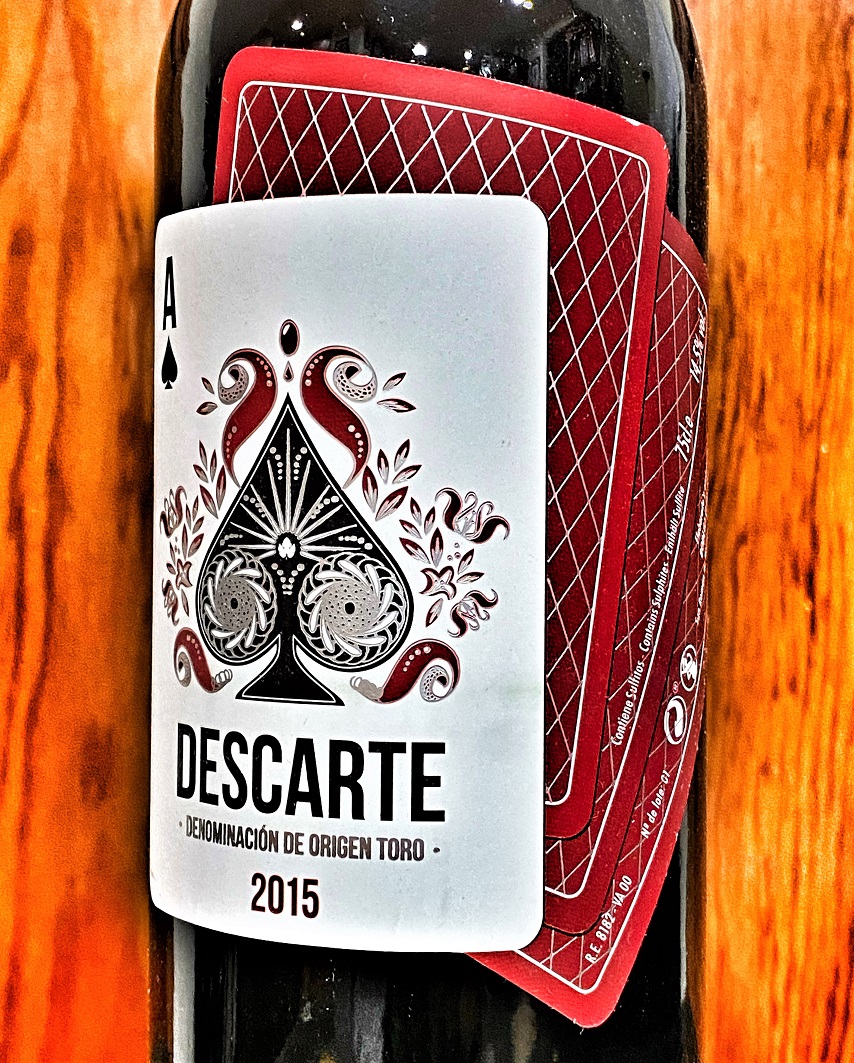
When the wine arrived, first I admired a beautiful label. I don’t know what you think, but to me, this is one of the most beautiful and creative labels I ever saw. Then I noticed the word Toro on the label, which made me instantly question what I have done, as Emilio Moro doesn’t produce wines in Toro. I quickly realized that while the label is beautiful, I have no way to relate to the content of the bottle, except knowing that it is a Tempranillo from the Toro region.
Tempranillo is one of the most popular red grapes in Spain, and while Tempranillo wines are produced absolutely everywhere, it is Rioja and Ribera Del Duero which make Spanish Tempranillo famous. In addition to Rioja and Ribera Del Duero, Toro is the third Tempranillo-focused region. Tempranillo is often called Ink of Toro in the Toro region, and it might be slightly a different clonal variation of Tempranillo, similar to Sangiovese in Chianti and Sangiovese Grosso in Brunello. Compared to a typical Rioja or Ribera del Duero renditions, Toro always packs a lot more power into that same Tempranillo-based wine and typically needs time to mellow out.
I tried to find out if Elias Mora and Emilio Moro might be related in any way, but the Elias Mora website offers little to no information about the history of the estate, primarily focusing on just selling the wine. I also tried to no avail learn the idea behind the unique and creative label – the wine description provides technical details but no explanation whatsoever why the bottle is decorated with an elaborate image of playing cards – of course, it matches the name “Descarte”, but I’m sure there should be something deeper there (if you know the story, I would greatly appreciate a comment).
Now, most importantly – how was the 2015 Elias Mora Descarte Toro DO (14.5% ABV, 12 months in French oak, comes from the plot of 50 years old vines)? It was a typical Toro wine. On the first day after opening, I had nothing but regrets about buying this wine. Freshly opened Toro is just too much for my palate. It is literally an espresso, made from the darkest roast and in the tiniest amount – if you enjoy that powerful punch, you should try a young Toro wine. If you don’t, and you are opening a bottle of Toro, decanter might be of help. On the third day, however, my first sip instantly generated the “vinous vino” words in my mind, so I needed not to worry about the title of this post. The wine transformed into the medley of the dark fruit, perfect aromatics of the wine cellar, cedar, eucalyptus, now just a touch of espresso instead of the whole ristretto shot, clean acidity, and delicious, perfectly balanced, finish. (Drinkability: 8)
There you are, my friends. If you will see this wine, you can definitely buy a few bottles, preferably to forget them in your cellar for the next 5-10 years. And take your time to read wine descriptions – or not, as life might be more fun if you don’t. Cheers!
Last Bottle Sign Up ($10 credit)





