Archive
Stories of Passion and Pinot: Le Cadeau Vineyard

Tom and Deb Mortimer. Source: Le Cadeau Vineyard
Hello, wine lovers.
I’m going to ask you for something very valuable – your time. About 20 minutes of it, as this is how long it should take you to read this post, one of the longest posts I ever published. But I’m not asking for your time for free – in return, I’m offering you one of the very best interviews ever published in the Stories of Passion and Pinot series, as well as the overarching One on One With Winemaker conversations.
Winemaking usually starts with passion, courage, and conviction – a belief that “you can”. Really. It is not always a degree in oenology (don’t get me wrong – of course that helps!), but the resolve to get going, as you have a burning desire to make world-class wine no matter what – this might be your main ingredient of success.
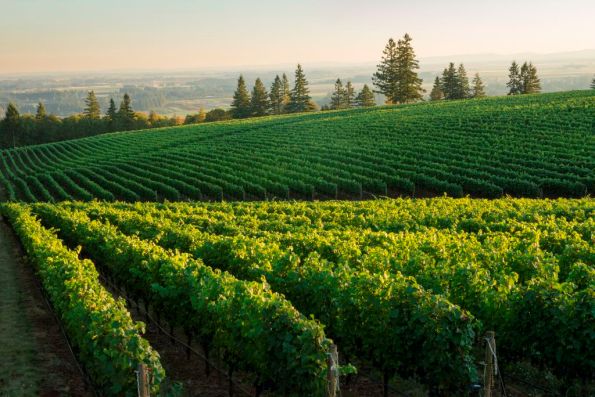
Tom and Deb Mortimer had such a resolve to make great Oregon Pinot Noir. After searching for a year, they found an uncultivated parcel of land on the south slope of Parrett Mountain in the Chehalem Mountains AVA, and the hard work began. Planting grapes, understanding your land, learning the soils and microclimates. All with the resolve to produce the best possible Pinot Noir. This is how the story of Le Cadeau Vineyard started (wonder if “Le Cadeau” means something? Keep on reading).
After tasting the wines of Le Cadeau, I was convinced that I want to learn more – which turned into a very enjoyable [virtual] conversation with Tom Mortimer, who generously offered his time to answer all of my questions. And this is what I want to share with you with a full conviction that it is well worth your time.
Here we go:
[TaV]: The story of Le Cadeau Vineyard started in 1996, when you purchased the 28 acres parcel in Chehalem Mountains AVA. When did you come up with the name Le Cadeau? What is the meaning behind this name?
[TM]: Le Cadeau (is French for “the gift”): We like to say that “the wine is not ‘the gift’; rather, “the wine is the excuse”—the true gift is the land and friendships.” When we first saw the Le Cadeau / BHV site, there was no view; it was obscured by scrub-oaks, blackberry bushes, and a lot of brush. Clearing the land was a bit like unwrapping a present, and ultimately a gorgeous view emerged. More significantly, rocky soils are coveted for top-tier vineyard sites. As we cleared the site, the broken volcanic basalt cobbles were revealed; rock in Oregon is rare, so we were very fortunate to find a rocky site. Lastly, wine is inherently relational. Enthusiasts get-into wine for the product, but ultimately, they stay in wine for the people; when the glass is empty, the relationships remain. So “the gift” has multiple manifestations.
[TaV]: When you found the parcel which became the future home for Le Cadeau, you said “For some reason, the property “felt right”. I don’t really know why”. So this was the love at first sight, right? Now, 23 years later, can you maybe better explain that feeling?
[TM]: Part of it was the location—the vineyard is only 35-minutes from downtown Portland, yet it was very serene countryside. We came from suburban Minneapolis to start this project; 22-years ago the Willamette Valley was much less developed, so this location was perfect for us. My wife (and I) didn’t want an isolated, rustic, farm experience. But other than the location, it was a beautiful site—south slope, about the right grade, I was fairly certain the view existed. It just had a different / better feeling than many of the other places we looked at.
At another level, I think I Iiked the fact that it was never-before-cultivated land. There was something about “starting a vineyard from scratch” that was appealing… of course, at the time, I had no idea what I was getting us into… which is actually a good thing. There are plenty of reasons to not take on a project like this. Sometimes it is better to not know what lies ahead.
Source: Le Cadeau Vineyard
[TaV]: I really like the name “Black Hole Vineyard”, even though it has not necessarily a positive connotation about it. Have you ever bottled any wine which says “Black Hole Vineyard” on the label? What happened to that name? Is the Black Hole Vineyard simply became Le Cadeau Vineyard, or is it still exists under its own name?
[TM]: There was one “Black Hole” wine made by a fruit client. It was small production, and was only released to his wine club.
Our business is corporately divided into two companies: A farming company (the vineyard), and the wine biz. Most of the fruit from the vineyard is sold to the wine biz, but some is sold to notable clients. The farming company is named Black Hole Vineyard, LLC (or BHV, LLC), while the wine company is Le Cadeau. So in that regard, the name lives on. We also continue to personally refer to it as Black Hole among ourselves, and generally the winemakers like to call it Black Hole, vs. Le Cadeau. But at some point you need to make a brand decision, and focus your time and energy on that brand. We chose Le Cadeau vs. Black Hole. Obviously, it is a much more positive message, though perhaps not as amusing.
[TaV]: What made you believe that you can conquer the rocky soil? What was the drive behind your passion, developing your vineyard against the difficult terrain and the cash flow?
[TM]: As noted above, a good part of my confidence was rooted in ignorance. But as a wine collector I knew that many of the great wines of the world were grown in rocky soils. I figured, “if they can do it, so can I”.
Over the years I have come to discover that there is one tool that is central and more important than any other in developing and farming a rocky site. You might think that the tool is a chisel plow, or a big tractor, or whatever. But the reality is that the single-most-important tool is a checkbook. Unfortunately, unlike many of the folks that get into this business, my checkbook was about the size of a hand-held garden tool. With a vineyard that is raw ground and solid rock, it is better to start with a checkbook that is the size of a bulldozer… and a D8 at that. Fortunately, I kept my day-job.
[TaV]: How many Pinot Noir clones have you planted so far? Why so many?
[TM]: We’re up to about 16-Pinot Noir clones and 6-Chardonnay clones (the first Chardonnay, 2017, to be released in a couple months). Why so many?—there are a handful of reasons:
- a) I cannot recall ever having a single clone wine that I felt was as complete and interesting as a multi-clone wine. We don’t put them all in a single wine; our cuvees result from different combinations of clones, soils, and aspect (climate). Most of the cuvees have 3 to 5 clones, Diversité has the most with 7 that make up the majority of the wine, and another 2 or 3 that are there in small quantities.
- b) Curiosity and experimentation. Quite simply, clones are exciting. You wait for 3-years wondering what the fruit will look like and taste like. Often it takes several more years before you learn about the flavors, texture, physical characteristics of the fruit and how it affects the wine. So there is always a sense of anticipation. I liken clones to colors on an artist’s palette; they add “color” to wine—not in a literal sense, but in terms of variance, nuance, and complexity.
- c) Differentiation. I don’t want to make wine that is like everyone else’s.
- d) Optimization. Folks (i.e., typically winemakers) have varying views of how important clones are in the overall mix of variables. Most agree that the dirt / site are the most important elements, and I’d agree with that. But for many, “clones” would be further down the list. For me, the plant material is very central to extraordinary wine. Great wines only happen when there is great dirt, perfect climate, excellent farming / viticulture, the very best and site-matched plant material, and of course great winemaking. Like many things in life, something can only be as good as its weakest link.


[TaV]: Is there an Oregon (or maybe Burgundian) winery(ies) which were instrumental in the development of your own winemaking style?
[TM]: We have always wanted to make wines that are true to the estate site. In this regard, Le Cadeau is more of a European model, in that the “rock star” is the vineyard, not the winemaker. The wide range of cuvees exist to showcase the range of “faces” of the vineyard. But more recently we’ve been searching for more freshness and aromatic excitement. This is why I engaged our French consultant, Pierre Millemann several years ago. Not surprisingly, this has led us to produce higher acid / lower alcohol wines.
It would be difficult to pick a particular winery to reference against; again, our dirt / site is very unique. There are many wineries, both in Oregon, Europe, (and California) that we respect, but I think it would wrong to say that we try to emulate any of them.
[TaV]: Do you still have any bottles from the 2002 vintage? If you do, how do they hold?
[TM]: I have a few bottles of 2002. The last one I had was about 2-years ago. It was doing well, but I think it was past its prime. Keep in mind that the vines from that vintage were only 4-years old. I recently had an ’05 Diversité from magnum; it is going strong and will continue to last for a long time.
[TaV]: According to what I see on your website, you produce [at least] 7 Pinot Noir wines. Is there an idea behind such a range of Pinot wines? What are you trying to showcase?
[TM]: As noted above, the majority of the cuvees showcase various attributes of the vineyard: Rocky soils (Rocheux); the cooler East-side (Cote Est); clonal diversity (Diversité); heritage clones (Merci Reserve). More recently, we’ve added two cuvees that are more inclusive of winemaking technique—Trajet Reserve is 100% whole cluster; and “Pierre” has considerable input from our consultant, Pierre. It is about “freshness” and higher acidity.
[TaV]: Going back to the Pinot Noir clones – considering the sheer number of them, you must be blending your wines. What is your approach to blending? Do you have any Estate Pinot Noir wines where you trying to maintain consistency throughout the different vintages?
[TM]: Generally we favor co-fermentation of multiple clones in a single tank. Most of the cuvees are made of two separate tank fermentations that go to barrel separately, and are then combined to make the final cuvee. But for the most part, all of the wine from each ferment ultimately goes into the cuvee.
I like to say that the Le Cadeau wines are “made in the vineyard”… I don’t mean that literally, but rather that the specific “Cote Est” fruit is picked separately, and it is made into the Cote Est cuvee. Same for Rocheux, Diversité, and Merci. In this regard, there is clonal consistency from year to year, because the wine for each cuvee is consistently made from the same section of the vineyard. For example, Rocheux is always roughly 45% Dijon 777; 45% Pommard; and 10 % Wadenswil… that is what is planted in the sections where the Rocheux fruit is grown. … and fortunately, the vines don’t move around at night when we’re not looking… that would be a mess.
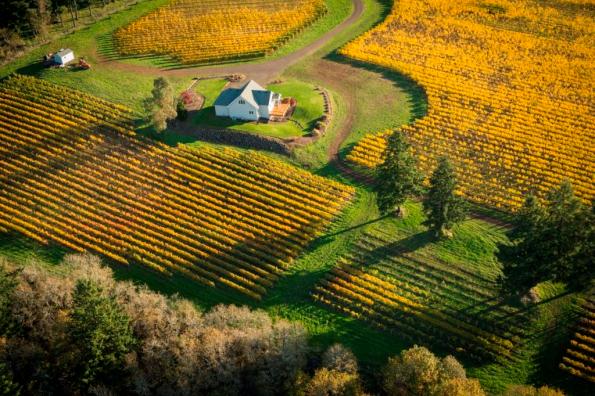
Aerial view over Le Cadeau Vineyard, Chehalem Mountain AVA, Willamette Valley, Oregon. Source: Le Cadeau Vineyard
[TaV]: How did you come to the idea of the Sparkling wines? You offer 2011 vintage sparkling wine, so clearly you started making sparkling wines before they became “the thing” in Oregon, so how did you get there?
[TM]: 2011 was a very cool, late, year, and the clusters were uneven. Some of them were quite large (a fairly rare event, given our rocky soils). On October 15th, the bigger clusters had only gotten to about 19-Brix—not good for still PN. I know we wouldn’t/couldn’t pull them all out on the sorting table, so we did a sort in the vineyard. I told the crew to harvest the three biggest clusters off of each plant in certain sections of the vineyard. Since these were at a perfect stage for sparkling, and we had them hanging on the vine for a full season at that point, it seems silly to drop that fruit on the ground. So we took a shot at sparkling—it worked out very well, so now we make it generally every other year.
[TaV]: I’m sure you knew this question is coming J – it seems that you only work with Pinot Noir grapes. Do you grow any other varieties? Do you have any plans for the white wines? If yes, what grapes would you plant?
[TM]: As noted above, we have 6-clones of Chardonnay that are now in production. The first Chardonnay will be 2017, released in a few months. We’ll only do Chardonnay at Le Cadeau (other than Pinot Noir). But under our other brand, Aubichon, we’ve made some wonderful “Alsatian Style” Pinot Gris, as well as a Pinot Gris-based Rosé, and a wine we call “Sur Peaux”, which is an “orange wine” from Pinot Gris. All the Pinot Gris is sourced from old vine vineyards, about 25-years old. So it’s nice fruit, and the wines are quite special.
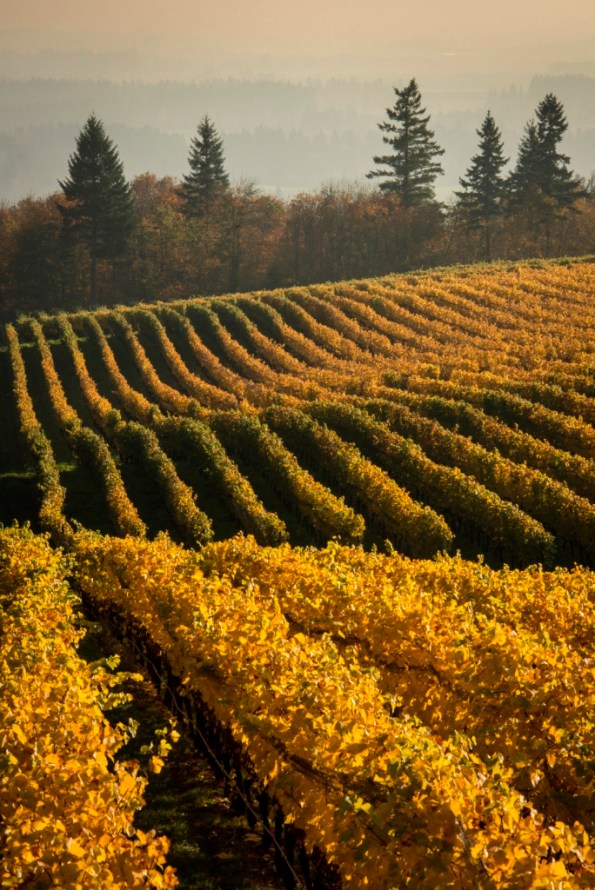
Le Cadeau, Chehalem Mountains AVA, Willamette Valley, Oregon. Source: Le Cadeau Vineyard
[TaV]: And one more common question I like to ask – when you are not drinking your own wines, what are your favorite wines and/or wineries, in Oregon or anywhere in the world?
[TM]: I have a diverse range of preferences:
I’m a huge fan of Weinbach in Alsace; Chave Hermitage is often special, Guigal Condrieu (the good version, not so much the standard one), Huet and Chidane Chenin Blanc; Fevre Chablis; Robert Weil German Reisling (and many others—Keller dry from their rocky vineyard is nice); any good Bonne Mares; love white Bordeaux—Chevalier, Smith H-L, and of course the “big guys”, but they’re too expensive. Barberescos from Italy—Gaja (also like Gaja Chardonnay), and I think Produtorri does an amazing job for the price, along with Albino Rocca. I’ve had a Foradori wine that I thought was special, certain Brunellos, but many have become Parker-ized, that’s unfortunate. I like Ciacci wines though. … the list goes on…
In Oregon, there are many that I respect, and a small group that I like, but I’d prefer to leave those thoughts anonymous.
[TaV]: What is ahead? Where do you see Le Cadeau in 10-15 years?
[TM]: I think we’re just beginning to make our best wines, and really beginning to understand the vineyard’s nuances. Some of our more exciting clones are still quite young, so it will be interesting to see what sort of wines we make from the more exciting clones when the vines are older. The 2018 wines that we have in the barrel are possibly our finest to date. Very excited about getting them into the bottle and out on the market.
I’m hopeful that our Chardonnay program will be noteworthy. Pierre’s guidance on Chardonnay has been very helpful. 2018 in barrel looks to be very promising, and I’m excited about the first 2019 fruit from a rocky grafted section of the vineyard. We have a couple interesting Larry Hyde clones of Chardonnay planted in that area as well. The fruit looks to be quite different. I’ll have a better sense of the Chardonnay potential in another year, but I’m hopeful that we can produce “the real deal”.
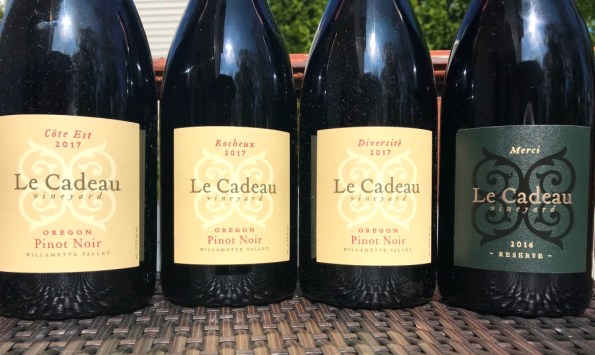
Thirsty? Here are my tasting notes for the wines:
2017 Le Cadeau Côte Est Pinot Noir Willamette Valley (13.9% ABV, $50, 145 cases made)
Dark Ruby
Smoke, plum, iodine, medium-plus intensity
Wow. Touch of smoke, Sage, medicinal notes (cough syrup), good acidity, excellent balance
8
2017 Le Cadeau Rocheux Pinot Noir Willamette Valley (13.2% ABV, $50, 174 cases made)
Dark Ruby
Plums, cherries, violets, intense, inviting
Bright, clean, succulent ripe cherries, licorice, great minerality, excellent balance, superb
8+
2017 Le Cadeau Diversité Estate Pinot Noir Willamette Valley (13.9% ABV, $50, 245 cases made)
Ruby
Delicate, lavender, a touch of smoke, perfect
Beautiful, plums, ripe strawberries, great acidity, baking spices, delicious overall
8+/9-
2016 Le Cadeau Merci Pinot Noir Reserve Chehalem Mountains Willamette Valley (14.1% ABV, $80, 143 cases made)
Garnet
Intense, ripe cherries and plums, candied fruit
Wow, great intensity, cherries, cherry compote, ripe plums, minerally notes, good acidity, good balance
8+
As you can tell, I really liked the wines – they were literally one better than another.
Here you go, my friends – yet another story of Passion and Pinot. I hope you enjoyed reading it as much as I enjoyed writing it, and I thank you for your time and attention.
Will there be more Passion and Pinot stories? Well, do you think the passion ran out of the Pinot winemakers and aficionados? I will bet my virtual DRC bottle that it did not. So we will continue our conversations as soon as the next opportunity will present itself.
Obey your passion!
P.S. Here are the links to the posts profiling wineries in this Passion and Pinot series, in alphabetical order:
Alloro Vineyard, Bells Up Winery, Ghost Hill Cellars, Iris Vineyards, Ken Wright Cellars, Knudsen Vineyards, Lenné Estate, Tendril Cellars, Youngberg Hill Vineyards, Vidon Vineyard
When in Texas…
Travel is a part of my job (the job which pays the bills) – nothing unique here, of course, and when my flights are not delayed for 14 hours or canceled, and I don’t have to sleep on airport terminal’s floor, I wouldn’t want it any other way.
As a wine junky (replace with your favorite epithet – lover, aficionado, geek, snob, …) I’m always on a lookout for two things when I travel.
One would be experiencing new wines – in whatever way possible. It might be a Vino Volo boutique at the airport, offering local wines. It might be a local winery within the driving distance. It might be a store which offers interesting wines (local, unique, inexpensive – whatever can constitute “interesting”).
The other one is meeting with friends. It is amazing how easy it is to become good friends over a glass of wine. The wine offers endless opportunity to talk, learn from each other, learn about each other’s lives, and really, to become friends.
Of course, you can meet your friends face to face only when your travel schedule will allow that. During my last trip to Dallas, Texas, in July, my schedule allowed for such a meeting. After exchanging a few emails with Melanie Ofenloch, a.k.a. Dallas Wine Chick (wine blogger at DallasWineChick – if you are not familiar with Melanie, here is a recent interview with her), she was able to rearrange her schedule and had time to share a couple of drinks – and a conversation.
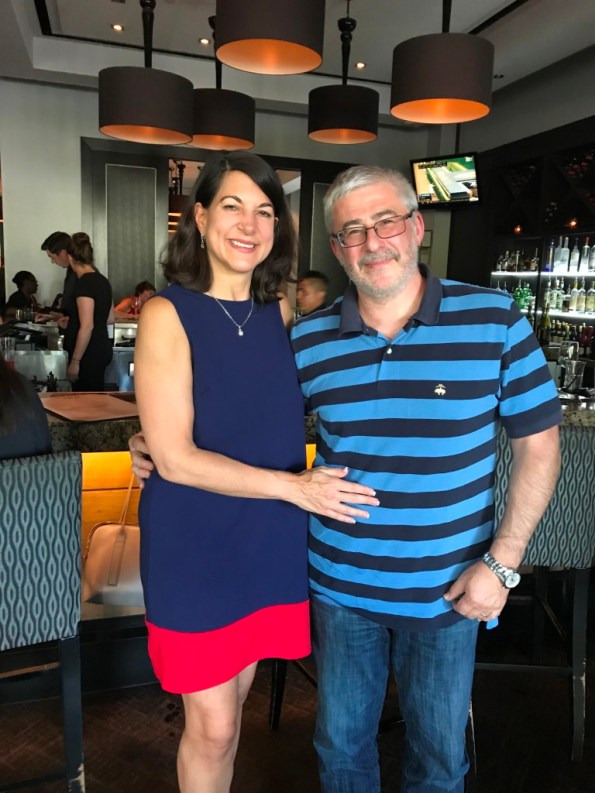
We met at the bar at the restaurant which was conveniently located for both of us. I don’t remember what exactly we were drinking, because that was really not important – the conversation about wine, past wine bloggers conferences, families and life overall was the real value of getting together.
Before we parted, Melanie asked if I ever visited Spec’s, for which I said that I have no idea what that is. She told me “you must”, and put a location into my phone, to make sure I would have no problems finding it.


Spec’s, which is known under its full name as Spec’s Wines, Spirits & Finer Foods, is a chain of wine stores in the Dallas area (don’t know if they have locations throughout Texas). Everything is big in Texas, so the Spec’s I visited was sized appropriately. Rows and rows of wines, mostly sorted by the grape variety. And while everything is big in Texas, cash is also a king – Spec’s offers 10% discount for all cash wine purchases (you can see three prices at most of the wine bottles – standard price, volume discount and cash discount).


It is not a secret anymore that Texas makes excellent wines, which are also not available much anywhere outside of Texas. So when in Texas, one has to use the opportunity to experience local wines (believe me, it is well worth it). Thus Texas wine section was of the most interest to me – and I found it after a few circles.
In that section, I found a number of wines frequented in the Texas wine bloggers’ posts – for example, Becker and McPherson. I also found some wines I was familiar with, such as Duchman, and some wines I knew existed, but I never tried them, such as Infinite Monkey Theorem, produced in Austin (this city winery originated in Denver, Colorado, but they also opened a facility in Austin a while ago). I ended up taking three bottles of the Texas wine to keep me company in the hotel room.


Before I left the store I also stumbled upon a section of the “serious” wines – Bordeaux first growth, Burgundy stars, Italian legends and more. It is always fun to at least find yourself surrounded by so much wine goodness at a given moment – even that I can’t afford any of those bottles.


Back in the room, I decided to start my wine tasting with the 2015 Infinite Monkey Theorem Tempranillo Texas (13.8% ABV). Tempranillo is one of my most favorite grapes, and it is one of the popular varieties in Texas. I also had successful past experience with Infinite Monkey Theorem wine – the Cab Franc rendition I had in Denver a couple of years ago, was absolutely delicious. All together, it made me excited about trying this wine – and it didn’t disappoint. Dark fruit, a touch of roasted meat and tobacco, a hint of anise – an excellent wine.
As I bought 3 bottles at Spec’s, my initial plan was to open all 3 and try them – this is what I typically do with Trader Joe’s wines, even when I stay only for one night. I was staying only for 2 nights, and the wine was so good that I simply decided to finish this bottle and take the other two back home.
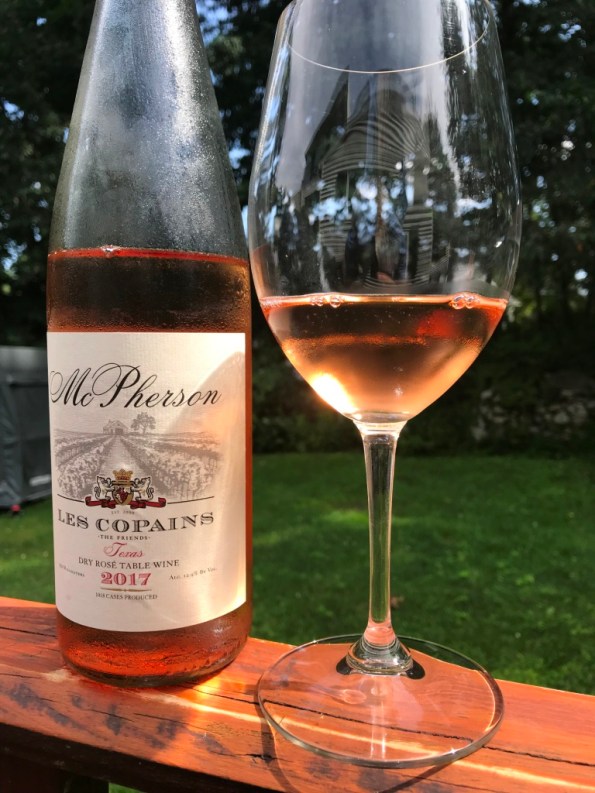
Back at home, I was quick to continue my Texas wine deep dive with 2017 McPherson Les Copains Rosé Texas (12.9% ABV, 52% Cinsault, 42% Grenache, 6% Rolle). The wine was a classic Rosé, with a bit bigger body than a typical Provence, but full of ripe strawberries with a touch of lemon, fresh, crisp, and easy to drink. I would love to drink this Rosé any day, any season.
So when in Texas, make sure to drink Texas wines – you really have to do what locals do – I have no doubts you will enjoy it. And if you will be in Dallas, remember that Spec’s might be considered a “Disneyland for Adults”. Well, maybe leave your wallet at home.
Celebrate The End Of BBQ Season with The Federalist, The American Craft Wine
 Here you have the title I’m really not sure about.
Let’s see.
The end of the BBQ Season. First, who said that BBQ season is ending? Even on the East Coast of the USA people proudly fire up their grill in January, bragging about battling knee-deep snow. Never mind California, and let me not offend the South. So what’s ending?
What’s BBQ? When I grill the steak on a gas grill, is it classified as BBQ, or is the open fire required? Is charcoal qualified as a source of fire, or do I have to use the actual wood? Food is not as polarizing as politics these days, but it still has its share.
And then even if BBQ season is ending, is that something worth celebrating?
Never mind all this blabbering, as maybe the most important question is: what is The American Craft Wine?
Let’s watch this short clip:
If you will search online for the “American Craft Wine”, The Federalist will be the very first link which will come up. The Federalist is the winery in California, which makes a range of traditional American wines, and defines itself as “Born from the virtues of every forward-thinking, hard-working, red-blooded American, this is The Federalist. This Is American Craft Wine.”
Is craft wine an answer to the craft beer, an extremely popular consumer category (if you ever “checked in” on Yelp, “do they serve craft beer” question is one of the most popular ones while filling up a small check-in questionnaire)? Beer is often associated with BBQ, and of course, it is better to be a craft beer. But why not a craft wine? I think we would all agree that wine is the result of winemaker’s craft; good wine requires a good skill, a craft – so maybe The Federalist is paving a way to the new wine category?
I had an opportunity to taste The Federalist wines for the first time 3 years ago, and I liked them. Therefore, when I was offered a sample of The Federalist wines a few days ago, I was really curious to see how they will fair now, as both the style of wine and my tastebuds can easily change.
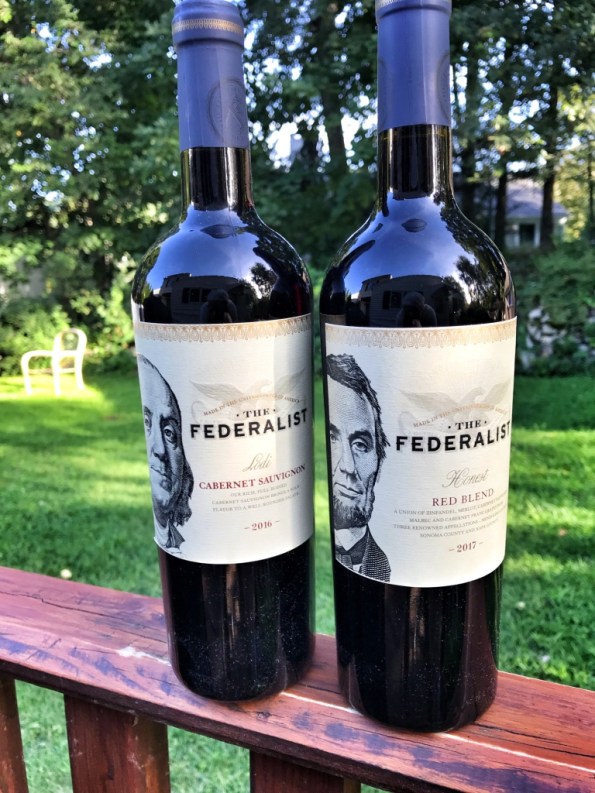
I’m glad to report that even if my tastebuds changed, I still found the wines delicious:
2016 The Federalist Cabernet Sauvignon Lodi (14% ABV, $17.99, 93% Cabernet Sauvignon, 5% Zinfandel, 2% Petite Sirah, Merlot, and Cabernet Franc; 15 months in oak, 35% new)
Garnet Color
Coffee, dark fruit, a hint of currant, eucalyptus
Soft, approachable, licorice, sweet cherries, a touch of cinnamon and nutmeg
8-, unmistakably Lodi, generous and easy to drink
2017 The Federalist Honest Red Blend North Coast (15% ABV, $21.99, 45% Zinfandel, 24% Merlot, 20% Cabernet Sauvignon, 7% Malbec, 4% Cabernet Franc; grapes sourced from: 42% Mendocino County, 33% Sonoma County, 25% Napa County; 15 months in oak, 35% new)
Dark garnet
Blackberries, sweet oak, cassis, a hint of mocha
Firm, wells structured, blackberries, tobacco, dry tannins, dusty cherries, good acidity, good balance
8, excellent, perfect by itself, will work perfectly with the steak
Is the BBQ season ending? You’ll be the judge of that. But if you have any BBQ plans this weekend, fire up whatever you designate as your BBQ machine, and give a try to The American Craft wine, paired with your own crafted BBQ. There is a good chance you might like it. Cheers!
How Do You Albariño?
 Quick – name the most popular Spanish white wine (and grape). Yes, Verdejo, Viura (Macabeo), Godello are all good candidates, but the crown unquestionably belongs to Albariño, the white grape predominantly grown in Rias Baixas in Galicia, in the Nothern Spain.
As it often happens with grapes, nobody can tell for sure where Albariño originated. The leading theory is that the Albariño grape was cultivated in the Rias Baixas area for a few thousands of years. But again, similar to many stories we hear today, things got real with Albariño once the growing zone was designated by the Spanish law in 1980. While initially it was an area designated to the Albariño grape itself, once the EU rules got into the play, the same area became known as Rias Baixas DO (Denominación de Origen), and this is where the absolute majority of Spanish Albariño wine is produced.
In most of the cases, Rias Baixas Albariño is unoaked wine (there are few producers, such as La Cana, who make oaked versions, but this is rare). I don’t like generalizing about the taste of the wines from the specific region, but to me, most of the Albariño wines have a core of salinity and Meyers Lemon. If you think about the location of Rias Baixas, right on the coast of Atlantic Ocean, it makes perfect sense that the most prominent wine from the region perfectly compliments the seafood dishes which one would expect to find in the coastal region. Albariño is easy to drink, works perfectly with and without the food, and it is typically priced under $20, which makes it an excellent white wine choice overall.
It is also worth noting that slowly, but surely, Albariño wines are fine-tuning their identity. What started about 40 years ago as one single region, Rias Baixas, now comprise 5 sub-regions – Ribeira do Ulla, Val do Salnés, Soutomaior, Condado do Tea, and O Rosal. You can’t always find the sub-regions listed on the labels yet, but I’m sure this is just a matter of time.
Make no mistake – the appeal of Albariño is not lost on the rest of the world. Today you can find excellent Albariño wines produced in California (Lodi makes some amazing renditions, such as Bokisch), Oregon, and Washington – and then Texas, lest not forget about Texas. Australia is also churning out some outstanding versions of Spanish classic (don’t think those wines can be found in the USA, though).
Beginning of August saw a slew of events celebrating Albariño – International Albariño Days took place from August 1 through 5; during the same days, Albariño was celebrated at The Albariño Festival, which is the second oldest wine Festival in Spain, taking place in the city of Cambados in Rías Baixas and attracting more than 100,000 visitors.


It is important to remember that Albariño is not just for summer – it is a versatile white wine, capable to elevate any evening, with or without a seafood dinner in tow. For the past two years, I attended virtual tastings on Snooth, each including a good selection of Albariño from the different sub-regions in Rias Baixas – here you can find the detailed descriptions of the 2017 and 2018 tastings. This year, I was offered an opportunity to try a couple of samples – here are my notes:
2018 Nora Albariño Rias Baixas DO (13% ABV, $18)
Very light golden
A hint of tropical fruit, white flowers, a touch of pineapple, medium-plus intensity, inviting
Clean, fresh, minerally forward, green apples, lemon, round, perfectly balanced.
8, perfectly refreshing for a hot summer day.
2018 Señoro de Rubiós Robaliño Albariño Rias Baixas DO (12.5% ABV, $18)
Light golden
Restrained, minerality, salinity, underripe green apple
Bright, fresh, touch of white plum and lemon, zipping acidity
8-, refreshing, but craves food (oysters!)
What do you think of Albariño? What is your go-to white wine, especially when it is hot outside? Cheers!
A Quick Trip To Chile
Have wine, will travel.
Today our destination is Chile. As our travel is virtual, we need to decide on the wine which will help us to get to Chile, hence the question to you – what wine would you associate with Chile?
If you would ask me this question about 20 years ago, my answer would be quick – Cabernet Sauvignon. Chilean Cabernet Sauvignon has an unmistakable personality with a core of bell pepper – one sip, and you know where you are heading. Then, of course, you got the Carménère – the mysterious grape of Chile, long mistaken for Merlot – for a long time, Carménère was considered the ultimate Chilean grape, its unique flagship.
How about white wine? Again – 20 years ago, it would be a Chardonnay. Actually, that would be for no specific reason outside of remembering the shelves of the wine store full of Concha y Toro Chardonnay right by the entrance to the store – the most imported wine brand at a time. Unlike Cabernet Sauvignon, that Chardonnay was not particularly recognizable or memorable.
About 5 years ago, I started running into the wines which I never associated with Chile before. When I was offered to try the Chilean Pinot Noir, to say that I was skeptical would be an understatement – yep, I didn’t believe that Chilean Pinot Noir is a “thing”. Those first tastings made me believe that Pinot Noir is possible in Chile – but they were not at the level to really make me a convert. Yet.
And then, of course, Chilean Sauvignon Blanc – exuberant wine, nothing subtle about it – bright grapefruit, tons of freshly cut grass and crips lemon – very un-Sancerre. Chilean Sauvignon Blanc is truly a polarizing wine, not any less than New Zealand Sauvignon Blanc – both categories have plenty of haters. But let me not get on the tangent here.
A few days ago I was offered a sample of Chilean wines I never heard of before – Kalfu, Sauvignon Blanc and Pinot Noir. I’m always happy to expand my wine universe, so yes, please. This happened to be a wise decision.
Kalfu is a project by Viña Ventisquero, focused on showcasing cool climate coastal wines. In case you are wondering, as I did, what Kalfu means, here is what the website says: “Kalfu means “Blue” in Mapudungun, the language of the aboriginal Mapuche people of the region. It represents the color that provides a myriad of sensations: blue, like the Pacific Ocean’s intense blue; and blue, like the free sky, acting as an accomplice of and witness to the mysterious origins of life.”
Under Kalfu, there are three lines of wines, representing different regions – Molu from Casablanca Valley, Kuda from Leyda Valley, and Sumpai from Huasco – Atacama Desert, all three names representing different sea creatures. As the wines I tasted were from the Kuda line, let me tell you what Kuda means, again taking from the web site: “Kuda – in the case of the seahorse or hippocampus, the female lays her eggs and then the male takes care of them until the new seahorses emerge fully developed. Unlike other sea creatures, sea horses are delicate and unique, so they need to be cherished. ”

The wines were, in a word, beautiful. And maybe even surprising.
2018 Kalfu Kuda Sauvignon Blanc Leyda Valley (12.5% ABV, $19) was currant-forward. It didn’t really have the characteristic fresh grass, nor grapefruit – it had fresh black currant leaves and loads of Meyer lemon. It was a well present wine without going overboard, with a perfect balance of fruit and acidity. And yes, every sip wanted you to take another one. Drinkability: 8+
2017 Kalfu Kuda Pinot Noir Leyda Valley (14% ABV, $19) was even more surprising. For this wine, I can use two words. Frist would be finesse. The second word – Burgundian. The wine offered smoke, black cherries, violet, a touch of pencil shavings, good minerality – nothing over the top, none of the extra sweetness, but perfect, elegant balance. For $19, this is lots and lots of wine. Drinkability: 8+/9-
Here you are, my friends. Two beautiful wines worth seeking. And now I have my new favorite Pinot Noir which I will be happy to drink at any time. Where did you travel lately? Cheers!
How To Cool Yourself Off On A Hot Summer Day
The heat is rising.

Photo by Quốc Bảo from Pexels
 This is not a metaphor – the summer is here, the temperatures are pushing up to the “beyond comfort” level, and the question is real – how do you cool yourself off?
Of course, there are lots and lots of solutions – from very low-tech fans, powered by one’s own hand, to the battery operated misters, neck braces and more – but this is the wine blog, remember? Thus we will not be talking about any gadgets, neither low-tech nor high-tech. We are going to proceed with our simple, you can even call it simplistic, approach – “wine is the answer, what is the question?”
To tame down that heat, we are going to ask for the help of mountains, called the Dolomites, or Dolomiti in Italian. The Dolomites are the mountain range located in northern Italy; they are a part of the Italian Alps, and overall they are located in the Alto Adige region. The Dolomites are known for its striking beauty and intense contrasts. The whole area is considered the world’s treasure and was designated as a UNESCO World Heritage site in 2009.
Alto Adige is one of my favorite Italian wine regions, especially when it comes to white wines. The mountain climate, soil, vineyard elevations – everything which we know as terroir, all take part in producing the wines of character. Thus when I was offered a couple of wines from the region for the review, I gladly said “yes, please” – with or without a summer, Alto Adige, Trento, and all of the sub-regions, such as Vigneti delle Dolomiti, always promise to surprise you, and generally, in a good way.
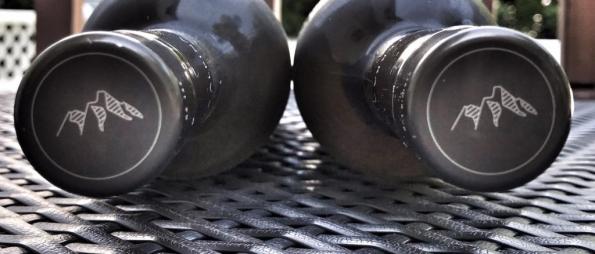
The history of Alois Lageder started in 1823, first as a wine merchant business in Bolzano. Next generations of Lageder family started acquiring vineyards and experimenting with making the wine, and in 1934, Alois Lageder III purchased wine estate in Alto Adige, which became the starting point of the modern period for Alois Lageder Estate. With attention to the quality becoming paramount since the 1970s, today Alois Lageder’s 125 acres of the family estate are farmed biodynamically. You can visit the winery’s website for more information – it is not only the information, you will also find some stunning photographs there.
In addition to producing more than three dozens of different wines, Alois Lageder is also involved in the number of special projects. One such project is called Terra Alpina and it is dedicated to the striking beauty of Dolomites, it is an attempt to convey that beauty in the liquid form – take a look at this picture:
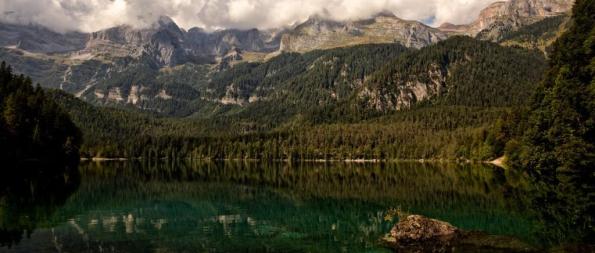
Source: Terra Alpina by Alois Lageder website
The wines in the Terra Alpina project produced via the partnership with local grape growers and winemakers in the Vigneti delle Dolomiti area. Currently, there are two wines produced under the Terra Alpina label, Pinot Bianco and Pinot Grigio – these were the wines I received for the tasting.
When the wines arrived, at first I even thought I got two bottles of the same wine – they looked very similar. After a few seconds, I figured out that this was not the case, and those were actually different wines. While the bottles looked similar on the outside, once I opened the wines, there was no question of similarity – the wines were beautifully and distinctly different, with Pinot Bianco strongly minerally-driven, and Pinot Grigio showing a perfectly noticeable, but the well-balanced amount of fruit – you can see my notes below.
Were these wines capable of delivering on the “cooling off” promise? Perfectly so. While different, both were fresh and bright, dropping a few degrees off a summer heat with every sip. The wines would be perfect on its own, but they would also play very well with food. And please make no mistake – while the wines offer a welcome relief to the summer heat, these are excellent, year-around, versatile wines, which offer a great value, and perfect for any day, and every day.
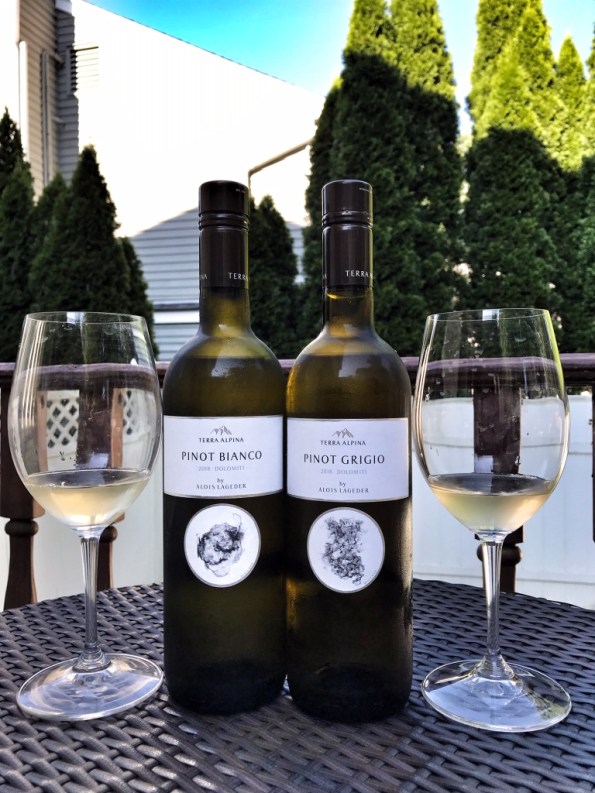
2018 Alois Lageder Terra Alpina Pinot Bianco Vigneti delle Dolomiti IGT (12.5% ABV, $15)
Straw pale
Touch of sweet apples, lemon, minerality
Crisp but buttery, noticeable salinity, minerally driven, dry, refreshing, lemon, lemon finish.
7+/8-, very nice
2018 Alois Lageder Terra Alpina Pinot Grigio Vigneti delle Dolomiti IGT (12.5% ABV, $16)
Light golden, a shade darker than Pinot Bianco
Intense, tropical fruit, guava, candied lemon, honeysuckle
Crisp, also a bit buttery and round, fresh lemon, vibrant, refreshing, delicious.
8-/8, excellent, passes room temperature test with flying colors
Here is my summer cooling off story. What’s yours? Cheers!
Stories of Passion and Pinot: Iris Vineyards
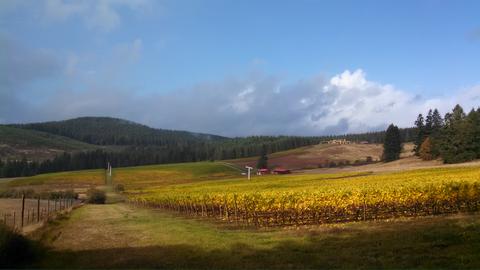
 Let me ask you something. If you would look at the mountainous parcel of land, completely destroyed by the brutal commercial logging – would you be able to envision there a beautiful Pinot Noir vineyard? (if you answered “no”, same as I did, don’t worry about it – this is why you and I are not in the winemaking business). When Richard Boyles and his wife Pamela saw such a logging-destroyed site at the south end of the Willamette Valley, they were able to see past the nature in distress. They were able to see the future vineyards and even future forest restored where it was before. They purchased about 1,000 acres site in 1992, and it became the home to the Iris Vineyards, with the name inspired by the beautiful wild Douglas iris covering the surrounding hills in spring.
Richard’s fate was sealed at the age of 7, when he assumed assistant winemaker duty to his grandmother, helping her to make the sweet, dessert wine. As they say it in the stories, the rest was history. Richard met Pamela while studying at the University of Oregon. Countless visits to Europe and living there for a while as Richard had a carrier in international business management and hospitality, helped Richard and Pamela to discover their wine passion – Burgundy, and its signature grape – Pinot Noir. That passion for Pinot helped Richard and Pamela to see through the broken trees and realize their dream of making the world-class Pinot Noir.
Well, there is also an additional element to that passion – a principle of Areté. Richard and Pamela learned about Areté in the university, while studying ancient Greek philosophy. This principle simply means that it is one’s moral obligation to achieve the highest potential the person can achieve. Give it a thought – Areté is really a great principal to live by; we will get back to it later on in this post.
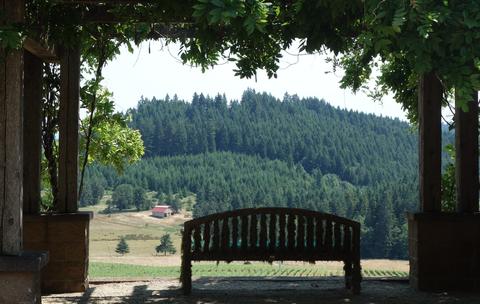
Today Iris Vineyards farms about 43 acres of vineyards, located at 800 to 1,100 feet elevation (quite high for the Willamette Valley). The vineyards are surrounded by more than 500 acres of restored forest, mostly Douglas fir and Ponderosa Pine, as well as Oregon white oak. The main vineyard of the estate, Chalice Vineyard, was planted in 1996 and produced its first vintage in 2001. Pinot Noir takes two third of the plantings, following by the Pinot Gris and a small acreage of Chardonnay. Iris Vineyards also produces a number of other, less traditional wines (Viognier, Syrah, and more) from other appellations in Oregon, such as Applegate Valley.
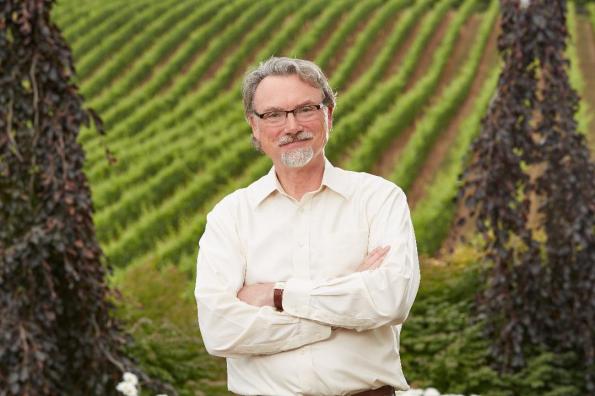
Richard Boyles
I was definitely intrigued by what I learned about the Iris Vineyards, so I took an opportunity to sit down with Richard Boyles (yes, once again it was a virtual conversation) and ask him a few questions. Here is what transpired:
[TaV]: You grew up tasting sweet wines. How did you end up with Pinot Noir becoming a passion?
[RB]: Although my first experience was sweet wines made and sampled with my grandmother, the wines I “grew-up” with were the wines served at family celebrations organized by my dad. These were usually red Bordeaux and reds and whites of Burgundy as well as German Rieslings. As you can see, with the exception of the Rieslings, these were dry wines that were intended to pair with food. I became more focused on Pinot Noir as it became clear that Oregon could grow world-class Pinot Noir with Oregon attitude. After graduation from the U of O, while living in Seattle, Pamela and I continued to explore the world of wine, visiting vineyards, tasting rooms and sampling primarily in Oregon and Washington and occasionally in Napa and Sonoma. Our interest in Pinot Noir solidified as a passion as Pamela and I explored different viticultural areas of Europe when we lived in Germany and Switzerland. We found ourselves gravitating to Burgundy for Pinot and Alsace for Pinot Gris.
[TaV]: What made you think that the parcel of land destroyed by logging would be an ideal place to grow Pinot Noir?
[RB]: In the Pacific Northwest logging is a part of the rural economy and landscape. In the case of our property, the fact that it had been logged and that we took on the legal obligation to replant the forest meant that we were able to acquire large acreage at a modest price. The property had a long history as a mixed forest operation, with cattle and timber harvests providing income to the owners. When we acquired the property, we replanted hundreds of acres of forest before we turned our attention to planting the vineyard on former pasture. The areas for vineyard plantation were selected for the Jory and Bellpine soils, south-facing slopes, elevation and for modestly steep slopes which allow the property to be farmed with standard farm equipment. While our purchase of the property was prompted by the vineyard potential, it has been equally satisfying to plant tens of thousands of Douglas fir trees that have now matured into a forest, an ecosystem really, supporting many species of flora and fauna.
[TaV]: I know that the concept of Areté and its relevance to everything you do is explained on the website, but can you explain one more time for our readers what Areté means for you and how does it apply to the Iris Vineyards and your wines?
[RB]: In addition to what is on the website and press kit, this is what I would say about Areté: Areté is a philosophy or way of being that says, “Hey buddy, you want to excel and standout? Then be deliberate about it. Figure out what skills and knowledge you need, practice them, perfect them if you can. Figure out what else will up your game. Go get that skill or knowledge. Repeat. Because that is what this life is all about. A constant aspiration to live up to the potential that is you. Why would you settle for less?” With respect to Areté at Iris, Areté is a cultural signpost. It tells team members and prospective team members what we value at Iris, how we want to be and be seen as an organization. It tells team members how they can contribute. We can only be an organization that exemplifies Areté if our team members embrace it, make decisions and plans by it. By making it clear what we are about, we attract like-minded team members. And, of course, Areté is a proclamation to the world about aspirations. So, we take it very seriously when we put the Areté name on the label of the wines that are the best examples of our craft.
[TaV]: I would guess that first was Pinot Noir, then Pinot Gris, then Chardonnay (curious – am I right?), but Iris Vineyards today offers way more than just 3 flagship Oregon grapes – how did you get to include Syrah, Tempranillo, Viognier into your repertoire?
[RB]: From the time we committed to establishing a vineyard, Pamela and I planned to grow Pinot Noir, Pinot Gris, and Chardonnay. The expansion into other varietals is the result of two factors: 1) the desire to create variety for our club members; and, 2) our winemaker, Aaron Lieberman’s curiosity, interest and skill at working with grape varieties beyond Pinot Noir, Pinot Gris and Chardonnay.
Source: Iris Vineyards
[TaV]: While it is not yet available on your website, I understand that you are about to introduce Iris Sparkling wines. Can you tell me more about this project, starting even with “why sparkling wines”?
[RB]: Much as the reintroduction of the Rosé program was in response to Pamela’s strong interest in Rosé and renewed consumer interest in the category, the sparkling wine program came about as a result of Aaron’s interest in, and interest in the challenge of making sparkling wine. Sparkling wine is the ultimate celebratory beverage. Our club members and tasting room visitors love our Methode Champenois Blanc de Noir and Blanc de Blanc. We reserve a small amount for weddings and other celebrations at the tasting room, though the sparklers routinely sell out prior to the subsequent release. Aaron can expand on what brought him to pursue sparkling.
[TaV]: Will sparkling wines be generally available or they will be offered as winery exclusive/club options?
[RB]: I anticipate that the sparkling wines will be available to club members, available at the tasting room, available to weddings and celebrations held on the property and perhaps to select accounts. I don’t anticipate that it will be available to broad distribution. These are intensely hand made wines requiring lots of time and attention. The sparklers will have an important but limited role in our line-up.
[TaV]: Considering the wide range of grapes you already use, do you have any plans to expand it any further?
[RB]: Our offerings will continue to evolve. Our core business is in Pinot Noir, Pinot Gris, Chardonnay, and Rosé. As we expand our vineyard, we will plant small amounts of Pinot Meunier and Pinot Blanc as well as a broader variety of clones of Pinot Noir and Pinot Gris. Pinot Meunier will have a place in our sparkling program. We will evaluate it as a potential stand-alone variety. Pinot Blanc will be a standalone bottling. I expect we will pare some wines from our current offerings as we respond to the tastes of our club members and tasting room visitors. 8. I’m assuming you started producing wines at the end of the 1990s. Do you still have any of your first releases available in the cellar? How do they hold up? What is the oldest of your own wines you ever tasted?
We first bottled wine under our own label in 2001. Prior to that, we sold the small volume of fruit coming from our vineyards to other producers. We recently sampled a bottle of 2008 Reserve Pinot Noir. We have a single bottle left. I wish we had more in our cellar. While this wine wasn’t deliberately built to last ten years, it is drinking very well. The 2012 Reserve Pinot is drinking nicely. Pamela and I have a few overlooked bottles of 2001 and 2002 Pinot Gris in our personal cellar. These were award winners 15 and sixteen years ago, including double platinum for 2002. As compelling as these wines were at two, three, four and even five-year-olds, they weren’t intended to age and are now past their prime. It’s a good reminder to drink while the drinking is good.
[TaV]: You are practicing sustainable farming. Can you explain what it means for you, how does it relate to the land, vineyards, grapes and so on? Have you ever looked at going Biodynamic?
[RB]: The goal of our farming practices is to produce fruit that meets our particular purposes. We use different farm practices and viticultural techniques for Pinot Noir that’s intended for Rose’ differently than the fruit that is intended for our estate bottling for instance. Our farm practices are conventional as we want to have all the tools available to produce the best fruit for the purpose while supporting the long-term productive capacity of the vineyard and operating a financially sustainable business. Farming isn’t static. We annually review best practices and new literature to improve what we do in the vineyard. While we have considered a Biodynamic approach, we believe we can produce better fruit for our purposes with a conventional approach to farming.
[TaV]: When you are not drinking your own wines, what are your favorite wines from Oregon, and from around the world?
[RB]: One of the notable things about the world of wine today is that so much great (and not so great) wine is accessible from all over the world. We see wine as an exploration, so we regularly try what we haven’t tried before. That is as likely to be a Pinot from a new Oregon producer, a Sauvignon Blanc from a new growing region or an obscure varietal we haven’t tasted in a while. Through exploration, we learn more than returning to the same things repeatedly. That said, we have a broad stable of wines of our own production. We do frequently return to those.
[TaV]: Where do you see Iris Vineyards in 15-20 years from now?
[RB]: I expect that Iris will garner increasing consumer attention as we offer compelling wines at a good value. I expect that we will continue to offer wines across a variety of complex profiles and price points. I don’t say across a variety of quality, because all of our wines are of high quality, they just differ in terms of complexity. Personally, in 15 or twenty years I hope to have more tractor time and hands-on time in the vineyard and in the winery, particularly at crush. Overseeing this and other businesses currently require that I focus on the big picture. It was a “need” to farm and a maker mentality that brought us into the business. I still craft beer, pickle and can. I look forward to re-creating my job description to allow more time in the vineyard and winery and less in the business of running a business.


Yes, I agree with you – it is time to drink. I had an opportunity to taste two of the Iris Vineyards Pinot Noir wines – here are my notes:
2017 Iris Vineyards D Block Pinot Noir Chalice Vineyard Willamette Valley (12.7% ABV, $39.99, 300 cases produced)
Bright Ruby
Light, elegant, plums, cherries, a touch of ripe strawberries
Sweet cherries, plums, great acidity, excellent balance
8-/8, nice and approachable
2016 Iris Vineyards Areté Willamette Valley (14.1% ABV, $59.99, 100 cases produced)
Dark Ruby
Touch of smoke, plums, a hint of cranberries
Iodine, Cherries, a touch of smoke, good balance
8/8+, very good wine, will be interesting to try it again in 10 years…
Source: Iris Vineyards
Here you are, my friends – another story of Passion and Pinot. Go pour yourself a glass of Pinot – more stories are ahead…
To be continued…
P.S. Here are the links to the posts profiling wineries in this Passion and Pinot series, in alphabetical order:
Alloro Vineyard, Bells Up Winery, Ghost Hill Cellars, Ken Wright Cellars, Knudsen Vineyards, Lenné Estate, Tendril Cellars, Youngberg Hill Vineyards, Vidon Vineyard
Daily Glass: Oh, Turley
I remember discovering Turley Zinfandel many years ago for the first time at the pre-theater dinner in New York with my friend Henry. I wouldn’t tell you now if I heard something about Turley before we picked the bottle of Turley the off the wine list, or if it was just a happy accident. I just remember our reaction of a pure “wow” at how beautiful the wine was. Ever since that discovery, Turley wine almost became our secret handshake – when I show up with a bottle of Turley at my friend’s house, I get an understanding smirk and a nod – “you did good, buddy”.
Once the Turley was discovered, the very next question was – how can I get it. This is where I learned about the concept of the wine mailing list, starting with the waitlist (I talked about all those terms before – if you need a refresher, the link is here). I believe Turley was one of the first if not the first of the wine lists I signed up for (meaning, got on the waiting list for the mailing list). Turley also happened to be the very first mailing lists I got accepted to – to my big surprise and delight, as the wait was not that long (a few years).
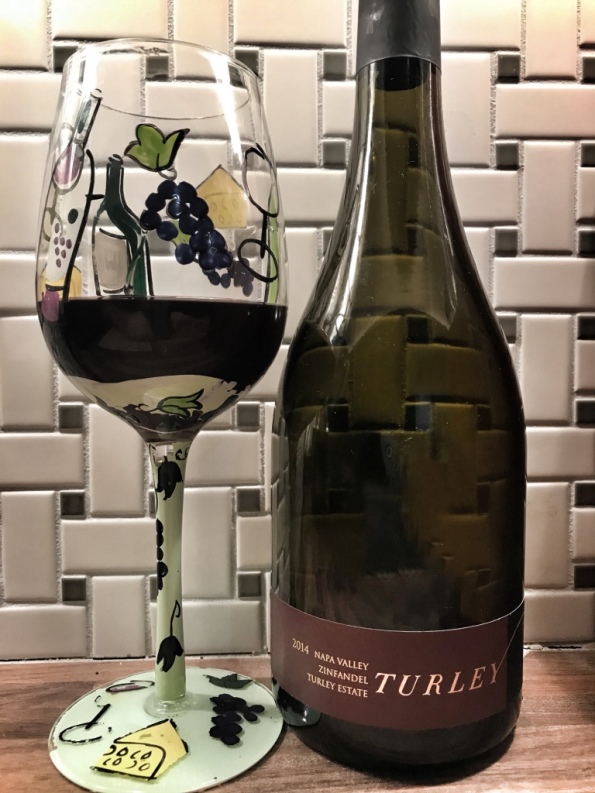
In case you are not familiar with Turley and don’t readily share into the excitement of the subject, here is a brief introduction. Turley Wine Cellars is a winery in Napa Valley in California, which specializes in Zinfandel and Petite Sirah. The winery was started in 1993 by Larry Turley, who was actively working in the wine before and developed a serious passion for Zinfandel and Petite Sirah, especially for the old vine Zinfandel (some of Turley vineyards are continuously producing since the late 1800s). Today, Turley produces 47 different wines from 50 different vineyards throughout Napa Valley, Paso Robles, Lodi, Amador Couty and other regions in California. You can find Turley wines in the stores and the restaurants, but they are scarcely available, as while they are making 47 different wines, most of the wines are produced in the hundreds of cases only, so the best way to get Turley wines is by signing up for the mailing list. One more thing I want to mention, as it is important to me – even with all the [rightly deserved] fame (they are definitely one of the top 5, or maybe even top 3 Zinfandel producers in the USA), Turley wines are still affordable on the mailing list, with some of the wines still priced at $20, and with absolution majority of the wines costing under $50 (Hanes Vineyard Zinfandel is probably the only exception at $75).
Since I got on the mailing list, Turley wines became my favorite present for the wine-loving friends. Every time we meet, my friend Patrick gets a bottle of Turley to take home to Switzerland – it is an equal exchange though, as I always get a bottle of unique and interesting Swiss wine – not something you can casually find here in the US. I also love the reaction such a present causes when people look at the bottle. I brought Turley for my friend Oz when we met in Singapore, and I handed it to him when we were finishing dinner. I perfectly remember huge, ear to ear smile on his face when he saw the bottle, and his exact words sharing the excitement with his friends “look, he got me a Turley!”. Lots of fond memories associated with Turley, in a variety of ways.
What caused this outpour of Turley love? Opening of the bottle of 2014 Turley Estate Zinfandel Napa Valley. How can I describe it? To me, a well made Zinfandel should have a perfect core of raspberries and blackberries with the addition of spices – it should have restrained sweetness and not be jammy. If you drink Zinfandel often, you know that what I just described is difficult to find. This wine had exactly that. A perfect core of ripe, succulent raspberries and blackberries, covered in pepper, sage, sweet tobacco and eucalyptus. Perfectly dry, with a firm structure and layers and layers of flavor. This is the wine you say “ahh” after every sip, and you say “ohh” when the bottle gets empty. And to complete my description, note that 15.6% ABV was not noticeable at all. A perfect balance and pure pleasure is what makes this wine so special.
Here it is, my wine love story of the day. What’s yours? Cheers!
Daily Glass: Enjoy Your Wine and Play With Your Food – Beyond Meat Food, It Is
I appreciate winding down Sunday with a good glass of wine and a family dinner. When it is warm outside, such a Sunday dinner typically means grill – and this past Sunday was not an exception (or maybe it even was a bit of an exception as it was dry and pleasantly warm, and not hot at all, compared to mostly hot and humid weather of the last year).
Kids love steak in this house. While shopping for a steak at our local Fairway Market, something caught my eye. Beyond Meat? Really? Both Beyond Meat The Beyond Burger and Beyond Meat Beyond Sausage Original Brat? Wow and double wow!
Let me explain the excitement.
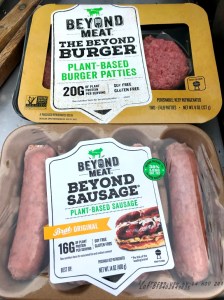 I have plenty of friends and relatives who are vegans and vegetarians, so with the summertime, the question of a good meat alternative is always becoming hot – when someone visits our house, I really want people to feel included and taken care of, no matter what their dietary restrictions are, so the search for a good vegan burger, etc. was always on. A few years ago, I came across the product called Beyond Burger, made by the company with a catchy name Beyond Meat. The description of Beyond Burger, which offered full resemblance of the regular burger, including the blood, sounded a bit suspicious, so I carefully researched all the ingredients and to my dismay, found that all of the ingredients are natural and there was no red paint added to this product. When I decided to try it, further research proved it to be mission impossible – Beyond Burger was available only at the Whole Foods (which I don’t frequent), and the Internet was full of complaints of the people who desperately tried, but failed to find it in their local stores, as the product was always out of stock. I also learned that in addition to Beyond Burger, the same company is offering a new product called Beyond Sausage, which sounded to me too good to be true. Again, this all was taking place 3-4 years ago.
This year, Beyond Meat went public (and mind you, very successfully – while the initial offering was at $25/share in early May, today it is trading at around $168/share, and it is just about a month later). And it appears that they managed to increase their production and distribution – now I saw the actual product instead of just reading about it. Thus, as you can imagine, I simply had to try it, even though it is quite expensive for what it is – $5.73 for two burger patties and $9.99 for four “bratwurst” sausages – you can buy the pack of 14 real bratwurst sausages at Costo for $8.99. Nevermind all the price talk – the question is simple – is it tasty? Would I be happy to serve it to the guests?
What is the best way to compare wines? The blind tasting, of course. What is the best way to compare foods? Well, the concept of “blind tasting” in wine can’t really apply to the food, unless you would actually blindfold someone, or taste your food in one of those dark rooms were waitstaff wears special goggles. So I didn’t attempt to do any sort of the fair comparison, especially as the dinner plan included steak and not the burgers. However, I had some of the Costco bratwursts in the fridge, so battle sausage was definitely on.


Before we talk about the battle food, let me share with you two delicious wines we got to enjoy on Sunday. First, a Chardonnay from … Italy. Yes, Italy makes excellent white wines, and excellent Italian Chardonnay can be found more often than not – but I still get surprised every time at how good it can be. 2015 Maculan Chardonnay Veneto IGT (12.5% ABV) was delicious from the getgo. Beautiful golden color in the glass, a touch of honey and vanilla on the nose. The palate was plump and generous, with white apples, white plums, a touch of honey and vanilla, good acidity and nice weight. The wine might be close to its prime and offers an ultimate indulgence at the moment as it is perfectly balanced. My wife, who generally don’t drink white wines, said “wow” and asked for another glass.
Sunday calls for some special wine, so I decided to go with 1999 Hendry Block 28 Zinfandel Napa Valley (15.8% ABV). In case you are curious what makes this wine special, it is its age. I don’t drink routinely 20 years old wines (I wish I could), so every time I open a bottle of such an age, it constitutes a “special bottle”. Besides, Zinfandel is one of the pet peeves. The wine just jumped from the glass with the ripe blackberries and blueberries, supported by mocha and sweet oak. The palate offered layers and layers of goodness – ripe berries, a touch of blackberry jam, velvety smooth but well present mouthfeel, lots and lots of pleasure. I can also tell you that I noticed alcohol level only on the label, but not in the glass. A very well made, delicious wine.
Now let’s get back to food, as we have the battle to discuss.
Here is how both products looked before the cooking – note the real bratwurst at the bottom of the picture with sausages. Burgers look scarily realistic, and while Beyond Meat sausages look slightly different than the real sausage, they still look perfectly real overall (there are plenty of different sausages of exactly the same color):


Both burgers and bratwurst should be cooked for 3 minutes per side according to the package instructions, which is exactly what I did. Here is the result, again including the real bratwurst for comparison:


As you can see, Beyond Meat products have somewhat of a yellow hue (okay, this are the iPhone pictures, so you might have to take my word for it). Otherwise, both burgers and saysages perfectly held up to the cooking process and were very easy to handle – maybe even easier than the real meat products, considering the there was no fat coming out to cause the flare ups.
Just so you know we didn’t really convert into the vegans, here are few more dishes from our dinner (yes, this are real meat and real scallops):


And now, to the taste.
I made a small mistake of not creating the full experience out of the burger, meaning having it with a bun, tomato, ketchup and so on. On its own, it was quite decent, with some tiny hints of not been made out of the real meat (but then remember that it was not a blind tasting, so I was clearly influenced by the appearance). The sausage, however, was mind-boggling. It literally was identical to the real bratwurst in the taste profile and texture – I would never be able to distinguish it if I would close my eyes. Simply a wow.
If you read my typical wine posts you would know that at any possible occasion, I like to taste the wines over the course of a few days to see how they will change. When it comes to the food, it is not that I like to taste the food on the second or a third day (by the way, some of the soups and stews actually benefit from an extra day in the fridge), but I can’t stand wasting the food, so I usually make an effort to work on the leftovers for as long as possible or needed. What it has to do with this story? Simple. We had leftovers of both Beyond Meat burgers and bratwursts. Over the next two days, both perfectly held up to the reheating in the microwave, and both were perfectly on point in taste and texture, resembling its real meat brethren even more than on the first day while freshly made.
There you have it, my friends. The verdict on Beyond Meat burgers and bratwursts? Beyond reproach. I will be happy, very happy to serve them to my guests at any gathering. And yes, I hope you enjoyed your Sunday night wines too. Cheers!
Navarra, Surprising and Not
It is commonly known that Spanish wines are some of the best-kept secrets of the wine world. An oxymoron, you say? Not necessarily. I’m not implying that you need to know the secret knock on the unsightly door in order to acquire Spanish wine. The “secret” simply means that consumers still often overlook Spanish wines as a category, despite the fact that those wines possess some of the best value, the best QPR you can ever find – try a $30 Rioja (for example, La Rioja Alta, Lopez de Heredia) and you will see what I mean.
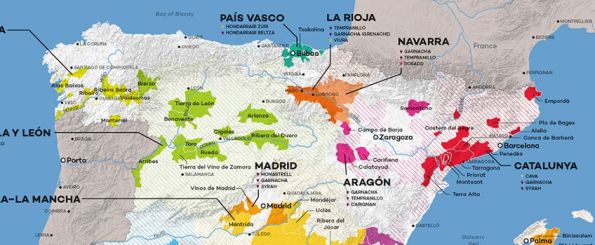
Spanish wine regions. Source: Navarra Wine US
Turns out that even secret wines have deeper secrets, such as Spanish (of course!) wines from Navarra, a northern province known for its unique climate (influenced by Mediterranean, Continental, and Atlantic climates). A long history of a close relationship with France (going back to medieval times) also led to Navarra sporting rather an interesting mix of grapes, with plantings of Garnacha and Tempranillo intermixed with Cabernet Sauvignon, Merlot, and Chardonnay. For a long time, Navarra was known as the “land of Rosé” – today you can find a full selection of white, Rosé and red coming from this small region.
By the way, here is the fun fact for you – in case you are a Game of Thrones fan, you might be interested to know that season six of the popular show was filmed in Navarra, in Bardenas Reales desert – here, you can impress your friends already.
If you are interested in a quick set of numbers (I know I always am) – Navarra has about 27,000 acres of vineyards, located on an average altitude of 1,300 feet (400 meters) above sea level. Annual production is about 70M liters of wine. Most planted grapes are Tempranillo and Garnacha, followed by Cabernet Sauvignon and Merlot. 90% of the wine production are red and Rosé (Rosé is 1/3 of this production), and 10% are white wines. Okay, done with numbers, let’s continue.
With this “secret of secrets” designation, you can probably figure that Navarra wines do not occupy central shelves of the liquor stores – but maybe it is for the better? Of course I mean it in our own, selfish interest – more for us, for the people “in the know”.
I had a pleasure of drinking Navarra wines before – for example, Tempranillo from Bodegas Ochoa is an excellent rendition of one of my most favorite grapes. However, this is where my exposure to the wines of Navarra mostly ends. Thus when I was offered to try a sample of Navarra wines, I quickly agreed.
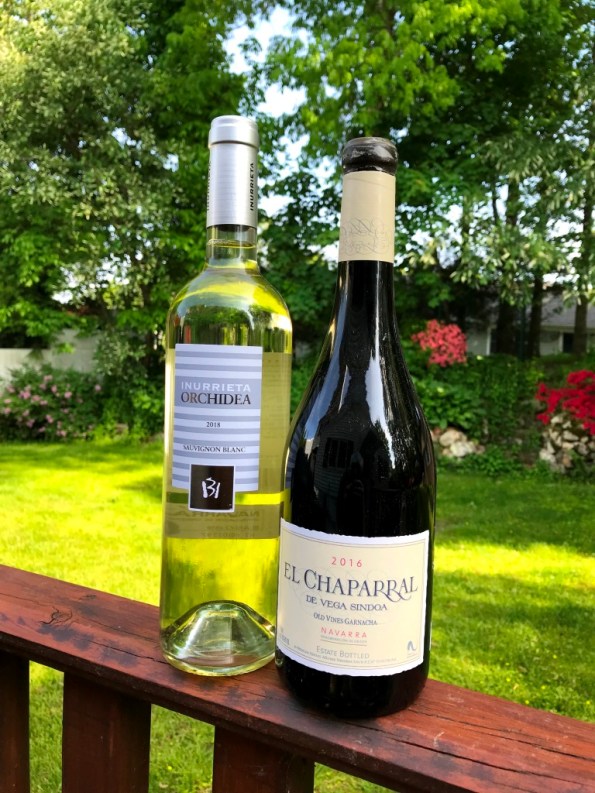
The surprises started upon arrival of the wines. Once I opened the box, finding a bottle of Garnacha made perfect sense. However, not finding a bottle of Rosé was rather surprising – I was sure Rosé would be included in the sample of Navarra wines. And the biggest surprise for me was finding the bottle of … Sauvignon Blanc! No argument here – Spain is often associated with red wines, but it makes excellent white wines – Albariño, Verdejo, Godello, Viura – but 100% Sauvignon Blanc from Spain is not something I see often (Rueda might be an exception, as Sauvignon Blanc is used there too, but mostly for blending).


The surprises continued as I opened the bottle of 2018 Bodegas Inurrieta Orchidea Sauvignon Blanc Navarra (13% ABV, $12). I have to admit, before the first sniff, I was skeptical. The first whiff of the aroma immediately cured all of my worries as the wine was simply stupendous. In a blind tasting, I would instantly place this wine into California – the wine was round and powerful, on the level of Honig or Duckhorn Sauvignon Blanc. A touch of freshly cut grass and currant leaves were unmistakable, supported by golden delicious apple, lemon, and complete absence of grapefruit. Perfectly refreshing, delicious wine – and at the $12 price point, the word “steal” comes to mind. (Drinkability: 8+)
Then there was Garnacha. Garnacha, a.k.a. Grenache is a very interesting grape. Garnacha has a tremendous range of expression, from ultra-powerful likes of Alto Moncayo Aquilon and No Girls Grenache to light and ephemeral Cote du Rhone and Bodegas Tres Picos. The 2016 El Chaparral De Vega Sindoa Old Vines Garnacha Navarra (15% ABV, $15) showed rather in the “ephemeral” category, despite the 15% ABV (I only noticed this high ABV when I was writing this post but not when I tasted the wine). Two main descriptors for this wine are raspberries and pepper. The wine was light, it was playful, full of fresh, ripe, but perfectly crunchy raspberries. Each one of those raspberries had a dash of black pepper on it. Ephemeral, surreal, or simply tasty – I will happily go with either descriptor. Again – excellent, excellent value at $15. (Drinkability: 8+).
Here you go, my friends. You can’t go wrong with either of these wines – not in price, not in the taste, not in the pleasure. Look for the wines of Navarra – you might be on a cusp of your next great wine discovery. Cheers!
Last Bottle Sign Up ($10 credit)




 Talk-A-Vino