Archive
A Quick Trip To California With Chalk Hill Estates
Have wine, will travel!
Let’s start with the question – equally eternal and pointless, but always fun – does size matter? Yes, of course, it does.
Now, a follow-up question – is bigger always better? Remember, this is still a wine blog, so please have the right perspective here.
While you are thinking about it, let me share what I learned from one and only Kevin Zraly during his Windows on the World Wine School class.
Kevin asked everyone to imagine a circle – let’s say, it would be California. Now let’s imagine a smaller circle inside of this one – let’s say, now it is Napa Valley. The wines from Napa Valley are better than the wines from the whole of California (I’m not doing any particular comparisons, just a general bottle of California appellation wine versus a general bottle of Napa Valley wine – there always will be exceptions, but this is not what we are concerned with right now).
Next, let’s place even a smaller circle inside of the Napa Valley – how about Oakville, one of the best appellations in Napa. Oakville designated wines should be (on average) better than Napa Valley designated wines, would you agree? But how about nesting next smaller circle inside – To-Kalon Vineyard, one of the most coveted vineyards in the whole of California? To-Kalon designated wines are some of the most sought-after wines in California, so the tendency is clear – the smaller circles get, the better wine should become. We don’t even have to stop at the vineyard level – we can continue to the blocks and plots, but I think you got the point.
So now, what is your answer to the question? Yes, when it comes to the wine appellations, smaller is usually better – but of course, don’t apply this logic when someone is asking if you would prefer a standard bottle of Screaming Eagle as your present, or if you would prefer a Jeroboam.
The Chalk Hill AVA (AVA is an abbreviation for the American Viticultural Area) is a tiny sliver of land located in the northeast corner of Russian River Valley AVA on the border with Alexander Valley AVA. The area is so small that it was first discovered by Fred Furth from his plane, while he was flying over the Russian River. Fred started the Chalk Hill Estates winery in 1972, and in 1983, the Chalk Hill area received the status of the AVA.
Chalk Hill’s name comes from the white chalk volcanic soils prevalent in the area. While Chalk Hill is a sub-appellation of the Rissian River Valley, it is warmer and has a lesser amount of fog, but more of the cooling breeze. Chalk Hill AVA is best known for its classically Californian grapes – Chardonnay, Sauvignon Blanc, Cabernet Sauvignon, Cabernet Franc, and Merlot. Malbec, Syrah, Sangiovese, and Zinfandel are also successfully growing there.
Chalk Hill Estate is a 1,300 acres property, with 350 acres of vineyards, planted vertically on the valley slopes. Chalk Hill Estate was acquired in 2010 from its original owner, Fred Furth, by Bill Foley, a successful financier turned vigneron, who smartly and successfully amassed a good number of famous California wineries under his Foley Family Wines brand. Actually, after the acquisition, Chalk Hill became home for the Foley family. Courtney Foley, the youngest daughter of Bill and Carol Foley, grew up surrounded by the beauty of Chalk Hill Estate, where now she became a winemaker working together with her dad.
Chalk Hill Estate vineyards are sustainably farmed, with a focus on soil and water conservation. Lots of work had been done in the vineyards to research how well different clones grow in the different sections of the vineyards, with particular emphasis on Chardonnay clones. To demonstrate the results of the study, Chalk Hill even produces a special Chalk Hill Clonal Collection set of wines.
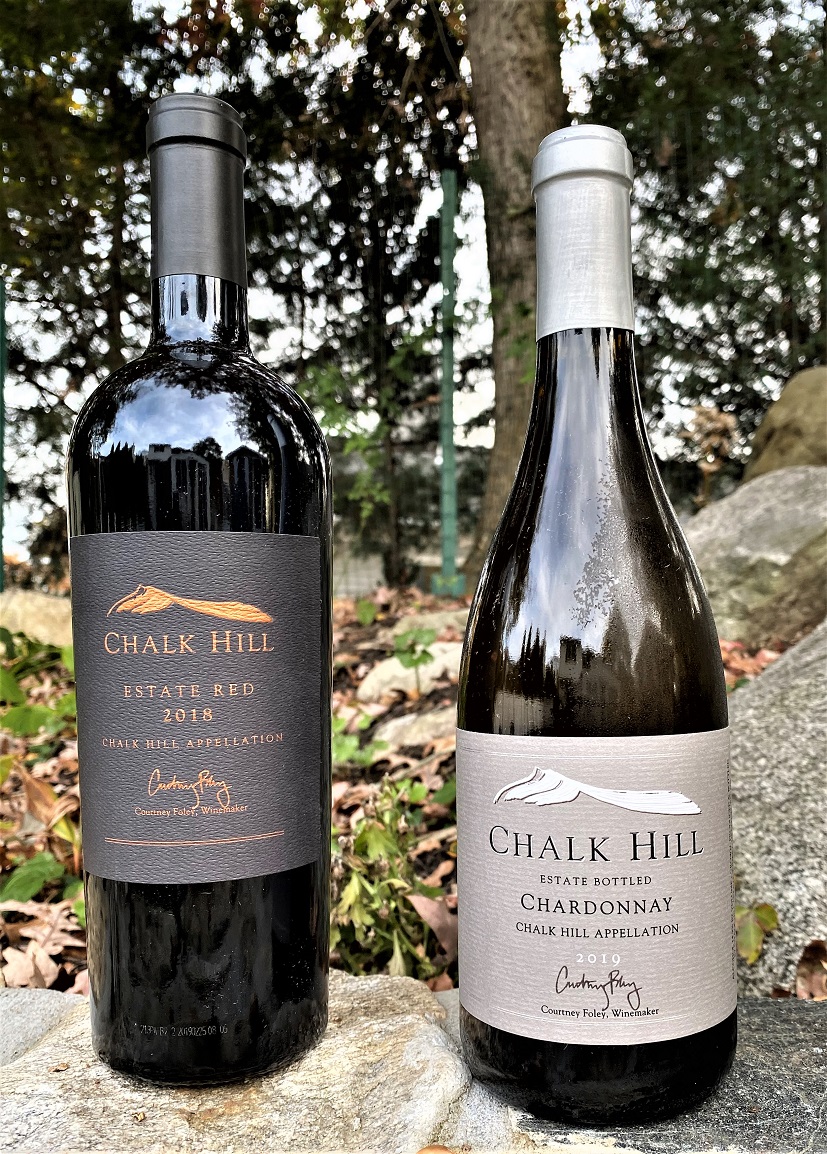
I had an opportunity to try two of the Chalk Hill Estate latest release wines:
2019 Chalk Hill Estate Chardonnay Chalk Hill AVA (14.9% ABV, $45, 11 months in French oak, 40% new)
Light golden
A hint of gunflint, lemon, herbs
Butter, vanilla, good acidity, bitter undertones
7+, over-extracted for me, but I’m sure someone might like the raw power
2018 Chalk Hill Estate Red Chalk Hill AVA (15.5% ABV, $70, 54% Cabernet Sauvignon, 34% Malbec, 10% Petit Verdot, 2% Carménère, 21 months in French oak, 61% new)
Dark garnet
Cassis, pure cassis
Beautiful crunchy cassis, cherries, eucalyptus, a hint of espresso, well noticeable but not overbearing tannins, good balance, full-body, long finish.
8+, excellent
Somehow, the Chalk Hill Chardonnay is not made for me (this is not my first encounter with the wine, but the results are identical every time). The Estate Red was a pure delight, though.
And now it is time to conclude our trip. I hope you enjoyed a brief visit to the beautiful Chalk Hill Estate – next time, I’m sure it is worth a hands-on experience. Cheers!
Daily Glass: Two Wines and The Sunset
Oenophiles are mysterious and easily influenced.
There.
Prove me wrong.
Here is the story of my weekend.
First, the “easily influenced” part, taking place on Saturday. My twitter wine friend Le Bov Vin #inmyglass likes to play a game – post a picture of a glass of wine with the description, asking everybody to guess the wine in the glass. Saturday’s post described the wine as “Redcherry.Blackfruit n strawberry,vanilla,licorice,hints of wood,smokedmeat Veryfresh,wellbalanced, polishedtannins,lingering finish“. My first guess was Pinotage, the second guess was leading to Washington Syrah/Grenache, but something here was also suggesting Spain, so I put all of these guesses into a tweet. After getting a confirmation that Spain is the right place, my first inclination was Ribera del Duero or Toro, as Rioja rarely would offer smoked meat notes – could’ve been something from Priorat, of course, but I decided to go with the first idea – and somehow I managed to hit it – the actual wine in the glass was Bodega Tinto Pesquera, one of the most classic producers from Ribera del Duero.
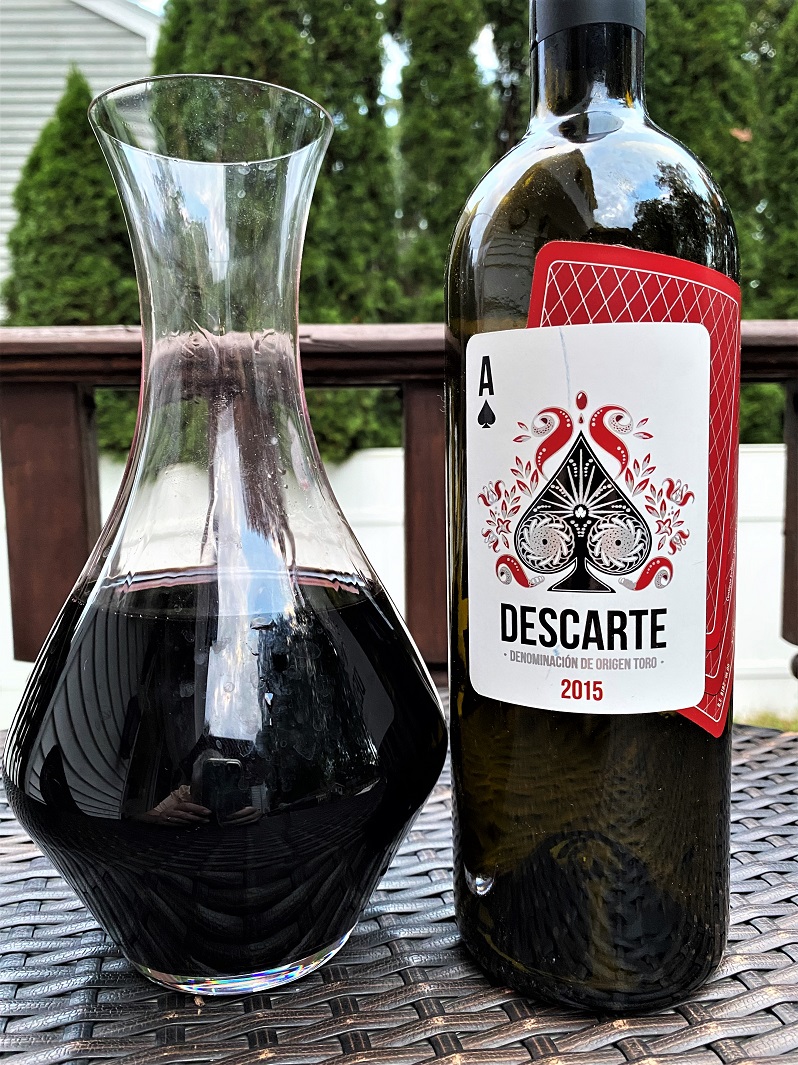
That made me crave Ribera del Duero wine, but somehow, while I always have a good amount of Rioja on hand, Ribera del Duero is a rare bird in my cellar. At this particular moment, it was as rare as none – but I recalled that I have a few bottles from Toro, the area down south from Ribera del Duero, producing densely concentrated and powerful renditions of Tempranillo, so I decided to obey my crave with 2015 Elias Mora Descarte Toro DO.
I wrote about this wine at the beginning of the year, when I called it Vinous Vino. Unlike the last time, I decided not to wait for the wine to come around slowly, and the wine went directly into the decanter upon opening. This definitely worked, as after about an hour in the decanter the wine showed massive and powerful, but also approachable enough to be enjoyed already, with dark cherries, espresso, and herbs-loaded profile.
Then there was Sunday, and the weather was noticeably cooler, one of the first cold days this fall so far. I wanted to sit down outside with a glass of wine, which obviously begged the question “what to open”. While going through the options inside my head, my inner voice insistingly proclaimed “Chardonnay”. I tried to argue – why Chardonnay, we can do Albarino, Chenin, Viognier, Riesling – but most importantly – why should it even be the white wine? It is cold enough to crave red! But the inner voice was unyielding – it has to be Chardonnay, there is nothing to discuss.
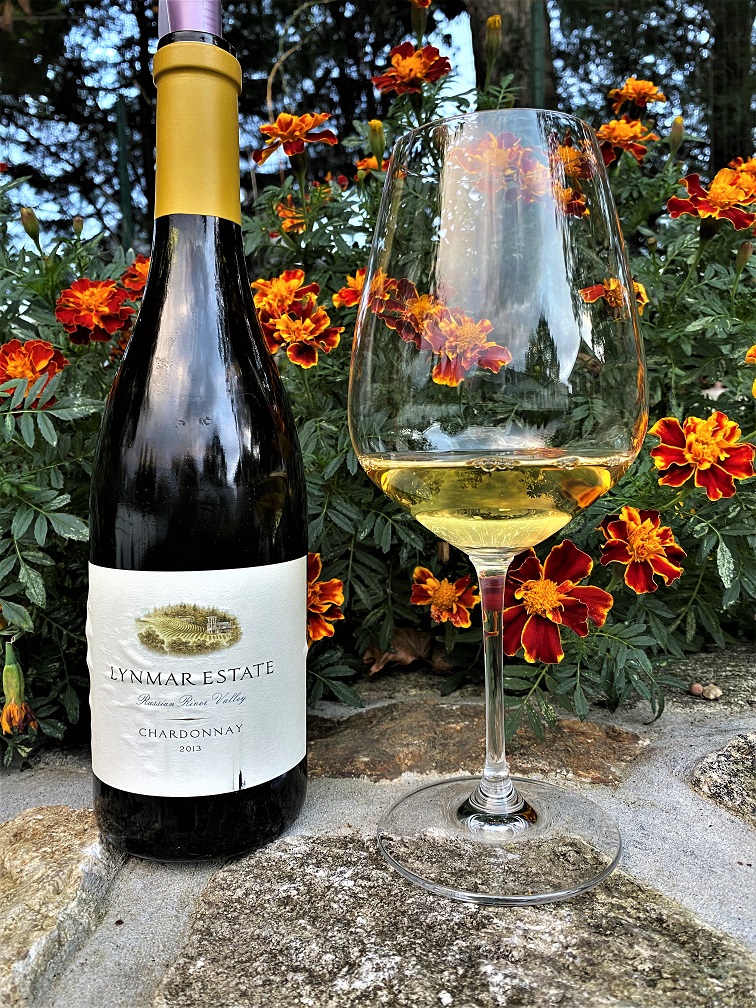
I don’t have a huge selection of Chardonnay, so the 2013 Lynmar Estate Chardonnay Russian River Valley (14.5% ABV) was almost the easiest choice. Boy, what a good choice it was… After a few minutes in the glass, the wine was singing with a core of vanilla with supporting voices of butter and green apples, all in perfect harmony. I don’t know if the wine was at its peak, or if it had another 10 years of life left – but it was perfect at the moment, no matter what mystery possessed me to open the bottle of Chardonnay.
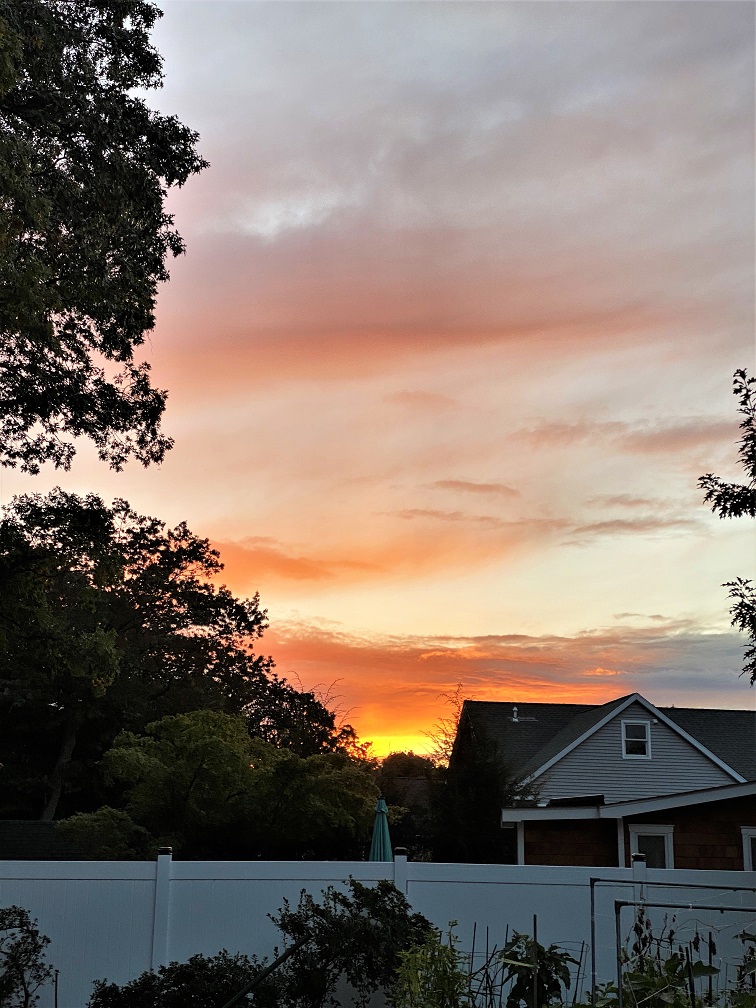
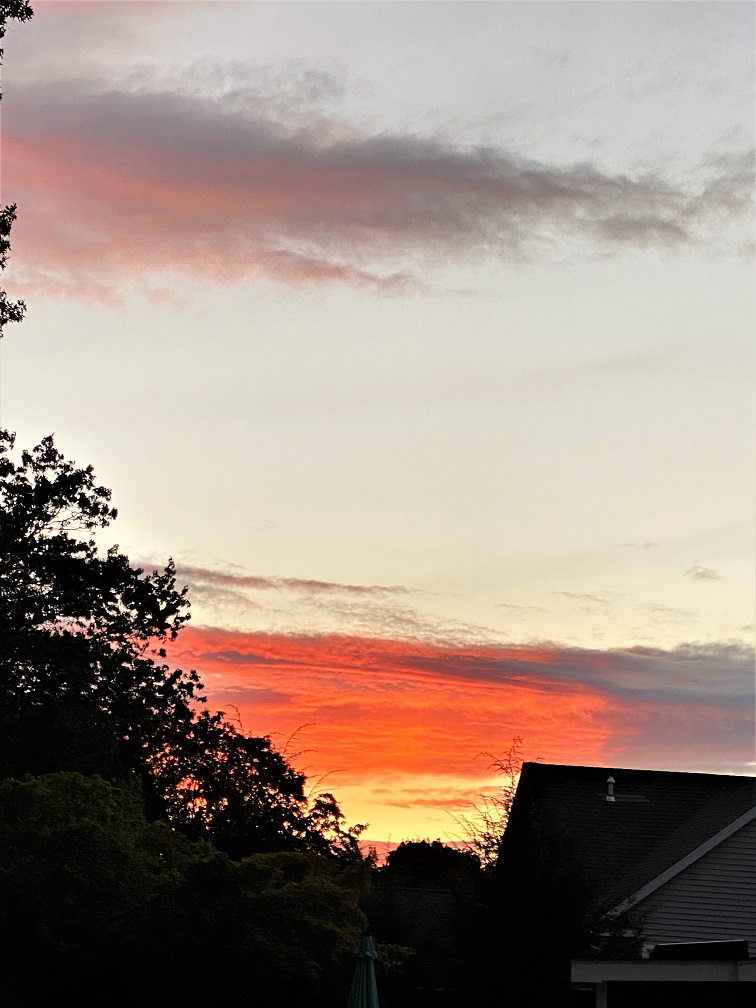
And then there was the sunset. I love taking pictures of the sunset, one of my most favorite types of photography. I often can take a decent picture of sunset right from my backyard – not all of those worth sharing though. But this Sunday sunset happened to be really special. A little rain started all of a sudden in the evening, forcing me to seek cover under the umbrella on the deck. The rain was very short, maybe 5 minutes or less. Once the rain didn’t look bothersome anymore, I stepped out from under the umbrella to go sit in the chair in the backyard – and then I saw THIS:

It appears that rain before the sunset creates some truly magical conditions for the sunset – some of the most memorable sunset experiences all took place after the rain. Once I saw this sunset, I spent the next 15 minutes taking pictures, with the glass and without, every moment being special and really worth capturing. Below are some of those pictures, I hope you will enjoy them as much as I did while talking them:
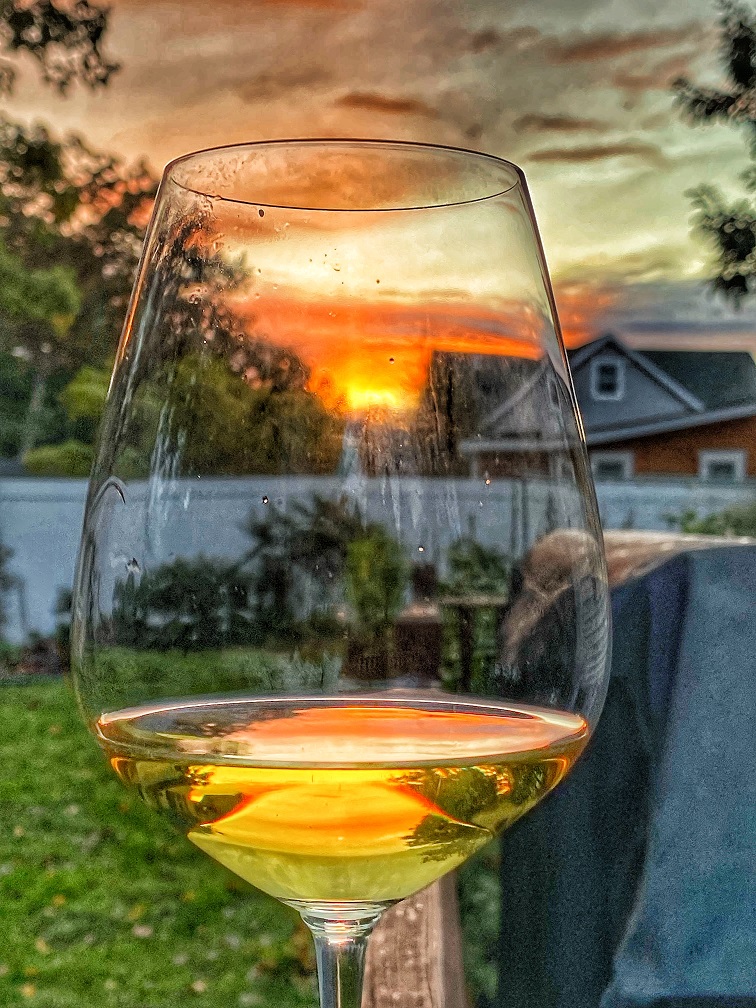
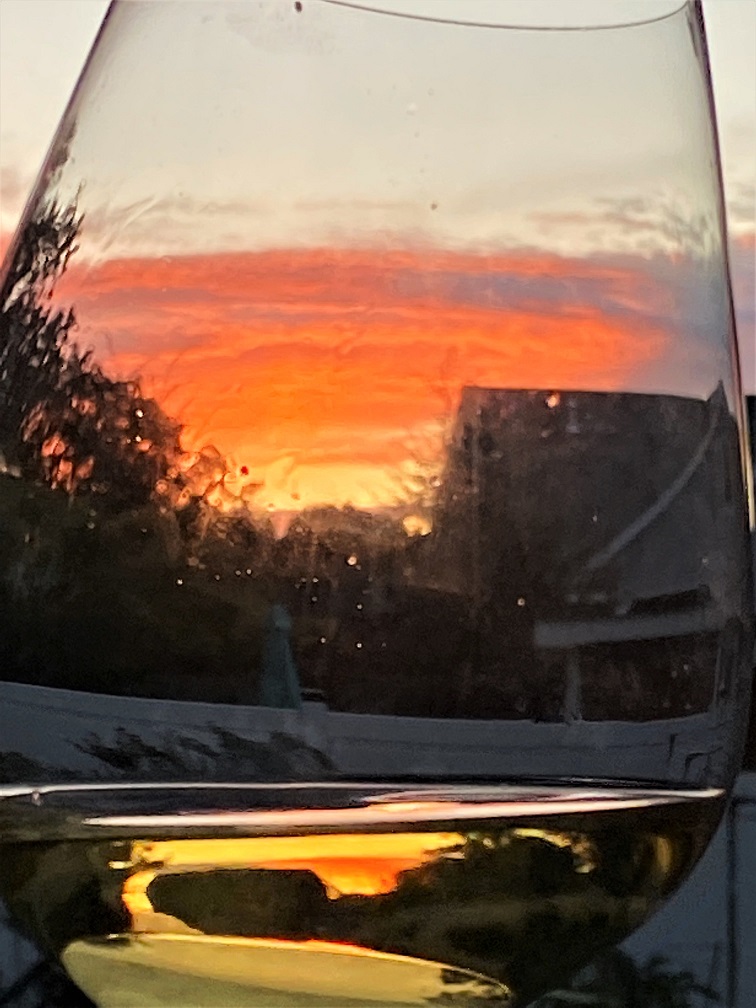
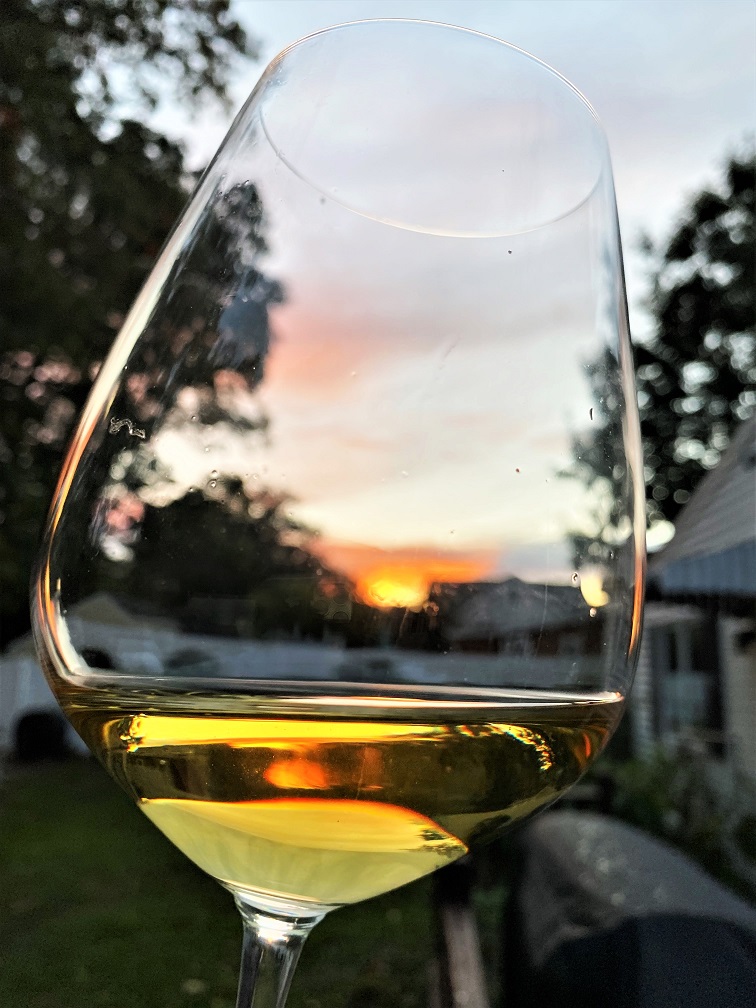
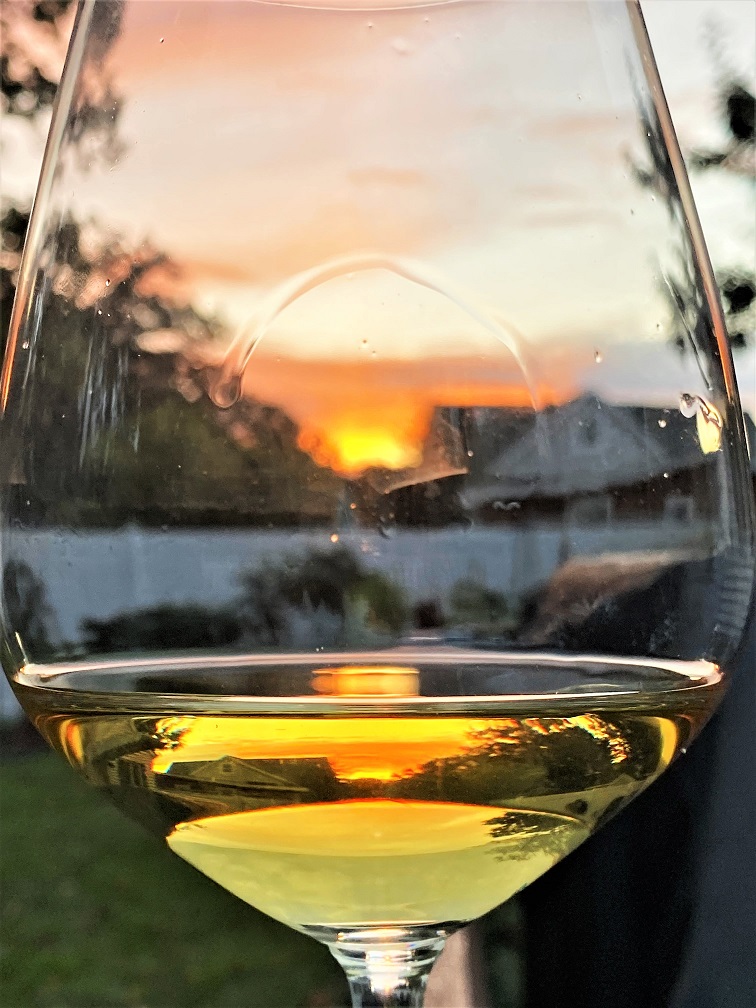

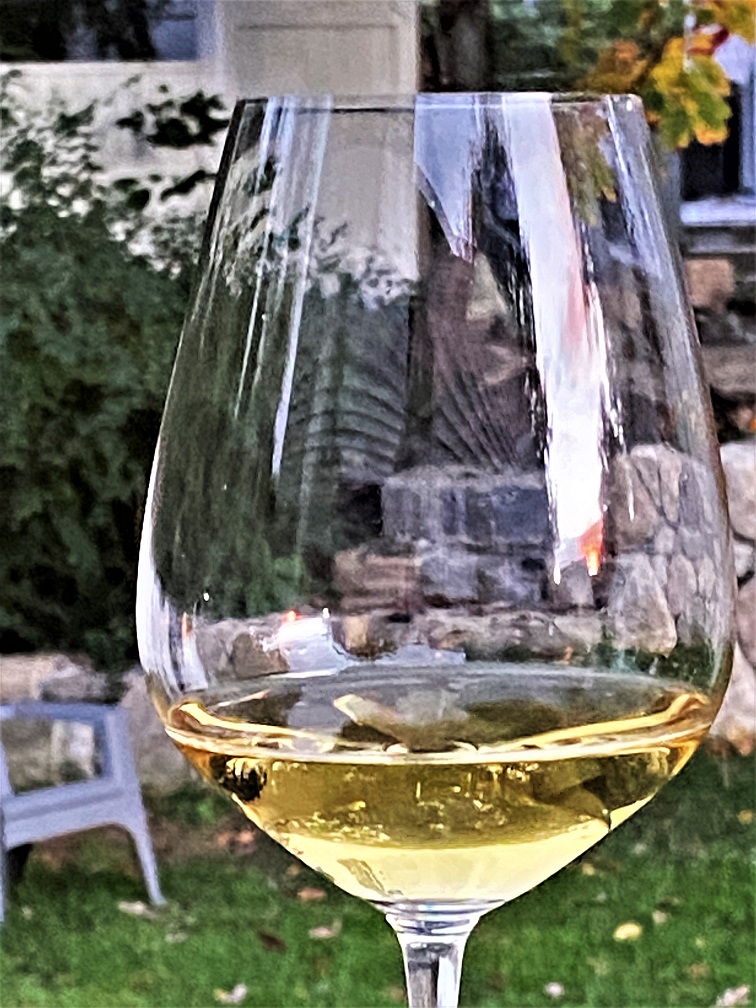
My failed attempt to catch the reflection of the sunset on the glass
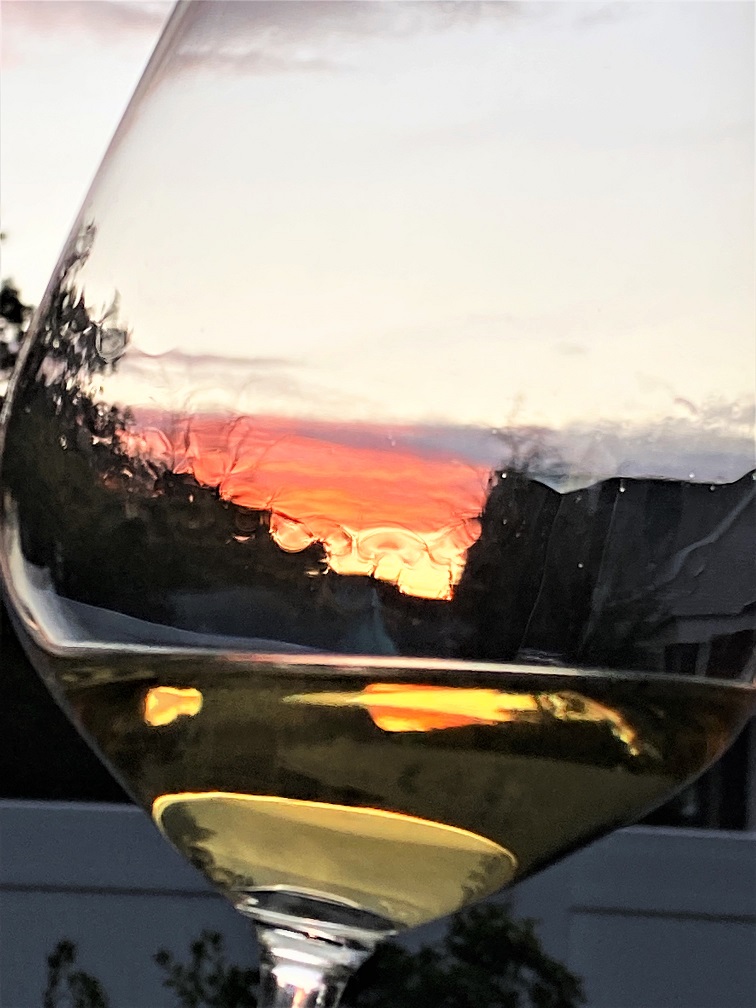
That’s all I have to share for now. How was your weekend?
Made With Organic Grapes: Find Your Ritual
The world of wine is full of eternal questions. Here is one of the most prolific ones: where is the wine made – in the vineyard or at the winery?
Many would argue that, of course, the wine is made in the vineyard. To make good wine you have to start with good grapes. You need good, healthy, properly ripened grapes to make good wine. “Good grapes” might seem obvious as a concept, but it actually entails a lot of hard work, love, and care, from the moment the first bud will appear on the vine (and even before that) until the moment when harvested grapes are reaching the winery. “Good grapes” are not defined by the taste alone – it is important how the grapes were growing, were any pesticides used, were all the methods organic, or better yet, sustainable? “Good grapes” for sure means a lot of work.
Then some might argue that no matter how good the grapes are if the winemaker will not take good care of the grapes from the moment grapes arrived at the winery, the good grapes will not result in good wine. How the grapes were manipulated from the very beginning – sorting, cleaning, de-stemming, pressing, fermenting, aging, storing – each of these steps has to be performed properly, as even the very best grapes will not convert themselves into the good wine.
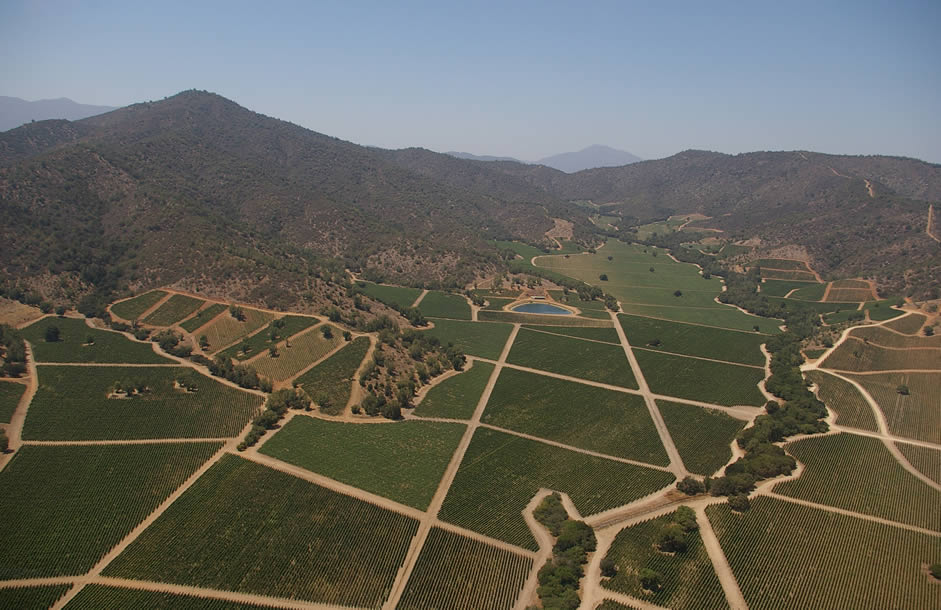
Source: Ritual Winery

Source: Ritual Winery
The folks at Ritual winery in Chile clearly don’t want to answer this eternal question. Or rather their answer is “both”. Estate vineyards in the eastern part of the Casablanca Valley in close proximity to the Pacific Ocean are surrounded by 6,000 acres of the native forest, creating a unique biome. All the vineyards are certified organic. Estate uses its own compost, made out of the pomace and manure of the local animals. Sheep help mow the grass and fertilize the vines.
The grapes are hand-harvested early in the cool morning at the first sunlight. After sorting, the grapes are fermented in the open-top tanks, using basket press and native yeast. To achieve desired characteristics, 4 different vessels are used for the aging of the wines: Oak Barrels to enhance the structure, Concrete eggs for the texture, Stainless steel Drums elevate freshness, and Stainless steel Tanks help with aromatics.


Below are my tasting notes, where you can also see all the different vessels used to produce particular wines:
2018 Ritual Sauvignon Blanc Casablanca Valley (14% ABV, $19.99, organic grapes, 8 months in stainless steel, concrete eggs and neutral barrels)
Light golden
Very complex, white stone fruit, good minerality, fresh herbs
Round and velvety, creamy texture, a hint of vanilla, even butter, nice lemon core, clean and crisp finish
8+/9-, outstanding. A different and delicious Sauvignon Blanc. Borderline a Chardonnay experience.
2019 Ritual Sauvignon Blanc Casablanca Valley (13.5% ABV, $19.99, organic grapes, fermented and aged for 8 months in concrete eggs, neutral oak, and stainless steel)
Light golden color
The nose is not very expressive, minerality, a hint of whitestone fruit
On the palate, a full spectrum, changing as the wine warms up – starting from steely Muscadet-like acidity, adding a bit of the creaminess after a few minutes in the glass, and then showing Chardonnay-like fuller-bodied notes and expressive minerality.
8/8+, Delicious
2018 Ritual Chardonnay Casablanca Valley (13.5% ABV, $20.99, aged in concrete eggs and French oak barrels)
Light Golden
Characteristic touch of vanilla and apple on the palate, a whiff of honey
Vanilla, apple, a hint of butter in the palate, perfect balance, crisp acidity, wow, a superb rendition of Chardonnay. Give it 5–10 years, and it will rival the white burgundy.
8, Outstanding
2017 Ritual Pinot Noir Casablanca Valley (13.5% ABV, $21.99, aged 11 months in French oak barrels)
Dark Ruby
The dusty nose of fresh plums with a touch of vanilla
Plums, violets, a touch of mocha, good acidity, fresh, excellent balance
8+, delicious from the get-go
Tasting Ritual wines will not help us to find an answer to our eternal question – these wines are clearly made both in the vineyard and at the winery. Have you tried any of these wines? If you did, I guess you already found your Ritual, if not – well, here is your chance.
American Pleasures
Yes, you read it right – we will be talking about American pleasures.
But don’t worry – this is still a wine blog. Yes, we will be talking about wine. And as the title suggests, we will be talking about wines made in the USA. As for the pleasures – this is what the wine is for. The wine should give you pleasure. If it does not, I don’t know what is the point of drinking it. For sure I don’t see it for myself – if I’m not enjoying the glass of wine, I’m not drinking it. It is the pleasure we, wine lovers, are after.
Lately, I had a number of samples of American wines sent to me. Mostly California wines, to be precise. And to my big surprise, I enjoyed all of them. I’m not implying that the wines I tasted were better than I expected, hence the surprise. While I pride myself with the willingness to try any and every wine, it doesn’t mean that I equally like any and every wine – I’m rather a picky (read: snobby?) wine taster. At a typical trade tasting, my “likeness” factor is about 1 out of 10 or so. And here, wine after wine, I kept telling myself “this is good!”, and then “wow, this is good too!”. Is my palate getting cursed or just old and tired? Maybe. But, as I still trust it and as I derived pleasure from every sip of these wines, I would like to share my excitement with you, hence this post, or rather, a series of posts. Let’s go.
First, let’s talk about the old. “Old” is a very respectful word here, as we will be talking about the winery which had been around for more than 40 years in Napa Valley. Back in 1976, Ron and Diane Miller purchased 105 acres vines on in Yountville, which is now known as Miller Ranch. Two years later, they acquired 226 acres in Stags Leap District, which was the vineyard called Silverado. Initially, the grapes were sold to the other wineries, until in 1981 the winery was built and the first harvest was crushed – the was the beginning of Silverado Vineyards as we know it. Today, Silverado Vineyards comprise 6 vineyards throughout Napa Valley, all Napa Green certified, which is an established standard for sustainable farming. Silverado Vineyards wines are exported to 25 countries and have won numerous accolades at a variety of competitions – and Silverado Vineyards garnered quite a few “winery of the year” titles along the years.
Two wines I tasted from Silverado Vineyards were Sauvignon Blanc and Rosé. I like California Sauvignon Blanc with a little restraint, not overly fruity, and with a good amount of grass and acidity – Honig Sauvignon Blanc and Mara White Grass would be two of my favorite examples. California Rosé is somewhat of a new category, still scarcely available in the stores on the East Coast – this is mostly wine club or winery tasting room category at the moment. Again, for the Rosé, restraint is a key – nobody needs to replicate Provençal Rosé in California, but the wine still should be light and balanced.


Silverado Vineyards perfectly delivered on both – here are my notes:
2018 Silverado Miller Ranch Sauvignon Blanc Yountville Napa Valley (13.9% ABV, $25)
Straw pale
Beautiful, classic CA Sauvignon Blanc – freshly cut grass, a touch of lemon, all nicely restrained. Nice minerality.
An interesting note of salinity, lemon, lemon zest, a touch of pink grapefruit, just an undertone with some bitterness. This is a multidimensional wine, with a good amount of complexity.
8-/8, a thought-provoking wine. Great with manchego cheese and Hungarian salami.
2018 Silverado Vineyards Sangiovese Rosato Napa Valley (14.5% ABV, $25, 100% Sangiovese)
Light Pink
A touch of strawberries, light and elegant
Strawberries and lemon on the palate, elegant, balanced, good textural presence, very refreshing.
8, and excellent Rosé overall, with its own character. And I have to tell you – I’m duly impressed with Californian Sangiovese, for sure when it is made into a Rosé – seems to be a complete winner here.
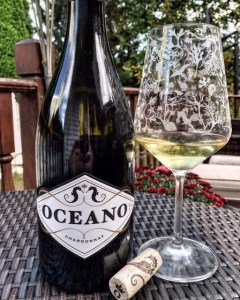
 Another wine I want to talk about here, is definitely from the “new” camp – only 5 years ago, Oceano winery was not even an idea. The winery has a great story, which you better read on the winery website. The story has everything – the love at first sight, the encounter with the seahorse, a wine label drawn on the napkin.
Oceano wines are made from the fruit coming from Spanish Springs Vineyard in San Luis Obispo – the vineyard which is closest to the Pacific Ocean not only in the Central Coast appellation but in entire California. Cool climate helps Chardonnay and Pinot Noir grapes to mature slowly and to accumulate great flavor. Not only Spanish Springs Vineyard provides ideal conditions for the grapes, but it is also SIP (Sustainable in Practice) Certified vineyard, which is considered a higher status than Organic due to the stringent requirements throughout the whole process of winemaking up to the point of bottling of the wine.
I had an opportunity to taste the second release of Oceano Chardonnay, and was simply blown away:
2017 Oceano Chardonnay Spanish Springs Vineyard San Luis Obispo County (13.6% ABV, $38)
Light golden
Vanilla, a hint of honey
Vanilla, a touch of butter, hint of almonds, nice golden apple and brioche, let’s not forget the delicious, freshly baked brioche – with tons of acidity on the long finish, tons and tons of acidity.
9-, outstanding rendition of the Chardonnay, worked perfectly well with a variety of foods – beef roast from Trader Joe’s, Brie, Spanish Cheeses (Manchego and San Simone) – this was totally an unexpected surprise. If you are looking for a delicious and versatile Chardonnay, this might be the wine you are looking for. It might easily be a star of your Thanksgiving wine program.
Here you are, my friends. These wines delivered lots and lots of pleasure, and these are the wines worth seeking. We are done for today, but we are very far from done seeking more wine pleasures. To be continued…
Spanish Wines: Beyond The Reds
Let me ask you something: if you hear the words “Spanish wine”, what is the first type of wine which comes to mind – red, white or Rosé? I’m a self-admitted Spanish wine aficionado, and I can honestly tell you that my first association will be “red”, then probably Rosé, and only then white (when it comes to Spain, your wine type choices are quite wide, as you got also Cava, Jerez, Málaga – but let’s not make it too complicated).
There is a good chance that your associations were the same – Spanish wine equals Red. I certainly started my Spanish wine love embrace from the Rioja, best known for its reds with Lopez de Heredia Viña Gravonia, one of the best white wines made in Spain, being rather a curiosity than a norm. It took me several years until I heard the name Albariño and tasted what is today probably best known Spanish white wine. And then, of course, let’s not forget about the Rosé revolution which took place around the world over the last 5 years or so – Spain gladly joined the movement with wonderful Rosé, or rather, Rosado renditions of Grenache and Tempranillo rapidly showing up over the Spanish wine map.
Let’s explore a bit a Spanish non-red wine scenery – as I like to say, have wine – will travel. First stop – Rueda, the wine region located almost in the middle of the country.
Rueda is a part of the Castilla y León region in Central Spain. History of winemaking in Castilla y León goes back to the 10th/11th centuries and closely associated with the arrival of Catholic monks, who started vine cultivation and winemaking. We can say that the modern part of winemaking history in Castilla y León started in 1980 with Rueda becoming the first local winemaking region to receive the status of D.O. which stands for Designation of Origin, the quality designation in Spanish wine.
The majority of Rueda vineyards are located at an altitude of 800m (2400 FT) and higher. Rueda is known for its extreme climate conditions, where diurnal temperature shift can reach 50 degrees during the day – which is actually good for the grapes, as it helps to concentrate flavors, sugars and acidity. White grape called Verdejo is typically associated with Rueda wines, even though Sauvignon Blanc wines can also be found coming out of Rueda.
I thought it would be appropriate to give you some fun facts about Rueda, taken from Ribera and Rueda wine website: ”
- There are 32,500 acres of vineyards in Rueda, of which 28,800 acres are Verdejo.
- The area has 69 wineries and is cultivated by over 1,500 growers.
- To be “Rueda Verdejo”, wines must contain at least 85 percent Verdejo.
- Verdejo is harvested at night to allow the grapes to cool from the scorching summer heat.
- Verdejo was almost wiped out by Phylloxera in the late 19th century, but it was revived in the 1970s.”
A few weeks ago I had an opportunity to taste a few of the Rueda wines offered as part of virtual tasting at Snooth (here is the link to the video recording of this session if you are interested in learning more). The tasting covered wines of Rueda and Ribera del Duero (I only tasted wines from Rueda), and Snooth had a great wine deal offering related to the tasting, which is, unfortunately, already sold out.
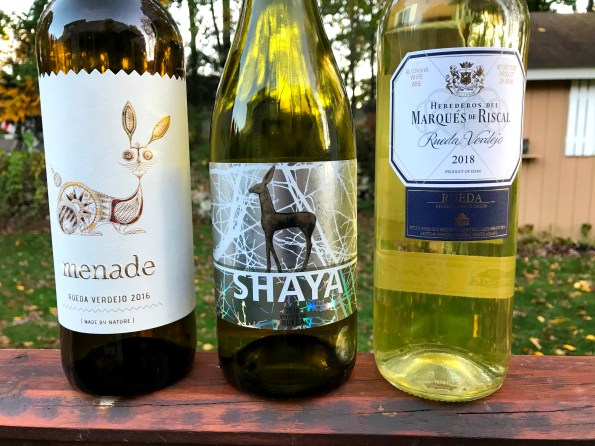
We had three of the Rueda Verdejo wines in the tasting, all three were 100% Verdejo, 100% delicious, and 100% great value.
Just to give you a brief summary: Marqués de Riscal is better known as one of the oldest wineries in Rioja. However, they were also one of the first commercial wineries in Rueda, opening the winery in 1972 and being a driving force behind 1980 DO Rueda designation. While Bodegas Menade might be a new kid on the block, with winery established in 2005, the family had been in grape growing business in Rueda for 6 generations, going back to 1820. The grapes used for the Menade Verdejo come from the organically farmed vines which are 80 to 100 years old. The last Verdejo comes from one of the personal favorites – Bodegas Shaya. Shaya Habis, an oaked rendition of the Verdejo, had been my favorite Verdejo wine for a long time. While working on this post it was fascinating (or shameful, depending on your take – I had been writing about Shaya wines for many years, only now finally doing some research) to learn that Bodegas Shaya was a project of Gil family, whose El Nido (predominantly Cabernet Sauvignon with the addition of Monastrell) is one of the “cult”, sought-after Spanish wines. Bodegas Shaya project was started by Gil family in 2008, with the wines produced from old, low-yielding Verdejo vines.


Here are my notes for the wines we tasted:
2018 Marqués de Riscal Rueda Verdejo Rueda DO (13.5% ABV, $13)
Light golden
Touch of fresh grass, lemon, lemon zest, sage, rocks
Crisp, vibrant, lemon, a touch of gunflint, excellent minerality, medium-plus finish
8/8+, Delicious white wine – by itself or with food.
2016 Bodegas Menade Rueda Verdejo Rueda DO (13% ABV, $18)
Golden color
Great complexity, Whitestone fruit, a touch of honey, honeysuckle, interesting undertones of sapidity
Savory and sweet, minerally-forward, Whitestone fruit, crisp acidity, vibrant, fresh, medium+ finish
8-/8, should be good with food
2016 Bodegas Shaya Rueda DO (13.5% ABV, $13, 20%-30% of grapes fermented in barrels with 500 – 600 liters capacity)
Straw pale
Very unusual, dusty nose, a hint of grass and white flowers
High viscosity, roll of your tongue wine, restrained white fruit, Granny Smith apples, buttery impressions of a good balanced Chardonnay.
8+, my favorite of the 3, especially after being open for a few days.
How do you like the trip so far? Now it is time to move east to the region called Cariñena.


Winemaking in Cariñena goes back to Roman times. History of Cariñena wines includes Royal proclamations of “Cariñena wines above all”, and even the quality control instituted at the end of the 17th century, monitoring yield levels and production areas. Cariñena also managed to escape the Phylloxera epidemic of the 19th century. In 1932, Cariñena became the second D.O. in Spain (after Rioja). Here is the link for you if you want to learn more about the region.
Cariñena is best known and typically associated with Garnacha (Grenache for all outside of Spain), and it is also often considered to be the birthplace of that grape. Some of the Garnacha plantings in Cariñena exceed 100 years of age. The second important red grape in Cariñena actually shares its name with the region – it is called Cariñena, and also known locally as Mazuelo, and outside of Spain as Carignan. Other red grapes can also be found in the region – Cabernet Sauvignon, Merlot, Monastrell, Syrah, Tempranillo, Vidadillo. White wine production in Cariñena is much less than red; you can find Chardonnay, Garnacha Blanca, Macabeo (Viura), Moscatel, and Parellada growing there.
At the beginning of the post, we mentioned the “Rosé revolution”. So very appropriately, I had an opportunity to taste two Cariñena Rosado wines, made out of Garnacha, and the Chardonnay coming from one of the favorite producers, Bodegas San Valero. Here are my notes:


2018 Bodegas Paniza Fábula de Paniza Garnacha Rosé Cariñena DOP (13.5% ABV)
Beautiful salmon pink
Delicate nose of tart strawberries with a touch of lemon
Crisp, clean, refreshing, tart strawberries, good minerality, a hint of cranberries
8, excellent Rosé, a perfect wine for a summer day, but will work well with food at any time.
2018 El Circo Payaso Garnacha Rosé Cariñena DOP (13% ABV, $10)
Intense pink
Wild ripe strawberries
Ripe Strawberries all the way, good acidity, lemon, medium body
7+/8-, craves food
2017 Bodegas San Valero Particular Chardonnay Cariñena DOP (12.5% ABV)
Light golden
Touch of vanilla and apple, a hint of white flowers
Crisp, clean, fresh lemon, a touch of white pepper, vanilla, a round finish.
7+/8-, definitely a delightful wine
Here you are, my friends – Spain makes delicious wines, and not all of those wines are red. And let’s not forget that those wines represent an amazing value. Do you have any favorite Spanish white wines? Cheers!
Daily Glass: Enjoy Your Wine and Play With Your Food – Beyond Meat Food, It Is
I appreciate winding down Sunday with a good glass of wine and a family dinner. When it is warm outside, such a Sunday dinner typically means grill – and this past Sunday was not an exception (or maybe it even was a bit of an exception as it was dry and pleasantly warm, and not hot at all, compared to mostly hot and humid weather of the last year).
Kids love steak in this house. While shopping for a steak at our local Fairway Market, something caught my eye. Beyond Meat? Really? Both Beyond Meat The Beyond Burger and Beyond Meat Beyond Sausage Original Brat? Wow and double wow!
Let me explain the excitement.
 I have plenty of friends and relatives who are vegans and vegetarians, so with the summertime, the question of a good meat alternative is always becoming hot – when someone visits our house, I really want people to feel included and taken care of, no matter what their dietary restrictions are, so the search for a good vegan burger, etc. was always on. A few years ago, I came across the product called Beyond Burger, made by the company with a catchy name Beyond Meat. The description of Beyond Burger, which offered full resemblance of the regular burger, including the blood, sounded a bit suspicious, so I carefully researched all the ingredients and to my dismay, found that all of the ingredients are natural and there was no red paint added to this product. When I decided to try it, further research proved it to be mission impossible – Beyond Burger was available only at the Whole Foods (which I don’t frequent), and the Internet was full of complaints of the people who desperately tried, but failed to find it in their local stores, as the product was always out of stock. I also learned that in addition to Beyond Burger, the same company is offering a new product called Beyond Sausage, which sounded to me too good to be true. Again, this all was taking place 3-4 years ago.
This year, Beyond Meat went public (and mind you, very successfully – while the initial offering was at $25/share in early May, today it is trading at around $168/share, and it is just about a month later). And it appears that they managed to increase their production and distribution – now I saw the actual product instead of just reading about it. Thus, as you can imagine, I simply had to try it, even though it is quite expensive for what it is – $5.73 for two burger patties and $9.99 for four “bratwurst” sausages – you can buy the pack of 14 real bratwurst sausages at Costo for $8.99. Nevermind all the price talk – the question is simple – is it tasty? Would I be happy to serve it to the guests?
What is the best way to compare wines? The blind tasting, of course. What is the best way to compare foods? Well, the concept of “blind tasting” in wine can’t really apply to the food, unless you would actually blindfold someone, or taste your food in one of those dark rooms were waitstaff wears special goggles. So I didn’t attempt to do any sort of the fair comparison, especially as the dinner plan included steak and not the burgers. However, I had some of the Costco bratwursts in the fridge, so battle sausage was definitely on.


Before we talk about the battle food, let me share with you two delicious wines we got to enjoy on Sunday. First, a Chardonnay from … Italy. Yes, Italy makes excellent white wines, and excellent Italian Chardonnay can be found more often than not – but I still get surprised every time at how good it can be. 2015 Maculan Chardonnay Veneto IGT (12.5% ABV) was delicious from the getgo. Beautiful golden color in the glass, a touch of honey and vanilla on the nose. The palate was plump and generous, with white apples, white plums, a touch of honey and vanilla, good acidity and nice weight. The wine might be close to its prime and offers an ultimate indulgence at the moment as it is perfectly balanced. My wife, who generally don’t drink white wines, said “wow” and asked for another glass.
Sunday calls for some special wine, so I decided to go with 1999 Hendry Block 28 Zinfandel Napa Valley (15.8% ABV). In case you are curious what makes this wine special, it is its age. I don’t drink routinely 20 years old wines (I wish I could), so every time I open a bottle of such an age, it constitutes a “special bottle”. Besides, Zinfandel is one of the pet peeves. The wine just jumped from the glass with the ripe blackberries and blueberries, supported by mocha and sweet oak. The palate offered layers and layers of goodness – ripe berries, a touch of blackberry jam, velvety smooth but well present mouthfeel, lots and lots of pleasure. I can also tell you that I noticed alcohol level only on the label, but not in the glass. A very well made, delicious wine.
Now let’s get back to food, as we have the battle to discuss.
Here is how both products looked before the cooking – note the real bratwurst at the bottom of the picture with sausages. Burgers look scarily realistic, and while Beyond Meat sausages look slightly different than the real sausage, they still look perfectly real overall (there are plenty of different sausages of exactly the same color):


Both burgers and bratwurst should be cooked for 3 minutes per side according to the package instructions, which is exactly what I did. Here is the result, again including the real bratwurst for comparison:


As you can see, Beyond Meat products have somewhat of a yellow hue (okay, this are the iPhone pictures, so you might have to take my word for it). Otherwise, both burgers and saysages perfectly held up to the cooking process and were very easy to handle – maybe even easier than the real meat products, considering the there was no fat coming out to cause the flare ups.
Just so you know we didn’t really convert into the vegans, here are few more dishes from our dinner (yes, this are real meat and real scallops):


And now, to the taste.
I made a small mistake of not creating the full experience out of the burger, meaning having it with a bun, tomato, ketchup and so on. On its own, it was quite decent, with some tiny hints of not been made out of the real meat (but then remember that it was not a blind tasting, so I was clearly influenced by the appearance). The sausage, however, was mind-boggling. It literally was identical to the real bratwurst in the taste profile and texture – I would never be able to distinguish it if I would close my eyes. Simply a wow.
If you read my typical wine posts you would know that at any possible occasion, I like to taste the wines over the course of a few days to see how they will change. When it comes to the food, it is not that I like to taste the food on the second or a third day (by the way, some of the soups and stews actually benefit from an extra day in the fridge), but I can’t stand wasting the food, so I usually make an effort to work on the leftovers for as long as possible or needed. What it has to do with this story? Simple. We had leftovers of both Beyond Meat burgers and bratwursts. Over the next two days, both perfectly held up to the reheating in the microwave, and both were perfectly on point in taste and texture, resembling its real meat brethren even more than on the first day while freshly made.
There you have it, my friends. The verdict on Beyond Meat burgers and bratwursts? Beyond reproach. I will be happy, very happy to serve them to my guests at any gathering. And yes, I hope you enjoyed your Sunday night wines too. Cheers!
A Pinot Noir Lesson for Self with Tendril Cellars
 Back in May, we virtually met with Tony Rynders of Tendril Cellars and talked about … many things wine, of course – you can find this conversation here.
Tony is one of the few winemakers I know who teaches people about his wines by conducting organized tastings. As I didn’t have an opportunity to attend any of those events, I decided to run a lesson for myself on the same subject. How you ask? Easy – by tasting the wines blind.
I can literally see the surprised looks and raised eyebrows. How is it a blind tasting if I know already everything about those wines? You see, the lineup I had included 6 wines. Out of those six, four were different Pinot Noirs – different vineyards, different winemaking process, different price points. Obviously I was not planning to try to identify the exact wine, but still – will I be able to taste the difference, and maybe identify the most expensive wine? Comparing Chardonnay and white Pinot Noir should also be a fun exercise, as those are two siblings ruling the world of Champagne. Yep – lots of opportunities for having fun.
Okay, blind tasting it is. The bottles are wrapped, the numbers are randomly assigned. May the taste buds serve me right!
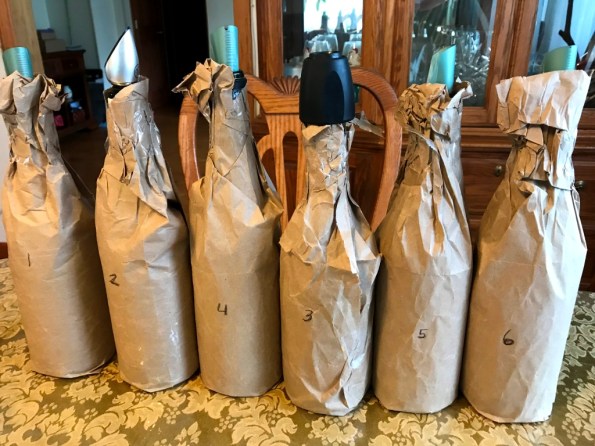
Here are my notes for the wines while tasting them blind:
1 Light golden color
Vanilla, golden delicious,
Bright acidity, vanilla, apples, a touch of honey
2 toasted notes, yeast
Perfect acidity, Granny Smith apples, a touch of honey, toasted notes on the palate, outstanding
white pinot?
3 Dark ruby
Earthy, Rutherford dust on the nose, a touch of roasted meat,
Beautiful palate, soft plums, round, espresso, excellent acidity, wow. ThightRope?
4 Ruby
Concentrated nose, mint, eucalyptus
Concentrated palate, acidity, eucalyptus, sage, violets on the palate. Very unusual. Single Vineyard?
5 Dark ruby
Wow. Blueberries, raspberries, restrained
Very smooth, silky, bright fresh fruit, acidity, firm structure, excellent balance, never-ending finish. Wow. C-Note?
6 Dark ruby
Nose old world style, forest floor, mushrooms, great restraint
Round palate, blackberries, baking spices, soft, delicious. Outstanding. Extrovert?
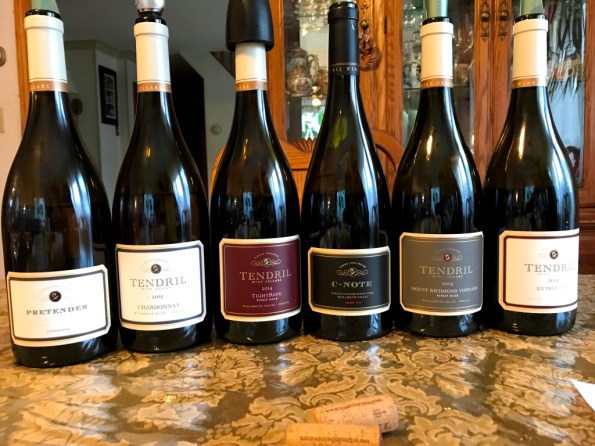
Everyone knows that the best part of the blind tasting is … unwrap! The moment of truth, pure and simple. Here are my notes for the tasting of the wines non-blind, 3 hours after the blind tasting (in the same order):
1 – 2015 Tendril Cellars Pretender Willamette Valley (14.1% ABV, $60, white Pinot Noir)
A bit darker color (golden)
Vanilla, butter
Plump, round, crisp acidity, acidity on the finish (very extensive), plump body.
8, excellent. Reminiscent of a nice Marsanne.
2 – 2015 Tendril Cellars Chardonnay Willamette Valley (13.5% ABV, $40)
Honey, gunflint, vanilla
Brioche, Granny Smith Apple, a touch of butter, clean acidity, excellent
8, outstanding.
3 – 2014 Tendril Cellars Extrovert Pinot Noir Willamette Valley (14.1% ABV, $48)
Beautiful, classic, open Pinot, with cherries, sage, and plums.
Soft cherries and plums on the palate, clean acidity, sage, violets, delicious, wow
8, delicious.
8+/9-, a pure standout. Polished, velvety, seductive, like a light touch on the hand which makes your whole body to vibrate. More reminiscent of CA Pinot than dark and loaded
4 – 2014 Tendril Cellars TightRope Pinot Noir Willamette Valley (14.2% ABV, $64)
Very tight, espresso, licorice, blackberries
Beautiful, sweet fruit, noticeable tannins, very round, medium body, cherries and cherry pit.
8, excellent.
Complex nose of herbs and spices, exotic and unusual.
Wow, great power and complexity, not a typical Pinot, might be more of a Zinfandel or even Syrah profile. Needs time, lots more time.
5 – 2014 Tendril Cellars Pinot Noir Mount Richmond Single Vineyard Willamette Valley (14.1% ABV, $60)
Very unusual. Beets and caramel on the nose, with a touch of dark chocolate.
Blueberries and caramel on the palate, nice salinity, raspberries. Medium+ body. Excellent
8
Very ripe after 2 days been open (air pumped out). Beautiful palate, minerality-driven, cigar box, eucalyptus, tense, powerful. Can be mistaken for a Rioja of a nice caliber.
6 – 2014 Tendril Cellars C-Note Pinot Noir Willamette Valley (14.1% ABV, $100, 100% Whole Cluster, 100% new oak)
Sublime. Can be described only via allegories, such a finesse. Dark chocolate and cherries. Excellent
Equally delicate on the palate, crisp acidity, bright, sweet plums, and tobacco. Outstanding.
8, excellent
Nose is incredible. First, you want to smell.this.wine.for.a.long.time.
Superb, elevated wine, complex, great finesse, and needs time. 8+
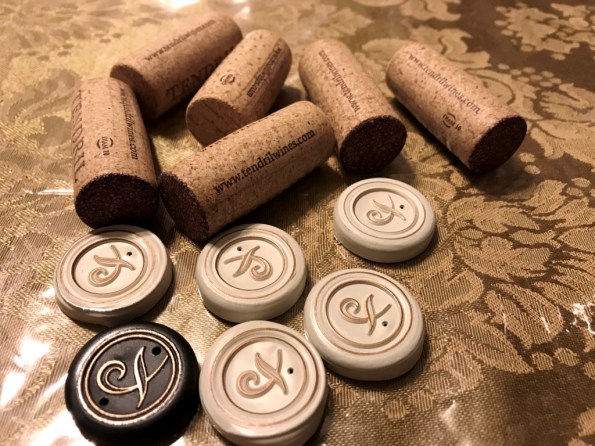
As you can tell, I failed miserably. I didn’t identify any of the wines – however, this was perfectly in line with my expectations. What was definitely interesting is that despite the four Pinot Noir wines been all from Oregon and at about the same age, they were absolutely, unquestionably, distinctly different – and strikingly delicious.
Of course, I extended the pleasure of tasting some of those wines over the few days, which is reflected in the tasting notes above.
Here you are, my friends. Blind tasting or not, the Tendril Cellars wines are worth seeking – the virtual tasting will simply not do it – these are the wines to experience. And if you need to choose only one, I can let you in on a secret (don’t tell anyone!) – the Extrovert was my favorite. Cheers!
Daily Glass: Textbook Precision
Once you fully embrace the wine world, one of the important lessons you learn is rather simple – “there are no guarantees”. The bottle of wine can perfectly say “Cabernet Sauvignon” – there are absolutely no guarantees that Cabernet Sauvignon from Washington, California, and Chile will have any smell and taste similarities, never mind Cabernet Sauvignon from China, Czech Republic, and Moldova. And this is okay, we can all accept it – at the end of the day, the only thing which matter is whether we like the wine or not.
Despite all the differences, when it comes to the major grapes, such as Cabernet Sauvignon, Chardonnay, Merlot, Sauvignon Blanc, Pinot Noir and so on, we usually know how the “classic” wine should taste like – especially if we take any formal wine education or make enough effort to study the wine, pay attention to what we drink and make it a lesson to learn. Yes, there might be a bit of our perception in it too, but still, we usually have that “classic profile ” idea in the mind.
What prompted this post was a lucky happenstance, an encounter with two classic, textbook wine profiles for two nights in the row.
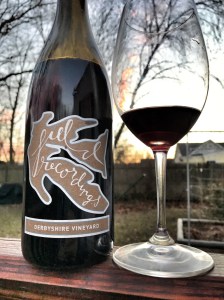 First, there was Pinot Noir. When it comes to Pinot Noir, there are probably four classic profiles – Burgundy (of course!), with lots of dark fruit power and a little bit of funk (especially with age, but drinking young Burgundy is almost like killing a baby, right?). Then you have New Zealand, which usually can be identified by the pronounced acidity. Oregon Pinot Noir often screams minerality, mocha and dark chocolate. And then you got California, with luscious smokey plums and silky, seductive texture.
So the wine I had a pleasure of experiencing was a textbook, unmistakable California Pinot Noir – 2015 Field Recordings Derbyshire Vineyard Pinot Noir San Luis Obispo County (13.1% ABV, $28, 20% whole cluster fermentation, foot tread in open top bins, 12 month in French oak) – smokey plums on the nose, bright cherries and plums profile on the palate with a perfect balance of acidity, velvety layers – tremendous amount of pleasure in every sip. Drinking this wine evokes comparisons with other California classics such as Siduri. It doesn’t reach the ultra-luxurious texture of Sandhi, but if you have any experience with classic California Pinot, one sip of this wine will perfectly put you in the right place.
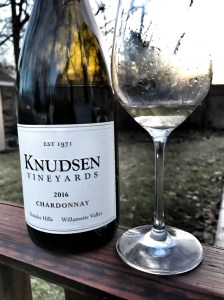 Now, talking about classics, let’s talk about the grape which is not a relative of Pinot Noir, but more often than not, a closest friend and neighbor – Chardonnay. What is interesting about Chardonnay, in my opinion, is that good Chardonnay is a lot more cosmopolitan than a Pinot Noir. With the exception of Chablis, which often can be recognized by the gunflint on the nose, the classic Chardonnay profile includes vanilla, apples and a touch of butter. You can often differentiate Burgundy from California by the amount of butter (California usually offers lots more) and acidity (that’s what you will get with the young Burgundy), but still, Chardonnays from Australia, Burgundy, Chablis, and California have quite a bit of similarity.
Oregon, which is definitely an established world leader when it comes to Pinot Noir, lately also started to show its Chardonnay provenance. Two years ago, I was blown away by the perfection of Vidon Chardonnay. This time around, the 2016 Knudsen Vineyards Chardonnay Dundee Hills (13.5% ABV, $45) made me say “wow” many, many times. Perfect nose of vanilla and golden delicious apples with a distant hint of butter and even honey (honey is usually showing up in Chardonnay after some aging) was supported by the same profile on the palate – vanilla, apples, butter – all perfectly mended together in cohesive, sublime package resting on the vibrant core of acidity. This was definitely a textbook Chardonnay for me, and the one which I would love to see aged, at least for another 5-7 years.
Here you go, my friends – a textbook experience with two classic grapes. What are your textbook wine experiences? Cheers!
Discover Wines of South Africa
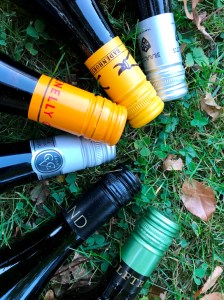 Let me start with a question: when was the last time you had South African wine? You can take a few minutes to ponder at it – but I would bet that if you are a wine consumer in the USA, there is a very good chance that the answer will be “hmmm, never”. But if “never” or “many years ago” is your answer, we need to change that.
The winemaking history in South Africa goes back to the 17th century, when immigrants from Europe brought the vine cuttings with them, as they’ve done in all other places. South African wine story somewhat resembles most of the Europe, as it also includes the phylloxera epidemic and replanting of the vineyards. Unfortunately for South African winemakers and the rest of us, the wine story of South Africa also had heavy political influence, with apartheid, KWV monopoly, and resulting boycott from most of the countries for the majority of the 20th century (here is an article on Wikipedia if you want to learn more). The new chapter for South African wines opened up in the 1990s, with the end of apartheid and subsequent changes in all areas of life, winemaking included.
In the past, South Africa was best known for its Chenin Blanc wines, which was also called Steen. Another grape South Africa was famous for was Pinotage – dinking of the Pinotage wines was likened by some wine critics to the drinking of the “liquified rusty nails”. On much brighter note, while talking about the past, I want to mention Klein Constantia Vin de Constance – the nectar of gods (don’t take my word for it – find it and try it), made from Muscat de Frontignan grapes and favorite wine of the French emperor Napoleon Bonaparte, who was buying it by the barrel (legend has it that it was Napoleon’s deathbed wish wine).
Today South Africa offers lots more than a typical wine consumer would expect. The South African wines are often described as “old world wines masquerading as new world wines”, and this is perfectly showing in the wide range of the wines. You really need to try for yourself South African Chardonnay, Sauvignon Blanc, Pinot Noir, Cabernet Sauvignon, Merlot, Shiraz, and don’t skip the Chenin Blanc, especially if it is an FMC by Ken Forrester. You shouldn’t skip even Pinotage, as it dramatically evolved compared to the old days. The old world winemaking foundation really shows through many of the South African wines today, and they are always ready to surprise a curious wine drinker.
Case in point – our recent virtual tasting on Snooth. We had an opportunity to taste 6 white wines, well representing South African grapes, styles and regions. The tasting included 3 out of the 4 most popular white grapes in South Africa (Chenin Blanc, Chardonnay, and Sauvignon Blanc) – the second most planted grape, Colombard, is used primarily in the brandy production. Another interesting fact for you – until 1981, there was no Chardonnay planted in South Africa, which makes it all more impressive (read my notes below). Two of the Chardonnays and Sauvignon Blanc from the tasting were simply stunning, and the rest of the wines were perfectly suitable for the everyday drinking. What is even better is that you don’t need to rely on my notes if you want to discover what South Africa is capable of – Snooth offers that exact set of 6 wines for purchase, at a very reasonable price of $79.99 for the whole set.
Here are my notes from the tasting:


2016 Glenelly Glass Collection Unoaked Chardonnay WO Stellenbosch (13.5% ABV, $20, 100% Chardonnay)
C: straw pale
N: Beautiful, vanilla, touch of guava, fresh, medium+
P: good acidity, granny smith apple, crisp, maybe a bit too restrained now, lemony acidity on the finish
V: 8, excellent now, but I definitely want to see it evolve.
2016 De Wetshof Estate Limestone Hill Chardonnay WO Robertson (14% ABV, $16, 100% Chardonnay)
C: light golden
N: complex, vanilla, popcorn, medium intensity. Nose clears up as the wine breathes. Golden delicious and honeysuckle appeared. Delicious nose.
P: quite restrained, touch of Granny Smith apples as opposed to the golden delicious. Perfect acidity, vanilla, fresh.
V: 8, will evolve. Definitely an interesting wine.
2016 Badenhorst Family Wines Secateurs Chenin Blanc Swartland WO Steen (12.5% ABV, $15, Chenin Blanc with a sprinkling of Palomino and another secret grape)
C: straw pale
N: interesting, yeast, touch of white stone fruit
P: crisp, restrained, mostly lemony, acidic notes
V: 7, too simple and single-dimensional


2016 Raats Original Chenin Blanc Unwooded WO Stellenbosch (12.5% ABV, $16, 100% Chenin Blanc)
C: straw pale+
N: inviting, medium plus, minerality, hint of peach
P: clean acidity, interesting touch of pear and white plum with acidic finish
V: 7+, interesting wine, by itself and with food.
2014 Thelema Sutherland Sauvignon Blanc WO Elgin (13% ABV, $20)
C: light golden
N: lots of minerality, touch of gunflint, touch of grass (distant hint), white stone fruit as the wine is opening up – doesn’t resemble SB at all
P: crisp, clean, lemon acidity, very restrained, mineral-driven, limestone. Almost astringent. Needs food.
V: rated it first 7+/8-, noting “will be interesting to see how the wine will open up”. More playful after 30 min in the open bottle. Interesting. After two days, this clearly became 8/8+ wine
2016 The Wolftrap White WO Western Cape (13.5% ABV, $12, Viognier 42%; Chenin Blanc 37%; Grenache Blanc 21%)
C: light golden
N: lemony notes, grass
P: a little too simplistic, mostly lemony notes. Drinkable, not great
V: 7, too simple, might work better with food
South African wines are definitely here, at the world-class level. If you pride yourself as a wine lover, they are all ready for your undivided attention.
Stories of Passion and Pinot: Knudsen Vineyards
It takes courage to be a pioneer. It takes vision, belief, perseverance and lots and lots of hard work to convert the dream into reality – but this is how many great wine stories start.
Nobody questions “World Class” status of Oregon wines today. But back in 1971, this was really not the story. One had to see the potential and believe that Oregon is meant to produce the world-class wines. Cal and Julia Lee Knudsen did when they purchased the remnants of the walnut orchard in 1971 and established Knudsen Vineyards. The whole family – Cal, Julia Lee and four of their children worked hard to clean up the land and plant the vines. In 1972, they established a 30 acres vineyard, which was the largest in the Willamette Valley. By 1976, they had 60 acres planted, which made them the biggest in Oregon (as a matter of fact, Knudsen Vineyards still have some of the 1974 vines which produce fruit). Today, Knudsen Vineyards plantings span 130 acres, which is certainly one of the largest in the state where the typical vineyard size is 35 acres. And in 1975, in partnership with Oregon winemaking legend, Dick Erath, Knudsen Erath Winery became first commercial winery in the Dundee Hills appellation.
In 1987, the Australian Brian Croser met Cal, and the new chapter started for Knudsen Vineyards. Cal always had a dream of making sparkling wines, and the Knudsen Vineyards entered into the new partnership, now with the Oregon sparkling wine pioneer, Argyle Winery. Today, many of the Oregon wineries are starting to add Chardonnay to their repertoire – Knudsen Vineyards was growing Chardonnay for the very long time, and Chardonnay is essential for a good sparkling wine. As a matter of fact, Julia Lee’s Block, which you can see designated on one of the top Argyle’s sparkling wines, contains the oldest in the new world plantings of French Chardonnay Dijon clones 76 and 96. Also, while you will not see it widely advertised, Knudsen Vineyards grows 3 acres of Pinot Meunier, used only for the production of Argyle sparklers.
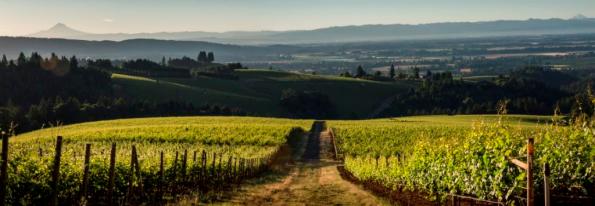
Knudsen Vineyards, Dundee Hills, Willamette Valley, Oregon
Ever since Knudsen Vineyards started working with Argyle, all of their fruit was going into Argyle sparkling wines. Five years ago, the four siblings who run the vineyard now, decided to start producing the wine under their own label, which resulted in the 2012 release of Knudsen Vineyards Pinot Noir. The first release of Chardonnay was added a year after, in 2013. This year, Knudsen Vineyards added the new premium bottling – 2015 Pinot Noir Reserve. All of the wines are produced with the help of the winemaking team at Argyle, which vinifies the juice from the different blocks of the Knudsen Vineyards – but the family gets together to decide on the final blend of the wines they later release.
If you followed any of the Passion and Pinot stories, you probably expect that I will have an interview for you – and you are right. Only this time around, it is slightly different – in addition to the virtual part, I also had an opportunity to sit down face to face with Page Knudsen Cowles, managing partner at Knudsen Vineyards, and extend our virtual conversation with the personal one. I learned lots of interesting things which are really impossible to get to in the format of the virtual interview.
For instance, have you ever heard of the “Suitcase clones“? I certainly never had. It appears that it is a common name for the vine cuttings which are smuggled into the country in the suitcases. For the Knudsen family, the “suitcase” was not exactly a choice tool for vine transportation – the ski bag was the one, as every family skiing vacation in Europe saw new cuttings finding its way home.
At some point, Cal started experimenting with the effects of the birds’ chirping on the vines. The birds’ sounds were played between the rows of the vines. The unfortunate part is that the results of this experiment are not known. But when birds became a problem in the vineyards in 2010/2011, the sound of distressed robin came to the rescue – it was played throughout the night and helped to shoo the birds away – however, made the stay at the small cottage the family has right in the vineyard very problematic.
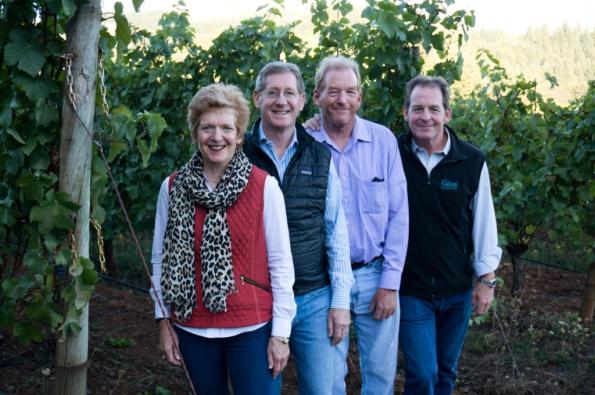
Knudsen Second Generation: Page, Colin, Cal Jr, David
Okay, let’s move on. Let me share with you our [now virtual] conversation with Page Knudsen Cowles. Get a glass of wine in hand, and here you go:
[TaV]: The first vines were planted at Knudsen Vineyards in 1971. Are there any of the original vines still around, and if yes, are they still producing fruit?
[PKC]: The oldest currently-producing vines were planted in 1974. They are Pinot Noir vines that produce fruit for sparkling wine.
[TaV]: I understand that back in 1971, Cal and Julia Lee purchased a 200-acre former walnut tree orchard – are there any of those trees still around and producing [commercially}? Was/is Knudsen family ever in walnut business?
[PKC]: No, the Knudsen family was never in the walnut business. The walnut tree orchard was destroyed in the 1962 Columbus Day storm that wrecked havoc through the Willamette Valley at that time.
[TaV]: The first Knudsen wines under Knudsen Erath label were produced in 1975. Are any of those wines still around? Have you ever tasted wines from that inaugural vintage?
[PKC]: I have not had the pleasure of tasting that very first vintage. I have found in the secondary market a stash of Knudsen Erath Winery 1983 Vintage Select Pinot Noir and some bottles of the Knudsen Erath Winery 1985 Vintage Select Pinot noir. Both wines have held up remarkably well and are fun to drink and share with wine aficionados who appreciate the provenance and age of the wine.
[TaV]: Continuing the previous question, what are the oldest vintages which can be found at the Knudsen Vineyards library? What are the oldest Knudsen wines you ever tasted?
[PKC]: The oldest vintages we have in the Knudsen Vineyards library are:
- 1979 Knudsen Erath Winery Merlot
- 1983, 1985, 1986, 1987 Knudsen Erath Winery Pinot Noir
The oldest wines I have ever tasted are the 1983 and 1985 Knudsen Erath Winery Vintage Select Pinot Noirs.
[TaV]: Today Knudsen Vineyards has about 130 acres under the vines. What grape varietals do you grow today?
[PKC]: We grow 73% Pinot Noir including a variety of French Dijon Clones 667, 777, 115, and 4407, plus the heritage clone Pommard; 24% Chardonnay including the French Dijon clones 76, 95 and 96; and 3% Pinot Meunier.
[TaV]: Knudsen Vineyards just started producing the wines under its own label, and it is not surprising that the first two wines are Pinot Noir and Chardonnay. Moving forward, do you have any plans to start producing any other wines, such as Pinot Gris or Riesling?
[PKC]: No, we do not have plans to produce either of these varietals.
[TaV]: Within the 130 acres of vineyards, you probably identified some of the plots which perform better or, at least, different than the others. Do you plan to produce “single-plot” wines?
[PKC]: Our current planning does not include production of “single plot” wines. We have favorite estate grown blocks that we like to blend when we produce our wines.
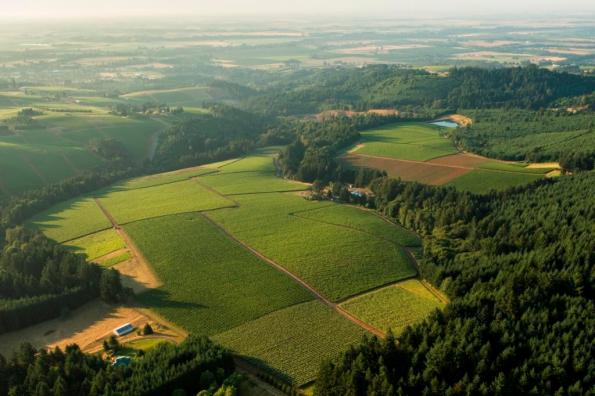
Aerial View over Knudsen Vineyard, Dundee Hills, Willamette Valley, Oregon
[TaV]: Knudsen Vineyards have a strong connection to the production of the sparkling wines through the partnership with Argyle Winery. Nevertheless, do you have any plans to produce sparkling wines under the Knudsen Vineyards label?
[PKC]: Our father, Cal Knudsen, had a love affair with sparkling wines from around the world, though he was most attached to those from the region of Champagne and Oregon sparkling wine. He allied Knudsen Vineyards with Argyle in order to make sparkling wine. Knudsen Vineyards would love to produce a small amount of sparkling wine in the future in honor of our father’s love for that expression of the fruit from our vineyard.
[TaV]: When making wines, do you rely on natural yeast, or do you work with some specific strains of yeast?
[PKC]: I reached out to our winemaker, Nate Klostermann, of Argyle Winery, for the answer to this one. We grow several selected yeast cultures and then inoculate with the one that seems best suited to the vintage.
[TaV]: What kind of oak regimen do you use in the production of your Chardonnay and Pinot Noir?
[PKC]: All of our oak comes from French barrels. Our inaugural 2013 Chardonnay has 35% new oak and was aged over 13 months in barrel; our 2014 Chardonnay had 25% new oak and was aged over 10 months in neutral and new oak barrel; and our 2015 Chardonnay has 27% oak over 10 months in barrel.
For the Pinot Noir, our oak usage is as follows:
Knudsen Vineyards 2014 Pinot Noir 25% new oak barrels; remainder aged in 2 – 4 year old previously used oak barrels; aged for 15 months in barrel, nine months in bottle Knudsen Vineyards 2015 Pinot Noir 20% new oak barrels; remainder aged in 2 – 4 year old previously used oak barrels; aged for 16 months in barrel, nine months in bottle Knudsen Vineyards 2015 Estate Reserve Pinot Noir 35% new oak barrels; remainder aged in 2 – 4 year old previously used oak barrels; aged for 16 months in barrel, nine months in bottle
[TaV]: What is the total production of your Pinot Noir and Chardonnay (how many bottles)? Do you plan to increase the production in the near future or you are happy with the current production?
[PKC]: Currently, we produce between 1,000 and 1,200 cases of our Pinot Noir and Chardonnay combined (between 12,000 and 14,400 bottles). The mix is approximately 60% Pinot Noir and 40% Chardonnay. We are content at this level of production for a couple of years. In the future, we hope to expand.
[TaV]: Is there a “next big grape” for Knudsen Vineyards?
[PKC]: Pinot Noir and Chardonnay are what we intend to grow into the foreseeable future.
[TaV]: What about Willamette valley in general – is it going to stay a Pinot Noir land for the foreseeable future, or would there be a “next big grape”, white or red, for the Willamette Valley?
[PKC]: I believe the North Willamette Valley will stay devoted to Pinot Noir and will increase its production of Chardonnay.
[TaV]: Do you have a dream wine – the wine you always wanted to try, but never have?
[PKC]: I would like to try a bottle of Domaine de la Romanée-Conti from Burgundy and a bottle of any of the Bordeaux First Growth red wines: Château Latour, Château Lafite Rothschild, Château Margaux and Château Haut-Brion. I also would love to try a bottle of Opus One from California.
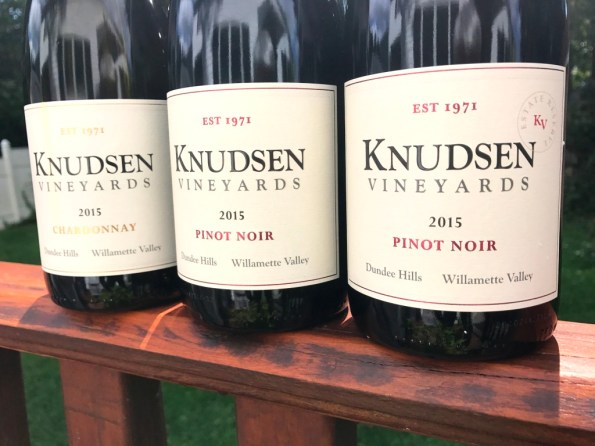
Now for sure it is time to drink the wine. I had an opportunity to try Knudsen Vineyards wines, here are the notes:
2015 Knudsen Vineyards Chardonnay Dundee Hills Willamette Valley (14% ABV, $45)
C: light golden
N: vanilla, touch of toasted oak, medium intensity
P: fresh, crisp, slightly underripe Granny Smith apples, touch of minerality, distant hint of butter and vanilla, quite an acidic finish
V: 8/8+, not bad, but needs time to evolve. Opens in the glass quite elegantly. Second day was outstanding – nice buttery note while fridge cold, and more vanilla-driven as the wine warmed up
2015 Knudsen Vineyards Pinot Noir Dundee Hills Willamette Valley (141% ABV, $55)
C: light bright ruby
N: tart cherries, lavender, hint of smoke
P: cherries, round, good acidity, touch of mushrooms, fresh, Burgundian style
V: 8-, very nice
2015 Knudsen Vineyards Pinot Noir Reserve Dundee Hills Willamette Valley (14.1% ABV, $70)
C: dark ruby
N: smoke, mushrooms and forest floor aromatics
P: cherries, good acidity, layers, smooth, lavender-driven on the second day
V: 8/8+, very polished, elegant, will evolve with time.
Thus we conclude another story of Passion and Pinot (and a little bit of Chardonnay). Wine is a family affair, and Knudsen Vineyards shows it very well. Now the third generation of Knudsens is entering the business, and I’m sure there are lots we should expect to see from the Knudsen Vineyards in the future. Cheers!
Last Bottle Sign Up ($10 credit)




 Talk-A-Vino