Archive
Top Wines of 2018
And the time has come to summarize the most memorable wine experiences of 2018 – here is the list of about dozen of wines which made a lasting impression. The top wines list at Talk-a-Vino typically consists of two parts, as I can never limit myself to one dozen of wines – you can find the second part of the Top Wines of 2018 list here. That “second dozen” post also provides a bit more explanation behind the logic of this list. Without further ado, let me present to you my top wines of 2018:


13. 1997 Chalone Vineyard Pinot Blanc Monterey County California ($NA) – there are always those wines which you look at and say “yeah, whatever, let’s just try it before we will pour it out”. And then your thought (after the sip) is “what, wait, really?” This was one of such wines – 21 years old white wine, Pinot Blanc from California – no doubts it already turned into vinegar, right? Wrong! Whitestone fruit, good acidity, nicely plump – it was a great surprise and an excellent evening opener.
12. 1995 Caves São João Quinta do Poço do Lobo Reserva Bairrada DOC Portugal ($22 @ Last Bottle) – despite the serious age, this wine was just released, and I scored a few bottles thanks to the Last Bottle. I know that Portugal makes great wines which can age, but this wine still went beyond expectations – perfectly fresh, perfectly concentrated, perfectly delicious. I brought a bottle to share during the after-party at the Wine Bloggers Conference this year, and poured it blind for two wine pros, asking them only to estimate the vintage – they both were 10 years off, suggesting that the wine was from 2005 instead of 1995. Another interesting fact about this wine that one of the 3 grapes it is made out of, Moreto, is not even growing in Portugal anymore…
11. 2015 Smith-Madrone Riesling Spring Mountain District Napa Valley ($32) – a pure revelation. I had no idea Napa Valley is capable of producing a beautiful Riesling. Chardonnay, Sauvignon Blanc – of course, but varietally correct Riesling? Yes, Smith-Madrone can! It even had a touch of my beloved petrol, which always makes me very happy. Look for this wine, you will not regret it.
10. 2014 Tiefenbrunner Turmhof Sauvignon Südtirol Alto Adige ($30) – A pure stunner. Of course, Italy is best known for its reds, and when it comes to whites, it is autochthonous varieties which usually shine, such as Pecorino, Falanghina, or Verdicchio. However, I had a pleasure of experiencing mind-boggling renditions of Chardonnay and Sauvignon Blanc, and this was exactly one of such a mind-boggling Sauvignon Blanc encounters. Recognizable Sauvignon Blanc in its core, but plump, complex and silky smooth. The fact that the wine comes from Alta Adige, unique mountainous region, also contributes here. A memorable wine.


9. 2002 d’Arenberg The Dead Arm Shiraz McLaren Vale Australia ($70) – while typically not a word to use to describe Shiraz, my key descriptor for this wine will be “finesse”. This wine was mature and elegant, offering complex earthy undertones with a touch of barnyard, and lean and clean in its overall expression. It still got time to evolve, but already offers lots of pleasure.
8. 2008 Grosset Polish Hill Riesling Clare Valley Australia (~$50 for current vintage) – For me, this wine was a pure encounter with the legend – in many ways. Clare Valley in Australia is famous for its Riesling, same as Hunter Valley is famous for its Semillon. Polish Hill is one of the best vineyards in Clare Valley, and Grosset is a pioneer and one of the very best producers in Clare Valley and Australia overall. To top it all off, I had this wine during the dinner with my [not virtual anymore] friend Oz in Singapore. Memorable wine? You bet.
7. 1986 Chateau Cordeillan-Bages Pauillac AOC ($54.97) – I have no idea where and how this bottle ended up in my cellar, but I’m glad it did. 32 years old Bordeaux, elegant, balanced, showing no sign of age, delicious from the first sip to the last. Also coming from the Chateau with minuscule production. Need I say more?
6. 2015 Domaine Jean-Noel Gagnard Chassagne-Montrachet Blanc 1er Cru Les Caillerets ($100) – The only thought I have when drinking such a beautiful white Burgundy is that I need, really need to drink more of the white Burgundy wines. Good Burgundian Chardonnay is amazing when young, and surreal once it picks up some age. This is practically the only time when I wish for an expense account to be able to drink the wines like that.
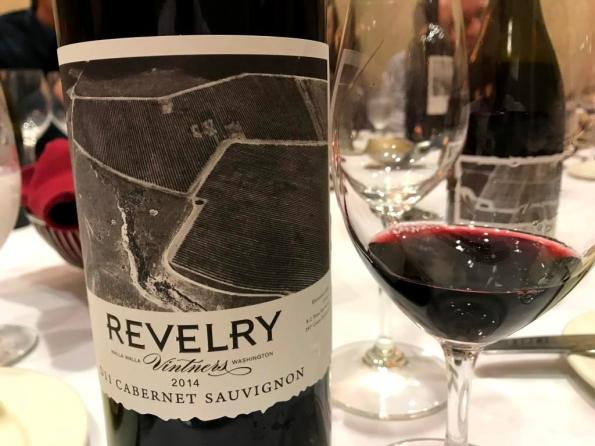
5. 2014 Revelry Vintners D11 Cabernet Sauvignon Walla Walla Washington ($80) – yet another great highlight of the Wine Bloggers Conference this year. Imagine beautiful blackcurrants weaved around a perfect, firm structure of the crunchy tannins – that was this wine. I’m really surprised at myself – on a normal day, I would definitely take Syrah over Cab – and Revelry Block 19 Syrah, which we had at the same time as this Cab, was equally beautiful – but it is the Cabernet Sauvignon which got stuck in my head.

4. Bodegas Beronia Rioja ($NA) – so this will be a bit strange, as I’m including here more of the experience than a single wine. I was lucky to be invited to the lunch with Bodegas Beronia winemaker, Matias Calleja, in New York. I love Rioja unquestionably, but at that lunch, my takeaway was a lot bigger than just a taste of another excellent Rioja – we were able to experience the effect of the type of oak on the same young Tempranillo wine, and see how American oak affects the wine versus French oak versus Bodegas Beronia own oak combination. An incredible experience in my book. And then I was able to save a business dinner with the 2011 Bodegas Beronia Rioja Reserva, so if you need a particular wine designation for the list, it can be the one.
3. “This line was intentionally left void” – keep reading, you will see why.


2. 2010 Antica Terra Rosé Willamette Valley ($75) – OMG. Is that enough of the description? I pulled this bottle without much expectation – Antica Terra makes incredible terroir-driven wines, but 8 years for Rosé is rather too much, right? Wrong! A stunning color, and the cranberry-loaded palate of liquid granite – the only thing I could extort was that “OMG”. Back in 2012, Antica Terra Phantasi was my wine of the year – this Rosé was hair-splitting close to becoming the wine of the year again.
1. 2008 Zenato “Sergio Zenato” Amarone della Valpolicella Classico DOCG ($100) – I love Amarone. I expressed my love to this great Italian wine many times on this blog – together with my utmost frustration while looking for a good Amarone (before you start cursing – “good wine” is highly subjective, personal definition). This wine was amazing, one of the very best I ever experienced – dry fruit on the nose (figs, raisins) and crisp, dry, clean, full-bodied palate of impeccable balance. A pure, pure delight.


1. 2013 Three Wine Company Suscol Creek Cabernet Sauvignon Block 5 Napa Valley ($60) – yes, I did it again – I have two #1 wines this year. I can’t do that? Of course I can – my blog, my rules. I had this wine at the dinner with friends during our annual adults getaway. This was literally a mind-blowing rendition of a California Cabernet Sauvignon – beautiful extraction, cassis with eucalyptus, anise and mint, silky, velvety tannins – this wine was screaming in my face “I am the California Cab” – and with a perfect balance of all elements, it was simply a “wow experience” – I would gladly drink it at any time.
Here it is – the presentation of the Talk-a-Vino Top Wines of 2018 is now complete.
As today is the December 31st, and New Year 2019 is about to arrive, I want to wish you all happy, healthy, and peaceful New Year. Yes, it should be prosperous too, and I hope all your wishes will come true. Much love to all. Cheers!
Quick Trip Around The World
Travel might be the biggest joy of human existence. Okay, if not the biggest, it is still one of the most essential ones. Travel leads to new experiences – and experiences are the moments which comprise our lives. I’m sure the joy of travel is not universal, but I’m equally sure that it actually is for the majority of the readers of this blog (hoping that there is at least someone reading it?).
Travel typically requires two things – resources and preparation. Heck, with unlimited resources you need no preparation – you can finish your work day, say “I feel like dining at Le Cinq tomorrow”, have your limo take you directly to the airport and off you go. For many of us, this would be just a scene from the movies – which doesn’t make it impossible, right?
For most of us, successful and happy travel would require a bit more effort – find the deal on the airfare, find the deal on the hotel, find out that your passport expired just a week before you need to get on the flight, then listen to the boss complaining that you are leaving without finishing all your important tasks, finally, throwing everything you need but mostly what you don’t into the suitcase 30 minutes before leaving for the airport and starting your so long anticipated travel totally exhausted. More or less, this is the picture, right?
Then every once in a while, there is something even the unlimited funds can’t buy. Time, I’m talking about. When you finish work at 6 in New York, there is no way to be in Madrid in time for dinner. This is where you need a magic trick – and I can offer you one. Actually, you don’t need any magic to travel instantly to many different places – all you need is … well, I’m sure you know it is coming … yes, all you need is wine. The wine has this capacity. Once you look at the label and see it says France, Spain or California, your imagination can easily do the rest. A well-made wine has a sense of place, so once you take a sip, you are instantly transported to the place where wine was made. And if you ever visited the winery or the region where the wine came from, I’m sure you can be instantly overwhelmed with the emotions and memories. No, it is not the same as simply been there, but I’m sure it will still do the trick.
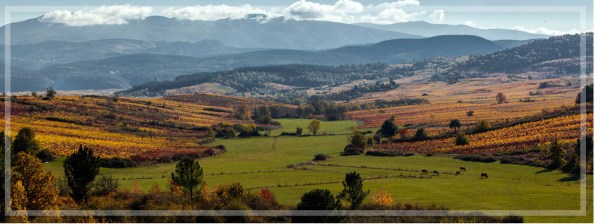
Bierzo, Spain. Source: Bodegas Godelia website
Let’s take wine and let’s travel – how about a quick trip around the world? Let’s start in Spain, in the region called Bierzo, located in the North East part of Spain, close to the Portuguese border. As with many places in the old world, the viticulture originated in the region in the times of the Roman empire. Today, Bierzo is best known for the red wines made out of the grape called Mencía, and Godello and Doña Blanca are the two primary white grapes in the region. Bierzo is known for its special microclimate, conducive for the grape growing, which can be characterized as the continental climate with ocean influence. Bierzo has today about 2,000 grape growers, 75 wineries, and produced about 9 million bottles of wine in 2017.
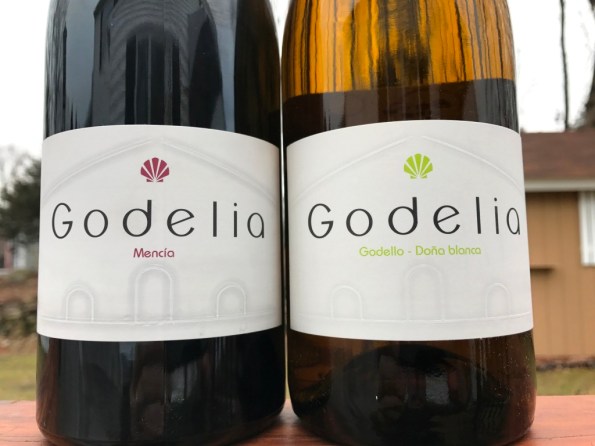
Two wines I want to offer to your attention come from the Bodegas Godelia, about 86 acres estate in Bierzo. The winery was created in 2009, however, their vineyards are much older, from 20 to 90 years old, depending on the grapes, and located at the altitudes of 1,600 to 2,000 feet.
2015 Bodegas Godelia Blanco Bierza DO (13.5% ABV, $17, 80% Godello, 20% Doña Blanca)
C: light golden
N: intense, pear, guava,
P: lemon, honeysuckle, crisp acidity, medium + body, delicious
V: 8-
2012 Bodegas Godelia Mencia Bierzo DO (14.5% ABV, $19, 12 months in oak)
C: dark garnet, almost black
N: warm, inviting, medium+ intensity, a touch of barnyard, spices
P: cherries, baking spices, medium body, violets
V: 7+ on the 2nd day, needs time. Mencia is known to produce massive, chewy wines, so this wine is no exception. 6 years of age is nothing for this wine – it might start opening up after at least another 6.
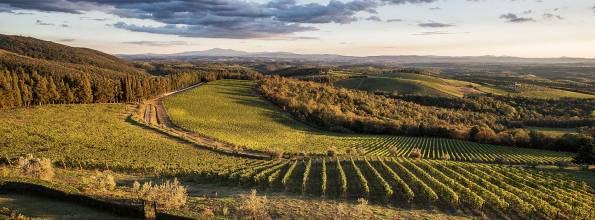
Hills of Tuscany. Source: Barone Ricasoli website
Where should we go after Spain? How about Italy? Let’s visit Tuscany, where 2015 vintage was simply outstanding. Of course, Tuscany is best known for its Chianti wine. At the heart of the Chianti region lays a much smaller region called Chianti Classico – this is where the Chianti wines historically originated from. Inside Chianti Classico, let’s look for the winery called Barone Ricasoli – one of the very first producers in the region, taking its history since 1141. Barone Ricasoli property has a grand looking castle, where some of the stones are still original since 1141, 600 acres of vineyards and 65 acres of olive trees. While Barone Ricasoli is mostly known for the reds, they also produce a few of the white wines, a Rosato, grappa, and of course, the olive oil.


I want to offer you two of the classic Chianti wines from the Chianti Classico area (pun intended):
2015 Barone Ricasoli Brolio Chianti Classico DOCG (13.5% ABV, $18, 80% Sangiovese, 15% Merlot, 5% Cabernet Sauvignon)
C: Garnet
N: Tar, leather, sandalwood, tart cherries
P: Tart cherries, plums, clean acidity, sage, a touch of tobacco, medium plus body, good structure.
V: 8, was excellent from the get-go, got more complexity on the second day.
2015 Barone Ricasoli Brolio Chianti Classico Riserva DOCG (14% ABV, $23, 80% Sangiovese, 15% Merlot, 5% Cabernet Sauvignon)
C: Dark garnet
N: Cherry, Sage, Rosemary, leather, medium plus intensity.
P: Supple berries, tart cherries, firm structure, young tannins, a touch of tobacco, good acidity, tannins on the finish
V: 8, great potential. Right now needs food. While perfectly drinkable now, with time will become a truly delicious sip.
Languedoc. Source: Languedoc-wines.com
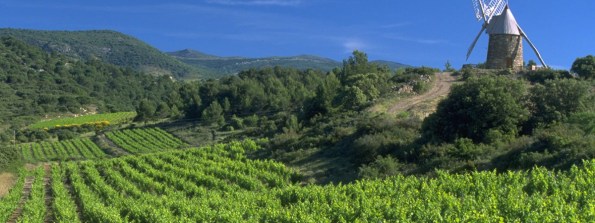
We need to complete our old world portion of the tour, so I think the stop in France is a must. How about a quick visit with Paul Mas in Languedoc? Languedoc is the largest wine producing region in France, located in the south, producing a tremendous range of white, sparkling, Rosé and, for the most part, red wines. Domaines Paul Mas is one of my favorite producers I have written about many times. What I love about the wines of Domaines Paul Mas is that you literally can’t go wrong with any of the wines produced at the domain – Sparkling, Rosé, white or reds. Not only the wines taste great, but they are also priced very reasonably – Paul Mas wines saved my wallet at the restaurants on multiple occasions, so they definitely deserve some respect. Here are the wines I want to bring to your attention:


2016 Paul Mas Estate Single Vineyard Collection Chardonnay Saint Hilaire Vineyard Pays d’Oc (13.5% ABV, $12.99)
C: Light golden color
N: Meyer lemon aromatics, hint of white peach, Bosc pear
P: Crisp, tart lemon on the palate, ripe Granny Smith apples, clean, refreshing. Good mid-palate presence, medium finish.
V: 8-, very good.
2016 Paul Mas Estate Single Vineyard Collection Pinot Noir Saint Hilaire Vineyard Pays d’Oc (13.5% ABV, $12.99)
C: Dark ruby
N: Fresh raspberries and cherries on the nose
P: Soft, supple, fresh berries, crisp, fresh, perfect acidity, excellent
V: 7+/8-
2016 Paul Mas Estate Single Vineyard Collection Malbec Saint Hilaire Vineyard Pays d’Oc (13.5% ABV, $12.99, 90% Malbec, 10% Cabernet Franc))
C: Dark garnet
N: Fresh raspberries and blackberries in the nose, nicely inviting
P: Soft, supple, fresh berries, crisp, fresh, perfect acidity, excellent
V: 8-
How is your day going so far? Feel like traveling somewhere? How about we will take a trip to sunny California? California is a big place, so to narrow it down we are actually heading to the Santa Barbara County. Here is a perfect example of the wine being a connector and an instant transporter – as soon as I hear “Santa Barbara County”, the brain instantly serves up the memories of the first Wine Bloggers Conference I attended, WBC14, which took place in Santa Barbara County. Moreover, one of the best experiences of that trip was a visit to the small town of Solvang, which is an incredible place for any wine lover. While visiting Solvang, we tasted the wines produced by Lucas and Lewellen – thus seeing that name on the label was an instant memory trigger.


The wine I want to offer to your attention today is perfectly representative of the capabilities of the Santa Barbara County wine growing region, and at the same time is very non-typical for California. Lucas and Lewellen produce the line of wines under the name of Toccata, which are all Italian varieties and blends, all grown in California. This Toccata Classico was a perfect enigma – varietally correct Tuscan beauty, only made from start to finish in California. In a blind tasting, my guess 100% would be “Chianti!”.
2015 Lucas & Lewellen Toccata Classico Santa Barbara County (14.1% ABV, $29, 50% Sangiovese, 30% Cabernet Sauvignon, 5% Merlot, 5% Cabernet Franc, 5% Freisa, 5% Petit Verdot, 18 months in French Oak, 346 cases produced)
C: Garnet
N: Fresh cherries, touch a leather, medium+ intensity
P: Ripe cherries on the palate, bright, firm structure, fresh, crunchy, touch of leather, excellent complexity, nicely integrated tannins
V: 8+, an excellent rendition of the old world wine in the new world.
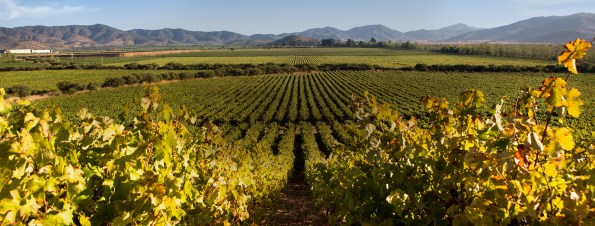
Trinidad Vineyard, Chile. source: Viña Ventisquero website
Hurry up or we will be late for our last destination – Chile. About 25 years ago, Chile was mostly known as a “one-trick pony”, offering bargain-priced Cabernet Sauvignon, Merlot, and Chardonnay. Today, Chile is one of the leading wine producing countries in the world, offering a substantial range of perfectly executed wines, from Chile’s own trademark, Carménere, to Pinot Noir, Syrah, Grenache, and many others.
Today we are visiting Viña Ventisquero, the winery which started only 20 years ago, in 1998, and now offering a diversified set of wines, coming from the different regions and made with the finest attention to detail.
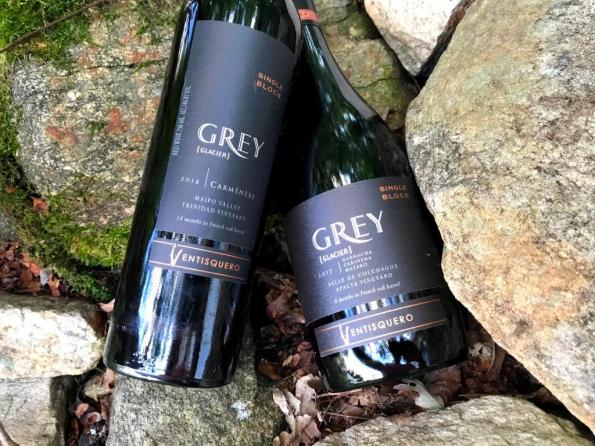
2017 Viña Ventisquero Grey Glacier Single Block Apalta Vineyard Valle de Colchagua (14% ABV, $18, 62% Garnacha, 19% Carinena, 19% Mataro, 6 months in French oak)
C: Ruby
N: Fresh raspberries, medium plus intensity, beautiful
P: Restrained, dark fruit, medium body, minerality, clean acidity, tart raspberries
V: 8-
2014 Viña Ventisquero Grey Glacier Carménere Trinidad VIneyard Maipo Valley (14% ABV, $19, 18 months in French oak)
Dark garnet
A perfect nose of Carménere – mix black currant berries with blackcurrant leaves
Medium to full body, soft, silky, fresh blackcurrant present, anis, good acidity, good balance, very pleasant overall
8/8+, excellent wine
That concludes our trip, my friends. Wasn’t it easy to travel with wine, in the comfort of your living room? Cheers!
Thanksgiving with Smith-Madrone, And a Few More Delights
Holidays are all about pleasure. The pleasure of the company. The pleasure of food. The pleasure of wine. As the very least, they should be.
Let me tell you about the pleasures of my recent Thanksgiving – in one picture:

If this would be an Instagram, I could end my post here, but in this blog, I can add a few words, right?
Let’s talk about the wine first. Everyone has their ideas as what is the best Thanksgiving wine. Some talk about how difficult it is to pair any wine with the Thanksgiving table, due to the large variety of dishes and often prevalent sweet flavors (this is not universal, of course). I have a very simplistic view of the wine and food pairing – give me tasty food and good wine, and if they don’t work together – no problems, I’m happy to consume them one by one. Difficult or not, pairing is not the focal point of my Thanksgiving wine selection. I really have only one strong preference for the Thanksgiving wines – they should be all American. Thanksgiving we celebrate here in the USA is all about this country, and so the wine should match that. And thinking about American wines, you understand how easy it is nowadays to have all-American wine experience.
How many of you heard of Napa Valley? Okay, I see that look, this was a stupid question, I know. But let me go on. How many of you heard of Spring Mountain District? Okay, I see your facial expression changing to say “hmmm, I’m not so sure”. And the last question – how many of you heard of Smith-Madrone? Okay, don’t feel too bad, at the end of the day it is one of the about 400 wineries located in the Napa Valley, so of course, one can’t know all of them. But – this is why I’m talking about it – this is the winery you might want to get better acquainted with.
Smith-Madrone is one of the oldest wineries in Napa Valley, started by brothers Stuart and Charles Smith in 1971. Smith-Madrone property is about 200 acres, with some parts of the vineyards planted more than 100 years ago, all located near the top of the Spring Mountain in Napa Valley. The name Smith-Madrone combines the family name with the name of the evergreen Madrone trees, prominently growing at the property. Well, instead of me trying to regurgitate the past and present of the Smith-Madrone winery, let me direct you to this article – it is a good story, well worth a few minutes of your time.

When was the last time you had Napa Valley Riesling? If you answered “never”, it could’ve been my answer too – until I discovered this Smith-Madrone Riesling. Riesling is simply not a common grape for the Napa Valley, but Smith-Madrone produces the absolutely beautiful rendition of the famous grape. It might be due to the mountain fruit – all the Smith-Madrone vineyards located at the altitude of 1300 to 2000 feet, with slopes reaching 34%. Sustainable dry farming and winemaking practices also play a role, but one way or the other, the 2015 Smith-Madrone Riesling Spring Mountain District Napa Valley (12.9% ABV, $32) was just delicious. varietally correct both on the nose (honeysuckle, a touch of tropical fruit, lemon, apples) and the palate, which was beautifully balanced with golden delicious apples, a touch of honey and acidity. To make me ultra-happy, the Riesling is sported a distant hint of petrol, which is my pet peeve.
2015 Smith-Madrone Chardonnay Spring Mountain District Napa Valley (14.4% ABV, $40, 10 months in French oak) was equally beautiful. Again, the wines of that styling I call in my book “classic”. A touch of vanilla and apples on the nose, a distant hint of butter, continuing with the same vanilla and white apples on the palate. Clean acidity, noticeable minerally undertones, restrained, balanced – a very classic example of “how to do chardonnay right”.
With the risk of sounding very boring and repetitive, I have one more classic wine for you – 2014 Smith-Madrone Cabernet Sauvignon Spring Mountain District Napa Valley (13.9% ABV, $52, 85% Cabernet Sauvignon, 8% Cabernet Franc, 7% Merlot, 70% new French oak, 30% one-year-old French oak for 18 months). How classic was this wine? Bordeaux-classic. The mountain fruit was shining, showing great restraint. This was not an exuberant typical Napa Cab – lean, tight, well-structured, with cassis both on the nose and the palate, the wine was very enjoyable now, and it will be equally or more enjoyable in 30 years.
So that was my main wine story on the Thanksgiving day. The rest was about the food – starting the smoker as 9 am in the 21°F weather (about -6°C), and then watching the turkey slowly getting to the right temperature. The silver lining of that cold weather was the fact that instead of 4-4.5 hours in the smoker, it took about 6 hours to get that big bird to the right doneness – and slower cooking results in more tender and more flavorful meat. A glass of Smith-Madrone Riesling was adding to the cooking enjoyment.


After celebrating Thanksgiving at our house, we went to see our close friends in Boston. What I love about that house is that there are always a few of the older wine bottles laying somewhere on the shelf. You never know what you will find in the older bottle, but that is what makes it fun, isn’t it?


The first bottle I opened was 2007 Tishbi Cabernet-Petite Sirah Shomron Israel (12% ABV, 70% Cabernet Sauvignon, 30% Petite Sirah). Judging by the pronounced brickish, almost orange, color, my first thought was “this probably fully turned”. And it was not! Complex nose of dried fruit and herbs was supported by plums and prunes forward, but balanced palate. Good amount of acidity, tertiary aromas – this was a very enjoyable glass of wine. Only one glass, I have to say – by the time I wanted the second, the wine was gone.
Without much thinking, I pulled another wine, realizing later that I opened another wine from the same vintage – 2007 Marani Kondoli Vineyards Saperavi-Merlot Kakheti Georgia (13.5% ABV). This wine couldn’t be more different from the previous 2007 – dark garnet color, not a sign of any aging, tight, fresh, blackberries and blueberries on the nose and the palate, firm, fresh and young. I’m really curious about how much longer this wine could’ve last.
One last wine to mention – 2010 Massandra White Muscat Crimea Ukraine (16% ABV). Massandra winery roots go back to the old Tsar’s Russia in late 1800, but their cellars hold wines from the 18th century (if you are not familiar with Massandra wines, here is an article by Jancis Robinson). Massandra is best known for sweet fortified Muscat wines, like the one we tasted. To me, this 2010 was most reminiscent of a Sherry, and not necessarily an ultra-balanced one. But then the same Jancis Robinson’s article says that Massandra wines require 45-60 for the full maturity, so I guess the wine tasted within the expectations…
Spring Mountain District in Napa Valley, Israel, Georgia, and Ukraine – not a bad wine play for the holiday, what do you say?
Here you go, my friends. I will leave you with some beautiful wines to look for. And how was your Thanksgiving, if you still remember it? Cheers!
WBC18: Speed (Live) Tasting – White and Rosé
In the previous post, I told you about our speed tasting session of red wines at the Wine Bloggers Conference 2018. During the second full conference day, we had a session for white and Rosé – only we didn’t get any Rosé at our table, so it was all for us (it is still 20+ different wines been presented around, but you only can taste just 10 during the allotted time.
If you read any of the previous posts or maybe attended the event, you know the drill. Snap, swirl, smell, sip, spit, share. Hmmm, next time I will call it a 6S exercise. You (1) snap a photo of a bottle. You (2) swirl the wine in your glass. You (3) smell it. Then you (4) sip it. Then you (5) spit it (well, there might be an exception to this rule, but you have to tread carefully here – if you can’t spit the wine, the wine bloggers conference is not for you). Lastly, you (6) share your notes with the world. All in 5 minutes. All repeated 10 times. There you have it.
Before I share the WBC18 wines with you now in this summary post, I will give you links to the WBC14, WBC16, and WBC17 I attended in the past, just in case you want to see what was happening there.
WBC18 speed tasting whites, here we go:
Wine 1: 2017 Desert Wind Chardonnay Heritage Series Wahluke Scope Washington (12.7% ABV, $28)
Wine 2: 2017 Bodega Bouza Albariño Montevideo Uruguay (13.5% ABV, $20)
Wine 3: 2016 Baroness Cellars Riesling Red Mountains (12.4% ABV, $25)
Wine 4: 2016 Rodney Strong Chardonnay Chalk Hill AVA (14.5% ABV, $22) – classic California Chardonnay, good wine at a good QPR.
Wine 5: 2016 Cadaretta SBS Columbia Valley (13.5% ABV, $23, 67% Sauvignon Blanc, 33% Semillon) – SBS stands exactly for Sauvignon Blanc Semillon. An excellent wine for a summer day? Well, I think I can drink it on a winter day too…
Wine 6: 2016 Frank Family Vineyards Chardonnay Carneros (14.4% ABV, $30)
Wine 7: 2016 J. Bookwalter Double Plot Chardonnay Conner-Lee Vineyard Columbia Valley (13.8% ABV, $40)
The next wine was presented with the statement to all of the Riesling haters – as shown here by Clifford Robben:
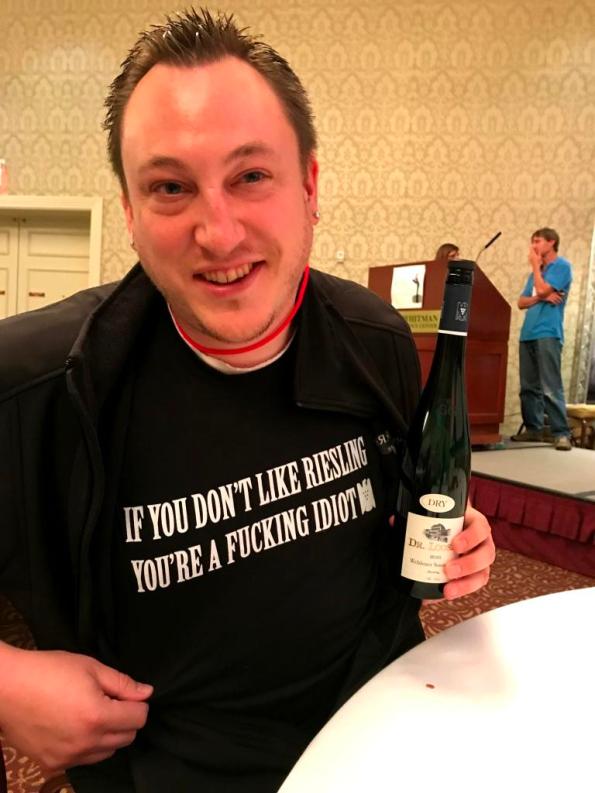
Wine 8: 2016 Dr. Loosen Wehlener Sonnenuhr Riesling GG Alte Reben Mosel (12.5% ABV, $56) – you can’t argue with greatness – this was one delicious Riesling
Wine 9: 2015 Brokenwood Semillon Hunter Valley (10.5% ABV, $22) – Hunter Valley Semillon might be one of the biggest secrets lucky attendees of WBC19 will discover. The wine might show as overly acidic when young, but with some age on it, it becomes an impeccable thing of beauty…
Wine 10: 2016 Brooks Ara Riesling Willamette Valley (12.8% ABV, $38) – another beautiful wine from the Brooks winery. From the tasting of the reds, Borrks Rastaban was my favorite wine. Now this Ara Riesling was equally impressive – and I didn’t know that Riesling was even made in Oregon. A delicious surprise.
There you go, my friends – the summary of one of my favorite exercises at the wine bloggers conference. Sorry, Chardonnay – the Riesling totally stole the crown this time. Cheers!
Daily Glass: Farmhouse Wines – The Wines You Knew California Can Produce
Memories are often unpredictable and illogical when you try to understand by what rhyme of reason a certain event, situation or circumstances get remembered. Sometimes, I can remember tiny and totally irrelevant details, I guess in lieu of something really important. Moving along.
California had been the major wine superpower for more than 40 years (if we would count starting from the 1976 Judgement of Paris events), so I’m sure many of you are puzzled about the title. California wines are unquestionably amazing, no matter which of more than 4600 wineries would produce them. California wines come in a tremendous range of styles and grape varieties, producing delicious wines from the grapes you wouldn’t even think are growing in California (Palomino, Corvina, Nebbiolo, Tinta Cão anyone?), and have a cult following, with wine lovers casually waiting for 8-10 years on the waiting list for the mailing list. Yes, California is well known for its incredible wines.
What California is not known for today is inexpensive wines. If you are willing to spend at least $20 per bottle, or better yet, you are willing to spend at least 5 times that or just add a zero to that number, that is an easy game. Almost an easy game, I should say, as you would also need to wait for at least 5 or 10 years to fully enjoy that $200 bottle. However, naming a California wine under $12 (somehow I think $12 is a good number for anyone looking for a good value wine for any night, not just for a Tuesday night), which consistently delivers, is not an easy task. My mind can’t go much past Bogle Petite Sirah, which is consistently good and usually priced in $9.99 – $11.99 range – but I’m failing to readily name another California wine in the same value category.
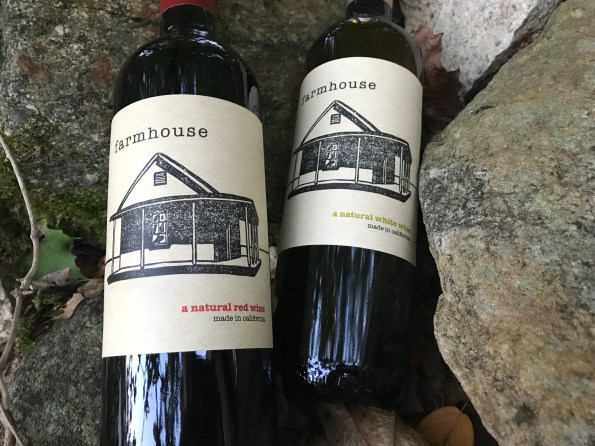
When I was offered to try two of the Farmhouse wines, I hesitated for a brief moment. As a matter of policy, I never write reviews for the samples I don’t like, and $10.99 bottle of wine from California sounded suspicious. The fact that it was produced by the Cline Cellars, who I respect very much, and that the wines were made using sustainable viticulture, tipped the scale towards accepting the offer.
The very first smell and sip of the Farmhouse Red extorted a “wow” and instantly triggered an obscure memory – absolutely not related to the wine. I don’t exactly know you, my reader at the moment, but it is quite possible you were only learning to walk when one of the big 3 struggling at a time Detroit automakers, Chevrolet, released newly redesigned Chevy Malibu sedan. At that time, back in 1997, Japanese cars really swept clean the mainstream family car category. Chevrolet was so proud to release a competitive car that they came up with the slogan for that new release of Malibu: “The Car You Knew America Could Build“. I have no memories of that car, of course, but the slogan got stuck in my head – and it instantly popped up after the first sip of the Farmhouse wine, remembering that the wine is only priced at the suggested retail of $10.99. This is a lot, a lot of wine for the money – especially the California wine.
There is even better spin to the Farmhouse wines – the wines are produced using sustainable farming methods, a farming discipline called Green String Farming, which is defined as “”natural process agriculture”. It’s about keeping the soil and plants healthy and free from pesticides and artificial chemicals. Overall, it’s about producing the highest quality grapes with the healthiest vines.” Delicious, sustainably farmed, extremely reasonably priced California wine – I’ll just rest my case.


Here are my more detailed tasting notes:
2017 Farmhouse Natural White Wine California (12.5% ABV, $10.99, 41% Palomino, 25% Muscat Canelli, 22% Roussanne, 6% Viognier, 1% Riesling)
Light Rosé gold color
Whitestone fruit, guava, a touch of honey.
Peach, white plum, lemon, touch of minerality, fresh, vibrant, excellent acidity, lots (lots!) of wine for the money. 8-/8
2017 Farmhouse Natural Red Wine California (14% ABV, $10.99, blend of Zinfandel, Syrah, Carignane, Mourvèdre, Petit Sirah)
Dark garnet
Dark chocolate, fresh raspberries, sage
Cloves, a tiny bit of cinnamon, pepper, ripe plums, excellent acidity, excellent balance. 8-/8
Two California wines, perfect for every day, easy to drink and afford – what else can you ask for? Cheers!
WBC18: Speed (Live) Tasting – Reds
Rapid fire. Lightning talks. Speed dating. We like to create extra-pressure situations for ourselves, I guess we think that we are functioning better when we have no option to prolong whatever it is we need to do or decide upon. Wine tasting is typically not a speed exercise – unless you are attending a live tasting session at the Wine Bloggers Conference.
50 minutes. 10 winemakers. 5 minutes to present the winery and the wine and answer questions – for winemakers. 5 minutes for bloggers to take pictures, smell and taste, ask questions, take notes, and ideally, post on social media about the wine – for 50 minutes in the row. Some people simply refuse to do it. And for me, this is one of the favorite sessions of the conference – and the one I get to consistently post about afterward, collecting all my individual tweets from the live session into one post – as it was done at WBC14, WBC16, and WBC17 – the three I attended in the past.
Unlike previous years, the first live wine blogging session at WBC18 was for the red wines (we always started with White and Rosé before). I guess it makes sense, as reds is what Washington is first and foremost known for. This time, I also tried to include some picture processing into the same 5 minutes – that makes the whole process even more challenging. Oh well. For what it worth, here are the wines and my notes, mostly in the form of the tweets:
Wine 1: 2013 g. Cuneo Cellars Ripasso Walla Walla Valley ($45) – Everything is possible in Washington – even the classic Italian wines.
Wine 2: 2017 De Lucca Tannat Reserve Canelones Uruguay ($15)
Wine 3: 2016 Fullerton Pinot Noir Bella Vide Vineyards Dundee Hills Oregon (13.5% ABV, $65) – great Oregon Pinot
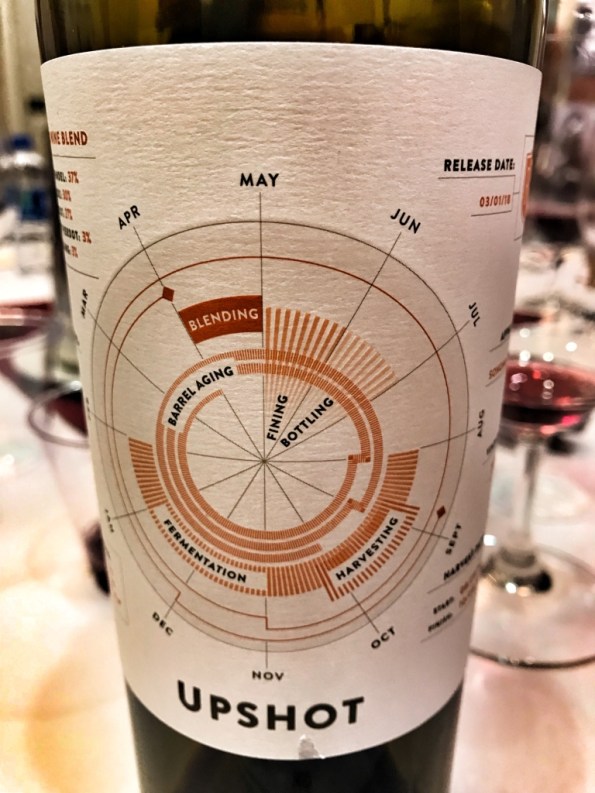
Wine 4: 2016 Rodney Strong Vineyards Upshot Red Sonoma County (14.5% ABV, $28, 37% Zinfandel, 30% Malbec, 27% Merlot, 3% Petit Verdot, 3% Riesling) – I love this unorthodox blend, an excellent wine for any special occasion, like Tuesday, for example. I also love the label. Forgot to include the picture in the tweet, so it is attached on its own here.
Wine 5: 2015 Browne Family Vineyards Cabernet Franc Columbia Valley (13.7% ABV, $35, 22 months in French oak) – beautiful Cab Franc specimen.
Wine 6: 2014 Dama Wines Collage Walla Walla Valley (14.7% ABV, $55, 69% Merlot, 26% Cabernet Sauvignon, 5% Cabernet Franc) – beautiful wine, beautiful label.
Wine 7: 2014 Dunham Cellars XX Cabernet Sauvignon Walla Walla Valley (13.8% ABV, $45, 100% Cabernet Sauvignon) – 9th winery in Walla Walla, 20th vintage (hence XX), and one of my most favorite from the tasting. Would be happy to drink every day.
Wine 8: 2015 Mansion Creek Cellars Red Dog Red Mountain AVA ($46, 70% Tinta Cão, 28% Cabernet Sauvignon, 2% Grenache-Syrah) – it is not every day you can taste a beautifully done Portuguese wine – made in the USA.
Wine 9: 2015 Brooks Rastaban Pinot Noir Eola-Amity Hills Oregon (14% ABV, $60) – stunningly different expression of the Pinot Noir. It evokes the same magic as tasting Cloudy Bay Sauvignon Blanc and thinking “this can’t be New Zealand Sauv Blanc”. Same is here. It is simply unique and different and in a class of its own. Probably my favorite wine of the session.
Wine 10: 2016 Troon Vineyard Cuvée Pyrénées, Estate Tannat/Malbec, Kubli Bench, Applegate Valley Oregon ($60, 62% Tannat, 38% Malbec) – organic, biodynamic, minimal intervention wine. Craig Camp lets the grapes speak, offering us a beautifully balanced wine.
There you go, my friends – the summary of one of my favorite exercises at the wine bloggers conference. This was definitely fun, and I will be delighted to do it again and again. Do you think 5 minutes is enough to learn about the wine and fall in love with it? Cheers!
WBC18: Merlot Deep Dive with Masters of Merlot
I remember my first “deep dive” into the Washington wines at the Chateau Ste. Michelle winery a few years ago, where I was told about the power of Washington Merlot. The explanation was given on the example of a group visiting Chateau Ste. Michelle from California, who were complaining that Washington Cabernet Sauvignon was too soft and mild as opposed to the Cabernet Sauvignon from California. The group was offered to taste the Washington Merlot wines next, and this is where they found the right amount of “power” they were looking for (or maybe even a bit more).
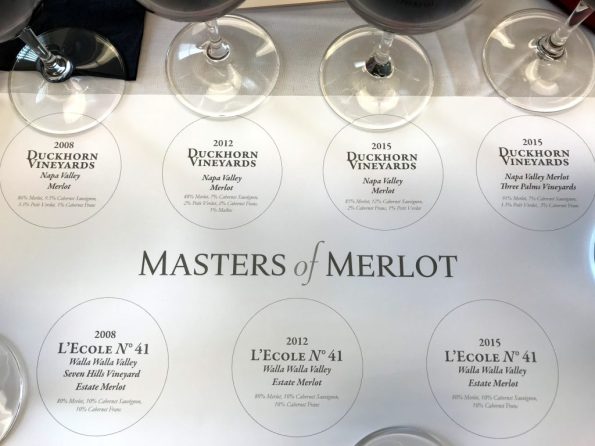
While attending Wine Bloggers Conference 2017, I was able to start the conference experience on a very high note with the deep dive pre-conference session on the California Cabernet Sauvignon, where we learned about one of the most classic California Cabs you can find – Beringer Cabernet Sauvignon. This year, at WBC18, we started on the equal, or maybe even higher note with the pre-conference session on Merlot. Very appropriately for being in Washington, and for the October being the #MerlotMe month, we were able not only taste a line of Merlot wines but to compare side by side the wines made by two of the Merlot pioneers and, unquestionably, the Masters – Duckhorn Vineyards from Napa Valley and L’Ecole No 41 from Walla Walla Valley.
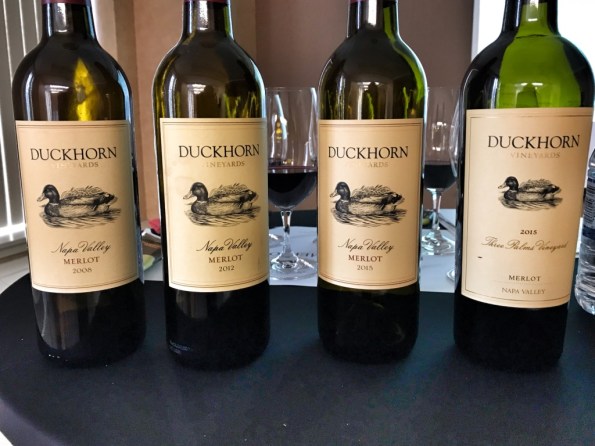
Dan and Margaret Duckhorn started Duckhorn Vineyards back in 1976, becoming one of the first 40 Napa Valley wineries. Even in those early days, it was clear that Cabernet Sauvignon was The Grape everybody wanted to work with. At that time, Dan and Margaret decided to proceed in their own way, and instead of joining the Cabernet Sauvignon movement, be unique and different and embrace the Merlot. Ever since their inaugural vintage in 1978, they never looked back and became known as Napa Valley Merlot pioneers and one of the best Merlot producers in the world, starting with their first release of Napa Valley Merlot in 1979. Today, Duckhorn Vineyards expanded dramatically and now comprise multiple wineries and brands around the USA – however, Merlot is the heart and soul of Duckhorn wines, and it is not surprising that 2014 Duckhorn Vineyards Three Palms Vineyard Merlot was the Wine Spectator’s 2017 Top 100 Wine of the Year.
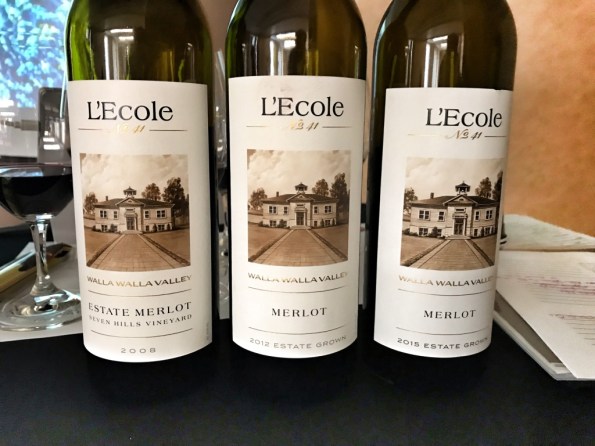
L’Ecole No 41 was founded by Baker and Jean Ferguson in 1983 when it became 3rd winery in Walla Walla, and 20th winery in the Washington state. Today the winery is run by the 3rd generation of the family, and sustainably farms estate Seven Hills and Ferguson vineyards. Merlot is the king in Washington, so it is not surprising that the L’Ecole crafts some of the best Merlot wines in Washington – however, their Cabernet Sauvignon, Syrah, and Bordeaux-style blends are equally world-famous.
Now that you know the bit of the history, let’s talk about our tasting. In our Masters of Merlot session, we had an opportunity to taste side by side Duckhorn Vineyards and L’Ecole No 41 Merlot from 2008, 2012 and 2015 vintages, plus a cherry on top (thank you, Duckhorn Vineyards) – 2015 Three Palms Merlot. Before I will leave you with the tasting notes for these beautiful Merlot wines, I just want to share some general observations. The three vintages of Duckhorn Merlot we were comparing had a different grape composition between the vintages while maintaining the same oak treatment for all the wines. As I mentioned in my summary post about WBC18 experiences, Washington weather is very consistent, so L’Ecole No 41 maintained the same grape percentages between the vintages and the same oak regimen – the changing parameters were only harvest dates and the vineyard source composition, which gradually shifted from solely a Seven Hills vineyard in 2008 to the 50/50 share between Seven Hills and Ferguson vineyards in 2015 (L’Ecole folks are ecstatic about the potential of the Ferguson Vineyard, now introducing more and more single vineyard wines from it).
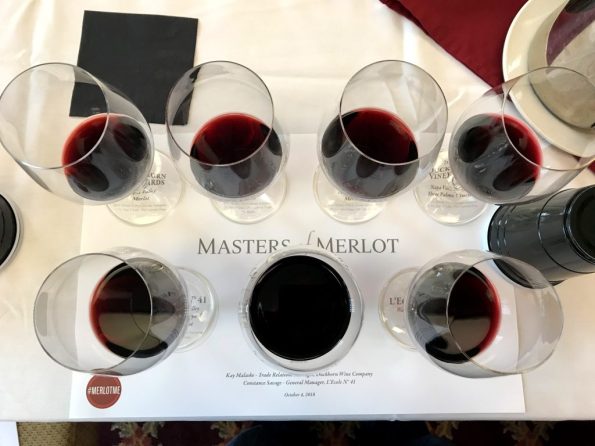
Now, it is (finally!) time to talk about the wines. Here we go, in the tasting order:
2008 L’Ecole No 41 Estate Merlot Seven Hills Vineyard Walla Walla Valley (14.5% ABV, $?, 80% Merlot, 10% Cabernet Sauvignon, 10% Cabernet Franc, 18 months in French oak)
Rutherford dust on the nose, chewy, dense, tart cherries, needs time! I want more fruit! Would love to try it in 5-8 years.
2008 Duckhorn Vineyards Merlot Napa Valley (14.5% ABV, $70, 86% Merlot, 9.5% Cabernet Sauvignon, 3.5% Petit Verdot, 1% Cabernet Franc, 16 months in French oak)
Raisins on the nose, very explicit, beautifully dry on the palate, sage, anise, tart, showed a bit of Rutherford dust after swirling, great acidity. Amarone! I want to drink it NOW!
2012 L’Ecole No 41 Estate Merlot Walla Walla Valley (14.5% ABV, $30, 80% Merlot, 10% Cabernet Sauvignon, 10% Cabernet Franc, 76% Seven Hills Vineyard, 24% Ferguson Vineyard, 18 months in French oak)
Espresso, Rutherford dust (a bit less explicit than 2008). More fruit on the palate, bright, beautiful.
2012 Duckhorn Vineyards Merlot Napa Valley (14.5% ABV, $65, 88% Merlot, 7% Cabernet Sauvignon, 2% Petit Verdot, 2% Cabernet Franc, 1% Malbec, 16 months in French oak)
Delicate, fresh plums, a touch of truffle notes, plums and lavender on the palate, delicate, fresh, round.
2015 L’Ecole No 41 Estate Merlot Walla Walla Valley (14.5% ABV, $36, 80% Merlot, 10% Cabernet Sauvignon, 10% Cabernet Franc, 50% Seven Hills Vineyard, 50% Ferguson Vineyard, 18 months in French oak)
Dark fruit, Rutherford dust, dark berries, a bit of bell pepper on the palate, plums, sapidity, interesting minerality. Needs time.
2015 Duckhorn Vineyards Merlot Napa Valley (14.5% ABV, $56, 85% Merlot, 12% Cabernet Sauvignon, 2% Cabernet Franc, 1% Petit Verdot, 16 months in French Oak)
Closed nose, a touch of mint, however – palate is beautifully ripe, open, clean, fresh fruit.
2015 Duckhorn Vineyards Merlot Three Palms Vineyard Napa Valley (14.7% ABV, $98, 91% Merlot, 7% Cabernet Sauvignon, 1.5% Petit Verdot, 0.5% Cabernet Franc, 18 months in French Oak)
Rich, opulent, caramel, anise, sage, on the palate coffee, ripe fruit, mocha, dark chocolate. Big and delicious.
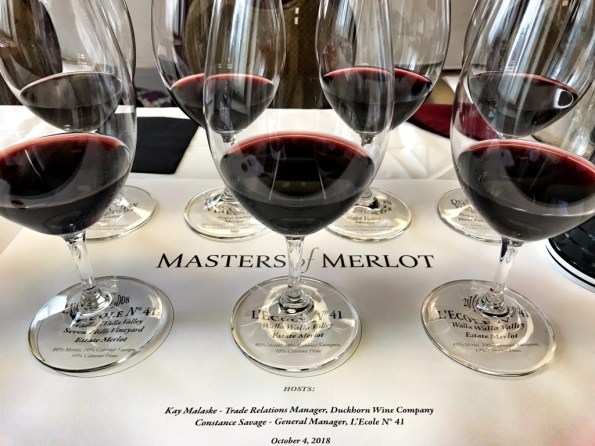
Were these wines similar, even between the different wineries? Of course. I love the presence of the Rutherford dust on many of the wines we tasted – after tasting best of the best in Rutherford in Napa Valley – the BV wines, I picked up that term and I always use it describe the perceived dusty impression of the wine’s aroma. L’Ecole Merlot was a lot more structured and minerally-driven. I would safely say that 2-3 hours in the decanter would help those wines a lot. The Duckhorn Merlot were a lot more fruit driven but offered an impeccable balance with that fruit. If I have to pick the favorite, it would be between 2008 Duckhorn (ahh, that Amarone-like beauty) and 2015 Duckhorn Three Palms, but there were really no bad wines in this tasting.
There you have it, my friends. Beautiful Merlot wines, easy to love and appreciate, and most importantly, offering lots of pleasure. How is your Merlot Me month going? What are your discoveries or the old favorites?
I have to say special thank you to Constance Savage of L’Ecole No 41 and Kay Malaske of Duckhorn Vineyards for offering this special tasting to the wine bloggers! Cheers!
Thinking About Grenache with Bokisch Vineyards Garnacha
Grenache. Garnacha. Garnatxa. One of the 10 most popular red grapes in the world, one of the most planted grapes in the world (according to the Court of Master Sommeliers, “world’s most widely planted grape”). Some call it “unsung hero”; I generally designate it as King of the Blends. While Grenache can perfectly perform solo (think about Sine Qua Non, Horsepower, No Girls, Bodegas Alto Moncayo, some of the Chateauneuf-du-Pape), it typically plays its part in the blends – that’s what “G” stands for in all of the GSM renditions, whether coming from Australia, Southern Rhône, Southe Africa, or California; it helps with Rioja and Priorat, and with lots of other wines.
Yesterday, wine lovers celebrated International Grenache Day, which prompted some thoughts on the subject. As I confessed many times, I like aged wines. Of course, I thoroughly enjoy the exuberance of the young wines, but my honest preferences are with the wines which gain some complexity after been aged. Out of 10 most popular grapes – Pinot Noir, Tempranillo, Sangiovese, Merlot, Zinfandel, Malbec, Grenache, Cabernet Sauvignon, Nebbiolo, Syrah/Shiraz – Grenache is the one which concerns me the most with its ageability. Of course, the Grenache wines produced by Sine Qua Non, Horsepower, Bodegas Alta Moncaya Aquilon, Châteauneuf-du-Pape from Clos des Papes or Domaine de la Janasse can age perfectly for a very long time – but all of these wines will set you back for hundred(s) of dollars, so their ageability is rather expected. Meanwhile, I had lots of Cabernet Sauvignon, Pinot Noir, Zinfandel, Sangiovese, Tempranillo, Syrah (oh well, pretty much all of those 10 major grapes), priced in the $15-$25 range and age beautifully (here is one example for you) – but I don’t have a great luck with aged Grenache in that price category – maybe because the most of it comes in the blends (don’t try aging Côtes du Rhône reds – it is just not going to happen).

If you are an oenophile who can spend 15 minutes pulling back and forth numerous bottles in your cellar, unable to decide what to open for the evening, I’m sure you really appreciate the grape holidays. Your selection shrinks down, as now only the appropriate bottle can be opened, so the life becomes much easier. This recent Grenache Day gave me a good reason to finally open the bottle of the 2011 Bokisch Vineyards Garnacha Terra Alta Vineyard Clements Hill Lodi (14.5% ABV, $25) – I had this bottle in my hands a few times this year, but always put it back as “not this time” object.
Lodi was one of my relatively recent discoveries as one of the very best wine regions in California, and in the US in general – both with the wines and with the people who make the wines there. Lodi might be most famous for its Zinfandel vineyards, but it is really a capital of Mediterranean grape varieties in the USA, and so Lodi Grenache is something to look for as a category. And if Lodi is the capital, Markus Bokisch might well be the king of those Mediterranean varieties – he started planting Spanish varieties in Lodi back in 1999 and only made his first Zinfandel wines a few years back. Markus’s range includes all best-known Spanish varieties – from Albariño and Verdejo to Garnacha, Monastrell, Tempranillo, and Graciano.
In a word, I made an excellent choice of the celebratory wine for the International Grenache Day, as the wine was beautiful from the get-go. Garnet color; espresso and mint jump right out of the glass, intense aroma, tar, a whiff of the dark chocolate came as the second layer, minerality, spices – I could actually smell this wine for about … forever. The palate? Wow. Tart blackberries, tobacco, a touch of pepper, bright acidity, perfect firm structure, delicious. The wine was going and going, further opening up over the next two days and showing the smoke and rocky minerality which I previously experienced with No Girls Grenache (here is a bonus, Bokisch Garnacha is only a quarter of a price of No Girls Grenache). Drinkability: 8+/9-. The wine was a perfect example of Grenache which can age – and could’ve waited for longer to be opened, for sure – but it was definitely enjoyed (of course this was my only bottle, you don’t need to ask).
What do you think of Grenache? Do you have a favorite Grenache wine or a region? Cheers!
Versatility of Paso
Source: Pasowine.com
When a typical wine consumer hears the words “California wine” what is the first thing which comes to his or her mind? I would bet that in 9 out of 10 cases, the first thought is: “Is this wine from Napa?”.
Yes, Napa Valley is the king, but the California wine landscape is a lot bigger. Today, I want to talk about a different California wine region – one of the oldest, and probably, the most versatile – the region originally known as El Paso de Robles, “The Pass of the Oaks”, which today is typically called Paso Robles, and sometimes passionately abbreviated just as “Paso!”.
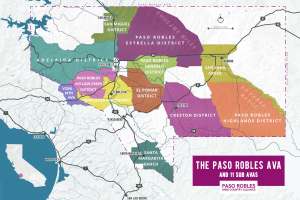
At the beginning of the 1880s, Zinfandel plantings appeared in Paso Robles. For a while, Zinfandel was really “it”, adding some of the most famous vineyards, such as Dusi and Pesenti at the beginning of the 1920s. At the beginning of the 1960s, Cabernet Sauvignon, Chardonnay and Pinot Noir arrived to the region, followed by first plantings of Syrah in the whole state of California in 1970s. From there on, the region (Paso Robles AVA was established in 1983) moved forward to collect numerous accolades of Wine Region of the Year, Best Vineyard in the world and others. Today, Paso Robles has 11 sub-appellations, more than 40,000 acres of vineyards and more than 200 wineries, growing more than 40 grape varieties, from Bordeaux greats to Rhone and to Spanish varieties – and did we mention Zinfandel yet?
“Versatility” is really the key word when it comes to Paso. First, there is a great diversity of the terroirs, with 11 well-defined sub-appellations (you can see them on the map), stretching from just 6 miles away from the Pacific Ocean on the west to the mountains on the east – and let’s not forget that while only 40,000 acres are under vineyards, the whole Paso Robles appellation is more than 600,000 acres, which is about three times of size of Napa Valley AVA. Such a great diversity of microclimates is very conducive to the wide variety of grapes made into the world-class wines all around the AVA. Let’s see how many times you will nod when I will mention some of the Paso Robles greats: Saxum Vineyards, making some of the best in the world Syrah; how about Zinfandel from Turley and Carlisle, some of the best of the best in the world of Zin; Tablas Creek – one of the Rhône pioneers in the area; Justin Winery, with their delicious Bordeaux blends – Isosceles, anyone?; Dracaena Wines – Cabernet Franc fanatics; Field Recordings – truly a personal favorite, making everything from Chardonnay to Pinot Noir to Chenin Blanc to Cabernet Sauvignon and Cabernet Franc to Petite Sirah, Sangiovese and Valdiguié – and all deliciously well. So, how is this list to you?
 Let me take this conversation one step further and share with you some of my latest discoveries from Paso Robles:
2015 Halter Ranch Grenache Blanc Paso Robles Adelaida District (13.3% ABV, $28, 80% Grenache Blanc, 14% Picpoul Blanc, 4% Roussanne, 2% Viognier)
Light golden color
Medium intensity lemon nose, hint of jasmine flowers and lots of granite with a touch of gunflint lots of minerality – on the nose, it is minerality driven wine.
The palate is acidity-driven, fresh, crisp, bright, lemon, a touch of grass, and a distant hint of plumpness – the wine will show differently as it will warm up.
Drinkability: 8, delicious from the get-go, lots of energy
2014 J. Lohr Hillside Cabernet Sauvignon Paso Robles (14.8% ABV, $35, 90% Cabernet Sauvignon, 6% Petit Verdot, 4% Cabernet Franc, 18 months in 60% new French oak)
Dark garnet, almost black
Licorice, sage, dark chocolate, coffee, roasted meat, minerality on the nose
The palate is savory, bright acidity, blackberries, more licorice, coffee, medium plus body, lots of energy in every sip, dark and concentrated.
Drinkability: 8-/8, softer and rounder next day, showing up some cassis.
2014 Treana Red Paso Robles (15% ABV, $45, 75% Cabernet Sauvignon, 25% Syrah, 17 months in French oak, 70% new)
Dark garnet with a purple hue
Concentrated cherry pit and some funk initially, noticeable green bell pepper – or was it corked?
The bright palate, good amount of savory fruit with licorice, blueberries and cassis, noticeable sapidity, medium to full body, good acidity, nice balance
Drinkability: N/R. This was not a bad wine, but there was an annoying component in the taste profile, which gave a borderline corked impression and was adding sharpness to the wine – also it didn’t subside. I need to try this wine again to have an opinion.


2014 Aaron Petite Sirah Paso Robles (15.6% ABV, $48, 88% Petite Sirah, 12% Sirah, 22 months on lees in 50-60% new oak)
Black color. Just black with a touch of dark garnet hue on the rim.
Nose most reminiscent of a nice espresso, with a touch of vanilla. Swirling opens up some blackberries and massive, colored legs (I always thought the color in the legs is the trait of Syrah, but apparently, Petite Sirah has the same).
The palate is dense, concentrated, roasted meat with some coffee and blueberries, nice pronounced acidity, velvety texture. Massive wine, but surprisingly approachable.
Drinkability: 8, would be amazing with the steak.
2015 Peachy Canyon Westside Zinfandel Paso Robles (14.5% ABV, $22, 78% Zinfandel, 11% Petite Sirah, 7% Alicante, 2% Tannat, 2% Syrah, 16 months in 30% new oak barrels)
Dark garnet
Pleasant aromatics, medium plus intensity, Chinese five spice
A touch of tobacco, good acidity, expressive tannins. Needs time
3 days later – wow, dramatic difference. I simply put this wine aside with a cork, without pumping the air. Significantly improved aromatics, tobacco, blackberries, hint of caraway seed. The bright and round palate, cherries, great interplay of acidity. I never thought I would say this, but it seems a lot more of an Italian Primitivo style also with the back end minerality. Happy wine for sure – I can finish the bottle by myself. Drinkability: 8 (day 3)
2015 Eberle Steinbeck Vineyard Syrah Paso Robles (14.8% ABV, $28, 100% Syrah, 18 months in 50/50 American/French oak)
Dark garnet
Closed nose from the get-go, the palate shows some dark fruit, a touch of vanilla, but not much more. Second day (just re-closed without pumping the air out) – what a difference! Dark fruit on the nose, supple berries on the palate, a touch of pepper, round, medium to full body, good acidity, overall delicious.
Drinkability: 8 (second day)
What do you think – did I prove my point about the versatility of Paso Robles? What are your favorite Paso producers and wines? Cheers!
Looking for Great Wine Values? Trader Joe’s Got Them
Another trip. Another stop at Trader Joe’s. Another “how do they do it?!” sentiment.
My typical strategy in Trader Joe’s is to see how many wines $20 can buy. This time around, I decided to change that. Somehow, being in San Diego in California, there was sudden desire to focus on California wines. That, and maybe a bit of France – 2018 had been my personal France tasting renaissance so far.
Of course, while I wanted to drink California wine, I was still on the lookout for reasonably priced bottles, not to exceed $20 – by the way, I know that good California wine under $20 is considered “mission impossible” by many, so this was another interesting challenge.
After touching and turning tens and tens of bottles, I settled for maybe not famous, but very well known producers – Benziger Family Winery and St. Clement Vineyards from California. I almost added French GSM to the basket, but instead, went with the Rhone-style white blend – a classic combination of grapes (Viognier/Roussanne/Marsanne), and a great value at $6.99. 
How did the wines fare? Let me tell you all about it.
2016 Pontificis Viognier-Roussanne-Marsanne Pay’s d’Oc IGP (13% ABV, $6.99, $50% Viognier, 35% Roussanne, 15% Marsanne). While Viognier/Roussanne/Marsanne combination is a classic blend of Northern Rhone, this wine came from Languedoc, the winemaking region where everything is possible. Was it different than the actual Northern Rhone would be? You bet. Was it still delicious in its own right? By all means.
Light golden color in the glass. After some time, the nose showed classic Viognier perfume of tropical fruit – nothing overboard, but well noticeable. As it is often the case with Marsanne/Roussanne combination, I almost preferred this white wine at the room temperature versus fridge-cold. A touch of lemon and lemon zest on the palate, characteristic plumpness, full body, with some hint of guava. Roll of your tongue goodness, with a perfect amount of acidity on the finish – just bring me some food. Drinkability: 8-/8. And good luck matching this value.
2014 St. Clement Vineyards Pinot Noir Napa Valley (14.5% ABV, $9.99). St. Clement Vineyards had been making wines in Napa Valley since the 1970s. One of their wines, a red blend called Oroppas, is one of my favorites, so this was an easy choice.
Bright ruby color in the glass. Dark chocolate, tobacco, and plums on the nose. The palate is perfectly balanced with supple raspberries and blackberries, good firm structure, excellent mouthfeel and presence, and an acidity cleanse on the finish. It might be pure luck – but luck or not, this was one tasty California wine. For $9.99. Drinkability: 8
2015 Benziger Family Winery Cabernet Sauvignon Sonoma County (13.5% ABV, $13.99, 16 months in oak). Benziger winery was founded in 1980, and in the year 2000 became a Demeter certified biodynamic farm. Benziger wines generally offer good value for the money, and who can refuse a California Cabernet from a good producer? Yep, not me.
Dark garnet, almost black in the glass. Beautiful nose of black currant and bell pepper. Unmistakable, textbook Cabernet Sauvignon on the palate – clean fruit, soft, open, black currant, eucalyptus, soft tannins, medium+ body. Lots of pleasure in every sip. Another great California value – well under $20. Drinkability: 8-/8.


Here you go, my friends. Trader Joe’s is unstoppable in its mission of bringing tasty power to the people. What was your favorite Trader Joe’s discovery as of late? I’m off to have another glass of Cab while you are thinking about it.
Last Bottle Sign Up ($10 credit)





