Celebrate Malbec!
This very blog exists for more than 6 years, so in my mind, I’m sure I’ve written about pretty much everything, especially when it comes to such a heart-warming subject as grape holidays.
Only it turns out I have not.
Sunday, April 17th is 6th (!) annual celebration of World Malbec Day. So how many times over those 6 special occasions I’ve written a post for the Malbec Day? Aha, you got that. Zero.
Well, this is incorrect. None for the previous five, but we are talking about Malbec today, so the problem is finally fixed.
Thinking about grapes with long and turbulent history, Malbec might be the most prolific example of such. Taking its roots in Middle Ages, being a choice wine of the kings, shining in Bordeaux and all over the France and then literally disappearing from the face of the earth, but luckily, finding its second, and very prosperous life in Argentina – not too many grapes can brag about such an adventurous life. By the way, if you are curious about the events I mentioned here, you can test your knowledge of Malbec with this quiz, or you can just jump straight to the answers.
Starting from the second half of 19th century, Malbec found its new home in Argentina. Consistently dry climate of Mendoza happened to be just what Malbec needed to strive. As there are two sides to everything, the ideal growing conditions lead to overproduction and subsequently dull wines. It was not until the 1980s that Malbec commanded proper attention for the quality instead of quantity, and slowly became one of the darlings of the wine world – depending on who you would talk to, Malbec is considered the hottest wine at the moment. Starting from the bottom of Andes in Mendoza, plantings of Malbec are now extending to the higher and higher elevations, offering new range of expression of already delicious wines.
Argentinian Malbec wines are easy to like for many palates – while appearing big and powerful in the glass with its inky, almost black color, Malbec wines are usually round, soft and mellow, avoiding spikes of tannins and acidity which often upset wine drinkers looking for relaxing glass of wine. Interestingly enough, Malbec from other regions, such as Cahors in south of France, shows totally differently and often offers very forceful personality, so if you are looking for that soft and mellow Malbec, you might want to ask for the Argentinian Malbec by name.
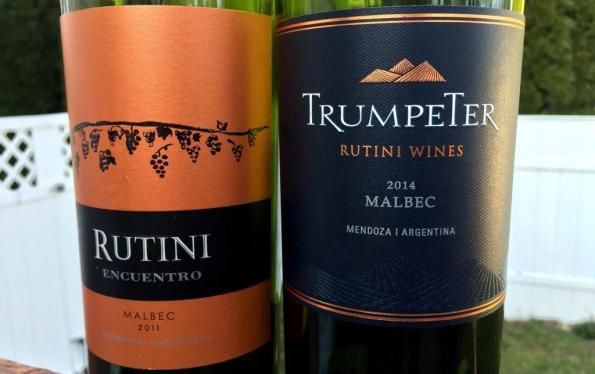
Today I want to bring to your attention two Malbec wines I had pleasure of tasting recently. It is not the first time I’m talking about Rutini wines from Argentina in this blog – here you can find my interview with Mariano Di Paola, winemaker at Rutini wines, as well as tasting notes for few other Rutini wines. Here are the notes for the two Malbec wines:
2014 Rutini Trumpeter Malbec Mendoza Argentina (14% ABV, SRP $11.99)
C: dark garnet
N: freshly crushed fruit, sage, savory notes
P: clean, earthy, tart cherries with hint of licorice, touch of sweet tobacco
V: 7+/8-, nice, refreshing, round, great QPR
2011 Rutini Encuentro Malbec Mendoza Argentina (13.5% ABV, SRP $18.99)
C: dark garnet, inky
N: roasted notes, tar, cherries, warm, inviting, touch of barnyard
P: soft, round, sweet berries, concentrated, good acidity, perfect balance. Became dark and concentrated on the day 2/3.
V: 8, very enjoyable, easy to drink; will evolve with time – you should forget few bottles in the cellar…
Here you are, my friends. Celebrate Malbec, this grape definitely worth your attention. Cheers!
Passion and Prosecco
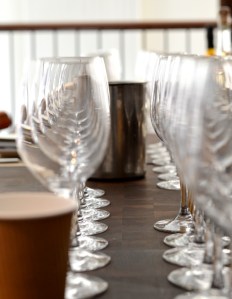 One of my favorite ways to start a conversation is to ask a trivia question, so here it is. We all take Prosecco for granted – if one wants to casually have a glass of wine with bubbles, Prosecco would handily beat any other sparkling wine as a top choice, no matter where in the world you are. Now, for the trivia part: do you know when Prosecco first appeared in London? I will give you few moments to ponder that question. Meanwhile, few basic facts: Prosecco hails from the hills of Veneto, where wines (still wines, it is) were produced for more than 500 years; Charmat-Martinotti method, used in the production of Prosecco, with the secondary fermentation taking place in a steel tank instead of the bottle (“secondary fermentation” is what produces those adorable bubbles), was first created in 1895. So when do you think Prosecco showed up in London?
The answer: 1989. And all due to the tenacity and passion. Bisol family had been producing the wine in Veneto for more than 20 generations (yes, I do call this a passion). When Gianluca Bisol approached his father and said that he wants to bring Prosecco to London, the father’s response was very quick (cue in Italian pronunciation and emotional hand gestures): “you are crazy!”. That didn’t stop Gianluca, and to London off he went. It appears that his father was almost right – selling unknown sparkling wine, door to door, in the downturn economic times, was not going swimmingly well, by any measure. Until a lucky coincidence (well, people would call it “luck”, but we all know that luck usually works best after applying lots and lots of hard, dedicated effort), when at one of the best restaurants in London, Gianluca met wine director who was not only Italian, but also born and raised in the same Veneto region, and was extremely happy to see his beloved Prosecco. As they like to say it in the books, the rest was history. Today, Prosecco outsells Champagne in UK 3 to 1. And annual production of Prosecco hit 540 million bottles in 2015. Just to finish with historical references, Prosecco made it to the US in 1992/1993 (in case you are wondering).
I had a pleasure of meeting Gianluca Bisol at lunch at Marta restaurant in the New York City, and we spend two hours talking, tasting wines and of course, eating tasty food (detailed account follows). This is where I heard the story of Prosecco concurring the UK, as well as many other interesting facts which all together can be summarized in one single word – passion. Passion for the land, vines and wines. Passion for the whole Veneto region. Passion for the traditions which are more than 20 generations strong. But also a passion for the not stopping, for continuing to innovate and to create – new wines and also new wineries.
Our tasting included 7 different wines, out of which 4 were Bisol wines, but 3 were from the winery called Maeli Colli Euganei, the winery which Gianluca helped to start in 2010. Actually the plan was that at the lunch, Gianluca will be joined by Elisa Dilavanzo, the owner of Maeli winery – unfortunately, Elisa got sick and had to stay behind, so Gianluca had a duty of representing both wineries – which he completed with flying honors, as you can imagine.


We started our tasting with 2014 Maeli Fior d’Arancio DOCG Sweet (6% ABV, SRP $27, Residual sugar 115 g/l, 100% Fior d’Arancia, a.k.a. Yellow Muscat) – nice sweetness, clean, minerality, beautiful sweet nose, bright white fruit, nice honey notes. The grapes for this wine come from volcanic soils, which gives it an interesting complexity, saving it from been “one singular note sweet bore”. It is not surprising that last year this wine was selected as “Best in Class” by Tom Stevenson in the UK in the sweet sparkling wines category. Another interesting fact is that in 2015, Maeli winery started Maeli Chef Cup competition, which will be now an annual event, where world-renown chefs compete to create the best dish pairing for Maeli Fior d’Arancia – if you are interested, here is the link detailing the 2015 competition.
Our next wine was NV Bisol Cartizze Valdobbiadene Superiore di Cartizze D.O.C.G. Spumante Dry (11.5% ABV, SRP $42, Residual sugar 23 g/l, 100% Glera) – some sweetness on the nose, but body very restrained, creamy mouthfeel, delicious aftertaste, beautiful supple palate. The wine can age – Gianluca had an opportunity to taste 20 years old Bisol Cartizze wine – it retained bubbles, but obviously acquired aromas of more mature fruit. As you can see, this wine is designated as Superiore di Cartizze D.O.C.G – Cartizze is a single vineyard, 106 hectares (about 255 acres) in size , one of the best vineyards in Italy (most expensive for sure). 139 families own parcels of the Cartizze vineyard – Bisol family owns their parcel for 21 generations. The cost of land on Cartizze is $2.5M per hectare, or $1M per acre – not sure if anyone is selling though.
Time to eat something, right? The first two wines were paired with the selection of appetizers:
Suppli Cacio e Pepe (Risotto Croquettes, Pecorino, Black Pepper) – nice crust, tasty, works the best with the wine.
Bietole Ai Ferri (Plancha-seared Forono Beets, Ricotta, Hazelnuts) – good, nice flavor, good acidity, hazelnuts work well to complement the wines.
Nebrodini Arrostiti (Wood-fired Mushroom Salad, Kale, Mustard Greens, Thyme, Lemon) – nice, good flavor.


We continued our tasting with NV Bisol Crede Valdobbiadene Prosecco Superiore D.O.C.G. Spumante Brut (11.5% ABV, SRP $25, Residual sugar 7.5 g/l, blend of Glera, Pinot Bianco and Verdiso). “Crede” is a “type of clay-laden soil with particular characteristics that greatly benefit the grapes”, according to the wine’s tech sheet. The wine had delicious nose, touch of fruit, fine mousse, perfect acidity, crisp, clean finish.
Now we go back to Maeli with our next wine, which was also the only still wine we had in the tasting. 2014 Maeli Colli Euganei Bianco Infinito ∞ Veneto IGT (12.4% ABV, SRP $24, Yellow Muscat 60%, Chardonnay 40%, aged 5 month in steel tanks, 3 month in the bottle) had nice aromatics, touch of lemon on the nose, vanilla, nice complexity on the palate. The name of this wine (infinito) comes from the accident – one of the workers called Elisa to inform her that one of the barrels needs attention, and when she asked which one, he said “infinito”. As she couldn’t understand what the worker was talking about, it appeared that the number “8” was written on the barrel at an angle, and so from there on the wine took the name “infinito”.
Now, the dishes which were paired with these two wines deserve their own commendation. You see, I rarely eat pizza. When I do, my absolute preference is that the pizza would have crisp, crunchy, literally paper-thin crust. This is exactly what I got at Marta – three pizzas, one better than the other (Funghi was my absolute favorite):
Stracciatella (House-made Stracciatella, Basil, Olio Verde) – perfect pairing. Delicious pizza – very thin crust.
Funghi (Fontina, Mozzarella, Hen of the Woods, Hedgehogs, Red Onion, Thyme) incredible, amazing flavor mushrooms and thyme. Great pairing with Bianco Infinito
Porri e Pancetta (Leeks, Bacon, Fontina, Scallion) – great flavor, very good pairing.


Last three wines were truly special and unique – but none of them are available in the US at the moment, unfortunately. 2015 Private Cartizze Zero Dosage Brut Valdobbiadene Superiore di Cartizze D.O.C.G. (second fermentation in the bottle, 12 month on the lees) – first Classic Method sparkling wine from Cartizze, 2015 vintage was bottled 45 days ago, 2011 was the first year of production, 3000 bottles produced in 2015 – classic champagne, yeast, outstanding.
Then we had 2011 Maeli Colli Euganei Rosévento IGT Spumante (12% ABV, Residual sugar 6.9 g/l, 100% Pinot Nero, 36 months on the lees) – another Classic method sparkling wine, yeasty, classic Rosè champagne nose with strawberries, delicious!
The last wine was truly unique – NV Jeio noSO2 Valdobbiadene Prosecco Superiore DOCG Spumante Extra Brut (100% Glera) – this innovative wine was produced without any added sulphur dioxide (hence the name), made specially for the sensitive consumers. The wine is packaged in the clear bottle wrapped into the foil, to protect it from the sunlight (the wine we were tasting was brought by Gianluca directly from the winery, so it didn’t have any foil or labeling, except the small pieces of paper around the bottle’s neck. The wine had an amazing nose, floral with a touch of white fruit, very dry and again, floral on the palate – very unique compared to any sparkling wine I had before. Delicious – you need to try it for yourself (well, you might have to visit the winery for that).


Our last two dishes were Pollo Ubriaco (Chicken Breast, Charred Cabbage, Brussels Sprouts, Fresno Chili, Mint), perfectly executed, and Salmerino (Arctic Char, Crispy Potato Cake, Horseradish Crema) – delicious, potato cakes were outstanding ( I would eat the whole plate alone), and the fish was cooked perfectly.


That’s all I have for you, my friends – a wonderful encounter with passion, great people, unique wines and delicious food. Next time you are in a mood for some bubbles in your glass, Bisol and Maeli offer a great range, suitable for any palate and taste. And even if you are not craving pizza right now, go visit Marta in New York – I’m sure you will be happy. And by the way, feel free to ask your friends if they know when Prosecco was first sold in London – you might become a party star, at least for one night. Cheers!
Marta
at Martha Washington hotel
29 E 29th St
New York, NY 10016
Ph: 212-651-3800
http://www.martamanhattan.com/
Wine and Beer Lovers, Unite, or Marrying Hops and Grapes
Sacrilege? Possible. Should I be ostracized by beer and wine aficionados alike, and this very blog been banned forever from their reading lists? I will leave it to aficionados to decide. I’m merely doing what I’ve always done in this blog – sharing my experiences, those which I deem worth sharing. That’s all there is to it.
When I got email from Andrew Jones, the winemaker behind one of my favorite labels, Field Recordings, advertising something called “Can Club”, the decision was quick – “yada, yada, yada – I have to do it” (the “yada” part is here to explain how much attention I was paying to the exact email content). Then I glanced over the following: “ Pure, free-run rose from a pair of our westside Paso Robles vineyard partners, mostly Grenache. 100% whole cone citra hops [sic] were added prior to canning. The results, a super refreshing elixir, combining your love of Provence with a touch of Belgian brew. I have a tough time explaining it because it isn’t like anything I have tried before. It’s impossible for me to properly analyze. I just want to drink it.“, and the next thought was “whatever. I have no idea what he is talking about, and I don’t care”. So yes, I signed up.
Few days ago, the door bell rung, and FedEx guy asked me to sign for something which rather resembled the set of engineering drawings – “hmmm, what is it” was my first thought. And then it downed on me (“this box contains alcohol” sign was a good cue) – aha, the can club?! I liked the unorthodox presentation so much that I even shared the puzzle on twitter, asking people to guess how the object in the picture can relate to the wine:
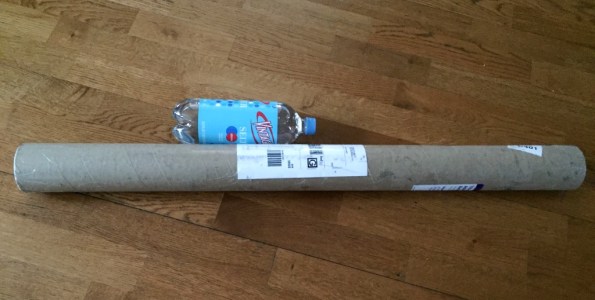 The most prevalent idea was “poster”, so I had to share an answer a few hours after:
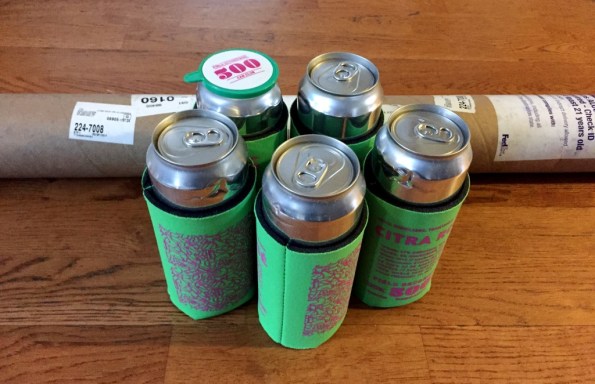 And then I opened the can. The liquid in the glass had an appeal of a perfect Rosé. Classic salmon pink color. On the nose, it was perfectly Provençal Rosé – touch of strawberries, hint of onion peel, refreshing minerality, touch of lemon. And the palate was, once again, perfectly Provençal – strawberries, touch of lemon, fresh, crispy. With the tiny beer bite on the finish. You know, the one which you get from the fruity, light Belgium beer. You don’t have to believe me, but I only read Andrew’s exact words when I sat down to write this post. “love of Provence with a touch of Belgian brew” – wow. It would be rare, very rare case that my take on the wine would match its description with such a precision . And then I have to fully agree with Andrew on one other thing – “ I just want to drink it“.
![Field Recordings Citra Rosé can sleeve [label]](https://i0.wp.com/talk-a-vino.com/wp-content/uploads/2016/04/citra-rosc3a9-can-sleeve-label.jpg?w=186&h=248&ssl=1 "Citra Rosé can sleeve [label]")

![Field Recordings Citra Rosé can sleeve [label]](https://i0.wp.com/talk-a-vino.com/wp-content/uploads/2016/04/citra-rosc3a9-label.jpg?w=212&h=248&ssl=1 "Citra Rosé [label]")
What can I tell you about this 2015 Field Recordings Citra Rosé Paso Robles (13.1% ABV, $14 retail/$10 club – 500ml can, 67% Grenache, 22% Picpoul Blanc, 8% Mourvédre, 3% Syrah)? It was delicious, perfectly combining the best of both beer and wine worlds – crisp, fresh, bright, thoughts provoking. Dangerous as well – as the wine comes in the can, you pretty much treat it as a single serving – while it actually contains more than 3 standard glasses of wine. But I think the taste is well worth that danger. And until you will get your hands on one of those cans, my words are all you got, so yes, take my word for it.
I want to raise my glass to never ending creativity and courage. Beer and wine lovers, rejoice! Cheers!
One on One with Winemaker: Marcello Lunelli of Ferrari Trento
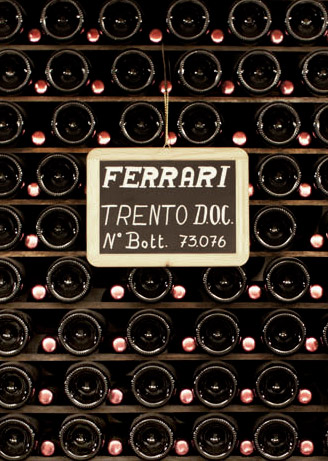
Source: Ferrari Winery web site
I’m sure Ferrari wines don’t need long introduction to any oenophile. Giulio Ferrari started eponymous winery in 1902 in the mountainous region in Northern Italy called Trento. He was the first person in Italy to plant substantial quantities Chardonnay, which he personally brought from France, and then started production of the “Classic Method” sparkling wines, inspired by the French Champagne. In 1952, Giulio Ferrari had chosen Bruno Lunelli to become his successor at the winery, and this was the beginning of the second chapter of Ferrari’s history. The rest is, yes, history, and you can read it for yourself here.
Over the years, Ferrari received numerous accolades, including most recent ones, “Sparkling Wine Producer of the Year 2015” from Tom Stevenson in the UK and “European Winery of the Year” from Wine Enthusiast magazine in the US. I had an opportunity to [virtually] sit down with Marcello Lunelli, Ferrari’s winemaker, and ask him a few questions – you can read our conversation below:
Q1: Ferrari is considered a symbol of the Italian Art of Living. What this “Italian Art of living” concept includes, how would you define it?
A: My family is incredibly proud that Ferrari as a brand is considered a symbol of the Italian Art of Living internationally. Whether it is being served at the Quirinale, home of the President of the Italian Republic, or used to toast celebrated events in the world of fashion, sport, cinema, culture, or design, Ferrari represents that hugely evocative emotional blend of tradition, sense of place, inherent quality, and the poetic virtues of our most cherished way of life.
The Italian Art of Living embodies the passion for beauty, taste and elegance; the ability to embrace innovation while respecting traditions; and a zest for life that is the very soul of the Italian spirit.
I firmly believe that the success of Italian wine is due to a unique love affair that exists in many countries for our way of life, our food, our rich and unique history, and the traditions of our culture. Beauty and pleasure are mutual to one another and Ferrari wines has joined together with fashion and design brands as ambassadors of the Italian lifestyle.
Q2: How is riddling done at Ferrari – still by hand or with use of the machines?
A: In the Ferrari winery we still do 1/3 of the riddling by hand, in particular, all the vintage wines and reserves. The rest is done with use of the machines.
Q3: Typical “house cuvée” at the Champagne house is a blend which might include about a 100 so called Vin Clairs, still wines coming from different vineyards and vintages. Does Ferrari have similar approach in the production of the non-vintage sparkling wines?
A: We do have a similar approach in the production of non-vintage sparkling wines. The biggest work in the vineyards and in the cellar is to keep separate each single homogeneous zone production in order to create the best cuvée.
Non-vintage sparkling wine cuvée includes grapes coming from vineyards within the Trentodoc denomination, which means only in Trentino region and it is created with 70/80 different base wines. Moreover vintage sparkling wine is made with grapes coming only from our own vineyards and it is a result of 40/60 diverse base wines of the same year.
Q4: Ferrari is promoting sustainable viticulture. Do you have any plans to become all organic, or at least to produce an organic wine?
A: One of the core philosophies of the Lunelli Group and Ferrari Winery is the advancement of sustainable practices throughout all our vineyards. We believe that by practicing sustainable farming techniques we not only improve the quality of our wines but protect and preserve our majestic environment and improve significantly the health and safety of our farmers. Indeed we strive to make sustainability a cultural heritage for all of our grape growers.
All of the vineyards owned by my family including those of the Ferrari winery and Tenute Lunelli are cultivated according to organic agricultural principles and in the near future they will all be organic. At the moment we are already producing an organic certified red still wine, Aliotto from our estate in Tuscany.
Q5: Considering that you share common name with the world famous car manufacturer, did you ever try to create a business relationship with Ferrari the car maker?
A: We are glad to share common name with an iconic brand such as Ferrari Maranello and to have a very good relationship with them. We are also proud to have in our photo gallery of famous moments, striking pictures of Grand prix ceremonies celebrated with Ferrari wines.
We both work throughout the world in promoting the very best of Made In Italy.
Q6: What was your most difficult vintage at Ferrari and why?
A: One of the most difficult vintages was 2014 due to a very long and intense rainfall during the growth cycle of the vine which presented a great challenge in vineyard management to ensure healthy grapes for the harvest. It is in a very complex year like 2014 that man, his work and his vision make the difference.
Q7: What is the oldest Ferrari wine you have in the cellar? What was the oldest Ferrari wine you tasted?
A: The oldest Ferrari wines already disgorged are from the sixties, when Giulio Ferrari and Bruno Lunelli were still working in the winery. The oldest Ferrari, still on the lees, is 1972 vintage, which is also the first vintage of Giulio Ferrari Riserva del Fondatore.
I was lucky enough to taste the first vintage of Giulio Ferrari Riserva del Fondatore. It was amazing, well balanced mature notes with an unexpected youth, fruit of our Trentino territory, Trentodoc mountain agriculture which allows for both longevity and youthfulness.
Q8: Do you have a favorite vintage of Ferrari wines?
A: My favorite vintage is Giulio Ferrari Riserva del Fondatore 1995 for two reasons: first of all because it is considered the vintage of the century where power, elegance, longevity and freshness are combined in one single wine and all these factors are in a perfect and unshakeable balance. Secondly this vintage has a personal affection because I had the good fortune to start to work at Ferrari in 1995.
Q9: Do you only use two varieties in the winemaking – Chardonnay and Pinot Noir – or do you use any others, such as Pinot Meunier, for instance?
A: We use Chardonnay and Pinot Noir grapes separately for white wine making in order to create all our 100% Chardonnay Ferrari wines and the Ferrari Perlé Nero, our 100% Pinot Noir, blanc de noirs. For our Rosé we use both the grape varieties: Pinot Noir, using the Rose making-process, which gives body and structure to wines and Chardonnay which provides elegance and freshness.
Q10: Do you produce or do you have any plans to produce still wines?
A: Ferrari Winery creates a remarkable collection of Trentodoc sparkling wines, yet the Lunelli Group also includes a series of elegant and long-lived still wines, under the brand, Tenute Lunelli. This brand embraces wines from three regions, each superbly suited to the production of winemaking grapes: Trentino with its mountain viticulture; Tuscany with the rolling Pisan hills and Umbria which reveals herself in the small, fascinating DOCG of Montefalco. All our still wines are representative of our standards of high quality with the ability to demonstrate the variety of our diverse lands; this is the incredible richness of the Italian wine industry. Respect for the land and sustainability are today common core values in all our brands. Besides the Estates and Ferrari, the Lunelli Group is made up of a distillery, Segnana, a mineral water, Surgiva.
Q11: Do you have any favorite Champagne wines, or any sparkling wines for that matter?
A: Champagne Bollinger and Cuvée Sir Winston Churchill Pol Roger which embody the characteristics I love in sparkling wines; elegance, refinement and longevity.
Q12: When you are not drinking Ferrari wines, what are your favorite wines, from Italy or anywhere in the world?
A: When I do not drink Ferrari I drink my favorite red still wines from Sangiovese grapes and Nebbiolo grapes: Brunello di Montalcino and Barolo. When I choose Barolo I always have discussion with my father because he prefers Barbaresco, with less power but more elegance.
And we are done here, my friends. I think this was quite fascinating and interesting conversation, adding an interesting detail to what you might already know about Ferrari wines – for sure this was very informative for me. I have to admit that I would looooove to try that 1972 Giulio Ferrari Riserva del Fondatore – well, the man can dream, right?
I didn’t have any new wines to taste to leave you with some tasting notes, but if this conversation made you thirsty, here are the links to my older posts about Ferrari Brut Classico and Ferrari Perlé. Cheers!
Wine News and Updates
 As you know, I generally like to share the interesting wine world information which I come across, so below are few of such tidbits.
Let me start with something a bit unusual. Generally we don’t mix beer and wine. However, some innovative winemakers started experimenting with adding hops to their wines creating new and refreshing beverages which greatly appeal to millennials and generation Y. Not to miss the bandwagon as they did with the craft beers, Budweiser announced that they acquired a small winery in California and the new product, called BudMyWine, will appear soon in the supermarkets next to you. The initial release of BudMyWine will be packaged in the standard 6-pack of .33 tin cans, and will include Pinot Grigio, Chardonnay, Pinot Noir and Zinfandel. BudMyWine Light, boasting measly 49 calories per can, is expected to hit the store shelves closer to the Christmas season. With this development, I’m really curious who Budweiser will be mocking in the SuperBowl 2017 commercial…
Next, the wine is about to be taken to “where no man has gone before”. Elon Musk, the multi-talented entrepreneur behind SpaceX program, which has the goal of “enabling people to live on other planets”, recently decided to evaluate the effects of space travel on wine in a bottle. SpaceX teamed up with none less than Château Mouton Rothschild, which will produce a special bottling of its popular Mouton Cadet Chilean wines, which will take a voyage in space for the duration of about 12 month. The wine will receive a special label and will be called Space Cadet. About 1,000 cases will travel into the space. Upon return, the wine will be sold through the auction, and it seems that numerous collectors already started signing up so they wouldn’t miss their chance. Who knows, SpaceX and Mouton Rothschild might be onto something – 200 years ago, hugely popular Madeira was an accidental result of the ocean voyage – Space Cadet might start another cult wine revolution.
It is political season in the United States, so obviously wine is not immune to the political interests. Not to be outdone by Donald Trump who is affiliated with eponymous winery in Virginia, supposedly the biggest one on the East Coast, Hillary Clinton just announced an agreement to acquire Brotherhood Winery in Washingtonville, New York, the oldest winery in the United States. Mrs. Clinton stated that winemaking team will stay in place at Brotherhood winery. One of the Brotherhood Winery flagship wines, 1839 Cabernet Sauvignon, will be produced as a limited release under the name “White House Dreams”, picturing Hilary Clinton with the White House in the background. The wine will be available in July at a retail price of about $100, and is expected to be an instant hit among Mrs. Clinton supporters.
And here is the last update I have for you for today. As you might know, Playboy Magazine already ventured into the world of wine, first with the wine column written by the talented wine educator Joe Roberts a.k.a. 1WineDude, and then with the wine club. Few weeks ago, Playboy announced the new wine club, called “For your eyes only”. Playboy managed to sign an agreement with an undisclosed cult wine producer in California, and will offer a line of luscious, sexy wines to the very limited number of lucky mailing list subscribers. Chardonnay and Cabernet Sauvignon will be available in the first release, and the wines will be limited to the one three-pack of each per subscriber. The wines will be called Double Pleasure, and each bottle label will feature one of the Playboy cover models (naked, of course), going all the way back to 1953 – and new labels will be produced for each release. Each bottle will be wrapped in gold-accented black parchment paper; the wine will be priced at $450 for the 3 pack, plus shipping. It seems that the mailing list had been already sold out, so waiting list is now the only option for those who wants to get a taste of Double Pleasure.
That’s all I have for you for today. Until the next time – cheers!
Terrenal: Delicious Kosher Wines, and Great Values Too
What I like about wine world is that many things are changing, and most of them changing for the better. Winemakers around the world are more in tune with the nature, their means and ways are greatly improved, and it shows in the wines. The best testament to that is when you are poured a random glass of wine, you take a sip, you say “ahh, this is good”, and only then you care to look at the label to find out what you are drinking.
Over the past 5-8 years, Kosher wines improved so dramatically that there is no need anymore to defend them and advocate that “they can be good too” – if you are still wondering what Kosher wines are, I can offer you a short crash course in this post. Kosher wines today are definitely in that category I described above – you take a sip, then look at the back label and say “wow, this is actually a kosher wine!” – been there, done that.
When it comes to Terrenal, I knew that these are the kosher wines, but only from the experience – here is the link to the blog post about selection of Terrenal wines which I found at Trader Joe last year, and they were excellent as the wines and simply outstanding as a value.


Few weeks ago I got a sample of two of the new wines from Terrenal. First wine is made out of one of my most favorite red grapes – Tempranillo. The second wine closely mimics composition of one of the Spanish flagship wines – El Nido from Gil family estates, with the same blend of Monastrell and Cabernet Sauvignon in similar proportions. For what it worth, below are the tasting notes:
2014 Terrenal Tempranillo Yecla DO Spain (13.5% ABV, $4.99, 100% Tempranillo, kosher non-mevushal, certified Vegan )
C: dark garnet
N: blackberries, eucalyptus, sage, plums
P: nicely restrained, mouthwatering acidity, fresh fruit, tart blackberries, short finish, easy to drink
V: 7+, nice and simple, will work well with wide range of dishes
2014 Terrenal Seleccionado Yecla DO Spain (15% ABV, $7.99, 70% Cabernet Sauvignon, 30% Monastrell, kosher non-mevushal, certified Vegan)
C: dark garnet, almost black
N: sweet plums, hint of cinnamon, nutmeg, mocha
P: polished, round, restrained fruit, silky mouthfeel, hint of chocolate, good structure.
V: 8-, excellent wine, easy to drink and “dangerous”. Will evolve in 4-5 years.
Here you go, my friends. Two very tasty wines with an unbeatable QPR and a number of bonus points – Kosher and Vegan. Terrenal Seleccionado will not match El Nido in the extraction level and concentration, but $7.99 versus $150+ puts it in a very interesting perspective. Yes, of course, conduct your own experiment – get a bottle of each and taste them blind side by side – I wounder what you would think.
The only challenge might be that the Terrenal wines are only available at Trader Joe’s stores, at least in the United States, so if you have one close by, you are in luck. If you will see them anywhere else, please comment so the others would know where to look for them. Happy [Kosher, Vegan] value wine hunting. Cheers!
Vintage Vespa: Podere Brizio Brunello Dinner
Brunello needs no introduction for the oenophiles. Quintessential, coveted Italian wines, coming from the heart of Tuscany, made from the signature Italian grape Sangiovese (Sangiovese Grosso clone, to be precise). Brunello di Montalcino was the first area in Italy which received in 1980 the status of DOCG (Denominazione di Origine Controllata e Garantita), top quality level designation for the Italian wines; Brunello are some of the most expensive wines coming from Italy today, with some of the bottle prices exceeding $500 on the release (Biondi Santi, Soldera). Wines had been produced in Montalcino for a very long time, going back to the middle ages – it is said that King Charlemagne frequented hills and taverns of the beautiful region – however, back then Montalcino was known for its white wine, called Moscadello. In the 1600s, the red Brunello started to take over the Moscadello, and today, most of the people don’t even know that the white wines are produced in the Montalcino region, as it is the powerful reds we all associate Montalcino with.
 Podere Brizio is a relatively young estate in Montalcino, founded in 1996. The estate has about 30 acres of vineyards, practices sustainable viticulture and in the process of becoming certified organic. The grapes are harvested by hand, natural yeasts are used in the winemaking process. Folks at Podere Brizio love the Montalcino history so much that they put “10 Parpagliola coin, coined in 1556 as a symbol of the Republic of Siena in a year in which about 600 noble Sienese families took refuge in the fortress of our town in order to keep the Sienese Republic alive” on the labels of their wines. Podere Brizio produces about 50,000 bottles annually, with the whole production consisting of 3 red wines – Rosso di Montalcino, Brunello di Montalcino and Brunello di Montalcino Riserva.
Now, let’s talk about the dinner, which took place at the restaurant called Vespa in Westport, Connecticut. Not only Vespa offers delicious Italian and Mediterranean food, but the restaurant boasts a wine list which has a lot of unique and interesting wines – when was the last time you saw Erbaluce from Piedmont, Cinque Terre Bianco from Liguria, Frappato from Sicily or a “wine geek special”, Rosso del Contadina from Frank Cornelissen, Sicilian maestro of natural wines? Owner Bobby Werhane has special affinity for the uncommon wines and not afraid to put them on the wine list, which of course makes Vespa a perfect food and wine destination for any foodie and wine aficionado alike – and Vintage Vespa is the series of the wine dinners which serves as a testament to that.
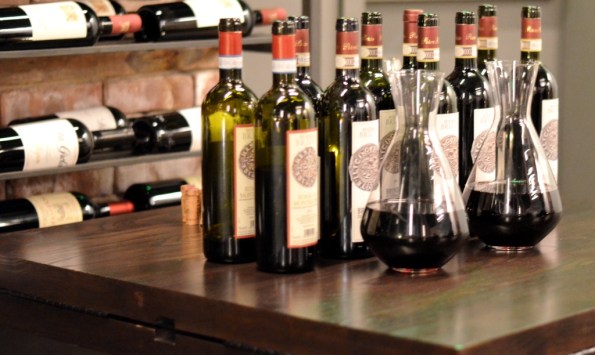
The wines made it into the decanters at some point
We tasted through 4 different wines from Podere Brizio – 2013 Rosso, and Brunello from 2010, 2007 and 2001 vintages, so in essence, this was a vertical tasting. There was one small challenge – the wines were not sufficiently decanted prior to the tasting. Brunello typically are big wines, and they need an ample time in the decanter, or they will not show all its beauty – as you will see from my tasting notes below, this is what happened.
Our dinner consisted of 4 courses. We started with Chicken Liver Pate (Red Onion Mostarda, Toasted Brioche) which had great texture and was absolutely delicious. To my surprise, 2013 Podere Brizio Rosso di Montalcino worked very well with the dish, contrasting the sweet nuances with its tart acidity.
Our second course was Ricotta Cavatelli (Braised Pork Shoulder, Tuscan Kale, Golden Raisins, Toasted Pine Nuts) – again, outstanding, touch of heat and great flavor, hearty and heartwarming (sorry, 2010 was too tight for that, so no pairing notes).


Our main course was Prosciutto Wrapped Veal Tenderloin (Pickeld Sautéed Carrots, Almond Purée) – my notes mostly consist of the exclamation points – wow! flavor! presentation!, so yes, the dish was a treat for the eyes and taste buds alike. After decanting, 2007 Brunello was an excellent complement to this dish, and 2001 Brunello worked very well too.


The desert was outstanding – Coffee Crunch Profiteroles (Mascarpone Cream, Cappuccino Gelato) – imagine a marriage of a classic Profiterole with classic Tiramisu – yep, that was good. And no, we didn’t try to pair the dessert with the wine, we just enjoyed it by itself.
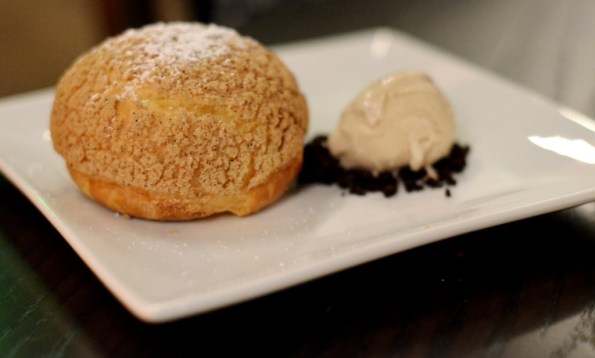 All in all, this was one delicious dinner we have to thank the Executive Chef David White for.
I did my best taking the tasting notes, juggling both delicious food and conversations with other guests, so for what it worth, my tasting notes are below:


2013 Podere Brizio Rosso di Montalcino (13.5% ABV)
C: Garnet
N: Tobacco, earthy undertones, violet
P: Clean acidity, medium body, tart cherries, blackberries, tobacco
V: 7+
2010 Podere Brizio Brunello di Montalcino (14.5% ABV)
C: Garnet
N: Violet, raspberries, blackberries
P: closed. Hint of tart cherries, but not much else
V: the wine was not decanted initially – and this is way too young, needed lots of time in the decanter. No rating.
2007 Podere Brizio Brunello di Montalcino (14.5% ABV)
C: Dark Garnet
N: Touch of plums, but mostly closed
P: Plums, nice tannins, good acidity.
V: 7+, needs time – should be decanted for at least 2 hours
2001 Podere Brizio Brunello di Montalcino (14% ABV)
C: dark Garnet, not a sign of age
N: Intense crushed berries, tar, leather, blackberries
P: Fresh tannins, great acidity, open, vibrant, great concentration and structure
V: 8/8+, just started to open, will shine in 5-10 years.
There you have it, my friends. Delicious food + Great wines = Vintage Vespa. Make sure to keep an eye on Vespa (probably their Facebook page is the easiest) so you will not miss the next wine dinner. Or better yet – head over to the restaurant and just make your own wine dinner – I’m sure you will not be disappointed. Cheers!
Vespa Westport
2A Post Rd West
Westport, CT 06880
Ph:(203) 557-9057
http://vespawestport.com/
How Not To Saber, Or May Be What Not To Saber
I know many of my readers are well familiar with Jeff, a.k.a The Drunken Cyclist, writer of the eponymous wine blog. Jeff loves Champagne, and Jeff also loves to saber those Champagne bottles – I learned from him that it is fun, and the bottle of Champagne can be sabered not only with a proper champagne sword, but with variety of household items, particularly with a wine glass.
A short while ago Jeff posted a video of his attempt to saber the bottle with a stapler. His attempt was not successful, and he ended up sabering the bottle in the “traditional” way – with the wine glass. After watching the video, I left him a smart ass comment that he used the wrong stapler, and I thought that if he would’ve used nice heavy device such as Swingline, he would have no issues prying that bottle open.
Emboldened by my earlier successes with sabering with the glass, I decided to demonstrate how pros do it, so the others would learn.
Duh…
Here is a clear proof of my failure – the only difference with Jeff’s video is that mine is shorter and not well edited (it is just no edited at all). Plus my dog was trying to voice her encouragement (nope, that didn’t work):
My embarrassment didn’t stop there. Feeling challenged by some annoying bottle, I decided to show it who is in control and brought in the nice Chef’s knife:
The end result of this exercise was damaged stapler (the bottom bent slightly, as it appears that what I considered a solid steel was just a thin steel shell on top of something soft) and damaged ego. I definitely think that my choice of sparkling wine was part of the problem, as this French sparkler from Saumur didn’t have much bubbles after all – and I think having exuberant Champagne ready to “pop” is important for the success of the sabering (however I was previously successful with non-Champagne sparklers).
Well, I might need to practice again with the glass, at least until my confidence will be restored. But what about that stapler? I know! Staple Gun is next…
Gambero Rosso 2016: Tre Bicchieri Tasting
 Now, let’s talk about most intense part of the Gambero Rosso 2016 event – Tre Bicchieri grand tasting. Both Custoza DOC and Special Awards Master Class seminars were nice and relaxing – you are sitting down, you have at least an hour to evaluate 9 wines – this is “an oenophile at ease” experience. The grand tasting though is more of an “oenophile in hell”, or if this is too strong of an expression, think of it as marathon which you have to run on the tippy-toes – yep, that level of comfort.
Let me repeat the Gambero Rosso numbers – about 50,000 wines are evaluated by the Gambero Rosso staff in a year, comprise 20,000 different labels from more than 2,400 wineries. 421 wines received the coveted Tre Bicchieri (Three Glasses) award in 2016. 193 wineries were present at Tre Bicchieri 2016 tasting in New York, which would roughly translate into about 400 wines – not all of those wines are Tre Bicchieri winners, wineries are allowed to present the wines which got two glasses awards.
This was the fourth year in the row as I attended Gambero Rosso in New York, so at this point I knew the drill – which means that there will be no rant in this post. Nothing changed – there was still a limit of one glass per attendee for the whole tasting, the wineries were still organized by the distributors and not by the regions – but again, I was ready for that before I walked into the room. I had an opportunity to look at the show guide before tasting started, so I had my targets set and thus from the moment I walked into the tasting room, I went directly to the tables I wanted to visit first (where the wines would potentially run out). This was the right strategy and it worked quite well (as you will see in the list down below).
This was also the first time in 4 years my dear friend Stefano was unable to join me at the Gambero Rosso in New York – which also changed the dynamics for me. Usually when we are together, Stefano perseveres until the very last moment, still tasting wines and taking notes. Left to my own devices, I cut it short when I felt tired. By the way, the pictures below will give you an idea how the tasting room looks like in a middle of event – I always like to take a few shots which I call “Hail Mary” – just put the camera up and take a picture of whatever it will point to. I think it will give you an idea for the event:
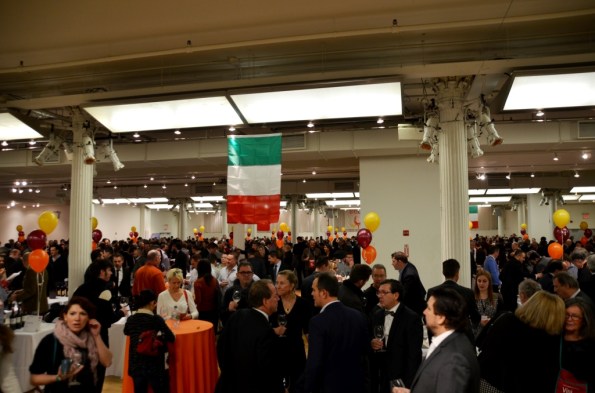
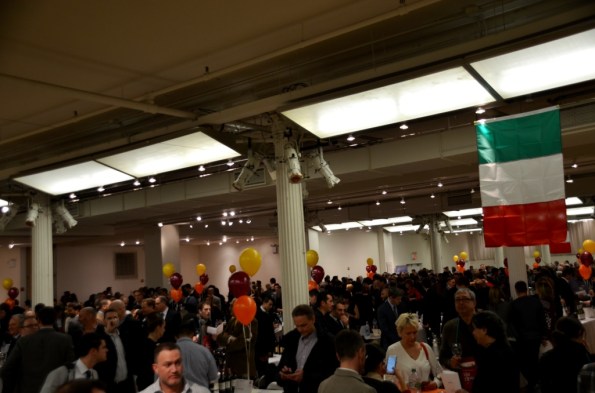 Before I will inundate you with the details on the wines I tasted, I want to offer you some of my main takeaways from the Tre Bicchieri 2016 tasting.
- Out of all the wines I tasted (90+), 4 wines were my absolute favorite:
- Tenuta dell’Ornellaia Bolgheri Superiore Ornellaia – stunning wine – young (2012), but perfectly drinkable, with the balance nothing short of amazing. Down below I will have pictures of the labels – note that starting with 2012 vintage, Ornellaia wines now will have artistic labels on portion of their bottles – 1 bottle in every 6 pack will have an artistic label.
- Eugenio Collavini Collio Bianco Broy – my favorite white wine of the tasting – beautiful clarity, impeccable balance and a bonus story
- Tenuta Viglione Gioia del Colle Primitivo Marpione Riserva – yes, I know that Primitivo is technically a Zinfandel, but I never yet tasted Primitivo which would be reminiscent of a good Zinfandel, like Turley, for instance. This wine was – fresh fruit, ripe raspberries and blackberries, playful – just an excellent wine all together.
- Rosset Terroir Valle d’Aosta Syrah – might be easily my favorite red wine in the tasting – if anything very comparable with Ornellaia in its ability to deliver pleasure. Amazing clarity of spicy fruit, just a pure vibrant note of black pepper – only a few times ever I experienced such pure expression of Syrah. Absolutely delightful.
- Very interesting how things changed in Italian wines. I tasted a number of Barolo, 4-6 years old – they were all very approachable, with good fruit and reasonable tannins – quite a departure even from the few years back. On another hand, most of the Super Tuscans were tannic bombs, with the happy exception of Ornellaia and Le Macchiole. I definitely welcome the Barolo change (will be interesting to see how those wines will age), but I think super Tuscan producers should dial down the use of the new oak – as they are, these wines need quite a bit of time to age.
- Italy is the #1 wine producer in the world (by volume) so it is not surprising that in addition to the ingenious grapes, such as Sangiovese, Nebbiolo, Montepulciano, Italians also mastered all the main international varietals – Cabernet Sauvignon, Cabernet Franc, Merlot, Grenache ( better known as Connonau), Zinfandel (yes, in the form of their native Primitivo) and now even Syrah. 3-4 years ago, I would never associate Italy with the world-class Syrah. But then was Syrah from Cartona, which is delicious, and this year’s discovery, Rosset Terroir Syrah from Valle d’Aosta, left me literally speechless in its purity of expression – and I loved it as much as I did the Ornellaia. So yes, Syrah is also squarely on the master list for Italy. Notable exception – Pinot Noir (should be called Pinot Nero in Italy), the finicky grape the world is in love with, which I yet to find to my liking coming from Italy. This will probably happen at some point, and if it does, I’m curious where and how.
Okay, now it is time to share the notes on my favorite wines. I visited about 45 tables, tasted about 90 wines. Below are the favorites – as typical for the trade tastings with lots of wines to evaluate, I use the “plus” system, where “+++” means “excellent wine”. The list below only includes “+++” or higher; I couldn’t contain my excitement and rated “++++1/2” both Ornellaia and Rosset Syrah, this is as high as I ever went. For what it worth, below are my brief tasting notes, all the wines are sorted by respective regions:


Abruzzo:
2012 Villa Medoro Montepulciano d’Abruzzo Colloie Teramene Adrano – +++1/2, delicious
Alto Adige:
2013 Abbazia di Novacela A.A. Valle Isarco Riesling Praepositus – ++++, clean, balanced
2014 Abbazia di Novacela A.A. Valle Isarco Kerner Praepositus – ++++, delicious!
2011 Elena Walch A.A. Lagrein Castel Ringberg Riserva – +++1/2, excellent, concentrated
2012 Cantina Terlano A.A. Terlano Nova Dominus Riserva – ++++, delicious! 60% Chardonnay, 30% Pinot Blanc, 10% Sauvignon
Basilicata:
2010 Re Manfredi Terre Degli Svevi Aglianico del Vulture Serpara – +++1/2, perfect, nice minerality


Friuli Venezia Giulia:
2013 Jermann Vintage Tunina – +++1/2, great complexity
2013 Jermann W…. Dreams…. – ++++, butter, vanilla, beautiful minerality
2014 Jermann Pinot Grigio – +++
2014 Eugenio Collavini Collio Bianco Broy – ++++, clean, beautiful, 50% Friulano, 30% Chardonnay, 20% Sauvignon, SRP $35, comes from the small small plot behind the house
2013 Livon Braide Alte – +++1/2, Chardonnay, Picolit, Moscato Gialo
Liguria:
2013 Poggio dei Gorgleri Rivera Ligure di Ponente Pigato Albium – +++1/2, Gunflint nose, clean palate


Lombardy:
2009 Ferghettina Franciacorta Extra Brut – +++, beautiful nose, a bit too sweet on the palate
2011 Nino Negri Valtellina Sfursat 5 Stelle – +++1/2, dried fruit, delicate, delicious. 2012 and 2014 were bad years, and no 5 Stelle wine will be produced
2008 Bellavista Franciacorta Extra Brut Vittorio Moretti Riserva – ++++, delicious, classic
Marche:
2013 Umani Ronchi Verdicchio dei Castelli di Jesi Superiore Vecchie Vigne – +++
2011 Umani Ronchi Canero Cùmaro Riesrva DOCG – +++1/2, delicious (Montepulciano 100%)
2011 Umani Ronchi Pelago Marche Rosso IGT – +++1/2, excellent (Cabernet Sauvignon 50%, Montepulciano 40%, Merlot 10%)


Piedmont:
2010 Abbona Barolo Cerviano – +++1/2, lavender, clean, wow!
2011 Marchesi di Barolo Barolo Cannubi – ++++, beautiful
2012 Michele Chiarlo Barbera d’Asti Superoiore Nizza La Court – ++++, outstanding
2011 Malvira Roero Mombeltramo Riserva – +++, nice, clean


Puglia:
2011 Tenuta Viglione Gioia del Colle Primitivo Marpione Riserva – +++1/2, wow, excellent, Zinfandel-comparable
2012 Tenuta Viglione Gioia del Colle Pri-mit-ivo – +++, excellent fruit and balance
Sardinia:
2013 Vigne Surrau Sincaru Cannonau di Sardegna – +++, excellent
2014 Vigne Surrau Sciala Vermentino di Gallura DOCG Superiore – +++
Tuscany:
2012 Poggio al Tesoro Dedicato a Walter Toscana IGT – +++, 100% Cabernet Franc
2012 Poggio al Tesoro Sondraia Bolgheri Superiore – ++++, excellent, Bordeaux blend (65% Cabernet Sauvignon, 25% Merlot, 10% Cabernet Franc
2012 Fabrizio Dionisio Cortona Syrah Il Castagno – +++1/2, beautiful nose, restrained, 100% Syrah


2012 Tenuta dell’Ornellaia Bolgheri Superiore Ornellaia – ++++1/2, wow! polished, ready
2013 Tenuta dell’Ornellaia Bolgheri Rosso Le Serre Nuove – ++++
2013 Tenuta dell’Ornellaia Poggio alle Gazze – ++++, outstanding
2010 Le Chiuse Brunello di Montalcino – +++1/2
2011 Le Chiuse Brunello di Montalcino – +++, beautiful
2013 Le Chiuse Rosso di Montalcino – +++, clean, simple
2012 Villa le Corti Chianti Classico Don Tommaso Gran Selezione – +++, excellent, soft
2012 Tenuta Sette Ponti Oreno – +++1/2, gripping tannins, wow
2013 Tenuta Sette Ponti Crognolo – +++


2012 PETRA Petra Rosso – +++1/2, good balance, Cabernet Sauvignon/ Merlot blend
2012 Le Macchiole Paleo Rosso – ++++, outstanding, 100% Cabernet Franc
Valle d’Aosta:
2013 Rosset Terroir Valle d’Aosta Syrah – ++++1/2, wow, perfect, spicy nose, clean, wow! 100% Syrah


Veneto:
2011 Tenuta Sant’ Antonio Amarone della Valpolicella Campo di Gigle – +++, closed on the nose, well present tannins, but balanced
2011 Viticoltori Speri Amarone della valpolicella Classico Vign Sant’Urbano – +++, good, round
2009 Masi Amarone della Valpolicella Classico Campolongo di Torbe – ++++, delicious!!! (yeah – single vineyard at about $150 retail)
2014 Valdobbiadene Brut Rive di Col San Martino Cuvée del Fondatore Graziano Merotto – +++1/2, nice complexity
2012 Vignalta Colli Euganei Fior d’Arancio Passito Alpianae – +++
Last Bottle Sign Up ($10 credit)




 Talk-A-Vino