Evening With Friends
I confessed it many times, and I’m glad to do it again – one of my most favorite parts of blogging, and essentially the most important one, is people. Interacting with people is the most prized element of any published blog post; meeting fellow bloggers and finding new friends is a huge cherry on top. I don’t know if the wine has any special qualities, but I have a great personal experience with meeting fellow bloggers face to face for the first time and feeling like I knew them for my whole life.
When I got an email from Jim, an author of JvbUncorked blog, offering to get together a few weeks ago, I knew I had to make it work. When I arrived 20 minutes late to Aldo Sohm Wine Bar in midtown in New York, Jim, Lori (a blogger and the winemaker behind Dracaena Wines) and Lori’s friend, Donna, were already there.
 More often than not, when I know what restaurant I’m going to, I like to check the wine list in advance. Aldo Sohm Wine Bar was opened by Aldo Sohm, the Chef Sommelier at Le Bernardine, a world-famous dining destination in New York City. Aldo Sohm is also known for winning numerous Sommelier competitions and was crowned multiple times as “Best Sommelier in Austria”, as well as “Best Sommelier in America” and “Best Sommelier in the World 2008” – you can imagine that the wine list put together by such a wine Pro requires some homework. I don’t know about you but I love and always do my homework, especially if it is connected to wine at least in some way.
In addition a to the substantial wine list, we had another interesting challenge – Donna liked mostly white wines with the nice buttery component to them – but, she was willing to try new wines, which was very helpful, but – the challenge was on.


Being late by 20 minutes had one lucky consequence – the first wine was already chosen and about to be poured by the time I situated myself at the table. We started with 2013 Kuentz-Bas Riesling Cuvée Tradition Alsace ($40) – and it was outstanding. Perfectly bright and intense on the nose, with a whiff of honey and apricot; on the palate, it was live and vibrant, crisp and playful, continuing honey and apricot flavors, supported by clean acidity. An outstanding wine and a great value at a restaurant wine list at $40. Bonus – we got “thumbs up” from Donna – you know how we, wine geeks, feel when someone says about your recommendation “ahh, I like this wine” – the top of the world feeling. Well, kind of, anyway.
As we were pondering at the next wine, it was really hard to decide, especially trying to make everybody happy again. While we were looking at Italian options, feeling “yeah, might be, but really, yeah?”, I took the advantage of my list studying and suggested to try a California Chardonnay. Not just something random, but a very particular Chardonnay – 2012 Sandhi Chardonnay Santa Barbara ($80). Earlier in the year, I had my first experience of Sandhi wines with Sandhi Pinot Noir. Sandhi winery was founded by Rajat Parr, a world-renowned sommelier, a partner at Sandhi winery and one of the founders of IPOB (In Pursuit Of Balance) movement for dialed-down, balanced California wines. The Sandhi Pinot Noir was incredible, which made me really curious about the Chardonnay – and it didn’t disappoint. This 2012 Sandhi Chardonnay had generous, intense, open nose with apples and vanilla, and on the palate, this wine was simply a riot – I experienced similar Chardonnay wines only a few times, mostly from Burgundy, when they get incredible intensity and brightness of golden delicious apples, vanilla and honey, supported by just a hint of butter and clear, vibrant acidity. This was truly a treat. And – yay – we got “thumbs up” from Donna again. Two out of two!


It was the time to move to the reds. While previously looking at the list, I noticed a 2001 Santenay for $77 at the end of the Burgundy section, right after 2001 DRC Romanée St. Vivant for $2650 (need an expense account, anyone got one we can share?). At first I thought there might be a mistake either with the price or a vintage in the online copy (had such experience numerous times), but no – the same Santenay was there on the wine list at the restaurant, for the same $77, so it was not very difficult to convince my partners in crime to go for this wine.
2001 Paul Chapelle 1er Cru Gravière Santenay ($77) was earthy, dry and pretty closed on the nose despite quick decanting. It took the wine a while to start showing some dark fruit, with earthy, minerally notes prevailing at the beginning. I think it took the wine about 45 minutes to give us some dark fruit notes and become a bit brighter. This 16 years old wine still has a lot of life left in it, and it is definitely a food friendly wine. By the way, do you care to guess of Donna liked this wine? Yes, you got that right – no, she didn’t. 2–1.
As our evening was progressing, we got a pleasure of meeting Aldo Sohm in person – he came to our table and introduced himself, so we were able to chat with him for about 10 minutes about all the fun geeky stuff oenophiles enjoy so much – how uneasy it is to find good wines at the good prices, especially when it comes to the Burgundy, with the combination of terrible weather and Burgundy’s love on the upswing around the world. Talking to Aldo was definitely one of the highlights of the evening.
It was getting somewhat late, but the challenge was still in front of us – we managed to score with the white wines for Donna to enjoy, but we had to find the proper red. After going back and force we settled on 2007 La Rioja Alta Viña Ardanza Rioja Reserva ($75). La Rioja Alta doesn’t need much introduction to the wine lovers – one of the very best producers in Rioja, making delicious wine year after year. Of course, this wine was still a baby, but within the reasonable price range, we thought that it would have the best fruit representation, which, again, we were hoping would win Donna’s vote. The wine was every bit as expected – nose of cigar box and vanilla, dense cherries, vanilla and eucalyptus on the palate, touch of sweet oak, full body, noticeable, but well integrated tannins. This was an excellent wine, but … Nope, we didn’t win this one. 2–2. But one super-fun evening.
It was late, and it was the time to go home. But I really hope we are going to do it again. And again. And again. To all the friends – cheers!
Geekiest Way to Celebrate #MalbecWorldDay – #WineStudio Blind Tasting with Achaval-Ferrer
 Starting in 2011, April 17th is the day when we celebrate Malbec – one of the noble French grapes, which almost disappeared in France, but found its new life in Argentina, where it became a star. I don’t want to bore you with the Malbec history – you can read it on your own in many places, including few posts in this very blog (here is a bit about the history of the Malbec grape, and here you can take a Malbec quiz).
Typical “grape holiday” celebration usually includes an opening of an upscale (high end, memorable, etc) varietally correct bottle. Our today’s celebration was a bit different, as it was based on the concept of pure, unadulterated, geeky wine lovers’ fun – a blind tasting, and, of course, guessing.
This blind tasting was a part of the educational program run by the WineStudio during the month of April. In case you are not aware of the Wine Studio, it is a brainchild of Tina Morey, and it is wine education and marketing program which helps to expand people’s wine horizon and help them discover new regions, new grapes and new wines. April program, quite appropriately (April is designated as a Malbec wine month), was focused on the wines of Achaval-Ferrer, one of the very best wine producers from Argentina.
To facilitate the blind tasting, all the participants received a set of two bottles, some wrapped in colorful foil, and some in the black plastic – mine were the second type:


About an hour before the session I opened the bottles to let the wines breathe a little, as it was suggested by the organizers. And then the session started.
Of course, this was not the usual blind tasting. There are many ways to run the blind tasting, some of them quite extreme – for instance, tasting the wine without any known information from the black glass – an extreme sensual challenge. Going less extreme, in a typical blind tasting you will have at least some kind of limits installed – Pinot Noir grape, for instance, or wines of Pauillac. Our #winestudio blind tasting was on one side a lot less challenging, as we knew that the wines were made by Achaval-Ferrer, so we didn’t expect to find Petite Sirah in any of those bottles, and we even knew the vintage years, 2013 and 2012. At the same time, for sure for me, it was almost more challenging, as I was trying to guess the wines based on what I knew about Achaval-Ferrer and thinking about what they might want to showcase in the tasting, instead of focusing on the actual wines.
 We were asked to evaluate wines using WSET Level 3 tasting grid (you can find it here if you are curious). Here is a summary of my tasting notes – I’m distinguishing the wines by their vintage:
Wine 2013
APPEARANCE
Clarity: clear
Intensity: deep
Colour: garnet
NOSE
Condition: clean
Intensity: medium
Aroma characteristics: touch of funk, mint, underbrush, blackberries
Development: youthful
PALATE
Sweetness: off-dry
Acidity: medium+
Tannin: medium
Alcohol: medium
Body: medium+
Flavour intensity: medium+
Flavour Characteristics: cassis, eucalyptus, mint, blackberries
Finish: medium-
CONCLUSIONS
Quality level: outstanding
Level of readiness for drinking/potential for ageing: can drink now, but has potential for ageing
Wine 2012
APPEARANCE
Clarity: clear
Intensity: deep
Colour: garnet
NOSE
Condition: clean
Intensity: medium+
Aroma characteristics: tar, tobacco
Development: developing
PALATE
Sweetness: off-dry
Acidity: medium+
Tannin: medium
Alcohol: medium
Body: medium+
Flavour intensity: medium+
Flavour Characteristics: red and black fruit, salinity, raspberries, anis
Finish: medium
CONCLUSIONS
Quality level: outstanding
Level of readiness for drinking/potential for ageing: can drink now, but has potential for ageing
As it is usually the case with the blind tastings, I didn’t do well. I really wanted the wines to be pure Malbec and Cab Franc, and this is what I included into my final guess:
then, of course, I second guessed myself and changed the answer:
When the bottles were finally unwrapped, we found this beautiful Bordeaux blend called Quimera been our Quimera for the night – it is no wonder every back label of Quimera explains the name: “Quimera. The Perfection we dream of and strive for. The search for an ideal wine”.


The wines were 2013 and 2012 Quimera, both classic Bordeaux blends, but with a high amount of Argentinian star variety – Malbec. Both vintages had the same composition: 50% Malbec, 24% Cab Franc, 16% Merlot, 8% Cab Sauv and 2% Petit Verdot. Just as a point of reference, I still have a few bottles of 2008 Quimera, and that wine has 40% of Malbec. Both wines were beautiful, but very different in its own right – and they will for sure age quite nicely. This was definitely a treat and yet another testament to the great wines Argentina is capable of producing.
Here you go, my friends. Another great night at #winestudio, celebrating the grape well worth a celebration. Next Tuesday, April 25, we will be tasting Achaval-Ferrer Cabernet Franc, their new single-varietal bottling – been Cab Franc aficionado, I can’t tell you how excited I am. Join the fun – see you at 9 pm! Cheers!
Finding Peace with Chappellet and 2007 Napa Vintage
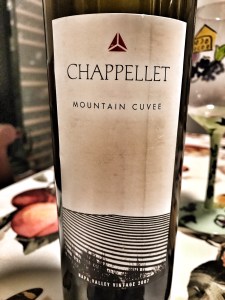 Vintage. An essential word in the wine lovers’ lexicon. “How was the vintage” often is a defining question, something we certainly have to find out and then store in the brain compartment for important wine facts. Depending on the stated greatness, some vintages might keep their recognition almost forever, like 1949 or 1982 Bordeaux, and 1964 or 2001 Rioja. The vintage by itself is no guarantee of quality of the particular wine from a particular producer, but it is generally considered that in the better vintages, there are more good wines available across the board.
2007 was lauded as a truly outstanding vintage in Napa Valley in California. According to the Wine Spectator vintage charts, 2007 [still] is the best vintage since 1999, with the vintage rating of 97. When the first 2007 Napa wines appeared, I was very eager to taste them – only to be disappointed for the most cases. In my experience, the wines were lacking finesse and balance, they were often devoid of fruit and had demonstrably attacking and astringent tannic structure. My main thought tasting 2007 Napa wines was “it needs time, and a lot of it”.
Chappellet is one of the famous producers in Napa, making wines for more than 40 years, now in the second generation of the family; their wines are highly regarded by consumers and critics alike. Some time back in 2010 I scored a few bottles of 2007 Chappellet Mountain Cuvee Napa Valley (14.9% ABV, Cabernet Sauvignon 51%, Merlot 46%, Malbec 1%, Cabernet Franc 1%, Petit Verdot 1%). My first taste was also one of the early posts in this very blog, and nothing short of disappointment (read it here). Continuing tasting throughout the years, I was still missing that “aha moment”, an opportunity to say “ahh, I like it”. It particularly applies to the 2007 vintage of Chappellet, as in 2014 I had an opportunity to taste the 2012 vintage of the same wine (Mountain Cuvee), and the wine was quite pleasant.
A couple of days ago I was looking for the wine to open for dinner and the last bottle of 2007 Chappellet caught my attention. Well, why not? 10 years is a good age for the California wine – let’s see how this wine is now ( even though I have not much of a hope based on the prior experience). Cork is out, wine is in the glass. The color, of course, shows no sign of age, still almost black. But the nose was beautiful – fresh, intense, inviting, with a touch of cassis and mint. The first sip confirmed that the wine completely transformed – open, rich, succulent fruit, cassis and blackberries, supported by the firm structure of the tannins without any overbearing, eucalyptus and touch of sweet oak, clean acidity. Perfectly powerful, but also perfectly balanced with all the components been in check. Now this was the “ahh, this is so good” wine which I would be glad to drink at any time. (Drinkability: 8+/9-).
This delicious experience prompted this post. I’m glad to find it with my own palate, that “needs time” is not a moniker for the “crappy wine”, but a true statement. I’m sure this is not universally true – some wines are simply beyond the help of time – but this definitely worked for this particular wine and for the 2007 Napa vintage. I don’t have any more of this 2007 Chappellet, but I have other 2007 Napa wines, and I just upped my expectations significantly.
Have you had similar experiences? How would you fare 2007 Napa vintage? Cheers!
Daily Glass: Portugal Still A Value Champion
If you drink wines every day, I’m sure you can appreciate a great value. Heck, I’m sure you hunt down value as much as you can, not only appreciate it. Even at a modest $20 per bottle, the cost of this hobby/passion quickly adds up.
All of us, wine lovers, greatly appreciate good value. But – it is equally important to note – not at the expense of the taste. It is great if the bottle is reasonably priced, however, the content still has to deliver the pleasure – as this is why we really drink the wine in the first place.
So let me ask you – what is your “go to” value region? I personally have many. In the $10 – $12 range, you can often look at Georgia and Spain (even though Spain is slowly edging itself out of that category); sometimes Italy and France can surprise you too – more as an exception, though. Add a few dollars – move to the $12-$15 range, and you got Spain very reliably there, with more of French and Italian options, and even some wines from the US; South Africa might play a supporting role there as well.
But – to sneak under $10, or even get as close as possible to $5? With the wines people will drink and enjoy? Reliably? I know of only one country which delivers here – Portugal.
I visited Portugal for the first time back in 2013, and when I saw the $3 – $4 wines at the supermarket, my thought was – this is most likely not drinkable at all. And I was dead wrong – here is one example. And I was proven wrong lots and lots more times, both in Portugal and in the US (I’m talking about place of buying the wine).


What prompted this post was a quick stop at one of my favorite wine stores – Bottle King in New Jersey. I didn’t have much time, just enough to grab a few bottles. One of them was 2014 Quinta do Vale Sub-Região Serra da Estrela Dão DOP (13% ABV, $5.98, 40% Tinta Roriz, 35% Alfrocheiro, 25% Jaen) – yes, at a whopping $5.98. To be entirely honest, I opened the bottle, poured and glass and proceeded to sip directly, without paying much attention to the appearance or the nose. The very first sip delivered the “wow” reaction. The aromas jumped from the glass – fresh, supple, juicy, with crunchy young fruit, lots of aromatic herbs (sage, tarragon), clean, smooth, medium body, touch of earthiness, fresh acidity and excellent balance. There was nothing extra in that glass – just a pure indulgence.
After that first sip (and then second, third and so on), it was evident that Portugal over-delivered again – an outstanding QPR, excellent wine at more than excellent price – clearly worthy of a “case buy” recommendation.
There you have it, my friends. What was your recent “best value” experience? What is your “go to” value wines region or a country? Cheers!
Wine News and Updates
The wine world enjoys ever-increasing popularity and attention, and respectively, the wine news are coming at us at a neck breaking speed as well. I wanted to share with you some of the most interesting updates I recently came across.
First, an interesting update from Coravin. I’m sure the name rings the bell, but just in case it is not, Coravin produces a wine gadget, which can be somewhat classified in the “wine preserver” category – Coravin helps you to pull small amount of wine from the bottle through the cork without much impacting the wine, thus allowing aficionados to enjoy their prized bottle of Petrus slowly over the years. Coravin recently got $22 million in funding from the group of investors. One of the projects touted by the company is a “flavor booster”, for the lack of the better term – special attachment to the main Coravin device will allow consumers to specify the desired level of acidity, fruit and tannins, and the “favor booster” will be able to affect the wine on the molecular level, delivering ultimately tailored treat to the individual palates. The project is well underway, however, it is still mostly in the experimental stages. The rumor on the street had it that Riedel, producer of the finest glassware, is on the lookout for the same technology, so it will be interesting to see which company will deliver better solution first.
Now we need to move from Earth to space. Well, okay, not exactly, not yet anyway. The NASA and Space-X recently started a collaborative project aiming at converting wine into a paste concentrate. As Space-X is readying their space tourism program, having wine on the board of the spaceship is highly desirable. However, transporting the wine in its usual form – bottles – is extremely impractical as bottles are both bulky and heavy. Having the wine in “just add the water” form would be extremely beneficial. Of course, the key is to preserve the taste and uniqueness, to ensure that every wine is recognisable and maintains its individuality. Some of the best wineries in the world are sponsoring this work (Latour, Krug, Penfolds, Antinori, Mondavi, Heitz just to name a few) and are very much interested in the results. The work is only in the initial stages so we will need to keep an eye on it.
Now, let’s talk again about the paste – this time, a toothpaste out of all! If you find the flavors of the toothpaste boring, you are not alone – mint, peppermint, really? That’s all we can have? What if we had an amazing glass of wine right before the bedtime, now we need to use that mint toothpaste to destroy that wonderful Cabernet Sauvignon flavor lingering in the mouth? It seems that Colgate understands us, wine lovers. Colgate recently announced an upcoming availability of the wine-flavored toothpaste. Cabernet Sauvignon and Chardonnay flavors are expected to hit the market first, and Sauvignon Blanc and Pinot Noir are in the works. The price was not revealed yet, but it is expected to be close to the $10 per tube. Crest and Sensodyne are expected to announce similar products in the near future.
The name Nomacork might not be familiar to many of the wine consumers. Most of the corks used in winemaking today are produced from the bark of the tree. The reason corks are such great enclosures for the wine is due to the fact that while cork fully retains the wine inside the bottle, it is still porous enough to allow trace amounts of oxygen to get through and reach the wine – and oxygen is very important for the evolution of the wine in the bottle. Nomacork produces so-called “engineered corks” which can be constructed for the different levels of oxygen penetration, thus allowing winemakers to use the ideal enclosures for the different types of wines, depending on how slow or quick they would like the wine to age. While this all sounds too technical for the wine consumers, Nomacork recently announced the brand new type of engineered cork, this time squarely looking after the wine consumers. The new type of cork will have a microchip inside and will allow consumers to select the month and the year when they want to drink the wine, and cork will automatically change its properties to ensure the wine will be at its peak at the required time. Nomacork filed more than 50 patents associated with this technology and this work might be one of the most guarded secrets in the wine research today.
Over the last few years, violent “wine riots” shook South of France, with French vignerons dumping wines and setting fires to protest imports of the cheap Spanish wine juice. The unexpected offer to help came unexpectedly from the world renowned supplier of the fine meats, D’Artagnan. The company, known for its gourmet meats, game, duck, foie gras and lots more, offered to buy the inexpensive Spanish wine in the large quantities. Based on D’Artagnan research, it appears that most of the water in ducks’ diet can be perfectly replaced with wine, which leads to the much tastier meat and unbelievable smooth and delicious foie gras. It was also stated that red and white wines create different flavor profile of the meat, so soon we are going to see ever tasting products available from D’Artagnan.
That’s all I have for you for today. Cheers!
Happiness-Inducing Wines of Lieb Cellars
 “Rising tide lifts all boats”.
As the wine growing in popularity all over the United States (still does, I hope), we witness the “wine countries” appearing everywhere – not just singular wineries, but the actual aggregations of the wineries, often presented as “wine trails”. While Napa and Sonoma definitely paved and continue leading the way to what the “wine country” is, you can find wineries all over the country offering not only wine tastings, but live music, concerts, dinners, special events and lots more.
Long Island wine country is the one closest to the New York City, making the wines for about 40 years by now. There is a very good chance, however, that even if you live in the USA, you never tasted Long Island wines – same as it is practically impossible to find the wines from Texas, Virginia, North Carolina, Arizona or Michigan anywhere outside of those states. So if I will tell you that Long Island makes world class Riesling, Chardonnay, Chenin Blanc and Merlot, you will probably have to take my word for it.
Over the past 10 years or so, visiting Long Island wineries on more or less a regular basis, I witnessed those wineries perfectly learning from Napa – both the good and the bad. On the good side, more and more knowledge is accumulated as to which vineyards and grapes do best, which individual plots do best, and the winemaking becoming more precise and resourceful. The bad side is in the fact that as the wines are getting better and better, it is less and less possible to enjoy the wines in the wine country itself, as it becomes more and more touristy – and visitors often get this “tourist special” treatment… Oops – no, we are not going into the rant, nope. Let me get to what I actually wanted to talk about.
When I was offered to taste some of the wines produced by Lieb Cellars, I had to do a bit of a research first. It turned out that despite visiting Long Island wineries every year, I never made it to Lieb Cellars and was pretty much unfamiliar with their wines. Therefore, I was looking at the best case – the wine country was coming to me, without any additional tourist distractions, yay!
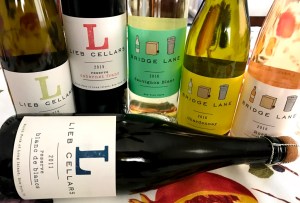
Now, I would like to finally explain the title of this post (after almost falling for a rant, yeah). When the wines arrived and I started taking them out of the box, the first thought was “wow, I love these labels!”. There is really nothing special about those labels, except that they are very clean and simple, and all of them use bright, cheerful colors. We eat with our eyes first – everybody know that – and it works for me the same with the the wine labels. Of course, what’s inside the bottle is far more important than the label itself, but good label makes you anticipate good wine – works for me every time.
In case of Lieb Cellars wines, the happiness-inducing labels were also perfectly supported by what was in the bottles, as you can tell from my tasting notes below. Few comments before I will leave you with them.
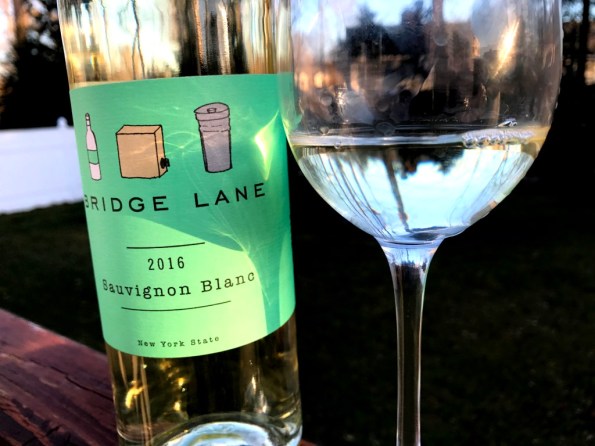
Lieb Cellars produces two different lines of wines. The first line, Lieb Cellars, is being produced since 1992. You can see those wines identified on the labels as Lieb Cellars, and today those are the Reserve wines made only from the estate-produced fruit. In 2004, Lieb Cellars started new line of wines called Bridge Lane – named after the farm road adjacent to one of the Lieb vineyards. While Bridge Lane are called a “second label” wines, there is nothing “second” about them – sustainably farmed, small crop, hand harvested wines, available in 3 different formats – standard bottle, 3L box and 20L kegs – whatever size your heart desires. You can even see those three available sizes pictured on the Bridge Lane labels.
Time to talk about the wines – here are my notes:


2016 Bridge Lane Chardonnay New York State (12.5% ABV, $15, 100% Chardonnay)
C: straw pale
N: lemon with distant hint of rosemary
P: lemon, tropical fruit, mango, Granny Smith apples
V: 7+/8-


2016 Bridge Lane Rosé New York State (11.9% ABV, $15, 49% cabernet Franc, 29% Merlot, 16% Malbec, 4% Pinot Noir, 2% Petit Verdot)
C: light onion peel
N: strawberries all the way, ripe strawberries, clean, inviting, fresh, touch of yeast Inessa which makes you smell it for a long time
P: strawberries on the palate, clean lemony acidity, firm and present. It would happily compete with any Provence Rosé
V: 8, wow, what a treat!


2016 Bridge Lane Sauvignon Blanc New York State (12.0% ABV, $15, 100% Sauvignon Blanc)
C: literally non-existent, straw pale extra light
N: fresh cut grass, medium intensity
P: lemon, tart fruit, cut through acidity. More of a Sancerre style – less fruit than California, less intensity than NZ. Clean acidity on the finish.
V: 8-, very enjoyable.


2011 Lieb Cellars Reserve Blanc de Blancs North Fork of Long Island, New York (12.5% ABV, $30, 48 months on the lees, 100% Pinot Blanc)
Appearance: Light golden color, fine mousse
N: touch of Apple, touch of yeast, delicious, open
P: touch of acidity, apples, lemon, restrained
V: 8/8+, the bottle can be gulped in one sitting


2015 Lieb Cellars Pinot Blanc Reserve North Fork of Long Island, New York (11.9% ABV, $20, 98% Pinot Blanc, 2% Riesling)
C: straw pale
N: white stone fruit, nice sweetness
P: beautiful, plump fruit, generous, delicious
V: 8, outstanding.


2015 Lieb Cellars Reserve Cabernet Franc North Fork of Long Island, New York (12.8% ABV, $30, 10 month in Hungarian oak, 85% Cabernet Franc, 9% Cabernet Sauvignon, 4% Merlot, 2% Petit Verdot)
C: dark ruby
N: mint, hint of mushrooms, touch of tobacco
P: fresh, open, blackberries, silky layers,
V: 7+/8-
The wines give us pleasure. It is not simple to convey that in words, but I hope I managed to share at least a glimpse of a pleasure brought by these Lieb Cellars wines. If anything, let me give you only one advice – find ’em and drink ’em. Cheers!
Precision of Flavors – Tasting the Wines of Achaval-Ferrer
 Drinking wine is a pleasure – for sure it should be, and if you don’t feel like it, maybe you shouldn’t drink it at all. At the same time, there are multiple ways to look at one and the same thing.
A pleasure of drinking of the glass of wine may be just as it sounds, very simple – take a sip of the liquid in the glass, say “ahh, it tastes good”, and continue to the next sip or with the conversation, whatever entices you the most at the moment.
Then there are many of us, wine lovers, who, professionally or unprofessionally, can’t stop just at that. Yes, we take pleasure in every sip, but then we need to dig in. We feel compelled to put on the Sherlock Holmes hat and play the wine sleuth, figuring out exactly what we are tasting in that very sip. What was that flavor? Was that a raspberry? Hmmm, maybe not. And that whiff of something? It is so familiar! Why can’t I put a name on it? Grrrr.
Everyone who engaged in that wine tasting exercise I’m sure can relate to what I’m saying. But every once in a while, we do get a break, when the flavor simply jumps at you, pristine and obvious. And the best twist here is when the flavor is matching to what is expected to find in the wine, like fresh cut grass in Sauvignon Blanc, black currant in Cabernet Sauvignon, or pepper in Syrah – don’t we love those pure and precise flavors?
Achaval-Ferrer winery is only about 20 years old, built on the passion and vision of a group of friends in Mendoza, Argentina. In those 20 years, Achaval-Ferrer accomplishments are nothing short of enviable. Achaval-Ferrer wines earned multiple Decanter magazine 5-star ratings (the highest). There are 29 wines from Argentina rated as “Classic” by Wine Spectator (95-100 ratings) – 13 out of those 29 wines are Achaval-Ferrer wines; the flagship Malbec Finca Altamira consistently getting 96 points rating year after year.
In addition to passion, vision, hard work and perseverance, the success foundation of Achaval-Ferrer is its high altitude vineyards, located from 700 to 1100 meters above sea level (2,300 – 3,600 ft). Three out of four main vineyards of Achaval-Ferrer are also about 100 years old, and boast pre-phylloxera vines, as Phylloxera simply can’t survive in those high mountains conditions. Now all left to do is to take the beautiful fruit those vineyards produce and make it into equally beautiful wines – the Achaval-Ferrer does it quite successfully.
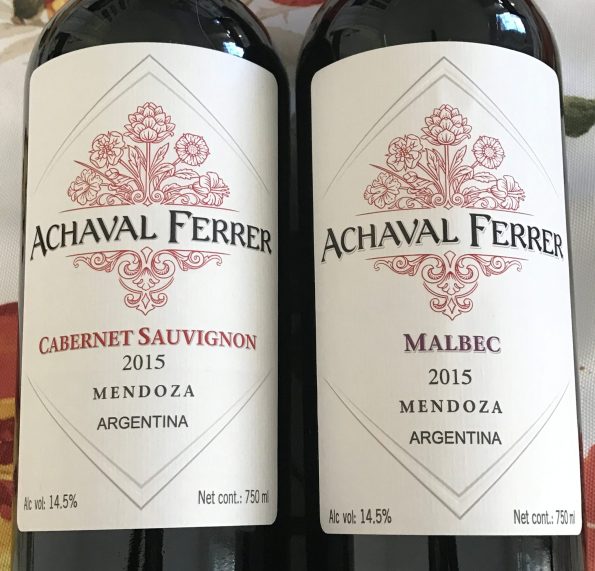
Here is what triggered my “precision of flavors” opening. I had an opportunity to taste a sample of Achaval-Ferrer wines recently, Cabernet Sauvignon and Malbec. While Malbec was a very good wine, but clearly needed time to mature, Cabernet Sauvignon was stunning, with flavors and aromas just jumping at your right away from the glass, with easy to relate to, textbook-correct cassis – also intensifying its purity with the time. This was a perfect example of why Argentinian wines are so popular and deserving of all your attention. And at a price of $24.99, the Cabernet Sauvignon offer an outstanding QPR, easily beating many classic Napa Cabs which would also cost you at least three times as much.
Here are my detailed notes:
2015 Achaval-Ferrer Cabernet Sauvignon Mendoza Argentina (14.5% ABV, $24.99, 100% Cabernet Sauvignon)
C: dark garnet, almost black
N: very intense, dark roasted fruit, cassis. The roasted fruit intensity diminishes as the wine breathes.
P: beautiful cassis, clean acidity, soft tannins, lots of layers. As the wine breathes, the tannins show better and more pronounced. Pure clean black currant after a day.
V: 8+, outstanding, wow. Will evolve.
2015 Achaval-Ferrer Malbec Mendoza Argentina (14.5% ABV, $24.99, 100% Malbec)
C: practically black
N: roasted meat, smoke, tar, intense, baking spices
P: dark fruit, bright acidity, mint, alcohol burn in the back?, succulent, lavender, spicy. Blueberries showed up on the second day.
V: 8, needs time, but perfectly delicious on the second day.
Here you are, my friends. Achaval-Ferrer definitely makes wines worthy of oenophile’s attention – and the QPR makes these wines worth seeking. Cheers!
Daily Glass: Will It Merlot?
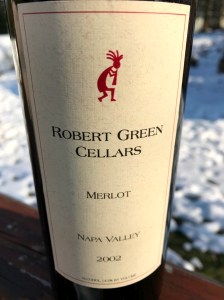 Yes, the title of this post is a play on the theme of some of the Good Mythical Morning episodes, where Rhett and Link are trying to figure out how far they can take the usual food items in the unusual directions, calling those episodes “Will It …” (if you are not watching the show, you really should, here is the link for you). But this is where the connection with the popular show ends.
And yes, we are talking about Merlot. But that also not very important, as the bottle was not opened just because I wanted to drink Merlot.
The vintage was the culprit – 2002 – as this is the year when my youngest daughter was born. And as I’m sure many of you, oenophiles, out there do, I love opening proper vintages to celebrate birthdays.
So the question was whether this 2002 Robert Green Cellars Merlot Napa Valley (14% ABV) would be still drinkable in 2017.
I presented this question to a few of the twitter winos, and the consensus was cautiously optimistic, presuming the wine was properly stored (the bottle actually never left wine fridge from the moment it got into the house). Wine Spectator rated 2002 Napa vintage at 89, and “Drink Recommendation” column had gloomy “Past peak” reference. I wanted to learn a bit more about the wine from the producer’s website, but the link on the back label was non-functional, and google didn’t offer much help searching for “Robert Green Cellars”.
Done with theoretical research – the proof is in the pudding wine glass anyway. The cork pulled out in a perfect condition. The wine is in the glass, and the first whiff had nice fruit in it, but the wine tasted a bit off. But – never judge the wine by the first sip, right? This rule is very important when it comes to the young wine, but this is even more important when it comes to the aged wines. 10 minutes in the glass brought this wine together – a perfect core of the dark fruit, maybe a touch of black currant, mint, firm structure, definitely a nice glass of wine.
About an hour and a half after the bottle was opened, it opened up even more, but somewhere in the distance, more on the finish than anything else, tertiary aromas started to appear – this is when I tweeted to the same group that the wine was perfect but at its peak. Another 30 minutes later, the wine started closing back, but only in a good sense – acidity came to the forefront, fresh young black and red fruit came to dominance – I was clearly looking at a young and delicious wine, not more than 3-4 years of age. Then, of course, the bottle was empty.


This was definitely a fun bottle of wine, with the self-attached “first world problems” – would the wine be still good or not. Believe it or not, but there was even the next level of fun associated with that wine. The little pictogram of the flute player, known as Kokopelli, which you see on the front label and the cork itself, most often is associated with fertility. What I didn’t know that Kokopelli also can be credited with the arrival of the spring. I have other 2002 bottles but somehow decided to open this particular one on the second official day of Spiring (the Spring in the USA started on March 20th). Oh well, as I said before, first world problems.
I think this wine Merlot perfectly, and I can only wish you same success and fun with your older bottles. I also want to leave you with the text from the back label of this bottle, as I think it perfectly finishes this post:
“The Joy Bringer” “This flute playing character is often credited with bringing the change of winter to spring, melting the snow and bringing about rain for a successful harvest. He is believed to represent the fertility of the untamed spirit of nature. Perhaps this joyful traveller’s greatest lesson is showing us that we shouldn’t take life so seriously. We hope the spirit of Kokopelli shines through in our wine and that it brings you as much joy and pleasure as it was for us to make. Enjoy the moment. Robert and Sue.”
Restaurant Files: The Art of Southern Cuisine at Peaches in Norwalk, CT
 Let me make a bold claim – Southern Cuisine might be the only authentic cuisine in the United States. Yes, New England got lobster and clam chowder, Maryland got blue crab and crab cakes, but it hardly constitutes a “cuisine”. Even barbeque is more of a cult or a culture if you will, but more often than not, the word “barbeque” would simply associate with the specific method of cooking rather than a cuisine in general.
Say “Southern cuisine”, and immediately the words and images for “shrimp and grits”, “chicken and waffles”, or ‘fried green tomatoes” pop in one’s head. Same as Thai, Japanese, or Mexican, Southern cuisine is something we can easily identify with.
While the Southern cuisine is, of course, better experienced in the South, over the last few years we were lucky here on the East Coast of the USA with a number of restaurants representing the cuisine very well. Today I want to offer you a perfect example – Peaches Restaurant in Norwalk, Connecticut, officially known as Peaches Southern Pub & Juke Joint. Peaches is the newest endeavor of the serial entrepreneur Greer Frederick, who is deeply involved in Connecticut restaurant scene for many years.
I love the rustic decor at Peaches, very homey and calming, but very modern at the same time:


Of course the restaurant visit started at the bar. Spicy Okratini (Oola Aloo Vodka, dirty okra juice, pickled okra) had a nice bite and literally no sweetness, which I really appreciate. Bee’s Knees (Bar Hill gin, fresh lemon, Mad Hatter honey) was made with an artisan Mad Hatter honey, which we also had an opportunity to taste. Again, despite the honey base, the cocktal was perfectly balanced with right amount of acidity and sweetness. Peaches’ Old Fashion (Rittenhouse Rye, Damerara sugar, Angostura bitters, Fee Brothers Peach bitters), was very tasty, but also a bit too generous with alcohol.


Once we got to our tables, the little bowl with various pickles was the very first plate arriving in front of us – not overly sour, quite tasty. Then our first appetizer showed up – Devilled Eggs (beet brined eggs, braised bacon, pickled okra). Definitely a very creative dish, an unexpected color of the eggs, nice touch with the bacon crumble on top, creamy. Devilled eggs are very popular in Russian cuisine, so I’m more accustomed to a different style, but this was still a tasty dish.


The Chopped Kale (charred corn, pickled beets, green goddess dressing, cotija cheese) was one of the best kale salads I ever had. Additional of charred corn worked very well, and creamy dressing was outstanding, very flavorful. The Fried Green Tomatoes (tomato jam, country ham, buttermilk ranch), a timeless Southern classic was excellent as well – great interplay of textures, and I would eat that tomato jam by the bowlful. Our last appetizer, the Country Fair Bacon (funnel cake batter, braised bacon, black pepper maple) was good, but maybe a bit too simple to my taste.


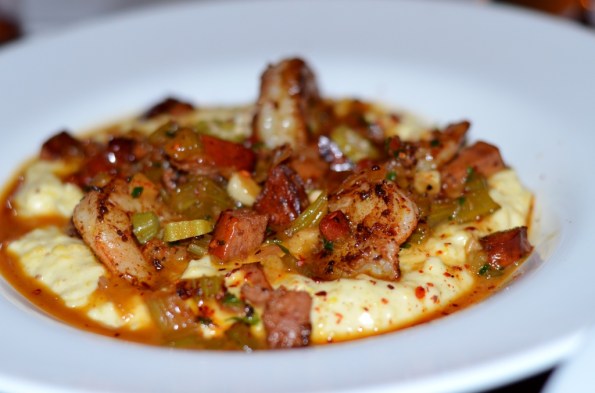
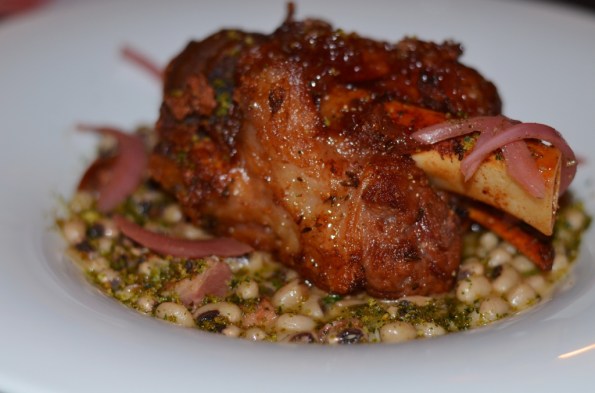
We started our entree round with another Southern classic – Shrimp and Grits (andouille, smoked shrimp broth, pickled okra, heirloom grits) – the grits were creamy and super-flavorful, one of the best ever, and the shrimp had a perfect amount of spice and cooked very well – that was one delicious experience. The Pork Shank (black eyed peas cassoulet, pickled veg, onion jam) was a standout. It was a huge hulk of meat on the bone, marinated for 36 hours and cooked at 275F for 3.5 hours – I can’t even describe how comforting this dish was. The meat was falling apart, and all you needed to do was just to savor ever little bite. Outstanding.
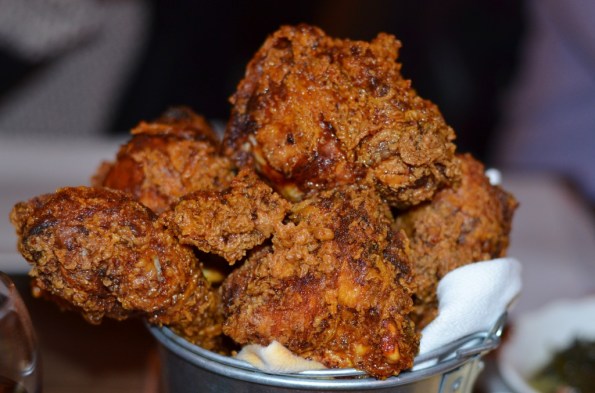
And then there was Bucket O’ Chicken (pickle-brined fried chicken + Nashville style cornbread, coleslaw, collard greens, mac ‘n’ cheese). Do you like properly made Southern style fried chicken? Then get away from the screen and head over to the Peaches right now – that dish was a quintessential Art of Southern Cuisine right on the table. We had both regular and Nashville Hot style – in both cases chicken is brined before cooking, but the Nashville Hot style has the addition of a hot sauce (smoked paprika, brown sugar, cayenne, oil) brushed on after the chicken is fried. It was also served with lots of different side dishes – cole slaw, collard greens, mac ‘n’ cheese and delicious corn bread – every bite of chicken was tender and bristling with flavor. It was also served with apple cider vinegar on a side, which, as Greer explained, is considered a Ketchup of the South. Great experience all in all.


Peaches is not called the “Pub and Juke Joint” for nothing. The restaurant has a second floor with another bar, perfectly suitable for dancing or as an event space, as well as an outdoor patio – definitely the space with a lot of potential.


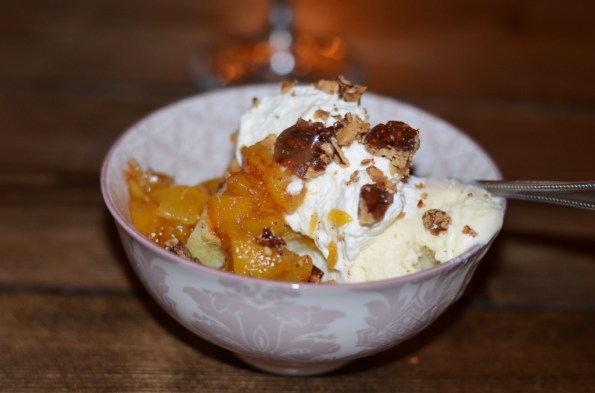
We finished this outstanding meal in style with Old Fashioned Southern Peach Cobbler (brown sugar peaches, vanilla ice cream) – delicious dessert, candied pecans packed a lot of flavor.
 I hope that the pictures and my notes explain my point about the Art of Southern Cuisine – this was truly a soulful cooking, and we experienced the tasty food with unmistakable personality – like the familiar face we are always happy to see in the crowd, the Southern Cuisine is something we can now spot anywhere we go.
Hope I didn’t make you too hungry. And if I did – oh well, I’m not going to apologise. Cheers!
Peaches Southern Pub & Juke Joint
7 Wall St
Norwalk, CT 06850
Phone number (203) 831-0399
http://www.peachesnorwalk.com
Open That Bottle Night 2017 – What A Night!
Let’s say you have a bottle of an excellent wine. Do you know how to make it better than it is? I guarantee you this works every time, so listen carefully. You share it with a friend. Yes, that makes any excellent wine into an amazing one. Works like a charm.
Saturday, February 25th was Open That Bottle Night (OTBN for short) – the night when there is no bottle in your cellar which is off limits. If you are not familiar with OTBN, you can read more here. What made my OTBN twice as special was the visit by Oliver and his wife Nina.
For me, the decisions around wine are never easy. I typically buy wine in the single bottle quantities (okay, maybe four at the most, when I need to get a free shipping from WTSO) – thus any bottle can qualify as a special one. As an exception to my long and almost painful decision process, for this OTBN I had a very clear idea – 1982 Olga Raffault Chinon, of which I had a single bottle. The bottle out of the wine fridge and ready for the prime time.
This is what I was looking at after cutting the top foil:
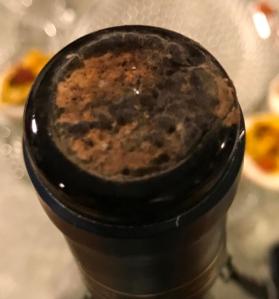 As you can tell, this is not very encouraging. However, if you like older wines and get an opportunity to open them, you know that the state of the top of the cork is nothing to fret about. More often than not, behind most terrible looking mildew there is a delicious wine.
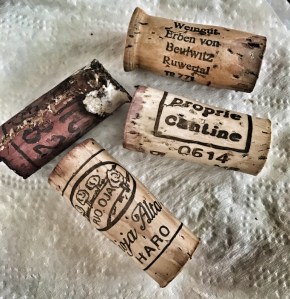
As this was 35 years old wine, I didn’t want to take any chances and used the two-prong opener to pull the cork out. This turned out to be an unnecessary precaution – while cork looked red throughout, it was perfectly firm and came out as a single piece without any crumbling – here is our OTBN corks collection, the red one is the one I’m talking about:
 And for the wine… what can I tell you… This 1982 Olga Raffault “Les Picasses” Chinon, Loire looked perfectly fresh in the glass – not a sign of losing color. Here are the two glasses, one is with 1982 Cabernet Franc, the second one is with 2014 – care to guess which glass contains 1982?
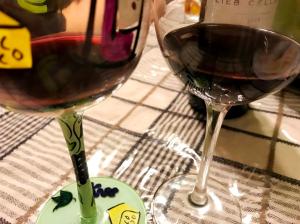 Yes, the one on the left is with 1982 wine, but I believe you would agree that the color shows perfectly young. The nose and the palate were an incredible study in Cabernet Franc flavor profile 101. The wine opened full of bell pepper – both on the nose and the palate. In about 10 minutes, the bell pepper was gone – and what was left was pure, unadulterated black currant – stunning, full flavorful black currant, also known as cassis if we want to use traditional French terminology. The wine had perfect structure, firm, with fresh acidity, almost crisp – and loads and loads of black currant. This was truly a treat.


We followed with a beautiful rendition of Ruchè – 2012 Poggio Ridente Ruchè di Castagnole Monferrato DOCG San Marziano (organic grapes). Ruchè is a little known red grape, cultivated in the Monferrato region in Piedmont, capable of making very concentrated wines. This particular bottle, brought by Oliver and Nina directly from Italy, was fresh and open, with nicely restrained palate with mostly herbal flavors, and a twist – dried mango undertones. Nina was the one to identify the dried mango, while I was desperately trying to figure out what that strange flavor was – but that was a spot-on descriptor. An outstanding wine by all means.
Our next wine was 1989 Kaseler Nies’chen Riesling Auslese Mosel-Saar-Ruwer. No issues with the cork (makes me happy). Still fresh, clean light golden color (28-years old wine!). The nose and the palate were singing in unison here, and the music was simple – peaches and apricots. Slightly underripe peaches and fresh, plump apricots. The balance of sweetness and acidity was impeccable – the wine was fresh and alive, without any sign of age. Wow.
As an added bonus, the grapes for this wine were harvested in November of 1989 – the year and a month when Berlin Wall was demolished – and this is what the label of this wine commemorates.


Our OTBN night didn’t finish there. You would expect us to go to something nice and sweets after such a beautiful Riesling, right? In the conversation, it came out that Oliver doesn’t like Tempranillo wines. Being a Spanish wine buff, I had to fix that immediately, so I had to pull out the big guns. 2001 La Rioja Alta Viña Ardanza Rioja Reserva Especial was absolutely beautiful from the get-go – cedar box and eucalyptus on the nose, soft and gentle cherries on the palate, fresh, round. I hope I made Oliver a convert – but will see about that the next time we will meet.
There you are, my friends. A stunning OTBN with great wines and great company. Hope you enjoyed your OTBN as much as we did – feel free to share your OTBN stories below. Cheers!
Last Bottle Sign Up ($10 credit)




 Talk-A-Vino