Archive
Impromptu Evening With Friends? A Bottle of Golden Bordeaux is All You Need
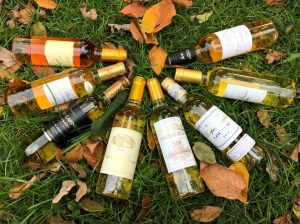 You just came home from work. It was a hard day. The boss [again] didn’t get your idea, and you didn’t get much support from your coworkers either. All you want to do is to crawl into the old trusted chair with your feet, open the book, and get lost in its pages. Tomorrow will be another day, and all the problems will magically solve themselves. Or you will force them to solve themselves. No matter what, but “me evening” is about to begin.
The doorbell rings. Really? The doorbell? What the heck? You sure didn’t invite anyone over. Get the sleepers on, let’s see, maybe it is just a late package. Ahh, it is not a package. It is your friend. And she just had a rough day at work, and she needs at least an ear, and hopefully not a shoulder.
Walk her in, get her situated on the couch. Then you get this burning feeling – something is amiss. Oh yeah, of course – there is nothing on the coffee table, and your friend sheepishly confirms that she is really “not that hungry”, and your perfectly know what it means – while nobody is looking for a 5-course meal, a little something would be great.
You didn’t shop for a while, and all you got is some crackers, some chips, salami and a bit of cheese. And of course, you need to bring a bottle of wine, which is a must for the free-flowing conversation, but what wine would pair well with such an eclectic spread of crackers and salami?
So let’s stop here, as I’m not writing a fiction novel, and let’s analyze the situation. We got chips, crackers, cheese, and salami – what would pair well with it? I’m sure you have your own take on this, but let me give you mine – how about some Golden Bordeaux to pair with this eclectic mix?
If you are curious what Golden Bordeaux is, I’m sure you can easily guess it – heard of Sauternes? Have you ever seen a bottle of Sauternes? Yes, it typically looks like a liquid gold, hence the reference to the Golden Bordeaux.
The term “Sauternes” here is used rather generically, and Golden Bordeaux might be more suitable than just Sauternes – however, while the Golden Bordeaux makes sense, I’m not sure how common the term is.
Of course, first and foremost, Bordeaux is known for its reds (anyone who experienced Bordeaux whites from Pessac-Léognan would easily disagree, but still). However, Bordeaux is a lot more than just the reds. On the left bank of the Gironde river, which splits Bordeaux in half, lies the region called Graves. Inside of Graves resides the small region of Sauternes with its neighbors Monbazillac, Cérons, Loupiac and Cadillac, as well as Barsac which is a sub-region of Sauternes. Together, all these regions are the source of the Golden Bordeaux, the unique white wine made from the partially raisined grapes due to their contact with so-called Noble Rot. It is common to describe Sauternes as sweet, dessert wines – but the flavor profile of these wines goes way beyond just sweet, offering layers of complexity, and therefore suitable for a lot more than just a dessert course.


A few weeks ago, a group of wine aficionados got together for the virtual tasting of the Golden Bordeaux, hosted and guided by the kind folks from Snooth. This tasting went beyond just a standard format of tasting and discussing the wines – we also had an opportunity to experiment with the variety of savory and spicy snacks, which included Sweet Potato and Beet Crackers from Trader Joe’s, Sriracha Cashews, Jalapeno Chicken Chips, Gusto by Olli Calabrese Spicy Salami, and Jack Link Sweet & Hot Jerky. Spicy and sweet, as well as sweet and salty are well-known combinations for anyone who likes pairing wine and food. However, these Golden Bordeaux wines go beyond just sweet, often adding a layer of forest mushrooms and herbs to their taste profile, which helps to complement the ranges of savory dishes.
I had a few surprises and personal learnings in this tasting. I never paid attention to the mushroom undertones in the Golden Bordeaux, so this was definitely an exciting discovery. I also never thought that those wines need some breathing time – and I was wrong, as you can see in the notes below – another little memory knot is in order. I also found out that not all food can be good for the tasting – the Chicken Jalapeño crackers were so spicy for me, that I had my lips burning for an hour in the tasting. It would be fine if this was a pairing and conversation with a friend, but for the next time around, I plan to taste the wines first, and only then try it again with spicy food.
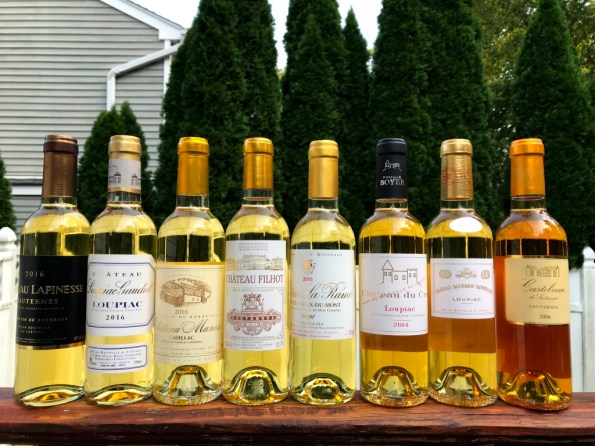
Now, here are my notes from the tasting:
2016 Château Manos Cadillac (13.5% ABV, $12.99, 95% Semillon, 2.5% Sauvignon Blanc, 2.5% Muscadelle)
Light golden color
Peach, honey, beautiful nose, very inviting
Delicious palate, peach, candied peach, caramel, good acidity 8/8-
Very nice with beets crackers from Trader Joe’s
2014 Château du Cros Loupiac (13% ABV, $12, 90% Semillon, Sauvignon Blanc, Muscadelle
Golden color
Complex nose of caramel and herbs, a touch of spicy notes, great complexity
Beautiful concentration on the palate, candied fruit, golden raisins, perfect balance. 8+
Amazingly elevates sweet and hot beef jerky, wow
2016 Château Loupiac-Gaudiet Loupiac (13% ABV, $17, 90% Sémillon, 10% Sauvignon Blanc)
Light golden color
Sweet apples, herbs. Later on: truffles!
First reaction: Sweet apples on the palate – need more acidity
After 20 minutes: good acidity, mushroom, forest floor. 8-
Excellent with hot beef jerky
2011 Château Dauphiné Rondillon Loupiac (13.5% ABV, $28, 80% Semillon, 20% Sauvignon Blanc)
Golden color
Honey, plums, candied plums
First reaction: Burned sugar, then medicinal. Ouch
After 20 minutes been open: sugar plums, white plums, good acidity showed up. 7+/8-
Later on – mushrooms on the nose (really a discovery for me), caramel. Savory caramel on the palate. Interesting – definitely a food wine.
Very good with salami and sweet potatoes crackers
2015 Château La Rame Sainte-Croix-du-Mont (13% ABV, $22, 100% Sémillon)
Golden color
Very restrained, a touch of tropical fruit, distant hint of honey, gasoline added after 20 minutes
First reaction: Candied fruit, really sweet, can use more acidity. 7
After 20 minutes: vanilla, cookies’n’cream, light, good acidity. 8-/8
Tried with hot beef Jerky – not bad
2016 Château Lapinesse Sauternes Grand Vin de Bordeaux (14% ABV, $20, 100% Sémillon)
Golden color
Lemon, lemongrass, touch of honey, white plums
Candied fruit, apples, good acidity. 8
Didn’t make much difference with spicy salami
2006 Castelnau de Suduiraut Sauternes (14% ABV, $90, 99% Semillon, 1% Sauvignon Blanc)
Dark gold color
Honey, candied lemon, touch of caramel
Beautiful palate, fresh caramel, butterscotch cookie, good acidity. Very rich. 8-
Very good with beef jerky, also with jalapeño chicken strips
Here you are, my friends – Golden Bordeaux and eclectic snacks. Get a few bottles on hand – the wines are versatile, and can be enjoyed in many ways – especially when the late night friend pops in.
The Golden Bordeaux wines are definitely underrated – here is the great opportunity to surprise yourself and your friends. And you can thank me later. Cheers!
Sent with Writer
Wine, Wine, Wine – Notes from Martin Scott 2018 Grand Portfolio Tasting
 Martin-Scott is one of the largest wine wholesalers (distributors) in New York, New Jersey, and Connecticut, with a very extensive portfolio well representing all major winemaking countries of the world. I had a pleasure to attend Martin-Scott portfolio tastings in the past, and they were always great with a lot of delicious discoveries. When I had an opportunity to attend the portfolio tasting about a month ago, I was very happy to be able to include it into my schedule.
I wrote about trade portfolio tastings many times in the past. They might seem a bit overwhelming, as you are presented with about 1000 wines and only 4-5 hours of time to taste them. At the same time, the range is incredible and you get an opportunity to expand your wine horizon and always find new favorites.
Here are my general impressions from the tasting:
- I know this is my pet peeve, and I keep talking about it at every occasion, but I have to say it again – new vintages of California reds are using way too much oak. There were lots of California reds from the 2015-2017 vintages which were literally not drinkable due to very high tannins content, to the point of your whole mouth getting numb. Unfortunately, some of the bigger Washington producers follow suit and also make over-oaked red wines. I really don’t understand this trend. Yes, using lots of new oak makes wine more expensive. But it doesn’t make it more enjoyable, for sure when it is young.
- White Burgundies are amazing. I rarely get to drink those wines for the variety of reasons, so I was literally blown away by the beauty and finesse of most everything I tasted. You will see this love expressed in the ratings below.
- South Africa produces some spectacular wines. Check the full list below to see what I really enjoyed.
- There are some excellent spirits made in … Sweden. You really need to taste them to believe them.
- I was able to add one more new (rare) grape to the collection – the grape called Souvignier-Muscaris from France.
Before I will inundate you with my brief notes, just a reminder for the trade tasting ratings I use. Considering the amount of time versus amount of wines, there is no way I can do much of the thoughtful analysis for a hundred plus wines I manage to taste. Thus I use the “+” signs, with “+++” meaning excellent. When I came up with this system, I really didn’t plan to go beyond “+++”, but you will see now “++++” and even “+++++” (very rarely – maybe one in the whole tasting) – you understand what it means. I also use “-|” as a half-point. The list below only includes wines with at least “+++” rating. As these are all new releases just coming into the stores, essentially all the wines on the list represent a “buy” recommendation – whatever you can find and afford. All prices below are an approximation of the suggested retail prices. I’m sure that the actual store price might be lower for many of those wines.
Now, I will leave you to it. Cheers!
WBC18: Speed (Live) Tasting – White and Rosé
In the previous post, I told you about our speed tasting session of red wines at the Wine Bloggers Conference 2018. During the second full conference day, we had a session for white and Rosé – only we didn’t get any Rosé at our table, so it was all for us (it is still 20+ different wines been presented around, but you only can taste just 10 during the allotted time.
If you read any of the previous posts or maybe attended the event, you know the drill. Snap, swirl, smell, sip, spit, share. Hmmm, next time I will call it a 6S exercise. You (1) snap a photo of a bottle. You (2) swirl the wine in your glass. You (3) smell it. Then you (4) sip it. Then you (5) spit it (well, there might be an exception to this rule, but you have to tread carefully here – if you can’t spit the wine, the wine bloggers conference is not for you). Lastly, you (6) share your notes with the world. All in 5 minutes. All repeated 10 times. There you have it.
Before I share the WBC18 wines with you now in this summary post, I will give you links to the WBC14, WBC16, and WBC17 I attended in the past, just in case you want to see what was happening there.
WBC18 speed tasting whites, here we go:
Wine 1: 2017 Desert Wind Chardonnay Heritage Series Wahluke Scope Washington (12.7% ABV, $28)
Wine 2: 2017 Bodega Bouza Albariño Montevideo Uruguay (13.5% ABV, $20)
Wine 3: 2016 Baroness Cellars Riesling Red Mountains (12.4% ABV, $25)
Wine 4: 2016 Rodney Strong Chardonnay Chalk Hill AVA (14.5% ABV, $22) – classic California Chardonnay, good wine at a good QPR.
Wine 5: 2016 Cadaretta SBS Columbia Valley (13.5% ABV, $23, 67% Sauvignon Blanc, 33% Semillon) – SBS stands exactly for Sauvignon Blanc Semillon. An excellent wine for a summer day? Well, I think I can drink it on a winter day too…
Wine 6: 2016 Frank Family Vineyards Chardonnay Carneros (14.4% ABV, $30)
Wine 7: 2016 J. Bookwalter Double Plot Chardonnay Conner-Lee Vineyard Columbia Valley (13.8% ABV, $40)
The next wine was presented with the statement to all of the Riesling haters – as shown here by Clifford Robben:
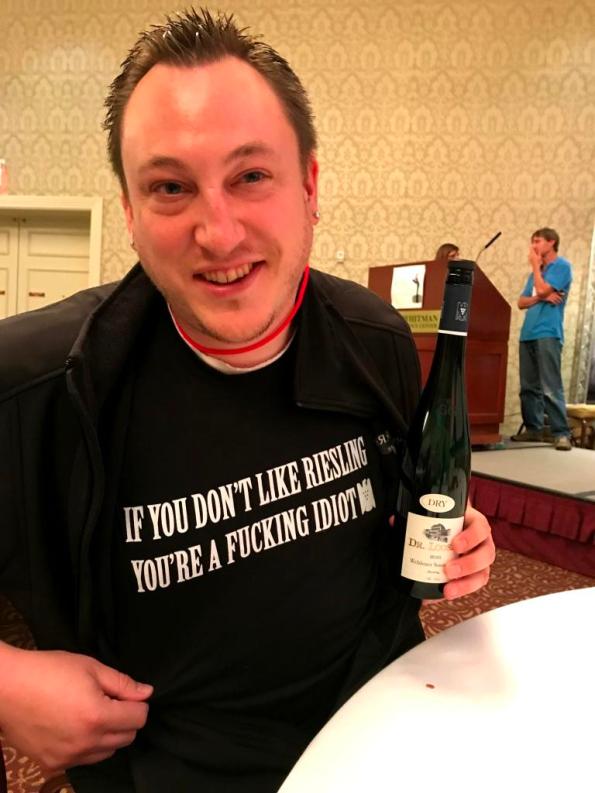
Wine 8: 2016 Dr. Loosen Wehlener Sonnenuhr Riesling GG Alte Reben Mosel (12.5% ABV, $56) – you can’t argue with greatness – this was one delicious Riesling
Wine 9: 2015 Brokenwood Semillon Hunter Valley (10.5% ABV, $22) – Hunter Valley Semillon might be one of the biggest secrets lucky attendees of WBC19 will discover. The wine might show as overly acidic when young, but with some age on it, it becomes an impeccable thing of beauty…
Wine 10: 2016 Brooks Ara Riesling Willamette Valley (12.8% ABV, $38) – another beautiful wine from the Brooks winery. From the tasting of the reds, Borrks Rastaban was my favorite wine. Now this Ara Riesling was equally impressive – and I didn’t know that Riesling was even made in Oregon. A delicious surprise.
There you go, my friends – the summary of one of my favorite exercises at the wine bloggers conference. Sorry, Chardonnay – the Riesling totally stole the crown this time. Cheers!
WBC18: Speed (Live) Tasting – Reds
Rapid fire. Lightning talks. Speed dating. We like to create extra-pressure situations for ourselves, I guess we think that we are functioning better when we have no option to prolong whatever it is we need to do or decide upon. Wine tasting is typically not a speed exercise – unless you are attending a live tasting session at the Wine Bloggers Conference.
50 minutes. 10 winemakers. 5 minutes to present the winery and the wine and answer questions – for winemakers. 5 minutes for bloggers to take pictures, smell and taste, ask questions, take notes, and ideally, post on social media about the wine – for 50 minutes in the row. Some people simply refuse to do it. And for me, this is one of the favorite sessions of the conference – and the one I get to consistently post about afterward, collecting all my individual tweets from the live session into one post – as it was done at WBC14, WBC16, and WBC17 – the three I attended in the past.
Unlike previous years, the first live wine blogging session at WBC18 was for the red wines (we always started with White and Rosé before). I guess it makes sense, as reds is what Washington is first and foremost known for. This time, I also tried to include some picture processing into the same 5 minutes – that makes the whole process even more challenging. Oh well. For what it worth, here are the wines and my notes, mostly in the form of the tweets:
Wine 1: 2013 g. Cuneo Cellars Ripasso Walla Walla Valley ($45) – Everything is possible in Washington – even the classic Italian wines.
Wine 2: 2017 De Lucca Tannat Reserve Canelones Uruguay ($15)
Wine 3: 2016 Fullerton Pinot Noir Bella Vide Vineyards Dundee Hills Oregon (13.5% ABV, $65) – great Oregon Pinot
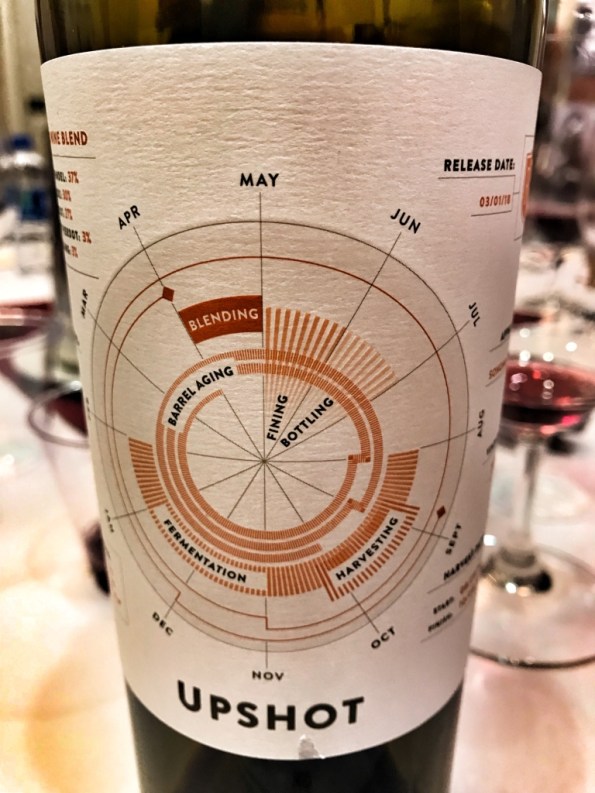
Wine 4: 2016 Rodney Strong Vineyards Upshot Red Sonoma County (14.5% ABV, $28, 37% Zinfandel, 30% Malbec, 27% Merlot, 3% Petit Verdot, 3% Riesling) – I love this unorthodox blend, an excellent wine for any special occasion, like Tuesday, for example. I also love the label. Forgot to include the picture in the tweet, so it is attached on its own here.
Wine 5: 2015 Browne Family Vineyards Cabernet Franc Columbia Valley (13.7% ABV, $35, 22 months in French oak) – beautiful Cab Franc specimen.
Wine 6: 2014 Dama Wines Collage Walla Walla Valley (14.7% ABV, $55, 69% Merlot, 26% Cabernet Sauvignon, 5% Cabernet Franc) – beautiful wine, beautiful label.
Wine 7: 2014 Dunham Cellars XX Cabernet Sauvignon Walla Walla Valley (13.8% ABV, $45, 100% Cabernet Sauvignon) – 9th winery in Walla Walla, 20th vintage (hence XX), and one of my most favorite from the tasting. Would be happy to drink every day.
Wine 8: 2015 Mansion Creek Cellars Red Dog Red Mountain AVA ($46, 70% Tinta Cão, 28% Cabernet Sauvignon, 2% Grenache-Syrah) – it is not every day you can taste a beautifully done Portuguese wine – made in the USA.
Wine 9: 2015 Brooks Rastaban Pinot Noir Eola-Amity Hills Oregon (14% ABV, $60) – stunningly different expression of the Pinot Noir. It evokes the same magic as tasting Cloudy Bay Sauvignon Blanc and thinking “this can’t be New Zealand Sauv Blanc”. Same is here. It is simply unique and different and in a class of its own. Probably my favorite wine of the session.
Wine 10: 2016 Troon Vineyard Cuvée Pyrénées, Estate Tannat/Malbec, Kubli Bench, Applegate Valley Oregon ($60, 62% Tannat, 38% Malbec) – organic, biodynamic, minimal intervention wine. Craig Camp lets the grapes speak, offering us a beautifully balanced wine.
There you go, my friends – the summary of one of my favorite exercises at the wine bloggers conference. This was definitely fun, and I will be delighted to do it again and again. Do you think 5 minutes is enough to learn about the wine and fall in love with it? Cheers!
WBC18: Merlot Deep Dive with Masters of Merlot
I remember my first “deep dive” into the Washington wines at the Chateau Ste. Michelle winery a few years ago, where I was told about the power of Washington Merlot. The explanation was given on the example of a group visiting Chateau Ste. Michelle from California, who were complaining that Washington Cabernet Sauvignon was too soft and mild as opposed to the Cabernet Sauvignon from California. The group was offered to taste the Washington Merlot wines next, and this is where they found the right amount of “power” they were looking for (or maybe even a bit more).
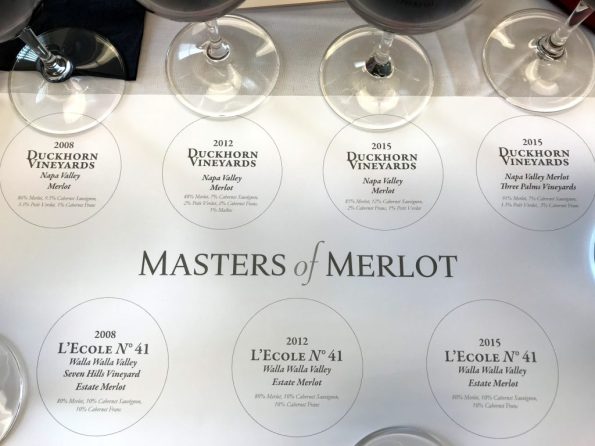
While attending Wine Bloggers Conference 2017, I was able to start the conference experience on a very high note with the deep dive pre-conference session on the California Cabernet Sauvignon, where we learned about one of the most classic California Cabs you can find – Beringer Cabernet Sauvignon. This year, at WBC18, we started on the equal, or maybe even higher note with the pre-conference session on Merlot. Very appropriately for being in Washington, and for the October being the #MerlotMe month, we were able not only taste a line of Merlot wines but to compare side by side the wines made by two of the Merlot pioneers and, unquestionably, the Masters – Duckhorn Vineyards from Napa Valley and L’Ecole No 41 from Walla Walla Valley.
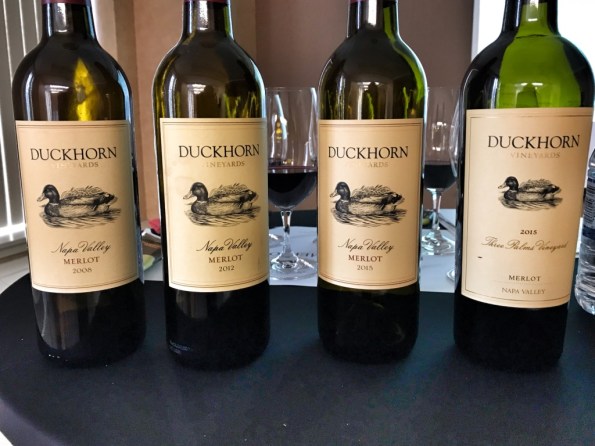
Dan and Margaret Duckhorn started Duckhorn Vineyards back in 1976, becoming one of the first 40 Napa Valley wineries. Even in those early days, it was clear that Cabernet Sauvignon was The Grape everybody wanted to work with. At that time, Dan and Margaret decided to proceed in their own way, and instead of joining the Cabernet Sauvignon movement, be unique and different and embrace the Merlot. Ever since their inaugural vintage in 1978, they never looked back and became known as Napa Valley Merlot pioneers and one of the best Merlot producers in the world, starting with their first release of Napa Valley Merlot in 1979. Today, Duckhorn Vineyards expanded dramatically and now comprise multiple wineries and brands around the USA – however, Merlot is the heart and soul of Duckhorn wines, and it is not surprising that 2014 Duckhorn Vineyards Three Palms Vineyard Merlot was the Wine Spectator’s 2017 Top 100 Wine of the Year.
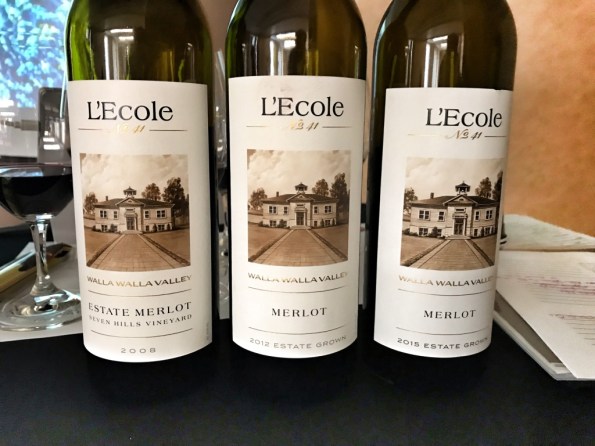
L’Ecole No 41 was founded by Baker and Jean Ferguson in 1983 when it became 3rd winery in Walla Walla, and 20th winery in the Washington state. Today the winery is run by the 3rd generation of the family, and sustainably farms estate Seven Hills and Ferguson vineyards. Merlot is the king in Washington, so it is not surprising that the L’Ecole crafts some of the best Merlot wines in Washington – however, their Cabernet Sauvignon, Syrah, and Bordeaux-style blends are equally world-famous.
Now that you know the bit of the history, let’s talk about our tasting. In our Masters of Merlot session, we had an opportunity to taste side by side Duckhorn Vineyards and L’Ecole No 41 Merlot from 2008, 2012 and 2015 vintages, plus a cherry on top (thank you, Duckhorn Vineyards) – 2015 Three Palms Merlot. Before I will leave you with the tasting notes for these beautiful Merlot wines, I just want to share some general observations. The three vintages of Duckhorn Merlot we were comparing had a different grape composition between the vintages while maintaining the same oak treatment for all the wines. As I mentioned in my summary post about WBC18 experiences, Washington weather is very consistent, so L’Ecole No 41 maintained the same grape percentages between the vintages and the same oak regimen – the changing parameters were only harvest dates and the vineyard source composition, which gradually shifted from solely a Seven Hills vineyard in 2008 to the 50/50 share between Seven Hills and Ferguson vineyards in 2015 (L’Ecole folks are ecstatic about the potential of the Ferguson Vineyard, now introducing more and more single vineyard wines from it).
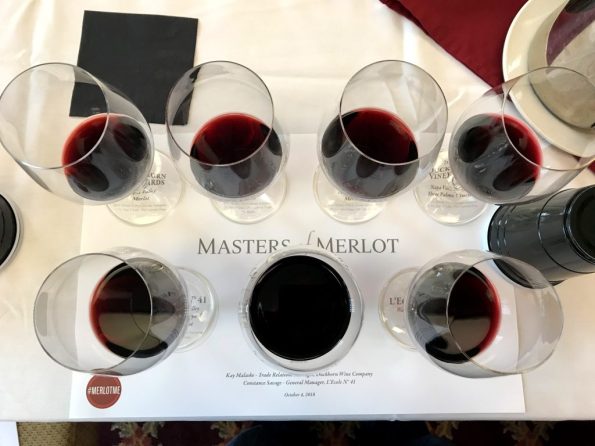
Now, it is (finally!) time to talk about the wines. Here we go, in the tasting order:
2008 L’Ecole No 41 Estate Merlot Seven Hills Vineyard Walla Walla Valley (14.5% ABV, $?, 80% Merlot, 10% Cabernet Sauvignon, 10% Cabernet Franc, 18 months in French oak)
Rutherford dust on the nose, chewy, dense, tart cherries, needs time! I want more fruit! Would love to try it in 5-8 years.
2008 Duckhorn Vineyards Merlot Napa Valley (14.5% ABV, $70, 86% Merlot, 9.5% Cabernet Sauvignon, 3.5% Petit Verdot, 1% Cabernet Franc, 16 months in French oak)
Raisins on the nose, very explicit, beautifully dry on the palate, sage, anise, tart, showed a bit of Rutherford dust after swirling, great acidity. Amarone! I want to drink it NOW!
2012 L’Ecole No 41 Estate Merlot Walla Walla Valley (14.5% ABV, $30, 80% Merlot, 10% Cabernet Sauvignon, 10% Cabernet Franc, 76% Seven Hills Vineyard, 24% Ferguson Vineyard, 18 months in French oak)
Espresso, Rutherford dust (a bit less explicit than 2008). More fruit on the palate, bright, beautiful.
2012 Duckhorn Vineyards Merlot Napa Valley (14.5% ABV, $65, 88% Merlot, 7% Cabernet Sauvignon, 2% Petit Verdot, 2% Cabernet Franc, 1% Malbec, 16 months in French oak)
Delicate, fresh plums, a touch of truffle notes, plums and lavender on the palate, delicate, fresh, round.
2015 L’Ecole No 41 Estate Merlot Walla Walla Valley (14.5% ABV, $36, 80% Merlot, 10% Cabernet Sauvignon, 10% Cabernet Franc, 50% Seven Hills Vineyard, 50% Ferguson Vineyard, 18 months in French oak)
Dark fruit, Rutherford dust, dark berries, a bit of bell pepper on the palate, plums, sapidity, interesting minerality. Needs time.
2015 Duckhorn Vineyards Merlot Napa Valley (14.5% ABV, $56, 85% Merlot, 12% Cabernet Sauvignon, 2% Cabernet Franc, 1% Petit Verdot, 16 months in French Oak)
Closed nose, a touch of mint, however – palate is beautifully ripe, open, clean, fresh fruit.
2015 Duckhorn Vineyards Merlot Three Palms Vineyard Napa Valley (14.7% ABV, $98, 91% Merlot, 7% Cabernet Sauvignon, 1.5% Petit Verdot, 0.5% Cabernet Franc, 18 months in French Oak)
Rich, opulent, caramel, anise, sage, on the palate coffee, ripe fruit, mocha, dark chocolate. Big and delicious.
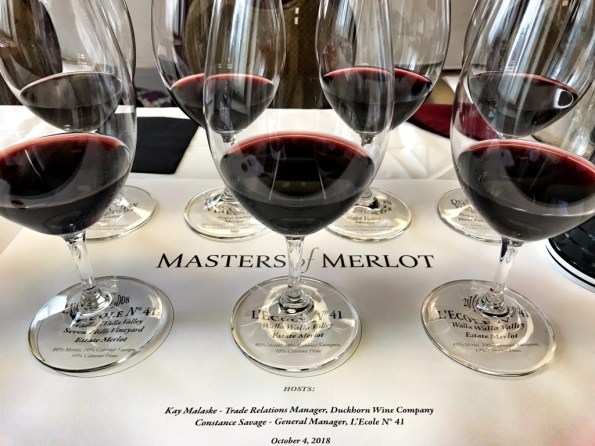
Were these wines similar, even between the different wineries? Of course. I love the presence of the Rutherford dust on many of the wines we tasted – after tasting best of the best in Rutherford in Napa Valley – the BV wines, I picked up that term and I always use it describe the perceived dusty impression of the wine’s aroma. L’Ecole Merlot was a lot more structured and minerally-driven. I would safely say that 2-3 hours in the decanter would help those wines a lot. The Duckhorn Merlot were a lot more fruit driven but offered an impeccable balance with that fruit. If I have to pick the favorite, it would be between 2008 Duckhorn (ahh, that Amarone-like beauty) and 2015 Duckhorn Three Palms, but there were really no bad wines in this tasting.
There you have it, my friends. Beautiful Merlot wines, easy to love and appreciate, and most importantly, offering lots of pleasure. How is your Merlot Me month going? What are your discoveries or the old favorites?
I have to say special thank you to Constance Savage of L’Ecole No 41 and Kay Malaske of Duckhorn Vineyards for offering this special tasting to the wine bloggers! Cheers!
A Pinot Noir Lesson for Self with Tendril Cellars
 Back in May, we virtually met with Tony Rynders of Tendril Cellars and talked about … many things wine, of course – you can find this conversation here.
Tony is one of the few winemakers I know who teaches people about his wines by conducting organized tastings. As I didn’t have an opportunity to attend any of those events, I decided to run a lesson for myself on the same subject. How you ask? Easy – by tasting the wines blind.
I can literally see the surprised looks and raised eyebrows. How is it a blind tasting if I know already everything about those wines? You see, the lineup I had included 6 wines. Out of those six, four were different Pinot Noirs – different vineyards, different winemaking process, different price points. Obviously I was not planning to try to identify the exact wine, but still – will I be able to taste the difference, and maybe identify the most expensive wine? Comparing Chardonnay and white Pinot Noir should also be a fun exercise, as those are two siblings ruling the world of Champagne. Yep – lots of opportunities for having fun.
Okay, blind tasting it is. The bottles are wrapped, the numbers are randomly assigned. May the taste buds serve me right!
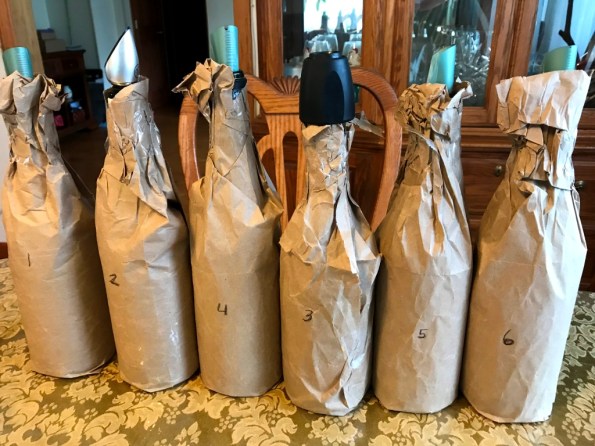
Here are my notes for the wines while tasting them blind:
1 Light golden color
Vanilla, golden delicious,
Bright acidity, vanilla, apples, a touch of honey
2 toasted notes, yeast
Perfect acidity, Granny Smith apples, a touch of honey, toasted notes on the palate, outstanding
white pinot?
3 Dark ruby
Earthy, Rutherford dust on the nose, a touch of roasted meat,
Beautiful palate, soft plums, round, espresso, excellent acidity, wow. ThightRope?
4 Ruby
Concentrated nose, mint, eucalyptus
Concentrated palate, acidity, eucalyptus, sage, violets on the palate. Very unusual. Single Vineyard?
5 Dark ruby
Wow. Blueberries, raspberries, restrained
Very smooth, silky, bright fresh fruit, acidity, firm structure, excellent balance, never-ending finish. Wow. C-Note?
6 Dark ruby
Nose old world style, forest floor, mushrooms, great restraint
Round palate, blackberries, baking spices, soft, delicious. Outstanding. Extrovert?
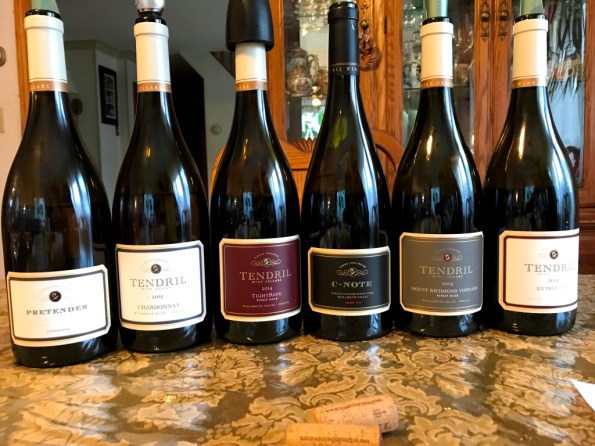
Everyone knows that the best part of the blind tasting is … unwrap! The moment of truth, pure and simple. Here are my notes for the tasting of the wines non-blind, 3 hours after the blind tasting (in the same order):
1 – 2015 Tendril Cellars Pretender Willamette Valley (14.1% ABV, $60, white Pinot Noir)
A bit darker color (golden)
Vanilla, butter
Plump, round, crisp acidity, acidity on the finish (very extensive), plump body.
8, excellent. Reminiscent of a nice Marsanne.
2 – 2015 Tendril Cellars Chardonnay Willamette Valley (13.5% ABV, $40)
Honey, gunflint, vanilla
Brioche, Granny Smith Apple, a touch of butter, clean acidity, excellent
8, outstanding.
3 – 2014 Tendril Cellars Extrovert Pinot Noir Willamette Valley (14.1% ABV, $48)
Beautiful, classic, open Pinot, with cherries, sage, and plums.
Soft cherries and plums on the palate, clean acidity, sage, violets, delicious, wow
8, delicious.
8+/9-, a pure standout. Polished, velvety, seductive, like a light touch on the hand which makes your whole body to vibrate. More reminiscent of CA Pinot than dark and loaded
4 – 2014 Tendril Cellars TightRope Pinot Noir Willamette Valley (14.2% ABV, $64)
Very tight, espresso, licorice, blackberries
Beautiful, sweet fruit, noticeable tannins, very round, medium body, cherries and cherry pit.
8, excellent.
Complex nose of herbs and spices, exotic and unusual.
Wow, great power and complexity, not a typical Pinot, might be more of a Zinfandel or even Syrah profile. Needs time, lots more time.
5 – 2014 Tendril Cellars Pinot Noir Mount Richmond Single Vineyard Willamette Valley (14.1% ABV, $60)
Very unusual. Beets and caramel on the nose, with a touch of dark chocolate.
Blueberries and caramel on the palate, nice salinity, raspberries. Medium+ body. Excellent
8
Very ripe after 2 days been open (air pumped out). Beautiful palate, minerality-driven, cigar box, eucalyptus, tense, powerful. Can be mistaken for a Rioja of a nice caliber.
6 – 2014 Tendril Cellars C-Note Pinot Noir Willamette Valley (14.1% ABV, $100, 100% Whole Cluster, 100% new oak)
Sublime. Can be described only via allegories, such a finesse. Dark chocolate and cherries. Excellent
Equally delicate on the palate, crisp acidity, bright, sweet plums, and tobacco. Outstanding.
8, excellent
Nose is incredible. First, you want to smell.this.wine.for.a.long.time.
Superb, elevated wine, complex, great finesse, and needs time. 8+
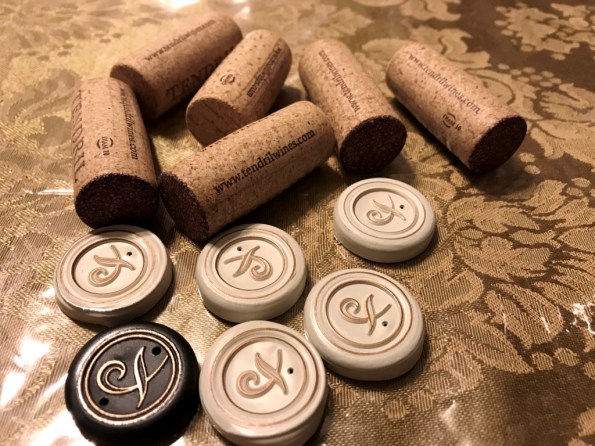
As you can tell, I failed miserably. I didn’t identify any of the wines – however, this was perfectly in line with my expectations. What was definitely interesting is that despite the four Pinot Noir wines been all from Oregon and at about the same age, they were absolutely, unquestionably, distinctly different – and strikingly delicious.
Of course, I extended the pleasure of tasting some of those wines over the few days, which is reflected in the tasting notes above.
Here you are, my friends. Blind tasting or not, the Tendril Cellars wines are worth seeking – the virtual tasting will simply not do it – these are the wines to experience. And if you need to choose only one, I can let you in on a secret (don’t tell anyone!) – the Extrovert was my favorite. Cheers!
Thinking About Albariño, or Notes from Albariño Deep Immersion with Snooth – 2018 edition
Luckily, Albariño doesn’t need an introduction to the wine lovers anymore (if you think I live in lalaland, please speak up). Albariño is the best known white grape of Spain, making crisp, dry, minerally-infused, refreshing white wines, perfectly suitable to support any seafood dish, as they always had in their native Galicia region. As with most of the white wines, Albariño is typically associated with summer, but it is a versatile wine all year around – and typically very reasonably priced.
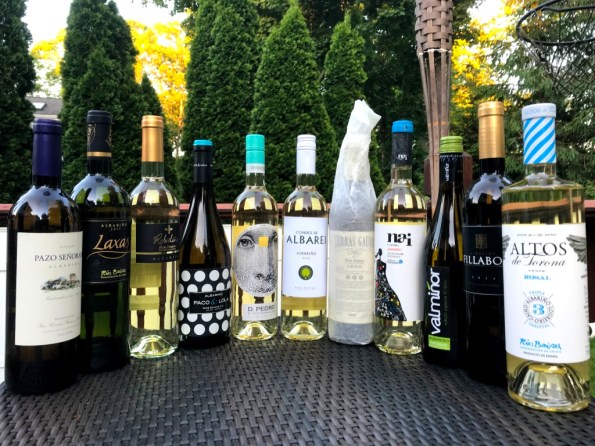
For the second year in the row, I had a pleasure of participating in the virtual tasting of Albariño wines, organized by Snooth, one of the largest online wine communities. I will not delve into the technical details of the region, as I had an extensive coverage in last year’s post, and instead, I will simply share my notes for the wines we tasted.
Here are the notes, sorted by the sub-region of Rias Baixas:


Sub-region: Val do Salnés:
2016 Condes de Albarei Albariño Rias Baixas DO (13.5% ABV, $15)
Light straw
Lemon, lemongrass, hint of peach
Lemon, good minerality, medium body, good mouthfeel, mostly acidity on the finish
8-, good balance, round
2017 Pazo Señorans Albariño Val do Salinés Rías Baixas DO (13.5% ABV, $25)
Straw color
Rich citrus – lemon, grapefruit, orange
Clean acidity, lemon, thyme, good minerality, vibrant, fresh
8-, excellent
2017 Nai e Señora Albariño Val do Salnés Rías Baixas DO (13% ABV, $15.57)
Straw pale
Tropical fruit, white flowers
Round, clean, good balance of fruit and acidity
8, definitely one of the favorites.
2017 Paco & Lola Albariño Rías Baixas DO (13% ABV, $21.99)
Lightest color of all, straw pale
Lemon, mint, nice minerality
Fresh, crisp, cut-trough acidity, lemon grass
8-, round and extremely refreshing


Sub-region: Contado do Tea:
2016 Fillaboa Albariño Rias Baixas DO (13% ABV, $20)
Light golden
Candied lemon, vanilla, touch of butter, medium+ intensity, inviting
Crisp acidity, fresh, touch of salinity, fresh lemon, steely notes, vibrant
8-/8, excellent
2017 Señorío de Rubiós Robaliño Albariño Rias Baixas DO (12.5% ABV, $18)
Straw pale
Sage, lemon, hint of overripe white peach
Good acidity, lemon finish, Meyer lemon notes
7/7+, Needs more vibrancy.
2017 Bodegas As Laxas Albariño Rias Baixas DO (12.5% ABV, $18)
Light straw color
Lemon, touch of minerality,
Minerality, forthcoming acidity, hint of grapefruit, Mayer lemon, good balance
8-, very good, balanced wine


Sub-region: O Rosal:
2017 Valmiñor Albariño Rías Baixas DO (13% ABV, $18.99)
Light gold
Fresh white plums, intense, pineapple, very inviting
Crisp acidity, lemon notes, fresh
7/7+, nice, simple, varietally correct
2016 Don Pedro Albariño De Soutomaior Rias Baixas DO (13% ABV, $18.99)
Light gold
Touch of honeysuckle, white flowers, hint of peach
Crisp acidity, pure lemon, vibrant, clean, lots of minerality, good midpalate weight
8-, steely goodness of the young Chablis, excellent, lots of pleasure. This wine will dramatically evolve over the next 5-7 years.
2017 Altos de Sorona Rosal Rías Baixas DO (12.5% ABV, $20, blend of Albariño, Caiño, Loureiro)
Straw color
Lemon, sea air, minerality
Lemon, crisp acidity, good weight, fresh, vibrant.
8-, excellent balance, can be had by itself as a summer day thirst quencher, or with some oysters (would work beautifully)
2017 Terras Garuda O Rosal Rias Baixas DO (12.5% ABV, $23.99, 70% Albariño, 10% Loureira, 20% Caiño Blanco)
Light golden color
Tropical fruit, guava, candied lemon, vanilla
Rich, generous, hint of watermelon and pineapple, crisp acidity, fresh, vibrant
8-, excellent
If you want to see the recording of the tasting, you can find it here. If you want to try the wines we tasted, most of them are still available on the Snooth website, also at a great price – take a look here.
I have to say that the quality was excellent across all the wines we tasted, with some of the standouts, such as Nai e Señora Albariño. Is Albariño a part of your standard wine routine? Do you have any favorites? Cheers!
P.S. Procrastination sometimes offers benefits – this tasting took place in May, but today (August 1st, 2018) is International Albariño Day, so I guess the post about Albariño is quite appropriate.
Sequel in Reverse – More About Wines of Southwest France
What’s up with the “sequel in reverse”, you ask? Easy. All we need to do is flip the timeline. This post is a continuation of the previous post about wines of Southwest France – however, the tasting I want to share with you took place almost 6 months ago, at the end of the last year 2017, hence the “reverse” notion.
Outside of the sequence of the events, the two tastings are perfectly aligned – they are both squarely dedicated to the wines of one of the oldest wine-producing regions in the world – Southwest France.
I can’t explain why, but I feel that I need to make a confession. If you look through the pages of this blog – and there are a few here – I’m sure you will come to a conclusion that I primarily drink wines from California, Spain, and Italy, with an occasional sprinkle of everything else. And you will not be wrong. However, truth be told, my true love to wine started from French wines. I read the most about French wine and French wine regions. I was obsessed with trying to find an amazing Bordeaux for less than $10. Côtes du Rhône wines were a staple at the house. I spent countless hours in the France aisles of the wine stores (luckily, I was working in a close proximity of the Bottle King in New Jersey), looking for the next great experience with the wines from the Loire, Rhône, Bordeaux, Chablis, and others. French wines were “it” – unquestionably, a sacred territory. As the time was going by, and Bordeaux and Burgundy prices were going up faster than the weeds growing after the rain, the French wines moved mostly into a category of a rare encounter.
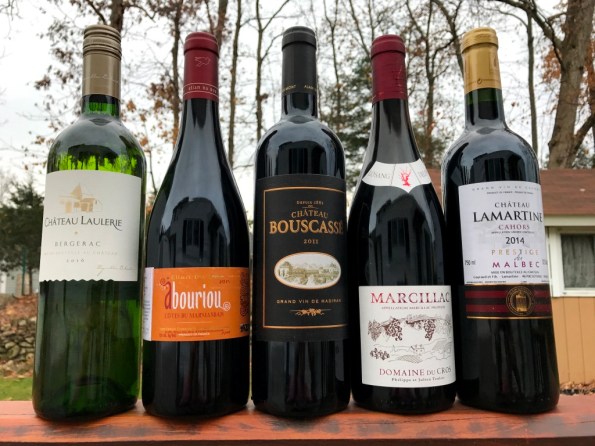
Last December was not the first time I participated in the virtual tasting about the French wines – but somehow, when I opened the box with these wines, something warm and fuzzy came over, and my first reaction was “ahh, I really, really want to drink these wines!”. There is nothing special about this particular set – no big names (I don’t believe Southwest France has much of “big names” anyway), no flashy, ultra-modern labels – and nevertheless, there was a promise of a great time in their simplicity and authenticity. These wines also perfectly played to my other “wine obsession” – the love to obscure and lesser-known wines, so altogether, I took a great pleasure in anticipation of the tasting.
As this was a virtual tasting, I had both the wines and time at my disposal, so unlike the previous post, here are my detailed notes in the usual format:


2016 Chateau Laulerie Bergerac AOC (12% ABV, $12, 85% Sayvignon Blanc, 15% Semillon)
C: Light gold
N: beautiful, fresh, medium+ intesnsity, honeysuckle, white flowers, peach
P: fresh, crisp, excelllent lemony acidity, white stone fruit, restrained
V: 8-, delicious, will be great with food and without, great QPR
2015 Domaine Elian Da Ros Abouriou Côtes du Marmandais AOC (12% ABV, $23.99, 90% Abouriou, 10% Merlot)
C: dark ruby
N: freshly chrushed berries, leafy notes, cherries, anis
P: ripe plums, sweet tobacco, eucalyptus, medium long sweet tobacco finish
V: 8-, would love to try it with an actual cigar. Needs a bit of time. And a new grape – Abouriou


2015 Domaine du Cros Marcillac AOP (12.5% ABV, $15.99, 100% Fer Servadou)
C: Ruby
N: earthy notes, mint, some medicinal notes (iodine?)
P: beautiful fresh pepper on the palate, tobacco, cherries – that pepper is delicious, love the wines like that
V: 8/8+, delicious, excellent QPR
2014 Château Lamartine Prestige du Malbec Cahors AOC (12.5% ABV, $17.99, 100% Cot (Malbec))
C: dark garnet
N: vegetative, tobacco, a touch of cherries
P: bright acidity, dark fruit, tart cherries and cherry pit, noticeable tannins.
V: 8-, pleasant, will work great with the steak, but needs time
2011 Château Bouscassé Grand Vin de Madiran (14.5% ABV, $17.95, 60% Tannat, 25% Cabernet Franc, 15% Cabernet Sauvignon)
C: dark garnet
N: eucalyptus, forest floor, a touch of eucalyptus,
P: initial tannins attach, pepper, dark round fruit, excellent extraction, layers of flavor, firm structure
V: 8+, outstanding, powerful, balanced, needs time!
The Southwest France wines are a treasure trove for the wine lovers – they capitalize on tremendous history, experience, unique terroir and unique grapes, offering oenophiles lots of pleasure in every sip. Look for the wines of Southwest France – and you can thank me later.
The Region Which Started It All
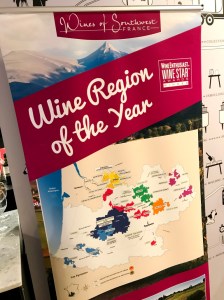 The wine had been made in the Southwest of France ( Sud-Ouest in French) almost forever – in terms of human life, 2,000+ years well classified as “forever”. The region is considered one of the “cradles of winemaking” in Europe, and it maintains its uniqueness and diversity today – for example, out of 300 grape varieties used in the winemaking in the region, 120 are not found anywhere else.
Of course, we know that winemaking started about 8,000 years ago, and not in the Southwest of France. So what’s up with “started it all” claim? Glad you asked! Let me explain.
We live in the times when the wine is a part of daily life of many. Drinking wine is a norm and normal, simply a part of the daily routine for many, not a luxury or a weird exception anymore. Yes, that’s how it was in Europe forever – but now I’m talking about the rest of the world, countries such the USA, and even China now heading that way. The demand for wine had been constantly increasing since the late 1990s, and even Great Recession of 2008 didn’t kill it (just shifted the “acceptable” price ranges). Is it all just a normal course of events? We can, of course, settle for this. However, I believe that on a deeper level, there are exact reasons, “tip the scale” moments for many things which seem to happen just on its own – however, sometimes it is not easy to identify those “reasons”.
Remember the impact of the movie Sideways on consumption and production of the Merlot in the USA? That movie was the reason for a huge slump after 2004, and production and interest to Merlot are still in the recovery mode even now, 14 years later.
Late in the 1980s, the world started talking about The French Paradox – French eat cheese and foie gras, cook with butter and duck fat daily, and nevertheless, the coronary disease rates are much less than in the countries with comparable living standards and much lesser fat consumption. Possible explanation? Red wine. French consume lots of red wine, and resveratrol, one of the prominent substances found in seeds and skins of the red grapes, acts as a defense against clogging of the arteries. That was the outcome of the extensive medical research study conducted in France, which became known in the world as French Paradox.
In 1991, CBS in the USA dedicated one of their popular programs, 60 Minutes, to the French Paradox, and you know how Americans are, right? We are always looking for an easy way out, so wine sounded like an easy enough cure, and I believe this became a pivotal moment which triggered a renewed interest in the wine. Almost 40 years later, it seems that the wine successfully keeps the momentum. And before you will attack me with all the facts from the latest research – yes, I’m aware of many articles pointing to the issues with the study. Whether French Paradox study conclusions were medically solid I have to leave to professionals to debate and decide on. But it was still that pivotal “tip the scale” moment which changed the perception of the wine for many in the world.
At this point, I’m sure you want to see the connection between the title, the Southwest of France, and the story of the French Paradox, right? Here it is. While attending the tasting of the wines of Southwest France, I was listening to the presentation by sommelier André Compeyre, who mentioned that Southwest France has the biggest number of centenarians in France and it was one of the main regions where the French Paradox study was conducted – here we go, now everything is connected and explained. Is it time for a glass of wine?


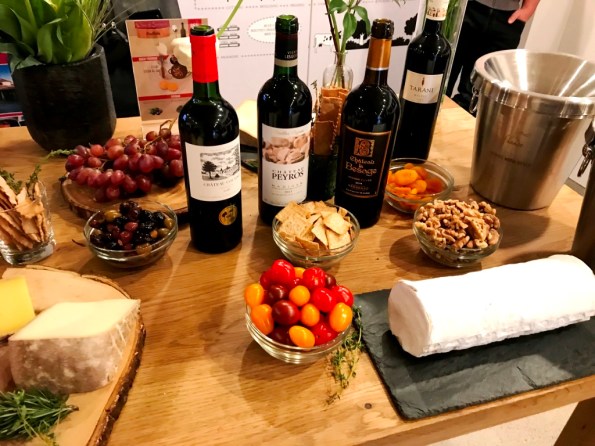
The tasting took place at the little store in New York called the French Cheese Board – what can be better than wine with a little cheese, right? Especially if both come from the same region, where they trained to live together for a few thousand years…
We started tasting with the sparkling wine, moved to the white and then red. As usual in such events, there was not enough time (and desire) for the formal notes, so below is the best I can offer. However, overall, the word is “outstanding” – the wines of Southwest France are well worth seeking – and you will not be disappointed.


NV Domaine du Moulin Mauzac Méthode Ancestrale Gaillac AOP (12% ABV, $15, 100% Mauzac) – very nice and simple. 7+
2017 Domaine du Tariquet Premières Grives Côtes de Gascogne IGP (11.5% ABV, $14, 100% Gros Manseng) – semi-sweet wine. It appears to be a traditional wine in the Southwest of France, which people are accustomed to drinking. It is possible that the wine was not cold enough when I tasted it, but I really didn’t appreciate it. If you like sweeter wines – this might be the one for you.
2016 Héritage Blanc Saint-Mont AOP (13% ABV, blend of Gros Manseng, Petit Courbu, Arrufiac) – excellent, bright, crisp, but very complex and thought-provoking. A touch of grass, vanilla, ta ouch of honey on the palate, green apples, wow. Excellent acidity. Great complexity. 8. And let’s not forget 2 new grapes – Petit Courbu and Arrufiac
2017 Domaine de Joy l’Eclat Côtes de Gascogne AOP (12% ABV, $7, blend of Colombard, Ugni Blanc, Gros Manseng and Sauvignon Blanc) – crisp, clean, superb. 8


2012 Château de Haute Serre Cahors AOP (13.5% ABV, $22) – superb, ripe berries, blueberries, round, delicious, acidity, vanilla, the backbone of minerality. 8+
2012 Château Montus Madiran AOP (15% ABV, $32.99, blend of Tannat and Cabernet Sauvignon) – smoke, campfire, tobacco, great concentration, powerful, excellent, great acidity, outstanding. 8
2011 Jean-Luc Baldès Triguedina Clos Triguedina Cahors AOP (14.5% ABV, $40, 85% Malbec, 10% Merlot, 5% Tannat, 12 months in oak) – touch of barnyard on the nose, delicious fruit, ta ouch of funkiness on the palate, great acidity. 8
2015 Domaine de Terrisses Terre Originelle Gaillac AOP (13% ABV, $16, blend of Braucol (Fer) and Prunelart) – beautiful Cabernet nose, crisp, cassis, Bordeaux style -outstanding. 8. and a new grape – Prunelart
2015 Réserve Bélingard Côtes de Bergerac AOP ($15, 50% Cabernet Sauvignon, 50% Merlot) – beautiful, warm nose, vanilla, cassis, beautiful, soft. 8
2013 Chateau Peyros Vieilles Vignes Madiran AOP (13% ABV, $18, 80% Tannat, 20% Cabernet Franc) – excellent, soft. 8-
2017 Domaine de Joy l’Eclat Côtes de Gascogne AOP (12% ABV, $7, blend of Colombard, Ugni Blanc, Gros Manseng and Sauvignon Blanc) – crisp, clean, superb. 8
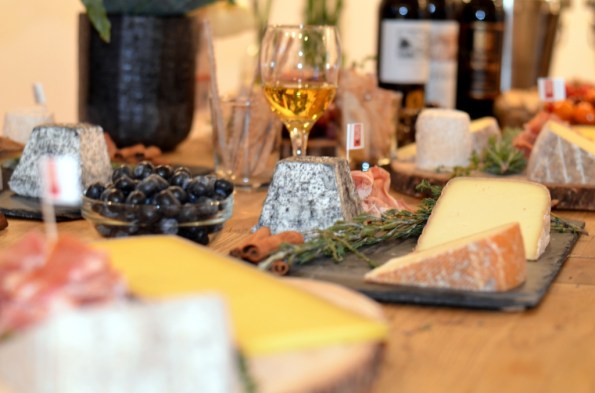


In addition tot he wines, we had an opportunity to indulge on the local cheeses of Southwest France – Ossau Iraty, Buche de Lucay, Bethmale Chèvre, Chabichou, Valencay, and Comté. Sorry, I’m not going to give you any individual notes, but all the cheese were superb. If you are like me and accustomed to the Comté cheese from Costco – that Comté in the tasting was the whole different game (go visit the store and taste, you don’t have to believe me).
There you go, my friends. Have you had wines of Southwest France lately? Any favorites you want to mention? Let’s raise the glass to many happy wine discoveries – and some red wine as a solution to all our problems. Cheers!
Discover Wines Of Loire Valley
What do you think of the wines from the Loire Valley? Why, you say you are not sure? Come on, give yourself a credit – there is a good chance you had Loire Valley wines, but maybe you simply didn’t associate those wines with the Loire Valley? Let me help you – Sancerre, Pouilly-Fumé (not to be confused with Pouilly-Fuissé), Muscadet, Vouvray, Touraine, Anjou, Saumur, Chinon – had any of the wines with these words on the label? Ah, of course, you are saying? Then now you know – those are all the wines from the Loire Valley in France.
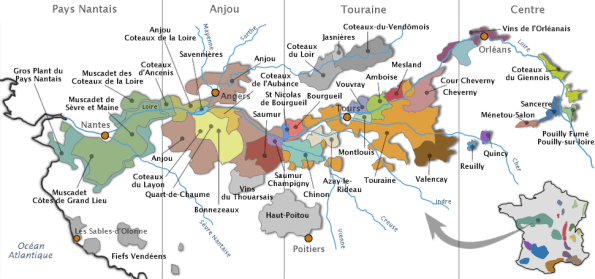
Loire Valley appellations map. Source: http://www.loirevalleywinetour.com/
The Loire Valley is not the most famous winemaking region in France, but it deserves the utmost respect. Here are some facts for you. Number one region in France for production of the white wines. The largest producer of the sparkling wines in France outside of Champagne. Number two producer of Rosè wines in France after Provence. The largest in France vineyard declared UNESCO World Heritage site. 79 sub-appellations and denominations and more than 2,000 years of winemaking history. These numbers speak for themselves. And to round up the stats – five grapes (Sauvignon Blanc, Chenin Blanc, Melon de Bourgeois, Cabernet Franc and Pinot Noir) comprise most of the Loire wines, but a total of 24 grapes are used there.
A few weeks ago, I was happy to attend the “Spring To Loire” trade tasting in New York City, alongside the inimitable, one and only JvB Uncorked – we definitely had lots of fun tasting through the Loire wines together. It was also literally the first tasting this year which I managed to attend, so “happy” is the right word. Besides, I love Loire wines, with Chinon and Saumur been personal pet peeves, as producers of delicious Cabernet Franc.
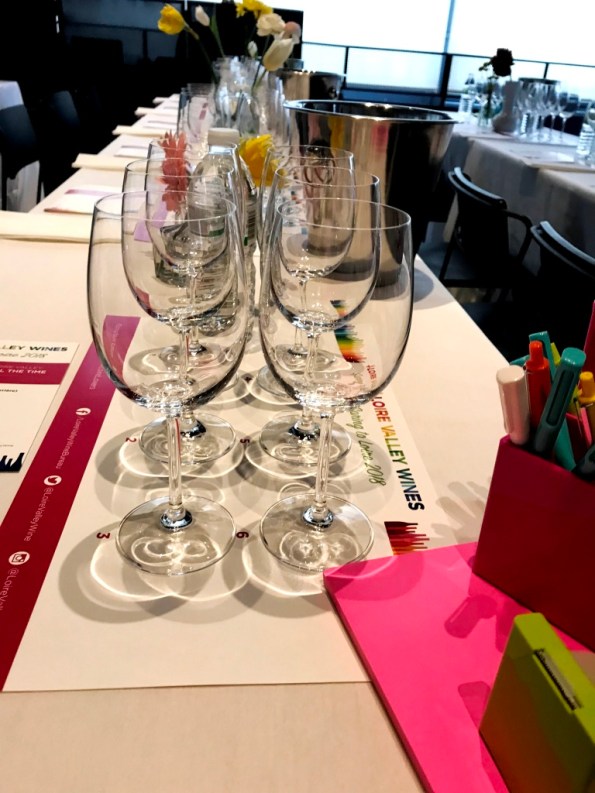
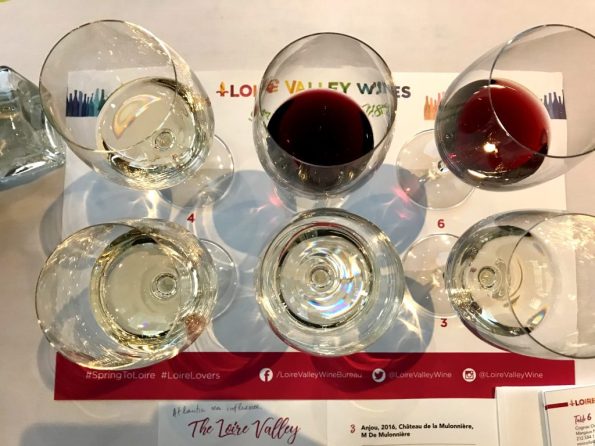
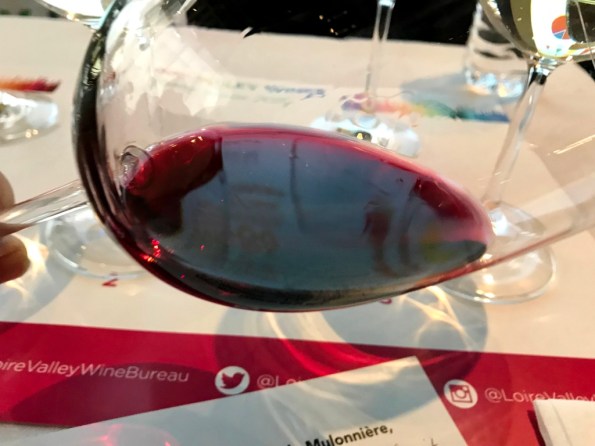
The tasting was unquestionably interesting. First, it had a couple of curious moments. There was a seminar which offered an excellent introduction to the region, tasting all major styles and varieties. Two of the reds in the tasting were rather green and aggressive. At the end of the tasting, I asked a lady sitting next to me how did she liked the wines, and she told me that she didn’t like the red wines individually, but she mixed them (!?!?) and they became more palatable – truly a wow moment in the professional tasting. And then it was another lady who (accidentally or not) dumped what seemed like a whole bottle of perfume on herself – trying to smell nuances of the wine standing next to her was beyond mission impossible. Some memorable moments…
Okay, let’s talk about the wines. I have a few favorites which I will be happy to mention, but first, let me give you my broad stroke impressions.
- Sancerre had a much lesser amount of fresh cut grass than I was expecting. Okay, I’m not an expert on Sancerre evolution, as I rarely drink them. However, based on what I remember from my education and some of the previous experiences, classic Sancerre is supposed to have pronounced grass and cat pee notes – didn’t find much of the Sancerre like that. Touraine Sauvignons, on another hand, were delicious across the board with an abundance of the freshly cut grass.
- Many of the Muscadet-Sèvre-et-Maine wines were lacking the characteristic acidity. When going for Muscadet, I’m expecting acidity which will plucker my mouth and make the cheeks to go meet each other. Many Muscadet in the tasting were nice white wines, but they were lacking their prized quality.
- The Chenin Blanc was a star. We had a number of delicious Vouvray and not only wines, which offered bright acidity, sometimes a touch of sweetness, a round mouthfeel – all which you would expect from a nicely done old world Chenin.
- Many of the Chinon and Saumur Reds were too tannic. This was a total surprise – the wines were fermented and aged in stainless steel tanks, nevertheless, the mouth was drying up almost as much as if you would be tasting the young Barolo. I was told that the whole cluster fermentation and aging was a culprit, but this was not a pleasant surprise. I really expect much more elegant and approachable wines to come from those regions. Nevertheless, we managed to find a few of the superb reds.
Done with my general impressions – here are some limited notes on my favorite wines.


Sparkling:
Crémant de Loire:
NV Maurice Bonnamy Crémant de Loire Brut (SRP: $16.99, 65% Chenin Blanc, 20% Chardonnay, 15% Cabernet Franc) – nice, refreshing, yeasty
NV Maurice Bonnamy Crémant de Loire Rosé (SRP: $16.99, 100% Cabernet Franc) – toasted bread and strawberries, nice, refreshing, great mouthfeel
NV Ackerman Crémant de Loire Brut (70% Sauvignon Blanc, Chardonnay and Cabernet Franc for the rest) – this wine was presented in the seminar, so I had a bit more time to spend with it – great nose, toasted bread, fresh, a touch on a sweeter side but still very nice
White:


Melon de Bourgogne:
2017 Sauvion Muscadet-Sèvre-et-Maine AOC (SRP $13.99) – crisp, fresh, great acidity
2014 Château de la Cormerais Monnieres-Saint Fiacre Muscadet Sèvre et Maine (SRP $19.99) – outstanding. fresh, clean
2012 Domaine de Colombier-Mouzillon-Tillières Muscadet Sèvre et Maine (SRP $19.99) – great complexity


Sauvignon Blanc:
2016 Domaine Pascal Jolivet Les Caillottes Sancerre AOC (SRP: $38) – steely acidity, crisp, a touch of grass.
2015 Domaine Pascal Jolivet Sauvage Sancerre AOC (SRP: $73) – this wine was just ok. The only reason to include it – this was probably the most expensive wine in the tasting, and it really didn’t deliver.
2016 Domaine Michel Vatan Calcaire Sancerre AOC – presented at the seminar – on the nose, minerality, lemon, distant touch of the grass, crisp, fresh. Excellent acidity on the palate, very nice overall.
2017 Raphael Midoir De Silex et Tuffeau Touraine AOC (SRP $14.99) – outstanding. Classic nose, delicious.
2016 Pierre Prieuré & Fils Domaine de Saint-Pierre Sancerre AOC (SRP $19.99) – excellent, fresh
2016 Raphael Midoir La Plaine des Cailloux Touraine-Oisly AOC (SRP $19.99) – outstanding, great complexity.


Chenin Blanc:
2016 Château de la Mulonnière M De Mulonnière Anjou – presented at the seminar – delicious. White stone fruit, peaches on the nose. A touch of sweetness and perfect balance on the palate. Outstanding.
2017 La Croix des Loges Anjou White AOC (SRP $14.99) – outstanding. Clean, fresh, touch of sweetness.
2014 La Croix des Loges Trois Failles Anjou AOC (SRP $22.99) – outstanding, gunflint on the nose, clean, balanced palate.
1977 La Croix des Loges Bonnezeaux AOC – yes, 1977, this is not a typo – this was an off the list, off the charts treat – a Chenin Blanc dessert wine, still elegant and complex.
Other:
2017 Domaine du Colombier Vla de Loire IGP ($14.99, 100% Sauvignon Gris) – excellent, fresh, complex.


Reds:
Cabernet Franc:
2015 Domaines des Varinelles Saumur-Champigny AOC (SRP: $20) – amazing similarity with Lodi wines on the palate – soft, aromatic, touch of cinnamon, ripe blueberries and raspberries, hint of blueberry compote. The similarity with Lodi is mind-boggling. Let’s not forget that this is Cabernet Franc wine, so there must be something there which can explain it. Need to dig deeper into this, I’m really curious.
2015 Domaines des Varinelles Laurintale Saumur-Champigny AOC (SRP: $24) – muted nose, and practically identical on the palate to the previous wine from the same domain. I will look into it… But two superb wines by all means – the wine are coming from the old world, but clearly, are screaming “new world”.
2017 Domaine du Raifault Chinon AOC (SRP: $17.95) – wow! Cassis on the nose, cassis on the palate – spectacular. This was my best of tasting red wine. This wine is not available in the US yes (we tasted one of only two bottles brought in for tasting) – in the process of being imported. Once it arrives, do yourself a favor – go find it and buy a case, or two. You can thank me later.
2016 Sauvion Chinon AOC (SRP: $17.99) – interesting dense nose, great palate, sandalwood, smoke, fresh, present. Tannins are still aggressive, but not as much as others.
Pinot Noir:
2014 Xavier Flouret Domaine de Chatenoy Menetou-Salon AOC (SRP: $20.95) – great Pinot Noir – excellent fresh nose, great balance of dark fruit on the palate, outstanding. 15 generations of vignerons know what they are doing. Definitely one of the highlights of the tasting.
2015 Domaine Gérard Millet Sancerre Red (SRP: $25) – fresh, crisp, herbs, spices, light.
Blends:
2014 Domaine de la Chaise Touraine-Chenonceaux AOC ($22, 70% Cabernet Franc, 30% Côt) – fresh, delicious, cassis and tobacco, excellent balance
The Spring is finally here (or at least it seems so in New York), so go on, find some Loire wines to explore on your own. Cheers!
Last Bottle Sign Up ($10 credit)




 Talk-A-Vino