Archive
Sequel in Reverse – More About Wines of Southwest France
What’s up with the “sequel in reverse”, you ask? Easy. All we need to do is flip the timeline. This post is a continuation of the previous post about wines of Southwest France – however, the tasting I want to share with you took place almost 6 months ago, at the end of the last year 2017, hence the “reverse” notion.
Outside of the sequence of the events, the two tastings are perfectly aligned – they are both squarely dedicated to the wines of one of the oldest wine-producing regions in the world – Southwest France.
I can’t explain why, but I feel that I need to make a confession. If you look through the pages of this blog – and there are a few here – I’m sure you will come to a conclusion that I primarily drink wines from California, Spain, and Italy, with an occasional sprinkle of everything else. And you will not be wrong. However, truth be told, my true love to wine started from French wines. I read the most about French wine and French wine regions. I was obsessed with trying to find an amazing Bordeaux for less than $10. Côtes du Rhône wines were a staple at the house. I spent countless hours in the France aisles of the wine stores (luckily, I was working in a close proximity of the Bottle King in New Jersey), looking for the next great experience with the wines from the Loire, Rhône, Bordeaux, Chablis, and others. French wines were “it” – unquestionably, a sacred territory. As the time was going by, and Bordeaux and Burgundy prices were going up faster than the weeds growing after the rain, the French wines moved mostly into a category of a rare encounter.
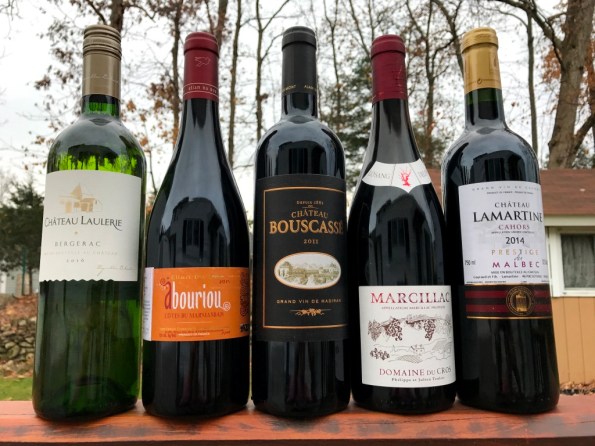
Last December was not the first time I participated in the virtual tasting about the French wines – but somehow, when I opened the box with these wines, something warm and fuzzy came over, and my first reaction was “ahh, I really, really want to drink these wines!”. There is nothing special about this particular set – no big names (I don’t believe Southwest France has much of “big names” anyway), no flashy, ultra-modern labels – and nevertheless, there was a promise of a great time in their simplicity and authenticity. These wines also perfectly played to my other “wine obsession” – the love to obscure and lesser-known wines, so altogether, I took a great pleasure in anticipation of the tasting.
As this was a virtual tasting, I had both the wines and time at my disposal, so unlike the previous post, here are my detailed notes in the usual format:


2016 Chateau Laulerie Bergerac AOC (12% ABV, $12, 85% Sayvignon Blanc, 15% Semillon)
C: Light gold
N: beautiful, fresh, medium+ intesnsity, honeysuckle, white flowers, peach
P: fresh, crisp, excelllent lemony acidity, white stone fruit, restrained
V: 8-, delicious, will be great with food and without, great QPR
2015 Domaine Elian Da Ros Abouriou Côtes du Marmandais AOC (12% ABV, $23.99, 90% Abouriou, 10% Merlot)
C: dark ruby
N: freshly chrushed berries, leafy notes, cherries, anis
P: ripe plums, sweet tobacco, eucalyptus, medium long sweet tobacco finish
V: 8-, would love to try it with an actual cigar. Needs a bit of time. And a new grape – Abouriou


2015 Domaine du Cros Marcillac AOP (12.5% ABV, $15.99, 100% Fer Servadou)
C: Ruby
N: earthy notes, mint, some medicinal notes (iodine?)
P: beautiful fresh pepper on the palate, tobacco, cherries – that pepper is delicious, love the wines like that
V: 8/8+, delicious, excellent QPR
2014 Château Lamartine Prestige du Malbec Cahors AOC (12.5% ABV, $17.99, 100% Cot (Malbec))
C: dark garnet
N: vegetative, tobacco, a touch of cherries
P: bright acidity, dark fruit, tart cherries and cherry pit, noticeable tannins.
V: 8-, pleasant, will work great with the steak, but needs time
2011 Château Bouscassé Grand Vin de Madiran (14.5% ABV, $17.95, 60% Tannat, 25% Cabernet Franc, 15% Cabernet Sauvignon)
C: dark garnet
N: eucalyptus, forest floor, a touch of eucalyptus,
P: initial tannins attach, pepper, dark round fruit, excellent extraction, layers of flavor, firm structure
V: 8+, outstanding, powerful, balanced, needs time!
The Southwest France wines are a treasure trove for the wine lovers – they capitalize on tremendous history, experience, unique terroir and unique grapes, offering oenophiles lots of pleasure in every sip. Look for the wines of Southwest France – and you can thank me later.
The Region Which Started It All
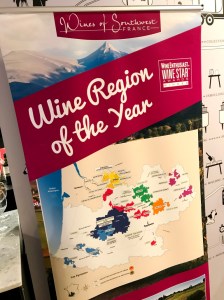 The wine had been made in the Southwest of France ( Sud-Ouest in French) almost forever – in terms of human life, 2,000+ years well classified as “forever”. The region is considered one of the “cradles of winemaking” in Europe, and it maintains its uniqueness and diversity today – for example, out of 300 grape varieties used in the winemaking in the region, 120 are not found anywhere else.
Of course, we know that winemaking started about 8,000 years ago, and not in the Southwest of France. So what’s up with “started it all” claim? Glad you asked! Let me explain.
We live in the times when the wine is a part of daily life of many. Drinking wine is a norm and normal, simply a part of the daily routine for many, not a luxury or a weird exception anymore. Yes, that’s how it was in Europe forever – but now I’m talking about the rest of the world, countries such the USA, and even China now heading that way. The demand for wine had been constantly increasing since the late 1990s, and even Great Recession of 2008 didn’t kill it (just shifted the “acceptable” price ranges). Is it all just a normal course of events? We can, of course, settle for this. However, I believe that on a deeper level, there are exact reasons, “tip the scale” moments for many things which seem to happen just on its own – however, sometimes it is not easy to identify those “reasons”.
Remember the impact of the movie Sideways on consumption and production of the Merlot in the USA? That movie was the reason for a huge slump after 2004, and production and interest to Merlot are still in the recovery mode even now, 14 years later.
Late in the 1980s, the world started talking about The French Paradox – French eat cheese and foie gras, cook with butter and duck fat daily, and nevertheless, the coronary disease rates are much less than in the countries with comparable living standards and much lesser fat consumption. Possible explanation? Red wine. French consume lots of red wine, and resveratrol, one of the prominent substances found in seeds and skins of the red grapes, acts as a defense against clogging of the arteries. That was the outcome of the extensive medical research study conducted in France, which became known in the world as French Paradox.
In 1991, CBS in the USA dedicated one of their popular programs, 60 Minutes, to the French Paradox, and you know how Americans are, right? We are always looking for an easy way out, so wine sounded like an easy enough cure, and I believe this became a pivotal moment which triggered a renewed interest in the wine. Almost 40 years later, it seems that the wine successfully keeps the momentum. And before you will attack me with all the facts from the latest research – yes, I’m aware of many articles pointing to the issues with the study. Whether French Paradox study conclusions were medically solid I have to leave to professionals to debate and decide on. But it was still that pivotal “tip the scale” moment which changed the perception of the wine for many in the world.
At this point, I’m sure you want to see the connection between the title, the Southwest of France, and the story of the French Paradox, right? Here it is. While attending the tasting of the wines of Southwest France, I was listening to the presentation by sommelier André Compeyre, who mentioned that Southwest France has the biggest number of centenarians in France and it was one of the main regions where the French Paradox study was conducted – here we go, now everything is connected and explained. Is it time for a glass of wine?


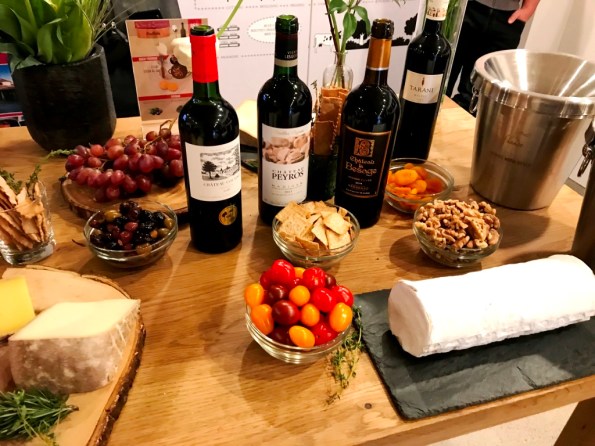
The tasting took place at the little store in New York called the French Cheese Board – what can be better than wine with a little cheese, right? Especially if both come from the same region, where they trained to live together for a few thousand years…
We started tasting with the sparkling wine, moved to the white and then red. As usual in such events, there was not enough time (and desire) for the formal notes, so below is the best I can offer. However, overall, the word is “outstanding” – the wines of Southwest France are well worth seeking – and you will not be disappointed.


NV Domaine du Moulin Mauzac Méthode Ancestrale Gaillac AOP (12% ABV, $15, 100% Mauzac) – very nice and simple. 7+
2017 Domaine du Tariquet Premières Grives Côtes de Gascogne IGP (11.5% ABV, $14, 100% Gros Manseng) – semi-sweet wine. It appears to be a traditional wine in the Southwest of France, which people are accustomed to drinking. It is possible that the wine was not cold enough when I tasted it, but I really didn’t appreciate it. If you like sweeter wines – this might be the one for you.
2016 Héritage Blanc Saint-Mont AOP (13% ABV, blend of Gros Manseng, Petit Courbu, Arrufiac) – excellent, bright, crisp, but very complex and thought-provoking. A touch of grass, vanilla, ta ouch of honey on the palate, green apples, wow. Excellent acidity. Great complexity. 8. And let’s not forget 2 new grapes – Petit Courbu and Arrufiac
2017 Domaine de Joy l’Eclat Côtes de Gascogne AOP (12% ABV, $7, blend of Colombard, Ugni Blanc, Gros Manseng and Sauvignon Blanc) – crisp, clean, superb. 8


2012 Château de Haute Serre Cahors AOP (13.5% ABV, $22) – superb, ripe berries, blueberries, round, delicious, acidity, vanilla, the backbone of minerality. 8+
2012 Château Montus Madiran AOP (15% ABV, $32.99, blend of Tannat and Cabernet Sauvignon) – smoke, campfire, tobacco, great concentration, powerful, excellent, great acidity, outstanding. 8
2011 Jean-Luc Baldès Triguedina Clos Triguedina Cahors AOP (14.5% ABV, $40, 85% Malbec, 10% Merlot, 5% Tannat, 12 months in oak) – touch of barnyard on the nose, delicious fruit, ta ouch of funkiness on the palate, great acidity. 8
2015 Domaine de Terrisses Terre Originelle Gaillac AOP (13% ABV, $16, blend of Braucol (Fer) and Prunelart) – beautiful Cabernet nose, crisp, cassis, Bordeaux style -outstanding. 8. and a new grape – Prunelart
2015 Réserve Bélingard Côtes de Bergerac AOP ($15, 50% Cabernet Sauvignon, 50% Merlot) – beautiful, warm nose, vanilla, cassis, beautiful, soft. 8
2013 Chateau Peyros Vieilles Vignes Madiran AOP (13% ABV, $18, 80% Tannat, 20% Cabernet Franc) – excellent, soft. 8-
2017 Domaine de Joy l’Eclat Côtes de Gascogne AOP (12% ABV, $7, blend of Colombard, Ugni Blanc, Gros Manseng and Sauvignon Blanc) – crisp, clean, superb. 8
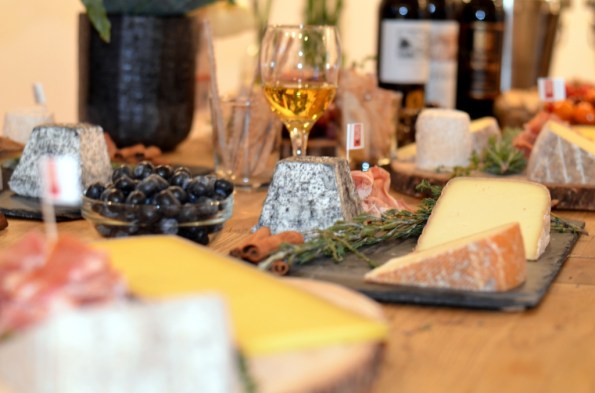


In addition tot he wines, we had an opportunity to indulge on the local cheeses of Southwest France – Ossau Iraty, Buche de Lucay, Bethmale Chèvre, Chabichou, Valencay, and Comté. Sorry, I’m not going to give you any individual notes, but all the cheese were superb. If you are like me and accustomed to the Comté cheese from Costco – that Comté in the tasting was the whole different game (go visit the store and taste, you don’t have to believe me).
There you go, my friends. Have you had wines of Southwest France lately? Any favorites you want to mention? Let’s raise the glass to many happy wine discoveries – and some red wine as a solution to all our problems. Cheers!
Discover Wines Of Loire Valley
What do you think of the wines from the Loire Valley? Why, you say you are not sure? Come on, give yourself a credit – there is a good chance you had Loire Valley wines, but maybe you simply didn’t associate those wines with the Loire Valley? Let me help you – Sancerre, Pouilly-Fumé (not to be confused with Pouilly-Fuissé), Muscadet, Vouvray, Touraine, Anjou, Saumur, Chinon – had any of the wines with these words on the label? Ah, of course, you are saying? Then now you know – those are all the wines from the Loire Valley in France.
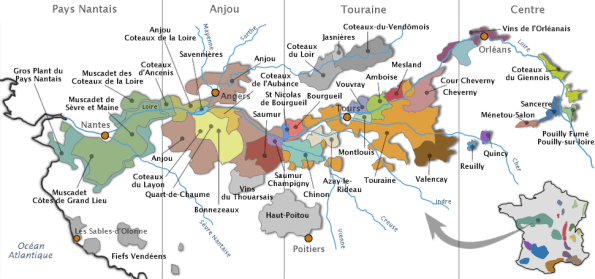
Loire Valley appellations map. Source: http://www.loirevalleywinetour.com/
The Loire Valley is not the most famous winemaking region in France, but it deserves the utmost respect. Here are some facts for you. Number one region in France for production of the white wines. The largest producer of the sparkling wines in France outside of Champagne. Number two producer of Rosè wines in France after Provence. The largest in France vineyard declared UNESCO World Heritage site. 79 sub-appellations and denominations and more than 2,000 years of winemaking history. These numbers speak for themselves. And to round up the stats – five grapes (Sauvignon Blanc, Chenin Blanc, Melon de Bourgeois, Cabernet Franc and Pinot Noir) comprise most of the Loire wines, but a total of 24 grapes are used there.
A few weeks ago, I was happy to attend the “Spring To Loire” trade tasting in New York City, alongside the inimitable, one and only JvB Uncorked – we definitely had lots of fun tasting through the Loire wines together. It was also literally the first tasting this year which I managed to attend, so “happy” is the right word. Besides, I love Loire wines, with Chinon and Saumur been personal pet peeves, as producers of delicious Cabernet Franc.
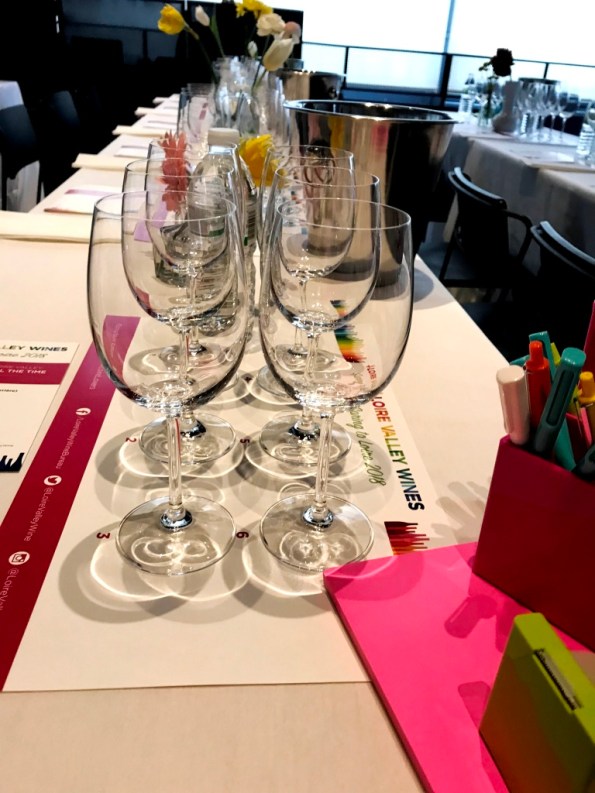
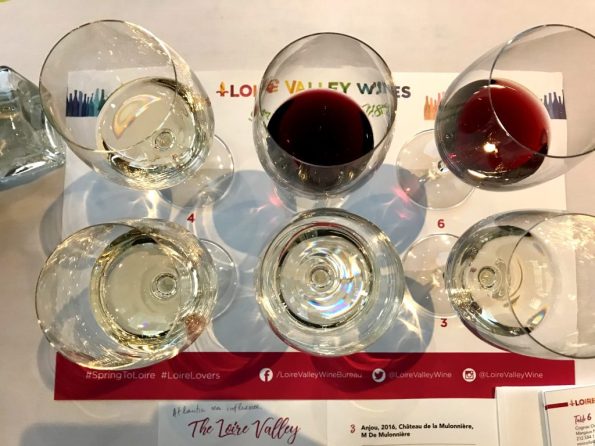
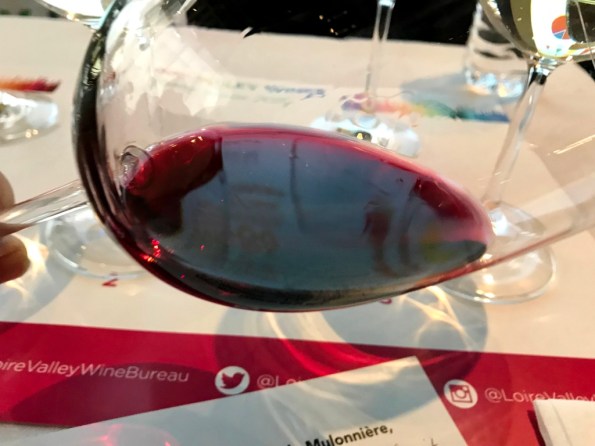
The tasting was unquestionably interesting. First, it had a couple of curious moments. There was a seminar which offered an excellent introduction to the region, tasting all major styles and varieties. Two of the reds in the tasting were rather green and aggressive. At the end of the tasting, I asked a lady sitting next to me how did she liked the wines, and she told me that she didn’t like the red wines individually, but she mixed them (!?!?) and they became more palatable – truly a wow moment in the professional tasting. And then it was another lady who (accidentally or not) dumped what seemed like a whole bottle of perfume on herself – trying to smell nuances of the wine standing next to her was beyond mission impossible. Some memorable moments…
Okay, let’s talk about the wines. I have a few favorites which I will be happy to mention, but first, let me give you my broad stroke impressions.
- Sancerre had a much lesser amount of fresh cut grass than I was expecting. Okay, I’m not an expert on Sancerre evolution, as I rarely drink them. However, based on what I remember from my education and some of the previous experiences, classic Sancerre is supposed to have pronounced grass and cat pee notes – didn’t find much of the Sancerre like that. Touraine Sauvignons, on another hand, were delicious across the board with an abundance of the freshly cut grass.
- Many of the Muscadet-Sèvre-et-Maine wines were lacking the characteristic acidity. When going for Muscadet, I’m expecting acidity which will plucker my mouth and make the cheeks to go meet each other. Many Muscadet in the tasting were nice white wines, but they were lacking their prized quality.
- The Chenin Blanc was a star. We had a number of delicious Vouvray and not only wines, which offered bright acidity, sometimes a touch of sweetness, a round mouthfeel – all which you would expect from a nicely done old world Chenin.
- Many of the Chinon and Saumur Reds were too tannic. This was a total surprise – the wines were fermented and aged in stainless steel tanks, nevertheless, the mouth was drying up almost as much as if you would be tasting the young Barolo. I was told that the whole cluster fermentation and aging was a culprit, but this was not a pleasant surprise. I really expect much more elegant and approachable wines to come from those regions. Nevertheless, we managed to find a few of the superb reds.
Done with my general impressions – here are some limited notes on my favorite wines.


Sparkling:
Crémant de Loire:
NV Maurice Bonnamy Crémant de Loire Brut (SRP: $16.99, 65% Chenin Blanc, 20% Chardonnay, 15% Cabernet Franc) – nice, refreshing, yeasty
NV Maurice Bonnamy Crémant de Loire Rosé (SRP: $16.99, 100% Cabernet Franc) – toasted bread and strawberries, nice, refreshing, great mouthfeel
NV Ackerman Crémant de Loire Brut (70% Sauvignon Blanc, Chardonnay and Cabernet Franc for the rest) – this wine was presented in the seminar, so I had a bit more time to spend with it – great nose, toasted bread, fresh, a touch on a sweeter side but still very nice
White:


Melon de Bourgogne:
2017 Sauvion Muscadet-Sèvre-et-Maine AOC (SRP $13.99) – crisp, fresh, great acidity
2014 Château de la Cormerais Monnieres-Saint Fiacre Muscadet Sèvre et Maine (SRP $19.99) – outstanding. fresh, clean
2012 Domaine de Colombier-Mouzillon-Tillières Muscadet Sèvre et Maine (SRP $19.99) – great complexity


Sauvignon Blanc:
2016 Domaine Pascal Jolivet Les Caillottes Sancerre AOC (SRP: $38) – steely acidity, crisp, a touch of grass.
2015 Domaine Pascal Jolivet Sauvage Sancerre AOC (SRP: $73) – this wine was just ok. The only reason to include it – this was probably the most expensive wine in the tasting, and it really didn’t deliver.
2016 Domaine Michel Vatan Calcaire Sancerre AOC – presented at the seminar – on the nose, minerality, lemon, distant touch of the grass, crisp, fresh. Excellent acidity on the palate, very nice overall.
2017 Raphael Midoir De Silex et Tuffeau Touraine AOC (SRP $14.99) – outstanding. Classic nose, delicious.
2016 Pierre Prieuré & Fils Domaine de Saint-Pierre Sancerre AOC (SRP $19.99) – excellent, fresh
2016 Raphael Midoir La Plaine des Cailloux Touraine-Oisly AOC (SRP $19.99) – outstanding, great complexity.


Chenin Blanc:
2016 Château de la Mulonnière M De Mulonnière Anjou – presented at the seminar – delicious. White stone fruit, peaches on the nose. A touch of sweetness and perfect balance on the palate. Outstanding.
2017 La Croix des Loges Anjou White AOC (SRP $14.99) – outstanding. Clean, fresh, touch of sweetness.
2014 La Croix des Loges Trois Failles Anjou AOC (SRP $22.99) – outstanding, gunflint on the nose, clean, balanced palate.
1977 La Croix des Loges Bonnezeaux AOC – yes, 1977, this is not a typo – this was an off the list, off the charts treat – a Chenin Blanc dessert wine, still elegant and complex.
Other:
2017 Domaine du Colombier Vla de Loire IGP ($14.99, 100% Sauvignon Gris) – excellent, fresh, complex.


Reds:
Cabernet Franc:
2015 Domaines des Varinelles Saumur-Champigny AOC (SRP: $20) – amazing similarity with Lodi wines on the palate – soft, aromatic, touch of cinnamon, ripe blueberries and raspberries, hint of blueberry compote. The similarity with Lodi is mind-boggling. Let’s not forget that this is Cabernet Franc wine, so there must be something there which can explain it. Need to dig deeper into this, I’m really curious.
2015 Domaines des Varinelles Laurintale Saumur-Champigny AOC (SRP: $24) – muted nose, and practically identical on the palate to the previous wine from the same domain. I will look into it… But two superb wines by all means – the wine are coming from the old world, but clearly, are screaming “new world”.
2017 Domaine du Raifault Chinon AOC (SRP: $17.95) – wow! Cassis on the nose, cassis on the palate – spectacular. This was my best of tasting red wine. This wine is not available in the US yes (we tasted one of only two bottles brought in for tasting) – in the process of being imported. Once it arrives, do yourself a favor – go find it and buy a case, or two. You can thank me later.
2016 Sauvion Chinon AOC (SRP: $17.99) – interesting dense nose, great palate, sandalwood, smoke, fresh, present. Tannins are still aggressive, but not as much as others.
Pinot Noir:
2014 Xavier Flouret Domaine de Chatenoy Menetou-Salon AOC (SRP: $20.95) – great Pinot Noir – excellent fresh nose, great balance of dark fruit on the palate, outstanding. 15 generations of vignerons know what they are doing. Definitely one of the highlights of the tasting.
2015 Domaine Gérard Millet Sancerre Red (SRP: $25) – fresh, crisp, herbs, spices, light.
Blends:
2014 Domaine de la Chaise Touraine-Chenonceaux AOC ($22, 70% Cabernet Franc, 30% Côt) – fresh, delicious, cassis and tobacco, excellent balance
The Spring is finally here (or at least it seems so in New York), so go on, find some Loire wines to explore on your own. Cheers!
An Evening With Friends – In Singapore
For years I had been following the Oz’s Travels blog, commenting from time to time on the great wine (and food) experiences described there. Over these years, we built a virtual friendship with Oz (Anthony), the author of that blog, with one recurrent theme “one day you will make it to Singapore, and then…”. As amazing as the life is, that “one day” actually happened about two months ago when my business travel finally brought me to Singapore.
Maybe you saw my very excited post about Gardens of Singapore – but the evening before I experienced all the gardens, I was able to meet, shake hands, and share a few (okay, more than a few) bottles with Oz and his friends.
Oz picked me up from the hotel with his friend Rob and we proceeded to the restaurant, where another Oz’s friend (also Rob), was already waiting for us. Then, there was food, wine, and scotch – but let’s take it all in steps.
First, the restaurant – newly open Garang Grill (a sequel to the already successful Garang Grill at another location). The restaurant allows guests to bring their own alcohol, which we took an advantage of – while restaurant provided glasses and decanters. During the course of our dinner, I had an opportunity to experience a variety of creative dishes. Skewers of sauteed foie gras were melt-in-your-mouth delicious. Luncheon meat fries (yes! talk about creative!) were superb with delicious dipping sauce. I since made the same dish at home and everyone loved it. Crab rillette, steak – everything was delicious and tasty. Here is an account of our dinner – in pictures.


And then there was wine. What I love about Oz’s parties is the abundance of wine, and not just any wine, but nicely aged wine – and you know how much I admire the wine with a little (or not so little) age on it. Here is what went down:


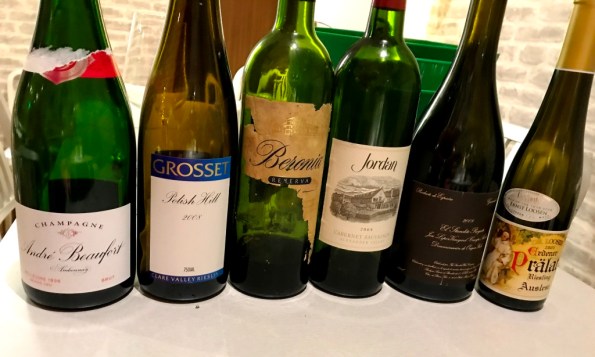
1996 André Beaufort Champagne Grand Cru Ambonnay. Never had it and never heard of André Beaufort Champagne before. Meanwhile, this happens to be one of the oldest all-organic grape growers in Champagne. This 1996 was disgorged in 2014. The wine had great acidity, green apples, still perfect fizz, candied apples with a hint of cinnamon showing on the nose. Yeast showed up later. Excellent. That was a real treat.
2008 Grosset Polish Hill Riesling Clare Valley. Australian Riesling is not a simple wine. I remember trying young Australian Rieslings many years ago, and putting them into the category of “I never want to drink this again”. It takes a bit of time to understand the beauty of the wine devoid of any sweetness and instead offering in-your-face acidity and minerality. But once you turn the corner, this becomes the style you crave. This particular wine at hand was, in many ways, an encounter with the legend. You see, Clare Valley is one of the best regions for Australian Riesling. Polish Hill is one of the very best vineyards. And Jeffrey Grosset is a legendary producer, one of the best winemakers in the world. Now you add a bit of age, say, 10 years – and you almost get heaven on Earth – petrol on the nose, restrained palate, minerality through the roof, great acidity, just a pure delight in every sip.


1994 Bodegas Beronia Rioja Reserva. Behind damaged label was an excellent wine – still fresh, good fruit, good acidity, excellent. Still has time to evolve. Based on the color also still young – just starts showing age.
2005 Jordan Cabernet Sauvignon Alexander Valley. This was my contribution to our lineup. Jordan needs no introduction to the Cabernet Sauvignon wine lovers. This wine was very good, typical California Cab. The wine had an interesting amount of sweetness, more than I expected – as it showed no age, I would assume it still needs more time to evolve. I have one more bottle from the same vintage – will have to wait with that one for a bit.
2008 Standish Wine Company El Standito Proyecto Garnacha Tintorera Yecla DO. This is a Spanish wine, of course – produced by Standish Wines from Australia. Yecla is the best known for their Monastrell wines – this wine, however, was made from the grape called Garnacha Tintorera, which is also known as Alicante Bouschet, which can produce massive, dense wines. This wine was no exception – excellent, restrained, good balance, good fruit, good acidity – and still in need 0f at least another 20 years to evolve.


2005 Dr. Loosen Erdner Prälat Riesling Auslese Mosel-Saar-Ruwer. You can’t finish such an evening without a dessert wine, can’t you? 13 years old Auslese by Dr. Losen – need I say more? The wine was amazing, great balance, a touch of candied plum, great acidity, fresh, simply superb.
This was the end of our dinner, but not the end of our evening. A short taxi ride took us to the unassuming building (well, it was dark, so maybe it is not as unassuming during the day) which happened to be a Rendezvous Hotel, one of the oldest in Singapore. After taking a flight of stairs up, we entered the room where my jaw literally hit the floor. The “room” was called The Auld Alliance – the scotch and whiskey bar (primarily) with more than 1,600 (!) different whiskeys available to taste and purchase. I never saw anything like that in my life, and the selection there was simply beyond words:
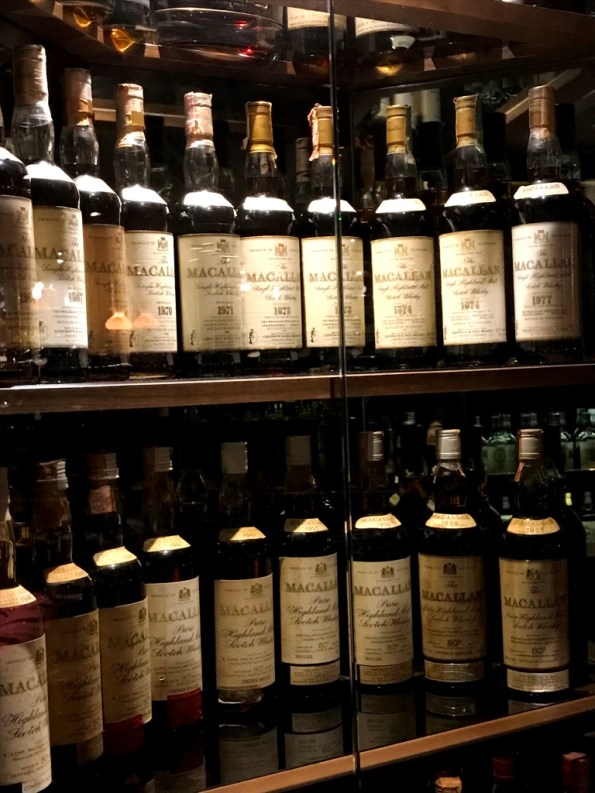


In addition to many whiskeys available by the glass, The Auld Association also offers a number of tasting flights – I had the one called “Smoke around the world” and it was definitely fun (I hope you don’t expect my tasting notes after 18 hours of non-stop travel and prior dinner with all the wines).


So this is my account of an amazing evening in Singapore. It was definitely a pleasure meeting Oz and his friends, and the whole evening was simply beyond expectations. Cheers!
Weekly Tasting with Wines Til Sold Out – The Wines
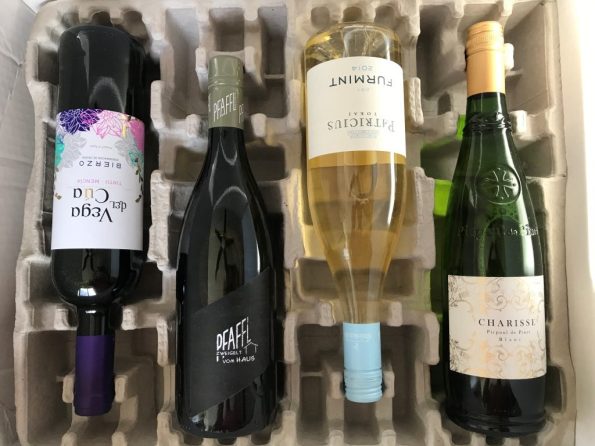
A few weeks ago I wrote about the new feature from the unimitable Wines Til Sold Out – a Weekly Tasting. Every week, there is a new set of 4 wines available for you with all the extra fun information – history, stories, pairing recommendations and more – like your personal sommelier visits the house for a fun and entertaining evening. I didn’t have a chance to taste the wines as I was living for a business trip, so I only introduced the concept – now it is time to talk about the wines.
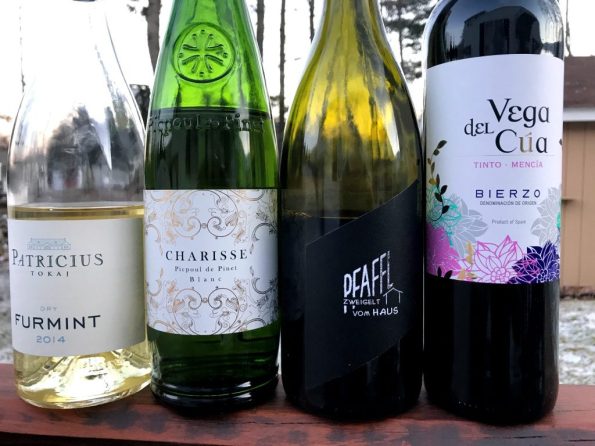 The set which I got was really right up my alley – I love all of the lesser known grapes and appellations.
White grape Furmint is a star – but only in Hungary, and mostly in the world-famous dessert wines called Tokaji. Dry Furmint is difficult to produce, as most of the plantings are very susceptible to the noble rot due to the climatic conditions.
Another white grape, Picpoul de Pinet, is only growing in France, and it is quite rare even in that same France. Zweigelt is not necessarily rare, but definitely a lesser known grape from Austria, capable of delivering superbly playful wines. And Mencía is currently in the search of an identity, which usually makes it fun to taste – you never know what you will find.
For what it worth, here are my notes:


2014 Patricius Tokaj Furmint (12% ABV)
C: light golden
N: touch of petrol and honeysuckle, guava, medium intensity
P: more petrol, lemon zest, nice green undertones, almonds, pear, excellent minerality, good acidity
V: 8, very playful with nice complexity.
2016 Charisse Picpoul de Pinet Blanc AOP (12.5% ABV)
C: straw pale, green undertones.
N: Apple, perfume, white peach, jasmine flowers.
P: restrained, touch of herbal notes, good minerality, pomelo, crisp acidity
V: 8-/8, very nice, food-friendly, will complement a wide range of dishes.


2015 Pfaffl Zweigelt vom Haus Niederösterreich Qualitätswein aus Österreich (12.5% ABV)
C: dark garnet, almost black
N: eucalyptus, blackberries, forest underbrush
P: clear black pepper backbone, more blackberries, touch of sapidity. Unusual
V: 8-, needs time to open ( was much better on the 2nd and 3rd days).
2015 Vega del Cúa Tinto Mencía Bierzo DO (13.5% ABV)
C: dark garnet
N: tobacco and barnyard, both are very pronounced.
P: sweet cherries, hint of tobacco. Very unusual profile as the fruit is initially perceived as sweet, and then it quickly subsides without acidity kicking in. Very short finish.
V: 7, not my favorite – but it might need more time…. 7+ second day, more of an 8- after 5 days (using air pump to preserve the wine). A lot more integrated after 5 days, showing nice pepper notes and much longer finish.
Here you are, my friends. Furmint was definitely a favorite, but I truly can’t complain about this set of wines – this was definitely a fun tasting. Kudos to Wines Til Sold Out for bringing up yet another great service for the wine lovers. Get your weekly tasting set today, invite your friends over, and go have some fun! Cheers!
How To Expand Your Wine Horizon – With Wine Til Sold Out Weekly Tasting
 If you followed this blog for a while, you know that Wines Til Sold Out is one of my most favorite sources of the great wines at the value prices. Wines Til Sold Out (often referred to as WTSO), was the originator of so-called wine flash sale sites, where you can find an excellent range of wines at equally great prices. Not only the prices are great, but the wines are typically shipped free if you hit the minimum required number of bottles for the free shipping (usually any number from 4 to 1, depending on the price per bottle). There are also other ways to buy wines from Wines Til Sold Out, such as so-called marathon events, which I covered a numerous number of times in the past.
About a year ago, Wines Til Sold Out started a new service, called Bonus Offers, where every month there is a new theme, and the wines are offered according to that theme – and there are no minimum quantity requirements to get free shipping, which takes fun to the whole new level.

And now, continuing the tradition of innovation for the benefit of the wine lovers, the Wines Til Sold Out came up with the new concept – weekly tasting, which even has its own dedicated website. Each week, WTSO’s sommeliers create a new 4-pack of wines, priced at $69.99 including shipping. The wines are offered with introductory tasting video describing the wines, and information cards which describe each wine in detail, offer fun facts about wine and the grapes and even recipes and/or suggestions for the dishes to pair with the specific wine. If this is not a fun wine education, I don’t know what is!
I got my tasting pack right before I was leaving for a two-week-long trip, so I only had an opportunity to open the box, say “wow”, take the pictures and leave. But finding such gems as dry Furmint (Hungarian grape used in the production of famous Tokaji dessert wine) and Austrian Zweigelt, definitely makes an oenophile happy. So next time, I will tell what I think about the wines, but for now, I will enjoy them in the exact same way as you do – vicariously.


If you are like me and always looking to expand your wine horizon – check out this new feature from Wines Til Sold Out – and you can thank me later. Cheers!
Usual Grapes, Unusual Places – The Oenophile Games
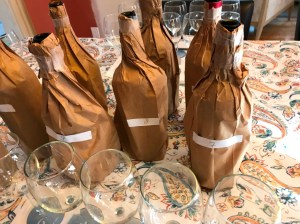 I love blind tastings. I’m talking about totally non-intimidating blind tasting, done in the relaxed atmosphere, where the goal is only to have fun – in other words, not when it is part of the test. The blind tasting as part of the test is really not fun – as Kirsten the Armchair Sommelier eloquently put it in a tweet “Nothing intimidates quite like a brown paper bag!!” – as a WSET diploma candidate, I’m sure she knows what she is talking about first hand.
So I’m talking about fun blind tasting here. Blind tasting removes all sources of bias, as only minimal information is available about the wine you are about to taste, depending on the theme of the tasting, and you can’t be influenced by the pretty label, by the big name or by the well-known place (ahh, this is the wine from Napa, it is definitely better than this one from New Jersey, right?). You are one on one with the liquid in the wine glass, and your only goal is to decide whether you like the wine or not and whether you like it more than the one you had before, or if you still like it more than the one which you had after. Of course, you can make things a lot more interesting by trying to guess the grape, the origin, the vintage and whatever else you would desire, but the beauty of the informal blind tasting is that you free to do as much or as little as you want.
The best accompaniments for the wine are good food and a good company. We started wine dinners with the blind tastings with friends more than 7 years ago. Our first blind tasting was about Pinot Noir, then we had one about Sparkling wines (the thought of this one still gives me shivers as it was utterly confusing), also Chardonnay, Mourvedre, Barolo and many, many others. We decide on the theme, set the rules (how many bottles, price limits or not, what wines can be considered, what wines will not fit and so on). The bottles are put in the brown bags, the numbers are randomly assigned to the bags, the wines are poured and off we go. We usually try to figure out group’s favorite, which sometimes easy, and sometimes it is not. The results are always most unexpected, and everybody gets a chance to say “I can’t believe it”.


The theme for this tasting was “usual grapes, unusual places“. Today, the mainstream grapes are totally international. Cabernet Sauvignon wines are produced in Bordeaux, in Napa Valley, in New York, in Argentina, Virginia, South Africa, Chile, Italy, Czech Republic and other hundreds of places. Same is true about Chardonnay, Merlot, Pinot Noir and Grenache – and even Tempranillo and Sangiovese are not an exception. Now the question is – can we still recognize Cabernet Sauvignon from Uruguay as Cabernet Sauvignon or Pinot Noir from the Czech Republic as Pinot Noir?
To play the game, the group of 10 wines was assembled. I couldn’t make up my mind on what to bring literally until the day before the tasting – kept changing my preferences. Nevertheless, we got together, the table was set and the wines were poured. As everybody was set on bringing the red wines, I decided to make things more interesting and brought two of the white wines to start the tasting with. Here are my notes and guesses on the 10 wines we tasted (obviously I knew what I’m tasting in the first two whites):
Wine 1 – beautiful nose, honeysuckle, tropical fruit, restrained palate, green, touch of pepper, contrast with the nose, interesting
Wine 2 – beautiful nose, plump, velvety, beautifully soft, silky smooth, outstanding, vanilla, delicious.
Wine 3 – typical Bordeaux blend on the nose. Tremendous salinity on the palate. Then acidity. Bordeaux blend from NJ. After 30 minutes – Barbera?
Wine 4 – Grenache nose, smoke and tobacco on the palate. My guess is Rhone varietal, but most likely Grenache
Wine 5 – Rutherford dust on the nose, touch of black currant, chipotle on the palate, herbal, unusual, very nice. Bordeaux varietal. Going for Carmenere.
Wine 6 – beautiful nose, Bordeaux-style, lots of smoke on the nose. Somewhat sweet on the palate. Core Bordeaux? or Syrah blend? Cab Franc dominant blend.
Wine 7 – smoke, dark fruit, beautiful tannins, cherries, beautiful. Bordeaux blend? Somewhat of extreme tannins.
Wine 8 – muted nose, mint, anise, Rutherford dust. Good acidity, soft, round. Bordeaux varietal?
Wine 9 – fresh, open, clean vanilla, dark fruit, excellent. Bordeaux varietal?
Wine 10 – beautiful nose, but a bit astringent. Interesting. Bordeaux varietal?
Before the wines can be revealed, we had to figure out group’s favorite. Everybody was allowed to vote for one of the two white wines, and then two votes for the favorites among 8 reds. Here are our votes (out of 8 people):
Wine 1 – 4
Wine 2 – 4
Wine 3 – 2
Wine 4 – 0
Wine 5 – 0
Wine 6 – 6
Wine 7 – 5
Wine 8 – 2
Wine 9 – 0
Wine 10 – 1
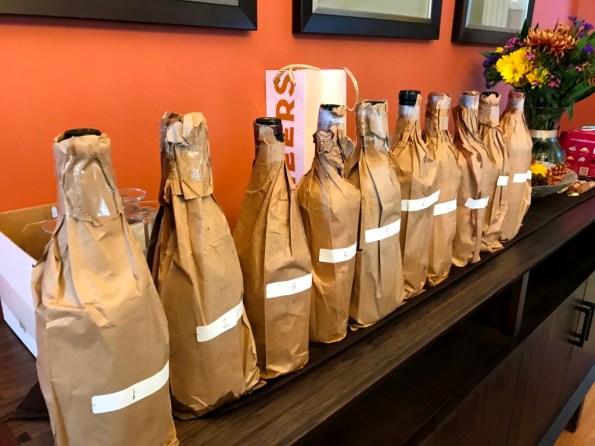

As you can tell, both whites fared equally well with the group clearly splitting the decision. Also for the reds, there was a clear winner and a clear runner-up, with the rest of the wines not faring that well – wine number 6 was preferred by the most, and wine number 7 was the second favorite. Now, the most anticipated part of the blind tasting – the reveal:
Wine 1: 2016 Onward Petillant Naturel Malvasia Blanca Suisun Valley, CA (12.6% ABV)
Wine 2: 2007 Krupp Brothers Black Bart Marsanne Stagecoach Vineyard Napa Valley (14% ABV)
Wine 3: 2004 Bodegas Carrau Vilasar Nebbiolo Uruguay (13.5% ABV, 100% Nebbiolo)
Wine 4: 2014 Chateau Famaey Malbec Cahors AOC (12.5% ABV, 100% Malbec)
Wine 5: Changyu Cabernet Sauvignon China (Cabernet Sauvignon?)
Wine 6: 2012 Caduceus La Corgtigiane Oneste New Mexico (13.5% ABV, 50% Barbera, 50% Merlot)
Wine 7: 2014 McManis Barbera Jamie Lynn Vineyard California (13.5% ABV, 100% Barbera)
Wine 8: 2015 Cantele Primitivo Salento IGT (13.5% ABV, 100% Primitivo)
Wine 9: 2014 Macedon Pinot Noir Macedonia (13.5% ABV, 100% Pinot Noir)
Wine 10: 2014 Agnus Merlot Serra Gaúcha Brazil (14% ABV, 100% Merlot)
Let’s look at these results. First, let me talk about the wines I contributed for the tasting. For the whites, they were both excellent – I got this Onward Petillant Naturel Malvasia Blanca from Jeff The Drunken Cyclist as part of our Secret Santa fun, and the wine was delicious. The second white, Krupp Brothers Marsanne was a rare closeout score a few years back. Sadly, it was my last bottle, but the wine needs to be drunk, so I’m glad I had it in a good company – I consider that to be one of the best California white wines, for sure for my palate. Now, the red which I brought was another story – it was the Changyu from China, for which I terrorized my Chinese-speaking friend trying to ensure that it was Cabernet Sauvignon and trying to figure out the vintage or ABV (fail). Well, the worst part was that many people not just disliked it, they literally hated it – and I had other reds from Changyu while in China with much higher success. Oh well.
The winning wine Caduceus La Corgtigiane Oneste was made out of the New Mexico grapes by the winery located in Arizona, with one of the grapes being Barbera – talk about rare and unusual. McManis Barbera, second favorite, was also quite unexpected – but looking at my notes and having tasted few of the California Barbera wines, I made a wrong guess with somewhat right descriptors. As you can tell, almost everything tasted to me like a Bordeaux blend – clearly, I don’t do well in the blind tastings, but one way or the other, this was lots of fun! And just think of the range of wines we tasted – Malvasia Blanca, Marsanne and Barbera from California, Nebbiolo from Uruguay, Merlot from Brazil, Pinot Noir from Macedonia, Cabernet Sauvignon from China, Merlot and Barbera from New Mexico – wow. The Malbec and Primitivo didn’t really belong on one side – but then on another side they kind of fit the bill too as Malbec from France is literally unknown to the wine consumers, and Primitivo is pretty much in the same boat, for sure in the USA. All in all, we clearly accomplished our goal of tasting usual grapes from unusual places.
Then, of course, there was food – lots and lots of delicious food, which everybody contributed to – I will just give you a quick overview in pictures, and that really only a fraction of what we had (at some point you get tired of constantly taking pictures of food…


We also drunk more wine, and this one was a standout. An unassuming California blend from Marietta in Sonoma – NV Marietta California Old Vine Red Lot Number Twenty. This is non-vintage, field blend of Zinfandel, Petite Sirah, Carignane, and Gamay, now, wait for it … which should be about 40 years old??? Current wine is called Lot Number 66, so if this was the Lot number 20, then we are simply making an assumption here… The wine was delicious – yes, it was mature, so showed the layer of delicious dried fruit and ripe plums – but it still had a perfect amount of acidity for everyone to say “wow”. I plan to write to the winery, so hopefully will be able to figure out the age of this wine, but this was clearly another amazing example of California wines which can age – and patience well rewarded.


Great fun and great learning experience, hands down. For anyone who is into the wine, the blind tasting is an endless source of enjoyment. If you love wine and never participated in the blind tasting, you really should fix it – get your friends together and have fun! If you need any “logistical support”, please reach out – will be very happy to help.
Ahh, and by the way, there is something even more intimidating than a paper bag – a black glass. But then your friends may start hating you, so tread gently. Have fun, my friends. Cheers!
Discover Wines of South Africa
 Let me start with a question: when was the last time you had South African wine? You can take a few minutes to ponder at it – but I would bet that if you are a wine consumer in the USA, there is a very good chance that the answer will be “hmmm, never”. But if “never” or “many years ago” is your answer, we need to change that.
The winemaking history in South Africa goes back to the 17th century, when immigrants from Europe brought the vine cuttings with them, as they’ve done in all other places. South African wine story somewhat resembles most of the Europe, as it also includes the phylloxera epidemic and replanting of the vineyards. Unfortunately for South African winemakers and the rest of us, the wine story of South Africa also had heavy political influence, with apartheid, KWV monopoly, and resulting boycott from most of the countries for the majority of the 20th century (here is an article on Wikipedia if you want to learn more). The new chapter for South African wines opened up in the 1990s, with the end of apartheid and subsequent changes in all areas of life, winemaking included.
In the past, South Africa was best known for its Chenin Blanc wines, which was also called Steen. Another grape South Africa was famous for was Pinotage – dinking of the Pinotage wines was likened by some wine critics to the drinking of the “liquified rusty nails”. On much brighter note, while talking about the past, I want to mention Klein Constantia Vin de Constance – the nectar of gods (don’t take my word for it – find it and try it), made from Muscat de Frontignan grapes and favorite wine of the French emperor Napoleon Bonaparte, who was buying it by the barrel (legend has it that it was Napoleon’s deathbed wish wine).
Today South Africa offers lots more than a typical wine consumer would expect. The South African wines are often described as “old world wines masquerading as new world wines”, and this is perfectly showing in the wide range of the wines. You really need to try for yourself South African Chardonnay, Sauvignon Blanc, Pinot Noir, Cabernet Sauvignon, Merlot, Shiraz, and don’t skip the Chenin Blanc, especially if it is an FMC by Ken Forrester. You shouldn’t skip even Pinotage, as it dramatically evolved compared to the old days. The old world winemaking foundation really shows through many of the South African wines today, and they are always ready to surprise a curious wine drinker.
Case in point – our recent virtual tasting on Snooth. We had an opportunity to taste 6 white wines, well representing South African grapes, styles and regions. The tasting included 3 out of the 4 most popular white grapes in South Africa (Chenin Blanc, Chardonnay, and Sauvignon Blanc) – the second most planted grape, Colombard, is used primarily in the brandy production. Another interesting fact for you – until 1981, there was no Chardonnay planted in South Africa, which makes it all more impressive (read my notes below). Two of the Chardonnays and Sauvignon Blanc from the tasting were simply stunning, and the rest of the wines were perfectly suitable for the everyday drinking. What is even better is that you don’t need to rely on my notes if you want to discover what South Africa is capable of – Snooth offers that exact set of 6 wines for purchase, at a very reasonable price of $79.99 for the whole set.
Here are my notes from the tasting:


2016 Glenelly Glass Collection Unoaked Chardonnay WO Stellenbosch (13.5% ABV, $20, 100% Chardonnay)
C: straw pale
N: Beautiful, vanilla, touch of guava, fresh, medium+
P: good acidity, granny smith apple, crisp, maybe a bit too restrained now, lemony acidity on the finish
V: 8, excellent now, but I definitely want to see it evolve.
2016 De Wetshof Estate Limestone Hill Chardonnay WO Robertson (14% ABV, $16, 100% Chardonnay)
C: light golden
N: complex, vanilla, popcorn, medium intensity. Nose clears up as the wine breathes. Golden delicious and honeysuckle appeared. Delicious nose.
P: quite restrained, touch of Granny Smith apples as opposed to the golden delicious. Perfect acidity, vanilla, fresh.
V: 8, will evolve. Definitely an interesting wine.
2016 Badenhorst Family Wines Secateurs Chenin Blanc Swartland WO Steen (12.5% ABV, $15, Chenin Blanc with a sprinkling of Palomino and another secret grape)
C: straw pale
N: interesting, yeast, touch of white stone fruit
P: crisp, restrained, mostly lemony, acidic notes
V: 7, too simple and single-dimensional


2016 Raats Original Chenin Blanc Unwooded WO Stellenbosch (12.5% ABV, $16, 100% Chenin Blanc)
C: straw pale+
N: inviting, medium plus, minerality, hint of peach
P: clean acidity, interesting touch of pear and white plum with acidic finish
V: 7+, interesting wine, by itself and with food.
2014 Thelema Sutherland Sauvignon Blanc WO Elgin (13% ABV, $20)
C: light golden
N: lots of minerality, touch of gunflint, touch of grass (distant hint), white stone fruit as the wine is opening up – doesn’t resemble SB at all
P: crisp, clean, lemon acidity, very restrained, mineral-driven, limestone. Almost astringent. Needs food.
V: rated it first 7+/8-, noting “will be interesting to see how the wine will open up”. More playful after 30 min in the open bottle. Interesting. After two days, this clearly became 8/8+ wine
2016 The Wolftrap White WO Western Cape (13.5% ABV, $12, Viognier 42%; Chenin Blanc 37%; Grenache Blanc 21%)
C: light golden
N: lemony notes, grass
P: a little too simplistic, mostly lemony notes. Drinkable, not great
V: 7, too simple, might work better with food
South African wines are definitely here, at the world-class level. If you pride yourself as a wine lover, they are all ready for your undivided attention.
Sauternes – Sweet, Versatile, Delicious, And Perfect for Every Day
 Today we are going to talk about sweet and delicious wines, but I feel compelled to start with a little rant.
What is wrong with you, people?
No, I’m not trying to better humankind with this pathetic opening, but nevertheless, I would like to repeat my question – what is wrong with you, people, when you proudly state “hmm, you said sweet? I don’t drink sweet wines!!” (add proud grin and posture to this statement). Sweet or dry, when it comes to wine, there is only one quality worth inquiring about – balance. “Is this wine balanced?” is a perfect question to ask, but sweet, dry, semi-sweet, semi-dry – those are all relative characteristics which often mean different things to different people.
Deep inside, we like sweet. We don’t always admit it as our well established societal shaming machine works perfectly, it creates an absolute truth like “sweet = bad”. Sweet is one of the easiest flavors to recognize, and we usually start our acquaintance with taste with sweet, later discovering sour, salty and bitter. Growing up, we learn that “sugar is bad for you” – which is true for anything taken out of moderation – and then we subconsciously extend “sugar = bad” rule to the most of the things we do, or rather, eat.
Now, I’m asking you to put these extreme views of sweet aside, at least for the next few minutes you will spend reading this post. I know, you can do it for me. Let’s go, let’s talk about it – yes, sweet wines.

Historically, sweet wines had been around for as long as humans known to make wine. Sweet wines are typically easier for our palate to fall in love with, but keep that love going strong might be a challenge, as people change their taste quite often. Today, sweet wines are made everywhere – but in most of the cases, sweet wines are an addition to the winery’s repertoire, to all those white, Rosé and red which winery is generally producing – and not The Wine. Except in few places, it really is The Wine. One such place is located in the world’s capital of red wines – Bordeaux, and yes, it is called Sauternes.
Sauternes region is located about 40 miles south of the city of Bordeaux, and predominantly produces sweet wines (there are some notable exceptions like d’Yquem Y, which is a dry wine, but those are truly the exceptions). History of Sauternes goes back to the beginning of 17th century, but it is hard to tell what led to the appearance of the Sauternes wines as we know them.
You see, Sauternes wines are made with some special assistance from mother nature. This appearance comes in somewhat of a strange form – a fungus. The climate conditions in Sauternes are favorable for the specific form of mildew to set on the grapes, so the grapes essentially rot on the vine. It is manifested with the grapes starting to shrivel while they are still hanging in the cluster – however, outside of visually unappealing sight (for the rest of us, not for the vintners in Sauternes), that also leads to the shriveled grapes greatly increasing concentration of the sugar, which perfectly lends itself to creating some of the very best sweet wines in the world – yes, the Sauternes.
The fungus, which has a scientific name of Botrytis cinerea, is also called a Noble Rot, just to stress that unlike any other rot, which is generally bad, the Noble Rot is good and useful, and thus has such a distinguished name. The legend has it that monks who were the first to produce sweet Sauternes, were keeping information about the rot outside of the public knowledge, as whether you will call it Noble or not, it is not easy to explain to people that wine is delicious because the grapes had time to rot before been made into the wine.
Production of Sauternes is labor intense, even today. Not only all the grapes are harvested by hand – they also harvested multiple times. The workers can only pick individual grapes from the vine, those which are ready (read: rotted shriveled enough). Then they have to come back again to pick the new “ready” grapes – and this can repeat 6-7 times. So yes, talk about labor intense process.
All this pain with the harvest is well worth it, as it translates into the delicious wines. What is very interesting about Sauternes, which is typically well underappreciated, is that Sauternes are amazingly versatile when it comes to food. You can pair the whole dinner with Sauternes, but while this might be a bit challenging, they definitely beat most of the wines, maybe with the exception of Champagne/Sparkling, as a perfect accompaniment to any appetizers and cheese course. The Foie Gras and Sauternes is a classic combination, but it pairs spot on with any salumi, prosciutto, Jamon or any other cured meat. Salty, spicy, sour, bitter – bring it on, all the flavor profiles will find their match with Sauternes.


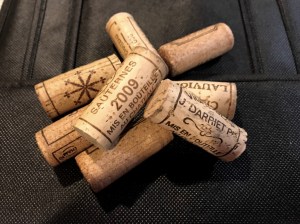
A few weeks ago we had an opportunity to deep dive into the world of Sauternes with the virtual tasting run on Snooth – if you are interested in following the conversation, you can check out this post on Snooth. To prepare for the discussion, I had a pre-gaming session, pairing our selection of Sauternes with cheeses and Foie Gras, as you can see in the pictures above. I have to honestly say that I liked some wines better than the others, which you will see in the notes – but when it comes to complementing the food, they all performed really well.
There are plenty of sources for you to learn the particular details about the Sauternes wines and the region so I will spare you from my regurgitating of the known facts. Just as a quick reference, I can tell you that Sauternes wines predominantly made from Sémillon grapes, with Sauvignon Blanc and Muscadelle playing the supporting roles. Our tasting included wines from 2009, 2014 and 2015 vintages, which are all considered excellent.
Without further ado, here are my notes:


2015 Château Manos Cadillac AOC (14% ABV, $12.99, 98% Semillon, 2% Muscadelle, 50% of wine aged in barrels for 6 months)
C: golden
N: apricots, herbs
P: nice sweetness, apricots, touch of peach
V: 7+
2015 Château Haut Charmes Sauternes AOC (14% ABV, $20, 80% Semillon, 20% Sauvignon Blanc, aged in barrels)
C: light golden
N: touch of petrol, apricot, honeysuckle,
P: white fruit, honey, good acidity, appears light
V: 7+
2014 Château Lauvignac Sauternes AOC (% ABV, $18.99/375 ml, 85% Sémillon, 10% Muscadelle, 5% Sauvignon)
C: straw pale
N: Classic bortrized fruit, touch of honeysuckle
P: clean acidity, orange, bitter orange on the finish
V: 7
2014 Château La Rame Sainte Croix du Mont AOC (13.2% ABV, $20, 100% Sémillon, 50 yo vines, 30% aged in oak batrrels)
C: golden
N: rich, opulent, honey, bortrized notes, very inviting, touch of petrol
P: beautiful, round, honey, apricot, peach, intense, perfect acidity
V: 8, best of tasting


2014 Château du Cros Loupiac AOC (14% ABV, $15, 90% Sémillon, 5% Sauvignon, 5% Muscadelle, 12 months in barrique)
C: golden
N: intense honey
P: mostly honey, needs more acidity
V: 7
2014 Château Lapinesse Sauternes AOC (% ABV, $39.99, 100% Sémillon, 12 months in stainless steel)
C: light golden
N: dry, white stone fruit
P: sweet, mostly single note
V: 7
2009 Château FILHOT Sauternes AOC (13.5% ABV, $40, aged for 22 months including 12 months in oak barrels)
C: very light golden
N: honeysuckle, delicious, very promising
P: honey, candied orange, nice, touch more of acidity would be nice
V: 7+
2009 Château Dauphiné Rondillon Loupiac AOC (% ABV, $28, 70% Semillon, 30% Sauvignon Blanc)
C: light golden
N: muted, touch of honeysuckle
P: touch of candied orange, good acidity, but overall is just ok
V: 7
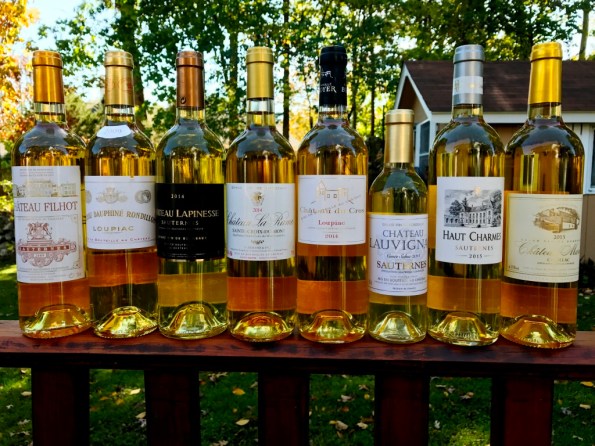
The holiday season is upon us. While I’m not asking you to pair your Thanksgiving turkey with the Sauternes (albeit it might work very well – and I will actually try it), I definitely suggest you will give Sauternes a chance to brighten up your friends and family get together – that “wine and cheese” fun is generally overrated and underestimated at the same time, as majority of the wines don’t pair that easily with the cheese – but try it with Sauternes, and you might discover a new love in your life. Cheers!
WBC17: Speed Tasting, Reds
As with any typical wine dinner, you start with the white and continue with the red, right? Well, right or wrong, but this is what we did at the Wine Bloggers Conference 2017. White and Rosé speed tasting was followed by the Reds speed tasting the next day.
Instead of standard 10 wines, we managed to squeeze in 11 – of course, because Table #5 was the most awesome table in the entire room!
Here is what we tasted:
Wine #1: 2013 Acumen Cabernet Sauvignon Napa Valley (14.1% ABV, $60) – have to say that nose was better than the palate. Too young.
Wine #2: 2010 Rodney Strong Vineyards Upshot Sonoma County (14.5% ABV, $28) – not only this wine has a super-creative label, it also has 5% of the Riesling in the final blend – how about that for creativity? Very tasty wine.


Wine #3: 2015 Pedroncelli Mother Clone Zinfandel Dry Creek Valley Sonoma County (14.9% ABV, $19)
Wine #4: 2015 Pedroncelli Bushnell Vineyard Zinfandel Dry Creek Valley Sonoma County (15.2% ABV, $30) – this was our bonus wine. I liked it way more than the previous Zinfandel…
Wine #5: 2014 Papapietro Perry Peters Vineyard Pinot Noir Russian River Valley (13.8% ABV, $58) – excellent.
Wine #6: 2015 Naked Winery Oh! Orgasmic Sangiovese Columbia Valley (14.4% ABV, $70)
Wine #7: 2014 NakedWines.com Domaine O’Vineyards Trah Lah Lah Cite de Carcassonne IGP (13% ABV, $11) – nicely restrained. Least expensive in the tasting.
Wine #8: 2015 1000 Stories Zinfandel Bourbon Barrel Aged (15% ABV, $19)
Wine #9: 2015 Paradise Ridge Walter’s Vineyard Pinot Noir Russain River Valley (13.8% ABV, $54) – needs time
Wine #10: 2015 Gracianna Pinot Noir Reserve Russian River Valley (14.8% ABV, $72) – love the label, but the wine needs time.
Wine #11: 2015 Stone Hill Winery Norton Missouri (13.8% ABV, $25) – easily might be my favorite wine from the reds speed tasting. Was also very happy to try a wine from the state I never had the wines from before.


This completes the second WBC17 speed tasting report. More updates to follow. Cheers!
Last Bottle Sign Up ($10 credit)





