Archive
Procrastination and Carménère
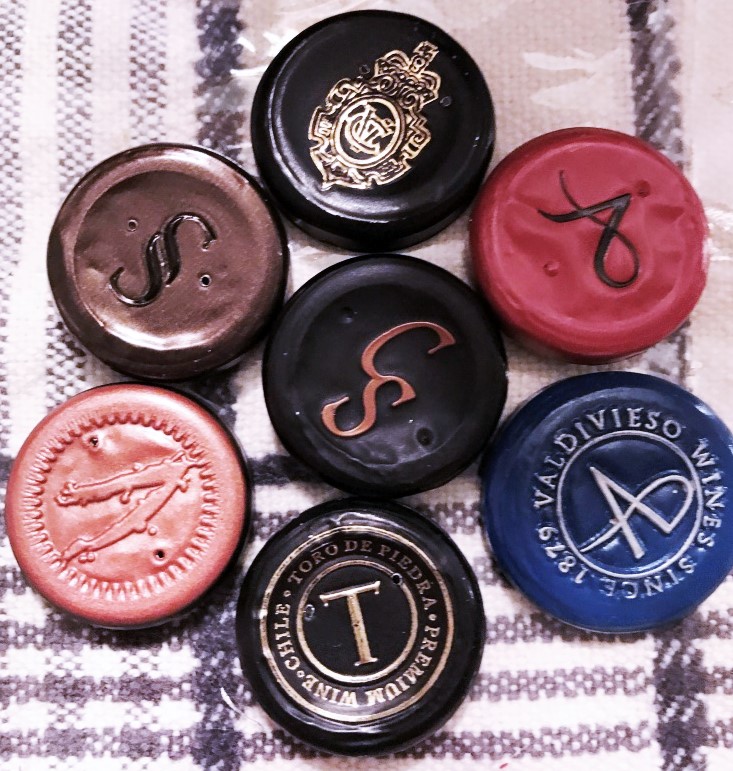 Let me quickly put you at ease – procrastination has nothing to do with Carménère. Unfortunately, it has to do with yours truly, and this blog been behind on the content for years.
It happens a lot more often than I would even want to admit to myself – I attend a great tasting or an exciting dinner with the winemakers. I would typically leave the event excited and with lots of ideas for the post. I would start writing and envisioning that post in my head for the next day, two, five, ten… One out of five will probably make it onto these pages, and the rest will continue playing in the head until it will convert into permanent guilt. I would look at my blog to-do list and feel that pain of unaccomplished over and over again. Sometimes, I would break through and write that long overdue post – and sometimes, you just accept that guilt, you know…
How far back it would be appropriate to go for some untimely post? If you know, please tell me. This is the wine we are talking about – who knows what vintages people hold? As long as I have the notes, it is all good, right. Feel free to disagree, but I’m going three years back today, to experience again some tasty Carménère…


As I wrote a post about my recent experience with the world-class TerraNoble Carménère line, I recalled the Carménère tasting which was organized three years ago by Snooth (I wrote about many Snooth tastings in the past, but somehow managed to miss this one). In the tasting, we heard from 7 producers and tried their Carménère wines. For what it worth now, three years later, here are my notes:
2015 Viña Casa Silva Cuvee Colchagua Carmenere Colchagua Valley (14% ABV, $15, blend of grapes from Casa Silva’s Los Lingues vineyard in the Andes and the Lolol vineyard in the Costa zone, 8 months in French oak)
Dark garnet color, restrained nose, herbal nose, mineral notes, granite. On the palate, tobacco, nicely restrained, earthy, herbal, good acidity, dark fruit. Overall, nice. Needs time. Pioneer of Carmenere in Colchagua, started in 1892. Carmenere overall started in Colchagua
2015 Siegel Single Vineyard Los Lingues Carmenere Colchagua Valley (14% ABV, $28.99, 8 months in French oak)
dark garnet, inky, color. Herbal in your face on the nose, pure currant, rutherford dust. Very concentrated on the palate, lots of oak, restrained. Needs time.
2014 Viña Carmen Gran Reserva Carmenere Colchagua Valley (14% ABV, $15, 90% Carmenere, 7% Carignan and 3% Petite Verdot, aged 10 months in French oak barrels, 2 months in the bottle)
The oldest winery in Chile, founded in 1850. Practically black in color. Chocolate, coffee on the nose, sage, dark fruit. Open on the palate, sweet cherries, tobacco, perfectly balanced. Round, delicious. Best of tasting so far.
2015 Viña Requingua Toro De Piedra Carmenere Gran Reserva Maule Valley (14% ABV, $15, 12 months in French and American oak barrels)
Dark garnet color, herbal, funky nose, forest underfloor. Round on the palate, fresh herbal notes, sage, sweet cherries, blackberries. Good balance, very approachable.
2012 Valdivieso Single Vineyard Carmenere Valle de Peumo ($23, 12 months in French oak barrels, 35% new)
Almost black in color. Dark concentrated nose, currant leaves, very herbaceous, a touch of pepper. Sweet fruit on the palate. I can’t decide if this wine is corked on not. The nose says corked, palate says not. Need to give it a bit of time.
2014 Viña Ventisquero Grey Single Block Carmenere Trinidad Vineyard Maipo Valley (14% ABV, $22, aged for 18 months in French oak barrels, 34% new and 66% second and third use, 8 months in the bottle)
Practically black in color. Interesting nose, a touch of cabbage stew on the nose (in a good sense), funky nose, meaty. The palate follows on, beautiful pepper, black currant, delicious. Another favorite of the tasting.
2013 Valdivieso Caballo Loco Grand Cru Apalta Colchagua Valley ($35, 55% Carmenere, 45% Cabernet Sauvignon, aged 18 months in 100% French oak casks)
BAB, dark garnet color. Touch of funk on the nose, mocha, dark chocolate, touch of herbal notes. Delicious palate – pepper, tobacco, black currant, herb garden, clean acidity. Best of tasting overall.
I definitely find this interesting how 4 of the TerraNoble Carménère wines were all at the top of the game, and as you can tell from my notes here, many of these Carménère wines still have ways to go. But – unquestionably, Chile takes its star grape seriously, and there is a lot for us, winelovers, to enjoy, now and in the future.
With this post I also get to reduce my feeling of guilt, if at least by a hair – but I’m still happy. I hope I deserve another glass. No matter, I’m going to pour it anyway. Cheers!
Hunting Down The Value
Wine and value – isn’t that a topic that is near and dear to every wine lover’s heart?
In the world of wine, “value” has lots of meanings – and to make it even more complex it also depends on a personal perspective. In the majority of the cases, value is relative. And while value concept is important and it is something we seek, it is the pleasure we are really after. We want to drink wine which gives us pleasure. Talking about value, we often refer to the concept of QPR – Quality Price Ratio – instead of just the value, as QPR simply stresses what we are looking for, the pleasure, the best possible experience for the money. In other words, we equate quality and pleasure. Maybe we should introduce a new concept – PPD – as in Pleasure Per Dollar? Hmmm… maybe not.
I was trying to find an example of absolute value in wine, and I don’t believe such a thing exists. Is $4.99 bottle a value? Unless you enjoy that wine, it is really not – if you don’t enjoy that $4.99 bottle, it is wasted $4.99. Is $200 bottle of wine is value? “Are you nuts???” I would expect a typical reaction being to such a price. Well, if this $200 bottle of wine is on the huge sale, and that wine typically sold, let’s say, at $300 – and this is something you will enjoy, and most importantly, can afford? Of course, it is a value. Then if you can easily afford it but don’t enjoy – this is again a waste of money.
There is another spin in our discussion of relativity of the wine value, where the value is not expressed directly in the money amount, but in comparison to the wines of similar styles. For example, I would say that an Israeli wine, Shiloh Mosaic, an [almost] Bordeaux blend in style, which retails around $60, can be easily compared to the $200+ Bordeaux blend wines from California, such as Vérité. At $60, Shiloh Mosaic is not an inexpensive wine, but nevertheless, if my comparison would hold true for you, it will become a great value in your eyes too.
And yet one more important detail about value – value is often defined in the categories – either price or wine type categories. I’m sure you heard quite often the wine is defined as a “great value under $30”, or a “great value for Pinot Noir under $100”. This simply means that someone who tasted a group of wines priced under $30, found that that particular wine tasted the best in that group. Don’t forget our general relativity of the value though – if you don’t drink Chardonnay, the best value Chardonnay under $30 has no bearing in your world.
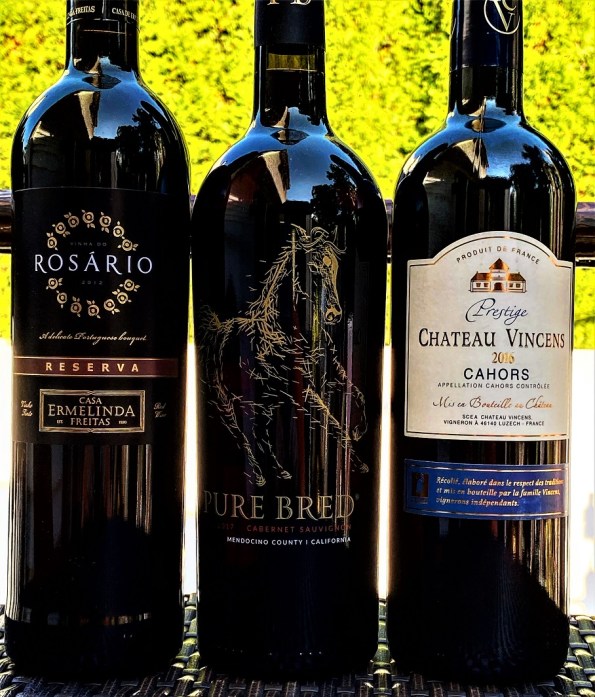
We can easily continue our theoretical value escapades, but let me give you an account of my recent encounter with great values, courtesy of Wines Til Sold Out. I’m sure most of you in the US are well familiar with WTSO, possibly the best wine flash sale operator. In addition to the standard offerings which change as soon as the current wine is sold out, WTSO offers so-called last chance wines, premium selection, and occasional offers of the wines at $9.99 – all of which can be acquired in single bottle quantities with free shipping. Two of my last value finds were $9.99 wines, and one of them (Cahors) was from the last chance wines selection, at $13.99.
All three of these wines were simply outstanding, especially considering the price. 2012 Casa Ermelinda Freitas Vinha Do Rosário Reserva Peninsula de Setubal (14% ABV, 70% Castelao, 10% Touriga Nacional, 10% Cabernet Sauvignon, 10% Syrah, 12 months in French oak) had a core of red fruit, good acidity, dark earthy profile a touch of coffee. Think about it – 8 years old wine, $9.99, delicious – is that a great value or what?
The 2017 Pure Bred Cabernet Sauvignon Mendocino County (14.2% ABV, 100% Cabernet Sauvignon) was an absolute surprise. At first, I got just one bottle, as Cabernet Sauvignon from California for $10 can’t be good apriori. On contrary to my expectations, the wine was generous and balanced, not jammy at all, with good undertones of the classic Cab – cassis and eucalyptus, and a pleasant herbaceous finish. Was if the best California Cabernet Sauvignon in absolute terms? Of course not. But at this price, it would give a perfect run for the money for many California Cabs priced under $30 – $40. I would say taste it for yourself, but WTSO is sold out of this wine at the moment.
Last but not least – 2016 Château Vincens Prestige Cahors (14.5% ABV, 80% Malbec, 20% Merlot, 10-15 months in French and American oak). This was just supremely delicious – earthy, with the core of dark fruit, densely and firmly structured, with a dollop of sweet tobacco on the finish – dark and powerful wine. I don’t know if Cahors wines returned yet to their old glory, but this is the wine I’m willing to enjoy on any day.
Here you have my excursion into the world of wine value, also known as QPR, and maybe in the future, as PPD? Hope I didn’t bore you to death. And by the way, what are your thoughts on wine values? Any great discoveries to brag about?
Beyond Kosher: Thinking of Israeli Wines
 I love pairing wine and holidays. It is always a fun exercise, as you need to find a way to explain your choices – how given wine enhances or at least relates to a given holiday (good luck with your Thanksgiving wine selections). Jewish holidays, which we are still in the middle of (Jewish New Year just arrived less than 2 weeks ago), are very helpful in that regard, as wine is simply a requirement here – most of the Jewish holidays require a glass of wine to be present and consumed.
When it comes to Jewish holidays, my approach is simple – I prefer to have on the table the wines made in Israel. But when I reach out to get an Israeli wine off the shelf, I can’t help it but think about all of the complexities of the Israeli wine landscape – what we are talking here is above and beyond of intricacies of making any fine wine. Making of the delicious wine is anything but complex – how to protect vines from the disease, when to harvest, what yeast to use, for how long to macerate, what to blend – lots and lots of decisions, each one affecting the end result, often dramatically. Production of Israeli wines deals with all of the same complexities but then adds a cherry on top – concepts of kosher and mevushal.
I remember visiting Israel about 15-17 years ago with a group of co-workers from the USA, at the resort on Mount Carmel. One of my colleagues pointed to a bottle of wine saying “this is amazing”. The wine he was pointing to was an Israeli wine, Yatir Forest, which was at a time a total surprise for me – I knew that this guy was really into wine and he was drinking very serious stuff, more of California cults and Bordeaux first growth, so this was unexpectedly high praise. I was absolutely unfamiliar with Yatir wines at that time (it would make me say “ahh, pretty please” now).
When we asked to open that bottle for us, we were surprised to hear that it will not be possible. Explanation? The food at the resort was kosher, and food includes wines. The resort just got a new person in charge of observing all the kosher laws and requirements in food preparation and service, and Yatir Forest was not kosher enough. That, my friends, is a problem which is unique to the Israeli wine scene – I’m not aware of any other winemaking region in the world where making tasty wine is not enough for that wine to reach the consumer, even the local one – this also complicates the imports quite a bit.
I’m not going to pretend to be an authority on the laws of kosher wines – I’m very far from it. I’m just here for the tasty wine. What I do know is that the kosher laws are quite intense and involved, whether it has to do with the food or the wine. While I understand that there is some rationale when it comes to the food, I don’t believe kosher requirements can materially affect the taste of wine. We also need to keep in mind that there are different levels of kosher types and certifications, and to top it all off, there is the Mevushal. In case you are not familiar, mevushal is somewhat of a process of pasteurization of the wine to allow for it to be served by a non-Jewish people at a restaurant or anywhere else. It appears that according to the kosher wine rules if the kosher wine is served by a non-Jew, it becomes non-kosher. Mevushal treatment solves that problem, allowing for the kosher wine to be served by a non-observing person without losing its kosher qualities.
To be labeled as Mevushal, the wine has to be heated up to 185 degrees Fahrenheit, essentially becoming pasteurized. As you understand, the exposure of the wine to such a high temperature result in the “cooked” wine – and very appropriately, in the old days Meviushal wines were simply undrinkable, at least by anyone who drinks the wine to enjoy it (as a matter of fact, the word “mevushal” means “cooked”). Lately, however, the wineries found new ways of making wine Mevushal without destroying it. One is a flash-pasteurization, where the wine is very quickly heated up to the same 185°F only for a few seconds. According to the Wine Spectator article, another method is even more interesting – it is called flash-détente, where instead of the wine, grapes are heated up to 190°F and then quickly cooled to the 80°F in the special machine. It would be an interesting experiment, but many wineries produce the same wine from the same vintage both as mevushal and non-mevushal – comparing such wines should be a fun project, don’t you think?
Now that we have Mevushal figured out, let’s take another look into the world of Kosher wines. Think about your favorite wine store – note, I’m speaking about the USA, your experience in France will be vastly different. As you walk in, you see the tags which help you find what you are looking for. Most likely, these tags are one of two types – either specifying a grape variety (Cabernet Sauvignon, Chardonnay, Pinot Noir) or the country and maybe a region – France, Italy, Burgundy, Spain, California, etc.. Somewhere in the corner, you will probably find the Kosher section, possibly right next to the Organic display. In that Kosher section, you will find predominantly Israeli wines with some additional bottles from California, France, maybe Australia, and Spain.
I can safely assume that you will be visiting that Kosher section only a few times a year, just around the Jewish holidays – okay, maybe you will make a special trip if you are invited to the Shabbat dinner by the observant family. Should you expect to find Israeli wines anywhere else in the store? Unlike California, France, Australia, and Spain, all of which you will find all around the store in the different varietal sections, Israeli wines will be confined to that specific Kosher section, 99 out of a 100. As Israel truly makes world-class wines, it is definitely a problem, as Israeli wines have a lot to offer. But what if Israeli wine is not Kosher, such as the wines produced by Vortman Winery – what can they do to make themselves found? Who will take a chance on the Israeli wine which can’t be placed in the Kosher section?
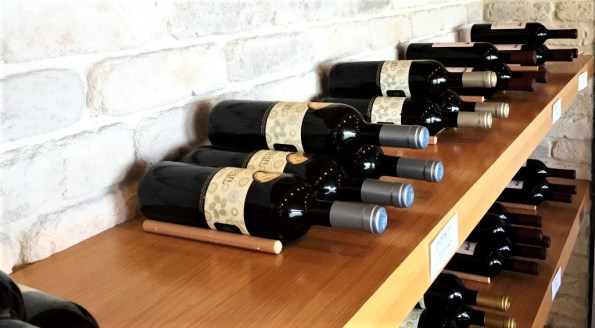
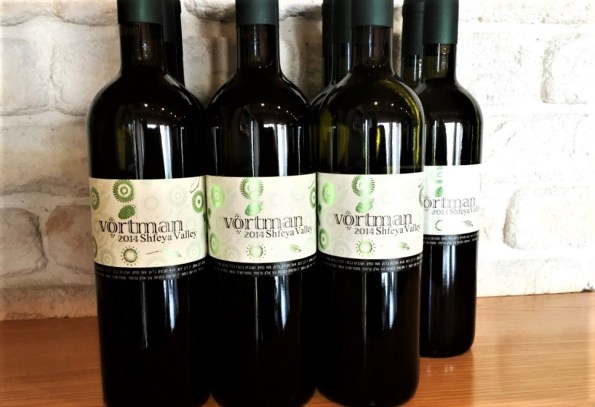


About 5 years ago, I had the pleasure of sitting across from Hai Vortman, the owner and winemaker at Vortman Winery. We were sitting in the Vortman winery tasting room, which was adjacent to his home in Haifa, enjoying magnificent views and superb wines. I was listening to Hai talking about the history of winemaking in Israel, particularly around the Carmel Mountain, which is considered one of the very best and oldest winemaking regions in Israel. Depending on the source, winemaking in Israel is from 3,000 to 5,000 years old, but this was not the point of our conversation. I learned that Baron Edmond de Rothschild recognized the viticultural potential of the Carmel Mountain region and founded Carmel Winery there in 1882, investing millions in the development of the vineyards and production of the wine. In 1900, Carmel Winery wine from Richon Le Zion area won the gold medal at the Paris World Fair, competing against classic French Bordeaux.
The first half of the 20th century was a tumultuous period for the Israeli winemaking – it was not until the last quarter of the century that Israeli winemaking started to rebound. Vortman Winery was founded in 2003 in Haifa in the basement of the family house, with the vision of producing organic wines from the grapes growing in the Shfeya Valley region of the Carmel Mountain. The first commercial vintage was in 2007. In 2009, Vortman started planting new vineyards in Shfeya Valley and converting old vineyards to organic viticulture, all based on dry farming, biodiversity, and full respect for the environment. Today, Vortman winery produces around 30,000 bottles a year – of the non-kosher wines.
Vortman wines we tried were delicious. 2014 Vortman Shfeya Valley White, a blend of Sauvignon Blanc and Semillon from 45 years old vineyard, was delicious, showing minerality, white fruit, crisp, clean, creamy, and refreshing, with a long finish. 2014 Vortman Prime Location Red, a blend of Merlot, Carignan, and Cabernet Franc (mostly stainless steel) was nicely restrained, earthy and fruity on the nose with a firm structure and an excellent balance. 2012 Vortman Shambur, a blend of Cabernet Sauvignon, Carignan, and Merlot (9 months in oak barrels) had a classic Bordeaux nose, great restraint on the palate with a nice core of tannins and great acidity. Nothing extra, nothing unnecessary, just a supremely precise wine. 2013 Vortman Carignan from 50 years old vines (7 months in new French oak) offered a burst of dark cherries on the palate and the nose and a perfect balance. Simply beautiful wines, one after another.
Now, the problem is that unless you plan to travel to Israel, you are out of luck with Vortman wines (hey, if any importers read this – do you want to bring some delicious Israeli non-kosher wines into the US?). Don’t despair, as Israel exports lots of tasty wines.


About 2 years ago, I had a sample of Yarden wines I never wrote about (yeah, I know). Yarden might be one of the best known Israeli wineries in the US, largely thanks to the efforts of the head winemaker Victor Schoenfeld, who is relentlessly promoting Yarden wines. Yarden is one of the brands of Golan Heights Winery, along with Gamla, Hermon, and Golan. Golan Heights winery was founded in 1984, and it is considered as one of the quality wine pioneers in Israel. Here are the notes for the wines I had an opportunity to taste:
2014 Galil Mountain ELA Upper Galilee (14% ABV, 61% Barbera, 30% Syrah, 5% Petit Verdot, 4% Grenache, kosher, non-mevushal)
Dark garnet, almost black
A bit of the stewed fruit on the nose, ripe plums
Clean, fresh on the palate, pepper, plums, baking spices, a touch of savory notes, good acidity, medium-plus body
7+/8-, initially the wine showed a touch of cork taint on the palate, some presence of a wet basement, which disappeared on the second day.
2016 Golan Heights Gilgal Rosé (13.5% ABV, 100% Syrah, kosher, non-mevushal)
Dark intense pink color
Touch of gunflint, oregano on the nose
Ripe spicy raspberries on the palate, more gunflint and granite notes, fresh finish of ripe fruit without been overly sweet, excellent concentration and presence, fuller body than most of Rosé. Delicious.
8, very pleasant
2017 Yarden Sauvignon Blanc Galilee (13.5% ABV, 2 months on French oak barrels, kosher, non-mevushal)
Straw pale color
Whitestone fruit and a touch of candied fruit on the nose, not typical for SB
The palate is restrained, with a hint of freshly cut grass, green apples, and some tropical fruit undertones. Good acidity, a hint of fresh-cut grass on the finish
8-, very good and pleasant rendition of SB
2016 Mount Hermon Indigo Galilee (14% ABV, cabernet sauvignon/Syrah blend, kosher, non-mevushal)
Dark garnet, almost black
Bright, inviting, freshly crushed red fruit, eucalyptus, raspberries, and blueberries on the second day, plus some dry fruit notes – figs
Wow. The first day was a little incoherent, but the second day is simply incredible. Beautiful supple blueberries and raspberries, excellent extraction, tobacco, dark chocolate, clean acidity, soft and round on the palate.
8+, excellent. Just let it breathe.
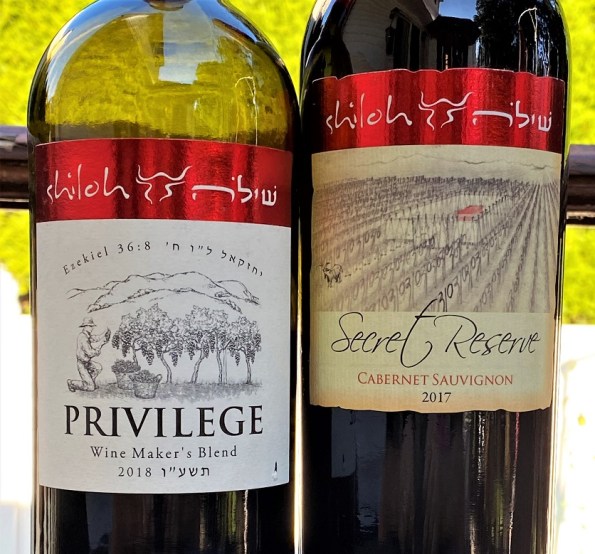
Before we are done here, I still need to talk about one more Israeli winery – Shiloh. I had been introduced to the Shiloh wines about 3 years ago, at a dinner in New York City. The wine we had, Shiloh Mosaic, was absolutely mind-blowing, it was #14 on my Top Wines list for 2017. Shiloh is the youngest winery out of the 3 we talked about today, founded in 2005. Shiloh vineyards are located in the area of the Shiloh river and Samarian hills. Based on the limited information available on the website, it seems that Shiloh produces wines from Chardonnay, Sauvignon Blanc, Cabernet Sauvignon, Cabernet Franc, Merlot, Malbec, Barbera, Grenache, Syrah, Petitte Sirah, and Petite Verdot grapes – of course, there might be others.
To celebrate Jewish New Year 5781, we opened two bottles of Shiloh wines. 2018 Shiloh PRIVILEGE Winemakes’s Blend (14% ABV, 74% Cabernet Sauvignon, 165 Syrah, 7% Cabernet Franc, 3% Grenache, kosher, mevushal) showed beautifully, offering soft red and black fruit, good minerality, soft tannins, and excellent balance. 2017 Shiloh Secret Reserve Cabernet Sauvignon (15% ABV, 100% Cabernet Sauvignon, 18 months in French oak, kosher, mevushal) was even better – a classic old world, rivaling any classic Medoc wine, full of cassis, eucalyptus, a touch of green bell pepper, silky smooth on the palate and extremely satisfying, a pleasure in the glass – this is the wine you need to experience, better yet, compare it against the best of Bordeaux in a blind tasting. It appears that many of the Shiloh wines are produced in both mevushal and non-mevushal styles – something which really calls for a blind tasting side by side.
Israeli wines are world-class, but they still need to be found by the wine consumer. Will you look for them?
A Quick Trip To Germany
 Germany is one of the oldest wine-producing countries in Europe, tracing its roots to 100 BC. Believe it or not, but at some point, Germany and France were considered as the two best wine-producing countries in the world, with German Rieslings being traded and collected at the same level as Bordeaux and Burgundy. Germany made some strategic mistakes in the middle of the 20th century, producing large quantities of insipid sweet wines, and it is still trying to recover from those losses.
Thinking of German wines, what is the first wine which comes to mind? If you said Riesling, you are absolutely right. Riesling is a megastar, the grape which embodies German wines and maybe even Germany itself to many of the wine lovers. However, even in Germany, there is life after Riesling – for example, in the Pinot family – and these will be the wines which will be our tour guides today.
Let’s start with the white Pinot wine – Pinot Blanc. Pinot Blanc, also known as Weißer Burgunder, Weißburgunder, or Weissburgunder – all of which are different spellings for “White Burgundy”, where the grape presumably originated, is experiencing growing popularity in Germany. Its plantings nearly doubled in the past 10 years, and now Germany has the highest amount of Pinot Blanc plantings in the world.
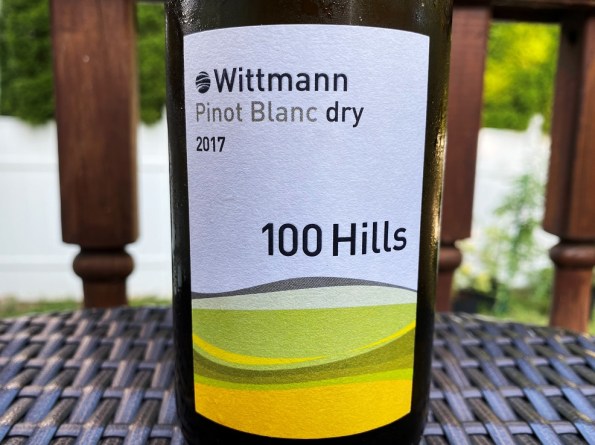
I recently saw a reference to German Pinot Blanc to be an understudy of the Chardonnay. Based on my experience with 2017 Wittmann 100 Hills Pinot Blanc dry Rheinhessen (12% ABV, $17), I would have to agree with this statement. The wine showed all the traits of the good Chardonnay except a touch of butter – however, vanilla, fresh apples, minerality, and clean acidity were tastefully weaved around the plump, texturally present core. (Drinkability: 8-). To give you a quick reference, the Wittmann family had been growing grapes in Westhofen for more than 350 years and 15 generations. The estate has been certified organic since 1990, and biodynamic since 2004.
Our travel in Germany is half done – and the second part of the journey might really surprise you. Germany is really not known among wine lovers as the land of red wines – and nevertheless, Germany has third in the world amount of plantings of one of the absolute darlings of the wine world. Care to guess what grape it is? Well, as it should be red, and you already know that we are talking about the Pinot family, this should be an easy guess – of course, it is Pinot Noir, better known as Spätburgunder in Germany.
Most of the Pinot Noir plantings in Germany are in the areas of Baden and Ahr, which is interesting as Baden is southernmost, and Ahr is one of the northernmost regions.
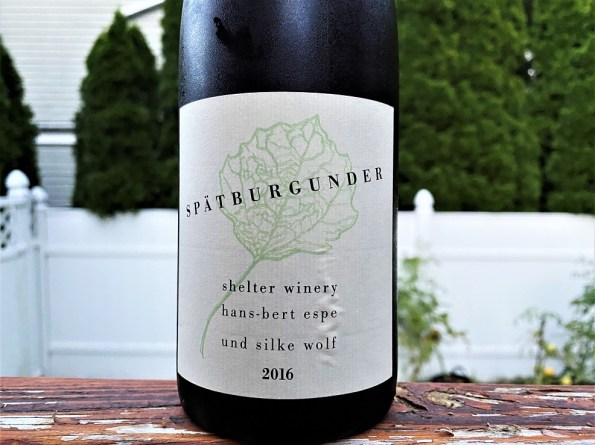
The wine we have chosen for our trip is coming from Baden, from the winery called Shelter, produced by husband and wife team, with harvest by hand and no use of herbicides or pesticides.
2016 Shelter Winery Spätburgunder Baden (13% ABV, $28) is unquestionably an old world wine, built with perfect precision. Gunflint, earth, smoke, cranberries, all in the lip-smacking, densely textured, tight package – this wine packs a lot of pleasure. (Drinkability: 8). I have to honestly say that this was my very first German Pinot Noir I was able to enjoy and I would happily recommend it to anyone who needs proof that Germany actually can create a tasty red wine.
There you have it, my friends – our little journey is over, but worry not – we will be traveling again very soon. Cheers!
A Quick Trip To Spain
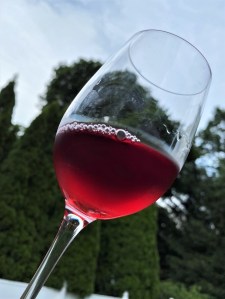 Hey friends!
Who else is feeling travel-deprived? Who else is dreaming of the airline food and 2-hours long passport control line after 12 hours flight?
I know it is not only me. I know we all do. But we still have to wait until any of that is a reality. For now, travel is just virtual.
Virtual travel has many ways. You can go back to the pictures you took while vacationing. You can go on Instagram or Pinterest, type in “Italy”, “Amalfi Coast”, “Maldives”, “Everest”, or “Machu Pichu”, and get lost for hours, exploring every little angle of the paradise through the eyes of others. You can find plenty to read, from blogs to books to everything in between, making it easy to imagine yourself in a French cafe, on the beach in Goa, or looking at the world while standing on the Great Wall.
Then, of course, there is food. There are many cuisines available within anyone’s reach today, no matter where you live. You can have paella at the Spanish restaurant, Mexican street corn at the Mexican place, black truffle risotto at Italian, or cassoulet at the French restaurant. Will that be an authentic experience that will bring back happy memories? That depends. The food might be amazing, but if you will not get the exact match to your expectations, to what you experienced during the travel, that might end up being a great meal, but not memory-inducing at all. For sure my own experience with paella or cassoulet is always hit and miss.
And then there is wine – of, course, you knew that it will all end up at “have wine, will travel”, right? Remember that proverbial “sense of place”? The sense of place is an indelible part of the wine. Even more importantly, wine can trigger an outpour of memories even before it will be opened and poured. One quick glance at the label is often enough to start the emotions going, to recall, to remember, to re-live. Of course, you can find authentic dishes in restaurants and market places. There are tons of original and authentic foods imported and readily available. It still doesn’t mean that on the moment’s notice you can retrieve that aged Swiss Gruyère, French Raclette, or a Spanish Jamón and have a smile from ear to ear. However, take out that bottle of Brunello, Australian Shiraz, Provençal Rosé, or Spanish Rioja – and watch out for that smile.
Ahh, I just said “Rioja” – remember I promised you a quick trip to Spain? Instead of musing on the subject, how about we will actually take this trip – and we don’t even need to pack a suitcase or wait for a taxi – get a bottle of Rioja, and you can instantly imagine yourself strolling the streets of Barcelona, or maybe admiring the old train station in Haro. Have wine, will travel – who is with me?
The Rioja I would like to bring to your attention today is as classic as it gets – coming from CVNE (Compañía Vinícola del Norte del España), one of the oldest producers in Rioja, who celebrated it’s 140th anniversary last year. CVNE produces a number of distinct lines of Rioja wines, under Cune, Imperial, Viña Real, and Contino labels, but the company is also expanding into areas such as Ribera Del Duero, Valdeorras, and others.


I recently had two delicious samples of the latest offerings from CVNE – you really can’t go wrong with either one of them, and the QPR is absolutely unbeatable:
2019 Cune Rosado Rioja DO (14.5% ABV, $13, 100% Tempranillo)
Cranberry juice color
Fresh cranberries, herbal notes, sage and violets
Fresh, crunchy cranberries, with characteristic acidity and tiny bitter undertones. Bone dry and very present. Balanced and elegant. Un-Provence and proud.
8/8+. If you are looking for Rosé with an umpf, this is your wine.
2016 Viña Real Crianza Rioja DOC (14.5% ABV, $17, 90% Tempranillo, 10% Garnacha, Graciano and Mazuelo)
Intense garnet
Eucalyptus, sage, crunchy berries, tobacco
Fresh red fruit, elegant, medium body, good acidity, a touch of sapidity, excellent balance
8, fresh and delightful. Daughter said it was good with an ice cream cake (surprise!)
Where would you like to go next? Cheers!
Playing With Celebrity Wines
Celebrity wine – is there such a thing?
Of course.
If you will look at this Wikipedia page, you will see the list of 100+ famous people who own vineyards, wineries, or both. Like all of us, some of the celebrities happen to love wine, and they are not shy of associating with what they love.
Every year or so, a new celebrity finds their love of wine and joins the ranks. 2020 had two celebrities (so far) joining the wine club of their own making – singer Post Malone and actress Cameron Diaz brought to the market their wine offerings – which I was eager to try, hence this post.
I’m always curious about celebrity wines. Celebrity status greatly simplifies the marketing of the product, no matter what the celebrity associates with. The celebrity status easily overshadows the product itself – this removes the need for the product to be excellent, as we love our celebrities so much that we are willing to blindly take whatever they are endorsing – and so my inner skeptic always wants to know – how good is the particular product? Is it a real deal or simply a cover up for something mediocre?
I had no idea who Post Malone is until I saw a Netflix movie called Spencer Confidential. Afterward, I learned that Post Malone is actually a popular singer. Then I read an article talking about the upcoming release of Post Malone’s wine, so here it is – a celebrity wine which needs to be tasted. After waiting for almost a month, the wine finally appeared in Connecticut, and I was able to buy my bottle.
When I’m faced with celebrity wine, the celebrity factor goes aside. I’m happy to know that somewhere there is a famous name associated with the wine – but the only thing I care about is the wine itself. Where was it made, what grapes it is made out of, terroir, winemaking, smell, taste, and pleasure – this is what is important. Knowing I’m drinking the wine associated with a famous person doesn’t give me pleasure – tasty, delicious wine does. I always say that the proof is in the glass – that is the only thing that matters. So celebrity wine or not, I treat it exactly like any other bottle.
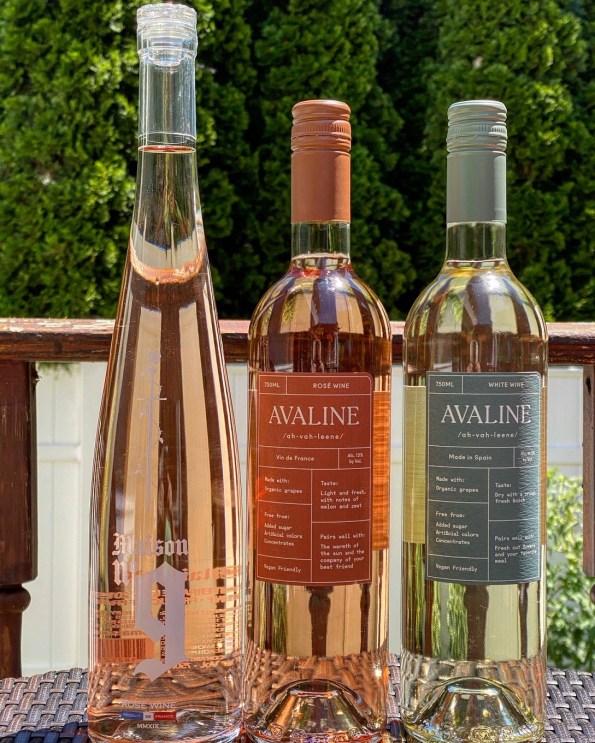
From that point of view, Maison No 9 represents a mixed bag. When it comes to the wine – it is superb. 2019 Maison No 9 Rosé Méditerranée IGT (12.5% ABV, $24, blend of Grenache, Merlot, Cinsault, Syrah) has a beautiful light pink color, has a nose of fresh strawberries with a touch of lemon, and bursts in your mouth with fresh strawberries and lemon, perfect minerality and raw, vibrant energy – all scrumptiously balanced (Drinkability: 8+). I love the bottle, it definitely stands out with an engraved front label depicting the sword and the rose. However, the problems start as soon as you try to dig deeper.
The website of Maison No 9 has no information about the wine, the vineyards, or the winemaker. All pictures on the web site feature Post Malone, and the only purpose of the website is to make sure you will buy something – either merchandise (T-shirt? Would it make wine taste better?), or the wine. This is in stark contrast with Miraval website, for example – Miraval is clearly a celebrity wine project (Angelina Jolie and Brad Pitt) – where it is all about the land, terroir, and wine. Website or not, but my problem is that the only place with any information about the Maison No 9 wine was this Forbes article. That is where I learned the story behind this wine, or that the wine was made by a well known French winemaker Alexis Cornu, or that the “new wine is named Maison No. 9, a reference to the Nine of Swords tarot card” (by the way, I searched the meaning of Nine of Swords tarot card and seems to be nothing good, but I’m not going to talk about things I have no idea about). So the bottom line here is that the wine is good, but the whole story is lacking. Does it worth $24? If this is your budget for Rosé, yes, but if not – you got options.
The Maison No 9 story, while almost non-existent, is still perfect compared to our next two wines, Avaline, which come with quite a story – and not really a good one. Avaline, which I believe means “bird” in Latin, is a product of the imagination of two long time friends, Cameron Diaz, a famous actress, and Katherine Power, a well-known entrepreneur. The duo decided to come up with a concept of a “clean wine” to advertise their creation, and this was a grave mistake, as it made the professional wine world fuming.
I’m not going to regurgitate any of the articles – just go search “clean wine Avaline”, you will find plenty of “critical acclaim”. The problem with using terms such as “clean wine” is that as soon as you designate your wine to be “clean”, you automatically imply that all other wines are “dirty” because no other wines advertise themselves as “clean”. When someone says on the label “Free from added sugars, artificial colors, concentrates”, I can’t keep my eyebrow from going up as my immediate reaction is “huh”? Really? I can’t speak with confidence about Two Buck Chuck, but I have serious doubts that they use any of these said additives. I don’t know who was advising Avaline on the wine marketing, but to me, this is a complete failure. Forget “clean wine” – another serious problem I have with these wines is that there is no information whatsoever about the wines – who made them, where the wines were made, from what grapes… yes, Wine.com, which sells both wines, has information on the grape composition. But then the white wine is designated as “Product of Spain” – another “huh?” from me as I never saw another wine with such designation, and the Rosé is identified as Vin de France. Another interesting element here (strategy????) is that both wines don’t list the vintage. So when you come to buy the wine in the store, you have no idea for how long the wine was sitting on that shelf… Nice…
So how were the wines? Both wines were actually quite tasty: NV Avaline White Wine Spain (11.5% ABV, $24, blend of Xarel·lo, Macabeo, Malvasia) – white stone fruit on the nose, nicely restrained, fresh flowers, a touch of minerality. Fresh ripe plums, sage, Meyer lemon, clean acidity, medium-long finish (Drinkability: 8, nicely done). NV Avaline Rosé Vin de France (13% ABV, $24, blend of Cinsault, Grenache, Cabernet Sauvignon, Syrah, Caladoc) – gentle pink color, a hint of sweet ripe strawberries, nicely restrained, candied strawberries and strawberry jam on the palate, good acidity, good balance, not over the top. Short finish, easy to drink (Drinkability: 8-).
While the Avaline are tasty wines, I see a serious problem here, outside of any “clean/dirty” concepts. You are asked to pay $24 for the wines of unknown pedigree, unknown vintage, made by someone somewhere, with a clean (pun intended), but a seriously unattractive label. I can splurge $5 on such a wine if I will get a recommendation – I guarantee you I will pass a wine like that if I will just see it on the shelf.
Here you go, my friends – 3 celebrity wine for your attention. All three are well drinkable, but you seek them at your own peril. Cheers!
Mystique of Mythic Malbec
A long, long time ago, in a place far, far away, lived a dragon. That dragon was known for the love of all things green. The vast land he called his home was all covered in luscious flowers, bushes, and trees, always perfect and beautiful. He would use his huge wings to keep the plants cool during the hot days, and he would plan his gardens in the most meticulous ways, to make sure all the plants were happy together.
There was one plant that he loved above all, and it was the grapevine. His vineyards always looked amazing, and his hard work was handsomely rewarded by the most perfect grapes you can imagine anywhere. He loved Malbec above all other grapes, as those gapes made him happy. Sometimes, he would make wine out of them, and sometimes, he would just eat them fresh and delicious.
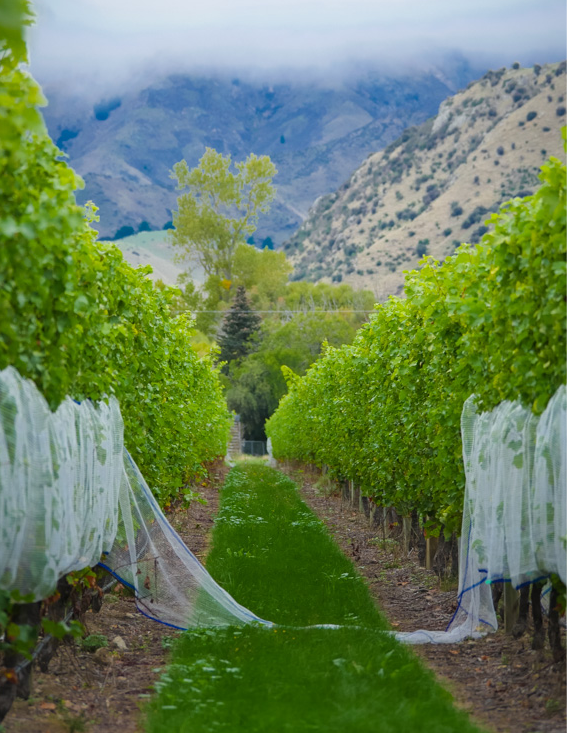
One day, the dragon was just gone. The plants didn’t feel the air moving with the flaps of his giant, powerful wings. But his presence still was felt in a magical way, as all the plants continued to happily grow, and the grapes were always delicious.
The legend has it that this far, far away magical place was in Mendoza, Argentina, and when people discovered it, they could still feel something magical, something mythical while standing between magnificent grapevine rows. So when they decided to create the winery and call it MYTHIC, that felt the most appropriate.
The MYTHIC winery is rather young, formed in 2014, but ambitious. The winery was founded by the same team which is behind the Casarena wines with the idea to showcase the best wines Argentina can produce – but also by going beyond the tradition. You know how you can taste a well made Bordeaux blend from Napa or Washington and be completely sure you are drinking the old world wine? This is what the MYTHIC winemaking team was trying to achieve – make the world-class wines, whether they appear to be Argentinian or not – and judging by my tasting experience, the mission was accomplished with flying colors.
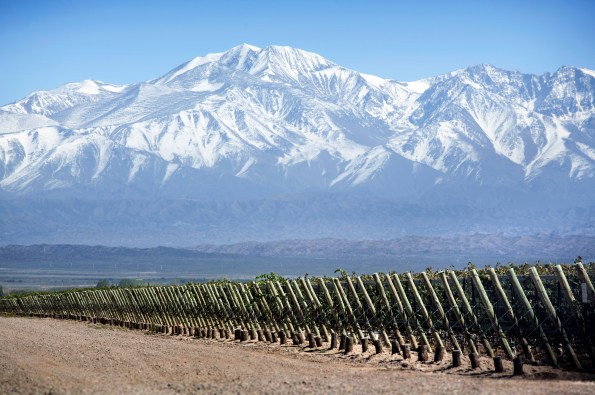
Continuing what the dragon started, MYTHIC farms about 400 acres of the vineyards in Luján De Cuyo area in Mendoza, which is often regarded as the Napa Valley of Argentina. Some of the vineyards are 90 years old, and most of them are located at about 3000 feet elevation. These high altitude vineyards are protected by the Andes, its snow-covered tops being the best source of water for the sustainably growing vines.
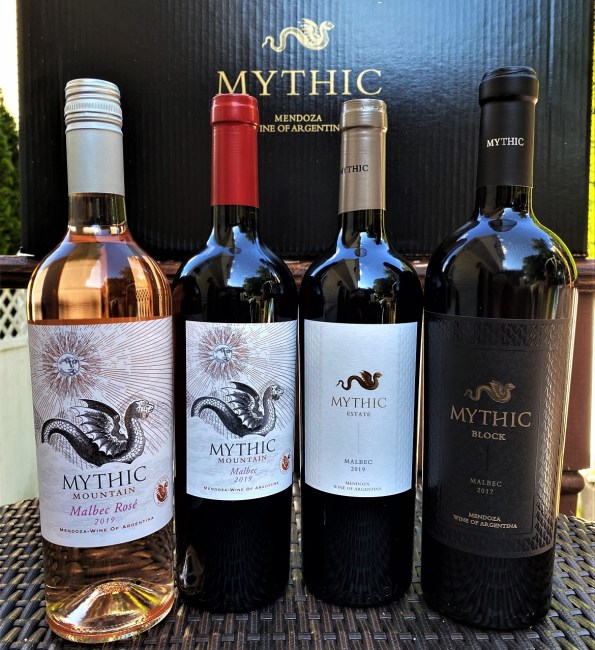
Malbec is the star at MYTHIC, used in the majority of wines – there are also multiple levels of wines, from the general to the vineyard, block, and even barrel-specific. The mystique of MYTHIC lies in the ability to show so many different expressions of Malbec, using seemingly negligible variations in the levels of fruit and oak regiment – but the diversity and the range are mind-boggling – or, rather, mythical. Take a look at my notes and see for yourself:
2019 Mythic Mountain Malbec Rosé Mendoza Argentina (12.5% ABV, $11.99)
Light pink
Fresh strawberries, good minerality, a touch of gunflint
Crisp, fresh, underripe strawberries, vibrant acidity, fresh lemon.
8+, perfect heat quencher – and a great value. This wine would successfully compete with any Provencal Rosé in the blind tasting.
2019 Mythic Mountain Malbec Mendoza Argentina (13.9% ABV, $11.99, 70% stainless steel, 30% 3nd/3rd use French oak)
Dark garnet
Freshly crushed berries, pencil shavings, tobacco, sweet sage
A touch of vanilla, tart cherries, soft, round, good acidity.
8-/8, easy to drink, perfectly representative of the “soft” Argentinian Malbec qualities.
2019 Mythic Estate Malbec Mendoza Argentina (13.9% ABV, $15.99, 4 months in French oak)
Dark garnet
Fresh berries, raspberries, blackberries, beets undertone (yeah, I know it sounds strange)
Fresh, open, ripe raspberries, hint of espresso, firm structure, well balanced.
8/8+, delicious on its own, but will be outstanding with the food. The wine clearly presents itself as an old-world wine – I would bet it is Cahors from France in the blind tasting.
2017 Mythic Block Malbec Mendoza Argentina (14.5% ABV, $34.99, 10 months in French oak)
Dark garnet
Cherries, herbs, clean, soft. More complex on the second day, a touch of roasted meat, funk, and chocolate
Succulent fruit, clean acidity, crunchy blackberries, earthy notes, perfect balance, silky smooth.
8+, outstanding, delicious wine. This wine is very international – a delicious wine which can be from anywhere.
Four wines made out of Malbec. Four totally different expressions of the grapes, some of them I didn’t know where even possible, such as Provence-style supremely elegant Malbec Rosé, also priced as a borderline steal – an outstanding QPR. Also, having the full old-world impression with the Estate Malbec? Not an easy feat, not for the New World wines.
Was our dragon real? I don’t know. I’m the one who is happy to believe in dragons and sorcerers. But the dragon made it on the labels, and the wines are as real as they can be, also great values in their own categories. The only thing left is for you to find these wines and judge them for yourself. The “thank you” notes can be left in the comments section with no limitations whatsoever.
Versatile Bubbles – Make Any Day Sparkle
Here is the question, wine lovers: what is your attitude towards sparkling wines? I’m not looking for a “politically correct” answer – “Champagne is for every day”, “bubbles every day” and so on. Yes – in theory, you can drink Champagne or any other sparkling wine for that matter (is there still a winery left which doesn’t make bubbles in some form?) – Champagne, Cremant, Cava, Prosecco, Sekt, Sparkling Shiraz or any other bubbles from anywhere else in the world – every day. Yes, you can – but do you?


No matter how much you love wine, I can bet that bubbles are not your average daily choice of beverage. There are many reasons for this. Of course, the price is one issue. Most of the typical Champagne today is pushing $40 per bottle, and this classifies as a “special occasion” type of beverage. This goes well beyond Champagne – all the random sparkling wines nowadays made literally everywhere, will set you back even further. Another reason – once opened, Champagne doesn’t last very long – two days in the fridge is probably okay, but the longer the bottle is open, the fewer bubbles are left. I’m sure there are many other reasons, some more personal than the others – for example, my wife loves red wine, but she would only have half a sip of Champagne if I will force her, so it is obvious that bubbles are not our daily beverage of choice.
It is hard to solve the personal issues, but if we will look at the price as the major issue, we can find some solutions to that. For example, how about some Prosecco? Yes, Prosecco is very different from Champagne – it is made from different grape; it comes from a different place – the Veneto region in Italy; it is made using a different process. But Prosecco is still a sparkling wine, usually costing about a third of the price of the typical Champagne bottle – and if you are looking to brighten up any day, Prosecco will do the trick (and the day will be even brighter knowing the amount of money you save).
Don’t take Prosecco for granted- it is a number one selling sparkling wine in the world today in terms of volume. Champagne roots can be traced back to the 15th/16th century, and Prosecco origins can also be traced to almost the same time. However, the production method for Champagne, called méthode champenoise was first described in the 1660s, while the production method used for most of Prosecco, Charmat-Marinotti, was invented in 1895. But these are minor technical details. The major difference is that while Champagne was craved by royalties and wannabes around the world for a few centuries, Prosecco first commercially appeared outside of Italy, in the UK, in 1989. And now, mere 30 years later, Champagne has to chase Prosecco’s success.
Okay, let’s stop talking and start drinking. Back in April, I attended a virtual tasting of 5 different Prosecco wines. It was done over Zoom, with 5 winemakers presenting their wines from their homes – but while tasting was virtual, the wines were not. For what it worth, here are my notes on the wines we tasted.
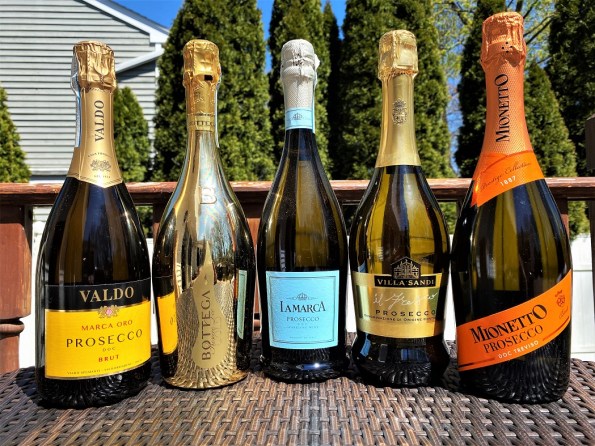
Villa Sandi takes its name from the historical villa, built in 1622. Villa Sandi produces a wide range of still and sparkling wines, including Prosecco from Cartizze, the most prestigious Prosecco vineyard.
NV Villa Sandi il Fresco Prosecco DOC Treviso (11% ABV, $15)
Pale green, fine mousse
Lemon, lemon zest, minerality
Fine bubbles, generous, crisp, fresh, Meyer lemon, pleasant and easy to drink
8-, a perfect summer quaffer or everyday bubbles
History of Bottega goes back to 1635 when Andrea Bottega started cultivating the grapes. Until 1992, Bottega was best known for its Grappa, and then in 1992, Il Vino dei Poeti Prosecco Spumante was created. Today, Bottega produces a large number of spirits, as well as wines. The range of Prosecco and sparkling wines includes more than 20 different bottlings.
NV Bottega IL Vino dei Poeti Gold Prosecco DOC Treviso (11% ABV, $29.99)
Straw pale, fine bubbles
A hint of apple, tropical fruit
Clean and refreshing mouthfeel, good acidity, lemon, a touch of Granny Smith apples, distant hint of nutmeg.
8-/8, restrained and elegant rendition.
The story of Mionetto started in 1887 when Francesco Mionetto opened the winery in Valdobbiadene, which is now known as the epicenter of Prosecco production. In 1982, Mionetto adopted the Charmat method for productions of the sparkling wines and introduced temperature-controlled fermentation. Mionetto had been leading the way in Prosecco production since then.
NV Mionetto Brut Prosecco DOC Treviso (11% ABV, $12.99)
Straw pale
Hint on peach and apple on the nose
Fine bubbles, crisp, fresh, touch of peach, fresh acidity of Granny Smith apples
8-, perfect everyday bubbles
Well, there is not a lot I can tell you about La Marca, as the winery website is excellent for marketing purposes, but doesn’t talk much about history. If anything, lots of cocktail ideas can be found there – see for yourself.
NV La Marca Prosecco DOC (11% ABV, $14)
Straw pale, large bubbles
Ripe peach, guava, pear, nose intense and inviting
Surprising contrast on the palate, dry, crisp, nice textural presence, tart lemon notes, good balance
8-, again- perfect everyday bubbles.
Valdo was founded in 1926 to produce sparkling wines in the areas of Valdobbiadene and Cartizze. Valdo was quickly acquired by the Bolla family and continued producing a wide range of sparkling wines. Right now, Valdo offers 29 (!) different sparkling wine bottlings, including some made using méthode classico and one organic Prosecco. This wine was also happened to be my favorite in this tasting.
NV Valdo Marca Oro Prosecco DOC (11% ABV, $13)
Straw pale, fine bubbles
Touch of yeast, toasted bread, and apples.
Fresh, crisp, cut through acidity, lemon, good minerality
8/8+, might be my favorite in the tasting, very reminiscent of champagne.
Here you are, my friends. Summer is here, and Prosecco’s refreshing qualities can brighten up anyone’s day. I’m off to pour another glass. Cheers!
Seeking, Overcoming, and Finding: Amarone for the Father’s Day
Let’s take this step by step, starting with seeking. What am I seeking?
If you read this blog for some time, you know that Amarone is my pet peeve. Ever since falling in love with Le Ragoze Amarone during Kevin Zraly’s Windows on the World Wine School session, Amarone has a special place in this wine lover’s heart. I generally would never admit the existence of the pivotal wine in my wine journey, but if I would really think about it, this will be the one. The combination of the dried fruit on the nose with the firm, powerful, impeccably balanced palate really created an everlasting memory. I had this experience about 17 years ago, in 2003, drinking 5 years old wine (1998 vintage) – and ever since I’m trying to replicate it. Which brings us to the next step: overcoming.
We are talking wine here, so what is there to overcome, you say? Fear. Trepidation. An attempt to avoid disappointment – over and over again. While seeking to replicate the amazing experience, over the years I tried many, many Amarone. A few times I managed to get close to that magical Le Ragoze experience – but the majority was really, really far from it. Why? Lack of balance. Let’s make it more precise: severe lack of balance. Often expressed in the form of the alcohol burn.
In the last 20 years, Amarone’s alcohol level progressed from the typical 14.8% ABV to the typical 16.5% ABV. I get it. What makes Amarone an Amarone is an additional step in the winemaking process, which is rarely used with any other wines – drying of the grapes before they are pressed. After the grapes are harvested, they are placed outside (historically, on the straw mats, but now, on specially arranged shelves) to dry under the sun, to literally shrivel into the raisins before they will be pressed – this process typically takes between 3 and 4 months. Drying concentrates sugars (and dramatically lowers the yield, which explains the high prices), and thus you can expect higher alcohol in the resulting wine. Yes, I get it – but still…
At 16.5% ABV, true mastery is required to achieve balance. True mastery is rare – and the real downside here is personal self-doubt. While tasting yet another hot and biting wine, a tiny voice in your head says “what is wrong with you? You really say you like this type of wine? Are you sure you are even remotely qualified as an oenophile? Maybe water should be your drink of choice?” So yes, tasting yet another Amarone requires overcoming this fear – who wants to prove oneself wrong time and time again?
Now, let’s continue to finding.
When I was offered a sample of Zenato Amarone I said (not without fear) “of course, thank you”. Zenato, which started producing wines about 60 years ago, in the 1960s, initially white wines in Lugano, produced its first Amarone in 1988. The grapes for Zenato Amarone wines come from the Valpolicella Classico area, grown in Sant’Ambrogio township.
So what did I found in that bottle? The first sip instantly quelled all the fears and brought back happy memories. What made that Le Ragoze so memorable was the contrast. I know, I already said it – the wine had an intense nose of the dried fruit. I don’t know about you, but I love dried fruit – especially figs and raisins. But dried fruit is sweet, and this is what I expected from the wine to be – only it was not. The wine was dry, absolutely dry, massive, concentrated, and firmly structured. It was also perfectly balanced.
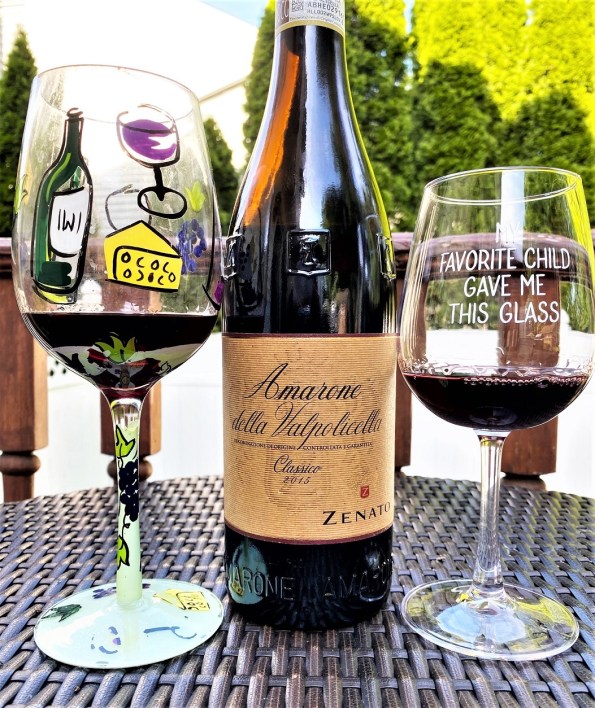
Those were the memories. And 2015 Zenato Amarone Della Valpolicella Classico DOCG (16.5% ABV, $60, 80% Corvina Veronese, 10% Rondinella, 10% Oseleta and Croatina, 4 months of drying, 36 months in oak) instantly brought them back with the delicate nose of the dried fruit and dry, massive, concentrated, but a perfectly balanced body. Firm structure, a touch of dried cherries, sage – just an excellent wine overall (Drinkability: 8+/9-). Wine is all about the balance. And pleasure. Zenato Amarone delivered both.
As I opened this bottle on Father’s Day, you can see in the picture a dilemma I now will be facing – I got another glass from another kid – now I will be forced to pick and chose the glass and try to avoid playing favorites… Oh well, not the worst problem to have, isn’t it?
Do you have a favorite Amarone that never disappoints? What’s your most memorable wine? Is there a wine out there you always crave?
Wine Opinions, Forming and Changing
Well, this might be a dirty laundry type of post which I might regret later – but sometimes, it is good to look into the mirror, so let’s talk.
How do you form an opinion about the wine? Is it on the first sip? Is it after a glass? Is it based on tasting the wine, let’s say, for an hour or two and slowly deciding if you like the wine or not, sip by sip? Equally important – what other factors contribute to that said opinion? Critic’s 95 rating – would that affect your opinion? Respected friend’s recommendation – how important is that? I’m not even talking about ambiance, mood, food, or any other factors.
Okay, now I have another question.
Your opinion about the wine is formed. What would it take to change it? Is it enough to taste the wine once to change your opinion completely? Or would you need multiple encounters to have your opinion changed completely, doesn’t matter in which direction? Well, actually I think here we need to differentiate here between positive and negative opinions. If your opinion was positive, it will probably take a few unsuccessful encounters with the same wine to decide that you made a mistake the first time. But in case of a negative opinion… it gets more complicated. Would you even be willing to give the wine a second chance in such a case? What would make you pick again the bottle of wine you didn’t appreciate before?
Let’s make it more practical.
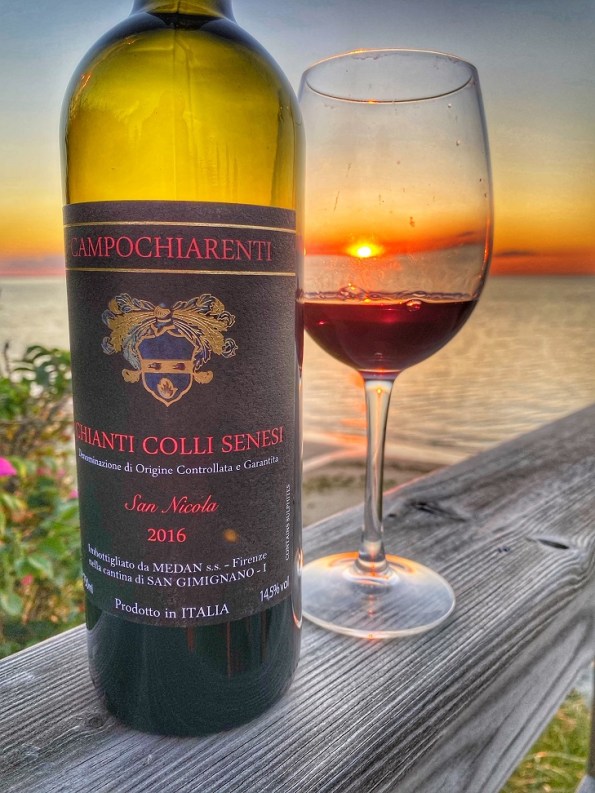
For a long time, I saw John Fodera, who is an expert in Italian wines, give the highest praise to the wines of Campochiarenti from Tuscany. I had an opportunity to finally taste one of the Campochiarenti wines – 2016 San Nicola Chianti Colli Senesi, one of the most basic wines in the Campochiarenti portfolio. Granted, I tasted this wine during the grand festivities of the open house John hosted during the OTBN Saturday – after tasting a variety of Gran Selezione, Super Tuscans, and a magical 1999 Soldera. And in the middle of all that extravaganza, the Campochiarenti Chianti’s appeal was lost on me. I mentioned in the post that the wine was “classic and simple”, but the major point was the price – it was an okay wine for the expected $12 when the wine will finally make it into the USA. Not that I didn’t like the wine, but I didn’t care much for it either – my palate perceived it as too dry and unidimensional.
Erich Russell, who I wrote recently about, has a business relationship with Daniele Rosti, the winemaker at Campochiarenti (Rabbit Ridge soon will be releasing the wine which will be a blend of Italian and California wines), and Erich happened to import a good number of Campochirenti wines to be able to showcase his future joint releases, which he now has available via his website. A few weeks ago, while I was ordering the birthday present for my sister-in-law in the form of the Rabbit Ridge wines, I recalled that she and her husband love Italian wines, so I decide to include a few bottles of the Campochiarenti wines in my order.
This past weekend we visited my sister-in-law who lives on Cape Cod. While deciding on the wine to take with us to see the sunset, I realized that this was a great opportunity to see what am I missing about this 2016 Campochiarenti San Nicola Chianti Colli Senesi – considering the universal love the wine has, I needed to try it again. It only took me one sniff and sip to have my opinion changed completely. The wine was absolutely mindblowing, in both bouquet and the taste, bursting with succulent cherries and offering velvety mouthfeel and impeccable balance. The picture above perfectly summarizes the way I felt about the wine – a double score, an amazing sunset paired with a superb wine.
After coming back and ordering my own case, I can now offer you another case buy recommendation. Visit Rabbit Ridge wine shopping page here, and look for the wine called Danielle – at $15, this wine is an absolute steal. You can also try Campochiarenti Vernaccia di San Gimignano, which supposed to be on par with the Chianti (when ordering, you can specify how many bottles of white and red you want) – I’m waiting for mine to arrive soon.
That is my story of a changed wine opinion. It was very easy for me, one sip and done. How about you? Have you changed your wine opinions and how? Do tell! Cheers!
Last Bottle Sign Up ($10 credit)




 Talk-A-Vino