Archive
What Can You Do With One Grape? Ask Lugana Winemakers
What can you do with one grape? We are not talking about the quantity of the grape berries in your possession – we are talking about one variety. Especially if this is the white grape variety such as Turbiana (a.k.a Trebbiano di Lugano), for example?
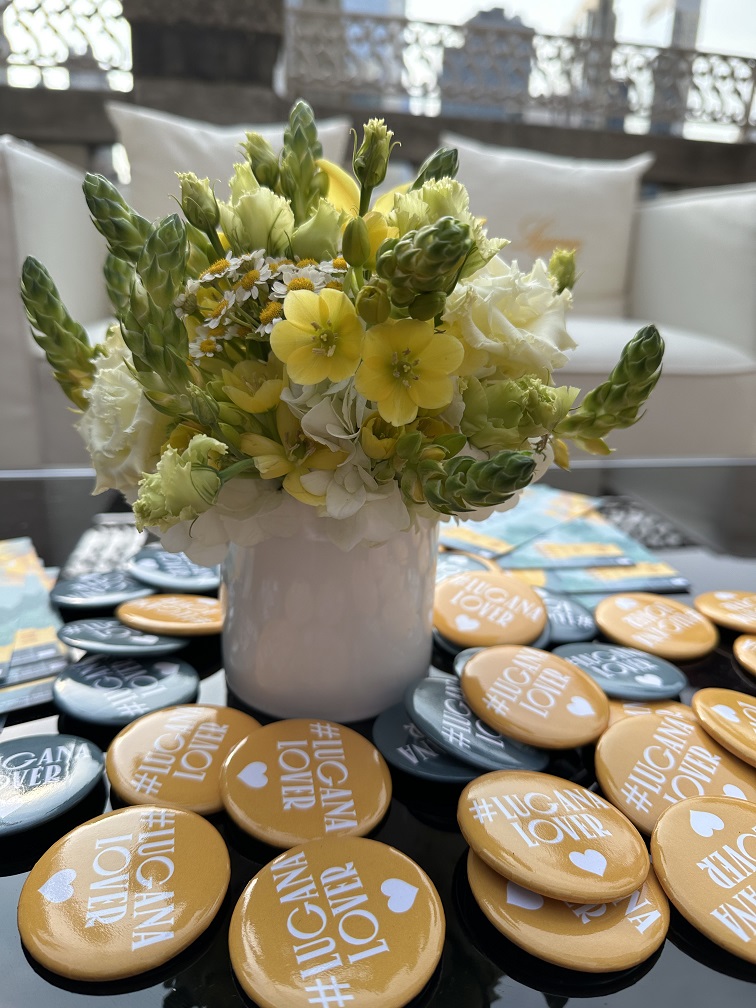
Before I’m publicly ostracized, let me be clear. I’m not trying to say that Lugana is the only region in the winemaking world with only one official grape – Brunello, Barolo, Barbaresco, Burgundy, Albariño (Rias Baixas) are all single grape variety greats. But comparing Lugana with Brunello, for example, wouldn’t be fair. I will explain.
Feel free to disagree, but I always say that delicious white wine is harder to make than red wine. In white wine, you have nowhere to hide – typically, no oak, no skin contact – the grape itself either delivers or not. Besides, Brunello and the others we mentioned above already built their reputation, and a single grape is all people want.
Even in the white wine world, Lugana is not the only “one grape” place – we already mentioned Rias Baixas with its Albariño, and then there is Sancerre, Condrieu, Vouvray, and many others. However, as I tasted the delicious range of Lugana wines last week at the Destination Lugana event, I couldn’t help but wonder about Lugana winemakers’ ingenuity. So what can you do with one grape?
Lugana DOC wines can be produced in 5 different styles. First, there is a regular Lugana DOC wine, which requires minimum aging of 4–5 months in the bottle. Next, there is Lugana Superiore DOC, which has to be aged at least 12 months. Lugana Riserva requires a minimum of 24 months of aging, 6 of which have to be in the bottle. Two more styles to complete the list: Vendemmia Tardiva (late harvest), which also required a minimum of 12 months of aging, the same as Superiore. And last but not least is Spumante, which can be produced using both Classic and Charmat methods.
At the Destination Lugana event, we were able to taste all the different styles with the exception of late harvest. As the event was taking place at the rooftop bar in downtown Manhattan, I didn’t even attempt to take any sort of reasonable notes. As one general note, I can only tell you that there was not a single Lugana wine I didn’t like. Fresh, clean wines with beautiful acidity – if I have to use a serious descriptor, I would have to call them “happy wines”.
Here is the list of the Lugana DOC wines I was able to taste (we have to add to this a bunch of Lugana sparkling wines I didn’t take the pictures of the labels from):
2022 Tenuta Roveglia Linne Lugana DOC
2022 Zeni 1870 Vigne Alte Lugana DOC
2022 Ottella Le Creete Lugana DOC
2022 Cà Maiol Prestige Lugana DOC
2022 Tommasi Le Fornaci Lugana DOC
2022 Vigneti Villabella Lugana DOC
2022 Cantina Valpantena Torre del Falasco Lugana DOC
2022 Cantina Cereasa Ceresa Lugana DOC
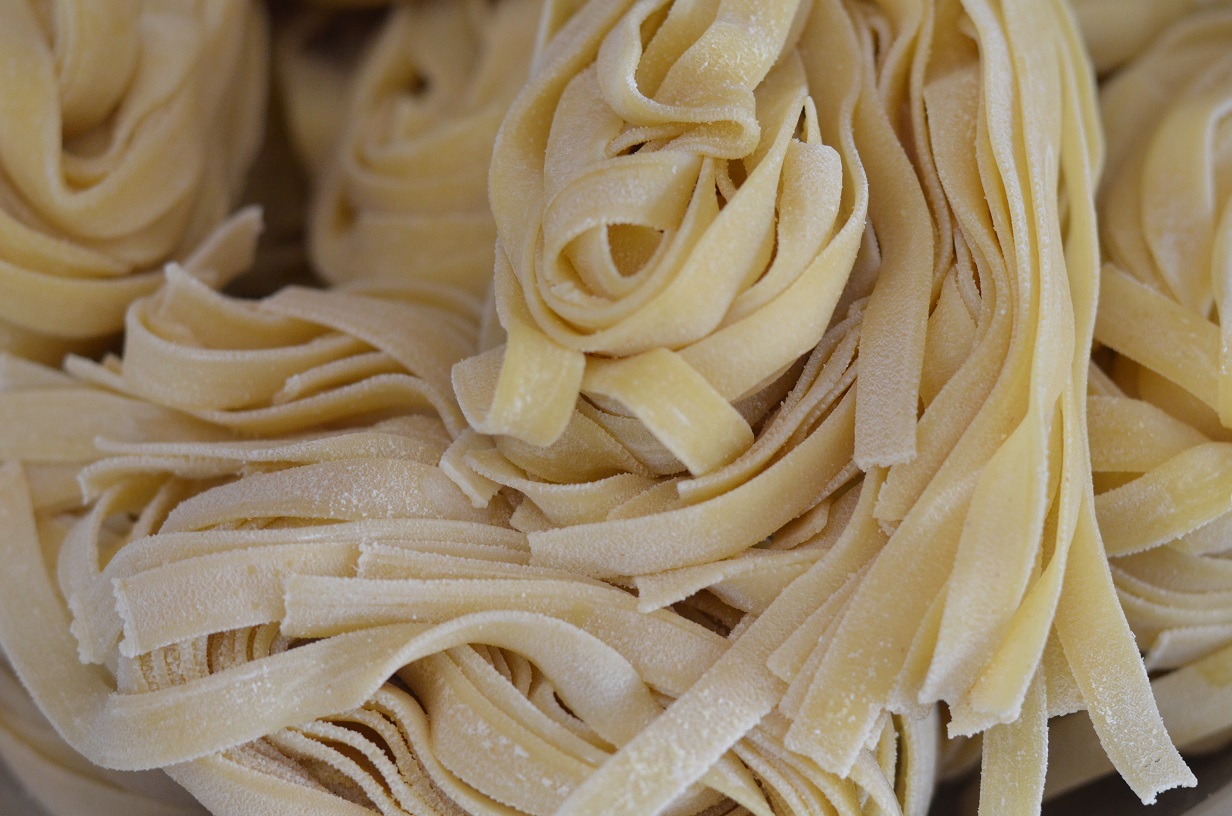
There was also food. Fresh sushi, made right there on the spot – perfectly complemented by Lugana wines. Few different types of fresh pasta – I can’t even tell you if I had a favorite, all were tasty. And pizza, a simple pizza. All worked quite well with the wines.


Let’s get back to wine. So what else can you do with one grape? For example, you can take multiple harvests. As an example, in Oregon, early-picked grapes are used for sparkling wines (higher acidity), and then the later harvest is used to produce regular still wines. In the case of Lugana wines, we had an opportunity to taste such two wines from Scolari. While both belong to the standard Lugana DOC category, the first one, 2022 Scolari Lugana DOC was harvested about a month earlier than the second one, 2022 Scolari Premium Lugana DOC. While the first had cut-through acidity as a main trait, the second wine was more round and unquestionably more complex. Add to this a bit of time with the skin contact, and you get beautiful light tannic tartness from the wine which never saw an inside of the oak barrel.


And then, of course, you can age your wines, to produce Superiore and Riserva styles. We had an opportunity to try wines from 2017, 2019, and 2021 vintages, and I would be hard-pressed to name a favorite out of these three – I would just suggest you should find them and try them for yourself (you will not regret!).
2017 Corte Sermana Riserva Lugana DOC
2019 Le Morette Riserva Lugana DOC
2021 Perla Del Garda Madonna Della Scoperta Lugana Superiore DOP


And, of course, the rooftop bar means views, and it means I have an opportunity to inundate you a bit with the city’s pictures.



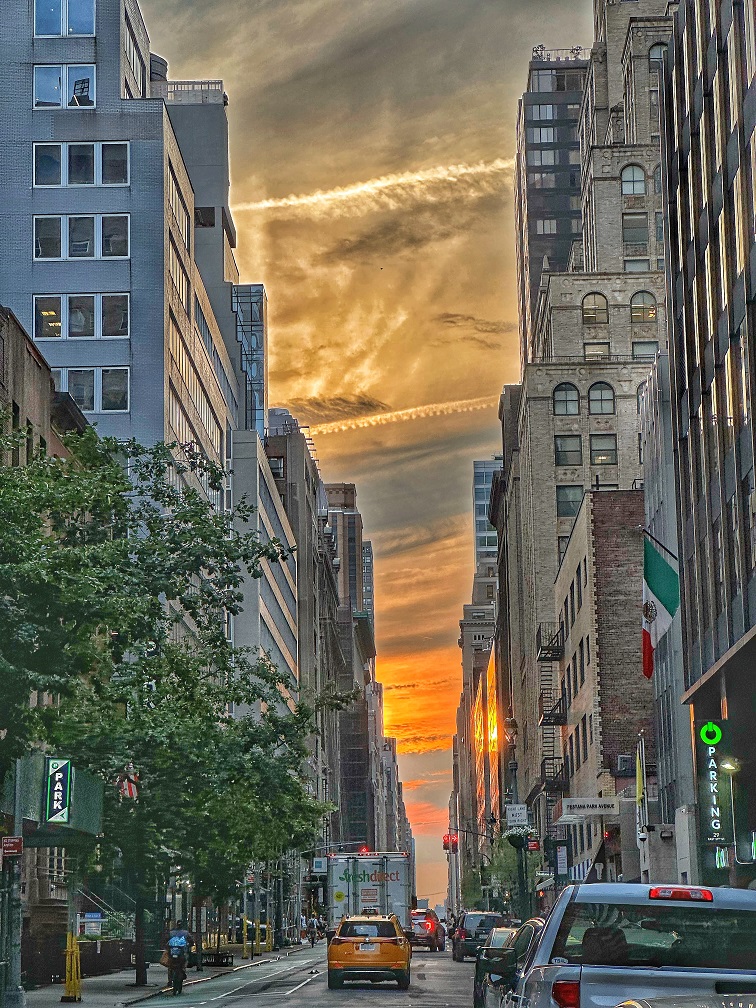

Here you are, my friends. Lugana wines are happy wines, I said it. Moreover, they are versatile, food-friendly, and will not make you break the bank to enjoy them. Do yourself a favor – visit your favorite wine store, grab a few bottles of Lugana wine, and then leave me a happy comment. Cheers!
The Land Whispers… You Just Need To Listen
 I love wine dinners. Especially the wine dinners with the winemaker.
I dread wine dinners. Especially the wine dinners with the winemaker.
I know, I don’t make much sense at the moment. Wine dinners are wonderful, and I really do love them. The dreadful part comes from the experience of not being able to write about those wine dinners in a timely fashion. “Timely fashion”, huh – there are wine dinners I never wrote about in 5 years and such memories can hunt you down – they definitely do for me. I don’t know why this is happening on a regular basis – the elation often experienced during open and engaging conversations about wine becomes an ephemeral spirit, woefully resistful and easily escaping the slightest attempt to capture it in the form of words…
Let’s see if I will be able to break my unsettling tradition.
Last week I had a wonderful time and experience tasting the wines of Viñedos Veramonte and speaking with Gonzalo Bertelsen, General Manager and Head Winemaker in a small group of wine lovers, around the dinner table at the Monterey Brasserie in New York. The conversation topics were ranging from low-alcohol wines (is that really a trend? Are people really asking for it or is that just a gimmick?) to the production of organic and biodynamic wines to “why Germans don’t want to drink organic wines from Chile” (I will not tell you why but you are welcome to guess) and to many other far and between. But most importantly we got to enjoy Viñedos Veramonte wines with and without the food.
Viñedos Veramonte was one of the first wineries in the Casablanca region, founded in 1990 by Agustin Huneeus, a Chilean wine pioneer. From the very beginning, the winery embraced organic viticulture – and more recently, the winery spent more than 6 years making estate vineyards officially organic certified, obtaining ECOCERT® organic certification, one of the most respected in the world. The project involved the conversion of more than 1,200 acres of vineyards in Casablanca and Colchagua valleys to organic and biodynamic farming, with the aim to also become fully Demeter’s biodynamic certified – which requires making changes in the winery, not only in the vineyard – plus importers also have to be biodynamic certified.
Viñedos Veramonte produces 4 distinct lines of wines – Veramonte, Ritual, Primus, and Neyen – all from organic grapes, of course. We had an opportunity to taste wines from all 4 lines.


We started with the 2022 Veramonte Sauvignon Blanc Reserva Casablanca Valley ($13.99 SRP). This wine has one of the biggest productions, and it is very important for Veramonte. Preserving freshness is paramount, so special care is taken to prevent any oxidation of the grapes and juice, and the wine is bottled as soon as possible. The wine was herbaceous and crisp, delicious on its own but also nicely supporting our first course – Grande Plateau of seafood containing oysters, clams, tuna tartare, and lobster. The Sauvignon Blanc pairing with the oysters was the best – and the oysters were delicious, probably my favorite component of the Grand Plateau.


Next, we moved on to the 2019 Ritual Chardonnay Casablanca Valley ($20.99 SRP, fermented in oak barrels and concrete tanks). I wrote about Ritual wines many times, last time only a few months ago – the wines are consistently delicious. The wine was paired with a choice of appetizer – crispy artichokes or barbecued prawns. I selected crispy artichokes, forgetting that artichokes are notoriously difficult to be paired with wine. The dish was delicious on its own, and the wine was also good – on its own.
We also tried the 2020 Primus Carmenere Apalta DO ($20.99 SRP) with our appetizer course. The wine was excellent and had a nice profile of cassis supported by the bell peppers, showing off the pyrazines. Some of the winemakers are trying to prevent the pyrazines from showing up by changing growing conditions, harvesting regime and more – but I personally enjoy the pyrazines’ flavor very much, it adds to the authenticity of the wine. While Carmenere was still not a perfect match for the artichokes, it offered a bit better pairing than the Chardonnay.
Now we were ready for the main course, and the new wine arrived.
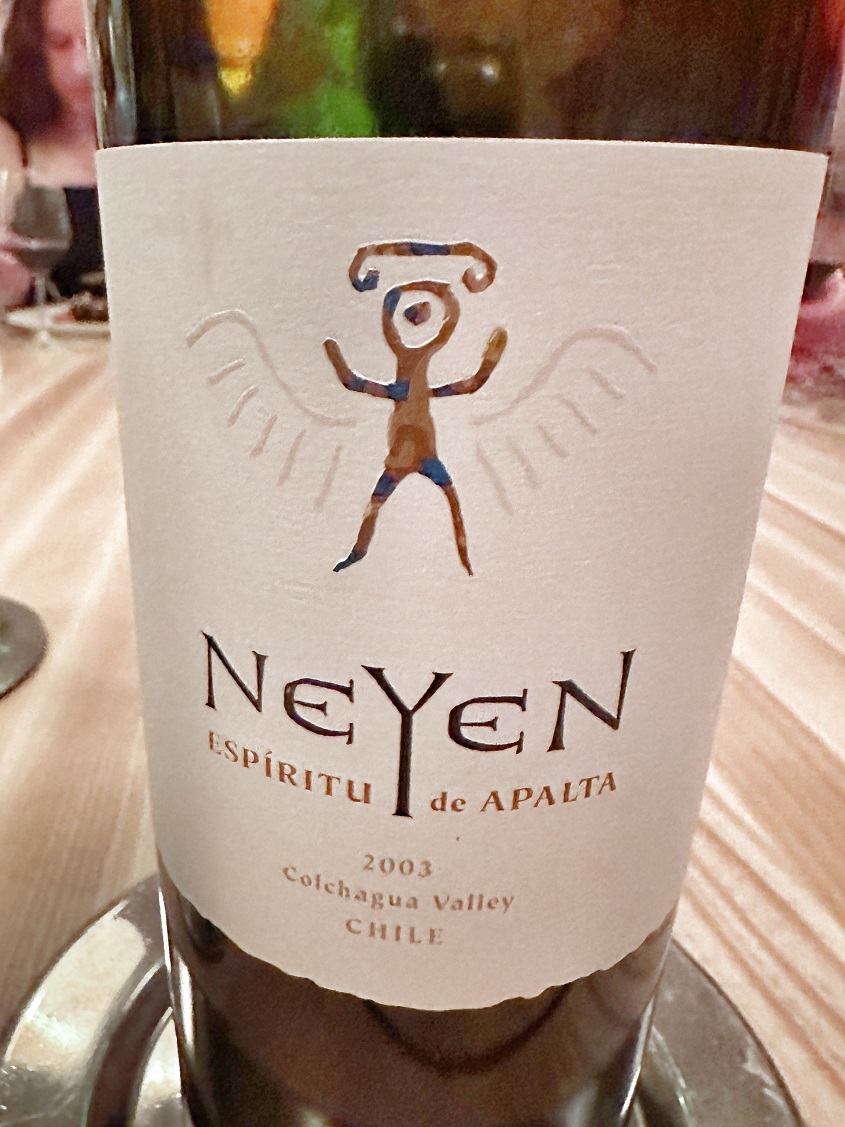


Last December I had an opportunity to try for the first time yet another Veramonte wine called Neyen. Neyen vineyards are located on a small parcel of land situated between the Andes Mountains and the Coastal Range. Neyen wines are literally always a blend of 50% Cabernet Sauvignon and 50% Carmenere, both coming from truly the old vines – Cabernet Sauvignon vines were planted in 1889, joined by Carmenere in 1936, which makes the vines respectively 134 and 87 years old.
In the local dialect, Neyen means “whisper”. The land whispers, you only need to listen to her – low intervention is what the Neyen winemakers practice. And this is the whisper you can taste.
The wine literally stopped me in my tracks. You know that stupid smile that you can’t control when something good is happening? This was my face upon the first whiff of the 2003 Neyen Espíritu de Apalta Apalta DO ($N/A) – the first vintage of Neyen wine ever produced. The time stopped – there was only the endless pleasure of aromatics that only mature wine can bring.
Time, wait. Don’t move. I’m still enjoying it. Please, just a few more moments.
Cassis and eucalyptus on the nose. Cassis and eucalyptus on the palate, silky smooth, perfectly integrated tannins, full body of the mature wine at its absolute peak, pleasure slowly descending layer after layer. This is the case where the words are clearly insufficient to describe the joy of the oenophile, but I hope I offered at least a glimpse.
For the main course, I selected Bluefin Tuna au Poivre with baby beets and citrus sauce – and to my delight, the 2003 Neyen offered a perfect pairing, elevating every bite of the food.
We also had the 2016 Neyen, Espíritu de Apalta Apalta DO ($N/A). Tasting 2016 after 2003 was somewhat of a mistake. 2016 is an excellent wine, but the beautiful core we were able to experience in 2003 was still covered by layers of baby fat, the wine showing a lot richer, almost jammy on the first sip, and in need of time to open up.
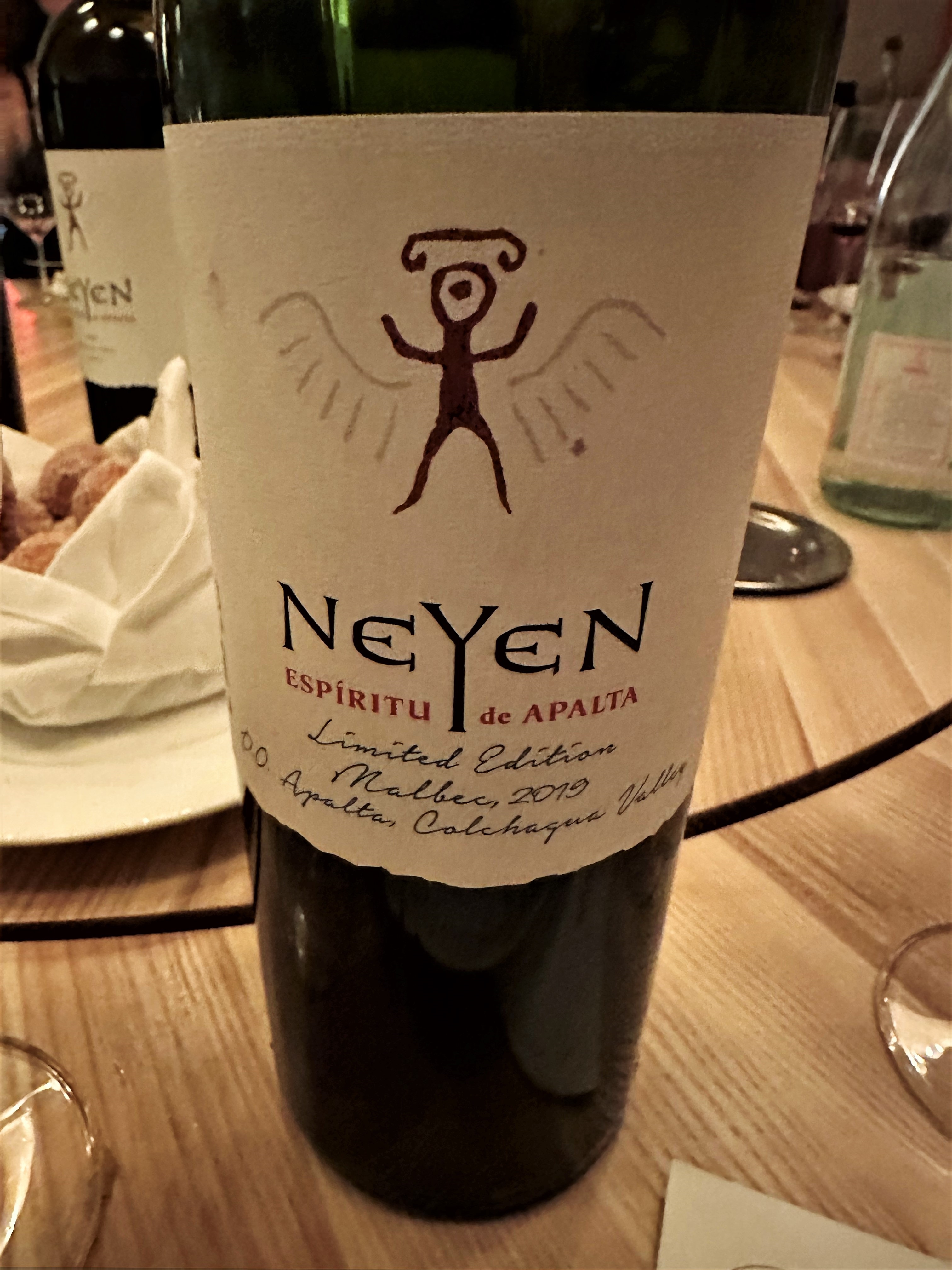
The culmination point of our evening, though, was … a bit unexpectedly, as we are talking about Chilean wines … the Malbec. 2019 Neyen Espíritu de Apalta Malbec Apalta DO ($149.99 SRP). 2016 was the first released vintage of this super low-intervention wine – harvested and destemmed by hand, fermented in small tanks, no machines, no electricity used in the production of this wine, aging only in 3rd and 4th use French oak barrels. This is the crown jewel of the Veramonte Neyen collection – even James Suckling agrees, rating this wine at 100 points. Only 200 cases of the wine were produced in 2019, with the US allocation standing at 40 cases.
The main word I would use to describe this wine would be “elegant”. The wine was showing beautiful eucalyptus notes, a lot leaner than most of the Argentinian Malbecs, begging comparison with old world Malbec, the Cahors. Elegant, layered, delicious.
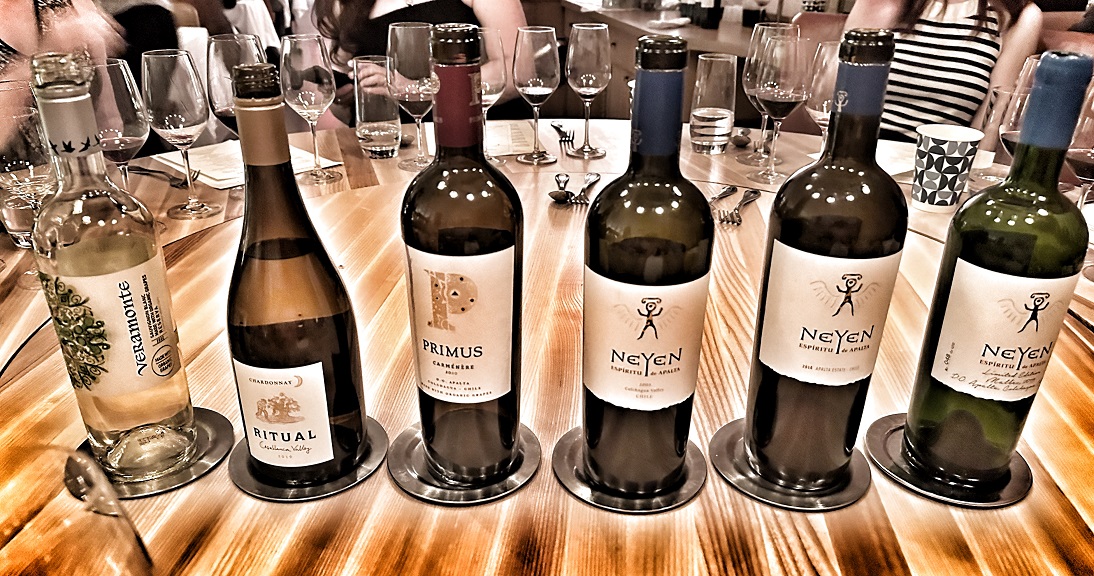
And this, my friends, brings us to the end of the wonderful evening. The company was great, the food was excellent, the wines were amazing.
Mother Nature whispers, and good things happen when we listen. I wish I had a case of this 2003 Neyen Espiritu de Apalta – that would really make me happy. Well, we generally don’t get to have all the things we want – and I’m grateful for the opportunity to experience such wines at least once.
Veramonte wines offer a great selection for every budget and every palate – check them out when you will have a chance. Cheers!
American Pleasures #8: Flora Springs, Napa Valley
Wine should give you pleasure – there is no point in drinking the wine if it does not. Lately, I have had a number of samples of American wines that were delicious standouts – one after another, making me even wonder if someone cursed my palate. I enjoyed all those wines so much that I decided to designate a new series to them – the American Pleasures.
This very blog was born out of a desire to share with the world the excitement that a glass of wine can bring. To share an appreciation of a well-crafted glass of fermented grape juice that can inspire great paintings, great poetry, and great conversations.
Sometimes, it is not very easy to find the right words to share that excitement. Yes, there is a great arsenal of wine technical terms to describe body, aroma, bouquet, finish – but those words do a very poor job of conveying emotions. Yes, they describe wine, possibly correctly but subjectively (you say it is a blackberry, and I say it is black cherry) and possibly sufficiently to give another wine geek or professional an idea of how the wine might taste. But when one whiff from the glass literally stops you in your tracks, whether the aroma contains raspberries, black currant, or the hair of the wet dog is really irrelevant. What is important is that wine blew your mind and delivered an ultimate pleasure, which you can’t resist but share with the world.
Everyone derives wine pleasure on their own. For me, smell (aroma) and taste (bouquet) are two distinctly different categories. I had wines that had a magnificent aroma, and an underwhelming bouquet. I had wines where the aroma was either absent or borderline terrible, and the bouquet was magnificent. Of course, many have both. Taking about deriving the wine pleasure, mine definitely starts with the nose, the aroma. I’ve had wines that I didn’t start drinking for a good few minutes, just inhaling the aroma exuding from the glass. I can’t tell you why and how this works with the aromatics of some of the wines being so captivating – simply sharing my perspective here.
This was a long introduction to the gist of this post – two wines of Flora Spring from Napa Valley in California that I had an opportunity to taste lately.
From the moment I heard the name Flora Springs for the first time, there was something subconsciously attractive in that name – I have no idea why and how. But ever since the first encounter, I always expect magic while tasting Flora Springs wines.
Flora Springs Winery was founded in 1978 by Flora and Jerry Komes in Napa Valley, rooted deeply in the rich history of the US wine industry’s ups and downs, going from 763 wineries in California to only 40 surviving Prohibition. Name Flora in combination with the natural springs running through the property helped to define the winery’s name – Flora Springs. From the moment the winery was founded, it was truly a family affair, all built and developed by Jerry and Flora, their kids, grandkids and their families – you can learn all of it on Flora Springs’ website – and it is well worth a few minutes of your time.
The line of wines Flora Springs produces is something you would expect from the winery in Napa Valley – Chardonnay, Sauvignon Blanc, Cabernet Sauvignon, Merlot, and a few others. Yet the two wines which prompted this post belong to the Flagship category – the white blend called Soliloquy and the red Bordeaux blend called Trilogy.
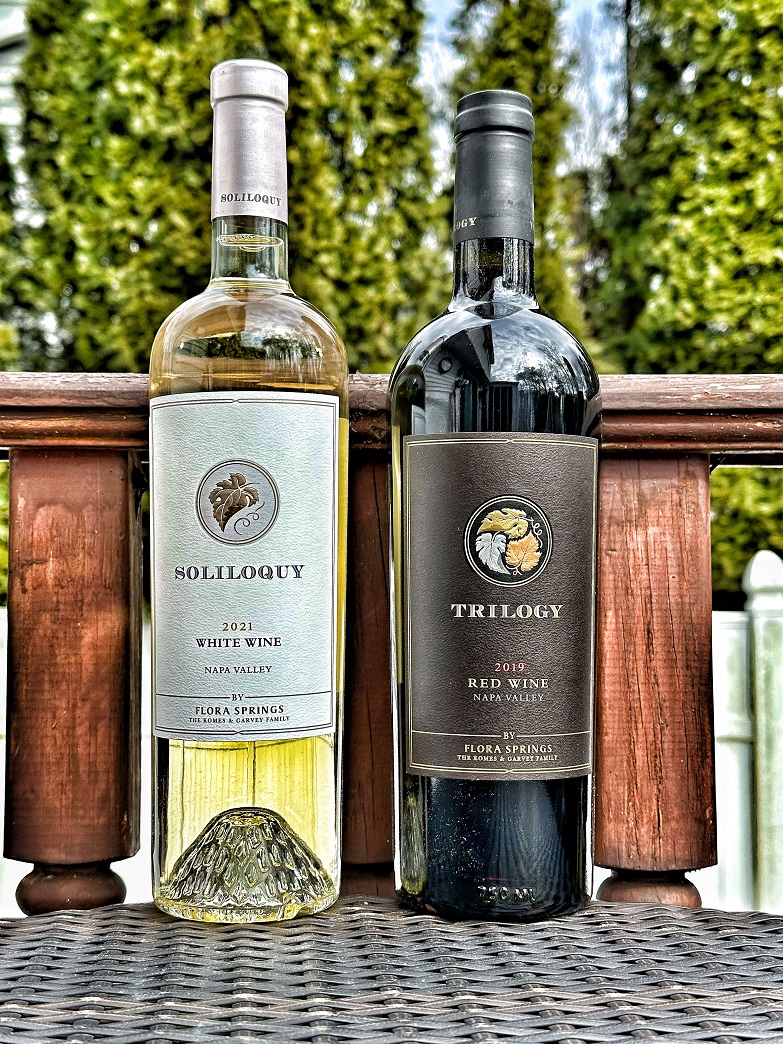
I tried Soliloquy for the first time 13 years ago – no, I don’t have such an amazing memory, I simply have my notes – in this very blog. The wine I tried back then was Sauvignon Blanc from Soliloquy Vineyard. Actually, Soliloquy Sauvignon Blanc is identified as a Sauvignon Blanc clone, certified by the UC Davis to be unique to Flora Springs, so I found that wine to add a unique grape to my collection (I actually added two, as that wine was a blend of Sauvignon Blanc Soliloquy and Sauvignon Musqué). My next encounter was about a year later when I was blown away by the 11 years old Soliloquy bottling.
It is worth noting that in the 1990s, the Soliloquy vines became nearly extinct due to the disease. The winery spent the next 8 years re-growing the Soliloquy vines first in the lab and then in the nursery before the plantings were restored in the vineyard.
2021 Flora Springs Soliloquy Napa Valley (14.2% ABV, SRP $60, 73% Sauvignon Blanc, 12% Chardonnay, 15% Malvasia, 7 months in French oak barrels), the wine which I had, is still made primarily from Soliloquy Sauvignon Blanc with the addition of Chardonnay and Malvasia. The wine offered beautiful bright aromatics, with the whitestone fruit and a distant hint of honey. The palate was full of energy, uplifting, showing more of the white stone fruit, Meyer lemon, crisp acidity, and overall perfect balance. A perfect example of the capabilities of the Napa Valley white.
Not to be overdone, my second wine was 2019 Flora Springs Trilogy Napa Valley (14.2% ABV, SRP $85, 75% Cabernet Sauvignon, 10% Petit Verdot, 8% Cabernet Franc, 7% Malbec, 18 months in French (80%) and American (20%) oak barrels). Trilogy wine was originally produced for the first time in 1984 (thus 2019 is the 35th vintage of the wine), with the name being a nod to the three main Bordeaux varieties comprising the blend.
This wine was truly a show-stopper. On the first whiff, the world slowed down. There was just me and the glass. Pure, delicious black currant, eucalyptus, currant leaves. Round, and around, and around. I few minutes later, I developed the courage to take a sip. To my delight, the palate delivered as much excitement as the nose. Polished, layered, seductive, Bordeaux-style textbook profile, black currants, well-integrated tannins, perfect structure, powerful but perfectly balanced. You really don’t expect the wine like that to be a pop’n’pour wine, and yet it was, in my glass. Absolutely delightful.
There you are, my friends. Another case of delicious American wines, delivering lots and lots of pleasure. These wines are not really everyday sippers but are well worth looking for to brighten up any special occasion.
I have more American pleasures to share, so stay tuned…
Latest Wine News and Updates
While wine production is one of the oldest industries in the world, the amount of new, innovative products and scientific breakthroughs in the wine world is nothing short of breathtaking. Let’s take a look at some of the latest news from the field.
Everyone agrees that fake wine is a big problem for the wine industry. There are many tools employed by winemakers to protect the identity of their wines, but the quest for the perfect solution is still ongoing. After 15 years of intensive research, the French INAO (The National Institute of origin and quality), together with the College of Veterinary Medicine at Auburn University in the US announced the successful results of the initial trials of dogs being able to sniff fake wines. As part of the Canine Performance Sciences program, dogs had been trained to identify wines that don’t match the original wine. The training is a very involved process requiring the dog to spend about 2 years at the winery memorizing the original flavor profile of the wines. Once trained, the dogs can easily distinguish the original bottles from the fakes, the same as working dogs who identify illegal substances at customs in airports. The training process is intense and costs about $50K per dog, so this solution is not for every winery. Nevertheless, according to INAO, it will take about 7 years to satisfy all the requests for the dogs received to date.
There are plenty of wine lovers who crave massive, tannin-loaded wines. Such wines are often quite expensive as they require a long aging time in the oak barrels which are costly. What if the oak flavor can be concentrated in the grape itself while it is growing? Impossible, you say? Scientists from UC Davis in California think otherwise. Instead of using the traditional rootstock, UC Davis scientists managed to graft Cabernet Sauvignon vines onto the french Limousin oak rootstock, and after about 7 years of experimentation it seems that resulting wines demonstrate much higher tannin concentration than the wines obtained from the same clone of Cabernet Sauvignon but not grafted on the oak rootstock. Obtaining the same level of tannins would require about 6 months of age for the wines in the control group. Once the research is complete, it will result in significant savings for the wine producers which [hopefully] will be passed on to wine lovers. We should expect to find the first wines based on the results of this research by approximately 2028.
Many wine lovers live with a simple motto – coffee in the morning, wine in the evening. The next news I would like to share with you will, in a way, be related to both beverages. How so? Everyone knows Nespresso, a French company that mastered the simplicity of the perfect cup of espresso at any time with the help of a tiny coffee capsule. Working on a special (very sizeable) grant from French LVMH conglomerate, Nespresso just announced a brand-new machine called – maybe you guessed it – Winepresso. Nespresso scientists found a way to convert the content of the wine bottle to the dry form which is encapsulated in the tiny wine capsule, literally identical to the coffee one. Now, with a push of a button, a perfect glass of your favorite beverage is in your hand at any moment. Based on the opinion of the expert panel, the Winepresso-produced wine is practically identical to the original wine, which is a pretty amazing achievement in itself. The initial set of capsules available upon commercial availability of Winepresso will include two Bordeaux reds, one red from Burgundy, and 3 whites from Loire. It is also known that Nespresso is actively involved in conversations with a few of the famous wineries in Napa Valley. The capsules will be sold in the 5-packs (to be identical to the standard 5 glasses in the bottle of wine). Winepresso machines are expected to appear at select retailers such as Williams-Sonoma and Bloomingdales in time for Christmas shopping. The prices for the capsules and the machines had not been disclosed yet. If successful, you can only imagine how successful this product will be from point of view of sustainability and reduction of the carbon footprint.
Open any news source today, and you are guaranteed to read about ChatGPT, artificial intelligence (AI) software. ChatGPT writes poems, articles, and marketing materials, conducts market research and lots more. It appears that the wine world is starting also to embrace ChatGPT in a variety of ways, many of them quite unexpected. Champagne Piper Heidsieck just announced that they will start a new line of non-vintage Champagne, called Piper Heidsiek AI, where ChatGPT will play the role of the Chef de Cave, responsible for blending the final wines. After the initial offering, both Blanc de Blancs and Blanc de Noirs will be produced. While it is an interesting announcement in itself, I’m concerned with the impact of the ChatGPT on all areas of human lives, now including even wine production. Well, we will see how this story will unfold.
That’s all the latest news I have for you, my friends. Until the next time – cheers!
Stories of Passion and Pinot: Looking Back and Looking Forward 2023
 What started from the little idea “yea, I don’t know, I don’t believe in it, but maybe I will try anyway” now became one of my favorite ongoing series in this blog – Stories of Passion and Pinot. Stories of Passion and Pinot are exactly what the title says – these are the stories of the winemakers passionate about one of the most finicky grapes there is – Pinot Noir.
It is a fun exercise to take a retrospective in the ongoing series and see how far I have gone from time to time. So here is the latest update – for me, and for you if you care to read it.
First, last year I created a new landing page for the whole series. This page is kept current, all new interviews are now added to this page and you always know when the page was updated last.
Four new stories were added since the last update: David Adelsheim of Adelsheim Vineyard, Shane Moore of Gran Moraine, Erik Kramer of Willakenzie Estate, and Bill Sanchez of Potter’s Vineyard. All of these are excellent, in-depth interviews – if you have not had a chance to read them yet, you really should do it now.
Interviews in the series have questions tailored to the individual wineries and winemakers with a little overlap between them. However, sometimes it is fun to ask people the same question and enjoy the diversity of the replies. I asked the same two questions to some of the winemakers who had been already profiled in this series – and now I want to share our short Q&A with you.
Sara Specter of Bells Up Winery, Bill Sanchez of Potter’s Vineyard, and Wayne Bailey of Youngberg Hill have graciously agreed to answer my questions, so below you can see my questions – and their answers:
[TaV]: How was the year 2022 for you? New grapes, new plantings, new wines, vineyard discoveries (a new plot/block, for example), new winemaking styles, new wine club, new tasting room, new markets, growing season and the vintage – please share anything and everything you are willing to with our readers.
[Bells Up Winery]: Harvest 2022 was our 10th under the Bells Up label, having moved to Newberg, Oregon in 2012 and making our first vintage in 2013. Harvest 2022 was also what we’ve been calling “the end of the beginning.” It was the first year we were “100% Pinot Independent,” meaning we didn’t source Pinot Noir from any other grower for the first time. It was a wonderful experience working with other micro-site growers who were very much like us. But our goal has always been to be as close to 100% estate as possible, and now we are… at least for the Pinot Noir. We were also delighted to see that the Pinot Blanc we planted in Fall 2021 and the Schioppettino we planted in Fall 2020 continued to do well, despite some initial concern from the late frost we had in April.
[Potter’s Vineyard]: 2022 was good but tough. It was tough due to the spring frost that wiped out 80% of the primary buds in our vineyard. The cool, wet spring led to a late start to bloom and fruit set. We literally did not know if we would have only a tiny harvest or something close to normal until late in the season, which led to a lot of turmoil. We decided to stay the course and farm it normally assuming that we would have something and of course take care of the vines for the following year. Amazingly, the vines rebounded and we ended up with about 70% of our normal yield. And because we farmed and sprayed diligently we did not suffer from the very high amount of powdery mildew that descended upon the Northern Willamette Valley that year. It was also a year where we added some new effective organic compounds to our organic farming spray program that probably helped fend off powdery mildew. The Pinot noir fruit was beautiful but we had much less of it. 2022 was also a pivotal year for us in our business. We bottled our 10th vintage and pondered all year what we would do for the next 10 years. We’ve made good wine but we decided to try to make better wine as our goal. We hired a Burgundy trained winery consultant with 35+ years experience. Combined with our 15+ years we now had over 50 years of combined experience to gain from. We fine tuned every protocol we had in place and added a lot of additional analyses to our tool box. We also added a new barrel-side wine analysis device to help us get more analyses done more efficiently and timely. This helped us get through a tough set of late fermentations of our other varietals that ripened later than normal due to cool spring throughout the NW. So for us it was a long, tough, and educational year but successful due to our added help and resources.
[Youngberg Hill]: Great growing season. Great balance and complexity in the fruit. A more typical season for the Willamette Valley, later wet spring, cool September and October harvest.
[TaV]: What are your plans for 2023? What do you think the future holds?
[Bells Up Winery]: In 2023 we hope to get enough fruit from the Schioppettino to make a proof-of-concept batch. We will also be releasing our very first bottling of bubbles. The 2022 crop of Seyval Blanc from our estate (first planting in the Willamette Valley of this French hybrid and only the second in the state of Oregon) will be released in a brut style under a new label, “Joy.” In keeping with our practice of naming wines after pieces of music that have terrific French Horn parts, this one is named for Ludwig van Beethoven’s Symphony No. 9 in D Minor, “Ode to Joy.”
[Potter’s Vineyard]: We plan to continue with this new approach to taste the ‘fruits of our labor’ and continue improving as much as we can. We know the future will be tough with another global recession looming, however, we will continue to work hard to provide wine lovers a small vineyard & clay art gallery experience and premium wine.
[Youngberg Hill]: We will get our first fruit from the new Wayne’s World block this year, clones 667 and 115. Regarding what the future holds – who knows?
It is so interesting to see different takes on the vintage, the conditions, etc – and of course the future plans. It will also make it fun to ask the exact same questions next year.
There is a number of new interview ideas in the works, so as they like to say it – watch this space…
Uruguay Wines – Coming Of Age
Do you know the problem many wine lovers share? We are creatures of habit.
Once we develop our inner “favorite wine” profile, we don’t let any changes happen to it. We like what we like. Never heard of this region? Thank you, I’ll pass. God forbid we fall in love with the particular producer – this is even worse than the region – nothing is ever good enough outside of the circle of our favorites.
And this is generally okay. Except we are putting ourselves in danger of losing on new, enlightening, delicious experiences.
When I was invited to the Uruguay wine webinar, my first reaction was “nah”. I mean, Uruguay, really? Between Chile and Argentina, my South American world-class wine circle is already full – do I need to bother with the wines from a totally unknown region?
On second thought – this is a webinar. Wine is coming to me, not like I need to travel somewhere to taste the wines I can potentially be disappointed by. Why not?
I’m glad I accepted the invitation. Both the information and the wines were lots of fun. We learned that while Uruguay has a population of 3.5M people, 2nd smallest size-wise country in Latin America, the country has a 98.7% level of literacy, the highest in Latin America. People in Uruguay are mainly descendants of Italians and Spaniards so they literally have wine embedded in their DNA.
Winemaking in Uruguay started in the 13th century. Today, there are 164 active wineries, producing 70M bottles of wine annually. Uruguay is currently in the process of implementing its own sustainability program. And by the way, the oldest winery in Uruguay dates back to 1854 and is called Los Cerros de San Juan (still open today!).
Uruguay has primarily a maritime climate with strong Atlantic influence, with the majority of low-lying coastal vineyards. Uruguay’s climate is closer to Bordeaux than the rest of South America, and it is significantly wetter if compared with Chile, where it rains only during the winter. Soils are clay based with lots of river deposits. Uruguay has six main winemaking areas, boasting 5 different terroirs. Warm and cold ocean currents collide right around Uruguay, creating significant influence. Interestingly enough, Uruguay is the only winemaking country in South America whose terroir is affected by the Atlantic Ocean.
When it comes to grapes, there are 14,804 acres under vine (a little smaller than Alexander Valley in California). Tannat is unquestionably a star, accounting for 27% of vineyard plantings., but it is not the only grape, obviously – Merlot, Cabernet Sauvignon, Cabernet Franc, Sauvignon Blanc are all quite popular as well.
And before we talk about wines, few more interesting tidbits: cows outnumber humans in Uruguay 4 to 1 and Uruguayans consume more meat per capita than any other country in the world!
Okay, now you know all that I learned in the webinar, and we can talk about the wines.
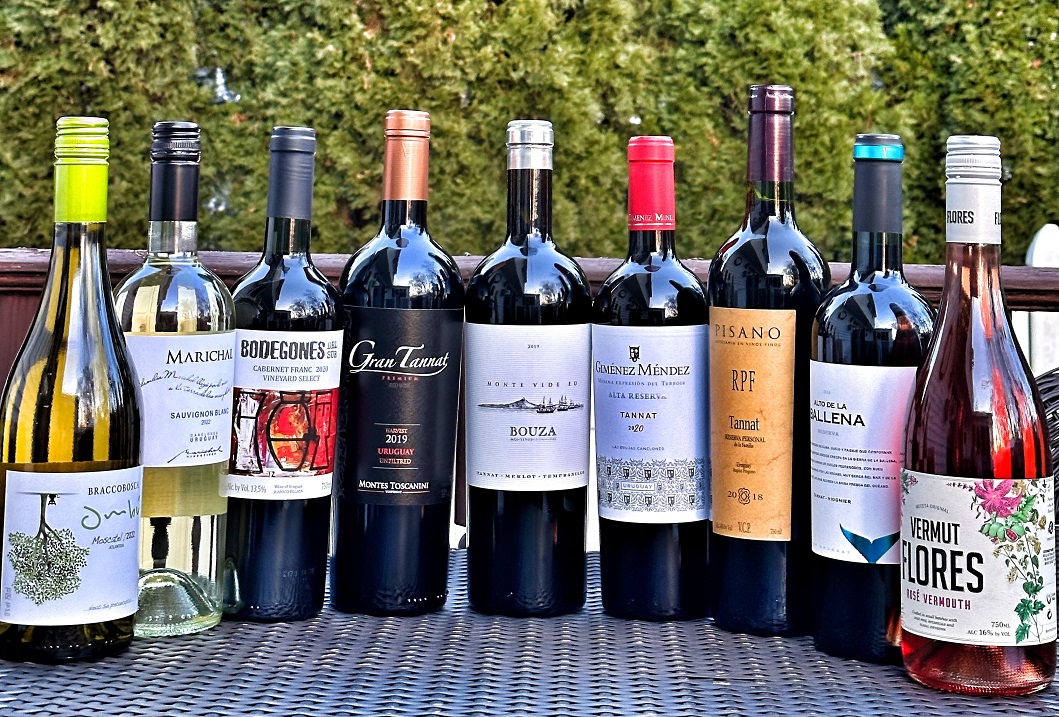
We had 2 whites, 6 reds, and one Vermouth wine in the tasting. Spoiler alert: I literally liked them all. In the blind tasting, these wines would be surely regarded as world-class, placing them in California, France, maybe Chile – Uruguayan origin of these wines would be a total surprise for many – for sure for me. And yet, here they are – world-class wines from Uruguay.
2022 Marichal Sauvignon Blanc Canelones Uruguay (12.5% ABV, $14)
C: light golden
N: plump, round, Whitestone fruit, a hint of gunflint
P: crisp acidity, fresh, bright. More resembling Muscadelle than anything else. Good balance.
V: 8, very refreshing.
2022 Bracco Bosca Ombú Moscatel Atlantida East Costal Region of Uruguay (13% ABV, $16)
C: light golden
N: very interesting. Muscat’s spicy, nutmeg profile comes as a distant hint. A touch of perfume
P: restrained tropical fruit with an acidic finish.
V: 7, not balanced enough for me; On the second and third days the wine showed much better, more coherent and more elegant – Drinkability: 8-.
2020 Familia Deicas Bodegones del Sur Vineyards Select Cabernet Franc Juanico Region Uruguay (13.5% ABV, $20, 30% aged in American and French oak)
C: Beautiful bright ruby
N: round vanilla, new world style
P: interestingly restrained on the palate, with noticeable tannins. The palate shows the absolutely old world (Saumur, Chinon). Interesting cranberry notes after an hour and a half in the open bottle.
V: 7+/8-, a bit unexpected, but not bad
Improved on the second day, became more round. Final: 8-
2020 Giménez Méndez Alta Reserva Tannat Las Brujas Canelonés Uruguay (14% ABV, $18, aged for 9 months)
C: Dark Garnet
N: Open, inviting, dark fruit, blackberries
P: Dark fruit, firm structure, smokey undertones, herbs, very good balance.
V: 8, well drinkable now
2019 Montes Toscanini Gran Tannat Premium Uruguay (14% ABV, $59, 18 months aged in oak, BAB with a huge punt)
C: dark garnet, practically black
N: wow. Cassis, sweet oak, eucalyptus, open, inviting, invigorating. In a blind tasting, I would bet my life on Napa Cabernet Sauvignon.
P: the palate is leaner than the nose suggests. Red and black fruit weave around a firm structure, tannins showed up a while after opening.
V: 8-/8, very impressive
2018 Pisano RPF Reserva de la Familia Tannat Region Progreso Uruguay (% ABV, $24, 10–12 months in French oak)
C: dark garnet
N: dark fruit, coffee, smoke
P: a hint of smoke, sapidity, dark, concentrated but not overpowering. Good balance, medium-long finish
V: 8-/8, very nice. Will be great with the steak.
2018 Alto de la Ballena Tannat – Viognier Uruguay (14% ABV, $24, 85% Tannat, 15% Viognier)
C: Dark garnet, almost black
N: herbs-forward nose, sage, a hint of cherries
P: fresh fruit, salivating acidity, sage, firm structure, and perfectly lingering cherries and cherries pit finish.
V: 8, great by itself, and will be great with beef roast
2019 Bouza Monte Vide Eu Montevideo Uruguay (13.5% ABV, $67, 20% Tempranillo, 30% Merlot, 50% Tannat, vinified separately, 16 months in French and American oak barrels)
C: dark garnet with a beautiful ruby hue
N: very complex, cherries, rosemary
P: roasted notes, dark fruit, elegant package, firm structure with a perfectly balanced mouthfeel.
V: 8, excellent, a world-class wine.
Basta Spirit Vermut Flores Rosé Uruguay (16% ABV, $16, Tannat, 27 botanicals)
C: beautiful salmon pink
N: Herbaceous, but a bit strange, stewed strawberries
P: a bit too sweet for my palate.
V: I’m very particular about the vermouth, so this is probably not the one for me.
Here you are, my friends. Next time you see an Uruguayan wine on the shelf, obey your thirst and grab it – and you don’t even have to thank me later.
A Few Days In Florida
Time flies.
Just a month ago It’s already been a month since we visited our close friends in Naples, Florida. We spent a week at our friends’ house, sometimes enjoying the sun and sometimes not (on the morning we were flying back to New York, the temperature was balmy 40°F). However, this is not a post about the weather – this is primarily a post about the wine, and some flowers – in pictures, that is. Possibly, quite a few pictures.
My friends enjoy an occasional glass of wine, but it doesn’t have to be absolutely anything in particular – the price should be right (low), that’s the main criteria. Therefore I enjoyed exploring the random collection – but of course, I couldn’t also resist an opportunity to visit some of the local wine stores.
First, there was an early morning flight – always an opportunity to enjoy the sunrise.



Talking about the wines, we started our first day in Florida with a few tasty whites. 2018 Grgich Hills Estate Sauvignon Blanc Fumé Blanc Napa Valley was outstanding – bright, succulent, bristling with acidity, and supporting core of the whitestone fruit. I love Sauvignon Blanc in all of its renditions, and this was the quintessential Napa Valley version. I also had the 2019 Whipstitch Barrel-Fermented Chenin Blanc Clarksburg which was restrained and interestingly elegant, with good acidity and a plump, fuller body mouth feel.
Our dinner plan for the evening was very simple – steak, a nice porterhouse from Pat LaFrieda. Ever since I made Bistecca alla Fiorentina a few years back, I got hooked on this specific way of cooking the steak every time I come across a good porterhouse. And then, of course, my preferred wine for such a dish is Montalcino, either Rosso or Brunello. There was no Montalcino on hand, so I went to the nearby Total Wine to pick up the bottle. After a long deliberation with myself in front of the Montalcino section (not very large), I settled for the familiar – 2020 Il Poggione Rosso di Montalcino. This was kind of a safe choice remembering a great experience I had with the 2016 Il Poggione Rosso and the steak.


The steak portion of our dinner was excellent – after all, Pat LaFreida provides top-quality meat, so my job was only not to overcook it. The wine, however, didn’t deliver. The 2016 Rosso was superb in its perfect balance of cherries and earthy flavors. The 2020 Rosso, which I also had a few months back, was simply too tight and rather void of any pleasure. The same two years of age (I had 2016 in 2018, and 2020 at the beginning of 2023), but the difference was profound. Oh well, at least we enjoyed the steak.
The next day we visited the supermarket store called Seed to Table, one of the local hallmarks in Naples. If you are familiar with Stew Leonard’s stores in Connecticut and New York, that will give you an idea of what Seed to Table is – only 10 times better. Seed to Table would deserve a special post of its own, which I might do after our next visit to Naples. But for now, I have to mention the wine section at the store – it was mind-boggling. The American wines were extremely well represented – California, Oregon, Washington, Virginia, and other states – very solid choices, not inexpensive, but still all the reasonable stuff, in the $30 – $80 range for the majority of the wines. I regret not taking the pictures to share with you – I will correct it the next time.


I picked up two bottles of wine there. The first one was the 2020 Textbook Cabernet Sauvignon Napa Valley, the wine which is rumored to be made from the same fruit as Harlan. I had Textbook Cab many times before and enjoyed it. This wine was not bad, but it was definitely opened too early. It was bold, tight, and “in-your-face” concentrated, nicely hiding a beautiful cassis core that was trying to present itself but was unable to. Give this wine 8-10 years, and you will be able to start enjoying it.
My second pick was 2020 We The People Cabernet Sauvignon California. This wine was a lot more approachable than the Textbook and was showing the telltale signature of Cabernet from Lodi – a hint of warm cinnamon notes, just enough to be noticed but not enough to get in the way of enjoying the wine. This wine was perfectly drinkable and enjoyable from the get-go.
A few days later my sister-in-law and her husband were planning to visit, so I decided to go to the Seed to Table again. This time, I came across the Spanish wine section and decided to pick up a few of the perennial favorites.


2016 Coto de Imaz Reserva Rioja DOC was spot on. Coto de Imaz is lesser known than Lopez de Heredia, La Rioja Alta, or CVNE. Nevertheless, Coto de Imaz Rioja is well worth seeking, as I had never been disappointed by their wines. This wine offered beautiful round dark fruit, a cigar box, and a touch of eucalyptus, all velvety and polished.
2019 Emilio Moro Ribera del Duero DO didn’t fare as well as the previous wine. It was too tight, and the fruit was not showing even a few hours after the bottle was opened. It is possible that this wine needs good 10-15 years in the cellar to mellow out, but at this point, this is probably not something you want to open.
Time for flowers! We visited Naples Botanical Garden, and so here are some flowers I picked there, especially for you:
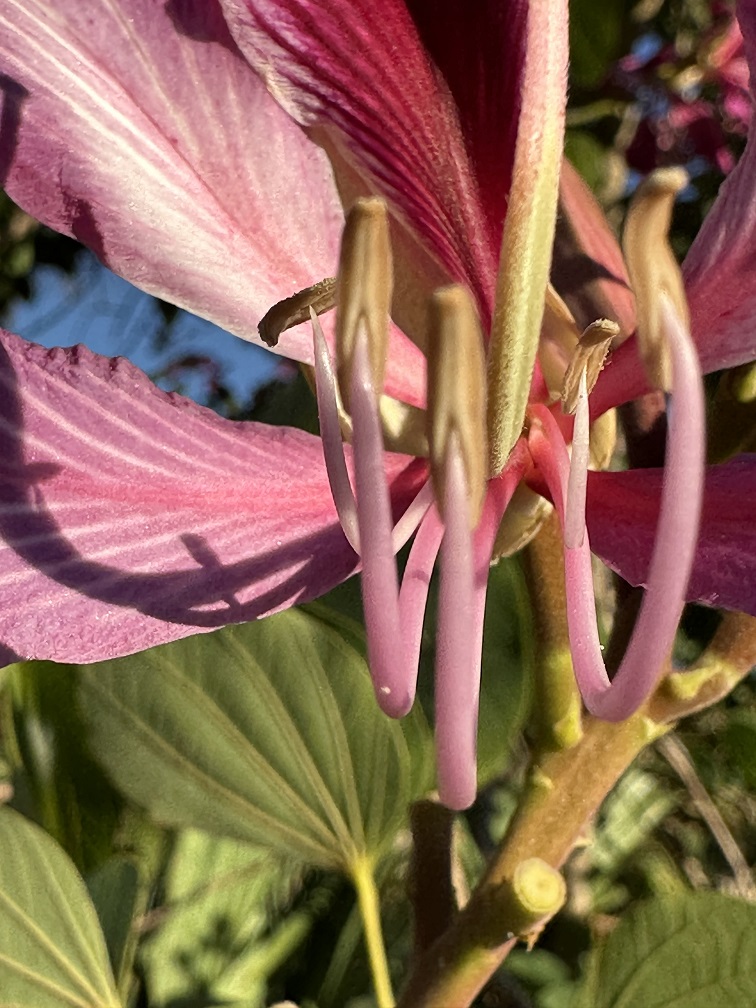
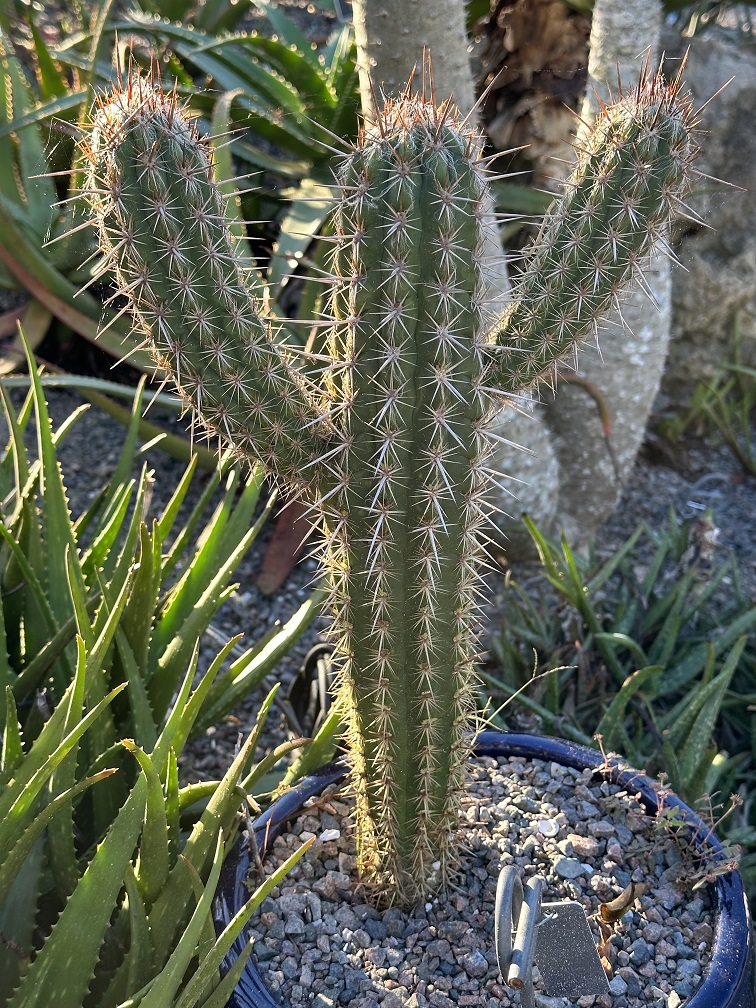
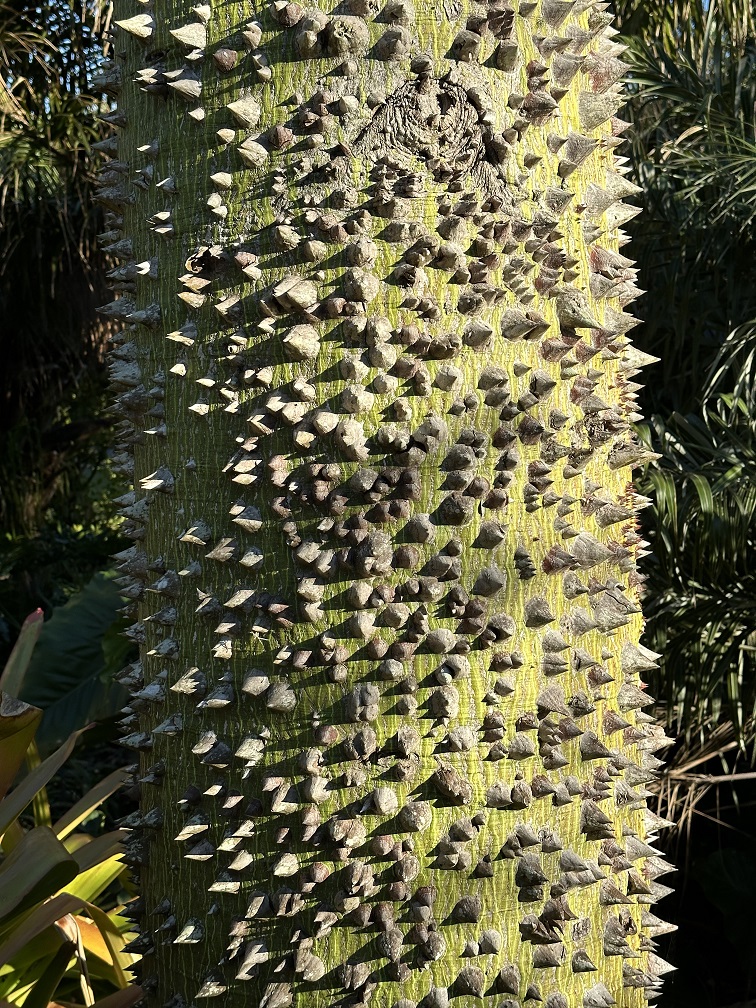


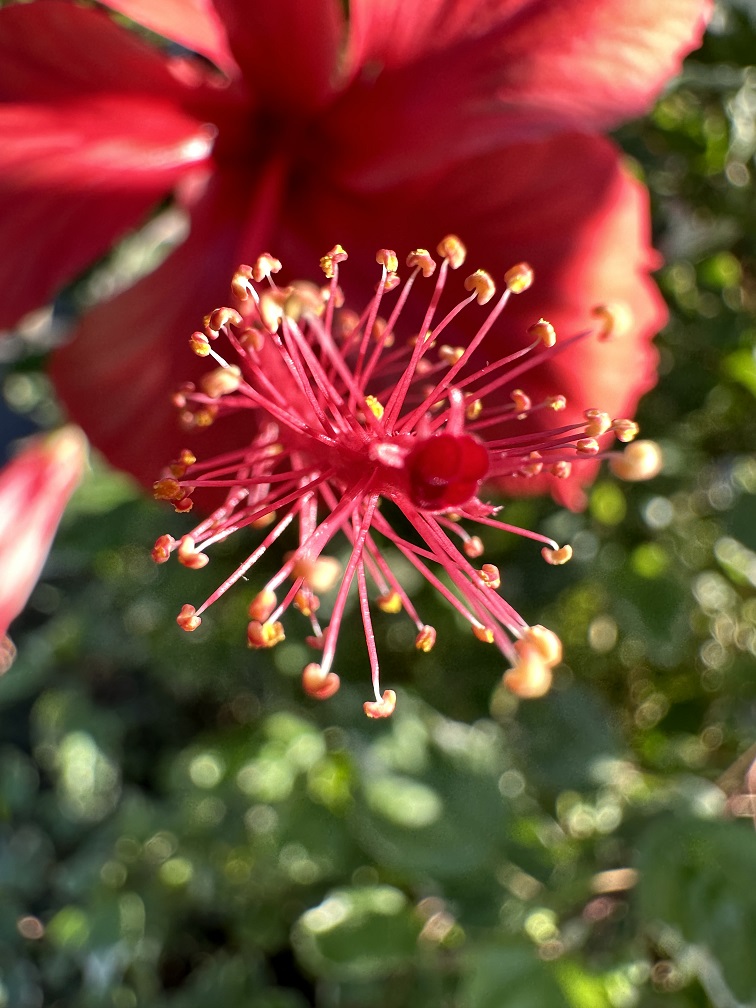
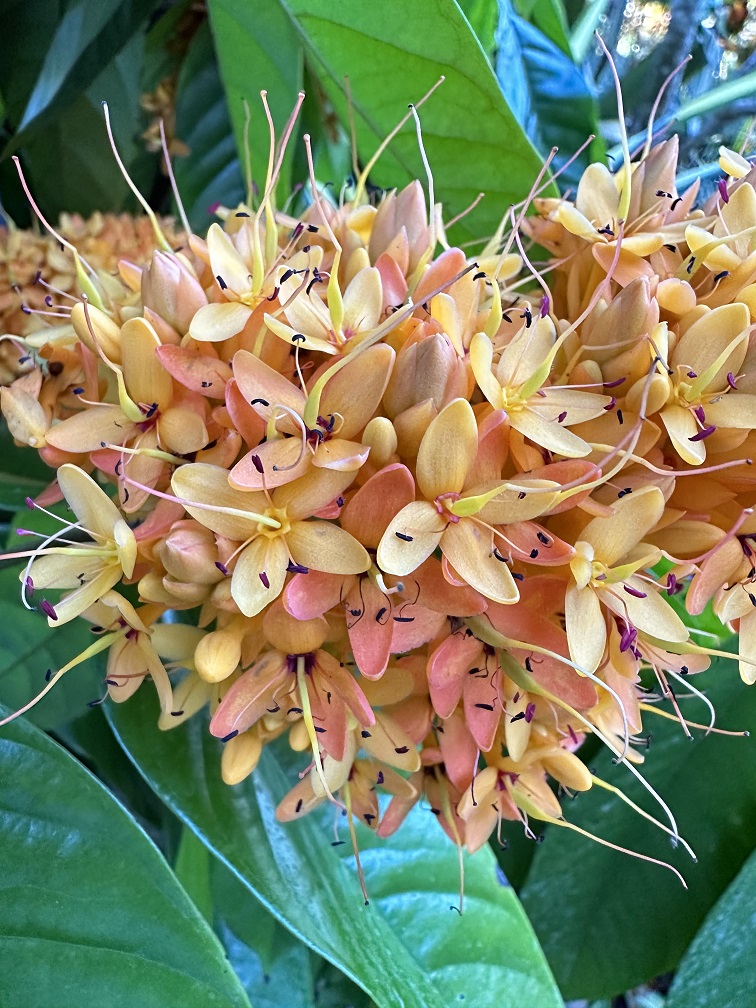


I would like to mention a few more wines in passing here. 2020 Chateau Roudier Montagne-Saint-Emilion AOC is a budget Bordeaux from Trader Joe’s. While not mind-boggling, it comes from an outstanding 2020 vintage and is easy to drink, mellow, and round. 2016 Ferrari Carano Cabernet Sauvignon Alexander Valley was a solid California Cabernet Sauvignon rendition, with a good amount of power, good structure, and underpinning of cassis. I picked up the 2017 Torbeck Cuvée Juveniles Barossa Valley Australia for a friend who swears by Chateauneuf-du-Pape – I wanted him to compare the CdP with a similarly made GSM (61% Grenache, 28% Mataro, 11% Syrah). The wine had cherries and plums with a hint of some spicy notes – quite delicious all in all.
When visiting Florida, taking pictures of the palm trees is unavoidable:



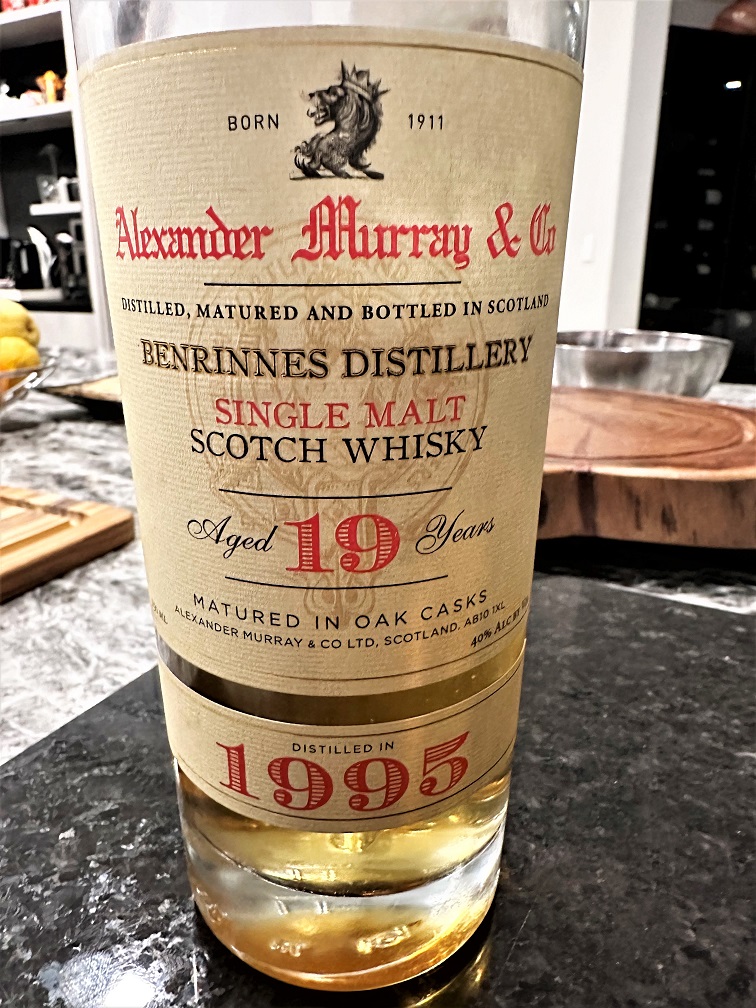
Before we part, last but not least – delicious scotch. Alexander Murray Benrinnes Distillery 19 years old (distilled in 1995). It had beautiful complexity, not heavy, without any noticeable peat, very elegant, and perfect with a cigar. Alexander Murray is an independent bottler I was not aware of before – but definitely will be now.
That’s all, my friends – that concludes my Florida story in wines and flowers. Cheers!
Low Calories, Low Alcohol Wines – First Encounter
Low calories, low alcohol.
In my book, these are trigger words.
Don’t get me wrong – watching your caloric intake is definitely a first-world problem, and I generally pay attention to it when it comes to daily food. However, wine is an indulgence. I drink wine for pleasure. Wine is not a necessity. Yes, it is possible to live perfectly happily without drinking wine – however, this is a choice. And you already know what choice I made.
As I drink wine for pleasure, the number of calories is not a criterion I would ever use when selecting a wine to drink. The company, food, mood, ambiance, grape, region, winery, winemaker – there are lots of factors influencing the decision, but the number of calories in a glass of wine is definitely not one of them. If one selects wine by the number of calories, what is the point of drinking the wine? May I suggest water as a better choice?
Now, let’s scrap all of this. Let’s pretend I didn’t say yet anything in this post.
Apparently, knowing the calorie count in the glass of wine is important, especially if you are a part of Gen Z (not my opinion – this is what I read). Apparently, there is a demand for wines to have the same labels as any food product, listing all the ingredients and providing the breakdown of nutrients, calories, etc. ( I hope this will never materialize as a law – but oops, I’m not supposed to be expressing my opinion). And apparently, there is enough demand for low-calorie, low-alcohol, and alcohol-free wines that my friend Zak even allocated specific shelf space for such wines at his wine store in Stamford, as there are enough people asking for them.
As I visited the store and chatted with Zak about wine trends, he showed me these shelves with low-alcohol wines, and I surprised both him and myself by grabbing a bottle to taste.

There are a few reasons to be surprised. The first one, of course, is the fact that I decided to try a type of wine that I consider simply a gimmick. A bigger surprise was that I grabbed the bottle of Meiomi Pinot Noir – the wine I normally can’t stand. I don’t like pretty much any wine the Wagner family produces, including the flagship Caymus – and my dislike for Meiomi Pinot is very strong as I can’t get through the sweet and burning mouthfeel this wine delivers. And yet here I am – getting a low-calorie version of the wine I normally don’t drink. Talk about surprises.
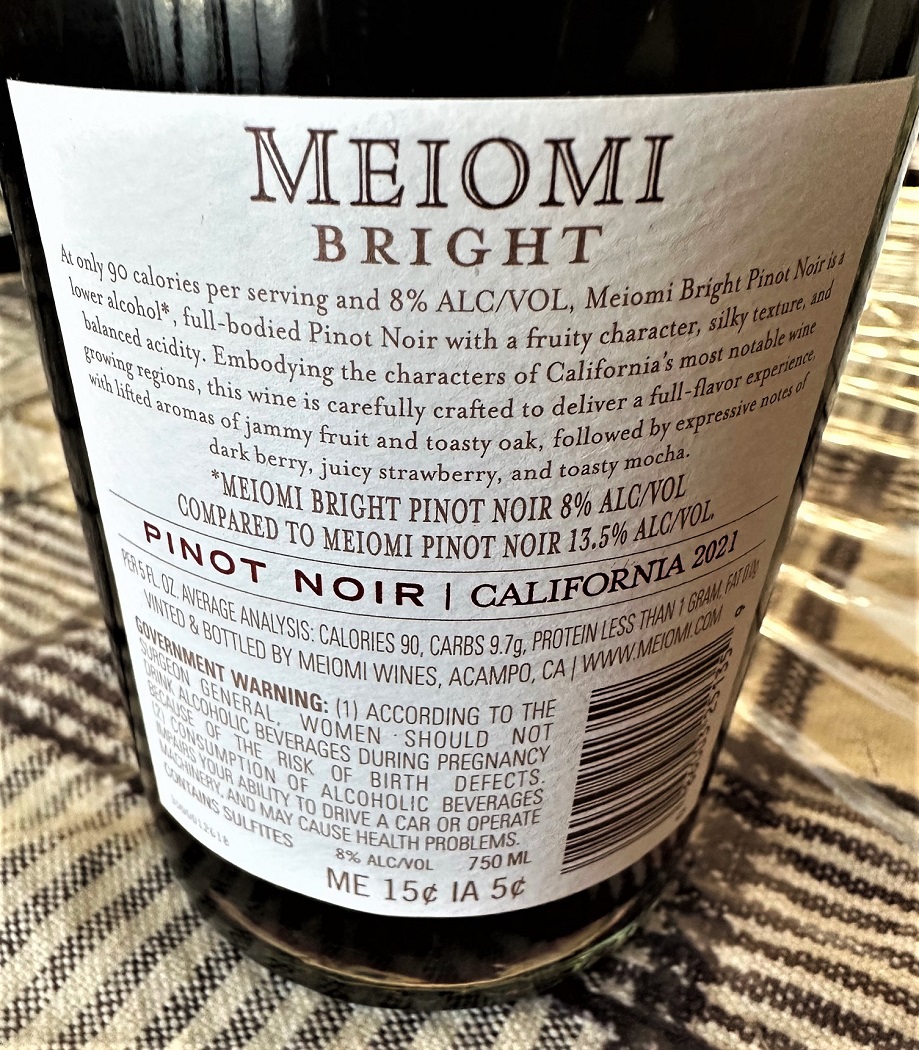
Let’s continue on the subject of surprises. To my yet another surprise, I didn’t dislike this 2021 Meiomi Bright Pinot Noir California (8% ABV, $19.99, 90 calories, 9.7g of carbs per 5 oz glass). I guess the reduced alcohol was good for this wine as it was showing a nice dark berry medley with blueberries and blackberries taking the leading role, supported by sweet oak and a nice silky mouthfeel. If it would not be for the cloyingly sweet finish, this would be a good wine experience overall – but again, the wine was quite palatable, even during re-tasting over the next 4 days.
This encounter with the low-alcohol, low-calorie wine made me do something which I had never done before – trying to understand the calories in wine.
I don’t pretend to be a scientist here, so below is my layman’s understanding of what we are dealing with when counting the number of calories in a glass of wine. I’m fully open to criticism, and if someone thinks this is all baloney and the calculations are all wrong, I will be delighted to correct this text to set things straight.
First, some basics. Calories in a glass of wine come from 2 sources – alcohol and sugar. There are 7 calories in one gram of alcohol (there are multiple sources of info on this, I used this one), which by the way makes alcohol the second highest source of calories after fat, which delivers 9 calories per gram. There are 4 calories in a gram of sugar (you can verify via google search). One more important point – a standard wine pour is considered 5 ounces glass, and there are 5 standard pours in a bottle of wine, which contains approximately 25 oz of wine. As we measure calories per gram, we need to convert between ounces and grams. One ounce is equal to 28.3495 grams – however, as I don’t want to deal with a calculator all the time, we will assume that 1 oz is equal to 30 grams, for the simplicity of this exercise.
Alcohol is always presented on the label in the form of ABV – Alcohol By Volume. Thus the percentage shown with the ABV letters simply identifies what percentage of the bottle content is pure alcohol, the one which clocks 7 calories per gram. To provide a simple example, a 1 liter of 10% ABV wine will contain 100 grams of alcohol. By the same token, a standard pour of such 10% ABV wine which amounts to 5 oz, will contain 0.5 oz of pure alcohol. If you want to do it in grams, with our previous assumptions, 5 oz is equal to 150 grams, which will translate into 15 g of pure alcohol – which in turn will deliver 15*7 = 105 calories per glass just for the alcohol portion of the content.
Now, let’s analyze our Meiomi wine based on what we just learned (yes, I know it says on the bottle “90 calories” front and center, but let’s see if we can come up with the same number). This Meiomi Pinot Noir has 8% ABV, which means that the standard pour/serving of 5 oz (150g) contains 12g of pure alcohol. 12*7 = 84, which brings us to the perfect proximity of the 90 calories. However, according to the information on the back label, the same 5 oz of wine contains 9.7g of carbs, and the only source of carbs in wine is residual sugar – this is the sugar left in the wine after fermentation was finished. We can safely round our 9.7g to 10g, and when multiplied by 4 (calories per gram of sugar) we will get 40 calories. Adding 84 and 40 brings us to 124 calories in that glass of Meiomi Pinot.
I wanted to compare this caloric count with any regular wine. As an example, I took information from the technical note of the 2020 Barra Cabernet Sauvignon from Mendocino. This wine has 14.5% ABV and 3.2 g/l of residual sugar. At 14.5% ABV, our 150g of Barra Cab (5 oz, standard pour) will contain 21.75g of pure alcohol, which will give us 152 calories from alcohol. 3.2 grams of sugar per liter will translate into approximately 0.5g of sugar per same standard pour which in turn will only add 2 calories, for the grand total of 154 calories. That also means that there is only 30 calories difference between low-calorie, low-alcohol, manipulated wine and normal wine. You can make your own conclusion, but I’m sure you can figure out mine.
There is one more thought I would like to share. I’m afraid that a low-alcohol wine can give people a false impression that they can simply drink more of it because each glass supposedly contains less. So it is not impossible to presume that someone can drink 3 glasses instead of two, based on the premise of “light wine”. Using our calculations above, there will be 372 calories in these 3 glasses – 2 glasses of Barra Cabernet Sauvignon will set you back 308. Again, you can (and should) make your own conclusions.
I clearly understand that my personal viewpoint and perception are not important at the scale of the market – when there is a demand, the product will appear. Low-calories, low-alcohol wines are here to stay, no matter what I think of them. But I’m glad this Meiomi Bright Pinot prompted me to do some research and acquire some understanding of the calories in wine.
I guess when they say “liquid diet”, they are not really kidding. Cheers!
Wednesday Meritage #162
 Meritage Time!
Here is your [extremely irregular] update on the interesting wine (and food) happenings that recently grabbed my attention. Let’s start with some local updates first.
New stories of Passion and Pinot
Last week I published a new interview in the Stories of Passion and Pinot series – this time with David Adelsheim, one of the early pioneers of the Oregon Pinot revolution. This is one of the very best interviews in the series and will be well worth a few minutes of your time – if you will crave a glass of Pinot after reading it, I’m not responsible for it. There are 15 interviews plus multiple updates in the series, and more interviews and updates are up and coming in the series – my conversations with Erik Kramer of WillaKenzie and Bill Sanchez of Potter’s Vineyard will be published soon.
Yelp 100 Top Restaurants
Yes, I’m mostly writing about wine in this blog, but I love food and I’m actually a “yelper”, both as a user of and as a contributor to the popular Yelp website. I rely on Yelp’s recommendations when I travel, and I go out of my way to write a review after visiting a restaurant (I rarely review other businesses or attractions). Yelp recently released a list of the 100 most popular restaurants around the US – it is a fun reading to see what the others like, so you might want to spend a few minutes browsing through. Who knows, maybe you will see your favorite eatery among the top 5…
This Day In Wine History
I love data. It doesn’t have to be anything useful. Just data, information, facts – especially if it concerns subjects that are near and dear to my heart – like wine. As a data collector, do you want to know what happened in the history of wine on a specific day of the month – let’s say, February 1st? Now you can, with the help of the website called This Day in Wine History. For example, I just learned what happened on February 1st. According to the website, “February 1, 1141: On this day, the foundation of Barone Ricasoli, Italy, was laid. The Tuscan winery is the oldest one still in business in Italy”. Or here is another February 1st event: “February 1, 1801: On this day, John June Lewis, Sr was born. He is known as the first African-American winemaker in the United States”. The information on the website is not limited to the singular date events – you can find in-depth articles about the history of the wine decanters or all you wanted to know about widow Clicquot, one of the key figures in the history of Champagne. Check it out, I have a suspicion that you might find it useful and entertaining.
OTBN – Open That Bottle Night
It is never too early to talk about one of my favorite wine holidays – Open That Bottle Night, or OTBN for short. This year, OTBN, which is celebrated on the last Saturday in February, will fall on February 25th. I wrote about OTBN numerous times so if you are not familiar with the concept please click on the link. For the rest of us, the game is on, and it is not too early to start thinking about those special bottle(s) that are waiting and begging to be opened. Yep, start looking in that cellar… If you are anything like me, that special bottle decision will not come with ease…
That’s all I have for you for today. The glass is empty, but the refill is on the way. Cheers!
Top Two Dozens of 2022
Year started. The year ended. What happened in between? Lots of things, many of them… well, you know. You live here too.
As it has been a tradition since this blog started, it is time to sum up the year in wines (well, the time was at least a week ago… I know…). The quintessential exercise in pain and pleasure. It gives me great pleasure to relive the great moments enabled and enhanced by all the wonderful wines. It gives me great pain having to decide on what wines should be on this list, and what should be the wine of the year. Lots of great moments, lots of uneasy decisions.
The original thought behind my very first Top Wines list was to come up with the 10 best wines. Even on the first try, I realized that I can’t stay within this limit of 10, and the limit was changed to 12 (hence a Dozen). Next came the realization that even 12 is not enough, and thus for most of the years my lists consist of 2 dozen wines, but even that often is not enough, so the final count can be 25, 26, and even more.
The criteria for inclusion into the Talk-a-Vino top list is simple – the wine has to be memorable. It should be easy to recall when, where, why, and even with whom I shared that wine, and what emotions did the wine solicit.
Oh yes, as I love analyzing the other Top Wine lists, let me give you the stats for the Top Talk-a-Vino wines of 2022. Total of 26 wines, 19 reds, 3 whites, 2 fortified, 1 sparkling, and 1 pink (it is not a Rosé, it is skin contact white). 6 wines are from California, 5 from Spain, 5 from France (interestingly enough, all from Bordeaux), 4 from Italy, 2 from Portugal, 2 from Washington, 1 from Australia, and 1 from New York.
That’s all there is to it. Without much further ado, let’s get to our list:


25. 2020 Field Recordings Domo Arigato Skin Contact Pinot Grigio Central Coast – a stunning concoction, almost magical. 2 of us finished the bottle and said “what just happened? where did this wine go? “. It is elegant, balanced, complex, and magical. Oh yes, I already said that.
24. 2012 Bodegas Excelencia Los Frontones Crianza Sierras de Málaga DO – one of the memorable surprises of the trip to Malaga. I had no idea that Bordeaux varieties can be the main grapes in the winemaking region in Spain – and then there was this beautiful 10-year-old fresh and delicious Bordeaux blend. If you are in Malaga, please ignore the dismissive comments “ahh, it is just local” – this is what you want to drink.
23. 2020 Rosina’s Barbera Hudson River Region New York – I have the good fortune of being invited as a wine judge for the annual Hudson Valley Wine and Spirits competition. This Barbera from New York was dark, smokey, and powerful – and a totally unexpected surprise.
22. 2017 Quinta do Vale Dao DOP Portugal – No matter what Portugal continues to be the spelling for the wine values. This $6.99 red was simply stunning – round, generous, impeccably balanced. In a blind tasting, this wine would easily put to shame many of the $100 bottles. Don’t take my word for it – I dare you to check it for yourself…
21. Bodega Callejuela Oloroso Origen Callejuela Jerez-Xérès-Sherry DO – this wine was simply singing from the glass. Sherry might be the most complex wine in the world, and when it is done right, like this fine specimen… Oh boy, that’s lots of pleasure. But then put it next to the charcuterie… And you might think you accidentally made it to heaven…
20. 2018 Turley Tecolote Red Wine Paso Robles – of course everyone knows Turley Zinfandels, but Turley’s prowess extends way beyond that variety. Turley wines are notoriously hard to get, and Tecolote, a Spain-inspired blend of Grenache and Cariñena might be one of the most difficult ones to procure. If you will be lucky enough to come across it, get as many as you can – the lip-smacking voluptuous goodness of this wine is something to be experienced.
19. 2018 Double Lucky #8 Walla Walla Valley – one of the latest Cayuse projects, created under the No Girls line and crafted by Elizabeth Bourcier, was introduced to wine lovers in 2021, in a midst of covid. I found the introductory 2017 to be too powerful and too concentrated, the absolute “liquid rock” rendition. 2018 was surprisingly approachable, definitely powerful but balanced enough to be enjoyable even at this young age.


18. 2017 San Felice Bell’Aja Bolgheri Superiore – A beautiful example of super-Tuscan, with my notes (overdue to be published) saying “beautifully elegant, perfectly layered and scrumptious”. A pure pleasure.
17. 1997 Chateau Montelena Saint Vincent Red Wine Napa Valley – Sangiovese from Napa Valley is always a surprise. The Sangiovese-based blend from Chateau Montelena should count as a double surprise, as this is not the grape the winery is known for. The wine was well-structured and delicious, didn’t disappoint at all.
16. 2016 Hacienda Calavia Reserva Rioja DOC – When you drink good Spanish Rioja while in Spain this shouldn’t be surprising, right? And nevertheless, I was surprised at how unquestionably perfect, unquestionably Riojan this wine was, offering a beauty of the dark berries and cigar box. Clean, assertive, classic, delicious.
15. 2013 Campochiarenti Passione Divina Vini Storiche Toscana IGT – Sunningly beautiful pure Sangiovese from Campochiarenti. If you like Italian wines, especially the Brunello level, I’m sure you experienced that moment when you take a sip of the wine and it literally sends jitters all over your body. The wine that almost affects you on a physical level (no, I’m not talking about being drunk). I don’t know how to properly express it, but again, if you are an Italian wine aficionado, I’m sure you know what I’m talking about. And if you are not, then consider becoming one.
14. 2019 Chateau L’Annonciation Saint-Emilion Grand Cru – if you find a classic Bordeaux in a bottle of Bordeaux – should that be surprising? A delicious pop’n’pour classic Bordeaux – should I say more?
13. 2018 Alto Moncayo Veraton Campo de Borja – your palate knows delicious, isn’t it? This wine is as stunning as it is delicious from the moment you pull the cork. Layers of goodness, succulent fruit, perfect amount of tannins to support the structure. If you looking for instant pleasure, this is the wine to open.
12. 2006 Trabucchi d’Illasi Amarone della Valpolicella – Everyone here knows that I love Amarone. But – it doesn’t mean that I love any bottle which says “Amarone” on it. I’m very particular about the balance in Amarone, and this wine delivers everything – dried fruit, fresh fruit, perfect power and perfect acidity. If I could only procure a case (or 5) of this wine…
11. 2019 BARRA of Mendocino Petite Sirah Mendocino – surprise is always a good way to create lasting memories. Petite Sirah is one of my all-time favorites grapes, but more often than not it requires time to be enjoyable, lots and lots of time. This wine was just perfectly ready the moment the cork was pulled out. dark concentrated, layered, well structured, perfectly balanced, and ready to deliver the pleasure on the moment’s notice.
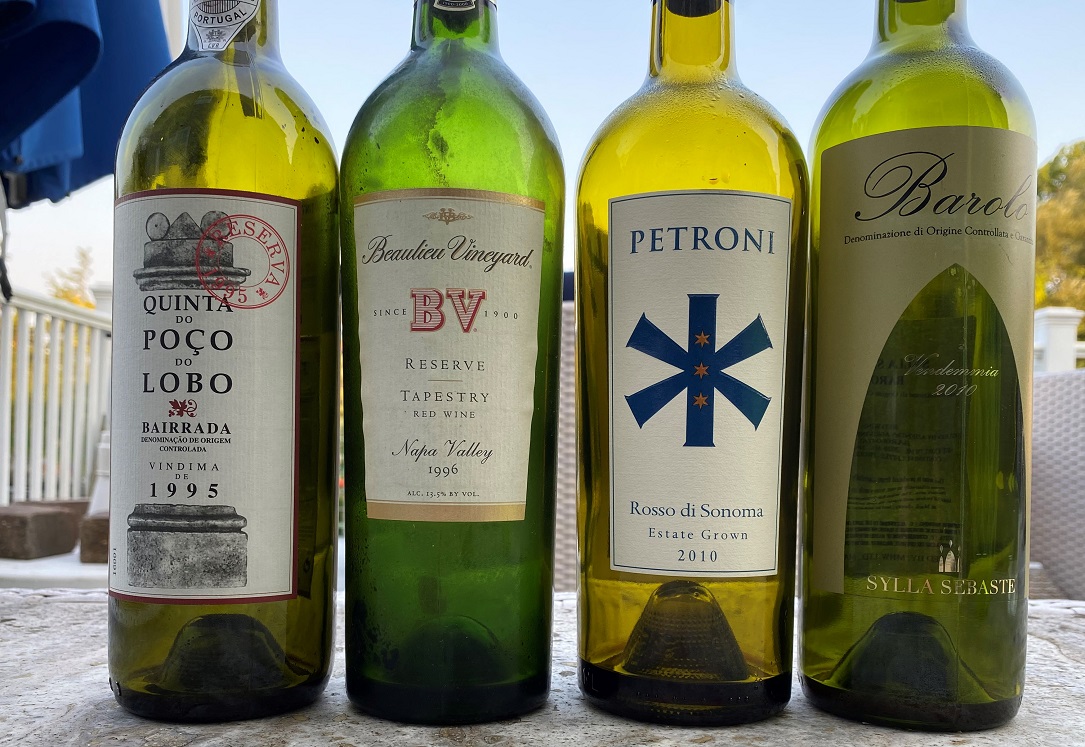
all great wines, but only Petroni made the cut
10. 2010 Petroni Rosso di Sonoma Sonoma Valley – what happens when the Italian makes wine in California out of Sangiovese and Cabernet Sauvignon? A super-Californian! This was my last bottle, luckily snatched from WTSO. Beautiful, layered, delicious wine.
9. 2008 Altesino Brunello di Montalcino Montosoli – well-aged Brunello should be on every wine lover’s “try before you die” list. This was simply an experience, the experience you want to go on and on and on, sip after sip. Pure, unadulterated pleasure.
8. 2007 François Cazin Le Petit Chambord Cour-Cheverny AOC – another case of the “last bottle”. I was slowly depleting my stash of this Loire white, made from the rare grape called Romorantin. Every bottle showed differently over the years, but this one was the ultimate reward. Honey, flowers, and perfectly fresh acidity. Ahhh…
7. 1998 d’Arenberg Cabernet Sauvignon High Trellis McLaren Vale – spectacular. Still young, fresh, and loaded with gobs of cassis and cherries. An absolute beauty with much more time left.
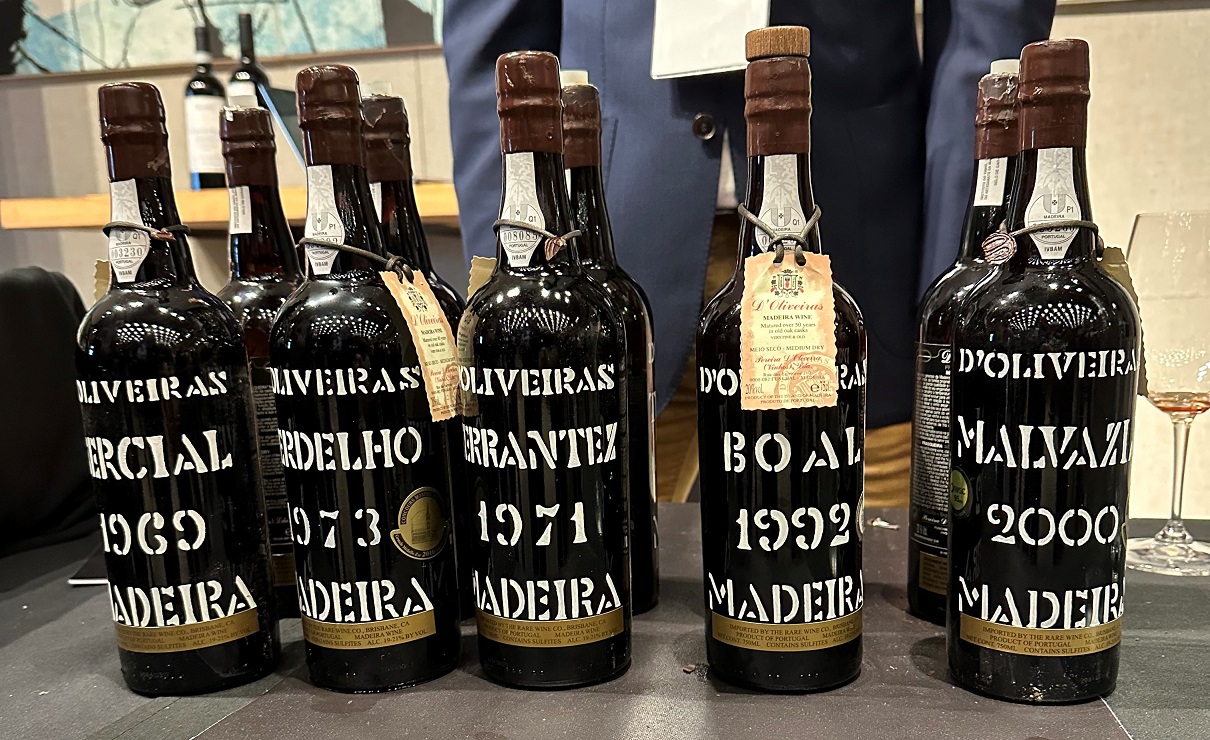
6. 1969 Oliveras Cercial Madeira – I now think that Madeira might be the most interesting wine in the world. Think about it – the wine had everything done to it – heat, oxidation, everything. And then when you open it, it is ageless, it is vibrant, it is alive, and it can last forever. If I need one New Year resolution here, it might be “drink more Madeira!”
5. 1998 Château Tournefeuille Lalande-de-Pomerol – what a beauty! This might be a year of the classic Bordeaux for me. Cassis, cassis, more cassis. Layered, round, seductive, and luscious. I’m ready to meet with it again at any time.
4. NV Lanson Le Green Label Organic Champagne – this was my first encounter with Champagne Lanson, and I was duly impressed with precision and finesse. This Green label organic was my favorite, offering a perfect balance of yeast, toasted bread and cleansing acidity – every sip encouraging you to take another. An absolute beauty.
3. 2013 Alban Roussanne Edna Valley – Roussanne might be my favorite white grape (pssst… don’t tell that to Chardonnay and Riesling). Well-made Roussanne offers this round, beautiful, present, silky mouthfeel that no other white grape can. And when this Roussanne is made by the California Rhone Rangers pioneer such as Alban, it becomes an absolute pleasure trip. If you can find this wine – don’t miss it.
2. 1997 Château Haut-Piquat Lussac Saint-Émilion – more stunning Bordeaux. This is the fifth bottle of Bordeaux on this top list, but it is only reminiscent of the year, this was not by intent, but rather a surprising realization. Still perfectly fresh, balanced, firmly structured, and precise. I wish humans would age like this.


Cue in “yes, I did it again”. Because I’m guilty as charged. I didn’t want to take upon myself the burden of decision regarding the top wine, and tossing the coin would be simply not fair to either of the wines. But this is my blog, my rules. hence two #1 wines of 2022. Here we go:
1. 2018 Revelry Vintners Reveler Columbia Valley – I was blown away with my first sip. I think if I will count repetitive words in this post, “precision” would come out on top. And so this was yet another precise, delicious, spot-on, love-at-first-sight Bordeaux blend, powered by Washington’s rocky, lava-laden soil. The word “superb” doesn’t describe this wine.
1. 2020 Abadia Retuerta L’Domaine Ribera Del Duero – I know Abadia Retuerta Ribera del Duero reds, but I never heard of their white wines. My trip to Spain brought this revelation on the last day – this Sauvignon Blanc-based blend was absolutely spectacular – it would well compete with Chablis with its clean acidity, gunflint, firm structure, and pure, refreshing mouthfeel. This wine is absolutely world-class, ready to compete with the best of the best white wines can offer.
Now we are done, my friends. The presentation of Talk-a-Vino Top Wines of 2022 is complete. What were your most memorable wines of 2022? Cheers!
Last Bottle Sign Up ($10 credit)




 Talk-A-Vino