Archive
High Altitude Malbec for the World Malbec Day Celebration
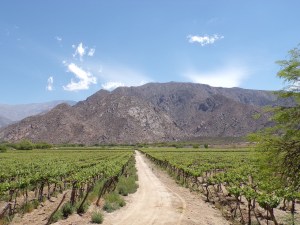
Cafayate desert. Image by gabrielgcossa from Pixabay
Do you like Malbec? If you do, great – you have a perfect reason to celebrate one of the world’s most popular grape on its holiday, World Malbec Day, always celebrated on April 17th. If you don’t – great, as you can taste a lot of wines in order to eventually find Malbec which you will enjoy.
Malbec is one of the unique grapes in the wine world, with a long history full of ups and downs. Malbec history can be traced almost a thousand years back. It used to be one of the most popular and most planted grapes in France. Wine from Cahors, a small region just south of Bordeaux, was famous for its dark and brooding qualities and was very much welcomed by the royals as early as the 1200s (well, the grape is not called Malbec in Cahors – it is known as Côt or Auxerrois). However, as Bordeaux started developing its own brand, it started blocking Cahors wines from reaching its intended destination, as most of the trading routes had to pass through Bordeaux before reaching the wine consumers.
Malbec used to be widely planted in Bordeaux, but this thin-skinned and disease-prone grape was difficult to work with, and it became anything but literally extinct today. Of course, Malbec is still the main grape in Cahors, where it is made into delicious, long-living wines – if you can find them in the wines stores, of course. However, the real fame of Malbec is related to its second motherland – Argentina.
Malbec was brought to Argentina in the mid-19th century and higher elevation vineyards with mostly dry climate happened to be a godsend for the moody grape. From there on, Malbec went on the path of becoming the most famous Argentinian grape. I guarantee you if anyone will ask what is in your glass, and you will say “Malbec”, 99% of the people will have no doubts that you are drinking Argentinian wine – yes, this is a good example of fame. Malbec’s success in the new world didn’t stop in Argentina, as it is successfully growing today in Australia, Chile, California, Texas, and many other places. But it is still the Argentina which rules the Malbec world today.
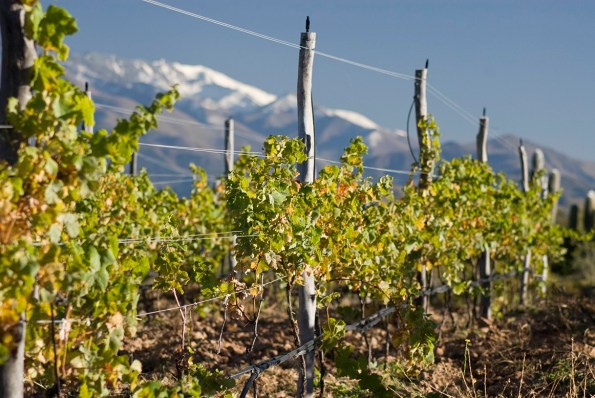
Altura maxima vineyard. Source: Bodegas Colome
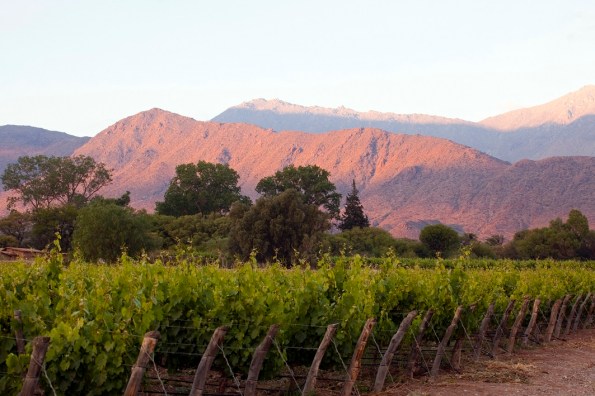
Altura maxima Vineyard. Source: Bodegas Colome
When it comes to Argentinian wine, Mendoza is the first area that comes to mind. It is hardly surprising, as 2/3 or Argentinian wine comes from Mendoza. But it is not Mendoza we are talking about today – we are going higher, much higher – to Salta (Mendoza vineyards are typically located at the 1,800 – 3,400 feet altitude, and in Salta altitude ranges from 7,000 to 10,000 feet). Salta is home to the highest vineyard in the world, Altura Maxima (elevation 10,200 feet/3,100 meters). It is also home to one of the oldest wineries in Argentina, Bodegas Colomé, which was founded in 1831.
I already wrote about the wines of Bodegas Colomé in the past (you can find this post here), as well as the wines from Amalaya, a 10 years old project by Bodegas Colomé in Cafayate desert. It was very interesting to try the same wines only from a different vintage. I can say that there is a noticeable improvement in the quality of the Amalaya – 3 additional years make a lot of difference. The Colomé Estate Malbec was more or less on par with its older brethren – but I certainly like the new label design, the bottle looks more elegant.


Here are my notes for the three of the Malbec wines I was able to taste:
2018 Amalaya Malbec Salta Argentina (13.9% ABV, $16, 85% Malbec, 10% Tannat, 5% Petit Verdot)
Dark garnet
Inviting, eucalyptus, blackberries, crushed berries, baking spices
Fresh berries, coffee, bright, easy to drink, good structure, good acidity, good balance.
8, simple and delicious. Needed a couple of hours to open up.
2017 Colomé Estate Malbec Valle Calchaquí Salta Argentina (14.9% ABV, $25, grapes from vineyards at 7545 to 10,200 feet elevation)
Dark garnet
Vanilla, baking spices, restrained fruit
Vanilla, blueberries, tar, firm structure, very restrained, appears more as an old-world than anything else.
8, excellent.
2018 Colomé Auténtico Malbec Valle Colchaquí Salta Argentina (14.5% ABV, $30, high altitude vineyard ~7000 ft)
Practically black
Vanilla, blueberries, baking spices, inviting
Blueberries, coffee, good acidity, silky smooth, layered, ripe fruit but still balanced.
8, classic and tasty – but needs time. Really opened up only on the day 3
What do you think of Malbec wines? Do you have a favorite producer? How did you celebrate World Malbec Day? Until the next time – cheers!
Stories of Passion and Pinot: Utopia Vineyard
Pinot Noir excites passion. All grapes do, of course, and good winemakers are always passionate, often to the point of obsession. But some of the most desired wines in the world are made out of Pinot Noir, and Pinot Noir is notoriously finicky, mutation-prone grape, difficult to work with. Hence passion is winemaker’s best helper to work with Pinot Noir and produce the best possible wines.
Yes, I’m sure you figured me by now – I’m introducing a new post in the Passion and Pinot series – you can find all the past posts here. And I’m sure today’s subject resonates perfectly with the world we live in right now (for those who might read this post a few years later, look up “covid-19 pandemic”, and you will understand my point). I’m sure we would all much rather live in utopia compare to the self-quarantine and fear of sneezing – and it is the utopia we will be talking about here (don’t worry, there will be plenty of wine).
According to the dictionary, utopia is defined as “an imagined place or state of things in which everything is perfect”. I guess Daniel Warnshuis saw this complete perfection in the 17 acres parcel of land he found on the Ribbon Ridge in the heart of Ribbon Ridge Appellation in Yamhill County in Oregon in early 2000, hence the name Utopia Vineyard.
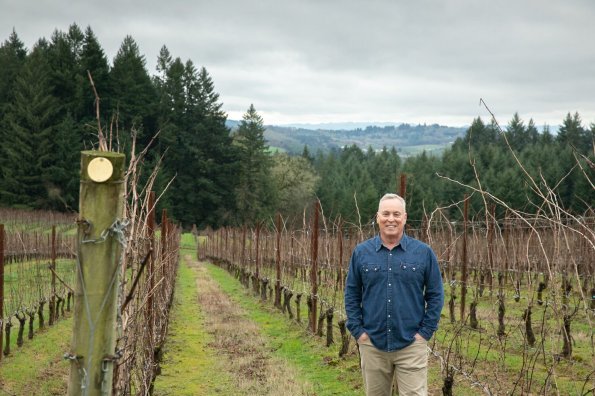
Daniel Warnshuis. Source: Utopia Vineyard
UTOPIA Vineyard had its first commercial vintage in 2006, 413 cases of Pinot Noir. Since then, Pinot Blanc, Chardonnay and a number of other wines had been produced at the winery, and numerous accolades were won at multiple competitions. Utopia, which uses dry farming methods, was L.I.V.E. certified in 2008.
I had an opportunity to [virtually] sit down with Daniel Warnshuis and ask him some questions – here is what transpired in our conversation:
[TaV]: First and foremost – why Utopia? Utopia means an unreachable dream, so what is the reason for this name?
[DW] The classic definition of UTOPIA is the perfect and no place. I am trying to make the perfect Pinot-noir but realize that as a human being I will not achieve perfection. It is, therefore, the goal that I constantly strive for without compromise to make the wine better each and every vintage.
[TaV]: You bought the vineyard in 2000, your first vintage was in 2006. How were those years in between? Did you have any major challenges, or did you just have to wait for the vines to mature?
[DW]: You are correct that I consider 2006 my first commercial vintage (413 cases of Estate Pinot-noir) but I did produce 97 cases of Estate Pinot-noir in 2005. Just to be clear, it was more of an experiment than a vintage. There were a number of challenges in getting the vineyard bootstrapped. First, I had to decide which clones I wanted to plant. I looked around the valley at the time and found that most of the vineyards contained only 2-3 clones and they were mostly the same 2-3 clones, e.g.. Pommard and Dijon 115 or Wadenswil. Or one of the other Dijon clones, mostly 667 and 777. I also detected a certain homogeneity in the wines being produced at that time and I wanted to do something very different. This is what convinced me to plant a total of 12 Pinot-noir clones including several heirloom clones from various existing vineyard sources in CA and OR. Once I settled on the makeup of the vineyard it was mostly a waiting game until the vines began to produce.
[TaV]: You were born and raised on California wines, why build the vineyard in Oregon and not in a Napa or Sonoma?
[DW]: I got exposed to Willamette Valley Pinot-noir early in my wine journey working for Tektronix where my first boss was an avid wine collector and amateur chef who exposed me to Oregon wines. The raw beauty of Oregon and especially Willamette Valley wine country was also a major draw for me along with its nascent state as a wine producing region. It presented a relatively affordable opportunity to get in on the ground floor of the next NAPA. I was a big proponent of Willamette Valley Pinot-noir while still living and running my NAPA wine business at a time when even most savvy wine drinkers were still unaware of what was happening in Oregon.
[TaV]: You’ve been a farmer for 20 years now. What are your main takeaways from this experience?
[DW]: Owning the land is the ultimate advantage for a winemaker because the best wines almost always come from the best fruit. 100% control from vine to wine is the maximum level of control and as a small producer here in Willamette Valley I am as close to a small producer (vigneron) in Burgundy that I can be without being in Burgundy. At Utopia I always want to make the best wine possible for any given vintage, again just like in Burgundy the wine should always be a reflection of the growing season and therefore unique each and every year.

Source: Utopia Vineyard
[TaV]: Do you have a pivotal wine, the one which clearly made you see the wine world differently?
[DW]: Burgundy wines from any small producer in Volnay, Pommard, Mersault (and Mersault, Chassagne and Puligny Montrachet for whites) were pivotal wines for me. The only thing I have found that compares with them are Willamette Valley Pinot-noir’s and now Chardonnay’s from small producers who are owning the land and making the wines in the same tradition.
[TaV]: Is there one Pinot Noir producer or winery you would consider a hallmark, something you would compare your wines to?
[DW]: Dominique Lafon is someone who I have followed for several decades and admire his approach (biodynamic farming and terroir driven) especially for his White Burgundy which I think is sublime. DRC is always mentioned as the ultimate but I would say that I have always and still do admire the smaller producers who are risking everything to make the best wine. This means organic/biodynamic farming even in a challenging vintage, minimalist approach to winemaking and focus on terroir.
[TaV]: What is the difference between the various Pinot Noir wines you are producing? Is it grape selection, individual plots, different oak regimens?
[DW]: Yes, it is all those things, in addition, location in the vineyard, clonal selection for the blends, oak regimen (ex: riper fruit deserves more new French oak such as in my Reserve “Eden” bottling).
[TaV]: Any plans for Utopia sparkling wines? You already growing all necessary components, so do you plan to take the next step?
[DW]: Yes, I would like very much to make sparkling wine. It is challenging as it requires a different setup and 3-4 years to produce the first vintage, but, I have not given up on the concept. I produced my first Port Style wine in 2018 and will bottle it this Fall.
[TaV]: You are now offering Grenache, Mourvedre and GSM wines. For how long you had been producing those? I understand that you source Grenache from Rogue Valley, what about Mourvedre and Syrah? Do you also plan to offer single varietal Syrah?
[DW]: I started producing those varietals in 2009 and actually started with a Syrah and Viognier but switched to Grenache in 2013 and added a GSM in 2014 and a Mourvedre in 2016. As long as I can get quality fruit I will continue to make different varietals. I would like to produce a Cab Franc and maybe even a Bordeaux blend in the future as well. I plan to plant some of these different varieties here on my new property to prepare for the inevitable change in our climate over the next 10 – 20 years.
[TaV]: What are your favorite wines or wine producers in Oregon? In the USA? In the world?
[DW]: In Oregon, Brick House, Beaux Freres, In California, Joseph Phelps, Spottswoode, In the World, anything Burgundy especially any small producers farming organic/biodynamic and terroir driven as well as Mouton Rothschild in Bordeaux.
[TaV]: Did your utopia materialize in your vineyard? Did you find everything you were looking for?
[DW]: Yes, I live on my vineyard and work with my family to produce a unique product that we share with the world. We preserve the land for future generations (organic farming), we give back to our communities, we promote culture of all types and we make our living doing what we love the most. I cannot be any happier than I am at UTOPIA.
[TaV]: Where do you see Utopia Vineyard in the next 10-15 years?
[DW]: More plantings of different varieties especially Rhone and Bordeaux. Possibly produce sparkling wine, continue well managed growth and keep experimenting to make it better each and every time. Create a long lasting legacy and keep it in the family for future generations.


If you are still reading this, I’m sure you are ready for a glass of wine, preferably, an Oregon Pinot Noir. I had an opportunity to taste two of the Utopia Pinot Noir wines, here are the notes:
2014 UTOPIA Pinot Noir Clone 777 Estate Reserve Ribbon Ridge AVA (13.8% ABV, $75)
Dark ruby
Smoke, plums, violets, earthy undertones
Bristling acidity, tart cherries, medium body, minerality, refreshing, inviting, good balance.
8, fresh, clean, easy to drink.
2011 UTOPIA Paradise Pinot Noir Estate Reserve Ribbon Ridge AVA (13% ABV, $85)
Dark garnet
Upon opening, the very extensive barnyard smell was apparent. It disappeared on the second day. Tobacco, earth, tar, and smoke are prevalent on the second day.
The palate is beautifully balanced with tart cherries, plums, violets, a touch of vanilla, baking spices and roasted meat.
8+/9-, delicious, hard-to-stop-drinking wine. Superb.
And we are done here, my friends – one more story of passion, and yes, it involves Pinot Noir.
Obey your passion!
P.S. Here are the links to the posts profiling wineries in this Passion and Pinot series, in alphabetical order:
Alloro Vineyard, Bells Up Winery, Ghost Hill Cellars, Iris Vineyards, Ken Wright Cellars, Knudsen Vineyards, Le Cadeau Vineyard, Lenné Estate, Tendril Cellars, Youngberg Hill Vineyards, Vidon Vineyard
Latest Wine News and Updates
Of course, it would be too much to say that wine is in the center of everyone’s attention – but it is a beloved beverage for hundreds of millions, and some tens of millions are involved in wine industry one way or the other, so the wine news definitely gathers some attention.
From time to time, I share in this blog some of the interesting tidbits of what’s going on in the wine world, so here is the latest round of newsworthy happenings around the globe.
When you hear Chateau d’Yquem, what do you think of first? Of course, the quintessential Sauternes, the magical elixir not even produced in all the years. But – do you know that Chateau d’Yquem also produces dry white wine? It is called “Y”, and it is a tasty blend of Sauvignon Blanc and Semillon. Last month, Chateau d’Yquem announced that they will be expanding their portfolio and adding … wait for it … a red wine which will be called Y Not. It appears that 5 years ago, Chateau d’Yquem replaced some of their Sauvignon Blanc plantings with the Cabernet Franc, Merlot, and Petit Verdot, and now it is ready to produce the first vintage. The 2019 Y Not will be released in 2022. The price had not been disclosed at the moment, but considering the total production of 300 cases, you can imagine that it will not be inexpensive.
We are not done with Chateau d’Yquem yet. It leaked to the press that venerable Harlan Estate from Napa Valley, one of the topmost cult wine producers in the USA, enlisted the help of Chateau d’Yquem to start production of the dessert wine! The wine will be produced from the late harvest Cabernet Sauvignon. It is expected that the wine will be aged for at least 2 years in the mix of old and new French oak barriques, and probably 1 year in the bottle. The wine will be called Sweet Baby Harlan, and the 2020 vintage will be offered to the mailing list members at one 375 ml bottle per customer with the starting price of $1,100. Considering the tiny production, this wine will be impossible to get for a while.
Our next news is really bazaar. It’s been reported in The Eagle-Tribune in North Andover, Massachusetts that a number of Market Basket supermarkets experienced a little mayhem in the bottled juice section of the stores – the juice bottles (narrowed down to the grape juice bottles only after the few incidents) started to blow up at random, covering customers in sweet and sticky liquid. The culprit was traced to the popular brand of grape juice – Welch’s. Welch’s recalled all of the grape juice bottles sold in Massachusetts supermarket and opened the investigation into the incident. Based on the initial analysis, it appears that the yeast was added to the bottles at the final steps of the production, and as you know, the combination of yeast and sugar is how the wine is made, so blown up bottles come at no surprise. Apparently, some of the customers who managed to get the unexploded bottle to the homes were pleasantly surprised with the bubbly version of the popular grape juice, and some are even planning to start a petition to Welch’s to make this new type of grape juice a new product, possibly using some reinforced bottles.
It is not a secret that Australian winemakers are always eager and willing to step away from traditions and try the pioneering technologies, no matter how unorthodox they are. A simple example is a so-called screw cap, also known as Stelvin, which was developed in the late 1960s, and Yalumba winery in Australia become one of the early adopters introducing new bottle closure in 1973. Now another Australian wine producer, Penfolds, maker of the legendary Grange, decided to step in with a brand new solution for reducing the carbon footprint of the wine, which the wine industry is constantly grilled for. With the help of scientists at The University of Adelaide, Penfolds developed a brand new plastic bottle that is completely safe for storing the wine. Not only it is lightweight, but it is also made from the recycled materials and – get this – biodegradable. The bottle is guaranteed to fully disintegrate in 5 years’ time. The only culprit? The bottle will disintegrate in 5 years no matter what, so it will not be any time soon that we will see Penfolds Grange offered in this form of packaging. But for all the regular wines, which should be consumed as they are acquired, this will be a perfect vessel. Just don’t “leave and forget” such a bottle in your cellar – or you will remember it for a long time…
While the wine industry is squarely rooted in traditions, it is never shy to enlist the latest technology to help to advance its cause – helping people to enjoy their life a little bit more. Knowing when to open the bottle of wine to ensure the best possible experience is one of the most difficult problems of any oenophile, whether he or she is a Master Sommelier or an occasional drinker consuming two bottles of wine a year. Some of the most technologically advanced companies in the wine industry, world-famous specialty glass producer, Riedel, and Coravin Wine Systems, maker of the popular wine dispensing solution, teamed up to create a product which they called Smart Bottle. Seemingly indistinguishable from the regular glass bottle, the Smart Bottle is equipped with the array of sensors which constantly monitor the state of the wine inside the bottle, and will inform the owner when the bottle reached the ideal consumption phase via embedded Wi-Fi transmitter directly to the owner’s phone. While working on the design of the Smart Bottle, both companies filed about 25 patents. Apparently all leading wine producers in the world – DRC, Petrus, Chateau Latour, Screaming Eagle, Sine Qua Non and many, many others already lined up to get the Smart Bottle as soon as it will be released. An important and attractive feature of the Smart Bottle is the ability for producers to set up the proper aging profile specific to their particular wine, as it is clear that ideal indications, let’s say for DRC and Sine Qua Non will be quite different. Riedel and Coravin reported that they are finishing field trials and the production is slated to start in 2021.
That’s all the latest news I have for you, my friends. Until the next time – cheers!
Wednesday Meritage – OTBN, Tre Bicchieri, Cru Bourgeois 2020 Classification, and More
Meritage Time!
Let’s start with my perennial favorite – Open That Bottle Night, or OTBN for short. OTBN movement was started by the Wall Street Journal wine writers, Dorothy J. Gaiter and John Brecher, back in 1999, to encourage wine lovers around the world to open up that long stashed special bottle which might be long gone while waiting for a special enough day. OTBN is always celebrated on the last Saturday in February, which will be falling on the February 29th this year. I had been a passionate supporter of this special wine holiday for many years. Last year, we had a great celebration hosted by Jim van Bergen of JvBUncorked fame. This year, John Fodera of Tuscan Vines will be hosting a wine dinner I’m very much looking forward to attending. The only question left is what bottle is special enough to be open this coming Saturday, but this will be hotly debated until the very moment of leaving the house. Oh well, these are the first world problems of the wine lover. I hope you have some special plans too.
Next, let’s talk about the Gambero Rosso Tre Bicchiery event. Gambero Rosso is a wine publication in Italy which every year rates about 45,000 Italian wines. Out of all these wines, about 1% receives prestigious Tre Bicchieri (three glasses) designation – 465 wines attained these honors in 2019. To celebrate the best of the best in Italian wines, Gambero Rosso conducts an annual Tre Bicchiery tastings around the world. Such tasting is coming to New York this coming Friday, February 28th – it is open to the trade and media only, so if you belong to one of these categories, don’t miss this fun tasting. You can register for the New York tasting using this link. After New York, the show will make a number of stops in California – here you can find the full list. If you are interested in learning more about Tre Bicchieri 2019 awards, here is a very informative link for you.
Our next tidbit is about French wines. On a perfectly unique date – 02/20/2020 – Alliance des Crus Bourgeois du Médoc announced its new classification of the Crus Bourgeois wineries. Crus Bourgeois is a classification which is one level below of the famous 1855 Crus Classés (Classified Growths), but still represents a high level of quality and is difficult to attain, as an application process is quite rigorous. The new 2020 classification is awarded for a period of 5 years. It includes 249 Châteaux with a total production of 28 million bottles. Out of 249, 14 Châteaux are classified as Cru Bourgeois Exceptionnel, 56 as Cru Bourgeois Supérieur, 179 as Cru Bourgeois. You can find all the interesting stats here.
Now, a bit of the advice – how to store wine. I’m sure many of you have a few bottles which you want to keep for some time – the reason is not important, it is your wine – but not everybody has a wine cellar in their house or an apartment. Even if you don’t have a wine cellar, it is not a problem – you can still preserve your wines in the perfect condition for the years to come. The folks at Redfin, real estate news and analysis firm, asked winemakers, wine experts, sommeliers and wine writers for advice on storing the wines at home, and assembled all the recommendations in the form of the blog post, which you can find here. I’m sure not all of those recommendations are universally applicable to everyone, but I’m also sure you might some useful details there.
Not to be outdone, one last note for today – about Georgian wines. If you are living in or will be visiting New York on Monday, March 2nd, you are in luck – Georgian wine tasting will be hosted at a restaurant called Chama Mama in lower Manhattan. There are actually two tastings – one for trade and press from 4 pm until 6 pm (you can find information here), and one for consumers from 6 pm until 9 pm (here is the link to buy tickets). I always consider Georgian wines to be some of the best in the world, so if you can make the tasting, you can thank me later.
That’s all I have for you today. The glass is empty, but the refill is on the way. Cheers!
Daily Glass: Cab And The Whole Nine Yards
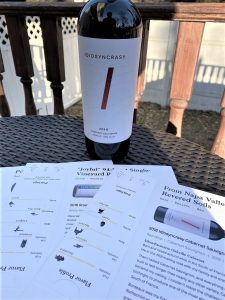 I’m sure you are well familiar with the phrase “The whole 9 yards” – technically translating into “lots of stuff”. You know what the fun part is? Nobody knows where this expression came from. There is a lot of research, a lot of “true origin” claims and an equal amount of disparaging remarks about the other side not knowing a squat about the subject (which seems to be the sign of times, sigh). We are not here to research or discuss the expression – my intention is to talk about a delicious Cabernet Sauvignon, but I will also give you the whole nine yards of related and unrelated “things”.
Everything started with a simple task – I was in need of the present for a friend’s birthday. My typical present is a bottle of wine of the birth year vintage (1977). However, it is getting more and more difficult to find the wine of such an old vintage at a reasonable price or even at all. After spending some time with Wine-Searcher and Benchmark Wine website, and finding nothing but a few bottles of the vintage Port, I decided that it is the time for the plan B, which means simply finding an interesting bottle of wine.
Next problem – where should I look for an interesting bottle of wine? Online seems to be the most obvious choice – but just to make things more interesting, I have to tell you that my gift recipient owns two liquor stores – yep, surprising him is not a trivial task.
Do you have an American Express credit card? Of course, you are wondering what it has to do with our story? It is most directly related. If you have the American Express credit card (AMEX for short), and if you ever looked at your account online, you probably saw the section called Amex Offers & Benefits. In that section, you can find 100 special offers, allowing you to earn additional points or save money on different items you can buy with the AMEX card. I have a good experience with these offers, these are real savings, so I have a habit of periodically logging into the account and scrolling through the offers. One of the offers I saw quickly attracted my attention – save $50 on a $150 purchase at WineAccess. I don’t know about you, but this sounds like a very good deal for me.
I was not familiar with Wine Access, so I got to the website to see if I can actually put this offer to good use. First thing I saw on the site is that $120 or 6 bottles purchase includes shipping, and if you are buying wine online, you know that shipping cost is one of the most annoying elements of the wine buying experience, so this made deal even sweeter – in case I can find something interesting.
I can’t tell you why and how, I first decided to search for Grosset, one of the very best Australian Riesling producers, and to my surprise and delight, I found Grosset Riesling available. So now I needed to add something else to reach my target number – $150.
I found an interesting Bordeaux, and next, I noticed a red blend from the Three Wine company in Napa, one of my favorite producers. My excitement happened to be premature, as once I started the checkout process, created an account and set my shipping address in Connecticut, I found out that I can’t complete my purchase as Three Wine red blend can’t be shipped to Connecticut (don’t you love US wine laws?).
I had to restart my search, and now I noticed Napa Cabernet Sauvignon called Idiosyncrasy – never heard of it, but Oakville Cab for $25 (this was a 50% discount off a standard price of $50) – why not to try one? I got two bottles, one for me, and one for my friend – done and done.
Once the order was placed I decided to check what exactly I just bought. I did a search for the Idiosyncrasy Cabernet online. I didn’t find too many references, but I did find a post which was very critical of the wine, saying that it was thin, and under-extracted Cabernet Sauvignon, absolutely no worthy of $43 which author paid for the wine. I also learned that this wine was specially produced for the Wine Access wine club by the well-known winemaker.
Truth be told – I don’t like wine clubs. What I learned about the wine, didn’t add confidence to my decision. Oh well – now I just had to wait for the shipment to arrive.
I didn’t have to wait for a long, the box showed up on the doorstep in a few days. Upon opening, I found not only 6 bottles which I ordered, but also neat, well-designed information cards – you can see it here:


Each card offered the story related to the wine, pairing suggestions, ideal drinking window put on the bottle tag which could be easily separated from the page and hang on the bottle in case you store it in the cellar. The back of the info card offered space for personal notes. Again, very well designed – would make any oenophile happy.
I read the story of the Idiosyncrasy Cabernet Sauvignon – it was written from the first person, as winemaker talked about his experience and how he came to the creation of this wine specifically for the Wine Access wine club. While the winemaker mentioned his work at Quintessa, Lail, Dalla Valle, and Purlieu, his latest adventure, his name was not found anywhere on the page. I had to figure out that his name was Julien Fayard by visiting Purlieu website.


Nice paper and story are important, but the truth is in the glass. Remembering the bad review, I poured the glass of 2016 Idiosyncrasy Cabernet Sauvignon Oakville Napa Valley (14.9% ABV), ready to be disappointed. To my delight, I was not. The keyword to describe this wine would be “elegant”. Varietally correct nose with touch cassis and mint. On the palate, the wine was rather of Bordeaux elegance – less ripe but perfectly present fruit, a touch of bell pepper, firm structure, perfect balance (Drinkability: 8/8+). Was this the best Cabernet Sauvignon I ever tasted? It was not. Was it the wine I would want to drink again? Absolutely, any day. Was it a good value at $25? This was a great value at $25, and even at $50, it would still be a good value.
Here you go, my friends – a story of the Cabernet Sauvignon and the whole nine yards. Cheers!
If Grapes Would Fight
The Duel.
How human. Or inhumane. Whatever way we want to spin it.
Yes, duels are the thing of the past. You walk on the street. You lightly bump into someone. You apologize. But the other man says that you didn’t hurt his shoulder. It was his honor which was hurt. And the only way to alleviate that pain is through the duel. Choose the day, the time, and the weapon – pistols are fine, or maybe you prefer the Épée. And be there, or else.
You and your witnesses show up at the agreed time in the agreed place. Your opponent will probably be there already with his suitors. Both of you line up, someone gives the command, you fight. One of you most likely will die. But this was expected. The honor will be cleared and not in pain anymore – for whoever will survive, that is. The end.
Oh, did I mention that those duels were not very legal for the most part even when they were very popular?
Now, imagine if those pistols would shoot grapes instead of bullets, and the only choice of weapon would be the type of grape? Let’s say, you will shoot with Cabernet Sauvignon, and your opponent with Petite Sirah, or maybe you will choose a Zinfandel and your opponent will load up with Syrah? I have no idea how the honor will be defended, but I’m sure nobody would die, and such a duel will be so much fun! I’m sure you have a good imagination – imagine the fully ripened grape hitting one of the opponents on the forehead, and splattering the juice all around, in the slow motion – that would be something to remember!
Okay, so grape shooting pistols are not on the market (yet?), but the grapes can duel all they want – if the winemaker desires.
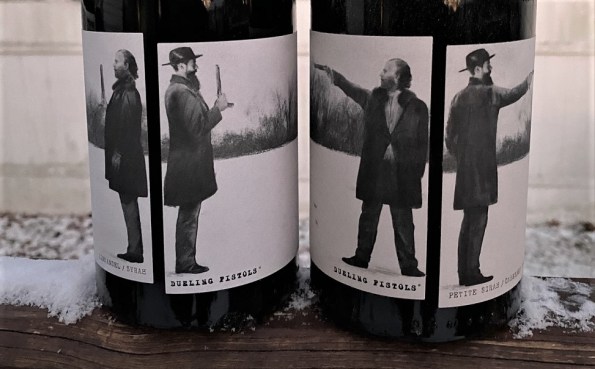
Cue in Dueling Pistols – the wines weaved around the mystery of two men, raising guns at each other at the dawn. We don’t know how they ended up there, or how shootout ends, but it is not important, as we should rather pay attention to wines.
The two Dueling Pistols wines represent 50/50 blends of the grapes that meet each other only after the fermentation is done separately. In one wine, Cabernet Sauvignon and Petite Sirah fight for supremacy; in the second wine, Zinfandel battles Syrah.
Never mind all this fight and battle talk. The wine is all about harmony – you want all the elements of the wine to be in full balance, playing together to deliver an amazing experience. So how these two wines did?


2016 Dueling Pistols Red Blend Dry Creek Valley (15% ABV, $49.99, 50% Syrah, 50% Zinfandel, 18 months in French oak, 30% new)
Dark Garnet
Very intense nose, tar, tobacco, roasted meat, mint
Crisp acidity, tart fruit, much lighter on the palate than expected based on the smell, sour cherries, significant herbal component
7+ initially, needs time
8- on the second and third days, the wine is softer and showing more fruit.
2016 Dueling Pistols Red Blend Paso Robles (15.5% ABV, $49.99, 50% Cabernet Sauvignon, 50% Petite Sirah, 18 months in French oak, 30% new)
Dark Garnet
Inviting nose of cherries and chocolate, with a hint of vanilla and licorice
The palate is smooth and gentle, well extracted, lip-smacking acidity, layers of flavor, velvety texture which makes you crave another sip even before you finished the first.
8/8+, very enjoyable
Here you are. A duel of grapes and even duel of wines. But – nobody got hurt, which is a great outcome of any duel, right?
Judging this fight, I have to say that Cabernet/Petite Sirah won this fight, at least in my corner. But you know what they say? YMMV, so go ahead, stage your own duel and have fun with it. Cheers!
P.S. These two wines were samples provided by Terlato Wines.
Wine Lover’s Guide To Lesser Known Wine Regions – Vinho Verde
Vinho Verde.
Let me ask you, wine lovers – when you hear the words “Vinho Verde”, what are the two things which are instantly come to mind? Let me guess – it should be “green” and “summer” – am I correct?
Let’s leave “green” aside for a minute and let’s talk about “summer”. Do you insist on pairing wine with the season? Of course, rich and opulent California Cabernet Sauvignon or tantalizing Barolo might not be the ideal choice of beverage for the pool party in the middle of summer. But then would you say that white wines should be only drunk when it is hot outside? Even if you will insist, I would have to disagree – the white is simply a color, and white wine can be equally enjoyed during any season. And to prove my point, let’s talk about Vinho Verde.
Oh, and let’s address the “green” thing – there nothing green about Vinho Verde. “Verde” here refers to the young wines – Vinho Verde wines are typically released 3-6 months after the harvest.

Here are some interesting facts about Vinho Verde. Vinho Verde is one of the oldest winemaking regions in Portugal, producing wine for the past 2,000 years. It is also the most northern wine region in Portugal, and the largest, with 51,000 acres planted. There are 19,000 grape growers and 600 wine producers, making over 85 million liters of wine, out of which 86% are white wines, and the rest is divided between Rosé, red and sparkling wines.
45 indigenous grape varieties are growing in Vinho Verde, out of which 9 are recommended – Alvarinho, Avesso, Azal, Arinto, Loureiro, and Trajadura for the whites, and Espadeira, Padeira, and Vinhão for the reds. Vinho Verde region subdivided into the 9 sub-regions named after rivers or towns – Monção, Melgaço, Lima, Basto, Cávado, Ave, Amarante, Baião, Sousa, and Paiva. It is also interesting to note that while Vinho Verde is identified as a DOC (top quality designation, similar to French AOC/AOP), the region called Minho Vinho Regional, completely overlaps Vinho Verde territory, however, its designation is similar to French Vin de Pays (lesser quality requirements).
Vinho Verde wines are typically low in alcohol and pair well with a wide variety of food. Quite often, Vinho Verde whites are also exhibiting very light fizz, this is really a hallmark of the region.
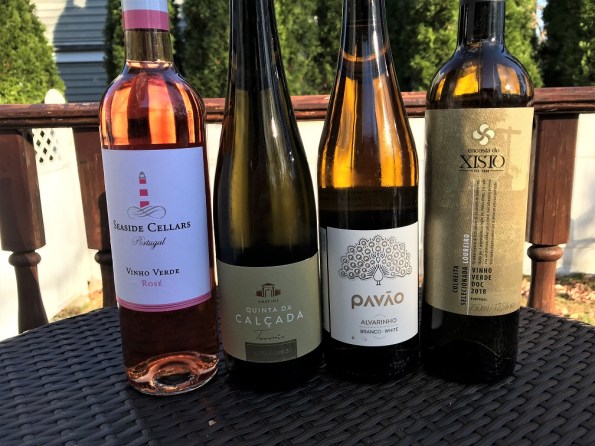
I had an opportunity to taste (samples) 3 whites and one Rosé from the region, here are my notes:
2018 Encosta do XISTO Vinho Verde DOC (12.5% ABV)
Straw pale with greenish hue
Vegetative nose, a touch of grass, sweet basil, restrained
A touch of fizz, lime, a hint of grapefruit, lots of minerality, fresh
8-
2018 Vercoope Pavāo Alvarinho Vinho Regional Minho (12% ABV, $8)
Light golden
Tropical fruit, candied lemon, sage, tobacco
Guava, a touch of honey, candied fruit, a touch of pink grapefruit. Good acidity.
7+/8-
2017 Seaside Cellars Rosé Vinho Verse DOC (11% ABV, $8, 40% Vinhão, 30% Borraçal, 30% Espadeiro)
Wild salmon pink
Nice minerality, whitestone fruit, a typical nose of white wine if there is such a thing
Underripe strawberries, good minerality, a distant hint of fizz, mostly on the finish.
7+/8-, fuller body than most of Rosé, not sweet at all despite low ABV. It also gives me two new rare grapes (Vinhão and Borraçal), which is always a nice bonus.
2018 Quinta da Calçada Alvarinho Vinho Regional Minho (13% ABV)
Light golden
Intense fresh lemon, a touch of grapefruit, noticeable minerality
Tart lemon, a touch of grapefruit, dry, intense, medium to full body, good minerality, good textural presence.
8, perfect any time you want a glass of dry white.
As you can tell, I liked all the wines. No, these wines are not mind-blowing, of course not. But considering the price, often less than $10, these wines offer an excellent, hard to beat QPR.
Here you go, my friends. No need to wait for the hot summer days. Just pick up a bottle of Vinho Verde, and enjoy it by itself, or pair it with good food and good company. You can thank me later. Cheers!
An Evening With Friends
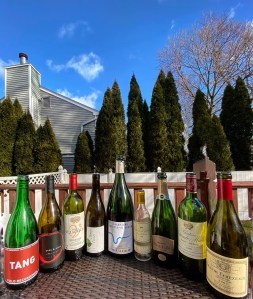 What is your favorite part about wine? Is it the taste? The buzz? The sheer appearance of the bottle sometimes resembling the work of art? The joy of owning an exclusive object? The coveted status symbol?
My answer will be simple. My favorite part about wine is the ability to share it. Take a sip, reflect, have a conversation, preferably a slow-paced one. Friends are the best pairing for wine. Opportunity to share the experience, pleasure, and joy. Sharing makes it all worth it.
New Year celebration (the main holiday for anyone with the Russian upbringing) is a multi-step process for us. We like to celebrate the arrival of the New Year as many times as possible – the evening before the New Year, a midnight Champagne toast, the New Year’s day dinner, and more dinners shortly after (this is when the bathroom scales are the worst nemesis). Some or all of these dinners have to include friends – and it is the best when friends share your wine passion.
Such was our dinner on Saturday, bringing together a group of friends who truly enjoy what the wine world has to offer. We all contributed to the evening, both with food and wines, to make it fun and interesting. Below is the transcript of our wine extravaganza, with highs, lows, and surprises.
While we were getting ready to start our dinner, our first wine was something unique and different – how many of you know what Piquette means? It appears that Piquette is yet another type of sparkling wines. The story of Piquette goes back to 18th century France when the whole wine industry was in full disarray. Piquette is literally made by converting water into the wine – using water to rehydrate grape skins left after the wine production. We had 2019 Field Recordings Tang Piquette Central Coast (7.1% ABV, Rehydrated skins of Pinot Gris and Chenin Blanc) which was made using this exact process – grape skins were hydrated in well water for a week, then pressed, after which a little bit of the table wine was added, and the wine was bottled with leftover yeast and sugar to continue fermenting right in the bottle. To me, the wine was reminiscent of cider – light fizz, fresh apple notes, cloudy appearance of a nice unfiltered cider. Would I drink this wine again? On a hot summer day – yes, why not, but this is not the wine I would actively seek.


It is difficult to assess the “uniqueness” of the wines. There can be many reasons for the “unique” wine designation – small production, wine not produced every vintage, the wine which is no longer produced. There are, of course, many other reasons. How about spending 10 years to finally make about 200 (!) bottles of a drinkable wine? Don’t know about you, but this is unquestionably unique in my book. And so there was 2017 Olivier Pittet Les Temps Passés Vin de Pays Romand Switzerland (14.2% ABV, Arvine Grosso). Petite Arvine is a popular white grape in Switzerland, producing nice, approachable white wines. On another hand, Petite Arvine’s sibling, nearly extinct thick-skinned Arvine Grosso (or Gross Arvine), is a nightmare to grow and to work with. This was the Arvine Grosso which took about 10 years to restore the plantings and achieve a drinkable result. The wine needed a few minutes to open up – then it was delicious, fresh, with a touch of underripe white plums, bright acidity and full-body, similar to Marsanne/Roussanne. I wish this wine would be a bit easier to procure and not just through a friend who lives in Switzerland…
I was happy that Stefano brought a bottle of 2008 Berlucchi Palazzo Lana Satèn Riserva Franciacorta (12% ABV) – I love Franciacorta sparkling wines, they always offer a playful variation of the classic Champagne. Berlucchi is the founder of the Franciacorta sparkling wine movement. This wine was also a Satèn, a unique Franciacorta creation, which is specifically made to be a bit gentler than a typical Champagne with the lesser pressure in the bottle. The wine was soft, fresh, delicate, and admired by the whole table enough to disappear literally in the instance.
The next wine was as unique as only inaugural vintage can be. Christophe Baron is best known as Washington Syrah master, with his Cayuse, No Girls, and Horsepower lines. But Christophe’s roots are actually in Champagne, so it shouldn’t be terribly surprising that he decided to embrace his heritage. The first bottling, with a promise of many more, was as unique as all Christophe Baron’s wines are – pure Pinot Meunier, vintage, and bottled only in magnums – 2014 Champagne Christophe Baron Brut Nature Les Hautes Blanches Vignes Charly-Sur-Marne (12.5% ABV, 100% Pinot Meunier, 1613 1.5L bottles produced). I made a mistake of slightly overchilling the wine, but it came to its senses shortly after it was opened. The wine was nicely sublime, with all the Champagne traits present – the acidity, brioche, apples – everything balanced and elegant. This was definitely an excellent rendition of Champagne, but to be entirely honest, at around $300 it costs considering tax and shipping, I’m not sure it was unique enough to justify the price. Oh well… definitely was an experience.


Before we move to the reds, a few words about the food. The New Year celebration is a special occasion, which is asking for a special menu. Our typical New Year dinner menu is heavy with appetizers and salads. Our staple salads are “traditional” – Olivie and “Herring under the fur coat”. For the appetizers, we had red caviar, bacon-wrapped dates, stuffed Belgium endives, different kinds of cold cuts and cheeses, tiny prosciutto/pecorino sandwiches, and I’m sure some other stuff. Tea-smoked duck and delicious lasagna comprised the main course, then finishing with loads of baked goods and candies. Yeah, don’t even think about dragging me onto a bathroom scale.
Let’s get back to wine.


The next wine belongs to the “interesting” category. NV Channing Daughters Over and Over Variation Twelve Long Island (12.5% ABV, Merlot, Dornfelder, Syrah, 208 cases produced), a multi-vintage wine which is produced using Ripasso and Solera methods. The name “Over and Over” is emblematic of the production method of this wine – there are many manipulations which I will not even try to describe – you better read it here. I’m all for the fun and complexity, but my problem is that I tasted the standard vintage Channing Daughters red wines which were literally identical to this Over and Over wine. It is great to play with your wine, no questions – but only if the end result is different, and better than the individual parts. The wine showed very youthful, with fresh crunchy fruit and cut through acidity – but it was lacking complexity. It is not a bad wine, but I was not moved by it.
Next up – 1996 Château Sociando-Mallet Haut-Médoc AOC (12.5% ABV) – this was a happy wine. The cork came out easily in one piece, and the wine was perfect from the get-go. The perfect minty nose of Bordeaux with a touch of cassis, some hints of mature fruit on the palate, but only the hints – still good acidity, solid core, excellent balance – the wine to enjoy. Yep, was gone in no time.


Of course, the duck on the menu is calling for the Pinot Noir, and what can be better than the Burgundy? 2007 Louis Jadot Grands Echézeaux Grand Cru AOC (13.5% ABV) was our designated match for the duck. The wine opened up beautifully, with succulent plums and a touch of smoke, a delicious, classic Burgundy. However, the joy lasted in the glass for about 10 minutes or so – next, all the fruit was gone, and while you know you are drinking wine, this wine had no sense of place of origin. I don’t know what happened – the wine closed up, needed more time, or was already at the last stretch of its life? Don’t know, and don’t think I will ever find out. Well, there is always another bottle, right?
Now, let’s talk about surprises. No, not the Chateau d’Yquem, which you would assume should qualify as a surprise – the 1999 Finca Villacreces Crianza Ribera Del Duero (13% ABV) was a real surprise. I heard the name of Finca Villacreces as one of the venerable Ribera del Duero producers, but I never had it before. When I was able to score this wine at the Benchmark Wine, I was very excited. The New Year’s celebration seemed to be a perfect opportunity to open it, especially as nobody had it before and we were all looking forward to getting acquainted.
The cork came out easily, in one piece with no sign of any issues. Once I poured the wine into the glass, on the first whiff, the scary thought instantly showed up – the wine might be corked. I tasted the wine, and it seemed just a touch off – it didn’t feel unquestionably corked, but the fruit was not coherent and the wine had sharp, raspy undertones which in my experience are associated with the corked wine. We moved the wine into the decanter and continued tasting it throughout the evening – it stayed practically unchanged.
This was not some random bottle I can get replaced at any store, so I really couldn’t just pour it out. And I’m an eternal optimist. So I used plastic wrap to cover the top of the decanter and left the wine standing there overnight. The next day, about 22-23 hours since the wine was opened, I decided to check on it. Oh my god. The wine completely changed. The hint of the musty cellar was gone. The mighty fruit appeared on the palate, layered, present, velvety and powerful, covering your whole mouth and making you extort “ohh, this is good”. I thoroughly enjoyed the wine after 24 hours in the decanter, and even the next day the tiny leftover was still drinkable. How is this possible? What has happened? I don’t have any answers, but if you have any ideas, please share.
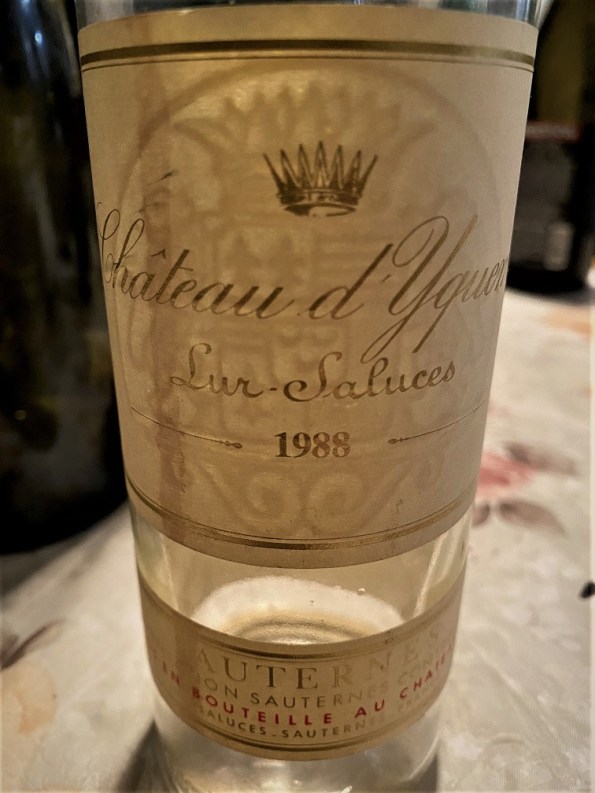
We finished the dinner on the high note – 1988 Château d’Yquem Lur-Saluces Sauternes AOC (13.5% ABV). I’m you sure you don’t need any introductions here – Château d’Yquem is the Bordeaux legend, an absolute hallmark of the Sauternes region, with every other Sauternes wine simply measured against the Château d’Yquem. A perfect pop of the cork from this bottle was music to my ears. The nose and the palate of this wine were in full harmony – it was all about apricots. Fresh apricots, dried apricots, candied apricots – the taste kept moving round and round. The apricots were supported by clean acidity, which became more noticeable as the wine had an opportunity to breathe. Well, this was a short time window in any case, as this half bottle was simply gone in the instance. This 32 years old wine was truly an experience and a perfect finish to our great evening with friends.
That’s all I have for you, my friends. How 2020 started for you? What did you have a chance to discover over the last few days? Cheers!
American Pleasures, Part 3 – Murrieta’s Well
How often do you drink wines from Livermore Valley? Not trying to offend, but do you even know where the Livermore valley is?
If you guessed that Livermore Valley is an area in California, or if you simply knew it, yes, of course – Livermore Valley is located a bit north and west of San Francisco and can be considered one of the little wine world secrets for the people in the know. While Napa and Sonoma are the regions everyone is looking up to, Livermore Valley is located a stone throw from both, and in most cases offers a lot more fun in the tasting room for much less money.
Murrieta’s Well Estate Vineyard is located in this exact Livermore Valley and yes, we can consider it as one of the hidden gems. The estate has a rich history, going back to 1884. This is not the first time Murrieta’s Well wines are making an appearance in this blog, so instead of repeating all the historical references, I would like to direct you to my previous post on the subject. Same as the last time, the wines were provided as a courtesy of Snooth, for the virtual tasting – you can find the video recording of that tasting here.
This series is not called American Pleasures for nothing. This is the third post in the series, following the posts about Silverado and Oceano wines and Peju. As I explained in the introduction to the series, I simply had a great number of wines which were surprisingly consistent – wine after wine, they delivered a great deal of pleasure. You can expect to equally enjoy two wines from a good producer; 4 wines in the row is not typical; 6 wines is seriously unexpected. The 4 wines I tasted from the Murrieta’s Well were perfectly consistent and unquestionably enjoyable, offering loads of pleasure. Yes, all four. And what is even more interesting, if you will compare my ratings from 2017 tasting versus 2019, you will see that I rated all the wines higher. It appears that the process is going in the right direction, to the joy of all of us, oenophiles.


Let me share my notes:
2018 Murrieta’s Well Small Lot Dry Orange Muscat Livermore Valley (14.6% ABV, $38, 100% Orange Muscat)
Light golden color
Plums, guava, tropical fruit
Bright acidity, an undertone of sweet tobacco, bright acidity on the finish
8, fresh, excellent
2018 Murrieta’s Well Dry Rosé Livermore Valley (13.5% ABV, $32, 42% Counoise, 33% Grenache, 25% Mourvèdre)
Medium intensity pink color
Underripe strawberries
Tart fresh strawberries, good acidity, clean, vibrant, perfect balance, long finish
8, an excellent wine.
2016 Murrieta’s Well Small Lot Merlot Livermore Valley (14.1% ABV, $48, 95% Merlot, 5% Cabernet Sauvignon)
Dark garnet
Touch of cassis, eucalyptus
Cassis, blackberries, nicely tart, a touch of coffee, good acidity, good structure
8+, excellent.
2017 Murietta’s Well The Spur Livermore Valley (14.5% ABV, $35, 64% Cabernet Sauvignon, 14% Petite Sirah, 13% Merlot, 9% Petit Verdot)
Dark Garnet
Smoke, tar, roasted meat, blackberries
Succulent blackberries, tobacco undertones, good acidity, medium to full body, good balance
8-, excellent
Here you go – 4 excellent wines, 4 sources of the great American [wine] pleasure. Have you had any of these wines? Have you had wines from the Livermore Valley? Cheers!
Last Bottle Sign Up ($10 credit)




 Talk-A-Vino