Archive
Wine Under Lockdown
It feels strange to admit that our invisible enemy still holding most of the world hostage. When all of the lockdowns started in Europe at the beginning of March, I was still holding on to our airline tickets and hotel reservations for the long-anticipated, lovingly-planned family trip to Italy at the beginning of July, thinking (not hoping!) that the world will get back to normal in the mere 4 months. The depth of my shortsightedness might be staggering, but let’s leave that discussion for another time.
The House of Townend is one of the oldest wine stores in the UK, tracing its history since 1906. As the wine sellers, the folks at the House of Townend know very well what is hot and what is not during the pandemic, in the UK and in Europe overall. Their recent press release from about a month ago offers the following tidbit:
“In the 2019 March-June period, the most popular drinks sold by the wine merchant were Prosecco and white wines. The spring period normally brings a taste for fizzy, lighter wines. This was also reflected in 2018.
In the same period in 2020, lockdown caused a considerable shift in drinking habits. House of Townend’s top 10 wines included 6 red wines – the top products being Pinot Noir and Malbec. Malbec, in particular, has been popular in both Google Search history and House of Townend’s sales data, rising over 2570% in unique sale purchases in the lockdown period (23rd March-July 5th 2020) in comparison to the same time last year. ”
Two thousand five hundred seventy percent increase in sales of Malbec during the lockdown – how about that? I wonder if this phenomenon has an explanation (specifically such an increased interest to Malbec) – for sure I can’t offer you one.
As controlling spending during lockdown is also essential, House of Townend came up with interesting infographics, showing how much wine £10 can buy:
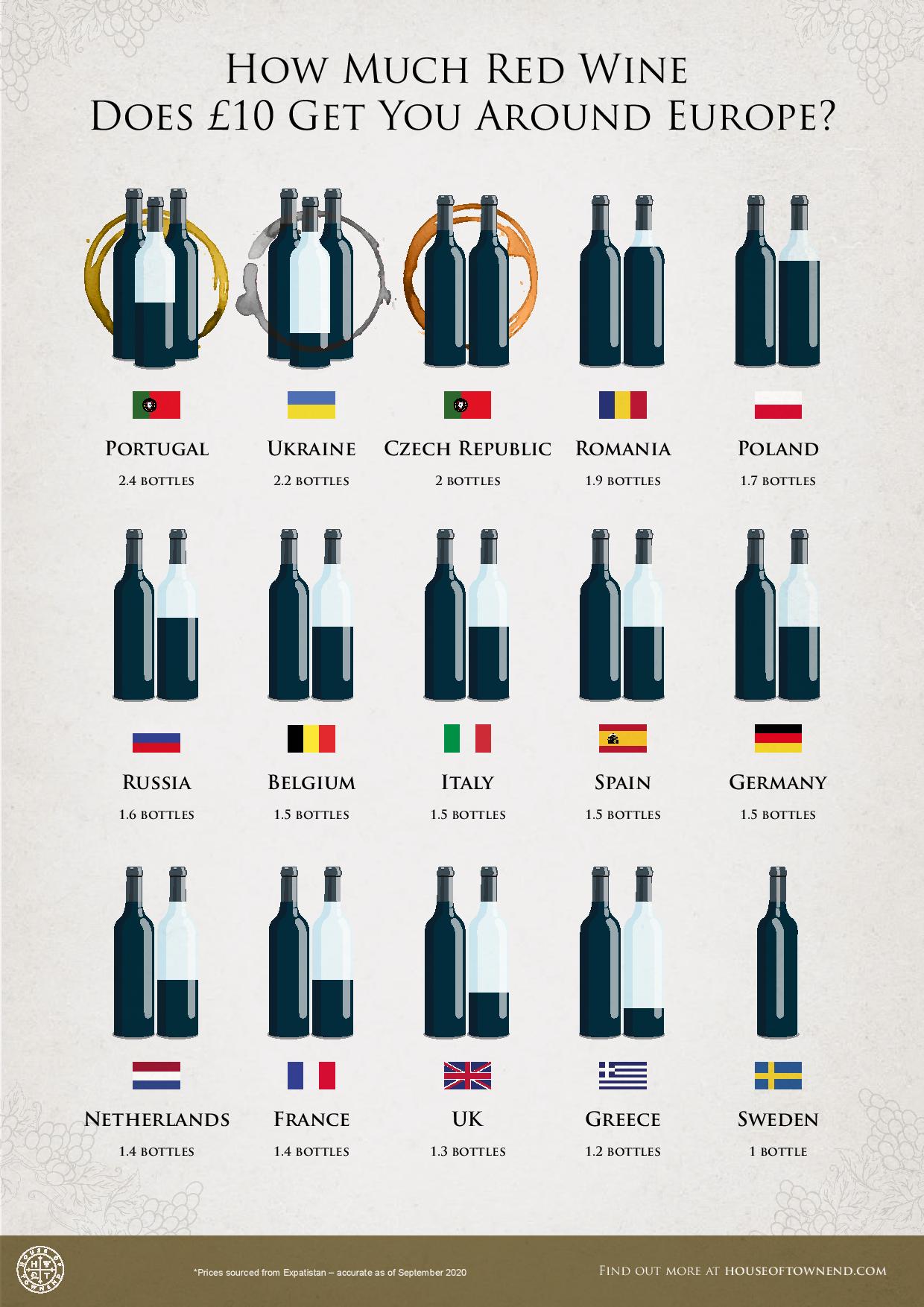 As you can see, the same £10 would allow you to drink in Portugal twice as much red wine as in Sweden.
I saw a fun poster somewhere on social media, saying that “wine is the glue which holds this sh!tshow together” – that might well be the case?
Cheers, my friends!
Carménère – Lost, Found, Evolved, Delightful
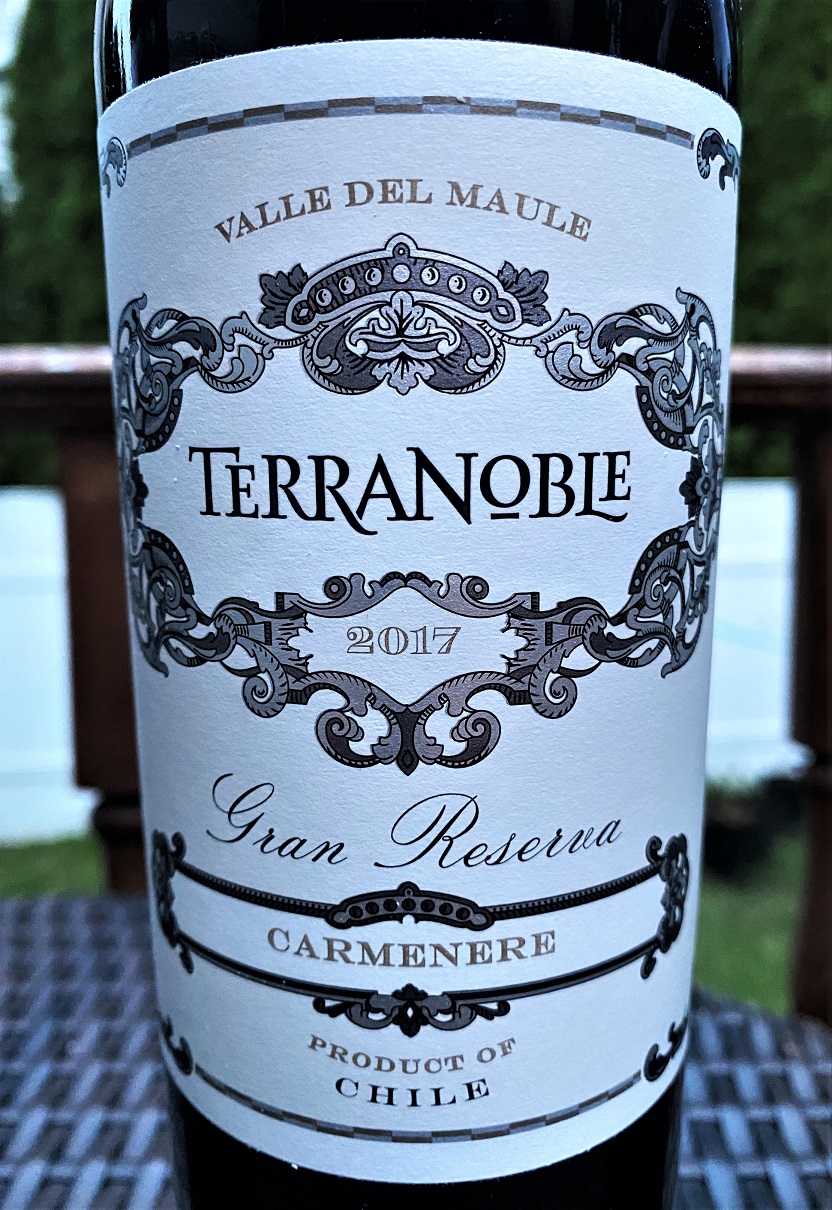 According to the 2012 edition of the famous Wine Grapes book (written by Jancis Robinson, Julia Harding, and Dr. José Vouillamoz), there are 1368 grapes used in winemaking. It would be a safe bet to say that each one of those grapes has its own story. Of course, not all of those stories would be dramatic and exciting, but I’m sure some would read as a good detective story, probably without much of the shootouts.
Carménère is a perfect candidate for such a story. When Bordeaux ruled the wine world – which would be in the middle of 1800th – Carménère (which translates from French as crimson, identifying a beautiful color of the grapes) was one of the “big six” Bordeaux varieties, comprising all of the Bordeaux wines – Cabernet Sauvignon, Cabernet Franc, Merlot, Malbec, Petite Verdot, and Carménère. Carménère is related to Cabernet grapes, but historically it is not very clear if Carménère was some type of clone of Cabernet, or if it was the other way around.
The phylloxera epidemic of 1867 put a damper on all the wine production in France and forced vignerons to replant all of the vines on the Phylloxera-resistant rootstock. Carménère is not an easy grape to grow in the Bordeaux climate, and it was pretty much abandoned and considered extinct at the beginning of the 20th century.
Meanwhile, in 1850th, immigrants brought many of the French grapes with them to Chile, where the grapes started to strive in the warm and dry climate offered by the Andes mountains. In 1980th, Merlot became a star of Chilean winemaking, abundantly producing inexpensive wines that became well known in the world. It was noticed that the taste of the Chilean Merlot differs from the traditional Merlot and that Merlot was considered to be a Chilean-specific clone. Or at least it was until 1994 when visiting French scientist, Jean Boursiquot noticed that Chilean Merlot has different leaves and grape clusters from the traditional Merlot, and was able to show that this was not the Merlot, but long-extinct Carménère, which successfully made it to Chile in the 1850s with all the Bordeaux grape cuttings.
From that time, Carménère went on to become Chile’s own star grape, and answer to another French variety, Malbec, which Argentina made its own. As Phylloxera never made it to Chile, Chilean Carménère was even brought back to France, but it is not an easy grape to deal with, so it never regained its past glory in Bordeaux.
TerraNoble winery (Terra Noble means “Noble Land”), was founded in 1993 by a group of friends. From the beginning, TerraNoble focus was on producing high-end wines in Maule Valley, and the winery quickly established itself as a boutique producer of Chilean Merlot. After Chilean Merlot was identified as Carménère, TerraNoble continued focusing on the variety.
TerraNoble sustainably (certified sustainable since 2019) farms today about 750 acres, which comprises 4 vineyards in Maule Valley, Colchagua Valley, and Casablanca Valley. The winery produces a full range of wines you would expect a Chilean winery to produce – Chardonnay, Sauvignon Blanc, Cabernet Sauvignon, Merlot, Syrah – but Carménère is unquestionably the darling of TerraNoble, as presented by Marcelo Garcia, TerraNoble’s winemaker, during the virtual tasting a few weeks back.
While browsing Sotheby’s New Wine Encyclopedia by Tom Stevenson, I came across a small insert about Chilean Carménère, where it was mentioned that Carménère is site-specific to the extreme – you need to work hard to find the right location for Carménère to vines to deliver the best result. TerraNoble approach to Carménère is based exactly on this notion – site-specific Carménère wines. As we mentioned before, Carménère is a close relative of the core Bordeaux varieties – Cabernet and Merlot and has a similar taste profile as well. It is similar, but not the same, obviously. A typical Carménère has a much higher concentration of the aroma compound called pyrazines, which is often associated with the pronounced taste of the green bell pepper – here is a good article that explains pyrazines in depth. Green pepper is good for cooking and the salad, but probably not so much in wine. Also, when left unsupervised, Carménère has a tendency to develop a high concentration of the tannins. While someone might enjoy a big powerful wine with pronounced green bell pepper aromatics and powerful tannin structure, the appeal is not universal and this is what Chilean winemakers had to deal with.
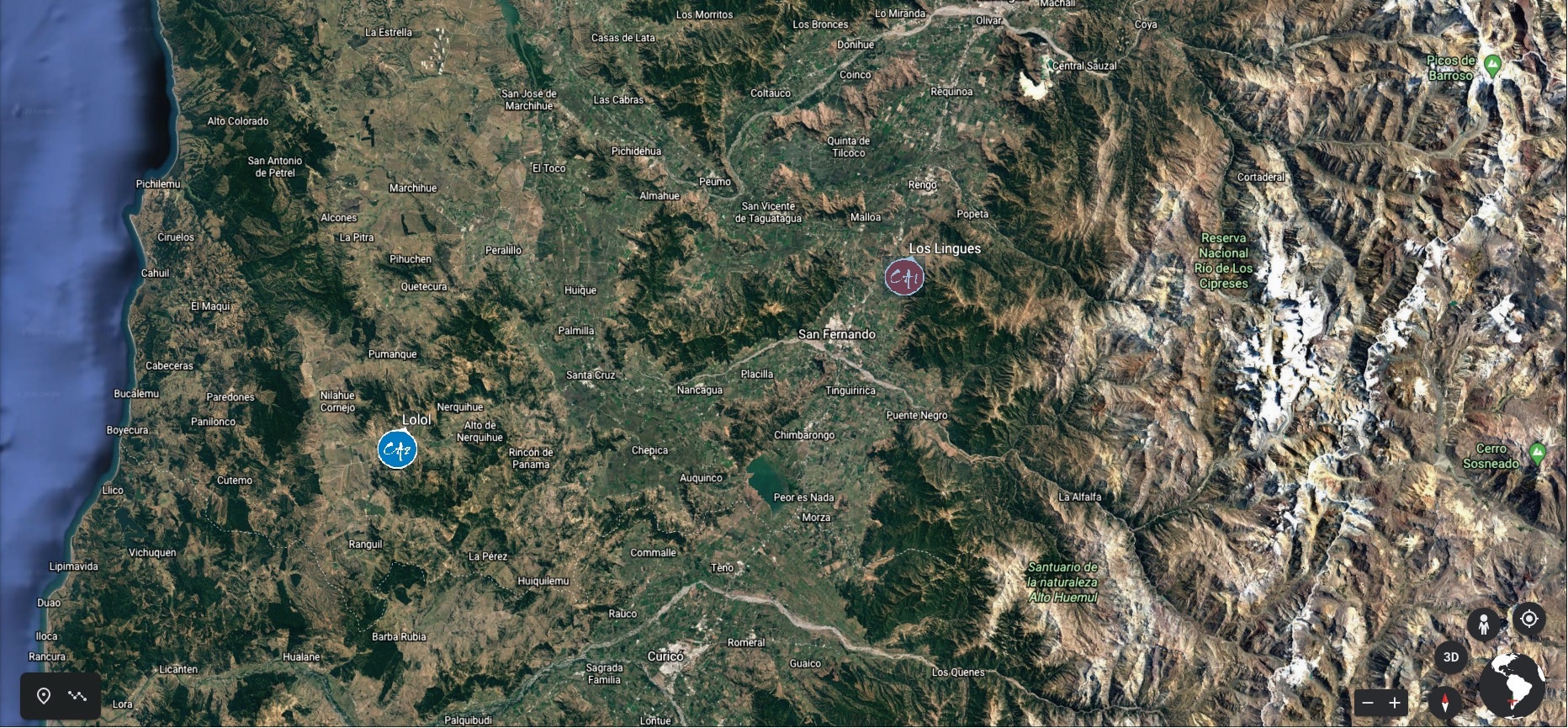
TerraNoble CA project vineyards. Source: TerraNoble
In 1998, TerraNoble released Gran Reserva Carménère to the international markets. The grapes for this wine were coming from the La Higuera Vineyard in Maule Valley, near San Clemente. This wine still remains the winery’s flagship. I had been a fan of TerraNoble wines for a long time, after discovering them back in 2004. To the best of my memory, 2003 TerraNoble Carménère Gran Reserva was quite enjoyable, but I don’t have any detailed notes in that regard.
Following its Carménère calling, TerraNoble planted two new Carménère vineyards in Colchagua Valley – in 2004, Los Cactus Vineyard, about 25 miles from the coast, and in 2005, Los Lingues Vineyard, about 35 miles further inland, on the outskirts of Andes mountains. These two vineyards became a home to the special project called CA – producing two 100% Carménère wines using absolutely identical vinification at the winery, different only in the source of the grapes – CA1 from the Andes, and CA2 from the coast. The first wines in the CA project were released in 2009.
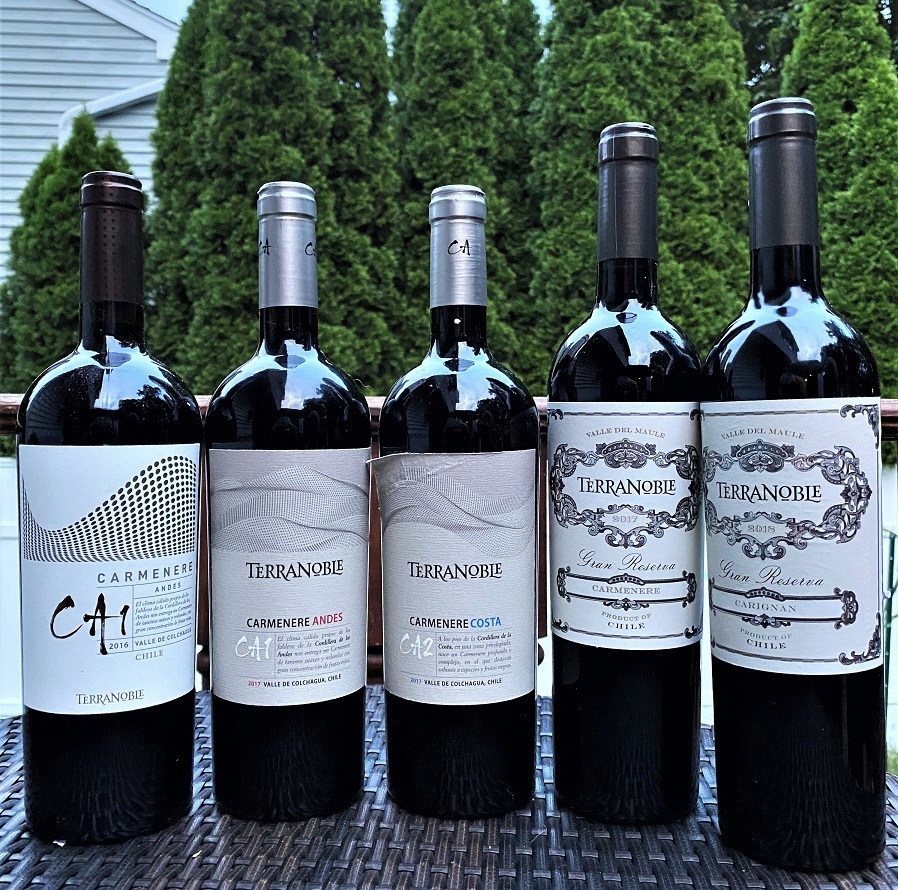
The goal of the project was to showcase the capabilities of Carménère grapes. With winemaking techniques identical for both wines, different taste profiles were only influenced by the different growing conditions, the terroir – soil and climate most of anything. How different are the wines? We had an opportunity to taste a few of the CA project wines, and they were demonstrably different. Here are my notes from the tasting.
We started with the tasting of the flagship Carménère
2017 TerraNoble Carmenere Gran Reserva Maule Valley, Chile (14% ABV, $18.99, aged 75% in previously used French oak barrels, 25% in untoasted casks, 6 months in the bottle)
Dark garnet
Currant leaves, blackberries
Bright red fruit, good acidity, soft, easy to drink, medium body, medium finish.
8-, nicely approachable from the get-go. 8 after a few hours.


Then we had an opportunity to compare two of the vintages of CA1 wines (from the Andes), and then CA1 and CA2 from the same vintage – again, you can see how different the wines are:
2016 TerraNoble CA1 Carmenere Andes Valle de Colchagua, Chile (14% ABV, $24.99, aged 85% in new and twice used French oak barrels, 15% in untoasted oak casks for 14 months, 12 months in the bottle)
dark garnet
touch of barnyard, dark fruit
black currant, a touch of bell peppers, noticeable french oak tannins, peppery, chewy tannins, big body
7+/8- initially, 8 after a few hours. Excellent, powerful wine.
2017 TerraNoble CA1 Carmenere Andes Valle de Colchagua, Chile (14% ABV, $24.99, aged 85% in new and twice used French oak barrels, 15% in untoasted oak casks for 14 months, 12 months in the bottle)
dark garnet
tobacco, currant leaves, pepper, dense and concentrated
good acidity, peppery notes, blackberries, concentrated
7+/8- initially, 8 in a few hours. Delicious.
2017 TerraNoble CA2 Carmenere Costa Valle de Colchagua, Chile (14% ABV, $24.99 aged 85% in new and twice used French oak barrels, 15% in untoasted oak casks for 14 months, 12 months in the bottle)
dark garnet
currant more noticeable
softer than the previous wine, but showing more of the green notes. black currant
7+/8- initially, 8 in a few hours.
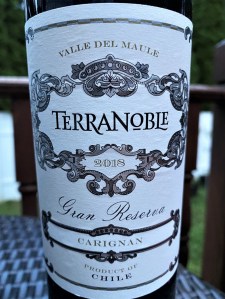 We finished our tasting with a somewhat unexpected wine – Carignan. Carignan is another ancient French grape, this one coming from Rhône valley. Chile has very old Carignan vineyards (some are 120+ years old), however, for the longest time, Carignan was used by the farmers to make very strong, but not really drinkable alcohol. Carignan’s popularity started increasing around 2000. Another interesting fact about Carignan is that it is mostly growing in the small (and old) vineyards, where the vineyards became a part of a natural biodiverse habitat, which includes other plants and animals.
TerraNoble Carignan grapes were sourced from the vineyard planted in 1958 in Maule Valley close to the ocean, using dry farming. The wine was partially aged in the concrete eggs.
2018 TerraNoble Carignan Gran Reserva Melozal, Maule Valley, Chile (13.5% ABV, $18.99, aged 50% in concrete egg, 50% in untoasted oak casks, 6 months in the bottle)
Dark Ruby
touch of licorice, distant hint of candied fruit
tart fresh cherries, good acidity, medium body, simple, easy, and pleasant. Might be a summer quaffer
7+
Here you are, my friends – TerraNoble tells the story of modern-day Chilean Carménère. The evolution of the Carménère wines is still ongoing, with TerraNoble winemakers starting to experiment with concrete eggs and amphorae, and who knows what else is coming to push the grape which Chile made its own even further. One thing for sure – winelovers are in for lots of pleasure.
Wine Quiz #125: More Numbers In Wine
The Wine Quiz series is not meant to intimidate. The whole idea here is to have fun and learn something new. When answering the questions, it is fully encouraged to use all available sources of information, including Google or any other search engine. There are no embarrassing answers – the most embarrassing thing is not giving it a try…
Welcome to the weekend and your new wine quiz!
Our last quiz was about numbers in wine. You were given a series of numbers and asked to figure out what do they mean. I gave you a few hints in the accompanying text, from which I was hoping that you would be able to figure out that all these numbers are related to appellations. Here is the answer – as numbers, unfortunately, are just numbers, and it all depends on your source, I’m also including links for my sources of information:
- 250 – Number of AVAs in the USA – https://www.ttb.gov/wine/established-avas. Interestingly enough, this number is already incorrect – one more new AVA was approved, so the new count stands at 251.
- 1908 – The year second oldest appellation in the world, Dão in Portugal, was established – https://en.wikipedia.org/wiki/D%C3%A3o_DOC
- 360 – Number of AOCs in France – https://winefolly.com/deep-dive/looking-for-good-wine-start-with-the-appellation/
- 1 – the size of the smallest grand cru appellation in France – https://www.winemag.com/gallery/10-small-appellations/#gallery-carousel-2
- 1963 – The year DOC system was established in Italy – https://www.wine-searcher.com/wine-label-italy
Sadly, nobody even attempted to solve this quiz, so once again I’m keeping all the lofty prizes to myself.
This week’s quiz will be about … numbers again! I’m asking you to sort some data based on the underlying numbers. You will need to figure out what connects this data, and then sorting will be reasonably easy. Here we go:
Q1: Sort the following in the ascending order:
Arbois, Augusta, Douro, Rioja, Vernaccia di San Gimignano
Q2: Sort the following in the ascending order:
Balthazar, Goliath, Jeroboam, Magnum, Marie Jeanne, Melchizedek, Methuselah, Nebuchadnezzar, Rehoboam, Salmanazar, Solomon, Sovereign
Q3: From January to June 2020, Italy exported the highest amount of wine among all major wine-producing countries, at 577M liters (769M bottles). Sort this list of wine exports per country for the same period of time in descending order:
Argentina, Australia, Chile, France, Germany, Italy, New Zealand, South Africa, Spain, USA
Good luck, enjoy the quiz and your weekend! Cheers!
Wednesday’s Meritage #148
Meritage Time!
I have an eclectic mix for you today. How eclectic? You be the judge.
Let’s start with Wine & Spirits Magazine Top 100 list of 2020. Every year, Wine & Spirits magazine comes up with the list of top 100 wineries of the year, which are all celebrated at the grand tasting event in San Francisco. This year the celebration will be virtual, and multi-staged. First, there will be Top 100 Sessions with the winemakers on that Top 100 list, taking place October 14-23. Then, as Top 100 wineries list of 2020 is already announced, there will be a celebratory event in November. Check any of the links above for more details.
I have to present the next update as oddly peculiar, but hopefully, some of you will find it fun. Do you like Oreos? Yes, the cookies. Well, whether you are a fan or not is not essential, but I’m sure you can appreciate an effort of tasting and rating 119 (yes, one hundred and nineteen) different types of Oreo cookies. Courtesy of my friend Emil, here is your full list. I’m not an Oreo connoisseur, but this was a fun reading nevertheless. Some of the tasting notes are nothing short of hilarious – “I’m not a big matcha guy, but I think these Oreos would be a lot better if they didn’t exist“.
Our next piece is not really the “news”, as this article is 16 years old (again, courtesy of Emil). Nevertheless, I feel compelled to share this article from New Yorker magazine, called The Ketchup Conundrum. This is a long read, so maybe bookmark it for the weekend, but it helps one to appreciate the depth and intricacies of the food marketing, even when you are talking about such basics as mustard and ketchup. Give it a try and tell me if you think it was worth sharing here or not.
Now, let’s move to the subject of sex and garlic. Worrying already? Don’t be! This article from Wine Spectator, “Sex and Garlic: New Weapons Against the Most Notorious Vineyard Diseases?”, talks about new experimental methods of protecting vineyards from powdery and downy mildews, some of the worst enemies of the grapevines. I don’t want to regurgitate the article here (it is also reasonable technical), but it is somewhat of a short read. The interesting part of the story that it took me a while to figure out what the “sex” part had to do with anything, as the word “sex” can be found in this article only once – in the title. Instead of telling you what sex has to do with the protection of the vineyards, I will let you figure it out on your own.
The last piece for today is about wine writing. Jancis Robinson, one of the best and most famous wine writers in the world, hosts an annual wine writing competition. The 2020 theme was “sustainability”. According to this short summary, 85 articles were submitted for the 2020 competition, out of which 75 were good enough to be published on the Jancis Robinson website. 18 articles were selected for the final round, out of which 2, not 1, were declared the winners. You can see all of the published entries here. Happy reading!
That’s all I have for you today. The glass is empty, but the refill is on the way. Cheers!
Wednesday’s Meritage #147
Meritage Time!
Let’s start with some interesting developments in the world of celebrity wines. We just recently pondered at the topic with the fellow wine writers (you can watch it here), and I mentioned Château Miraval as one of the celebrity wines (Brad Pitt and Angelina Jolie) done right – with celebrities themselves very much involved in the process and website talking about wine passion instead of just trying to promote some irrelevant “merchandise”. It appears that the celebrity couple had ambitions going far beyond Provençal Rosé – after diligently working for 5 years, Fleur de Miraval Rosé Champagne is released to the market – at a hefty £290, according to The Drinks Business. This is a grower Champagne, produced by an apparent superstar Rodolphe Péters of the Pierre Péters estate in Le Mesnil-sur-Oger. I would love to try that Champagne, but at around $370, I can only hope someone wants to surprise me – holidays are coming? While still talking about the same celebrity couple, I also want to mention that I just learned about new wine on the completely opposite side of the spectrum – a new Rosé called Studio by Miraval, which can be found for a mere $15.
Moving along, let’s now touch on the subject of wine numbers. I don’t know about you, but I love numbers. What are the total plantings of Cabernet Sauvignon in the world? Are the plantings of Pinot Noir are rising or declining? Does anyone still plant Merlot? Which country has the biggest plantings of Syrah? Of course, this information is far less valuable compared to knowing which stock will double in the value tomorrow, but these are still the numbers I’m happy to ponder at. If you are sharing my excitement about wine numbers, a book called “Which Winegrape Varieties are Grown Where? A Global Empirical Picture” (2nd Ed) by Kym Anderson and Signe Nelgen, is published by the University of Adelaide Press in Australia, and it is freely available on the publisher’s website. What might be even more interesting, on the same website, you can find a collection of the wine-related datasets, including, for example, the Annual Database of Global Wine Markets, 1835 (!) to 2018, freshly updated in January of this year. Love the numbers? Hit those links!
Now, let’s talk about our new reality – the virtual one, where you can see, but can’t touch. It works well if you need to solve a business problem or debug a complex algorithm, but virtual wine doesn’t offer a satisfying experience (whatever way you want to twist that word). I don’t know if the folks at Taste The World were expecting the pandemic to be besieged upon us, or just had a good business hunch, but the idea behind this operation sounds really good. You have an opportunity to get a set of wines for the blind tasting, hand-selected by the group of Master Sommeliers, with the promise of perfectly representative wines for the different categories. Each set includes 6 different wines, and you can get it once for $90, which I believe is reasonable for this offering, or as a subscription. Whether you are looking for a cool gift for the wine lover in your circle, or study for WSET, this sounds like a great help. Don’t get me the Fleur de Miraval, I would be quite content with Taste The World set.
Last one for today – how about some wine videos? Wine Spectator just completed the voting for their annual Video Contest, and here you can find all the videos selected for the final round. With the pandemic-appropriate theme of “Wine at Home”, you will find some truly creative videos – well worth a few minutes of your time.
That’s all I have for you today. The glass is empty, but the refill is on the way. Cheers!
Wednesday’s Meritage #146
Meritage Time!
First, I’m sure I have some explaining to do – all of a sudden here is Meritage #146, while you can’t find #1, #50, or #145. I know I had not been contributing on the regular basis to this blog, and I would like to see how I can change that. Meritage posts were always an aggregation (Meritage) of interesting wine and food news, which were published on Wednesdays, hence the title. I counted all the Meritage posts in this blog during the 10+ years and found out that there were 145 of them published before. Previously, I would give you the synopsis of the post right in the title – going forward, I will substitute that with simply a number. Hope I managed to explain my logic, so now let’s proceed with the news.
Let’s start with some interesting developments in the world of Spanish wines. Classification of the Spanish wines appears to be simple – most of the wines are designated under a certain DO, which stands for Denominación de Origen, and then there are few other categories, such as the highest quality category in Rioja and Priorat, which are interesting enough are written differently but signify the same – it is DOCa for Rioja (Denominación de Origen Calificada) and DOQ (Denominació d’Origen Qualificada) in Priorat. Then you also have Vino de Pago, which signifies a single vineyard and a few other categories. It appears, however, that the simplicity is somewhat crumbling and more classifications had been sought to address different quality levels in Spanish wines. For example, you now have Corpinnat in Penedes, designating Cava made with organic grapes plus few other restrictions, or Vino de Villa and Vino de Paraje classifications which just had been launched in DO Bierzo. If you want to learn more, I would like to offer you this article on the Guild of Sommeliers website – it is definitely technical but well worth the effort of understanding the latest dynamics in the world of Spanish wines.
Ever heard of Tour de France, probably the greatest annual cycling race in existence? I’m sure you have, and if you need any technical details about the 2020 race, you can find it here. Many wine writers use this event simply as a canvas to talk about French wines from all the different regions, as cyclists race through them in the quest for glory. I want to offer you two of the Tour de France wine tours – one which is covering the whole race in one sitting, and another wine which is a series of posts. I don’t know if you are a cycling fan or not, but this is definitely an interesting way of exploring the world of French wines.
The year 2020 is absolutely unique in thousands of ways. Not for the things which happened during 2020, but maybe even to a larger extent, for the things which didn’t happen. Chowdafest 2020 would be one of such “things”. Chowdafest is one of my favorite culinary events in New England, usually taking place at the beginning of October, where thousands of Chowder lovers get together to taste and rate a large offering of the hearty soups, also known as “chowder”. With all of the fun of 2020, getting about 20,000 people together on the beach for a few hours doesn’t sound like a smart idea. But – it doesn’t mean that chowder lovers have to be deprived of their favorite treat. How? Easy. Please meet the brand new initiative of the Chowdafest – the Chowder Club. You can join the club for only $10 (not per month, just a one time $10). 24 restaurants in the program will supply their original chowder recipes and a professional chef will prepare them. You will have an opportunity to buy two different types of Chowder every month, at the $20 per quart of the chowder – if you don’t like the particular offering, you don’t have to buy anything. Initially, the chowders will be shipped only within the New England, but hopefully, they will expand nationwide. Make sure to read the FAQ section on the Chowder Club’s website as it provides additional information to what is listed on the Join Club page. I already signed up, so now I will have an opportunity to write about chowders 12 times a year instead of only once :).
Whatever happens, is for the better, right? Not always, yes – but sometimes it works. I wanted to get this post out last week, but that didn’t happen. On the flip side, however, I got a notification about the first Chowda Club offering, which will consist of two soups that won the Chowdafest in their respective categories for 5 years in the row – Pike’s Place from Seattle with its Classic New England Chowder and Our House Bistro from Winooski in Vermont with their Drunken Pumpkin Seafood Chowder. At the moment these chowders can be shipped only within New England – if you want to get yours, all the details can be found here – but hurry up, you can only order your chowder until September 18th.
One last news, more of a local kind – about this blog. Yesterday, I got a totally unexpected email from Corked Wines in the UK, informing me that I made it to their Top 101 wine writers list of 2020, and thus I can proudly display this logo:

I’m very humbled by this honor, but I wouldn’t lie to you, it was definitely a pleasant surprise. In case you would like to see the full list of awardees, you can find it here.
That’s all I have for you today. The glass is empty, but the refill is on the way. Cheers!
Playing With Celebrity Wines
Celebrity wine – is there such a thing?
Of course.
If you will look at this Wikipedia page, you will see the list of 100+ famous people who own vineyards, wineries, or both. Like all of us, some of the celebrities happen to love wine, and they are not shy of associating with what they love.
Every year or so, a new celebrity finds their love of wine and joins the ranks. 2020 had two celebrities (so far) joining the wine club of their own making – singer Post Malone and actress Cameron Diaz brought to the market their wine offerings – which I was eager to try, hence this post.
I’m always curious about celebrity wines. Celebrity status greatly simplifies the marketing of the product, no matter what the celebrity associates with. The celebrity status easily overshadows the product itself – this removes the need for the product to be excellent, as we love our celebrities so much that we are willing to blindly take whatever they are endorsing – and so my inner skeptic always wants to know – how good is the particular product? Is it a real deal or simply a cover up for something mediocre?
I had no idea who Post Malone is until I saw a Netflix movie called Spencer Confidential. Afterward, I learned that Post Malone is actually a popular singer. Then I read an article talking about the upcoming release of Post Malone’s wine, so here it is – a celebrity wine which needs to be tasted. After waiting for almost a month, the wine finally appeared in Connecticut, and I was able to buy my bottle.
When I’m faced with celebrity wine, the celebrity factor goes aside. I’m happy to know that somewhere there is a famous name associated with the wine – but the only thing I care about is the wine itself. Where was it made, what grapes it is made out of, terroir, winemaking, smell, taste, and pleasure – this is what is important. Knowing I’m drinking the wine associated with a famous person doesn’t give me pleasure – tasty, delicious wine does. I always say that the proof is in the glass – that is the only thing that matters. So celebrity wine or not, I treat it exactly like any other bottle.
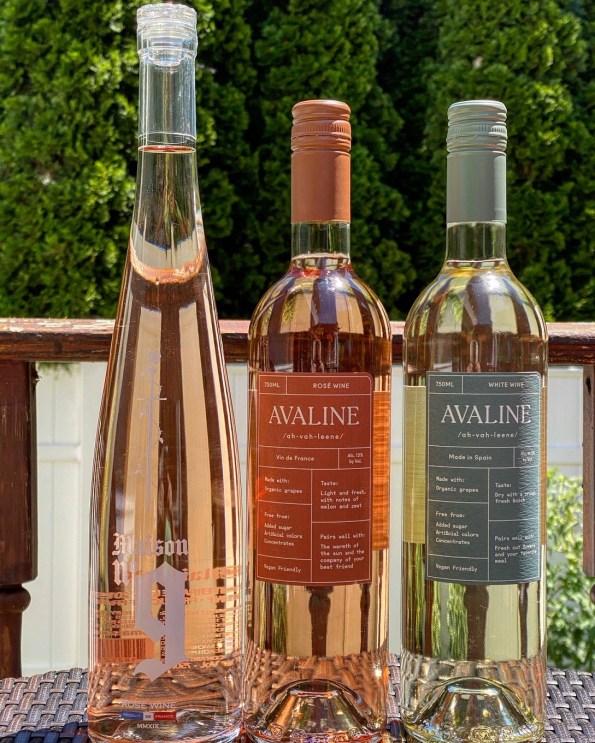
From that point of view, Maison No 9 represents a mixed bag. When it comes to the wine – it is superb. 2019 Maison No 9 Rosé Méditerranée IGT (12.5% ABV, $24, blend of Grenache, Merlot, Cinsault, Syrah) has a beautiful light pink color, has a nose of fresh strawberries with a touch of lemon, and bursts in your mouth with fresh strawberries and lemon, perfect minerality and raw, vibrant energy – all scrumptiously balanced (Drinkability: 8+). I love the bottle, it definitely stands out with an engraved front label depicting the sword and the rose. However, the problems start as soon as you try to dig deeper.
The website of Maison No 9 has no information about the wine, the vineyards, or the winemaker. All pictures on the web site feature Post Malone, and the only purpose of the website is to make sure you will buy something – either merchandise (T-shirt? Would it make wine taste better?), or the wine. This is in stark contrast with Miraval website, for example – Miraval is clearly a celebrity wine project (Angelina Jolie and Brad Pitt) – where it is all about the land, terroir, and wine. Website or not, but my problem is that the only place with any information about the Maison No 9 wine was this Forbes article. That is where I learned the story behind this wine, or that the wine was made by a well known French winemaker Alexis Cornu, or that the “new wine is named Maison No. 9, a reference to the Nine of Swords tarot card” (by the way, I searched the meaning of Nine of Swords tarot card and seems to be nothing good, but I’m not going to talk about things I have no idea about). So the bottom line here is that the wine is good, but the whole story is lacking. Does it worth $24? If this is your budget for Rosé, yes, but if not – you got options.
The Maison No 9 story, while almost non-existent, is still perfect compared to our next two wines, Avaline, which come with quite a story – and not really a good one. Avaline, which I believe means “bird” in Latin, is a product of the imagination of two long time friends, Cameron Diaz, a famous actress, and Katherine Power, a well-known entrepreneur. The duo decided to come up with a concept of a “clean wine” to advertise their creation, and this was a grave mistake, as it made the professional wine world fuming.
I’m not going to regurgitate any of the articles – just go search “clean wine Avaline”, you will find plenty of “critical acclaim”. The problem with using terms such as “clean wine” is that as soon as you designate your wine to be “clean”, you automatically imply that all other wines are “dirty” because no other wines advertise themselves as “clean”. When someone says on the label “Free from added sugars, artificial colors, concentrates”, I can’t keep my eyebrow from going up as my immediate reaction is “huh”? Really? I can’t speak with confidence about Two Buck Chuck, but I have serious doubts that they use any of these said additives. I don’t know who was advising Avaline on the wine marketing, but to me, this is a complete failure. Forget “clean wine” – another serious problem I have with these wines is that there is no information whatsoever about the wines – who made them, where the wines were made, from what grapes… yes, Wine.com, which sells both wines, has information on the grape composition. But then the white wine is designated as “Product of Spain” – another “huh?” from me as I never saw another wine with such designation, and the Rosé is identified as Vin de France. Another interesting element here (strategy????) is that both wines don’t list the vintage. So when you come to buy the wine in the store, you have no idea for how long the wine was sitting on that shelf… Nice…
So how were the wines? Both wines were actually quite tasty: NV Avaline White Wine Spain (11.5% ABV, $24, blend of Xarel·lo, Macabeo, Malvasia) – white stone fruit on the nose, nicely restrained, fresh flowers, a touch of minerality. Fresh ripe plums, sage, Meyer lemon, clean acidity, medium-long finish (Drinkability: 8, nicely done). NV Avaline Rosé Vin de France (13% ABV, $24, blend of Cinsault, Grenache, Cabernet Sauvignon, Syrah, Caladoc) – gentle pink color, a hint of sweet ripe strawberries, nicely restrained, candied strawberries and strawberry jam on the palate, good acidity, good balance, not over the top. Short finish, easy to drink (Drinkability: 8-).
While the Avaline are tasty wines, I see a serious problem here, outside of any “clean/dirty” concepts. You are asked to pay $24 for the wines of unknown pedigree, unknown vintage, made by someone somewhere, with a clean (pun intended), but a seriously unattractive label. I can splurge $5 on such a wine if I will get a recommendation – I guarantee you I will pass a wine like that if I will just see it on the shelf.
Here you go, my friends – 3 celebrity wine for your attention. All three are well drinkable, but you seek them at your own peril. Cheers!
Winemaking: A Step by Step Guide
Today I would like to offer you a guest post by William Reed, who is a passionate winemaker that continues his family’s the age-old tradition of producing quality homemade wine. With respect to
heritage and classic concepts as well as a zesty touch of the modern, William continues to explore the vast world of winemaking all while sharing his thoughts, ideas, and processes on his own personal website at myhomewine.com.
Winemaking or vinification is the process of making wine, from start to finish, which ends up having a lot of detailed steps you should know, so are you ready to begin this long but incredibly rewarding journey?
Some people say it’s easy to make wine but making good and fruity ones is only for the experts – well that’s not entirely true as we’ll see below. Summed up, the major steps on how to make wine are the selection of grapes, their fermentation to alcohol, and, lastly, the bottling. You can make all types of wine but the most common ones are red wine, white wine, or rosé, and even though they are pretty different between, their process is very similar.
Wine has been produced for thousands of years, being almost considered as an art, having an important role in religion and there is even a science that studies wine and winemaking, called oenology. Generally speaking, wine is an alcoholic drink made from fermented grapes with 5.5 – 15.5% alcohol and is a cultural symbol of the European life, changing from a nutritional supplement to a food complimentary beverage, compatible with a good lifestyle. Drinking isn’t safe for everyone and doing it more than moderate amounts can lead to health problems, however, a study from 2018 proved that wine can have great benefits because it contains antioxidants and it promotes anti-inflammatory and lipid-improving effects.

The classification of this beverage can be done according to its origin, methods, vintage, or variety used. Practices can be different in each country and have varied over time to achieve progress. Wine-growing regions all over the world have been improving their conditions with technological innovations to have better hygiene and control over the production process, contributing to the creation of wines suited to the taste of consumers. In fact, global wine consumption has risen with the purpose to enjoy in moderation, as part of a modern, sustainable, and healthy lifestyle. You can also take a look at the following guide in case you want to learn how to make wine at home.


With that said, I will now present you with the process of winemaking, in a thorough but also easy to understand step by step manner:
1 – Choosing the Perfect Grapes
The first step of all is harvesting! It’s one of the crucial stages in this operation, and it’s really easy to understand why – the better grapes you have, the better the product will be!
The moment the grapes are picked from the vineyard will determine their sweetness, flavour, and acidic and tannin levels – now we know why it’s called science. Some of the tracked conditions are the weather, the time of harvest and even the way you pick them – hand picking or mechanical harvesting. Even though there is a lot to consider and to control when it comes to reaching a nice final product, don’t get too scared, as you’ll only reach perfection through trial and error.

2 – Crush!
Once you have the grapes picked up from the vineyard, it’s time to de-stem them and gently squeeze them to liberate their content. This process, in the past or in traditional smaller scale farms, is done by foot. Nowadays, and in bigger wineries, mechanical presses are used to turn grapes into must (pulp) in a much faster and efficient way. Some say this can affect grapes negatively but it’s a more sanitary crushing step and also helps the quality of the final result. Personally, I’d prefer the machines rather than drinking wine crushed by some random farmer’s feet!
What is tapped from the must depends on the type of wine you are making. If white wine is what you want, then the seeds, solids and skins are removed from the grape juice. On the other hand, if red wine is what you prefer, the seeds, solids and skins should stay along with grape juice to offer it more flavour and that beautiful red colour.


3 – Sugar into Alcohol: Fermentation
It’s true, the third step is fermentation and is quickly defined as a transformation from sugar into alcohol – it seems like magic, am I right? It only seems like it, because here is where this process is the longest and most complicated, as it determines the quality of the final result.
As you already know, the product obtained from crushing will ferment because of the present yeasts that transform the sugar, as an energy source, producing ethanol and carbon dioxide. This explains the primary fermentation, which is called alcoholic fermentation, and will last from 5 to 14 days, requiring a lot of careful control (if the goal is a high premium luxurious wine). The second one is called malolactic fermentation, lasts another 5 to 10 days and it characterizes the pH 3,8 of red wines and 3,55 of white wines. Pure science! Temperature, speed and level of oxygen are also extremely important considerations and must be optimized. This whole process can take weeks or even months.
4 – Clarification and Stabilization
After fermentation, it’s time for clarification! This is where pulp, proteins, dead yeast, and other unwanted residues, created during the chemical reactions, are removed from the juice that you can almost call wine at this point. Particles that are insoluble and float, can be filtered and the ones that are soluble but still undesirable, can be centrifuged. Both of these methods need to be optimized to obtain a clear, healthy and appropriate wine. Some natural winemakers don’t clarify because they believe that it diminishes the aroma, texture, and color, so they leave the particles and compounds in red wines for aging – I follow this school of thought.
At this point, you already know that wine can be claimed as a complex mixture built upon microorganisms, and that it can be unstable and reactive depending on the environment and the condition submitted. One of the techniques to stabilize it is cold stabilization and it consists of exposing the wine to low temperatures, close to freezing, for two weeks. The complexity of this whole step is amazing because it enables winemakers to deliver their individual appeal to each wine.


5 – Aging and Bottling
This is the final step but one that is very important in winemaking, because it’s the relocation of the wine into oak barrels (my preferred vessel), stainless steel tanks or bottles.
Wine aging can be defined as a group of reactions that changes the properties of wine and allows it to develop unique flavors over time. Premium wines need to pass through this maturation step to acquire some amazing characteristics like aroma, color, flavour, texture and mouthfeel. Other light and fruity wines don’t need aging and reach their quality peak in a shorter time.
The major considerations in bottling are what kind of bottle to use, type of closure (sealing), (maybe cork), and if you want to add gas or not (not recommended at all for beginners). There are also a lot of kits available for you if you want to experiment making wine at home in a small but very educational manner.

Enjoy it – with Moderation!
Here is every important and crucial step in the winemaking process and you can apply them at your own industry or even at home! Yes, you can make this fruity, incredible juice without leaving your house. If you’re not interested in making your own, you can think about this whole procedure when you’re enjoying it, remembering the magic behind and realizing the work put on it.
Winemaking can be difficult because there are a lot of conditions you need to optimize, starting from picking the grape, to the act of bottling the wine, to the temperature you apply and the cleanliness. Now we can agree that this is almost an art and you have to learn a little bit of science too! Don’t forget that drinking wine in moderation has positive benefits linked to some cardiovascular disease due to the amount of antioxidants, isn’t that great? Thank you for reading and let’s have a glass of wine!
Good When Young, Good With Age
It’s what you crave, people.
And right now, I’m craving Riesling.
Wine cravings are an interesting phenomenon. Or not. I guess food cravings work in exactly the same way. It appears to be all of a sudden, the desire for a certain food – french fries (oh wait, I always crave french fries), fried chicken, steak, scallops, lasagna, broccoli (really, you say? Yep, I can bet someone is craving broccoli right now). Is it really so unprovoked, so out of blue, or is it our subconscious at play here, collecting little cues here and there?
It is getting warm now, but that alone is not the reason to crave Riesling. But what if I read about other people enjoying the Riesling, with food and without – would that count as an invisible cue? I don’t know, but I can clearly imagine myself with a glass of cold Riesling in hand, don’t even need to close my eyes.
In the world of white wine, Riesling is unquestionably a part of “big three” – Chardonnay, Sauvignon Blanc, and Riesling. At the same time, if you think about typical wine store, Chardonnay and Sauvignon Blanc would take the prime real estate, the most central position on the shelves – and Riesling would be typically relegated to the far-most corner, with a little “Germany” sign next to it, or maybe in the “other whites” section. And it is a pity because scandalously delicious Riesling is produced practically everywhere – Alsace, Australia (Grosset would be an amazing example), New Zealand, Israel, California (how about some Smith-Madrone), Oregon (Brooks Rieslings are sublime), Washington (Chateau Ste. Michelle does an excellent job), and I’m not even talking about New York state or Niagara-on-the-Lake in Canada.
It is not only the hedonistic pleasure that the glass of well-made Riesling readily delivers on its own. Riesling is one of the most versatile food wines – it pairs well with a wide range of dishes and cuisines. And then Riesling has an ability to age not just well, but extremely well. Let’s bring back again the big three. Yes, you can age many of the Chardonnay wines, but rarely for 30, 40, 50 years – I’m sure there are some exceptions, probably in Burgundy, but still, this is not common. Sauvignon Blanc would fare even worse than Chardonnay. But well-made Riesling? 30 years will not be even the age – it will be still youthful and vibrant, with ease.
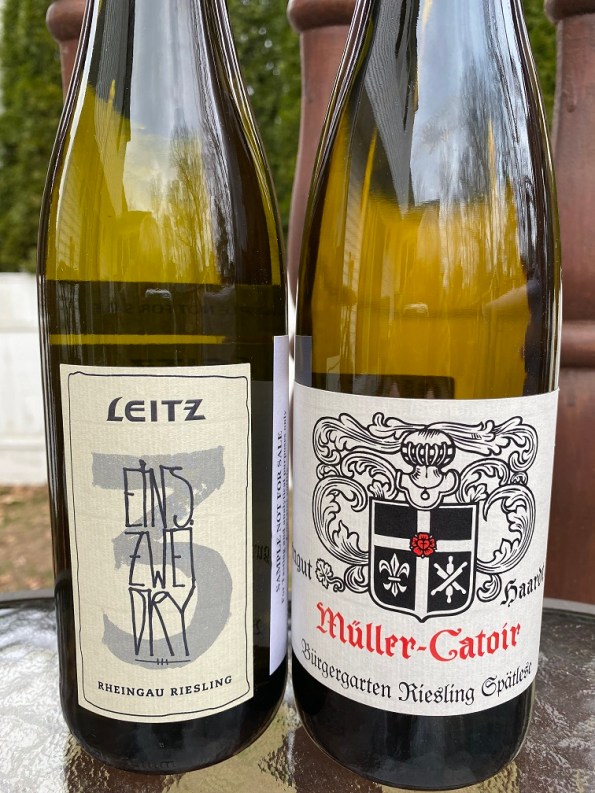
I didn’t have any 30 years old Rieslings recently, but I got two samples with 4 and 8 years of age, and both fared equally well – while even 8 years might be a stretch for many white wines. 2016 Leitz Eins-Zwei-Dry Riesling Trocken Rheingau (12% ABV) was produced by Weingut Leitz, where the family winemaking traditions go back to 1744; 2012 Müller-Catoir Bürgergarten Riesling Spätlese Pfalz (9% ABV) was produced at the Weingut Müller-Catoir which, interestingly enough, was also founded in 1744.
It is interesting that both wines were produced at the wineries with the 9th generation of winemakers (duh – the wineries were founded in the same year, I know). Both wines are pure Riesling wines, both come from the hillside vineyards with some unimaginable slopes. 2016 Riesling is designated as dry, and 2012 is a Spätlese-level, which means that the grapes had a higher sugar content when harvested.
I’m sure you wonder how were the wines? Well, yes, both were delicious. Both were a characteristic Riesling, with honey, honeysuckle, and a touch of lemon on the nose. Of course, Spätlese was sweeter, but not by much. And it is always the acidity which makes or breaks Riesling – both wines showed perfectly balancing, fresh, vibrant acidity. Bottom line – both were equally delicious and ready to be enjoyed on their own or support any food. As for the age… what age? I will be happy to try both in 10 (or 20) years – and I’m sure I would enjoy them very much.
What is your take on Riesling? Do you have any favorites wines or regions? Do tell! Cheers!
American Pleasures #4 – Gratus Vineyards
 Wine can be many things to many people. Wine can connect people. Wine can bring back memories. Wine can bring back a unique experience, change one’s mood, and help solve a problem.
The wine is also often an expression of gratitude.
Those of us who love wine also love to offer it to others as an expression of our gratitude. We take great care in carefully selecting the wine to express what we feel – it makes us ecstatic when the gift recipient acknowledges our choice.
And then there are those who make wine to express their gratitude – sometimes, they even call their winery to show that, as would be the case for GRATUS Vineyards.
Gratus is Latin for gratitude, and this is exactly what Thomas Wargovich was trying to express by naming his Napa Valley winery GRATUS Vineyards – gratitude to the family, gratitude to his grandparents who came to the USA as millions of others in search of the better life.

Source: GRATUS Vineyards
GRATUS Vineyards is a 27 acres parcel in Pope Valley, the small strip of land adjacent to the famed Howell Mountain. GRATUS Vineyards is not just a winery. While 10 acres are planted with vines, the rest of the parcel constitutes a complex nature habitat, an arboretum with more than 300 rare and endangered species of conifers, trees which bear cones, among other plants. It makes GRATUS Vineyards a unique place with its own soul and personality.
The first vintage at GRATUS Vineyards, 2012, consisted of 75 cases. Current production is about 600 cases, with the wines ranging from the Rhone varietals to the classic California Cabernet Sauvignon and blends. Red wines at GRATUS Vineyards are typically aged for about 22 months in oak.
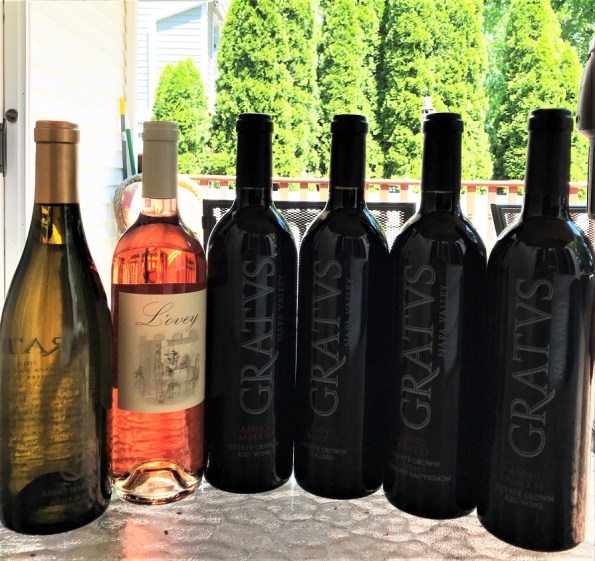
I had an opportunity to taste GRATUS Vineyards wines and was very much impressed with the consistency of the full range I was able to experience. Here are my notes:
2018 Gratus Vineyards White Blend Napa Valley (14.2% ABV, $39, blend of Grenache Blanc, Roussanne, Marsanne, Viognier, and Picpoul Blanc)
Light golden
Whitestone fruit, plums, a touch of lemon, refreshing and inviting
Round, medium-plus weight, noticeable texture, green apple, lemon, good acidity
8-/8, thought-provoking
2018 Gratus Vineyards L’ovey Rosé Napa Valley (14.2% ABV, $23)
Beautiful salmon pink
Light and refreshing strawberries, very inviting
Tart strawberries and cranberries on the palate, crisp, fresh, definitely a bigger body than Provence, and perfectly balanced.
8+, delicious.
2016 Gratus Vineyards Malbec Napa Valley (14.8% ABV, $70)
Dark garnet, practically black
Dark berries, mint, sweet basil, overripe plum
Dark berries, ripe blueberries, and blackberries, iodine, dark chocolate, medium-plus body, smooth, good acidity, good balance, medium finish
8, tasty now, will evolve.
8+ on the third day. The wine lost sweetness and developed dark magic
2015 Gratus Vineyards Red Blend Napa Valley (14.8% ABV, $90, blend of Cabernet Sauvignon, Malbec, and Petite Sirah)
Dark garnet, practically black
Dark chocolate, mocha, cherries, anise
Lip-smacking, cherries, coffee, eucalyptus, full-body, supple, generous.
8, excellent on the 2nd day. It definitely needs time, but has good potential.
2016 Gratus Vineyards Red Blend Napa Valley (14.8% ABV, $80, 80% Cabernet Sauvignon)
Dark garnet, practically black
Black currant, sweet tobacco, a touch of mint
Black currant, cherries, good minerality, fresh, firm structure, good acidity, excellent balance, medium finish.
8/8+, delicious.
2016 Gratus Vineyards Cabernet Sauvignon Reserve Napa Valley (14.8% ABV, $120, 100% Cabernet Sauvignon (clone 15))
Dark garnet, practically black
Day 1: not a lot to report. The wine is massive and closed.
Day 2 notes:
Vanilla, dark chocolate
Dark chocolate, big, brooding, pencil shavings, iodine
8-, an interesting contrast with day 1 – need to wait for the day 3
As you can see, most of the reds are in the “needs time” category, but this is pretty much a signature of the Napa Valley Cabernet Sauvignon and Cabernet Sauvignon-based wines. Hopefully, you got the patience, and the space int he cellar. Cheers!
Last Bottle Sign Up ($10 credit)





