Archive
Parent, Secret Power, Unsung Hero
You just read the title of this post. What do you think we will be talking about? Of course, it can be a story about a person who had all those great qualities – but this is the wine blog, right? Can all those qualities belong to a grape?
Let’s see. Parent – this is simple. When two grapes are crossed, they will give birth to the new grapes, and, of course, we can call both of the original grapes parents. Unsung hero? This is typically someone who can quietly come to the help of others and solve the big problem or save a life. Apart from saving a life, a grape can be very instrumental in assisting others to do their best, bringing out their best qualities while remaining literally unknown. For example, helping to make delicious wine as part of the blend. Now, the secret power? Every once in a while a person can be on a secret mission and save the world, all alone, “solo” – James Bond meets Wonder Woman, anyone? Okay, okay, I’m only talking about making delicious wines, all by itself, solo.
Now, as we are talking about the grape, can you think of one which would fit this description? There are thousands of grapes used in winemaking, so theoretically, there is more than one grape that will fit this profile, but I would dare to say that one grape might stand above others in all these roles. Know what I’m about to say? There is a good chance you do – you probably guessed it already – I’m talking about Cabernet Franc.
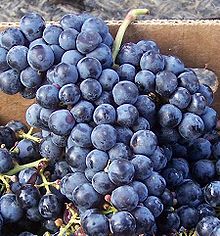
Cabernet Franc grapes, as shown in Wikipedia
It is hard to tell when Cabernet Franc became known as a grape variety. It is definitely old, probably not as old as Chardonnay, which can trace its history all the way to the 11th century, but still older than most other grapes. While Cabernet Franc is typically associated with Bordeaux and Loire, it appears that it originated from the Basque Country in Spain, from where it spread through the south of France and reached Bordeaux.
How Cabernet Franc is a Parent? Based on DNA research, Cabernet Franc was a parent of Cabernet Sauvignon, Merlot, and Carménère – a good group of kids, isn’t it?
How is it an unsung hero? Cabernet Franc ripens at least one week earlier than Cabernet Sauvignon. It can reach phenolic ripeness in the years when Cabernet Sauvignon will not, and thus in the blend, it will be a savior – this is why it was always so loved in Bordeaux, an insurance policy of sorts. While the tasting profile of Cabernet Franc is somewhat similar to Cabernet Sauvignon, it is typically softer and less tannic than its more famous offspring, so it makes the blend more approachable.
The Secret Power? When used in European wines, it is often unknown that the wine is made out of Cabernet Franc. For instance, Chateau Cheval Blanc, one of the most famous Bordeaux wines, is made predominantly out of the Cabernet Franc – but this is not widely known outside of the circle of wine aficionados. How about Olga Raffault Chinon? Chinon, a region in the Loire, is one of the best sources of delicious Cabernet Franc wines, but you have to simply know that. Coming to the new world, Cabernet Franc is not so secret anymore, as you can see it on the label, but I still can let you in on one little secret – this is one of the most versatile red grapes you can find. Talking about the United States, for instance, it is practically the only red grape which can consistently deliver delicious red wines both in California and in New York – and we don’t need to be so confined – Washington and Oregon are doing quite well with the Cabernet Franc, and so do Massachusets, New Jersey, and even Rhode Island. And let’s not forget Canada, where the grape goes beyond dry reds and offers some of the most stunning dessert wines – Cabernet Franc Ice Wine.
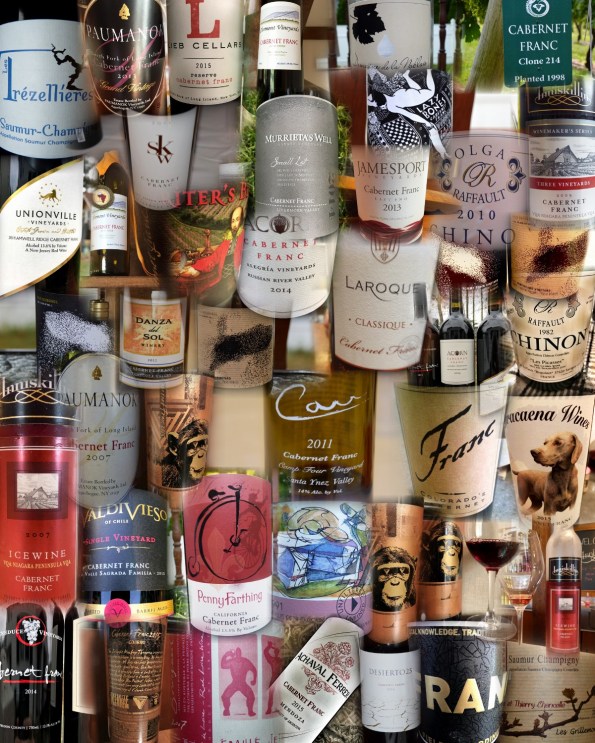
December 4th is when we celebrate this unique variety with the #CabFrancDay. The whole Cabernet Franc extravaganza is a product of the obsession of one person – Lori Budd, who singlehandedly started this grape holiday in 2015. Lori expresses her love for the grape not just by talking about it – she also makes her own Cabernet Franc wine in Paso Robles under the Dracaena Wines label. This year I was able to try the Dracaena Wines Cabernet Franc at the wine bloggers conference, and I can tell you that while I’m very particular about Cabernet Franc wines (prefer more old-world style than new), I really enjoyed Lori’s rendition.
Grape holidays are always fun – you have a good reason to open a special bottle that was stashed in the corner, and share your love for the grape with the world. Cabernet Franc’s celebration is important beyond that simple joy. Take a look at the Wikipedia article – it says that Cabernet Franc is “principally grown for blending with Cabernet Sauvignon and Merlot in the Bordeaux style, but can also be vinified alone”. The Vins de Bordeaux website says that Cabernet Franc “is the ultimate complimentary grape variety”. While this is true, Cabernet Franc is great for blending, this is also the grape which is excellent by itself, and we should recognize and acknowledge that, and change that perception of a “blending grape”.
This year, I had a great experience with beautiful Cabernet Franc wines from all over the world – 1982 Olga Raffault Chinon, Achaval-Ferrer Cabernet Franc from Argentina, Lieb Cabernet Franc from Long Island, New York, Dracaena Cabernet Franc from Paso Robles, and many others. But to celebrate Cabernet Franc Day in style, I had an opportunity to open 3 more wines especially for the holiday – for one, representing both coasts of the USA – and, surprisingly enough, representing both styles of Cabernet Franc, the old world and the new world.


2014 ACORN Alegría Vineyards Cabernet Franc Russian River Valley (12.5% ABV, $38, 93% Cabernet Franc, 2% Malbec, 2% Merlot, 2% Petit Verdot, 1% Cabernet Sauvignon and Tannat, 18 months in barrel) was uniquely Californian in style – in many ways. Alegría Vineyards are Certified Sustainable, which is really the way now for many vineyards in California, with a lot of manual labor-intensive effort going into helping grapes to achieve their best potential. All the wines ACORN produces are made as field blends, where different grapes are co-fermented together, according to the century-old field-blend vineyard traditions. The result was beautifully balanced, fruit-forward wine, boasting pure cassis flavors, supported by the medley of the red fruit and perfect acidity. The wine was clean and delicious.
Two more wines were a total surprise for me. These two Cabernet Franc wines were both made in New Jersey. I have very little experience with New Jersey wines, and that experience was not necessarily all positive, so yes, I didn’t have much expectation as I was pulling the corks, just a hope that the wines would be at least palatable.


While Unionville Vineyards were planted only in 1987 and the winery opened its doors to the public in 1993, the land where the vineyards a located was farmland even before the 1850s. As farmland, it went through many different plantings and such – peach orchard, apple orchard, dairy farm, grains, and horses – but returned to the fruits with the first grapevine plantings in 1987 – this is when the story of Unionville Vineyards started.


Beneduce Vineyards is located in the same Hunterdon County as Unionville Vineyards. Chardonnay, Riesling, and Gewurztraminer are the main white grape varieties at Beneduce Vineyards, and the list of reds includes Pinot Noir, Blaufränkisch and, of course, Cabernet Franc.
Thanksgiving Day Experiences
Thanksgiving is one of my most favorite holidays. It revolves around food. Before you beat me up, of course, it is about family, friends and lots and lots of good reason to be thankful – but still, the food is at the core of this family gathering. This makes me double-happy – I get to spend time with the family and cook my heart out – and let’s not forget the extra bonus – I have a reason to chose special wines.
Since this blog started, there was only one year when I didn’t post about Thanksgiving. Otherwise, I did my best to talk about food and wine experience of this special day, sometimes even with few posts on the subject (you can find those posts here). This year, I had two resolutions for my Thanksgiving dinner. First, it will be simple – which means no Turducken, for instance. Second, I will serve only an American wines – to be more precise, only the wines from California. As Napa and Sonoma greatly suffered from the recent fires, this was only logical to embrace Californian wines to support the people there.
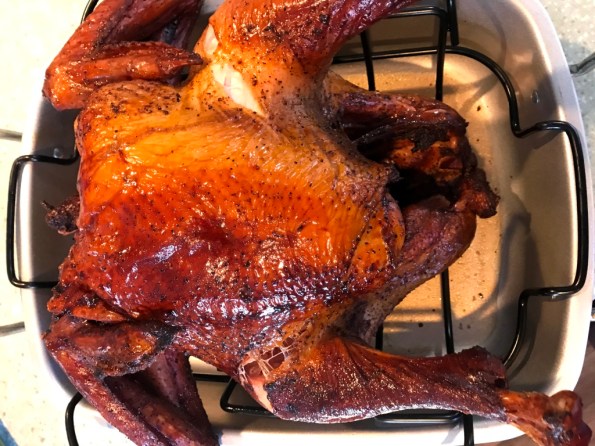
First, let me say a few words about the food. Turkey is a cornerstone of Thanksgiving – at the same time, it is hard to cook a whole turkey in really an exciting way. Over the years, we tried lots and lots of different recipes – with stuffing and without, turducken, smoked, deep fried, deboned… Some were definitely better than the others (turducken is typically a standout), and some of those preparations can be very laborious. Thus this year, I decided the smoked turkey is the way to go.
This was not a random decision – earlier this year I discovered so-called PBC (Pit Barrel Cooker), which I absolutely fell in love with. In the past, I had to spend literally a whole day, dancing around my simple smoker, trying to maintain the temperature and still ending up cooking all the food in the oven. PBC changed that dramatically – no need to precook ribs anymore, just start the fire, hang your piece of meat and come back in a few hours to enjoy. Based on all the prior success, smoking the turkey was simply a done deal.
This might be the simplest turkey I ever have done. Buy already brined turkey (many stores sell pre-brined turkey, which greatly simplifies your life), rub it generously with PBC All-purpose rub, start the fire and just hang it inside the PBC – you can estimate the cooking time based on the size, and of course, use the meat thermometer to make sure the turkey is cooked through.


Another dish I want to mention is the dessert. I got a recipe from a friend, many years ago – however, it was also a while since I made this dessert. I wanted to find a similar recipe online, just to use it as a reference – but failed. So here is the recipe without the usual ingredients and measurements, as here you can make everything approximately. Let’s call this dessert
Crepes Napoleon with Wine-poached Pears and Cranberry sauce
You will need the following:
- 4 firm pears, I recommend Anjou, carefully peeled, halved and cored
- 10-12 crepes (can be more, can be less, depending on how many layers do you want)
- 1 lb cranberry sauce (canned is fine, fresh is better)
- 1 bottle of port – you can use red wine too, but then you would need to add sugar.
- 1 cinnamon stick
- 1/4 teaspoon nutmeg
Put peeled, halved and cored pears into the large pot, cover it with wine, add cinnamon stick and nutmeg, and put it on the stove. Once liquid started boiling, reduce heat and let it simmer for about 30 minutes. Remove from heat, cover and let peras to cool off completely in the wine, preferably overnight (when cool enough, put the whole pot into the refrigerator). Next day, thinly slice pears and put aside. You can also reduce the wine for a later use – it is quite delicious.
You can buy crepes or you can make crepes. If you will decide to make them, Alton Brown has an excellent recipe – this is what I used.


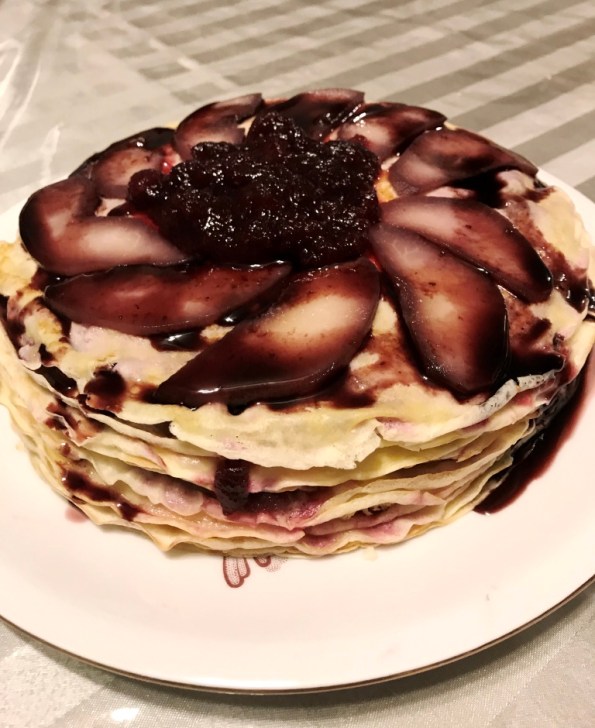
Once crepes are made and cooled off, you are ready to start making the Napoleon! Take a plate you will serve the dessert on. Put the first crepe on the bottom. Thinly spread cranberry sauce. Cover with another crepe. Now take slices of pear and put them around the crepe in a single layer. Cover with another crepe, spread cranberry sauce, cover, put pears and continue the process until you will be satisfied with the overall height of the Napoleon. I recommend a round of pear slices on top with cranberry sauce in the center, but of course, you can make your own decoration. Cover (plastic wrap will do) and put it in the cool place for the flavors to be absorbed into the crepes. Later on, slice and enjoy!
Time to talk wines!


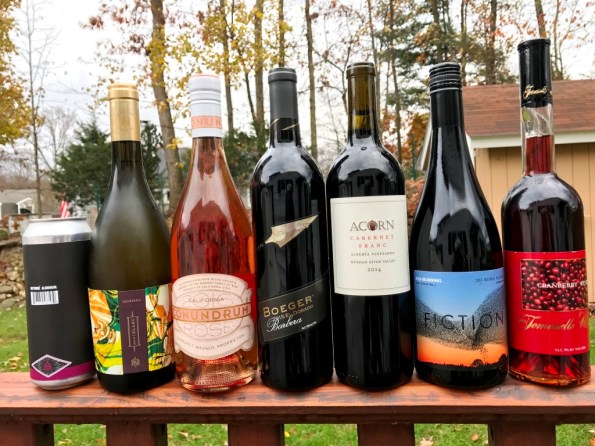
Holiday celebration should start with the sparkling, isn’t it? Finding tasty California sparkling wine is really not a problem. One of my favorite California producers, Field Recordings, offers an interesting selection of the sparkling wines, with most of them packaged in the cans (yes, cans). I had a can of NV Field Recordings Methodé Aluminum Edna Valley (11.9% ABV, 100% Pinot Noir), and it provided a perfect start for the evening – fresh, supple, with good body weight and a nice touch of a fresh bread – definitely was a crowd pleaser.
I wanted to have a full California wine experience, so next, we moved on to Rosé – 2016 Conundrum Rosé California (13.1% ABV). Truth be told, I’m not a fun of Wagner family wines – Conundrum, Meiomi, Caymus – doesn’t matter, they generally don’t work for my palate. So I threw in the bottle of this Conundrum Rosé simply because it was available – I thought we will open it, taste it and move on. Boy, was I wrong. This wine had beautiful strawberries all the way on the nose and the palate, supported by tons of herbs – lavender, mint, basil. Perfect mouthfeel with very good presence, but not overwhelming and with good acidity – this wine was enjoyed to the fullest.
We drink with our eyes first – thus the label on the 2014 Durant and Booth Blanc California (14.6% ABV, $36, blend of Chardonnay, Grenache Blanc, Ribolla Gialla, Roussanne, Greco di Tufo) was extremely drinkable and very promising (the label represents the art technique called water marbling – you can read more here if you are as intrigued as I was). I brought this wine from California after attending Wine Bloggers Conference 2017, where this wine was presented to us at the Napa Valley Vintners lunch – I plan to write a separate post about this event).
As you can tell, this wine is made from quite a few grapes, and I’m typically a bit concerned if the chorus will sing harmoniously. Oh yes, it was – starting from the beautiful touch of butter and vanilla on the nose and the palate, then immediately offering silky plumpness of Roussanne with a gentle touch of butter and tropical fruit on the palate – this delicious wine was gone in no time.


Next, it was the time to move on to the red wines. We started with 2014 Acorn Alegria Vineyards Cabernet Franc Russian River Valley (12.5% ABV, $38, 93% Cabernet Franc, 2% Malbec, 2% Merlot, 2% Petite Verdot, 1% Cabernet Sauvignon and Tannat). All Acorn wines are made from a co-fermented blend of grape varieties which are growing at Acorn’s Alegria Vineyard. This Cabernet Franc had a beautiful open nose with a touch of mint and cassis – the same continued on the palate with more cassis in a smooth, round package, supported by some herbal notes and perfect acidity. It was unmistakably Cabernet Franc, but also unmistakably California Cab Franc, without much of the green bell pepper presence and fruit dominant, but perfectly balanced.
Our last red was coming from the California region I was not really familiar with until now – El Dorado County (it is not only gold you find there, yep). 2015 Boeger Barbera El Dorado (15% ABV) was another wine I brought back from California after the same wine bloggers conference. I tried few of the El Dorado wines at the conference and was not very impressed, so I looked at it as an interesting experiment. Another score! This wine was dense and brooding, with tar and tobacco on the nose, and surprisingly polished dark fruit on the palate with sweet tobacco undertones. To make things even more interesting, I can tell you that we didn’t finish the wine during dinner, so I pumped the air out using the usual Vacuvin, and put the bottle aside almost for 10 days. After 10 days, the wine was still perfectly fresh and enjoyable, which makes me wonder how long this wine can actually age.
Time to finish our Thanksgiving dinner with the dessert. As our planned dessert had cranberry sauce in it, I decided to go with Cranberry wine for dessert. Tomasello Cranberry Wine New Jersey (9% ABV) was a perfect pick for it – good acidity, tart cranberry profile, it played perfectly with our dessert – while the wine was not from California, it still provided a perfect finish for our celebration.
Here we are, my friends. How was your Thanksgiving? Did you enjoy more the turkey, the wines or the company? Cheers!
Environments of Wine
We all love to wax-poetic about the wine – about the magic in the glass, about the liquid which can transport us through time, bring back memories, change our mood, brighten up any happy moments in our life and put smiles on our collective oenophile faces in the myriad of mysterious ways.
With all that magic, it is easy to forget that first and foremost, the wine is an agricultural product. The grapes are grown in exactly same way as tomatoes, cucumbers, cabbage, wheat, apples, and potatoes. Same as with any agricultural product, the success of growing the grapes depends on many conditions which we collectively call “the environment” – condition of the soil, conditions of the plants, climate/weather conditions, availability and quality of the water, avoidance of diseases and pests, ability to protect plants and fruits from animals and birds and many other factors.

Once the grapes are successfully grown and harvested, this is where similarities with most (not all) of the rest of the agricultural products end, and grapes start their transformation to become that magic in your glass. But let’s leave that aside for now, and let’s get back to the grape growing environment.
Every year, the same process starts anew – with the first warm weather, the dormant plants come alive. The branches which looked completely dead just a day ago, are breaking with the tiny green leaves, and then at some point, a tiny clusters of future goodness show up, taking all the nutrients from the soil and the air, getting bigger and changing color from young green to golden and purple, until the time comes to collect them all and start creating the magic.
Every year, to get from the naked branches to the beautiful, sun-filled clusters, the vines have to be taken care of. They need enough water, they need enough sun, they need enough nutrients in the soil, they need to be protected from frost, excessive sun, mildew, and rabbits. The grape grower has to decide how to provide all of this. You can water the plants when you think you need to. You can bring in synthetic fertilizers. You can spray your vines with pesticides which will kill bugs and mildew. For many years, this is how the grapes were often produced, especially when they were produced in the large commercial quantities.
Little by little, grower by grower, winemaker by winemaker, the realization started that this might not be the right way to go. The chemicals and pesticides often bred resistance. Overfertilized and overwatered grapes simply lack the flavor and can never become the magnificent wines. With this realization, wine industry started changing its ways – the wines became “organic”, “biodynamic”, “sustainable” and even “natural”. All of these terms relate to the environment where the grapes are grown, but they are not interchangeable – organic is not always sustainable, and sustainable doesn’t equate organic. Let’s take a deeper look.
Sustainable might be my favorite term. There are many wine regions which define their own so-called “sustainable practices” – Australia, New Zealand, California, Oregon, Canada – all have their own sustainable practices defined, and for all I know, all those practices might be slightly different, but I’m sure they are all pursue the long-term relationship with the Mother Nature. Sustainability means that whatever we do to grow grapes successfully today, should ensure that the future generations will be able to continue to do the same with equal success. While we tend to the vines, we shouldn’t harm that environment, that habitat – use natural deterrents for the pests, use only natural fertilizers, ideally, generate our own power (think solar, for instance), be very cognizant about discarding the waste, or maybe have no waste at all, allowing land to rest and recuperate – the list can go on and on and on. At the same time, sustainable doesn’t mean organic – for instance, if you believe that one time use of the pesticide is warranted as the best way to deal with the problem (before it spreads or worsens), the sustainable rules will generally allow for it – but not the organic. All in all, the goal of sustainability is to leave the environment a little bit better than it was before – and I definitely like this approach.
We all know what “organic” means – only all natural elements are allowed in the whole entire process of getting from the first leaf to the harvested grapes – all organic fertilizers, all organic pesticides and so on. Do organic means better grapes? Yes, but only in the sense of absence of any harmful, bad elements. Organic doesn’t necessarily mean you would maximize grapes’ potential by utilizing dry farming. Organic doesn’t mean you will discard the waste in the ways least harmful to the environment. Organic doesn’t mean your power was generated in the sustainable ways. Don’t get me wrong – I’m all for organic, but… I guess you understand where my preferences are.
Biodynamic? First, taking about biodynamic winemaking can be an endless endeavor – if we are talking about the magic of the glass of wine, biodynamic principles might be the most in tune with the subject of magic. Are the biodynamic methods sustainable? I believe they are to the largest degree as the end goal here is to create harmonious habitat, the best possible environment for the grapes and all other living beings to grow happily and successfully. Is biodynamic the same as sustainable? Probably not, as sustainable methods still cover more elements, such as power which we mentioned. But all the kudos to the biodynamic practitioners and their perseverance with magic.
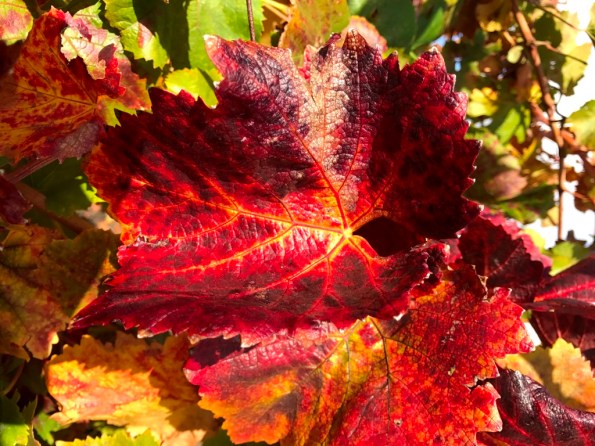
And now, let’s touch on the most controversial “environmental affiliation” of them all – natural wines. It is interesting to see the first reaction of many people when they hear the term for the first time – “natural wines”???? “All wines are made from the grapes, aren’t they all natural”? The idea behind natural wines is low intervention. During the grape growing part of winemaking, the process is somewhat similar to the sustained/biodynamic principals with the exception that some of the rules are made absolute, like no irrigation under any circumstances – but unlike all other methods, where there are external bodies which certify and enforce the rules, the natural wines are the truth in the eye of the beholder – the winemaker, in this case – whatever the winemaker believe “natural” means, that is what she will be practicing.
The wine was first made about 8,000 years ago. Nobody would ever tell if it was sustainable, organic, biodynamic or natural – we can only guess that it was made from grapes. But if we want the wines to be made for the next 8,000 years, we need to take care of the environment. Sustainable, organic, biodynamic – let’s leave this place a little bit better than we found it, for all of those who will come after us.
This post is an entry for the 36th Monthly Wine Writing Challenge (#MWWC36), with the theme of “Environment”. Previous themes in the order of appearance were: Transportation, Trouble, Possession, Oops, Feast, Mystery, Devotion, Luck, Fear, Value, Friend, Local, Serendipity, Tradition, Success, Finish, Epiphany, Crisis, Choice, Variety, Pairing, Second Chance, New, Pleasure, Travel, Solitude, Bubbles, Smile, Winestory, Obscure, Faith, Translation, Once Upon A Time, Memory, Eclipse
And if you really like this post, please vote for it here: #MWWC36
Behind The Label
We eat with our eyes first – everybody knows that. We drink in exactly same way. While looking for the wine to buy, we always start from the label. Of course, sometimes we might be looking just for the specific producer’s name – but way more often than not, wine consumer is lured by the appearance of the bottle before anything else. We let the bottle speak to us.
Wine producers always knew the effect of the bottle appearance, and always tried to design attractive and appealing labels – think about Château Mouton Rothschild, for example, which started their “Artist” wine label series back in 1945. 20-25 years ago, the design, and most importantly, production capabilities were limited both in style and the cost. But not today- there are literally no limits to how creative the wine bottle design can get in today’s world. It is hard to tell what exactly makes the wine label instantly attractive, but we all can recognize that special label when we see it. I shared my fascination with the creativity of the wine labels on the multiple occasions in this blog – here is one example for you.
You don’t have to agree with me, but I see creative wine labels as objects of art. Art at large is a form of the human expression. Art takes lots and lots of different forms – beautiful building, successful surgery, a sublime glass of wine, a flower, a painting. I’m sure there are countless studies written on the subject, and I will not even try for the slightest bit to delve into it, but I’m convinced that art as a final expression always has its source, the origin, it is inspired – and this leads to the fundamental question – what inspires the art? I will leave you to ponder at that, and meanwhile, let me turn our conversation towards the … wine, of course.
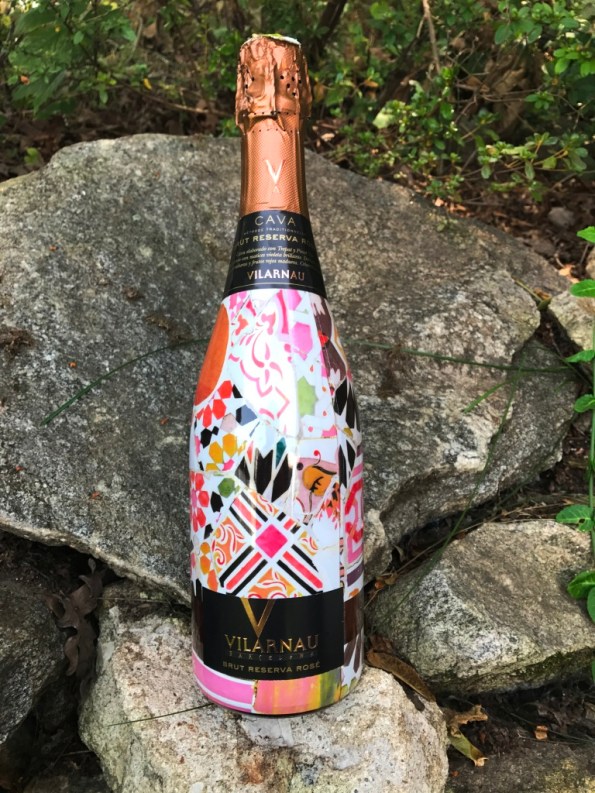 When I saw the label of Vilarnau Brut Reserva Rosé, my first reaction was “wow, this is a beautiful bottle”. The next question was – what does it mean? Yes, I read the description connecting Vilarnau Trencadís Edition cavas to the work of famous architect Antoni Gaudí, but I still wanted to understand the true inspiration behind this label. I reached out to the winery, and asked a few questions – here is our short conversation:
[TaV]: Vilarnau produces Cava since 1949. When Trencadís labels were used on Vilarnau Cava for the first time?
[V]: We launched the Trencadis labels at the end of 2014.
[TaV]: What was the inspiration behind the Trencadís labels?
[V]: This form of mosaic is very famous in Catalunya, Spain. Inspired by the Park Guëll in Barcelona and the famous artist Gaudí. Vilarnau is the “Barcelona Cava” and we felt it was fitting to use such an iconic design to decorate the bottles.
‘Trencadís’ is a type of mosaic used in Catalan modernism, created from broken tile shards. The technique is also called ‘pique assiette’. The mosaic is done using broken pieces of ceramic, like tiles and dinnerware. The Catalan architects Antoni Gaudí and Josep Maria Pujol used trencadís in many projects, among which Barcelona’s Parc Güell is probably the most famous. Vilarnau being so close to Barcelona (not only geographically, but also with heart and soul), it was natural to pick up this typical artistic theme for our winery.
[TaV]: Are the Trencadís Cava target the specific market, or do they sell equally well world-wide?
[V:]: We are currently exporting this label to almost 30 markets (principle markets being the USA, UK, Germany, and Belgium) and the number is growing as consumers love the design and the wine.


[TaV]: Do you have plans to add any new wines to the Trencadís series?
[V]: When we first launched we only had the Brut Reserva NV in the trencadis design but we have added the Rosado Reserva to the range two years and the Brut Nature Vintage and Demi-Sec last year
[TaV]; Do you have plans for any other “creative label” designs under Vilarnau name?
[V]: Barcelona is a constant inspiration to us and we are full of ideas, however, we have so much to do with the Trencadis design that we probably won’t launch anything new for the next 2 years or so.
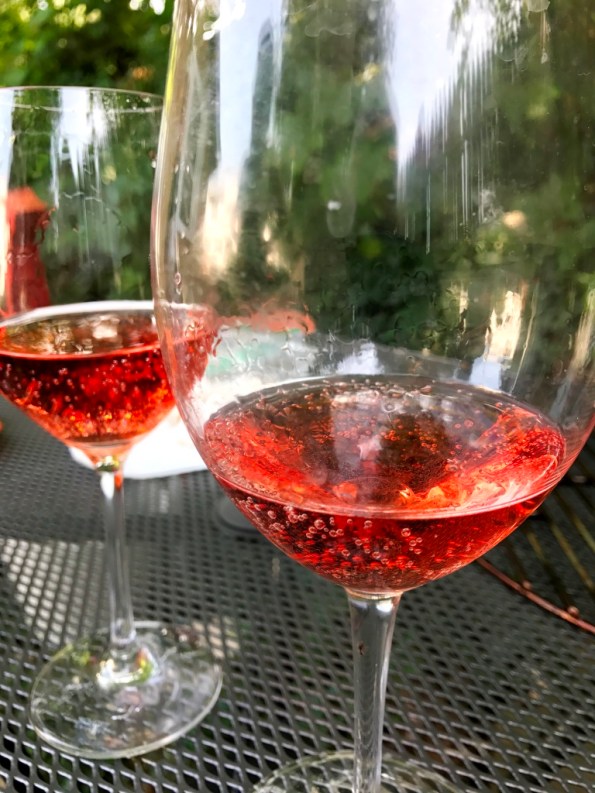
The beautiful label is very important, it sets the expectations and makes you anticipate more from the wine. But – the content of the bottle is better to support the beauty of the label, or the joy of wine drinking will quickly dissipate.
I’m happy to say that the NV Vilarnau Brut Reserva Trencadís Edition Rosé D.O. Cava (12% ABV, SRP: $15, 90% Trepat and 10% Pinot Noir, 15+ month in the bottle) didn’t disappoint. Beautiful intense pink color, classic Sparkling nose, with a touch of yeast and toasted bread on the nose, supported by fresh tart strawberries and lemon notes on the palate, crisp, succulent and invigorating. A perfect sparkling wine by itself, and at a price – almost an unbeatable value. (Drinkability: 8-/8).
What do you think of Art of the [wine] Labels? Do you have some favorites? Cheers!
Guest Post: 5 Wonderful Reasons Why Should Go a Culinary and Wine Vacation for Your Next Travel Getaway
Today I want to offer to your attention a guest post by Lystia Putranto, a personal & professional development blogger for BookCulinaryVacations.com. Lystia is a lover of travel, a self-professed foodie, and an amateur cook who admittedly spends way too much time surfing the web.
As the last quarter of the year is around the corner, many of us are taking advantage of this time to plan our next great adventure. If you happen to be a food and wine lover and you’re on the hunt for travel ideas, there’s no better way to indulge in your passions than by going on a culinary and wine focused vacation!
For starters, did you know that by 2015, 77% of leisure travelers can already be classified as culinary travelers? This trend has continued to rise and is predicted to rise even higher in the coming year. So, if you have yet to join in this exciting (and not to mention delectable) bandwagon, it’s about time that you do so.
As a lover of travel, food, and wine, I can personally attest that there’s much to gain and experience through this unique type of holidays. But if you’re not yet convinced, on this post, I’m sharing with you five of the many wonderful reasons why you should sign up for a culinary vacation too:
1. You’ll Discover New & Exciting Flavors

In order to truly make the most of our travels, keep in mind that we can only grow and enrich our lives by doing something we have yet to try. So instead of setting yourself up for yet another touristy sight-seeing trip, why not try (and taste) something different for a change?
With a new destination comes plenty of delicious local eats & drinks. Through culinary holidays, you’ll get an amazing opportunity to explore a variety of new and exciting flavors through its delicacies and locally produced beverages – and yes, in many sought after destinations such as France, South Africa, Chile, and California, this certainly includes a whole lot of wine!
As you already know, food is almost always much more delicious and authentic when we enjoy it in the country or place of origin. You’d also be interested to know that some local dishes and ingredients are extremely rare and would not be easily found anywhere else in the world so this the time to take full advantage of it.
2. You’ll Expand Your Knowledge

Looking to deepen your culinary and/or wine knowledge? During a wine vacation, for example, you won’t only be tasting the various wine that the winery produces, you’ll get to learn all about wine far beyond what you would learn in a wine tasting event such as how to harvest grapes as well as the steps of the entire wine production right up to its bottling process.
3. You’ll Learn How to Prepare Authentic Delicacies

Image credit: Alila Manggis Bali
What makes culinary vacations stand out from the usual “run-of-the-mill” vacations or food tours is that you also get the opportunity to prepare them from scratch yourself! This way, you can learn to recreate them back home. That is the simple yet powerful beauty of a hands-on cooking experience.
As a self-professed foodie, I adore all type of cuisines – but I must admit that Thai food is amongst my top 3 favorites. So, on my last trip to Thailand, I decided to sign up for a cooking class in Bangkok to learn how to prepare authentic Thai dishes such as Tom Yum Goong and Pad Thai.
In the end, not only did I thoroughly enjoyed the experience, thanks to the warm guidance of the school’s professional instructors, I was also genuinely impressed how fun and easy it all was!
As an added bonus, some cooking vacations may include visits to the local markets where you get to purchase the ingredients for your meal or even pick your own fresh produce straight from their own farm. In this case, it’s not uncommon that everything you make is farm-to-table ready, making your holiday that much more special.
4. You’ll Make New Friends

Image credit: Porto Club Travel Services
Whether you prefer traveling solo, with a partner or in a group, through a cooking vacation, you are bound to meet plenty of new people. This includes both locals as well as other travelers from all corners of the globe. This is your chance to cultivate a better understanding of the diverse culture and languages of the world. Who knows? Perhaps some of the people you meet on your trip may just end up becoming (new) lifelong friends!
5. You’ll Immerse Yourself in the Local Culture

Image credit: Cris Puscas
They say that travel is the only thing that one can buy that makes us richer. I personally believe this to be true. It allows us to learn more about what our beautiful world has to offer. And there’s no better group of people that will be able to teach us a destination’s local culture than the locals themselves.
Culinary travel allows you to center your trip on cultural immersion – meeting the locals, sampling local cuisines and beverages, and indulging yourself in the local ways of life. It’s an experience that will not only tantalize your taste buds but also one that will open your eyes and mind to a whole new perspective of seeing the world.
Drink Local, Colorado Edition (and Don’t Lose Hope)
I’m an eternal optimist. Even when I’m worrying about something, deep inside, I still believe that everything will be okay – one way or the other (sometimes we really have to look for this “okay”, but this is a subject for the whole other post).
This “life’s attitude”, of course, reflects on my approach to wines. Particularly, a belief that in today’s world, good wines can be made everywhere and anywhere – not only in a few places we know can produce the good wines. And anywhere I travel, I’m always looking to prove myself right – which I call “drink local”.
This time, my travel took me to Denver, Colorado. Colorado sounds as good as any other state in the US to be able to produce wines, so once I situated at my hotel in downtown of Denver, off I went to the closest liquor store in Denver.
While walking to the store, literally few steps before it, I saw a sign for the “Wild Women Winery” – I couldn’t even believe my luck, to find a city winery short walking distance from the hotel, also with a very cool sounding name. So I walked in and situated at a bar table, looking at the bottles with super-creative, super-colorful labels.
Talking to the bartender, I learned that while the winery is located in the Colorado (downtown Denver, to be precise), they make wines from the grape juice which they get from California Central Valley, as the winemaker believes that local Colorado grapes are too young to produce a good wine. Fine – the proof is always in the glass, right?
I decided to try 3 wines for $5 (happened to be an extremely wise decision, as opposed to trying 7 for $10, you will understand why in a minute).


The first wine was Viognier – a touch of overripe Apple with sage on the nose. Good fruity palate nice acidity, golden delicious apples. Not my favorite, but not bad. Not amazing, but drinkable.
My next choice was Cab/Merlot blend and that wine really threw me off – too sweet all around, no balance, no acidity, just a sweet fruit. Don’t remember when was the last time I disliked the wine so intently.
At that point I realized that all of the wines the winery offers are non-vintage wines, so I tried to discuss it with the bartender, but unfortunately, she didn’t know what “vintage” means, and I had to face the issue that certain basic concepts we, oenophiles, take for granted, are not so easy to explain in the simple terms. Nevermind.
The last wine, Petite Sirah, had a sweet chocolate nose, bitter-sweet type. Sweet fruit compote on the palate, definitely too sweet, but more acidity than the previous wine. Mostly plum notes with the equivalent acidity of just ripe, but not overripe plum. A marginal improvement.
This visit really left me at the feeling of deep disconcert – I see a lot of passion on the labels, but the soulless concoctions inside the bottles were really conflicting with the bright images.
I gladly left the winery and headed over to the liquor store. Here I had another surprise – a sticker shock. I understand that the wine store is located in the downtown of Denver. But Colorado wines aren’t that well-known, aren’t they? There was a good selection of the local Colorado wines present, none of them cheaper than $20 (okay, $19.99 if it makes you feel any better). Really? On my recent trip to Canada, I had a phenomenal selection of tasty wines under $15. Now, especially after the first tasting fiasco, I had to spend $20+ for a bottle which I might just have to pour down the drain?


After going back and forth and trying (unsuccessfully) to obtain an advice of the store clerk (”I tasted only this one wine”, “yeah, yeah”, “huh, you don’t like sweet wines? Really?”), I settled on the bottle which looked the most Colorado-authentic while still staying in the low $20s- Two Rivers Syrah – at least the information on the back label suggested that the grapes were harvested in Colorado.


The wine was definitely an upgrade over the previous experience, but still no cigars. As this was nevertheless a better wine, here are my typical-style notes:
2015 Two Rivers Château Deux Fleuves Vineyards Syrah Mesa County, Colorado (14.1% ABV, $22.95)
C: dark garnet, nice visible legs
N: blackberries, tar, tobacco, sage, medium to high intensity
P: sweet berries, tobacco, good acidity
V: 7-, it is drinkable, but sweetness too prevalent.
7 on my the second day – sweetness subsided a bit, and roasted meat notes showed up. Still, the finish is mostly sweet fruit with a touch of tobacco.
On the last day before leaving Denver, I still had a bit of the free time and decided to give Colorado wines one more try. I found another wine store, still within short walking distance from the hotel, with good reviews on Google, and took 20 minutes walk. This store had a much smaller selection of Colorado wines, but a little bit better prices (by a few dollars, nothing major), and incomparably better, knowledgeable service. I left with the bottle of The Infinite Monkey Theorem Cabernet Franc – The Infinite Monkey Theorem is another city winery – but unlike Wile Women Winery, this one I would be happy to visit if I had more time.


Remember I told you about eternal optimism? It finally worked, as this Cabernet Franc was well worth of writing home about:
2015 The Infinite Monkey Theorem Cabernet Franc, Colorado (12.9% ABV, $21)
C: dark ruby
N: tobacco, sweet bell peppers, freshly crushed blackberries
P: bright, fresh, freshly crushed berries, intense sweet tobacco, a touch of pepper, clean acidity, vibrant.
V: 8, outstanding. Would gladly drink that every day.
There you have it, my friends – my first real encounter with Colorado wines. I was happy to prove myself right and find a good wine made in Colorado. As a collector of experiences, I was also happy to add another checkmark to the list of states I tried the wines from – if you are like me, feel free to compare your records 🙂 Have you had the wines from Colorado? Express yourself in the comments section below. Cheers!
Pleasures of Drinking Local
I love travel -seeing the world, different cultures, different people, different traditions, and, of course, different food and drinks. Food is given, as we all have to eat, so one way or the other we get to experience local cuisine. But then what I drink is also very important to me, with the same spirit of exploration.
I love drinking local. And, of course, when I say “drinking”, I primarily mean wine. When travel, I always make an effort to find and try local wines. Unknown and obscure? Perfect – the less I know about the wine, the more pleasure it brings. Drinking local wines doesn’t mean I have to visit the wineries. More often than not, my trips don’t include any spare time and any facilities to reach the wineries. But – in many places, and I would even say, in increasingly more places, you can still find local wine at local shops, as long as you willing to look for it.
It is, of course, the best when you are visiting places where the wine is part of the culture, like most countries in Europe (sorry, never been to Latin America or Australia, but somehow I think I would do fine there as well). If the wine is a part of the culture and tradition, it almost guarantees you authentic wine experiences – and what is very important – without breaking the bank. In the USA, for instance, the wine is still a part of the fashion and not part of the tradition, thus in USA, finding reasonably priced wines is extremely difficult, and finding locally produced and reasonably priced wines is simply a mission impossible. Wait, I didn’t mean for this post to be a rant, so let me get back on track.
This time around, my travel took me to Prague, the capital of the Czech Republic. I’m sure for many (most?) of people, as soon as they will hear “Czech Republic”, the very next image of the local drink is – of course – a beer. This makes perfect sense, as Czechs are internationally known for their beer, same as Germany or Belgium, and rightfully so. But – what most of the people don’t know is that Czechs also had been making wines almost forever – okay, starting from approximately the 2nd century – long enough? Czech wine never made it to the levels of fame of French or Italian wines – but that doesn’t decrease the pleasure of drinking Czech wines in any way.
I discovered Czech wines for myself last year, when I had delicious Pinot Noir and Pinot Gris ( you can read about it here). Thus I had no doubts that Czech wine is something I’m going to look for upon arrival.
The hotel I’m staying at is adjacent to the shopping mall, which includes a supermarket, a wine store and some other food stores, all of them selling wines. And mind you – at the prices which make you smile from ear to ear. So far I got the wines from the supermarket, and you will see the prices I paid in the descriptions of the wines, as usual.
I had an easy criterion for selecting the wines. Price – of course, but there was another important requirement – new grapes. As you can see the grape count in the right column of my blog page, I continue my grape journey, so I’m always on the lookout for the additions to the list. Of course, it is usually not that easy – the name of the grape in the local language might sound new and unique – but once you do the research, you can easily find out that there is nothing new about that grape. For instance, take a look at Rulandské modré – sounds unique, right? Meanwhile, it is only a local name for Pinot Noir. Or Rulandské šedé – must be something indigenous, right? Nope, it is simply the Pinot Gris.
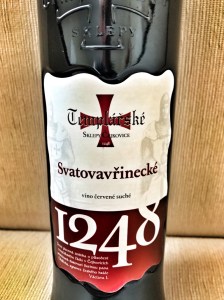
Obviously, that didn’t stop me. I found two new white grapes, and for the red, the name looked so cool (Svatovavřinecké) that I had to get it, despite the fact that this was the local name for the St. Laurent grape – well, how often do you drink St. Laurent wines anyway?
I started with the red wine, as whites needed some chilling – and 2015 Templářské Sklepy Svatovavřinecké Morava Czech Republic (11.5% ABV, 119 Kč ~ $5, 100% St. Laurent) didn’t disappoint – light garnet color. Pleasant nose with touch of spices, sage, lavender, tobacco, hint of blueberries. Fresh fruit on the palate, tobacco, pepper, medium body, mouth-watering acidity, light, pleasant. Drinkability: 8-/8, a proof that delicious wine doesn’t have to be a fruit or tannin bomb.
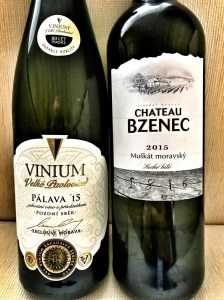
The whites where new, unique and different. One was made out of the grape called Muškat moravsky, which is a cross between Muscat Ottonel and Prachtraube. The other grape was called Pálava, and it was a cross between Müller Thurgau and Gewürztraminer, first selected in 1953. I’m always a bit concerned with the new white wines (many things can go wrong), but this two were simply a stand out. I guess I was simply lucky. Or may be my palate is cursed. Of well. Here are the notes for the white wines:
2015 Chateau Bzenec Muškat moravsky Morava Czech Republic (11.5% ABV, 119 Kč ~ $5)
Straw pale color. Perfumy nose, reminiscent of Gewurtztraminer but of a lesser intensity, white peaches, lemon undertones, touch of minerality. Delicious on the palate – succulent fresh whitestone fruit with practically no sweetness, ripe green apple and touch of lemon. Clean, balanced, fresh, excellent acidity. Medium-short finish, pleasure to drink. Very impressive. Drinkability: 8/8+
2015 Vinium Velké Pavlovice Pálava Pozdní Sber Morava Czech Republic (12% ABV, 239 Kč ~ $10)
Light golden color. Very pleasant nose, perfumy, touch of honey, tropical fruit (guava, pineapple), medium intensity. Delicious lip smacking palate – crisp acidity, medium to full body, wine is nicely present, mouth coating, acidity keeps lingering with tart apples underpinning, then some ripe apples showing with addition of white plums. Another excellent wine. Unique and different, perfectly enjoyable on its own, but will play very nicely with the food. Drinkability: 8/8+, outstanding.
That’s all I have for you, my friends. When travel, take risk, drink local – your reward will be new experience and lots and lots of pleasure. And if you will not like it – the experience will still be with you. Cheers!
Argentina Beyond Malbec with Achaval-Ferrer and #WineStudio
 Of course, Argentina wine industry can’t be subsided only to Malbec – Torrontes and Chardonnay for the whites and Malbec and Cabernet Sauvignon (and Bordeaux-style blends, of course) for the reds comprise an absolute majority of Argentinian wines available at any given moment. You can find some Argentinian Bonarda, Pinot Noir and Sauvignon Blanc, but they don’t carry the full recognition of the 4 main grapes.
Winemaking has a long history in Argentina, starting in the 16th century and entering an international trade in the second half of 19th century. If we will take into account that most of the grape plantings in Argentina are at high altitude, with climatic conditions and terroir overall ideal for the grape growing and providing protection against many grape diseases, such as phylloxera, we will quickly realize that Argentina is home to some of the best and oldest vineyards in the world. However, it is only during the last 20-25 years Argentinian wines start receiving a full international recognition they deserve, with Malbec been the brightest shining star.
Achaval-Ferrer winery was founded in 1998, and over its relatively short history, became a leading winery in Argentina, garnering numerous awards and high critic scores for its wines. To the great pleasure of wine geeks, wines of Achaval-Ferrer were also a focus of April #WineStudio educational program, allowing us to experience some of the very best wines Argentina is capable of producing – Malbec, Cabernet Sauvignon and Bordeaux blend called Quimera. But for the last April session, Achaval-Ferrer and #WineStudio took us on the trip in entirely new direction with the inaugural vintage of the Cabernet Franc wine.
I guess it is time to reveal one of my (no, not darkest) deepest wine secrets – I have “a thing”, an obsessive passion for the Cabernet Franc wines. I can’t explain to you why or how. I don’t know how it happened that out of most grapes, the words “Cabernet Franc” make me literally jump. No matter how tired I am at the end of the large tasting, say to me “let’s go try Cab Franc” and I’m ready to run. Thus you can imagine how excited I was at this opportunity to try a new first release of Cabernet Franc.
There was a lot of excitement around this wine, seems everybody really enjoyed it. As for all the wines of Achaval-Ferrer, the grapes for this Cabernet Franc came from the high altitude vineyards (3,280 ft above sea level) in the Uco Valley, mostly sustainably farmed. Here are my tasting notes:
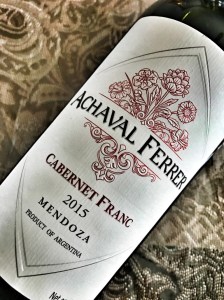
2015 Achaval-Ferrer Cabernet Franc Mendoza Argentina (14.5% ABV, $24.99, 100% Cabernet Sauvignon, 10 months in 3-year old French oak barrels)
C: Dark garnet
N: intense, baking spices, dark fruit, mint, dark chocolate
P: medium-full body, fresh cut-through acidity, mint, hint of cassis, touch of white pepper on the finish, smooth, long finish with tannins kicking in at the end and lingering. Needs time…
V: 8, nice, can be drunk on its own, will be great with the food, and will evolve with time – at least 10 years. The wine opened up more on the second day, and I’m sure will further improve on the 3rd.
Definitely an excellent wine which will be hard to find – 1,400 cases total production, and a lot of this wine went to Morton’s steakhouse (so if you plan to visit Morton’s keep that in mind) – but it is well worth seeking. If you will score some of these bottles, lay them down in the cellar and let them evolve. At least this is what I would do.
This wine concluded a delicious #WineStudio experience with the Achaval-Ferrer wines, and to sum it up, I want to leave you with the twitter quote from Tina Morey, the host of #WineStudio:
I can fully sign under every word here – beautiful, expressive wines, well representing what Argentina is capable of. Salud!
Finding Peace with Chappellet and 2007 Napa Vintage
 Vintage. An essential word in the wine lovers’ lexicon. “How was the vintage” often is a defining question, something we certainly have to find out and then store in the brain compartment for important wine facts. Depending on the stated greatness, some vintages might keep their recognition almost forever, like 1949 or 1982 Bordeaux, and 1964 or 2001 Rioja. The vintage by itself is no guarantee of quality of the particular wine from a particular producer, but it is generally considered that in the better vintages, there are more good wines available across the board.
2007 was lauded as a truly outstanding vintage in Napa Valley in California. According to the Wine Spectator vintage charts, 2007 [still] is the best vintage since 1999, with the vintage rating of 97. When the first 2007 Napa wines appeared, I was very eager to taste them – only to be disappointed for the most cases. In my experience, the wines were lacking finesse and balance, they were often devoid of fruit and had demonstrably attacking and astringent tannic structure. My main thought tasting 2007 Napa wines was “it needs time, and a lot of it”.
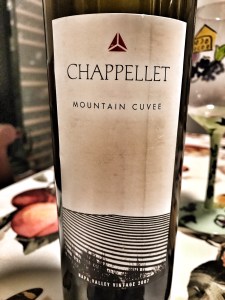
Chappellet is one of the famous producers in Napa, making wines for more than 40 years, now in the second generation of the family; their wines are highly regarded by consumers and critics alike. Some time back in 2010 I scored a few bottles of 2007 Chappellet Mountain Cuvee Napa Valley (14.9% ABV, Cabernet Sauvignon 51%, Merlot 46%, Malbec 1%, Cabernet Franc 1%, Petit Verdot 1%). My first taste was also one of the early posts in this very blog, and nothing short of disappointment (read it here). Continuing tasting throughout the years, I was still missing that “aha moment”, an opportunity to say “ahh, I like it”. It particularly applies to the 2007 vintage of Chappellet, as in 2014 I had an opportunity to taste the 2012 vintage of the same wine (Mountain Cuvee), and the wine was quite pleasant.
A couple of days ago I was looking for the wine to open for dinner and the last bottle of 2007 Chappellet caught my attention. Well, why not? 10 years is a good age for the California wine – let’s see how this wine is now ( even though I have not much of a hope based on the prior experience). Cork is out, wine is in the glass. The color, of course, shows no sign of age, still almost black. But the nose was beautiful – fresh, intense, inviting, with a touch of cassis and mint. The first sip confirmed that the wine completely transformed – open, rich, succulent fruit, cassis and blackberries, supported by the firm structure of the tannins without any overbearing, eucalyptus and touch of sweet oak, clean acidity. Perfectly powerful, but also perfectly balanced with all the components been in check. Now this was the “ahh, this is so good” wine which I would be glad to drink at any time. (Drinkability: 8+/9-).
This delicious experience prompted this post. I’m glad to find it with my own palate, that “needs time” is not a moniker for the “crappy wine”, but a true statement. I’m sure this is not universally true – some wines are simply beyond the help of time – but this definitely worked for this particular wine and for the 2007 Napa vintage. I don’t have any more of this 2007 Chappellet, but I have other 2007 Napa wines, and I just upped my expectations significantly.
Have you had similar experiences? How would you fare 2007 Napa vintage? Cheers!
Open That Bottle Night 2017 – What A Night!
Let’s say you have a bottle of an excellent wine. Do you know how to make it better than it is? I guarantee you this works every time, so listen carefully. You share it with a friend. Yes, that makes any excellent wine into an amazing one. Works like a charm.
Saturday, February 25th was Open That Bottle Night (OTBN for short) – the night when there is no bottle in your cellar which is off limits. If you are not familiar with OTBN, you can read more here. What made my OTBN twice as special was the visit by Oliver and his wife Nina.
For me, the decisions around wine are never easy. I typically buy wine in the single bottle quantities (okay, maybe four at the most, when I need to get a free shipping from WTSO) – thus any bottle can qualify as a special one. As an exception to my long and almost painful decision process, for this OTBN I had a very clear idea – 1982 Olga Raffault Chinon, of which I had a single bottle. The bottle out of the wine fridge and ready for the prime time.
This is what I was looking at after cutting the top foil:
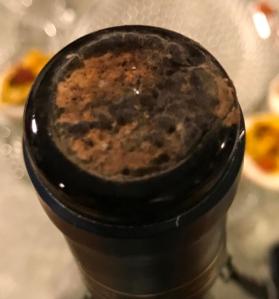 As you can tell, this is not very encouraging. However, if you like older wines and get an opportunity to open them, you know that the state of the top of the cork is nothing to fret about. More often than not, behind most terrible looking mildew there is a delicious wine.
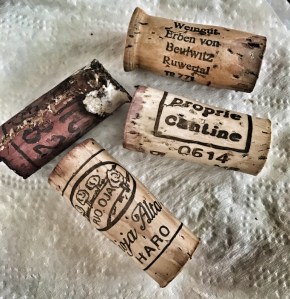
As this was 35 years old wine, I didn’t want to take any chances and used the two-prong opener to pull the cork out. This turned out to be an unnecessary precaution – while cork looked red throughout, it was perfectly firm and came out as a single piece without any crumbling – here is our OTBN corks collection, the red one is the one I’m talking about:
 And for the wine… what can I tell you… This 1982 Olga Raffault “Les Picasses” Chinon, Loire looked perfectly fresh in the glass – not a sign of losing color. Here are the two glasses, one is with 1982 Cabernet Franc, the second one is with 2014 – care to guess which glass contains 1982?
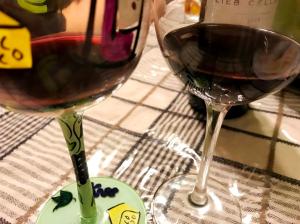 Yes, the one on the left is with 1982 wine, but I believe you would agree that the color shows perfectly young. The nose and the palate were an incredible study in Cabernet Franc flavor profile 101. The wine opened full of bell pepper – both on the nose and the palate. In about 10 minutes, the bell pepper was gone – and what was left was pure, unadulterated black currant – stunning, full flavorful black currant, also known as cassis if we want to use traditional French terminology. The wine had perfect structure, firm, with fresh acidity, almost crisp – and loads and loads of black currant. This was truly a treat.


We followed with a beautiful rendition of Ruchè – 2012 Poggio Ridente Ruchè di Castagnole Monferrato DOCG San Marziano (organic grapes). Ruchè is a little known red grape, cultivated in the Monferrato region in Piedmont, capable of making very concentrated wines. This particular bottle, brought by Oliver and Nina directly from Italy, was fresh and open, with nicely restrained palate with mostly herbal flavors, and a twist – dried mango undertones. Nina was the one to identify the dried mango, while I was desperately trying to figure out what that strange flavor was – but that was a spot-on descriptor. An outstanding wine by all means.
Our next wine was 1989 Kaseler Nies’chen Riesling Auslese Mosel-Saar-Ruwer. No issues with the cork (makes me happy). Still fresh, clean light golden color (28-years old wine!). The nose and the palate were singing in unison here, and the music was simple – peaches and apricots. Slightly underripe peaches and fresh, plump apricots. The balance of sweetness and acidity was impeccable – the wine was fresh and alive, without any sign of age. Wow.
As an added bonus, the grapes for this wine were harvested in November of 1989 – the year and a month when Berlin Wall was demolished – and this is what the label of this wine commemorates.


Our OTBN night didn’t finish there. You would expect us to go to something nice and sweets after such a beautiful Riesling, right? In the conversation, it came out that Oliver doesn’t like Tempranillo wines. Being a Spanish wine buff, I had to fix that immediately, so I had to pull out the big guns. 2001 La Rioja Alta Viña Ardanza Rioja Reserva Especial was absolutely beautiful from the get-go – cedar box and eucalyptus on the nose, soft and gentle cherries on the palate, fresh, round. I hope I made Oliver a convert – but will see about that the next time we will meet.
There you are, my friends. A stunning OTBN with great wines and great company. Hope you enjoyed your OTBN as much as we did – feel free to share your OTBN stories below. Cheers!
Last Bottle Sign Up ($10 credit)





