Archive
An Evening With Friends
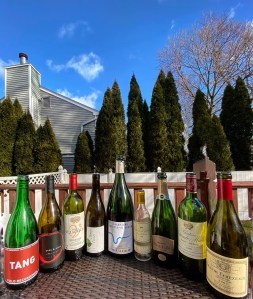 What is your favorite part about wine? Is it the taste? The buzz? The sheer appearance of the bottle sometimes resembling the work of art? The joy of owning an exclusive object? The coveted status symbol?
My answer will be simple. My favorite part about wine is the ability to share it. Take a sip, reflect, have a conversation, preferably a slow-paced one. Friends are the best pairing for wine. Opportunity to share the experience, pleasure, and joy. Sharing makes it all worth it.
New Year celebration (the main holiday for anyone with the Russian upbringing) is a multi-step process for us. We like to celebrate the arrival of the New Year as many times as possible – the evening before the New Year, a midnight Champagne toast, the New Year’s day dinner, and more dinners shortly after (this is when the bathroom scales are the worst nemesis). Some or all of these dinners have to include friends – and it is the best when friends share your wine passion.
Such was our dinner on Saturday, bringing together a group of friends who truly enjoy what the wine world has to offer. We all contributed to the evening, both with food and wines, to make it fun and interesting. Below is the transcript of our wine extravaganza, with highs, lows, and surprises.
While we were getting ready to start our dinner, our first wine was something unique and different – how many of you know what Piquette means? It appears that Piquette is yet another type of sparkling wines. The story of Piquette goes back to 18th century France when the whole wine industry was in full disarray. Piquette is literally made by converting water into the wine – using water to rehydrate grape skins left after the wine production. We had 2019 Field Recordings Tang Piquette Central Coast (7.1% ABV, Rehydrated skins of Pinot Gris and Chenin Blanc) which was made using this exact process – grape skins were hydrated in well water for a week, then pressed, after which a little bit of the table wine was added, and the wine was bottled with leftover yeast and sugar to continue fermenting right in the bottle. To me, the wine was reminiscent of cider – light fizz, fresh apple notes, cloudy appearance of a nice unfiltered cider. Would I drink this wine again? On a hot summer day – yes, why not, but this is not the wine I would actively seek.


It is difficult to assess the “uniqueness” of the wines. There can be many reasons for the “unique” wine designation – small production, wine not produced every vintage, the wine which is no longer produced. There are, of course, many other reasons. How about spending 10 years to finally make about 200 (!) bottles of a drinkable wine? Don’t know about you, but this is unquestionably unique in my book. And so there was 2017 Olivier Pittet Les Temps Passés Vin de Pays Romand Switzerland (14.2% ABV, Arvine Grosso). Petite Arvine is a popular white grape in Switzerland, producing nice, approachable white wines. On another hand, Petite Arvine’s sibling, nearly extinct thick-skinned Arvine Grosso (or Gross Arvine), is a nightmare to grow and to work with. This was the Arvine Grosso which took about 10 years to restore the plantings and achieve a drinkable result. The wine needed a few minutes to open up – then it was delicious, fresh, with a touch of underripe white plums, bright acidity and full-body, similar to Marsanne/Roussanne. I wish this wine would be a bit easier to procure and not just through a friend who lives in Switzerland…
I was happy that Stefano brought a bottle of 2008 Berlucchi Palazzo Lana Satèn Riserva Franciacorta (12% ABV) – I love Franciacorta sparkling wines, they always offer a playful variation of the classic Champagne. Berlucchi is the founder of the Franciacorta sparkling wine movement. This wine was also a Satèn, a unique Franciacorta creation, which is specifically made to be a bit gentler than a typical Champagne with the lesser pressure in the bottle. The wine was soft, fresh, delicate, and admired by the whole table enough to disappear literally in the instance.
The next wine was as unique as only inaugural vintage can be. Christophe Baron is best known as Washington Syrah master, with his Cayuse, No Girls, and Horsepower lines. But Christophe’s roots are actually in Champagne, so it shouldn’t be terribly surprising that he decided to embrace his heritage. The first bottling, with a promise of many more, was as unique as all Christophe Baron’s wines are – pure Pinot Meunier, vintage, and bottled only in magnums – 2014 Champagne Christophe Baron Brut Nature Les Hautes Blanches Vignes Charly-Sur-Marne (12.5% ABV, 100% Pinot Meunier, 1613 1.5L bottles produced). I made a mistake of slightly overchilling the wine, but it came to its senses shortly after it was opened. The wine was nicely sublime, with all the Champagne traits present – the acidity, brioche, apples – everything balanced and elegant. This was definitely an excellent rendition of Champagne, but to be entirely honest, at around $300 it costs considering tax and shipping, I’m not sure it was unique enough to justify the price. Oh well… definitely was an experience.


Before we move to the reds, a few words about the food. The New Year celebration is a special occasion, which is asking for a special menu. Our typical New Year dinner menu is heavy with appetizers and salads. Our staple salads are “traditional” – Olivie and “Herring under the fur coat”. For the appetizers, we had red caviar, bacon-wrapped dates, stuffed Belgium endives, different kinds of cold cuts and cheeses, tiny prosciutto/pecorino sandwiches, and I’m sure some other stuff. Tea-smoked duck and delicious lasagna comprised the main course, then finishing with loads of baked goods and candies. Yeah, don’t even think about dragging me onto a bathroom scale.
Let’s get back to wine.


The next wine belongs to the “interesting” category. NV Channing Daughters Over and Over Variation Twelve Long Island (12.5% ABV, Merlot, Dornfelder, Syrah, 208 cases produced), a multi-vintage wine which is produced using Ripasso and Solera methods. The name “Over and Over” is emblematic of the production method of this wine – there are many manipulations which I will not even try to describe – you better read it here. I’m all for the fun and complexity, but my problem is that I tasted the standard vintage Channing Daughters red wines which were literally identical to this Over and Over wine. It is great to play with your wine, no questions – but only if the end result is different, and better than the individual parts. The wine showed very youthful, with fresh crunchy fruit and cut through acidity – but it was lacking complexity. It is not a bad wine, but I was not moved by it.
Next up – 1996 Château Sociando-Mallet Haut-Médoc AOC (12.5% ABV) – this was a happy wine. The cork came out easily in one piece, and the wine was perfect from the get-go. The perfect minty nose of Bordeaux with a touch of cassis, some hints of mature fruit on the palate, but only the hints – still good acidity, solid core, excellent balance – the wine to enjoy. Yep, was gone in no time.


Of course, the duck on the menu is calling for the Pinot Noir, and what can be better than the Burgundy? 2007 Louis Jadot Grands Echézeaux Grand Cru AOC (13.5% ABV) was our designated match for the duck. The wine opened up beautifully, with succulent plums and a touch of smoke, a delicious, classic Burgundy. However, the joy lasted in the glass for about 10 minutes or so – next, all the fruit was gone, and while you know you are drinking wine, this wine had no sense of place of origin. I don’t know what happened – the wine closed up, needed more time, or was already at the last stretch of its life? Don’t know, and don’t think I will ever find out. Well, there is always another bottle, right?
Now, let’s talk about surprises. No, not the Chateau d’Yquem, which you would assume should qualify as a surprise – the 1999 Finca Villacreces Crianza Ribera Del Duero (13% ABV) was a real surprise. I heard the name of Finca Villacreces as one of the venerable Ribera del Duero producers, but I never had it before. When I was able to score this wine at the Benchmark Wine, I was very excited. The New Year’s celebration seemed to be a perfect opportunity to open it, especially as nobody had it before and we were all looking forward to getting acquainted.
The cork came out easily, in one piece with no sign of any issues. Once I poured the wine into the glass, on the first whiff, the scary thought instantly showed up – the wine might be corked. I tasted the wine, and it seemed just a touch off – it didn’t feel unquestionably corked, but the fruit was not coherent and the wine had sharp, raspy undertones which in my experience are associated with the corked wine. We moved the wine into the decanter and continued tasting it throughout the evening – it stayed practically unchanged.
This was not some random bottle I can get replaced at any store, so I really couldn’t just pour it out. And I’m an eternal optimist. So I used plastic wrap to cover the top of the decanter and left the wine standing there overnight. The next day, about 22-23 hours since the wine was opened, I decided to check on it. Oh my god. The wine completely changed. The hint of the musty cellar was gone. The mighty fruit appeared on the palate, layered, present, velvety and powerful, covering your whole mouth and making you extort “ohh, this is good”. I thoroughly enjoyed the wine after 24 hours in the decanter, and even the next day the tiny leftover was still drinkable. How is this possible? What has happened? I don’t have any answers, but if you have any ideas, please share.
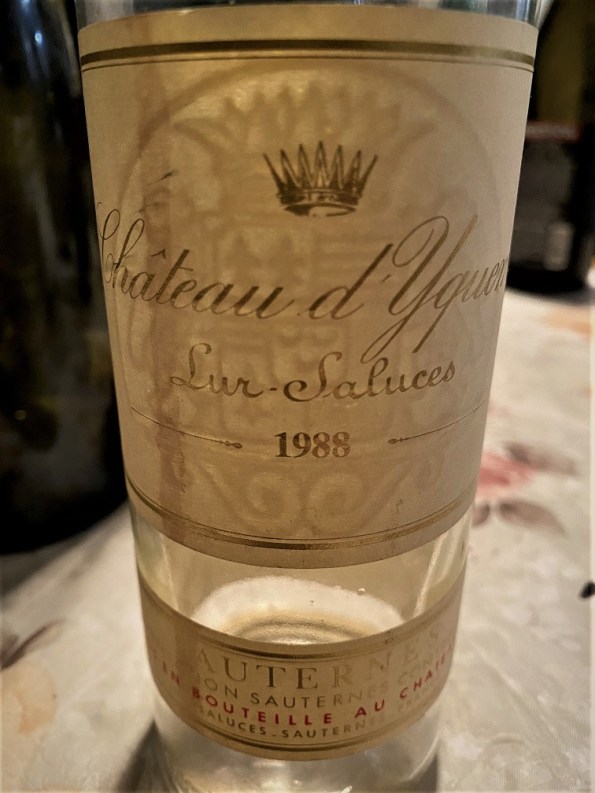
We finished the dinner on the high note – 1988 Château d’Yquem Lur-Saluces Sauternes AOC (13.5% ABV). I’m you sure you don’t need any introductions here – Château d’Yquem is the Bordeaux legend, an absolute hallmark of the Sauternes region, with every other Sauternes wine simply measured against the Château d’Yquem. A perfect pop of the cork from this bottle was music to my ears. The nose and the palate of this wine were in full harmony – it was all about apricots. Fresh apricots, dried apricots, candied apricots – the taste kept moving round and round. The apricots were supported by clean acidity, which became more noticeable as the wine had an opportunity to breathe. Well, this was a short time window in any case, as this half bottle was simply gone in the instance. This 32 years old wine was truly an experience and a perfect finish to our great evening with friends.
That’s all I have for you, my friends. How 2020 started for you? What did you have a chance to discover over the last few days? Cheers!
Magnificent Tempranillo
Let’s start with some definitions:
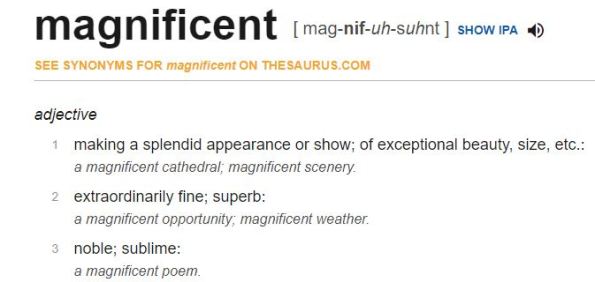
Of course, you know what “magnificent” means. Still, I feel compelled to start with the definition to explain my rather overzealous title. After looking at the Merriam-Webster and Google definitions for “magnificent”, I decided to go with the one from Dictionary.com, as it perfectly underscores the emotions which I tried to express with this title.
Wine is personal. Wine solicit the emotion, but it is personal – the appeal of the liquid in the glass is first and foremost for the person who is taking a sip. Two people can have a sip of exactly the same wine and have completely opposite reactions – one might love it and the other might hate it. Thus calling the wine magnificent is personal – and it is simply the expression of the emotion one had after taking a sip of that wine.
Today Tempranillo is grown around the world. You can find delicious renditions coming from Australia, Napa Valley, Oregon, Lodi. My first Tempranillo love, however, is Rioja, and this is where it still stays. A sip of La Rioja Alta, Lopez de Heredia, CVNE, or El Coto makes everything right with the world. Same as with any other wine, Rioja can’t be taken for granted – you need to know the producer. But in the hands of the right producer, Rioja becomes … magnificent. It is the wine of exceptional beauty, it is extraordinarily fine and superb, and it is noble and sublime – exactly as the definition above says.
Of course, it is not just Rioja which makes Tempranillo a star. Ribera del Duero, located a bit more down south and central, is another source of magnificent Tempranillo wines – if you had a pleasure to try the wines from Emilio Moro, Pesquera, Vega Sicilia you know what I’m talking about. Again, in the hands of the good producers, Ribera del Duero Tempranillo is every drop magnificent.
To make this conversation about magnificent Tempranillo more practical I want to offer you my notes on a few samples of Tempranillo wines I had an opportunity to enjoy recently.


CVNE (Compañía Vinícola del Norte del España) needs no introduction for the Tempranillo fans. Founded in 1879 (yes, this year is the 140th anniversary of CVNE) by two brothers, the CVNE is still run by the family, and today consists of 4 wineries – CVNE, Imperial, Vina Real, and Contino. However, those are the Rioja wineries and today CVNE is taking its 140 years of winemaking experience to the other regions. Here is an example for you – Bela from Ribera del Duero.
The grapes for Bela wine came from 185 acres Tempranillo vineyard, located at the altitude of 2,400 feet in the village of Villalba de Duero and planted in 2002. Here is the story behind the name of the wine and the picture on the label: “Bela’s label is a facsimile of an old CVNE label from the 1910’s. The stars represent each of the children of CVNE’s cofounder, Eusebio Real de Asúa. His brother Raimundo, the other co‐founder, had no descendants. Each star represents one of the children: Sofia, Áurea, and Ramón. Sofia was known as Bela. We descend from her.”
2017 Bela Ribera Del Duero (14% ABV, $18, 100% Tempranillo, 6 months in 1-year-old American and French oak barrels)
Dark garnet, almost black
Roasted meat, coffee, cedar box
Beautifully complex palate, black cherries, blackberries, eucalyptus, fresh, balanced.
8-, excellent wine, built for the long haul, will evolve.
Contino was the first single-vineyard Rioja created by CVNE and the owners of the Contino estate (which takes its history from the 16th century). 150 acres Lacerna vineyard in Rioja Alavesa is the source of grapes for the Contino line of wines. Here is the story behind the name: “The “contino” was the officer in charge of a guard corps of a hundred soldiers who protected the royal family “de contino” (continuously) from the times of the Catholic Monarchs onwards. According to the tradition, Saint Gregory, the patron saint of vineyards, passed through the lands of this same Rioja property, giving rise to the use of his figure in the logo of this winery, and to the use of his name for some of the plots now planted with vines.”
2012 Contino Rioja Reserva Rioja DOC (13.5% ABV, $45, 85% Tempranillo,10% Graciano, 5% Mazuelo and Garnacha, 2 years in used American and French oak plus 2 years in the bottle)
Dark garnet, almost black
Cherries, cigar box
Bright, uplifting dark fruit medley, clean acidity, a touch of minerality, velvety texture with well-integrated tannins, perfect balance
8+, delicious, lots of pleasure in every sip


Bodegas Beronia was founded in 1973 by a group of friends who fell in love with La Rioja while visiting on a holiday. The name Beronia is not random – here is the explanation: “name linked to the history of the land where the winery is found. In the 3rd Century BC the area known as Rioja today was inhabited by a celtic tribe called the ‘Berones’. They inhabited the towns of Tricio, Varea and Leiva, marking the limits of the Berones region, today La Rioja.”
Originally, the wines were produced literally by friends for the friends, without much thought of commercial sales. In 1982, Bodegas Beronia became a part of González Byass family, and at that point wines of Bodegas Beronia started to appear on the international markets.
Bodegas Beronia Rioja wines represent an intersection of tradition and modernity. While “traditional” and “modern” styles of Rioja can be a subject of great debate with a lot of wine consumed to prove the point, I would offer a very simplistic viewpoint. Tempranillo has a great affinity to the oak; the resulting Rioja wine is well influenced by the oak regimen. Traditionally, Rioja is matured in American oak casks. Modern style Rioja often uses French oak. Here is your style distinction – American oak versus French. Bodegas Beronia goes a step further than many. They create their own barrels, using both American and French oak elements in one barrel. Thus the wine is not defined by blending of the separately aged components, but instead, it is aging in the mixed environment.
Here are the notes for the two wines I was able to taste:
2015 Bodegas Beronia Crianza Rioja DOC (13.5% ABV, $14.99, 91% Tempranillo, 8% Graciano, 1% Mazuelo, 12 months in American and French oak barrels)
Dark garnet
Vanilla, plums, cedar box
Fresh dark berries, ripe cherries, tobacco, a touch of sapidity, medium-plus body, clean acidity, a touch of eucalyptus, medium-long finish
8-, the second day was better than the first. 8+ day 2 and 3
2013 Bodegas Beronia Rioja Reserva DOC (13.5% ABV, $19.99, 95% Tempranillo, 4% Graciano, 1% Mazuelo, 3 years in American and French oak barrels and in the bottle)
Dark garnet
Plums, cherries, tobacco
Dark fruit, tar, tobacco, cherries, a touch of cherry pit, bright acidity, firm texture, noticeable minerality, medium finish
8, excellent. Day 3 is more open.


No, we are not done yet. I have one more Rioja to discuss with you – from Bodegas LAN.
Bodegas LAN was founded in 1972. Here is another winery name which is not random: “A name – LAN – composed of the initials of the three provinces that make up the D.O.Ca. Rioja: Logroño (now La Rioja), Álava and Navarra.” Bodegas LAN owns about 170 acres vineyard called Viña Lanciano, which is subdivided into the 22 parcels, each with a unique microclimate. These 22 parcels are growing Tempranillo, Garnacha, Mazuelo, and Graciano, most of them on the 40 -60 years old vines.
Grapes for LAN Xtrème Ecológico wine come from 12.5 acres parcel of 100% organically certified Tempranillo, located at the altitude of 1,200 feet.
2015 Bodegas LAN Xtrème Ecológico Crianza Rioja DOC (14.5% ABV, $15, 100% organically-certified Tempranillo, 14 months in new French oak, 9 months in the bottle)
Dark garnet, practically black
Cherries, cedar box, eucalyptus, tobacco, open and inviting
Gorgeous, layers of dark fruit, soft but present tannins, baking spices, firm and perfectly structured, tart cherries on the finish, tannins taking over.
8+, a long haul wine, will be perfect in 10 years or longer. A total steal at a price.
Culmen is one of the top wines made by Bodegas LAN, produced only in exceptional vintages. The grapes for this wine come from 13 acres El Rincón parcel, located at the 1,500 feet altitude.
2011 Bodegas LAN Culmen Rioja Reserva DOC (13.5% ABV, $55, 88% Tempranillo, 12% Graciano, 26 months in new French oak, 20 months in the bottle)
Dark garnet with a purple hue
Red and black fruit, roasted meat, warm granite, sweet cherries, medium-plus intensity
Fresh tart succulent cherries are popping in your mouth, changing into sour cherry compote with tar, tobacco and cedar box. Delicious long finish. Lots of pleasure in every sip.
8+/9-, outstanding.
Here you go, my friends. Six delicious, or shall we say, magnificent, Tempranillo renditions. I will be happy to drink any of them again, at a moment’s notice. What do you think of Tempranillo wines? Got any favorites to share? Cheers!
Spanish Wines: Beyond The Reds
Let me ask you something: if you hear the words “Spanish wine”, what is the first type of wine which comes to mind – red, white or Rosé? I’m a self-admitted Spanish wine aficionado, and I can honestly tell you that my first association will be “red”, then probably Rosé, and only then white (when it comes to Spain, your wine type choices are quite wide, as you got also Cava, Jerez, Málaga – but let’s not make it too complicated).
There is a good chance that your associations were the same – Spanish wine equals Red. I certainly started my Spanish wine love embrace from the Rioja, best known for its reds with Lopez de Heredia Viña Gravonia, one of the best white wines made in Spain, being rather a curiosity than a norm. It took me several years until I heard the name Albariño and tasted what is today probably best known Spanish white wine. And then, of course, let’s not forget about the Rosé revolution which took place around the world over the last 5 years or so – Spain gladly joined the movement with wonderful Rosé, or rather, Rosado renditions of Grenache and Tempranillo rapidly showing up over the Spanish wine map.
Let’s explore a bit a Spanish non-red wine scenery – as I like to say, have wine – will travel. First stop – Rueda, the wine region located almost in the middle of the country.
Rueda is a part of the Castilla y León region in Central Spain. History of winemaking in Castilla y León goes back to the 10th/11th centuries and closely associated with the arrival of Catholic monks, who started vine cultivation and winemaking. We can say that the modern part of winemaking history in Castilla y León started in 1980 with Rueda becoming the first local winemaking region to receive the status of D.O. which stands for Designation of Origin, the quality designation in Spanish wine.
The majority of Rueda vineyards are located at an altitude of 800m (2400 FT) and higher. Rueda is known for its extreme climate conditions, where diurnal temperature shift can reach 50 degrees during the day – which is actually good for the grapes, as it helps to concentrate flavors, sugars and acidity. White grape called Verdejo is typically associated with Rueda wines, even though Sauvignon Blanc wines can also be found coming out of Rueda.
I thought it would be appropriate to give you some fun facts about Rueda, taken from Ribera and Rueda wine website: ”
- There are 32,500 acres of vineyards in Rueda, of which 28,800 acres are Verdejo.
- The area has 69 wineries and is cultivated by over 1,500 growers.
- To be “Rueda Verdejo”, wines must contain at least 85 percent Verdejo.
- Verdejo is harvested at night to allow the grapes to cool from the scorching summer heat.
- Verdejo was almost wiped out by Phylloxera in the late 19th century, but it was revived in the 1970s.”
A few weeks ago I had an opportunity to taste a few of the Rueda wines offered as part of virtual tasting at Snooth (here is the link to the video recording of this session if you are interested in learning more). The tasting covered wines of Rueda and Ribera del Duero (I only tasted wines from Rueda), and Snooth had a great wine deal offering related to the tasting, which is, unfortunately, already sold out.
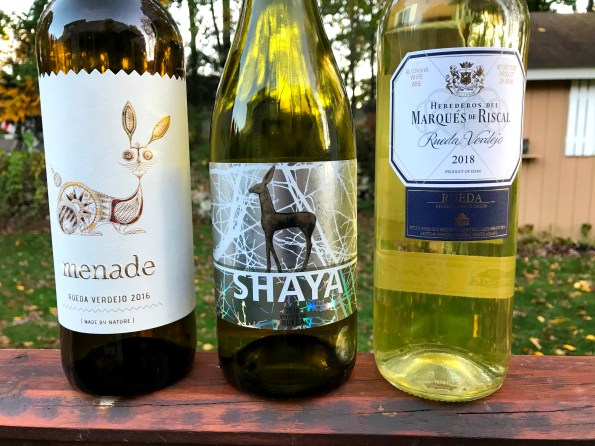
We had three of the Rueda Verdejo wines in the tasting, all three were 100% Verdejo, 100% delicious, and 100% great value.
Just to give you a brief summary: Marqués de Riscal is better known as one of the oldest wineries in Rioja. However, they were also one of the first commercial wineries in Rueda, opening the winery in 1972 and being a driving force behind 1980 DO Rueda designation. While Bodegas Menade might be a new kid on the block, with winery established in 2005, the family had been in grape growing business in Rueda for 6 generations, going back to 1820. The grapes used for the Menade Verdejo come from the organically farmed vines which are 80 to 100 years old. The last Verdejo comes from one of the personal favorites – Bodegas Shaya. Shaya Habis, an oaked rendition of the Verdejo, had been my favorite Verdejo wine for a long time. While working on this post it was fascinating (or shameful, depending on your take – I had been writing about Shaya wines for many years, only now finally doing some research) to learn that Bodegas Shaya was a project of Gil family, whose El Nido (predominantly Cabernet Sauvignon with the addition of Monastrell) is one of the “cult”, sought-after Spanish wines. Bodegas Shaya project was started by Gil family in 2008, with the wines produced from old, low-yielding Verdejo vines.


Here are my notes for the wines we tasted:
2018 Marqués de Riscal Rueda Verdejo Rueda DO (13.5% ABV, $13)
Light golden
Touch of fresh grass, lemon, lemon zest, sage, rocks
Crisp, vibrant, lemon, a touch of gunflint, excellent minerality, medium-plus finish
8/8+, Delicious white wine – by itself or with food.
2016 Bodegas Menade Rueda Verdejo Rueda DO (13% ABV, $18)
Golden color
Great complexity, Whitestone fruit, a touch of honey, honeysuckle, interesting undertones of sapidity
Savory and sweet, minerally-forward, Whitestone fruit, crisp acidity, vibrant, fresh, medium+ finish
8-/8, should be good with food
2016 Bodegas Shaya Rueda DO (13.5% ABV, $13, 20%-30% of grapes fermented in barrels with 500 – 600 liters capacity)
Straw pale
Very unusual, dusty nose, a hint of grass and white flowers
High viscosity, roll of your tongue wine, restrained white fruit, Granny Smith apples, buttery impressions of a good balanced Chardonnay.
8+, my favorite of the 3, especially after being open for a few days.
How do you like the trip so far? Now it is time to move east to the region called Cariñena.


Winemaking in Cariñena goes back to Roman times. History of Cariñena wines includes Royal proclamations of “Cariñena wines above all”, and even the quality control instituted at the end of the 17th century, monitoring yield levels and production areas. Cariñena also managed to escape the Phylloxera epidemic of the 19th century. In 1932, Cariñena became the second D.O. in Spain (after Rioja). Here is the link for you if you want to learn more about the region.
Cariñena is best known and typically associated with Garnacha (Grenache for all outside of Spain), and it is also often considered to be the birthplace of that grape. Some of the Garnacha plantings in Cariñena exceed 100 years of age. The second important red grape in Cariñena actually shares its name with the region – it is called Cariñena, and also known locally as Mazuelo, and outside of Spain as Carignan. Other red grapes can also be found in the region – Cabernet Sauvignon, Merlot, Monastrell, Syrah, Tempranillo, Vidadillo. White wine production in Cariñena is much less than red; you can find Chardonnay, Garnacha Blanca, Macabeo (Viura), Moscatel, and Parellada growing there.
At the beginning of the post, we mentioned the “Rosé revolution”. So very appropriately, I had an opportunity to taste two Cariñena Rosado wines, made out of Garnacha, and the Chardonnay coming from one of the favorite producers, Bodegas San Valero. Here are my notes:


2018 Bodegas Paniza Fábula de Paniza Garnacha Rosé Cariñena DOP (13.5% ABV)
Beautiful salmon pink
Delicate nose of tart strawberries with a touch of lemon
Crisp, clean, refreshing, tart strawberries, good minerality, a hint of cranberries
8, excellent Rosé, a perfect wine for a summer day, but will work well with food at any time.
2018 El Circo Payaso Garnacha Rosé Cariñena DOP (13% ABV, $10)
Intense pink
Wild ripe strawberries
Ripe Strawberries all the way, good acidity, lemon, medium body
7+/8-, craves food
2017 Bodegas San Valero Particular Chardonnay Cariñena DOP (12.5% ABV)
Light golden
Touch of vanilla and apple, a hint of white flowers
Crisp, clean, fresh lemon, a touch of white pepper, vanilla, a round finish.
7+/8-, definitely a delightful wine
Here you are, my friends – Spain makes delicious wines, and not all of those wines are red. And let’s not forget that those wines represent an amazing value. Do you have any favorite Spanish white wines? Cheers!
Spain’s Great Match 2019 – A Mixed Bag?
I love Spanish wines.
Anyone who reads this blog for a while is aware of this. Spanish wines have a special place in my heart, as even today they are some of the best-kept secrets in the wine world, allowing those in the know to enjoy amazing wines still at reasonable prices (some of the best QPRs around).
For many years I had been attending Spanish Wine Tasting in New York, called Spain’s Great Match. I usually attend the early morning seminar, and then go for the walk-around tasting – here you can find my reports from 2014 and 2017 events.
The seminars at Spain’s Great Match are meant to showcase some of the best and interesting Spanish wines. 2014 event was an absolute stand out in this regard, as this was a special event celebrating 30 years of Spanish wines in the USA. The wines served in that seminar were way beyond amazing.
The 2017 seminar was also quite good – maybe not as good as 2014, but still, very, very good. Now, before I will report on the 2019 event, let me talk a bit about the setting.
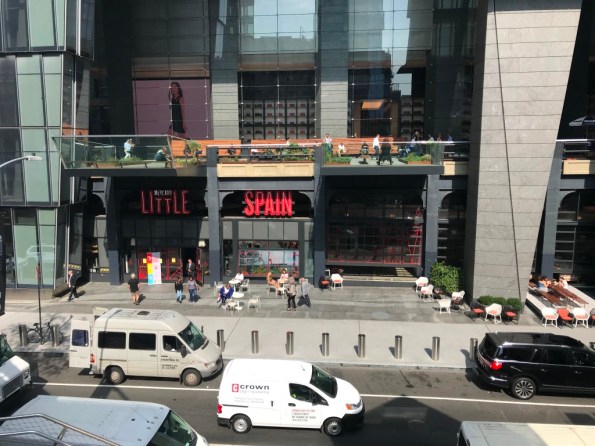


The event took place in one of the trendiest New York neighborhoods, Hudson Yards, at the recently opened Mercado Little Spain. Mercado Little Spain is conceptually similar to the Eataly, with the space filled with all possible produce, food and drink options which you would otherwise find…yes, in Spain. So the setting itself was outstanding, creating the right atmosphere to enjoy Spanish wines as they should be.
Now, let’s talk about the seminar, which was called “Vinos de Vanguardia: Wines on the Cutting Edge”.
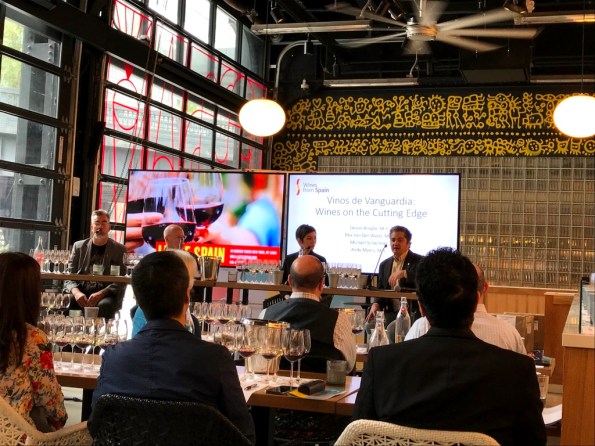

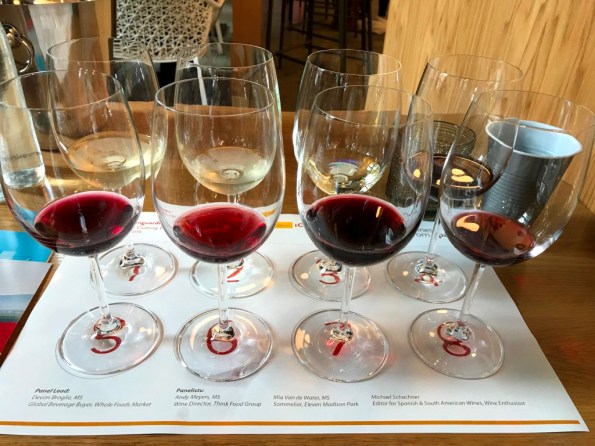
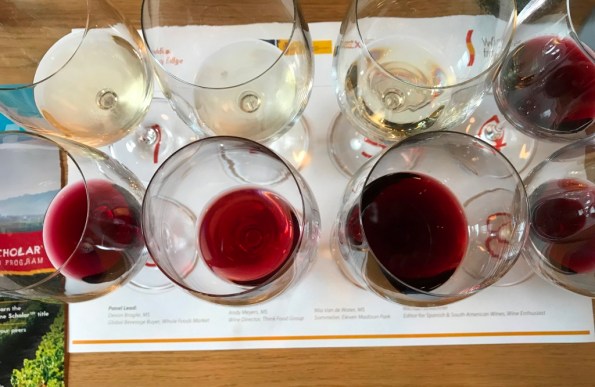
As you can tell from the name, the idea was to present a unique and different side of Spanish wines. Yes, I get it – Spanish wines might be relegated by “ordinary”, “predictable”, and “same all, same all”, and the seminar was designed to break that myth and to show the forward-thinking of the Spanish winemakers.
I don’t discriminate against any type of wines – natural, low intervention, “orange”, unoaked, unfiltered, canned, boxed, all is good. I’m willing to try absolutely anything – at least one time. When I taste the wine, I trust my palate, and that sip will be simply binary – I will either like the wine, or not. Yes, temperature, air, of course – I’m willing to give literally an unlimited amount of time to the wine to show itself properly – but at some point, the wine has to deliver what it is supposed to deliver – a pleasure. That’s all I’m looking for in wine – pleasure.
I’m sure the wines in the seminar were hand-selected to represent the avant-garde thinking of the Spanish winemakers. However, for me, only 3 wines out of 8 delivered that pleasure, and two out of those leftover 5 were not only boring, but they were also off-putting. I rarely call wines “bad”, I typically say that the wines are “not for me”. So these 2 wines were truly not for me – here are the notes:


2018 Can Sumoi Xarel-lo DO Penedès (100% Xarel-lo)
Golden
Great acidity, sour apples, an unusual ting of a fermenting fruit
Mostly acidity, a bit violent to my taste. Fresh lemon acidity, devoid of any sweetness. The bitter-sour finish lingered. It might be a food wine, but I would definitely prefer a Muscadet if I really look for food-friendly acidity.
Natural wine, the panel was talking about a sense of place and so on, but one can relate to that only if one is visiting, and without that “place” connection the wine was … well, you got my point
2018 Tajinaste Blanco DO Islas Canarias (90% Listán Blanco, 10% Albillo)
Golden color
Fresh grass, underripe white plums, distant hint of a grapefruit
Fresh acidity, Meyer lemon. Unfortunately, boring.
2018 A Coroa Godello DO Valdeorras (100% Godello)
Golden color
Whitestone fruit, a touch of lemon
Good acidity, distant hint of buttery notes, but this was mostly it – the acidity. This wine might well be improved with time, judging by the acidity, but at the moment, boring.
2016 Enrique Mendoza La Tremenda DO Alicante (100% Monastrell)
Garnet
Beautiful intense nose of fresh berries, a touch of iodine
Tannins-forward, tannins mostly take over the wine, some fruit present. Not great.
2018 Bodegas Ponce Clos Lojén DO Manchuria (100% Bobal)
Dark garnet
Touch of roasted meat, violet, very inviting floral aromatics
Beautiful pepper note, fresh berries, medium body, open, inviting, short finish. First good wine in the tasting.
2016 Marañones 30.000 Maravedies DO Vinos de Madrid (90% Garnacha, 10% Morate/Syrah)
Ruby
Hay and cherries, light
Tart, tannins forward, mouth-puckering, cherry pits on the back end. Maybe a food wine, and maybe it will improve with time. Ok wine for now.
2015 Alberto Orte Atlántida VT de Cádiz (100% Tintilla)
Dark ruby/garnet
Beautiful open inviting nose – sage, ripe plumes, thyme, lavender – one of the most herbs-driven aromas I ever experienced
Beautiful palate, herbs with a complex interplay, fresh berries, delicious. Second excellent wine in the tasting.
2015 Guímaro Finca Meixeman DO Ribeira Sacra (100% Mencía)
Garnet
Mostly closed, a touch of cherries, hint of currant leaves
The beautiful playful palate, crunchy wild blueberries, lots of herbs, medium body, medium+ finish. Also one of the best in the tasting.
As you can tell, Bobal, Tintilla, and Mencía were excellent wines which I really enjoyed – and all these wines are uniquely Spanish. When it comes to Spanish wines, you don’t need to try too hard – Spain offers lots of unique and delicious wines – but oh well, this was fine anyway.
Right after the seminar, we went back to the main floor, which was all converted into the walk-around wine tasting space. Spanish food was carried around, from famous Jamón to Manchego cheese to Spanish omelet to Potatas Bravas and more. I have to say that Gazpacho was my favorite bite without a doubt, but overall, there was no shortage of food.
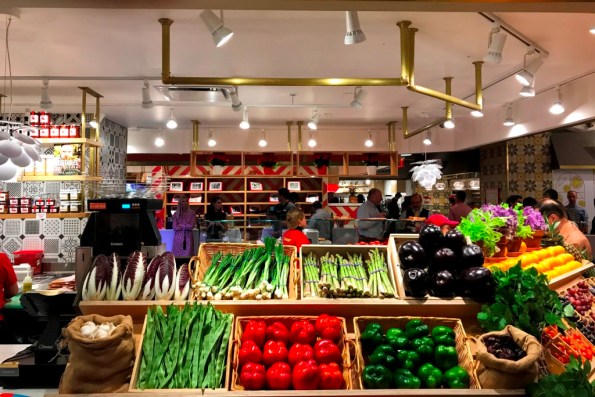
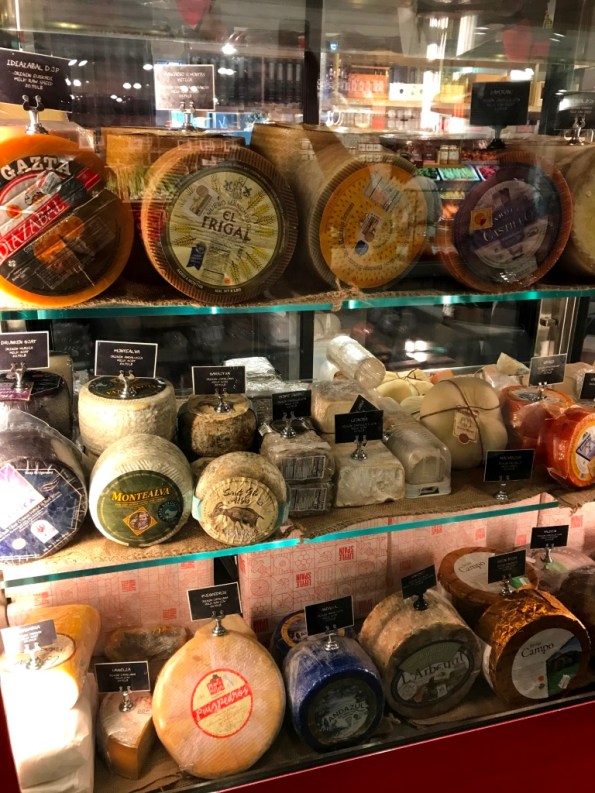
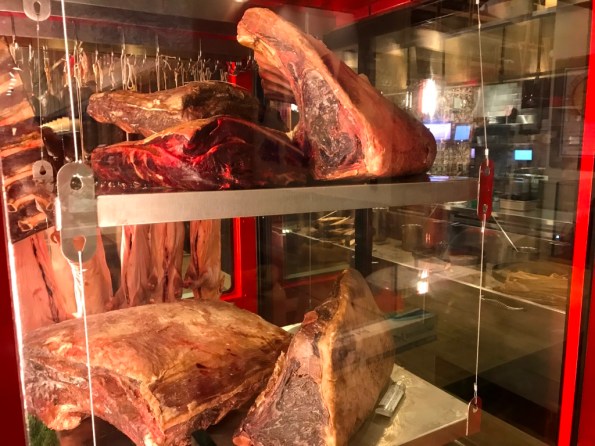


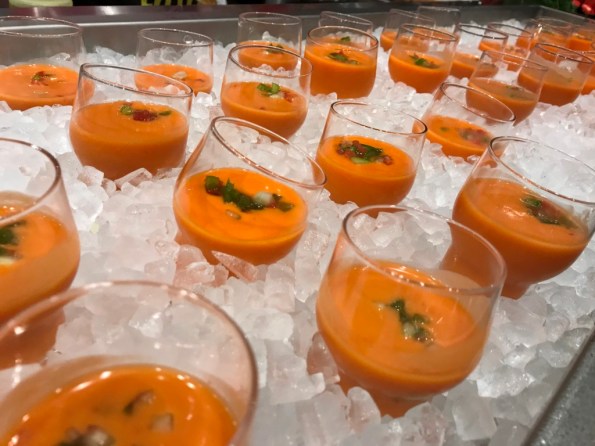


I have to honestly say that in my 5 years of attending these “Spain’s Great Match” events, the “big guns” never showed up in the tasting – I don’t mean Pingus, Clos Mogador or Vega Sicilia, but even more accessible staples such as La Rioja Alta, Lopez de Heredia, Emilio Moro, Alto Moncayo and many others never made an appearance outside of occasional representation in the seminars. This year’s event was not an exception, with really minor representations of the better-known wines. Don’t get me wrong, there were plenty of excellent wines available, but been a bit spoiled (sorry), I just made a quick round, mostly looking to taste the new vintages of the wines I already knew, so I’m not going to inundate you with a long list of my wine recommendations.
In no particular order, here are the wines I tasted and liked:


Sparkling and white:
2017 Martinsancho Bodegas y Viñedos Martinsancho Rueda DO ($15) – this is one of the best Rueda wines, and it is a lot of wine for the money
2016 CUNE Monopole Classico Rioja DOCa ($27) – deliciously complex, oak-aged white Rioja
NV Anna de Codorníu Brut Rosé Cava DO ($15) – an excellent glass of bubbly for any occasion
NV Segura Viudas Reserva Heredad Penedes DO ($30) – this wine never disappoints, and a beautiful bottle makes it a perfect gift


Red:
2016 Viña Real Crianza Rioja DOCa ($16)
2014 CUNE Reserva Rioja DOCa ($29)
2012 CUNE Gran Reserva Rioja DOCa ($39)
2012 CUNE Imperial Gran Reserva Rioja DOCa ($80)
2016 Teofilo Reyes Crianza Ribera Del Duero DO ($37)
2018 Bodegas Divina Proporcion 24 Mozas Toro DO ($16) – a nice rendition of powerful Toro Tempranillo, good value
2010 Bodegas Martinez Lacuesta Reserva Rioja DOCa ($38)
2014 Bodegas Sonsiera Pagos de la Sonsiera Rioja DOCa ($38)
2016 Bodegas Valderiz Ribera Del Duero DO ($25)
2014 Boada Campo de Bueyes Crianza Ribera Del Duero DO ($15) – might be my favorite wine from the whole tasting. Approachable, round, delicious. Great value.
In terms of price versus quality, or the QPR as we like to call it, Spain still remains unbeatable, and it still remains more of a secret for a casual wine lover. Well, I guess it is all better for us – those who discovered the secret already.
What was your favorite Spanish wine discovery as of late?
How Do You Albariño?
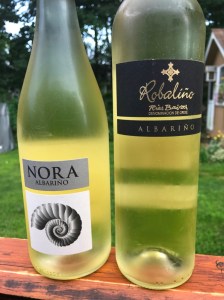 Quick – name the most popular Spanish white wine (and grape). Yes, Verdejo, Viura (Macabeo), Godello are all good candidates, but the crown unquestionably belongs to Albariño, the white grape predominantly grown in Rias Baixas in Galicia, in the Nothern Spain.
As it often happens with grapes, nobody can tell for sure where Albariño originated. The leading theory is that the Albariño grape was cultivated in the Rias Baixas area for a few thousands of years. But again, similar to many stories we hear today, things got real with Albariño once the growing zone was designated by the Spanish law in 1980. While initially it was an area designated to the Albariño grape itself, once the EU rules got into the play, the same area became known as Rias Baixas DO (Denominación de Origen), and this is where the absolute majority of Spanish Albariño wine is produced.
In most of the cases, Rias Baixas Albariño is unoaked wine (there are few producers, such as La Cana, who make oaked versions, but this is rare). I don’t like generalizing about the taste of the wines from the specific region, but to me, most of the Albariño wines have a core of salinity and Meyers Lemon. If you think about the location of Rias Baixas, right on the coast of Atlantic Ocean, it makes perfect sense that the most prominent wine from the region perfectly compliments the seafood dishes which one would expect to find in the coastal region. Albariño is easy to drink, works perfectly with and without the food, and it is typically priced under $20, which makes it an excellent white wine choice overall.
It is also worth noting that slowly, but surely, Albariño wines are fine-tuning their identity. What started about 40 years ago as one single region, Rias Baixas, now comprise 5 sub-regions – Ribeira do Ulla, Val do Salnés, Soutomaior, Condado do Tea, and O Rosal. You can’t always find the sub-regions listed on the labels yet, but I’m sure this is just a matter of time.
Make no mistake – the appeal of Albariño is not lost on the rest of the world. Today you can find excellent Albariño wines produced in California (Lodi makes some amazing renditions, such as Bokisch), Oregon, and Washington – and then Texas, lest not forget about Texas. Australia is also churning out some outstanding versions of Spanish classic (don’t think those wines can be found in the USA, though).
Beginning of August saw a slew of events celebrating Albariño – International Albariño Days took place from August 1 through 5; during the same days, Albariño was celebrated at The Albariño Festival, which is the second oldest wine Festival in Spain, taking place in the city of Cambados in Rías Baixas and attracting more than 100,000 visitors.


It is important to remember that Albariño is not just for summer – it is a versatile white wine, capable to elevate any evening, with or without a seafood dinner in tow. For the past two years, I attended virtual tastings on Snooth, each including a good selection of Albariño from the different sub-regions in Rias Baixas – here you can find the detailed descriptions of the 2017 and 2018 tastings. This year, I was offered an opportunity to try a couple of samples – here are my notes:
2018 Nora Albariño Rias Baixas DO (13% ABV, $18)
Very light golden
A hint of tropical fruit, white flowers, a touch of pineapple, medium-plus intensity, inviting
Clean, fresh, minerally forward, green apples, lemon, round, perfectly balanced.
8, perfectly refreshing for a hot summer day.
2018 Señoro de Rubiós Robaliño Albariño Rias Baixas DO (12.5% ABV, $18)
Light golden
Restrained, minerality, salinity, underripe green apple
Bright, fresh, touch of white plum and lemon, zipping acidity
8-, refreshing, but craves food (oysters!)
What do you think of Albariño? What is your go-to white wine, especially when it is hot outside? Cheers!
Navarra, Surprising and Not
It is commonly known that Spanish wines are some of the best-kept secrets of the wine world. An oxymoron, you say? Not necessarily. I’m not implying that you need to know the secret knock on the unsightly door in order to acquire Spanish wine. The “secret” simply means that consumers still often overlook Spanish wines as a category, despite the fact that those wines possess some of the best value, the best QPR you can ever find – try a $30 Rioja (for example, La Rioja Alta, Lopez de Heredia) and you will see what I mean.
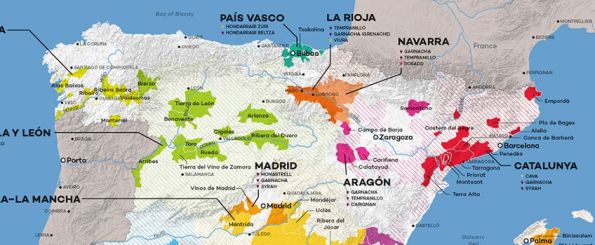
Spanish wine regions. Source: Navarra Wine US
Turns out that even secret wines have deeper secrets, such as Spanish (of course!) wines from Navarra, a northern province known for its unique climate (influenced by Mediterranean, Continental, and Atlantic climates). A long history of a close relationship with France (going back to medieval times) also led to Navarra sporting rather an interesting mix of grapes, with plantings of Garnacha and Tempranillo intermixed with Cabernet Sauvignon, Merlot, and Chardonnay. For a long time, Navarra was known as the “land of Rosé” – today you can find a full selection of white, Rosé and red coming from this small region.
By the way, here is the fun fact for you – in case you are a Game of Thrones fan, you might be interested to know that season six of the popular show was filmed in Navarra, in Bardenas Reales desert – here, you can impress your friends already.
If you are interested in a quick set of numbers (I know I always am) – Navarra has about 27,000 acres of vineyards, located on an average altitude of 1,300 feet (400 meters) above sea level. Annual production is about 70M liters of wine. Most planted grapes are Tempranillo and Garnacha, followed by Cabernet Sauvignon and Merlot. 90% of the wine production are red and Rosé (Rosé is 1/3 of this production), and 10% are white wines. Okay, done with numbers, let’s continue.
With this “secret of secrets” designation, you can probably figure that Navarra wines do not occupy central shelves of the liquor stores – but maybe it is for the better? Of course I mean it in our own, selfish interest – more for us, for the people “in the know”.
I had a pleasure of drinking Navarra wines before – for example, Tempranillo from Bodegas Ochoa is an excellent rendition of one of my most favorite grapes. However, this is where my exposure to the wines of Navarra mostly ends. Thus when I was offered to try a sample of Navarra wines, I quickly agreed.
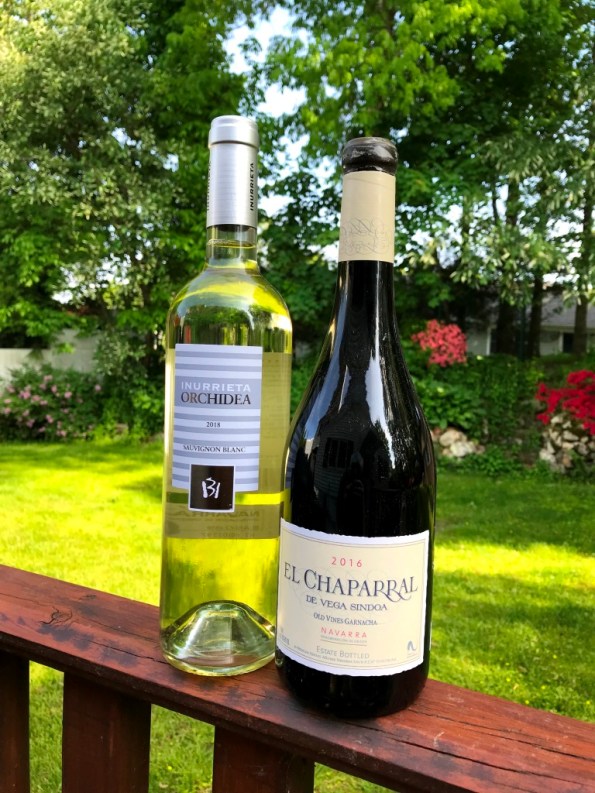
The surprises started upon arrival of the wines. Once I opened the box, finding a bottle of Garnacha made perfect sense. However, not finding a bottle of Rosé was rather surprising – I was sure Rosé would be included in the sample of Navarra wines. And the biggest surprise for me was finding the bottle of … Sauvignon Blanc! No argument here – Spain is often associated with red wines, but it makes excellent white wines – Albariño, Verdejo, Godello, Viura – but 100% Sauvignon Blanc from Spain is not something I see often (Rueda might be an exception, as Sauvignon Blanc is used there too, but mostly for blending).


The surprises continued as I opened the bottle of 2018 Bodegas Inurrieta Orchidea Sauvignon Blanc Navarra (13% ABV, $12). I have to admit, before the first sniff, I was skeptical. The first whiff of the aroma immediately cured all of my worries as the wine was simply stupendous. In a blind tasting, I would instantly place this wine into California – the wine was round and powerful, on the level of Honig or Duckhorn Sauvignon Blanc. A touch of freshly cut grass and currant leaves were unmistakable, supported by golden delicious apple, lemon, and complete absence of grapefruit. Perfectly refreshing, delicious wine – and at the $12 price point, the word “steal” comes to mind. (Drinkability: 8+)
Then there was Garnacha. Garnacha, a.k.a. Grenache is a very interesting grape. Garnacha has a tremendous range of expression, from ultra-powerful likes of Alto Moncayo Aquilon and No Girls Grenache to light and ephemeral Cote du Rhone and Bodegas Tres Picos. The 2016 El Chaparral De Vega Sindoa Old Vines Garnacha Navarra (15% ABV, $15) showed rather in the “ephemeral” category, despite the 15% ABV (I only noticed this high ABV when I was writing this post but not when I tasted the wine). Two main descriptors for this wine are raspberries and pepper. The wine was light, it was playful, full of fresh, ripe, but perfectly crunchy raspberries. Each one of those raspberries had a dash of black pepper on it. Ephemeral, surreal, or simply tasty – I will happily go with either descriptor. Again – excellent, excellent value at $15. (Drinkability: 8+).
Here you go, my friends. You can’t go wrong with either of these wines – not in price, not in the taste, not in the pleasure. Look for the wines of Navarra – you might be on a cusp of your next great wine discovery. Cheers!
Quick Trip Around The World
Travel might be the biggest joy of human existence. Okay, if not the biggest, it is still one of the most essential ones. Travel leads to new experiences – and experiences are the moments which comprise our lives. I’m sure the joy of travel is not universal, but I’m equally sure that it actually is for the majority of the readers of this blog (hoping that there is at least someone reading it?).
Travel typically requires two things – resources and preparation. Heck, with unlimited resources you need no preparation – you can finish your work day, say “I feel like dining at Le Cinq tomorrow”, have your limo take you directly to the airport and off you go. For many of us, this would be just a scene from the movies – which doesn’t make it impossible, right?
For most of us, successful and happy travel would require a bit more effort – find the deal on the airfare, find the deal on the hotel, find out that your passport expired just a week before you need to get on the flight, then listen to the boss complaining that you are leaving without finishing all your important tasks, finally, throwing everything you need but mostly what you don’t into the suitcase 30 minutes before leaving for the airport and starting your so long anticipated travel totally exhausted. More or less, this is the picture, right?
Then every once in a while, there is something even the unlimited funds can’t buy. Time, I’m talking about. When you finish work at 6 in New York, there is no way to be in Madrid in time for dinner. This is where you need a magic trick – and I can offer you one. Actually, you don’t need any magic to travel instantly to many different places – all you need is … well, I’m sure you know it is coming … yes, all you need is wine. The wine has this capacity. Once you look at the label and see it says France, Spain or California, your imagination can easily do the rest. A well-made wine has a sense of place, so once you take a sip, you are instantly transported to the place where wine was made. And if you ever visited the winery or the region where the wine came from, I’m sure you can be instantly overwhelmed with the emotions and memories. No, it is not the same as simply been there, but I’m sure it will still do the trick.
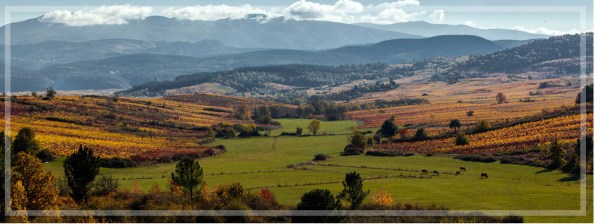
Bierzo, Spain. Source: Bodegas Godelia website
Let’s take wine and let’s travel – how about a quick trip around the world? Let’s start in Spain, in the region called Bierzo, located in the North East part of Spain, close to the Portuguese border. As with many places in the old world, the viticulture originated in the region in the times of the Roman empire. Today, Bierzo is best known for the red wines made out of the grape called Mencía, and Godello and Doña Blanca are the two primary white grapes in the region. Bierzo is known for its special microclimate, conducive for the grape growing, which can be characterized as the continental climate with ocean influence. Bierzo has today about 2,000 grape growers, 75 wineries, and produced about 9 million bottles of wine in 2017.
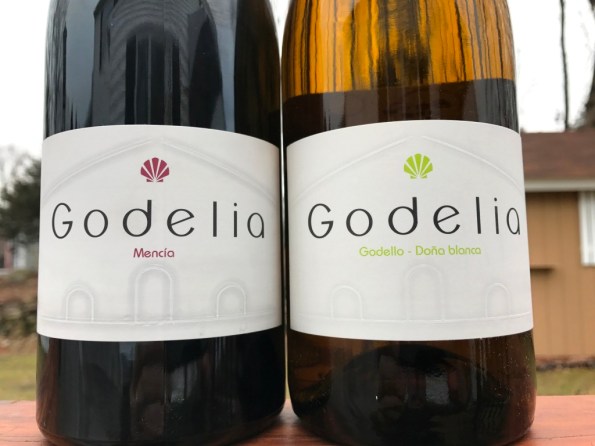
Two wines I want to offer to your attention come from the Bodegas Godelia, about 86 acres estate in Bierzo. The winery was created in 2009, however, their vineyards are much older, from 20 to 90 years old, depending on the grapes, and located at the altitudes of 1,600 to 2,000 feet.
2015 Bodegas Godelia Blanco Bierza DO (13.5% ABV, $17, 80% Godello, 20% Doña Blanca)
C: light golden
N: intense, pear, guava,
P: lemon, honeysuckle, crisp acidity, medium + body, delicious
V: 8-
2012 Bodegas Godelia Mencia Bierzo DO (14.5% ABV, $19, 12 months in oak)
C: dark garnet, almost black
N: warm, inviting, medium+ intensity, a touch of barnyard, spices
P: cherries, baking spices, medium body, violets
V: 7+ on the 2nd day, needs time. Mencia is known to produce massive, chewy wines, so this wine is no exception. 6 years of age is nothing for this wine – it might start opening up after at least another 6.
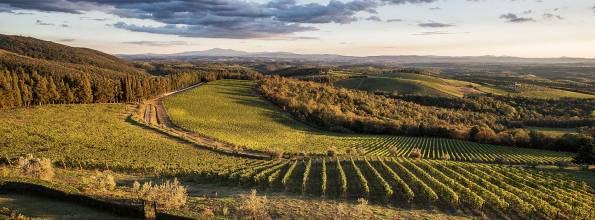
Hills of Tuscany. Source: Barone Ricasoli website
Where should we go after Spain? How about Italy? Let’s visit Tuscany, where 2015 vintage was simply outstanding. Of course, Tuscany is best known for its Chianti wine. At the heart of the Chianti region lays a much smaller region called Chianti Classico – this is where the Chianti wines historically originated from. Inside Chianti Classico, let’s look for the winery called Barone Ricasoli – one of the very first producers in the region, taking its history since 1141. Barone Ricasoli property has a grand looking castle, where some of the stones are still original since 1141, 600 acres of vineyards and 65 acres of olive trees. While Barone Ricasoli is mostly known for the reds, they also produce a few of the white wines, a Rosato, grappa, and of course, the olive oil.


I want to offer you two of the classic Chianti wines from the Chianti Classico area (pun intended):
2015 Barone Ricasoli Brolio Chianti Classico DOCG (13.5% ABV, $18, 80% Sangiovese, 15% Merlot, 5% Cabernet Sauvignon)
C: Garnet
N: Tar, leather, sandalwood, tart cherries
P: Tart cherries, plums, clean acidity, sage, a touch of tobacco, medium plus body, good structure.
V: 8, was excellent from the get-go, got more complexity on the second day.
2015 Barone Ricasoli Brolio Chianti Classico Riserva DOCG (14% ABV, $23, 80% Sangiovese, 15% Merlot, 5% Cabernet Sauvignon)
C: Dark garnet
N: Cherry, Sage, Rosemary, leather, medium plus intensity.
P: Supple berries, tart cherries, firm structure, young tannins, a touch of tobacco, good acidity, tannins on the finish
V: 8, great potential. Right now needs food. While perfectly drinkable now, with time will become a truly delicious sip.
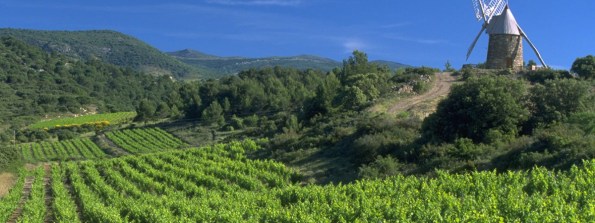
Languedoc. Source: Languedoc-wines.com
We need to complete our old world portion of the tour, so I think the stop in France is a must. How about a quick visit with Paul Mas in Languedoc? Languedoc is the largest wine producing region in France, located in the south, producing a tremendous range of white, sparkling, Rosé and, for the most part, red wines. Domaines Paul Mas is one of my favorite producers I have written about many times. What I love about the wines of Domaines Paul Mas is that you literally can’t go wrong with any of the wines produced at the domain – Sparkling, Rosé, white or reds. Not only the wines taste great, but they are also priced very reasonably – Paul Mas wines saved my wallet at the restaurants on multiple occasions, so they definitely deserve some respect. Here are the wines I want to bring to your attention:


2016 Paul Mas Estate Single Vineyard Collection Chardonnay Saint Hilaire Vineyard Pays d’Oc (13.5% ABV, $12.99)
C: Light golden color
N: Meyer lemon aromatics, hint of white peach, Bosc pear
P: Crisp, tart lemon on the palate, ripe Granny Smith apples, clean, refreshing. Good mid-palate presence, medium finish.
V: 8-, very good.
2016 Paul Mas Estate Single Vineyard Collection Pinot Noir Saint Hilaire Vineyard Pays d’Oc (13.5% ABV, $12.99)
C: Dark ruby
N: Fresh raspberries and cherries on the nose
P: Soft, supple, fresh berries, crisp, fresh, perfect acidity, excellent
V: 7+/8-
2016 Paul Mas Estate Single Vineyard Collection Malbec Saint Hilaire Vineyard Pays d’Oc (13.5% ABV, $12.99, 90% Malbec, 10% Cabernet Franc))
C: Dark garnet
N: Fresh raspberries and blackberries in the nose, nicely inviting
P: Soft, supple, fresh berries, crisp, fresh, perfect acidity, excellent
V: 8-
How is your day going so far? Feel like traveling somewhere? How about we will take a trip to sunny California? California is a big place, so to narrow it down we are actually heading to the Santa Barbara County. Here is a perfect example of the wine being a connector and an instant transporter – as soon as I hear “Santa Barbara County”, the brain instantly serves up the memories of the first Wine Bloggers Conference I attended, WBC14, which took place in Santa Barbara County. Moreover, one of the best experiences of that trip was a visit to the small town of Solvang, which is an incredible place for any wine lover. While visiting Solvang, we tasted the wines produced by Lucas and Lewellen – thus seeing that name on the label was an instant memory trigger.


The wine I want to offer to your attention today is perfectly representative of the capabilities of the Santa Barbara County wine growing region, and at the same time is very non-typical for California. Lucas and Lewellen produce the line of wines under the name of Toccata, which are all Italian varieties and blends, all grown in California. This Toccata Classico was a perfect enigma – varietally correct Tuscan beauty, only made from start to finish in California. In a blind tasting, my guess 100% would be “Chianti!”.
2015 Lucas & Lewellen Toccata Classico Santa Barbara County (14.1% ABV, $29, 50% Sangiovese, 30% Cabernet Sauvignon, 5% Merlot, 5% Cabernet Franc, 5% Freisa, 5% Petit Verdot, 18 months in French Oak, 346 cases produced)
C: Garnet
N: Fresh cherries, touch a leather, medium+ intensity
P: Ripe cherries on the palate, bright, firm structure, fresh, crunchy, touch of leather, excellent complexity, nicely integrated tannins
V: 8+, an excellent rendition of the old world wine in the new world.
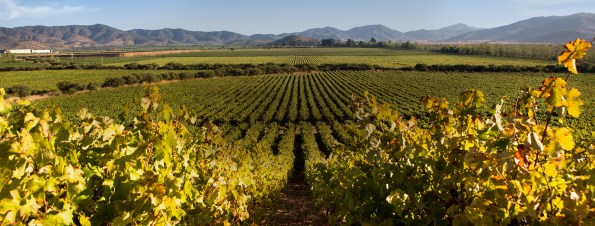
Trinidad Vineyard, Chile. source: Viña Ventisquero website
Hurry up or we will be late for our last destination – Chile. About 25 years ago, Chile was mostly known as a “one-trick pony”, offering bargain-priced Cabernet Sauvignon, Merlot, and Chardonnay. Today, Chile is one of the leading wine producing countries in the world, offering a substantial range of perfectly executed wines, from Chile’s own trademark, Carménere, to Pinot Noir, Syrah, Grenache, and many others.
Today we are visiting Viña Ventisquero, the winery which started only 20 years ago, in 1998, and now offering a diversified set of wines, coming from the different regions and made with the finest attention to detail.
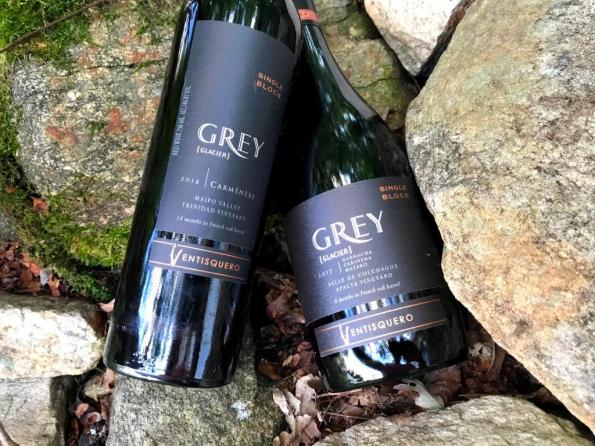
2017 Viña Ventisquero Grey Glacier Single Block Apalta Vineyard Valle de Colchagua (14% ABV, $18, 62% Garnacha, 19% Carinena, 19% Mataro, 6 months in French oak)
C: Ruby
N: Fresh raspberries, medium plus intensity, beautiful
P: Restrained, dark fruit, medium body, minerality, clean acidity, tart raspberries
V: 8-
2014 Viña Ventisquero Grey Glacier Carménere Trinidad VIneyard Maipo Valley (14% ABV, $19, 18 months in French oak)
Dark garnet
A perfect nose of Carménere – mix black currant berries with blackcurrant leaves
Medium to full body, soft, silky, fresh blackcurrant present, anis, good acidity, good balance, very pleasant overall
8/8+, excellent wine
That concludes our trip, my friends. Wasn’t it easy to travel with wine, in the comfort of your living room? Cheers!
Double the Holiday Fun With Vilarnau
 Who doesn’t like the holidays? Of course, it is easy to complain about how overwhelming the holidays can be when we feel obliged to please lots of people in seemingly irreconcilable ways with food or with gifts. But let’s not go there – holidays genuinely are about the happy state of mind, so let’s focus on it.
Here I come, with an offer to double your holiday fun and enjoyment – are you at least a little bit curious how am I going to be able to deliver on that?
Here is how. First, I want to recommend you a good wine. Wine is an indelible part of any celebration – any holiday, any birthday, any achievement. There are lots and lots of wines to chose from, and really not enough time to learn about all of them. Thus the wine recommendation means that you can save time for some other important tasks, and have one less thing to worry about. Check.
Now, how can I double the fun? Easy. How about the wine in a beautiful package? When you bring the bottle to someone’s house, or you put it out in front of your guests, isn’t it nice to hear “wow, what a beautiful bottle!”. We are visual creatures; not only we eat with our eyes first, but we drink with our eyes first too. Instead of explaining the bottle with the gray words-covered label “it comes from the great producer, really” or “the guy at the store said I would love it”, isn’t it better to just put the bottle on the table which makes a statement with its own appearance “here, look how beautiful I am”?
So here it is, my recommendation for the double fun for the holidays – Cava, Spanish Sparkling wine from Vilarnau, all wrapped in the beautiful, Gaudí-inspired packaging.
Vilarnau estate had been growing vines since the 12th century. The first Cava at Vilarnau was produced in 1949, and from there on, Vilarnau moved on to become one of the prominent Cava producers in Spain.
Vilarnau has a diverse portfolio of the sparkling wines, out of which the Trencadis series wines stand out beautifully. To explain the Trencadis concept, let me simply bring an explanation from the Vilarnau website:
“What is Trencadis?
“Trencadís” is a kind of mosaic that was used in the modernist artistic movement in Catalonia, created from tiny fragments of broken ceramic tiles, roof tiles or crockery. The technique is also known as “pique assiette”, in French. The Catalan architects Antoni GaudÍ and Josep MarÍa Pujol used “trencadÍs” in many of their designs, the most famous probably being “Parc Güell in Barcelona. Vilarnau’s proximity to Barcelona (not just geographic but also spiritual) means it was natural for this artistic resource used by the winery. As a result some of our cavas are dressed as follows.”
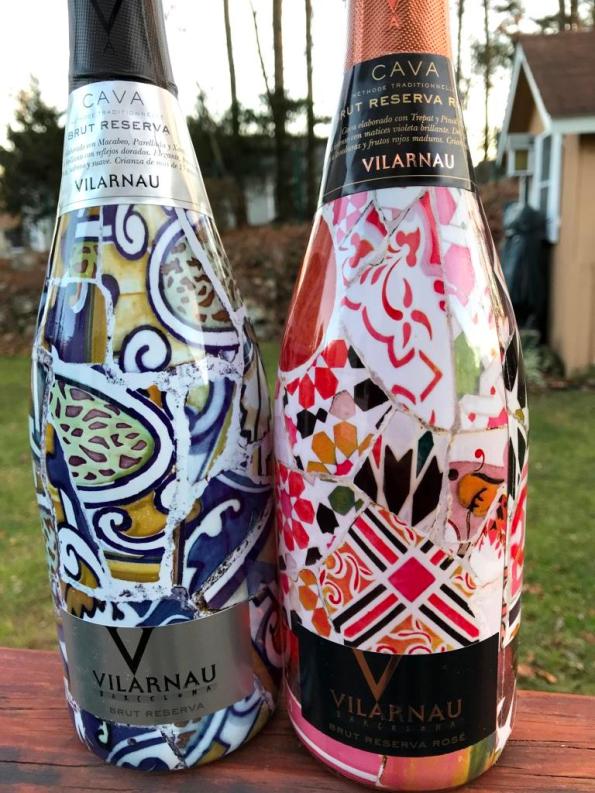
Just take a close look at those bottles, how closely they resemble the actual mosaic pieces with all the grout in between? Don’t you think these bottles are beautiful? If anything, they will make for a perfect conversation starter at any gathering – and now you can also explain to people what exactly are they looking at.
So what is behind the beautiful packages? Equally beautiful Cavas, which are also stylistically very different. Cava is a Spanish sparkling wine produced in so-called Classic Method, where the second fermentation takes place in the bottle, exactly as it is done in the production of the French Champagne.


NV Vilarnau Brut Reserva DO Cava (11.5% ABV, $14.99, 50% Macabeo, 35% Parellada, 15% Xarel-lo, 15+ months in the bottle)
Beautiful mousse
Classic Champagne nose – toasted bread, a touch of yeast, white apples, a touch of lemon
Same classic profile continues on the palate – freshly baked bread, a touch of yeast, golden delicious apple, fresh, exuberant, perfect acidity
8, delicious
NV Vilarnau Brut Reserva Rosé Delicat DO Cava (12% ABV, $15.99, 85% Grenache, 15% Pinot Noir, 15+ months in the bottle)
Beautiful mousse
A touch of toasted bread with the addition of strawberries and cranberries
Toasted bread, strawberries, a touch of cranberries, bitter orange, crisp, tart, cut-through acidity
8, excellent example of a sparkling Rosé
I hope you find these bottles as beautiful as I do, and I hope you will like the wines too. At this price level, Vilarnau Cavas will stand easily against a lot of Champagne, so go ahead, make your friends and guests happy. Cheers!
Thinking About Albariño, or Notes from Albariño Deep Immersion with Snooth – 2018 edition
Luckily, Albariño doesn’t need an introduction to the wine lovers anymore (if you think I live in lalaland, please speak up). Albariño is the best known white grape of Spain, making crisp, dry, minerally-infused, refreshing white wines, perfectly suitable to support any seafood dish, as they always had in their native Galicia region. As with most of the white wines, Albariño is typically associated with summer, but it is a versatile wine all year around – and typically very reasonably priced.
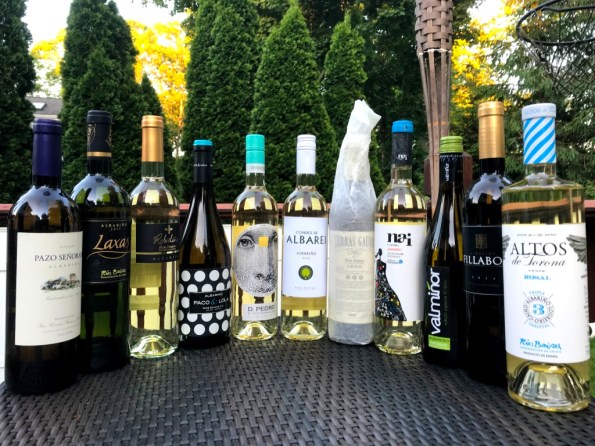
For the second year in the row, I had a pleasure of participating in the virtual tasting of Albariño wines, organized by Snooth, one of the largest online wine communities. I will not delve into the technical details of the region, as I had an extensive coverage in last year’s post, and instead, I will simply share my notes for the wines we tasted.
Here are the notes, sorted by the sub-region of Rias Baixas:


Sub-region: Val do Salnés:
2016 Condes de Albarei Albariño Rias Baixas DO (13.5% ABV, $15)
Light straw
Lemon, lemongrass, hint of peach
Lemon, good minerality, medium body, good mouthfeel, mostly acidity on the finish
8-, good balance, round
2017 Pazo Señorans Albariño Val do Salinés Rías Baixas DO (13.5% ABV, $25)
Straw color
Rich citrus – lemon, grapefruit, orange
Clean acidity, lemon, thyme, good minerality, vibrant, fresh
8-, excellent
2017 Nai e Señora Albariño Val do Salnés Rías Baixas DO (13% ABV, $15.57)
Straw pale
Tropical fruit, white flowers
Round, clean, good balance of fruit and acidity
8, definitely one of the favorites.
2017 Paco & Lola Albariño Rías Baixas DO (13% ABV, $21.99)
Lightest color of all, straw pale
Lemon, mint, nice minerality
Fresh, crisp, cut-trough acidity, lemon grass
8-, round and extremely refreshing


Sub-region: Contado do Tea:
2016 Fillaboa Albariño Rias Baixas DO (13% ABV, $20)
Light golden
Candied lemon, vanilla, touch of butter, medium+ intensity, inviting
Crisp acidity, fresh, touch of salinity, fresh lemon, steely notes, vibrant
8-/8, excellent
2017 Señorío de Rubiós Robaliño Albariño Rias Baixas DO (12.5% ABV, $18)
Straw pale
Sage, lemon, hint of overripe white peach
Good acidity, lemon finish, Meyer lemon notes
7/7+, Needs more vibrancy.
2017 Bodegas As Laxas Albariño Rias Baixas DO (12.5% ABV, $18)
Light straw color
Lemon, touch of minerality,
Minerality, forthcoming acidity, hint of grapefruit, Mayer lemon, good balance
8-, very good, balanced wine


Sub-region: O Rosal:
2017 Valmiñor Albariño Rías Baixas DO (13% ABV, $18.99)
Light gold
Fresh white plums, intense, pineapple, very inviting
Crisp acidity, lemon notes, fresh
7/7+, nice, simple, varietally correct
2016 Don Pedro Albariño De Soutomaior Rias Baixas DO (13% ABV, $18.99)
Light gold
Touch of honeysuckle, white flowers, hint of peach
Crisp acidity, pure lemon, vibrant, clean, lots of minerality, good midpalate weight
8-, steely goodness of the young Chablis, excellent, lots of pleasure. This wine will dramatically evolve over the next 5-7 years.
2017 Altos de Sorona Rosal Rías Baixas DO (12.5% ABV, $20, blend of Albariño, Caiño, Loureiro)
Straw color
Lemon, sea air, minerality
Lemon, crisp acidity, good weight, fresh, vibrant.
8-, excellent balance, can be had by itself as a summer day thirst quencher, or with some oysters (would work beautifully)
2017 Terras Garuda O Rosal Rias Baixas DO (12.5% ABV, $23.99, 70% Albariño, 10% Loureira, 20% Caiño Blanco)
Light golden color
Tropical fruit, guava, candied lemon, vanilla
Rich, generous, hint of watermelon and pineapple, crisp acidity, fresh, vibrant
8-, excellent
If you want to see the recording of the tasting, you can find it here. If you want to try the wines we tasted, most of them are still available on the Snooth website, also at a great price – take a look here.
I have to say that the quality was excellent across all the wines we tasted, with some of the standouts, such as Nai e Señora Albariño. Is Albariño a part of your standard wine routine? Do you have any favorites? Cheers!
P.S. Procrastination sometimes offers benefits – this tasting took place in May, but today (August 1st, 2018) is International Albariño Day, so I guess the post about Albariño is quite appropriate.
The Art of Tempranillo
Source: Vintae.com
I love Tempranillo wines. I wouldn’t call myself an expert, but I had a wide range of Tempranillo – with the exception of Australia, I believe I tried most of the major renditions – Rioja, Ribera Del Duero, Toro, most everywhere else in Spain, Texas, California, Oregon, Washington (am I missing something? do tell!). With all the love and respect to all the regions, if I have to put an order of priorities in that “list”, I would put Rioja first, Ribera del Duero very close second, but the competition for the 3rd place would be severe – in my world, of course.
I like wines of Toro, the closest sibling to the Rioja and Ribera del Duero, but it would be hard for me to place them higher than some of the beautiful Tempranillo renditions from Irwin Family Vineyards, Duchman, or Fields – considering the Toro wines I had in the past. Compared to Rioja and Ribera del Duero, Toro is … well, maybe I need to explain why I keep mentioning Rioja, Ribera del Duero, and Toro together all the time. These are the only three regions in the world where the absolute majority of the red wines is made out of the Tempranillo grapes. Yes, there are Garnacha and Graciano in Rioja, Cabernet Sauvignon and Merlot in Ribera del Duero, but still – most of the red wines in these three regions are made out of the Tempranillo, hence the constant comparison.
Out of the three regions, Toro is south-most one, with an expressly continental climate, low annual rainfall amounts, and significant range of day-night temperatures – which typically translates well into the flavor. Tempranillo is the grape of Toro, but similarly to Tuscany/Brunello, where you have Sangiovese and Sangiovese Grosso, Tempranillo in Toro is known as Tinta de Toro, a.k.a Tempranillo de Castilla, a.k.a. Ink of Toro. The grape is a bit smaller, with thicker skin, which coupled with growing conditions typically results, in massive, concentrated wines requiring extensive aging to become drinkable – I still have a memory of trying Alabaster made by Sierra Cantabria, one of the well-known producers in Toro, which was one of the most massive wines I ever experienced. Nevertheless, as I said at the beginning, Tempranillo is one of the favorites, so when the opportunity called to try 3 wines from Toro, I was definitely curious – and a bit cautious at the same time.
To ease things up, together with the 3 Toro wines from Bodega Matsu came a bottle of Rioja Reserva from Bodega Classica. While coming from unrelated producers, there is a common link between them – this link is called Vintae – a young company with a serious passion for the Spanish wine for the modern world. Vintae, started in 1999 by the Arambarri family, set on changing world’s perception of the Spanish wine as “boring”. To the date, Vintae unifies a collection of 11 different “projects”, all focused on showcasing the regions and the grapes.
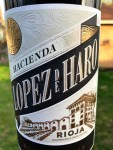
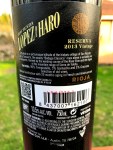
Going back to the wines at hand, let’s talk about Rioja first. The wine comes from Bodega Classica, located in the heart of Rioja Alta. Rioja Alta offers a unique high-altitude setting to produce arguably the best Tempranillo of the whole of Rioja region. Couple that with more than 100 years old vineyards, and you are looking at some tasty opportunities in the bottle, as this Bodega Classica Hacienda López de Haro Rioja Reserva was. Here are my notes:
2013 Bodega Classica Hacienda López de Haro Rioja Reserva DOCa (13.5% ABV, $16.99, 90% Tempranillo, 5% Garnacha, 5% Graciano, 20 months in French and American oak)
Dark garnet color
Pepper, vanilla, raspberries, mushrooms, nice minerality
Medium body, good acidity, noticeable alcohol burn initially, went away in about 15 minutes, good fruit showed up, characteristic cedar notes, good acidity, round, soft.
8-, nice, just give it a bit of time to soften up at the beginning. The second day continued without changes. Good life expectancy, as expected of Rioja Reserva. And an excellent QPR.
Now, let’s go back to Toro. As I already said, in my prior experience, Toro wines were massive and concentrated, requiring long aging to soften and really show a beautiful expression of Tempranillo. And then there were wines called Matsu.
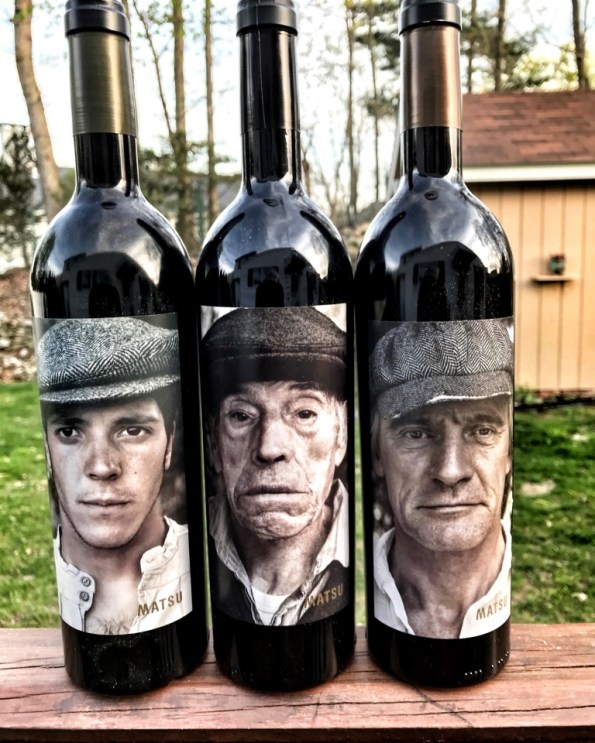
Matsu in means “wait” in Japanese. As we all know, waiting is one of the favorite games of oenophiles. When it comes to the three Matsu wines I had an opportunity to taste, there are many different levels of “waiting”. The wines had been progressively aged for the longer times before the release – 3 months for El Picaro, 14 months for El Recio, 16 months for El Viejo. The grapes were harvested from the vines of different age (again, progressively) – 50-70 years old for El Picaro, 90-100 years old for El Recio, more than 100 years old for El Viejo. See, waiting here is clearly a part of the equation.
And then there are those ultra-creative labels. Not only labels commemorate people who actually worked to create the wines, they clearly identify what you should expect from the wines – in age, in style, and even in price. I conducted a little experiment, first with my kids, and then with the people on Instagram, asking them to identify the most expensive wine – nobody made a mistake, the labels speak very clearly to us.


How were the wines? Surprising. Probably the best Toro wines I ever had – without any regard to the pricing category. Here are my notes, so you can see for yourself:
2016 Bodega Matsu El Picaro Toro DO (14.5% ABV, $13.99, 100% Tinta de Toro, 50 – 70 years old vines, 3 months minimum aging on the lees, concrete tanks)
Bright ruby color, noticeable legs, minimal rim variation
Young fresh berries, medium+ intensity, a touch of vanilla
Surprisingly light on the palate, pleasant tannins, fresh berries, very quaffable.
8-, might be the lightest rendition of Toro I ever had. The smell is a bit more complex on the second day. Palate nicely evolved, good balance, raspberries, no more impression of the young wine, lots of minerality.
2015 Bodega Matsu El Recio Toro DO (14.5% ABV, $21.99, 100% Tinta de Toro, 90 – 100 years old vines, 14 months aging in second use oak barrels)
Garnet color, noticeable legs, minimal rim variation too
Sage, fresh raspberries, quite fruity, roasted notes, minerality, distant hint of cinnamon
Underripe plums, blueberries, thyme, nice herbal component, surprisingly light, still noticeable alcohol, needs more time
8-, needs time. Second day: 8/8+, velvety texture, well integrated, excellent balance, a touch of tobacco and espresso on the palate and ripe plums. Outstanding.
2015 Bodega Matsu El Viejo Toro DO (15% ABV, $46.99, 100% Tinta de Toro, 100+ years old vines, 16 months in new French oak barrels)
Garnet Color, noticeable legs, rim variation is not extensive, but present
Sweet blueberries and raspberries on the nose, sage, sweet oak
8- first day, waiting for more.
Second day: 8, much evolved, more integrated, velvety texture, dark fruit, round, smooth. Will evolve further.
Here you are, my friends – the Art of Wine, from the label to the glass. Very impressive and thought-provoking wines, definitely worth seeking. Have you had any of these wines? Have you had Toro wines before? Do you have any Tempranillo favorites? Cheers!
Last Bottle Sign Up ($10 credit)




 Talk-A-Vino