Archive
Navarra, Surprising and Not
It is commonly known that Spanish wines are some of the best-kept secrets of the wine world. An oxymoron, you say? Not necessarily. I’m not implying that you need to know the secret knock on the unsightly door in order to acquire Spanish wine. The “secret” simply means that consumers still often overlook Spanish wines as a category, despite the fact that those wines possess some of the best value, the best QPR you can ever find – try a $30 Rioja (for example, La Rioja Alta, Lopez de Heredia) and you will see what I mean.
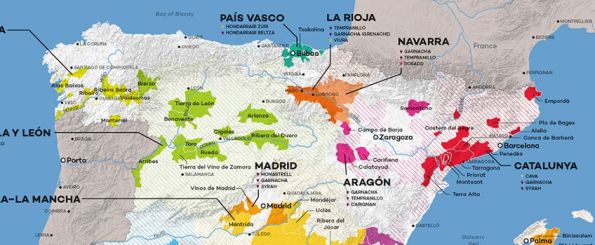
Spanish wine regions. Source: Navarra Wine US
Turns out that even secret wines have deeper secrets, such as Spanish (of course!) wines from Navarra, a northern province known for its unique climate (influenced by Mediterranean, Continental, and Atlantic climates). A long history of a close relationship with France (going back to medieval times) also led to Navarra sporting rather an interesting mix of grapes, with plantings of Garnacha and Tempranillo intermixed with Cabernet Sauvignon, Merlot, and Chardonnay. For a long time, Navarra was known as the “land of Rosé” – today you can find a full selection of white, Rosé and red coming from this small region.
By the way, here is the fun fact for you – in case you are a Game of Thrones fan, you might be interested to know that season six of the popular show was filmed in Navarra, in Bardenas Reales desert – here, you can impress your friends already.
If you are interested in a quick set of numbers (I know I always am) – Navarra has about 27,000 acres of vineyards, located on an average altitude of 1,300 feet (400 meters) above sea level. Annual production is about 70M liters of wine. Most planted grapes are Tempranillo and Garnacha, followed by Cabernet Sauvignon and Merlot. 90% of the wine production are red and Rosé (Rosé is 1/3 of this production), and 10% are white wines. Okay, done with numbers, let’s continue.
With this “secret of secrets” designation, you can probably figure that Navarra wines do not occupy central shelves of the liquor stores – but maybe it is for the better? Of course I mean it in our own, selfish interest – more for us, for the people “in the know”.
I had a pleasure of drinking Navarra wines before – for example, Tempranillo from Bodegas Ochoa is an excellent rendition of one of my most favorite grapes. However, this is where my exposure to the wines of Navarra mostly ends. Thus when I was offered to try a sample of Navarra wines, I quickly agreed.
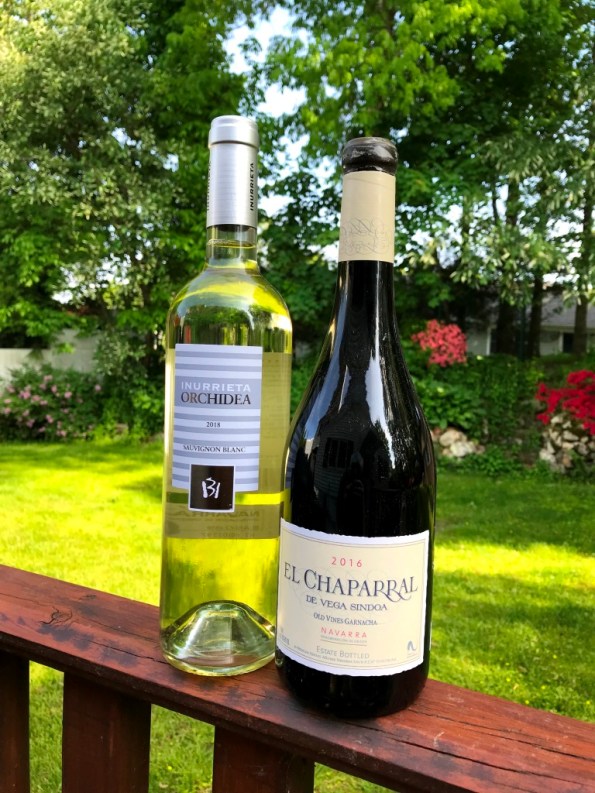
The surprises started upon arrival of the wines. Once I opened the box, finding a bottle of Garnacha made perfect sense. However, not finding a bottle of Rosé was rather surprising – I was sure Rosé would be included in the sample of Navarra wines. And the biggest surprise for me was finding the bottle of … Sauvignon Blanc! No argument here – Spain is often associated with red wines, but it makes excellent white wines – Albariño, Verdejo, Godello, Viura – but 100% Sauvignon Blanc from Spain is not something I see often (Rueda might be an exception, as Sauvignon Blanc is used there too, but mostly for blending).


The surprises continued as I opened the bottle of 2018 Bodegas Inurrieta Orchidea Sauvignon Blanc Navarra (13% ABV, $12). I have to admit, before the first sniff, I was skeptical. The first whiff of the aroma immediately cured all of my worries as the wine was simply stupendous. In a blind tasting, I would instantly place this wine into California – the wine was round and powerful, on the level of Honig or Duckhorn Sauvignon Blanc. A touch of freshly cut grass and currant leaves were unmistakable, supported by golden delicious apple, lemon, and complete absence of grapefruit. Perfectly refreshing, delicious wine – and at the $12 price point, the word “steal” comes to mind. (Drinkability: 8+)
Then there was Garnacha. Garnacha, a.k.a. Grenache is a very interesting grape. Garnacha has a tremendous range of expression, from ultra-powerful likes of Alto Moncayo Aquilon and No Girls Grenache to light and ephemeral Cote du Rhone and Bodegas Tres Picos. The 2016 El Chaparral De Vega Sindoa Old Vines Garnacha Navarra (15% ABV, $15) showed rather in the “ephemeral” category, despite the 15% ABV (I only noticed this high ABV when I was writing this post but not when I tasted the wine). Two main descriptors for this wine are raspberries and pepper. The wine was light, it was playful, full of fresh, ripe, but perfectly crunchy raspberries. Each one of those raspberries had a dash of black pepper on it. Ephemeral, surreal, or simply tasty – I will happily go with either descriptor. Again – excellent, excellent value at $15. (Drinkability: 8+).
Here you go, my friends. You can’t go wrong with either of these wines – not in price, not in the taste, not in the pleasure. Look for the wines of Navarra – you might be on a cusp of your next great wine discovery. Cheers!
Discover Wines of South Africa
 Let me start with a question: when was the last time you had South African wine? You can take a few minutes to ponder at it – but I would bet that if you are a wine consumer in the USA, there is a very good chance that the answer will be “hmmm, never”. But if “never” or “many years ago” is your answer, we need to change that.
The winemaking history in South Africa goes back to the 17th century, when immigrants from Europe brought the vine cuttings with them, as they’ve done in all other places. South African wine story somewhat resembles most of the Europe, as it also includes the phylloxera epidemic and replanting of the vineyards. Unfortunately for South African winemakers and the rest of us, the wine story of South Africa also had heavy political influence, with apartheid, KWV monopoly, and resulting boycott from most of the countries for the majority of the 20th century (here is an article on Wikipedia if you want to learn more). The new chapter for South African wines opened up in the 1990s, with the end of apartheid and subsequent changes in all areas of life, winemaking included.
In the past, South Africa was best known for its Chenin Blanc wines, which was also called Steen. Another grape South Africa was famous for was Pinotage – dinking of the Pinotage wines was likened by some wine critics to the drinking of the “liquified rusty nails”. On much brighter note, while talking about the past, I want to mention Klein Constantia Vin de Constance – the nectar of gods (don’t take my word for it – find it and try it), made from Muscat de Frontignan grapes and favorite wine of the French emperor Napoleon Bonaparte, who was buying it by the barrel (legend has it that it was Napoleon’s deathbed wish wine).
Today South Africa offers lots more than a typical wine consumer would expect. The South African wines are often described as “old world wines masquerading as new world wines”, and this is perfectly showing in the wide range of the wines. You really need to try for yourself South African Chardonnay, Sauvignon Blanc, Pinot Noir, Cabernet Sauvignon, Merlot, Shiraz, and don’t skip the Chenin Blanc, especially if it is an FMC by Ken Forrester. You shouldn’t skip even Pinotage, as it dramatically evolved compared to the old days. The old world winemaking foundation really shows through many of the South African wines today, and they are always ready to surprise a curious wine drinker.
Case in point – our recent virtual tasting on Snooth. We had an opportunity to taste 6 white wines, well representing South African grapes, styles and regions. The tasting included 3 out of the 4 most popular white grapes in South Africa (Chenin Blanc, Chardonnay, and Sauvignon Blanc) – the second most planted grape, Colombard, is used primarily in the brandy production. Another interesting fact for you – until 1981, there was no Chardonnay planted in South Africa, which makes it all more impressive (read my notes below). Two of the Chardonnays and Sauvignon Blanc from the tasting were simply stunning, and the rest of the wines were perfectly suitable for the everyday drinking. What is even better is that you don’t need to rely on my notes if you want to discover what South Africa is capable of – Snooth offers that exact set of 6 wines for purchase, at a very reasonable price of $79.99 for the whole set.
Here are my notes from the tasting:


2016 Glenelly Glass Collection Unoaked Chardonnay WO Stellenbosch (13.5% ABV, $20, 100% Chardonnay)
C: straw pale
N: Beautiful, vanilla, touch of guava, fresh, medium+
P: good acidity, granny smith apple, crisp, maybe a bit too restrained now, lemony acidity on the finish
V: 8, excellent now, but I definitely want to see it evolve.
2016 De Wetshof Estate Limestone Hill Chardonnay WO Robertson (14% ABV, $16, 100% Chardonnay)
C: light golden
N: complex, vanilla, popcorn, medium intensity. Nose clears up as the wine breathes. Golden delicious and honeysuckle appeared. Delicious nose.
P: quite restrained, touch of Granny Smith apples as opposed to the golden delicious. Perfect acidity, vanilla, fresh.
V: 8, will evolve. Definitely an interesting wine.
2016 Badenhorst Family Wines Secateurs Chenin Blanc Swartland WO Steen (12.5% ABV, $15, Chenin Blanc with a sprinkling of Palomino and another secret grape)
C: straw pale
N: interesting, yeast, touch of white stone fruit
P: crisp, restrained, mostly lemony, acidic notes
V: 7, too simple and single-dimensional


2016 Raats Original Chenin Blanc Unwooded WO Stellenbosch (12.5% ABV, $16, 100% Chenin Blanc)
C: straw pale+
N: inviting, medium plus, minerality, hint of peach
P: clean acidity, interesting touch of pear and white plum with acidic finish
V: 7+, interesting wine, by itself and with food.
2014 Thelema Sutherland Sauvignon Blanc WO Elgin (13% ABV, $20)
C: light golden
N: lots of minerality, touch of gunflint, touch of grass (distant hint), white stone fruit as the wine is opening up – doesn’t resemble SB at all
P: crisp, clean, lemon acidity, very restrained, mineral-driven, limestone. Almost astringent. Needs food.
V: rated it first 7+/8-, noting “will be interesting to see how the wine will open up”. More playful after 30 min in the open bottle. Interesting. After two days, this clearly became 8/8+ wine
2016 The Wolftrap White WO Western Cape (13.5% ABV, $12, Viognier 42%; Chenin Blanc 37%; Grenache Blanc 21%)
C: light golden
N: lemony notes, grass
P: a little too simplistic, mostly lemony notes. Drinkable, not great
V: 7, too simple, might work better with food
South African wines are definitely here, at the world-class level. If you pride yourself as a wine lover, they are all ready for your undivided attention.
One on One With Winemaker: Phil Rose of Wairau River, New Zealand
It just happened to be that once again, we will be talking about New Zealand wines. Once again, we are going to visit Marlborough. And once again, we are going to meet with a pioneer.
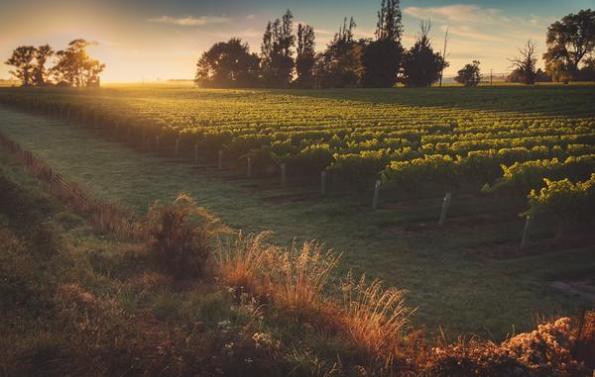
Source: Wairau River
Wairau River Wines‘ story started in 1978 when Phil and Chris Rose became grape growers (Phil was a farmer since the childhood, so the transition was not that dramatic). In 1991, they also became winemakers, producing their first wine. Today, Wairau River vineyards span 550 acres, making it one of the biggest family owned wineries in New Zealand. And it is all truly in the family, as Phil and Chris’ two sons and three daughters are all working at the winery.
Wairau River Wines produces two lines of wines. The Estate collection includes all of the usual suspects, such as Sauvignon Blanc, Pinot Gris, Pinot Noir, Riesling, and Chardonnay, but you can also find some oddballs there, such as Albariño. The Reserve line also includes Syrah and Viognier, as well as late harvest botrytized Riesling.
I had an opportunity to sit down with Phil Rose (albeit, virtually), and inundate him with questions – here is what transpired.
[TaV]: You started growing grapes in 1978. Was there a pivotal moment which got you into the grape growing? Were grapes a long-time passion before you started, or was there an event which brought you into the world of the wine?
[WR]: The oil shock in the 1970’s meant we looked for an alternative away from the farming of beef and sheep plus the growing of Lucerne and other crops. However due to a rural council district scheme rule, grape growing was prohibited on land north of old Renwick road.
We were required to apply for permission to establish a vineyard, which we did but the application received 56 objections and not one single vote of support. There were a number of reasons for the objections. Forestry owners were concerned they would no longer be able to use sprays like 2.4.5.t because of its impact if grapes were nearby. Local farmers were also concerned their normal farming methods would be threatened. There was also the moral opposition such that no one should be able to grow a product that could be turned in to alcohol.
Unfortunately the council denied our application, so we appealed. But things moved even slower back then than they do now – and it took 18 months for the independent tribunal to take place. 18 months where we worked hard to try and convince the powers that be and our own neighbors that grape growing in the Rapaura area of Marlborough had huge merits.
Finally in 1978 we got a unanimous decision from the tribunal which gave us the permission we needed to become contract grape growers. As a result, the council had to change the district plan and open the Rapaura area up to grape growing.
[TaV]: Can Marlborough Sauvignon Blanc age? What was the oldest Marlborough Sauvignon Blanc you ever tried? What is the oldest Sauvignon Blanc you have in your cellars?
[WR]: Of course the wine will age well although the wine takes on different characters with age as do all wines. Most sauvignon blanc now though is consumed in its youth as its fresh, crisp and lively style that have become hallmarks of our success. 1991 was our first vintage and we still have a few bottles of that in the cellar.
[TaV]: Did you ever experiment with cork versus Stelvin closures? Obviously, all your wines use the screw tops, but I wonder if you ever tried to create a control batch with the conventional corks and see how the wines would compare.
[WR]: We bottled our first wine in screwcaps in 2002. Prior to that we were 100% cork but never really happy with the closure. We felt that cork was tainting, oxidising and affecting the delicate aromas of sauvignon blanc in particular.
Wairau River was part of the New Zealand screwcap initiative that was formed in 2001 and we did many trials in the early days – all of them showing that wine under screwcap was far better in terms of consistency and quality than corks.
Today we are 100% screwcap for all of our wines.
[TaV]: It seems that Wairau River is truly a family operation top to bottom. Do you ever have any work conflicts? If yes, how do you resolve them?
[WR]: Yes we now have the whole family and some their partners involved in running the business across vineyards, winery, cellar door and restaurant. It is not often there are any issues but having a voice and opinion is important and so we all listen and work through this and will always achieve a result that works for everyone. We also have a board of directors which meets regularly which helps with accountability and offers independent advice.
[TaV]: The question I always like to ask: what was the worst vintage you remember at Wairau River and why?
[WR]: I think 1995 will long be remembered as the toughest vintage we have had. It rained and rained
[TaV]: And the second question I always like to ask: what were your most favorite vintage years and why?
[WR]: Actually there are many years we look back and think that was one of the best vintages however we never like to look backwards for too long. We are always striving to improve our wines each year so lately it seems every year we are getting better results across all varieties.
[TaV]: How would you differentiate Sauvignon Blanc from Wairau Valley and Awatere Valley? Are the pronounced differences there? Do you think Marlborough needs further subdivision?
[WR]: There are quite big differences between the 2 valleys in terms of flavor profiles however strategically the Rose family have chosen to focus in the Wairau Valley and then within that a tight area surrounding our home vineyard and winery.
Further sub regions like Rapaura or Dillons Point will develop with time however Marlborough as an overall region will still be the key to our success and the protection of that is paramount.
[TaV]: It seems that your wine portfolio is very diverse and includes a wide variety of grapes as well as styles (white, rosé, red, dessert) – the only notable absence nowadays is Sparkling wine – do you plan to fix it?
[WR]: haha – always a good topic of conversation…..we are happy with what we are doing at the moment, however we have a rule of never saying no to anything so who knows what the future will bring – perhaps the next generations may want to make sparkling wine.
[TaV]: Sauvignon Blanc and then Pinot Noir squarely put New Zealand on the world wine map. Is there a next big white and/or red grape for the New Zealand?
[WR]: We consider Pinot Gris to be the next big thing especially from Marlborough. It has a certain style that resonates well with wide variety of cuisines and will help those drinkers that are looking for NZ wine and want to try an alternative to our Sauvignon Blanc.
In the reds perhaps the wines from Hawkes Bay may make a statement but this will also be limited by smaller production.
[TaV]: Outside of New Zealand and your own wines, do you have any other favorite producers or regions for Sauvignon Blanc?
[WR]: We are lucky enough to travel the world selling wines and meeting customers so we are exposed to a number of different wine areas and styles.
In all honesty I think we produce a world class Sauvignon Blanc that is hard to beat however I do quite enjoy wines from Sancerre in particular Domaine Vacheron.
[TaV]: Same question as before, but only for the Pinot Noir – any favorites outside of New Zealand?
[WR]: Of course, we enjoy Jim Clendenen wines at Au Bon Climat.
[TaV]: What are your next big plans at Wairau River? Any exciting projects you have started or about to start?
[WR]: We are comfortable with where we are at in terms of our vineyard ownership and winery capabilities – our challenge is to grow sales and return better margins in all markets as we have wines that are in high demand but with limited availability.
Gaining recognition for our other varieties such as Pinot Gris and Pinot Noir will be a key focus. Ros sales have become very hot lately so this will also be a focus going forward.
[TaV]: Last question: as you run winery as a family, I’m sure you had some funny moments in your daily wine business. Anything you care to share?
[WR]: We work extremely hard throughout the year and don’t often come together as a whole family outside of the work environment. Although I can’t pick one particular moment we have a lot of fun with the family when we gather to celebrate Christmas in the Marlborough sounds with our 5 children, their partners and 12 grandchildren there is always something happening that creates some funny occasions and a great laugh.


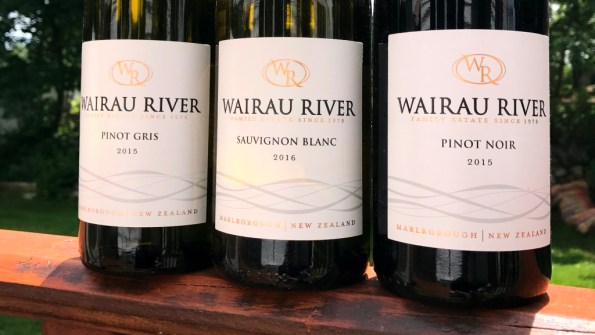
I’m sure you are thirsty by now, so let’s taste some wine, shall we? Here are the notes for a few Wairau River wines I had an opportunity to taste:
2016 Wairau River Sauvignon Blanc Marlborough New Zealand (13% ABV)
C: white pearl, pale
N: intense, currant, touch of grass, bright, fresh
P: herbaceous, nicely restrained, fresh, bright, touch of grapefruit on the finish.
V: 7+/8-, an excellent example of Marlborough Sauvignon Blanc
2015 Wairau River Pinot Gris Marlborough New Zealand (13.5% ABV)
C: light golden
N: medium intensity, minerality, limerock
P: white stone fruit, nice minerality, salinity, crisp, refreshing
V: 7+
2015 Wairau River Pinot Noir Marlborough New Zealand (13% ABV)
C: bright ruby
N: freshly crushed berries, cherry, plums
P: cherries, fresh fruit, plums, touch of smoke, medium body
V: 7+, nice, traditional Marlborough Pinot Noir
Passion and perseverance rule in the wine world – we all know that, but it is always fun to listen to the stories. Pour yourself another glass – you deserve it. Cheers!
Exploring Wines Of New Zealand – With Villa Maria on Snooth
Wines of New Zealand need no introduction – for sure to the oenophiles. Winemaking started in New Zealand in the 1850s, but it really flourished in the second half of the 20th century, when jet travel allowed much easier access to the future winemakers to get educated and experienced in Europe. Since the 1990s, New Zealand greatly embraced sustainability and … screw tops. I’m definitely very happy about the first – sustainable farming always leads to the better wines and happier environment. The screw tops – they are fine, I’m not convinced though that they are the best for aging the wines properly. However, I don’t want to convert this post neither into a rant, nor into a debate, so let’s just move on.
 The story of Villa Maria winery is easily an exemplary story of realizing the “American Dream” – only in this case, it is, of course, have to be called a “New Zealand dream” (I hope such a concept exists).
George Fistonich started in 1961, at the age of 21, with one acre of vines in Auckland. In 1962, he harvested the grapes and produced the wines under the name of Villa Maria. That was the beginning of the journey of one man, who had the passion, vision, perseverance and enough obsession to make it. Villa Maria was a one man operation through the 60s, hiring its first staff in the early 70s, and now employing 250 people and exporting their wines to the 50 countries. As a perfect proof of making it, George Fistonich became Sir George Fistonich, receiving the first knighthood in the country for the services to New Zealand’s wine industry.
Villa Maria today has vineyards located in Auckland, Gisborne, Hawkes Bay and Marlborough regions. The grapes range from the New Zealand’s staples such as Sauvignon Blanc and Pinot Noir to such an obscure varietals as Arneis and Verdelho. Villa Maria became a cork-free zone in 2001. And I can tell you, they really treat sustainability seriously – the Villa Maria bottles were some of the lightest wine bottles I ever came across, which I’m sure greatly affects the carbon footprint.
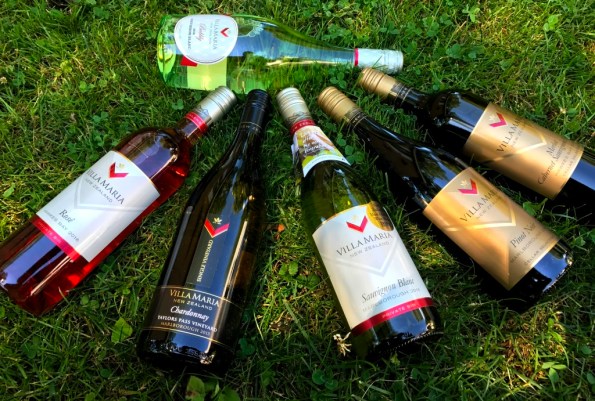
A week or so ago, I was a part of the big group of winelovers tasting Villa Maria wines together in the virtual tasting organized by Snooth (no worries, the wines were real). Here are my notes from tasting and also, re-tasting of the wines.


First, two of the Sauvignon Blanc wines. First one was called “bubbly” as it was lightly carbonated – and it was definitely a fun wine, perfect for a summer picnic, fresh and delightful. And the Marlborough Sauvignon Blanc was simply a classic New Zealand Sauvignon Blanc, done with a perfect restraint:
2016 Villa Maria Bubbly Sauvignon Blanc Marlborough (12.5% ABV, $15)
C: literally non-existent
N: touch of grass and currant, a classic SB, restrained.
P: nice, touch of bubbles, touch of sweetness, black currant, nice and round, refreshing.
V: 8-/8, definitely nice
2016 Villa Maria Private Bin Sauvignon Blanc Marlborough (12.5% ABV, $13)
C: straw pale
N: pure cassis, beautiful, freshly cut grass, classic
P: excellent balance, acidity, currant and a touch of grass. Nice and pleasant.
V: 8, I can drink this at any time, excellent wine


Now, the Rosé and then Chardonnay. The Villa Maria Rosé is predominantly Merlot. It is light and simple, but it has enough finesse to pass one of my personal tests – I particularly like the white and Rosé wines which are well drinkable when they are a bit warm – it is annoying to maintain the wines at the ice cold level (at home, for sure). The Rosé was delicious and drinkable even at the room temperature, so it definitely passed that test. And as for the Chardonnay – I know that I will be in the tiny minority from our tasting group, but I found it to be just okay. It had all the classic Chardonnay traits, but, somehow, didn’t hit the home run for me…
2016 Villa Maria Private Bin Rosé Hawkes Bay (12.5% ABV, $14)
C: Pink
N: strawberries and strawberry leaves, round and pleasant
P: strawberries, touch of sweetness, could use a touch more acidity, but still, nice and delicate
V: 8-, definitely improved the next day, more delicate, better balance
2015 Villa Maria Single Vineyard Taylors Pass Chardonnay Marlborough (13.5% ABV, $45)
C: straw pale
N: creamy, vanilla, freshly baked brioche buns with a touch of butter on them
P: Granny Smith apples smothered in butter, good acidity, excellent midpalate weight, nicely plump, but clean. Nice cleansing acidity on the finish.
V: 7+, needs food.


Now, the reds. Pinot Noir was unusual compared to what I typically expect from the Marlboro Pinot Noir. It was heavier than I expected, and on the day 3, it became a lot closer to the powerful Oregonian Pinot (which is a good deal at $26, right? ). The Merlot blend was an enigma. It opened up beautifully as I just opened the bottle, but then it went back into its shell and never came out of it, even on the day 3 …
2014 Villa Maria Cellar Selection Pinot Noir Marlborough (13.5% ABV, $26)
C: bright ruby
N: touch of sweet cherries, violet
P: tart cherries, tart acidity, touch of tobacco
V: 7, 7+ on the day 3 – showed a lot more fruit on the palate, Oregonian notes of dark power, espresso, mocha, with sweet core of cherries and plums.
2013 Villa Maria Cellar Selection Merlot/Cabernet Sauvignon Hawkes Bay (13.5% ABV, $20, 70% Merlot, 23% Cabernet Sauvignon, 7% Malbec)
C: dark garnet, almost black
N: medium intensity, baking powder, vanilla, sweet mocha
P: black currant, ripe and sweet, touch of espresso, tar, dark fruit, dry, tannic finish
V: 7, unusual experience …
Have you had any of these wines? What are your thoughts? Cheers!
One on One With Winemaker: Brett Jackson of Viña Valdivieso, Chile
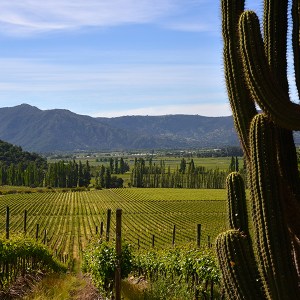
Source: Viña Valdivieso
Today, sparkling wines are produced everywhere, and we are getting quite used to it. Sometimes, it comes almost to a surprise when we hear that particular producer doesn’t offer any sparkling, at least as part of the “winery special”. But this was not the case even 10 years ago, when the sources of the sparkling wine were much more limited.
When you are thinking about Chilean wines, well respected worldwide, what kind of wines come to mind first? I would bet you are thinking about Cabernet Sauvignon, Merlot, Carmenere, Sauvignon Blanc and may be some Chardonnay. I would also safely bet that you don’t think of Chile as a producer of the sparkling wines, right? So without asking google or reading ahead, can you pause for a second and think when could Sparkling wines be commercially made in Chile?
While spending time in France, Don Alberto Valdivieso fell in love with Champagne. As a matter of fact, he loved it so much that upon his return to Chile in 1879, he founded Champagne Valdivieso and became the first producer of the sparkling wines in Chile and the whole of South America.
Fast forward to today and Viña Valdivieso produces the full range of sparkling wines, including both Viña Valdivieso produces the full range of sparkling wines, including both méthode champenoise and Charmat, and the extensive line of still wines which includes a unique solera-method dry red called Caballo Loco. I had an opportunity to sit down (albeit, virtually) with the Viña Valdivieso Winemaker, Brett Jackson, and ask him a few bunch of questions – here is what transpired from our conversation:
[TaV]: I would guess that Viña Valdivieso first sparkling wines were made with the Traditional Method. When did the Viña Valdivieso start producing sparkling wines using Charmat method?
[VV]: Valdivieso started making sparkling wines from 1879, all the bottles in traditional method. Only from the eighties began the elaboration by Method Charmat
[TaV]: What is the oldest sparkling wine which can be found in your cellars? What was the oldest Viña Valdivieso sparkling wine you ever tried?
[VV]: For the earthquakes of 1985 and 2010, that affected our underground cava, we lost bottles from the early fifties to the present. We only recovered some bottles from 1996 onwards that are still preserved in our cellar.
[TaV]: Do you make any single vineyard sparkling wines? What about vintage sparklers?
[VV]: For Traditional method, we have single vineyard Valdivieso Blanc du Blanc made of 100 % Chardonnay and Valdivieso Blanc du Noir with 100% Pinot Noir
Since 2013, we started using the label vintage in Valdivieso Blanc du Blanc. Actually, the new portfolio sparkling for Champenoise Caballo Loco Grand Cru 2014 uses an exceptional vintage.
[TaV]: When you produce Traditional Method sparkling wines, do you follow the path of the French Champagne and try to achieve consistent “Chateau” taste profile? How many Vin Clairs your typical blend include? Do you use also reserve wines, and what would be the oldest you would use?
[VV]: We use different vintages to give consistency to our portfolio. Charmat Limited include 2 years at least in different percentage of varieties, blending, Traditional method we use Both of 1 vintage as well as several in blending. Currently, the use of expedition liquor for some 2014 bottles of traditional method is from 2011 vintage.
[TaV]: Do you use sustainable farming methods? What about organic – you do it now or have any plans?
[VV]: Our farming methods are sustainable, being certified with the Wines of Chile Sustainable code. We are working with a 15Ha organic vineyard in the south of Chile with some very exciting red varieties. Grenache, Tempranillo, Mourvedre, Carmenere, Tannat, Carignan, Syrah, and Petit Syrah. The first wines from this vineyard should be appearing late 2018.
[TaV]: What was your most challenging vintage for the sparkling wines and why?
[VV]: 2012 and 2013 the most difficult, extremely challenging because of the huge amount quantity per hectare. We don´t have Traditional method these years, except Blanc du Blanc 2013, 100% chardonnay. The Chardonnay variety was the only one that excelled to maintain consistency in quality and longevity for its storage in bottles.
[TaV]: What was your most difficult vintage for the still wines and why?
[VV}: 2016, the most difficult, lots of rain during April. Chile lost around 30% of the harvest due to these rains. Extremely challenging conditions.
[TaV]: What were you favorite vintages for the still and sparkling wines?
[VV]: For still wines 2000 through to 2010 were exceptional with a string of outstanding vintages, 2001, 2005, 2007, 2009, 2010. I would give the edge to the 2005 vintage, great balance in the wines, maturity, acidity, and exceptional flavor.
For sparkling wines 2010, 2014, 2015, 2016. because of the balance of fresh maturity, big natural acidity, fresh fruity character . 2014 was the best, with the fruit from consolidated new areas for traditional method such as Biobio, Limarí, Itata, and new improves for charmat with vines so close to Andes mountains and Coastal range. 2014 is the first vintage for a new sparkling label called Caballo Loco Grand Cru Biobio Valley , Brut Nature and Blanc du Noir, currently available.
[TaV]: Today you produce still white wines from Chardonnay and Sauvignon Blanc. Have you ever experimented with any other white varietals? Any plans to introduce any new Viña Valdivieso white wines?
[VV]: We do a small amount of Viognier. In the near future we will be launching Rousanne and Marsanne. Both look very promising with great potential.
[TaV]: What is the “Next Big White Grape” for Chile? Is there one?
[VV]: The “next big” is white wine. It is not easy to see as on an international scale, Sauvignon Blanc and Chardonnay dominate to such an incredible extent.
[TaV]: Same question for the reds – is there “Next Big Red Grape” for the Chilean wines?
[VV]: For individuality and exceptional quality, the old vine Carignan from the Maule Valley is making a substantial mark. Also, Syrah has the potential to produce exceptional wines from many different areas of Chile.
[TaV]: For how long do you produce your Syrah wines? What is your inspiration for the Syrah? Is there an international style you would compare Viña Valdivieso Syrah to?
[VV]: We have been producing Syrah for around 10 years. When looking at what we try and achieve, I really look to the northern Rhone, trying to capture spice, black and white pepper. Our style has evolved over the years, initially being more of a new world dark rich style, whereas now I would compare more to soft spicy Rhone style. However Syrah is so unique in that as a red wine every area it is grown in, it produces a wine which is unique to that area.
[TaV]: What is the story behind Caballo Loco? Why all of a sudden to produce Solera-style red wine? Do you produce this wine every year? How do you say it is changing year over year?
[VV]: Caballo Loco, has a long history in Chile, the first edition being released in the early nineties. It was created through a series of events between the winemaking team, sales team, and owners. It is a reflection of the innovative nature of Valdivieso, and not being afraid to try new While it is based on our solera Sistema, each bottling is unique and such receives an individual edition number. The current edition on the market is the N°16, which contains 20 different vintages. The new edition N°17 will contain 50% of the previous edition (in this case N°16), and 50% of the new vintage wine. This method allows us to evolve the nuances of the wine over time. Over the years new vineyards, areas, varieties, and techniques have been incorporated into the wine. Each new edition is released when it is ready, which is not necessarily on an annual basis. Roughly every 18 months a new edition is released. The subtle changes over the years for me is principally increasing complexity and depth as we have come to better understand the vineyards of Chile and the opening of new areas.
[TaV]: It seems that Valdivieso ÉCLAT was produced only once in 2011, with an unusual for Chile blend of grapes. As there a story behind this wine? Any plans to produce a new vintage?
[VV]: Eclat VIGNO, is a blend of Old vine Carignan and Mourvedre. We are part of the VIGNO, a group of 13 wineries which has created this label VIGNO. It is an aggrupation which has been lead by winemakers with the objective to highlight the exceptional quality of these old vine vineyards in the Maule Valley. To place VIGNO on the label the wine must contain 100% of old vine from the Maule Valley. Of this, a minimum of 65% must be old vine Carignan. This is also intended to improve the situation of the small growers in the area, an area with many small growers which had in the past been obliged to sell there Carignan grapes for generic red blends, in which they were diluted away. Now with this initiative, the fruit is sought by many wineries for its quality potential resulting in substantially better prices for the growers. There will definitely be another vintage when the wine is ready.
[TaV]: What’s ahead for the Viña Valdivieso – new markets, new wines – what makes you excited?
[VV]: New wines to come, we have some really fun projects coming on. From the Maule Valley, we will shortly have some wines from an organic vineyard, being from an exciting range of varieties. Grenache, Syrah, Petit Syrah, Tempranillo, Tannat, Carignan, Carmenere, and Mouvedre. We still do not have a name for the range, but the quality of wine from these low yielding vineyards is exceptional.
Late this year we will be launching in the Eclat range 3 new wines under the Curiosity label. Cinsault from the Itata Valley, on the coast, old vines being cultivated in the traditional methods they have been using since vines were first introduced into Chile. There are records of wine being produced in this area since the 17th century. Also, a Rousanne, and a Marsane. These two whites look great, and for me show the potential for these Mediterranean varieties in Chiles conditions.
In the markets around the world it is a very exciting time for Chile, after years as been considered the supplier of good easy drinking wines, Chile has now become a very respected wine producer where people are respecting and expecting wines of the highest world class level. As a foreigner who has accepted into the industry I feel very privileged and lucky to have been able to play a small part in what has been this transformation of the wines from Chile.


I hope you are still here and reading this – I really love these conversations – while virtual, they still share the passion and even the obsession those little grapes bestow on us.
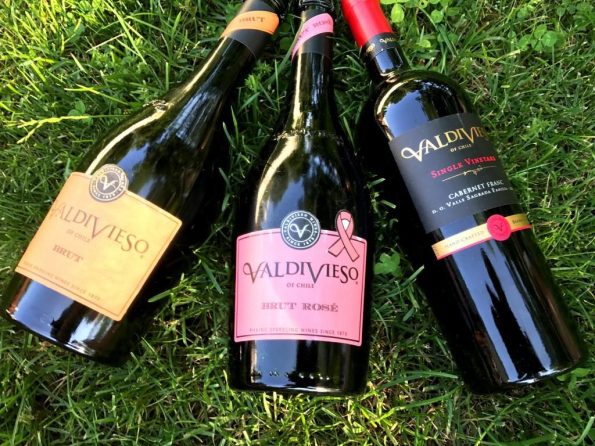
I’m sure you are thirsty by now, so pour yourself a glass, and let me share my impressions from tasting of the few of the Viña Valdivieso wines:
NV Viña Valdivieso Brut Chile (12% ABV, Chardonnay 60%, Semillon 40%, Charmat method)
white stone fruit, distant note, light mousse, good acidity on the palate, touch of grapefruit notes. Drinkability: 7+
NV Viña Valdivieso Rosé Chile (12% ABV, Pinot Noir 70%, Chardonnay 30%, Charmat method)
beautiful color, inviting nose of fresh berries with touch of herbs, light, round, touch of fresh fruit, excellent balance, refreshing. Drinkability: 7+/8-


2015 Viña Valdivieso Sauvignon Blanc Gran Reserva DO Valley de Leyda Chile (12% ABV)
straw color, very intense nose of blackcurrant and black currant leaves, same on the palate but with restraint, nice acidity, black currant, excellent. Drinkability: 8
2013 Viña Valdivieso Cabernet Franc Single Vineyard DO Valle Sagrada Familia Chile (14% ABV, Punta de Rosa Vineyard)
dark ruby color, touch of bell pepper, berries and leaves of the cassis, mint, touch of roasted meat. Palate follows the nose – medium body, good acidity, fresh red berries, touch of cassis, nice savory notes. Enjoyable by itself, but will work well with food. Drinkability: 8
Here we are, my friends. Sparkling from Chile? Yes, please! Cheers!
Happiness-Inducing Wines of Lieb Cellars
 “Rising tide lifts all boats”.
As the wine growing in popularity all over the United States (still does, I hope), we witness the “wine countries” appearing everywhere – not just singular wineries, but the actual aggregations of the wineries, often presented as “wine trails”. While Napa and Sonoma definitely paved and continue leading the way to what the “wine country” is, you can find wineries all over the country offering not only wine tastings, but live music, concerts, dinners, special events and lots more.
Long Island wine country is the one closest to the New York City, making the wines for about 40 years by now. There is a very good chance, however, that even if you live in the USA, you never tasted Long Island wines – same as it is practically impossible to find the wines from Texas, Virginia, North Carolina, Arizona or Michigan anywhere outside of those states. So if I will tell you that Long Island makes world class Riesling, Chardonnay, Chenin Blanc and Merlot, you will probably have to take my word for it.
Over the past 10 years or so, visiting Long Island wineries on more or less a regular basis, I witnessed those wineries perfectly learning from Napa – both the good and the bad. On the good side, more and more knowledge is accumulated as to which vineyards and grapes do best, which individual plots do best, and the winemaking becoming more precise and resourceful. The bad side is in the fact that as the wines are getting better and better, it is less and less possible to enjoy the wines in the wine country itself, as it becomes more and more touristy – and visitors often get this “tourist special” treatment… Oops – no, we are not going into the rant, nope. Let me get to what I actually wanted to talk about.
When I was offered to taste some of the wines produced by Lieb Cellars, I had to do a bit of a research first. It turned out that despite visiting Long Island wineries every year, I never made it to Lieb Cellars and was pretty much unfamiliar with their wines. Therefore, I was looking at the best case – the wine country was coming to me, without any additional tourist distractions, yay!
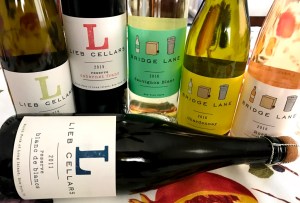
Now, I would like to finally explain the title of this post (after almost falling for a rant, yeah). When the wines arrived and I started taking them out of the box, the first thought was “wow, I love these labels!”. There is really nothing special about those labels, except that they are very clean and simple, and all of them use bright, cheerful colors. We eat with our eyes first – everybody know that – and it works for me the same with the the wine labels. Of course, what’s inside the bottle is far more important than the label itself, but good label makes you anticipate good wine – works for me every time.
In case of Lieb Cellars wines, the happiness-inducing labels were also perfectly supported by what was in the bottles, as you can tell from my tasting notes below. Few comments before I will leave you with them.
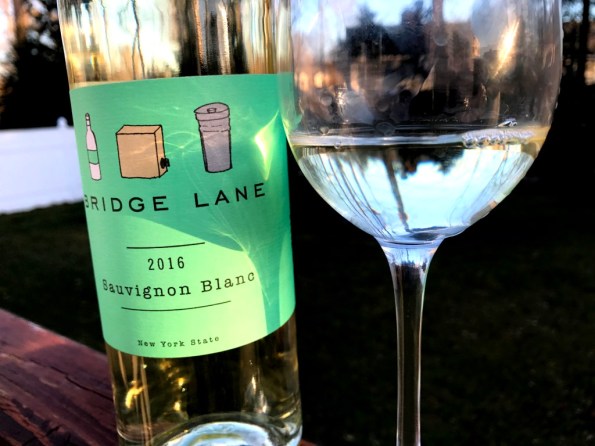
Lieb Cellars produces two different lines of wines. The first line, Lieb Cellars, is being produced since 1992. You can see those wines identified on the labels as Lieb Cellars, and today those are the Reserve wines made only from the estate-produced fruit. In 2004, Lieb Cellars started new line of wines called Bridge Lane – named after the farm road adjacent to one of the Lieb vineyards. While Bridge Lane are called a “second label” wines, there is nothing “second” about them – sustainably farmed, small crop, hand harvested wines, available in 3 different formats – standard bottle, 3L box and 20L kegs – whatever size your heart desires. You can even see those three available sizes pictured on the Bridge Lane labels.
Time to talk about the wines – here are my notes:


2016 Bridge Lane Chardonnay New York State (12.5% ABV, $15, 100% Chardonnay)
C: straw pale
N: lemon with distant hint of rosemary
P: lemon, tropical fruit, mango, Granny Smith apples
V: 7+/8-


2016 Bridge Lane Rosé New York State (11.9% ABV, $15, 49% cabernet Franc, 29% Merlot, 16% Malbec, 4% Pinot Noir, 2% Petit Verdot)
C: light onion peel
N: strawberries all the way, ripe strawberries, clean, inviting, fresh, touch of yeast Inessa which makes you smell it for a long time
P: strawberries on the palate, clean lemony acidity, firm and present. It would happily compete with any Provence Rosé
V: 8, wow, what a treat!


2016 Bridge Lane Sauvignon Blanc New York State (12.0% ABV, $15, 100% Sauvignon Blanc)
C: literally non-existent, straw pale extra light
N: fresh cut grass, medium intensity
P: lemon, tart fruit, cut through acidity. More of a Sancerre style – less fruit than California, less intensity than NZ. Clean acidity on the finish.
V: 8-, very enjoyable.


2011 Lieb Cellars Reserve Blanc de Blancs North Fork of Long Island, New York (12.5% ABV, $30, 48 months on the lees, 100% Pinot Blanc)
Appearance: Light golden color, fine mousse
N: touch of Apple, touch of yeast, delicious, open
P: touch of acidity, apples, lemon, restrained
V: 8/8+, the bottle can be gulped in one sitting


2015 Lieb Cellars Pinot Blanc Reserve North Fork of Long Island, New York (11.9% ABV, $20, 98% Pinot Blanc, 2% Riesling)
C: straw pale
N: white stone fruit, nice sweetness
P: beautiful, plump fruit, generous, delicious
V: 8, outstanding.


2015 Lieb Cellars Reserve Cabernet Franc North Fork of Long Island, New York (12.8% ABV, $30, 10 month in Hungarian oak, 85% Cabernet Franc, 9% Cabernet Sauvignon, 4% Merlot, 2% Petit Verdot)
C: dark ruby
N: mint, hint of mushrooms, touch of tobacco
P: fresh, open, blackberries, silky layers,
V: 7+/8-
The wines give us pleasure. It is not simple to convey that in words, but I hope I managed to share at least a glimpse of a pleasure brought by these Lieb Cellars wines. If anything, let me give you only one advice – find ’em and drink ’em. Cheers!
From Marche to Mendoza, With Vine
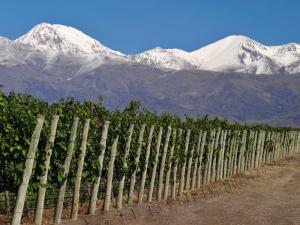
Rutini Vineyards. Source: Rutini Wines web site
In 1884, Felipe Rutini arrived to Mendoza area in Argentina. Continuing family traditions from the early 1800s when his father, Francisco Rutini, started making wine in the area known as Le Marche in Italy, he planted grapes and started making wine now in Argentina. Don Felipe, as he became later known at, was 19 years old when he founded La Rural winery in the district of Coquimbito. In 1925, Rutini family continued pioneering traditions of Don Felipe by planting first vines in the Tupungato area of the Uco Valley, a high altitude home to some of the very best vineyards in Argentina.
Today Rutini family is one of the biggest wine producers in Argentina, making about 9.5 million bottles of wine per year and exporting it to the 40 countries. You might be well familiar with the line of wines under a common name of Trumpeter, which include Chardonnay, Torrontes, Malbec, Cabernet Sauvignon, Pinot Noir and a number of others – Trumpeter is one of the 6 different ranges produced by Rutini Wines. Recently, Rutini Wines started introducing a new “Classic Series” line of wines in the United States, and I wanted to share my impressions from few of the wines in this line which I had an opportunity to taste.
But before we talk about the wines, let’s talk a bit more about Rutini family wine business today. Once again, I got together – well, yes, virtually, same as few times in the past – with Mariano Di Paola, head winemaker for Rutini Wines and one of the top winemakers in Argentina, and I had an opportunity to ask him a few questions. Here is what we talked about:
Q: Rutini family started making wines in Italy. Is there still a connection today at the Rutini Winery back to the traditions and customs of Region Marche?
A: No there are no direct links, but we still try to use the original Rutini winemaking influence today. Felipe Rutini was a visionary man who believed in Argentina’s winemaking capabilities, planting the first vines in Mendoza, and generations after we still work hard to maintain his legacy.
Q: If I understand correctly, Rutini is introducing its Classic Collection wines in the US. For how long had you been producing the Classic Collection wines? What were the main markets for it until now?
The Rutini collection was first released in Argentina with the 1996 Malbec, followed by Merlot and Gewürztraminer. It has been available in the U.S.: NY, TX, FL, MD, DC, MA, RI, and CA since the end of 2013.
Q: What are the oldest vines growing at Rutini vineyards?
A: Select Malbec vines in La Consulta date back over 100 years.
Q: What was the source of inspiration for the Rutini Sauvignon Blanc?
A: We wanted to create a well- balanced Sauvignon Blanc that spoke to the true characteristics of this varietal and represented the best quality of this wine.
Q: Sauvignon Blanc is really not the grape Argentina is known for. Do you think Argentinian Sauvignon Blanc has its own style and will become a wide movement?
A: Yes, Argentine Sauvignon Blanc has its own style which is heavily dictated by the particular growing region. Our continental climate, highly influenced by the Andes, and high altitude provide us with optimal grape growing conditions. Sunny day and dry summer conditions allow us to harvest fully ripened grapes. The cool evening temperatures and controlled irrigation serve to prolong hang time and to create a good balance between sugar and acidity. As there is more interest to try other Argentine varietals, there will be more Sauvignon Blanc production. Our Sauvignon Blanc style, of course, offers really good acidity, lemongrass aromas, floral aromas, but we also focus on producing a mineral style.
Q: Malbec is unquestionably a star red grape of Argentina. Is there a next great Argentinian Grape on the horizon, or is it going to be Malbec for a while?
A: We are always experimenting with different varietals, and while the native varietal Torrontes produces an exceptional and distinct white wine, Malbec will always shine when grown in this region, and it really speaks for the tradition and future of winemaking in Argentina.
Q: Do you use any of sustained, organic or biodynamic methods in production of your wines?
A: In our vineyards we do not practice organic or biodynamic methods, due to the health and hygiene of the plants themselves and the nobility of our soils, all of which , the use of pesticides that may eventually affect the vineyard is not necessary.
Q: It seems that most of the Rutini wines made from the grapes coming from the multiple vineyards. Do you have any plans to produce single vineyard or even single plot wines?
A: Yes, we do have plans to produce single-vineyard wines. At the moment wines are in the aging process and will launch in the market soon. ( Malbec and Cabernet Sauvignon ).
Q: Probably a very unexpected question 🙂 – I understand that Rutini wines are sold in China. How big and/or important that market for Rutini family wines? What wines sell best in China?
China is a very important market for Rutini. As of 2013, the U.S. and China represented 50% of our sales, with the Rutini collection being the most popular brand sold. Chinese consume mostly red wines /red blends and for Argentina, they prefer of course Malbec and Cabernet Sauvignon. Sparkling also sells well in this market.
So, what do you think? I think it was a very interesting conversation, albeit virtual. But now, I’m sure you are thirsty, so let’s have some wines. Here are my notes on the 3 Rutini wines form the Classic collection which I tasted:


2012 Rutini Wines Rutini Sauvignon Blanc Mendoza Argentina (12.5% ABV, $25, 3 months in oak, 50% new, 50% 2nd and 3rd use)
C: light golden
N: minerality, Chablis-like nose, very restrained
P: plump, creamy, delicious. I would never identify this as Sauvignon Blanc – Marsanne, Roussanne or Chardonnay come to mind. The wine was also not over-chilled, just chilled slightly. This wine is an enigma – coming straight from the fridge, it shows more of restrained sweetness, somewhat between New Zealand and California style
V: 8-, unique and interesting. The price looks somewhat high, but then this wine clearly aims at a nice Sancerre, so this provides a rationale behind it
2012 Rutini Wines Rutini Malbec Mendoza Argentina (14% ABV, $35, 12 months in oak, 80% new French oak, 20% new American oak)
C: dark garnet
N: licorice, a touch of tobacco, dark chocolate, blackberries, very inviting
P: fresh berries, touch dark chocolate, raspberries and blueberries, very smooth, medium body
V: 8-. I have to be very honest – this is not exactly my type of wine – however, there is a large category of wine drinkers who will be ecstatic about this wine because of its smoothness.
2012 Rutini Wines Rutini Cabernet Sauvignon Mendoza Argentina (14% ABV, $35, 14 months in oak, 50% new oak, 50% second use oak)
C: dark garnet
N: a touch of mint, fresh berries, black currant, a touch of barnyard, very interesting
P: surprisingly light and smooth, medium body (very unusual for the Cab), blackberries, vibrant acidity, good balance. Shows firmer structure after 10–15 minutes in the glass.
V: 8-, lighter style with lots of pleasure, this wine would definitely appeal to the people who prefer their reds to be not too heavy
Have you had any of the Rutini Wines, Classic Series, Trumpeter or any other? What are your thoughts?
I would like to thank kind folks at Gregory White PR for helping with the virtual interview and for providing the samples. Cheers!
One on One With Winemaker: Jeff Fyfe from The Crossings Winery, New Zealand
 Few days ago I was offered an opportunity to meet Jeff Fyfe, senior winemaker at The Crossings Winery from New Zealand – only I couldn’t. What about the title of this post, you ask? No, I’m not trying to purposefully mislead you with some dark intent. What I did was very simple and logical 🙂 – I came up with a bunch of questions, and asked Jeff to answer them on his own. We can call it a “virtual interview”. I also had an opportunity to taste two of the latest wines from The Crossings – including the 2015 Sauvignon Blanc. I was quite excited about it, as my first wine of the current vintage typically is Beaujolais Nouveau, so this was a welcome deviation.
Let’s start with the interview. Imagine yourself out in the vineyard, on a sunny day, with the glass of cold and refreshing white wine, talking to Jeff Fyfe:
What was your favorite vintage(s) for both Pinot Noir and Sauvignon Blanc and why?
We have been extremely lucky in Marlborough in recent years with a number of great vintages in a row. In 2014 we had harvested all of the Pinot Noir prior to commencing any Sauvignon Blanc which is fairly unusual. This gave us the opportunity to focus on the varieties individually a little more than usual which was nice. There are some great Sauvignon Blancs from 2015 and we are excited about releasing them.
What was your most difficult vintage for both Pinot Noir and Sauvignon Blanc and why?
Both 2008 and 2009 were reasonably difficult vintages in the fact that the crops were slightly heavier than normal and we had some unseasonal rain during harvest making things difficult.
Many winemakers in NZ experiment with oak and Sauvignon Blanc. What do you think of that? Is this an up and coming trend? Do you make any oaked Sauvignon Blanc wines?
I don’t know if I would call it a trend, I think it is now a style in its own right in Marlborough. Many producers are making them, and have been for some time. Dog Point Section 94 is a great example of barrel fermented Sauvignon Blanc. They wines obviously age well, in my opinion the better examples show great balance and integration of the oak and the fruit. Some producers are also creating wines with small amounts of barrel fermented Sauvignon Blanc to add texture and weight to their tank fermented Sauvignon Blancs.
Today, there are many new grapes been planted in NZ – Chardonnay, Pinot Gris, Riesling, Gruner Veltliner, Syrah. I see that you are already making Riesling and Pinot Gris wines – do you have plans for any other new grapes?
Yes, we already make very small quantities of Chardonnay, Pinot Gris, and Riesling and we planted some Gruner Veltliner at our Willowflat vineyard 2 years ago, which is looking promising. I think Marlborough already produces world class aromatics, particularly from the cooler sites which enables longer ripening and extended hang time for the fruit which creates wines with texture, weight and acidity.
Outside of your own wines, what are your other favorite wines from New Zealand?
There are some great aromatics coming out of the Nelson region, Waimea, and Seifreid are favourites. Also Hawkes Bay Syrah, in my opinion the best examples can rival the great Syrahs of the world. Bilancia, Crossroads, Trinity Hill are all great examples.
What are your favorite Sauvignon Blanc wine outside of New Zealand – regions and/or producers?
White Bordeaux! If only I could drink them more often. Generally I like to drink Austrian or German Rieslings, there are so many amazing producers, Brundlmayer, Ansgar Clusserath, Donnhoff, Wittman to name a few.
Same question for Pinot Noir – favorite regions/wines/producers outside of New Zealand?
I tend to drink the wines coming from cooler climate regions as I like the elegance and finesse they can have, cooler parts of Australia such as Tasmania, and the Mornington Peninsula are great. There are obviously some pretty special wines coming out of Burgundy, I just can’t afford to drink them that often! Although when I do I enjoy wines from the appellation of Volnay.
If you would have a “do-over” opportunity – go back in time and start the winery again – would you still start it at the exact same place, or would you chose a different location, region or even country?
I wouldn’t change the location of the vineyards that’s for sure. We have 3 amazing vineyard locations in the Awatere Valley, each very unique which provides us with quality fruit to make the wines that we do.
Today, a lot of wineries around the world add sparkling and Rosé wines to their portfolios, but this trend doesn’t seem to catch up in New Zealand. Do you think this will change? Do you have any plans to start producing sparkling or Rosé wines?
There are already a number of producers in Marlborough making some great rosés. The demand for Marlborough Pinot Noir is strong, so I guess that has an impact on the ability of some producers to make Rose, hence why you don’t see them often on a global scale. At The Crossings we are hoping to make a rose in vintage 2016. It’s the same with sparkling wines in Marlborough, some world class wines being produced but on a reasonably small scale.
What is the oldest vintage of your own wines you ever tried? Do you think the wines held up well?
We recently had a vertical tasting of The Crossings Sauvignon Blanc from 2005 to 2015. We were pleasantly surprised at how well the wines were holding up. The majority of the older vintages still looked fresh, showing varietal character and maintained the mineral acidity that is signature of the Awatere Valley. All of the wines were under screw cap
* * *
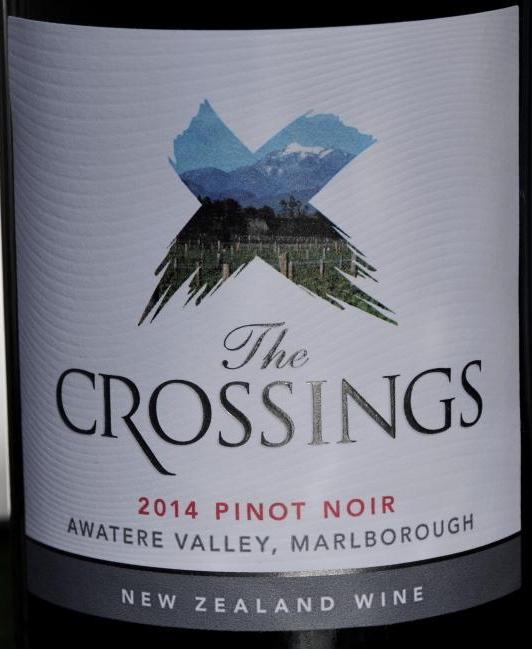 I think Jeff provided great answers. Hearing that 10 years old Sauvignon Blanc is still fresh makes me very happy – I love wines with an age on them, and I love it when the wines are aging gracefully, so I would love to try it by myself. Well, yes, I didn’t try the 2005 – instead, I tried the wine from the vintage Jeff was so happy about it – the 2015. I tasted latest releases of both Sauvignon Blanc and Pinot Noir, which I got as samples, courtesy of the importer, Deutsch Family Wine & Spirits. For you to understand how new the 2015 was, the bottle even didn’t have an official label on it yet.
Here are my tasting notes:
2015 The Crossings Sauvignon Blanc Awatare Valley Marlboro, New Zealand (13% ABV, SRP $14)
C: straw pale
N: beautiful fresh cut grass, just a hint of grapefruit, lemon zest
P: clean acidity, fresh, lemon undertones, herbal notes, perfectly balanced
V: 8, one of the very best NZ sauvignon Blanc wines I ever tasted. Summer day in the glass.
2014 The Crossings Pinot Noir Awatare Valley Marlboro, New Zealand (14% ABV, SRP $18)
C: dark ruby
N: smoke and raspberries, lavender, touch of mint, baking spices
P: sweet cherries, plums, hint of vanilla, touch of spices, good balance, medium body, medium-long finish.
V: 7+/8-, classic Marlboro Pinot Noir
There you have it, my friends – virtual interview and very real, delicious wines. Now, let me ask you a question – if you would have an opportunity to talk to the winemaker, what would be your questions? What do you think of our Q&A session? Happy Friday and Cheers!
New Zealand, Familiar and Not
 Here is your motivational quote of the day: “open your mind, and discovery will follow”. If you are wondering what the heck is wrong with this Talkavino guy starting the wine post with motivational quote, read on, I will explain.
Today we will be talking about the wines of New Zealand. What is the first wine which comes to mind when you think “New Zealand”? Don’t know about you, but for me it is a Sauvignon Blanc. Closely followed by Pinot Noir. But then there is beautiful Chardonnay, and Bordeaux blends, and Riesling – please, don’t forget the Riesling!
Two weeks ago I attended the New Zealand wine tasting event in New York. The event consisted of the seminar and the tasting, so below you will find my notes from both. But before I will inundate you with the wines and the tasting notes, let me share some general thoughts.
New Zealand wine industry is relatively young. First Sauvignon Blanc was planted in 1973, and first commercial release took place in 1979. [However, the first vines were planted in New Zealand in 1819, and in 1881 Pinot Noir from Central Otago got gold medal in the “Burgundy” category at the wine show in Sydney – but let’s leave it aside for now]. Through the 1980s, Cloudy Bay found its magic, and New Zealand wines spread out throughout the world (definitely in US). The New Zealand wine export had been growing steadily for many years, from 30M gallons of wine in 2009 to the 44M gallons in 2013, also reaching almost US $1B in revenues in 2013. Also, a lot of New Zealand wineries utilize sustainable winemaking methods and use organic grapes (you can read more here).
What I also sense from reading the blogs and listening to the experts is that the New Zealand winemakers are feeling constrained by what they already achieved and are trying to break the boundaries. Few simple facts for you. There are 11 defined wine regions in New Zealand. However, many winemakers believe that this is not enough, and want to define the sub-regions with much smaller boundaries. Such sub-regions are not yet official [I might stand corrected here – according to the New Zealand wine web site, the sub-regions are defined, but I still don’t know how widespread or how official those designations are], but on many labels you can already see designations for the sub-regions, such as Awatere or Waihopai in Marlborough, or Pisa in Central Otago. Different soils, different micro-climates, different terroirs, if you will – all lead to production of stylistically different wines coming from the different areas of the same bigger region.
There is more to this “breaking the boundaries”. New Zealand wine is not only a Sauvignon Blanc and Pinot Noir. There are Syrah, Merlot, Pinot Gris, Chardonnay and even Grüner Veltliner and Chenin Blanc wines which are shining. And even familiar Sauvignon Blanc is taking to the totally new territories, by using oak and not only – which leads us to the seminar, so we can finally talk wines.
The seminar was very interesting. It was done in the unusual format. There was no classroom with a head table and presenters. There was a big roundtable (well, it was actually a square), with presenters and winemakers sitting around the room among the participants. But this was not the most unique characteristic of the event. There were 9 Sauvignon Blanc wines presented in the event. And all 9 were … oaked. With the various degree, but yes, all Sauvignon Blanc wines went through some oak ageing process. There was also a 7 years old Sauvignon Blanc wine, which was quite unique for me. All in all, it was very different and interesting. Was it successful? I will defer you to my notes below. Here we go.
2014 Amisfield Sauvignon Blanc Central Otago (SRP $20)
C: pale straw
N: fresh cut grass, very restrained, lemon notes, minerality, touch of sapidity, interesting complexity.
P: tremendous acidity, more of a Muscadet style, lots of minerality, food wine (oysters!)
V: nice and restrained, Drinkability: 8-
2014 Nautilus Sauvignon Blanc Marlboro (SRP $17.99)
C: light straw, greenish
N: concentrated green notes, more of a fresh vegetables greens in the garden than grass. Touch of sweetness after swirling the glass.
P: very restrained, complex, salinity, white stone fruit, acidity on the finish.
V: Drinkability: 7+
2014 Huia Sauvignon Blanc Marlboro (SRP $19)
C: pale straw
N: hint of gasoline – disappeared after intense swirling. Touch of white fruit, restrained. Hint of lemon. Overall, nose is not very pronounced.
P: tremendous acidity, hint of Granny Smith apples
V: wine finishes nowhere, lacking conclusion. Drinkability: 7-
2014 Neudorf Sauvignon Blanc Nelson (SRP $17.95)
C: light straw yellow
N: non-typical. But may be a distant hint of grass.
P: lemon, fresh, supple, good acidity, nice textural presence. Still, tremendous amount of acidity is coming through, plus tannins in the finish!
V: Drinkability: 7+, okay wine
2014 Craggy Range Te Muna Road Sauvignon Blanc Marlboro (SRP $28.99)
C: pale yellow
N: touch of vanilla, touch of tropical fruit, hint of grapefruit
P: great complexity, restrained, guava, lemon, minerality, grass, touch of tannins, but it is well integrated.
V: Drinkability: 7+
2013 Seresin Marama Sauvignon Blanc Marlboro (SRP $40)
C: light yellow
N: butter, vanilla, butterscotch- wow, is this is a Chard? Pronounced, concentrated flavors!
P: vanilla, butter, more akin to a butterscotch candy, fresh and exuberant! The clearest expression of butterscotch candy of any wines I ever had (bold, I know)
V: it gets 8 (or even 8+) as a Chardonnay and 6 as Sauvignon Blanc. I would be glad to drink this wine – just don’t tell me what it is.
2013 Trinity Hill Sauvignon Blanc Hawke’s Bay (SRP $16.99)
C: light straw yellow
N: very inexpressive. Whatever I think I smell, is a product of my imagination. After 5 minutes of swirling, grass showed up, more of a typical expected SB. Still Very restrained.
P: nice acidity, good with oysters, nice touch of white fruit, fresh and clean
V: Drinkability: 7
2012 Pegasus Bay Sauvignon Blanc Waipara Valley (SRP $28)
C: pale straw yellow
N: complex aromatics, touch of oak, elevated white fruit (apples, hint of tropical fruit). One of the best on the nose so far. Distant hint of grass
P: Elegant, fresh, well integrated acidity, apples
V: one of the best in the tasting. Drinkability: 8-
2008 Mahi Ballot Block Sauvignon Blanc Marlborough (SRP $24)
C: light yellow, doesn’t show the age at all
N: some vegetative notes and fresh salami (yes, you can unfollow me if you want). Some distant resemblance of fruit. On a second thought, it has a Chablis-like minerality. The sausage is off, Chablis is in.
P: most elegant palate in the tasting. Acidity definitely wore off, but the wine is elegant, complex, mellow, just an interesting wine in the style of nicely aged white Rhône.
V: best of the tasting. Very round and elegant. Drinkability: 8.
And then there was a tasting. I didn’t get an opportunity to taste all the wines. Also, as you would expect, I liked some wines more than the others. Thus below are the wines which I liked the most from what I tasted. Oh wait, I still have to explain myself with that “open your mind” intro. Let me do it now, the story is rather simple.
What flavors do you typically associate with the Sauvignon Blanc? Grass? Check. Lemon? Check. Grapefruit? Check. Gooseberry? As Chris Kassel mentioned recently, most of the people who didn’t live in Europe have no idea how Gooseberry smells or tastes, but okay. Check. Some white tropical fruit? Possible and Check. But what about Black Currant? I don’t know about you, but I don’t associate red or black berry aromas with Sauvignon Blanc. But – black currant is one of the main characteristic aromas of Cabernet Sauvignon. And Sauvignon Blanc is a parent of Cabernet Sauvignon. Thus when I heard from one of the hosts talking about the wine “beautiful black currant aroma”, that was a nail on the head! Yes – exactly – the revelation – forget the damn Gooseberry, just open your mind (talking to myself) and understand that black fruit can be associated with white wine (I’m sure the opposite is true). I would honestly say this was my main discovery of the tasting, the revelation.
Now let’s get back to wines. My absolute favorites where Sophora Sparkling wines (simply a wow and an incredible QPR), Syrah from Elephant Hill, Chenin Blanc from Astrolabe, Sauvignon Blanc from Saint Clair, Doctors Grüner Veltliner and Lake Chalis lightly fizzed Sauvignon Blanc – all shown in blue below. But all in all, lots of delicious wines in the tasting. All prices are suggested retail as listed in the brochure. Let’s go:


2014 Amisfield Sauvignon Blanc Pisa, Otago ($20) – +++, clean, restrained
2013 Amisfield Pinot Gris Pisa, Otago ($25) – +++, nice touch of oak
2011 Amisfied Pinot Noir Pisa, Otago ($35) – ++1/2, nice balance, still needs time
2012 Amisfied Pinot Noir Pisa, Otago ($35) – +++, elegant, round, touch of green notes
2014 Ara Pathway Sauvignon Blanc Waihopai, Marlborough ($16.99) – +++, very good, traditional
2013 Ara Pathway Pinot Noir Waihopai, Marlborough ($18.99) – ++1/2, nice, clean
2014 Ara Single Estate Sauvignon Blanc Waihopai, Marlborough ($19.99) – +++, clean, balanced
2013 Ara Single Estate Pinot Noir Waihopai, Marlborough ($23.99) – ++1/2, very good, tannins, needs time
2012 Astrolabe Province Sauvignon Blanc Marlborough ($23) – +++, excellent, black currant, perfect balance
2014 Astrolabe Province Pinot Gris Marlborough ($23) – +++, beautiful aromatics
2012 Astrolabe Province Pinot Noir Marlborough ($28) – +++1/2, excellent!! Best of tatsing?
2013 Astrolabe Vineyards Chenin Blanc Wrekin Vineyard Southern Valleys, Marlborough ($22) – +++, concentrated, Vouvray-like, excellent, creamy
NV Sophora Sparkling Rosé Hawke’s Bay ($16) – +++, wow! beautiful – aromatics and structure of the classic Chgampagne. Outstanding QPR
NV Sophora Sparkling Cuvée Hawke’s Bay ($16) – +++, equally excellent as the previous wine
2012 Domaine-Thomson Surveyor Thomson Single Vineyard Pinot Noir Lowburn, Otago ($44) – ++1/2
2011 Domaine-Thomson Surveyor Thomson Single Vineyard Pinot Noir Lowburn, Otago ($44) – +++, excellent!
2013 Elephant Hill Syrah Hawke’s Bay ($28) – ++++, spectacular! An absolute precision of Syrah with peppery profile
2014 Fire Road Sauvignon Blanc Marlboro ($13) – ++1/2, nice, simple, balanced
2013 Fire Road Pinot Noir Marlboro ($15) – ++1/2, probably best QPR at the tasting
2013 Doctors Grüner Veltliner Marlborough ($18) – +++, touch of petrol, nice
2014 Doctors Sauvignon Blanc Marlborough ($18) – +++, nice, clean, good acidity
2013 Seifried Pinot Gris Nelson ($18) – ++1/2, clean, nice
2012 Seifried Riesling Nelson ($18) – +++, petrol, beautiful
2013 Maimai Syrah Hawke’s Bay ($20) – +++, excellent, dark
2014 Lake Chalis Cracklin’ Savie Sauvignon Blanc Marlborough ($18) – +++1/2, beautiful, fresh, lightly fizzed, very unique. Similar to Moscato in creaminess, but dry
2014 Lake Chalis Sauvignon Blanc Marlborough ($18) – +++, perfect, black currant, beautiful!
2014 Saint Clair Family Estate Sauvignon Blanc Marlborough ($17.99) – +++, beautiful balance
2014 Saint Clair Pioneer Block 18 Snap Block Sauvignon Blanc Marlborough ($26.99) – +++, interesting complexity
2012 Saint Clair Wairau Reserve Sauvignon Blanc Wairau, Marlborough ($31.99) – +++1/2, very complex, very unusual
2012 Saint Clair Pioneer Block 16 Pinot Noir Awatere, Marlborough ($17.99) – +++, Oregon-like, very elegant
And we are done here. What do you think of New Zealand wines? What are your favorites? Did you ever associated Sauvignon Blanc aromas with black currant? Until the next time – cheers!
What Do You Think Of Sauvignon Blanc? Take a Poll!

Sauvignon Blanc grapes, as presented in Wikipedia
Today we are celebrating 6th annual Sauvignon Blanc Day (#SauvBlanc Day). Sauvignon Blanc, one of the parents of the ever so popular Cabernet Sauvignon, is one of the most popular, noble and widespread white grapes in the world – it is an equal member of the “Royal Trifecta”, if you will – together with Riesling and Chardonnay.
Sauvignon Blanc originated in France (Loire Valley and Bordeaux), and from there, it spread all over the world. In addition to France, Sauvignon Blanc wines are successfully produced in New Zealand, Chile, South Africa, Italy, Canada, California, Washington and many other places (for example, I recently had Sauvignon Blanc from North Carolina in US which was outstanding).
Sauvignon Blanc is capable of a wide range of expression, depending on where it comes from – from the grassy Sancerre, the acidic Touraine, to the fresh and plump Napa renditions, back to the minerally, thought provoking goodness of Italian wines and to the tropical paradise of New Zealand and Chile – and, of course, everything in between. It can be made into a bone dry wine; but it is equally successful in the form of late harvest, dessert or even an Icewine.
Whether you will be celebrating the Sauvignon Blanc Day by opening your favorite bottle or you have some other wine plans doesn’t really matter. What I want to do here is to take you on the trip down your own memory lane, and ask you to share your favorite Sauvignon Blanc wines with the world. Not necessarily the exact vintage, but at least the producer and the wine. It can be one or five – this is up to you.
Sure, I can go first, if you insist. Not in any particular order – Cloudy Bay from New Zealand, Mara White Grass and Honig from Napa Valley, Jermann, Gaja Alteni di Brassica and Poggio alle Gazze dell’Ornellaia from Italy, Anakena Indo from Chile. Your turn now!
Lastly, I want to run a simple poll, just for fun. Below is the list of some of the most popular regions for the Sauvignon Blanc wines – I want you to chose your favorite(s). It is a multiple choice, but I would ask you to limit your answers to 3. If you think 3 is not enough, use the comments section. And if your regions is not listed, please use the same comments section below so I would know what I’m missing.
Happy Sauvignon Blanc Day and Cheers!
Last Bottle Sign Up ($10 credit)




 Talk-A-Vino