Archive
High Altitude Malbec for the World Malbec Day Celebration
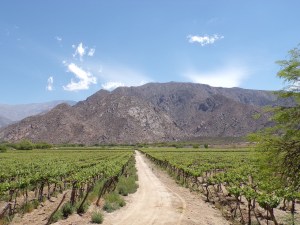
Cafayate desert. Image by gabrielgcossa from Pixabay
Do you like Malbec? If you do, great – you have a perfect reason to celebrate one of the world’s most popular grape on its holiday, World Malbec Day, always celebrated on April 17th. If you don’t – great, as you can taste a lot of wines in order to eventually find Malbec which you will enjoy.
Malbec is one of the unique grapes in the wine world, with a long history full of ups and downs. Malbec history can be traced almost a thousand years back. It used to be one of the most popular and most planted grapes in France. Wine from Cahors, a small region just south of Bordeaux, was famous for its dark and brooding qualities and was very much welcomed by the royals as early as the 1200s (well, the grape is not called Malbec in Cahors – it is known as Côt or Auxerrois). However, as Bordeaux started developing its own brand, it started blocking Cahors wines from reaching its intended destination, as most of the trading routes had to pass through Bordeaux before reaching the wine consumers.
Malbec used to be widely planted in Bordeaux, but this thin-skinned and disease-prone grape was difficult to work with, and it became anything but literally extinct today. Of course, Malbec is still the main grape in Cahors, where it is made into delicious, long-living wines – if you can find them in the wines stores, of course. However, the real fame of Malbec is related to its second motherland – Argentina.
Malbec was brought to Argentina in the mid-19th century and higher elevation vineyards with mostly dry climate happened to be a godsend for the moody grape. From there on, Malbec went on the path of becoming the most famous Argentinian grape. I guarantee you if anyone will ask what is in your glass, and you will say “Malbec”, 99% of the people will have no doubts that you are drinking Argentinian wine – yes, this is a good example of fame. Malbec’s success in the new world didn’t stop in Argentina, as it is successfully growing today in Australia, Chile, California, Texas, and many other places. But it is still the Argentina which rules the Malbec world today.
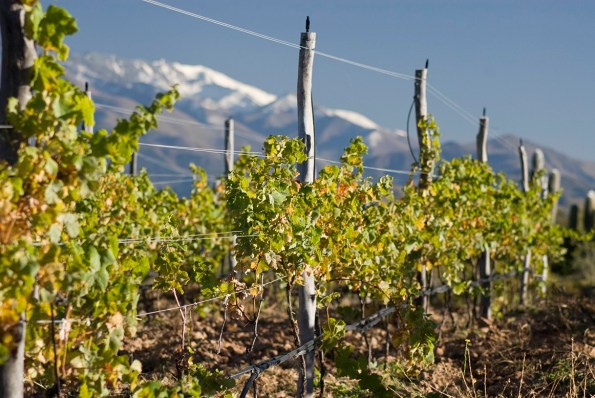
Altura maxima vineyard. Source: Bodegas Colome
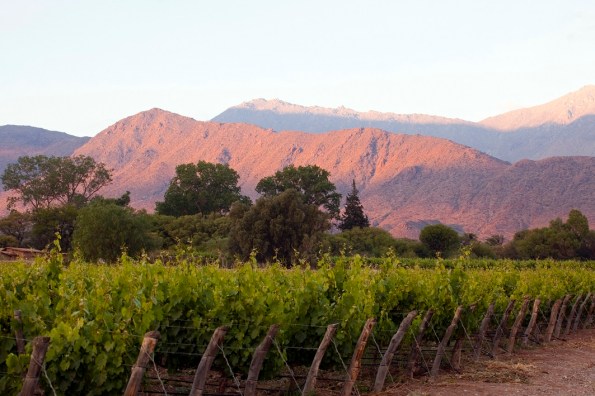
Altura maxima Vineyard. Source: Bodegas Colome
When it comes to Argentinian wine, Mendoza is the first area that comes to mind. It is hardly surprising, as 2/3 or Argentinian wine comes from Mendoza. But it is not Mendoza we are talking about today – we are going higher, much higher – to Salta (Mendoza vineyards are typically located at the 1,800 – 3,400 feet altitude, and in Salta altitude ranges from 7,000 to 10,000 feet). Salta is home to the highest vineyard in the world, Altura Maxima (elevation 10,200 feet/3,100 meters). It is also home to one of the oldest wineries in Argentina, Bodegas Colomé, which was founded in 1831.
I already wrote about the wines of Bodegas Colomé in the past (you can find this post here), as well as the wines from Amalaya, a 10 years old project by Bodegas Colomé in Cafayate desert. It was very interesting to try the same wines only from a different vintage. I can say that there is a noticeable improvement in the quality of the Amalaya – 3 additional years make a lot of difference. The Colomé Estate Malbec was more or less on par with its older brethren – but I certainly like the new label design, the bottle looks more elegant.


Here are my notes for the three of the Malbec wines I was able to taste:
2018 Amalaya Malbec Salta Argentina (13.9% ABV, $16, 85% Malbec, 10% Tannat, 5% Petit Verdot)
Dark garnet
Inviting, eucalyptus, blackberries, crushed berries, baking spices
Fresh berries, coffee, bright, easy to drink, good structure, good acidity, good balance.
8, simple and delicious. Needed a couple of hours to open up.
2017 Colomé Estate Malbec Valle Calchaquí Salta Argentina (14.9% ABV, $25, grapes from vineyards at 7545 to 10,200 feet elevation)
Dark garnet
Vanilla, baking spices, restrained fruit
Vanilla, blueberries, tar, firm structure, very restrained, appears more as an old-world than anything else.
8, excellent.
2018 Colomé Auténtico Malbec Valle Colchaquí Salta Argentina (14.5% ABV, $30, high altitude vineyard ~7000 ft)
Practically black
Vanilla, blueberries, baking spices, inviting
Blueberries, coffee, good acidity, silky smooth, layered, ripe fruit but still balanced.
8, classic and tasty – but needs time. Really opened up only on the day 3
What do you think of Malbec wines? Do you have a favorite producer? How did you celebrate World Malbec Day? Until the next time – cheers!
Stories of Passion and Pinot: Utopia Vineyard
Pinot Noir excites passion. All grapes do, of course, and good winemakers are always passionate, often to the point of obsession. But some of the most desired wines in the world are made out of Pinot Noir, and Pinot Noir is notoriously finicky, mutation-prone grape, difficult to work with. Hence passion is winemaker’s best helper to work with Pinot Noir and produce the best possible wines.
Yes, I’m sure you figured me by now – I’m introducing a new post in the Passion and Pinot series – you can find all the past posts here. And I’m sure today’s subject resonates perfectly with the world we live in right now (for those who might read this post a few years later, look up “covid-19 pandemic”, and you will understand my point). I’m sure we would all much rather live in utopia compare to the self-quarantine and fear of sneezing – and it is the utopia we will be talking about here (don’t worry, there will be plenty of wine).
According to the dictionary, utopia is defined as “an imagined place or state of things in which everything is perfect”. I guess Daniel Warnshuis saw this complete perfection in the 17 acres parcel of land he found on the Ribbon Ridge in the heart of Ribbon Ridge Appellation in Yamhill County in Oregon in early 2000, hence the name Utopia Vineyard.
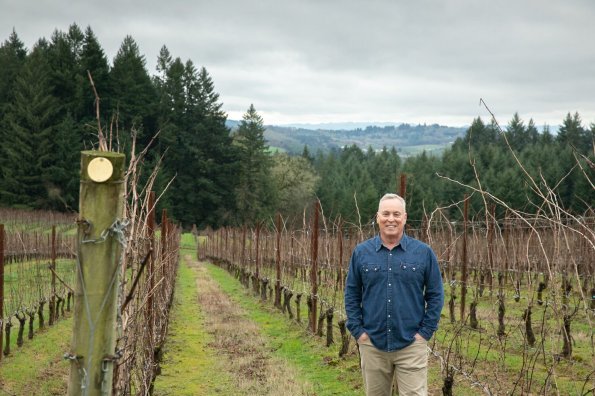
Daniel Warnshuis. Source: Utopia Vineyard
UTOPIA Vineyard had its first commercial vintage in 2006, 413 cases of Pinot Noir. Since then, Pinot Blanc, Chardonnay and a number of other wines had been produced at the winery, and numerous accolades were won at multiple competitions. Utopia, which uses dry farming methods, was L.I.V.E. certified in 2008.
I had an opportunity to [virtually] sit down with Daniel Warnshuis and ask him some questions – here is what transpired in our conversation:
[TaV]: First and foremost – why Utopia? Utopia means an unreachable dream, so what is the reason for this name?
[DW] The classic definition of UTOPIA is the perfect and no place. I am trying to make the perfect Pinot-noir but realize that as a human being I will not achieve perfection. It is, therefore, the goal that I constantly strive for without compromise to make the wine better each and every vintage.
[TaV]: You bought the vineyard in 2000, your first vintage was in 2006. How were those years in between? Did you have any major challenges, or did you just have to wait for the vines to mature?
[DW]: You are correct that I consider 2006 my first commercial vintage (413 cases of Estate Pinot-noir) but I did produce 97 cases of Estate Pinot-noir in 2005. Just to be clear, it was more of an experiment than a vintage. There were a number of challenges in getting the vineyard bootstrapped. First, I had to decide which clones I wanted to plant. I looked around the valley at the time and found that most of the vineyards contained only 2-3 clones and they were mostly the same 2-3 clones, e.g.. Pommard and Dijon 115 or Wadenswil. Or one of the other Dijon clones, mostly 667 and 777. I also detected a certain homogeneity in the wines being produced at that time and I wanted to do something very different. This is what convinced me to plant a total of 12 Pinot-noir clones including several heirloom clones from various existing vineyard sources in CA and OR. Once I settled on the makeup of the vineyard it was mostly a waiting game until the vines began to produce.
[TaV]: You were born and raised on California wines, why build the vineyard in Oregon and not in a Napa or Sonoma?
[DW]: I got exposed to Willamette Valley Pinot-noir early in my wine journey working for Tektronix where my first boss was an avid wine collector and amateur chef who exposed me to Oregon wines. The raw beauty of Oregon and especially Willamette Valley wine country was also a major draw for me along with its nascent state as a wine producing region. It presented a relatively affordable opportunity to get in on the ground floor of the next NAPA. I was a big proponent of Willamette Valley Pinot-noir while still living and running my NAPA wine business at a time when even most savvy wine drinkers were still unaware of what was happening in Oregon.
[TaV]: You’ve been a farmer for 20 years now. What are your main takeaways from this experience?
[DW]: Owning the land is the ultimate advantage for a winemaker because the best wines almost always come from the best fruit. 100% control from vine to wine is the maximum level of control and as a small producer here in Willamette Valley I am as close to a small producer (vigneron) in Burgundy that I can be without being in Burgundy. At Utopia I always want to make the best wine possible for any given vintage, again just like in Burgundy the wine should always be a reflection of the growing season and therefore unique each and every year.

Source: Utopia Vineyard
[TaV]: Do you have a pivotal wine, the one which clearly made you see the wine world differently?
[DW]: Burgundy wines from any small producer in Volnay, Pommard, Mersault (and Mersault, Chassagne and Puligny Montrachet for whites) were pivotal wines for me. The only thing I have found that compares with them are Willamette Valley Pinot-noir’s and now Chardonnay’s from small producers who are owning the land and making the wines in the same tradition.
[TaV]: Is there one Pinot Noir producer or winery you would consider a hallmark, something you would compare your wines to?
[DW]: Dominique Lafon is someone who I have followed for several decades and admire his approach (biodynamic farming and terroir driven) especially for his White Burgundy which I think is sublime. DRC is always mentioned as the ultimate but I would say that I have always and still do admire the smaller producers who are risking everything to make the best wine. This means organic/biodynamic farming even in a challenging vintage, minimalist approach to winemaking and focus on terroir.
[TaV]: What is the difference between the various Pinot Noir wines you are producing? Is it grape selection, individual plots, different oak regimens?
[DW]: Yes, it is all those things, in addition, location in the vineyard, clonal selection for the blends, oak regimen (ex: riper fruit deserves more new French oak such as in my Reserve “Eden” bottling).
[TaV]: Any plans for Utopia sparkling wines? You already growing all necessary components, so do you plan to take the next step?
[DW]: Yes, I would like very much to make sparkling wine. It is challenging as it requires a different setup and 3-4 years to produce the first vintage, but, I have not given up on the concept. I produced my first Port Style wine in 2018 and will bottle it this Fall.
[TaV]: You are now offering Grenache, Mourvedre and GSM wines. For how long you had been producing those? I understand that you source Grenache from Rogue Valley, what about Mourvedre and Syrah? Do you also plan to offer single varietal Syrah?
[DW]: I started producing those varietals in 2009 and actually started with a Syrah and Viognier but switched to Grenache in 2013 and added a GSM in 2014 and a Mourvedre in 2016. As long as I can get quality fruit I will continue to make different varietals. I would like to produce a Cab Franc and maybe even a Bordeaux blend in the future as well. I plan to plant some of these different varieties here on my new property to prepare for the inevitable change in our climate over the next 10 – 20 years.
[TaV]: What are your favorite wines or wine producers in Oregon? In the USA? In the world?
[DW]: In Oregon, Brick House, Beaux Freres, In California, Joseph Phelps, Spottswoode, In the World, anything Burgundy especially any small producers farming organic/biodynamic and terroir driven as well as Mouton Rothschild in Bordeaux.
[TaV]: Did your utopia materialize in your vineyard? Did you find everything you were looking for?
[DW]: Yes, I live on my vineyard and work with my family to produce a unique product that we share with the world. We preserve the land for future generations (organic farming), we give back to our communities, we promote culture of all types and we make our living doing what we love the most. I cannot be any happier than I am at UTOPIA.
[TaV]: Where do you see Utopia Vineyard in the next 10-15 years?
[DW]: More plantings of different varieties especially Rhone and Bordeaux. Possibly produce sparkling wine, continue well managed growth and keep experimenting to make it better each and every time. Create a long lasting legacy and keep it in the family for future generations.


If you are still reading this, I’m sure you are ready for a glass of wine, preferably, an Oregon Pinot Noir. I had an opportunity to taste two of the Utopia Pinot Noir wines, here are the notes:
2014 UTOPIA Pinot Noir Clone 777 Estate Reserve Ribbon Ridge AVA (13.8% ABV, $75)
Dark ruby
Smoke, plums, violets, earthy undertones
Bristling acidity, tart cherries, medium body, minerality, refreshing, inviting, good balance.
8, fresh, clean, easy to drink.
2011 UTOPIA Paradise Pinot Noir Estate Reserve Ribbon Ridge AVA (13% ABV, $85)
Dark garnet
Upon opening, the very extensive barnyard smell was apparent. It disappeared on the second day. Tobacco, earth, tar, and smoke are prevalent on the second day.
The palate is beautifully balanced with tart cherries, plums, violets, a touch of vanilla, baking spices and roasted meat.
8+/9-, delicious, hard-to-stop-drinking wine. Superb.
And we are done here, my friends – one more story of passion, and yes, it involves Pinot Noir.
Obey your passion!
P.S. Here are the links to the posts profiling wineries in this Passion and Pinot series, in alphabetical order:
Alloro Vineyard, Bells Up Winery, Ghost Hill Cellars, Iris Vineyards, Ken Wright Cellars, Knudsen Vineyards, Le Cadeau Vineyard, Lenné Estate, Tendril Cellars, Youngberg Hill Vineyards, Vidon Vineyard
Daily Glass: Another Day, Another Enigma
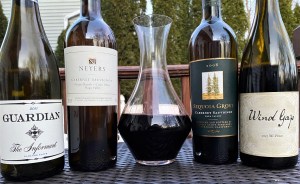 It was just another Sunday. It could’ve been any day in the oenophile’s house. You know, when you open a bottle which you think will be enough for the evening, but then people come over, and you open another, and another, and another. Yes, it doesn’t matter if it was Sunday or not. Just another day.
The important point here – wine is an enigma.
e·nig·ma
/iˈniɡmə/
noun
a person or thing that is mysterious, puzzling, or difficult to understand
This is not the first time I have to evoke the enigmatic virtue of wine – I had quite a few puzzling experiences, with the wines going amazing – undrinkable – amazing (here is one example), or with the wines needing 4-5 days to become drinkable after they had been open. The element of mystery of not knowing what you are going to find once the cork is pulled out of the most familiar bottle is definitely a big part of the excitement, but some times it becomes too much excitement, in my opinion. Anyway, let’s talk about that Sunday, shall we?
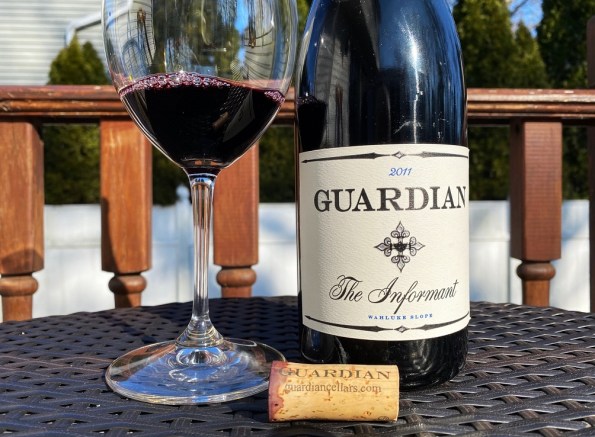
Guardian Cellars is a small produced in Woodinville, Washington. I visited the winery in 2014, and tasted through a bunch of wines which were one better than another (here is my excited post about that visit). I brought back with me a bottle of 2011 Guardian Cellars The Informant Wahluke Slope – 97% Syrah, 3% Viognier – and every time I would pull it off the shelf, I would put it back – you know how it is with single bottles, it is very hard to find the right moment to pull that cork. By the way, this bottle was simply stored in the wine cage standing in the room with temperature fluctuating around 70F and no direct sunlight – but not in the wine fridge or a cellar. Don’t really know what prompted me to finally get this bottle out, but I did. And it was delicious. Not a hint of age, dark garnet color, intense nose of blackberries, perfectly balanced dark berries, pepper, and crushed rocks on the palate. This was simply an excellent bottle – not the one which prompted my “enigma” outburst. And that note about storage conditions? People, don’t be afraid to keep your wine, even if you don’t have a cellar, wine fridge or a basement. If you do it right, you might be rewarded handsomely – well worth the risk.


I thought we might be able to get by with just one bottle, but then my daughter arrived with her friend who is “in the biz”, so the next bottle had to be special too. Another single bottle found its proper fate – 2006 Sequoia Groove Cabernet Sauvignon from Napa Valley (this one was stored in the wine fridge in case you are wondering). There was nothing enigmatic about this wine – well, except maybe how quickly it disappeared. The wine was an absolutely delicious, succulent example of Napa Valley greatness – still dark garnet, black currant, mint, and eucalyptus on the nose, ripe berries, currant leaves, touch of anise, good acidity, firm structure – a delight all in all.
So the Sequoia Groove was gone, what next? After short deliberations, 2013 Neyers Cabernet Sauvignon Napa Valley was pulled out. I really like Neyers wines, enjoyed many of them in the past, including the bottles from the same vintage. The bottle was opened with no issues, poured in the glass, and this is where the strange things started. The wine was too sweet. The nose was fine, but on the palate, it was just sugar, sugar, sugar. Okay, let’s decant. 30 minutes later, 1 hour later, 2 hours later, the wine stayed the same – a sugary concoction.
No wine can be wasted in this house, so the content of the decanter went back into the bottle. The next day it was the same. Two days later, the sugar significantly subsided, and the wine started to resemble a lot more a classic Napa Cabernet Sauvignon as one would expect.
So what was that? I know the wine is a living thing and transformation still continues in the bottle. Still, how one can know when the wine is drinkable, and when it is not? Was this a fluke, an issue with a particular bottle? Maybe. Over the years I noticed a significant bottle variation in Neyers wines overall, so this would support a theory of “just a fluke”. Or was it just a state of this 7 years old wine? Maybe. There is no good way to tell. However, I have two more bottles of the same wine, and they are not getting opened for a while.
Going back to our evening, just for the fun of sharing some pictures, our dinner menu included some BBQ chicken skewers – while I don’t have pictures of food, I have a couple pictures of burning charcoal which I’m happy to share 🙂


While Neyers was declared undrinkable, I had to entertain my guests with something else, so I pulled a bottle of 2015 Wind Gap Mi-Pente Pinot Noir Sonoma County, one of my latest Last Bottles finds. Wind Gap is best known as Syrah specialist, so I was surprised to even find Wind Gap Pinot Noir (I’m not even sure Wind Gap brand exists anymore – it used to be run by talented Pax Mahle, who now went back to his own brand Pax – this story definitely deserves its own post). The wine was delicious – crunchy cherries and smoke, firm structure, lots of energy – this was an excellent finish to the good Sunday evening.
Here you are, my friends. Wine is an enigma. Who else thinks that wine is an enigma? Raise your hands glasses.
Daily Glass: Cab And The Whole Nine Yards
 I’m sure you are well familiar with the phrase “The whole 9 yards” – technically translating into “lots of stuff”. You know what the fun part is? Nobody knows where this expression came from. There is a lot of research, a lot of “true origin” claims and an equal amount of disparaging remarks about the other side not knowing a squat about the subject (which seems to be the sign of times, sigh). We are not here to research or discuss the expression – my intention is to talk about a delicious Cabernet Sauvignon, but I will also give you the whole nine yards of related and unrelated “things”.
Everything started with a simple task – I was in need of the present for a friend’s birthday. My typical present is a bottle of wine of the birth year vintage (1977). However, it is getting more and more difficult to find the wine of such an old vintage at a reasonable price or even at all. After spending some time with Wine-Searcher and Benchmark Wine website, and finding nothing but a few bottles of the vintage Port, I decided that it is the time for the plan B, which means simply finding an interesting bottle of wine.
Next problem – where should I look for an interesting bottle of wine? Online seems to be the most obvious choice – but just to make things more interesting, I have to tell you that my gift recipient owns two liquor stores – yep, surprising him is not a trivial task.
Do you have an American Express credit card? Of course, you are wondering what it has to do with our story? It is most directly related. If you have the American Express credit card (AMEX for short), and if you ever looked at your account online, you probably saw the section called Amex Offers & Benefits. In that section, you can find 100 special offers, allowing you to earn additional points or save money on different items you can buy with the AMEX card. I have a good experience with these offers, these are real savings, so I have a habit of periodically logging into the account and scrolling through the offers. One of the offers I saw quickly attracted my attention – save $50 on a $150 purchase at WineAccess. I don’t know about you, but this sounds like a very good deal for me.
I was not familiar with Wine Access, so I got to the website to see if I can actually put this offer to good use. First thing I saw on the site is that $120 or 6 bottles purchase includes shipping, and if you are buying wine online, you know that shipping cost is one of the most annoying elements of the wine buying experience, so this made deal even sweeter – in case I can find something interesting.
I can’t tell you why and how, I first decided to search for Grosset, one of the very best Australian Riesling producers, and to my surprise and delight, I found Grosset Riesling available. So now I needed to add something else to reach my target number – $150.
I found an interesting Bordeaux, and next, I noticed a red blend from the Three Wine company in Napa, one of my favorite producers. My excitement happened to be premature, as once I started the checkout process, created an account and set my shipping address in Connecticut, I found out that I can’t complete my purchase as Three Wine red blend can’t be shipped to Connecticut (don’t you love US wine laws?).
I had to restart my search, and now I noticed Napa Cabernet Sauvignon called Idiosyncrasy – never heard of it, but Oakville Cab for $25 (this was a 50% discount off a standard price of $50) – why not to try one? I got two bottles, one for me, and one for my friend – done and done.
Once the order was placed I decided to check what exactly I just bought. I did a search for the Idiosyncrasy Cabernet online. I didn’t find too many references, but I did find a post which was very critical of the wine, saying that it was thin, and under-extracted Cabernet Sauvignon, absolutely no worthy of $43 which author paid for the wine. I also learned that this wine was specially produced for the Wine Access wine club by the well-known winemaker.
Truth be told – I don’t like wine clubs. What I learned about the wine, didn’t add confidence to my decision. Oh well – now I just had to wait for the shipment to arrive.
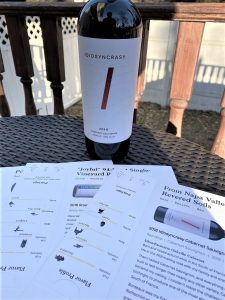
I didn’t have to wait for a long, the box showed up on the doorstep in a few days. Upon opening, I found not only 6 bottles which I ordered, but also neat, well-designed information cards – you can see it here:


Each card offered the story related to the wine, pairing suggestions, ideal drinking window put on the bottle tag which could be easily separated from the page and hang on the bottle in case you store it in the cellar. The back of the info card offered space for personal notes. Again, very well designed – would make any oenophile happy.
I read the story of the Idiosyncrasy Cabernet Sauvignon – it was written from the first person, as winemaker talked about his experience and how he came to the creation of this wine specifically for the Wine Access wine club. While the winemaker mentioned his work at Quintessa, Lail, Dalla Valle, and Purlieu, his latest adventure, his name was not found anywhere on the page. I had to figure out that his name was Julien Fayard by visiting Purlieu website.


Nice paper and story are important, but the truth is in the glass. Remembering the bad review, I poured the glass of 2016 Idiosyncrasy Cabernet Sauvignon Oakville Napa Valley (14.9% ABV), ready to be disappointed. To my delight, I was not. The keyword to describe this wine would be “elegant”. Varietally correct nose with touch cassis and mint. On the palate, the wine was rather of Bordeaux elegance – less ripe but perfectly present fruit, a touch of bell pepper, firm structure, perfect balance (Drinkability: 8/8+). Was this the best Cabernet Sauvignon I ever tasted? It was not. Was it the wine I would want to drink again? Absolutely, any day. Was it a good value at $25? This was a great value at $25, and even at $50, it would still be a good value.
Here you go, my friends – a story of the Cabernet Sauvignon and the whole nine yards. Cheers!
Magnificent Tempranillo
Let’s start with some definitions:
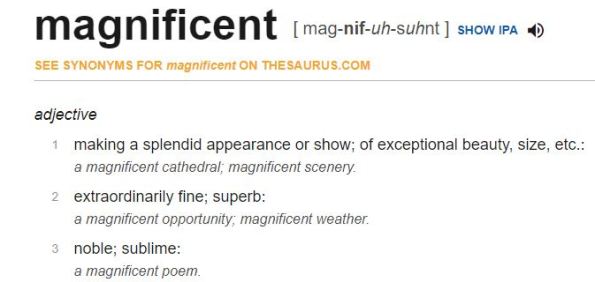
Of course, you know what “magnificent” means. Still, I feel compelled to start with the definition to explain my rather overzealous title. After looking at the Merriam-Webster and Google definitions for “magnificent”, I decided to go with the one from Dictionary.com, as it perfectly underscores the emotions which I tried to express with this title.
Wine is personal. Wine solicit the emotion, but it is personal – the appeal of the liquid in the glass is first and foremost for the person who is taking a sip. Two people can have a sip of exactly the same wine and have completely opposite reactions – one might love it and the other might hate it. Thus calling the wine magnificent is personal – and it is simply the expression of the emotion one had after taking a sip of that wine.
Today Tempranillo is grown around the world. You can find delicious renditions coming from Australia, Napa Valley, Oregon, Lodi. My first Tempranillo love, however, is Rioja, and this is where it still stays. A sip of La Rioja Alta, Lopez de Heredia, CVNE, or El Coto makes everything right with the world. Same as with any other wine, Rioja can’t be taken for granted – you need to know the producer. But in the hands of the right producer, Rioja becomes … magnificent. It is the wine of exceptional beauty, it is extraordinarily fine and superb, and it is noble and sublime – exactly as the definition above says.
Of course, it is not just Rioja which makes Tempranillo a star. Ribera del Duero, located a bit more down south and central, is another source of magnificent Tempranillo wines – if you had a pleasure to try the wines from Emilio Moro, Pesquera, Vega Sicilia you know what I’m talking about. Again, in the hands of the good producers, Ribera del Duero Tempranillo is every drop magnificent.
To make this conversation about magnificent Tempranillo more practical I want to offer you my notes on a few samples of Tempranillo wines I had an opportunity to enjoy recently.


CVNE (Compañía Vinícola del Norte del España) needs no introduction for the Tempranillo fans. Founded in 1879 (yes, this year is the 140th anniversary of CVNE) by two brothers, the CVNE is still run by the family, and today consists of 4 wineries – CVNE, Imperial, Vina Real, and Contino. However, those are the Rioja wineries and today CVNE is taking its 140 years of winemaking experience to the other regions. Here is an example for you – Bela from Ribera del Duero.
The grapes for Bela wine came from 185 acres Tempranillo vineyard, located at the altitude of 2,400 feet in the village of Villalba de Duero and planted in 2002. Here is the story behind the name of the wine and the picture on the label: “Bela’s label is a facsimile of an old CVNE label from the 1910’s. The stars represent each of the children of CVNE’s cofounder, Eusebio Real de Asúa. His brother Raimundo, the other co‐founder, had no descendants. Each star represents one of the children: Sofia, Áurea, and Ramón. Sofia was known as Bela. We descend from her.”
2017 Bela Ribera Del Duero (14% ABV, $18, 100% Tempranillo, 6 months in 1-year-old American and French oak barrels)
Dark garnet, almost black
Roasted meat, coffee, cedar box
Beautifully complex palate, black cherries, blackberries, eucalyptus, fresh, balanced.
8-, excellent wine, built for the long haul, will evolve.
Contino was the first single-vineyard Rioja created by CVNE and the owners of the Contino estate (which takes its history from the 16th century). 150 acres Lacerna vineyard in Rioja Alavesa is the source of grapes for the Contino line of wines. Here is the story behind the name: “The “contino” was the officer in charge of a guard corps of a hundred soldiers who protected the royal family “de contino” (continuously) from the times of the Catholic Monarchs onwards. According to the tradition, Saint Gregory, the patron saint of vineyards, passed through the lands of this same Rioja property, giving rise to the use of his figure in the logo of this winery, and to the use of his name for some of the plots now planted with vines.”
2012 Contino Rioja Reserva Rioja DOC (13.5% ABV, $45, 85% Tempranillo,10% Graciano, 5% Mazuelo and Garnacha, 2 years in used American and French oak plus 2 years in the bottle)
Dark garnet, almost black
Cherries, cigar box
Bright, uplifting dark fruit medley, clean acidity, a touch of minerality, velvety texture with well-integrated tannins, perfect balance
8+, delicious, lots of pleasure in every sip


Bodegas Beronia was founded in 1973 by a group of friends who fell in love with La Rioja while visiting on a holiday. The name Beronia is not random – here is the explanation: “name linked to the history of the land where the winery is found. In the 3rd Century BC the area known as Rioja today was inhabited by a celtic tribe called the ‘Berones’. They inhabited the towns of Tricio, Varea and Leiva, marking the limits of the Berones region, today La Rioja.”
Originally, the wines were produced literally by friends for the friends, without much thought of commercial sales. In 1982, Bodegas Beronia became a part of González Byass family, and at that point wines of Bodegas Beronia started to appear on the international markets.
Bodegas Beronia Rioja wines represent an intersection of tradition and modernity. While “traditional” and “modern” styles of Rioja can be a subject of great debate with a lot of wine consumed to prove the point, I would offer a very simplistic viewpoint. Tempranillo has a great affinity to the oak; the resulting Rioja wine is well influenced by the oak regimen. Traditionally, Rioja is matured in American oak casks. Modern style Rioja often uses French oak. Here is your style distinction – American oak versus French. Bodegas Beronia goes a step further than many. They create their own barrels, using both American and French oak elements in one barrel. Thus the wine is not defined by blending of the separately aged components, but instead, it is aging in the mixed environment.
Here are the notes for the two wines I was able to taste:
2015 Bodegas Beronia Crianza Rioja DOC (13.5% ABV, $14.99, 91% Tempranillo, 8% Graciano, 1% Mazuelo, 12 months in American and French oak barrels)
Dark garnet
Vanilla, plums, cedar box
Fresh dark berries, ripe cherries, tobacco, a touch of sapidity, medium-plus body, clean acidity, a touch of eucalyptus, medium-long finish
8-, the second day was better than the first. 8+ day 2 and 3
2013 Bodegas Beronia Rioja Reserva DOC (13.5% ABV, $19.99, 95% Tempranillo, 4% Graciano, 1% Mazuelo, 3 years in American and French oak barrels and in the bottle)
Dark garnet
Plums, cherries, tobacco
Dark fruit, tar, tobacco, cherries, a touch of cherry pit, bright acidity, firm texture, noticeable minerality, medium finish
8, excellent. Day 3 is more open.


No, we are not done yet. I have one more Rioja to discuss with you – from Bodegas LAN.
Bodegas LAN was founded in 1972. Here is another winery name which is not random: “A name – LAN – composed of the initials of the three provinces that make up the D.O.Ca. Rioja: Logroño (now La Rioja), Álava and Navarra.” Bodegas LAN owns about 170 acres vineyard called Viña Lanciano, which is subdivided into the 22 parcels, each with a unique microclimate. These 22 parcels are growing Tempranillo, Garnacha, Mazuelo, and Graciano, most of them on the 40 -60 years old vines.
Grapes for LAN Xtrème Ecológico wine come from 12.5 acres parcel of 100% organically certified Tempranillo, located at the altitude of 1,200 feet.
2015 Bodegas LAN Xtrème Ecológico Crianza Rioja DOC (14.5% ABV, $15, 100% organically-certified Tempranillo, 14 months in new French oak, 9 months in the bottle)
Dark garnet, practically black
Cherries, cedar box, eucalyptus, tobacco, open and inviting
Gorgeous, layers of dark fruit, soft but present tannins, baking spices, firm and perfectly structured, tart cherries on the finish, tannins taking over.
8+, a long haul wine, will be perfect in 10 years or longer. A total steal at a price.
Culmen is one of the top wines made by Bodegas LAN, produced only in exceptional vintages. The grapes for this wine come from 13 acres El Rincón parcel, located at the 1,500 feet altitude.
2011 Bodegas LAN Culmen Rioja Reserva DOC (13.5% ABV, $55, 88% Tempranillo, 12% Graciano, 26 months in new French oak, 20 months in the bottle)
Dark garnet with a purple hue
Red and black fruit, roasted meat, warm granite, sweet cherries, medium-plus intensity
Fresh tart succulent cherries are popping in your mouth, changing into sour cherry compote with tar, tobacco and cedar box. Delicious long finish. Lots of pleasure in every sip.
8+/9-, outstanding.
Here you go, my friends. Six delicious, or shall we say, magnificent, Tempranillo renditions. I will be happy to drink any of them again, at a moment’s notice. What do you think of Tempranillo wines? Got any favorites to share? Cheers!
American Pleasures – Part 2, Peju Napa Valley
 A few weeks ago I shared with you my view on [strictly wine] American pleasures – some of the wine samples which I had a pleasure to taste recently. Yes, it is the pure hedonistic pleasure we are talking about here – the wines which have a magical power of making you want another glass even before the first one is empty. Today I want to continue that conversation and talk about Peju Province Winery in Napa Valley.
The story of Peju Province Winery is simple and similar to many others – it started from a dream. Tony Peju had a drawing of the winery with the tower two years prior to the first Peju grape been harvested. Tony found early success in Los Angeles as a horticulturist, using his landscaping skills in the real estate, improving and reselling the houses. But his dream was to own the farm.
After his search for the farm land led him up north to the Napa Valley, he was able to find the location of his dreams – a 30 acres Stephanie vineyard in Rutherford, located next to Robert Mondavi, Inglenook and Beaulieu vineyards, growing Cabernet Sauvignon and Colombard vines, some 60 years old or maybe even older. Tony and his wife, Herta, purchased Stephanie vineyard in 1983. At first, Tony and Herta were only selling the grapes, however taking advantage of Tony’s green thumb, improving the vineyard and learning what it is capable of. They identified the section of the vineyard, about 5 acres in size, which produced the best Cabernet Sauvignon fruit. The vineyard, which was renamed into HB in honor of Tony’s wife, Herta Behensky, was replanted using cuttings from that best section grafted on the phylloxera-resistant rootstock. The time has come to start making Peju’s own wine.
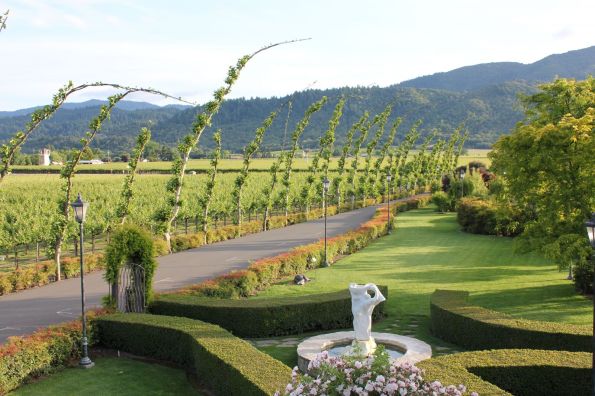
Peju Province Winery Grounds. Source: Peju Province Winery
Tony went on to get a degree in enology from UC Davis, and the rest was history. Well, there is one interesting hurdle worth mentioning. If you remember, Tony had a full drawing of the winery done in 1981, two years before HB vineyard was even found and purchased. Once they had the land and were ready to convert dreams into reality, in order to fund the project, Tony and Herta started selling wine out of their garage converted into the wine tasting room. This, however, was against Napa County’s rules, which required all the wine sales to be made from the legitimate winery building. However, California law allowed winegrowers to sell the wines in the place where the grapes were grown, so the issue ended up in the court. The judge sided with Peju, agreeing that if Tony is growing the grapes, he should be allowed to sell the wine. This became a pivotal case that significantly changed the landscape of the Napa Valley.
Peju went on to build the impressive 50-foot tall tower in the French Provencal style, using Brazilian cherry wood, beams from old Midwestern farm buildings and 1906 antique stained glass window. Way before that new winery building was complete, Peju acquired 350 acres of land at the 2000 feet elevation in the nearby Pope Valley section of Napa, which they named Persephone Vineyard, after the goddess of Greek mythology. In 1997, 120 acres of that land was planted to Cabernet Sauvignon (using HB Vineyard clone), as well as Cabernet Franc, Merlot, Syrah, Petit Verdot, Sauvignon Blanc, Chardonnay, and Zinfandel. In 2007, Rutherford HB vineyard became certified organic, and today all three of Peju vineyards are using sustainable viticultural methods. In 2009, Peju Province Winery was certified as a Napa County Green Winery and Bay Area Green Business. Also in 2006, Peju started installing solar panels on 10,000 square feet of winery roof and generating 35% of all electricity consumed at a winery.
Okay, so now you learned a lot about the winery, so let’s talk about the wines, as a proof is always in the glass. I had an opportunity to try 6 wines from Peju, and I was literally blown away by what I tasted. To be entirely honest, these wines were one of the most inspirational coming up with the title for this series – American Pleasures. 6 out of 6 delicious wines, one better than another – I taste enough wines during the year to tell you that this is not given. Below are my notes:


2018 Peju Province Winery Sauvignon Blanc Napa Valley (13.8% ABV, $25)
Straw pale, practically clear
A touch of freshly cut grass, white flowers, maybe a distant hint of cat pee – only because I want to find it there?
Layers of flavors. Crisp lemony acidity first, then a hint of plums and slightly underripe melon, unusual plumpness for the Sauvignon Blanc, the wine rolls off your tongue like a nice Marsanne.
8, excellent, a unique and different Sauvignon Blanc.
2015 Peju Province WineryCabernet Sauvignon Napa Valley (14.8% ABV, $60, 85% Cabernet Sauvignon, 8% Petit Verdot, 7% Merlot, 18 months in French and American oak, 45% new)
Dark garnet
Black currant, cherries, eucalyptus, sweet oak
A beautiful mix of black currant and cherries on the palate, a touch of herbal notes, good minerality, firm texture, vibrant acidity, medium+ finish
8/8+, the first sip says “I’m a Napa Cab”. Delicious.
The next wine is one of the few in “Nostalgia Series”, where every label depicts a moment in Peju’s history.
2015 Peju Province Winery Nostalgia Series The Farm Napa Valley (15.2% ABV, $80, 80% Cabernet Sauvignon, 20% Sangiovese, 18 months in oak)
Dark garnet, practically black
Dark fruit, eucalyptus, restrained, mineral undertones
Perfectly balanced fresh fruit, soft, luscious, black currant, tar pencil shavings, perfect balance, delicious.
8, delicious wine


2016 Peju Province Winery Merlot Napa Valley (14.8% ABV, $48, 95% Merlot, 4% Cabernet Sauvignon, 1% Petit Verdot, 18 months in oak)
Garnet
Sweet licorice, eucalyptus, underbrush
Coffee, tart cherries, cherry pit, minerality
8-, probably need more time. The finish is a bit astringent, however, it plays well with savory food (cheese and crackers)
Cabernet Franc is one of my favorite grapes – this wine was truly a Cabernet Franc experience.
2013 Peju Province Winery Petit Trois Cabernet Franc Napa Valley (14.8% ABV, $75, 100% Cabernet Franc, 18 months in oak, 333 cases produced)
Deep Garnet
Cassis, licorice, mocha, a hint of sweet tobacco
Cassis, mint, gently present tannins (after a few hours), firm structure, sweet oak, unmistakably California
9-, wow, tons of pleasure in every sip. Needs decanting. Outstanding on the second day.
This wine has its own story. It is the result of the barrel experiments run by Peju winemaker, Sara Fowler. For the 2017 vintage, she worked with 37 different barrel tasting styles and 22 coopers, then discussed the effects of the oak regimen with the group of the fellow Napa Valley winemakers. To have all new-oak, effectively a young wine, to be ready to drink from the get-go is something really incredible in my opinion.
2017 Peju Province Winery The Experiment Napa Valley (14.5% ABV, $100, 100% Cabernet Sauvignon, 18 months in French, American, and Hungarian oak, 100% new, 1075 cases produced)
Dark garnet
An “Oh my god!” nose – Black currant, eucalyptus, pure, intense
Wow, supple black currant, mint, eucalyptus, silky smooth tannins, good minerality, all delivered in layers. Clean acidity, impeccable balance, and immense pleasure.
9/9+, wow. An exemplary Napa Cab
There you have it, my friends – some incredible wines. Of course, these are not inexpensive wines, but in my opinion, the $100 bottle which gives you lots of pleasure is worth splurging for the right moment. Cheers!
Daily Glass: Pizza and Wine
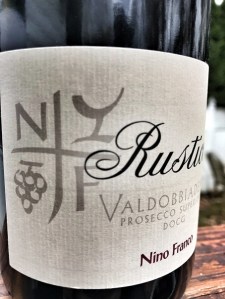 What do you think of pizza and wine – a perfect combo, right? Let’s talk about it.
On Friday, kids requested pizza. I’m generally not craving pizza (unless it is Frank Pepe White Clam), but I don’t object to it too much. Especially when I have two wine samples which should work well with pizza – Prosecco and Barbera.
The world loves sparkling wines, with consumption growing consistently year over year – you can find some interesting stats here. For the last few years, Prosecco bypassed Champagne as the world’s best selling sparkling wine in terms of volume – a bottle of Champagne is at least 3-4 times as expensive as Prosecco, so in terms of revenues, Champagne is still ahead. But let’s not get hung up on numbers.
Prosecco is made from the grape called Glera (the grape itself used to be called Prosecco, but it was renamed to make Prosecco a protected name, similar to Champagne). Prosecco is made using the method called Charmat (patented in 1907), where the second fermentation is taking place in the pressure-sealed tank as opposed to the bottle in Méthode Traditionnelle. Fermenting in the tank allows to significantly reduce the cost of the sparkling wine, as the whole process is a lot less labor-intense.
In 1919, Antonio Franco founded the Cantine Franco winery in Valdobbiadene in Northern Italy. In 1966, his son Giovanni (Nino) renamed the winery into Nino Franco di Franco Giovanni and went on producing white and red wines. In 1971, Nino’s son Primo, who studied enology, began working at the winery, focusing on sparkling wines – this was a pivotal moment, converting Nino Franco into the Prosecco powerhouse it is today.
Prosecco’s success is not given – it is a result of belief, hard work, obsession, and dedication. This year marks the 30 years since Prosecco first appeared on London markets, and it had not been even that long since its introduction in the USA (1992/1993) – all largely thanks to the efforts of people such as Primo Franco and Gianluca Bisol. Think about the success of this simple sparkling wine in just 30 years – it is definitely something to be proud of.
Before I share my tasting notes for Nino Franco Prosecco Rustico Valdobbiadene Superiore DOCG (11% ABV, SRP $19.00, 100% Glera), I want to mention that there are two occasions to celebrate as it relates to this wine. One is more general – it is the 100th anniversary of the Nino Franco wine company, a great achievement in itself. The second one is directly related to the wine, and it is even more impressive – Nino Franco Prosecco Rustico became the wine #1 on the Wine Enthusiast Top 100 wines of the year 2019. Wine Enthusiast folks review tens of thousands of wines every year – to snatch the top position of the 100 most impressive wines of the year is not an easy fit and serious accomplishment.
How was the wine? Upon opening and pouring into the glass, the wine first filled the glass (I was using standard Riedel wine glass, not the flute) with a foam – not just a little “hat”, but almost a full glass of foam. The nose had very expressive aromatics of apple, peach, and guava. The palate was fresh and crisp, with more of the apple notes, tiny bubbles, and good acidity. All-around a good Prosecco, definitely more voluptuous and assertive than many. (Drinkability: 7+/8-).
Okay, now it is the Barbera time. Barbera is one of the well known Italian grapes primarily growing in Piedmont. Barbera d’Asti or Barbera del Monferrato would be a perfect accompaniment for a pizza, but the Barbera we are talking about today hails from … Lodi in California.
I never get tired of expressing my love and admiration of the Lodi wine region in California. Lodi is uniquely un-Napa in most everything – from the winemaker attitudes and low-key wineries to the focus on the Mediterranean grape varieties. Lodi is often considered to be a land of Zinfandel, but truth be told, Tempranillo, Syrah, Sangiovese, Cinsault, Carignan, Albarino, Grenache Blanc are really running the show there. And Barbera, let’s not forget Barbera.
Barbera wines are clearly outshined in Piedmont by the famous siblings, Barolo and Barbaresco, both produced out of Nebbiolo grape. I was unable to find the fresher set of data, but at the beginning of the 21st century, Barbera was the third most planted grape in Italy after Sangiovese and Montepulciano. Barbera grapes are naturally high in acidity, and it is acidity which often needs to be tamed when it comes to Barbera wines. Compared with the finicky Nebbiolo, Barbera does quite well in the new areas, so over the past 30 years, it spread through Australia, Argentina, California, Israel, Texas and other places where this grape was never known before.


Starting from 1860, the land where Oak Farm Vineyards is located was simply a farm in the Lodi region of California where the cattle were raised. In 2012, Dan Panella, third-generation California farmer, replanted 60 acres of the old vineyard on the property, and this was the beginning of the modern history of the Oak Farm Vineyards. There is a wide range of wines produced at the winery starting from California staples Chardonnay, Sauvignon Blanc, Cabernet Sauvignon, and Zinfandel to the hardcore Italian range of Fiano, Barbera, Primitivo, and Sangiovese.
It is 2017 Oak Farm Vineyards Barbera Lodi California (15% ABV, $25, mostly Barbera with a small percentage of Petite Sirah for color and structure, 20 months in French, American, and Caucus (24% new) oak barrels) that we are talking about today. In a word, the wine was superb – dark garnet color, intense nose of cherries and tobacco, and mind-boggling concentration and interplay of flavor in every sip – cherries, tar, tobacco, roasted meat, perfect balancing acidity and 100% delicious wine. (Drinkability: 8). I would greatly drink this wine again at any time – with or without the food.
Oh, I guess I promised you some pizza. Yes, there was cheese and bacon/mushroom/onion pizzas. I have to say that prosecco was rather ambivalent to either, but Barbera worked quite well with the combination pizza.
There you have it, my friends. Italy meets California and vice versa, in many ways. But the important part is two delicious wines which you should find and experience for yourself. Cheers!
American Pleasures
Yes, you read it right – we will be talking about American pleasures.
But don’t worry – this is still a wine blog. Yes, we will be talking about wine. And as the title suggests, we will be talking about wines made in the USA. As for the pleasures – this is what the wine is for. The wine should give you pleasure. If it does not, I don’t know what is the point of drinking it. For sure I don’t see it for myself – if I’m not enjoying the glass of wine, I’m not drinking it. It is the pleasure we, wine lovers, are after.
Lately, I had a number of samples of American wines sent to me. Mostly California wines, to be precise. And to my big surprise, I enjoyed all of them. I’m not implying that the wines I tasted were better than I expected, hence the surprise. While I pride myself with the willingness to try any and every wine, it doesn’t mean that I equally like any and every wine – I’m rather a picky (read: snobby?) wine taster. At a typical trade tasting, my “likeness” factor is about 1 out of 10 or so. And here, wine after wine, I kept telling myself “this is good!”, and then “wow, this is good too!”. Is my palate getting cursed or just old and tired? Maybe. But, as I still trust it and as I derived pleasure from every sip of these wines, I would like to share my excitement with you, hence this post, or rather, a series of posts. Let’s go.
First, let’s talk about the old. “Old” is a very respectful word here, as we will be talking about the winery which had been around for more than 40 years in Napa Valley. Back in 1976, Ron and Diane Miller purchased 105 acres vines on in Yountville, which is now known as Miller Ranch. Two years later, they acquired 226 acres in Stags Leap District, which was the vineyard called Silverado. Initially, the grapes were sold to the other wineries, until in 1981 the winery was built and the first harvest was crushed – the was the beginning of Silverado Vineyards as we know it. Today, Silverado Vineyards comprise 6 vineyards throughout Napa Valley, all Napa Green certified, which is an established standard for sustainable farming. Silverado Vineyards wines are exported to 25 countries and have won numerous accolades at a variety of competitions – and Silverado Vineyards garnered quite a few “winery of the year” titles along the years.
Two wines I tasted from Silverado Vineyards were Sauvignon Blanc and Rosé. I like California Sauvignon Blanc with a little restraint, not overly fruity, and with a good amount of grass and acidity – Honig Sauvignon Blanc and Mara White Grass would be two of my favorite examples. California Rosé is somewhat of a new category, still scarcely available in the stores on the East Coast – this is mostly wine club or winery tasting room category at the moment. Again, for the Rosé, restraint is a key – nobody needs to replicate Provençal Rosé in California, but the wine still should be light and balanced.


Silverado Vineyards perfectly delivered on both – here are my notes:
2018 Silverado Miller Ranch Sauvignon Blanc Yountville Napa Valley (13.9% ABV, $25)
Straw pale
Beautiful, classic CA Sauvignon Blanc – freshly cut grass, a touch of lemon, all nicely restrained. Nice minerality.
An interesting note of salinity, lemon, lemon zest, a touch of pink grapefruit, just an undertone with some bitterness. This is a multidimensional wine, with a good amount of complexity.
8-/8, a thought-provoking wine. Great with manchego cheese and Hungarian salami.
2018 Silverado Vineyards Sangiovese Rosato Napa Valley (14.5% ABV, $25, 100% Sangiovese)
Light Pink
A touch of strawberries, light and elegant
Strawberries and lemon on the palate, elegant, balanced, good textural presence, very refreshing.
8, and excellent Rosé overall, with its own character. And I have to tell you – I’m duly impressed with Californian Sangiovese, for sure when it is made into a Rosé – seems to be a complete winner here.
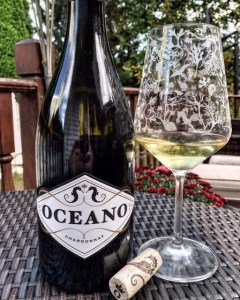
 Another wine I want to talk about here, is definitely from the “new” camp – only 5 years ago, Oceano winery was not even an idea. The winery has a great story, which you better read on the winery website. The story has everything – the love at first sight, the encounter with the seahorse, a wine label drawn on the napkin.
Oceano wines are made from the fruit coming from Spanish Springs Vineyard in San Luis Obispo – the vineyard which is closest to the Pacific Ocean not only in the Central Coast appellation but in entire California. Cool climate helps Chardonnay and Pinot Noir grapes to mature slowly and to accumulate great flavor. Not only Spanish Springs Vineyard provides ideal conditions for the grapes, but it is also SIP (Sustainable in Practice) Certified vineyard, which is considered a higher status than Organic due to the stringent requirements throughout the whole process of winemaking up to the point of bottling of the wine.
I had an opportunity to taste the second release of Oceano Chardonnay, and was simply blown away:
2017 Oceano Chardonnay Spanish Springs Vineyard San Luis Obispo County (13.6% ABV, $38)
Light golden
Vanilla, a hint of honey
Vanilla, a touch of butter, hint of almonds, nice golden apple and brioche, let’s not forget the delicious, freshly baked brioche – with tons of acidity on the long finish, tons and tons of acidity.
9-, outstanding rendition of the Chardonnay, worked perfectly well with a variety of foods – beef roast from Trader Joe’s, Brie, Spanish Cheeses (Manchego and San Simone) – this was totally an unexpected surprise. If you are looking for a delicious and versatile Chardonnay, this might be the wine you are looking for. It might easily be a star of your Thanksgiving wine program.
Here you are, my friends. These wines delivered lots and lots of pleasure, and these are the wines worth seeking. We are done for today, but we are very far from done seeking more wine pleasures. To be continued…
Spanish Wines: Beyond The Reds
Let me ask you something: if you hear the words “Spanish wine”, what is the first type of wine which comes to mind – red, white or Rosé? I’m a self-admitted Spanish wine aficionado, and I can honestly tell you that my first association will be “red”, then probably Rosé, and only then white (when it comes to Spain, your wine type choices are quite wide, as you got also Cava, Jerez, Málaga – but let’s not make it too complicated).
There is a good chance that your associations were the same – Spanish wine equals Red. I certainly started my Spanish wine love embrace from the Rioja, best known for its reds with Lopez de Heredia Viña Gravonia, one of the best white wines made in Spain, being rather a curiosity than a norm. It took me several years until I heard the name Albariño and tasted what is today probably best known Spanish white wine. And then, of course, let’s not forget about the Rosé revolution which took place around the world over the last 5 years or so – Spain gladly joined the movement with wonderful Rosé, or rather, Rosado renditions of Grenache and Tempranillo rapidly showing up over the Spanish wine map.
Let’s explore a bit a Spanish non-red wine scenery – as I like to say, have wine – will travel. First stop – Rueda, the wine region located almost in the middle of the country.
Rueda is a part of the Castilla y León region in Central Spain. History of winemaking in Castilla y León goes back to the 10th/11th centuries and closely associated with the arrival of Catholic monks, who started vine cultivation and winemaking. We can say that the modern part of winemaking history in Castilla y León started in 1980 with Rueda becoming the first local winemaking region to receive the status of D.O. which stands for Designation of Origin, the quality designation in Spanish wine.
The majority of Rueda vineyards are located at an altitude of 800m (2400 FT) and higher. Rueda is known for its extreme climate conditions, where diurnal temperature shift can reach 50 degrees during the day – which is actually good for the grapes, as it helps to concentrate flavors, sugars and acidity. White grape called Verdejo is typically associated with Rueda wines, even though Sauvignon Blanc wines can also be found coming out of Rueda.
I thought it would be appropriate to give you some fun facts about Rueda, taken from Ribera and Rueda wine website: ”
- There are 32,500 acres of vineyards in Rueda, of which 28,800 acres are Verdejo.
- The area has 69 wineries and is cultivated by over 1,500 growers.
- To be “Rueda Verdejo”, wines must contain at least 85 percent Verdejo.
- Verdejo is harvested at night to allow the grapes to cool from the scorching summer heat.
- Verdejo was almost wiped out by Phylloxera in the late 19th century, but it was revived in the 1970s.”
A few weeks ago I had an opportunity to taste a few of the Rueda wines offered as part of virtual tasting at Snooth (here is the link to the video recording of this session if you are interested in learning more). The tasting covered wines of Rueda and Ribera del Duero (I only tasted wines from Rueda), and Snooth had a great wine deal offering related to the tasting, which is, unfortunately, already sold out.
We had three of the Rueda Verdejo wines in the tasting, all three were 100% Verdejo, 100% delicious, and 100% great value.
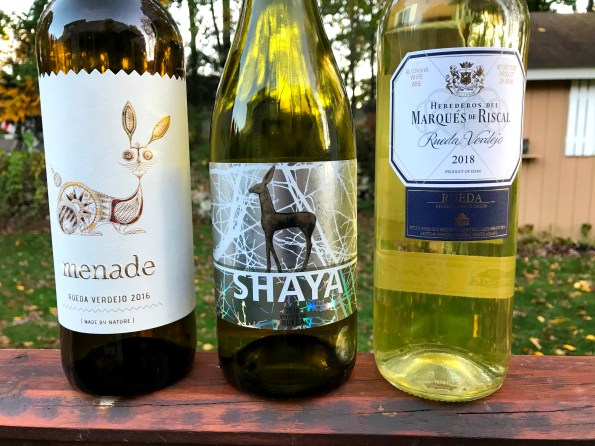
Just to give you a brief summary: Marqués de Riscal is better known as one of the oldest wineries in Rioja. However, they were also one of the first commercial wineries in Rueda, opening the winery in 1972 and being a driving force behind 1980 DO Rueda designation. While Bodegas Menade might be a new kid on the block, with winery established in 2005, the family had been in grape growing business in Rueda for 6 generations, going back to 1820. The grapes used for the Menade Verdejo come from the organically farmed vines which are 80 to 100 years old. The last Verdejo comes from one of the personal favorites – Bodegas Shaya. Shaya Habis, an oaked rendition of the Verdejo, had been my favorite Verdejo wine for a long time. While working on this post it was fascinating (or shameful, depending on your take – I had been writing about Shaya wines for many years, only now finally doing some research) to learn that Bodegas Shaya was a project of Gil family, whose El Nido (predominantly Cabernet Sauvignon with the addition of Monastrell) is one of the “cult”, sought-after Spanish wines. Bodegas Shaya project was started by Gil family in 2008, with the wines produced from old, low-yielding Verdejo vines.


Here are my notes for the wines we tasted:
2018 Marqués de Riscal Rueda Verdejo Rueda DO (13.5% ABV, $13)
Light golden
Touch of fresh grass, lemon, lemon zest, sage, rocks
Crisp, vibrant, lemon, a touch of gunflint, excellent minerality, medium-plus finish
8/8+, Delicious white wine – by itself or with food.
2016 Bodegas Menade Rueda Verdejo Rueda DO (13% ABV, $18)
Golden color
Great complexity, Whitestone fruit, a touch of honey, honeysuckle, interesting undertones of sapidity
Savory and sweet, minerally-forward, Whitestone fruit, crisp acidity, vibrant, fresh, medium+ finish
8-/8, should be good with food
2016 Bodegas Shaya Rueda DO (13.5% ABV, $13, 20%-30% of grapes fermented in barrels with 500 – 600 liters capacity)
Straw pale
Very unusual, dusty nose, a hint of grass and white flowers
High viscosity, roll of your tongue wine, restrained white fruit, Granny Smith apples, buttery impressions of a good balanced Chardonnay.
8+, my favorite of the 3, especially after being open for a few days.
How do you like the trip so far? Now it is time to move east to the region called Cariñena.


Winemaking in Cariñena goes back to Roman times. History of Cariñena wines includes Royal proclamations of “Cariñena wines above all”, and even the quality control instituted at the end of the 17th century, monitoring yield levels and production areas. Cariñena also managed to escape the Phylloxera epidemic of the 19th century. In 1932, Cariñena became the second D.O. in Spain (after Rioja). Here is the link for you if you want to learn more about the region.
Cariñena is best known and typically associated with Garnacha (Grenache for all outside of Spain), and it is also often considered to be the birthplace of that grape. Some of the Garnacha plantings in Cariñena exceed 100 years of age. The second important red grape in Cariñena actually shares its name with the region – it is called Cariñena, and also known locally as Mazuelo, and outside of Spain as Carignan. Other red grapes can also be found in the region – Cabernet Sauvignon, Merlot, Monastrell, Syrah, Tempranillo, Vidadillo. White wine production in Cariñena is much less than red; you can find Chardonnay, Garnacha Blanca, Macabeo (Viura), Moscatel, and Parellada growing there.
At the beginning of the post, we mentioned the “Rosé revolution”. So very appropriately, I had an opportunity to taste two Cariñena Rosado wines, made out of Garnacha, and the Chardonnay coming from one of the favorite producers, Bodegas San Valero. Here are my notes:


2018 Bodegas Paniza Fábula de Paniza Garnacha Rosé Cariñena DOP (13.5% ABV)
Beautiful salmon pink
Delicate nose of tart strawberries with a touch of lemon
Crisp, clean, refreshing, tart strawberries, good minerality, a hint of cranberries
8, excellent Rosé, a perfect wine for a summer day, but will work well with food at any time.
2018 El Circo Payaso Garnacha Rosé Cariñena DOP (13% ABV, $10)
Intense pink
Wild ripe strawberries
Ripe Strawberries all the way, good acidity, lemon, medium body
7+/8-, craves food
2017 Bodegas San Valero Particular Chardonnay Cariñena DOP (12.5% ABV)
Light golden
Touch of vanilla and apple, a hint of white flowers
Crisp, clean, fresh lemon, a touch of white pepper, vanilla, a round finish.
7+/8-, definitely a delightful wine
Here you are, my friends – Spain makes delicious wines, and not all of those wines are red. And let’s not forget that those wines represent an amazing value. Do you have any favorite Spanish white wines? Cheers!
Shiraz, Shiraz, Cabernet
Shiraz, Shiraz, Cabernet.
If it is Shiraz, it is from …
Most likely, Australia. South Africa often uses the same name, and sometimes you can find it in the USA and Israel, but my first reaction would still be Australia.
Cabernet Sauvignon can be from …
Anywhere. Really. The most planted grape in the world. From China to Australia to Lebanon and Israel, France, Italy, South Africa, USA, and everywhere in between.
But today we will be talking about Australian wines, so our Cabernet Sauvignon has to come from Australia.
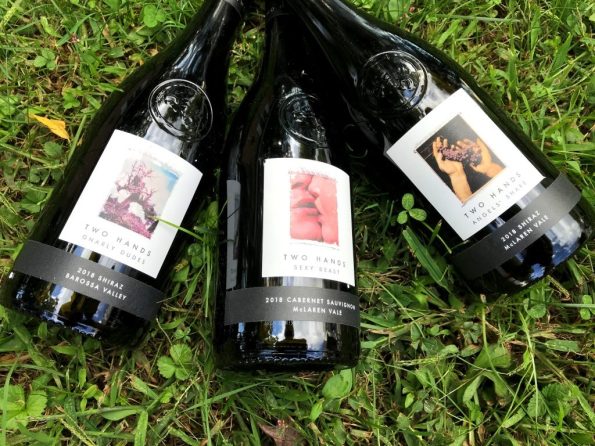
I have to say that I don’t drink a lot of Australian wines – can’t tell you why. Maybe because they are typically located on the back shelves at most of the wine stores. Maybe because they are rarely featured on the flash sale sites, such as WTSO and Last Bottle Wines. Or maybe because I’m still burned from the years of over-extracted, overdone, heavy wines (I called my impression of those wines “burnt fruit”) supported by overinflated Robert Parker ratings – this stuff gets stuck in your head, even though these are 15-20 years old impressions – preconceived notions, here we go. No matter. This is just a fact.
But then I’m always open to taste the new wines – how else can you learn – especially if those are offered as a sample.
And so we will be talking today about the wines produced by the Two Hands Wines, the Australian winery celebrating its 20th anniversary this year.
This is not the first time Two Hands Wines make an appearance on these blog pages – here you will find tasting notes for the same three wines as we will discuss today, only from the 2014/2015 vintage, and here you will find a few more posts covering one of the Shiraz wines). But I can tell you that my impressions are consistently improving, which is either a good sign or a sign of degradation of my palate – I would rather go with the first option.
Two Hands Wines was born in 1999, a product of imagination and conviction of two friends – you can find the full story here. The goal of Two Hands Wines was to showcase different regions in Australia, and of course, make good wines. They succeeded with the flying colors, becoming the only Australian winery (or maybe even the only winery in the world) featured for 10 years in the row in the Wine Spectator Top 100 Wines list. From the beginning, the winery set out to showcase Australian Shiraz. Out of 21 wines produced today under Two Hands label, 14 are Shiraz wines. While the first wines represented the different regions – Barossa, McLaren Vale, Padthaway, Clare Valley, Heathcote, Two Hands also added single-vineyard wines to its repertoire, highlighting best capabilities of each region.


The three wines I had an opportunity to taste belong to so-called Picture Series, as each bottle label features a picture related to the name of the wine. As promised, these are two Shiraz wines and one Cabernet Sauvignon, representing some of the best-known regions in Australia – Barossa and McLaren Vale. Above you can see the labels, and below you can find my notes:
2018 Two Hands Angel’s Share Shiraz McLaren Vale (14.2% ABV, $33, 14 months in 12% new American oak hogsheads)
Dark purple
Dark fruit, tar, eucalyptus, blackberries
Blackberries, good mid-palate weight, well present, velvety texture, good acidity, good balance.
8, lots of pleasure, better on a second day.
2018 Two Hands Gnarly Dudes Shiraz McLaren Vale (13.8% ABV, $33, 12 months in French oak, 13% new)
Dark garnet
Eucalyptus, sweet tobacco, anise, blackberry jam
Silky smooth, blackberries, raspberries, rhubarb, bright acidity, medium-long finish
8/8+, excellent. Smooth and delicious. Definitely 8+ on a second day, delicious, complex wine with a perfect balance
2018 Two Hands Sexy Beast Cabernet Sauvignon McLaren Vale (14.2% ABV, $33)
Dark garnet, practically black
Black currant, a touch of coffee
More black currant on the palate on the second day, a touch of cherries, a touch of pepper, clean acidity, fresh and vibrant. Dark fruit-driven finish, with a touch of coffee.
8-, even a bit better on the second day – black currant more pronounced.
As you can tell, I liked the wines quite a bit, with Gnarly Dudes been a favorite. But I have to add a bit to these notes. It is so happened, that I tasted the wines over two days, with some slight evolution on the second day. Then I simply had to put these wines aside – and these are the screwtop wines, so I didn’t even pump the air out – then we left the house for the 4 days. After coming back, I decided to try the wines before simply pouring them out – and the wines were perfectly drinkable! I wouldn’t say that they evolved, but still, they were perfectly good to continue drinking them instead of becoming an undrinkable plonk. Screwtop wines remaining drinkable for a week. Not one, but three different wines. I don’t know what to think of it, as I’m merely reporting on my experience. If this is something you ever experienced, please comment.
So, my friends, how often do you drink Australian wines? I guess the time has come to do it more often? Cheers!
Last Bottle Sign Up ($10 credit)




 Talk-A-Vino