Archive
Restaurant Files: Fun Evening at the Sign Of The Whale in Stamford, Connecticut
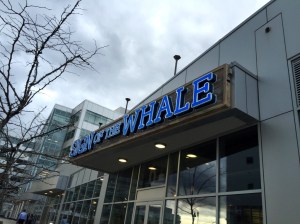 What makes the restaurant visit “fun”? Good company and good conversation? Check. Good food? Check. Good drinks? Check. Good music, preferably live? Check. The view? Would be nice. Check.


And then, of course, there was food.
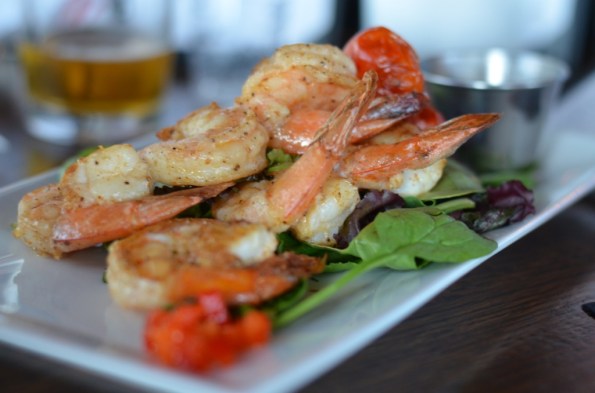
Our selection of the appetizers started from the Shrimp Skewers (old bay seasoning) – perfectly cooked, excellent flavor profile.
Coming right after was Seafood Tower (clams, shrimp, lobster, two types of local oysters) – presentation alone makes you salivate profusely.Lobster and shrimp had perfect texture, and oysters were delicious.


Our dining experience continued with Chopped Kale Salad (Tuscan and Baby Kale tossed in sesame vinaigrette, topped with oranges, avocado, fennel and cucumbers) – to say that it was one of the very best kale salads I ever had would be an understatement – perfect balance of flavors with crunchy texture; sesame vinaigrette was simply spot on. Next arrived Ahi Tuna (Ahi Tuna tossed in soy ginger sauce, served over avocado cream, topped with yuzu aioli, and served with wonton chips and wasabi) – again, excellent flavor, very tasty.


Two more appetizers were completing first part of our dinner. Lobster Minis (Claw, tail and knuckle meat, lightly mixed with mayo, lime, lemon, and blood orange) were texturally good, however, the flavor was lacking for my taste. Fish Tacos (Haddock fried in tempura batter, with pineapple, apple and pickled red onion) had nice crunch on the fish, and apples with pickled onions were providing nice refreshing component.


Not to be outdone, our main course followed, starting with Seafood Cavatelli (Little hollow pasta shells, tossed with Lobster, shrimp, chopped clams and capers in lobster cream sauce), which I can describe in one word – delicious.


Our next dish, 16 oz Bone-in Rib Eye (Grilled, served with caramelized onions, Parmesan steak fries, sauteed spinach, chickpeas, shallots and house steak sauce) was easily everyone’s favorite at the table. Here my description will be even shorter – wow. Perfectly executed steak, triple-fried (!!) potatoes were amazing, house steak sauce was perfect, so all together was simply a wow.


Our last main dish was Pan Seared Atlantic Sea Scallops (U-10 scallops served with vegetable orzo pasta salad, finished with a Blood orange beurre blanc) – it was perfectly executed both in presentation and the texture of the scallops, but what spoiled the dish for me was the amount of salt on top – just too much.


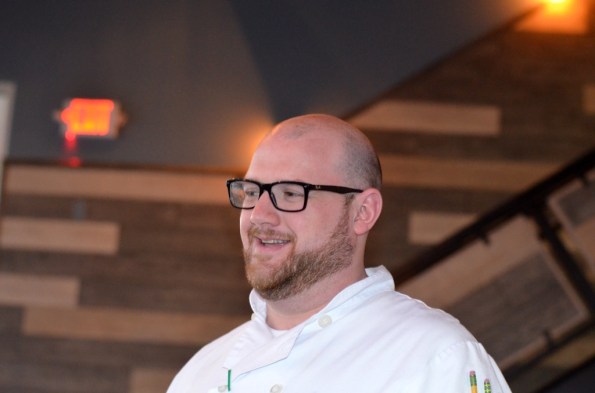
Along the way we also had a pleasure of listening to the Chef Brian Murphy who came to check on us a few times and use the moment to talk about our delicious experience:
 And now, let me present to you the desserts! Remember I told you that today we are talking about concept of fun at the restaurant? So to make sure it is fun all the way, how about some adults desserts? Yep, you got that right – these would be the desserts which also have an addition of so called “adult beverages”. And I don’t know if any other place can do it better that the Sign of the Whale – even presentation of those adult beverages is an art form.
From the Tidal Wave Drinks menu, we had The Blue Whale (Smirnoff Vodka/Coconut Rum/Blue Curacao/Pineapple Juice/Sprite) and Old Man’s Orange Potion (Smirnoff Orange Vodka/Triple Sec/Orange Juice/Sprite) – tell me if you think those are not the fun to share:


More exciting desserts followed, like Ice Cream sandwiches, Adult Root Beer Floats and Seasonal sorbet. And for my ultimate happiness I can tell you that the regular coffee was excellent, which is more of a rarity nowadays.


You know what is also great at the Sign of the Whale? The outside seating on the roof deck! Here is what you can see if you will wait until it will get dark outside:

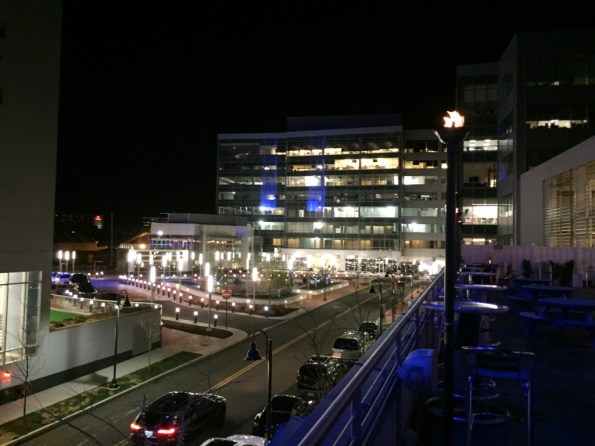
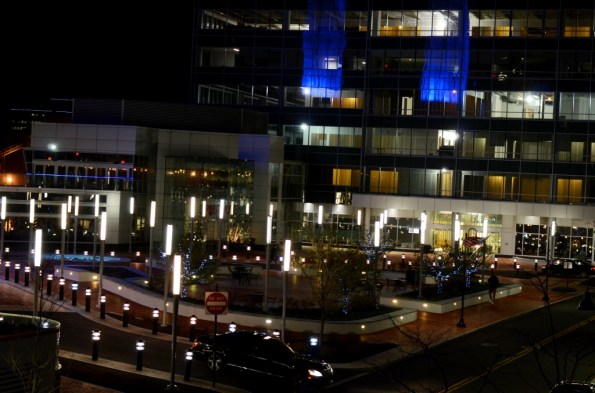 I hope I gave you enough reasons to go and check Sign of the Whale on your own. And if you will not – well, it will be your loss… Cheers!
Sign Of The Whale
6 Harbor Point Road
Stamford, CT 06902
Ph: (203) 883-8282
http://www.signofthewhalect.com/
Expanding My Wine Map
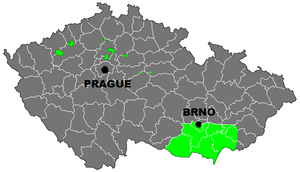
Czech Republic wine regions. Source: Wikipedia
We all have our own versions of the wine maps. This is how we learn about wine, and this is what makes it easier to understand it. “Oh yes,of course – France makes famous wines. California? Absolutely, yes, very famous. Italy? Bellissimo! Spain? Yes, I had a few of those. Australia? I heard about Yellow Tail, right?”. I’m simplifying, no doubts, but I’m sure the picture I’m presenting here is quite fitting lots of wine consumers (no, I’m not talking about you, wine geeks and bloggers).
My wine map would be a bit wider than that – I’m not bragging, but I seek new and different grapes all the time, and with this you are destined to try the wines from Turkey, Greece, Georgia, Croatia and many, many other not-so-well-known places. Nevertheless, my wine map has also plenty of white spaces, and I’m glad to use any opportunity to fill those up.
Last week the opportunity presented itself in the form of the tasting at my favorite local wine store, Cost Less Wines. I was told to stop by to taste the wines made in the Czech Republic. You see, to me, “wine” and “Czech Republic” in one sentence sounded almost like a misnomer. A while back, I visited the Czech Republic (which was known as Czechoslovakia back then), and I can tell you that beer is the very first thing which comes to mind when I think about the Czech Republic – Pilsner, anyone? Well, but it is a free tasting, so after all – why not?


The first wine which was poured was 2014 Templar Cellars Komtur Ekko Pinot Gris. I have to honestly admit that I became a convert after the very first sip – creamy, medium bodied, clean, well structured, with perfect balance of white fruit and acidity – it was on par with the best Oregon Pinot Gris wines, which is my personal hallmark of quality for the Pinot Gris. With such a great start, I was really eager to listen to the explanations.
It turns out that the wine had been produced in Moravia – this is how the area is called – from the beginning of the last millennium! Moravia is centrally located in Europe, for the Romans to use it as their base – and of course wine was part of the culture for them. Templar Cellars proudly shows 1248 on their label – this is when the actual cellars had been built, and this is where winemaking traditions are taking their roots. The wine, of course, is perfectly modern, but I love the medieval look of the labels and even the bottle design – you can read more about Templar Cellars here.
As you can see on the map above, the wine production in the Czech Republic is concentrated in the area down south – that is the Moravia we were just talking bout. Bohemia, up north, also has a bit of the winemaking activity, but it is of course known as a beer capital. Despite the seemingly unimpressive size of winemaking area in the Czech Republic, do you care to guess how many wineries it has? I will give you a little time to think, but whatever you think, take it higher. Yep, and higher.
What if I would tell you that the Czech Republic has about twice as many wineries as we have in the US, would you believe me? Well, it appears that the Czech Republic has about 18,000 wineries. Yes, many of those are simply “Mom’s and Pop’s” operations, but still, they are the independent wineries. Don’t know about you, but I was duly impressed with what I heard.


I was even more impressed after trying two of the red wines. 2013 Templar Cellars Komtur Ekko Pinot Noir was clearly a cold climate Pinot Noir with juicy cranberries at the core and perfect acidity. It is very different from a Pinot Noir from California or Oregon, much lighter, really crispy and crunchy, but with enough body weight to stand up to a powerful cheese or some spicy fish.
2009 Vino z Czech Ludwig Cabernet Moravia was even more interesting. Cabernet Moravia is its own grape, first created in Moravia (hence the name) in 1975, and it is a cross between Cabernet Franc and Zweigelt. It tasted like a classic Cabernet wine, with cassis, mint and eucalyptus, but also with an oversized herbal component. I actually like this line from the official description: “it incorporates all of Cab Franc’s leafy herbaceousness and Zweigelt’s tart, cranberry flavors in a refreshing wine”. Of course as an extra bonus, I’m adding a new grape to my collection.
There you go, my friends – a new region and new delicious wines. I truly love the endless learning opportunities the world of wine is offering to us. Have you ever had wines from the Czech Republic? What were your recent wine discoveries? Cheers!
New and Noteworthy: Two Classic Regions, Three Classic Pairs
I tend to abuse certain words in the conversation, especially when talking on the subject of wine. As you might easily guess, one of such words is “Classic”. I use this word in hope that it is the quickest way to convey my impressions about the wine. For instance, the words “Classic Red Bordeaux” or “Classic White Burgundy” would most likely paint a quick and vivd picture for the most of oenophiles to imagine how the wine actually tastes. While the wine is produced all around the world, such a broad stroke reference can be only applied to the well known and well referred to regions – saying “Classic Red Bio-Bio” (wienmaking region in Chile) or “Classic White Valais” (winemakiing region in Switzerland) would be an empty sound for majority of the wine lovers.
Looking past the regions, we can also apply the word “classic” to the grapes themselves. There are probably 15-20 grapes which can be easily referred to in this way – “classic Cabernet Sauvignon” or “Classic Sauvignon Blanc”, for example, would give you quick pointers to how the wine might taste like. Yes, “Classic Bobal” or “Classic Resi” will leave most of us with no information at all.
As this is not an epistolary exercise on the applications of the word “Classic” in the wine world, let’s get closer to the subject at hand, and talk about few wines in the practical terms. Today I want to talk about 2 classic regions and 3 classic grapes – for sure for those regions. So the classic regions are: California and Oregon. Would you agree that it is easy to refer to these two world renowned winemaking regions as “Classic”? I hope you are nodding. And for the grapes, I also hope you would share my “classic” sentiment – Pinot Noir and Chardonnay from California Napa Valley – aha, I see you smacking your lips. And Pinot Noir and Pinot Gris from Oregon – need I say more?
Talking about the wines from Oregon, the Pinot Noir is of course an uncontested king of the Pacific Northwest of the USA. Commercial Pinot Noir production in Oregon started in the 1960s, and then from the beginning of the 1990s, Pinot Noir from Oregon needed no introduction anymore. With Oregon Pinot Gris, you might argue with my “classic” designation, however, today, you will practically not find a single Oregon winery which will not produce Pinot Gris. Oregon Pinot Gris has its own, easily recognizable style and character, so in my mind, Pinot Gris wines are the “classic” element of the Oregon winemaking.
Thus let me present to you the first two of the “classic” pairs – Pinot Gris and Pinot Noir from two wineries in Oregon: Willamette Valley Vineyards and Pike Road Wines.


Willamette Valley Vineyards was established in 1983, planting Pinot Noir, Pinot Gris and Chardonnay vines where blackberries and plums were growing before. The original Estate vineyard spans 53 acres at the 500 to 750 feet in elevation. Today, Willamette Valley vineyards farms more than 250 acres of vines, including one of the oldest in Oregon, Tualatin Estate, which are all LIVE (Low Input Viticulture and Enology) certified. I had a pleasure of trying Willamette Valley Pinot Gris and Pinot Noir wines earlier in the year, so here are my notes:


2014 Willamette Valley Vineyards Pinot Gris, Willamette Valley, Oregon (12.4% ABV, SRP: $16)
C: straw pale
N: white stone fruit, touch of grass
P: hint of candied lemon, white stone fruit, nicely round, refreshing, good acidity, medium to full body
V: 7+/8-, very pleasant
2013 Willamette Valley Vineyards Pinot Noir Estate Willamette Valley, Oregon (13.7% ABV, SRP: $30, retail: ~$20)
C: beautiful Ruby
N: fragrant, fresh, cranberries with touch of cherries, sweet raspberries
P: wow, lots of fresh fruit – cranberries, raspberries, fresh, super-clean, touch herbal, great restrained finish
8+, one of the most delicious Pinot ever, perfect.
Our second Oregon winery takes its name from the Pike Road, which winds through the hills of Yamhill-Carlton AVA. This is the second winery for the Campbell family, who founded Elk Cove Vineyards in 1974. Pike Road takes advantage of 5 generations of the farming experience, including 40 years of tending the wines.
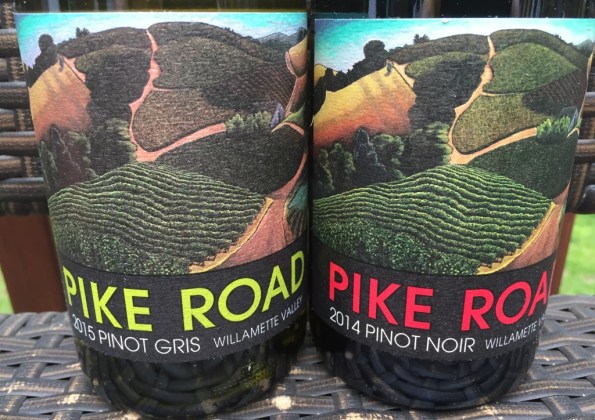


Here are my notes:
2015 Pike Road Pinot Gris Willamette Valley, Oregon (13.5% ABV, SRP: $15)
C: pale greenish color
N: tropical fruit, candied lemon, fresh, intense, inviting
P: crisp, clean, perfect fresh acidity and white stone fruit, creamy. Outstanding.
V: 8-/8, delicious white wine, perfect year around and superb during summer
2014 Pike Road Pinot Noir Willamette Valley, Oregon (13.5% ABV, SRP: $19, 10 month in French oak barrels)
C: dark Ruby
N: delicious. Touch of sweet fruit, open, inviting, raspberries, herbs, super-promising, wow
P: soft, layered, silky, spices on top of traditional smokey profile, triple-wow
V: 8+/9-, wow, totally unexpected and amazing. I know Oregon Pinot delivers, but this far exceeded my expectations. Might be the best QPR for Oregon Pinot Noir in existence. Love rustic labels too.
Our last classic pair comes from the classic of the classics, none less than Napa Valley, and it is Chardonnay and Pinot Noir from Artesa winery. Artesa winery is located in Carneros region of Napa Valley. While Artesa recently celebrated is 25th vintage, their winemaking traditions go way, way, way back – say by another [almost] 500 years. How come? Artesa winery was founded by Codorniu Raventós family from Spain, which takes its winemaking heritage 17 generations back to the 1551. Artesa sustainably farms 150 acres of vines, all Napa Green Land certified, and produces a range of wines, starting with a few sparklers and finishing with another Napa classic – Cabernet Sauvignon. Two wines which I had an opportunity to taste are the new Estate Reserve release from the winery:
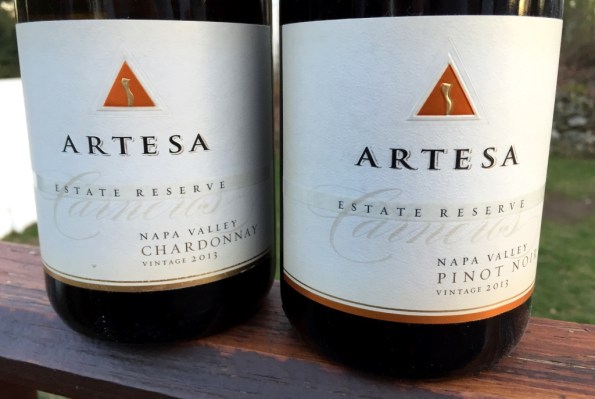
2013 Artesa Estate Reserve Chardonnay Napa Valley (13.9% ABV, SRP: $40)
C: light golden
N: touch of vanilla, hint of butter, white fruit, intense
P: touch of butter, green apples, good acidity, medium to full body, vibrant and balanced
V: 8-, a classic Chardonnay
2013 Artesa Estate Reserve Pinot Noir Napa Valley (14.4% ABV, SRP: $40)
C: dark garnet
N: warm, inviting, sweet plums
P: round, polished, present silky texture, touch of smoke, more plums, minerality, restrained
V: 8-, nice, smooth and restrained
There you have it, my friends – some new and interesting wines worth seeking. And whether they will hit the “classic” note for you – it is entirely your decision. Cheers!
The Post Which Could Have Many Names
Blog post title is something I consider to be important, may be even essential. Good title facilitates the flow of thoughts and actually, once I get a title in and I’m happy with it, the writing usually flows effortlessly.
The post you are reading could’ve have many different titles, such as “More Creative Wine Labels”, “City Winery with Worldly Wines”, “Secret Wine Santa Over-delivers”, “Art in and of the Wine Labels”, or “Better Late Than Never” and I’m sure I would be able to come up with a few more – hence the title you see at the top. As for all of these possible titles – read on and you will figure it out.
As some of you know, there is a game of Secret Wine Santa, originated by Jeff a.k.a The Drunken Cyclist – here is Jeff’s post about it from the last year. The game, of course, is played closer to the actual Santa-related period. All participants get assigned a random recipient, who then gets from the secret Wine Santa one or two bottles of wine, preferably arriving before Thanksgiving. If you think that I have a nerve talking about Wine Santa when the temperatures on the East Coast are trailing above 90°F – well, may be I do. But I have an excuse – I always wanted to play this game twice a year, but shipping wine during summer is not good for the wine, so much for that thought – but then at least I get to talk about it (no, I didn’t plan it like that – life did).
Of course the Santa stays secret only until the wine arrives. When I opened the box, I found a nice handwritten note from Nancy Koziol, introducing me to the two absolutely gorgeous looking bottles from the winery I never heard of, called Brooklyn Oenology:
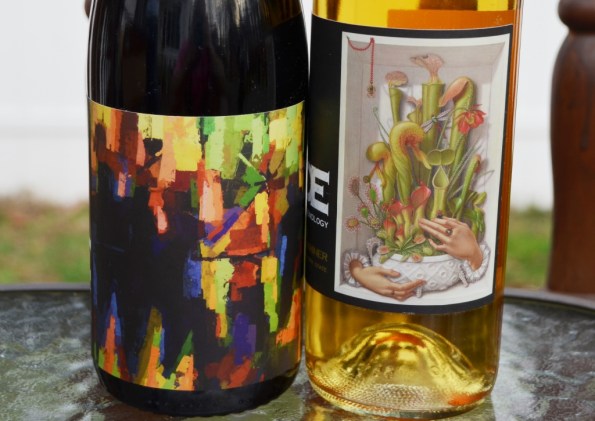
Going beyond the beautiful labels, it turned out that the wines are produced by Brooklyn Oenology, the first urban winery in the New York City – they have a tasting room open in the Williamsburg neighborhood of Brooklyn, so technically right in my backyard (still never visited them so far). Brooklyn Oenology, or BOE for short, sources their grapes from around the New York state (as you can see below in the wine descriptions) and in the future they even plan to bring actual winemaking facilities into Brooklyn.
Now, talking about the labels – not only they are beautiful, but to top that off, BOE really thought of the people like myself, who spend countless hours trying to neatly peal off the labels from the bottles for the notes journals. These labels are peel off labels – how smart is that! I can’t help it not to share this paragraph from the About page on the BOE web site:
“In addition to sourcing New York grapes, BOE draws upon the Brooklyn and greater New York areas to create its identity. Each wine’s label showcases contemporary art by a Brooklyn artist and features a new piece of work for each vintage. They’re not just for viewing; they are double-layer, easy-to-peel stickers, so the customer can preserve the artwork”.
What is most important, that these wines are not just labels – they are first and foremost, unique, different and delicious wines.
For what it worth, here are my notes:
2012 Brooklyn Oenology Gewürztraminer Finger lakes, New York (12.8% ABV, 100% Gewurztraminer, fermented with skin and seeds)
C: concentrated gold, the wine is made with the “orange wine” methodology
N: concentrated honeyed fruit initially, but then quite closed, not perfumy at all, which is usually a trait of Gewürztraminer
P: very unusual, more of a qvevri style, clean acidity, very restrained, but opens up to some nice finish with touch of fruit.
V: 8-, very thought provoking, interesting wine
2010 Brooklyn Oenology Motley Cru North Fork of Long Island, New York (13.5% ABV, 57% Merlot, 19% Syrah, 14% Petit Verdot, 5% Malbec, 5% Cabernet Sauvignon)
C: dark garnet
N: warm, inviting, ripe sweet fruit, blueberries
P: medium to full body, soft, round, fresh fruit, touch of pepper, violet, clean acidity, excellent balance, long lingering finish. On the third day the wine became even more polished. Delicious.
V: 8, an excellent bottle of wine, good for all occasions.
Here is the story of [yet again] boundless creativity and passion in the world of wine. Thank you wine Santa for this wonderful discovery – and I already can’t wait to see what next November might bring. Cheers!
Labels and Beyond – Creativity in the Wine World
There is a famous Russian saying – “meet by the clothes, part by the smarts”. Yes, I know I’m butchering the original with this translation, and typical proper analogy in English will be “Don’t judge the book by its cover” – but I wanted to emphasize that “meet by the clothes” part.
In the world of people, our first impression of the stranger is often directly related to the way the person is dressed – however, once we get into the conversation and get to know the person, the dress becomes of no importance at all – if, of course, we manage to find common ground and enjoy each other’s company. More often than not, we use clothes as a differentiator – this is our way to stand out from the crowd and get noticed – and I’m sure you all can attest – that generally works; clothes matter, especially for the first impression.
This is the wine blog, right? So let’s get to it. What are the “clothes” for wine? The bottle and the label, isn’t it? We, wine drinkers collective, are often very quick to make serious assumptions about the content of the bottle just from a quick glance at the bottle. Ahh, a cute creature? The wine must be cheap and terrible. Look at how solid this heavy bottle with black and gold label is – I’m sure the wine will be delicious. Been there, done that.
The wine today is at a pick of popularity – for sure in the US. Which means that there is more and more wine produced all the time, to the pleasure of a wine drinking public. But here also lies a flip of the silver lining – looking at the wine store shelves is overwhelming, so how can producers ensure that someone will pick the bottle of their wine? This is where the “clothes” come to the play – all other things been equal, the label and the bottle are the only differentiators winemaker got (the brand recognition of course will be superior to the label differentiators, but we should put it aside for the sake of this post). What I’m observing lately is an explosion in creativity in the wine labels, names of the wines and even the bottle shapes (or overall packaging, such as “wine in the can”). And this is what prompted this post – over the month, I came across a few wines which I felt I just wanted to share with all of you.
Here is the first one – Honoro Vera Grenache. When I saw the bottle, it was an instant “wow, that looks beautiful” – I must try it. The fact that it was Spanish Grenache (hard to go wrong with), priced at $7.99, make that decision even easier. And the wine didn’t disappoint with fresh core of the dark fruit and mocha – round and delicious.


The love of the next label might be giving away my age – but this “post card formatting” somehow always attracts my attention, as the nod to the times when people actually used paper and their hands to write, and not only to type. One look at the bottle and I knew I had to get this Bob’s Pinotage from South Africa – and of course at $6.99, the risk was minor. Pinotage used to have a lot of bad rap in the past, but this wine was delicious – fresh strawberries, hint of gaminess, medium to full body, good balance – excellent food friendly wine.


How about the label which takes guessing out of the wine enjoyment? The label on this Rosé La Princess from Provence will change when the wine will be chilled to the suggested drinking temperature, and will definitely encourage you to drink it. One would’ve thought that this is too gimmicky (and I did), and to my delight, I found classic, gentle, strawberry driven, perfectly refreshing wine in this bottle. All for $11.99.


We all know that wine and flowers make perfect gift for anyone. How about the wine which essentially includes flowers? How I mean, you ask? Take a look below – this Côte des Roses bottle features the bottom which looks like a perfect Rose flower. Going all the way, take a look at the pink glass enclosure – isn’t it beautiful? And the best part is that wine itself is a beautiful Rosé – restrained, delicate, tart and refreshing. And despite the overindulgent bottle, the wine retails for the same $11.99 – a great value for Rosé if you ask me.


Let me finish this labels galore with a series belonging to the wine called Machete Red. This wine is produced by the legendary Dave Phinney, and each case sports 12 bottles with 12 different labels – from the same theme. I didn’t have an opportunity to taste this wine, and it retails for quite a bit more than any of the wines I mentioned before ($45.99), so in this particular case I can’t tell you if content of the bottle matches the creativity on outside – but I surely hope it does.

That’s all I have for you for today. What are your creative label discoveries? Cheers!
More Trader Joe’s Wine Values – in Orlando, Florida
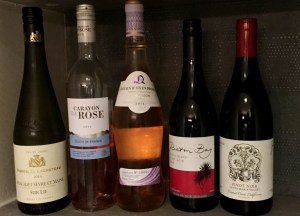 As mentioned many times in this blog, I have a lot of respect for the wine folks at Trader Joe’s, as I rarely come across wines I wouldn’t want to drink second time, no matter where I try them. Trader Joe’s wine inventory differs from state to state (prices also can be a bit different, but this typically caused by the state’s rules, not Trader Joe’s desire), so visiting local Trader Joe’s stores is one of my favorite fun activities during business travel.
This time around I was in Orlando, Florida, and of course, Trader Joe’s was right around the corner. Sometimes, I make it a fun challenge for myself – to get as many wines as possible for, let’s say, $20. During this visit, I was just looking for some reasonably priced wines without any particular spending goal, so I ended up with the selection of 6 bottles priced from $5.99 to $9.99. And if you want another piece of stats, these 6 bottles represented France, Spain, New Zealand and USA. You might ask why you see only 5 bottles in this picture, so keep reading and I will tell you.


Here are the notes for the wines I tasted:
NV La Granja 360 Cava Brut (11.5% ABV, $6.99, 70% Xarel-lo, 30% Parellada) – well, here is my shameful fiasco story. After coming back to the room while it was not too late, my thought was – let me give this wine a good chill, may be I will open it tonight. So the wine went into the freezer instead of the fridge. And yes, the brain failed with the reminder message. Until the next evening. To be greeted with the pile of slush occupying good half of the freezer. For my silver lining, the bottle didn’t blow up – the cork was neatly pushed out instead, so cleanup was reasonably straight forward. No wine for me, and no tasting notes for you. Oh yes, and a memory pointer for me for the next time.
2014 Vignobles Lacheteau Muscadet Sèvre et Maine Sur Lie, Loire Valley (12% ABV, $6.99)
C: straw pale
N: mostly reminiscent of wet ocean air, touch of warm granite minerality
P: slightly bigger body than a typical Muscadet, mineral-driven, restrained acidity, lemon
V: 8-, an excellent wine
2014 J.L. Quinson Côteaux D’Aix en Provence (12.5% ABV, $7.99)
C: onion peel
N: very minerality, gunflint, touch of fruit
P: also very restrained, same as the nose, hint of cranberries
V: 7+, not bad, but you can get more from Provence ( may be no tat this price level though).
2014 Carayon La Rose Languedoc DOP (13% ABV, $5.99)
C: light pink
N: touch of strawberries, lemon, sage
P: a bit more round than a previous wine, good amount of strawberries, light
V: 7+/8-, a steal for the price. Buy it by the case if you see it – your summer will be better with this wine.
2015 Picton Bay Pinot Noir South Island, New Zealand (13% ABV, $7.99)
C: dark ruby
N: smoke, fresh cherries,
P: smokey cherries on the palate with addition of the touch of cranberries, good acidity, perfect balance
V: 8/8+, outstanding wine. I was drinking it bit by bit over the course of 4 days, and it was still very tasty even on the day 4 – note that I didn’t pump the air out, it is a screw top bottle. This quality level for $7.99 – one of the definite QPR champions. Another case buy.
2013 Caretaker Wines Pinot Noir Santa Maria Valley, Central Coast (14% ABV, $9.99)
C: bright Ruby
N: Classic Pinot, sage, cherries, hint of forest floor
P: clean, round, fresh acidity, bright crisp cherries, medium body, succulent
V: 7+/8-, interestingly enough, the wine was bright and fresh on the first day, then closed up on the second. I didn’t have an opportunity to see how it would evolve later on, so get it and drink it right away – as “pop’n’pour”, it is an excellent and enjoyable wine.
There you have it, my friends – another successful Trader Joe’s wine encounter. Have you had any of these wines? Cheers!
Heartbroken…
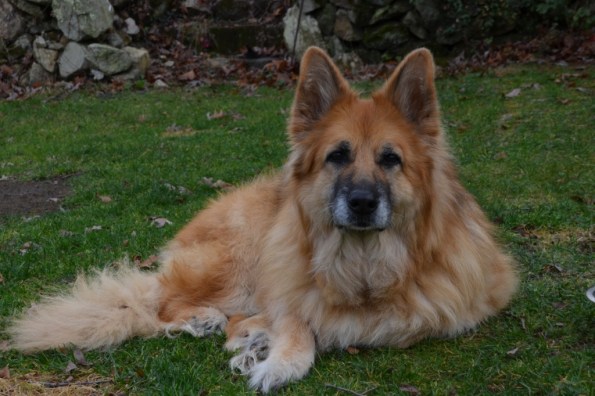
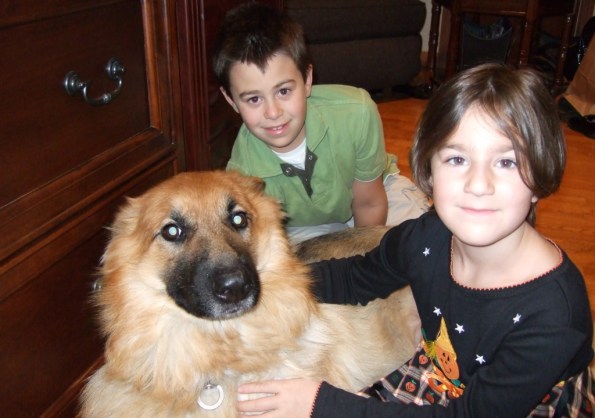
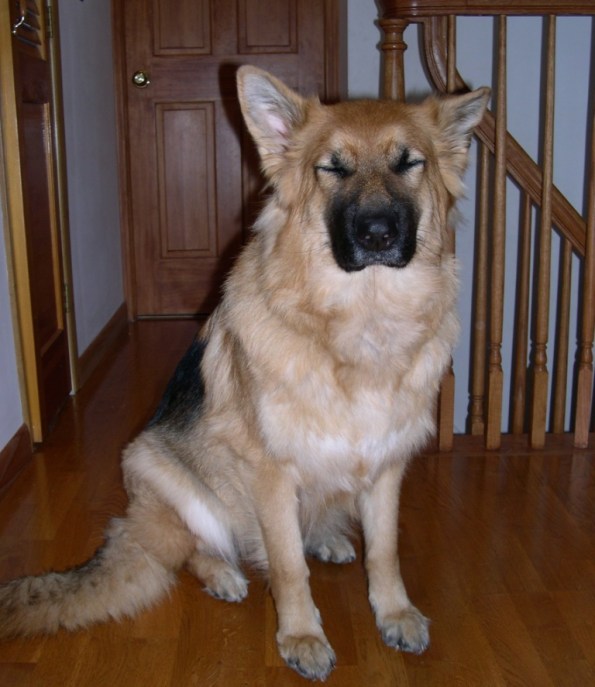
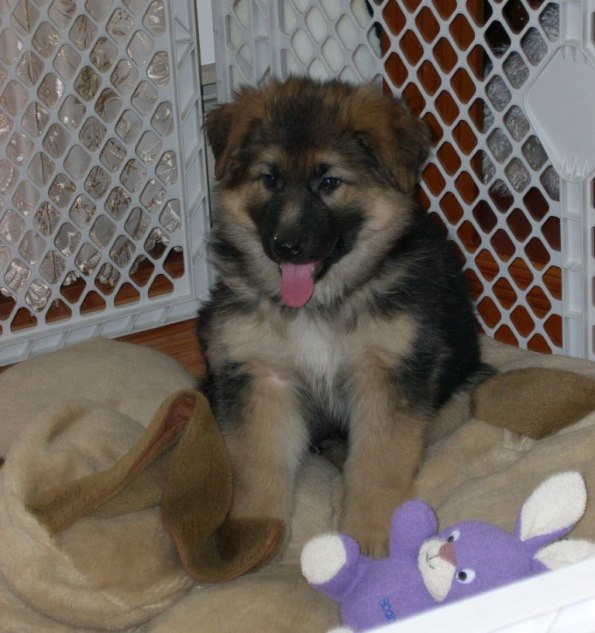
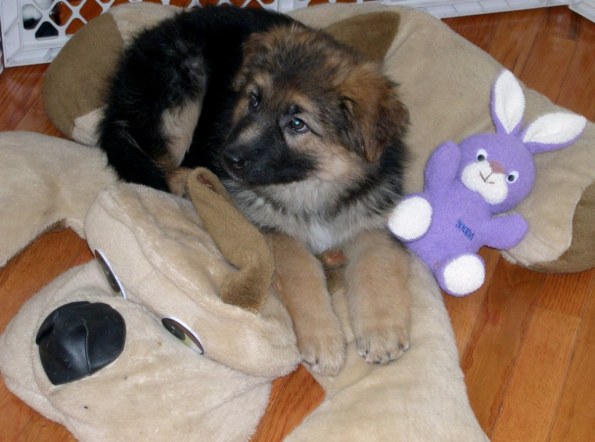
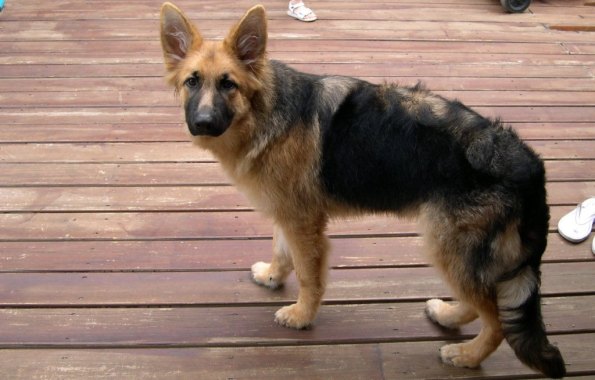
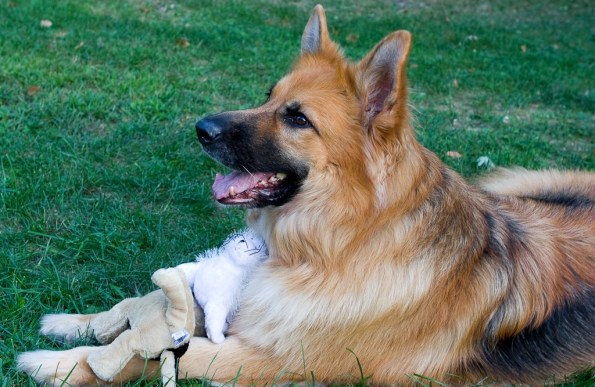
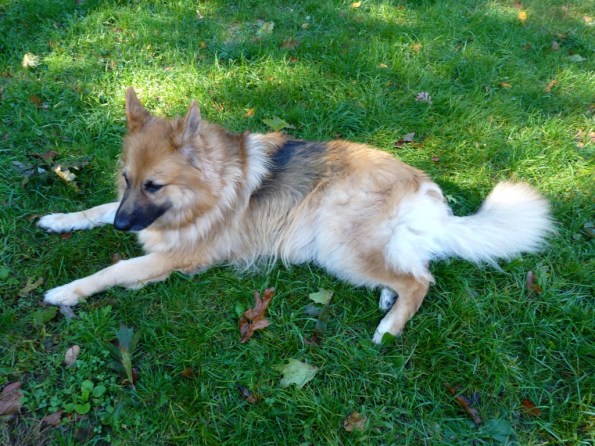
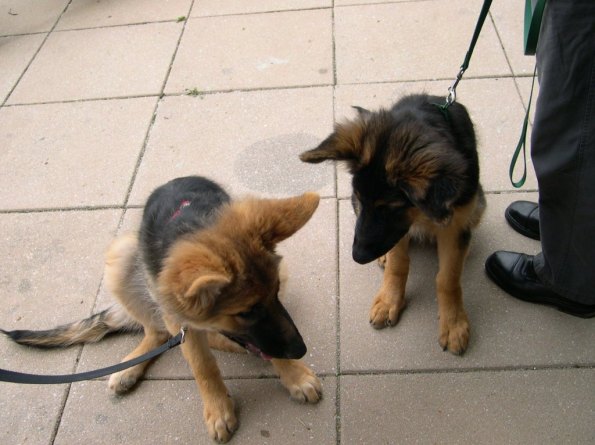
The house is quiet and feels empty. Eleven and a half years ago, a little bundle of joy became indelible part of our lives. She grew up quickly to become a stunning, magnificent dog, the one which would turn heads; more importantly, she became simply a part of our family, someone who brought lots of joy to all – to us, to our friends and to the friends of our friends.
About two years ago, she started walking a bit strange, and developed a fear of staircases. Our vet suggested that it can be degenerative myelopathy – the spinal disease which can be diagnosed, but can’t be cured and has no medication of any kind. . Unfortunately, the doctor was right, and while we did our best to keep her with us, we lost this battle and our beloved Verda left to look down on us from the rainbow bridge.
Nothing will replace her soft ears and heavy paws, but she will stay forever in our memories and our hearts.
Hug each other a little closer today. And every day.












Wine On The Go: SF Uncork’d
 My main line of work (the one which pays the bills) includes good amount of travel, which I don’t mind, as I like traveling. Well, yes, four hours delay, and especially a night of sleep on the airport floor make me reconsider this statement, but still. Different people have different approach to the travel logistics, of course. One of the sales people I worked with before would always say – “ahh, we still have an hour and a half before the flight, let’s go have dinner, I know a great place” – granted, it was in pre-9/11 days, but I believe this “style” is still used by many. I, on another hand, prefer to wait at the airport for another hour as opposed to biting nails in the standstill traffic.
Last week, coming back from San Francisco, I did exactly that – arrived to the airport with solid few hours to spare. Which translates into an opportunity to have a glass of wine – assuming, you can a place for that. Wondering through United gates section of Terminal 3, I noticed the place called SF Uncork’d. I’ve been through the same section of the airport many times before but never saw the restaurant – I believe it was simply a store selling California wine – at the airport prices, so I was never a big fan. Now, this was a restaurant sporting wine everywhere, so I had to wander in.
First glance at the menu made me pretty happy – not only were many wines listed by the glass (reasonably priced), but SF Uncork’d also offered a good number of wine flights at very reasonable prices ($10-$12), each flight consisting of 3 wines. In my typical snobbish fashion, I’ve chosen most expensive ($25) flight called Fab Cabs and consisting of Stuhlmuller, Jordan and Nickel & Nickel Tench – well, I think $25 is a reasonable price for an opportunity to taste 3 of California classics.


Care to guess which one was my favorite? Let me give you my brief tasting notes, and you will figure it out.
Generally, Jordan is one of my favorite California Cabernets. This 2012 Jordan Cabernet Sauvignon Alexander Valley had nice aroma of the fresh blackberries and mint, however on the palate it was rather hot. It had some fruit, but nothing of the signature clean Jordan style. The wine was dispensed from the preservation system (you can see it below), so I can’t tell if the issue was simply the temperature or there was something wrong with the dispenser, but the wine was definitely not what I expected.
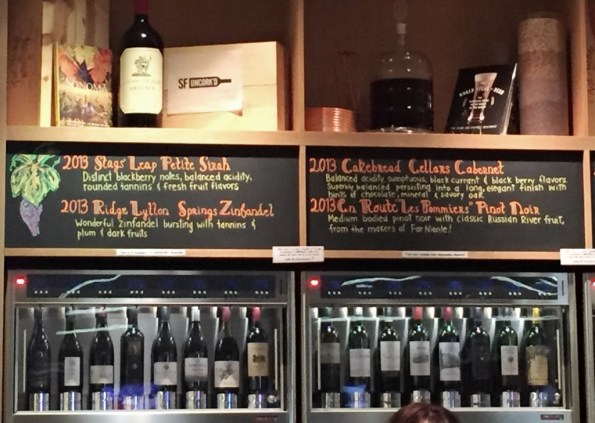
Next I had 2013 Stuhlmuller Cabernet Sauvignon Alexander Valley, which had somewhat of a closed nose with a hint of red fruit, but on the palate this wine was singing – black currant, eucalyptus, good acidity – delicious Cabernet Sauvignon by all means. Last wine was 2013 Nickel & Nickel Tench Cabernet Sauvignon Oakville Napa Valley – and it was mostly closed both on the nose and the palate. I probably would be able to give you some nuances, but the big picture was simple – the wine was not ready to drink by all means – at least this is what I think, as I never had aged Nickel & Nickel. I don’t know if you guessed correctly, but as you can tell now, Stuhlmuller was my favorite wine. An interesting ‘sidebar” note – Stuhlmuller retails for about half of Jordan, and Nickel & Nickel is 1.5 to 2 times more expensive than Jordan. Yep, go figure…
Of course SF Uncork’d is not only about the wine – food menu looks good too. I settled on the salad and sandwich. For the salad I had Raspberry Walnut Salad (Spring Mix & Butter lettuce, fresh tomatoes, candied walnuts, crumbled Gorgonzola, fresh raspberries & a side of low fat raspberry vinaigrette) – served very nicely with fresh raspberries and raspberry vinaigrette on a side in a little jar – salad was fresh and tasty.


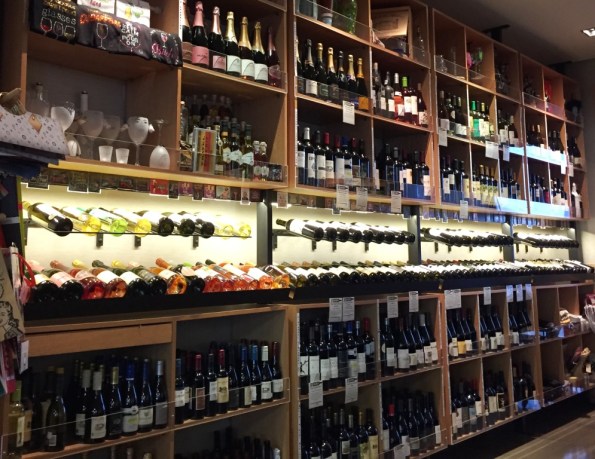
Yes, of course you will be paying airport prices, which means at least 30% higher than at the average retail store, but – everything has the silver lining – SF Uncork’d wine prices are still significantly less compare to Duty Free stores.
If travel will take you to the Terminal 3 in San Francisco, now you know where to get a good glass of wine, good food and good service, so Happy Travels. Cheers!
SF Uncork’d
San Francisco International Airport
Terminal 3 Next to Gate 83 (Post-Security)
San Francisco, CA 94128
Ph: (650) 821-8975
http://sfuncorkd.com/
New and Noteworthy: Few Spanish Wine Recommendations
I’m an eternal optimist, for sure – I keep creating new “series” of the posts (like the one you now see in the title – New and Noteworthy) in the hope that I will remember to use it all the time. Well, I had or still have a number of series in this blog, but very few of them are current ongoing. Will see what will happen with this one. Here is the idea behind this series: I do get to taste many of the newly released wines, some of them are samples, some are not; the wines which I like I intend to share with you in this series of posts. ‘Nuf said, let’s go.
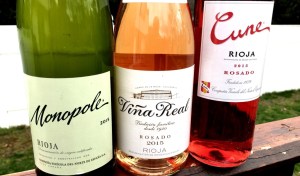 My love affair with Rioja started after tasting of the beautiful line up of Viña Real, CVNE and Imperial Rioja (all essentially produced by CVNE), all the way up to the 1964. They were all delicious red wines. For the long time Rioja associated for me only with the red wines, until I tasted Lopez de Heredia Blanco and Rosato, both being about 15 years old and delicious. This is how I discovered that Rioja actually is not only red wines. My next discovery of Rioja white wines was Rioja Monopole (100% Viura), which (to my shame) is produced since 1915 – well, “live and learn” (or “better late than never”, whatever you prefer to comfort yourself). And few years ago I also encountered the Rioja Rosato – so now I definitely know that Rioja is a lot more than just delicious reds.
Recently I had an opportunity to taste the latest releases of few of the white and Rosé wines from Spain, not only from Rioja but also from few other regions, and I want to share those wines with you. I don’t know if this is luck, or if I lost all of my taste buds already, but I liked all the wines I tasted – below you will see my tasting notes on the 6 wines, and I would gladly recommend all 6 to you. As a bonus, all 6 are also a great value (under $20). Well, you will be the judge once you will have an opportunity to taste these wines.
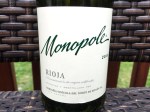 2015 CVNE Monopole Rioja (13% ABV, SRP: $13, 100% Viura) – the oldest continuously produced white wine in Rioja, starting from 1915. I didn’t realize this was a 100th vintage (assuming there was no break in production years).
C: straw pale
N: beautiful white fruit with tropical fruit nuances, lemon, intense
P: clean, crisp and round at the same time – is it possible?, white stone fruit, medium to full body, refreshing, nice acidity on the finish
V: 8-, this wine would brighten up any summer day
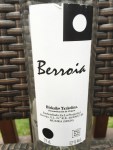 2014 Bodega Berroia Bizkaiko Txakolina DO (12% ABV, $19, 85% Hondarrabi Zuri, 10% Riesling, 5% Folle Blanche, Vegan) – Txakoli is dangerously looking but actually easy to pronounce (just say “Cha-Coh-Lee”) wine coming from the Basque country in Spain. My first encounter with Txakoli was about 8 years ago – it is a clean and refreshing wine, perfect all year around and especially in summer. Similar to many other Spanish whites, it didn’t make it in the US in any major way, but you can still find some of the Txakoli wines in the wine stores – and they well worth your attention.
C: Straw pale
N: concentrated, intense, inviting, touch of peach, candied fruit
P: fresh, undertones of candied fruit but with dry core. Somehow reminiscent of grapefruit, but without much sweetness of bitterness. Medium body and intriguing, leaves you with a sense of mystery which is hard to grasp.
V: 8-/8, excellent and dangerous. Once you start drinking it, it is hard to stop.
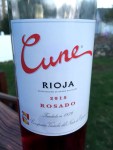 2015 CVNE Rosado Rioja (13.3% ABV, SRP: $13, 100% Tempranillo) – shhh, don’t tell anyone, this was my favorite wine out of the group – but it is a secret.
C: Dark, concentrated pink, bright fresh cranberry juice level
N: intense, floral, with fresh berries and the leaves – imagine smelling the raspberries right on the brunch with leaves on a hot summer day
P: wow, crunchy strawberries and cranberries which just plop in your mouth as you bite them. Clean acidity, super refreshing and every sip is asking for the next.
V: 8+/9-, outstanding, one of the very best Rosé I ever tasted.
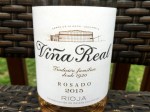 2015 Viña Real Rosado Rioja (13% ABV, SRP: $15, 85% Viura, 15% Tempranillo) – you don’t need my comments here – Viña Real needs no introduction to Rioja wine lovers.
C: orange onion peel
N: very restrained, hint of herbs
P: ripe strawberries, good acidity, medium body, unusual. Second day: delicious, round, refreshing, cohesive. Just needed to let it breeze
V: 7+, need to try again to make up my mind. Second day: 8-, excellent, clean, good fruit presence and perfectly refreshing
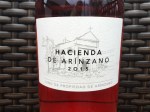 2015 Hacienda de Arínzano Rosè Tempranillo Pago de Arínzano (13.5% ABV, SRP $19.99, 100% Tempranillo) – Pago is the highest denomination for wine quality in Spain, above DOC, and it is not easy to achieve it. You can think of Pago as single winery becoming its own appellation – as Arínzano is in our case. What is also interesting about this wine is that it comes from the Tempranillo vineyard which is designated for the production of the Rosé wine, so Rosé here is the goal, not an afterthought.
C: bright pink, beautiful
N: inviting, herbal notes, strawberries, fresh
P: outstanding. Soft, polished, fresh strawberries, excellent balance, lip smacking delicious, medium body.
V: 8, excellent wine, easy to drink with perfect balance.
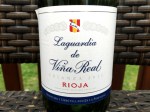 2012 Laguardia de Viña Real Crianza Rioja (13.5% ABV, $12.99, 100% Tempranillo) – can’t leave you without a red, can’t I? Viña Real Rioja Crianza is one of my favorite wines, and it is also one of the best value wines for about $15 or under (depending on where you shop). I never had, however, Laguardia de Viña Real, so was definitely interested in trying this wine when I saw it in the store.
Once I poured it in the glass and took sip, I was not happy. The wine was rather lean and biting, not what Viña Real usually offers in the glass. I decided to decant it, and then after about two and a half hours, the magical Rioja showed up.
C: dark garnet
N: eucalyptus, cigar box, cherries
P: fresh fruit, herbs, sweet oak, medium to full body, well noticeable acidity
V: 8- (after decanting), very nice wine, but give it 5 years or so.
We are done here – let me know if you tried any of the wines I mentioned above and what you think of them. Cheers!
One On One With Winemaker: Michel Rolland
To anyone inside of the wine circles, the name “Michel Rolland” needs no introduction. If you enjoy an occasional glass of wine but don’t dig deep, very deep into what is behind the label, it will probably tell you nothing. Unlike Araujo, Bryant Family, Harlan, Staglin – right? All of these are the cult wines from California, revered, adored and drooled upon by many wine connoisseurs. Let’s not forget Tenuta dell’Ornellaia from Italy, Angélus and Ausone from St-Emilion and l’Evangile from Pomerol. In case you didn’t know, Michel Rolland, classically trained French winemaker, is behind these and hundreds (I’m not exaggerating – search for his name on Wikipedia) of other wines. He is a consulting winemaker, sometimes also referred to as “flying winemaker”, who made wine on all continents and all possible and impossible corners of the world.
When I got an invitation for lunch with Michel Rolland, who was visiting New York to introduce some of his newest wines, I was excited at first, and then bummed. The lunch was overlapping with the Jura wine tasting, which I was planning to attend for a very long time. So as a last resort, I asked if I can meet with Michel Rolland after the lunch so I can ask him a few questions. To my absolute delight, kind folks at Deutsch Family, a wine importer company hosting the event, managed to arrange the time for me right after the lunch to sit down and talk to Michel Rolland.
As you understand by now, unlike most of my virtual interviews in this “one on one” series, this was a real face to face conversation, with a real handshake and visible emotions. At first, I was thinking about recording our conversation. That probably would be okay, but I never did this before, and fighting with technology in front of the busy man who was doing me a favor didn’t feel right. So I did what I always do – I prepared my questions in advance. After a subway ride and a brisk walk, I arrived – on time – and shake hands with the legend. We sat at the table, three different glasses of red wine appeared on the table. And conversation started – here is what we were talking about, with the precision of my fingers hitting the screen of the trusted iPad:
Q1: You made wine all over the world. Is there one place or one wine which was your absolute favorite?
“No. I like the challenge, so every time I’m going to the new place, it is very exciting.”
Q2: What was your most difficult project and why?
“To make wine, we need soil, grapes, and weather. When the weather is not playing, it is very difficult. There were 2 places which were the most difficult. First one was India – everything is great except the climate. India has only 2 seasons – dry and wet. Another one was China – extreme climate, very difficult to make wines. In the project in China, years 1,2 and 3 had no frost, then in the year 4 we decided not to cover the vines, and half of the vineyard became dead.”
Q3: You are known to create big and bold style wines. At the same time, it seems that wines with restrained are more popular today. Did you make any changes to your winemaking style to yield to the popular demand?
“After 43 years in this job, it is good that I have style. So the style is what the market is asking – the wines are made to be sold, so we have to follow tendencies in the market. Even that not everything is changed at the same time, it is more of the evolution and adhering to the fashion. The wine to drink tonight is not the one to be stored for 10–15 years. So the wine have to be made more enjoyable younger, and this is what we do.”
Q4: Where there any projects which you rejected and if yes, why?
“Yes, of course, but it doesn’t happen very often. The biggest concern is the relationship with the team. Day to day in the cellar and field it is the team – if the relationship with the team is not good, I prefer to leave. For sure if nobody is happy, then it is better to leave. I never refused project because it is too challenging. In Chile, 25 years ago the variety called Sauvignonne had to be used, which was hard – and I didn’t refuse the project because it was challenging. So the relationship is the major part.”
Q5: Again, appealing to your worldwide expertise, what do you think is the hottest new wine region today, if there is one?
“We have to look back – we have new world and old world. France, Italy, Spain – being there before. Then came US, then South America. Chile, and Argentina is growing the fastest now. Then there is New Zealand and Australia. But I think the area around the Black Sea, which was historically there, is very promising. Now Turkey, Georgia, Armenia, Russia all started making really good wines and we will see great wines coming from there. I [actually] currently work in Turkey, Russia, Bulgaria.”
Q6: What are the most undervalued wine regions in the world today, if there are any left?
“One of the most difficult countries to make and produce wines is South Africa – great wines which sell well only in UK, but very difficult everywhere else.”
Q7: What do you think of natural wines, which are very often are very opposite in style to “big and bold”
“We can’t fight against natural wines, but all the wines are natural [laughing], minimal intervention. We have to slow down with all the chemicals, but the wines should be made to be good wines – a lot of “Bio” is done only for marketing, so if it is done smart, it is good. I have small estate Val de Flores in Argentina which is for 8 years is completely “bio”, so yes, I support that.”
Q8: What are the latest projects you are working on?
“The one in Tuscany (Maremma) running by the German family, they have a wonderful vineyard and wonderful winery, and now making very good wines.”
Q9: You are a role model and a teacher for many in the wine world. Who were your role models and teachers?
“When I began my job my mentor was Émile Peynaud. It was another era. When I began the oenology, we were not speaking about quality. The goal was to avoid problems. I discussed this a lot with Peynaud. Peynaud was convincing people to do better in the cellar, to have clean wines, to use better material. It was very difficult, but Peynaud was great dealing with the people, so I learned a lot from him, including the patience for dealing with people. I often said that my job is 80% psychology, and 20% oenology, this is what I learned from Peynaud.”
Q10: What are the new trends in the wine world? What wine consumers should expect to see and experience over the next few years?
“I think people like more and more approachable, and gentle wines – full bodied, but gentle. The big problem I see is that during the 90s, I did a lot of work where we dramatically improved quality. In the 2000s, we drunk best wines we could. What I don’t like now that everybody is going after cheaper and cheaper wines – we can still do good wines, but not better than in the previous years. In the end, the wine is a business, so I don’t want to see people reduce quality just to survive.”
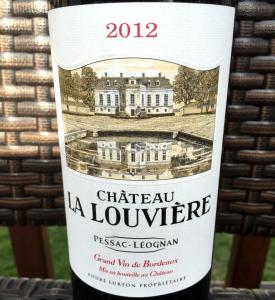 As you can imagine, Michel Rolland didn’t come to the New York to talk to me. He was promoting his latest project, the wines of André Lurton which he helped to create. André Lurton is the winemaker in Bordeaux whose family winemaking heritage goes back more than 200 years, and who is not only known as a winemaker but also was very instrumental in advancing Bordeaux wine industry, including creating of the new appellations.
Here is the story of how Michel Rolland started working with André Lurton (don’t you love wines with the story?):
“Lurton is one of the last projects. I had an interview on the radio, and the journalist asked me if I have any regrets. I said at 65 years old, I don’t have a lot of regrets. When making wines, you get to meet wonderful people from all over the world. So the regret is “why I never met this guy” – one of such people is André Tchelistcheff – I met his wife, but never met him. And then the journalist asked me “who else”. So I said in Bordeaux, there is André Lurton, who I never met and worked together.
3 hours after the interview I received a call from Andre Lurton who said: “come and meet me”. Now we are working together.
So what we are doing is looking after the future, what can we produce for the people. We have to make approachable wines – still with the ability to age, but more approachable. “
This was the end of my conversation with Michel Rolland. We spoke for about 45 minutes, and it was clear that Michel had to continue on with his day. But there were still three wines standing in front of me, so I had to go through the speed tasting and only capture general impressions, there was no time for detailed notes. Here are my brief notes:
2012 Château Bonnet Réserve Rouge Bordeaux ($14.99, Merlot/Cabernet Sauvignon blend) – beautiful tobacco nose, fresh fruit, soft, round – clearly Bordeaux on the palate, green notes, restrained. Green notes do get in the way, though.
2012 Château de Rochemorin Rouge Pessac-Léognan ($33.99, Cabernet Sauvignon/Merlot blend) – beautiful, classic Bordeaux, great finish, some presence of the green notes
2012 Château La Louviére Rouge Pessac-Léognan ($74.99, Cabernet Sauvignon/Merlot/Petite Verdot), new oak, open fruit on the nose, lots of complexity, very beautiful, layers, delicious finish. Overall delicious wine, my favorite of the tasting. This wine was polished and concentrated, and I would love to drink it every day.
What is interesting for me here (besides the clear proof that I’m a wine snob who prefers expensive wines) is that there is a clear progression of taste and pleasure in this three wines – the price was increasing accordingly, and this is how things are quite often in the wine world.
After an encounter like this one, and the pleasure of talking with the legend, if blogging would be my job, I would gladly proclaim “I love my job”. But even without it, I still would proudly say that I love blogging as it makes possible conversations like this one, which is priceless for any oenophile. Cheers!
Last Bottle Sign Up ($10 credit)




 Talk-A-Vino