Archive
Lodi Thanksgiving
Thanksgiving is definitely one of my most favorite holidays – maybe because it is so centered on the food. Of course it is about families and friends getting together, and giving thanks for many many things which comprise our lives – we all have a lot to be thankful for. Nevertheless, the food on Thanksgiving is essential, it is a canvas of gathering, and even more importantly so if you are hosting the gathering.
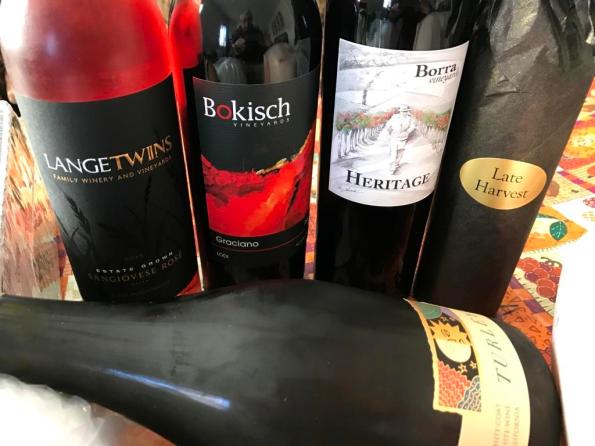
For many years we visited our close friends to celebrate Thanksgiving together with them. This year we are hosting Thanksgiving dinner at our house, which gave me a pleasure of doing a boatload of cooking, and – I’m sure you expected that – to select the wines for the dinner.
Thanksgiving is a quintessential American holiday, so choosing to serve the American wines comes easy and logical. But then America is all about freedom, so of course, you can drink whatever you feel like, I’m just talking about my personal choices. About a month ago I visited Lodi region in California (my second trip there, after Wine Bloggers Conference back in August), and while I was tasting through the line of delicious wines at Bokisch Vineyards, it dawned on me – this year, we should celebrate Thanksgiving with wines from Lodi. Now, as it is almost time to get to the table, this is exactly what we are doing.
Lodi is somewhat under the radar (and believe me – I would love to keep it like that, for it to stay the best kept secret for a few oenophiles only), but totally unique and totally unexpected region, which produces unique and delicious wines. Lodi is a California appellation, yet it produces the world class wines absolute majority would never associate with California. Look at the wines I’m planning to open. Sangiovese Rosé from LangeTwins – yes, an Italian star, Sangiovese, right out of the Central California. Graciano from Bokisch Vineyards – yes, Graciano, the unique grape from Rioja in Spain – this was the wine which prompted this whole “Lodi Thanksgiving” idea. Or how about Borra Vineyards Heritage, a field blend (!) of Barbera, Carignane, Petite Sirah and Alicante Bouschet – here is another core Italian varietal, Barbera. I don’t have a Lodi white wine, this is where Turley White Coat should do, as it contains Grenache Blanc and Verdelho from Lodi. Unique grapes, unique and, most importantly, delicious wines – this is what makes Lodi wines such an easy choice for me.
The Thanksgiving dinner will include the infamous “3 in 1″ bird, the Turducken, and lots of the side dishes – you can see some of the key components in the picture below.
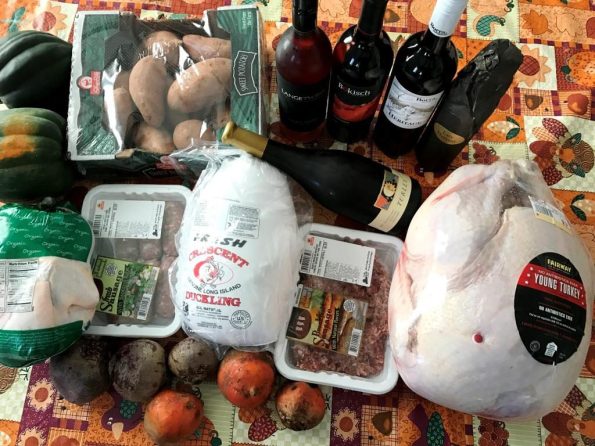
I have an ambitious plan to report on the dinner right after its completion – that might never happen, but I will try. By the way, do you care to guess what wine is hiding behind the wrap? Maybe name the grape, and maybe even the producer? How are you going to celebrate? With what wines? Is there a dish you are looking forward to making or, at least, eating? Happy Thanksgiving! Cheers!
Restaurant Files: Tavern 489 in Stamford, CT – Come for Food, Stay for Music and Wine
If I will describe a restaurant as “classy rustic”, would that make sense to you? Can you walk into the restaurant and feel that time and place all of a sudden changed on you? The modern, fast, noisy city disappeared, and instead, you find yourself in the cozy shack up in the woods?
That’s what Tavern 489 does to you. You walk in and instantly taken by the ambiance – no detail of decor is left to a chance – every element is used to create that tavern feel, the rustic ambiance – and it puts you in the right mood.


We visited restaurant back in May, when it was only opened. Eric Monte, a well-known restaurateur in Stamford, CT and an avid wine collector, put together a special dinner menu for us, with all the dishes paired with the different wines.
And not only the wines. Tavern 489 is the only restaurant in Connecticut which serves Moosehead Lager, the beer made at the oldest Canadian brewery (founded in 1867) – and Moosehead Lager was our first pairing of the night.
Before we get to food – yes, of course, there was a cocktail to start the evening. Tavern 489 is located on the street called Glenbrook Road, one of the oldest streets in Stamford – how you can pass on an opportunity to taste the Glenbrook Mule cocktail (which was very tasty)?


Our first dish was Venison Balls (red wine green peppercorn sauce), served with the Moosehead Lager. The balls were nicely spicy, and the beer was working perfectly with the dish. And what I loved the most was the presentation – perfectly fitting for the tavern food.


Next up was Cold Spring tomato Soup, and we also switched to wine to continue our dinner. Our first wine was 2013 Les Costiéres de Pomerols Picpoul de Pinet AOP – touch of honeysuckle on the nose, clean, simple palate, tart. The wine didn’t work with the soup (how many wines do?), despite the fact that the soup was very tasty. But it perfectly complemented Taunton Bay fried oysters (lemon, tamarind, curry, tomato sauce), which were delicious and again, beautifully presented dish – we eat with our eyes first, and the oysters were a pure delight on the plate.


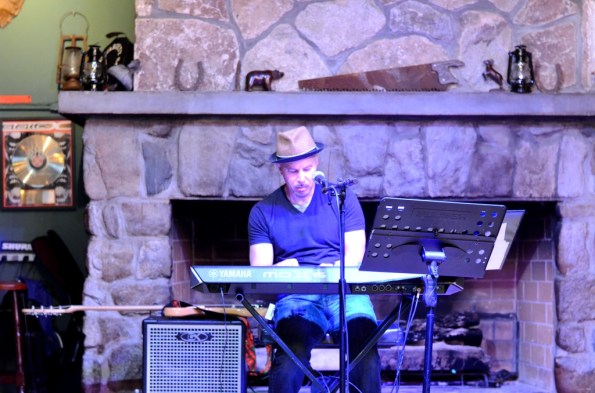
Remember I mentioned music? So the music has a special place at the Tavern 489 – right in front of the house, and it is live. Tavern 489 brings in many musicians, so all you really need is a glass of wine (or a Moosehead Lager), sit down (or stand for that matter), and get carried away:
 The food continued with the selection of the burgers – Bison Burger, Blackened Angus Burger w/Blue Cheese and Tavern Burger w/Pesto Truffle – my favorite was the Blackened Burger – great flavor, and of course it is hard to resist a blue cheese topping. With the meat, the new wine showed up – this time red, 2010 Grand Palais Bordeaux Supérieur – typical Bordeaux nose, green bell peppers, supple palate, good balance. This wine perfectly paired with my favorite dish of the evening – Charred octopus (Kidney bean, tomato, shallots, garlic, parsley, pomegranate chimichurri dressing) – this dish had both perfect finess of flavor, and just a rustic, homey, comfort food feel – simply a wow.


Our main course was a true carnivore dream and a masterpiece in the presentation – Dirty Tomahawk steak – bone-in thick ribeye steak (served with Chef Suggestions – potatoes, broccoli rabe, bacon-wrapped asparagus). Definitely a treat, and if you are into the meat, that is your dish. Another wine was served with this dish – 2012 Shooting Star Blue Franc Blaufrankisch Washington State – generous, rich, brooding – delicious wine overall. The wine was unique and different – how often you get to drink wine made in the USA from the Austrian/German grape such as Blaufränkisch? Definitely a treat – and an interesting story on the back label.


And finally – the dessert – very tasty Chocolate Mousse, light and delicious.
 We had an opportunity to thank Eric Monte and his wife Donna and Chef Regis Saget, and of course to ask them questions, which we did:


 This was the end of our evening of delicious food, music, and wine – and I highly recommend that you will head over to the Tavern 489 and check it out for yourselves. You can thank me later. Cheers!
Tavern 489
489 Glenbrook Road
Stamford, CT 06906
Ph: 203-355-0360
http://www.tavern489.com/
Beaujolais Nouveau Est Arrivé! 2016 Edition
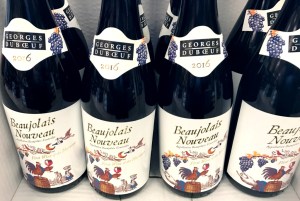 There is no shortage of the grape holidays nowadays – we celebrate Cabernet Sauvignon, Merlot, Tempranillo, Chardonnay and many other grapes, sometimes even two per day. However, the oldest grape celebration in existence is Beaujolais Nouveau Day, celebrated on the third Thursday in November, which happened to be November 17th this year.
Of course, Beaujolais Nouveau Day is not so much of a grape celebration (which would be a Gamay day) but really the celebration of the new harvest, which was a very old tradition in the Beaujolais region, neighboring Burgundy, in France. Georges Duboeuf, a famous French wine merchant, is credited with making Beaujolais Nouveau Day an international event more than 30 years ago. What was just a local harvest festival became an international event, widely anticipated and celebrated around the world, from Tokyo to Moscow to New York.
While Beaujolais Nouveau Day is [still] often dismissed as a marketing gimmick, I’m always looking forward trying the new Beaujolais Nouveau wines, to be able to see their evolution. Ever since this blog started in 2010, Beaujolais Nouveau was always part of it – here you can find the old posts from 2010, 2011, 2012, 2013, 2014 and 2015. In case you want to learn a bit more about the history of the celebration, please take a look at the post from 2012 – it contains more information than the other posts.
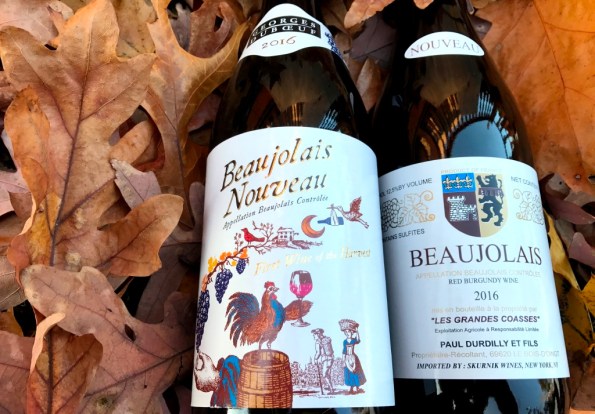
Here are the notes on the 2 wines I was able to taste this year:
2016 Georges Dubœuf Beaujolais Nouveau (12% ABV, $9.99)
C: Dark ruby
N: fresh fruit, intense, ripe raspberries, herbal undertones, not over the top
P: elegant, fresh, red fruit notes, crunchy berries, excellent acidity
V: 8-, very enjoyable and elegant
2016 Paul Durdilly et Fils “Les Grandes Coasses” Beaujolais Nouveau (12.5% ABV, $9.99)
C: dark ruby
N: spicy cherries, mint, inviting
P: very limited amount of fruit, big contrast with the nose. For the Beaujolais Nouveau, might be even too restrained.
V: 7, leaving desiring more on the palate.


Talking about the two wines I tasted, I have to admit that I forgot to lightly chill them, which is recommended. This definitely had no effect on Georges Duboeuf wine, but it might be a culprit behind the limited expression of the second wine.
Before we part, I want to bring to your attention the label of the Georges Duboeuf Beaujolais Nouveau. Besides the fact that I personally like it, the important part if that for the first time ever, the label for this wine was chosen by the wine consumers voting for one of the 12 different designs submitted for the competition. I think the consumers chosen well, right?
For the past 3-4 years, I find Beaujolais Nouveau a very enjoyable wine, well worthy of oenophile’s attention. What do you think of Beaujolais Nouveau? Any favorites? Cheers!
One on One with Winemaker: Max Weinlaub of Viña Maipo, Chile
When I was invited to meet with the winemaker Max Weinlaub of Chilean winery Viña Maipo, one thing immediately caught my attention – Max was described as an advocate of the “new Chilean Syrah movement“. Syrah might be my all times favorite grape (secretly, of course – I would never admit it in public), so anything which has to do with the Syrah sounds interesting to me.
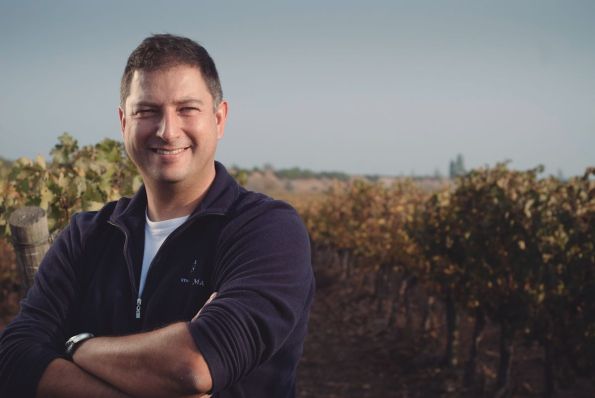
Winemaker Max Weinlaub. Source: Viña Maipo
I couldn’t travel to New York on the given date, but Patricia Clough from Gregory White PR was very accommodating and managed to include me in the live conversation and tasting with Max with the modern wonders of technology (thank you Patricia!). I was able to listen to Max presenting his wines and even ask questions and make comments – and all of it not with my fingers (in most of the “virtual” tastings we use Twitter or similar mechanisms to “talk” to the presenters – this conversation was refreshingly different).
This was the tasting, of course, so I did taste the line of Viña Maipo wines, and in a word, the wines were stunning. But I will tell you all about the wines in the next post, as I reached out to Max with a bunch of questions, which he graciously answered despite being on the plane for the most of the time in the months, going around the world and introducing his wines. Max’s answers are great and well worth every minute of your time if you want to learn more about Chile and its wines.
Without further ado, here is our [now virtual] conversation with Max Weinlaub:
[TaV]: It appears that Viña Maipo was one of the Syrah pioneers in Chile, planting it in 1990. Are there any wines from those early vintages still around? Did you have a chance of tasting them? What do you think of them if you did?
MW: Even though the vines were planted around 1998, the grapes were blended with other red grapes. In 2005 the grapes were used to make Limited Edition for the first time. We still have bottles of that vintage. I have had the opportunity to taste it, but the style has evolved year after year. To me, the first vintages were bold and too ripe. In recent years, I have been turning to a fresher style with a better balance and great ageing potential.
(Side note for Anatoli: If you are truly interested I could find one of those rare bottles, and we can taste it together next time I’m in NY.)
[TaV]: Since starting at Viña Maipo almost 10 years ago, did you make any changes in the way Syrah grapes are grown or the way the wines are made?
MW: Since I started as chief winemaker in 2007 it has been an endless learning process in direct connection with understanding how the vineyard behaves under different climatic conditions and canopy management, and noting the changes as the vines age each year. Today, I have a better knowledge about our Syrah grapes to express the varietal’s maximum potential with a clear sense of origin: Syrah from Chile. If I compare the last 10 years, I definitely see a change in the style of Viña Maipo’s wines —building towards better elegance, power, balance, fruit expression and oak impact.
[TaV]: Why Syrah in Chile? Do you think that Syrah is the next big grape for Chile?
MW: Until the first half of the 90’s, Chile was known for producing Cabernet Sauvignon, Merlot, Chardonnay and Sauvignon Blanc. Carmenere was re-discovered just in 1994. So the general perception of Chile was as a reliable producer of inexpensive wines but without many options to show (in terms of grape varieties). At the same time, Australia was living golden years with its Shiraz, so many winemakers thought that maybe Syrah could be introduced in Chile. Some clonal material (stocks) were imported and multiplied by a couple of nurseries in Chile and then, we neared the end of the decade, the first Syrah grapes were harvested with pretty good results. Thanks to a joint venture with one of those nurseries, Viña Maipo was one of the first wineries that planted Syrah in the country.
In my opinion, Chile has been and will be widely recognized as a great place of origin for Cabernet Sauvignon. But at the same time other grapes, especially those from the Rhône Valley, have adapted extraordinarily well to the Chilean terroirs — and Syrah is by far the best example of that. If you consider that nowadays the oldest Syrah vines are around 20 years old and already are producing high quality wines, then you can clearly see a bright future with this grape variety.
[TaV]: When making Viña Maipo Syrah, is there a region (Cote-Rotie, Hermitage, Cornas, Barossa, and Santa Barbara) or a wine maker (Guigal, Chapoutier, …) which you see as a hallmark and try to achieve some similarities with?
MW: The regions you mention (with their singularities) plus the talent and skills of those renowned family names have made some of the most iconic and unique expressions of Syrah grapes in the world. From those wines I learned that Syrah is able to make outstanding wines with a great potential for ageing even comparable with some Cabernet Sauvignon. My humble dream is someday to be part of that “Hall of Fame of Syrah” world, to be recognized as a previously-unknown Chilean winemaker named Max Weinlaub who made a jewel with Syrah in Chile, standing along with those big names.
[TaV]: You are blending Syrah with Cabernet Sauvignon and vice versa, which is quite unusual. Why do you think these two grapes work together? Are there any other regions in the world where Syrah is successfully blended with Cabernet Sauvignon, or do you think this is purely a Chilean phenomenon?
MW: I do believe in the synergy between their different but complementary components when you blend the right way. This is the best evidence that winemaking is closer to an artistic expression than to math because 1+1 is more than 2. Syrah is a fantastic grape to make single varietal wines, but also for blending. Sometimes the Cabs are too classical, too serious for me. I used to define the Syrah variety as “fireworks in a carnival”…it has lots of color, intensity and rich flavors. So Syrah plays an important role shaking up or adding verve to a (sometimes) circumspect Cabernet Sauvignon. My aim here is to make a more distinctly South American or Chilean style of Cabernet Sauvignon.
In another style, I add a smaller percentage of Cab to Syrah to increase the structure or backbone of the wine. As part of its nature, Syrah’s tannins are soft but non-structural – so hence the need for the strength and structure of Cabernet Sauvignon. You can find this blend of Cab-Syrah or Syrah-Cab elsewhere and it works well for me, and I intend to keep perfecting it.
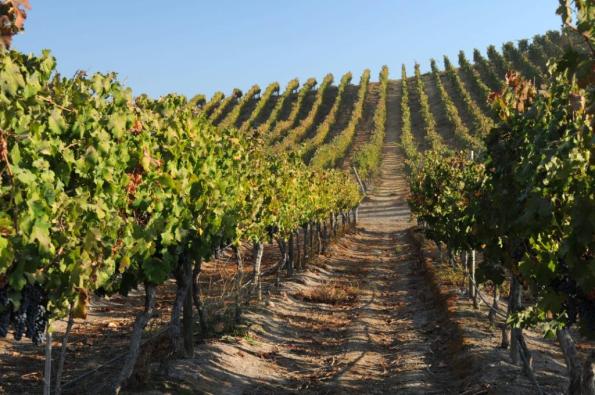
Source: Viña Maipo
[TaV]: Pinot Noir seems to be fast growing in popularity in Chile. You don’t make any Pinot Noir wines – do you have any plans for it? What do you think overall about Chilean Pinot Noir?
MW: I think that finally there’s a bunch of very good Pinot Noir produced in Chile thanks to the better knowledge of the grape variety in terms of terroir, viticultural management, clonal selection and winemaking. Pinot Noir is a challenging variety that sooner or later many winemakers—who tend to thrive in challenges–try to produce his/her own version. I’m having a lot of fun and joy producing Syrah (among other grapes of course) so Pinot Noir will be in my “101 things-to-do-before-to-die” list for a while.
[TaV]: Many wineries around the world add sparkling and Rosé to their repertoire – do you have any plans for Viña Maipo to start producing sparkling or Rosé wines too?
MW: We produce sparkling and rosé too!!! As we have a limited capacity (in terms of volume), the production of sparkling is allocated to certain markets – so it is not currently part of our global portfolio. Our rosé is sold largely in Nordic countries at the moment. We could taste both wines next time I see you.
[TaV]: How old are the oldest vines at Viña Maipo?
MW: The Cabernet Sauvignon vines are the oldest planted in our vineyards. Today, some of them are reaching 40 years old….just like me.
[TaV]: Don Melchor is an uncontested flagship wine for Concha e Toro, with very high critic ratings (98 from Suckling, 96 from Wine Spectator). Do you think Alto Tajamar will beat Don Melchor’s ratings one day?
MW: By far Don Melchor is the Dean of all the renowned Chilean wines. It’s the Chilean wine with the longest and most complete vertical tasting starting in 1986. I truly admire its history and legacy. If someday Alto Tajamar receives as high ratings as Don Melchor has won, for me that would be an honor and privilege. One of my principles is “work hard in silence, do your best and the rest will come along.”
[TaV]: When it comes to the white grapes of Chile, Chardonnay and Sauvignon Blanc are, of course, well established and well known. Is there a next big white grape for Chile?
MW: Chile is a paradise for grape growing due to its diverse terroirs, stable weather and healthy environment. Even though Chardonnay and Sauvignon Blanc are widely planted I’m sure there are new areas where some other white grapes could produce great quality wines, such as Verdejo or Godello, both grapes especially recommended for warm climates. There are some very interesting Rieslings and Gewürztraminer. But the problem with those grape varieties is the almost relatively little commercial success we’ve seen when are produced outside of their home countries. I have the feeling that the only white grape that could succeed (technically and commercially) is Pinot Grigio.
[TaV]: What are the biggest export markets for Viña Maipo?
MW: By far the UK and Nordic countries at the moment, but there are some interesting opportunities to grow in other areas especially in Asia. Asia is a great market with its own codes and tempo (rhythm). We’ve also been focusing on the U.S. to a greater extent and I am very much looking forward to spending more time in the market.
[TaV]: Continuing the previous question, how big is China, and it is growing, flat or declining?
MW: China is just awakening!!! And everybody is trying to get a space in China since the Dragon feels thirsty. They are starting drinking wine, more often for Gambei (heavy duty toasts) rather than for joy, learning or food matching, so there are some things to do in terms of wine culture and education.
[TaV]: Do you have a favorite vintage of Viña Maipo Syrah?
MW: Always the last one!!!… Because it’s better than the previous one. Maybe it’s because the vines are becoming older and I’m turning older too (and hopefully wiser)!!!
[TaV]: When you are not drinking your own wines, what are some of your favorite wines and winemakers around the world?
MW: More than follow a label, brand or winemaker, recently I have been discovering regions. I’m currently really intrigued by German Rieslings (especially old vintages from Mosel River) and some Spanish red grapes such as Garnacha (aka Grenache), Mataro (aka Cariñena or Carignan), Graciano, Mencia and Bobal.
Source: Viña Maipo
We are done here, my friends. I really enjoyed our conversation with Max, and I hope that the next time we will sit across the table and taste his delicious wines together. You might be thirsty at this point, so I hope you have something to drink – and the next time I will tell you all about delicious Viña Maipo wines I had a pleasure tasting. I can only say that I would gladly drink those wines at any time… Until we talk again – cheers!
Restaurant Files: Tablao in Norwalk, CT – Wine or Cocktail, You Decide
Translated from Spanish, the word “Tabla” has a few different meanings, but the one of interest for us here is a “board” or a “plank”. If you stop by the recently opened Tablao restaurant in SoNo district or Norwalk, Connecticut, the wooden planks on the walls will definitely attract your attention – and if you are a oenophile, you can’t help but to keep looking for all the familiar and coveted names (uncontrollable drooling will be excused, but please behave):


For sure I was very happy to observe all those wooden boards when I visited the restaurant for the bloggers dinner a few month ago. This time around, I arrived even a bit early, so I had an opportunity to snap a few pictures of decor and ambiance:
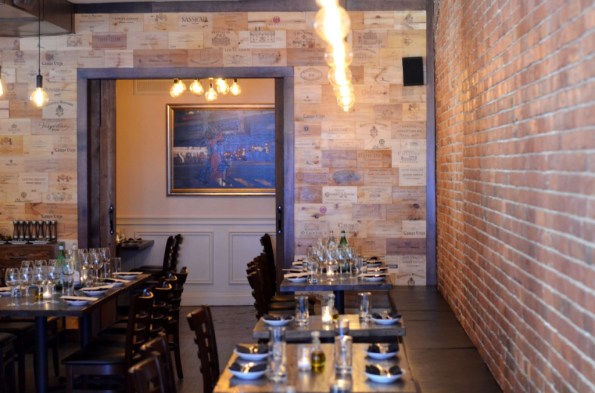
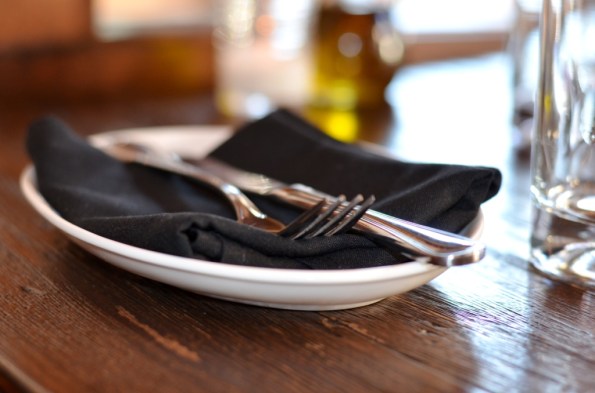
 While I love wine, I would never skip the bar – after all, nice cocktail is a nice cocktail, a great way to start the evening. The bar at Tablao didn’t disappoint. To be entirely honest, it even exceeded my expectations, as soon as I saw a bottle of Del Maguey Mezcal. Del Maguey makes absolutely spectacular Mezcal, which is rare and almost impossible to find. If the restaurant carries it, it gives me a good pointer for what to expect.


Tablao offers a nice selection of cocktails and wines by the glass:
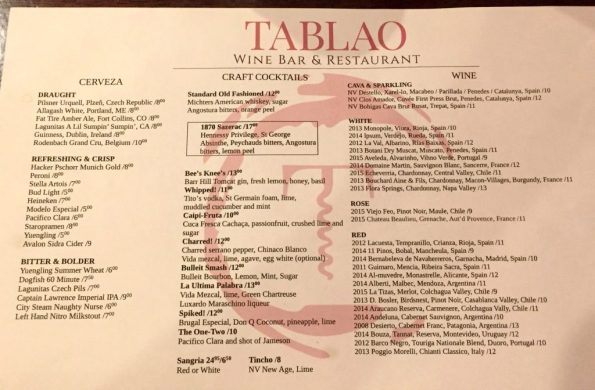 We had a few of the cocktails, and the wines were prepared for our dinner in advance. I really liked the cocktail called Charred! (charred Serrano pepper, Chinaco Blanco – another sign of high-class – rare and beautiful tequila, Vida Mezcal, lime, agave, optional egg white) – nice balance, good spicy bite. From the wines, my favorites were 2011 Guimaro Mencia Ribera Sacra which was earthy and showing nice ripe fruit, and 2014 Desierto25 Cabernet Franc Patagonia, Argentina, which was unexpected (Cab Franc from Argentina? wow) and stunning – smooth, balanced, with an excellent fruit profile:


While we were mingling, the food started to appear:


Cheese Croquettes were very tasty, with nice amount of spice. Potato Croquettes were my favorite, again, well cooked and very tasty, with good amount of seasoning, and then Grilled Chorizo – who can argue with Chorizo?
The first dish to arrive at the table Charcuteria, which is offered with a very nice selection of meats and cheeses at Tablao:


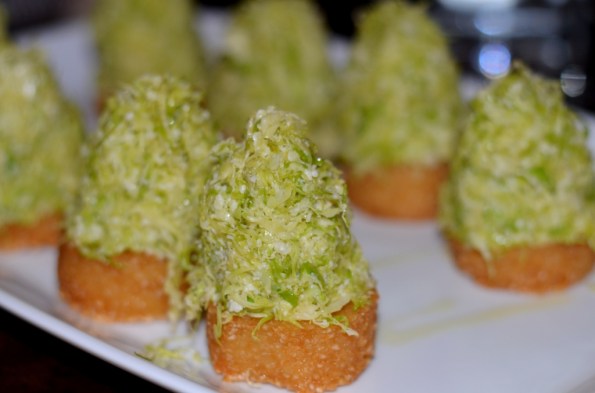
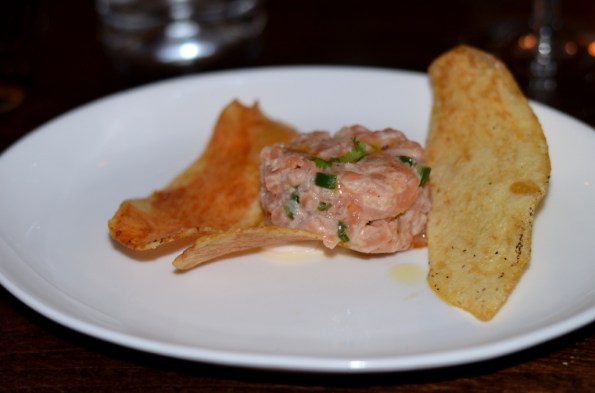
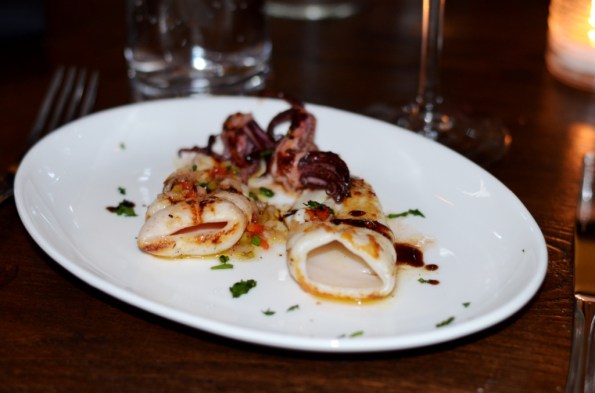
Our first course consisted of three different Tapas: Brussels Sprouts Salad (Fontina risotto cake, black truffle shavings, truffle olive oil, lemon, parmesan cheese) – memorable presentation, the salad itself was tasty, but the risotto cake was a touch too dense to my taste. Next up was Salmon Tartare (Jalapeños, red onion, ginger, lemon juice served with house-made potato crisps) – nicely made, good flavor and then Calamari a la Plancha (Vinaigrette of vegetables and salad) with a good char on the octopus.
The second course brought in Hanger Steak (Green chimichurri), Asparagus (Parmesan, red pepper vinaigrette, balsamic reduction) and Chorizo Español (figs, beans), all nicely prepared:


And then, of course, showing all the Spanish cooking heritage, the Classic Paella (Chorizo, Chicken, Port, Clams, Mussels, Shrimp). Let me explain how good this paella is: you know how every once in a while you are setting next to the dish, you are full – I mean, completely full – and you still are going “let me just get another bite, just one more, please, I promise” – yes, that was the Paella experience at Tablao.


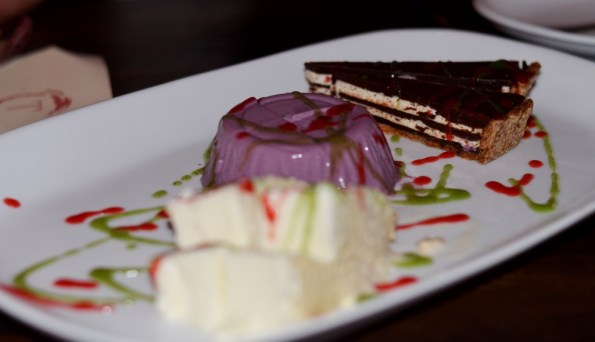
To finish our night in style, we got the trio of the deserts – Tres-Leches (Dense 3 milk cake), Strawberry Panna Cotta (Served with coconut ice cream) and Housemade Chocolate Tart (Chocolate & Goat Cheese) – all very tasty.
 That’s all I have for you, my friends. If you are looking for a tasty (and different!) drink, a glass of good wine and a tasty bite of food, Tablao in SoNo can provide them all – with a bonus of a perfect ambiance. Cheers!
Tablao Wine Bar and Restaurant
86 Washington St
Norwalk, CT 06854
Ph: (203) 939-9602
tablaosono.com
Celebrate Tempranillo! 2016 Edition
Tempranillo is one of the most popular red grapes in the world, requiring no introduction to the wine lovers, now even less than before. The star grape of Spain, a foundation of the timeless beauty of Rioja, finess of Ribera del Duero and dark raw power of Toro. Today (if I manage to publish this post before midnight) is International Tempranillo Day, the day when we acknowledge this early ripening grape, capable of bringing lots and lots of pleasure to the wine lovers everywhere.
I discovered Tempranillo in 2010, at the wine seminar at the PJ Wine store in Manhattan – and fell in love with it. And how you can not, after tasting 1964 Rioja Gran Reserva, which was still young and exuberant. I was seeking Tempranillo ever since, trying it at every occasion – some encounters happier than the others.
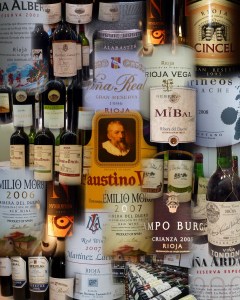
What interesting in this journey is that when I discovered Tempranillo for myself, my world was squarely limited to Spain, and even inside Spain, it was all about Rioja, Ribera del Duero and a little bit of Toro. I was always happy to celebrate the Tempranillo Day, so here is the collage which I produced based on the wines I knew, back in 2011:
 To my total delight, it appears that my Tempranillo worldview was inexcusably narrow. Texas, Oregon, Napa Valley and my newfound oenophile’s heaven, Lodi, are all producing world-class, delicious, complex, exciting Tempranillo wines. I heard about Tempranillo in Australia; never tried them, but now I’m a believer – great Tempranillo wines don’t have to be only from Spain. Thus I created a new collage, to better represent my latest discoveries:
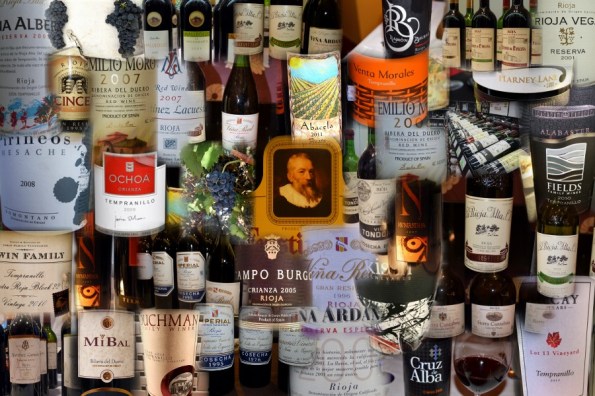 Abacela from Oregon, Duchman from Texas, Irwine Family from Napa, Bokisch, McCay, Fields, Harney Lane from Lodi – lots and lots of tasty discoveries over the past few years – I hope you had your share of Tempranillo fun too.
Do you have your favorite Tempranillo wines? Where are they from? Who is the producer? Tell the world about them. Cheers!
Restaurant Files: TerraSole Restaurant in Ridgefield, CT – Beyond Traditional Italian
When it comes to the so-called “tableclothed” restaurants in the USA, Italian restaurants are the most popular category (Italian cuisine is the third most popular overall, as you can’t beat Chinese restaurants, present at least on every other block in our cities and towns). With such a popularity comes a question – how can you differentiate yourself? Every Italian restaurant can serve fried calamari, mozzarella sticks and penne alla vodka – and this is what people want, the traditional comfort food. But you want people to come back to your restaurant, so you want to keep the tradition, but make the dining experience memorable – how can this be done?
Talking about “how”, I have an example for you – TerraSole Cheese Wine Bar Ristorante in Ridgefield, Connecticut. The restaurant serves food which is unmistakably Italian, with heart and soul, but the word which comes to mind to describe it is elevated – from ingredients and preparation (for instance: 85% of the pasta is made at the restaurant, 15% is imported directly from Italy) to the presentation of all the dishes – I tried my best with the pictures below to give you an idea – the pictures might not do the justice to the food, so you might need to visit restaurant on your own.
I visited TerraSole few month back with the group of bloggers, with the torrential rain pouring outside (was well soaked by reaching inside from the parking), so I forgot to take any interior pictures which I like to start the post with – and thus let me just jump straight to the food. Well, no, the drinks first.
The restaurant offers a nice selection of the cocktails. We started with the cocktail called Chanel #6 (Kettel One vodka, Prosecco, Chambord, Pineapple juice) which was refreshing and not very sweet, something I always appreciate in the cocktail.


The restaurant owner, Pietro Polini, pre-selected the wines for our dinner, which I definitely appreciate. For the white, we had 2015 Cantina Terre del Barolo Roero Arneis, which was excellent, with a nice fuller body and touch of sweetness. I don’t drink Arneis all that often, but this wine was definitely a notch above any other Arneis wines I tried before. For the red, we had a few different wines, and 2015 Vecchie Terre Zensa Primitivo Puglia was my favorite – perfect balance, nice dark roasted berries, espresso, mint – an excellent wine overall (looks like the wine was imported directly from Italy as wine-searcher can’t find it anywhere in the USA).
Now, let’s talk about food. There were lots and lots of food. Imagine that proverbial Italian mother, making sure you will eat well – Pietro Polini played her role, making sure we will fully experience what TerraSole got to offer. Here is my usual warning for this type of posts – if you are hungry, please stop right here, or proceed at your own risk.
I tried to format all the food notes alongside the menu as it was presented to us. But even with such a huge menu, it still didn’t include all the dishes served. We actually started with Charcuterie, which is excellent at the TerraSole restaurant, and features lots of tasty options – I’m including two of the menu excerpts so you will see it for yourself:


I love the idea using cut up corks as a pointers to what we are eating. And everything which was on that Charcuterie board was delicious – creamy La Tur cheese, spectacular Humbold Fog, Duck Prosciutto and every other piece of cheese and meat.
After Charcuterie, the dinner proceeded with the selection of Antipasti:


antipasti
BURRATA CAPRESE
Imported black truffle Burrata, imported Prosciutto San Daniele aged 16 months, organic tomatoes, roasted peppers, shaved Parmigiano Reggiano, shaved black truffle topped with truffle balsamic drizzle
INSALATA DI GRANCHIO
Salad of Alaskan King Crabmeat, red quinoa, fresh Fava beans, avocado, organic multicolored tomatoes
POLPETTE
Sicilian Eggplant & Porcini veggie balls served with San Marzano tomato sauce and shaved Ricotta Salata
From this selection, Burrata was excellent, and I really liked the Polpette, which was unusual and tasty.
Next up – couple of salads:


insalate
INSALATA DI CAVOLETTI
Shaved miniature Brussels sprouts salad tossed with toasted hazelnuts, crispy imported Pancetta in a truffle Parmigiano vinaigrette with Westfield goat cheese croquettes
CESARE
Grilled organic baby artisan romaine heart with creamy Parmigiano dressing, Parmigiano crisp & Grissini
Shaved Brussels sprouts salad had truffle vinaigrette, which translated into an incredible flavor – I didn’t know truffles would work so well with the brussels sprouts. And Caesar salad with grilled Romaine hearts was a pure standout, simply fantastic. I have to honestly admit – I tried to grill so Romaine hearts on my own, and failed – but this is definitely something worth mastering.
This is an Italian dinner, so it is time for pasta!


farinacei
PAGLIA E FIENO CON CARNE MISTE E FUNGHI
Homemade yellow and green fettuccine with mixed braised meats and organic Japanese mini mushrooms
CAVATELLI CON SALSICCIA
Homemade Cavatelli infused with broccoli rabe, baked hot with and sweet sausage and San Marzano tomato sauce topped with whipped Ricotta
PASTA DI GRANO ARSO CAPRESE
Imported Grano Arso pasta made with “burnt” semolina grain, tossed with roasted organic eggplant, San Marzano cherry tomatoes, basil & imported truffle Burrata
Homemade fettuccine dish was nice and light, Cavatelli had an amazing flavor, excellent texture and a bit of the spicy kick – all three dishes were delicious.
And finally the main course – various types of grilled meats, seafood and chicken:


secondi
GRIGLIATA DI CARNE
Platter of grilled meats: lollipop rack of veal, lollipop rack of lamb, sliced skirt steak, duck breast and Luganica sausage, served with Shishito peppers and marble potatoes
GRIGLIATA DI PESCE
Grilled seafood platter: Branzino, head-on Maya prawns, calamari, King salmon, fresh Maine lobster finished with lemon, cold pressed EVOO, local farm vegetables
POLLETTO DELLO CHEF
Panko crusted organic chicken breast wrapped around Prosciutto, wild baby arugula & Truffle Burrata cheese, finished with natural chicken broth over truffle mashed Peruvian potatoes & sautéed baby spinach
Presentation, flavor and overall execution were perfect on all three main dishes – all three were simply a “wow”.
You don’t expect us to leave without the desert, don’t you?


Espresso was perfect (it is generally expected, but often not the case), and profiterole together with the chocolate liquor was a perfect finish for the delicious meal.
I really would like to thank Pietro Polini for the delicious meal. And for all of you, my friends, if you will happen to be any anywhere in a proximity of Ridgefield in Connecticut, and craving a delicious, creative Italian food, TerraSole is definitely the place to visit. Cheers!
TerraSole Ristorante
3 Big Shop Ln
Ridgefield, CT 06877
Ph: (203) 438-5352
http://terrasoleridgefield.com/
Desperately Seeking Saperavi
Saperavi is one of my absolute favorite grapes. It is capable of a wide range of expressions, as well as extended aging, and Saperavi wines often present an unbeatable value compare to any wines in the same or even higher price category. Saperavi is typically associated with the Republic of Georgia, where it is an undisputable star, but it is slowly gaining its enthusiastic following in the other regions. This grape also became a connection point between myself and Rich Rocca, whose passion for the Saperavi is unquestionable, and I’m always looking forward learning from Rich as to what is going on in the world of Saperavi, especially considering his focus on the New World regions. I thought it would be perfectly appropriate to offer pages of this blog for the guest post from Rich, who shares his quest for Saperavi below.
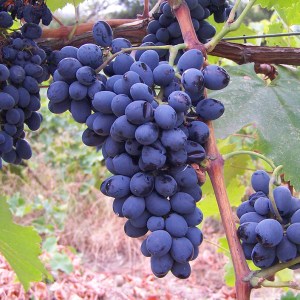
Saperavi Grapes. Source: Marani website
My name is Rich Rocca and I write the wine blog wpawinepirate. I have covered a wide variety of subjects in my posts but the primary objective has always been to provide my readers information about the wineries and vineyards in my home region of Western Pennsylvania. The Finger Lakes Wine Region of New York (FLX) has also been of great interest to me. I have made numerous trips to the FLX and it was during these visits I discovered Saperavi. Anatoli and I became friends after we began exchanging our thoughts concerning the state of Saperavi in America and even Saperavi wine itself. Those years of accessing the progress of this grape eventually lead to Anatoli’s gracious invitation to write a guest post on his blog which I eagerly accepted. Saperavi has always been a “Secret Handshake” type of wine that you either knew about or you didn’t. Here’s your chance to get into the club but unlike in the past don’t keep it to yourself and spread the word about this rising star.
The vintners of the Northeastern United States have long searched for a red wine grape that could be their signature grape. Over the years several have been on the cusp of becoming the iconic red wine grape that would be identified with the region for producing world-class red wine. Vintages of Lemberger and Cabernet Franc have produced stellar wines that can hold their own with other regions but just couldn’t elbow their way through a crowded field of reds for the attention of the wine drinkers of the Eastern U.S. and beyond. The fact that you are reading this post proves that you have a curiosity about something new in a world full of wine that can be overwhelming at times. The following is a summary of information I have gathered over the years about this intriguing grape from the winemakers and vineyard managers who know it best.
Saperavi is an ancient grape that can trace its origin to the Kakheti Region of Georgia and the surrounding regions as far back as 6000 B.C. Saperavi is a teinturier-type grape, which means it has a dark skin and a pink-tinted flesh. A teinturier variety of grape will produce an intensely colored juice when crushed because both the skin and flesh contain the water-soluble pigment anthocyanin which is responsible for giving fruits and vegetables their red, blue and purple color. Saperavi is a very adaptable loose bunch, late-ripening, cool climate grape variety that can produce large yields without sacrificing much in the quality of the fruit. These vines are able to thrive in cool climate regions even at high altitudes because they have above average resistance to cold temperatures. A more cold/frost tolerant hybrid called Saperavi Severny has been developed by incorporating genes from the hardy Severny grape. Traditionally Saperavi wine has been blended with lesser wines but recently it has been gaining popularity as a varietal bottling. A common translation of Saperavi is “dye” because it makes an extremely dark colored wine. Saperavi wine is known for having good acidity and firm but not overwhelming tannins. It is these attributes that make it a wine that takes well to aging with some examples being found to have aged nicely for fifty years. Georgia recently has had political problems with its neighbors over the export of wine, notably Saperavi, but that is a blessing in disguise because it is diverting more wine to the world market.
When talking about Saperavi I can’t contain my excitement and expectations for the wine being grown and made in the United States. I have coined the term “New World Saperavi” for the wine being grown and made by three wineries in the Finger Lakes Wine Region of New York and one in Central Pennsylvania. In the FLX Saperavi is being grown and made at Dr. Konstantin Frank Vinifera Wine Cellar by Fredrick (Fred) Frank, the son of Willy Frank and grandson of Dr. Konstantin Frank, two legendary winemakers. Saperavi winemaking is well established at Standing Stone Vineyards thanks to Martha (Marti) Macinski (owner/winemaker). She is one of the pioneers of Saperavi in the FLX and is making her wine using grapes from her ever expanding Saperavi vineyard, arguably the largest in North America. Anyone familiar with FLX Saperavi knows John McGregor at McGregor Vineyards the maker of McGregor Black Russian Red. This wine is often referred to as “THE” cult wine of the FLX. McGregor Black Russian Red is a unique blend of Saperavi and Sereksiya Charni and is only produced at John’s Keuka Lake winery. The only other producer of Saperavi outside of the FLX is Fero Vineyards and Winery in Lewisburg, Pennsylvania. Chuck Zaleski is the owner/winemaker at Fero and as his award-winning Saperavi vines mature he has been experimenting with different wine making techniques and styles to capitalize on the distinct characteristics this grape exhibits.


Fero isn’t the only winery exploring the possibilities of Saperavi, all three of its counterparts in New York continue to hone in on their particular vision of what Saperavi can be and what styles it can be made into. Their success isn’t going unnoticed as more vineyard managers are planting Saperavi but the addition of newly planted acreage is slow. There are several factors that have hindered the spread of Saperavi not the least of which is the scarcity of the vines themselves. Two eastern wineries that have young Saperavi vineyards are Knapp Winery in the FLX and White Barrel Winery (formerly Attimo) in Christianburg, Virginia. Anyone considering adding Saperavi to their property can start their search at Grafted Grapevine Nursery Clifton Springs, New York, a longtime supplier of Saperavi and other varieties to the wine industry.
“New World Saperavi” can be difficult to find because of the small number of producers and the limited yields from vineyards that are expanding but cannot meet the increasing demand. If you are interested in learning more about the Saperavi producers in the United States I have written an in-depth post about them. The post can be viewed at wpawinepirate.wordpress.com/2015/09/22/new-world-saperavi-report/
The next stop on our search for “New World Saperavi” is Australia. South Australia to be more exact, home to Dan Traucki, wine industry consultant, Director of Wine Assist Pty Ltd, freelance writer and my newest friend in the search for Saperavi wherever it may take me. Through his articles and our correspondences, Dan has given me an insider’s perspective of the current state of Saperavi and other lesser known wines being made in Australia. Australian wine production from its approximately 4000 wineries is dominated by Shiraz and Chardonnay making competition for market share acutely competitive. Fourteen ground-breaking vineyard managers have taken the speculative position of planting Saperavi in their vineyards. The majority of these plantings are in the warm climate of the Barossa Valley and McLaren Vale Regions. Saperavi can also be found in the cool climate of the Alpine Valley Region of Victoria. The cool climate Saperavi produces a slender wine with an angular taste profile while the warm climate renders a wine of muscular body and vivid taste.


I am interested in how Saperavi’s innate ability to express its terroir plays out when it is being planted in such a diverse assortment of locations around the globe. Even though these vineyards are planted in vastly different regions of the world there is a high probability that over the course of time the DNA of other wine grapes has found its way into the DNA of Saperavi as it has with all other “pure” strains of wine grapes. The vines for Australian Saperavi were sourced from the Archival Saperavi of Roseworthy Agricultural College. This noteworthy collection of vines has been amassed from vineyards worldwide over the past 100 years. With this thought in mind, I am sure that Saperavi produced anywhere will display the unmistakable qualities that we associate with it but will also manifest certain location-specific characteristics that will be inevitable because of its genetic tendency to adapt the growing environment.
The history of the “Old World Saperavi” has been well chronicled over the centuries dating back to ancient times. Much of the craftsmanship used to make this wine has change little over time from the way it is fermented and stored in large egg-shaped earthenware vessels called Qvevri to the traditions of the Georgian communities that are as intertwined with this grape as are the Saperavi vines themselves. The story of “New World Saperavi” is still in its early chapters but luckily for us it is being written by skilled winemakers that are fearless visionaries when it comes to the future they see for their wineries. The possibilities surrounding this wine are fascinating and evolving with each new harvest. I am a curious person by nature and have always enjoyed learning about something new and exciting. I invite you to join me on this journey in the pursuit of an ageless red wine grape reinvented in vineyards a world away from its ancestral home by dreamers and risk-takers as full of life as Saperavi itself. I urge you to indulge your inquisitive side and try Saperavi from anywhere in the world. I think you will be surprised and glad you got to taste something a little different.
Thank you to Anatoli for the invitation to be a guest on his blog and the opportunity it provides me to reach so many new readers/friends. I am always interested in news of Saperavi growers and producers anywhere. If you know of any please contact me at email: wpainepirate@gmail.com or follow me on my blog: wpawinepirate.wordpress.com
Twitter: @wpawinepirate
Instagram: rich_wpawinepirate_
Website: wpawinepirate.wixsite.com/wpawinepirateevents/
Trader Joe’s Merlot Run
As some of you might know, I can never pass on visiting the local Trader Joe’s when traveling – as long as it offers wine (which seems to be the case so far in the most places I visit). Last week I was in Santa Clara in California, so the trip to the nearby Trader Joe’s was unavoidable.
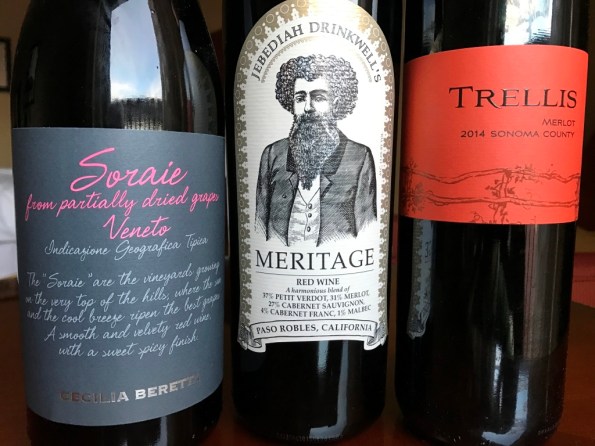 Deciding on what wine to buy at Trader Joe’s is difficult. I always take price into account, but then there are lots of wines in the same, super-reasonable prices range of $5 -$8. The next option is the label – yes, I’m a sucker for creative labels, and then, of course, the region comes to play.
As I slowly walked along the wine shelves, the label of Jebediah Drinkwell’s caught my eye – it was strangely attractive – plus I like Meritage wines, so it was an easy decision. I picked up Trellis Merlot because it was a Merlot (and October is a Merlot month) – and I was really curious to see what $4.99 can buy you from Sonoma. Cecilia Beretta was the third bottle I got – wanted to go outside of California, and “Partially dried grapes” always sounds like a music to me.
Looking at the wines later on, the idea of #MerlotMe dedication came along – would all these wines be Merlot based? To my delight, in addition to the 100% Merlot from Sonoma, two other wines also had substantial Merlot content, so here you go my friends, a Merlot run at Trader Joe’s.


Here are my notes:
NV Jebediah Drinkwell’s Meritage Red Wine Paso Robles ($5.99, 37% Petite Verdot, 31% Merlot, 27% Cabernet Sauvignon, 4% Cabernet Franc, 1% Malbec)
C: dark Ruby
N: touch of smoke, roasted meat,
P: soft fruit, blackberries, tobacco, good acidity, medium-long finish
V: 7+/8-, quite enjoyable
2014 Trellis Merlot Sonoma County (14.5% ABV, $4.99)
C: garnet
N: restrained, distant hint of cassis, herbs
P: soft, round, cassis, good acidity
V: 7+, excellent QPR
2014 Cecilia Beretta Soraie Veneto IGT (14% ABV, $7.99, 40% Merlot, 30% Corvina, 20% Cabernet, 10% Croatina, grapes dried for a few weeks before pressing)
C: dark garnet
N: touch of blueberry pie, quite restrained
P: touch of blueberries, tobacco, hint of dried fruit, good power but round, soft tannins, medium finish
V: 7+, will work well with food – pasta with some hearty tomato sauce would be perfect
As you can tell, it is pretty amazing what $18 can buy you at Trader Joe’s. Also, it is my second experience with non-vintage wine at Trader Joe’s, and I’m definitely impressed with the quality of that wine.
Do you buy wines at Trader Joe’s? Any interesting finds you care to share? Cheers!
Life’s Happy Moments – Virtual Lodi Wine Tasting on Snooth
When I got an offer to participate in the Lodi wine virtual tasting on Snooth, my first reaction was “that’s okay. I just was in Lodi just recently for the Wine Bloggers Conference (WBC16), and still perfectly remember it”. Then the second thought came in – “but it is Lodi, remember? Great wines, great people, why not”?
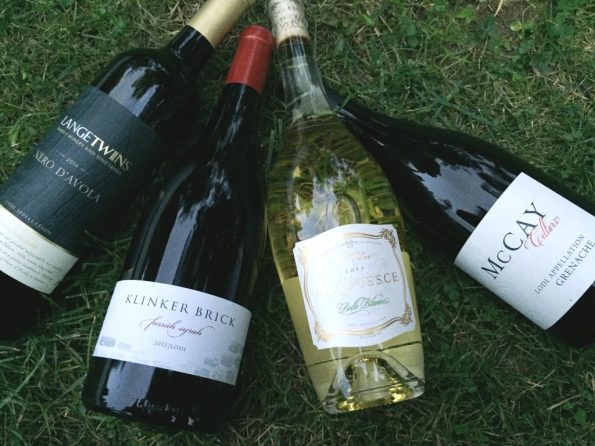
When I opened the box with samples, huge smile embellished my face (this post would be perfect for the Monthly Wine Writing Challenge #28 (#MWWC28), as the theme was “Smile” – if only it would be written on time, sigh). Do you smile when you run into a good old friend who you are genuinely happy to see? Yep, that was me at that moment.
Looking at the bottles one by one, you can imagine me talking and thinking.
Acquiesce. I heard people raving about their wines, but never tried it – great, now I will! LangeTwins – the flow of happy memories – we visited the winery with the group of bloggers and had an incredible time there; so glad to be drinking their wine again. McCay – an immediate image of Mike McCay, pouring his Zinfandel out of the double-magnum during the dinner at the WBC16 – another huge happy smile. So looking forward trying this Grenache. Klinker Brick – had their Zinfandel during speed tasting, but heard a lot about the Syrah – now I can taste it, great!
Then the day of the tasting arrived, and for an hour, I was among friends, feeling more like a WBC16 reunion – the fact that we didn’t see each other was not a problem – it was easy to imagine happy and smiley faces, tasting delicious wines, and excitedly talking across each other. Exactly as we did in August back in Lodi.
I have to be entirely honest – we had great hosts for this session – Tim Gaiser, Master Sommelier, Stuart Spencer, who represented both Lodi Winegrape Commission and his own winery, St. Amant, and Mike McCay of McCay Cellars – but I was entirely focused on the chat window, so I don’t have much of their conversation to share with you. But – I’m happy share the tasting notes for these delicious Lodi wines.


2015 Acquiesce Belle Blanc Mokelumne River Lodi (13.5% ABV, $26, 45% Grenache Blanc, 45% Roussanne, 10% Viognier, 288 cases)
C: light golden
N: intense lemon, lemon peel, candied lemon (hint of), white stone fruit
P: creamy, plump, touch of candied lemon, long acidity-dominated finish
V: 8, easy to drink from the start. The wine kept evolving for the next 5 days – definitely an age worthy wine which will bring you lots of pleasure.
2014 LangeTwins Vineyards Nero d’Avola Red Tail Vineyard Lodi (13% ABV, $20)
C: bright garnet
N: ripe sweet plums and earthiness, medium intensity
P: clean herbal profile first, sweet basil, then layer of fresh, ripe blueberries – clean, well-structured, perfectly balanced.
V: 8-, excellent pop and pour wine, should be easily a crowd pleaser
2013 McCay Cellars Grenache Abba Vineyard Lodi (14.2% ABV, $32, 309 cases)
C: smokey Ruby
N: intense gunflint, granit, underripe plums
P: smoke, mix of tart and sweet cherries, clean acidity, firm structure and medium body, crisp
V: 8+, outstanding. Once you start drinking, you can’t stop
2013 Klinker Brick Farrah Syrah Mokelumne River Lodi (14.9% ABV, $20)
C: dark garnet, almost black
N: intense aromatics, espresso, mocca, mint, raspberries, red fruit, very inviting and promising
P: wow, intense, mint, eucalyptus, blueberries, tar, spicy core, good acidity, velvety present texture, long finish
V: 8/8+, very good from get go, should improve with time
I would like to thank the kind folks at Snooth for arranging this delicious tasting. And for you, my friends – yes, those wines are made in a very small quantities, but if you will make an effort to find them (many might be available directly from the wineries), you will be well rewarded. These are the wines worth seeking. Cheers!
Last Bottle Sign Up ($10 credit)




 Talk-A-Vino