Archive
South Africa’s Top 10 Méthode Cap Classique Wines
Today I want to bring to your attention a guest post by Brittany Hawkins – for more information about Brittany, please see the bottom of this post.

Source: Wikipedia
Most of us know that real Champagne only comes from Champagne, France.
Some of us also understand that there is a significant difference in the processes used to make Champagne versus many other sparkling wines. But there are other bubbly wines that are made in the tradition of Champagne, which is known as méthode classique.
If you didn’t know this, we will fill you in on the details in a moment, but do know that this little fact is at least one part of the secret behind why South Africa’s MCC (Méthode Cap Classique) wines are so highly sought after?
What Makes MCC So Special?
When you drink a South African MCC, there are at least two key differences between it and the majority of other sparkling wines.
First, as alluded to above, MCCs are made in the traditional Champagne way. This means that the wine is fermented a second time in the bottle (not a tank, like some sparkling wines) using a solution of yeast and sugar. The bottle is left anywhere from 1 ½ to 3 years during the second fermentation. This process is what carbonates the wine.


So, when you open up a bottle of MCC, you are about to enjoy the closest thing on earth to Champagne other than Champagne itself. In fact, South African MCCs are truly rivaling French champagnes due to the quality of their grapes and wine makers.
However, while South African MCC is made méthode classique, it has some unique South African markers. Particularly, as a result of the warmer climate and consistent temperatures of the South African wine country, MCCs tend to be fruitier in character than Champagne and many other sparkling wines, creating unique tasting profile.
Now, let’s give you a run-down of the top 10 MCCs South Africa has to offer.
- Simonsig Cuvée Royale Blanc de Blancs 2012
Simonsig Wines in Stellenbosch is home to the very first South Africa Méthode Cap Classique.
It should come as no surprise, then, that we name Simonsig at the top of our list. In the 2017 Cap Classique Challenge, they had two double gold medal winners, as well as other medalists.
We have to agree with the judges of the annual competition in saying that Simonsig’s Cuvée Royale Blanc de Blanc from 2012 is number 1 on the list.
- Simonsig Woolworth’s Pinot Noir Rosé 2015
Produced by Simonsig only for Woolworth’s, this MCC Pinot Noir Rosé offers that fruity quality mentioned above, with a crispness sure to deliver a pleasing and refreshing experience.
- Domaine des Dieux Claudia Brut 2011
Tucked away in the foothills of the Hemel-en-Aarde Ridge mountains, Domaine des Dieux is a boutique wine farm with very impressive, award-winning wines. Also a gold medalist in the 2017 Cap Classique, Domaine des Dieux’s Claudia Brut MCC will not disappoint.
Made from a predominantly Chardonnay and Pinot Noir base grown in a cooler climate than average South African wine, this MCC will deliver a bit fuller, more austere flavor.
- Boschendal’s Brut Rosé NV
Boschendal farm, in the heart of the Stellenbosch wine country, is one of the oldest wine farms in the country, founded in 1685. Today, it is committed to biodiversity and sustainability.
Boschendal’s award-winning MCC, the Brute Rosé brings together Pinot Noir, Chardonnay, and Pinotage to create a unique, versatile blend that is as tasty to the tongue as it is pleasing to the eye. All the grapes and wine used to produce it come directly from their farm.
- Graham Beck Brut Rosé 2012
The Graham Beck Robertson estate is situated in the cool Breede River Valley. They specialize in Cap Classique wines and have a cellar devoted purely to its making and are known for producing some of the best Méthode Classique in the world.
They have numerous award-winning MCCs, but their Brute Rosé recently won gold for best of 2017.


- J.C. Le Roux Scintilla 2011
J.C. Le Roux is considered to be one of the leading producers of MCC in all of South Africa. Located in the Devon Valley of Stellenbosch, they are considered a house of bubbly, producing top brands of Cap Classique – Scintilla and Desiderius Pongracz. While most of their MCCs are exquisite, we highly recommend you try their Scintilla 2011.
- Babylonstoren Sprankel 2012
Babylonstoren is another wine farm committed to biodiversity, sustainability with many ways for guests to interact with their farm and winery.
Their award winning MCC, their 2012 Sprankel, is composed of Chardonnay grapes which are carefully chosen from various different vineyards with ideal altitudes. They bring these grapes together to create an MCC with a vibrant and crisp fruity flavor with hints of citrus and passion fruit.
- Laborie Brut 2011
Established in the 1700’s, Laborie has been operating as a world class wine farm for some decades now.
Their award-winning Laborie Brut was made with tender loving care, allowed to mature on its lees for 24 solid months before it was disgorged and bottled.
- Stellenbosch Infiniti Brut
A name well established as one of the greats of the South African wine estates, it should come as no surprise that Stellenbosch produces a superb MCC. Their Infiniti Brut will give you a unique MCC experience, with warm nutty flavors with a hint of citrus.
- Bon Courage Jacques Buére de Blancs 2010
Located in the cooler region of Robertson valley, Bon Courage Estate is home to both locally and internationally recognized and acclaimed wines.
Their line of MCC’s, the Jacques Bruér line, all undergo at least 36-48 months of yeast contact before disgorgement. The Blanc de Blanc is especially exquisite.
For more information on South African Wine farm tours and how to visit them when in South Africa Explore Sideways has all the information you will ever need.
 About Brittany Hawkins:
Brittany’s passion for food and wine began in her hometown, Napa Valley, California, where she grew up immersed in the wine industry. After receiving a degree from DePauw University, she began her career in Silicon Valley in the advertising and marketing industries. Brittany moved to Cape Town 3 years ago where she launched Explore Sideways and has since been able to marry her interests in food, wine, travel and tech to create transformative experiences around the world.
Daily Glass: Monday Night Escapades
Is there a special wine fitting every day of the week? I would guess that for many, Friday and Saturday are considered special nights, as it’s the weekend, and people think of drinking something better (higher end). Sunday is still the weekend, so the higher calling might still be in order.
But what about Monday? Does your choice of wine for Monday depend on your general outlook on life? “I love Mondays” … said not that many people, but isn’t it great that it is the first day of the week and we have the whole new week ahead of us, with lots of things to do, places to visit and people to meet? I guess one’s personal take on Mondays does depend on one’s take on life, so I will leave it for you to ponder at and if you have any words of wisdom to share, please do so after the beep … err in the comments section below.
I have two wine-related experiences from Monday which I want to share. First, I finally got to open the Field Recording’s Can Club shipment. What’s a big deal, you ask?


Field Recordings is one of the most innovative wineries I know. Small winery in Paso Robles, California, a brainchild of Andrew Jones, a vigneron, who started his career as a grape grower, first and foremost. Ever since I tried his Fiction Red, I became a passionate fan and I’m religiously following everything Filed Recordings does.
A few years ago, Field Recordings started experimenting with the wine in the can. Going beyond just the wine in the can, they also finishing their wines with the beer hops which creates truly a different experience. As soon as the “Can Club” was opened, I joined it. The wines were always good, but the shipments themselves went through a number of changes in the format, and pretty much every shipment had some little (and different) issues associated with them. Until now.
Once I opened the box, my very first reaction was “wow”. In my humble opinion, Field Recordings, under their Alloy Works brand, achieved perfection in the packaging of the canned wine. Simple, elegant, sturdy, economical, easy to handle – unpacking this shipment was absolutely a delightful experience. Ask any oenophile, the first thing which gets everyone excited is the opening of those boxes. With this delivery, Field Recordings Can Club achieved shipping nirvana – I hope they will continue it moving forward.
I can’t tell you much about the wines, as they needed to get chilled and went straight into the fridge; I can only mention that this shipment included 2 cans each of Weissland, sparkling dry hopped Chardonnay; Martian Galaxy – a dry-hopped, sparkling rose, a blend of Gamay and Mourvedre Martian Vineyard in Los Alamos; and Sangria, a blend of freshest, cold-pressed juice cocktail of cranberry, blood orange and lemon from Yes Cocktail Company mixed with Zinfandel from Old Potrero Vineyard. I don’t know about you, but I’m very excited to try these wines – and will report on the experience afterward.
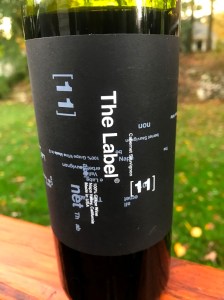 Now, let’s talk about that Monday night wine. Outside of special events, I never know in advance what am I going to open. Deciding on the bottle of wine is somewhat of a frustrating experience (first world problems, I know). Numerous bottles get touched and looked at, then rejected for a myriad of reasons. Finally, one is pulled out – usually for no other reason than “oh well, maybe this will do”. This time around the bottle happened to be Turley Cabernet Sauvignon called The Label.
Turley is not known as the Cabernet Sauvignon powerhouse – it is a coveted and well sought-after Zinfandel producer for the most. A few years ago, Turley finally got into the Cabernet Sauvignon wines and produced the wine which was called “The Label” – named after the words of Larry Turley, the proprietor at Turley Winery, who always said that Cabernet Sauvignon drinkers simply “drink the label”.
I don’t know if this should be considered funny or strange, but it appears that 2011 Turley The Label already was my choice of Monday wine – almost 4 years ago, in January of 2014 (here is the post). I really loved the wine then, but it evolved much further this time around. From the get-go, this 2011 Turley The Label Cabernet Sauvignon Napa Valley (13.4% ABV) showed a beautiful medley of the succulent berries, both on the nose and the palate – blackberries, blueberries, and black currant, tastefully accompanied by mint and eucalyptus and supported by clean acidity (Drinkability: 9-). It was reminiscent of a perfect Turley Zinfandel, fresh and playful – with a character of its own. Last time I said I want to taste this wine in 10 years. After almost four we are going in the right direction – I should have one more bottle somewhere so I will have to be careful to avoid any Monday blues prompts to open this wine until its due time.
What is your perfect Monday wine? Cheers!
Spain’s Great Match – Rare Grapes, Delicious Wines, Great Values
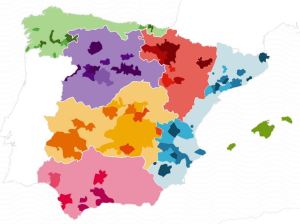
Source: Wines from Spain USA
I discovered the real greatness of the Spanish wines about 10 years ago, thanks to the wonderful seminar at maybe the best source of the Spanish wines in New York – the PJ Wine store. I had an occasional Rioja here and there before, but tasting through the full line of best of the best in Rioja, starting from the legendary 1964 vintage, was a true eye opener, and ever since, Spanish wines hold a special place in my winelover’s heart. If I need an ultimate solace in the wine glass, yes, 9 out of 10, it will be a Rioja.
Spain has the biggest vineyard area plantings in the world, so no matter how great Rioja is, Spain is so much more than just the Rioja. As I became a big fan of the Spanish wines (search this blog under the “Spanish wine” category), it became truly fascinating to follow all the changes and see the appearance of the totally new regions and reincarnation of the ancient, authentic grapes – Spain is home to about 400 grape varieties, out of which only about 20 can be considered “mainstream”.
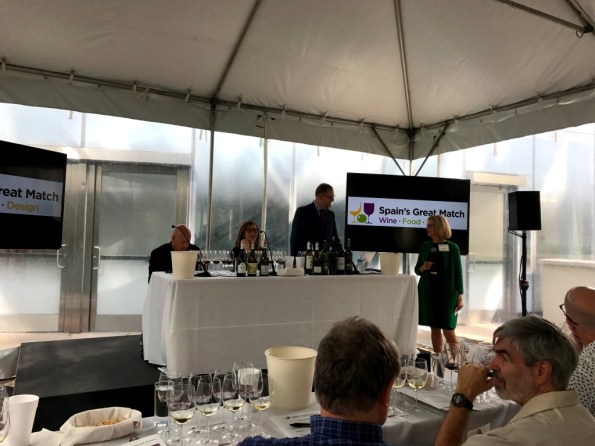
What is the better way to learn about new wines if not the [big] wine tasting? Thanks to the Wines from Spain USA, the 24th annual “Spain’s Great Match – Wine, Food, Design” event offered exactly that – a big wine tasting (more than 300 wines), educational wine seminars and authentic Spanish food.
I had a pleasure of attending these events for the last few years, including the special 30th Anniversary of Spanish wines in the USA, where the incredible tasting in the main seminar included once-in-a-lifetime wines such as 2005 Clos Erasmus from Priorat, a Robert Parker 100-points rated wine. Every year’s event offered unique and different educational opportunities as well as the tasting of the latest and greatest wine releases from all major Spanish regions.
The first seminar offered during this year’s event was focused on the Spain’s rare grapes. Ask a winelover to come up with the list of the commonly used Spanish grapes – I’m sure that going beyond Tempranillo, Garnacha (Grenache) and Albariño will be challenging. Some of the adventurous wine geeks might add Graciano, Viura, and Verdejo. Meanwhile, remember – 400 varieties – versus 6 which we just mentioned. Spanish winemakers definitely got some options.
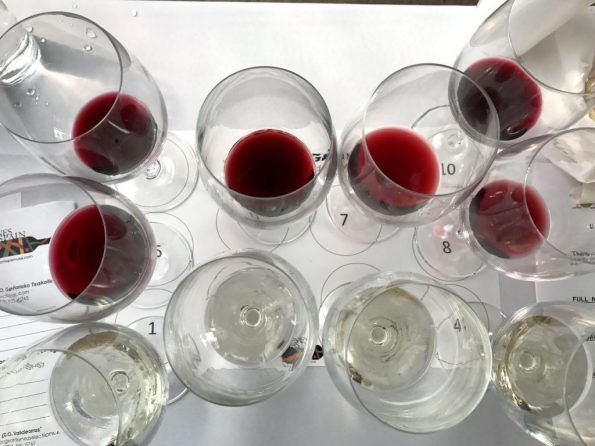
So the first seminar, led by Doug Frost, one of the only 4 people in the world who are both Master Sommelier and Master of Wine, Gretchen Thomson, Wine Director for Barteca Restaurant Group, overseeing the largest in the country portfolio of Spanish wines, and Michael Schachner, Spanish and South American Editor for Wine Enthusiast Magazine, addressed exactly this issue. We had an opportunity to taste and discuss 10 wines made from the little known Spanish grapes.
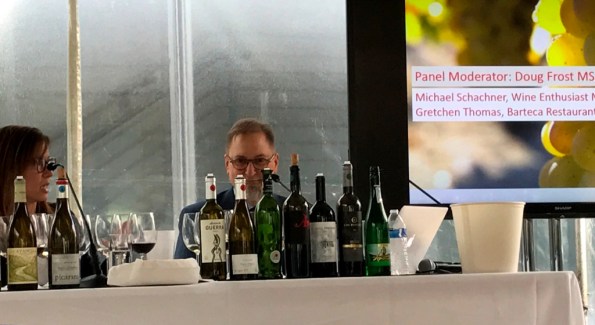
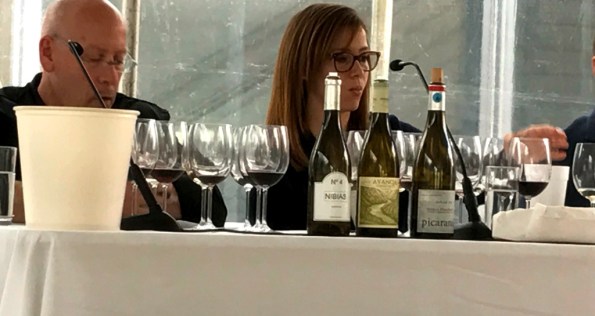 As some of you might know, I’m a grape geek myself. The little box in the upper section of the Talk-a-Vino web page shows a counter for the number of grapes I had an opportunity to taste, so from the 10 grapes we tasted, I found only one I didn’t have before. The wines were interesting, however, I would not necessarily agree with the choice of wines to showcase particular grapes – but I wouldn’t stand a chance against such a distinguished panel of experts, so you can dismiss this statement. 🙂
Anyway, for what it worth, below are my tasting notes. Don’t have any good pictures for you, as I had no opportunity to take pictures of these wines in between the different events. Here we go:
2016 Ameztoi Txakolina D.O. Getariako Txakolina (Grape – Hondarrabi Zuri)
Beautiful nose, fresh, lemon notes, herbs, inviting. Crisp, cut through acidity, touch of fizz, would perfectly match oysters, seafood, most reminiscent of Mucadet.
2014 Bodega Chacón Buelta D.O. Cangas (grape: Albarín Blanco, new grape for me)
Off-putting nose – strong gasoline, aggressive herbal notes. The palate is interesting – lychees, pear, appears almost oxidative/”orange”.
2016 Avancia Cuvée de O D.O. Valdeorras (grape: Godello)
Intense nose, white stone fruit, nicely restrained, peaches undertones with clean acidity on the palate with clean acidity – excellent
2014 Bodegas Maranones Picarana D.O. Viños de Madrid (grape: Albillo Blanco, high altitude vineyards, 2000–2500 feet, barrel fermented)
Open, intense, touch of gunflint, reminiscent of Chardonnay, apples, vanilla – excellent. Plump, Marsanne-like on the palate, touch of tannins, very nice overall
2016 Armas de Guerra Tinta D.O. Bierso (grape: Mencía)
Intense, freshly crushed berries on the nose. Outstanding on the palate, tannins, burst of pepper, crisp, dry, very little fruit, medium body. Very interesting and different expression of Mencía.
2011 Raúl Pérez Prieto Picudo V.T. Castilla y Léon (grape: Prieto Picudo)
Delicious nose, open berries, sweet oak, overall on the nose – classic California. Lots going on on the palate – touch of sweetness, blackberries, nice swing of tannins, medium+ body.
2015 Bermejo Listán Negro D.O. Lanzarote (grape: Listán Negro, 13% ABV)
Smelling a cement truck – just fresh cement, plus intense herbal notes. Chipotle, poblano peppers dominate noticeably dusty palate – unique and different. (Too unique?)
2015 Ànima Negra ÀN V.T. Mallorca (grape: Callet)
Fresh open nose, fresh blueberries, and strawberries. Funky undertones on the palate, aggressive tannins (French oak), limited fruit. Interesting food wine
2014 Mustiguillo Finca Terrerazo Pago El Terrerazo (grape: Bobal)
Closed nose. A tiny hint of fruit, more perceived than real. Tight palate, noticeable oak, touch of cherries, good balance of fruit and acidity. Needs time. Want to try again in 10–15 years.
2013 Torres Cos Perpetual D.O.Ca. Priorat (grape: Cariñena)
Nice nose, cherries, dark chocolate, fresh leaves undertones. Aggressive tannins, green notes (tree branches), initial sweet notes immediately followed by astringent profile.
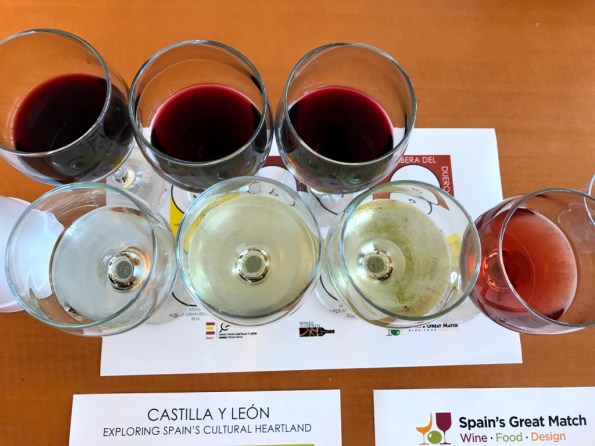
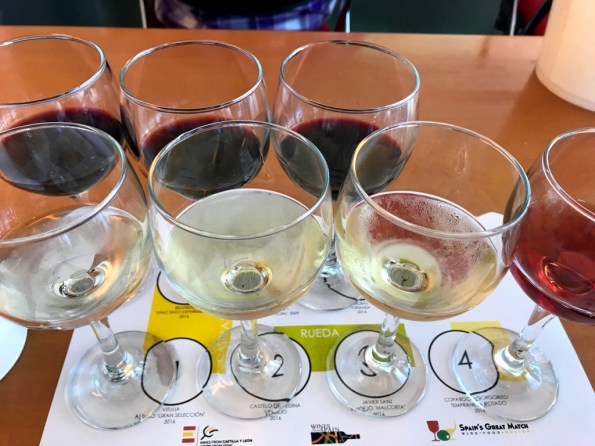
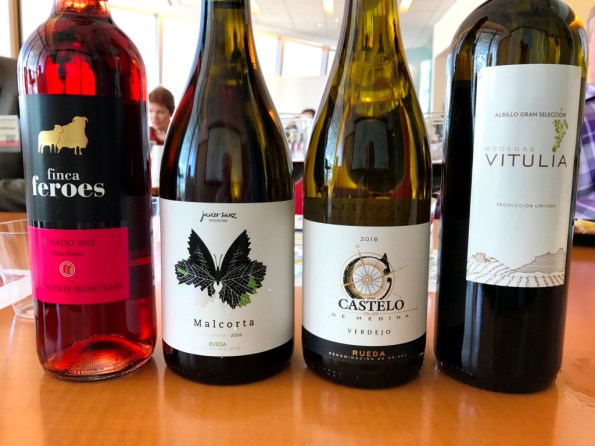
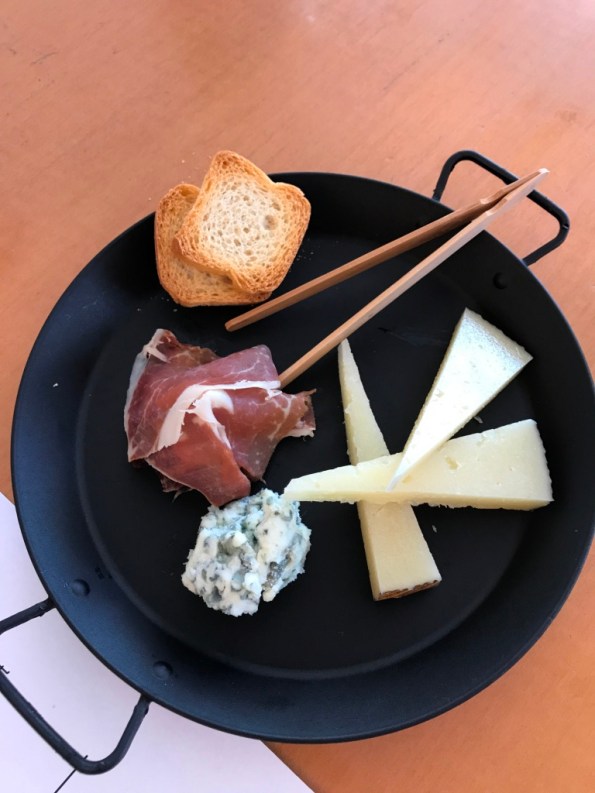
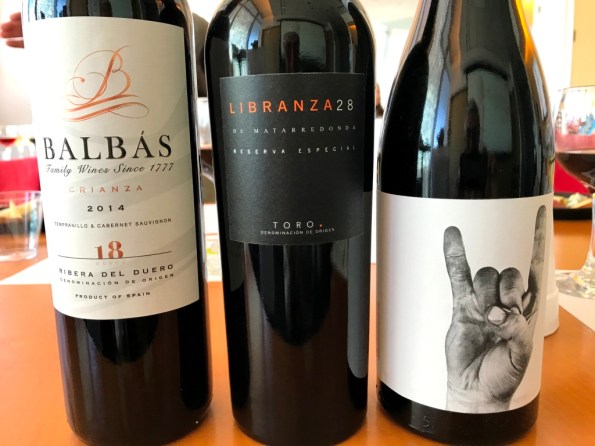
Our next seminar was dedicated to the wines and culture of the Castilla y León, an administrative region in the Northern part of Spain. Castilla y León includes a number of winemaking regions – some of the best, essentially – Ribera del Duero, Toro, Rueda among others. The seminar was led by charismatic Marnie Old – I have to honestly say that this was one of the very best wine seminars I ever attended – great delivery, lots of energy, excellent presentation.
We had an opportunity to taste 7 different wines and also try some of the Castilla y León authentic foods – a few kinds of cheese (Valdeon, a blue cheese, was my favorite), Jamon (Jamón Guijuelo, to be precise) and more. I really didn’t care for the Rosé, so below you will find the notes for the wines we tasted:
2016 Bodegas Vitulia Albillo Gran Selección Vino de la Tierra de Castilla y León ($18, 12.5% ABV, 100% Albillo Mayor)
Simple, crisp, acidic, refreshing. Plus another new grape.
2016 Bodega Castelo de Medina Verdejo Rueda D.O. ($19.95, 13.5% ABV, 100% Verdejo)
White stone fruit, intense, fresh, floral fruit on the nose. Palate is dominated by the herbs, similar to Sancerre, lemon, medium body, very nice
2016 Bodega Javier Sanz V Malcorta Rueda D.O. (13% ABV, $26, 100% Verdejo Malcorta)
Javier Sanz’s effort is dedicated to restoring pre-phylloxera vineyards – this is where the fruit for this wine came from. The nose is a pure wow – intense, camphor oil, sandalwood, rosemary. Palate is delicious, perfectly balanced, candied lemon, nutmeg, medium+ body, clean acidity, an excellent wine. Yes, and another new grape.
2016 Vino Bigardo Tinto Experimental (100% Tinta de Toro) – an interesting wine. Made by a rebel winemaker, who doesn’t want to make the wine according to the appellation laws, so the wine is unclassified. 20–100 years old wine, 45 passes during the harvest, micro-fermentation. Nose has lots of young, bright fruit, freshly crushed berries, reminiscent of Monastrell, unusual. Young fruit on the palate, but with undertones of stewed fruit, hint of the roasted meat. This is experimental wine all right, but this is not a successful wine in my book.
2009 Bodegas Matarredonda Libranza 28 Reserva Especial DO Toro ($45, 100% Tinta de Toro, ungrafted vines, on average 70 years old)
Spicy nose with a whiff of cinnamon, sweet oak, classic Cabernet nose overall. On the palate very tight, the real Toro, powerful, dark fruit, nice – but needs time. Pairs surprisingly outstanding with the local Valdeon Blue Cheese.
2014 Bodegas Balbás Crianza Ribera Del Duero D.O. ($27.99, 90% Tempranillo, 10% Cabernet Sauvignon, 18 months in French oak barrels)
This wine comes from one of the founding estates in the region, established in 1777.
Dusty nose, muted fruit, distant hint of dried cherries. On the palate – cherries, cherry pit, roasted meat, coffee, great concentration, fresh, clean – very good wine overall.
I was registered for two more seminars, but then there were lots of wines to taste, so I decided to proceed with the tasting. Below are mentions of the wines I liked. I have separated the wines into my top choices (both white and red), and then separately sparkling (Cava), white and red wines I feel comfortably happy to recommend. For what it worth, here we go:


Top wines:
2016 Bodega Javier Sanz V Malcorta Rueda DO ($26) – see my notes above, definitely was the star
2014 CVNE Monopole Blanco Seco Rioja ($22) – Monopole is one of my favorite white Rioja in general, but this wine is taken to the next level by spending some time in oak – lots of increased complexity. Delicious.
2013 Bodegas Prineos Garnacha DO Somontano ($12.99) – round and delicious. Great value
2011 Bodegas Beronia III a.C. Beronia DOCa Rioja ($79.99) – 70 years old vines. Unique and beautiful, produced only in exceptional vintages. standout.
2015 Bodegas Garcia Carrión Mayoral Reservado DOP Jumilla ($12.99, Syrah/Cabernet Sauvignon/Petit Verdot) – a standout. Perfectly balanced, great flavor profile and QPR which can’t be beat.
2014 El Coto Crianza DOCa Rioja ($13) – an incredible value, perfectly soft and round
2008 El Coto de Imaz Gran Reserva DOCa Rioja ($44) – perfectly drinkable, but can still age. Delicious and a great value.
2010 Gratavinum GV5 DOCa Priorat ($80) – excellent wine
Also very good:


Cava:
NV Anna de Codorniu Blanc de Blancs Brut Reserva DO Cava ($14.99) – never disappoints. Great value.
NV Anna de Codorniu Brut Rosé DO Cava ($14.99) – one of my perennial favorites.
2010 Parés Baltà Cava Blanca Cusiné DO Cava ($40) – very good quality, comparable to vintage Champagne.
NV Segura Viudos Reserva Heredad DO Cava ($25) – another one of my favorites. Delicious.
2010 Torelló 225 Brut Nature Gran Reserva DO Cava ($35) – very good


White:
2016 Bodegas Sommos Las Bas Gewürztraminer DO Somontano ($25.99) – Gewurtztraminer is a tough grape for making a round, balanced wine – and this one was exactly that.
2015 Baigorri Barrel Fermented White DOCa Rioja ($30) – very nice
2016 Bodegas Beronia Viura DOCa Rioja ($14.99) – clean, refreshing
2016 El Coto Blanco DOCa Rioja ($11) – outstanding and an excellent value
2013 Bodegas Enate “Chardonnay 234” Enate DO Somontano ($12.99) – classic, very good.


Rioja:
2013 Bodegas Muga Reserva DOCa Rioja ($28) – one of the iconic producers, very good wine.
2011 Marqués de Riscal Reserva DOCa Rioja ($18) – excellent value
2005 Marqués de Riscal Gran Reserva DOCa Rioja ($48) – very good
2010 Marqués de Riscal Baron de Chirel Reserva DOCa Rioja ($79) – very good
2011 Bodegas Faustino V Rioja Reserva DOCa Rioja ($15) – very good value
2005 Bodegas Faustino I Rioja Gran Reserva DOCa Rioja ($35) – another very good QPR example
2012 Bodegas Beronia Reserva DOCa Rioja ($19.99) – excellent
2008 Bodegas Beronia Gran Reserva DOCa Rioja ($31.99) – excellent, and great value
2012 El Coto de Imaz Reserva DOCa Rioja ($24)
2008 Viñedos y Bodegas Sierra Cantabria Finca El Bosque DOCa Rioha ($95) – probably the most expensive wine in the tasting, and it is not ready to drink. Needs time, lots of time.
2007 Señorio de San Vicente San Vicente DOCa Rioja ($52, new grape – Tempranillo peluda)


Other red:
2016 Bodegas Sommos Merlot DO Somontano ($25.99)
2012 Bodegas Viñas Del Vero Secastilla DO Somontano ($44.95)
2009 Bodegas Paniza Artigazo Edición Limitada DOP Cariñena ($24..99)
2010 Bodegas Corral Don Jacobo Rioja Reserva DOCa Rioja ($22) – delicious and a great value
2014 Bodegas Volver DO LaMancha ($16) – one of my perennial favorites, big and powerful
2012 Finca Villacreces Ribera del Duero DO ($35) – this wine never disappoints – perfect example of what Ribera del Duero is capable of
2013 Bodegas Hacienda Monasterio, Ribera del Duero DO ($40) – delicious
2015 Bodegas Garcia Carrión Mayoral Chester DOP Jumilla ($12.99, Monastrell/Petite Verdot)
2014 Bodegas Garcia Carrión Pata Negra Apasionado ($12.99, Monastrell/Petit Verdot/Cabernet Sauvignon/Syrah)
2014 Torres Salmos DOCa Priorat ($35) – very good
2015 Teso La Monja Almirez DO Toro ($52) – still needs time
2007 Teso La Monja DO Toro ($25) – nice, but definitely needs time
And then, of course, there was food. Cheese and olives were a staple, and many other dishes were carried out all the time. I also discovered my new favorite sparkling mineral water – Vichy Catalan. It is sold at some of the stores, such as Fairway Market, so if you like sparkling water, you might want to give it a try.


That’s all I have for you, my friends. Spain’s Great Match is an annual event, so even if you missed this year, you should definitely plan to attend the next – you can see a full schedule here. Also, if you live in or will visit Chicago, you can still attend it on November 2nd. Either way – drink more Spanish wines, my friends! Cheers!
For The Love of Chowder – 2017, 10th Anniversary Edition
Last Sunday, October 1st, we had fun. Too-much-of-a-good-food, coma-inducing fun. The 10th Annual Chowdafest was on – the biggest and the busiest of them all (well, maybe not “all”, as I attended only last 3 – but for sure the busiest of the 3).
When I saw traffic slowing down on I-95 about two miles away from our exit, I jokingly said to my wife “see, they are all coming to the Chowdafest”. As we kept driving slower and slower, eventually pretty much succumbing to a complete halt, the smile disappeared from my face. The joke was on me, as yes, this was the traffic getting into the exit of the Sherwood Island Park, and it was moving really, really slow.
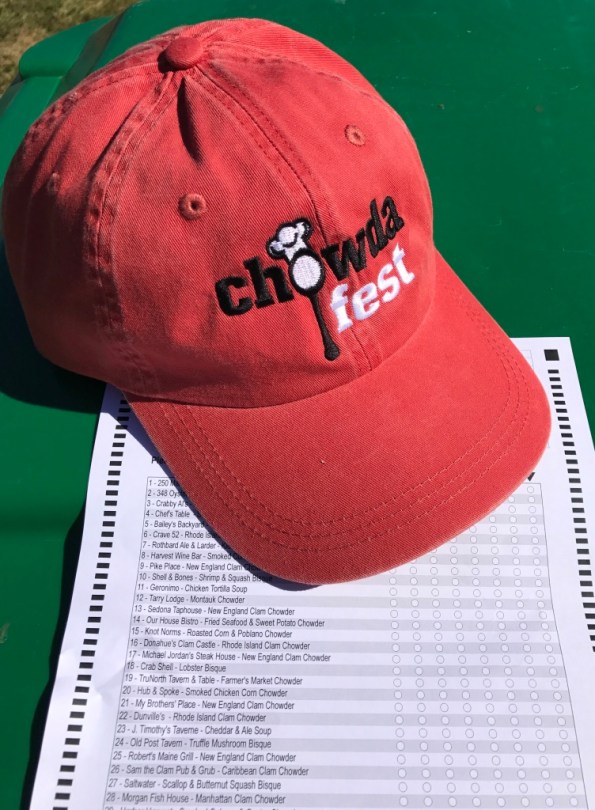 All the fears of looking for parking for a long time quickly disappeared once we managed to actually enter the park, and then to find the parking within a minute. A quick walk, getting your hand stamped and – hello, chowder!
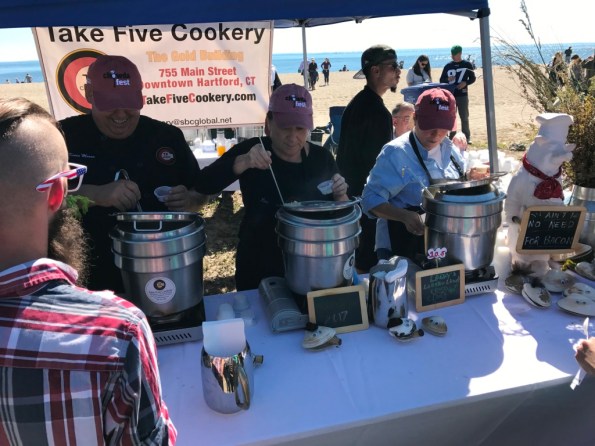
What can I tell you about Chowdafest 2017, outside of the fact that it was a great fun? The format was somewhat the same as the last 2 years I attended – there were again 40 restaurants, competing for the “best” title. In addition to 4 of the staples – Classic New England, Traditional (Rhode Island and Manhattan), Creative and Soup/Bisque, the new category for added for the Vegetarian Chowder. Everybody had a ballot and a pencil and were rating chowders on the scale from 7 to 10.5. The ballots were processed right at the event (I saw that magic for the first time – there are few pictures for you down below), and the winners were announced two days after the event – you can see the names of the winning restaurants here.
Unlike last year, the weather was amazing. And I guess the weather, coupled with a great promotion and the 10th Anniversary nature of the event, really drove a lot of people over. Some of the lines required 10+ minutes waiting, but I really can’t complain, as everything was flowing very efficiently. Here it is, the weather and the people:


What a day!


You can’t ask for a better weather

Beautiful day, isn’t it?
Overall, everything offered was very solid – of course, some were better than the others, but the level was quite high – I only had 4 soups rated at 7, and 3 out of those 4 had a burned flavor. Many soups were really, really delicious. in addition to all the chowders, there were lots of other food offered for tasting – potato chips, cheeses, sodas, iced teas, juices, ice cream – there was definitely something for everyone. Here are my notes – in pictures, of course:


These are some of my favorite decorations:


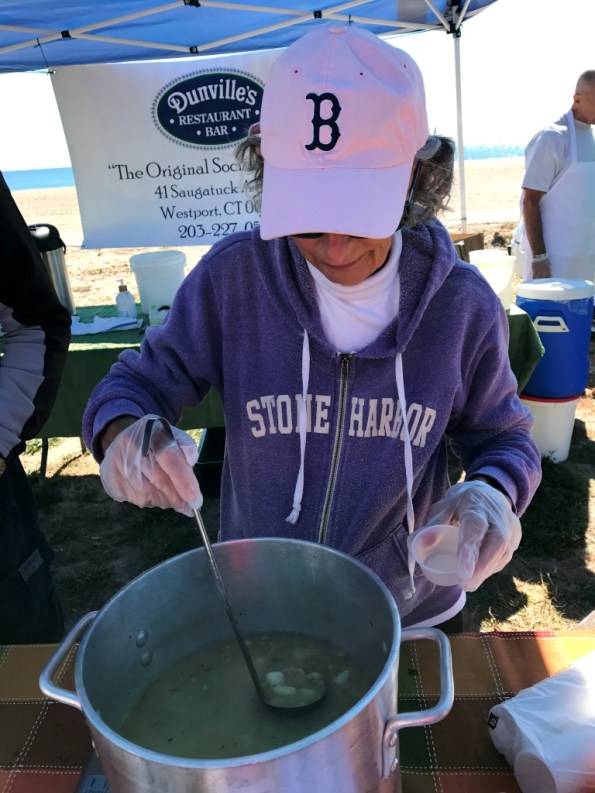
Pouring chowder requires focus!
… and smile
 Now, some of my absolute favorites:
Our House Bistro from Winooski, VT – all those condiments, super-tasty:


Truffle mushroom bisque from Old Post Tavern in Fairfield, CT and traditional chowder from Two-fifty Market in Portsmouth, NH:


Here are the winners in the traditional category – Pike’s Place from Seattle, WA:


Last but not least, may be the biggest surprise of the day – vegetarian Smoked Corn & Squash Chowder from Harvest Wine Bar in Westport, CT:


Here you can see all the results getting tallied in the real time by the folks from Blum Shapiro:


Here you can see my vote (yep, with a few stains on it):
 Comparing my thoughts with public opinion, I’m very happy to see Our House Bistro winning Creative Chowder category with Fried Seafood & Sweet Potato Chowder, and with Old Post Tavern taking top spot in the Vegetarian category with Truffle Mushroom Bisque and Harvest Wine Bar taking second place in the same category with Smoked Corn & Squash Chowder.
I can also get on board with B.R.Y.A.C taking the second spot in Classic New England Chowder category, but Pike’s Place winning that category for the 3rd year in the row simply baffles me – their chowder was overdone – super round and super creamy, it lacked the real burst of flavor of the classic New England clam chowder which both B.R.Y.A.C and Two-Fifty Market had perfectly visible. My only theory is that people get intimidated with all the medals at the Pike’s Place stand, and simply don’t want to be wrong when they think that so many people were right before.
Anyway, this one is done and we can already start thinking (and drooling) about Chowdafest 2018 – I know it is early, but still, mark your calendars for Sunday, September 30th, and see you there!
Behind The Label
We eat with our eyes first – everybody knows that. We drink in exactly same way. While looking for the wine to buy, we always start from the label. Of course, sometimes we might be looking just for the specific producer’s name – but way more often than not, wine consumer is lured by the appearance of the bottle before anything else. We let the bottle speak to us.
Wine producers always knew the effect of the bottle appearance, and always tried to design attractive and appealing labels – think about Château Mouton Rothschild, for example, which started their “Artist” wine label series back in 1945. 20-25 years ago, the design, and most importantly, production capabilities were limited both in style and the cost. But not today- there are literally no limits to how creative the wine bottle design can get in today’s world. It is hard to tell what exactly makes the wine label instantly attractive, but we all can recognize that special label when we see it. I shared my fascination with the creativity of the wine labels on the multiple occasions in this blog – here is one example for you.
You don’t have to agree with me, but I see creative wine labels as objects of art. Art at large is a form of the human expression. Art takes lots and lots of different forms – beautiful building, successful surgery, a sublime glass of wine, a flower, a painting. I’m sure there are countless studies written on the subject, and I will not even try for the slightest bit to delve into it, but I’m convinced that art as a final expression always has its source, the origin, it is inspired – and this leads to the fundamental question – what inspires the art? I will leave you to ponder at that, and meanwhile, let me turn our conversation towards the … wine, of course.
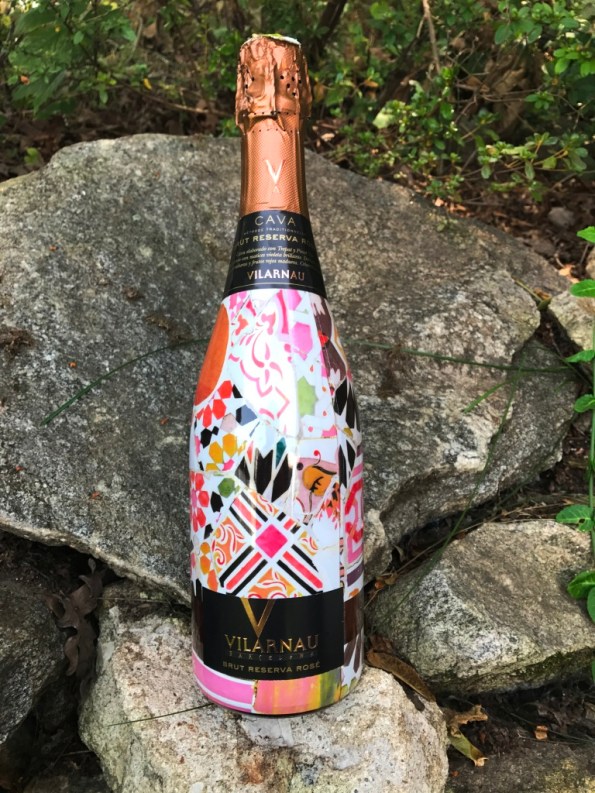 When I saw the label of Vilarnau Brut Reserva Rosé, my first reaction was “wow, this is a beautiful bottle”. The next question was – what does it mean? Yes, I read the description connecting Vilarnau Trencadís Edition cavas to the work of famous architect Antoni Gaudí, but I still wanted to understand the true inspiration behind this label. I reached out to the winery, and asked a few questions – here is our short conversation:
[TaV]: Vilarnau produces Cava since 1949. When Trencadís labels were used on Vilarnau Cava for the first time?
[V]: We launched the Trencadis labels at the end of 2014.
[TaV]: What was the inspiration behind the Trencadís labels?
[V]: This form of mosaic is very famous in Catalunya, Spain. Inspired by the Park Guëll in Barcelona and the famous artist Gaudí. Vilarnau is the “Barcelona Cava” and we felt it was fitting to use such an iconic design to decorate the bottles.
‘Trencadís’ is a type of mosaic used in Catalan modernism, created from broken tile shards. The technique is also called ‘pique assiette’. The mosaic is done using broken pieces of ceramic, like tiles and dinnerware. The Catalan architects Antoni Gaudí and Josep Maria Pujol used trencadís in many projects, among which Barcelona’s Parc Güell is probably the most famous. Vilarnau being so close to Barcelona (not only geographically, but also with heart and soul), it was natural to pick up this typical artistic theme for our winery.
[TaV]: Are the Trencadís Cava target the specific market, or do they sell equally well world-wide?
[V:]: We are currently exporting this label to almost 30 markets (principle markets being the USA, UK, Germany, and Belgium) and the number is growing as consumers love the design and the wine.


[TaV]: Do you have plans to add any new wines to the Trencadís series?
[V]: When we first launched we only had the Brut Reserva NV in the trencadis design but we have added the Rosado Reserva to the range two years and the Brut Nature Vintage and Demi-Sec last year
[TaV]; Do you have plans for any other “creative label” designs under Vilarnau name?
[V]: Barcelona is a constant inspiration to us and we are full of ideas, however, we have so much to do with the Trencadis design that we probably won’t launch anything new for the next 2 years or so.
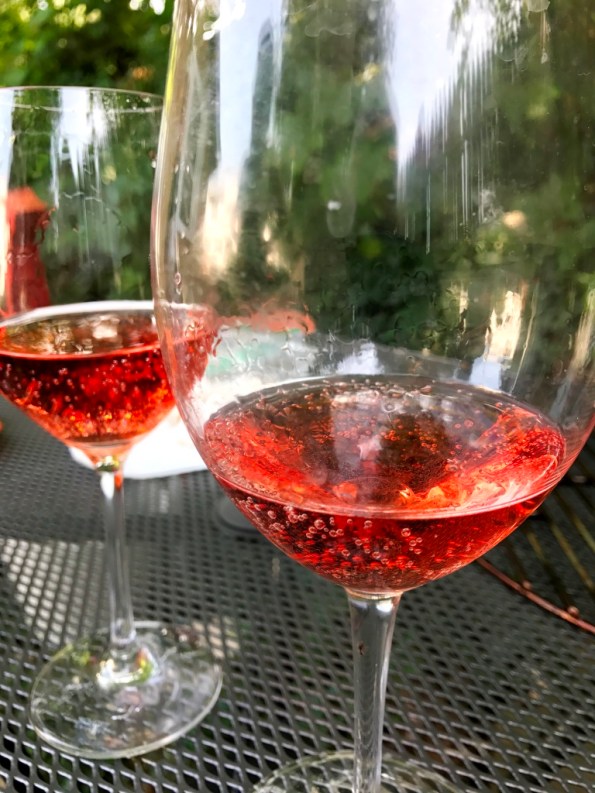
The beautiful label is very important, it sets the expectations and makes you anticipate more from the wine. But – the content of the bottle is better to support the beauty of the label, or the joy of wine drinking will quickly dissipate.
I’m happy to say that the NV Vilarnau Brut Reserva Trencadís Edition Rosé D.O. Cava (12% ABV, SRP: $15, 90% Trepat and 10% Pinot Noir, 15+ month in the bottle) didn’t disappoint. Beautiful intense pink color, classic Sparkling nose, with a touch of yeast and toasted bread on the nose, supported by fresh tart strawberries and lemon notes on the palate, crisp, succulent and invigorating. A perfect sparkling wine by itself, and at a price – almost an unbeatable value. (Drinkability: 8-/8).
What do you think of Art of the [wine] Labels? Do you have some favorites? Cheers!
Time to Celebrate Grenache – 2017 Edition
This year, I managed to miss lots of the “grape day” celebrations. Well, life takes precedence. But – we have enough grapes to celebrate, and I’m glad to partake in festivities in honor of one of my most favorite grapes – Grenache, a.k.a. Garnacha, and sometimes a.k.a. Garnatxa (hmmm, should I also mention Cannonau?).
Grenache is one of the most versatile grapes I know, and the word “versatile” here truly has multiple meanings. Grenache does perfectly in the “old world”, producing delicious wines in France (think Southern Rhone and Languedoc), all over Spain, and Sardinia in Italy. It reaches incredible heights in the “new world”, producing cult level wines in Australia and the USA (Sine Qua Non, anyone?). Grenache wines are delicious in its purity, made out of 100% of the grape; Grenache also performs splendidly in a band, often known as GSM (Grenache-Syrah-Mourvedre) blend, where it can play multiple roles, from leading to minor and supportive. Yes, it is one versatile grape.
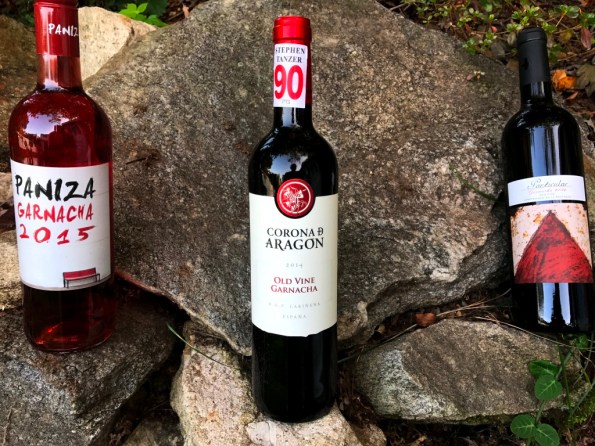
When it comes to Grenache, especially on its special day, the province of Aragon in Northern Spain deserves special mention. It is widely considered that the Kingdom of Aragon was a birthplace of Grenache, and from there the grape took on to Italy and France, before conquering the rest of the world. In Aragon, 4 wine regions – DOs of Cariñena, Somontano, Calatayud, and Campo de Borja – produce what we can call a “classic Grenache” (I guess “classic Garnacha” would sound more appropriate), boasting some of the oldest Grenache vines in the world.
We can’t celebrate with an empty glass, can’t we? For this special day, I would like to share with you the notes for 3 of the “classic Garnacha” wines, coming exactly from the DO Cariñena in Aragon:


2015 Paniza Garnacha Rosé Cariñena DO (13% ABV)
C: deep pink
N: fresh strawberries, berries and leaves
P: fresh strawberries all the way, succulent, generous and round. Perfect presence in your mouth.
V: 8-/8, delicious wine
2014 Bodegas San Valero Particular Garnacha Cariñena DO (14%ABV)
C: garnet
N: fresh plums, mocha, eucalyptus, inviting
P: tart cherries, clean acidity, fresh present tannins, touch of blackcurrant, a bit of white pepper
V: 8-, perfectly playful, very good wine.
2014 Corona D Aragon Old Vine Garnacha Cariñena DO (13.5% ABV)
C: very dark garnet, practically black
N: sandalwood, spices, dark chocolate, touch of roasted meat
P: medium body, good acidity, touch of cherries, fresh, hint of dark chocolate
V: 7+/8-, nice rendition
What is in your glass? How do you celebrate the noble grape? Happy Grenache Day! Cheers!
Guest Post: 5 Wonderful Reasons Why Should Go a Culinary and Wine Vacation for Your Next Travel Getaway
Today I want to offer to your attention a guest post by Lystia Putranto, a personal & professional development blogger for BookCulinaryVacations.com. Lystia is a lover of travel, a self-professed foodie, and an amateur cook who admittedly spends way too much time surfing the web.
As the last quarter of the year is around the corner, many of us are taking advantage of this time to plan our next great adventure. If you happen to be a food and wine lover and you’re on the hunt for travel ideas, there’s no better way to indulge in your passions than by going on a culinary and wine focused vacation!
For starters, did you know that by 2015, 77% of leisure travelers can already be classified as culinary travelers? This trend has continued to rise and is predicted to rise even higher in the coming year. So, if you have yet to join in this exciting (and not to mention delectable) bandwagon, it’s about time that you do so.
As a lover of travel, food, and wine, I can personally attest that there’s much to gain and experience through this unique type of holidays. But if you’re not yet convinced, on this post, I’m sharing with you five of the many wonderful reasons why you should sign up for a culinary vacation too:
1. You’ll Discover New & Exciting Flavors

In order to truly make the most of our travels, keep in mind that we can only grow and enrich our lives by doing something we have yet to try. So instead of setting yourself up for yet another touristy sight-seeing trip, why not try (and taste) something different for a change?
With a new destination comes plenty of delicious local eats & drinks. Through culinary holidays, you’ll get an amazing opportunity to explore a variety of new and exciting flavors through its delicacies and locally produced beverages – and yes, in many sought after destinations such as France, South Africa, Chile, and California, this certainly includes a whole lot of wine!
As you already know, food is almost always much more delicious and authentic when we enjoy it in the country or place of origin. You’d also be interested to know that some local dishes and ingredients are extremely rare and would not be easily found anywhere else in the world so this the time to take full advantage of it.
2. You’ll Expand Your Knowledge

Looking to deepen your culinary and/or wine knowledge? During a wine vacation, for example, you won’t only be tasting the various wine that the winery produces, you’ll get to learn all about wine far beyond what you would learn in a wine tasting event such as how to harvest grapes as well as the steps of the entire wine production right up to its bottling process.
3. You’ll Learn How to Prepare Authentic Delicacies

Image credit: Alila Manggis Bali
What makes culinary vacations stand out from the usual “run-of-the-mill” vacations or food tours is that you also get the opportunity to prepare them from scratch yourself! This way, you can learn to recreate them back home. That is the simple yet powerful beauty of a hands-on cooking experience.
As a self-professed foodie, I adore all type of cuisines – but I must admit that Thai food is amongst my top 3 favorites. So, on my last trip to Thailand, I decided to sign up for a cooking class in Bangkok to learn how to prepare authentic Thai dishes such as Tom Yum Goong and Pad Thai.
In the end, not only did I thoroughly enjoyed the experience, thanks to the warm guidance of the school’s professional instructors, I was also genuinely impressed how fun and easy it all was!
As an added bonus, some cooking vacations may include visits to the local markets where you get to purchase the ingredients for your meal or even pick your own fresh produce straight from their own farm. In this case, it’s not uncommon that everything you make is farm-to-table ready, making your holiday that much more special.
4. You’ll Make New Friends

Image credit: Porto Club Travel Services
Whether you prefer traveling solo, with a partner or in a group, through a cooking vacation, you are bound to meet plenty of new people. This includes both locals as well as other travelers from all corners of the globe. This is your chance to cultivate a better understanding of the diverse culture and languages of the world. Who knows? Perhaps some of the people you meet on your trip may just end up becoming (new) lifelong friends!
5. You’ll Immerse Yourself in the Local Culture

Image credit: Cris Puscas
They say that travel is the only thing that one can buy that makes us richer. I personally believe this to be true. It allows us to learn more about what our beautiful world has to offer. And there’s no better group of people that will be able to teach us a destination’s local culture than the locals themselves.
Culinary travel allows you to center your trip on cultural immersion – meeting the locals, sampling local cuisines and beverages, and indulging yourself in the local ways of life. It’s an experience that will not only tantalize your taste buds but also one that will open your eyes and mind to a whole new perspective of seeing the world.
For The Love of Chowder – October 1, 2017 – Be There Or Else
 So the time has come to put your chowder face on … wait, is there such thing as a “chowder face”? I know there is a “game face” and a “poker face”, but “chowder face”? Okay, don’t want to make it too complicated – if you like chowder, then happy face with an ear to ear smile is all you need, as 10th annual ChowdaFest is coming up in mere 3 weeks!
On Sunday, October 1st, starting at 11 AM, at the Sherwood Island State Park in Westport, Connecticut, 40 restaurants (click for the list) will compete for YOUR vote to become Chowda Champions! I attended two of the past competitions, in 2015 and 2016, and I can tell you from the experience – you don’t want to miss this event. Chowdafest is an incredible amount of fun, good time and good food.
This year, the participants will compete in 5 categories:
- Classic New England Clam Chowder
- Traditional Chowder (Rhode Island and Manhattan)
- Creative Chowder
- Soup/Bisque (think Lobster Bisque)
- Vegetarian (new category for 2017!)
2017 Chowdafest will go way beyond Chowder – you will also be able to sample artisan bread and sauces, salsas and chips, farm fresh ice cream, yogurts, cheeses, and lots more.
Just to give you an idea of what was happening in the past years, here is a brief summary:

Everybody get a spoon, a pencil, and a voting chart – you can rate all the chowders on the scale from 7.0 to 10.5, and the best restaurant in each category will be tallied up shortly after the event will end. In case you are curiuous, here you can find the list of the past winners of the Chowdafest.
That’s all I wanted to tell you, my friends. Mark your calendars, cancel whatever non-essentiall activities you had for that day, and just be there, with your family and friends, briging a good appetite and the desire to have fun. You can get your tickets on the Chowdafest website – the link is here for your convenience (note that AAA members get a good discount).
For the love of Chowder – cheers!
Travel Diaries: Few Days in Malmö, Sweden
About a month ago, I shared with you, mostly in pictures, my experience of a few hours in the Copenhagen. Copenhagen visit was a lucky detour, but the actual destination of that trip was the city in the Southern Sweden called Malmö.
Okay, I’m not going all of a sudden talk about the history of Malmö, the capital and largest city of the Swedish county of Scania – everything you want to know you can find in the Wikipedia or other sources. I was there for long and grueling week-long meetings and really didn’t have time to freely roam around – most of my sightseeing was done during the lunch breaks. Nevertheless, I have tons of pictures, thanks to a very capable camera which is now in the pockets of most of the people all the time (yes, that would be an iPhone for you, Apple-loving people) – and I have my impressions from walking the streets and interacting with people.

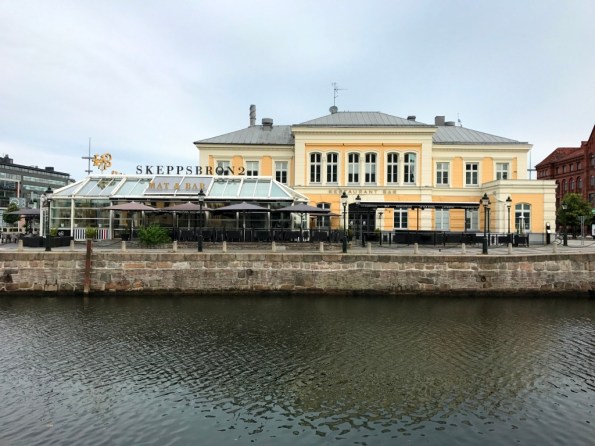



I can summarize my impressions of 5 days in Malmö in 3 simple words: “I loved it”. That’s all I need to say, really. The streets, the city views, the people, the hotel, the food – that is truly a full summary.
I know that everyone’s perception is different, and more often than not, we get lucky in our endeavors (unfortunately, we often take it for granted, but this is not the subject of this post). Yes, my impressions are based on spending time in the area adjacent to the Malmö Central train station, in the radius of 20–25 minutes walking from that train station. Is life very different in the areas which are located an hour away from the train station and city center of Malmö or elsewhere in Sweden? Quite possible, but I will let you find out.

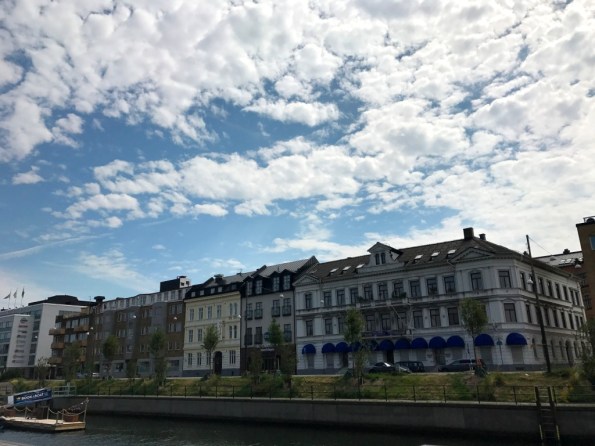

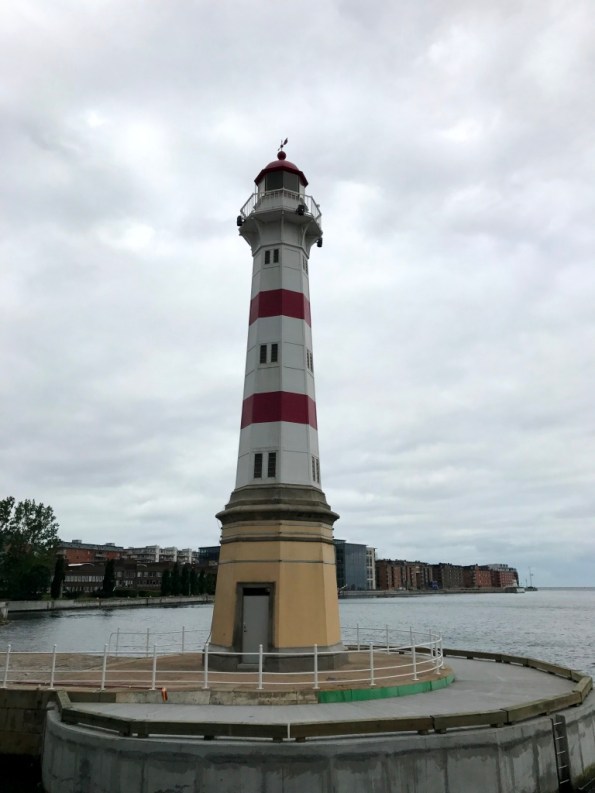


Anyone wants to play while waiting for the train?

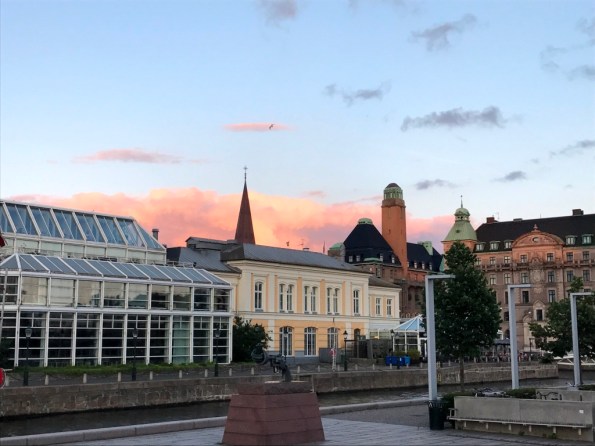
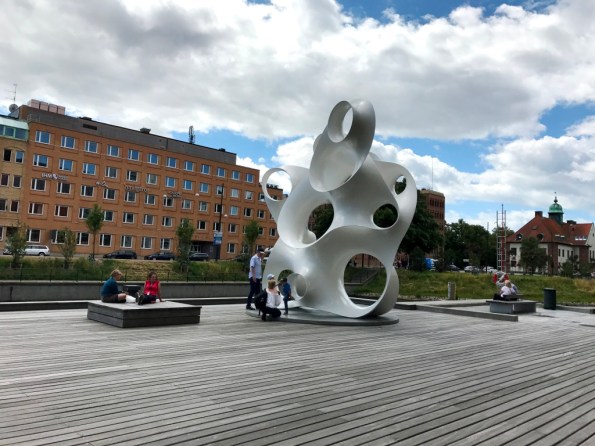
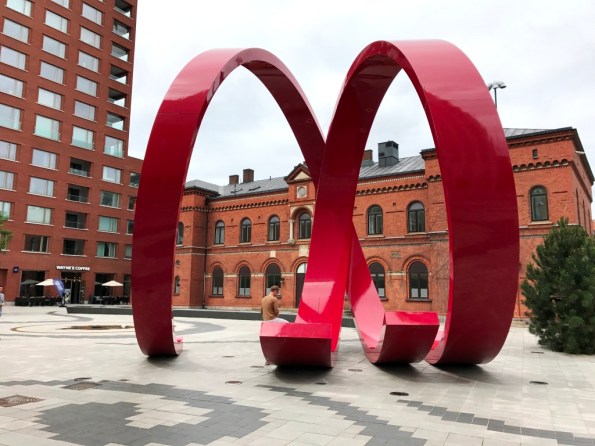
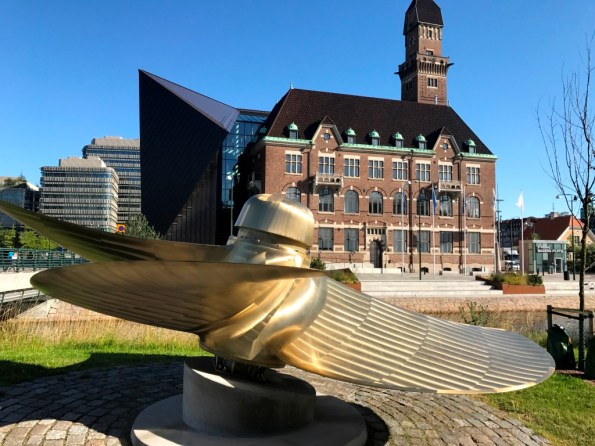
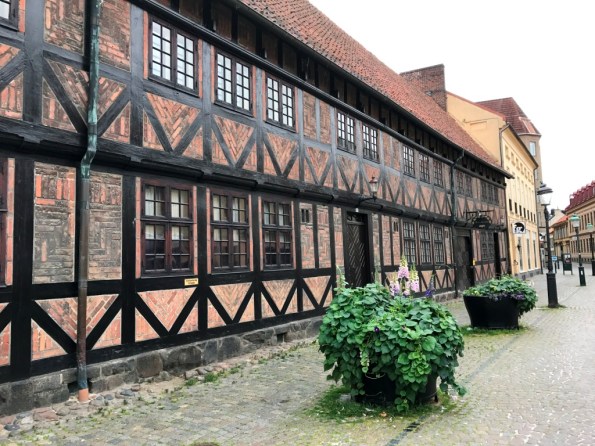

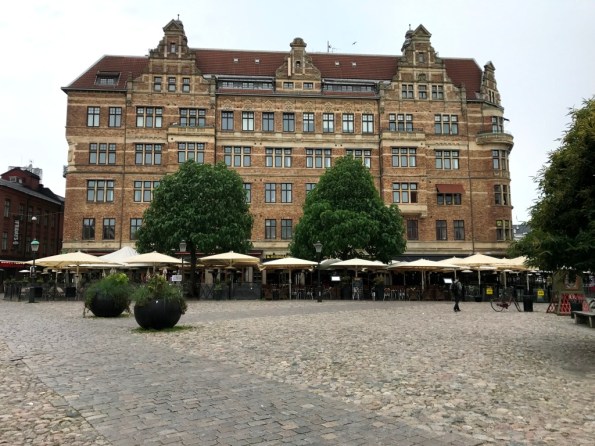
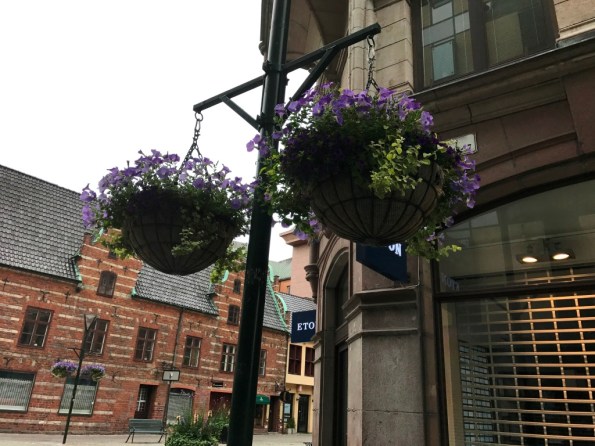
I loved the way the town is architected. The old and authentic looking houses and buildings are perfectly intermixed with the new houses and buildings. The style of the new construction is modern and clean (it is Scandinavia, after all), but the old and the new work very well together.
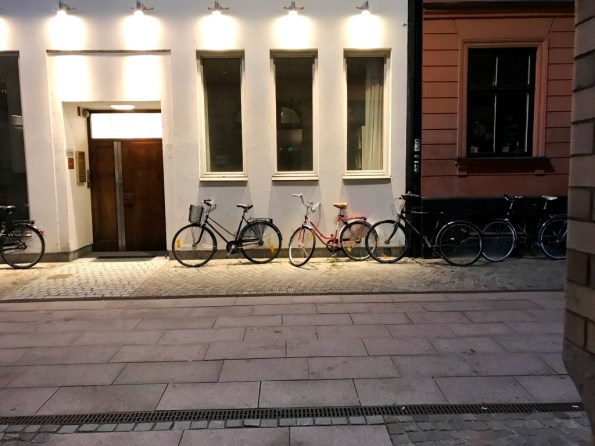
Bicycles are everywhere. Lots and lots of bicycles are parked along the streets, there are lots of people riding them, and an absolute majority of the sidewalks have designated “lane” for bicycles where pedestrians are not allowed.


HSB Turning Torso – a marvel of engineering
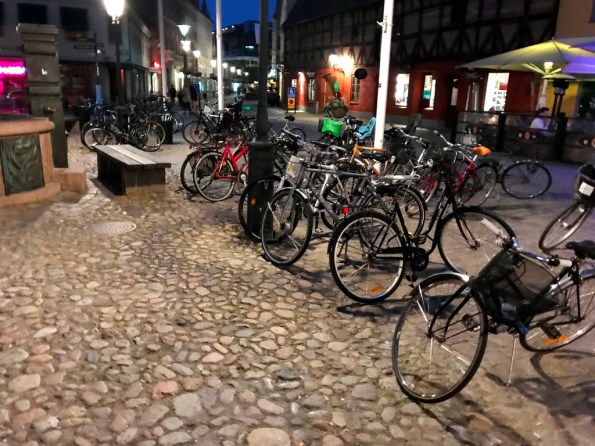

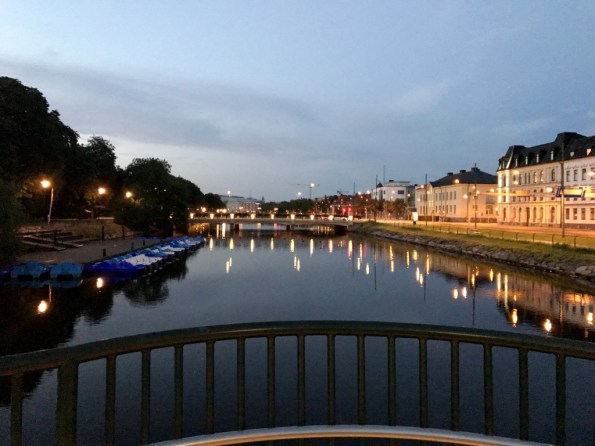
And then people. Anyone I talked to had perfect English. Young and old, at the restaurants or on the streets, at the train station or a supermarket – people had no issues switching to a perfect English in a heart bit. I wouldn’t claim any special traveling prowess but having been to a few countries outside of the USA, I have some basis for the comparison – this experience was definitely unique and ultimately comforting (you can truly relax knowing that you will be understood if need to ask a question).
I stayed at Marriott Renaissance, and this was one of my absolutely favorite hotel experiences – very comfortable room, nicely appointed, with the temperature which can be easily adjusted – those who stay at the hotels, will understand my excitement, I’m sure; good size bathroom and everything in the working order. Nicely appointed interior throughout the hotel, and – all the service staff were a pleasure to talk to. Again, if you travel, you will understand my excitement. Excellent breakfast buffet, which appears small but has an outstanding variety of everything you need for a good breakfast (I suggest you will get it included in your room rate).


If I have a gripe with my trip, it would be food and, especially, the wine. Not the quality or quantity, no, not at all – but the price. You can’t find a bottle of wine at a restaurant which will be cheaper than $50 (most of the prices start from $60). Most of the beers will be $8+ per glass, and cheapest glass of wine (hard to find) will be around $12. When you look at the prices of the hard liquors, they look perfectly reasonable, until you understand that the prices are given for the 10 centiliters – there are about 3 centiliters in an ounce, and standard pour in the USA is 2 ounces, so what looked super-cheap at $4 or even $6, doesn’t look that attractive at $18 for the half of your typical pour. Food is also not cheap, so keeping your dinner at least around $60 with one glass of wine is not simple at all. But – pretty much everything we ate was very tasty, so I really don’t have a good reason to complain. And I have to say that if you chose to skip the full-service restaurants, there are plenty of inexpensive dining options – for instance, lots of small restaurants inside the train station, serving tasty food (this is where we had most of our lunches).
Here are the restaurants I’m happy to recommend if your travel will take you to Malmö:
Espresso House
Espresso House is a chain, similar to the US Starbucks – there are no Starbucks in Sweden. It is similar to Starbucks in the selection of the drinks, but beyond just that, also has very similar issues. Let me explain. I visited the Espresso House located on the plaza next to the Renaissance hotel. First, the barista made me wait for at least 5 minutes, just keep doing and doing something without paying any attention to my presence in front of the counter (the place is small, so yes, she saw me). Then, there was a list of various coffees available to order – from 4 or 5 different countries of origin – when I asked to explain me the differences, was quickly told to ignore the list as Brazilian coffee was the only one available anyway.
But – the ambiance of the sitting area on the second floor was very nice, and the whole place had a charm, so the service part was quickly forgotten as I was enjoying my cup of coffee and a pastry.


Hamnmästaren
Bagers plats 1
211 18 Malmö, Sweden
Ph: +46 72-865 96 68
Who would’ve thought that Malmö is a place for an American barbecue? And so it actually is! We stumbled across this little place, located close to the train station, in the old house on the Port Supervisor. The restaurant offers a good selection of beer and all the bbq “usual suspects” – pork, brisket, chicken. I ordered chili to start with and pulled chicken sandwich. Big mistake. The chili was huge in size and was mostly pulled pork with beans, generous and delicious. And when it came to the pulled chicken sandwich, I never saw more overstuffed sandwich in my life (keep trying to understand my logic of not taking any pictures; sigh) – and this was probably the very best smoked chicken I ever had too. Beware of the portion sizes – and this place is definitely worth a visit.
La Brasserie
Skomakaregatan 10
211 34 Malmö, Sweden
+46 40 12 21 00
A French style restaurant, as you can tell by the name. The reasonable selection at around $50 per bottle – my gripe is that those wines are mostly around $7 – $8 in retail (outside of Sweden, of course), but nevertheless. We had a bottle of Cotes du Rhome and a Corbieres, both from 2014 vintage and both nicely drinkable.
I asked for waitress’ recommendation for my main dish, deciding between steak tartar and a seafood soup, technically a bouillabaisse. She confidently replied: “seafood soup” (I wonder what was her criteria to suggest it).
The soup had a total of 3 mussels in it, and random pieces of fish, in somewhat heavy broth. Again, I’m not sure what was the basis for the recommendation for this dish, but I definitely found it underwhelming. Nevertheless, you might give it a try, may be seafood is not their specialty.


Bastard
Mäster Johansgatan 11
211 21 Malmö, Sweden
Ph: +46 40-12 13 18
French flair restaurant. Reservations are definitely recommended – it was almost a miracle that we got in on Wednesday, there were lots of people sent away.
Good list of beer and wine. I had nice French cider first, then a glass of house Rosé, very tasty.
The restaurant offers a tasting menu, which has to be shared by the table, which was what we took. The tasting menu is not predefined, it is basically “whatever chef feels like today”.
The charcuterie was very tasty and steak tartar was outstanding. The followed by the two salads, both were simply a standout – Panzanella salad with boquerones, and then tomato and feta salad – the tomatoes were so succulent – I don’t know when was the last time I tasted tomatoes like that. Squash pizza was unusual and tasty and our last dish, individual servings of ham with mashed potatoes and fresh peas – was delicious to the last morsel. A very tasty experience.


Drumbar Scottish Pub & Tavern
Lilla Torg 9,
Hedmanska gården
211 34 Malmö, Sweden
+46 40 799 90
An English pub with outstanding selection of beer and scotch. I wish I realized that the word “drum” in the Drumbar relates to the actual “drum”, the whisky. The selection of drums was just spectacular – which I saw only as we were leaving. Yeah…
Had Innis & Gunn an IPA style beer on draft, but with more citrusy notes and not as biting as traditional IPA, and fish and chips for dinner (we are in the pub, right?) – may be the best I ever had – huge piece of cod, lightly fried, delicious sauce – outstanding. My colleague had pork shank which was absolutely perfect – rich, flavorful, fall-off-the-bone with crispy skin – another standout. An excellent place well worthy of anyone’s attention.


That’s all I wanted to share, with you, my friends. If your travel will take you to Malmö, I hope you will find these notes useful. If you’ve been to Malmö recently, I would be glad to compare the notes. Cheers!
Drink Local, Colorado Edition (and Don’t Lose Hope)
I’m an eternal optimist. Even when I’m worrying about something, deep inside, I still believe that everything will be okay – one way or the other (sometimes we really have to look for this “okay”, but this is a subject for the whole other post).
This “life’s attitude”, of course, reflects on my approach to wines. Particularly, a belief that in today’s world, good wines can be made everywhere and anywhere – not only in a few places we know can produce the good wines. And anywhere I travel, I’m always looking to prove myself right – which I call “drink local”.
This time, my travel took me to Denver, Colorado. Colorado sounds as good as any other state in the US to be able to produce wines, so once I situated at my hotel in downtown of Denver, off I went to the closest liquor store in Denver.
While walking to the store, literally few steps before it, I saw a sign for the “Wild Women Winery” – I couldn’t even believe my luck, to find a city winery short walking distance from the hotel, also with a very cool sounding name. So I walked in and situated at a bar table, looking at the bottles with super-creative, super-colorful labels.
Talking to the bartender, I learned that while the winery is located in the Colorado (downtown Denver, to be precise), they make wines from the grape juice which they get from California Central Valley, as the winemaker believes that local Colorado grapes are too young to produce a good wine. Fine – the proof is always in the glass, right?
I decided to try 3 wines for $5 (happened to be an extremely wise decision, as opposed to trying 7 for $10, you will understand why in a minute).


The first wine was Viognier – a touch of overripe Apple with sage on the nose. Good fruity palate nice acidity, golden delicious apples. Not my favorite, but not bad. Not amazing, but drinkable.
My next choice was Cab/Merlot blend and that wine really threw me off – too sweet all around, no balance, no acidity, just a sweet fruit. Don’t remember when was the last time I disliked the wine so intently.
At that point I realized that all of the wines the winery offers are non-vintage wines, so I tried to discuss it with the bartender, but unfortunately, she didn’t know what “vintage” means, and I had to face the issue that certain basic concepts we, oenophiles, take for granted, are not so easy to explain in the simple terms. Nevermind.
The last wine, Petite Sirah, had a sweet chocolate nose, bitter-sweet type. Sweet fruit compote on the palate, definitely too sweet, but more acidity than the previous wine. Mostly plum notes with the equivalent acidity of just ripe, but not overripe plum. A marginal improvement.
This visit really left me at the feeling of deep disconcert – I see a lot of passion on the labels, but the soulless concoctions inside the bottles were really conflicting with the bright images.
I gladly left the winery and headed over to the liquor store. Here I had another surprise – a sticker shock. I understand that the wine store is located in the downtown of Denver. But Colorado wines aren’t that well-known, aren’t they? There was a good selection of the local Colorado wines present, none of them cheaper than $20 (okay, $19.99 if it makes you feel any better). Really? On my recent trip to Canada, I had a phenomenal selection of tasty wines under $15. Now, especially after the first tasting fiasco, I had to spend $20+ for a bottle which I might just have to pour down the drain?


After going back and forth and trying (unsuccessfully) to obtain an advice of the store clerk (”I tasted only this one wine”, “yeah, yeah”, “huh, you don’t like sweet wines? Really?”), I settled on the bottle which looked the most Colorado-authentic while still staying in the low $20s- Two Rivers Syrah – at least the information on the back label suggested that the grapes were harvested in Colorado.


The wine was definitely an upgrade over the previous experience, but still no cigars. As this was nevertheless a better wine, here are my typical-style notes:
2015 Two Rivers Château Deux Fleuves Vineyards Syrah Mesa County, Colorado (14.1% ABV, $22.95)
C: dark garnet, nice visible legs
N: blackberries, tar, tobacco, sage, medium to high intensity
P: sweet berries, tobacco, good acidity
V: 7-, it is drinkable, but sweetness too prevalent.
7 on my the second day – sweetness subsided a bit, and roasted meat notes showed up. Still, the finish is mostly sweet fruit with a touch of tobacco.
On the last day before leaving Denver, I still had a bit of the free time and decided to give Colorado wines one more try. I found another wine store, still within short walking distance from the hotel, with good reviews on Google, and took 20 minutes walk. This store had a much smaller selection of Colorado wines, but a little bit better prices (by a few dollars, nothing major), and incomparably better, knowledgeable service. I left with the bottle of The Infinite Monkey Theorem Cabernet Franc – The Infinite Monkey Theorem is another city winery – but unlike Wile Women Winery, this one I would be happy to visit if I had more time.


Remember I told you about eternal optimism? It finally worked, as this Cabernet Franc was well worth of writing home about:
2015 The Infinite Monkey Theorem Cabernet Franc, Colorado (12.9% ABV, $21)
C: dark ruby
N: tobacco, sweet bell peppers, freshly crushed blackberries
P: bright, fresh, freshly crushed berries, intense sweet tobacco, a touch of pepper, clean acidity, vibrant.
V: 8, outstanding. Would gladly drink that every day.
There you have it, my friends – my first real encounter with Colorado wines. I was happy to prove myself right and find a good wine made in Colorado. As a collector of experiences, I was also happy to add another checkmark to the list of states I tried the wines from – if you are like me, feel free to compare your records 🙂 Have you had the wines from Colorado? Express yourself in the comments section below. Cheers!
Last Bottle Sign Up ($10 credit)




 Talk-A-Vino