Archive
Daily Glass: Pure Pleasure
Of course, it is Wine Wednesday – but this was just a happenstance. Not anything I planned.
A traditional dilemma – what to open?
Checked one wine fridge – no, nothing spoke to me. Next thought – maybe Field Recordings?
Again, without much thought – how about that bottle? I passed it a few times before. What vintage is that? Oh, 2019, that might be good. Ha! It is also a Syrah! Nice, my wife loves Syrah, might be her favorite red grape. Prefect, we have a bottle to open.
Talk about wines made in the vineyard. I discovered Field Recordings wines almost 15 years ago. At that time, the wines were more of a side project for Andrew Jones, a consulting grape grower. By nature of his profession, Andrew had relationships with many grape growers. More importantly, he knew the best plots in their vineyards, and thus he knew where to find the best grapes when he needed them. And little by little, Field Recordings became a powerhouse and a darling of Paso Robles, with the wines of unbound creativity.
My first Field Recordings wine was the wine called Fiction – here is my post about that experience: Music, Recorded in the Vineyard. This was love at first sight. Fiction by Field Recordings was my wine of the year in 2011. And Field Recordings is the only wine club I ever joined, and I’m still a member there. Over the years, there were literally a handful of Field Recordings wines I didn’t enjoy, because for the most part, my favorite descriptor for the Field Recordings wines is probably “mind-blowing” or maybe “mind-boggling”. As was the case today.
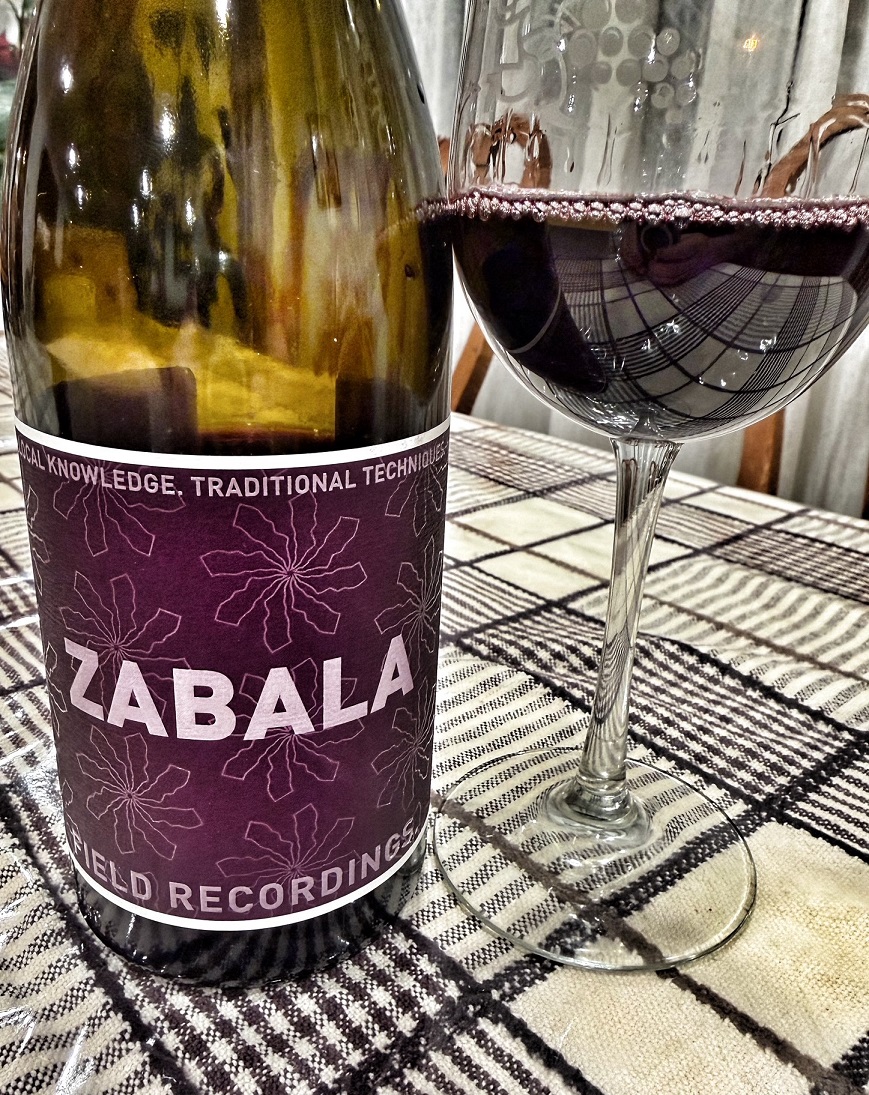
I opened the 2019 Field Recordings Zabala Zabala Vineyard Arroyo Seco (12.9 ABV, 100% Syrah) and poured it in the glass right away. The first whiff had a bit of the funk (love funk!) and a bramble. But on the palate… Oh my, the palate was a pure symphony. Well, a caveat – you have to love black pepper to call that experience a symphony. The palate was full of freshly ground, gorgeous, salivating black pepper. I experienced such purity only once before, while tasting the 2011 Michel Chapoutier Tournon Mathilda Shiraz from Australia. I was blown away by the purity of the pepper expression in that wine – and interestingly enough, after that first experience, I had a random success with the same vintage over a few years – but this is not the subject of this post.
This Zabala Syrah was literally mind-boggling (see, told ya, I just can’t avoid it). Dark bramble fruit, a little bit of funk, and lots and lots of freshly ground black pepper. Delicious, perfectly balanced, perfectly harmonious. A pure pleasure in the glass.
Maybe I just got lucky. I don’t have another bottle from the same vintage, so I will not be able to taste it in a year or a few years and report back. But we should enjoy the moment, and this moment in wine was immensely enjoyable. Wine should give you pleasure, and this was a pure pleasure.
So, what was your last mind-blowing wine experience?
Guest Post: Want to Make Your 2024 Special Occasions Memorable? Consider these 10 Wines for Toasting
Today, I’m offering you a guest post by Kevin Fagan, a food & travel writer, based in New England with experience in the catering industry. Kevin is always on the lookout for the trendiest food spots and bars on his travels and also likes to keep his finger on the pulse of the latest news in the world of catering & restaurants.

Whether it’s a Thanksgiving party or a wedding reception, giving a toast and having all your guests raise their glasses in unison is one of the most awaited moments of a celebration.
What matters most is not just any wine but the right wine, one that can elevate every sip and enhance the overall experience of the occasion. With the myriad of varieties in the market, selecting the perfect one for the toast may seem daunting.
This article is here to guide you through the top ten wines for a perfect toast. Consider the styles and flavors to ensure you make the right choice for your special occasion!
Prosecco
Originally from the Veneto region of Italy, this sparkling wine is a classic favorite for a joyful experience. Its light feel and refreshing bubbliness make it the perfect choice for toasting at a luxurious celebration. For example, a wedding reception at an elegant ballroom in Los Angeles certainly calls for a prosecco toast.
Prosecco to try: Bisol Jeio Valdobbiadene Prosecco Superiore DOCG
Cava
Magnificence meets excellence with this Catalan sparkling wine, made with Macabeo, Parellada, and Xarel-lo grape varieties. You don’t have to limit cava to toasting; you can use it for any occasion. Serve it with aperitifs and desserts or throughout a meal because it pairs well with almost anything.
Cava to try: Sigura Viudas Brut Reserva Heredad Cava DO
Port
With sweet notes and a luscious mouthfeel, this fortified wine is famous for its intensely rich flavor profile, which includes hints of dried fruits and spices. Apart from being a unique toasting choice, Port Wine pairs perfectly with desserts, especially chocolate-based ones and charcuterie platters, which is why it’s a great choice for savoring and sipping for your guests.
Port to try: Graham’s Six Grapes Reserve Port
Grenache
A blend of red berry flavors and mild spiciness makes Grenache a perfect match not just for giving a toast but also for serving with many dishes. Its Spanish and overall Mediterranean influences make it a perfect wine for holiday celebrations, especially those with dishes like roasted lamb, stews, and braised meats.
Grenache to try: Carlisle Grenache Rossi Ranch Sonoma Valley
Sauvignon Blanc
With crispy acidity and hints of soft herbs, jasmine, and honeysuckle aromas that lead to and reveal layers of citrus and melon, this complex wine will make for a great toast. Plus, Sauvignon Blanc is a great choice to contrast the heavy richness of celebration meals. If you like the zestier varieties, look for French bottlings or ones from New Zealand’s Marlborough region.
Sauvignon Blanc to try: Montes Sauvignon Blanc Limited Selection Leyda Valley DO
Riesling
Riesling’s sweet, fruity notes make it a versatile choice for toasting and having your guests enjoy it with their meal. Its electric crackle of acidity and subtle sweetness give Rielsing a very distinct flavor profile, making it a highly cherished option among wine lovers. It is also a good alternative to the traditional varieties from France’s Alsace and New York’s Finger Lakes regions.
Reisling to try: Brooks Ara Riesling Willamette Valley
Chardonnay
Known to be among the most crowd-pleasing options, Chardonnay’s versatility and smooth finish make it one way to give an amazing toast while also pleasing your guests. This white wine also pairs well with many foods, including poultry, vegetables, and seafood, making it an excellent choice no matter what your palate desires.
Chardonnay to try: Balverne Chardonnay Russian River Valley AVA
Pinot Noir
Any holiday celebration means delicious meals. Whether it’s turkey with cranberry sauce or glazed ham, Pinot Noir’s bright acidity and red fruit flavors make it the perfect wine to enhance the flavors of a rich meal. So, it goes without saying that you can give a heartfelt toast while also leaving your guests’ tastebuds in awe.
Pinot Noir to try: Vino Vasai Pinot Noir Estate Reserve Chehalem Mountains
Beaujolais Nouveau
Made from the Gamay grape south of Burgundy, Beaujolais Nouveau is all things fresh, fruity, and festive. Since it was originally produced to toast the end of the harvest season, toasting couldn’t get any better than with this young and easy style of wine. This one, too, is a crowd favorite and pairs perfectly with a variety of dishes.
Beaujolais Nouveau to try: Georges Duboeuf Beaujolais Nouveau AOP

Champagne
We saved the best for last because Champagne is perhaps the most widely used sparkling wine for toasts. Filled with luxe and elegance, Champagne is a drink you would have to use for celebrations like lavish wedding receptions in a beach club, castle, theater, etc. Plus, it’s amazingly compatible with fish, poultry, red meats, shellfish, desserts, and more.
Champagne to try: Bruno Paillard Premiere Cuvée Champagne
Parting Thoughts
We hope this article has enlightened you about the various options available for giving the perfect toast. You don’t have to do what everyone else does and stick to champagne, although a classic will always remain a classic. Here’s to creating unforgettable memories while sipping on an exquisite selection of wines!
Wine Weekend of Ups and Downs
 The life of an oenophile is never dull – of course, if an oenophile chooses such.
UP
Let’s talk about “ups” first.
Sine Qua Non. The legendary Sine Qua Non. The Sine Qua Non winery is unique in many ways. First and foremost, Sine Qua Non wines are unique. Of course, every winemaker is sure that his or her wines are unique. But for Sine Qua Non, these are not just bragging words. Every vintage, a different set of wines is produced, and wines do not or rarely repeat year after year. Each wine has a label designed by Manfred Krankl, who owns the winery together with his wife Elaine. And the wines are impossible to get – I had to wait for 10+ years to move from the waiting list to the mailing list.
My sister-in-law and her husband were visiting over the weekend. They both enjoy wine very much – which is a perfect reason to get out a special bottle. Sine Qua Non is better known for its Rhone-style reds, but they produce white wines as well. One of the first wines in my allocation was Sine Qua Non white wine. Communal notes on the internet seem to indicate that SQN white wines shouldn’t be aged for too long, so I decided that 4 years is a good age for this wine, to avoid any possible regrets (who am I kidding – there are always regrets when it comes to wine).


2019 Sine Qua Non Distenta 1 California White Wine (15.3% ABV) is a blend of 41% Roussanne, 26% Chardonnay, 14% Petit Manseng, 12% Viognier and 7% Muskat (Gelber Muskateller), fermented in barrel and matured on its lees, 23 months in 64% new French oak. The sublime nose of whitestone fruit, herbs, and flowers, with a distant hint of tropical fruit. And the palate, the bouquet… As a child, I loved to sing, and I spent some time in the chorus. I was perfectly fine singing in unison, but for the life of me, I could never do the canon, the subtype of polyphonic singing, where each singer has their own melody, and those melodies harmoniously combine together. This wine delivered such a canon singing – beautiful notes of sage, eucalyptus, tobacco, and whitestone fruit were changing into tropical fruit with a touch of bright honey notes. Somehow, it was possible to taste both profiles at the same time. I know I’m not describing it well, but this was the wine I really didn’t want to end… (Drinkability: 9)
By the way, an added bonus – it appears that I never had the Gelber Muskateller grape – and now I can unexpectedly increase my grape count.


DOWN
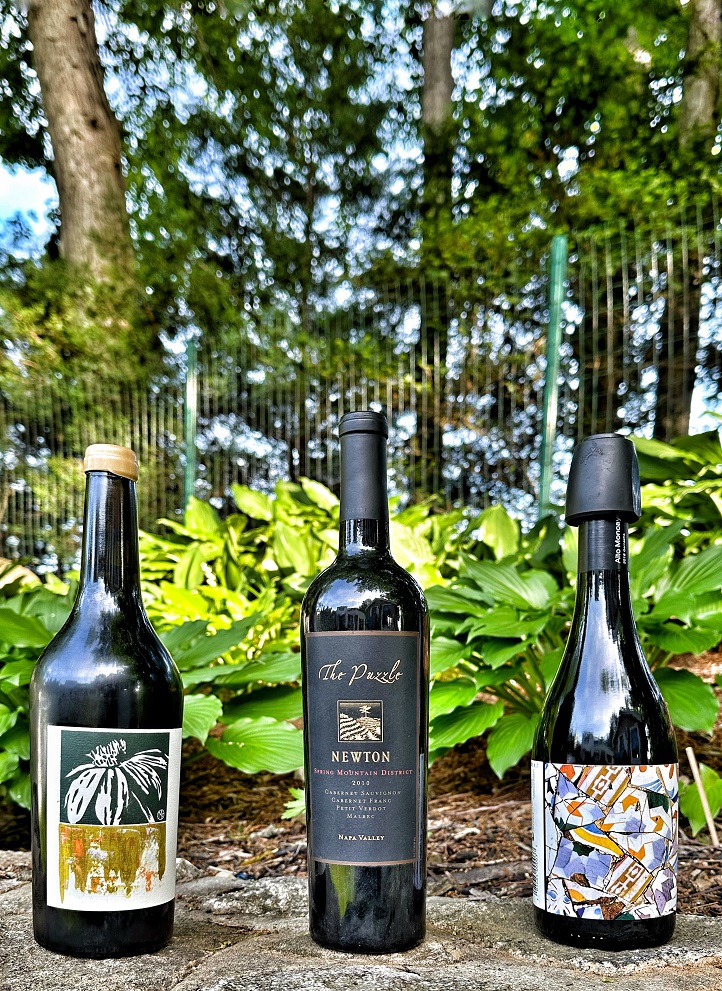
Over the years, I got two bottles of red wine from Newton Vineyards, a well-respected California winery, as presents, both from the same 2010 vintage, and both identical. I know the producer’s name, but it seems that I only tasted Newton Chardonnay before, and I have no memories of tasting their red wines.
Both bottles were gifted by the sister-in-law and her husband I just mentioned, so I thought their visit was a perfect opportunity to enjoy this wine together.
And so I opened the bottle of 2010 Newton The Puzzle Spring Mountain District Napa Valley (14.5% ABV, 60% Cabernet Sauvignon, 18% Cabernet Franc, 18% Petit Verdot, 4% Malbec).
And the bottle was corked.
I just recently mentioned in one of the social media discussions that I rarely encounter corked California wines. I guess I jinxed it… The cork faint was ever so slightly noticeable on the nose, and the palate kind of seemed okay, so I even decanted it and we even tried drinking it. The decanting made the corked nature of the wine even more apparent, and I pulled the second bottle.
The second bottle was not corked, and it was drinkable. However, it was a bit underwhelming. The fruit was there, it was possible to taste the cassis, but considering that this was a Californian wine, it showed leaner than expected. I would generally consider that Californian wine of such level need at least 20 years to develop, and under normal circumstances I would leave the second bottle alone for another 5-7 years, but oh well. We did enjoy it, of course, I was just hoping we would enjoy it more. (Drinkability: 8- )
STILL DOWN
I’m not going in chronological order here. The Newton red was planned to be the main wine to serve with dinner. As a “pre-gaming”, I gleefully pulled out the 2018 Alto Moncayo Veraton Campo de Borja (15.5% ABV). I opened a bottle of this 100% Garnacha last year, and it was absolutely spectacular from the get-go – succulent cherries and layers of pleasure. I loved the wine so much that it was included in the top two dozen list of 2022 wines as number 13.
Feeling great about myself, I opened the bottle and poured wine into the glasses. At the first tiniest sip, instead of excitement, my instant thought was “ohhh nooo, why is it so sweet???”. I also instantly knew that I’m in trouble with my sister-in-law, as she stopped drinking California Pinot Noirs for being too sweet… And her reaction was exactly what I was afraid of. After the first sip, she raised her head from the glass, looked at me inquisitively, and said with a wry smile “but why is it so sweet?”. This is when we put this bottle aside and proceeded with The Puzzle – and you just read how swimmingly well it went.
Truly, whatever goes up will go down.
AND UP AGAIN
Whatever went down still has a chance to go up.
The very next day, Veraton somewhat solidified at its core, the sweetness subsided, and the structure started to appear. On the third day, the wine was as delicious as I was expecting it to be – succulent ripe cherries, juicy and generous, with crunchy acidity and perfect balance. (Drinkability: 8+).
Here you go, my friends. Another weekend in wine – sometimes you win, sometimes you learn. With the exception of the corked bottle, which is never okay – but as my sales team always said, “it comes with the territory” – it was a great wine weekend, even with all the ups and downs. How was yours?
Wednesday Meritage #162
 Meritage Time!
Here is your [extremely irregular] update on the interesting wine (and food) happenings that recently grabbed my attention. Let’s start with some local updates first.
New stories of Passion and Pinot
Last week I published a new interview in the Stories of Passion and Pinot series – this time with David Adelsheim, one of the early pioneers of the Oregon Pinot revolution. This is one of the very best interviews in the series and will be well worth a few minutes of your time – if you will crave a glass of Pinot after reading it, I’m not responsible for it. There are 15 interviews plus multiple updates in the series, and more interviews and updates are up and coming in the series – my conversations with Erik Kramer of WillaKenzie and Bill Sanchez of Potter’s Vineyard will be published soon.
Yelp 100 Top Restaurants
Yes, I’m mostly writing about wine in this blog, but I love food and I’m actually a “yelper”, both as a user of and as a contributor to the popular Yelp website. I rely on Yelp’s recommendations when I travel, and I go out of my way to write a review after visiting a restaurant (I rarely review other businesses or attractions). Yelp recently released a list of the 100 most popular restaurants around the US – it is a fun reading to see what the others like, so you might want to spend a few minutes browsing through. Who knows, maybe you will see your favorite eatery among the top 5…
This Day In Wine History
I love data. It doesn’t have to be anything useful. Just data, information, facts – especially if it concerns subjects that are near and dear to my heart – like wine. As a data collector, do you want to know what happened in the history of wine on a specific day of the month – let’s say, February 1st? Now you can, with the help of the website called This Day in Wine History. For example, I just learned what happened on February 1st. According to the website, “February 1, 1141: On this day, the foundation of Barone Ricasoli, Italy, was laid. The Tuscan winery is the oldest one still in business in Italy”. Or here is another February 1st event: “February 1, 1801: On this day, John June Lewis, Sr was born. He is known as the first African-American winemaker in the United States”. The information on the website is not limited to the singular date events – you can find in-depth articles about the history of the wine decanters or all you wanted to know about widow Clicquot, one of the key figures in the history of Champagne. Check it out, I have a suspicion that you might find it useful and entertaining.
OTBN – Open That Bottle Night
It is never too early to talk about one of my favorite wine holidays – Open That Bottle Night, or OTBN for short. This year, OTBN, which is celebrated on the last Saturday in February, will fall on February 25th. I wrote about OTBN numerous times so if you are not familiar with the concept please click on the link. For the rest of us, the game is on, and it is not too early to start thinking about those special bottle(s) that are waiting and begging to be opened. Yep, start looking in that cellar… If you are anything like me, that special bottle decision will not come with ease…
That’s all I have for you for today. The glass is empty, but the refill is on the way. Cheers!
Wednesday’s Meritage #161
Meritage Time!
I’m soooo behind on my posts it is not even funny. Probably good 15+ posts behind, and it is not a good feeling. Not being a professional writer, I never developed a habit of just writing no matter what. Not having such a habit definitely gets in the way. Oh well, such is life.
Today’s Meritage is once again mostly focused on this very blog. Of course, a lot is happening in the wine world, but nothing really caught my eye as worth repeating. Even the record heat wave in Europe doesn’t have much coverage as it relates to the vineyards. I checked to see if I can find anything worth sharing about extreme heat in Europe and vineyards, and only found plenty of articles from 2019, but none from 2022. It will be really interesting scary like hell to see the effects of this extreme heat on the 2022 wines in a few years, but yes, we will have to wait a bit.
For the local “news”, outside of the fact that I’m grossly (understatement of the century) behind on my writing and my postings, I spent some time cleaning up and updating references on the front page of the blog.
On the right side of the screen (assuming you are using a PC – it will be all different on a mobile), there are links grouped into 4 categories – social media, blogroll, wine buying, and wine travel. I went over all of the links in these sections and removed all of the dead ones. In the blogroll, some of the links will connect you to the sites which had not been updated for years – but as long as the link is not dead and you can actually reach the content, I left those links in place.
I also realized that I’m missing some of the references I actually should have. I added a few blogs I’m reading semi-regularly (I won’t tell you what they are though :)). I also added a few links to the wine buying section.
Wine.com was a notable absence from the wine buying section, as I was not a fan. I gradually changed my opinion – I wouldn’t say that Wine.com is my only or even preferred source of wine buying, but they have plenty of interesting and unique wines (Grosset Polish Hill Riesling, for example, or Masciarelli Marina Cvetic Reserva), which are also priced at an “average retail” level, which I’m okay with (I despise with passion overpaying for wine). I also like the extensive information provided on Wine.com on all the wines, whether they are in stock or not.
Same with the Wine Exchange – I gradually warmed up to their e-mails and even bought a few interesting wines based on their suggestions. They also carry a good inventory of well-aged wines at reasonable prices – for example, there you can find Chateau Lestage from the Listrac-Medoc, 2000 (legendary!) vintage for $39.98, or Shiraz from Barossa Valley from 2004 vintage (18 years old wine) for $29.99.
The last addition to the wine buying section is not even about the wines – it is about a close relative, cognac. I came across the Cognac Expert website as I was looking for interesting cognac tasting sets to share with a friend who was supposed to visit. There is a tremendous Cognac selection on the website, plus every cognac has a very extensive description of its history, tasting notes, and more. They also charge reasonable shipping rates (I think) for the cognacs delivered from France, so if you like cognac, this is definitely a site to visit.
Okay, just to step outside of my blog’s realm, a few more news items:
There are 5 days left to enter the Web Wine Writing competition conducted by the Hungarian Wines organization. I know this is not enough time, but in case you wrote about Hungarian wines recently, this might be a great opportunity for you. Details can be found here.
International Shiraz Day is the next grape holiday, coming up on July 28th. Shiraz or Syrah, Australia, France, Italy, or Washington – I’m sure it is not difficult to find a tasty bottle and enjoy it in honor of one of the major red grapes.
And the month-long wine celebration is almost upon us – August is Washington Wine Month. From Bordeaux blends and GSM to the world-class, cult quality, single vineyard Cab, Syrah, Grenache, and everything in between – folks in Washington know how to wine. Just get a bottle of your favorite Washington wine and you are ready to celebrate.
That’s all I have for you for today. The glass is empty, but the refill is on the way. Cheers!
Wednesday’s Meritage #160
Meritage Time!
It’s been a while since I published one of these, but hey, life takes precedence. I don’t have a lot of the true wine news to share, but there are a few things I would like to highlight – you will have to pardon my SSP (for those not aware of the abbreviation, SSP stands for Shameless Self Promotion).
Oregon Wine Month
May is Oregon wine month! Basically, it means that during the month of May you are only allowed to drink wines from Oregon. What, you don’t have any on hand? Shame on you – and you have to go to the wine shop to fix this right now. But all the jokes aside, Oregon makes wonderful wines well worth celebrating. Pinot Noir, Chardonnay, Pinot Gris, Riesling, sparkling wines, Syrah, Cabernet Sauvignon, Cabernet Franc – we can go on and on. Oregon got something for every wine lover’s palate – Oregon wines are well worth seeking and enjoying, during Oregon wine month or at any other time.
Stories of Passion and Pinot
Stories of Passion and Pinot is one of the longest running series of posts on this blog. The series started in September 2016 via my collaboration with Carl Giavanti, a wine industry publicist. In this series, we are profiling Oregon winemakers who are obsessed with Pinot Noir via interviews. Currently, the series includes 21 posts, profiling 13 wineries and winemakers from Willamette Valley. I finally had the time to create a dedicated page for the whole series, which you can access through the top Interviews menu, or by clicking here. Also, I have a number of new interviews coming up on these pages, including Adesheim Vineyard, Gran Moraine, and WillaKenzie Estates.
More Interviews and More [Italian] Wines
Another “local” update. It seems that Italian wines are the wines I have the biggest exposure to, at least from the outreach point of view. Next week I will publish an interview with an Italian winemaker Lucio Salamini from Luretta in Colli Piacentini in Emilia-Romagna. I also lately had a number of delicious Italian wines from Tedeschi (including my eternal love, Amarone), San Felice who just celebrated 50 years since the production of Vigorello, the first “super-Tuscan” wine in Chianti Classico, and more. All of this is coming soon on these pages, so watch this space.
That’s all I have for you for today. The glass is empty, but the refill is on the way. Cheers!
All You Ever Wanted To Know About Wine Education
Wine is an agricultural product.
Wine is clearly a unique agricultural product.
When you buy an apple, pear, cucumber, or eggplant, you really need to know nothing to make your selection – as long as it looks good and fresh, that’s all you need to know.
When you sell an apple, pear, cucumber, or eggplant, you don’t need to impress anyone with information – as long as whatever you sell looks good and fresh, that’s all which is needed.
When you are consuming an apple, pear, cucumber, or eggplant, you still need to know nothing to really enjoy it, as long as it tastes good and fresh.
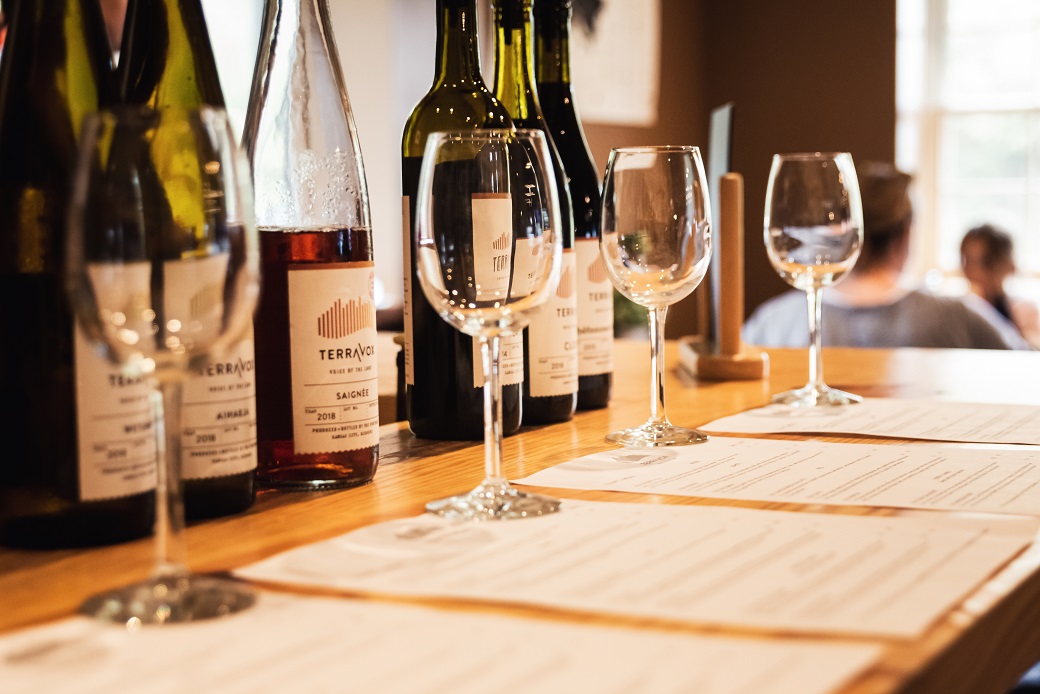
But when it comes to wine, knowledge is power, whether you are buying, selling, or consuming – where this wine is from, how was it made, for how long it can age, what is the best food to pair it with, what is the best way to serve it, and so on. On one side, you really don’t need to know anything about the wine to be able to enjoy it, but the uniqueness of wine is in the fact that the more you know about the wine, the more you might be able to enjoy it.
When it comes to wine education, there are lots and lots of resources – books, podcasts, websites, blogs. And then there is formal wine education.
What prompted this post was an excellent article on the Rack and Return website which provides an in-depth overview of all available formal wine education options. Here is what it covers:
- WSET – Wine and Spirit Education Trust
- WSG – Wine Scholar Guild
- CMS – Court of Master Sommeliers
- IMW – The Institute of Masters of Wine
- SWE – Society of Wine Educators
- ISG – International Sommelier Guild
- Regional Wine Study Centers
- Universities and Colleges
Without further ado, here is the link for you to the original article:
https://rackandreturn.com/the-definitive-guide-to-wine-education/
Enjoy!
Wednesday’s Meritage #159
Meritage Time!
January is almost over, and as many people talked about “dry January”, it was reasonably dry – not in terms of wines, but in terms of wine events. However, February promises to compensate abundantly and offers lots to look forward to.
Let’s start with the grape holidays. Next Tuesday, February 1st, is International Furmint Day. Furmint is one of the most famous Hungarian grapes, best known as the grape behind Tokaji, heavenly nectar. Furmint also can be vinified dry, although much harder to find compared to Tokaji. Either way, you have a holiday to celebrate. Two weeks later, on February 16th, we will celebrate one of my favorite grapes – Syrah, via International Syrah Day. Syrah should be much easier to find, so no excuses. There is also Global Drink Wine Day on February 18th, but for someone who drinks the wine every day, that is not something I can particularly celebrate.
Continuing the theme of celebrations, let’s talk about celebrating not a particular grape, but the whole wine region. Monday, February 7th, will mark the beginning of the New Zealand Wine Week. Two webinars will be offered – one focused on the New Zealand wines on the global wine scene, and the second one diving deep into the world of New Zealand Pinot Noir.
To complete the subject of celebration, the last one for today is the main wine holiday of the year – Open That Botte Night, or OTBN for short. The holiday was created 22 years ago by Dorothy J. Gaiter and John Brecher, writers of the Wall Street Journal’s Tastings column. The goal of the holiday is to help people to happily part with their prized bottles, taste those wines themselves, and share them with friends, hopefully while both wines and people are in their prime. OTBN is always celebrated on the last Saturday in February, which will be February 26th this year. It is time for you to already start thinking about those special bottles you would want to open.
The next event I want to bring to your attention is Oregon Wine Symposium. While this is definitely a technical event, focused on the winegrowers, winemakers, and winery owners, the event offers excellent educational content for any wine lover. This year’s event will consist of two parts. Virtual part with all the educational content will take place February 15-17, and then the Oregon Wine Symposium Live portion will follow on March 8-9. Virtual sessions will cover in-depth Oregon wine industry, looking into the overall state of the industry, the direct-to-consumer market, the management of the supply chain, and lots more. Again, this is a technical event, offering lots to learn for those who want to learn.
Last but not least will be the first trade tasting I plan to attend in person this year – the Tre Bicchieri 2022, taking place on Friday, February 25th. This event is a culmination point of the Gambero Rosso wine publication, offering an opportunity to taste the best of the best Italian wines selected during the prior year, those awarded three glasses rating by the publication. Tre Bicchiery is one of my favorite tastings of the year, usually full of great discoveries – here is the retrospective of the events I attended in the past. Considering that there was no Tre Bicchiery event in 2021, I can only hope that we will see some great wines at the event, and I will actually be able to plan my attendance properly to taste the most coveted wines, instead of finding a table with only empty bottles, as already happened at my first Tre Bicchieri event, and the empty bottles at the table were the legendary Masseto. The event will travel around the USA, with the stops in Los Angeles, San Francisco, Chicago, New York, Boston, and Houston, so hopefully, you will get your chance to attend.
That’s all I have for you for today. The glass is empty, but the refill is on the way. Cheers!
Daily Glass: A Rare Turley, And a Question of Wait
 I love Turley wines.
My first encounter with Turley was way back, maybe 20 years ago, when my friend and I were having dinner at a restaurant in Manhattan, and we saw a bottle of Turley on the wine list, probably a Juvenile Zinfandel or the Old Vines Zin, and it was one of the most affordable wines on the list, so we decided to try it. Right after the first sip, I remember we looked at each other and said ‘wow”. Turley became the love from the first sight sip for both of us, and when I go visit him, I always bring a bottle of Turley, which makes him very happy.
If you will ask a wine lover about Turley, most likely you will get an instant reaction “ahh, Zinfandel”. More advanced wine lovers might also add “oh yes, and Petite Sirah”. First and foremost, Turley Wine Cellars is known for its Zinfandels, and yes, the Petite Sirah. Altogether, Turley produces 50 wines from 50 different vineyards. And while an absolute majority of those wines are Zinfandels, there are few exceptions – two white wines, Sauvignon Blanc and the White Coat, Cinsault from 135 years old Bechthold Vineyard in Lodi, Casa Nuestra and Tecolote red blends, two Cabernet Sauvignon wines, and one Zinfandel Rosé, which sometimes is playfully identified as White Zinfandel (believe me, it is a proper Rosé, not a sweet plonk). With the exception of the Estate Cabernet, it is pure luck when any of these non-Zin, non-Petite Sirah wines are included in your allocation – doesn’t happen often.
Another question we can ask wine lovers – should Zinfandel wines be aged or consumed upon release? I don’t want to get too far into the woods by presenting such a broad question, but for the sake of simplicity here we are talking only about well-made wines from producers such as Turley, Carlisle, Robert Biale, Ridge, and similar. Again, posing this question to the wine lovers I heard the same answer from a number of well-qualified individuums: “I like my Zinfandel with some age on it”.
From my personal experience, mostly with Turley and Carlisle, I definitely appreciate the age on my Zins, but it also depends on the style of the wine. Turley Juvenile and Old Vines Zins are built to be enjoyed young, however, they are also perfectly capable of aging for 8-10 years with no issues. The majority of single-vineyard Zinfandels definitely benefit from aging, and best not being touched for the first 5-7 years upon release. The same applies to the Petite Sirah, probably even in the higher degree – it is better to wait for about 8-10 years to enjoy a bottle of Turley Petite Sirah.
Okay, so this is all nice, cool, and theoretical, but then, in reality, we don’t always follow our own best advice, don’t we?
I generally don’t open a new bottle of wine late in the evening. Yesterday, coming home after Taekwondo training, I realized that I crave a glass of wine. This is really a bad thought at around 9 pm because the process of selecting the bottle to open can take another 30 minutes or so. I have a lot of Turley bottles stored in the simple wine cage, which makes the selection process a lot easier as I don’t need to move the wine fridge shelves back and forth, so this is where I decided to look. I looked past most of the younger Zins – as you remember, I also like them with some age, and then I saw a bottle of 2018 Tecolote. It was pure luck that I had it, as it came via the special offer for the 2020 holiday season – this wine is typically available only in the tasting room. I never had this wine before, which provided a legitimate opportunity to ignore my own aging rules and simply open the bottle, which is exactly what I did.
Tecolote is a blend of 60% Grenache and 40% Carignane, both grapes harvested from dry-farmed Pesenti Vineyard in Paso Robles, from the vines planted in the 1920s. As this is a Catalon-inspired blend, and the grapes come from the specific plot in Pesenti vineyard which looks like an owl, the wine was called Tecolote, which is the Spanish word for “owl”.
Boy, was I happy with my decision… The first sniff of the 2018 Turley Tecolote Red Wine Paso Robles (15.9% ABV) was pure heaven – barnyard, forest underbrush, and spices. I know that the “barnyard” descriptor is polarizing, and deeply hated by some – I always love it, for sure on the red wines (never had it on the white), so I really enjoyed that aroma. On the palate, the wine had pure tart cherries, acidic, juicy, and succulent, fully supporting and continuing the initial enjoyment of the smell. I literally couldn’t stop refilling the glass until only about a third of the bottle was left.
And again I have to state that I’m happy that I left some of the wine for the second day, as the wine transformed. I usually preserve the wines by pumping the air out of the bottle. Sometimes I preserve the wines like that for 2,3,4,5 days, tasting the wine, pumping the air out, and leaving it until the next day. From my experience, I consider that each next day the wine still tastes good or even better than the day before is equivalent to the 5 years of aging. So if you don’t like the barnyard smell, don’t touch your Tecolote for another 5 years. When I opened the wine today, the barnyard smell was gone, and it was replaced by cherries and a telltale sign of Grenache in my book – dark chocolate. The wine also had cherries and dark chocolate on the palate and it was perfectly balanced and absolutely delicious (Drinkability: 9-). What is even more interesting, the wine paired very well with dark chocolate-covered raisins from Trader Joe’s and Italian truffled cheese. Go figure…
Here you are, my friends – a delicious wine, good when young, and perfectly capable of aging. If you can, go find your bottle…
Wednesday’s Meritage #157
Meritage time!
Ohh, it’s been two months since the last Meritage issue – well, let’s get to it.
We have 12 months in the year, right? I’m not trying to keep track, but it seems that April is disappropriately loaded in the world of wine. I will let you be the judge – here is what we are celebrating in April 2021:
April is the 2nd annual Walla Walla Valley Wine Month – I was lucky to already celebrate Walla Walla wines in style with brand new wine from Cayuse – Double Lucky #8, but if you need any tips regarding Walla Walla valley wines you can find them here.
April is Sonoma County Wine Month. For celebration tips, use this link.
April is California Wines – Down To Earth Month. Sustainability is a big thing in California winemaking – you can learn more about it here.
April is Michigan Wine Month. I never tasted a wine from Michigan, so I would happily join this celebration – if I would know how (Michigan wines are not sold in Connecticut).
April is British Columbia Wine Month – another region that is very difficult to celebrate here in Connecticut. If the world of wine has mysteries, a complete absence of Canadian wines in the USA (okay – for sure in Connecticut) is one of them.
I think this sums up wine months celebrations, but let’s not forget the grapes! According to the Traveling Corkscrew wine blog, the following grapes are celebrated in April (are you ready?):
April 14 (today) – Tannat Day
April 17 – Malbec World Day
April 27 – World Marselan Day
To ensure you never miss a grape holiday in 2021, here is the link for you for the Traveling Corkscrew post summarizing all of the grape holidays of 2021.
Wine is the product of the Earth – above and beyond all of the wine months celebration, April is the Earth Month, and April 22nd is celebrated as Earth Day since 1970. Here is you can find the history of the Earth Day celebration. If you need any tips for how to celebrate Earth Month 2021, you might find useful this link.
Do you now see that April 2021 is really a special month?
Before we are done for today, I have one more wine story to share with you. Porch.com, an “everything about home” portal, compiled the list of recommendations from wine folks regarding cellaring and enjoying wines at home (a few words from yours truly are included) – you can find this informative post here.
That’s all I have for you today. The glass is empty, but the refill is on the way. Cheers!
Last Bottle Sign Up ($10 credit)




 Talk-A-Vino