Archive
And This Is Why I Love Spanish Wines
Yes. Confessed uncountable number of times, in this blog and everywhere (want proof? Click here, here, here, here or here).
I love Spanish wines. Never tried to hide it, so no, there is nothing to look for in the closet.
Spain is one of the so called “Old World” wine countries, with biggest grape area plantings in the world and one of the highest volumes of the wine production. But of course this is not the reason for my high sentiment towards Spanish wines. What is important, however, that if we will take 10 random wines produced in any country, in about the same price range, I will find the most of the wines to my liking out of those hypothetical 10 among Spanish wines – compare to any other region. Another equally important point for me is the value – Spanish wines offer one of the best values in the world; not only that – they are possibly the best QPR wines in the world. For example, if you will compare 1964 Rioja, which is still perfectly drinkable today and still can be found for less than $150, to majority of the wines of the similar age but from the other regions, most of them will not come anywhere close in the amount of pleasure they deliver, never mind the cost.
And then we have to talk about innovation and drive forward. Spanish wines are not standing still. Styles are changing, wine quality is improving, new and unexpected grapes are made into delicious wines. To make this conversation more practical, let me share with you some of my recent Spanish wine encounters.
Today, Albariño needs no introduction. The star white grape of the Rias Baixas region in Northern Spain is known to produce wines with explosive acidity and profile of salinity, which makes them an ideal companion to oysters and anything seafood for that matter. While Albariño wines are generally very good, there is one word I would rarely associate with them – finesse. Or at least I was not, until I had an opportunity to try these two Albariño.


2014 Bodegas LA VAL Albariño Rias Baixas D.O. (12% ABV, SRP $17, 2 month sur lie) had greenish/straw pale color; intense and open nose of minerals, wet stone and lemon. On the palate, the wine was plump with invigorating acidity, intense lemon finish, crisp, fresh – excellent overall (Drinkability: 8).
2014 Viña Moraima Albariño Rias Baixas D.O. (12.5% ABV, SRP $19, 7 month sur lie) had light golden color. Nose was very unusual, with candied lemon, intense, tropical, guava notes. On the palate, the wine showed remote hint of sweetness, full body, round and layered with hint of salinity, good acidity. This was definitely the next level of Albariño, thought provoking and different. (Drinkability: 8)
As you can see, Albariño is really starting to deliver on the next level, and I can’t wait to see how far it can go. What is interesting, however, is that all of the best Spanish white wines – to my knowledge, of course – are made from the indigenous varieties – Albariño, Godello, Verdejo and Viura would be the “major four”. The situation is slightly different for the reds, where the local stars, Tempranillo and Garnacha, are joined by the international best, such as Cabernet Sauvignon and Merlot. Going back to the whites, outside of some experimental plantings, Riesling, Sauvignon Blanc and Chardonnay are nowhere to be found in Spain, yes? Well, that would be my statement as of the month ago, but not anymore.


Enters Hacienda de Arínzano. Having tasted recently Hacienda de Arínzano Rosé, which was outstanding, I know that Pago de Arínzano, first Pago (highest denomination of quality in Spain) in Northern Spain, can produce excellent wines. Still, this 2014 Hacienda de Arínzano Chardonnay Pago de Arínzano DOP (13.5% ABV, SRP $19.99, 100% Chardonnay. 12 month French oak barrels – 30% new) far exceeded my expectations. From the first smell the wine in the glass was screaming “Chardonnay” – touch of vanilla, hint of golden delicious apples, just classic Chardonnay. The palate reaffirmed the “classic Chardonnay” impression – fresh, open, creamy, with perfectly balanced white fruit, vanilla, distant hint of butter, perfect amount of acidity – a delicious world-class Chardonnay which I would be glad to drink at any time – and almost a steal at this price. Drinkability: 8+.
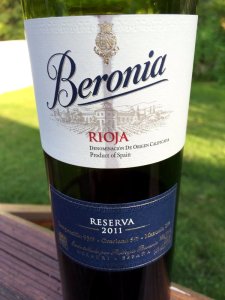 We talked about new wines and new styles. Let’s talk about quality now – well, not the quality per se, but let’s talk about changing mindset. If you would ask me “should I open 5 years old Rioja Reserva”, my immediate answer would be “absolutely not – give it at least another 5 years to enjoy it fully”. By law, Rioja Reserva has to spend at least 1 year aging in the barrel, and most of the producers age it for much longer, so the resulting wines typically should be given ample time in the bottle to evolve. But once again I was proven wrong. I opened the bottle of 2011 Bodegas Beronia Rioja Reserva (14% ABV, SRP $21, 94% Tempranillo, 4% Graciano, 2% Mazuelo, 18 month in barrel, 20 month in the bottle) and was absolutely blown away. Concentrated nose of dark fruit, cigar box and eucalyptus was supported by bright, dense, perfectly structured palate, with dark fruit and touch of sweet oak. This was definitely one of the best PnP (Pop ‘n Pour) wines I ever experienced, and a nice surprise. Drinkability: 8+
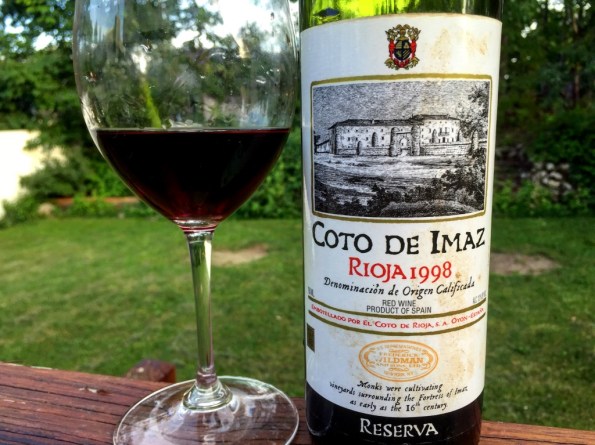
I want to mention one more beautiful Rioja wine – this one with a bit more age on it. I like it when I have a reason to open a nice bottle of wine, which otherwise would be still laying down and waiting for the “perfect moment”. The special reason was my son’s high school graduation, and as he was born in 1998, this was the first 1998 bottle I pulled out of the wine fridge (well, I’m not telling all the truth – this was the one I knew the exact location of).
To begin with, I was impressed with the state of the cork on this 18 years old wine – it was perfect, showing literally no age on it whatsoever. 1998 Coto de Imaz Rioja Reserva (13% ABV, 100% Tempranillo) still had enough freshness on the nose, with the notes of ripe plum, and the palate had ripe fruit with the distant hint of sweetness without any tertiary aromas, good acidity, medium to full body and excellent balance. I’m sure this wine would go on happily for many years. Drinkability: 8+
Okay, we are done here. Do you think I explained my passion for Spanish wines well enough? Great wines, great values, great QPRs, and lots and lots of pleasure – what is not to love? If you had any of the wines I mentioned here, I would love to know your opinion. Until the next time – cheers!
Month in Wines – September and October 2015
If there is one neglected topic in this blog, it is the “month in wines” series, which I managed to produce quite regularly during 2014 and before. I will do my best to fix this, so if you see “June Wines” blog post in December, you would know why. This also means that these “caught up” posts will be even longer than usual – but again, now you know why.
There were lots of interesting wines during September and October, so here is a glimpse into what was pouring – well, it is a long “glimpse”, as I’m trying to cover 2 month at once, so please bear with me.
2014 Notte Italiana Prosecco DOC (11% ABV, kosher) – simple and easy, good acidity. 7
2013 Via Semi Sweet Sparkling Wine, Israel (10.7% ABV, kosher, 50% Gewurztraminer, 50% Viognier) – the inner snob said “it will not be good”, and was ashamed. The wine had nice balance of sweetness and acidity, very pleasant and simple. 7+
2013 Fero Vineyards Dry Riesling, Pennsylvania (11.5% ABV) – still need to write a post about visiting Fero Vineyards. In any case, this was nice and classic, good acidity, nice touch of honey and honeysuckle, but just a touch. 7+
2012 Carlisle The Derivative Sonoma County (14.2% ABV, 54% Semillon, 30% Muscadelle, 16% Palomino) – delicious. Bright white fruit on the nose, more of the same on the palate with clean acidity. 8-
2013 Carlisle Compagni Portis Sonoma Valley (13.9% ABV, blend of Gewurztraminer, Trosseau Gris and Riesling) – another delicious Carlisle white. Fresh and bright on the nose, medium to full body on the palate, with an impeccable balance of fruit and acidity. Ahh, and the new grape – Trosseau Gris. 8
2015 The Crossings Sauvignon Blanc Awatere Valley Marlboro (13% ABV) – literally summer in the bottle. Fresh, exuberant, a pure delight. And the first wine I had of 2015 vintage. 8
2014 Left Coast Cellars White Pinot Noir Willamette Valley (14.2% ABV) – one would never think to find white wine made out of the red grape outside of Champagne, right? This was a beautiful surprise – fresh, vibrant, crisp, good white fruit, medium body, excellent balance and complexity. 8-


It appears that this is all I had for the whites – note to self – need to drink more white wines… Anyway, the rest are the red wines.
2013 Valcantara Old Vine Garnacha, Cariñena DO, Spain (13.5% ABV) – closeout deal at my local wine store ($7.99) – however the wine is outstanding. Classic Garnacha with plums and dark chocolate. Good acidity and easy to drink. 8-
2013 Alighieri Rubino del Marchese Toscana IGP (12% ABV) – another closeout deal, same price as previous wine. There was an interesting bottle variation as the first bottle was just all about acidity and not much about fruit, but the second bottle was much more balanced. Quite enjoyable, especially at the price. 7
1997 Le Ragose Valpolicella Ripasso Classico Superiore (12.5% ABV) – it showed age, but was still well drinkable. Lots of tertiary aromas, touch of dried fruit, but still with a good core of acidity. 8-
2011 ARFI Gabriel Cabernet Sauvignon Judean Hills, Israel (13.1% ABV, kosher) – not a bad rendition of Cab, but was a bit too sweet for my palate – I would like it to be a bit more balanced. 7
2014 The Crossings Pinot Noir Awatare Valley Marlboro, New Zealand (14% ABV) – very good example of Pinot Noir from Marlboro. Good balance of fruit and acidity, all the Pinot traits. 7+
2005 Viña Real Rioja Crianza (13.5% ABV) – classic Rioja, no sign of age. ‘Nuf said. 8
2005 Block 213 Merlot Oakville Napa Valley (13.5% ABV) – was opened for the “Merlot Month”, and I’m glad I did – it was right at the pick, if not starting to decline a bit. Still quite enjoyable, good body, good amount of fruit, cassis. 8-
2012 Nissley Naughty Marietta Semi-dry Red Wine Lancaster Valley, Pennsylvania (12% ABV) – and again inner snob was ashamed. While the wine shows some level of sweetness, it is perfectly balanced with acidity and tannins, very pleasant wine after all. 7+
2013 Field Recordings Hinterland Vineyard Cabernet Franc Paso Robles (14.1% ABV, $18, 88% Cabernet Franc, 8% Cabernet Sauvignon, 4% Merlot) – nicely polished and very classic. 8-
2013 Field Recordings Tommy Town Vineyard Cabernet Franc, Happy Canyon of Santa Barbara (14.3% ABV, $18, 100% Cabernet Franc) – a bit rough initially, but came down to its senses after time in the glass. 7+
only a few more, I promise…
2005 Château Gravat Médoc AOC (13% ABV) – still have one last bottle from the case. Only now, 10 years later, this wine is losing the grip of green chewy branches and starts showing ripe fruit and overall power. Patience is a virtue of the wine lover. 7+/8-
2005 Bodegas Ignacio Marin Barón de Lajoyosa Gran Reserva Cariñena DO, Spain (13% ABV, 50% Garnacha, 30% Tempranillo, 10% Cariñena, 10% Cabernet Sauvignon) – perfectly structured, firm, fresh, dark fruit, delicious. 8-
2009 Wente Vineyards Small Lot Petite Sirah Livermore Valley, California (13.7% ABV, $35) – one of my absolute favorite wines – dark, polished, lots of power and structure, delicious till the last drop. You can get this beauty only at the winery, so if your plans will take you to the Livermore valley, do yourself a favor… 8
2011 Turley Duarte Zinfandel Contra Costa County (15.6% ABV) – delicious, classic, dark and brooding. 8
2007 Verve Syrah Columbia Valley (14.5% ABV) – spot on – touch of spices, pepper, violet, dark fruit, delicious. This one comes with regret – I should’ve get lots, lots more during Last Wine Bottles marathon… 8
2007 Waterstone Cabernet Sauvignon Napa Valley (14.5% ABV, $22) – I don’t care whether this wine contains any of the Harlan fruit or not – this is simply delicious, outstanding California Cab which you can’t beat in value. Classic, clean, loads of black currant, perfect balance. 8+
2009 Domaine Fond Croze Cuvée Shyrus Côtes du Rhône (14% ABV, $29.99/1.5L, 100% Syrah) – delicious rendition of the old world Syrah – pepper, lavender, dark fruit, all intermingled and balanced. 8-


2010 Turley Zinfandel Tofanelli Vineyard Napa Valley (15.8% ABV) – I couldn’t stop smelling this wine for good 10 minutes. I didn’t want to drink it – I wanted for smell to last for as long as possible. Can’t describe it – it had everything the wine lover would want from the glass of wine. There, I said it. Incredible. On the palate, the wine had lots of dark fruit and spices, structure and power. Then is closed up and opened only on the second day. This would definitely evolve – I wish I had another bottle… 8+/9-
2012 Turley Cabernet Sauvignon Napa Valley (14.1% ABV) – an opposite to the previous wine. At first, it was practically closed. After a while, it showed all the traits of the great California Cab – black currant, a bit of dust, firm and delicious. 8
2010 Zaca Mesa Syrah Santa Ynez Valley (13.5% ABV) – if I would have to name 10 best Syrah producers in US, Zaca Mesa would be definitely in the top half of that list. Perfectly layered, with dark fruit, pepper, spices, smooth, balanced and absolutely delicious. 8+
Believe it or not, but we are finally done. What were your wine highlights as of recent? Cheers!
Wednesday’s Meritage – #MWWC16, Grape and Wine Holidays, Spirits Talk on the Radio, M. Chapoutier Tasting, LBW Marathon
Meritage Time!
Today’s news are a very eclectic mix – from big international grape celebrations to the interesting, but very local updates. Nevertheless – let’s get to it!
First – this is the last reminder for Monthly Wine Writing Challenge #MWWC16, “Finish” – the deadline to submit your entry is Monday, April 20th. I don’t think I saw a single entry so far, which is sad, as I think the theme is great. Come on – I know you can do it (addressing myself as well as part of the group) – so let’s just do it!
Grape and wine holidays, anyone? I don’t know who, where and how comes up with all of those holidays, but still, as oenophiles, we must support them, aren’t we? First of all, April is the Michigan Wine Month. Well, this might be a tough celebration for those who don’t live in Michigan – don’t know about your state, but Michigan wines are nowhere to be found in the state of Connecticut. If you don’t have an access to the Michigan wine, at least you can read about it – here is the link to the Michigan Wine web site.
Up and coming in the glass next to you is… Malbec! Friday, April 17th is a Malbec World Day. Unquestionably associated with Argentina today, but really one of the core Bordeaux varietals, Malbec often creates soft, luscious and approachable wines well appreciated by the wine lovers everywhere. Your celebration instructions are simple – open a bottle of Malbec, pour, smell, sip and savor. Don’t forget to say “ahhh” if you really enjoy it, and tell the world about it #MalbecWorldDay.
Next holiday is a Sauvignon Blanc Day (#SauvBlancDay), which will be celebrated on April 24th, less than 10 days from now. Actually, when it comes to this holiday, we know where and when – it was created by the folks at the St. Supéry winery in California 6 years ago, to celebrate one of the most popular white grapes in the world, Sauvignon Blanc. If should be easy for you to join the festivities by opening the bottle of Sauvignon Blanc, and then sharing your impressions in the social media.
The last wine holiday for today is a 2nd annual Rioja Week, which will start on May 2nd with the Wine and Tapas Festival taking place in Chicago. Again, easy to celebrate – get a bottle of Rioja and drink it with friends!
How familiar are you with the wines of Michel Chapoutier, one of the oldest producers in France (established in 1808), best known for his Rhône wines? Whether you are well familiar or not, you are not going to miss out on a tasting of a few of Chapoutier’s Hermitage wines, wouldn’t you? On April 19th, Total Wines & More, one of the largest wine retailers in US, will be conducting a virtual tasting event, where you will have an opportunity to taste (for real) some of the great wines made by Michel Chapoutier. The tasting will take place at the Total Wines stores near you – for more information and to get tickets (priced at $25) please use this link.
Be forewarned – the madness is coming! Nope, not the apocalypse type. Just a simple wine madness. Last Bottle Wines, purveyor of great wines at value prices, will conduct their Madness Marathon tomorrow (04/16), starting at 12 PM Eastern/9 AM Pacific time, and continuing for the next 48 hours, or until the Last Bottle cellar will be empty.
During the Madness Marathon, all the wines will be offered in the rapid succession, without any notifications – no twitter, no e-mails, no text messages. The only way to follow the madness is by constantly refreshing your browser window. There are no minimum purchases to get a free shipping – you can buy 1 bottle at a time, it is fine. All the wines you will buy will ship together after April 27th.
You will need to have an account with Last Bottle Wines, and all account information should be pre-filled – speaking from the experience, the wine you want might be well gone by the time you will finish putting in an expiration date for your credit card. In case you don’t have a Last Bottle account already, I will be glad to be your reference – not that you need a reference, but if you will sign up using this link, you will get $5 credit on your first order – and yes, I will get $20 credit after your first purchase – but once you are in, you will be the one who will tell your friends about it. In case the link doesn’t work, feel free to send me an e-mail to talkavino-info (at) yahoo (dot) com.
Lastly, two updates more of a local nature. First, last Friday I had an opportunity once again to talk (yep, that is something I like to do) about my favorite subject. Well, with a slight twist – the conversation was about liquid pleasures outside of wine – Vodka, Scotch, Bourbon and the others. Once again, I was a guest at the Off the Vine Radio Show with Benita Johnson – and you can listen to that show here. Next time, you should call in and ask questions – will make it more fun!
Before we part, I want to mention that I finally produced a post #4 in a series of the Spanish Wine Recommendations – this post is focused on the places where you can buy Spanish wines around the world. The reason I’m mentioning it here is because after I published the post, I got very useful comments extending the coverage of the good places to get Spanish wines around the world. I updated the post with those comments, so if you read the post already, you might want to check it out again. Here is the link for you to make it easier. If you also got any suggestions or comments, please make sure to share them.
And we are done here. The glass is empty, but the refill is on the way. Cheers!
Spanish Wine Recommendations, Part 1 – Wines under $20
List, list, list – who doesn’t like to make lists? Especially the lists of your favorites, where you basically regurgitate something familiar, and you can happily stumble on each and every entry, basking in the happy memories for a moment or three. Yep. That’s the wine list I’m talking about, people. Nope, not the restaurant wine list (that one more often than not is only a source of frustration) – the list of your favorite wines it is.
A short while ago, I was asked by one of the readers for some Spanish wine recommendations. Spanish wines as a group are probably my most favorite, so I happily engaged in the e-mail conversations. After few e-mail exchanges, I got the idea – how about I would simply create a list – a list of Spanish wines I would gladly recommend? Yep, I liked the idea, hence the post which I’m presenting to you.
Before we start, let me clarify a few things. First, I will split this list into the 3 parts – wines under $20, wines from $20 to $50, and the last one will be from $50 onward, with no limitations – no, Spanish wines can’t really compete with Petrus or DRC, but there are some wines there which would clearly require an expense account or lots and lots of passion. Another important note is that I will bring to your attention particular wines from the particular wineries – but for the most cases, without specifying the particular vintages – I tried absolute majority of recommended wines throughout the years, and wines had been always consistent, hence they are on the list. Ahh, and one more thing – I will not be trying to make balanced recommendation – the wines will be heavily skewed towards the reds – sorry about it. Okay, let’s get to it.
While I promised to focus on the reds, I have a few perennial favorites among Spanish whites which I have to mention.
White Wines:
Bodegas La Cana Albariño – the wine is more round than a typical Albariño, with lesser acidity, but it is nevertheless delicious. Typically around $15.
Botani Moscatel Seco DO Sierras de Malaga – incredible aromatics followed by the dry, perfectly balanced body. One of my favorite summer wines. Around $16
Bodegas Angel Rodriguez Martinsancho Verdejo Rueda – might be the best Verdejo in Spain from a small artisan producer. Wonderfully complex. Around $16


Red Wines:
Let’s start with Rioja. Believe it or not, but good Rioja is hard to find in this price category, so here are few names which I know are consistent:
Bodegas LAN Rioja – one of the best values in Rioja, typically at $12 or less. Consistent, round, balanced. Not going to blow your mind – but not going to disappoint either. A perfect party wine too – often available in magnums.
CVNE Vina Real Rioja Crianza – outstanding introductory level Rioja from one of the best Rioja producers. Once you try it, you wouldn’t want to drink anything else. Typically around $15.
Grupo Olarra Bodegas Ondarre Reserva Rioja – soft and round, with nice brightness and acidity. A great introduction into the Rioja wines. Around $15.
Continuing with Tempranillo, here are a few more recommendations:
Bodegas Emilio Moro Ribera del Duero DO – Ribera del Duero is a source of powerful, clean 100% Tempranillo wines – but there are practically none available for under $20. Emilio Moro is a happy exception at around $18. Layered wine with broad shoulders. Great introduction into the Ribera del Duero region.
Viña Mayor Reserva Ribera del Duero DO – another excellent Tempranillo rendition from Ribera del Duero – dark, concentrated and polished. Can be found under $20.
Bodegas Ochoa Tempranillo Crianza Navarra – Tempranillo is the most planted red grape in Spain, so of course the wines are made everywhere. This wine is an excellent rendition of Tempranillo – round, polished, with nice fruit and traditional tobacco notes. Around $16.
Bodegas Volver Volver Red Wine DO La Mancha – another Tempranillo rendition, this one simply bursting with raw power. Powerful, brooding, very muscular wine – which is a great pleasure to drink at the same time. Around $16.


Here comes another darling of the Spanish red wine grapes – Garnacha, a.k.a. Grenache in the rest of the world.
Bodegas Borsao Tres Picos Garnacha DO Campo de Borja – one of the best red wines you can buy overall for $12. Simple and delicious.
Alvaro Palacios Camins del Priorat, Priorat DOCa – okay, this is a Garnacha blend, but considering that this wine comes from Priorat, one of the most exclusive winemaking regions in Spain, you should hardly complain. An excellent introduction into the region – dialed back red fruit and mineral complexity. Around $15.
And the last from the best known traditional Spanish varietals – Monastrell, a.k.a. Mourevdre in the rest of the world.
Bodegas Luzón Luzón Red Wine, DO Jumilla – simple, fruity, approachable, and nicely balanced. Almost an exception in this list at about $10.
Bodegas Carchelo Carchelo “C” Red Wine, DO Jumilla – a blend of Monastrell, Tempranillo and Cabernet Sauvignon. After my first encounter with this wine I coined the term “dangerous wine” (or at least I think this was the wine) – what makes this wine dangerous is the fact that after the very first sip you can’t stop until the bottle is empty. Perfect balance of fruit and power. Around $15.
Torres Atrium Merlot, Penedes – as a fun fact, did you know that Torres is the biggest wine producer in Spain? Well, this might not be a fair recommendation, but still. I had this wine only once, but it was extremely memorable. The recommendation might be not fair as I’m not sure you can get it in the store – in Connecticut, it reserved for the restaurants only. I had it in Florida in a restaurant for $26, and if you will be able to buy it in the store, it would be around $12. If you can find it anywhere – go for it, as the wine is simply stunning, with or without taking the price into account.
Before we part, one more note. Outside of well-known grape varieties, such as Tempranillo, Garnacha and Monastrell, don’t be afraid to take the risk with lesser known Spanish varietals in the under $20 range. Look for the white wines made from Godello, or the reds made from Mencia, Bobal, Trepat and the others – there is a good chance you will not be disappointed.
And we are done! I was not trying to give you a comprehensive list – theses are all my favorites, you can just print this post and go to your local wine store, if you feel inclined, and then we can compare notes. The next post will cover wines in the $20 – $50 range – there are lots of treats there, my mouth starts watering as soon as I start thinking about those.
To be continued…
What To Drink On Valentine’s Day
 I generally avoid holiday-related wine posts, and I do it for a number of reasons. First of all, every information source on the planet considers it to be their duty to produce some piece of writing with wine recommendations. And then for someone who drinks wine all the time, the holidays are not so much of a special occasion to have a reason to open a bottle of wine. Oh well – somehow I felt compelled to share my thoughts on the wines for the Valentine’s Day, hence this post…
Pink. Red. Extreme. Commercialized beyond belief, still increasingly so year after year. Heart-shaped to the point of insanity. There are many things which turn people away from the Valentine’s Day, and I can understand that. However, I take this holiday as an extra opportunity to celebrate love and life. All you need to do is to find your way – ignore pink paraphernalia, ignore meaningless cards, ignore conveyer belt – style experience at the restaurants – and celebrate love and romance as a pure meaning of this holiday.
Let’s agree that we will celebrate love and romance in our oenophile’s way, and let’s talk about wine – without wine on the table, celebration is … just another boring dinner, right? By the way, when I said “felt compelled” in the opening of this post, this was not entirely true. I also had a pleasure to be a guest at the Off the Vine Radio Show, talking with Benita and Latisha about … you guessed it – Valentine’s Day wines – thus as you can imagine, I gave some thought to the subject (and then yes, “felt compelled”). In case you have a bit of time, you can listen to that episode here.
What can I tell you about wines for the Valentine’s Day? First of all, if you have a plan already, it doesn’t matter what I have to say. If you have some specific celebratory dish in mind, and have a pairing ready – it doesn’t matter what I have to say. But if you are still thinking how to make this holiday special, then let me share my thoughts with you. But remember – drink what you like. The wine for the Valentine’s day doesn’t have to be pink, and it doesn’t have to be sweet. It has to be something which will give you pleasure – as simple as that.
The wine for the Valentine’s Day should have balance and it should have finesse. While thought provoking is good for the wine, on Valentine’s Day you should focus on romance and not on deciphering the complex flavors. Go after balance, finesse and simplicity. This is why I would never suggest, for instance, the natural wines of Frank Cornelissen or Jean-Pierre Robinot, or the dark magic of Randy Dunn with his Howell Mountain Cabernet Sauvignon – those wines will drain you emotionally, and it is a wrong angle for the Valentine’s day. Thus let’s talk about balance and finesse.
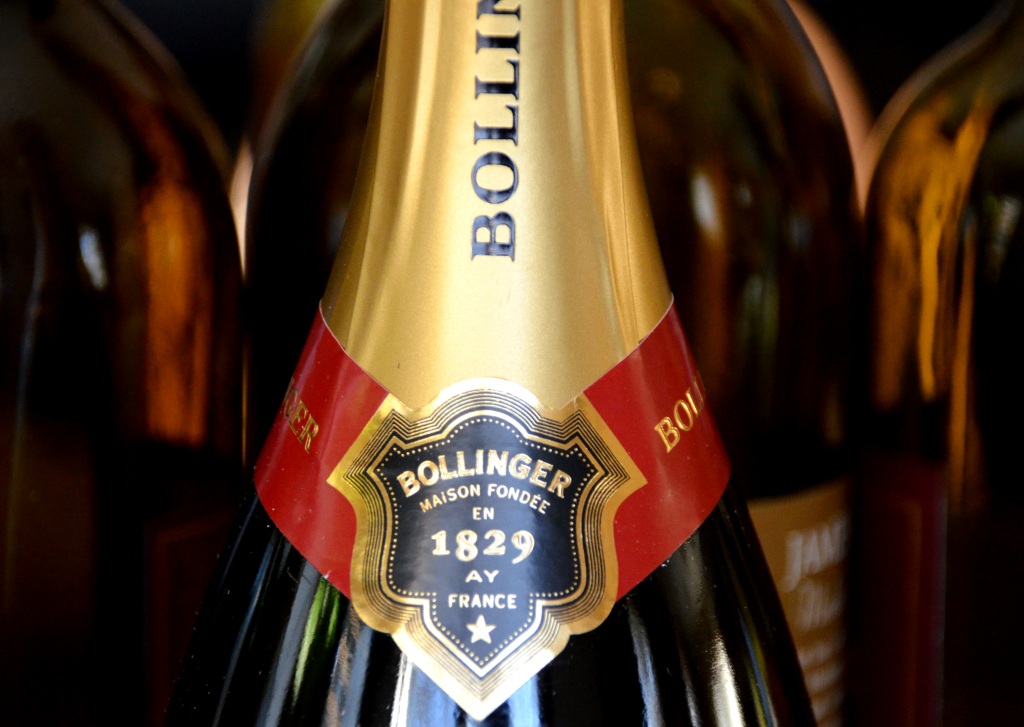
First wine I want you to consider is Champagne. As the very least, it can be an Italian Sparkling wine from Franciacorta or Trento, or some of the California sparklers. Prosecco, Cava and many other sparklers are simply not consistent enough, so for the Valentine’s Day, go with classic – remember – balance and finesse. For the Champagne, my choice would be Bollinger, as I think it is one of the finest non-vintage Champagnes, with lots of finesse. Ferrari from Trento and Bellavista from Franciacorta in Italy would definitely my next choice. But – I don’t want to forget California – Roederer Estate L’Ermitage, Schramsberg Rosé, J Cuvée 20 or any of the Gloria Ferrer sparkling wines would live you with a happy smile.
Moving on, let’s talk white wines. As we are looking for the balance and finesse, I have a few recommendations for you – and you might be surprised with these. For this holiday, I want you to step outside of your “usual circle”. My first recommendation is for the white wines of the Rhône valley in France. Yes, Rhône is mostly known for their reds, but the white wines there are equally stunning. For instance, try to find Domaine Saint Préfert Cuvée Speciale – I called this wine once “a symphony in the glass”. But in general, look for the Clairette or Grenache Blanc wines from Southern Rhône, or Marsanne/Roussanne from the North – those wines are often not easy to find, but they will deliver lots of balance, finesse and pleasure.
Let me give you a few more suggestions – equally difficult to find, but worth looking for. Viognier from Washington is a white wine worthy of celebrating love and romance with. Look for Mark Ryan or Willis Hall – their Viognier is nothing short of stunning. To close on the whites, here are 3 more rare beauties. First, 2 Sauvignon Blanc from … Italy: Gaja Alteni di Brassica and Poggio alle Gazze dell’Ornellaia – stunning balance and finesse. And the last one – Ken Forrester The FMC. You can’t go wrong with either one of these wines – go, start looking, you don’t have lots of time.
Now, we arrived at the red wine junction. Looking for the balance and finesse will dramatically reduce our choices. I would say, let’s go for Pinot Noir. I will limit my recommendations to this one grape only – and here is why. We are looking for the balance and finesse, right? Think about Cabernet Sauvignon from California – what would be the first word or words you would use to describe those wines – probably “big and powerful” – and this is not what I’m looking for suggesting the wines for the Valentine’s Day. Same goes for many Merlot, Syrah and Grenache wines – never mind the Petite Sirah. Even with my beloved Rioja – there are few wines, which will deliver that exact balance and finesse – La Rioja Alta Reserva Especiale would be definitely the one – and I highly recommend it. But for the Rioja – and then for Barolo, Brunello and even Super-Tuscan – as a general class, the probability of running into “big and powerful” is a lot higher than finding “balance and finesse”.
Talking about Pinot Noir, I wish I would recommend some of the classics to you – yes, the Burgundy – but unfortunately, my exposure to the Burgundy is way too limited, so you will need to ask your trusted wine merchant for the advice. Next up – California and Oregon. For the most of the time, California Pinot Noir will deliver exactly that – balance and finesse. To give you a few names, go look for Siduri, Loring Wine Company, Calera, Drew, Copain, Laetitia – but there are many others and it is hard to go wrong with California Pinot Noir. Oregon would be also a perfect choice – look for Adelsheim, Chehalem, Antica Terra, Evening Land – finesse is a middle name for the Oregon Pinot, so you will not be disappointed. And last but not least – don’t forget the New Zealand! Pinot Noir from Central Otago, Marlborough and Martinborough are typically well balanced and round, perfectly fitting our quest for finesse. Look for the wines from Craggy Range, Mt. Difficulty and Amisfield among the others.


Dessert time! People often underestimate how bad the dessert wines can be – one sip of the cloying, single-sugar-note wine would ruin the experience of an amazing dinner. You really have to put a lot of care in selecting the dessert wine which will have balance and finesse. Of course I would like to recommend Sauternes and Barsac wines for you, but again, my personal experience is very limited. I’m sure you can’t go wrong with Château d’Yquem – if you can afford it, go for it! What would be a bit easier to find (and afford) is a Port. Not just any Port – balance and finesse, remember – so go for a nicely aged Tawny, 20-, 30- or 40-years old. As Port ages, it loses power, and becomes fragrant and sublime, guaranteed to deliver lots of pleasure. Look for Rozes, Graham, Quinta do Noval – lot’s of excellent choices. Then of course, the king of the dessert wines – Riesling. For the special experience, I would only recommend to go to the BA and TBA levels – you know, the stuff which always comes in the small bottles. You see, it is very hard to mass-produce BA or TBA level Rieslings – you can’t harvest enough grapes at those sugar levels – thus it is hard to go wrong with BA or TBA Riesling from any producer. And the last recommendation for today – an Icewine. Not any Icewine, but I want to recommend my personal favorite – Inniskillin Cabernet Franc Icewine. This wine is vibrant, perfectly balanced and has lots of finesse – I guarantee you will finish your Valentine’s Day dinner on a high note with this wine.
Here you go, my friends – in the quest for the balance and finesse, these are some of my personal recommendations to enhance you Valentine’s Day experience. Let me know what do you think about my suggestions and feel free to provide your own. Happy Valentine’s Day and cheers!
Pleasures of the #GrapeDay – Delicious Tempranillo
 Once again I’m confessing my love for the “grape holidays” – knowing that the day has a special dedication to the specific grape variety makes selection of the wine to drink a much easier process. It also creates a feeling of the “special moment”, thus forcing you to open that-special-bottle-saved-for-the-special-occasion. Last grape holiday, the #GrenacheDay, prompted me to open a special bottle which was a lucky occasion, as the wine was about to turn over the hill.
Two days ago we were celebrating Tempranillo, a noble grape of Spain. Tempranillo is the most planted red grape in Spain, with the best and most famous wines coming from Rioja, Ribera del Duero and Toro regions. But over the last decade, Tempranillo lost its status of Spain’s exclusive treasure – it spread all over the world, with Australia, Texas, Oregon, California, Washington and other regions producing world-class wines.
Now, to select the bottle of wine for the proper celebration, one have to go to their own cellar or the local wine store – of course, with the exception of the lucky ones who live in a close proximity of the right winery. Unless you actually live in Texas, Oregon or Washington, your chances of finding those Tempranillo wines in the store are pretty much non existent. So for me, the choice was simple – Spain. I love Spanish wines, especially Rioja – and my cellar shows that. For the most of the day, my plan was to open the Rioja bottle in the evening – I was thinking about 2003 La Rioja Alta Vina Alberdi, which I had before and it was outstanding, despite a very difficult growing year. But then many of the twitter friends stated that they plan to open Ribera del Duero wines – and it got me thinking – do I have any options? Not a lot, but I do have a few bottles of Ribera del Duero, so actually, why not?
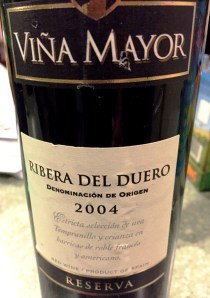
The bottle I pulled was 2004 Viña Mayor Reserva Ribera del Duero DO (13.5% ABV, ~$20). I was under impression that I wrote about this wine before in this blog – nope, I didn’t. The 2004 was an excellent year in Ribera del Duero, and Viña Mayor is an excellent producer. You put two and two together and what do you get? Five, of course! I love it when my wife takes a sip of the wine and says “wow” – one thing is to enjoy the wine by yourself, and it is totally different experience when someone else shares your enthusiasm – and it is not easy to impress my wife that much. Beautiful dark fruit on the nose, touch of herbs. The palate is just “wow” – multiple layers of fruit, touch of espresso, firm, dense, perfectly present, youthful, fresh, excellent acidity and overall very balanced. I’m glad I have another bottle – but it will have to wait for a while. Drinkability: 8+
There you have it, my friends – another successful grape holiday. How was your #TempranilloDay? Share your special moments, don’t be shy!
By the way, in case you are wondering – the next grape holiday is coming! #ZinfandelDay is on November 19th – luckily, you still have a bit of time to prepare. Cheers!
Wednesday’s Meritage – Wine Quiz Answer, #WBC14, Project Genome, What is in the Price
Meritage time!
Let’s start with the answer to the wine quiz #107, Grape Trivia – Blends, Part 10.
This was the last quiz in the Blends theme of the grape trivia – we are going back to the single grape quizzes for a while, before changing the subject of the quizzes to something else. But for now, here is the final set of the questions about blends – now with the answers.
Q1: Name the region in France, where total of seven of red and white grapes are permitted, but absolute majority of the wines is made out of three grapes, which includes both red and white. Blend and single grape wines are permitted, and majority of the wines (even made from single grape variety) are blended.
A1: Champagne. While Arbane, Chardonnay, Petit Meslier, Pinot Blanc, Pinot Gris, Pinot Meunier, and Pinot Noir are all allowed grapes in Champagne, absolute majority of wines is made out of Chardonnay, Pinot Noir and Pinot Meunier.
Q2: Name region in France, where multiple red and multiple white grapes are allowed to be used in production of a single red wine.
A2: Châteauneuf-du-Pape. 18 grapes are allowed to be used in production of this famous red wine, a mix of both reds and whites.
Q3: This wine in the old world wine region are traditionally made as a blend of 4 grapes (only 4 are allowed) , with one grape considered to be the major, and 3 others used in various proportions, or possibly none at all. These wines are known to have great affinity to oak and have classification based on the aging time in oak and in the bottle. Flavor profile often includes eucalyptus and cigar box, and wines have great ability to age, especially in the best years. Can you name this region?
A3: Rioja. Rioja wines are made out of the combination of Tempranillo, Mazuello, Garnacha and Graciano, with Tempranillo typically being the main grape.
Q4: This protected (trade mark protected) word came around a bit more than 25 years ago to designate the wine blend (can be both red and white) which resembles in its composition and grape usage one of the most prestigious and best known wines and overall wine styles in the world. Do you know what this word might be?
A4: Meritage! in 1988, Meritage Alliance was created in California by the group of winemakers, to promote creation of the Bordeaux-style blends, both red and white, without infringing on the Bordeaux protected name. According to Wikipedia, the red Meritage wine “must be made from a blend of at least two of the following varieties: Cabernet Sauvignon, Merlot, Cabernet Franc, Malbec, Petit Verdot, or Carmenère, with no varietal comprising more than 90% of the blend”. The same goes for the white Meritage wine: “must be made from a blend of at least two or more of the following varieties: Sauvignon blanc, Sémillon or Muscadelle du Bordelais, with no varietal comprising more than 90% of the blend”. Another interesting fact is that Meritage is a trademark protected word, and any winery using it on their labels must pay the alliance a license fee.
Q5: Wine Spectator’s rating of 100 points ( an “absolute perfection” so to speak), is not easy to get – to the date, there are only 75 wines which got the 100 rating from Wine Spectator. Taking into account only the red wines on the top 100 list, which grape or grape-dominated blend got the score of 100 most often? Different vintages of the same wine should be counted as separate votes.
a. Cabernet Sauvignon or Cabernet Sauvignon based blend, b. Merlot or Merlot based blend, c. Nebbiolo, d. Pinot Noir, e. Syrah or Syrah based blend
A5: Cabernet Sauvignon and Cabernet Sauvignon based blends are definitely in the lead among this elite group – 17 different wines received the coveted 100 points rating from the Wine Spectator. Merlot and Merlot based wines are trailing behind with 11 different wines receiving the honors.
When it comes to the results, looks like I can never estimate the difficulty of the quiz properly. I thought this was somewhat difficult, but I was proven wrong – today we have 3 winners! Jennifer Lewis (no web site), Gene Castellino (no web site) and benway69 (no web site) all correctly answered 5 out of 5 questions, so they are all the winners of this quiz and they all get the coveted prize of unlimited bragging right. Excellent Work! vinoinlove gets an honorable mention with 4 correct answers out of 5.
Now, to the interesting stuff around the vine and the web!
In the mere two weeks, The Wine Bloggers Conference 2014, dubbed WBC14, will take place in Santa Barbara County in California. More than 300 people have signed up to attend the 3 days event, to meet, greet, talk, learn and of course, drink the wine. I’m very excited as this will be my first WBC event, and of course full report will follow. I’m looking forward meeting everyone there (I know that both SAHMMelier and the drunken cyclist will be in attendance), so if you are going, let’s connect! You can find all the details about the conference at the WBC web site.
While the next interesting read item is geared more towards the wine professionals, I think many of you will find it quite interesting. Constellations Brands, one of the biggest wine producers and distributors in the world, recently published the result of the multi-year study of the behavior of the wine consumers, under the name of the Project Genome. Based on the results of that study, all wine consumers are split into the 6 different categories (Price Driven, Everyday Loyals, Overwhelmed, Image Seekers, Engaged Newcomers, Enthusiasts), with the detailed analysis of buying patterns of all the people in each category. There is a lot of interesting info in this article, so I suggest you will go read it for yourself here.
Last one for today is an interesting article at Wine-Searcher, written by Tyler Colman (who is also known as Dr. Vino). In the article, Tyler is attempting to break up a price of a $100 and then a $2 bottles of wine, to identify the price elements attributed to the different participants – the winery, distributor and the retailer, as the bottle of wine is making its way to the consumer’s hands. While it is not necessarily 100% precise, it gives you some food for thought. You can find the article here.
And we are done here. The glass is empty – but the refill is on its way! Cheers!
Celebrate Tempranillo!
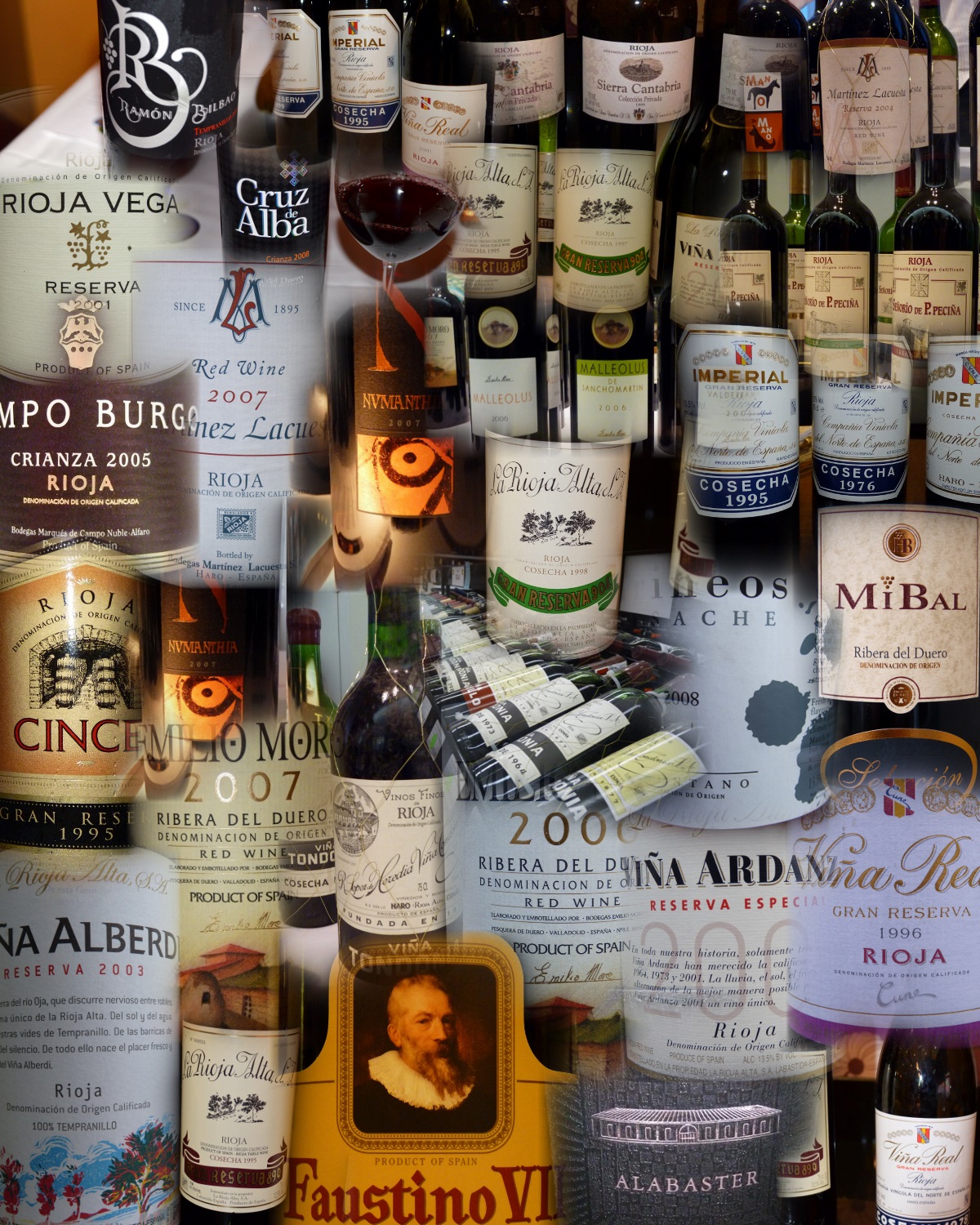 Today is an International Tempranillo Day 2013!
Tempranillo is an indigenous grape originated in Spain (by the way, do you know that Spain has the biggest area of grape plantings in the world?), with more than 2000 years of history. It is black, thick-skinned grape, capable of surviving temperature swings of Mediterranean climate, with very hot days and cool nights. Name Tempranillo comes from Spanish word temprano, which means “early”. Tempranillo typically ripens two weeks earlier compare to many other grapes. Tempranillo also one of the most widely planted red grapes in the world, with about 500,000 acres planted world-wide.
Tempranillo grapes are naturally low in acid and sugar content, so they often rely on blending partners to complement on both. Flavor profile of Tempranillo typically includes berries, leather (so famous in Rioja wines) and tobacco. Most famous Tempranillo wines come from Spain, from Rioja and Ribera del Duero regions, but Tempranillo is successfully growing in many other regions, including Portugal, California, Texas (up and coming star), South Africa, Australia and others. It is also interesting to note that Tempranillo is known under lots of different names (and as such, can throw some curve balls to The Wine Century club aficionados) – it is known in Spain as Tempranillo, Tinto Fino, Ull de Llebre, Tinto de Toro (this grape actually has clonal differences, similar to Sangiovese/Sangiovese Grosso), Cencibel and many others. It is known in Portugal as Tinta Roriz, Aragonez and Tinta Aragonez. But for the rest of the world it is simply known as Tempranillo.
So what is so great about Tempranillo? It has a few qualities which squarely set it on the line with the bets of the best in the wine world.
First, it has a great affinity for oak – Tempranillo wines can age and improve for the very long time in the oak barrels, and the resulting wine will pick up subtle nuances and complexity from that oak.
Tempranillo wines are very good at ageing. Best Tempranillo wines will rival best Bordeaux and Burgundy when it comes to improving with age and maintaining its youthful character. I have a first-hand account I can share with you – here is my experience with 1947 Rioja Imperial.
Last but absolutely not least in my book – Tempranillo wines are affordable! You can drink absolutely fabulous wines in the price range of $20 to $50, occasionally going into the $80+ – can you say the same about California Cabernet, or Burgundy, or Bordeaux? Not really… But with Tempranillo wines you do have this luxury. Of course there are Tempranillo wines which will cost $600+, but those are the exception, not the norm.
So what Tempranillo wines should you be drinking today, or any other day for that matter? I would love to give you a variety of recommendations, but come to think of it, I can only mention a few names coming strictly from Spain. There is nothing I can tell you about about Portuguese Tempranillo wines, as Tinta Roriz is typically blended with other grapes to produce Port. And while Tempranillo wines are made in Texas, California, Oregon, Washington and probably other states in US, most of those wines are available only at the wineries and rarely leave state limits.
But – when it comes to Tempranillo from Spain, I got favorites! Let me give you a few names of the producers – all the recommendations are personal, as I tasted many of their wines.
Rioja: La Rioja Alta, Bodegas Muga, Vina Real, Lopez de Heredia, Cune Imperial
Ribero del Duero: Emilio Moro, Vega Sicilia, Hasienda el Monsterio, Bodegas Alion
Toro: Teso La Monja, Numanthia
DO La Mancha: Bodegas Volver (one of the singularly best wines money can buy for around $15)
So I think it is the time to have a glass wine. Before we part let me leave you with a few interesting resources:
A vintage chart of Rioja wines, going all the way back to the 1925
A general vintage chart of Spanish wines, starting from 1992
A map of Spanish wine regions
And we are done here. Ahh, before I forget – Tempranillo Day now has a permanent spot in the calendar! It will be celebrated every second Thursday in November. Have a great Tempranillo Day and cheers!
There is a Train Station in Haro
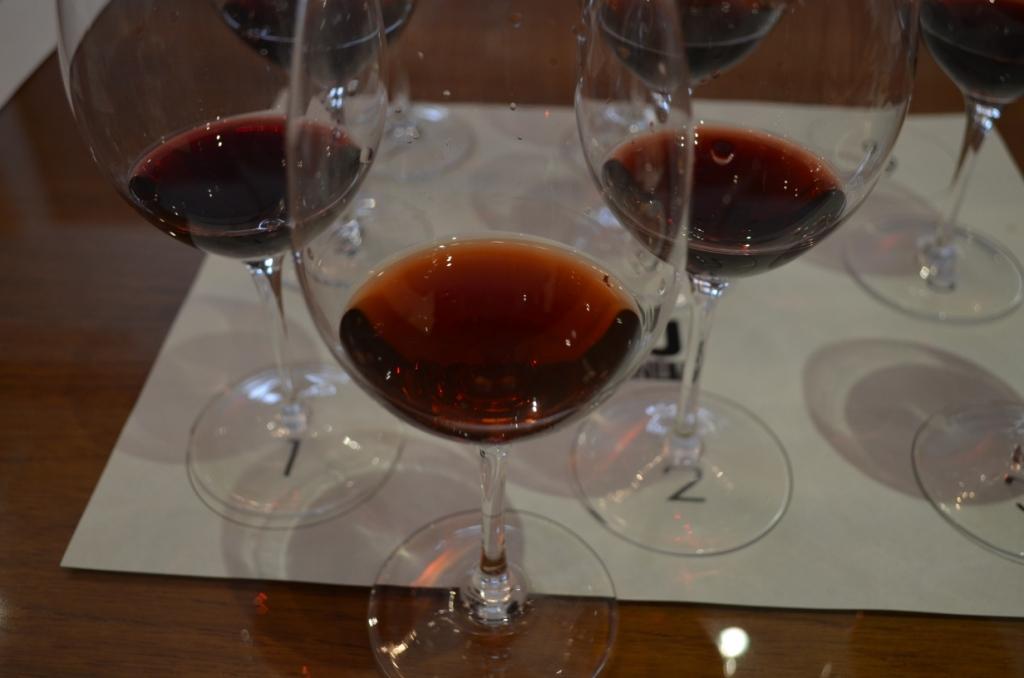 I remember talking to someone about great Rioja seminar I attended, and I remember being asked “why did you go to that Rioja seminar, don’t you already know everything you need about Rioja?”. I only raised my eyebrow. Yes, I make no secret that Rioja is one of my all time favorite wines (I’m sure you noticed if you read this blog for a while) – but there is always so much to learn around wine, you can never pass the educational opportunity. Especially when this is the seminar at PJ Wine store, where wine education always includes a glass (or two, or more) of great wine, just to make sure your newly acquired knowledge would be well anchored. As a side note, this seminar took place a while back (in March of 2013), but the experience was so good, it is still worth sharing.
Andrew Mulligan of Michael Skurnik Wines, who was running the seminar, was a wealth of knowledge on the subject of Rioja. Before we will talk about the wines in the seminar, here are some of the interesting facts about Rioja wines which we learned:
- There are four grape varieties allowed to be used in a production of red Rioja wines – Tempranillo, Garnacha (Grenache), Mazuelo and Graciano. Tempranillo is usually the main grape, which is responsible for main flavor profile and ageability of the Rioja. Garnacha adds body and power, Mazuelo – spicy flavors, Graciano – structure. There are no limitations for the exact wine composition, so all types of blends are possible
- Rioja wines are typically made out of grapes harvested from the different vineyards in the region. There are also single-vineyard Rioja wines, which are called Pago. Rioja Contino is an example of single vineyard Rioja.
- Production of all wines in Rioja is controlled by Consejo Regulador (Control Board), an organization founded in 1926. Consejo Regulador also sets vintage ratings for different years. You can find all vintage ratings (starting from 1926!) here.
- 2010 and 2011 vintages have “excellente” rating – Crianzas should be good already!
- Bodegas Muga, CVNE, Lopez de Heredia and La Rioja Alta wineries (some of the very best Rioja producers) are all located at four corners the train station in Haro – the location was chosen for the purposes of easy shipping of wines to UK.
- La Rioja Alta 890 line commemorates the 1890 when the winery was created. 904 commemorates 1904 when Ardanza winery was acquired and became a part of La Rioja Alta. The winery decided to call their wines this way (using 890 instead of 1890 and 904 instead of 1904) so consumers would not confuse commemoration dates with the dates of production.
- CVNE was founded by 1879 by two brothers, and it produces Rioja in two distinct styles under two different labels – CVNE and Vina Real. All the fruit for Vina Real comes from Rioja Alavesa region, and all the fruit in CVNE wines comes from Rioja Alta.
- CVNE Imperial label was started specifically for the UK market, and it was called like that because it was created during the UK’s “Imperial Century”.

Rioja seminar tasting line-up
Now, let me present to you the wines with my notes. All the wines are included in the order we tasted them.
CVNE Imperial Reserva 2005 – gorgeous nose, dark fruit, perfect acidity, cherries, perfectly balanced, but very masculine. Touch of eucalyptus. Very long finish. Drinkability: 8
La Rioja Alta Vina Arana Gran Reserva 2004 – Beautiful. A lot more delicate than the previous wine, more earthy, sage notes, very beautiful. Perfect acidity. Drinkability: 8
CVNE Cune Reserva 2004 – beautiful, very delicate, (all 4 grapes are used , Tempranilo 85%, 5% the rest), a bit too delicate for me. Drinkability: 7+
Vina Real Gran Reserva 2004 – Beautiful nose, similar to #1, but smooth palate, very nice, round. Drinkability: 8
La Rioja Alta Vina Ardanza Gran Reserva 2001 – Stunning. A lot of fruit, sweet on the finish. Perfect with food. Absolutely bright and young, you can never tell it is 12 years old. Residual sweetness of Grenache is coming through (20% of Grenache). Drinkability: 8+
CVNE Imperial Gran Reserva 2001 – Wow. Perfect fruit, less sweetness on the finish compare to the previous wine. Might be my best of tasting. Perfect power despite the age. Drinkability: 9-


La Rioja Alta Gran Reserva 904 1998 – Very interesting. A lot more herbs, more subtle, beautiful profile. Drinkability: 8+
La Rioja Alta Gran Reserva 890 1995 – Very different. Lots of herbs, subtle, beautiful. Drinkability: 8+
CVNE Vina Real Gran Reserva 1978 – Tobacco, leather, mature wine. Very nice. Still has enough fruit. Drinkability: 8
Yes, I know, my tasting notes are rather short and mostly describe the wines through emotions. However, I think you can see the progression in the flavor profile from the bright fruit to the more earthy, spicy, delicate notes. The common trait among these 9 wines? Elegance. Elegance and balance, to be precise. These are the wines you crave, as you know they will bring you lots of pleasure every time you will open them.
Andrew told us a story from his personal experience with the old Rioja wine. He ordered bottle of 1917 Rioja for the customer, and the customer … refused to take it later on. So the bottle was shared at the table in the restaurant, without much expectations, among the group of young wine professionals. On the very first sip, the table got quiet. And it stayed quiet for the next 5 minutes, as everybody just wanted to reflect on that special moment. I wish you great wine experiences, my friends. Cheers!
Weekly Wine Quiz #61: Grape Trivia – Tempranillo
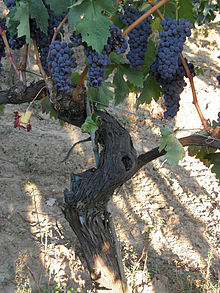
Tempranillo grapes as captured in Wikipedia
Welcome to the weekend! Here is your new wine quiz you’ve been waiting for so hard (yeah, okay, I know I’m pushing it, but may be at least a bit?)
And yes, we are continuing the grape trivia subject – by the way, if you are tired of it, do tell me – I will come up with something else. Just to let you know, we have two more red grapes to go through, and then we will switch to the whites for may be 8 different white grapes – then will see where we will end up.
Today’s subject is – Tempranillo! Just saying the word Tempranillo makes me very excited, as Rioja, one of the most well-known wines made out of Tempranillo grapes, are some of my all time favorites.
Tempranillo is indigenous grape originating in Spain, with more than 2000 years of history. It is black, thick-skinned grape, capable of surviving temperature swings of Mediterranean climate, with very hot days and cool nights. Tempranillo grapes are naturally low in acid and sugar content, so they often rely on blending partners to complement on both. Flavor profile of Tempranillo typically includes berries, leather (so famous in Rioja wines) and tobacco. Most famous Tempranillo wines come from Spain, from Rioja and Ribera del Duero regions, but Tempranillo is successfullygrowing in many other regions, including Portugal, California, Texas (up and coming star), South Africa, Australia and others.
And now, to the quiz!
Q1: What is the meaning of the name Tempranillo?
Q2: Name 3 grapes, traditional blending partners of Tempranillo
Q3: What is common between Bodegas Muga, La Rioja Alta, Lopez de Heredia and Vina Real outside of the fact that all four are very famous Rioja producers and of course make wines out of Tempranillo?
Q4: Tempranillo is used in production of the wine outside of Spain, which is at least equally famous to Rioja. Do you know what wine is that?
Q5: Name two producers of Tempranillo wines – one is the most famous and another one is probably the most expensive.
Enjoy the weekend and good luck with the quiz. And don’t forget to celebrate Dad tomorrow – Father’s Day, yay! Cheers!
Last Bottle Sign Up ($10 credit)




 Talk-A-Vino