Having Fun With Crock Pot Cooking
 Do you like French Onion soup? Okay, this is not necessarily the question I want to ask. It is not about the soup, the question is really about the small, typically glazed and bright brown in color crock pots in which the French onion soup is often served in the restaurant. I don’t know about you, but for me the sight alone of such a crock pot is heartwarming and homey, it has the words “comfort” and “relax” written all over it in the big bold letters.
The great things about those little crock pots is that their versatility allows you to go well beyond just the french onion soup – this is a mini casserole dish, which is perfectly suitable for making any type of stew. Also, because of the small size and somewhat individual portioning, while you might be making mostly the same dish for the family, you can make adjustments to each small pot based on the individual preferences – no broccoli in this one, no mushrooms in that, and triple jalapeno for the last.
The dish which I want to talk about today is pretty much chicken and potatoes stew. My original idea was to use the chicken sausage, but – my daughter doesn’t like sausage, so this is where the small pot versatility comes to the play – I can easily make an adjustment for her and use just chicken instead of the sausage. And yes, of course, the same is true about all other ingredients. I’m sure you got my point.
Okay, here we go:
Crock Pot Chicken and Potatoes Stew (makes 4 crock pots)
Prep time: 40 minutes, cooking time: 1 hour
1 lb of chicken thighs (you can use sausages, chicken breast, anything), cut up in a small pieces about an inch in size
2 large onions, diced
1.5 lb carrots, sliced into small pieces (1/4″)
4 large potatoes, peeled and sliced
1 lb mushrooms, sliced
1/2 lb fresh peas
4 tbsp chicken broth (can be substituted with water, wine, any cooking liquid)
salt, pepper to taste
[olive] oil for frying
4 dry bay leaves
whole allspice (optional) – few berries per crock pot
Cut up chicken and/or sausages you will be using and start searing it in the pan using the olive oil (if you are using just the chicken, season with salt and pepper prior to searing). You don’t have to cook it completely, but you want to give it a nice sear, so it will take you about 10 minutes on the medium to high heat. Put aside.


Slice onions and start sauteing them on medium heat, for about 15 minutes, or until onion becomes soft and translucent. Dice up carrots (I was using tri-color carrots, just for fun) and slice mushrooms, then add to the pan with the onion once it is ready. Continue sauteing on the medium heat for another 10 minutes. Add peas and continue the process for another 5 minutes. Put aside. Peel and cut the potatoes into the small chunks, add salt, pepper and 1 tbsp olive oil and toss the potatoes well.


Preheat oven to the 350°F. Put the crock pots onto the large oven pan. Put the layer of potatoes on the bottom, then layer of chicken and top it of with the vegetable mix. Of course this is when you can make all those individual adjustments for the ingredients for your picky eaters. Add 1 tbsp of broth (or wine, beer, etc.), put in a bay leaf and 2-3 allspice berries (this is entirely optional). Cover and put into the oven for 1 hour.


And we are done!

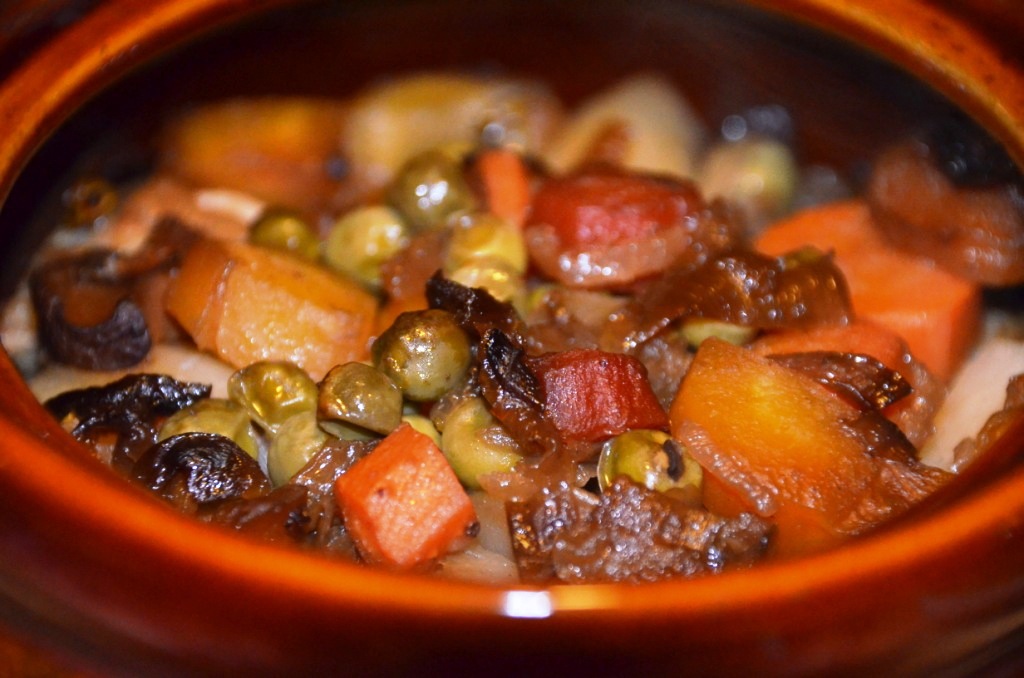
Bon Appétit and cheers!
Let’s Do Brunch – Oak+Almond in Norwalk, CT
Who doesn’t like brunch, raise your hands. Yep, I thought so. It is literally impossible not to like the slow flow of the delicious food on Sunday, when you still have some of your weekend left, and the late breakfast becoming an early lunch is one of the indulgences of the weekend time with the family.
When it comes to brunch, you have to make some choices. I don’t mean “to drink Mimosa or not”, but most fundamental choice is between brunch buffet and the regular a-la-cart brunch menu. There are pro and cons for both, but this is not a subject of today’s post. What I want to talk about is a recent experience at one of the newest restaurants in lower Fairfield county in Connecticut – Oak+ Almond in Norwalk, CT.
Oak + Almond opened in the Fall of 2013 at the same location where Tuscan Oven restaurant was located for almost 20 years. Oak + Almond is classified as new American cuisine, which I think is quite fitting – lots of focus on local farms and products – you know where the cheese came from, you know where the chicken came from, you know where the eggs, berries and produce came from. As much as possible, everything is fresh and local, which is definitely a trait in the new American restaurant style.
The place is nicely decorated, reusing some of the components of the old Italian restaurant to their advantage, such as the pizza oven (those are always nice to have on hand, aren’t they). The decor overall should be classified as retro modern (or modern retro, whatever way you see it), with some very unusual lighting and heavy dark oak furniture. Here are the few pictures for you:


Charred Octopus (guajillo squid ink sauce. potatoes. andouille. celery) – well done, octopus was just as exact “chewiness” where it is pleasant (I think cooking octopus without making it into a rubber is an art).
Funghi Flatbread (charred green onion. fontina. balsamic) – this was a masterpiece – with all due respect to all other dishes, the mushrooms were soooo … mushroomy! If you like mushrooms – don’t miss it.
O+A Margherita Flatbread (Hamden burrata. tomato. calabrian chile) – this was okay, but slightly… pedestrian, especially comparing to the previous flatbread.


We also had 3 “communal” boards to share – the Artisan Cheese Board (fruit preserves. nuts. crostini), the selection of 6 local cheeses – Cremont, Nancy Camembert, Nettle Meadow Kunik, Fiscalini Bandaged Cheddar, North Coutry Blue and Ocooch Mountain, all from the Artisanal Cheese); Meat Board (hand selected meats, pickles, crostini) and House Cured Salmon. All three dishes were well done and quite tasty.


Oak + Almond
544 Main Ave
Norwalk, CT 06851
203.846.4600

Wednesday’s Meritage – OTBN, #MWWC7 Time To Vote, The Art Of The Wine Label, State Liquor Law Changes and more
Meritage Time!
I had to skip the wine quiz last Saturday, as we are taking a family vacation this week, so you can enjoy your quiz break too. Therefore, let’s go directly to the interesting stuff around the vine and the web.
First and foremost – the upcoming Saturday, February 22nd, is Open That Bottle Night (OTBN). The concept of opening that special bottle of wine instead of hoarding it was invented by Dorothy J. Gaiter and John Brecher, wine columnists for the Wall Street Journal – here is the link to one of the articles on the subject. The event is always taking place on the last Saturday in February – this is when you open and enjoy that special bottle of wine you were holding on to, not being able to find the right reason to pull the cork (or twist the top). As I think this is a great holiday for all oenophiles, I would like offer to you the following – if you open that special bottle of wine, will write a blog post about it and send me the link (through e-mail, comment, or Twitter), I will gladly re-blog it in my blog, and I will also add the link to the permanent page dedicated to the OTBN. So, what are you going to open?
Next up – #MWWC7 just concluded. The theme of Devotion was definitely challenging, but I think it led to a number of great entries. Here is the link to the SAHMMelier’s blog post, where you can see the list of all entries, and most importantly now, take a vote! Don’t miss it!
Have you heard of Sine Qua Non, the cult winery in California, making unique wines that are impossible to get? Did you know that every vintage of every wine produced by Sine Qua Non is released under a different label? And also each and every label is essentially a work of art, created by Manfred Krankl, the winemaker and owner at Sine Qua Non. To read more about these labels and Sine Qua Non wines, here is a link to the very interesting article at Wine Spectator – I highly recommend that you will read it.
I would assume that you know (or at least you know now) that States of the United States are in charge of individual laws regarding alcohol sales and distribution in those states. This leads to the situation where people’s access to alcohol in the neighboring states can be dramatically different (for instance, until recently, sales of alcohol were prohibited on Sundays in Connecticut – as the result, the people had to take their dollars to the neighboring New York state). The good thing is that in many states, the state laws are slowly changing to the benefit of the wine consumers (don’t take it for granted – some states are still trying to change it around and backward). Here is a very interesting article from the Wine Business publication, where you can learn about some of those changes in the works.
Before we part, I want to bring to your attention two more articles on the subject of Italian wines, both are quite controversial. Ten years ago, the movie called Mondovino made Michele Rolland and Robert Parker quite upset. Now, the new movie called “Natural Resistance”, made by the same director Jonathan Nossiter is talking about natural wines in Italy, also taking an aim at the Italian DOC system and overall approach to quality – here is the link to the article on the wine-searcher where you can get more details.
It turns out that people at Gambero Rosso, one of the leading Italian wine rating publications, are not the big fans of the natural wines. A blanket statement about “natural wines been bad wines which will give you a headache” doesn’t sound right coming from the organization which should simply embrace and promote best Italian wines. So it is not surprising that Italian natural wine producers have an issue with Gambero Rosso – for more details, here is the link to the wine-searcher article.
That’s all I have for you for today, folks. The glass is empty – but the refill is on its way. Cheers!
Devotion – The Blog Post I Can Not Write
 As soon as I saw the new theme for the Monthly Wine Writing Competition #7, Devotion, my very first thought was “hmmmm, this will be hard, or more precisely, extremely hard”. The problem is that when I hear the word “devotion”, the immediate mental picture is of a giant cross at the very best, or no picture at all – but I can assure you it ain’t the picture of a bottle of Cabernet Sauvignon.
Ever since the theme was announced I was struggling to find the connection of “devotion” to the wine world. I’m sure the examples of the true devotion are abundant in the wine world. May be even more than in many other trades, the success requires a lot of sweat, blood and sacrifice. Not been a wine historian, but rather only a very appreciative and dedicated consumer, I don’t have those stories of sweat and blood handy, and searching the Internet and rewriting someone else’s stories is not something I usually do, thus search for the connection between wine and devotion became literally a daily routine. To no avail.
I thought that I will start my post with the analysis of the word “devotion” – yes, the linguistic analysis. Oliver did it it perfectly in his post for the #MWWC7, as he was struggling with the theme in pretty much the same way as I did. Oliver took the Latin route for the meaning of “devotion”, so I can still refer to the English meaning of the word. Here is a nice representation of the Google search for the definition of “devotion”:
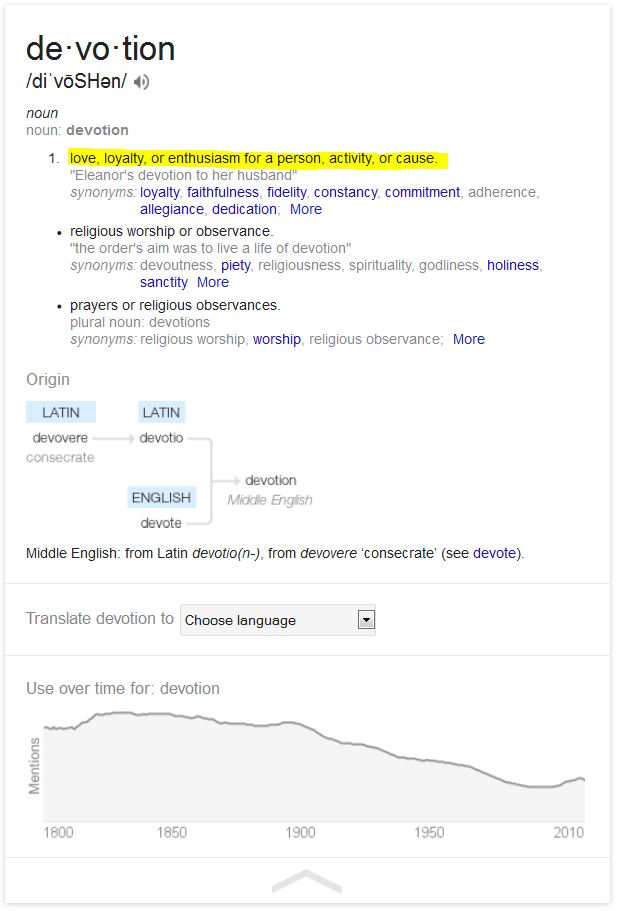
Yes, love and loyalty (or dedication for that matter) sound like the right way to go here – but if that is the direction, I would simply use the word love, and not devotion. Nope. It doesn’t connect.
So as today is a pretty much the last day to submit the entry, I still don’t have it.
But let me give you somewhat of an interesting twist here. Let’s put the word “devotion” aside for a minute, and let’s go back to the wine. Think about two sides of the wine world (not exclusively two – but let’s simplify here). On one side, winemaker should be willing to make an honest wine, the wine he or she will be willing (and proud) to offer (sell) to any consumer. On another side of the spectrum is the consumer who should be willing to buy the wine. Let’s make this statement even more precise – the consumer who should be willing (and eager) to drink the wine. Do you think we can find devotion on both sides here? Does it take devotion to make the best possible wine? Yes this is an easy case, I would say (and it was perfectly presented by Jeff at FoodWineClick in his photo essay about devotion of the winegrower). And how do we get to the devotion of the wine consumer? While this might not sound all too fitting for the term, but one should be devoted enough to the wine world to be willing to open the bottle – any bottle, a cult (DRC, Petrus, Screaming Eagle), or the most obscure, of unknown grape and producer; the wine which costs thousands, and the wine which costs $1.99. Open and give that wine a chance, step over the preconceived notions (“ahh, I don’t drink California Chardonnay”) and make an effort to understand the wine for what it is. Is that a behavior of the wine-devoted consumer, an oenophile? We are not talking here about people who buy the wine as an investment, with the sole purpose of selling the wine once its price will increase – those people are devoted to money, not to the wine. But for the oenophile, the wine is approached with an open mind – that doesn’t mean that the one should equally love all the different styles and tastes – but that one has equal respect to them all.
And let me tell about devotion of the winemaker through the eyes, nose and palate of the devoted oenophile (yep, myself in this case).
I brought the bottle of 1966 Louis M. Martini California Mountain Pinot Noir from Chicago about a month ago. I was in the store, shopping for the older vintage wines, and I couldn’t resist to buy such an old wine for $25 – yes,this is how much this wine was.
I didn’t want to hold it for too long, so Valentine’s Day seemed like a perfect opportunity to open a special bottle of wine (yes, I should’ve wait for the Open That Bottle Night, but we are always traveling over the actual OTBN day, as it generally falls on the kids’ school vacation).
When I told my friend Zak (who owns the wine store) that I will be opening the 1966 California Pinot Noir for the Valentine’s Day, his reaction was “why? You understand that the wine will not be any good, just keep the bottle as is for the decoration”. My thought was “I can always keep the empty bottle as a decoration. I have to give this wine a try”.
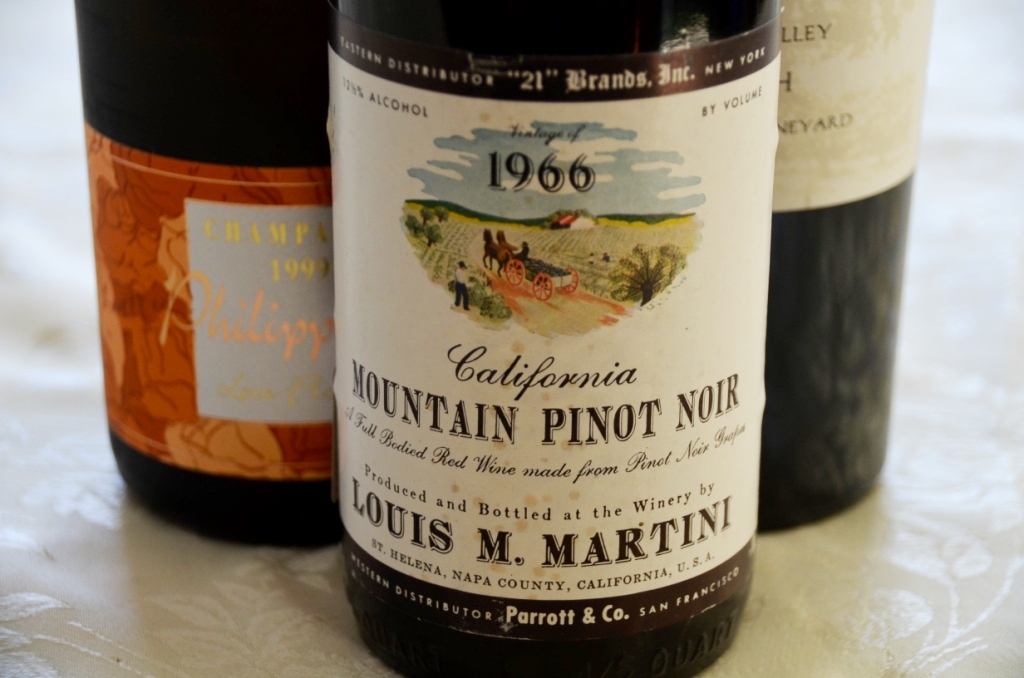
I honestly didn’t know what to expect. 1966 Pinot Noir from California? Not made by the star winemaker at the state of the art modern winery? The only thing I knew about the wine that it was made at Louis M. Martini winery. And Louis M. Martini doesn’t even make Pinot Noir wines today! Okay, let me come clean here – I had an additional reinforcement of my hope. I remember my wine class on Californian wines at the Windows on the World wine school, where after we tasted the line of California Cabernets, Kevin Zraly said “this wine is made by the Louis M. Martini. They make make excellent wines, and they could charge a lot more for them, but they chose not to”.
Louis M. Martini was an Italian immigrant who came to the United States in 1899. After working in the wine trade for a while, he opened Louis M. Martini winery in Napa Valley in 1933, as Prohibition was ending. Last year, the winery celebrated its 80th anniversary. You can read the history on the Louis M. Martini winery web site, but I want to mention that Louis P. Martini, the son of Louis M. Martini, went on to become one of the pioneers of California Pinot Noir and Merlot, and he was inducted to California Vintners Hall of Fame in 2008.
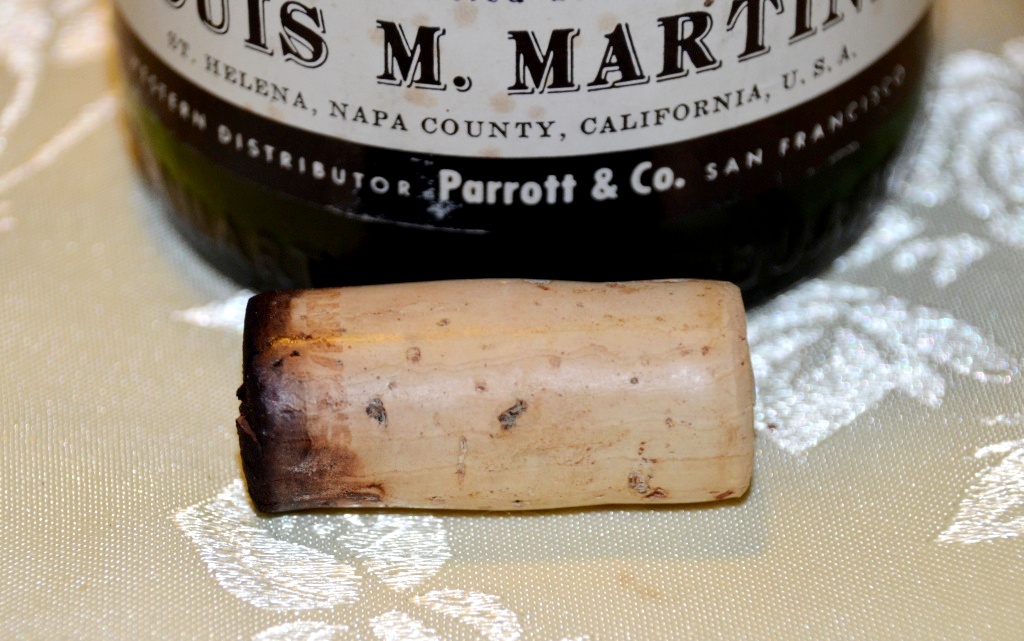
Let’s get back to the wine. It was the time to open that 1966 bottle, so I armed myself with the waiter’s corkscrew and the two-prong cork pull. I even had a thought of using Port Tongues, but that sounded a bit too fancy. Foil was cut, and I was presented with pristine looking cork top. Considering that appearance, I used the the regular waiter’s corkscrew, only moving it very slowly. The cork struggled only a tiny bit, and came out as a whole – and just look at this cork! I had 5 years old wines, where cork was in the terrible condition, never mind 48 years old wine!
 So I poured the wine into the glass – beautiful red brick color, with an orange hue, reminiscent of signature Barolo color. I was really concerned about the first smell – hoping not to find a sauerkraut or vinegar there – and the nose was perfect! Yes, the herbal flavors were prevailing over the fruit, but nevertheless, it was a very pleasant nose without anything disturbing. The first sip – wow. This wine is beautiful! Yes, lots of herbs – sage, eucalyptus, may be even lavender, but also with the nice plum component, and most importantly, balancing acidity. An extremely complex and thought provoking wine – but in the perfect elegance of all the components. The wine opened up a bit more, showing a bit more sweet fruit notes – and then it was gone – we finished it all. Truly spectacular and almost unbelievable – but it was real. I would love to compare this wine to the old Burgundy – I guess this is what it will taste like, if I’m lucky.
And you are looking for connection to the today’s theme, devotion? To me, it is simple. To make the wine which will last for so long and stay in such a perfect condition (go back and look at that cork again) requires a dedication, it requires the full devotion of the winemaker, it requires the unconditional love to what you do. And this wine had it all.
Raise your glasses, my friends, for the true devotion of the winemakers and oenophiles. Cheers!
VinItaly and Slow Wine 2014 – Fun, Education, and Lots of Wines
 The story started 48 years ago, with the event called “Italian Wine Days”, which hosted a number of Italian wineries willing to present their wines to the world. Since then, VinItaly grew into one of the biggest wine shows in the world – its main 4 days event typically is taking place in April in Verona and attracts more than 140,000 visitors from 116 countries. Starting in 2013, VinItaly started the new initiative, called VinItaly International, with the goal of taking the Italian wines on the road and bringing them to the United States, Russia, China and other countries.
Outraged by the planned construction of McDonalds restaurant on Spanish Steps in Rome, the Slow Food movement was created in Italy in 1986, quickly becoming an international phenomenon, aiming at educating people about slow, real and delicious food, just the way it should be. Since then, Slow Food movement was embraced by millions of people in more than 160 countries around the world. Starting in 2010, Slow Food started publishing its wine guide, called (you guessed it) Slow Wine, dedicated to the wines which are best at demonstrating the Slow Food values, the wines with the sense of place.
For the second year in the row, I had a pleasure of attending combined VinItaly and Slow Wine event in New York city (here is the link to the post about last year’s event). This year, the pleasure was also greatly enhanced by the fact that I was joined by Oliver (the winegetter), his wife Nina and Stefano (Clicks & Corks) – as you can imagine, everything is better in a great company.
In addition to all of the wines being available for the walk around tasting, VinItaly also brought a great educational program to this year’s event. This educational program, consisting of the multiple seminars presented during the day, was part of the new VinItaly’s initiative, called Vinitaly International Academy (VIA). I talked to Stevie Kim, Managing Director of the VinItaly International, who explained that this new VIA program will offer both educational seminars (called Masterclass) on various Italian regions and wines, as well as unique tasting opportunities, such as for instance, a tasting of the vertical of Sassicaia – I really hope my invitation to such a Masterclass will not get lost in the mail. Dr. Ian D’Agata, a researcher, journalist and an author of a number of books about Italian wines, was appointed as the Scientific Director of VIA, and he was teaching a number of masterclasses presented at New York’s event. I was lucky enough to attend most of the Masterclasses offered during the VinItaly event – I will have separate posts for those, as subjects of Barolo Cannubi, Amarone and Franciacorta are well worth it.
Here is a small filmstip prepared by VinItaly with Stevie Kim and Ian D’Agata, explaining what the VIA is all about:
 Before I will talk about some of the wine highlights from the event, I want to share some of the interesting stats offered during the press conference. The data below present various numbers regarding wine imports into the US – if you are in love with numbers as much as I am, these are the interesting stats, all shared as part of the information package by VinItaly tour. These are the various import statistics as presented by the US Department of Commerce:
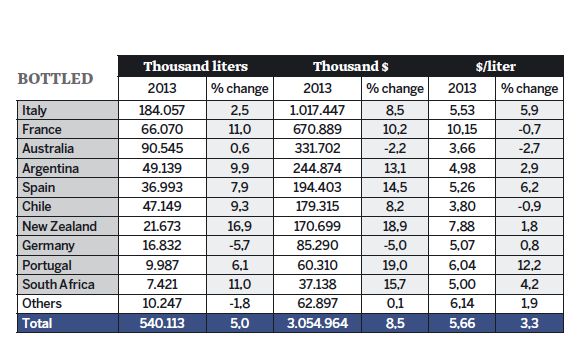
Imports to US Jan – Sep 2013

Compare the data above with this one – Imports to Canada Jan – Sep 2013

Imports to US 2007- 2012 year over year data
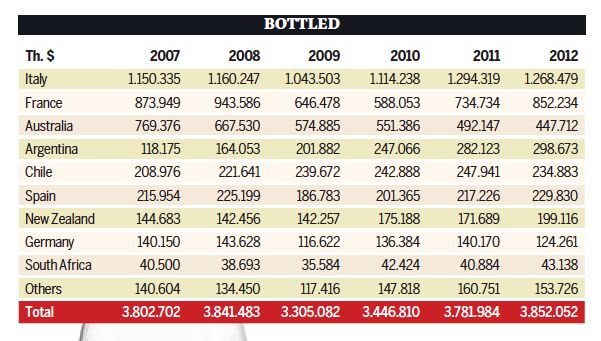
Imports to US 2007- 2012 Still Wines

Imports to US 2007- 2012 Sparkling Wines
I would assume you are sufficiently inundated by numbers, so let’s talk a bit about the wines before we round up this post.
With all the Masterclasses presented at VinItaly, this is where my focus really was – learning about and tasting lots of great wines, per-arranged by Ian D’Agata. I had about 2 hours of time on the tasting floor itself, primarily focused on giving a “rare varieties” whirlwind run tour to Nina. As usual, I took an extremely short notes and primarily used my trade show rating system of +. ++ and +++ (yes, with exceptions for ++-| and ++++). Below are some of the most memorable wines from that tasting:
2011 Aquila del Torre Riesling Friuli Venezia Giulia – +++ excellent
2010 Aquila del Torre Refosco Friuli Venezia Giulia – +++ clean, open
NV Brut Rosé Prima Nera Friuli Venezia Giulia – +++, very unusual sparkler made from the rare red grape called Schiopettino
2012 Cantine San Marco Romae Bianco, Lazio – +++ clean, beautiful (this wine is made out of Malvasia del Lazio)
2012 Sant’Isidoro Colli Maceratesi Ribona Pausula, Marche – ++-|, nice, good acidity (made out of rare grape Maceratino, which is a new grape for me!)
2010 G.D. Vajra Langhe Freisa Kyé, Piedmont – ++-|
Three great wines from Planeta (Planeta is a great producer from Sicily, and it rarely disappoints)
2011 Planeta Cerasuolo di Vittoria Classico Dorilli , Sicily – +++. beautiful complexity
2008 Planeta Noto Nero d’Avola Santa Cecilia, Sicily – +++ power!
2012 Planeta Sicilia Fiano Cometa, Sicily – +++
2012 La Parrina Vermentino, Tuscany – +++
Montenidoli Il Templare, Tuscany – +++, good
And then one and only – Caberlot!
2010 Podere Il Carnasciale Caberlot, Tuscany – ++++ nose, complexity!
2009 Podere Il Carnasciale Caberlot, Tuscany – ++++ spices, amazing
2011 Podere Il Carnasciale Il Carnasciale, Tuscany – +++ (this is second label of Caberlot wines)
2010 Boscarelli Vino Nobile di Montepulciano, Tuscany – +++
2011 Leonido Pieropan Soave Classico La Rocca, Veneto – +++ beautiful
2011 Leonido Pieropan Valpolicella Superiore Ruberpan, Veneto – +++
2010 Antonelli San Marco Montefalco Rosso, Umbria – +++
2009 Tabarrini Montefalco Sagrantino Colle Grimaldesco, Umbria – +++
2010 Tabarrini Montefalco Rosso, Umbria – +++
And that concludes my first report from the VinItaly 2014 event in New York city – more posts to come, so stay tuned… Cheers!
Wednesday’s Meritage – Wine Quiz Answer, #MWWC7 Few Days Left, Cali Crush Report, Wines At State Dinner, And More
Meritage time!
Let’s start with the answer for the wine quiz #92, grape trivia – Montepulciano. In the quiz, you were supposed to answer 5 questions about indigenous Italian grape called Montepulciano. Here are the questions, now with the answers:
Q1: In the number of regions, Montepulciano is often blended with … [name that grape]
A1: Sangiovese is a popular blending partner of Montepulciano.
Q2: Wine Spectator calls wines rated in 95-100 range Classic (the highest and the most prestigious category). True or False: there are no Montepulciano – based wines rated in the Classic category
A2: False. There a few Montepulciano wines with the ratings of 95 or above. For example, 2000 Emidio Pepe Montepulciano d’Abruzzo got 97 points from the Wine Spectator.
Q3: From the list below, which state in US doesn’t make any Montepulciano wines of notice:
a. California, b. Maryland, c. North Carolina, d. Texas, e. Washington
A3: Interestingly enough, Washington so far doesn’t have any Montepulciano plantings of notice.
Q4: True or false: from 2000 to 2010, plantings of Montepulciano in Italy increased by more than 15%
A4: True. Plantings of Montepulciano in Italy increased from 28,679 acres in 2000 to the 34,824 in 2010.
Q5: Best known Montepulciano wine comes from Abruzzo in Italy and it is known as Montepulciano d’Abruzzo. Do you know the name of the white wine commonly produced in Abruzzo?
A5: Trebbiano d’Abruzzo is a white wine from the Abruzzo region.
When it come to the results, first of all, we had very good participation in the quiz, quite a few answers. And, most importantly – we have a winner! Tracy Lee Karner answered all 5 questions correctly, so she gets the top prize of unlimited bragging rights! Great job! I also would like to acknowledge Suzanne of apuginthekitchen and Mario Plazio (no web site), who both got 4 questions out of 5 correctly. Very well done!
Now, to the interesting stuff around the vine and the web!
Boy, I have a lot of interesting reads for you. First of all, there are only a few days left to submit your entry for #MWWC7, “Devotion”. Over the past few days there were quite a few submission, which is great. I have a problem to come to grips with this theme, as “devotion” doesn’t trigger any mental image for me – I would much happier deal with “obsession” or at least a “dedication”. Anyway, may be my muse will still come, all covered in the snow? No matter – get your wine devotion story going! Here you will find rules and submissions to the date.
Like the grapes and the numbers? I personally do – I don’t even know why. Anyway, the California Agricultural Statistics service just released the numbers for the 2013 grape crush report – 4.23 million tons of grapes were crushed last year, up 5% from the 2012. The most crushed grape in California was Chardonnay, closely followed by Cabernet Sauvignon and then Zinfandel. For all the numbers please take a look at this article at WineBusiness.com.
Now, I want to share with you two interesting articles from the Dr. Vino’s blog. First, it is always interesting to know what the other people drink, right? Don’t you try to glance at the label of the wine been served at the table next to you? So this is not just some other random people we are talking about here – Dr. Vino analyses selection of the wines from the State Dinner given by US President in honor of the high guest from France. Here is the article – and similar to the Dr. Vino’s opinion, my question is – really? These are the best wines made in US? Okay, okay – I didn’t taste either one of the particular 3 wines served at that dinner – in case you have, I would be really interested in your opinion.
Last, but not least for today is another article from Dr. Vino’s blog – a short post about the sale of the wines at the auction in Chicago. Considering all the stories about the counterfeit wines nowadays, it is not surprising that the wines with the guaranteed provenance are sold at the premium nowadays. But for me personally, it is the data in that old receipt which is very interesting – $78.99 for the Echezeaux or $68.99 for Vosnee-Romanee – sigh, and another sigh – are those days gone forever?
And we are done here. The glass is empty – but the refill is on its way! Cheers!
Admit It – You Always Wanted To Learn More About Spanish Wines – Here Is Your Chance
 When it comes to wine, I never admit that I have favorites – I always say that I like them all. But deep, deep inside, I know that this is a little bit of a lie (just a tiny one, seriously) – it is Spanish wines I’m very particular to in many cases. Spain has the biggest area of the vineyards planted, and it is third wine producing country in the world, so you can imagine that there is quite a bit to learn about Spanish wines.
So, what I’m trying to tell you is this. If you are interested in learning about Spanish wines, and you live in a close proximity of Greenwich, CT, you are in luck! Barcelona Wine Bar and Restaurant in Greenwich, CT is offering to take you on the tour of four different regions in Spain, during the course of four evenings in March. Here is the description of the Passport Through Spain program from the Barcelona’s press release:
“Jet set through Spain in the best way imaginable with a glass (or several) of wine, expertly prepped tapas and the rustic, and warm environment of Barcelona Wine Bar & Restaurant in Greenwich, CT. Each one hour class in the series (there are four in total) will focus on a particular Spanish region, history behind the wines and the food that best accompanies them prepared by Chef Michael Lucente. These wine classes are designed to enlighten and inspire both the novice and enthusiast. Wine Steward, Jose Valverde will guide you along the way, with tips and tricks for successfully pairing your wines with local food.
The series will take place each Wednesday during the month of March beginning on March 5th at 7:00pm. The first wine-pairing class covers the Rioja region best known for its Old World style and their well-aged red wines. The second covers Galicia (March 12th), a seaside region. The third class on March 19th covers Montsant/Priorat, known for its powerful, elegant and complex wines and the last class on March 26th will focus on the Valencia region.
Attend one class or attend them all. With the first class you attend, you’ll receive a Barcelona Wine Bar & Restaurant passport. Each time you attend a class, your passport will be “stamped” and you receive a complimentary tapa token to redeem on your next visit. Attend all four classes in the series and receive a [$100] gift certificate for two people. Each class is $35 per person (plus tax and gratuity) with a maximum of 20 people attending. Reservations can be made by contacting rsvp@barteca.com.”


If you think about it, you will pay $140 for the four classes, and you will get four tapas tokens plus a gift certificate for $100 – which means that you will have great fun education basically… for free. Remember – there are only 20 seats available for each class, so don’t delay! Also, as Valentine’s Day is rapidly approaching, in case you are still thinking about the present, the gift of wine education might be just it! ¡Salud!
Meet the Winemaker: One on One With Morgon and Pouilly-Fuissé Vintners
Talking to the people who make magic is always an experience (yes, I’m comparing winemaking to the magic). I met the winemakers a number of times, but for the most of the cases, they were “in between” of some other important tasks (like harvest, for instance), so the idea of inundating them with questions never crossed my mind.
This time around it was a different experience – the winemakers where actually there to talk to me (feel special and scared at the same time), so I could (and rather was supposed to) to ask a lot of questions.
I met with two winemaking couples – Robert and Jeanine Béranger from Pouilly-Fuissé and Nicole and Pierre Descombes-Savoye from Morgon, both closely working with Georges Duboeuf, the famous French negociant, whose portfolio consists of about 400 different wines, mostly from Beaujolais (I met Georges and Frank Duboeuf a few years back, here is my post talking about it).
So I had an opportunity to ask the questions and then to taste the wines (each family produces only one wine!). Here are my questions with the answers (side note: really despise myself for thinking for the past 10-12 years “must learn French, must learn French” – and really not doing anything about it… The interview was done with the help of Heloise Pepin, brand ambassador for Georges Duboeuf wines).
Of course we started with the white wine, so my questions were directed first at Robert and Jeanine Béranger, whose family produces Domaine Béranger Pouilly-Fuissé wine for more than 200 years. The Domaine Béranger includes about 12 acres of Chardonnay, the only grape used in production of Pouilly-Fuissé wines. The vines at the domaine on average are 55 years old. All the harvesting is done by hand (you typically want to preserve clusters when harvesting the Chardonnay, this is why hand is the best instrument to use). Those 12 acres are split into 32 (!) different parcels, which are vinified separately and blended for the final release. Total production at the Domaine is about 26,000 bottles a year.
For what it worth, here are the questions I asked, together with the answers.
Q: What was most favorite vintage of your wines?
A: 1983 and 2003. 2003 was particularly interesting, as it was a very difficult vintage, and making of the wine was very challenging. 1976 was the exceptional year for the white wines.
Q: What was the oldest wine from your vineyards which you ever tasted?
A: 1969.
Q: For how long your wines can age?
A: In the exceptional vintage, the wines can easily age for 30 years, but generally they age well for about 15 years.
Q: When you are not drinking Pouilly-Fuissé wine, what are the other wines you like to drink?
A: Meursault, Chablis, New Zealand Sauvignon Blanc.

Next we tasted the wine, and here are my tasting notes.
2011 Emile Beranger Pouilly-Fuissé AOC (13% ABV, retail at about $26, 10% of the wine aged in 5 different types of oak barrels, then 14 month in the bottle before release) – pale yellow color in the glass. Hint of apples on the nose. On the palate there is a touch of butter, plump and creamy feeling. The wine is very round, roll-of-your-tongue, perfect acidity and perfect balance. A beautiful wine. Drinkability: 8+
Time to talk about the red wine, Domaine Jean Ernest Descombes from Morgon, so I directed my questions at Nicole and Pierre Descombes-Savoye. Domaine’s property includes 30 acres of the vineyards, all planted with Gamay grape, with three quarters of the vines been more than 50 years old. On average, the yearly production is 100,000 bottles. The grapes are harvested by hand to preserve the full clusters.
Here are some of my questions, along the same lines as the questions above.
Q. What was your favorite vintage of your wine?
A. 1973, as this was the year when our son was born.
Q. And how was that 1973 wine?
A. The wines were opened recently at the big party, and they were put against the 1973 Vosne-Romanée in the format of the blind tasting. Most of the guests at the party preferred the 1973 Morgon over the 1973 Vosne-Romanée. It is also interesting to note that as Gamay wine is aging, the freshness of Gamay grape is evolving into the complexity of Pinot Noir, so the results of the tasting are not surprising.
Q. For how long Morgon wines can last?
A. In the good vintage, the wines can easily last for 40 years or even longer.
Q. What do you drink when you are not drinking your own wine?
A. Burgundy and Bordeaux, especially the Saint-Émilion had been the favorite as of late. But we also like California wine.
Q: How would you compare the 2011 vintage with 2009?
A: Well, the vintage such as 2009, simply can’t happen again ( I’m sure mother nature has its own view on that), it was simply exceptional – and it is literally impossible to beat the 2009 vintage. But 2011 was a good year, and the wines from 2011 will easily last for 10-12 years or longer.
 And then it was the time to taste the wine.
2011 Domaine Jean Ernest Descombes Morgon AOC (12.9% ABV, aged for 6-8 month in cement tanks, $16.99 suggested retail) had bright ruby color in the glass. On the nose, the aroma of raspberries and cherries. Perfectly fresh on the palate, with more raspberry notes, clean, simple, with invigorating acidity and good balance. Drinkability: 8-
And that concludes my first sit down interview with the winemakers. It was fun, and I hope to be able to do more in the future. Cheers!
Beautiful Snow and Beautiful Wine
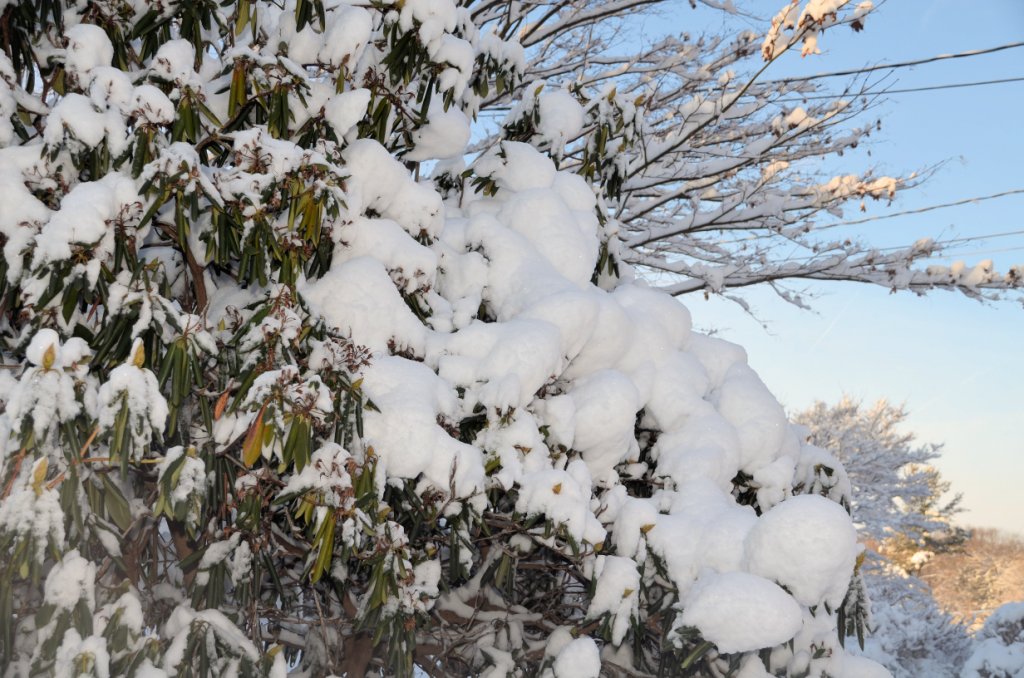
There was a lot of snow here in CT over the last week. Most of the snow is still here, and considering the forecast, will be lingering around for a while. Yes, the snow is nuisance and inconvenience, it is tough to shovel, and a lot of it became ice at this point. But when sun comes out, it really becomes a thing of beauty. This snow had also a very interesting characteristic – well, may be it is me who didn’t see it before, but this snow is really glowing blue, especially as you dig in and look at it. So for what it worth, here are some pictures, snapped literally just around the house. Plus, I also included a few pictures which my daughter made with her iPhone – it is pretty amazing what that little device can do. And if you will scroll all the way down, I will also talk a bit about the wine. Here we go:



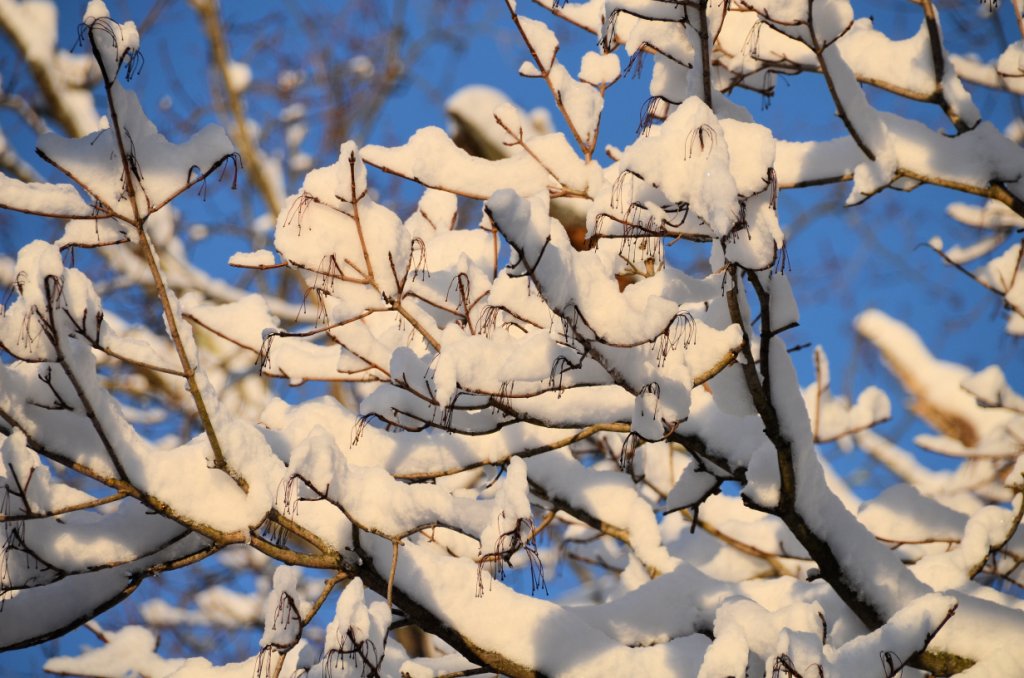



This is one of my favorites
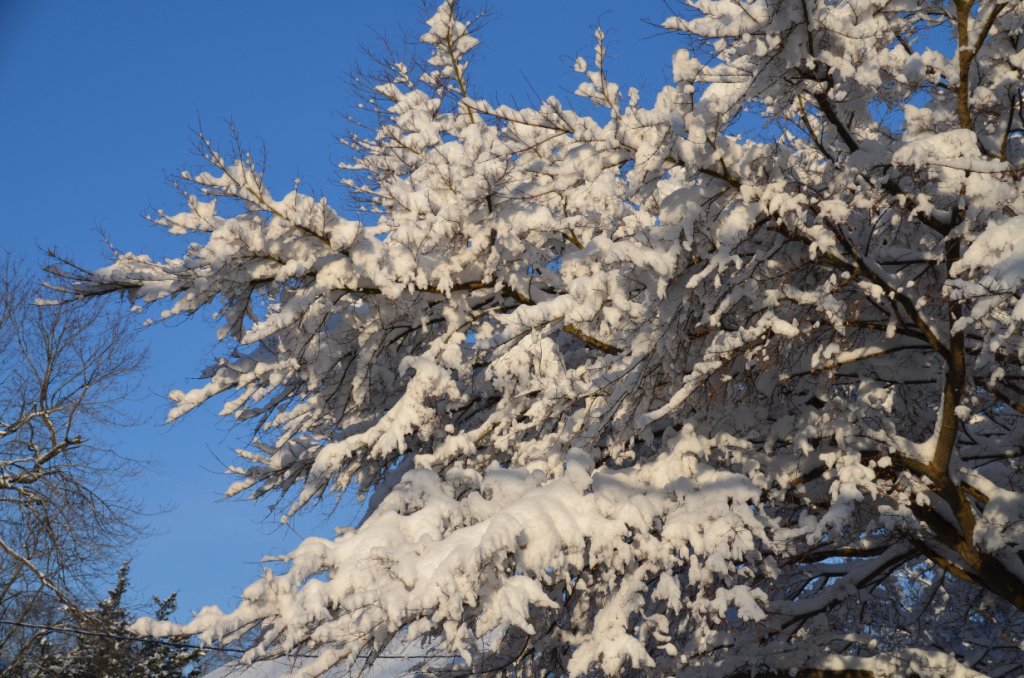

That snow and that sky…
 What makes snow so beautiful?
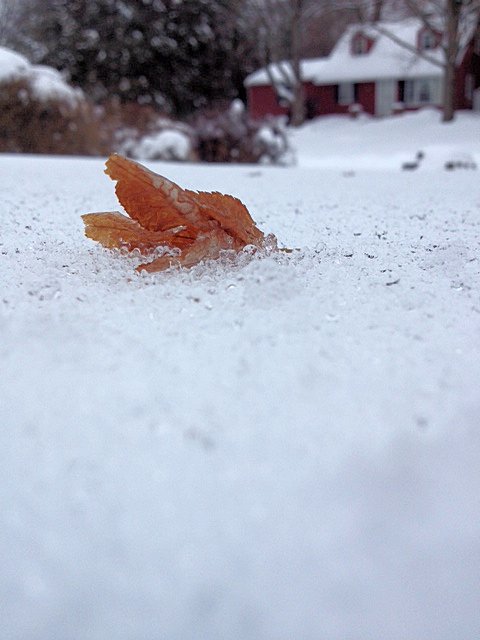 iPhone picture by Rina – the leaf
 The same, only black and white

And a bit of perspective

More perspective
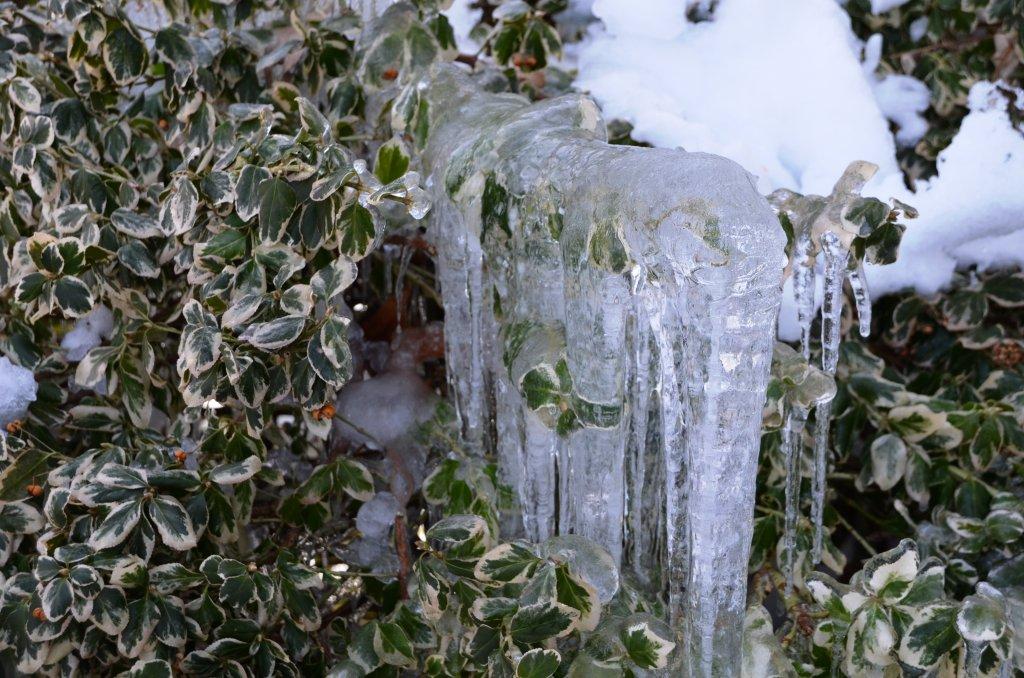
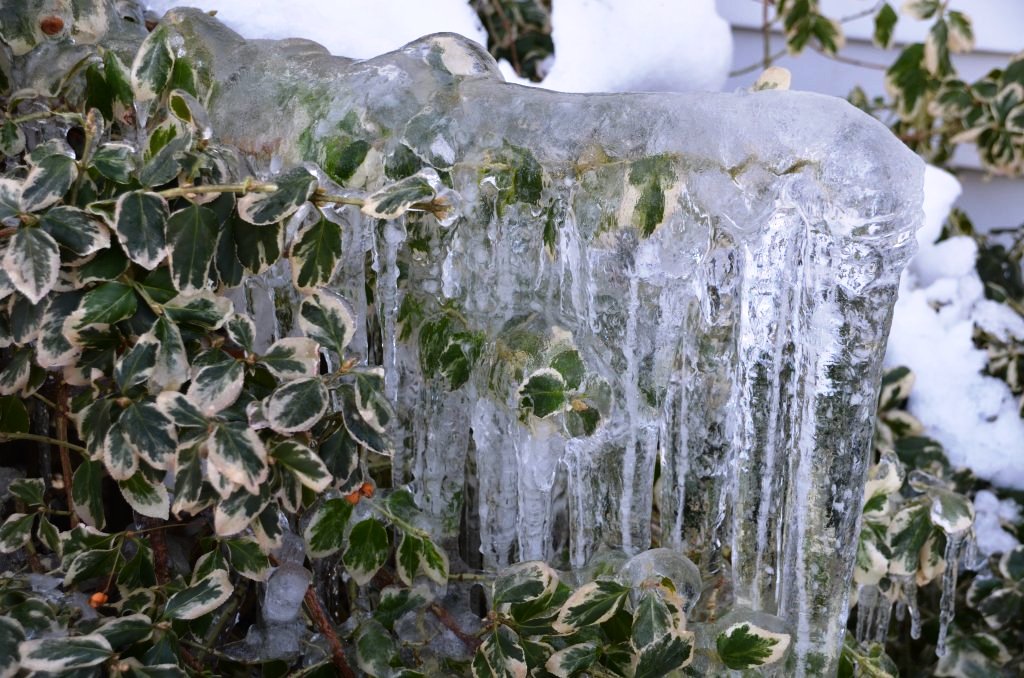
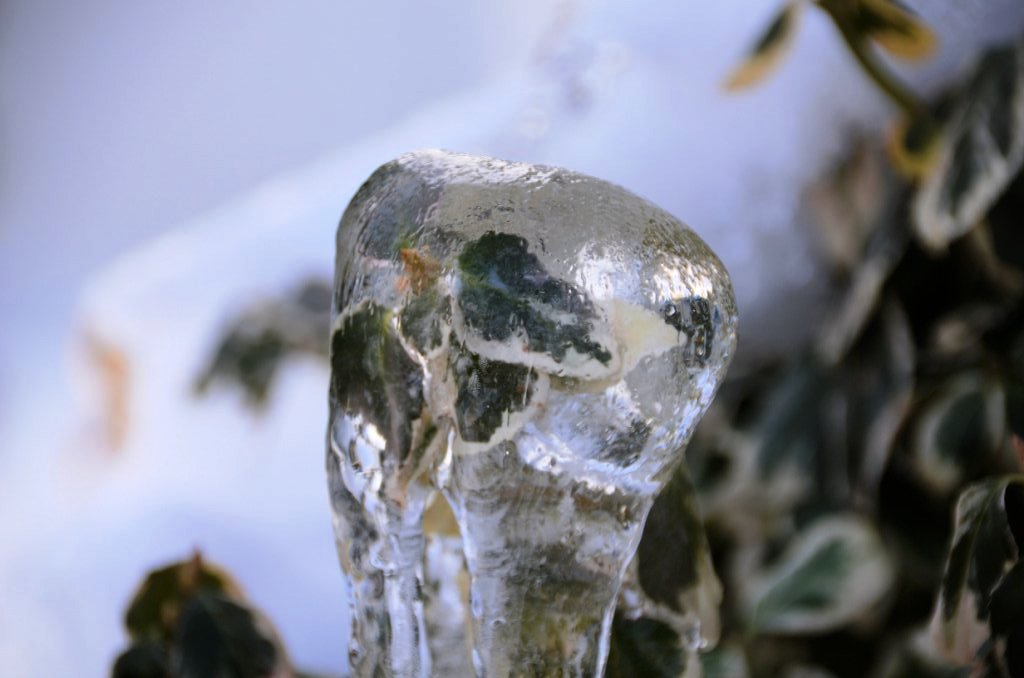
A frozen beauty
Yes, the snow was beautiful, but it got in the way. The snow on Wednesday was bad enough to affect the trains, so I had to miss the Basilicata winemakers dinner in the city, which I was really looking for. So I decided to compensate for that by opening the bottle of new vintage of one of my favorite wines – Fiction by Field Recordings. I’m sure some of you know at this point that I’m very particular to the Field Recordings wines in general, but Fiction is so unique, it is one of my all times most memorable wines ( and it was my Wine of the Year in 2011) – here is the blog post about my first experience with 2010 Fiction.
The 2012 Fiction by Field Recordings Red Wine Paso Robles (14.9% ABV, 40% Zinfandel, 13% Tempranillo, 12% Petite Sirah, 11% Touriga Nacional, 10% Mourvedre, 8% Grenache, 6% Cinsault) didn’t disappoint. The spectacular nose of fresh meadows – this is the wine which you can’t put down – one smell requires another, and another, and another. The aromatics of this wine absolutely spectacular – I don’t know how that works, but I can’t put the glass down. The palate is very playful, with lots of fresh fruit, raspberries, blueberries, cherries – everything is in one beautiful medley, supported by clean acidity and perfectly balanced. The 14.9% ABV are absolutely unnoticeable – this is the wine of the pure harmony. Drinkability: 8+
That is all I have for you for my report on snow and the wine. Stay warm and drink good wine. Cheers!
Weekly Wine Quiz #92: Grape Trivia – Montepulciano
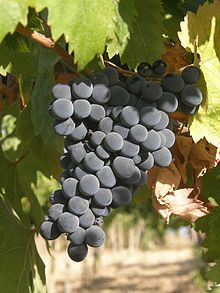
Montepulciano grapes Source: Wikipedia
The Wine Quiz series is not meant to intimidate. The whole idea here is to have fun and learn something new. When answering the questions, it is fully encouraged to use all available sources of information, including Google or any other search engine. There are no embarrassing answers – the most embarrassing thing is not giving it a try…
Welcome to the weekend and your new wine quiz!
We are continuing our grape trivia series, with the focus still on the red grapes, and today’s subject is Montepulciano.
Montepulciano is an indigenous Italian grape variety, recommended for use in 20 out of 95 wine regions in Italy, and one of the most planted red grapes in the country. The origins of Montepulciano are hard to pinpoint, with some sources citing the grape been growing on the hills of Abruzzo since the ancient times, and some sources suggesting that the grape was brought into the Abruzzo region from the neighboring Tuscany at the end of the 18th century. Also an interesting “gotcha” is associated with the name of the grape itself. It seems that the name of the grape, Montepulciano, is given after the town in Tuscany, also called Montepulciano, where the grape supposedly came from. But the problem is that the wine produced in Montepulciano has nothing to do with Montepulciano grape! Town of Montepulciano produces the wine called Vino Nobile di Montepulciano, which is made out of 100% Sangiovese grape! Yep, that’s what I call confusing.
Montepulciano is a late ripening variety, with thick black skin and relatively low acidity. It produces wines which are quite dry, with cherry and cherry pit (did you ever try to eat the content of the cherry pit?) flavors, full bodied and easy to drink. While a lot of Montepulciano wines are easy to drink but not necessarily memorable, proper care and reduced yields can result in the world-class wines. Absolute majority of Montepulciano wines are produced in Italy, with Montepulciano d’Abruzzo, Rosso Piceno and Rosso Conero probably been best known areas, but Montepulciano plantings also exist in Argentina, New Zealand and the United States.
And now, to the quiz!
Q1: In the number of regions, Montepulciano is often blended with … [name that grape]
Q2: Wine Spectator calls wines rated in 95-100 range Classic (the highest and the most prestigious category). True or False: there are no Montepulciano – based wines rated in the Classic category
Q3: From the list below, which state in US doesn’t make any Montepulciano wines of notice:
a. California
b. Maryland
c. North Carolina
d. Texas
e. Washington
Q4: True or false: from 2000 to 2010, plantings of Montepulciano in Italy increased by more than 15%
Q5: Best known Montepulciano wine comes from Abruzzo in Italy and it is known as Montepulciano d’Abruzzo. Do you know the name of the white wine commonly produced in Abruzzo?
Good luck, enjoy the quiz and your weekend! Cheers!
Last Bottle Sign Up ($10 credit)




 Talk-A-Vino