Vintage Vespa: Podere Brizio Brunello Dinner
Brunello needs no introduction for the oenophiles. Quintessential, coveted Italian wines, coming from the heart of Tuscany, made from the signature Italian grape Sangiovese (Sangiovese Grosso clone, to be precise). Brunello di Montalcino was the first area in Italy which received in 1980 the status of DOCG (Denominazione di Origine Controllata e Garantita), top quality level designation for the Italian wines; Brunello are some of the most expensive wines coming from Italy today, with some of the bottle prices exceeding $500 on the release (Biondi Santi, Soldera). Wines had been produced in Montalcino for a very long time, going back to the middle ages – it is said that King Charlemagne frequented hills and taverns of the beautiful region – however, back then Montalcino was known for its white wine, called Moscadello. In the 1600s, the red Brunello started to take over the Moscadello, and today, most of the people don’t even know that the white wines are produced in the Montalcino region, as it is the powerful reds we all associate Montalcino with.
 Podere Brizio is a relatively young estate in Montalcino, founded in 1996. The estate has about 30 acres of vineyards, practices sustainable viticulture and in the process of becoming certified organic. The grapes are harvested by hand, natural yeasts are used in the winemaking process. Folks at Podere Brizio love the Montalcino history so much that they put “10 Parpagliola coin, coined in 1556 as a symbol of the Republic of Siena in a year in which about 600 noble Sienese families took refuge in the fortress of our town in order to keep the Sienese Republic alive” on the labels of their wines. Podere Brizio produces about 50,000 bottles annually, with the whole production consisting of 3 red wines – Rosso di Montalcino, Brunello di Montalcino and Brunello di Montalcino Riserva.
Now, let’s talk about the dinner, which took place at the restaurant called Vespa in Westport, Connecticut. Not only Vespa offers delicious Italian and Mediterranean food, but the restaurant boasts a wine list which has a lot of unique and interesting wines – when was the last time you saw Erbaluce from Piedmont, Cinque Terre Bianco from Liguria, Frappato from Sicily or a “wine geek special”, Rosso del Contadina from Frank Cornelissen, Sicilian maestro of natural wines? Owner Bobby Werhane has special affinity for the uncommon wines and not afraid to put them on the wine list, which of course makes Vespa a perfect food and wine destination for any foodie and wine aficionado alike – and Vintage Vespa is the series of the wine dinners which serves as a testament to that.
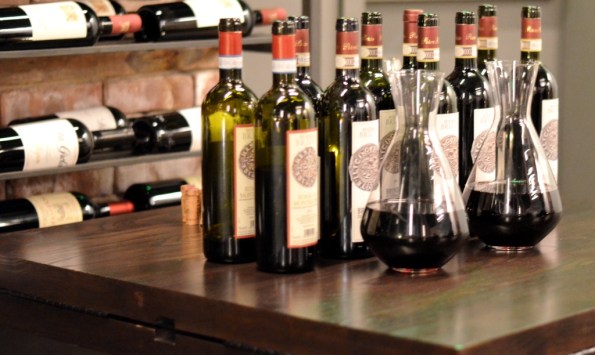
The wines made it into the decanters at some point
We tasted through 4 different wines from Podere Brizio – 2013 Rosso, and Brunello from 2010, 2007 and 2001 vintages, so in essence, this was a vertical tasting. There was one small challenge – the wines were not sufficiently decanted prior to the tasting. Brunello typically are big wines, and they need an ample time in the decanter, or they will not show all its beauty – as you will see from my tasting notes below, this is what happened.
Our dinner consisted of 4 courses. We started with Chicken Liver Pate (Red Onion Mostarda, Toasted Brioche) which had great texture and was absolutely delicious. To my surprise, 2013 Podere Brizio Rosso di Montalcino worked very well with the dish, contrasting the sweet nuances with its tart acidity.
Our second course was Ricotta Cavatelli (Braised Pork Shoulder, Tuscan Kale, Golden Raisins, Toasted Pine Nuts) – again, outstanding, touch of heat and great flavor, hearty and heartwarming (sorry, 2010 was too tight for that, so no pairing notes).


Our main course was Prosciutto Wrapped Veal Tenderloin (Pickeld Sautéed Carrots, Almond Purée) – my notes mostly consist of the exclamation points – wow! flavor! presentation!, so yes, the dish was a treat for the eyes and taste buds alike. After decanting, 2007 Brunello was an excellent complement to this dish, and 2001 Brunello worked very well too.


The desert was outstanding – Coffee Crunch Profiteroles (Mascarpone Cream, Cappuccino Gelato) – imagine a marriage of a classic Profiterole with classic Tiramisu – yep, that was good. And no, we didn’t try to pair the dessert with the wine, we just enjoyed it by itself.
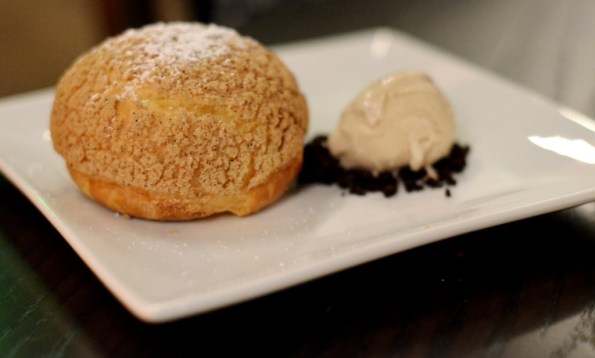 All in all, this was one delicious dinner we have to thank the Executive Chef David White for.
I did my best taking the tasting notes, juggling both delicious food and conversations with other guests, so for what it worth, my tasting notes are below:


2013 Podere Brizio Rosso di Montalcino (13.5% ABV)
C: Garnet
N: Tobacco, earthy undertones, violet
P: Clean acidity, medium body, tart cherries, blackberries, tobacco
V: 7+
2010 Podere Brizio Brunello di Montalcino (14.5% ABV)
C: Garnet
N: Violet, raspberries, blackberries
P: closed. Hint of tart cherries, but not much else
V: the wine was not decanted initially – and this is way too young, needed lots of time in the decanter. No rating.
2007 Podere Brizio Brunello di Montalcino (14.5% ABV)
C: Dark Garnet
N: Touch of plums, but mostly closed
P: Plums, nice tannins, good acidity.
V: 7+, needs time – should be decanted for at least 2 hours
2001 Podere Brizio Brunello di Montalcino (14% ABV)
C: dark Garnet, not a sign of age
N: Intense crushed berries, tar, leather, blackberries
P: Fresh tannins, great acidity, open, vibrant, great concentration and structure
V: 8/8+, just started to open, will shine in 5-10 years.
There you have it, my friends. Delicious food + Great wines = Vintage Vespa. Make sure to keep an eye on Vespa (probably their Facebook page is the easiest) so you will not miss the next wine dinner. Or better yet – head over to the restaurant and just make your own wine dinner – I’m sure you will not be disappointed. Cheers!
Vespa Westport
2A Post Rd West
Westport, CT 06880
Ph:(203) 557-9057
http://vespawestport.com/
How Not To Saber, Or May Be What Not To Saber
I know many of my readers are well familiar with Jeff, a.k.a The Drunken Cyclist, writer of the eponymous wine blog. Jeff loves Champagne, and Jeff also loves to saber those Champagne bottles – I learned from him that it is fun, and the bottle of Champagne can be sabered not only with a proper champagne sword, but with variety of household items, particularly with a wine glass.
A short while ago Jeff posted a video of his attempt to saber the bottle with a stapler. His attempt was not successful, and he ended up sabering the bottle in the “traditional” way – with the wine glass. After watching the video, I left him a smart ass comment that he used the wrong stapler, and I thought that if he would’ve used nice heavy device such as Swingline, he would have no issues prying that bottle open.
Emboldened by my earlier successes with sabering with the glass, I decided to demonstrate how pros do it, so the others would learn.
Duh…
Here is a clear proof of my failure – the only difference with Jeff’s video is that mine is shorter and not well edited (it is just no edited at all). Plus my dog was trying to voice her encouragement (nope, that didn’t work):
My embarrassment didn’t stop there. Feeling challenged by some annoying bottle, I decided to show it who is in control and brought in the nice Chef’s knife:
The end result of this exercise was damaged stapler (the bottom bent slightly, as it appears that what I considered a solid steel was just a thin steel shell on top of something soft) and damaged ego. I definitely think that my choice of sparkling wine was part of the problem, as this French sparkler from Saumur didn’t have much bubbles after all – and I think having exuberant Champagne ready to “pop” is important for the success of the sabering (however I was previously successful with non-Champagne sparklers).
Well, I might need to practice again with the glass, at least until my confidence will be restored. But what about that stapler? I know! Staple Gun is next…
Gambero Rosso 2016: Tre Bicchieri Tasting
 Now, let’s talk about most intense part of the Gambero Rosso 2016 event – Tre Bicchieri grand tasting. Both Custoza DOC and Special Awards Master Class seminars were nice and relaxing – you are sitting down, you have at least an hour to evaluate 9 wines – this is “an oenophile at ease” experience. The grand tasting though is more of an “oenophile in hell”, or if this is too strong of an expression, think of it as marathon which you have to run on the tippy-toes – yep, that level of comfort.
Let me repeat the Gambero Rosso numbers – about 50,000 wines are evaluated by the Gambero Rosso staff in a year, comprise 20,000 different labels from more than 2,400 wineries. 421 wines received the coveted Tre Bicchieri (Three Glasses) award in 2016. 193 wineries were present at Tre Bicchieri 2016 tasting in New York, which would roughly translate into about 400 wines – not all of those wines are Tre Bicchieri winners, wineries are allowed to present the wines which got two glasses awards.
This was the fourth year in the row as I attended Gambero Rosso in New York, so at this point I knew the drill – which means that there will be no rant in this post. Nothing changed – there was still a limit of one glass per attendee for the whole tasting, the wineries were still organized by the distributors and not by the regions – but again, I was ready for that before I walked into the room. I had an opportunity to look at the show guide before tasting started, so I had my targets set and thus from the moment I walked into the tasting room, I went directly to the tables I wanted to visit first (where the wines would potentially run out). This was the right strategy and it worked quite well (as you will see in the list down below).
This was also the first time in 4 years my dear friend Stefano was unable to join me at the Gambero Rosso in New York – which also changed the dynamics for me. Usually when we are together, Stefano perseveres until the very last moment, still tasting wines and taking notes. Left to my own devices, I cut it short when I felt tired. By the way, the pictures below will give you an idea how the tasting room looks like in a middle of event – I always like to take a few shots which I call “Hail Mary” – just put the camera up and take a picture of whatever it will point to. I think it will give you an idea for the event:
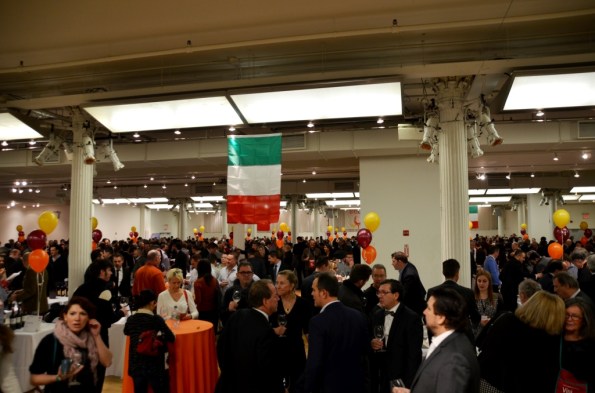
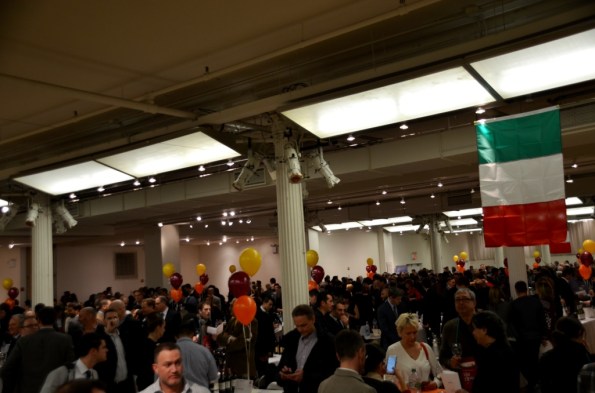 Before I will inundate you with the details on the wines I tasted, I want to offer you some of my main takeaways from the Tre Bicchieri 2016 tasting.
- Out of all the wines I tasted (90+), 4 wines were my absolute favorite:
- Tenuta dell’Ornellaia Bolgheri Superiore Ornellaia – stunning wine – young (2012), but perfectly drinkable, with the balance nothing short of amazing. Down below I will have pictures of the labels – note that starting with 2012 vintage, Ornellaia wines now will have artistic labels on portion of their bottles – 1 bottle in every 6 pack will have an artistic label.
- Eugenio Collavini Collio Bianco Broy – my favorite white wine of the tasting – beautiful clarity, impeccable balance and a bonus story
- Tenuta Viglione Gioia del Colle Primitivo Marpione Riserva – yes, I know that Primitivo is technically a Zinfandel, but I never yet tasted Primitivo which would be reminiscent of a good Zinfandel, like Turley, for instance. This wine was – fresh fruit, ripe raspberries and blackberries, playful – just an excellent wine all together.
- Rosset Terroir Valle d’Aosta Syrah – might be easily my favorite red wine in the tasting – if anything very comparable with Ornellaia in its ability to deliver pleasure. Amazing clarity of spicy fruit, just a pure vibrant note of black pepper – only a few times ever I experienced such pure expression of Syrah. Absolutely delightful.
- Very interesting how things changed in Italian wines. I tasted a number of Barolo, 4-6 years old – they were all very approachable, with good fruit and reasonable tannins – quite a departure even from the few years back. On another hand, most of the Super Tuscans were tannic bombs, with the happy exception of Ornellaia and Le Macchiole. I definitely welcome the Barolo change (will be interesting to see how those wines will age), but I think super Tuscan producers should dial down the use of the new oak – as they are, these wines need quite a bit of time to age.
- Italy is the #1 wine producer in the world (by volume) so it is not surprising that in addition to the ingenious grapes, such as Sangiovese, Nebbiolo, Montepulciano, Italians also mastered all the main international varietals – Cabernet Sauvignon, Cabernet Franc, Merlot, Grenache ( better known as Connonau), Zinfandel (yes, in the form of their native Primitivo) and now even Syrah. 3-4 years ago, I would never associate Italy with the world-class Syrah. But then was Syrah from Cartona, which is delicious, and this year’s discovery, Rosset Terroir Syrah from Valle d’Aosta, left me literally speechless in its purity of expression – and I loved it as much as I did the Ornellaia. So yes, Syrah is also squarely on the master list for Italy. Notable exception – Pinot Noir (should be called Pinot Nero in Italy), the finicky grape the world is in love with, which I yet to find to my liking coming from Italy. This will probably happen at some point, and if it does, I’m curious where and how.
Okay, now it is time to share the notes on my favorite wines. I visited about 45 tables, tasted about 90 wines. Below are the favorites – as typical for the trade tastings with lots of wines to evaluate, I use the “plus” system, where “+++” means “excellent wine”. The list below only includes “+++” or higher; I couldn’t contain my excitement and rated “++++1/2” both Ornellaia and Rosset Syrah, this is as high as I ever went. For what it worth, below are my brief tasting notes, all the wines are sorted by respective regions:


Abruzzo:
2012 Villa Medoro Montepulciano d’Abruzzo Colloie Teramene Adrano – +++1/2, delicious
Alto Adige:
2013 Abbazia di Novacela A.A. Valle Isarco Riesling Praepositus – ++++, clean, balanced
2014 Abbazia di Novacela A.A. Valle Isarco Kerner Praepositus – ++++, delicious!
2011 Elena Walch A.A. Lagrein Castel Ringberg Riserva – +++1/2, excellent, concentrated
2012 Cantina Terlano A.A. Terlano Nova Dominus Riserva – ++++, delicious! 60% Chardonnay, 30% Pinot Blanc, 10% Sauvignon
Basilicata:
2010 Re Manfredi Terre Degli Svevi Aglianico del Vulture Serpara – +++1/2, perfect, nice minerality


Friuli Venezia Giulia:
2013 Jermann Vintage Tunina – +++1/2, great complexity
2013 Jermann W…. Dreams…. – ++++, butter, vanilla, beautiful minerality
2014 Jermann Pinot Grigio – +++
2014 Eugenio Collavini Collio Bianco Broy – ++++, clean, beautiful, 50% Friulano, 30% Chardonnay, 20% Sauvignon, SRP $35, comes from the small small plot behind the house
2013 Livon Braide Alte – +++1/2, Chardonnay, Picolit, Moscato Gialo
Liguria:
2013 Poggio dei Gorgleri Rivera Ligure di Ponente Pigato Albium – +++1/2, Gunflint nose, clean palate


Lombardy:
2009 Ferghettina Franciacorta Extra Brut – +++, beautiful nose, a bit too sweet on the palate
2011 Nino Negri Valtellina Sfursat 5 Stelle – +++1/2, dried fruit, delicate, delicious. 2012 and 2014 were bad years, and no 5 Stelle wine will be produced
2008 Bellavista Franciacorta Extra Brut Vittorio Moretti Riserva – ++++, delicious, classic
Marche:
2013 Umani Ronchi Verdicchio dei Castelli di Jesi Superiore Vecchie Vigne – +++
2011 Umani Ronchi Canero Cùmaro Riesrva DOCG – +++1/2, delicious (Montepulciano 100%)
2011 Umani Ronchi Pelago Marche Rosso IGT – +++1/2, excellent (Cabernet Sauvignon 50%, Montepulciano 40%, Merlot 10%)


Piedmont:
2010 Abbona Barolo Cerviano – +++1/2, lavender, clean, wow!
2011 Marchesi di Barolo Barolo Cannubi – ++++, beautiful
2012 Michele Chiarlo Barbera d’Asti Superoiore Nizza La Court – ++++, outstanding
2011 Malvira Roero Mombeltramo Riserva – +++, nice, clean


Puglia:
2011 Tenuta Viglione Gioia del Colle Primitivo Marpione Riserva – +++1/2, wow, excellent, Zinfandel-comparable
2012 Tenuta Viglione Gioia del Colle Pri-mit-ivo – +++, excellent fruit and balance
Sardinia:
2013 Vigne Surrau Sincaru Cannonau di Sardegna – +++, excellent
2014 Vigne Surrau Sciala Vermentino di Gallura DOCG Superiore – +++
Tuscany:
2012 Poggio al Tesoro Dedicato a Walter Toscana IGT – +++, 100% Cabernet Franc
2012 Poggio al Tesoro Sondraia Bolgheri Superiore – ++++, excellent, Bordeaux blend (65% Cabernet Sauvignon, 25% Merlot, 10% Cabernet Franc
2012 Fabrizio Dionisio Cortona Syrah Il Castagno – +++1/2, beautiful nose, restrained, 100% Syrah


2012 Tenuta dell’Ornellaia Bolgheri Superiore Ornellaia – ++++1/2, wow! polished, ready
2013 Tenuta dell’Ornellaia Bolgheri Rosso Le Serre Nuove – ++++
2013 Tenuta dell’Ornellaia Poggio alle Gazze – ++++, outstanding
2010 Le Chiuse Brunello di Montalcino – +++1/2
2011 Le Chiuse Brunello di Montalcino – +++, beautiful
2013 Le Chiuse Rosso di Montalcino – +++, clean, simple
2012 Villa le Corti Chianti Classico Don Tommaso Gran Selezione – +++, excellent, soft
2012 Tenuta Sette Ponti Oreno – +++1/2, gripping tannins, wow
2013 Tenuta Sette Ponti Crognolo – +++


2012 PETRA Petra Rosso – +++1/2, good balance, Cabernet Sauvignon/ Merlot blend
2012 Le Macchiole Paleo Rosso – ++++, outstanding, 100% Cabernet Franc
Valle d’Aosta:
2013 Rosset Terroir Valle d’Aosta Syrah – ++++1/2, wow, perfect, spicy nose, clean, wow! 100% Syrah


Veneto:
2011 Tenuta Sant’ Antonio Amarone della Valpolicella Campo di Gigle – +++, closed on the nose, well present tannins, but balanced
2011 Viticoltori Speri Amarone della valpolicella Classico Vign Sant’Urbano – +++, good, round
2009 Masi Amarone della Valpolicella Classico Campolongo di Torbe – ++++, delicious!!! (yeah – single vineyard at about $150 retail)
2014 Valdobbiadene Brut Rive di Col San Martino Cuvée del Fondatore Graziano Merotto – +++1/2, nice complexity
2012 Vignalta Colli Euganei Fior d’Arancio Passito Alpianae – +++
Restaurant Files: A Bistronomie Experience, or Brunch at Noir Stamford
No, “Bistronomie” is not defined in Merriam-Webster, not yet anyway, but I expect that you have no problems understanding its meaning – a Gastronomy experience in a Bistro setting, right? It also means that you can eat dessert when you want, but we will talk about it later. Before we continue, I have to give the usual warning – there are lots of food pictures ahead, proceed at your own risk (not sure if “risk” is a right word, but I’m sure you got my point).
Welcome to the recently opened Noir Restaurant in Stamford, Connecticut, which identifies itself as an American Bistronomie. The restaurant looks nice and cozy from the moment you enter, sporting dark quiet decor with interesting paintings on walls – your brain tells you “ha, that looks interesting”, putting you into the right mood, or rather anticipation, for the food to come.


We visited restaurant for Sunday brunch, so what do you typically start your brunch with? Let me rephrase this: when greeted with “what would you like to drink” as you get situated [during brunch], what is the first thing which comes to mind? You might be better than me, but my brain stops at a very pedestrian “mimosa!”. The mimosa was very tasty, but then I actually noticed the cocktail menu – small, but each item on the list looking very intriguing. I had an opportunity to try a number of cocktails and they we all very creative and delicious – and needless to say, visually appealing. I can’t even name a favorite cocktail – well, may be 3 favorites – The Jazzy Latina, The Cabo Mule and The Piscomatico – as I was going from “wow” to “excellent” and back to “wow”.


Our brunch started somewhat traditional with Devilled Eggs (caper aioli, bacon, pimentone) – I love devilled eggs, so I really had to contain myself to behave (meaning: not to move half of the serving dish into my plate), also this was just the beginning of the meal. The dish was very tasty, and as we eat with our eyes first, I can’t help not to commend the presentation.


Our brunch continued – first surprise – with Fresh Fruit with Yogurt. A peculiar side note: few days ago, I read an article suggesting that we eat our fruit all wrong at the end of the meal, which is not right for our digestive system, and instead, we should start our meal with the fresh fruit. I can’t really comment on that, but I can tell you that the fruit was nice, fresh, ripe and tasty.


Next up – Biscuits and Gravy (Homemade buttermilk biscuits, savory sausage gravy). I don’t know even how this works – I don’t have strong cultural connection to the South, where this would be a typical dish – but I love fresh biscuits and savory gravy – this dish was superb. The dish which followed was Pastelon (sweet plantains, seasoned beef, mascarpone cheese), and it even prompted me to do a little research – it appears that “Pastelón is a sweet and salty Puerto Rican version of lasagna or casserole”. I can easily see the similarity with lasagna – the dish had nice layers. I have to also say that it was not overly sweet.


At this point we are in a middle of our meal, and the next up is … remember what I told you before about the Bistronomie? Well, it is not that it is mandatory feature, but yes, we arrived at the dessert in a middle of our meal! First we had Monica’s French Toast (caramelized challah bread, Grand Marnier, browned butter), which was delicious, and it was followed by Banana Foster Griddle Cakes (spiced pancakes, caramelized bananas, praline pecans) which was “please give me a big spoon and everybody leave the room”.


Done with dessert, back to savory! Eggs Benedict, anyone? Isn’t it a classic brunch dish? Yes, I think so. And topped with a little crab? Yes, I know I’m now talking. Crab Eggs Benedict (jumbo lump crab, toast English muffin, hollandaise) – outstanding.


Following an American classic (I always think of Eggs Benedict as a French dish, but it was actually created in the USA) was another Southern specialty – Crispy Chicken and Waffles (home fried crispy chicken, jalapeño maple syrup). I have to tell you that chicken was crispy and tender, and jalapeño maple syrup was simply a stand out. Then we were served Short Rib Hash (slow braised short rib, home fries, fried egg) – isn’t fried egg makes everything look and taste better? I think it does. Overall, this was very tasty dish with one little gripe – the short rib itself was too salty – for sure for my personal taste.


Finishing up on the high note was one last dish, yet another Southern classic – Shrimp and Grits (Cajun Herbed shrimp, creamy grits). While shrimp were perfectly cooked and very tasty, the creamy grits were simply out of this world.


All in all, this was a spectacular meal, and I can’t recommend Noir Bistronomie high enough as location for your next dinner, brunch or simply a place to have a drink at. And before we part, I also would like to thank Chef Francisco Ciciliano who came to speak to us for a few minutes at the end of our food journey.

And of course I have to acknowledge and thank the staff at Noir Stamford for all the wonderful drinks and for taking great care of our group.
So, what do you think about the Bistronomie? Are you going to ask for it now by name? Cheers!
Noir Stamford
225 Summer Street
Stamford CT 06901
Ph: 203.323.2711
https://noirstamford.com/
Hours:
Tuesday thru Thursday 5PM – 10PM
Friday & Saturday 5PM – 11PM
Sunday Brunch 11:30AM – 3PM
Gambero Rosso 2016: Master Class – Special Awards
I recently wrote about discovering the new Italian wine region at the seminar at Gambero Rosso 2016 event (Custoza DOC). Following that was another new event for me – Vini d’Italia 2016 Special Awards Master Class.
More than 50,000 wines are tasted by the Gambero Rosso experts for each annual edition of the publication, which comprise more than 20,000 labels from 2,400+ wineries. In 2016, which was the 29th edition of the Gambero Rosso guide, there were 421 winners of the prestigious Tre Bicchieri status. In parallel, while the work is done to assess the wines for the Tre Bicchieri status, the wines are also considered for the Special Awards which are give in the 9 special categories – take a look at the picture below, this was our printout for taking the notes:

If you would look at my notes below, you would see that my opinion didn’t always match the designation of the wine – which is only important as an illustration to the point I always make when talking to the people who are afraid not to like the wine where someone else (an expert) said that the wine outstanding. Each palate is different, and your good wine is what you like, not someone else…
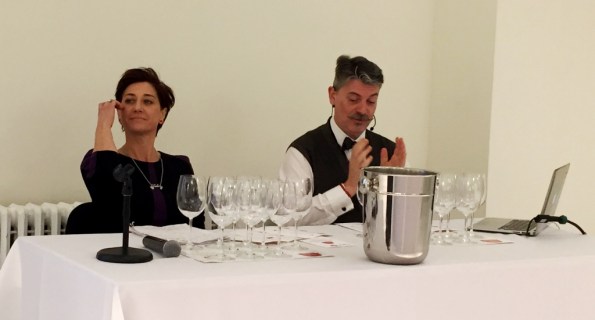
The presentation was led by charismatic Marco Sabellico, Senior Editor of Gambero Rosso, and Eleonora Guerini, Curator of the guide “The Wines of Italy” by Gambero Rosso:
Here are my notes:
Category: Sparkler of the year
2006 Ca Del Bosco Franciacorta Dosage Zéro Noir Vintage Collection Riserva
C: Gold
N: yeast, bread, concentrated
P: great complexity, yeasty, refreshing, crisp acidity
V: 8, excellent sparkling wine
Category: Best value for money
2014 Terre Stregate Falanghina del Sannio Svelato Campania ($10)
C: light golden
N: beautiful concentrated nose, sweet, concentrated, musk aroma
P: clean, good acidity, lots of musk undertones, spicy pear
V: 7, a bit too much on the palate
Category: White of the year
2014 Schiopetto Collio Friulano
C: light golden
N: light fruit notes, fresh, touch of minerality
P: nice, restrained, white stone fruit, good acidity, good balance
V: 8-, nice aging potential
Category: Award for sustainable viticulture
2013 Manincor A.A. Terlano Sauvignon Tannenberg Trentino-Alto Adige
C: straw pale
N: vanilla, butter, petrol
P: delicious play of fruit, restrained, tropical fruit, vanilla, playful, great acidity
V: 8, my favorite white wine of the tasting
Category: Red of the year
2012 Pietradolce Etna Rosso Vigna Barbagalli Sicily (15% ABV)
C: red brick
N: volcanic, smoke, red fruit
P: nice tannins, fresh red fruit, a bit astringent, long finish
V: 8, needs time
Category: Grower of the year
2012 Ca’ del Baio Barbaresco Asili
C: dark Ruby
N: fresh fruit! Strawberries, raspberries, violet, wow
P: excellent balance, fresh tannins, good red fruit, but really tannic finish
V: 8, will improve
Category: Up-and-coming winery
2012 Guado al Melo Bolghery Rosso Superiore Atis (Cabernet Sauvignon 60%, Cabernet Franc 20%, Merlot 20%)
C: dark Ruby, almost black
N: “Rutherford dust”, black currants, eucalyptus
P: powerful tannins, firm structure, fruit is layered under, very powerful wine overall
V: 8-, definitely needs time
Category: Winery of the year
2011 Allegrini Amarone della Valpolicella Classico
C: dark Ruby, almost black
N: dried fruit, roasted meat
P: nice concentration, powerful tannins, tar, tobacco, alcohol burn on back end
V: 7+, needs more balance…
Category: Sweet of the year
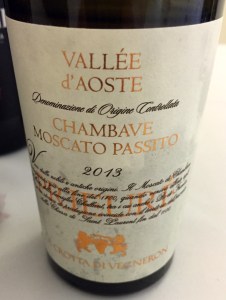
2013 La Crotta di Vegneron Valle d’Aosta Chambave Moscato Passito Prieuré
C: golden
N: beautiful, clean, candied apricots, candied orange
P: perfect balance, clean fruit. Yes, it is sweet, but it has perfect acidic backbone, and it doesn’t overpower the palate.
V: 9, outstanding. Yes, I’m a sucker for the good sweet wines, you can call me that.
As you can tell, the dessert wine was my favorite wine of the tasting – well, you can read anything you want into that…
In the next post, I will be talking about Gambero Rosso Tre Bicchieri tasting itself, so until the next time – cheers!
To be continued…
New Versus Old – Is Wine World Upside Down?
This post is an entry for the 23rd Monthly Wine Writing Challenge (#MWWC23), with the theme of “New”. Previous themes in the order of appearance were: Transportation, Trouble, Possession, Oops, Feast, Mystery, Devotion, Luck, Fear, Value, Friend, Local, Serendipity, Tradition, Success, Finish, Epiphany, Crisis, Choice, Variety, Pairing, Second Chance.
New. We all crave, adore and worship new in our lives. New experience. New restaurant. New baby. New job. New car. New iPhone. New house. New puppy. Add “new” to practically any object, and it instantly becomes something exciting.
The “new” is not limited to the things and objects. New ways constantly appear, and we embrace them wholeheartedly. New technologies and new processes are born every day. Self-driving cars. 3D printers. We store our pictures in the cloud. It’s all new, new, new around us.
We love new so much that “old” becomes almost en expletive. We might attach “old” to the experiences, but not to the objects! Think about it. When you are looking for the used car, the dealer will refer to such a car exactly like that – used. She might even say “almost new” or “gently used”. But you will never hear from the dealer that they want to offer you this old car – unless you are in the market for antiques – but even then “old” descriptor will be avoided. Or let’s say you are looking for a house. Ever heard agent saying “let me show you this old house“? We learn to be afraid of the world “old”, as we don’t want to get old ourselves.
 Talking about wine world, the word “new” is exciting as in any other aspect of our lives. In essence, the whole wine world is built on the concept of new – ever year there is a new harvest, and a new wine will be produced from the grapes of that new harvest. New labels are made for the wines. New wineries are founded. New tasting rooms are built. New vineyards are planted. New processes are invented to press the grapes, to ferment them, to preserve wines, to bottle. New packaging (wine in a can, anyone? wine on tap?). New is a most prominent concept in the wine world.
But the concept of “old” is ohh so different when it comes to wines. “Old” in the wine world commands such a respect that we might not find in any other areas of human life. Let’s start in the vineyard. So you planted a new vineyard? Great. Now you need to wait until it will become old, as for the most of vineyards you need to wait at least 3-4 years before they will produce fruit suitable for winemaking. And that vineyard has to become old in the natural way, just by letting the time pass – there is no magic bullet.
To top it off, the older vineyard gets, the better it is. Ever seen the words “old vines” on the bottle? May be viñas viejas? Or how about vieilles vignes? These words mean exactly what they say – that this wine was made from the grapes harvested from the vineyards which had been around for a long time – 20 years, 30 years, 60 years, 100 years. The term “old vines” is typically not regulated, so there is no way of knowing exactly how old the vines are – but often the back label will give you that information. Very often that “age” is also reflected in the price – the older the car, the less it costs – but it is exactly opposite in the wines – the older the vines are, more expensive wine becomes (older vines yield less grapes with higher flavor concentration = tastier wine).
“Old” doesn’t stop in the vineyard. Lots and lots of wines are aged before they are released – both by law and by the desire of the winery. By law, non-vintage Champagne have to age for a minimum of 15 month, and vintage Champagne for at least 3 years – in reality, most of NV is aged for 2-3 years, and vintage is typically 4-10. By law, Rioja Gran Reserva requires at least 5 years of aging before the release. By law, Brunello Rieserva can be sold not earlier than 6 years after the harvest. Many of the wineries in California offer so called “library releases”, when the wines are aged for you in the winery’s cellar in the ideal conditions. Some wineries in Bordeaux sell their wines only 10 years after the harvest, including First Growth Chateau Latour, which recently declared that “vintages will be released when the chateau believes they are ready to drink”. Let’s go down all the way – how about some 100 year old Para Vintage Tawny from Seppeltsfield in Australia, which is released … yes, 100 years after the vintage date.
It is not that “old” is unquestionable winner in the world of wines. More often than not, “new” and “old” are clashing – sometimes in amicable ways, sometimes – not so much. One of the simplest “conflicts” – new oak versus used oak. This, of course, is what making winemakinng an art, as there is no hard and fast rule to when to age wine in old oak barrels versus new oak – each has its own benefits. Another form of the simple “conflict” is an internal fight which oenophile endures trying to decide when the wine from her cellar is ready to drink – there is also lots of good bad advice coming from all the wine professionals and the media – and we still are trying to figure that magical moment when the wine is perfectly “old“, or rather “aged” as we like to say, to maximize our pleasure. And then you got all those violent clashes between old and new – think about “traditional Barolo” versus “new style Barolo”. Think about fight for the Super Tuscans, attempts to introduce the new grapes in Brunello, or just any winemaker trying to do something new against the rules of the appellation.
Now, what do you think? Is wine world upside down for the new and old? Is there anything else which humans do where old commands equal or greater respect than new? Cheers!
Taste of Stamford 2016
 City of Stamford (that is in Connecticut, not in England) sports vibrant “wining and dining” scene, with more than 300 restaurants (321, according to TripAdvisor – not bad for a city of about 126,000). City of Stamford also is well known for its business culture and as one of the biggest financial hubs outside of New York city, with Stamford Chamber of Commerce always hard at work to have all the businesses and people well connected. To showcase the love of good tasty food and wines, Chamber of Commerce organizes annual event called Taste of Stamford, which brings together purveyors of the fine food and willing patrons of the same, now in 23rd reincarnation.
I had a pleasure of attending the Taste of Stamford event, which took place last Thursday, and sample offerings of many Stamford’s fine restaurants. Even as portions were perfectly sized, it was literally impossible to taste everything – yes, “too much of a good thing” is real. I tried my best, but yes, failed. There were also good number of wines, beers and even some scotch – I limited myself to the wine only, and there were few nice discoveries there. So what I have for you here is [a very long] collection of pictures from the event – yes, most of them are about food, so if you are hungry, proceed at your own risk.
I also want to share an interesting observation – it seems that Southern Cuisine is a king (a queen?) in Stamford – the amount of pulled pork and grits in various reincarnations coming from many different restaurants was staggering – not something you would see even 5 years ago. Or may be pulled pork is the easiest tasty dish to make in the mass quantities – don’t know, but this is an interesting fact any way you want to look at it.
In no particular order, here are some of my highlights from the Taste of Stamford 2016 event:
Brown Dog Fancy Mustards – a very interesting collection of mustard, available in the number of locations in Stamford or over mail order ( free shipping). Horseradish was good, and Honey Dijon was particularly distinct, with expressive taste of honey clearly coming through.


Amore Cucina & Bar – tasty pork belly with polenta:


Sign of the Whale – were serving tasty Ahi Tuna Tacos and oyster shooters:


Judy’s Bar & Kitchen – very tasty pulled pork and Mac’n’Cheese:


David’s Soundview Catering – shrimp and grits, pulled pork and grits – delicious!


The Capital Grille – serving their famous Lobster Mac’n’Cheese and Kona crusted Filet Mignon (tasty!!):


Franklin Street Works offered a nice selection of the bite size appetizers:


Kona Grill – tasty sushi rolls, excellent presentation:


Columbus Park Trattoria – Italian all the way!


Olio Restaurant, Cantina Southwest Grill & Tequila Bar and Tawa all had tasty dishes (curry chicken from Tawa was spectacular):


One of the biggest surprises for me was the display from the local chain of supermarkets, ShopRite. We like ShopRite bakery very much, this is where we get most of the birthday cakes for various family occasions. It appears that ShopRite also offers great selection of the party platters. And the sushi which they were making right there at the event were outstanding:


BevMax, one of the biggest wine stores in Stamford, provided most of the wines at the event. I tasted a number of wines, and most of them were quite good. There were a few of Cabernet Sauvignon wines presented at the event – 2014 14 Hands Cabernet Sauvignon Columbia Valley, 2013 Joseph Carr Cabernet Sauvignon Napa Valley and 2014 Iron Side Cabernet Sauvignon California – all very tasty, with good classic profile. My favorite wine was 2013 Gnarly Head 1924 Double Black Limited Edition California, “A dark red blend inspired by the field blends made popular during Prohibition.” – while powerfully boasting 15% ABV, the wine was smooth, polished and perfectly balanced.


And last but not least – dessert! Di Mare Pastry Shop stand had Cannoli 10 ways (okay, may be not 10, but lots of them in any case), and lots of other pastries – if you like cannoli, this was a cannoli paradise:


That is all I have for you, my friends – definitely was one tasty evening. Cheers!
OTBN 2016: Two Spanish Jewels, And What The Others Opened
 I don’t like making decisions. Here, I said it. Not around the wines for sure. But I have a justification for this indecisiveness – and I’m sure many oenophiles will attest to the same. You see, I like to drink aged wines. Despite popular notion from many wine professionals that people don’t understand what is good for them and should drink their wines young (here is the latest piece from Steve Heimoff on the subject), I still like my wines with a little age on them. Heck no, I actually like them well aged. But most wines in my cellar are in the single quantities (yes, that means One bottle) – therefore, if I open it, I will not be able to find out if it will improve with age. As you can imagine, this can lead to many, many “indecisive moments”.
So for the people like myself, Open That Bottle Night was invented. I will not go again into the history of the OTBN – I already wrote about it extensively here. But the event itself really makes you to take decisions and “just do it”.
Yes, the decision making is frustrating. But once decision is made, frustration is out and anticipation and excitement are in. It would be so interesting to understand how the mind (subconscious?) arrives at a decision where there are lots of possibilities, all promising similarly happy outcome (in the end of the day, no matter what bottle you will open, as long as it is not spoiled, you will still be happy – with a 99% chance). Someone really have to study how the oenophile’s mind works. So in this mysterious way, all of a sudden the decision came to open two of the Spanish wines I had for a little while. To be absolutely honest – first I decided on those two wines, then I started figuring out what was making them special – and these wines are special.
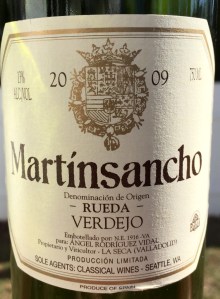 How special? Both wines were made by pioneers, and they represent true passion and vision which makes winemaking so unique. The first wine was called Martinsancho, made out of the grape called Verdejo in Rueda, Spain. Martinsancho is the name of the vineyard in Rueda, where Verdejo had been planted since 17th century. But you see, in the mid 1970s, the whole size of the vineyard was only 1 acre, and it was pretty much the last of Verdejo left in Spain, due to natural (phylloxera) and man made (political, economic) causes. Angel Rodriguez had a passion, vision and tenacity to preserve that vineyard, replant the original cuttings on the 25 acres, and literally single-handedly restart Verdejo production in Rueda. Angel Rodriguez’s hard work was even honored by the King of Spain Juan Carlos.
How was the wine? One word – delicious. One of the very best Spanish white wines I ever had. Here are the notes:
2009 Ángel Rodrígues Martinsancho Verdejo Rueda DO (13% ABV, $17, 100% Verdejo)
C: light golden, very pretty
N: restrained, touch of grass, minerality, almonds
P: great deal of finesse, it is smooth, silky, good acidity, medium to full body, elegant
V: 8+, great world class wine
Our second started with this view once the top foil was removed:
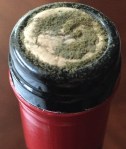 From my experience, this doesn’t mean the wine is spoiled (at least so far it never happened), but it still makes you uneasy – there are no substitutes in this game. This was the only hiccup though, the wine itself was unaffected.
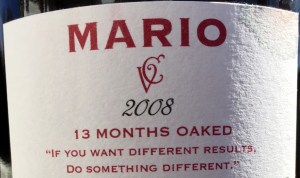
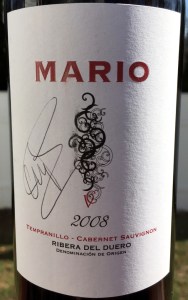 Similar to the first wine, this one was also a product of a passion, a dream. Clara Concejo Mir inherited the vineyard from her grandfather Mario. Located at the high altitude of 7,750 feet, this is first vineyard in teh Ribera del Duero region; the vineyard is also adjacent to the vineyards of legendary Vega Sicilia. While Tempranillo is a king in Ribera del Duero (often called Tinto Fino), Clara also had a vision to add Cabernet Sauvignon to her wine which she called Mario (yes, in honor of her grandfather). She also had perseverance to lobby the regulatory body of Ribera del Duero to allow officially put Cabernet Sauvignon on the label of the Ribera del Duero wine. The rest of this can be subsided to a moan which you will produce upon taking a sip of this wine.
2008 Vegaclara Mario Ribera Del Duero DO (13.5% ABV, $25, 77% Tempranillo, 23% Cabernet Sauvignon, 13 month in oak – 33% French, 33% American, 33% Hungarian)
C: dark garnet
N: fresh berries, touch of barnyard, eucalyptus, black currant
P: yum! (is that a good descriptor?) silky smooth, polished, great depth and concentration, black currant, dusty mouthfeel, flawless, perfect balance
V: 9, a wine of an outstanding finesse
Now that I told you about wonderful wines and passion we experienced, I want to give you a glimpse into what the others were drinking. First of all, I was very happy to see an increased number of posts about OTBN all over the social media – or as at least it seemed as an increased number of posts to me. And then over the course of the week I inundated lots of people on Twitter, keep asking them what are they going to drink (and making sure they will remember about OTBN) – I hope it didn’t cost me any followers, but oh well, it is a good cause. So below is a small collection of tweets plus some blogs posts about the OTBN wines, in no particular order:
https://twitter.com/FWHedonist/status/703811785808179200
Wine Raconteur wrote about the wines he will not be opening for OTBN:
https://thewineraconteur.wordpress.com/2016/02/27/open-that-bottle-night-2/
Margot Davies: (by the way, I would really love to try that wine)
https://twitter.com/gatherandgraze/status/702622651668262912
These are the snippets of conversations I had about #OTBN – I’m sure I missed some too. So what did you end up opening for OTBN and did you like your choice after the cork was pulled out? I would love to know – you know where the comments section is.
Before we part, I want to remind you that actually you have the power to make any night an Open That Bottle Night – no need to wait a year to open That Bottle. Just do it! Cheers!
Daily Glass: Buy By The Name, Remember By The Taste
Winemakers must be some of the most creative people in the world. It is not enough to make a tasty wine (well, at some point it is – it is not easy to reach that point though, not at all) – but the wine also have to make it into a consumer’s hands – yep, someone have to buy it. Selling the wine is not easy, as you need to differentiate from hundreds and hundreds of seemingly indistinguishable bottles. To get there, winemakers have two primary choices of weapons – the label and the name.
I’m a sucker for a good wine label, but right now I just want to talk about the name. Have you ever heard the name of the wine and said “this is it, I must try it”? I had, a number of times. And the wine I want to talk about was exactly such a case.
When I saw the name “Rhapsody En Blu”, somehow, it was speaking to me. I didn’t care what kind of wine was that, what grapes it was made of or what region it came from. The name alone was enough to incite the desire. I don’t remember when did I see this wine name for the first time, but ever since I did, I was on a lookout for it. So when I saw it at the last Last Bottle Wines “everything must go” marathon, my fingers were moving really, really fast – and I got the bottle.


I was tempted a few times to open it, and then Friday night seemed to be a good enough occasion (or may be it was the fact that it was an eve of OTBN). The cork is pulled out, wine goes into the glass. I take a sniff and “oh my god” was the only thing I could say (my wife can attest to this). The smell was exuberant without going overboard – crushed berries, crushed rocks, underbrush, spices, all together warm, inviting and – harmonious. The taste perfectly supported the aroma – gentle ripe fruit, plums, smoke, roasted meat, touch of pepper – perfect acidity, good structure, good power, and once again, perfect balance and – perfect harmony.
According to the Wikipedia, “a rhapsody in music is a one-movement work that is episodic yet integrated, free-flowing in structure, featuring a range of highly contrasted moods, colour and tonality. An air of spontaneous inspiration and a sense of improvisation make it freer in form than a set of variations.” Tasting this wine, that “spontaneous inspiration” and “improvisation” were very easy to relate to.
This wine, 2012 R Squared Wine Company Rhapsody En Blu Red Rhone Blend, Santa Barbara County (14.1% ABV, 42% Grenache, 38% Carignan, 20% Mourvedre) is produced by the R2 (R Squared) Wine Company which makes both blends and single varietal wines from multiple appellations in California. If you care to know, my Drinkability rating for this wine is 8+.
I don’t know if the great match between the name and the wine itself was the accident or a prophecy, but I can tell you that I strongly regret buying only one bottle of this wine. Not sure if you can find it (total production was only 475 cases), but if you will, don’t repeat my mistake.
There is also one more bonus which comes with this wine – it is very easy to pair with music. And the matching pairing should be … yes, Gershwin’s Rhapsody in Blue! If you can’t find the wine, you can at least enjoy the music. Cheers!
Open That Bottle Night 2016: What Wine Are You Going To Open?
Open That Bottle Night (OTBN for short) is an [international] phenomena created by Dorothy Gaiter and John Brecher, the writers of the hugely popular “Tastings” wine column in Wall Street Journal for more than 10 years. Once inundated with the questions “what is the right time to open this [special] bottle”, they designated last Saturday of February as the day when oenophiles should really pull the plug cork on that bottle which was stored until the “special day” would arrive. Only most of the oenophiles have a problem deciding if today is already special, or not special enough.
With the idea to encourage oenophiles to finally reach for That Bottle, Dorothy and John invented OTBN back in 1999. From there on, the OTBN was steadily increasing in popularity not only in the US, but around the world, with people getting together for the special OTBN parties and dinners, and restaurants offering discounts and special menus.
Last November, I had a pleasure of meeting Dorothy and John at the Piper-Heidsieck Vin Clairs tasting in New York, which I attended together with Jeff, better known as The Drunken Cyclist. As part of conversation with Dorothy we also touched on the subject of OTBN. To my surprise, I got an email from her two weeks ago asking for my thoughts on selecting the wine for upcoming OTBN, which will take place this coming Saturday, February 27th. I gave her somewhat of a mumbling answer, which was included into her OTBN 2016 post in the Grape Collective Magazine, together with the similar input from Jeff.
Let me tell you why you and every other oenophile should take part in OTBN and open That Bottle now. Two reasons:
- Wine might not be any good
- You might not be any good
I’m not trying to be overly dramatic or use scare tactics of any sort. This is simply what is called “life”.
Think about that prized wine bottle. May be you brought it from your honeymoon trip or anniversary trip, great cruise or an amazing vacation in the vineyards. Since it made it to your house, was it ideally stored? Was it Barolo, Bordeaux or Chablis, which can age great without much regard to the producer or a vintage? Or was it delicious Rosé from Provence, sumptuous red Cotes du Rhone or a playful Vouvray? Chances are, even in ideal conditions, those wines will not last for too long. The whole idea behind those “special” wines is that they are connected to our emotions and memories, and when we drink them we get to re-live the joyous moment of the past – but you do want the wine to match the taste as you remember – and if it doesn’t, well…
The second issue is also a problem. Take a look at Jeff’s post about meeting Dorothy and OTBN, and take a look at the source of his second possible choice of the OTBN wine, the ’85 Inglenook – he got it from someone who could no longer drink wine due to the medical reasons – and that person was devastated about it, as any of us would under his circumstances. Your health can change, your palate can change – do you really want to risk the joy of having a great glass of wine by not been able to find the “ideal moment”?
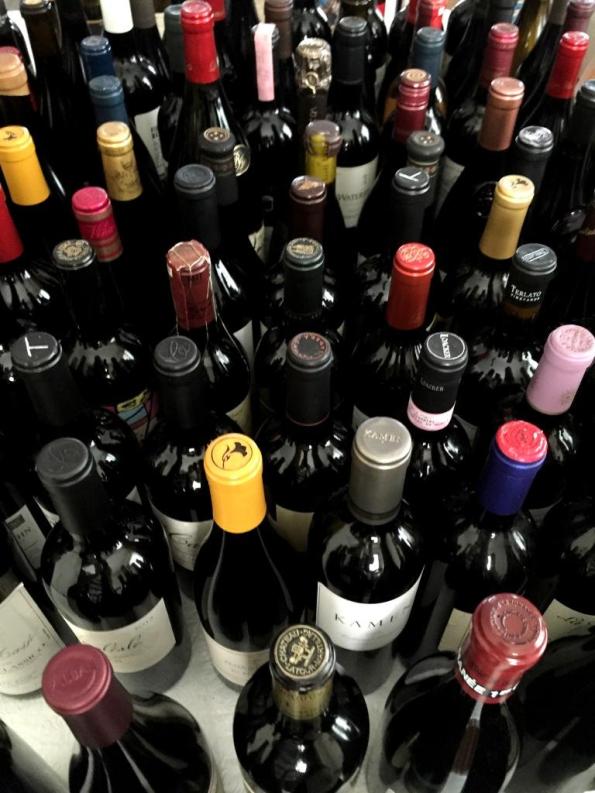
Still undecided? Think about it this way. Opening of That Bottle for the OTBN is a win-win, it always is. First, you get to drink the wine you always wanted to drink. Second, with opening of the bottle you are actually not losing anything – on contrary, you are gaining a great experience. If the wine is good, you are transported to the past, you get to re-live “the moment” once again – and create a new memory for the future. If the wine is not good, or not as you recall – you still create a new memory, and you can move on to your next “special bottle” (pleeease, don’t tell me you had one and only one, okay?).
Don’t know if I succeeded in convincing you, or if you even needed to be convinced, but I hope you will decide and open that special bottle, no matter what makes it special. And then I also hope that you will leave me a comment and tell me what you are planning to open or what you had for OTBN, as I’m dying to know.
As for me, still need to make up my mind – there are lots of choices, so I’m sure it will be a last minute decision, but rest assured that the special bottle will be open – and I promise to tell you all about it. Enjoy the OTBN, and don’t overthink it – just do it! Cheers!
Last Bottle Sign Up ($10 credit)




 Talk-A-Vino