Restaurant Files: Dazzling Flavors of Tawa in Stamford, Connecticut
 As a self-proclaimed foodie, I pride myself with having no favorite cuisine or a type of restaurants – when asked “which restaurant would you prefer for dinner”, my typical answer is “I eat everything”. It is true, of course, but may be not entirely. One example – Indian cuisine. This might be on the subconscious level, as one of my very first encounters with Indian food happened on the “Indian hot” spiciness level, which leaves some unforgettable scars on the uninitiated, but an Indian restaurant would not likely be my top choice given a list of possible dinner options.
But again, as a foodie, I feel almost obliged to work over my own limitations, and keep trying different cuisines. Thus when I was invited to visit Tawa Indian Cuisine restaurant in Stamford, I saw a great opportunity to deep dive into the Indian cuisine once again and see what I might be missing.
I loved the decor at Tawa – quaint and sophisticated, very tasteful. Nothing is really glaring at you that you are in an Asian restaurant, not even aromas in the air.


Once the dinner started of course there was no question of what kind of food is in front of us. I will give you a detailed account below, but to describe the experience as a whole, I have to mention the perfect balance. The food had brilliant colors, and none of the dishes where shy on flavor – this is why I called this post “dazzling flavors” – but all the spiciness was balanced, it was like a perfect dance, where you mesmerized by the perfection of movement and forget the time. This was also explained by the Chef Kausik Roy – his goal was to present the variety of flavors of the cuisine of the vast country without overwhelming – and this was clearly showing in the food we had an opportunity to taste.
This was my second encounter with Chef Roy, and I love the fact that I get to learn something interesting from him. Last time I was learning about curries, this time it was cilantro. It appears that cilantro is used in the 95 out 100 Indian dishes, so it is a very important herb. But what is interesting is how you use it. When I use cilantro, I would chop mostly just the leaves with a bit of the stems, and add them at the very end of cooking. But to extract the deep flavor, you need to use whole stems and simply cook with them from the beginning.
Okay, let’s talk about our dinner. We started with the cocktails (yep, in Indian restaurant), and they were tasty. I generally don’t like overly sweet cocktails, and from the description I was a bit concerned that they might be – but both Watermelon Ginger Margarita (Tequila, Ginger, Watermelon Syrup, Dekuyper Triple Sec, Lime Juice) and Tawa Madras-Tini (Ketel One Vodka, Mango Juice, Dekuyper Triple Sec) were just excellent, not very sweet; Watermelon Ginger Margarita had very nice level of spicy heat with it.


Tawa offers somewhat small, but well thought through wine list. We had 2013 Saint M Riesling Germany, which had a touch of sweetness and bright acidity, excellently complementing many dishes. We also wanted to have a red wine with the dinner, and I was very happy to find 2013 If You See Kay Red Blend Lazio IGT, Italy on the list – one of my perennial favorites, with great concentration of the dark fruit and good acidity, this was definitely an enjoyable wine.


We started our dinner with Tawa’s Signature Tropical Mango Salad (Tropical mango, baby greens, Mango onion seeds dressing), served with a crispy naan – fresh and light, good way to start the dinner. Next up was Mulligatawny Soup (Yellow lentil soup, finished with coconut cream and fresh lemon), made with the vegetable broth and finished with a touch of yogurt. Mulligatawny actually means “pepper water”, so it is supposed to be very spicy, but this is not how Chef Roy does it. Soup was delicious, and a double treat considering cold and rainy weather outside.


Next dish was Aloo Tikki Chaat (Indian spiced potato patties topped with garbanzo beans, tamarind chutney, raita & roti crisps) – great spices, delicious and then Coconut Pepper Shrimp (Lightly battered shrimp, smoky black pepper, chutney mayo), with that chutney mayo been pretty spectacular. Last one of our appetizers, Indo Chinese Lasuni Gobi (Crispy cauliflower florets tossed with tangy tomato garlic sauce and spring onion), not only had an amazing crunch, but also texturally was indistinguishable from nicely cooked meat. Wake me up at any time and offer me this dish – I would be super-happy.


Our dining extravaganza continued with selection of Naan, an Indian bread which is one of my absolute favorites (I have to always stop myself from devouring the whole “basket”), following by Kebab Platter. Grilled pieces of chicken, lamb and salmon were colorfully presented on the wooden board, and the taste was on par with the presentation – tender and flavorful.


The main selection of our dinner (like what we already had was not enough, huh) consisted of the various Curry dishes – both traditional vegetarian and meat dishes were included in the selection. Everything was perfectly cooked, and all the sauces were absolutely delightful. My favorite meat dish was Signature Lamb Dampak (Tender lamb cube cooked in a sealed copper vessel), starting with the “opening ceremony”:
We also had Chicken Sahi Korma (A true Mughlai delight, lightly sweet and spicy with flavor of cardamom), Shrimp Madras (tomato coconut curry tempered with curry leaves and mustard seeds) and Goat Roganjosh (Tender Bone in goat meat cooked in onion & tomato gravy flavored with spices), followed by equally traditional Sag Paneer, Crispy Okra (my absolute favorite!), Yellow lentils and Matter Paneer:


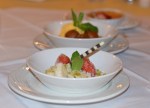
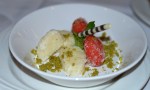
The trio of desserts nicely concluded our deep immersion into the Indian cuisine:


That’s all I have for you, my friends. This was a great journey into the world of Indian cuisine, and with the masterful execution by Chef Kausik Roy, I can’t recommend Tawa highly enough. Definitely a deviation from the every day food for many people here in the US, but I’m sure your taste buds would appreciate a different flavor, and you will enjoy the experience. And if you are already accustomed to the flavors of the Indian cuisine, come and taste what the Tawa has to offer. Cheers!
Tawa Indian Cuisine
487 Glenbrook Rd
Stamford, CT 06906
Phone:(475) 299-9973
http://tawaonline.com
Here is What You Probably Missed – Last Bottle Wines 5th Anniversary Marathon Madness
The Last Bottle, purveyor of the fine wines at a great value prices, is turning 5 (5 years old it is), and to celebrate this occasion, Last Bottle does it in their best possible style – by giving away offering crazy amount of crazy wines at crazy prices in the format of their inimitable Marathon Madness.
For those of you who still might not know what Last Bottle Wine is: Last Bottle Wine is an online wine store specializing in so called “Flash” wine sales – they offer wines at a very substantial discounts (sometimes reaching 80%), also with free shipping if required minimum number of bottles is purchased, which is typically 3 to 6 bottles. Last Bottle Wines selection is outstanding, offering wines from well known producers, which are often also hard to find. You need to have an account to buy from Last Bottle Wines, so in case you don’t have one yet, I will be glad to be your “reference” and you can use this link to sign up. If you sign up using this link, you will get $5 credit on your first order. Yes, I will get $20 bonus for signing you up – but remember that it will be you who will get $20 next time around when you will sign up your friends – and believe me, your friends will be thanking you profusely. To see why your friends will be thanking you, read on.
The Marathon Madness was announced only on Wednesday, hence the title of this post. However, it is not all lost yet – Friday 04/29 will be the second day of the marathon, and if anything will be left to sell, it will continue over the weekend (however, I doubt that). The great thing about Marathon is that the minimum quantity requirement doesn’t apply – you can buy wines by single bottles and still get the same great discount.
What I did today is to try to capture information about some of the offered wines. During marathon, the wines are sold at an incredible speed, sometimes within literally half a second (think of it as a clicking competition), so it is very difficult to collect meaningful information about the wines been sold. I spent a bit of time refreshing the browser window and capturing the pictures, so below is what I was able to collect. Note the pedigree, the prices, and most importantly (for me), the vintages – lots of offered wines are of the older vintages – 1994, 1998, 2000, etc., which means that they are perfectly ready to drink – this is priceless in my opinion.
Without further ado, here is what you probably missed (a very small subset of it):


Fire, Water, Air, Earth
Fire, Water, Air, Earth. Four basic elements, which uphold humankind. Literally and figuratively.
“When we learned to cook, we became fully human”.
When it comes to social media, which at this point we learned we can’t live without, the typical experience may be best expressed with one word – bombardment. During the day (more often than not, even during the night, so we might as well speak about 24 hours) we are bombarded with [probably] thousands of snippets, bit and pieces of “important” (can you imagine: mere 12 years ago, there was no social media as we know it – horror!) information – read this, watch that, listen to this. It is amazing that our brain can extract any interesting information while been under such a constant attack.
Talking about interesting – few weeks ago, I came across (don’t ask me where and how, the brain will not give up its secrets) a little article (I think) which also pointed to the video. The video happened to be a trailer for Cooked, the original Netflix documentary:
Two minutes of the trailer was enough for me to say I. Must. Watch it. Note that in general, I’m not a big fan of documentaries. But this trailer promised the movie done so well that I literally wanted to drop everything I was doing and start watching it.
I managed to contain myself until the evening. I also avoided binge watching (despite strong desire), and extended the pleasure over a few evenings.
Cooked is a documentary consisting of 4 episodes, called Fire, Water, Air and Earth, where award-winning author, Michael Pollan, looks at the history of cooking, what it means to humankind, and where it is today. Each episode is dedicated to one of the basic cooking elements – what we cook with fire, which was historically the very first cooking method; how water changes the way we cook; where do you see air come to play (spoiler alert: this episode is mostly about the bread), and then the earth, which is all about fermentation – did you know that about 30% of the food we eat every day is fermented? By the way, a mini quiz for you – do you know how chocolate is related to fermentation?
This series is all about honest, get back to your roots cooking. It is also about respect. Respect to the people, respect to the food we eat and its basic ingredients, whether it is meat, grains, cheese or anything else (gluten included – watch Nathan Myhrvold talk about science of gluten). Photography is incredible, with stunning images, and the whole series is just something you want to watch. And then watch again, as it really appeals to your very basic senses.
I don’t want to tell you anything else about the movie, except to [strongly] suggest that you should to go and watch it. Find a comfy spot, pour yourself a glass of wine, and indulge in something which is masterfully done, beautiful and thought provoking. And then may be dig up some of your mom’s recipes – and get cooking.
Few World Class Wines, Kosher Too
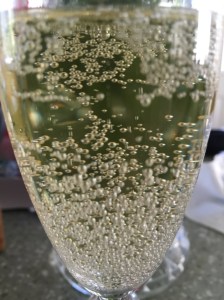 What is world class wine, you ask? Well, this question has multiple answers – there is a good chance that every responder will give you a different answer. Heck, I will give you different answer every time you will ask this question. So for today, how about this one: in a blind tasting, world-class wine can be easily mistaken for a wine coming from the well established and world famous wine region. For instance, a sparkling wine which tastes like Champagne. Or Chardonnay which resembles classic white Burgundy. Or a Rosé which tastes like… you know, how about just “delicious”?
How often do you drink Israeli wines? Hmmm, that would actually make it for an interesting “unknown wine regions” survey – note to self. Okay, back to the question, what do you say? I would bet that 9 out of 10 people never had an Israeli wine, and 9.5 out of 10 didn’t even know that Israel produces wine. Which is a shame, as even modern winemaking history (never mind the biblical times) in Israel goes back to 1880s. But of course with ups and downs, Israeli “wines of notice” started to appear in the late 1980s.
Today Israel has more than 250 wineries (depends on who counts, I guess), which includes both large commercial wineries and garage-level productions; israel even sports some “cult wines” – the wines which lots of people want, but can’t get (do the search for the wines produced by Lewinsohn, for instance). About 25% of the Israeli wines are exported, out of which amount about 60% go to the United States, and the rest to Europe and Asia. Most (but not all) wines produced in Israel are kosher – which, by the way, doesn’t take away from the quality of the wines even the tiniest bit – scratch that Manischewitz image and taste from your head, once and for all. While in general Israel might have a very long wine history, the vineyards were never continuously preserved – as the result, absolute majority of the grapes grown in Israel are of international varieties (Cabernet Sauvignon, Chardonnay, Merlot, Syrah, Grenache, etc.), with Emerald Riesling being one of the rare exceptions. Otherwise, Israel produces full range of wines, from Sparkling, Rosé and whites to the Bordeaux and GSM blends and single varietal masterpieces.
Golan Heights Winery was founded in 1983, and the first wine was released in 1984 (well, they vineyards were planted in 1976, so it all makes sense); it might be considered a foundation of renaissance of Israeli wine industry. Today the Golan Heights Winery farms 600 hectares (1500 acres) of vines, which subsequently consist of 28 vineyards and 400 unique parcels within those vineyards. Vineyards are spanning for about 65 km (40 miles), and elevations are ranging from 400 meters (about 1300 feet) to 1200 meters (about 3900 feet). The fruit from each parcel is tended to individually, as you can imagine that growing conditions would be different in such a stretch of the land and with such a difference in altitude. Of course you can imagine that winery makes quite a range of wines.


I had an opportunity to taste a three wines from the Golan Heights Winery and its sister winery called Galil Mountain, which impressed me enough to come up with this “world-class” title for the post. Don’t get me wrong – I had absolutely mind-blowing Israeli wines before, but somehow this Blanc de Blancs put the experience for me to the next level. Here are the notes:
2008 Yarden Blanc de Blancs Brut Sparkling White Wine Golan Heights Israel (12% ABV, SRP $32, 100% Chardonnay, 5 years on the lees, kosher, non-mevushal)
C: pale straw
N: Classic sparkling wine – touch of yeast, hint of Apple, touch of fresh baked bread
P: creamy mouthfeel, fresh acidity, hint of yeast, fresh lemon, fine mousse, perfect balance
V: 8/8+, outstanding, world class sparkler
2014 Yarden Galilee Chardonnay Odem Vineyard Golan Heights Israel (13.9% ABV, SRP $22, 100% Chardonnay, 7 month barrel aging, kosher, non-mevushal)
C: light golden
N: white stone fruit, hay, touch of lemon, candied fruit as wine was warming up
P: plump, full body, vanilla, creamy round mouthfeel, touch of butter, good acidity, fresh.
V: 8-/8, full bodied without heavy butter or oak, more reminiscent of Marsanne/Roussane. What I loved about the wine that it stayed perfectly delicious at the room temperature, which is not an easy fit for many white wines.
2014 Galil Mountain Rosé Upper Galilee, Israel (12.5% ABV, SRP $12, 74% Sangiovese, 23% Pinot Noir, 3% Grnache, kosher, non-mevushal)
C: beautiful, concentrated pink
N: strawberries, minerality, very promising, touch of lemon
P: fresh strawberries, herbs, clean balancing acidity, soft, medium body, very round.
V: 8-, an excellent summer day (or all year around) treat, very easy to drink
Have you had Israeli wines? What do you think of them? Cheers!
What Is A Good Wine?
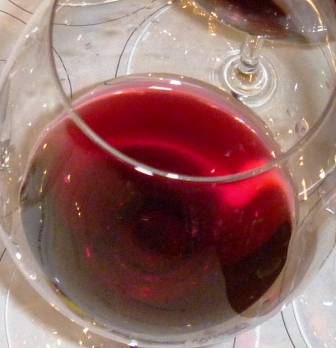 Let’s say you are given a glass of wine. Can you tell if this is a good wine or not? Before you will jump on the obvious, let me clarify this question a bit – the wine is in the perfect condition – it is not corked, it is not cooked, it is not oxidized – there are no common faults of any kind, this is just a well made bottle of wine. So, is it good or not?
Is this question even makes sense? Can such a question be answered? Let’s talk about something more common first – food. Imagine you are in a restaurant for dinner, with friends and family. The dishes start arriving, and here is a side of french fries. There is a very good chance that if the fries are executed properly – good color, nice consistent cut, crispy and not soggy, with the right amount of salt, tasting fresh – everybody at the table would universally agree that “the fries are good”, and you can only hope that there were enough fries ordered for everybody to share. What also important here is that nobody would be shy to slam these very french fries if something is not up to snuff – too much salt, fried in the old oil etc – everybody is confident in their ability to judge french fries to be universally good and tasty, or not.
Stepping up from the side dish, let’s take a look at the main dishes ordered around the table. Someone got steak, someone got lobster, someone is enjoying vegetarian lasagna. Now, it would be much harder to build taste consensus around the table for all these dishes. One person likes steak rare, and the other one only eats it well done – it will be very hard for these two to agree what is good and what is not. Someone might be allergic to a shellfish – there is no way they can even touch the sauce from that lobster dish to attest to your “this is sooo good” claim. So yes, it is hard to build a consensus here, but people are confident in their own right about the dishes they ordered to be able to judge good or not. If steak doesn’t have the right level of doneness, it will be sent back. If lobster is not seasoned right – well, not sure about “sent back”, but I’m sure the problem with the dish will be stated and discussed at the table. And of course if one states that their dish is delicious, then the whole table must try at least a tiny bit to experience “the goodness” (at least this is how it works in our family).
Now, arriving at a wine, the situation is different, and often dramatically. Unlike french fries, the wine still has an aura of mystery, of a special knowledge required to be able to understand and appreciate it, and to claim if it is good or not. The same people who are very confident to send underdone or overly salty (to their personal taste!) steak back to the kitchen, will be very shy and even afraid to say anything if the wine is obviously corked – they will take it as their own inability to properly understand the wine, and therefore will not say anything. Of course the situation is not as consistently dramatic as I present it here – wine today is very popular, and increasing number of people feeling confident enough around it to state what they like and not; however, step out of the oenophile circle, and go dine with people who drink wine occasionally, and I guarantee you will hear “ahh, I don’t know anything about wine” as an answer to the question if they like the wine or not.
In reality, making a personal “good/not good” decision about the wine is as easy as in the case of french fries. I took the “Windows on the World” wine school back in the day, which was taught by Kevin Zraly – Kevin is single-handedly responsible for teaching tens of thousands of people to understand and appreciate the wine. Of course, the question “is this a good wine or not” was one of the most important questions people wanted to get an answer for in such a course. Kevin’s explanation was very simple: “Take a sip of this wine. If this wine gives you pleasure, it is a good wine”. You can look at it as overly simplistic, as there are many factors affecting the perceived taste of wine – where we are, who we are with, the label, the story behind the label, the temperature, the mood, yada, yada, yada. Of course this all matters. But still, for majority of the cases, we are looking for pleasure out of drinking the glass of wine – the way it smells, the way it tastes, with all the little discoveries we make as we let the wine open up and change in the glass (“ahh, I taste blueberries and chocolate now”) – all those little pleasant moments we experience with every sip, it gives us a pleasure of enjoying a glass of wine; if we are getting the pleasure, this is a good wine. Yep, I said it was simple.
Very often pleasure is simplistically associated with erotic and sex, or at least that would be the very first thing which will come to the mind of many once they hear the word “pleasure” – oh no, I see your condemning look, of course I’m not talking about you, you are wired differently. Meanwhile, we derive pleasure from everything which surrounds us, and from everything we do – and if we don’t, we work hard to fix it. Every waking moment of our day is a perfect illustration to this. If we start our day from a walk or maybe a meditation – it is a pleasure of being one on one with yourself, deep in your own thoughts. Think about the pleasure of hugging that morning cup of coffee or tea and smelling the aroma. We look at the watch on our hand – it doesn’t have to be the Rolex or Philippe Patek to be admired and to create a feeling of pleasure. We put on a shirt or a blouse, look in the mirror – and we are pleased with the way we look (okay, fine, we might not be – but again, then we get to work hard to fix it). After the day at work, we come home to be welcomed by a wagging tail and a scream “mommy is home” followed by a huge smile and a hug – tell me that this is not what defines pleasure. No, not everything we do gives us pleasure – but those little bits and pieces of pleasure are what we seek, every time, every day.
Wine is simply a complementing part of our lives. Today we are in the mood for the white shirt, tomorrow – for the blue with yellow stripes; similarly, today you might want the glass of Pinot Noir, tomorrow it can be Tempranillo. We are constantly changing, and so do the things which we will get the pleasure from. People go from carnivores to vegetarians to vegans and back to carnivores – as long as we find pleasure in the way we are at the moment, that is all that matters. No matter what is in your glass, if it gives you pleasure, it is a good wine. It really doesn’t matter what the experts said about the wine you are drinking. It really doesn’t matter what your friends say. If this is White Zinfandel in your glass, and it gives you pleasure, it is a good wine. If this is massive, brooding Barolo, and it gives you pleasure, it is a good wine. If this is big, oaky, buttery California Chardonnay, and it gives you pleasure, this is a good wine – don’t let anyone who says that Chardonnay should be unoaked and acidic to persuade you otherwise. It is okay to have your own, individual taste – we do it with everything else, and wine shouldn’t be any different.
If the wine gives you pleasure, it is a good wine.
This post is an entry for the 24th Monthly Wine Writing Challenge (#MWWC24), with the theme of “Pleasure”. Previous themes in the order of appearance were: Transportation, Trouble, Possession, Oops, Feast, Mystery, Devotion, Luck, Fear, Value, Friend, Local, Serendipity, Tradition, Success, Finish, Epiphany, Crisis, Choice, Variety, Pairing, Second Chance, New.
Celebrate Malbec!
This very blog exists for more than 6 years, so in my mind, I’m sure I’ve written about pretty much everything, especially when it comes to such a heart-warming subject as grape holidays.
Only it turns out I have not.
Sunday, April 17th is 6th (!) annual celebration of World Malbec Day. So how many times over those 6 special occasions I’ve written a post for the Malbec Day? Aha, you got that. Zero.
Well, this is incorrect. None for the previous five, but we are talking about Malbec today, so the problem is finally fixed.
Thinking about grapes with long and turbulent history, Malbec might be the most prolific example of such. Taking its roots in Middle Ages, being a choice wine of the kings, shining in Bordeaux and all over the France and then literally disappearing from the face of the earth, but luckily, finding its second, and very prosperous life in Argentina – not too many grapes can brag about such an adventurous life. By the way, if you are curious about the events I mentioned here, you can test your knowledge of Malbec with this quiz, or you can just jump straight to the answers.
Starting from the second half of 19th century, Malbec found its new home in Argentina. Consistently dry climate of Mendoza happened to be just what Malbec needed to strive. As there are two sides to everything, the ideal growing conditions lead to overproduction and subsequently dull wines. It was not until the 1980s that Malbec commanded proper attention for the quality instead of quantity, and slowly became one of the darlings of the wine world – depending on who you would talk to, Malbec is considered the hottest wine at the moment. Starting from the bottom of Andes in Mendoza, plantings of Malbec are now extending to the higher and higher elevations, offering new range of expression of already delicious wines.
Argentinian Malbec wines are easy to like for many palates – while appearing big and powerful in the glass with its inky, almost black color, Malbec wines are usually round, soft and mellow, avoiding spikes of tannins and acidity which often upset wine drinkers looking for relaxing glass of wine. Interestingly enough, Malbec from other regions, such as Cahors in south of France, shows totally differently and often offers very forceful personality, so if you are looking for that soft and mellow Malbec, you might want to ask for the Argentinian Malbec by name.
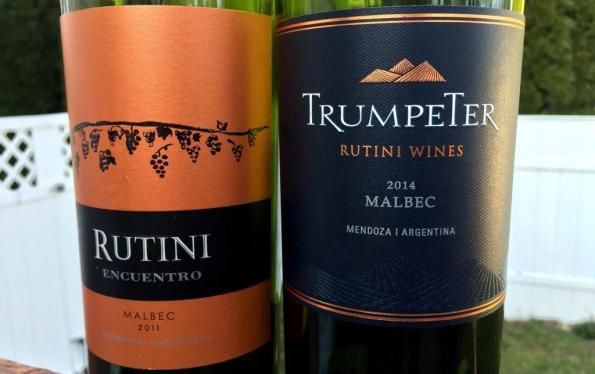
Today I want to bring to your attention two Malbec wines I had pleasure of tasting recently. It is not the first time I’m talking about Rutini wines from Argentina in this blog – here you can find my interview with Mariano Di Paola, winemaker at Rutini wines, as well as tasting notes for few other Rutini wines. Here are the notes for the two Malbec wines:
2014 Rutini Trumpeter Malbec Mendoza Argentina (14% ABV, SRP $11.99)
C: dark garnet
N: freshly crushed fruit, sage, savory notes
P: clean, earthy, tart cherries with hint of licorice, touch of sweet tobacco
V: 7+/8-, nice, refreshing, round, great QPR
2011 Rutini Encuentro Malbec Mendoza Argentina (13.5% ABV, SRP $18.99)
C: dark garnet, inky
N: roasted notes, tar, cherries, warm, inviting, touch of barnyard
P: soft, round, sweet berries, concentrated, good acidity, perfect balance. Became dark and concentrated on the day 2/3.
V: 8, very enjoyable, easy to drink; will evolve with time – you should forget few bottles in the cellar…
Here you are, my friends. Celebrate Malbec, this grape definitely worth your attention. Cheers!
Passion and Prosecco
 One of my favorite ways to start a conversation is to ask a trivia question, so here it is. We all take Prosecco for granted – if one wants to casually have a glass of wine with bubbles, Prosecco would handily beat any other sparkling wine as a top choice, no matter where in the world you are. Now, for the trivia part: do you know when Prosecco first appeared in London? I will give you few moments to ponder that question. Meanwhile, few basic facts: Prosecco hails from the hills of Veneto, where wines (still wines, it is) were produced for more than 500 years; Charmat-Martinotti method, used in the production of Prosecco, with the secondary fermentation taking place in a steel tank instead of the bottle (“secondary fermentation” is what produces those adorable bubbles), was first created in 1895. So when do you think Prosecco showed up in London?
The answer: 1989. And all due to the tenacity and passion. Bisol family had been producing the wine in Veneto for more than 20 generations (yes, I do call this a passion). When Gianluca Bisol approached his father and said that he wants to bring Prosecco to London, the father’s response was very quick (cue in Italian pronunciation and emotional hand gestures): “you are crazy!”. That didn’t stop Gianluca, and to London off he went. It appears that his father was almost right – selling unknown sparkling wine, door to door, in the downturn economic times, was not going swimmingly well, by any measure. Until a lucky coincidence (well, people would call it “luck”, but we all know that luck usually works best after applying lots and lots of hard, dedicated effort), when at one of the best restaurants in London, Gianluca met wine director who was not only Italian, but also born and raised in the same Veneto region, and was extremely happy to see his beloved Prosecco. As they like to say it in the books, the rest was history. Today, Prosecco outsells Champagne in UK 3 to 1. And annual production of Prosecco hit 540 million bottles in 2015. Just to finish with historical references, Prosecco made it to the US in 1992/1993 (in case you are wondering).
I had a pleasure of meeting Gianluca Bisol at lunch at Marta restaurant in the New York City, and we spend two hours talking, tasting wines and of course, eating tasty food (detailed account follows). This is where I heard the story of Prosecco concurring the UK, as well as many other interesting facts which all together can be summarized in one single word – passion. Passion for the land, vines and wines. Passion for the whole Veneto region. Passion for the traditions which are more than 20 generations strong. But also a passion for the not stopping, for continuing to innovate and to create – new wines and also new wineries.
Our tasting included 7 different wines, out of which 4 were Bisol wines, but 3 were from the winery called Maeli Colli Euganei, the winery which Gianluca helped to start in 2010. Actually the plan was that at the lunch, Gianluca will be joined by Elisa Dilavanzo, the owner of Maeli winery – unfortunately, Elisa got sick and had to stay behind, so Gianluca had a duty of representing both wineries – which he completed with flying honors, as you can imagine.


We started our tasting with 2014 Maeli Fior d’Arancio DOCG Sweet (6% ABV, SRP $27, Residual sugar 115 g/l, 100% Fior d’Arancia, a.k.a. Yellow Muscat) – nice sweetness, clean, minerality, beautiful sweet nose, bright white fruit, nice honey notes. The grapes for this wine come from volcanic soils, which gives it an interesting complexity, saving it from been “one singular note sweet bore”. It is not surprising that last year this wine was selected as “Best in Class” by Tom Stevenson in the UK in the sweet sparkling wines category. Another interesting fact is that in 2015, Maeli winery started Maeli Chef Cup competition, which will be now an annual event, where world-renown chefs compete to create the best dish pairing for Maeli Fior d’Arancia – if you are interested, here is the link detailing the 2015 competition.
Our next wine was NV Bisol Cartizze Valdobbiadene Superiore di Cartizze D.O.C.G. Spumante Dry (11.5% ABV, SRP $42, Residual sugar 23 g/l, 100% Glera) – some sweetness on the nose, but body very restrained, creamy mouthfeel, delicious aftertaste, beautiful supple palate. The wine can age – Gianluca had an opportunity to taste 20 years old Bisol Cartizze wine – it retained bubbles, but obviously acquired aromas of more mature fruit. As you can see, this wine is designated as Superiore di Cartizze D.O.C.G – Cartizze is a single vineyard, 106 hectares (about 255 acres) in size , one of the best vineyards in Italy (most expensive for sure). 139 families own parcels of the Cartizze vineyard – Bisol family owns their parcel for 21 generations. The cost of land on Cartizze is $2.5M per hectare, or $1M per acre – not sure if anyone is selling though.
Time to eat something, right? The first two wines were paired with the selection of appetizers:
Suppli Cacio e Pepe (Risotto Croquettes, Pecorino, Black Pepper) – nice crust, tasty, works the best with the wine.
Bietole Ai Ferri (Plancha-seared Forono Beets, Ricotta, Hazelnuts) – good, nice flavor, good acidity, hazelnuts work well to complement the wines.
Nebrodini Arrostiti (Wood-fired Mushroom Salad, Kale, Mustard Greens, Thyme, Lemon) – nice, good flavor.


We continued our tasting with NV Bisol Crede Valdobbiadene Prosecco Superiore D.O.C.G. Spumante Brut (11.5% ABV, SRP $25, Residual sugar 7.5 g/l, blend of Glera, Pinot Bianco and Verdiso). “Crede” is a “type of clay-laden soil with particular characteristics that greatly benefit the grapes”, according to the wine’s tech sheet. The wine had delicious nose, touch of fruit, fine mousse, perfect acidity, crisp, clean finish.
Now we go back to Maeli with our next wine, which was also the only still wine we had in the tasting. 2014 Maeli Colli Euganei Bianco Infinito ∞ Veneto IGT (12.4% ABV, SRP $24, Yellow Muscat 60%, Chardonnay 40%, aged 5 month in steel tanks, 3 month in the bottle) had nice aromatics, touch of lemon on the nose, vanilla, nice complexity on the palate. The name of this wine (infinito) comes from the accident – one of the workers called Elisa to inform her that one of the barrels needs attention, and when she asked which one, he said “infinito”. As she couldn’t understand what the worker was talking about, it appeared that the number “8” was written on the barrel at an angle, and so from there on the wine took the name “infinito”.
Now, the dishes which were paired with these two wines deserve their own commendation. You see, I rarely eat pizza. When I do, my absolute preference is that the pizza would have crisp, crunchy, literally paper-thin crust. This is exactly what I got at Marta – three pizzas, one better than the other (Funghi was my absolute favorite):
Stracciatella (House-made Stracciatella, Basil, Olio Verde) – perfect pairing. Delicious pizza – very thin crust.
Funghi (Fontina, Mozzarella, Hen of the Woods, Hedgehogs, Red Onion, Thyme) incredible, amazing flavor mushrooms and thyme. Great pairing with Bianco Infinito
Porri e Pancetta (Leeks, Bacon, Fontina, Scallion) – great flavor, very good pairing.


Last three wines were truly special and unique – but none of them are available in the US at the moment, unfortunately. 2015 Private Cartizze Zero Dosage Brut Valdobbiadene Superiore di Cartizze D.O.C.G. (second fermentation in the bottle, 12 month on the lees) – first Classic Method sparkling wine from Cartizze, 2015 vintage was bottled 45 days ago, 2011 was the first year of production, 3000 bottles produced in 2015 – classic champagne, yeast, outstanding.
Then we had 2011 Maeli Colli Euganei Rosévento IGT Spumante (12% ABV, Residual sugar 6.9 g/l, 100% Pinot Nero, 36 months on the lees) – another Classic method sparkling wine, yeasty, classic Rosè champagne nose with strawberries, delicious!
The last wine was truly unique – NV Jeio noSO2 Valdobbiadene Prosecco Superiore DOCG Spumante Extra Brut (100% Glera) – this innovative wine was produced without any added sulphur dioxide (hence the name), made specially for the sensitive consumers. The wine is packaged in the clear bottle wrapped into the foil, to protect it from the sunlight (the wine we were tasting was brought by Gianluca directly from the winery, so it didn’t have any foil or labeling, except the small pieces of paper around the bottle’s neck. The wine had an amazing nose, floral with a touch of white fruit, very dry and again, floral on the palate – very unique compared to any sparkling wine I had before. Delicious – you need to try it for yourself (well, you might have to visit the winery for that).


Our last two dishes were Pollo Ubriaco (Chicken Breast, Charred Cabbage, Brussels Sprouts, Fresno Chili, Mint), perfectly executed, and Salmerino (Arctic Char, Crispy Potato Cake, Horseradish Crema) – delicious, potato cakes were outstanding ( I would eat the whole plate alone), and the fish was cooked perfectly.


That’s all I have for you, my friends – a wonderful encounter with passion, great people, unique wines and delicious food. Next time you are in a mood for some bubbles in your glass, Bisol and Maeli offer a great range, suitable for any palate and taste. And even if you are not craving pizza right now, go visit Marta in New York – I’m sure you will be happy. And by the way, feel free to ask your friends if they know when Prosecco was first sold in London – you might become a party star, at least for one night. Cheers!
Marta
at Martha Washington hotel
29 E 29th St
New York, NY 10016
Ph: 212-651-3800
http://www.martamanhattan.com/
Wine and Beer Lovers, Unite, or Marrying Hops and Grapes
Sacrilege? Possible. Should I be ostracized by beer and wine aficionados alike, and this very blog been banned forever from their reading lists? I will leave it to aficionados to decide. I’m merely doing what I’ve always done in this blog – sharing my experiences, those which I deem worth sharing. That’s all there is to it.
When I got email from Andrew Jones, the winemaker behind one of my favorite labels, Field Recordings, advertising something called “Can Club”, the decision was quick – “yada, yada, yada – I have to do it” (the “yada” part is here to explain how much attention I was paying to the exact email content). Then I glanced over the following: “ Pure, free-run rose from a pair of our westside Paso Robles vineyard partners, mostly Grenache. 100% whole cone citra hops [sic] were added prior to canning. The results, a super refreshing elixir, combining your love of Provence with a touch of Belgian brew. I have a tough time explaining it because it isn’t like anything I have tried before. It’s impossible for me to properly analyze. I just want to drink it.“, and the next thought was “whatever. I have no idea what he is talking about, and I don’t care”. So yes, I signed up.
Few days ago, the door bell rung, and FedEx guy asked me to sign for something which rather resembled the set of engineering drawings – “hmmm, what is it” was my first thought. And then it downed on me (“this box contains alcohol” sign was a good cue) – aha, the can club?! I liked the unorthodox presentation so much that I even shared the puzzle on twitter, asking people to guess how the object in the picture can relate to the wine:
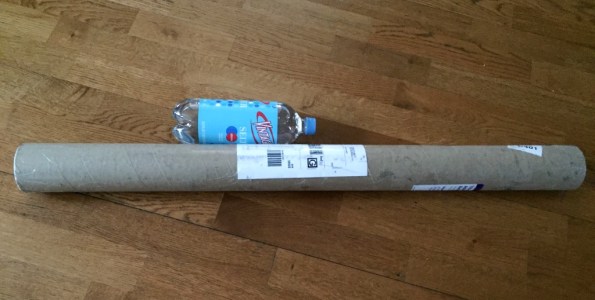 The most prevalent idea was “poster”, so I had to share an answer a few hours after:
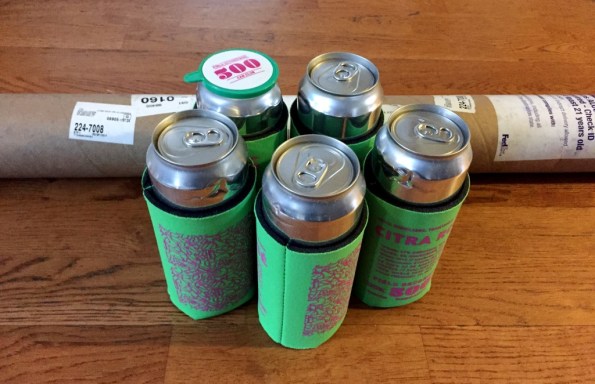 And then I opened the can. The liquid in the glass had an appeal of a perfect Rosé. Classic salmon pink color. On the nose, it was perfectly Provençal Rosé – touch of strawberries, hint of onion peel, refreshing minerality, touch of lemon. And the palate was, once again, perfectly Provençal – strawberries, touch of lemon, fresh, crispy. With the tiny beer bite on the finish. You know, the one which you get from the fruity, light Belgium beer. You don’t have to believe me, but I only read Andrew’s exact words when I sat down to write this post. “love of Provence with a touch of Belgian brew” – wow. It would be rare, very rare case that my take on the wine would match its description with such a precision . And then I have to fully agree with Andrew on one other thing – “ I just want to drink it“.
![Field Recordings Citra Rosé can sleeve [label]](https://i0.wp.com/talk-a-vino.com/wp-content/uploads/2016/04/citra-rosc3a9-can-sleeve-label.jpg?w=186&h=248&ssl=1 "Citra Rosé can sleeve [label]")

![Field Recordings Citra Rosé can sleeve [label]](https://i0.wp.com/talk-a-vino.com/wp-content/uploads/2016/04/citra-rosc3a9-label.jpg?w=212&h=248&ssl=1 "Citra Rosé [label]")
What can I tell you about this 2015 Field Recordings Citra Rosé Paso Robles (13.1% ABV, $14 retail/$10 club – 500ml can, 67% Grenache, 22% Picpoul Blanc, 8% Mourvédre, 3% Syrah)? It was delicious, perfectly combining the best of both beer and wine worlds – crisp, fresh, bright, thoughts provoking. Dangerous as well – as the wine comes in the can, you pretty much treat it as a single serving – while it actually contains more than 3 standard glasses of wine. But I think the taste is well worth that danger. And until you will get your hands on one of those cans, my words are all you got, so yes, take my word for it.
I want to raise my glass to never ending creativity and courage. Beer and wine lovers, rejoice! Cheers!
One on One with Winemaker: Marcello Lunelli of Ferrari Trento
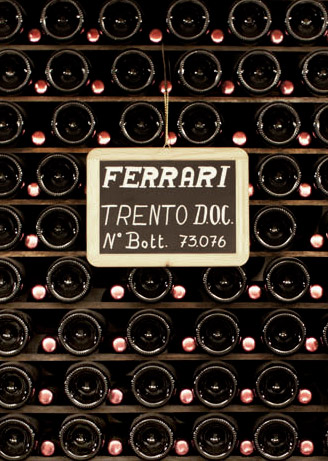
Source: Ferrari Winery web site
I’m sure Ferrari wines don’t need long introduction to any oenophile. Giulio Ferrari started eponymous winery in 1902 in the mountainous region in Northern Italy called Trento. He was the first person in Italy to plant substantial quantities Chardonnay, which he personally brought from France, and then started production of the “Classic Method” sparkling wines, inspired by the French Champagne. In 1952, Giulio Ferrari had chosen Bruno Lunelli to become his successor at the winery, and this was the beginning of the second chapter of Ferrari’s history. The rest is, yes, history, and you can read it for yourself here.
Over the years, Ferrari received numerous accolades, including most recent ones, “Sparkling Wine Producer of the Year 2015” from Tom Stevenson in the UK and “European Winery of the Year” from Wine Enthusiast magazine in the US. I had an opportunity to [virtually] sit down with Marcello Lunelli, Ferrari’s winemaker, and ask him a few questions – you can read our conversation below:
Q1: Ferrari is considered a symbol of the Italian Art of Living. What this “Italian Art of living” concept includes, how would you define it?
A: My family is incredibly proud that Ferrari as a brand is considered a symbol of the Italian Art of Living internationally. Whether it is being served at the Quirinale, home of the President of the Italian Republic, or used to toast celebrated events in the world of fashion, sport, cinema, culture, or design, Ferrari represents that hugely evocative emotional blend of tradition, sense of place, inherent quality, and the poetic virtues of our most cherished way of life.
The Italian Art of Living embodies the passion for beauty, taste and elegance; the ability to embrace innovation while respecting traditions; and a zest for life that is the very soul of the Italian spirit.
I firmly believe that the success of Italian wine is due to a unique love affair that exists in many countries for our way of life, our food, our rich and unique history, and the traditions of our culture. Beauty and pleasure are mutual to one another and Ferrari wines has joined together with fashion and design brands as ambassadors of the Italian lifestyle.
Q2: How is riddling done at Ferrari – still by hand or with use of the machines?
A: In the Ferrari winery we still do 1/3 of the riddling by hand, in particular, all the vintage wines and reserves. The rest is done with use of the machines.
Q3: Typical “house cuvée” at the Champagne house is a blend which might include about a 100 so called Vin Clairs, still wines coming from different vineyards and vintages. Does Ferrari have similar approach in the production of the non-vintage sparkling wines?
A: We do have a similar approach in the production of non-vintage sparkling wines. The biggest work in the vineyards and in the cellar is to keep separate each single homogeneous zone production in order to create the best cuvée.
Non-vintage sparkling wine cuvée includes grapes coming from vineyards within the Trentodoc denomination, which means only in Trentino region and it is created with 70/80 different base wines. Moreover vintage sparkling wine is made with grapes coming only from our own vineyards and it is a result of 40/60 diverse base wines of the same year.
Q4: Ferrari is promoting sustainable viticulture. Do you have any plans to become all organic, or at least to produce an organic wine?
A: One of the core philosophies of the Lunelli Group and Ferrari Winery is the advancement of sustainable practices throughout all our vineyards. We believe that by practicing sustainable farming techniques we not only improve the quality of our wines but protect and preserve our majestic environment and improve significantly the health and safety of our farmers. Indeed we strive to make sustainability a cultural heritage for all of our grape growers.
All of the vineyards owned by my family including those of the Ferrari winery and Tenute Lunelli are cultivated according to organic agricultural principles and in the near future they will all be organic. At the moment we are already producing an organic certified red still wine, Aliotto from our estate in Tuscany.
Q5: Considering that you share common name with the world famous car manufacturer, did you ever try to create a business relationship with Ferrari the car maker?
A: We are glad to share common name with an iconic brand such as Ferrari Maranello and to have a very good relationship with them. We are also proud to have in our photo gallery of famous moments, striking pictures of Grand prix ceremonies celebrated with Ferrari wines.
We both work throughout the world in promoting the very best of Made In Italy.
Q6: What was your most difficult vintage at Ferrari and why?
A: One of the most difficult vintages was 2014 due to a very long and intense rainfall during the growth cycle of the vine which presented a great challenge in vineyard management to ensure healthy grapes for the harvest. It is in a very complex year like 2014 that man, his work and his vision make the difference.
Q7: What is the oldest Ferrari wine you have in the cellar? What was the oldest Ferrari wine you tasted?
A: The oldest Ferrari wines already disgorged are from the sixties, when Giulio Ferrari and Bruno Lunelli were still working in the winery. The oldest Ferrari, still on the lees, is 1972 vintage, which is also the first vintage of Giulio Ferrari Riserva del Fondatore.
I was lucky enough to taste the first vintage of Giulio Ferrari Riserva del Fondatore. It was amazing, well balanced mature notes with an unexpected youth, fruit of our Trentino territory, Trentodoc mountain agriculture which allows for both longevity and youthfulness.
Q8: Do you have a favorite vintage of Ferrari wines?
A: My favorite vintage is Giulio Ferrari Riserva del Fondatore 1995 for two reasons: first of all because it is considered the vintage of the century where power, elegance, longevity and freshness are combined in one single wine and all these factors are in a perfect and unshakeable balance. Secondly this vintage has a personal affection because I had the good fortune to start to work at Ferrari in 1995.
Q9: Do you only use two varieties in the winemaking – Chardonnay and Pinot Noir – or do you use any others, such as Pinot Meunier, for instance?
A: We use Chardonnay and Pinot Noir grapes separately for white wine making in order to create all our 100% Chardonnay Ferrari wines and the Ferrari Perlé Nero, our 100% Pinot Noir, blanc de noirs. For our Rosé we use both the grape varieties: Pinot Noir, using the Rose making-process, which gives body and structure to wines and Chardonnay which provides elegance and freshness.
Q10: Do you produce or do you have any plans to produce still wines?
A: Ferrari Winery creates a remarkable collection of Trentodoc sparkling wines, yet the Lunelli Group also includes a series of elegant and long-lived still wines, under the brand, Tenute Lunelli. This brand embraces wines from three regions, each superbly suited to the production of winemaking grapes: Trentino with its mountain viticulture; Tuscany with the rolling Pisan hills and Umbria which reveals herself in the small, fascinating DOCG of Montefalco. All our still wines are representative of our standards of high quality with the ability to demonstrate the variety of our diverse lands; this is the incredible richness of the Italian wine industry. Respect for the land and sustainability are today common core values in all our brands. Besides the Estates and Ferrari, the Lunelli Group is made up of a distillery, Segnana, a mineral water, Surgiva.
Q11: Do you have any favorite Champagne wines, or any sparkling wines for that matter?
A: Champagne Bollinger and Cuvée Sir Winston Churchill Pol Roger which embody the characteristics I love in sparkling wines; elegance, refinement and longevity.
Q12: When you are not drinking Ferrari wines, what are your favorite wines, from Italy or anywhere in the world?
A: When I do not drink Ferrari I drink my favorite red still wines from Sangiovese grapes and Nebbiolo grapes: Brunello di Montalcino and Barolo. When I choose Barolo I always have discussion with my father because he prefers Barbaresco, with less power but more elegance.
And we are done here, my friends. I think this was quite fascinating and interesting conversation, adding an interesting detail to what you might already know about Ferrari wines – for sure this was very informative for me. I have to admit that I would looooove to try that 1972 Giulio Ferrari Riserva del Fondatore – well, the man can dream, right?
I didn’t have any new wines to taste to leave you with some tasting notes, but if this conversation made you thirsty, here are the links to my older posts about Ferrari Brut Classico and Ferrari Perlé. Cheers!
Last Bottle Sign Up ($10 credit)




 Talk-A-Vino