Versatility of Paso

Source: Pasowine.com
When a typical wine consumer hears the words “California wine” what is the first thing which comes to his or her mind? I would bet that in 9 out of 10 cases, the first thought is: “Is this wine from Napa?”.
Yes, Napa Valley is the king, but the California wine landscape is a lot bigger. Today, I want to talk about a different California wine region – one of the oldest, and probably, the most versatile – the region originally known as El Paso de Robles, “The Pass of the Oaks”, which today is typically called Paso Robles, and sometimes passionately abbreviated just as “Paso!”.
At the beginning of the 1880s, Zinfandel plantings appeared in Paso Robles. For a while, Zinfandel was really “it”, adding some of the most famous vineyards, such as Dusi and Pesenti at the beginning of the 1920s. At the beginning of the 1960s, Cabernet Sauvignon, Chardonnay and Pinot Noir arrived to the region, followed by first plantings of Syrah in the whole state of California in 1970s. From there on, the region (Paso Robles AVA was established in 1983) moved forward to collect numerous accolades of Wine Region of the Year, Best Vineyard in the world and others. Today, Paso Robles has 11 sub-appellations, more than 40,000 acres of vineyards and more than 200 wineries, growing more than 40 grape varieties, from Bordeaux greats to Rhone and to Spanish varieties – and did we mention Zinfandel yet?
“Versatility” is really the key word when it comes to Paso. First, there is a great diversity of the terroirs, with 11 well-defined sub-appellations (you can see them on the map), stretching from just 6 miles away from the Pacific Ocean on the west to the mountains on the east – and let’s not forget that while only 40,000 acres are under vineyards, the whole Paso Robles appellation is more than 600,000 acres, which is about three times of size of Napa Valley AVA. Such a great diversity of microclimates is very conducive to the wide variety of grapes made into the world-class wines all around the AVA. Let’s see how many times you will nod when I will mention some of the Paso Robles greats: Saxum Vineyards, making some of the best in the world Syrah; how about Zinfandel from Turley and Carlisle, some of the best of the best in the world of Zin; Tablas Creek – one of the Rhône pioneers in the area; Justin Winery, with their delicious Bordeaux blends – Isosceles, anyone?; Dracaena Wines – Cabernet Franc fanatics; Field Recordings – truly a personal favorite, making everything from Chardonnay to Pinot Noir to Chenin Blanc to Cabernet Sauvignon and Cabernet Franc to Petite Sirah, Sangiovese and Valdiguié – and all deliciously well. So, how is this list to you?
 Let me take this conversation one step further and share with you some of my latest discoveries from Paso Robles:
2015 Halter Ranch Grenache Blanc Paso Robles Adelaida District (13.3% ABV, $28, 80% Grenache Blanc, 14% Picpoul Blanc, 4% Roussanne, 2% Viognier)
Light golden color
Medium intensity lemon nose, hint of jasmine flowers and lots of granite with a touch of gunflint lots of minerality – on the nose, it is minerality driven wine.
The palate is acidity-driven, fresh, crisp, bright, lemon, a touch of grass, and a distant hint of plumpness – the wine will show differently as it will warm up.
Drinkability: 8, delicious from the get-go, lots of energy
2014 J. Lohr Hillside Cabernet Sauvignon Paso Robles (14.8% ABV, $35, 90% Cabernet Sauvignon, 6% Petit Verdot, 4% Cabernet Franc, 18 months in 60% new French oak)
Dark garnet, almost black
Licorice, sage, dark chocolate, coffee, roasted meat, minerality on the nose
The palate is savory, bright acidity, blackberries, more licorice, coffee, medium plus body, lots of energy in every sip, dark and concentrated.
Drinkability: 8-/8, softer and rounder next day, showing up some cassis.
2014 Treana Red Paso Robles (15% ABV, $45, 75% Cabernet Sauvignon, 25% Syrah, 17 months in French oak, 70% new)
Dark garnet with a purple hue
Concentrated cherry pit and some funk initially, noticeable green bell pepper – or was it corked?
The bright palate, good amount of savory fruit with licorice, blueberries and cassis, noticeable sapidity, medium to full body, good acidity, nice balance
Drinkability: N/R. This was not a bad wine, but there was an annoying component in the taste profile, which gave a borderline corked impression and was adding sharpness to the wine – also it didn’t subside. I need to try this wine again to have an opinion.


2014 Aaron Petite Sirah Paso Robles (15.6% ABV, $48, 88% Petite Sirah, 12% Sirah, 22 months on lees in 50-60% new oak)
Black color. Just black with a touch of dark garnet hue on the rim.
Nose most reminiscent of a nice espresso, with a touch of vanilla. Swirling opens up some blackberries and massive, colored legs (I always thought the color in the legs is the trait of Syrah, but apparently, Petite Sirah has the same).
The palate is dense, concentrated, roasted meat with some coffee and blueberries, nice pronounced acidity, velvety texture. Massive wine, but surprisingly approachable.
Drinkability: 8, would be amazing with the steak.
2015 Peachy Canyon Westside Zinfandel Paso Robles (14.5% ABV, $22, 78% Zinfandel, 11% Petite Sirah, 7% Alicante, 2% Tannat, 2% Syrah, 16 months in 30% new oak barrels)
Dark garnet
Pleasant aromatics, medium plus intensity, Chinese five spice
A touch of tobacco, good acidity, expressive tannins. Needs time
3 days later – wow, dramatic difference. I simply put this wine aside with a cork, without pumping the air. Significantly improved aromatics, tobacco, blackberries, hint of caraway seed. The bright and round palate, cherries, great interplay of acidity. I never thought I would say this, but it seems a lot more of an Italian Primitivo style also with the back end minerality. Happy wine for sure – I can finish the bottle by myself. Drinkability: 8 (day 3)
2015 Eberle Steinbeck Vineyard Syrah Paso Robles (14.8% ABV, $28, 100% Syrah, 18 months in 50/50 American/French oak)
Dark garnet
Closed nose from the get-go, the palate shows some dark fruit, a touch of vanilla, but not much more. Second day (just re-closed without pumping the air out) – what a difference! Dark fruit on the nose, supple berries on the palate, a touch of pepper, round, medium to full body, good acidity, overall delicious.
Drinkability: 8 (second day)
What do you think – did I prove my point about the versatility of Paso Robles? What are your favorite Paso producers and wines? Cheers!
Drink Local: Texas, Georgia, Walmart
Whenever I travel, whether for work or leisure, I always love to try local wines – adding an occasional winery visit is a cherry on top, for sure.
Drinking local had been a habit for a long time (here are some posts if you are interested in my past discoveries), and I have to say that more often than not, the curiosity is rewarded handsomely, with tasty, unique and different wine discoveries.
At the end of June, I was in Texas, and of course, I wanted to taste the local wines. I didn’t have time to visit a supermarket, so to my delight, I found a full line of Texas wines at the happy hour at the Residence Inn hotel where I was staying. All the wines where from the winery called Messina Hof, which, according to the website, is a very prolific producer, offering 70 different wines – well, everything is bigger in Texas, right? Here is what I had an opportunity to try:


2017 Messina Hof GSM Texas (14%ABV, 52% Syrah, 35% Mourvedre, 13% Grenache) – earthy aromas, cherries, good acidity, tart blackberries, good structure, excellent overall. 8-
2016 Messina Hof Reflections of Love Private Reserve Texas (13.5% ABV, Merlot based blend?)
Touch of eucalyptus and dark fruit on the nose
Perfectly clean, varietals correct Bordeaux with cassis, well integrated tannins, crisp structure, excellent overall. 8
2016 Messina Hof Pinot Noir Private Reserve Texas (13.5% ABV) cherries on the nose, good cherries and and plums on the palate, well integrated, well balanced, medium plus weight, round, smooth. Not necessarily a traditional Pinot Noir rendition, but well enjoyable. 7+.


The only supermarket I managed to find the time to visit while in Texas was the one at Walmart. There was no Texas wine there (sad, but rather expected), but I couldn’t leave empty-handed, couldn’t I? I settled on two wines, both of which I picked solely on the basis of a cool label (yes, sorry, you can make as much fun of me as you want – I did like that critter label with the duck) and the price. I have to tell you that I actually got lucky, and ended up with two very decent wines:
NV Lucky Duck Shiraz South Eastern Australia (13% ABV, $3.99) – yes, simple, but very clean and nicely balanced. Good but not overbearing amount of red and black fruit, good acidity, warm spices. Medium body. Pleasant and easy to drink, outstanding QPR. 7+
2016 Prophecy Sauvignon Blanc Marlboro (12.5% ABV, $8.99) – unquestionably a New Zealand Sauvignon Blanc, while surprisingly restrained. Fresh, Crisp, cassis undertones, touch of tropical fruit and fresh cut grass, Meyer lemon notes, clean acidity. Excellent QPR. 8-
At the end of July, I had an opportunity to spend a weekend in Atlanta. I didn’t have much time, but still managed to squeeze in a quick visit to the local Total Wines, which, to my delight, carried the selection of the local wines:
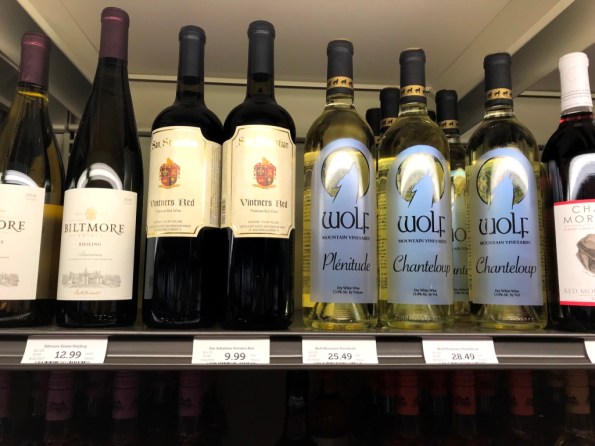

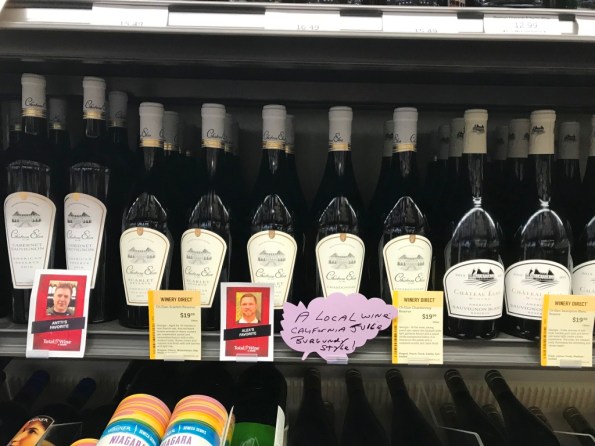
Many of the wines were either fruit wines or pointedly sweet wines, however, I managed to find the Château Élan wines, which promised to be dry, and were priced in the category I consider “reasonable” (at $19.99). Here are the notes for the wines I got:


2015 Château Élan American Sauvignon Blanc Reserve Georgia (13% ABV, $19.99)
Light golden
Touch of gunflint on the nose, herbal profile
Very unique and different on the palate compare to most of the Sauvignon Blanc wines. Green apple, tart lemon acidity, clean, fresh.
8-, more reminiscent of Chardonnay than Sauvignon Blanc – well drinkable and delicious overall.
2016 Château Élan American Cabernet Sauvignon Reserve Georgia (14.5% ABV, $19.99)
Dark garnet, almost black
Classic Cabernet all around – nose is open and inviting, with a touch of casis and mint
same on the palate – dark fruit, cassis, fresh cherries, medium+ body, soft tannins, good acidity and overall good balance.
8-, very quaffable
I wish I had an extra few hours to visit the winery, which I understand is located about an hour away from Atlanta, but this will have to wait until the next visit. In any case, I get to update my “wines of 50 United States” page with one more check-mark :).
That’s all I have for you, my friends. Any local discoveries you want to share? Cheers!
Seeking Pleasure in Bordeaux

Source: Cotes de Bordeaux website
Let me take a safe guess: if you consider yourself a wine lover (oenophile, wine aficionado – you can choose your own designation), the word “Bordeaux” is sacred for you. Even if you hadn’t had a glass of Bordeaux in five years, I would safely bet that there was a period in your oenophile’s life when Bordeaux was “it”, the wine to admire and worship, and you would never pass a glass of a good Bordeaux if an opportunity will present itself – and if you ever had that “glass of a good Bordeaux”, you will happily attest to that.
Of course, the clout of Bordeaux is often linked to the so-called First Growth chateaux, 5 of the most famous producers in Bordeaux and in the world, and a few others having a similar level of influence, such as Chateau Petrus. However, for the most of oenophiles, First Growth and other wines of the same caliber are mostly a dream – you can never find them, and even if you will find them, you can’t afford them. However, Bordeaux, being one of the largest wine regions in France, both in terms of the size of vineyards and a volume of wine production, is so much more than just the First Growth – there are lots and lots of Bordeaux wines worth seeking.
Case in point – Côtes de Bordeaux appellation – approximately 1/10th of the Bordeaux appellation, both in size of vineyards and wine production. In exact terms, Côtes de Bordeaux consists of 6 sub-appellations (Côtes de Bordeaux, Blaye Côtes de Bordeaux, Cadillac Côtes de Bordeaux, Castillon Côtes de Bordeaux, Francs Côtes de Bordeaux and Sainte-Foy Côtes de Bordeaux). However, based on the old adage of “rising tide floats all boats”, the Union des Côtes de Bordeaux was created in 2007 and it united all sub-appellations under the single AOC Côtes de Bordeaux, which was launched in 2009. The individual sub-appellations are still indicated on the label under their names (Blaye, Cadillac and so on) to signify differences in the terroir, but we all know the power of the brand marketing…
Leaving all the technical details aside, the beauty of the Côtes de Bordeaux is in its artisanal wine producers, many of whom are certified organic and biodynamic, and more and more producers embracing sustainable methods – which all translates into the quality of the wines. Also, considering that most of the producers don’t have big brands to support, the wines also deliver great QPR.
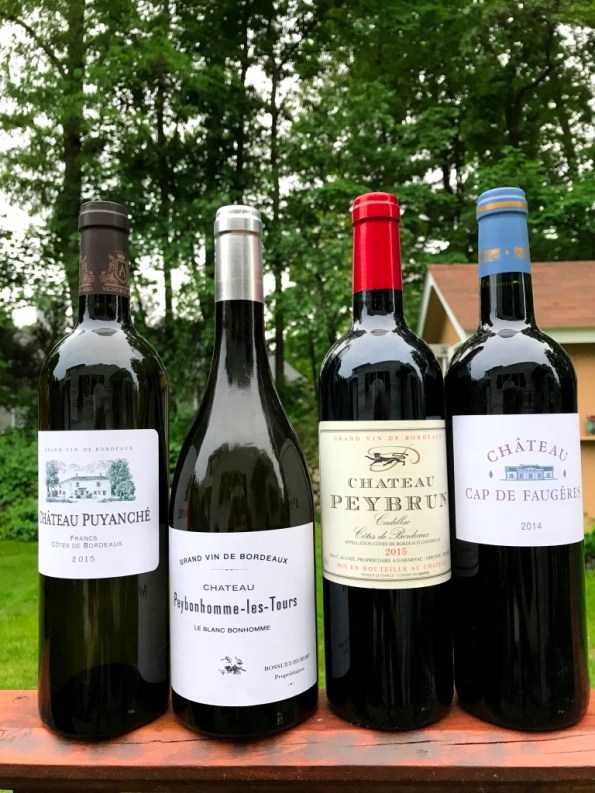
Let’s move from the theory to practice – yes, you got me right – let’s taste some wines. I had an opportunity to taste 2 white and 2 red wines from the region and was literally blown away by these beautiful wines and the value they delivered. As usual, I also played a bit with the wines to see how they will evolve – you will see it below in the notes.


2015 Château Puyanché Blanc Sec Francs Côtes de Bordeaux AOC (14% ABV, $14, 55% Sauvignon Blanc, 45% Semillon, 7 months in 30% new oak)
Light golden color
Ripe white stone fruit, vanilla, touch of butter.
Ripe white fruit, minerality, round, mellow, touch of butter, beautiful
8+, lots of pleasure
2016 Château Peybonhomme-les-Tours Blaye Côtes de Bordeaux (13%, $20, 50% Sauvignon, 50% Sémillon, Vin Demeter)
Light golden color
White stone fruit, apricot, tropical fruit notes
Beautiful ripe white fruit, vanilla, apples, butter, clean acidity, can be easily mistaken for Chardonnay
8+/9-, superb, just wow. Lots of pleasure.


2014 Château Cap de Faugères Castillo Côtes de Bordeaux AOC (14% ABV, $17, 85% Merlot, 10% Cabernet Franc, 5% Cabernet Sauvignon)
Dark Garnet, almost black
Mint, eucalyptus, green bell pepper, touch of underripe berries
Underripe blackberries, tart, crisp, firm, mouthwatering acidity. Finish extends mostly into mouthwatering acidity with a touch of tannins and slight alcohol burn.
7, needs time. Might work well with food, but on the first day, not tremendously enjoyable on its own.
Day 2: 8-, cassis, ripe fruit, good power good balance
Day 3: 8-/8, soft, layered, full body, great aromatics on the nose, voluptuous and generous. Great transition.
2015 Château Peybrun Cadillac Côtes de Bordeaux AOC (13% ABV, $18, 80% Merlot, 17% Cabernet Sauvignon, 3% Cabernet Sauvignon, aged in thermo-regulated tanks)
Dark garnet
Green bell pepper, baking spices, intense, distant hint of barnyard, touch of nutmeg
Pepper, tart cherries, noticeable acidity, medium-light body, well noticeable tannins on the medium-long finish.
7, needs time.
Day 2: 8-, dark fruit, soft, round
Day 3: 8-, great aromatics, touch of roasted meat, licorice, sweet cherries. Eucalyptus and cherries on the palate, touch of iodine, soft, well integrated, good balance.
As you can tell, the reds were excellent, and the whites were stunning (which is great considering that only 3% of the total wine production in the region are whites – 97% are red). If you will take into account the prices, these wines represent simply some solid and unbeatable deals (yep, a case buy, if you will).
Côtes de Bordeaux common message is Bordeaux, Heart & Soul – after tasting these wines, I have to agree. If you are seeking pleasure in Bordeaux wines, maybe you don’t need to look any further. Cheers!
Restaurant Files: Flinders Lane – Visiting Australia in Stamford
 For those of us who like to travel, why do we like it so much? More often than not, the travel itself is not fun – the stress of the airport, cramped planes with the seats getting narrower by the minute, airline food – it leaves lots to be desired. But once we arrive, it is the experience that makes all those travel troubles worth it – the culture, the people, food, wine – this is what we are looking for.
Visiting Australia is squarely on my “bucket list” – I’m sure one day I will be able to experience the culture. I had been drinking Australian wines for a long time – this doesn’t replace visiting the winery, but it is as close as it can get. When it comes to food, the only place in the USA which can be associated with Australia is a chain of Outback Steakhouse restaurants – they constantly run the ads on the TV, with supposedly an Australian-accented narration – this is as much of the Australian experience as you can get there (the voice in the ad might be the most authentic part of experience).
And then Flinders Lane Australian restaurant opened in Stamford. Of course, when I was invited to visit, I was excited – not as much as if it would be an actual country, but still. I would guess the name of the restaurant takes its roots from one of the oldest streets in Melbourne, Flinders Lane, which now hosts a variety of little shops and the restaurants.


What authentic Australian food should you expect to find at the Flinders Lane? I actually know very little about authentic Australian food, so let’s see: Kangaroo? Check. Vegemite (have you heard of it? I will explain later)? Check. That’s about all I know, so let’s just talk about our experience.


You have to start the evening with a cocktail, right? Well, even if you disagree, it is still right – and this is what we did. Fresh Grapefruit Mule (Absolut Elyx Vodka, Cucumber, Grapefruit, Lime, Bundaberg Ginger Beer) was very refreshing. Floral Cucumber Margarita (Blanco Tequila, Elderflower, Cucumber, Thai Chili Tincture, Lime, Agave) was different but equally refreshing. Limoncello Collins (Villa Massa Limoncello, Vodka, Lemon, Club Soda) – just look at that presentation, isn’t it too pretty to drink? Nicely lemony and very tasty overall.
If we are talking cocktails, we have to talk about the wines. The wine list is not very large, but diverse and versatile, with reasonable prices and a good selection of wines by the glass. I also was happy to see the Australian wines on the list (which is not common for the most of the restaurants, but hey – if not at Flinders Lane, the Australian restaurant, where else?). I had prior experience with Hewitson Baby Bush Mourvèdre, and this 2014 was outstanding – soft, round, supple, perfectly balanced – it was an excellent accompaniment to our dinner.
The dinner was divided into the courses, so here is what transpired:


Course 1
We started with Arancini (black garlic mayo, pecorino cheese), which were outstanding, very good texture and flavor. Pork Sausage Rolls (sambal mayo) was more of a traditional Australian style (at least this was my understanding), and a very tasty bite. And Heirloom Tomato, Burrata, Truffle Soy dressing was perfectly presented just for the single bite – and there are very, very few things which are more delicious than a combination of fresh burrata and heirloom tomato. Yum!


Course 2
Next, we had Tuna Tartare (soy mirin dressing, cucumber, plantain chip) – I’m extremely particular about my tuna tartare, and I have to honestly say that this was not bad, but not my favorite. Something was not matching in the flavor profile – for my palate, of course. Pork and Veal Meatballs (ricotta salata, grilled baguette) were delicious, crispy on the outside, but airy enough inside.

Course 3
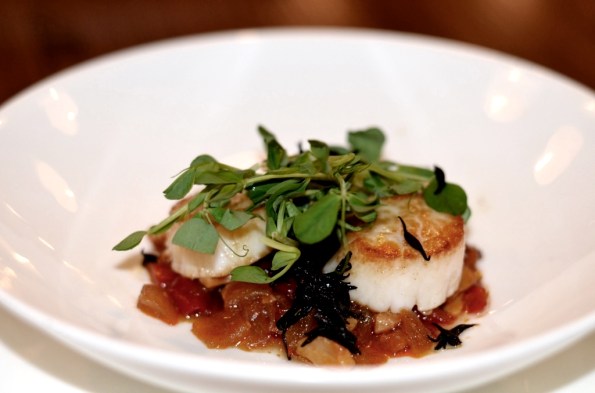
Truth be told, scallops are probably my most favorite choice of protein. If there is a scallop dish on the menu, there is a very, very good chance that that would be the dish I would pick. Diver Scallops (cashew chili relish, hijiki) didn’t disappoint – perfectly cooked, perfectly spicy – very tasty. And then the Kangaroo salad (chili lime dressing, cilantro, crispy garlic) – my first taste of the kangaroo, lean and gamey taste profile, rather as expected, overall quite tasty.


Course 4
Branzino is another one of my favorites, and this Pan-seared Branzino (sesame ginger broth, bok choy) was excellent – delicious, great flavor combination, might be the tastiest dish of the whole dinner. Of course, you have to have the Australian lamb if you are visiting the Australian restaurant – Braised Lamb Gnocchi (tomato, pecorino) had a nice flavor, but very lamb-y in your face, which is generally not my thing, but overall this was not a bad dish.
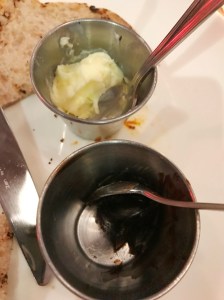
Okay, now let’s talk Vegemite. First, the disclaimer – Vegemite was not a part of our dinner – this was something I knew as quite famous in Australia (not always in a good sense) and was very much interested in experiencing, so I asked Chef Brad Stewart if we will be able to try it, and he gladly obliged. If you are wondering what the heck is Vegemite, you can read about it here. It is a paste made from yeast, and it has an extremely (my opinion) pungent flavor. It plays somewhat of a role of peanut butter in the Australian school lunches, typically used a spread on a piece of bread or a toast. I made a mistake of not trying it with butter as it was offered to us, and I can tell you – it is not my thing. But – I tried it, that what matters! 🙂


Course 5 – Chef’s selection desserts
Do you think Australians eat dessert? Of course they do – and here what had an opportunity to try
We had Lamington (traditional Australian dessert), Sticky Date Pudding (another traditional Australian dessert and Chef Brad’s grandma’s recipe), Carrot Cake (Chef Brad mom’s recipe) and Pavlova – don’t ask me for individual notes, please – they were all one better than the other, absolutely delightful, and a great finish to our dinner.
Here you are, my friends, I hope I didn’t make you too hungry – while you are contemplating your trip to Australia, you can come to Flinders Lane here in Stamford to get a little taste of it now. No boarding pass required. Cheers!
Guest Post: Why You Need to Drink Wines From Victoria, Australia, and Where to Try Them
Today I want to offer you a guest post by Lucia Guadagnuolo who is a tour host and blogger for Wine Compass. When she’s not traveling or indulging in the fried delights of Southern Italian cooking, Lucia enjoys discovering the ever-changing food and wine scene in her hometown of Melbourne, Australia. She’s also recently completed the WSET Level 3 Award in Wines.
Becoming well regarded in the wine world for its cool climate expressions, you’d be forgiven for thinking otherwise of an Australian wine region. Warm sunny beaches and rugged Australian outback is what we’re used to seeing, and big bold Shiraz is probably what you’re used to drinking. While this might be true for the majority of Australia’s wine producing regions, Victoria, which is located in the South-East of the continent, experiences quite a cool to moderate climate. This, of course, is due to its latitudinal position, but also the cooling breeze from the Southern Ocean. So what does all this mean for those of us interested in exploring more of the wines from Australia? It means subtle, but varied expressions of Pinot Noir and Chardonnay. The two most planted varieties in the region, in both Yarra Valley and Mornington Peninsula, where most plantings of these varieties are found.
Australia has somewhat of a more relaxed approach to winemaking than some of the more traditional, old world countries. This means winemakers have the freedom to experiment and create wines from many different varieties that rival those of France, Italy and Spain combined. This same creative nature and desire for something different extends to the cellar door experience. Smaller boutique wineries, producing premium wines, are offering an intimate experience for visitors. You’ll often find the winemakers themselves pouring you a tasting, and giving you first-hand knowledge about the wine in your glass. It really doesn’t get much better than that!
So now you know why you should be drinking wines from Victoria, let’s find out the best places to try them…

Yileena Park – Yarra Valley
Carved into a hillside at the base of the Christmas Hills in the Yarra Valley, Yileena Park offers a unique and homely cellar door experience. They make premium wines that really highlight the great quality fruit being grown in the region today. Most of the wines at Yileena Park are aged for a minimum of four years before release, the reserve range is aged for 6 years, and the reserve Cabernet Sauvignon aged for 8 years before it’s available at the cellar door for purchase and tasting.
While you enjoy your wine, you get to experience endless views of the Steels Creek mountain range and devour a platter of smoked olives, cheeses, nuts and olive oil – all produced using the very barrels that their wines are matured in. Owners Bob and Diane are also always on hand to chat about the current vintage, and those gone by.

Pimpernel Vineyards – Yarra Valley
This quiet little cellar door in the heart of the Yarra Valley, is making a lot of noise in the wine industry, undoubtedly producing some of the best premium wines in Victoria. If you love your Pinot Noir, then you’ll be spoiled for choice with a significant range available and open for tasting. You can even compare different Pinot clones and the different winemaking techniques used to produce wines from each one. They also produce some outstanding Chardonnay, Chenin Blanc, Viognier, Syrah, and Shiraz, as well as some amazing blends.

Quealy Winemakers – Mornington Peninsula
A true testament to the Australian spirit of doing things a little bit differently, Quealy Winemakers on the Mornington Peninsula have set the standards in the region for growing unique varieties. The first to plant Pinot Grigio in the region and sell Friulano commercially, they have a range not often seen on the Peninsula. Pioneer winemaker Kathleen Quealy is often on hand at the cellar door to give you an insight into their winemaking techniques, and is always willing to give guests a private tour of the winery. Also, one of the few producers using terracotta amphora to mature their wines, which you’ll be lucky enough to sneak a peak at when you stop by for a tasting.

Ocean Eight – Mornington Peninsula
Set on a beautifully manicured garden landscape, this winery and cellar door really is picture perfect. In fact, the only thing better than the surrounds, are the wines. Not for sale anywhere else in the world outside of this very cellar door, you absolutely must visit Ocean Eight when on the Mornington Peninsula. Their premium range includes Pinot Noir, Chardonnay and Pinot Gris. Not a huge offering, but what they do, they do extremely well. Enjoy a tasting in their underground cellar, you won’t regret it.
Wine Compass are the Victorian wine country specialists and offer private guided tours of both the Yarra Valley and Mornington Peninsula, with bespoke itineraries specifically tailored to you.
Thinking About Albariño, or Notes from Albariño Deep Immersion with Snooth – 2018 edition
Luckily, Albariño doesn’t need an introduction to the wine lovers anymore (if you think I live in lalaland, please speak up). Albariño is the best known white grape of Spain, making crisp, dry, minerally-infused, refreshing white wines, perfectly suitable to support any seafood dish, as they always had in their native Galicia region. As with most of the white wines, Albariño is typically associated with summer, but it is a versatile wine all year around – and typically very reasonably priced.
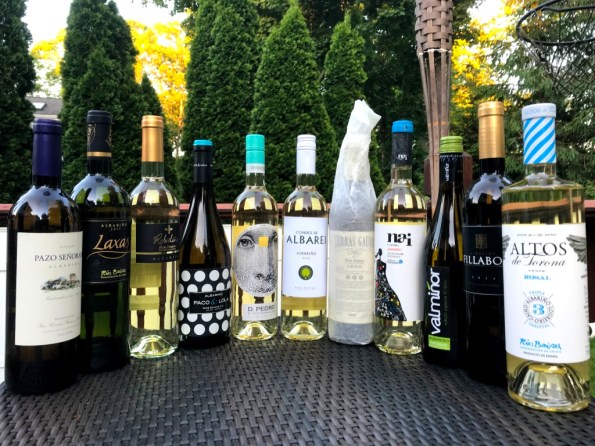
For the second year in the row, I had a pleasure of participating in the virtual tasting of Albariño wines, organized by Snooth, one of the largest online wine communities. I will not delve into the technical details of the region, as I had an extensive coverage in last year’s post, and instead, I will simply share my notes for the wines we tasted.
Here are the notes, sorted by the sub-region of Rias Baixas:


Sub-region: Val do Salnés:
2016 Condes de Albarei Albariño Rias Baixas DO (13.5% ABV, $15)
Light straw
Lemon, lemongrass, hint of peach
Lemon, good minerality, medium body, good mouthfeel, mostly acidity on the finish
8-, good balance, round
2017 Pazo Señorans Albariño Val do Salinés Rías Baixas DO (13.5% ABV, $25)
Straw color
Rich citrus – lemon, grapefruit, orange
Clean acidity, lemon, thyme, good minerality, vibrant, fresh
8-, excellent
2017 Nai e Señora Albariño Val do Salnés Rías Baixas DO (13% ABV, $15.57)
Straw pale
Tropical fruit, white flowers
Round, clean, good balance of fruit and acidity
8, definitely one of the favorites.
2017 Paco & Lola Albariño Rías Baixas DO (13% ABV, $21.99)
Lightest color of all, straw pale
Lemon, mint, nice minerality
Fresh, crisp, cut-trough acidity, lemon grass
8-, round and extremely refreshing


Sub-region: Contado do Tea:
2016 Fillaboa Albariño Rias Baixas DO (13% ABV, $20)
Light golden
Candied lemon, vanilla, touch of butter, medium+ intensity, inviting
Crisp acidity, fresh, touch of salinity, fresh lemon, steely notes, vibrant
8-/8, excellent
2017 Señorío de Rubiós Robaliño Albariño Rias Baixas DO (12.5% ABV, $18)
Straw pale
Sage, lemon, hint of overripe white peach
Good acidity, lemon finish, Meyer lemon notes
7/7+, Needs more vibrancy.
2017 Bodegas As Laxas Albariño Rias Baixas DO (12.5% ABV, $18)
Light straw color
Lemon, touch of minerality,
Minerality, forthcoming acidity, hint of grapefruit, Mayer lemon, good balance
8-, very good, balanced wine


Sub-region: O Rosal:
2017 Valmiñor Albariño Rías Baixas DO (13% ABV, $18.99)
Light gold
Fresh white plums, intense, pineapple, very inviting
Crisp acidity, lemon notes, fresh
7/7+, nice, simple, varietally correct
2016 Don Pedro Albariño De Soutomaior Rias Baixas DO (13% ABV, $18.99)
Light gold
Touch of honeysuckle, white flowers, hint of peach
Crisp acidity, pure lemon, vibrant, clean, lots of minerality, good midpalate weight
8-, steely goodness of the young Chablis, excellent, lots of pleasure. This wine will dramatically evolve over the next 5-7 years.
2017 Altos de Sorona Rosal Rías Baixas DO (12.5% ABV, $20, blend of Albariño, Caiño, Loureiro)
Straw color
Lemon, sea air, minerality
Lemon, crisp acidity, good weight, fresh, vibrant.
8-, excellent balance, can be had by itself as a summer day thirst quencher, or with some oysters (would work beautifully)
2017 Terras Garuda O Rosal Rias Baixas DO (12.5% ABV, $23.99, 70% Albariño, 10% Loureira, 20% Caiño Blanco)
Light golden color
Tropical fruit, guava, candied lemon, vanilla
Rich, generous, hint of watermelon and pineapple, crisp acidity, fresh, vibrant
8-, excellent
If you want to see the recording of the tasting, you can find it here. If you want to try the wines we tasted, most of them are still available on the Snooth website, also at a great price – take a look here.
I have to say that the quality was excellent across all the wines we tasted, with some of the standouts, such as Nai e Señora Albariño. Is Albariño a part of your standard wine routine? Do you have any favorites? Cheers!
P.S. Procrastination sometimes offers benefits – this tasting took place in May, but today (August 1st, 2018) is International Albariño Day, so I guess the post about Albariño is quite appropriate.
Can You Enjoy The Wine In The Can? Yes You Can!
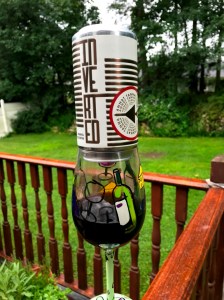 I couldn’t resist a little fun with the title, but really – what do you think of the wines in the can?
Let me ponder at the subject a bit while you give it a thought.
I’m sure that I qualify as one of the pioneers of the wine in the can. Here is an article in LA Times, talking about wines in the can showing up around the USA, and explaining why those make sense. This article appeared in September of 2015. Here is the link to my own post, titled “My First Can of Wine“, written back in November of 2014. So yes, I can claim some familiarity with the subject.
My first can of wine was produced by Field Recordings, a very unorthodox winemaking company to begin with, offering strange wines, with strange labels, unusual blends, aged in unusual barrels (Acacia wood, anyone?) – but ultimately, unquestionably delicious. I wrote numerous posts about Field Recordings wines, starting from 2011 – you can scroll through a few pages here. Field Recordings went on to create a club dedicated to the wines in the can (suggestively called Can Can Club), and then they even created a whole new company, called Alloy Wine Works. One of the fun parts of that Can Can club membership was to observe the progression of packaging and delivery of club shipments of canned wines – from packing bubble-wrapped cans in the same wine shipping box as the regular bottles (didn’t work too well), to the Fedex Tube:


to the practically a masterpiece of packing:


Okay, I probably got a bit off on the tangent here – this post is not about Field Recordings, but rather about wine in the can as a category, so let’s continue our discussion.
First, I think we need to establish a very simple truth – wines in the can are NOT a reduced, lower quality, cheap leftover junk wines – they are full-blown, legit, properly made wine of the same quality as all other wines made at a given winery, simply presented in the different format – a high quality lined aluminum can. These are the same wines, people, and if you want any takeaway from this post, this is my main point. One more time – these are the same wines, which are simply packaged in cans instead of being packaged in the glass bottles.
Now, why do we need wines in the can? I don’t want to get into the whole “cool factor” and “millennials” discussions – yes, those are important, I know, as they further democratize wine and bring new people to try the wine for the first time. But all of these can be categorized as a marketing gimmick, and I want to look for the actual benefits of the canned wines. Let’s see:
- On the go: Canned wines are perfect on the go. It is much easier to stuff a can of wine exactly as you would a can of soda into your backpack, and off you go. When you decide you want to drink the wine, it is very easy to open, and you don’t need to look for the glass. And even two cans of wine will be lighter than one bottle of wine, for the most of the cases. As we said – just get it, and go.
- Safety: Wines in the cans are a lot safer around small children, and generally anywhere where glass is simply a bad idea – like a beach or a pool.
- Convenience: Standard size for a can of wine is 375 ml, which is half of the bottle. If you want to drink white, and your friend is in a mood for a hearty red, having two different cans is easier than opening two bottles of wine.
- Experimenting and variety: with the smaller format and different packaging, there is an opportunity to create new types of wines or even go beyond wine. With Alloy Wine Works, I had wines going way beyond white, red and Rosé – wines finished with beer hops, wines mixed with coffee, plums, stout and lots lots more.
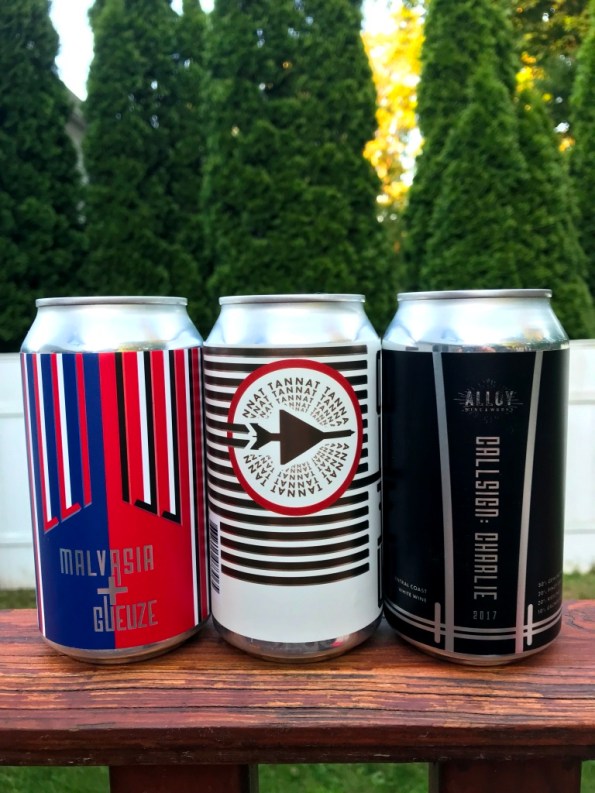
I’m sure there are other benefits of wines in the can, but – do cans of wine have only a good side without a bad one? As you know, this is never the case in life, so let’s talk about challenges:
- This is wine, not a beer!: It is important to remember that a can of wine holds half a bottle of wine – not beer. What’s my point, you ask? A typical can of beer contains less than 4% of alcohol. Typical wine – 13% as the least, so that one can of wine is equivalent to at least three cans of beer in terms of alcohol volume – you better remember that. Half a bottle of wine is not something you can easily dismiss.
- Once it’s open, it’s open: if you just want to have a glass of wine, it is easy with the bottle – open, pour a glass, close the bottle back. It is not going to work like that with the can – once it’s open, it’s open, and there is no going back. This problem has an easy solution – provide a plastic cap which can be used to reclose the can – but so far I didn’t see too many of those sold with the cans.
- Aging: I don’t think this is a real problem, as I don’t expect much of the aging-worthy wines to show up in the can, but in any case, keep in mind that the wine cans are better not be lost in the cellar.
Here you go – my take on the wines in the can. I didn’t plan to include much of tasting notes in this post, but I can tell you that this year I had wines in the can from California, Oregon, Australia and Long Island, and all of them were well made tasty wines.
At this point you had plenty of time to come up with your opinion about the wines in the can – would you please share it with everyone? Here is an easy poll for you – let us know what you think about canned wines! Cheers!
Sabering with a Steak Knife
When I’m opening a bottle of sparkling wine, my first desire is always to saber it. Sabering is a lot more fun than just twisting out the cork. Opening sparkling wine in the standard way, by twisting a bottle out of the cork, should produce no sound, maybe just a little “sigh”. When the bottle is sabered, the loud pop is expected, and the sparkling wine siphons out of the bottle – I hope you agree, this is lots more fun.
In the act of sabrage, the bottle is open with a small sword appropriately called the saber. This is how the typical saber would look:
 I don’t believe I ever used the proper saber before, but considering the weight of it, it should be a pretty easy exercise – I used the chef’s knife successfully a number of times, works perfectly on the properly chilled bottle of Champagne or similar classic-method sparkling wine (it is all about high pressure of the liquid in the bottle).
Instead of a saber, it is a lot more fun to try random objects for the sabrage. My sabering attempts are not anywhere as prolific as Jeff The Drunken Cyclist’s (here is his latest success with the “espresso thingy”), but I had my own documented successes with the wine glass, and failures with the stapler and even with the knife.
This time around, I was opening the bottle of Cava, and encouraged by the Jeff’s latest success, I wanted to use some random object for sabering – so the steak knife was something I grabbed.
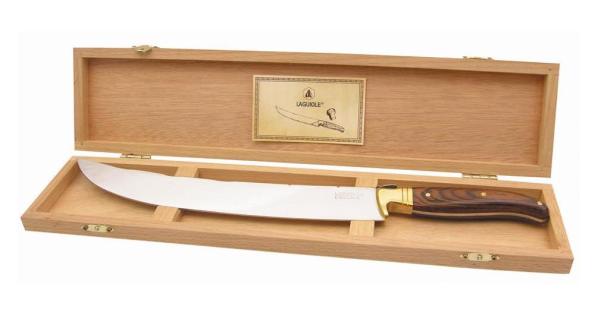
 This is my beloved Laguiole steak knife, which is perfect for slicing the meat, beautiful and nicely balanced – however, it is very light. I was positive this will not work, but this is part of the fun! My first two strikes led to the glass starting to chip off around the neck, which lowered my confidence even further, but you can see this all for yourself here (apologies for the format of this video – a rookie mistake with the iPhone after not making videos in a while…):
As you can tell, it worked! Next time you will be opening a bottle of Champagne – have some fun with it. Cheers!
Wednesday’s Meritage: Capital Grille, Thomas Keller, and more
Meritage time!
Wednesday’s Meritage was a permanent weekly feature in this blog in the days where the time for blogging was magically found with ease. The wine can be called a Meritage only if it is produced as a blend of two or more varieties – the idea for these Wednesday’s Meritage posts was based on the same principal – sharing the tidbits of news and information which I thought might be of interest to my fellow readers.
Looking through some of the recent emails I came across a few newsworthy items, so off went the sparkle – “that warrants a Meritage post”, so here we go.
The Capital Grille is a group of steakhouse restaurants, which don’t require much introduction for steak aficionados in the USA. Their menu is generally very solid, and, what is very important for me, their wine list is extensive and reasonably priced, for sure for the restaurant in that same steakhouse category. The Capital Grille is known for some innovative wine programs – for instance, their Generous Pour event had been in effect for many years, and it allows people to enjoy a variety of the specially selected wines at a very reasonable price (was $25, now $28) with dinner – a number of my personal favorites were discovered with help of this program. While new Generous Pour will start on July 9th of this year, this is not the program I wanted to bring to your attention. The Capital Grille just announced a brand new program, called “Sip today, sip tomorrow”, with a very simple idea. You can order any bottle of wine from their extensive wine list. Next, the wait staff will use Coravin to pour as many glasses as you would want – and the rest of the bottle is yours to take home. You can get more details on The Capital Grille website – click on the “sip today, sip tomorrow” icon to learn more. I don’t know about you, but I like the idea – now, just need to find a good occasion to visit The Capital Grille and try it for myself.
Say “Thomas Keller” name to any foodie, and you will get an “ahh” reaction from the absolute majority of them. The iconic chef is best known as an owner of French Laundry, a culinary mecca in Napa Valley, and Per Se in New York City. Now, the people of Miami can dance a happy dance, as Thoms Keller is set to open The Surf Club restaurant in Miami, in the town called Surfside (less than 10 miles from Miami). This will be a first Florida restaurant for the Thomas Keller, connecting to his childhood memories of Palm Beach. The restaurant is expected to have a bit more casual menu, compared to the French Laundry and Per Se, but I’m sure Thomas Keller’s style will be well recognized there. The restaurant should be opening next month, so if you live in Miami or plan to visit, you might want to start looking up that phone number…
Last, I have a movie for you. It is less than 20 minutes long. Yes, it is in Russian – but it has English subtitles, which were done pretty well. The movie, called “The Taste”, of course, revolves around wine… and people… and wine. The ending is totally unexpected (it was for me), so if you will go to the extent of watching it, please allocate that 20 minutes of your time – there is a good chance you will enjoy it, even if you don’t speak Russian. And if you will end up watching it, I would be happy to hear from you, whether you will like it or not.
That’s all I have for you, my friends. As these Meritage posts used to finish – the glass is empty, but the refill is on the way. Until the next time – cheers!
Looking for Great Wine Values? Trader Joe’s Got Them
Another trip. Another stop at Trader Joe’s. Another “how do they do it?!” sentiment.
My typical strategy in Trader Joe’s is to see how many wines $20 can buy. This time around, I decided to change that. Somehow, being in San Diego in California, there was sudden desire to focus on California wines. That, and maybe a bit of France – 2018 had been my personal France tasting renaissance so far.
Of course, while I wanted to drink California wine, I was still on the lookout for reasonably priced bottles, not to exceed $20 – by the way, I know that good California wine under $20 is considered “mission impossible” by many, so this was another interesting challenge.
After touching and turning tens and tens of bottles, I settled for maybe not famous, but very well known producers – Benziger Family Winery and St. Clement Vineyards from California. I almost added French GSM to the basket, but instead, went with the Rhone-style white blend – a classic combination of grapes (Viognier/Roussanne/Marsanne), and a great value at $6.99. 
How did the wines fare? Let me tell you all about it.
2016 Pontificis Viognier-Roussanne-Marsanne Pay’s d’Oc IGP (13% ABV, $6.99, $50% Viognier, 35% Roussanne, 15% Marsanne). While Viognier/Roussanne/Marsanne combination is a classic blend of Northern Rhone, this wine came from Languedoc, the winemaking region where everything is possible. Was it different than the actual Northern Rhone would be? You bet. Was it still delicious in its own right? By all means.
Light golden color in the glass. After some time, the nose showed classic Viognier perfume of tropical fruit – nothing overboard, but well noticeable. As it is often the case with Marsanne/Roussanne combination, I almost preferred this white wine at the room temperature versus fridge-cold. A touch of lemon and lemon zest on the palate, characteristic plumpness, full body, with some hint of guava. Roll of your tongue goodness, with a perfect amount of acidity on the finish – just bring me some food. Drinkability: 8-/8. And good luck matching this value.
2014 St. Clement Vineyards Pinot Noir Napa Valley (14.5% ABV, $9.99). St. Clement Vineyards had been making wines in Napa Valley since the 1970s. One of their wines, a red blend called Oroppas, is one of my favorites, so this was an easy choice.
Bright ruby color in the glass. Dark chocolate, tobacco, and plums on the nose. The palate is perfectly balanced with supple raspberries and blackberries, good firm structure, excellent mouthfeel and presence, and an acidity cleanse on the finish. It might be pure luck – but luck or not, this was one tasty California wine. For $9.99. Drinkability: 8
2015 Benziger Family Winery Cabernet Sauvignon Sonoma County (13.5% ABV, $13.99, 16 months in oak). Benziger winery was founded in 1980, and in the year 2000 became a Demeter certified biodynamic farm. Benziger wines generally offer good value for the money, and who can refuse a California Cabernet from a good producer? Yep, not me.
Dark garnet, almost black in the glass. Beautiful nose of black currant and bell pepper. Unmistakable, textbook Cabernet Sauvignon on the palate – clean fruit, soft, open, black currant, eucalyptus, soft tannins, medium+ body. Lots of pleasure in every sip. Another great California value – well under $20. Drinkability: 8-/8.


Here you go, my friends. Trader Joe’s is unstoppable in its mission of bringing tasty power to the people. What was your favorite Trader Joe’s discovery as of late? I’m off to have another glass of Cab while you are thinking about it.
Last Bottle Sign Up ($10 credit)




 Talk-A-Vino